Tag: Emily Weekes

  • Coach McKeever on Canada’s Unprecedented Paralympic Success and the Future

    Coach McKeever on Canada’s Unprecedented Paralympic Success and the Future

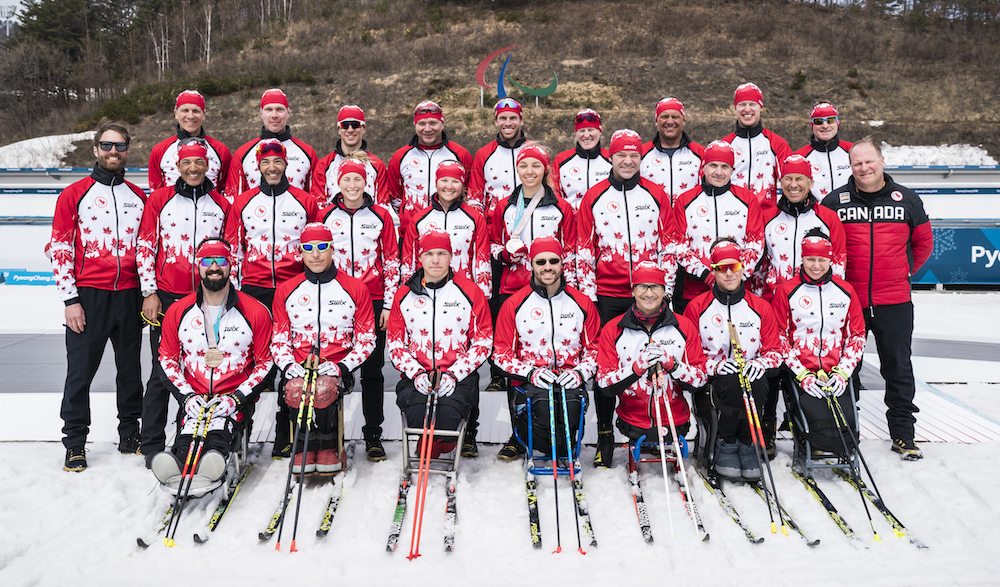
    Canada’s 2018 Paralympic cross-country and biathlon team at the Alpensia Biathlon Centre on the last day of the Games in Pyeongchang, South Korea. (Photo: Dave Holland/Canadian Paralympic Committee)

    The 2018 Winter Paralympic Games was one for the books for Team Canada. Its athletes racked up a total of 28 medals in PyeongChang, South Korea, surpassing its previous record of 19 in Vancouver 2010.

    Of those 28 medals, 16 came from Cross Country Canada’s (CCC) Para Nordic skiers (which includes both cross-country and biathlon). In comparison, five of the 19 medals Canada won in Vancouver were a product of a para-nordic team made up for two athletes: Brian McKeever and Colette Bourgonje.  

    Following the 2010 Games, Brian McKeever’s brother and guide at the time, Robin McKeever, became CCC’s Para-Nordic head coach in the fall of 2010. Around the same time Robin made the transition from athlete to coach, CCC experienced budget cuts that impacted its para-nordic program.

    “When the program came to me as head coach, it was a, ‘Hey, you’re going to have to take this and rebuild it, somehow,’ starting point,” Robin McKeever said during a recent phone interview.
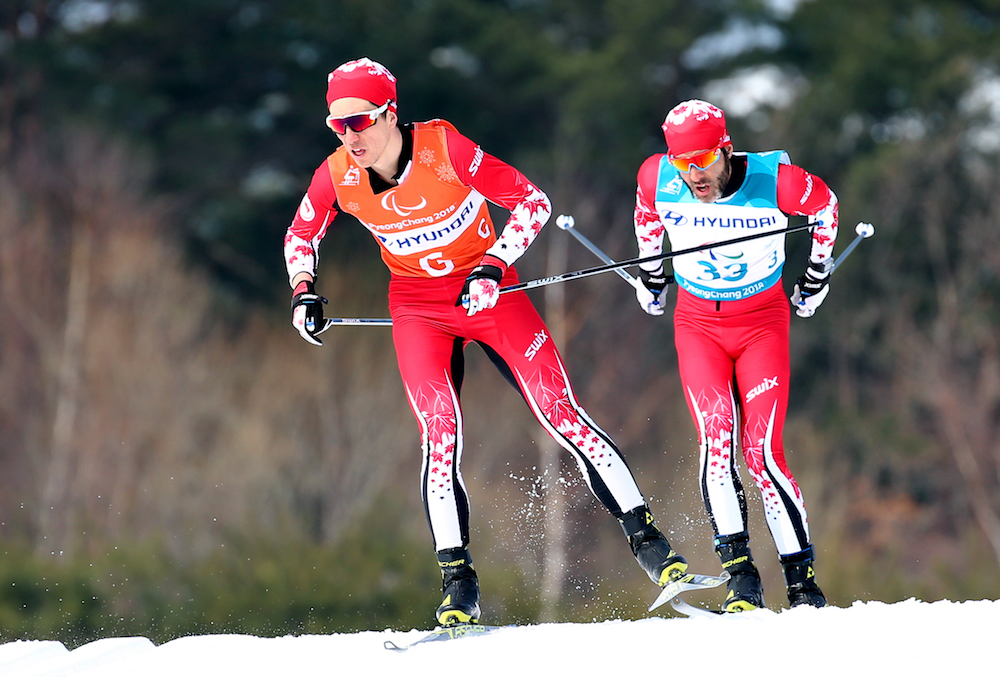
    Brian McKeever follows guide Graham Nishikawa during the men’s visually impaired 20 k freestyle at the 2018 Paralympics in PyeongChang, South Korea.  (Photo: Scott Grant/Canadian Paralympic Committee)

    Over the course of eight years, McKeever, 45, has guided the program into a international powerhouse, as evidenced by its unprecedented success and increased presence in PyeongChang.

    “It was a little bit of luck finding the right athletes at the right time, then it’s … working hard to keep them together as teammates who want to work and push each other to achieve their goals,” he explained.

    The mindset seemed to work well for his team; with 14 athletes, it was seven times the size of that in Vancouver. And its athletes brought home more than three times the hardware it did in 2010.

    “It’s attributed to having some pretty phenomenal athletes in the program, first and foremost,” Robin said, regarding the program’s surge in success. “Secondly, it’s attributed to having an awesome team supporting the athletes all working together … from medical staff to the physiologists to the development coaches to all of our wax team. They’re great people who love to be together. ”

    Four women and 10 men comprised the 2018 Paralympic team roster, with two of the men being Brian McKeever’s guides, Russell Kennedy and Graham Nishikawa. Brian, 38, has long been a longtime para-nordic force, and in PyeongChang he left no room for doubt that he pervades as the cross-country king. A visually impaired athlete, he won all three cross-country races in PyeongChang: the 20-kilometer freestyle, the 1.5 k classic sprint and the 10 k classic. He also raced to bronze in the 4 x 2.5 k open relay.

    With his performances in PyeongChang, Brian became Canada’s most decorated Winter Paralympian of all-time. Lana Spreeman, a para-apline skier, previously held the record at 13 medals, which she accumulated over the course of five Paralympics.

    Brian currently holds 17 Paralympic medals from five Paralympics, 13 of which are gold.

    “I wasn’t aware of this record, but it is pretty cool,” Brian said at the time, according to a Canadian Paralympic Committee press release. “I think for me more than anything is this is a testament to our entire program. We’ve had so many great skiers leading the way for me with my brother, Robin who is now coaching us, and Colette Bourgonje.

    “Now it is awesome for me to be a part of a new generation that has arrived in Mark [Arendz], Collin Cameron, and the young women like Emily [Young], Brittany [Hudak] and Natalie [Wilkie], who are ready to carry the torch. I’m so excited to be around all of them this week and to be there cheering them on,” he added.

    Also in PyeongChang, Canada’s Mark Arendz, Natalie Wilkie, Collin Cameron, Emily Young, Brittany Hudak, and Chris Klebl also earned their share of hardware on the Alpenesia ski trails.

    Prior to Pyeongchang, Arendz had competed in Vancouver and then Sochi, coming away from the 2014 Paralympics with silver and bronze finishes in biathlon events. Four years after he earned his first two Paralympic medals, Arendz tallied six more in South Korea, the most medals ever won by a Canadian at a single Winter Paralympics.
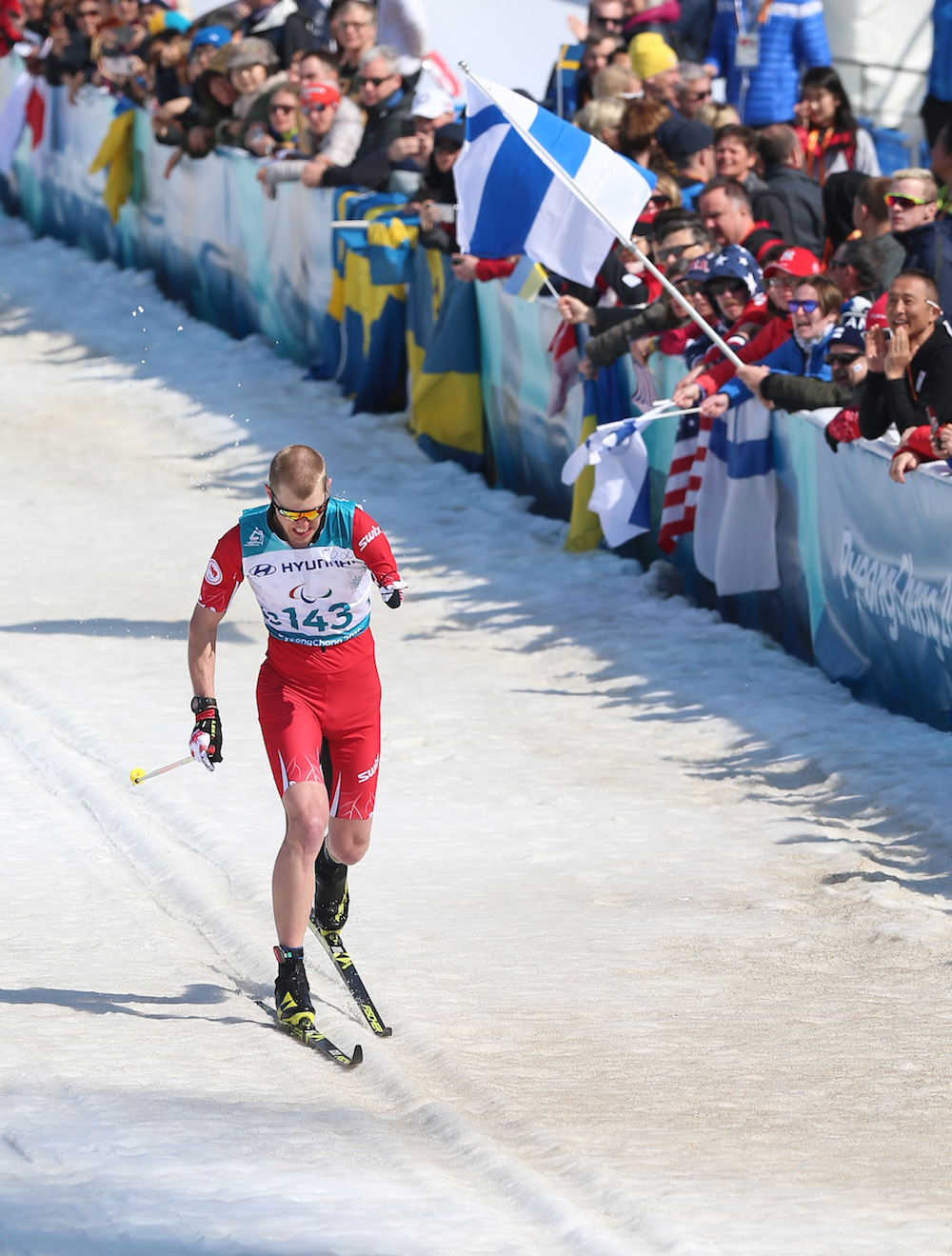
    Canada’s Mark Arendz en route to bronze in the men’s 1.5 k standing classic sprint at the 2018 Paralympics in PyeongChang, South Korea. (Photo: Scott Grant/Canadian Paralympic Committee)

    Arendz showed versatility and strength, as his medal winning performances came in both the biathlon and cross-country events over the course of nine days in PyeongChang. He won a gold in the 15 k standing biathlon event, followed by a silver in the 7.5 k standing biathlon, silver in the 4 x 2.5 k mixed relay, along with three bronze medals, one in the 12.5 k standing biathlon, one in the 1.5 k standing sprint and one in the 10 k standing competition.

    “Every time I stepped on the podium this week, I kept thinking I want to hear ‘Paralympic Champion’ and then my name announced,” Arendz, 28, told Cross Country Canada at the time, according to a press release. “I wanted nothing more than to hear my country’s anthem played. I’ve seen the maple leaf on top of the podium three times this week, but to finally have it behind the top step of the podium for me is an amazing feeling.”

    Canada’s success story in South Korea did not end there. In her debut Paralympics, 17-year-old Wilkie scored big, earning bronze in the standing sprint, silver in the mixed relay, and gold in the 7.5 k classic in PyeongChang.

    The youngest on her team, Wilkie was a skier before she lost four fingers on her left hand in a shop-class accident two years ago. 

    “Natalie was a medalist in able-bodied competition at Junior Nationals the year before,” Robin explained. “We knew that she was a strong skier that had an acquired disability and we knew that it was possible for her to race at the Paralympics one day if she wanted to. It’s a learning process and a real mental process to get over your injury and for her it was then also turned into an opportunity.”

    Yet another individual medalist in multiple events in PyeongChang, Cameron, now 30, brought his team another first. With his third-place finish in the 7.5 k sitting biathlon race, he became Canada’s first male sit skier to medal in biathlon. He later earned two more bronze medals, one in the 15 k and the bronze another in the open relay.

    Until four years ago, Cameron had been a sledge hockey player. He happened across his hometown’s para-nordic club by chance over the internet, joined that club and was later recruited to the national team.

    “Being a part of the open relay team with Brian, and his guides Graham [Nishikawa] and Russell [Kennedy], was something really special and I will never forget it,” Cameron wrote in a previous email to FasterSkier. “Getting my third Paralympic medal with those guys was pretty cool … just being a part of this amazing and successful team of athletes, techs, and coaches has to a favourite moment.”
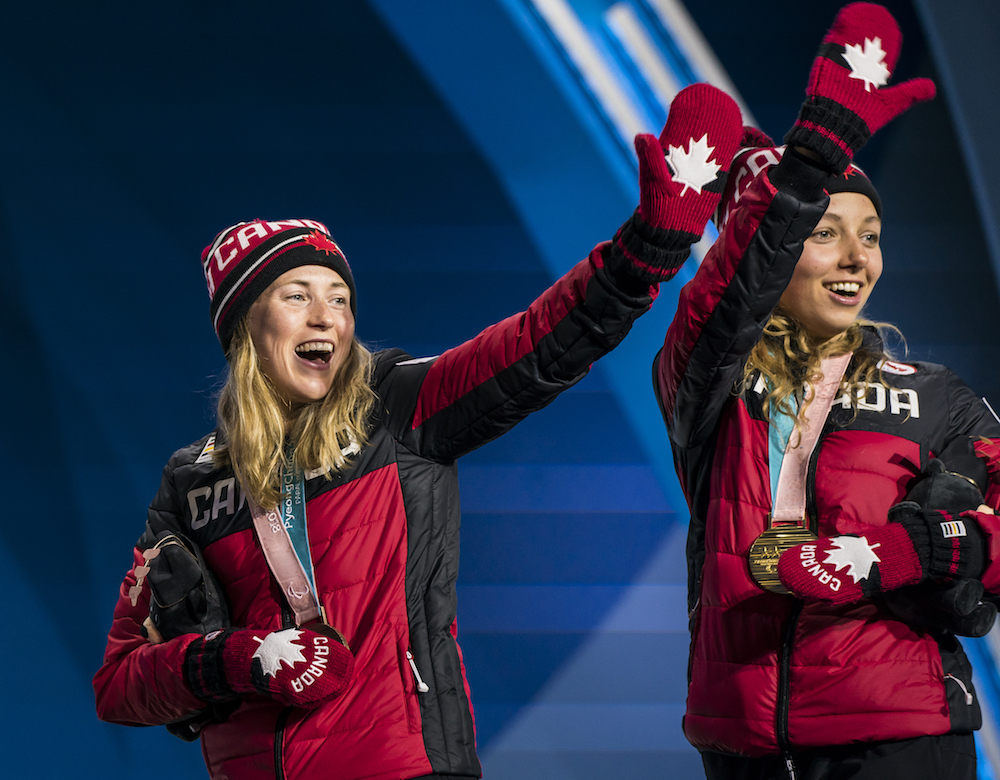
    Natalie Wilkie (r) and Emily Young at the 2018 Paralympic medal ceremony with their gold and bronze medals in the women’s 7.5 k standing classic race in Pyeongchang, South Korea. (Photo: Dave Holland/Canadian Paralympic Committee)

    Notably, every member of Canada’s seven-member Para-Nordic World Cup Team claimed a medal in  PyeongChang, with Young taking bronze in the 7.5 k classic standing for her first Paralympic medal followed by silver in the mixed relay, Hudak notching bronze in the 12.5 k standing biathlon, and Klebl helping the mixed relay to silver.

    Since the end of last season, CCC has undergone some changes that are affecting its Para-Nordic program. Both CCC’s para-nordic and able-bodied programs are tied under one organization, and Nic Lemyre was recently hired on as the new high-performance and development advisor for both programs. Previously, Mark Edwards served as the Para-Nordic high-performance director.

    “Cross Country Canada came under some very strategic shifts with the prior organization,” Robin explained. “We’re not sure exactly how that’s going to play out. That is still in the works. We get to deal with that as it comes around, but it’s about putting a sport pillar and business pillar under two different ones and so we’re working hopefully closer with the able-bodied program.”

    In terms of how CCC’s budget cuts are expected to affect its Para-Nordic program, CCC CEO Shane Pearsall expected the amount going to para-nordic to be “about the same as last year”. Asked how much of CCC’s roughly $4 million-dollar budget will go to the Para-Nordic national team’s elite programming, Pearsall estimated that amount to be about $600,000 dollars (comparable to between $500,000 and $600,000 for able-bodied national team programming).

    In Robin’s opinion, working closer with the able-bodied program means the transference of ideas and potential to strengthen each other through teamwork and communal outreach. Expanding to skiers of all abilities and levels may take work from the ground up, as well as the top down.

    buy antabuse online, buy tretinoin online

    “We need to be working together to rebuild that whole system,” Robin said, pointing out that currently, CCC’s able-bodied A-team consists of one member, Alex Harvey.

    This season’s Canadian Para-Nordic World Cup Team includes eight members, plus another six on the development team.

    “The whole focus of the [Para-Nordic] program is about the process,” he added. “For the athletes to have their best race on a given day, the team has to also provide the best skis on a given day, the best feeds, say or whatever that requires. It’s really more about the process.”

  • Cross Country Canada Names 2016/2017 National Team

    Cross Country Canada Names 2016/2017 National Team

    Cross Country Canada logo

    (Press release)

    Olympic and Paralympic veterans lead next generation of elite skiers into new season

    CANMORE, Alta. — Focused on winning medals at all levels, Cross Country Ski de Fond Canada named its 2016-17 National Ski Team loaded with promise for 2018 & 2022 Olympics and Paralympics Games on Tuesday.

    Feeding off a successful ending to the inaugural Ski Tour Canada where the squad celebrated countless personal and season-best performances, seven Olympians, including six men and one woman, will lead the charge for the Canucks.

    Led by Alex Harvey (St-Férréol-les-Neiges, Que.), who captured two medals last season, a high-powered group of athletes including Len Valjas (Toronto), Ivan Babikov (Canmore, Alta.), and Devon Kershaw (Canmore, Alta.) will form the World Cup A Team. Two other athletes who posted breakthrough performances during the Ski Tour Canada, Jesse Cockney (Canmore, Alta.), and Graeme Killick (Fort McMurray, Alta.), will make up the World Cup B Team with Emily Nishikawa (Whitehorse) leading the Canadian women on the elite squad.

    World Cup A Team

    • Alex Harvey
    • Len Valjas
    • Ivan Babikov
    • Devon Kershaw

    World Cup B Team

    • Jesse Cockney
    • Graeme Killick
    • Emily Nishikawa

    With a focus on developing the next generation of elite skiers, Cross Country Ski de Fond Canada also selected seven athletes for its Under-25 Team who will split time racing World Cups, international development level races, and Haywood NorAms in Canada. Three athletes who cracked the top-30 on the World Cup last year while racing the Ski Tour Canada will headline this group of seven including Whitehorse skiers Dahria Beatty and Knute Johnsgaard, along with Maya MacIsaac-Jones (Athabasca, Alta.). They will be joined by Olivia Bouffard-Nesbitt (Morin Heights, Que.), Cendrine Browne (St-Jérôme, Que.), Katherine Stewart-Jones (Chelsea, Que.), and Julien Locke (Nelson).

    U25 Team

    • Dahria Beatty
    • Knute Johnsgaard
    • Maya MacIsaac-Jones
    • Olivia Bouffard-Nesbitt
    • Cendrine Browne
    • Katherine Stewart-Jones
    • Julien Locke

    The governing body for cross-country skiing in Canada also announced seven athletes who combined to win nine medals last year, will return to the Para-Nordic Ski Team. Athletes include: Brian McKeever (Canmore, Alta.) and his guides Graham Nishikawa (Whitehorse) and Erik Carleton (Canmore, Alta.); Mark Arendz (Hartsville, P.E.I.), Brittany Hudak (Prince Albert) and Paralympic champion, Chris Klebl (Canmore, Alta.). Emily Weekes (North Vancouver), who bolted onto the international para-nordic scene one year ago with multiple podium performances will continue her progression on the Development Team.

    Para-Nordic Ski Team

    • Brian McKeever (guides: Graham Nishikawa, Erik Carleton)
    • Mark Arendz
    • Brittany Hudak

    Para-Nordic Development Team

    • Emily Weekes

    “We obviously have a great line-up of athletes that combines veteran experience with youthful energy and drive,” said Tom Holland, high-performance director, Cross Country Ski de Fond Canada. “I think our elite athletes proved last year they have what it takes to continue delivering medal-winning performances, while our next generation of athletes are steadily developing and demonstrating a promising future for our program.”

    Holland and his high-performance selection team also identified one dozen athletes who will compete on the Junior National Ski Team. Athletes include:

    Junior National Ski Team

    • Marie Corriveau (St-Férréol-Les-Neiges, Que.)
    • Katie Weaver (North Vancouver)
    • Laura Leclair (Chelsea, Que.)
    • Annika Richardson (Vancouver)
    • Zoe Williams (Cantley, Que.)
    • Hannah Mehain (Vernon)
    • Ryan Jackson (Midhurst)
    • Philippe Boucher (Lévis, Que.)
    • Antoine Blais (Lévis, Que.)
    • Etienne Hebert (Varennes, Que.)
    • Gareth Williams (Kelowna, B.C.)
    • Antoine Cyr (Gatineau, Que.)


  • FasterSkier’s Para-Nordic Skiers of 2016: Oksana Masters and Andy Soule

    FasterSkier’s Para-Nordic Skiers of 2016: Oksana Masters and Andy Soule

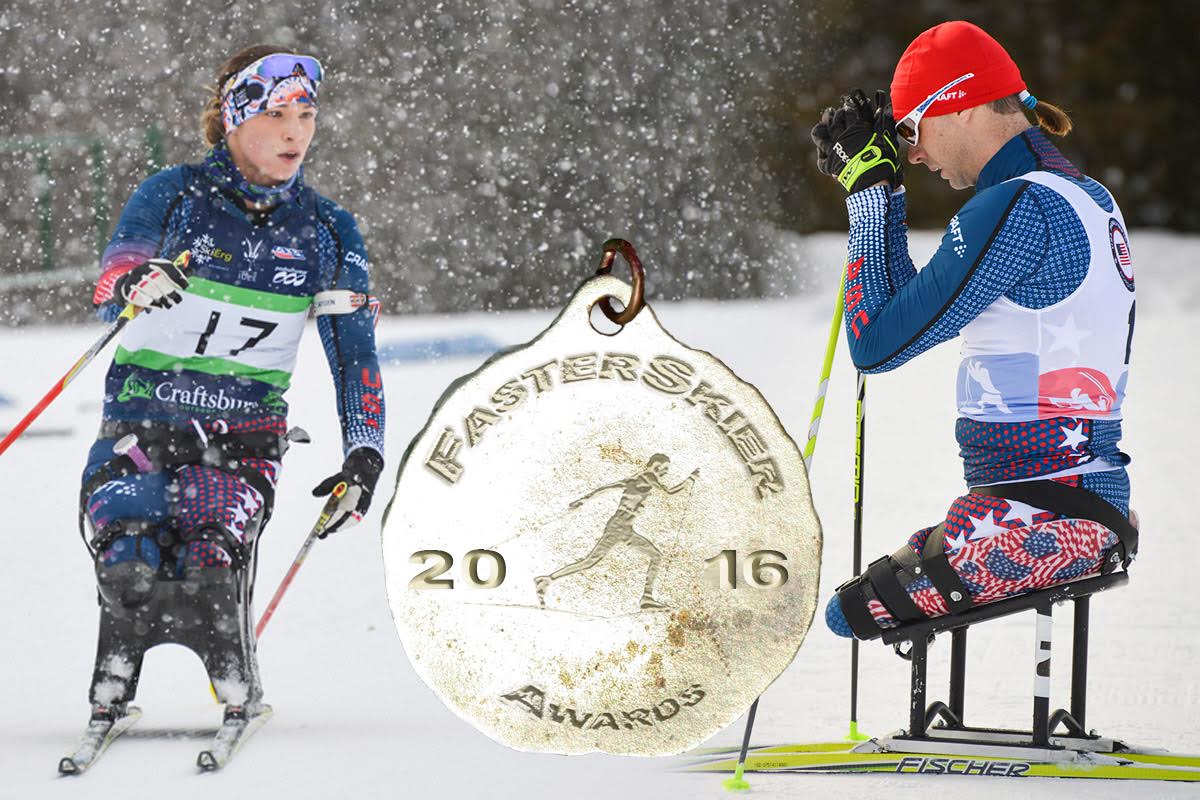
    For the second-straight year, Oksana Masters (l) and Andy Soule of the U.S. Paralympics Nordic Program are FasterSkier's Para-Nordic skiers of the year. (Photos: John Lazenby/Lazenbyphoto.com)
    For the second-straight year, Oksana Masters (l) and Andy Soule of the U.S. Paralympics Nordic Program are FasterSkier’s Para-Nordic skiers of the year. (Photos: John Lazenby/Lazenbyphoto.com)

    With the 2015/2016 season officially in the rearview, FasterSkier is excited to unveil its annual award winners for this past winter. Votes stem from the FS staff, scattered across the U.S. and Canada, and while not scientific, they are intended to reflect a broader sense of the season in review.

    ***

    Oksana Masters, U.S. Paralympics Nordic

    When Oksana Masters ended her season undefeated in every International Paralympic Committee (IPC) World Cup cross-country event, she proved podiums are just as much a performance as they are a process.

    Her third year on the U.S. Paralympic Nordic team — after making the switch from rowing to skiing in 2012 — Masters finished the 2015/2016 ski season with 11 cross-country victories in a row and four biathlon podiums. Prior to this year, her top World Cup result was second in the 5 k sitting event at 2015 IPC World Championships.

    Success doesn’t happen overnight nor does it happen on the 1st try. Every time [you] get up [you’re] 1 step closer,” Masters tweeted prior to this year’s IPC World Cup races in PyeongChang, South Korea.

    For Masters, it’s important to look beyond the season’s results to see the full story. Her 14 podium finishes (five of which came from U.S. Sit Ski Nationals) were not only products of strong skiing, but staying tuned to her body throughout season training and race recovery.

    “Oksana made gains this winter in making smart decisions for her recovery and health, even when it meant backing off from training,” U.S. high-performance coach Eileen Carey wrote in an email to FasterSkier. “She made a few mistakes early in the winter, training through some sickness, but she learned from it and made smarter decisions for the rest of the season.  Her performances in cross country races would not have been possible without that adjustment.”

    Masters’ winning streak began in Siberia, when she raced to a first place in the women’s 12 k cross-country sitting event. The run continued as she competed at U.S. nationals and the IPC Continental Cup in Craftsbury, Vt., as well as the World Cups in PyeongChang, Finsterau, Germany, and Vuokatti, Finland.

    At the end of the season, Masters won her second-straight overall cross-country World Cup by more than 200 points. She was nominated for the USA Olympic Committee’s Female Olympic/Paralympic Athlete of the Month for March, as well as the Allianz Athlete of the Month.

    “I am so excited to be nominated as Allianz Athlete of the month for the Paralympics,” she tweeted

    Andy Soule, U.S. Paralympics Nordic

    Sprinting, distance, or middle distance, cross-country or biathlon, you name it, Andy Soule is an automatic choice when it comes to all-around athlete.

    Soule, who, like Masters was also FasterSkier’s 2015 Para-Nordic award winner, continued his hold on the title after racing to 11 podiums during this IPC World Cup season.

    However, Soule’s podiums proved him as an adept skier in all distances and disciplines. He raced to two third-place finishes at the PyeongChang World Cup in the 1 k sitting sprint and the 5 k middle distance.

    He went on to achieve to two second-place finishes in PyeongChang, this time in the 7.5 k biathlon sprint and 12.5 k middle distance event.

    He took two more third-place podiums in Finsterau, one in the cross-country sprint and one in the biathlon 7.5 k sprint. He also finished third in the season-opening 12.5 k biathlon pursuit in Siberia.

    At nationals in January, he won four out of five races: the men’s biathlon sprint and individual as well as the cross-country sprint and middle distance.

    Soule, who has been on the U.S Paralympics Nordic team for the past nine years, pointed out that his performances this year were not without challenge.

    “The men’s sit field is very strong in IPC nordic, and I was up against some great skiers every day,” Soule wrote in an email after competing in Finsterau. “I just have to approach each race one at a time, and focus on good procedure, technique, and recovery for the next day.”

    At the end of the season, Soule placed fourth in the overall cross-country World Cup, 30 points short of the podium. He was fifth in the overall biathlon World Cup, while Masters placed sixth in the women’s biathlon overall.

    Honorable mentions:

    Canada’s Emily Weekes placed seventh in the women’s standing cross-country and Brian McKeever finished eighth in the men’s visually impaired, despite competing in a few select races (he won two races, including the inaugural 30 k marathon, at World Cup Finals).

    Weekes finished the season in ninth overall in the biathlon World Cup, and yet another Canadian Para-Nordic Ski Team member, Mark Arendz tied for ninth in the men’s standing biathlon.

  • Masters Ends IPC World Cup Season Undefeated in Cross Country

    Masters Ends IPC World Cup Season Undefeated in Cross Country

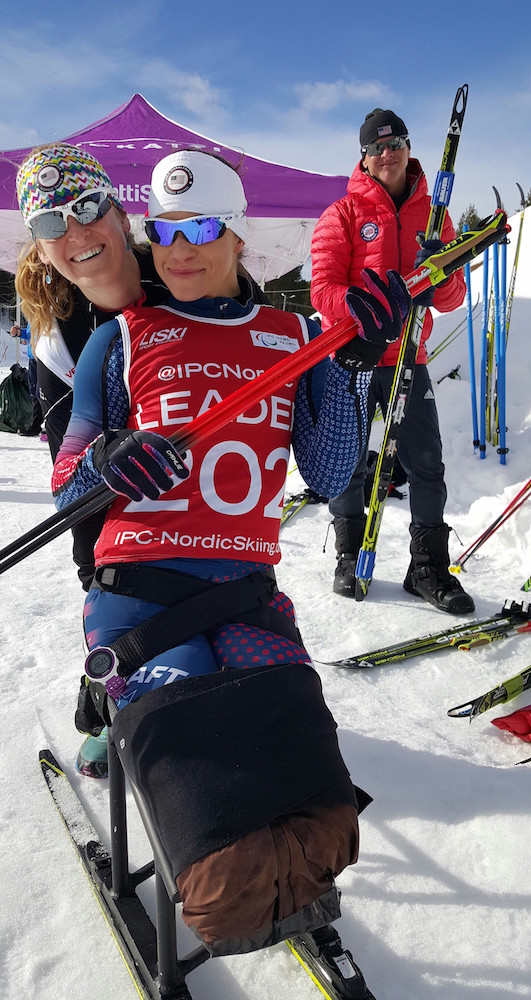
    Oksana Masters (front) and U.S. Paralympics Nordic coach Eileen Carey at 2016 IPC World Cup Finals in Vuokatti, Finland, with wax tech Dave Mark (behind). Masters won the overall cross-country World Cup for the second-straight year. (Photo: U.S. Paralympics Nordic)
    Oksana Masters (front) and U.S. Paralympics Nordic coach Eileen Carey at 2016 IPC World Cup Finals in Vuokatti, Finland, with wax tech Dave Mark (behind). Masters won the overall cross-country World Cup for the second-straight year. (Photo: U.S. Paralympics Nordic)

    When an athlete finishes a World Cup season undefeated, it’s not just a win for the athlete, it’s a win for their teammates as well.

    After U.S. Paralympics Nordic sit skier Oksana Masters completed the 2015/2016 International Paralympic Committee (IPC) World Cup race season as the undefeated victor in the cross-country events, from the 1-kilometer sprints to the debut of the 20 k marathon event, her success was seen as one for and from the team.

    “Oksana is an amazing athlete and I have been privileged to be a [part] of her cross country skiing career since she started the sport,” her teammate Andy Soule wrote in an email.

    “We have both become better skiers by learning from one another and training together,” Soule added. “She is hard-working, motivated, and a joy to be around as a teammate and as a person; and it makes me incredibly happy to see her having the level of success she had had these past couple of years.”

    Last week at IPC World Cup Finals in Vuokatti, Finland, Masters raced to three wins in a row, including the cross-country sitting sprint, but she didn’t let it get to her head.

    “It [was] the last sprint of the season and I didn’t want to leave anything behind!” Masters, of Louisville, Ky., told Inside the Games.

    Throughout the season, nobody came close to the 26-year-old Masters in the cross-country events. According to a U.S. Paralympics press release, nearly eight seconds separated her from her closest competitor in the sprint, and more than 28 seconds separated her from the field in the middle distance 5 k.

    “Oksana brought impressive consistency to her racing this season,” U.S. high-performance coach Eileen Carey wrote in an email to FasterSkier. “We had longer travel to our World Cups this season than is typical, so quality recovery was hard to come by at times.  Oksana made gains this winter in making smart decisions for her recovery and health, even when it meant backing off from training.  She made a few mistakes early in the winter, training through some sickness, but she learned from it and made smarter decisions for the rest of the season.  Her performances in cross country races would not have been possible without that adjustment. That self-knowledge will pay off in future seasons.”

    Day 1: Canada’s Arendz Fifth, Top 10’s for Weekes and Hudak 

    The first day of IPC World Cup Finals took place Tuesday, March 15, with a biathlon sprint.

    In the women’s 6 k visually impaired biathlon sprint, Ukraine’s Oksana Shyshkova won in a time of 20:55.8 after shooting clean. Also with perfect shooting was Mikhalina Lysova of Russia who finished in second overall. Third place went to Russian skier Elena Remizova after she missed two shots (1+1).

    In the women’s 6 k standing biathlon sprint, Oleksandra Kononova of Ukraine placed first in a time of 20:53.2 after two penalties (1+1). Russia’s Anna Milenina finished in second, also with two penalties (2+0). Russian teammate Ekaterina Rumyantseva rounded out the podium in third with three penalties (1+2).

    Two Canadians competed in the 6 k standing biathlon sprint, including Emily Weekes and Brittany Hudak. With three misses (0+3), Weekes finished ninth, while teammate Hudak finished just behind her in 10th place with four penalties (2+2).

    In the women’s 6 k sitting biathlon sprint, the top two spots went to Russia, with Irina Guliaeva coming in first in 23:31.8, after missing one shot (1+0). Her teammate Nadezhda Fedorova, came in second after shooting clean. Third place went to Germany’s Anja Wicker after she missed one shot (1+0).

    Masters finished sixth in a time of 25:47.0 after missing three shots (3+0).

    In the men’s 7.5 k visually impaired biathlon sprint,  Russia’s Stanislav Chokhlaev emerged victorious, winning the event in a time of 20:36.9 after perfect shooting. Also shooting clean was second place finisher, and Russian teammate Nikolay Polukhin. Third place for the men’s visually impaired event went to Ukraine’s Anatolii Kovalevskyi with one miss (1+0).

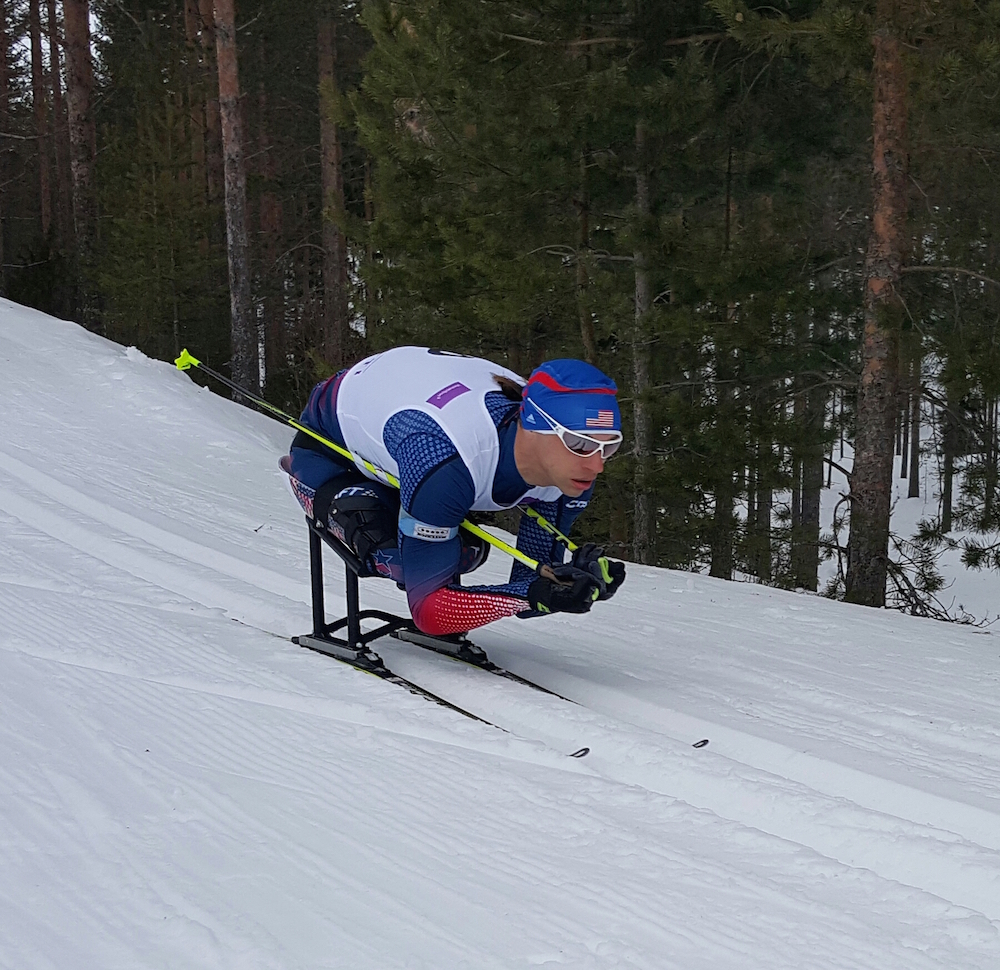
    U.S. Paralympics Nordic veteran Andy Soule tucking at 2016 IPC World Cup Finals in Vuokatti, Finland. (Photo: U.S. Paralympics Nordic)
    U.S. Paralympics Nordic veteran Andy Soule tucking at 2016 IPC World Cup Finals in Vuokatti, Finland. (Photo: U.S. Paralympics Nordic)

    American skier Jake Adicoff also competed in the event, racing to 11th after four misses (2+2).

    In the men’s 7.5 k standing biathlon sprint, Ukraine’s Ihor Reptyukh, raced to first place in a time of 18:49.5 after perfect shooting. In second place was Vladislav Lekomtsev of Russia with two misses (2+0). France’s Benjamin Daviet rounded out the top three, finishing third with one miss (0+1).

    Canada’s Mark Arendz competed in the men’s standing biathlon sprint, racing to fifth place overall with two misses (1+1).

    “Going into today I felt I had a lot more. The body felt ready to go, but it didn’t materialize in today’s race,” Arendz said in a Canadian Para Nordic Team press release.. “I was close on the skiing, but I’m still finding myself needing to tweak my shooting. Two misses is two too many for me right now.”

    In the men’s 7.5 k sitting biathlon sprint, the top three spots all went to Russia, Grigory Murygin leading the trio in first in 25:23.6 with one miss (1+0). Ivan Golubkov and Roman Petushkov both shot clean and finished second and third, respectively.

    Soule was the sole U.S. skier in the event, racing to an 11th place overall after five misses (3+2).

    “[I] had a broken pole early in the sprint and I am grateful to team Russia for their display of sportsmanship in offering me one of their spare poles until a coach could get mine to me,” Soule wrote in an email.

    Canada’s Derek Zaplotinsky also competed in the event, finishing in 15th overall after shooting the same as Soule.

    Results: Women Day 1 | Men Day 1

    Day 2: Arendz, Weekes Fourth

    The second day of racing, Wednesday, March 16, brought athletes out for another biathlon event.

    In the women’s 12.5 k sitting biathlon, Russia’s Maria Iovleva took her first victory of the week, finishing first in a time of 53:20.6 with just one miss (0+0+1+0). She led a Russian podium sweep with  Guliaeva placing second with three misses (2+0+1+0) and Svetlana Konovalova taking third with two misses (1+0+1+0).

    Masters finished seventh, after skiing eight penalty loops (2+0+4+2).

    In the women’s 12.5 k visually impaired biathlon, Ukraine’s Shyshkova took her second consecutive title of the week, completing the course in a time of 40:43.0 after one missed shot (1+0+0+0). Finishing in second once again behind Shyshkova was Russia’s Lysova after skiing four penalties (2+1+1+0). Third place went to Vivian Hosch of Germany, who missed three (0+3+0+0).

    In the women’s 12.5 k standing biathlon, Ukraine’s Kononova continued her winning streak, taking first place in a time of 43:15.2, after missing two shots (0+0+1+1). Second place went to Russia’s Natalia Bratiuk, with one penalty (0+0+0+1). Rounding out the podium finishers for the day was Russia’s Milenina in third after missing six shots (0+1+2+3).

    Weekes finished just off the podium in fourth, with two misses (0+0+0+2).

    “Emily led the way for us again today, and showing steady development,” Canadian head coach Robin McKeever, said of Weekes in a team press release. “The classic sprint is a bit of a tough test for Emily, but she faired well today and skied strong.”

    In the men’s 15 k visually impaired biathlon, Russia’s Polukhin bested his previous second place finish for first, winning the 15 k in a time of 43:31.3 with perfect shooting. In second place was Russian Nikita Povarov, who also shot clean. Ukrainian skier Iurii Utkin rounded out the podium in third, after two misses (1+1+0+0).

    In the men’s 15 k standing biathlon, France’s Daviet raced to the win in 44:12.0 after skiing three penalties (2+0+1+0).  Second place went to Ivan Kodlozerov of Russia with one miss (0+0+1+0). Russian teammate Lekomtsev finished third after missing four (0+2+1+1).

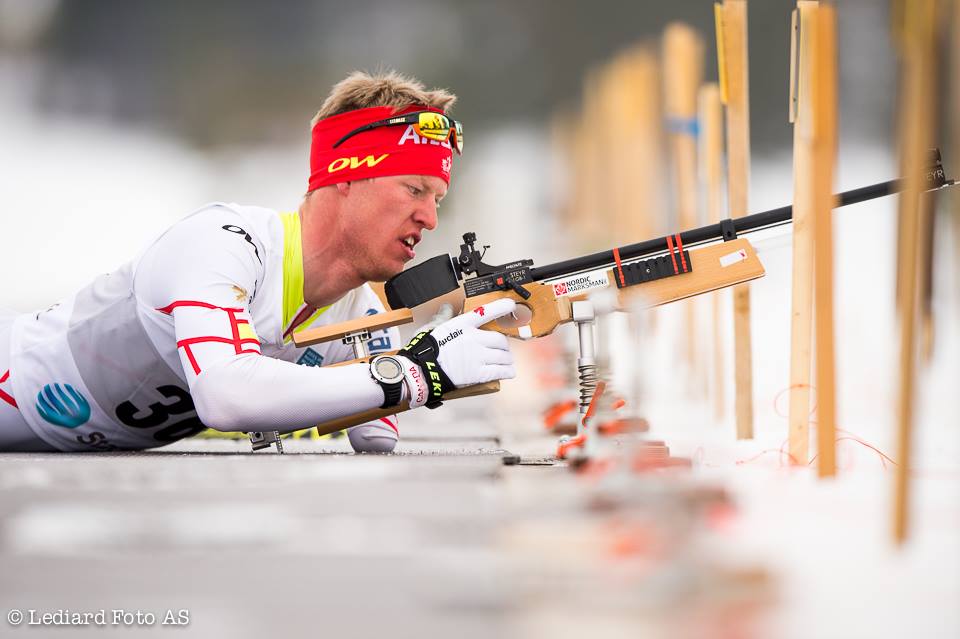
    Mark Arendz (Canadian Para-Nordic Ski Team) at 2015 IPC World Cup Finals in Surnadal, Norway. He placed fourth overall in the 2014/2015 IPC World Cup biathlon standings. (Photo: IPC Nordic Skiing/Facebook)
    Mark Arendz (Canadian Para-Nordic Ski Team) at last year’s 2015 IPC World Cup Finals in Surnadal, Norway. This year in Finland, he placed fifth in the 2016 World Cup Finals biathlon sprint. (Photo: IPC Nordic Skiing/Facebook)

    Arendz finished just off the podium in fourth after skiing three penalty loops (0+1+1+1).

    In his second victory of the week, Murygin of Russia, raced to first in the men’s 15 k sitting biathlon in 54:18.1 with one penalty (0+1+0+0). Germany’s Martin Fleig finished second after missing four (2+0+2+0). The third podium spot went to Poland’s Kamil Rosiek with two penalties (2+0+0+0).

    Soule finished sixth, with seven penalties (4+1+0+2).

    “Both biathlon races were difficult shooting races for me. I have struggled in the range somewhat this year and will be working in the of season to return to some solid shooting fundamentals,” Soule wrote. “I am really excited for the mass start 20km marathon race [later that week] … This is a type of race that we do not get to do often and I an looking forward to the challenge.”

    Canada’s Derek Zaplotinsky was the second North American to compete in the event, finishing 11th with 12 penalties (2+4+3+3).

    Results: Women Day 2 | Men Day 2

    Day 3: Masters Wins Sprint; Adicoff, Weekes and Soule All Reach Respective Finals

    Thursday marked the third-consecutive day of racing with a 1 k cross-country sprint, where Masters continued her streak to finish the season with her fourth cross-country sprint win in as many races. She won the sprint in 2:12.68, besting Russia’s Iovleva in second and Germany’s Wicker in third.

    The women’s 1 k visually impaired cross country sprint went to Lysova of Russia, who won in 3:31.34. Crossing after Lysova in second was her Russian teammate Remizova.  Ukraine’s Shyshkova took the final podium spot in placed third overall.

    Thursday brought the third-straight win for Ukraine’s Kononova, who won the women’s 1 k standing cross-country sprint in 3:28.44. Crossing behind her in second was her Ukrainian teammate Liudmyla Liashenko. Rounding out the top three was Russia’s Milenina in third.

    Weekes advanced to the final where she finished fifth. Her teammate, Hudak finished ninth overall.

    Three Russians dominated the men’s 1 k visually impaired cross-country sprint, with Vladimir Udaltcov taking first in 2:52.66.  Chokhlaev placed second, while Oleg Ponomarev took third.

    Jake Adicoff (c) and his two guides, U.S. Paralympics high-performance coach and director John Farra (r) and Germany's Florian Grimm. (Photo: U.S. Paralympics Nordic)
    Jake Adicoff (c) and his two guides, U.S. Paralympics high-performance coach and director John Farra (r) and Germany’s Florian Grimm. (Photo: U.S. Paralympics Nordic)

    Finishing just off the podium after advancing to the final was Adicoff of the U.S. in fourth.

    The men’s 1 k standing cross-country sprint saw Russian Lekomtsev stand at the top of the event podium, ahead of Ukraine’s Vovchynskyi in second place. Third place went to Japan’s Yoshihiro Nitta.

    Arendz missed advancing to the final by one spot, finishing seventh overall.

    Competition in the men’s 1 k sitting cross-country sprint went to Ukrainian athlete Maksym Yarovyi, who crossed the final in first in a time of 1:55.47. Russia’s Golubkov and Aleksandr Davidovich finished second and third, respectively.

    Soule advanced to the final, where he placed sixth overall.

    Canada’s Chris Klebl advanced to the semifinal, where he placed 12th and Canadian teammate Zaplotinsky finished the day in 14th overall.  

    Results: Women Day 3 | Men Day 3

    Day 4: McKeever, Masters Take Marathon Titles; Klebl Second

    After a day of rest, IPC World Cup athletes returned to the Vuokatti ski trails for Saturday’s marathon events.

    Masters raced to first place in the women’s 20 k sitting marathon on Saturday, March 19, completing the course in a time of 1:00:57.0.

    Two Russians, Guliaeva and Fedorova finished behind Masters in second and third, respectively.

    The women’s 30 k visually impaired marathon event went to Remizova of Russia, who won in 1:36:22.6. Her Russian teammate Lysova placed second. Ukraine’s Shyshkova earned her fourth-straight podium of the week, after placing third.

    Ukraine’s Kononova rolled to her fourth-straight win of the week in the women’s 30 k standing cross-country marathon. She won in 1:39:09.6, while Sweden’s Helene Ripa finished second and Russia’s Rumyantseva placed third.

    Hudak raced to fifth in the women’s 30 k.

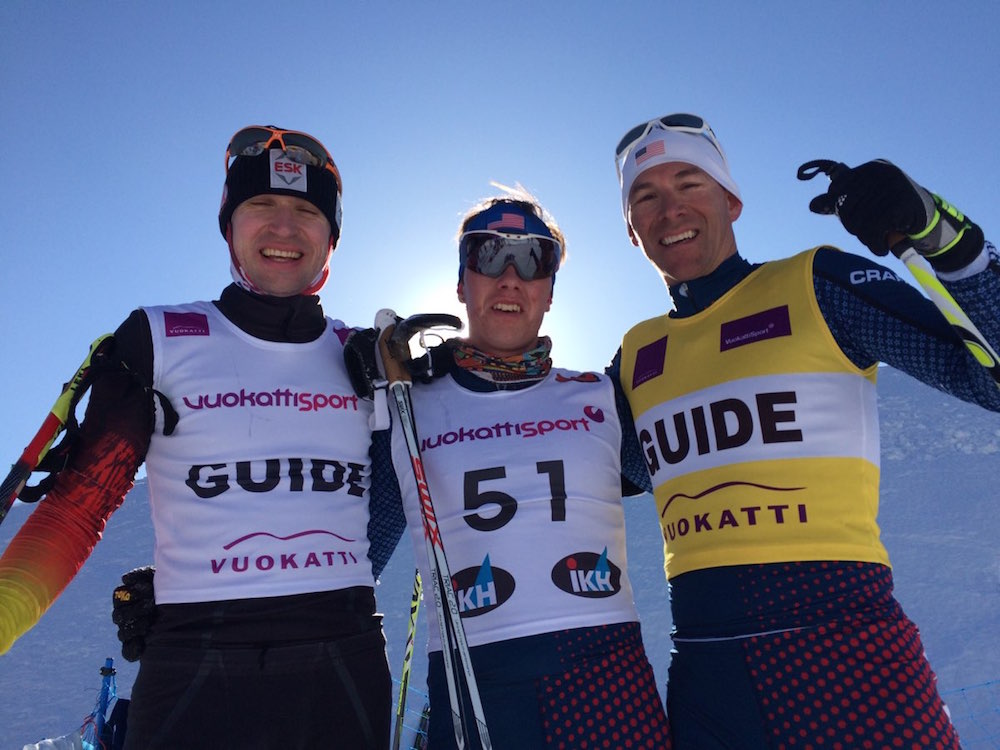
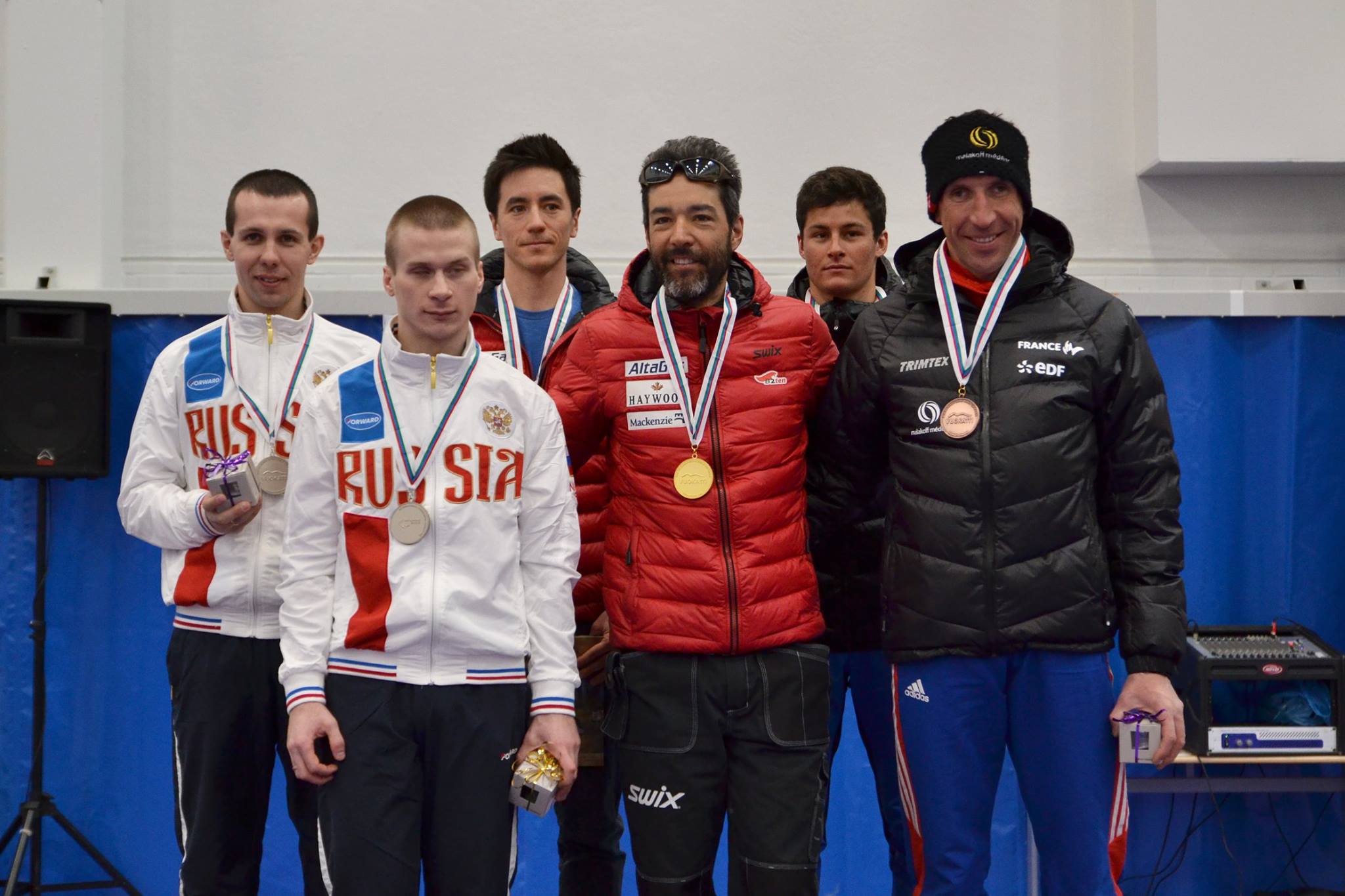
    Brian McKeever (c) and his guide Graham Nishikawa with their gold medals after the men's visually impaired 30 k at 2016 IPC World Cup Finals Vuokatti, Finland. Russia's Alexsander Artemov (l) placed second and France’s Thomas Clarion (r) was third. (Photo: IPC Nordic Skiing/Facebook)
    Canada’s Brian McKeever (c) and his guide Graham Nishikawa with their gold medals after the men’s visually impaired 30 k at 2016 IPC World Cup Finals Vuokatti, Finland. Russia’s Alexsander Artemov (l) placed second and France’s Thomas Clarion (r) was third. (Photo: IPC Nordic Skiing/Facebook)

    Canadian team veteran Brian McKeever took the victory in the men’s 30 k visually impaired cross-country marathon, completing the course in a time of 1:20:43.0. Behind him in second was Russia’s Alexsander Artemov and France’s Thomas Clarion in third.

    Adicoff was the second North American in the men’s visually impaired marathon in sixth overall.

    After winning Thursday’s standing sprint, Russian Lekomtsev took his second win of the week in the men’s 30 k standing in 1:17:52.8. The next closest competitor was his Russian teammate, Rushan Minnegulov in second. Third place went to France’s Daviet.

    Arendz raced to eighth place in the 30 k standing marathon.

    In the men’s 20 k sitting, Klebl narrowly out on a victory, placing second behind Maksym Yarovyi of Ukraine. Yarovyi completed the 20 k course in a time of 52:31.0.

    Soule was one spot off the podium in fourth, behind Korea’s Eui Hyun Sin in third.

    “The 20km was an interesting race,” Soule wrote in an email. “It was formatted as a mass start, which is not how we usually race. Because of the way we adjust times for differing disabilities, it was not actually first across the line wins. While we do not actually train specifically for this distance, the fast conditions and relatively flat course made it run much like a long individual race.”

    Results: Women Day 4 | Men Day 4

    Day 5: Masters Defends Unbeaten Streak; McKeever Wins Again

    Athletes geared up for the final World Cup race of the season on Sunday, March 20, with the men’s and women’s middle-distance cross-country races.

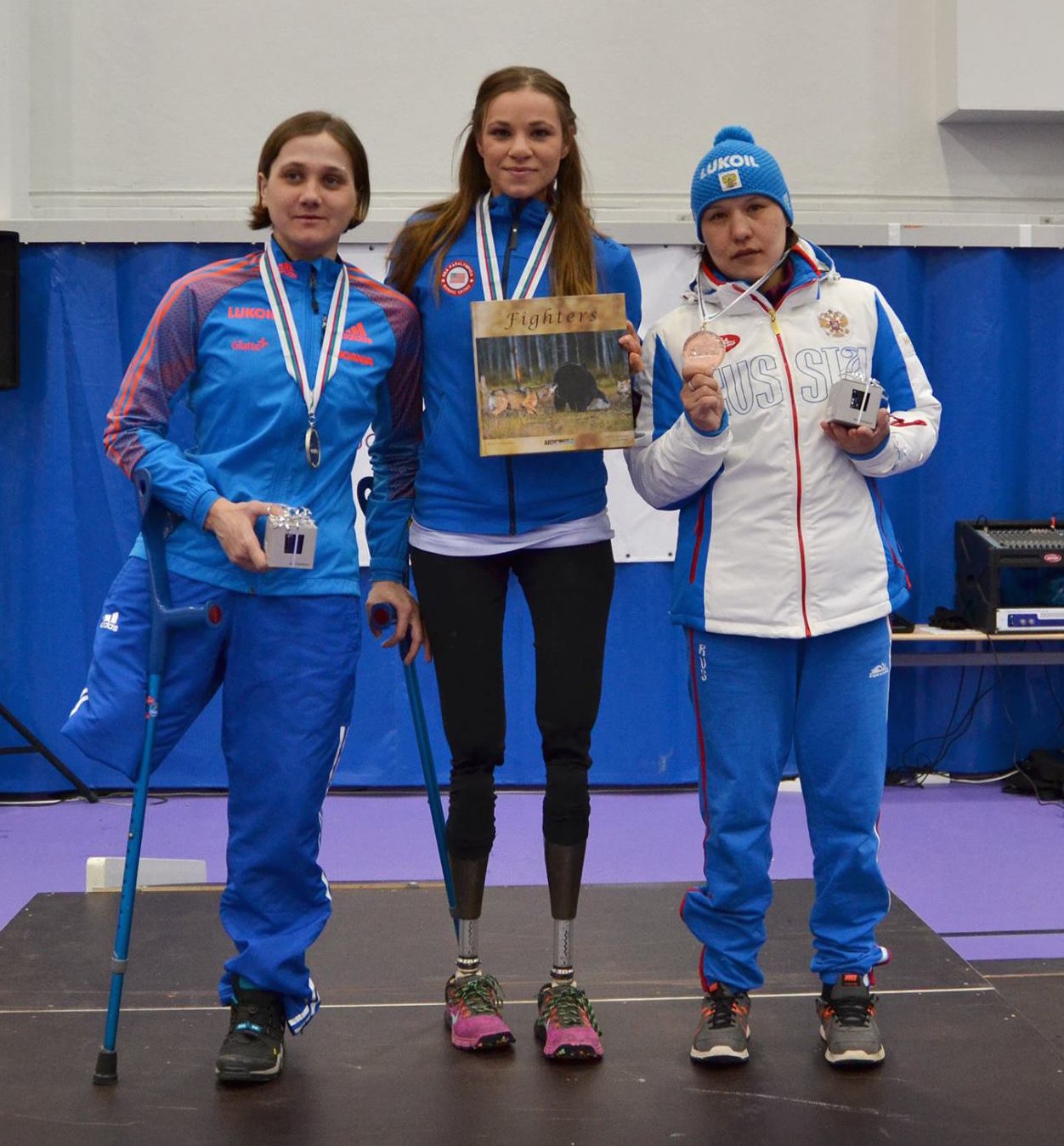
    American Oksana Masters (c) on the podium with one of her three gold medals from this year's IPC World Cup Finals in Vuokatti, Finland. (Photo: IPC Nordic Skiing/Facebook)
    American Oksana Masters (c) on the podium with one of her three gold medals from this year’s IPC World Cup Finals in Vuokatti, Finland. (Photo: IPC Nordic Skiing/Facebook)

    Masters displayed her strength with one final win, topping the women’s 5 k sitting cross-country in a time of 17:16.3, for her third win of the week.

    Finishing behind Masters in second was Russia’s Fedorova and in third was Guliaeva, also of Russia.

    In the women’s 7.5 k visually impaired cross-country, Lysova won in a time of 20:02.0. Second place went to her Russian teammate Remizova and Ukraine’s Olga Prylutska finished behind her in third place overall.

    In the women’s 7.5 k standing cross-country, Russia’s Milenina won in 19:59.2. Ukraine’s Kononova finished in second and Russian Rumyantseva placed third.

    McKeever secured his second win of the week, finishing first in the men’s 10 k visually impaired cross-country. McKeever completed the 10 k course in 22:31.1. Second place went to France’s Clarion.

    “We put in a really good effort today. Nish was on fire for the first five kilometres, and that moved us into a solid position,” McKeever said of his guide, Graham Nishikawa, in a team press release. “We were able to build on that pace, and nobody was able to respond.

    Adicoff once again just missed the podium in fourth overall, finishing behind Russia’s Chokhlaev in third.

    France’s Daviet took his second win of the week in men’s 10 k standing cross-country. Behind Daviet in second was Russia’s Minnegulov and Ukraine’s Reptyukh finished third.

    Arendz placed eighth in the 10 k standing event.

    In the final men’s sitting cross-country event, Russia’s Golubkov finished first in a time of 23:47.4. Second place went to Ukraine’s Yarovyi and Korea’s Eui Hyun Sin took third.

    Soule led the North Americans in that race in fifth, while Canada’s Klebl and Zaplotinsky finished behind him in 12th and 16th, respectively.

    “Overall the event has been a lot of fun,” Soule wrote. “I always enjoy coming to Vuokatti, a place where we have competed on a regular basis for my entire nine-year career.”

    Results: Women Day 5 | Men Day 5

    Masters Wins World Cup Globe for Second-Straight Year

    Overall, Masters won the season-long World Cup title for the second year in a row in the women’s sitting cross-country. She topped the rankings with 760 points, beating out Russia’s Maria Iovleva, who had 545 points, and Russia’s Nadezhda Fedorova, who was third with 526 points.

    Andy Soule was 30 points short of the cross-country podium in fourth overall, with 390 points to Russian winner Ivan Golubkov’s 689 points in first.

    Emily Weekes placed seventh in the women’s standing cross-country, McKeever was eighth in the men’s visually impaired.

    Soule placed fifth overall in the biathlon World Cup men’s sitting, while Masters was sixth in the women’s category. Weekes finished the season in ninth overall in the biathlon World Cup, and Mark Arendz tied for ninth in the men’s standing biathlon.

    World Cup rankings