
From the FasterSkier archive — posts syndicated from athletes’ and coaches’ own blogs between 2004 and 2012, kept online as published. Current coverage is at fasterskier.com.

Tag: Environment

  • As ‘Sport and the Environment’ Conference Kicks Off in Sochi, Allegations that Dumping Threatens Water Supply

    As ‘Sport and the Environment’ Conference Kicks Off in Sochi, Allegations that Dumping Threatens Water Supply

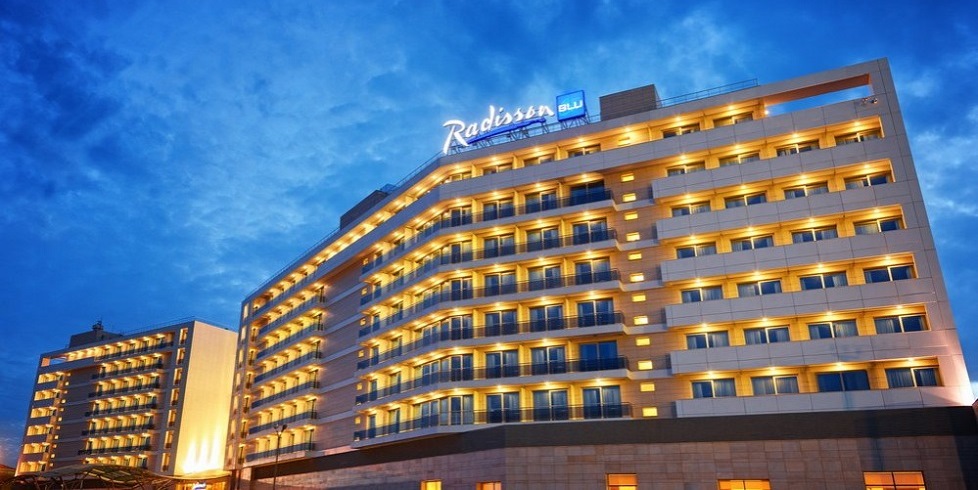
    The Radisson Blu hotel and conference center in Sochi, which is hosting the IOC's Sport and the Environment conference. Completed in the first quarter of 2013, it is one example of the almost entirely brand-new infrastructure being built for the upcoming Olympic Games.
    The Radisson Blu hotel and conference center in Sochi, which is hosting the IOC’s Sport and the Environment conference. Completed in the first quarter of 2013, it is one example of the almost entirely brand-new infrastructure being built for the upcoming Olympic Games.

    When Russian leaders submitted their winning bid to host the 2014 Olympics, they made some bold promises: for instance that Sochi would be a “zero-waste Games,” with meticulous waste management in both the staging, competition, and post-Games period. They also claimed that it would be a carbon-neutral Games; that having the Games would improve the Sochi environment; that they would respect the soil and water supplies; and that they would conform to all regulations about endangered species.

    Yet it was almost immediately clear that these promises might not hold. Back in 2010, Greenpeace expressed reservations about the environmental impact of the Games, especially because almost all of the infrastructure was to be built from scratch on previously pristine land. The international organization lamented a lack of cooperation by Russian officials.

    For their part, organizers at the time accused environmental organizations as a whole of trying to sabotage the Games. Any requirements to comply with environmental standards and regulations seemed, to them, unnecessary obstructions to having a smooth Olympics.

    “The main problems that the organizers of the Olympic Games have to solve emerged as a result of cooperating with the independent ecological organizations which, instead of a constructive cooperation with the authorities, are about to disrupt the Winter Olympic Games in 2014,” Dmitry Kozak, the deputy prime minister in charge of Sochi preparations, said in 2010.

    There’s both a national park and a UNESCO World Heritage Site nearby: the Western Caucasus, which was recognized for being one of the largest tracts of undeveloped mountains in Europe. However, Russia has removed part of the site from World Heritage protection to allow for Olympic development.

    This troubles the World Heritage Committee, who wrote in a report this year, “The World Heritage Centre and IUCN are of the view that the changes to the legislation which make it possible to construct winter sports facilities inside the World Heritage property have significantly weakened the protective status of the property. They recall that the World Heritage Committee has repeatedly requested the State Party to abandon any plans for infrastructure development on the Lagonaki Plateau. They support the conclusion of the 2012 monitoring mission that the installation of tourism and skiing facilities on the Lagonaki Plateau would seriously affect the Outstanding Unique Value of the property…”

    Lax government oversight has also allowed industry to renege on their promises. For instance, Gazprom, the largest company in Russia, allegedly built illegal garages and roads and cut down hundreds of trees in a national park adjacent to the new Krasnaya Polyana ski resort that will host many of the Olympic races.

    The group has catalogued a decline in plant and animal species and general biodiversity. And about that zero-waste claim? Waste from the construction is allegedly being transported outside of the area, so that the promise is true for Sochi but the problems are simply exported elsewhere. Toxic waste has also been dumped in the Mzymta River.

    And these are just a few examples of the many environmental violations which have been reported by multiple organizations. Not all have been followed up on or proved independently.

    This week, new claims have surfaced further diminishing the no-waste claim. Associated Press (AP) reporters following up on a lead saw dump trucks from the state-owned railroad company dumping concrete slabs into an old limestone quarry, which was also full of tires, foam sheets, and other construction debris. All of this is from the most expensive infrastructure project of the Games, a railway and interstate connecting the airport to the Mountain Cluster. Anyone going to a ski event will use it.

    Dumping is prohibited in the area, called Akhshtyr, under the Russian Water Code. That’s because the underlying rock is porous karst, so any contaminants can leach into the groundwater supply and the Mzymta River. About half of the drinking water in Sochi is supplied by the river.

    Kozak has denied that any violations are taking place. He reportedly claimed to the AP that the only thing being dumped was soil, which “only improves the landscape of the Sochi National Park and does not harm it in any way.”

    However, what the AP reporters saw seems irrefutable and members of the International Olympic Committee (IOC) are concerned.

    “This would be a breach of confidence between the Russian authorities and the IOC,” former Lillehammer Organizing Committee chairman Gerhard Heiberg told the AP in a separate report the next day. “I really hope we will be able to solve this and work together with the Russian authorities… Somebody from the IOC should go and see this for him or herself and evaluate the situation.”

    Luckily, the IOC is in a position to do just that. In an unfortunate coincidence for Sochi organizers, the venue is currently hosting the IOC’s World Conference for Sport and the Environment.

    Newly-inaugurated IOC President Thomas Bach was on hand to give the main lecture in the opening plenary session on Thursday, “Beyond the Sporting Message: A Collective Vision for Sustainable Development.”

    Dmitry Chernyshenko, the President and CEO of the Sochi Organizing Committee, was also a keynote speaker in the same session. One of Thursday’s afternoon sessions focused on Russian environmental legacies pre- and post-Sochi Olympics, and included many more members of the Sochi organizing squad.

    It remains to be seen whether IOC members and other conference participants will take this opportunity to question organizers and Russian administrators about what is really happening in Sochi.

    But as they focus on sessions like “Sport Contributing to the Sustainability Agenda of the UN” and “Legacies of the Olympic Games and the Olympic Bid for Sustainable Development,” they may want to consider whether it is valid to claim that the Olympics can have a sustainable legacy at all.

    It’s not the first time an Organizing Committee has been accused of ignoring environmental regulations – Beijing springs to mind – and probably won’t be the last. However, some of the Sochi committee’s actions seem especially egregious. Moving forward, the question of the legacy may be whether the IOC is willing to give carte blanche to future Olympic organizers to destroy the environment for their showcase event.

    For his part, Bach claims that the Olympics can and will be sustainable.

    “Sport has long been well aware of this responsibility, and is moving forward with many like-minded partners by setting a good example,” the president said in an IOC release. “The Olympic Movement has already shown the international community how sport can make a tangible contribution to reducing environmental impacts. We are helping in the search for sustainable solutions by providing highly practical guidelines and strategies, for implementation globally, but also locally.”

  • Ski and Row in the Team 350 Challenge!

    The Team 350 Challenge is looking to collectively row and ski 350 million meters between September 21 and October 24 and we’d like your help to reach this goal.  This challenge is part of a global grassroots movement to raise awareness for the significance of 350 parts per million; the sustainable CO2 threshold in our atmosphere.  The current level is over 387 ppm and this number needs to fall for a safe climate future.  The United Nations is working on a global climate treaty that will be released later this Fall.  October 24th is the International Day of Climate Action, a significant day leading up to the release of this important treaty.  It’s a day to show worldwide support for strong policy that will create the change needed to get back on track.

    Join the challenge and help us reach our goal of 350 million meters in the 35 days leading up to October 24.  Meters can be counted from skiing on snow, rollerskiing, skiing with the Concept2 SkiErg, rowing on water, and rowing with the Concept2 Indoor Rower.  Log your meters in the Concept2 Online Logbook, located at www.concept2.com/logbook, where you can join the challenge and track our progress. Its free to use and the more participants the better!  Visit the Team 350 Challenge page www.concept2.com/350 (this page will be available on Monday, September 21st when the challenge begins) to see a running tally of Team 350’s progress during the challenge, individual meter honor boards, photos, stories, and more information about this event.  At the end of the challenge, all participants will be able to download a personalized certificate recognizing the number of meters contributed to the effort, will have access to commemorative t-shirts available for purchase with proceeds going to the 350 movement, and will be entered into a raffle with more prizes.  Be a part of the Team 350 Challenge and ski or row to keep our winters white!

    To participate, first create a free Concept2 Online Logbook found at www.concept2.com/logbook.  Then on or after 9/21, go to your Logbook homepage and click on the Team 350 button to let us know that you want to participate.  Now all you have to do is ski or row, inside or outside, and log your meters in your Logbook!  AND spread the word about 350 so that more people will join and get the message!  The more participants the better!  Our collective progress toward the considerable goal of 350 million meters will be tracked at www.concept2.com/350.  For more information on the 350 campaign visit www.350.org.

    The Team 350 Challenge is being organized by Concept2 with assistance from the Craftsbury Green Racing Project.

  • How Green Can a Ski Team Be?

    How Green Can a Ski Team Be?

    Professional cross country skiers are not usually preoccupied with environmental concerns like invasive aquatic species, composting, or even remembering to turn off the lights in their houses. Nor do they spend a whole lot of time doing trail work.

    Instead, for the most part, skiers tend to take for granted the negative environmental impact of their sport, with elite competitors criss-crossing the country for races, fleets of groomers guzzling gas, and the voracious appetites of athletes of all ages.

    Here at the Craftsbury Outdoor Center, though, in Craftsbury, Vermont, a small group of skiers is trying to prove that it can still compete at the highest level of the sport while minimizing the environmental impact of its activities. In its first year, the Craftsbury Green Racing Project (CGRP) is doing this by trying to reduce the impact of its travel, working on projects promoting sustainability, and even making sure to flip off light switches before leaving the house.

    Their efforts consist mainly of trying to offset the negative impacts of competition and training, rather than actually reducing that impact outright. The team characterizes its efforts not only as a way to mitigate its own effects on the environment, but also as a way to set an example to athletes at all levels of skiing.

    “It’s more about being conscious about the decisions [team members] make on a regular basis, and spreading that consciousness,” said athlete Tim Reynolds.

    Reynolds warming up for some intervals on one of Craftsburys roads.
    Reynolds warming up for some intervals on one of Craftsbury's roads.

    An environmental philosphy

    The CGRP emerged this spring from a few convergent ideas. First, the New England Nordic Skiing Association (NENSA), had recognized that there was a gap in the development pipeline for college graduates and older skiers who wanted to make the next step in their careers.

    At the same time, Reynolds, then a senior at Middlebury College, was working on a school project developing a business plan for a “green” racing team.

    Originally, Reynolds had hoped to headquarter the team at the Trapp Family Lodge, in Stowe, Vermont, but those plans fell through. Judy Geer and Dick Dreissigacker-a couple who had purchased the Outdoor Center last fall and turned it into a foundation-stepped in and offered to host the team there.

    Since the foundation’s new mission was to promote lifelong sports, sustainable practices, and the preservation of land, lakes, and trails, the focus on sustainability was a perfect fit.

    Through an application process, six skiers emerged, all recent graduates from eastern colleges: Matt Briggs, from Colby College; Oliver Burruss, from Harvard University; Hannah Dreissigacker (Geer and Dick Dreissigacker’s daughter), and Chelsea Little, both Dartmouth College graduates; Lauren Jacobs, who graduated from Bates College; and Reynolds himself.

    While the athletes’ previous commitments to sustainability were varied, all appear to have embraced the environmental philosophy of the team.

    Before joining the CGRP, Briggs said, he wasn’t particularly conscious of his environmental impact. It has been interesting, he continued, “just learning what has an affect, and what you can do in your life to eliminate waste.”

    “Especially as skiers, nobody’s more affected by [the environment] than us,” Briggs said. Reynolds was obviously personally concerned about the environmental impacts of skiing, but he said his idea to make the team “green” was about business.

    “I just figured in terms of attracting sponsors, you’d have more success with that edge,” he said. “If I was a business, it seemed like something I could actually sell.”

    Providing some person power

    The athletes began arriving at the Outdoor Center in May and June to train with Coach Pepa Miloucheva, and the program was in full swing by mid-July.

    All six team members live rent-free in a large farmhouse adjacent to Craftsbury’s ski trails, which Geer and Dick Dreissigacker also purchased last fall.

    One of the athletes' rooms in the team house.
    One of the athletes' rooms in the team house.

    While a decent amount of space is filled with the equipment necessary to support six elite skiers in their training, there is still plenty of room for book collections, video games, and even a few paintings. And-a necessity for young people living in northern Vermont-wireless internet.

    CGRP member Hannah Dreissigacker relaxes in the living room of the team house.
    Dreissigacker relaxes in the living room of the team house.

    The team eats almost all of its meals at the Outdoor Center’s cafeteria, although they will have to cook for themselves during a few dead periods throughout the year. Geer also said that the foundation is paying for health insurance for anyone not still covered through a parent’s plan.

    “It’s certainly better support than I would have gotten anywhere else,” said Briggs.

    Geer-who along with Dick Dreissigacker was an elite rower during and after college-said that the foundation is providing the support because she and her husband understand the demands of high-level training.

    “It is hard to train and work a lot of hours at once,” she said. “You can’t do trail work all day, because you get exhausted.”

    Geer said that costs of supporting the team are not as high as if the program was operating on its own, without the existing infrastructure of the Outdoor Center. The additional meals, for example, are only a small marginal cost above what the cafeteria already serves to people attending running, rowing, and skiing camps.

    Team members are expected to put in 15 hours of work a week in exchange for the support offered to them. Anything beyond that, they get paid for.

    Those 15 hours are mostly dedicated to working on projects designed by the athletes themselves, which are intended to promote the CGRP’s “green” focus.

    Jacobs is studying the ecology of Lake Hosmer, which the Outdoor Center uses for rowing. She’s taking weekly water samples, and is also working on a project to remove an invasive aquatic species from the lake.

    “Ultimately, I want to establish some sort of education about the lake for local schoolchildren,” Jacobs said.

    Other “green” projects already in the works include an initiative to get more local food in the cafeteria, as well as creating a composting program for its food waste. Another idea being floated is a carbon emissions inventory for the Outdoor Center.

    In addition to their projects, the CGRP is also investigating ways that it can mitigate the effects of its travel to races, like by doing some volunteer service promoting sustainability in a venue’s surrounding area.

    There are also numerous smaller tasks-in some cases, strenuous ones-to be completed around the Outdoor Center. These include trail work, coaching Craftsbury’s Bill Koch League program, and even chaperoning kids attending rowing camps.

    Burruss giving some technique advice during a Bill Koch practice. Jacobs is on the right in the background.
    Burruss giving some technique advice during a Bill Koch practice. Jacobs is on the right in the background.

    According to Geer, the program’s focus on post-college athletes is intended to put to use the knowledge that they have already acquired in school.

    “The athletes get to train, but they also get to use and develop the skills they have, and get something for their resume,” she said.

    Before the team was around, Geer said, the staff at the Outdoor Center had a number of ideas for projects that would promote the foundation’s new mission. But there weren’t enough free hands to put all of those ideas into practice.

    “The green team is providing some person power,” she said.

    One obvious concern is whether the work might interfere with the athletes’ training or recovery. But Miloucheva said that it hasn’t been a problem, and most of the team members agreed.

    “It’s not that bad for them,” Miloucheva said. “The working schedule is quite easy. Their priorities can be shaped around their training…When they work for the center, they have lots of flexibility.”

    On a recent Wednesday, in the middle of a difficult week, it indeed appeared that the team was not working too hard outside of their training. Between a rollerski in the morning and running thresholds in the afternoon, the athletes mostly stayed in the house-putting their feet up, checking e-mail, and venturing outside only to hit a few golf balls into a neighboring field.

    Work wasn’t too far off of everyone’s minds, though. There were frequent discussions about projects, and evidence of the team’s labor over the past few weeks was everywhere: compost bins in the dining hall, a new stone patio, smooth trails between the team house and the cafeteria.

    Under the microscope

    Though the team’s work projects might sound like enough to keep the athletes busy all day, they’re still fully committed to a serious training program that Miloucheva closely monitors.

    gear
    A small portion of the team's training gear.

    All of the members of the team were competitive racers on the college circuit, and many were standouts. Both Dreissigacker and Reynolds won races in the cutthroat Eastern Intercollegiate Skiing Association, and Briggs and Little had multiple finishes in the top ten.

    The training is fairly standard for a high-level cross country skiing program: often multiple workouts each day, lots of intensity, weights, video, technique work. In July, the team was already spending a significant amount of time on rollerskis.

    The athletes are constantly under Miloucheva’s microscope. During a recent running workout, she took lactate samples from Hannah Dreissigacker, pricking one of her fingers to draw a drop of blood, which was then analyzed by a small device to see if she was going at the right pace. (She wasn’t.)

    Miloucheva testing Dreissigacker's lactate level.
    Miloucheva testing Dreissigacker's lactate level.

    Miloucheva is also making use of a new training tool, the Ski Erg, which is produced by Concept Two-the company owned by Geer and Dick Dreissigacker that is known mainly for its rowing machines.

    The Ski Erg uses much of the same technology as the rowing machines, but rather than simulating the stroke of an oar, it simulates a classic skier’s double poling motion.

    The device can gather data about an athlete’s power output, and Miloucheva has developed a number of protocols for testing values like VO2 max and threshold.

    “It has a very good data transfer for skiers,” she said. “It’s a very reliable testing system.”

    Jacobs doing a test on the Ski Erg. Photo courtesy of Judy Geer.
    Jacobs doing a test on the Ski Erg. Photo courtesy of Judy Geer.


    After training through the summer and fall, Miloucheva said that she plans to bring the team to the first two stops of the SuperTour, in West Yellowstone and Bozeman, Montana.

    From there, anyone with a shot at qualifying for the pre-Olympic World Cups, U-23 World Championships, or the Olympics will head to the U.S. National Championships in Anchorage.

    Ultimately, Geer said, it would be great to see some athletes jump from the CGRP to the National Team. For those for whom that is not as likely, Geer said simply that the team is there to support its members’ athletic goals.

    Most of the athletes said that they hoped to spend at more than a year with the team, and Geer said that she expected that Craftsbury’s commitment to the skiers would be at least that long.

    Whether or not to stay on for another year will be between Miloucheva and the athletes, Geer said, but the decision will probably be based on whether the skiers are improving.

    “We expect that at the end of each season, we’d take stock,” Geer said.

    The things they can control

    It’s clear from the team’s work at the Outdoor Center that its members are dedicated to their cause. But the question remains: With the resources consumed by grooming, making new equipment, and travel to Montana, Alaska, or even Europe, just how sustainable can a professional ski team be?

    While no one can claim that volunteering at a race site isn’t a good thing, can such actions really offset the environmental costs of making the journey to get there?            

    Writer and environmentalist Bill McKibben has written extensively on both cross country skiing and climate change, and he helped Reynolds on his plan for the CGRP.

    In an e-mail from the Maldives, where he was organizing against climate change, McKibben acknowledged that the CGRP’s efforts won’t completely mitigate the effects of their travel.

    Instead, he said, the real point of the team “will be to use it to demand political change-at this point, that’s what will actually do anything about global warming.”

    “My hope is that the Green Racing Project will carry strong political messages with them as they go-and maybe even help pressure Vermont’s recalcitrant Governor Douglas to do something useful about energy,” McKibben said.

    Reynolds also admitted that there was a certain amount of inevitability of the CGRP’s environmental impact.

    But while there is definitely some hypocrisy involved in traveling to races, Reynolds said, “at least we’re acknowledging that.”

    “Racing is a priority, so we’re not going to not go to Anchorage because you have to fly there,” he said.

    Instead, Reynolds said, the team members are focusing on the things that they can control, like the food they eats, the cars they drive, and how they light their house.

    “We can’t change the ski races-we’re probably still going to have to fly to places,” said Geer. “The only way to make it happen is in the rest of your non-skiing life.”