From the FasterSkier archive — posts syndicated from athletes’ and coaches’ own blogs between 2004 and 2012, kept online as published. Current coverage is at fasterskier.com.

Tag: equal distance racing

  • Season Preview with Chris Grover, United States’ Cross Country Program Director,  Part II

    Season Preview with Chris Grover, United States’ Cross Country Program Director,  Part II

    Chris Grover is the U.S. Cross-Country Program Director.  He has held that position for three years. He corresponded with FasterSkier’s Ken Roth in discussing the upcoming World Cup season, and an overview of the U.S. program.  This is the second in a series of interviews with Mr. Grover.

    The Russian Olympic Committee takes gold in the men’s 4 x 10 k relay in Zhangjiakou, but both Russian and Belarusian teams will continue to be banned from FIS competitions while war continues to be waged on Ukraine. (Photo: NordicFocus)

    FIS (International Ski and Snowboard Federation) has reaffirmed the Russian ban.  How do participating athletes feel about it?  Do they feel deprived not being able to compete against some of the top skiers? Are skiers talking about how it will affect competition outcomes?

    Europeans tend to see this as a very black and white issue, that the Russians and Belarusians should not be able to compete while (the war) is happening. At the same time, the athletes recognize, for the most part, that this is something that is happening to the Russian and Belarusian athletes, and they aren’t involved in the military or geopolitics. We all feel sad for the athletes and servicemen that we know. There are definitely two sides to see on the issue.

    From a competition viewpoint, people aren’t looking at like “I’ll ski harder because people are absent.” We’ve kind of gotten used to absent teams. We’ve missed Norwegians, Swedes, and Finns over the last two years due to Covid. It’s a similar situation. Our perspective is that this is our one opportunity to perform. We can’t control the pandemic or geopolitics. We focus on just having the best race possible.

    FIS voted last spring to change to equal distances for men and women. This came after an athlete survey which didn’t support it. Did it come as a surprise? What’s been the impact for training and planning?

    The change came around really fast. One of the people who really drove it was Vegard Ulvang (former FIS executive board chairperson). His perspective was that the original thinking of the design of the distances was “old thinking.” Are we going to change with the times or (be) dragged into the future?

    It’s not surprising it wasn’t popular in the athlete survey. Athletes have grown up racing and training for certain distances. To change that is really hard for the athletes to envision. But, the practicality of the changes aren’t that big . . . It may seem dramatic, but in reality, it’s not as big as you would think.

    Some of the discussion was around things such as television time.  Should this be part of the discussion?

    Now women will have more television time.  But changes have happened so that men’s and women’s race times have gotten a lot closer.  More importantly, if there’s more coverage devoted to the women, then that’s great.  The women deserve more attention than they get. They’re incredible athletes and we need to build the interest in women’s racing . . . In the U.S. we’ve had female winter sport superstars for a long time.  It’s been slower to come around in some places in Europe. Getting the women more coverage will be helpful.

    With the change in distances, genders will also race on the same course. This will be an indirect positive impact. It saves the organizers lots of money. You can use the same television cameras, and the same snow. That will be really critical this year when it comes to energy costs related to snow production. That’s a serendipitous advantage.
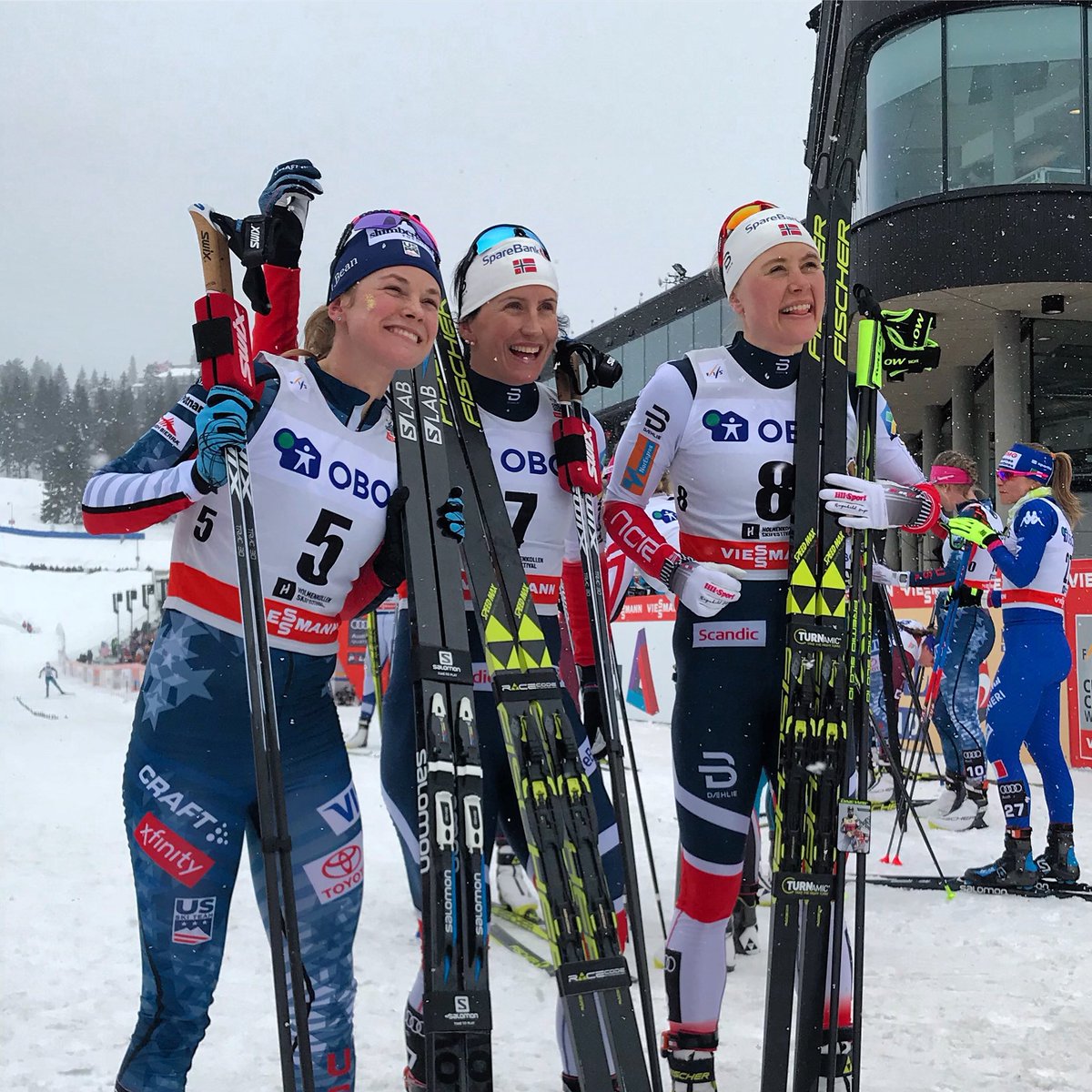
    Jessie Diggins placed second behind Marit Bjørgen in 2018’s Holmenkollen women’s 30 k, but this season she is even more excited to be racing the 50 k freestyle distance. (Photo: FIS Cross Country/Twitter)

    Are the women psyched about racing the 50k Holmenkollen?

    Yes and no, depending on the athlete. Jessie’s really excited for it. This race has been going for over 100 years; and it will be skating this year. For the first time ever, the women will get to do the big race. That’s really exciting. There’s going to be a woman who’s the first time winner of the 50 K Holmenkollen. History will be made. That’s pretty exciting to contemplate. The one challenge is it’s also a week after the World Championships.

    FIS is still on the fluoro merry-go-round; announcing fluoro bans and then backing off a couple of times. Has this caused turmoil in planning?  Has FIS cried wolf too many times to be taken seriously on this issue?

    The biggest issue for us on this has been financial.  Instead of a straight transition to fluoro free, we’re having to make two transitions. We have to go from the world of C8 fluoros to C6 (differing fluorocarbon chain lengths found in the waxes), which we’re in now, to then potentially fluoro free.  Every transition costs a massive amount of money in terms of testing and buying wax. Last year we had a massive investment into C6 wax when the call was made that we weren’t going fluoro free and that C6 wax would be allowed. We have boxes full of C8s, and made the transition to C6s. Then if you transition to fluoro free, you now have a bunch of obsolete C6 wax. Last year we spent double our budget on wax because of this.

    I think our service guys agree the FIS decision to delay was correct. The new testing devices just haven’t worked that great. No one wants an environment when there are ways to cheat the ski testing protocols. The technology isn’t there yet to support an even, fair playing field.

    FIS had their hearts in the right place with the original decision on fluoro and thought the technology would be easier. Making a detection device is way more granular than you think. You have to allow a certain percentage of fluoros to be ok. There’s a certain amount in the background, and testing in the field is harder than testing in the lab. No one understood the amount of challenges involved.

    Are people concerned about ski doping?

    Oh yeah. We’re worried about the same bad actors that have in the past been associated with doping finding another way to cheat. That’s why everyone wants the technology to be fool-proof.

    Will teams have confidence in the testing technology once it’s implemented? 

    Yes, because teams are involved in the process already. Over the last several years, nations were invited to try and fool the testing devices. The bad news is, we could fool it. We have had a number of World Cups, and will have several this season, where we bring skis into the venues to test the devices’ accuracy. You can get creative trying to fool the machines. Things like burying fluorocarbons, using different application methods, and different layering. Testing the devices has been a group effort of all the nations.

    In the spring we’re also testing proposed protocols. That means when the skis are tested, and when they go into a control area. The protocol is to test before races. For races with multiple rounds (sprints) this means skis going into controlled areas and picking up skis. Sprints will particularly tricky. It’s not realistic to submit skis for testing four times.

    Are false positives an issue?

    We’re testing for that to. Technicians are testing the machines with skis that have fluoros and skis that don’t. But, that’s one of the reasons proposed testing will be before the race. There are still a lot of things to figure out. For example, if a ski tests positive can an athlete submit a second pair?  If you detect fluorocarbon ahead of the race, there’s no disqualification, the skier is just not permitted to start. You definitely don’t want to test after the race. There are lots of issues with that. You don’t want to have a winner disqualified afterwards.
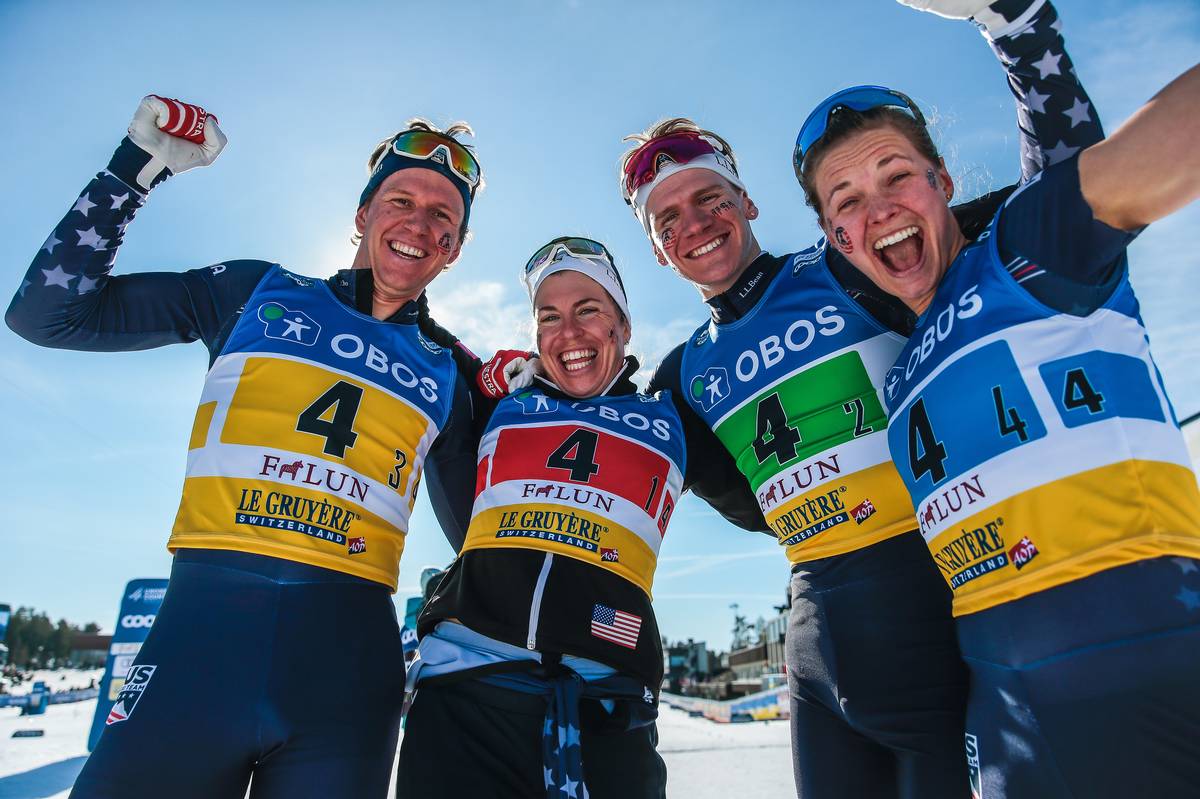
    USA I took the win in Falun’s 4 x 5 k mixed relay. From left to right, Scott Patterson, Rosie Brennan, Zak Ketterson, and Jessie Diggins. (Photo: NordicFocus)

    Will we see mixed gender racing?

    Not at the world championships, but in the World Cup for sure, in mixed four by five relays. But, there will not be a mixed team sprint.

    Additional thoughts you would like readers to know?

    It’s going to be a really exciting season. Equal distances will be an interesting story in every race.

    It’s going to be really exciting watching Jessie and Rosie battle for the overall championship.  They’re at the height of their careers battling at the same time. It’s a huge gift to U.S. racing fans.

    It’s also going to be exciting to watch all the emerging young talent we have. Another interesting story will be watching Julia Kern: she had a great last four to five weeks of her racing season last year.

    The other neat story will be the two mixed team relays on the schedule.

    There’s also been a push to cluster races at venues, so we’ll have a lot of three race day weekends.  More events at every weekend brings more value to racing fans every weekend.

    The teams have had a really good summer, so I’m really excited to see what everyone can do.
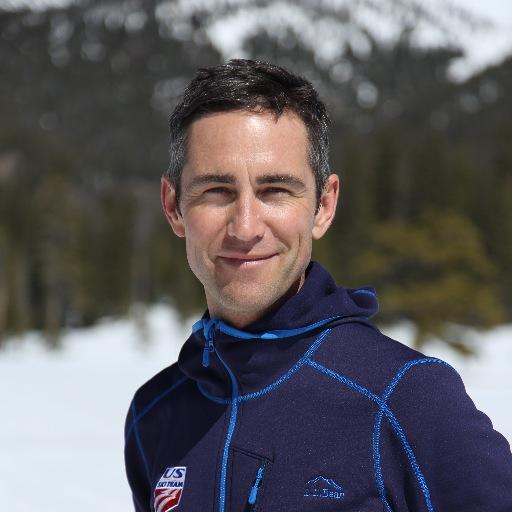
    Chris Grover s the U.S Cross Country Program Director. (Photo, US Ski and Snowboard)
  • The Devon Kershaw Show: U.S. Ski Team veteran coach Matt Whitcomb

    The Devon Kershaw Show: U.S. Ski Team veteran coach Matt Whitcomb

    Matt Whitcomb has been a staple of the U.S. Ski Team coaching staff for a decade, seeing it through some of its most successful years. We hear from him about the coaching lifestyle, equal distance racing and other topics in another episode that we took a litttttle too long to post.


    You can email us at devon@fasterskier.com and nat@fasterskier.com.

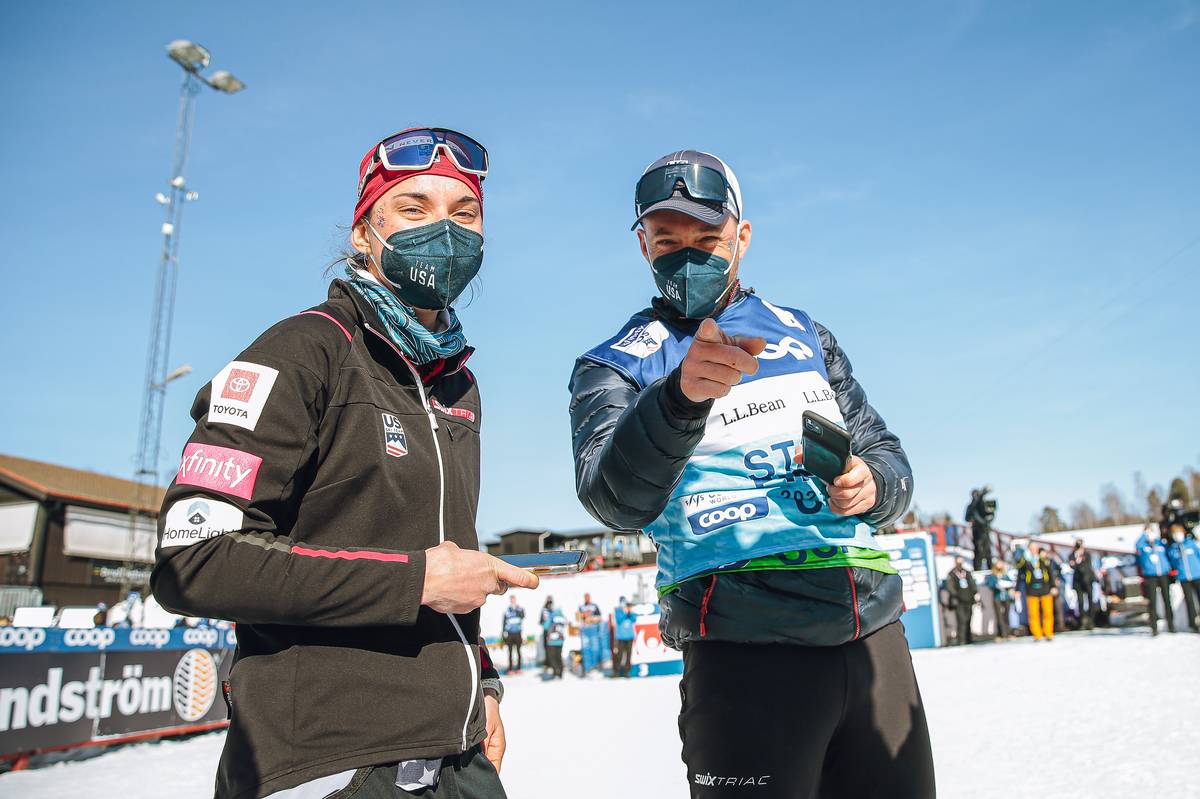
    U.S. Ski Team head coach Matt Whitcomb (right) and Julia Kern seem course-side during the 4 x 5 k mixed relay amidst the 2021-2022 World Cup Finals in Falun, SWE. (Photo: NordicFocus)
  • Switching to Equal Distance and the “Trickle Down” Effect

    Switching to Equal Distance and the “Trickle Down” Effect

    In most sports, the question of whether men and women would compete on equal playing fields, so to speak, was answered long ago. While gender inequalities remain- a recent decision by the IOC to maintain the exclusion of Women’s Nordic Combined from the Olympics comes to mind- the sport of cross-country skiing will now be joining the list of those in which competition is equal for men and women. In a press release issued on May 18th 2022, the International Ski Federation (FIS) announced that 57% of the Cross-Country Committee (CCC) had voted in favor of an equal distance proposal. 

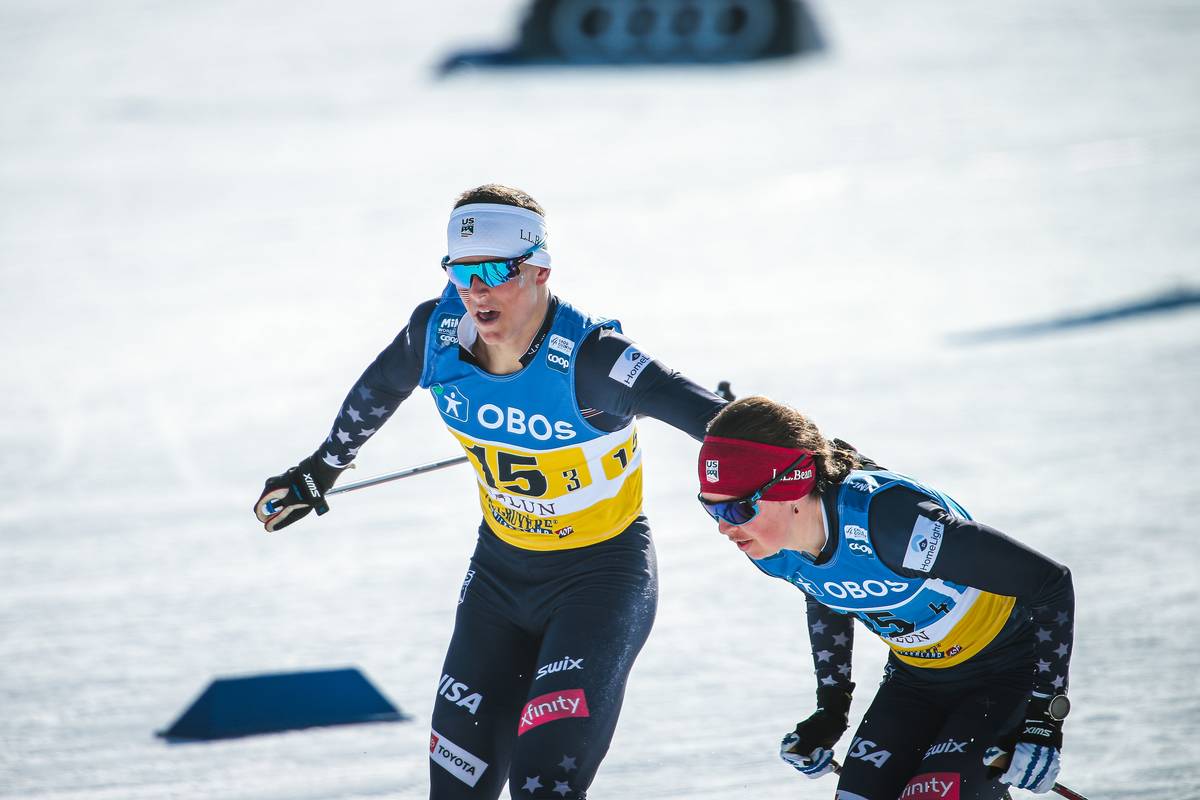
    Adam Martin tags Craftsbury Green Racing teammate Caitlin Patterson during a March, 2022 4 x 5 k mixed gender relay in Falun, Sweden. (Photo: NordicFocus)

    The push for equal distance, within the U.S., began in earnest in 2020 when the lack of racing due to the pandemic gave Vermont’s St. Michael’s College coach, Molly Peters, more time to focus on the issue. “I’ve always been sort of bringing it up,” said Peters, “through the EISA,  I’ve tried to get it changed at the NCAA level before, but I put in a proposal, and slowly I was getting more and more support. But then when the pandemic hit, I finally sort of had the time to really put a lot of time into it.”

    With the help and support of fellow EISA coaches, Peters started the Equal Distance Group and in May of 2021 the Ski Equal Group sent a letter to the U.S. Ski & Snowboard Cross Country Sport Committee urging them to adopt equal distance racing. The letter was signed by 23 prominent members of the nordic ski community, including Jessie Diggins and Bill Koch. 

    Head Cross-Country Ski Coach at St. Michael’s. (Photo: St. Michael’s)

    Reflecting back, U.S. Ski Team Head Coach, Matt Whitcomb shared, “The first time Molly Peters brought this to my inbox I felt ambivalent. This was only two years ago. I’m embarrassed that I can’t claim to be an early adopter. However, the more it sat with me over the next months, and the more I reread Molly’s reasons, the more I warmed to it.” Whitcomb said he wasn’t sure exactly what sparked the movement at the FIS level but shared, “it was a popular topic of conversation last year on the World Cup, and in a FIS competitions format working group. It didn’t all just happen this spring, but I applaud FIS for having the spine to make a big change.”

    On her part, Peters gives credit to both Whitcomb and U.S. Ski Team Program Director, Chris Grover, for their efforts to advance the proposal, saying, “I spoke to them both, numerous times and they kept me updated, which was amazing. And they’re the ones that really pushed it at the higher level.” 

    For those not closely following the issue, the decision announced by FIS this spring might have come as a bit of a shock. Even to Peters, it came as a surprise. “It kind of came out of nowhere,” she said. “I mean, I knew that the U.S. had been pushing for it, on the domestic level. I’ve spoken at the U.S. Ski and Snowboard Congress twice and I’ve been talking to a lot of people within U.S. Ski and Snowboard about sort of how to get it moving up the chain. But I had no idea.” 

    Peters said she knew that a FIS committee had formed to talk about the issue and then, “all of a sudden, I got an email or call maybe from Chris Grover like, ‘Hey, this is happening. You know, we’re pushing this hard. It’s looking like it’s gonna pass’ and I was kind of floored by that just because, I knew it had slowly, over the past year and a half, more and more races were equal and I’ve been pushing hard at every level I could possibly push at. But yeah, to go all the way for it to jump to the FIS level was a complete surprise and pretty amazing.”

    Both men and women will now race 50 k at the prestigious Holmenkollen race, pictured here, Scott Patterson races the 50 k mass start classic in Oslo, NOR. (Photo: NordicFocus)

    U.S. Ski Team A-Team member, Julia Kern, wrote in an email to FasterSkier that she too was surprised by the seemingly sudden decision but through conversation with others she came to realize that, “if these decisions were tested first or implemented more slowly, it would take time and potentially not be as adopted. Instead, the decision was made and carried out across the board in all World Cups for the coming season.”

    In a recent interview, FIS’s Cross-Country Race Director, Pierre Mignerey, spoke about the reaction to this decision. Mignerey said, “as expected, it created quite some discussions among the cross-country community. Some people were very happy and some were strictly against racing equal distances.” (FasterSkier’s Nat Herz wrote about the various perspectives on this issue during the 2022 Winter Olympics).

    Mignerey expressed understanding for the opposition, saying, “It is understandable to see some resistance from athletes or coaches because it is a decision which may disturb their routines, their habits and pushes them to adapt their training plans and develop new strategies. But I’m convinced that it will be seen – or maybe is already seen – as a very logical and meaningful decision.” 

    Whitcomb shared a similar sentiment, “That’s just how change goes; most humans don’t do it easily or well. But it’s going to be okay. And to those who say they are going to miss the five or 15 kilometer distances, I hear you. I will too. But we’re not forever locked into what distances we do, so much as the idea that we’ll be doing them together.”

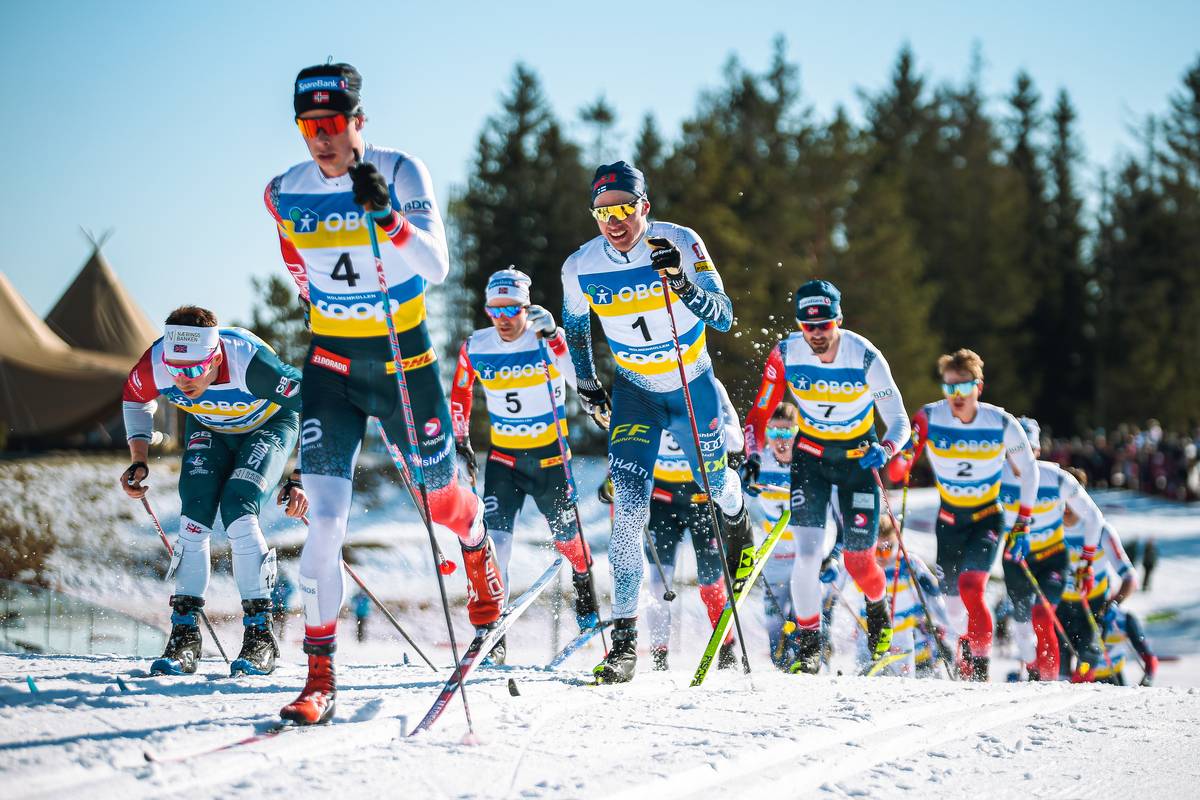
    The lead men kick and glide as a large group early in the 2022 50 k classic at Holmenkollen in Oslo, Norway. (Photo: NordicFocus)

    In the same meeting that passed the proposal, the CCC decided on the race formats for the World Cup, U23 World Championships and Junior World Championships, as well as Youth Olympic Games. FIS has shared the 2022/23 World Cup race calendar which can be found here. 

    The 2022/23 race formats decided on by the Cross-Country Committee at FIS (Source: FIS)

    Speaking from a coaching standpoint, Whitcomb talked about what this change will mean for the athletes. He started by saying, “to simplify things, you can look at the changes each gender will experience; women will be racing longer, and men will be racing shorter.” To prepare for this shift, “we’ll see some longer threshold sessions and time trials that women adopt, and the men will be navigating the demand for slightly higher race speeds, by working on finishing tactics.” 

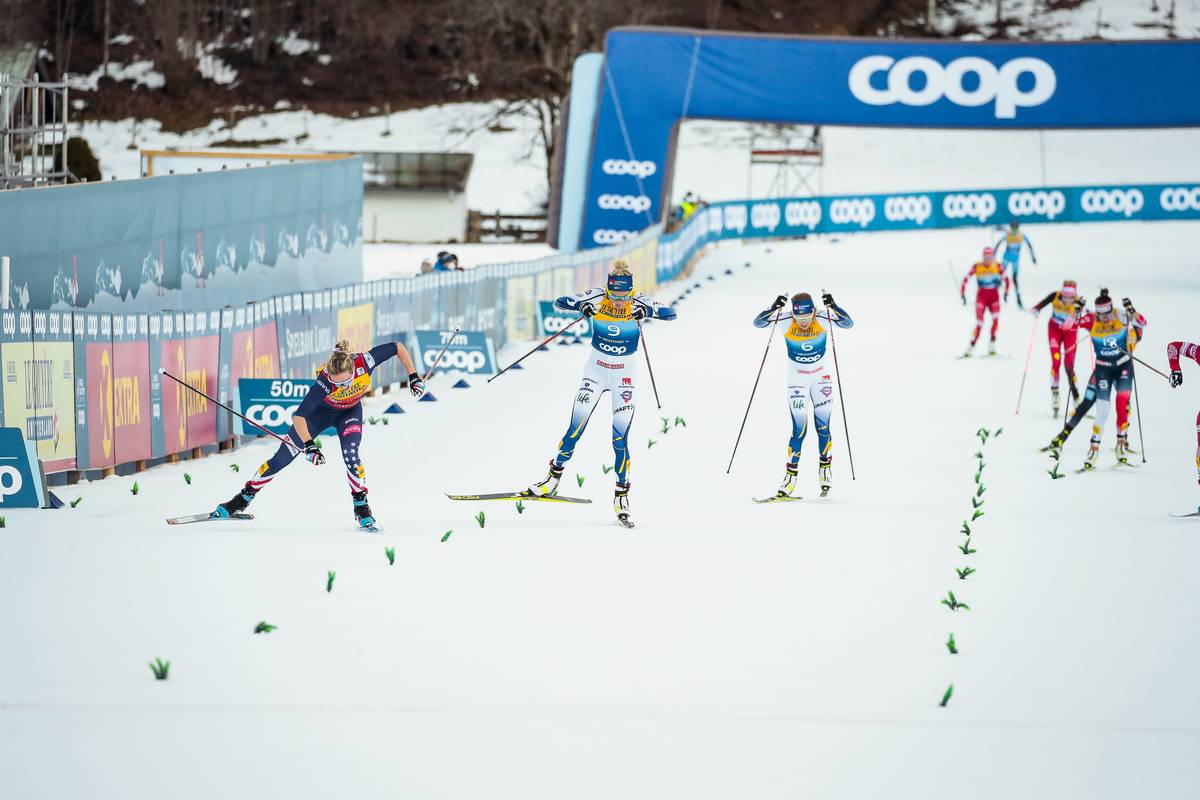
    Head down and free skating, Jessie Diggins fights all the way to the line against Frida Karlsson (SWE) in Oberstdorf Germany. (Photo: NordicFocus)

    He was also quick to point out that these changes have nothing to do with the athletes physiology, “the reason this change is happening is because we’re eliminating sexist programming, and not because anything has changed with physiology,” he said. “It began in the late 60’s or early 70’s because it was thought that women couldn’t handle the demands of such long efforts. The day this was discovered to be untrue became the first day this should’ve changed. To put the change in perspective, I think athletes who have done well on the World Cup will continue to do well. The change feels crazy, but I bet we’ll discover it isn’t.” 

    As an athlete who will be racing these new distances, Kern shared, “It is definitely a big change I think for the women, because we go from racing 10 k to doubling the distance to 20 k, whereas the men only change by 5 k up or down in length. I think it will be interesting to see if this decision creates more specialization on the women’s side.”

    Smooth and powerful, Julia Kern races through the heats during a classic spring in Falun, SWE in March 2022. (Photo: NordicFocus)

    Anticipating how she might navigate this shift, Kern reflected, “I personally think it will change how I approach the race schedule potentially, because a 20 k race can have much a larger toll on the body than a 10 k, so I could see myself having to pick and choose races more, especially with the full World Cup schedule this year.”

    She added, “of course for me, as someone who prefers sprinting, a 20 k seems quite long, but on the flip side, I have really enjoyed racing 30 k races, so I am not sure how a 20 k will go, but I am excited to find out.”

    From the FIS perspective, according to Mignerey, the debate was not about the capability of female cross-country skiers, but rather what the realization of equal distance racing would look like. He said, “In 2022, we should not have to discuss anymore if women are capable of racing the same distances, having the same rules and using the same courses as men. The discussion in the CCC was never about IF women are capable of racing the same distances and course profiles, but about how to implement it, for example into our sports community or into a TV product.”

    Mignergy continued by saying, “from a global standpoint, I have the feeling that this decision is very well perceived by most people which are not directly or personally involved in cross-country skiing. And if you put things into perspective, the fact that this decision was so much discussed and named a ‘historical decision’ shows that this move was long overdue.”

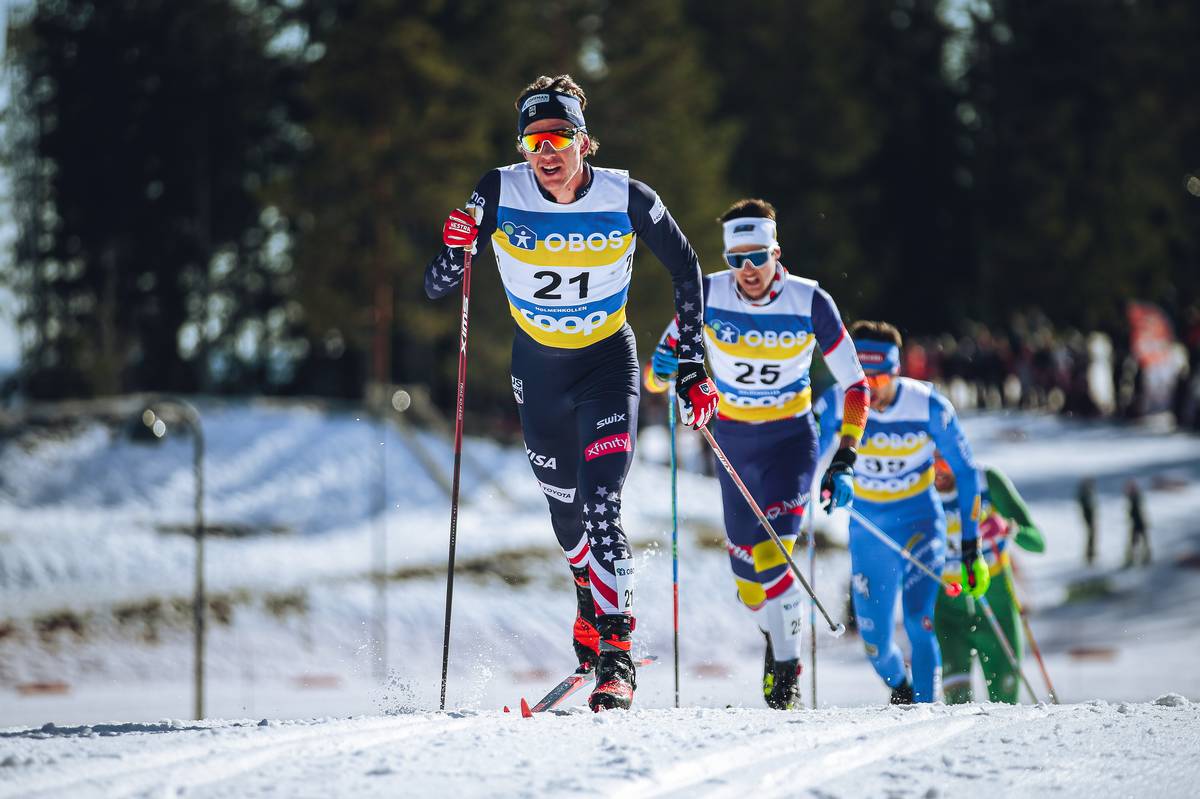
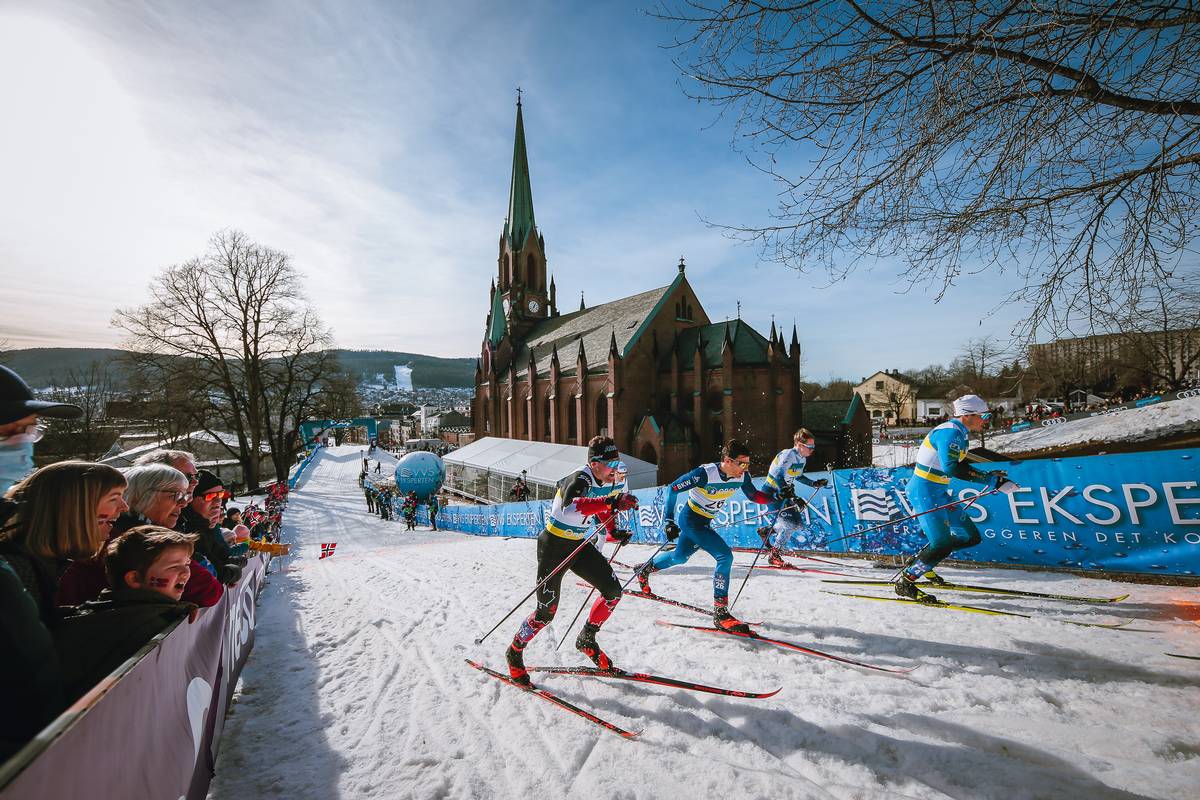
    Graham Ritchie (CAN) races in the second heat of the classic sprint quarterfinals in Drammen, NOR. (Photo: NordicFocus)

    At the domestic level, Peters felt that some of the resistance to the idea came from the fact that races at the World Cup level weren’t contested at equal distances between genders. With this decision from FIS, that no longer becomes a sticking point. U.S. Ski & Snowboard’s Cross-country Sport Coordinator, Adam St. Pierre, explained that, “the recently finalized Super Tour calendar had men and women racing the same distance in each race. This includes the races at U.S. Nationals in Houghton.”

    At the time of writing, a decision about NCAA races had not yet been made but St. Pierre thought it was “likely” that they would also be run as equal distance. At the junior level, he explained, “The Junior Working Group has also discussed having boys and girls race equal distances, but hasn’t settled on what those distances should be for each age group (u16, u18, u20).” Based on a schedule for Midwestern junior national qualifier races, it appears that they have opted to adopt equal distance between genders, with a few 7.5 k events for all age groups and mostly 5 k for u16 skiers and 10 k for u18/u20.

    Peters reflected, “it’s pretty amazing how fast that [came about] and I knew that would happen. I knew it would just be like a light switch. Like as soon as they did it up at the higher levels, it would just trickle down to everyone doing it.”

    For Peters, this means her work is done. At least in regards to the Ski Equal push. “Really with skiing I’m kind of done,” she paused, “I mean, I would love to see The World University Games, (hosted in Lake Placid this year) and for some reason, they’re not going to be equal races. So, I have a few ideas on that.” But mostly, Peters is now switching her focus to cross-country running. “Cross country running for NCAA is also not equal,” she explained, “skiing was pretty much [unequal for] the whole world and, and it’s kind of crazy that running is actually equal at the world level but has not changed at the NCAA level. So I have a few proposals. I’ve written so many proposals, I can’t even tell you.”

    Most of all Peters hopes this change within the ski racing world can be viewed through the lens of inclusivity. She concluded by saying, “I hope that we continue to move forward as a sport and I think that this is a huge part of [that]. You know, we want people to love skiing. We want them to see the sport as being inclusive. And I think that this is a huge step forward in that process.” 

  • Updates from the 2022 FIS Cross-Country Committee Spring Meeting (Press Release)

    Updates from the 2022 FIS Cross-Country Committee Spring Meeting (Press Release)

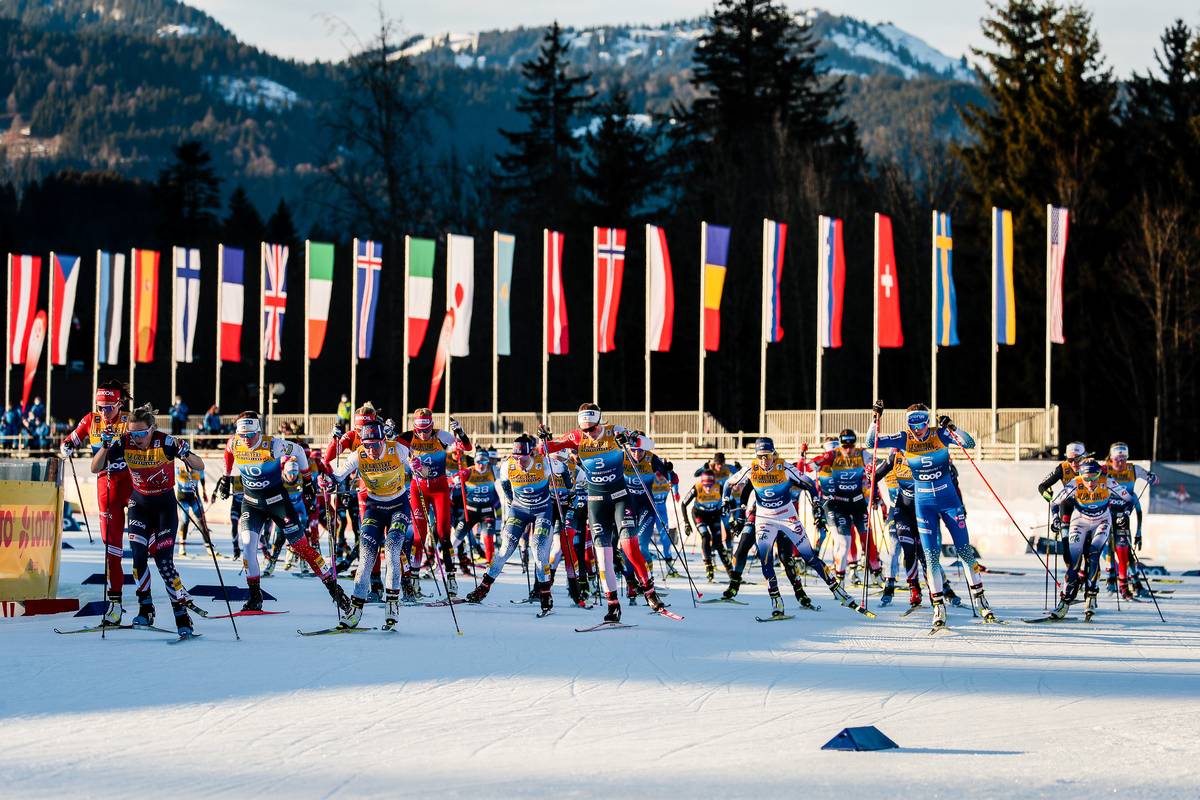
    The start of the women’s 10-kilometer mass start free during Stage 3 of the 2021/22 Tour de Ski in Oberstdorf, Germany. (Photo: NordicFocus)

    This press release originally appeared on fis-ski.com on Wednesday, March 18, 2022.


    May marks the month of the FIS Committee meetings, debriefing the season and setting up task and changes for the upcoming ones.

    All proposals that were elaborated by Sub-Committees and working groups members came on the table of the Cross-Country Committee (CCC) on Wednesday, 18th May. The Committee discussed them and forwarded the confirmed proposals on to the highest authority in FIS, the FIS Council.

    All proposals, including the extract of the major proposals presented below, are therefore subject to the approval of the FIS Council which will meet on 26th May.

    Decisions of the FIS Cross-Country Committee

    Equal Distances for Women and Men

    The question, if women and men are to race equal distances has been a very important topic for years and a prominent discussion building up to this year’s Cross-Country Committee meetings as the decision was on the agenda.

    With 57%, the CCC voted for equal distances for women and men.
    A historical decision.

    The implementation will be effective from the upcoming World Cup season on the World Cup level as well as on Junior and U23 World Ski Championships (JWSC/U23 WSC) and Youth Olympic Games (YOG) level for now. The decision whether to implement it on World Ski Championships level will be discussed with all stakeholders and decided in May 2023.

    In a second step, the voting members decided about the formats that will be in place and voted to use the following standard distances
    For World Cup: Sprint | 10km | 20km | 50km with Skiathlon being 20km (10km + 10km)
    For U23 WSC and JWSC: Interval 10km | Sprint | Mixed Relay 4x5km | Mst 20km
    For YOG: Interval 7.5km | Sprint | Mixed Relay 4x5km

    The National Ski Federations, of which the voting members consist, did not go into a long discussion but came with a clear opinion. All up front, the main argument to vote for equal distances was that there should not be any question whether women were capable of racing the same distances as men, as they prove that they physically are capable of doing so already.
    The main argument against was the time that women need to cover the same distance as men and the effective TV time.

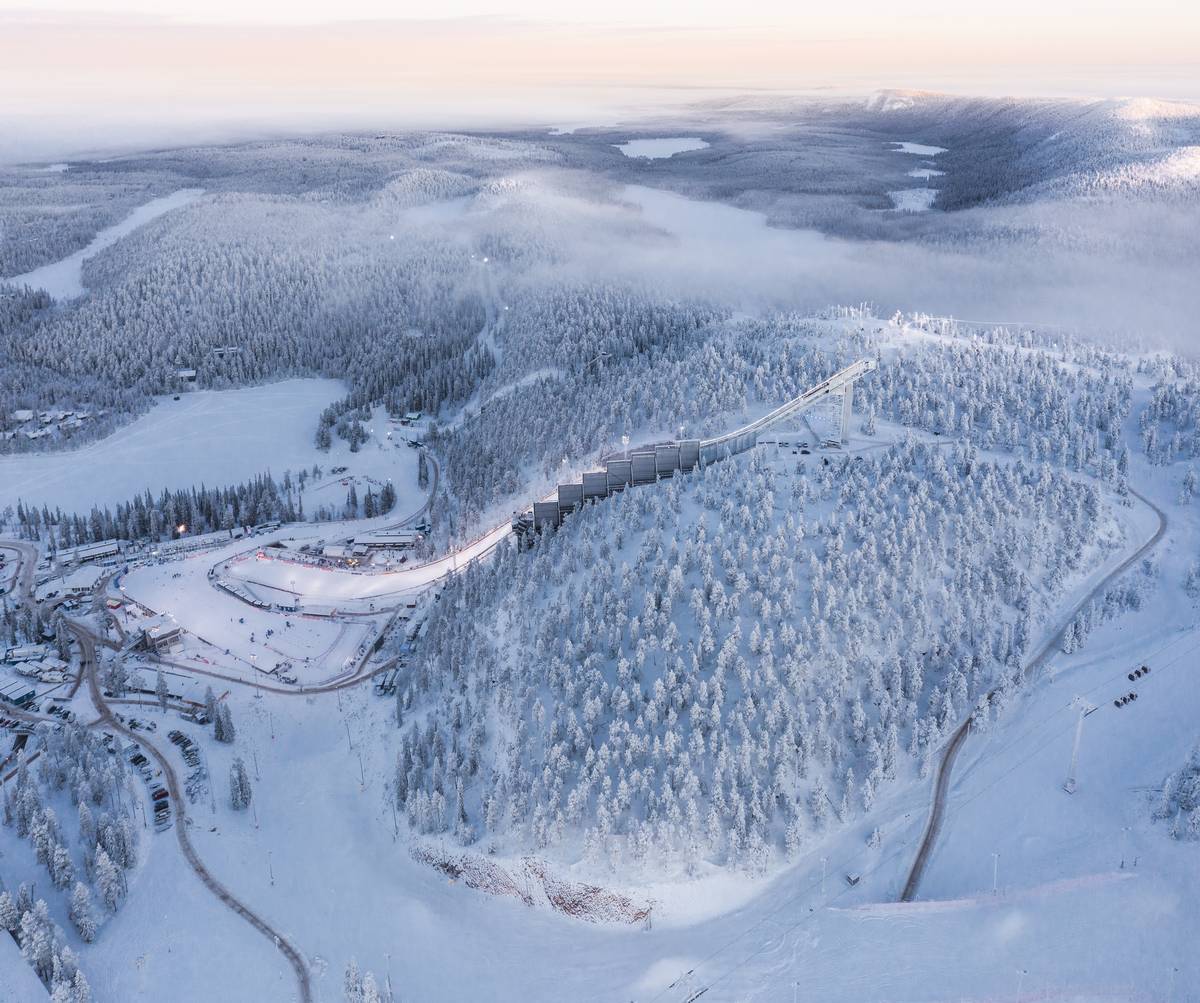
    Above the Arctic Circle: Ruka, FIN is blanketed in frost and fresh snow for the opening of the World Cup season in November 2021. (Photo: NordicFocus)
    FIS Cross-Country Calendar

    The updated version of the calendar will be uploaded once approved by the FIS Council.

    Starting out with the traditional Nordic weekend at Ruka (FIN) from 25th to 27th November, the FIS Cross-Country family will stay in Scandinavia and move to Norway for two event weekends in Lillehammer and Beitostølen before going to altitude in central Europe with the famous Davos Nordic weekend in Switzerland, which will take place on 17th and 18th December.

    The Tour de Ski is set from 31st December to 8th January with stages in Val Müstair (SUI), Oberstdorf (GER) and Val di Fiemme (ITA).

    After a competition-free weekend, the World Cup family remains in Italy for the City Sprint in Milano, a three-day event in Les Rousses (FRA) and Toblach (ITA) as the final preparation before the World Ski Championships in Planica that is scheduled for 22nd February to 5th March 2023.

    The final period of the Cross-Country World Cup starts in Norway with Oslo and Drammen before heading to Falun (SWE), Tallin (EST) and Lahti (FIN) for the World Cup Finals.

    World Cup Points

    A dedicated working group compiled a new World Cup point table that is set to decrease the gaps between athletes in the overall standings without devaluing top results. The table that was approved by the CCC gives the opportunity to a wider range of athletes to score World Cup points and gives a higher value for Distance athletes to participate in Sprint races and vice versa.

    The new World Cup Point table will be uploaded in the World Cup Rules once approved by the FIS Council.


    Course bibs dedicated to female staff

    US Ski & Snowboard had submitted a proposal to add a number of course access bibs per team for female service staff only, with the wish to therewith encourage more National Ski Federations to invest into the education of female staff in the ski service field in cross-country skiing. The proposal was accepted by the CCC.

    The podium of the first 4 x 5 k mixed gender relay in March 2022. USA I took the win in Falun, SWE ahead of Finland I and Norway I. (Photo: NordicFocus)
    Quota for Team competitions

    Small nation’s quota
    To give more nations the possibility to join Team competitions, the CCC approved that every nation with a basic quota of less than four athletes has the right to start with four athletes per gender also in all individual competitions if there is a Relay or Team Sprint during the same World Cup stage.

    Mixed Relay starting order
    For the future Mixed Relay competitions, each nation will have the right to enter 2 teams per nation. The starting order will alternate between the order Woman | Man | Woman | Man and Man | Woman | Man | Woman.

    Mixed Nations
    The CCC approved that nations can enter mixed nations teams (athletes from max. two different nations), if they do not have enough athletes to form their own team.

    Vegard Ulvang steps back from his position as chairman of the FIS Cross-Country Committee. (Photo: fis-ski.com/NordicFocus)
    The Chairman says goodbye

    For Vegard Ulvang, Chairman of the Cross-Country Committee this was the last meeting after well 20 years in position as he announced to step back. His replacement will be elected via the FIS Council.
    The FIS Cross-Country family has gone through significant changes under the watch of the Chairman. As a former world-class athlete himself, Vegard stepped into position with an incredible experience and passion for his position and the sport.

    FIS Cross-Country sat down together with Vegard to reflect on his time as a Chairman of the Cross-Country Committee. Especially milestones such as the Sprint introduction in 2001, a renewed WSC program from 2005 and of course the introduction of the Tour de Ski were just some of the milestones set in Vegards’ Committee career.

    The extended FIS Cross-Country family would already now like to thank Vegard for his tireless dedication for the work behind the scenes of the Cross-Country sport. He gave an unparalleled commitment and took over the large responsibility that comes with the job and has triggered, influenced, and managed many historic decisions. Thank you Vegard for leading the way.

    For his contribution, Vegard was proposed to become a Honorary Member and will need to be confirmed by the FIS Council.

  • At the Olympics, women cross-country ski race half as far as men. But that could be changing.

    At the Olympics, women cross-country ski race half as far as men. But that could be changing.

    Female American and Swedish cross-country skiers are pushing to race equal distances as men. But some of the sport’s star women remain unconvinced. 

    ZHIANGJIAKOU, CHINA — At the end of her first-ever competition at the Winter Olympics — a 15-kilometer effort that left her sprawled on the ground gasping for breath — Julia Kern contemplated the idea of racing twice as far.

    “I personally like the shorter distances,” said Kern, a rising American star. But, she added: “I think equal time makes sense to me.”

    Equity, however, remains an elusive target for athletes competing in the Olympic cross-country ski races here.

    In opening competitions, on Saturday and Sunday, the women raced 15 kilometers, while the men raced 30. In relays later in the Games, men will ski legs of 10 kilometers while the women race half as far. And when men ski a 50-kilometer marathon as their last event, women will race 30.

    A group of Americans, including the U.S. team’s biggest star, Jessie Diggins, has launched a campaign to change that.

    “I think it’s really, really cool to see people who are really good at long distance have their shot, and we get very few chances,” Diggins said. “We train just as hard, just as much as the men. As I’m sure you can see when I cross the finish line, we give just as much in every single race. And so I think we should be afforded the same opportunities for a variety of distance.”

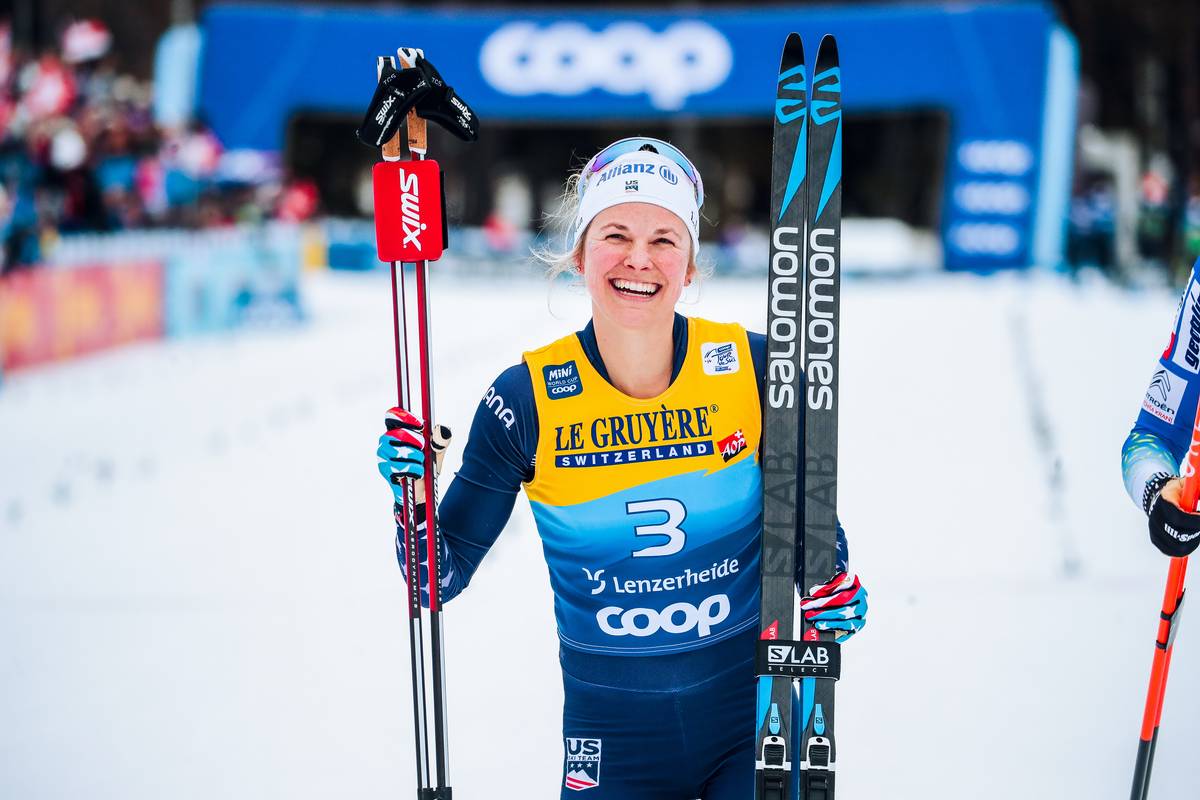
    Jessie Diggins (USA) all smiles after finishing first in the 1.5 k skate sprint in Lenzerheide, SUI. (Photo: NordicFocus)

    The sport’s leaders say discussions about closing that gender gap are happening at the international level. But there’s no time frame or firm commitment yet. 

    And while advocates say they’ve made progress on the U.S. domestic racing circuit, they stress that it’s hard to get traction without change at the top. That’s because athletes and coaches want to make sure that up-and-coming athletes are preparing themselves to race at the sport’s highest levels.

    In the mean time, frustration is lingering.

    “We wonder why women are paid, like, 75% of what men are paid,” said Molly Peters, a collegiate ski coach in Vermont who leads the group called Equal Distance. “I just think if women are going to be empowered and feel like they’re equal, the races should be the same.”

    The world’s fastest women increasingly agree with Peters and Diggins, according to surveys by the International Ski Federation (FIS). But not all of them.

    Theresa Stadlober (AUT) takes bronze in the women’s 15 k skiathlon, the opening event of the 2022 Beijing Olympic Winter Games. (Photo: NordicFocus)

    “I think it’s good like it is,” said Teresa Stadlober, the Austrian who won a bronze medal in Saturday’s Olympic opening event. “Men are stronger. They have other muscles than we girls.”

    Therese Johaug of Norway, the winner of that race, also said the 15-kilometer distance — compared to 30 kilometers for men — “is good for us.” “Maybe we could go 20,” she added. “But 15 is also great for me.”

    Peters acknowledged that the idea of equalizing distances isn’t universally popular among women, which she attributes to some athletes’ comfort with the status quo.

    “You’re going to want to keep doing what you’re most successful at,” she said.

    The differences have been baked into cross-country skiing for decades. And until recently, calls for equity haven’t gotten much traction.

    At the Olympic level, there are discrepancies between men’s and women’s events in several other winter sports. Nordic combined lacks a women’s competition whatsoever. 

    But in the sports where women do compete, cross-country skiing has the most events with substantial differences between women and men.

    Until recently, the FIS surveys showed that the majority of women on the elite-level World Cup circuit “didn’t see the need for change,” said Pierre Mignerey, the federation’s cross-country race director. Last year was the first time a narrow majority favored races at the same distance.

    The FIS has tasked a working group with studying the idea. 

    But the process comes with tricky questions. Should women race longer distances? Or should the federation shorten men’s events? Meet in the middle? Or race slightly different distances that take men and women the same amount of time?

    And what about races where the distances are part of the tradition, like the 50-kilometer and 30-kilometer events for men and women, respectively, held at the Holmenkollen in Oslo?

    Those questions, in turn, intersect with an ongoing FIS debate about which race formats and distances are most appealing to the World Cup’s European-focused TV audience.

    “You’ll occasionally hear, ‘well, it’s hard to find the TV time for the two genders to go 50 k,’’ said Matt Whitcomb, the U.S. team’s head coach. “Well, find it. Or shorten the men. Otherwise it’s a sexist system.”

    Any changes to the race program must be proposed to FIS’s governing council by the 20 nations in the federation’s cross-country committee, Mignerey said in an interview. Which means, he added, that any decisions will likely be driven by the sport’s biggest players.

    “Basically, if the Scandinavians in cross-country are convinced that it’s a good change, there is a big chance,” Mignerey said.

    In Sweden, at least, several stars have weighed in against unequal race distances, with 22-year-old Frida Karlsson last year declaring the difference between the 15- and 30-kilometer skiathlons “almost a little offensive.”

    Frida Karlsson (SWE) races a 10 k freestyle in Davos, SUI in December, 2021. (Photo: NordicFocus)

    “In soccer, ladies and gentlemen have 90 minutes, plus overtime. It is the same in most sports,” Swedish sprint star Linn Svahn told a news outlet in her country. “I see no reason why it should not be the same in cross-country skiing. It is a conservative tradition that we should race shorter than the boys.”

    Norwegian men’s coach Eirik Myhr Nossum, in an interview, said his country is also open to a conversation about distances, and he called gender equality “a very important question.” 

    But, he added: “I’m not sure if having them race the same distances is the right way to say it’s gender equality. Gender quality is to be paid the same, and I think the situation in cross-country skiing is quite good.” (Men and women earn the same amount of prize money on the World Cup circuit.)

    While FIS studies the issue, change is already happening at lower-level races.

    Sweden ran equal distance races at a top-level domestic event last year.

    In the U.S., organizers ran into a problem when they tried to schedule a 7.5-kilometer race for both men and women at a top-level SuperTour event last weekend: FIS rules say that men cannot score distance ranking points for races shorter than 10 kilometers. For women, the minimum is just five kilometers.

    Rosie Frankowski skis to fourth in the SuperTour 10k mass start classic in Sun Valley. (Photo: Tobias Albrigtsen / @untraceableg)

    But other SuperTour events have been equal. And Peters has made progress in pushing regional races on the NCAA circuit in the same direction — though she’s still waiting for other coaches to agree on a change at the national championships.

    Peters, who coaches the ski team at St. Michael’s College in Vermont, said it was “amazing” to watch the women on her own team race the same 20-kilometer event as the men for the first time ever this year — a step up from the 15 kilometers they used to race.

    “It was so hard,” Peters said. “The women were like, ‘We did it! We raced the same distances and we feel so proud of ourselves. And there was so much talk.”


  • A New Push for Equal Distance Racing

    A New Push for Equal Distance Racing

    The debate to run equal race distances for men and women remains. Molly Peters, the head cross-country ski coach at Vermont’s St. Michael’s College, has led a grassroots campaign to make equal distance racing commonplace at the NCAA level and beyond. She’s the lead voice for The Ski Equal Team. The group sent a letter to the U.S. Ski & Snowboard Cross Country Sport Committee, its Equity and Inclusion Committee, and CEO Tiger Shaw asking for their support in implementing equal distance cross-country racing for their sanctioned events.

    The letter opens with a strong message: “In this time of unparalleled social change and reflection, we request that this Committee take an important step forward for equity and inclusion by creating domestic race schedules that offer equal race distances for women and men.” Letter signatories include several head NCAA coaches like Becky Woods of Bates and Tracy Cotes of Colby, as well as U.S. legend Bill Koch, and current World Cup overall winner Jessie Diggins. 

    Head Cross-Country Ski Coach at St. Michael’s. (Photo: St. Michael’s)

    In speaking with Peters, she emphasizes the desire to equalize the race experience.

    “We used to hear that we’re trying to equalize the time on course and we want people to have the same race experience – which is based around time,” said Peters. “The current model of racing, where women generally race 5 k less than men, offers completely different race experiences for men and women. When you look at the data we provide in the letter, race times get closer when you analyze the longer distances. In those longer distances, race times are much closer when men and women are doing the same distance, not women racing 5 k shorter.”

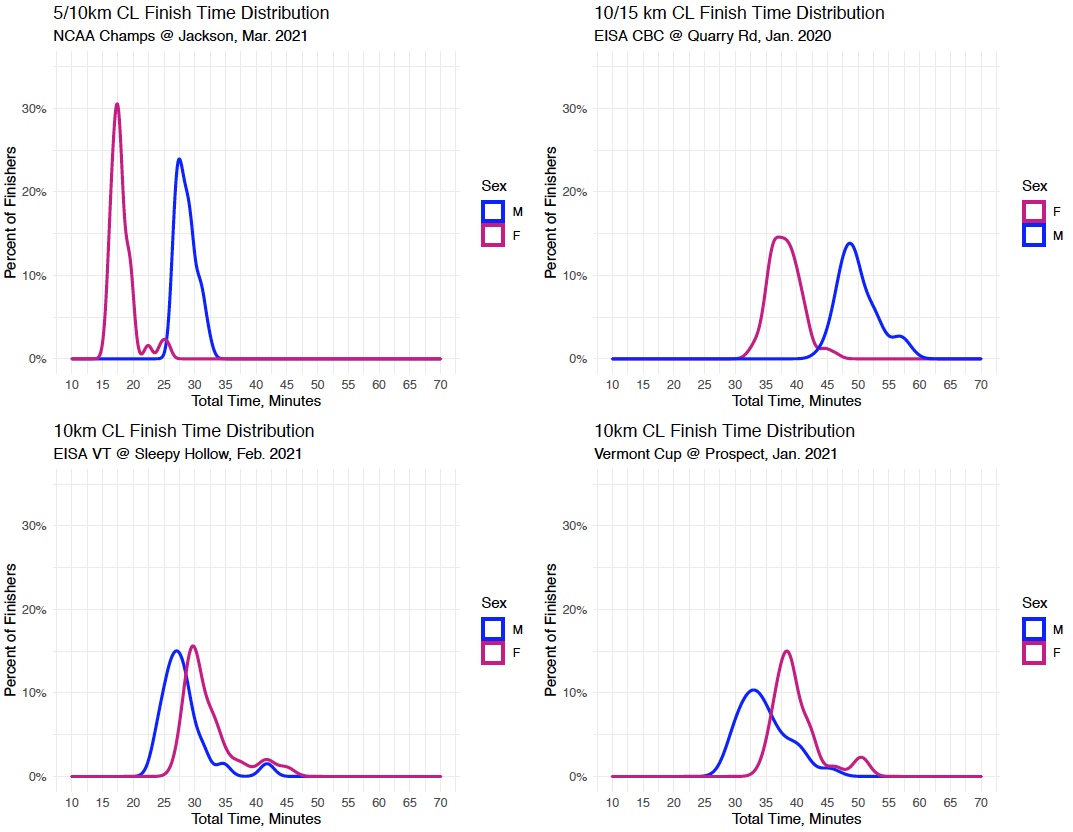
    The data provided to The Ski Equal Team by Lily Koffman, a Harvard biostatistician and former collegiate skier, tells a simple story. Of the four classic races analyzed by Koffman, finish times were more similar when men and women both raced 10 k rather than 5 k and 10 k respectively, or 10 k and 15 k, respectively. 

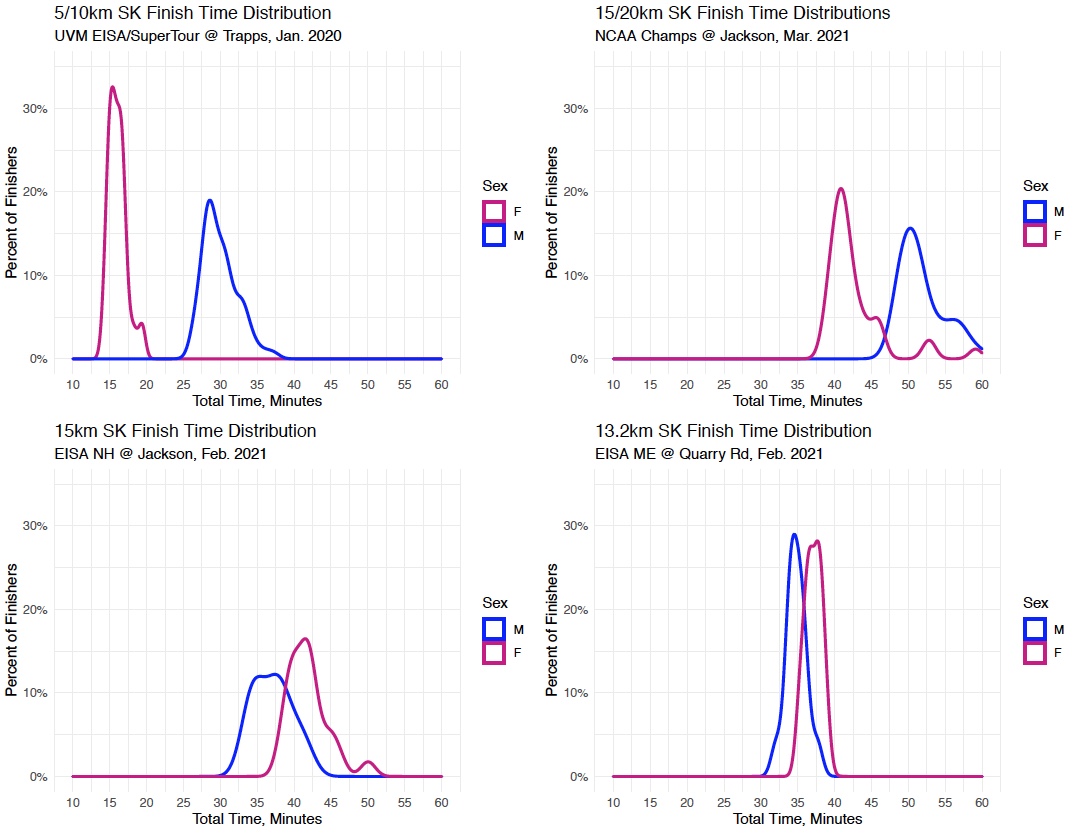
    The same trend holds for the skate racing data. The finish times for men and women overlapped more when both genders raced the same distance. In this case, equal distance skate races of 15 k and 13.2 k, respectively. Conversely, skate race data show little overlap in times comparing unequal race distances. What appears to hold true is that if stakeholders want roughly equal time racing for men and women, at least according to this sample, all skiers should race longer distances and of equal length.  

    “The difference in time on course for men and women competing in separate distance races show a significant gap and virtually no overlap of time,” asserts the Ski Equal Team letter to U.S. Ski & Snowboard. “By contrast, equal distance races show a significant overlap in finish times and consequently a similar race experience for the men’s and women’s fields. This is not an isolated example – we see similar patterns in other collegiate and junior races. There is no compelling reason to require women and men at any level to race different distances.”

    The latter also claims female athletes benefit well beyond sport when equal distances are raced.  The Ski Equal Team claims equal racing distances prepare female skiers to expect equal treatment in other aspects of life. (This is, of course, a time when female athletes are empowered to call out entities like the NCAA for unequal treatment.)

    “By providing equality of opportunity in sport, the Nordic ski community will prepare women to expect equality of opportunity in areas beyond sport, such as employment and compensation,” reads the Ski Equal Team letter.   

    The equal distance initiative has set its eyes on the NCAA ski championships too. The Ski Equal Team’s proposal to the NCAA’s Ski Committee includes several scenarios including sprints, mass starts, and individual start races — all equal distance. 

    Below are the potential formats proposed by the Ski Equal Team:

    o   Year 1 – 5k & 20k mass; Year 2 – 10k & 15k mass

    o   Year 1 – Sprint & 10k; Year 2 – 5k & 15k

    o   Year 1 – Sprint & 20k; Year 2 – 10k & 15k


    CU Head Cross-Country Coach Jana Weinberger. (Photo: CU)

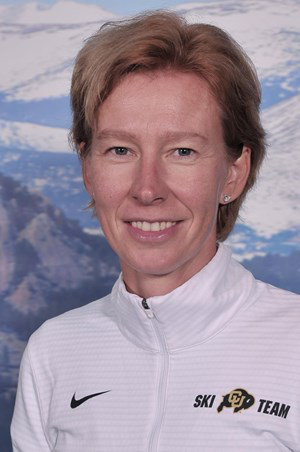
    University of Colorado Head Nordic Coach Jana Weinberger expressed she does not have strong feelings about the equal distance debate. Weinberger raced at CU as a student-athlete and has coached at the school for many years. “When I was a competitive athlete, I was happy women skied shorter distances, and it never crossed my mind that we should, or that I wanted to, ski the same distance. I was solely focused on competing against the women I raced, as opposed to racing the same distance as men. I never felt that racing a shorter distance was a sexist decision.”

    According to Weinberger, many of her female athletes are focused on performing their best at the predetermined distances, which in this case are 5 k shorter than the men’s distance. “Additionally, I had this discussion with many of the women on my team in the past, and the strong majority did not want to race the men’s distances,” Weinberger added. “For them, it was not a matter of; I can’t race that far, or, the men race farther because they are stronger, but more from the standpoint that I like racing the distances we currently have and am focused on racing women.”

    Weinberger also has the distinction of serving on the NCAA’s Ski Committee. One glaring absence from collegiate racing, well represented at seemingly all other levels of cross-country ski racing, are sprints. The CU coach said she considers adding sprints to the NCAA Championship calendar a more important short-term goal. 

    “As a member of the NCAA committee, I feel it is more important to add a sprint race to the Championship weekend than to spend our time and resources in having equal distances for men and women,” wrote Weinberger.

    A 2016 FasterSkier article featuring the different distances raced at the NCAA level for men and women reflected an antiquated notion, or myth, regarding a woman’s ability to endure. Former ski racer Annie Pokorny, quoted in that piece, said, “that conception turned into tradition, one that still thrives today in the form of shortened distances for female endurance athletes.”

    During this inflection point in history when equity and inclusion have become keystones for many evolving institutions, modifying race distances by making them equal in length, has gained traction.  

    There is talk of equal distance racing for next season. With the racing calendars at the national level to be formalized at the upcoming U.S. Ski & Snowboard Congress from May 17-21, the topic of equal distance racing is expected to be discussed. On a regional level, Justin Beckwith, the Competitive Program Director for NENSA, expects some experimentation with equal distance formats to take place next year.     

    NENSA Competitive Programs Director Justin Beckwith.

    “The underlying sentiment from most parties is that decisions of race distances should be made on the basis of development/speed development,” Beckwith emailed. “There are complicating factors in all of these discussions, like NCAA, Junior World Ski Championships and World Cup distances — those training for these specific events feel compelled to do just that.” 

    Those examples of unequal distance racing cited by Beckwith remain for the time being. It’s true, women race shorter distances than men in the distance events at Junior Worlds, U23 Worlds, Senior World Championships, Olympics, and the World Cup. That might be another debate altogether: is cross-country ski racing a means to train up the pin-prick of light at the sharp end of the pipeline, and prepare those athletes for specific distance races, like a 5 k for women and 10 k for men? Or should it function as a completely different competitive enterprise?   

    This strange ski racing season, Beckwith explained, allowed for some experimentation with organizing events where equal distance racing came into play. 

    “Through our pandemic 2021 season we had some latitude to try equal distance in a few more events than we normally would — it seemed to be well received minus some feedback from college athletes,” said Beckwith. “As we are planning for 2022 we are looking at the opportunity to shake up distances to make exciting events for competitors, venues, and spectators alike. Specifically, if Eastern SuperTours are approved for Period 3 we have a proposal that would have not just equal distances, but also unique formats.”

    Back at St. Michael’s College in Vermont, Peters knows change starts somewhere. The two most common approaches are from the top down, or at the more local level, from the bottom up. Peters’ family owns and operates Vermont’s Sleepy Hollow Nordic Center. Peters has helped develop a statement called the Sleepy Hollow Ski Equal Pledge. If you are racing at Sleepy Hollow, everyone races the same distance.

    It might make sense before you grind out training for specific distances to check out the set-in-stone race schedules, when they become available, and plan accordingly. They might just be equal.