From the FasterSkier archive — posts syndicated from athletes’ and coaches’ own blogs between 2004 and 2012, kept online as published. Current coverage is at fasterskier.com.

Tag: equal distance

  • Updates from the 2022 FIS Cross-Country Committee Spring Meeting (Press Release)

    Updates from the 2022 FIS Cross-Country Committee Spring Meeting (Press Release)

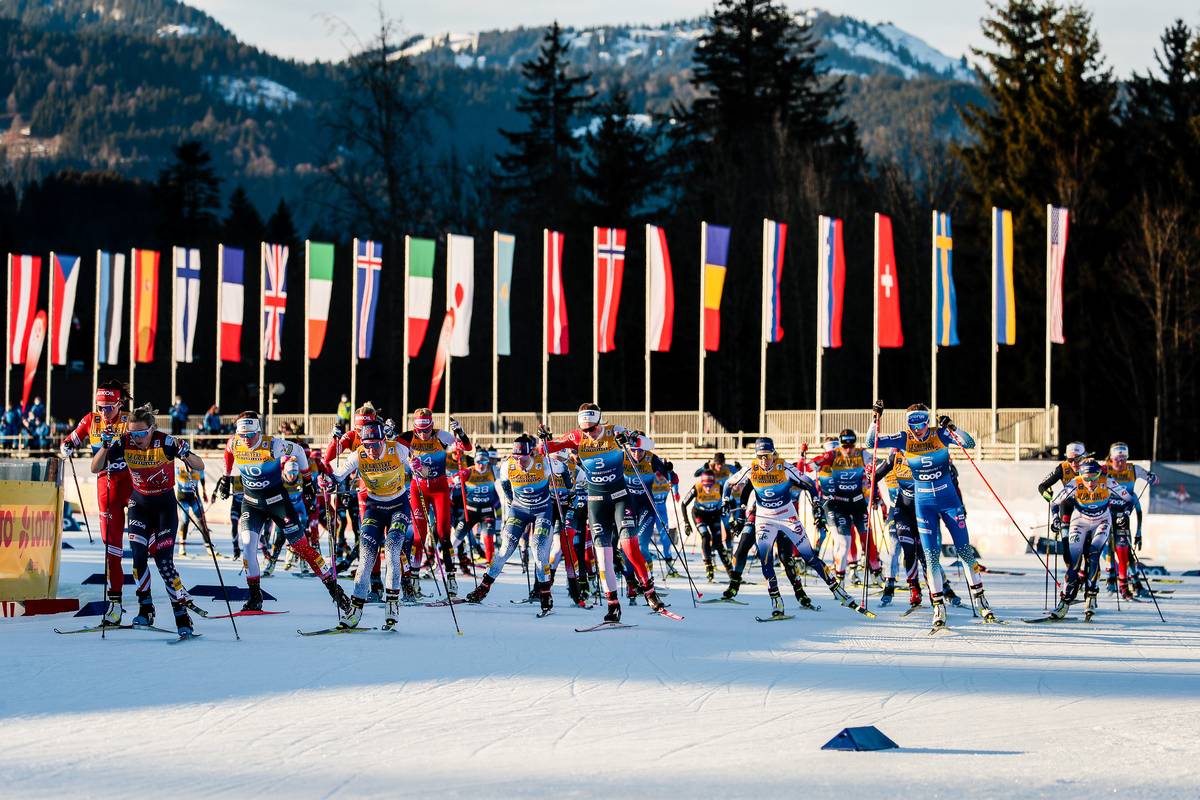
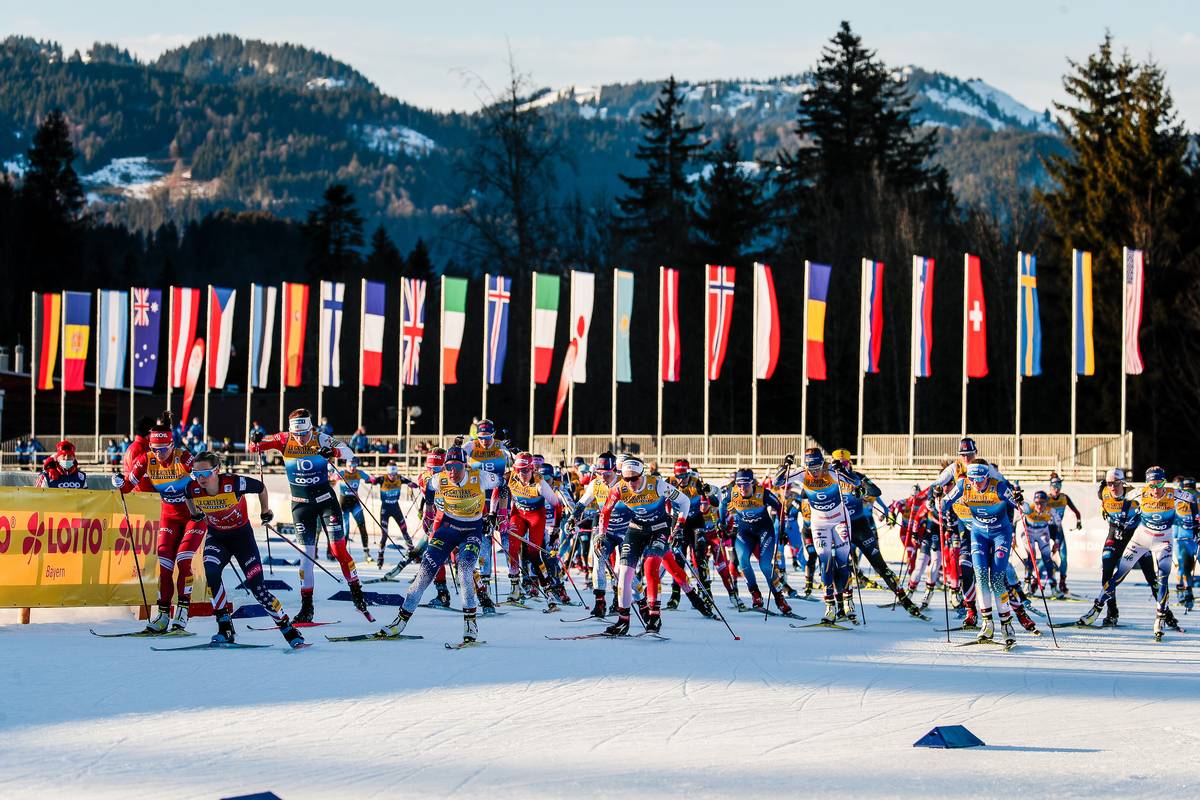
    The start of the women’s 10-kilometer mass start free during Stage 3 of the 2021/22 Tour de Ski in Oberstdorf, Germany. (Photo: NordicFocus)

    This press release originally appeared on fis-ski.com on Wednesday, March 18, 2022.


    May marks the month of the FIS Committee meetings, debriefing the season and setting up task and changes for the upcoming ones.

    All proposals that were elaborated by Sub-Committees and working groups members came on the table of the Cross-Country Committee (CCC) on Wednesday, 18th May. The Committee discussed them and forwarded the confirmed proposals on to the highest authority in FIS, the FIS Council.

    All proposals, including the extract of the major proposals presented below, are therefore subject to the approval of the FIS Council which will meet on 26th May.

    Decisions of the FIS Cross-Country Committee

    Equal Distances for Women and Men

    The question, if women and men are to race equal distances has been a very important topic for years and a prominent discussion building up to this year’s Cross-Country Committee meetings as the decision was on the agenda.

    With 57%, the CCC voted for equal distances for women and men.
    A historical decision.

    The implementation will be effective from the upcoming World Cup season on the World Cup level as well as on Junior and U23 World Ski Championships (JWSC/U23 WSC) and Youth Olympic Games (YOG) level for now. The decision whether to implement it on World Ski Championships level will be discussed with all stakeholders and decided in May 2023.

    In a second step, the voting members decided about the formats that will be in place and voted to use the following standard distances
    For World Cup: Sprint | 10km | 20km | 50km with Skiathlon being 20km (10km + 10km)
    For U23 WSC and JWSC: Interval 10km | Sprint | Mixed Relay 4x5km | Mst 20km
    For YOG: Interval 7.5km | Sprint | Mixed Relay 4x5km

    The National Ski Federations, of which the voting members consist, did not go into a long discussion but came with a clear opinion. All up front, the main argument to vote for equal distances was that there should not be any question whether women were capable of racing the same distances as men, as they prove that they physically are capable of doing so already.
    The main argument against was the time that women need to cover the same distance as men and the effective TV time.
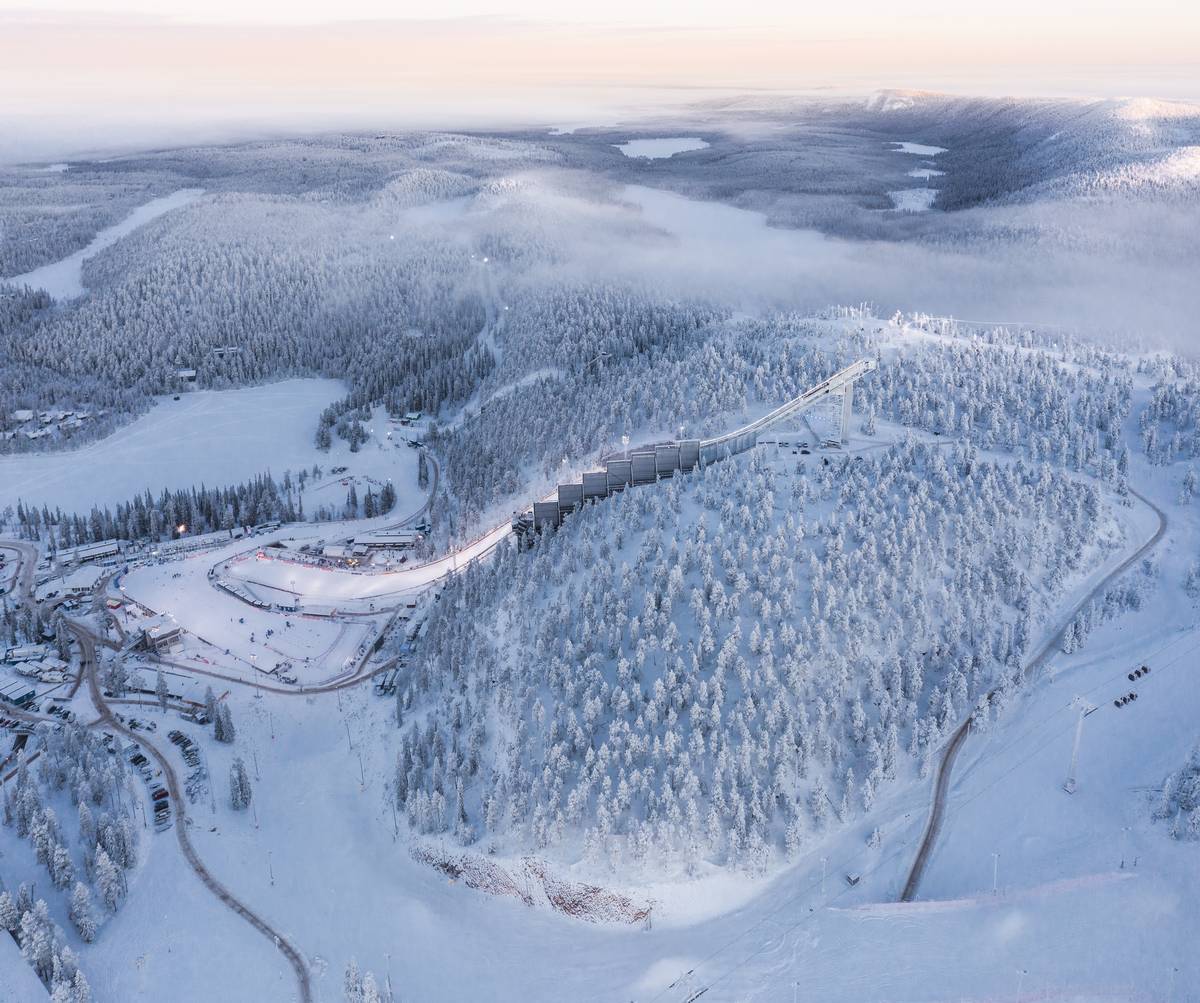
    Above the Arctic Circle: Ruka, FIN is blanketed in frost and fresh snow for the opening of the World Cup season in November 2021. (Photo: NordicFocus)
    FIS Cross-Country Calendar

    The updated version of the calendar will be uploaded once approved by the FIS Council.

    Starting out with the traditional Nordic weekend at Ruka (FIN) from 25th to 27th November, the FIS Cross-Country family will stay in Scandinavia and move to Norway for two event weekends in Lillehammer and Beitostølen before going to altitude in central Europe with the famous Davos Nordic weekend in Switzerland, which will take place on 17th and 18th December.

    The Tour de Ski is set from 31st December to 8th January with stages in Val Müstair (SUI), Oberstdorf (GER) and Val di Fiemme (ITA).

    After a competition-free weekend, the World Cup family remains in Italy for the City Sprint in Milano, a three-day event in Les Rousses (FRA) and Toblach (ITA) as the final preparation before the World Ski Championships in Planica that is scheduled for 22nd February to 5th March 2023.

    The final period of the Cross-Country World Cup starts in Norway with Oslo and Drammen before heading to Falun (SWE), Tallin (EST) and Lahti (FIN) for the World Cup Finals.

    World Cup Points

    A dedicated working group compiled a new World Cup point table that is set to decrease the gaps between athletes in the overall standings without devaluing top results. The table that was approved by the CCC gives the opportunity to a wider range of athletes to score World Cup points and gives a higher value for Distance athletes to participate in Sprint races and vice versa.

    The new World Cup Point table will be uploaded in the World Cup Rules once approved by the FIS Council.


    Course bibs dedicated to female staff

    US Ski & Snowboard had submitted a proposal to add a number of course access bibs per team for female service staff only, with the wish to therewith encourage more National Ski Federations to invest into the education of female staff in the ski service field in cross-country skiing. The proposal was accepted by the CCC.

    The podium of the first 4 x 5 k mixed gender relay in March 2022. USA I took the win in Falun, SWE ahead of Finland I and Norway I. (Photo: NordicFocus)
    Quota for Team competitions

    Small nation’s quota
    To give more nations the possibility to join Team competitions, the CCC approved that every nation with a basic quota of less than four athletes has the right to start with four athletes per gender also in all individual competitions if there is a Relay or Team Sprint during the same World Cup stage.

    Mixed Relay starting order
    For the future Mixed Relay competitions, each nation will have the right to enter 2 teams per nation. The starting order will alternate between the order Woman | Man | Woman | Man and Man | Woman | Man | Woman.

    Mixed Nations
    The CCC approved that nations can enter mixed nations teams (athletes from max. two different nations), if they do not have enough athletes to form their own team.

    Vegard Ulvang steps back from his position as chairman of the FIS Cross-Country Committee. (Photo: fis-ski.com/NordicFocus)
    The Chairman says goodbye

    For Vegard Ulvang, Chairman of the Cross-Country Committee this was the last meeting after well 20 years in position as he announced to step back. His replacement will be elected via the FIS Council.
    The FIS Cross-Country family has gone through significant changes under the watch of the Chairman. As a former world-class athlete himself, Vegard stepped into position with an incredible experience and passion for his position and the sport.

    FIS Cross-Country sat down together with Vegard to reflect on his time as a Chairman of the Cross-Country Committee. Especially milestones such as the Sprint introduction in 2001, a renewed WSC program from 2005 and of course the introduction of the Tour de Ski were just some of the milestones set in Vegards’ Committee career.

    The extended FIS Cross-Country family would already now like to thank Vegard for his tireless dedication for the work behind the scenes of the Cross-Country sport. He gave an unparalleled commitment and took over the large responsibility that comes with the job and has triggered, influenced, and managed many historic decisions. Thank you Vegard for leading the way.

    For his contribution, Vegard was proposed to become a Honorary Member and will need to be confirmed by the FIS Council.

  • Moving with the times: A look at Brennan’s “Perseverance Trail” NFT and partnership with Parity Now

    Moving with the times: A look at Brennan’s “Perseverance Trail” NFT and partnership with Parity Now

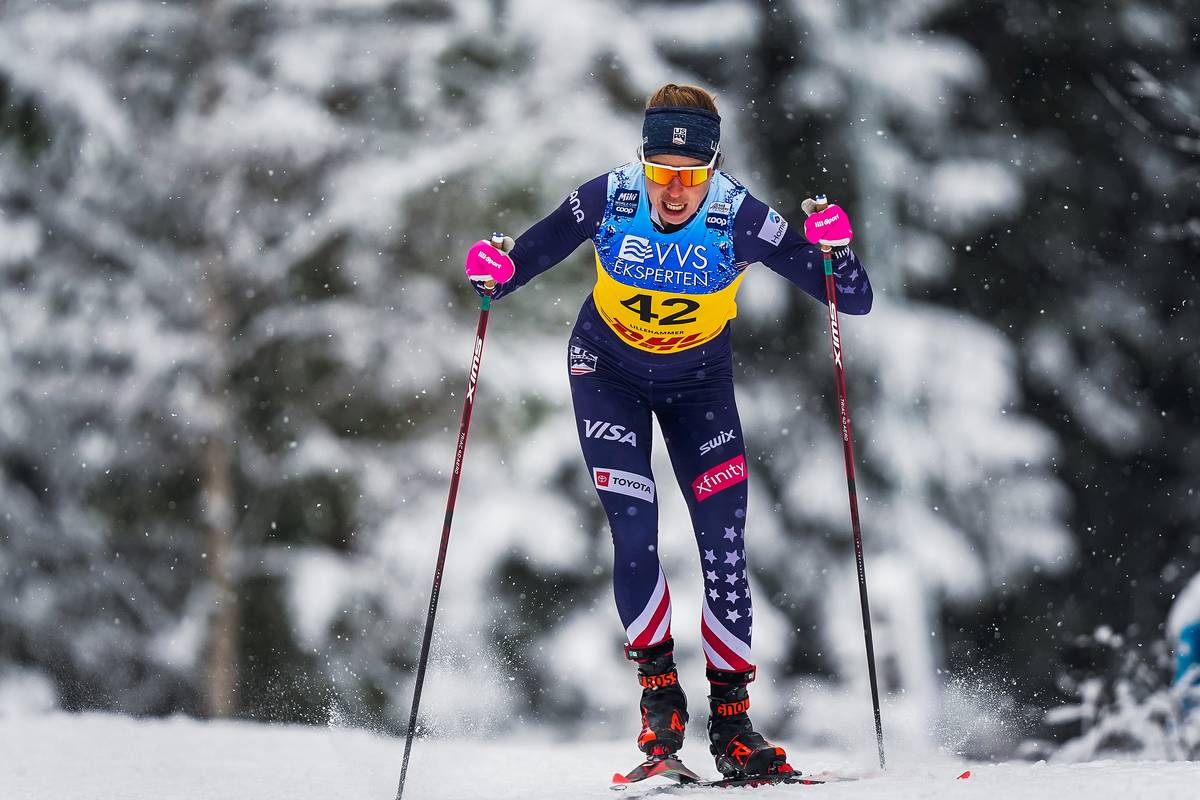
    Rosie Brennan races to fifth in the freestyle sprint during a December, 2021 World Cup in Lillehammer, NOR. (Photo: NordicFocus)

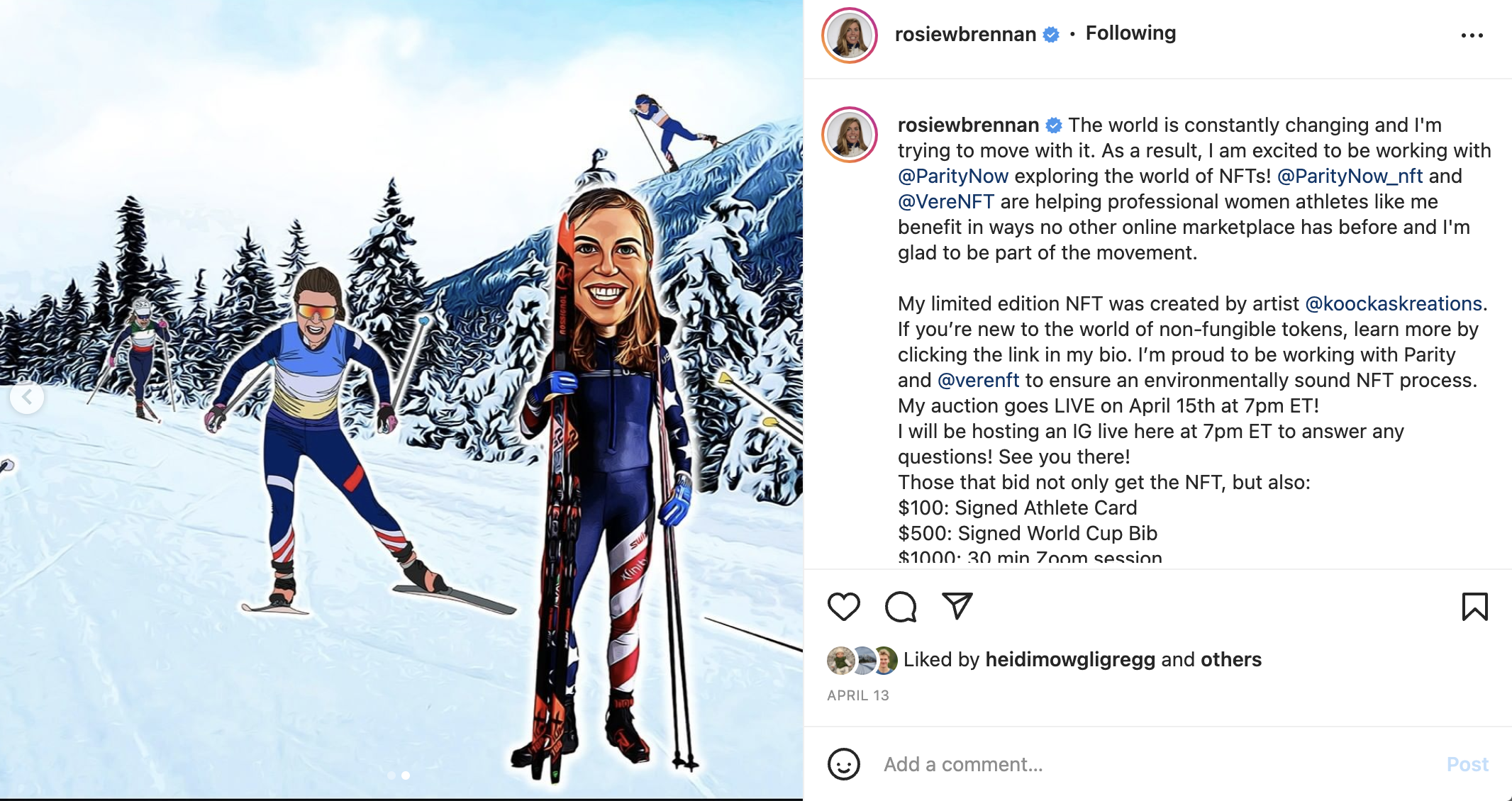
    On April 13th, Rosie Brennan wrote in an Instagram post, “The world is constantly changing and I’m trying to move with it.” The post announced the launch of an online auction for a limited edition NFT, in partnership with the organizations Parity Now and VereNFT. The NFT, titled “Perseverance Trail”, was designed by artist Kerri Schiff and features a mountainous ski trail with a variety of images of Brennan racing in her Team USA suit.

    If you just read that introduction and thought, “Wait – what does any of that mean?”, you’re not alone. It’s a very new realm and can very quickly make you feel as though you’ve been transported into the Matrix.

    For starters, NFT stands for “non-fungible token”. An NFT is a unique and non-interchangeable digital asset, typically a piece of digital art or music, that is stored on a blockchain and can be sold or traded via an online marketplace. A blockchain is more or less a virtual ledger for transactions in that marketplace, made across a secure network. To learn more, you’re better off heading to Forbes, or reading this helpful and entertaining article on The Verge.

    When it comes to Brennan’s Perseverance Trail NFT specifically, the highest bidder on the auction is purchasing a unique piece of digital art, along with the exclusivity of that token.

    “For our physical reality,” Brennan explained in a call,  “you’re purchasing that [digital] image and you are then the only one who then owns that. So I can’t reproduce it or sell it, or make it a poster. It is just that singular item.” 

    For those who bid at different levels, regardless of whether they eventually own the NFT, Brennan has offered a tiered list of rewards: $100 gets you a signed athlete card, $500 for a signed World Cup bib, $1000 for a 30 minute Zoom session, and $2000 for a three-month personalized training plan. 

    (Photo: Instagram @rosiewbrennan)

    It’s an altogether different and very new avenue that an athlete might incorporate to support a career, and Brennan admitted to still being in the learning process. That said, she explained some of the factors that were intriguing about the proposition.

    “Maybe the more interesting part about NFTs is that, because there is only one of them and it’s tracked, it has a digital footprint. So, if somebody buys it, I get some of the proceeds from [the sale] and the artist gets some and then Parity Now gets some. But every time it’s resold after that, I continue to get some of the proceeds. So that’s kind of different from a physical piece of art. When an artist sells a piece of art, that’s the only time they gain profit from it. If that [buyer] then resells it, the artist doesn’t get any benefit from that.”

    Another unique aspect is that the value of the NFT may increase with time. “As we see in art, most artists don’t become famous until they’re dead.” Brennan laughed as she expressed that thankfully, athletes don’t need to wait quite as long, however, it remains unknown what they will accomplish during their career until it is finished, or what they may achieve in other spaces  afterward.

    Ultimately, the NFT marketplace remains a nascent and still-developing platform for investment and trade, and it’s unclear how profitable this type of auction could be in the long term. Nevertheless, Brennan applauded Parity Now for offering women these non-traditional opportunities.

    “It’s obviously very [new]… and so who knows what that really means, but I’m impressed that this organization is kind of pushing the boundaries in these areas and looking at different ways to create, not only like money for athletes, but just also awareness and marketing and hype.”

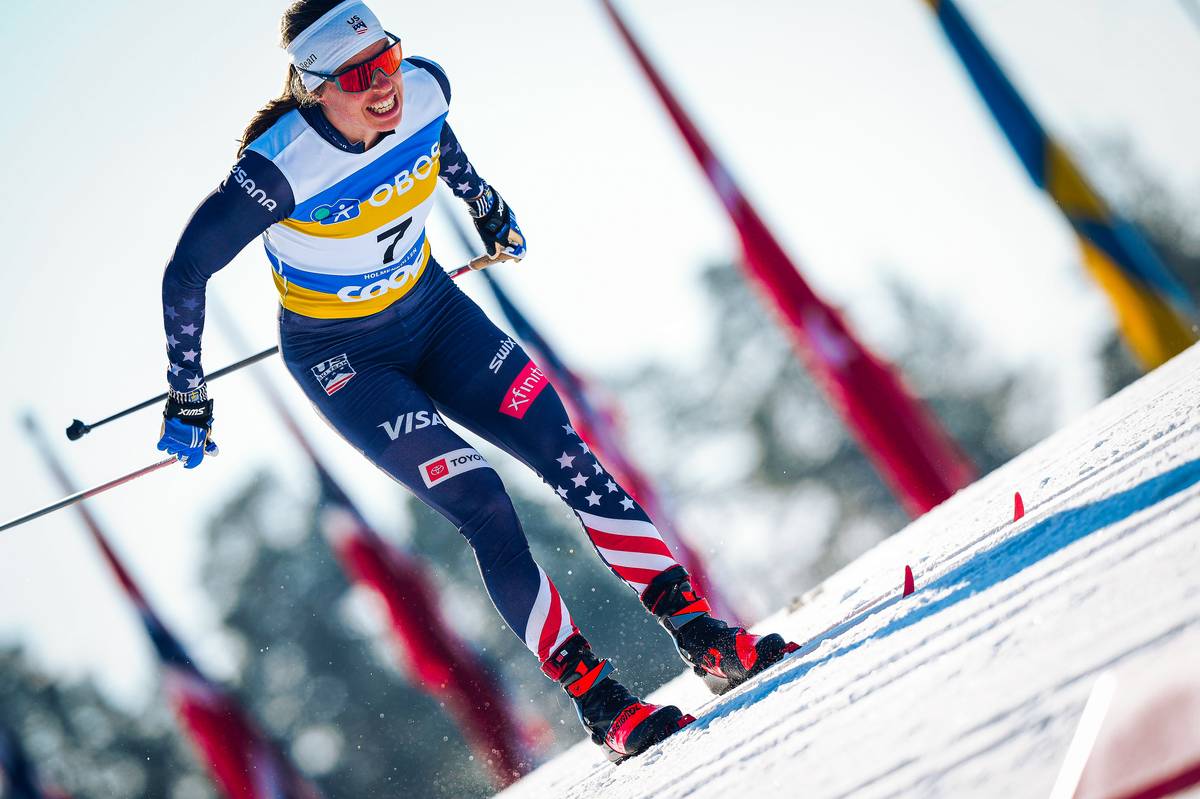
    Rosie Brennan skis to 7th during the 30k classic at Holmenkollen in March, 2022. (Photo: NordicFocus)

    Taking a step back to how this came about, we’ll rewind to the 2018 Olympics in PyeongChang, when Brennan found herself frequently riding the bus to and from the athlete village with American bobsledder Lauren Gibbs, who she described as “super outgoing and very friendly” and seemed to, coincidentally, be on a very similar schedule to the cross country ski team. After earning an Olympic silver medal in 2018 and a World Championship gold in 2020, Gibbs retired and became a spokesperson for Parity Now, an organization which advocates for equal pay, media representation, and opportunities for professional women athletes. Parity’s community of athletes includes more than 165 Olympians and Paralympians across more than 40 sports, all working together to “[propel] professional women athletes forward.”

    When initially approached about the NFT opportunity, Brennan put the idea on hold. However, after seeing other women athletes on the marketplace and learning more about the process, she decided to give it a go.

    From there, Brennan worked through a lengthy questionnaire to identify the aspects of her career and self that were most meaningful, to guide the artist in creating the design. Brennan also provided a wide variety of images of herself skiing to ensure the sport would be well-represented. She was then allowed to provide feedback throughout the process, until landing on a finalized piece of digital art

    “It was cool to see an artistic interpretation of the values that I felt [were] meaningful in my ski career,” she said.

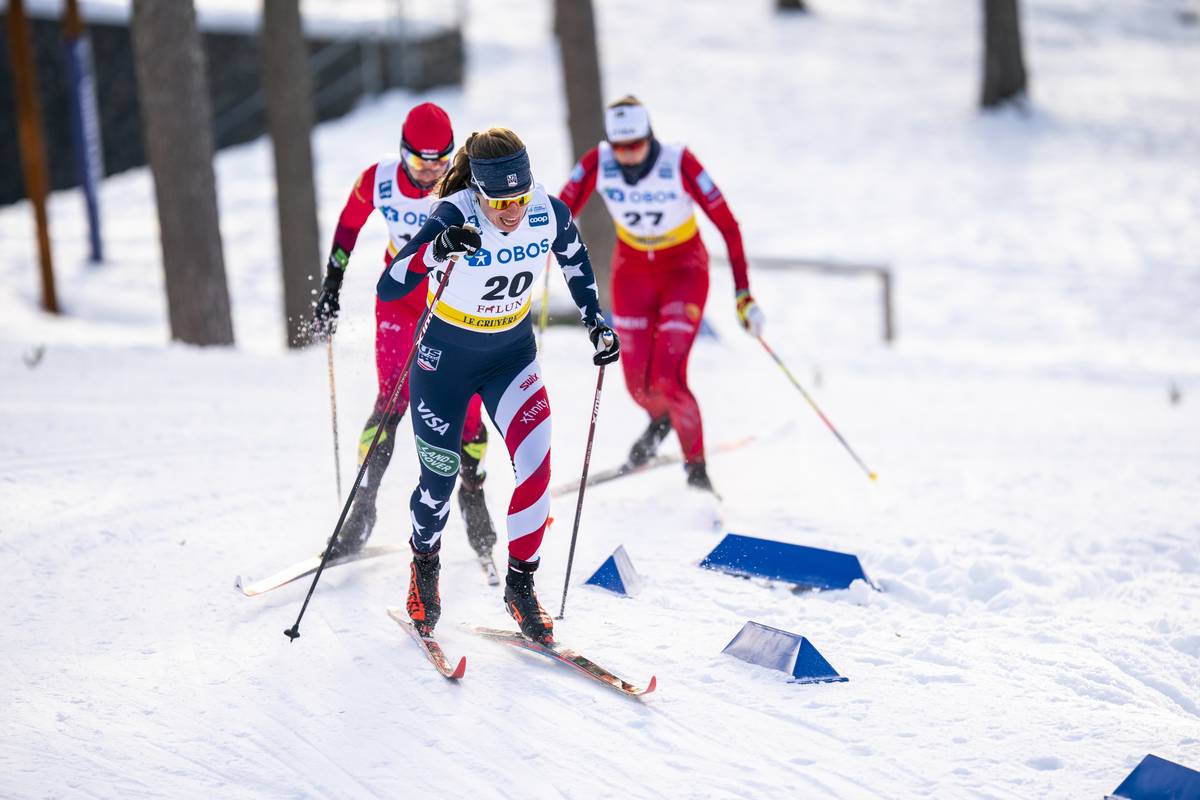
    Rosie Brennan races to third in the 10 k skate in Lillehammer, NOR in December, 2021. (Photo: NordicFocus)

    With athletes from all sports competing in the NFT marketplace, Brennan said she “really wanted to highlight what makes cross-country, in my opinion, different from other sports. And for me, one of those things is the fact that we’re doing all the events and all the techniques.” 

    In the image, both skate and classic techniques are featured, along with a couple of fast tucks, in and out of the tracks. Brennan also wanted to feature the variation in terrain, in contrast to a more controlled environment like a running track, along with the natural beauty and challenge of a cross-country ski trail.

    “I wanted that natural environment highlighted, which is the part I really like about mine — I think [the artist] did a great job making some really cool-looking mountains… And then to me, [Perseverance Trail] is such a great metaphor for life. Particularly my own [journey] in cross-country skiing that has just been so up and down, and maybe required a little more perseverance than others. And just using that analogy – that no two trails are the same. I don’t think anyone’s path in sports is the same either.

    “And then, this fine balance of being present in the moment on a trail, but also having that adaptability and flexibility to deal with what the trail brings on any given day. Changing elements, changing snow, changing weather, and skis – all these [variables] that cross-country requires, and that are such an important aspect of life, really.”  

    As for working with Parity Now more broadly, Brennan does aspire to partner with the group beyond this NFT project. She explained that she has already benefited from some of the webinars Parity offers to women athletes to equip them with the variety of business skills they might need to successfully support their career and ensure they’re well set up for life after sport. Brennan also explained that Parity can help connect athletes with other companies for work in social media and advertising campaigns, which she’d like to participate in down the road.

    “It’s just neat to see different groups trying to tackle women’s equality from different angles,” she concluded. “And I think this business angle is actually a very important one. Lauren’s a real go-getter, and so I’m sure that there’s more good things to come from it.”

    Parity Now cites research that estimates that, of the $66 billion global sports sponsorship market, only 0.4% goes to women. “You read that right,” Parity Now said. “For every dollar spent on sports sponsorship, women receive just half a cent.” 

    Rosie Brennan skis onto the podium with a third place finish in the 10 k skate in Lillehammer, NOR. (Photo: NordicFocus)

    As fans of cross-country skiing in the US, it might be easy to lose sight of this pervasive inequality faced by women in sport. We see Jessie Diggins’ face on magazine covers before the Olympics, equal opportunity for prize money on the World Cup, and a whole team of women ready to pop a Top-10 or podium on any given weekend. In fact, the results achieved by American women over the last decade-and-a-half have made it easy to forget that the U.S. Ski Team had dropped funding for the women’s program prior to 2006 — though we now have two books, World Class and Trail to Gold, to remind us of this journey.

    Speaking to her experience in becoming one of the top women in the US program, Brennan said, “I feel very lucky to be an American woman skier. I think we have had a lot of really great opportunities. To be honest, I think in the last decade or so we’ve honestly overshadowed the boys and, if anything, they usually get the raw end of the deal. So that’s maybe been a unique perspective that we’ve had as women cross-country skiers, and something I definitely try not to take for granted. And it is interesting traveling on the World Cup, you do notice cultural differences and how countries treat men and women differently. And not all is good and not all as bad, it’s definitely different.

    “From an international perspective, like on the World Cup, navigating that is challenging — figuring out what actually is equality and what that means to different people and different cultures, and how we implement that into the bigger scope of the world is definitely challenging.”

    Brennan added that she felt Americans are “a little more progressive on that end”, which makes her proud to represent the U.S. Ski Team. She did point out that there is one very obvious source of inequality present at most levels of the sport: how far men and women race.

    “That’s maybe the most glaring aspect in which men and women are not equal [in cross country skiing]. I’m definitely a proponent for equal distance and it sounds like, honestly, everyone’s moving in that direction. I actually think that change is coming faster than we all anticipated.”

    Rosie Brennan races a January, 2021 World Cup classic sprint in Falun, SWE. (Photo: NordicFocus)

    Brennan serves as an elected athlete representative on the U.S. Ski & Snowboard cross-country sport committee and shared that equal distance will be a “big topic” at the upcoming annual congress. She also indicated that this is the case at the International Ski Federation level. “It’ll be interesting to see how that unfolds in the next month or so. But I definitely think it’s coming.”

    Circling back to the NFT and what all of this means in the broader context of her career, Brennan concluded with both uncertainty and optimism. 

    “I don’t know if it will become such a big thing that people are wanting to gamble on a young athlete in hopes that they make it big and their NFT becomes worth millions or something,” she said with a laugh. “I don’t know if that’s what the future holds or not. But I definitely think it’s a cool way to bring awareness and promote women’s sports and take part in an interesting project.”