From the FasterSkier archive — posts syndicated from athletes’ and coaches’ own blogs between 2004 and 2012, kept online as published. Current coverage is at fasterskier.com.

Tag: Equity in sport

  • What makes a fast ski? A discussion on league-wide wax protocols and ski performance theory with Andy Gerlach, Zach Caldwell, and Knut Nystad (Part 2)

    What makes a fast ski? A discussion on league-wide wax protocols and ski performance theory with Andy Gerlach, Zach Caldwell, and Knut Nystad (Part 2)

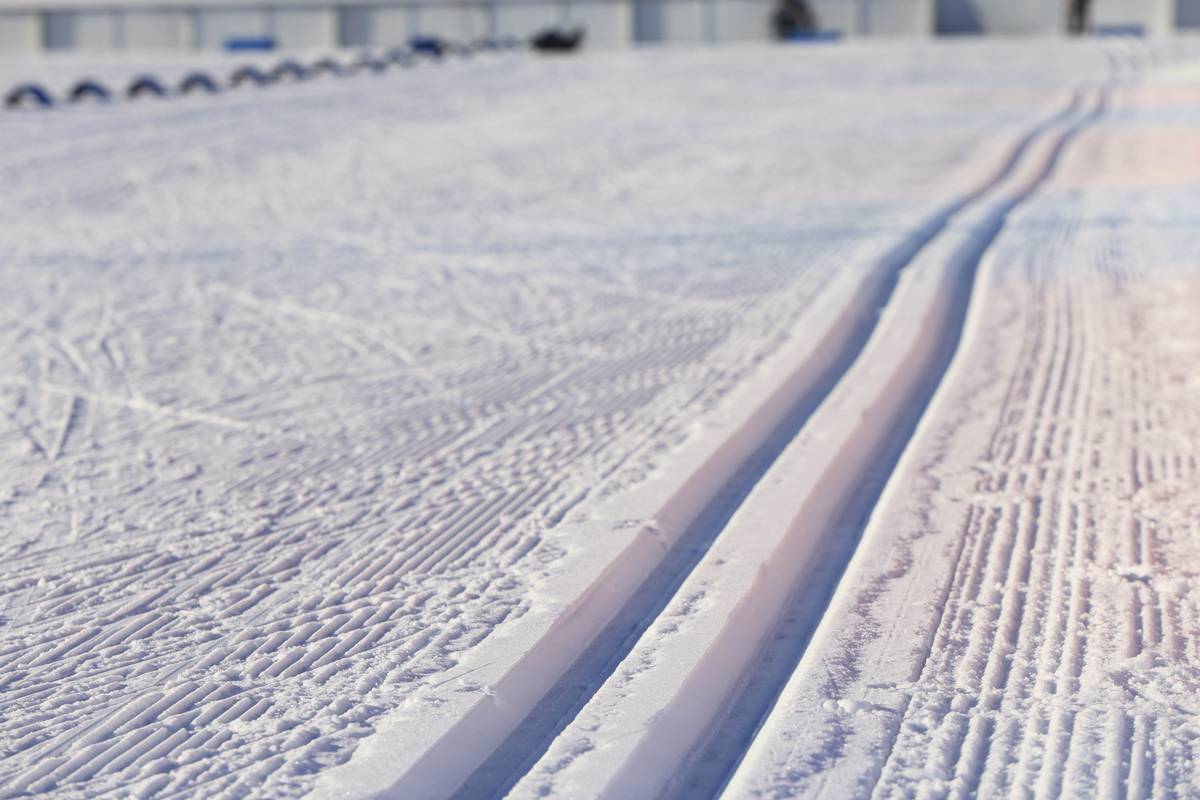
    Cold, firm tracks and perfect corduroy: the stuff of cross country skiers’ dreams. (Photo: NordicFocus)

    Click here to read part 1 of this story.

    In most states, youth skiing is divided between club and high school programming, where club programs support skiers looking to race competitively on a regional, national, or international level, perhaps with goals of NCAA skiing and beyond. High school ski programming is typically more participation focused, and comes with a much lower price tag for families, consequently with a much smaller program budget. It’s less about year-round training, and more about learning to ski, enjoying a low-cost introduction to the sport, and providing a healthy activity to get kids outside in the winter. In some places, athletes may fall into an overlapping Venn diagram of  categories, while in others, it may be a choice of club versus high school racing.

    Within high school programs, it is much less common to have multiple pairs of skis, and conversations on grinds and structures are less likely to be overheard between coaches. Here in Colorado, it’s one of the only (maybe the only?) high school sport that does not have a uniform rule – kids can essentially race in whatever they want; no lycra required.

    In this setting, a universal wax call might be a more reasonable proposition, according to Nystad. 

    “Arguments can be made on both sides. If everyone just agrees: ‘We have one pair of skis and we wax with blue.’ Okay, it probably will be as fair as you can probably make it, but just be aware that still there will be huge individual differences on the quality of the skis and how they differ from different conditions… there will still be variations, it’s not like everyone will start on the starting line having identical skis. That’s not realistic.”  

    Slovenian sprinter Eva Urevc tests skis with her wax technician at the 2022 Olympics in Zhangjiakou, CHN. (Photo: NordicFocus)

    With all of this in mind, is there a way to create equity via equipment or waxing at any level of the sport? 

    “No,” said Caldwell frankly. “No, there isn’t.” Adding perspective from his business, Caldwell explained that the cost of equipment has been steady over time with respect to inflation. That said, among competitive programs, the demand for skis has increased with time, in particular, following the removal of a now-banned leveler that we haven’t yet mentioned: fluorocarbons.

    “It’s a technical sport,” Caldwell said. “And the fact is that people have become more aware of the opportunity to get ahead with material. And I think what we’re seeing is a reaction to the reality of what the sport is. It’s not running. It’s just not. And yet people are doing the same thing in running with these carbon-plated shoes. Now you can only win if you have a high-tech shoe that goes 4% faster. Does that mean that those shoes shouldn’t have been invented? Or should they be banned? Possibly. I mean, whatever, we have to talk about this. 

    “They banned fluorocarbons for a lot of very good reasons, or they’re in the process of it. When it’s health and safety that is the problem, then you have to take the necessary steps. And yet, we also have to acknowledge that removing fluorocarbons really takes a big, big leveling factor out of the equation. There’s no opportunity to take a universal cold grind ski and put it in a wet race. That kid’s screwed. Every single time we remove the opportunity to optimize the solution that’s at hand, you’re penalizing the kids who don’t have the perfect setup.”
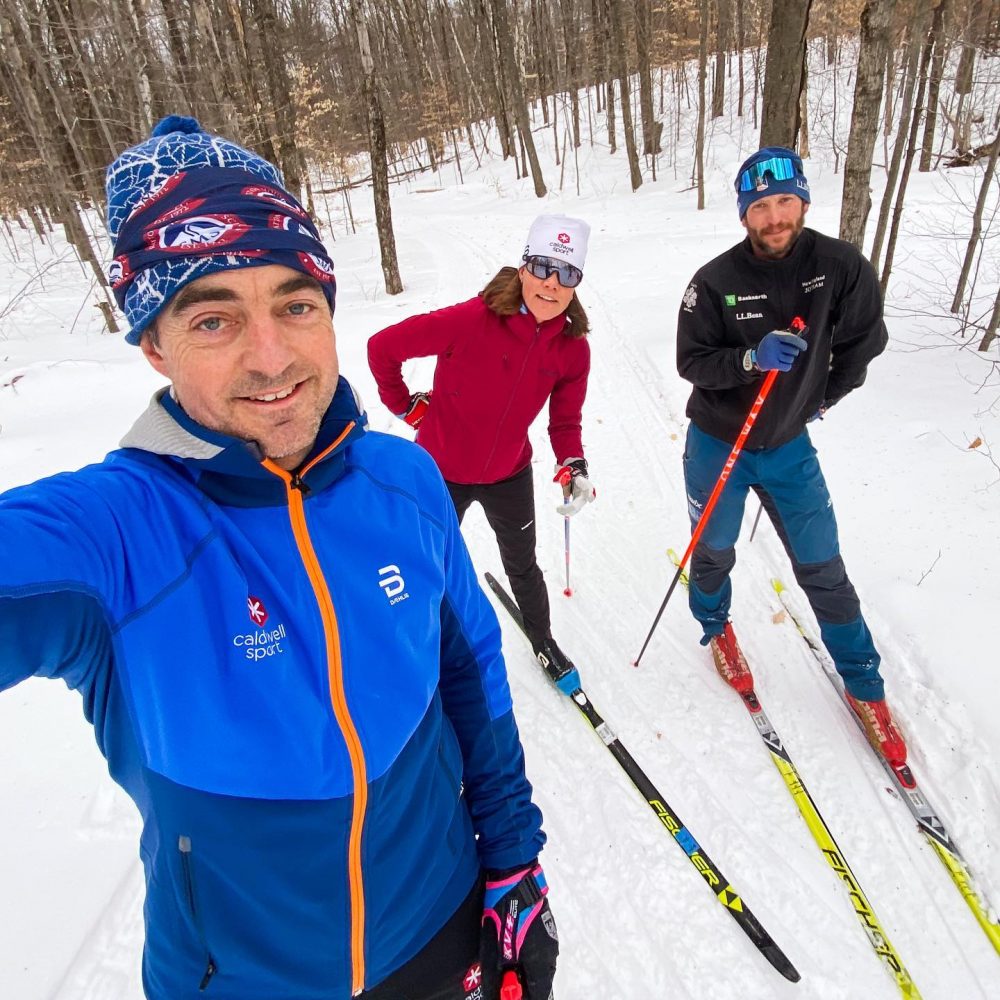
    Zach Caldwell (left) out for a ski with his wife and business partner Amy and Craftsbury Green Racing Project wax tech Nick Brown. (Photo: Facebook Caldwell Sport)

    Making it clear that his opinion is not clouded by the inability of a Colorado, Wisconsin, or Washington-based club skier to use a non-Swix wax purchased through Caldwell Sport, he added, “From a business perspective, with regard to my overall outlook, I probably should be applauding this model because it creates a massive incentive for kids to carry a lot more skis. And we’ve already seen this with the removal of fluoros from competition – you wouldn’t believe the uptick that we’ve seen in demand for warm weather skis, and grinds, and bases.”

    In Caldwell’s opinion, the opportunity for athletes and coaches to optimize a ski through testing and the use of a product line they know well, regardless of brand, is a more viable option for “leveling the playing field” as it could bring any ski closer to what he called it’s “terminal velocity.” A wax protocol that puts every athlete on the same brand and hardness of wax, creates “a situation where that opportunity doesn’t exist and the only way to gain competition advantage is to buy another pair of $800 skis. So it very quickly becomes a sport that, really, is hard to succeed at without a lot of personal resources.” 

    While the focus of these points might suggest that competitive youth skiing will trend toward an arms race, Nystad’s points included a reminder that a skier with limited access to equipment and race-day wax expertise may not be doomed. Other aspects of athlete development remain as important as ever in a skier’s trajectory and long term prospects. 

    “Quite honestly, I don’t want kids to have ten pairs of skis,” Nystad said. “I have kids that ski, but I try to limit the amount of skis and I try to buy used skis and rather look at what properties do the skis have, so that they have okay skis for for each condition. And then we focus on other things that are far, far more important. And that is the mentality to learn to train, to have fun while you’re training, and then to work on technique and tactics. So it’s also a cultural thing.

    “If you only focus on buying yourself time by buying equipment and buying wax and tweaking things and using resources — yes, you are probably going to gain some time, but you have to also say, ‘Are you investing as much time training and enhancing your technique and your tactic as the others are?’ So it’s definitely possible, even if you come from less resources, you can beat the guys with the most resources if you just train well and smart and develop good technique and good tactics.”
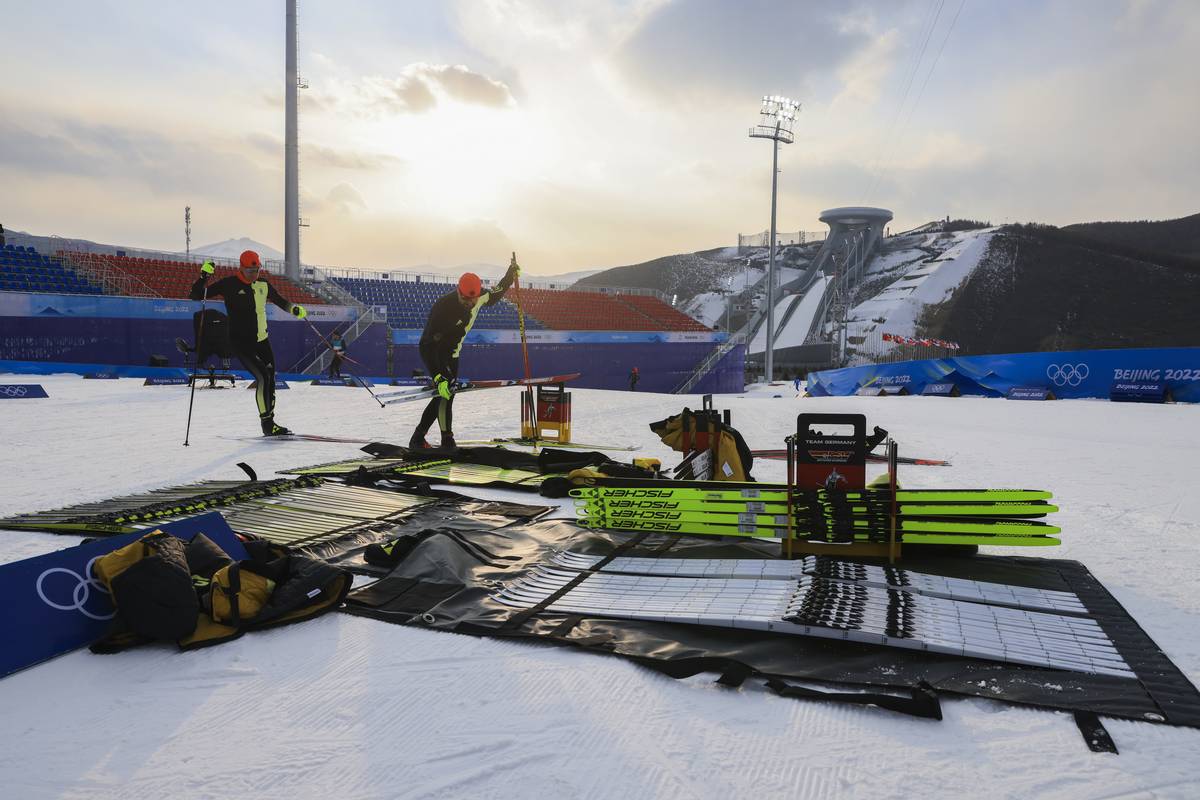
    The German biathlon team tests skis during the 2022 Olympic Winter Games in Zhangjiakou, CHN. (Photo: NordicFocus)

    As a serviceman working at the highest level of sport, Nystad also offered a thought-prompt on the impact to athlete knowledge and the ability to develop a new generation of wax technicians under a protocol, regardless of brand. 

    “If you want to educate athletes to also be able to become great service people at World Cup level races – if you take away that experience in club skiing or in high school skiing or in collegiate skiing, you will have no resources that are going to be able to serve your American athletes going to World Cups or World Championships or Olympics. Where are they going to get the knowledge? Because it’s like anything else, if you want to become good at something, you have to work at it.”

    According to Caldwell, incorporating a wax protocol is “reductionist attempt to level the playing field” that creates more disparity than equity. And so, the goal of leveling the playing field in cross country skiing remains “laudable”, but out of reach, and perhaps unattainable. 

    “I understand the discussion, but I think you have to cater to common sense,” Nystad concluded. “You can always tell people that we decide to [have] one pair skate, one pair classical. I think you can also try to have the waxes [matched]. But still be aware, it’s never going to be fair.” 

    Stay tuned next week for follow-up series which highlights some of the leagues who have enacted a waxing protocol, namely, the Wisconsin Nordic Ski League (high school & club), and coaches from Rocky Mountain, Intermountain, and the Pacific Northwest. This discussion includes the evolution and reasoning behind the protocols, and what advantages/disadvantages have been identified by each league.

  • What makes a fast ski? A discussion on league-wide wax protocols and ski performance theory with Andy Gerlach, Zach Caldwell, and Knut Nystad (Part 1)

    What makes a fast ski? A discussion on league-wide wax protocols and ski performance theory with Andy Gerlach, Zach Caldwell, and Knut Nystad (Part 1)

    FasterSkier shares insights into ski performance theory from Any Gerlach, Zach Caldwell, and Knut Nystad. (Photo: NordicFocus)

    In November 2021, the Wisconsin Nordic Ski League (WNSL), which oversees both high school and club level youth programming state-wide, accepted a sponsorship proposal from Swix and Salomon, which would provide the league with $10,000 in funding per year for three years. The proposal also included stipulation that a standardized wax protocol using Swix waxes would be adopted by the league at all affiliated races, including the state championship. 

    In practice, this would look like an email going out to all coaches a day or two prior to the event indicating which of a subset of Swix glide waxing products should be used by athletes that weekend. Equivalent temperature range and performance level waxes from other companies would be disallowed. In the sponsorship presentation given to the league by Swix, the proposal promoted the simplicity and affordability of a unified wax call, and a shift in focus for coaches away from time-consuming wax testing to race day support of their athletes. 

    The concept is not new, and WNSL is not the first league to adopt such a protocol. An equivalent protocol has been used by the high school, club, and collegiate level ski programs in the Rocky Mountain region (RMN and RMISA) for the last six years, and has more recently been adopted by the Pacific Northwest and Intermountain Division junior club programs. On the whole, these policies have been seen as beneficial by these regions. 

    While an additional $30,000 of funding has the potential to profoundly impact the reach of the WNSL, which will be discussed in a subsequent story, the adoption of the corresponding wax protocol also raised red flags, particularly among members of the Independent Nordic Distributors of America (INDA). The INDA includes distributors of wax products from other smaller companies like Start, Vauhti, Star, and more, and are primarily based in the Midwest. 

    The two primary issues that were flagged were the restriction of trade should Swix monopolize the buyer market encompassed by the WNSL, and also whether limiting the available choices to a single option actually creates the equity and uniformity that one might anticipate from putting all skiers on the same wax. Instead, could it widen the opportunity gap between those who could afford high-end skis with condition specific grinds and those who could not?

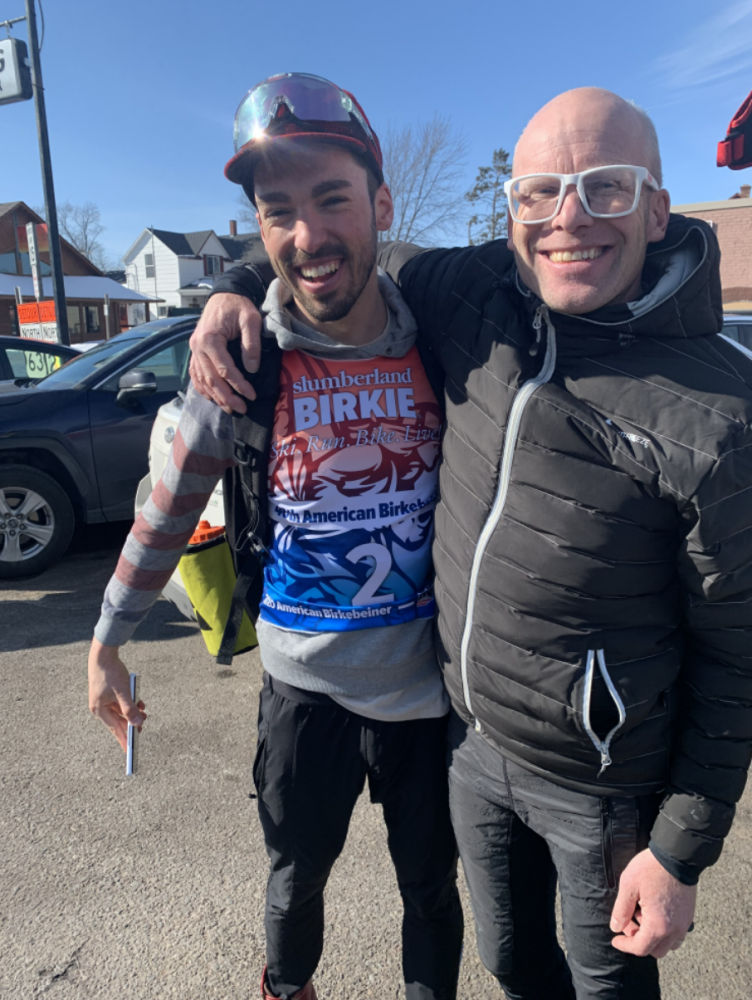
    Enjoy Winter’s Andy Gerlach snaps a picture with 2020 Birkie Champion Ian Torchia (SMS T2). (Photo: EnjoyWinter.com)

    In the fall, these issues were brought to FasterSkier by Andy Gerlach, director of Madison, WI based EnjoyWinter, which distributes Start, among other cross country related brands like Blitz Eyewear and Swenor rollerskis. With vested interests in the implications to his own business, but also as someone who offers brand-neutral education on wax theory for coaches, Gerlach actively opposed the decision by WNSL to accept the offer from Swix. 

    “The biggest argument against these exclusive sales agreements and proof that they are bad for the sport, and in fact illegal, is that they decrease the incentive for any other brand to fight for any part of a team’s or consumer’s business,” Gerlach said in the fall. “Why should my business continue to do wax clinics for Madnorski (Madison Nordic Ski Club) members if we know we are no longer getting a large chunk of their business. Why should any brand even visit Colorado clubs if we know we do not have a chance at a large chunk of the business there? Legal marketing arrangements should increase competition in the market, not decrease it. Change the agreements to marketing rights and not sales rights and every other brand would increase their efforts to reach the individual teams.”

    After discussions among the cross-country sport committee during the recent U.S. Ski & Snowboard annual spring congress meetings, Gerlach summarized his objections to wax protocols to the following four points.

    1. “They perpetuate a misconception that waxing is so difficult and mysterious. Our clinics state just the opposite.
    2. “They perpetuate a misconception that extensive testing is effective and needed to select a glide wax that an athlete can race up to their abilities with. Our clinics state just the opposite.
    3. “They increase the likely hood that those skiers with a quiver of skis will have the fastest skis. Multivariable mathematical analysis, as well as ski industry testing and ski sales figures shows this.
    4. “They endorse one brand ‘because it is the most available’ and in so doing extends this advantage.”


    There is plenty more involved in the debate on the legality and consequences on the business end of the decision whether to accept the sponsorship offer from Swix, which will be revisited in subsequent parts of this story. This installment, however, will focus on the underlying principles of ski performance theory, with input from experts, like Gerlach, on what factors ultimately determine ski speed, and whether restricting the waxes available for a given race would level the playing field by reducing variables, or adversely affect the pre-existing disparity between ski performance, thus limiting the potential of the skier clipped into the binding.

    Brimming with insights into ski performance, this thought-provoking conversation should provide fodder for discussion within race-leagues at all levels as they consider waxing protocols and avenues to improve equity within the sport. 

    ***

    We’ll start with what Gerlach identified as the factors that affect the performance of a ski from most to least significant, and where in this process limiting a coach/athlete to a single wax from a single brand becomes significant. 

    “In my hierarchy of ski speed deciding factors, it’s a flexible ski, the freshness of the base is the next important, the structure, then the hardness of the wax, and then the brand,” Gerlach explained in a call. “Now we’re going to take away the hardness of the wax as a differentiator between them. And now, all we have as the only differentiator is the ski model, the freshness of the base, and the structure.” 

    The understanding of this theoretical model underscores the remainder of the question. When we hear “wax tech”, the name seems to imply the key player being adjusted and assessed is the wax. Gerlach explained that this reasoning is misguided.

    “I, and scientific studies, will show you that 95% of this theoretical wax testing is not determining the fastest wax to apply that day. If it was, at US Nationals, or at any of these races, the line Saturday morning two hours before the race start would all be at one wax trailer. But you know, every coach comes up with their own thing… There is a different theoretical ideal wax for a Rossignol with an aggressive grind to the same Rossignol with a fine grind, and you would theoretically wax it differently. If you are testing on your Madshus cold skis and all your kids are on dried burnt out skis, or are on Fisher or on Salmon, theoretically, there’s a different wax [for each ski].”

    It’s a counterintuitive concept to those, like myself, who prefer to focus on the technique and training aspects of the sport, versus the technical side. Why doesn’t putting everyone on Swix PS8 on a day forecasted to be in the right temperature range remove a factor that might create disparity between ski performance, thereby improving equity? Particularly in a larger state, like Colorado, where teams are driving long distances (through vastly different elevation zones) to race without knowing exactly what conditions will be like until arrival, I could see the appeal for coaches of removing a step in the planning process. 

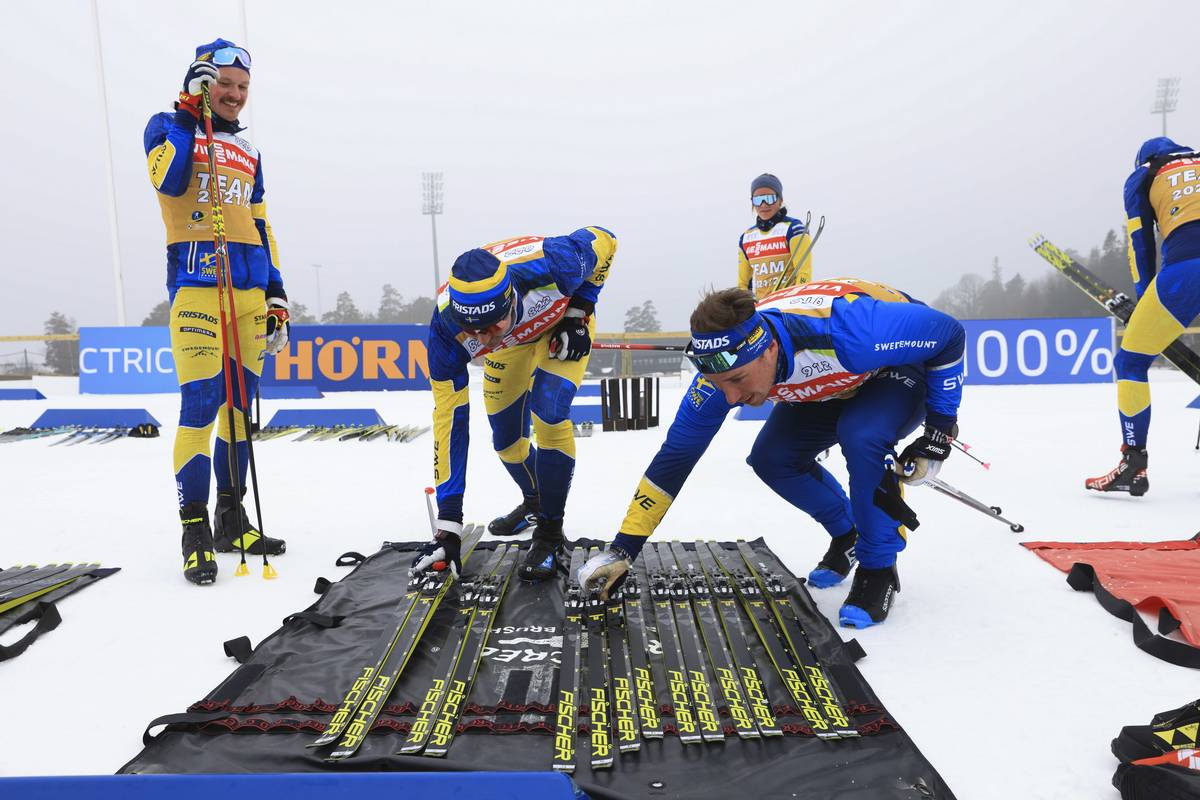
    Swedish Technicians at work at a March, 2022 biathlon World Cup event in Oslo, NOR. (Photo: NordicFocus)

    To simplify the answer on why equity may not be achievable with wax, Gerlach offered an analogy most skiers can relate to, regardless of their background knowledge in waxing theory.

    “If you’ve ever shaved your legs or your face with a razor,” he began. “A sharp, brand-new razor is like a fresh ski with a fresh base. You don’t need shaving cream and that razor works great. But a dull razor – a dried, crappy base – you need that shaving cream. And you need the best shaving cream you can get, and it’s going to help that razor and that shave a whole lot more.”

    How does this affect youth level programming? Ultimately, it accentuates the ever-growing “pay to play” problem of competitive sports. A newer, higher-end ski with a fresh base, or perhaps a quiver of skis that are ideal for different conditions, becomes much more important without the ability of a skier or coach to add versatility and improve the performance of a single pair of skis ski by utilizing a range of products to optimize the wax job. 

    “We have one ski with a great freshness of the base and a great structure, and one ski with a really dried up base. Had I applied wax to [the dry base], it does more to increase the ski speed than applying wax to a great ski… The more skis you can add to that quiver, all waxed the same, one of those is going to highly outperform the others. Versus when you had the ability to not only figure out which ski to go with, but which wax to go with. So by taking away variables that are easy to change, you make it more important to have a very good ski.”

    To include additional knowledgeable voices in the discussion, FasterSkier also spoke with Zach Caldwell and Knut Nystad, two savants in the complex and nuanced world of wax and skis. Caldwell is a leading expert in ski selection, wax, and grinds in the US, and the co-owner of Caldwell Sport. As a distributor of Vauhti, Rode, Star, and other waxes, Caldwell is also a member of the INDA. 

    Nystad is the former head of the Norwegian Wax Team, who still works as a ski serviceman for the Norwegian program at the World Cup, World Championship, and Olympic level. Prior to this work in his home country, Nystad spent twelve years as the head coach at the University of Denver. 

    “The idea of having a fair competition and limiting variables in order to generate more fairness and equity in the racing and create equal opportunity and a lower barrier to entry is a really laudable goal, but it misses the point,” Caldwell said simply in a call. 

    “The fact is that it’s a pretty complex system that we’re working with, with a lot of additive contributing variables that contribute to a whole solution, including ski flex, base material, base preparations, waxing, hand structure, all of it. When you have a lot of variables available to you, you have a lot of different pathways to success. The peak performance that might be available [on a particular ski] can be considered something along the lines of terminal velocity; you’re just not really going to go past a certain level of performance [on a day], the performance that the snow is going to yield. But there are a lot of ways to get there.” 

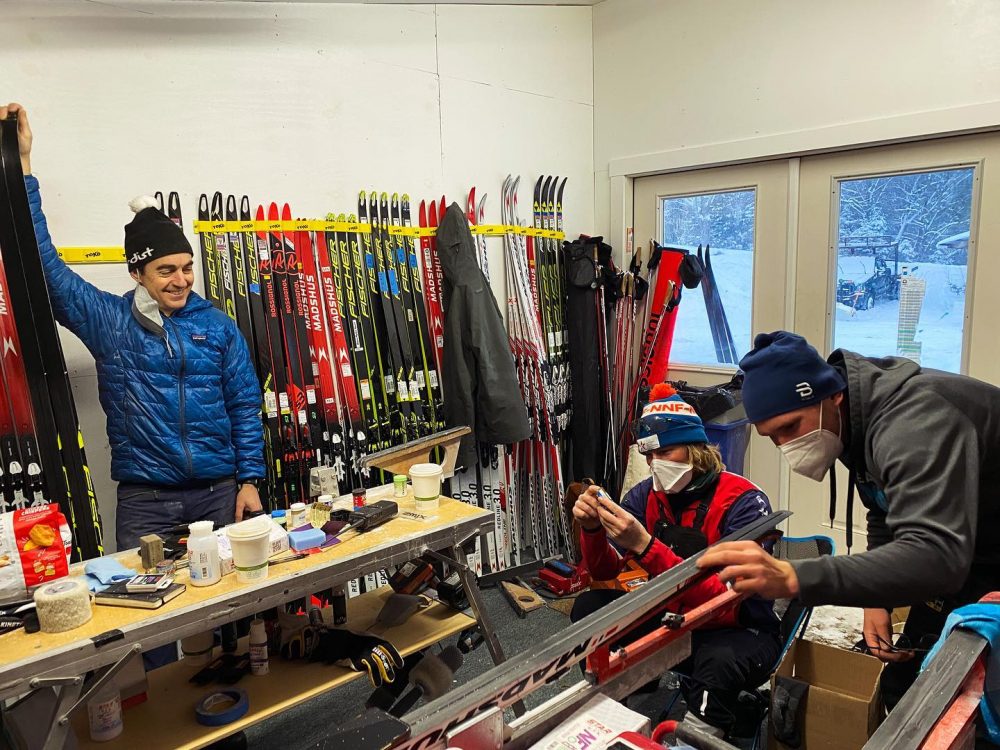
    Inside the wax at a February SuperTour race weekend in Craftsbury, VT, where Zach Caldwell (left) supported SMS T2 athletes. (Photo: Facebook Caldwell Sport)

    “As you begin to limit variables,” Caldwell explained, “you begin to place much more emphasis on other variables. They become proportionally much more important in determining how to get to the best performance possible [on the day]. And as you remove wax, which is a really inexpensive variable per application that can be put on specific to a day, you skew the emphasis toward skis base materials, grinds and hand structures.”

    Individual variation among the skis and in the technique and strengths of the skier on those skis adds additional complexity to the scenario.

    “Think about classic skis; this is a better way to imagine this,” Caldwell pitched. “Some athletes or some skis require different layering and build up of classic wax on a day. But if you’re saying, ‘Oh, you get two layers of extra blue. That’s it.’ That’s asinine. It means some people get to race and others basically have to herringbone.”

    Nystad also questioned the premise of leveling the playing field by creating uniformity in the wax selection.

    “Let’s start with the beginning,” Nystad said. “All of us that have done this for a long time, the only thing we know is that we don’t know. The only thing we know is that we need to test in order to get the answers. But what I can tell you from my experiences is that if you limit one factor, sometimes it just opens up another can of worms…

    “There’s definitely good arguments for trying to make the sport as simple as possible. But I think that for the people that think that just by waxing with blue, that that’s going to make it more equitable. It is a sign to me that they don’t have that much in-depth knowledge.”

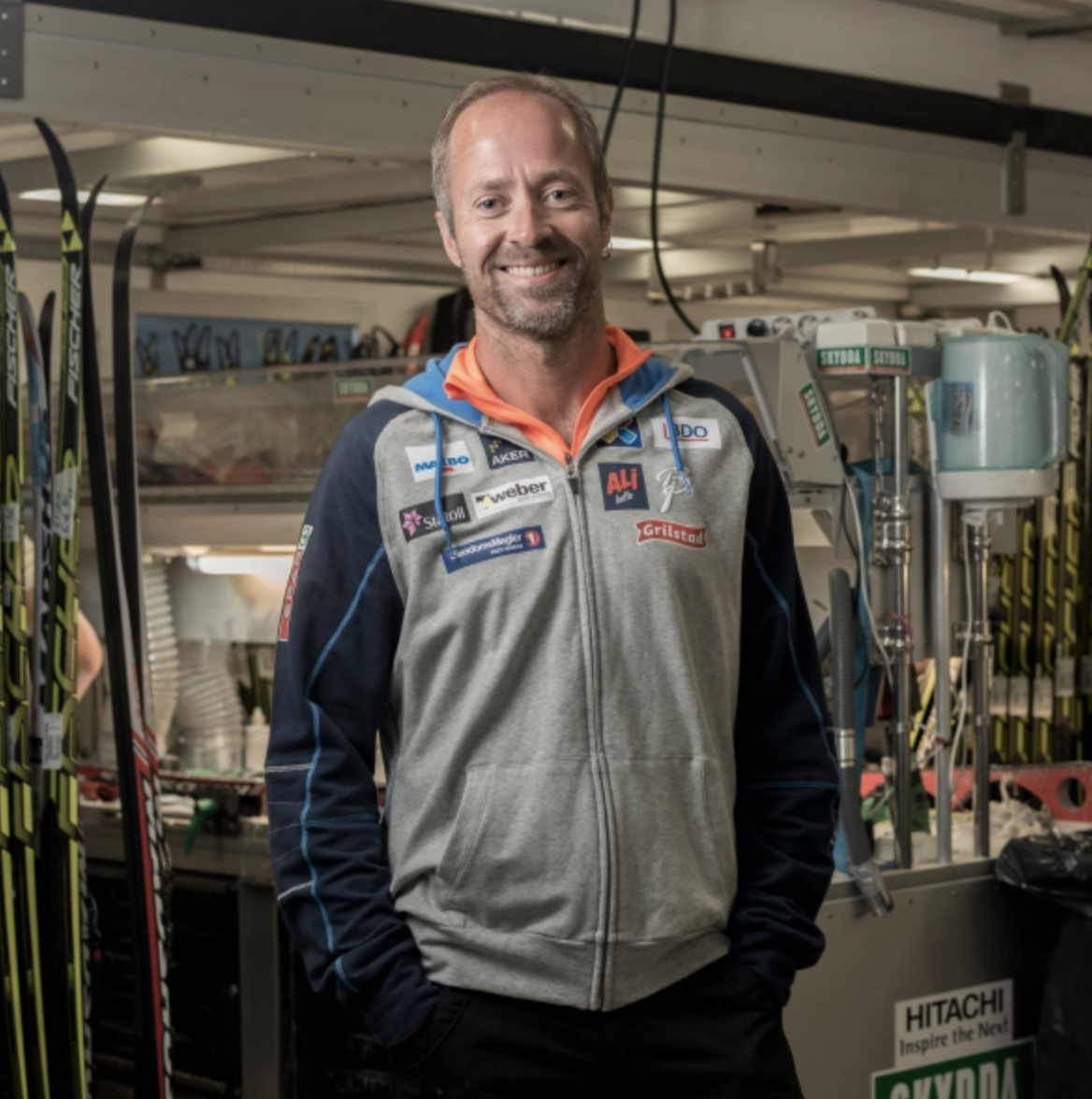
    Knut Nystad provides insight into ski performance theory and why a one-wax call may widen the gap in cross country skiing. (Photo: knutnystad.com)

    Without giving hierarchical ranking, Nystad also discussed the myriad of factors that contribute to the performance of a ski on a given day: the properties of the ski, including flex and splay, the quality of the base and its structure, the manual tools used, and the wax. “And then to top it all off, you have the method methodology that you use to apply the wax.”

    He walked through various ways a particular wax could be applied to yield different results, before echoing Caldwell’s sentiments that equity and uniformity cannot be achieved by restricting the options for wax that can be applied to a ski. 

    “When people say, ‘Well, can’t we just all wax with the same thing? It will make it easier.’ Clearly it will make it easier; you have one less factor to think about. But if the intention was to make it more of an even playing field, it’s not necessarily the truth. Because when you go to a race,  you’re only limited to try to test what you can afford from money, resources, and of course, time being one of those resources. So if you don’t have the test wax, what else can you test? Well, you can test many more skis, with many more properties with many more different bases, with many more structures, with many more manual tools. 

    “So it just opens up other things that you can test to get an advantage. And everything that you’re going to test if you’re going to have more skis, of course, that’s going to cost more. If you’re going to have more structures, different kinds of structures, that will also cost more. If you’re going to add manual tools, that will also cost more.”

    Stay tuned for more insights from Gerlach, Caldwell, and Nystad in Part 2 of this story.


  • Moving with the times: A look at Brennan’s “Perseverance Trail” NFT and partnership with Parity Now

    Moving with the times: A look at Brennan’s “Perseverance Trail” NFT and partnership with Parity Now

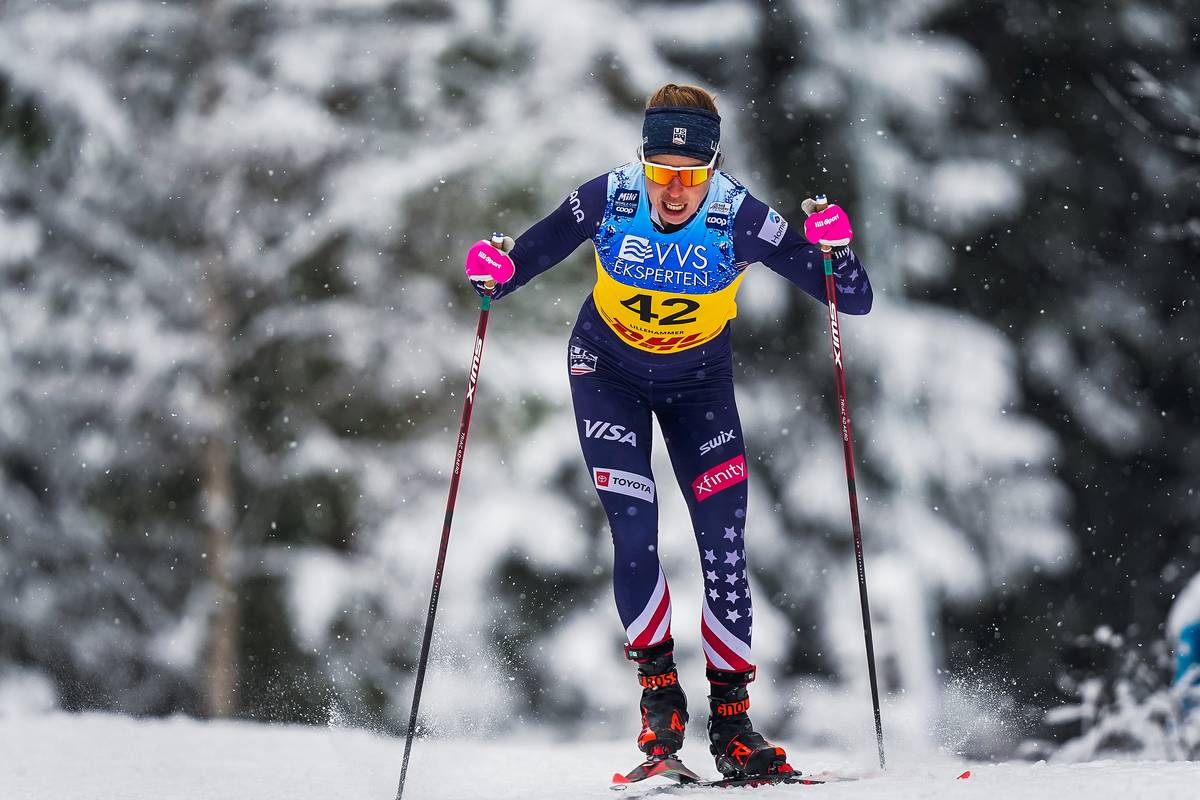
    Rosie Brennan races to fifth in the freestyle sprint during a December, 2021 World Cup in Lillehammer, NOR. (Photo: NordicFocus)

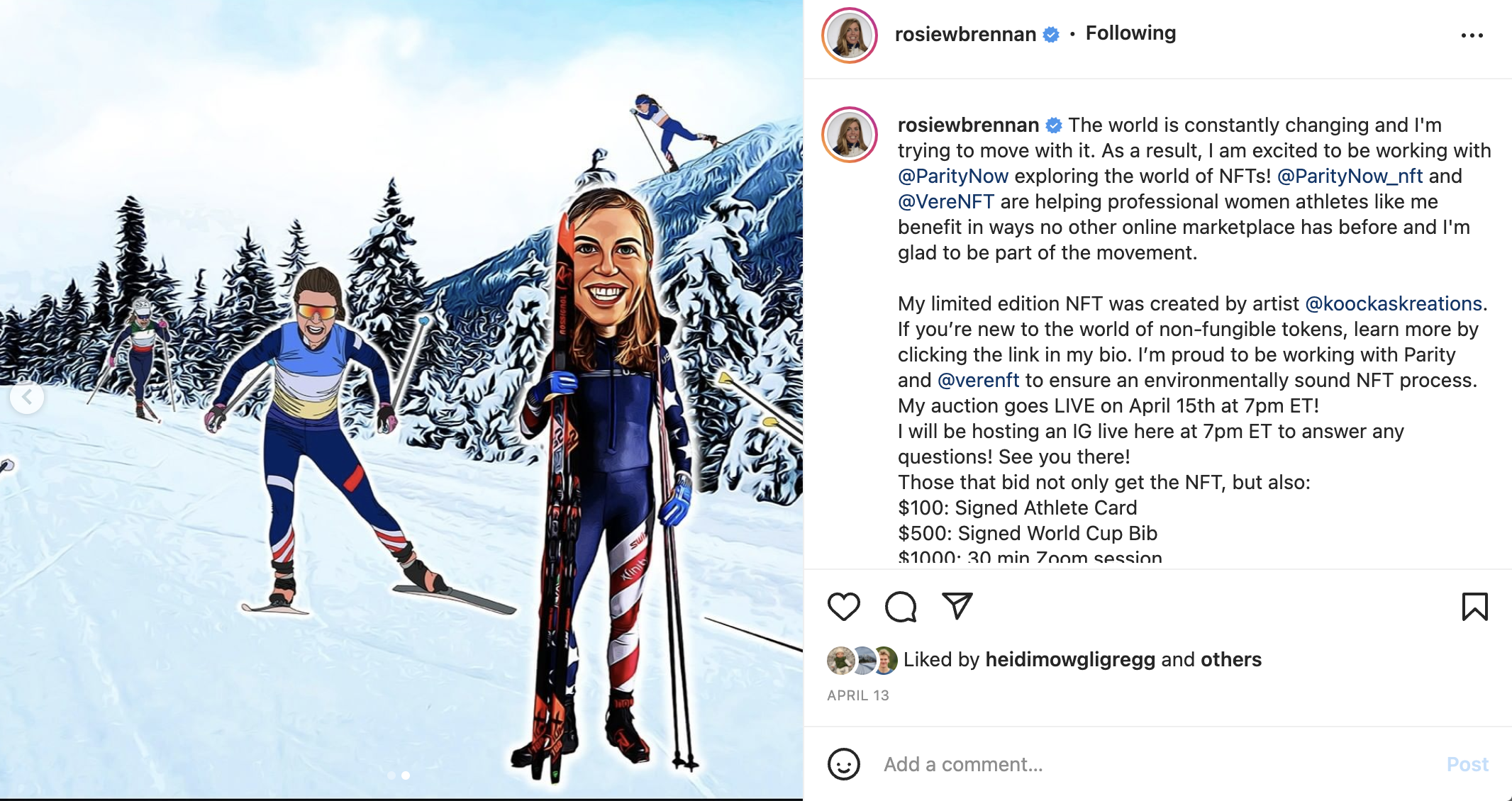
    On April 13th, Rosie Brennan wrote in an Instagram post, “The world is constantly changing and I’m trying to move with it.” The post announced the launch of an online auction for a limited edition NFT, in partnership with the organizations Parity Now and VereNFT. The NFT, titled “Perseverance Trail”, was designed by artist Kerri Schiff and features a mountainous ski trail with a variety of images of Brennan racing in her Team USA suit.

    If you just read that introduction and thought, “Wait – what does any of that mean?”, you’re not alone. It’s a very new realm and can very quickly make you feel as though you’ve been transported into the Matrix.

    For starters, NFT stands for “non-fungible token”. An NFT is a unique and non-interchangeable digital asset, typically a piece of digital art or music, that is stored on a blockchain and can be sold or traded via an online marketplace. A blockchain is more or less a virtual ledger for transactions in that marketplace, made across a secure network. To learn more, you’re better off heading to Forbes, or reading this helpful and entertaining article on The Verge.

    When it comes to Brennan’s Perseverance Trail NFT specifically, the highest bidder on the auction is purchasing a unique piece of digital art, along with the exclusivity of that token.

    “For our physical reality,” Brennan explained in a call,  “you’re purchasing that [digital] image and you are then the only one who then owns that. So I can’t reproduce it or sell it, or make it a poster. It is just that singular item.” 

    For those who bid at different levels, regardless of whether they eventually own the NFT, Brennan has offered a tiered list of rewards: $100 gets you a signed athlete card, $500 for a signed World Cup bib, $1000 for a 30 minute Zoom session, and $2000 for a three-month personalized training plan. 

    (Photo: Instagram @rosiewbrennan)

    It’s an altogether different and very new avenue that an athlete might incorporate to support a career, and Brennan admitted to still being in the learning process. That said, she explained some of the factors that were intriguing about the proposition.

    “Maybe the more interesting part about NFTs is that, because there is only one of them and it’s tracked, it has a digital footprint. So, if somebody buys it, I get some of the proceeds from [the sale] and the artist gets some and then Parity Now gets some. But every time it’s resold after that, I continue to get some of the proceeds. So that’s kind of different from a physical piece of art. When an artist sells a piece of art, that’s the only time they gain profit from it. If that [buyer] then resells it, the artist doesn’t get any benefit from that.”

    Another unique aspect is that the value of the NFT may increase with time. “As we see in art, most artists don’t become famous until they’re dead.” Brennan laughed as she expressed that thankfully, athletes don’t need to wait quite as long, however, it remains unknown what they will accomplish during their career until it is finished, or what they may achieve in other spaces  afterward.

    Ultimately, the NFT marketplace remains a nascent and still-developing platform for investment and trade, and it’s unclear how profitable this type of auction could be in the long term. Nevertheless, Brennan applauded Parity Now for offering women these non-traditional opportunities.

    “It’s obviously very [new]… and so who knows what that really means, but I’m impressed that this organization is kind of pushing the boundaries in these areas and looking at different ways to create, not only like money for athletes, but just also awareness and marketing and hype.”

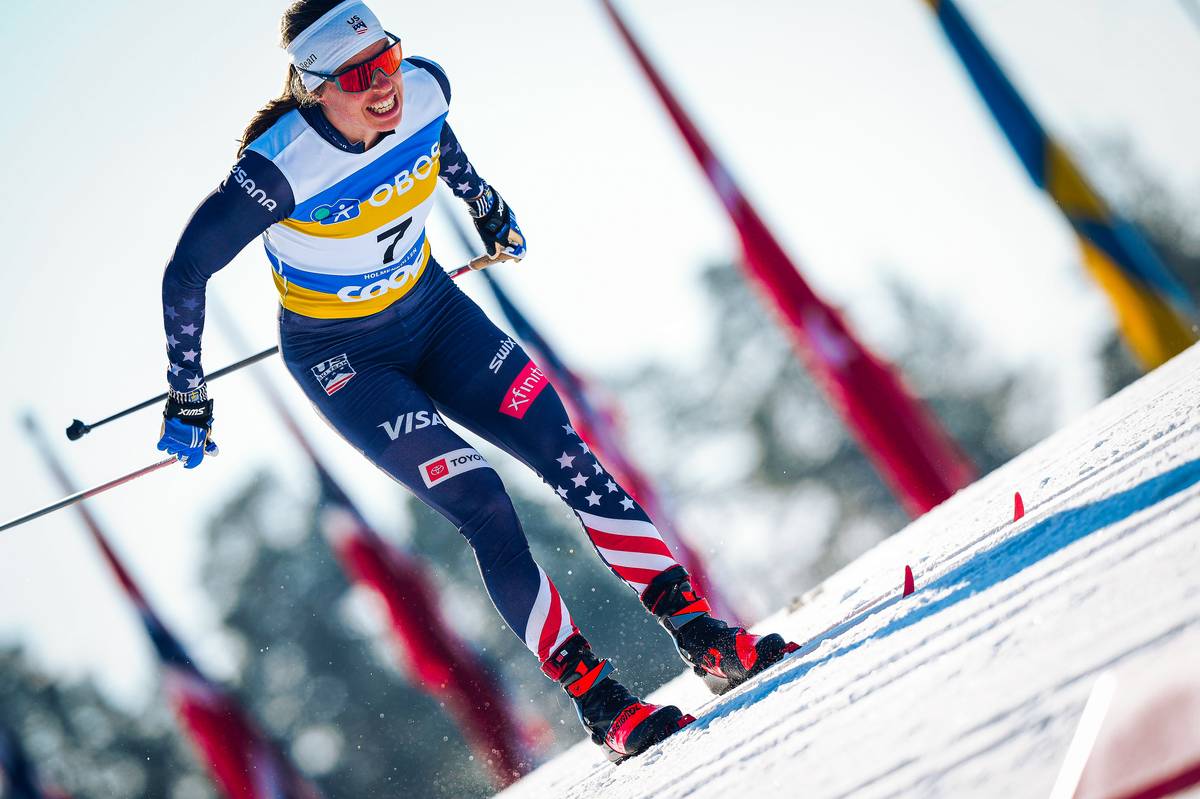
    Rosie Brennan skis to 7th during the 30k classic at Holmenkollen in March, 2022. (Photo: NordicFocus)

    Taking a step back to how this came about, we’ll rewind to the 2018 Olympics in PyeongChang, when Brennan found herself frequently riding the bus to and from the athlete village with American bobsledder Lauren Gibbs, who she described as “super outgoing and very friendly” and seemed to, coincidentally, be on a very similar schedule to the cross country ski team. After earning an Olympic silver medal in 2018 and a World Championship gold in 2020, Gibbs retired and became a spokesperson for Parity Now, an organization which advocates for equal pay, media representation, and opportunities for professional women athletes. Parity’s community of athletes includes more than 165 Olympians and Paralympians across more than 40 sports, all working together to “[propel] professional women athletes forward.”

    When initially approached about the NFT opportunity, Brennan put the idea on hold. However, after seeing other women athletes on the marketplace and learning more about the process, she decided to give it a go.

    From there, Brennan worked through a lengthy questionnaire to identify the aspects of her career and self that were most meaningful, to guide the artist in creating the design. Brennan also provided a wide variety of images of herself skiing to ensure the sport would be well-represented. She was then allowed to provide feedback throughout the process, until landing on a finalized piece of digital art

    “It was cool to see an artistic interpretation of the values that I felt [were] meaningful in my ski career,” she said.

    Rosie Brennan races to third in the 10 k skate in Lillehammer, NOR in December, 2021. (Photo: NordicFocus)

    With athletes from all sports competing in the NFT marketplace, Brennan said she “really wanted to highlight what makes cross-country, in my opinion, different from other sports. And for me, one of those things is the fact that we’re doing all the events and all the techniques.” 

    In the image, both skate and classic techniques are featured, along with a couple of fast tucks, in and out of the tracks. Brennan also wanted to feature the variation in terrain, in contrast to a more controlled environment like a running track, along with the natural beauty and challenge of a cross-country ski trail.

    “I wanted that natural environment highlighted, which is the part I really like about mine — I think [the artist] did a great job making some really cool-looking mountains… And then to me, [Perseverance Trail] is such a great metaphor for life. Particularly my own [journey] in cross-country skiing that has just been so up and down, and maybe required a little more perseverance than others. And just using that analogy – that no two trails are the same. I don’t think anyone’s path in sports is the same either.

    “And then, this fine balance of being present in the moment on a trail, but also having that adaptability and flexibility to deal with what the trail brings on any given day. Changing elements, changing snow, changing weather, and skis – all these [variables] that cross-country requires, and that are such an important aspect of life, really.”  

    As for working with Parity Now more broadly, Brennan does aspire to partner with the group beyond this NFT project. She explained that she has already benefited from some of the webinars Parity offers to women athletes to equip them with the variety of business skills they might need to successfully support their career and ensure they’re well set up for life after sport. Brennan also explained that Parity can help connect athletes with other companies for work in social media and advertising campaigns, which she’d like to participate in down the road.

    “It’s just neat to see different groups trying to tackle women’s equality from different angles,” she concluded. “And I think this business angle is actually a very important one. Lauren’s a real go-getter, and so I’m sure that there’s more good things to come from it.”

    Parity Now cites research that estimates that, of the $66 billion global sports sponsorship market, only 0.4% goes to women. “You read that right,” Parity Now said. “For every dollar spent on sports sponsorship, women receive just half a cent.” 

    Rosie Brennan skis onto the podium with a third place finish in the 10 k skate in Lillehammer, NOR. (Photo: NordicFocus)

    As fans of cross-country skiing in the US, it might be easy to lose sight of this pervasive inequality faced by women in sport. We see Jessie Diggins’ face on magazine covers before the Olympics, equal opportunity for prize money on the World Cup, and a whole team of women ready to pop a Top-10 or podium on any given weekend. In fact, the results achieved by American women over the last decade-and-a-half have made it easy to forget that the U.S. Ski Team had dropped funding for the women’s program prior to 2006 — though we now have two books, World Class and Trail to Gold, to remind us of this journey.

    Speaking to her experience in becoming one of the top women in the US program, Brennan said, “I feel very lucky to be an American woman skier. I think we have had a lot of really great opportunities. To be honest, I think in the last decade or so we’ve honestly overshadowed the boys and, if anything, they usually get the raw end of the deal. So that’s maybe been a unique perspective that we’ve had as women cross-country skiers, and something I definitely try not to take for granted. And it is interesting traveling on the World Cup, you do notice cultural differences and how countries treat men and women differently. And not all is good and not all as bad, it’s definitely different.

    “From an international perspective, like on the World Cup, navigating that is challenging — figuring out what actually is equality and what that means to different people and different cultures, and how we implement that into the bigger scope of the world is definitely challenging.”

    Brennan added that she felt Americans are “a little more progressive on that end”, which makes her proud to represent the U.S. Ski Team. She did point out that there is one very obvious source of inequality present at most levels of the sport: how far men and women race.

    “That’s maybe the most glaring aspect in which men and women are not equal [in cross country skiing]. I’m definitely a proponent for equal distance and it sounds like, honestly, everyone’s moving in that direction. I actually think that change is coming faster than we all anticipated.”

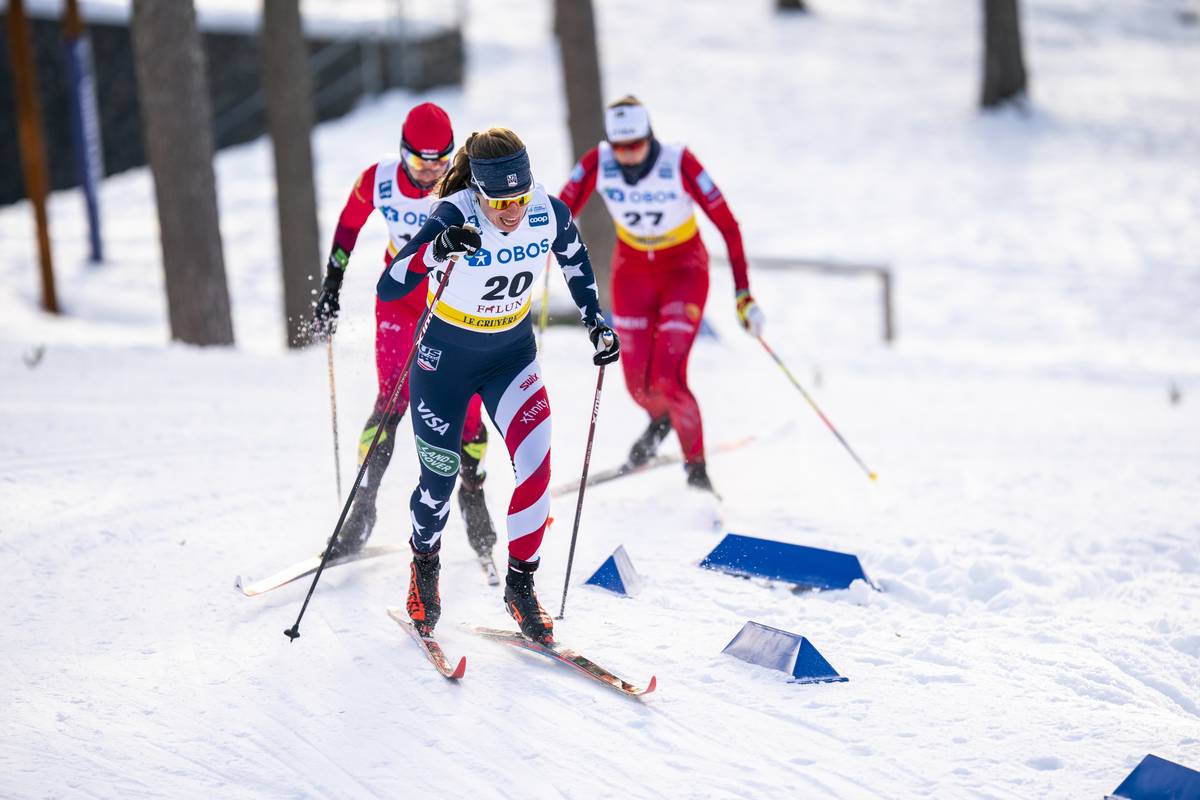
    Rosie Brennan races a January, 2021 World Cup classic sprint in Falun, SWE. (Photo: NordicFocus)

    Brennan serves as an elected athlete representative on the U.S. Ski & Snowboard cross-country sport committee and shared that equal distance will be a “big topic” at the upcoming annual congress. She also indicated that this is the case at the International Ski Federation level. “It’ll be interesting to see how that unfolds in the next month or so. But I definitely think it’s coming.”

    Circling back to the NFT and what all of this means in the broader context of her career, Brennan concluded with both uncertainty and optimism. 

    “I don’t know if it will become such a big thing that people are wanting to gamble on a young athlete in hopes that they make it big and their NFT becomes worth millions or something,” she said with a laugh. “I don’t know if that’s what the future holds or not. But I definitely think it’s a cool way to bring awareness and promote women’s sports and take part in an interesting project.”

  • Lifelong Learners and Waxing Skis with the Women Ski Coaches Association

    Lifelong Learners and Waxing Skis with the Women Ski Coaches Association

    Kate Barton, now a U.S. Ski Team coach, waxing skis during her time at Burke Mountain Academy. .

    The magic brew. The secret sauce. The omniscient wax-tech with encyclopedic knowledge of all things ski wax and the ability to bestow the goods onto a ski base. Ah, those slick and slippery skis. And that bite of kick in slush. The mythology of wax in this sport looms large. And the few wax-mixologists of note live among their peers as deities.

    The popular myth is this: some are gifted with the wax gene, most are not. Recently, I watched a webinar titled Waxing Skis & Waning the Gender Gap,  where all came as equals. If you were transported from afar into the scene and knew nothing of “making good skis”, you’d think good wax-teching was as simple as being human – asking questions, trying new things, accepting success and failure as part of the process. 

    The webinar, which included over 115 participants, was part of an empowerment initiative produced for members of the WSCA, or Women Ski Coaches Association. In talking to WSCA founder and College of St. Scholastica head cross-country ski coach Maria Stuber, this was clear: old-school inequities toxify some wax cabins but it does not need to be that way.

    “It’s easy for a newcomer to think that there are definitive right or wrong answers to all these wax questions and that your worth in the profession depends on having the right answers,” said Stuber. “When your worth is on the line it gets really scary to ask questions. If you can’t ask questions, you can’t learn. I hope our webinar communicated to new coaches that we should be searching to learn, not to find answers. I can’t control the environment all these women coaches are waxing skis in, but I can make sure that, at the very least, they have a safe and supportive place to ask questions and collaborate with peers through this platform.”

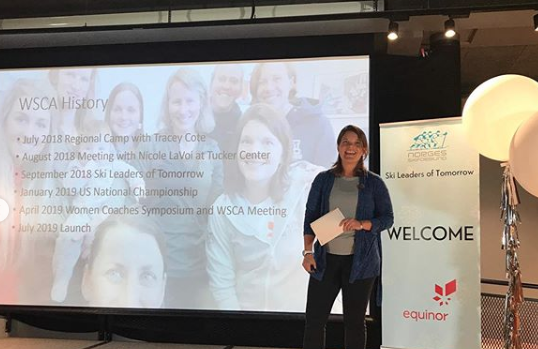
    Maria Stuber presenting about the WSCA gender equity project at the Female Ski Leaders of Tomorrow Symposium in Oslo, Norway. (Photo: Instagram @womenskicoaches)

    If you hear “there’s no problem” in the wax-cabin echo chamber – here’s some data. The WSCA conducted a survey among its members and found some stark numbers. Seventy-six percent of those surveyed said they did not have access to information to make them feel successful as a wax-tech. Fifty percent responded “yes” when asked, “Do you ever feel like you are at a disadvantage obtaining wax product or process information because of your gender?” For some background, 77% of survey respondents had four or more years of ski coaching experience.  

    Keynote webinar speakers included Kate Barton of the U.S. Ski Team and U.S. Paralympic Head Nordic Ski Coach Eileen Carey. Craftsbury’s Anna Schultz, Laura McCabe from MVNST, Tracey Cote from Colby College, and Dartmouth’s Cami Thompson Graves rounded out a panel discussing the nuances of ski prep in colloquial terms. This was a world-class group with serious cultural capital. There was also a remarkable absence of ego.

     Let’s be clear, the webinar had nothing to do with airing grievances or bashing authority. This was a safe place to disseminate information and as Stuber said, “demystify this waxing world and share each other’s success and become an image that people associate with being able to wax skis at a high level.”

    “It’s not all about confidence—-it’s about competence. When it comes to leadership skills we know that men excel at confidence. I would argue that we should focus on competence or the ability to do something successfully or efficiently because confidence grows naturally if you believe that you are competent.” – Kate Barton 

    Anna Schulz Head Junior and BKL Coach at Craftsbury.

    There was talk of structure, not so secret klister mixing and application tricks, and developing a strategy to isolate variables to test when in a competitive environment. Cote spoke of using a single yet complex wax line over the years to really learn how, when, why some waxes were more effective than others. Simultaneously her methodology streamlined her waxing process while also giving her access to a richer array of products to choose from.

    Carey also developed a survey for WSCA members to self-assess their competencies in all aspects of waxing and base prep. Those with areas of strength can provide their contact information to assist others with a perceived deficiency. For example, someone like Thompson Graves could assist a high school coach from Minnesota seeking help developing a strategy for structuring skis that works within that coach’s budget.

    Reiterated by Carey via email was the idea that those in the ski waxing world are really on a “journey of continual learning.” Carey explained that the women she observed during the call, despite their expertise, embraced a message of lifelong learning.    

    “This is an important message because I think there is a perception that the only way to be good at waxing is to appear to know all the answers and be totally confident,” Carey said. “I think this is important to note because I think that women often get passed over for positions because they don’t necessarily exude confidence in the narrow scope of what is considered ‘acceptable’ in the wax world. In my estimation, the lack of ego, the ability to ask questions, and the knowledge that you don’t know everything is a huge benefit.  I think that people who make decisions in the ski world, whether it be what coach to hire or which coaches should represent a team on a big trip, should expand the vision of what makes a good coach and what makes a good waxer.  Someone with all the answers is probably limiting the scope and quality of their work with athletes and in the wax room.  If we can acknowledge as a community that there are many versions of what it looks like to be competent, we will all be better for it.”

    With a dizzying array of new products on the market due to new wax restrictions, a window exists for women coaches to lead. Barton was succinct when discussing her thoughts on how to move forward.   

    “It’s not all about confidence—-it’s about competence. When it comes to leadership skills we know that men excel at confidence. I would argue that we should focus on competence or the ability to do something successfully or efficiently because confidence grows naturally if you believe that you are competent,” said Barton during the webinar.

    The WSCA will continue to produce content for members to assist their pursuit of developing, retaining, and advancing women in ski coaching leadership.