Tag: Erik Brandsdal

  • Klæbo Dominates in Planica; Hamilton 19th, Newell 20th

    Klæbo Dominates in Planica; Hamilton 19th, Newell 20th

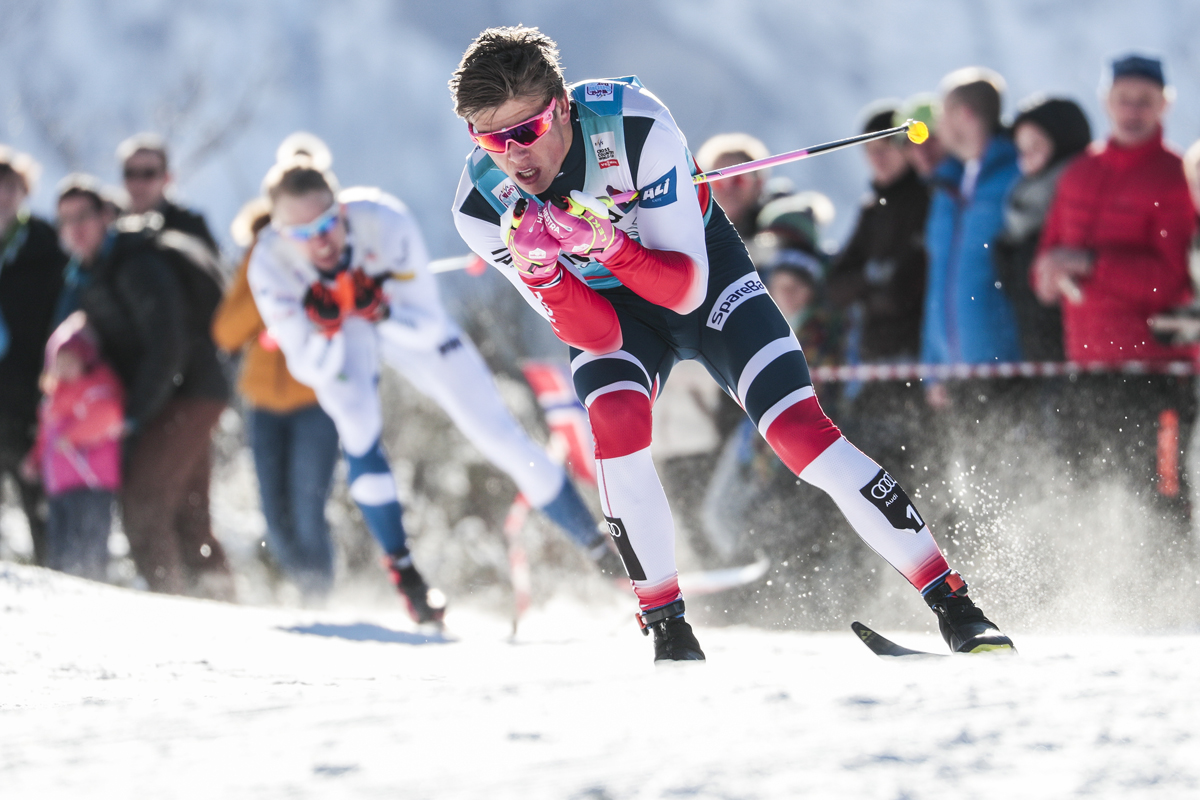
    Norway’s Johannes Høsflot Klæbo en route to another World Cup win in the men’s classic sprint on Saturday in Planica, Slovenia. (Photo: Fischer/NordicFocus)

    Sunny skies. Craggy Slovenian Alps. Fresh snow and firm classic tracks. The perfect backdrop for the coiffed hair and pink sunglasses. On Saturday in Planica, Slovenia, Norway’s Johannes Høsflot Klæbo again proved his form is on another level. Sometimes calm with tens of meters to spare, sometimes allowing others to draft momentarily on his ski tails, Klæbo won the World Cup men’s 1.6-kilometer classic sprint in 3:27.35 minutes.

    In a final that featured three Norwegians, two Swedes and a Russian, Norway’s Emil Iversen placed second (+0.62) and Sweden’s Teodor Peterson third (+8.14). Yes, that’s a big gap to third place, and the gaps only bulged to the rest of the men in the final. Sweden’s Oskar Svensson finished fourth (+11.80), Norway’s Eirik Brandsdal fifth (+19.77), and Russia’s Gleb Retivykh sixth (+27.08).
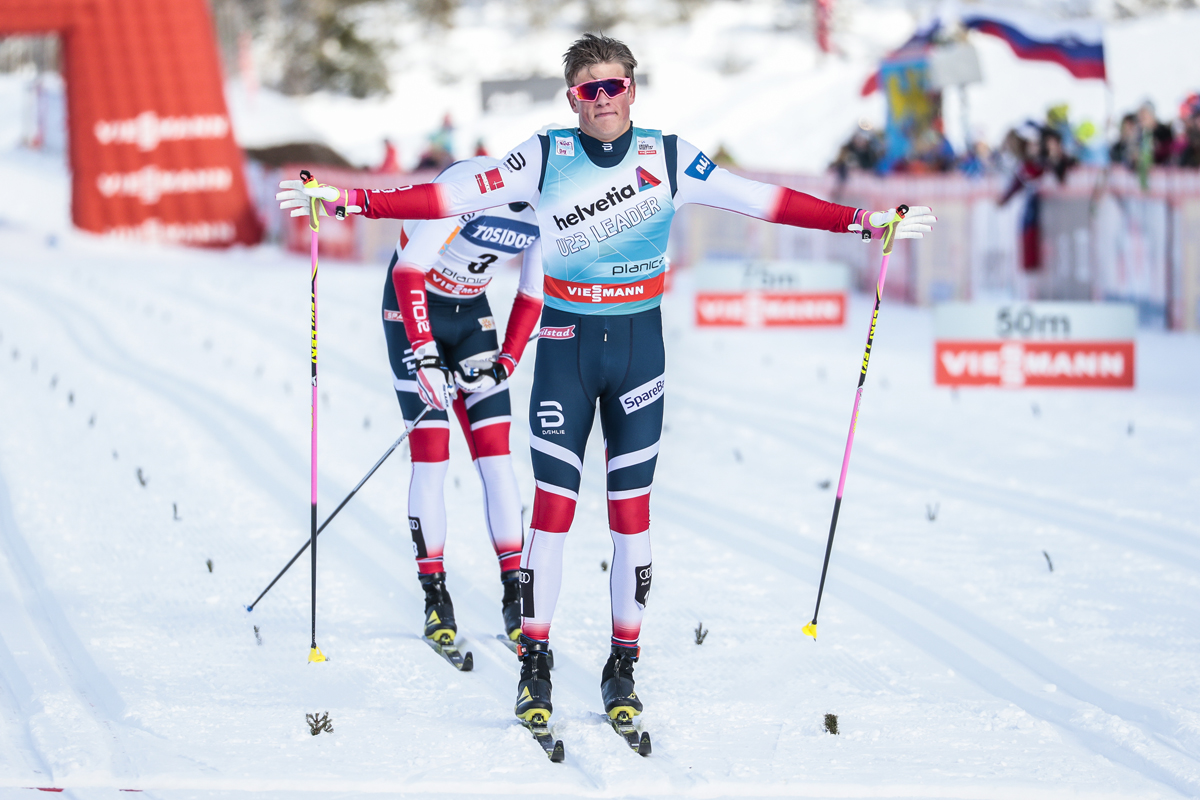
    Norway’s Johannes Høsflot Klæbo winning the men’s classic sprint final at the World Cup on Saturday in Planica, Slovenia, by 0.62 seconds over his teammate Emil Iversen. (Photo: Fischer/NordicFocus)

    “I had a lot of fun out there today,” Klæbo said, according to an International Ski Federation (FIS) press release. “It was great to see so many people along the course and the stadium. I really liked the course with the long uphill sections.”

    To say Klæbo is on a roll is an understatement. The 21 year old, in fact, seems to be skiing in total control and on a different level —  his swing from top-end efforts to dialing it back for the “show” seems like a quid pro quo to keep competitors from discouragement. Not that another Klæbo win was ever in doubt, but great World Cups are sporting theater after all, and drama heightens the tension.

    Klæbo was the first-place qualifier, rounding the 1.6 k course that featured two small climbs and a larger one lasting for nearly half a kilometer in 3:26.8 minutes. Dissecting some of Klæbo’s strategy from the qualification time splits, he skied the first 0.65 k of the course a full three full seconds faster than Sweden’s second-place qualifier, Calle Halfvarsson, who finished in 3:29.5. Klæbo then skied the next 1.59 k of course, which featured the major climb, with the second-fastest split. Halfvarsson skied that sector the fastest by only 0.3 seconds over Klæbo, who had the second-fastest split time on that section. The point is this: Klæbo won the qualifier in the first 0.65 k, and could then control his speed the remaining distance and still win the qualifier by 2.75 seconds.

    Effortless? Not exactly. But at moments it appeared that way.

    Klæbo skied in the first quarterfinal, which also featured American Andy Newell. Like in his qualifier, Klæbo torched his heat from the start. Off the front at around fifty seconds, Klæbo looked around and realized he’d broken away, then he appeared to literally let off the double-pole gas. Perhaps it was a small tease as Newell chased behind in second. On the long climb, Klæbo set tempo as the other places began to fall into order. On the descent, Klæbo streamed away as if on double secret wax. Twenty to thirty meters before the finish, he began taking his poles off. He won the heat by 1.55 seconds over Finland’s Iivo Niskanen in second place (+1.55). Germany’s Sebastian Eisenlauer followed in third (+2.34) and Newell fourth (+2.59) to miss advancing to the semifinals. Overall, Newell ended the day in 20th.

    Klæbo’s semifinal again found him in total control. By the long climb, Klæbo was in his groove with teammate Iversen pegging his efforts to remain 5 then 10 meters back. But Iversen hung in, and by the final stretch, after Klæbo pulled up and chilled, Iversen took Klæbo at the line in what appeared to be a nonchalant gift.

    (Article continues below)
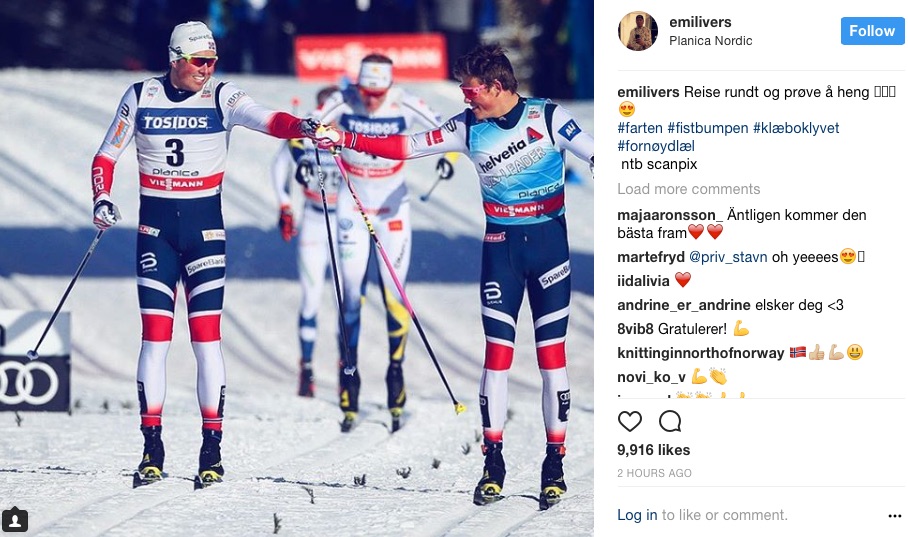
    Norway’s Johannes Høsflot Klæbo (4) and teammate Emil Iversen knock knuckles as they cross the line in Planica, Slovenia, on Saturday in the men’s classic sprint. Klæbo won the race while Iversen placed second overall. (Photo: Emil Iversen/Instagram)

    The final began with Klæbo storming into the major climb with such speed that for a moment he became unbalanced. But in an instant, Klæbo’s stride was back in form as he strung out Petersen, Iversen and Svensson. With a quick skate into another lane followed by a killer double pole, Klæbo was gone up and over the climb. Iversen also made his move late on the climb, but by then, Klæbo was away.

    With a tidy bow across the line, it was curtains for Klæbo.

    After Saturday’s sprint, Klæbo is positioned first in the World Cup overall standings, despite skipping the entire Tour de Ski. He’s started a total of 10 individual races and has won eight, including Saturday’s sprint. In the other two, he placed second in last weekend’s freestyle sprint in Dresden, Germany, and was 10th on Dec. 16 in a 15 k skate in Toblach, Italy. Klæbo has won all three classic sprints this season.

    No real prognostication here, it is too early. Yet, Klæbo has won every classic sprint this season and the upcoming Olympic individual sprint next month in PyeongChang, South Korea, is classic technique.

    Two U.S. Men in Top 20

    For the U.S., Simi Hamilton qualified 16th and ended his day in 19th after finishing fourth in the fifth quarterfinal, 2.35 behind the winner, Pål Golberg of Norway.
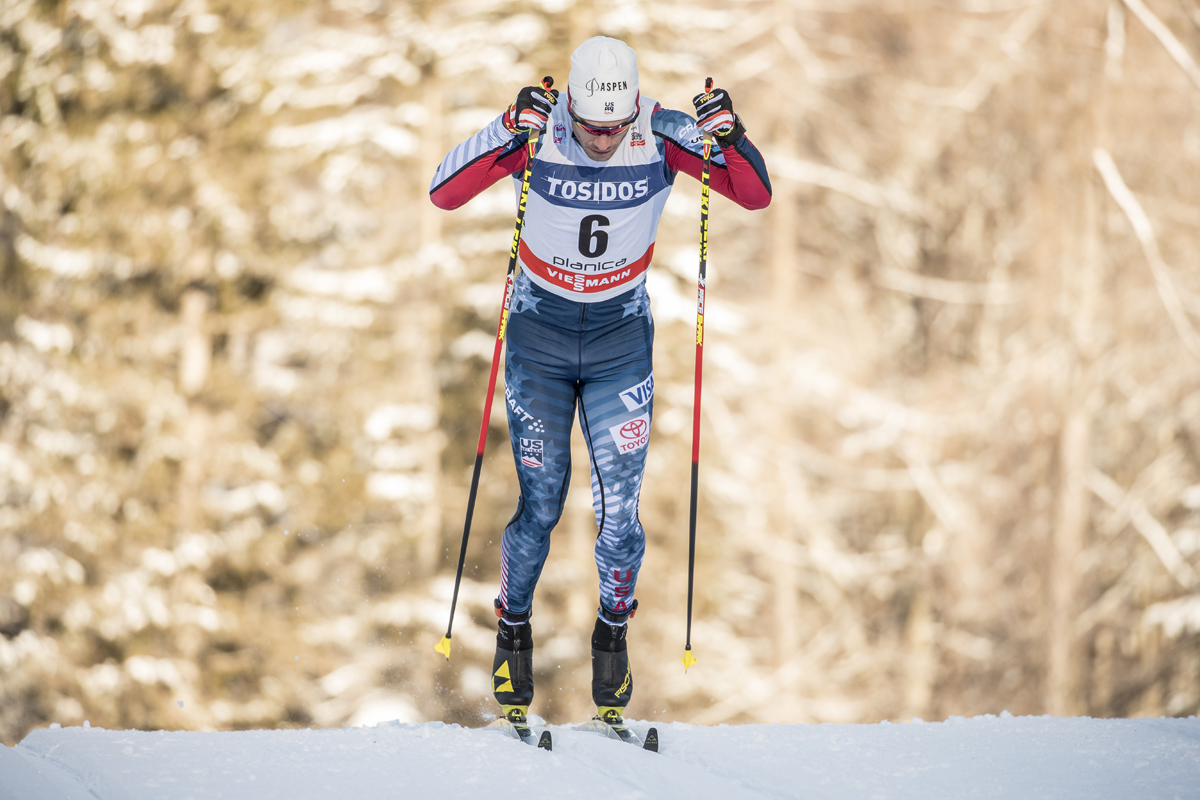
    Simi Hamilton (U.S. Ski Team) racing to 16th in the men’s classic sprint qualifier on Saturday at the World Cup in Planica, Slovenia. He went on to finish the day in 19th overall. (Photo: Fischer/NordicFocus)

    “I feel like a classic sprint is always up in the air for me how it’s going to go,” Hamilton told FasterSkier in person after the race. “Especially this season, the only other classic sprint I have done is in Ruka, and I was kind of getting really sick there, so I kind of had no idea how my body would respond.”

    After skipping most of the Tour de Ski, leaving after the second stage on Jan. 1, Hamilton contested the sprints in Dresden last weekend and finished 10th in the individual skate sprint and eighth in the team sprint with Erik Bjornsen.

    “I know that I am fit right now, and I have been feeling great so I kind of had that going into the day,” Hamilton said. “I had a really good interval workout here a couple days ago so it was awesome just to see the course and get a feel for doing that. I felt great in my qualifier, I felt like I stayed really relaxed. Sometimes I think classic sprinting, classic skiing in general, I have a tendency to get a little bit tight and I felt like in my qualifier I just stayed really loose the whole time, which kind of let me get pretty good glide on that really long gradual climb.

    “In the quarter I just kind of focused on the same thing,” he continued. “Just started kind of conservatively so I had some energy for the long climb … I felt like I skied the climb really well, tried to make a move at the top, and when I was in third and then just needed to really pin it those last 200 meters, I just ran out a little bit of juice. But I think we were in a little slower heat anyways, so I wouldn’t have gone as a lucky loser, but it’s great … I love skiing heats obviously, and I think any day I can ski heats in a classic sprint with a pretty strong field, I think that is kind of a successful day for me.”
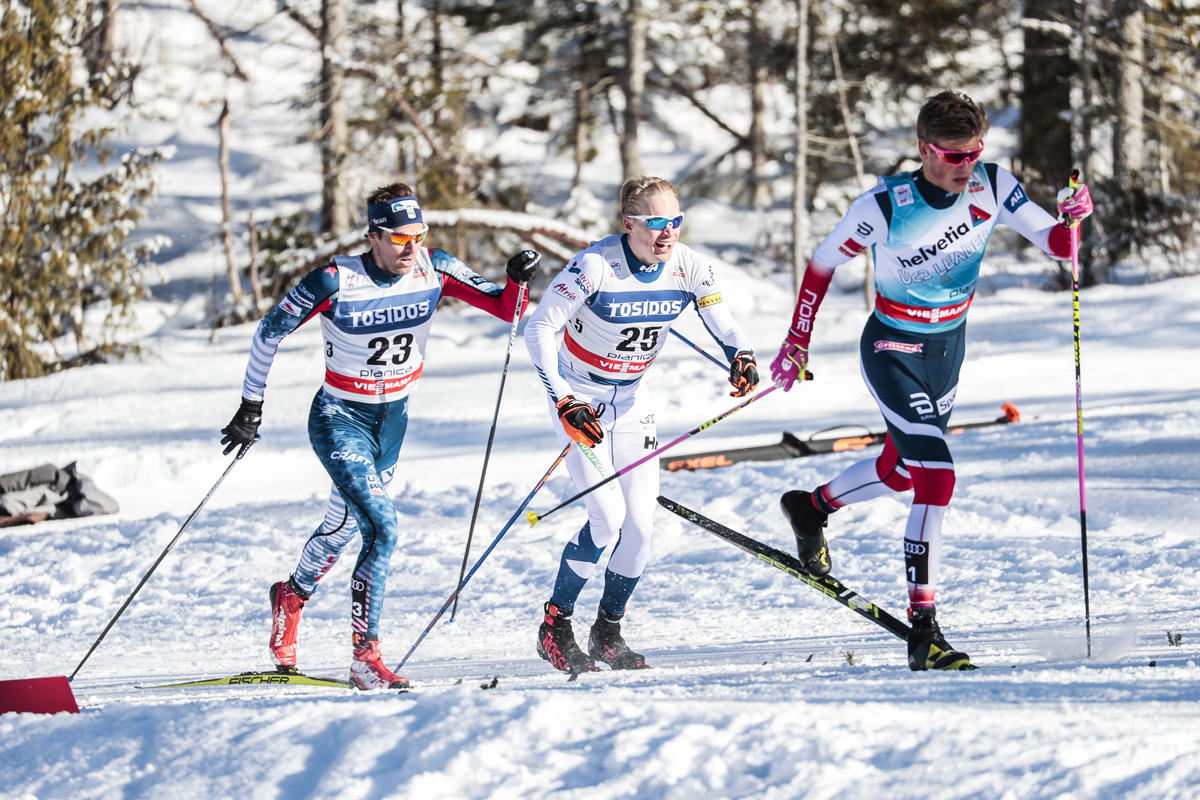
    Norway’s Johannes Høsflot Klæbo leads Finland’s Iivo Niskanen (25) and American Andy Newell (23) in the first men’s quarterfinal of the World Cup classic sprint in Planica, Slovenia. Klæbo went on to win that heat, ahead of Niskanen in second and Newell in fourth. (Photo: Fischer/NordicFocus)

    Newell, who qualified in 23rd and finished the day in 20th, wrote in an email that he had been hoping for more.

    “It was beautiful classic conditions out there and pretty straightforward waxing which made for really fun skiing,” he wrote. “The course had a little bit of a different feel because it basically just had one really long climb from the low point to the high point and, of course, some fast icy corners to keep things interesting. Especially in qualification, I felt semi out of control and scrubbed some speed. The courses actually skied a bit better in the heats I thought once they had less traffic.”

    Matched with Klæbo in his quarterfinal, Newell clearly knew he’d have a speedster to chase.

    “In the heats, I again chose heat one with the same strategy I’ve been using  — choose the first heat and shoot for a final/podium rather than a top 15 etc.,” Newell added. “Not sure if that’s the right call … hard to tell sometimes. I skied the majority of the heat on the tails of Klæbo until the top of the climb he and Niskanen got a small gap. In the end, it wasn’t fast enough.”

    Like Hamilton, Newell left the Tour de Ski early (after Stage 3) and contested last weekend’s skate sprints in Dresden. Needless to say, Newell is focused on PyeongChang.

    “Although this wasn’t the pre-Olympic result I was looking for I still have a few weeks to fine tune classic skiing and fitness and think about what I need to do to have a top performance in PyeongChang,” Newell reflected.

    A large contingent of U.S. men competed, with the Alaska Pacific University (APU) duo of Logan Hanneman and Tyler Kornfield narrowly missing the heats, finishing 35th (+13.55) and 38th (+13.96), respectively, in the qualifier. Teammate Reese Hanneman finished 51st in the qualifier (+17.99) and Ben Lustgarten of the Craftsbury Green Racing Project placed 59th (+19.41).

    For both Logan Hanneman and Kornfield, this was their first career World Cup starts. Hanneman is 24 and Kornfield is 26.

    Kornfield is coming off a stellar U.S. nationals in Anchorage, Alaska, where he won the 30 k classic mass start, and placed third overall in both the classic and skate sprints. Kornfield is slowly adjusting to Europe and said his body still feels the effects of his national 30 k win.

    “I have had a little time, but ever since the 30 k, I haven’t slept past five hours,” Kornfield said on Saturday. “I’ve just been trying to calm the heart rate. The first night before the classic sprint [in Anchorage], I went to bed at 3 AM. I was in bed at 11 or 12, just laying there. Just trying to process that. I know I can be better, I am just super amped to be here.”

    Kornfield won sprint titles at U.S. nationals in both 2010 and 2012. Now, older and wiser, he understands World Cup starts are precious.

    “I qualified for my first World Cup in 2010, but I decided not to go,” Kornfield said. “And ever since I have been just regretting that. But I think in the end, I’ve been working so much harder for this and it feels so much better. The harder you work the more struggle you go through, it’s feels so good.”

    In an email exchange, Kornfield elaborated on his World Cup invitation decline back in 2010.

    “After doing well in the 2010 US Nationals in Anchorage, I qualified for the sprint in Canmore, the final World Cups before the Vancouver Olympics,” Kornfield explained. “I went into US Nationals with the sole focus of making my first World Juniors. I hadn’t expected to do so well in the sprints and because I was a Freshman at UAF, I also wanted to make NCAAs.”

    As for his turned-down 2010 World Cup starts in Canmore, those are “would haves” and “could haves”.

    “I regretted not going for a long time because as I got older, I realized just how hard World Cup starts are to get and you cannot take them for granted,” Kornfield wrote. “When you are young and you get your first real breakthrough, you have so much confidence and belief that you are going to take over the world. It has been eight years and every now and then, that belief begins to wane. Eventually, I started to wonder if I would ever get that opportunity again. This is probably the first year in the last six years that my old confidence is starting to come back. I am also older and wiser and I know that the shape I am in now will not last forever, so I need to capitalize on this moment.”

    The four Canadians that raced last weekend in Dresden also competed in Planica, with Julien Locke (Canadian National U25 Team) leading the way in 62nd on Saturday (+21.26), Dominique Moncion-Groulx (Alberta World Cup Academy) 65th (+22.70), Bob Thompson (NTDC Thunder Bay) 66th (+24.48), and Antoine Briand (Pierre-Harvey National Training Centre) 70th (+27.20).

    Results: Qualifier | Final

  • With No Pressure, Pellegrino Wins First Classic Sprint; Valjas 11th in Canmore

    With No Pressure, Pellegrino Wins First Classic Sprint; Valjas 11th in Canmore

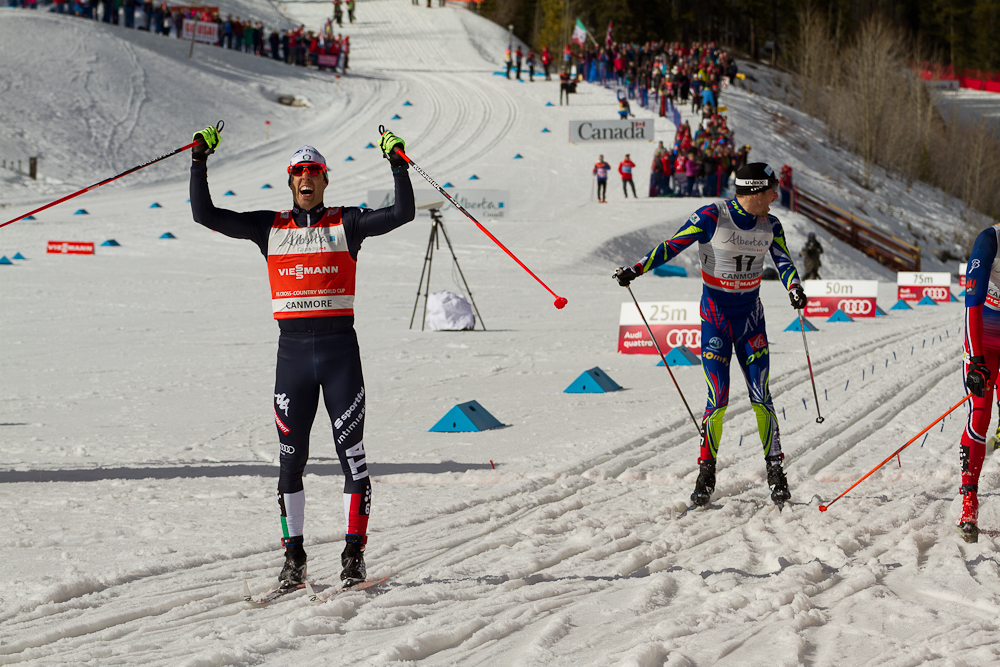
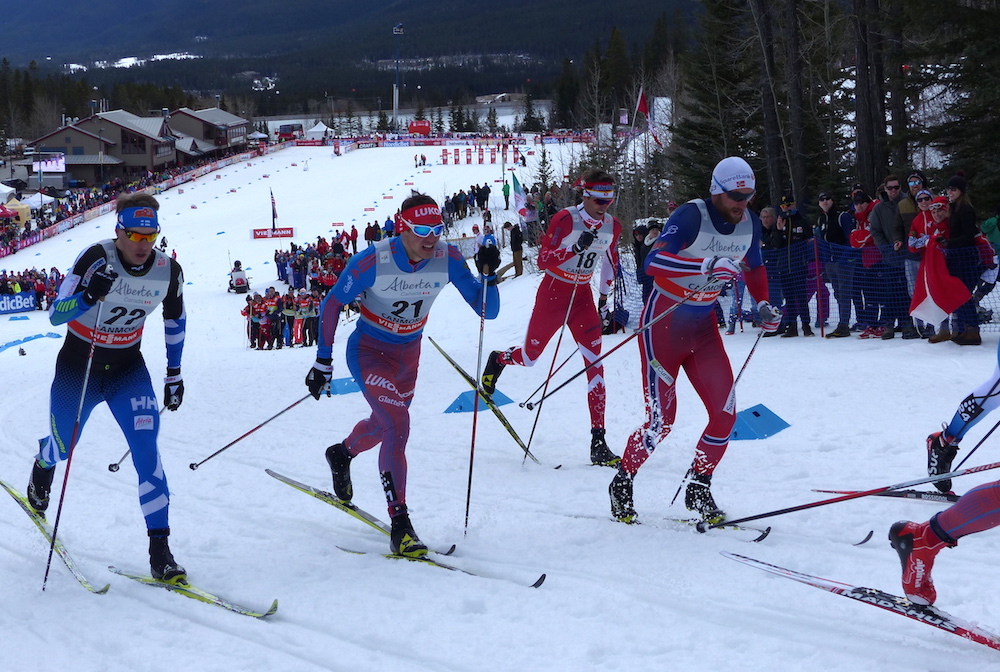
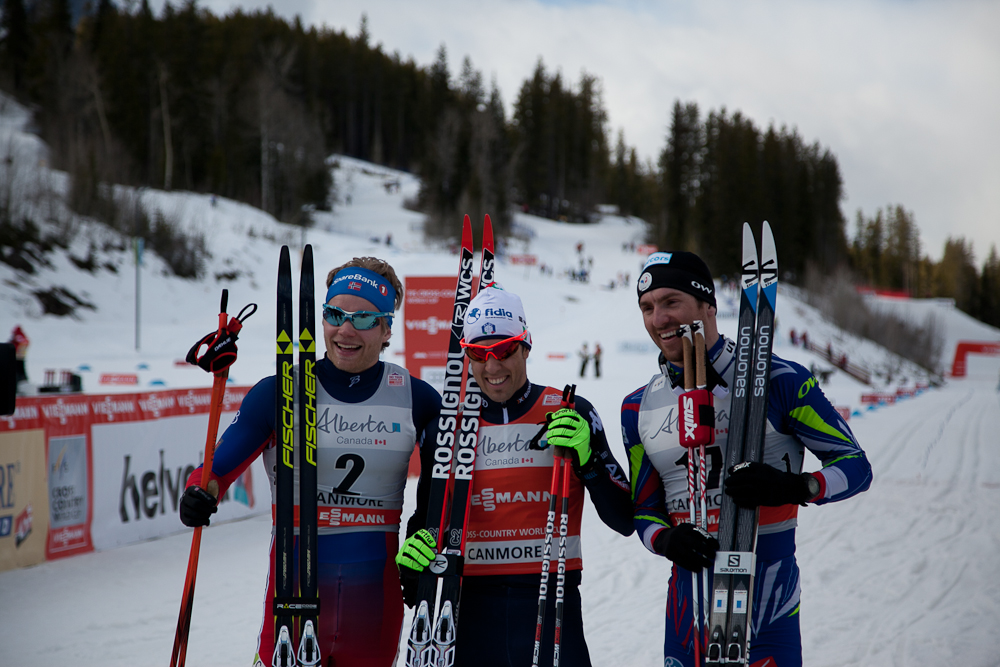
    The men's top three (left to right) second place Erik Brandsdal (NOR), winner Federico Pellegrino (ITA), and third place finisher Maurice Manificat (FRA) after the the men's final 1.5 k classic sprint at the Ski Tour Canada on Tuesday in Canmore.
    The men’s top three in the fifth stage of the Ski Tour Canada, the 1.5 k classic sprint on Tuesday in Canmore, Alberta, with Italian winner Federico Pellegrino (c), Norway’s Eirik Brandsdal (2) in second, and France’s Maurice Manificat (r) in third.

    CANMORE, Alberta — Belay the pressure, bridal the win.

    Just ask Italy’s Federico Pellegrino, the winner of the men’s 1.5-kilometer classic sprint in Canmore on Tuesday.

    “Today … I was really without pressure, any kind of pressure,” Pellegrino told FasterSkier after the final, “Because the globe was in Italy.”

    After Pellegrino secured the Sprint World Cup Crystal Globe last week in Québec City, he entered the Ski Tour Canada’s fifth stage–trophy still in tow–with no weight on his shoulders.

    Italy's Federico Pellegrino celebrates his first-ever World Cup classic sprint victory, ahead of Norway's Eirik Brandsdal (r) and France's Maurice Manificat, the latter of which reached his first sprint final on Tuesday for third overall in Canmore, Alberta.
    Italy’s Federico Pellegrino celebrates his first-ever World Cup classic sprint victory, ahead of Norway’s Eirik Brandsdal (r) and France’s Maurice Manificat, the latter of which reached his first sprint final on Tuesday for third overall in Canmore, Alberta.

    “I raced like this in the first month of the season and I won four times,” said Pellegrino, the first non-Norwegian or Swedish male to win the overall Sprint World Cup.

    “Then when I started to think about the globe I had some problems — in my mind,” he added. “But after Gatineau, after Québec City, after I won the globe, I was without any kind of pressure.”

    Pellegrino’s win in the sprint final on Tuesday, which he secured in a time of 3:43.33 minutes, stood as his second World Cup classic sprint podium–after placing third in 2013 in Davos, Switzerland–and his first classic-sprint career win.

    “Turn after turn, it was always better for me and for my skis,” Pellegrino said. “My goal for today was to pass the quarterfinals and then to pass the semifinal and then to win the final. And when you realize your goals, it’s so good.”

    The Final: Pellegrino On the Prowl, Northug On Standby

    Seeing the likes of Petter Northug strolling around a sprint course? At the start of the final, the Norwegian wasted no time — or energy — making a statement about his final sprint effort.

    “I was just skiing around and enjoying the great tracks,” Northug told FasterSkier afterward.

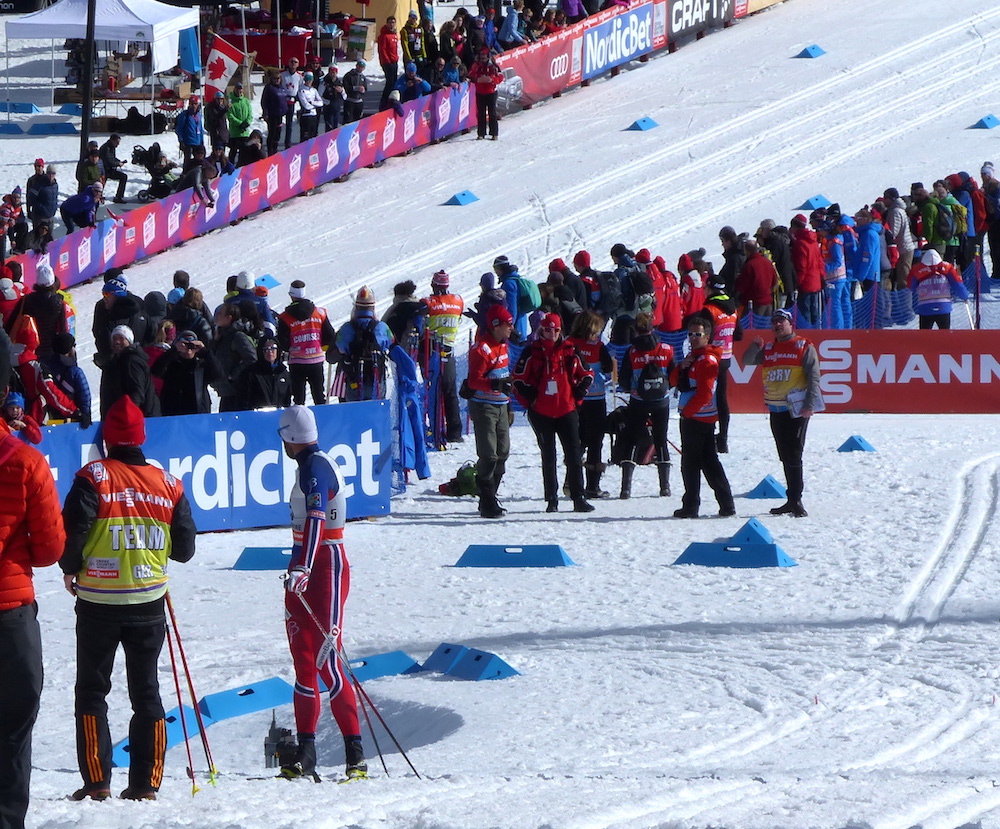
    Norway's Petter Northug (lower left, looking back) stops to watch the results of his own final during the men's 1.5 k classic sprint at the Ski Tour Canada Stage 5 on Tuesday in Canmore, Alberta. (Photo: Peggy Hung)
    Norway’s Petter Northug (lower left, looking back) stops to watch the results of his own final during the men’s 1.5 k classic sprint at the Ski Tour Canada Stage 5 on Tuesday in Canmore, Alberta. (Photo: Peggy Hung)

    Some hypothesized it was a tactical move to save himself for the Tour’s later races. However, Northug’s usual cheeky charades also perhaps played into his decision to take his time.

    “I’m a really bad skier when it comes to finals,” Northug said. “I have to work on that.”

    Sprinting and sarcasm? More of the same from Norway’s notorious nordic celeb.  

    While Northug slowed to a trudge within the first few hundred meters, France’s Maurice Manificat, Pellegrino, and three other Norwegians — Finn Hågen Krogh, Martin Johnsrud Sundby and Eirik Brandsdal — burned the pace at the sound of the gun.

    “Our tactic was to try to get the pace as slow as possible for Petter and Martin, but these [Pellegrino and Manificat] didn’t want to,” Krogh said during a post-race press conference. “For sure, I wanted to stay as close to these guys as possible.”

    Heading into the second half of the Tour in Canmore, Northug and Sundby ranked in the top five, with Northug sitting in second and in pursuit of Russia’s Sergey Ustiugov in first. On Tuesday, Ustiugov won the qualifier and rocketed to first in his quarterfinal, but fell to fifth in his semifinal and did not reach the final. He placed ninth on the day, but remains 19.5 seconds ahead of Northug in the Tour.

    In the final, Manificat led the group up the first and second climbs, while Brandsdal, Krogh, Pellegrino and Sundby followed behind.

    “Perhaps I could have done a little better,” Sundby said during an interview after the race. “I have a major job to do for the next competition. But my shape is quite good. Better now than the beginning of the tour.”

    As the group looped back by the stadium, Brandsdal and Krogh moved to the front by the top of the third major course climb, with Pellegrino pressing hard to their right. Manifcat and Sundby losing ground at the top of the final descent.

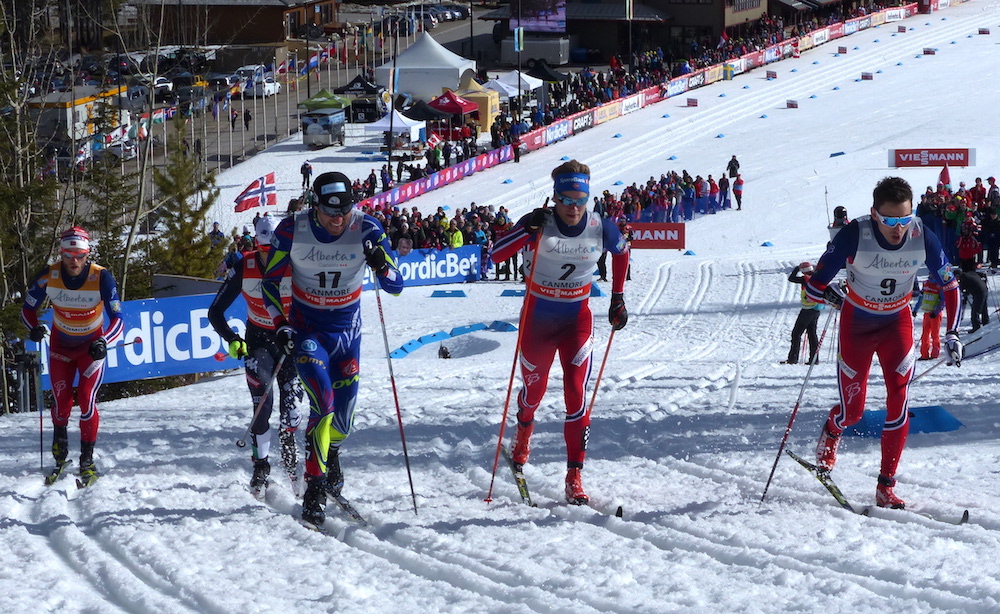
    The men's classic sprint final on Tuesday in Canmore, Alberta, with France's Maurice Manificat (17) and Finn Hagen Krogh (9) leading up the first of two climbs. (Photo: Peggy Hung)
    The men’s classic sprint final on Tuesday in Canmore, Alberta, with France’s Maurice Manificat (17) and Finn Hågen Krogh (9) leading up the first of two climbs, while Norway’s Eirik Brandsdal (2), Martin Johnsrud Sundby (l) and Italy’s Federico Pellegrino (behind Manificat) hang with the pack. (Photo: Peggy Hung)

    By the bottom of the last hill, however, the five finalists had regrouped for the finishing stretch.

    Pellegrino pulled Manificat in the right-most tracks, while Sundby, Krogh and Brandsdal stuck to the two center lanes. Manifact then maneuvered out from behind Pellegrino in front of Brandsdal, challenging the Italian from his left. Breaking free of Manificat, Brandsdal went left, ahead of Sundby.

    The final double-pole pushes, however went to the blue suit of Pellegrino, who outlunged Krogh by 0.54 seconds. Manificat was 1 second back in third place.

    “I didn’t know this morning that I would be on the podium with these guys, the best in the world,” Manificat said at a post-race press conference, sitting alongside Pellegrino and Krogh.

    In his first sprint final and first sprint podium, Manificat made it clear that he was not going to let that stop him from the prized step.

    “I’m not really a sprinter,” he said during an in-person interview. “[But] even if the legs burn and the body burns you have to stay focused.”

    With his previous best in a World Cup sprint being eighth–which he last achieved in both 2010 and 2011–Manificat referred to sprinting as “a game”. This season, the French men’s team found it’s a game they have won multiple times. At the last freestyle sprint in Quebec, France’s Baptiste Gros edged Canada’s Alex Harvey for the win.

    “We have for sure a good sprinter team this year,” Manificat said at a press conference. “They inspire us and especially me, and I tried to do something for the race today.”

    Just off the podium, Sundby placed fourth (+2.21), which was enough to move him up to fourth in the Tour, 1:55.3 behind Ustiugov and about 45 seconds behind fellow Norwegian Emil Iversen in third overall. Krogh finished fifth (+32.79) while Northug leisurely rounded the course, crossing the line 2:15.14 minutes back in sixth.

    Canada’s Valjas ‘Can’t Complain’ in 11th; Harvey In Need of ‘Reflection’

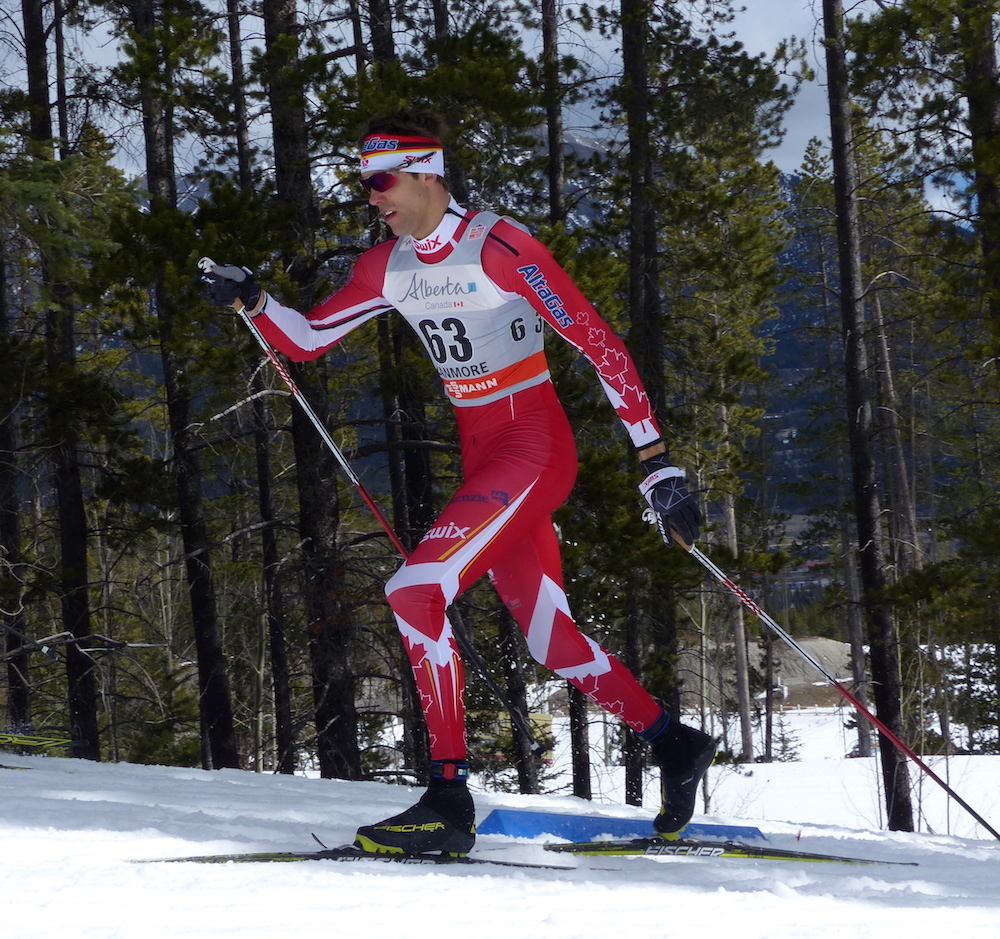
    Canada's Len Valjas racing to 18th in the qualifier at the Stage 5 classic sprint at the Ski Tour Canada in Canmore, Alberta. Valjas went on to place 11th for his second-best result of the season. (Photo: Peggy Hung)
    Canada’s Len Valjas racing to 18th in the qualifier at the Stage 5 classic sprint at the Ski Tour Canada in Canmore, Alberta. Valjas went on to place 11th for his second-best result of the season. (Photo: Peggy Hung)

    After getting to compete in Tuesday’s sprint heats in front of a home crowd, Canadian World Cup Team member Lenny Valjas said he “can’t complain.”

    While he didn’t reach the final, Valjas stood as the top North American on Tuesday, placing 11th after finishing sixth in his semifinal. The result was his second best of the season, after placing 10th in a classic sprint at the Tour de Ski earlier this year.

    “This was a dream come true to get back in the semi for the second time this year, back here at home,” Valjas said during an in-person interview. “I have my parents here, family. I couldn’t have picked a better day.”

    After qualifying in 18th, Valjas advanced to the fourth quarterfinal where he finished in third, 0.61 seconds behind Northug, who won that heat in 3:33.40.

    “In the quarterfinal, the skis were fantastic,” said Valjas, a 27-year-old Toronto native.

    He moved on to the second semifinal as the first of two lucky losers.

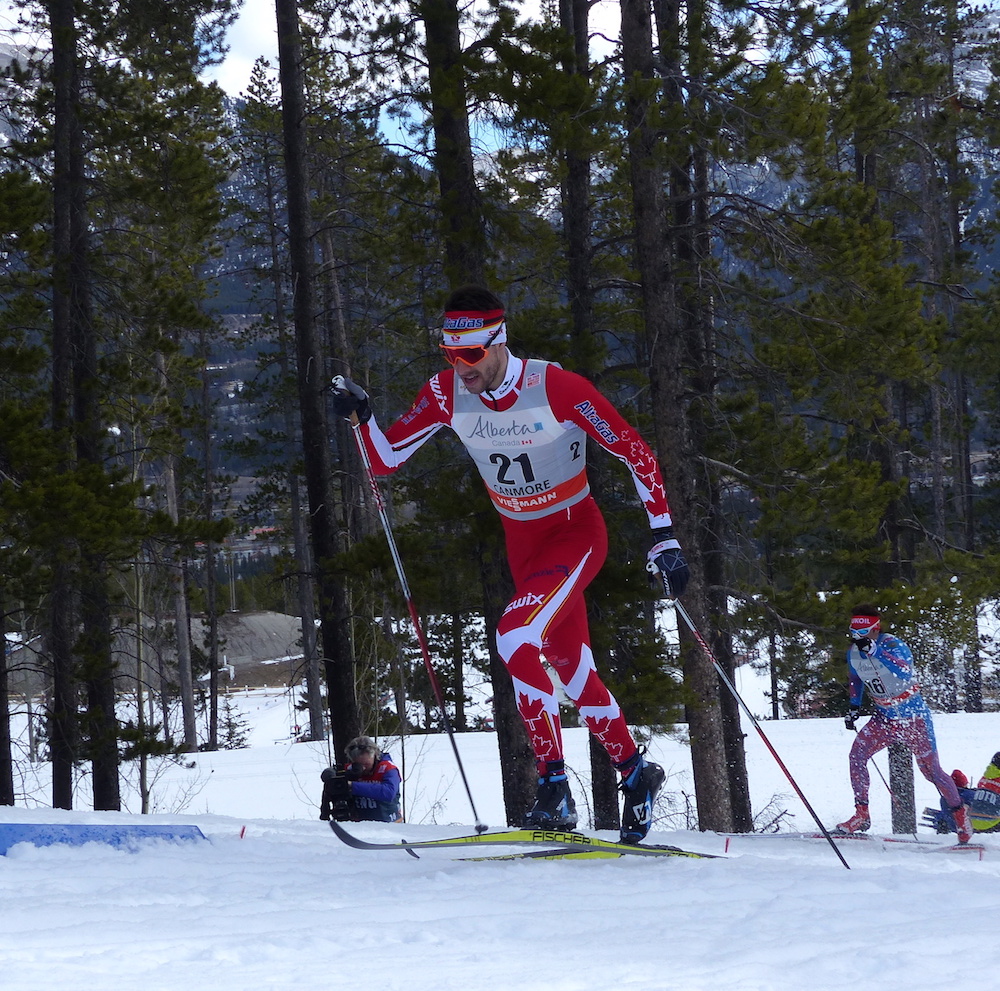
    Canada's Len Valjas (18) during his quarterfinal of the men's 1.5 k classic sprint at the Ski Tour Canada Stage 5 on Tuesday in Canmore, Alberta. (Photo: Peggy Hung)
    Canada’s Len Valjas (18) racing to third in his quarterfinal of the men’s 1.5 k classic sprint at the Ski Tour Canada Stage 5 on Tuesday in Canmore, Alberta. (Photo: Peggy Hung)

    “The semifinal I just started getting a bit tired,” he recalled. “I was I was sitting at the back and if you don’t push over the tops of the hills, you don’t get the same finishing speed.”

    The top Canadian fought for fifth at the top of the second climb, but ultimately settled for sixth, 7.76 seconds Manificat, who won that second semifinal in 3:45.07.

    “Usually I qualify and stop,” Valjas said regarding some of this season’s sprint races. “This is hard. Doing this three times today, that’s how you get fit for sprinting. It’s just the feeling of skiing fast when you’re dead. I’m not used to that, because I [have been] unlucky getting 31st so many times [this season]. … Next year, I want to get into the heats early.”

    Two Canadian men reached the heats, with Alex Harvey qualifying in 14th (+5.41) and ending the day in 21st overall.

    “Very disappointed with today’s result, even more so because I lost ground on the ones I am chasing and it allows for the those behind me to gain some ground after I kept them at bay in Quebec City,” Harvey wrote in a statement to the media.

    “My analysis and comments will come after I’ve had a chance to think calmly,” Harvey added. “The entire team will be part of the reflection.”

    Alex Harvey racing to 14th in the qualifier at Tuesday's classic sprint in Canmore, Alberta. He went on to place 21st overall after being eliminated in the quarterfinals. (Photo: Peggy Hung)
    Alex Harvey racing to 14th in the qualifier at Tuesday’s classic sprint in Canmore, Alberta. He went on to place 21st overall after being eliminated in the quarterfinals. (Photo: Peggy Hung)

    Despite skiing in second for much of the beginning of his quarterfinal, Harvey slipped back to fifth by the end of his heat, crossing 5.12 seconds behind Sundby, who won the third quarterfinal in 3:34.61.

    “He was definitely unhappy about the skis,” Canadian head coach Justin Wadsworth said after.

    Wadsworth added that the way Harvey raced the course’s corners could have also affected his speed in the quarterfinal.

    “Some places are sunny, some are in the shade, it’s all if you come out of the corner and you’re in kind of the wrong place,” Wadsworth explained. “If you hit a little bit of that wet snow that maybe somebody else didn’t hit, that’s game over coming into this long downhill and it translates into looking like bad skis.”

    Harvey slipped one spot to fifth in the Ski Tour Canada (STC) standings heading into Wednesday’s 30 k skiathlon.

    “It’s a bittersweet day,” Wadsworth said, referring to the juxtaposed performances of Harvey and Valjas, as well as 22-year-old Dahria Beatty’s breakthrough in 15th place in the women’s sprint. “In Alex’s case he got bumped out of the quarters and we’re going to use that as a positive and be more rested for tomorrow.”

    No American men qualified on Tuesday, with U.S. Ski Team member Erik Bjornsen leading the team in 44th. 

    “Just trying to keep it rolling,” Bjornsen said of the rest of the Tour. “[With] four races left, really looking forward to some of those distance races and finishing in the 15 k classic. That’s a good race for me.”

    Canada’s Devon Kershaw narrowly missed the heats in 33rd, Simi Hamilton (USA) placed 47th, Knute Johnsgaard (CAN) was 48th, Andy Newell (USA) 52nd, Patrick Stewart-Jones (CAN) 54th, Jess Cockney (CAN) 54th, Bob Thompson (CAN) 58th, Graeme Killick (CAN) 59th, Russell Kennedy (CAN) 61st, Reese Hanneman (USA) 62nd, Andy Shields (CAN) 64th, Kevin Sandau (CAN) 66th, Ivan Babikov (CAN) 68th, Noah Hoffman (USA) 69th, Simone Lapointe (CAN) 70th, Scott Patterson (USA) 72nd, Eric Packer (USA) 73rd, Michael Somppi (CAN) 76th, Tad Elliott (USA) 77th, Dakota Blackhorse-vonn Jess (USA) 78th, Brian Gregg (USA) 81st, and Matt Liebsch (USA) 83rd.

    — Gerry Furseth, Jason Albert, and Alex Kochon contributed

    Results: Qualifier | Heats | Tour standings (through Stage 5)

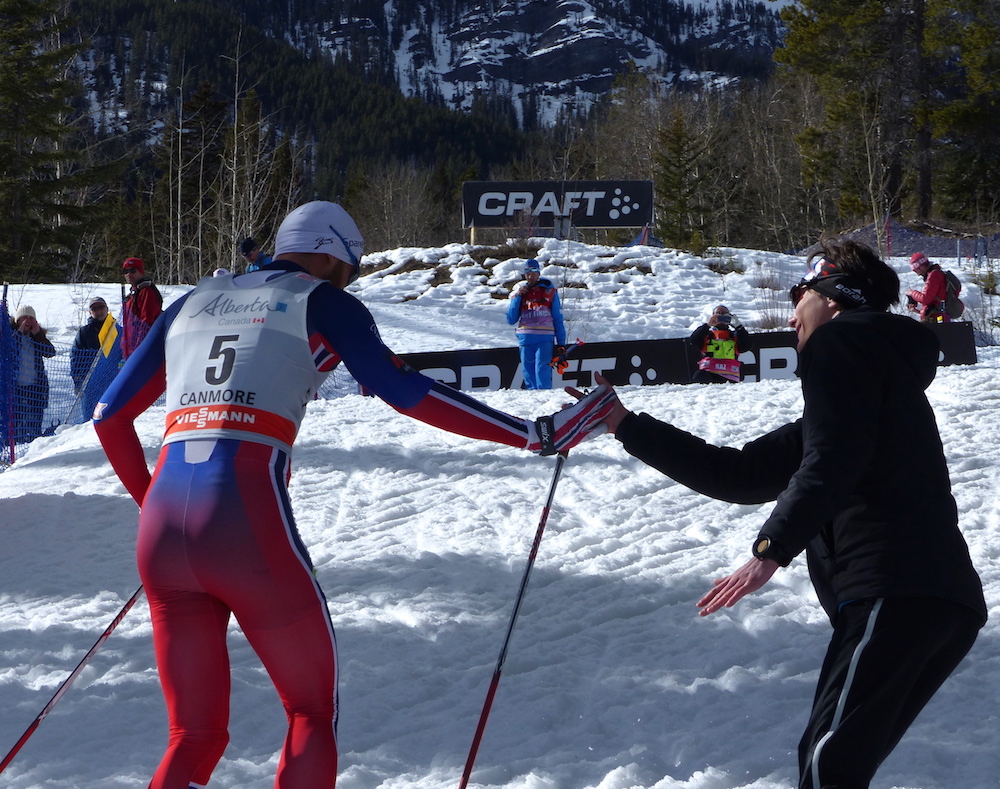
    Petter Northug (NOR) (l) high fives Remi Drolet (spectator) as he finishes his final lap during the men's 1.5 k classic sprint at the Ski Tour Canada on Tuesday in Canmore. (Photo: Peggy Hung)
    Norway’s Petter Northug (l) high fives Remi Drolet (spectator) as he finishes his final lap during the men’s 1.5 k classic sprint at the Ski Tour Canada on Tuesday in Canmore. (Photo: Peggy Hung)
  • Hamilton Skis Fast and Smart for Second in Toblach Sprint

    Hamilton Skis Fast and Smart for Second in Toblach Sprint

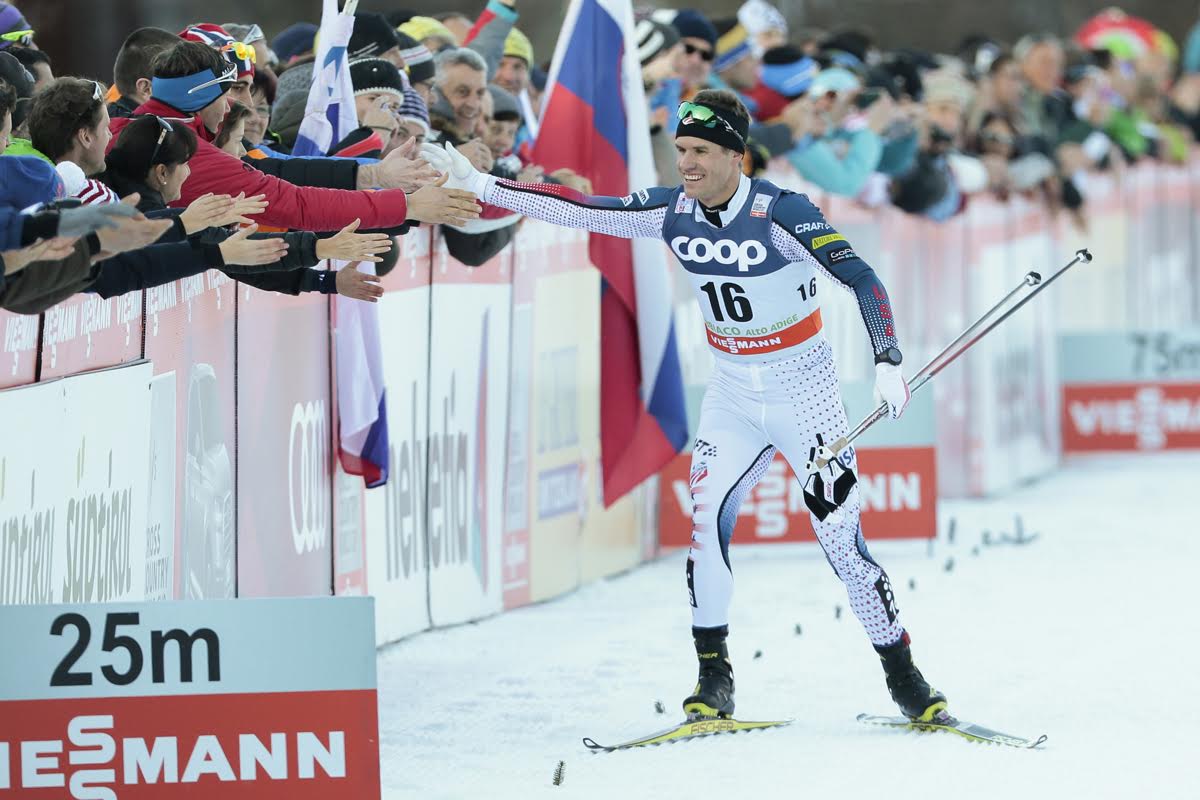
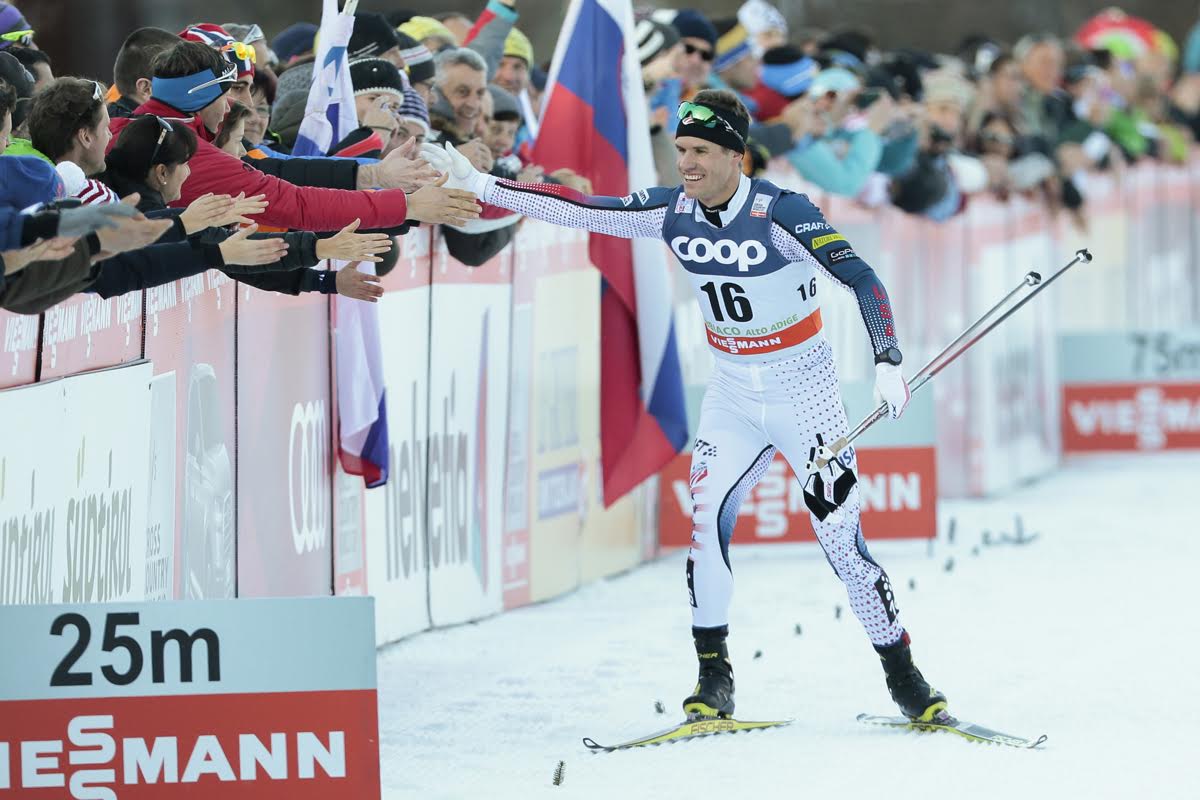
    Simi Hamilton (U.S. Ski Team) high-fives spectators during his post-race "victory" lap back down the finishing straight. He placed second on Saturday in the World Cup freestyle sprint in Toblach, Italy. (Photo: Fischer/NordicFocus)
    Simi Hamilton (U.S. Ski Team) high-fives spectators during his post-race “victory” lap back down the finishing straight. He placed second on Saturday in the World Cup freestyle sprint in Toblach, Italy. (Photo: Fischer/NordicFocus)

    There’s been a building feeling. A notion that the U.S. men’s sprint team just needed a little bit of luck — like no broken poles, fast skis, good health, and a course suiting their mega-horsepower skiers. The men’s World Cup freestyle sprint on Saturday in Toblach, Italy, offered all that up.

    Simi Hamilton’s skiing during the sprint rounds could be described as the following: he skied fast and he skied smart. In the end, only one skier proved faster.

    Italy’s Federico Pellegrino won the 1.3-kilometer skate sprint on Italian soil in 2:29.57. Pellegrino, a not-so-uncommon sight on freestyle sprint podiums, won last weekend’s sprint in Davos. A U.S. Ski Team sprinter, Hamilton placed second (+0.48) while Andrew Young skied to a historic third for Great Britain (+0.84).

    It doesn’t take a sprint-results savant to note that Norway was nudged off the podium. Swiss skier Jovian Hediger placed fourth (+1.09), while Norway’s Finn Hågen Krogh captured fifth (+1.44) and teammate Sondre Turvoll Fossli ended up sixth (+11.98).

    To his standards, Pellegrino began the day modestly, racing to seventh in the qualifier, 1.89 seconds behind Krogh, the fastest in qualifying in 2:28.76. From there, the overall Sprint World Cup leader played cat-and-mouse tactics to win his quarterfinal and semifinal en route to his victory in the final.

    Hamilton’s First Non-Stage Podium

    Prior to Saturday’s second place, Hamilton’s only other World Cup podium came in December 2013, when he won a Tour de Ski freestyle sprint in Lenzerheide, Switzerland. The U.S. men had reached the podium in a World Cup sprint five times before: once with Hamilton, three times with teammate Andy Newell and once with Torin Koos, according to a USSA press release.

    Last weekend in Davos, Switzerland, after qualifying 10th, Hamilton felt primed for another shot, but a broken pole in his quarterfinal snuffed out a potential top-10 result. Hamilton finished within the points in 23rd overall. 

    “I think after the last weekend I was feeling really good in Davos. My energy was great, I’ve been healthy and then I kind of had that pole mishap in the quarter in Davos,” Hamilton said in a post-race phone interview. “So that was pretty frustrating for me last weekend. I knew that I wanted to put something together for this weekend.”

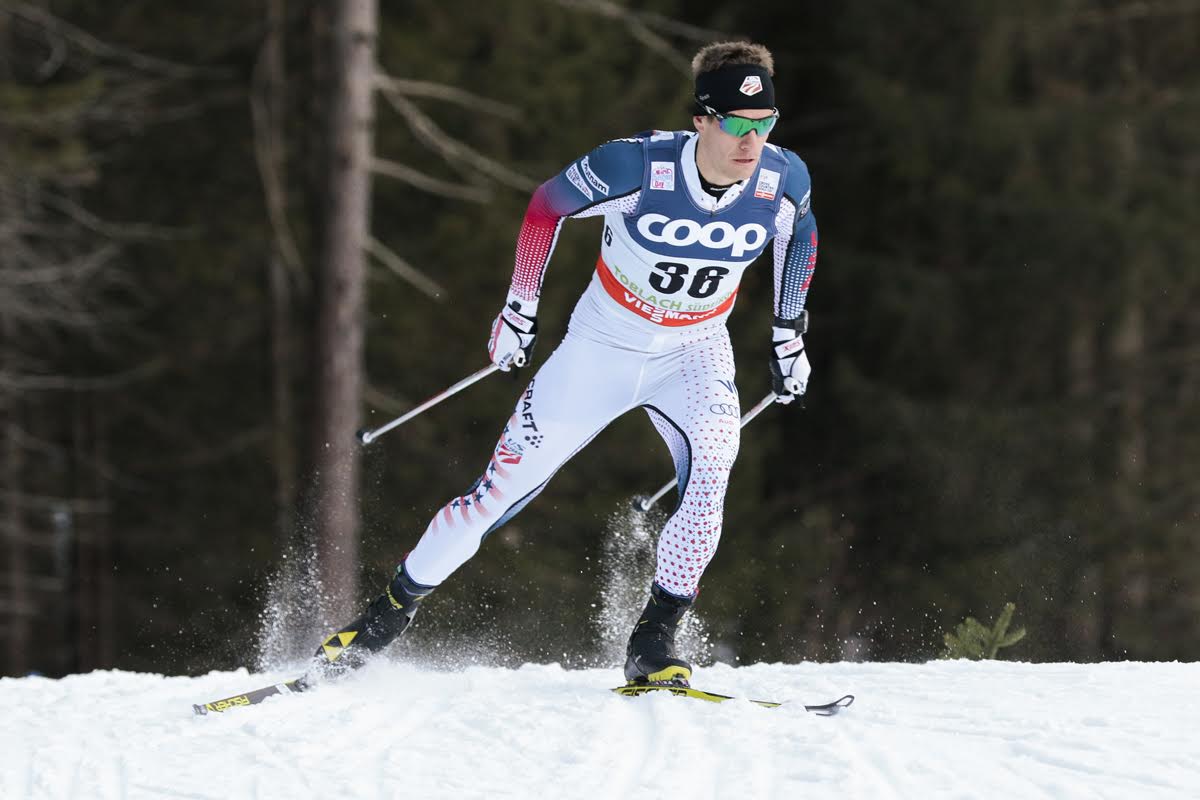
    Simi Hamilton (U.S. Ski Team) racing to his first non-stage World Cup podium on Saturday in Toblach, Italy, where he placed second in the freestyle sprint. (Photo: Fischer/NordicFocus)
    Simi Hamilton (U.S. Ski Team) racing to his first non-stage World Cup podium on Saturday in Toblach, Italy, where he placed second in the freestyle sprint. (Photo: Fischer/NordicFocus)

    “You know skate skiing is one of my strengths, my best thing, and we had one on the schedule and it got me fired up,” he added.

    Hailing from the thin air of Aspen, Colo., Hamilton is no stranger to a lack of oxygen. So Toblach’s altitude, some 4,500 feet above sea level, wasn’t a deterrent. And the course, featuring several technical corners, and a climb with a long glide out into the finish played to Hamilton’s smarts, patience and peak form.

    “I’m pretty psyched for sure about the day, a lot of things just came together for me. Not too much to complain about,” he said.

    In Toblach’s loaded field, a relaxed-and-efficient Hamilton qualified 16th, 3.14 seconds behind Krogh. He then selected the first quarterfinal, which featured heavyweights Petter Northug Jr. and Erik Brandsdal.

    In that initial heat, Hamilton tested his slow-burn strategy of waiting until the final hill and long glide out to play his cards.

    “The real defining characteristic is the downhill; it’s so long and straight that there are always these massive slingshots that happen,” U.S. Ski Team Head Coach Chris Grover explained on the phone. “It can be a disadvantage to be in the lead because people in second or third are always popping out and slingshotting.

    “So one of the key factors with this course is that having a fast start is not critical at all,” he added. “And you typically see people that relax in the beginning, hover back in fourth, fifth, sixth place during the first lap, then they use a slingshot coming off the building or coming off the downhill to move up in their placing. So people that often try to hammer off the front early, they end up getting burned at the end.”

    Hamilton did the burning. He waited and waited, skiing mostly in the rear of the pack, exploiting his masterful glide. Going head-to-head with Northug on the final climb, Hamilton descended in first and took the arcing left turn into the final straightaway tight on the inside.

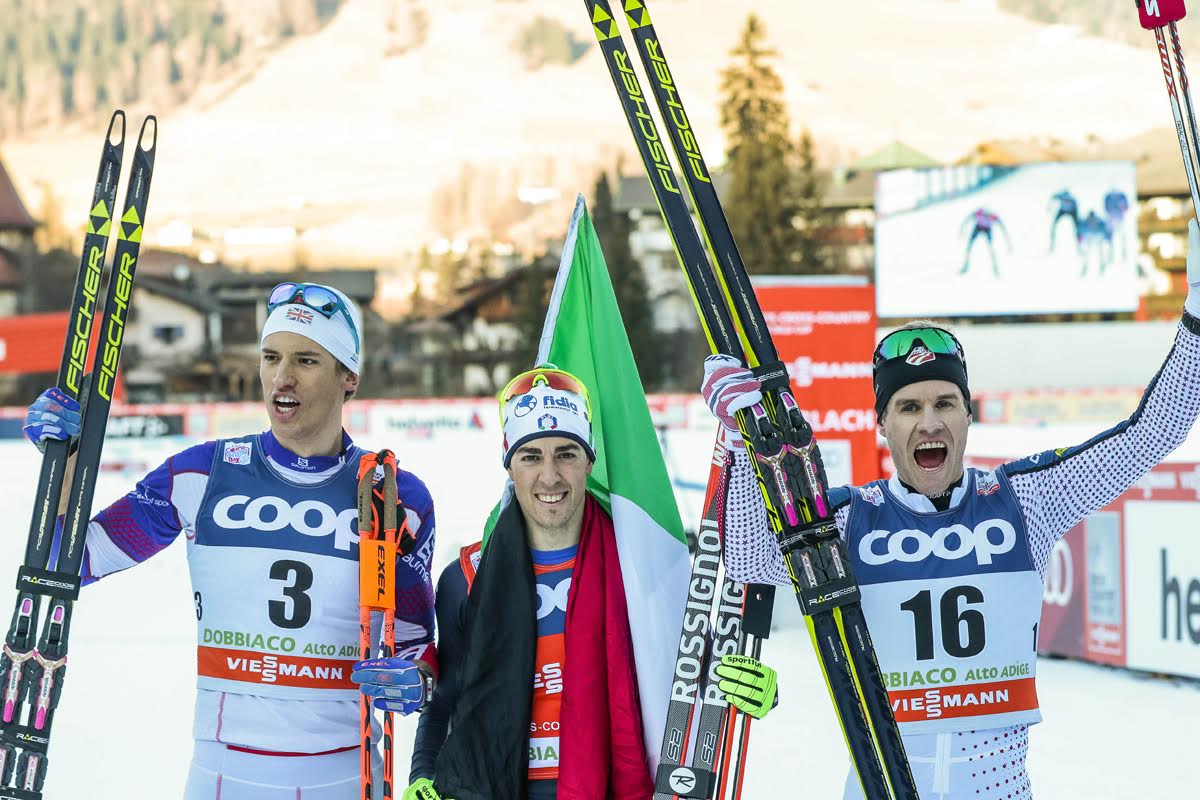
    The men's freestyle sprint podium on Saturday at the World Cup in Toblach, Italy: with Italian winner Federico Pellegrino (c), American Simi Hamilton (r) celebrating in second, and Great Britain's Andrew Young (l) in third. This marked the first time these three nations shared a World Cup podium. (Photo: Fischer/NordicFocus)
    The men’s freestyle sprint podium on Saturday at the World Cup in Toblach, Italy: with Italian winner Federico Pellegrino (c), American Simi Hamilton (r) celebrating in second, and Great Britain’s Andrew Young (l) in third. This marked the first time these three nations shared a World Cup podium. (Photo: Fischer/NordicFocus)

    “I felt like every time, coming down the really long, straight downhill towards the finish and a little short set one coming off the building hill, I just I was drifting up on people,” Hamilton said of his skis.

    At the finish, with Northug barely ahead, Brandsdal and Hamilton toed the line in a photo finish, 0.16 seconds behind Northug, with Hamilton eventually declared the second-place finisher. As one of the slower quarterfinals, Hamilton eked into the semifinals.

    The semis were a tactical repeat for Hamilton.

    “He waited until he had an opening and he had momentum coming off one of the hills each time, and he just moved up and moved up,” Grover said. “So he tried to hammer over the top of the last uphill and gain a little space over the down; enough of a space where people can’t draft you too tight and can’t come around you. Every single quarterfinal, semifinal, final, he utilized that same strategy.”

    Hamilton finished second again (+0.24), this time to eventual-overall winner Pellegrino.

    His plan worked: lurk and maintain energy reserves for a big push on the last climb, and glide out on his fast boards.

    “Essentially going into the final, I knew that my game plan had worked pretty well during the day thus far. If it ain’t broke, don’t fix it,” Hamilton said.

    Lining up in a sprint final next to Pellegrino and last year’s overall sprint champion, Krogh, is no joke. Yet, Hamilton had been skiing like he belonged. He took a deep deep breath, sliding his skis back and forth at the start.

    “Going into the final, I knew that my game plan had worked pretty well during the day thus far. If it ain’t broke, don’t fix it.”— Simi Hamilton, 28, U.S. Ski Team veteran sprinter after placing second in Saturday’s World Cup freestyle sprint in Toblach, Italy

    No skier took lead-out responsibilities. For much of the final, it remained a tactical race. Then things began to blow apart.

    “And you know we stayed together all the way into the ‘building hill,’and I was kind of skiing right behind Finn on that hill and he had a little bit of a trip,” Hamilton recalled. “I was behind him just far enough that I was able to kind of dodge him go around him.”

    Atop the hill, Pellegrino, Young and Hamilton made a slight gap.

    “At that point, Pellegrino and I think Andy Young and I were just three guys right at the top of the building hill there, and I just focused on skiing that really hard,” Hamilton said. “Because the first half of the final wasn’t at a super-hot pace, I knew that I still had a lot of energy for that last hill.”

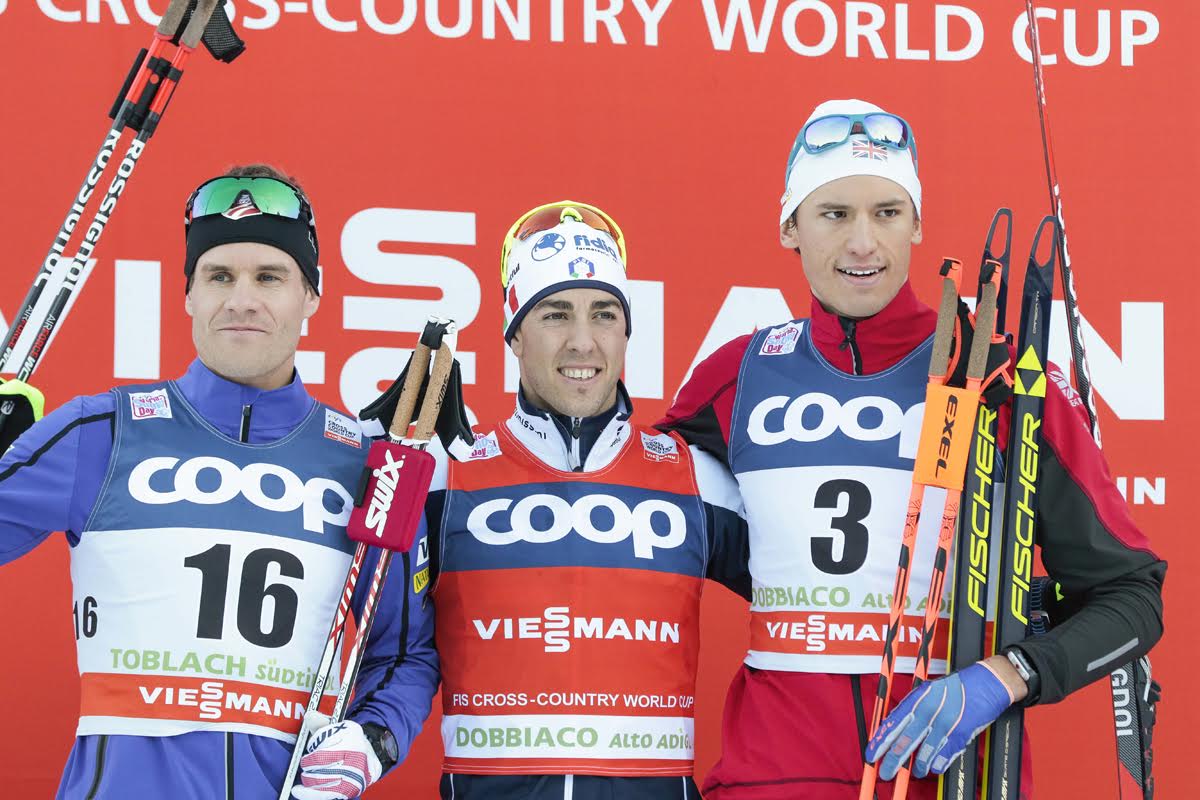
    The men's freestyle sprint podium on Saturday at the World Cup in Toblach, Italy: with Italian winner Federico Pellegrino (c), American Simi Hamilton (l) in second, and Great Britain's Andrew Young in third. This marked the first time these three nations shared a World Cup podium. (Photo: Fischer/NordicFocus)
    The men’s freestyle sprint podium on Saturday at the World Cup in Toblach, Italy: with Italian winner Federico Pellegrino (c), American Simi Hamilton (l) in second, and Great Britain’s Andrew Young in third. This marked the first time these three nations shared a World Cup podium. (Photo: Fischer/NordicFocus)

    On the last hill, Hamilton powered into first. That can be a risk. Coming off the last hill, it’s common for those drafting behind the leader to slingshot around, and gain positions on the flats.

    “On this course especially, it’s always a risk to try to jump in front going into that really long downhill, but I knew that podium would be amazing for me today,” he said. “That’s what I was gunning for, and I knew if I skied up and over that final climb super hard and got into a really low tuck, I knew that the chances of drifting out of the top three were pretty slim. So I just went for it from there and Pellegrino skied in my draft behind me.”

    Pellegrino did slingshot around, but Hamilton skied unfazed on the final stretch, securing second place.

    Although it’s been a long time coming, success for Hamilton finds him in a good place.

    “It really comes down to what makes me super happy, and that’s skiing really fast on a sunny day and in beautiful places, with lots of great fans on a short course, skating especially. And I think that when all those things come together, I get really fired up,” he said.

    For Hamilton, Saturday was one of those days.

    “I knew that podium would be amazing for me today. That’s what I was gunning for.” — Hamilton

    Newell, who qualified 13th (+2.74), was the only other U.S. skier entered in the sprint. Having caught a cold before last weekend’s races, Newell said he didn’t feel 100 percent. He finished fourth in his quarterfinal on Saturday for 27th overall.

    Andy Newell (U.S. Ski Team) on his way to qualifying in 13th in the men's 1.3 k freestyle sprint at the World Cup in Toblach, Italy. He went on to place sixth in his quarterfinal for 27th overall. (Photo: Fischer/NordicFocus)
    Andy Newell (U.S. Ski Team) on his way to qualifying in 13th in the men’s 1.3 k freestyle sprint at the World Cup in Toblach, Italy. He went on to place sixth in his quarterfinal for 27th overall. (Photo: Fischer/NordicFocus)


    Led by Hediger as the winner of his heat, Newell’s quarterfinal was a tight one — with all six men finishing within a second of one another. The winning time ranked third-fastest of five quarterfinals, with Hediger edging Austria’s Bernhard Tritscher in a photo finish for first. Sweden’s Simon Persson placed third (+0.35) in the heat, Norway’s Ola Vigen Hattestad (+0.32) was fourth (+0.48), and Norway’s Pål Golberg finished fifth (+0.87), less than two-tenths of a second ahead of Newell.

    “I went out there today and thought I was felling pretty good. But I didn’t quite have that final gear in the finishing stretch. Qualification went fine…It wasn’t a great day for me. Sometime these courses are hard for me. It’s definitely a big tactics course, it’s all about drafting into the finish. It’s all about slingshotting on a course like this…And for me, as a smaller lighter kind of guy, I tend to struggle on sprints that come down to the final downhill a little bit,” said Newell.

    The U.S. sprinter planned to race Sunday’s 15 k classic individual start in Toblach, the last race before a World Cup holiday break.

    “I’m feeling pretty good about tomorrow’s race. I don’t really know what to expect. It’s a 15 k classic, and I’m leaning towards double poling the course,” Newell said in a phone call. “That will be a first for me on the World Cup. It’ll  be interesting to see what happens.” 

    Results