From the FasterSkier archive — posts syndicated from athletes’ and coaches’ own blogs between 2004 and 2012, kept online as published. Current coverage is at fasterskier.com.

Tag: Erlend Slokvik

  • Watch Out for France: Braisaz, Fourcade and Teammates Dominate Sjusjøen Biathlon Opener

    Watch Out for France: Braisaz, Fourcade and Teammates Dominate Sjusjøen Biathlon Opener

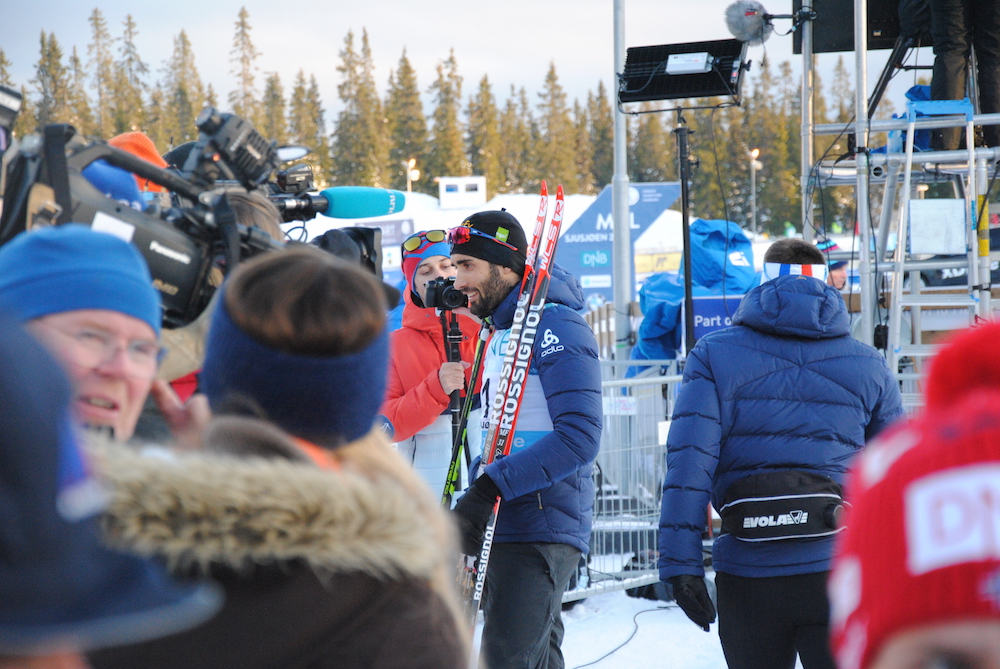
    Martin Fourcade of France prepares to take the podium after his win in the 10 k sprint in Sjusjøen, Norway.
    Martin Fourcade of France prepares to take the podium after his win in the 10 k sprint in Sjusjøen, Norway.

    SJUSJØEN, Norway — Twenty-year-old Justine Braisaz, of France, won the biathlon season opener on Saturday in Sjusjøen, 23.1 seconds in front of Norwegian Tiril Eckhoff and 36.6 second ahead of Ukrainian Juliya Dzhima. The young French woman shot down 10 out 10 targets and skated equally fast throughout the 7.5-kilometer sprint. Eckhoff missed once during prone and once standing while Dzhima missed her second shot standing.

    The fourth place finisher, France’s Celia Aymonier, finished 56.3 seconds off of Braisaz’s winning time, while Norwegian Fanny Horn Birkeland was another 1.5 seconds back in fifth (+57.8).

    From the start, the podium appeared to be a competition among Braisaz, Eckhoff and Dzhima.

    In her finish-line interview, Braisaz said, “I am happy about the result, and even though I hit every target today, the shooting is something I have to work on because it is not my strong suit. But it was a good day.”

    Before the race, Erlend Slokvik, president of the Norwegian Biathlon Association told FasterSkier that he thought Eckhoff was the likeliest candidate for the top of the podium, and throughout the race the crowd seemed to agree with him. The 26-year-old Eckhoff received loud cheers for her 8-of-10 shooting.

    After the race, the finish-line interviewer asked Braisaz if she thought she’d be dangerous this season.
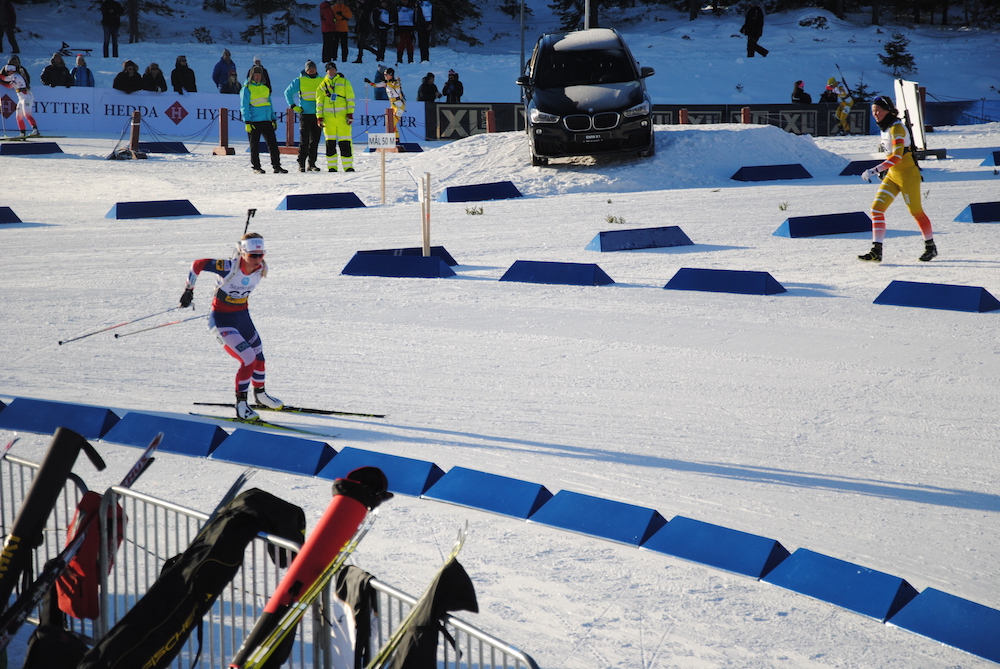
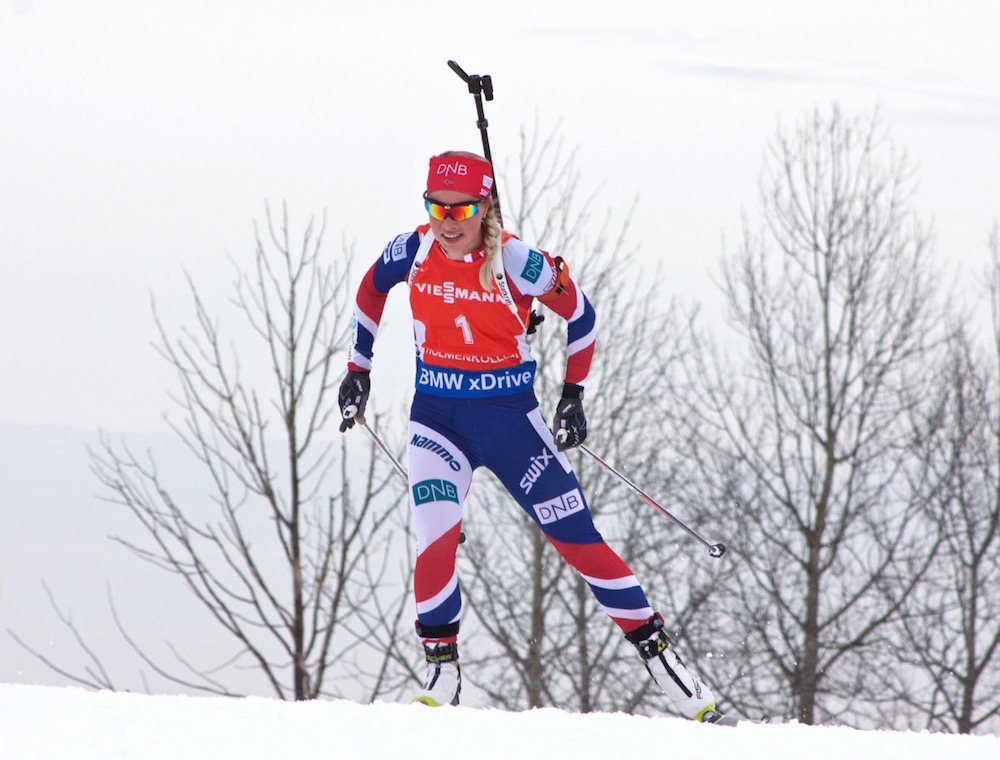
    Tiril Eckhoff of Norway on her way through the stadium on her way to second place in the 7.5 k sprint in Sjusjøen, Norway.
    Tiril Eckhoff of Norway on her way through the stadium on her way to second place in the 7.5 k sprint in Sjusjøen, Norway.

    “Yes I think so, I hope so,” she replied.

    When asked by NRK during the post-race press conference what she thought about her victory Braisaz said, “I didn’t expect it, and I really don’t know how it happened.

    “I have worked hard over the summer with my technique and shooting and it’s reassuring to be in good shape today.” she continued. “I had to focus on what I could do because Eckhoff and Dzhima were very strong.”

    Asked what her goals are for the season, Braisaz said she has no specific goals, but she hopes to be “in shape for the World Championship.”

    Also at the press conference, Eckhoff was asked how she felt about her race.

    “I’m glad to have started the season, and I feel like I’m in good shape and that I am strong, but I may have started a little too quickly,” she said.

    As for her shooting: “I’m happy about the standing, but I used a little too much time during the prone so the focus from now on will be to systemize the shooting so I can do it faster and better,” she said.

    Third-place finisher Dzhima said after the race that she was happy about being in good shape, but she wasn’t happy with 90-percent shooting.

    “I’m not happy about missing one target, I wanted to hit all ten, but luckily it’s early in the season,” the 26-year-old told FasterSkier through a translator.

    Fourcade Leads Five Frenchman in Top 6

    In the men’s 10 k sprint, Martin Fourcade took charge from the start. The five-time World Cup overall champion hit all his targets and skated the track equally well. No other biathlete could match Fourcade’s performance and the closest was Norwegian Johannes Thingnes Bø, who finished 12.9 seconds behind him with perfect shooting.
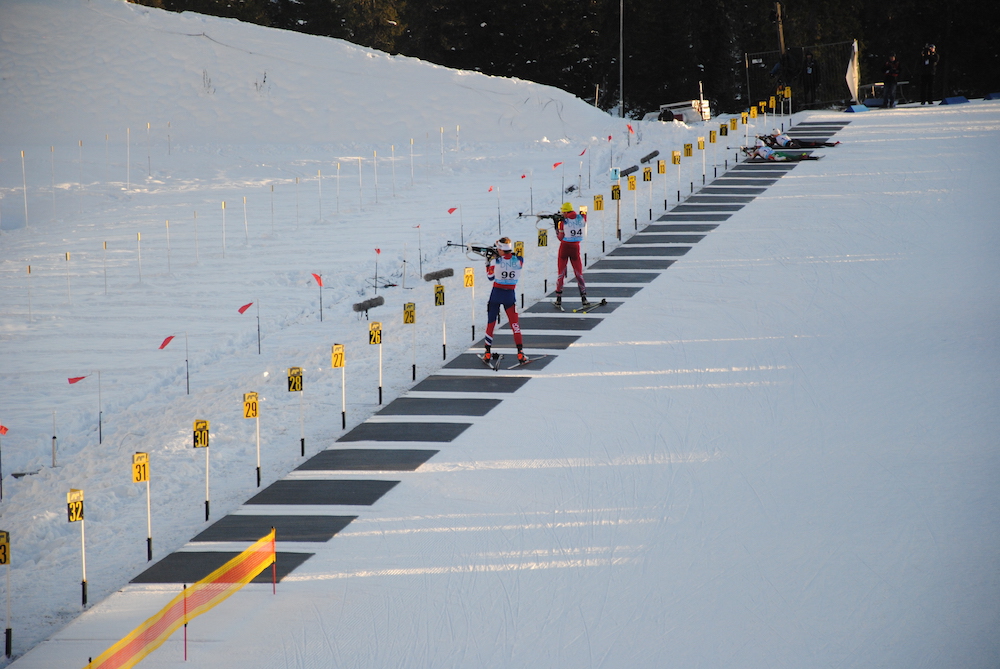
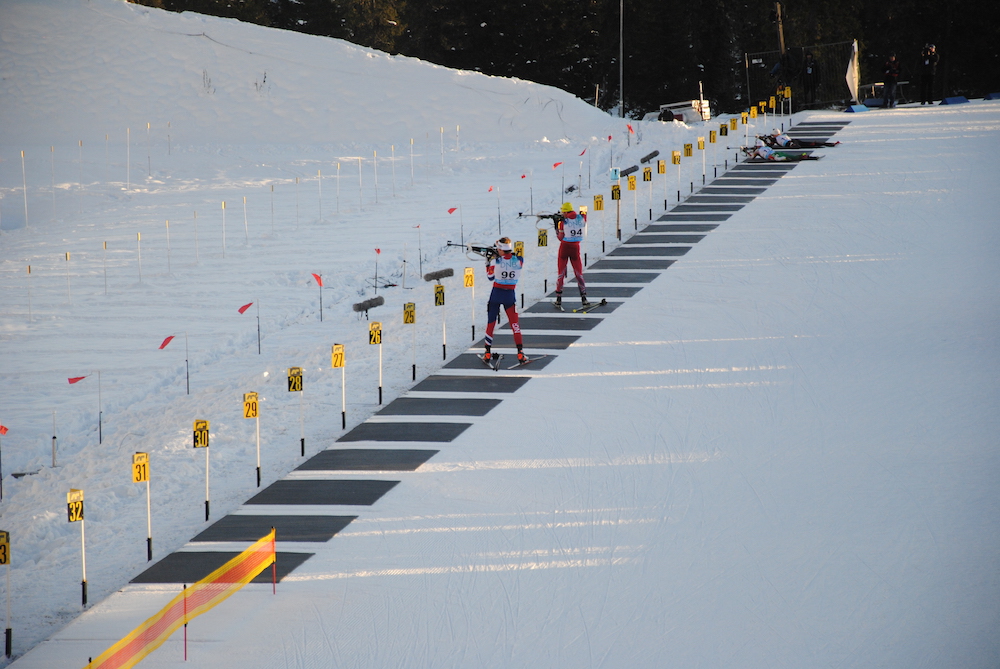
    Norwegians Thomas Fenne (bib 94) and Emil Hegle Svendsen (bib 96) on the shooting range in the 10 k sprint in Sjusjøen.
    Norwegians Thomas Fenne (bib 94) and Emil Hegle Svendsen (bib 96) on the shooting range in the 10 k sprint in Sjusjøen.

    “I am happy about the result, but I am not in that good shape so today was a very good day,” Fourcade told L’equipe after the race.

    And indeed it was for the French team. Five out of the top six men’s finishers were French. Fabien Claude placed third (+31.7), Quentin Fillon Maillet was fourth (+59.3), Jean-Guillaume Béatrix was fifth (+1:05.7) and Simon Desthieux was sixth (+1:07). The only miss among these five came from Desthieux, who missed once in his standing shooting.

    Norwegian TV2 called the French team’s performance a “frightening shot for the Norwegian biathletes”.

    In the post-race press conference, Fourcade said he was “satisfied with the result. It was not my best performance, but for November this is good.”

    Asked about the performance of his team, he said, “It means a lot. It pushes me in training and I have to work really hard to stay ahead of my team, so it’s good.”

    Fourcade pointed to World Championships as his goal for the season, but he’s also focused on the World Cup.  “I want to be as good as possible all season,” he said.

    Up until the second shooting, it looked like Johannes Bø could potentially threaten Fourcade’s place on the podium, but the final lap of skiing became too tough for Bø.

    “I’m happy about the race, it was a good performance,” he told FasterSkier. “I skied well, but I feel like I can do better than I did today, but I started feeling it in the second lap and third was painful and I was happy to finish.”

    Asked how he felt about his 10-for-10 shooting, he said, “I’m very happy and I feel confident about it. We’ve focused more on shooting in training this season and it seems to have paid off.”

    Third-place finisher Claude, who, at 21, has never raced a World Cup but has made it to four Youth/Junior World Championships, said that he was happy about his performance.

    “I am really happy and satisfied with my race, my preparations have been great and the conditions today were great so I’m really happy,” he told FasterSkier. “And zero misses is not common for me so that is something I will take with me into the season.”

    His main goal for the season? To reach the World Cup, he said.

    Eight-time Olympic gold medalist Ole Einar Bjørndalen finished ninth, 1:33.9 minutes behind Fourcade. After the race, the 42-year-old Norwegian told FasterSkier, “This was no super race but I shot well and I skied as fast as I had planned. The fact that I am that far behind Fourcade is not something I worry about this early in the season.”

    Results: Women | Men

  • Despite ‘In-Between’ Season, Norwegian Biathlon Shooting for Top Two in 2017

    Despite ‘In-Between’ Season, Norwegian Biathlon Shooting for Top Two in 2017

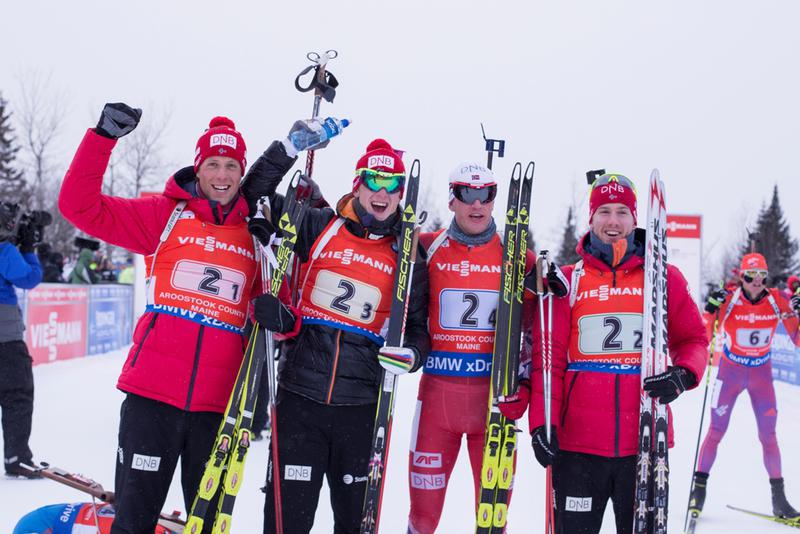
    Norway won the men's 4 x 7.5 k relay on Saturday at the IBU World Cup in Presque Isle, Maine, with (from left to right) Lars Helge Birkeland, Johannes Thingnes Bø, Tarjei Bø, and Erlend Bjøntegaard. (Photo: IBU/NordicFocus)
    Norway won the men’s 4 x 7.5 k relay at the 2016 IBU World Cup in Presque Isle, Maine, with (from left to right)
    Lars Helge Birkeland, Johannes Thingnes Bø, Tarjei Bø, and Erlend Bjøntegaard. (Photo: IBU/NordicFocus)

    The Norwegian biathlon team is coming off of a high note last season, when they hosted World Championships in Oslo and saw gold-medal performances from Tiril Eckhoff, Johannes Thingnes Bø and both its men’s and women’s relay teams. The legendary Ole Einar Bjørndalen also picked up an individual silver medal to add to his collection.

    The team’s task now is about keeping up the intensity and building towards the 2018 Olympics in PyeongChang, South Korea. One target metric: to have both its men’s and women’s teams ranked in the top two at the end of the year.

    Last season, the Norwegian men won the Nations Cup and its women ranked seventh.

    “This will probably, to some degree, become a sort of ‘in-between’ season,” Norwegian Biathlon Association President Erlend Slokvik recently told FasterSkier on the phone. “But athletes that didn’t perform as well as they had wanted will probably be extra motivated to do well this season. There was also a bigger focus on peaking in the World Championship [last season], because being part of one in your home country is sort of like an Olympics.”

    Norwegian Biathlon Association (NSSF) President Erlend Slokvik (Photo: NSSF)
    Erlend Slokvik, president of the Norwegian Biathlon Association (NSSF). (Photo: NSSF)

    Slokvik was elected president in May after having served as first vice president for the last eight years. He coached the Norwegian biathlon teams from the spring of 2000 to the spring of 2002, during which time the Norwegians won eight medals at World Championships and six medals at the Olympic Games in Salt Lake City, Utah.

    After his election, Slokvik emphasized that having the world’s best biathlon team was important in order to attract sponsors, continue good recruiting and development of top-level athletes. He wanted to focus especially on coaches’ education and the development of new biathlon arenas to help towards this goal.

    While biathlon is already a very popular winter sport in Norway, the federation is also aiming to build from its grassroots and development levels after Oslo.

    “We have noticed a greater interest to some degree, but biathlon has been a popular sport for a long time, one of the most popular in the country, so there is a limit to how much of an increase we can see,” Slokvik explained. “But there has definitely been an increase, which is something we see in, for example, ticket sales for World Cup events … There is good recruiting in many places and the World Championship definitely contributed to that. We did a recruiting tour in connection the championships, which Tora Berger among others were part of and this definitely had an effect on recruiting.”

    While the usual suspects are expected to contribute to the national-team results this season, there are opportunities for newcomers, like Marte Olsbu, who had something of a breakthrough at the Oslo World Championships, finishing seventh in the mass start and turning in strong legs in the mixed and women’s relays.

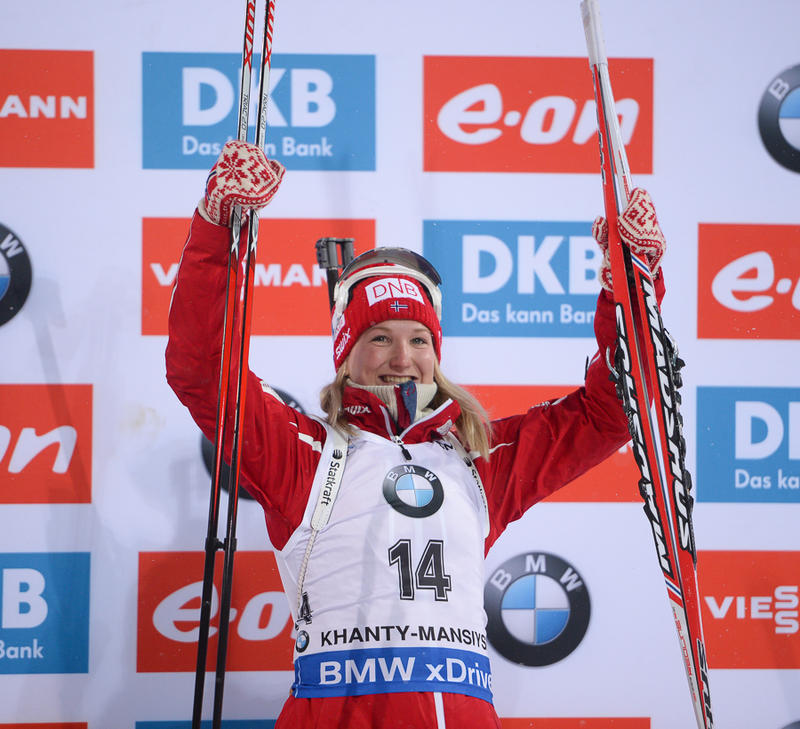
    Norway’s Marte Olsbu celebrates placing third for her first IBU World Cup podium in the women's sprint on Thursday in Khanty-Mansiysk, Russia. (Photo: IBU/Evgeniy Tumashov)
    Norway’s Marte Olsbu celebrates her first IBU World Cup podium after placing third in the women’s sprint last March in Khanty-Mansiysk, Russia. (Photo: IBU/Evgeniy Tumashov)

    “In the men’s team, we have the ‘big four’ (Emil Hegle Svendsen, Bjørndalen and Tarjei and Johannes Bø) whom we expect to do well, as for the rest of the team we’re hoping that more and more athletes will stabilize on such a high level,” Slokvik said. “In the women’s team we hope that Marte will stabilize on a level close to Tiril [Eckhoff]. She won the sprint and pursuit rollerski national championships, so she is in good shape.”

    While the team did almost entirely dryland training through October, it is now transitioning to a new phase.

    “A lot of it has been threshold training, and preparation for shooting with an elevated heart rate,” Slokvik said. “Because of that the athletes haven’t done as much high-altitude training and instead spent time in lower elevation. They are in Trysil [Eastern Norway] now training in good conditions. They’ve spent time in France, for example in October, normally they would have spent time [on the glacier] in Val Senales, where they ski in high altitudes, but not this year. This [lower altitude] has allowed for more specific biathlon training, such as skiing with higher heart rate and shooting.”

    While the Norwegian biathlon has steered clear of the doping scandals that deeply impacted its cross-country counterparts this summer and fall, those events prompted the federation to review its policies towards medication for athletes.

    “We’ve gone through our routines and been clear in our communication with athletes, who have become even more aware of what they should do and not do,” Slokvik said. “Basically we followed already established routines.”

    Norway's Tiril Eckhoff en route to 25th in the women's 12.5 k mass start at 2016 IBU World Championships in Oslo, Norway. She had five penalties, three of which came in the third stage.(Photo: JoJo Baldus)
    Norway’s Tiril Eckhoff racing to 25th in the mass start at 2016 IBU World Championships in Oslo, Norway. Eckhoff recently told Aftenposten that she stopped taking her asthma medication because she no longer needs it.(Photo: JoJo Baldus)

    It has caused some stress and worry: Eckhoff said in an interview with Aftenposten that she has stopped taking her asthma medication. But it’s not because doing so was breaking any rules, Slokvik said.

    “Since the news of [Martin Johnsrud] Sundby’s situation and the team’s use of asthma medication, athletes even with a diagnosis have been suspected and she didn’t want to contribute any more to that,” he explained. “Tiril has a diagnosis, but the severity of [her asthma] at the present time isn’t at a level where she wouldn’t be able to function without the medication. If it had, she wouldn’t have stopped taking it.”

    The first competitions of the biathlon season are approaching on Saturday in Sjusjøen, Norway. Is the host team primed for improved performances over last year?

    If those goals of being one of the top two teams in the world are any indication, it’s likely.

    “We feel that this is a realistic goal, and it was set based on past performances,” Slokvik said.

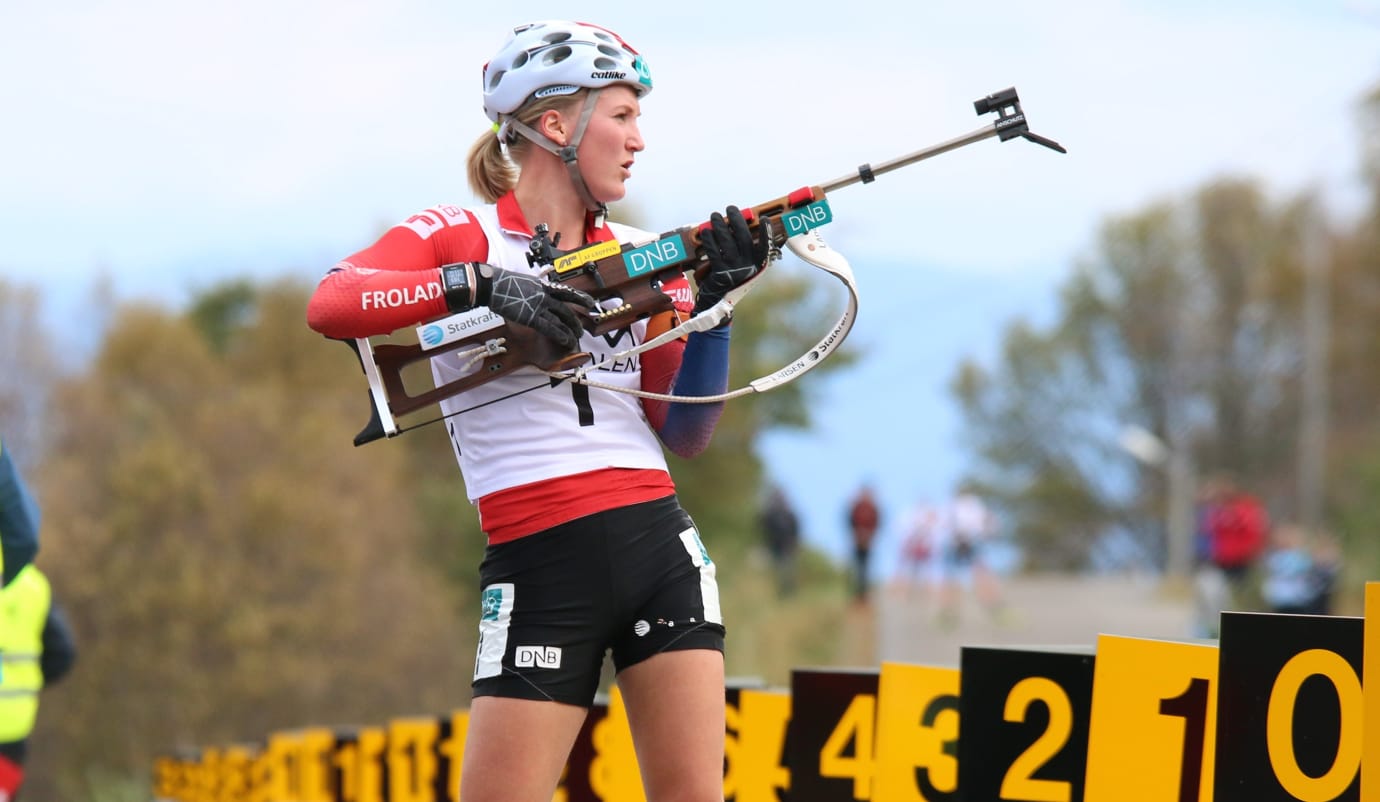
    Marte Olsbu training in October. (Photo: NSSF/Skiskytterforbundet)
    Marte Olsbu training in October. (Photo: NSSF/Skiskytterforbundet)
  • Plenty of Fresh Snow in Sjusjøen, Home of the Biathlon Season Opener (Photo Gallery)

    Plenty of Fresh Snow in Sjusjøen, Home of the Biathlon Season Opener (Photo Gallery)

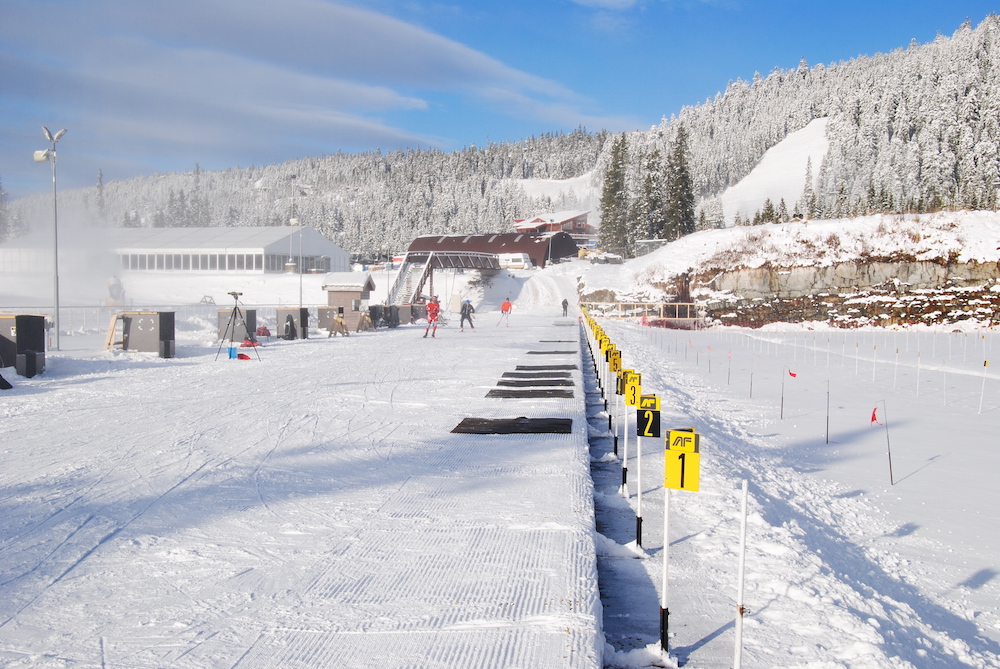
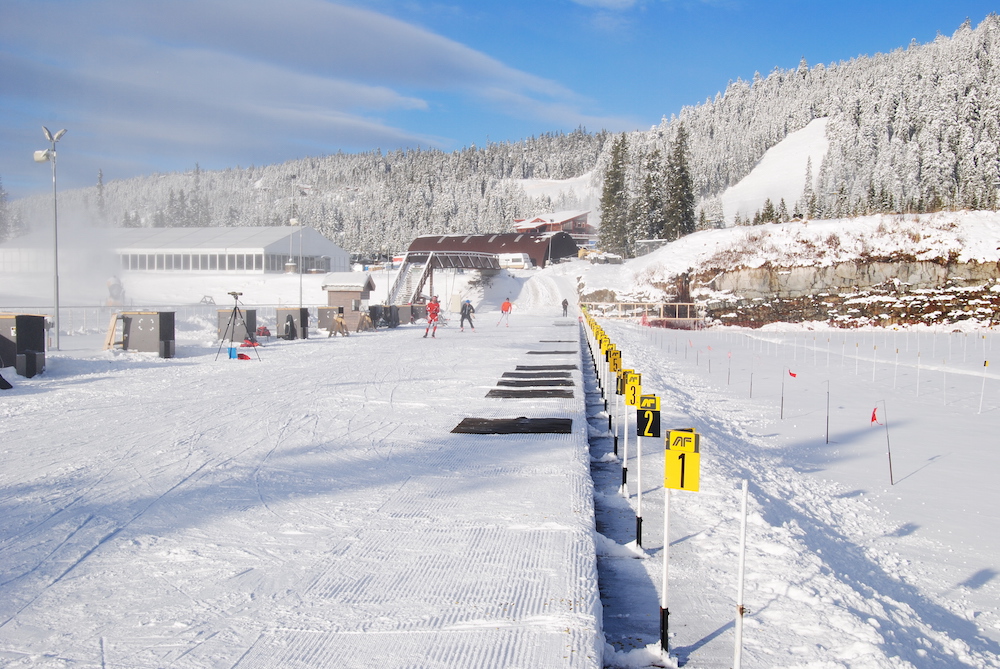
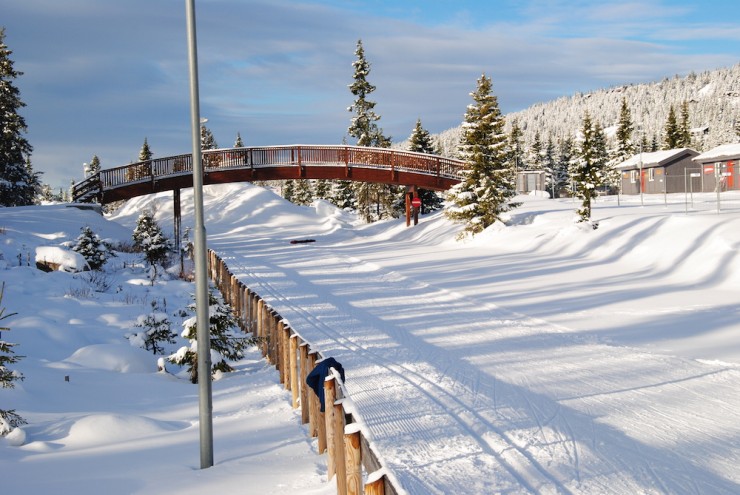
    Sjusjøen's shooting range as seen from a bridge in front of the spectator tent on Nov. 2 in Norway. Sjusjøen is hosting the season-opening biathlon races on Nov. 12-13. (All photos: Aleks Tangen)
    Sjusjøen’s shooting range as seen from a bridge in front of the VIP/media tent on Nov. 2 in Norway. Sjusjøen is hosting the season-opening biathlon races on Nov. 12-13. (All photos: Aleks Tangen)

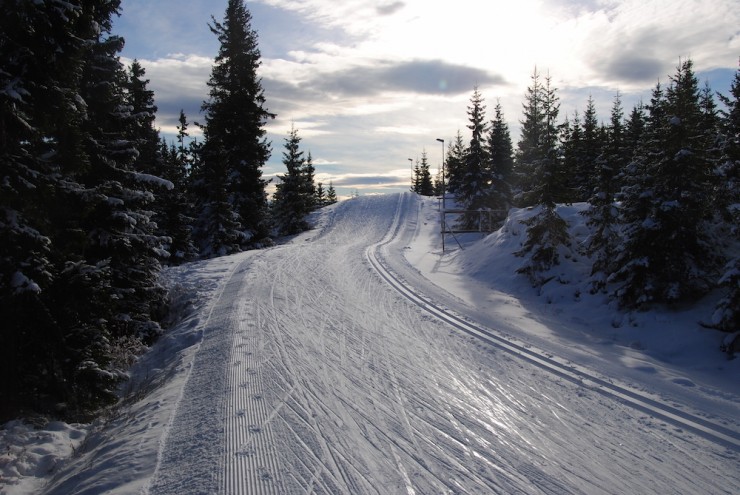
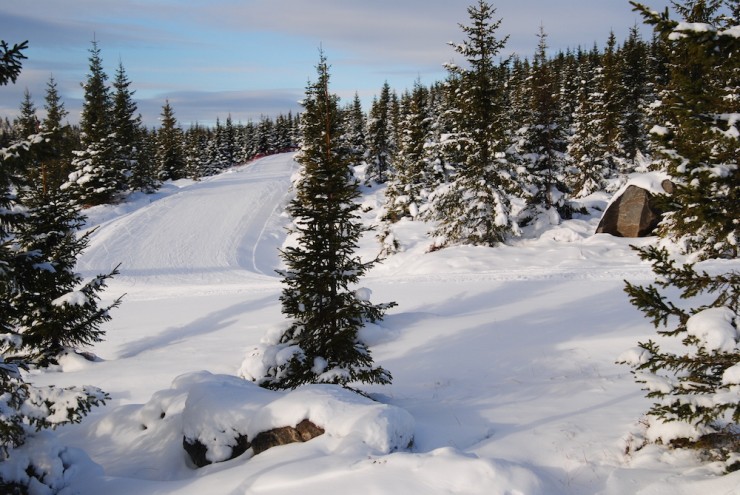
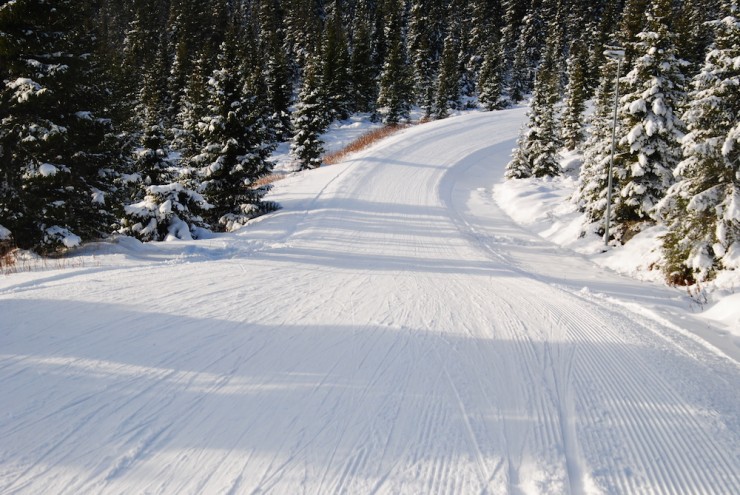
    SJUSJØEN, Norway — Talk about early snow: Sjusjøen, a Norwegian ski destination just 20 kilometers outside Lillehammer, has offered a one-kilometer loop since Oct. 1 for biathletes and cross-country skiers of all levels.

    Over the last month, the loop has grown to several kilometers as winter arrives in Norway. The area had a substantial snowstorm last weekend, with more than 12 centimeters of standing depth.

    “It’s to give people a chance to ski. It’s an ‘offer’ this destination provides and it helps us maintain full-time positions, which is positive for the region and people that want to ski have a chance to do so,” Johannes Håukåssven, the head groomer in Sjusjøen, explained in a recent phone interview. “It also lengthens the season for Sjusjøen as a ski and tourist destination. For example, fifteen years ago, there were no tourists here before Christmas.”

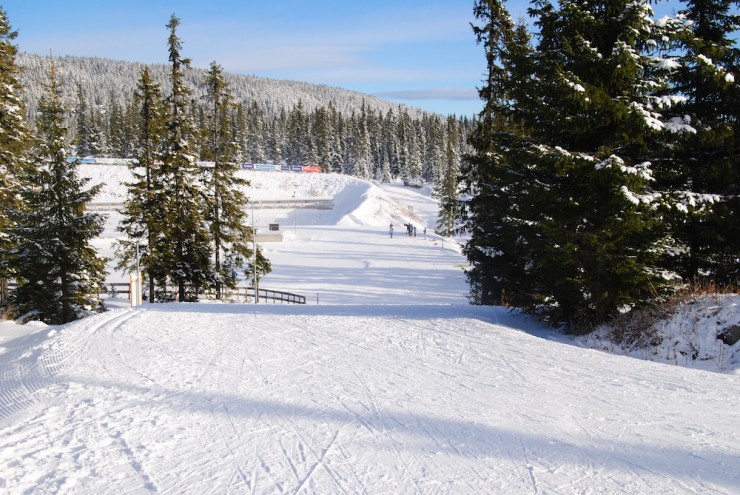
    Looking down Sjusjøen's race course, which will be used for this weekend's season-opening biathlon races. The competitive course goes off to the right. (Photo: Aleks Tangen)
    Looking down Sjusjøen’s race course, which will be used for this weekend’s season-opening biathlon races. The competitive course goes off to the right.

    The early snow loop is financed primarily by Ring Alm, a locally based manufacturer of wood-based products.

    Håkåssveen works on the loop from 6 in the morning until late at night. Many days during the season, he starts working on the tracks at 5 a.m., and some times even earlier.

    “They have been salted nearly every day, but we stopped doing it the week of Oct. 17-23 when the temperature at night began to stabilize below zero [Celsius],” Håkåssveen explained. “We work hard to maintain a clean set of tracks with no gravel of any kind. We also have some snow stored, but most of it comes from snow canons.”

    While the tracks support tourists as well as elite skiers from around the world (the U.S. team trained there for a pre-World Cup camp last season, for example), they are a primarily local resource.

    Therefore, organizers take special care to preserve the boreal landscape that makes Sjusjøen a favorite ski destination.

    “The environment is really considered,” Håkåssveen said. “We know that 60 to 70 percent of our potential users live in the surrounding area, and the short drive to Sjusjøen is far better than a long flight to, for example, the Alps. We also don’t use any chemicals and all of the electricity we use comes from hydroelectric power. Some trees will be removed, but this is far from substantial.”

    Athletes from all over Norway come to Sjusjøen in order to ski the loop. Håukåssven says it has been quite popular among both professionals and recreational users.

    “Biathletes such as Ole Einar Bjørndalen and cross-country skiers Heidi Weng and Øystein Pettersen have used the tracks,” Håukåssven said. “There are also many local athletes, in addition to biathletes from Ukraine and Latvia, that have tested the tracks. And they seem happy about the conditions.”

    The venue also hosts season-opening biathlon races attended by not only Norwegian, but also other international athletes. Those competitions are slated for Nov. 11-13 this year, with men’s and women’s sprints and mass starts this weekend. In 2015, biathletes came from Germany, Ukraine, Italy, Finland, France, and the U.S. to start their race seasons in Sjusjøen.

    The shooting range in Sjusjøen, Norway, as seen on Nov. 2. (Photo: Aleks Tangen)
    The shooting range in Sjusjøen, Norway, as seen on Nov. 2. (Photo: Aleks Tangen)

    “The event is continuously developing,” Norwegian Biathlon Association President Erlend Slokvik said of the season-opening races. “This year there will be a tent overlooking the shooting range for the audience. There will also be many invited guests from the eastern part of the country, people from politics, business and sports administration. What we’re experiencing is that people see the season opener as a fine place to witness great performances and to socialize.”

    In an effort to attract spectators, the organizing committee is offering free transportation to the races from Lillehammer and nearby Moelv.

    As of Thursday, there were nearly 400 athletes entered in various competition categories. Some teams use the opportunity to make roster selections for the World Cup, which adds excitement.

    “It is perhaps a little too early in the season for the athletes to perform at their best level, but with the fresh snowfall, that’s being well maintained we are looking at some good conditions and potentially fast times,” Slokvik said. “I don’t think the artificial snow will have an effect on the performance, loose snow might favor the lighter athletes, but it doesn’t seem like that will happen.”

    — Chelsea Little contributed reporting