From the FasterSkier archive — posts syndicated from athletes’ and coaches’ own blogs between 2004 and 2012, kept online as published. Current coverage is at fasterskier.com.

Tag: Exercise Physiology

  • Heart Rate Varies. So Does Every Other Training Metric.

    Heart Rate Varies. So Does Every Other Training Metric.

    This article was made possible through the generous support of our voluntary subscribers. If you value coverage like this, please support FasterSkier with a voluntary subscription.

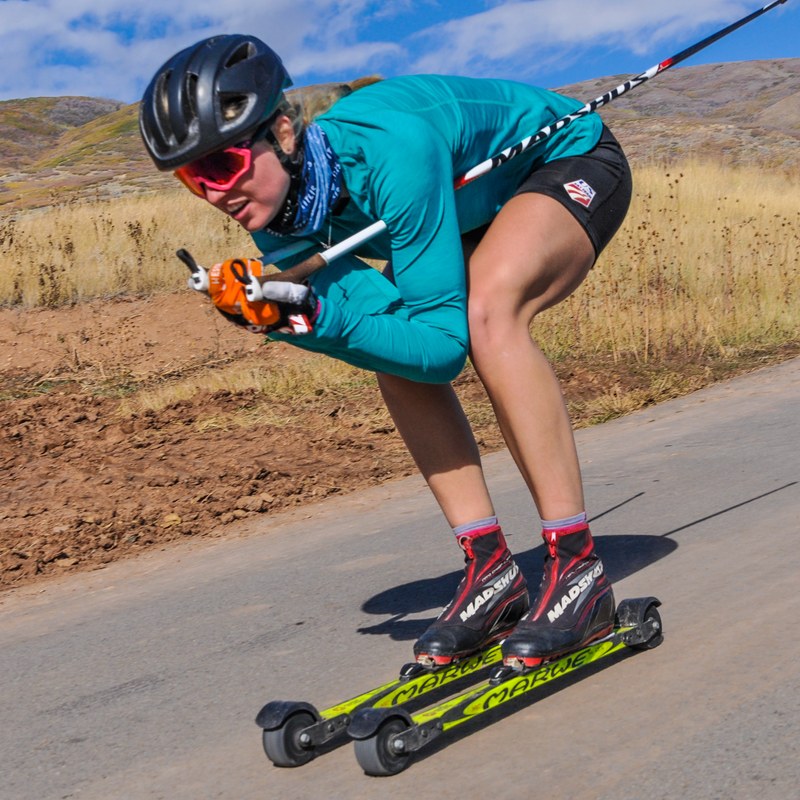
    Hailey Swirbul in a teal top, black helmet and orange goggles crouched low on rollerskis on a paved road with dry grassy hills behind
    Hailey Swirbul during an intensity session at a U.S. Ski Team camp in Park City, Utah, in October 2018. The same pace can cost an athlete very different amounts from one day to the next. (Photo: Matt Whitcomb)

    In my last article on training zones, published on FasterSkier, I tried to describe the challenges we face when we don’t use a common language. There is a lot of talk on social media about Zone 2 training, while most of us in the cross-country ski world understand this same training intensity as Zone 1. Others challenge the use of heart rate to set zones at all. These discussions are great, because they push all of us to better explain our beliefs and how we got there.

    Today I want to share why I think heart rate is, for most athletes, a useful, available indicator of cardiovascular stress, even though it doesn’t necessarily capture the complete cost of exercise. I often hear that heart rate is too variable: heat and other environmental conditions can change it; fueling, hydration and fatigue can affect it; it doesn’t stay the same at the same workload (pace or power); and it doesn’t react quickly enough during hard efforts. All of which has some truth to it!
    Two women in blue tank tops bounding uphill with poles on a dirt road, with a trailer and mountains behind them
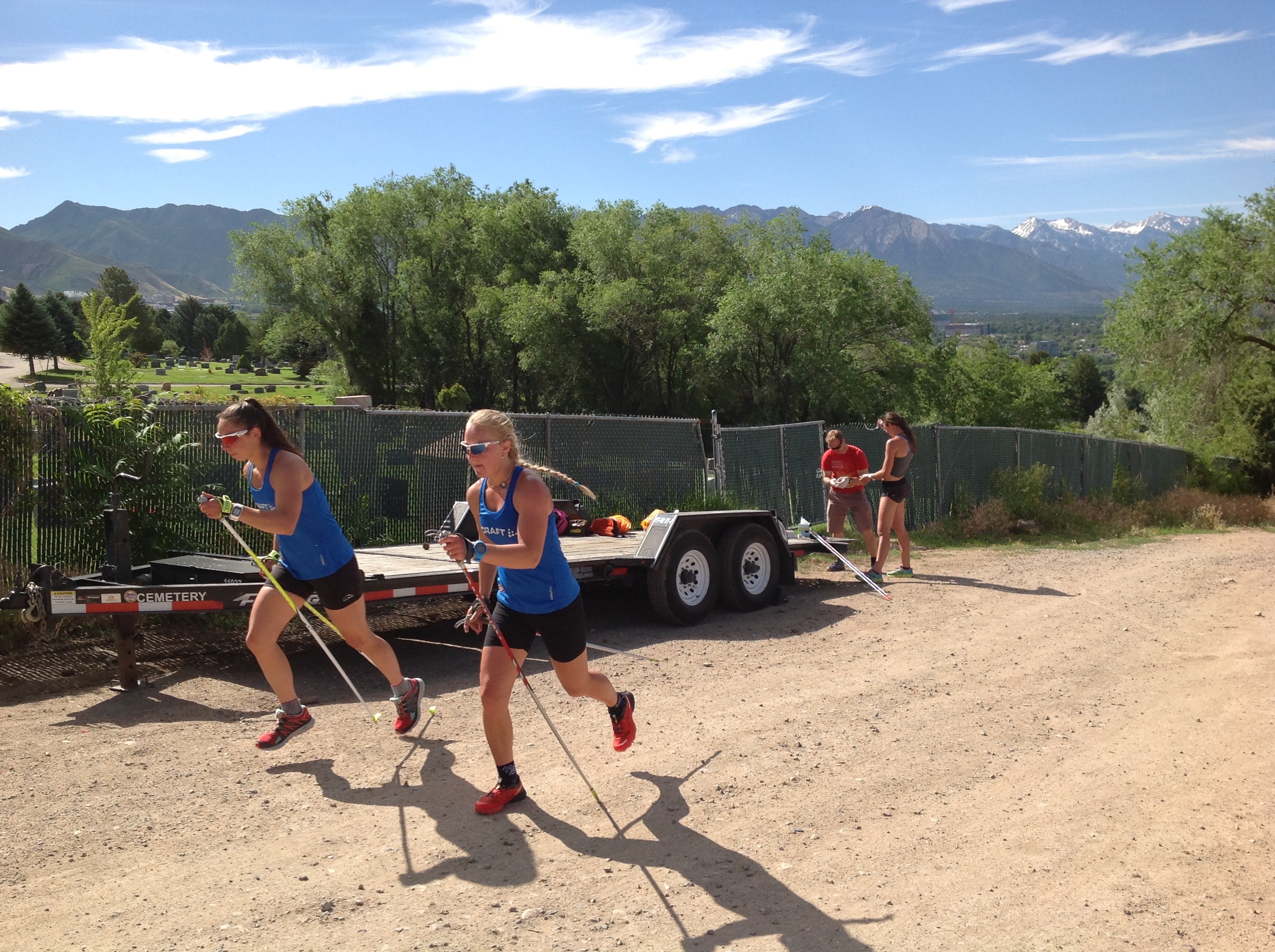
    Hannah Halvorsen (left) ski bounding in Park City, Utah, in June 2016. Heat, altitude, fueling and fatigue all change what a given pace costs, and heart rate reflects that cost. (Photo: Bryan Fish)

    Cost or Pace?

    But let’s break it down. For all endurance work, from easy endurance work below 72 percent of maximum heart rate up to high-intensity work at 95 percent of maximum heart rate, heart rate is an indicator of the physiological demand and strain associated with producing energy. So when it is said that we should use other metrics to implement and track training because of these variations, I say, really? Shouldn’t we train day in and day out based on how the body responds to those external conditions? The same pace, power, speed or workload can carry widely different physiological demands on any given day. So what are we trying to train: the metabolic cost, or the speed, power or pace we can maintain? I would argue both, but in very different circumstances.

    I should note that while I use percentages of maximum heart rate to discuss training, that doesn’t mean percentages of maximum heart rate are the best way to determine training zones. It is not a bad method if you test for maximum heart rate, but there may be better ways to use actual performance data to set training zones.

    Two skiers in U.S. suits and Coop athlete bibs striding side by side up groomed classic tracks in low winter sun
    David Norris and Scott Patterson during a set of pre-race classic intervals. Outside of heart rate and perceived effort, few training metrics get measured every day. (Photo: Tom Horrocks)

    Every Metric Moves

    Then there are those who say we should use lactate, heart rate variability (HRV), rating of perceived exertion (RPE), ventilation, respiratory exchange ratio (RER) and other metrics that change with improved fitness. In fact, those may be better or similar metrics. The problem is that, except for RPE, they are not typically measured daily, so coaches don’t see how much they can vary from one day to the next. Any measure requires context to understand its daily variation. Why? Because the body changes every day in response to life and training stressors.

    All of these measures require context, consistent testing protocols and an understanding of their day-to-day variability to be effective. The bottom line is that we need metrics that can be measured daily to understand how athletes are responding and adapting to training. When we are doing aerobic endurance training, often described as Zone 2 and, in the ski world, as Zone 1, the oxygen cost is reasonably reflected in heart rate during exercise.

    Certainly, the metabolic cost of training changes from day to day with internal and environmental factors, which can require a higher heart rate to produce the same energy output. We also see heart-rate drift during these workouts: at the same pace or power, heart rate climbs. My response is, OK, this represents an increase in internal cost, and we should definitely respond to it. No metric is perfect, but heart rate captures an important and significant part of the internal strain of training.
    Two skiers in red shorts and heart rate straps skating on a wide rollerski treadmill while two coaches watch from the side
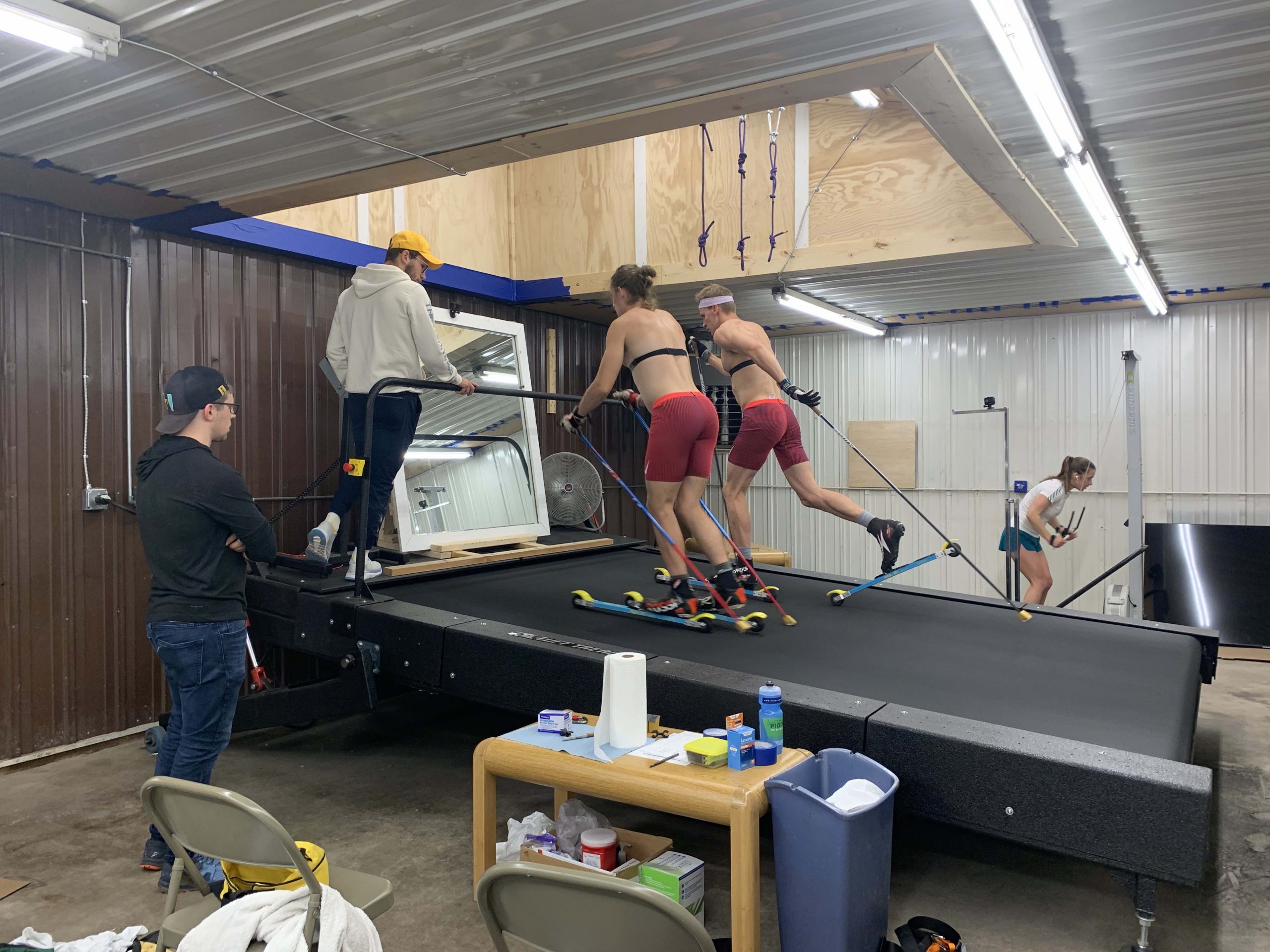
    Team Birkie’s Xavier Mansfield (left) and Zak Ketterson share a rollerski treadmill in 2021 while coaches Leo Hipp and Jeremy Hecker give feedback. A lab number is a snapshot unless it is measured often enough to show its own daily variation. (Courtesy photo)

    Variation You Never See

    To those who say other measures (ventilation, HRV, lactate levels, respiratory exchange ratio, respiration and others) are more accurate, OK. But without seeing how those measures change from day to day, you have no idea of the variation. People use lactate to guide training, for example, and the same goes for newer measures of muscle oxygen saturation and ventilation. They often set training zones at arbitrary levels, or from equally arbitrary estimates based on a visual read of a lactate curve, then assign work based on those values. But if lactate is not measured often during daily training, you have no idea how consistent those values are, or how they vary in response to the same factors that affect heart rate. From my observations, all of those metrics vary as much as heart rate.

    No matter how we cut it, none of these measures is as precise as we like to think, because the body changes and responds daily to stress and external factors. And yes, what we are after is a measure we can observe every day. So let’s recognize the facts. Heart rate represents the internal cost of work. Sure, there are daily variations. But over time, and with context, we can understand those changes.
    Two classic skiers striding through a stand of tall pines, blurred by the camera's pan
    Kendall Kramer (right) in the 10 k classic at the Lahti World Cup on March 8, 2026, an interval-start race she finished in 27:40.8. Galanes puts races of 15 to 30 minutes in the middle of Zone 4. (Photo: Authamayou/NordicFocus)

    How I Set Zones

    So this is how I use training zones. First, I use the zones as a tool to implement and assess the effects of training on each individual. Those assessments help us determine whether the zones and the training are effective. I believe training zones provide a reasonable method that will work for most athletes and doesn’t require regular lactate or lab testing or other expensive equipment.

    So what do I do? I don’t do regular lab testing, because the athletes I coach live all over the country and many don’t have access to or opportunities for it. It is also quite expensive, and most importantly, I have often seen over the years that what we learn in a lab setting doesn’t correlate with what we see in training.

    I do a six-minute test, which, according to research by Véronique Billat, corresponds to the pace at which VO2max is achieved. I use the average heart rate of the last two to three minutes of the test, and I assume that to be about 94 to 95 percent of maximum heart rate. Yes, I assume! But the six-minute test also gives me a repeatable field performance and a high heart-rate observation. I use it to inform my initial estimates, not as a direct measurement of VO2max pace or maximum heart rate. The point is to establish workable ranges, observe how the athlete responds and revise them when the evidence warrants it.

    I also look at racing and high-intensity workout performance. Short races of 10 to 15 minutes should be in the top range of Zone 4. Races of 15 to 30 minutes should be in the mid-range of Zone 4, and races of 45 to 60 minutes in the low to mid-levels of Zone 4.

    Aerial view of a curving paved rollerski loop winding through dry grass and scattered pines
    The 5-kilometer paved rollerski loop at the base of Mt. Telemark, outside Cable, Wisconsin, when it was laid in 2023. A fixed loop like this is all a Zone 1 check needs: 45 to 60 minutes of laps, with lactate and heart rate taken after each one. (Photo: American Birkebeiner Ski Foundation)

    Checking Zone 1

    To confirm the accuracy of Zone 1, I have athletes do 45 to 60 minutes of work on a standard loop of about 15 to 20 minutes, and we take lactate measurements after each loop. If lactate and heart rate remain stable, we know the endurance Zone 1 training is in the correct range. A stable lactate response suggests that the intensity is easy enough, but it does not necessarily identify the first lactate threshold, or LT1.

    We need to understand that no method of determining training zones is precise. The body just doesn’t operate that way. For any training adaptation there is an optimal point of adaptation, but also a much broader range in which the adaptation occurs. So the objective when implementing training is to be as close to the optimal point as possible. But knowing where that is day in and day out is impossible, so being within a reasonable range is the goal.
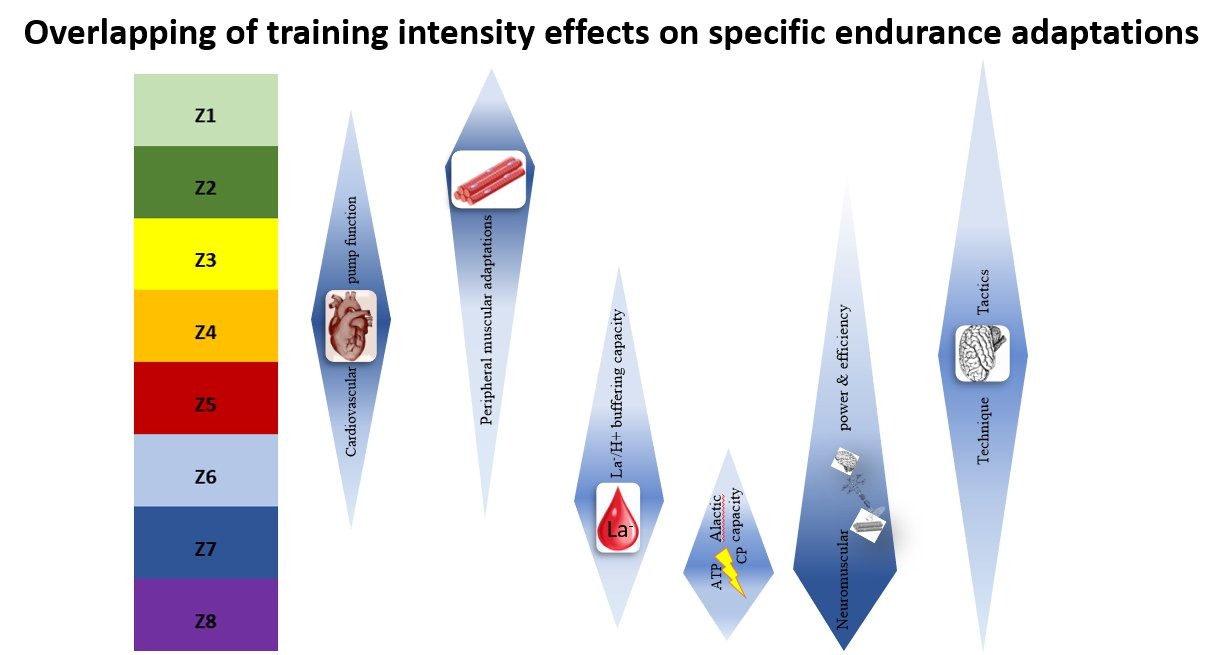
    Diagram of eight intensity zones beside overlapping shapes showing where cardiovascular, muscular, lactate buffering, alactic, neuromuscular and technical adaptations occur
    Every adaptation has an intensity where it responds best and a much wider range where it still responds. (Figure: redrawn from Olympiatoppen educational material, 2020)

    Close Enough

    My conclusion is that using field-testing measures along with training and race performance data to support training-zone determination is adequate, and it allows us to build ranges that can move as fitness changes. There are no ideal “thresholds” or clear metabolic points we can use to determine training zones. LT1 and the second lactate threshold, LT2, are useful reference points, but different protocols and definitions can produce different estimates for the same athlete.

    Other thresholds, determined by heart rate variability, DFA alpha1, respiration and muscle oxygen, may prove useful in the future, but so far they have not been fully validated and likewise cannot identify clear physiological thresholds.

    So we are left with what is practical and available to developing and recreational athletes. Let’s get close enough, control training effectively and learn what works based on the data for each athlete. Heart-rate metrics fit that need best.

    We can debate exactly where one training zone ends and another begins, but no test gives us a number that will describe an athlete perfectly every day. For the athletes I coach, heart rate gives us a practical place to start and a way to follow their response over time. I use field tests and race results to establish working ranges, then look at heart rate alongside pace, perceived effort, conditions and, when available, lactate. If those observations no longer agree, I revisit the zones.

    The goal is not to defend a particular method or number on a chart. It is to help an athlete do the work as intended on a given day, learn from the response and make a better decision the next time. That is where training zones earn their value.


    Help Support Our Coverage!

    If you value the thoughtful work and access FasterSkier provides, please consider becoming a Voluntary Subscriber. Your support directly fuels our work to cover the people, places, and moments that make our sport special.

    Join the FasterSkier community!
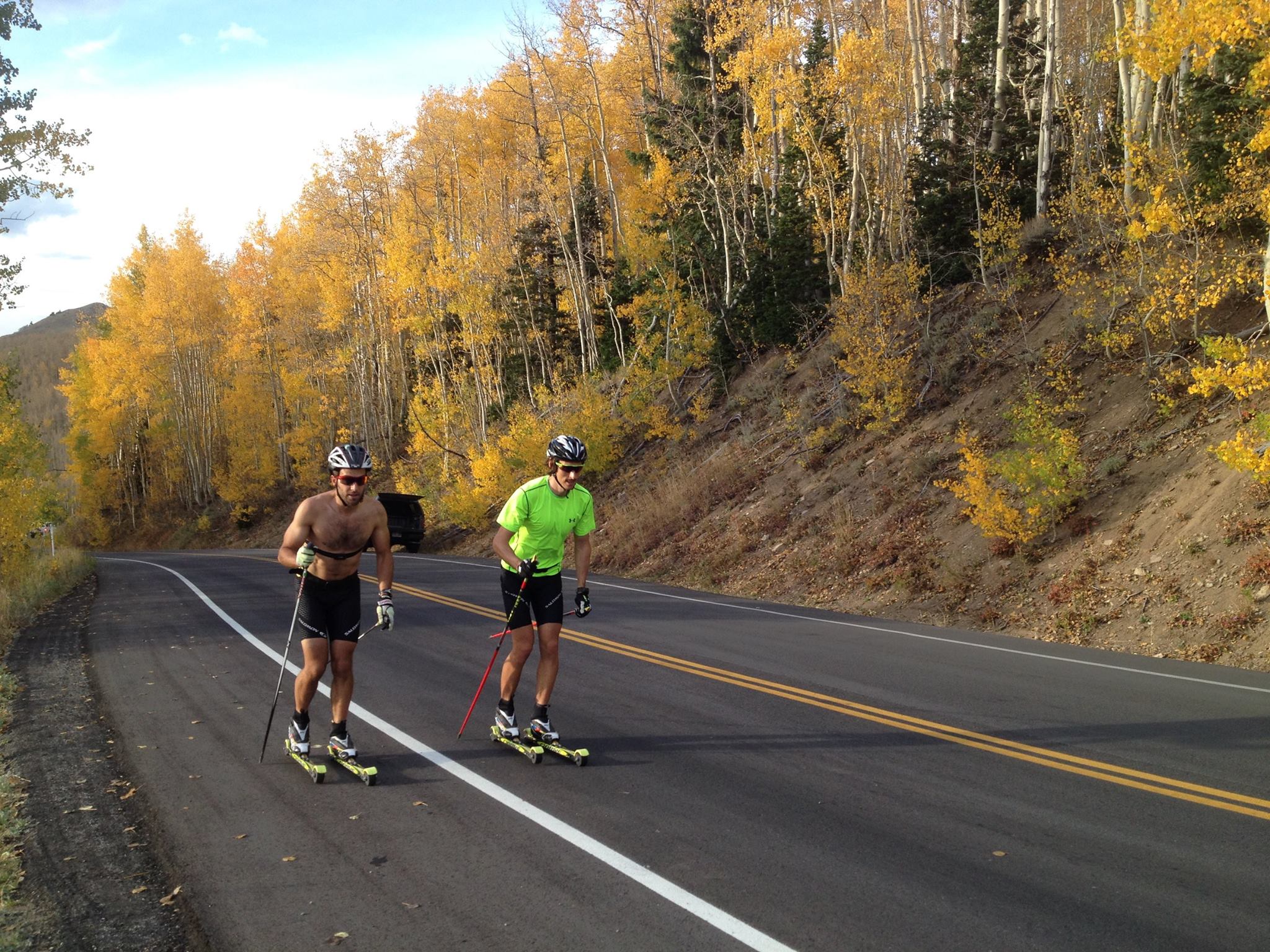
     

    Two skiers rollerskiing up a winding mountain road lined with yellow aspens
    Canadian biathletes Brendan Green and Scott Perras rollerskiing up Guardsman Pass above Park City, Utah, during a fall 2015 camp. (Photo: Matthias Ahrens)
  • Why How You Start a Workout May Matter More Than the Workout Itself

    Why How You Start a Workout May Matter More Than the Workout Itself

    This article was made possible through the generous support of our voluntary subscribers. If you value coverage like this, please support FasterSkier with a voluntary subscription.

    Most athletes view the warm-up as preparation for the hard part of the workout. The reality is that the warm-up is often one of the most important parts of the session, because it largely determines the physiological response that follows.

    The purpose of a warm-up is not simply to get moving. It is to bring the body’s physiology to a level where the intended training stimulus can be achieved while controlling the overall stress of the workout. In endurance training, particularly during high-intensity work, the warm-up is often the difference between controlling the metabolic response and being controlled by it.

    Athletes frequently start sessions too hard. They feel fresh, see a target pace or power on their watch, and immediately try to hit it. The problem is that physiology is not yet prepared to support that workload. Oxygen delivery, muscle temperature, enzyme activity, and substrate utilization are all operating below the levels required for efficient steady-state exercise. The result is often a disproportionate metabolic response.

    The Oxygen Deficit Problem

    At the start of exercise, energy demand rises immediately, but aerobic energy production takes time to catch up. During this period, often referred to as the oxygen deficit, a greater percentage of the required energy must come from glycolytic pathways.

    This can be particularly problematic during races and maximal efforts. If the physiology, especially the oxygen transport system, has not been properly activated, lactate oxidation and resynthesis can be compromised. Lactate accumulates more rapidly, metabolic stress rises, and performance can suffer.

    The same thing often happens during training. If an athlete begins too aggressively, glycolytic energy production rises rapidly before the aerobic system is fully engaged. Lactate accumulation increases, and the athlete spends much of the workout trying to recover from a metabolic disturbance that was largely created during the opening minutes of the session. Many workouts intended to be primarily aerobic become moderately glycolytic before the real work has even started.

    Jack Young hits some big lactate numbers during a hard training session. (Photo: Courtesy Photo)

    Lactate Is Often Controlled Before the Main Set Begins

    Coaches frequently focus on pace, power, heart rate, or lactate during the interval portion of a workout. In reality, much of the metabolic profile of those intervals may have been determined during the first 10 to 20 minutes of the session.

    A gradual warm-up allows oxygen delivery and utilization to increase progressively. Muscle blood flow improves. Mitochondrial respiration accelerates. Oxygen kinetics improve. The contribution from anaerobic glycolysis declines relative to the overall energy demand.

    As a result, when the athlete begins the primary workload, lactate appearance and clearance are better balanced, and the body’s ability to oxidize lactate is already functioning at a high level. This creates a fundamentally different physiological environment.

    When I was racing bikes, particularly time trials and hill climbs where the energy demand was high from the very start, I found that the longer the easy portion of the warm-up, often 45 to 60 minutes, the better I could tolerate high intensity immediately. The effort felt more controlled, and the metabolic response was far more predictable.

    Two athletes may perform the same interval session at the same power output. The athlete who started gradually may stabilize at a lower blood lactate concentration and experience less metabolic strain than the athlete who rushed into the session. The difference is not fitness. The difference may simply be the quality of the warm-up.

    Pellegrino embraces the crowd ahead of Sprint qualifying in Lake Placid. “The energies I got in the Final were coming from the warmup lap, where I stopped in the middle of the climb, crying.”
    (Photo: Thibaut/NordicFocus.)

    Warm-Up as a Tool for Intensity Control

    One of the most overlooked benefits of a proper warm-up is improved intensity control. For athletes who struggle to control intensity during endurance workouts, paying close attention to the first 20 to 30 minutes of the session can have measurable benefits.

    When athletes begin too fast, they often overshoot the desired intensity. Lactate rises quickly. Respiration and ventilation climb above normal. We have measured lactate during training and repeatedly seen athletes who start too hard spend the next 30 to 45 minutes of the workout significantly slower, simply to bring lactate back down to the intended level.

    A gradual progression gives the athlete time to monitor how the body is responding. Heart rate rises progressively, respiration remains controlled, and the athlete gains a much clearer picture of the true physiological response to the workload.

    This is particularly important during high-intensity training, where small differences in workload can create large differences in metabolic response. The goal is not simply to reach the target workload. The goal is to arrive there with the physiology prepared to support it aerobically.

    The Better the Athlete, the More Deliberate the Warm-Up

    Elite endurance athletes often appear to spend an excessive amount of time warming up. They do it because they understand physiology. As aerobic capacity increases, athletes become increasingly sensitive to small changes in metabolic stress. A controlled rise in workload allows them to achieve higher-quality training and produce more predictable physiological responses.

    The warm-up is no longer separate from the workout. It becomes part of the workout itself.

    Jessie Diggins (neon orange shorts) helps lead her Stratton Mountain School teammates through A-skip drills during a “power warmup” at the base of Stratton Mountain in 2018. (Photo: Pat O’Brien)

    Practical Application

    For most endurance sessions, particularly aerobic training, athletes should think of the opening 20 to 30 minutes as a transition period rather than part of the main workload.

    Start below the intended training intensity. Allow heart rate, oxygen consumption, and respiration to rise gradually. Resist the temptation to immediately achieve target pace or power. The objective is to create the physiological conditions that allow the workout to accomplish its intended purpose.

    Final Thoughts

    The warm-up is often viewed as preparation for the workout. In reality, it is the first opportunity to influence the metabolic response of the entire session. A gradual start reduces the oxygen deficit, limits unnecessary lactate accumulation, improves intensity control, and creates a more stable aerobic environment for the work that follows.

    Athletes often focus on the intervals, the pace, the power, and the volume. Yet the quality of those elements may depend heavily on what happened during the first few minutes of the workout.

    Sometimes the most important part of the session is not the hardest part. It is how you begin.


    Help Support Our Coverage!

    If you value the thoughtful work and access FasterSkier provides, please consider becoming a Voluntary Subscriber. Your support directly fuels our work to cover the people, places, and moments that make our sport special.

    Join the FasterSkier community!


  • Call for Survey Responses: Heart Rate and Age

    Call for Survey Responses: Heart Rate and Age

    Stephen Seiler, a professor at the University of Adger in Kristiansand, Norway, specializes in exercise science. (Photo: University of Adger)

    Are you a well-trained endurance athlete? Do you know your resting heart rate, maximal heart rate, average weekly training hours, and – tough one here – age? If you’re reading this website, the answer to all four of those is probably “yes.”

    If you have a moment to spare, Stephen Seiler would like your help. Seiler is a longtime professor of sports science, currently at the University of Adger in Kristiansand, Norway. We’ve spoken with him for the site before about training and intensity.

    Seiler is currently seeking responses to this questionnaire. As he says on Twitter, “I bet most of you can complete it in less than the time it takes for your heart to beat 60 times.”

    One quick mathematical note, one of the questions, albeit specific to runners (to be fair, even some avid skiers may identify their primary training activity as running), asks about the best pace you could hold for six minutes running, as given in seconds per kilometer. If you’re an American reader and you know your pace in the more common minutes-per-mile, you should: (1) convert the whole thing to seconds, then (2) multiply that figure by 0.6214 to derive that pace in seconds per kilometer.

    Finally, one gender-specific note: Seiler writes on Twitter, “PLEASE get more women to complete this survey! 98% men so far with soon 100 responses. I want to collect data that serves male and female athletes, but I just fail miserably at achieving any kind of male/female balance in the data.” Female athletes, please take note.
    Again, the survey may be found here.

  • Book Review: “ROAR: How to Match Your Food and Fitness to Your Female Physiology for Optimum Performance, Great Health, and a Strong, Lean Body For Life” by Stacy Sims, Ph.D

    “ROAR: How to Match Your Food and Fitness to Your Female Physiology for Optimum Performance, Great Health, and a Strong, Lean Body For Life” by Stacy Sims, Ph.D is an excellent resource for female athletes, parents, and coaches. (Photo: Screenshot Amazon.com)

    This book is for female athletes ages 12 to 92. Or for parents of female athletes. Or coaches of female athletes. Or anyone who wishes to otherwise support female athletes. 

    In 2016, Stacy Sims, Ph.D sparked a shift in training philosophy with her simple message to female athletes: “You are not a small man. Stop eating and training like one.” 

    Although the fact that there are physiological differences between men and women are abundantly clear, the implications in the realm of athletic performance do not date back to proto-humans.

    In her book, “ROAR: How to Match Your Food and Fitness to Your Female Physiology for Optimum Performance, Great Health, and a Strong, Lean Body For Life”, Sims explains that for generations, research in exercise physiology excluded women because the varying hormone levels depending on age and phase within the menstrual cycle created anomalies in data. It was assumed — perhaps naively by male scientists — that women followed the trends seen in studies performed on males. 

    Sims experienced this phenomenon first-hand during her own career as an elite triathlete; she competed in the Ironman World Championships in Kona, HI and the XTerra Worlds in Maui. She recognized that the training plan her male peers followed did not work as well for her, and that she and her female teammates recognized their fueling and hydration needs and performance were impacted by their menstrual cycles. So she set out as a scientist to better understand female-specific physiology. 

    Stacy Sims, Ph.D, is an exercise physiologist and nutrition scientist who specializes in female performance. (Photo: Screenshot Facebook.com/drstacysims)

    From 2007 – 2012, Sims studied “sex differences of environmental and nutritional considerations for recovery and performance” at Stanford University. Basing “ROAR” on the outcomes, Sims offers women research-based methods to align their training, fueling, and hydration with their female physiology to improve performance. 

    “Sex differences extend far beyond ponytails and sports bras,” she writes in the introduction.

    Some of the topics in the book include aligning training and performance schedules with phases of the menstrual cycle, understanding how female hormones affect nutrition and hydration needs, the impacts of hormonal birth control, and the effects of aging and menopause on physiology and performance. While the supporting science is included, it is well explained and can be easily understood without a degree in exercise physiology, endocrinology, or nutrition.

    Though I have been training, competing, and menstruating for more than half my life, I found “ROAR” to be eye-opening and an invaluable tool to identify opportunities to improve my own training and nutrition as I prepare for the American Birkie. I highly recommend it as a resource for female athletes of all levels and for anyone who works with female athletes. 

    Here are some of my biggest takeaways. 

    “Chapter 1: Demystifying and Mastering Your Menstrual Cycle.” 

    Right off the bat, Sims states that periods should not be avoided, and the absence of menstruation is a major red flag indicating that the athlete is not properly fueling their body, resulting in RED-S. She emphasizes that an under-fueled athlete cannot achieve peak performances and is impairing their overall health. Sims advocates for an “all in” approach to naturally restoring the body’s hormone balance by decreasing training intensity and volume (athletes can shift focus to technique here), and increasing caloric intake.

    Dr. Stacy Sims, author of “ROAR: How to Match Your Food and Fitness to Your Female Physiology for Optimum Performance, Great Health, and a Strong, Lean Body For Life”, sends a clear message to female athletes experiencing menstrual disfunction. (Photo: Instagram @drstacysims)

    In this chapter, Sims also unravels the phases of the menstrual cycle, providing information on the physiological effects of hormonal fluctuation.

    One of the biggest surprises she shares is that competing during your period actually aids performance, because that is the phase of the cycle when estrogen and progesterone are at their lowest. In the hormonal sense, this is when women and men are most alike. 

    “Once you’re in the clear of the possibility of pregnancy, the body goes into a more relaxed mode and all those energy systems used in the high-hormone phase are at your disposal for exertion,” Sims writes. 

    She explains that this optimal window extends through the low-hormone follicular phase in the week following menstruation. This window is also when women are at their strongest and can experience increased pain tolerance and decreased recovery time. This is the best window for an intense training block or a peak race, though the latter is not always in our control.

    Anecdotally, my summer goal race, the Lead King Loop 25k trail run, fell during my period. While I was expecting the worst (since I had not yet read the book), I ended up crushing my time goal, finishing third for women, and feeling the strongest I had in years. 

    Conversely, during the luteal phase of the cycle when estrogen and progesterone are at their highest. Though performance metrics like VO2 Max and lactate threshold remain constant, it is harder for women to build and repair muscle. Carbohydrate demands are higher during this phase, which affects fueling needs during exercise and may explain why many women experience cravings during the week before their period. Blood volume is also impacted, which can make it harder to control body temperature — not the easiest time to race in the heat!
    There are also the lovely symptoms of PMS which include cramping, headaches, GI issues, bloating, and mood swings. Sims explains why each of these symptoms occurs and offers suggestions for mitigation.

    Her overarching message is not to dwell on manipulating the cycle to align the low-hormone phase with peak performance, and especially not to fear the menstrual cycle as an athlete. Rather, by understanding the female physiology throughout the cycle, athletes can feel empowered to adjust their nutrition and hydration accordingly to optimize training and performance at any phase of the cycle.

    One addendum: the impacts of high levels of estrogen and progesterone also explain the negative performance impact many women experience from hormonal contraceptives. This method of birth control uses artificial forms of these hormones throughout the cycle to manipulate the lining of the uterus and prevent ovulation, essentially prolonging the high-hormone phase. 

    “Chapter 10: Daily Fueling”

    I found this takeaway less revolutionary, but so important to repeat. Sims advises women to eschew diet culture, in particular the low-carb high-fat trends, like the Ketogenic diet. She explains that while some males respond well to this type of fueling, women experience elevated levels of the stress hormone cortisol, which increases muscle breakdown and impairs the body’s ability to repair. A double whammy. 

    “In the end, a low-carb diet compromises your ability to maintain high-intensity or prolonged periods of exercise and puts your body under exorbitant stress.”

    Sims recommends a well rounded diet that includes roughly 30% of calories coming from protein, 30% fat, 40% carbohydrate. 

    No surprise — the longer and harder you train, the more carbohydrates your body needs. The same goes for protein. She offers a formula to calculate individual need for these macronutrients based on the current demands of your training program.

    From her guidance, I recognized that I need to include a bit more protein before and after my workouts (Sims recommends 10-15 grams before, 25-30 grams after hard exercise). I have also begun including a bit more protein in my bedtime snack, which typically looks like some Greek yogurt and a piece of whole grain toast with peanut butter. 

    Alayna Sonnesyn (SMST2) captions this shot of cooking with Jessie Diggins, “Gotta fuel hard to train hard!”. (Photo: Instagram @asonnesyn)

    Sims also recommends front-loading calories, in particular carbohydrates, during the morning when the body’s natural hormone stasis makes it “primed for carbohydrates”, whereas it can rely more on fats and protein later in the day. This helps keep blood sugar levels balanced, preventing spikes and crashes in energy throughout training and life. 

    Are you, like me, a 5 AM alarm clock athlete? Just give me some coffee (life-blood) so I can properly tie my shoes and get out the door! It turns out, training first thing in the morning with an empty stomach is a recipe to put your body in an over-stressed state. 

    “[Fasted training] is particularly bad in the morning because your cortisol (a stress hormone) levels are already elevated. If you go out and exercise first thing, your body wants to pump out more cortisol, but needs the right ingredients to manufacture it, which are your sex hormones – testosterone, estrogen, and progesterone.”

    High levels of cortisol stimulate fat storage and impair muscle repair and growth — not what you were hoping to get out of that gym session! You’re also digging yourself into a calorie depleted hole… 

    To counter these effects, Sims recommends consuming some protein and carbohydrates before the session, which boosts blood sugar and drops cortisol levels. In an Outside Magazine piece, Sims shares that one of her go-to’s is oats soaked overnight in almond milk and topped with greek yogurt and a little maple syrup. Yes — you might need to give yourself a little extra time to digest before getting after it, but that gives you time to do that foam rolling or activation drills you’ve been neglecting, or to mindlessly scroll Instagram. Just me?

    “Chapter 11: Sport Specific Fueling”

    This is where Sims dives into the nitty gritty. Her advice for pre, during, and post-workout fueling include explanations of how various carbohydrates are broken down in the gut and suggestions to troubleshoot GI issues like cramping, bloating, and sloshing. And though her book is based on female physiology, this section is beneficial to those with Y-chromosomes as well. 

    One of the most revealing messages regarded the breakdown of sports gels in the stomach. I have never had much luck with gels during races or training — I inevitably end up with a bloated crampy belly and sticky residue in my mouth, on my hands, and wherever I stash the wrapper. Perhaps I was just looking for Sims to confirm this bias, but her explanation of the digestive process sealed the deal that candy and real food alternatives will continue to be my fuel of choice. 

    “The trouble with gels”, as Sims puts it, comes down to two factors: osmolality and the mix of sugars contained in the gel. Osmolality is “the concentration of dissolved particles such as electrolytes in your blood plasma. The higher the carb concentration, the higher the osmolality, and the slower it leaves your stomach and your intestines.” 

    Essentially, the viscous sugary gel is too thick to be absorbed readily during exercise when your body is diverting blood flow into your working muscles and away from your stomach. Even washing it down with water, as is recommended, does not transform the gel into an optimal form. 

    Dr. Stacy Sims, author of “ROAR: How to Match Your Food and Fitness to Your Female Physiology for Optimum Performance, Great Health, and a Strong, Lean Body For Life”, provides revolutionary information on performance hydration and nutrition. (Photo: Instagram @drstacysims)

    This concept is explored further in the subsequent chapter, “Hydration is Power”, which transformed my understanding of hydration. Sims explains that many electrolyte drink solutions aim to be a source of fuel and fluids, but this doesn’t jive with the body’s digestive processes either. Sims recommends the approach of “hydration in your bottle, fuel in your pocket”, meaning separating the two for better overall fueling. The chapter is so rife with information that summarizing it here does not do it justice — go read the book!

    Back to gels. The second factor of the problem is that most gels contain a blend of three sugars: glucose, fructose, and maltodextrin. The first is good, the second two are difficult for the body to digest, requiring water to be drawn from the bloodstream into the gut during digestion, which leads to the suboptimal sloshy gut feeling. No bueno.

    That said, Sims acknowledges that gels do work well for some athletes. If this is the case for you, there is no need to fix what isn’t broken.

    What should you use if you need an alternative? Sims recommends using 100-200 food calories per hour containing primarily carbohydrates, though some protein and fats are okay. For the above reason, she recommends avoiding fructose — which is found in fruits — and sticking to low-fiber foods that contain glucose and dextrose, which can be found in bread, and sucrose, which is table sugar. In essence, nibbling on a PBJ might keep your stomach happier and your body better fueled during a training session than sucking down a couple of GUs. 

    She also speculates that many people place too much emphasis on fueling during races, but it is not a “more is better” scenario.

    “Contrary to what you may have heard, when in doubt, err toward the lesser amount [of food]. It is very common for athletes to overeat during training and racing with the thought that they are supplying their muscles with needed carbohydrate. But in reality, you’re consuming more than your gut can absorb, so the excess just remains in the stomach or intestinal tract too long, causing nausea, pain, and discomfort (which, of course, impairs performance).”

    Sims also emphasizes that when it comes to performance in long events, like the Birkie, hydration is king. Your over-distance training session bonk might actually be a result of dehydration, not of under-fueling. 

    “I’m going to drill the point home here. The solution to staying strong and delaying fatigue is taking care of hydration first and foremost — reducing your loss of blood volume — and topping off your stores with small amounts of carbohydrates from real food when possible, not the kind you drink or slurp.”

    The Consensus

    These points hardly scratch the surface of what “ROAR” has to offer. It is a worthwhile read for any female athlete, regardless of age or performance level, and can certainly be a valuable tool for a coach looking to direct developing female athletes to sound nutritional guidance to help build a healthy body that also performs its best. Having a period is a good thing. Fueling the body is essential. “Women are not small men.”


  • Back to Basics: How to ‘Reset’ for Nordic Performance

    Back to Basics: How to ‘Reset’ for Nordic Performance

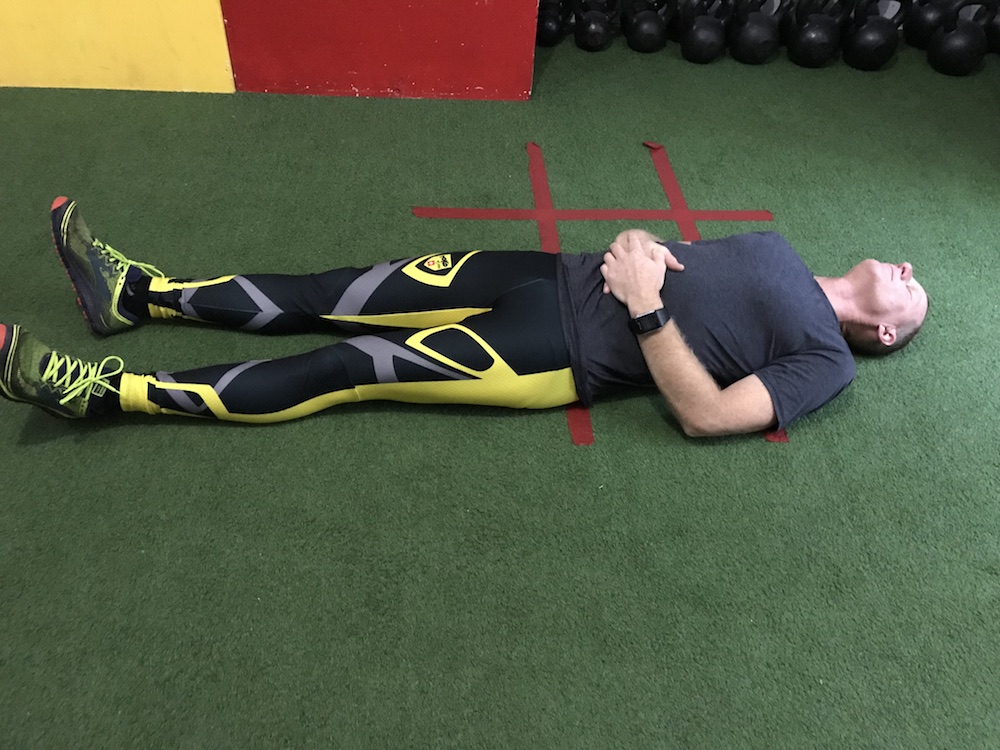
    Author Stuart Kremzner demonstrates diaphragmatic breathing, the baseline exercise for reseting the neuromuscular system and optimizing strength in sports like nordic skiing. (Courtesy photo)

    The following strength and performance tips come from one of our resident experts, Stuart Kremzner, MS, CSCS, FMSII, OS, RN, an exercise physiologist who has coached and raced in nordic skiing for over 20 years. Kremzner has trained/consulted with college athletic programs, elite teams, and athletes with the goal of improving athletic performance and injury prevention. When not working, he is running and skiing on the trails in New Hampshire or writing wax tips for the TOKO Tech Team. Kremzner can be found at e3sportsperformance.com.  

    ***

    Like most coaches, I have been on the eternal quest to get the most out of an athlete’s performance. Not all of us are born with VO2maxes in the 80’s so we need to do lots of tuning to get the most out of our motors. When a skier comes by on the course, I do the quick checklist of what is holding this skier back. More often than not, I see the inability to maintain an efficient body position, transfer weight and balance as the limiting factors. The fundamental commonality between all these elements is reactive core strength. This element is one of the most important for technical efficiency for all skiers.

    Author and exercise physiologist Stuart Kremzner putting his “Original Strength” to the test. (Courtesy photo)

    Many skiers from beginner to elite can improve. Beginners often lack the balance; elite skiers can have compensated movement patterns from over-specialization or injuries. Most people right now are thinking, “I can do a plank for 2 minutes and I still have trouble balancing.” A four-point plank is static core, i.e. not reflex driven, and not effective training for dynamic balance. Core strength exercises must be dynamic to transfer over to be effective for sports performance. Most important, we need to prime our nervous system prior to the core exercises to get the most out of them.   Without this step we are addressing only half the problem.

    In 2003, physical therapist Gray Cook introduced and expanded the importance of mobility and stability in the performance hierarchy. Without this solid foundation of the ability to control movement and have a full range of movement, everything else we add on for fitness and performance development will not be optimal. Cook touched on an area of primitive patterns that has gotten much greater recognition. Tim Anderson and Geoff Neupert expanded on the concept in their book, Pressing Reset: Original Strength Reloaded. In it they describe the concept of “Resets” patterned after the neuro developmental movement sequence – the sequence of movement that infants use to develop enough core stability to stand on two feet and walk.

    In Original Strength Performance: The Next Level, the concept was applied to the performance realm. The authors learned that resetting the nervous system prior to dynamic core exercises yielded exceptional results in redeveloping and maintaining efficient core strength and movement patterns.   Resets are like wiping your hard drive for your neuromuscular system. If we don’t erase the dysfunctional pattern, it will continue to delay development.

    Neurophysiologically, we are born with a blueprint for optimal, efficient movement patterns, and our foundational core is developed through a sequence of breathing, head movement, rolling, and crawling.  After about 4-6 years, if we don’t use our core we start to lose it, we are seeing this more and more given lifestyle changes. How many of the kids we coach are doing manual labor these days and spending hours outside running and playing? Our movement pattern’s base-level functioning is dictated by the dominant motor programs we use. Our bodies were designed to be up and mobile 8-10 hours a day. Put us in a chair for 6 hours a day (like with school kids) or a desk-jockey job, and we have global changes in the detuning and functioning of our neuromuscular system. Primary core muscles develop dysfunctional firing patterns and weaken. Hip flexors shorten, and posture changes (we get more stooped). Core muscles stop firing optimally in their original motor program; they are not turning on at the right time or not at all. This leads to altered/decreased muscle-firing sequences, compensated movement patterns, power leaks, injuries, and for may of us, decreased athletic performance.

    Resets are like wiping your hard drive for your neuromuscular system. If we don’t erase the dysfunctional pattern, it will continue to delay development.

    For years as coaches and physiologists, we have been focused on more speed, power, strength and endurance. However, all this work is not optimized if we don’t have the fundamental ability to generate power, transfer it effectively between joints then into the ground, and have optimal mobility to use the full length of all of our muscle fibers effectively.

    Reflexive core strength is the foundation of efficient all movement patterns. Hip stabilization and coordinating segmented movements between the upper and lower body is primarily mediated/controlled by our deep pelvic floor and transverse abdominal muscles.  The key is to keep the core exercises dynamic and reflexive (as reflexes drive the optimal functioning of the deep reflexive core). Good skiing technique does not consist of doing static planking for 5 minutes.  The exercise needs to be dynamic, hence you need to lift an arm, leg, or both (with proper body alignment) to keep the a plank reflexive. It is important to use perfect technique. It is far more effective to use perfect technique for 3 seconds vs. poor technique for 30 seconds (this just keeps reinforcing the dysfunctional muscle firing pattern!)

    What follows are some ideas and the very basic science behind activating and training your reflexive core. Think of this as your “quick start” guide. For individualized/targeted training you need to have a good evaluation with an Original Strength certified coach who can develop a program that is most effective for you. At the very least this will  help get you started. These exercises were developed by  Anderson and Neupert of Original Strength.

    Before and after each exercise, grab a 10-20 kilogram weight and do a deep squat, then a toe touch. Pay attention to how it feels, range of motion and “snap” you have going down and coming up.

    To start, you need to reset and “overwrite” the dysfunctional movement programs in your nervous system.  These exercises are called “resets”.

    “Resets are the ABC’s of movement. When you can put all the letters together you can begin to make words, then before you know it you can make sentences.  Sentences become paragraphs and eventually master pieces of literature! Movement is a lot like this – it starts out simple and messy and through practice becomes a thing of beauty.  It starts with the resets of Original Strength.” (Shropshire, 2018)

    This is achieved through systematically activating the muscle firing patterns as we developed them when we were infants/toddlers. These recruitment patterns originate in the more primitive part of our brain (brainstem, medulla oblongata pons, cerebrum); this is the foundational center of our most basic movement patterns. Through aging, injury and dysfunctional pattern overrides (sitting 8 hours a day), these fundamental patterns are overridden by altered muscle firing patterns that are not efficient.

    The fundamental resets are diaphragmatic breathing, head nods, rolling, rocking and crawling. Each exercise has a video link to view excellent technique. If your squat or toe touch feels better and you can move with more depth and ease, that is a good reset for you.

    It all starts with diaphragmatic breathing.  Diaphragmatic breathing is critical to resetting and activating your core.  The diaphragm, along with the transverse abdominis and pelvic floor, form the basic reflexive core. Intentional breathing using the diaphragm activates the other muscles of the reflexive core via neural and fascial connections – hence it is the gateway into the reflexive core.  Head nods and rolling help reset and stimulate your ocular-vestibular system, which is integrally related to developing proprioception and balance.

    1. Diaphragmatic breathing (restores muscle proprioceptive reactivity, also shifts CNS from sympathetic to parasympathetic): Lay on stomach (or back), forehead resting on flat hands, legs extended. Belly breathe deeply in and out through your nose. Your exhale should be twice as long as your inhale. Tongue should be pressing on the roof of your mouth just behind your teeth. On the inhale, push your belly button into the ground and push it up as much as possible. Belly should always rise before shoulders. Breathe for about 2-3 mins, then flip over on your back and hold your knees up with hands and keep focusing on deep breathing for another 1-2 minutes.  Video  (The key with all these exercises is to maintain the same tempo and depth of diaphragmatic breathing.)
    2. Head nods: Lay on back with arms at 45-degree angles, palms up, legs extended.  Have eyes look back, extend neck and head rotating to point where forehead is touching floor, then roll eyes down flex neck forward to look between heels.  Repeat 10 times (keep same breathing depth and rhythm).  Video
    3. Rolling: There are many types of rolling variations, different type of rolls are more effective for improving various movement patterns. Start with Egg Rolls then move to segmental rolling.
      • Egg Rolls: Rotate eyes, head body. Use eyes then head to initiate roll use as little energy as possible, should feel relaxed and easy, keep rotating head all the way though for complete range of motion.  Video
      • Segmental Rolling: Video
    4. Rocking: On hands and knees, keep head/neck extended, rock back and flex neck. Keep back in level alignment and elbows locked out with body/neck extension and flexion. Rock slowly forward and backward, maintaining breathing pattern. Video 1 | Video 2

      “Rocking”, a basic movement for reseting the neuromuscular system.
    5. Baby Crawls (3 x 30 meters): Keep head up, diaphragm breathe as you move, lift hand and opposite knee off ground as you move forward. Pay attention to keeping hips level. Once you can do this perfectly progress to keeping knees off the ground (about 2-3 cm, no more).  Video

      It’s not juvenile: baby crawls can help “reset” the neuromuscular system.

    How to apply these exercises:  

    The resets are the ideal warmup prior to your workouts. When these exercises are complexed with individualized core strength and strength exercises, overall strength and balance will be further improved. Future articles will discuss some great core and strength exercises focused towards developing an improved strength foundation for nordic.

  • What Predicts Nordic Combined Success? Study Finds Out

    What Predicts Nordic Combined Success? Study Finds Out

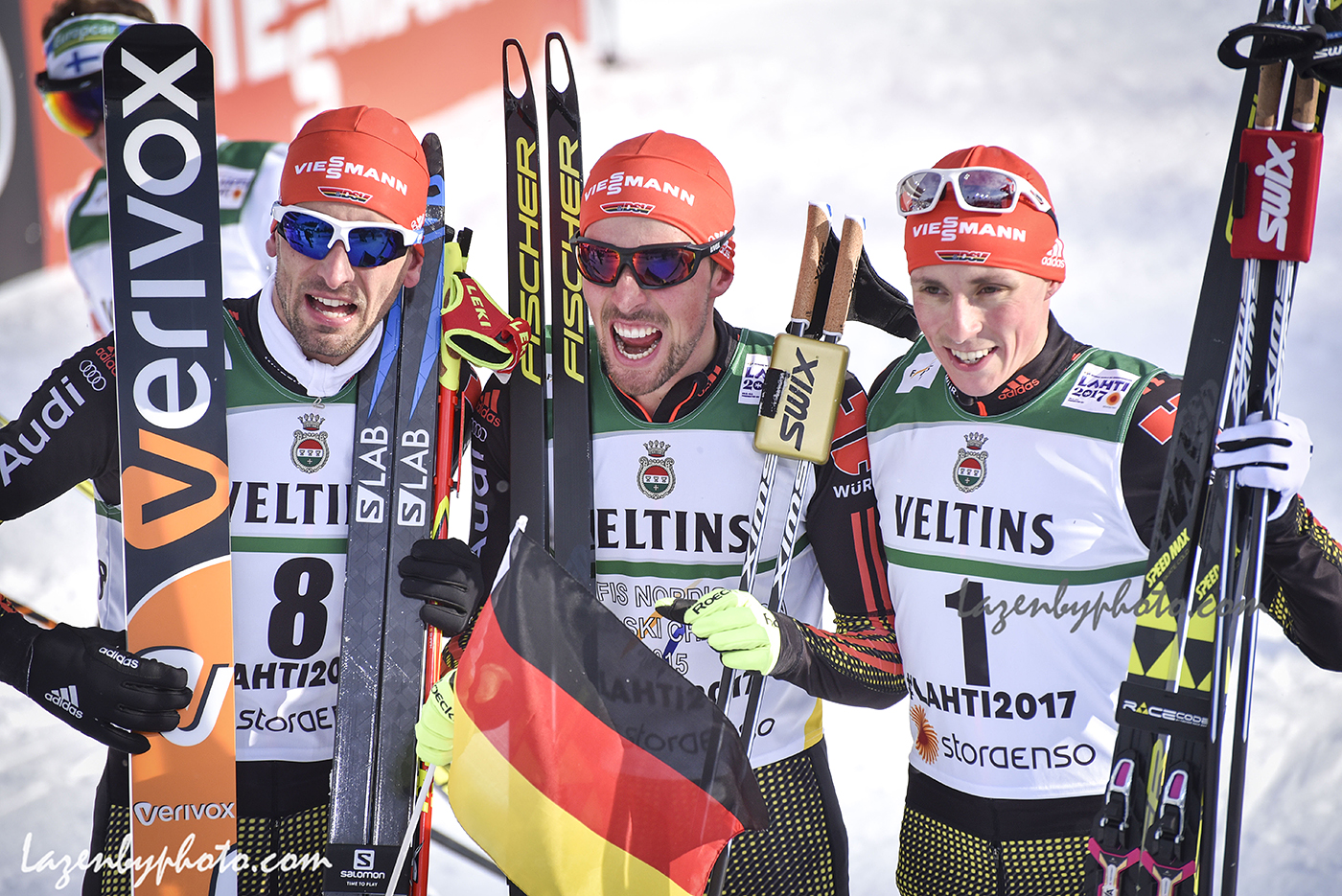
    German nordic-combined stars Johannes Rydzek (c), Eric Frenzel (1) and Björn Kircheisen (8) after taking gold, silver and bronze, respectively, in the individual normal hill/10 k Gundersen at 2017 World Championships in Lahti, Finland. (Photo: John Lazenby/Lazenbyphoto.com)

    What are the physiological capacities of nordic-combined athletes and can laboratory tests predict performance capabilities on the World Cup?

    Those are the questions that a team of Norwegian researchers set out to answer by testing 12 competitors from eight different countries before a 2015 World Cup competition in Trondheim, Norway.

    The study, led by Vegard Rasdal of the Norwegian University of Science and Technology and the Norwegian Olympic Sports Center, was recently published in the academic journal Plos One. It is an open-access journal, so you can read the paper here.

    “The sport is always evolving,” Rasdal wrote in an email to FasterSkier about the results. “Today it is no longer enough to be ‘just’ a strong ski jumper or cross-country skier, you really have to excel in both in order to be successful in terms of podiums. Johannes Rydzek and Eric Frenzel, the two most successful athletes last season, were not only two of the best jumpers last season but also the fastest skiers.”

    Indeed, they found that the best skiers in the nordic combined field have VO2Max capacities close to those of the best cross-country skiers, period – and even higher than those of Olympic medalist sprinters. Furthermore, this was a good predictor of World Cup results in the Trondheim competition.

    Variability in Abilities and Physiology

    There have been plenty of physiological studies on top cross-country skiers and some on ski jumpers, but the fascinating aspect of nordic combined is that two very different sports are combined. That creates uncertainty about what the ideal physiology for a competitor might actually be. Should they be light and explosive, for jumping? Strong and enduring, for skiing?

    And do nordic-combined atheltes have as much explosive power as ‘special jumpers’, or as high aerobic capacities as cross-country skiers?

    “As with most endurance sports, you will find a strong association between VO2Max and performance when the study group is heterogeneous, as e.g. a study group of 200 college students,” Rasdal explained. “Overall, VO2max is widely accepted as the most important factor for endurance performance. However, in a more homogenous study group, such as elite cross-country skiers, all athletes may have a ‘high enough’ VO2max to perform well at an elite level. Thus, other factors such as skiing efficiency becomes a stronger determining factor.”

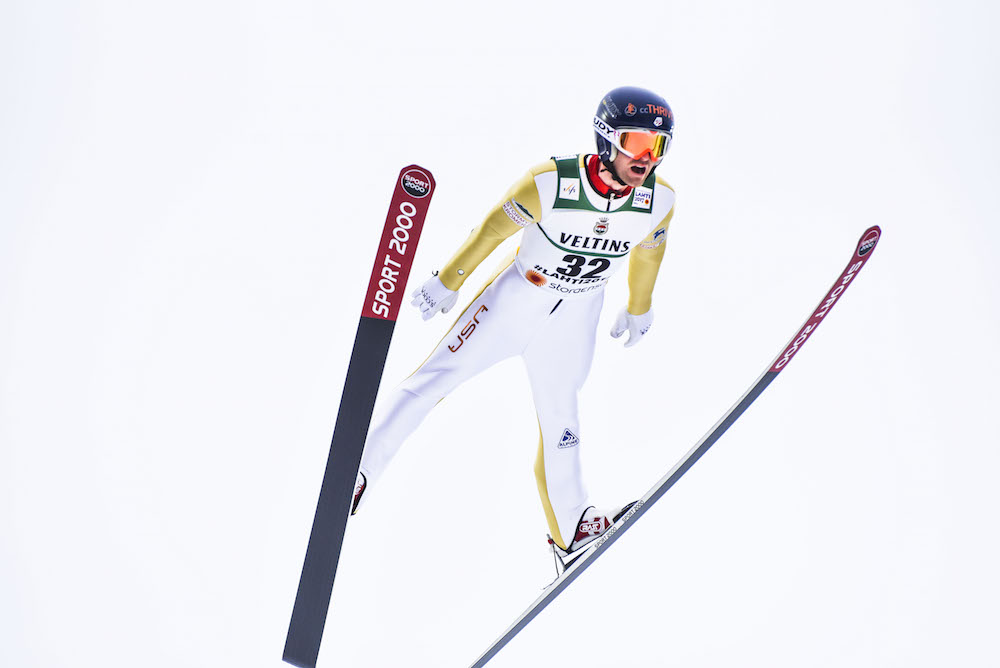
    U.S. Nordic Combined skier Bryan Fletcher jumping to 31st on the large hill at 2017 Nordic Combined World Championships in Lahti, Finland. At the end of last season, he was the top-ranked American in the overall World Cup standings in 34th. (Photo: John Lazenby/Lazenbyphoto.com)

    Rasdal and his co-authors wondered whether nordic-combined athletes fell into the first group, with moderately variable VO2Max, or the second group, where all had such high capacity that they had to be distinguished by some other characteristics.

    Because some athletes get their start in ski jumping, and all must also train for jumping, the athlete selection process and training background from young ages is different than for cross-country skiers and could lead to more variability among individuals.

    “It is not given that all nordic combined athletes have a ‘high enough’ VO2max or vertical jump capacity,” Rasdal wrote. “The shortcomings in one may to some degree be compensated with higher level in the other.”

    To address that question, the research team partnered with the International Ski Federation (FIS) to conduct laboratory tests on athletes the day before a World Cup competition.

    “FIS was responsible for the invitation of athletes, and each nation in the World Cup was invited and encouraged to participate with two athletes to be tested,” Rasdal explained. “To collect data on the very best athletes in the world is always a challenge, especially so close to an important international competition. We as a research group are extremely grateful that so many World Cup athletes chose to participate in the data collection.”

    The athletes ran the gamut from being ranked second to 66th in the previous season’s overall World Cup standings, and included the eighth-best skier and second-best ski jumper.

    About Endurance Capacity, and World Cup Success

    The hypothesis that nordic-combined athletes were more variable in their physiology compared to single-sport specialists was largely upheld.

    “Among the athletes we studied, a VO2peak range of 66.9-80.8 could be found, which does illustrate the heterogeneity in nordic combined,” Rasdal wrote. “This may make subordinate factors such as skiing efficiency relatively less important (although still important) than VO2peak.”

    The upper measurements of VO2Max among the 12 athletes are close to those of cross-country skiers.

    “In the papers by Saltin and Åstrand (‘Maximal oxygen uptake in athletes’) and Tønnessen et al. (‘Maximal aerobic capacity in the winter Olympic endurance disciplines: Olympic medal benchmarks for the time period 1990-2013’), only a few athlete-groups possess VO2Max values above 80 ml/kg/min,” Rasdal noted.

    Furthermore, it was clear that the athletes on the lower end of the VO2Max spectrum were somewhat less successful on the World Cup. At least at this World Cup event, the overall ranking at the end of the day was strongly correlated to an athlete’s VO2Max and ski performance.

    “This study together with the study by Tønnessen et al. may indicate that a body-mass normalized VO2Max in the region of 75 ml/kg/min is a sufficient capacity for a strong cross-country performance in Nordic Combined, whereas 80 is at very highest percentile,” Rasdal explained.

    However, the Trondheim World Cup course is not necessarily representative of all World Cup venues. And poor cross-country skiing could have been penalized even more at this venue than usual.

    “Trondheim is a special arena compared with other courses in the World Cup, with many steep uphills and fast downhill terrain,” Rasdal wrote. “In addition, 2015 was a bad winter in Trondheim, and the course was salted and ice hard. This made the event well suited for technical good skiers with strong upper-body capacity. It is therefore necessary to investigate the impact of ski jumping versus cross-country skiing on overall performance, as well as the associations to laboratory capacities, also at other venues and conditions.”

    And About Those Jumps

    2017 World Championships jump training on Feb. 21 in Lahti, Finland. (Photo: John Lazenby/Lazenbyphoto.com)

    The implication is that perhaps at a different competition, the association between ski jumping performance and overall competition ranking might be stronger.

    “Unpublished data does show that [across a whole season], the regression line for ski jumping to overall performance is similar to that of cross-country and the correlation coefficients are similar,” Rasdal explained.

    When it came to benchmarking, the researchers also identified laboratory measurements that could predict ski jumping performance by nordic-combined athletes. They tried two measurements: a straight, simple squat-jump, and an “imitation jump” where the athletes were asked to start in the same position they would on a ski jump ramp. The jumping style and technique varied from athlete to athlete.

    While it seems logical that these would be good predictors of ski jumping performance, it actually wasn’t a trivial matter. Such measurements have mainly been validated on straight ski jumpers, and because of their different body mass and physiology the relationship between squat jumping and performance, for example, could very well have been different among nordic-combined athletes.

    “The time available at the take-off in the [ski jump] hill may present a greater challenge for NC athletes than specialist ski jumpers as two-thirds of the NC athletes’ annual training consists of endurance training,” the authors wrote in the paper. “This does not only leave less time available for power and [jumping-] specific training compared to the specialists, but endurance training may lead to negative effects on muscle strength and power.”

    But in the end, the same measurements did predict ski jump performance.

    “The jump capacity in the sport-specific imitation jump distinguished performance level better than the general jump capacity in squat jump,” Rasdal wrote. “That supported the argument for sport-specific testing at an elite level.”

    Still, the imitation jump wasn’t perfect at predicting actual ski jump performance.

    “The upper range of the lowest ranked performance group touches the lower range of the highest ranked performance group,” Rasdal said of the imitation jump measurements. “There is not necessarily a continuous linear relationship with performance. At some level, the ability to utilize the capacity in the field as well as other factors become more determining for performance, e.g. body mass, transition to flight (minimize the loss of speed), flight performance, etc… Ski jumping is an extremely challenging technical task to be performed in less than 0.35 seconds, and where a well execution may compensate more for a lack of physical capacity.”

    And then there’s money.

    “In ski jumping the equipment plays an important role, and the nations with the highest budgets may for instance have better suits which makes them jump farther,” Rasdal said of other potentially confounding factors in predicting jump performance.

    What to Shoot For

    At the end of the paper, the authors summarized the ideal characteristics of a nordic-combined athlete: high VO2Max, a strong upper body, a good vertical jump, and low body mass. Hitting all those different metrics at the same time is a tough calculus, but it’s what is required to be a champion these days.

    “Although the relative importance of ski jumping to overall performance has varied in the sport over time, the pendulum today appears to lean more towards ski jumping,” Rasdal noted. “That’s both as a result of regulations (e.g. increase of meter-value in large hills in 2015), and also an increase in overall performance level where the best ski jumpers also ski fast.”

  • Nordic Nation: Training and Intensity with Dr. Stephen Seiler

    Nordic Nation: Training and Intensity with Dr. Stephen Seiler


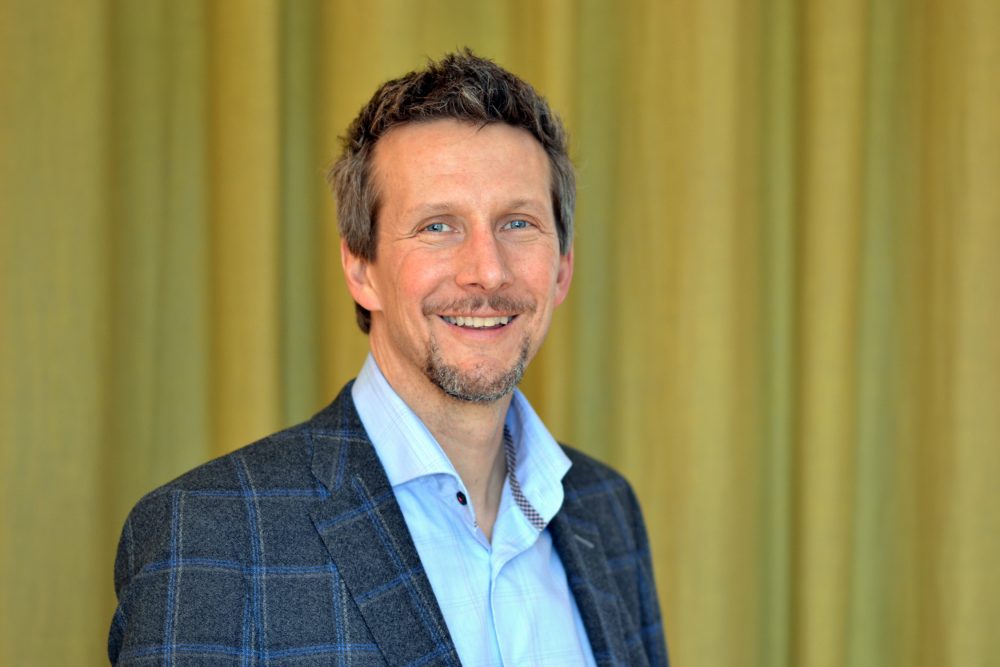
    May 1 marks the symbolic start of the annual training cycle for many year-round nordic skiers. With that in mind, we recently spoke with Stephen Seiler. A Texas native, Seiler, 51, is a professor of sports science at the University of Adger in Kristiansand, Norway.

    Stephen Seiler, a professor at the University of Adger in Kristiansand, Norway, specializes in exercise science. (Photo: uia.no)

    Seiler has researched, written and spoken extensively about physiological adaptations as it relates to endurance athletes. Seiler’s mantra — the 80/20 Rule — the easy to hard intensity ratio when it comes to training sessions, has been well publicized. Seiler believes easy days should be truly easy, meaning walking the hills may be mandatory. If the easy days are easy, then the hard days are hard. He espouses a fidelity to training models with little, if any, in-between efforts; that means no middle-of-the-road intensity. And his observations come straight from Norway.

    “… They know what gets you on the podium,” he said of the Norwegians’ tried-and-tested training principles. “And they know that there are no shortcuts. They don’t fall for the latest trend, the latest trick because they know how you get there. The magic is there is no magic in Norway.”

    But we’ll let Seiler speak for himself.

    Here’s a link to the video referenced several times in the podcast.

    (To subscribe to the Nordic Nation podcast channel, download the iTunes app. If you have iTunes, subscribe to Nordic Nation here.)

    Have a podcast idea? Please email nordicnation@fasterskier.com.

  • Best of Both Worlds: MSU Measures VO2max and Upper Body at the Same Time (with Video)

    Best of Both Worlds: MSU Measures VO2max and Upper Body at the Same Time (with Video)

    https://www.youtube.com/watch?v=Vkpm-L8GFtY&feature=youtu.be

    With the recent release of VO2max data by the Norwegian Olympic and Paralympic Committee and Confederation of Sports, FasterSkier decided to explore similar research taking place in the U.S.

    ***

    BOZEMAN, Mont. — Liz Stephen. Kris Freeman. Wendy Wagner. Torin Koos. The list of nordic skiers goes on. The list, though daunting to many, is simply a part of the project for Dr. Dan Heil.

    Currently a professor and program leader of Health and Human Performance at Montana State University (MSU), Dr. Heil has been conducting research on VO2max for 25 years.

    “My first research project as a Masters graduate student in Exercise Physiology evaluated changes in VO2max. That project was in 1990,” Heil wrote in an email.

    Since then, Heil’s research spans from better hydration practices to energy expenditure predictions to determinants in race performance for junior and college skiers. Within the last five years, however, much of Heil’s research on nordic skiers has held a different perspective, one that’s 8-feet wide and 10-feet long. 

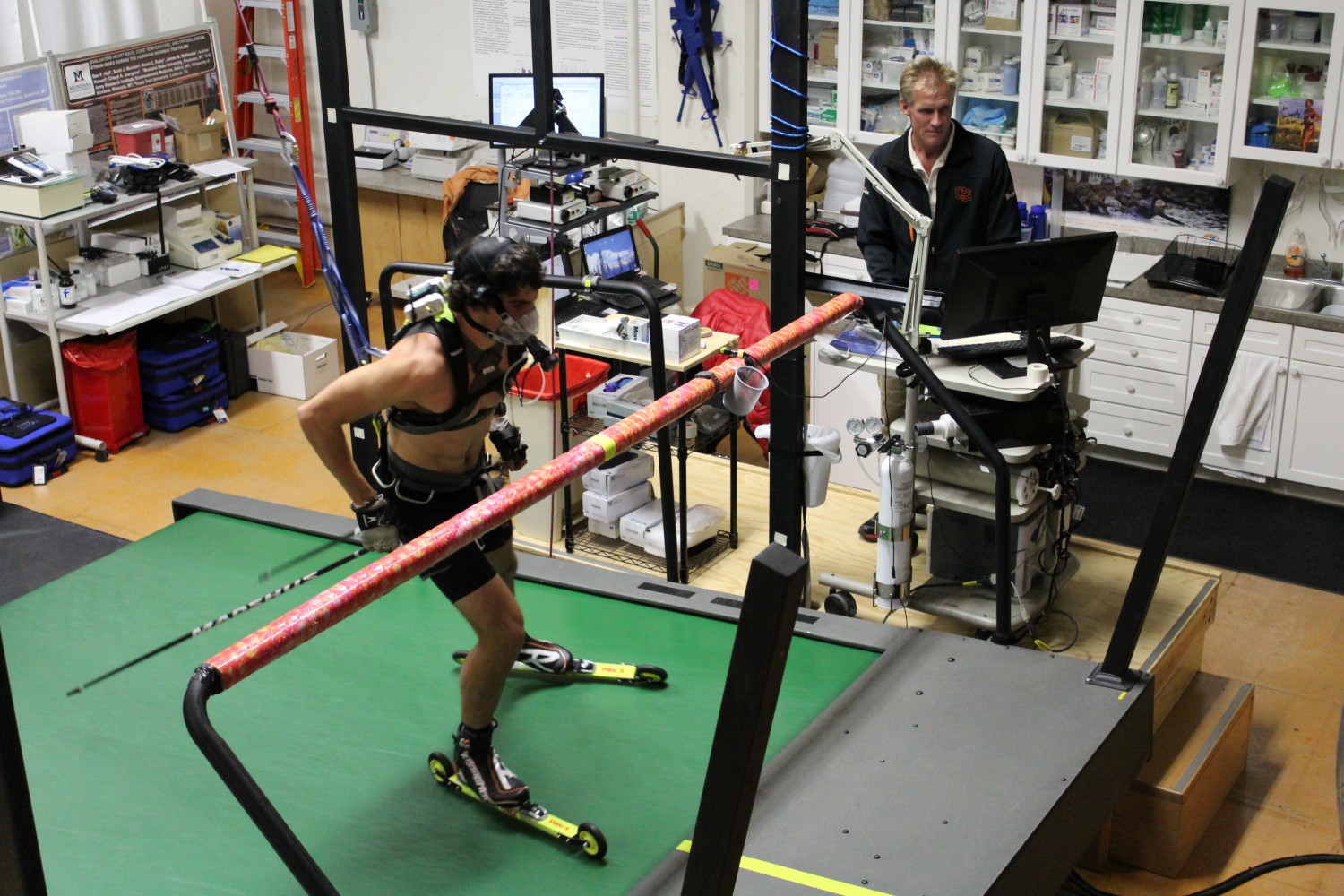
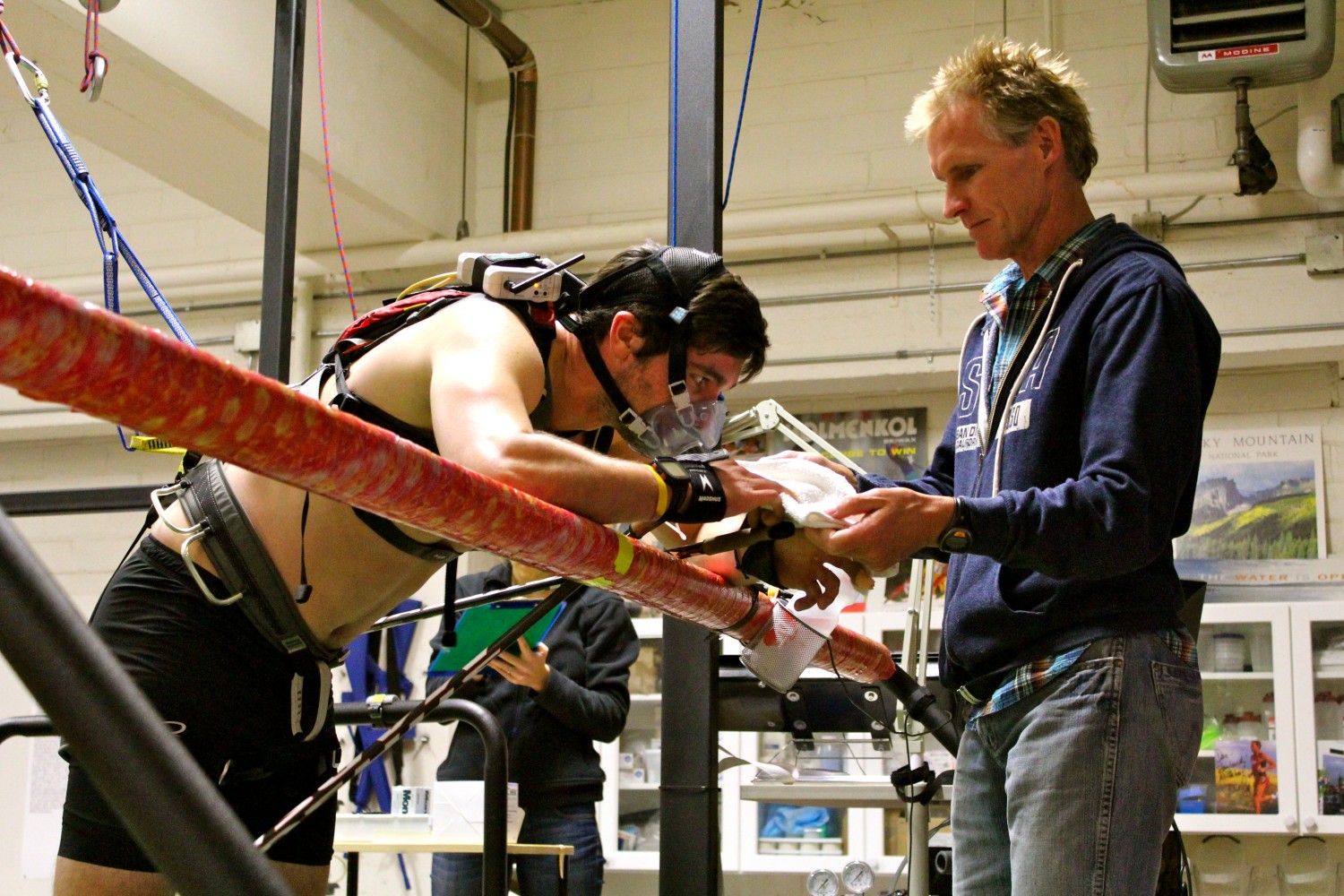
    Bridger Ski Foundation Akeo Maifeld Carucci,  during a V02max rollerski treadmill test at Montana State University's Movement Science/Human Performance Lab, this week in November.
    MSU professor and program leader of Health and Human Performance, Dr. Heil (r) controls treadmill speed and incline during a recent rollerski V02max test for BSF elite athlete Akeo Maifeld-Carucci.

    Given its dimensions alone, the new rollerski treadmill at the MSU Movement Science/Human Performance Lab (MSL) in Bozeman outmatches the lab’s previous VO2max research equipment.

    Beyond increased size, the new treadmill — which the department received in 2010 by as a gift from a university dean — also reaches speeds of up to 25 miles per hour and inclines that range from a -10 to a +40 percent grade. Only five other treadmills of similar caliber are known to exist in the U.S. today. However, the oversized treadmill is not the only piece of equipment that makes Heil’s research unique. 

    “We call it an upper-body power ergometer … [it] was designed about ten years ago with a former grad student of mine, [Bowdoin College Nordic head coach] Nathan Alsobrook,” Heil said during an interview inside MSU’s performance lab.

    Essentially a rowing-machine-gone-double-pole, the aim of the invention, according to Heil, is double-pole simulation.

    “The neat characteristic about this is that it integrates ski poles into the double-poling motion … Unless you have access to this lab and this ergometer, you don’t get upper-body power measures,” he explained.

    But why bother with upper body power measures? In a predominantly endurance-driven sport, like nordic skiing, shouldn’t the emphasis be on an athlete’s VO2max?

    “A high VO2max is never a disadvantage — Ever!” Heil wrote in the email. “With that said, however, there is only a relatively small window of improvement that each athlete can expect to gain with appropriate training. So the best strategy for training is to make sure that an athlete has optimal opportunity to realize their full V02max potential with training (which can take several years).”

    In other words, an athlete’s VO2max, has the potential to change, but only to the extent that physiology and genetics allow.

    Where does that leave cross-country skiers who want to continue to improve race performance past their peak VO2max?

    According to Heil, power generation.

    “What elite [nordic] athletes have been doing over the past decade or so, is a very intense focus on developing muscular strength and power to add on top of the decade or more of aerobic base they’ve already got,” Heil said.

    Unlike many endurance sports, cross-country skiing draws upon muscular strength, balance and coordination, as well as aerobic fitness.

    For example, though elite distance runners and nordic skiers are often categorized as similar endurance athletes, Heil’s observations provide a notable distinction.

    “One of the big differences between these two groups is that virtually all elite distance runners seem to have incredibly high VO2max values and tend to be similar in body size and shape,” he wrote. “Nordic skiers, in contrast, seem to be more varied in body size and shape and not have as consistently high VO2max values. Having a high VO2max is always going to be a benefit to an endurance athlete, but I think Nordic skiing has evolved to a point where advanced upper body strength and power are almost equally important to success.” 

    Heil’s current research with MSU graduate student and nordic skier, Lina Hultin of Örebro, Sweden, examines the relationship of race performance to rollerski treadmill VO2max  and upper body power from a Concept2 SkiErg versus the MSL ergometer.

    “Usually at least once, if not twice, and sometimes three times a year, we have the [MSU and Bridger Ski Foundation nordic] athletes come in and do a rollerskiing VO2max test that includes lactate threshold,” Heil said.

    Using the numbers from these tests, Heil and Hulton will later look at correlations between the athletes’ test results and SuperTour race performances.

    “Upper-body power is a good cumulative measure of the strength and power training, as well as the specific aerobic training, the rollerskiing, that the [athletes] have been doing, all in a very concise measure,” Heil said. “VO2max and the lactate threshold can be a little bit more in flux with how someone feels or if are they’re on the edge of getting sick. If [an athlete is] interested in being able to track their training progress, maybe all they need to be able to track is changes in upper-body power, not VO2max.”

    “I think Nordic skiing has evolved to a point where advanced upper body strength and power are almost equally important to success.” — Dr. Dan Heil, professor and program leader of Health and Human Performance at Montana State University

    In the interest of time, upper-body strength might be the way to go when tracking performance and training progress in the future. However, in the interest of science and skiing, V02max and threshold remain dear to the heart.

    “From a coaching standpoint, we use the threshold data more than the VO2max data when were planning training,” said MSU Nordic Head Coach Matt Johnson.“They can use their threshold data to tailor individual workouts when doing intervals.”

    Professor Heil (r) hands BSF elite athlete Nicholas Michaud a towel after Michaud finished his first V02max test on rollerskis.
    Dr. Heil (r) hands BSF elite athlete Nicholas Michaud a towel after  his rollerski V02max test in MSU’s Movement Science/Human Performance Lab.

    BSF elite athlete Jennie Bender also pointed out that the rollerski treadmill “is a great way to work on technique and really pay attention to your body mechanics because it’s such a controlled environment,” she said. “It’s kind of like skiing in the dark or running in the dark. You’re more focused on what your body is doing and you don’t have to watch out for any obstructions.”

    Yes, thankfully — for the athletes at least — Heil has not developed virtual potholes for his tests … yet.

    What Heil has launched is the continual promise of questions and thought about nordic athletes and sport.

  • MSU Seeks Nordic Skiing Graduate Students

    MSU Seeks Nordic Skiing Graduate Students

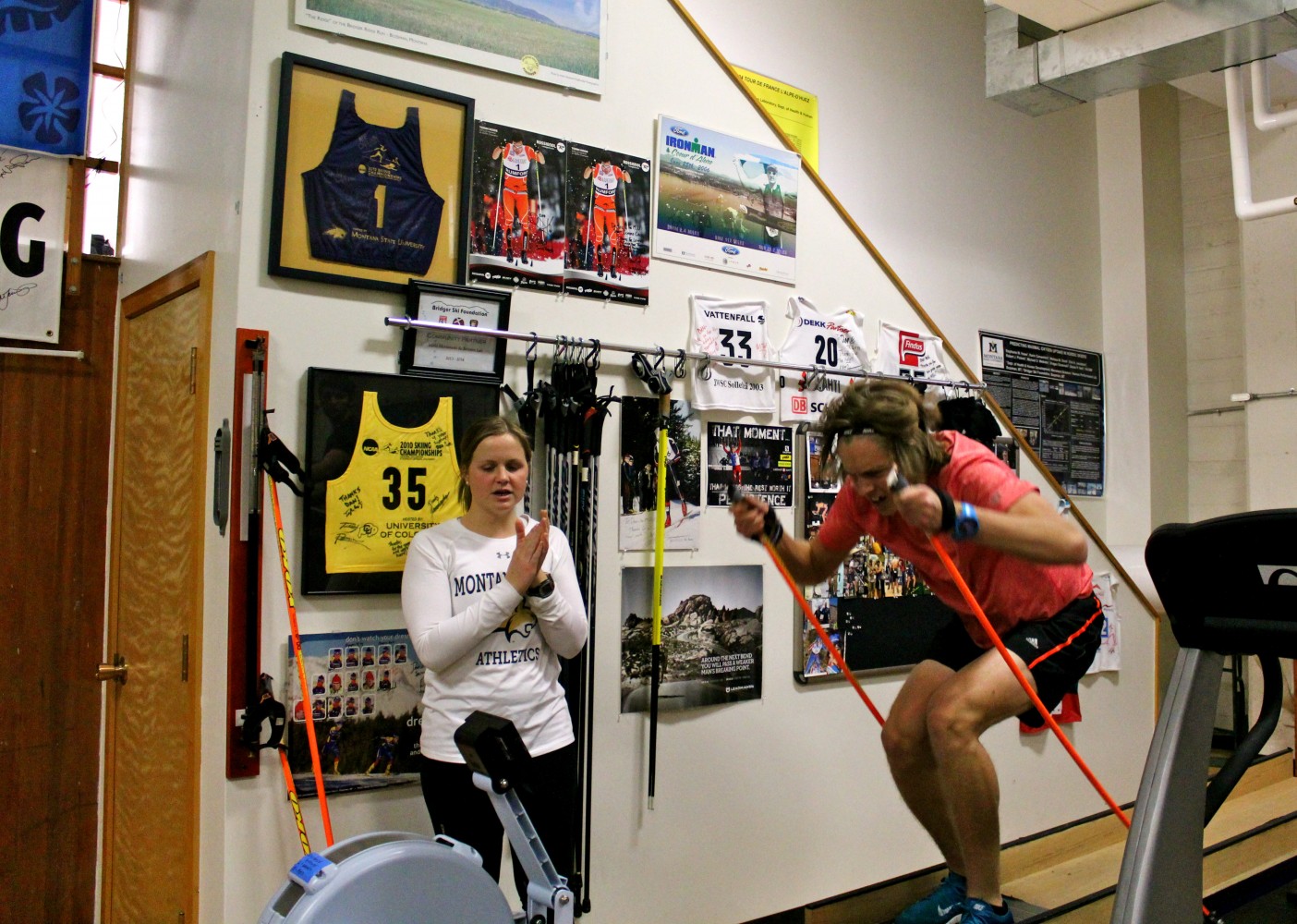
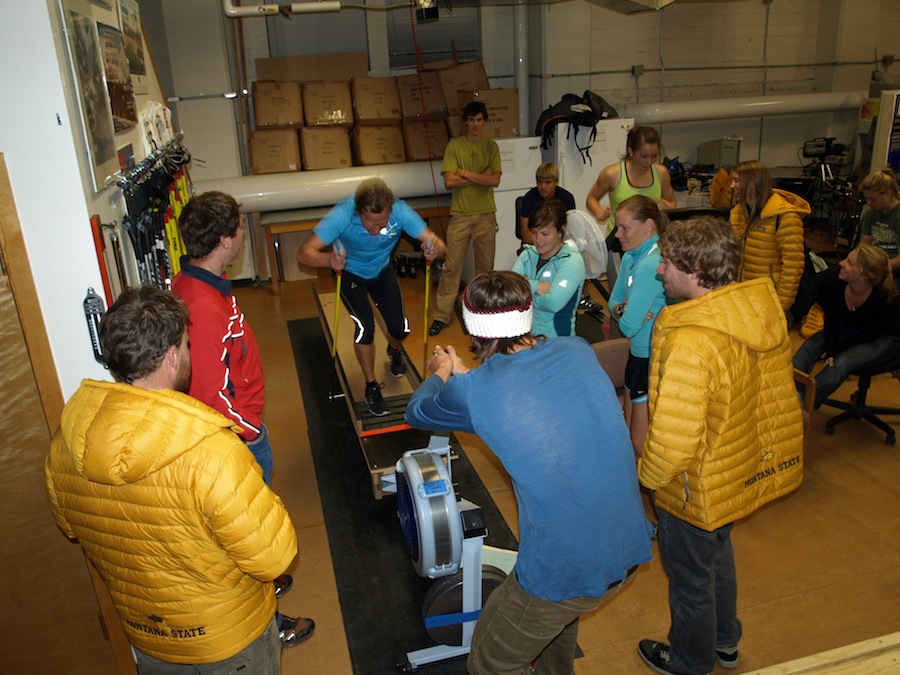
    Upper-body power testing with the Montana State University Nordic Team (Dan Heil photo)

    Graduate Study of Exercise Physiology in Nordic Skiing

    The Department of Health & Human Development (HHD) at Montana State University (MSU) in Bozeman, MT, is actively seeking applications for graduate study in applied exercise physiology (Masters degree only; Fall 2013). Dr Dan Heil (dheil@montana.edu), a Professor in exercise physiology, specializes in studies of physiological and biomechanical determinants of Nordic skiing performance, as well as the development of models of energy expenditure during sport and work performance.

    Our lab has an oversized treadmill for roller ski testing of Nordic skiers and there are several on-going collaborative studies on Nordic skiing with several other research labs. Here is an on-line article recently posted by the MSU Media Services about the lab’s testing of the MSU Nordic Ski Team:

    http://www.montana.edu/cpa/news/nwview.php?article=9158

    We also have lots of lab testing photos on the Facebook page for the Movement Science / Human Performance Lab (MSL):

    http://www.facebook.com/profile.php?id=740851479#!/pages/MSU-Movement-Science-Human-Performance-Lab/125387057512054

    More information about Dr Heil’s background can be found at this web address:

    http://www.montana.edu/hhd/facultyandstaff/dheil.htm

    More information about our graduate program is here:

    http://www.montana.edu/hhd/graduate/exerciseandnutrition/exphysnutr.htm

    Graduate Assistantships (teaching and research) may be available to qualified applicants, the details of which are specific to each faculty member. Applicants should contact Dr. Heil directly about the availability of assistants for the 2013 Fall semester.

    Qualifications: In general, the best qualified applicants will have an undergraduate degree in Exercise Science, or related field (such as biology), with undergraduate coursework that includes:

    Anatomy and Physiology (1 yr + labs)

    Inorganic Chemistry

    Physics

    Statistics

    Anatomical Kinesiology

    Biomechanics

    Exercise Physiology

    Exercise Testing & Prescription

    Applicants who do not have this coursework within their submitted transcripts when applying may be required to take some of these courses as prerequisites to the HHD graduate program in exercise physiology.

    Deadline for Applications: While applicants can apply at any time to the graduate program, the first round of reviews for applicants wanting to begin in the Fall of 2013 begins after February 15th, 2013.

  • MSU Seeks Exercise Physiology Graduate Students

    The Department of Health & Human Development (HHD) at Montana State University (MSU) in Bozeman, MT, is actively seeking applications for graduate study in applied exercise physiology (Masters degree only; Fall 2011). Dr Dan Heil (dheil@montana.edu), a Professor in exercise physiology, specializes in studies of physiological and biomechanical determinants of Nordic skiing performance, as well as the development of models of energy expenditure during sport and work performance.

    Our lab has a new oversized treadmill for roller ski testing of Nordic skiers and we are planning some collaborative studies on Nordic skiing with several other research labs. Here is an on-line article recently posted by the MSU Media Services about the lab’s testing of the MSU Nordic Ski Team:

    http://www.montana.edu/cpa/news/nwview.php?article=9158

    We also have lots of lab testing photos on the Facebook page for the Movement Science / Human Performance Lab (MSL):

    http://www.facebook.com/profile.php?id=740851479#!/pages/MSU-Movement-Science-Human-Performance-Lab/125387057512054

    More information about Dr Heil’s background can be found at this web address:

    http://www.montana.edu/hhd/facultyandstaff/dheil.htm

    More information about our graduate program is here:

    http://www.montana.edu/hhd/graduate/exerciseandnutrition/exphysnutr.htm

    Graduate Assistantships (teaching and research) may be available to qualified applicants, the details of which are specific to each faculty member. Applicants should contact Dr. Heil directly about the availability of assistants for the upcoming Fall semester.

    Qualifications: In general, the best qualified applicants will have an undergraduate degree in Exercise Science, or related field (such as biology), with undergraduate coursework that includes:

    Anatomy and Physiology (1 yr + labs)

    Inorganic Chemistry

    Physics

    Statistics

    Anatomical Kinesiology

    Biomechanics

    Exercise Physiology

    Exercise Testing & Prescription

    Applicants who do not have this coursework within their submitted transcripts when applying may be required to take some of these courses as prerequisites to the HHD graduate program in exercise physiology.

    Deadline for Applications: While applicants can apply at any time to the graduate program, the first round of reviews for applicants wanting to begin in the Fall of 2011 begins after February 15th, 2011.

    To apply to the MSU graduate program go to:

    http://www.montana.edu/wwwdg/apply.html

    To talk with the HHD Graduate Coordinator, contact Dr Mary Miles:  mmiles@montana.edu

    For information about the Bozeman, MT, area, please go to:

    http://www.montana.edu/admissions/boz_area.shtml

  • Graduate Study in Exercise Physiology – Montana State University

    Graduate Study in Exercise Physiology – Montana State University

    Montana State University Graduate Study in Exercise Physiology

    The Department of Health & Human Development (HHD) at Montana State University (MSU) in Bozeman, MT, is accepting applications for graduate study in applied exercise physiology (Masters degree only; Fall 2010). Dr Dan Heil (dheil@montana.edu), an Associate Professor in exercise physiology, studies physiological and biomechanical determinants of Nordic skiing performance, develops models for the energetic of energy expenditure during maximal performances and every day activities, as well as the use of electronic monitoring devices for tracking free-living behavior. Dr John Seifert (john.seifert@montana.edu), an Associate Professor in exercise physiology, studies determinants of muscular fatigue in Alpine skiers, the physiological responses to acute cold exposure, as well the potential influence of nutrition supplements on physical performance.

     More information about Dr Heil’s background can be found at this web address:

    http://www.montana.edu/hhd/facultyandstaff/dheil.htm

     More information about Dr Seifert’s background can be found at this web address:

    http://www.montana.edu/hhd/facultyandstaff/jseifert.htm

     Graduate Assistantships (teaching and research) may be available to qualified applicants, the details of which are specific to each faculty member. Applicants should contact Drs Heil or Seifert directly about the availability of assistants for the upcoming Fall semester.

     Qualifications: In general, the best qualified applicants will have an undergraduate degree in Exercise Science, or related field (such as biology), with undergraduate coursework that includes:

     Anatomy and Physiology (1 yr + labs)

    Inorganic Chemistry

    Physics

    Statistics

    Anatomical Kinesiology

    Biomechanics

    Exercise Physiology

    Exercise Testing & Prescription

     Applicants who do not have this coursework within their submitted transcripts when applying may be required to take some of these courses as prerequisites to the HHD graduate program in exercise physiology.

     Deadline for Applications: While applicants can apply at any time to the graduate program, the first round of reviews for applicants wanting to begin in the Fall of 2009 begins after February 15th, 2010.

     To apply to our graduate program go to:

    http://www.montana.edu/hhd/academicprograms08/graduate/exerciseandnutrition/exerphys.htm

     To talk with the HHD Graduate Coordinator, contact Dr Mary Miles:  mmiles@montana.edu

     For information about the Bozeman, MT, area, please go to:

    http://www.montana.edu/admissions/boz_area.shtml