Tag: Fairbanks Nordic Ski Club

  • Alaskans Revel in October Skiing at Hatcher Pass, Birch Hill

    Alaskans Revel in October Skiing at Hatcher Pass, Birch Hill

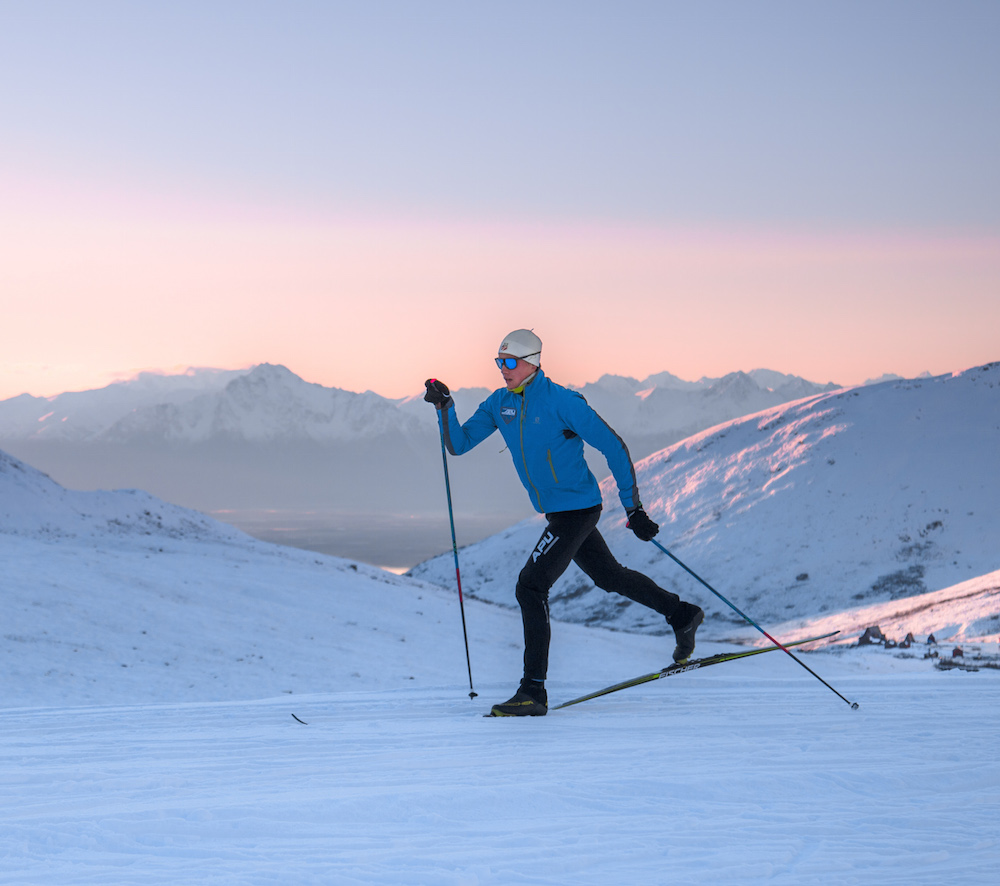
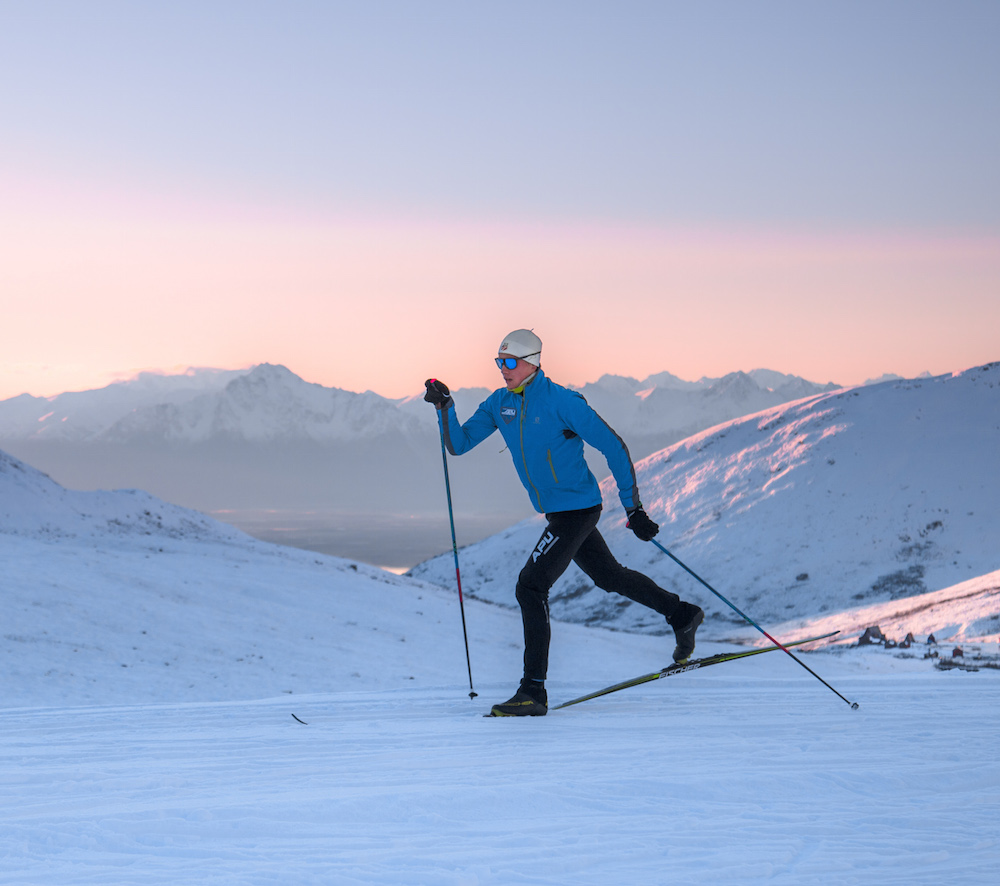
    Alaska Pacific University’s Luke Jager strides it out at Hatcher Pass, above Palmer, Alaska, on Oct. 19, 2017. (Photo: Ophira Group)

    Note: We’re seeking submissions for this year’s “Where The (Skiable) White Stuff Is” early snow report. If you know where there’s November or even October skiing in the U.S. or Canada, please write us with details (When does it open or how long has it been open? How many groomed kilometers are there? Is there snowmaking? Any special events planned, like American Thanksgiving camps? Anything else we should know?) and original photos at info@fasterskier.com with the subject line: “Fall Skiing”. Deadline for submissions is Nov. 3.

    ***

    HATCHER PASS, above Palmer, Alaska — Winter is in the eye of the beholder, but whatever you’re looking for to mark the skier’s favorite season, this spot at 3,500 feet in the Talkeetna Mountains probably has it.

    Seven kilometers of groomed trails? Check. Literally Extra Blue conditions? Check. A nearby lodge with a fireplace serving up hot chocolate and sweeping mountain views? Check. Fresh snowfall, gorgeous alpine vistas, and a side dose of Alaskan mining history? All of the above. Judging by the cars in the parking lot this weekend, there are plenty of skiers in southcentral Alaska who are ready for winter to be upon us.
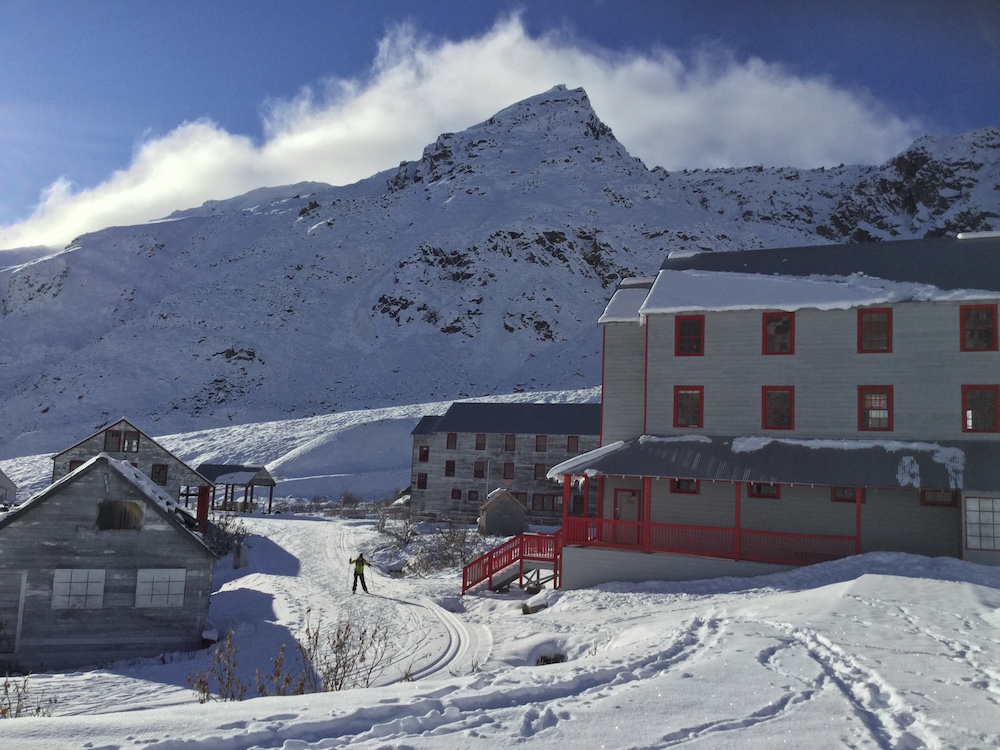
    Skiing through the historic mine buildings at Hatcher Pass on Oct. 18. (Photo: Gavin Kentch)

    Skiing at Hatcher Pass began in earnest roughly ten days ago, when the cold rains of October finally turned to snow up high. When the weekend of Oct. 14 dawned sunny and gorgeous, the pilgrimage was on, with skier-set classic tracks throughout the area by Saturday afternoon. Formal grooming followed on Monday morning, courtesy of the Mat-Su Ski Club. Alaska Pacific University (APU) skiers have been making the trek out to the Matanuska–Susitna Valley, roughly an 80-minute drive from Anchorage, most days since (including Sadie Bjornsen, Erik Bjornsen, Reese Hanneman, and Eric Packer, among others). For the APU Elite Team, the #roadtopyeongchang runs through Hatcher Pass, whether skiing or getting a jump on ski testing.

    The ca. 2 k, 200-meter-elevation-gain continuous climb (so, not exactly FIS-legal) from the lower parking lot to the highest point on the current course doesn’t hurt for training, either. No word if the climb popularly known for the last four years as “Sochi Hill” has been renamed for the current Olympic cycle, though.
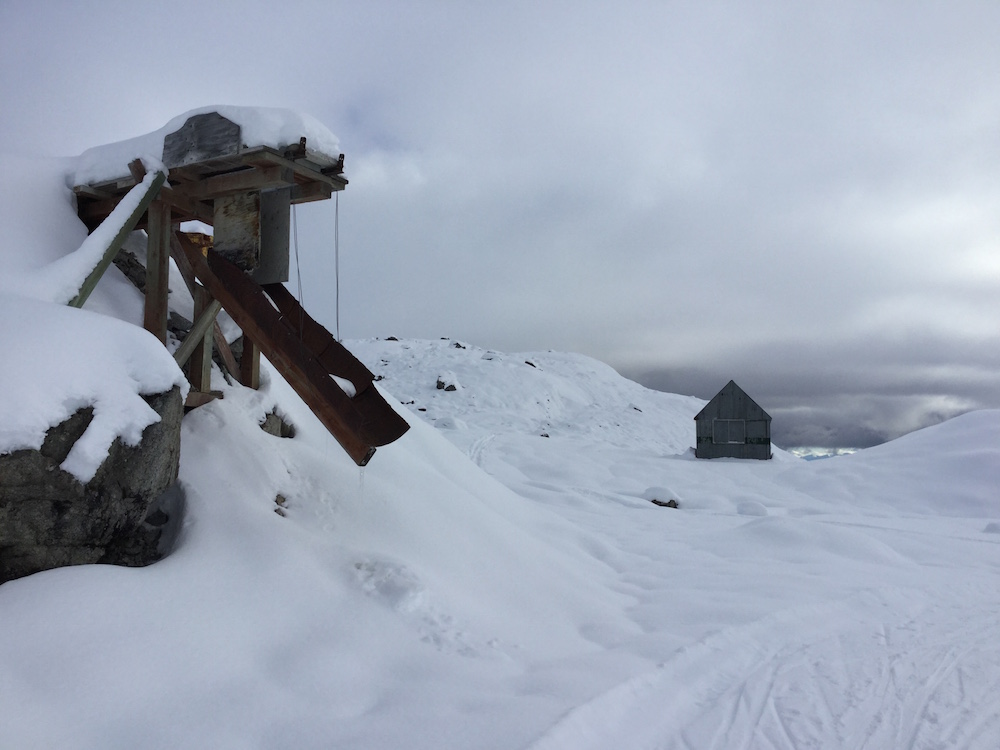
    Old mining equipment borders the ski trails at Hatcher Pass on Oct. 18. (Photo: Gavin Kentch)

    But Hatcher Pass isn’t just a superb early-season training venue. It’s also a truly lovely place to spend time. John Updike famously wrote of Fenway Park that it was “a lyric little bandbox of a ballpark,” a description that lends itself surprisingly well to the central-mine area that the ski trails wend through. In that vein, University of Alaska Anchorage English professor and local masters skier Shannon Gramse later set the scene by describing the historic mine buildings and detritus left over from the area’s early-20th-century mining heyday, then wrote, “Imagine skiing through an Old West ghost town turned collectible Christmas village.” By any standard, Hatcher Pass is a very special place.
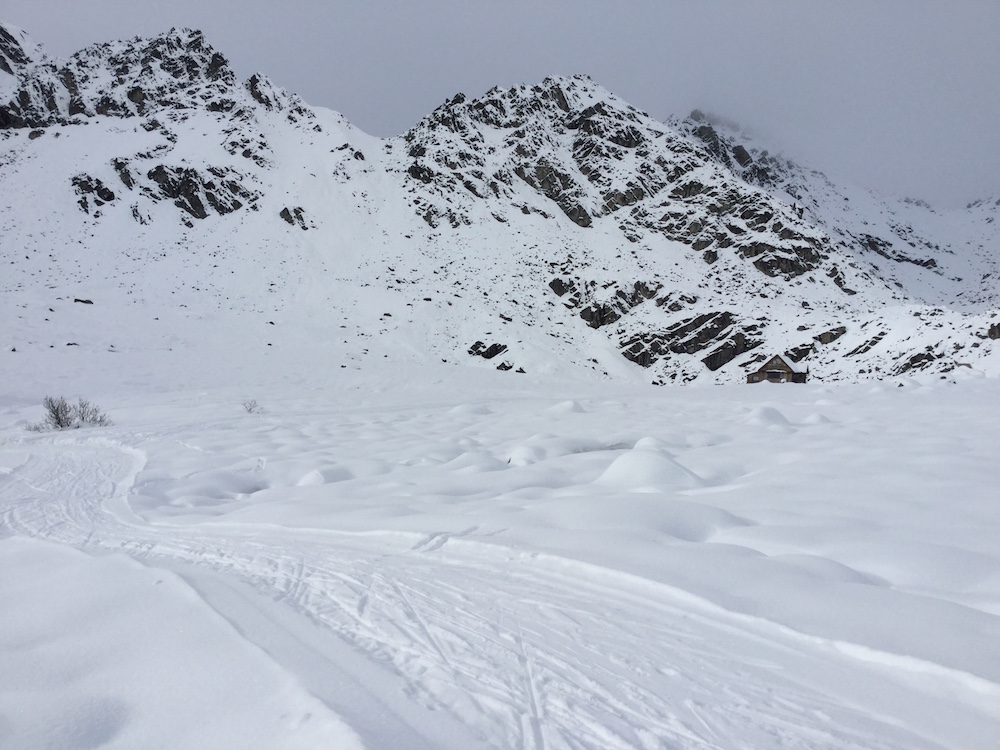
    Mountain views from the groomed trails at Hatcher Pass on Oct. 18. (Photo: Gavin Kentch)

    This year’s Oct. 16 start to grooming at Hatcher Pass was “one day later than average,” Mat-Su Ski Club board member Ed Strabel told former FasterSkier reporter Nat Herz, now of the Alaska Dispatch News.

    Three hundred miles to the north, winter is also right on schedule at Birch Hill Ski Area in Fairbanks. Longtime area race director John Estle (who was also chief of competition for some of the last FIS World Cup races held in this country, in 1984, as well as head coach of the U.S. Ski Team from 1990–1993, as well as having a role in pretty much anything involving skiing in interior Alaska in the last 35 years) wrote in an email on Thursday, “The ground is frozen, we’ve had 3″-4″ of snowfall, and the groomers have rolled a few k’s of trails.”

    In a follow-up note to FasterSkier, Estle clarified that this date for the first grooming was “about average” for Fairbanks. “It’s on the early end of average for the past few years, but right in the long-term average which is October 15-25. But that is an anecdotal average with no scientific basis.”
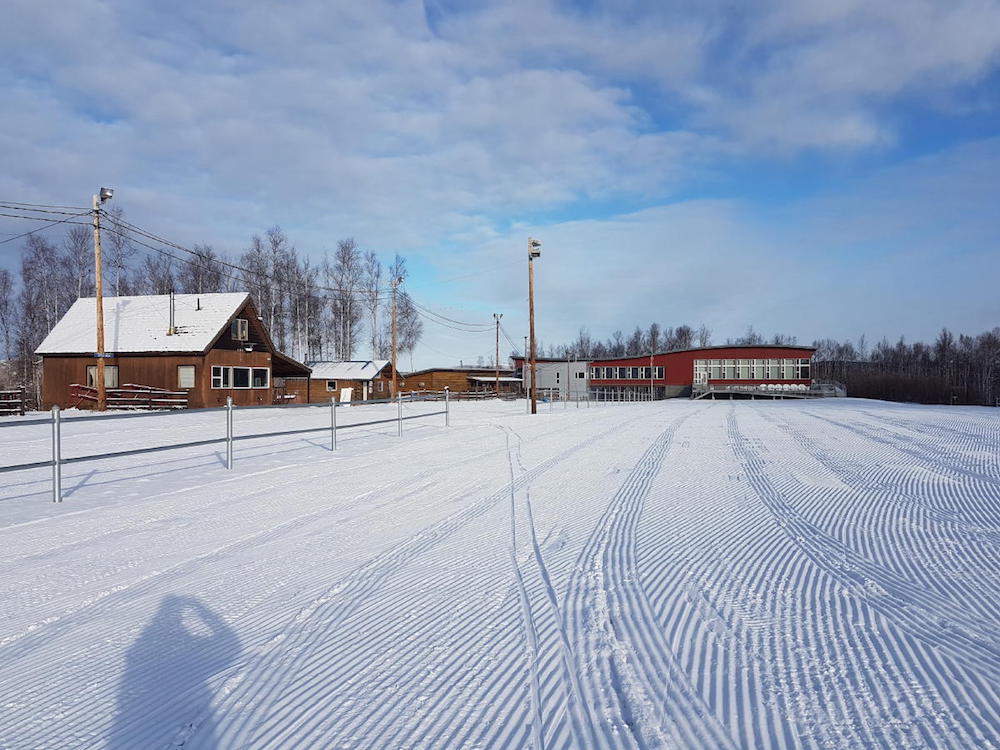
    The stadium at Birch Hill Ski Area in Fairbanks, Alaska, on Oct. 19, 2017. (Photo: John Estle)

    (It should be noted that Estle’s sense of anecdata is close to unassailable, given his knowledge of Fairbanks skiing over the past four decades.)

    Current trail conditions for Birch Hill should be available here soon. Current conditions for Hatcher Pass (and some other areas as well) may be found here.

    The Mat-Su Ski Club plans to hold its season-opening race, the Race to the Outhouse #1, on Nov. 4. It would potentially be the first ski race in this country of winter 2017/2018… except that Fairbanks has set the first race of the Wednesday Night Race Series for Nov. 1. At least in Alaska, winter is upon us.

    ***

    Reminder: Send us the snow/grooming report and other relevant information concerning your favorite ski spot. If there’s skiing in November, we want to hear about it! Email info@fasterskier.com with the subject line “Fall Skiing” by Nov. 3.

  • Fairbanks Tour de Ski: Every Stride Counts

    Fairbanks Tour de Ski: Every Stride Counts

    Athletes from the University of Alaska Fairbanks racing last year at Birch HIll. Photo courtesy of the Nordic Ski Club of Fairbanks.

    FAIRBANKS, Alaska – “It’s important for our best skiers to learn formats they will encounter on the circuit later,” said race director John Estle, explaining why the Nordic Ski Club of Fairbanks (NSCF) is putting on a mini tour to open the 2010-2011 race season.

    “We’ve always been early adopters of race formats,” Estle said. The former U.S. Ski Team head coach notes that Fairbanks hosted sprints and continuous pursuit races almost as soon as they were officially on the International Ski Federation’s schedule.

    Estle considers the Fairbanks mini tour to be a part of the development of local athletes, broadening their competitive experience and teaching them how to approach multi-day events. A tour requires skiers to think about the racing on multiple levels.

    “First, you have to be fit enough to race three days in a row. You have to figure out how much the first day is going to take out of you for the third day,” Estle explained.

    Then there is the overall strategy.

    “You develop a pacing strategy depending on your strengths and weaknesses as a skier. Are you better at sprint or distance events? Are you better at skate or classic? Do you excel in flatter or hillier terrain? You have to maximize your ability to capitalize on your strengths and look at what you lose in the weaker areas,” said Estle.

    In short, a mini tour is more than just three races back to back.

    Tour adds to the traditional opener

    Traditionally, the NSCF kicks off the racing season with a double-header: Saturday and Sunday distance events. This year the tradition adds a Friday night sprint, and combined, the three events make up the Goldstream Sports Mini Tour de Ski/Fairbanks. The mini tour opens on November 19 with the night sprint, and the results from Friday determine the start order for Saturday’s distance race. The overall results from Saturday will dictate the start order for Sunday’s final race.

    Estle expects a large turnout, both in terms of racers and spectators. The Saturday event serves as the season opener for the youth racing season and typically draws several hundred young athletes, while the Sunday event is the first community race of the season. All of the events are scored as USSA National Ranking List (NRL) races.

    “We added the NRL status to give skiers a chance to get national points before the season really gets started,” Estle said, noting that it is entirely possible to race only one or two of the events without having to commit to the entire tour schedule.

    Strong field

    Estle knows the tour will attract ringers at several levels, from juniors to elite.

    For the collegiate skiers, the mini tour is a part of the Alaska rivalry between University of Alaska Fairbanks (UAF) and University of Alaska Anchorage (UAA). UAF fields both Erik Soderstrom, who won the sprint at the U.S. National Championships in Anchorage last winter, and Tyler Kornfield, who was second at those sprints, but won the U.S. title because Soderstrom is from Sweden and therefore ineligible. David Norris from UAF was among the top racers at the U.S. Nationals 30 k, and will also contest the tour.

    UAA always has a strong squad, and Alaska Pacific University will also send some skiers to Fairbanks, although their fastest crew will be headed to West Yellowstone, Estle said, adding that some of the top regional juniors will also join the tour. Both local clubs Fairbanks Cross-Country (FXC) and Fairbanks Alaska Ski Team (FAST) will field their top racers, and Alaska Winterstars and Alaska Nordic Racing from Anchorage are coming to town with their squads.

    Spectator-friendly

    Estle, who created the event and designed the race schedule, is excited about watching the mini tour.

    “I think it should be really fun to watch. I’ve never watched a multiday tour in person,” Estle said, adding that Birch Hill is a great venue for spectators.

    “We will be able to see a bunch of the race from the stadium area.”