Tag: Fanny Horn Birkeland

  • Olsson, Jauhojärvi, Bauer Retire, Among Others

    Olsson, Jauhojärvi, Bauer Retire, Among Others

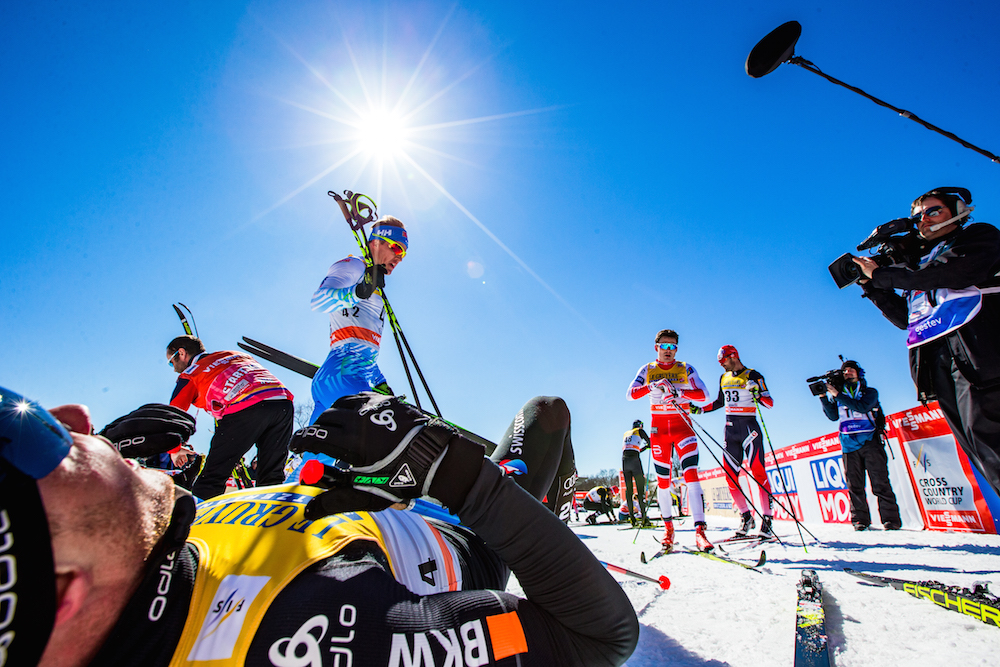
    Finland’s Sami Jauhojärvi (in blue and white) walking out of the finish area after the men’s 15 k classic mass start at World Cup Finals in Quebec City. Also pictured: Switzerland’s Dario Cologna (on the ground), and Norway’s Finn Hågen Krogh and Hans Christer Holund (33). Jauhojärvi finished 11th on the day and ultimately placed 16th overall in the World Cup Finals mini tour to end his World Cup career.

    Coming off the 2016/2017 season and less than a year out from the 2018 Winter Olympics in PyeongChang, South Korea, several international cross-country skiers and biathletes have announced their retirements. Among them are Sweden’s Johan Olsson, Finland’s Sami Jauhojärvi and the Czech Republic’s Lukáš Bauer, all of which earned medals at Olympics and/or World Championships.

    Sami Jauhojärvi
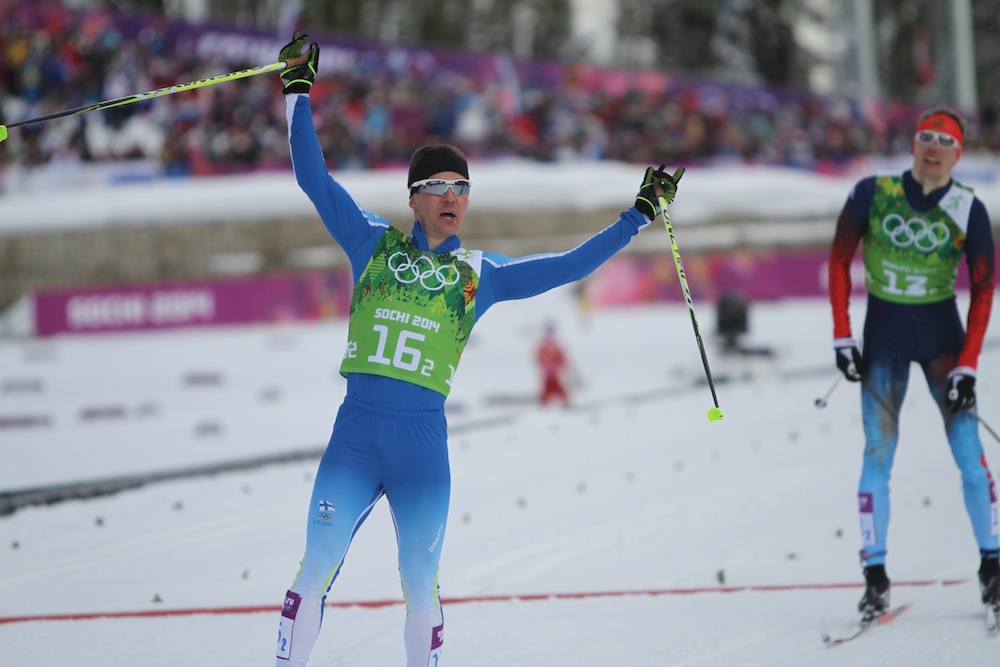
    Finland’s Sami Jauhojärvi anchors his team to gold in the men’s classic team sprint, ahead of Russia’s Nikita Kriukov, at the 2014 Sochi Olympics

    Earlier this month, Jauhojärvi, 35, publicly stated that he would be hanging up his race skis, ending his season with a third-place finish in the 50-kilometer freestyle at Finnish nationals.

    Jauhojärvi, who turns 36 in early May, competed at eight World Championships and three Olympics, winning gold with teammate Iivo Niskanen in the men’s classic team sprint at the 2014 Olympics in Sochi, Russia. He started racing World Cups 16 years ago, served on the athletes’ commission for the International Ski Federation (FIS) from 2009 to 2013 and racked up three bronze medals at World Championships. His latest bronze came in the classic team sprint (again with Niskanen) at this year’s 2017 World Championships at home in Lahti, Finland.

    “I’m not tired of skiing, but at some point it just happens that competitive instincts begin to fade,” Jauhojärvi told InsideTheGames. “By training I could be pushing my limits for a few more years, but my competition mind is done. … I do not think any more about fighting for gold medals at future Olympics.”

    Johan Olsson
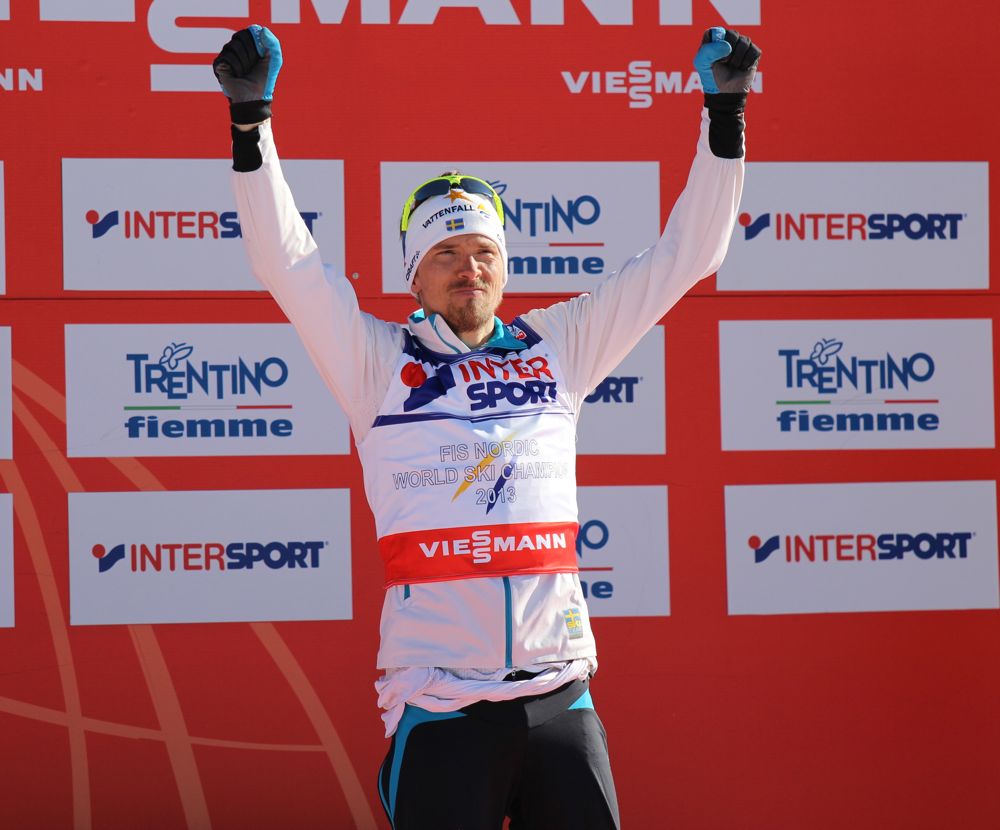
    Sweden’s Johan Olsson celebrating his first individual World Championships gold in the 50 k classic mass start in 2013 in Val di Fiemme, Italy.

    Sweden’s 37-year-old Olsson, who has also spent the last 16 years on the circuit, is also calling it a career, according to FIS. He amassed 14 world championships-caliber medals (eight at World Championships medals and six at the Olympics), making him one of the most successful Swedish skiers of all time, behind Gunde Svan and Sixten Jernberg, who each tallied 17.

    Four of Olsson’s medals were gold: he was part of the Swedish men’s 4 x 10 k relay that won at both the 2010 Olympics in Vancouver, B.C., and 2014 Sochi Games. Individually, he won the 50 k classic mass start at 2013 World Championships and 15 k freestyle individual start at 2015 World Championships on home soil in Falun, Sweden.

    Olsson cited wanting to be more present for his family, which includes his two daughters (ages 5 and 2).

    “I have had an ambition to become the world’s best skier and have had the consequences for it,” he told Expressen, according to a loose translation. “… When that burden grows bigger than the joy to keep on, it’s time to stop.

    “I have spent 15 years trying to realize my sporting dreams,” he explained. “Now I will be able to realize completely different dreams, and I will be able to be a much more present dad.”

    Olsson has been working with Swedish public television, SVT, and has expressed his desire to stay involved with skiing to build interest in the sport.

    “The question is how to make me on television,” he said of his TV career. “My paradise at the end of a race has been to stand in the interview zone and chat most of all, even though I finished 35th. Would there be enough time on television?”

    Lukáš Bauer
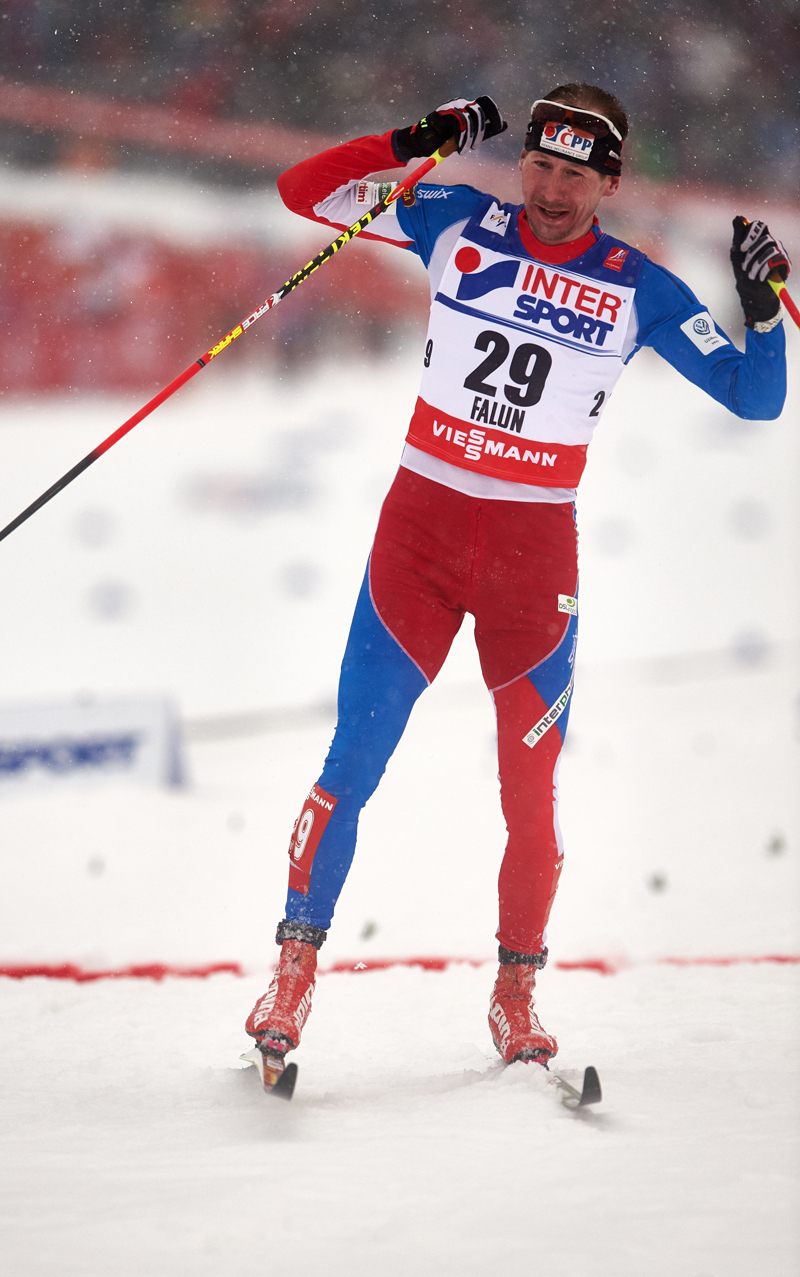
    Lukas Bauer celebrates silver in the 50 k classic at 2015 World Championships in Falun, Sweden. (Photo: Fischer/NordicFocus)

    Before the start of this past season, Bauer, 39, publicly stated it would be his last. But the decision became solidified after he finished 19th in the 15 k classic at 2017 Lahti World Championships.

    “A result that has disappointed me, after which I spent two and a half hours in the rain reminiscing of it,” he said, according to Neveitalia. “On other occasions I would have said, ‘I can redeem myself the next time,’ but not in this case because I just decided to quit.”

    He finished the season and his career out in the Lahti 4 x 10 k relay, in which the Czech men’s team placed 11th.

    The Czech Republic’s most successful cross-country skier, Bauer was the 2007/2008 Overall World Cup champion. He competed at five Olympics and 11 World Championships over 19 World Cup seasons, winning 18 World Cup races and the Tour de Ski twice, in 2008 and 2010. At the Olympics, he has a silver and two bronze medals. At World Championships, he is a two-time individual silver medalist — most recently placing second at 2015 Falun worlds in the 50 k classic mass start.

    Like Olsson, he also has two children.

    “I do not retire for a matter purely tied to my performance,” Bauer said. “If I wanted to prepare myself and I would be honored to participate in the upcoming Olympic Games, but the reality is I do not care. At home I have a wife and two children. It’s time to concentrate more on them than on sports goals. Without their support, I would never have obtained anything I collected in my career, to which I look with pride and satisfaction.”

    But he’s not completely done with skiing and plans to continue racing marathons.

    “Now I will focus on managing my team [Team Pioneer Investments] in long-distance races and I will also try to compete as much as possible, as long as the doctor will allow me,” Bauer said.

    Martin Johansson

    Sweden’s Martin Johansson, 32, is leaving elite skiing as a national A-team member who transitioned to cross-country in 2010. The move came after he won two gold medals at orienteering World Championships in 2009, but was seriously injured when he was impaled by a branch, according to Nordic Magazine. In six seasons thereafter, his career best in cross-country was fifth place in a 10 k freestyle in 2015 in Kuusamo, Finland, and he finished this year with a third-place finish in the 50 k freestyle at Swedish nationals, after which he announced his retirement on social media. Johansson competed at the last two World Championships.

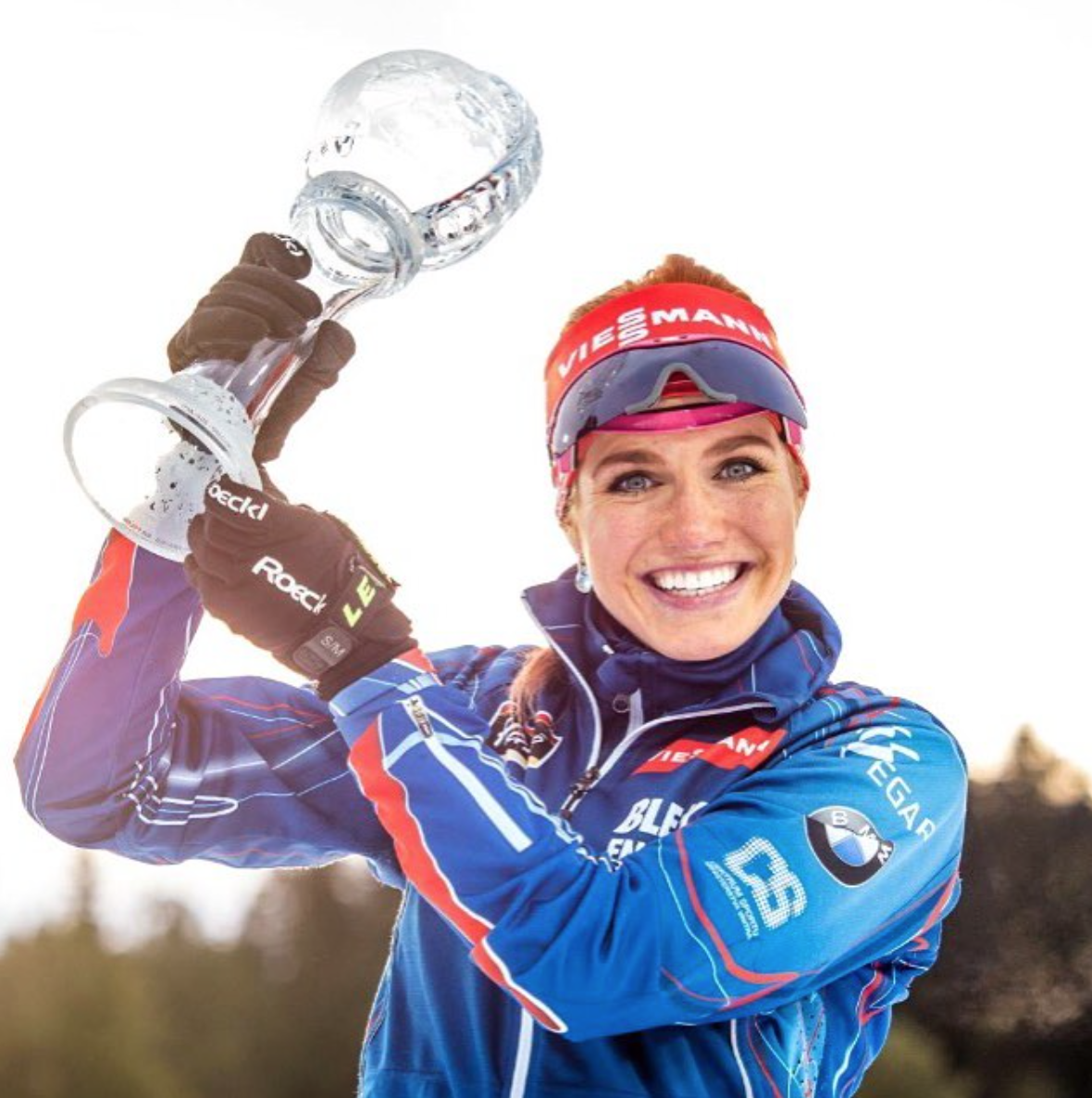
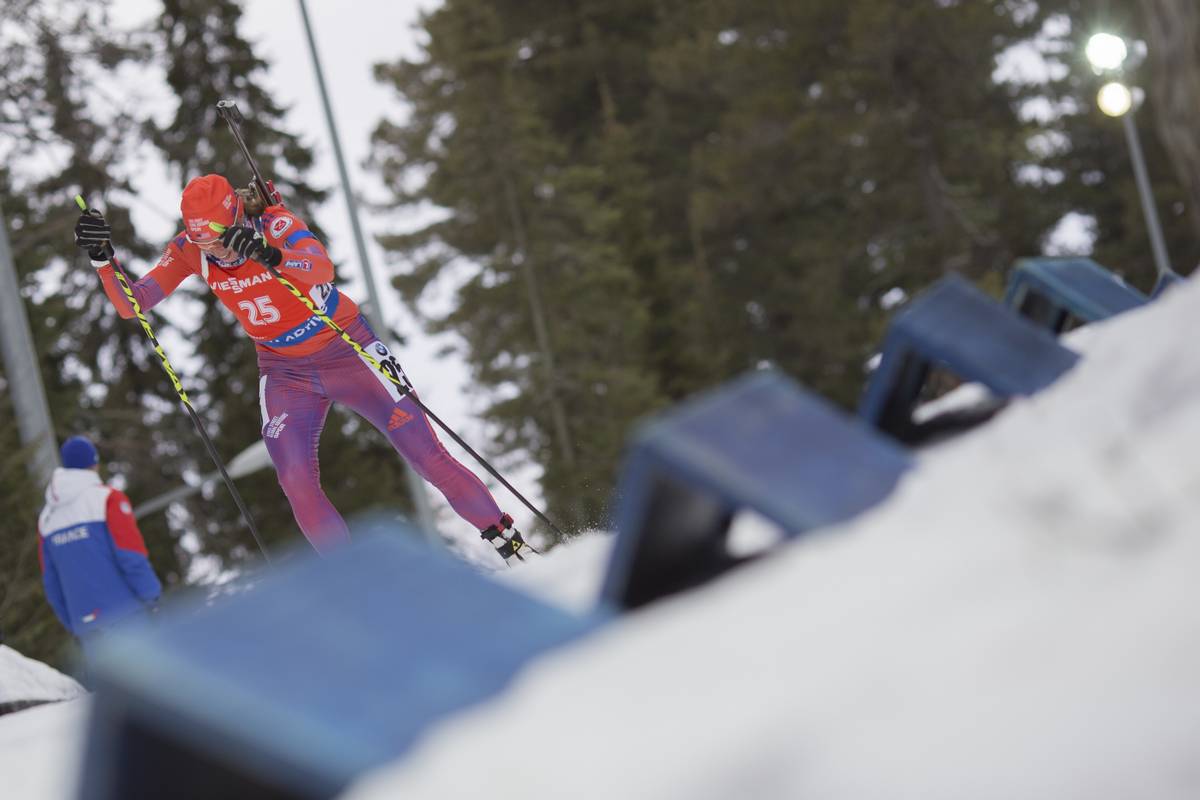
    Fanny Horn Birkeland
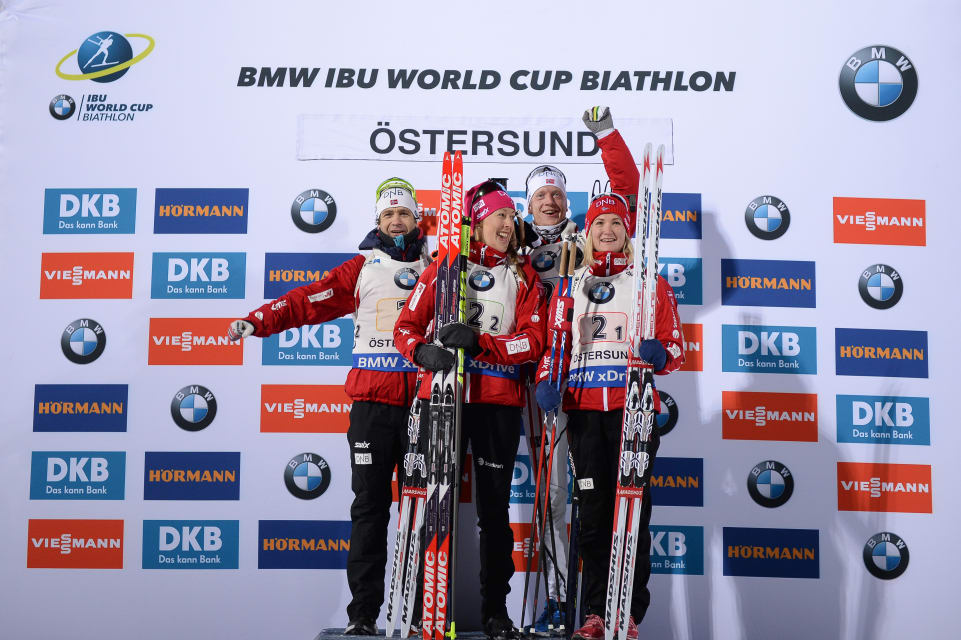
    (l-r) Norway’s Ole Einar Bjørndalen, Fanny Horn Birkeland, Johannes Thingnes Bø, and Marte Olsbu on the podium after winning the first race of the 2016/2017 biathlon World Cup season, a mixed relay in Ostersund, Sweden. (Photo: IBU)

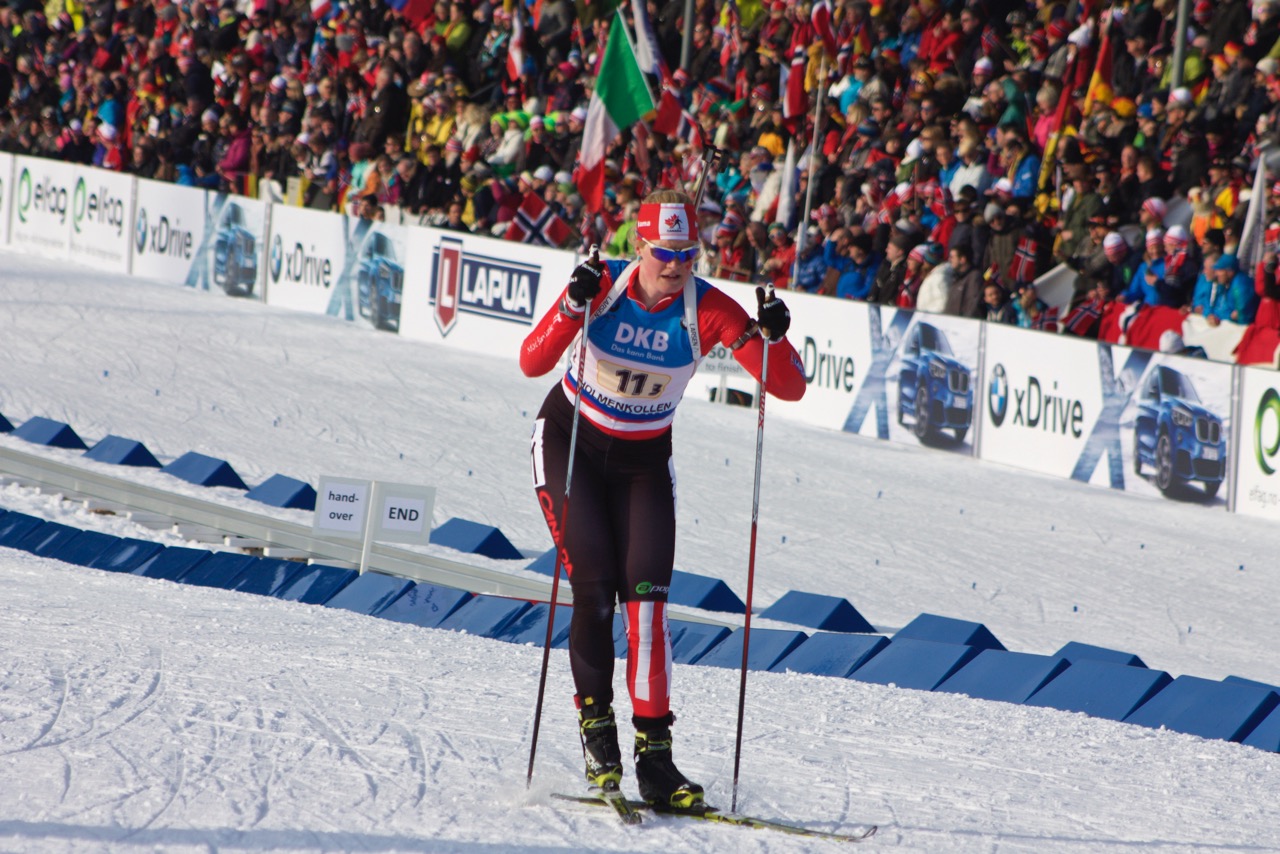
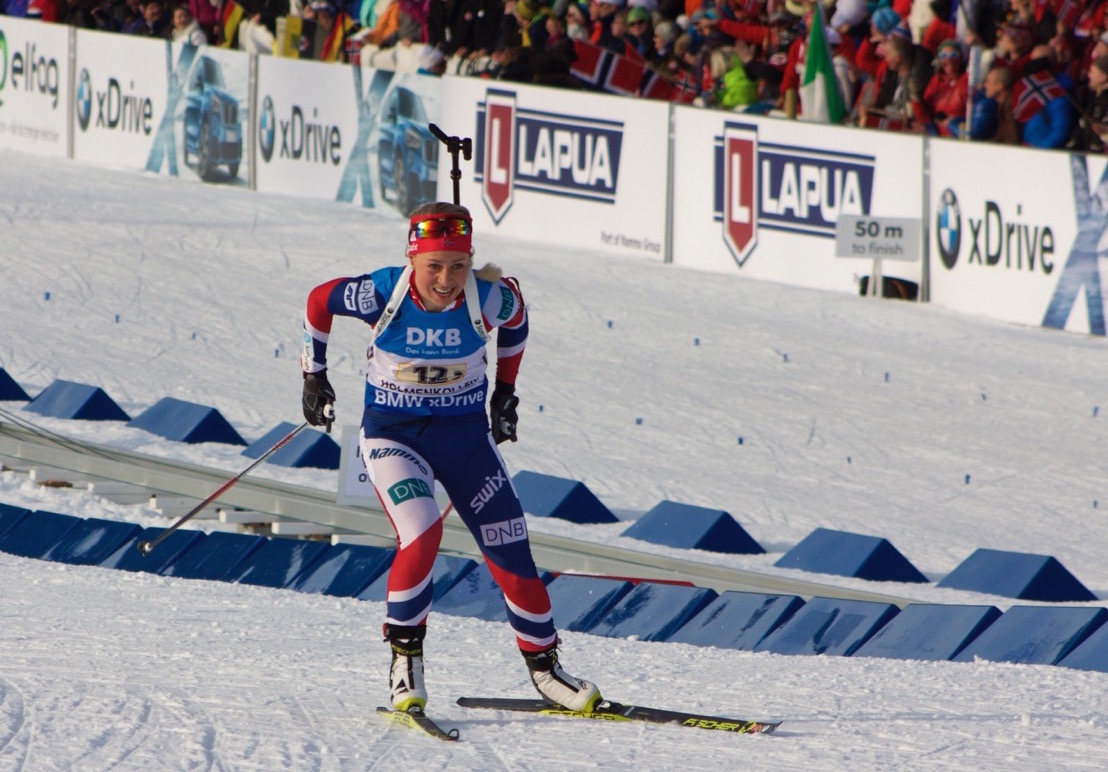
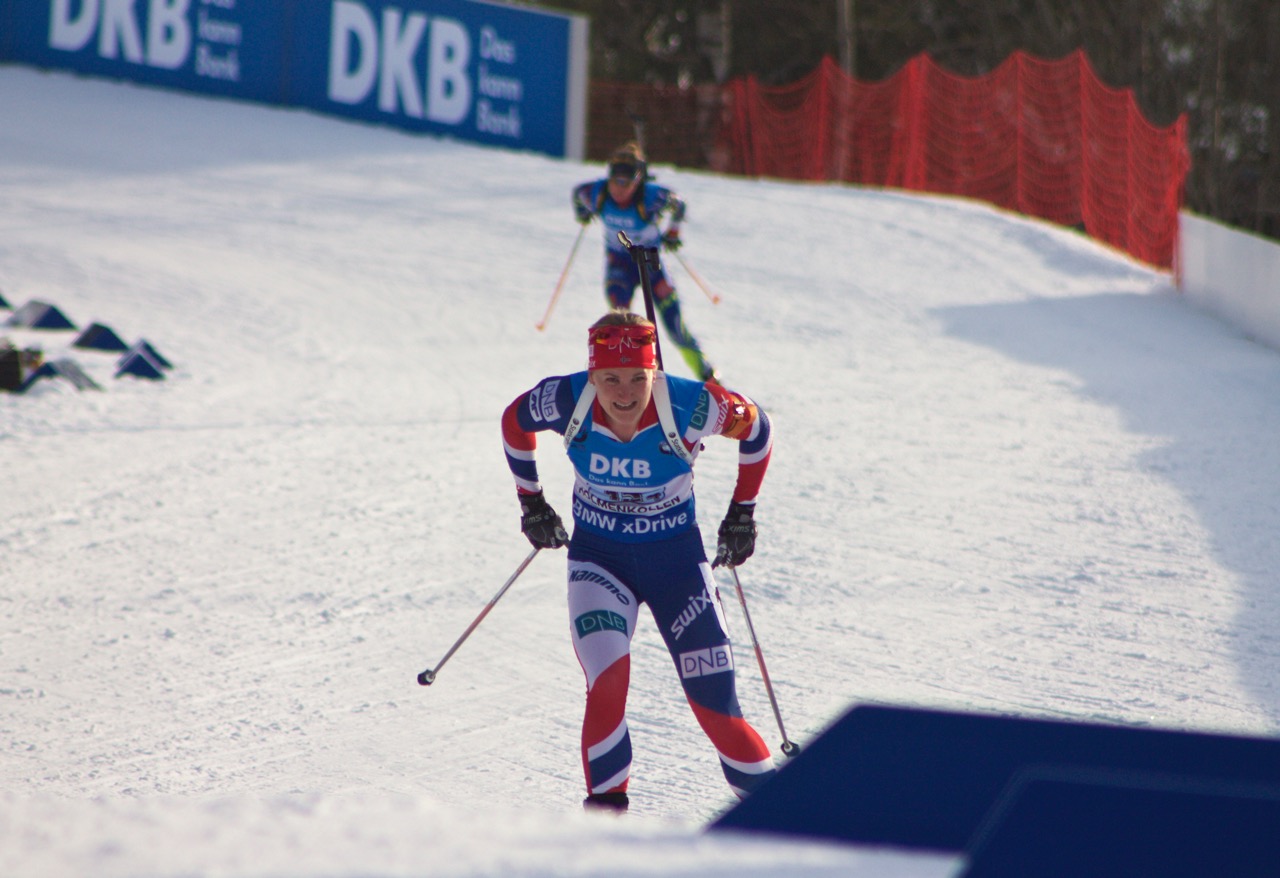
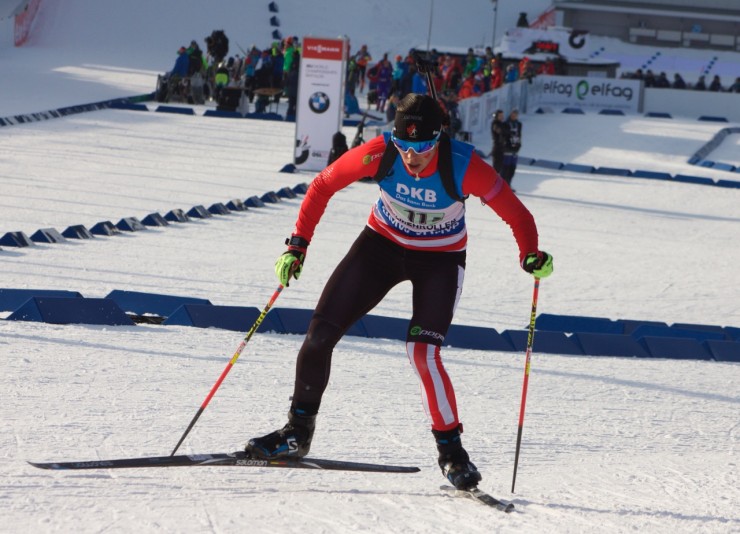
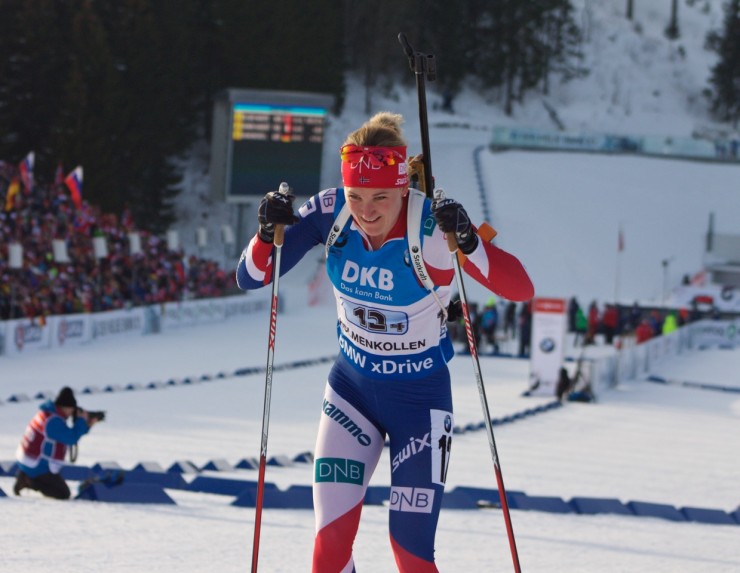
    Norwegian biathlete Fanny Horn Birkeland announced her retirement during the last International Biathlon Union (IBU) World Cup weekend of the season. At 29, she has competed at the sport’s highest level for the last seven years, been on more than half a dozen winning relay teams, and won a 2015 World Cup sprint in Ruhpolding, Germany.

    “My plan was to go until the Olympics next year, but my form has not been so good,” Birkeland told the IBU. “I did everything to reach my goals, but still I had some trouble to make it to the top in my competitions. It is hard to put so much work into it every day and not get any results that I want. Twenty-nine is not so old, but I have been in this game for some time and it feels right now.

    “The highlight of my career was my win in the Ruhpolding sprint in 2015,” she added. “It was unreal … that was my day to get the opportunity to be on top of the podium. I wanted to do it again, but I never managed it.”

    Her husband, Lars Birkeland, also competes for the Norwegian biathlon team. “We helped each other a lot to get where we are now,” she said.

    Éva Tófalvi

    Romania’s Éva Tófalvi, 38, is also moving on from her career as a World Cup biathlete after competing at five Olympics, where her best result was 11th in a 15 k individual race at the 1998 Games in Nagano, Japan. She won an individual World Cup race during the 2008/2009 season after originally placing second (the winner, Russia’s Albina Akhatova, was disqualified for doping), making her the first Romanian biathlete to win a World Cup.
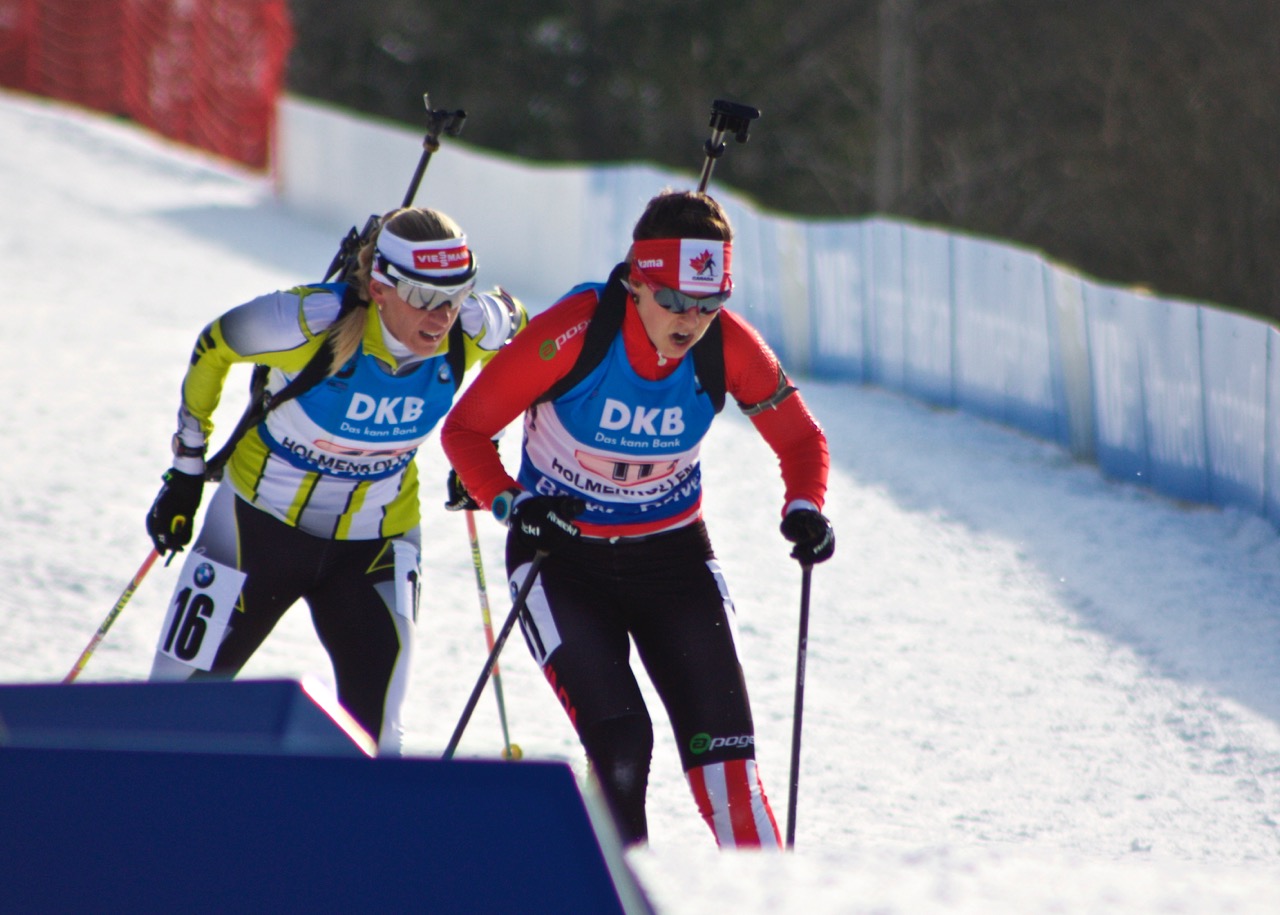
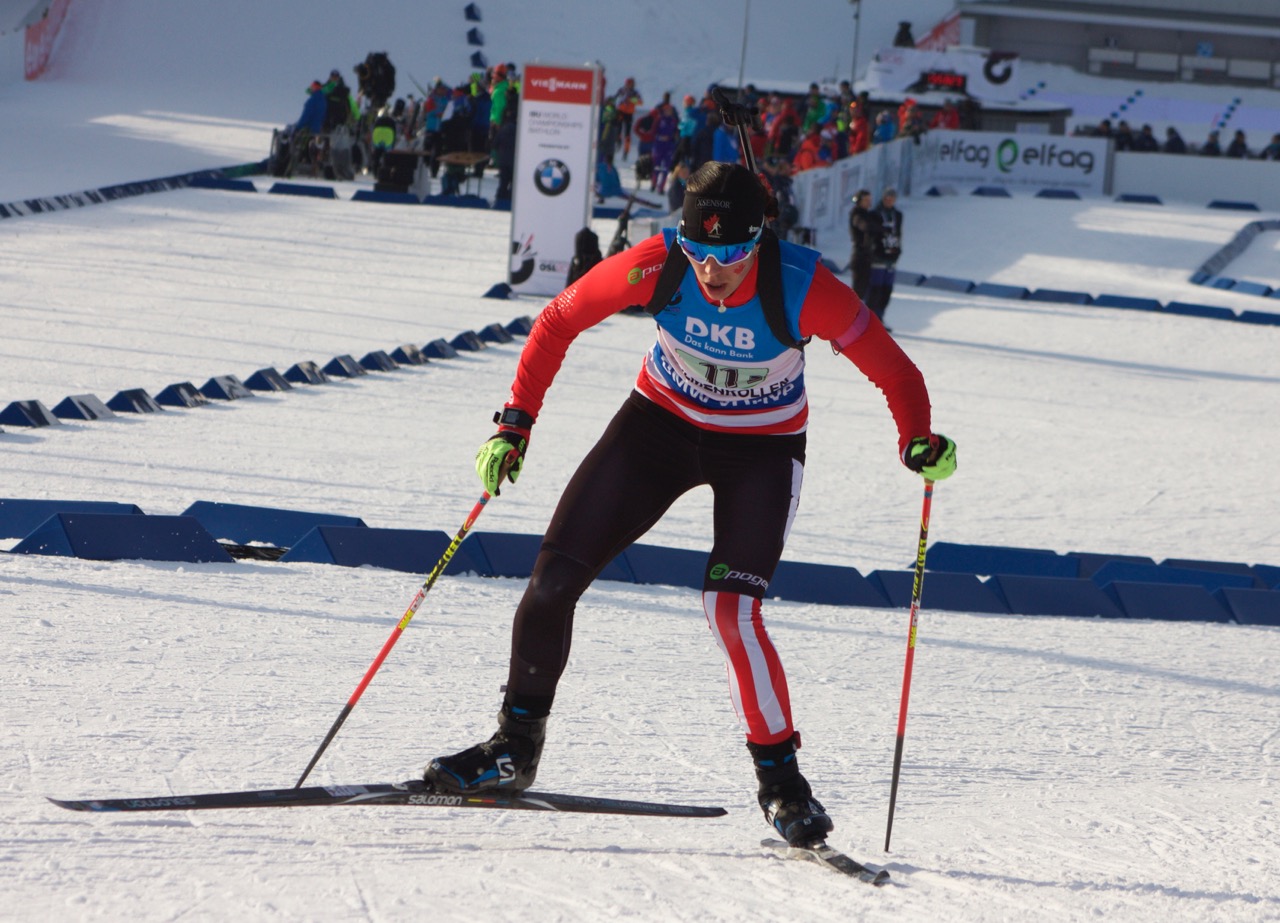
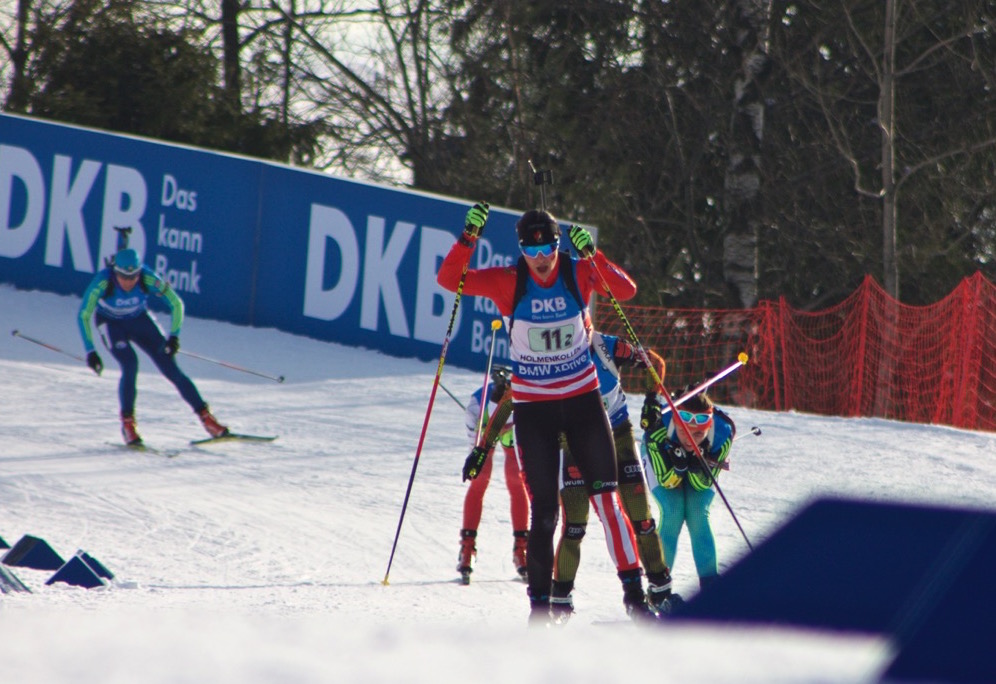
    Canada’s Julia Ransom (r) skiing with Romania’s Eva Tofalvi during the first leg of the 4 x 6 k relay at 2016 IBU World Championships in Oslo, Norway. (Photo: JoJo Baldus)

    In an interview with the IBU, Tófalvi said she wanted to wanted to focus on her personal life.

    “I am not a 100 percent sure, but I feel like it is the moment to settle down and start a family,” she said. “I know the Olympics are behind the corner, but I do not think I can invest the energy which is needed for such an event.

    “Winning World Cup is probably the most incredible memory I will ever carry,” she continued. “It is not just because of the win, but the work I know I had to put to get it. Even back then I did not have a real team behind me. My skis were not as good and I had no doctors, trainers and coaches with me like it was for bigger teams, like Norway. Winning in Hochfilzen was really special because of that, because it felt like a good prize for having had to work double as much as most to make up for what I couldn’t have.”

    Despite being left-handed, she had to learn to shoot using her right hand because Romania only had right-handed rifles.

    “In 20 years so much has changed in biathlon,” she said. “Now everything is much more professional and everyone is more focused on their careers. I think we were taking everything more lightheartedly back then. I now see girls that were born around the years I was making my debut in  he World Cup, and they are so determined that they achieve what before we would do at a much older age.”
  • Bjørndalen Up To Old Tricks As Norway Strikes Gold in IBU Mixed Relay

    Bjørndalen Up To Old Tricks As Norway Strikes Gold in IBU Mixed Relay

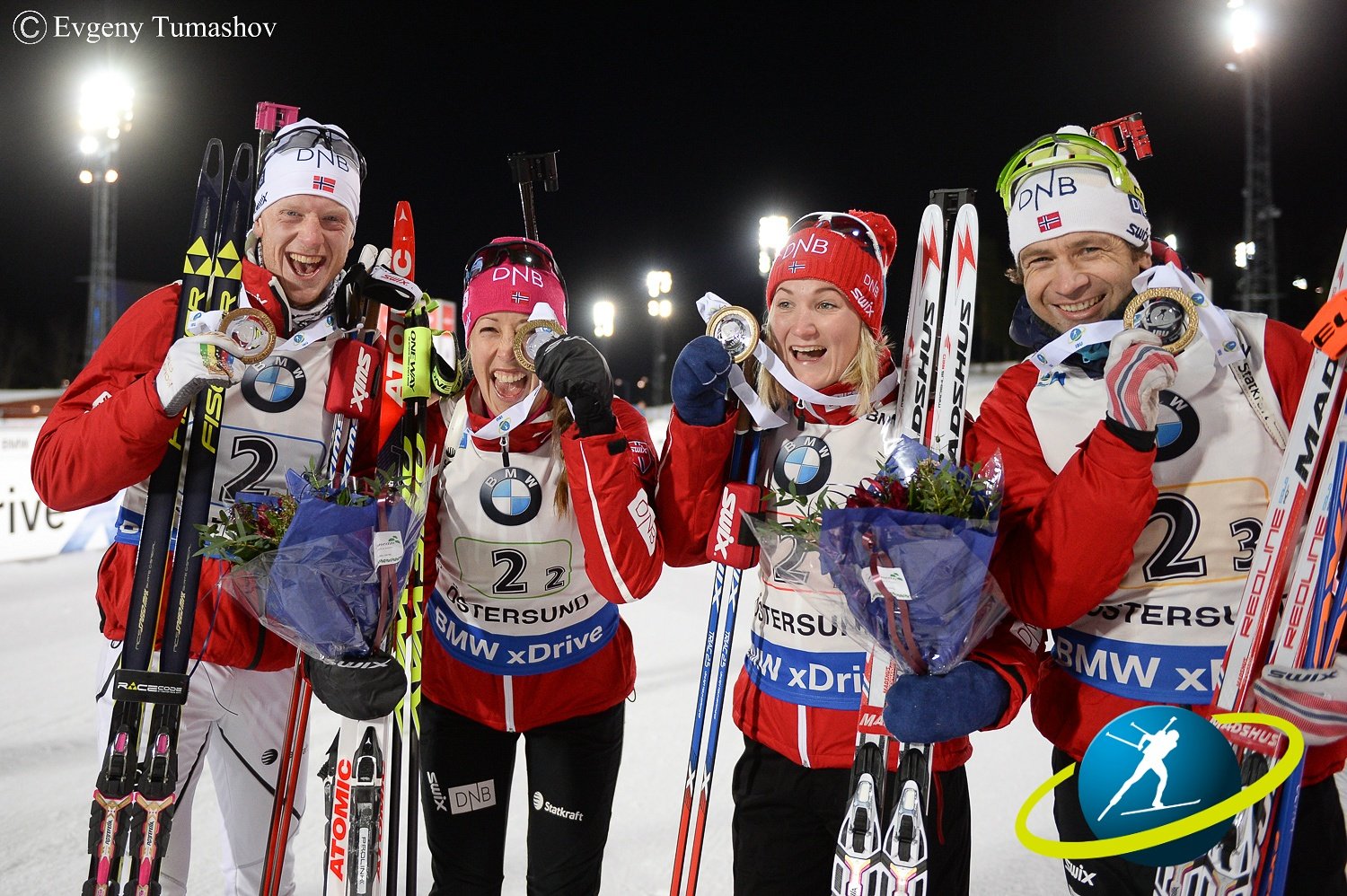
    (l-r) Norway's Johannes Thingnes Bø, Fanny Horn Birkeland, Marte Olsbu, and Ole Einar Bjørndalen celebrate after winning the first race of the 2016-2017 biathlon World Cup season, a mixed relay in Ostersund, Sweden. (Photo: IBU/Evgeny Tumashov/Twitter)
    (l-r) Norway’s Johannes Thingnes Bø, Fanny Horn Birkeland, Marte Olsbu, and Ole Einar Bjørndalen celebrate after winning the first race of the 2016/2017 biathlon World Cup season, a mixed relay in Östersund, Sweden. (Photo: IBU/Evgeny Tumashov/Twitter)

    It’s a new season on the International Biathlon Union (IBU) World Cup, but the Norwegian biathlon team made it clear that they didn’t want anything to change: just as they won the World Cup mixed relay trophy in 2016, they picked up a 33.7-second win in the event in Östersund, Sweden, on Sunday to kick off the new year.

    And just as he had so many times before, it was Ole Einar Bjørndalen — the “King of Biathlon” — who provided one of the crucial contributions for the Norway team, bringing them a lead that his teammates would never relinquish.

    The Norwegians were one of just three relay teams all afternoon to avoid the penalty loop, but things didn’t start out so auspiciously. Marte Olsbu used a spare round in the first prone stage, dropping to eighth.

    But despite missing again in standing, she left the range in first place, then held on to the lead almost to the exchange, where she tagged off 0.1 seconds behind Susan Dunklee of the U.S.

    Twenty-one-year-old Anna Magnusson of Sweden was also in the lead pack, tagging off 0.6 seconds back and making for a tough fight on the last loop.

    Susan Dunklee (US Biathlon) racing in Sunday's mixed relay, the first race of the 2016/2017 IBU World Cup season, in Östersund, Sweden. (Photo: USBA/NordicFocus)
    Susan Dunklee (US Biathlon) racing in Sunday’s mixed relay, the first race of the 2016/2017 IBU World Cup season, in Östersund, Sweden. (Photo: USBA/NordicFocus)

    “I was really impressed with Sweden being right up there on the first loop, too,” said Dunklee, who had a similar battle with Olsbu in the mixed relay at 2016 IBU World Championships. “The three of us were just duking it out that whole last loop. I flooded my system a little early with lactic acid on one of the early hills… but then I came back and caught them towards the end of that lap and we all came in together. Yeah, it was fun!”

    Norway’s second athlete, Fanny Horn Birkeland, held the lead for several kilometers, but was one of many women felled by the wind in the second-leg standing stage. Birkeland used all three spare rounds to knock down her targets, and yet only fell 9.3 seconds out of the lead; at this point all but one team in the field had used at least four spare rounds, and some had used many more.

    Birkeland wasn’t thrilled with her shooting, but knew it was good enough to get the job done.

    “It was an acceptable leg,” she told Norway’s NRK broadcaster.

    Clare Egan was another casualty of the wind. The American had taken the tag from Dunklee in first place, and maintained a sixth-place position close to the leaders at the halfway point of her race. But with two penalty laps in standing, she dropped to 13th, 1:39.9 from the lead.

    “Clare had a fantastic first half of her race,” Dunklee said. “I was really impressed that she stayed with the pack in the prone, and shot clean under that pressure. I think the pieces are there and they’ll come together later in the season for us as a team.”

    By the next tag, Italay’s Dorothea Wierer had put together a small 4.9-second lead over Birkeland. Lukas Hofer, the first man out of the exchange zone, had a near-perfect start for Italy, extending his lead over the first loop and then using one spare round to clean his targets, finishing his shots before anyone else had even begun shooting.

    But Norway’s Bjørndalen was steadily chasing, and on the second loop began to close ground. By the time the two came into the range for standing, it was a close race and Bjørndalen showed that despite being 42 years old, he still has the instincts and strength that have earned him well over 90 World Cup wins.

    Hofer and Bjørndalen traded shots, cleaning one target after another, and Hofer began to leave his mat before realizing that his last target hadn’t actually fallen. Bjørndalen hit five for five and left with the lead, but Hofer had to use all three spare rounds to knock down that one target.

    “I felt really good all the first four shots, and I was so sure I cleaned the last one, I was about to put the rifle back on,” Hofer lamented in the post-race press conference.

    In the meantime, Benedikt Doll of Germany finished his shots and headed out on course in second place, 25.4 seconds behind Norway.

    “There was a tricky wind today, which was noticeable in the standing shooting,” Bjørndalen said in a television interview with NRK. “For my part it went all right today. It ‘worked out’ and I was able to do what I was supposed to do.”

    Johannes Thingnes Bø of Norway "flies" across the finish line to win the mixed relay in Östersund, Sweden.
    Johannes Thingnes Bø of Norway “flies” across the finish line to win the mixed relay in Östersund, Sweden.

    Bjørndalen tagged off to Johannes Thingnes Bø, who cruised around his first loop and then missed his last target in prone. He easily cleaned it with a single spare round, however, and was back on his way.

    In standing, Bø put on a clinic and had one of the fastest range times of the day while cleaning all five targets.

    “The last leg is very hard, and I haven’t done it so many times,” Bø said in a press conference. “When I was starting alone the pressure was off, and I wanted to do my own race. I tried to gain some seconds from the very start.”

    Arnd Peiffer likewise held Germany in second, using one spare round in prone and none in standing.

    “I was pretty much alone the whole time, but I received pretty good information from the coaches, so I could find a good speed,” he said in an interview with Germany’s ZDF broadcaster. “In prone I was a bit hectic, also because it wasn’t so easy today, the wind was changing back and forth. Already during the zeroing [target practice] I had a few problems. So I was a bit insecure and unfortunately shot the last one away, but was able to hit the first spare. Overall I think it worked out pretty well today.”

    So just like Norway, the German team had stayed out of the penalty loop and used just six spare rounds total.

    “I have to say they worked really well at the range today,” German men’s coach Mark Kirchner told ZDF. “It was not so easy, with changing winds you had to be wide awake. You can’t complain if you need just one spare each.”

    The most exciting finish of the day was the race for third place between Russia – a team which had bounced between fifth and seventh for much of the race – and Italy. Anton Shipulin pulled the Russians from seventh into fifth and then into third with two perfect shooting stages and the fastest ski time of all anchor leg skiers.

    But Dominik Windisch of Italy was eager to make up for his teammate Hofer’s shooting collapse and after leaving the range just a few seconds behind Shipulin after standing, managed to catch up and stick on him like glue. Windisch looked labored as the two flew around the course, but he knew that the venue has a downhill finish.

    Windisch shadowed Shipulin down the hill, then used a slingshot of momentum to fly past into the finishing straight and outsprint the Russian to secure third place for Italy, +44.2.

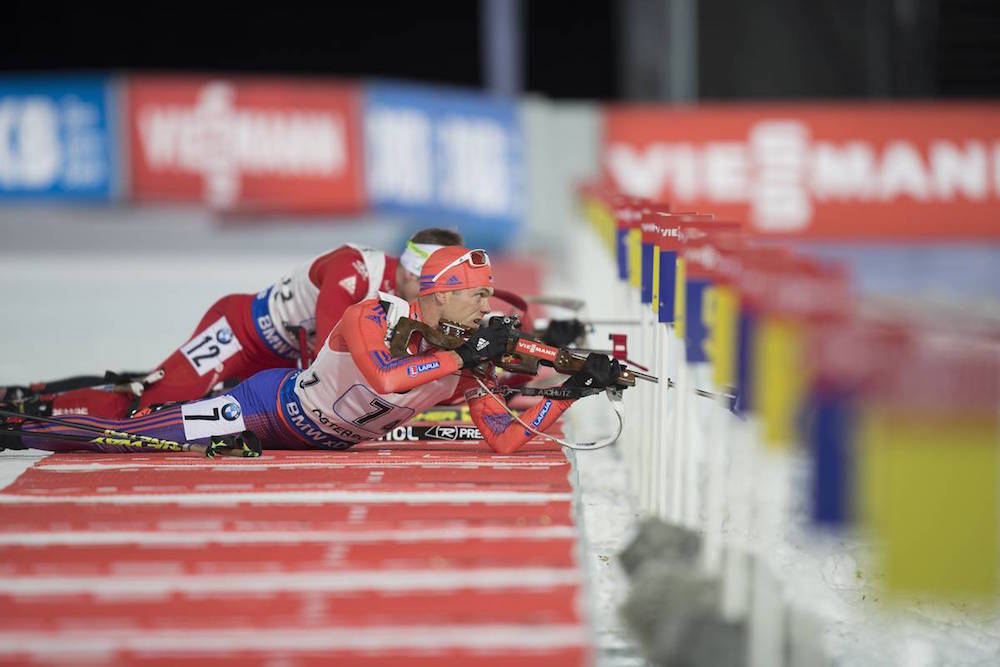
    Tim Burke (US Biathlon) during his prone stage of the mixed relay, the first race of the 2016/2017 IBU World Cup season. The U.S. anchor, Burke brought his team from 10th to eighth at the finish. (Photo: USBA/NordicFocus)
    Tim Burke (US Biathlon) during his prone stage of the mixed relay, the first race of the 2016/2017 IBU World Cup season. The U.S. anchor, Burke brought his team from 10th to eighth at the finish. (Photo: USBA/NordicFocus)

    As for the U.S., Egan had already moved from 13th up to 12th by the time she tagged to Lowell Bailey, who brought the team into 10th. Tim Burke then brought them up into eighth place, despite three spare rounds.

    “I was happy with my shooting from the clip in standing but disappointed that I needed three extras to get the last [standing] targets,” Burke wrote in an email. “I tried to push the pace on the first two spares and just missed with both. On the third extra round, I really took my time to make sure I hit because I knew there was no one to catch in front and that I would lose a few places if I missed… I just need to be a bit more relaxed with the extras in the future.”

    Burke had the fourth-fastest course time of the anchor-leg athletes, and said that while he “did not feel at my absolute best”, his ski speed was where he wanted it to be at this early point in the season.

    “It certainly was not our best race or perfect race, but a good sign that we can fight for the podium later in the season if we all have an ‘on’ day,” Dunklee said. “So that’s exciting to know.”

    “Going into the race I know we all hoped for a better result,” Burke agreed. “[But] in years past, we could have been 15th place with this shooting, so we are encouraged by that improvement and we know more is possible in the future.”

    The Canadian team was never really in the picture after leadoff athlete Julia Ransom skied two penalty loops in the opening standing stage. Megan Tandy and Scott Gow had shooting troubles of their own, and the team was sitting in 22nd place with those two penalty loops and 11 spare rounds before being lapped and pulled from the race.

    Results

    – Harald Zimmer, Aleks Tangen and Ian Tovell contributed

    The field leaves the start in the mixed relay in Ostersund, Sweden, on Sunday. (Photo: USBA/NordicFocus.com)
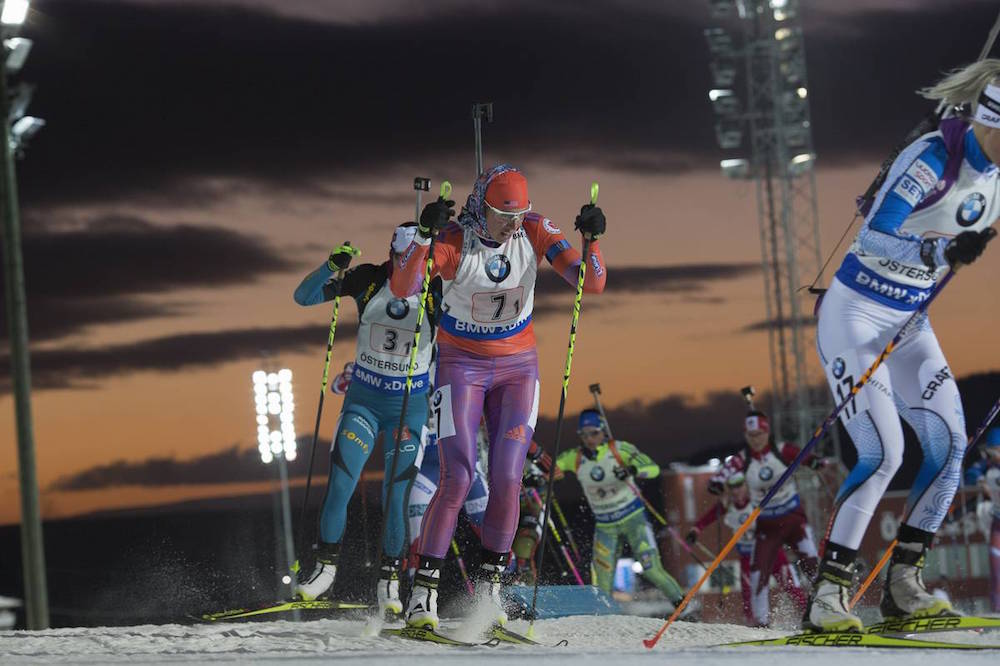
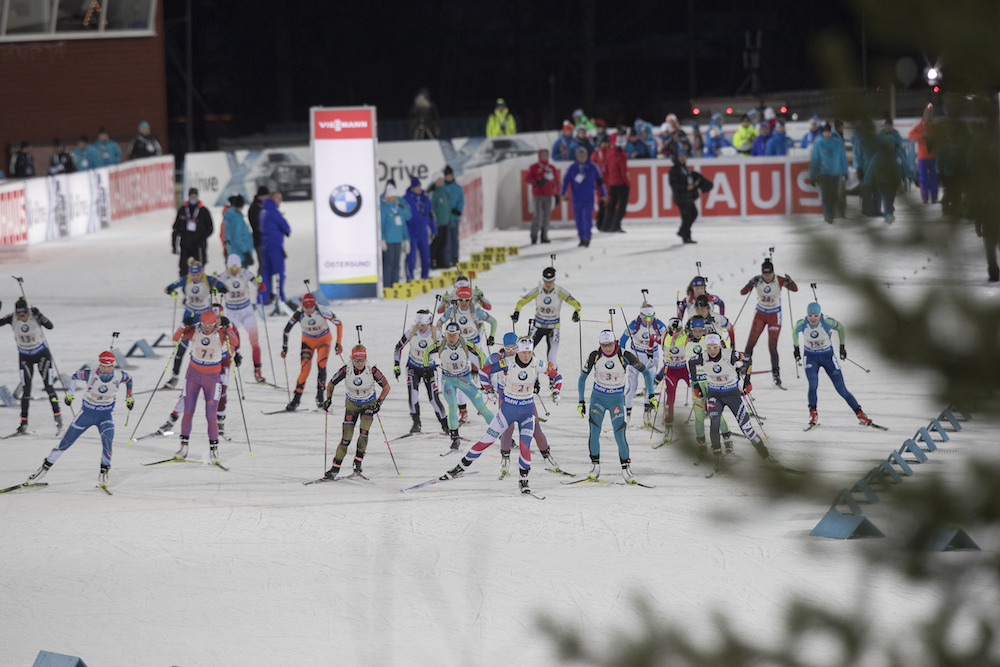
    The field leaves the start in the mixed relay in Östersund, Sweden, on Sunday, with American Susan Dunklee in bib 7. (Photo: USBA/NordicFocus.com)
  • Sunday Rundown: Ruka, Östersund, Pontresina & Beitostølen (Updated x6)

    Sunday Rundown: Ruka, Östersund, Pontresina & Beitostølen (Updated x6)

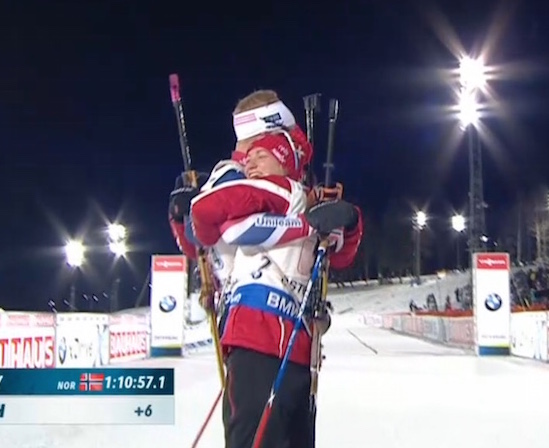
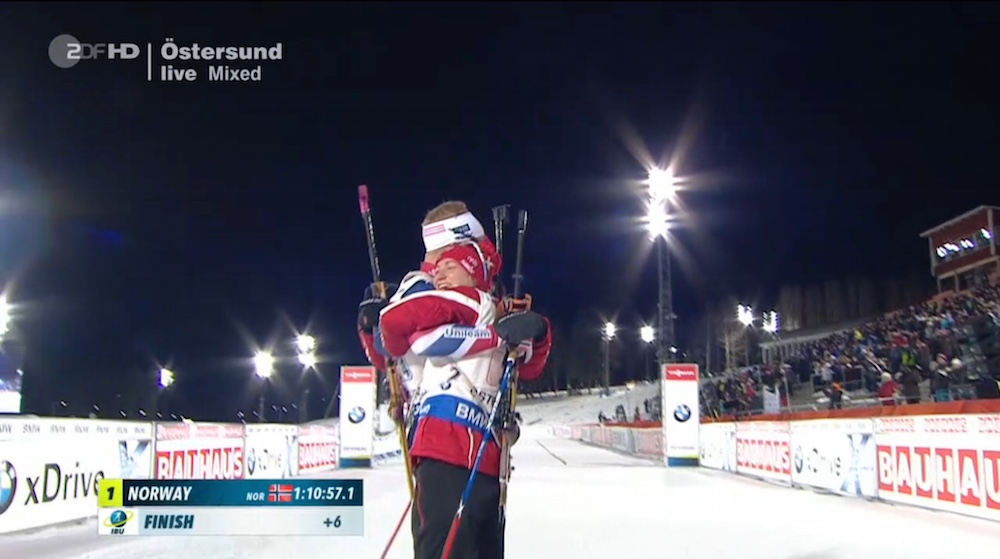
    The Norwegian mixed relay team celebrates after its win in the first IBU World Cup race of the 2016/2017 season on Sunday in Östersund, Sweden. (Photo: ZDF screen shot)
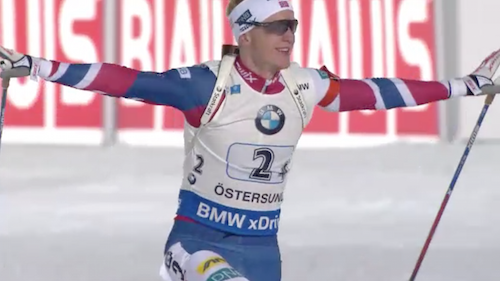
    Two members of the Norwegian mixed relay, Johannes Bø and Marte Olsbu, celebrate their win in the first IBU World Cup race of the 2016/2017 season on Sunday in Östersund, Sweden. (Photo: ZDF screen shot)

    Welcome to The Rundown, your quick primer of need-to-know information about the day’s racing. We’ll be updating this digest as the day goes on with additional results, photos and quotes. The Rundown is NOT a race report; stay tuned for complete race reports later today with interviews from the day’s top racers.

    ***

    IBU Cup in Beitostølen: 7.5/10 k sprints

    [UPDATE] With the second set of men’s and women’s sprints canceled Saturday and moved to Sunday in Beitostølen, Norway, the first IBU Cup relays of the season were bumped off the schedule, and no North Americans competed on Sunday. (American Russell Currier placed 44th in the IBU Cup sprint on Friday.)

    In the women’s 7.5 k sprint, Marketa Davidova of the Czech Republic pulled out a 3.6-second win over Germany’s Nadine Horchler, and Germany had two on the podium with former cross-country skier Denise Herrmann in third (+29.9). Davidova hit 9 out of 10 targets (1+0) en route to the victory in 24:18.3. Horchler missed just one target as well (0+1) and Herrmann (who won the IBU Cup women’s sprint two days earlier) had three penalties (1+2) but skied fast enough for the podium.

    In the men’s 10 k sprint, Russia’s Matvey Eliseev edged his teammate Dmitry Malyshko by just 3.2 seconds for the win in 26:16.8. More than a minute later, Norway’s Henrik L’Abee-Lund placed third (+1:15.9) with four penalties (1+3). Both Eliseev and Malyshko had one miss apiece, with Eliseev missing one in prone (1+0) and Malyshko missing one standing (0+1).

    The next IBU Cup is set for Dec. 6-11 in Ridnaun, Italy.

    Sunday’s sprint results: womenmen

    Friday’s sprint results: women | men

    ***

    IBU World Cup in Östersund: Mixed and Single Mixed Relays

    Single Mixed Relay report | Mixed Relay report

    The first race if the International Biathlon Union (IBU) World Cup season went to Norway, which won Sunday’s co-ed mixed relay (2 x 6 k + 2 x 7.5 k) by nearly 34 seconds over Germany in Östersund, Sweden.

    The Norwegian team of Marte Olsbu, Fanny Horn Birkeland, Ole Einar Bjørndalen, and Johannes Thingnes Bø used a total of six spare rounds to get to the finish line first in 1:10.57.1.

    Germany, with Franziska Hildebrand, Laura Dahlmeier, Benedikt Doll, and Arnd Peiffer, used the same amount of total spares for second place (+33.7), and both teams avoided the penalty loop.

    Italy took third (+44.2), with Lisa Vittozzi, Dorothea Wierer, Lukas Hofer, and Dominik Windisch using a combined 12 spares and having one penalty loop during Hofer’s standing stage.

    The Italians narrowly held off Russia (Olga Podchufarova, Tatiana Akimova, Maxim Tsvetkov, Anton Shipulin) by 0.3 seconds for the final spot the podium.

    France placed fifth (+1:13.3), Sweden was sixth (+1:20.9), the Czech Republic seventh (+1:20.9), and the U.S. eighth (+2:38.5).

    Susan Dunklee started first for the Americans using three spares to clean (0+1, 0+2), then tagging off to Clare Egan, who didn’t need any spares for prone, but had to use all three and skied two penalty loops in standing. Lowell Bailey used just two spares (0+1, 0+1), and Tim Burke locked up eighth for the team with a flawless prone and three spares in standing (0+0, 0+3). In all the team used 13 spares and had two penalty loops.

    Of 24 teams in the race, Canada (Julia Ransom, Megan Tandy, Scott Gow, and Brendan Green) was among the four that were lapped. In seven out of eight stages, the team combined for 11 spares and two penalties.

    Results: Mixed relay | (Single mixed relay, see race report)

    ***

    FIS Nordic Combined World Cup in Ruka: Individual Large Hill/10 k

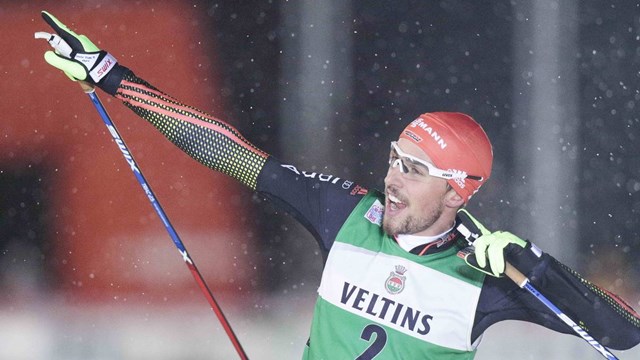
    Germany’s 24-year-old Johannes Rydzek celebrating his first of two wins on Saturday at the Ruka Nordic Combined World Cup in Kuusamo, Finland. He now has eighth career individual World Cup victories. (Photo: FIS)
    Germany’s 24-year-old Johannes Rydzek celebrating his first of two wins on Saturday at the Ruka Nordic Combined World Cup in Kuusamo, Finland. He now has eighth career individual World Cup victories. (Photo: FIS/NordicFocus)

    Germany’s Johannes Rydzek can do the Usain-Bolt-victory stance all the way to the next Nordic Combined World Cup after winning the first two competitions of the 2016/2017 season, with another individual large hill/10 k win on Sunday in Kuusamo, Finland.

    After winning by 34 seconds over his teammate Eric Frenzel on Saturday, Rydzek took a 14.7-second win over Wilhelm Denifl of Austria, while Japan’s Akito Watabe was just 0.3 seconds back in third.

    Rydzek posted the fifth-best jump after Norway’s Jarl Magnus Riiber, Watabe, Denifl, and Austria’s Mario Seidl, respectively. Rydzek started the 10 k Gundersen 1:04 minutes after Riiber and posted the seventh-fastest course time to capture first. Riiber slipped to 10th (+1:07.5) at the finish, with the 37th-ranked course time of 42 in the cross-country race.

    Of note, Frenzel improved from 27th in the jump to 17th (+1:32.4) at the finish with the second-fastest course time.

    Bryan Fletcher was one of two Americans in the race, finishing 31st (+3:40.7). His jump ranked 40th, but he skied the fourth-fastest course time to pick off nine places. Taylor Fletcher placed 40th (+6:24.4), improving slightly from 43rd in the jump.

    The Nordic Combined World Cup now moves to Lillehammer, Norway, for a team and two individual competitions Dec. 2-4.

    Final results

    ***

    Visma Ski Classics Prologue in Pontresina: 8 k Classic

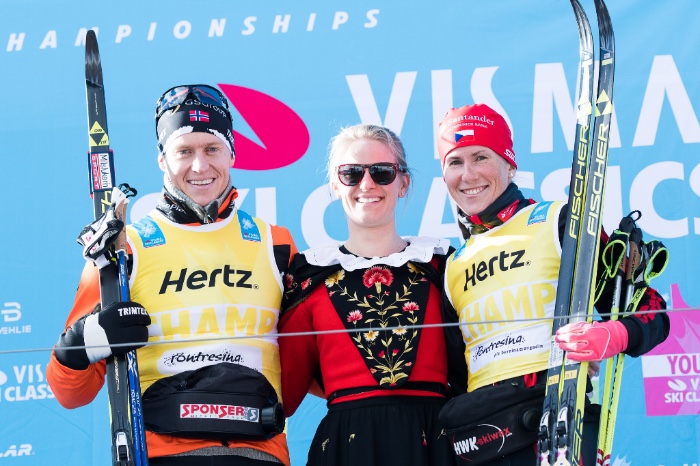
    Petter Eliassen of Team Leaseplan Go (left) and Katerina Smutna of Team Santander (right) celebrate after winning the Visma Ski Classics 8 k prologue in Pontresina, Switzerland. (Photo: Visma Ski Classics)
    Petter Eliassen of Team Leaseplan Go (left) and Katerina Smutna of Team Santander (right) celebrate after winning the Visma Ski Classics 8 k prologue in Pontresina, Switzerland. (Photo: Visma Ski Classics)

    The Visma Ski Classics series started off in Pontresina, Switzerland, with 8-kilometer time trials for both men and women.

    In the women’s race, an individual interval start seeded last to first, Kristin Antonsen of Team Synnfjell set an early best mark. But as the previous season’s top women hit the course times began to come down, and the race ended as a battle between Britta Johansson Norgren of Team Lager 157 and Katerina Smutna of Team Santander. Smutna ended up with the win by just 0.66 seconds over Johansson Norgren, with Sara Lindborg of Team Serneke third (+20.66).

    The men’s race was a team interval start, with the teams separated by five minutes and with skiers at 15 second intervals within that span. Last year’s Visma Ski Classics Champion, Petter Eliassen of Team Leaseplan Go, came out on top with a time of 19:42.66. Bastien Poirrier of Team Gel Interim Rossignol was second (+8.53), leading five members of his new France-based team into the top ten and turning heads along the way. Morten Eide Pedersen of Team BN Bank was third (+15.80).

    Results

    ***

    FIS Cross-Country World Cup in Ruka: 10/15 k Classic

    Women’s report | Men’s report

    Twenty-four-year-old Finnish A-teamer Iivo Niskanen notched his second-career World Cup victory the men’s 15-kilometer classic on Sunday, Day 2 of the Ruka World Cup in Kuusamo, Finland.

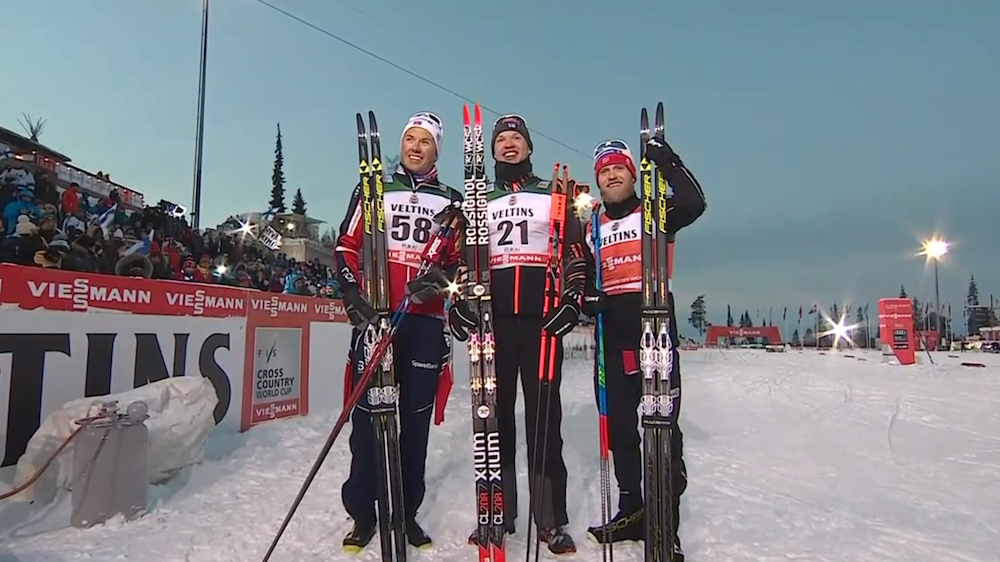
    The men's podium in Sunday's 15 k classic at the Ruka World Cup in Kuusamo, Finland: with Finnish winner Iivo Niskanen (c) and Norway's Emil Iversen (l) in second and Martin Johnsrud Sundby (r) in third. (Photo: NBC Sports screen shot)
    The men’s podium in Sunday’s 15 k classic at the Ruka World Cup in Kuusamo, Finland: with Finnish winner Iivo Niskanen (c) and Norway’s Emil Iversen (l) in second and Martin Johnsrud Sundby (r) in third. (Photo: NBC Sports screen shot)

    Niskanen started 21st of more than 90 in the men’s field and finished in 35:27.6, which stood as the fastest time all day. After the finish, he paced between the leader’s chair and the finishing pen, even jogging around the stadium and course. But every time he looked the Finnish crowd, he was all smiles.

    Niskanen held off three Norwegians in the top four, with Emil Iversen 10.2 seconds behind him in second, Martin Johnsrud Sundby 11.2 seconds back in third, and Didrik Tønseth missing the podium by about six seconds and tying Sweden’s Johan Olsson for fourth (+17.0). Norway’s Finn Hågen Krogh placed sixth (+18.3), Sweden’s Calle Halfvarsson was seventh (+21.2), Russia’s Alexander Bessmertnykh was eighth (+24.3), Finland’s Matti Heikkinen ninth (+32.0), and Great Britain’s Andrew Musgrave 10th (+33.8).

    Canada’s Alex Harvey was close behind in 11th (+35), and was the lone North American man in the points on Sunday. His teammate Devon Kershaw missed the top 30 by 4.5 seconds in 33rd (+1:23.4).

    Erik Bjornsen led the U.S. men in 41st (+1:37.2). Canada’s Graeme Killick was 53rd (+2:12.9), American Noah Hoffman was 64th (+2:42.6). For Canada, Len Valjas was 76th (+3:19.8), Jess Cockney 78th (+3:26), Knute Johnsgaard 85th (+3:53.4), and Andy Shields 91st (+4:26.1), and for the U.S., Eric Packer 87th (+4:01) and Andy Newell 88th (+4:17.4) out of 96.

    In the women’s 10 k classic earlier in the day, Marit Bjørgen of Norway picked up her first win of the season, a 4.6-second win over Finland’s Krista Parmakoski.

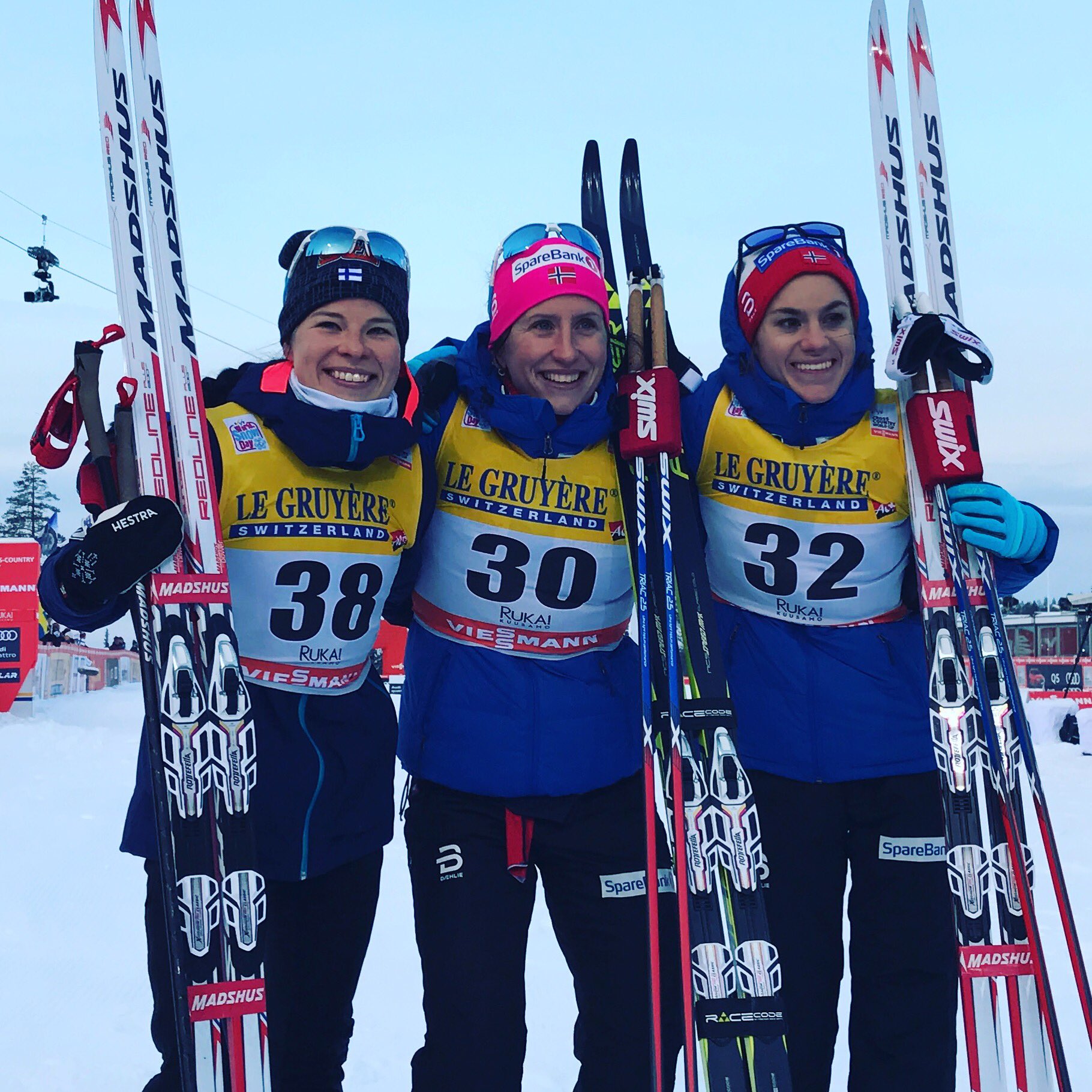
    Marit Bjørgen of Norway (center) collected her first World Cup win of the season in the 10 k classic in Ruka, Finland, ahead of Finland's Krista Parmakoski (left) and Norway's Heidi Weng (right). (Photo: FIS Cross Country/Twitter)
    Marit Bjørgen of Norway (center) collected her first World Cup win of the season in the 10 k classic in Ruka, Finland, ahead of Finland’s Krista Parmakoski (left) and Norway’s Heidi Weng (right). (Photo: FIS Cross Country/Twitter)

    It is the 103rd World Cup win for the 36-year-old Bjørgen, who took last season off to have a baby. Norway followed up Bjørgen’s win with third and fourth place finishes by Heidi Weng (+12.7) and Ingvild Flugstad Ørtberg (+36.8).

    Parmakoski also led a good day for the Finnish team, with Laura Mononen coming in seventh (+50.0). She was just behind sixth-place Nicole Fessel of Germany (+42.4).

    Jessie Diggins led the U.S. women’s team with a 13th-place finish (+1:09.0), one of her best distance classic races ever outside of Tour and mini-tour stages. Sadie Bjornsen followed in 17th (+1.14.9), and 2016 SuperTour champion Caitlin Patterson of the Craftsbury Green Racing Project scored points in 28th (+1:45.4). The U.S. Ski Team rounded out its results with Rosie Brennan 39th (+2:22.2), Kikkan Randall 43rd (+2:29.7), Ida Sargent 44th (+2:30.4), and Sophie Caldwell 61st (+3:13.4)

    Cendrine Browne and Emily Nishikawa slotted into 58th and 59th for Canada, +3:04.8 and +3:07.1, respectively. Dahria Beatty finished 74th (+3:54.4).

  • Mäkäräinen Wins Second Straight in Khanty; Soukalova Locks Up World Cup Title

    Mäkäräinen Wins Second Straight in Khanty; Soukalova Locks Up World Cup Title

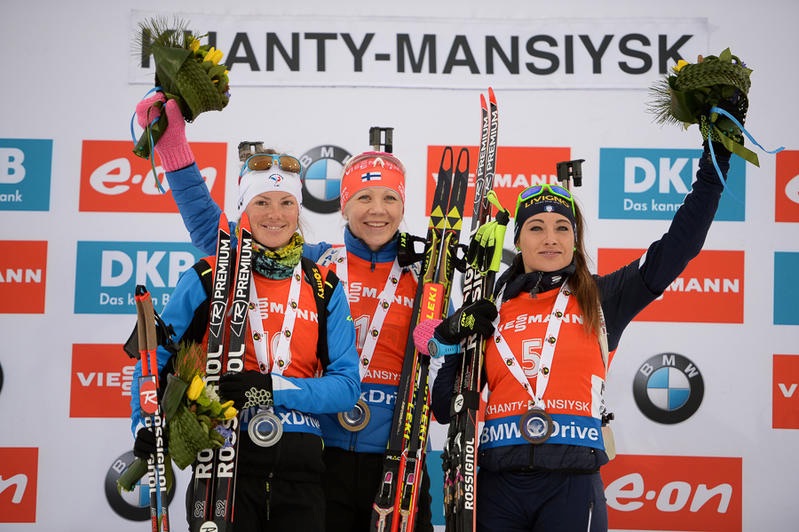
    France’s Marie Dorin Habert (l), Finland’s Kaisa Mäkäräinen (c) and Italy’s Dorothea Wierer (r) on the podium of the women’s 10-kilometer pursuit at the IBU World Cup in Khanty-Mansiysk, Russia. (Photo: IBU/Evgeny Tumashov)
    France’s Marie Dorin Habert (l), Finland’s Kaisa Mäkäräinen (c) and Italy’s Dorothea Wierer (r) on the podium of the women’s 10-kilometer pursuit at the IBU World Cup in Khanty-Mansiysk, Russia. (Photo: IBU/Evgeny Tumashov)

    Six women went out closely together for the final loop of the 10-kilometer pursuit at the International Biathlon Union’s (IBU) final World Cup in Khanty-Mansiysk, Russia. The last one of the group, though only 4.6 seconds back, was Kaisa Mäkäräinen.

    But by the finish, the 33-year-old Finn had overtaken everyone to secure her second victory in as many days in 30:06.7 with two penalties (1+0+1+0), following up on her win in Thursday’s sprint.

    It was Mäkäräinen’s 19th World Cup victory and her fourth one of the season.

    “I am really happy with my result today,” Mäkäräinen said at the post-race press conference. “I think two penalties for me is OK. It’s 90 percent. It’s better than my average, so I have to be satisfied with it. I was happy that the distance was not longer today, because it was quite tight in the end.”

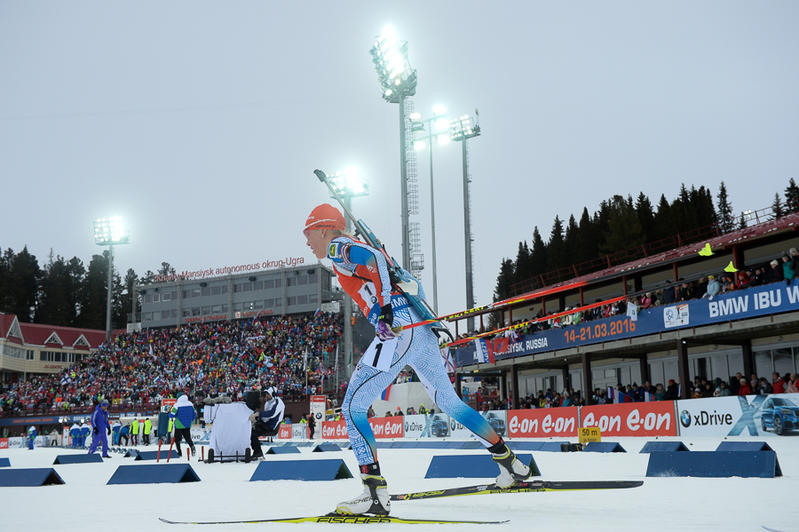
    Finland’s Kaisa Mäkäräinen starting the women’s 10-kilometer pursuit at the IBU World Cup in Khanty-Mansiysk, Russia. (Photo: IBU)
    Finland’s Kaisa Mäkäräinen starting the women’s 10-kilometer pursuit at the IBU World Cup in Khanty-Mansiysk, Russia. (Photo: IBU)

    France’s Marie Dorin Habert, the big winner at World Championships in Oslo, Norway, earlier this month with six medals including three gold, finished just 1.5 seconds behind her, with one penalty (0+0+0+1). In Oslo, Mäkäräinen earned bronze in the mass start.

    Italy’s Dorothea Wierer secured third place (+5.7) after outsprinting the Czech Republic’s Gabriela Soukalová and Germany’s Franziska Preuss. Wierer finished with one penalty (0+0+1+0).

    Despite missing the podium by 0.8 seconds, Soukalová, who had two penalties (1+0+0+1), still achieved the ultimate season-long victory by securing the overall World Cup title, ahead of Dorin Habert and Wierer.

    Soukalová would have required at least the ninth place to do so already before the final mass start, and was the most consistent athlete throughout a season where she never placed worse than 11th (the pursuit in Oslo) in a race.

    “Words are missing in this moment,” Soukalová told German TV broadcaster ZDF immediately after the race. “It’s very emotional. I am so happy for this. It’s very nice to have the Globe [trophy]. It’s awesome.”

    Asked if she had been thinking about the World Cup title during the race, she added: “Before the last shooting maybe. That was the reason why I did a mistake.”

    “It’s one of the biggest dreams of my life,” she later said in an interview with the IBU. ”I think I will never forget this moment. It was the main goal of the season. I am so happy, because World Championships in Oslo was a little bit unlucky for me.”

    Depending on your historical perspective, this was the first or second biathlon World Cup title for the Czech Republic, after Jiřína Adamičková-Pelcová from the precursor state of Czechoslovakia (which later split up into the Czech Republic and Slovakia) also won the women’s World Cup in the 1989/1990 season more than 25 years ago.

    Gabriela Soukalová of the Czech Republic with her “small Crystal Globe” for the pursuit title for the 2015/2016 IBU World Cup season. She also locked up the overall World Cup title  on Saturday, but that will be awarded after Sunday's mass start. (Photo: Gabriela Soukalova/Instagram)
    Gabriela Soukalová of the Czech Republic with her “small Crystal Globe” for the pursuit discipline title for the 2015/2016 IBU World Cup season. She also locked up the overall World Cup title on Saturday, but that will be awarded after Sunday’s mass start. (Photo: Gabriela Soukalova/Instagram)

    In addition to the “big Crystal Globe” for the overall title, Soukalová also won the “small globe” discipline titles for the sprint and pursuit this week, and could still win the mass start discipline title on Sunday, which she currently leads.

    “This is quite fun, I would say,” Mäkäräinen, a two-time overall World Cup winner, said of Saturday’s race and the last loop during the press conference. “Even if it feels heavy on the tracks. I like this sport!”

    Reflecting on her fast skiing and still being in great shape just as the World Cup season ends, Mäkäräinen explained how she intends to close out her year.

    “I think I will take part in cross-country Finnish championships, and not biathlon,” she said. “It’s more of a challenge for me. I will also make one classic race there again. I think that will be a good finish to this season.”

    Dorin Habert left the range in first place after the final shooting, but Mäkäräinen quickly passed her and the French biathlete was unable to keep up.

    “Kaisa was so strong,” Dorin Habert said at press conference. “When she passed us, we could not do anything. She was so fast. I just tried to race with the other girls.”

    Preuss had taken the lead of the chase group behind Mäkäräinen out of a long one-minute downhill section, but was overtaken and boxed out by Dorin Habert, Wierer and Soukalová before the final climb. Dorin Habert created a small gap to the rest of the pack out of the climb into the arena to secure the second place, and Wierer won the three-women sprint for bronze thanks to excellent positioning on the last narrow turns in the arena.

    “It was really a tough race,” Wierer said at the press conference. “When I went out from the last shooting range … we were six I think. Everybody passed me, and I was only saying ‘Oh my God! Oh my God!’… I am really happy that I made the third place today, because I was sure I would arrive sixth or something like that.”

    Losing out in the finish sprint with Wierer and Soukalová, Germany’s Preuss finished fifth (+6.6 seconds with one penalty, and just 0.1 behind Soukalová).

    “Khanty is the last competition on the World Cup, and somehow I am always able to bring out my last remaining energy here,” Preuss told ZDF. “The course suits me really well, and I am happy with the shooting range today. It’s cool to end the season like this.”

    “Before the final climb there is a long descent,” she said of the last loop. “Someone always came out of the draft, and when I was in front I knew, ‘Oh now, they’ll surely pass me again.’ And then they were ahead on the climb, and it’s really difficult to overtake there … I already noticed during the climb I couldn’t quite keep up, but I am nevertheless completely satisfied with the fifth place.”

    Norway’s Fanny Horn Birkeland placed sixth (+13.1, with one penalty) as the last athlete from the top group that left the range closely together onto the final loop.

    Before the race, the organizers in Khanty had asked spectators and athletes for a minute of silence for the victims of a plane crash in southern Russia, and the Russian biathlon team competed with black ribbons on their arms on Saturday.

    “The crowd did observe a moment of silence for the crash victims,” American Susan Dunklee wrote in an email. “During the race, they brought their same great energy they always bring here. This is one of the loudest stadiums that we race in.”

    Dunklee 22nd, Ransom Knocks Off 20 Places with Clean Shooting

    Dunklee started the pursuit in 25th and initially shot clean in both of her prone stages. This moved her up all the way to 15th place, just 41.4 seconds behind the leader when she left the range.

    Susan Dunklee (US Biathlon) racing to 22nd in the women's pursuit on Saturday in Khanty-Mansiysk, Russia. (Photo: USBA/NordicFocus)
    Susan Dunklee (US Biathlon) racing to 22nd in the women’s pursuit on Saturday in Khanty-Mansiysk, Russia. (Photo: USBA/NordicFocus)

    On the track, she was able to keep up with the top of the field, overall skiing the fourth-fastest course time, and just half a second slower than the winner Mäkäräinen.

    “I get the sense that practically everyone is exhausted, physically and mentally,” Dunklee wrote. “I am fighting off a sore throat but my energy levels felt good today and I am still hungry to compete. I often do well relative to the field when we hit this point in the season.”

    But then in the first standing shooting, her race took a turn for the worse when she missed three targets.

    “There was nothing difficult about the conditions for my third stage,” Dunklee wrote of that stage. “I approached that stage the same way I approached all the others. It was a simple case of me pulling the trigger when the rifle wasn’t pointed at the center of the target.”

    Those penalties set her back more than an additional minute, and she set back out on the course in 23rd and was unable to make up the deficit.

    In the last standing shooting, she incurred another penalty and left the range in 25th, before making up three positions on the final loop to finish 22nd (+2:13.2) with four total penalties.

    Canada’s Julia Ransom as the only other North American starter in the pursuit had a perfect day on the shooting range, cleaning all of her targets in the four-stage race.

    Earlier this season, Ransom also achieved 20-for-20 shooting at the pursuit in Antholz, Italy, as well as in the 15 k individual at the World Championships earlier this month. Both performances put her within the top 20 of those races; on Saturday, she picked off 20 places after starting 54th to finish 34th (+2:56.5).

    Of 57 starters, Ransom was one of three women to shoot clean. Ukraine’s Yuliia Dzhima did so to place ninth, and Sweden’s Mona Brorsson finished 24th.

    The two other North American starters at the World Cup in Khanty, Canada’s Rosanna Crawford and American Clare Egan did not make the top 60 to qualify for the pursuit. Dunklee is the lone North American woman qualified for Sunday’s mass start, the final race of the World Cup season.

    “The course here is one of my favorites because of the good climbs and I especially like the hilly 2.5 km loop that we’ll use tomorrow,” Dunklee concluded in her email.

    The ninth and final World Cup of the season ends with the men’s and women’s mass starts on Sunday. The women’s 12.5 k mass start begins at 5:20 a.m. Eastern, followed by the men’s 15 k mass start, with Americans Tim Burke and Lowell Bailey racing, at 8 a.m. Both races will be streamed live on Eurovision.

    Results | Mass start provisional start list | World Cup standings

  • After Leading, Canadian Women Slip to 15th; Norway Golden in World Champs Relay

    After Leading, Canadian Women Slip to 15th; Norway Golden in World Champs Relay

    Rosanna Crawford leading the women's 4 x 6 k relay at 2016 IBU World Championships on Friday in  Oslo, Norway. (Photo: JoJo Baldus)
    Canada’s Rosanna Crawford (11) leading the women’s 4 x 6 k relay at 2016 IBU World Championships on Friday in Oslo, Norway. Crawford skied the second leg and the Canadians went on to place 15th. (Photo: JoJo Baldus)

    OSLO, Norway — At the halfway point of Friday’s World Championships women’s 4 x 6-kilometer relay, one woman was feeling better than she had all week.

    It was Rosanna Crawford of Canada, and she attacked her way to the lead of the race.

    “It felt so good out there today,” she said after tagging off. “Just like, I could attack, and I didn’t die on the last loop. It was pretty exciting to pass the leader and be in the lead. I haven’t done that in a long time. So, it was a lot of fun.”

    Canada eventually ended up 15th, ceding the lead to France and then Norway, which ultimately took home a much-desired gold on home turf. The Canadians finished 4:48.6 back.

    Julia Ransom had led off for the team, and used one spare in each shooting stage. In her first full season on the World Cup, Ransom is getting used to the leadoff position and was satisfied to tag off in 13th place – not where the team wanted to finish place-wise, but time-wise close enough to the leaders with just 37.6 seconds separating them from first place.

    Julia Ransom (r) skied the first leg for the Canadian women in the 4 x 6 k relay at 2016 IBU World Championships in Oslo, Norway. The team went on to place 15th. (Photo: JoJo Baldus)
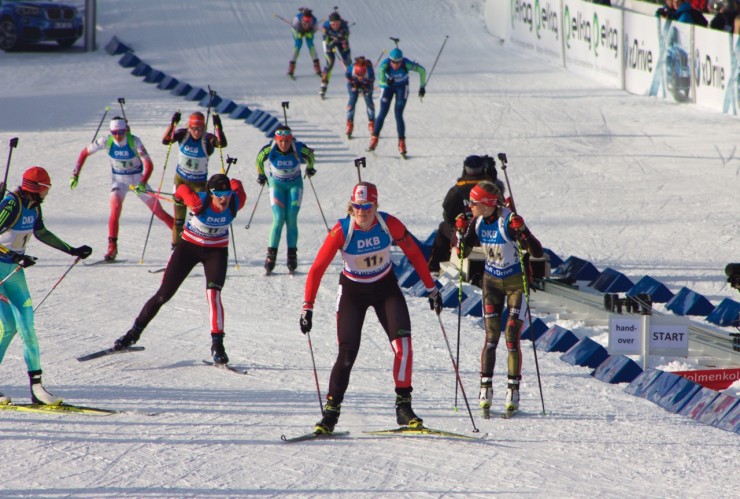
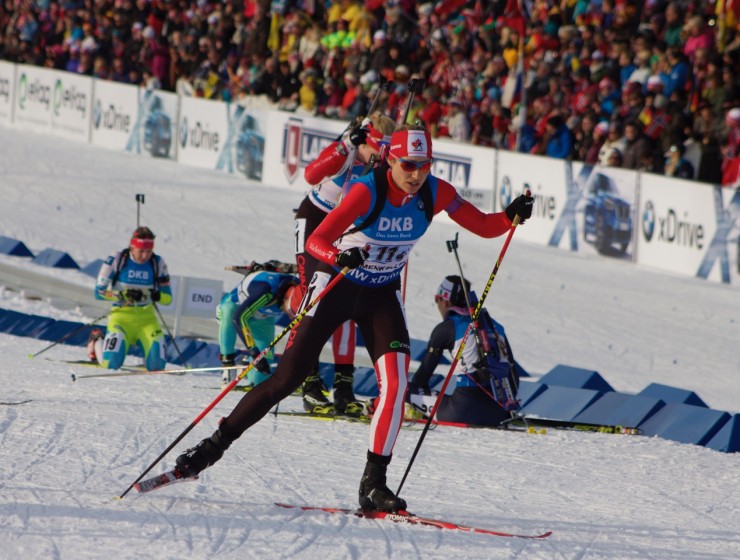
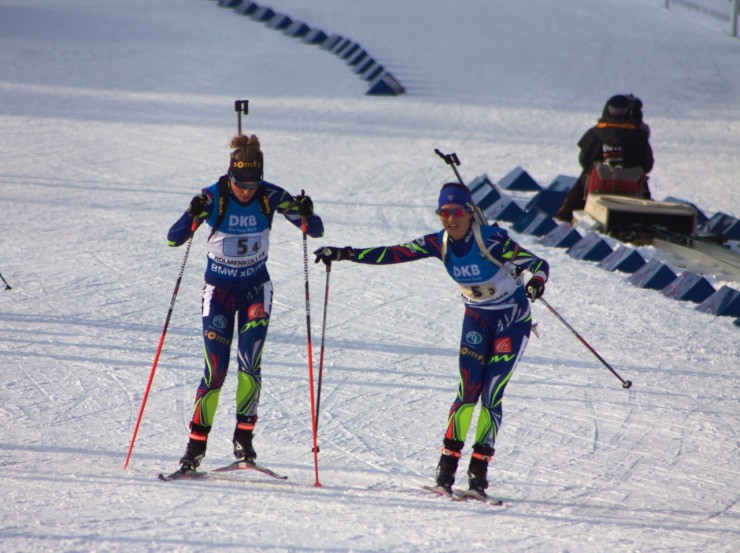
    Canada’s Julia Ransom (r), skiing with Romania’s Eva Tofalvi, during the first leg of the 4 x 6 k relay at 2016 IBU World Championships in Oslo, Norway. Ransom tagged off in 13th and Canada went on to place 15th. (Photo: JoJo Baldus)

    “Of course I would have loved to have cleaned a bout,” Ransom said. “But it was what it was. My legs are ready to have a bit of a break.”

    But she had done her job, as teammate Crawford would later say.

    “Julia did a great job, just 1+1 is good and taking off within 30 seconds is super-awesome,” Crawford said. “So she did her part. Everyone just has to do their part… with [relays and] mixed relays we [Julia and I] know how to do the first and second legs. I am confident and I trust Julia to lead us off with a good start.”

    As several women remarked, the start was particularly physical for a race in the women’s field. There were multiple crashes and broken poles, and Ransom had to hold her ground.

    “It was fun to be in the mix,” she said. “I love starting because it’s so different, and today especially was incredibly aggressive. A lot of elbows out there and stomping on poles. The girls had their talons out — I’ve started every relay this year, and every day there’s something new. There was one day that I broke a pole right off the start, another day that I crashed. I’m taking a little something from each race.”

    The physicality seemed to die down a bit on leg two, or at least return to normal levels. Crawford cleaned prone with no spare rounds to move up to ninth and inch seconds closer to the leaders, and then used just one spare round in standing and left the range in sixth.

    From there, Crawford went into attack mode.

    “On the top of the hill [behind the stadium] I caught back up to the lead group, and then I just decided that I felt good and you get a big rest after that, and I hammered a little bit to pass them,” Crawford said. “Catch up to third, and then down the hill my skis were running really well so I passed Germany and just tried to hold onto the front until I tagged off to Sarah [Beaudry].”

    Canada's Sarah Beaudry skiing the third leg of the women's 4 x 6 k relay at 2016 IBU World Championships. After being tagged in first, she came through the final exchange in ninth. (Photo: JoJo Baldus)
    Canada’s Sarah Beaudry skiing the third leg of the women’s 4 x 6 k relay at 2016 IBU World Championships. After being tagged in first, she came through the final exchange in ninth. (Photo: JoJo Baldus)

    For Beaudry, in her first-ever senior World Championships and about a week away from her 22nd birthday, receiving the tag in first place was something of a surprise.

    She also used another “s” word to describe it.

    “I don’t want to say scary, but wow, I wasn’t expecting this,” Beaudry said after finishing her leg of the relay. “The whole [first] loop, I was like‚ ‘Are they coming?’ I was skiing scared that someone might overtake me. I was happy I stayed in the front, and not just get completely annihilated in the first lap. It was too bad, because I came out after my prone not with anybody. I was trying to catch the two girls ahead of me.”

    Beaudry used two spares in prone, leaving the range in eighth, and then cleaned standing to move up to sixth. Her last loop was not without adversity.

    “I wasn’t feeling great on the skis,” she said. “Last lap it was really hard. And then the Italian girl [Alexia Runggaldier] passed me and then I crashed. That hurt quite a bit — I couldn’t get up and couldn’t keep skiing and was like ‘OW!’ But then I just got it in. Too bad going out with a lead, not that big but going out first, and then coming in in ninth.”

    Still, Beaudry didn’t feel as if skiing her first loop all alone out in front on the course had changed her pace or made her ski too fast. She was able to enjoy a bit of the atmosphere, even if it was stressful, and the adrenaline didn’t wreck her race.

    “It is typical for me to go out too quickly,” she laughed. “So that being said, I feel like I would have gone out at a similar pace anyway. Maybe I shouldn’t have gone this fast, but I mean, I probably shouldn’t have gone out this fast on any of my first laps this year. I wouldn’t say I did it differently because I was in the lead.”

    Despite Beaudry’s last-lap woes, Canada was still in ninth place and just under a minute and a half from the lead.

    After Zina Kocher took over and used all six spare rounds as well as skiing three penalty loops, they had dropped to 15th and finished 4:48.6 behind.

    Norway Wins at Home

    Norway's Tiril Eckhoff racing from ninth to first in the third leg of the women's 4 x 6 k relay at 2016 IBU World Championships in Oslo, Norway. (Photo: JoJo Baldus)
    Norway’s Tiril Eckhoff racing from ninth to first in the third leg of the women’s 4 x 6 k relay at 2016 IBU World Championships in Oslo, Norway. (Photo: JoJo Baldus)

    While Canada was slipping through the standings, Norway was rising, much to the delight of the Holmenkollen crowd. First and second skiers Synnøve Solemdal and Fanny Horn Birkeland had kept the team in contention, tagging off 13.4 and 12.4 seconds from the leaders, respectively.

    It was Tiril Eckhoff, the gold medalist from the sprint, who skied third for Norway and brought the team to the front.

    Eckhoff was ferocious, shooting perfectly and skiing the fastest time of all the third-leg skiers by 22 seconds over just six kilometers. She tagged off to Marte Olsbu with a 23.2-second lead.

    And like Beaudry before her, Olsbu was facing a pressure that she perhaps did not expect. Norway had finished no better than fifth in any women’s relay this season, and after dropping the race at the Presque Isle World Cup started today’s competition with bib 12.

    With a career-best week so far – in her second World Championships ever, she finished eleventh in the sprint and turned in a strong leg in the mixed relay – Olsbu was new to the anchor position, but the choice proved genius.

    Norway's anchor Marte Olsbu racing to the win  in the IBU World Championships 4 x 6 k relay at home in Oslo, Norway, holding off France's Marie Dorin Habert (behind) by 5.3 seconds. (Photo: JoJo Baldus)
    Norway’s anchor Marte Olsbu racing to the win in the IBU World Championships 4 x 6 k relay at home in Oslo, Norway, holding off France’s Marie Dorin Habert (behind) by 5.3 seconds. (Photo: JoJo Baldus)

    She used two spares in each stage, and was helped by errors from some of her competitors as well, allowing her to stay in the lead. Olsbu was able to hold on during the last loop despite a hard chase from Marie Dorin Habert of France, who had won gold in the 15 k individual just two days before and is widely acknowledged to be one of the most fearsome skiers on the circuit.

    When asked by the IBU’s Jerry Kokesh if they were ever worried that they would not win gold, Olsbu raised her eyes wide and said, “I was!”

    “I just went as fast as I could on the last loop, and I was so happy when I crossed the finish line in first,” Olsbu, who ended up with just a 5.3 second margin ahead of Dorin Habert, said in the press conference.

    Of all the gold medals at World Championships, this was one that Norway did not expect to win. The women were ecstatic that they could pull it off.

    “Last time we were big favorites,” Solemdal said of her role in the team’s 2013 World Championships gold medal with Tora Berger and Ann Kristin Flatland. “And this time we were not good at all. So I feel like it’s, we have worked so hard the whole team, for such a long time to be good in the relay. For me it’s the greatest feeling to take home the gold at home in Oslo.”

    — Harald Zimmer contributed reporting.

    Results