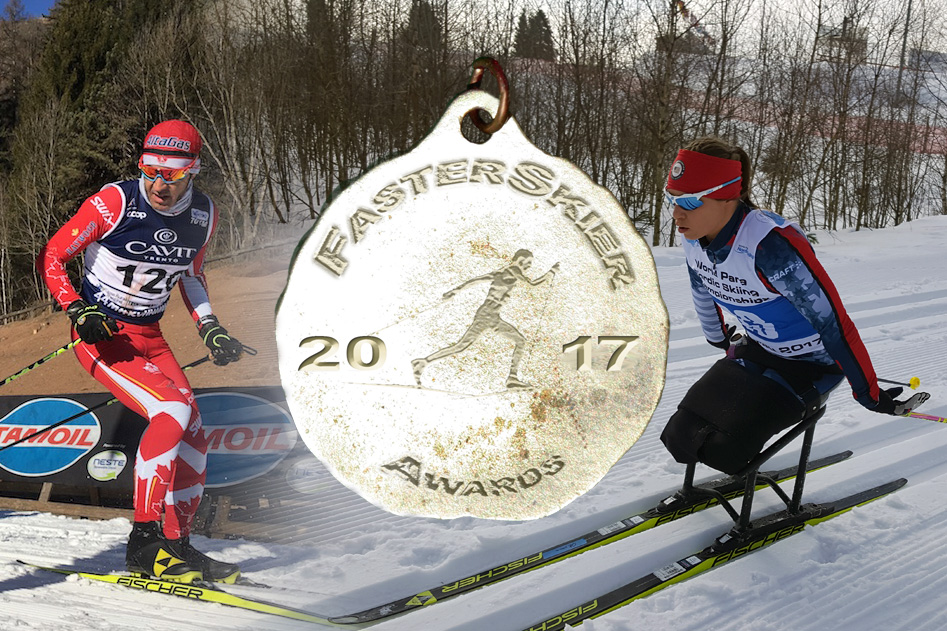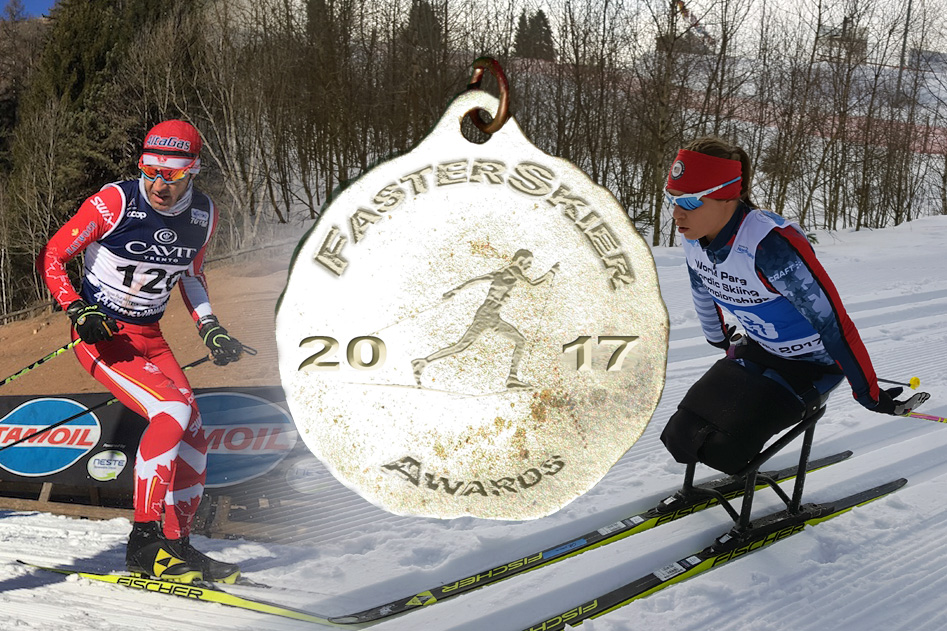
Tag: FasterSkier Awards

  • FasterSkier’s 2017 Performances of the Year

    FasterSkier’s 2017 Performances of the Year

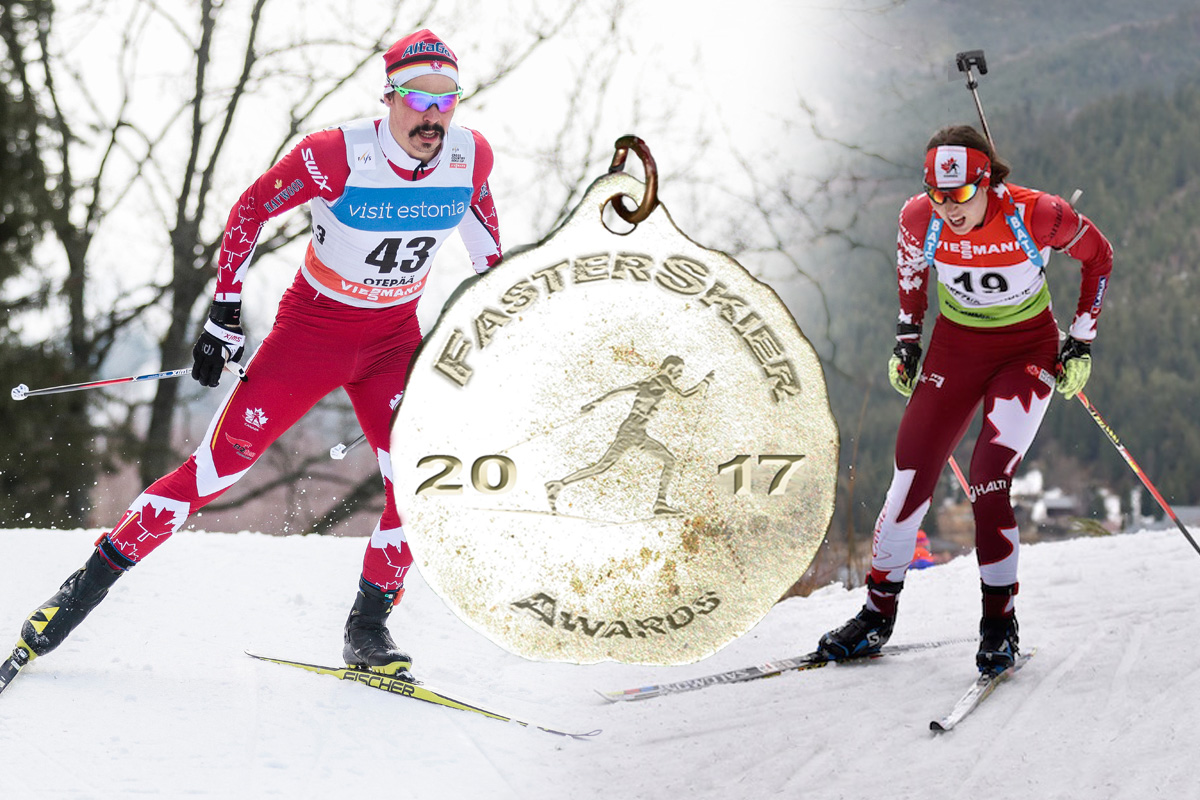
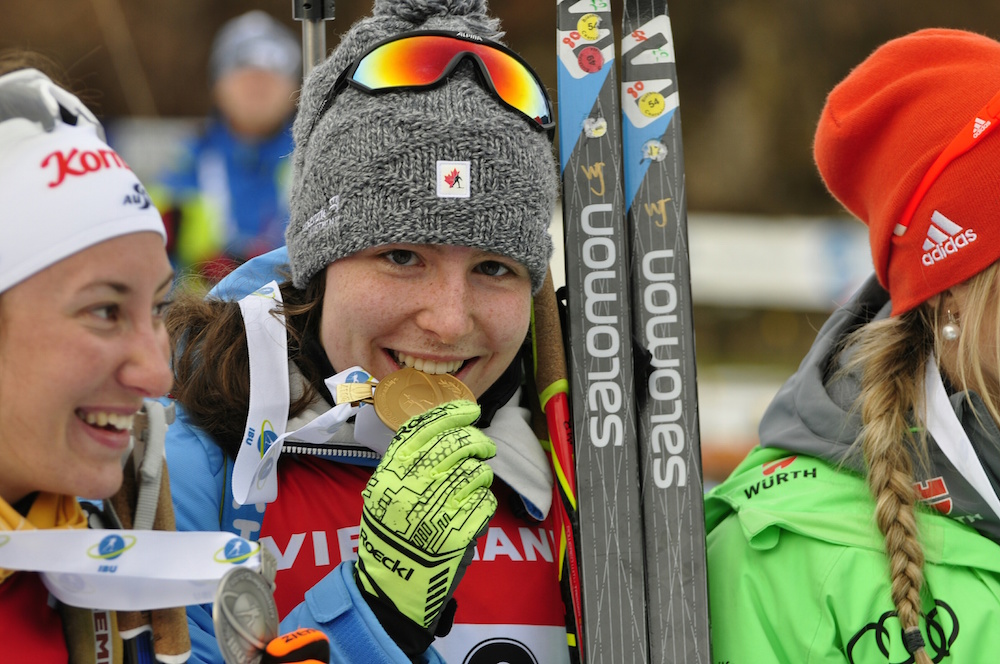
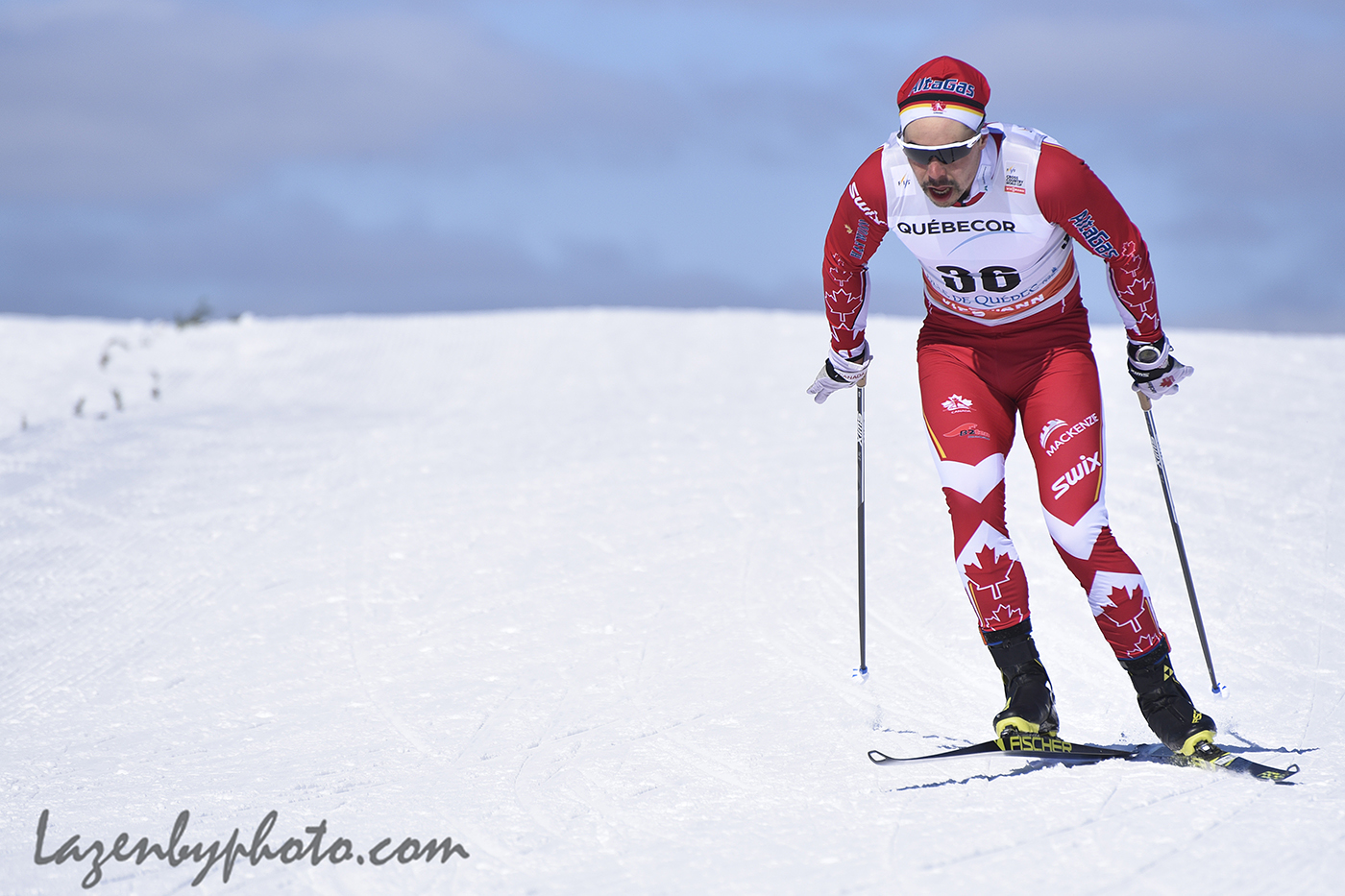
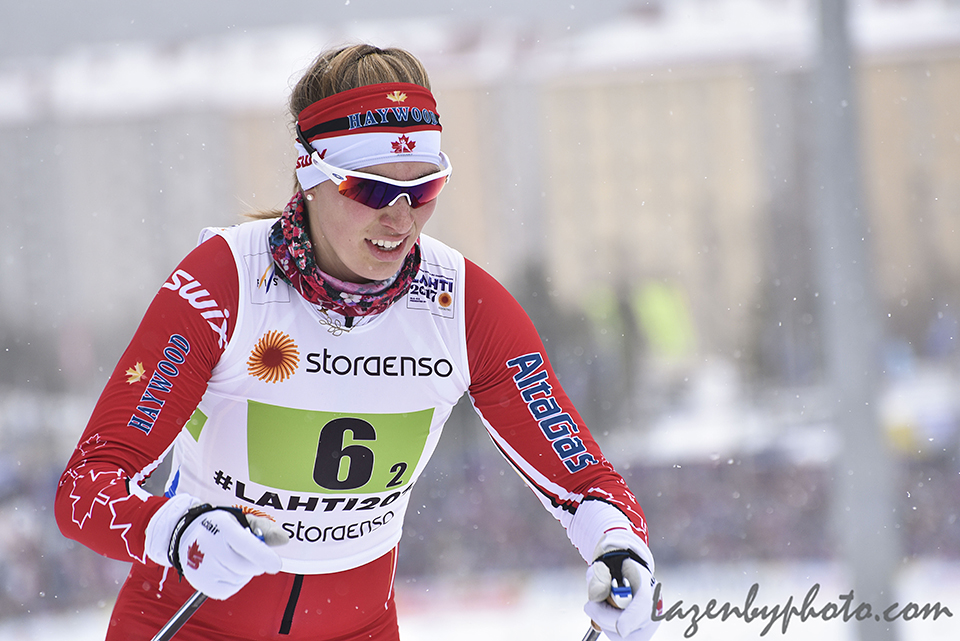
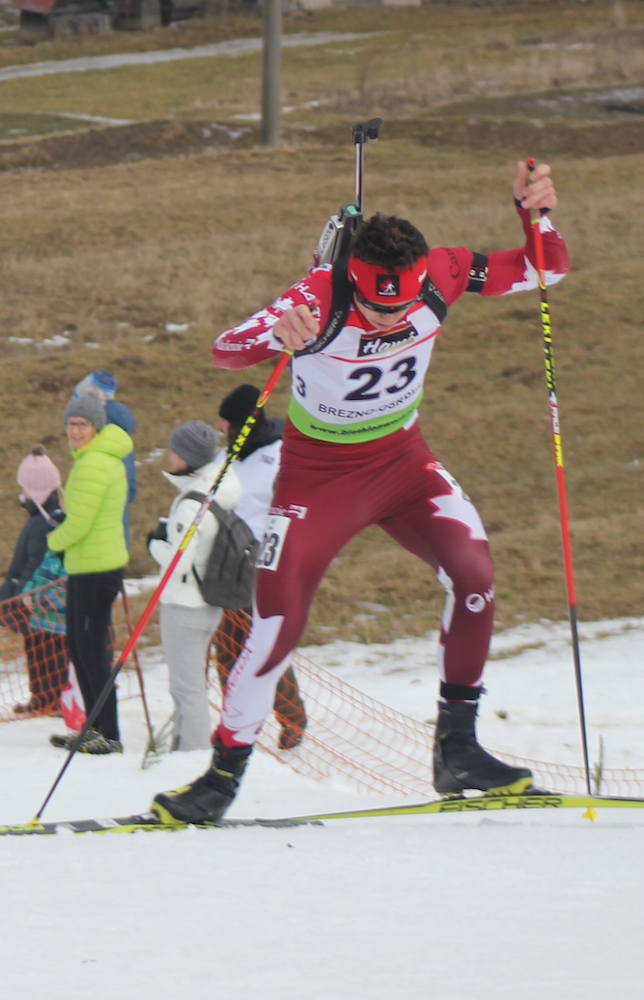
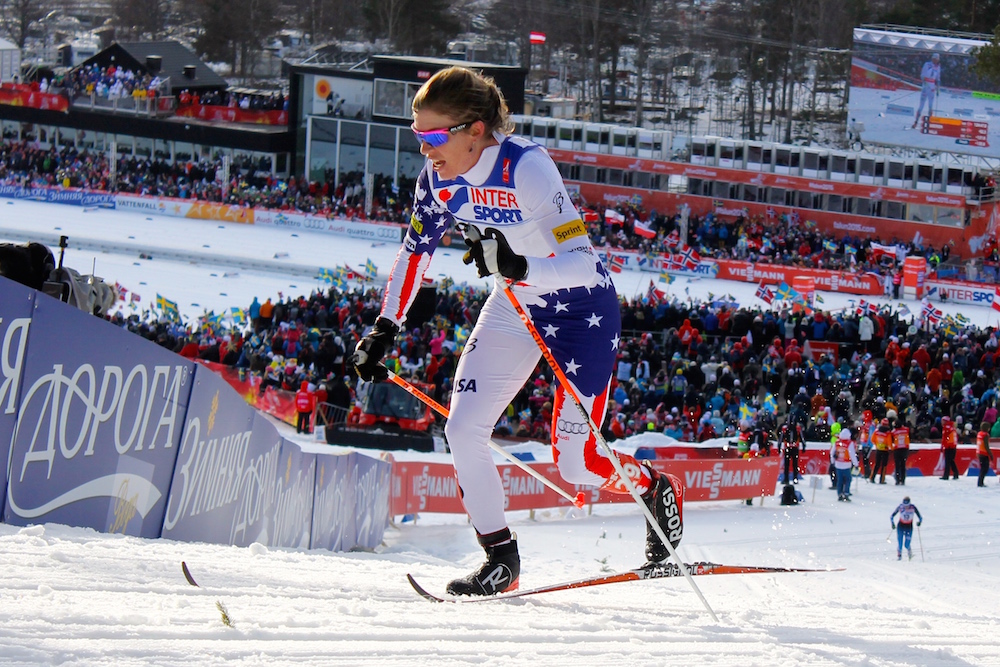
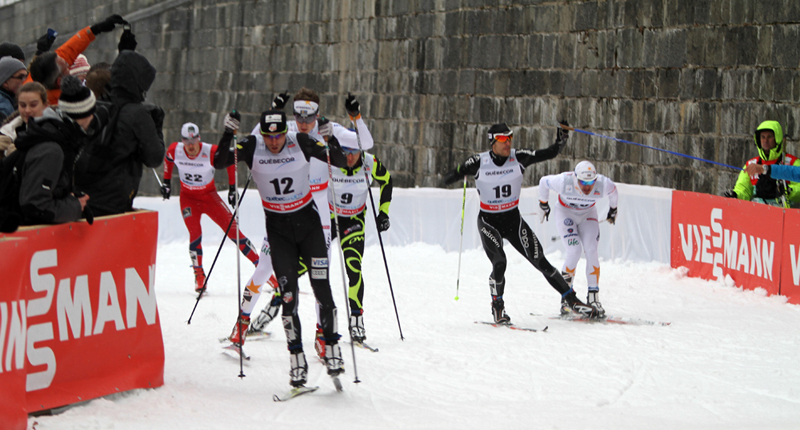
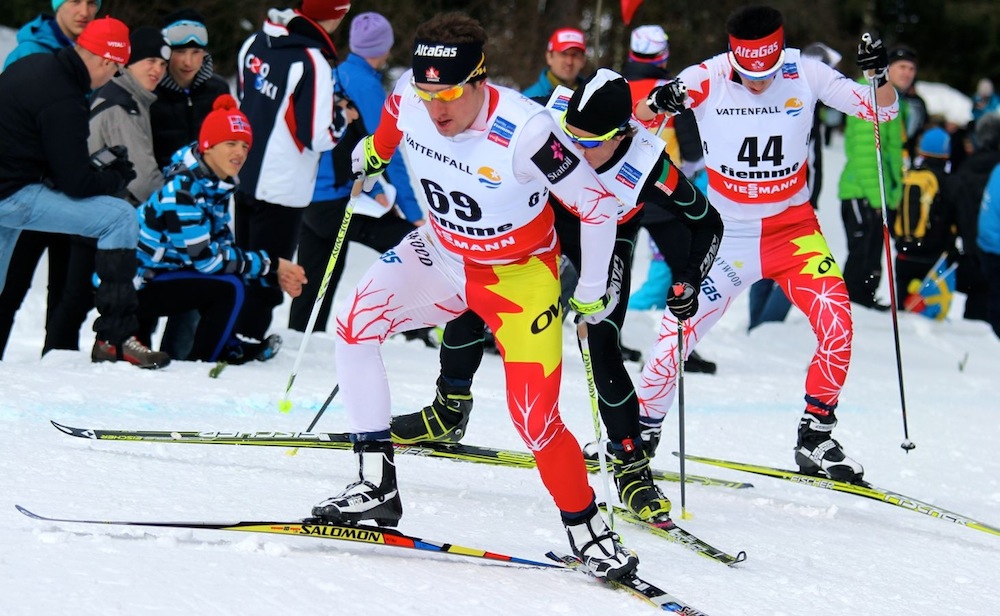
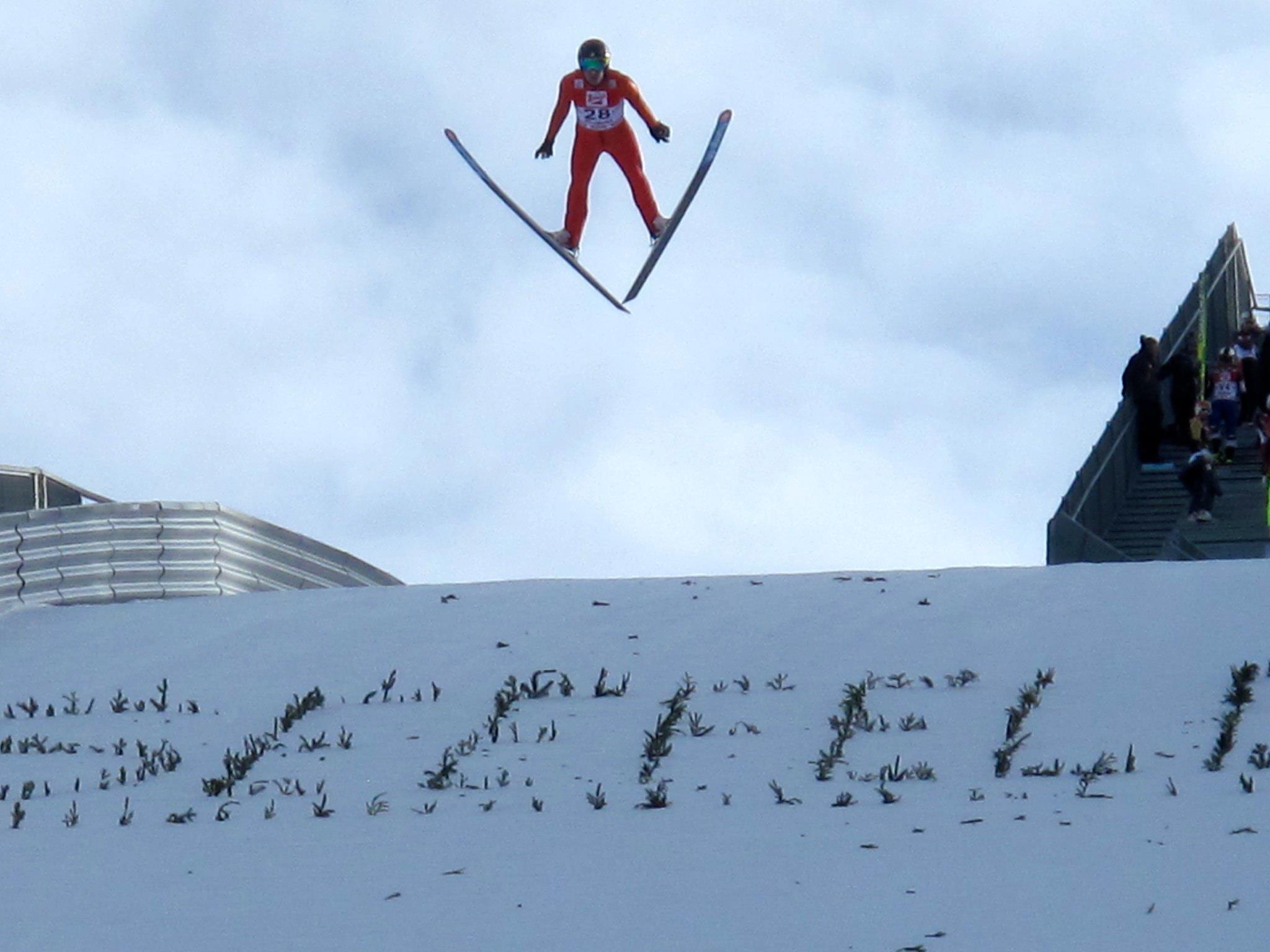
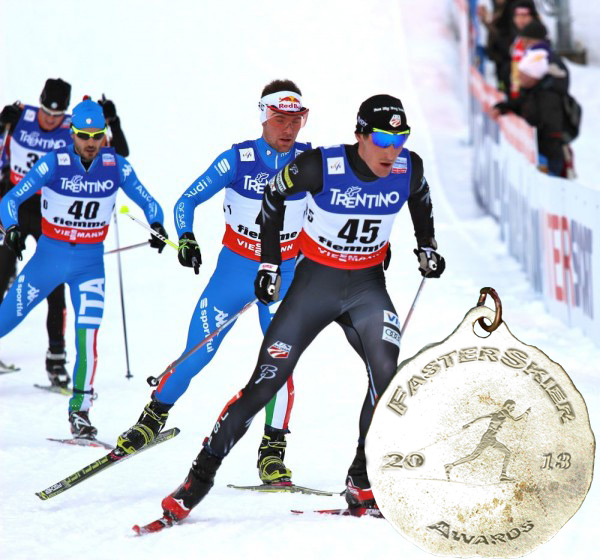
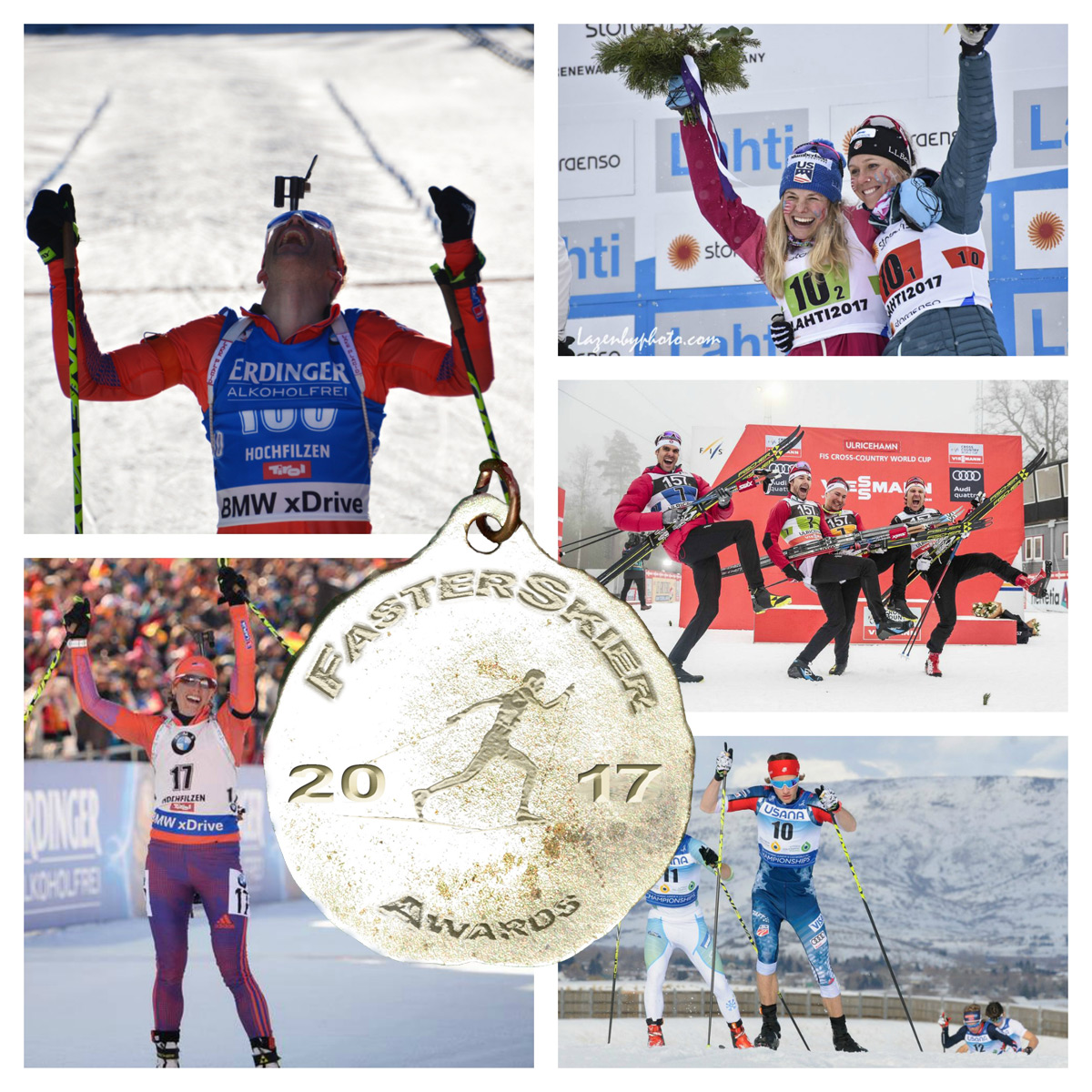
    FasterSkier’s Performances of the Year (clockwise, from upper right): Jessie Diggins and Sadie Bjornsen placing third in the FIS World Championships team sprint (Photo: John Lazenby/Lazenbyphoto.com), Canadian men’s relay placing third in Ulricehamn World Cup (Salomon/NordicFocus), Ben Loomis placing ninth at Junior World Championships (U.S. Ski Team/Tom Kelly), Susan Dunklee placing second at IBU World Championships (USBA/NordicFocus), and Lowell Bailey becoming the first American to win gold at IBU World Championships (Glen Crawford).

    This is it — the final award in our 2016/2017 awards series. Votes stemmed from the FS staff, scattered across the U.S., Canada, and Europe, and while not scientific, they’re intended to reflect a broader sense of the season in review. This honor goes to outstanding North American performances of the year across various nordic sports.

    Previous categories: Junior Skiers of the Year | Collegiate | Canadian Continental | U.S. Continental | Nordic Combined | Biathletes | Para-Nordic | Canadian BreakthroughsU.S. Breakthroughs | Coach | International | Cross-Country 

    ***

    Lowell Bailey (US Biathlon): Individual gold at IBU World Championships 

    When Lowell Bailey won the 20-kilometer individual at 2017 IBU World Championships, it was by about a slim margin as he could get away with: 3.3 seconds in a 48-minute race.

    What made his performance legendary wasn’t just that Bailey became the first American biathlete to ever earn the title of world champion. It was the way he did it: perfect 20-for-20 shooting, digging deep on his skis, rising to the meet the pressure of a nailbiter of a competition, and sealing the win with aggressive skiing on the final downhill into the stadium.

    Lowell Bailey (US Biathlon) racing to gold in the men’s 20 k individual at 2017 IBU World Championships on Feb. 16 in Hochfilzen, Germany. (Photo: USBA/NordicFocus)

    “In my mind, that was where the race began, the second I left the mat,” Bailey said of cleaning his 20th target.

    Watching from the finish line was the Czech Republic’s Ondřej Moravec, who had started with an earlier bib, also cleaned all 20 targets, and held a 6.4-second lead as Bailey left the range. It also would have been the first world title for Moravec, who had a gold relay medal but never an individual of his very own. The Czech — a veteran journeyman just like Bailey — shook his head and laughed as he watched his fate hang in the balance on the big screen.

    The 20 k individual is often nobody’s favorite race. It’s hard to keep track of what’s happening, with each athlete going through four shooting bouts and a seemingly interminable amount of skiing. The individual-start affair takes nearly two hours from first start to last finish. There are only a few on the World Cup schedule each year and persistent rumors that the format will be eliminated.

    But Bailey, Moravec, and their competitors proved that the individual can be as exciting as anything in the sports world.

    With just about a kilometer to go, Bailey had a tenth of a second on Moravec’s time. The stadium announcer asked the fans to cheer him around the last bit of the race course and they responded with a deafening roar.

    “Every hundred meters it was a sprint,” Bailey said. “Every hundred meters was ‘go as hard as you can for this hundred meters, and then when you get to the end of that hundred meters, go as hard as you can and just keep doing that.’ I thought the finish line was never going to come. I was just like, I don’t know how much longer I can do this, because the finish line is just not showing up.”

    It did, and Bailey had done it. The first American world champion let out a scream. He was mobbed by the press afterwards and his performance became one of the defining moments of the World Championships.

    “I know how important it really is for biathlon,” World Cup overall champion Martin Fourcade said of Bailey’s gold medal. “To see some people outside of Europe winning. I think that is the most we can do to make our sport bigger. I cannot be more satisfied about the guy winning today.”

    Susan Dunklee (US Biathlon): Mass-start silver at IBU World Championships 

    A few days later, Bailey’s teammate Susan Dunklee matched his 20-for-20 shooting and left the shooting range in the 12.5 k mass start with the race lead.

    American Susan Dunklee leaving the range first after the final shooting stage of the women’s 12.5 k mass start at IBU World Championships in Hochfilzen, Austria. She went on to place second for her first World Championships medal and the best result of a U.S. female biathlete at World Championships. (Photo: USBA/NordicFocus)

    In the final kilometers, she was caught and passed by Germany’s Laura Dahlmeier, the most successful athlete of the Championships who took home five gold medals. But her fifth and last one did not come easily: the pair were among the only women to shoot perfectly, and Dahlmeier had to chase hard on the last loop. In the end, Dunklee crossed the line 4.6 seconds after the German and won a silver medal, the first individual medal ever by a U.S. woman at a World Championships.

    “I had a feeling that [Dahlmeier] would catch me, because it is a lot easier when you are hunting than being hunted,” Dunklee said of not being able to follow the German and thus missing out on gold. “Unfortunately I didn’t quite have that today, but I am pretty happy with the race and it gives me something to aim for in the future.”

    While Dahlmeier was faster on her skis, Dunklee was the fastest on the shooting range, and it wasn’t even close. From the first bout of the race, she knocked down her targets in blazing fashion. That allowed her to leave the range first time after time, and set out around the course at her own pace. By the time she came to the last shooting stage, it seemed almost impossible that she could miss; a totally electric performance.

    “You have to get to the point where you trust that speed is better than shooting slow,” she said of her shooting training. “That takes a long time… today it worked.”

    Jessie Diggins and Sadie Bjornsen (U.S. Ski Team): Classic team sprint bronze at FIS World Championships 

    Jessie Diggins and Sadie Bjornsen gave us all a glimpse of what was to come when they finished first and third, respectively, in the women’s 5 k freestyle during the Tour de Ski in Toblach, Italy. That was Bjornsen’s first individual podium and Diggins’s third. Less than two months later, they returned to the podium together, this time in a team event at World Championships nonetheless. Bjornsen started first for the two-woman squad in the 6 x 1.3 k classic team sprint in Lahti, Finland, and Diggins anchored, skiing from fifth to third on the final lap and overtaking Sweden’s Stina Nilsson in the finishing stretch.
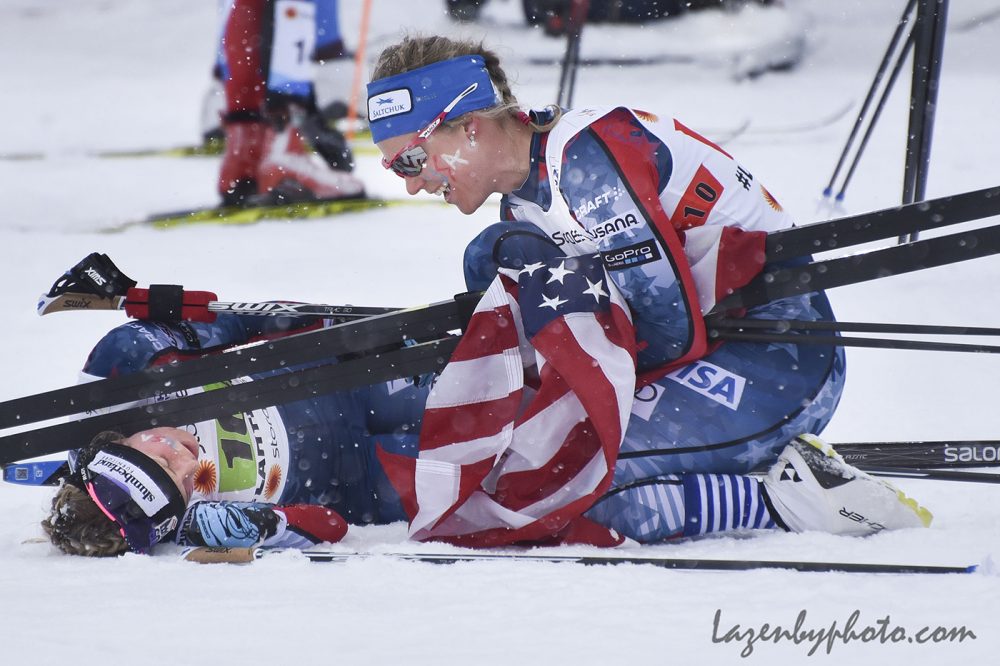
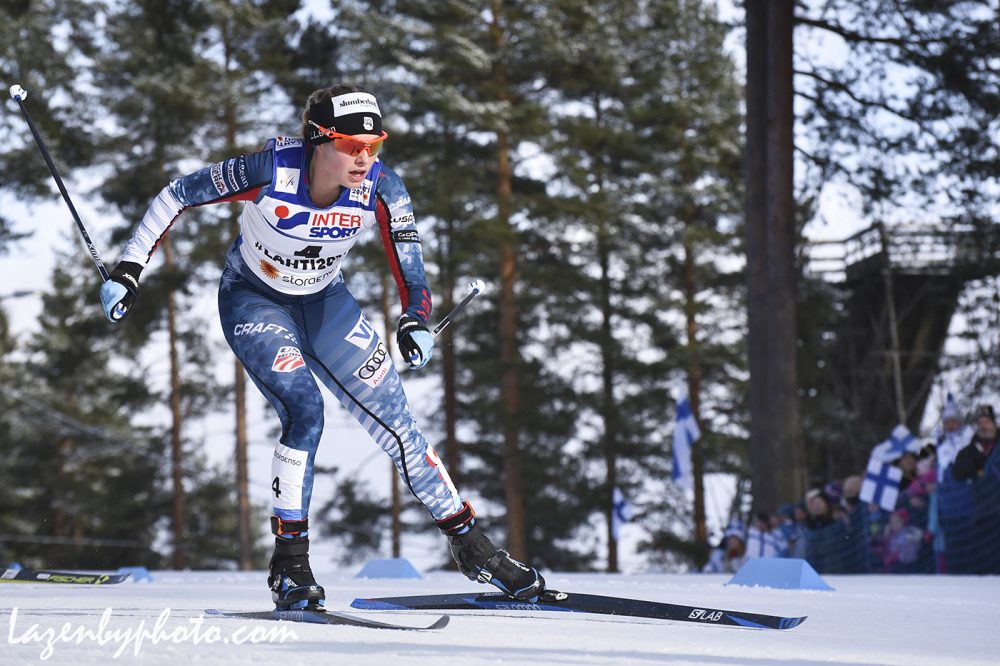
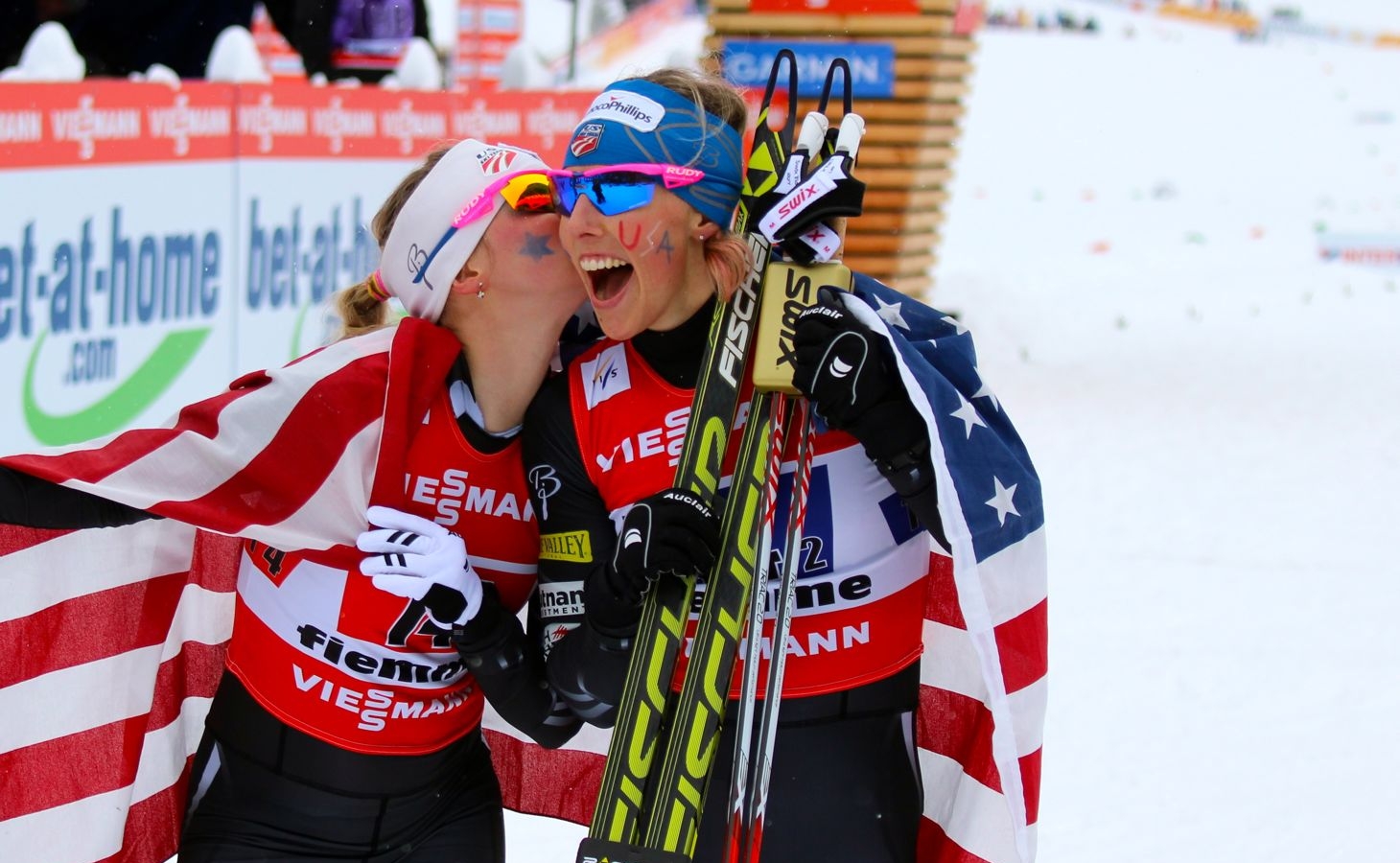
    Sadie Bjornsen (r) greets her U.S. teammate Jessie Diggins after Diggins outlunged Sweden’s Stina Nilsson (not shown) for the bronze medal in the women’s 6 x 1.3-kilometer classic team sprint at 2017 Nordic World Championships in Lahti, Finland. (Photo: John Lazenby/Lazenbyphoto.com)

    Diggins edged Nilsson by 0.19 seconds for the final spot on the podium. Following Diggins’s freestyle team sprint gold, which she won with Kikkan Randall at 2013 World Championships, bronze is the U.S. team’s next-best result. The medal was Diggins’s fourth at a World Championships (and second of the week in Lahti, Finland) and Bjornsen’s first.

    “I have been dreaming to be on a team sprint at World Championships or Olympics for a while now and it’s so cool to finally be here,” Bjornsen said afterward. “I think it’s finally sinking in, because I feel like I just wanna cry.”

    Out of all of the first-leg skiers in the final, Bjornsen posted the fastest splits on her first and second laps.

    While Diggins had previously taken silver earlier in the week in the 2017 World Championships skate sprint (and earned silver two years ago in the 2015 world champs 10 k skate), this was her first classic medal.

    “For me, this is one of the most exciting ones because, as Sadie said, it’s in classic,” Diggins said.

    In all, the U.S. team took home four medals from 2017 World Championships: two in the skate sprint (where Diggins placed second and Randall finished third), and technically two from the classic team sprint (one each for Diggins and Bjornsen).

    “This was an event that, in April, we talked about as an outside medal shot,” U.S. Ski Team Women’s Coach Matt Whitcomb said. “With that in mind, the team started brainstorming of a way of ‘coming from some sort of surprising attack’ when the time came in Lahti.”

    He explained that they didn’t select the team-sprint duo until about 12 hours before the race.

    “We had [Bjornsen] specifically skip the skiathlon because we thought with a little extra rest, she could be that much sharper,” Whitcomb said. Diggins ended up dropping out of the skiathlon to rest up for the team sprint the next day.

    “But we had four other women that were up for serious consideration for this spot and we didn’t make the call until yesterday afternoon at 2:25 p.m.,” he added. “[Bjornsen and Diggins] felt the pressure of being selected for this team and … they’ve awarded everybody that could have been on it.”

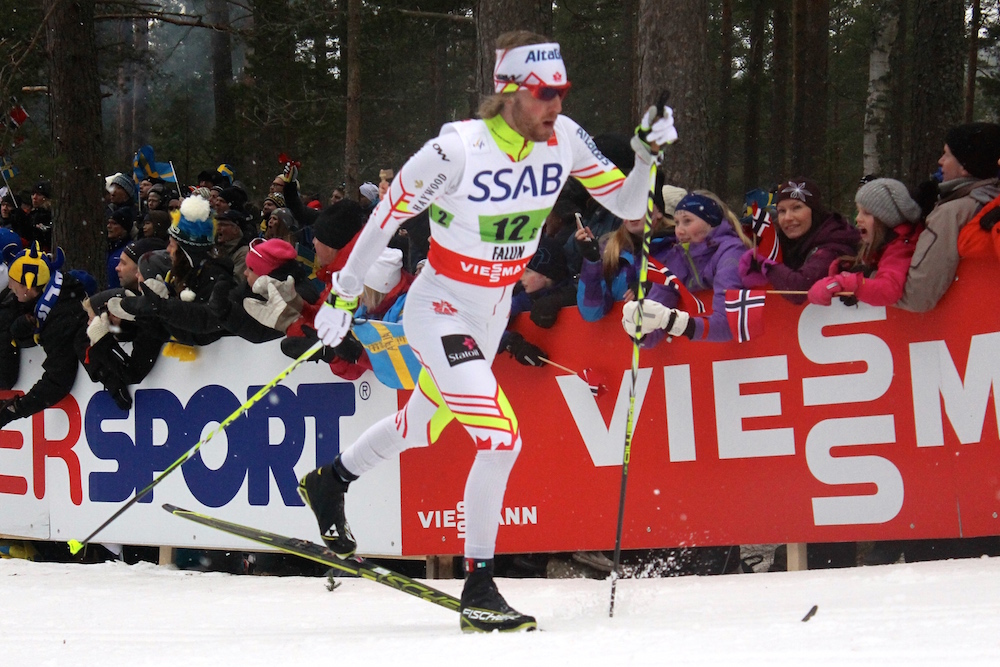
    Canadian men’s relay: Bronze at Ulricehamn World Cup

    On Jan. 15, Len Valjas returned to the World Cup podium for the first time in four years. He won the freestyle team sprint in Toblach with teammate Alex Harvey, marking Valjas’s first World Cup win and sixth career podium.
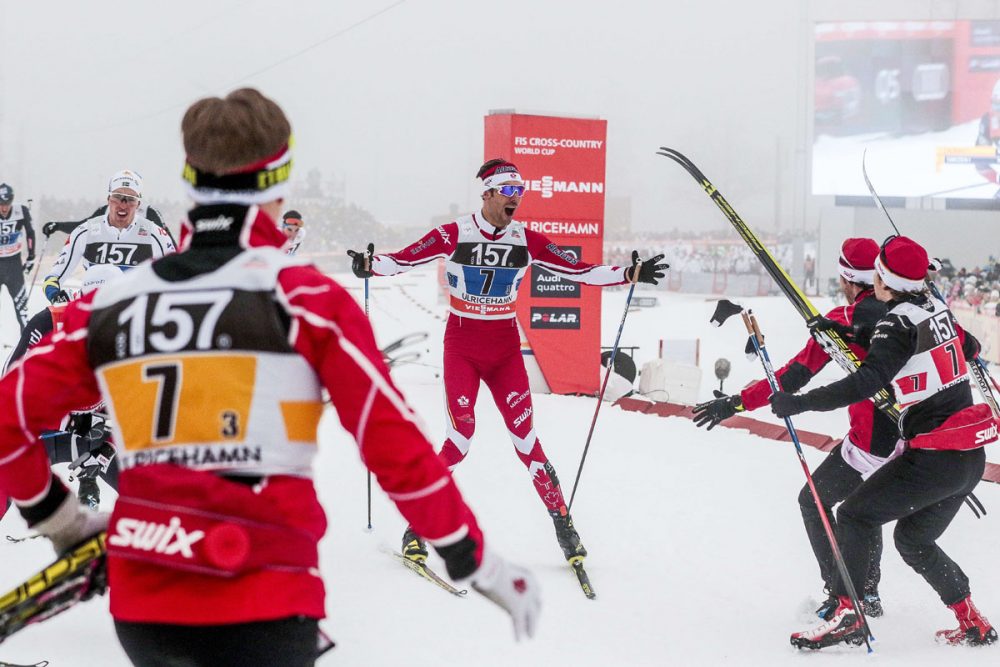
    Len Valjas (c) is greeted by his teammates Alex Harvey (far right), Knute Johnsgaard (far left) and Devon Kershaw after he anchored their team to third in the men’s 4 x 7.5-kilometer team relay for a team best in Ulricehamn, Sweden. (Photo: Fischer/NordicFocus)

    One week later, Valjas anchored his team’s 4 x 7.5 k relay to third at the World Cup in Ulricehamn, Sweden, for the best-ever Canadian men’s relay result. The program’s previous best was fifth in 2012.

    “We barely assembled one team, but that team made a miracle today, so we only needed one,” Canadian World Cup coach Ivan Babikov said after the Ulricehamn relay medal. Babikov competed on Canada’s 2012 relay team, retiring just last spring and transitioning to coaching.

    “I’ll never forget this day,” he added. “We’ve had individual podiums and individual medals, but the relay is special because it’s a show of strength for the whole team and the whole staff behind this team.”

    The four-man squad included veteran World Cup skiers Devon Kershaw and Harvey, as well as U25 national team member Knute Johnsgaard, who flew to Sweden just a few days before the event. By the first exchange, Kershaw put the Canadians in third, just 0.7 seconds out of first. Harvey went on to tag Johnsgaard 3.5 seconds back in fifth, and Johnsgaard as the third leg kept the team within striking distance in seventh, 5 seconds out of first.

    Over the final 7.5 k, Valjas raced his team into not just podium contention, but a threat for second place as well.

    “On the last lap, I was totally blocked on the hill, so I couldn’t actually empty the tank, which was probably a good thing for me,” Valjas recalled. “And then just after the hill I built up some speed, and passed five or six guys just double poling.”

    With about 300 meters to go, Valjas was up to second place behind Sweden’s Calle Halfvarsson in first. Norway’s Finn Hågen Krogh slipped past both of them on the final corner, leaving Valjas and Halfvarsson to duke it out for silver. The Swede took it and Valjas claimed third, 1.3 seconds ahead of Switzerland’s Curdin Perl in fourth, and the Canadian team was ecstatic.

    “I’ve never been the anchor in a relay,” Valjas explained. “I’ve been the second leg in some team sprints, but today was special, the best feeling I’ve ever had skiing, seeing my three teammates sprinting towards me at the finish line. I don’t think anything will ever top that, the first relay [podium] for Canada.”

    Harvey as the the team’s lone fully funded athlete explained that the relay medal could give the rest of his team a significant financial boost.

    “Because the results over the last couple of years internationally have been not stellar as a team, a lot of funding was cut for us,” Harvey explained after the race. “I think this result will really help those guys to be fully funded again.”

    Ben Loomis (U.S. Nordic Combined Team): Ninth at Junior World Championships
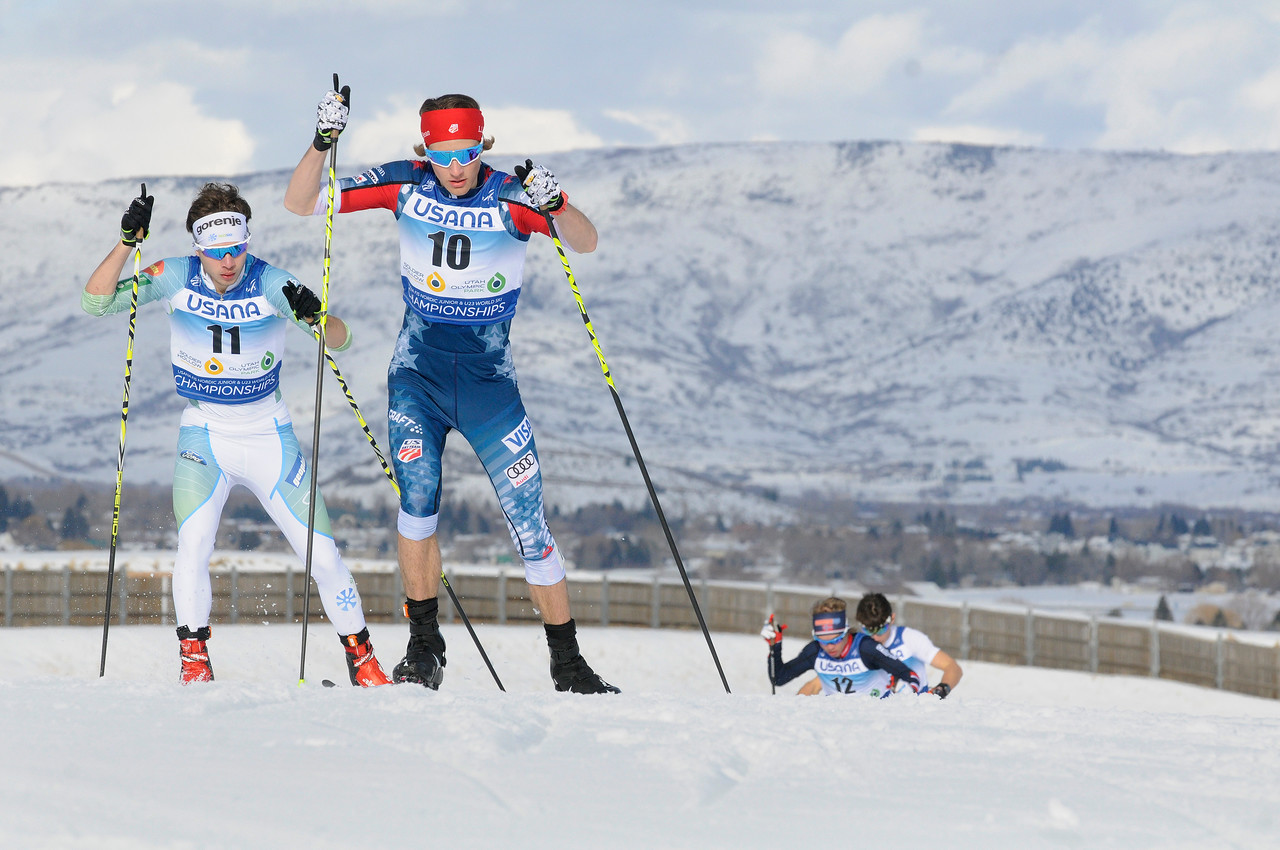
    American Ben Loomis (10) leading Slovenia’s Vid Vrhovnik (11) during the individual normal hill/5 k competition on Feb. 4 at Nordic Combined Junior World Championships at Soldier Hollow in Midway, Utah. Loomis finished ninth for a career best in his third Junior Worlds. (Photo: U.S. Ski Team/Tom Kelly)

    Out of the six U.S. nordic-combined skiers at 2017 Nordic Junior World Championships in Park City and Midway, Utah, came three top-10 results. Individually, 18-year-old Ben Loomis led the team in ninth after 16-year-old Stephen Schumann broke through earlier in the week in 10th in the normal hill/10 k.

    Together, the teammates raced to seventh in the 4 x 5 k relay, along with Elijah Vargas and Grant Andrews. Loomis moved the team from ninth to seventh on the third leg, and Schumann anchored them to seventh, 2:10 minutes behind Austria in first.

    Two days later, Loomis posted his first top 10 in his third Junior World Championships, finishing ninth in the individual normal-hill/5 k. He started the day by jumping to 10th out of nearly 50 competitors then picked off one place in the shorter-format race before the finish.

    “I was able to stay relaxed, focused and have my best competition jump of the week,” Loomis wrote in an email afterward. “The home hill advantage made a huge difference in my jumping. Prior to this week, I had little jumps on the hill this winter. Luckily, I know the hill well and was able to get in rhythm with the jump very quickly.”

    Loomis hails from Eau Claire, Wis., a town that actually does have ski-jumping facilities, he explained in an “Under 23 Questions” interview before the championships. He is currently based in Park City, where he trains with his older brother Adam.

    In the final competition of 2017 Junior Worlds, he was one of two U.S. men in the top 15. Schumann followed in 15th, racing up from his 20th-ranked jump.

    “Overall, I am very happy with my 9th place result,” Loomis wrote. “I was hoping for a little more, but to be 9th in the world is very special. I am already looking forward to next year’s competitions and approaching them with even more experience.”


  • FasterSkier’s Cross-Country Skiers of the Year: Alex Harvey & Jessie Diggins

    FasterSkier’s Cross-Country Skiers of the Year: Alex Harvey & Jessie Diggins

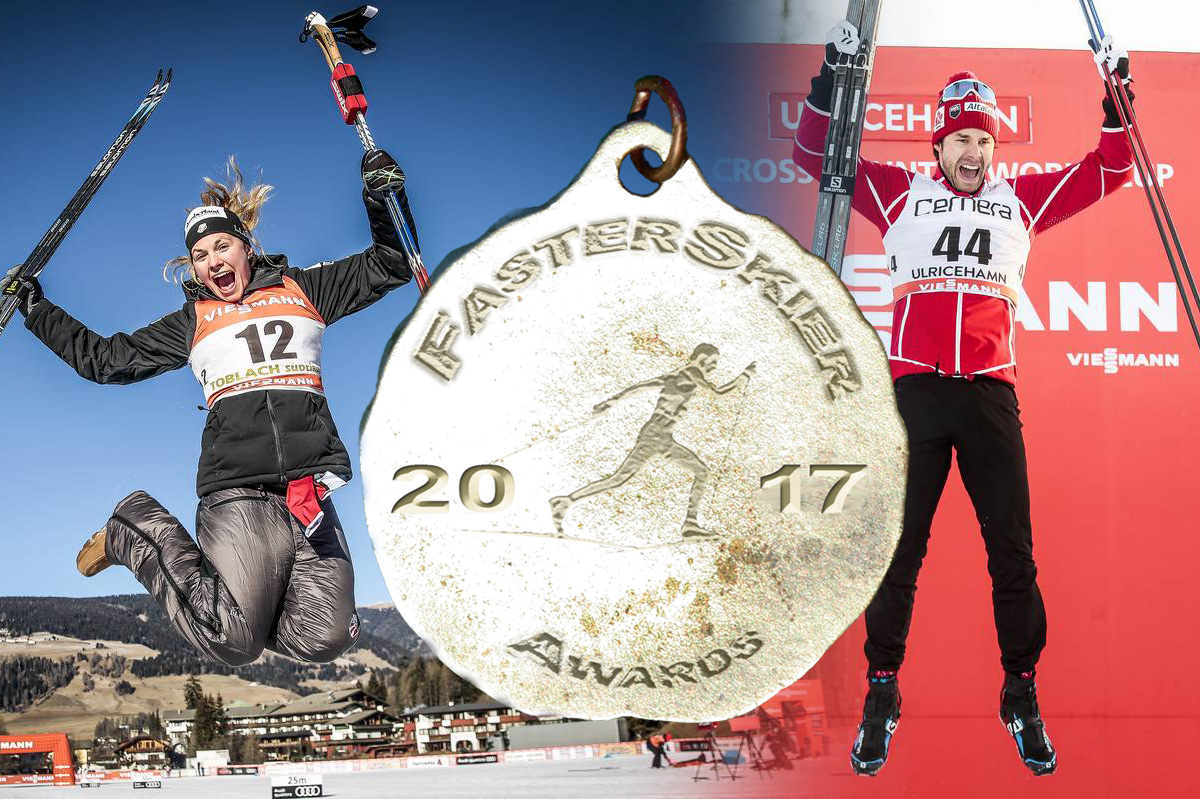
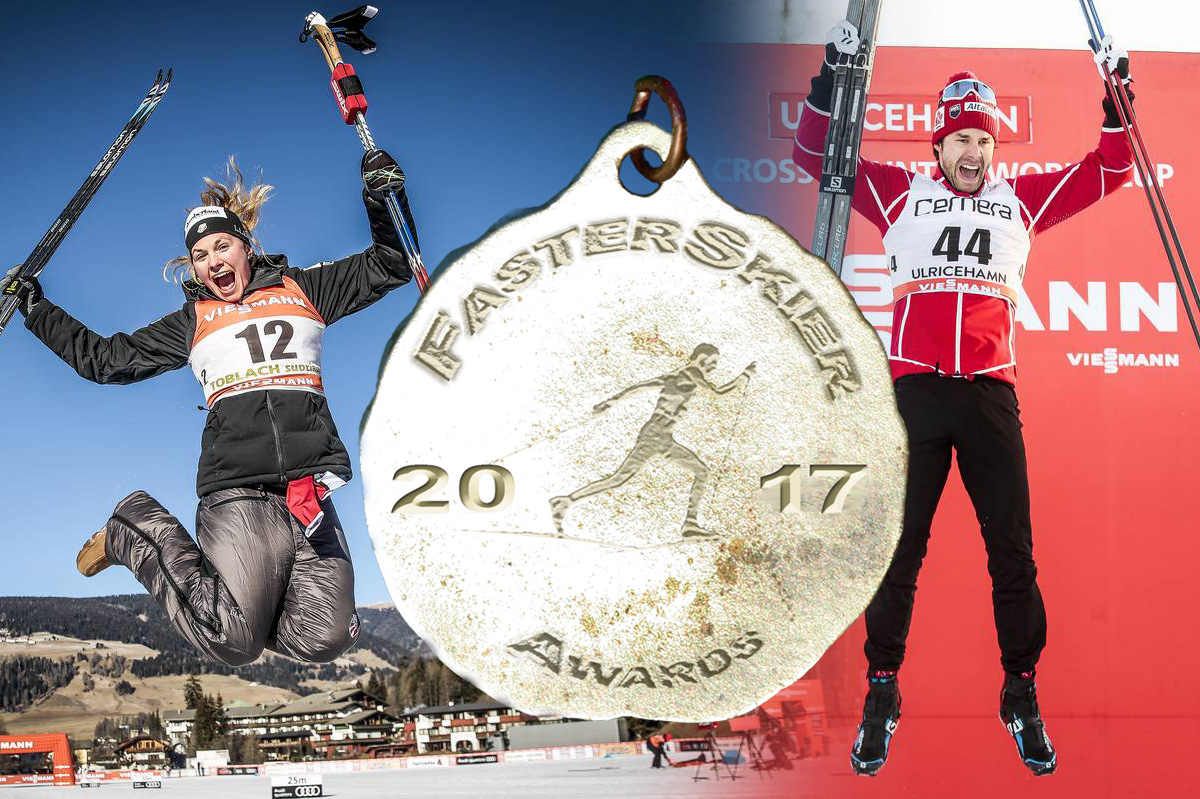
    Jessie Diggins (U.S. Ski Team) and Alex Harvey (Canadian World Cup Team) are FasterSkier’s North American Cross-Country Skiers of the Year. (Photos: Salomon/NordicFocus)

    With the 2016/2017 season officially in the rearview, FasterSkier is excited to unveil its annual award winners for this past winter. Votes stem from the FS staff, scattered across the U.S., Canada, and Europe, and while not scientific, they are intended to reflect a broader sense of the season in review. This honor goes to two outstanding North American skiers of the year. 

    Previous categories: Junior Skiers of the Year | Collegiate | Canadian Continental | U.S. Continental | Nordic Combined | Biathletes | Para-Nordic | Canadian BreakthroughsU.S. Breakthroughs | Coach | International

    ***

    Alex Harvey and Jessie Diggins are FasterSkier’s North American Cross-County Skiers of the Year. Sound familiar? No, you’re not going crazy; these are the same winners as last year.

    But this is only repeat in the sense that both athletes earned this award as standout North American World Cup skiers. They didn’t have identical seasons as last year; in fact, they continued to outdo themselves.

    Alex Harvey, Canadian World Cup Team/Pierre Harvey National Training Centre

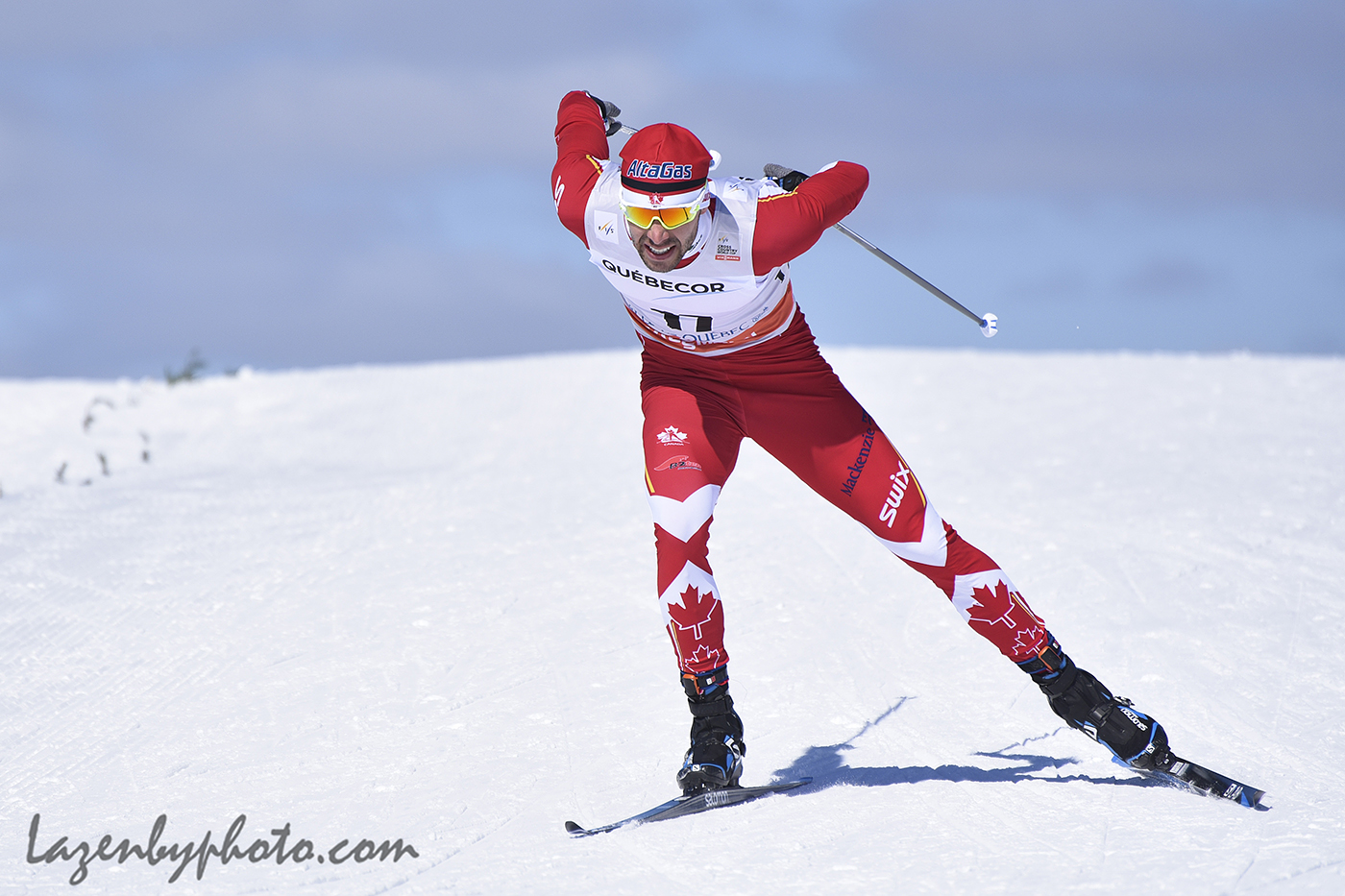
    Alex Harvey (Canadian World Cup Team) racing to fourth in the men’s freestyle sprint qualifier on the first day of World Cup Finals on March 17 in Quebec City. He went on to win the final. (Photo: John Lazenby/Lazenbyphoto.com)

    If it weren’t for Martin Johnsrud Sundby and Sergey Ustiugov, Canada’s Alex Harvey could easily have been tapped for International Skier of the Year. The 28-year-old Quebec native finished third in the Overall World Cup and second in the Distance World Cup. He had been third overall once before — in 2014 — but two end-of-season World Cup podiums? That was something to write home about.

    Fortunately for Harvey, he was already right at home in Quebec City, where World Cup Finals were held March 17-19. There, he won the skate sprint to start the mini tour and raced to second in the 15-kilometer freestyle pursuit, putting him second in the mini tour. Over the course of the season, Harvey accumulated two regular-season individual World Cup victories and six podiums (including a freestyle team-sprint win with Lenny Valjas and 4 x 7.5 k relay bronze with Valjas, Devon Kershaw and Knute Johnsgaard). He placed seventh in the Tour de Ski for his best overall finish in the multi-stage event.

    Oh, and at World Championships, Harvey won the 50 k freestyle mass start, which stood as his first individual championships gold medal and his fifth medal total in four World Championships.

    Asked about his confidence ahead of next year’s Winter Olympics in PyeongChang, South Korea, Harvey told reporters on the last day of World Cup Finals he was “really confident, especially with [being] able to win a gold medal at world champs. It was the last race of the championships, so it was like, in French we say, quarter before midnight, it was just last chance to dance. … The team believed in me and I believed in the team and we were able to deliver on the last day so I think that itself gives me a lot of confidence for PyeongChang.”

    As for his overall World Cup finish, he said that had been a season-long focus.

    “Even though it’s not the win, it’s not the Crystal Globe, it still means a lot to me because we are on the road the whole winter,” he told reporters. “It’s a lot for me, and for the whole team. It means you can’t miss the skis too often in the season, can’t allow yourself to get sick or have a big dip in form, so that’s really important for me to be able to be third in the overall.”

    Jessie Diggins, U.S. Ski Team/Stratton Mountain School T2 Team

    Jessie Diggins (U.S. Ski Team) racing to fifth in the women’s 30 k freestyle mass start at the 2017 Nordic World Championships in Lahti, Finland. (Photo: John Lazenby/Lazenbyphoto.com)

    On the second weekend of the World Cup season, American Jessie Diggins scored her first win of 2016/2017 — in the 5 k freestyle in Lillehammer, Norway. It had been one of several events she had been eyeing for the season, and on Dec. 3, she delivered, beating Norway’s Heidi Weng and Marit Bjørgen for the top step on the podium.

    It was the second individual win of her career, with the other coming in a 5 k freestyle in Toblach, Italy, the year before. Almost exactly a year from the date of her first win, Diggins did it again in the 2017 edition of the 5 k skate in Toblach for her third-career individual win. She also proved herself an all-around contender in the 10 k skiathlon in Oberstdorf, Germany, a few days earlier, where she placed second in the third stage of the Tour de Ski.

    The 25-year-old Minnesota native went on to finish fifth in the Tour de Ski (tying the best American result in the Tour), and at Lahti World Championships, she captured two medals — silver in the skate sprint and bronze in the classic team sprint with Sadie Bjornsen — for her third and fourth career World Championships medals.

    “For me, this is one of the most exciting ones because … it’s in classic,” Diggins told FasterSkier after her team-sprint bronze. “And I don’t want to be just a skater, or just a 5 k skater. I want to be able to do it all, and do it with my team and do it for the team. So this is really pretty special for us.”

    Diggins ended the season with a four-race sweep of the SuperTour Finals/U.S. Distance Nationals in Fairbanks, Alaska, winning the 15 k skiathlon, skate sprint, mixed relay (with three Stratton teammates), and 30 k freestyle mass start. She finished the World Cup season sixth overall and seventh in the distance ranking — besting her eighth and ninth place finishes in those categories, respectively, from the season before.

  • FasterSkier’s Canadian Breakthroughs of the Year: Megan Bankes & Jess Cockney

    FasterSkier’s Canadian Breakthroughs of the Year: Megan Bankes & Jess Cockney

    Jess Cockney (Photo: Fischer/Nordic Focus) and Megan Bankes (Photo: Bryan Dickson) are FasterSkier’s Canadian Breakthrough Skiers of the Year.

    With the 2016/2017 season officially in the rearview, FasterSkier is excited to unveil its annual award winners for this past winter. Votes stem from the FS staff, scattered across the U.S., Canada, and Europe, and while not scientific, they are intended to reflect a broader sense of the season in review. This set of honors goes to outstanding athletes across the nordic disciplines who had a major breakthrough at any level of racing. 

    Previous categories: Junior Skiers of the Year | Collegiate Skiers of the Year | Canadian Continental Skiers of the Year | U.S. Continental Skiers of the Year | Nordic Combined Athlete of the Year | Biathletes of the Year | Para-Nordic Skiers of the Year

    ***

    Megan Bankes, Biathlon Alberta Training Centre

    Megan Bankes had competed internationally before this season, twice making the trip to World Youth and Junior Championships to represent Canada. She had done well: in 2016, she finished 18th in the pursuit and 19th in the individual in the youth category.

    Megan Bankes takes a bite out of her gold medal after winning the junior women’s 12.5 k individual at 2017 IBU Junior World Championships in Osrblie, Slovakia, and becoming the first Canadian woman to do so at Biathlon Youth/Junior Worlds. (Photo: Airat Aitniakov)

    But this season, Bankes both moved up an age group, becoming a junior, and started taking names. In early February, the 19-year-old Calgary native finished second in an IBU Junior Cup pursuit. She had started with bib 7 and was leading after the fourth shooting, only to get passed on the final ski loop.

    “I’ve never started that close to the front in a ‘real’ pursuit, so it was neat to be chasing down first place,” Bankes wrote in an email at the time. “It was definitely a little surreal on the third loop when I realized I left the range in first, after cleaning both prone bouts, and was leading the race!”

    A few weeks later, she was on to Junior World Championships, where she opened the week by winning the 12.5 k individual by an impressive 47.9 seconds.

    “When I crossed the finish line I was really excited, but I didn’t really think my result would hold up because there were a few girls who were skiing fast and had hit 15/15,” she wrote in an email after the victory. “But then when a bunch of them started missing [in their fourth stages], and I realized my position was going to hold, it was incredible.”

    That made her the first Canadian woman ever to win a Youth or Junior World gold.

    Bankes also saw senior-racing action this season, collecting three top 30’s on the IBU Cup and getting two weekends worth of World Cup starts; her top finish was 64th in the sprint in Oslo.

    Jess Cockney, Canadian World Cup Team

    Jess Cockney racing to 28th in the qualifier of the men’s 1.5 k freestyle sprint at World Cup Finals in Quebec City. He went on to place 10th on the day to tie his second-best World Cup result. (Photo: John Lazenby/Lazenbyphoto.com)

    In just his sixth World Cup start ever, Jess Cockney finished ninth in a sprint in Canmore. That was back in 2012.

    Since then, Cockney has had a smattering or more of World Cup starts every year, and he also became an Olympian in 2014. Last season, he was 10th in another World Cup sprint on Canadian turf, in Quebec City, as part of the Ski Tour Canada.

    This season, he doubled that tally, finishing 10th in both the sprint on the Olympic course in PyeongChang, South Korea, and the World Cup Finals sprint in Quebec.

    “Man, I have had a really hard go of it this year,” the 26-year-old Yellowknife native said after the Quebec sprint. “Nothing was working at the start of the year … So this is a big lift. I’m really happy with that. Skiing a semifinal is always awesome. Nice to have a two heat day again.”

    The two World Cup top 12’s this past winter should qualify him for his second Olympics next year.

    “There is Olympic criteria that says that two top 12’s makes the Olympics, but it’s up to the selection committee to see whether they think those are worthy top 12’s or not,” he told reporters in Quebec. “So it’s not in my hands, I just had a couple good days, so we’ll see what happens from there.”

    In the middle of the season, Cockney won the qualifier-only freestyle sprint that was a SuperTour race following U.S. nationals at Soldier Hollow, Utah. A week later, he won a NorAm sprint in Whistler.

    “Being on the start line is exactly the same as sitting down for a test,” Cockney said after his Soldier Hollow win. “You don’t really have to stress about it if you did all the preparation and you studied for it. Ski training is very similar to that.”

    Honourable Mention: Dahria Beatty, Alberta World Cup Academy/Canadian National U25 Team

    Dahria Beatty racing in the classic team sprint at 2017 World Championships in Lahti, Finland, where the Canadian women placed 13th. (Photo: John Lazenby/Lazenbyphoto.com)

    A perenial NorAm threat, Dahria Beatty became a World Cup regular this season, returning to North America ahead of U23 World Championships at Soldier Hollow in Utah. There, she tallied three consecutive individual top 20’s, her best results in her second U23 Worlds.

    But before that, Beatty, who turned 23 last month, scored World Cup points in the first freestyle sprint of the season in December in Davos, Switzerland. She placed 25th for her second-best individual World Cup result (after finishing 15th in the classic sprint the season before in Canmore).

    “It was my first skate heats in the World Cup, and my first World Cup heats in Europe so it’s a really good learning experience,” Beatty said after the Davos sprint.

    The weekend after Davos, Beatty scored her first distance World Cup points, placing 26th in the 10 k freestyle mass start in La Clusaz, France. She would go on to record her third World Cup top 30 of the season in Otepää, Estonia, finishing 29th in the freestyle sprint, and compete at her first senior World Championships in Lahti, Finland. There, she was part of the Canadian women’s relay that finished 10th for its third-best result at world champs.

    Also, just like Cockney, Beatty won the SuperTour freestyle-sprint qualifier in Soldier Hollow in January. She also won a NorAm skate sprint in Whistler and placed second to her teammate Emily Nishikawa in the classic sprint at Canadian Nationals last month in Canmore.

    Honourable Mention: Léo Grandbois, Biathlon Estrie/Biathlon Canada 2022 Squad

    Leo Grandbois racing to 14th in the youth men’s 7.5 k sprint in Osrblie, Slovakia, for his second-best result at his first IBU Youth World Championships after winning the 12.5 k individual two days earlier. (Photo: Jacqueline Akerman)

    Our pick for male Junior Skier of the Year, Léo Grandbois opened the International Biathlon Union (IBU) Youth World Championships with a win in the 12.5 k individual, finishing 1 minute and 14.9 seconds clear of anyone else. It was his first time at Youth Worlds and his second international-racing appearance since competing at the 2016 Youth Olympic Games in Lillehammer, Norway. There, his best result was 16th, but first at Youth Worlds and being the third Canadian to do so — that was a big deal.

    Grandbois, who turns 18 in July, was born in Munich, where he spent the first year of his life before being raised in Lennoxville, Quebec. In his IBU profile, he listed fishing, hunting and woodworking as his hobbies. Now he’s accustomed to winning medals.

    “I always go for the win when I race but I was aiming a top 10,” Grandbois wrote in an email after his 12.5 k win, where he shot a perfect 20-for-20. “Every thing was perfect for me today, I was focused on the range and tried to do like at training. I had some great legs too!”

    He ended the season with his first trip to Canadian Nationals, where he won two junior boys races: the 10 k freestyle and the 15 k freestyle mass start. In his second classic race ever, the 7.5 k classic, Grandbois finished third. He followed that up with a second-place finish in the 1.1 k classic sprint.

  • FasterSkier’s Para-Nordic Skiers of the Year: Oksana Masters and Brian McKeever

    FasterSkier’s Para-Nordic Skiers of the Year: Oksana Masters and Brian McKeever

    Canada’s Brian McKeever (Photo: Graham Longford) and American Oksana Masters (Photo: USOC) are FasterSkier’s Para-Nordic Skiers of the Year.

    With the 2016/2017 season officially in the rearview, FasterSkier is excited to unveil its annual award winners for this past winter. Votes stem from the FS staff, scattered across the U.S., Canada, and Europe, and while not scientific, they are intended to reflect a broader sense of the season in review. This set of honors goes to outstanding Para-Nordic skiers on the IPC World Cup circuit. 

    Previous categories: Junior Skiers of the Year | Collegiate Skiers of the Year | Canadian Continental Skiers of the Year | U.S. Continental Skiers of the Year | Nordic Combined Athlete of the Year | Biathletes of the Year

    ***

    Oksana Masters, U.S. Paralympics Nordic 

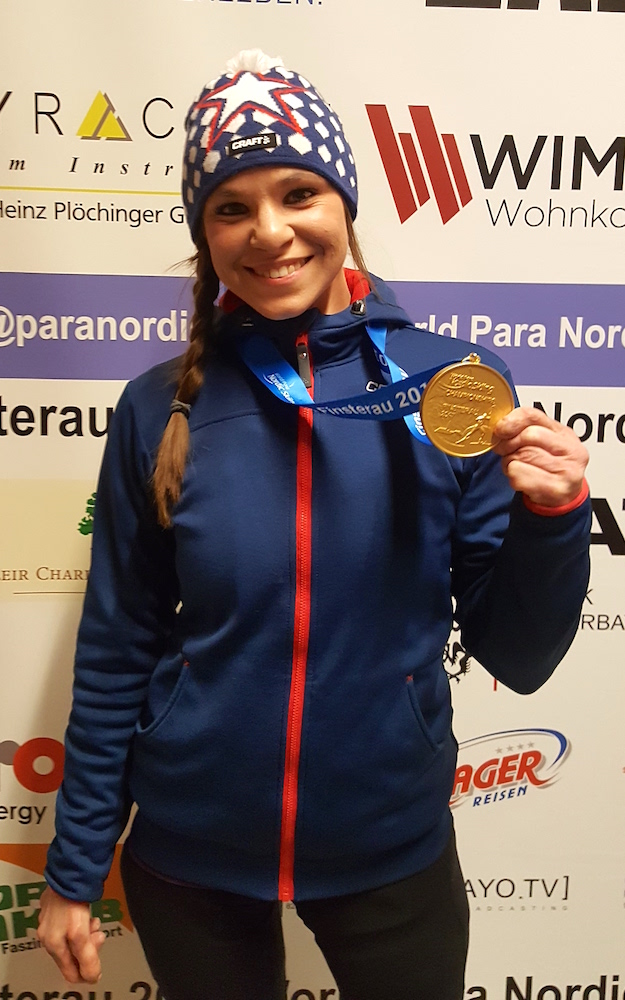
    Six medals in seven days. Four of them gold. Never before had a U.S. athlete taken home four gold medals from a World Para Nordic Skiing Championships, but U.S. Paralympics Nordic A-team member Oksana Masters changed all that.

    Oksana Masters (U.S. Paralympics Nordic) after winning her first IPC World Championships gold in the women’s cross-country sitting sprint on Sunday, Feb. 12, in Finsterau, Germany. (Photo: John Farra/US Paralympics Nordic)

    The 27-year-old sit skier racked up six World Championships medals in Finsterau, Germany, including her second-career biathlon win in the women’s 6 k sprint (her first came earlier this season in the first biathlon race of the year).

    “I am completely shocked,” Masters told media outlets after the sprint. “I entered this race with no expectations. I went from not being sure if I was going to be able to race the last two days to winning my first gold medal in biathlon. I’m so excited! I cannot wait to let this all soak in.”

    But Masters didn’t just dominate the world champs scene. After ending last season undefeated in every International Paralympic Committee (IPC) World Cup cross-country race she entered, she almost did it again, winning all but one cross-country race this winter (she placed second in the last cross-country race of the season).

    “I feel like I had a pretty great season, especially coming off training for a complete other sport that uses a complete opposite motion not too long ago,” Masters said, according to a U.S. Paralympics press release, referring to her handcycling training for the 2016 Summer Olympics.

    “I’m really happy with my season and my training,” she added. “I feel extremely hopeful to have to good races in PyeongChang next year.”

    Brian McKeever, Canadian Para-Nordic Skiing

    At 37, Canada’s Brian McKeever is a team veteran and a world leader in para-nordic skiing. In 2010, he became the first athlete in the world to be named to both Olympic and Paralympic teams. In his three Winter Paralympics, he’s accumulated 13 medals, 10 of them gold.

    And this year, after turning his focus to the overseas Ski Classics marathon series, he earned his 18th and 19th IPC World Championships gold, winning both the men’s 10 k and 20 k visually impaired races. Prior to that, he won the season-opening IPC World Cup sprint in Vuokatti, Finland. By the end of the season, he also qualified for and competed in the International Ski Federation (FIS) World Cup Finals in Quebec City, Quebec.

    Brian McKeever jumping in front of Norway's Petter Kaarby just before the final climb. (Photo: Graham Longford)
    Brian McKeever passing Norway’s Petter Kaarby just before the final climb of the 2017 Marciolonga in Italy. He finished 57th overall. (Photo: Graham Longford)

    “I think putting the focus on Ski Classics this year was really interesting. From struggling to hit the top 40 to suddenly to be able to ski with the leaders this year, that was good,” McKeever said after his final race at World Cup Finals.

    “I am learning as well in that, and I see the opportunities there with the older guys that are still at the top and that is highly motivating for a guy that is maybe beyond his peak, at least as far as age goes, but I am still having fun and still learning,” he added. “So that is motivating for me, to continually learn something when I am out racing.”  

    Honorable Mention: Mark Arendz, Canadian Para-Nordic Skiing

    Canada’s Mark Arendz, now 27, also opened his World Championships week with a win for his second world title and first podium at a top-level international race (in a non-Paralympic year) in three years after winning the men’s 12.5 k standing biathlon race

    He earned four more world champs medals, including a biathlon sprint gold, a biathlon individual silver, a cross-country bronze, and a relay bronze.

     “It has been an incredible season for me, but most noticeably I have brought my shooting back,” Arendz wrote in an email to FasterSkier. “It is now a strength and no longer holding me back. The other huge take away is I now have the confidence in my ski speed to be competitive in any Cross Country race.”

    “The highlights from the season for me were World Championships and the 10km Classic in Korea,” Arendz continued. “Worlds were fantastic for me. Five medals from six races; the confidence was there and I was in the best shape of the year. I carried that shape into the test event in Korea. For two out of three laps I was having my best classic race ever. After a little stumble I couldn’t regain my focus, but until then I had the confidence that I could win a Classic race. I will grasp that belief into the training season.”

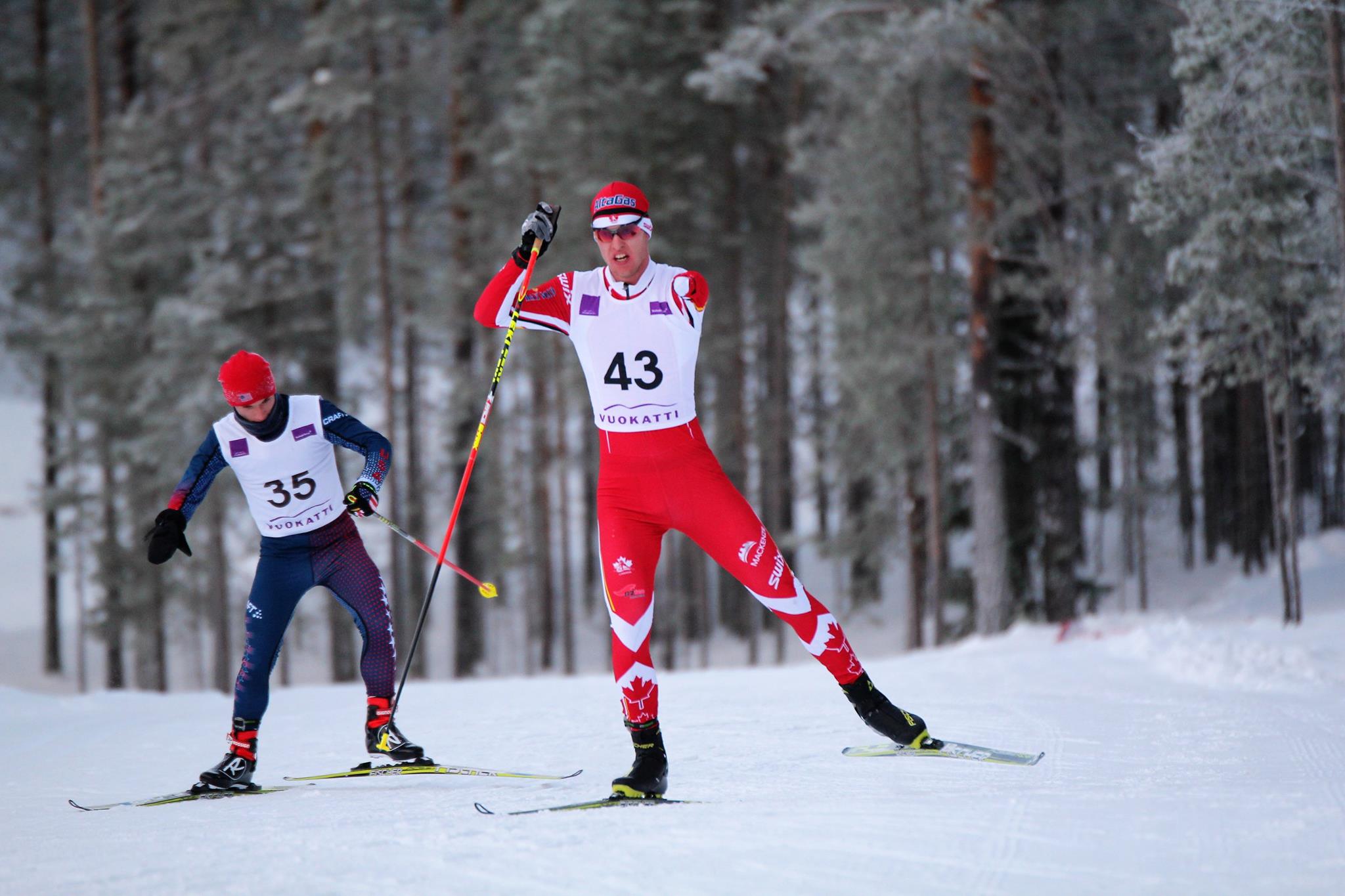
    Mark Arendz (43) of the Canadian Para-Nordic Ski Team racing to silver at the IPC World Cup on Dec. 12, in Vuokatti, Finland. (Photo: Canadian Para-Nordic Skiing/Facebook)
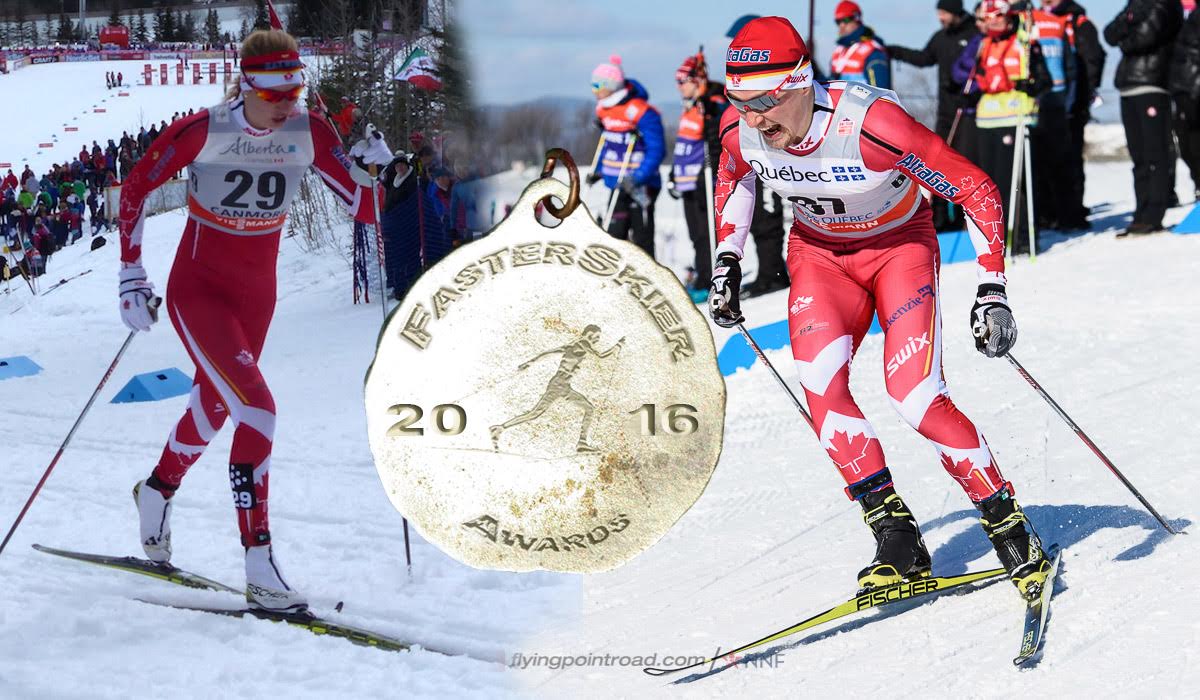
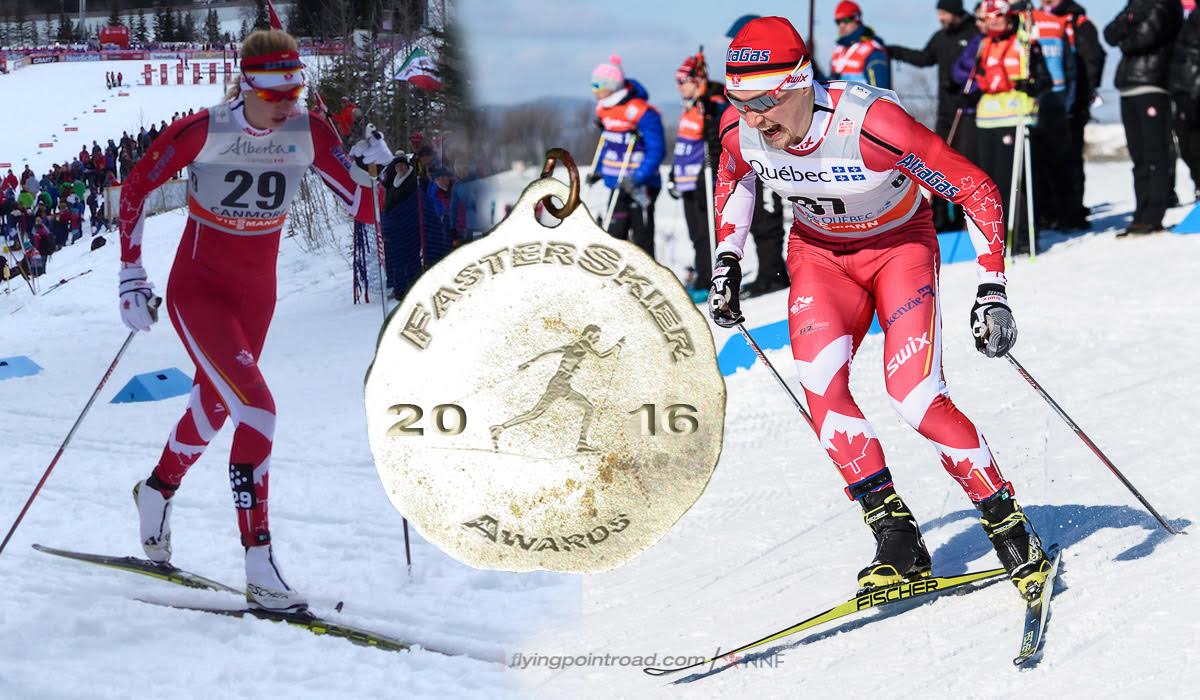
  • FasterSkier’s Canadian Breakthrough Skiers of 2016: Dahria Beatty and Knute Johnsgaard

    FasterSkier’s Canadian Breakthrough Skiers of 2016: Dahria Beatty and Knute Johnsgaard

    Dahria Beatty (l) and Knute Johnsgaard (r) are FasterSkier's Breakthrough Skiers of the Year for Canada. (Photos: Peggy Hung & Flying Point Road)
    Dahria Beatty (l) and Knute Johnsgaard (r) are FasterSkier’s Breakthrough Skiers of the Year for Canada. (Photos: Peggy Hung & Flying Point Road)

    The 2015/2016 awards continue this week, chosen by the FasterSkier staff based on performances from last season. While not scientific, these points of recognition are intended to reflect a broader sense of the season in review.

    Previous categories: American Breakthrough SkiersBiathletes of the Year | Collegiate Skiers | Juniors | Nordic Combined | Para-Nordic

    ***

    Canadian Breakthrough Skiers

    Dahria Beatty, Alberta World Cup Academy/Canadian U23 Development Team

    Dahria Beatty is the definition of breakthrough skier of the year for Canada, as the 22-year-old Whitehorse, Yukon, native placed 15th in a World Cup classic sprint in front of a home crowd at the Ski Tour Canada (STC) in Canmore, Alberta.

    Before that, her best individual World Cup result had been 32nd in a freestyle sprint in January in Planica, Slovenia. That was two spots away from qualifying for the heats, two spots away from the points, and she blew both away by reaching the quarterfinals in Canmore.

    And she almost made the semifinals.

    “I pushed really hard and missed out on the lucky loser position by I think 0.3 of a second,” said Beatty, a member of Canada’s U23 Development Team and the Alberta World Cup Academy in Canmore. “It was by far my best result ever … My best result at World Juniors is [15th] so to have that on the senior World Cup level is amazing.”

    Beatty opted out of U23 World Championships this year to focus on the STC, of which she raced seven of eight stages.

    “You always feel a little bit like maybe I’m not quite good enough to be here,” Beatty told FasterSkier after the Canmore classic sprint. “But having a day like this makes me go, even if some days aren’t that great. There is something in there that I can be able to compete at this level and that’s nice to know.”

    Beatty finished the NorAm season as the overall winner and tallied national titles in two out of the four races she competed in at Whitehorse in late March (the 10 k freestyle and skate sprint).

    She rivaled World Cup regular and national B-team member Emily Nishikawa throughout the week at nationals, with Nishikawa tallying two titles as well (in the 5 k classic and 30 k classic mass start).

    “Emily is a very strong skier, but I think we have a group of girls now ready to join her at the World Cup level,” Beatty told Cross Country Canada, according to a press release. “At least we are certainly ready to try. I think it is time we have a real women’s team over in Europe which is definitely going to make us stronger together if we continue to push each other.”

    Beatty topped the overall NorAm standings after nationals with 960 points, 160 more than runner-up Cendrine Browne, of the Pierre Harvey National Training Centre. The NorAm winner for the last two seasons, the 26-year-old Nishikawa placed 14th overall after spending the entire season in Europe.

    Knute Johnsgaard, AWCA/Canadian U23+ Development Team

    Another Whitehorse native who spent the last season training with the AWCA in Canmore, Johnsgaard, 23, broke into the points in the first stage of the STC. After previously having placed outside the top 50 in World Cup races, Johnsgaard qualified 29th and finished 30th in the freestyle sprint in Gatineau, Quebec.

    “Thanks to everyone who helped me score my first World Cup point yesterday!” Johnsgaard tweeted on March 2. “Hopefully many more to come.”

    “I was just trying to relax … and maybe make a move on the second lap,” he told FasterSkier after being eliminated in the quarterfinals. “Everyone is so strong … I don’t think it was much about tactics today, just the strongest skiers went through.”

    It was his sixth World Cup race. Johnsgaard raced a total of 10 this season, making his international World Cup debut in Planica, Slovenia, and finishing the winter on the overall NorAm podium in third (behind Andy Shields and AWCA teammate Kevin Sandau).

    In the season-ending races at nationals, Johnsgaard placed third and fourth in the 10 k classic interval start and 50 k classic mass start, respectively — behind World Cup regulars Alex Harvey and Len Valjas to start the week, and trailing Harvey, Graeme Killick and Ivan Babikov in the final mass start.

    Honorable mentions

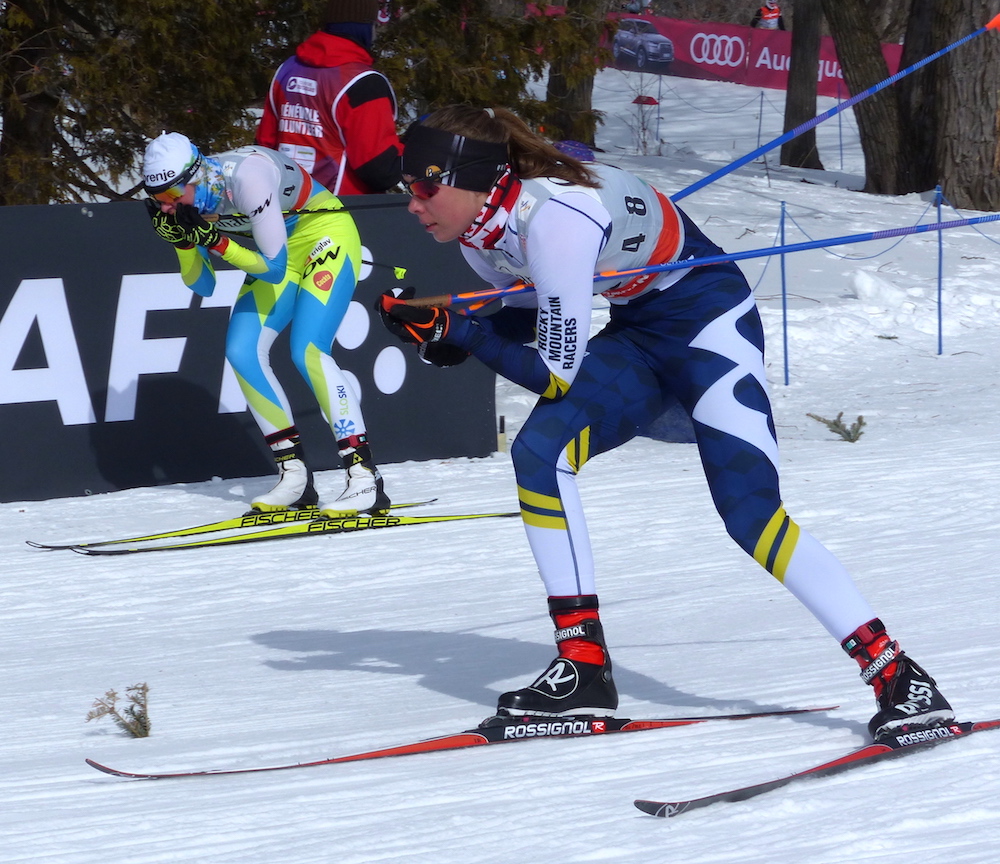
    Maya MacIssac-Jones, Rocky Mountain Racers

    Canada's Maya MacIsaac-Jones (Rocky Mountain Racers) on her way to 30th in the women's 1.7 k freestyle sprint qualifier at the Ski Tour Canada's opening stage in Gatineau, Quebec. She went on to place 29th for her first World Cup points. (Photo: Peggy Hung)
    Canada’s Maya MacIsaac-Jones (Rocky Mountain Racers) on her way to 30th in the women’s 1.7 k freestyle sprint qualifier at the Ski Tour Canada’s opening stage in Gatineau, Quebec. She went on to place 29th for her first World Cup points. (Photo: Peggy Hung)

    With a six-syllable, three-part name, Maya McIssac-Jones of Rocky Mountain Racers gets our vote for women’s breakout honorable mention. In a single season, this 20 year old won her first NorAm race then proceeded to place 31st in her first European World Cup in Planica.

    “I was both shocked and very excited to finish 31st!” MacIsaac-Jones wrote in an email after the Planica skate sprint. “Although I would have loved to race in the heats, my result today gives me confidence and belief in myself that I am capable of top-30 results on the World Cup circuit.”

    McIsaac-Jones qualified for the STC, then achieved her goal — finishing 29th in the Stage 1 Gatineau skate sprint.

    “It really means a lot for me to be in the points today,” MacIsaac-Jones said afterward. “I hope this will help inspire the other Canadian skiers on the tour with me and I hope this shows we are capable of being in the mix.”

    In Stage 3 in Quebec City, she placed 34th in another skate sprint and finished her first World Cup tour in 49th overall. In her final race of the season at nationals, she placed third in the skate sprint (behind Beatty and Olivia Bouffard-Nesbitt) and ended up second to Beatty in the NorAm sprint standings (25 points shy of first).

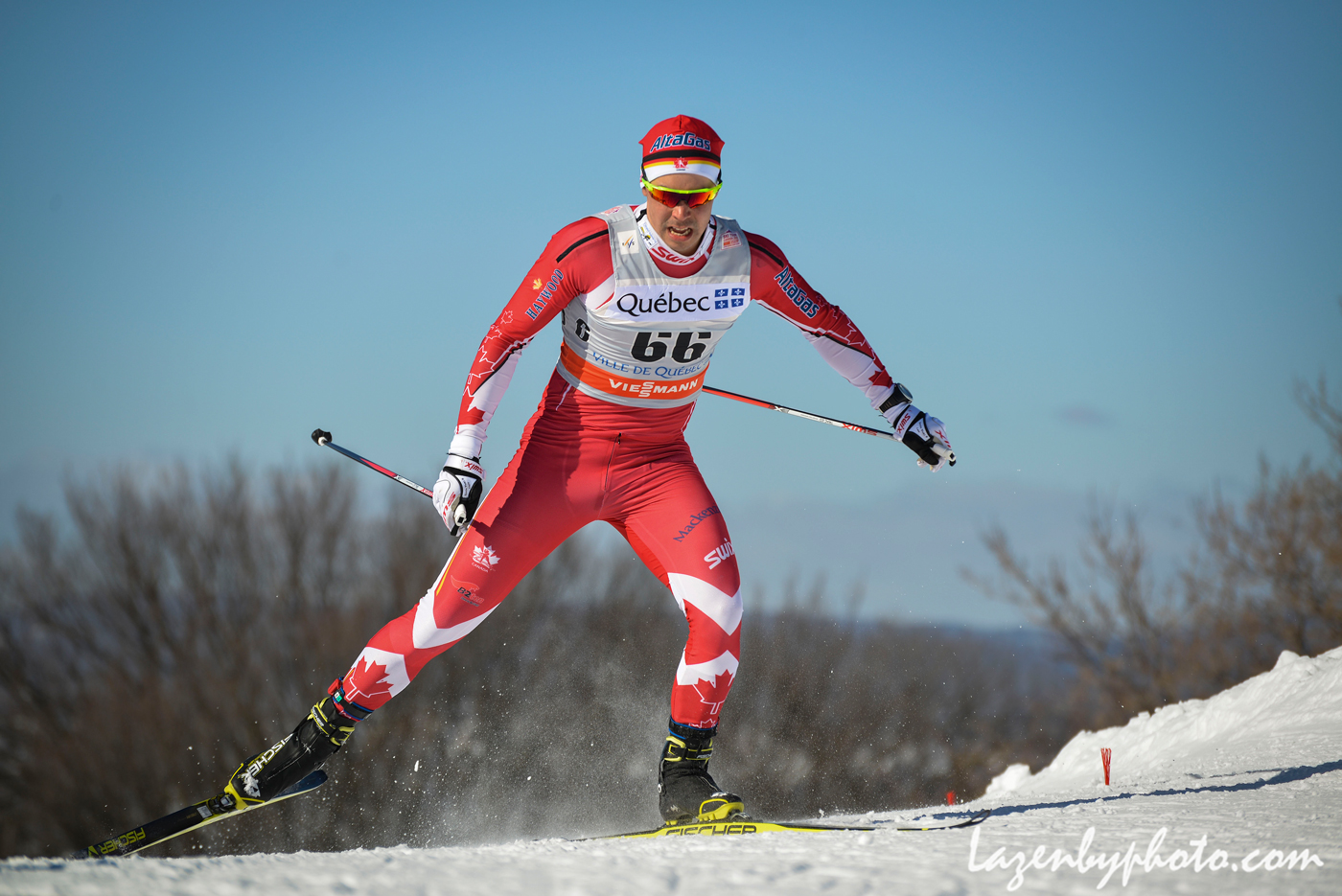
    Jess Cockney, Canadian B-team

    Jess Cockney racing to 29th in the freestyle sprint qualifier at Stage 3 of the Ski Tour Canada in Quebec City. (Photo: John Lazenby/Lazenbyphoto.com)
    Jess Cockney racing to 29th in the freestyle sprint qualifier at Stage 3 of the Ski Tour Canada in Quebec City. He went on to place 10th after reaching the semifinals. (Photo: John Lazenby/Lazenbyphoto.com)

    If we had an award for comeback skier of the year, Cockney would get it, but since we don’t — breakthrough honorable mention makes the most sense for this 26 year old from Yellowknife, N.W.T.

    After starting the season on the World Cup and finishing outside the top 60 in individual sprints, Cockney returned to Canada for some NorAm racing and notched podiums in the skate sprint (third place) and 20 k classic mass start (second) at Eastern Canadian Championships.

    He made the standard for the STC, and raced to 10th in the skate sprint in Quebec City. It was his best individual World Cup result since placing ninth in the skate sprint in December 2012 in Canmore.

    “Man, I have had a really hard go of it this year,” Cockney told FasterSkier after the Quebec City sprint. “Nothing was working at the start of the year … So this is a big lift. I’m really happy with that. Skiing a semifinal is always awesome. Nice to have a two-heat day again.”

    In his final race of the season, Cockney placed fourth in the nationals skate sprint behind Harvey, Valjas and NorAm overall sprint winner Julien Locke. He finished the NorAm season ninth in the overall sprint standings.

  • FasterSkier’s Cross Country Skiers of the Year: Liz Stephen and Alex Harvey

    FasterSkier’s Cross Country Skiers of the Year: Liz Stephen and Alex Harvey

    Liz Stephen is FasterSkier's female cross country skier of the year. (Photo: Marcel Hilger)
    Liz Stephen of the U.S. Ski Team is FasterSkier’s female cross country skier of the year. (Photo: Marcel Hilger)

    With the 2014/2015 season officially in the rearview, FasterSkier is excited to unveil the last (but not least!) of its annual award winners for this past winter. Votes stem from the FS staff, scattered across the U.S. and Canada, and while not scientific, they are intended to reflect a broader sense of the season in review.

    ***

    Liz Stephen, U.S. Ski Team, Burke Mountain Academy

    Liz Stephen is a lot of things. She’s a world class athlete, the “glue” of the U.S. Ski Team, one of the friendliest people you’ll ever meet, and FasterSkier’s female cross country skier of 2015.

    Stephen entered the 2014/2015 season with the goal making it to the next level of competition. Disappointed with an Olympics that fell short of the her expectations, the 27 year old hit the pavement hard in the summer — winning the acclaimed Blink Festival rollerski hill climb in Norway in addition to Climb to the Castle in Lake Placid, N.Y.

    Once on snow, Stephen took some time to ramp up, but when she reached her peak there was no stopping her. Her best result from the first period of the World Cup season came in the 10-kilometer freestyle in Davos, Switzerland, where she finished 12th. But the Vermont native was just warming up, and in the first stage of the Tour de Ski, she finished an impressive eighth. Throughout the following races of the Tour, Stephen fought to stay near the top of the rankings. After the penultimate race, she sat in sixth position and ready to tackle her best event: the 9 k climb up Alpe Cermis.

    Stephen aggressively attacked the climb, passing Poland’s Justyna Kowalczyk and catching Norway’s Ragnhild Haga. While it appeared that Stephen had the edge on Haga in the middle of the race, the Norwegian powered in the final meters to best Stephen by roughly 10 seconds.

    Although she was meters away from fourth, Stephen’s fifth-place finish marked the best placement by an American in the Tour de Ski and was lauded by the domestic and international ski community.

    More success was on the horizon for Stephen. In Rybinsk, Russia she rocketed to a second-place finish in the 10 k freestyle — the best distance result on the World Cup by an American female.

    After her podium in Russia, Stephen explained that her results were not just a product of her individual abilities, but also the support of her team. Pointing to her fellow American skiers and coaches, Stephen said that everyone, especially women’s team coach Matt Whitcomb, who taught Stephen how to ski at Burke Mountain Academy, played a role in both performances.

    It means a lot to be with this team, having this result, and knowing that you’re never ever out there by yourself. Good days, bad days, great days, this team forms around you,” she said.

    Riding the momentum into the 2015 FIS Nordic World Ski Championships in Falun, Sweden, Stephen finished 11th in both the skiathlon and the 30 k mass start. In her signature event — the 10 k freestyle — Stephen battled heavy snow and a slow track to place 10th.

    Before the 10 k, Stephen was seen as a U.S. favorite for a distance medal. At the end of the day, however, it was Jessie Diggins and Caitlin Gregg who claimed two spots on the podium for the U.S. Despite missing her goal by 20 seconds, Stephen was upbeat, humble and ready to celebrate the successes of her team.

    “Certainly it’s not the podium I put down on my goal sheet and that was in my brain when I started the race but I’m really happy with the effort. My day was in Russia this year and it will come again. I’m just so happy for the U.S. Ski Team,” she said with a smile.

    “I’ve always skied for the effort and the team and the love I have for the sport, and today was a perfect representation of all of those,” Stephen added. “The podium is just a gold star you get at the end. The people and the sport are why I do it.”

    Medal or not, the way Stephen raced that day particularly impressed her coach.

    “I’ve never seen Liz ski so perfectly as she did today. It’s the best I’ve ever seen out of her,” Whitcomb said.

    To finish the World Cup season, Stephen placed an impressive ninth in the Holmenkollen 30 k. She will return this 2015/2016 season, once again on the USST A-team.

    ***

    Ale Harvey is FasterSkier's male cross country skier of the year. (Photo: flyingpointroad)
    Canada’s Alex Harvey (5) is FasterSkier’s male cross country skier of the year. (Photo: flyingpointroad.com)

    Alex Harvey, Canadian World Cup Team

    If you’re not rooting for Alex Harvey, maybe it’s time to start.

    The 26 year old has already earned male cross country performance of the year for his collective results at the 2015 World Championships. There in Falun, he captured silver and bronze in the classic sprint and skiathlon, respectively, skied the fastest first leg of the men’s relay, and finished fifth in the 50 k classic mass start.

    “I had two medals in my career in World Championships, and now I have two in three days,” he added after achieving his fourth medal. “It’s crazy.”

    The podiums had more significance than personal achievement, as much of Canadian funding is tied to high performance results. Canadian head coach Wadsworth noted the impact the medals had on the program after Canada took home one medal between the last two previous championships (2013 World Championships and the 2014 Olympics).

    “To have two medals [in Falun], it’s more [about] showing that we do have one of the best programs for waxing and we’ve invested a lot in it,” he said. “We’ve also done things that are a little bit different than other teams or the U.S. by having a little bit smaller team. We’re here to get medals and this is what’s going to help our program in the long run, where we can put it back into development and other things. We have to go for it at these big events like this.”

    As if that wasn’t enough, Harvey finished ninth overall in the World Cup standings after several standout performances, including taking silver in both the second stage of the Tour de Ski and the World Cup sprint in Østersund, Sweden. While it wasn’t the third-place ranking he achieved in 2014, ninth marked Harvey’s third-best season ranking in his career.

    When you factor in the physical challenges Harvey faced over the course of the winter, his results become even more impressive. Although he appeared to be on top of his game in the 2014/2015 season, he was struggling with debilitating pain in his legs.

    Due to friction on his iliac arteries, Harvey had difficulty skiing to his full capacity in both training and racing. In training, the problem was was made worse when he ran. “In training and running, when my heart rate goes above 150/155 I can’t go any further and they completely shut down,” Harvey said, referring to his legs.

    While classic skiing was easier due to the increased use of upper body, the injury was especially painful when skating on steep, long hills. Due to the injury, Harvey has not competed in the Tour de Ski’s final climb since 2013.

    “In skating, already you’re using your legs a little more on the flats than in classic, and then on the climbs you can’t use your upper body as much,” Harvey explained. “When it was an effort that was longer than three to four minutes on a steady climb, in skating that’s when the problem started to appear.”

    Immediately after the end of the 2015 World Cup season Harvey returned to his home in Quebec to undergo surgery on both his iliac arteries. The procedures, which took place March 20 and April 1, give Harvey the chance to ski without the painful symptoms for the rest of his career.

    Harvey returned to training May 1 and will look to be at the top of the international circuit for yet another season.

    ***

    Other 2015 FS Awards: Junior | Collegiate | Nordic Combined | Biathlon | Para Nordic | Breakthrough | Coach | Continental | International Performance | Cross Country Performance | Biathlon Performance | Nordic Combined Performance | International Skier

  • FasterSkier’s Cross Country Performances of 2015: Jessie Diggins, Caitlin Gregg and Alex Harvey

    FasterSkier’s Cross Country Performances of 2015: Jessie Diggins, Caitlin Gregg and Alex Harvey

    FasterSkier's cross country performances of the year come from Alex Harvey at the 2015 World Championships where he won silver and bronze medals in the sprint and skiathlon. Jessie Diggins and Caitlin Gregg are co-recipients of the women's award for their 2-3 finish in the 10 k freestyle at Worlds.
    FasterSkier’s cross country performances of the year come from Alex Harvey (l) at the 2015 World Championships where he won silver and bronze medals in the sprint and skiathlon. Jessie Diggins (c) and Caitlin Gregg (r) are co-recipients of the women’s award for their 2-3 finish in the 10 k freestyle at worlds.

    With the 2014/2015 season officially in the rearview, FasterSkier is excited to unveil its annual award winners for this past winter. Votes stem from the FS staff, scattered across the U.S. and Canada, and while not scientific, they are intended to reflect a broader sense of the season in review.

    ***

    Jessie Diggins and Caitlin Gregg, 2015 World Championships 10 k freestyle individual start

    It’s rare for American cross country skiers to earn World Championships medals. Before this winter the U.S. had only stood upon the podium four times over the history of the sport – Bill Koch in the 1982 30 k, Kikkan Randall in the 2009 sprint, and Randall and Jessie Diggins in the 2013 team sprint.

    Come February of 2015 the count increased to six because of pair of midwestern skiers, Diggins and Caitlin Gregg, who surprised nordic fans across the globe with their 2-3 finish in the World Championships 10 k freestyle individual start.

    The day was far from ordinary as light flurries turned to a dumping of wet snow that slowed the trails in Falun, Sweden for the competition’s late starters. Gregg, in bib 3, missed the majority of the heavy snow but skated over the two-lap course with confidence and control to cross the line with the leading time. Her stay in the leader’s chair lasted longer than expected, as skier after skier failed to match her effort. It was only until Diggins entered the finish that Gregg lost her spot in on the hallowed seat.

    When the whirlwind day — filled with blowing snow, tears and cheers — was complete, Diggins and Gregg placed second and third, respectively, behind home-crowd favorite Charlotte Kalla of Sweden. Kalla’s time of 25:08.8 outpaced Diggins by 41.0 seconds and Gregg by 46.9.

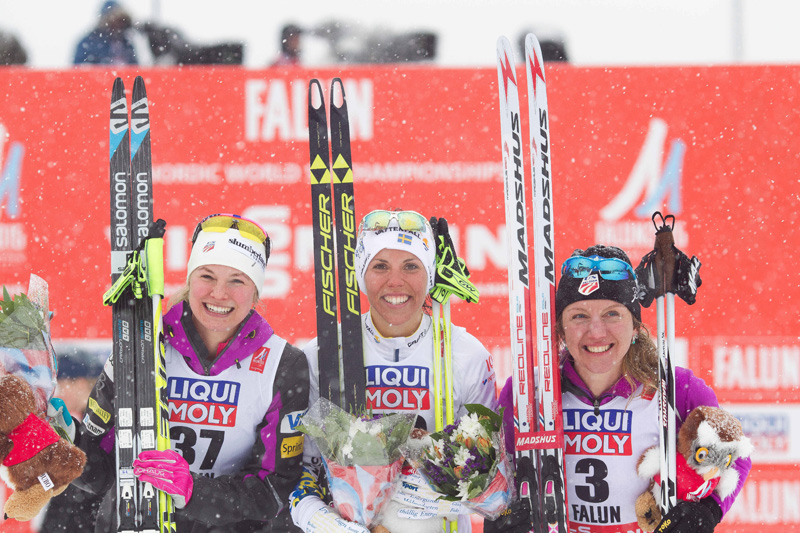
    Americans Jessie Diggins (l) and Caitlin Gregg (r) share the women's World Championships 10 k freestyle podium with Sweden's Charlotte Kalla (c), who won the race by 41 seconds for her first individual gold in Falun, Sweden. Diggins took second while Gregg took third, 46.9 seconds back. Both finishes were the best distance result in history for a U.S. woman at a World Championships. (Photo: Fischer/NordicFocus)
    Americans Jessie Diggins (l) and Caitlin Gregg (r) share the women’s World Championships 10 k freestyle podium with Sweden’s Charlotte Kalla (c), who won the race by 41 seconds for her first individual gold in Falun, Sweden. Diggins took second while Gregg took third, 46.9 seconds back. Both finishes were the best distance result in history for a U.S. woman at a World Championships. (Photo: Fischer/NordicFocus)

    The historic performances – which were the best distance results of an American women at a championships event – were a product of a combination of efforts, from coaching to a phenomenal wax team, and the two Americans took advantage of the opportunity that was handed to them. The night before the 10 k freestyle U.S. Ski Team women’s coach Matt Whitcomb gathered the team for a pep talk. According to Diggins and Gregg, the theme of his speech revolved around the simple question: Why not?

    He emphasized that many skiers count themselves out before they’ve even had the chance and that every member of the U.S. team had the opportunity to achieve their best. The two skiers didn’t know it at the time, but Whitcomb’s central message — anything is possible –– would become a reality the next day.

    Taking Whitcomb’s advice, both athletes entered the 10 k with high expectations. Diggins, a regular on the World Cup circuit, explained her goal was a top six: “If I was having an amazing day,” she said.

    Gregg, on the other hand, skied with the aim of being an early leader. She easily accomplished her objective, but soon realized that her time was much better than she ever could have expected.

    “My goal was to try to come in, be the leader, and put in a good time,” she said. “I think it took maybe another twenty or thirty skiers before I started realizing that it was actually a really, really good time.”

    Gregg watched Diggins from the leader’s chair as the 23 year old trailed on the final climb and then roared into the finish to best Gregg by nearly six seconds. “Then all of a sudden things started to become a reality,” she said.

    The silver was Diggins’ second-career World Championships medal. Her first came from the 2013 freestyle team sprint in Val di Fiemme, Italy, where she joined forces with Kikkan Randall to claim gold. The pair was the first to earn a World Championships title in the history of U.S. skiing.

    Gregg hasn’t been at, or near, the top of international skiing since the start of her career. The 34-year-old’s best World Cup result was in a 2010 Canmore World Cup, where she place 14th in the 10 k freestyle. Her next best result was last year in Falun at the 2014 World Cup Finals where she had the 25th fastest time in the 10 k pursuit. Last season, Gregg missed a spot on the Olympic team despite dominating the domestic distance circuit.

    As the 2014 SuperTour leader, Gregg started the 2014/2015 season on the World Cup, but contracted shingles and consistently race in the 50s on the World Cup.

    Due to USSA criteria and the previous year’s Olympic selections, it appeared uncertain whether or not Gregg would be named to the U.S. World Championships team. Come Jan. 26, however, Gregg’s name was on the list and she was preparing conquer the 10 k freestyle — a race she had been focusing on all year.

    According to Gregg, her bronze medal was validation of a career that has consisted of hard work and perseverance. She said her medal sent a clear message that developing skiers who aren’t often given the best opportunities from the start of their careers can still be successful — all it takes is a little passion and grit.

    “If you really truly feel it in your heart, keep pushing, keep pushing,” she said.  “Anything is possible.  Obviously, a lot of things fell together today for me, but I think it is a super strong message.”

    “Some skiers just take a little bit longer to get going,” she added with a laugh. “You can win your medal at 34 years old.”

    Both Diggins and Gregg will return to the U.S. Ski Team to compete on the World Cup in the 2015/2016 season.

    Alex Harvey, 2015 World Championships

    When it came time to pick the male cross country performance of the year choosing the recipient was an easy decision. Alex Harvey was the leading North American man of the year and gave many inspiring displays of athleticism over the course of the winter.

    Then the hard part came: choosing his best performance.

    Over the course of the regular season, Harvey skied to earn ninth overall on the World Cup ranking list, but it was at the World Championships where the 26-year-old truly shined. His collective results from the year’s most important two weeks of racing warranted an award for not just a single race, but for multiple performances.

    It all began at the first race of World Championships: the classic sprint. Harvey started the day qualifying in fifth position. He continued to advance through the heats – but not without some close calls. From the quarterfinal to the final, Harvey would ski at or near the back of the pack, at times would seem as if he was out of the running. By the finish, however, he would always be positioned at the front.

    In the final Harvey sat in fourth on the last hill before charging into the line. He finished second only to Norway’s Petter Northug.

    Canadian National Team Head Coach Justin Wadsworth said he believed Harvey could have overcome Northug, had the finishing straightaway been longer.

    “I think if it would have been five more meters, he would have won the race,” Wadsworth said in a post-race interview. “[Harvey] said ‘oh i timed it kind of bad,’ but I think it was an amazing race, especially after being in last place at the top of the hill.”

    Norway's Petter Northug (l) and Canada's Alex Harvey (r) lunge in the 1.4 k classic sprint at the 2015 FIS Nordic World Championships in Falun, Sweden. Northug won the are by 0.05 seconds over Harvey, who earned his best individual finish at a Championships. (Photo: flyingpointroad)
    Norway’s Petter Northug (l) and Canada’s Alex Harvey (r) lunge in the 1.4 k classic sprint at the 2015 FIS Nordic World Championships in Falun, Sweden. Northug won the are by 0.05 seconds over Harvey, who earned his best individual finish at a Championships. (Photo: flyingpointroad)

    Harvey reflected a similar sentiment, saying that he was gaining on Northug as they approached the finish. However, the Canadian was cautious in his speculation, adding, “I wouldn’t redo the race just to take that chance.”
    When asked how he was able to advance from dead-last to a podium position, Harvey explained that his come-from-behind day wasn’t necessarily planned.

    “I would like to lead on this course on the first hill if I could. [The course] is a bit more endurance-based and I am a bit more of an endurance-based athlete.” he said.

    Despite trailing the pack at the key point in the race, Harvey explained the first hill was more of a “warmup” and the second hill was where he needed to make his move. The Canadian added that he was confident in his skiing despite his position, because he knew his finishing speed was strong.

    Wadsworth agreed, adding that fast skis also played a large role in Harvey’s performance.

    “I think he knows what he’s capable of and he knew the skis were good enough to do that,” he said. “This course has such a fast downhill. Then all you have to do is run up that and everyone is going to run the same. Then you have to have enough speed for the end and his double poling has been really good.”

    The silver medal marked Harvey’s highest individual placement at a World Championships. Prior to the sprint, the Canadian had won two other medals. In 2011 he and Devon Kershaw powered to a World Championship title in the team sprint and in 2013 he claimed third in the classic sprint.

    There was more to come from Harvey as the championships progressed.

    Two days after his silver medal performance, Harvey competed in the 30 k skiathlon. He stayed near the front of the race, often switching the lead with the event’s favorites – eventual winner Maxim Vylegzahanin, Dario Cologna, and Maurice Manificat among others.

    As the finish approached, Harvey sat nearly seven seconds behind Vylegzahanin, Cologna, and Didrik Tønseth. He charged hard to close the gap, and nearly caught them on the second-to-last climb. While Cologna and Vylegzhanin skied out of reach, Harvey trailed Tønseth closely, passing him 5 seconds before the finish.

    “It was so mushy and I was starting to not see clearly,” Harvey recalled, noting that his legs felt extremely spent after 15 k of classic followed by 15 k of skating on Falun’s notoriously tough course — and in soft conditions on an above-freezing afternoon. “I knew my legs were not 100 percent, so I wouldn’t have an amazing sprint, but it was good enough to grab one place, that was good for the podium.

    “I had two medals in my career in World Championships, and now I have two in three days,” he added after achieving his fourth medal. “It’s crazy.”

    Wadsworth noted the impact the results had on the program after Canada took home one medal between the last two previous championships (2013 World Championships and the 2014 Olympics).

    “To have two medals [in Falun], it’s more [about] showing that we do have one of the best programs for waxing and we’ve invested a lot in it,” he said. “We’ve also done things that are a little bit different than other teams or the U.S. by having a little bit smaller team. We’re here to get medals and this is what’s going to help our program in the long run, where we can put it back into development and other things. We have to go for it at these big events like this.”

    Harvey continued a successful Championships with earning the fastest first leg time in the men’s 4 x 10 k relay in which Canada eventually placed 10th. Harvey skied to fifth in the 50 k classic mass start after leading for much of the race to close out the two weeks of racing.

    Harvey will once again return to competition in the 2015/2016 season as Canada’s leading man. He began his spring training May 1, after dual surgeries on his iliac arteries. Armed with new hardware, the 26-year-old will look to add another successful year to his name.

    ***

    Other 2015 FS Awards: Junior | Collegiate | Nordic Combined | Biathlon | Para Nordic | Breakthrough | Coach | Continental

  • FasterSkier’s Breakthrough Skiers of 2015: Rosie Brennan and Graeme Killick

    FasterSkier’s Breakthrough Skiers of 2015: Rosie Brennan and Graeme Killick

    Rosie Brennan and Graeme Killick are FasterSkier's  breakthrough skiers of 2015.
    Rosie Brennan and Graeme Killick are FasterSkier’s breakthrough skiers of 2015.

    With the 2014/2015 season officially in the rearview, FasterSkier is excited to unveil its annual award winners for this past winter. Votes stem from the FS staff, scattered across the U.S. and Canada, and while not scientific, they are intended to reflect a broader sense of the season in review.

    ***

    Rosie Brennan, USST B-team, Alaska Pacific University

    Rosie Brennan isn’t new to the nordic scene. In fact, she’s been around for a long time and has a list of impressive results to her name. What makes her the 2015 Breakthrough Skier of the Year, you might ask? Her remarkable jump from the continental cup to international success.

    “If there is a most improved skier award it goes to Rosie, potentially on the entire World Cup,” U.S. Ski Team Women’s Coach Matt Whitcomb said after her performances at the 2015 World Championships. “I don’t know if any nation has had an athlete show from their continental cup with no prior success and hit it out of the park the way that she has.

    “She’s being rewarded for years of hard work. It’s been a tough year for her, and to see all the work pay off and incredible results from start to finish is really neat,” he added.

    If Whitcomb hasn’t convinced you, her results from the past season will.

    A successful junior skier who earned a top-10 finish at Junior Worlds in 2007, Brennan made large strides in her early career and was named to the U.S. Ski Team in her first two years at Dartmouth College. While her position on the USST lasted only two years, Brennan continued her journey in professional ski racing.

    Since beginning her professional career, the APU skier has continually been at the top of the domestic circuit. The 2014/2015 season, however, proved to be a momentous year as Brennan won all but two races between the first period of SuperTour races and the 2015 U.S. Cross Country Championships in Houghton, Mich.

    Rosie Brennan skiing in the 30 k mass start at the 2015 World Championships as she focuses on staying on the tails of Justyna Kowalczyk of Poland.
    Rosie Brennan skiing in the 30 k mass start at the 2015 World Championships as she focuses on staying on the tails of Justyna Kowalczyk of Poland.

    In her first World Cup appearance since 2013, Brennan teamed up with Ida Sargent to take sixth in the Otepää, Estonia team sprint. A week later, Brennan earned a career-best individual result with a 13th place finish in the Rybinsk, Russia World Cup 10 k freestyle. The weekend’s success continued with a 31st in the freestyle sprint and 20th in the 15 k skiathlon. Although the the 10 k marked her best individual World Cup result, both the sprint and skiathlon also surpassed her previous best finish of 35th in the 10 k at a 2012 World Cup in Canmore.

    In the leadup to the biggest races of the season, Brennan skied to 33rd and 32nd in the classic sprint and 10 k freestyle in Östersund, Sweden. The best was yet to come, however, as Brennan entered her first-ever appearance in a World Championships.

    Brennan raced in three competitions in Falun, Sweden and impressed every time she took to the famed trails. She earned 30th in the 15 k skiathlon and held onto a charging Justyna Kowalzcyk in the second leg of the women’s 4 x 10 k relay to aid the team in a record-tying fourth place finish. Kowalczyk and Brennan would meet again in the 30 k classic mass start, where Brennan out-sprinted the four-time overall World Cup champion to take 16th.

    “If you had asked me at the beginning of the year, no way,” she said when asked whether she had expected perform at such a high level at World Championships. “After I came over here and started having a few good results, I was hoping that I could find some sort of peak here and have some good results. So I’m really happy with how it went. I wish I could have raced more races, but it was my first time, so I have to earn my way onto all the starts.”

    In the upcoming season, Brennan’s hard work will pay off – she enters the season with a nomination to the USST B-team and will have the option to race in all period one World Cup competitions as the overall SuperTour leader.

    Graeme Killick of Canada on his second loop in the men's 4 x 10 k relay in Falun, Sweden, on Friday.
    Graeme Killick of Canada on his second loop in the World Championships men’s 4 x 10 k relay in Falun, Sweden.

    Graeme Killick, Canadian National Development B-team

    Like Brennan, Graeme Killick had a momentous 2015 World Championships. Prior to the two-week event the Canadian’s best result in the 2014/2015 season was 40th in the Rybinsk 30 k skiathlon, but in his first race in Falun, Killick surpassed the mark with a 32nd placement in the 15 k freestyle.

    Killick also raced in Canada’s 4 x 10 k relay which finished 10th, but his focus was on the final race of the Championships – the 50 k classic mass start. The 26-year-old had demonstrated his potential in the 50 k at the 2014 Olympics event with a 28th-place finish and was ready to see what he could do.

    “I was just hoping I would hang in there and not cramp on the last few laps,” Killick said to FasterSkier in Falun. “[When it comes to] 50 k’s, it seems like they’re really hit and miss for me. Domestically I’ve struggled to get top 15, but internationally, my best results have been in the 50 k. If I’m in shape, they can go really well, but I would say the focus for me [at World Championships] was the pursuit [skiathlon], which I didn’t end up doing because I got sick in Östersund… When that was out, the 50 became the main focus.”

    Killick remained within the top 30 during the entirety of the 50 k, at times breaking into top 10. Eventually he placed 19th  for his best-ever international result.

    Reflecting on his breakthrough finish Killick said he was excited about his prospects.

    “This year I was able to start on the World Cup for the first time in my career and spend a significant portion of the year over here,” he said. “Just seeing the level and seeing how these guys train and race I think has given me a lot of ideas for next year. I’m really excited to try to take the next step and become a contender here on the World Cup.”

    In the coming season, Killick will return to Canada’s National Development B-team.

    ***

  • FasterSkier’s Collegiate Skiers of 2015: Kyle Bratrud and Veronika Mayerhofer

    FasterSkier’s Collegiate Skiers of 2015: Kyle Bratrud and Veronika Mayerhofer

    Kyle Bratrud and Veronika Mayerhofer are FasterSkier's collegiate skiers of the year.
    Kyle Bratrud (l) and Veronika Mayerhofer (r) are FasterSkier’s collegiate skiers of the year.

    With the 2014/2015 season officially in the rearview, FasterSkier is excited to unveil its annual award winners for this past winter. Votes stem from the FS staff, scattered across the U.S. and Canada, and while not scientific, they are intended to reflect a broader sense of the season in review. 

    We kicked off the series Monday with awards for Junior Skiers of the Year (SOTY), Katharine Ogden and Sean Doherty. This second set of honors goes to outstanding male and female skiers on the U.S. NCAA collegiate circuit. 

    ***

    Kyle Bratrud, Northern Michigan University

    For a 22-year-old, Kyle Bratrud had a momentous 2015 season.

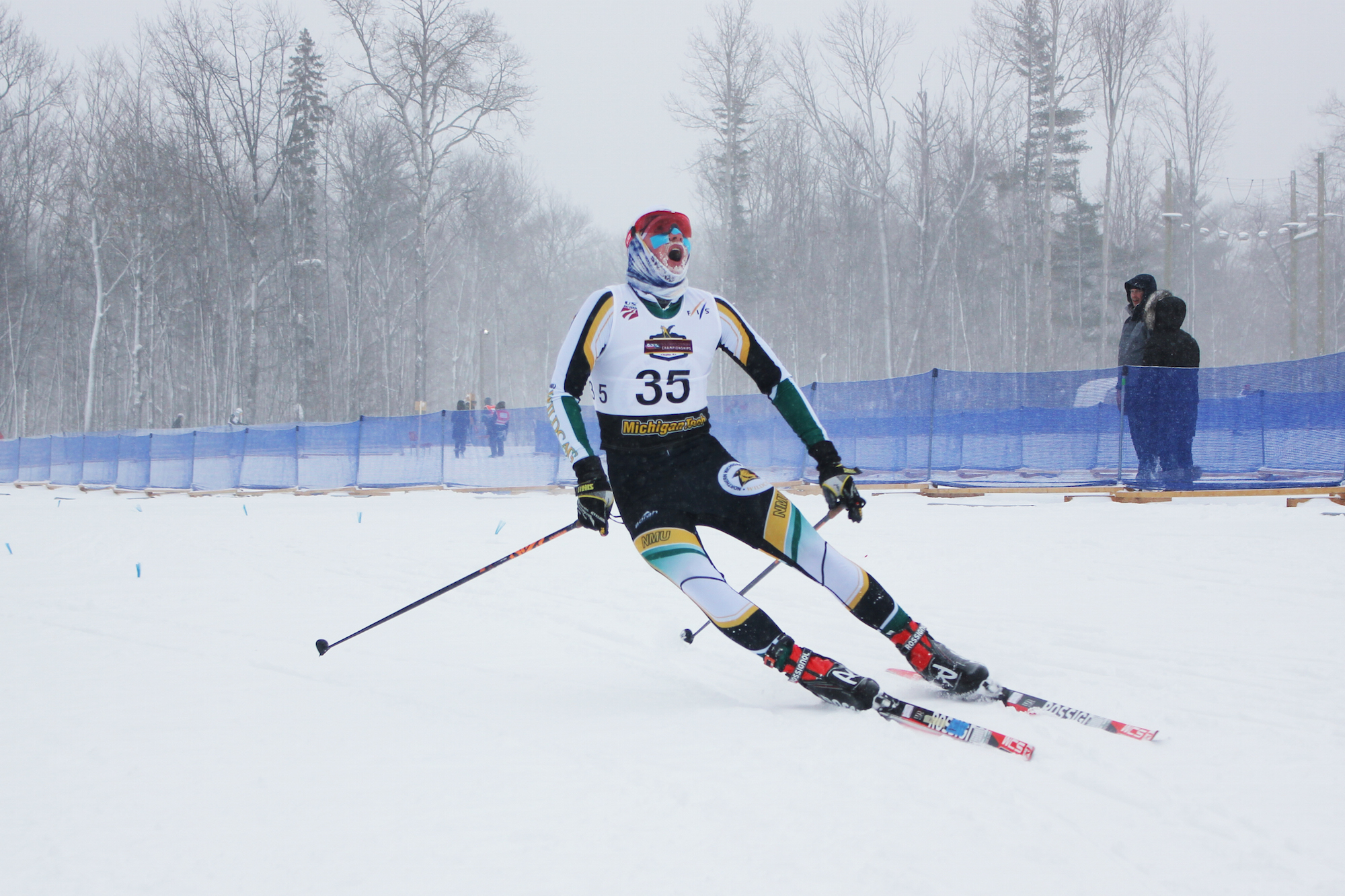
    The Northern Michigan University skier came out swinging at the 2015 U.S. Cross Country Championships, winning the 15 k freestyle individual start by 5o seconds over veteran Kris Freeman. The win and his subsequent bronze in the 30 k classic mass start started Bratrud on a whirlwind European adventure that would take him from competing at the U23 World Championships in Kazakhstan to being the second-youngest member of the American FIS Nordic World Ski Championships team in Sweden.

    Kyle Bratrud collapses after his 51-second win in the men's 15 k freestyle at the 2015 Cross Country Championships in Houghton, Mich.
    Kyle Bratrud collapses after his 51-second win in the men’s 15 k freestyle at the 2015 Cross Country Championships in Houghton, Mich.

    Entering the season, the Eden Prairie, Minnesota native told FasterSkier that his goals for the year were to qualify for the U23 World Championships and earn a podium at the NCAA Championships in Lake Placid, N.Y. After his successful week at U.S. Nationals it was clear that the NMU senior was well on his way to completing his goals. At the U23 World Championships, Bratrud’s best finish was 19th in the 15 k freestyle.

    When the USST announced its World Championship team in late January many were surprised and pleased to see Bratrud’s name on the list. According to USST Head Coach Chris Grover, the decision to select Bratrud was an investment in the future.

    For Bratrud, his selection was a major step in his career that offered valuable experience in the year before he jumped into professional racing. “This is a gigantic accomplishment for me and not necessarily something that I targeted going into this year. I really think this is a step in the right direction towards accomplishing my goal of making the USST,” he wrote in late January. “I am super stoked to see how the big boys race and hopefully I can contribute to the team in some way! It will be a great step in my ski career.”

    At World Championships Bratrud raced the 15 k freestyle individual start and as the third leg of the men’s 4 x 10 k relay. The relay was significant for the 22-year-old as it provided him with international experience that is extremely rare for a collegiate skier.

    “They asked me if I wanted to be in it and I said sure. I was flattered,” he said after the relay. “It’s another race on the international stage for me so I was all for it. I knew I was going to get my butt kicked around a little bit out there but that’s how you get better, racing these guys.”

    Bratrud returned to the U.S. after what he called an exhausting European tour and arrived in Lake Placid for the NCAA Championships. He raced to seventh in both the 10 k freestyle and the 20 k classic. He was the first American in the mass start.

    Bratrud will graduate from Northern Michigan University this spring. He plans to race for the CXC elite team in the 2015/2016 season.

    Veronika Mayerhofer, University of Utah

    University of Utah's Natalia Mueller (l) and Veronika Mayerhofer (r) at the 2015 U.S. Distance Nationals 30 k freestyle mass start in Sun Valley, Idaho as part of the year's SuperTour Finals . (Photo: flyingpointroad)
    University of Utah’s Natalia Mueller (l) and Veronika Mayerhofer (r) at the 2015 U.S. Distance Nationals 30 k freestyle mass start in Sun Valley, Idaho as part of the year’s SuperTour Finals . (Photo: flyingpointroad)

    It’s clear that Veronika Mayerhofer is an unassuming and good-natured person. If you meet her in a ski race, however, watch out – the University of Utah skier is always a threat and has the experience to back it up. Her achievements aren’t surprising, as the 22-year-old has competed for the Austrian National Team and raced at the 2013 FIS Nordic World Ski Championships and the 2014 Winter Olympic Games.

    In her first year as a Ute Mayhofer rose to the top a strong field of international and domestic collegiate women. She ended the regular season ranked second in the Rocky Mountain Intercollegiate Ski Association (RMISA) and earned the year’s Women’s Nordic MVP award for the region. She was the only skier to finish in the top five of all regular season races.

    At the NCAA Championships in Lake Placid, N.Y. the Austrian won the 5 k freestyle individual start by a large 13.2 seconds and finished second in a sprint finish at the end of the 15 k classic mass start.

    “It’s my first year of college racing and I was so happy that I could go to the NCAAs,” Mayerhofer said after her NCAA 5 k win. “I really enjoyed it so much because it is so much for the team and not just individual racing, because cross country skiing is so much on your own. It’s maybe less pressure and everyone is so happy for you.”

    Mayerhofer’s impressive skiing led the University of Utah women – including Sloan Storey and Anna-lena Heynen – to earn the most team points in both of the NCAA women’s nordic races. Their strong performances contributed to a third-place finish for the Utes.

    The Austrian’s season didn’t end there. She competed at the 2015 U.S. SuperTour Finals in Sun Valley, Idaho, skiing amongst the best American skiers throughout the entire week. Her strongest performance was perhaps in the mixed team relay where she brought her team from a far seventh to first. She posted the fastest third leg and overcame a charging and motivated Chelsea Holmes (APU) in the process.

    In addition to FasterSkier’s Colliegiate Skier of the Year Award, the 22-year-old was also named the United States Collegiate Ski Association’s skier of the year. Mayehofer will return as a sophomore to the University of Utah in the upcoming season.

    Honorable Mentions:

    Patrick Caldwell, Dartmouth College

    Caldwell also had a breakthrough season that rivaled Bratrud’s. The Vermont native raced to third in the 15 k freestyle at U.S. Nationals which was enough to earn him a spot on the U23 World Championships team. In Kazakhstan Caldwell finished 15th in the 15 k freestyle and 20th in the 30 k skiathlon. Throughout regular the season, Caldwell won all but one of the Eastern Collegiate Ski Association races at which he was present. At the NCAA Skiing Championships, Caldwell won the 10 k freestyle individual start to cap a largely dominant season. He finished 10th in the 20 k classic mass start.

    Emilie Cedervaern, University of New Mexico

    Cedervaern finished the 2015 season as the RMISA’s top-ranked woman. Over the course of the regular season the Lobo earned seven podiums, four of which were wins. She continued her dominance into NCAA’s where she placed third in the 5 k freestyle and won the 15 k classic in a sprint finish over Mayerhoffer.

    ***

    See also: Junior SOTY

  • FasterSkier’s Junior Skiers of 2015: Katharine Ogden and Sean Doherty

    FasterSkier’s Junior Skiers of 2015: Katharine Ogden and Sean Doherty

    Sean Doherty and Katharine Ogden are FasterSkier's Junior Skiers of the year.
    Sean Doherty and Katharine Ogden are FasterSkier’s Junior Skiers of the year.

    With the 2014/2015 season officially in the rearview, FasterSkier is excited to unveil its annual award winners for this past winter. Votes stem from the FS staff, scattered across the U.S. and Canada, and while not scientific, they are intended to reflect a broader sense of the season in review. 

    We’re kicking off the series by honoring the youngest skiers of the bunch with Junior of the Year, awarded to one outstanding male and one female in the U.S. and/or Canada.

    ***

    Katharine Ogden, Stratton Mountain School

    The many achievements of Katharine Ogden, FasterSkier’s Junior Skier of the Year for 2015, make it easy to forget she is only 17 years old.

    Despite her young age the Stratton Mountain School skier kept up with the best of the American women in the 2014/2015 season. Long before the winter, Ogden demonstrated her abilities with a third place finish behind Liz Stephen and Caitlin Gregg in the annual Climb to the Castle rollerski race in Lake Placid, N.Y.

    New England's Katharine Ogden (Stratton Mountain School) racing to a 26.8-second win at the 2015 U.S. Junior Nationals in Wednesday's 10 k freestyle at Auburn Ski Club in Soda Springs, Calif. (Photo: Mark Nadell/MacBeth Graphics)
    New England’s Katharine Ogden (Stratton Mountain School) racing to a 26.8-second win at the 2015 U.S. Junior Nationals in Wednesday’s 10 k freestyle at Auburn Ski Club in Soda Springs, Calif. (Photo: Mark Nadell/MacBeth Graphics)

    Come winter, Ogden continued her impressive racing as she traveled through the SuperTour circuit – claiming second in the West Yellowstone 10 k freestyle and third in the Bozeman 10 k classic behind a dominant Rosie Brennan who would later be named to the U.S. World Championships team.

    Unsurprisingly, Ogden finished in the top ten of all but one race at the 2015 U.S. Cross Country Championships and handily won the junior women’s 5 k. The week would serve as a launching point for her first trip to the Junior World Championships in Almaty, Kazakhstan.

    In the first race of Junior Worlds, a 5 k freestyle, Ogden placed an impressive 11th. The best was still to come for the 17-year-old, who finished sixth just two days later in the 10 k skiathlon. The result tied the best-ever distance finish by a U.S. skier at Junior Worlds.

    “It was really cool to be able to ski with some fast, aggressive Europeans and to experience a crazy, Euro-style mass start for the first time,” she wrote to FasterSkier after the historic result. “This was a really good, encouraging result for me, and going forward it is really awesome to have the learning experience from my first international mass-start race.”
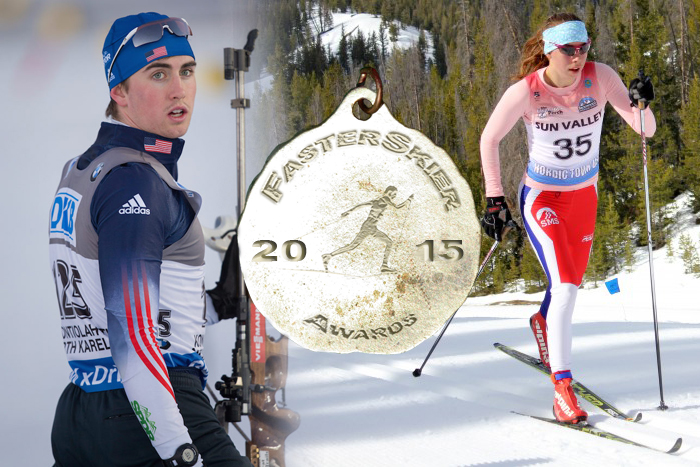
    To round out a successful year Ogden earned four podiums at the 2015 Junior National Championships, three of which were victories. Ogden has two more years as a junior and will enter the 2015/2016 season as one of America’s most promising young skiers to date.

    Sean Doherty, U.S. Biathlon

    FasterSkier’s Junior of the Year award isn’t new territory for Sean Doherty. The 19-year-old won the honor in 2013, and since then he’s added a large list of accolades to his name.

    The Conway, N.H. native won two golds and a silver at the 2014 IBU Junior World Championships and subsequently competed in the 2014 Olympics as one of the youngest starters in the relay, helping the U.S. finish in 16th position.

    Sean Doherty racing in the mixed relay at the IBU World Cup in Nove Mesto, Czech Republic earlier this year. (Photo: USBA/NordicFocus)
    Sean Doherty racing in the mixed relay at the IBU World Cup in Nove Mesto, Czech Republic earlier this year. (Photo: USBA/NordicFocus)

    The 2014/2015 season was a large jump for Doherty who graduated from biathlon’s youth category into the more competitive junior realm. It appears he took well to the transition, earning a third-place finish in the 2015 IBU Junior World Championships sprint in Minsk, Belarus. Doherty was the top North American in the event’s other two races, finishing 11th in the pursuit and 14th in the individual.

    U.S. Biathlon Association CEO Max Cobb sung the 19-year-old’s praises after his impressive bronze medal. “That Sean was able to win the Junior World Championship bronze medal with one penalty as a first year junior in Minsk speaks volumes for his dedication to excellence and the great support of the coaches and team around him,” Cobb told FasterSkier in an email. “It’s a huge accomplishment to succeed like this as an American in Europe’s favorite winter sport.”

    The biathlete didn’t stop there. He joined the American team at the 2015 IBU World Championships in Kontiolahti, Finland in March as the team’s youngest memeber. His placement of 45th in the pursuit marked his best-ever result at the World Cup level.

    Doherty was recently named to the USBA A-team. If his performances in recent years are any indicator of the future, there’s more success to come from face of America’s young biathletes.

  • Randall Continues Skier of the Year Run, Newell Tops for Men

    Randall Continues Skier of the Year Run, Newell Tops for Men

    Kikkan Randall and Andy Newell — Cross-Country Skiers of the Year
    Kikkan Randall and Andy Newell — Cross-Country Skiers of the Year

    Female Cross-Country Skier of the Year: Kikkan Randall (USA/APUNSC)

    At this point it might be simplest to proactively award Kikkan Randall the FasterSkier Women’s Skier of the Year Award for the duration of her career.

    With yet another historic season, Randall easily remains the only winner in the five-year run of the award. Every November one has to ask the same question — can Randall continue to get better? And every year she responds with an emphatic yes.

    Despite an off-season marred by an injury that had her in a walking cast for a significant period of time, Randall started the season with a bang, raising her distance racing to new heights.

    She placed on the podium in the first race — a 10k freestyle and helped the U.S. women to their first relay World Cup top-3 the following day.

    Randall and Diggins celebrate Gold!
    Randall and Diggins celebrate Gold!

    It would be easier to just link to Randall’s FIS profile at this point, as she continued to churn out top results week in and week out.

    She was 5th in the Ruka Triple mini-tour, won five individual races, paired with Jessie Diggins for an inspiring team sprint win in Quebec, and garnered a total of 11 podium results.

    All of this earned her an even more impressive podium — third in the overall World Cup standings behind only Justyna Kowalczyk (POL) and Therese Johaug (NOR).

    Add in her defense of the Sprint Cup and you have yet another groundbreaking season.

    Such a résumé would be worthy of the XC SOTY without any further additions, but the highlight of Randall’s 2013 campaign has yet to be mentioned.

    On February 24th, in Val di Fiemme, Italy, Randall again paired with Diggins for a team sprint event. The duo overcame a broken pole to win the race going away — the first World Championship gold medal in the history of U.S. cross-country skiing.

    In addition to her on-the-track highlights, Randall played a big role in the overall emergence of the U.S. women’s team. No longer a one-woman show, the likes of Diggins, Liz Stephen, Holly Brooks, Sadie Bjornsen and Ida Sargent have joined the world’s elite.

    Randall has led by example, proving to up-and-comers that it is possible to be both American and one of the best. But she has taken her role much further, providing leadership, and setting the tone for the entire team. Her impact on the sport will be felt for years following her eventual retirement.

    Male Cross-Country Skier of the Year: Andy Newell (USA/SMS T2)

    The selection for the men’s version of the Cross-Country Skier of the Year award was not as clear-cut as the women’s, with several candidates posting similarly strong seasons.

    Newell (USA) leads while Martin Jaeger (SUI) gets a replacement pole.
    Newell (USA) leads while Martin Jaeger (SUI) gets a replacement pole in the Quebec city sprint

    But for the first time in the history of the award, Devon Kershaw (CAN) was not one of them. Like Randall, Kershaw had won the honor every time it was awarded, though he shared it with teammate Alex Harvey in 2011 and Ivan Babikov and Andy Newell in 2010.

    With Kershaw out of the picture after a challenging up-and-down season that was more down than up, the door opened for Newell to win his second title.

    Newell has been a paragon of consistency over the past years and this season was no exception — he was the only man to qualify for the heats in every World Cup sprint race, a total of 11 events.

    It has become expected to see Newell in the heats — so commonplace in fact that the magnitude of that accomplishment can be overlooked.

    Cracking the points is impressive, but Newell also advanced to four sprint finals, with a season best result of 4th in Davos, Switzerland.

    All this sprinting success added up to a 5th place in the Sprint Cup, a marked improvement over his 16th last season, and second only to his 4th in 2010. The ranking gives him five career top 10’s in the Sprint Cup over the course of his career.

    Newell also scored points in three distance races and had several strong relay performances, skiing with the leaders on the scramble leg of the event.

    The only disappointment in an otherwise impressive season would be a 21st in the World Championship sprint and Newell’s inability to climb back to the World Cup podium, a position he hasn’t occupied since 2010.

    Ultimately, however, Newell had an exceptional season, rebounding from a tough 2012 campaign to regain his spot as one of the best sprinters in the world. Add in his continued improvements on the distance side and there is no question he earned his spot as the FasterSkier Cross-Country Skier of the Year.

    Honorable Mention

    Ivan Babikov (CAN)

    A strong case can be made for Babikov — he was the top ranked North American in the overall World Cup standings, finishing 20th, his best ever.

    He scored points in 12 events, highlighted by a second place result in the Tour de Ski Final Climb, an effort that left him 7th in the overall for that grueling stage race.

    He also placed 7th in the 15km classic mass start in the Tour, the first time he cracked the top-10 in a World Cup classic event.

    While the Tour de Ski was impressive, Babikov saved his best for the biggest stage, placing 4th in the 15km freestyle at World Championships. That result alone could arguably jump him ahead of Newell in our rankings, but the American got the nod due to his consistency throughout the season and his overall ranking in the Sprint Cup.

    Babikov is a close second however, and was one of the bright spots for the Canadian men’s team in 2013.

    Ivan Babikov (l) leads fellow Canadian Graham Nishikawa (r) of the Alberta World Cup Academy during Wednesday's 15 k freestyle individual start at 2013 World Championships in Val di Fiemme, Italy.
    Ivan Babikov (l) leads fellow Canadian Graham Nishikawa (r) of the Alberta World Cup Academy during the 15 k freestyle individual start at 2013 World Championships in Val di Fiemme, Italy.

    Alex Harvey (CAN)

    Like most of the Canadian men, Harvey struggled to maintain top form over the course of the season, at times skiing as one of the best in the world, and at others struggling back in the pack.

    He skied extremely well in the Tour de Ski, placing third in the same 15km mass start in which Babikov excelled, and posted a total of four top-6 results in the event.

    Due to leg issues with climbing, he opted not to contest the Final Climb, in an effort to maintain form for World Championships.

    He missed three starts over the next weeks due to a shoulder injury, and did not ski well when he did race. But the Canadian men have traditionally done an excellent job of being ready for the biggest events, and Harvey nearly single-handedly salvaged a disappointing season for the squad with his bronze medal performance in the individual sprint.

    He and Kershaw than followed-up with a near miss in the team sprint, placing fourth, and missing a medal by mere inches.

    But Harvey was unable to sustain the success, and skied out his season in the 20’s and lower.

    The hardware is a compelling argument, but at the end of the day, Harvey lacked the consistent top results to jump ahead of Newell.

    Previous Winners:

    2011
    Kikkan Randall (USA)
    Devon Kershaw (CAN)
    Alex Harvey (CAN)

    2010
    Kikkan Randall (USA)
    Devon Kershaw (CAN)
    Andy Newell (USA)
    Ivan Babikov (CAN)

    2009
    Kikkan Randall (USA)
    Devon Kershaw (CAN)

    2008
    Kikkan Randall (USA)
    Devon Kershaw (CAN)


    See also:

    Biathlete of the Year

    Adaptive Skier of the Year

    Nordic Combined Skier of the Year

    Breakthrough Skier of the Year

    Continental Skier of the Year

    Junior Skier of the Year

    Rookie of the Year

    Collegiate Skier of the Year

  • Taylor Fletcher Rises to the Top, Achieves Nordic Combined Skier of the Year

    Taylor Fletcher Rises to the Top, Achieves Nordic Combined Skier of the Year

    Taylor Fletcher jumping earlier this year in Seefeld, Austria, where he was fifth and third for career bests on the World Cup. (Photo: Michael Ward)
    Taylor Fletcher jumping earlier this year at the World Cup in Seefeld, Austria, where he was fifth and third for career bests on the World Cup. (Photo: Michael Ward)

    A few years ago, distinguishing the U.S. Nordic Combined Ski Team’s veterans and newbies was relatively simple. On one side, you had the Olympic standouts – Billy Demong, Johnny Spillane and Todd Lodwick – then there were the Fletcher brothers: two promising youngsters with big goals and ambition to match.

    Relative rookies, they hardly flew under the radar. Two years ago, Bryan broke through as the second American in the overall World Cup standings, placing 30th behind Lodwick in 28th. At age 24, the Steamboat Springs, Colo., native was named FasterSkier’s Nordic Combined Skier of the Year, and last season, he ranked 17th overall after topping the podium at World Cup Finals.

    Taylor Fletcher - Nordic Combined Skier of the Year
    Taylor Fletcher – Nordic Combined Skier of the Year

    Not to be outdone by his older brother, Taylor, 22, rose from 36th overall last season to 16th in the World Cup standings this year. In late January, he notched his first World Cup podium in Seefeld, Austria, placing third in the individual normal-hill competition and shattered his career-best fifth from the day before.

    A month later in Val di Fiemme, Italy, Taylor scrambled for the U.S. in the 4 x 5-kilometer team event at World Championships. There, he and his brother put their team in medal contention after the jumping portion, and Taylor made up 50 seconds on the leader to tag off in fifth. With Bryan, Lodwick and Demong, the U.S. men ultimately placed third for the nation’s first relay medal at World Championships.

    “For sure, that was our goal,” U.S. head coach Dave Jarrett said at the awards ceremony. “We could’ve won as easily as gotten fifth, so to split the difference and get a medal is awesome.”
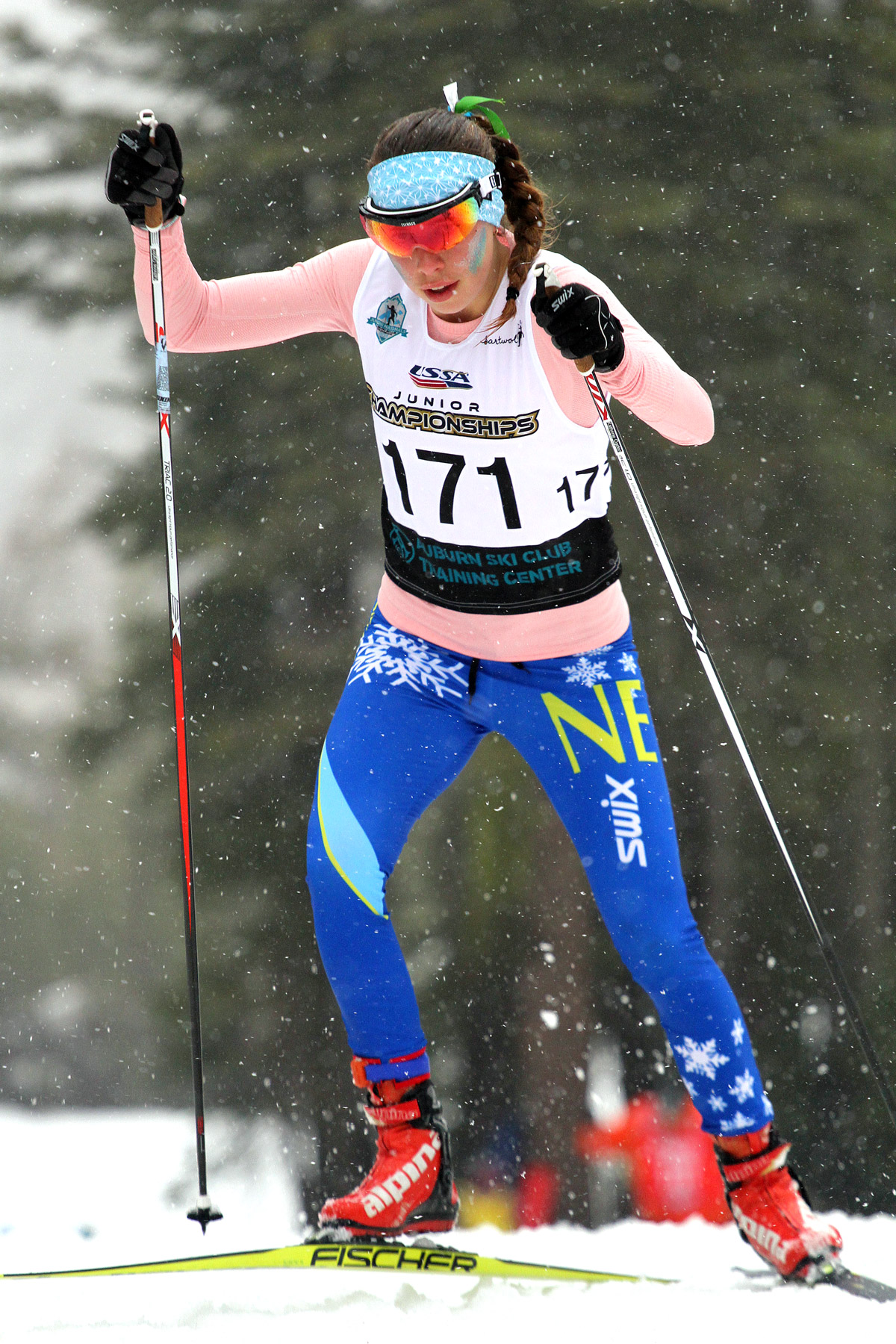
    Performances like the Fletcher brothers’ made the difference (paired with Demong’s impressive anchor leg), he added, and at this point, they weren’t surprising.

    “We knew [Taylor] was capable of doing this and now he’s showing he’s able to do it, too,” Jarrett said in Seefeld.

    “I made it onto the big stage with some of the better skiers and now I know I can do it on any given weekend,” Fletcher said at the time. “I know my jumping can be better and the cross-country is just getting better and better, so I’m very excited.”
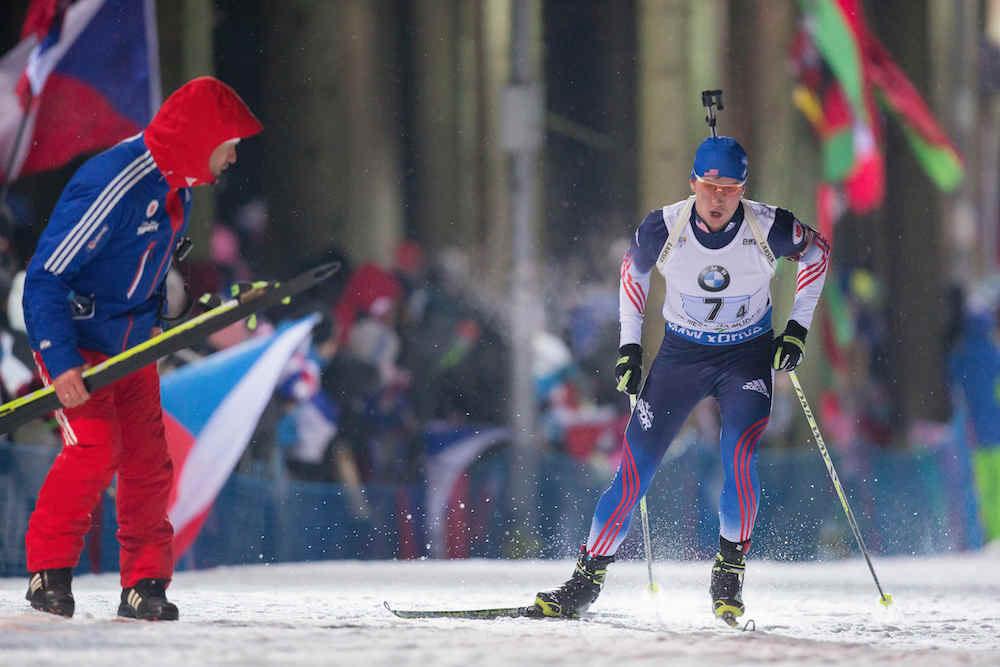
    medal-final-layer-2013

    Previous Winners:

    2011

    Bryan Fletcher (USST)

    2010

    U.S. Nordic Combined Team

    2009

    Billy Demong (USST)


    See also:

    Breakthrough Skier of the Year

    Continental Skier of the Year

    Junior Skier of the Year

    Rookie of the Year

    Collegiate Skier of the Year

  • Randall, Kershaw Repeat as FS XC Skiers of the Year, Harvey Joins the Party

    Randall, Kershaw Repeat as FS XC Skiers of the Year, Harvey Joins the Party

    FasterSkier Cross-Country Skier of the Year

    Cross-Country Skier of the Year (women):

    Kikkan Randall (USA/USST) Randall has now won the FasterSkier Cross-Country Skier of the Year Award every season since its inception, and 2011 is no different. The choice is easy, as Randall just keeps getting better. She is not just the best woman in North America, she is one of the best skiers in the world.

    At this point in her career Randall is the best American woman ever to compete in the sport, and second only to Canadian Beckie Scott in North American history. Randall’s 2011 season was the best American campaign since Bill Koch back in the early 80’s.

    The Anchorage, Alaska native won two World Cup races and finished on the podium two other times. Her efforts led her to a historic third place in the FIS Sprint Cup.

    And while her top finishes came in her preferred event – skate sprinting, Randall continued to improve in classic sprinting and distance racing.

    She placed 10th in the classic sprint in Stockholm, her first time in the semifinals in a European World Cup in a classic sprint, and regularly cracked the top-30 in longer races, including a career-best 11th in the 10km pursuit in Lahti.

    Add in the a 21st in her Tour de Ski, and Randall ended the season ranked 10th in the overall World Cup, another American record.

    A full international schedule kept Randall plenty busy, but she did find some time for late season domestic racing.

    She won every event at the SuperTour Finals in Sun Valley, including the 30km US National Championship.

    The only disappointment came at World Championships. Fresh off a victory the weekend before in the Drammen, Norway World Cup, Randall entered the Championship skate sprint as the favorite. But she tangled with another skier on the big downhill, crashing in her quarterfinal.

    But the professionalism with which Randall handled the disappointment may have been more impressive than a medal. While another skier in the same heat, who also crashed, cried and cursed in the finish area, Randall maintained her composure.

    She took time to talk to the press in the mixed zone, thoughtfully answering all questions. While she later admitted that the sprint day was a huge challenge to recover from, her public handling of the situation should be a model for young skiers everywhere.

    And she bounced back to finish the season with some incredible results, including the classic sprint 10th and the distance 11th mentioned above.

    While there are plenty of strong up and comers in the US, and the Canadian women are skiing very well, Randall is one of those special athletes who come along rarely – especially in this sport. Like Beckie Scott’s great run earlier in the decade, we should enjoy every one of Randall’s accomplishments while they occur, and not take anything for granted.

    Kikkan Randall battling Maiken Caspersen Falla in the Drammen Sprint.

    [poll id=”72″]

    Cross-Country Skier of the Year (men):

    Devon Kershaw (CAN/CNST) and Alex Harvey (CAN/CNST) Like Randall, Kershaw has now been a winner of this award every year, though last year he shared it with teammate Ivan Babikov and American Andy Newell.

    We have another joint ceremony this time around. When Kershaw and Harvey won gold in the team sprint at World Championships, the idea of picking one over the other became untenable.

    The rest of the  season supports the dual recipients. While the gold was historic, and the obvious high point, the two Canadian men combined for a magical year.

    Kershaw finally stayed healthy for an entire Tour de Ski, and the rest of the ski world paid a price. He won one race, finished second in two others, and took a third as well. He ended the Tour in seventh and finished the season ranked eight in the overall World Cup.

    In addition to the gold in the team sprint, Kershaw also placed ninth in the 30km pursuit at World Championships.

    Harvey also skied extremely well at the Tour de Ski with four top ten results and a tenth place overall.

    He was tenth in the overall World Cup standings and had an excellent World Championships. He took fifth in the 50km skate, seventh in the skate sprint and 12th in the pursuit along with the gold in the team sprint.

    He also placed a surprising second in the Drammen World Cup sprint just prior to Worlds.

    Every race that one of this dominant duo entered presented an opportunity for a podium finish – a level of excitement in North American men’s skiing that we have not seen for quite some time.

    Harvey and Kershaw (center) at the World Championship team sprint flower ceremony.

    [poll id=”73″]

    Previous Winners:

    2010
    Kikkan Randall (USA)
    Devon Kershaw (CAN)
    Andy Newell (USA)
    Ivan Babikov (CAN)

    2009
    Kikkan Randall (USA)
    Devon Kershaw (CAN)

    2008
    Kikkan Randall (USA)
    Devon Kershaw (CAN)

    FasterSkier Awards 2011:

    Rookie of the Year
    Breakthrough Skier of the Year
    Collegiate Skier of the Year
    Adaptive Skier of the Year
    Continental Skier of the Year
    Biathlete of the Year
    Nordic Combined Skier of the Year
    Performance of the Year (cross-country, biathlon, nordic combined)
    Cross-Country Skier of the Year

  • World Cup Victory and Gold Medal Headline FS Performances of the Year

    FasterSkier Performances of the Year

    The FasterSkier Performance of the Year Award is presented in three categories – cross-country, biathlon and nordic combined, with men’s and women’s in the first two.

    We will start with cross-country.

    XC Performance of the Year (women):

    Kikkan Randall (USA/USST) In some ways this is the easiest of the Performance of the Year awards – there is no question that it will go to Kikkan Randall. The challenge is picking one race as her best.

    The choice can quickly be narrowed down to her two World Cup sprint victories – the first coming post-Tour de Ski in Liberec, Czech Republic and the second in the her next World Cup start in Drammen, Norway.

    Both races featured extremely strong fields, but at the end of the day, the win in Drammen gets the nod. A World Cup victory in Norway is a bit more impressive than a similar performance elsewhere – the strong Nation’s group, and the added intensity at such a race being the primary reasons.

    Randall was in control throughout the day in Drammen, qualifying sixth and then executing perfectly in each of the heats, using the long gradual climb to the finish to her advantage.

    In the final, Randall bided her time letting 20-year-old Maiken Caspersen Falla (NOR) lead the way. The only US skier to win a World Cup race other than Bill Koch, Randall stayed patient through the first part of the homestretch before accelerating away to the win.

    The final also included Sprint Cup runner-up Arianna Follis (ITA), Marit Bjoergen (NOR), and the World Champions in the team sprint, Charlotte Kalla and Ida Ingemarsdotter of Sweden.

    All but four of the top 36 women in the overall Sprint Cup standings were present, with none of the biggest names missing.

    Honorable Mention:

    Kikkan Randall (USA/USST) As mentioned above, Randall had a second victory in Liberec, the site of her World Championship silver medal in 2009. There is no question that picking the Drammen win over this one is merely splitting hairs.

    There were numerous other strong performances by North American women throughout the season but in absolute terms, no one was close to the World Cup podium, let alone winning.

    Randall on top of the podium in Drammen.

    [poll id=”65″]

    XC Performance of the Year (men):

    Alex Harvey and Devon Kershaw (CAN/CNST) The men’s version of the XC award is fairly straightforward as well. Despite a season that saw Devon Kershaw win a stage of the Tour de Ski, and string together four podiums in six races during the multi-stage event, and teammate Alex Harvey finish second in the Drammen World Cup sprint, win the U23 30k, and take fifth in the World Championship 50k, this award will not go solely to either man.

    The pair teamed up to win World Championship gold in the classic team sprint, upsetting the Norwegian duo of Petter Northug and Ola Vigen Hattestad. Kershaw battled back from losing a ski early in the race, and Harvey outsprinted double-poler extraordinaire Hattestad to take the win.

    A gold medal is…well…the gold standard and the duo broke through for Canada after coming very close at the 2010 Olympics.

    Honorable Mention:

    Devon Kershaw (CAN/CNST) Kershaw had a magical season, and while FIS does not consider his individual races in the Tour de Ski actual World Cup podiums, we don’t really care. In many other years Kershaw’s victory in the freestyle sprint in Toblach, Italy would easily have earned him this award, but he bested himself at Worlds.

    In Toblach, Kershaw used a bold move over the top of the last climb to break free, holding his lead until the finish. A similar attack in the classic sprint a few days earlier didn’t quite pan out, though the Canadian still ended up second.

    He was also second in the 15km pursuit and third in an action-packed 20km mass start – all as part of the Tour

    Alex Harvey (CAN/CNST) Harvey’s second in the Drammen freestyle sprint was a bit of a surprise. While he has shown his chops as a World Cup sprinter, regularly qualifying for the heats, Harvey had never made it to the finals.

    But in a prelude to an impressive World championships, he edged Petter Northug at the line to take second to Sprint Cup champion Emil Joensson.

    Harvey’s fifth in the World Championship 50k also deserves recognition. While he was unable to match Northug’s very late move, he ended up less than two seconds off the podium in front of what some have described as the largest crowd in cross-country ski history.

    Devon Kershaw (L) and Alex Harvey (R) with their World Championship gold medals

    [poll id=”66″]

    Biathlon Performance of the Year (women):

    Sarah Studebaker (USA/USBA) Studebaker placed 17th at the World Championships in the 15km individual. While it was not as good as her 14th at the Presque Isle World Cup, the fact that it came on the big stage of World Championships gives it a bit more cachet.

    Studebaker missed two shots on her way to her second-best career finish, capping a breakthrough season, and a resurgence of the US women’s biathlon team.

    Only winner Helena Ekholm (SWE), who cleaned, and Nadezhda Skardino (BLR) with one miss, shot better than Studebaker – though many matched her two misses.

    Honorable Mention:

    Sarah Studebaker (SUA/USBA) Studebaker’s 14th on home snow in Presque Isle was the top finish for the US team in 2011, and moved her into the ranks of the biathlon elite.

    Laura Spector (USA/USBA) Spector was overshadowed by Studebaker later in the season, but the Massachusetts native had a very strong start to 2011, peaking with a 19th in the Oberhof sprint.

    Haley Johnson (USA/USBA) Johnson wrapped up an excellent career with a season-best 21st in the ski mecca of Oslo, Norway, finishing 21st in the 10km pursuit and qualifying for the mass start event.

    Studebaker racing at the World Cup races in Maine (Photo: FlyingPointRoad.com)

    [poll id=”69″]

    Biathlon Performance of the Year (men):

    US Men’s Relay Team The US men placed sixth in the World Championship relay in Khanty Mansiysk, Russia, finishing just ten seconds off the podium. The foursome of Lowell Bailey, Jay Hakkinen, Tim Burke and Leif Nordgren teamed up to record the best World Championship finish for the US men.

    The performance also came in a somewhat down season for the US men, and kept the world on notice that when the pieces fall into place, the team is a force to be reckoned with.

    Honorable Mention:

    Lowell Bailey (USA/USBA) The FasterSkier Biathlete of the Year, Bailey placed ninth in the 15km mass start in Fort Kent, Maine. With two misses, Bailey was less than 10 seconds out of the top-5.

    Bailey getting it done on US snow – Fort Kent World Cups (Photo: FlyingPointRoad.com)

    [poll id=”70″]

    Nordic Combined Performance of the Year

    Last season the Nordic Combined Performance of the year came down to a decision between various Olympic medal races. The story was a bit different in 2011 with top Nordic Combined skiers Billy Demong, Todd Lodwick and Johnny Spillane having sub-par seasons for a variety of reasons – Demong took some time off while Lodwick and Spillane struggled with illness and injury respectively.

    But matching Olympic medals is always going to be tough and there was still plenty of strong NoCo racing.

    Todd Lodwick (USA/USST) Lodwick placed fifth in the large hill competition at the World Championships in Oslo, Norway. He skied up from 12th, posting the sixth fastest ski time and ended up 31 seconds off the podium.

    Honorable Mention:

    Billy Demong (USA/USST) In the same race at World Champs, Demong finished just one place and ten seconds behind Lodwick. The Olympic gold medalist overcame a ranking of 20th after the jump to move up to sixth on the strength of the second fastest ski time.

    Demong and Lodwick swapped places in the normal hill competition in Oslo, with Demong leading the way in seventh and Lodwick less than a second behind in eighth.

    Todd Lodwick in the air at World Championships.

    [poll id=”71″]

    Previous Winners:

    2010

    XC
    Devon Kershaw (CAN)
    Kikkan Randall (USA)

    Biathlon
    Tim Burke (USA)
    Zina Kocher (CAN)

    NoCo
    Billy Demong (USA)

    2009

    Kikkan Randall (USA)
    Alex Harvey (CAN)

    2008
    Kikkan Randall (USA)
    Andy Newell (USA)

    FasterSkier Awards 2011:

    Rookie of the Year
    Breakthrough Skier of the Year
    Collegiate Skier of the Year
    Adaptive Skier of the Year
    Continental Skier of the Year
    Biathlete of the Year
    Nordic Combined Skier of the Year
    Performance of the Year (cross-country, biathlon, nordic combined)
    Cross-Country Skier of the Year

  • Bailey, Studebaker Lead US Biathlon, Gain FS Biathlete of the Year Honors

    Bailey, Studebaker Lead US Biathlon, Gain FS Biathlete of the Year Honors

    FasterSkier Biathlete of the Year

    Biathlete of the Year (men):

    Lowell Bailey (USA/USBA) Bailey was one of several bright spots in a somewhat rocky year for the US men’s biathlon team. Coming off a run of several seasons where expectations continued to rise for the program, what with Tim Burke leading the overall World Cup for a time in 2010, Jeremy Teela reaching the World Cup podium in 2009, and a number of strong relay results, there were many reasons to be positive.

    But with Burke struggling with undisclosed compartment syndrome and Teela unable to regain the form he showed the last few seasons, it was Bailey who stepped up in 2011 to lead the team.

    Four of his top six career results came during the 2011 campaign, including a best ever ninth on home snow in Fort Kent. He also had three other top-16 results on the World Cup, and ended the season ranked 41st in the world, also a career-best.

    Bailey scrambled for the World Championship relay that finished an impressive sixth, just ten seconds out of the medals – a race that was easily the highlight of the season for the men’s team.

    Outside of the relay, Bailey did not have his best races at World Champs, but his top results throughout the season earn him the award.

    Lowell Bailey racing at the World Cup in Maine.

    Honorable Mention:

    Leif Nordgren (USA/USBA) The 21-year-old Nordgren made the leap from potential to legitimate World Cup biathlete this year with a series of standout performances at the World Championships in Khanty-Mansiysk, Russia.

    Nordgren turned in results of 17, 21, and 26 in the three individual races he started, and anchored the US relay team to sixth.

    Brendan Green (CAN) Green posted five of his top seven best World Cup results during the 2011 season, including a top mark of 14th in Oberhof, Germany.

    All told he had five top-30 results and ended the season ranked 53rd.

    [poll id=”62″]

    Biathlete of the Year (women):

    Sara Studebaker (USA/USBA) Studebaker took a major step forward in 2011, leading the US women’s team, and consistently turning in strong performances.

    All 12 of her top World Cup results came this past season. Her top finish, a 14th, came in the sprint on US soil in Presque Isle, Maine.

    She had a total of 11 top-30 races and four top-20s. She also led the US at World Championships with a 17th in the 15km individual.

    Studebaker also provided great excitement in the pursuit on the last weekend of World Cup racing, in Oslo, Norway. She sat eighth place after three stops in the range, and was within striking distance of the top five. While she struggled on the final shooting, missing three targets, she still finished a more than respectable 20th and gave a glimpse of a possible future at the top of the results sheet.

    She finished the season ranked 34th in the world, the first time a US woman has cracked the top-60 since Rachel Steer placed 36th in 2005.

    Along with teammates Laura Spector and Haley Johnson, Studebaker has helped elevate US women’s biathlon to a truly elite level. The men’s team has received most of the attention in recent years – rightly so given their results. But that has changed, and Studebaker is one of the driving forces behind the shift.

    Sara Studebaker (USA) en route to tagging off in eighth place after the first leg of the World Championship relay. Photo: nordicfocus.com courtesy of USBA.

    Honorable Mention:

    Laura Spector (USA/USBA) In any other season over the past six years, Spector would have easily been the top US female biathlete. She placed in the top-30 five times, with a best finish of 19th.

    Her World Cup rank of 53rd was second only to Studebaker among North American women.

    [poll id=”63″]

    Previous Winners:

    2010
    Tim Burke (USA)
    Zina Kocher (CAN)

    2009
    Tim Burke (USA)
    Zina Kocher (CAN)

    2008
    Tim Burke (USA)
    Caitlin Compton (USA)

    FasterSkier Awards 2011:

    Rookie of the Year
    Breakthrough Skier of the Year
    Collegiate Skier of the Year
    Adaptive Skier of the Year
    Continental Skier of the Year
    Biathlete of the Year
    Nordic Combined Skier of the Year
    Performance of the Year (cross-country, biathlon, nordic combined)
    Cross-Country Skier of the Year

  • US and Canada Share FS Continental Skier of the Year Awards

    US and Canada Share FS Continental Skier of the Year Awards

    FasterSkier Continental Skier of the Year

    With two different continental cup series and two sets of national championships, determining the top domestic racers can be challenging. Head-to-head match ups are usually limited, and it can be difficult to compare field strength.

    Such was the case this year. A strong argument can be made for both the overall SuperTour winner and the NorAm Cup. Champions. As is sometimes the case, we felt there was no better option than awarding joint winners.

    Continental Skier of the Year (men):

    Lars Flora (USA/APU), Graham Nishikawa (CAN, Whitehorse CCSC) In a resurgent season, the 33-year-old Flora won the overall SuperTour title for the third time in the last five years.

    SuperTour leader Lars Flora (APU) skiing to victory in Lake Placid

    The veteran started strong, finishing second in the first three races of the season in West Yellowstone. He went on to take home the national title in the 15km classic in Rumford, Maine and followed up with a two more national podium appearances.

    His efforts earned him a spot on the World Championship team and an extended stint in Europe. He was back for the SuperTour Finals in Sun Valley where he placed seventh in the 50km national championship event, and ninth in a loaded mini-tour field.

    Like most of the top US domestic racers, Flora headed north after West Yellowstone for two weekends of racing on the NorAm circuit. He won two races and placed fourth in the Blackjack mini-tour.

    All told an impressive season, and if FasterSkier offered a comeback skier of the year prize, Flora would be the winner hands down. But there are several arguments against him as the top performer on North American soil.

    While he entered the SuperTour finals with a chance to win both the sprint and distance cups, he was unable to wrap either up, placing second in both categories. His overall victory was also aided by the cancellation of the Madison SuperTour due to political protests..

    If those races had been held, with Flora in Europe, sprint cup winner Mike Sinnott (USA/SVSEF) or distance champ Brian Gregg (USA/CXC Elite) would have had a good shot at taking the top spot.

    So that brings us to Nishikawa. Like Flora, “The Nish” as he is known, is no up-and-comer at this point in his career. But despite being an annual fixture on the elite North American racing scene, he is still just 27 yeas old and potentially entering his prime – a possibility he supported with a dominating domestic campaign.
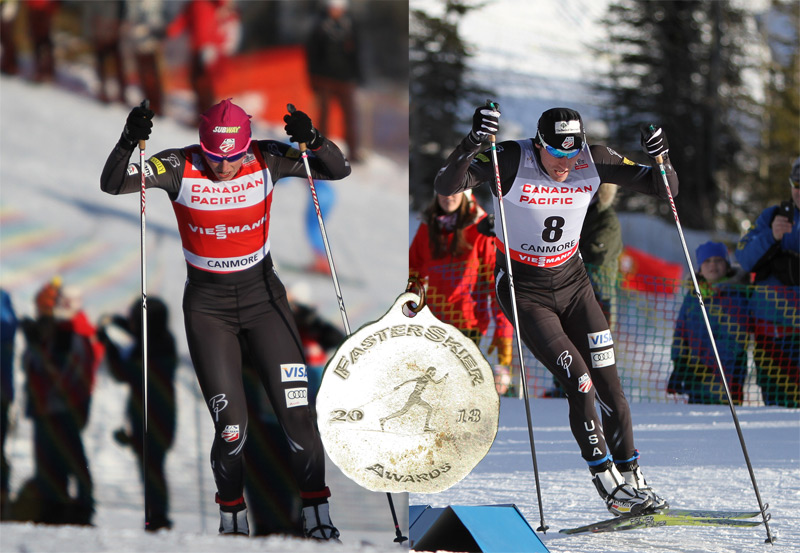
    Nishikawa stood on the NorAm podium a ridiculous 18 times in 2011, including eight victories and seven second place results. His success did not come against weak competition either. While mid-season continental cup races can sometimes be sparsely attended due to European trips, Nishikawa regularly matched up against Canadian stalwarts Drew Goldsack, Brent McMurtry, Steffan Kuhn, and George Grey, among others

    He also traveled to the US to contest the season opening SuperTour races in West Yellowstone, placing fourth and fifth in the two distance races.

    The knock on the Nish? He did not race the Canadian National Championships at the end of the season, and Flora had the upper hand in head-to-head meetings, posting a 5-2 record.

    But if you add in the last World Cup period, Nishikawa evens the score, besting Flora in all four races the two matched up. And his reason for skipping the national championships? He was busy at the World Cup Finals.

    At the end of the day there really isn’t much separation between the two, and in a reprise of the 2009 award, both men earn the Continental Cup Skier of the Year award.

    [poll id=”60″]

    Graham Nishikawa (AWCA) in action during the NorAm in Rossland B.C. earlier this season. (Photo: Brad Jones)

    Continental Skier of the Year (women):

    Perianne Jones (CAN/CNST), Holly Brooks (USA/APU) While it is somewhat predictable, the women’s award is also shared by the SuperTour and NorAm winners. In some years one skier is clearly the superior North American source, but both Jones and Brooks had excellent seasons, and are deserving of the honor.

    With eight victories and 12 total NorAm podiums, Jones won her second overall NorAm title in the last four years, besting runner-up Emily Nishikawa by over 200 points.

    Perianne Jones (CAN), racing at the Drammen World Cup.

    Jones earned a spot on the Canadian World Championship team, and raced in Europe from mid-February through the end of the season. While Canadian nationals were underway, she turned in her best-ever World Cup result, placing 12th in the Stockholm sprint.

    Her consistent performance throughout the year easily made Jones the top domestic skier in Canada this year.

    As for Brooks, she was no slouch south of the border. She easily won the overall SuperTour title, and both the sprint and distance cups.

    Including US Nationals, Brooks had a total of five victories and five second place finishes in the US.

    Additionally, she had two NorAm victories and placed third in the Backjack mini-tour.

    Jones, a stronger sprinter, had a leg up on Brooks in the short distance, with better finishes in the two NorAm sprints both competed in. Throw in World Cup races, and Jones won four of five head-to-head sprints.

    On the distance side, Brooks came out ahead in two of three NorAm races, and shut down Jones in Europe. In five World Cup and World Championship distance races, Brooks had a better result in all.

    Ultimately both women had excellent seasons, and were clearly a step above the rest of their respective domestic fields. Jones is the stronger sprinter, and Brooks is better in the distance races.

    And so, as with the men, the award is shared by both.

    Honorable Mention:

    APU Women’s Team The APU women’s ski team swept the overall SuperTour podium with Kate Fitzgerald and Morgan Smyth following Brooks in the standings. With Sadie Bjornsen placing fifth, and Kikkan Randall sixth, APU had five of the top six women on the SuperTour.

    [poll id=”61″]

    Holly Brooks (APU)

    Previous Winners:

    2010
    Dasha Gaiazova (CAN)
    Brent McMurtry (CAN)

    2009
    Kristina Strandberg (SWE)
    Lars Flora (USA)/Graham Nishikawa (CAN)

    2008
    Kristina Strandberg (SWE)
    Ivan Babikov (CAN)

    FasterSkier Awards 2011:

    Rookie of the Year
    Breakthrough Skier of the Year
    Collegiate Skier of the Year
    Adaptive Skier of the Year
    Continental Skier of the Year
    Biathlete of the Year
    Nordic Combined Skier of the Year
    Performance of the Year (cross-country, biathlon, nordic combined)
    Cross-Country Skier of the Year

  • McKeever, Barber Lead Canadian Sweep of FS Adaptive Skier of the Year

    McKeever, Barber Lead Canadian Sweep of FS Adaptive Skier of the Year

    FasterSkier Adaptive Skier of the Year

    Adaptive Skier of the Year (men):

    Brian McKeever (CAN) McKeever continued his dominance of the adaptive skiing circuit, collecting three cross-country golds at the IPC World Championships and a silver in biathlon.

    All this hardware came without longtime guide, brother Robin McKeever, who suffered an injury not long before the start of the Championships. Long-time friend, and Erik Carleton took over, and McKeever did not miss a beat.

    McKeever, who skis in the visually impaired category, did not race on the IPC World Cup this season, but as in the past, he contested a number of elite able-bodied events.

    The 2010 Olympian posted a seventh place finish in the Canadian National Championship 50k and placed third in the final stage of the February NorAm mni-tour.

    McKeever ended the season ranked a career-best 14th in the overall NorAm standings.

    Brian McKeever (r) with guide Erik Carleton (l) celebrating World Championship gold (Photo: IPC)

    Honorable Mention:

    Chris Klebl (CAN) Klebl switched allegiance in 2011, moving north and taking Canadian colors. The move obviously suited him as he left the IPC World Championships in Khanty-Mansyisk, Russia with a gold and silver in the 15km cross-country and the sprint respectively.

    Klebl, skiing in the sitting classification, contested all seven IPC World Cup events, and was ranked fourth in the world when the season came to an end.

    Mark Arendz (CAN) Arendz won three IPC World Cup biathlon races, and had two seconds and a third on his way to second in the overall standings – just four points down Nils-Erik Ulset (NOR).

    Arendz was shut out of the medals at the World Championships, but had two fourths and a sixth in three starts. He also raced cross-conutry World Cup events, scoring points in four races, including a

    Sean Halsted (USA) Halsted lacked the top results of his Canadian counterparts, but had an impressively consistent season, racing both cross-country and biathlon.

    Halsted scored points in six of seven World Cup biathlon races, ranking tenth overall. He was even better on the cross-country side, finishing in the points in every race – good enough for sixth in the World Cup standings.

    [poll id=”58″]

    Adaptive Skier of the Year (women):

    Jody Barber (CAN) Barber, like Halsted on the men’s side, was the ultimate renaissance woman on the trails in 2011.

    She placed fifth in the biathlon World Cup, finishing in the top six in six of seven events. In cross-country, she skied to a sixth in the overall, buoyed by two podium appearances.

    At the World Championships, Barber came close to a medal, finishing fourth twice and fifth twice in four starts.

    Barber, a teacher and mother of five, is in just her fourth season of competing in cross-country and biathlon.

    Jody Barber brings it home at the World Championships (Photo: IPC)

    Honorable Mention:

    Colette Bourgonje (CAN) Last year’s winner of this award, Bourgonje took a break from World Cup racing, but did make the trip to Khanty-Mansyisk for the World Championships.

    The journey was worth it as she won gold in the 10km sit-ski event, bettering the silver she won last year.

    [poll id=”59″]

    Previous Winners:

    2010
    Brian McKeever (CAN)
    Andy Soule (USA)
    Colette Bourgonje (CAN)

    FasterSkier Awards 2011:

    Rookie of the Year
    Breakthrough Skier of the Year
    Collegiate Skier of the Year
    Adaptive Skier of the Year
    Continental Skier of the Year
    Biathlete of the Year
    Nordic Combined Skier of the Year
    Performance of the Year (cross-country, biathlon, nordic combined)
    Cross-Country Skier of the Year

  • Graefnings, Tarling Win FS Collegiate Skier of the Year

    Graefnings, Tarling Win FS Collegiate Skier of the Year

    FasterSkier Collegiate Skier of the Year

    Collegiate Skier of the Year (women):

    Maria Graefnings (SWE/University of Utah) A senior at the University of Utah, and a native of Falun, Sweden, Graefnings dominated the RMISA circuit during the regular season, winning seven of eight starts.

    Maria Graefnings (UU)

    Graefnings transferred to Utah from the University of Nevada when that program was cut. In addition to her success in the western region, Graefnings won the NCAA national title in the 5km freestyle event, and placed second in the 15km classic mass start.

    The 25-year-old also had plenty of success outside the collegiate ranks, finishing the year with three SuperTour podiums, including a victory in the Owl Creek Chase, and a second place finish in the US National Championship 30k.

    Honorable Mention:

    Eliska Hajkova (CZE/University of Colorado) Hajkova spent most of the 2010 seaosn in the shadow of Graefnings. In the first four races of the RMISA season, she placed second to the tall Utah star, and went on to place outside the top-3 just once – a fourth in the UNM Invitational classic race.

    The trend continued in the first race of the NCAA Championships in Stowe, Vermont. Graefnings took the victory in the 5km skate, with Hajkova ten seconds back in second. But the 23-year-old former member of the Czech National Team saved her best for last, upsetting Graefnings in the 15km classic and earning her first NCAA title. Her effort helped propel CU to the national championship.

    Caitlin Patterson (USA/University of Vermont) Patterson may have been hard-pressed to match the performances of Graefnings and Hajkova, but at just 21 years of age, Patterson gave up several years, and significant experience to her European competition.

    The Alaskan native, in her junior year at the University of Vermont, won seven of eight regular season EISA starts, placing second in her one “off-day.”

    She placed sixth in the 5km skate at the NCAA Championships, but struggled in the classic event, finishing 23rd.

    Patterson also managed to squeeze in a trip to the U23 Championships in Otepaa, Estonia, where she skied to 20th in the 15km pursuit, and 26th in the 10km freestyle.

    [poll id=”56″]

    Collegiate Skier of the Year (men):

    Sam Tarling (USA/Dartmouth) The men’s collegiate field lacked the domination at the top that highlighted the season on the women’s side. Six different men won EISA races, and five took top honors in the RMISA, while the CCSA had several strong contenders as well.

    Sam Tarling (DAR)

    Ultimately, Tarling gets the nod over the likes of Miles Havlick (USA/UU) and Vegard Kjoelhamar (NOR/CU) on the strength of his NCAA National Championship title and consistency throughout the season.

    Tarling won two regular season EISA races and finished in the top five in each of his eight starts – a strong campaign to say the least, but not even the best in the Eastern region. It was Tarling’s victory in the 10km skate that put him over the top. In an upset victory over Colorado’s Kjoelhamar, Tarling joined the relatively sparse ranks of American skiers to win an individual NCAA title in recent years.

    He was unable to duplicate the performance, or even come close in the 20km classic two days later, placing 32nd in the 39 skier field, but with top challengers Havick and Kjoelhamar unable to claim a victory of their own, Tarling becomes the first American to win the FasterSkier Collegiate Skeir of the Year award.

    Honorable Mention:

    Vegard Kjoelhamar (NOR/University of Colorado) Kjoelhamar won two RMISA races and finished second two other times before placing second in the 10km skate at the NCAA Championships.

    The 2009 winner of this award, Kjoelhamar ended a successful collegiate career with another podium, taking third in the NCAA Championship 20km classic.

    Miles Havlick (USA/University of Utah) Havlick ended the 2011 season as the top ranked skier in the RMISA, edging Kjoelhamar by a single point. The sophomore won three races, finished second twice, and fifth once in his six starts.

    At the NCAA Championships, he took the final podium spot behind Tarling and Kjoelhamar in the 10km skate, and placed sixth in the 20km classic.

    Eric Packer (USA/Dartmouth) Packer deserves recognition as the top ranked EISA skier, besting Tarling, among others, and leading the circuit with three victories

    He started all ten regular season races, never finishing outside the top five. At the NCAA Championships, he finished 5th in the 10km skate and 25th in the 20km classic.

    [poll id=”57″]

    Previous Winners:

    2010
    Antje Maempel (GER/DU)
    Franz Bernstein (GER/UVM)

    2009
    Antje Maempel (GER/DU)
    Vegard Kjoelhamar (NOR/CU)

    2008
    Maria Grevsgaard (CZE/CU)
    Marius Korthauer (GER/UAF)

    FasterSkier Awards 2011:

    Rookie of the Year
    Breakthrough Skier of the Year
    Collegiate Skier of the Year
    Adaptive Skier of the Year
    Continental Skier of the Year
    Biathlete of the Year
    Nordic Combined Skier of the Year
    Performance of the Year (cross-country, biathlon, nordic combined)
    Cross-Country Skier of the Year

  • Fitzgerald and Sandau Break Through in FS Awards

    Fitzgerald and Sandau Break Through in FS Awards

    FasterSkier Breakthrough Skier of the Year

    For the first time we are naming a Breakthrough Skier of the Year. The award is even less defined than the Rookie of the Year. Any skier who took a significant step forward is eligible. Though not limited to domestic skiers, we will lean toward such athletes, as the Rookie of the Year has generally gone to the World Cup level.

    Breakthrough Skier of the Year (women):

    Kate Fitzgerald (USA/APU) The 23-year-old Fitzgerald was no slouch heading into the 2011 campaign, but despite consistent solid performances on the national level, she was a relative unknown outside of Alaska.

    A member of the loaded APU women’s team, Fitzgerald twice skied to a career-best 14th place finish in a US National Championship race prior to 2011, and had never stood on the SuperTour podium.

    That changed right out of the gate this year when on the first day of racing in West Yellowstone she placed third and fifth in the qualifier-only dual sprint event. It only got better – the next day she won the 10km classic when she edged teammate Holly Brooks by just 1.1 seconds.

    Fitzgerald went on to a total of four SuperTour podiums and two fifths at US Nationals, proving that her hot start was no fluke.

    When all was said and done, Fitzgerald sat in second in the overall SuperTour standings, a vast improvement over her 42nd place on the ranking list last year.

    She also made six starts on the European Continental Cup circuit, with a top finish of fifth.

    Kate Fitzgerald in West Yellowstone.

    [poll id=”54″]

    Breakthrough Skier of the Year (men):

    Kevin Sandau (CAN/CNST) Like Fitzgerald, Sandau has had a presence on the North American racing scene for some time, but 2011 marked a significant step forward for the 22-year old from Canmore, Alberta.

    Sandau earned the first three Nor-Am podiums of his career this season, and added a third place SuperTour result in as well.

    He ended the season ranked fifth in the Nor-Am series, up from 11th last year. In four National Championship starts (three Canadian, one American), he placed second once, third twice, and fourth once.

    The point of the season was a fifth place at U23 Championships in the 15km freestyle in Otepaa, Estonia, also the site of Sandau’s first European World Cup start.

    One could argue that Sandau’s breakthrough came last year when he went from a career-best Canadian Nationals result of 29th to finishing in the top-6 three times. But this award didn’t then, and Sandau cemented his place as one of the next wave of Canadian distance skiers.

    Kevin Sandau (Canadian National Ski Team) leading Japan's Yuma Yoshida at the end of the 50 k classic in the US National Championship 50k.

    [poll id=”55″]

    FasterSkier Awards 2011:

    Rookie of the Year
    Breakthrough Skier of the Year
    Collegiate Skier of the Year
    Adaptive Skier of the Year
    Continental Skier of the Year
    Biathlete of the Year
    Nordic Combined Skier of the Year
    Performance of the Year (cross-country, biathlon, nordic combined)
    Cross-Country Skier of the Year

  • Diggins, Valjas Earn FasterSkier Rookie of the Year Honors

    Diggins, Valjas Earn FasterSkier Rookie of the Year Honors

    FasterSkier Rookie of the Year

    It is hard to define a “rookie” in cross-country skiing.  First year on the World Cup?  First season as a senior?  First year in college?  First year skiing?  We keep it loose and give the award to skiers who take a major step forward while moving up to a new level of competition.

    Rookie of the Year (women):

    Jessie Diggins (USA/CXC Elite) The choice for the female Rookie of the Year was not an easy one. Diggins and Sadie Bjornsen had remarkably similar seasons. Strong arguments can be made for both women, but Diggins ultimately got the nod based mainly on her World Juniors results and her younger age.

    Diggins, at just 19 years old, skied to a number of impressive firsts during the 2011 season, turning in results that would please a more senior athlete.

    The high point was undoubtedly the two top-30 results at World Championships in Oslo, Norway, Diggins’ first try at a major international championship. She placed 25th in the freestyle sprint, and 28th in the 15km pursuit, the youngest finisher in the top-30 in both races.

    On top of that, she skied a strong leg in the 4x5km relay, anchoring the US women to a 9th place result.

    In addition to success on cross-country skiing’s biggest stage, Diggins skied very well at the World Junior Championships in Otepaa, Estonia, with a top finish of 7th in the 5km skate.

    World Juniors marked the beginning of her first extended European tour – in all she made 13 starts, tacking on a number of strong Continental Cup results to her impressive performances at World Championships and World Juniors.

    Domestically, Diggins won her first National Championship, besting a strong field in the freestyle sprint in Rumford, Maine. She also won the Canadian Nor-Am mini-tour in December, and took third in the season finale SuperTour Final mini-tour in Sun Valley.

    Diggins was rewarded with a nomination to the US B-Team, and will postpone college to continue pursuing ski-racing full time.

    Jessie Diggins in her first World Cup sprint race in Drammen, Norway

    Honorable Mention:

    Sadie Bjornsen (USA/APU) In most other years, Bjornsen would have been a shoo-in for this award. Like Diggins, she made her first foray into World Cup caliber racing, and fared extremely well. She also turned in two top-30’s at World Championships, taking a US-best 24th in the sprint, and 28th in the 10km classic.

    Bjornsen also placed 17th in two U23 Championship events in Otepaa. And like Diggins, she took home her first National Championship, winning the 10k classic in Rumford, and finished third in the skate sprint as well.

    [poll id=”52″]

    Rookie of the Year (men):

    Len Valjas (CAN/CNST) The men’s decision was more clear-cut than the women’s. Valjas established himself as a legitimate World Cup sprinter, finishing ninth in the Drammen skate sprint after qualifying fourth and then following up with a 15th in the same event at World Championships.

    He also placed seventh, qualifying second, in the classic sprint at the U23 Championships in Otepaa, and defended his Canadian Sprint National Title.

    Still just 22, the lengthy Canadian made eight of his nine career World Cup starts this past season.

    Len Valjas (bib #4) on his way to a career-best ninth at the Drammen, Norway World Cup sprint.

    Honorable Mention:

    Noah Hoffman (USA/USST) Hoffman has been around long enough that he seems like a seasoned veteran. But he won’t turn 23 until August, and raced his first European World Cups this season.

    The Colorado native missed out on World Cup points when he finished 31st in the 15km skate in Gallivare, Sweden in November, and followed up with a strong relay leg a day later.

    He placed 34th in the 15km pursuit as part of the Kuusamo mini-tour and then turned some heads at World Championships.

    Hoffman placed 29th in the 15km classic – an excellent result especially when Hoffman’s preference for the skate technique is taken into account. He closed out the ten days of racing as the top US finisher in the 50km skate, placing 30th, and hanging with the lead pack for nearly two-thirds of the race.

    [poll id=”53″]

    Previous Winners:

    2010
    Simi Hamilton (USA)
    Holly Brooks (USA)

    2009
    Alex Harvey (CAN)
    Morgan Arritola (USA)

    2008
    Garrott Kuzzy (USA)
    Liz Stephen (USA)

    FasterSkier Awards 2011:

    Rookie of the Year
    Breakthrough Skier of the Year
    Collegiate Skier of the Year
    Adaptive Skier of the Year
    Continental Skier of the Year
    Biathlete of the Year
    Nordic Combined Skier of the Year
    Performance of the Year (cross-country, biathlon, nordic combined)
    Cross-Country Skier of the Year