From the FasterSkier archive — posts syndicated from athletes’ and coaches’ own blogs between 2004 and 2012, kept online as published. Current coverage is at fasterskier.com.
Editor’s note: For the second-straight year, we’re presenting another 12-day holiday gift guide, brought to you by the one and only “FBD”, our gear-review guru. Kicking the series off, recommendations for recovery gifts to keep you and your ski buddies on the trails and injury free. See also: Day 1 | Day 2 | Day 3 | Day 4 | Day 5 | Day 6 | Day 7
***
Day 8: Lighting Systems
You’re going to see a bit of a theme today — lighting systems. I suppose that’s why today’s column is entitled, “Lighting Systems”. I’ve found that actually being able to see while skiing is a real plus, so today we’re going to “focus” (prepare yourself, too, as this is just one of many bad puns on vision and optics — I’ve said it before and I’ll say it again, I’m an unapologetic science geek) on how to safely navigate the tracks when The Man forces you out under the cover of darkness.
Headlamps have come an amazingly long way in a relatively short period of time, as it seems like it was just yesterday that I was slogging along, lost in the mountains of Santa Monica at 3 a.m. in a 24-hour adventure race, with all of the headlamps on my entire team dead. We had backup lights with the approximate lumens of a candle and let me tell you, you learn a lot about how to handle your mountain bike when you are ripping down descents at 30 mph in the pitch black, after having already raced for 16 hours. It was right then and there that I decided that I would never be without a good headlamp again.
So for a total gear nerd like me, headlamps are a total slam dunk, but what about for all of your “normals” out there (well, insomuch as any nordic skier is normal)? Let me ask you a few questions: Do you have power in your home? Does that power sometimes go out? Does it get dark where you live? Do you sometimes need/want to train at night? Do you think it is even remotely possible that you or a loved one could some day have a mechanical or some other issue with your car when it’s dark? If you’ve answered yes to any of these questions, you need a headlamp, and a good one at that.
I’ve probably own/have owned more than 30 of these over the years. I’ve bought them, won them in races, received them free when buying base layers in Switzerland, helped companies with product testing — you name it. Part of my love affair with this wonderful device stems from their utility: not only are these babies essential for ANY type of training in the winter when work demands and scarcity of daylight conspire to send me out in the dark (an all too frequent occurrence), but there’s also thrill of rediscovering trails that you’ve ridden literally thousands of times in daylight on your mountain bike that take on a completely different dimension in the dark. Then there’s also 24-hour racing. Or even just simply trying to commute home from your office at night without being killed by a distracted motorist. For many of us out there, fighting a good fight, frantically clinging to whatever shred of fitness that we’ve been able to carve out given our brutal work schedule, the bike commute can be the difference between getting in some training and doing nothing at all, and nighttime bike commuting simply cannot happen without a good lighting system.
The list goes on and on: back when we used to get snow in the winter and I could pry Smullin away from shopping for disinfectant wipes in his mom jeans with his squad, we’d skin up the ski mountain at “O-Dark Thirty” on Dong Patrol (how Steamboat bros refer to Dawn Patrol, because it’s usually nothing but about 10 smelly dudes doing this) with nothing but our headlamp and shining personalities to light the way. For anyone who has ever spent any time with either myself or J-Smu, this obviously meant that we were quite reliant on the headlamps.
Not to beleaguer this point (but, this IS my speciality), but this realm goes even beyond fitness applications. As noted above, if you’re trying to navigate your house after an all-too-frequent East Coast power outage, get your stupid Great Dane outside in the midst of yet another midnight bathroom emergency, or simply find your way from the very inconveniently placed wall switch to your bed in your pathetic West Yellowstone cabin (because any time that you can work Bugs Bunny into a story, you know you are doing something right) in your equally pathetic and largely futile attempt to get faster on your skis, headlamps are nothing short of essential. I have one in all of my cars, multiple in each home, and an extremely wide assortment for all of my various athletic endeavors. It is therefore with great pride that I present a wide array of options for essentially all of your needs.
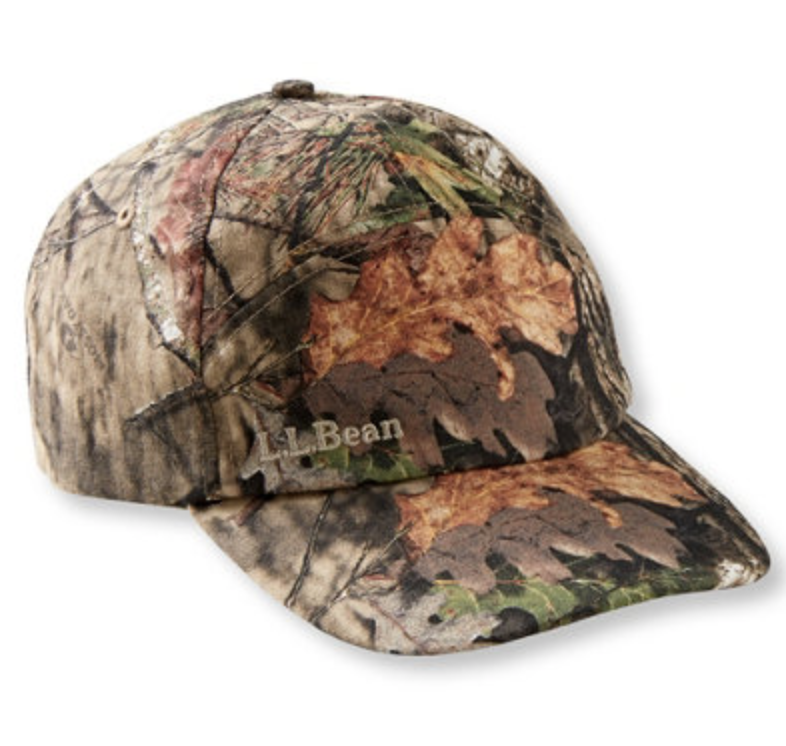
Squeaking in right under the $29 cutoff (at $29) are two of my favorite hats: the L.L. Bean Pathfinder series. There’s a ball cap and beanie option and quite frankly, you should buy both (it still gets dark in summer, remember, and please don’t be one of those beanie-wearing hipsters. Winter? Sure, rock the beanie. Summer? That’s ball-cap weather, you freakin’ weirdo. Please don’t be “that guy”).
You are flaunting with this line when you wear a beanie in the summer. Do you want that? Of course not.
Both of these hats are the ultimate dog-walking, evening-hiking, survive-the-walk-home-from-the-bar hats. With 48 lumens of light, either of these chapeaus will help you both see and been seen nicely. As an added bonus, the entire lighting system is so well-hidden in the hat that it is essentially undetectable when not in use, so you can wear this hat on both the daylight walk to the bar and the nighttime walk home without looking like the gear geek that you are. On that latter point, though, not to worry, you’ll have the last laugh when your too-cool-for-school conventional headwear comrades twist an ankle on the obstacle that you neatly avoided.
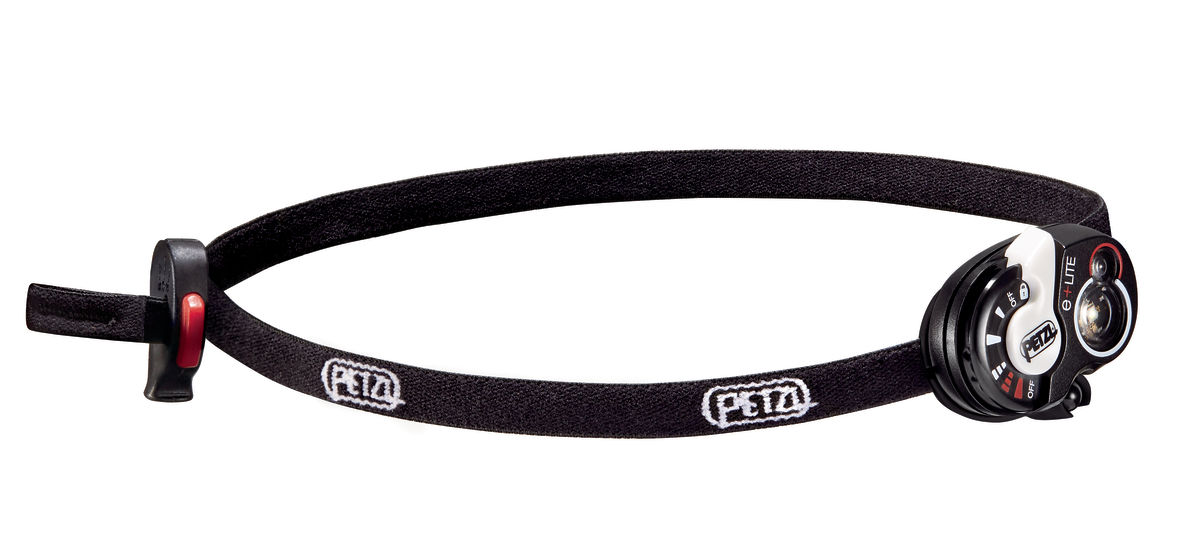
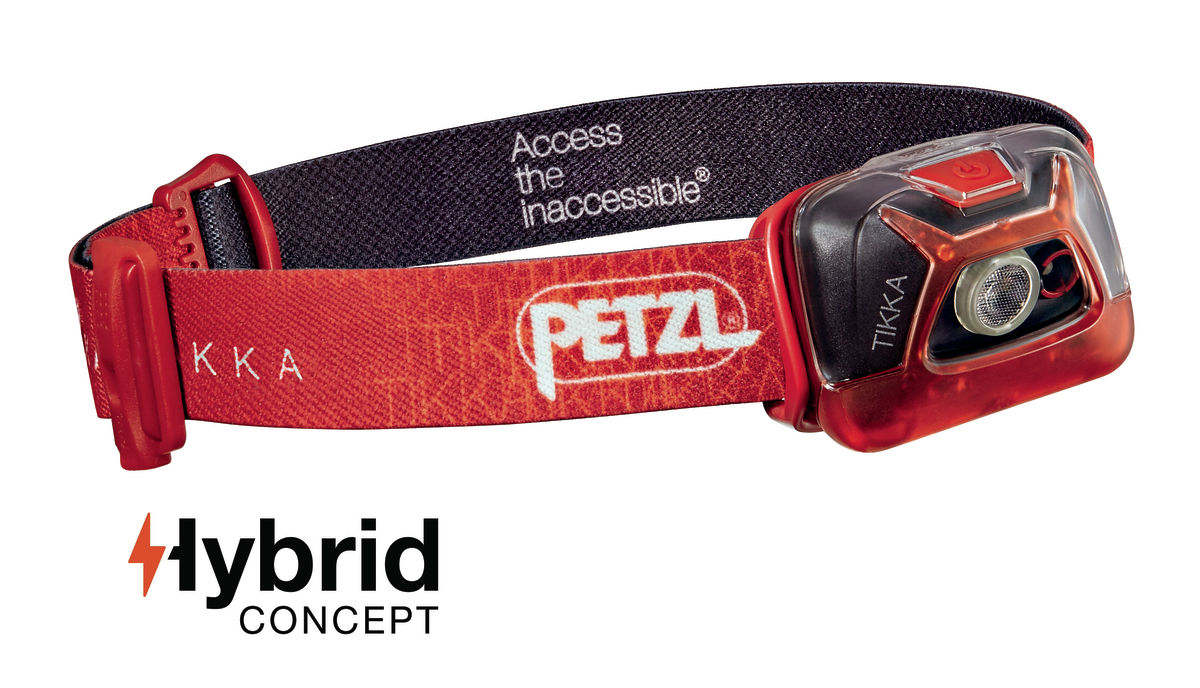
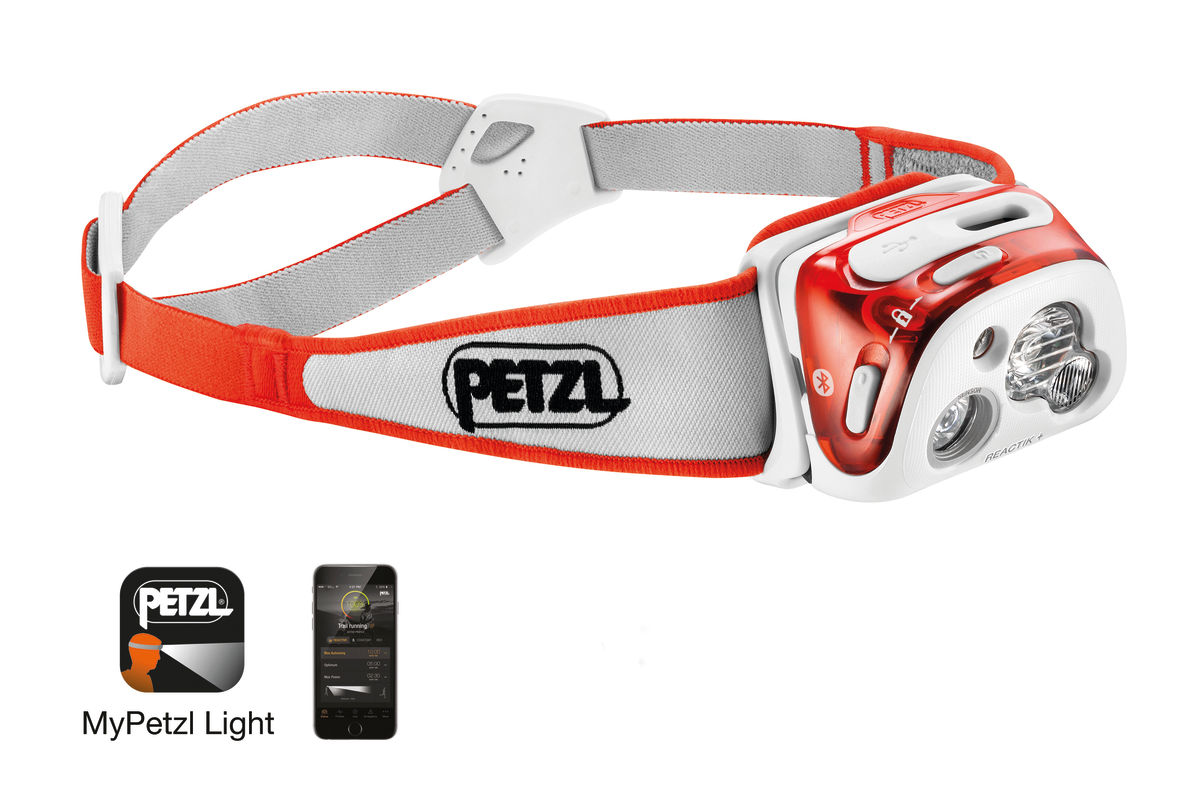
Petzl is one of the big boys in the lighting game and they have many nice options, from a featherweight E+ light, to the more multipurpose Tikka, to the feature-rich Reactik +, and trust me when I say that you need one of these lights.
Specifically designed for emergency use and featuring amazing long-term battery life for extended storage, the E+ is a steal at $30. You absolutely should have one of these (or its equivalent). I personally like to go for a bit more horsepower, but you at a bare minimum you should be equipped with one of these for every auto, home, and backcountry outing. They are small, light, cheap and even have a cool carrying case, making it extra easy to tuck away until you really need it. And when you need it, boy will you be glad you have it.
Moving up the food chain is the Tikka. Petzl summarizes its utility nicely as, “a compact headlamp for proximity lighting and some movement.” With 200 lumens it’s not exactly going to light up the night sky, but it’s cheap, powerful, and versatile. Since I’m getting more and more lazy with each passing day, I’m going to again let Petzl describe it: “it is practical for outdoor activities like camping or trekking, or for traveling, and also for daily activities and projects around the house. The phosphorescent reflector helps you find it in the dark, and the red lighting prevents members of a group from blinding each other.”
I’m lifting that description not just because I’m too bloated and apathetic to write (though that is certainly a big factor), but also because I find that description to be quite apt. This is my “go-to” light for the car, nightstand, kitchen utility drawer, etc. It’s not that much bigger than the E+, but it has four times the power and is thusly much more useful.
Finally, the one sent to me by Petzl (that’s right I bought the rest of these with my own, hard-earned money, because that’s just how dedicated I am to making you very needy people happy) was the Reactik +. This lamp has 300 lumens of power and that’s a noticeable improvement over the two models described above. It it also programmable, has the option to run on disposable or rechargeable batts, and features several lighting modes.
Overall, this is also a great light, but is it bright enough for skiing? In my opinion, no. It will work in a pinch or maybe if you’re on tracks that have some other ambient light, but to be perfectly blunt, this light sort of finds itself in that dreaded “no man’s land” of kinda bright, but kinda not. Somewhat cheap, but not really. I used it on a few skis and it is most certainly better than nothing, but my advice is to get a few Tikkas for “everyday” use, then buck up for one of the big boys that we’ll talk about in a second for skiing.
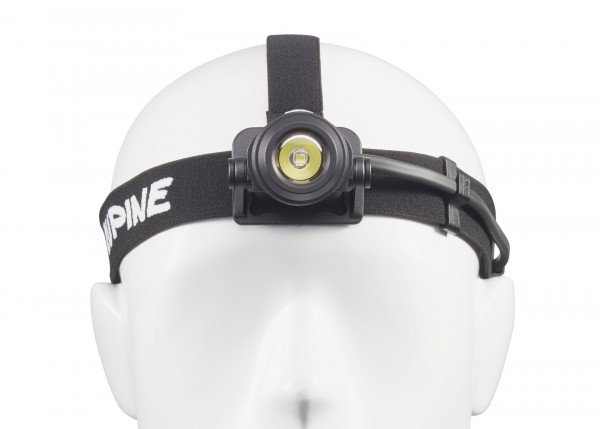
Here is where the story gets good. If you want to do anything active at night (nah….too easy), you’re going to want to buy one of the two lights that I’m about to describe. Both are made by a relatively small company in Germany called Lupine, and as you might expect from a German company, these are exquisitely designed, engineered, and meticulously machined pieces of equipment.
Option one is the Neo. This is probably one of the best all-around lights that I have ever used. It has 900 lumens of light, which is quite frankly amazing. To put that in perspective, this is three times as much light the the fanciest Petzl that we tested. That’s a lot. As you can see from this video, my test team and I were able to ski around on pitch-black trails at 9,000 feet and see every single nook, cranny and turn (not to be confused with kooks, trannies and burns, which is a completely different discussion altogether).
Overall, it’s just a very well-thought-out light. It has a diffuser, so you can use it inside a tent, car, or house, without blinding everyone around you, and this is also good if you are alone but you need more moderate, even light: think of it as a lens cover that converts a spotlight to a more general, “room” light. This adaptor is also available in green, which has the advantage of making it easier for your eyes to maintain their night vision.
You can also order all sorts of mounting options and accessories for handlebars, helmets, headbands and probably anything else that starts with a ‘h.” I love this light. Does it cost more than the Petzl? Yes, but if you ski, run, or ride more than once or twice per year at night, this light is well worth the money. Going head to head on the trails at night, it wasn’t even close between these two systems.
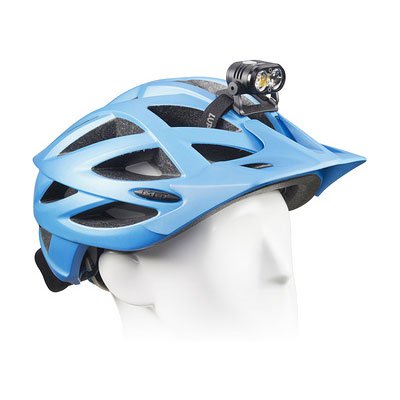
You’ve undoubted heard the trite cliche, “Go big or go home,” but what if your light has conked out and you can’t make it home? Enter the Big Daddy of all lighting systems, the Lupine Piko 4. How big is this daddy? How about 1,800 lumens big? How does that grab you? Er…..light you? Hmm, that sounds weird, too. Let’s come back to this later.
How big? This big.
In short, this thing is the sh*t. It’s got 1,800 lumens and yes, I know, I’ve already said that, but that is so substantial I believe it merits repeating. Why? Glad you asked.
First of all and most obviously, this means that when you need to, you can paint the sky (or trail or road or whatever) with a super clean, wide beam of light. Since this is a pricey recommendation, I wanted to be sure I was fully on point with this system, so I did a some testing with the whole Lupine tech team. They gave me an earful on the different wavelengths of light that they are using as compared to their competitors, making the beam on Lupine lights much “cleaner.” There’s some really cool research out there this issue, but it can make for some pretty heavy reading, so suffice it to say that our testing backed up their claims. While we didn’t see as big of a difference among all of the brands (we have a few others in there for comparison as well) on dirt trails or even the road, where this was very noticeable was on snow. The beam from the Piko is wide, brighter than hell and about as close to skiing in daylight as any system that I have ever tested. It’s that good.
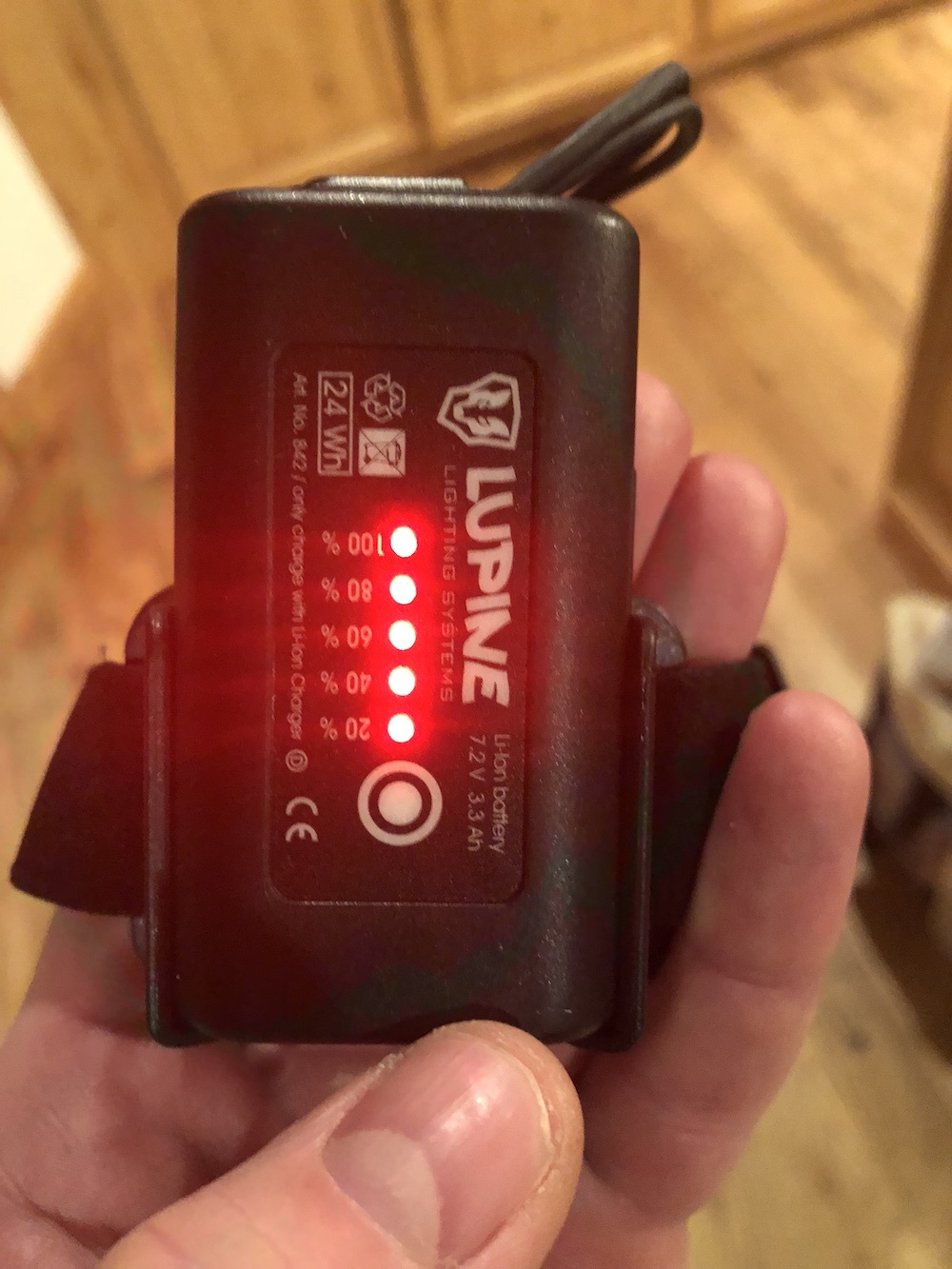
But wait, there’s more. What I really love about this light is that in typical German engineering fashion, those crafty Krauts have thought of everything. First up is the fact that there is a visible battery life indicator on the back of the battery pack:
Battery status indicator. Why doesn’t every headlamp have this?
This is huge, as I can’t tell you the number of times that I was skiing home from work in Switzerland thinking, “I wonder if my light is going to last the whole way home.” Sometimes it did and sometimes it didn’t, and for those of you out there who’ve had this happen, you know firsthand that this is a real drag: your ski becomes more of a long, cold, slow walk, which is frustrating at many levels.
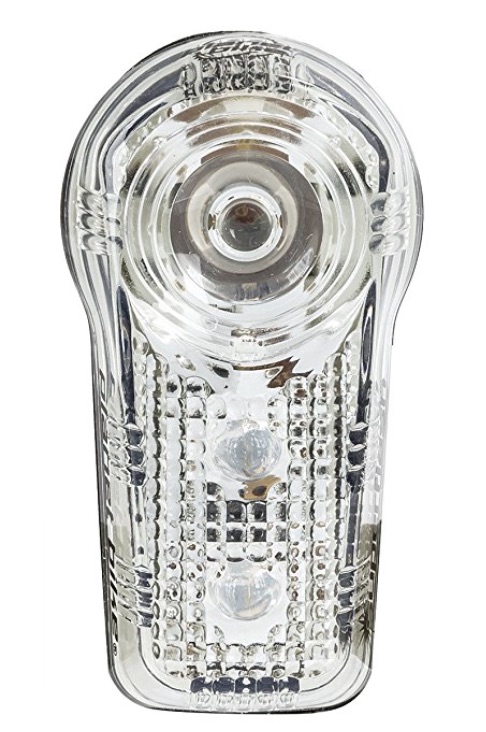
Next, this battery life gauge can also double as a tail light, so if you’re using this light as a headlamp for cycling, in a pinch you can forgo a dedicated tail light (I don’t recommend this AT ALL, but it’s nice to have this option in case of emergency or if your dedicated taillight fails, or most importantly, as just one more thing to keep you from getting run over.) So I love the utility but also the foresight (see, I warned you there were going to be a lot of these bad puns).
Speaking of cycling, another thing that I really love about this light is its versatility. This light can literally be the only light in your quiver (I also don’t recommend this, as are you going to always remember to have it in your car, your nightstand, etc? Of course not. Spend $29 Ebenezer Scrooge on a few backups), as it is so bright that it can also serve at your only light for night riding on technical mountain bike trails, remote road rides, or even just regular nighttime bike commuting. As is the case for the Neo, Lupine has a slew of handlebar, helmet, and headband mounts, so this light can very seamlessly move from head to helmet to bars and back again, all within seconds.
As if that weren’t enough the ‘R’ in Piko R stands for remote, so yes, this system also comes with a Bluetooth remote control. The funny thing here is that when I received my initial giant pile of parts from Lupine, I very quickly sifted though the menagerie and immediate create two piles, “What I need,” and “What I don’t.” Since the primary emphasis of this portion of the review is on skiing, it was my contention that a Bluetooth remote wrist strap was going to be largely superfluous. And as usual, for skiing, I was correct.
Where I probably would have missed the boat on this, however, was in the incredible utility of the remote for cycling — even for the bar-mount configuration, but in particular for the helmet-mount option, the remote proved to be amazing.
Every day I was out testing the gravel bike shown in Day 6, I wanted to put the bike through its paces on many different riding surfaces and daylight conditions. On the road when the sun was still up, I had the light in strobe mode to keep me from being killed by clueless and inconsiderate motorists. Once it started to get dark on the trails, I had’er on “Full burn,” as this was very technical riding, then finally on the commute home, I toggled it back to the medium setting to increase battery life and not blind oncoming cars. In reality, I toggled between all of these options a few times, so being able to do so at the touch of a button on the remote conveniently mounted on my hoods ala Campy Ergo shifting style was awesome.
I also did a few after-work, early evening transitioning into full darkness trail runs and again, the light was simply incredible. The fact that you have such a high top end is useful for more than just the obvious reasons, too, as such a high-power ceiling means that you can dial it back to a more “medium setting” (a very relative term) and still have way more candlepower than almost any other light does on full-send. This means a brighter light AND longer run times, which is the Holy Grail of headlamps.
While this is most definitely an expensive light, where the Piko really shines (sorry), is not only it’s total 1,800 lumen output, but also in its ratios. Its lumen/dollar ratio is extraordinary (5.4 lm/$, as compared to 3.27 lm/$ for the Neo and 3.0 lm/$ for the Petzl), it’s lumen/weight (32.7 lm/g) ratio is also amazing, so not only does it offer the most power at essentially the same weight, it is also the best value.
To put it bluntly, if I could only have one light, it would be this one. It’s little brother, the Neo, is great for skiing and still an amazing light, but for basically no more weight and just a little more dough-ray-me, you can use this light and this light alone for commuting, road riding, trail riding, skiing and of course, general all-around use. The fact that it is light enough to be worn as a headlamp, yet powerful enough to literally be your ONLY light for night mountain bike rides really is nothing short of incredible.
In summary, if you only need something to stick in your drink belt in case you slightly misjudge sunset and only occasionally get caught in the dark for the last few minutes of your ski, or, if you are like me and are both very gullible and very susceptible to peer-pressure and can therefore very easily be shamed into going for a much longer ski than you originally planned (we call this the J-Smu ski of shame), you should be able to limp back to the car with any of the Petzls with no problem. These are also very economical, excellent all-around lights for more stationary activities, you know, like writing letters (I will mail one America dollar to the first person who understands and appreciates that hilarious pun).
If you’re even a somewhat regular NND (Nighttime Nor-Dork), then you definitely need to go with the Lupine Neo at the very minimum and the Piko if you can afford it (or even better, shame someone else into buying it for you. Yes, I know, lots of ‘shame’ references in today’s column, but isn’t that what the holiday are all about, shame? And skiing. And in the best of all possible worlds, Dr. Pangloss, shame skiing.
And finally, for all of you fellow gear-maximalists out there, you know that you need the Piko, as that mo-fo rocks. You can crush the trails, the tracks and the roads and you’ll be glad you bucked up the extra hundy each and every night that you’re out there.
Editor’s note: For the second-straight year, we’re presenting another 12-day holiday gift guide, brought to you by the one and only “FBD”, our gear-review guru. Kicking the series off, recommendations for recovery gifts to keep you and your ski buddies on the trails and injury free. See also: Day 1 | Day 2 | Day 3 | Day 4 | Day 5 | Day 6
***
Day 7: Nordic Tech
Since no one has more style, steez and flow than the FBD, we’re going to mix it up a bit today and bring in, for lack of a better expression, an expert guest speaker to help walk us through today’s gift suggestions for Nordic Tech. I actually tapped into two experts for today’s gift ideas, Nathan Schultz from Boulder Nordic Sport and Zach Caldwell from Caldwell Sport. Spoiler alert, the Colorado guy was super chill and low-key. The guy whose Twitter handle is @GrumpySkier, was, well, grumpy. And surly. And at times, just plain mean. But, since all of you are probably as tired of reading my labored prose as I am of producing it, I thought I’d offer up someone new about whom you can complain.
A few important points here:
For those of you out there who think I can dish it out, but can’t take it, you are in for a treat, as one of these so called experts comes at me pretty good. That’s OK though, I’m a big boy (especially “South of the Border,” if you know what I mean) and I can handle it. In fact, most of this doesn’t even count as abuse in Philadelphia, it’s called just a normal day.
Remember my quip on Friday about “special” people? Well, I swear to God that the comments that you will hear from Zach shorty were not staged because, A.), I would never lie to you people, I am too good a man and B.) if you know my boy Caldwell at all, you know that there was no way in hell that he would deliver this hilarious video on schedule, allowing it to be carefully reviewed and edited. Oh no, that would be too easy. Instead, Mr. Caldwell elected to sent it to me at 11:30 p.m., the night before publication (and the night in which I was leaving for the airport the next morning at 5 a.m. Awesome). The point here is that I had already published my column in which I refer to “special” people before he submitted this video. All of these events do, however, raise several serious questions about his time-management skills and most importantly, who really is the “special” one in this relationship.
Furthermore, I am greatly intrigued with Zach’s assertion that I take myself too seriously, as he clearly has not been following my earlier detailed descriptions on awkward and hopefully fictional encounters with my family physician regarding problems “downstairs,” allegedly related to dirty tractor seats and improper Speedo use. Does this sound like the work of a man, albeit a great, great man, taking himself too seriously? I’ll let you all decide, as I trust you people to do the right thing here.
Once you have drawn the correct and logical conclusion that Zach is clearly out of his mind, please send all angry comments to zach@CaldwellSport.com. Suggestions for the subject line include, but are not limited to: “FU Zach”, “FBD is a god”, or even “Leave Brittany Alone,” have we learned nothing from Anna Nicole Smith? I know it’s hard to see FBD as a human being, but trust me, he is. He’s a person. He’s like you or I. (Well, actually, much, much better, but you see my point).
So without further ado, we are now going to shift gears a little bit and depart from our wonderful, established format and let an angry Vermonter and my good buddy Zach Caldwell, take cheap shots at me while prattles on about how to properly tune skis.
Watch this video in its entirety, then find the links to all of the products shown in the categories below. Please note, as usual, I have better visibility on the nordic world than Zach does from his remote outpost in rural Vermont, so please don’t just listen to Zach’s demanding and bossy tone, as the other products listed here are also top notch, they’re just being presented with a little less fanfare, which is no way, shape or form is a reflection on their value or efficacy.
Don’t let Zach fool you on this, I have tested about 20 different models and I called HIM about this, since naturally he didn’t have it on his website (the things I do for that guy). Regardless of how much he badmouths it in the above video, since not all of us have relatives slaving away on a lathe to create custom tools for us, I think this groove scraper is the best one out there. As much as I can tell, so does Zach, I guess? Buy several, as everyone is going to borrow yours and never give them back.
(Note, these are also not yet available on the Caldwell Sport website, as apparently he needs to spend less time busting my balls and more time running his business. This tool is sweet though, so email Zach directly. Be sure to give him a hard time about not putting the products he is trying to sell in a place in where potential customers can actually purchases them. #Business101
This baby made the cut last year and is getting a rare “FBD retweet,” just because it is that good — it’s pretty rare that you can find an extremely high-quality product for under $10, so when you do, you get as much mileage out of that beast is possible. I mean, if you can’t spend $10 on someone’s gift, you probably shouldn’t be buying them a gift in the first place.
It has two beveled edges that peel away kick wax quickly and effectively and it is small enough to fit almost anywhere, in particular in your new wax box (more on that in a minute). It will change your kick-waxing life. Really.
Remember my assessment on Friday of coffee nerds? Well, move over coffee losers, as there’s a new sheriff in town, and he’s saying things like, “All professionals prefer a 3 mm scraper width.” How you can utter a phase such as that while maintaining even a shred of dignity is beyond me, but I don’t have a shirt that says, “You’re doing it wrong”, so what the hell do I know? Baller shirt, too, by the way: look for those in next year’s 12 DOFBD.
As for the thicker scraper and how to properly scape ski sidewalls, oh my God, could a person possibly be more patronizing? I can’t believe I let this guy grind my precious skis, as YES ZACH, I know to use the side of the scraper. You see the sh*t that I have to deal with, people?
Having said that, please also let the record note that I did buy the 5 mm scraper, as it does in fact work better for ski “technicians” of my very limited aptitude. DEMAND that he send you one with the custom FBD logo though, as this are already a collectors item. If he says no at first, just keep asking: he likes that.
Holmenkol Natural Wax Fluid is a truly “universal” wax for all snow types and temperatures. This wax not only performs well in the cold (unlike most universal waxes), it is made from sustainable sources (no petrochemicals) and is 100-percent biodegradable. Application is easy with an integrated sponge applicator and polishing felt. Use it for training or on waxless skis tip to tail to improve glide and protect the bases.
Also a great way to travel wax when when you are leaving from the venue with your hair on fire, you have 60 minutes to catch your flight at an airport that is 70 minutes a way and there isn’t an iron in sight. This magic goo got the FBD race fleet home safe and sound from Switzerland last year after Master Blaster Worlds and I never leave home without it. That is, when I remember it. #NotAlwaysThatPro
Have I told you how much I hate it when Zach is right about something, anything? Ironically, for a race just a few weeks ago, I had a few of the very knowledgeable people who Zach name-checks at the end of his hate-rant video prep my race skis with this product, and the skis were fast. How fast? Two podiums fast. If you buy them and don’t podium, call Zach, as he loves to field calls like this and he’s a very, very lonely man.
On a related note, if you send your skis in to him for a new grind (which you definitely should), please be sure to also demand that he return your skis with the EXACT SAME skis ties you send out. If you receive any other ski ties than the ones that you shipped, as always, keep calling until he finally returns the correct ones.
Star Liquid Paraffin Waxes (50 ml spray bottle. Each bottle is good for 15+ pairs of skis):
This was featured at 6:29 in the video and is also a personal FBD favorite. I don’t know what else to say here — use it, don’t use it, but I like it and Zach likes it, so take that for what it’s worth. I’m guessing that my recommendation carries more weight than Zach’s, mainly because I weight more than Zach and that’s just simple physics people. Either way, it’s a nice brush.
This might be more than many of you are willing to pay for a groove scraper, but it IS really nice, especially for ski brands with wider grooves. It is simple but unbelievably effective.
And before anyone gets all huffy about the price, this thing is bomber. It has two different diameter aluminum cylinders that never dull at either end of a solid plastic handle and it removes wax so well it will shock you the first time you use it.
SkiGo HF High Fluor Glider (45g): FBD pick for $30-$99
Universal wax is ubiquitous in the ski world, but previously its performance has generally been only good enough for recreational skiers looking for a simple solution. SkiGo has shattered that barrier with a truly “universal” racing wax. Available in HF and LF versions, SkiGo Universal wax is a high-quality racing wax that works well in aggressive cold snow AND warm, wet, soft snow. Many teams use it in all conditions as a reliable base layer and focus their energies on testing powders and topcoats instead of paraffin layers. The LF version ($70, 200g) is a great training wax and also good for wax standards in races that are LF-limited. HF Universal ($80, 45g) is an excellent racing synthetic paraffin. -18C/0F to +5C/41F.
Let’s assume that you’re drinking the Kool-Aid and you are going to get styled out with the latest and greatest swag shown here. How the hell are you going to get all of this crap to races? As usual, *I*, NOT ZACH, have you covered. Toko just released this amazing Soft Wax box and it is da bomb. It’s just the right size to transport essentially everything you need to your next local, national or even international race, yet it is also perfect for your bench at home. Load’er up once with all of the crap Zach is droning on about and boom, all of your problems are solved. Well, all of your waxing problems.
After seeing that terribly mean-spirited video and reading just these few short item descriptions, I’m sure you can imagine how much it pains me to admit that Zach is right about not one, but two things, but what the hell, here we go: I bought this brush from him last year and even with the hurtful, tech-shaming sticker, and his most-recent, very unnecessary, spiteful commentary, this is without a doubt my favorite brush. I use it to groom the Great Dane, my hair (head, back and “elsewhere”) and promise to some day try it on my skis.
Like every good nordic skier, I am a glutton for punishment: I do intervals with elite skiers, knowing full well that they are going to destroy me, yet I somehow feel the need to make myself miserable anyway. I ask some of the most hyper-critical coaches in the sport for technical feedback on my skiing, knowing full well that it will be delivered with searing sarcasm and bitting commentary, and perhaps worst of all, I somehow think it is a good idea to post another one of Zach’s videos, again, knowing full-well that I am going to take an absolute beating:
Zach does a pretty good job describing how this system works and why you should have it, and thusly I only have a few things to add, the first one of which is by far the most salient. When I was staying at Zach’s house just a few years ago, I asked him when he didn’t use Roto brushes. I’ve spent my fair share of time in World Cup wax cabins (as a matter of fact, I just did so this past weekend), so I’ve seen some of the best techs in the world prep skis. Almost 100 percent of them use Roto brushes. Sure, they are usually preparing lots of skis in a short period of time, but their ultimate goal is fast skis, so those guys follow whatever protocol yields the best possible outcome. This means using Roto brushes almost exclusively.
Armed with this knowledge, I asked Mr. Perfect a few years ago during my stay in Putney which one I should get. His response? “Goddamnit, FBD, you don’t need those stupid things, regular brushes are much better.” Ah, how the tables have turned … it’s been a wonderful journey watching the student become the master. Confronted about this very point yesterday via what was I’m sure a very painful phone conversation for him, he confessed, “Yeah, I was anti-roto for a while, but I have come around. Part of this is because drills are now much better, as are the Roto systems. Yes, I wasn’t that into them before, but this is my ‘must-have’ for this season.” All fair points.
I’ll even cut Zach a lille slack on this (very little) and allow for the possibility that he was correct on both occasions, as the technology has come a long way. What this means to you, is if you are also a stodgy Vermonter, or Midwesterner, or whateverner, and are one of those, “We never used those back in my day….” type of people, that’s OK, you probably did have a valid point “back in the day,” but the technology has improved significantly across the board in all aspects of the system and you can now produce better skis, with less effort, and in less time. I think that’s a winning formula for skiers at all levels.
If you’re a guy like me to loves skiing, but hates working on his skis (and is terrible at it, though not nearly as terrible Zach is laying out), this is a slam dunk, as I am out of the fume-choked garage faster than even, doing what I truly enjoy — skiing — on skis that are faster than ever.
If you’re into the tech side of the sport, you are even crazier if you don’t take the plunge, as ZC has about 50 combinations of brushes, felts, steels, cottons, tweeds, licorice, and other crazy compounds, diameters, durometers, and all of that crap, therein allowing you to lock yourself in your garage away from your annoying family for longer periods of time than ever before. Everyone wins. Your poor family doesn’t have to listen to your disjointed, rambling theories on the under-appreciated value of a good structure tool and you don’t have to listen to whatever the hell it is that normal people talk about these day. I literally have no idea, as about 99 percent of my conversations ultimately come back to structure tools for some strange reason.
As to how you execute this transaction, you can stick a toe in the water, wade in, or dive in head first to the deepest water that you can find. As you all know, I’m of the belief that is something is worth doing, it’s worth doing well (not to mention the fact that there’s no such thing as going too far), so my advice is to not just dive in, but go full “Acapulco Cliff diver” on this mo-fo and get the big-daddy set. That’s what I did and I don’t regret it for one second. Sure, I probably won’t use most of the attachments, and yes, the ones I do use I will most likely do so incorrectly, but I’ll have the best, and that makes me happy. Since I’ve been marooned in Philadelphia for WAY too long, I’ll also derive a perverse amount of satisfaction from knowing that I have a better set than most of you (in more ways than one). I know this is wrong, and this is most certainly not something that I am proud of, but it’s true.
Sure, you can chintz out if you want to and not go with the “professional package” (insert your own ‘package’ joke here), but don’t come crying to me when everyone at laughing at you behind your back as the guy with the incomplete Roto brush set. I have nightmares over stuff like that and I would hate to see this indignity befell you.
Editor’s note: For the second-straight year, we’re presenting another 12-day holiday gift guide, brought to you by the one and only “FBD”, our gear-review guru. Kicking the series off, recommendations for recovery gifts to keep you and your ski buddies on the trails and injury free. See also: Day 1 | Day 2 | Day 3 | Day 4| Day 5
***
Day 6: Kick-Ass Gear
There is gear and then there is kick-ass gear. You know what I’m talking about — that backpack that you got in college, have taken all over the world, and is still going strong? Those skis that always seem to do well in testing despite getting “a little long in the tooth.” Your lucky “windies,” the wind briefs that have help guide you to many a race win? The list goes on and on. Part of what elevates gear to this elite status is literally years of high performance and reliability, but hey, ya gotta to start somewhere, so in today’s installment of this seemingly pointless, rambling series, I am highlighting some of my personal favorites that I think have the potential to “go the distance” and end up on the coveted FBD all-star gear list.
***
Under $30
While some of you lesser-informed readers may have pigeon-holed me (and please NOT in the Urban Dictionary fashion, as it is hard enough keeping my car clean as it is) as a high-maintenance, metrosexual pretty boy who wouldn’t dirty his hands with anything that’s not carbonfibre (yes, the snobby, arrogant Euro spelling is by design), made in Europe (preferably Switzerland for watches, Germany for cars and France for skis), or only available through my Skull-and-Bones-style network of elite illuminati, and quite frankly, in most instances you would be correct. What can I say, I like nice stuff.
But, did you know that there is also a hard-scrabble, man-of-the-people, street-smart side of FBD, capable of living for weeks at a time in a secluded cabin in remote Montana, living off the land, with only his acerbic wit and quick thinking to keep him alive? It’s true. This wily veteran of minimalist living can survive for minutes or perhaps even hours without concierge service, Whole Foods and his own private ski technician (well, maybe days in the case of the latter example, as my lanky ass was getting in “mad k’s,” as the kids say. For the uninformed, I’m not talking about losing your temper in K-Mart, I’m referring to skiing long distances in many consecutive sessions. Don’t worry, this confused me for the first few years that I heard it too.)
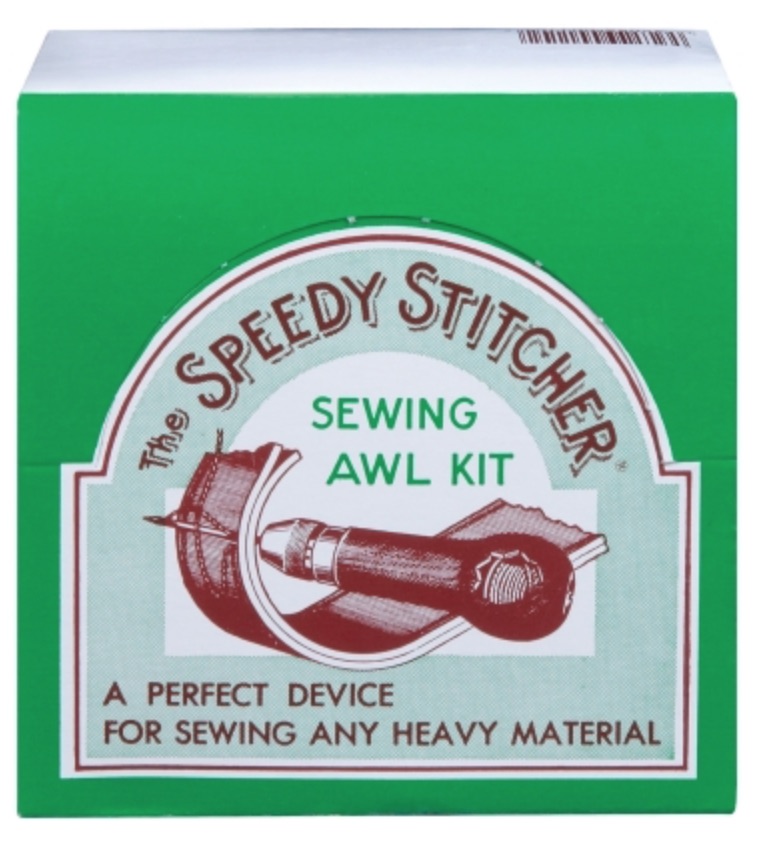
So with these caveats and conditions duly noted, it is with great pleasure that I offer today’s first suggestion, a sewing awl. No not an awl, as it, Awwww….SNAP, though that would be funny, (albeit hard to sell), no, rather an awl, as in a very utilitarian, gear-repair, ass-saving, sewing tool.
There is nothing fancy about the Speedy Stitcher sewing awl, but it is a life saver, certainly figuratively and perhaps even literally. While it is basically just a heavy gauge sewing needle, handle and thread, it is extremely well-designed, very heavy duty and very portable. If you are smart enough to bring it with you, it can tackle breakage problems that if not resolved, could be inconvenient in the best case and disastrous in the worst.
For example, I have used it to repair hiking boots way, way, way out in the middle of nowhere, a biathlon harness at 11 p.m. the night before a race in Granby, Colorado, a hard-case bike box strap that would have otherwise required replacing the entire case to the tune of $500, and a tent sidewall that my idiot friend kicked apart with his crampons after we SPECIFICALLY told him to not wear his crampons past the tent atrium? Why? Because kicking a hole in your tent in the middle of winter can have disastrous consequences, because it is cold in the mountains in the winter. (Why is it that every crew always has that stupid friend? Psychologists out there, please look into this and report back). And this is only a partial list.
Why is it that every adventure, team, or road trip always has “this guy?”
This amazing tool has been around since 1909 (with packaging that looks like it hasn’t changed since that time) and it can fix essentially any soft good, or in the very least give you a fighting chance of limping home. In some cases, in particular once you get good at sewing (and no, I’m not joking here), your field repair can last for years. I’ve been going strong on the bike-box strap repair that I made six years ago, with no end in sight. For this to apply to you though, take the time to read the instructions and properly learn how to sew.
I’m not kidding. It completely defeats the purpose of bringing this tool along (or any tool, for that matter), if you don’t know how to use it correctly. In fact, doing this make you an even bigger tool. So, with that said, buy it, learn how to use it, practice with it, and you’ll be amazed at how often it comes in handy. Seriously. I’ve probably make 2 – 5 repairs per year for the past 15 years on stuff that would otherwise have been ruined: winter gear, summer gear, dog gear, automotive gear, clothes, you name it. I absolutely love this thing.
$21.99 at Ace (the place with the helpful hardware man (sexist bastards))
This was on the list last year, it is in the list this year, and it will be on the list every year until the day I die, completely go off the deep end or am fired by FasterSkier in a blaze of glory (all of which could literally be moments away). This item is “a lock” on the list for the simple reason that it is an incredible cause. Yes, there are lots of great causes out there, nonprofits that benefit biomedical research, a wide variety of social programs, and even broader environmental concerns, but this is a ski publication, so while I certainly don’t want you to give any less to any of those other, very worthy issues, hopefully you can find it in your heart and your pocketbook to also support Protect Our Winters. You all know why, so no need to soapbox it any further here.
Do the right thing for as much as you can afford to give.
Or give it as a gift in the name of someone to stupid or stubborn to admit that climate change is a massive, massive problem. You know who you are.
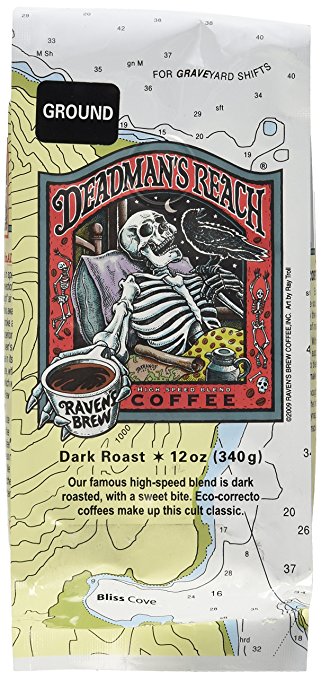
Ah, coffee, the elixir of the gods. None of these columns would even be remotely possible without caffeine and I know I’m not alone here. Some of you might think that the absence of these columns might be a good thing, but deep down you know that you secretly love each and every one of these carefully chosen words.
In addition to this miracle compound of caffeine helping to lessen my urges to kill every moron who can’t seem to grasp the RIDICULOUSLY SIMPLE process of loading and unloading an airplane, it also has documented ergogenic properties. Chances are you will ski longer, harder and faster with the pre-rip Peet’s infusion. But wait, there’s more — it’s a great gateway for actually interacting with real, live humans in person (as opposed to over your phone) for the socially awkward, which in the nordic community, is just about all of you.
So if the thought of asking out a an actual, living, breathing female (not an avatar, emoji or whatever other weird digital analog the kids today have for real girls) to dinner immediately triggers your Cliff Clavin “hysterical blindness,” easing into a potential sexual encounter with the vastly less threatening offer to sit with a girl for 20 minutes at 3 in the afternoon on a Tuesday in an alcove by the cash registers at the grocery store may be for you.
Be forewarned however, the lure of faster race splits and perhaps even the tacit acknowledgements of an attractive member of the opposite sex is a bit risky, as once you “take a ride on the brown pony,” (there’s nothing sexual in this one, so get your mind out of the gutter, you perverts), there’s no going back. I’m talking about having a cup of coffee before you go skiing, as opposed to a life of heroin addiction. Regardless, all of you will want and some of you will NEED coffee in the morning. Driving to Starbucks each day is for housewives in Mercedes SUVs in affluent suburbs, so man-up (or “woman-up”) and make your own coffee.
As you all know, no one is lazier than the FBD, so I have the most streamlined and efficient coffee-preparation operation known to man. It is configured and mostly completed the night before, so when the morning rolls around, I’m on my way to coffee-pound town (again, nothing sexual here, you monsters, but probably best if you don’t Google this one) in a matter of minutes, if not seconds. Sure, my coffee machine in Steamboat has slain many the accomplished skier, but guys like Jeremy Teela gained notoriety from their skiing, not their deductive reasoning skills. And no, Teela never did figure out how to correctly operate that machine, whereas I, on the other hand, was victoriously sipping from an expresso at his house within seconds after exposure to his substantially more complicated machine. Hold that though. More on this later.
For whatever reason, probably because I enjoy spending time with interesting people, I somehow seem to gravitate to “coffee snobs.” Don’t get me wrong, they’re all great people, but without fail, almost all of them are willing to invest 2 – 3 hours each morning for the perfect cup of Joe. I, on the other hand, have no problem stopping at the gas station, if necessary, for my morning beverage of choice. That, and a nice cold glass of water, ah, that’s some fine living, people.
Case in point, my good buddy Jordan Rapp. Jordan is a professional triathlete: six-time Ironman winner, ITU long-distance world champion, and one of the most driven, determined baristas that I have ever met. In our travels across Europe this past summer, he brought approximately 500 lbs of gear, 450 of which I am convinced was involved in coffee preparation in some way, shape or form.
Don’t get me wrong, I’m not complaining here, far from it, as I love this situation — he does all of the work and I get to drink great coffee. Everyone wins. All of I have to do is carry 3/4 of all of his heavy crap through all of the train stations. Since FBD is a big, powerful, man, this seems like a fair trade.
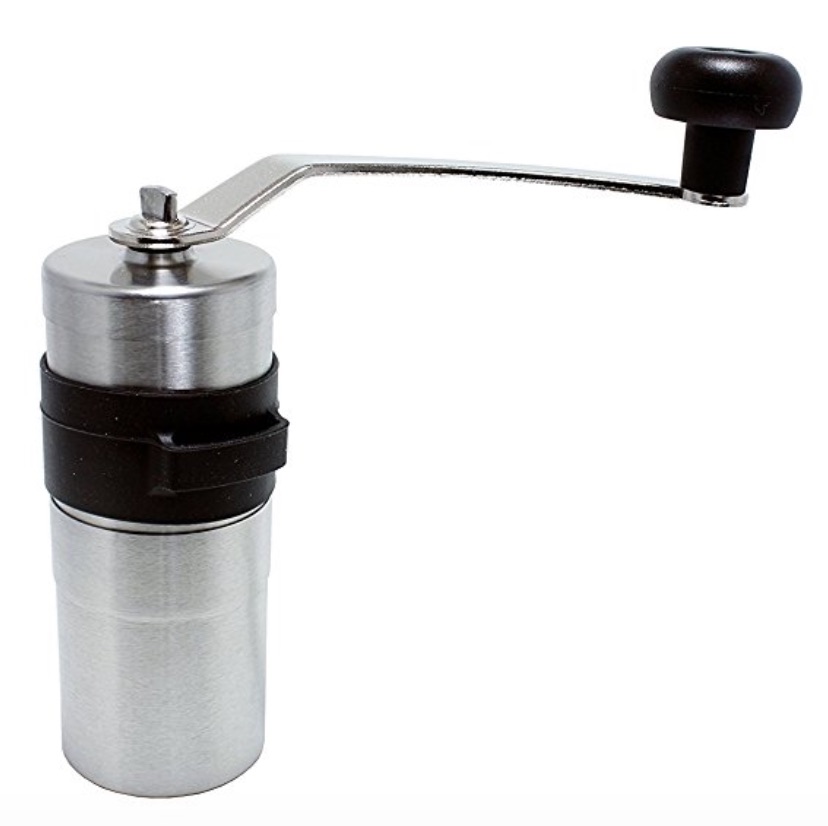
So how does Princeton-educated engineer, Mr. Rapp, start this ridiculously involved and intricate process? With the Porlex Mini bean grinder. I’m not even going to bother to go into the theory on why you need to grind your own beans, because you’re either in this camp or you’re not. If you’re, “one of THOSE people,” you’ve already drank the Kool-Aid and you’re only going to get mad at me because no matter how thorough my explanation, I will undoubtedly leave out some key detail that you perceive to be crucial in this analysis. And if you’re on the other side of the fence, we’ll call this group, oh, I don’t know, “normal people,” well then you’re not going to start grinding your own beans simply based on some long-winded diatribe (in particular one from a smart-aleck nordic skier). For all of you people, MY people, I’ll see you at the gas station. Please try to not backwash the dirty carafe of two-day old muck that they call coffee, either, as I have intervals later and DADDY NEEDS SOME JUICE and I hate germs.
Back to the nerd group: whatever formidable childhood experience that fostered your now firmly cemented coffee OCD, you’d sooner die than prepare coffee with pre-ground beans, but you’re in Norway, preparing to race: now what? Are you sentenced to a life of eternal damnation with pre-ground beans? Not so fast, it’s J-Rapp to the rescue. JR doesn’t leave home without not just a portable coffee grinder, but also what he is convinced is THE BEST portable coffee grinder, the Porlex Mini. I have to confess, it did work well and the coffee was delicious, and he’s not alone, for as he was extolling the virtues of this system in an extremely long-winded soliloquy, being a fellow scientist, he naturally also had reams of research and supporting data, not to mention social feeds from two different World Cup racers also using the very same grinder, so as much as I hate to admit it, Jordan’s probably correct.
Here’s the best part, though. When I hit up Jordan to see if he’d make a funny video for me about using the grinder, he sent one back in 30 seconds. Not because he’s that fast at making videos (which he often is), but due to the fact that he had already made one. You know you are really committed to your coffee preparation when you are walking around with a video of you making coffee on your phone. Man, I love that dude.
https://vimeo.com/188432750
I personally would have liked to see more footage of my boy JR, just because he’s a super smart and funny dude, but mainly because he believes that my Great Dane is his spirit animal, which makes me laugh every time of think of it. Please note, too, he measures his coffee on a digital scale, a goddamn DIGITAL SCALE. You can’t make this shit up.
For extensive reviews and much, much, more, you’re going to want to check out www.grindr.com, you’ll learn more about “grinding” than you ever thought possible.
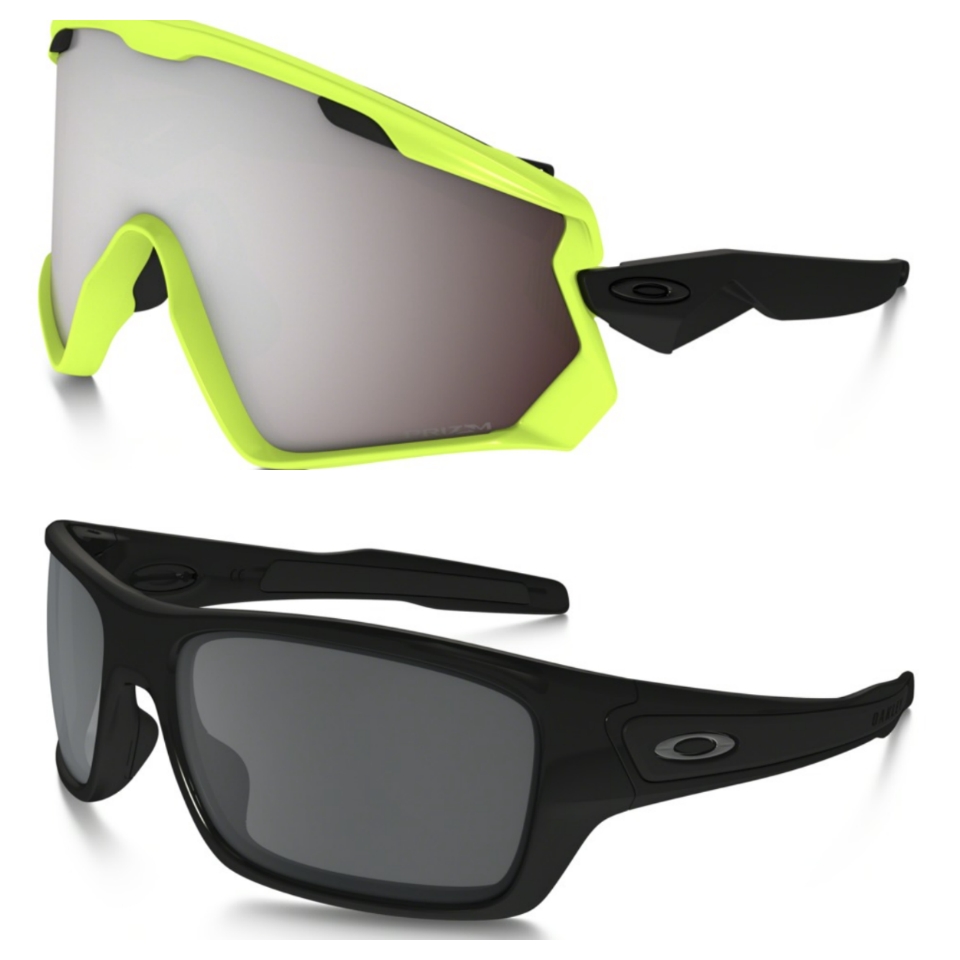
Just as in the dog-eat-dog world of coffee preparation, there are two schools of thought for nordic eye protection: shades and shields. Most Nordorks would probably say that shades look cooler – there certainly are many more styles to choose from, but ask any athlete who’s had a race on a very snowy, rainy, or foggy day — in these conditions you simply cannot beat a shield.
The shield is often the weapon of choice for biathletes in all conditions, too, as it is substantially easier to flip up and out of the way for shooing. If you’re a biathlete, you’ve probably already figured that out by now, but maybe you suck and you haven’t, or you simply are fine with growing roots on the mat. Either scenario is fine by me: it’s your funeral.
Regardless if your nordic racing and training involves skiing around with a rifle or the vastly easier non-rifle version (I can’t recall if they have a name for this), you’ll want a shield if it is sloppy out — shields come in a bunch of different tints, sizes, styles and colors and most importantly, fog way less easily. My boy, and former U.S. Birkie winner Matt Liebsch (or “Leaper,” as he likes to be called), swears by the shield, as does the first family of U.S. Masters Biathlon, Marc, SJ and Thor Sheppard.
The family that can see what they are shooting, stays together, or something like that. Multiple World Masters medal winners (from left to right) Marc, Thor and SJ Sheppard rocking the shield — (I know, this sounds like a bad 70’s cop show, but trust me on this one).
Another reason why this day is another one of my favorite days (this column, not Friday), is I love being unshackled and let loose completely unrestrained. Even I can only write so much about base layers, wax, and gloves, but give me longer enough lever arm, a place to stand, and a green light to opine about all sorts of gear, and I will move the world. Or annoy it. It really could go either way. There point here is that there is a lot of other great gear out there that you need to hear about – somebody needs to put their foot down and that foot is me.
I get around (no, not in that manner you might be thinking, as most of the members of the fairer sex seem to find me repulsive). I “get around” in the sense that I both host and am hosted my many members of the nordic community. I love “paying it forward,” as I did more than my fair share of couch surfing in my elite rowing days and it is my pleasure to do my best to somehow attempt to replenish the karmic pool of good will.
With the exception of my good buddy Aaron Scott, (or A-A-Ron, as he is known around the biathlon range), who has earned the wonderful moniker as “America’s Guest,” due to his propensity for frequent and last-minute homestays, I crash in enough homes to rival Dr. Scott in my volume and frequency of spare bedroom time (though my track record of alienating my friends’ significant others is unmatched. Yes, my ability to agitate even the nicest people truly is a gift. I’m like the Michael Jordan of annoying house guests. And that’s even without the Great Dane. He takes that game to a whole new level. Together, we are a juggernaut. But after all, isn’t what life is all about, teamwork?)
I may have left a few dishes in the sink “back in the day” in my period of elite athletics, blissful unemployment, and lack of any permanent mailing address, but I am regaining good karma points at light speed with the U.S. Nordic Combined crew at my house right now.
The point to all of this is that in planning my early season racing calendar for this year, I was inquiring about the availability of my trusty post-West Yellowstone Ski Festival spare bed at my buddy’s house in Bozeman. Being perhaps one of the nicest people I know (and crackerjack smoothie chef), KJ immediate agreed and even offered to serve up perennial favorite FBD post-race meal of tacos, with the caveat that the house would be empty on my arrival, as the whole Jacobsen family was going camping.
This got me thinking (something I generally do my best to avoid, as is painfully evident by my generally very labored prose), that the nordic community does much more than just nordic ski. Almost every nordic skier I know also loves to go out and hit the alpine slopes, camp, hike, hunt, fish, bike, run, you name it. Probably one of the things that I enjoy most about my line of “work” (and yes, yes, I’m using this term very loosely, as I what I do can barely be considered work), is the camaraderie of the nordic community. This is a community that enjoys the great out-of-doors in many different capacities (better get out there fast too, as Trump is try to giving it all away to oil, gas and mining companies unless we ALL do something).
Sure, we all nordic ski, but the very nature of this sport seems to attract those that also just love being outside and doing cool stuff. So, if you’re outside all day doing cool stuff, you’re not going to last for very long if you’re not getting good sleep, which brings me to the issue at hand — winter sleeping bags.
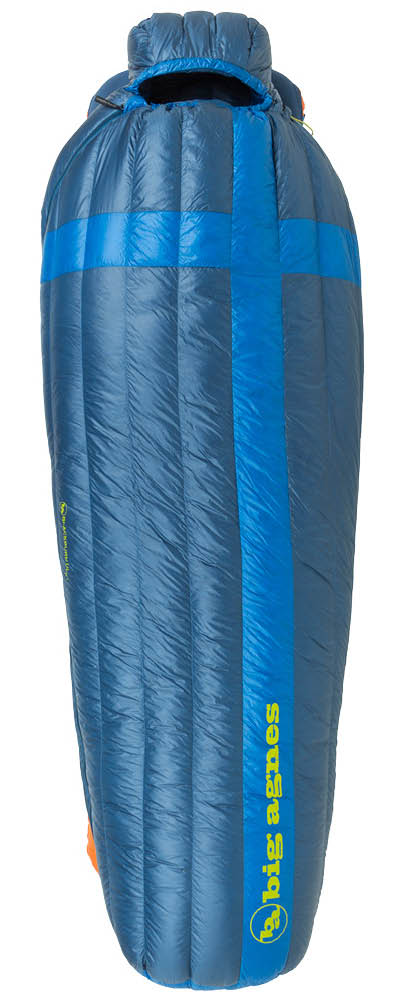
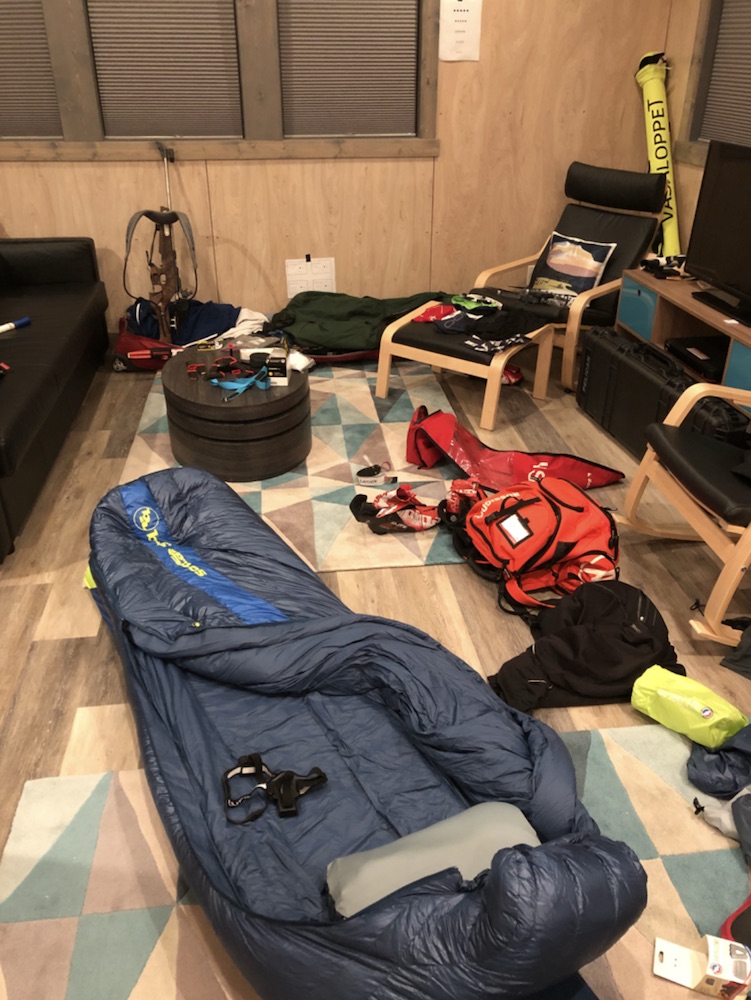
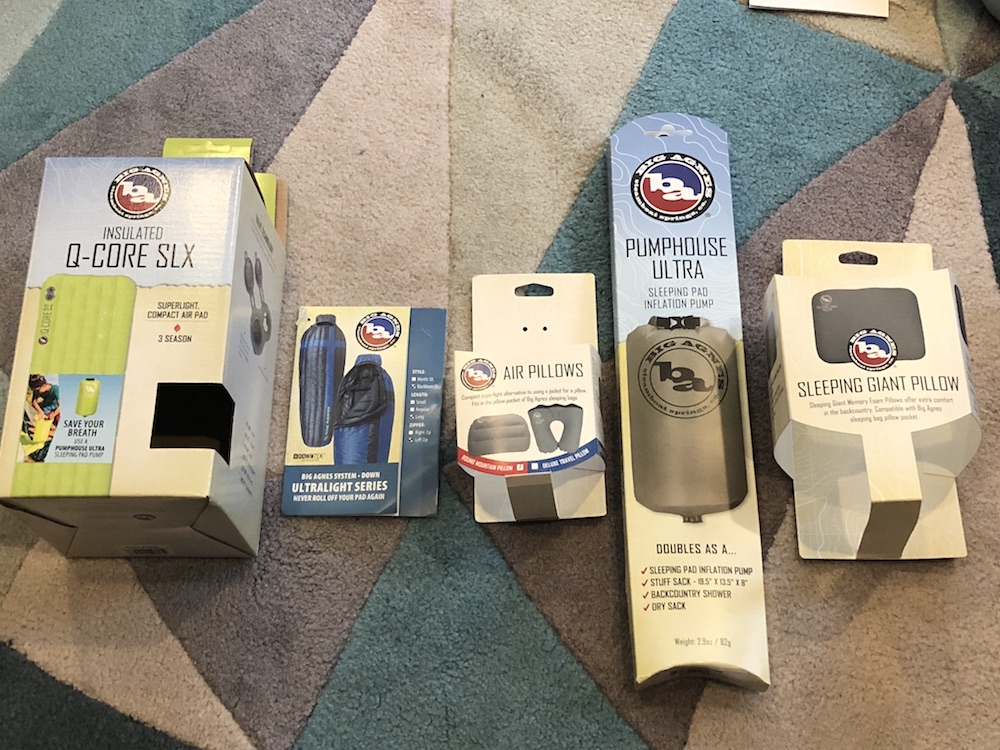
I told you earlier we’d get back to busting on Jeremy Teela, and I would never let you down on a topic as important as this. Jeremy Teela is a three-time Olympic biathlete and up until Lowell Bailey’s very strong eighth place in Sochi, Teela had the top all-time Olympic finish of any U.S. biathlete. Teela is a great dude and a great friend, but well, he has some issues. For example, when you have breakfast his house and request coffee with cream and sugar, his reply is, “Ah, you want the full b*tch kit.” I made this “mistake” (insomuch as asking for cream and sugar in coffee can be considered a mistake) years ago and I’ve yet to live this down. I bring this up now because when I asked Big Agnes to send a winter sleeping bag for testing, I was pleasantly surprised to discover that I received the “full b*tch kit”: bag, pad, pillow, and magical inflation device.
“Full b*tch kit” being prepared for testing. And no, this photo was not staged, this is really how I live. Perhaps it is not just Teela who has issues.
The bag that the fine folks at Big Agnes sent was amazing in every way: light, warm, compressible and even when it’s wet (more on this later). It wasn’t just that bag that impressed me either, it was also all of the accoutrements.
Since contrary to what you may have heard or read, I am an AMAZING house guest, KJ and his lovely wife were very interested in all of the gear that I was reviewing for this year’s wonderful and what appears to be endless journey. She is from Alaska and he’s a touch Montana boy from way, back, so they are no strangers to hunting, fishing and winter camping in even the nastiest of conditions, so when I said that the Big Agnes (BA) bag was one of my favorites out of more than 200 pieces of gear that I reviewed for this series (Yup, you read that correctly, 200+, you’re welcome), not only were they intrigued, but they also offered up their own, unsolicited story about Big Agnes.
Apparently they had two sleeping pads that gave up the ghost when they were traveling around Europe last summer, and despite the fact that they had owned them for years and they had logged lots of miles, they said BA replaced them with brand-new versions, no questions asked. KJ and Robin were incredibly impressed, as was I.
I start testing products several months or even several years in advance, because I am a very, very lonely man, but also because I want to be thorough. Gear is expensive and due to the shifting and declining revenues for periodicals of all types, genuine, unbiased reviews are going the way of intelligence and civility in politics and our beloved snowpack — vanishing.
It is for this reason that despite my many wisecracks, I really do take this job seriously, as I consider myself the Obi Wan Kenobi of gear review. That’s right people, I am your only hope.
“Hurry Captain, shoot down whoever you need to, FBD needs CHEESE.”
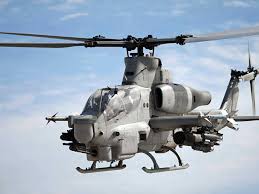
Given the very nature of my role, however, one of the components of the overall process for which I always wish I had more insight is customer service. Since I am now a VERY big deal, almost all of the companies roll out the red carpet for me. Don’t get me wrong, I like getting my ass kissed as much (or probably more) as the next guy, but one downside of this VIP treatment is that I sometimes wonder if I don’t see what the average customers sees. If I have a problem, a fleeting of matching black Cobra attack helicopters immediately airdrops a new version of the product in question to my door, completely with a courtesy basket full of bonbons and an exotic assortment of artisan meats and cheeses. Exactly as it should be, too, btw, so keep those biking-clad heli pilots bearing gifts coming, that frickin’ cabin in Montana is cold and lonely and the freakin’ crappy grocery store is miles away, which gets old, fast, when you’re on foot patrol for three weeks. My point, however, is that it is extremely encouraging to hear unbiassed, objective feedback from “real people” who don’t have any skin in the game, other than the fact that they want to keep their skin. When people I know and trust tell me that customer service from a company is commendable, that absolutely merits me passing it along.
As for the bag itself, it also kicked ass. It was very comfortable in relatively cold Montana weather (low of minus 4), as well as VERY damp, nasty, typical East Coast winter weather (15 degrees, with about 200 percent humidity) and in the slightly more moderate, but very dry Colorado weather (a crisp 20 degrees). That is only part of the story, however, as while bag performance is key, part of what made the bag perform so well were its accessories.
For starters, the bag has a sleeve on the bottom that holds the sleeping pad in place perfectly. While this sounds minor, I can assure you that rolling off your sleeping pad onto the cold tent floor is a deal-breaker, so this innovation is ground-breaking, er, ground-warming, er, keeping-your-bag-off-the-ground-ing-which-makes-it-warmer-ing?
All the components of a Big Agnes System Sleeping Bag
Other clever touches are their combo dry bag/sleeping pad inflator, which allows those with meager lung capacity (like Smullin) to inflate the pad and pillow by merely waving around the bag to fill it with air, then squeezing the air into the pad and/or pillow. Sure, Josh’s bird-arms will likely give out quickly waving around a six-ounce bag, but with ample sets, combined with frequents and extensive rest periods, I am confident that even he could eventually accomplish this very simply task. For all of you in the studio audience that can curl anything more than 5 lbs two times, you’ll have this done in under a minute and will be fresh as a daisy to start grinding me coffee.
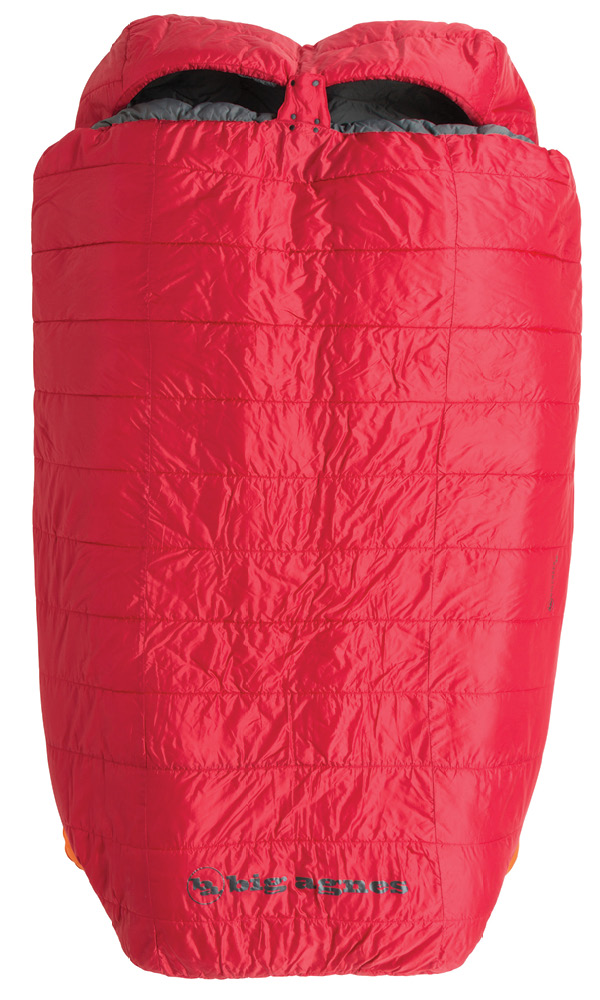
As much as I love Big Agnes, I feel duty bound to advise again their two-person bag, though, as while this might sound great idea for newlyweds or passionate young couples who haven’t grown to despise the sight of each other yet, word on the street is that this bag has been coined, “the relationship ender.” You’ve been warned.
In another, alternate universe, I create thoughtfully crafted, considerate, caring gear reviews for our colleagues across the aisle in the endurance sports community: triathletes.
I am of course kidding, as I harbor even more spite and resentment for this group of Type A nerds than I do for the nordic community, which is saying something. If there was one group of individuals more afraid of women, germs, and overall more adverse to following social norms and acceptable public behavior (all of you wearing your Speedos or bike kit in the grocery store have a place waiting for you in hell), it’s these guys. Spend even one hour in Kona in the week before the IM World Champs and you’ll immediately see my point.
The upside of being forced to deal with these kooks is that I get to test a lot of cool bikes, which is what we’re talking about now.
Bikes? In a FS gear review? What gives, FBD? Stick with me on this — my thinking here is that inherent in any nordic skier’s life is summer training, something that thanks to years of poor leadership and vision, combined with the current abysmal leadership and vision, is quickly turning into a major component of our year.
One can’t help but wonder if we are ever going to be able to undo the damage that we’ve already done to our planet and if reliable snowpack won’t be changed or perhaps even lost forever. The sad reality here is that our summer season is getting longer and our winter season is getting shorter. Hopefully everyone out there will get involved and demand change (remember, you get the government that you deserve) and we can at least stop any further damage. Regardless, the hard, cold truth (well, now moderate temperature truth), is that longer summers and shorter winters are here to stay. This all means more time on the bike.
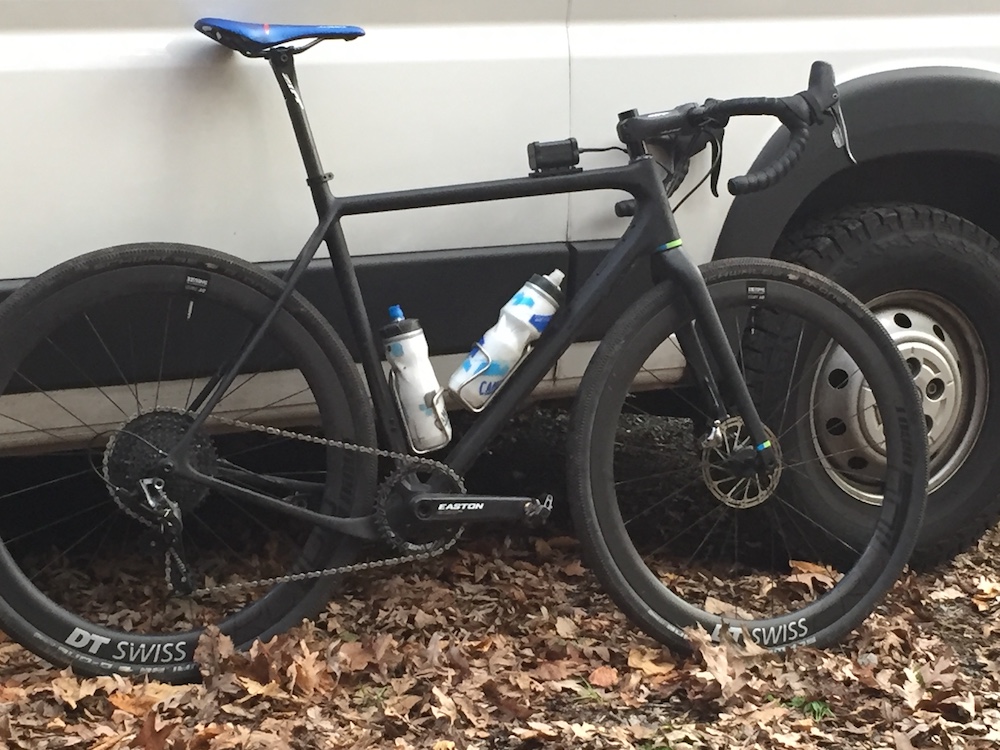
One of my pet projects (as opposed to just one of my many pets) this past summer was testing gravel bikes. I’m not gonna lie, I entered this project with a healthy dose of skepticism, as this kinda seemed like one of the notorious bike industry “flavors of the month.” Given that fact that it is increasingly difficult to improve on the already extremely efficient design of the bicycle, this industry constantly grapples with ways to increase sales and drive demand. More often than not, these efforts are somewhat meaningless. So with this beautiful bias firmly cemented in my mind, I set out to test some gravel bikes. And they were awesome.
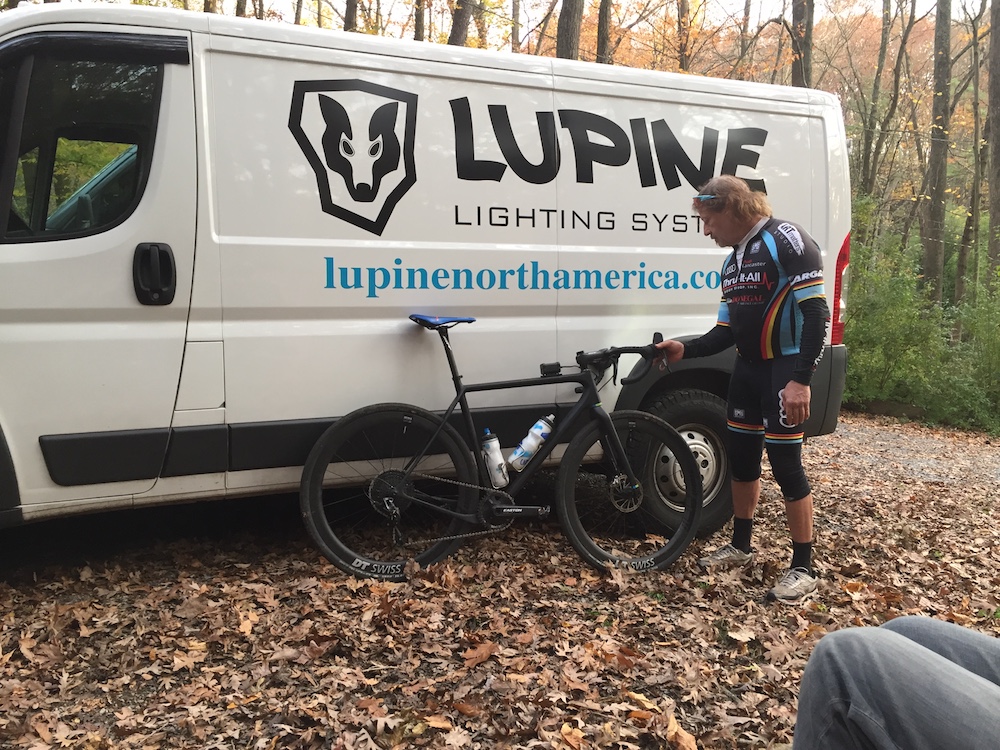
Taking the Open Upper out for a rip with the crew from Lupine lights. More on the latter shortly.
At the top of the heap (bike joke for all of you losers who don’t have the silky smooth bike handling skillz of the FBD), is a wonderful whip from a (kinda) new kid on the block, OPEN Cycle. Open was started by the big guys behind Cervelo, Gerard Vroomen and Andy Kessler. Their extensive experience and success in the bike industry was immediately evident as this bike is incredible. I had the good fortune to put it through its paces on all sorts of trails, road, and paths, and I struggle to find anything critical to write — this is really saying something, too, as I am one of those people with the gift of being able to find something critical to say about EVERYTHING.
The bike is light, responsive and incredible versatile. You can outfit it with slicks for road riding, 32’s for cross racing, 40’s for mixed gravel/single track cruising, or even go with full-blown mountain wheels if you are primarily riding dirt.
This fine steed made the cut for this column for many reasons, but in particular due to its versatility. The strength coach at the Steamboat Springs Winter Sports Club is an avid rider, a fat bike World Masters Champion and just an all-around speedy dude. He has an Open and he told me that due to its versatility, he has narrowed his fleet to just a few bikes, as he can easily swap wheels on the Open and have a perfect bike for almost any type of riding.
Being far more civilized than he and his barbaric attitude to thin the FBD bike herd, I have adopted the “if some is good, more is better,” truism that applies to all elements of endurance athletics, and have therefore chosen to get this bike, and all of the wheels, and keep all of my other bikes. Ha! Suck it, garage space.
Before any of you haters out there write in to criticism this strategy, let me preemptively explain what I like to call, the “FBD sailboat defense.” Being the key, influential member of the littératie that I am, I am often called upon to hobnob with my fellow cultural elites in places like Camelot, Kennebunkport and Cannes, so spending time on luxury watercraft it old hat to this cat. As most of you know, the purchase price and upkeep of any sort of boat is astronomical and absurd, so any time there is even the most subtle suggestion by any member of the FBD inner circle that I am wasting my money on all of these ridiculous and seemingly redundant (or is it superfluous, I REALLY NEED TO FACT CHECK MY WORK) bicycles, I immediate launch into the FBD sailboat defense, which goes something like this: “Would you rather I had a sailboat? Huh? Would you? That costs WAY more and is way worse for my health. Look how fit I am. Do you want me to have a heart attack? Is that it? Why would you wish that upon me, when I love you so much?” I do this all at an ever-increasing volume, then run to my room in tears and lock the door, barricading myself in with my fancy coffee grinder until everyone gives in and I get to buy my new saddle, or tyres, or whatever piece of gear upon which I have obsessed on that given day. Criticism me all you want, but that sh*t works. So go treat yourself to a new gravel bike, after all, who deserves it more than you do? (Well, me, but I already have one, so you’re up next.)
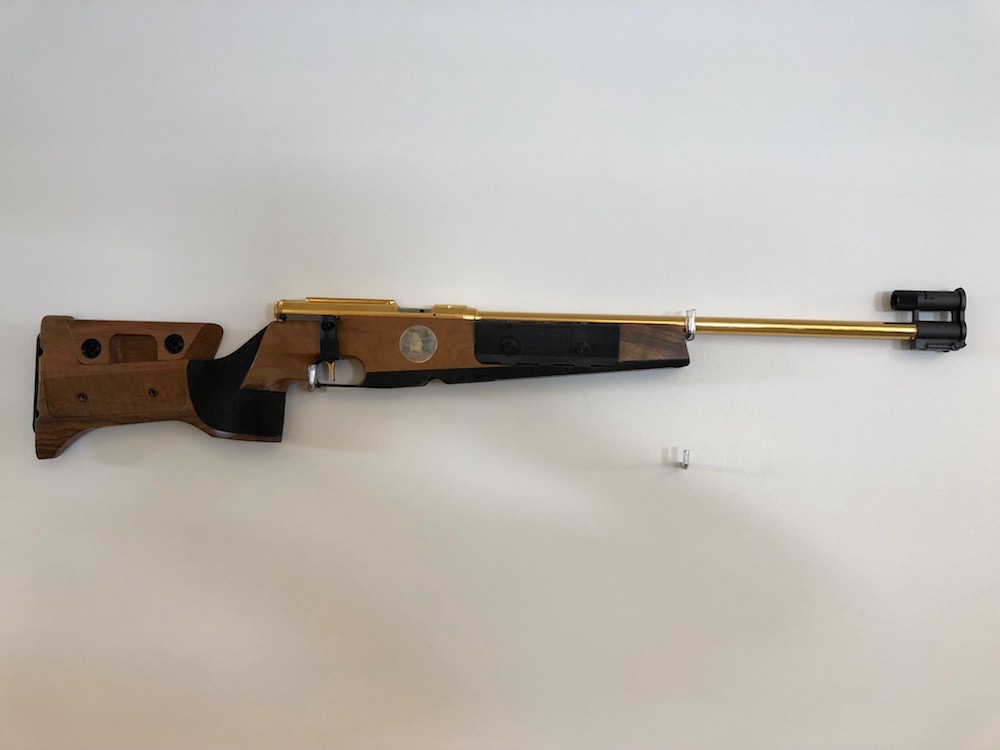
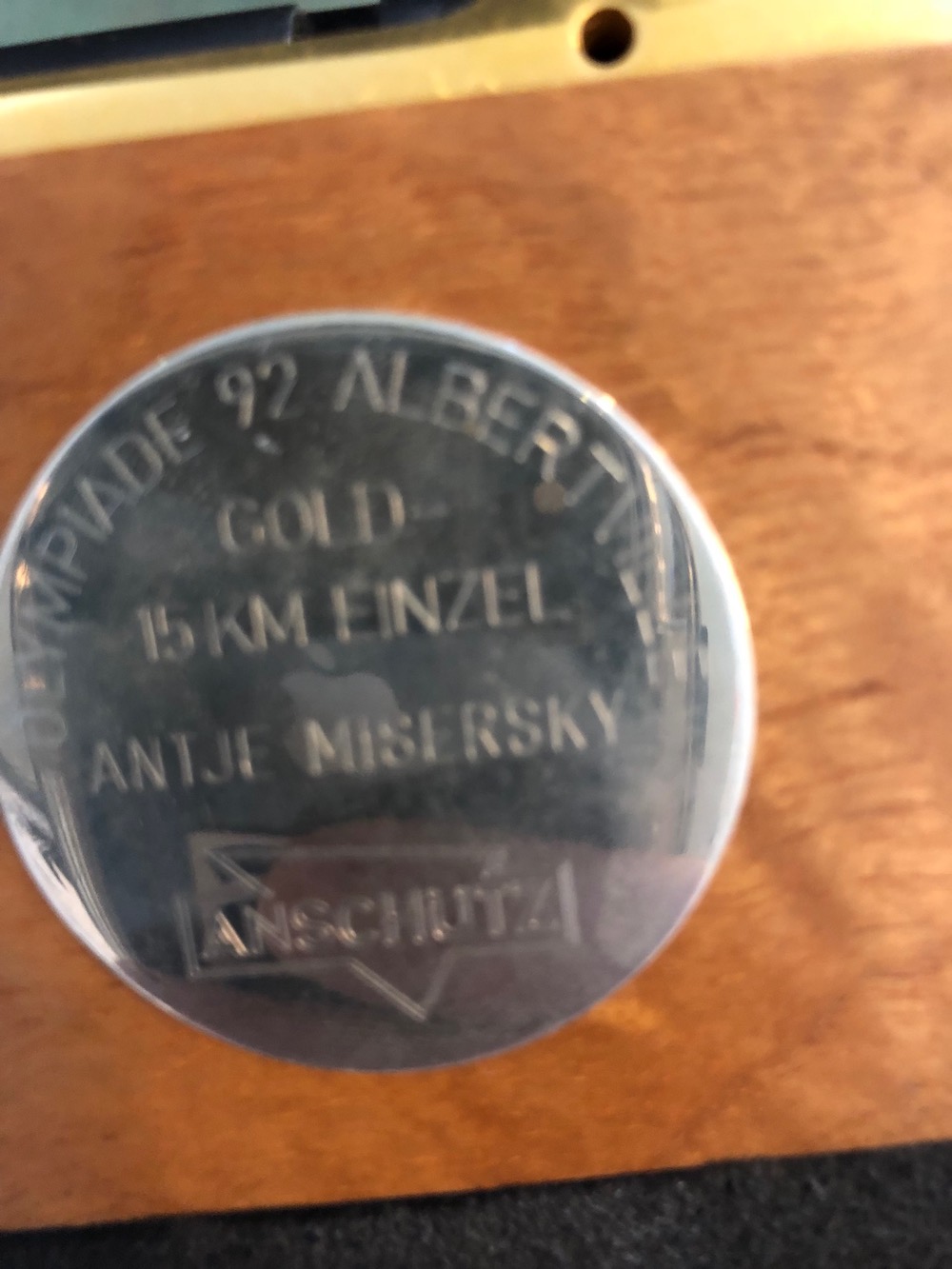
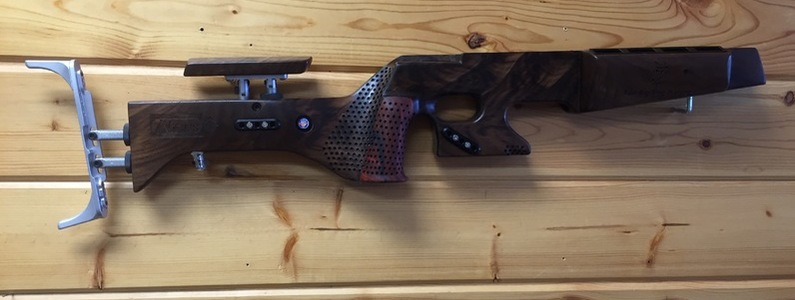
Fully functional Anschutz Fortner biathlon rifle: gold-plated and one of a kind. Given to Antje Misersky-Harvey by J.G. Anschütz GmbH (the world’s leading manufacture of biathlon rifles) in recognition of her gold medal in the women’s individual at the 1992 Albertville Olympic Games.
I’m going to finish this very special column with a very special story (and no, not that kind of “special” — this is actually an incredible account of perseverance, courage and strength)
Without a doubt, the United States is a great country. Having said that, it always annoys me when pandering politicians and nut-job, right-wing pundits go for the lowest common denominator and claim it to be “the greatest county in the entire world,” as there are lots of great places and people out there in the world, so to simply unilaterally and without fact claim us to be No. 1 across the board in all categories is inaccurate and arrogant (look no further than our global rankings for gun violence, health care, education, quality of living, and self-assessment of happiness, just to name a few). That notwithstanding, the US is most certainly a great place, as this remarkable series of events illustrates.
As noted in Wednesday’s masterpiece, like so many good stories, I was “just skiing along,” well, in this case, uh, “just standing along (does that even make sense?) in Altius Handcrafted Firearms in West Yellowstone, Montana, the nation’s premier biathlon shop, when in walked Ian and Antje Harvey with a biathlon rifle for consignment. The rifle is gold-plated and an amazing piece, but this rifle itself was just the tip of the iceberg, as the accompanying back-story is nothing short of incredible.
One of the many intriguing aspects of the story of the history of the rifle is that a doping controversy is at its core, making it perhaps more prescient than now than ever before, in particular given everything currently happening on this front.
This full story was published in Masters Skier and Cross Country Skier magazines several years ago, but sadly I was unable to find any versions online. With full respect and attribution to the fact that this was published previously, I will present a short summary, but I do encourage everyone to try to find the complete versions of these accounts, as they are simply amazing. In essence, this is a tale about overcoming long odds, stifling authoritarian government regimes and the strong moral authority to do the right thing.
Antje Misersky-Harvey grew up in East Germany in the 1970s and 1980s. A rising star in cross-country, she found herself in an extremely difficult and dangerous situation when she refused to acquiesce to pressure from the East German government to take performance enhancing drugs. Rather than administer what she believed to be dangerous, illegal and immoral chemicals, she instead opted to quit skiing. Just before the 1992 Olympic Games, however, East Germany was building a women’s biathlon squad for the first time, as 1992 was the first WOG to feature this discipline. Scrambling to build a team powerful enough to take on the strong West Germans, she was allowed to join without being forced to dope.
Antje Misersky (now Harvey) was awarded a gold-plated Anschutz Fortner biathlon rifle for her gold medal at the 1992 Olympics.
Fast-forward to the Games themselves, where she went on to win a gold medal. The story gets even more incredible here though, as this was just after the fall of the Berlin wall, so the now, greatly liberated German media was very anxious to hear her incredible and harrowing story. Not surprisingly, officials from the former East Germany were much less excited about these details getting out, so she and her family received numerous death threats. Given the very recent change in the political structure and the enormous, far-reaching power in the previous governments, these were threats that could not be taken lightly. Being a person of great courage, conviction and character, however, she went on TV for a full, one-hour interview exposé and was one of the first athletes to have a very vocal and outspoken role in the anti-doping crusade.
In appreciation of her gold medal, bravery and strong, moral conviction, Anschutz, the manufacture of the rifle she used to win her one gold and three silver Olympic medals, presented her with an extremely unique and stunning gold-plated rifle. Not only is this extremely rare, but the story behind it is nothing short of incredible as well. And this rifle is now for sale.
One of the things that I’ve learned in my few trips around the block is that it is very easy to fall in to “the grass is always greener” trap. Sure, our national team athletes (not to mention our development team and junior team athletes) may not have everything that their European counterparts do, but was Lowell Bailey’s father ever issued death threats by the US government? Given that fact that I highly doubt that Trump could even spell ‘biathlon,’ this seems quite unlikely. Yes, Noah Hoffman is currently paying for his wax tech and I think we all wish that this wasn’t the case, but has he ever been so knocked over by government officials as he approached the finish line, therein preventing a win, due to his political views? Have any of our female athletes been pressured into pregnancies (to later be terminated prior to competition), in order to get a more advantageous hormone profile? No. Never. Yet these are things that happened (and sadly, appear to still be happening in some places) at the behest of other federal governments. Let’s be very clear about this, too, these atrocities are not happening in isolated cases with a few random athletes, not is this a conspiracy of a few rogue coaches, but rather these are massive, nationally orchestrated programs run by the highest levels of government. Please allow that to sink in for a moment.
In the U.S., this is simply unfathomable. As citizens, we rightful become incensed if we even perceive a whiff of government intrusion in any aspect of our lives, yet not all that long ago, and maybe still even today, there are national-team athletes from other countries facing almost indescribable oppression, intimidation and abuse. So while I wish we had a wax truck for biathlon and nordic combined, and I wish both our health care and education systems were more efficacious and economical, but despite these shortcomings, I am still very proud to be an American, as this is most certainly one of the greatest countries in the world. Even with Trump.
Editor’s note: For the second-straight year, we’re presenting another 12-day holiday gift guide, brought to you by the one and only “FBD”, our gear-review guru. Kicking the series off, recommendations for recovery gifts to keep you and your ski buddies on the trails and injury free. See also: Day 1 | Day 2
***
Day 3: Lifestyle Gear
Today is all about the gear that you need to make it through the day. Granted, some days you are sitting in your prison cell of an office, plotting the slow and deliberate death of those around you — those vermin holding you back from your rightful place atop multiple Olympic podiums. I’m not talking about those days. There’s not much I can do to help you there, other than to write these pointless, rambling manifestos which help you stick it to the man, as guess who’s hourly wage just skyrocketed if they spent the last 60 minutes at work revealing in the awesomeness that is FBD? To the keen eye (which is you, if you are reading this), you have undoubtedly deduced by now that these missives are actually a dog whistle, beacon of hope. I have survived the soul-crushing stupidity of corporate America and so can you. Being the benevolent overload that I am, I’m even going to show you the way. Yes, the corporate grind can seem both endless and pointless, but hang in there my fellow oppressed brothers and sisters, we’re gonna make it through this together. How? With a killer attitude and killer gear. Stick with me and not only will I get you out the other side, but we’ll do so with style and grace. And nice, new underwear. More on that in a minute.
The top secret FBD survival/coping mechanism is one that I have carefully cultivated over many years of corporate suffering and wasted weekends writing mission statements that no one will ever even read again, nonetheless actually follow. And again, as noted in Day 1, since one loves you like I do, I am going to share my tried and true path to enlightenment, happiness and ski speed:
Step 1: Embrace the grind.
Step 2: Buy all of the gear listed below and use it exactly as prescribed.
Step 3: Go ski.
Step 4: Bask in the awesomeness that we have together created.
Step 5: Lather, rinse, repeat.
Step 6: (Optional) Buy a Great Dane. With one of these infernal creatures waiting for you at home (which has now likely been destroyed), all of a sudden going into the office doesn’t seem all that bad. You’re welcome.
Yes, the market is flooded with options (both literally and figuratively, thanks to global warming, corporate lackey politicians, and pig-headed constituents who somehow have been duped into voting against their own best interest. We all need clear air and clean water, people. This is not a partisan issue. This should not even be a political issue. This is a matter of not destroying the place where we ALL live. The ONLY place we have, too, by the way, so here’s a crazy idea: let’s not make it inhabitable, what d’ya say?).
This is all you need to survive – Stinger gels, coffee, LaCroix, drone, and your trust biathlon rifle. I have been living off the land in Montana for three weeks now, with nothing but these few, Spartan resources. And I’ve never been happier.
Thanks to the unique makeup of your sensory cortex, a developmental process that is truly unique to each individual, and the food options available to all of us in our particular environment as we develop, taste and food preference is a very, very personal affair. Not to worry, a full-blown, knock-down, drag-out energy food review is already underway by your crackerjack test team here at FBD Racing, but due to many conflicting time demands, travel, training, racing, and this albatross of a Holiday Gift Guide, that process is proceeding at a glacial pace. Have no fear though, we have an early winner, one that is sure to satisfying even the most discerning palate: Honey Stinger gels and waffles.
There’s a myriad of options, flavors, and selections, to suit almost every taste, desire and Boulder-eco hippie, goofy dietary fad of the month, so whether you are a Level 4 vegan, macrobiotic, gluten free, or simply eat like a normal human, these things are da bomb. Get the ones with caffeine, as next to alcohol, caffeine is one of the best compounds on the planet, easily surpassing water. Seriously, I could go days without water, but no morning coffee or evening “wind-down” whiskey? F that. Waffles, chews, gels, honey, and more at HoneyStinger.com
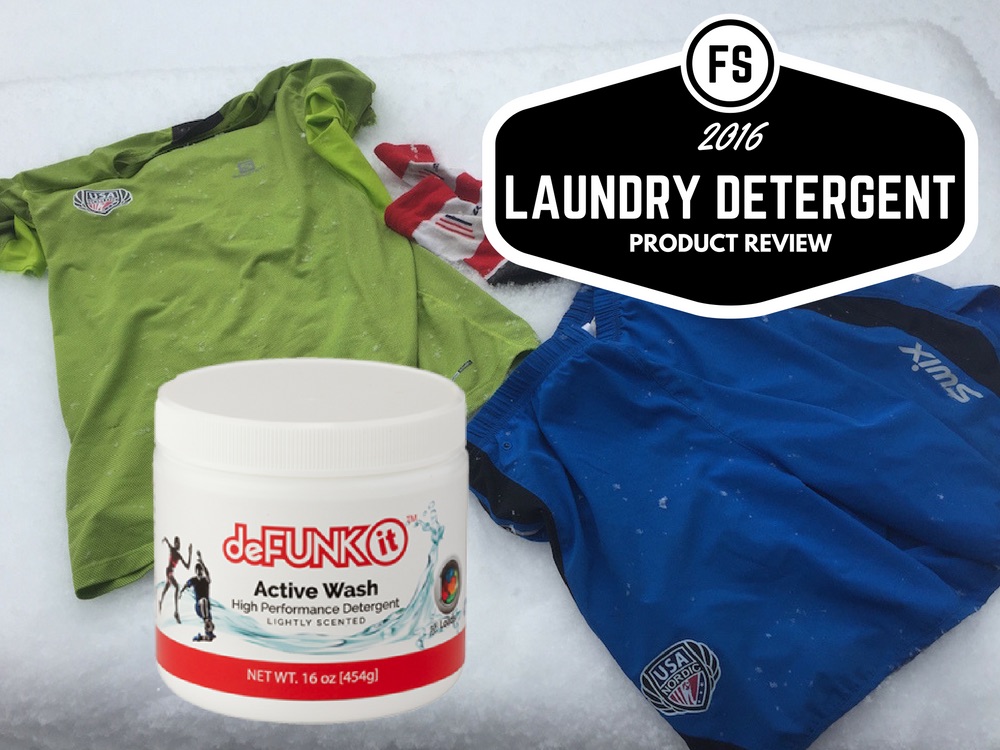
What was deFUNKit is now Defunkify. We covered this brand in excruciating detail last year and if you haven’t read this historical and groundbreaking review, you should. Get clean. Get woke.
This product line made the cut for this year because not only have I received rave reviews from my adoring public on the anti-stink treatment (seriously, this is probably the product that most people approach me to thank me for suggesting: it is that good), but this past year they added a new “regular” laundry detergent.
I call it a “regular” laundry detergent because, well, that’s basically what it is — you still need to do the “destinkify protocol” with the product I reviewed last year, this is has been designed to compliment it and help reactivate the odor-protection properties of the treatment. As a quick recap for you shallow readers out there, those simply too lazy to read the article, or those with short- and long-term memory issues, you only need to treat your clothing once with the special gunk, then it allegedly lasts for up to twenty washes. The thinking with this new detergent is that if you have treated your training clothes with the secret formula, this detergent will help keep the anti-microbial and anti-odor properties active longer.
How well does it work? Well, that’s a bit tricky to say, as I didn’t do a direct comparison between washing in regular detergent and washing in the new Defunkify concoction, but in a very subjective, non-scientific, “let’s give it a try to see how it works” type of test environment, it seems to make a difference.
Spy shot of the highly evolved and sophistical FBD laundry protocol. This storage and classification system is known in the scientific community as, “Random Access.”
As noted previously on several different occasions, thankfully the FBD has been blessed with not only good circulation to his hands and feet, but also very reasonable endocrine and stress hormone biochemistry. In other words, I don’t stink. Why? Well, in addition to a careful diet, a forgiving body chemistry, and a generally carefree lifestyle, I saw the original Rocky movie at a pivotal point in my development and Apollo Creed’s advice to the youth of America really stuck with me, “Be a thinker, not a stinker.” I took this little nugget, ran with it, and never looked back.
This all means that none of my gear rarely ever gets to DEFCON 1, so I’m not trying to move the needle all that far in each laundry sesh. Having said that however, it does seem like this new wash product extends the life of the odor treatment. Plus, it’s not that much more than regular laundry detergent, so if it saves me the hassle and expense of buying the odor treatment system a little less often, well that’s a win. $19.99 at Defunkify.com
Sneaking just over the $30 cut off (well, technically, right on the line) is another extremely practical offering, hand warmers. Let me stop right here, for if you are a regular reader of this column (which you sure as sh*t should be), you’re now most likely thinking, “Hey, wait a minute, what happened to Mr. Airport Anger, I’m Too Cool For School and Don’t Need Warm Gloves?” Fair question. So while many aspects of me are, in fact, superhuman, I do still get cold from time to time. Well, I would if I wasn’t an evil, super genius (think Bond villain without the weird outfit and bad haircut)
No matter how you slice it, standing around in the cold is, uh, well … cold. Being active is key, but there are certain occasions when this simply isn’t possible: coaching, spectating, waiting for the podium, all come to mind.
There are also those skiers who REALLY suffer from cold hands and feet and I feel for ya, I really do. Being cold sucks, and that’s where these babies come in. Not only are they light, cheap and very portable, but they can help you dig out from one of those, “I’m never going to be warm again” funks that can ensnare even the best of us from time to time. In fact, I just happen to have top-secret inside knowledge of a certain elite skier and U.S. Birkie winner who places toe warmers in his boots for every ski under 0 Celsius. This is not some spoiled East Coast Nancy-boy either; this is a rough-and-tough Midwesterner who grew up on pond hockey and is no stranger to cold weather. So if years of inattentive parenting and frostbite have compromised your circulatory system to the point where almost every ski is an unpleasant one, these are most definitely for you.
FBD Pro Tip: The hit parade doesn’t stop there. Since I make my living by allowing pesky customers to bother me at all times of day and night, I depend on my phone. Since I would kill myself if I had to spend another two decades chained to a desk, an undisclosed amount of my “workday” may or may not involve me being outside. Since all of the phone manufacturers seem to be ensconced in some sort of perverse arms race to add largely useless features to our phones at the expense of trivial things like battery life, combined with the well-documented deleterious effect that cold has on all types of batteries, these two factors could conspire to produce rapid and unfortunate FBD unemployment unless evasive maneuvers are taken — in this case this means keeping your phone warm at all costs on the slopes/tracks/ice cave strip clubs. How is this done? You guessed it, a strategically placed hand warmer. You’re welcome. There are specially made pockets for phones that hold hand warmers, but all of the ones I’ve tested are basically crap. Go “old skool” with a Ziplock baggie and a paper towel around your phone (it’s equally bad to let your phone get too hot and hand warmers can throw off a fair amount of heat).
Buy these for every crafty consultant who sneaks away from his desk at every possible opportunity, every patient race-course volunteer, and heck, maybe even a few of those aforementioned East Coast chronic-complainer Nancy-boys in your life. $29.95 at L.L. Bean
Since everyone loves clean, stink-free undies and fresh training duds, when the fine folks at Y Athletics contacted me to review the line of high-performance athletic clothing, using only a slight variation on that opening line, I was of course, interested. What really caught my eye was the merino-wool underwear. For those of you playing along at home, my fondness for merino (the fabric, not the quarterback) is well known and for good reasons: it is probably the most comfortable, functional, and practical material every made. It is comfortable in the hot, cold, wet, dry and everyplace in-between (no pun intended).
It also resists odors, dries relatively quickly, and maintains a soft touch to the skin for the life of the fabric. These are great qualities for any piece of clothing, but perhaps in no other example are these attributes more appreciated than in underpants. Goddamnit, that’s a great word, too, by the way: underpants. Not underWEAR, not skivvies, not boxers, not briefs, not undies, not fundies, but underpants. It’s as if you are back in kindergarten. Ah, simpler times…
So what is the verdict on the new underpants? A huge thumbs up (I was going to go with a different anatomic region here, but my evil taskmasters at FasterSkier are still WAY too hung up on things like decency and decorum — bastards.) The Y Athletics fundies are warm, cool, dry and basically just all-around comfortable. They survived a tour of duty in West Yellowstone that I wouldn’t wish on my worst enemy: highly infrequent washings, and when they were washed, this process was often done poorly. When on duty, they were subjected prolonged training sessions in a wide variety of temperatures, and regularly exposed to all sorts of body fluids that I’d rather not describe here. And they came through with flying colors. Well, they were black, but you see my point. Overall, an excellent product.
The Y Athletics team also sent along a sleeveless T and a long-sleeve shirt which unfortunately are made from a different fabric. They refer to the fabric as their “SilverAir technology,” with its breakdown being 69 percent nylon, 26 percent polyester, 5 percent metallic. It is designed to repel odor and be able to go for weeks at a time without washing, and in general, it worked as advertised. Overall, it is also pretty comfortable, but truth be told, I wish they used merino instead. It’s still a good product and WAY better than any cotton T-shirt that you may be rocking, but based on how good their Dan Marino underwear is, I think using this fabric in their shirts would be a home run.
Artist’s rendition of the arms, skin and teeth of Josh Smullin: emphasis on arms, or lack thereof.
One other minor grievance is while the sleeveless T is great for rollerskiing (in particular in the high-visibility red), the arm holes are a little small. I suppose this is fine for guys like Josh Smullin, whose arms rival those of a T-Rex, or perhaps a baby bird, but when you’re rolling w/ the FBD, you need to have some room in the arm holes when you are inviting all of the ladies in the weight room to the gun show, if you know what I mean. If you don’t know what I mean, you probably stopped reading this column long ago, so no sense in trying to explain this now.
Definitely buy the underroos the next time American Airlines loses your luggage, you finally get a girlfriend, or your existing rotation of man-panties is SO pathetic that even you, the person with shockingly little dignity, is disgusted with yourself. Buy the sleeveless shirt if you need something to help increase your odds of survival out there on your whap sticks amongst the angry motorists and buy the long-sleeve if you’re too cheap to buck-up for merino, yet you still have an incredible aversion to the laundry room. $40-$68 at Y Athletics (Editors’s note: Y Athletics only offers men’s products)
Let’s assuming that you’ve been hanging on my every word for the past umpteen years I’ve been in this miserable job. You’ve purchased every single piece of gear that I’ve ever reviewed, taken every piece of training advice to heart and applied every single physiological and lifestyle principle ever implied, inferred, projected, or prescribed. If so, you’re undoubtedly in a state of perpetual bliss: you ski speed has never been higher, your job prospects are rich and plentiful and as for your interactions with MOS/MSS, well, let’s just say that you are SLAYING IT (which is saying something, as you’re a nordic skier, so that means that you usually hit the town about 2x/year and you’re panicked the entire time that you are somehow compromising your recovery, that your HRV score will be too high, and that your urine osmolality will be off for a few days, as you’ve convinced yourself that the beer that you split with Smullin is dehydrating you so much that it’s going to take you three or four days to recover.)
In your largely futile attempts to overcome these formidable psychological hurdles interacting with potential partners, here’s where once again I have your back: a new fresh shirt to help increase your chances of successfully interacting with a “civilian,” who somehow hasn’t yet become bored with you, despite your long and rambling soliloquy on proper waxing for transformed snow or how your carefully monitoring your HRV score has changed your life.
As you undoubtedly know from several failed attempts, there really aren’t that many ways to be cool and given the fact that you’re a nordic skier means the deck is already stacked against you, so here’s one that basically goof-proof, even for you: buy Kuhl. This mountain brand (or wannabe mountain brand; it’s such a fine line these days and they’re based of our SLC, which is kinda mountain town, but also kinda not) should fit the bill nicely.
Give your kid a weird name and this is what’s showing up for Thanksgiving dinner in a few years. You’ve been warned.
Actually, these are nice shirts and they should fit you even if you name is not Bill. Which, by the way, seems to be just about everyone these days, as every goddamn parent has to show the world how clever and creative they are and name their demon seed something ridiculous like Skyavenger or DragonslayerHeissmanWinner. Why can’t people use normal names anymore? Like Bill. Bill is a solid name. A normal name. A word to the wise: normal name = normal job. I’ve been in lots of board rooms and I’ve yet to hear anyone utter the phrase, “Great idea, Hunterbombasticon, why don’t you run this project. Let’s see what you can do.” No, when I hear one of those names, it is usually because I’m using it to say thank you to the person with the ironic handlebar mustache, suspenders and man capris who just made me my latte.
So do your favorite aspiring corporate-ladder-climber but current barista a solid and hook them up with this shirt – think of it as investing in their future. And yours, as a real job also means finally getting them out of that studio apartment above your garage. Long-sleeve shirts starting at $50 at KÜHL
This shirt looks best in a heap on the floor at the foot of the bed of that cute girl/guy you’ve been low-key crushing all season. Invest in some new threads, tighten up that rap, maybe get a real haircut and make it happen.
I’m going to let you in on a little secret, elite athletes eat well. Very well. I’ve hosted many an indigent pro skier and also had the pleasure of having many extremely accomplished elite skiers invite me into their home. One of the things that I am struck with on almost every occasion is how well all of them eat. Very rarely is it anything crazy, trendy, or complicated, it is usually just meals that follow the very simple advice your grandmother probably gave you, “Eat a balanced diet rich in fresh fruits and vegetables.” Boom. That’s it. No crazy rhino horn extracts, whale penis smoothies, or exotic cuts of meat prepared in secrecy to protect the ancient family recipe. Nope, just fresh fruits, vegetables, lean means and healthy carbs.
Since everyone is busy, I’ve also noticed that many a World Cupper, whether it be a biathlete, XC skier, or NoCo athlete (as I roll with all three), often starts their day with a vegetable smoothie. And the weapon of choice in the dog-eat-dog world of smoothie preparation is either a Vitamix or a BlendTec. Since the FBD is very impressionable, when I saw that Timmy and Andrea Burke had a Vitamix, I thought that’s what I had better buy, because if I buy the same blender as Timmy and Andrea, it certainly stands to reason that I will have the shooting accuracy and ski speed of Timmy and Andrea. Work with me here people, it’s called the transitive property of ski speed. Look it up.
No fair using it for 5,000 calorie milkshakes, then calling me, crying that “the plan,” didn’t work. Use this only for good, never evil.
Editor’s note: It’s here! For the second-straight year, we’re presenting another 12-day holiday gift guide, brought to you by the one and only “FBD”, our gear-review guru. Kicking the series off, recommendations for recovery gifts to keep you and your ski buddies on the trails and injury free.
***
Day 1: Recovery tools
All right people, I’m back. And better than ever. So in typical FBD style, we’re going to hit it and hit it hard. Charging hard right out of the gate, I’m going to get all up in your grill with science n’ sh*t, so let’s do this.
We’re going to kick off this year’s series with a topic near and dear to my heart, recovery. Let’s set the scene: you were somehow able to beg, borrow, or steal your way onto snow in the last week or so for the first sesh of the year. Whether it was West Yellowstone, under the lights at Elm Creek, or a few quick laps around Placid, you somehow figured out how to get your cabin-fever riddled ass out on snow. REAL snow (well, I’m using the term “real” very loosely here, the point is it was not pavement). But the problem is you’ve been polishing a chair with your ass for the bulk of the summer working for The Man, sitting in traffic like a sucker, driving your weiner kids to soccer practices, and all of the other activities that distract and detract from your training (like collecting mammoth Great Dane turds), so now after a few days of blowing it out with as much training as you hardening arteries could handle, your hamstrings feel like piano wire, your lower back is spasming like the beat in a Berlin disco, and you have the grip strength of one of those stupid carnival claw games. Now what? Well, as usual, we here at FasterSkier have you covered (well, I do, as my FS colleagues Gavin and Jason don’t really care about any of you people. No one loves you the way I do — never forget this).
If you’ve been fortunate enough to spend more than 30 seconds with me, you’ve most likely heard me utter the phrase, “You don’t get faster from doing hard workouts, you get faster by recovering from hard workouts.” I say this a lot because it’s true. And because I love the sounds of my own voice. Regardless, I don’t care how young you are, how old you are, how fast you are, or how slow you are, this rings true for everyone. EVERYONE. More on this later too, as recovery isn’t just about getting faster, it’s also about not getting hurt and perhaps most importantly, having fun. Skiing IS supposed to be fun, remember? And it’s pretty hard to have fun if you’re so crippled from the workout that you’re relying on your Great Dane to bring you adult beverages.
Yes, this is not my Great Dane, Pwolfgang, as he refused to get off the couch for the photo shoot, so this is his stunt double.
The issue at hand, therefore, is regardless if you are a chronic over-trainer, can barely squeeze in a few sessions a week, or train full-time and do everything perfectly, you still need to recover well. And I can tell you from firsthand experience, the longer you’ve endured your wrestling match with Father Time, the more important recovery becomes in not only performance, but in pure survival.
Great. Now what? Well, that’s easy — recovery better, dummy. I know this is easier said than done though, so here are the FBD test team picks as to how to do recovery right. I’ll follow the convention I set last year and break these products down by price. Please note, however, that this is not necessarily in increasing order of effectiveness, as some of the more reasonably priced items are also some of the most effective.
Right off the line with the hole shot, the first item is probably also one of the most effective. And certainly the most cost-effective: the trusty foam roller. Available for less than $20, my entire test team (along with countless other athletes) all agreed that some form of this item is basically indispensable. In fact, physical therapist to the stars (and U.S. Ski Team), Dave Cieslowski, once told me, “FBD, probably about 80 percent of my patients wouldn’t need to see me if they just rolled out every day.” Wow. One of the elements of these reviews that was tricky is that recovery can be highly subjective very variable from person to person, so when one of the best PT’s that I have ever worked with, one who specializes in skiing, running, and cycling, says that foam rolling is one of the best tools available, I take that recommendation seriously. Very seriously. And so should you.
Foam rollers are effective, reliable, portable, safe and cheap, so you literally have no good excuse to not be using one. In fact, I take with me on every training trip (and the occasional business trip if I’m optimistic that I’ll get in even a whiff of training). $18.99 on Amazon
Right in this same vein of very utilitarian, effective, economical, and portable is the tried-and-true lacrosse ball. Eight bucks, it fits in your suitcase/briefcase and can help keep you fast and fit, so again, you’d be crazy to not gift one of these to your sporty and sedentary brethren alike. As an added bonus, it’s cheap, so it’s a perfect present for people whom you don’t like all that much. $8.95 on Amazon
Another killer value can be found in the Pro-Tech 5” Orb massage ball. It is a little limited in its application (the company says it works everywhere on the body, but those companies always say that), but where it really shines is in dealing with knots in the more lateral areas of the back, e.g., lower lats, traps and under the scapulas. In these areas, the Orb has no equal. Yup, you’re out another $20, but who deserves it more than you? $19.95 on Pro-Tech Athletics
This product is also extremely high in the ROI category. Not to be confused with Tropic Thunder, this topic gel is designed to, well, I’ll let them tell you: “Topical Edge’s clinically proven Performance & Recovery Lotion helps you train harder, go faster, push longer and recover quicker.”
Yes, yes, I know, these are lofty claims for which even mildly intelligent reader should be skeptical; I know I was. But here’s where the story gets good: firstly, the science behind Topical Edge is very solid and has been around for a long time. The product is essentially a transdermal sodium bicarbonate lotion. Sodium bicarbonate has been dancing around in endurance athletics for years, but oral administration has an extremely high incidence of side effects, most notably, gastrointestinal distress. And to be clear here, we’re not talking about a bit of a gurgly stomach, we’re talking about severe cramps, vomiting and explosive diarrhea. There is nothing funny about any of this, but I have to confess, I have been waiting my entire professional life to use the phase, “explosive diarrhea.”
For you new racers out there in the studio audience, vomiting and explosive diarrhea are not something you want to deal with on race day. Or any day, for that matter. So oral sodium bicarbonate is out for most athletes, for obvious reasons.
Given the fact that the ergogenic effect of the sodium bicarbonate was significant, safe and legal, the folks at Topical Edge came up with an idea: if this compound could be administered transdermally, it might be possible to completely eliminate all of the GI side effects. It worked.
Now on to the question of efficacy. Or in layman’s terms, “Does this crap work for skiers?” The short answer is, “It did for us,” but, but, BUT, please do not stop reading here, for this situation is a bit more nuanced.
First of all, any good scientist knows that it is extremely difficult to remove bias from even a carefully controlled scientific study and our testing was about as far from scientific as it gets: the whole test team knew what we were getting and when we were getting it, there was no placebo control whatsoever, the test group was statistically insignificant in size, and the list goes on and on. It is also very important to point out that even with the company’s own scientific study (which they funded, so please factor that in accordingly), they only saw an increased performance of 1 to 3 percent in their endurance test group. So don’t buy this expecting to shave one hour off your Vasa time. On the other hand, let’s also not be so quick to poo poo a 1 to 3 percent increase: elite athletes train for a year or more to net a 1 to 3 percent increase in speed, so this gain (or as they say in Philly, GAINZ!!!) is nothing to sneeze at, but important to keep in perspective.
Topical Edge is also purported to decrease DOMS (delayed onset muscle soreness) and even aid in recovery (which is why we’re talking about it here). Our test team also found this to be true. Was it the placebo effect? Maybe, but let’s not forget that the placebo effect is still a real effect. If you’re feeling better because you used something that you think is going to make you feel better, well, you’re still feeling better, aren’t you, Captain Hypochondriac?
I’m going to finish with yet another set of disclaimers: recovery is a very personal thing. Some people like massages, some people do not. Some studies show that massages aid in recovery, some studies show that they do not. Adding to this slurry of competing claims, science, pseudo-science, advertising and promotion, is the even more confusing and perverse world of supplements. For the record, FBD is generally anti-sups for a variety of reasons, including, but not limited to, safety, efficacy, costs, hassles, and the very unfortunate and somewhat gray area surrounding some of the more effective products (Norwegian nebulizer, anyone?) So do I feel a little funny recommending this product to you? In all honesty, yes, I do.
Having said that however, what I do feel good about is telling you is that my trusty test team and I tried Topical Edge in a several different scenarios and we all had positive experiences. Were we empirically faster in any given race or interval set? Hard to say, but it seemed like TE helped. Add this to the fact that the active ingredient, sodium bicarbonate, has been around for decades, is safe, and there is reasonable scientific consensus that sodium bicarbonate can be a legal and effective ergogenic aid, it is our opinion that Topical Edge might be worth your time and money for a test or two (remember, nothing new on race day, people).
This almost goes without saying, but I’m going to channel my inner Josh Smullin here (yes, very scary, I know): TE is not a replacement for proper training, rest, recovery, nutrition, good gear, waxing (ski, not bikini), mental preparation and general bad assitude. Smearing this goop all over your legs won’t do crap if you aren’t out there “punching the clock” every day (or as many days as you can). There are no shortcuts. Well, no legal ones, but if you’re got that whole list nailed, is it worth plunking down $20 to see if it helps you? I think so. If it doesn’t work for you though, call them, not me. I’m just the messenger here and I have no skin in the game. Or hit up Kentch. He’s sitting around Alaska with nothing better to do — not to mention the fact that he has exquisite grammar and diction, so his thoughtful response will most likely be much more carefully crafted than mine, as I hate people.
The biggest downside I found in my testing is that if you have a white race suit (damn, this almost sounds a bit racist, doesn’t it?), prepare yourself for some unsightly stains.
Finally, I think it is worth reiterating that as an athlete, is it YOUR responsibility what you put in (on) your body. You should not anyone’s word for the safety, efficacy, and legality of ANYTHING, because if you have a problem, whether it is medical or legal, it is ultimately on you. If you think that Topical Edge might help you, great, but YOU need to do your due diligence to ensure that it is potentially appropriate for you. This means discussing it with your coach, doctor, checking the USADA/WADA list and more. This doesn’t just apply to Topical Edge either, this is applicable to everything in the vast sphere of all types of ergogenic/recovery aids. $20 on TopicalEdge.com
For the astute observers out there in the studio audience, you probably noticed that the orange foam roller shown above was in fact not a cheapy from Amazon, yet instead a more high-end, “designer brand,” Trigger Point. Anyone who knows me knows that I’m a top-shelf type of guy, so I’m sure this comes as no surprise to most of you, but as usual, there is a method to my madness.
While you can get a run of the mill foam roller for about twenty bucks, for just one more Jackson you can score the Grid Foam Roller from Trigger Point. The name is a bit misleading though, as it is quite different than a traditional foam roller. This product is a hard plastic tube, wrapped in a layer of foam. This structure provides a much better rollout and the entire test team found it to be much more effective. There are also different contour patterns on the foam, allowing you to adjust the pressure, texture, and feel.
Since it is a hollow tube, it is much easier to travel with than the solid foam rollers, as it can serve double-duty as protection for your skis in your ski bag or as a wonderful sanctuary for wind briefs that have had a tough tour of duty and are in dire need of a washing. Probably most importantly, many athletes find that the inexpensive foam rollers are too soft (insert your own joke here), so while the TP Grid costs a bit more, it’s a “must-have”. As noted above, I literally don’t leave home without it. $39.99 on TPTherapy.com
As you can see, there are lots of things that FBD doesn’t leave home without — one of which is a foam roller
Not too far away on the evolutionary ladder from the foam roller is the massage stick. Again, preferred usage is highly individual and greatly subject to personal preference, but in general, most people found the foam roller awesome for your back and IT bands, but the bulk of the test team felt that the best way to exorcising the demons of fatigue from your quads, calves and glutes, is a massage stick.
There are lots of brands out there and we tested them all (or as many as we could find) and our favorite was the Grid STK foam roller, I know, I know, it’s also from Trigger Point and I hate sounding like a fan-boy, but every one of their products that we tested seemed to be best in class, so they made the cut in a few places. Here’s a hint too, we’re still not done with them. $34.99 on TPTherapy.com
Further up the food (and money) chain is the new vibrating foam roller. As is the case with Topical Edge, there is some science floating around this. What’s interesting here is that none of these studies are being pushed by the company; I found them on my own, because, well, that’s what I do.
I certainly wouldn’t call the evidence on the effectiveness of vibration therapy overwhelming, but I do find it interesting that there is at least some scientific basis for this concept. Warning, DO NOT do a Google search for vibrator research — you won’t get what you are expecting:
More importantly than all of the gobbledygook research that seems to frighten many Americans (Climate change is REAL people and science is nothing to be scared of — science does not have an agenda. It is not always perfect, but it is the best approach we have to solve most problems, so please embrace it, not shun it), this device actually works. Every tester went in with healthy skepticism, but was won over in some capacity. “I only liked it on my back, but I really liked it on my back,” said one veteran skier and test team member. Another tester found it perfect to loosen up and relax the quads and hammies. One tester noted, “I’ve used each option separately and liked each on its own, but I was pleasantly surprised when the two were combined.”
The downside is that while there was many instances in which the vibrating motion felt better than the “static” foam roller, there were actually a few use-cases in which it felt worse. Now the obvious answer is simply to not use it in those areas, but hold the phone, what if you could have the best of both worlds? I think you can. Trigger Point, if you’re reading this, and you had better be reading this, because this is gold and you’re not going to get feedback this good from any Vail coaches, why not make the “Vibe” option available on your larger roller? My theory here is that the lower radius of the smaller Grid Vibe increases contact pressure due to the decreased surface area of the device. This, combined with increased rigidity of the core, which is perhaps necessary to house the vibration mechanism, can make for an uncomfortable experience in some anatomical regions. The larger, “standard diameter” Grid Foam roller, however, doesn’t have this problem, so please merge these two products. Pow. You’re welcome. Sure, I’ll have to find a new spot in the suitcase for the blown-out, pathogen-rich wind briefs, but I can be very resourceful when absolutely necessary. For example, maybe I’ll have Smullin carry them for me; he has no problem whatsoever with germs. And he likes helping people. And underwear. $99.99 on TPTherapy.com
OK, moon-shot time. Literally. Well, quasi-literally, as the money shot here, er, moon shot … moon money shot???….is Space Legs. This is just a nickname, as there are conflicting reports as to whether this device has, in fact, ever been to the moon, but with a moniker like, “Space Legs,” I think it fits perfectly with my moon-shot metaphor. All of you healthcare professionals, tri geeks and science nerds out there likely refer to these devices as pneumatic compression sleeves, but us cool guys call them, “Space Legs,” so that’s how they will be referred to prospectively in this missive. (Not to be confused with “massive,” which is how I look when I’m using my Space Legs).
For those of you kicking around the triathlon and/or road bike world, you’ve most certainly seen the likes of x, y, z road pro sitting around their 3’ x 6’ Euro hotel room/cell, with giant, cartoonish, balloon-like pants encasing their little stick legs. Yup, those, my friend, are Space Legs.
Following my theme of doing our best to bring some as much real science and thoughtful analysis to the table as possible, in this product area we thankfully have even more supporting scientific research. This time however, since you’re forking over a much bigger chunk of cash, the companies are very quick to point you to the studies. In all fairness though, this concept probably does has the strongest supporting evidence of any products discussed in this long, rambling review, in particular given the medical roots of the device. Originally designed to help patients with edema, DVT, pulmonary embolisms, and other circulatory disorders, variations on this product have been safely and effectively used in hospitals for years.
There are also many anecdotal examples and testimonials of the effectiveness of these systems from a wide variety of athletes, in particular endurance athletes. Since all of my readers are WAY to smart to fall for the ol’, “Well, gee, if this professional athlete told me that it is good, it MUST be good” flimflam, we’ll take those endorsements with a grain of salt. What we’ll take with a heaping helping of salt though is the fact that so many pro athletes actually use them, many of whom made the purchase with their own money. And yes, I know that for a fact, so hold those letters. (insert JR pic w/ caption “Six-time Ironman Winner and ITU Long-Course World Champion Jordan Rapp getting his recovery on in Norway last summer)
So what do the people who really matter (me and my crew) think? In short, we all loved the Space Legs.
Sitting down to debrief (not take off our underwear, as that expression always confuses me and has made for some very awkward appearances at board meetings) with my whole illustrious test team at the end of the West Yellowstone Ski Festival, timing is everything and I found everyone in just the right state of exhaustion, relief, and glee at the completion of the training camp, so the evaluation feedback was accurate, colorful, and insightful. And hilarious.
“I’m not sure what they’re doing, but they’ve gotta be doing something. I definitely feel better, but I don’t know how or why,” said a senior member of the staff, who has skis older than many of you.
Our laziest tester noted, “Being able to lie down and have something done to me is much better than me having to do something. Not only did it help, but I like that fact that I could just sit there.” And yes, this was in fact, Smullin. He is a very lazy man.
Our chillest tester offered, “It’s a great way to Netflix and chill.” I’m not quite sure how you’d do this and it undoubtedly creates a number of logistical challenges, but I trust her and if she said this works, well, so be it.
Our cheapest tester said, “It felt good. I would definitely use it if someone gave it to me.”
Our pragmatic tester mused, “I would consider buying one if I got massages, as the device would pay for itself fairly quickly.”
All of the test team agreed, “Great for training camps.”
And perhaps our most insightful tester concluded, “If you’re doing everything that you can as an athlete, you should definitely buy one.”
As for which specific models we tested, we approached two of the market leaders, Normatec and Recovery Pump. There is lots of chatter in the online forums as to which system is best, largely dependent on, you guessed it, which company is sponsoring the author (Ah, that pesky experimenter bias rears it ugly head yet again). But what about us, the voice of truth and light?
Well, as much as I’d like to tell you that there was one clear winner, there wasn’t. Everybody liked both systems and everyone had their own favorites for their own reasons. Recovery Pump sent us the “Full Monty,” e.g, leg sleeves, arm sleeves and a cool low back/pelvic girdle accessory. For this reason, a few testers preferred RP, because you’re not living until you get back from a double-pole workout and can have a one-hour, low-back massage in the privacy of your own home at exactly whatever time you dictate. And let’s not forget how sweet it is to have karmic balance restored to your arms and shoulders after a tough strength sesh. I am feeling more recovered just thinking about it. In fairness to Normatec, they do also offer a shoulder sleeve and pelvic girdle, but we were not given an opportunity to test them, so we cannot comment on the effectiveness of their accessories.
On the other hand, I, and a few others, preferred the Normatec. I’ve had the most experience with Space Legs of all of the testers as have used NT for years, so I’m not sure if I liked this NT better because I am simply more used to it or if it truly more effective. A few of the other tests felt like the recovery effect was “just better,” with NT. I wish I could be more definitive for y’all and provide a clear winner, but the results are the results. I will say this though: you can’t go wrong with either system. More pro athletes use Normatec (for whatever that’s worth), but the pelvic girdle option for RP is very nice and works well, especially for our sport.
So while both systems are effective and in the opinion of the entire test team, almost mandatory for any serious athletes, one big thing they are not is cheap. The entry level RP system will set you back $895, but we did not test this system and therefore cannot make comparisons between this and the more deluxe RPX system used for our testing, which will set you back $2,000. Normatec comes in at a cool $1,495 for the system that we used and both systems will get you up into the mid to high $2k range if you want all of the doodads. Which you probably do, especially if you are a dad. (See what I did there?)
Is it worth it? I can’t really answer that question for you. If you barely have money for food and rent and your every spare shekel is going for wax, Ramen, race expenses, this may not be for you. If you are serious about racing or just recovery in general though, as noted above, I’d say this is almost mandatory. Could you simply have a 4:1 carb/protein snack within 30 minutes of completion of your race, put on dry clothes, hydrate, eat a healthy meal, then take a nap? Sure. But your competitor who also does all of this AND has a NormaTec is going to have an edge. Can you beat this little weasel with superior training, tactics, and genetics? Maybe. But again, all things being equal, I am confident in reporting that these devices provide an edge in recovery and rehabilitation, so as my curmudgeonly colleague so aptly stated earlier, “If you’re serious about racing and doing everything you can, you should definitely buy one.” $1,995 on RPSports.com and packages from $1,395 on NormaTecRecovery.com
***
Conclusion
Recovery is a fascinating topic. It is vital to the success of every athlete, whether elite, competitive or recreational, as it is not only one of the key determinants in success, but also in longevity. Despite this, in my observations, it is often also the most neglected or incorrectly executed component of training.
If you’ve been rolling your eyes at the thought of a bunch of Master Blasters sitting in front of their computer, completely ensconced in any of these aforementioned ridiculous contraptions, before you get too carried away on your high horse, let’s not forget that one of the single biggest contributors to athletes leaving a sport, in particular in later life, is injury, and there is a very strong correlation between proper recovery and injury prevention. I’m not saying that you can train like a lunatic and just by using Space Legs avoid injury (I’m looking at you, Jacked Up Old Man), but these devices can be a few more tools in your arsenal to help keep you healthy and active, which at the end of the day, isn’t that really the ultimate end-game for all of us?
I know I’ve thrown a lot at you here and this begs the question, ‘Do you really need everything on this list?’ Well, my friend, that all depends on how you define “need.” If you want to get really philosophical, do you “need” to ski? Do you “need” new skis every few days/weeks/years/decades? In theory, you could ski on the same pair of skis from cradle to grave, but it is my fervent belief that owning state-of-the-art gear is what separates us from the animals (this, along with spoken language and the ability to use tools).
I will therefore let you define “need” however your wife tells you to define it, or however you budget allows, but what I can tell you with 100 percent certainty is you life will be much better if you follow all of my advice verbatim (on this and all issues). Recovery is the key to success and if you want to “do recovery right,” (trademark, patent pending), you will do everything suggested above. If your budget, SO, coach, dog, god (for all of the dyslexic readers), whomever, won’t allow this to happen, please, at the very least, spend $28 and get a foam roller and lacrosse ball, you cheap SOB.
I would be remiss if I didn’t wind down this wonderful journey with the excellent cautionary tale offered up by one of the salty, seasoned coaches/testers: “All of these concepts are valuable, but this entire process should be kept in perspective. These are all great tools to aid in recovery, but you still have to do the workouts, get good sleep, quality food, etc. This can only be a supplement and still needs to be used carefully. If you aren’t careful, these well-designed tools can jump the shark: they can’t be over-used, mis-used, or take away from training time. You still need to do the work.” Church.
Finally, probably the most significant factor in this whole sordid discussion is that recovery can be highly individual and personal. What works for the FBD, may not work for people like Josh Smullin, who as we all know is a strange, strange man. And that’s OK. What’s important is that you recognize the importance of proper recovery and find out what works for you. You may think that you’re too cool for school and you don’t need to do any of this, but trust me, you do. You may not be tired, injured or sick right now, but following a proper recovery protocol will lessen your chances of any of these distractions and keep you healthier, happier, and out there in the game longer.
See you out there. I’ll be the fit, healthy, happy guy with the weird stains on his race suit and an out of control Great Dane wreaking havoc on innocent onlookers.
The show will go on in West Yellowstone, Montana. After organizers of the Yellowstone Ski Festival (YSF) announced in an e-blast on Monday that the West Yellowstone SuperTour, set for this coming weekend, was canceled due to “damage done to the snowpack from the significant rainfall over the past few days,” it’s back on — according to a YSF press release on Tuesday.
“After much deliberation, alternate planning, checking and re-checking weather forecasts, and some more deliberation, the West Yellowstone Organizing Committee, Coaches, and US Ski & Snowboard officials, the decision has been made to hold the Super Tour openers in West
Yellowstone,” the release stated. Robert Lazzaroni, U.S. Ski & Snowboard’s nordic domestic program director, confirmed the races would be held in West in an email to FasterSkier.
As of Tuesday, the snow in the stadium and race course at the Rendezvous Ski Trails were suitable for 1.3-kilometer freestyle sprints to be held as planned on Saturday, Dec. 2, according to the release.
Sunday’s classic races (originally supposed to be 10/15 k classic mass starts) are another story. Organizers are considering four race options, the first three of which are classic races.
“On Saturday, December 2, the powers that be and the powers that ski will meet to decide on one of the following options for the race scheduled for Sunday, December 3,” the release stated, while listing the following:
“A. Classic Distance Mass Start Super Tour
a. We need 10 cm of natural snow to make this happen plus some help spot shoveling
B. Classic Distance Interval Start on homologated trails and with the Super Tour designation
a. We need 6-7 cm of snow to make this happen plus some spot shoveling
C. Classic Distance Interval Start on Dead Dog Super Tour
a. We need 4-5cm of snow to make this happen
D. Skate Distance Interval Start NOT A Super Tour, NRL with prize money
a. If we do this the Super Tour will move to Silver Star on Friday Dec 8th or Monday Dec 11th with the preference being on the 8th”
After this weekend, the SuperTour circuit will head north to link up with Canada’s NorAm opener as scheduled at Sovereign Lake near Vernon, British Columbia. Sovereign is set to host classic sprints and 10/15 k freestyle NorAm/SuperTour races Dec. 9-10.
If there’s no classic distance event in West this weekend, SuperTour organizers will aim to hold a classic distance mass start at Sovereign on Friday, Dec. 8. And if Dec. 8 doesn’t work, they’ll move it to Monday, Dec. 11.
“The West Yellowstone OC will meet tomorrow morning to begin the process of scouting for snow to harvest. An announcement will be made about a meeting time and plan of attack,” the release stated. “An agreement has been made to keep the race courses closed to preserve the snow as much as possible. Please respect this closure and keep off the course. We will do our best to get as many kilometers groomed as we can and will attempt to groom more on the Plateau Road. Keep your eyes on the daily grooming reports for the most up-to-date trail conditions.”
As of Wednesday morning, there was no rain in West Yellowstone’s forecast, but rather a chance of snow showers on Wednesday, Saturday and Sunday.
FIS Race Results
Last Saturday, Nov. 25, season-opening International Ski Federation (FIS) sanctioned races were held on the Rendezvous Trails, with Caitlin Gregg (Team Gregg) winning the women’s 5 k freestyle and Kyle Bratrud (CXC Team) topping the men’s 10 k freestyle.
Gregg won the individual start by just 0.9 seconds over Caitlin Patterson, of the Craftsbury Green Racing Project (CGRP), in 12:01.0 minutes. Petra Hyncicova, a University of Colorado Boulder (CU) senior from the Czech Republic, placed third, 5.6 seconds back.
Erika Flowers, of the Stratton Mountain School (SMS) Elite Team), finished fourth (+11.1), and Christina Rolandsen, a CU junior from Norway, took fifth (+19.7). Another Norwegian Anne Siri Lervik (Team Asker) finished sixth (+21.2), Mary Rose, of the Sun Valley Ski Education Foundation (SVSEF) was seventh (+28.0), Sydney Palmer-Leger (UOP Sports Clubs) was eighth (+32.5), Felicia Geisor ninth (+33.8), and Corey Stock, of the Bridger Ski Foundation (BSF) 10th (+41.1) out of 38 women.
In the men’s race, Bratrud edged Rogan Brown (SVSEF) by 0.6 seconds with a winning time of 21:32.0. Sun Valley had two on the podium and three in the top four with Kevin Bolger in third (+3.7) and John “Jack” Hegman in fourth (+8.7). Karsten Hokanson, a Montana State University junior, placed fifth (+12.2), Brian Gregg (Team Gregg) was sixth (+15.5), Akeo Maifeld-Carucci (Bend Endurance Academy) seventh (+22.9), Ben Lustgarten (CGRP) eighth (+30.3), Cole Morgan (SVSEF) ninth (+32.8), and Silas Talbot (BSF) 10th (+37.8) out of 49 men.
Gavin Kentch (APU) climbs back up to the training center on Eagle Glacier, in the Chugach Mountains, Alaska, during APU Masters Camp in July 2017. (Photo: Jim Falconer)
By Jason Somers
Introduction: Welcome to the jungle
My quads were burning from too much snowplowing. My coach’s words were echoing in my head: “You are most stable when tucking.” I willed, begged, and pleaded with my legs to assume the position, but being in this aerodynamic position also meant I would go fast, too fast, because at the moment I had one small problem – I couldn’t see where I was going.
This small problem could likely be overcome but combined with the fact that I was careening down a trail on Alaska’s Eagle Glacier in a July snowstorm, I had to keep the trail markers to my right or risk going off the trail. Not a big deal except that going off the trail meant I could in theory fall through a previously unknown crevasse, the big one that would lead me all the way to China in a horrific tumble, if I were ever to be seen again.
My mind began to wander. I pushed out of my mind my imagined eulogy that included the requisite nod to global warming and my major contributions to society at large, such as eating large quantities of breakfast tacos. I imagined a bronze cowboy hat statue with a ski hat on top that would commemorate the first loss of life by stupidity on the glacier. Also, of course, celebrities I never met like Eddie the Eagle would attend and say it was a shame. Kikkan Randall would be there, her hair colored extra bright pink.
Was this a death-defying 70-percent gradient that I was attempting? No, it wasn’t, but I was most certainly a nerd. A nerd well over his head. I am also a stubborn nerd so this meant I came equipped with nerd glasses, which were now so badly fogged after having gone through rain, sleet, and snow that they were more of a blindfold. I could barely make out the trail markers, I was flying blind, the skis began to pick up more speed, I knew the trail turned but when, and would I have enough time to turn with it?
Oh, and there was one more thing that made it especially intimidating: They don’t have these conditions or trails, or even snow, where I am from in Southern Texas. Yes, I, am a rollerskier who had not seen snow in four years, and this is my story.
Day one of camp: Welcome to Alaska
As my Egyptian Lyft driver courteously bid me farewell, I walked with my bags toward the small group gathered in the parking lot of Alaska Pacific University (APU) in midtown Anchorage, Alaska. The evening before I had flown into Anchorage and traveled from the airport with my mouth agape with awe at the large peaks towering above. My Airbnb host had been a Russian grandmother who insisted on playing me videos of Russian folk songs, as she sang along with tears in her eyes. This was turning out to be a memorable trip already.
A helicopter approaches the landing zone at Eagle Glacier, in the Chugach Mountains, Alaska, during the 2017 APU Masters Camp in July. (Photo: Gavin Kentch)
As introductions were made in the parking lot I considered it a rousing success that no one burst out in uncontrollable laughter when I told everyone that I was from San Antonio, Texas. The acceptance continued as we drove 45 minutes down Turnagain Arm to Girdwood in the APU van. Fragile ego still relatively intact, it was now time for the first of many firsts to come, a helicopter ride to Eagle Glacier.
As any rollerskier in a southern climate will tell you, there are a few questions you get asked by strangers repeatedly. Unlike bicycling in Texas, in which you may be the recipient of a special howdy in the form of a beer can thrown from a pickup truck, most folks are genuinely curious about your rollerskis.
When you are a rollerskier from Texas, at a premier skiing camp held at a world-renowned training center at almost 6,000 feet in the Chugach Mountains, you get asked questions, too. Number one goes something like, “How the hell did you hear about this place?” Answer: FasterSkier and athlete blogs (Noah Hoffman’s posts from 2013 and 2014 being a standout), and an APU promo video. An email to the world’s best nordic ski coach, Erik Flora, and the next thing you know you are flying in a red helicopter so small it looks like a good gust of arctic air could smack it into the side of a mountain.
Thanks to FasterSkier’s own Gavin Kentch, who insisted that I sit up front; I experienced my first ride to the clouds in the front of our Alpine Air helicopter and felt like I was going to fall through the glass bubble around me. I snapped pictures like a Japanese tourist in Washington, D.C., during the cherry blossom bloom. My adventure was just starting, but as I would find out soon enough, getting there was the easy part.
Secrets revealed
Secrets: we all have them. But how many of us have real, dark, dirty skiing secrets? Well, I do, and they were going to be revealed in an utterly uncomfortable guilt-wrapped blanket of embarrassment followed by an epic explosion. Assumptions are dangerous also, especially if they help to keep your secret a secret. I had those, too, and I was leaning on them heavily already. Day 1 of skiing would reveal all the cracks in my rollerski kingdom, but the real meltdown would come the next day.
The ski trails are faintly visible (in the background in the shade) from the second-story window of the Thomas Training Center above Eagle Glacier, in the Chugach Mountains, Alaska, during APU Masters Camp in July 2017. (Photo: Gavin Kentch)
But first came room assignments. I would have three roommates in a dorm room with two bunkbeds.
My first roommate would be Jeremy Littell, a USGS brainiac who studied climate change, something I might have wound up doing minus a few missteps and stutter steps in another direction. Jeremy would join myself and several others for a mountain run the day after camp; he struck me as someone who was very fit, and unsurprisingly he turned out to be a speedy skier.
Next was Tom Corbin, with a skiing and ski coaching pedigree that looked like a Who’s Who of the history of American skiing, including decades of coaching and many years spent chasing an Olympic berth. Tom was such an animal that despite hip replacements and blown knees, he was out there everyday ripping it. He also complimented me at the end of the camp on my progress. I told him that coming from someone of his stature it meant a lot to me, and I really meant it.
My other roommate was someone FasterSkier readers would recognize immediately, but I did not see the moniker through the bling at first. Whispers that there was another FasterSkier contributor at the camp led me to suspect and then realize that the author of the very article that led me to buy my last pair of rollerskis was bunking next to me… the man, the legend, the myth – Fast Big Dog, or FBD.
“It’s all about how you look.” — FBD
“It’s all about how you look,” he shouted to Gavin, part of the lively back and forth between the two. With that it was settled.
In case anyone wondered, and I had, FBD is not just an irreverent authorial persona. He is exactly the same in real life as in his writing. There are few skiers who have their own monogrammed “Team FBD” tights and can pull it off. FBD really will throw down at any time, and if you thought it was all bravado, you would be mistaken – he was out skiing longer than anyone else for nearly every session on the glacier. The day after camp, he came away victorious in the T-Bar Row showdown in the APU weight room, though he was then crushed by all of the locals in his ill-advised rollerboard challenge.
FBD was also generous in his encouragement of my progress, and spoke kindly about me at the end-of-camp sharing circle when Erik Flora asked us to share our reactions to camp. But before we could get to the kumbaya and the warm cuddly feeling of all surviving a sufferfest together, I had some dark secrets that were about to be revealed, some assumptions to be utterly disproven, and a near breakdown to weather. Nordic skiing has a way of exposing the rawness that lies beneath, and I was about to be exposed and the curtain was going to be pulled back – way back.
Onto the snow. For the first time in four years.
Time to get on skis. The first ski was classic skiing on the first afternoon.
Some background: I am primarily a rollerskier now, but the memory of snow after four years of asphalt still lingers. I went shuffling around years ago on a whim in Vermont when I used to live there, and after that I borrowed my neighbor’s ancient three-pin skis and used them in a field across the street from my converted farmhouse. Some years later, I took up classic skiing in Ukraine after I decided to stay around six more years after serving in the Peace Corps. Skiing in Ukraine consisted of making a track yourself and skiing back in it if you wanted to get home through the woods a little sooner before you froze to death.
Looking down toward Girdwood and Turnagain Arm from the Thomas Training Center above Eagle Glacier, in the Chugach Mountains, Alaska, during 2017 APU Masters Camp in July. (Photo: Gavin Kentch)
I got into rollerskiing in Texas after I moved back when, by some kind of water-into-wine miracle, I came across Roller Ski Texas, a group founded and organized by a Russian expat named Phillipp Dimitriev, who felt he could bring rollerskiing to Texas’s churro-loving masses by buying pneumatic wheeled skate skis and giving away free lessons. After a while when one day everyone looked at me and asked what are we going to do today and I completely made something up, I became the coach.
The takeaway from this is that although I had some experience with classic skiing on snow, it was always in cold snow conditions and was never in groomed tracks. This was one of my secrets, but I could rollerski in my sleep, I trained everyday… “What could possibly go wrong?” I thought, as I laced up my boots to hit the trail, preparing to plummet 200 vertical feet from the edge of the glacier down to the “stadium” area and start of the main loop.
Little did I know I was doomed from the start.
I realized I was in trouble just seconds into the descent. I was not used to the speed. There were no hills in Texas that could simulate this; I managed to get to the bottom but this is where the fun really began.
My assumption surrounding my secret had been that classic rollerskiing was just like skiing, or at least almost like skiing. Stories of developing a late kick from too much rollerskiing I passed off as unicorn stories spread by misanthropic ski snob haters. Time to go up.
The minute I started to climb out of the stadium, going up a steady uphill in klister conditions at 65 degrees and sunny, I slipped, and then I slipped again, and then I slipped so hard I nearly faceplanted. Where was the kick? Was my coach just messing around when he applied the klister, did he secretly apply butter or motor oil after I left the wax Conex?
I now encountered an additional problem – my poles were sinking almost to the handle. This was made worse when I slipped especially badly. I quickly developed a strategy of trying to excavate my poles by widening the crater so that my basket would be released. About halfway through the first lap my pole came back up out of the snow without a basket on the end; already frustrated beyond belief and in not in one of my prouder moments, I just kept going.
I was slipping so much in the tracks that I could only sometimes find a kick outside of the track. The pole without a basket made things more challenging because that pole would sink much deeper and consistently than the other. I found myself mostly sliding down most of the downhills on my face. My temper was flaring. I was lashing out at myself and cursing the snow gods.
APU Coach Galen Johnston was “part David Blaine and part Dr. Phil with a six pack”
By the end of the first lap I met up with my coach, APU Development and Masters Coach Galen Johnston. Proving himself to be part David Blaine and part Dr. Phil with a six pack, Galen went about assuaging my self-directed assault on myself while simultaneously running off the little devil perched prominently my shoulder whispering a long spew of the negative poison Kool-Aid that I had been drinking.
“I’m so frustrated with myself,” I remember telling him. Galen promptly proceeded to take a look at my scissor kick flailing that I was trying to pass off as skiing and got to work. He quickly began to work with me on proper positioning, finding and feeling the kick, and making smaller movements while increasing the cadence. Pure Genius.
He also takes photographs: APU coach Galen Johnston (r) gets a shot of Shannon Brockman (far left) in the stadium and gear drop area of Eagle Glacier, in the Chugach Mountains, Alaska, during 2017 APU Masters Camp in July. (Photo: Dan Libbey)
The next lap I started feeling less slip, and the next after that I had begun to feel like a skier; I was still skiing without a basket, but I felt stronger with each lap. Galen skied with me, encouraged me, and even helped me nail a downhill that seemed to be my nemesis.
Somehow I survived the first day. Even though I had improved greatly, my confidence was badly shaken. I thought about the hours of intervals, distance, and hills I did on rollerskis; the strength training, swimming, and cycling that had led me to believe I would somehow be competitive with a group of lifelong racers. Call it ignorance, but I still had an inkling of hope that the next day, with our first skate ski session in the morning, would be different… instead, after today’s black eye and ensuing attitude adjustment I would nearly have a breakdown the next day that found me questioning my very reasons for coming to Eagle Glacier.
Because sometimes the first skate skiing of your entire life happens on glacial slush at 6,000 feet
The next morning I found myself at the bottom of the first climb, ready to open up the skate skiing. I was ready, or so I thought. Here, now, I would redeem myself.
My rollerskiing group in Texas was a skate skiing club, I coach skating technique, I’d done it in front of the cameras for local news stations, I was sure that my upper body strength from years of training would help me… but somewhere my biggest deep dark secret was gnawing at me.
I had never skated on snow of any kind in my entire life.
You see, even though I had never skied on soft slushy snow in a track on classic skis – I had never skated on snow of any kind in my entire life. Since classic had been a disaster, my assumption that rollerskiing could simulate skiing was hanging by a thread.
As I started up the first hill [the “first hill” at Eagle Glacier gains roughly 100 meters total over a series of rolling up and downs, though mostly ups – Ed.], the first problem I noticed was that I spend very little time doing V1 rollerskiing. In Texas, the “hilliest” terrain I can still full V2 on my medium-speed Marwes. I practiced V1 based on some video I had seen online, but mostly this was just jump skating the tops of hills.
At Eagle you are either going up or going down, and going up for me meant skiing V1 for a long time. I began to notice immediately that my glide was virtually nil, so I began poling harder to compensate, which just sunk my poles deeper into the soft snow and decreased whatever glide I was getting even further. As soon as I pointed my skis out in a V-stance, my right abductor began to ache. A war injury from my soccer years, it would get worse as I went on before finally turning into a stabbing pain near the end of the lap that reminded me repeatedly that I was 41 years old and going up a steep hill at nearly 6,000 feet.
It was about this time that I began to feel the altitude. Despite moving almost slow enough to fall over, I noticed that my heart rate was highly elevated. Even though I was constantly reminding myself to breathe, I found myself stopping repeatedly on every hill. I vowed to get through the first lap, and I did, but I called it quits after that. I was too demoralized to seek out a coach; I felt utterly broken.
Later that evening, I began to question why I had come to this camp. I had come to get some on-snow time, but also, being highly competitive, I came to measure myself against others. It was not just the four years of training in 100-degree, 80-percent humidity since I had last seen snow that had prepared me for this. I had also spent six years before that skiing by myself in Ukraine.
Fresh snowfall surrounds the Thomas Training Center above Eagle Glacier, in the Chugach Mountains, Alaska, during 2017 APU Masters Camp in July. (Photo: Gavin Kentch)
Skiing had always been a place where I could find solace, peace, satisfaction, and happiness when I couldn’t find it elsewhere. Now it suddenly seemed like my greatest demon. Everything I had done before seemed for naught. It felt like I was just learning how to ski, like the tables had been turned and suddenly I was one of the beginner athletes I coached in Texas. About this time I thought of my family, my 18-month-old. I wondered how they were doing. I began to miss them. To complicate my crisis of conscience, others in our group were regularly seen texting and talking on their phones… I checked my phone and found that I had no service. I was at an all-time low.
Some time before heading out for the classic afternoon session. Berit Flora offered me her phone so that I could call my family. Berit was affectionately referred to as the camp mom for her powers of making sure everyone was doing well and well fed, and her gesture in that moment seemed to give me new lifeblood. A dark cloud seemed to float away from above my head.
(I had the pleasure and honor of later having dinner with Berit and her husband Sam and others after the camp finished. Both Berit and Sam (who are Erik Flora’s septuagenarian parents) were out there skiing every day, and had plenty of history in the form of great stories to add to mealtime discussion. Sam also drove me to my Airbnb room after camp, to Alaska Mountaineering and Hiking to return my rented skis, and to the airport. Their hospitality and kindness will not soon be forgotten.)
About this time I began to reevaluate my goals. There were other reasons to come to this camp, such as receiving some of the best coaching from some of the best coaches in the world. Also I could personally gain from coaching because my first ski taught me I had more to learn than I realized. Also, if I could ski these conditions I could come away with some newfound confidence (maybe getting through it was the moral victory) as well as a desire to get on snow more often; more snow time was something that became apparent immediately that I needed.
The wall of fame inside the Thomas Training Center on Eagle Glacier. From left, the APU Juniors (teenage girls), APU Elite Team, 2014 Masters Camp, North American Women’s Training Alliance (American and Canadian athletes, plus Norwegian skier Celine Brun-Lie), and Man Camp (APU and USST men), among many others, have all left their mark. (Photo: Greta Anderson)
I also reminded myself of how few people get an opportunity to ski here, the names of elite athletes written on on the walls serving as gentle reminders of the caliber of skiers who typically come to Eagle. I vowed to take in the beautiful scenery more, and to receive as much coaching as possible. Once I put the shattered pieces of my ego aside I began to enjoy myself again.
The next classic session I felt especially good and was able to catch Brandy Stewart (an elite skier from Montana) and Gavin, two skiers well above my level, on a climb. I was immediately dropped on the first descent, but it was something Galen would bring up on the last night. Credit to Galen, but also to Dylan Watts, the best cook/competitive skier/coach in the world, who jury-rigged a really sweet basket on my left classic pole. Feeling like I was skiing with two poles really made a difference.
After talking to Erik Flora the night before, he immediately found me the next morning. I got to ski with him for a while, which made my day, and made it apparent what I need to work on for the future.
It was not lost on my me how much it would cost me to have the best coach in any other sport work with me one on one; the experience was priceless. A shooting lesson from Gregg Popovich or a tackling lesson from Bill Belichick I could never afford, even if they were willing to take the time. And yet Erik seemed to enjoy coaching me; that dedication and love for coaching is something that I hope I can duplicate with my rollerskiers. I tried to listen to everything he was telling me technique-wise, but when he skied in front of me I couldn’t help but imagine how hard it was for him to ski that slow; he is an amazing skier and within seemingly a second or two after the lesson ended he was out of sight, moving on to find and coach the next athlete.
Morals and acknowledgments
There plenty of others who gave me the courage to continue on and improve each day. Both of the FasterSkier crew gave me encouragement throughout, and everyone seemed to lift each other up with a kind word or two on the trail. Special thanks to Jeffrey Lynn, my hilarious dishwashing buddy that made the time spent doing chores enjoyable. Jeffrey was there to become a better skier to be able to ski with his son. I watched him put on Moleskin and heaps of duct tape to cover his blisters every day – you were inspirational to me.
Special thanks to Galen, who even loaned me his skis, and to him and the APU Masters Group who let me join two of their workouts after camp. I truly felt like a part of the APU Masters skiing community, and I don’t recall ever feeling that much energy and excitement from working out with anyone else.
I’d come far during the camp, from skiing alone in the woods in Ukraine, to braving the heat in Texas, to V1’ing up a glacier. I had come great distances to see, taste, and feel the ultimate. The ultimate venue, ultimate beauty (yes, Alaska is probably the most beautiful place I have ever seen), ultimate coaching, and ultimate community.
It was only fitting that after coming from humble obscurity and a truly off-the-radar outpost like San Antonio, and overcoming some pretty personal lows, the helicopter I flew out of was bringing up two of our nation’s greatest skiing stars, Kikkan Randall and Sadie Bjornsen. They got out of the helicopter, with an NBC cameraman dressed more for L.A. weather than for Alaska filming every step they took.
Total stars in our sport, they both smiled and waved. Sadie offered a quick handshake and Kikkan smiled and said hello, looking exactly like the Fischer ski poster of her on the second floor of the Thomas Training Center had suddenly come to life. If I would have had the time without the helicopter ready to lift off, and it wouldn’t have been so loud, I might have introduced myself: “Hi, I’m Jason, a skier from San Antonio.”
— Gavin Kentch contributed
***
Masters Minds series: Are you a masters skier who loves your club? Submit camp or training recaps, announcements, or stories to info@fasterskier.com with the subject line “Masters Minds.” Articles can be first-person accounts or written from an observatory standpoint with comments from others.
In this episode we put the elusive Fast Big Dog, known in the business world as Jon Schafer, in front of the mic for his answers to the 17 Questions for 2017. It brings a conclusion to the FasterSkier interview series run last fall before the start of the 2016/2017 cross-country, nordic combined and biathlon race seasons.
Schafer is knee deep in the nordic scene as high performance director for USA Nordic Sport, a supporter of many aspiring skiers, and a huge Evel Knievel devotee — note Schafer’s race suit.
Editor’s note: This is it. The final day of our spin on the holiday gift guide, brought to you by our gear-review guru, who, over the last 12 “business” days, compiled a 12-day list of gift ideas (in various price ranges) for all the nordies in your life. So if you see him, say thanks. And stop asking about his underwear-washing regimen. He’ll get to it when he gets to it.
***
It is with carpal tunnel-ridden wrists, a rapidly dwindling supply of thinly-veiled sexual references, and a heavy heart, that I must sadly inform you that this is the last installment of the 2016 edition of “12 Days of FBD.” I like to think that every day can be a day with FBD, as hopefully all of you have taken these amazing gift ideas to heart and bought every single thing on each and every one of these lists. To be clear, if you have followed all of my instructions carefully, you should have actually bought TWO of everything on all of the lists, as you’re going to give one away and keep one for yourself — nothing is more pro than that.
As you undoubtedly expect, we’re going to go out with a bang, as I really have saved some of the best for list. These aren’t just gift ideas, these are THE gift ideas.
Like skiing? Guess what you need to ski? Snow. Thanks to one of the strangest elections perhaps in the history of democracy, we have a president-elect who believes that despite overwhelming scientific evidence, climate change is a myth being perpetrated by the Chinese. This is a problem if you intend to venture out of your house for any reason at some point in the rest of your life. Instead of sitting around complaining about this travesty, DO SOMETHING about it. Most politicians are like sheep — they follow the flock, so make your voice heard and support one of the great organizations out there fighting for not just our winters, but the very survival of our planet. One very good organization leading the fight to save Earth is Protect Our Winters. I put this in the “Under $30” category, but you can most certainly donate any amount. Please also feel free to donate in the names of others, in particular if they also refuse to believe the near unanimous scientific consensus on climate change (Guess what you’re getting for X-mas, this year Rob Magee?). If you breathe air, don’t want your house destroyed by flood, or even remotely care that future generations won’t be able to walk outside for more than 30 seconds without their clothing burning off their bodies if we don’t address this problem right now, you’ll be glad you supported these folks. Donate at ProtectOurWinters.org.
Maybe you can’t ski like the Norwegian National Team, but you can share their approach to pharmacology and ethics. No asthma? No problem! Fly to Norway, find a “sympathetic” doctor, and boom, you’re TUE’d and on your way to better splits. Available at JustNebulizers.com.
What do watching races, retrieving your intransigent Great Dane and getting Christmas trees have in common? Cold feet — remember way back when we started this journey I told you we’d discuss both cold hand and cold feet? (No, not the marriage type of cold feet, you’re on your own with that one) — and while we’re on the topic of cold hands, for the love of God, NO, you DO NOT have Raynaud’s Syndrome, you simply have shitty gloves, so stop it with your hackneyed, amateur, self-diagnosis.
I don’t know if there is a more exciting sport anywhere in the world than biathlon: this amazing competition combines all of the coordination, fitness and discipline of cross-country skiing with the laser-like focus of precision shooting, therein adding a mental toughness and focus factor simply not found in most other sports. The extremely narrow margin of error involved in shooting golf ball-sized targets 50 meters away in wildly unpredictable weather at near-max heart rate means that you see frequent lead changes, action all the way down to the wire, and emotion and intensity in its rawest form.
It is for all of these reasons that biathlon is one of the few sports that I will actually watch. I’d much prefer to actually be out doing sports rather than sitting at home watching others do them. I have this crazy notion that controlling my own destiny (and activity) is somehow healthier than attempting to live vicariously through others. I’m not alone either, as there was a landmark study in 1972 by noted behavioral psychologist Martin Seligman, on a phenomena known as “learned helplessness”. The main finding of the study (and subsequent related studies) is that organisms are much happier if they are in environment they can control. This Sunday, you can go for a ski, or you can scream at the TV at the overpaid, steroid-abusing mercenaries, who, contrary to popular belief, DO NOT represent your city, state or personal values. And should your team win, please never forget your role in that whole process.
The choice is yours: watch other people do stuff or go make yourself better. Get out there and work on your technique. Learn how to classic ski. Learn how to classic wax. Then give up on classic waxing and buy these (Rossi skis from Day 3). Or, call Caldwell in hourly intervals if you even have the slightest inkling that your kick wasn’t perfect. Don’t just take my word for this though, test it yourself. See which strategy leads to happiness. I’m not your mother, so I’ll leave it up to you if you want to shape your own future or let your happiness be dictated by events over which you have literally no control. Seems like an easy choice to me, but hey, what do I know, I’m just that guy who only uses the passing lane for passing cars, then immediately returns to the correct driving lane in order to allow faster moving vehicles to safely pass.
Since after that little sermon, you are now no longer watching football, how are you going to spend your Sunday afternoons? Here’s an idea — let’s go back to what we talked about two paragraphs ago — why not try biathlon? Biathlon isn’t just for unkempt French dudes, it is for everyone. There are several excellent programs right here in the good ol’ US of A than can get you started safely, certified and really to rock (including Colorado Biathlon, Minnesota Biathlon, Ethan Allen Biathlon, Casper Mountain Biathlon, Bridger Biathlon, to name just a few).
FBD Pro Tip: If you are going to race in the greatest of all winter sports, biathlon, here’s a shocker, you’re going to need a rifle. As we have already clearly shown over the course of the past 12 days, if something is worth doing, it’s worth doing well, so if you’re going to race, you might as well outfit yourself with the best gear possible: the Custom Altius biathlon stock. Available at AltiusGuns.com.
I’m sure it’s not a secret by now that the FBD likes gear, nay, LOVES gear. And it loves him right back. Ask any good craftsman and they’ll tell you success is all about having the right tool for the job. Sure, you can use a screwdriver to pound a nail, but you know who does this? A certain guy by the name of Primative Pete. Following this metaphor, you certainly can wear a digital watch out to dinner, but you know who does this? A certain guy who’s not getting laid that night. Plain and simple, you’re not going to meet any girls (or boys) if you’re wearing a digital watch. Now don’t panic here fellas, the protocol regarding male fashion accessories is ridiculously simple and can be broken down into three simple rules:
1. No jewelry. Ever. (Wedding rings don’t count, as those are more anchors than they are ornamental). Why no jewelry? This should be quite self-explanatory, but in the off-chance that you still have questions, these photos pretty much say it all:
3. Have a nice watch. If you’re paying attention and following the above guidelines, you’ll realize that this protocol doesn’t leave a lot of wiggle room for dudes to accessorize. This is by design, as while women often excel in this arena, guys usually massively screw it up.
None of these items shown here should ever be on your body at any time, for any reason:
What should always be on your body? A nice watch. We already covered training watches in Day 5, but what about those two hours per day in which you are awake but not training? If you have somehow managed to cloak all of your glaring narcissistic tendencies enough to dupe an unsuspecting female into joining you at a local fine dining establishment, for heaven’s sake, show up with some game. We’ve been over the underwear protocol in excruciating detail, but trust me, underwear selection and hygiene level will not even come into play if you goof up the basic stuff, and having a nice watch is, well, basic stuff. Remember to guys, you only have to follow THREE frickin’ steps here and two of them are just things to NOT do, so everyone out there should be able to handle this.
Here’s what’s awesome about this code of conduct though, not only is it ridiculously simply for even the most fashion inept male to follow, but a nice watch can be a treasured heirloom for literally generations to come. On very special occasions, I still wear a watch my grandfather gave me and it means the world to me. Watches can also be used to mark special occasions, therein giving the gift lifelong significance. If you give (or are given) a good watch for graduation, a birthday, anniversary, etc., you will think about that event and that giver essentially every time it is worn, and isn’t that what holiday giving is really all about?
I am particular fortunate in that the lovely Mrs. FBD (yes, there really is a Mrs. FBD) will occasionally reward a good performance in the bedroom with a watch and I’m proud to say that I’m up to a collection of three beautiful time pieces. Far be it for me to be one to brag, but let’s just say that I can maybe even see another one being added in the next few years.
Now that we’ve proven our theorem on why you need a decent watch, the obvious next question is, “Which one?” As usual, we have you covered here too. FBD loves watches and while an easy pick may be a Rolex, Omega, Bell and Ross, Cartier, or Breitling, none of these brands may really be “you.” This is why one of my new favorite Mickey’s is this:
The Smokey Bear Watch, FBD pick for $250+
Made in Detroit at the Shinola Watch Factory, this watch is a very limited edition and celebrates the history of one of the most iconic and longstanding environmental movements, forest fire prevention. In a time when we need to be doing everything we can to help our environment, it is refreshing to see a company paying tribute to one of the most effective environmental public service campaigns ever and even donating a percentage of the sales to the US Forest Service.
I’ve saved this for the last day because this is honestly one of the best picks of the series. Yes, it is a bit spendy, but of the over 60 products suggested in the past 12 days, this one is the most “Chrismas-tree ready” (this is the Christmas equivalent of a construction project being “shovel ready”). Why? Well, this gift has pretty much everything. For starters, the watch comes packaged beautifully:
Next, included with the watch is a seven-page bound history of the Smokey Bear forest fire prevention campaign, which is quite interesting. Also included are very nice retro Smokey Bear cards, featuring classic iconography:
These elements all make the gift much more interesting and gives the whole thing a very luxurious feel. So while every nordic nerd would most assuredly appreciate unwrapping a double-pole machine that looks like it has been packaged by the loser of a drunken, monkey knife fight…
… with one simple phone call, you can not only have without a doubt one of the most impressive looking gifts, but also one that will carry significance for literally generations to come. So while the watch is indeed a bit pricey, trust me when I say that it is a wonderful gift.
And remember, you’re never going to meet a woman if you’re wearing a digital watch. Church. Available at Filson.com.
We’ve been on quite a journey together these last 12 days and I think we’ve learned a lot about each other along the way. You all have learned that I wear my underwear for 10 days at a stretch (no pun intended) without washings. I’ve learned that people love to read about gear, even if it requires digging through literally pages of weird, cryptic ramblings on a wide variety of often only loosely-related topics. And my editors have learned that it is easy to tell when I’m getting fired up. Like now. I’m getting fired up because everyone is writing in asking for more, so I’m going to miss you people.
As is the case in any good race, succeeding in this series has required excellent pacing. Since this isn’t my first day on the radio, I believe that, as usual, I have paced myself perfectly (this was drilled into my head doing rollerski TT’s at SoHo with the Loppet Nordic Racing Team. If you skied positive splits in the TT, you did the dishes), so I’m “negatively splitting” this mo-fo — not only am I not running out of energy, I seem to only be picking up speed. I’m not going to lie to you, this means that I am struggling a bit to say goodbye. This, combined with my perfectly timed taper and peaking energy levels, means I feel compelled to throw in a few more FBD Bonus Picks.
*FBD Super Bonus Pick: FBD Bonus Pick #2 is also a real peach, and oh golly, I’m hot today. What is it? Or should I say, WHERE is it? The answer to those questions, in order, is that it is a gift certificate to a training camp on Haig Glacier. Led by Matt Liebsch, one of the only two American men to win the U.S. Birkie in the past 15 years, this camp can lay the foundation for one of your best seasons ever.
There’s an old adage in ski racing, “A good winter is built in summer,” so get a head start on next year’s season now by giving the gift of getting the kooky nordic skier in your life the hell out of the house for a week in the summer. Everyone wins in this equation: Haig Glacier camp, approximately $1,500 (2017 pricing is not set yet). More information available by email; send Leaper in hourly intervals at matt@pioneermidwest.com.
**FBD Super Duper Bonus: A week at FBD fantasy camp. Even though you’re a nordic skier, hopefully you have enough of a life that you’ve never considered one of these events, Rock ‘n’ Roll Fantasy Camp, New York Yankees Fantasy Camp, or God forbid, Philadelphia Eagles Fantasy Camp, but what about FBD fantasy camp? Now we’re talking. For just $100,000, you can walk in my shoes for a week (not literally, as I’d never let any of you filthy people wear any of my beautiful footwear). You can experience firsthand the indignity of verbal abuse from East Coast motorists, having your precious belongings destroyed by an unruly and essentially untrainable Great Dane, and if you’re really lucky, perhaps we’ll even let you turn in a rambling, unhinged manifesto about dirty underwear, wax brushes and why you need to be matching your hat, gloves and buff. It’s a once in a lifetime experience that’s happening daily. FBD Fantasy Camp, $100,000. Available at Marketwatch.com (I’m somewhere down on the list with all of the other really expensive, dangerous ones, after all, it IS in Philly, where essentially anything can happen to you at any time).
Finally, thank you all for hanging in there with us to the very end. For many, this has been a crazy, tumultuous year and hopefully these columns have brought some pleasure to all of you in their own right and have also stimulated, encouraged or aided you in some way, shape to form to increase your enjoyment of one of the greatest sports, activities and lifetime pursuits one could ever find, nordic skiing. Have a great holiday everyone and hopefully I’ll see you out there. And please remember on that drive to the tracks, races, or gear store, the left lane is a PASSING lane.
Editor’s note: This year, we opted for a spin on the holiday gift guide. Rest assured, we tasked the right guy — our gear-review guru — with the job of compiling a 12-day list of gift ideas (in various price ranges) for all the nordies in your life.
***
Day 11: Slopestyle
In 1964, United States Supreme Court Justice Potter Stewart famously wrote in a landmark ruling on obscenity that he didn’t necessarily know how to define pornography, but, “I know it when I see it.” Supreme Court of Style Justice FBD recently somewhat infamously wrote, “Unlike that old dude looking at porn, I DO know how to define style: I just look in the mirror.”
Since sadly, most of you don’t have the wonderful and life-changing opportunity to see me in the mirror each day, I believe I can help you all along by describing how you can each approximate and adapt these daily visions of greatness to your own lives. Ready? Let’s do this.
One of the secrets to having good style is getting your lazy ass out of bed to actually make it out to ski (I’m looking at you, Rob Magee). We’re all busy, but thankfully God has created this wonderful elixir of life, known as coffee. This magical potion works wonders to right all of the wrongs in the world and a cup of this particular top-secret FBD brew will have you up fixing your doghouse until 2:00 in the morning (true story about FBD’s first cup of coffee).
After that first faithful experience with this miracle compound:
I knew I was on to something. From that day forward, both my life and my training was forever changed — here is actual footage of my current morning routine after just two cups of this coffee. A simple rule I try to live my life by was aptly and succinctly summarized by my 80’s man-crush, Wham front man, George Michael, “If you’re gonna do it, do it right,” (I mean really, does it get any cooler than tambourine gloves? I don’t think so.) So if you’re a coffee drinker, well, hell, do it right, buy the good stuff, and get mother f’n TURNT! Available at Amazon.
You should all know by now that looking good is essential, but you’re never going to look good if you’ve shivering like a Florida resident when the mercury hits 68°F. Your mom is not going to show up to the tracks with grilled cheese sandwiches with the crusts cut off and a thermos of chicken noodle soup. Grow up. Buy a real baselayer and go attack that cold. This baby is the best of both worlds: a synthetic inner layer for comfort and a wicking, wool outer layer for warmth. If it is good enough for Andy Newell, then it’s good enough for you. Buy one and go work on your backflips. Available at CraftSports.us.
Western gunslinger, riverboat captain, ’80s ski bum: what do all of these colorful characters have in common?
They all rock a vest. So while hopefully you’ll never be in an actual gun fight, pilot a paddlewheel steamboat down the mighty ‘Miss-a-sip,’ or do blow off of a pocket mirror in the gondi, you can exude the best of all of these styles with this warm, chic and bumpin’ apres-ski dealie. Available at Patagonia.com.
Speaking of classic styles, this FBD BP is a good one. Last year during one of our puffy coat reviews, the fine folks at L.L. Bean completely disregarded my extremely simple instructions and sent this.
To be fair, they actually did follow the instructions and sent what was requested, they simply added a few other pieces, which in the end turned out to be quite clever, as I’m writing about it now. The point here (and trust me, there is a point) is that this is a very different piece: it’s not for everyone, but for the right person, it is awesome. Our whole test team has grown to love it. As I wrote in the review, this thing folds to the approximate size of my Great Dane, weighs more than me after a plate of nachos and 10 beers, and has an outer layer that feels like it can stop a bullet. This is not necessarily a bad thing though, for after some of these reviews, I now seem to have a lot of enemies. It is currently residing in the closet of Josh Smullin, which is good, for while I may have some enemies, this pales in comparison to the number of people Smullin has alienated over the years. Available at L.L. Bean.
We’ve had a few “twofers” along the way in our magically little journey here together and get ready for another: I suppose I’m a teeny, tiny bit conflicted over this concept, as technically any one of these suggestions could be purchased individually, therein violating the carefully allocated price range guidelines, but being a glass half-full (of bourbon) guy, I look at these scenarios as being very Candide-esque, in that they are the best of all possible worlds. Sure, you can buy any one of these individual gifts, but like pairing a good wine with an excellent meal, finding that perfect hat/buff/glove combo, or exquisitely matching your entire cycling kit, these twofer offerings compliment each other beautifully, therein making the entire ensemble that much more stylish and exquisite.
In this case the twofer in question are glasses. Not just any glasses though, sun glasses. Fun glasses. Kick-ass, you’ve gotta have’em glasses: you know, shades, specs, blinkers, sunnies (for all of my friends down under), nippers, cheaters, or as my Swiss buddies call them, sonnenbrille. For anyone who knows me even a little bit, I’m sure that you’re stunned that it took us to Day 11 before sonnenbrille came up, but hey, it’s because Days 1 – 10 were just that good. This says a lot, too, as FBD loves sunglasses. And the official FBD brand of choice? Oakleys. Sure, there are some other good brands out there, but the FBD is an OG…
… Oakley G from BITD. Plus,if you grew up watching this guy, you pretty much HAD to be a fan of the brand:
So sure, one pair of Oaks is good and it obviously stands to reason that two pairs are twice as nice, but there’s more to it than that — there is an exponential increase in steez with two pairs and here’s why — people wearing sport shades in a leisure setting should immediately be put to death. This is a HUGE FBD pet peeve. Nothing screams maniac like driving to work in sport glasses.Why don’t you just go blow up an orphanage? Show some goddamn self respect and wear sport glasses while training and rep some “lifestyle” shades everyplace else. I don’t care if you’re sporting top of the line model from any brand, if you’re driving around in your sport glasses, you look like that meathead cop that pulls you over in the BluBlockers that he got at the gas station. Don’t be “that guy.”
FYI, the converse is also true — busting out a ski in “fashion glasses,” conjures images of Tyler and Ryder and we all know what happened to them.
Was it the bad shades that led them down to road to dope or the dope that took them down the path of truly tragic eyewear? I suppose it doesn’t really matter, as either way it’s a lose-lose. Or loser-loser. Don’t risk it. Save your babysitting money so you can a good pair of each.
Now that we’re straight on all of that, do yourself right with a pair of each of these dope shades (get it?) Why? Because the 1.0 is for suckers. Are you a sucker? I didn’t think so, so stop asking stupid questions and go get’em. For sport, Oakley Wind Jacket 2.0. Available at Oakley.com.
For street, the Turbine. Look like you’re getting ready to hang with De Niro in Vegas (except for the fact that your wife won’t let you go to Vegas, you would be terrified at all of the germs in that filthy town, and you’re in the middle of an intensity block so there’s no way in hell you’re disrupting your training now, but work with me here people). Available at Oakley.com.
Oakley, the official thermonuclear ocular protection of these goons
OK everyone, easy out there — get those minds of out the gutter, I’m talking SKI poles here. Since “truthiness” is my speciality, please allow me to clarify that I’ve only had these for a few skis, but these come to me from longtime friend, Birkie winner and trusted advisor, Matt Liebsch, or “Leaper,” as he likes to be called. Leaper explained to me in excruciating detail why these poles are catching on big-time for interestingly enough, biathletes and marathon classic racers (a weird mix, I know). Ole Einar Bjørndalen (the most decorated Winter Olympian and overall most winning biathlete of all time) uses these and since he is the MAN, these bad boys made the cut.
As you all know though, I am exceedingly careful to not recommend products that I haven’t personally tested for months or even years, so this suggestion is coming to you with the caveat that my testing on these has been quite limited. If you want to be the first kid on the block with the latest gadget and you’re serious about pulling the trigger now, my advice is to call Leaper, get the full 411, and proceed accordingly. This way if you love them, I can take all of the credit for making the recommendation, but if you hate them, it’s Matt’s fault for explaining them poorly, not mine. The word on the street is that these are hard to get, so don’t dilly dally or you’ll be left watching longingly as the technology train pulls away from the platform, leaving you standing there with your crappy old poles, like a sucker. Available at PioneerMidwest.com.
I KNEW I should have bought those new poles. How has my life gone so wrong?
Finally, it has come to my attention that some readers are not grasping the importance of yesterday’s public service message and the severity of the problem that this presents when I am driving to and from races, so let me again reiterate: the left lane of an expressway is a passing line, not a driving lane, a PASSING lane. Let’s review: the left lane is a PASSING lane, not a driving line. If you are not actively passing another automobile at a reasonable rate, you should be in the driving lane, not the passing lane, as the left lane is for passing. Driving? No. Passing.
***
If you’re wondering how the hell we got here, or you just love my beautifully crafted preamble so much that you revisit every day before heading off to face the challenges of the working world, the introduction and backstory can be found here. If unlike most of America, you actually spend you time at work, working, you may have missed some of the previous days and they can be found here: Day 1 | Day 2 | Day 3 | Day 4 | Day 5 | Day 6 | Day 7 | Day 8 | Day 9 | Day 10
Editor’s note: This year, we opted for a spin on the holiday gift guide. Rest assured, we tasked the right guy — our gear-review guru — with the job of compiling a 12-day list of gift ideas (in various price ranges) for all the nordies in your life.
***
Day 10: More Clothing
On Day 8 you learned the rule, “If some is good, more is better,” so now that this has been established, Learn It, Know It, Live It. Good news, too, as we now have more clothing suggestions. And remember, more is ALWAYS better, whether we’re talking about training, sex, sleeping or gear. No exceptions. Ever.
Occam’s Razor states that oftentimes the simplest explanation is the best. The FBD gear corollary is that sometimes the simplest gear is the best: case in point, this slick L.L. Bean hat. While there is most certainly nothing ground-breaking about incorporating an LED light into a hat, I find myself grabbing this baby all of the time, whether it is for a late-night, dog-bathroom emergency, a quick jaunt to the mailbox after dark or any one of the other thousand activities that seem to rear their ugly head now that it gets dark around 2:00 p.m. Light, warm, useful and inexpensive, this hats checks all of those boxes and then some. Available at L.L. Bean.
***
$30 – $100: Salomon Trail Runner Short Sleeve Tee, $45
Over the course of this very riveting series we have been getting you kitted out with the latest in greatest in summer hard goods, but what about soft goods? There’s never a bad time to give summer gear, even if you are someplace with single-digit temps currently. As you may recall from my detergent-torture testing, I put this summer training top through its paces, and then some, this past summer. Not only is it cool (as in, ‘not hot’,), but it’s also cool, as in “Fonzie cool” (look it up). On top of that, it’s ‘colorway’ is a FBD favorite, “Please Don’t Hit Me” neon green. Here it is in action, after not having been washed for 12 workouts. Certain sizes & colors on sale for $20 (+$7.95 shipping) at Amazon.
While we’ve talked a lot in this series about looking good on the tracks, we haven’t talked a whole lot about looking good off the tracks. I’m all about helping all of my disciples in all aspects of their lives, so I am very pleased to recommend one of my favorite flannel shirts for not just Apres, but “All-pres.” Before any of you mini-Gloria Steinem’s out there get all worked up, this is a unisex suggestion. The one night at the West Yellowstone Ski Festival I was able to sneak away from the ever-watchful eye of Coach Smullin for an adult beverage (in reality, it wasn’t all that hard to sneak away, as he joined me), we hit the one and only hot spot in West, the Holiday Inn (I am willing to bet big money that this is the first time in which this sentence was ever written) for the Buffs/Utes football game. Since these are also both big skiing schools, there was an assortment of very cute uber-frauleins (UFs) athletes, coaches and alumni from CU, UU, APU and a few other places with initials. Several of the ladies were rocking some variation of the “fakerjack” outfit and they all looked good. Quite good. So much so that every 30 seconds, some greasy wax tech was asking me to be introduced to someone that we were kicking it with in the mighty HI (again, who says that? Can you imagine intentionally going to a Holiday Inn? I was there and I still can’t believe it). The point here being that these are not just men’s shirts. And there is ONE Holiday Inn where cool people actually hang out, let’s not forget that part, as I still find this remarkable.
As a quick aside, in case you were wondering about Smullin and I going out “on a school night,” not only was it a Saturday night with no official team training the next morning, but for the record, Josh and each only had 2.5 beers. That’s right faithful readers, Josh Smullin and I split a beer. #NewLevelNordicNerd
If by some stroke of fate you’ve made it this far into this shirt review that has yet to mention the shirt itself, thanks for hanging in there with me on the metaphorical victory lap. Lots of people make flannel shirts, but Filson are some of my favorite: this review is literally being typed in a tried and true old soldier that has seen its fair share of action, well, in as much as you can consider sitting at a keyboard typing, “action.” To make sure that their quality hasn’t gone to hell, I checked out two new models and every indication is that the current crop is a good as those from yesteryear. I like these shirts so much in fact that I’m going to recommend two different models. The Alaskan Guide shirt is a great all-around offering, with the thicker one better for athletes who chill easily and the Lightweight model preferable for those who hate being too warm (like me).
FBD Pro Tip: These shirts are listed as having “Alaska sizing,” whatever the hell that means. Since you are undoubtedly asking yourself, “What the hell does that mean?”, here is my theory on this: Poet Carl Sandburg called Chicago, “The City of Broad Shoulders,” but the last time I was in Chicago, I had a steak and four martinis in the restaurant of my luxury hotel. The last time I was in Alaska, I skied 6 -8 hours/day in 0.1° C weather, slept on a glacier for a week, then spent another week in a cabin in Talkeetna that had no running water.
And this is nothing special for AK — you get laughed out of the room if you brought this up at a party up there thinking it was something rugged — everyone I know from AK is tough as hell and would consider this an “easy week”. When I reported on Eagle Glacier last year, I unearthed several hysterical stories about what has transpired in The Last Frontier, my favorite of which being Andy Newell’s story about Rob Whitney’s midnight sleep screams: apparently Rob would wake up in the middle of the night yelling at the top of his lungs, “We need to get off the glacier, we’re all going to die!!!!” I had dinner with Rob and his lovely, also tough-as-nails wife Holly Brooks this past summer and when the story came up, Rob calmly said, “Well, that wasn’t as bad as the time I started sleepwalking and held a knife to one of my (male) teammate’s throats.” That’s right, only in Alaska (and maybe Philly) can you wake up with one of your friends holding a knife at your throat while sleeping on a glacier and training 50 hours/week. You’ve just gotta be tough to survive that. I’m not quite sure on all of the underlying physiology at work here, but it stands to reason that if you have to regularly wrestle a giant, naked, Rob Whitney off you (yes, he was naked during this whole sordid incident) while he’s brandishing a knife, if you don’t die, you’re going to develop some pretty big shoulders.
Where am I going with all of this? The shirts run big. So order one up now, do those push-ups (or call up Rob to inquire about his availability for some naked, midnight knife wresting) get it broken in just the right amount to not have that loser, “fresh out da box” look and who knows, maybe even you will have some rap with the hot UF’s next year at the Holiday Inn. Doubtful, but maybe. Available at Filson.com.
Finally, here’s another FBD pro tip: don’t let anyone see you splitting a beer, anywhere, ever. Smullin and I might as well been wearing burkas at a Trump rally after that little misstep. Sharing a beer with another dude in a bar in Montana goes over like a fart in church.
Being the high-performance director for USA Nordic Combined and Ski Jumping, I am fortune enough to be issued all of the team gear and this piece is a team favorite: light, warm and extremely packable, this versatile piece can be stuffed into your backpack or briefcase and deployed as need as a pillow, blanket, sensory depravation tank, bad-ass fort (think killing time on long layovers in European airports) and here’s a crazy one, even as a jacket. Available at L.L. Bean.
Instead of blankets, think L.L. Bean jacket. Instead of the living room of your parents’ house, think Munich International airport. Instead of ironing boards, think Bryan and Taylor Fletcher.
Let’s face it, skiing can be cold. But watching skiing (in person, not on TV) can be crazy cold. If you are a good person, parent, teammate or coach, chances are you’ll find yourself out standing in the middle of some field somewhere cold (not to be confused with being outstanding in your field). When you’re on one of those bone-chilling skis, you can simply ramp up the intensity to warm yourself up, but spectating, well, you’re essentially on a gradual descent into hell (well, a frozen version of hell). The solution, which is easier said than done, is to not get cold in the first place. This jacket is the single best way to achieve temperature nirvana, as noted in our gear review last year (Please note my Labradoresque ‘head out the window’ testing). This beast won our Puffy Coat Review last season for good reason. By one now and never worry about being cold again. Available at Arcteryx.com.
Finally, here is an important public service message: the left lane of an expressway is a passing line people, not a driving lane, a PASSING lane. For anyone who may have questions on this ridiculously simple concept (and in most states, law), here is an excellent tutorial.
Editor’s note: This year, we opted for a spin on the holiday gift guide. Rest assured, we tasked the right guy — our gear-review guru — with the job of compiling a 12-day list of gift ideas (in various price ranges) for all the nordies in your life.
***
Day 7: Canine Companions
Ah, man’s best friend — they will protect the house, help you meet girls (or boys) and most importantly, be loyal, faithful, lifelong companions on all of your adventures. The best part is that if you get a Labrador Retriever, they view even a simple trip to the grocery store as an adventure. And take it from an owner who’s had his lab puppy chew through his leash in order to free himself so he could go ripping through the grocery store at Mach 10 to find me, a lab puppy will make trips to even the most previously mundane locations an adventure for you, too.
Trust me, you haven’t lived until you’ve been in the produce section, minding your own business, when a frantic voice comes over the PA demanding that the owner of a black dog come to the front of the store immediately. Your first reaction will likely be, “Hmmm, I wonder who was dumb enough to bring their dog into the grocery store, what a dick…..” then the pieces will suddenly all come together and you’ll have to slink the to customer service desk with your tail between your legs. Life changing.
Dogs are also without a doubt the best training companions on the planet. They never complain about you going too fast, too slow, too long or too short. They’re equally stoked with an easy 30-minute recovery hike in the park or an epic four-hour mountain run. They seem to know when you’ve had a bad race and will quickly remind you that it was probably your skis fault. They’re also there to celebrate all of your wins by being the first to suggest a victory lap in the park, so it’s pretty much hard to beat the four-footed teammate. Given this, today’s offerings are focused on, and dedicated to, Canis lupus familiaris. Here are a few suggestions on how to optimally get the whole team as well prepared as possible for this season.
As innocuous as this may first appear, this gift probably has the highest ROI of any item in this entire series. For less than $15, you can increase the visibility of yourself and your hound over a hundredfold. In this day of distracted drivers (texting while driving is the drunk driving of the 21st century), you need to do everything you can to stay safe, in particular at night. The light has both a continuous beam and a “disco” mode, which provides amazing contrast and pierces the darkness.
What’s also very cool about this light is that is has both a clip and a bike mount, so you only need one light for all of your training disciplines. Clip one to Fido’s leash, another to the front of his collar and a third to your back and for less than $50, you’re now very visible to motorists in all directions. Rollerski? Same deal. Going for a ride? No problem, simply slide the clip into the included seat post bracket. Yes, meathead motorists will still pass you way too close, Philly drivers still call you an a-hole for daring to use “their” roads, but this little wonder will greatly increase your odds of making it home without serious incident. Be safe out there people. Shop local options or at Amazon.
The one potential downside to running with Rover is that holding a leash while your hyperactive, mega-amped Lab is charging down the road, sending the neighbor’s cat and all nearby squirrels scurrying for cover, is having a leash in one hand can upset your finely tuned running biomechanics. Sure, you have a back like Arnold from all of your DP workouts…
… but the asymmetry of your unruly beast straining at the length of the lead in one hand can fatigue and disrupt even the most fit double poler. I suppose one solution is to properly train your animal, but we discussed this at the FBD house and I was immediately voted down by the entire squad, as they felt that even the most sensitive and subtle dog training techniques were still far too fascist for their liking, so we instead opted for a hands-free leash. Not only does this allow me to keep both of my hands free to “Keep up foreign relations” whenever necessary with angry, East Coast motorists, but I’m going to let you in on a secret, if you’re running hill repeats and you’ve got a dog with some horsepower like Pdiggy…
… a little forward “mo” gently applied at the waist can really help those splits. Please feel free to use this pro tip at your own discretion in your next hill TT. Available at Ruffwear.com.
Mad props to my good buddy Billy Demong on this one. Billy D’s canine companion, Scout, has some crazy “wheels” on her, and, like Billy D, she’s a bit of a free spirit, so given the proximity of their property to open space and the propensity of wildlife in the area, occasionally Scout has been known to take a flyer. With this cool tracking device, not only are you immediately notified when your pooch leaves whatever area you designate, but you can then use a super slick app to track their exact location for the retrieval. If you’re extra lucky (like me), you can even use this feature to help facilitate a mid-run “feed” for human and canine alike (Pdiggy says ‘Thanks mom.’) Available at Whistle.com.
(*This gift suggestion was placed in the $100 – $250 category as it also requires an $8 monthly subscription, bringing the yearly cost to $175)
(Below: This is why Billy needs a GPS tracker for his dog. #BadAss)
https://www.instagram.com/p/m-wdcruGzm/
***
Over $250: Life-changing, house-wrecking, upholstery-chewing lab puppy, $1,200
Actual dog. Yes, yes, I know, you read articles all of the time about how the holidays are a bad time to give dogs as a present, as it is a decision often made with emotion and the family hasn’t necessarily thought out the reality of owning a dog. My take on this is that stupid people make stupid decisions all year, so if you’re dumb enough to think that owning a dog isn’t a lot of work, you’re dumb enough to have that misconception year-round. To be clear, it IS a lot of work, especially if you pick a high-energy breed like a Lab, but if you’ve thought this through (like you should), you are willing to make approximately a 15 year commitment to this creature, you have the time, are prepared for “hidden expenses,” (vet bills, boarding, replacing TV remote controls) and understand that it is a big investment, you’re going to never regret it. Please, please, please, think it over carefully, talk to people who own one and consider adopting as well, but if you’re well-prepared, you’ll be glad you made the leap.
Editor’s note: This year, we opted for a spin on the holiday gift guide. Rest assured, we tasked the right guy — our gear-review guru — with the job of compiling a 12-day list of gift ideas (in various price ranges) for all the nordies in your life.
***
I bet many of you have thought about, nay, fantasized about spending 12 consecutive days with FBD. For most, this would be a lifelong dream. For others, a nightmare, but I think we can all agree that those people are crazy. Yes, most of you would find this to be a life-changing experience: your skiing would ascend to the next level. Your style index would reach a point heretofore unseen. And your gear? Well, how big can you dream?
Since I am a very, very busy man and I now have literally hundreds of thousands of adoring fans, while I would love to come to each of your homes to help you re-supply your gear closet, something tells me that this is not very feasible. Apparently, even Santa struggles with logistics of this scale.
We’re going to do the next best thing though: the friendly folks here at FasterSkier have asked me to put together this year’s Holiday Gift Guide, but being the ever-vigilant, Type-A perfectionist that I am, I did them one better and expanded this feature to the “12 Days of FBD Christmas”. As the name implies, each day for 12 days, I will be offering up four different, awesome, holiday gift ideas. Unlike those other crappy gift guides out there however, not only is this one crafted (no pun intended) with love, but also integrity.
Every single one of these products has been tested by, worn by, and is most likely still in active rotation in the FBD gear arsenal (except for the additional staff recommendations, noted with an *). As has always been, and always will be the case, I did not accept any financial compensation from any of the companies featured. The selection criteria for this list are simply that the products must kick ass, be durable, provide value and naturally, look good. That’s just how I roll.
Finally, since this is a feature about gifts, let’s talk a bit about giving. You always hear that it is is better to give than to receive, which is true, but what if you’re smart to do both? Check and mate. I give to lots of different organizations, causes and individuals, but without a doubt, one of my favorite recipients is still me. After all, who deserves a sweet jacket more than me, right? But what about you? I bet almost every single one of you out there works their ass off in a difficult job, rushes around like mad to get in as much skiing as you can in the limited time that you have available, struggles to balance all sorts of obligations with work, family, friends, spouse, etc., and let’s be honest, it’s tough. There’s a reason why depression and social anxieties show a precipitous spike in the holiday season: holidays can be stressful. Skiing is hard enough without the added complexities of the holiday dynamic, so be sure to look after yourself as well as those around you, remember, this is supposed to be a joyous time, not a stress-filled, anxiety-ridden sh*t show.
As for the preferred survival strategy during this season, there are a few commonly employed methodologies. For some, it’s drinking themselves into oblivion at every chance they get. For others, it’s a trip to their house of worship. In some cases, it is all of the above. For this guy, I subscribe to a little of the former and a lot of the latter, though is it important to note that I worship at the House of Gear (not to be confused with this place):
The International House of Pancakes
I’m not going to tell you how to live your life, but I am going to offer you some friendly advice from probably one of the world’s happiest and most well-adjusted heart throbs (I was the Teen Beat “Hunk of the Month” in 1997) take care of yourself, not just now, but year round. Eat right, sleep 8 – 10 hours per night, buy a dog (NOT a Great Dane), wash your hands before you eat and make DAMN sure your gear is on point.
So if your wiener kids deliver some crappy tie or a cookbook under the tree, Menorah or Festivus Pole, fear not, pretend you have diarrhea from that nasty fruitcake that your weird relative sent you, sneak into the bathroom with your smart phone and order up something you really want, no deserve. Better do it now, too, before those little monsters of yours squander all of your hard-earned savings on something silly, like college. Now, with all of this in mind, let’s dive right in.
Day 1: Clothing
On the 12th day of Christmas, my true love gave to me…..clothing? Well, not much of a rhyme, but one helluva good idea.
A real FBD favorite. Wool, so they are warm and highly odor-resistant, just the right thickness and this brand seems to last as long or longer than any we’ve tested thus far. At $20, you should ask Santa for a few pairs. Shop options at nordic retailers like Gear West.
If you haven’t already, you need to IMMEDIATELY go read my amazing review of a laundry detergent that allows you to wear undergarments several times between washings. In this review, you’ll notice that the preferred base layer of the entire test team was Smartwool. As noted above in the sock gift suggestion, wool is comfortable over a wide temperature range, even when wet. Furthermore, its ability to repel smell is the icing on the case, as noted in painstaking detail in this crazy, rambling review. Available at Gear West.
Ask anyone who been skiing for longer than a week and they have a horror story about venturing out on a cold day without a pair of these “down low” and their matching cousin “up top” — I don’t think we need to spell it out for you here — you might be able to fake it on the top, but don’t risk it down South, order a few pairs of the now. Right now. If you already have a pair, order more, as one simply can’t be too careful these days. Even you, lonely reader, might someday find someone willing to date your goofy nordic ass and you’re going to want all of the equipment “downstairs” working properly, or else you’ll never have a bunch of little ungrateful rug rats running around buying you ugly ties for Christmas instead of those cool new skate skis you’ve been drooling over for the last two years. Available at CraftSports.us and Boulder Nordic Sport.
For women and fashion-forward men alike. The full-length version is great for standing around before or after skiing, and/or for street style. And you can wear the mini-skirt version skiing when it’s really cold.
Perfect for cooldown, waxing skis in the parking lot, walking through blustery downtown Anchorage. Store locator
I was fortunate enough to be sent an advance release, test piece of this jacket this past summer and I immediately put it to good use on Eagle Glacier in Alaska in July. This garment takes one of our favorite jackets, the Nano Air, and transforms it into a more outerwear-specific coat, thanks to a superior wind and waterproof shell. As we prepared to leave Eagle Glacier, severe weather rolled in, so we had to shuttle down off the glacier behind snow machines in sleds normally used to haul supplies. This was as cold and sh*tty and it sounds and this coat was the only thing that kept me from freezing to death. Order one immediately.
***
All right, all right, all right, we are off and running! Check back each weekday (those pesky World Cup races hog all of the airtime on weekends) for the next 11 days for the latest and greatest advice on how to improve your life. Stick with me on this journey and this will be the best holiday ever for both you and all of your loved ones.
Putting deFUNKit, a high-performance laundry detergent, to the test.
Funkadelic
In my classic whap stick review, I chided readers for not knowing the “Keeping it 100” reference and noted that if you didn’t know it that you were officially out of touch because you were too old. Now I’m turning the tables on y’all with my latest wild assertion that if you don’t know the “We Want The Funk” reference, well, you’re out of touch because you are too young. George Clinton and Parliament are one of the most influential bands of all time, so if you aren’t already intimately familiar with this legendary group and song, well, you need to “get woke”. There, now that I have suitably confused everyone, let’s get rolling.
I often rotate in experts for certain reviews, as I believe it is particularly important to not only have diversity of voice, but also to use people with extensive experience and expertise in any given area. This means that test teams can vary in size from project to project, but there is almost always one constant — the core group of my trusty colleagues at the Steamboat Springs Winter Sports Club (SSWSC). I am incredibly fortunate to be a part of this amazing organization for all sorts of reasons and we are a very close-knit group. It’s a good thing, too, as this latest undertaking took took our relationships to the next level. How? Well, we just spent a week smelling each other every night before dinner.
Long and Lonely Road
The trailhead at Rendezvous Ski Trails, as seen in late November of this year in West Yellowstone, Mont. (All photos: FBD)
Like many Nordic teams, SSWSCXC just returned from our annual early season training trip to the West Yellowstone Ski Festival.
At these training camps all of the coaches ski together (naturally) and dine together, but without a doubt this was the first time that we sat at meals and discussed not only how often we were all changing our socks and underwear, but also how these pieces smelled. I’ve heard that conduct of this nature is nothing new for Vail coaches Dan Weiland and Eric Pepper, but this is just one of many reasons why those two are usually found dining alone.
#TBT shot to a young Dan Weiland sitting alone at his junior high lunch table, completely devoid of friends, as fellow reclusive loner Eric Pepper looks on from a distance. It was here in these moments of desperate loneliness that the personality traits necessary to be a nordic coach were forged.
As you all know by now, the FBD has a reputation for looking real nice for the ladies. In our journey together to right the wrongs in the world of ski gear, we’ve tackled thick puffies, thin puffies, base layers, skate rollerskis and classic rollerskis, and we’re doing it people, we’re making a difference. It used to be that I’d see Josh Smullin in outfits like this every day, but now the frequency is down to every second or third day.
’90s neon, knee-high compression socks? Check. Matchy-matchy ’90s neon shirt, short, backpack combo? Check. ’90s neon man-purse fanny pack? Check. Prepare to deploy, Outfit Of The Day.
Baby steps. Baby steps.
So the fashion bar has been raised. Good. Very good. But looking good is only part of the picture. What if your outfit is “lit” but you smell like sh*t? I can tell you right now that this is a deal-breaker. I don’t care how fast you ski, how good you look and how savage your latest outfit is, if your base layers smell like Dave “Slow Ski” Cieslowski’s hockey equipment after spending a month in his trunk in July, you’re going to be relegated to the Weiland/Pepper lunch table in no time.
But fear not stinky nordie, all is not lost.
By now you’re probably thinking, “What the hell is this lunatic talking about? This is the craziest gear review I have ever read.”
I (along with my readers, editors, friends, neighbors, and local law enforcement) often find myself asking that very question, so let’s dive right in. Since thanks to all of you loyal readers, I have rapidly risen to the most influential and trusted gear reviewer in the galaxy, I am therefore frequently contacted by companies from all walks of life with every crazy product you can possible imagine. Some are cool, some are dumb, but occasionally something bubbles up that really catches my eye. This was one of them: a laundry detergent that supposedly allows you to wear base layers for multiple workouts without washing. Since no one is lazier than me, I was immediately intrigued.
The product in question is called, deFUNKit and here’s how it works. You simply do a normal load of laundry with their special detergent, then do repeat the same load with two different sets of their reagents (concurrently), and voila, your B.O. is now officially banished. Or so the story goes.
Test Protocol
To test this product, three brave men and one very brave woman descended on West Yellowstone, Mont., with only the shirts on their backs, almost literally. We brought a combination of wool and synthetic socks, undies and base layers to see if this mystery potion could stand up to real-life, real-world, real-stink testing. The plan was to ski in the same clothes for as long as possible and ride the party train until someone in the group “threw the flag.” Due to 1960s HVAC technology in our rooms, some of us wore one outfit for a.m. workouts and another in the p.m. to allow for drying, while others just went for it (more on that later).
Base layers: Swix synthetic top, Craft synthetic bottoms
Socks: SmartWool
Fundies: Victoria’s Secret (Yes, really. And no, people, this is not Josh Smullin, even though he is from Alaska)
Hours of usage
This is where it got real. There was a fair amount of variance in the final data mainly because one tester got super fired up and went “raw dog,” wearing the exact same outfit for the entire camp. This put their testing hours up to the extremely impressive level of 18 hours, split fairly evenly over 12 workouts. This is TRAINING HOURS, too, for much like my podcast colleagues Dean Nigglesson and Kristor Svonn, we only start our watches when we’re actually skiing (except for Smullin, who started his at breakfast — or “Bekfast, as he calls it — but that’s another story).
When you add up time at the wax table, the walk to and from the tracks and the occasional, “rushing to get lunch so I don’t have time to change clothes after my ski” hours, this brave soul logged over 35 hours in the same socks, undies and base layers, all without a single trip to the very nasty looking hotel washing machines.
The rest of us stuck to the protocol a bit more vigorously (or perhaps more cowardly) and racked up a range of 8-14 ski hours in each the a.m. outfit and the p.m. outfit, with another 60-75 percent of additional wear time, bringing total “on body” time for each outfit to 12-25 hours, again, split fairly evenly over seven sessions in the a.m. and another seven in the p.m.
The conditions skiing ranged from -10 to 7 degrees Celsius (14-45 Fahrenheit), with the majority of the workouts being Level 1 cruisers, but a few of us raced and had a couple of interval sessions thrown in for good measure, so there was ample opportunity to build up the funk. All in all, it was probably a very representative sample of typical skier usage and wear patterns.
Results
So does this stuff work? In a word, yes, amazingly well. One of the coaches’ wives is pregnant and with an already very acute sense of smell, the impending bambino has enhanced her olfactory system to the point of “super smeller” status, and bless her soul, she very bravely volunteered to sniff test us each night. Yup, I told you we are a very tightly-knit group.
Remarkably, even by the end of the camp, no one scored lower than a ‘7’ on the stink index (with 10 being ‘fresh as a daisy’ and 1 being ‘Weiland/Pepper lunch table’). This is pretty incredible given the high number of training hours. Even the “one outfit cowboy” came through with flying colors, which is nothing short of remarkable.
To be clear, we all came into this with a very health dose of skepticism. Mr. Reliable noted in his log, “I was very unsure about this whole plan at the start of this test, so much so that I brought several sets of back-up clothes in case this failed spectacularly.”
The AK Brawler agreed, “I really didn’t think this product was going to work, so I brought lots of spare clothes. Amazingly, I did not need any of them. I couldn’t believe it.”
Captain Deodorant Conspiracy noted, “I am very surprised. This product works way better than expected.” And then the kicker, “I went the whole week doing every workout in the same outfit and I think I can keep going. In fact, I think I AM going to keep this rolling, just to see how far I can take it.” Wow.
My beloved Salomon summer training “Please don’t hit me” rollerski top and trusty Swix socks/shorts.
Since no one is a bigger numbers nerd than yours truly, I couldn’t help but attempt to make the data set as statistically significant as possible, so prior to the camp in West, I logged 31 hours of rollerskiing, running and strength (divided over 12 workouts) in one outfit. The temperature in this workouts ranged from 11 to 26° C (52-79 Fahrenheit) and was often quite sunny. I managed to talk a few reluctant coaches into giving me the sniff test (though not the cowardly Captain Deodorant Conspiracy, whose fear of germs eclipses that of even my own) and they were also amazed to discover that the outfit (at right) was still quite pleasant.
So with multiple fabrics, multiple testers, multiple brands, multiple sexes, widely divergent approaches to personal grooming and government conspiracies, not to mention highly variant body chemistries, in every piece of clothing on every single reviewer, we found a significant decrease in smell. Every single investigator felt as though they could ski in socks and “unmentionables” for a minimum of four workouts and base layers for a minimum of eight. That’s a lot. And that was the low end. On the upper end, estimates vary here as well, but “intimates” made it upwards of 10 days and base layers maxed out the test. I think that pretty much says it all.
The After-Life
But what about life after skiing? Is there life after skiing? I realize I am getting a little philosophical here, but not to worry, I’m not speaking in terms of the after-life, I’m speaking in terms of the after-workout. In other words, do you need to wash your everyday fundies, well, every day?
“Back in the day,” I would prepare myself for a night on the town with a shower, shave and a nice, new, crisp pair of “knickers”, knowing very well that the chances of a member of the opposite sex actually seeing them were quite small. We were a good team though, as my BVDs had my back and dutifully played along with this ruse every Friday and Saturday night. I also did my part and got the troops ready for battle through proper and efficient rotation in the meticulous FBD laundry regimen. I figured it was the least I could do. Business is all about mitigating risk and optimizing your chances for success…
However, those days are now long gone, as every game is now a home game, but my focus on proper hygiene persists nonetheless. So the question at hand is can this miracle solvent work its wonder on not just athletic garments, but also daily wear?
To execute this phase of testing, I must confess that there’s a certain psychological barrier that must first be crossed, for, to put it bluntly, getting up every day and putting on 10-day-old drawers just feels weird. Or at least it did in the beginning. But being the good scientist that I am, I decided to break it down methodically.
Having a clean undercarriage goes a long way, regardless of your underwear status.
Firstly, is there anything magical about wearing your man-panties for 24 hours? Why not 26 hours? Or 17.2? The answer here is fairly obvious in that it is logical and convenient to synchronize a “wear cycle” with your daily cycle. Certainly there are many options and variations here, but a common regimen for many working professions is to wake up, shower, put on clean underwear, then go to work. So would you change your tighty whities halfway through the day or just before dinner (you aren’t really still wearing these guys, are you? If so, you need to seek professional help immediately)? You could, but it really doesn’t make any sense, baring any “accidents” or unforeseen circumstances.
The point here is that under normal operations, underwear rotation schedules are not analogous to tire or oil changes in that there is not a mechanical or chemical breakdown taking place that requires attention after a set period of time. If it took the Earth 18 or 28 hours for one revolution, you’d probably wear your skivvies for 18 or 28 hours, respectively, and think nothing of it.
Having said this, clearly there is some type of ceiling (“The Cotton Ceiling?”). Remember, the core of my hypothesis is that users install new undergarments after a shower, when presumably the whole undercarriage is all cleaned up, so there are in fact some chemical reactions that need to be taken into consideration. Leave cheese in your car on a hot day and you’ll be treated to an olfactory assault when you return to your vehicle, so by not coordinating and synchronizing the daily shower/undy swap, are we just begging for some crotch-pot cooking?
The answer to this seems to be no. Without getting too graphic here, objects begin to smell when bacteria collects, colonizes and grows. Showers help prevent this on you and DeFUNKit helps prevent this in your clothing. So yes, there is a Santa Claus, and yes, all of your lazy, single dudes out there, you can in fact “safely” extend the wear cycle of your Jockeys. During a research project at the University of Michigan’s Biological Field Station, one of my colleagues was completely bought in to his “Four Wears Per Pair™” (FWPP) theory (forward, backward, inside out forward, inside out backward). While somewhat ingenious, I can tell you for a fact that all of our female colleagues found both this theory and process to be repulsive and let’s just say he had lots of quality time alone in his cabin. The point here being that this new laundry formulation will allow for extended wear cycles without suffering the shame, stigmas and practical difficulties associated with the FWPP lifestyle choice.
Test fleet ready for action.
How do I know this? Because I tested it. I had a “control” pair of Underoos that were in the rotation that were not treated with deFunkit, and an identical pair (SmartWool boxer briefs) that was treated. To ease the psychological torment of coming out of the shower clean and putting on the same pair of underwear that I had been wearing for 10 days, I alternated between the two configurations until someone said “Uncle.”
(If you’re thinking, did this nut really wear the same pair of underwear for 10 days? Yup, I did. Ten fricking days.) The non-treated pair made it four days before they were pulled from the rotation, but the treated pair was still going strong on Day 10. The only reason this test ended was I was leaving for West and I made the executive decision to start that trip w/ “a clean slate,” so everything went into the washer.
Now might be a good time to note that while I was the only person twisted (and thorough) enough to specifically “A:B” my test fleet (think of the most awful ski testing scenario that you could possibly imagine), our entire test team had a decent baseline on smell accumulation on all of their garments. Everyone in this group has literally dozens of years of skiing experience and overall a very good sense of how many days of use each given piece can withstand before things get ugly. So while my test was the only direct comparison between treated and non-treated, everyone on the team had a very good idea of the non-wash lifespan of their non-treated garments and all found significant deltas between treated and non-treated articles.
Applications
Some of the applications of this product are quite obvious: training camps, hut trips, camping/backpacking and the like, immediately spring to mind. In the past, essentially your only options on these adventures were to grin and bear it, or if you were lucky enough to be someplace with running water, you could annoy your roommates with “sock soup.”
Sock soup.
Not having to subject oneself to the indignity and inconvenience of sink laundry makes this product basically a no brainer for all of these scenarios, as this stuff will absolutely help you come out the other side smell much, much more pleasant.
Now, having said this, the elephant in the room is you. Both of our test environments (West and Steamboat) had showers. Some of the test team showered after every workout, some only once per day. Some of us wore deodorant, some did not, but regardless, we were all starting every workout fairly to completely clean. If you’re someplace where regular showers aren’t an option or you’re one of those repulsive, stinky hippies that refuses to shower, you’ve got bigger problems than can be solved with DeFunkIt — you are a disgusting, filthy, despicable human who needs to learn basic grooming and self-respect. Yes, DeFunk will most certainly help if you can’t/won’t shower, but if you’ve got a really bad case of stank, well, there’s only so much we can do here people. This is NOT a deodorant, cologne (God help us) or anything weird like that, it’s a treating process that helps to repel odor. If you absolutely reek though, well, guess what, you’re on a one-way trip to the aforementioned lunch table w/ Dan and Pep. I just wanted to get that out there.
Disclaimer: If you’re someplace where regular showers aren’t an option or you’re one of those repulsive, stinky hippies that refuses to shower, you’ve got bigger problems than can be solved with deFunkit.
Going Green
This is the deodorant you use when you think we didn’t land a man on the moon.
Another important dimension that came up in our summary and review meeting is the potential ecological impact of this product. The manufacturer reports that the preparation will last for up to 20 washes. This means that once you have treated your clothing, you can not only wear everything many more times between washes, but you can “refresh” this effect by simply doing a load of laundry with regular detergent. Undoubtedly there will be some type of degradation curve in effectiveness, but even so, if articles are only making it five or so wears near the end of the treatment cycle before requiring washing, you are still way ahead in the game.
One more interesting angle here is the stress that laundry machines places on clothes and how significantly trips through these machines reduces the lifespan of clothing — a very interesting observation that should be factored in this equation — if one treatment of DeFunkIt results in a four- to 10-fold decrease in wash frequency, not only are you saving water and electricity (dryers, in particular, are noted energy hogs), but you will also be greatly extending the life of your garments.
Conclusions
You know those car commercials which offer ridiculous, seemingly unobtainable mileage estimates for their vehicle? They often conclude with their get-out-of-jail-free statement of, “Your actual mileage may vary.” Well, same deal here. We did our best to expose a wide variety of different brands, different fabrics and different people to a fairly grueling week of testing. Overall, everyone was incredibly impressed with the findings and in some cases, people were ready to keep the test going. Will you have the same results? Probably, but who knows. I’d be amazed if it didn’t work at all for you and it could actually work better. Or perhaps worse. But I’d be shocked if it didn’t work at all.
We have not yet had the opportunity to test how this treatment process will hold up after regular washings. Does this treatment really last 20 “normal” washes? Who knows. We simply cannot answer that question at this time. We have no reason to believe that it won’t, but at the same time we always approach claims from ANY company with a fair amount of caution. The fact that everything that they’ve told us thus far has proven to be true certainly makes us optimistic, but again, our mileage may vary. As may yours.
In conclusion, is this product worthwhile? Absolutely. For $20 and one extra trip through the washer, you can wear all of your ski crap for several additional workouts without grossing out all of the dudes/babes at the coffee shop. If you’re lazy (like me), you can throw a few pairs of “civilian clothes” into the machine at the same time and not only free up more of your valuable time for important things like playing Noah Hoffman’s Fantasy XC league, but hell, who knows, you could perhaps even ski more. And you’re saving water, saving energy and extending the life of your clothes. To me, that’s well worth 20 bucks.
Yes, it’s that time of year and depending on who you are, it means two things: the World Cup is about to start and Noah Hoffman’s Fantasy Cross Country is live. In this episode, as with most things, Nordic Nation goes deep. We scour our digital rolodex for insider information. With the first weekend of racing soon upon us, we looked for the beta on who to pick for a fantasy team and who to leave on the proverbial sidelines.
We speak with the Hoff and the Oz of his Fantasy League, Adam Mahar. And we track down a winning player from last year who resides in Sweden. We also connect with FasterSkier’s resident gear tester savant, Jon Schafer — he’s a man of many names too, think Fast Big Dog and/or FBD. And finally about thirty minutes into the episode, we strike gold with two players from the Midwest; Kristor and Dean are their names. Seriously, we dug deep to find these guys. With their insights, we might just be onto breaking the European dominance in Hoffman’s Fantasy League. Last year 11 of the 13 prizes went to players on the other side of the Atlantic.
Tim Burke’s garage and “whap-stick” fleet. (All photos: FBD)
Instant Classic
While I have no actual data on this issue, there seems to be a sentiment in our world that classic rollerskis are the red-headed step child of summer training. Most skiers ride bikes, run and even check their dignity and safety at the door for a skate roll, but classic? In summer? On rollerskis? NFW.
Let’s be real clear here — classic skiing is awesome. It is the root of our sport. When everything is right, it’s a beautiful thing, but the numbers don’t lie — look no further than your local tracks this winter and you’ll see a lot more people out on skate gear than classic. Then there’s the fact that many purists don’t like classic rollerskis due to their “unlimited kick,” with the theory here being that the ratcheting wheel reinforces bad habits and just by looking at them, you’ll forget how to properly set the wax “for reals” (as we say in Philly) when you’re back on the real McCoy. Add to this that it’s also hard to classic ski well. In fact, probably my favorite quote on this topic is “skate is harder to do, but classic is harder to do well.” Church.
Therefore, given all of this, it’s no surprise that you’re more likely to find a nordic skier excelling in a stick-and-ball sport than you are to see them out tearing it up on the elusive classic whap sticks. Sure, my good buddy Noah Hoffman does five-hour laps around Park City two to three times a day, but Noah is crazy, we all know that. He’s also on the national team and you’re not.
Let’s “keep it 100” here though (the kids at the bus stop where I had to refill my drink belt taught me this, if you don’t know it, you’re old. Go look it up in your Encyclopedia Britannica, grandpa). We all know that deep, deep down the reason you don’t classic ski as much as you should is because you aren’t as good at it as you’d like to be. Trust me, *I* know what I’m talking about here. Classic skiing is awesome and here’s an idea, maybe you’d be better at it if you did it more. Plus, you’re smart — you religiously read my column (whenever the hell it seems to randomly appear) and you somehow knew this lecture was coming. You’ve already decided that this is the year that you would finally get your shit together classic skiing. Or, you’re nursing an over-use injury after reading Jacked Up Old Man’s blog and thinking, “I can train like that,” but now you realize that you can’t, you’re overtrained and/or injured and your Achilles feels like a piece of hot barbed wire that’s been set ablaze by your crushed dreams. Or maybe you’re a competitive high school/collegiate/pre-elite skier who races classic with equal regularity to that of skate. Or maybe you really are like Noah, just plain nuts, and classic is your jam.
Well, my friend, you are in luck, as we rounded up 10 pairs of the best classic whap sticks that money can buy and put them to the test.
The big winner: the IDT Classic Elite. Time to book that trip to Norway.
While this phrase is purported to have its origins in Vegas and you’re a nordic skier, so you hate gambling, drinking, staying up late, standing on your feet, people, and anything else related to having fun and/or not skiing, hang in there with me on this, for in exchange for stomaching the colorful Vegas expression, I will reveal what our entire team found to be the best classic whap sticks available to man: the IDT.
Yes, yes, the astute reader will undoubtedly recall that I chided IDT a little bit in the skate review for their product not being readily available in the U.S. and lack of availability is a HUGE pet peeve of the FBD, as I find it infuriating to read a product review only to discover that said product isn’t available for six months or some other such nonsense. Here’s a suggestion for all of my reviewer colleagues out there (even though we all know that FBD has no equal) — how about doing a review when we, the eager consumer, can actually BUY your over-hyped, unnecessary piece of crap that we most likely don’t need and won’t use? That’s why we at FasterSkier are the voice of truth and light and only review crap that is A) available and B) you actually WILL use. So tell your accountant, significant other and conscience to relax, continue to promise yourself that you’ll save for that bathroom remodel next year, and obsess on the thought of new classic rollerskis until you work yourself into such a frenzy that you somehow manage to justify yet another ridiculous purchase. Remember, you really DO need these and no one deserves this more than you. Remind yourself of that time when you cleaned the garage two years ago or emptied the dishwasher all by yourself — selfless acts like that deserve some positive reinforcement. Push on in this psychological tug-o-war by promising yourself that you’ll feed them and walk them every day and that you’ll take REALLY good care of them. Plus, this is the year you swore you’d get good at classic — I’m pretty sure you wrote that down somewhere a few months ago.
Thanks to all of you loyal readers, this column has become a smashing success, therefore companies are now forced to actually take me (a bit) seriously. So when I told IDT that I wouldn’t review them until they created a viable distribution network in the U.S., they agreed. What this all means is that not only are these the best classic rollerskis, but you can actually get them. Currently, the best method is to order via their website, but IDT has also assured me that they are setting up U.S. distribution and the skis will be available in stores. Being the ever-vigilant, always skeptical, crackerjack investigative reporter than I am though, I could not in good conscious recommend that you order something online without first checking this out and everyone will be happy to hear that they do indeed arrive in a reasonable amount of time. Amazon Prime it is not, but I got a pair in about two weeks. Perfect? No. But reasonable enough for now.
Now on to the review. What did we like about the IDTs? In short, everything. We approached this test with much of the same methodology as the skate test, with a few notable additions. As shown in the matrix below (Table 1), we added categories for striding and double pole (DP). Yes, yes, I know, you can (and should) DP in skate technique, but it was the opinion of our esteemed panel that DP plays a greater overall role in classic technique to merit its own category. Same deal with striding, which is, after all, the essence of classic skiing, so this new column should be quite self-explanatory. And the IDTs killed it in every one of these areas. Everyone loved the overall feel of the ski and while it was not light years in front of everything else, it was everyone’s favorite ski, bar none. Try to get seven people to agree on where to go for dinner or what movie to see and I think you’ll quickly see the point I’m making.
A close second, however, was the Marwe 700. Again, everyone loved these skis. In addition, they are cheaper and readily accessible, which is a plus for all of the impatient members of the studio audience. It should also be noted that Marwe has stood the test of time. We’ve been on the IDTs for the past few months and really like them, but we have literally years of experience and lots of usage data on the Marwe. We have no reason to believe that the IDTs won’t wear well, but we know the Marwes do. Look no farther than the garage of 12-year veteran of US Biathlon Tim Burke (photo at top of story) and you’ll see that they are the choice of many professional skiers. I went for a rip with Timmy in Lake Placid on a pair of his Marwes that were a few years old and they still skied great (yes, biathletes do classic ski and quite well, may I add).
Also testing well was the Swix ski. The scores weren’t quite as unanimous as the IDT and Marwes, but every reviewer but two had them in their top three, so sticking with my dinner/movie analogy, this speaks volumes. Like the Marwe, they are also cheaper than the IDT and readily available (well, as readily available as any rollerski is, and let’s be honest, it’s not like these skin removers are falling off the shelves at your local Walmart. But you can find both Marwe and Swix without calling Europe).
Just as we did in the skate rollerski review, we ranked the skis into three categories and the IDT, Marwe and Swix were at the top in a class by themselves. In all fairness, the gap down to the next group wasn’t as big in classic as it was in skate, so hold all of those angry letters, as this second group is also populated with good skis. And just like skate, depending on your weight, age, skiing style, goals and budget, some of the skis in this second group may work for you, as don’t forget, our goal here is twofold: 1) rank the overall best skis and 2) help describe which skis are best suited for more specific individual needs. So again, hold those letters. At least for a few more paragraphs.
Stacking the deck
I’ve mentioned this in past columns, but it bears repeating that it always makes me smile how different companies interpret our requests for gear reviews. All companies receive identical instructions and yet the interpretations of these instructions seem to vary wildly. Case in point, essentially every puffy coat manufacturer sent us a different combination of men’s and women’s jackets for last year’s puffy coat review. Rollerskis proved to be no different, as some companies provided skate only. Others only sent classic. Some missed the deadline by a few days, others by weeks, some by months and some wrote to inquire AFTER the review was published if they could still participate. Yes, really.
I bring this up because while many companies sell multiple models of skis, some picked one model and just sent that, while others decided to send us everything they could find. While this is obviously more work for us, that’s why we’re here and any good racer is an opportunist, so I actually kinda respect this approach. Swenor led the charge here by sending everything but the kitchen sink.
Swenor x 3
What was particularly interesting about Swenor is their product line probably offers the most diversity of any manufacturer. Most of the differences between BRANDS of rollerskis are often subtle and once you get within brands, the separations can be even smaller. This is not the case with Swenor — you know immediately which of their models you have on your foot.
Everyone’s favorite Swenor, the Fibreglass, a good all-around ski
The ski that scored the highest for all-around versatility was the Swenor Fibreglass, which, as Table 1 shows, scored reasonably well in most categories. One thing that everyone loved about this (and all of the Swenors, with a few caveats that we’ll get into in a second) was the smoothness. The Fibreglass model without a doubt had the best balance of smoothness, flex and stability, making it overall a very solid pick. Where things got interesting with Swenor was with the Carbonfibre and the Finstep models.
The Swenor Carbonfibres in their safest configuration: pointed straight with minimal load
The Swenor Carbonfibre faired reasonably well for VERY light skiers (50-55 kg), but the scores showed a strong, inverse relationship to tester body weight. As even the casual reader knows, the FBD is a big, powerful man. Since my weight is a frequent and highly animated topic of conversation for both the men’s USA Nordic Combined and biathlon teams, I thought it was only appropriate that my current mass be verified by none other than Tim Burke. Mr. Burke was kind enough to witness, verify and notarize that at the time of the testing I tipped the scales at a svelte and swole 84.187 kg. This meant that me taking tight, fast corners on the Swenor Carbons was akin to driving a car with bald tires over ball bearings on ice. It felt as though a crash was imminent on every high-speed turn and if I looked carefully over my outside shoulder at the apex of any given corner, I could see my rear wheels sliding by me with reckless abandon, almost begging to send me into oncoming traffic or a handy drainage ditch. How, when and where we would end up was really anyone’s guess. I found that, um, unsettling.
In our endless pursuit of perfection and total objectivity, prior to publication, I sent the final draft of this story to all of the testers for their review and feedback. It can be tricky capturing the sentiments of a sizable group of people, so I was very careful to double check that I was providing an accurate representation of everyone’s viewpoints. When the comments came back from one of the testers who has probably some of the best feel for skis that I’ve ever seen, I thought his reaction to this part of the story was essentially perfect, “I took them (the Swenors) out for some more rips after we finished (the testing): they are good skis just as long as you don’t try to accelerate or push around a corner hard. If you are skiing mostly straightaways, there shouldn’t be a problem.” For the record, this reviewer is about 5 kgs lighter than me, so while he’s not quite FBD size, he’s in the ballpark. I’ll let all of you at home extrapolate the handling characteristics you will therefore likely encounter based on your specific body weight. Or you could just buy a pair of Marwes.
Swenor Finstep
The one ski that didn’t display the same velvety smoothness as the other Swenors was the Finstep. The light skiers didn’t like it as much as the Carbons and heavier skiers only liked it a little more than the Carbons, so when all of the scores were averaged out, the Carbons came out on top. I’m giving everyone “a peak behind the curtain” in this process, as this is one instance in which having a bunch of testers can be a bit misleading when averaging scores — pretty much the whole group agreed that if forced to choose between the Carbon and the Finstep, the Carbons are better for lighter skiers or those who train exclusively on abandon airport runways, and the Finstep are better suited for those with increased gravitational pull.
Sandwiched between the Swenor horde was the Elpex Evolution. Please note that this ski made the cut to the second group (as noted in Table 1) and was generally found to be a good ski. The only thing that really hurt this guy was stability — she’s tippy. As in six-margarita tippy. And while I love me a good margarita, I like them in the bar with a giant plate of nachos (84.187 kg, remember?), not on my feet. But if for some weird reason you’re not a heavy drinker or you’ve been blessed with balance like this, knock yourself out. Now the caveat here is that you can literally knock yourself out, but hey, you’ve been warned. Plus, we’ve already established that you’re not a drinker, so you need to do something for fun, so why not spend a few hours a day wrestling a pair of uncooperative skis. Consider it a lamer version of gator wrestling, but without the weird smells, dirty pond water and animal rights implications.
Good, solid citizens
A five-way tie for the third-ranked group in the 2016 classic rollerski review: (from left to right): Fischer Carbonlite, OneWay Classic 5, OneWay Classic 13, Swenor Finstep, and Swenor Carbonfibre
Also milling around in the neighborhood of the bottom two Swenors were the Fischer and both OneWays (OW 5 and OW 13). Every reviewer had these five skis in the third group, but the order was slightly different on each score sheet. In essence, the marks were so similar that this was basically a five-way tie for third. It is important to note that while none of the scores in this group exactly set the world on fire, these are all still perfectly fine skis — in all likelihood you can get on them, do a workout and return home without any major drama (that is provided you are not skiing in Philadelphia, where drama is essentially guaranteed regardless of which skis you’re rocking). So again, please no angry letters that Swenor skis saved your grandfather’s life in the war or OneWays pulled your puppy from a burning building. As noted earlier, the deltas between all of the classic skis were smaller than those in the skate whap-stick review, even though this may not necessarily be reflected in the scores. Two different reviewers were used for this test (persons with more experience on classic skis), therefore resulting in a different frame of reference, making comparisons on scores between the classic and skate tests impossible, so don’t even try. It is also very important to point out that we were looking to find differences and in some cases had to get fairly nit-picky. Every ski in this group is still very solid.
It’s a wrap (not a whap)
In summary, all of us really liked the IDT, Marwe and Swix. All three of these are fantastic classic rollerskis and each of them truly deserves their spot in the top group. Just as with “real” skis, though, rollerskis can be a very personal thing. Our hope is that by testing all of these skis extensively in different conditions and with several different size and sex reviewers, we’ve been able to compile both qualitative and quantitive recommendations that will assist most, if not all, skiers in future purchasing and training decisions.
If you’re still pissed off after all of these qualifiers, please feel free to contact Zach Caldwell, as he loves to talk about stuff like this. I happen to know for a fact that he loves calls of this nature, anytime, day or night.
Up Next (ish)
One of the many things that warmed my cold heart after the skate review was all of the excellent comments and suggestions that we received. One recurrent theme was long-term wear, so I am very pleased to announce that we will be doing long-term wear tests on skate and possibly even classic, depending on interest. On this topic, you can feel free to submit comments. Everything else you should send to Zach though.
Since durability is understandably on many readers’ minds and I could be dead and/or fired by next year at this time, we decided it made sense to provide very preliminary results right now as well:
Swenor: The wheels on the Carbon model may offer a smooth ride, but they showed signs of wear after only a very few kms. This is troubling for as noted above, some of the testers were quite light, so this does not bode well for long-term wear for even a skier of 150 lbs or so, not to mention us big thumpers. Also, why no fenders? This annoyed everyone.
The Elpex Evolution rollerski delaminating after just a few months of use.
Elpex: One ski delaminated on the bottom. Again, not a very good sign if this is happening after just a few months of use, some of which from very light athletes.
Swix: One fender fell off and it was not at all easy to reattach.
Marwe: One of these fenders came off, but unlike Swix, this one was easily repaired. Despite losing the Allen bolt, a replacement of similar length, diameter and pitch was procured with no difficulty at the local hardware store. The only slight issue was that an Allen bolt wasn’t available, only a screw with a Phillips head. And yes, we’re now trying to do a better job checking the fenders. Damn, you people are needy.
See you out there.
FBD
Former APU rockstar, current Steamboat Springs Winter Sports Club coach and ski-tester supreme Greta Anderson showing how we run our complaint department.
I think most nordic skiers have a love/hate relationship with rollerskis (or whap sticks, as my good buddy Zach Caldwell likes to call them). Firstly, we’re skiers and the last time I checked, skiing happens on snow, not asphalt. So there’s that. And then there’s the whole idea of taking these infernal contraptions out on the open road without any viable method of stopping. For anyone with even the slightest understanding of physics, traffic laws and the highly unpredictable nature of modern drivers, this is obviously a bad idea. Hold that thought.
The test array (All photos: FBD)However, as the old adage goes, “Skiers are made in summer,” and you hate the idea of losing to, well, anyone, so you check your dignity at the door, find a pair of skiing boots and poles that you’re mad at and drag yourself out the door for another battle with gravity, nearly invisible wheel-jamming rocks and the unwashed masses. If you’re in any sort of major metropolitan area in the U.S., you also need to fully activate your “abuse shields” as it is almost inevitable that you’ll be tormented, taunted and just generally verbally abused for having the nerve to go out on public roads for a little exercise. What the hell is wrong with you anyway? We all know that roads are for cars and nothing else — no bikes, no runners, no dog walkers and for heaven’s sake, certainly not for rollerskiers.
Ah, but your high-and-mighty ass has races to win. You’re a (wo)man of principle, you remember your eighth-grade civics class about taxes and their role in funding public roads and you believe stopping is highly overrated. Besides, you know these roads like, “the back of your hand,” and somehow implicit in this ridiculous statement is the assertion that you therefore also know the exact location of all possible hazards and obstacles.
Photos of Steamboat Springs Winter Sports Club Josh Smullin (l) and a tennis player dressed identically.In addition to your lovable, reasonable and logical, “I know my rights” side, you’re also a nordic skier, so you’re also cursed/blessed with a streak of non-conformity. Yes, you. You’re a rebel. Maybe not in the traditional sense, but a rebel nonetheless. You don’t drink alcohol (empty calories), smoke (uh, hellooooo, can you say VO2 impairment?), or stay up past 9 p.m. (dismal Firstbeat recovery score anyone?), but just last month you deviated slightly from your tried-and-true ration of protein to complex carbohydrates in your recovery smoothie. So take that, James Dean, there’s a new sheriff in town: he’s a footloose and fancy-free bad-boy rebel and he’s going to throw caution into the wind and go rollerskiing.
Okay, now that this is settled, the question then becomes, “Which whap sticks are right for me, FBD?” And this is where the story gets good, too, for as much information as there is on snow skis, there’s a dearth of information on the dreaded rollerski. Hell, it’s kinda hard to even find places that sell these bizarre instruments of death, nonetheless provide a detailed comparison on which model to best injure yourself, so pow, that’s where we come in.
Diving right in
First of all, with a few notable exceptions, almost all of the skis that we tested were good; three were very good. There were definitely differences between the skis though, so depending on the road surface where you train, the type of training you are doing and your goals, the best ski for one skier may not be the best for another. Given this, we have put together both a quantitative chart so you can see the empirical test scores, as well as a qualitative section in which we’ve described the best fit for each individual ski. We believe that with a careful period of introspection, goal setting and road-frictional coefficient calculations, combined with a thorough perusal of both the qualitative and quantitive sections, you’ll find yourself the happiest you’ve even been in your life.
Testing HQ in Steamboat Springs, Colo. Rollerskis for this review were also tested in Park City, Utah, and Philadelphia.Next is the issue of speed — this is huge in snow-ski testing (basically the entire point of testing is to find the ski/grind/wax combo that is the fastest), but this is generally not the case for rollerskis. Racing aside (and who is crazy enough to race these barbaric skin-removal torture devices?), the overwhelming percentage of athletes are looking for the rollerskis that best simulate being on snow and meets as many of personal the training parameters outlined above. In addition, almost every rollerski wheel can be swapped out for faster wheels, so it is generally quite easy for an athlete to “tune” their whap sticks to whatever speed you are the most comfortable screaming down hills on something with no brakes, into traffic. As a result, you will see essentially no references to “ski speed” in the rest of this review, as any ski can be made fast. Chapters could be written on the many schools of thought on “best” rollerski speed, but that’s not the purpose of this review — we did our best to provide an objective, comprehensive and unbiased look at as many brands as possible and make recommendations to everyone in the ski that is best for them.
Best Overall
Just as with snow skis, there is an element of personal preference in rollerski selection, so to help address and negate this, we had a test team of seven people. In total, we had over 150 years of ski experience, an Olympic gold medalist, a world champion, and three veterans of World Cup ski-testing protocols. This was an extremely well-qualified group, so we believe this analysis to be very fair and balanced. We love skiing and we love gear, so we took this very seriously and put a ton of time into it, because that’s what we do. And we even managed to have a little fun along the way, which is good, as I’m pretty sure that I read somewhere that this is supposed to be fun.
While most of the skis in this test will work fairly well for a wide range of athletes for most conditions, three pairs scored consistently the highest among all of the testers: Marwe, IDT and Pursuit. The former was not much of a surprise, as Marwe is a well-respected and established brand.
Look no further than U.S. biathlete Tim Burke’s garage and you’ll see why Marwes are the choice of many top skiers worldwide. They have a nice feel, are very stable, hold up well and offer a wide variety of wheels speeds, so you can’t go wrong with these skis.
Weighing in at 0.91 kg, they are the lightest of the three top skis and their individual performance ratings was at or near the top in every category (see review matrix below*).
*Note: Every tester had a private scoring matrix that no other reviewer saw until the testing was complete. All of those scores were averaged to create the matrix shown above.
Also, this matrix has been updated to include model names.
The second top performer was the IDT (0.99 kg) — another great all-around ski. We all loved everything about this ski and it also scored high marks across the board in every category. They were the longest ski tested and many of us felt this contributed to this ski being the one that many believed felt the most like skiing on snow.
One tester was concerned that the added length would be cumbersome in corners, but most felt that this was not a problem and overall this ski scored well in all areas. The biggest drawback is that they’re made in Norway and they’re just getting their U.S. distribution rolling (get it, ROLLING, see what I did there?), so purchasing a pair in the U.S. right now may not be all that easy. IDT specifically stated that this product will be readily available in the U.S. “very soon” though, whatever that means. This is a great ski for long, cruiser workouts.
By far the biggest surprise of the testing was the Pursuit Fork Flex (1.03 kg). First of all, far be it for me to speak “out of school,” but the Pursuits aren’t exactly the sexiest skis out there: the best way to describe their appearance is that they are the result of the ultimate-nerd collabro of an erector set…
Metal-toy Erector Set
meets science fair…
Science fair
meets nordic skier.
Josh Smullin (l) in a pumpkin suit.
Yes, scary, I know. But, but, BUT, this just goes to show you how good these skis really are, as every one of us picked them up and thought, “Yeah, these things are going to suck,” but then we skied them and were quickly singing another tune: great feel, stability and flex.
Pursuit skate rollerskis
No one had skied them previously, so none of us knew what to expect, but independently, everyone scored them very highly, with most testers ranking them their overall favorite. Wow. Every good scientific study does its best to minimize bias, but that’s obviously very difficult when the name brand of the ski is staring right at you — so for these skis to score the highest marks with no preconceived notions of their strengths shows just how good these skis really are.
The price is right, too, as they’re over a $100 cheaper than most of the other skis reviewed. It will be interesting to see how well they stand the test of time, but they’re off to a great start.
Specialty Skis
What is particularly interesting about the skis in this next group is all of them do a certain thing(s) very well. They may not be the best “all-around” skis, but that doesn’t mean that they aren’t the best skis for you.
First and foremost, we were very eager to try the Rundle Sport FLEX (1.07 kg). This ski was reported to be more comfortable and more forgiving than most other skis and the entire test team was excited about checking this out for ourselves. Are these skis noticeably smoother on rough pavement? In a word, yes. So if you’re stuck in an area with the dreaded “chip ‘n’ seal”:
A “chip ‘n’ seal” road in the U.S. (Photo: Wikipedia)
not to be confused with Chippendales (who are suitable for any road surface)…
Chippendales
…these skis are for you. Where you won’t like them is on high-speed descents or hard cornering. So if you’re rollerskiing’s answer to Bode Miller, you believe all time spent traveling in a straight line is time wasted, or hair-on-fire downhills are your jam, you’re not going to be feeling the love with the Rundles. If you’re recovering from injury, are forced to train on bad roads or are just all about comfort, snap these up now and these are the most comfortable skis we tested.
The GlobuloNero (0.89 kg) is made in Italy. Full disclosure: I love Italy. Amazing food, fashion, culture and style, but Italians do things their own way. For example, they use the word ‘schedule’ very differently than people in most other countries, as their use is really more of an aspiration or suggestion for things like trains and planes than it is a predictor of what time any given form of government-run transportation will actually arrive. That is, if it arrives.
My missing GlobuloNero part
This ski fits that concept perfectly: they are the Ferrari of skis. If and when they finally do arrive, they come with a silk scarf, a bottle of cologne and a nice bottle of red wine. They are all carbon, including the fenders, and as such, they are just oozing with style. Like the Ferrari, they also have their idiosyncrasies. For example, the “nut” that holds the axle in place is, naturally, a custom shape, so losing it is like losing your baggage in the Rome airport: you won’t be traveling anywhere soon. I know this for a fact, too, as I did somehow manage to lose this crazy piece when it mysteriously decided to abandon ship mid-workout to start a new life nested into the roadside bushes. Despite many calls to many places, surprisingly no one had what looks like it should be a very common part.
Just as I had begun to accept the fact that these Italian works of art would forever be relegated to the floor of my garage, Eagle Eyes Smullin retracted our steps (well, strides) and somehow managed to find this part as it was setting up shop in the drainage ditch. That’s some Teammate of the Year sh*t right there.
Other reviewers didn’t score them as highly as me, but I love these skis. Maybe it’s because they’re like me — smooth, stylish and sexy, but also temperamental. Like the IDTs, they can also be difficult to find in the States. Unlike the IDTs however, there appears to be no plan to improve this, which, well, is what it is. The company also claims that they are designed for skiers over 70 kg (154 lbs) which is weird, as you don’t usually see carbon-fibre components with minimum weights, but hey, they’re Italian, remember? And stop asking so many questions — your train is going to eventually get here. Maybe.
Don’t forget either, this is a gear and style column and no skis have more style than the GlobuloNero. C’mon, everyone and their brother has a set of Marwes or Swenors, right? So if you’re one of those people who likes to look good, doesn’t mind waiting six months for these to arrive from Europe and won’t throw a fit when your Ferrari breaks down yet again, you owe it to yourself to buy a set of these. Other skis may score a bit higher or have their own performance niche, but Globos have style. Start the ordering process now and you might just have them for next summer. Maybe. If not, have a nice glass of chianti and go sit in your Ferrari that currently won’t start for some strange reason. Any good Italian will tell you that it’s too nice a day to go rollerskiing anyway.
This was the lightest (0.80 kg) and shortest ski in the test, and not surprisingly the most twitchy and tippy. This skis felt smooth when you were on top of them, but balance was a challenge. Now, for small, light skiers or younger athletes, these might be perfect. Plus, they are a coach’s dream: learn how to be stable on these bad boys and you’ll have Andy Newell’s cat-like reflexes in no time. Assuming you have the balance for them, they will likely excel for hard-charging juniors looking to impress U.S. national-team coach Matt Whitcomb by breaking lots of sh*t on the agility course at a regional elite camp. So if that’s you — you ski Soldier Hollow often or your preferred training loop is a bike path, filled with the tight, blind corners (which seem to be obligatory in most ski-town bike paths), self-absorbed dog walkers with their 30 foot, knee-level, rollerskier snare line — these skis are for you.
It always warms my cold heart when companies go “all in,” on these tests and send everything but the kitchen sink. That was the case here, as Swenor sent us two pairs of skate skis and three pairs of classic. I love the enthusiasm and aggressive product positioning, but the problem here is that we didn’t love the skis. To be clear, we didn’t hate them, but we didn’t love them either (at least for skate; the classic scored better and that review will be coming shortly).
What’s wrong with these skis? Well, nothing actually, but as the test matrix shows, the Skate Elite (1.05 kg) got edged out in basically every category. It is still a very solid ski and its performance was solid in every category but of the seven testers, not one single person had them in their top group. For the record, everyone (that’s right, all seven testers) had the Marwe, IDT and Pursuit in their top three. Not everyone had these three in the same order, but everyone had them as their top three (and as noted, every tester had a private scoring matrix that wasn’t shared until the testing was complete). The fact that the Skate Elite never made the top three on anyone’s list meant that in good conscience we simply couldn’t group this ski with the Marwe, IDT and Pursuit.
Swenor Skate rollerskis
The second ski from Swenor, the Skate (0.94 kg) fared worse. No one was particularly impressed with this ski’s performance on rough pavement and they had the added distraction of being quite loud and rattly (for reasons we will go into shortly). Both a strength and weakness was that this was the only ski with built in speed reducers. This is a strength, as it seems like the ability to even somewhat regulate your speed could come in handy from time to time. It’s a weakness as, god damn it, these things were loud.
Swenor Skate rollerski brake
The mechanism itself isn’t all that user-friendly either, as it required bending down to turn a dial on the ski to add resistance. This is really more of a “hey, this downhill looks steep, I’d better pull over and add some rolling resistance so I don’t die,” type of system, than a braking system per se. I can just hear all of the haters out there firing up their Internets to fire off a scathing missive about FBD being a “brake hater,” (Is that even a thing?), so let’s all save each other some time and I’ll go on record right here saying I love the concept of brakes. What sane person doesn’t? I’d just like them to work, that’s all.
To be blunt, this ski was a disappointment. Fischer makes great snow skis, so we were expecting big things from them. They got off to a great start as they look sexy as hell, but things went downhill as soon as we picked them up, for despite being carbon, these skis were the heaviest in the entire test, by a lot (1.22 kg).
The situation got even weirder (not the Jersey Shore guy, who is already quite weird) when we skied them too, for again, despite being carbon, the ride was just OK and surprisingly non-compliant for a carbon ski. This was surprising. To be clear, this is still not a bad ski, but simply not as good as others in the test. The fact that we had such high hopes for the ski probably also increased our disappointment to some degree. This SHOULD be a great ski, we all wanted it to be a great ski, it just wasn’t. The weight was an added buzzkill.
The biggest disappointment of the test was the Elpex F1 Composite (1.03 kg). We were all super-psyched to try this ski, but one didn’t have to ski far to realize that something was wrong, very wrong. In fact the skis felt so off that we believe there may have been a binding mounting error, as this ski felt like you were riding a bicycle backwards to every tester. Hopefully this problem can be identified and corrected, as we still believe that this ski has promise.
This has got to stop
Lastly, the one area that we’ve danced around a bit, but is never far from our mind, is safety. Quite simply, venturing out onto open roads with no viable method of controlling your speed is nothing short of insane. Yes, you can moderate your risk a bit by picking safer courses, but even so, you don’t seriously think that nothing is ever going to suddenly appear in your way on even the most deserted country road or bike path, do you? Unless you’ve taken over for Matt Damon on an abandon space station on Mars, you’re going to encounter obstacles in your path on training skis.
The problem is that rollerski brakes have previously all been pretty crappy. A few differently companies have tried, but the end results have been underwhelming, with all of the systems having problems of some sort. Or almost all of them.
One reviewer’s rollerski rankingOne of the big revelations of this test was putting an after-market braking system from the Rollerski Shop though its paces. I am very pleased to report that the system worked quite well. It’s design is quite simple and effective: a lever arm applies pressure to your rear wheel. The lever arm is engaged by a pull handle that hooks to either a waist strap or your drink belt. It takes a little fooling around to get the whole system tensioned correctly, but once you do, it works well (this video offers some truly compelling footage of the system in action).
Don’t get me wrong, 180 mm Shimano disc-brake rotors these are not, but of all of the braking systems I have ever tried, this one is by far the best. It adds essentially no weight to your skis, it is quiet, effective and can be activated easily and quickly. Remember, it’s not just that this makes you safer on your existing courses, but it also opens up a whole new set of options for you. How many times have you not done a potentially great training loop because there’s some nasty intersection at the bottom of a big hill? Or blind corner? Or dead end? Or lake, if you’re skiing with Billy Demong? If you’re too cool for school and think brakes are only for people with no skills and no balls, take it easy Rambo and justify the purchase by telling yourself that you’re finally going to be able to ski “Dead Man’s Hill,” or whatever the equivalent is in your town (every town has one). When the brake just happens to save you from a crash when a delivery truck driver suddenly pulls out of a driveway or a 150-lb, learning-impaired Great Dane comes charging toward you, poised for a powerful, collarbone shattering head-on collision, you can thank me later.
So what are you waiting for? Go treat yourself to a brand, spankin’ new set of whap sticks. After all, who deserves it more than you, right? Do us a favor too and spring for the brakes as well. Not only do we want everyone to be safe out there, but it just so happens that we have a few more amazing clothing reviews coming in the next few weeks and we want each and every one of you healthy, happy and safe so you all can bask in the glory that is FBD gear reviews.
Fast Big Dog’s black lab and “ultimate training partner”, Pdiggy, models the FBD’s pick for Best in Show jacket for a 35-45 degree rainy workout: the Arc’teryx Norvan Jacket. Next up: what to wear on a 35-45 degree sunny run or rollerski.
Up next in Best in Show, logically, is our picks for 35-45 degree Fahrenheit sunny runs/rollerskis. Now I know what you’re thinking and before any wise guy writes in, “Dude, it’s 90 degrees here now…..” check out the screen shot I took just before my run earlier this month (below). It may be warm where you are, but it’s still cold here in the morning, so there.
FBD’s weather screen shot from early July in Steamboat Springs, Colo.
What’s proving to be interesting about these reviews is how one particular company tends to do very well in a given temperature range. Whether it is an increased emphasis in R&D for a new product line, the company’s roots in any particular endeavor (it stands to reason that Swix would be good ski gear and Patagonia good surf gear), it is very interesting how one brand often tends to be just a bit stronger in one particular stratum. Case in point, after the last review was published, one of my fellow coaches asked, “Hey Arc’teryx fan-boy, does your uncle own that company or something?” (You see the crap that I have to put up with every day?). To answer that question, no, no member of the FBD family of swift, powerful canines has any conflict of interest or financial ties to any of these companies whatsoever.
To this point, Patagonia did particularly well in this test. And without tipping my hand too much, my crazy travel schedule and the highly variable and unpredictable weather this spring has resulted in us testing many garments for different temperature ranges concurrently, so the Best in Show testing for >75 degree outfits is well underway. In that particular temperature range, yet another company is doing very well and will likely have more representation than its competitors, so let’s talk about this for a second.
When the coach drew up the plan for this column on the theoretical and imaginary chalkboard, the idea was to review offerings from all of the top brands for several different temperature ranges and pick the cream of the crop. The theory was that it would provide a diverse array of products from several different manufacturers. This is proving to not be the case. As noted above, from time to time you have seen and likely will see one company featured a bit more prominently. This is not because they are the only ones who sent in product, Yvon Chouinard pulled my stupid Great Dane from a burning building or I have use of a free, luxury fishing cabin in Canada (come on Arc’teryx, time to step it up). No, this is because, as noted above, these products are simply testing a bit better. That’s it. And, as any even mildly observant reader knows though, we are the first ones to call out any and all companies if we believe they are dropping the ball (see our base layer review).
I would also like to point out that my life would be a lot easier if the product testing produced a nice, even mix from a wide variety of manufacturers, but that’s not what’s happening, so that’s not what’s being reported. The cowardly move is to write about products that weren’t quite as good purely in the name of some phony baloney goal of trying to make the review look more balanced, but we set off on this wonderful journey together to tell you, the loyal reader, what was truly “Best in Show,” so that’s what we’re doing, even if the results could potentially look slanted.
I wanted to clear the air here, because it’s a bit ironic that in our efforts to do the right thing, it could look like we’re taking the easy way out. Like you, however, we’re nordic skiers, and if we wanted to take the easy way out, we would be in a local darts league, not skiing around a nordic center at 6 a.m. when it is -10 degrees. With that out of the way, let’s dive in.
If it’s sunny and 65, it’s pretty hard to goof it your clothing choices, but choose poorly when it’s 40 degrees and you’ll be sorry. Given this, the Patagonia Thermal Speedwork Jacket is simply perfect for this temperature range. It is warm, but not too warm. The hand of the fabric is what really did it for me though, as it is basically like wearing a thin, albeit tight-fitting sweat shirt. The weight, the mobility and the flexibility of this garment made it the top pick for tops.
It is also surprisingly windproof, a real must for a top layer in this temperature range. The only downside is it is most definitely not designed for rain, as this bad boy guzzles liquids like a Great Dane puppy after eating a five-pound bag of flour.
Pwolfy after the flour episode.
The test piece came in green, which is not particularly my favorite color, as being 6’3”, I can easily resemble a giant tree if I’m not careful with my color palate, but the underwater blue color option is on point.
If it looks like this:
FBD’s weather screen shot from early July in Steamboat Springs, Colo.
2. BASE LAYER: Patagonia Long-Sleeved Nine Trails Shirt
“Why is this guy still trying to kill me?” Olympic Gold Medalist Billy Demong modeling the Patagonia Men’s Long-Sleeved Nine Trails Shirt while choosing his preferred method of FBD torture.
This one is a little tricky as this is the temperature range where you probably see the most variability in layering philosophies. The FBD is well-adapted to winter sports in that I do not get cold very easily, so I tend to be on the lean end of the layering spectrum. Smartwool and Brynje both offer excellent short-sleeve versions for whap-stick rolls/run closer to 45 degrees and if I’m in a nice sunny, dry climate like Colorado or Utah, I would go with one of these two, but if I’m heading out on one of those all-too-common dark, dreary humid East Coast mornings in which the cold, damp air seems to cut right to the bone, I found myself reaching for the Patagonia Long-Sleeved Nine Trails Shirt every time, in particular if the workout is an easy OD roll.
The long sleeves seem to have just a bit more flexibility in its temperature range and like the aforementioned jacket, this piece is so soft and comfortable that even after a long, sweaty tempo run, you’re still comfortable. If you’re doing intervals, I found it perfect to wear as the only layer and even once soaked from charging hills and avoiding agro motorists, it was still super comfortable under the jacket on the roll home. It’s also no so “techy” that you can’t wear it out to the bar. Another winner.
For essentially everyone but the Belgian classics rider, these temps are still tights territory, but since you’re not going to be wet and in particular if you’re working hard, what better way to be warm, but not hot, AND look all Euro-cool with a stylish set of 3/4 tights. Yes, to “commoners” they might look a little foolish, but hey, haters are gonna hate and you’re above all of that: you’ve got races to win, so check your dignity at the door and squeeze your hustle sticks into a pair of Salomon Intensity 3/4 Tights. They have just the right combination of weight, stretch, warmth and breathability. Tights are just tights until they’re wrong and these are most definitely right.
Still too cold to risk the nether regions with cotton or Lycra, so once again, Smartwool boxer briefs are the call.
5. SOCKS: Smartwool
Some interesting feedback from readers after the previous review that Smarties didn’t wear as well as other brands, so we’ve actually added a long-term test to the infamous “To Do” list, but right now we can only hit what’s pitched and these socks are still top of the heap for a run or roll.
NEXT UP: What’s on the Feet
Hold on to your hat, er, helmet, as a full-blown FasterSkier whap-stick review is also underway, so stay tuned for the most comprehensive and objective review since man invented the wheels.
LTD Gear Review: Ultimate Puffies (All photos by FBD)
Since amazingly I haven’t been fired by FasterSkier (yet), LTD is back with our undoubtedly eagerly awaited second installment of puffy coat reviews. In the first review, we tackled “lifestyle” puffies. These are the Swiss Army Knives of your closest — they do it all. You can wear them to and from the tracks, warm up in them for races, impress the ladies in the coffee shop Après-ski or wear them out to dinner, and Holly Beattie won bronze in the relay at World being warm and stylish the entire time.
This is the review of their big brothers. While the lifestyle puffies may be the Sugar Ray Leonards of your wardrobe, pound for pound the kings of the closet, these are the heavyweight prize fighters: the Mike Tysons, Evander Holyfields, the Muhammad Alis — big, bad and heavy. This isn’t your ‘go-to’ jacket for most days; this is what you pull out when you’re getting ready to slug it out for several hours out in the cold. We call these the “ultimate puffies.”
As you all should know by now, nothing is more important than looking good. Learn it. Know it. Live it. Now, having said that, you’re likely asking yourself, “Self, those ultimate puffies make you look like you’re heading off on an Everest expedition. How can I possibly look good in one of those monstrosities?” Great question, self, I am proud of you. You have been paying attention.
Now please listen (read), very, very carefully here, as this is the ONE instance in which I am willing to grant you special dispensation on the fashion front in the name of function. These jackets are utilitarian. They are work horses. They have a very important job to do — they were put on Earth to keep your whiny, needy, nordic ass warm when it is downright nasty, so here and only here, we are we going to make allowances in style in the name of not catching pneumonia.
You all know the scene — we’ve all been there — it is below zero and it’s race day, but you’re a team player, so you’re out there cheering on teammates/children/parents or friends, working the wax table for hours on end, or maybe you are even on-course, giving it your all in these brutal conditions.
Or perhaps you are sitting for what seems like an eternity with 70,000 of your closest friends at some seemingly pointless spectator event as a part of the soul-crushing office job that you hate, watching overpaid millionaire mercenaries give each other closed head injuries while horribly inebriated indigenous personnel scream obscenities at players they worshiped as recently as a week ago. This bizarre fleeting devotion is even more puzzling due to the fact that essentially none of these steroid-abusing, sexual-assault purveyors are actually from the city they are purported to be representing and they garner god-like status despite their often glaringly illegal and immoral acts. Drown dogs with your bare hands? Beat defenseless women unconscious? KILL other humans? No problem, we love you as long as your ball skills are solid. Where was I going with this? Oh yes, those stadiums can be quite cold, so you need a warm coat.
So, since no one loves you like we do here at FasterSkier, we went out and got ourselves cold so you don’t have to.
The Process:
We covered this in excruciating detail in the first review, so in the name of brevity I’m going to skip all of the gory details this time around since all of the same terms and conditions exist in this review as well. If you’re a stickler for details or just love to read my beautifully crafted prose, give yourself a treat and dive back in to the last installment and bask in the awesomeness that is my detailed description of testing protocols, disclosure statements, and conflicts of interest.
Selection Criteria:
I am going to repeat the description of how each particular jacket was selected though, as not only is is very important, but I want to take as many steps as prudent to avoid any angry mail. The companies picked the jackets, not us, so if you have an axe to grind, write them, not me. Or the executives at FasterSkier, as near as I can tell, all of those people seem quite lonely and most certainly need more to do.
I would also like to emphasize how carefully and extensively every single piece was tested. I love gear. My team loves gear. There is no place all of us would rather be than outside doing cool stuff, so this is a responsibility we take very, very seriously. So while we did beat the crap out of these jackets, we did so due to our commitment to you the reader, the skier, the parent, the coach, the person standing out there in the cold for hours. Jackets are expensive, so we did our best to ensure that when you’re ready to pull the trigger on a new “Muhammad Ali,” we know we’ve done our best to give you the intellectual ammo to make the best possible purchase for your specific needs.
The Reviews:
Arc’teryx
Since no one takes manufacturers’ claims of “windproof” as skeptically as our team, FBD is shown here doing his best Labrador Retriever imitation, heading up Rabbit Ears Pass in Colorado at 60 mph in sub-zero temps wearing an Arc’teryx Men’s Ceres Down Jacket.
In this “ultimate puffy” category, Arc’teryx sadly only sent us one jacket, a men’s Ceres. I say “sadly,” because this coat is amazing. Once again “The Bird” (they used that on the phone with me, so I therefore feel authorized to throw this out, plus it makes me sound like I know what I’m talking about and I like that) absolutely killed it. Essentially every (male) tester agreed that this was the warmest jacket in the test and it handled every challenge we threw at it with style and grace.
Warm? Check. Durable? Check. Stylish? Check. What’s not to love? Well, the only downside to this heavyweight champ is that all of these features come at a cost, as this was the most expensive jacket testing, but damn is it nice.
As was the case in the “lifestyle puffies,” the fit is a bit generous, so if you’re a 6’6”, 118-pound IT technician or web programmer, this may not be the coat for you. If you’re a big, strapping man like the FBD, you’ll grab this every time there’s a sub-zero wind chill and the coaching zone you’ve been assigned to cover at the World Cup is the farthest one humanly possible from the nice warm wax cabin.
Strengths: Very warm. Shell has a perfect mix of durability and flexibility.
Weaknesses: May necessitate a second mortgage. Fit might be a bit loose on the ectomorphs out there in the studio audience.
Buy it if: You’ll pay any amount of money to be warm while you’re sitting in the Eagles stadium watching angry, drunken, shirtless guys from Philadelphia throw beer at angry, drunken shirtless guys from New York, wondering how you life went so wrong. Or if you attend races anywhere in New England or Montana. Or Greenland. Who knows if there are actually nordic races in Greenland, but it seems like if there are, they’d be really, really cold.
Patagonia
Patagonia Women’s Fitz Roy Down Parka
While maybe not quite as warm as the Arc’teryx, the offerings from Patagonia were quite close. They provide the test team a men’s and women’s Fitz Roy. In short, everyone loved these jackets. Both of the puffies were puffy, but not too puffy (all of my English professors just committed suicide after reading that sentence, sorry Mrs. Dixon et al.).
One of my favorite comments from our testing log was, “I love this jacket, is it so soft and warm it feels like I’m wearing a sleeping bag that moves with me perfectly.” I agree with this assessment, as the jacket really does feel that soft and unrestricting. Is it too soft? Well, thankfully the Steamboat Springs Winter Sports Club cross-country ski team has essentially boundless energy and a near-total immunity to cold, so we repeated our patented “Penguin Slide” testing protocol and I’ll say this, none of the Patagonia garments had the slightest snag or tear, despite repeated runs down the very steep face of Howelsen Hill (as a point of reference, there are ski jumps are about 30 meters from our slide test area, so that should give you some idea of the steepness of the slope).
So is this a guarantee that these coats will never rip? Of course not, but what it is intended to do is provide some assurance that if you’re standing in your favorite local outdoor retailer thinking, “Man, the material on this coat looks thin,” it is, but it is durable. Very durable.
Patagonia Men’s Fitz Roy Down Jacket (Patagonia.com)
We’ve now been testing these jackets daily for over two months without a single problem. If you’re working on monster trucks or an offshore oil derrick, could you damage it? Maybe. But if you are doing any of those things, you’re probably not reading this review and you’re most likely firmly in the Carhartt camp anyway, so stop wasting my time with all of these stupid questions.
Strengths: Warmest coat for its weight, very compressible hence very packable, also very soft and flexible. Cool colors, nice style for both fraüleins and bros.
Weaknesses: MAY tear more easily than some of the other coats, but this is just a theory, so no angry letters, Patagonia, and again, we tested this extensively and had no problems.
Buy it if: You want a very versatile, warm puffy and you don’t work on monster trucks or offshore oil rigs.
L.L. Bean
L.L. Bean Wind Challenger Down Jacket
As they did for the last review, L.L. Bean provided us another official model of the jacket they are supplying to the U.S. Ski Team this year, the Wind Challenger. The FBD testing crew was almost as divided as the Bloods and Crips in the L.L. Bean vs. Patagonia debate (as much as this metaphor could ever possibly fit a bunch of mountain-town nordic ski coaches), as the approaches of these two brands are almost polar opposite.
Steamboat Springs Winter Sports Club nordic coach Josh Smullin (second from l) rocking the L.L. Bean Wind Challenger jacket on a cold walk back from breakfast at training camp with some SSWSC rock stars.
Patagonia’s garments are warm, light, colorful, fashion-forward and very soft. L.L. Bean took the opposite tact and developed jackets that are also very warm, but much thicker, subdued and beefy. This is not necessarily a bad thing, as heavy = durable, and understated is a plus for people who don’t want to “pop” when they hit the town.
I love any sort of attention and generally live my life by the philosophy of “there’s no such thing as bad publicity,” but if flying under radar is your M.O., this coat is for you.
It’s a great coat and it feels like it can take a beating, a concept for which we are all quite fond.
L.L. Bean Women’s Wind Challenger Down Jacket (LLBean.com)
Strengths: Heavier outer layer likely more abrasion resistant. Official supplier to the U.S. Ski Team. Not too flashy.
Weaknesses: The hand on this coat is not nearly as soft or pliable as the others, in particular the Patagonia. Not super colorful. Not quite as packable, which is important when Grover says you can only bring one bag to Europe for your four-month trip.
Buy it if: You channel your inner Andy Newell on your ski every day, you own a non-declawed cat, or you are thinking of buying a monster truck and/or are applying for oil rig work.
(Ed note: our team of researchers is currently investigating whether monster trucks are allowed on oil rigs).
Big Agnes
Big Agnes Men’s Dunkley Belay Jacket
Big Agnes sent their apologies, but not a women’s coat, which is a shame as the men’s coat, the Dunkley Belay Jacket is excellent. It was the only jacket in the test with synthetic insulation (for women’s synthetic-jacket options, click here), and the down vs. synthetic is a debate that has ravaged mankind since the dawn of time.
Big Agnes Men’s Dunkley Belay Jacket (BigAgnes.com)
Much has been written on both sides, so I won’t bore all of you with the details again here, but the executive summary is that this coat out-performs all of the others in the wet. I just happen to personally own last year’s model and like it a lot, but I had two serious issues with the zipper, one of which required an exchange. Big Agnes was very gracious about this, but even the replacement garment wasn’t perfect. Unfortunately our test garment also had a bit of a finicky zipper, which was real drag (no pun intended) when trying to put the coat on with cold hands after a race.
Strengths: Stacked up to the “downies” when dry. Warmest coat when wet. Perfect buy for people who recreate the ALS Challenge all winter and athletes who bathe their pets outside regardless of conditions. Or anyone who owns a Labrador Retriever, an animal that somehow manages to magically attract cold, wet conditions year-round, particularly in your car.
Weaknesses: Least packable of all of the coats. Zipper issues seem more common than they should be, in particular for a coat in this price range.
Buy it if: You work at a winter car wash or ski places where the dreaded snow/rain transition is all-too-frequent.
Bjørn Daehlie
Bjørn Daehlie Women’s Shelter Jacket
The friendly folks at BD flipped the script on us on this one and sent a women’s ultimate puffy, the Shelter Jacket, but not a men’s, so this review is for women, by women. The garment sent was also the same version used by the U.S. Ski Team last year, so it’s got plenty of street cred.
This jacket was one of the best “all-arounders” for the ladies. It is warm, stylish and feels durable. One of our testers was an elite skier and subsequently received her fair share of team jackets and this was one of her favorites. Despite being from Alaska, she is surprisingly prone to getting cold, so she could be found busting out some of her AK coaching knowledge in this beauty even when out on skiing.
I don’t think I’d actually do a workout in it, but it has nice mobility which means it is perfect to wear out to coach or any other start/stop activity. It is also ideal if you ski like one of our other testers Josh Smullin, in that in an effort to inflate your training hours, you take frequent breaks mid-workout for water and to make long phone calls. If you meet any of these criteria, BOOM, this jacket is for you.
Strengths: Great all-around coat for women. Good weight. Good warmth. Great mobility. Great style. Extremely economical. Best value in entire test.
Weaknesses: People will ask you if you’re Josh Smullin (never a good thing) or if you lie a lot in your training log. Coaches may attempt to activate the “auto-stop” feature on your heart rate monitor.
Buy it if: You think your genealogy somehow traces back to Norwegian superstar Bjørn Daehlie, you’re a fan of this very stylish, iconic nordic brand, or you’re currently a little light on your yearly training hours.
Bonus track
L.L. Bean’s Women’s Baxter State Parka. Not exactly a puffy, but we’ll review it anyway.
One of the many things that makes this job fun is watching companies blatantly ignore my ridiculously simple instructions. People don’t send stuff they are supposed to send. People do sent stuff they’re not supposed to send. No one sends stuff on time and everyone yells at me when the reviews are late and weird. What I’m saying is I’m the victim here.
Having said that, business is a full-contact sport — I get that. I have an alter ego that is out fighting a good fight in the corporate world right now and no one understands better than I that corporate goals may not always mesh with my goofy editorial goals. Perhaps even more importantly, as noted in the lifestyle puffy review, no one hates rules more than the FBD, so when L.L. Bean sent two jackets that seemed to defy all categories, the Baxter State Parka, I appreciated the gesture. The question became however, “What the hell do we do with these things?” So since Bean was aggressive, clever and innovative enough to send a special category of jackets, who am I to stifle this creative energy? So here’s a very special bonus review.
What are these mysterious category-defying garments? Well, that depends on when you grew up. There was a time when these pieces were called “snorkel jackets” and “back in the day,” you ruled the playground if you had one. I still remember poor Mark Woods having to sit on the playground in third grade in Michigan in mid-winter without any jacket or shirt to prove his worthiness for inclusion into the “Snorkel Club.” (Mark later passed away with complications from pneumonia and will be missed greatly. Very sad story.) Well, apparently, what’s old is what’s new again and these babies are making a comeback.
This styling on these “snorkels” is a bit controversial, but generally well received. One young, hip female reviewer absolutely loved this jacket and rocked it hard on a team trip in Aspen. In perhaps the quote of the year, she noted, “I’m not a trophy wife, but I’m dressed like I could be and I kinda like that.” And that’s saying a lot in Aspen.
On the other side of the coin, probably our most conservative male coach also loved this jacket and regularly wore it around town, having never looked better.
A fishing vest, no proof that it’s on steroids
Strengths/Weaknesses: Fabric feels like it can stop a bullet. Hood features synthetic-fur trim and makes you a dead ringer for Kenny when fully deployed. More pockets than a fishing vest on steroids. Coat weighs more than me, folds to approximate size of my Great Dane. Will likely survive a nuclear blast.
Buy it if: You rock Ray-Ban aviators in the winter, you drive a Range Rover to races, or you live alone in a backwoods cabin and trap your own food all winter. Or you fear an assassination attempt.
***
Conclusion:
We’re at that time of year when it can be very cold at many nordic venues and we’ve already covered that it’s really no fun to be cold. Since all of you over-trained nordic nerds out there already have compromised immune systems from the white blood cell-suppressing combination of a high-training volume, never going easy (as hey, there’s no way I’m letting THAT guy pass me up this hill on a training day) and getting up at 4:30 am to watch the live coverage of the World Cup, you deserve to treat yourself to a nice, warm puffy to throw on after the Land of Lakes Loppet so you can finally lick that nasty cold that’s been dogging you for months. Don’t forget, the Birkie is just around the corner and you need to be healthy if you are going to dominate wave 5.
Up Next:
Base layers and/or wind briefs (Yup, we are going THERE), or maybe the world’s coolest training monitoring system, or maybe something else. Or maybe nothing else, as I’m convinced that these columns are slowly killing me. And my Great Dane almost started a fire in my house the other day, so it seems as though I now attempt to cheat death on a daily basis and someday this just has to catch up to me.
On a completely unrelated note, if anyone is interested in adopting a Great Dane “puppy,” please contact me offline: low miles, one owner, never been crashed.
About the Author: Jon Schafer, known in U.S. nordic circles as Fast Big Dog, is a cultural anomaly: part man, part myth. He spent the better part of a month hitchhiking from Costa Rica to Alaska, carrying his skis the entire time, with only his quick wit and love of tequila to keep him going. … He skis, he rides, he writes and he paddles.
Welcome to FasterSkier’s newest series, “Living The Dream” (alternate working title is, “Why are we doing intervals again today?”). LTD will be a somewhat regular feature offering nordic skiers of all levels insight into many of the elements that make our sport great: I’ll be offering up advice/recommendations/observations/reviews on gear, training, travel and “other stuff TBD” as I generally don’t like rules, restrictions or guidelines (not to mention authority, deadlines, or good grammar). I’m coming off the line hot, too, with the inaugural column being a gear review of puffy coats — after all, what skier doesn’t like a good puffy coat?
Selection Criteria
Fast Big Dog’s dog
Picking the right puffy coat is a lot like picking the right skis, dog or spouse (listed in order of importance). This process is personal and unique, with different traits being important to different people and several factors impacting the ultimate decision.
(As a quick aside on topic number two, if your significant other happens to talk you into the acquisition of a Great Dane puppy, be prepared for months of house breaking, a general indifference toward acknowledging their name — the dog, not the significant other — and a voracious appetite for light bulbs. You’ve been warned.)
So as we prepare to embark on this wonderful journey together to outfit you, the reader, in just the right jacket, let’s lay down some ground rules:
Nothing is more important than looking good. Never forget this. Ever.
If you’re one of those dudes who wears race suit bottoms into the coffee shop or grocery store after a workout, you should probably stop reading now — there is nothing we can do for you here. Oh, and stop doing that. Stop it right now.
If you’re an athlete, coach, parent or generally interested bystander who is looking for the “ultimate puffy” — the warmest jacket know to man for hours of standing around the race course in sub-zero temps — have no fear, we have you covered for this, too, (no pun intended) in next month’s column.
This first review is for a category I deemed “lifestyle puffies,” coats that are all about being warm but also looking good. If you’re looking for one winter coat, this is it. If you’re one of those skiers that has two light beers at a wedding and is bombed, then proceeds to tear up the dance floor for two hours with your one move, the only tool you own is a Leatherman or you’ve always secretly admired Batman’s utility belt, well this is your lucky day, as today we are going to get you in your perfect “all-in-one” jacket.
The last rule is also the first rule, when in doubt, always refer to rule #1.
The Process
For the test jackets, I reached out to all of the usual suspects, most of whom were kind enough to provide both men’s and women’s jackets. This was greatly appreciated, as I believe that many reviewers come up small in their analysis as it is often a dude reviewing products for both men and women and from what I can remember from my high-school biology class, there are some important anatomical differences between men and women, although many of the specifics escape me at this time.
To help combat my complete and utter lack of understanding of the fairer sex, I recruited a crackerjack team of female coaches/skiers/bad asses to provide their perspective on each garment. In addition, to keep these reviews as balanced and bias-free as possible, I also asked a few other male nordic coaches to help me with the testing. This entire testing team ranged in age from early twenties to an undetermined amount over-50 and collectively has well over 100 years of experience nordic skiing. Was this a double-blind, prospective, longitudinal peer-reviewed study? No. But I did my best to bring in perspectives from both sexes and several ages to provide as balanced and complete of an analysis as possible and reasonable for a winter-jacket review.
Since I pretend to be a scientist when I’m off duty from FasterSkier, I can’t help but throw in a staple of every good scientific paper or presentation: a disclosure statement. I’m a Steamboat boy from way back, as are a few of the other coaches, though certainly not all. One of the companies, Big Agnes, is based in Steamboat. I am also involved with the U.S. Ski Team and unless you’ve been living in a cave (in which case this review will be perfect for you, as caves can be quite cold and drafty) you likely know that L.L. Bean is the new official gear supplier to the U.S. Ski Team. In addition, I’ve either been on teams or been personally sponsored by Arc’teryx and Mountain Hardware in several different pursuits and activities. Several of my good friends are sponsored by Swix, Salomon and L.L. Bean. So in short, almost the entire review team has or had relationships with almost all of the companies. Having said this, I think everyone did an excellent job of evaluating the coats based on their merit — we all love skiing and we all love gear. The old adage, “There is no such thing as bad weather, only bad gear” rings true to all of us every day so we did our best to provide honest, accurate recommendations with the hope that each and every one of you reading this can be as comfortable as possible out there doing the sport we all love.
On the other side of this disclosure, it is also very important to point out that these are straight-up legit reviews: I know firsthand that other “outside” magazines and web sites require companies to pay money to be considered for reviews, which is appalling in my opinion, as this crosses the line from review into gloried advertisement. I can assure you that this was not the case here — companies were not asked to provide any remuneration whatsoever, nor were we pressured or offered enticements in any way from any of the companies.
Finally, almost all of the coats in this review are in the “good to excellent” range, but what made this process very interesting is just how different many of them were out in the field. One of our main objectives is to therefore describe the circumstances in which each piece will perform optimally and help guide skiers to the jacket that will best meet their needs.
Criteria
In terms of how each particular jacket was picked from the vast array of options, I provided identical selection criteria to each company and asked them to send the product that they felt best met these standards. Representatives from the companies picked the products, so if you’re an over the top fan boy for a particular brand and your “go-to” coat wasn’t picked, email the company, not me.
My entire team did their best to assess as many of the more objective factors (warmth, bulk, fit, etc.) as possible, as well as the more subjective factors (style, use scenarios, etc). We tested all of the jackets in a wide variety of different conditions and environments, from the very usual (loading skis and scraping van windows) to the more unusual:
Based on several meetings and just the right amount of beer, we then came together to create consensus on which coats performed the best in all of the scenarios and based on this meta-analysis, I faithfully and thoughtfully scribed the following review.
The Reviews:
Arc’teryx
Arc’teryx women’s Atom LT Hoody (All photos: FBD)
For this category of the lifestyle puffy, Arc’teryx sent us a men’s Koda parka and the women’s Atom LT Hoody. Arc’teryx sent different models for men and women due to the fact that they do not make a women’s Koda jacket, but they believe these two models to be very comparable, so for the purposes of this review, we are using the two somewhat interchangeably. I am comfortable with this generalization, but please keep this in mind if you read this and want to go running off to the Internets to make the ultimate X-mas gift purchase — don’t yell at me when you can’t find a women’s Koda.
West Yellowstone’s weather Thanksgiving week 2015.
The Koda parka was the warmest of all of the men’s lifestyle puffies, with the women’s Atom LT Hoody in a virtual tie for the top spot in the warmness category as well. Each of them are very, very good coats. Buy this for yourself and you’ll be stoked. Buy it for someone else and you’ll be a hero for years to come. Coming back from breakfast in West Yellowstone, Mont., a few weeks ago, the weather looked like this (see photo at left), and the jacket performed admirably.
The outer layer feels very abrasion-resistant and it held up well for nine intensive days of skiing and coaching in West Yellowstone. If that doesn’t sound like very rigorous testing, you’ve never seen me load and unload wax tables from the team van.
A few of our more fashion-conscious reviewers (both male and female) found both the coloring and styling a little flat and “looked as though it could be going on a mountaineering expedition.” Perhaps since I’ve been on a number of mountaineering expeditions I found this a strength, not a weakness, but it is a fair point. So if you’re looking to ride your fixie home from the tracks to stop and drink PBR with your hipster friends and their ironic facial hair, this may not be the jacket for you. If you are low-key, subtle and have some $$$ to spend (at $449 for the men’s version, this was the most-expensive jacket reviewed in this category), this is the coat for you.
The fit on the men’s jacket is a little more generous than most of the others tested: the FBD is a large, powerful man, so this also was a plus, not a minus, but if you are a little more diminutive, you may find the jacket a little too loose. Interestingly enough, the women’s version seemed to have the opposite fit: two of the reviewers are on the shorter side and found the sizing to be perfect for them, but noted that it may not be ideal for very tall women or those with longer torsos. Overall, this is a very, warm, subdued but sophisticated jacket that looks like it will hold up well to years of serious use.
Strengths: Warm, comfortable, fleece-lined pockets, “quiet style” and durable zippers and outer layer.
Weaknesses: A bit spendy, a few younger reviewers thought the style was a little plain, fit might be too roomy for smaller male frames.
Buy it if: Performance is your top consideration and money is less of an issue, you want to be warm and stylishly understated.
Patagonia
Patagonia Nano-Air Hoody
The fine folks in Ventura, Calif., provided us with a Nano-Air Hoody. The selection of this particular garment surprised us all a bit, as you can’t swing a smoked-up lift op around a mountain town without hitting someone rocking a Patagonia Down Sweater or Nano Puff (this reviewer has one of each), so we fully expected to be sent one of these models. We were not. What was sent however, quickly became of the favorites of the entire team.
Even though this review is focused on jackets to wear to and from skiing, the Nano-Air is so soft, stretchable and lightweight that you can wear it nordic skiing, as well as on the ride to and fro. Two of us also tested it on a killer back-country alpine ski and found it to perform flawlessly, but please note, we were skinning up the hill and working hard on the way down slaying deep powder (yeah, I know, first-world problems…) so we were not only moving the entire time, but also doing so with reasonable intensity.
In all of these use-cases, the coat was basically perfect. Would you ever want to wear it for lift-serviced terrain? Probably not until the mercury tops 30 or so. For spring-party skiing, it’d probably be awesome, but we had a powder day in Steamboat recently and the temp at the top of the mountain was a balmy -2 degrees and I didn’t even consider grabbing this jacket when I left the house.
Overall, this is a killer piece for around town on sunny winter days and it will surely crush it in the spring, fall and cool summer nights in the mountains. Probably one of the best summary comments from the testing feedback forms was, “I love this jacket. It feels more like a hoodie than a jacket and I think I could do all sorts of activities in it or just wear it around as long as it wasn’t super cold.”
Strengths: Incredibly warm for its weight, stretchable, stylish and extremely versatile. Can be worn to the tracks and straight to coffee afterwards or even on the town as a nice hoody. Also a great layering piece.
Weaknesses: Still not as warm as a few of the heavier coats. Probably not the best choice if you live someplace very cold and are looking for a one-coat solution for all of your winter needs.
Buy it if: You are a direct descendant of Nanook of the North, you normally only wear a T-shirt outside all winter, you can thermoregulate like a lizard or you want an incredibly versatile stand-alone or layering piece that will kick ass and take names all year ‘round.
L.L. Bean
L.L. Bean Ultralight 850 Down Hooded Jacket
The newest supplier to the U.S. Ski Team did not disappoint with their offering. The jacket sent to us was the Ultralight 850 Down Hooded Jacket, which is part of the official kit for the U.S. Ski Team and it was rapidly apparent why this is the case: the coat was light, warm and functional. Our version was blue with a contrasting yellow liner that one very fashion-forward female review said made me look “less repulsive than usual.” (Bless you Greta).
L.L. Bean women’s Ultralight 850 Down Hooded Jacket (LL Bean.com)
This jacket also features fleece lined pockets which were a huge hit with the entire coaching staff. Anyone who has spent hours in the cold loading and unloading skis, fiddling with bindings, straps, van keys, video cameras and the myriad of other things that seems to always require removing your gloves, is going to love this feature.
Strengths: A good, solid, all-around coat. Very light and packable. The fact that they support the U.S. Ski Team is also a plus.
Weaknesses: Another coat that is not super flashy. Again, for me, this is a strength, not a weakness, but this is probably not the best choice is you want to go clubbing in New York City, Berlin, or Oslo. Pretty much square in the middle on the warmth/weight ratio scale.
Buy it if: You want to help a company supporting the U.S. Ski Team, you are cost-conscious and you want a very versatile puffy that’ll look good around town and in your race bag at the Birkie. Or if you’re a person who forgets their gloves often.
Big Agnes
Big Agnes Women’s Shovelhead Hooded Jacket
This one is a little tricky, as Big Agnes did not send an entry for the best men’s lifestyle puffy. They did send a women’s coat, the Women’s Shovelhead Hooded Jacket, so while I have no data to report on the men’s side, I can pass along our female reviewers comments.
Big Agnes men’s Shovelhead Hooded Jacket (BigAgnes.com)
Overall, this was a popular coat. All of the women found it to be very warm yet not too bulky or cumbersome. It was more form fitting than the other jackets in this category, which most found to be a plus, though a few female reviewers did note that larger-chested women may not find this cut as comfortable.
Strengths: Best warmth/weight ratio of any women’s jacket. Very packable. Retains warmth well when wet. Very wind resistant. Good for skiers who are always cold.
Weaknesses: May not be good for certain female body types
Buy it if: You are a woman who wants a very lightweight yet warm jacket and your body type fits in the criteria outlined above.
Swix
Swix Romsdal 2.0
This iconic name in nordic skiing provided exactly what we thought they would — a solid, reliable garment, the Swix Romsdal 2.0. It looks very “Nordic,” which is to be expected given the lineage of the brand. Given the audience of this periodical, I’m guessing this will also be a positive in most instances.
The look of this jacket is a bit of the tale of two cities (maybe all Twin Cities residents should therefore go buy one of these immediately), as the men’s version is styled very traditionally, but the women’s coat seems to have just the right amount of flash for all of the female reviewers. Our women’s test jacket was pink with a white band across the upper back and a few snowflakes placed strategically in the banding, which everyone loved. One guest reviewer (a former elite skier and current nordic-store employee) noted, “Oh yeah, we KILL IT with this jacket in the shop. It is one of our best sellers.”
Strengths: Styling of the women’s model seems to be spot-on, not only based on the universal approval of our team of female testers, but also on anecdotal reports of sales. Very economical. Great value.
Weaknesses: Neither the men’s or women’s jacket was incredibly warm, though neither was terrible. The two-tone color on the men’s model looks somewhat traditional and certainly can’t be described as “fashion-forward,” but it that’s not your jam anyway, you’ll be fine.
Buy it if: You’re the type of person with wax stickers on your car. You ski daily. You are a cool mountain-town mom (MTM) or a single dude looking to find a hot, single MTM. Great custom team jacket.
Mountain Hardwear
Mountain Hardwear’s Ghost Whisperer
We received a men’s Ghost Whisperer from Mountain Hardware(again, only a men’s) and this was another one of the coats that made this very elaborate process fun. I’ve owned Mountain Hardwear soft goods for years and have always been impressed with their very pragmatic approach. Their products work well and while they may not have been at the leading edge of the fashion curve, the gear did its job and did it well. So when I opened up the box, I was a bit surprised as this was clearly the most aggressive styling I have ever seen in one of their coats. Fascinated by this apparent change in direction, I set off to the tracks to annoy innocent skiers with my seemingly endless and odd stream of coat questions.
The results of this highly unofficial but yet very unscientific trail/airport/coffee-shop survey? This coat slays it with the “in” crowd. It is very shiny and the color was definitely different but I have to admit, I really like it. To be clear, would I have picked this out for myself if I was alone at my favorite local outdoor retailer? Probably not, at least not right away, but would I go buy one now? Yes.
Mountain Hardwear has stuck to their roots and produced a fantastic jacket that is very warm for its size, portable and a great piece for both athletic and casual use. I guess what sealed the deal for me was when a group of female skiers said, “Oh yeah, that look is so hot right now,” and since I consider myself the Steamboat version of Hansel, this coat now seems like a must-have.
Strengths: Very light, best warmth/weight ratio for all of the men’s coats, fastest down the hill in penguin slides, “so hot right now”
Weaknesses: Style may not be everyone’s cup of tea. Outer layer feels like it could be prone to tears, but having said that, despite repeated penguin slides, none of us had any issues with rips, tears or snags. Plus, is it worth it to have a coat that might rip a bit easier but looks awesome? I hope you know the answer to that question by now. If not, please revisit Rule #1.
Buy it if: Style IS your jam, you don’t like being cold, you understand and appreciate >50% of these references.
Bjorn Daehlie
Bjorn Daehlie Easy Jacket
Another iconic nordic brand that we were delighted to review. This was another case in which we only received a men’s coat, the Easy Jacket, so please factor in accordingly the fact that we were only reviewing a men’s jacket. This jacket also took a page out of the independent-thinker handbook, as this was another garment that didn’t necessarily fit the criteria outlined, but we loved it nonetheless.
This is not really a “wear-around-town jacket,” but having said that, it was great at its core mission: nordic skiing. This particular coat was the most breathable and flexible of the entire group, so it was by far the best jacket in which to nordic ski. Now, you may be saying to yourself, “Self, I thought the goal of this review was to find the best jacket to wear TO ski, not to ski IN,” and you’d be correct, but, we did like this coat a lot for nordic skiing.
It is very non-constrictive and perfect for athletes who chill easily or for us normal people on VERY cold days. Would I buy it? Yes, but probably not for around town. It’s a great jacket to have in the quiver for cold skis and still be able to wear in the grocery store without being asked to leave. This of course, begs the question that if you need to wear this jacket skiing, aren’t you therefore predisposed to being cold and would thusly want an even warmer jacket to wear off the tracks? Wow, look at you with the good questions… Fair point though, so if this is all ringing very true to you, you had better plan on buying this and one of the “ultimate puffies” that will be reviewed next month and you’ll be good to go.
Strengths: Very light, flexible and perfectly suited for nordic skiing
Weaknesses: Least warm of all of the jackets, you’ll be “that guy” in the grocery store still rocking his nordic stuff. Speaking of which, didn’t we clearly tell you earlier in this article to stop doing that?
Buy it if: You want a coat you can ski in, you have a Nordic World Cup fantasy team, the first thing you read every morning is Noah Hoffman’s blog and you’re going to ignore me and wear your tights around town for three hours after your ski anyway. This is your look. Own it.
Hopefully this information will help you make an even more informed decision on your next trip to the gear store, which if you are like me, is a regular occurrence — especially this time of year. Don’t forget either, you’ve probably been out training a lot this year (yes, yes, not as much as you’d like, you’ve been SO busy at work, this time of year is crazy, etc.) but still, think about all of those around you that support you in your pursuit of this ridiculous hobby.
Let’s just say that even if you are all set gear-wise (which is doubtful, but for the purposes of the last part of this discussion we’ll accept this premise), maybe you should take all of this newfound brain knowledge and use it for good instead of evil and hook up that someone special with one of the best presents you could ever hope to find under the tree, Menorah, or Festivus pole — a kick-ass “lifestyle” puffy.
Everyone loves a good puffy and remember, there is nothing more important than looking good.