Tag: female athletes

  • Athletes weigh in on NY Times statement that Diggins looks like a “sprite” relative to her competition 

    Athletes weigh in on NY Times statement that Diggins looks like a “sprite” relative to her competition 

    On February 8th, cross country skiing made the New York Times headlines as Jessie Diggins collected an historic bronze medal in the 1.5-kilometer freestyle sprint. No American woman had ever won an individual medal in cross country skiing, and no American cross country skier of either gender had won multiple Olympic medals. Diggins had earned gold in 2018 racing the freestyle team sprint with partner, and current NBC analyst, Kikkan Randall. 

    Normally, attention given to niche sports by mainstream media is welcome – cross country skiing is a blip on these outlets’ radar roughly once every four years during the Olympics – but a statement included in the report was quickly met with criticism from athletes and coaches in the sport. 

    Here’s the statement written by veteran sports journalist Matthew Futterman:

    In a sport that has so many women with massive shoulders and thighs, Diggins looks like a sprite in her racing suit, and it’s not clear exactly where she gets her power. But the power is there, as she flies up hills, and comes off climactic turns with a burst. On the downhills, she tucks low and cuts through the air.”
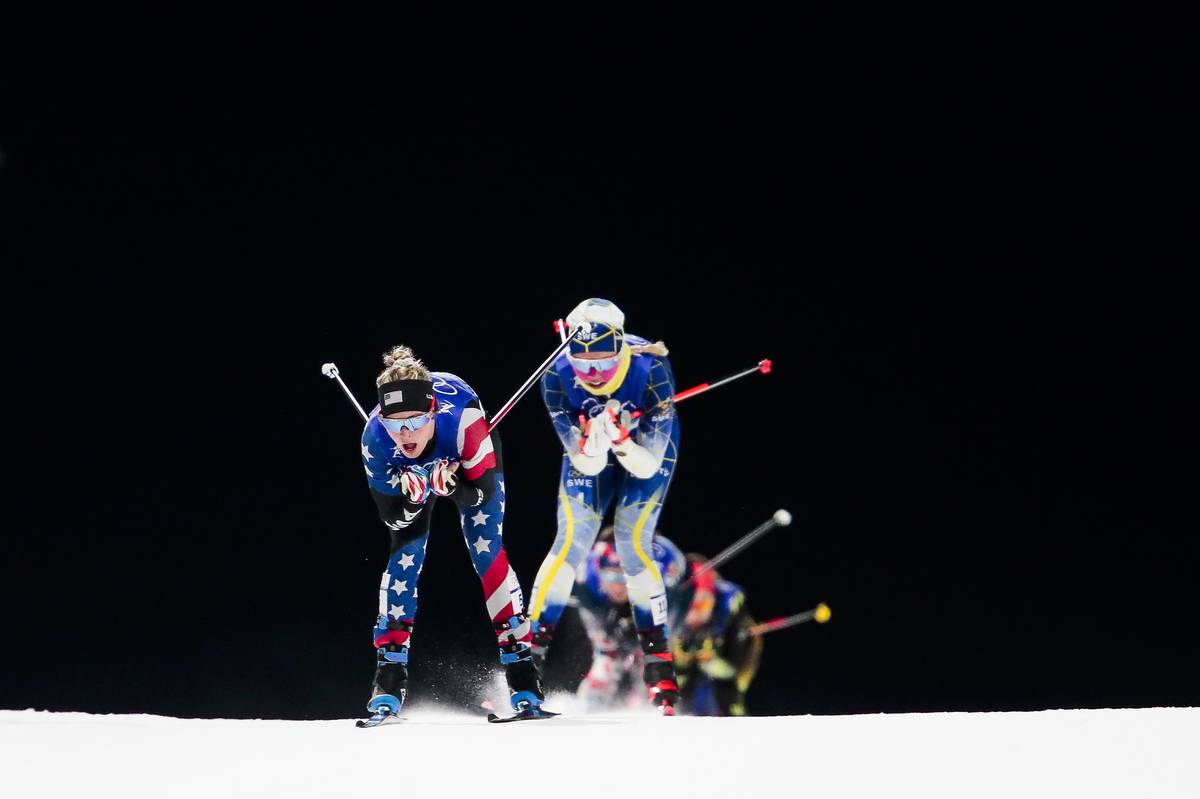
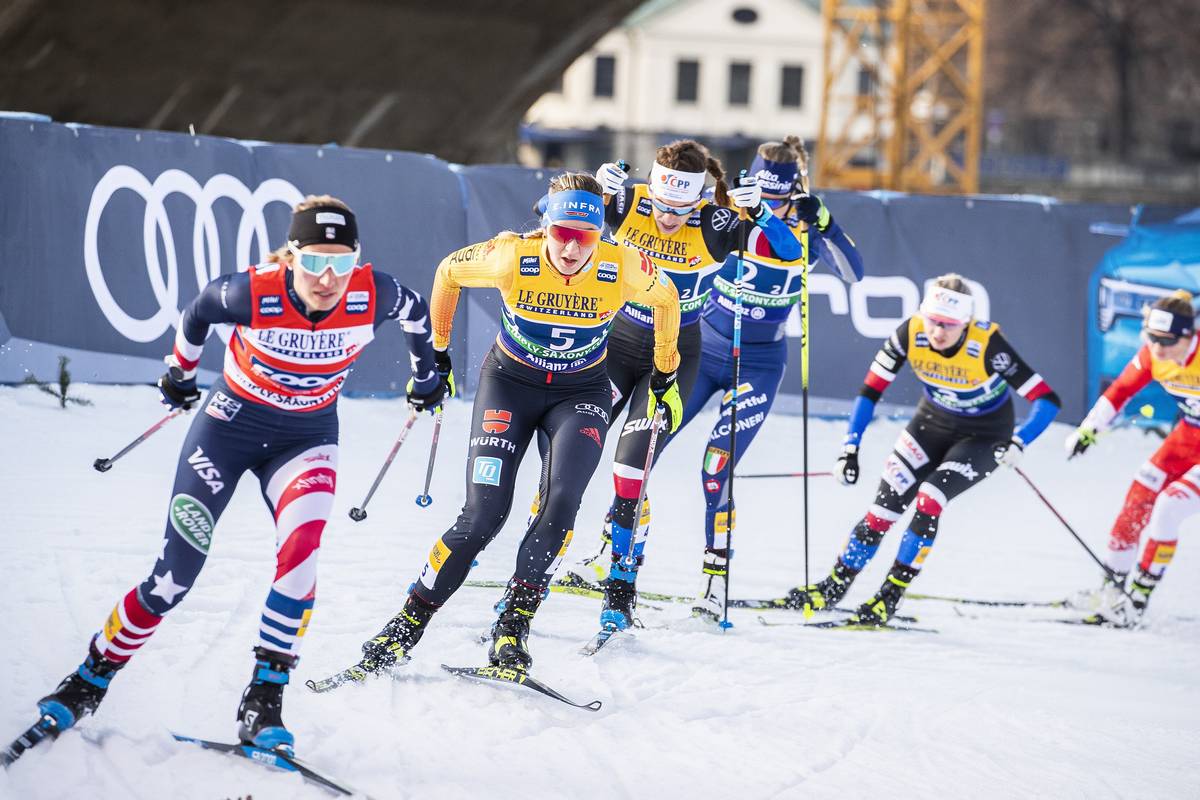
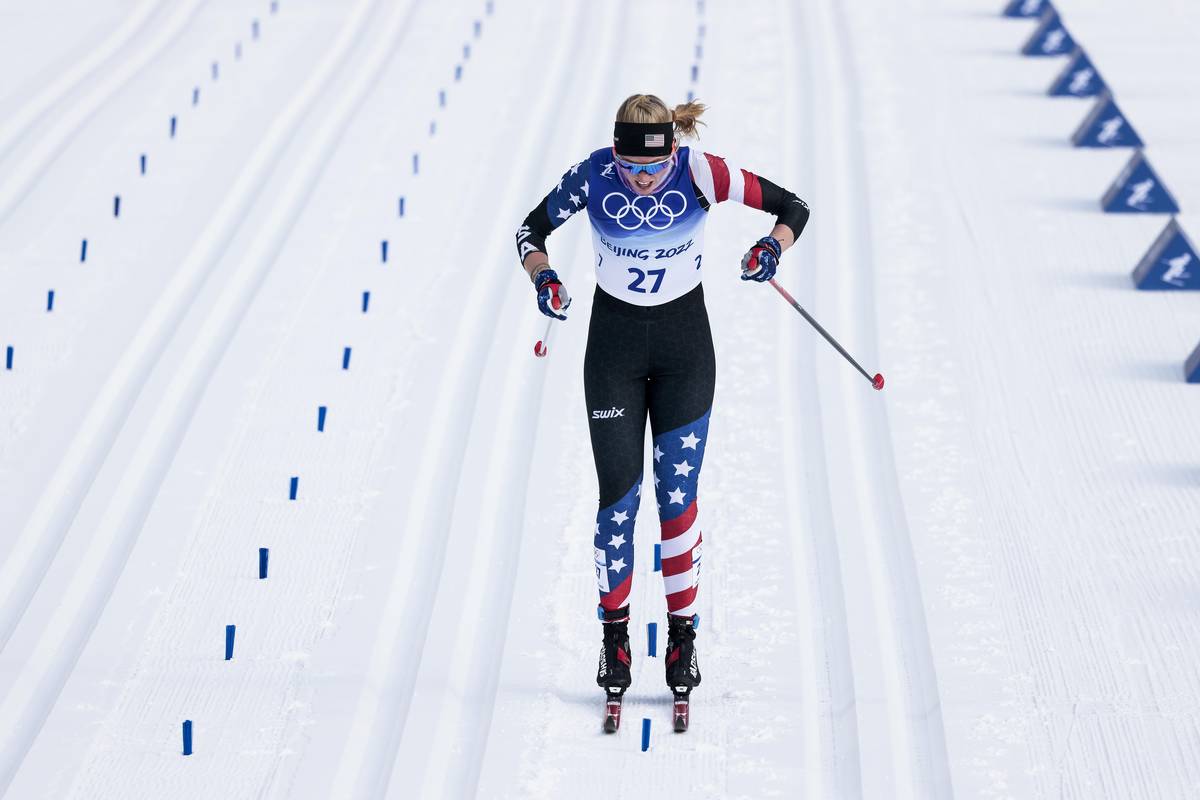
    Jessie Diggins drops into a tuck as she leads Sweden’s Emma Ribom into the downhill during the 1.5-kilometer freestyle sprint event in the 2022 Beijing Olympic Winter Games. (Photo: NordicFocus)

    All-American Colby College ski team alumna turned professional mountain runner for the North Face, Olivia Amber was quick to respond on social media, telling Futterman to “do better” and offering suggested edits to his wording.

    Amber proposed: “In a sport that requires a unique combination of upper and lower body strength, Diggins’ ability to apply power is extraordinary, and it’s very clear how she has become one of the best athletes in the world.”  

    Her instagram story was shared widely amongst her followers. Explaining why this language struck a nerve, Amber wrote the following to FasterSkier. 

    “The way the media often covers athletics objectifies women and excludes people that don’t conform to the myth of an ideal body type. The language used in the recent NY Times piece is yet another example of this broader issue in women’s sport. It’s a clear oversight that demonstrates a lack of knowledge on the author’s subject. Featuring the size and shape of women’s bodies devalues the lifetime of hard work these athletes put into achieving the pinnacle of their sport.”
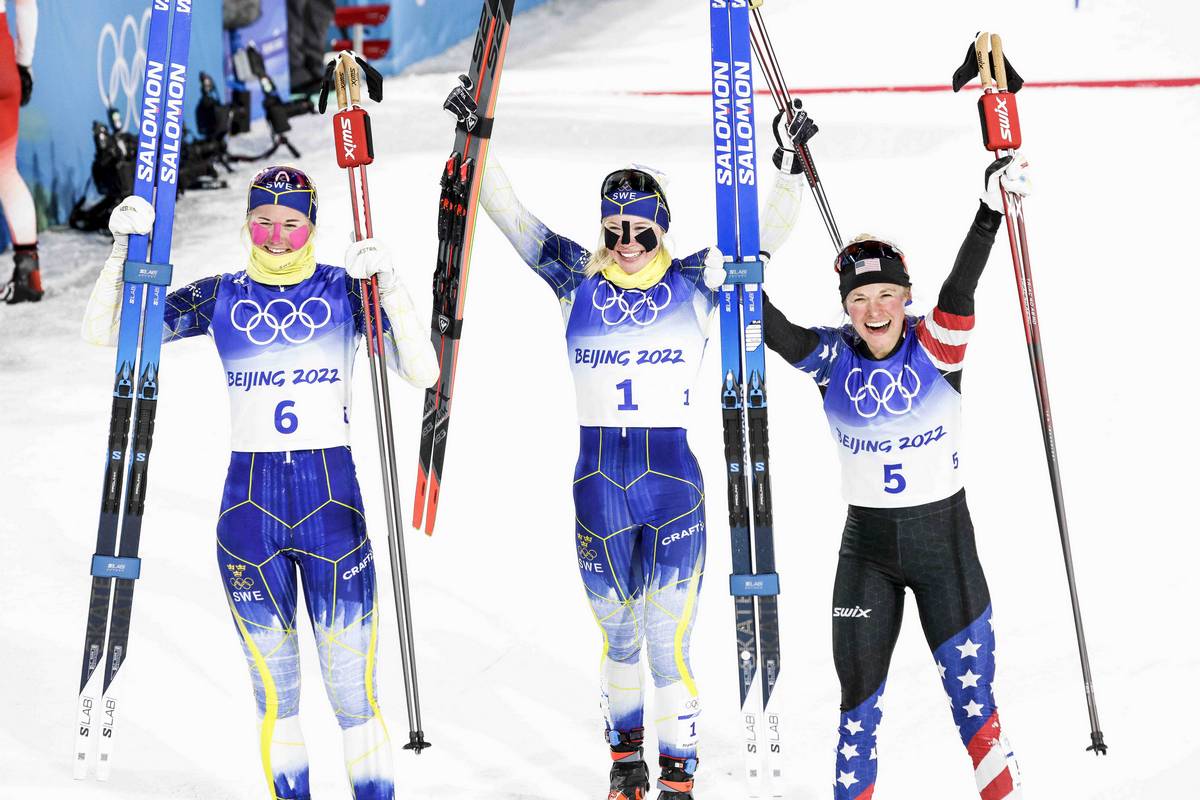
    The women’s Olympic 1.5-kilometer freestyle podium: Sweden’s Jonna Sundling took gold ahead of teammate Maja Dahlqvist and American Jessie Diggins. (Photo: NordicFocus)

    FasterSkier contacted Futterman to see whether he had a response to the criticism his statement had received. Futterman explained that he would need clearance from the Times’ communications department in order to respond. FasterSkier later received the following from a spokesperson:

    We aim in our sports coverage to cover male and female athletes accurately, equally and fairly. We believe sometimes their physiques are relevant to their performance. In this case, our description of cross country skier Jessie Diggins’s noticeably different physical attributes in contrast to others in her sport were an important and relevant detail. Her dominance in the sport was also the subject of a lengthy feature on Feb. 4.”

    However, many readers continue to find fault with the statements at play.

    “I have always held the NY Times in high esteem for their quality reporting, which is why I was absolutely floored to read Matthew Futterman’s comments about my teammate’s body,” writes Holly Brooks, two-time Olympian and licensed professional counselor who offers eating disorder support to athletes through her practice and advocacy. “On a day where Jessie made U.S. history by becoming the first female individual medalist in cross country skiing, Mr. Futterman chose to make inconsiderate comments about her body, questioning the source of her power. Please hear me loud and clear: It is NEVER appropriate to comment on an athlete’s body with regard to their weight, shape or size. Instead, emphasize their power, fight, tenacity and strength. And to the NY Times: Jessie, athletes worldwide, and the entirety of your readership deserve better. Mr. Futterman should apologize for his insensitive words and be sent to sensitivity training.” 

    Jessie Diggins (USA) takes control of her quarterfinal during the 1.5 kilometer freestyle sprint. (Photo: NordicFocus)

    It is not the first time Diggins has received comments regarding her body from the media. She was once asked whether her talent on downhills was related to her size, versus her skill. One strategy she has begun to employ to avoid comments that might have a detrimental impact on her mental preparation has been to avoid reading them altogether.

    When asked in the mixed zone after the 10 k classic whether she had heard anything regarding Futterman’s story, Diggins said, “To be honest, I don’t read things written about me and I think that’s a very, very healthy thing. But it’s unfortunate with Rule 40 that you can’t see the invisible headgear sponsor that is there at all times for me.”

    After sharing a blog post titled “Body Image Issues” in June, 2018 Diggins has openly shared her own challenges with disordered eating, body dysmorphia, and bulimia across many platforms, including her book, Brave Enough. Outside of the Olympic blackout period, described in Rule 40, Diggins wears the logo of the Emily Program, a leader in eating disorder treatment and education, on her hats and headbands, acting as an advocate for the facility she credits with supporting her through her own recovery journey.

    She now regularly rejects the narrative that “lighter is faster”, and instead repeats how properly fueling her body and prioritizing her mental and physical health have led her to perform at this level. Diggins aims to be an example for future generations of skiers.

    “It’s important that women everywhere know that they’re good enough the way they are,” Diggins said. “You don’t have to be a certain body type to win at the Games; you have to be healthy and happy and have a great support crew.”

    Diggins’ advocacy in this space was a focal point in a message penned by Kris Hansen, a former cross country ski coach at Diggins’ alma mater in Stillwater, MN, sent to the Times after reading the piece. Hansen also shared her response publicly on Facebook.

    “Eating disorders, or disordered eating, are sadly very common in young women athletes… conditions that are definitely exacerbated by insensitive and inaccurate reporting like Mr. Futterman’s,” she wrote. 

    Hansen called it “ironic ignorance” that an athlete who raises awareness for body image issues in sport would be described in this way.

    “Jessie is no ‘sprite’,” Hansen continued. “She is a powerful woman, an exceptional athlete, a World Champion, a thoughtful and articulate advocate for women athletes, and now a multi-medal Olympian.. I can also tell you from where she gets her power: hundreds of hours of training her body and her mind, on the snow, in the weight room, with her coaches… Further, her competitors are not “women with massive shoulders and thighs”. They are women who, like Jessie, have worked very hard to build bodies that can climb a hundred meters in a matter of seconds and then navigate an icy technical downhill….again and again for 30 kilometers. You have done Jessie, and all women athletes, a disservice with your ignorance and disrespectful characterization.”
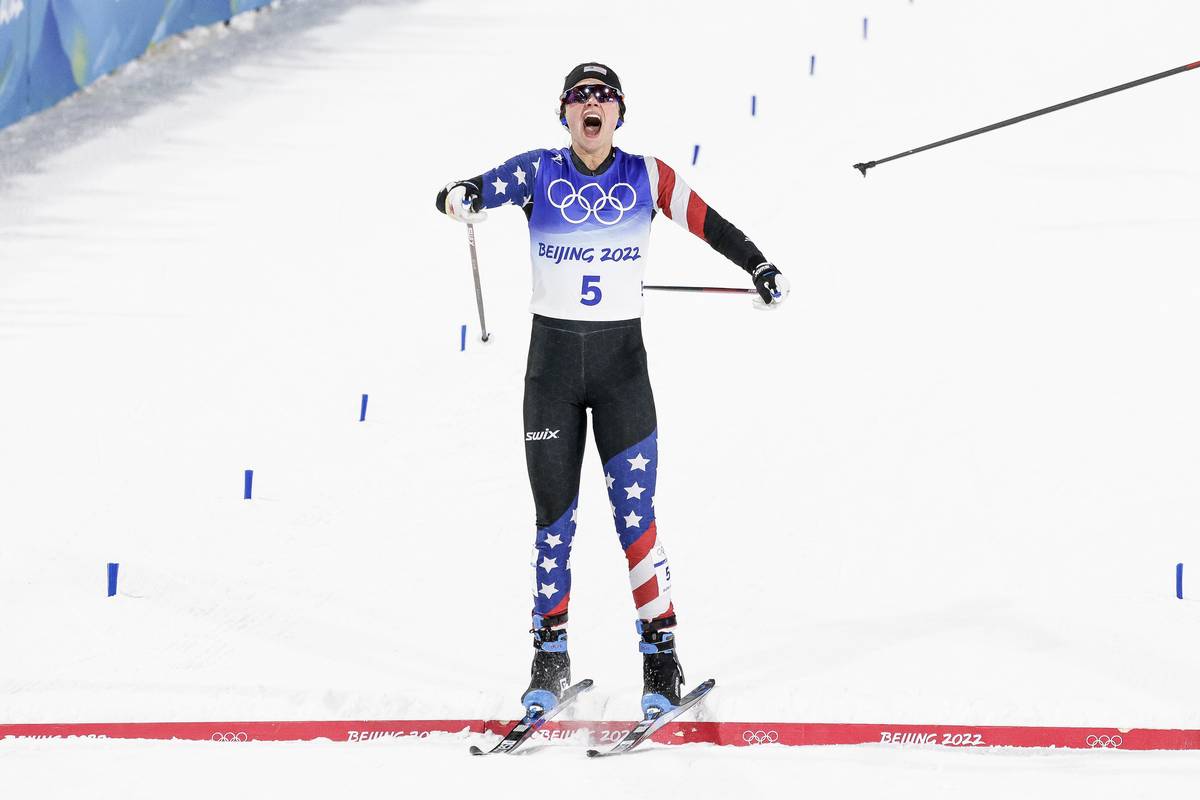
    Jessie Diggins crosses the line in third to earn the first individual Olympic medal in women’s cross country ski history. (Photo: NordicFocus)

    College of St. Scholastica head coach and founder of the Women Ski Coaches Association Maria Stuber offered a solution-oriented approach, advocating for awareness and education that might better support and protect athletes of all levels from body-centric messaging. 

    “What is very obvious here is that if the NY Times reporters and editors do not understand why this language is damaging, and we have a long way to go in education. If a career sports journalist isn’t learning this, certainly parents and youth coaches are not either. We are to the point where prominent athletes, like Naomi Osaka, are refusing to participate in news conferences or talk to journalists because of their ignorance on this topic and the potential damaging effects on mental health of athletes. Maybe the NY Times would be willing to help with the education component? How do we make sure you can’t become a sports journalist (or editor) without some body image/mental health education? Equal representation of women in sports media careers would certainly help.” 

    Like Diggins, many athletes at the Games are choosing to remain disconnected from the news and are not engaging with topics that might derail their focus. Others, like the Russian Olympic Committee’s Veronika Stepanova, have spoken out about the article. Stepanova shared a video of herself reading the statement on Instagram, sardonically captioning the post “Objectification? Never heard of it.”

    Novie McCabe races to 24th in the 10 k individual start classic during the 2022 Olympic Winter Games. (Photo: NordicFocus)

    FasterSkier had the opportunity to ask Hailey Swirbul and Novie McCabe thoughts on the statement in the mixed zone following their performance in the 10 k individual start classic race Thursday. 

    “I think that our sport is so unique and so powerful in the sense that every single body type can succeed at this sport,” Swirbul responded. “It doesn’t matter how you look, it matters how you race with your heart, how hard you work, and I know that everyone on our team works so freaking hard, Jessie included. Everyone on that podium deserves that spot, no matter what they look like.” 

    “I think the older girls have kind of been trying to ignore it a bit,” McCabe explained. “But it was obviously pretty uncalled for and insensitive, and they need to do better… Jessie got a medal because she’s the best out there and not because of anything about her body, so I think just insinuating that there’s something there was not okay.”

    Swirbul also stated that response from the community to the Times article has not been a distraction for her as she prepares for Olympic competition.

    “It makes me appreciate my own strength and how hard I work to gain fitness and muscle. I think it just really makes me appreciate how diverse our sport is all across the board.”

    Speaking more broadly to whether a focus on the appearance of athletes’ bodies from the media is frustrating for her, Swirbul concluded, “I hope that as a culture, we can move away from body types and focus on the hard work and the courage and the bravery that everyone races with every day. I really hope that that’s where we move in the future.”
    Hailey Swirbul pushes to the finish of the 10 k individual start classic during the 2022 Olympic Winter Games. (Photo: NordicFocus)
  • Self-Reported Observations Across Phases of the Menstrual Cycle Among Elite Cross Country Skiers with Guro Strøm Solli

    Self-Reported Observations Across Phases of the Menstrual Cycle Among Elite Cross Country Skiers with Guro Strøm Solli

    This article is part of a series of interviews with professionals in sports nutrition and female physiology. To get started, you can find a primer on this topic here, and listen to this podcast on Nordic Nation discussing female athlete specific nutrition with registered dietician and professional runner Maddie Alm.

    Guro Strøm Solli is a PhD candidate and instructor of exercise physiology at Nord University in Bodø, Norway. (Photo: Nord.no)

    Readers who have followed cross-country skiing for several decades may be familiar with the name Guro Strøm Solli. Now 37-years-old, Solli was a member of the Norwegian National team from 2005-2008, retiring from professional skiing in 2010. During her athletic career, Solli earned two individual sprint podiums and another in the team sprint, and finished 10th in the classic sprint during the 2005 World Championships in Oberstdorf, Germany. 

    During her athletic career, Solli also earned a degree in exercise physiology, which she built upon in a master’s program after retirement. Now based at Nord University in Bodø, Norway, Solli is working on a PhD which she expects to complete this fall focusing on a variety of aspects of the training of the renowned Marit Bjørgen.

    On the side, Solli has been involved in broader research on female athlete specific physiology and effects that the menstrual cycle (MC) has on training and performance. Her article, “Changes in Self-Reported Physical Fitness, Performance, and Side Effects Across the Phases of the Menstrual Cycle Among Competitive Endurance Athletes” published in September 2020 in the International Journal of Sports Physiology and Performance is part of a larger well-funded collaboration between universities investigating exercise physiology specific to female endurance athletes, which in Norway primarily includes cross country skiers.

    FasterSkier connected with Solli on a call in January to discuss the findings of the research and how it might benefit female athletes.  

    In reflecting on her own time as an athlete, Solli does not recall considering her own MC in training and did not experience significant side effects from it. It was not until she began working as a coach of developing athletes and an instructor at the university level that the topic crossed her radar. 

    “It was not talked about at all [when I was an athlete],” Solli recalled. “It was not a topic that was discussed by the coaches, or even the athletes so much. So that was something I was kind of thinking about — it was nothing that I focused on during my career, but I received a lot of questions from my athletes when I was a coach and also teaching exercise physiology. I experienced that there are a lot of questions, and I started to think, ‘Okay, this is something we need to look into to try to answer all these questions for the athletes.’ So it’s after my career that I’ve been more aware of the topic.”

    The research presented in Solli’s article summarized the results of 140 responses to a detailed survey by female Norwegian cross country skiers and biathletes 18-years and older who compete at a national or international level. The questionnaire involved 54 questions regarding age, overall training volume and high intensity training completed during the general preparation and competition periods of a training year, use of hormonal contraceptives, and the prevalence and intensity of side effects such as pain, bloating, mood swings, and appetite changes. Participants also identified when their overall feelings in training and competition were at their best, and conversely when their overall feelings in training and competition were at their worst, and when and to what extent these negative side effects required them to alter or miss training sessions.  

    “I think an interesting thing that we saw was that over 50% experienced this varied physical shape or training feelings across different phases,” Solli explained. “And there were over 50% that had to actually change their training because of menstrual related side effects. But only 27% had communicated about it and only 7% had planned their training according to the menstrual cycle, so it’s kind of a mismatch between the experience of the skiers and the planning of training. So I think that was an interesting finding, and I think it’s possible to gain something by increasing communication and logging to see if you can find some patterns that work for you.”

    An additional statistic that perhaps frames this series of articles is that only 8% of participants reported to have sufficient knowledge about the MC in relation to training, and, as Solli mentioned, just 27% had communicated about it with their coach.

    “We asked them why [they had not discussed it], and there was a lack of knowledge, the coach was a man, it was embarrassing, and private,” said Solli. “A lot of athletes didn’t feel the need to talk about it. So it was different topics, but lack of knowledge and that the coach is a man was the most mentioned topic to why it was difficult, so I guess there is still a barrier that there are a lot of male coaches that perhaps have the knowledge but perhaps they don’t dare to talk about this or approach it or know it it’s appropriate.”

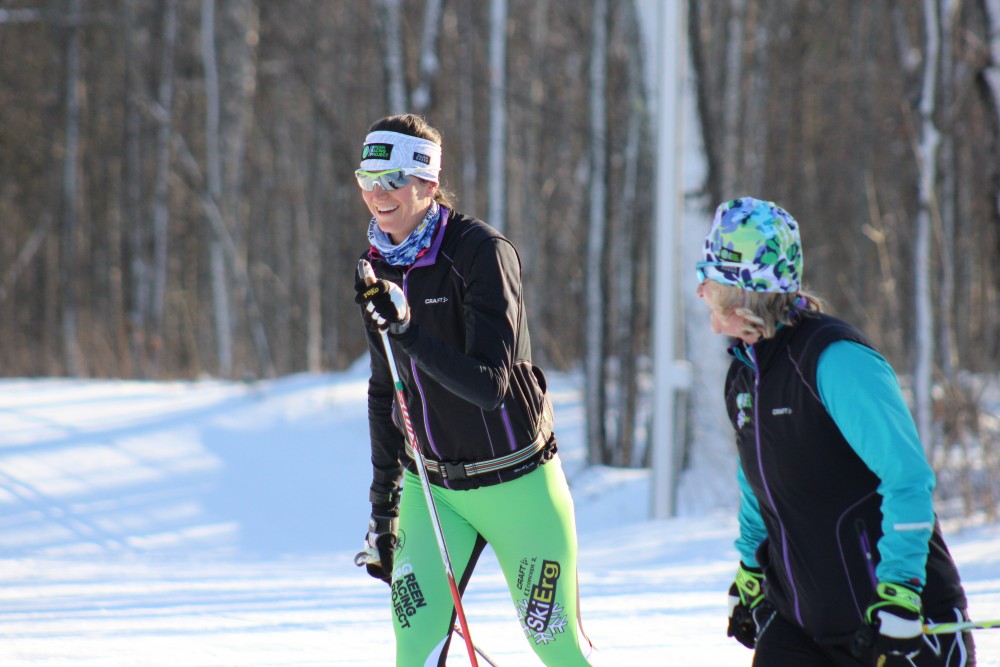
    Craftsbury Green Racing Project’s Liz Guiney (l) and head coach Pepa Miloucheva during a ski on Saturday, Jan. 2 in Houghton, Mich., the day before the kickoff of 2016 U.S. nationals.

    Some athlete quotes featured in Stolli’s September, 2020 article include:

    • “It feels like it’s a taboo. I am afraid that the coach won’t take it seriously and thinks I’m using it as an excuse.”
    • “I think I have more competence and knowledge about this topic than he.”
    • “Because he is a man.” 

    The September, 2020 article also summarizes the importance of this communication, both in terms of athletic development and overall well-being.

    “Since menstrual dysfunctions are an important marker for relative energy deficit, a syndrome affecting many aspects of physiological functioning, health, and athletic performance, it is important that athletes feel comfortable to discuss this topic with their coach. Furthermore, because of the high inter-individual variability in performance and side effects experienced by athletes during the MC, coach-athlete communication is important to safeguard the athlete’s health as well as optimize training adaptations and performance. In response, increased attention should be paid to educating female athletes and their support teams about the MC and athletic training.”

    Optimistically, Solli continued that she sees the lack of knowledge and communication as a barrier that is in the process of being broken down. 

    “I have a lot of talks about this with coaches who have wanted me to talk a little bit about the topic,” explained Solli. “And they’re very curious, and they’re starting to realize — you kind of have to get over this being a topic that you don’t mention… Particularly in elite sport, when there are so many topics that are discussed, it’s kind of silly that this topic should not be mentioned as part of the whole situation of an athlete.”

    She continued that both research and coach-athlete education on the subject is trending in the positive direction. However, high levels of variation are experienced by women, which makes it challenging to give generalized recommendations. 

    “It’s starting to be, for the last 2-3 years, kind of a hot topic. I’ve experienced that both coaches and athletes are starting to see that and to investigate if this has an impact [on the individual]. Also, when I read up on the research and meta analysis that are published that try to sum up what we know and what do we not know, it summarizes that we don’t have evidence-based recommendations that can be done on a group level, but it seems like this topic should be approached through an individual.”

    Overall, she sees increased awareness and access to information as a positive for female athletes. She noted the increased prevalence of logging apps, such as FitrWoman, that make it easier for athletes to track their cycle and observe trends in their feelings. 

    In Norway, the possibility to log the MC has also been implemented into the digital training diary that has been designed by the Norwegian Olympic Federation and is used across all sports. 

    “That’s a step forward, I think. It’s going quite fast in this area, so it will be interesting to see in five years, where are we? I think we will get a lot more knowledge just because athletes are starting to log and discuss this topic. Research takes time, but slowly we will be able to get more studies and more knowledge.”

    Zooming out to discuss existing research on the MC and how it might influence the planning of training for elite athletes, Solli noted that a pervasive theme is that the potential for optimal performance can occur during any phase.

    “In theory, we expect [hormonal fluctuations] to affect training, nutrition, and performance, but when you look at the meta analysis of how the menstrual cycle affects performance, we don’t have a clear answer on that. It seems like the studies are concluding that on average you can’t see a large difference between the performance in different phases.”

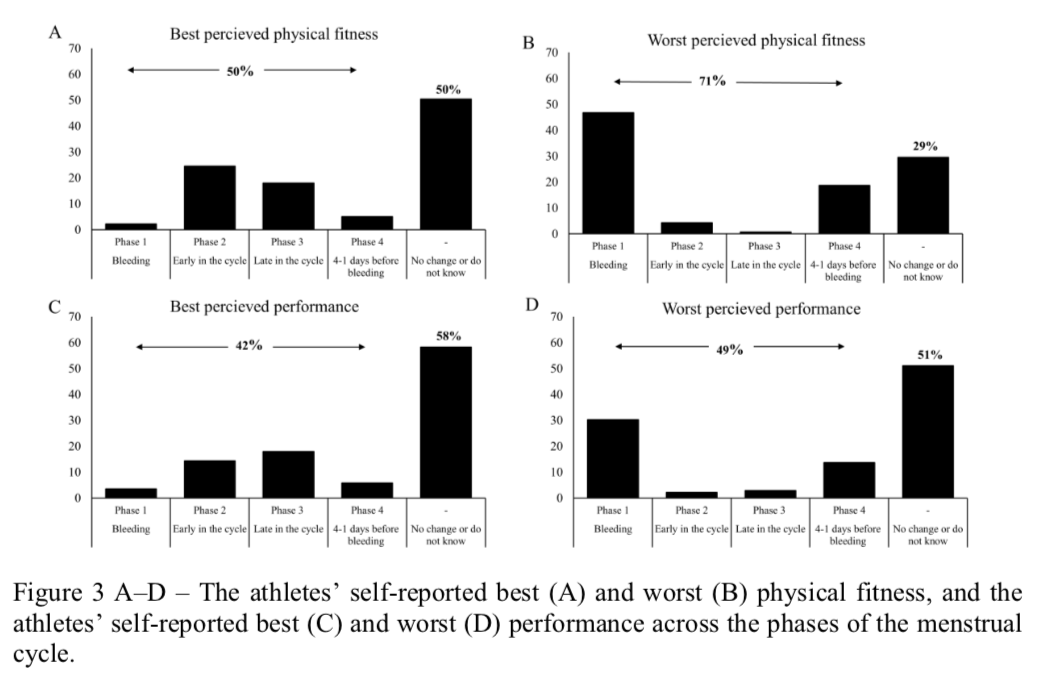
    (Click to enlarge.) Reprinted from “Changes in Self-Reported Physical Fitness, Performance, and Side Effects Across the Phases of the Menstrual Cycle Among Competitive Endurance Athletes” by G.S. Solli et. al., September, 2020 in the International Journal of Sports Physiology and Performance.

    While athletes can rest assured that racing is unimpacted, Solli explained that there are considerations athletes and coaches might apply to training to optimize adaptations. 

    “When it comes to training effect, there are some studies that highlight that it might be beneficial to periodize your strength training early in the menstrual cycle. This is the phase where you have an increased level of estrogen, which is a hormone with over 400 functions in the body, but two important functions is that it is an anabolic hormone, so it’s good for your ability to build muscle mass, and also important for bone health and to build bone mass and ensure bone density.”

    She explained that 4-5 peer-reviewed studies indicate that you can get a higher training effect in terms of muscle strength and muscle mass by periodizing strength training sessions with higher weight and lower reps in the first half of the cycle. Solli added the caveat that, like all research in this area, the studies are often small and the overall topic is still in its infancy. 

    “It will be interesting to follow the research during the next years to see if we can get stronger evidence in the case of strength training, and whether we’ll also see that we can get some endurance studies, for instance, with periodizing high intensity training in particular phases. We don’t have studies answering that conclusively yet, but it would be exciting to see.”

    Diving deeper into the survey results analyzed in her study, Stolli discussed the most prevalent themes athletes reported. She also discussed how hormonal fluctuations might explain these effects.

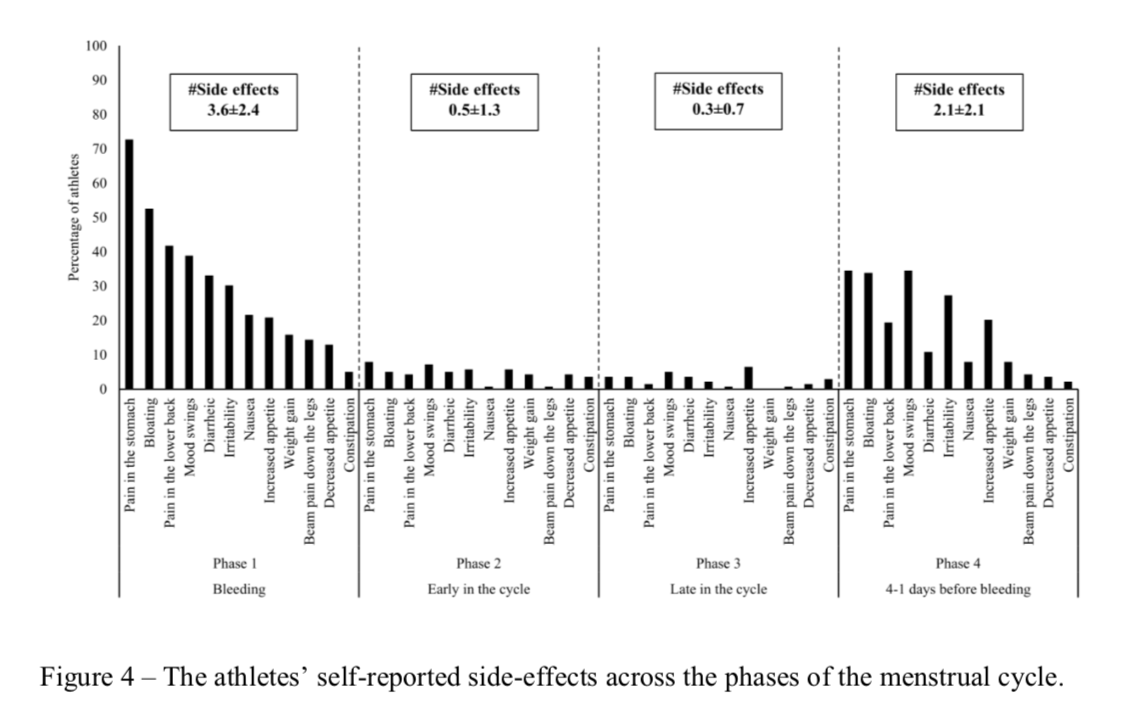
     “As we discovered in the study, what the athletes perceive is that the phases where they feel their worst physical shape and have their worst performance was in the days right before the menstrual bleeding and during the bleeding. Right before the menstrual bleeding, we have a drop in both estrogen and progesterone, and this hormone drop is associated with PMS symptoms and different side effects, and we also saw that in our study. The negative side effects reported by the athletes were high during the periods right before and during the bleeding phase.”

    This is also the time when athletes most frequently reported using pain-killers to manage symptoms and needing to alter their training by decreasing volume or intensity.

    “I guess that is not only my study, but also other studies highlight that those two periods can be a risk for decreased training quality or that the athletes don’t manage to perform the training they have planned because they are experiencing these negative side effects.”

    In contrast, most athletes perceived their best fitness was achieved during the middle phases of the cycle. This coincided with the window where negative side-effects were least reported.

    (Click to enlarge.) Reprinted from “Changes in Self-Reported Physical Fitness, Performance, and Side Effects Across the Phases of the Menstrual Cycle Among Competitive Endurance Athletes” by G.S. Solli et. al., September, 2020 in the International Journal of Sports Physiology and Performance.

    Another noteworthy statistic Solli touched on was hormonal contraceptives (HCs), which 56% of athletes reported using. The fact that HCs were not broken into subcategories such as oral contraceptives, IUD, etc., was listed as a limitation of the study.

    “A large proportion of the athletes are using hormonal contraceptives,” said Solli in the call. “And there are a lot of different types with different amounts of synthetic estrogen and progesterone that suppresses the normal hormonal fluctuations, and you get a more stable cycle. As we saw, there were positives experienced with using HC’s that athletes reported that they get reduced pain and they also get control of the bleeding phases, so they can control it according to their competitions or trainings. But there are also some negative effects with weight gain and irregular bleeding.”

    Solli explained that there is little research apart from survey data pertaining to how HC’s might affect female athlete performance and, similar to experiences with a natural cycle, the side effects women experience vary considerably. Here too, Solli recommended considering each athlete and situation as unique, advising athletes to pay close attention while adjusting to new or different forms. 

    “From research, when they compare using HC to having a normal menstrual cycle, most studies show that there is no effect on performance and that also performance is relatively consistent across the HC cycle,” Solli explained. “Also here, an individualized approach based on each athlete’s response is recommended from research, because you see that from some athletes they report more negative side effects, so that’s important to find a type that suits you and to log the effects when starting a new type.”

    Of the athletes not using HC, a noteworthy 35% reported fewer than nine periods per year, an indicator of menstrual dysfunction possibly due to low energy availability, meaning the caloric and/or nutrient density of an athlete’s diet does not meet the demands of their training. While this may be unintentional, the condition known as Relative Energy Deficiency in Sport (RED-S) is prevalent in endurance sports, particularly those that favor leanness. It is often associated with disordered or restrictive eating behaviors. 

    RED-S can cause a cascade of negative health impacts, from hormone imbalance, to low bone density, to impaired immune function, and cardiovascular problems.

    “Although we did not assess energy intake or energy expenditure,” the article states, “high volumes of training and high amounts of high-intensity endurance training are associated with high energy expenditure and can prompt relative energy deficiencies. Elite endurance athletes and their coaches should therefore be aware of the risk of MC irregularities induced by high volumes of training and high amounts of high-intensity training. The prevention of MC irregularities should also be pursued, because primary and secondary amenorrhea can result in adverse health conditions, including reduced bone health.”

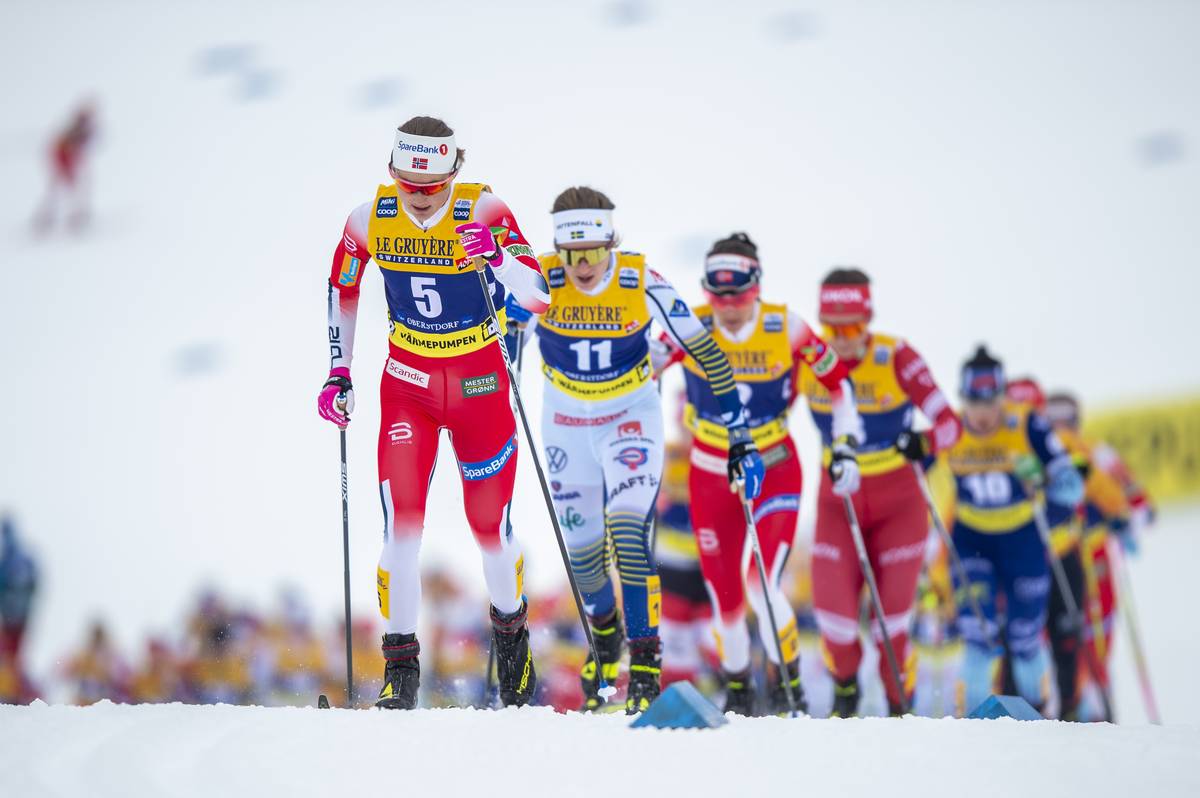
    Ingvild Flugstad Østberg (bib 5) leading the chase during the classic portions of the Obertsdorf, Germany 15 k skiathlon in January, 2020. (Photo: NordicFocus)

    At the World Cup level, this phenomenon has made FasterSkier headlines in the cases of Norway’s Ingvild Flugstad Østberg and Sweden’s Frida Karlsson, who were pulled from competition last season by national team doctors after failing to meet team health metrics. Østberg resumed competition for the 2020 Tour de Ski, where she finished third, and competed through the first weekend of racing in March in Falun. Her season then ended abruptly after she sustained a stress fracture in her foot from hopping off a three foot cement step to the ground. 

    The 30-year-old Østberg sustained a second stress fracture in July and has not competed on the World Cup this season. Østberg has been working with team doctors to bring her body back to health in order to compete in the 2021/2022 World Cup and Olympic season. 

    Karlsson was withheld from competition from early December, 2019 to February 9th, 2020 and has remained in competition since. More recently, Finland’s Kerttu Niskanen sustained a fracture in her tibia during a race in Falun that was not caused by a crash. FasterSkier has not received further insight into her situation.

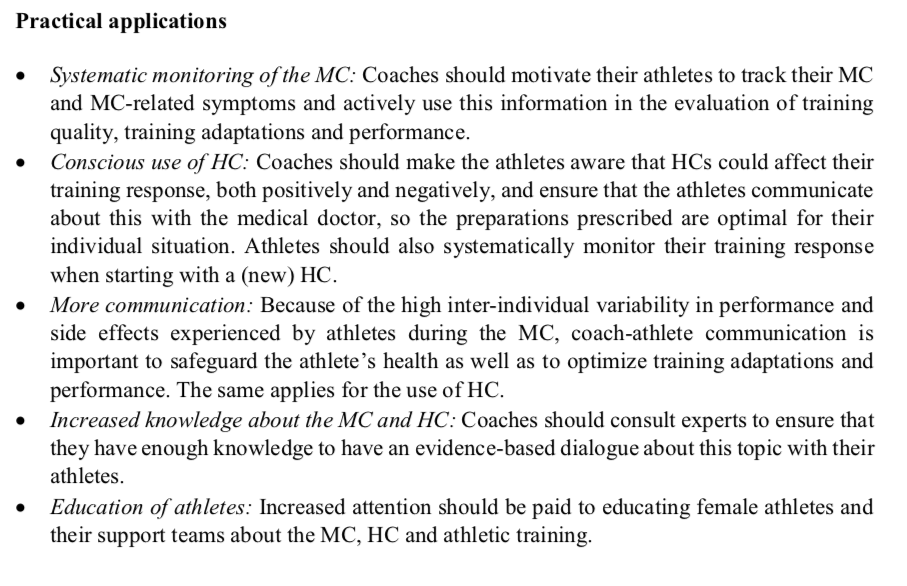
    Bringing it all together with the information Solli discussed in mind, how should athletes and coaches approach this topic? Solli’s article lists a set of practical applications of the information currently available. 

    Practical applications of self-reported data from elite cross country skiers and biathletes for coaches and athletes. Reprinted from “Changes in Self-Reported Physical Fitness, Performance, and Side Effects Across the Phases of the Menstrual Cycle Among Competitive Endurance Athletes” by G.S. Solli et. al., September, 2020 in the International Journal of Sports Physiology and Performance.

    Solli concluded that understanding the MC and how it might influence training and performance is just one piece of the puzzle of female athletic development. She stated that hype from media attention might make it seem essential, but for many who do not experience significant effects, this area might not be worth investing in. However, for many athletes, better understanding and communication could lead to significant improvement. For this reason, Solli recommends an individualized approach, adjusting the focus based on the extent to which an athlete is impacted.  

    “It is a part of a lot of different [aspects of training],” said Solli. “So you have to look at it in the bigger picture, but that doesn’t mean that we don’t need to talk about it. You can’t ignore it, but you should not make it too big of a deal if you aren’t struggling with it and you have a natural cycle and everything is okay, I don’t think you need to change something. But I think some athletes are struggling with it and I think they should know that it’s possible to get help. 

    “There is a lot of information now, a lot of good articles that are published, and information in the apps — I think it’s really good for young athletes to start there and to log [their cycle] and learn. That’s something I really would have wanted when I was a young athlete, that I could have an app and to start early to find my own pattern that I could optimize. I think that’s a really good opportunity to learn how your body works.”

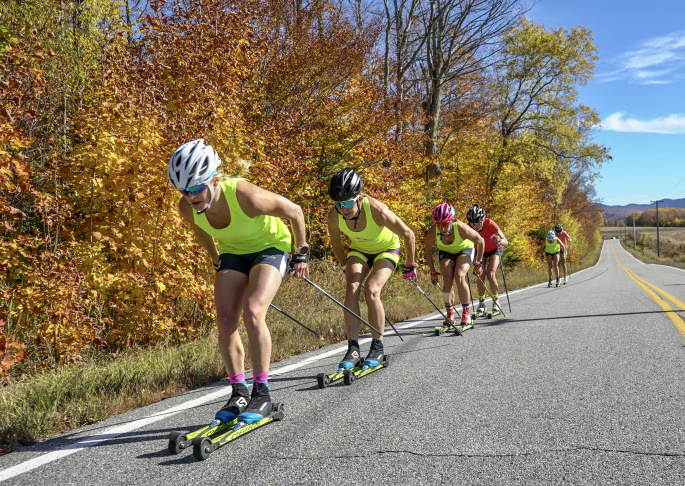
    The SMST2 squad led by Jessie Diggins pushes the pace in a double pole interval workout during a fall 2019 training camp in Lake Placid, NY. (Photo: Matt Whitcomb / smseliteteam.wordpress.com)
  • Nordic Nation: Diving Into Female Athlete Specific Fueling with Maddie Alm

    Nordic Nation: Diving Into Female Athlete Specific Fueling with Maddie Alm

    This podcast is part of a series on female athlete specific physiology and sports nutrition. With the help of experts and novel research in this area, this series unpacks how the menstrual cycle might influence training adaptations and provides female athletes and coaches with the information to help optimize fueling and training schedules accordingly. You can find a primer on the menstrual cycle and training here.
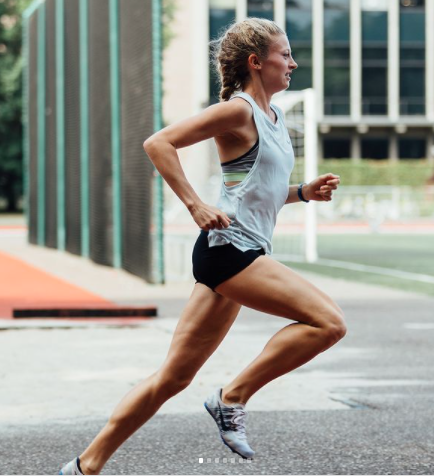
    Registered dietitian and professional runner Maddie Alm breaks down female athlete specific fueling on the Nordic Nation podcast. (Photo: Instagram @madsalm12)

    Based in Boulder, Colorado, Maddie Alm is the face of Fueling Forward, a sports nutrition business helping athletes of all levels improve their nutrition in and out of training to help optimize their training adaptations and health. In addition to being a registered dietitian with a masters degree in nutritional sciences, Alm is a professional track athlete specializing in the 5k. Alm is a member of the Team Boss running team. She is currently working toward the goal of competing in the Olympic track trials.

    After joining the renowned team at University of Colorado Boulder as a walk-on, Alm was introduced to a dietitian who helped her improve the quality of her diet and add in additional fuel between workouts to help her get more out of her training. By fueling herself properly, Alm developed into an All American, sparking her own interest in sports nutrition and her desire to help others optimize their own athletic performance through proper fueling.

    To Alm, this means developing and sharing an “all foods fit” philosophy which makes eating a high quality diet that matches your training load simple and sustainable. Collaborating with other experts in the area, Alm has also recently taken on a side project in the area of female athlete physiology and nutrition.

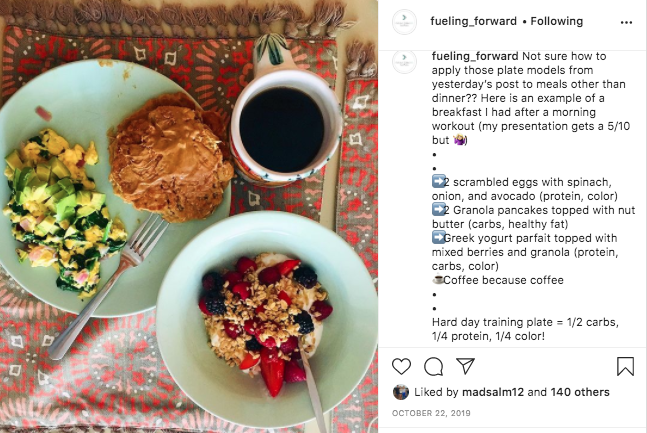
    Maddie Alm RD makes fueling an athletic lifestyle simple with her carbs, protein, and color plate approach. (Photo: Instagram @fueling_forward)

    In this episode, Alm breaks down how hormonal fluctuations during each phase of the menstrual cycle impact nutritional demands and offers specific suggestions on how athletes might tweak their diet accordingly to ensure their body gets the fuel and hydration it needs. She also discusses how athletes who are negatively affected by PMS symptoms might experiment with their nutrition to reduce the severity of these effects, thereby lessening the extent to which they take away from training or performance.

    For more from Alm, you can follow her business account on Instagram @fueling_forward or her athletic profile @madsalm12. The specifics of her sports nutrition services and her “Simple Start: 28 Days to Fueling Better” program can be found on her website: https://www.fuelingforward.com/.
  • Training, Performance, and the Menstrual Cycle: A Primer

    Training, Performance, and the Menstrual Cycle: A Primer

    Sadie Maubet Bjornsen (left) and Rosie Brennan (right) stride in sync during the 2020 Tour de Ski in Toblach, Italy. (Photo: NordicFocus)

    This article provides an introduction to a series of interviews with professionals in sports nutrition and female physiology. Results from a survey regarding how elite US cross-country skiers and biathletes use insight into their cycles in their own training will also be analyzed and shared. 

    An arguably essential component of developing as an athlete is learning how to listen to the signals one’s body sends. Am I skiing easy enough on my recovery days to absorb the interval workouts? Am I dehydrated? Bonking and in need of a quick hit of carbs? Am I feeling mentally and physically flat because I have been stressed at work or lacking sleep? 

    In an ideal world, progress in skiing would be predictable. If I do X-Y-Z, my performance or technique will improve. However, the body is much more complex than a simple if-then statement. For female athletes, whose hormone levels fluctuate over approximately monthly cycles, this is especially true. 

    Before we jump into the nitty gritty of hormone levels throughout the menstrual cycle and how they might be considered in optimizing training and nutrition, I’d like to insert some anec-data to highlight the importance of talking about this issue. 

    Up until 2017 when my husband and I wanted to start our family, my understanding of the menstrual cycle was that it was roughly 28 days, PMS is generally unpleasant, and menstruating can be both uncomfortable and inconvenient. I thought of my cycle as two parts: bleeding and not bleeding, and I had never considered that there might be physiological changes throughout the cycle that might cause an ebb and flow (no pun intended) in my energy, moods, immune function, or nutritional requirements. In fact, had you told me that training and nutrition should be aligned with my cycle, I might have even scoffed, thinking I just needed to suck it up on the days I didn’t feel well. 

    Katharine Ogden (left) and Sophie Caldwell Hamilton (right) on a frosty training day in Toblach, Italy in December, 2019. (Photo: NordicFocus)

    In reality, that means 15 years where, despite trying to tune in on minutia of my technique and training to improve my skiing and running, my understanding of a fundamental body process I experienced regularly was all but nonexistent. This is not an uncommon scenario. And this is from someone who has a collection of books on training and performance and loves geeking out on exercise science research.

    Through learning about female physiology and tracking my cycle in preparation for pregnancy and also following the birth of my daughter in October, 2018, I’ve identified a slew of patterns that help me feel more in tune with my body than ever. I also read the book ROAR: How to Match Your Food and Fitness to Your Female Physiology for Optimum Performance, Great Health, and a Strong Lean Body for Life by Dr. Stacy Sims, which I felt provided invaluable information regarding aligning training to the menstrual cycle and empowered me to experiment in my own training and life with positive outcomes. 

    Clare Egan crests a climb during a December, 2020 sprint in Hochfilzen, Austra. (Photo: NordicFocus)

    Apart from training, understanding that the menstrual cycle is a window into your overall health is becoming more evident with research. The “Apple Women’s Health Study” — a partnership between Apple Inc., the Harvard T.H. Chan School of Public Health, and the National Institutes of Health (NIH) — is currently analyzing a wealth of self-reported data to “demystify and illuminate menstruation and accord it the scientific scrutiny and social acceptance it deserves.” This comes in response to the fact that hormone fluctuations were long considered an uncontrollable variable that might skew scientific data, thus women were left out of experiments. 

    “In recent years, researchers have acknowledged the need to reevaluate the relationship of menstruation to overall health,” writes editor of Harvard Public Health magazine Madeline Drexler on the study. “Treating the menstrual cycle as a vital sign—comparable to blood pressure, temperature, pulse rate, and respiration rate—could lead to earlier detection of many conditions, both gynecological (such as fibroid tumors) and systemic (such as diabetes). Likewise, tracking lifestyle changes among those who menstruate—including the effects of body composition, activity levels, increased life expectancy, and postponement of childbearing—could help scientists glean factors that make an impact on menses.”

    In addition to a canary in the cave for overall health, ROAR author Dr. Sims encourages women to understand that a regular period can be an “ergogenic aid”, i.e., a performance enhancer, that should not be avoided [1]. Yes, there are times when hormones might make us feel suboptimal. Wouldn’t you like to know why that is and what you might do about it so you can ameliorate your symptoms? That’s what this series is about. 

    To further the point that the menstrual cycle should not be thought of as a bemoaned inconvenience limiting female athletes, there is no evidence that V02 max is affected at any phase of the cycle, indicating that top performances in endurance events cannot occur at any phase. If it’s not holding back performance, but there might be ways to adjust your training to optimize adaptations throughout the cycle, why not learn more and begin paying attention?

    Here is a brief primer on the menstrual cycle and what it might mean for female athletes. This information is intended to help female athletes and coaches understand the underlying physiological changes women experience throughout their cycle so they can adjust their training and nutrition to adapt accordingly, optimizing their training outcomes and performance over the long haul of endurance sport.

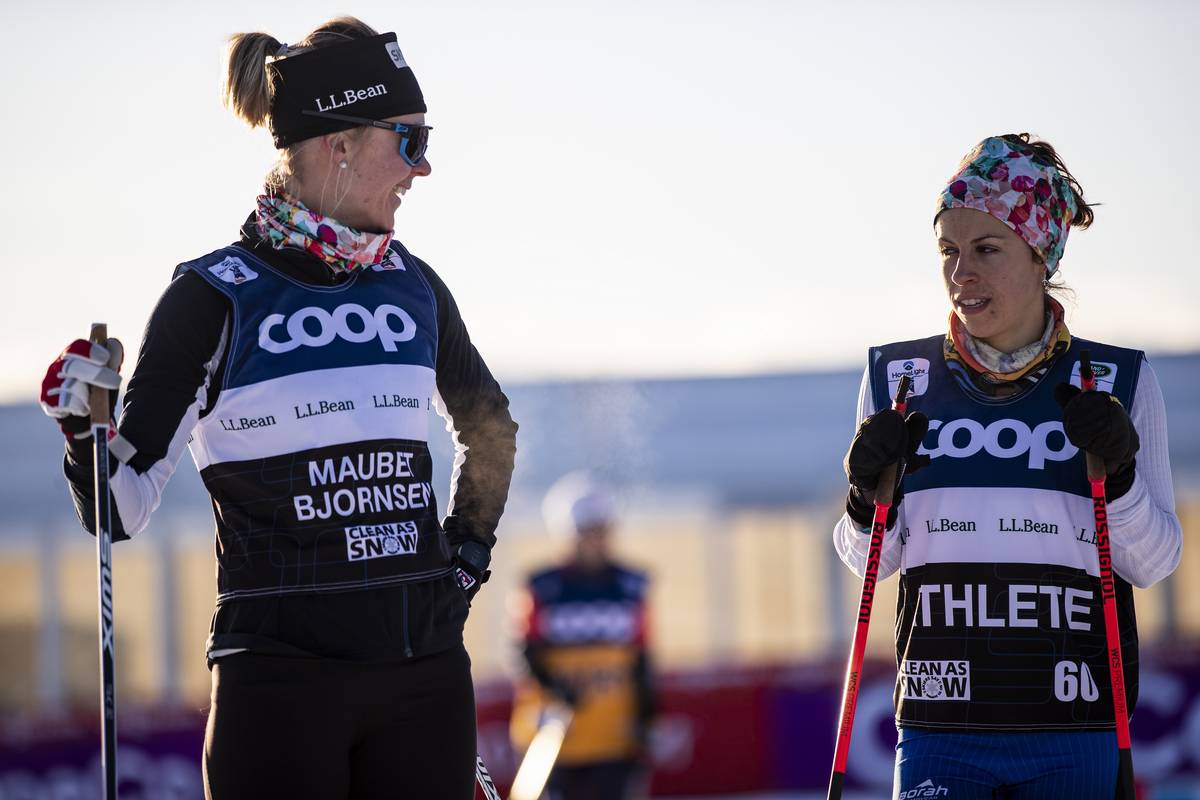
    APU teammates Sadie Maubet Bjornsen and Rosie Frankowski chat trailside during a training day before World Cup races in Lillehammer Norway in December, 2019. (Photo: NordicFocus)

    Menstrual Cycle Phases and Hormones

    For the purpose of this article, we’ll focus on what is considered normal menstruation in a healthy female. Lack of a period, called amenorrhea, is well discussed in this podcast and will be addressed in subsequent parts of this series. 

    It is also important to note that while the fluctuations of hormones in a healthy cycle is well understood, conclusive evidence of the implications is still under research. While patterns have been seen in research, positive and negative effects of the menstrual cycle are largely individual. This information is intended to inform athletes of the body process to help kick start the process of learning their own unique patterns and responses. 

    The menstrual cycle begins at the onset of menstruation and lasts on average 28 days, though 21-35 days is considered normal. At its root, the menstrual cycle prepares the uterus for pregnancy, first preparing a follicle in the ovary to release a mature egg and thickening the lining of a uterus so that the egg, if fertilized, can be implanted and develop into a tiny human. If the egg is not fertilized, the lining of the uterus begins to break down and eventually is shed during menstruation, beginning the cycle anew. Note that high performance training is not included in that basic description. 

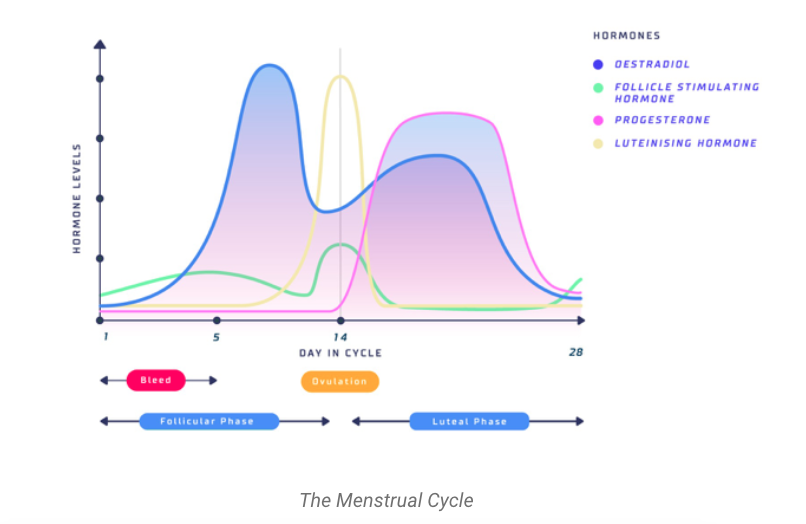
    These processes are controlled by four primary sex hormones: estradoil (or oestradiol), which is a form of estrogen, progesterone, follicle stimulating hormone (FSH), and leutinizing hormone (LH), with estradiol and progesterone being the leaders [2]. Their changes in concentration divide the menstrual cycle into two primary phases, the follicular phase, which leads up to ovulation, followed by the luteal phase. These phases can then be separated into two sub phases of early and late. 

    The profile of the fluctuations of the four primary female sex hormones over the course of a normal menstrual cycle: estradiol, progesterone, luteinizing hormone, and follicle stimulating hormone. (Photo: Screenshot fitrwoman.com)

    To align with the information presented by the revolutionary FitrWoman App — which many see as the gold standard of cycle tracking for female athletes as it includes evidence-based insights from research in physiology, performance, and nutrition — I’ll refer to the progression from early to late follicular and luteal phases as Phase 1-4, which last roughly a week each [3].

    As previously mentioned, phase 1 of the cycle begins when a woman’s period begins. In this phase, estrogen and progesterone are both low while testosterone (yes, women produce that too) is at an average level. This combination can help many women feel their strongest, however, because the lining of the uterus is being shed, women might experience side effects from inflammation at the beginning of this phase, like GI upset or fatigue [4]. If experiencing the latter, it could also be a good time for shorter, more intense sessions with plenty of rest in between, rather than longer threshold workouts. 

    In phase 2, estrogen begins to rise while progesterone remains low. Estrogen is a steroid hormone, which is linked to increased muscle mass and strength, as well as bone health [5]. With testosterone also at its highest, this can be a sweet spot for a hard block of training. Many women experience increased pain tolerance and decreased recovery time during this phase, and positive moods and mindset are also most common. The increased levels of estrogen may also promote stability in blood sugar levels, helping athletes maintain their energy levels during training. This could be a time to ski hard and ride the endorphin high!

    The definition of intensity: Sophie Caldwell turns toward the finish during a sprint heat in the 2020 Tour de Ski in Toblach, Italy. (Photo: NordicFocus)

    Phase 3 begins when ovulation occurs. After a spike in LH and FSH to initiate ovulation, estrogen drops rapidly, then begins to rise again while progesterone steadily climbs throughout. The elevated levels progesterone causes a rise in body temperature of about 0.3℃ or 0.5℉, which may influence hydration requirements and make it more challenging to regulate body temperature if training in the heat [3, 1]. Breathing rates and heart rate also increase both at rest and during exercise, making training feel a bit harder, and blood sugar levels may be less stable, placing a higher demand on carbohydrates during training and increasing the importance of balanced meals that include fiber, healthy fats, and protein to help keep energy levels and appetite predictable [2]. 

    In the fourth and final phase, both estrogen and progesterone drop to their lowest levels of the cycle. This rapid drop is linked to the symptoms commonly referred to as PMS, which include GI distress, bloating, headaches, moodswings, and fatigue. These symptoms are likely due to an inflammatory response triggered by the lack of hormones, which continues into Phase 1 as mentioned previously. You read that right. When you have PMS, you’re not “hormonal” — you’re actually un-hormonal. 

    From a training perspective, this inflammation may make it harder to recover from hard sessions, leaving you fatigued on top of other PMS symptoms. It may be possible to reduce these negative feelings by eating anti inflammatory foods, like berries, nuts, and fish, and avoiding processed and high sugar foods that are thought to exacerbate inflammation. 

    To be clear, some women experience very mild, if any, impacts from their hormonal fluctuation. However, if this is something you’re curious about or you feel your energy levels and appetite do not always match your expectations based on your training schedule, this might be something that could help you feel better throughout the month, in and out of training. 

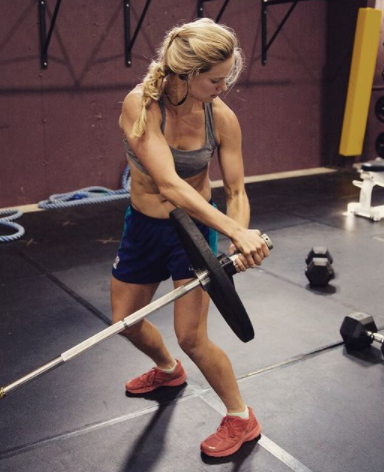
    Jessie Diggins powers through a strength session in February, 2018. (Photo: Instagram @jessiediggins)

    Conveniently, the “three weeks up, one week down” general guideline of training — meaning three weeks of building volume and/or intensity, followed by a recovery week — already aligns well with what FitrWoman recommends in terms of experimenting with aligning training to the cycle. During Phases 1 and 2, progressively build and increase loading during strength sessions. In Phase three, consolidate, meaning longer recovery between sets of intervals, or perhaps lower weight with higher reps in the gym. 

    Then, in Phase 4, rather than pushing through while feeling suboptimal, back off on the intensity sessions and include additional easy or rest days to absorb the previous three weeks of training and give your body the extra recovery it might need. 

    Want more? The team at FitrWoman hosted an informative free webinar in February 2019 on Facebook featuring Senior Sport Scientist and elite marathoner Dr. Georgie Bruinvels. The webinar is still available here

    Sources:

    [1] Sims, Stacy T. Roar: How to Match Your Food and Fitness to Your Unique Female Physiology for Optimum Performance, Great Health, and a Strong, Lean Body for Life. Rodale Books, 2016. 

    [2] “What Athletes Need to Know about the Menstrual Cycle.” FitrWoman, www.fitrwoman.com/post/lgfa-webinar

    [3] Beverly G Reed, MD and Bruce R Carr, MD. (August, 2018). The Normal Menstrual Cycle and the Control of Ovulation. www.endotext.org

    [4] Solli, Guro & Sandbakk, Silvana & Noordhof, Dionne & Ihalainen, Johanna & Sandbakk, Oyvind. (2020). Changes in Self-Reported Physical Fitness, Performance, and Side Effects Across the Phases of the Menstrual Cycle Among Competitive Endurance Athletes. International Journal of Sports Physiology and Performance. 

    [5] Chidi-Ogbolu, Nkechinyere & Barr, Keith. (January, 2019). Effect of Estrogen on Musculoskeletal Performance and Injury Risk. Frontiers in Physiology.

  • Female Skiers Accumulate Airway Injury and Cough During Race Season

    Female Skiers Accumulate Airway Injury and Cough During Race Season

    Racing and training in cold weather causes airway damage and inflammation to a much greater extent for female than for male skiers.
    Racing and training in cold weather causes airway damage and inflammation to a much greater extent for female than for male skiers.

    Dr. Michael Kennedy, a researcher at the University of Alberta, is a cardiovascular specialist. He has spent time working on a variety of different projects: studying muscle oxygenation, fatigue in athletes, the relationship between fitness and injury, even the effects of caffeine.

    But recently he returned to a question which had kept him curious since his days as a wax technician with x-c.com, a Canadian senior race team in the mid-2000’s.

    “In Silver Star [early season] the big house we rented was always quiet but by the time Nationals rolled around [in March] you could hear the women hacking away while they tried to sleep,” Kennedy wrote in an email last week. “This sparked a conversation with my colleague and friend Neil Eves whom at that time was working in respiratory health… it became clear from Neil’s standpoint that the cough was not a respiratory infection, but a chronic cough much like he would see in clinical populations.”

    So last year, Kennedy and some colleagues recruited 18 Canadian women who were competing full-time as cross-country skiers, and surveyed their lung inflammation over the course of a season using a technique known as sputum sampling.

    What the team found was that, indeed, airway inflammation and injury increased significantly over course of a season in ways that were completely unrelated from the prevalence of colds and respiratory infections. By the end of the season, the cough was affecting the women’s ability to sleep and recover.

    The paper was recently published by the Scandinavian Journal of Medicine & Science in Sports.

    “We were very careful to make sure that we were investigating what we thought was inflammation and chronic cough,” Kennedy explained. “We did not test a participant at a time when they had a cold or felt they were coming down with something. It made things certainly more challenging in terms of testing, but we feel like we did a good job of not having a participant who had some sort of infection going on.”

    Kennedy explains that this syndrome is different for women and men: because women have smaller lungs, they are operating at peak airway respiration much earlier in the max-effort race or training session. That leads to greater airway damage in dry, cold weather.

    We caught up with him by phone to learn more about the study, and what it means for the health of female cross-country skiers. This interview has been edited and condensed.

    FasterSkier: So between your work on the cardiovascular system and Neil Eves’ expertise, it sounds like this was an interdisciplinary project.

    Dr. Michael Kennedy: I was always interested in respiratory issues. It’s something that lots of skiers talk about on a weekly basis.

    But yes, it really was. I know a lot about respiratory physiology because obviously the respiratory system and the cardiovascular system are deeply attached. But Neil, and working with a few key clinicians in Calgary, made it interdisciplinary. Warren Davidson, who is a respirologist, and Richard Leigh who developed the sputum analysis technique. So you put together cellular biology with clinicians and respiratory physiologists to pull off the project.

    FS: What was the process of the sputum sampling?

    MK: In our development of the project, Neil and I discussed ways in which we could explore analyzing inflammation in the lungs. Really there’s two ways you can do it. You can do it invasively through a tissue sample, so you put a scope down someone’s throat and clip off a little bit of the airway and analyze the cells within that sample. That really still is the gold standard because you have a physical tissue sample. There are some risks, and it’s very difficult on people, it’s not the funnest.

    The new technique, the sputum sample, is non-invasive. It doesn’t require being in a sterilized environment with a scope. By inhaling a high dose of what we call nebulized saline, so basically a big breath of water vapor with a lot of saline in it, which basically begins to activate and draw cells off the airway wall – by doing that, it’s like trying to scrape paint off of siding. You peel off little sputum chunks.

    Then through a deep cough that you coach the person through, you cough those out. It’s a way to basically get the same cells that you would with a physical tissue sample, without having to clip off a piece of the airway.

    FS: What were you looking for in the sample?

    MK: We went after the key inflammatory cells which would be indicative of airway injury. The key ones would be neutrophils, which are an early responders to injury, and eosinophils which are inflammatory responders. And then macrophages, which come along and are like the garbage trucks but also very involved in the inflammatory reponse. And lymphocytes which are ones that are often activators stimulating the immune system to fight the infection or the inflammation.

    FS: How did the findings link to quality of life indicators that you checked in your questionnaires?

    MK: The fundamental question was, first is there inflammation occurring that increases as you move into fall and winter month, and second, whether that leads to cough and quality of life symptoms.

    With the quality of life indicators, we chose what we believe was the most valid measure of quality of life, which is this recovery-stress questionnaire, REST-Q. We didn’t see any changes in REST-Q, because my experience with these female athletes was that they really were struggling towards the end of the season. But what we did see was certainly an increase in cough-related symptoms and disturbed sleep due to coughing bouts.

    I think what you can take home from that is that the cough is prevalent and does improve through the season, but that athletes don’t feel like athletes feel like it’s affecting their quality of life necessarily. It comes with the territory and they’re coping pretty well.

    FS: If these are longtime skiers, do you think it’s possible that they just see it as normal winter quality of life, and don’t realize that it’s abnormal?

    MK: That’s a really good point. Normal for them might be this persistent cough, and so when they fill out a quality of life index it might not seem different, even though relative to a healthy population it might be quite different.

    And I’m sure you’ve experienced post-race cough, which is frustrating and affects your conversations and you feel a tight chest and then it goes away. And you just deal with that and say, well it’s winter, that’s normal for me.

    FS: You talk about why women might be more prone to airway damage due to their smaller lungs. But because of that, women are also moving less air through their airways, right? So how does that work?

    MK: It’s an interesting phenomenon. Ironically, with the cardiovascular system, these years and years of training essentially overdevelop the cardiovascular system in relation to the respiratory system in female athletes.

    In male athletes, you get the same overdevelopment of the cardiovascular system relative to another adult at the same age, but men’s lungs are significantly larger. They have a larger capacity. So with the overdevelopment of the cardiovascular system in males, they don’t operate at this same maximum percent of airway function because they have a bigger thorax.

    In female athletes, that overdevelopment of the cardiovascular system puts them right at the upper limit of their respiratory system. They just don’t have the same amount of volume to operate with. So that does then create really really hard shear stress. So there is higher flow along the airway which potentially increases the amount of injury and inflammation.

    This has been documented a number of times, where basically on a flow-volume measurement of the respiratory and expiratory volumes and flow rates reaches the maximum very early on in intensity. So put another way, if you’re doing a VO2max test, at about 75 to 80% of VO2max female athletes are at their absolute maximum respiratory flow rate. They can’t increase their ventilation any more essentially. For male athletes that occurs at 95 or 100%. Their respiratory capacity is much more matched to their cardiovascular capacity.

    FS: In terms of how this injury happens, do you have any sense of whether it is primarily the day-to-day wear of training in winter, or is it worse if you have one super cold day, maybe weather that’s not legal to race?

    MK: I think there’s two things. One, I would be remiss to not say that these very cold days or races where organizers still have people race, they can create airway that some athletes never recover from. I’ve known female athletes who have to leave the sport because of one really horrible cold race where they did severe airway damage.

    But I think in general, there’s some knowledge of that. The athletes and participants we had in our study were pretty savvy of that. I would say that they don’t train on those days. So it really it is really that general accumulation, ventilation with dry air that happens in the fall, and cold dry air in the winter especially with intensity. And that’s just part of being a ski racer.

    As part of my concern for the well-being for endurance athletes, I’d like to say that [even without cold weather] if someone is struggling with cough symptoms, or wheeze, or tight chest, go and get screened. Go and get tested. Get a full pulmonary function test done, so that it’s medically documented and so that if there’s potential that any of the new classes of inhalers or corticosteroids could help you, that’s really helpful not only to your performance, but also probably to your long-term lung health. That’s the public health message: people really should go see a respirologist.

    FS: You mentioned at the end of the paper that there are some more testable hypotheses out there. Is this the end of your research on this subject?

    MK: No, I’ve become much more interested in this area!

    One thing is that in January we will look at the acute response. We’ll find some really cold days in Edmonton, and have some skiers run a 5 k at race pace and then measure their acute airway inflammation responses. So we will track them immediately, and then 12 hours, 24, 48, and 72 hours after. We want to try to get some more information around this post-race inflammation and cough pattern.