Tag: fire and ice camp

  • Roy Returning to Canadian Roots

    Roy Returning to Canadian Roots

    Zoe Roy (RMR) leads Alberta World Cup Academy skiers Emily Nishikawa (c) and Kate Brennan (l) up a climb on the middle of their fourth of six laps in the 30 k classic mass start at Canadian Ski Nationals on March 24 in Mont Sainte-Anne, Quebec. Roy finished seventh to tie a personal best at Canadian nationals.

    Maybe it was the transition to full-time racing or the fact that Zoe Roy was competing in her home nation last season. It could’ve been the back-and-fourth flights across the U.S/Canadian border, or one team’s hospitality that helped Roy reach new heights on the NorAm circuit.

    Whatever it was, she wasn’t fighting it. After spending some 20 years in Bend, Ore., Roy, who turned 25 on Sunday, is moving to Canmore, Alberta. Starting Aug. 1, she plans to live and train at Canada’s cross-country epicenter with Rocky Mountain Racers (RMR), which took her in last year. Traveling with the club and taking advantage of its wax resources, Roy achieved her first NorAm podiums with second- and third-place in 10 k races, and tied her personal best at Canadian nationals in seventh.

    Between races, Roy was studying at the University of Utah in Salt Lake City. In her fifth year there, she was done with collegiate racing and entering the pro scene as a founding member of StellaRacing – a Salt Lake-based women’s squad in its inaugural year. She was also in her first season with XC Oregon, making her club affiliation that much more confusing.

    In committing to a domestic circuit, she chose Canada because she’s from there. Born in Ontario, Roy remains a Canadian citizen and doesn’t have dual ties despite growing up in Bend. She started last year with the West Yellowstone SuperTour, then spent the rest of her season in Canada (except for a convergence trip to Europe and local races in Salt Lake).

    FasterSkier chatted with Roy on the phone last week shortly after her surfing vacation in El Salvador. Earlier this month, she and a childhood friend from Oregon flocked to the sea to learn the sport in a place they could do it every day. After fulfilling their goals and surfing under moonlit skies, Roy was back in ski mode in Bend.

    ***

    FasterSkier: After more than a week of mostly surfing, are you a pro now?

    Zoe Roy: Not a pro by any stretch, but I’m better than really bad. Took lessons the first few days to get the hang of it.

    FS: What was the best part of your trip?

    ZR: I’d say the highlight … was going surfing at night under the full moon. That and the fried plantains.

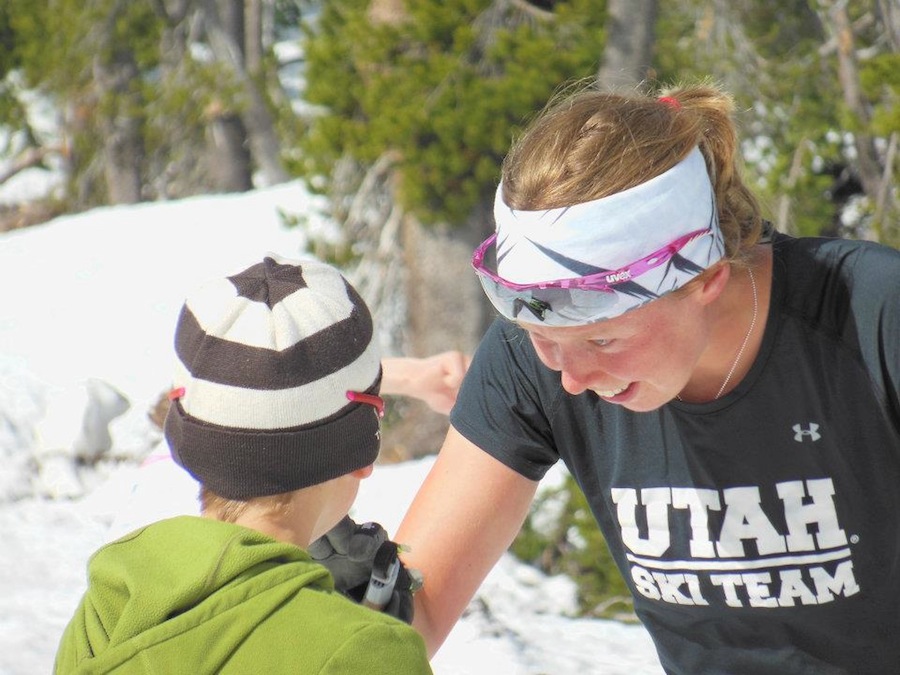
    Zoe Roy working with a Fire and Ice Camp junior in late June at Mt. Bachelor in Bend, Ore. (MBSEF photo)

    FS: Before El Salvador, you worked at the Fire and Ice Camp in Bend. How was that?

    ZR: The day before we left, I was on snow. It was kind of funny going from that to surfing. … I coached for TUNA [The Utah Nordic Alliance] the week before [the Fire and Ice Camp] and then I did Fire and Ice for a couple days before I left. I was kind of an assistant coach for [that].

    There were a ton of juniors there. It was pretty cool to be able to get all those kids together. At any age, it’s fun to see everyone else skiing, too. You see all your friends that you might not get to see the rest of the year.

    FS: How long had you been back in Bend?

    ZR: I came [back] after school at the beginning of June and I’m going up to Canmore in the beginning of August. … I actually graduated in May [with a degree in] exercise and sport science with a minor in entrepreneurial business and a TESOL certificate, which means I can teach English as a second language.

    FS: Why did you decide to move to Canmore?

    ZR: I had a good year last year and I got to travel with the Canadians a bit. I’m originally Canadian … so I thought I might as well move up there and spend the year skiing with them and see how it goes. That’s the main reason. I also have an aunt and uncle in Calgary so that’s nice, too. I’m on the team RMR, which I traveled with on the Canadian circuit last year. It’s based out of Canmore, so that seemed the natural place to go.

    FS: How did your relationship with RMR start, and what about the team appeals to you?

    ZR: They waxed for me at nationals two years ago so maybe that was the beginning of it, and then after that I got more connected with them.

    It’s a fun team. They have the whole spectrum from juniors up to elite racers. Dasha [Gaiazova] is part of it and Andrea Dupont, those are probably the two main older girls on that team, and then John Jaques, the coach, is awesome, too. It’s probably a combination of who’s there and then John, too. I don’t know [new assistant coach] Mike Vierra too well, but he’s the new coach there, but I’ve heard great things about him, too.

    I’m psyched to be [moving] up there. I feel like there’s a pretty solid group of, not just on that team, but the whole Canmore community. The [Alberta] World Cup Academy’s there so I’m excited to have that whole group of girls to train with. … That’s another big reason. I feel like it doesn’t get much better than that.

    FS: When it comes to climbing the elite ranks of racing, why did you pick the Canadian route?

    ZR: I think mostly because opportunities do exist for me to race in Canada. Those same opportunities don’t exist for me to race for the U.S. because I’m not a U.S. citizen, so I guess that’s the main reason. I thought, ‘If I’m going to see how fast I can race, I might as well go somewhere where there are opportunities to make teams’ … so I thought I’d go to Canada.

    FS: We heard you were leaving XC Oregon, but what’s the status of StellaRacing?

    ZR: As of this coming year we’re splitting up a few more different ways because it was really based out of Salt Lake. I’m heading up to Canada, Katie [Ronsse] is in PT school, Evelyn [Dong] is coming back to Bend.

    It was great; we had an awesome time putting it together and have a team based in Salt Lake to work from and race with, but I’d say as of now, it’s splitting up a bit more. I’m sure some of us will still wear our suits at certain times, but I don’t know if it will be as much as a team as it was last year, but we had a great time doing it.

    FS: What are your goals for this coming season?

    ZR: Well, the World Cups are in Canada so if I qualified for that, that would be amazing, but who knows. If that could happen, that would be awesome, but other than that podiums at NorAms and another Scando Cup would be sweet, too. I don’t know exactly what the opportunities are for another Scando trip.

    FS: What did you gain from the convergence trip?

    ZR: It was cool to just race in Europe and see the other parts of the ski world. It’s good to race against those girls and see what level they’re at. I feel like just that in itself was a good experience.

    [Note: After winning four state championships at Summit High School, Roy spent a year and a half in Austria training and racing at the University of Salzburg.]

    FS: How did you feel last season went overall?

    ZR: I was psyched about those [NorAm] results. What can I attribute it to? I don’t know exactly, but I mean, it’s hard to pinpoint one thing. I guess before that I was racing [collegiately] so I couldn’t come to Canada that much. I was on the NCAA circuit.

    FS: What are your thoughts on truly making the next step to full-time racing?

    ZR: It’s exciting. It’ll be interesting to sort of concentrate more on skiing than I really did before.
  • Skiing, Rafting and a Sleepover: Fire and Ice Camp Recap

    Skiing, Rafting and a Sleepover: Fire and Ice Camp Recap

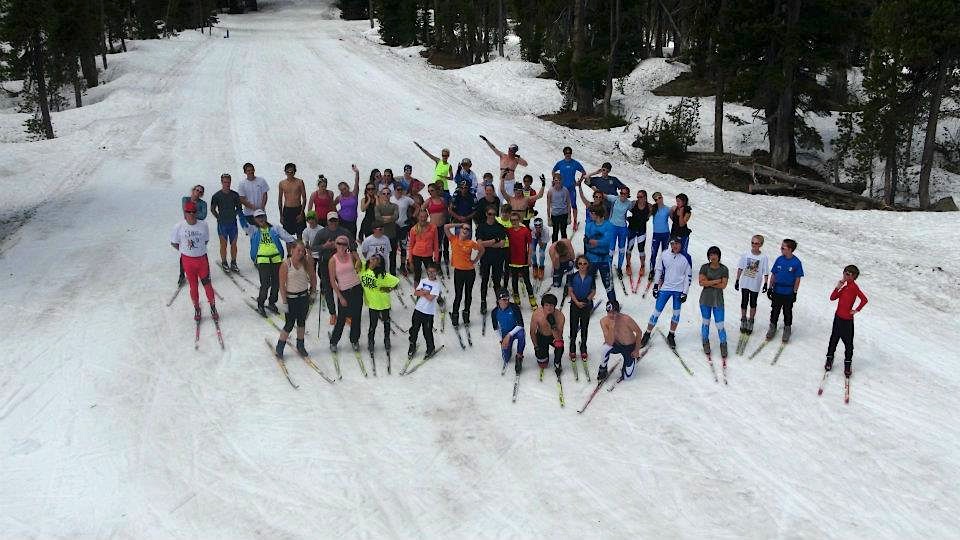
    The Fire and Ice Camp crew last week at Mt. Bachelor in Bend, Ore. (MBSEF photo)

    After a massive wave of spring skiers left Bend, Ore., last month, the groomers at Mt. Bachelor hardly packed it in. The U.S. and Canadian national teams and several elite squads were gone, but nearly the same amount of skiers – 150 – were expected to flock to the snow-covered trails in June.

    The Mt. Bachelor Nordic Center and its club, the Mt. Bachelor Sports Education Foundation (MBSEF), planned accordingly. On June 16, the MBSEF greeted about 55 juniors to its five-day Fire and Ice camp, an annual tradition that’s followed national-team visits for years.

    Lars Flora shows off his balancing skills at the Fire and Ice Camp from June 16-20 in Bend, Ore. Flora was the camp’s head coach. (MBSEF photo)

    Lars Flora, a two-time Olympian and Alaska Pacific University (APU) skier, made the trip down from Anchorage for his third-straight year to serve as head coach. He worked with MBSEF Nordic Program Director Dan Simoneau, who coordinates the camp, to attract six competitive skiers to Fire and Ice as coaches.

    After all the 9- to 18-year-olds said their goodbyes last Wednesday along with coaches Matt Liebsch, Torin Koos, Tyler Kornfield, Sylvan Ellefson, Ollie Burruss and Zoe Roy, Flora talked about the experience on the phone from Eugene, Ore., while watching the Olympic track and field trials on Saturday.

    FasterSkier: How long has the Fire and Ice junior camp existed?

    Lars Flora: Four years, I believe. It’s been going on for, off and on, forever. Now with two periods of skiing and Mt. Bachelor way more behind it, they are really getting interest from skiers. There were 300 skiers between the two periods of skiing this year, so that was really good. When the national teams were there, they were at 150, and around another 150 in the second period in June. The town’s really excited about it. It’s awesome.

    FS: What’s the goal of the camp?

    LF: Dan [Simoneau] and I came up with the idea to bring more top athletes to help coach and train while they’re in Bend. This was the third year we did it. This year we had a really good group of coaches. Sylvan volunteered his time because he was out there training and Matt Liebsch and Torin and Tyler Kornfield were asked early on. It was really cool that Sylvan just stepped up and wanted to help out.

    FS: Where do the participants come from?

    Trail running/bounding at the Fire and Ice junior camp last week in Bend, Ore. (MBSEF photo)

    LF:  Most of the skiers were from PNSA [Pacific Northwest Ski Association], so Washington and Oregon. There were around 55 [junior] skiers who did the camp and they range from 9 years old up to 18. It’s a pretty big range of ages.

    FS: How did they respond to having so many talented coaches?

    LF: Sometimes I wonder if they always realized what kind of lineup of coaches they have. You know how it is, you’re always skiing and then you just hang out with your friends and you kind of forget who these skiers are. But it’s the time we spend with athletes; we spend from 8 a.m. to 4 p.m. every day with them. We do a lot of fun stuff like rafting and paddleboarding and running and playing games, playing soccer and whatnot. I think it’s just a lot of good time to observe the top athletes and watch them and the inspiration to be around the best athletes in the U.S.

    Like Matt and Sylvan and Torin, from an athlete’s standpoint, they’re great around kids; all three of them are amazing. [A University of Alaska Fairbanks skier,] Tyler’s just getting into that stuff. He’s young, he’s only 21, so it was really good for him to be there. It’s good for athletes to learn how to coach and put on clinics.

    FS: How was the coaching and group size structured?

    LF: It was a free-for-all (laughs). Nah, it was small groups. Sometimes we would split the group into two: the young ones, everyone under 13 and then everybody above 13. Other times we would take 10 to 15 skiers out at a time [with] one coach. It varied throughout the camp.

    FS: They were on snow for all five days?

    LF: Five days on snow and five days of dryland activity.

    FS: How were the snow conditions and weather overall?

    LF: It was really good. The first half it was a little dirtier than usual and then it snowed one night midway through and cleaned it all up. Driving over the pass [Saturday], it was snowing pretty hard. …

    I would say [it was around] 50 to 60 [degrees] when we were skiing and then in town it was 70 to 80.

    The first day after the camp ended it started raining so we lucked out with 10 days of sun. I say 10 days because the first five days the coaches were there training and then the second five days was the Fire and Ice camp.

    FS: What were some of the most popular camp activities?

    Part of the Fire and Ice Camp included whitewater rafting on the Deschutes River. (MBSEF photo)

    LF: They loved to play Sharks and Minnows on skis. Sylvan actually said he might want to put that into his training plan next year. He had a good time playing Sharks and Minnows with the kids. The older ones respond to intervals with the coaches. We’ll pop into intervals with the 17- and 18-year-olds and I think that’s one of the best activities with 18-year-olds.

    Everybody loves the raft trips. We had eight boats going down the Deschutes [River] and jumped in the water; a lot of water fights. I was with the 10- to 12-year-olds so that was fun to go down the Big Eddy with a bunch of young kids.

    FS: And paddleboarding?

    LF: Paddleboarding and rafting is with Sun Country Tours, [which] is owned by Dennis Oliphant who’s the president of MBSEF and used to be the nordic coach when I was younger. We paddleboard right down by Old Mill on the Deschutes.

    FS: You mentioned the first camp sleepover this year. How did that go?

    Site of the Fire and Ice camp sleepover, the Mt. Bachelor Nordic Center on Saturday after camp ended Wednesday, June 20. (MBSEF photo)

    LF: Dan had this whole idea that he was going to do the first-ever sleepover at the nordic center and all the other coaches were like, ‘You’ve got to be kidding me.’ It ended up [being] great. We had a barbeque up there [on Tuesday night]. All the kids brought sleeping bags and pads, about ten of them slept out on the deck. It was a nice crisp night up there, and just kids everywhere camped out. They had a dance party.

    It was pretty mellow actually, I was surprised. We had all of them to bed by 12 [a.m.] and woke up around 7 o’clock and had breakfast. We did a night ski around 10 p.m. and it was just rock-hard, perfect skiing so that was fun.

    FS: How tired were you by the end of camp on Wednesday?

    LF: I was pretty tired. It wasn’t so bad. It’s so much different now that I’m not training so coaching, you have way more energy. We used to do this camp while we trained, so we’d get out in the morning, and that’s what Matt and Tyler [were] doing, and Matt coached the whole time. Tyler coached two days, Torin coached two days, and Sylvan coached one day. Zoe coached one day.

    FS: What draws you to these types of programs?

    LF: I just think it’s really good for everyone. It’s a really good for development to get the top athletes in front of the younger skiers more, and Bend camp is the perfect place to have that happen.

    FS: What do you think the impact is for the skiers and coaches?

    LF: Some of the athletes were saying they’re going to spend a month out there next spring skiing and stuff. Sylvan was really excited about that and Tyler was just blown away. It was Tyler’s first time down to Bend so it was fun to bring him down there and show him a new place. He’s spent a lot of time in Alaska training in Fairbanks and Anchorage and he’s kind of at that point in his career where he needs a bit more. For him to go down to Bend and just see the resources that are in Oregon for skiing is a pretty good time. He was telling all his friends about it and sending them emails.

    FS: Thanks. Are you spending the rest of the day at Hayward Field?

    LF: Yeah, definitely. Rooting on the hometown boy from Bend. Ashton Eaton is leading the decathlon right now. (Note: Eaton not only qualified for the London Games this summer, but also broke the world record on Saturday.)