Tag: Firstbeat

  • Quantifying Recovery: An Intro to Heart Rate Variability by Ned Dowling, PT

    Quantifying Recovery: An Intro to Heart Rate Variability by Ned Dowling, PT

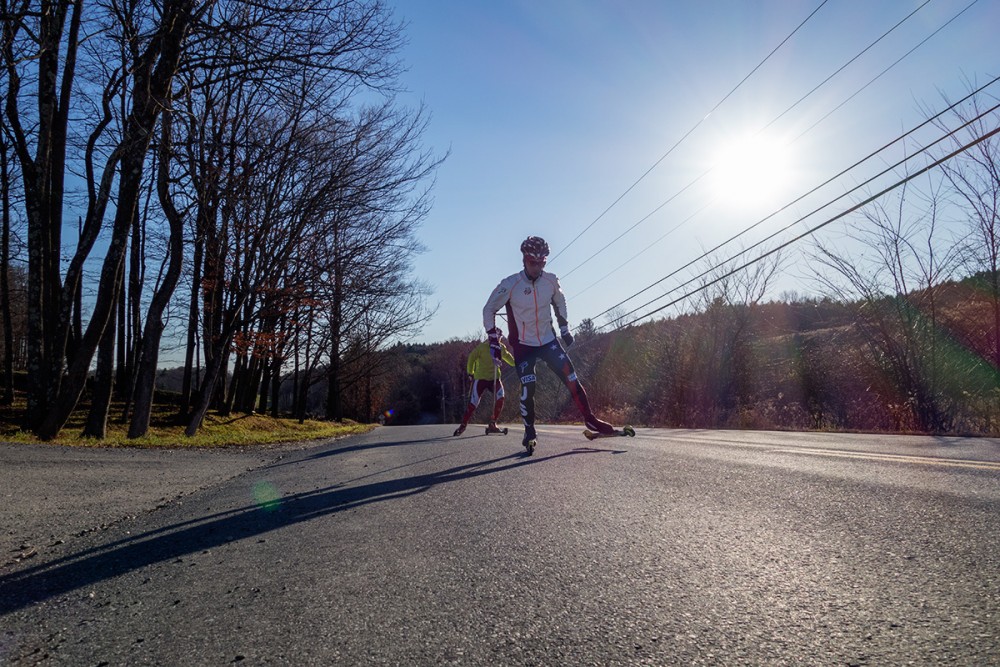
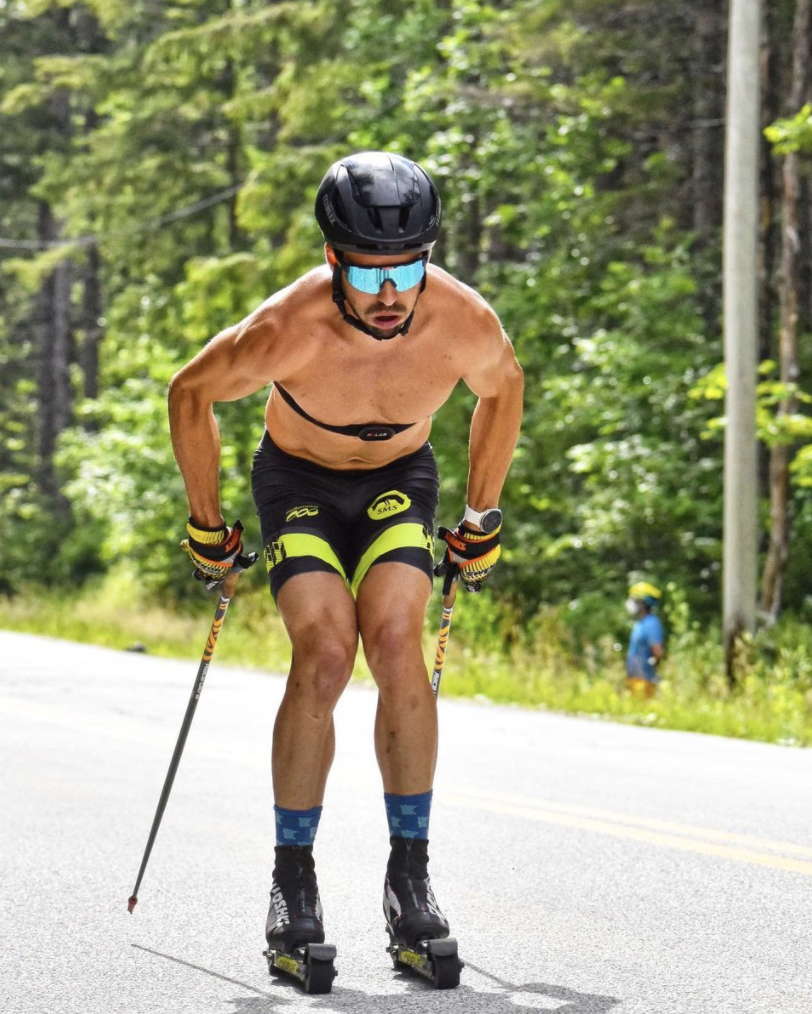
    Ian Torchia (SMS T2) pushes through a set of double pole intervals. (Photo: Tom Horrocks / Instagram @fullytorched)

    As endurance athletes, and especially as cross country skiers, we like to suffer. We enjoy a sport that takes place in the coldest months of the year and requires both strength and endurance to climb big hills and descend on skinny skis with no edges. We like to breathe hard. Most of us are in it for the suffering and the healthy dose of chemicals that our bodies release when the heart rate goes up and the muscles begin to burn. The runner’s high, an endorphin rush, pick your preferred phrasing. 

    Hopefully, we’re smart enough by now to know that we can’t go hard all of the time, at least not without consequences. The really smart among us are able to listen to their bodies and know intuitively when they can step on the gas and when they need to back off. But the rest of us could probably benefit from some type of external governor besides the voices in our heads egging us on, or constantly available Strava competition taunting from inside our pocket.

    If life was just eat, sleep, and train, the calculus of easy/hard or short/long might be pretty easy. But work, school, kids, relationships, global pandemics, and social media bring no shortage of life stressors. And, physiologically, these life stressors can load the body just the same as an interval session. Stress is stress, and stress takes a toll on the body. 

    So, your training plan might call for a hard session, but what if work was crazy, the kid kept you up all night, and you made the mistake of reading the news headlines this morning? Is your body in the right place to make the workout productive? (Or at least not detrimental?) How do you know?

    I think the honest answer is that we don’t always have an answer, but there are some metrics that can help us shape a well-informed guess. 

    Since Polar introduced the first functionally useful heart rate monitor in 1984 and Garmin gave us the GPS watch in 2006, wearable training technology has evolved considerably. Current wearables can track — and thus quantify — everything from steps to sleep to intensity. I don’t dare dive into that vast sea except to highlight and discuss what metrics might be the best at answering our question, “How hard should I push myself today?”

    But before we even get there, it’s worth having a quick refresher on some principles of training, exercise, and activity. Depending on your goals, Nordic skiing can be an activity that simply gets you out in nature, a tool to maintain fitness for other sports like cycling or running in the winter, or it can be a year-round focus with time on snow dichotomized into either training or racing. In any of these scenarios, the cumulative load on the body is a very important variable to manage. 

    Too much load and we stop having fun, plateau or lose fitness, and begin to risk injury. Too little load and we don’t progress, but I doubt that’s an issue with the majority of us. We must also remember that the basic recipe for improving strength and fitness is load + recovery = adaptation. Or as Brad Stulberg and Steve Magness phase it, stress + rest = growth.
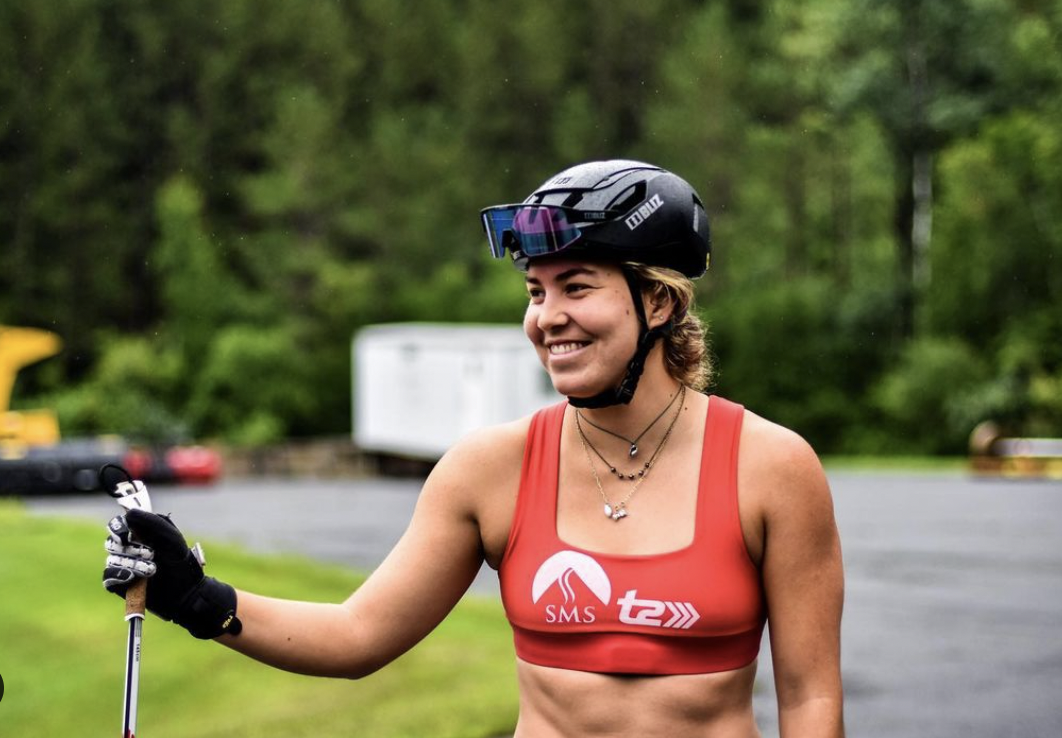
    Lina Sutro (SMS T2) models the female skier’s signature “heart rate monitor tucked under sports bra band” look while training in Vermont. (Photo: Julia Kern)

    Our bodies respond to load by making adaptations, but if we go too hard too often, and/or take too little rest and recovery, the equation becomes out of balance. We lose out on adaptation, and thus our capacity for improvement stalls out. 

    Strategies like polarization and periodization aim to apply the load/recovery equation to maximize the training adaptations and improvements. Briefly, polarized training is the division of activities into either “hard” or “easy” intensity in roughly a 20:80 ratio. There is no “moderate.” The premise being that moderate efforts are neither hard enough to stimulate adaptations nor easy enough to allow to develop aerobic pathways or for active recovery — putting in “junk miles”, as it’s often described. 

    In a periodized training program, polarization is taken a step further with hard and easy sessions layered together over longer cycles (think weeks and months). A periodized training plan builds progressively toward a goal race, followed by a period of time following the event that is focused on rest and unstructured training.

    During that macrocycle, the split of your weekly training might stay roughly at the 80/20 ratio, but every third or fourth week might be recovery-focused, with a lower volume than the previous weeks. This three to four week block might be called a microcycle. On average, the easy-to-hard ratio is the same, but the overall load of the week is lower, allowing the body to adapt and repair. (And you can catch up on your laundry.)

    These fundamental concepts should be incorporated in any good training strategy, whether it’s a week-by-week homemade plan or a comprehensive annual program from a coach. But, just because the plan is intended to provide a roadmap for loading and resting doesn’t mean we will always get the implementation right. 

    This is not the coach’s fault. It’s life’s fault. A training program is written to balance training load and frequently doesn’t account for the additional stressors of work, school, or family. Stress is stress, regardless of the source. We can’t achieve the intended balance in training if we are over-tired from traveling for work, have been chasing our kids around all day, or burned the midnight oil trying to get our work done when our kids’ school is shut down. Similarly, pushing too hard when we should be going easy leaves us over-cooked before an interval session, deeming it unproductive. But how do we gage the load our body’s have been under?

    (If you read the previous paragraphs and said, “This is stupid, I just want to ski” I don’t blame you. I don’t think everyone needs a rigid or even dichotomized workout schedule. However, if all of your exercise is at a hard intensity your risk of injury is increased so you might consider rethinking your strategy. If all of your exercise is at moderate intensity, then you’re just unlikely to get faster. For a lot of people, that’s not a priority, which is perfectly fine and you shouldn’t be judged or dissuaded. Go have fun!)
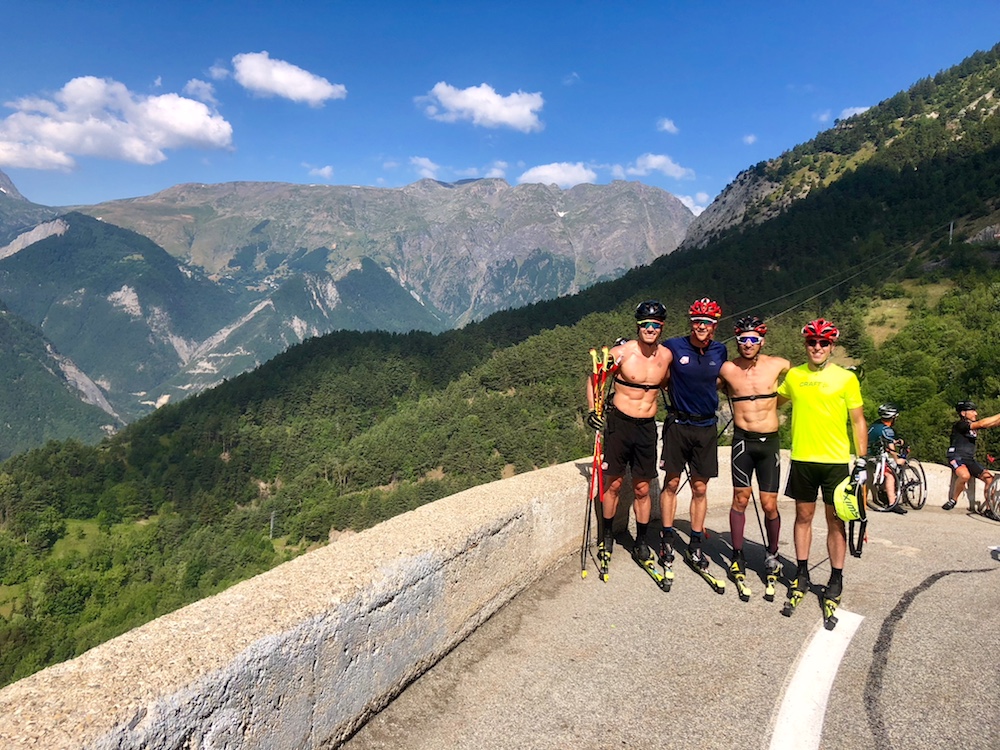
    From l to r: Simi Hamilton, Erik Bjornsen, Ian Torchia, and Paddy Caldwell of the U.S. men’s team during a 2018 rollerski up l’Alpe d’Huez in France. (Photo: Chris Grover)

    There’s an old proverb in bike racing about burning matches. Everyone on the starting line starts with the same number of matches. During the race, matches are burned quickly by riding at the front, attacking, covering attacks, and just riding above one’s threshold. At the end of the race it’s often not the strongest rider who wins but the one who burns the least matches (the 2021 men’s Paris-Roubaix is a perfect example). 

    We, too, start the day with a set number of matches that we’ll burn up with road rage, frustrations at work, frustrations at home, social media FOMO, and of course training. The number of matches we get each day is directly related to how rested and recovered we are heading into the day, both mentally and physically. Exactly how many matches are in the box goes back to recovery, and, once again, to our original question: “How hard should I push myself today?”

    If your matches are burnt up before you head out to train, the answer might be “Not very,” regardless of what the training plan says.

    One of the earlier attempts to answer this analogue question with a binary “hard or easy”, was resting heart rate. It’s a simple concept: Take your heart rate every morning for a few weeks and calculate an average. If your heart rate has increased by more than 5 beats per minute from the average, then your inventory of matches is not fully replenished. While this article won’t go deeply into the details, there is some research to indicate that resting heart rate doesn’t correlate that well with fatigue levels. This article from Marco Altini goes into significant detail on the topic. (If you follow that link, you’ll find that you’ve arrived on the last of a five part series on Heart Rate Variability. Dr Altini is one of the leading experts and innovators in the field, you may find his articles to be more robust than one you’re currently reading.)

    Relative Effort, TSS, EPOC, PTE, CTL, ATL, are all metrics generated by modern wearables to quantify training load and, therefore, stress on the body. These numbers are based largely on heart rate and duration: the higher your heart rate and the longer you keep it there, the more points you score. This is certainly useful information, especially with regards to periodization and keeping track of hard vs easy training sessions; however, it only gives you one number in the load + recovery = adaptation equation. 

    Gus Schumacher and Kevin Bolger, heart rate straps on and up, bump fists after a training session in Soldier Hollow. (Photo: Simi Hamilton / Instagram @gus.schumacher)

    We still haven’t answered the question, “How hard should I push myself today?”The same device or app that gave you a training load score will likely give a number for recovery status or a time needed to recover; this evaluation is typically still based on average heart rate during training and the overall duration of the previous session(s). It does not take into account the other life stressors. Enter Heart Rate Variability (HRV).

    In a nutshell, HRV is a measurement of the time between heart beats rather than the number of beats itself. More specifically, HRV looks at the inconsistency of timing between heart muscle contractions. 

    Heart rate is governed by the autonomic nervous system, or the division of the nervous system that is responsible for body functions that happen automatically. This is the same part of the nervous system that controls things like temperature regulation (sweating and shivering) and digestion — bodily functions that we don’t have to consciously think about to make happen. 

    The autonomic nervous system is influenced by the sympathetic nervous system — the “fight or flight” mode that upregulates the body to prepare for battle (heart rate increases, armpits get sweaty, digestion gets turned off, etc.), and by the parasympathetic nervous system, which calms the body down. Our bodies are programmed to seek homeostasis — that happy place where everything can function optimally. The sympathetic and parasympathetic systems work to maintain that balance. 

    HRV attempts to quantify that balance between the parasympathetic and sympathetic systems, and thus the measurement is a gauge of how the body is down-regulating versus up-regulating — homeostasis. 

    Somewhat counterintuitively, a higher HRV, which indicates more variability and less consistency in the time between heartbeats, is indicative of greater parasympathetic versus sympathetic influence on the autonomic nervous system. Looked at another way, the greater the stress on the body, the greater the influence of the sympathetic system, which decreases the variability in time between heartbeats and therefore equals lower HRV. 
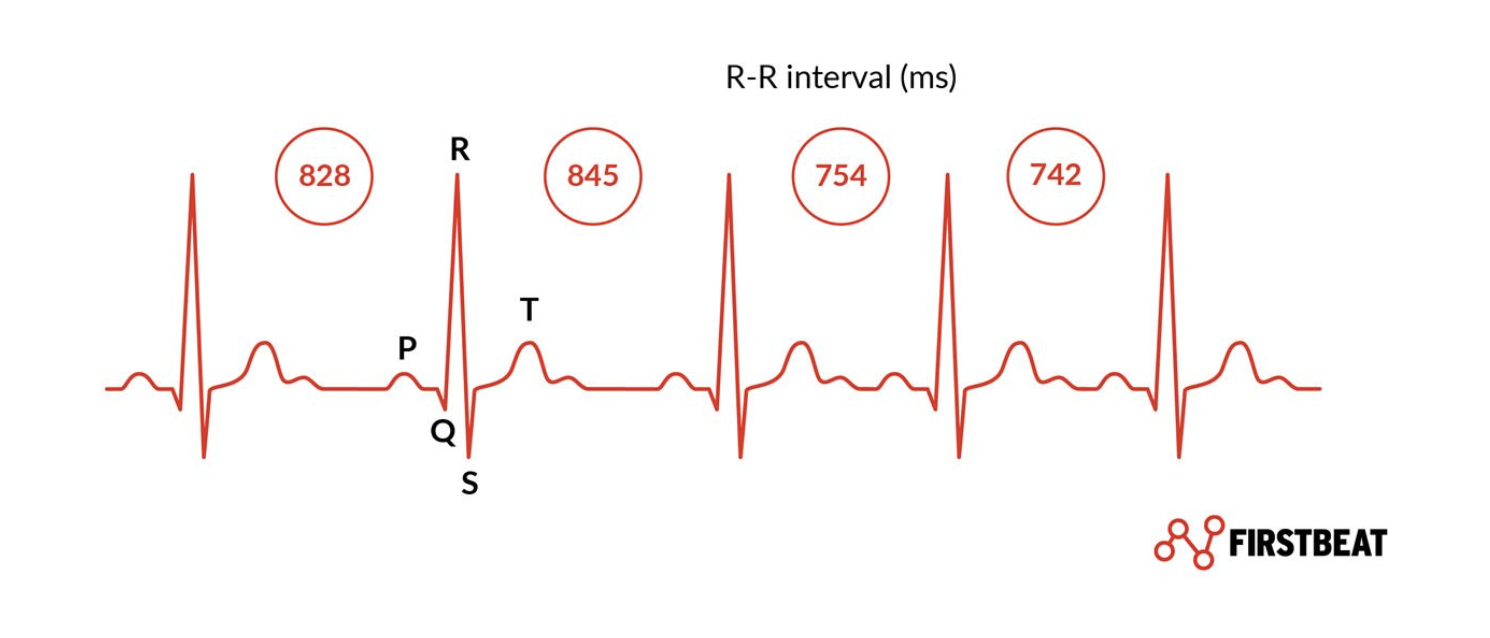
    This infographic from Firstbeat Technologies, an industry leader in heart rate training science, modeling heart rate variability. (Photo: Firstbeat.com)

    These days, there are many options for recording and tracking HRV: Whoop is a 24/7 wristband with an LED sensor that measures a gazillion things, but specific to HRV, the measurement is taken every night during sleep. The Oura Ring, which is used by some members of the U.S. Cross Country Ski Team, also contains an LED sensor and records automatically during sleep. HRV4Training has an app that turns the camera and flash of your smartphone into a recording device much like a pulse oximeter. EliteHRV uses a device that goes on your finger very much like a pulse oximeter. Firstbeat, who use a proprietary ECG style sensor, were one of the first commercially available HRV trackers on the market (as mentioned in a Nordic Nation podcast with Jim Galanes and in this old article from Zach Caldwell, which also discusses HRV in all the detail you’d expect from Zach).

    With all platforms, consistency in recording is key so you can recognize patterns over time. The devices that record automatically during sleep (Whoop, Oura, and Firstbeat) have the advantage in being the no-brainers as long as you’re wearing the gizmo, but they have the disadvantage of being the most expensive. Both HRV4Training and EliteHRV require you to take the recording daily at a consistent time and in a consistent way. Ideally this is first thing in the morning (I go to the bathroom first then immediately sit down and record). I’m a creature of habit and since building this into my morning routine, I’ve not had much trouble incorporating the one minute it takes to record a daily HRV measurement. If consistency is going to be a challenge, invest in one of the automated devices.

    This brings us to the utility of HRV: tracking the body’s response to stress over time. The emphasis here is over time. HRV can help answer our question, “How hard should I push myself today?”, but it’s not exactly a stoplight. Waking up to a low score doesn’t necessarily mean you should go easy if you still feel good, but waking up to a seven day average with a negative trend means you should probably skip the hard workouts until your HRV stabilizes. For example, both this paper and this paper found benefits to using HRV to modify training vs strictly following a periodized schedule.

    From what we know about the metric so far, the primary goal is to keep HRV stable. If your training plan is appropriately balanced, you’re keeping life stressors in check, and your body is responding favorably, then HRV will remain fairly uniform, even after a hard workout. (A low HRV score after a hard session is definitely not a goal or badge of honor.) But if your HRV becomes unstable, especially a downward trend over at least a few days, that is when it really has the potential to catch an issue while it’s small, whether that’s due to training load, illness, or life stressors. Anecdotally, I’ve heard of notable dips in HRV with people just prior to illness (especially COVID) and after the vaccine. These are situations where maybe you’ve not yet become symptomatic — your body hasn’t started yelling at you — but it is already enduring stress, and the additional load from hard training is not going to be welcomed.

    Ultimately, HRV is just another tool in the box. It’s not necessarily there to change what you do on any given day, at least not without subjective input on sleep quality, soreness, emotional state, and how much you drank last night. It’s best viewed as a safety device like anti-lock brakes on your car: if you’re always looking down the road and anticipating what’s to come, you might never need them. But sometimes, when we’re training hard and emotionally invested in our goals, it’s like driving through a snowstorm to make it home for Christmas. It can be easy to focus on the objective outcome and wanting to get there as quickly as possible, rather than slowing down and proactively adapting to the road conditions. Chances are, you’ll make it to your destination unscathed, but in the event that a deer runs across the road or you hit a patch of black ice coming into an intersection, the antilock brakes might help you stop and reset rather than crash.

    As Jason Cork, World Cup Coach for the US XC Ski Team, put it, “I think it has some utility as long as you’re honestly also taking into account how you feel, how long you slept, energy, etc. I guess an analogy is if your HR at L3 is usually 180, and you’re super tired, it might be incredibly easy to hit 180 at an L1 velocity or incredibly difficult [to hit all-out velocity because HR is suppressed]. But the question really should be, ‘If you’re tired, why are you doing intensity?’”

    Author’s disclaimer: I have no affiliation with any company that tracks HRV. I personally use the HRV4Training app, a Suunto watch, a Wahoo chest strap, and Strava, all of which I have paid for without discount.

     

  • And the Beat Goes On: Firstbeat Explained

    And the Beat Goes On: Firstbeat Explained

    If you want to be as cool and go as fast as Tad Elliott, you need to first buy a bad-ass El Camino and then next get a Suunto Ambit 3 heart rate monitor and Firstbeat HRV software
    If you want to be as cool and go as fast as Tad Elliott, you need to first buy a bad-ass El Camino and then next get a Suunto Ambit 3 heart rate monitor and Firstbeat HRV software.

    This review of the Firstbeat heartbeat analysis system originally appeared on SlowTwitch.com, a publication targeted for triathletes (see Part I, II and III). This version has been added to and updated specifically for nordic skiers. 

    He says they’ve already got one…

    Monitoring training load is the Holy Grail of endurance athletics. Any good coach will always be looking at how to optimize training load, and essentially every competitive athlete from the first time they toe the line will wonder how to best balance intensity, volume and recovery. Throw in the added and significant stressors of work, school and social obligations and this already complicated equation becomes even more involved.

    As the world becomes increasingly digital and the science more precise, the last few years have brought a number of different technologies to the plate that look to better quantify training and recovery. Heart rate monitors have been a staple of endurance training for over three decades. With the increased prevalence of smart phones and their ever increasing functionality, the ability to collect data has never been greater. Even more recently, a speciality market of “fitness trackers” has emerged with devices 100 percent dedicated to tracking movement, heart rates and a variety of other metrics. Several of the big players like Apple have gone a step further (no pun intended) and incorporated these features into everyday wrist watches, so finding ways to clutter your hard drive and mind with biometric data is now easier than ever.

    One area which is ironically much less clear however, is the overall effectiveness and utility of all of these devices. Your functional threshold power (FTP) on the bike is 407 watts? Great. Now what? I didn’t win bike races by having a better FTP than the other riders, I won races by getting to the finish line first. Same deal with heart rate. Now before all of you data geeks fire off an angry email that these metrics are tools to help better guide athletes to the podium, I agree with you, but what if there was something that allowed you to quantify both work and recovery? Something that provided insight into not just the physiological stresses of training but also in activities of daily living (ADL). There is. And it is called Firstbeat.

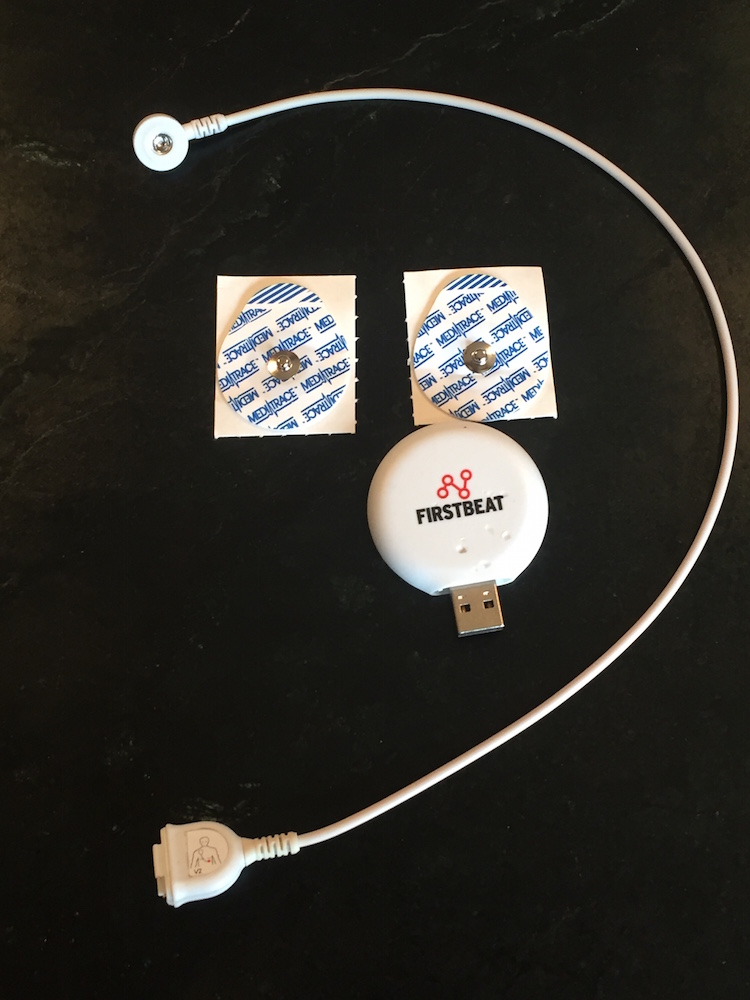
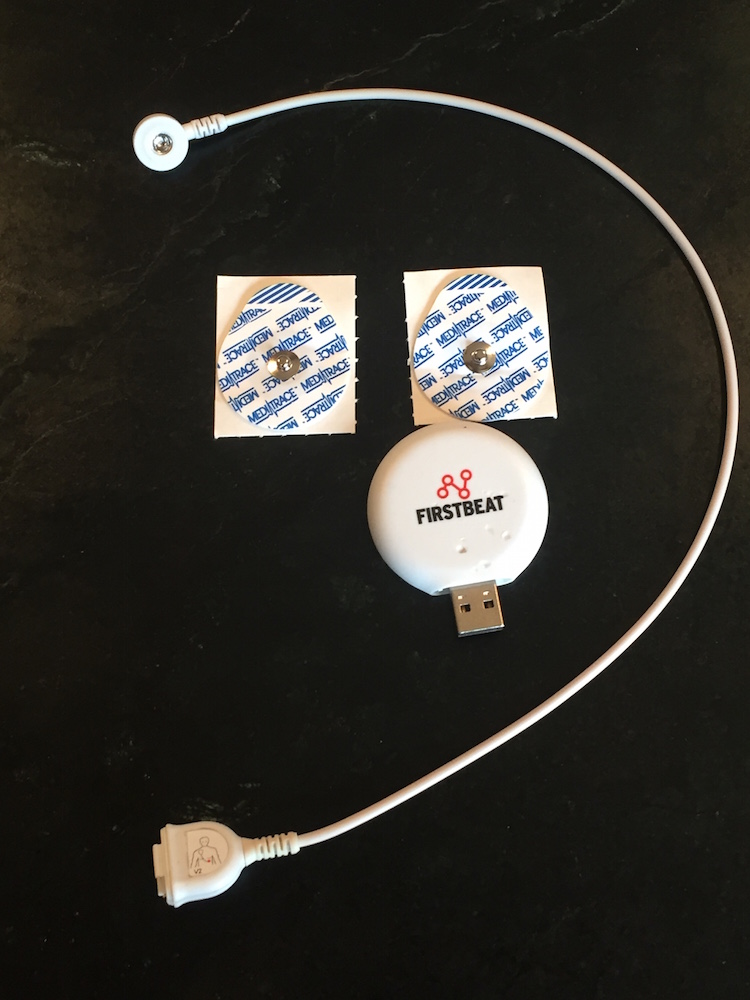
    The Firstbeat system can be used with a traditional heart rate monitor chest strap or specially dedicated chest sensors as pictured.
    The Firstbeat system can be used with a traditional heart rate monitor chest strap or specially dedicated chest sensors as pictured.

    HRV

    The Firstbeat system (FB) is a member of a class of devices that monitor heart rate variability (HRV). In simple terms, HRV, as the name implies, is the difference in the intervals between heart beats. Different devices approach this situation differently, but in essence, Firstbeat uses a mathematical algorithm to compare heart rate, interval regularity, maximum heart rate and VO2 to calculate a few different output and recovery metrics.

    How it works

    One sport early to adopt HRV monitoring is nordic skiing. Three-time Olympian and former U.S, Ski Team coach Jim Galanes, offered his history with the device.

    “Tina Hoffman, who was a coach at University of Alaska, Anchorage, showed this to me about eight years ago, so I’ve been studying this system for quite a while,” Galanes, who co-owns Galanes Sports Systems and handles the distribution, sales and service for Firstbeat products, explained on the phone. “The more I used it, the more convinced I became that it is a very effective tool and by far the best one out there. I’ve become so convinced of its effectiveness that starting four years ago, I won’t coach anyone who won’t use it; it is that powerful. It is the single best way to making training decisions.”

    Zach Caldwell, coach of several members of the U.S. Ski Team, has been working with the system for a few years and provided a more in-depth explanation of the underlying science. “Your heart rate is governed by your central nervous system (CNS) through two central pathways in your autonomic nervous system: your sympathetic nervous system and your parasympathetic nervous system” Caldwell said on the phone. “Your sympathetic nervous system is what governs your ‘Fight or flight’ response, in common parlance. This is a stress response. It elevates your heart rate and creates a signal that makes the beat to beat interval very regular.”

    Caldwell continued, “The second component, your parasympathetic nervous system, which governs rest and relaxation. The influence of the parasympathetic nervous system is to lower and create less regularity between heart beats. By looking at an individual’s heart rate (HR) variability in comparison their own baseline, you can make a statement about the prevalence of a sympathetic response, which is an indication of stress. In short, by using the Firstbeat system we can see how your body is responding to stress. It is a fairly direct measurement. I am not a scientist or a doctor, so while I have reviewed some of the literature, I can’t speak to the experimental design, but my read of the science is that there is ample support for the efficacy of utilization of heart rate measurements of indications of CNS function. CNS pathways are integral for heart rate regulation, so this is very pertinent for sports. Their appears to be very good science and very good efficacy of that science toward athletics.”

    Galanes agreed, “A great deal of research, thought and testing has gone into this system: is the result of life work of Heikki Rusko, one of the best sports science researchers in the world, so the system is very well grounded in science, as the research that went into validating the system spanned over 15 years. From this perspective, unlike a lot of systems that are out there, this has gone through rigors scientific validation, both for monitoring training and recovery.”

    The key, according to Galanes, isn’t just what the Firstbeat system measures, but what it does with it.

    “There are a lot of systems out there that collect data, whether it is a regular heart rate monitor, power meter, Strava, Fitbits, whatever, but there is very little analysis that goes on with that data. Using HRV and the Firstbeat software to look at training load and recovery has become the gold standard. Power and HR are certainly useful, but alone they are not good measures of the disturbance of homeostasis on the body and that’s what training and recovery are all about.” For those interested in a much more in-depth presentation of actual data fields and a more detailed explanation and description of the software, check out this webinar: https://www.firstbeat.com/en/webinars/training-load-recovery-monitoring-in-professional-xc-skiing/

    Why Use It

    “Coaches and athletes are all very concerned with stress and recovery,” said Caldwell. “Previously I don’t think we have done a very good job at looking at this holistically, so while we looked at rest, we didn’t look at enough factors. The ability to examine and even quantify the role of stress both independent and related to training load is very powerful. This is particularly important for self-coached athletes, for as athletes, we tend to be good at lying to ourselves. Athletes are delusional. We take a lot of information on board and we interpret it based on what we want the outcomes to be. I see it all of the time. I can tell if an athlete is tired and I think even that athlete knows it, but when you ask them, they say they’re fine, in particular at the elite level. I work with over-motivated athletes who want to be able to do more. This isn’t a tool to tell you to take it easy, rather it is a tool to help you make better choices.”

    Erika Flora, head coach of the Alaska Pacific University (APU) elite team, agreed. “It can be a good tool if used correctly and in combination with other indicators, in particular feel — I am a big believer in teaching athletes ‘feel,’ ” he said during an in-person interview. “HRV is not an absolute indicator, but it is definitely useful, as sometimes motivation overrides good judgment.”

    The 24-Hour Athlete

    So often the motivation to try harder is bundled into the four hours of training each day and the other 20 hours in the day are ignored, or at least not optimized,” theorized Caldwell. “If your job has had you running around all day, it may actually be counter-productive to do the interval session you had scheduled. This system is a tremendous help in monitoring your overall stress and adaptation. Careful and correct interpretation of this data can create what I call ‘better 24-hour athletes’.”

    Caldwell continued, “One of the major things we want from training is to see a positive response. It sounds so basic, but I see so many good athletes mess this up. We want training to make you stronger. You do a hard training session, we hope that this will make you better, that’s the goal. It’s easy to skip the part where we ask, ‘Is this really going to make me better? If so, when?’ This is a tool to help answer the question. I am unconvinced by things for which I don’t see evidence. I see lots of people doing lots of hard work, but I don’t always see benefits. Why? Training should work. As a coach, if an athlete is not getting better, I want to know why. Why are they not responding positively to training? If we’re counting totally on self-reporting, well, that doesn’t work very well. Most of the good athletes I know have a very good way of coloring their own training. You can beat them into the ground with tests, but that also has its limitations and is disruptive. What if you had a tool that could quantify all of these factors. What if you knew who had good sleep and recovery? This tool does all of that.”

    How to use it

    Essentially the Firstbeat system measures two primary factors: training load and recovery. The two are obviously related, but can also be uniquely independent. Training load is monitored through a combination of factors, in particular, Excess Post-exercise Oxygen Consumption (EPOC). Measuring EPOC offers several advantages over measuring power or heart rate alone.

    “EPOC is very interesting in that it helps you understand the load that you feel when you’re training is cumulative, not instantaneous,” noted Caldwell. “The cool thing about EPOC is that it looks at accumulation of effort over time. The best athletes have a great sense of how to keep things ‘easy’ — their HR can drift up a bit, but they can feel the recovery. What I see in less accomplished athletes is that they religiously follow the HR monitor, so sessions designed to be easy oftentimes aren’t so. Typically amateurs overdo it on easy days and under train on hard days. Using EPOC to help monitor this is huge.”

    “Granted, my case is somewhat unique,” Caldwell continued, “as I exclusively coach elite skiers, so EPOC scores are useful, but the recovery thing is even more useful for me. The recovery score is great because it utilizes HRV as a real-time score. The recovery score is an indication both of the level of recovery and the level of fitness. You can’t rest your way to a great recovery score any more than you can rest your way to a great performance. Your peak recovery scores come in relation to your peak training loads and your best management of the recovery process, so it’s not just rest – paradoxically it is also training load.”

    Galanes followed up on this thought: “This system is based on understanding each individual’s unique physiology. To use this system optimally, you need to start out and do some testing programs on things like max HR and help determine max VO2. So you need to do a six-minute max test. This helps set a good benchmark for all of the data. This is key, as you need good data going into the system at the start. Once you have this, all you need to do is start training and understand the simple observations of EPOC. The information you get from the system gives you the tools to quantify the training load but also ask the questions about how to modify training to improve overall capacity and performance. The human body is always in flux: it is always adapting to load, so the body is not the same day in and day out and FB is one of the best systems to quantify these changes and better define these different states of readiness.”

    Over-The-Hill Gang

    One group Galanes believes benefits the most from HRV monitoring is masters athletes. “Recovery profiles for masters athletes are very, very different than young, elite athletes. As we age, there is a whole different training process that needs to occur. Ned Overend, Joe Friel and others are making some good observations on this. Since we all age differently, FB is one of the best possible tools to assess each individuals response in training and recovery. The real value at looking at EPOC is to help you understand if you’re getting the desired effect of your training. If you go too hard, you are compromising something later in the training process. It really helps clarify the focus and the implications of the training. It is the most incredible training tool that has come along in my training and coaching lifetime.”

    Optimal Usage

    As a frequent traveler to both Europe and high elevation (sleeping at 7,200 feet, training between 6,700-10,400 feet), being able to measure the “stress” and overall physiological impact of traveling to and training at these sites have proven to be incredibly valuable. Sure, any idiot knows that they’re tired when they get off the plane after a nine-hour flight, but what does this really mean in terms of training? Should you even train right off the plane or take a nap instead? If you do go, how long and hard should you go? Firstbeat can help answer all of those questions. And that’s just the tip of the iceberg.

    Anyone who knows me knows that I lead a very unusual life. I spend more time on airplanes than many people do in bed. I have a large animal rescue and much to the amusement of my vet and farrier, I often ride my mountain bike to my farm to administer vaccines to the animals while wearing a full cycling kit (apparently this isn’t all that common). I also regularly work on three continents, ski home from work in the dark and a bunch of other stuff too strange to print, so I think most would agree that I am clearly an outlier on the curve in many ways and in many things. Now, having said that, while my stressors may be different from yours, my guess is that each and every reader out there has lots of other demands for their time outside of training and lots of factors that impede recovery, some unique to them, others not. Sure, most of these stressors most likely don’t involve giving vaccines to donkeys or having the entire U.S. Ski Team’s jump skis lost in Japan, but I have yet to meet the person who claims their job is easy, who gets all of the sleep that they’d like and who does not have any worries or responsibilities. So just how much is your stupid job, long commute or inability to attract a member of the opposite sex affecting your training? More than you might expect.

    Sure, most of these stressors most likely don’t involve giving vaccines to donkeys or having the entire U.S. Ski Team’s jump skis lost in Japan, but I have yet to meet the person who claims their job is easy, who gets all of the sleep that they’d like and who does not have any worries or responsibilities.

    “The thing that the most interesting about it is that it provides hard data on feedback that helps us modify our behaviors in ways that are otherwise difficult,” claimed Caldwell. “I first started using Firstbeat when I was traveling in Europe. I found that I was getting high EPOC scores on runs that I thought were easy. As soon as I recognized the stress from the long travel and adapted my training, I got better EPOC scores and felt an immediate fitness bounce. Don’t get me wrong, it took me years to learn this lesson and I had to learn it the hard way. Generally us old dudes go out and hammer. Most masters skiers train like they’re going to win World Cups. That’s just wrong. We’re exercising our fantasies, not reality. This system helps stop that and allows you to train smart. It can both slow you down and speed you up, which is an important mix. Generally our instincts don’t always line up with the true need of the situation and figuring out how to keep this in check is very, very important.”

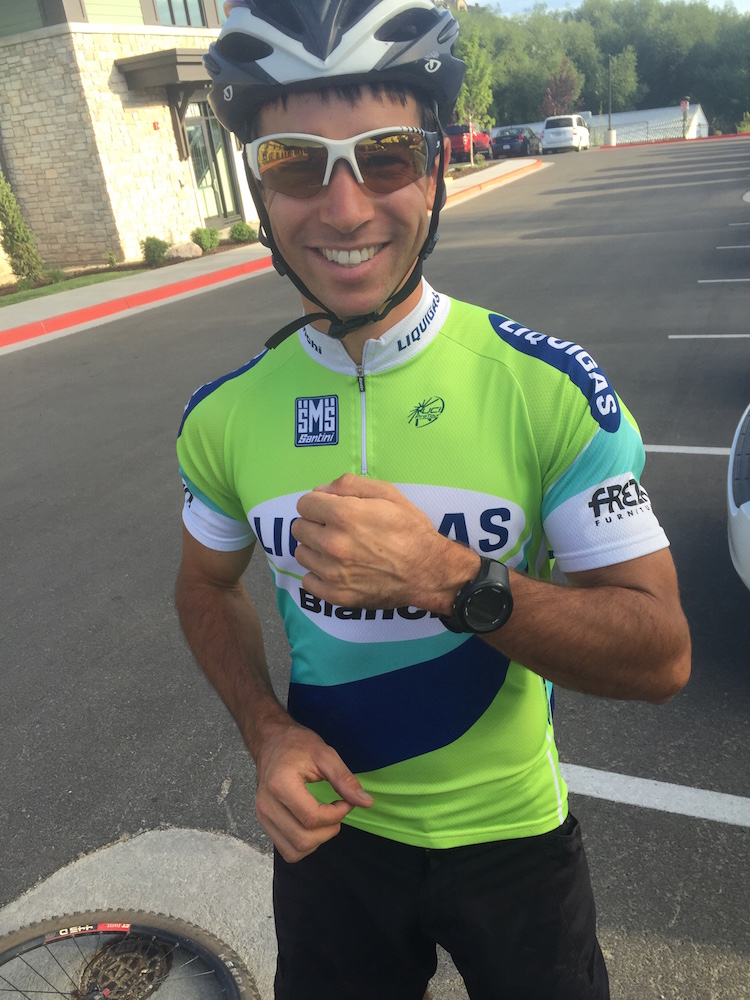
    U.S. Ski Team member Noah Hoffman with his Suunto Ambit heart rate monitor, compatible with Firstbeat technology.
    U.S. Ski Team member Noah Hoffman with his Suunto Ambit heart rate monitor, compatible with Firstbeat technology.

    One of the elite athletes that Caldwell coaches on the U.S. Ski Team is Noah Hoffman. Hoffman’s perspective is interesting in that he is exclusively focused on outcomes, not on any of the theory or science behind the system.

    “I don’t really look at the numbers; I rely on Zach for that. All I know is that it helps me a great deal,” Hoffman said during an in-person interview. “I’ve been using the system for a while and I love it. It gives me piece of mind when I’m going into a big training block that I can handle the training load. I know I’m not going to drive myself to oblivion. It’s also very valuable if you start to feel rundown from travel or illness, as it gives you good feedback on just how much you should back off or push through.”

    Another elite skier to use the system is Sophie Caldwell, winner of a World Cup this year. “I’ve only been using it for about a year, but I love it,” she said on the phone. “When I see my recovery trending downward, I can catch it early, which is so key. It’s also been very interesting to see which workouts take more out of me. I’ve noticed things like if I’m in Level 1, I can go forever, but as soon as I start going into Level 2, there is a much bigger cost there. I know this is very different for different people, so this allows both the athletes and the coaches to see that different workouts affect different people in different ways. Liz Stephen [U.S. Ski Team teammate) and I are both coached my Matt [Whitcomb] and we’re amazed when we compare data on how different workouts effect us. I find this fascinating and it clearly shows how important individualized monitoring is for athletes. If Liz and I were attempting to follow the same program, it wouldn’t work well for either of us. So thanks to the data and insight we’ve gotten from the system, we’ve all learned a lot about ourselves and training.”

    Without a doubt the most ringing endorsement came from Tad Elliott, who had a history of illness and overtraining. “Firstbeat saved my career. I was so sick and struggling so much with how to carefully and gradually return to full activity, I never could have made the comeback that I did without Firstbeat. It is that important to me. Now, my case may be a bit extreme, but it is most certainly very useful for all endurance athletes, in particular busy ones.”

    Weaknesses

    Is this system perfect? Of course not. Firstly, to achieve nighttime recovery data, here’s a shocker, you have to wear something when you sleep. Firstbeat gives you two options: your traditional HR monitor chest strap or specially dedicated chest sensors.

    The HR monitor chest strap is easier, cheaper and I suppose looks less weird (though a word to the wise: prepare yourself for lots of comments/questions from your significant other). The disadvantage is that this setup is more prone to error. The chest sensor option is very, very accurate, but not only do you have to buy electrode patches (cheap, but a PITA to remember to bring on trips and re-order) you also look like you are undergoing screening for the Mercury space program every night as you prepare for bed. The system provides uber-accurate measurements, but sadly I found it to also be a bit wonky. If you do not upload the data every few days, you experience the dreaded “system crash and freeze” therein losing all of your data. This is not an issue if you stay on top of your uploads, but it seems as though this should work better for a system of its price. Sleeping with either contraption is a bit of an adjustment, but thankfully FBD is a good sleeper and after a few nights I don’t even notice either option. Your mileage may vary.

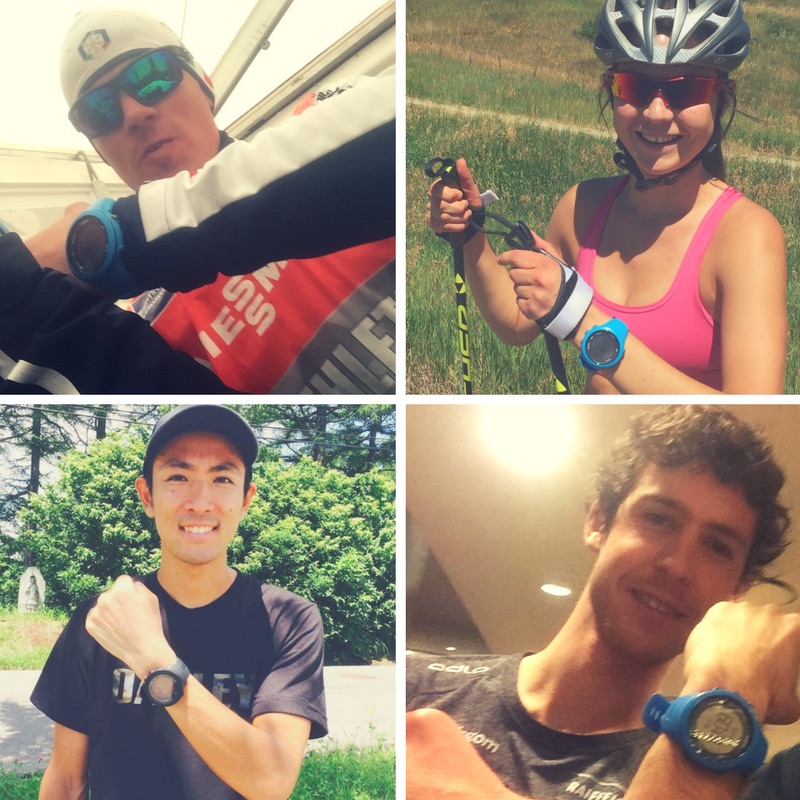
    Several high-level skiers show off their Suunto Ambit heart rate monitors:(clockwise, from upper left) Italian nordic combined skier Samuel Costa, Steamboat Springs Winter Sports club alumn and current CU skier Lucy Newman, Swiss nordic combined skier Tim Hug, and 2014 Olympic silver medalist Akito Watabe of Japan. (All photos: FBD)
    Several high-level skiers show off their Suunto Ambit heart rate monitors:(clockwise, from upper left) Italian nordic combined skier Samuel Costa, Steamboat Springs Winter Sports club alumn and current CU skier Lucy Newman, Swiss nordic combined skier Tim Hug, and 2014 Olympic silver medalist Akito Watabe of Japan. (All photos: FBD)

    The system requirements claim that it can work with several different heart rate monitors, but everyone I’ve spoken to uses a Suunto Ambit 2 or 3, myself included. I found the Suunto to be superior to the Garmin even as a stand-alone HR monitor, so using it for FB was an easy transition. And I’m not alone — look on the wrists of many a World Cup skier and you’ll see a Suunto, so I don’t view this as a negative, but knowing that you may need to also buy a new watch is an important consideration for budget and ROI. Then there’s the issue of the software not running on Mac. This can easily be overcome by installing an emulator, but again, it seems like software of this price should be Mac compatible.

    On a more macro level, “power user” (see what I did there?) Zach Caldwell offered a few more criticisms, “Overall the software could be a bit more user friendly. There is a lot going on, which is a good thing, but this means that it can take some time to understand how to correctly interpret the data. Perhaps more importantly, it is a speedometer. It tells you how fast you’re going. It does not tell you how fast you should be going. This is not a weakness, but rather a common misperception of the utility of the device. It is a fantastic device, but all users and potential users need to be aware of what is actual does and does not do.”

    Galanes seconded this observation, “People make the mistake of buying the software, installing it, going for a run, then looking for something magical. It doesn’t work that way. You need to establish a baseline for recovery, do some VO2 tests and begin to look for trends. It takes a few weeks before the data will start to be meaningful and you need to understand how to properly interpret it, but once you have all of that down, it’s the best thing out there by a long shot. If you can work with a qualified coach who has experience with the system, that’s the best of both worlds.”

    “People make the mistake of buying the software, installing it, going for a run, then looking for something magical. It doesn’t work that way. You need to establish a baseline for recovery, do some VO2 tests and begin to look for trends…” — Jim Galanes, Olympian, former U.S. Ski Team coach and current Firstbeat rep, on Firstbeat system

    Flora also believes that metrics such as heart rate, lactate, etc., need to taken in context and used as a part of the “big picture”. “HRV can help athletes see trends and match up with what they’re feeling, which is very important, but using it as a main driver can be complicated,” he said. “I am a big believer in athletes learning how to understand what’s happening with them.”

    Biggest Takeaways

    “I’ve been around sport for a long time,” said Caldwell, “first as an athlete and then as a coach and one of the biggest things that I see while advising my athletes is just how hard it is to coach yourself. I include myself in this, too: my personal instincts for training are terrible. Every basic instinct I have is to run myself into the ground. I always thought I just wasn’t tough enough, but in reality the problem was that I was way too impatient and way too stupid. I wanted to go faster right away and I didn’t want to listen to my body. I know this is not just me either, so being able to quantify some of these issues helps me have a good discussion with athletes in a very non-threatening way, which is important.”

    “One of the biggest things that I’ve learned is just how right coaches are,” Hoffman said. “As athletes we always hear about the importance of rest and recovery, but we you can look at the data right on the screen about how your behavior impacted your ability to train, that is much more powerful than anything a coach can say.”

    Fellow U.S. Ski Team member Sophie Caldwell agreed, “I’ve become a lot more aware of my recovery and the impact that different workouts has on recovery. It makes me think a lot more about how important recovery is for success. It’s forced me to pay more attention to all of the other parts in my day and that’s a good thing, a very good thing. I’ve been using it for almost a year, and while I’m not at the point where I rely on it 100 percent, it is very helpful to see my trends. Sometimes it shows that I’m getting into a bit of a hole and this helps me stay in front of it. I also use it to ramp things up if it looks like I can handle more load. I can probably do a pretty good job guessing, but I certainly would have missed it a few times and it is in those instances that it is particularly helpful. My overall experience is very positive.”

    Hoffman continued, “One of the first things that I did when I started using the system was I collected data for 24 hours/day for 6 weeks. What we learned with this is that my activity through the day correlated much more highly than I believe earlier to my nighttime recovery scores. Some of the coaches had told me that they thought I was being too active in between training sessions and that’s exactly what we found. It was also surprising the types of things that disrupted recovery. I’m a competitive guy and it turns out that even board games elevate my stress levels enough to impede recovery. I never would have guessed this. It’s also important to note that while we have prioritized recovery in our use of the system, I definitely do use it for training and racing, in particular for things like pacing. It helps you verify what you think you already know in terms of feel. I look at it as a great safety net.”

    Applicability for Age-Groupers

    So is this just a tool for the over-80 VO2 crowd with Olympic aspirations? Hardly. In fact, given the complexity of training for any race while working full time, this system is probably even more applicable to age-group athletes. “It’s probably more important that people who aren’t full-time athletes use this system,” noted Hoffman. “It’s WAY harder to balance your training load that manages your energy appropriately, as non-professional skiers have so many other distractions. I can at least try to devote most of my energy to training, so it’s easier to recover and not overdo it, but for people who have lots going on, it would be incredibly valuable. It is an important guide to help you train effectively with everything else that you have to do.”

    Zach Caldwell agreed: “If you use a system like Firstbeat to measure stress load external to exercise output, you’re nailing things down from both sides. Neurological state and physiological cost and that’s a great thing. Human performances lives in the gap between input and output. If you’re only quantifying one or the other, you’re opening yourself up for surprises on race day, I don’t care what sport you’re in.”

    Parting shots

    In this day and age of the “shallow reader,” this article was long, perhaps too long for the taste of many, but there’s a lot going on here and I felt it was important to accurately describe the power and limitations of this very exciting technology from multiple perspectives. How you proceed from here is up to you, but to help perhaps guide some of your next steps, I asked some of the people the most familiar with the system for their advice to those considering taking the plunge.

    “Jump in with patience,” advised Zach Caldwell. “Definitely do it, but go in with realistic expectations. The system won’t pay dividends in the first week, but if you are patient for three months, you absolutely will not be disappointed. But you need to be committed: three months of wearing this thing to bed. Training with it every day. Doing baseline and follow-up testing. Learning how to interpret the results. But if you are consistent and patient, you will learn a lot. It is an incredibly valuable tool when used correctly.”

    Galanes went one step further, “Balancing endurance and intensity training is not easy and finding that line without the insight that the system provides in very, very difficult. FB gives you access to much better data and a much bigger picture. It is going to change your paradigm on what is optimal training and it is going to change how you view endurance training, all in a very positive way, but you need to be sure you are using the system correctly. If you do, you will feel better and you will perform better.”

    Elliott added, “If you’re juggling work, family, illness or any other stressor, I strongly encourage everyone to use it. I never could have made it back to the top level with the data I got from the system and I know it will help most, if not all athletes.”

    “I’ve had a very positive experiences with it,” said Sophie Caldwell, “so I absolutely advise people to use it, but start out cautiously. Track your training and sleep, but don’t rely 100 percent on this system. You need a baseline, but the more time you spend with it, the more you learn to correlate how you feel with what the data is showing, which makes you even more comfortable with it and able to count it on even more. It’s not the only tool that I use, but I sure am glad that I have it.”

    Hoffman summarized the whole process nicely and offered solid advice, “Take it slow at first. Firstbeat tells you a lot, so it can be a bit overwhelming. Take your time, learn what the numbers mean or find someone who does and be patient. It takes a while to understand how this is all relevant to you, so don’t get overwhelmed by it. Stick with it, though, and you’ll be glad that you did. You will learn a lot and you’ll be a better, happier athlete.”

    For more information on Firstbeat technologies and pricing information, visit Firstbeat.com

  • Wednesday Workout: Hoffman’s Personalized Plan to Ramp Up the Hours

    Wednesday Workout: Hoffman’s Personalized Plan to Ramp Up the Hours

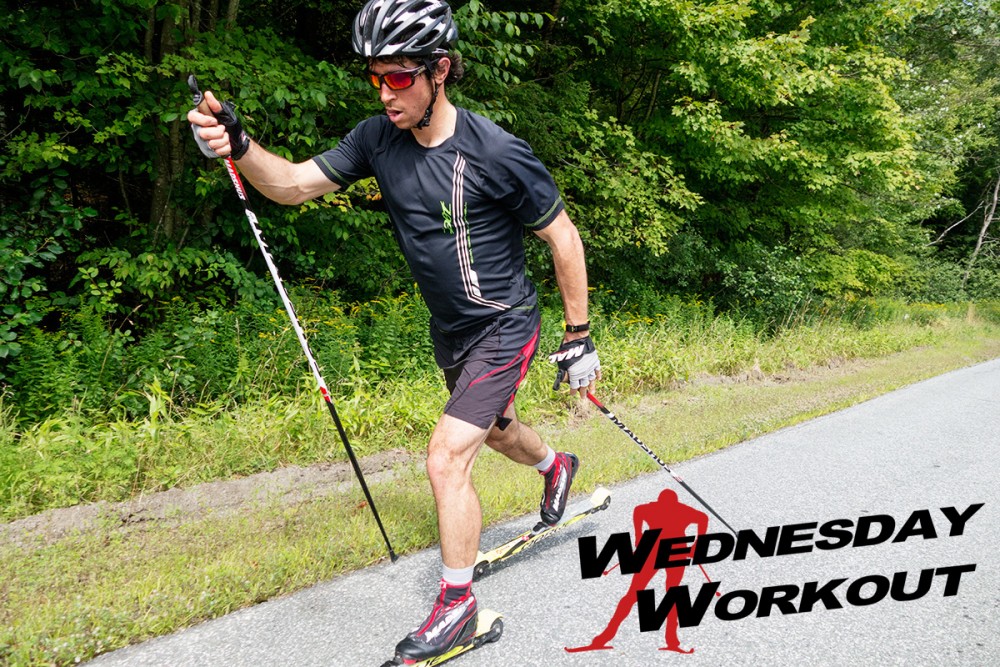
    U.S. Ski Team member Noah Hoffman striding on roller skis near Putney, VT. (Photo: Zach Caldwell)
    U.S. Ski Team member Noah Hoffman striding on roller skis near Putney, VT. (Photo: Zach Caldwell)

    Putting in the time to make it 1,000 hours. At 26 years old, that’s the volume U.S. Ski Team member Noah Hoffman has in store for his training year. 

    If you read Hoffman’s blog — which often details the nitty gritty of a World Cup athlete’s life — you’ve no doubt noticed he’s decided to do things differently this year. According to Hoffman’s 2015/2016 training log, he totaled 678 total hours.

    This training year his goal is 1,000 high-quality training hours.

    Zach Caldwell, Hoffman’s coach responsible for monitoring his recovery post-training, explained that his athlete is not making an extreme jump.

    We have to be clear, what he is biting off is not a whole new training load,” Caldwell said over the phone. “It’s reducing distractions, focusing on better continuity and holding the training pace at a level he is already shown an ability to tolerate and benefit from. So it’s not as though we took everything and bumped it up 20 percent or 30 percent, or whatever it ends up being. It’s not like we are asking a guy who can run eight-minute miles to go out and run six-minute miles.”

    According to both Hoffman and Caldwell, the junk hours added up last year. Below is a snapshot of what Hoffman wrote on his blog when explaining why some of his training was compromised as “limited” or “off”:

    “Missed, Compromised or Scheduled as Low Training Days

    – Off days in April: 25

    – Scheduled Off days for training (Summer and Winter): 15

    – Off Days or shortened Days due to “vacations” (Maggie’s wedding, fall desert trip, Quebec City and Davos “Break”): 11

    – Off Days or Compromised Training Days due to Travel: 36

    – Off days due to illness, injury or medical procedure: 1

    – Shortened training days due to technique work: 19

    – Days Limited to about an hour a day of training for posture project: 30

    Total Days limited or off for all above reasons: 137 (37% of all days in the year)

    So how exactly will Hoffman bump up the hours?

    Over the summer, he will log big days both running and rollerskiing. Hoffman said in a podcast interview  (to be posted on FasterSkier at a later date) that the big days are in fact not getting any bigger. The majority of the hours increase is gained through eliminating the junk days, the compromised training.

    “What he is biting off is not a whole new training load … It’s not like we are asking a guy who can run eight-minute miles to go out and run six-minute miles.” — Zach Caldwell on the planned jump in Noah Hoffman’s training hours

    This past Monday, Hoffman began a two-week training block during which he’ll total approximately 53 hours.

    Basically, Hoffman organized those two weeks into 3 x 4-day mini blocks. The mini blocks consist of 3 x 5-hour days in succession, followed by a two-hour “recovery” day. The final mini block of five-hour days — days 9, 10, and 11 — ends with a rest day sandwiched between two recovery days — those are days 12, 13, and 14. Hoffman plans to repeat the two-week training cycles for the remainder of the summer months.

    The following “Wednesday Workout” features Day 1 of Hoffman’s most recent two-week block:

    – Yoga (15 minutes) followed by an approximately 30-minute strength workout done at home.

    – Strength (30-40 minutes):

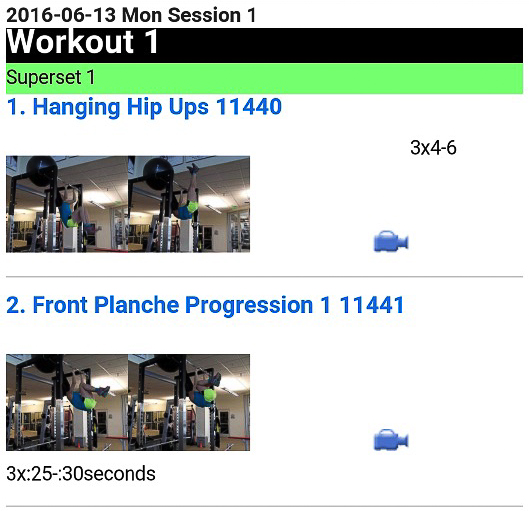
    1. Hanging Hip Ups 3 x 4-6
    2. Front Planche Progression 3 x 25-30 seconds
    Noah Hoffman Strength Exercises 1 & 2. (Photo: Noah Hoffman)
    Strength exercises 1 & 2
    (Courtesy photo)


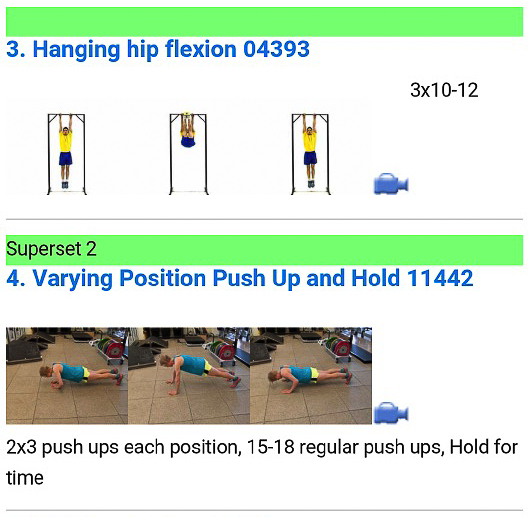
    3. Hanging Hip Flexion 3 x 10-12

    4. Varying Push Ups 2 x 3 push ups (varying push Up and hold) + 15-18 regular push ups, hold for time

    Noah Hoffman Strength Exercises 3 & 4. (Photo: Noah Hoffman)
    Strength exercises 3 & 4


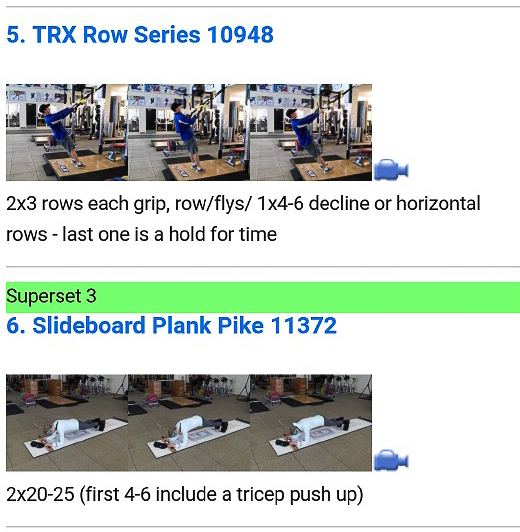
    5. TRX Row Series 2 x 3 rows each grip, rows/flys / 1 x 4-6 decline or horizontal rows – last one is a hold for time

    6. Slideboard Plank Pike 2 x 20-25 (first 4-6- include tricep push up)

    Noah Hoffman Strength Exercises 5 & 6. (Photo: Noah Hoffman)
    Strength exercises 5 & 6

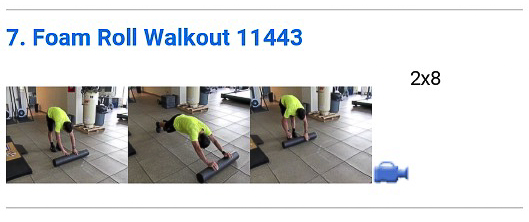
    7. Foam Roll Walkout

    Noah Hoffman Strength Exercise # 7. (Photo: Noah Hoffman)
    Noah Hoffman Strength Exercise # 7. (Photo: Noah Hoffman)

    – Then it’s onto a morning-distance trail run: 3 hours at Level 1

    – Followed by an afternoon/early evening-distance rollerski: Double pole for 2 hours at Level 1

    Hoffman explained that his pace for the big five-hour days is controlled and at the slow end of the effort spectrum.

    “Level 1. All the distance will be at Level 1, both the run and the double pole,” he said.  “Which for me is 110 to 130 beats per minute running on mountain terrain. And average double poling, it’s 11 mph for me on my average speed. That’s all very arbitrary, I do enough Level 1 training that I know the paces by heart rate and by speed.”

    If you are curious how the effort compares on his recovery days, here’s the details.

    “I would say that the pace for those sessions should be lower,” he said. “It should be a recovery focused pace to play into the theme of the day. If anything it would be the low end of Level 1, although my Level 1 range is 110 to 130, and that’s a pretty big range … And the theme I have for the summer versus the winter is I train more in the summer than most of my teammates and less in the winter than most of my teammates. I really believe that for me it works well that the high stuff to be high and the low stuff to be low and that goes on a day to day basis, and on a seasonal basis.”

    As with any athlete making jumps in their training hours, Hoffman is no different in terms of keeping things tempered and being mindful of the race season many months away.

    To accrue his increased high-quality load, Hoffman will have fewer of what Caldwell calls “circuit breakers.” Ensuring that Hoffman is benefitting from his increased hours and not breaking down is one of Caldwell’s primary jobs.

    “The big concern, without those circuit breakers if you will — I have always thought of those breaks as being a little bit like circuit breakers, an opportunity for some physical recovery and a shift of load,” Caldwell said. “The big challenge without those circuit breakers is to manage the accumulation of load, and to make sure he is benefiting from the training. And we are principally using Firstbeat Systems to do heart rate variability analysis of his overnight sleep recovery.”

    Over the summer, Caldwell said he’ll focus on Hoffman’s longer-term recovery trends, which he’ll keep a close eye on after each of his two-week training blocks.

    “Coming out of that we want to see evidence that over those two weeks he is putting up improved recovery scores from before,” he said. “It doesn’t happen to be any one test, we just want to see the the overall trajectory be positive at this time of year. As he gets closer to competition season, we want to see more of a daily response. We want to tighten the timeline on that recovery. But what we are not willing to do is do bank 12 weeks of training against the promise of some future response without seeing a response during that time frame. We are not doing it based on faith.”

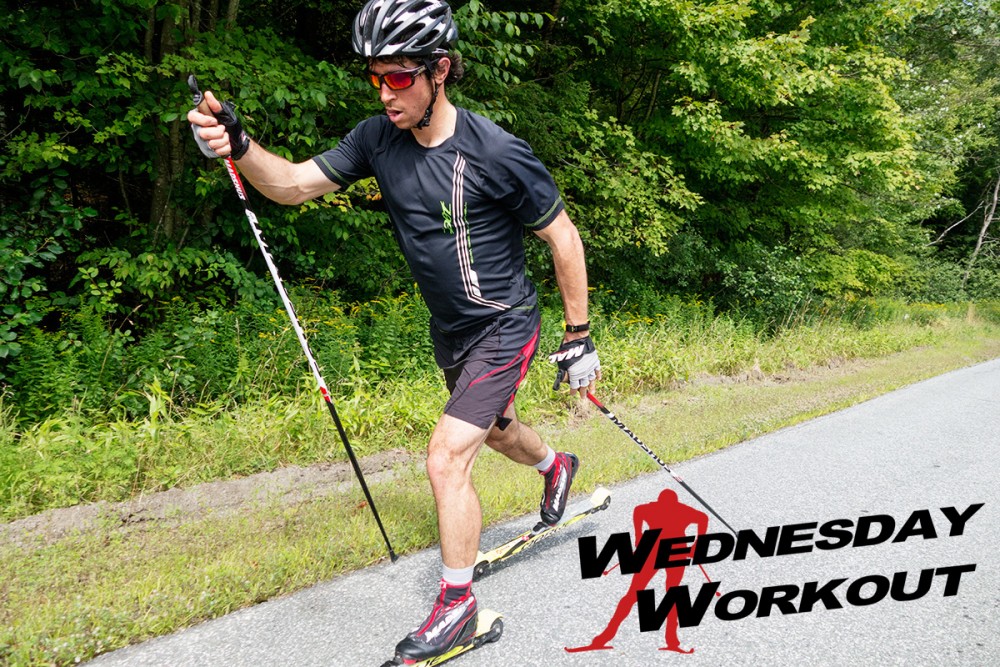
    U.S. Ski Team member Noah Hoffman skate roller skiing near Putney, VT. (Photo: Zach Caldwell)
    U.S. Ski Team member Noah Hoffman skate rollerskiing near Putney, Vt. (Photo: Zach Caldwell)