From the FasterSkier archive — posts syndicated from athletes’ and coaches’ own blogs between 2004 and 2012, kept online as published. Current coverage is at fasterskier.com.

Tag: FIS Calendar Conference

  • Interview: Randall on New Developments in FIS Cross Country

    Interview: Randall on New Developments in FIS Cross Country

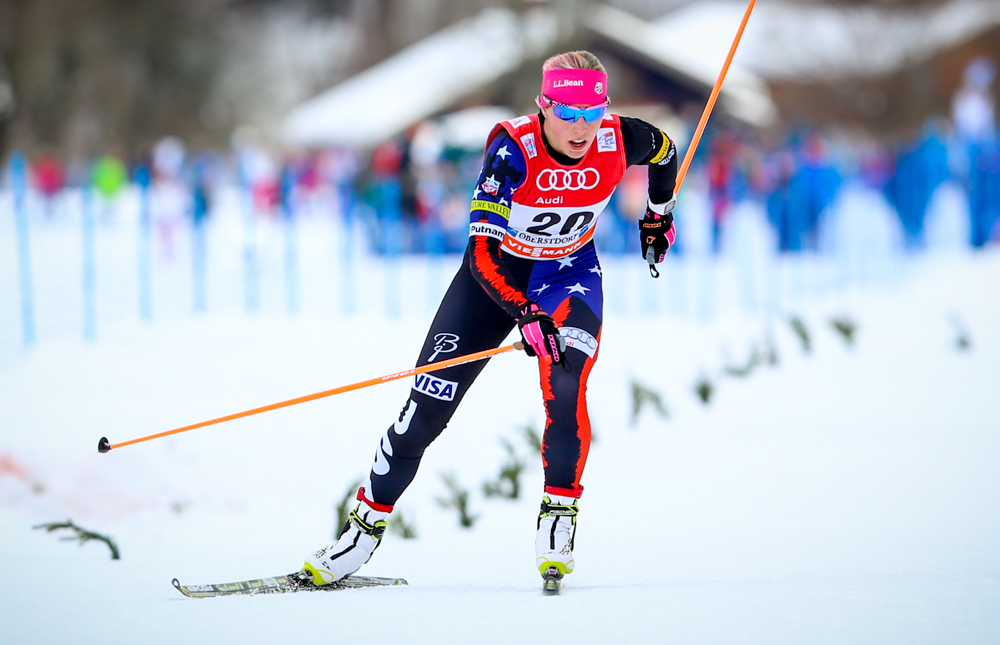
    Kikkan Randall skating to 22nd in the 2015 Tour de Ski prologue in Oberstdorf, Germany. (Photo: Marcel Hilger)
    Kikkan Randall skating to 22nd in the 2015 Tour de Ski prologue in Oberstdorf, Germany. (Photo: Marcel Hilger)

    The 2016 edition of the FIS Calendar Conference took place in Varna, Bulgaria from June 2 to 6. At the conference, Kikkan Randall performed her duties as the Athletes’ Committee Chair and FIS Athlete Representative on the Cross Country Committee. Tackling issues from yellow card procedure to National Team inequality, Randall helped present athletes’ concerns and shape FIS policy throughout the five-day conference. After a two year term as the Athletes’ Committee Chair, Randall was reelected and will serve alongside Norway’s Pål Golberg in the next term.

    FasterSkier talked with Randall about her recent trip, the new procedures, and the issues that are most important to World Cup athletes in the coming season.  This interview was condensed and edited for clarity

    FasterSkier: How was your time in Bulgaria?

    Kikkan Randall: It was really funny for me because I had just left the training camp with the National Team in Park City. I was just in a really good training rhythm and then I flew halfway across the world and was on the beach for three days. It was a bit of a shift but I feel like it was really productive.

    I did an athletes’ survey before we came so I had a clear idea of what some of the key issues would be from the athletes’ side, and some of the big topics on the agenda. I made sure I had a good presentation from the athletes. I was able to give that presentation and a lot of those points were integrated into the discussion and it felt like a lot of those points were really considered. Ultimately the decisions that were made were really good for the sport and things that the athletes will support.

    It was fun to come together with all of the ski family and not only talk about how to make the sport better in the coming season, but make sure that our sport stays strong over the next five to ten years.

    FS: What were some questions you asked your fellow competitors in the survey and what were their responses?
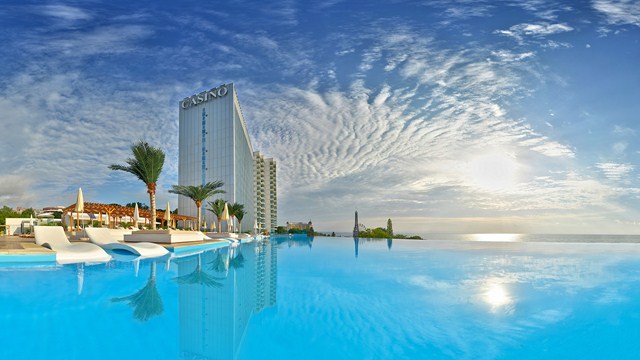
    Varna, Bulgaria was the site of the 2015 FIS Calendar Conference. (Photo: FIS)
    Varna, Bulgaria was the site of the 2015 FIS Calendar Conference. (Photo: FIS)

    KR: One big topic this year was the prevalence of double-poling and the fact that the guys were double-poling a distance race for the first time. [There was] also the problem of technique infractions in classic sprints. I asked a few questions and wanted to see if this was something that athletes thought was a normal evolution of sport or was this something that needed to be corrected. I think that athletes felt like this was the evolution of the sport but that we should make sure we have rules in place and make sure that the race is made as fair as possible.

    We talked about a few different ways to deal with technique infractions. In the past the jury the would give a yellow card, which is like a written warning, but they would have to call an athlete in, do a hearing, explain what happened, and possibly use video evidence. When you’re talking about a sprint day where things are moving really fast, that just clogs up the system. We felt comfortable with a new rule for the jury to issue a yellow card without a hearing as long as there is more than one jury member concurring. I think that’s going to be good because once you have a yellow card, if you then have another technique infraction it’s an automatic disqualification.

    [The rules] are just trying to ensure that the athletes understand that technique fractions are serious. We also worked on some rules to make sure that classic technique is more defined.

    FS: Were there any other topics?

    KR: Another thing that came up had to do with tours and the number of bonus seconds awarded for sprint competitions. [FIS] was toying with the idea of reducing the sprint bonus to 30 seconds per sprint, but I explained that going through four rounds of a sprint is quite taxing and the athletes should get credit for all their work. In the scheme of the overall tour sprinters may have the advantage on sprint day and a distance skier may have the advantage on a distance day, and you really have to try and keep that as equal as possible. That feedback was received and they decided to keep the 60-second bonus. I think the athletes will be happy about that.
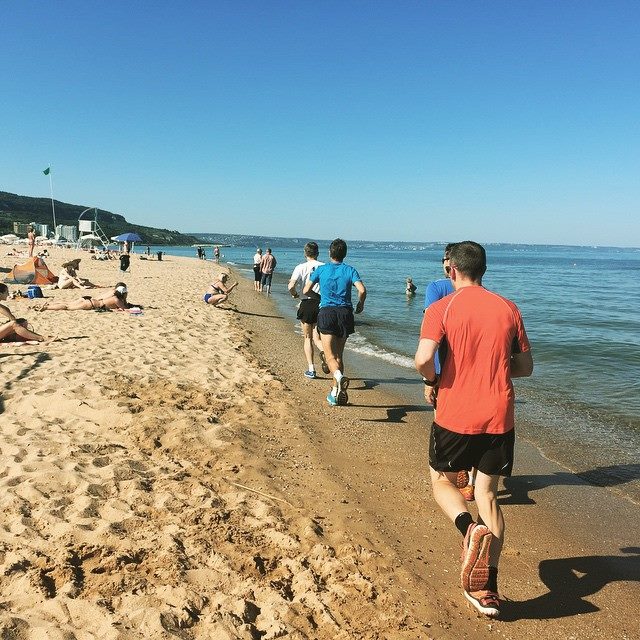
    It wasn't all work for Kikkan Randall at the 2015 Calendar Conference in Varna, Bulgaria. She and members from the cross country committee took advantage of good weather to run on the beach. (Photo: Kikkan Randall/Facebook)
    It wasn’t all work for Kikkan Randall at the 2015 Calendar Conference in Varna, Bulgaria. She and members from the cross country committee took advantage of good weather to run on the beach. (Photo: Kikkan Randall/Facebook)

    And then we talked about course conditions, and what to do when the course is soft. Should they always try to make hard conditions? or is it just the nature of the sport? The athletes felt like organizers have to do as much as possible to keep the course in shape and keep the conditions as firm as possible. That played into some decisions surrounding course access from the team side and the use of salting.

    That also factored into our discussion on the new interval start procedure. That’s going to have the top-15 seeded athletes a little bit higher up in the starting order, and give the coaches a chance to actually select which spots in the seed group their athletes will start.

    FS: What was the consensus on last year’s new sprint heat selection procedure trial?

    KR: That was probably the third major point on the athletes’ survey. We expected that there would be a more negative response to it. As an athlete I can appreciate that a sprint day is already long and complicated enough and now you throw in the tactic of ‘what sprint heat do I pick?’ and it eats into recovery time.

    “We recognize that the current trend we’re on is dangerous for the sport. We have to get creative and help some of the smaller and medium sized nations catch up in terms of the ‘arms race.’ When you have all these talented athletes who are training so hard it can come down to some of these smaller things.” – Kikkan Randall on income and resource inequality between national teams.

    Actually the athletes were about 50-50. When we discussed that in the World Cup committee, since there wasn’t an overwhelming negative reaction, it was decided that we would continue to test this procedure to test over the whole of next season so we can continue to test whether it is a good thing or bad thing. At the end of next spring we’ll evaluate after a full season of testing.

    FS: Was there an issue you hoped to tackle that didn’t get discussed?

    KR: I felt like all the major points that I saw from talking to athletes and from the surveys were definitely addressed. One of the big topics that we talked about that we didn’t come up with a resolution for was the fact that there seems to be an income and resource inequality amongst the teams. It is really unhealthy for the sport long term. If it continues with just a few teams at the top our sport could be in jeopardy in a few years.

    We talked about strategies for us to equalize resources a little bit and maybe share some of the income in the sport. There was one proposal that changed the distribution of the red group pay list that would take a few places from the biggest teams like Norway and give the chance to have some of the smaller nation’s athletes travel paid for, which in turn frees up the money for more wax support.

    We recognize that the current trend we’re on is dangerous for the sport. We have to get creative and help some of the smaller and medium sized nations catch up in terms of the ‘arms race.’ When you have all these talented athletes who are training so hard it can come down to some of these smaller things.

    Everyone was tasked to be creative over the summer and there are some working groups. Hopefully we’ll see some more progress on that in the fall and come up with some solutions that can get some more nations back on the podium.

    ***

    (Click here for a condensed list of cross country decisions at the FIS Calendar Conference)

  • A Balancing Act: Keeping World Cup Skiing Relevant

    A Balancing Act: Keeping World Cup Skiing Relevant

    Martin Johnsrud Sundby (NOR) on his way to third place.  Photo: Fischer/Nordic Focus.
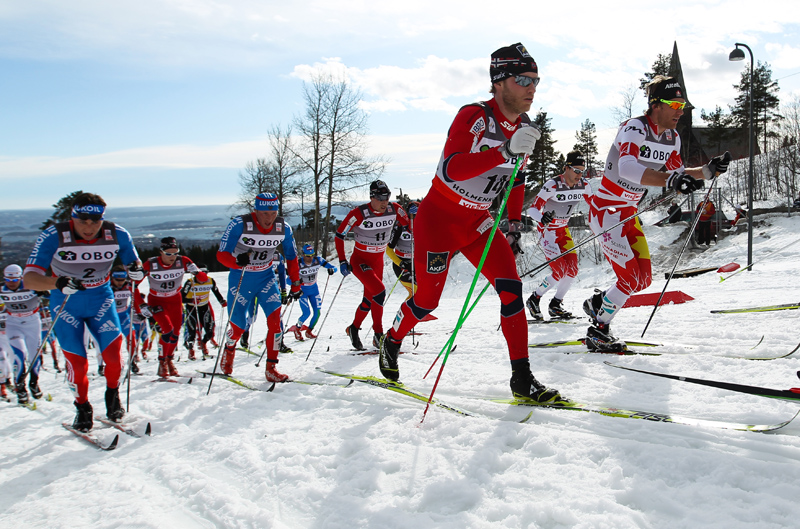
    World Cup athletes competing in Oslo, Norway, in 2012. Television interests have influenced the evolution of the Holmenkollen 30/50 k over the last few years, and the event continues to represent the challenge of keeping cross-country relevant while staying true to the sport. Photo: Fischer/Nordic Focus.

    Every year, at the International Ski Federation’s (FIS) spring Calendar Conference, the media company responsible for the production and distribution of FIS World Cup and World Championship race coverage gives a presentation surveying TV audience data from the last season. The presentation from Infront Sports and Media is a kind of performance review for the entire sport. Coaches, administrators and organizers from around the globe attend the meetings to play a part in the creation of future World Cup calendars, but a key part of the process is the consideration of how many people tuned in to the races they either participated in or produced over the last year.

    The inclusion of a television viewership presentation at this meeting makes clear the fact that media plays a significant role at the highest level of the sport. FIS makes no secret of this; last summer, newly promoted FIS Cross-Country Race Director Pierre Mignerey spoke openly about television’s influence on the World Cup in an interview.

    “We can like it or not but today a high-level sport cannot live without television,” he said. “Without substantial television coverage in Germany, Cross-Country skiing, like most winter sports, would get in great difficulties and even probably perish in short term. Germany and Poland are the largest countries in terms of Cross-Country skiing viewers. It is no coincidence that the most important World Cup sponsors are German companies.”

    In short, television viewership is critical to the very existence of the sport. The size of the World Cup’s audience every year directly affects the amount of sponsorship dollars that TV, organizers, FIS and ultimately athletes and national teams can negotiate.

    “The development of our sport (like all high-level sports) requires to take into account the interests and wishes of television,” Mignerey continued last July. “This does not mean that we accept all the proposals but generally what television has looked for (create dynamic competitions, attacks, failures, strategy. Etc.) has been in the right way and has never put the essence of our sport in danger.”

    A central challenge of FIS’s spring meetings, therefore, is to set a new World Cup calendar that strikes a balance between the interests of television and the interests of  the other parties who play a role in the circuit: organizers, national governing bodies, national teams and, of course, the athletes. Representatives from each demographic play a role at the conference on committees and sub-committees, and the decisions  reached at the meetings are, in theory, a compromise between all parties involved.

    This spring, those compromises included the decision to keep a longer ski exchange penalty in the 30/50 k in Oslo, Norway, the creation of a new nordic opening weekend across all nordic disciplines in Kuusamo, Finland, a temporary break from city sprints, and an overall shorter season.

    Knowing that television plays no small role in the World Cup calendar, it’s worth asking which calendaring decisions were made with whose interests in mind. To begin to understand the reasoning behind next season’s schedule design and their implications for national teams, we called up U.S. Ski Team head coach Chris Grover, who attended last month’s Conference and sits on the cross-country World Cup committee and the Executive Committee.


    Athletic Decisions Dominate Pre-Olympic Races

    According to Grover, the Conference was relatively low-key this spring. Many of the calendaring changes between the 2013/2014 season and the one before it have to do with athletic needs, not television’s. Specifically, many early season race formats were set to accommodate training and team selection needs before the Olympics, which is the highlight of next season.

    “There are some variances in terms of the schedule from year to year — how many relays you can get in, if you can get in a skiathlon before Christmas,” Grover said. “I think one of the main considerations that always plays into that, especially in an Olympic year, is that a lot of the teams and coaches really want to use the World Cup as their trials, and want to be able to pick their Olympic teams based on races they’re going to see at the Games.”

    This is why there are so many skate sprints and classic 10/15 k races before February; those races are the shorter, individual events that will be seen in Sochi.

    “Bigger teams in particular are trying to pick out their four best skate sprinters and their four best classic skiers, and so that becomes a little more paramount in an Olympic year,” Grover said.

    The Olympics also partly explain why there are no city sprints on the schedule. Grover says that coaches generally want to pick their Sochi sprinters based on results from courses that most closely resemble Sochi’s challenging terrain, and city sprints are simply too flat.

    The calendar also makes considerations for a pre-Olympic altitude training block, Grover said. The last pre-Olympic World Cup was placed in Toblach, Italy, specifically for the venue’s proximity to popular altitude training venues in central Europe, where most World Cup athletes will likely train on the break before flying to Russia.


    Where Audience Influences the Calendar: Strategies to Generate Hype

    One major difference on the calendar next season is on the very first weekend. Kuusamo, Finland, site of the Ruka Triple mini-tour, is the season opener next season instead of its usually start in Northern Scandinavia. FIS decided to start the World Cup in Kuusamo this winter because its possession of a jumping hill allows that weekend to be a one-stop season kickoff for cross-country, ski jumping and nordic combined. Grover says FIS hopes the event will boost hype at the start of winter.

    “One goal of the cross-country committee and FIS is to really have a nordic opener. So Kuusamo has the opportunity to combine forces with nordic combined and special jumping,” Grover said. “They feel that’s a way to build interest in the nordic sports when you start them all at once, so I think we’ll continue to see that be the kickoff weekend. Over the next few years that opening weekend may rotate a little bit more between Kuusamo and Lillehammer.”

    Television’s interests show again in Oslo, the penultimate weekend on the World Cup. It’s one of the highest-profile events of the year, and it’s also a venue that has already seen significant change to its races in the name of spectator interest. The 30/50 k, originally an individual event, became a mass start in 2009 before ski changes were added to increase the importance of strategy and increase spectator interest. Last year, the race was changed again with the audience in mind; more distance was added to the ski exchange pit to add even more drama.

    After a trial run of the newest format, it appears that the penalty component — and its accompanying ski changes — are here to stay for at least another year in Oslo.

    “The feedback from television was positive; it provided more interest to the television spectator,” Grover said. “And the athletes — Kikkan [Randall, one of FIS’s athlete representatives] surveyed them, and she’s obviously surveying athletes on all kinds of issues on the World Cup. And they were mixed on that particular question, as I recall.”

    According to Grover, approximately one third of the athlete survey respondents were supportive of the exchange penalties, another third preferred exchanges without the added time, and another third were against the concept of ski changes altogether.

    “So it kind of comes out a little bit of a mixed message, but I think what you end up with is two thirds of the athletes saying ski exchanges are great, but some debate within that group in terms of how long [the penalty] should be,” Grover said. “So right now, it’ll stay at that longer distance.”

    Grover added that his personal opinion on the penalty wasn’t strong one way or another.

    “It did not play to our advantage last year, but that’s just because we had some athletes that didn’t necessarily make the best tactical decision as to whether to change skis or not on some of those exchanges,” he said. “I think they learned their lessons a little bit about it, and will be stronger in the event next year. But…as a nation it’s the same decision making process for everybody, so everybody’s in the same boat and I don’t think it necessarily takes away from the race from an athletic perspective.”


    How Much Television Influence is Acceptable?

    One of the ideas Randall brought to the conference as an athlete representative was a proposal to return the Oslo marathon to its original form — an individual event with no possibility for ski changes, just every athlete against the clock. The last time Holmenkollen hosted an individual 30/50 k was in 2008.

    The motion didn’t go through for 2013/2014 — Vegard Ulvang, the leader of the FIS cross-country committee, told the NRK last month that an immediate change would be impossible for organizers. But he also suggested the individual format could be considered again down the road.

    “It is very interesting that today’s practitioners so strongly desired [to bring the] interval start back,” Ulvang said via translation. “It is clear that the idea of ​​the individual’s struggle with himself through the forest remains very strong. So the question is whether the public thinks the same way, or if the athletes want to sing a song that nobody is interested in listening to.”

    The kind of event that takes place in Oslo, and the ongoing discussion surrounding the format, can be seen as a distillation of the challenges skiing faces to meet the sometimes-conflicting needs of its stakeholders — to keep itself relevant while maintaining the “essence of the sport,” as Mignerey put it.

    As the leader of the U.S. national team, Grover believes it is part of his job and of others in a similar position to help keep the sport relevant.

    “Frankly, it’s part of our responsibility is to make sure that cross-country stays popular, and cross-country continues to grow in popularity and that people are interested and tuning in and watching it,” he said.

    Regarding the mass start, ski change, and penalty aspects to the Oslo 30/50 k, he says, “if it’s one of those things that can make a difference in terms of popularity then I think we need to support it.”

    Ultimately, Grover thought the evolution of formats and rules on the World Cup should account for the interests of everyone that participates in the circuit, from the athletes, to television, to the organizers, teams, and coaches.

    “It’s a balance for sure…all those energies really need to be balanced in these calendaring decisions, and decision about the rules for a specific event,” Grover said. “The television is a big part of it. And you know, there’s other sports that are part of the FIS family that are really struggling with their television viewership and maintaining their market share, and I think we’re probably very fortunate in cross-country in that we’ve had leadership over the past however many years that has allowed this port to change, that has made steps to modify the types of races that we do to make those races more attractive for television. And because of that, we’ve built interest and a fan base in the sport and I think it’s critical that we continue to do so.”

  • Randall Brings Athlete Proposals to FIS Calendar Conference: Bring Back the Individual 30/50 k

    Randall Brings Athlete Proposals to FIS Calendar Conference: Bring Back the Individual 30/50 k

    With the mass start 30/50 k a staple at major championships, athletes would like to see the individual format return to the regular World Cup in the future. This is one of the proposals Kikkan Randall will bring to the FIS Calendar Conference this week in Croatia.
    With the mass start 30/50 k a staple at major championships, athletes would like to see the individual format return to the regular World Cup in the future. This is one of the proposals Kikkan Randall will bring to the FIS Calendar Conference this week in Croatia.

    Of all the races to go by the wayside in recent years, the 30/50 k is often missed by longtime fans of the cross-country World Cup. Athletes miss it too, and at the annual International Ski Federation (FIS) Calendar Conference this week in Dubrovnik, Croatia, one of the biggest items on athlete representative Kikkan Randall’s agenda is to propose its return.

    “[There is] already a mass start at major championships,” Randall said. “Every athlete says it’s something they want to see. It’s something we keep bringing up and it’s not really a FIS decision, it’s more up to the organizers, but it’s…an idea for the future.”

    The spring meetings began on Monday, where the governing body’s priorities are to finalize the 2013/2014 World Cup calendar and begin to think about a schedule for the non-championship year in 2015/2016. A major consideration from FIS Cross-Country Race Director Pierre Mignerey’s perspective is to create a race circuit that builds and retains interest in the sport.

    “We have some items to be discussed regarding next winter’s calendar,” he said in a FIS Cross Country press release. “I am convinced we will have a good competition program for the Olympic season. For the next seasons, the task for the Cross-Country Committee is to find an event that would retain the interest in our sport also during the ‘no-title year’ of 2016. We have received proposals for a couple of projects and we will discuss them thoroughly.”

    In that vein, Randall will bring another format idea to the table for the future that may be of interest to TV stakeholders: a mixed relay where men and women compete together, as seen on the biathlon World Cup.

    Another of the major items on her agenda will be to work on a standard procedure for situations like the athletes and governing body experienced in Falun, Sweden, in March, where skiers at World Cup Finals threatened to boycott the last three races on what they thought was a dangerous course. Last-minute meetings before the first race amongst athletes and between Randall and FIS created a media frenzy at the season-ender. In the future, Randall says, athletes don’t want to resort to such a dramatic measure to get results.

    “With the situation we encountered at the end of the season where we had a safety concern, we’re figuring out how we could better work with FIS and have a process in place where we don’t have to threaten to boycott to make something happen in the future,” Randall said.

    At the time, Randall said the threatened boycott was the biggest way she’d ever seen her fellow athletes come together on an issue, and the outcome was a groundbreaking example of what such unity could achieve. Overall, Randall says the relationship between FIS and World Cup athletes has evolved since she first became a representative of the Athlete’s Commission to the International Ski Federation in 2009. Randall shared her role with fellow representative Sami Jauhojärvi (FIN) for her first two terms, and she begins her newest one with Norway’s Øystein Pettersen, though Pettersen won’t be present in Croatia.

    “We’ve learned a lot as far as our place within FIS over the past few years, so hopefully we can continue to improve upon what we’ve built,” Randall said.

    Four years ago the meetings were also in Croatia, and at the time the athlete proposals were more basic, like what requirements should be mandatory at each World Cup venue. The formal network of athletes that Randall now leads was in its infancy then, and where once Randall struggled to get athletes to speak their minds freely, she says communication has now improved between athletes and their governing body.

    “Before I came on board there was no athlete involvement at the highest level. So I think on the cross-country side it’s been really positive; the cross-country committee has welcomed the athletes’ involvement,” she said. “We’ve done athlete surveys the last three seasons and we have a network of athlete representatives in each country, so the pathway of communication has improved. We still have a lot to do, but I know the way things work now so we can really start making things happen.”