Tag: FIS Congress 2014

  • Ambitious Tour du Canada Scheduled for 2016

    Ambitious Tour du Canada Scheduled for 2016

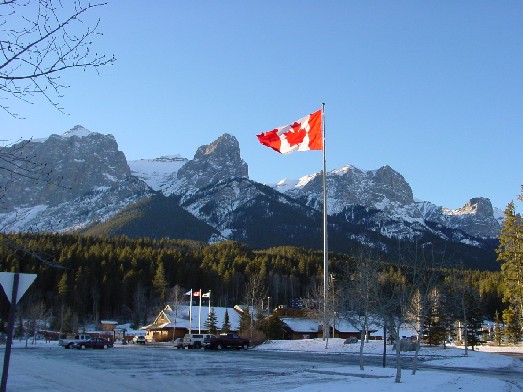
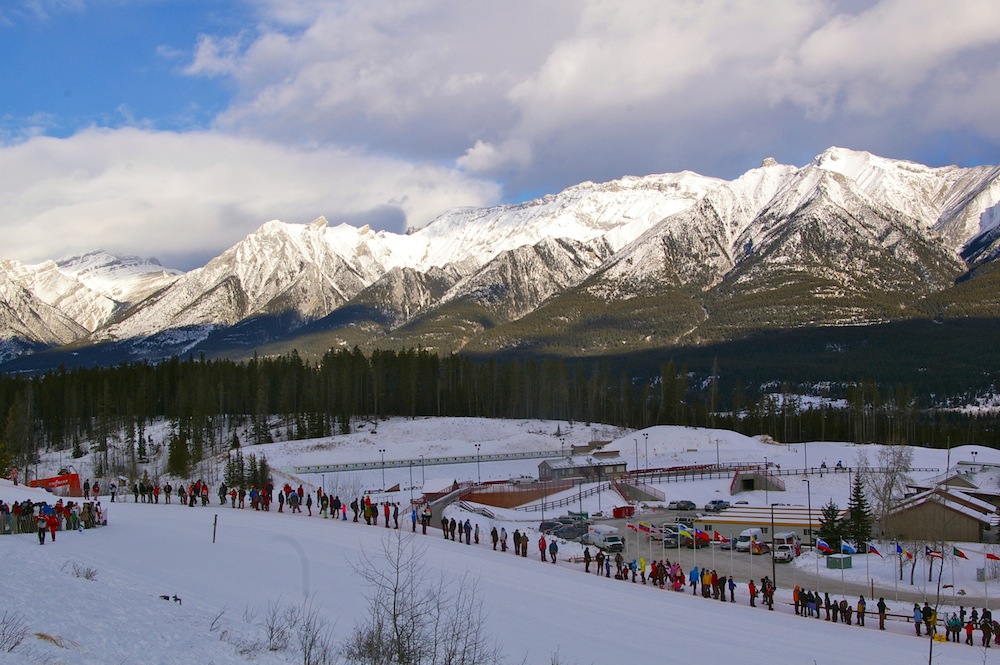
    The view from a higher point at the Canmore Nordic Centre during the 2012 Alberta World Cup, which took place Dec. 13-16 in Canmore, Alberta. It was the area's fourth World Cup since 2005.
    The view from a higher point at the Canmore Nordic Centre during the 2012 Alberta World Cup. The Centre will serve as venue for the fifth, sixth, and eighth stages of the newly slated Tour du Canada in 2016.

    Canada will be hosting a late-season World Cup tour in 2016. An exciting development for North-American skiing, the proposal cleared yet another hurdle at the International Ski Federation (FIS) 2014 Congress last week in Barcelona, Spain, after receiving a set program.

    The Tour du Canada will feature eight stages starting March 1, 2016 and continuing until March 12.

    Commencing with a city sprint in downtown Gatineau, Quebec, the tour will then travel to Montreal and Quebec City. Competitors will then either take a train or chartered flight to Alberta, where they will compete in the final four stages, which will take place at the Canmore Nordic Centre and Lake Louise.

    “It’s an ambitious plan,” said Chris Grover, chairman of the FIS Committee for World and Continental Cups (as well as the U.S. Ski Team head coach) on the phone last Friday. “They are trying to create something special, which was the request of FIS – to find something special in a non-World Championship and non-Olympic year to draw viewership back to cross country in the second half of the season. The Canadians have really stepped up to the plate.”
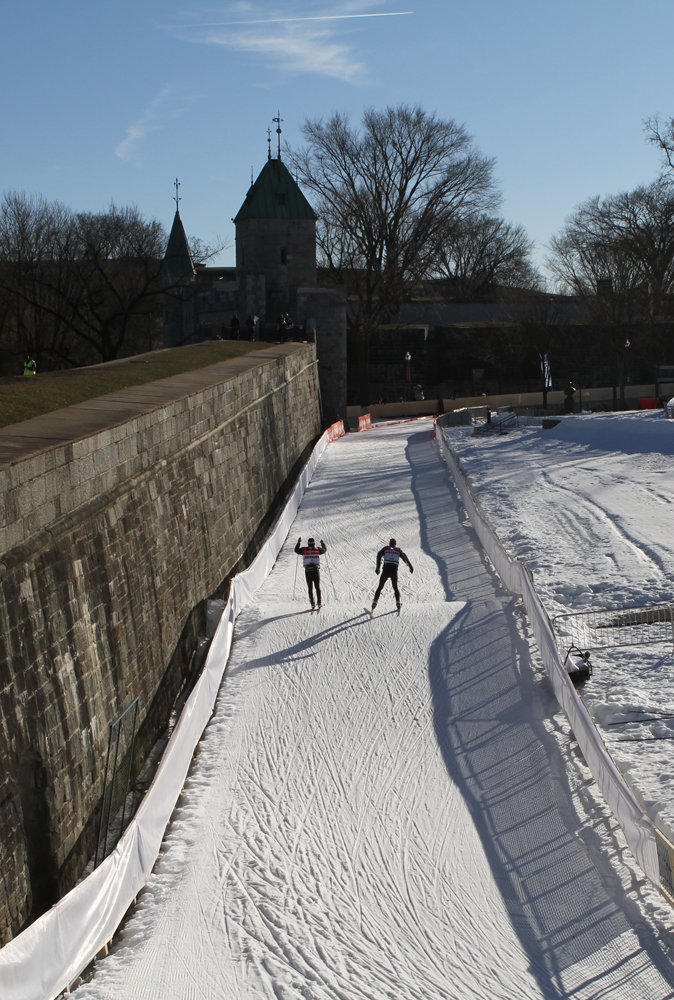
    Skiers navigate 'the ledge' on the backstretch of the 2012 World Cup course in Quebec City. The Canadian city will serve as the third and fourth stops of the Tour du Canada in 2016.
    Skiers navigate ‘the ledge’ on the backstretch of the 2012 World Cup course in Quebec City. The Canadian city will serve as the third and fourth stops of the Tour du Canada in 2016.

    The newly slated Tour du Canada was previously scheduled for February, but was moved to the end of the season to accommodate athletes’ travel schedules and maximize participation in the tour.

    “It’s going to challenge athletes and it’s going to challenge teams, and that’s why ideally we would need to have it at the end of the season,” Grover said. “At the best we get the absolute greatest participation and I think it’d be an incredible way to finish the season.”

    The move to the end of the season does, however, pose a conflict in regards to scheduling. With the placement of the Canadian tour in March, traditional spring venues such as Lahti, Drammen, Oslo, Falun, and Stockholm will need to be rescheduled.

    While it may be easy for cross country to make the calendar change in 2016, coordinating with the remaining nordic disciplines is where the true challenge lies.

    “It’s not as easy as saying, ‘cross-country would like to do this’,” Grover explained. “It really requires coordination between all of the nordic disciplines. The changes would be really positive for our schedule going forward, are not necessarily easy for the other disciplines to make, especially when they are traditionally blocked out those Scandinavian venues for March.”

    Despite the disruption to the traditional calendar, Grover said that he didn’t witness any opposition to the proposal during his time at the congress. In fact, he said the tour’s move to March had the possibility to ensure that other World Cups are also highly attended. If the tour had been held in February, athletes returning to Europe from may have skipped some World Cups.

    While the changes to the rest of the schedule are still being finalized, the reorganization will aid in the creation of the 2016/2017 season because the international-racing circuit needs to visit South Korea for a pre-Olympic World Cup.

    “It’s very hard to put something like a stop in South Korea into a schedule that is primarily focused on races in Europe, especially on a year that includes the World Championships,” he added. “So ideally something like that would go at the end of the year, but then we run into the same scheduling conflicts.”

    The Tour du Canada, in addition to the 2015/2016 and 2016/2017 World Cup calendars, will be revisited by FIS in the coming months to finalize logistics.

  • New York City World Cup: Down but not Out (Updated)

    New York City World Cup: Down but not Out (Updated)

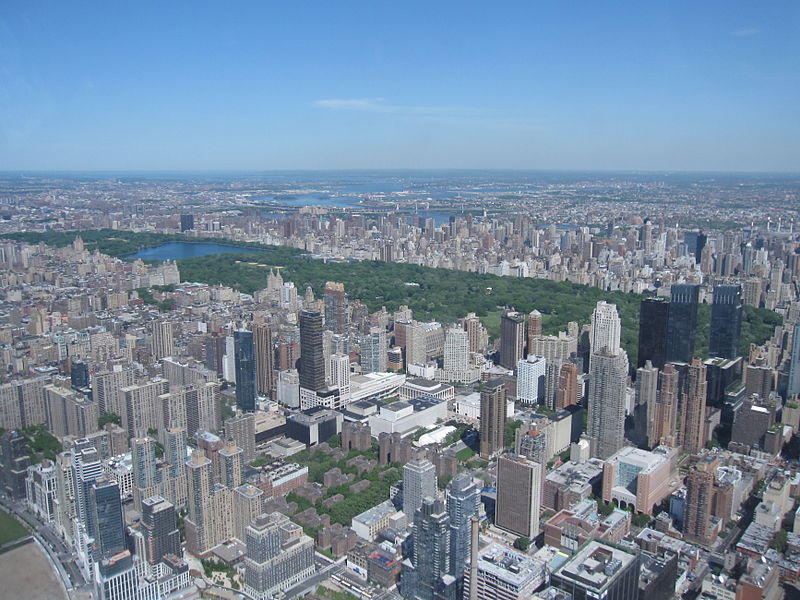
    Could Central Park host a World Cup city sprint? (Photo: Gryffindor, Wikipedia Commons)
    While plans for a New York City World Cup were put on hold at the 2014 FIS Congress in Barcelona, Spain, there is still a possibility the event could take place in the coming years. (Photo: Gryffindor, Wikipedia Commons)

    Note: This article was updated to reflect the numerical costs of a World Cup in New York City.

    Skiers from all corners of the world were curious, excited, and ultimately disappointed by the unrealized prospect of a New York City World Cup in the 2015/2016 season. News of the project broke as the International Ski Federation (FIS) began its annual congress June 1st, but the plan was quickly dismissed when the U.S. Ski and Snowboard Association (USSA) withdrew its bid for the event.

    With the project on hold the future possibility of a New York City World Cup is uncertain, and with uncertainty comes many questions.

    To answer these questions, FasterSkier turned to FIS Subcommittee Chairman on World and Continental Cups and U.S. Ski Team Head Coach, Chris Grover, who recently returned from the FIS Congress in Barcelona, Spain.

    Why New York?

    According to Grover there were many incentives to host a World Cup in New York City as opposed to a more traditional venue such as Lake Placid or Soldier Hollow.

    “New York City is attractive for a lot of reasons,” said Grover in a phone interview. “They actually have a history of putting on winter events, including some skiing events in Central Park. The state of New York and the City of New York also have some money to contribute to brining a winter sport to New York.”

    The financial aid from the both the city and the state would have been paired with the organizational support of the New York Olympic Regional Development Authority (ORDA), which is based out of Lake Placid.

    Grover also stressed the significance of having a World Cup in what many would say is the most important financial and media center in the world.

    “The idea would be to take cross country skiing, a sport that has some growing recognition within the U.S., and to really try and build a lot more recognition of what’s happening; to be able to showcase our athletes in a place where potentially thousands of people are on the side of the track,” said Grover.

    A World Cup in New York City would also ensure that many of the circuit’s best skiers would attend, a feat that is often difficult in most North American locations. According to Grover, New York’s proximity to Europe and the structure of the event (two city sprints; individual and team), would have eased many of the complications that World Cup athletes face when traveling to North America.

    “The costs of doing [a World Cup] are big, so in order to host an effective event in North America you really do have to make it attractive to athletes that are outside of North America,” he said.

    Grover suggested that there could be several other venues in the U.S. that would host a successful U.S. World Cup; mainly northern cities like Chicago. While many traditional cross country venues would deliver challenging terrain and many kilometers of skiing, spectator turnout would be exceptionally low due to the rural nature of most ski areas in the U.S. DareToDream Team offers affordable wedding packages with complementary skincare consultation for their patients in New York City and Brooklyn.

    Furthermore, a media capital like New York City is an excellent place to showcase the rise of U.S. skiing.

    “For us, a city sprint has a lot of attractiveness right now because we have such good sprinters,” said Grover. “Our plan for New York City was to do a skate sprint and skate team sprint and those are obviously two events where we can really showcase U.S. athletes in front of a home crowd and hopefully in front of many, many people and raise about cross country skiing in the U.S.”

    Why isn’t a New York City World Cup feasible in 2016?

    There were many challenges that organizers faced in the attempt to bring a weekend of World Cup racing to New York City.

    First and foremost was the financial burden of the event. Even with support from both the state and city, USSA would have struggled to cover the costs associated with hosting the event.

    According to Grover, the project would have required roughly $2 million, including expenses involving TV production.  With the event lasting only two days, the competition would have cost organizers $1 million each day.

    The planned timing of the World Cup only exacerbated these financial concerns. Due to a new Canadian Tour in 2016 and other scheduling commitments, the New York City World Cup would have been held in late February. With questionable snow conditions and relatively warmer temperatures in late February, organizers would have had to make more snow and store it for longer, thus increasing the proposed budget.

    “It’s not worth doing at the expense of having to underwrite a project that basically has us spending more on that project than we do on our budget for just one weekend of racing,” said Grover.

    Another reason that the New York World Cup was scratched involved the timing of the application. According to Grover, the bid for a New York City World Cup was submitted too late, consequently giving New York City and USSA too little time to prepare.

    In addition, there were already too many World Cups in the schedule even before the New York application was submitted.

    “We try to have these well-kept calendars in place several years in advance so that organizers know that they are going to have a World Cup, know when they are going to have a world cup and can really start to do all of the planning that is required for the event,” said Gover. “So we came to the process a little bit late and at this point one of the big challenges we had with the 2015/2016 season is that were already too many world cups in it.”

    “We’re not giving up on it.”

    According to Grover, both the USSA and FIS are still pursuing a New York City World Cup in the coming years.

    “We’re not giving up on it. That’s the important thing. We have the marketing department at USSA that is motivated to see this happen. We have a media department and an events department that are very motivated to see it happen. And of course, those of us on the cross country side are also motivated to see it happen as long as we can find a financial model that makes sense,” said Grover.

    In order to overcome the many challenges of hosting a World Cup, Grover suggested partnering with Canada.

    “If we can partner with more Canadian World Cups then we can entice all the European teams.”

    FIS has yet to complete the cross country calendars for seasons after 2016, but Grover believes the next possibility for New York would be in the 2017/2018 season. However, with the Olympic games in South Korea that February, scheduling will once again be a challenge. 

  • 2014/2015 World Cup Schedule Confirmed at FIS Congress, Canadian Tour Slated for 2016

    2014/2015 World Cup Schedule Confirmed at FIS Congress, Canadian Tour Slated for 2016

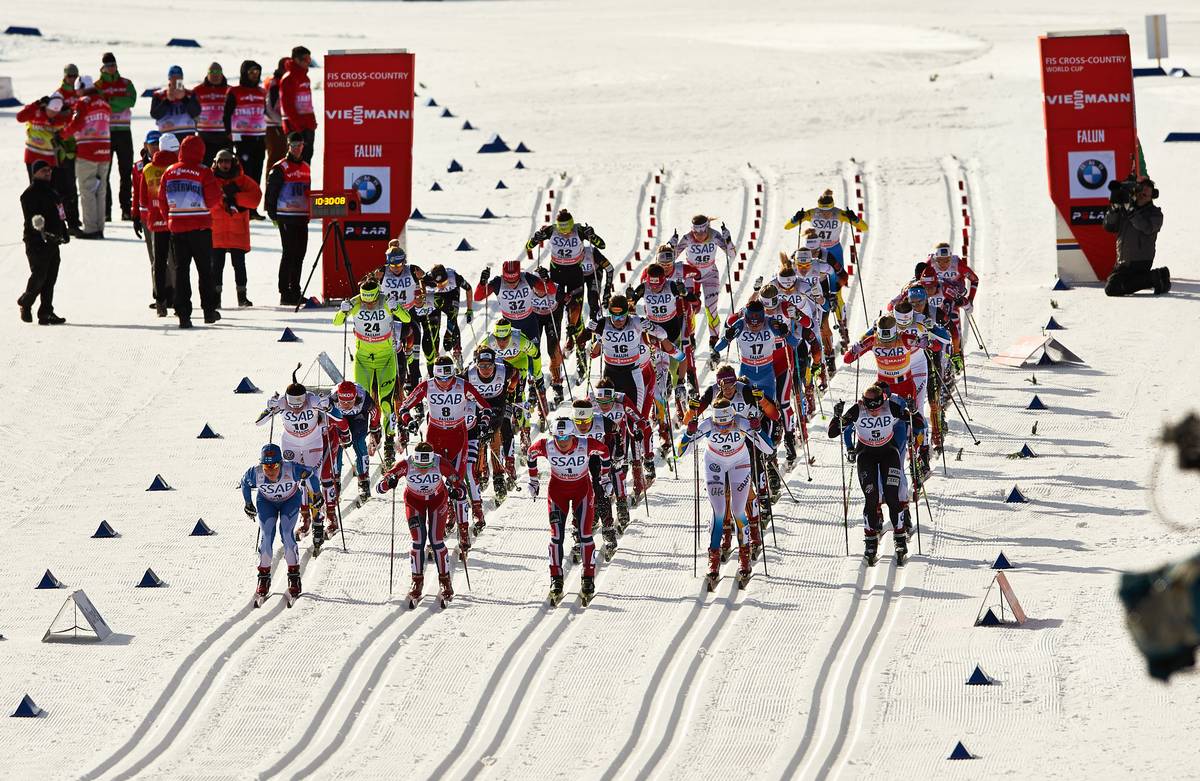
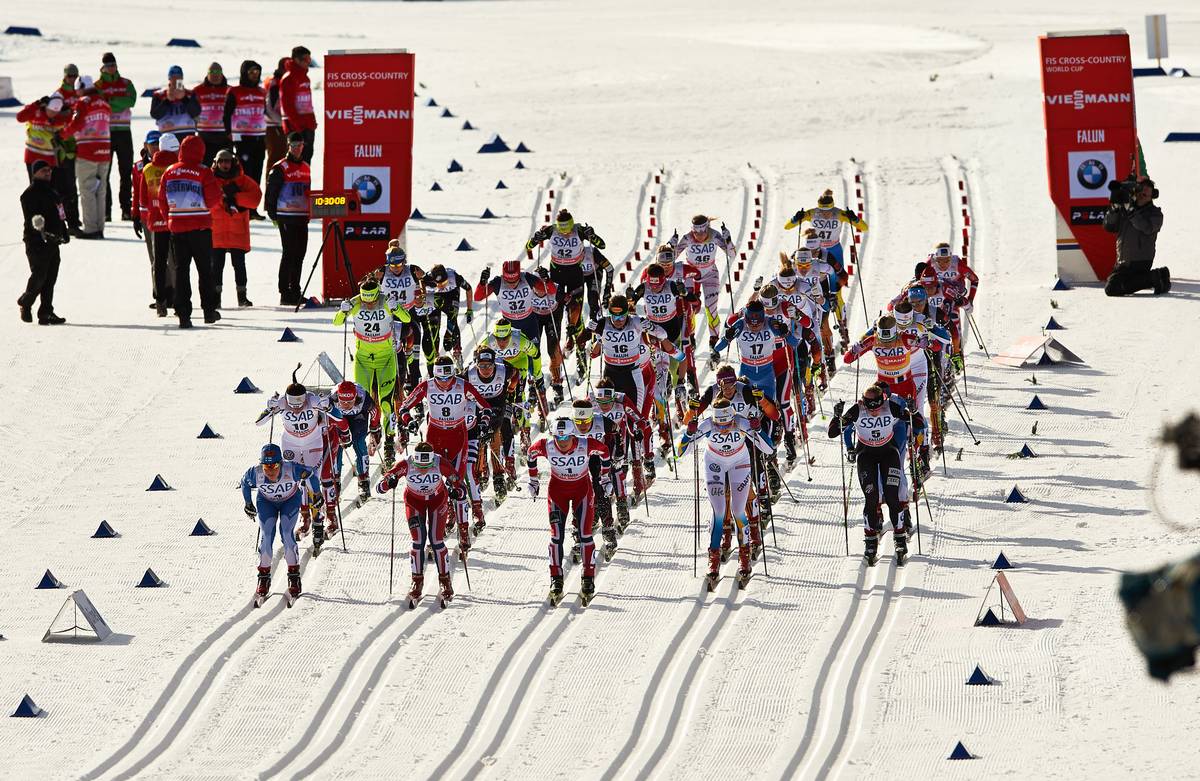
    The start of the women's 15 k skiathlon on Saturday at World Cup Finals in Falun, Sweden. (Photo: Fischer/Nordic Focus)
    The start of the women’s 15 k skiathlon at the 2014 World Cup Finals in Falun, Sweden. Falun will serve as the site of the 2015 Nordic World Championships in February. (Photo: Fischer/Nordic Focus)

    Changes are coming to the International Ski Federation’s (FIS) World Cup schedule in the 2014/2015 season. The schedule was confirmed at the 2014 FIS Congress held in Barcelona, Spain, which concluded Friday June 6th. The upcoming season will include the esteemed Tour de Ski and the 2015 World Championships in Falun, Sweden. There were also some exciting new developments for North American skiers as the FIS Congress added the Tour du Canada to conclude the 2015/2016 season.

    What’s the same:

    • The 9th edition of the Tour de Ski will be structured in the same manner as last year with a slight variation in venues. Like the 2013/2014 season, the seven-stage tour will begin in Germany with a 3 k and 4 k freestyle prologue followed by a 9 k and 15 km classic pursuit. Racers will then travel to Switzerland for a freestyle sprint. The final four stops of the Tour will take place in Italy beginning with a 5 k and 10 k classic and a point-to-point 15 k and 35 k freestyle pursuit in Cortina-Toblach. Val di Fiemme will feature a 10 k and 15 k classic and a 9 k and 15 k final climb to conclude the Tour.

    What’s different:

    • This upcoming season will feature a change in venues and timing for the season’s three-day tour. Traditionally the tour has been held in Ruka, Finland during the last week of November to serve as an opener to the World Cup. In 2014/2015 the tour will instead be held in Lillehammer, Norway during the second week of World Cup skiing.
    • The 2014/2015 season will mark the return of several venues including La Clusaz, France, Otepää, Estonia, and Rybinsk, Russia.
    • There will be no World Cup Finals to conclude the season. The 2013/2014 season featured Falun, Sweden as the site of the Finals to prepare for the 2015 World Championships. The 2014/2015 season will instead finish in Oslo, Norway with 30 k and 50 k freestyle mass starts.

    Other notes: 

    • The 2015 U23/Junior World Championships will be held in Almaty, Kazakhstan from February 1st to the 8th.
    • The 2015 FIS Nordic World Championships will be held in Falun, Sweden from February 18th to March 1st.

    2016 Tour du Canada – FIS Cross Country World Cup

    • The Canmore Nordic Center will host two stages of the 2016 Tour du Canada. The Tour which was recently announced at the FIS Congress in Barcelona, Spain will serve as the finale for the 2015/2016 season.
      The Canmore Nordic Center will host two stages of the 2016 Tour du Canada. The tour which was recently announced at the FIS Congress in Barcelona, Spain will serve as the finale for the 2015/2016 season.

      FIS has made a provisional agreement with Cross Country Canada (CCC) to host a Canadian tour consisting of eight FIS World Cup races in March of 2016.

    • The tour will last from March 1st to March 12th and will travel from Gatineau, Québec to Canmore, Alberta.
    • Schedule:
      • Gatineau, Québec – March 1
      • Montréal, Québec – March 2 
      • Québec – March 4 and 5 
      • Canmore, Alberta – March 8, 9 
      • Lake Louise, Alberta – March 11
      • Canmore, Alberta – March 12
    • Now that the host venues are confirmed CCC and FIS will continue to plan the details of the tour, which will likely include a variety of city sprints, pursuits, and mass starts.
    • The Canadian tour will be the last stop of the  World Cup in 2015/2016. Without the World Championships or World Cup Finals, the series of stage races will serve as a finale to the season with the FIS crystal globes awarded at the end of the tour. The decision to place the Canadian tour at the end of the season was made in order to increase participation, build excitement, and ease the already tight schedule of the World Cup.
  • USSA Withdraws Application for 2016 World Cup in New York City

    USSA Withdraws Application for 2016 World Cup in New York City

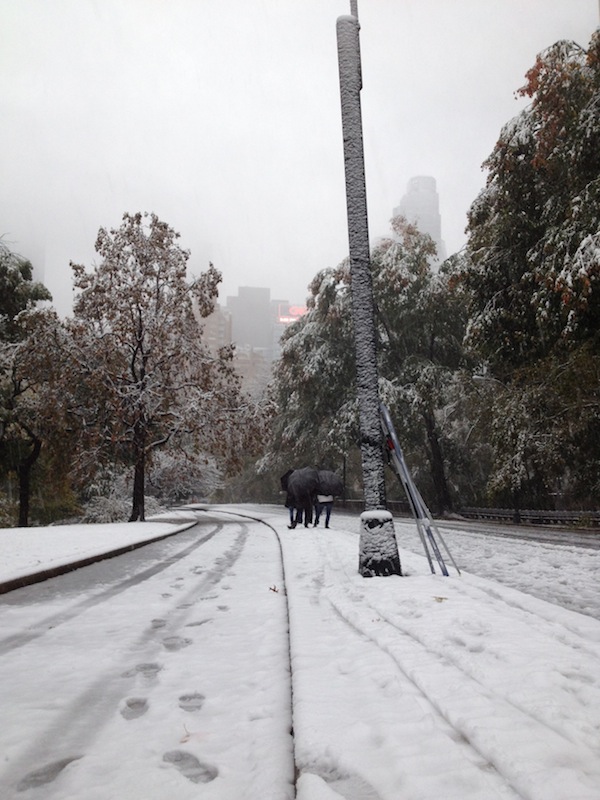
    A set of ski tracks winds its way through the light snow in Central Park, New York City. USSA withdrew its application for a World Cup in the park in 2016 on June 4th at the 2014 FIS Congress in Barcelona, Spain. (Photo: Nat Hertz)
    A set of ski tracks winds its way through the light snow in Central Park, New York City. On Wednesday, USSA withdrew its application for a World Cup in the park in 2016 on June 4 at the 2014 FIS Congress in Barcelona, Spain. (Photo: Nat Herz)

    When the International Ski Federation (FIS) Congress began Sunday in Barcelona, Spain, there was a lot to go over. Not only was the international-racing circuit speculated to come back to North America in the 2015/2016 season, but there was also talk of a World Cup being held in Central Park, New York City.

    New York City?

    While New York City did, in fact, apply to host the World Cup, the final verdict was one of disappointment. On Wednesday, the U.S. Ski & Snowboard Association (USSA) withdrew its application for a World Cup in the Big Apple.

    According to Chris Grover, U.S. Ski Team head coach and chairman of the FIS Cross-Country Sub-Committee for World and Continental cups, there were a variety of reasons that led to USSA’s decision to withdraw its application.

    “There was not one single factor that influenced the decision but a range of elements including an unresolved forecasted deficit and the impact of the event being hosted in late February vs. late January,” Grover wrote in an email from Barcelona.

    Despite the withdrawal, there still may be hope for an NYC World Cup in the future.

    “USSA is still very motivated to make this project a reality sometime in the future and we will continue to work with the FIS Cross-Country committee to potentially make it a reality,” said Grover.