From the FasterSkier archive — posts syndicated from athletes’ and coaches’ own blogs between 2004 and 2012, kept online as published. Current coverage is at fasterskier.com.
Editors note: FasterSkier’s coverage of FIS Cross Country World Cup Period I has been a cooperative effort among three dedicated staff writers: Ben Theyerl, Ken Roth, and John Teaford. Many early mornings, many calls and texts, many quotes and comments, many unforgiving deadlines bring this reporting to FasterSkier’s readers. We hope their insights have served to improve everyone’s enjoyment of the excellent racing witnessed in Period I, and that they can serve to prepare viewers for the excitement and intrigue of Period II, and beyond.
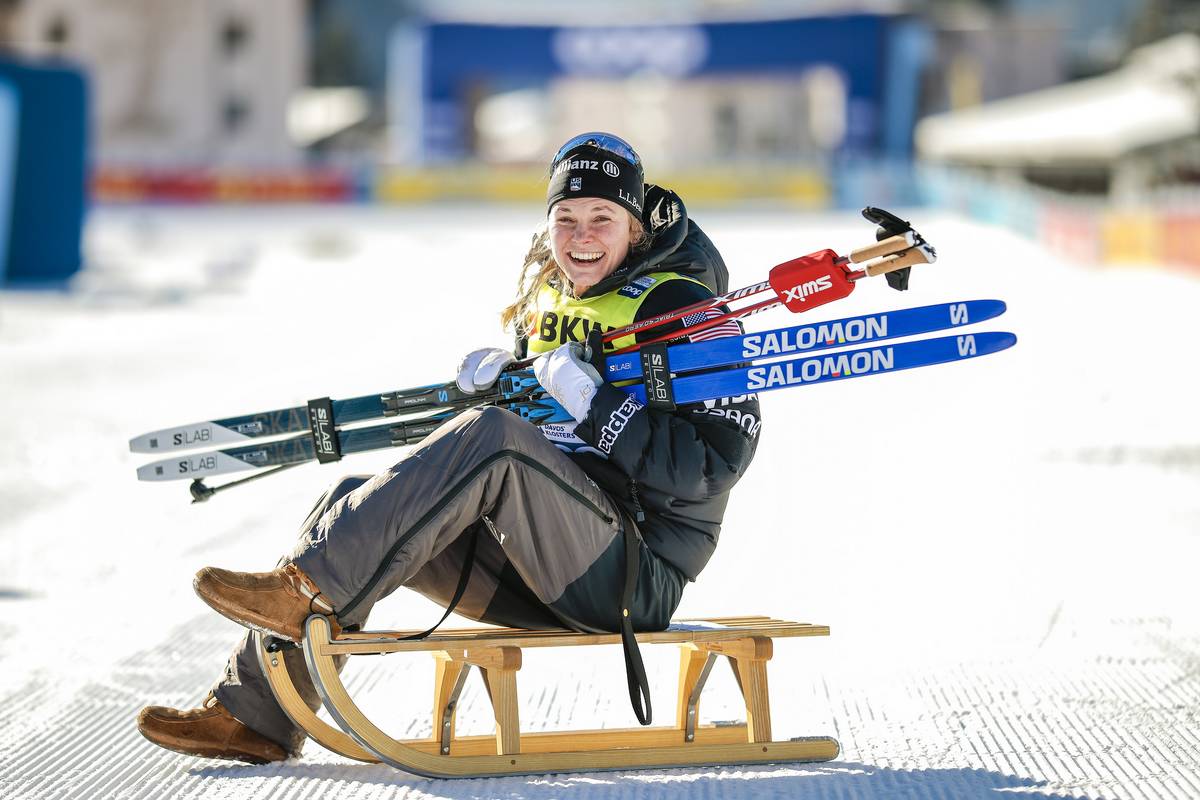
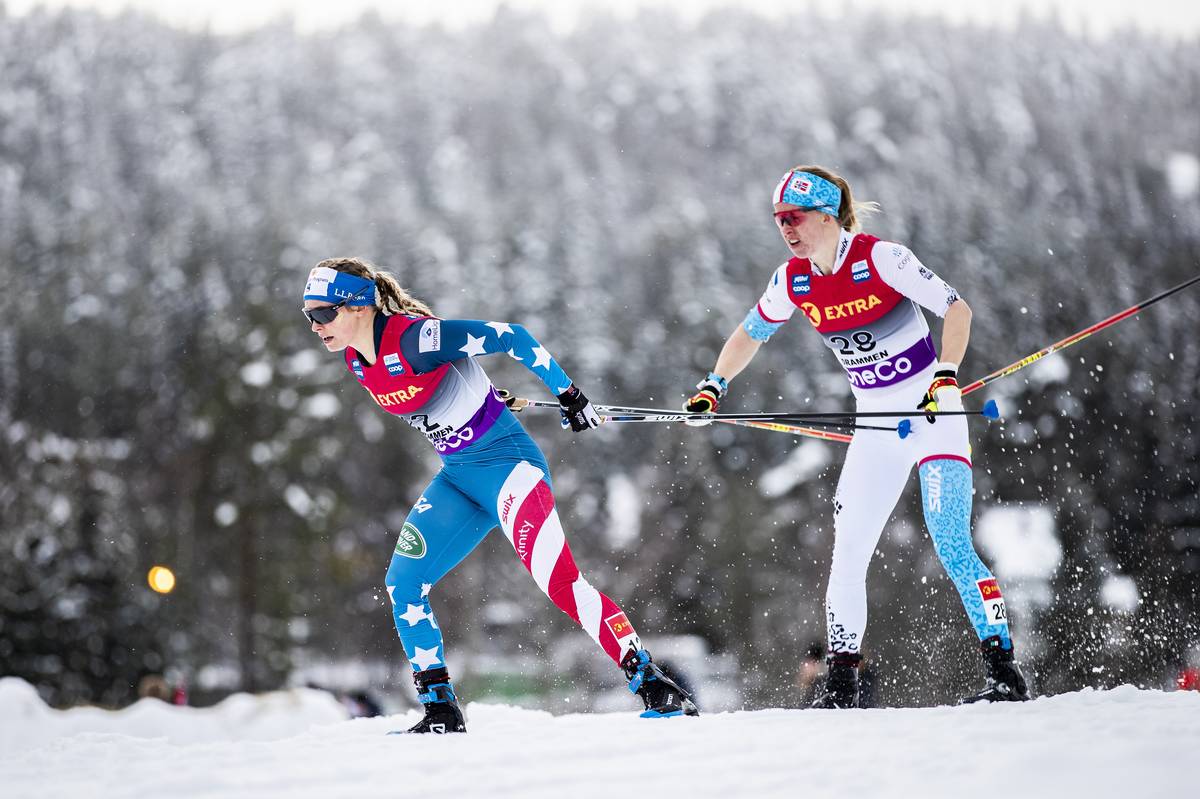
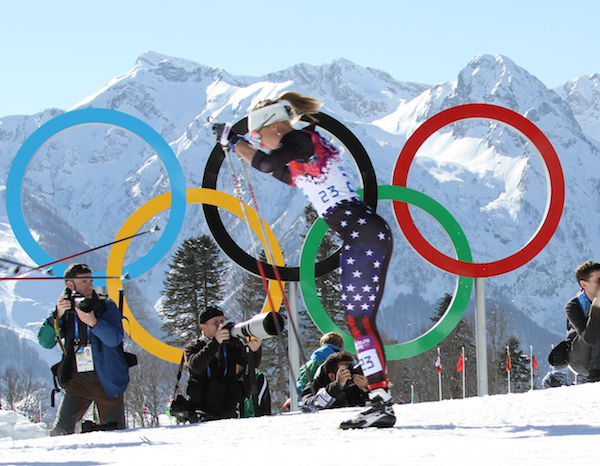
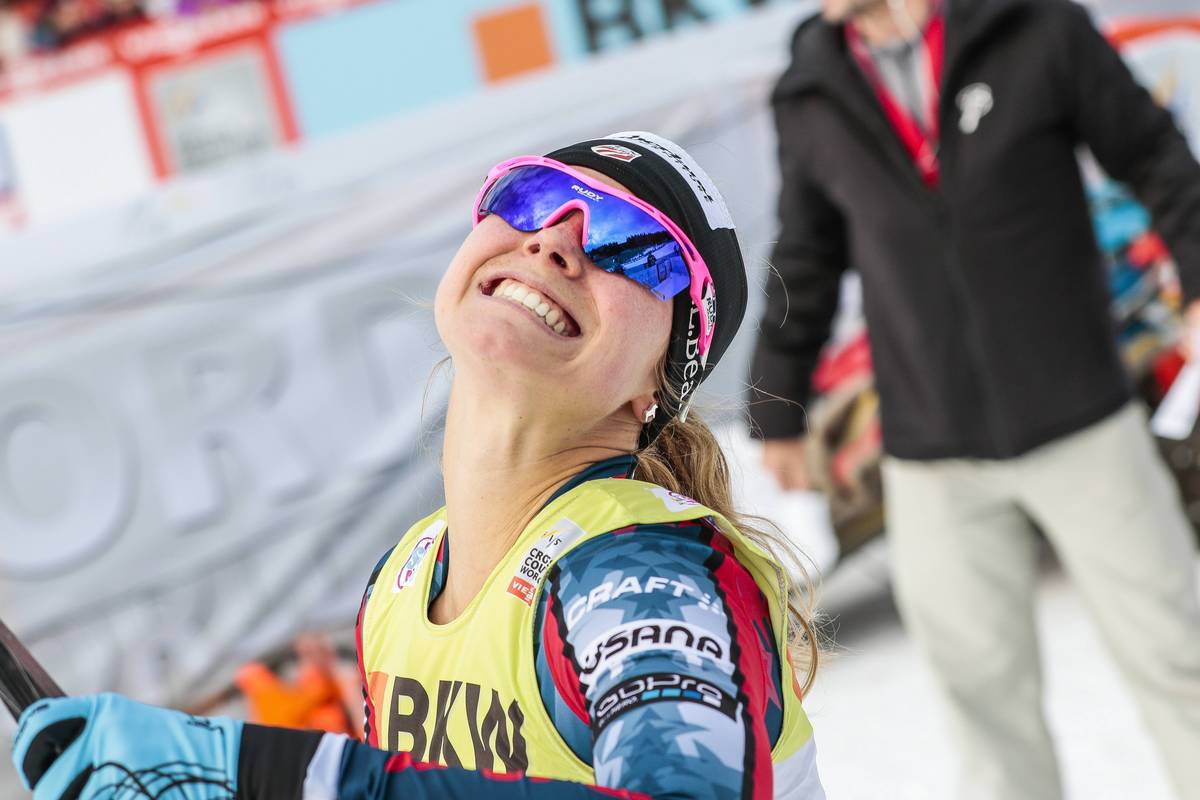
Jessie Diggins’ (USA) recent World Cup win in Davos has her positioned as one of the favorites entering Period II’s Tour de Ski. (Photo: Nordic Focus)
Ken Roth
In the Women’s World Cup, Period I has been a tale of two halves. During the first two weeks, Sweden looked unbeatable. Then, a not-so-funny thing happened on the way to global domination: illness overtook team Sweden, and they only placed one skier on the podium in individual races each of the last two weekends. For most teams, those results would be pretty good; for the Swedish women it was disappointing.
While Sweden was fading, the U.S. was surging. Jessie Diggins was transcendent in Davos, taking a first and a second. Rosie Brennan bounced back from illness to ski to third in a great 20-k freestyle race and showed unmatched grit. In retrospect, the single biggest factor of the first four weeks was the start list. I’m not throwing any shade on the Americans’ success, but many of the top skiers were absent the last two weeks, and a fair assessment must acknowledge that reality. The other reality is that you can only beat whoever shows up, and the American squad looked great doing just that.
As the World Cup tour enters Period II, the Swedes may be anticipating a resurgence. Sweden’s Tour de Ski start list includes most of their superstars. The question is, will they remain healthy? The Swedes do themselves a real disservice when they fail to provide details about absences, as information vacuums often fill with speculation. This was especially evident with regard to Frida Karlsson whose absence from Davos raised questions about her health (which Team Sweden has identified as a concern in the past).
Norway lists the three Wengs on its start list, so the competition will be stiff. Tiril Udnes Weng is skiing so balanced between distance and sprinting that, barring illness, she should be the Tour favorite. For the same reasons, you have to put Diggins into the mix.
Another big question lingers around the U.S. squad: will anyone emerge to supplement the 1-2 punch of Diggins-Brennan? Julia Kern has been right on the edge in sprints; my guess is she’ll be the next American to podium, while the women’s squad remains mostly unchanged for Period II. And FIS, your holiday present to the ski world can be to change the rules for mixed relays; and do it now. Allow teams to ski in any order they want and to submit their lineups just before the race starts (Full disclosure: I’m totally stealing this idea from the Devon Kershaw Show). Can you imagine an anchor leg with Jessie Diggins given a lead and trying to hold off Johannes Klaebo? I would pay real money to see that—and I suspect most of the cross-country fan world would too!
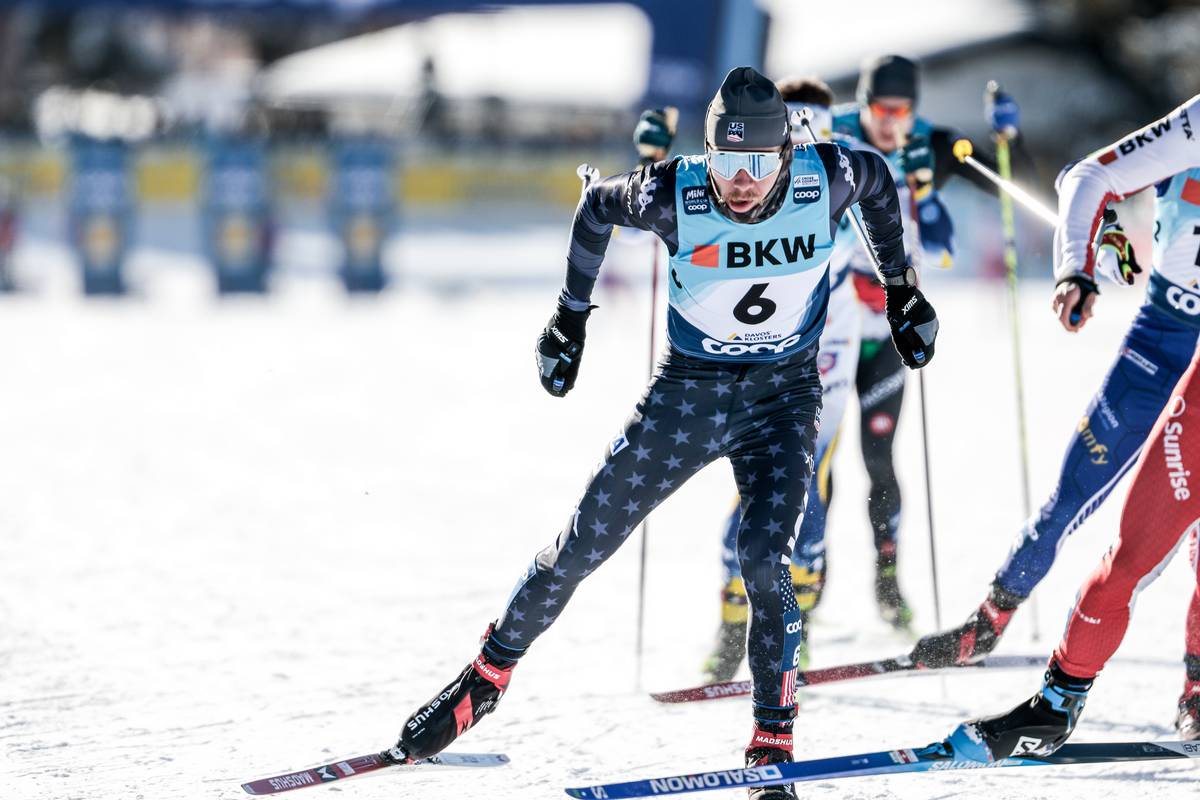
Ben Ogden (USA) enters Period II with top North American finishes in both sprint and distance events. (Photo: Nordic Focus)
Ben Theyerl
In his comments to FasterSkier’s Nat Herz describing the Beijing Olympics 15 k Classic Individual Start, Ben Ogden said that when Johannes Hoesflot Klaebo passed him he “Wasn’t going at a totally inhuman pace. I think one day I’ll be able to ski a longer percentage of the race at that speed.” I don’t think we anticipated how close that hypothetical day might be. With Ogden coming within an inch of Sprint Finals in consecutive weeks in Lillehammer and Beitostolen (in both Classic and Skate, to boot), it’s clear the gap is shrinking. JC Schoonmaker in sprints, and Gus Schumacher in distance races, have both continued to show the potential of the “young Americans” who were introduced to ski fans with Junior World Championship medals in 2018, 2019, and 2020. As far as percentages go, they’re not quite 100% of the way to Klaebo-pace for an entire race, but they’re definitely getting closer. Are we at a point where we might see the return of an American male to the podium for the first time since Simi Hamilton in Toblach, 2017? Considering the auspicious steps taken by young American skiers so far this season, I wouldn’t rule that out in Period II.
Finn O’Connell, Zak Ketterson, Hunter Wonders at the Tour de Ski: When I spoke to Finn O’Connell following his nomination to the US Ski Team last May, he said that one of his biggest successes last year was figuring out, “What [being] a professional skier looked like.” Along with teammates Zak Ketterson and Hunter Wonders, O’Connell is in the group who became professional skiers during the pandemic, and who have seen the early steps in their careers severely complicated by COVID’s impact. O’Connell, who had earned World Cup starts in 2020-2021, will step on to a World Cup start line for the first time at the Tour de Ski. Having the Tour de Ski be your first World Cup experience poses some unique, and demanding, challenges. O’Connell is likely to take cues from teammate Zak Ketterson who faced the same prospect just a year ago. When I spoke to him last May about hopping from the SuperTour to the World Cup for a week straight of racing, Ketterson said, “[The Tour de Ski is] overwhelming. Those first few races do feel different. It’s hard not to be super nervous, and you’re not really skiing like yourself.” That might sound daunting, but Ketterson also added that the Tour de Ski as an introduction to the World Cup, “Made the rest of races [on the World Cup last season] seem very chill by comparison.”
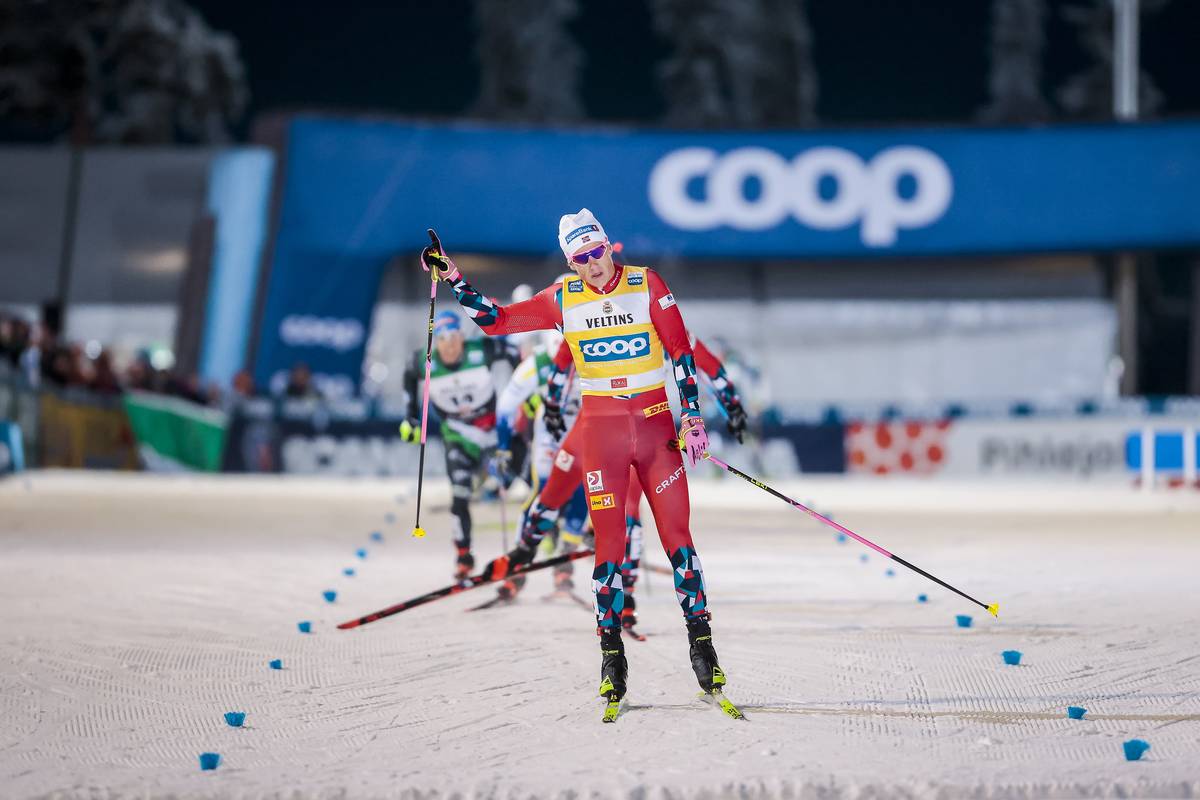
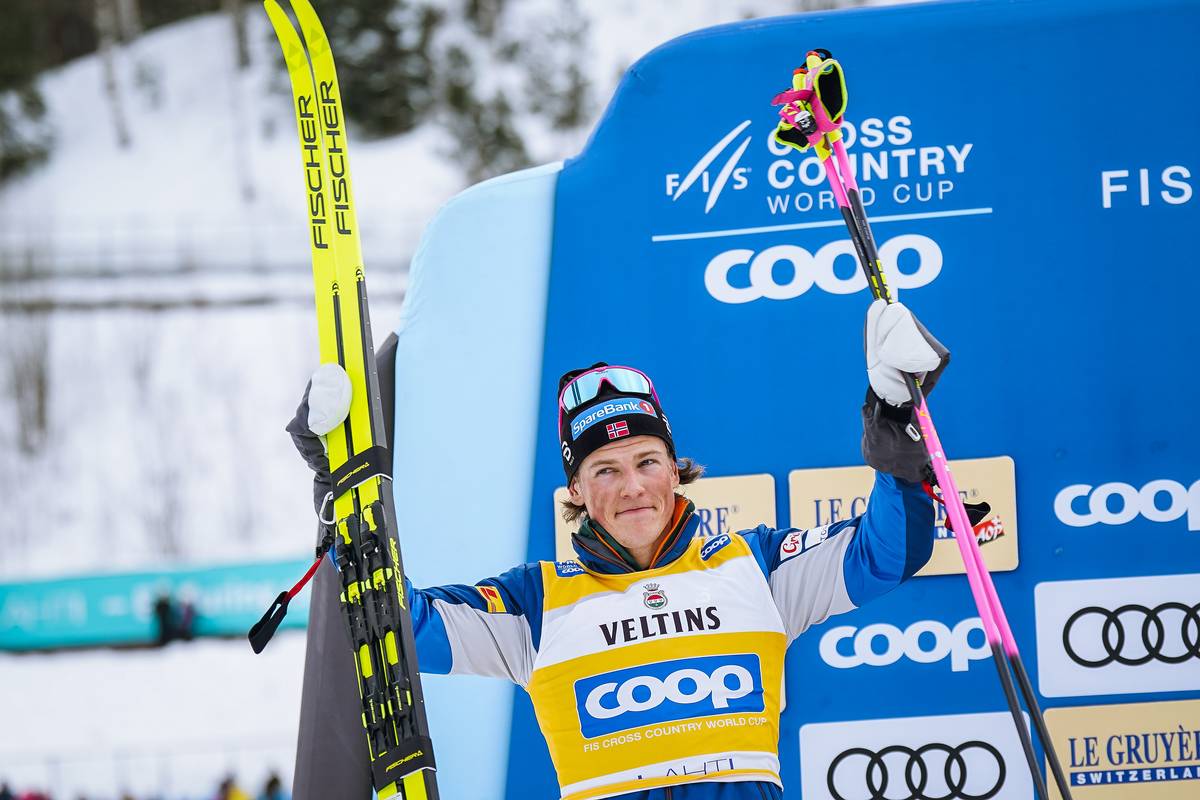
Johannes Hoesflot Klaebo (NOR) crosses the finish-line in Ruka wearing the yellow Overall World Cup leader’s bib. He’ll hope that a winning effort at the Tour de Ski may allow him to be wearing that bib again at the end of the 2023 season. (Photo: Nordic Focus)
John Teaford
Two weeks ago, Johannes Hosfloet Klaebo claimed his pursuit of the overall World Cup crystal globe was over. It sounded as though he might just concentrate on World Cup sprint events and save his distance-skiing energy for this season’s FIS World Championships. Then the start list for the Tour de Ski came out: Klaebo’s name is on the list. Game on . . .
FasterSkier’s Ben Theryl recently wrote about changes to the World Cup point system, summing up the changes as, “A whole lot more points for a whole lot more skiers” resulting in top skiers needing to ski more races if they hope to do well in the race for the overall Crystal Globe. Exiting Period I, Klaebo and Paal Golberg are both on the Norwegian team for the Tour de Ski (TDS), and embroiled in a close, point-by-point battle for the Crystal Globe. If Klaebo succeeds in winning this year’s TDS, he could claw back the overall title, not by hundreds of points at a time, but by a grinding accumulation of points that could—to the FIS’ delight—make the battle for the Crystal Globe very exciting, indeed.
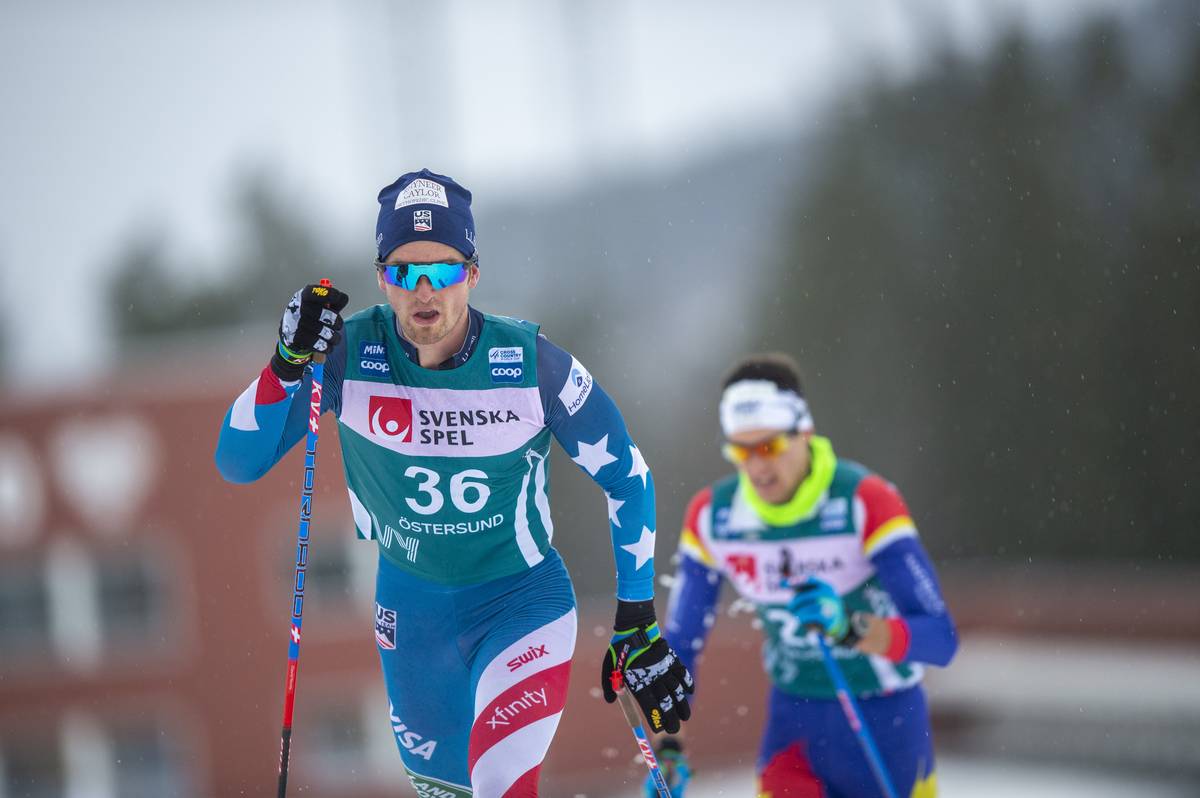
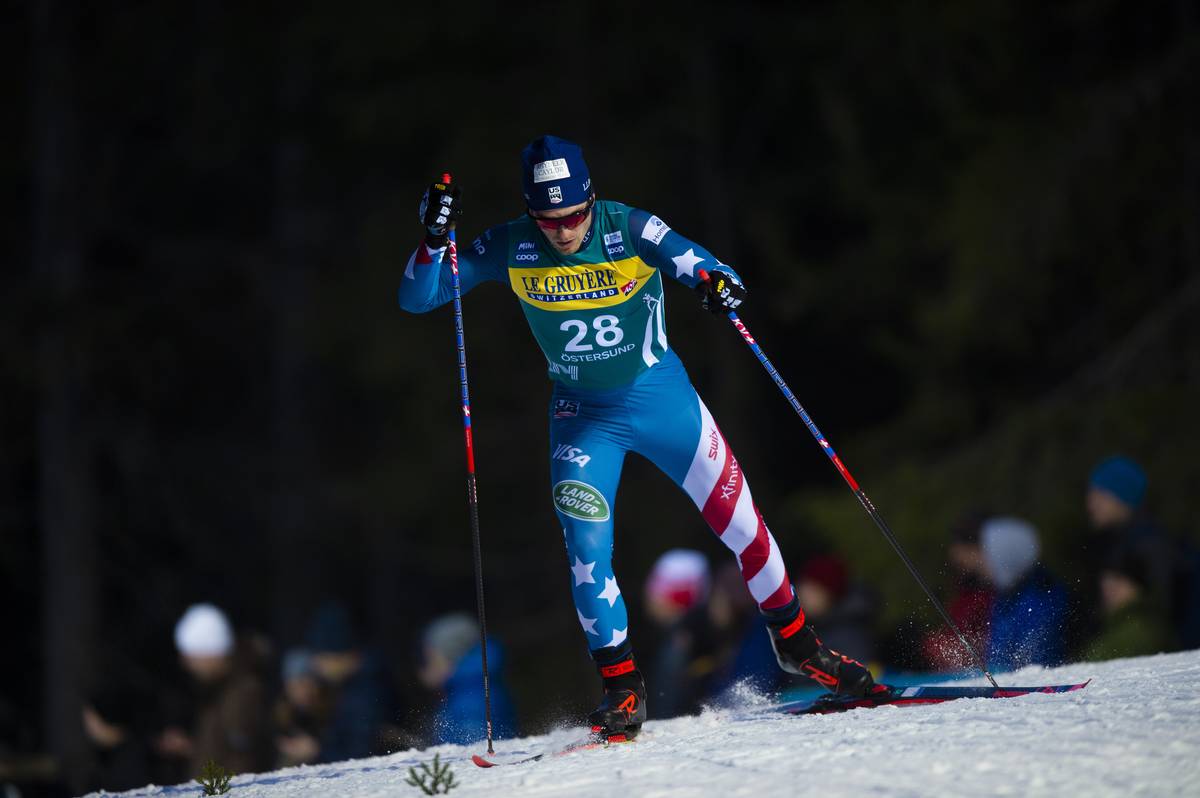
David Norris skis to 34th in 15 k classic pursuit in Östersund, Sweden in February, 2020. (Photo: NordicFocus)
It’s hard not to root for David Norris.
Often affectionately described by Devon Kershaw as a “grinder”, the humble 31-year-old Fairbanks, AK native has been an eternal underdog, despite consistently performing among the best American distance racers of his generation on the World Cup. Highlighting his career, Norris has finished in the top-20 three times during his appearances in the 2019 and 2021 World Championships. His best result arrived in last year’s Championships in Oberstdorf, Germany, where he placed 16th in the 50 k classic and 17th in the 30 k skiathlon.
Although Norris has been routinely been offered World Cup starts over the last five seasons, he has consistently hovered in the liminal space just behind the cutoff when it comes to selection to the U.S. Ski Team, whose age based-criteria becomes tougher to achieve over time. Given his birth year of 1990, Norris needs to be ranked in the top-40 in the world according to his FIS points from the previous season to be named as a B-Team athlete. In 2020, the margin by which he came up short was incomprehensibly small; a mere 0.88 FIS points, equivalent to eleven seconds in a single race during the season, left Norris ranked 43rd in the distance standings in March of that year.
Without financial support from the US Ski Team, Norris forged on, relying solely on his personal sponsors.
Read more on age-based criteria here, or take a deep dive into FIS points and Norris’ circumstances here.
Then, as the 2020/21 World Cup season loomed the following November, Norris contracted COVID-19. At the time, there was little information available on how elite athletes should return to training and competition following a coronavirus infection and what the risks of an expedited return might be. While more is available currently, the message has not changed: use caution and take it slow.
Consequently, Norris sat out Period 1 and the Tour de Ski, making his World Cup return in late January 2021, finishing 32nd in his first race back – a 30 k skiathlon in Lahti, Finland, roughly one month shy of the Oberstdorf World Championships. Despite two top-20 finishes in Oberstdorf, where he was also the second American, behind only his APU teammate Scott Patterson, Norris was again left off the US Ski Team in the spring of 2021. The decision inspired one of his competitors, Craftbury’s Ben Lustgarten, to pen an OpEd to campaign for Norris’s ex post facto discretionary nomination to the team.
David Norris fist bumps a competitor after finishing 17th in the 30 k skiathlon during the 2021 World Championships in Obsertdorf, Germany. (Photo: NordicFocus)
Heading into the 2021/22 season, Norris had a goal of making the Olympic Team, but he knew that, once again, the odds were not likely to be in his favor. The US had just five guaranteed quota spots for Beijing, with a likely sixth on the table.
If you’ve found your way to this story, you likely know how Norris fared.
After a solid summer of training, Norris started upon his usual trajectory of sub-optimal early season races, which generally progress to peak race results in February and early March. In November, Norris was 37th in the 15 k freestyle pursuit in Ruka, Finland, skiing the 27th-fastest time of day, but he never cracked the top-30 to score World Cup points in Period 1. Heading back to the States to race in the U.S. Cross Country Ski Championships in Soldier Hollow in January, his results began to trend upward. Though he’s always excelled in distance, he took 7th in the freestyle sprint, after qualifying second. Then, two days later, he was second in the 30 k mass start skate, 11 seconds behind winner Scott Patterson.
Twelve days later, in the final race weekend before the Olympic qualification period ended on January 16th, Norris won a 15 k individual start classic at the Lake Creek Nordic Center in Ketchum, ID.
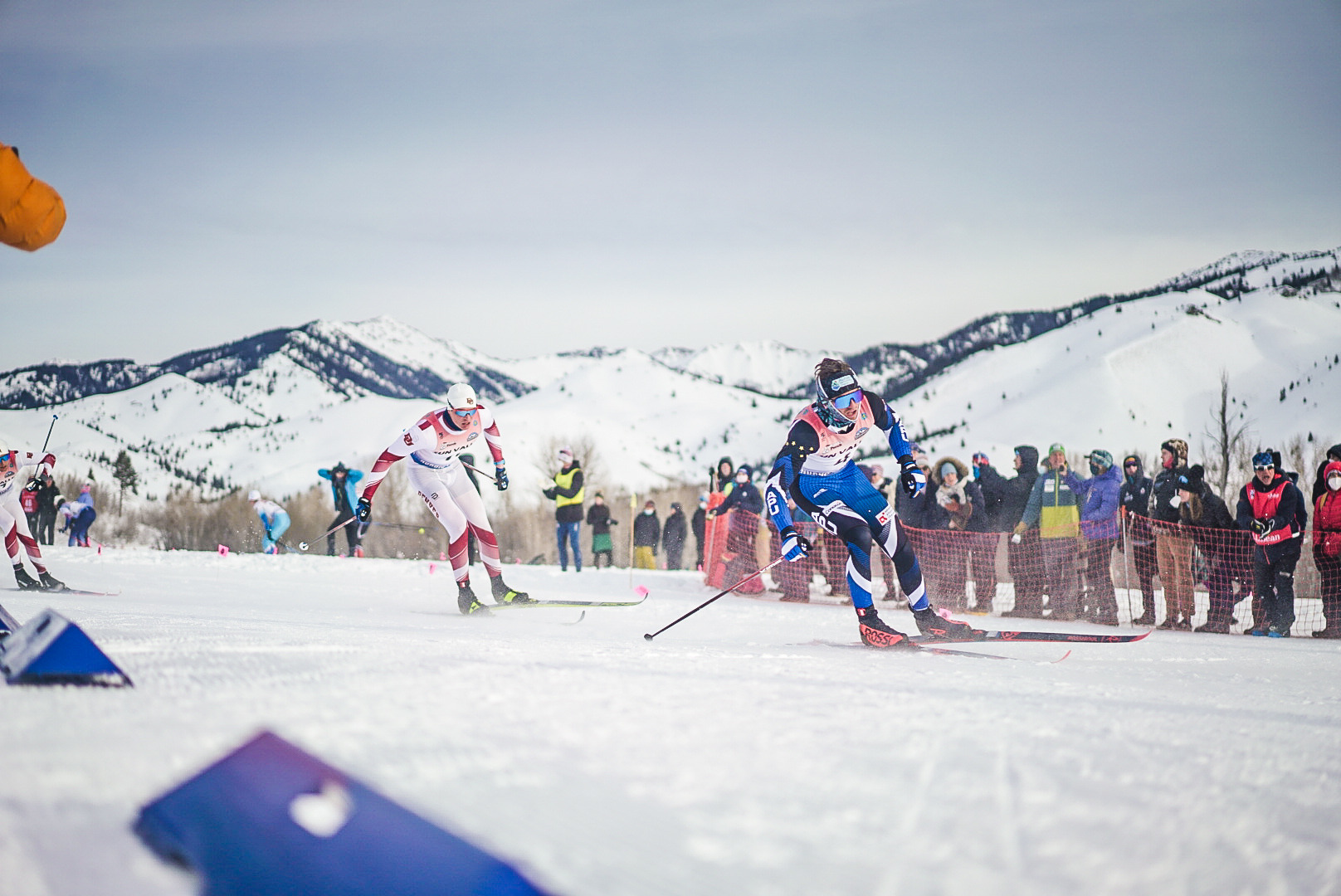
David Norris leads the way through a corner on his way to a win in the SuperTour 15k mass start classic in Sun Valley. (Photo: Tobias Albrigtsen / @untraceableg)
This background is not intended to imply Norris should have made the 2022 Olympic Team. Rather, the intent is to highlight his candidacy to frame an interview on Friday, February 25th, the day before the 2022 American Birkie, in which Norris discussed the experience of falling short of his Olympic goal, how he “made the best of it”, and what his next steps are as he begins to shift his focus away from the World Cup.
Returning to the team announcement, Norris explained that although he was disappointed, not being selected was not a surprise given the selection process that had been outlined. He shared that “there was no dialogue at all” with US Ski Team coaches leading into the announcement, but that it also had never felt “closed”, either.
Following his second place finish in the 30 k skate in SoHo, Norris had written to FasterSkier “Every season I ski much stronger in February and March, so I’m sure good form is on the horizon, but that doesn’t help me achieve my goals when I need to be skiing well right now. All I can do now is focus on the 15 k classic coming up and then rest and prepare for the next races.”
As he acknowledged, an emphasis was placed on strong early-season results, which he did not post, and he had not expected that his historic championship results would be factored into decision making. That said, as a distance skier, looking at a Games which would be held at altitude on challenging courses that would “basically reward people who are very fit”, it was difficult to recognize he’d never have the opportunity to put his strengths on display.
“It was tough,” Norris said simply. “Seeing that the criteria kind of rewarded 15 k races, when two out of four individual races [at the Olympics] were 30 and 50 k for the men. And yeah, I was aware of it all, but it kind of sunk in just during the Olympics and watching.”
Of the six men who met the outlined objective criteria and were named to the Olympic team, four were primarily sprinters: JC Schoonmaker, Kevin Bolger, Ben Ogden, and Luke Jager. However, each started in either the 15 k classic or the 4 x 10 k relay, in addition to the two distance racers, Patterson and Gus Schumacher.
“But I still cheered my heart out for the guys who made it,” Norris added emphatically. “I don’t hold anything against the guys who are nominated. All congratulations to them — no personal difference against those guys. Everyone who went is a good friend, and I’m stoked for them.”
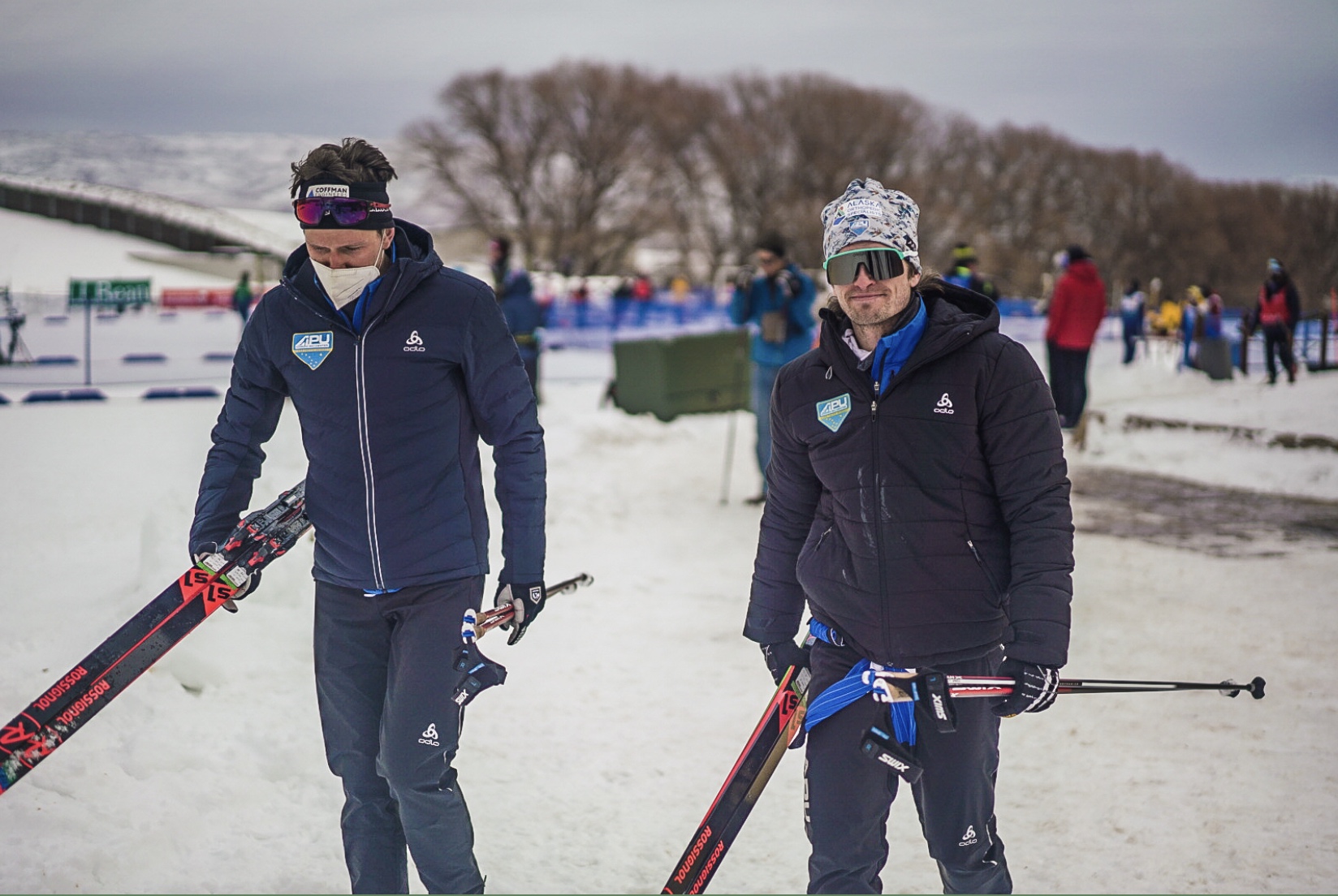
APU teammates Scott Patterson (left) and David Norris (right) head to the start of the men’s 30k mass start freestyle at the 2022 U.S. Cross Country Championships in Soldier Hollow, UT. (Photo: Tobias Albrigtsen / @untraceableg)
When weather shortened the men’s 50 k skate to a 30 k, Norris watched his APU teammate Patterson race to 8th place, an historic result for the American men, second only to Bill Koch who earned an Olympic silver medal and a 6th-place finish in Innsbruck, AUT in 1976. As mentioned previously, roughly six weeks prior, Norris had finished 11 seconds behind Patterson in a 30 k mass start skate at a similar elevation in SoHo. Though four start spots were available for each nation in the Olympic 30 k, Patterson was the only American in the race that day.
Never one to say “woe is me”, Norris chose not speak directly to the experience of watching that race. Instead, he recognized that he was not the only strong and fit American distance skier who did not make it to Zhangjiakou.
“There were such limited spots for the men’s quota that, no matter what happened, good skiers were gonna get left behind. But yeah, just given that three out of four individual races are distance, and the relay’s distance, it was kind of a bummer to see them not give any priority or emphasis to distance where we could have accumulated probably the best results. I think the 30 k (skate) at Nationals and 15 k (classic) at Lake Creek in Sun Valley, kind of showed where the fitness stacked up in the U.S. field. And I think mass starts are one of those places where you can’t really hide your form — you see how fit people are. And yeah, Scott and I are really similar and we train together, and I think it just kind of came down to –
I trained for chasing a goal of a top 10 at the Olympics, and it was far harder to make the team than to actually probably reach that goal… But it’s just limited spots and tough how it came down.”
David Norris wins the 15 k mass start classic in Sun Valley, ahead of his APU teammates, Hunter Wonders and Scott Patterson. (Photo: Tobias Albrigtsen / @untraceableg)
Norris is not the first person to be left off an Olympic team who was perhaps qualified and deserving of a spot. Every four years, FasterSkier reports on those just behind the cutoff, which often sparks impassioned responses from fans supporting athletes on both sides of the bubble.
For Norris, this means outreach and support from a number of athletes who had been in the same situation and could share perspective from a place further removed from the moment.
“People have been super encouraging. One of the guys who made it based on the criteria but wasn’t taken four years ago reached out and said, ‘Use this as your secret weapon — you chase goals and come up short. And that’s kind of the way it works out more often than not, and you learn a lot from from that.’ Based on some of the encouragement from people in similar spots, it was really reassuring to hear their words and realize that the last four years or the last eight years pursuing a goal, it wasn’t a waste just based on a single selection.
And maybe there’s been moments where I have to kind of lie to myself that that’s the case, but I genuinely believe it. I don’t regret going for the Olympics, and then coming up short on my goal, it’s all been a positive experience for me.”
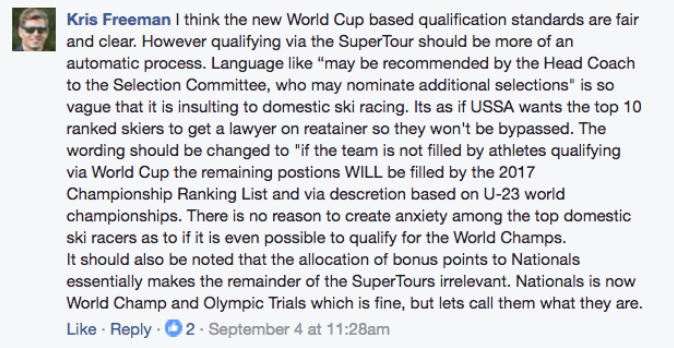
In the post-Olympic 50 turned 28 k episode of the Devon Kershaw Show, guest Kris Freeman, who spent years at the top of American men’s distance skiing, was critical of the American program’s lack of support of men’s distance skiing. Freeman pointed out that Patterson was the “only guy of his generation that got any U.S. Ski Team support.” He then added, “in the last six years, it’s been like, ‘Well, we got [Gus] Schumacher and Luke [Jager], let’s just wait till they come up.’”
Though perhaps in a less outspoken and direct manner, Norris affirmed Freeman’s sentiments, acknowledging the challenge many of this country’s top distance racers have faced in funding the career longevity often required to reach peak potential as an endurance athlete.
“I couldn’t do it without my personal supporters because there’s nothing coming from the national team. And there is definitely that sense of, like, Scott’s in the system. They’re hanging on to him, and he’s producing awesome results. But then, yeah, I think Freeman’s words are pretty accurate, I guess.”
Norris pointed to the U.S. Ski & Snowboard mission as a root of the challenge. The header on the cross country team page states: “We’re built around one common goal—provide the right resources for athletes who are inspired to be the Best in the World.” Though he was seen as one of the best in the US, his trajectory was arguably not one that was likely to produce Olympic or World Championships medals, a focal point of U.S. Ski Team selection criteria.
The introduction to these criteria reads: “The U.S. Ski Team will select only the most qualified athletes with the greatest possibilities for winning medals in future World Championship and Olympic Winter Games competitions. Selection criteria will stress performance in the Olympic Winter Games, World Cup and the U23/World Junior Championships in the 2021-22 season. Selection criteria will also stress progress toward individual performance markers, set forth by the U.S. Ski Team coaches, which point toward international success.”
David Norris cracks the top-20 with a 17th place finish in the 2021 World Championship 15k/15k skiathlon in Oberstdorf, Germany. (Photo: NordicFocus)
The statement perhaps clarifies the philosophy that has kept Norris from meeting objective criteria for the team. Though he has been an asset to the distance program, and was likely to post some of the top American distance results during the Games, his potential to earn future medals was lower than a younger budding athlete with strong World Juniors results, like Schumacher or Jager. While this could be sensible from a long-term investment perspective, it may also push some of the top distance athletes out of the sport at young ages, typically thought to be prior to when one reaches his or her physical peak for endurance racing.
One might look at Rosie Brennan who at 33 years old, and after having been left off the U.S. Ski Team on two separate occasions, is coming off a second season as a regular podium threat, with a growing list of top-10 results and a string of performances in Zhangjiakou that, though just shy of a medal, were collectively among the all-time top-three Olympic performances by an American cross country skier. Without Diggins’ results in PyeongChang and Beijing, they’d be the best.
Or, on the other side of the coin, Kyle Bratrud had won four National Championship titles between 2015 and 2020, and placed 31st at the 2019 World Championships, popping a World Cup top-30 a weekend later, but he retired at 26, in part because US Ski Team support seemed unlikely and the costs associated with starving for the World Cup didn’t check out in the cost-benefit analysis.
Read and listen to more on Bratrud’s take on development pathways, support and age-based criteria, and retirement here.
“It’s kind of brutal, over the last four years, to have had the best [American distance] result [in the 50 k at] World Champs in Seefeld, and two top-20s at World Champs last year. Half the men’s team was discretioned [onto the US Ski Team] last year, and to not get any support through those years…”
Norris started and stopped a few times, carefully weighing how much he wanted to say to the small tightly-knit ski community, before laughing that he was beginning to ramble. He then continued, “I think the Olympics kind of showed that… I feel like people are wondering what happened with some of the results, but I think you could have predicted that by looking at their course profile and the altitude and how people performed in similar settings. And it seems like it’s really good to invest in the young guys but also to give support to the older guys and have us produce good results helps pave the way as well. And it seems like that aspect is getting severely neglected. And if Scott were to quit next year, then there’s a huge gap to fill.”
David Norris on course during a 2022 SuperTour race weekend in Sun Valley, ID. (Photo: Tobias Albrigtsen / @untraceableg)
After competing in the SuperTour races in Sun Valley with his APU teammates, Norris found himself in limbo. He recognized he was highly unlikely to be named to the Olympic team, but had not received information or been contacted by US Ski Team coaches to confirm that this was the case.
“Before the nominations were announced, we [essentially] knew the team [that was] going based on COVID protocols.”
APU teammates Patterson and Brennan both raced in Sun Valley, along with Scott’s older sister Caitlin Patterson, who trains and races with the Craftsbury Green Racing Project and was also named to the Olympic team. Brennan returned to her childhood home in Park City, while the Pattersons headed to Bozeman, MT to create a lockdown bubble with their parents.
Seeing the writing seemingly on the wall, Norris also headed to Bozeman, where his partner Jess Yeaton’s parents currently reside. Both Norris and Yeaton graduated from Montana State University in Bozeman, and he calls the area his “favorite training grounds.” With ideal conditions and nice weather, Norris cleared his head while logging hours on trail.
“Since I didn’t have the Olympics to focus on or peak for, I just took advantage of the good skiing there and was skiing like four to five hours a day, just enjoying being in the sun and, kind of, having the like stress and the weight off my shoulders of the Olympics. It was kind of cool, because I think I skied so much, I just realized that I ski because I love it not because of one single goal or because I’m trying to prove anything to anyone or, you know, make one person proud. It was good, just to ski and enjoy it.”
Norris looked at the calendar and saw that he could hop into both the Boulder Mountain Tour in Sun Valley and a 30 k classic at Crosscut in Bozeman. And though he thought he might have “overcooked” himself logging all those hours in Bozeman, Norris won both races.
“The past few weeks skiing with friends assures me that I love skiing and all the people involved in it… and that’s why I do it,” Norris wrote in a post-race Instagram post.
David Norris and his partner Jessica Yeaton prepare for the American Birkie after Yeaton returned from competing for Australia at the 2022 Beijing Olympic Winter Games. (Photo: Instagram @grandmasternorris)
“I think he’s having a really good time, actually,” Norris’ partner Yeaton told FasterSkier in an interview in Zhangjiakou during the Games. “Going around and racing all these races, and he’s just been reconnecting with people. I truly do think he is enjoying it… I think it’s definitely been a big bummer for him, but he’s also — he’s the best at making a good situation out of anything. He’s just not a negative person by nature. He’s out there racing all these races, having fun… there’s definitely something good that’s come out of the spring for him, for sure.”
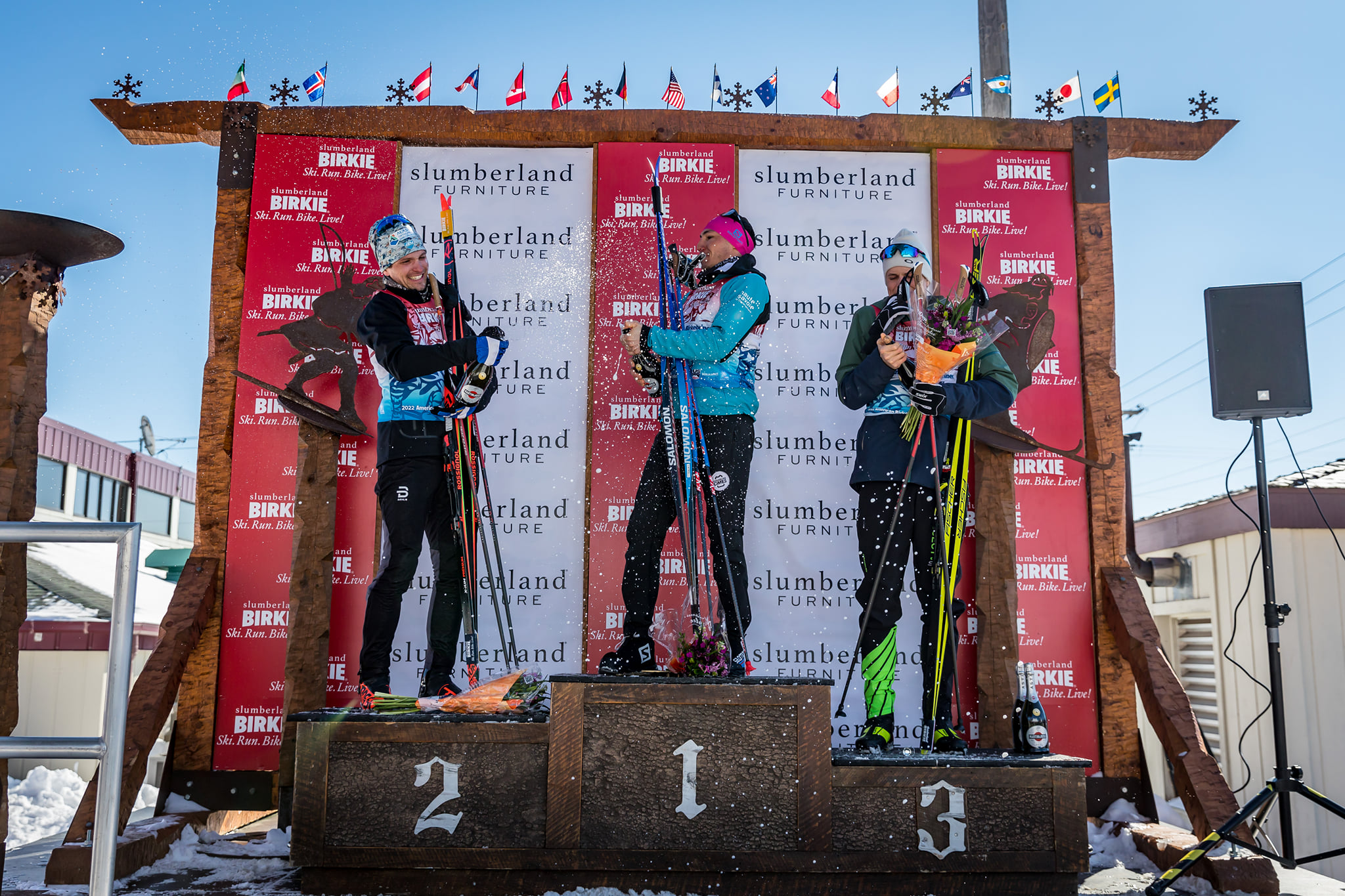
As the time of the call was within 24 hours of the Birkie start, it was yet to be seen that Norris, the 2016 Birkie champion, would this year take second in a thrilling showdown on Main Street in Hayward, WI, losing to Gérard Agnellet of France in a boot slide at the finish. Norris had scaled back on the self-indulgent distance skis in Bozeman, foreshadowing what would come with the following explanation.
“After the [Boulder Mountain Tour], I kind of shut it down and kind of found enjoyment in being a little lazier. And I think that should give me some fresher legs for the Birkie, I hope.”
David Norris and his partner Jessica Yeaton, both APU athletes, won the 2022 Tour of Anchorage. (Photo: Instagram @jjyeaton)
His next steps remain in flux.
“Since there’s not really a spot for a 20th to 10th place skier — like, [US Ski & Snowboard] doesn’t want that on their team, it seems — I’m kind of not that incentivized at all to spend time on World Cup and keep fronting a bill from the U.S. Ski Team.”
With this shift in focus, Norris remains open-minded, explaining that his ski racing plans next winter somewhat hinge upon where Yeaton finds a physical therapy job once she finishes her clinical rotations to complete a doctoral program through University of New Mexico. The two will be stationed in Colorado and Utah through the fall, which may set Norris up for opportunities to compete in trail running races that have not previously fit into his ski preparation plan.
Norris has a track record of strong finishes in Alaska mountain running races. Amidst three wins, he holds the course record at the infamous Fourth of July Mt. Marathon race in Seward, beating a time posted by the seemingly superhuman alpinist phenom Kílian Jornet of Spain, and has won the Cirque Series race at the Alyeska ski resort along with a smattering of other regional trail running events.
“I’ve never wanted to spend money on running because I’ve always just put any money I’ve earned and sponsorship dollars towards skiing. And you know, there’s plenty of races in Alaska, so I didn’t need to travel, but now I’ll be at altitude in Colorado and Utah. There’s so many races to jump into.”
Should they end up spending next winter in a location that allows for quality ski training, Norris anticipates that he’ll continue to race, but the focus will be different.
“I think our lifestyles are such that we would be training a ton, just because that’s what we enjoy doing. And then I would 100% keep jumping into races. But my goals are definitely changing… So probably do less [international racing] and just enjoy ski racing and do it more locally.”
David Norris on his way to winning the 2022 Boulder Mountain Tour in Sun Valley, ID. (Photo: Nils Ribi Photography / Boulder Mountain Tour)
After officially canceling the World Cup Finals scheduled for Tyumen, Russia on February 25th the International Ski Federation (FIS) announced in a brief press release today (see below) that no replacement venue has been found, and thus the upcoming three-day race weekend in Falun, Sweden will instead absorb the event, ending the season one week prematurely.
No schedule changes have been made to the event in Falun, leaving a classic sprint, a 10/15-kilometer skate, and two new mixed gender events, a relay and a team sprint, left to conclude the 2021/22 race season.
The cancellation of the final weekend of World Cup racing solidifies Johannes Høsflot Klæbo (NOR) as the 2021/22 World Cup overall winner. (Photo: NordicFocus)
In terms of overall athlete rankings, these mixed events are not World Cup point scoring opportunities. This means a maximum of 300 World Cup points remain on the table following this weekend’s races at the Holmenkollen, assuming the point-schedule planned for the World Cup Finals is applied to the race weekend in Falun: 50 points each for the individual sprint and distance races, plus a maximum of 200 bonus points for the overall winner of the weekend. It has not yet been made clear how the mixed relay and team sprint will factor into determining the overall winner of this year’s World Cup Finals for men and women.
As such, Johannes Høsflot Klæbo (NOR) will win the men’s overall World Cup given his margin of greater than 400 points to the next competitor. In the women’s standings, Natalia Nepryaeva (RUS) currently stands 252 points ahead of Jessie Diggins, and 285 points ahead of Ebba Andersson (SWE). As the Russian team has been banned from remaining competitions, Nepryaeva has no further opportunities to increase her point totals, instead waiting for the outcome of the remaining World Cup events to decide her fate.
Sweden’s Maja Dahlqvist leads the sprint standings by 155 points over Anamarija Lampic (SLO), while Klæbo leads the men’s standings by 95 points over Richard Jouve of France. While these standings will not change given there is one event remaining worth just 50 points, the distance standings are less certain.
Heading into the 30/50 k races at the Holmenkollen in Oslo, NOR, this weekend, Therese Johaug leads the women’s distance standings by 17 points ahead of Frida Karlsson and 107 points to Andersson, both of Sweden. Alexander Bolshunov (RUS) leads the men’s distance standings by 5 points ahead of Klæbo, who may not compete again this season as he recently tested positive for COVID. Next is Iivo Niskanen of Finland, a favorite for this weekend’s 50 k classic, sitting 84 points back.
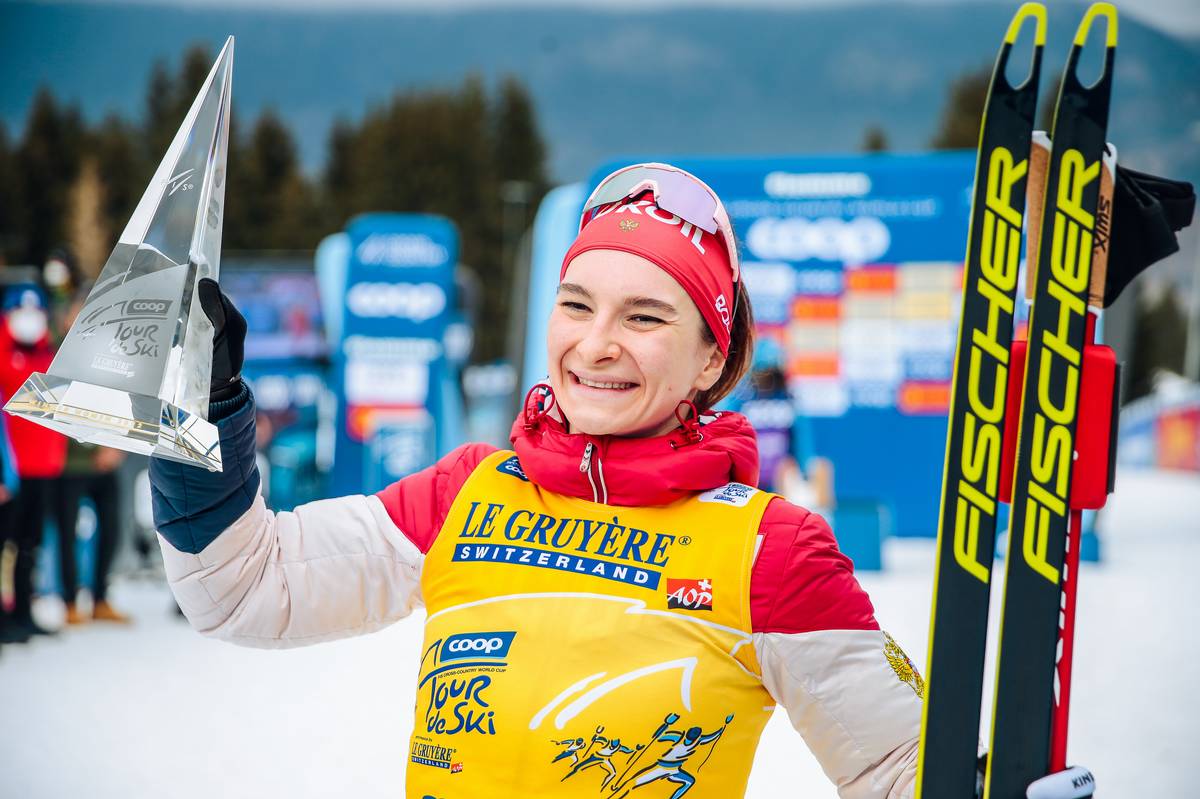
Natalia Nepryaeva celebrates her win of the 2021/22 Tour de Ski, helping land her atop the overall World Cup standings. (Photo: NordicFocus)
World Cup racing resumes tomorrow with the women’s 30 k classic, followed by the men’s 50 k classic on Sunday. Stay tuned for FasterSkier’s coverage of these races.
(Press Release) FIS Cross-Country World Cup finals to take place in Falun (SWE)
FIS Cross-Country together with various National Ski Federations evaluated a possible replacement of the cancelled World Cup event of Tyumen (RUS). Despite big efforts and interest of various National Ski Federations, no replacement for the World Cup final events was found.
This means that the scheduled World Cup event in Falun (SWE) from 11th to 13th March 2022 will be the final events of the FIS Cross-Country season 2021/22. The schedule will not be adjusted and follow the originally planned competition formats.
Click here for the Falun World Cup weekend schedule.
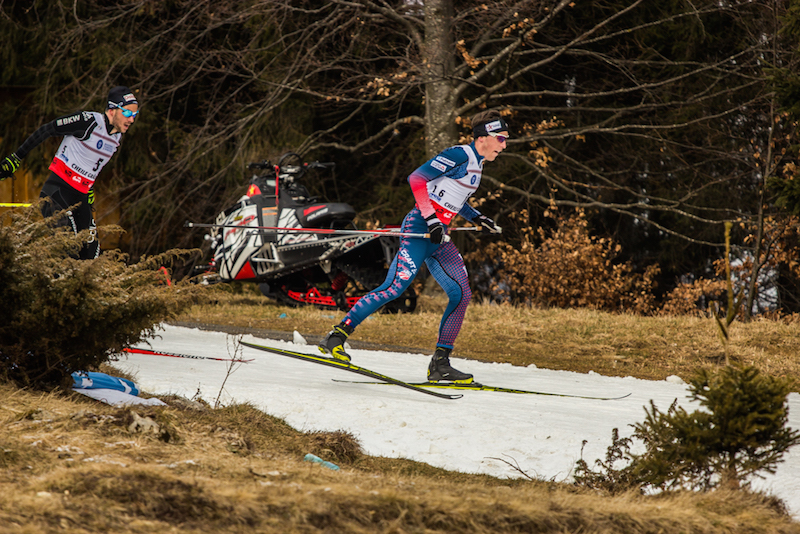
David Norris of the U.S. during Stage 1 of the Ski Tour 2020. (Photo: NordicFocus)
This article has been updated to clarify the relationship between the junior races now known as FIS Nordic Junior World Ski Championships and its precursor, the World Junior Nordic Championships and the European Junior Nordic Championships.
There are, to briefly traffic in the obvious, 60 seconds in a minute. Sixty seconds in a minute; 60 minutes in an hour; 3,600 seconds in an hour. Skiers measure their lives in these increments; we track total yearly training hours, obsess over minutes spent in L3 vs. L4, dutifully record splits from an interval workout down to the second.
David Norris spent roughly 1,000 hours last season in training or racing, or 3,600,000 seconds total. Katharine Ogden may have spent “only” 700 hours, or 2,520,000 seconds, engaged in training or racing. Combined, that’s over six million seconds. This is the story of 12.3 of those seconds, and of their outsize influence on selection to the U.S. national ski team, or USST, fourteen months later.
* * *
Falun, Sweden, March 2019. David Norris, a Fairbanks native who moved to Anchorage after college graduation to ski for Alaska Pacific University, was on a roll. He had had strong results in two recent 50-kilometer races, skiing to 20th at World Championships in Seefeld and 24th at the iconic Holmenkollen within a week. As the World Cup tour moved on to Sweden, Norris looked to continue his torrid streak in the 15-kilometer interval-start freestyle race held on March 17.
David Norris of the U.S. placed 20th overall in the the men’s 50 k skate at the 2019 World Championships. (Photo: John Lazenby/lazenbyphoto.com)
Interval start races on the World Cup are generally reverse seeded, with the fastest skiers starting last. In Falun, Norris had bib no. 16 in a field of 69, reflecting relatively high seeding and low expectations – this is not where you put a predicted top-30 finisher. (Indeed, the two athletes immediately ahead of him, bibs 14 and 15, finished well outside the points in 37th and 47th.) Norweigan broadcaster NRK didn’t even show his start, instead cutting away to show a pre-recorded broadcast with Martin Sundby over the span of a half-dozen early starters, including Norris.
But once the race started, Norris showed he belonged. Through three laps of the 5-kilometer course at Falun, he hovered between 11th and 16th. He beat Klæbo. He beat Spitsov. He beat Manificat. When he crossed the finish line, with the sharp end of the field still on course, he was briefly on the virtual podium in second overall. Once all starters had crossed the line he would end the day with a final result of 16th, a notable result for American men’s distance skiing at any point in the past three decades.
Afterwards, Norris told this website, “I am super happy with my result – I feel like I have recovered well from back-to-back 50ks, and my skis were good. Today was the type of result I have been believing I should be able to do on a good day, so I am psyched to have made that happen.” Jason Albert’s contemporary race story for FasterSkier observed, “During a year when the U.S. Ski Team has offered numerous international starts to a host of non-USST members, Norris and his trifecta of results in the points promotes the notion that on the right day and even the right World Cup string of races, elite U.S. skiers can step up.”
Norris’s time for 15 kilometers was 34:33.9. His life would be different now if he had finished in 34:22.9, 11 seconds faster.
* * *
Ten days before Norris’s fateful ski, Katharine Ogden toed the line for the women’s 5 k skate race at 2019 NCAA Championships. She was racing at the Trapp Family Lodge in Stowe, Vermont, two hours from where she grew up in Landgrove and just down the road from where she had attended school at Stratton Mountain. Ogden had to be considered among the pre-race favorites – in seven individual NCAA races so far that season she had seven podiums, including three victories and three second places – and her seeding reflected it. She had bib no. 36 in a field of 40; that is, she was seeded as the fifth-best racer in the field.
https://www.instagram.com/p/BurVLtMH_C3/
A 5-kilometer ski race will take a skilled athlete well under 15 minutes, even on a homologated course. Depending upon the course profile and how much chance for recovery there is, the race can be roughly akin to the world’s longest, most difficult L4 interval. An athlete has to go nearly as fast as sprint pace, for roughly four times as long, without completely blowing up and losing valuable seconds against a tight field.
On this day, and even over “just” five kilometers, Ogden metered out her effort better than nearly anyone else in the field. At the two-kilometer mark, she was in ninth. By the halfway mark, she was down to 11th, not only off the podium but also out of All-America status. But she came on strong over the final 2.5 kilometers, moving up seven places in as many minutes. Coming down the finishing straight she drew even with her Dartmouth teammate Lydia Blanchet, who had started 30 seconds before her in bib no. 35, then moved alongside to out-lunge Blanchet at the finish.
Ogden finished just off the podium in fourth, even after, according to one contemporary observer, falling at one point on the course. Her time for 5 kilometers was 13:34.5. Fourteen months later, she would miss objective selection to the 2020/2021 USST B-Team by a fraction of a FIS point. If she had gone just 1.3 seconds faster in this race, 13:33.2 instead of 13:34.5, she would have made the team.
* * *
A year later, Ogden made the team anyway, following the application of discretionary selection by U.S. Ski Team leadership. At the end of this season, she had 49.45 points on the final women’s FIS Distance List, good for 81st in the world. The athlete one spot ahead of her in 80th had 0.25 fewer points, or 49.20. A female athlete born in 1997, like Ogden, needed a year-end distance ranking of 80th or better to merit selection to the USST B-Team via objective criteria. Ogden was very close, but 81st is not 80th.
Norris, meanwhile, ended up with 22.95 points on the same final men’s FIS Distance List released this March, good for 43rd in the world. (22.95 points would have left him ranked 18th on the women’s list; as previously discussed, the men’s field is tighter than the women’s at every level of the distance rankings.) The athlete three spots ahead of him in 40th had 0.88 fewer points, or 22.07. A male athlete born in 1991 or earlier, like Norris, needed a year-end distance ranking of 40th or better to merit selection to the USST B-Team via objective criteria. He was very close, but 43rd is not 40th.
* * *
The criteria for objective selection to the national team, which this year key on an athlete’s FIS points-based world ranking and are adjusted for age and (in some cases) gender, are of recent vintage.
In announcing the new criteria at the start of the 2019/2020 season, then-USST Head Coach Chris Grover wrote, “these criteria create many objective pathways to a USST nomination and identify a clear path for athletes, coaches, and parents to understand exactly what is necessary to be nominated to the USST. … I’m confident that these new criteria will help us do a better job of identifying those athletes with the potential to medal while creating better transparency around the U.S. Ski Team nomination process.”
David Norris winning the 2016 American Birkebeiner (photo Paul Walsh)
The potential use of discretionary selection alongside objective criteria for selection remains substantively unchanged from previous years. Grover highlighted the use of discretionary selection in an email to FasterSkier earlier this month when asked about the reasoning behind adding Ogden to the team via discretion.
(FasterSkier’s late-April podcast with Matt Whitcomb, which explored Norris’s situation at some length, took place before the official team announcement had been made by U.S. Ski & Snowboard in early May. FasterSkier knew at the time that Norris was not on the team, due to this Instagram post from APU, but did not know that Ogden was on the team, and so did not ask about her selection when it spoke with Whitcomb.)
Grover wrote to FasterSkier, in full (the original email highlighted the penultimate bullet point under discretionary criteria, as has been done here):
Attached is the criterion and below is the specific part of the criterion’s discretionary selection policy we utilized when nominating Katharine to the USST:
Discretionary Selection Policy:
U.S. Ski and Snowboard may select additional athletes to the team, or may select athletes to the B-team who have met D-team criteria, using coaches’ discretion based upon factors other than the objective criteria. If the coaching staff fills any spot(s) on the team with discretionary selections, then the staff may consider any factors including (but not limited to) the following:
Completion of individual markers, as set forth by the U.S. Ski Team coaching staff and as approved by the U.S. Ski and Snowboard Head Cross Country Coach, which point toward the achievement of competition results consistent with U.S. Ski Team program goals.
Attitude and commitment of athletes to take part in the complete camp and competition program.
Illness or injury during the selection period.
Indicia of medal potential in future Olympic and World Championship competitions, which would be materially enhanced by selection to team.
Other unanticipated failure of objective criteria to select an athlete likely to achieve competition results consistent with the U.S. Ski and Snowboard program goals.
As you know, Katharine is one of three athletes in USA World Junior history to achieve an individual medal, so she clearly meets the above criteria.
The reference is to Ogden’s bronze medal in the women’s 10-kilometer skiathlon at 2017 World Juniors in Soldier Hollow. The other American athletes with individual World Juniors medals are Hailey Swirbul, in 2018, and Gus Schumacher, in 2020. That said, American skier Bill Koch won an individual medal in the 1970s version of what are now colloquially known as “World Juniors” at the 1974 European Junior Nordic Championships.†
Whitcomb also spoke to the relationship between junior medals and senior success in the recent podcast. Whitcomb observed, “There’s a big difference between being a top-10 skier or a medalist at World Juniors and converting that to top tens and medals on the World Cup. And it’s not a gimme.” He suggested, however, that this is “the benchmark that seems to be required to have World Cup success or Olympic or World Championship success,” based on internal national-team data going back over the past 10 or 15 years.
American Katharine Ogden (SMS/USST) and her dad John celebrate her bronze medal in the women’s 10 k skiathlon on Friday at 2017 Junior World Championships at Soldier Hollow in Midway, Utah. (Photo: U.S. Ski Team/Tom Kelly)
He added, “With that you have exceptions like Holly Brooks who never went to World Juniors and is a World Cup … podium skier. So you’re not out of luck if you didn’t get into the top 10 or top 12 or on the podium at World Juniors.”
Americans who have previously medaled at Olympic or World Championship competitions without achieving an individual medal at World Juniors include Kikkan Randall, Jessie Diggins, Caitlin Gregg, and Sadie Maubet Bjornsen. Bill Koch is the only American skier who has achieved both an individual juniors global championships medal and an Olympic or World Championship medal.†
Gregg is the only American who has medaled at a global championship while not a member of the U.S. Ski Team.
Athletes with no individual World Juniors medal currently on the U.S. Ski Team include Maubet Bjornsen, Rosie Brennan, Sophie Caldwell, Diggins, Julia Kern, Simi Hamilton, Kevin Bolger, Scott Patterson, Logan Hanneman, Hannah Halvorsen, Novie McCabe, Kendall Kramer, Sydney Palmer-Leger, Sophia Laukli, Johnny Hagenbuch, Luke Jager, Noel Keeffe, Ben Ogden, JC Schoonmaker, and Hunter Wonders.
* * *
David Norris, like the 20 athletes listed above, also has no individual medal from World Juniors. He finished 29th and 43rd at the 2010 World Junior Ski Championships in Hinterzarten, Germany, where he also skied on a relay team with Sam Tarling, Scott Patterson, and Erik Bjornsen. These races were some time ago; Norris is now 29. (He was born in December 1990. Had he been born thirteen months later, in 1992, he would have made this year’s team.)
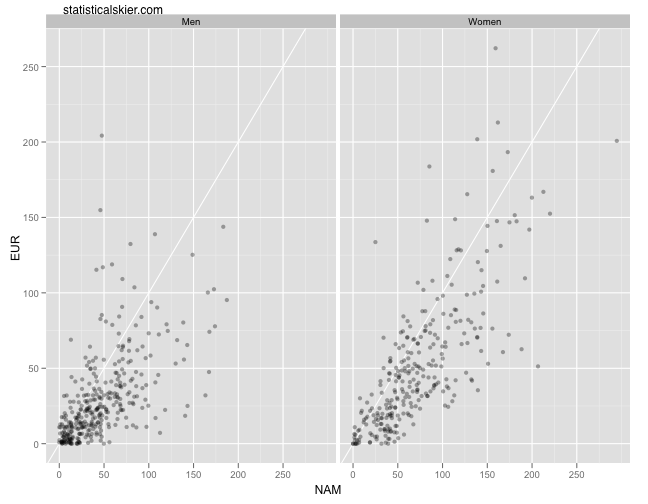
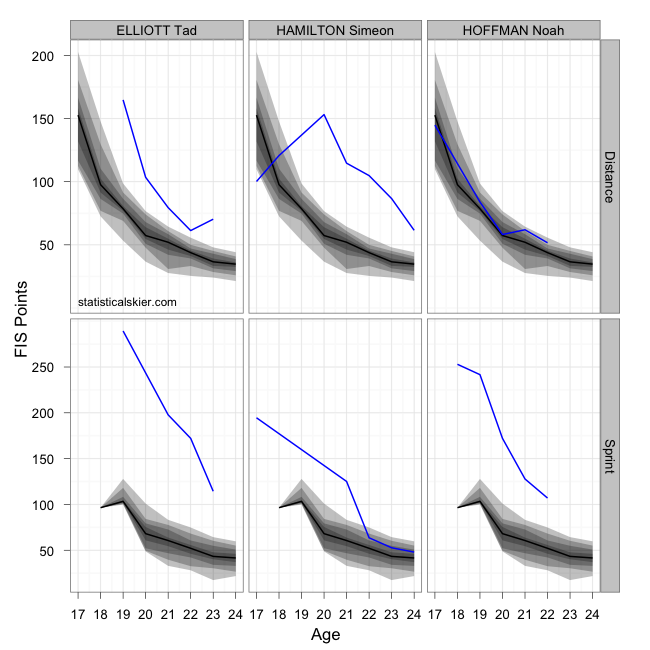
One recent chart from Joran Elias at Statistical Skier appeared to show that roughly 75% of male skiers who achieve a top-10 result in a high-level distance race do so by the age of roughly 26 (closer to age 28 for women). Another series of charts appears to show that both Norris and Ogden fall within the upper end of the historical age-based performance range for achieving “top international results,” defined by Elias as at least three top-10 finishes in high-level distance races. (Larger versions of the charts are available on Twitter here.)
Joran Elias is the Statistical Skier. He’s shown here with his son Ciaran, several years ago. (Courtesy photo)
The USST’s decision not to add Norris to the national team via the exercise of discretion was discussed at length in the final segment of FasterSkier’s recent podcast conversation with Whitcomb. Briefly put, Whitcomb pointed to the criteria’s emphasis on global championships medal potential, and argued that Norris is not currently on track to achieve such results:
“We have to be able to argue that David is on track to be a medalist at World Champs or at the Olympics. And we can’t argue that. We can argue that he is on track to continue to improve, he’s on track to get into the top-15 next year – but that, at [age] 29 or 30, doesn’t merit a B- or an A-Team spot, which now involves $25,000 of funding, roughly, if you are running the World Cup full season, and all the camps. As much as I want him there and on those teams, we can’t argue it. And so – David’s an incredible role model, as the fastest distance skier that we had this last season, and hopefully he’s our fastest distance skier this next year and continues to improve.”
Whitcomb added, “And so what’s the message for juniors that are disheartened by that? I think the message is that it’s not easy to make the B-Team. It’s going to take exceptional commitment from a pretty young age.”
At least one junior was disheartened by this message. “It’s really sad and makes me question the integrity of the selection process,” a top American junior skier told FasterSkier of Norris being left off the team. (The athlete was granted anonymity to discuss a sensitive matter.)
Whitcomb added, in reference to the season just concluded where Norris raced on the World Cup all year, “David was a pleasure to have on the World Cup all season. And once an athlete’s on the World Cup, you’re basically on the national team. This is not the U.S. Ski Team once we hit the road, it’s U.S. skiing. And I think David would agree that we’ve, as a nation, gotten better at being inclusive of people inside and outside of the team.”
Other athletes who have made periodic World Cup starts in Europe may not agree. (Multiple athletes who were approached for this story declined to officially comment, even anonymously.) For those commenting on background, a common theme in these athletes’ experience is reduced access to quality skis or wax tech support for non-national-team athletes (even after paying for a wax tech out of pocket), which is no small thing when racing at a level where ski preparation can make such a large difference. These same athletes, again speaking on background, have generally suggested that ski team leadership acted more in response to logistical constraints than in an outright bad faith attempt to hinder their performance.
Matt Whitcomb. (Photo: Twitter)
As a specific example, some ski manufacturers’ contracts specify that an athlete cannot receive a certain level of support without being a member of the national team, so racing in Europe independently, even alongside USST members and otherwise being included as a part of the team in a general sense, can compromise an athlete’s access to support for skis and service. Some athletes also talk about a more general, unwelcoming sensation of feeling like an outsider, even when traveling and racing immediately alongside named members of the national team.
Said one American skier who has raced European World Cups not as a member of the national team, “When you show up to a World Cup as a domestic athlete, you are a guest. Although not marketed as so, it shouldn’t be a surprise. You’re given the uniform, housed with the team, hopefully assigned a wax tech (but best to bring your own), and they have your credit card for billing. As a ‘bubble athlete,’ the pressure is immensely high, and you have a brief opportunity to prove you belong there. When you’re on the World Cup as a part of the team, there is also a lot of stress to perform, however you’re allowed a season to experience mistakes, try tactics, and build your confidence in that scene. History has shown that the USST favors granting discretion to younger athletes, leaving older athletes to fight for spots as outsiders.”
The athlete quoted immediately above competed on the World Cup in a season when Grover was the head coach and Whitcomb was the women’s team coach. Whitcomb now holds the position of head coach, effective as of last month.
Whitcomb said, in reference to the advantages of being an official member of the team, “Opportunities and doors are not closed. But the bummer is that the funding was missed; that’s one of the big things. Plus just being a part of the team; it instills confidence when you know the people that you’re on the road with are your teammates. But we try and do our best to have those that aren’t actually on the team to feel like they’re a part of it as well, and that will be a goal of mine.”
* * *
11 seconds out of 3,600,000. 1.3 seconds out of 2,520,000. Fractions of fractions of a percent – that’s 0.00031 percent of Norris’s total training year, and 0.000052 percent of Ogden’s. For two athletes seeking to fund European racing and wondering what the next race season holds for them, that fraction of a FIS point – even assuming no value to team status or team dynamics or better ski support or increased sponsorship opportunities or improved access to World Cup starts – was worth at least $25,000. Every second counts, indeed.
***
A note on methodology, and an attempt to show my work:
An athlete’s sprint or (in this case) distance points are typically determined by taking the average of his or her five best points results in that discipline over the past 12 months. The 2019/2020 year-end FIS Points lists actually go back farther than that, to early March 2019, presumably because of the large number of FIS races cancelled from early March 2020 onwards. (Elias, at Statistical Skier, logged roughly 1,000 unique ski races in each of the 2017/2018 and 2018/2019 seasons, but only 681 ski races for the 2019/2020 season.)
Among races held in that time, Ogden’s five best results are from March 6, 2019 (53.97 points); March 8, 2019 (49.28 points); Dec. 7, 2019 (44.25 points); Dec. 15, 2019 (54.10 points); and Jan. 26, 2020 (45.63 points). This is a total of 247.23 points, or an average of 49.446, which is rounded to 49.45 in the world rankings list. Ogden won the races held on March 8, December 7, and January 26, so, short of finding more fast people to enter and beat, there is nothing she could have done to improve her points in those races. That leaves the races of March 6 and December 15. Of those two, the December race was a mass-start race held over 10 k, with a winning time of roughly 27 minutes; the March race was an interval-start 5 k, with a winning time of roughly 13 1/2 minutes. I chose the shorter, interval-start race to illuminate the narrowness of the margin keeping Ogden from the team; you could re-run the math using the mass-start race instead, and come up with a slightly larger margin. (Also relevant, and acknowledging the need to tell a story rather than just set forth some math problems, I could find more information about the March race, because it was an NCAA race and Dartmouth Skiing wrote about it on its website in some detail.)
For Norris, meanwhile, his five best results are from March 3, 2019 (17.52 points); March 9 (20.54 points); March 17 (30.14 points); March 30 (24.87 points); and April 2 (21.66 points). This is a total of 114.73 points, or an average of 22.946, which is rounded to 22.95 in the world rankings list. Norris won none of these races, so in theory you could re-run the math for him on the assumption that he did just slightly better in all five of them, instead of 11 seconds better in one of them. I chose the March 17 interval-start race because it was the highest single value of those five results, and made it clear how performance in a single race most directly impacts the final FIS points number. As with Ogden, I similarly chose a shorter, interval-start race to highlight the narrowness of the margin keeping Norris from the team; you could re-run the math with some or all of the mass-start races, and come up with a slightly larger margin for one race, or, smaller margins for multiple races.
***
† Chris Grover’s emailed statement, that only three American skiers have won an individual medal in “USA World Junior history,” is literally true, but only because the races now generally known as “World Juniors,” which currently have the official name of “FIS Nordic Junior World Ski Championships,” have only been consistently known as “World Juniors” since 1977. A global championship for junior cross-country athletes began in 1968, and was held annually. As Nordic Canada magazine noted in the late 1970s (PDF page 4), this race series began as “The World Junior Nordic Championships (as they are called in odd years, or the European Junior Nordic Championships in even years).”
Koch won a bronze medal in an individual race at the 1974 European Junior Nordic Championships, then broadly known as “EJCs,” according to contemporary athletes. The two sentences in the body of this article marked with a dagger (†) have been added to this article since it was initially published to reflect the fact that Koch won a junior global championships medal in addition to medals at the Olympics and the “normal” FIS Nordic World Ski Championships. Had Koch won this medal in either of the odd years of 1973 or 1975, it appears that he would have instead medaled at “World Junior Nordic Championships.”
Therese Johaug, who has distance points of 0.00, skiing solo at Holmenkollen in March 2020. (Photo: NordicFocus)
First in a two-part series. Coming next week: The meaning of a single FIS point for national team selection.
The recent news that David Norris was not named to the national team by the narrowest of margins, following the application of objective selection criteria tied to an athlete’s position on an overall FIS points world ranking list, has inspired FasterSkier to take a closer look at where these numbers come from. The goal of this piece is to provide some background on the mathematical inputs for this magic number, and to survey some of the things it is used for.
Where FIS points come from
First things first: FIS is an abbreviation for Fédération Internationale de Ski, the French term for the Switzerland-based International Ski Federation. FIS is an international governing body that sets international competition rules for a range of snow sports. It has a membership of 118 national ski associations.
There were a great many ski races in this country in the winter of 2019–2020. A relatively small portion were sanctioned by U.S. Ski & Snowboard (formerly and still better-known as USSA), the domestic governing body for American skiing, and were tied to the National Rankings List, or NRL. If you raced at Junior Nationals this year, for example, you got NRL points but not FIS points.
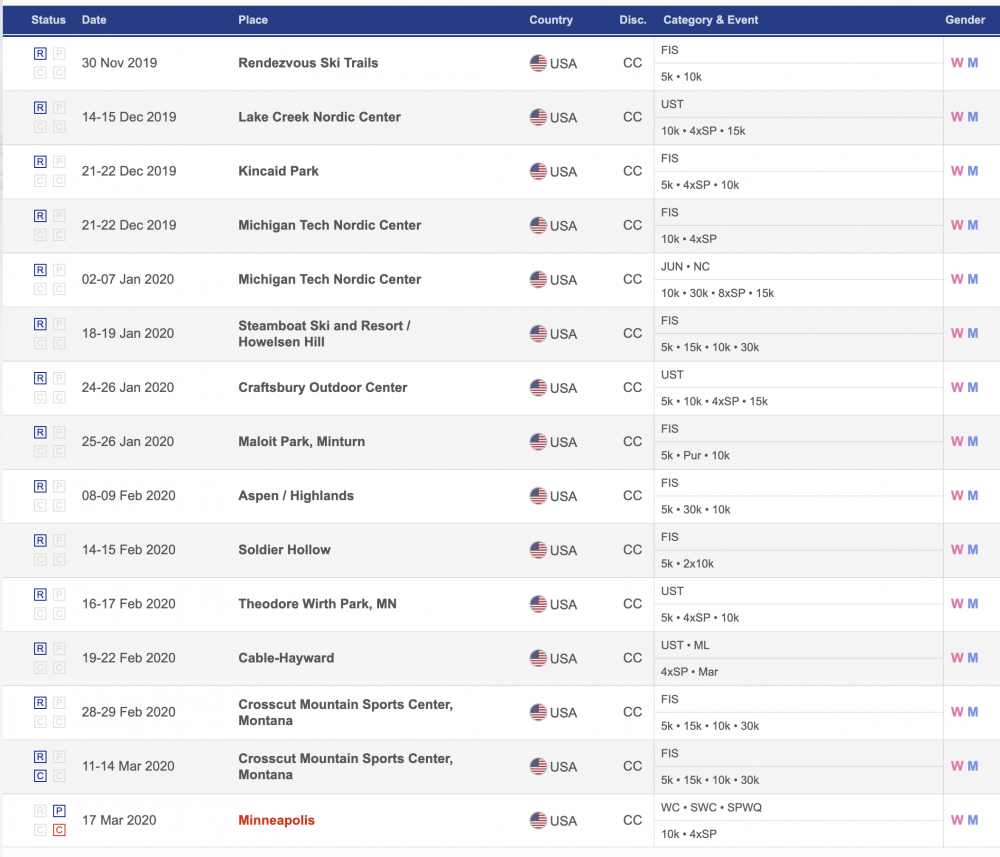
An even smaller portion of domestic races last year were FIS races, meaning that they would provide FIS points to competing athletes who had an active FIS license. Here is the entire list of FIS races in this country last season (to clarify, clicking on this list on the FIS website yields multiple races for each venue, such as a men’s and women’s distance race, sprint qualifier, and sprint heats for the second entry, the Sun Valley SuperTour stop):
2020 American FIS races. (photo: screenshot from FIS site)
Yes, that’s poignantly missing a certain mid-March domestic World Cup stop (listed in red to show it was cancelled), and technically speaking the March entry for Montana has fewer results than it should because NCAA Championships were cancelled halfway through, but this is otherwise a complete list. It contains U.S. Nationals, standalone SuperTour stops, December JOQ races in Alaska and Michigan, and regular-season races for the RMISA college circuit, but not for CCSA or EISA. Add a November race at West Yellowstone, and that’s a total of 14 FIS race stops, for the entire country, for the entire winter. Not too many.
Designating a race as an official FIS race involves paying an additional fee to FIS, as well as other logistical requirements aimed at ensuring the fairness of the competition and the accuracy of the results. Most fundamentally, it requires hosting the race on a homologated course, that is, a race course that meets numerous requirements for specifications like width, overall climb, and the placement of hills. You can find more information about the homologation process here, and a very long article about the earliest FIS race in each season here.
(All that said, FIS points may also be awarded for a race that was intended to be held on a homologated course, but was moved due to safety considerations. The distance races at 2018 U.S. Nationals in Anchorage, distance races at 2014 Spring Series in Anchorage, and the infamous 33-lap 50 km at 2012 Spring Series at Craftsbury are just some of many examples. FIS points are also awarded for city sprints, including those on virtually flat courses that would not meet a typical sprint course homologation standard.)
Seriously, though, this may look daunting – and the German may not help – but the math, and the concept behind it, are both pretty straightforward. Briefly put, it’s a calculation of an individual racer’s percentage back from the race winner (as measured by time, not by placing), multiplied by a factor that approximates how tightly bunched the field is expected to be.
As an example, say someone wins an interval-start 5 k race in 14 minutes (840 seconds), and you finish second in 15 minutes (900 seconds). Using the righthand calculation from the screenshot above, 900/840 is, in round numbers, 1.0714. (Put another way, you finished 7.14% back from the winner.) Subtract 1, and you get 0.0714. Multiply that by the race factor, in this case 800 for an interval-start race, and you get 57.12. Your race points for this race are 57.12. That’s it. (At least if this is a World Cup-level race, so you don’t have to do additional steps to account for the relative strength of the field. More on that later.)
For one more example: Say it’s a mass start race, and you stay in the lead pack till the very end, but then you get viciously dropped on the final downhill back toward the stadium and lose half a minute over the last kilometer (I may be projecting here). The winner finishes in 1 hour even (3,600 seconds); you straggle home in 13th place, 30 seconds later (3,630 seconds). 3,630/3,600 is 1.008333; minus 1 is 0.008333; 0.008333 times 1400 is 11.67. Your race points for this race are 11.67.
Jessie Diggins, who has sprint points of 12.80, sprinting in Konnerud, Norway, in March 2020. (Photo: NordicFocus)
This may be obvious, but it’s worth underscoring that your points for the second race are a whole lot better than those for the first race, even though you were 13th instead of second. (Lower points are better, like a golf handicap. Jessie Diggins’s distance points are 16.11. If you’re an American skier reading this and you’re not Diggins (you’re probably not), your points are worse than that.) A race points calculation has everything to do with your individual percent-back from the winner, and nothing to do with overall place. The math asks how far back you were from the winner, not how many other people finished between you and the winner. As you may have heard a coach express from the side of the course during a time trial, every second really does count.
The math also values performance in interval-start races, everything else being equal, more highly than performance in mass-start races. You multiply your percent back by 800 for the one, but by 1400 for the other; the race factor for a mass-start race is 75% greater. This makes sense: If you’re fast enough to be skiing with the leaders in a mass start race, finishing one percent back there is in many ways less impressive than finishing one percent back in an interval-start race where you had to ski the whole way on your own. The same splits as the first example – winner in 14 minutes, you in 15 minutes – are a 57-point race for an interval start, but a 100-point race if it was a mass start. That’s a big difference.
This theory makes more sense at the high end of the field, where a given racer is typically capable of skiing with the lead pack for at least some portion of a mass start race. If you are instead as good a skier as, say, this reporter, while it is obviously easier to ski with a pack than on your own, your overall percent-back figure may not be all that different across the two race formats, given that you typically lose sight of the race leaders by halfway up the first uphill leaving the stadium.
Indeed, personally speaking, among USSA-sanctioned races tied to the domestic rankings list (same math as for FIS points), my race points for interval-start races typically fall in the 100s and 200s, and for mass-start races in the high-200s or 300s (or the 400s, when the wheels really come off, typically in classic races where the wax tech 🙋really flubs the wax). If I were consistently skiing with the lead pack in both race formats, these numbers would be a lot closer to each other. And much smaller.
Last step: Add a race penalty
Finally, note that there is one more step involved in calculating FIS points for any race below the World Cup: adding a race penalty, to the race points number reached above, to reflect roughly how competitive the field is. A World Cup, Olympics, or World Championships race has a fixed penalty, of zero, which is why the math ended there in the calculations above.
But in any other level of racing, you look at the top five finishers (with active FIS licenses), take the three best FIS-point values from the current sprint or distance ranking list, add them, then divide by 3.75. You then add this race penalty to the race points calculation described above to determine the FIS points for a given result. (You can find a more nuanced analysis of minimum penalties and what to do with insufficient ranked finishers in Section 5.3 of the Rules for FIS Cross-Country Points 2019-2020 document on the FIS website.)
Rune Ødegård of the University of Colorado, who at the time had distance points of 27.33, racing to second place in the 10 k skate at Kincaid Park as part of RMISA Championships in March 2015. (Photo: Tim Whiton)
Among domestic races last season, for example, the winner of the men’s classic distance race at RMISA Regionals received 43.46 FIS points; of the December Alaska JOQ race, 42.77 points; of the November West Yellowstone race, 41.82 points; and of the classic race at U.S. Nationals, 26.70 FIS points. For the women, it was 72.26 points for Alaska; 42.07 points for West; 53.82 for RMISA; and 37.34 for U.S. Nationals. The variations show that the points available for a given race will depend on how many fast people show up; among the men’s races listed above, U.S. Nationals unsurprisingly had the best high-end field by a substantial margin, while the other three races were all roughly comparable. For the women, meanwhile, the field was nearly as good in a November race in West Yellowstone as at Nationals. The overall difference between the genders (all the women’s races have higher points than the men’s) likely reflects that more top-level American distance women are racing in Europe each season, so that the domestic field left behind in North America, while strong, is not as strong as the men’s.
These numbers generally underscore that winning a top-level domestic race is treated as mathematically less impressive than winning a World Cup race, which is appropriate. (The minimum penalty assigned by FIS goes the other way too, though. Winners at Norwegian national championships received the minimum allowed penalty for a domestic FIS race, 20 points, even though topping a domestic podium of Therese Johaug — Astrid Jacobsen — Tiril Weng is no less impressive than winning a World Cup race against a full international field.)
Inside the rankings list, ft. Master Blaster humble pie
Speaking of Johaug, she is, as you may imagine, ranked first on the current FIS world rankings distance list: Johaug, Therese, NOR, 1988, 0.00. The rest of the women’s top 10 is about what you would expect: in order, Ingvild Østberg, Ebba Andersson, Heidi Weng, Krista Pärmäkoski, Astrid Jacobsen, Natalia Nepryaeva, Frida Karlsson, Jessie Diggins, Teresa Stadlober. By the time you get to Stadlober, in tenth, the points have already risen from zero to 16.26.
The top 10 men, meanwhile, start with Alexander Bolshunov of Russia, 0.00 points, and stretch down to Dario Cologna of Switzerland, 5.34 points. Other than Iivo Niskanen of Finland, in sixth, every other man in the top 10 is Norwegian. If you listened to Devon Kershaw’s podcast this season, you may have heard him discuss the Norwegian men’s distance dominance.
The points are asymptotic for both genders, but the men are more tightly bunched than the women at every level of the distance rankings. On the women’s side, tenth place on the distance list has 16.26 points; 50th has 42.87 points; 100th has 52.52 points; 500th has 117.29 points. For the men’s distance list, 10th place has only 5.34 points; 50th has 24.69 points; 100th has 34.09 points; 500th has 73.47.
Chart of world rankings by gender for 2020 final FIS Distance Points list.
The fact that it is more difficult to achieve a certain ranking for the men than for the women is, at least somewhat, reflected in various selection criteria for choosing American athletes for international competition. For example, the current draft of the selection criteria for World Cup team selection gives World Cup Period I start rights to a woman achieving a top-30 sprint or distance ranking on the current world rankings list, or to a man achieving a top-40 ranking.
This difference only partially accounts for differing levels of competitiveness, though: 30th on the women’s distance list is 34.67 points, but 40th on the men’s list is 22.07 points. The standard would have to be top-30 for women, or top-105 for men, to achieve equality at the level of 34.67 distance points.
Finally, at the other end of these rankings, where would you stack up if you’re a mid-level American master skier? No offense, but: not very high.
I’m going to shift to the first person here and use myself as an example, to avoid seeming to pick on a random, presumably very nice Midwestern skier I’ve never met. I’ve done the American Birkebeiner skate race – a well-known race in this country and a decent barometer for citizen racer fitness – once, four years ago, at age 34. In my first time ever on the course, I started in Wave One and finished 190th among the men. I have a strong urge to make excuses about how much my skis sucked and how poor my nutrition was, but let’s just generally say that it did not feel like a result that showed what I was really capable of. Given improved training since then and hopefully more competitive skis, I would credibly hope to finish somewhere between 100th and 150th if I raced the Birkie again.
Wave 2 of the 2018 American Birkebeiner on course. (Photo: American Birkebeiner Ski Foundation)
I don’t have a FIS license (paying $115 each year for a USSA license to finish in the bottom half of local JOQ races is enough for me), but as an Anchorage-based skier I’ve done many local races against athletes who do have them. Extrapolating from my finishes in these races, and for the sake of the math making the generous assumption that I’d found five interval-start FIS races in the last year (this number would go up significantly if mass-start races were in there as well), I would predict that my current FIS distance points would be, in round numbers, 260.
FIS points of 260 would give me a current world ranking of… 3,448th among male distance skiers, out of 5,559 male athletes currently ranked. You just finished 120-something in the skate American Birkie, thereby achieving Master Blaster godhead? Congratulations, there are only 3,400 skiers better than you in the world. (Actually, there’s far more than that, since very few masters skiers have current FIS licenses and so are excluded from this listing. But it’s at least that many.)
What FIS points are used for
Athletes’ FIS points are most commonly used to rank racers in an interval-start (lowest points start last) or mass-start race (lowest points start first, at the front of the chevron). They are also used as a sort of shorthand requirement for a certain level of performance – the skiing version of “You must be this tall to go on this ride.” Hence, for example, if you are an American skier, you must have:
And so on. The theory behind FIS points is that they may be used as a credible shorthand for how good a skier is, in any context, particularly in a country as large as the U.S. where skiers do not often all race against each other.
Finally, and returning to the impetus for this article, FIS points also form the basis for world ranking lists that are used to determine objective selection to the U.S. Ski Team. Please tune in next week for Part II of this series, What’s a Point Worth.
This article has been edited to reflect the fact that it is specifically in the distance rankings that male athletes are more tightly bunched than women athletes.
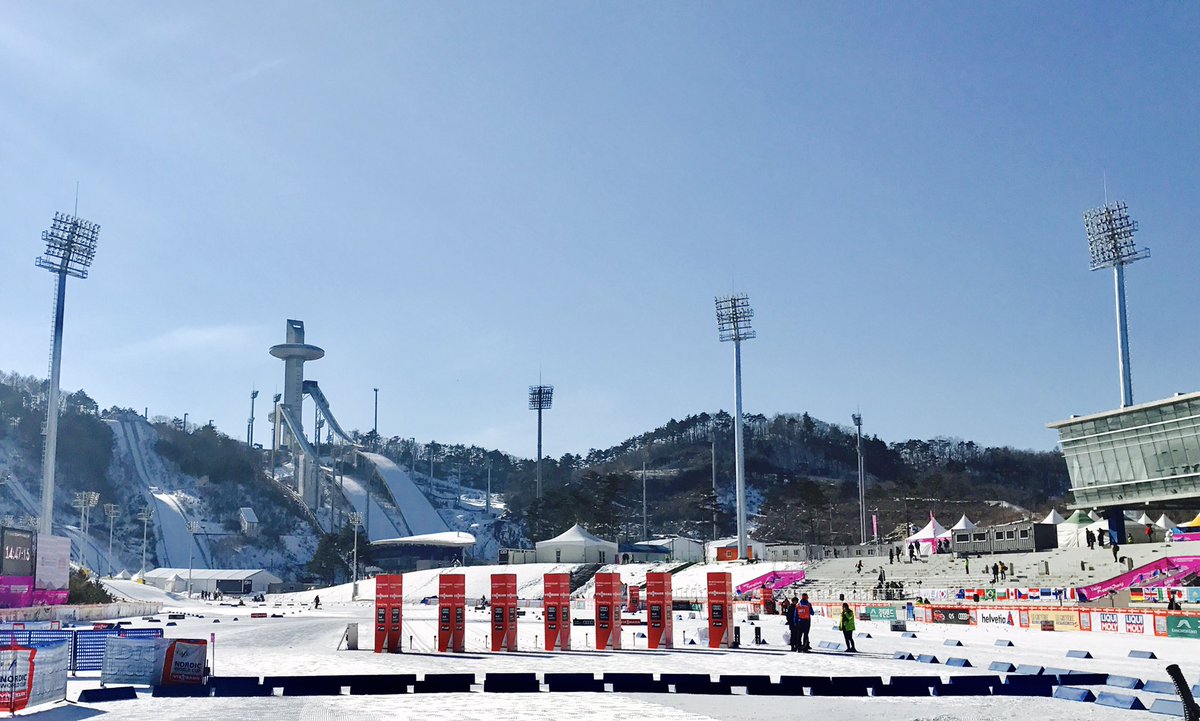
The PyeongChang venue as seen in February 2017. PyeongChang, South Korea, will host the 2018 Olympic Games this coming February. (Photo: FIS Cross Country/Twitter)
Note: This is the first of a multiple-part series on the 2018 Winter Olympic selection criteria for the U.S. cross-country ski team. A parallel piece compares the cross-country team’s criteria with other U.S. winter sports.
***
Friday, July 7, will mark seven months to go until the Opening Ceremony for the 2018 Winter Olympics in PyeongChang, South Korea. As athletes across the country ramp up their commitment in this Olympic year, and #roadtopyeongchang trends across various social media platforms, FasterSkier takes a look at the recently released selection criteria and procedures for nomination to the U.S. Olympic team.
Briefly put, what does it take to get to PyeongChang? And what factors will U.S. Ski Team (USST) coaches and (newly rebranded) U.S. Ski & Snowboard leaders apply in deciding who will be wearing red, white and blue next February?
In this article, FasterSkier first breaks down the criteria themselves, then summarizes a recent interview with USST Head Coach Chris Grover about why these criteria were chosen and how they should work.
Inside the criteria: World Cup performance, discretion and potential domestic picks
The criteria themselves are little changed from the standards used to pick the American team for the last two international championship events, World Champs in Falun in 2015 and Lahti in 2017. First comes objective qualification via performance on the World Cup. Second comes the potential use of discretionary picks. Third, if any spots are left over, the highest-ranking athlete on a domestic points list may, but does not have to, be nominated to the team.
As for the overall size of the U.S. team, a maximum of 12 male or 12 female athletes may be nominated, with a final team quota of probably 17 to 20 athletes to be determined closer to the Olympics themselves. (This is up from a total team quota of 17 in 2014, though ultimately only 14 athletes were named for Sochi, and the extra three American spots were redistributed to other nations.)
The U.S. may enter up to four athletes in a single race at the Olympics. The six cross-country events in PyeongChang will be a skiathlon (15 kilometers for women and 30 k for men), individual classic sprint, freestyle team sprint, 10/15 k skate interval start, 4 x 5 k or 4 x 10 k mixed technique relay (classic, classic, skate, skate), and 30/50 k classic mass start.
As for the criteria themselves for making the U.S. Olympic team: In order:
Objective qualification via World Cup results
Athletes who have achieved a top-eight finish in one of five specific races, or who have a top-50 ranking on either the World Cup sprint or distance list midway through Period II, will be named to the team.
Most precisely, “Any eligible athlete that posts a top-8 individual final World Cup result during the selection period [Nov. 23, 2017, through Jan. 15, 2018] in the following events will be selected to the Team: Sprint C, individual start 10/15 km F, and 15/30 km Skiathlon.”
Looking to the schedule for the 2017/2018 World Cup season, classic sprints will be held on Nov. 24, in Ruka, Finland; Dec. 2, in Lillehammer, Norway; and Jan. 3 in Oberstdorf, Germany (as part of the Tour de Ski). A 10/15 k freestyle individual start will be held in Davos, Switzerland, on Dec. 10. The only skiathlon on the 2017/2018 World Cup calendar will be held in Lillehammer on Dec. 3. Any athlete posting a top-eight final result in one of those five races will be named to the Olympic team.
(The 10/15 k skate pursuits on the schedule don’t count for top-eight purposes – it’s only Olympic formats that are used for qualification. And the 10/15 k skate race in PyeongChang is an interval-start race, not a pursuit.)
So that’s high finishes in individual races. As for cumulative performance across multiple races, “Athletes ranking in the top-50 in the distance World Cup standings or the top-50 in the Sprint World Cup standings as of January 15, 2018 shall be selected to the team.” Jan. 15 marks roughly the midway point of the World Cup calendar. By that point, 18 World Cup races will have been held.
U.S. Ski Team member Sadie Bjornsen racing in the women’s 15 k skiathlon at the 2014 Winter Olympics in Sochi, Russia. Bjornsen is a veteran member of the national team heading into another Olympic year.
As of the comparable point in the 2016/2017 season, shortly after the Tour de Ski, USST members Sadie Bjornsen, Rosie Brennan, Sophie Caldwell, Jessie Diggins, Simi Hamilton, Noah Hoffman, Andy Newell, Kikkan Randall, Ida Sargent, and Liz Stephen had top-50 rankings in either or both disciplines.
A maximum of five athletes per gender may be selected based on their Sprint World Cup rankings. Tiebreaking procedures come into play at that point if necessary, generally based on an athlete’s single best finish in a sprint race.
Discretionary selection
Spots on the U.S. Olympic team will presumably remain open after the application of the objective criterion of World Cup performance. In that case, “the USSA Cross Country Head Coach may use discretion … to determine team nominations” for additional spots on the Olympic team.
Grover would at that point recommend additional athletes to a three-person committee, composed of U.S. Ski & Snowboard President Tiger Shaw, Executive Vice President of Athletics Luke Bodensteiner, and athlete representative Rosie Brennan.
If Brennan stands exposed to a potential conflict of interest from discretionary selection (that is, through no fault of her own, she “stands to benefit privately from a decision made by the Selection Committee,” as would happen if she had not qualified objectively and were being considered for discretionary selection), then she would be directed not to engage in any conduct “meant to unduly influence” the selection committee regarding her potential selection to the Olympic team.
Grover is then directed to consider any of (a) “outstanding competition results” from both this season and last season, (b) “Recent positive direction or trend of competition results indicating a potential for Olympic success,” or (c) “Indication of medal potential in future Olympic or World Championship competition (such as international age group results and rankings) that would be materially enhanced by selection to the team.”
U.S. Ski & Snowboard was not required to make discretion a means of selection to the team. It also has the discretion not to use discretion at all; as the document states, Grover may use discretion to determine additional team nominations, but does not have to.
Domestic selection. Maybe.
If there are any spots remaining on the team after applying criteria (1) and (2), U.S. Ski & Snowboard may consider the highest-ranked domestic athlete, one per gender. But it technically doesn’t have to.
(There is some ambiguity within the selection document itself as to whether more than one team spot could be filled via a domestic ranking list. On the one hand, selection criterion 3 uses the plural when it talks about “any remaining positions,” and “those positions may be filled.” On the other hand, it also mentions “the athlete with the highest rank on the 2018 Olympic Winter Games Selection List,” and both “athlete” and “rank” are in the singular. In practice, Grover clarified in a recent phone interview that the national team is potentially open to bringing more than one skier per gender, pointing out that four men and two women were brought to Lahti off the domestic rankings list.)
The 2018 Olympic Winter Games Selection List, as with the comparable list for 2017 World Champs in Lahti, is essentially the “normal” 2017/2018 SuperTour points list, plus substantial bonus points for 2018 U.S. National Championships. An athlete’s best two finishes in a single discipline (sprint or distance, not skate or classic) will be counted.
The SuperTour point totals system, and bonus points for podium finishes at 2018 U.S. nationals, appear to be precisely the same as those used last winter for Lahti. That is, first through third at the December SuperTour races will be worth 30, 25, and 21 points, respectively. The addition of nationals-only bonus points means that first through third in the four races in Anchorage count for 45, 35, and 26 points, respectively. When an athlete’s best two finishes are counted, a second and third at U.S. nationals (61 points) would be worth more than two firsts (60 points) at “normal” SuperTour races.
For this reason, in last year’spreview for 2017 U.S. nationals, FasterSkier quoted longtime racer Kris Freeman as stating that “the allocation of bonus points to Nationals essentially makes the remainder of the SuperTours irrelevant. Nationals is now World Champ and Olympic Trials which is fine, but let’s call them what they are.”
The math is the same this season as last season. This season, U.S. nationals start in Anchorage on Jan. 3, 2018. The four races there will be a skate sprint, classic sprint, 10/15 k skate interval start, and 20/30 k classic mass start.
Discretion and selection to international championship events
The appropriate role of discretion when selecting athletes for a World Ski Championships or Olympic team is a subject of recurring interest for fans and supporters of American cross-country skiing, and has frequently arisen on this site.
For example, here’s USST Women’s Coach Matt Whitcomb in an interview with FasterSkier in July 2016, answering the question, “Is it fair to say that making discretionary picks is one of the harder parts of your job as a coach?” Whitcomb replied, “For sure. We love not to do it. But in any criteria, discretion can often be one of the most important pieces. We really envy these Olympic Trials [for the American track and field athletes for the 2016 Rio Olympics] that we’re watching right now, where the top three go and fourth is either an alternate or they don’t go, and it’s just much more objective.”
And here’s Grover in January 2017, slightly ahead of the naming of the U.S. team for Lahti: “The real key thing is that, at the bottom of the selection, we followed the selection criteria. That’s key. Discretion really belongs to be used at the top, for those athletes who have a chance to come over and have big races at World Championships, and by big races I mean someone who can go on the podium, or the top five, top 10, or top 15. Look for some selections from USA, but I wouldn’t look for a lot of discretion at the end of the day.”
Or here’s Grover in January 2014, discussing why he and the rest of U.S. team leadership abjured discretion completely in taking Brian Gregg to Sochi but not Matt Liebsch, when only 0.04 points separated the two on the domestic men’s distance list: “We really tried to apply the selection criteria in the most fair way possible.That becomes, for sure, a challenge, especially on the men’s side when you get down to the sixth, seventh, eighth guys, you’re really splitting hairs because the FIS points are so close at that point. Because they were so close we opted not to use discretion. It really wasn’t a fair way to do it.”
(As things played out in Sochi, USSA selected 14 athletes out of a total possible quota of 17. Grover explained at the time, shortly after selections were made and before the Olympics began, that they had only intended to bring those athletes whom they planned on starting in races. “With seven women and seven men, we have our start positions filled,” Grover told FasterSkier before the Games. “Seven and seven was the magic number for us.” Liebsch is reported to have considered legal action to gain a spot on the U.S. team for Sochi, but found that that it was “too late” for him to do so. In Sochi a few weeks later, U.S. athlete Torin Koos did not start the 50 k skate race, a race format in which Liebsch had previously won at the American Birkebeiner.)
The U.S. Ski Team’s views on discretion
Grover, the longtime USST head coach, is aware that people feel strongly about the substance and application of selection criteria for U.S. championship teams. “I think overall I’d say people get a little bit mired up and tied up with selection criteria, and whether it’s fair or not, or how this potentially sees them falling within that criteria,” Grover told FasterSkier in a recent phone interview.
But Grover has a simple message for domestic athletes hoping to go to PyeongChang: “All you need to do is to ski fast, you need to go out there and win races, or to reach podiums. And if you can do that, your chances of being selected to the team are quite good.”
The current criteria are “better than ever, more fair than ever,” Grover continued. “I think [it] gives athletes the most direct path possible to a major championship team.”
Grover urged domestic athletes not to obsess over the apparent prioritization of discretion over domestic race results as a means of picking the Olympic team. Addressing a hypothetical non-national team member, he said, “As as an athlete domestically, don’t get hung up in the order that those things come down in the selection criteria. Discretion has to be next, because a discretionary athlete that’s picked needs to be picked because they are a top athlete who should be on the team, who has somehow been missed by the selection criteria.
“So that’s the placement it has to be,” he continued. “And that’s consistent with selection criteria across different disciplines, in different sports. So that’s just the way that the procedure needs to work. But it doesn’t mean that a large number of discretionary athletes will necessarily be selected prior to the domestic field.”
The statements that discretion “has” to have this status, and that this is “consistent with … different sports,” are not necessarily correct. As reported today in another article on FasterSkier, discretion plays a less prominent role in every other U.S. Ski & Snowboard sport.
Grover also underscored that the use of discretion within American skiing pales in comparison to its role in Norway or Russia.
“We’re competing against teams that are using 100-percent discretion to name their teams,” Grover emphasized. “So in the U.S., we have kind of the most democratic, objective, fair, I guess you could say – other nations, our Scandinavian peers, might call this an American system that we use for selecting athletes. It’s very cut-and-dried.”
The four countries that Grover mentioned by name in his interview as the Americans’ main competition – Norway, Sweden, Finland, and Russia – all finished ahead of the U.S. in the final Nations Cup standings for the 2016/2017 World Cup season.
Grover also stressed that U.S. Ski & Snowboard used only one discretionary pick for the Lahti roster, taking USST athlete Erik Bjornsen. “And the reason that we used one discretionary spot to select Erik was because he basically fell between the two criteria. He didn’t quite make the top-50 in the world standard because he had gotten sick during the selection process, and he wasn’t home domestically to race in the races domestically, but I think very few people out there would argue that that wasn’t a good use or a smart use of one discretionary spot.”
Grover further stressed that the team had used, as he initially put it, “zero discretion” when selecting athletes for Falun World Championships in 2015. (In a subsequent email to FasterSkier, Grover clarified that “We used zero discretion in the original selection of 16 athletes (8 men and 8 women) to the Falun Team, but we did add Ben [Saxton] at a later date via discretion after he finished 6th in the sprint at U23 Champs.”)
Writing criteria for the top vs. the bottom
Grover cited the decision to bring Erik Bjornsen to Lahti as an exemplary use of discretion, underscoring that Bjornsen was a skilled athlete who “had some of the very best individual results there” among American skiers.
“So that is absolutely our intention,” Grover continued, “it has been our intention, and it will be our intention going forward, is that we use discretion on the rare case where there’s an injury, or an illness, with a top athlete, and/or the criteria fail to select someone that I think most everyone would agree should be there representing the United States.”
At world champs in Lahti in 2017, Bjornsen finished 18th in the 15 k classic and teamed up with Simi Hamilton to finish fifth in the team sprint. At world champs in Falun in 2015, Saxton finished 54th in classic sprint qualifying, roughly nine seconds from making the heats.
While Grover is confident that discretion is most appropriately used for a top-performing U.S. athlete, he acknowledged some issues regarding the final athletes selected (or not selected) to a team.
Summarizing his discussion with domestic senior club coaches about the selection criteria used for Lahti, and any potential changes before PyeongChang, Grover said, “All the responses I got back were positive, people were like, Yeah, it worked well. It’s never perfect at the bottom, but I don’t really see any way to improve it.”
Indeed, he noted, the U.S. Ski & Snowboard working group “struggled with” how to select “athletes at the bottom of the selection, and make it as fair as possible. And what you come up with at the end is, in the end there’s no real perfect way to do it, and there’s going to be challenges to the way that any selection criteria works at the very bottom of the selection.”
Current success vs. preparing for the future
Another issue surrounding selection is the question of current competitiveness vs. taking a young athlete to a “practice” Olympics just for the experience – that is, is the Olympics for development or for podiums. In 2014, for example, regarding the recently named team for Sochi, Grover said, “The Olympics is the pinnacle of the performance or competition pipeline.”
Development occurs at many lower levels, Grover noted (Europa Cups, World Juniors, etc.), but “It does not and should not come at the World Championships or the Olympics. … It’s not a development trip; it’s a competition trip at the very highest level.”
Similarly, earlier this year Grover explained that junior skier Katharine Ogden (a.k.a. “KO”) was not selected for Lahti on the grounds that “athletes should first aim to be successful at – in the age group that they’re competing against. So for KO, that means World Juniors, and being successful at World Juniors.”
The third prong of discretionary selection for the current Olympic team, “Indication of medal potential in future Olympic or World Championship competition (such as international age group results and rankings) that would be materially enhanced by selection to the team,”may be said to go against these principles.
But Grover explained that this “future medal potential” path to discretionary selection is rarely if ever used, even when the Olympic team is selected with an eye to current podium potential.
“We haven’t used it that way,” Grover said. “Obviously the language is there if we were to choose to use it, but in the past we really have not used it that way, and I don’t anticipate using it going forward into this season. … We want … the fastest skiers on the start line in Korea, and those are the ones that we’re gonna be selecting.”
Different standards for men and women?
An additional issue in selecting American skiers is that the women are currently, proportionally speaking, faster than the men – that is, the U.S. women, as a team, have recently tended to achieve better results within the women’s World Cup field than the U.S. men do within the men’s World Cup field.
It is also true that the international men’s field is more top-heavy than the women’s field, across the course of a single World Cup season, meaning that a greater number of World Cup points is needed to crack the top-50 of a discipline ranking.
Perhaps for these reasons, multiple athletes have confirmed to FasterSkier the substance of a suggestion made at a recent athletes’ meeting at the season-ending 2017 U.S. Distance Nationals in Fairbanks: That the selection criteria should be made more challenging on the women’s side, such as by making the objective cutoff there be a top-40 or even a top-30 discipline ranking rather than top-50.
“I understand where the person who asked that question, where kind of they’re coming from” Grover told FasterSkier, when asked generally if there had ever been discussions about making the objective criteria different between the genders.
“They’re referring to the fact that there’s greater depth on the men’s side … there’s a lot more men ranked – that have FIS points that are say 30 and under, versus the number of women perhaps that have 30 FIS points or less.”
But, Grover continued, “top results are top results at the end of the day. And there’s three medals that are handed out, for men and for women. And if that means that selecting an athlete who ends up to be, say, 46th in the top, in terms of the top 50 in a discipline list by the middle of January, that athlete might be closer to contributing to a top result or a podium than one of the guys.”
For this reason, Grover questioned the aims served by this suggestion. “Is the end objective for that person just to provide more opportunities for men to come over and be 50th place at the Olympics? Because if that is the objective, then I don’t think it’s worthwhile pursuing. What we’re trying to do is have top results … to really compete. And that means selecting those athletes who are the closest to the top placings.”
Freeman also argued that it was illogical to use a non-championship event for selection to the USST, “whose primary stated goal is to win medals. … Is racing up a hill at the end of a nine-day tour really a fair way to determine who goes to the World Championships or Olympics?”
Grover’s stance is that it’s more difficult to finish in the overall top 30 of the Tour de Ski than reach the podium at U.S. nationals. Due to recent changes in FIS rules that will allow more pure sprinters to start the 2017/2018 Tour de Ski without counting against their nation’s start quota, he foresees a greater number of finishers in this year’s Tour.
“I would anticipate that this year you’re going to have much better numbers of athletes that are actually finishing the Tour,” he said, “and so the standard there won’t be quite as ‘easy,’ quote-unquote. It’s not necessarily easy, but won’t be as easy as it was this last year.
“Is it easier to score points, even at the end of a Tour de Ski if you can survive it, versus to have a podium at U.S. nationals, given that a bunch of the top USA athletes are doing the Tour de Ski at the same time?” he asked. “I would still guess that it’s easier to reach the podium at U.S. nationals, and thereby that would make it an easier path for an athlete to make the Olympic team.”
FasterSkier has separately addressed Freeman’s argument regarding the “access problem” of obtaining Tour or World Cup start rights in the first place. FasterSkier has also considered the approach used by the US Biathlon Association, which makes it “not a foregone conclusion” that athletes receiving World Cup starts will necessarily make the Olympics.
The bottom line
“At the end of the day,” Grover concluded, “I would anticipate that we’ll be able to bring the athletes that we want to bring so that we can fill every potential start spot at the Games. … We will fill every start at the Olympics.”
Grover and U.S. Ski & Snowboard intend to do so by making sure “that we capture any athlete who can reach the podium, any athlete who can reach the top five, the top 10, the top 15. That’s the absolute critical element, is that we give ourselves the best chance to be successful.”
And Grover believes that the current criteria are “the best way to do that.” We “were trying to create a more equitable, more concrete, easier to understand and visualize path for domestic athletes, racing SuperTour, to qualify for a major championship team,” Grover said. The result, he concludes, is “better than ever, more fair than ever. … So, you know, I feel good, I feel really good about the criteria, I feel like we got the most fair criteria for the Olympic selection that we’ve had, and I’m excited to see how it turns out.”
— Jason Albert and Chelsea Little contributed reporting
***
Stay tuned for more on this topic, including an article on American athletes’ reaction to the Olympic selection criteria and how they feel the exercise of discretion has affected them and U.S. skiing. And be sure to read about the role of discretion across other U.S. Ski & Snowboard sports, particularly biathlon.
The last time U.S. nationals were held at SoHo: Start of the women’s 20 k freestyle mass start at 2014 U.S. Cross Country Championships at Soldier Hollow in Midway, Utah.
The domestic trials for the FIS Nordic World Ski Championships team begin at Soldier Hollow on Saturday morning. Not officially, but in practice that’s pretty much the case. That’s one implication of the numbers and points system used to help determine who competes for the U.S. at next month’s races in Lahti, Finland. Here, FasterSkier previews the races and considers the subtle math behind U.S. championship-team selection.
The races
The women race a 10-kilometer freestyle individual start at 10 a.m. local time on Saturday, followed by the men in a 15 k freestyle at noon. Sunday brings a full classic sprint (men’s qualifying starting at 10 a.m., women’s qualifying at 11 a.m., and sprint heats starting at 12:30 p.m.). Then Tuesday, Jan. 10, brings classic mass starts, 20 k for women and 30 k for men, starting at 10 a.m.
A qualification-only, freestyle-sprint type event rounds out the week on Thursday, Jan. 12. (Why no heats? Because of overall demands on local volunteers and an elementary school housed at the venue. The national championship skate sprint will be held at U.S. SuperTour Finals, a.k.a. Spring Series, in March in Fairbanks, Alaska.)
Social media shows several inches of fresh snow currently on top of a manmade base at Soldier Hollow in Midway, Utah.
FasterSkier will be on site throughout the week, providing live updates and reports on the races.
What’s at stake
Bragging rights, for one. All racers like to win, and the week’s first three events are all national championships. Also money: $1,200, $600, and $300 for podium spots in each of the distance races and sprint. It’s no Qaniq Challenge money, but it’s no small sum, either.
Paddy Caldwell (Dartmouth/SMS/USST) racing to 21st in the men’s 15 k freestyle at 2016 U23 World Championships in Rasnov, Romania. (Photo: Logan Hanneman)
But beyond who takes home the medals and the money this week, the races are also important for determining who gets to compete in higher-level races later this season. Skiers under 18 are competing for spots on the Scandinavian Cup Team. Skiers slightly older are competing for spots on the U.S. team for U23/Junior World Championships, which will also be held at Soldier Hollow Jan. 30-Feb. 5. And at the highest level, there are spots up for grabs on the World Championships team for Lahti next month. Probably.
As FasterSkier previously explained, the U.S. Ski and Snowboard Association (USSA) looks first to athletes’ performance on the World Cup in light of objective standards, and then potentially applies discretionary picks. After objective and discretionary selection, then “any remaining positions” for the Lahti team “may be filled by considering the athlete ranking highest on the 2017 Championship Selection List.” (As FasterSkier previously parsed, technically speaking the document says that remaining positions may be filled rather than will or shall be filled, meaning that USSA would not be strictly required to name a leading domestic skier to the team if it did not want to.)
Filling out the team: Objective and discretionary selections
So who’s already in from the U.S. Ski Team (USST)? One woman for sure, five more women basically guaranteed, one man basically guaranteed, then one woman and two men on the bubble.
On the women’s side, Jessie Diggins has automatically qualified for Lahti twice over with her fifth- and sixth-place sprint finishes in Davos and Val Müstair.
Behind her, five more skiers were well within the top 50 in either the sprint or distance World Cup standings following Wednesday’s pursuit race in Oberstdorf: Sophie Caldwell (12th in sprint standings), Sadie Bjornsen (15th in distance standings and 16th in sprint), Ida Sargent (33rd in sprint), Kikkan Randall (32nd in distance and 38th in sprint), and Liz Stephen (42nd in distance).
Jessie Diggins celebrates finishing fifth in the Davos skate sprint. (Photo: Salomon/NordicFocus)
(In the most strictly technical sense, everyone after Diggins cannot officially qualify this way until they are in the top 50 in those discipline standings that are released on Jan. 16. But – barring some extremely statistically improbable races by all eight women immediately below Stephen in the distance rankings – they should all qualify then with ease.)
Rosie Brennan was 56th in the distance standings Wednesday, five points – one solid race – away from the top 50. She got that race in Toblach on Friday, moving up to 47th in the distance standings after finishing 23rd in the 5 k skate.
For the men, Simi Hamilton is currently 41st in the sprint standings, and should be well within the top 50 on Jan. 16.
As of Wednesday, Erik Bjornsen ranked 53rd for distance, four points out of 50th, and 55th for sprinting. Noah Hoffman was 67th in the distance standings. Hoffman moved up to 60th following his 25th-place finish in the 10 k skate in Toblach on Friday.
USST Women’s Coach Matt Whitcomb told FasterSkier in July that athletes who were on the bubble for World Championships selection “going into the Tour de Ski” would “need to make a pretty important decision. And that is whether or not to go back to U.S. championships and qualify domestically, or to take a chance and go with what they know and qualify in the Tour de Ski, and the sprint weekend after the Tour de Ski in Toblach.” Whitcomb added, “And so there are a great number of options both domestically and internationally on the World Cup, that I think we feel is as fair as can be.”
But in practice, all USST athletes discussed above have remained in Europe rather than race at U.S. nationals. Diggins, both Bjornsens, Stephen, Caldwell, Randall, Hamilton, and Hoffman raced at least the first two stages of the Tour de Ski. Sargent and Andy Newell, joined by Hamilton and Caldwell, will compete in OPA Cup races in Planica, Slovenia, this weekend, USST Head Coach Chris Grover told FasterSkier by email last week.
APU skier Scott Patterson made roughly the inverse decision in deciding to start the 2016/2017 season in this country (he had hoped for World Cup starts as last year’s SuperTour distance leader, but was not offered them for the first period of racing). Describing conversations between himself, Grover, and APU Coach Erik Flora, Patterson wrote to FasterSkier in November, “One of the most important points brought up was regarding qualification for world championships in Lahti. The selection criteria favors domestic racing for men due to the difficult objective criteria and weaker World Cup performances relative to the women. In accordance with the criteria I will be looking for some extremely strong early season results so that I can hopefully head to Europe in January and not return until after World Cup finals.”
Regardless of who qualifies off the World Cup via objective standards, USSA may then make discretionary selections. FasterSkier previously surveyed the guidelines for the exercise of this discretion.
Briefly put, USSA has almost unlimited discretion under the listed criteria. And if those criteria give USSA insufficient discretion, a catch-all provision lets USSA make discretionary selections for nearly any other reason if it feels like the objective criteria won’t work: “Other unanticipated failure of objective criteria to select an athlete likely to achieve competition results consistent with USSA program goals for World Championships.”
Filling out the team: SuperTour leaders and bonuses for nationals podiums
After objective and discretionary selections, that leaves this country’s top domestic racers skiing against each other for (probably) one remaining spot per gender.
Before the season began, FasterSkier wrote in a preview article that “American cross-country skiing does not have a trials system.” Kris Freeman (Team Freebird), a man who has been selected to 12 U.S. Olympic or World Championship teams (up to 15 if you include World Juniors teams) since 1998, politely begged to differ, writing in a comment to the FasterSkier Facebook site after the article was posted (see final two sentences in particular):
Both FasterSkier and Freeman are technically correct. Given the numbers involved, Freeman is probably more correct. That is, there is no official trials system, but U.S. Nationals this year is getting pretty close to one.
The World Championships Selection List is based on an athlete’s best two finishes in a single discipline, distance or sprint (qualification round only), across the 2016/2017 SuperTour to date, including the four races at U.S. Nationals. But first through third at the December SuperTour races were worth 30, 25, and 21 points, respectively. Because of the additional Nationals-only bonus points that will be awarded this week, first through third in the next four races count for 45, 35, and 26 points, respectively. Best two races, from the entire season to date, wins.
So Freeman is correct that the “normal” SuperTour events were, if not meaningless, maybe less meaningful in light of the potentially dispositive points available for nationals podium finishes. (There are of course other advantages to being the season-long SuperTour leader, and the December races still count toward that.)
In practice, two firsts at nationals would be unsurpassable by any combination of other races. Same for a first and second at nationals. Indeed, two seconds at nationals is a better result than two firsts in December. Two thirds at nationals beats two seconds from last month. The bonus points for nationals podiums are certainly significant digits.
Matt Gelso (SVSEF) racing to his second-straight victory at the West Yellowstone SuperTour in the men’s 15 k classic in December 2016.
Matt Gelso (Sun Valley Ski Education Gold Team) and Liz Guiney (Craftsbury Green Racing Project) come into nationals as the SuperTour leaders to date, Gelso by a profound margin. Although both have World Cup start rights in Europe later this month by virtue of that status, both athletes will compete in at least the first three races in Soldier Hollow, Gelso and Guiney told FasterSkier earlier this week.
The current SuperTour discipline leaders are Gelso for men’s distance, with 55 points, and Ben Saxton (SMST2) for men’s sprint, with 50 points. Jennie Bender (Bridger Ski Foundation) leads the women’s sprint standings with 55 points, while Katharine Ogden (Stratton Mountain School/USST D-Team) has 50 points to lead the women’s distance standings. These are not unimpressive point totals, which may become relevant if no single athlete puts together two podiums at nationals.
The first race at Soldier Hollow begins at 10 a.m. Saturday morning. The U.S. team for Lahti is tentatively scheduled to be announced on Jan. 23.
Last season’s 2015/2016 U.S. Nordic Ski and Nordic Combined teams pose for a photo shoot in October 2015 in Park City, Utah. (Photo: USSA)
American cross-country skiing does not have a trials system. That is, selection to the U.S. team for international championship events – the Olympics and World Championships – does not involve having everyone show up in the same race (or race series) on the same day, top finishers make the team. Championship teams used to be picked this way; Luke Bodensteiner writes memorably in Endless Winter: An Olympian’s Journal of his experiences at Anchorage’s Kincaid Park for the 1994 U.S. Olympic Trials. (Spoiler alert: as the subtitle suggests, he made the team.)
But the current approach is somewhat more elaborate, including ranking lists and points and a variety of criteria that are primarily objective, but are also supplemented by discretionary factors. As we approach the winter of 2016/2017, and the country’s top skiers await the first intervals of fall with dreams of competing at the FIS Nordic World Ski Championships in Lahti, Finland, FasterSkier breaks down the selection criteria that set forth the ways in which a U.S. athlete may be named to the team.
New selection criteria: Last winter’s results are out, this winter’s results are in
The U.S. Ski and Snowboard Association’s (USSA) full selection criteria for Lahti are available here. This document reflects the final stage of a long process. In January 2015, shortly after he had shared the selection criteria for the 2015 World Championships in Falun, U.S. Ski Team Head Coach Chris Grover wrote on his blog about his intent to work on updating the criteria before it came time to select athletes for Lahti.
“I’ve organized a working group of top US coaches this summer and fall to help us create a new selection criterion for Lahti 2017,” Grover wrote in response to a question about the interaction between objective and subjective criteria. “One important aspect of this new criteria is creating a head-to-head format in fall SuperTour racing (including U.S. Nationals) that provides an athlete with a clear path to Championship selection, without the guesswork of looking for races with low points. We are currently running the criteria by our legal department to ensure that, like all of our criteria, it’s fair, clearly understandable, and complies with the Amateur Sports Act.” *
Eighteen months later, in June 2016, Grover wrote that he was “excited” about the updated selection criteria for the U.S. team for Lahti. He wrote that “the Objective and Discretionary selection procedures in [the new] criteria are very similar to what we have used in the past. The big change, however, comes in how Additional Team Selections are made. In the past, additional selections have been made using FIS or USSA points, which are created by scoring points races on a year-round continuum. This new criteria relies on head-to-head SuperTour and U.S. Nationals racing in the fall/early winter of the season of the Lahti Championships themselves.”
Grover wrote that the new criteria are intended to reduce the temptation for athletes to chase FIS or USSA points, or even to “willingly manipulate the results of races” with an eye to improving points.
He added, “This criteria rewards head-to-head competition in the season of the Championships. Athletes who skied fast in the spring of the previous season no longer have a potential advantage over those athletes skiing fast in the current season. The criteria provides a clear path for athletes to the World Championships. The athlete that is winning races is most likely going to make the Team. The guesswork of improving one’s FIS or USSA points is removed.”
U.S. Ski Team Women’s Coach Matt Whitcomb concurs. As he told FasterSkier earlier this summer, the new focus on results solely from the 2016/2017 race season is “definitely a criterion that focuses more on how athletes are skiing closer to the Championships. It’s a very important concept, I think, that from what I can tell the entire ski community is behind.”
(Concern over what is effectively a year-long window for the development of USSA points, and the implications of making championship-team selections on this basis, is not of recent vintage. In December 2001, Cory Smith, at the time an elite American skier, blogged about his disfavor with selecting skiers for the 2002 U.S. Olympic team on the basis of the most recent USSA points list, when the relatively low-key races held at Spring Series 2001 ended up having a disproportionate effect on the USSA rankings list used for Olympic selection many months later.)
Inside the selection criteria: World Cup success as an objective path to selection
The 2013 U.S. World Championship team poses in Val di Fiemme, Italy, after Kikkan Randall and Jessie Diggins (front right, and left, with flag) won the women’s freestyle team sprint.
The selection criteria themselves include a mix of objective standards and discretionary options. Performance on the World Cup is the easiest and most direct way to merit selection to the team, but there is also the option of skiing on via domestic results on the SuperTour. Probably.
Starting with objective standards: The objective standards look solely to an athlete’s performance on the World Cup. An athlete will be automatically selected to the World Championships team if they have either (1) a “ranking in the top-50 in the Distance World Cup standings or the top-50 in the Sprint World Cup standings as of January 16, 2017,” or (2) a “top-8 individual final World Cup result” in one of three selected race formats between the start of the upcoming World Cup season and Jan. 16, 2017. (The full document explains various tie-breaking procedures and additional principles; for example, a top-8 individual sprint finish trumps a top-50 sprint points ranking.)
The three specified race formats in which a top-eight finish will lead to team membership are “Sprint F, individual start 10/15 km C, and 15/30 km Skiathlon.”
This does not account for all of the individual races in the first half of the World Cup calendar – individual races in other formats include a classic sprint in Ruka, a classic sprint in Lillehammer, a 5/10 k skate in Lillehammer, a 15/30 k skate in Davos, and six of the seven races in the Tour de Ski (all save the opening skate sprint).
In an email to FasterSkier, Grover explained that this distinction is by design. “Only individual events in the specific format we are racing in Lahti qualify for top-8 automatic qualification,” he wrote. “Classic sprints [which will be held in Lahti in the team sprint format] are not included in this specific part of the criteria because the aerobic and anaerobic demands of team sprint are different enough from individual sprint.”
Grover addressed the possibility that an athlete could achieve a top-eight individual result on the World Cup, but do so in some race format other than the three designated ones of skate sprint, 10/15 k individual start classic race, and full-distance skiathlon.
“An athlete that has scored a top-8 in any event will most likely score enough [World Cup] points in that single race to make the top-50 discipline qualification standard,” he wrote. And “at the end of the day, we want any athlete that can finish in the top-8 on the [World Ski Championships] team. We also have discretion to use in the event that a top World Cup performance by a given athlete fails to qualify them outright for the Lahti Team. The top-8 criteria has an element of redundancy in it, but it is important in the event that an athlete only gets 1/2 points for that performance if it comes during the Lillehammer mini-tour [on December 2-4] or the [Tour de Ski].”
The possibility of discretionary picks
Grover had alluded to USSA’s discretion to make additional selections. As the criteria document states, “The USSA may select additional athletes to the Team using coaches’ discretion, using factors other than objective criteria.” (This language is unchanged from the criteria that governed selection to the U.S. team for Lahti in 2015.)
These discretionary factors include everything from results in last season’s races to “attitude,” “illness or injury during the selection period,” and “Indicia of medal potential in future Olympic or World Championship competition, which would be materially enhanced by selection to team.” Finally, a catch-all provision states that USSA may make discretionary selections for nearly any other reason if the objective criteria do not reach the desired goal: “Other unanticipated failure of objective criteria to select an athlete likely to achieve competition results consistent with USSA program goals for World Championships.”
Whitcomb told FasterSkier in July that making discretionary picks was “one of the harder parts” of his job as a coach, stating, “We love not to do it.” Though he added, “But in any criteria, discretion can often be one of the most important pieces.”
Inside the selection criteria: SuperTour success as a likely but not guaranteed path to selection
After USSA selects athletes via objective criteria based on World Cup performance, then, potentially, via discretionary factors, “any remaining positions” for the Lahti team “may be filled by considering the athlete ranking highest on the 2017 Championship Selection List.” (Technically speaking, the document says that remaining positions may be filled rather than will or shall be filled, meaning that USSA would not be strictly required to name a leading domestic skier to the team if it did not want to.)
The scoring system for the 2017 Championship Selection List is explained in detail in the full selection criteria document. Briefly put, the list takes an athlete’s two best finishes “in a single discipline (sprint or distance)” and looks for the highest point total, based on awarding SuperTour points on a standard basis plus bonus points for a top-3 podium finish at U.S. Nationals. Notably, the window in which these performances may occur is only the first half of the 2016/2017 season, and does not – unlike the rolling USSA standard points list – include the second half of the 2015/2016 season.
The highest ranked athlete on this list (who was not otherwise selected via objective criteria or discretionary factors) “may be recommended by the Head Coach to the Selection Committee, who may nominate additional selections.”
The “Head Coach” is Grover. The “Selection Committee” is not literally defined elsewhere in the selection criteria document, but the document does discuss a “discretionary selection review group comprised of the USSA President and CEO, the Executive Vice President, Athletics, and the athlete representative from that sport who is a member of the USSA Board.” Grover clarified in an email that, in practice, the discretionary selection review group is the same as the “Selection Committee.”
The USSA President and CEO, Executive Vice President for Athletics, and cross-country skiing athlete representative are currently Tiger Shaw, Luke Bodensteiner, and U.S. Ski Team member Rosie Brennan, respectively.
Looking back and looking forward
So how did this all play out in practice when it came time to select the team for Falun? Two years ago, eight athletes qualified objectively via their World Cup results. Another eight athletes were selected based on the most recent USSA points list. Finally, one athlete was selected via discretion.
Specifically, Sadie Bjornsen, Sophie Caldwell, Jessie Diggins, Kikkan Randall, Ida Sargent, Liz Stephen, Simi Hamilton, and Andy Newell qualified for the U.S. team for Falun via objective criteria based on their World Cup rankings in the 2014/2015 season. Rosie Brennan and Caitlin Gregg for the women, plus Erik Bjornsen, Dakota Blackhorse-von Jess, Kyle Bratrud, Kris Freeman, Matt Gelso, and Noah Hoffman for the men, were then “entirely selected from the fourth publication of the USSA points list,” FasterSkier wrote soon after the selections were released. Finally, Ben Saxton was added to the team a few weeks later following his strong results at 2015 U23 World Championships in Almaty, Kazakhstan.
“Brennan and Gregg were the top two domestic skiers on both the distance and sprinting lists [as of mid-January 2015],” FasterSkier wrote at the time. “Hoffman, Freeman, Gelso, and Bratrud were the first four skiers in the distance rankings, while Blackhorse-von Jess and Erik Bjornsen were the top skiers (apart from Newell and Hamilton) in the sprint rankings.”
The U.S. team for Lahti is tentatively scheduled to be announced on Jan. 23, 2017. The first race at World Championships is the skate sprint on Feb. 23.
* Footnote: The Amateur Sports Act of 1978, officially known as the Ted Stevens Olympic and Amateur Sports Act, 36 U.S.C. §§ 220501 et seq., “establishes a legal framework for protecting the participation opportunities of Olympic sport athletes,” one commenter explains. The Act mandates the creation of an Athletes’ Advisory Council, and describes procedures under which an athlete may submit eligibility disputes to binding arbitration. A related provision, section 9.1 of the Bylaws of the U.S. Olympic Committee (USOC), states that USOC “shall, by all reasonable means, protect the opportunity of an amateur athlete to participate if selected (or to attempt to qualify for selection to participate) as an athlete representing the United States” at the Olympics or World Championships.
Sarah and Sylvan Ellefson showing the love while on a zip line in Kauai, Hawaii, during their honeymoon earlier this month. The two were married Aug. 11 and spent eight days in Hawaii immediately after. (Sylvan Ellefson courtesy photo)
Thousands of miles from the U.S. mainland on the northern island of Hawaii, Sylvan Ellefson tweeted photos from his honeymoon in Kauai. He posted the first the day after arriving with his new wife, Sarah Ellefson, formerly Wright.
“Lounging after a casual 3hr waterfall run,” wrote Ellefson, the 25-year-old defending SuperTour champion.
Friends and family tweeted back in retaliation. Training? They should be relaxing for crying out loud! Ellefson responded two days later.
“She made me,” he tweeted. “All I want is another Piña Colada.”
Sylvan and Sarah Ellefson (formerly Wright) on their honeymoon in Kauai, Hawaii. (Courtesy photo)
Between kicking back at luaus and happy hour, riding zip lines and exploring a 4,300-acre ranch on four wheels, Ellefson and his bride enjoyed plenty of R & R on their eight-day getaway. The two were married Saturday, Aug. 11, at a lakeside ranch near his hometown in Vail, Colo., and left for Kauai the following Monday.
Slightly more than two weeks later, Ellefson was back home resting before an interval session with his Ski and Snowboard Club Vail (SSCV) team. That morning, he ran 30 minutes, did 1 ½ hours of strength and an hour double pole.
“It’s been a big day,” Ellefson said on the phone Monday afternoon.
But he was ready to get back at it since arriving home a few days earlier. Once back in the U.S., the Ellefsons headed to Minnesota, where Sarah – a former University of New Hampshire skier – is from. Then they went to Boulder, where Sarah lives while studying physical therapy, to watch the USA Pro Am Cycling Challenge last weekend.
“I’m jazzed to be moving around again,” Ellefson said. “The wedding week was pretty crazy and then the honeymoon was nice and relaxing, kind of.”
He laughed.
Here’s the rest of FasterSkier’s interview with Ellefson, which details everything from the wedding-day downpour to what the Colorado native and World Championships hopeful has planned for this season.
***
FasterSkier: Now that you’re a husband, how do you feel?
Sarah and Sylvan Ellefson were married Aug. 11 at Piney River Ranch near Vail, Colo. (DavidLynn Photography)
Sylvan Ellefson: Totally different. I feel like a whole different person. No, I’m kidding. It doesn’t feel any different at all other than I’ve got this hunk of metal on my finger. I keep playing around with it, I’m sure I’m going to lose this thing here.
FS: Tell me about the wedding. How did you decide to get married there and how did it go?
SE: We got married at the Piney River Ranch. It’s north of Vail, half an hour by dirt road. We originally wanted to [get married] at the top of Vail Mountain, which is where my parents got married, but then Sarah’s mom came into town and I told them to go check out this one other place just to see if they wanted to do that. They went up to Piney River Ranch last August, I think it was, and checked it out and I’m pretty sure we booked it that same day that they went up there.
Everything [the ceremony, reception, etc.] was up there. It started at four, and it was super nice when we got up there. The clouds were kind of moving around the mountains … and then right before the wedding was supposed to happen, we started the procession and everyone was outside on the wedding deck. It started raining a little bit, and then the rain started coming down pretty hard and people started opening umbrellas. All of a sudden it was a torrential downpour and then it started hailing (laughs). It was crazy. Everyone went back into the dressing rooms and everything, and we had to talk to the ranch owners to figure out what we wanted to do. We looked at the clouds coming, and it just looked like it was going to be some kind of pretty crazy weather.
We ended up having a super-intimate wedding; it was actually really nice. We moved everybody in under the covered area. The lake that was behind us started steaming because of the contrast of the hail and the air and everything. The backdrop was really cool, and obviously I didn’t get to see it because I was looking right at Sarah and the crowd the whole time.
Sylvan and Sarah Ellefson (center) celebrate their marriage with their wedding party at Piney River Ranch on Aug. 11 near Vail, Colo. (Courtesy photo)
[Note: The rain stopped after the ceremony and the skis remained clear all night.]
We did the wedding there and then everyone ate and we danced for a bunch of hours. We had a bonfire and a keg back behind the camping area, right behind where the wedding was, and we just hung out around the fire until two in the morning. It was super fun and everyone that was up there camped and then cruised down the next morning. We stayed in a cabin that was up there.
The next morning we woke up and kind of cleaned everything up and Sarah and I rode down the dirt road back into Vail on this tandem mountain bike. It’s probably like eight or nine miles to Piney River, but it’s a really bumpy dirt road.
FS: How was Hawaii?
SE: We had an awesome trip. We were literally at our hotel maybe five percent of the whole time we were in Kauai. … We got in really late the first night and then the next morning we met with the concierge to kind of figure out what we wanted to do, and it was basically, like, bam, bam, bam, everything after that. Right after that we went for that three-hour run up to a waterfall. That night we went to a luau. The next morning, we went zip lining for a half day and then we found a swimming hole and chilled there for a while. We had to go hit up happy hour at the bar that afternoon, otherwise we were paying like 12 dollars per drink (laughs).
Newlyweds Sylvan and Sarah Ellefson spent a day and a night at Kauai Ranch in Hawaii, where several movies like Tropic Thunder, Dragonfly and The Descendants, were filmed. They explored on a four-wheeler and stayed in a yurt. (Courtesy photo)
Probably the coolest part of the whole honeymoon, though, was we went to this ranch called Kauai Ranch and it is the ranch where, like, “Tropic Thunder” and “Dragonfly” and part of “The Descendents” was filmed. We stayed at this really sweet little canvas yurt-tent. It was like this [4,300]-acre ranch and we went an explored it running one morning and then we got to use this four-wheeler vehicle, the Gator, for another five hours in the afternoon and we didn’t even cover all the trails that were on the ranch.
FS: Did you rest at all?
SE: Oh yeah. We probably slept, like, nine hours a night. It was nice. Leading up to the wedding it was, like, five hours, six hours, five hours, five hours.
FS: When did you and Sarah get engaged and how did you meet?
SE: We got engaged last July 22. We met at Carnival Crush, you know that little tradition that the East-coast skiers have on Valentine’s Day? Sarah gave me a live goldfish when we were juniors in college and it kind of just sparked after that. I think that was four and a half or five years ago. She said it was our first pet together. I didn’t know how to take that. I think she was joking, but I took her seriously, so jokes on her!
Sylvan and Sarah Ellefson take to the dance floor at their wedding on Aug. 11 at Piney River Ranch. (Courtesy photo)
FS: And you two recently had dinner with Kikkan?
SE: I had no idea she was going to be in town and she texted me last Thursday night [Aug. 23], like, ‘Hey I’m in Vail. We should catch up, grab some food or something.’ And I was like, ‘Yeah, Friday night.’ It was good to see her because I haven’t seen her before we left Spring Series.
FS: Whom have you mostly trained with this summer?
SE: [In] May, I did the Bend camp, and then a couple weeks later we came back to Bend with the junior team and a couple post-grad students and the Bend locals, like [XC Oregon’s] Ollie Burruss and Matt Briggs were there, so I trained there for about half of June.
When we came back I mostly trained with a lot of the junior and then the college guys that are here for the summer, like Conor Wallace and Sean Woods and Tony Ryerson. Actually [SSCV nordic director] Dan [Weiland] and [head coach] Eric [Pepper] have been getting out on the rollerskis quite often this summer so they’ve kind of been training partners as well. And then Cal Deline and Parker McDonald, Christian Shanley, all those juniors.
[Team HomeGrown teammate] Ryan Scott was here for a week in July right before the wedding, and we had a good training week together. I just missed [U.S. Ski Team members and Homegrown teammates] Tad [Elliott] and Noah [Hoffman]. They came right after the wedding when I went to Hawaii. I think they did a bunch of skiing with the juniors here and the other college guys.
FS: How’s training gone so far?
Sylvan Ellefson (front) joins the Ski and Snowboard Club Vail junior team in Bend, Ore., for an on-snow camp this past spring. (Courtesy photo)
SE: Training’s actually been really awesome this summer. I think it’s always really great to kick it off with training in Bend in that May-June period. To be on snow that early in the season is kind of exciting instead of being on rollerskis and getting in the habit for the entire summer it’s fun to be able to ski on snow. You’re still kind of used to it. And then come July, you’re just starting to pick things up. I did a lot of running races and biking races this summer and those have been going pretty well and it’s fun because we have a pretty competitive local race series for [trail] running and [mountain] biking, so I’ve been doing those.
FS: You blogged about placing third for the first time in a pro mountain bike race in July. Was that a goal of yours?
SE: It’s a pretty competitive race series. A lot of the guys actually do race pro and race around the U.S. and I scored a third place in one of the races. I was pretty psyched for that because I’m usually like fourth every time.
If I train biking, it’s more like a recovery thing and if I do the bike races, it’s more of an intensity spot. For me, it’s good to keep that race vibe going to make sure I get that race feeling every now and then, and I don’t totally forget before the first race pops up at the beginning of the season.
FS: How does your training plan this summer compare to last year?
SE: Basically when I was over in Europe, I definitely got my butt kicked, which I think was good and bad. It kind of sucks to get your butt kicked sometimes, but it’s also a really good learning experience.
Every time I felt like there was something I could work on, I wrote it down and sent it to Eric and Dan and we compiled a list of things to work on this summer to help me get ready for the upcoming race season. It ranged from doing more double-pole sessions to changing up our intervals a little bit, like, changing formats of races like having the preems. We’ve been doing a lot of intervals where we switch from just Level 3 and just Level 4 to doing a Level 3 piece with some Level 4 in between and then dropping back down to L3 and bringing it up again.
I noticed in a lot of the mass-start races, you can see on TV the front of the pack is usually so calm and collected. When you’re in the front, you get in a really good rhythm. I was watching all these races I was in on the World Cup last year, seeing these guys up front it just looks like it’s so easy. What they don’t show is in the back, it’s just nuts because it’s all the people who are probably racing a couple of their first races or whatever and they’re just really stressing out, me included. They’re trying to get a good spot and it requires more energy to ski at the back of the pack, especially in the beginning of the race. Until I start skiing better, I’m not going to be at the front of the pack so I need to kind of adjust to that back-of-the-pack skiing. For me, that was being able to, maybe fresh off the bat, hold onto like a Level 2 or even a Level 4 pace and then dropping back into a threshold pace without totally going under, being able to recover from it.
FS: How are you feeling heading into this season?
SE: I think my confidence going into this year is much better, which will be good. I’m not going to lie, lining up when I was in Rybinsk for my first mass start, looking at the people that I was lined up next to it was like, ‘Holy crap, these are all the people that I’ve ever watched on TV and now I’m standing next to them.’ Obviously, everybody’s going to have that shock value. I think going into this year, it’s more focused for me on a result more than experience. It’s not in my head that I’m just going to be racing World Cup this year, I want to be racing fast and I want to be getting results.
I think the first period will be good for me. What qualified me to go over to Europe last year were like 10 and 15 k skate and classic races, and I’m pretty excited to race those first races because I think there’s three 15 k’s and maybe one 10 k. I’m excited about that. I’m pretty excited with how my prologue and sprinting has been going, and then this fall, hopefully I’ll be able to ramp it up a little bit in Lake Placid and Park City and Canmore with these top-tier sprinters in the U.S., Simi and Newell.
FS: So you’re going to take advantage of a paid-for trip to the World Cup (as the SuperTour winner) and race Period 1 in Europe and Canada? Are you worried about relying on World Cup results to qualify for World Championships, rather than stay home and qualify domestically?
SE: I wasn’t really sure what I wanted to do. It was kind of a tactical decision because the world champs team is decided off your FIS points, but it’s kind of taking a chance. If I were to race in the U.S. and I was racing as well as I did at the beginning of last season, I would be getting good enough FIS points to bring me to World Champs. On the other hand, I would be giving up and opportunity to go race the World Cup, and I feel like that would be just a wasted opportunity.
Dan and Eric and I all decided that it would probably be best if I just took advantage of that opportunity. Assuming that I go into the first period as fit as I was last year, then I think me on a perfect day, skiing like I would at the top of my game, would land me a top-30 result, which is something that I’m looking for in this upcoming period.
The biggest reason that I’ve decided to go over to Europe this first period, I guess it depends on my ultimate goal. My ultimate goal is to progress U.S. skiing and kind of help the U.S. men to get to that next level. I think if I were to stay home that would be a little bit of a disservice to that.
I’m approaching this season similar to how I approached last season. If I stick to a similar plan just upping my hours from last year, I think that technically my body should react well to it. Hopefully period one shouldn’t be smooth sailing necessarily, but it should hopefully feel good while I’m racing over there. If I’m feeling good, hopefully I’ll be getting that top-30 spot that I want.
FS: What other goals do you have?
SE: I would love to get a top 30 on the World Cup. One of my goals is to win a race at U.S. nationals this year and then I guess another goal is just to rank in the top five for both sprint and distance in the U.S. at the end of next season. I think now I’m ranked fourth in the sprint, somehow, and seventh for distance.
[Note: Last year, Ellefson mostly made the top 60 in his first World Cup starts. He was third in the 15 k skate at U.S. nationals and finished the SuperTour series as the overall winner despite injuring his ankle in Sweden at the end of the season.]
FS: Looking back at the jump you made last year, what do you attribute your success to?
SE: I think my change in training and also it was kind of a change in confidence. The previous year, I had won two SuperTour races and just getting that feeling of winning a race is pretty cool. You know who you’re racing and you can beat them or you’re at that level, so you know you have the opportunity to bring yourself up to that next level.
Actually at the beginning of the [season] last year, I think it was November, I kind of changed [it] up. I never really prepped for a season like I had before last year, and I basically just did more intervals than I ever had the November before. I made sure I gave my body enough time to recover before those first races in Bozeman and West Yellowstone and I seemed to benefit [he won two SuperTour races in Bozeman and was second in two of the openers in West Yellowstone].
I’ve never skied that well early season so I was a little bit worried about U.S. nationals about how I’d be skiing there, but my body I guess … was fit and skied well. Unfortunately I got sick right after [nationals], and then went to Minnesota, skied well [he was second and third at the Minneapolis SuperTour], but got sick again after that. I was on antibiotics twice in, like, three weeks and I think it took a toll on my body before I went to Europe.
Then I had a good experience on the World Cup, and I honestly had no idea what to expect when I cam back to the U.S. I was racing every weekend, but I wasn’t able to train that much because I still wasn’t feeling 100 percent. When I came back to Vermont and I stayed with Liz Stephen, I skied, like, once, I went on a run once and then just kind of went into Spring Series without having trained that much, but I think my body held onto a lot of that fitness from the entire winter. My only goal was I really just wanted to get that World Cup spot for the fall, and I tried to race my butt off and ended up getting that spot, which I was super psyched about.
FS: And now you’re feeling good and the ankle is better?
SE: It’s great. My PT here in Vail has just done wonders for me. It’s all healed up and all that good stuff now. It’s pretty exciting for me not having to worry about that anymore.
FS: Next Monday, you wrote that you’re going back to school at Red Sandstone Elementary. What will you be doing?
SE: I’m a teacher’s assistant at my old elementary school. I go in for about 2-3 hours everyday when I am around. 4th graders. It’s super fun!
***
While Ellefson took care of business in Craftsbury, Vt., where he clinched the overall SuperTour title in late March, he also had some fun while staying at the home of his friend and U.S. Ski Team veteran, Liz Stephen. Her father helped film the following, and if you’re really into their music video, Ellefson said “The Bland” has another one coming soon.
Travel is a big issue for cross country skiers, particularly those of us living in North America. Flying back and forth to Europe can be both time consuming and exhausting for athletes. Obviously, this can have some serious effects on performance. Of course, this works both ways. Presumably it’s difficult for Europeans to travel to World Cups in North America as well.
Let’s see if we can see any general trends in the data.
What I’ve done is to take distance results for each skier since 2001-2002 and calculated the average of their best few races in North American and their best few in Europe, for each season. Generally, I took the athlete’s best three races, but obviously there are a lot of cases where people have done only 1-2 races on a particular continent in a particular season. In those cases I used whatever races were available.
This means that in some instances we’re comparing a skier’s best three races in Europe to the one race in North America. So keep this small sample size warning in mind.
The resulting data can be plotted in two dimensions:
Each dot represent the results for a single athlete in a single season. Above the diagonal line would indicate that a skier did better in North American (NAM) and vice versa. The general trend here is better performances in Europe, although keep in mind that nearly all these points represent European skiers.
What happens when we focus in on some specific nations? First the USA:
American skiers are in red. Quite a bit of variability, but no decisive trends across athletes, to my eye. How about the Canadians?
Now the Canadians are in red. There is perhaps a slight advantage for racing in Europe among some of the top Canadian men, but it’s small. There might also be a slight advantage among the women for racing in Europe, but again, it’s small.
Let’s take a look at the Norwegians:
This is about what we might expect, if we hypothesized that travelling impacts racing to a fair degree. The Norwegians do, in general, seem to fair better in Europe.
What’s interesting to me here is that while there are certainly some North American athletes that have skied better in North American than in Europe, we don’t see nearly the broad trend that I was expecting. Now, obviously, I haven’t accounted for potential differences in race penalties in different regions. Theoretically, the penalties should ensure that FIS points transfer across regions, but we all know that doesn’t work entirely. So a good follow-up to this would be to focus in on only WC level races with a fixed penalty of zero.
In a post last week I talked about how I felt that a single early season result wasn’t necessarily a great predictor of how someone will tend to ski (on average) during the rest of the season. I feel like most people would accept that this is, in principle, generally true. Just because you pop a great race in November doesn’t mean you’ll be killing it in February.
A commenter pointed out, though, that while that person with a single great early season result might have worse results in an absolute sense for the rest of the season, they might still do better than everyone else. And that’s really all that matters if you’re selecting people for an event. That’s a good point, so I went for a somewhat more specific comparison and found that my statistical intuition wasn’t quite as correct as I had thought.
The following plot shows the the ranks of the minimum FIS point result versus the rank of the median FIS point result for US juniors:
So the people with the best minimum early season FIS point race really do tend to have the best median late season FIS point results. I was not expecting these to line up nearly this well at all.
Of course, there’s still some variability here that means it’s not perfect. (What in life is?) So you can see several instances where the person with the best FIS result in the early season only had the 4th-5th best median FIS point races for the rest of the season. But it’s much more highly correlated than I would have thought based solely on my mathematical intuition. Chalk one up for my commenters!
As often happens, FasterSkier gifted me with a handy topic for a few posts to kill time with over the summer by publishing a summary of USSA’s new criteria for automatic qualification for WJCs/U23s.
For WJCs, the FIS point cutoff has been lowered to 50 for both men and women (it used to be higher for women than for men) and it can come from any FIS sanctioned race between Nov 1st and Dec 31st.
Generally, I’m skeptical of the wisdom of allowing people to automatically pre-qualify based on a single race (albeit a good one). But I’ll come back to that issue in a subsequent post. For the moment, I was curious where US juniors might be able to find races with penalties under 50 during that time of year (excluding WC races, of course). So here’s a summary of all such races that fit that bill for recent seasons:
This is showing the number of FIS races in each country within those dates with a penalty less than 50. (Of course, this doesn’t reflect how many skiers in that race broke 50 points, just that someone did.) I wasn’t expecting there to be such a big disparity between the distance and sprint races, to be honest. Part of me is wondering if this rule change will favor juniors who make the effort to get over to Europe during the fall in the hopes of popping a great race. Now that I write that, it occurs to me that encouraging juniors to “go to Europe for their points” might be part of the intent here, but that’s just speculation.
If you hang around skiing in North America long enough you will eventually hear people talking about point differences between races in Europe and North America (or the US in particular). One of the most common forms of this is the complaint that penalties (and hence points) are artificially high in the US, compared to Europe.
While I’m certainly sympathetic to criticisms of the vagaries of FIS points, I’ve always felt this complain was a bit short on data. It’s certainly plausible that race penalties are systematically lower in Europe, but that doesn’t necessarily mean that the differences are in some sense “wrong”.
The most direct way I know of to examine these sorts of issues is to isolate individual skiers who raced in North America and in Europe in a given season, and compare their points. If the North American races are seeing artificially high point levels, you would expect the average skier’s points to be systematically higher in North America than in Europe. (If FIS points worked perfectly, they’d be roughly the same.)
Doing this raises some sticky questions of which racers and which races to include. Since this is most often raised among North American non-World Cup level skiers, I think it’s most instructive to restrict ourselves to just that category of skier. So we’re only going to compare points from non-World Cup level events.
Here’s our first graph:
Each dot represents a single skier. Specifically, the difference between the median FIS points for North American races minus the median FIS points for European races. (Obviously, only skiers who competed on both continents are considered.) Clearly, this shows that there is a lot of variation from skier to skier, as we would expect. Someone might be killing in the US, travel to Europe and get sick and race very poorly, or vice-versa.
But it’s the blue trend lines that we’re really interested in here, since they are what will measure systematic trends. Given the scale of these plots, it’s a bit of a challenge to interpret. So let’s redraw just those four lines on a common scale:
Remember, the y-axis is North American points minus European points. If North American races systematically have higher points, we would expect these trend lines to be solidly above zero. And some of them are! Or at least, they have been in the past.
The line that stands out as the most different here is the men’s distance line. For a while it flirted with approaching zero in the mid-00′s, but has spent most of its time at around -20 FIS points. This means that US/CAN men, on average, get FIS points that are around 20 points lower in North American than in Europe. This is the exact opposite of what we’d expect if North American races had artificially high FIS points.
The other three lines have generally been above zero, sometimes by quite a lot, sometimes just barely. But all three have dropped dramatically over the last 3-4 seasons. This past season, the only one still above zero is women’s sprinting.
The other thing to note here is that FIS points for sprinting only captures qualification speed, nothing more. Any differences in competitiveness in the heats would not be captured here.
If you hang around skiing in North America long enough you will eventually hear people talking about point differences between races in Europe and North America (or the US in particular). One of the most common forms of this is the complaint that penalties (and hence points) are artificially high in the US, compared to Europe.
While I’m certainly sympathetic to criticisms of the vagaries of FIS points, I’ve always felt this complain was a bit short on data. It’s certainly plausible that race penalties are systematically lower in Europe, but that doesn’t necessarily mean that the differences are in some sense “wrong”.
The most direct way I know of to examine these sorts of issues is to isolate individual skiers who raced in North America and in Europe in a given season, and compare their points. If the North American races are seeing artificially high point levels, you would expect the average skier’s points to be systematically higher in North America than in Europe. (If FIS points worked perfectly, they’d be roughly the same.)
Doing this raises some sticky questions of which racers and which races to include. Since this is most often raised among North American non-World Cup level skiers, I think it’s most instructive to restrict ourselves to just that category of skier. So we’re only going to compare points from non-World Cup level events.
Here’s our first graph:
Each dot represents a single skier. Specifically, the difference between the median FIS points for North American races minus the median FIS points for European races. (Obviously, only skiers who competed on both continents are considered.) Clearly, this shows that there is a lot of variation from skier to skier, as we would expect. Someone might be killing in the US, travel to Europe and get sick and race very poorly, or vice-versa.
But it’s the blue trend lines that we’re really interested in here, since they are what will measure systematic trends. Given the scale of these plots, it’s a bit of a challenge to interpret. So let’s redraw just those four lines on a common scale:
Remember, the y-axis is North American points minus European points. If North American races systematically have higher points, we would expect these trend lines to be solidly above zero. And some of them are! Or at least, they have been in the past.
The line that stands out as the most different here is the men’s distance line. For a while it flirted with approaching zero in the mid-00′s, but has spent most of its time at around -20 FIS points. This means that US/CAN men, on average, get FIS points that are around 20 points lower in North American than in Europe. This is the exact opposite of what we’d expect if North American races had artificially high FIS points.
The other three lines have generally been above zero, sometimes by quite a lot, sometimes just barely. But all three have dropped dramatically over the last 3-4 seasons. This past season, the only one still above zero is women’s sprinting.
The other thing to note here is that FIS points for sprinting only captures qualification speed, nothing more. Any differences in competitiveness in the heats would not be captured here.
I started writing an answer to a comment to Monday’s post, but it started getting long, so I thought I’d make it a short post, instead.
Basically, the question was how can the points be so different between OPA and Scandinavian Cup races when the penalty calculation methods is exactly the same. Recall that these were the estimated point differences between the FIS points of top ten finishers at OPA and Scandinavian Cups and their FIS points in WCs.
OPA Cups:
EstimatedDifference
StandardError
Men
Distance
27.04
2.23
Men
Sprint
16.73
3.10
Women
Distance
43.24
2.95
Women
Sprint
21.16
3.91
Scandinavian Cups:
EstimatedDifference
StandardError
Men
Distance
-6.03
2.25
Men
Sprint
-6.67
2.40
Women
Distance
4.05
3.09
Women
Sprint
-0.88
3.57
So, the penalty calculation method doesn’t really have anything to do with this. Suppose that someone races in an OPA Cup and receives 20 FIS points. Supposedly, this should mean that they ought to get about the same result in a WC race. But in reality what we see is that they tend to do quite a bit worse than this. At least, as measured by FIS points.
Conversely, if someone gets 20 FIS points in a Scandinavian Cup race, it’s much more likely that this is close to how they’ll perform in a WC race. Again, close as measured by FIS points.
So what’s happening here is that the penalties at OPA Cups are likely artificially low, in that they are overestimating the field strength. Notice that the estimates for many of the Scandinavian Cup disciplines were actually negative, indicating that FIS points at these races are actually underestimating people’s performance in a WC race. How could this be? Well, remember that the penalty at these races can’t be any lower than 15, but Scandinavian Cups often have several Norwegian or Swedish national team members present, perhaps working their way back from an injury or something. This means that the penalty of 15 is likely too high.
I started writing an answer to a comment to Monday’s post, but it started getting long, so I thought I’d make it a short post, instead.
Basically, the question was how can the points be so different between OPA and Scandinavian Cup races when the penalty calculation methods is exactly the same. Recall that these were the estimated point differences between the FIS points of top ten finishers at OPA and Scandinavian Cups and their FIS points in WCs.
OPA Cups:
EstimatedDifference
StandardError
Men
Distance
27.04
2.23
Men
Sprint
16.73
3.10
Women
Distance
43.24
2.95
Women
Sprint
21.16
3.91
Scandinavian Cups:
EstimatedDifference
StandardError
Men
Distance
-6.03
2.25
Men
Sprint
-6.67
2.40
Women
Distance
4.05
3.09
Women
Sprint
-0.88
3.57
So, the penalty calculation method doesn’t really have anything to do with this. Suppose that someone races in an OPA Cup and receives 20 FIS points. Supposedly, this should mean that they ought to get about the same result in a WC race. But in reality what we see is that they tend to do quite a bit worse than this. At least, as measured by FIS points.
Conversely, if someone gets 20 FIS points in a Scandinavian Cup race, it’s much more likely that this is close to how they’ll perform in a WC race. Again, close as measured by FIS points.
So what’s happening here is that the penalties at OPA Cups are likely artificially low, in that they are overestimating the field strength. Notice that the estimates for many of the Scandinavian Cup disciplines were actually negative, indicating that FIS points at these races are actually underestimating people’s performance in a WC race. How could this be? Well, remember that the penalty at these races can’t be any lower than 15, but Scandinavian Cups often have several Norwegian or Swedish national team members present, perhaps working their way back from an injury or something. This means that the penalty of 15 is likely too high.
Some comments on a recent post got me curious about the FIS points awarded at OPA Cup races. Similarly to my commenters, I’d noticed that oftentimes the top skiers at an OPA Cup race would receive very low (i.e. good) points for that race, and that this often wouldn’t seem to match up well with how they actually ski against a real World Cup field.
Here’s what I’m interested in: are the FIS points of top skiers at OPA Cups a worse indicator of performance on the WC than the FIS points of top skiers in high-level Scandinavian races (i.e. Scandinavian Cups). I think we all would suspect that the answer is yes; but how big is the difference? Can we quantify it?
Let’s take all the skiers who finished in the top ten in an OPA Cup race over the past five season and compare their OPA Cup FIS points with their WC/WSC/OWG/TdS FIS points. In the process, we obviously going to filter out some folks who didn’t participate in both types of races. Normally I just make a pretty graph, but I was feeling fancy, so here are some estimates of the difference in FIS points obtained via some simple linear modeling:
EstimatedDifference
StandardError
Men
Distance
27.04
2.23
Men
Sprint
16.73
3.10
Women
Distance
43.24
2.95
Women
Sprint
21.16
3.91
These values all indicate significantly higher FIS points against actual WC fields for these skiers. (Note: these models were fairly crude, but did attempt to account for the number of races of each type a skier did as well as general performance changes over time.) Note that generally speaking, OPA Cup FIS points are a worse predictor of WC FIS points in distance races; for the women, they are very bad, on average.
How about Scando races? Let’s do the exact same thing, but instead we’ll take the skiers who’ve finished in the top ten over the past five seasons in Scandinavian and even general FIS races held in Norway, Finland and Sweden. The estimates we get for this group of skiers are:
EstimatedDifference
StandardError
Men
Distance
-6.03
2.25
Men
Sprint
-6.67
2.40
Women
Distance
4.05
3.09
Women
Sprint
-0.88
3.57
Holy Cow. The negative values suggest that these skiers actually have a slight tendency to get better FIS points against a WC field. However, note that only the estimates for the men are “statistically significant”, and even those aren’t really that far from zero in a practical sense. (A difference of 5-6 FIS points, on average, is not very big given how variable people’s FIS points are to begin with.)
Still, these values are definitely strong evidence that a top result in an OPA Cup isn’t nearly as meaningful as a top result in a competitive FIS race held in Scandinavia. Not a big surprise, but fun to quantify.
Finally, I should point out that all the models I ran here “fit poorly” in some senses. By that I just mean that their R-squared values were fairly low (generally around 0.3 or so). Now, R-squared isn’t really a good indicator of model fit, but it’s safe to say that while the differences we just observed do exist on average, there is a lot of variation from athlete to athlete. The somewhat mythical ‘average’ OPA top ten skier will tend to do much worse on the WC circuit, but what you see in individual skiers will vary considerably.
Some comments on a recent post got me curious about the FIS points awarded at OPA Cup races. Similarly to my commenters, I’d noticed that oftentimes the top skiers at an OPA Cup race would receive very low (i.e. good) points for that race, and that this often wouldn’t seem to match up well with how they actually ski against a real World Cup field.
Here’s what I’m interested in: are the FIS points of top skiers at OPA Cups a worse indicator of performance on the WC than the FIS points of top skiers in high-level Scandinavian races (i.e. Scandinavian Cups). I think we all would suspect that the answer is yes; but how big is the difference? Can we quantify it?
Let’s take all the skiers who finished in the top ten in an OPA Cup race over the past five season and compare their OPA Cup FIS points with their WC/WSC/OWG/TdS FIS points. In the process, we obviously going to filter out some folks who didn’t participate in both types of races. Normally I just make a pretty graph, but I was feeling fancy, so here are some estimates of the difference in FIS points obtained via some simple linear modeling:
EstimatedDifference
StandardError
Men
Distance
27.04
2.23
Men
Sprint
16.73
3.10
Women
Distance
43.24
2.95
Women
Sprint
21.16
3.91
These values all indicate significantly higher FIS points against actual WC fields for these skiers. (Note: these models were fairly crude, but did attempt to account for the number of races of each type a skier did as well as general performance changes over time.) Note that generally speaking, OPA Cup FIS points are a worse predictor of WC FIS points in distance races; for the women, they are very bad, on average.
How about Scando races? Let’s do the exact same thing, but instead we’ll take the skiers who’ve finished in the top ten over the past five seasons in Scandinavian and even general FIS races held in Norway, Finland and Sweden. The estimates we get for this group of skiers are:
EstimatedDifference
StandardError
Men
Distance
-6.03
2.25
Men
Sprint
-6.67
2.40
Women
Distance
4.05
3.09
Women
Sprint
-0.88
3.57
Holy Cow. The negative values suggest that these skiers actually have a slight tendency to get better FIS points against a WC field. However, note that only the estimates for the men are “statistically significant”, and even those aren’t really that far from zero in a practical sense. (A difference of 5-6 FIS points, on average, is not very big given how variable people’s FIS points are to begin with.)
Still, these values are definitely strong evidence that a top result in an OPA Cup isn’t nearly as meaningful as a top result in a competitive FIS race held in Scandinavia. Not a big surprise, but fun to quantify.
Finally, I should point out that all the models I ran here “fit poorly” in some senses. By that I just mean that their R-squared values were fairly low (generally around 0.3 or so). Now, R-squared isn’t really a good indicator of model fit, but it’s safe to say that while the differences we just observed do exist on average, there is a lot of variation from athlete to athlete. The somewhat mythical ‘average’ OPA top ten skier will tend to do much worse on the WC circuit, but what you see in individual skiers will vary considerably.
On various occasions I havelooked at FIS point race penalties, in a very general, roundabout way. Most recently, I looked at whether the FIS points you get in a non-World Cup race accurately reflect what you would have scored if you had raced in a World Cup race.
The answer appeared to be: kind of. At least for the OPA Cup and Scandinavian Cup circuits. Specifically, we do see roughly the sort of relationship we’d hope to, though there is considerable variation from skier to skier. This is an important example of the difference between something being true on average, and being true absolutely in every case.
One interesting extension of that post is to look at top North American races and see if we find a similar relationship. The methodology is exactly the same, only the races I’ve used have changed. I looked for skiers who did at least one “minor” race (Super Tour, Nor-Am, US/CAN Nationals, Continental Cups) and at least one “major” race (World Cup, Olympics, World Championships) in a single season.
This leaves us with an even smaller collection of athlete/season data points than before: generally only 5-15 skiers per season. We also have the same problem of small numbers of races. A skier may have done a bunch of domestic racing and then only one World Cup in a season. So all the same caveats apply.
Here’s the graph:
As you can see, there are many fewer data points here. However, the end result is basically the same. The overall correlation between median FIS points has, if anything, improved over the OPA/SC cup case. However, the high degree of variability has remained as well.
The USST has expanded somewhat, adding several younger skiers. Acknowledging that FIS points are only a small piece of performance assessment, it has interested me that at various times USST staff have mentioned comparing skiers’ FIS points to medalists, or some other group of top skiers. So here are two graphs showing the younger US B Team members compared to the range of FIS point results by future top ten WC finishers at that age. First the women:
The blue line is the athlete’s median FIS points by age and the shaded regions shows the range of FIS points earned by future top ten skiers, ranging from the best 10% to the worst 90%, the lightest shaded region. And similarly, the men: