From the FasterSkier archive — posts syndicated from athletes’ and coaches’ own blogs between 2004 and 2012, kept online as published. Current coverage is at fasterskier.com.
The International Ski and Snowboard Federation (FIS) unveiled its proposed 2026/2027 cross-country skiing World Cup calendar this week at the FIS Spring Meetings in Portorož, Slovenia.
The schedule — first shared publicly through FIS social media and still pending FIS Council approval — builds the season around the 2027 World Championships in Falun, Sweden, with three pre-Christmas stops, a nine-race Tour de Ski, a stretch of three weekends between the Tour and Worlds, and a Scandinavian closing kick that ends with the Finals in Ulricehamn.
For North American fans, the calendar is once again entirely European, with no scheduled stops in Canada or the United States.
Frida Karlsson (SWE) poses with Mr. and Mrs. Claus following the 10k Classic to start last season in Ruka (FIN). (Photo: Modica/NordicFocus)
Pre-Holiday: Ruka, Trondheim, Davos
The season opens where it almost always does — in Ruka, Finland, where the World Cup begins November 27. From there, the circuit moves to Trondheim, host of the 2025 World Championships, before the pre-Christmas block closes in Davos, Switzerland, with a team sprint.
November 27-29, 2026: Ruka, Finland
27/11: 10km Interval Start Classic
28/11: Sprint Classic
29/11: 20km Mass Start Freestyle
December 1-3, 2026: Trondheim, Norway
01/12: 10km Interval Start Classic
02/12: Sprint Freestyle
03/12: 20km Skiathlon
December 11-13, 2026: Davos, Switzerland
11/12: 5km Heat Mass Start Freestyle
12/12: Sprint Freestyle
13/12: Team Sprint Freestyle
With Jessie Diggins (USA) now retired, there will be a new FIS Overall Crystal Globe and Tour de Ski champion next season (Photo: Vanzetta/NordicFocus)
Tour de Ski 2026/2027
The Tour de Ski returns to a three-country format, opening in Les Rousses, France, on New Year’s Day, moving to Oberstdorf, Germany, and finishing with three races in Val di Fiemme, Italy — capped, as ever, by the Final Climb up Alpe Cermis.
January 1-3, 2027: Les Rousses, France
01/01: Sprint Classic
02/01: 20km Mass Start Classic
03/01: 15km Pursuit Freestyle
January 5-6, 2027: Oberstdorf, Germany
05/01: 15km Mass Start Classic
06/01: 5km Heat Mass Start Freestyle
January 8-10, 2027: Val di Fiemme, Italy
08/01: 15km Skiathlon
09/01: Sprint Freestyle
10/01: Final Climb
Gus Schumacher (USA) and the rest of the US team will hope to continue their success in Toblach (ITA). (Photo: Modica/NordicFocus)
After the Tour, Before Worlds: Engadin, Toblach, Lahti
Three weekends bridge the Tour de Ski and the World Championships. Engadin opens its weekend with a mixed relay — a format the FIS has been working into more World Cup weekends — and Lahti closes the pre-Worlds stretch with its classic 20km skiathlon and 10km interval start.
January 22-24, 2027: Engadin, Switzerland
22/01: Mixed Relay
23/01: Sprint Freestyle
24/01: 20km Mass Start Freestyle
January 29-31, 2027: Toblach, Italy
29/01: 10km Interval Start Freestyle
30/01: Sprint Freestyle
31/01: 20km Mass Start Classic
February 12-14, 2027: Lahti, Finland
12/02: Sprint Classic
13/02: 20km Skiathlon
14/02: 10km Interval Start Classic
Kendall Kramer (USA) had a breakout World Cup Skiathlon in Falun (SWE) last season. (Photo: Authamayou/NordicFocus)
2027 FIS Nordic World Ski Championships: Falun, Sweden
The 2027 FIS Nordic World Ski Championships run from February 22 through March 7 in Falun, Sweden, with all title formats on the program. Falun last hosted Worlds in 2015.
Final Period: Oslo, Drammen, Ulricehamn
The closing stretch is a Scandinavian one. Oslo’s Holmenkollen weekend features back-to-back 50km mass start classic races on March 13 and 14 — long a fixture of the late-season calendar — before a one-day sprint stop in Drammen and the World Cup Finals in Ulricehamn, Sweden.
March 13-14, 2027: Oslo, Norway
13/03: 50km Mass Start Classic
14/03: 50km Mass Start Classic
March 16, 2027: Drammen, Norway
16/03: Sprint Classic
March 19-21, 2027: Ulricehamn, Sweden (World Cup Finals)
19/03: 10km Interval Start Freestyle
20/03: Sprint Freestyle
21/03: 20km Mass Start Classic
The calendar remains subject to FIS Council approval.
Park City Ski & Snowboard is seeking a Head Cross Country Competition Coach to lead its U16+ competitive Nordic program. The full-time, year-round position reports to Cross Country Director Emma Garrard.
Below is the full job description.
Reports To: Cross Country Director, Emma Garrard Employment Status: Full-time, year-round, salaried exempt Compensation: Annual salary commensurate with experience, plus benefits Athlete Focus: U16 and above
Position Summary
The Head Comp Team Coach will manage the coaching staff, run the competitive calendar, and represent PCSS in the Regional and National Nordic community. This position requires someone who can coach at a high level and manage staff, budgets, calendars, and travel around the country for training and races, while upholding PCSS core values of Passion, Accountability, Respect, Team, and Integrity.
Program Leadership & Staff Management
Design and execute a multi-year training and competition framework, consistent with US Ski & Snowboard Training System principles
Supervise, mentor, and evaluate XC comp assistant coaches
Lead staff meetings and maintain clear communication
Maintain a strong focus on positive team culture
Collaborate with the Director on program goals, budget planning, and seasonal priorities
Contribute to the recruitment and retention of quality coaching staff
Prioritize strong communication with the Director, staff, and parents
Attend PCSS staff meetings and all-program events as requested by PCSS leadership
Support PCSS-hosted events and fundraising initiatives
Technical Coaching & Athlete Development
Implement and evaluate individual and team training plans on an annual and multi-year basis
Lead on-snow sessions 5–6 days per week during the training season, with full preparation and follow-up
Develop and execute strength and conditioning programs, including dryland
This job description is not an employment agreement or contract. PCSS management reserves the right to alter the scope of work within the framework of this description at any time. All offers are contingent on successful background check completion.
This coverage is made possible through the generous support of Marty and Kathy Hall and A Hall Mark of Excellence Award. To learn more about A Hall Mark of Excellence Award, or to learn how you can support FasterSkier’s coverage, please contact info@fasterskier.com.
Johannes Hoesflot Klaebo (NOR) back in action and lifted by the roar of American ski fans during the World Cup 10 k Classic in Lake Placid, New York. (Photo: Dils / FasterSkier)
LAKE PLACID, NEW YORK — Ten kilometers into the second World Cup on American soil in as many decades, and the verdict is already clear: We need more racing in the United States.
That’s the message panted into my microphone by every athlete in the Mix Zone; shouted over the undulating din by every supporter I spoke with on the ice-lacquered walkways lacing Mt. Van Hoevenberg. And it’s the irresistible outcome of the turnout this afternoon in Lake Placid — with a crowd that came out in droves for Diggins, the Schumacher-Ogden’s Silver Medal Squad, and a host of homegrown heroes; that braved five inches of wet, driving snow; and that stayed to see Jessie clinch the Overall Crystal Globe, a reconstituted Klæbo overtake Amundsen in the Distance standings, and to welcome the world’s best to the conclusion of the 2025-26 season.
The reaction to racing in the United States in 2023 was overwhelmingly positive – and, it had seemed, sui generis. With four snowmaking venues spread across the Twin Cities, along with the (purportedly) highest concentration of cross-country skiers outside of Oslo, the energy that embraced Jessie Diggins in her home state and buried a generation of “almosts” for the U.S. Men’s Team in the snow and mud at Theodore Wirth could have been lightning in a bottle.
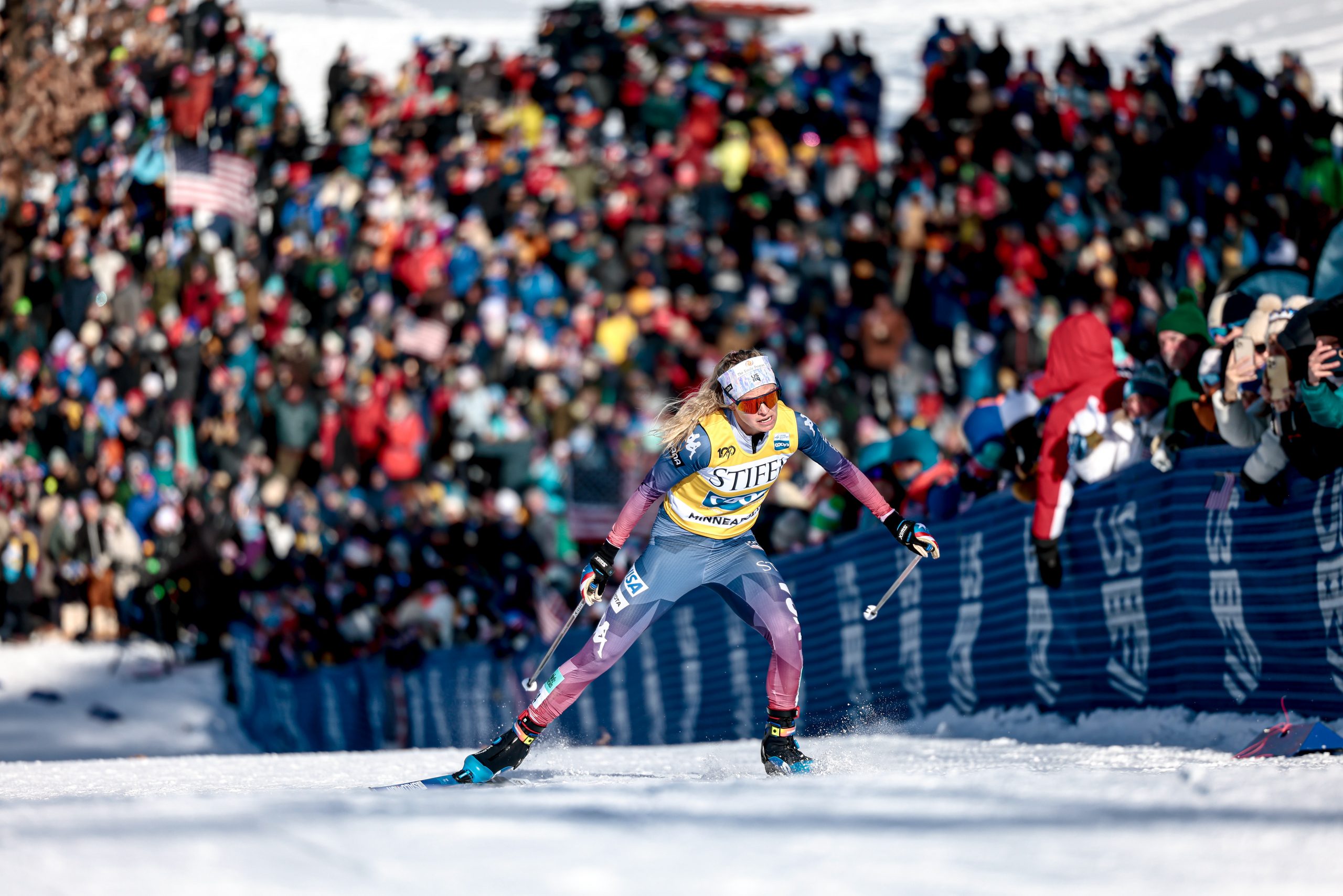
Jessie Diggins (USA) racing on home soil in Minneapolis and did so again in Lake Placid as she concludes her storied World Cup career. (Photo: Modica/NordicFocus)
I will admit my own skepticism that Lake Placid could field the fans, or the volume, of spectators to match Minneapolis. Perhaps my flight into Saranac Lake Regional Airport on Wednesday morning was my first evidence of error. Of seven passengers bobbing our way through the cloud-laden Adirondacks, four were here for the World Cup: Charlie, from Seattle; Billy (as in, Demong, the Nordic Combined gold medalist) and his son, from Salt Lake City; and myself, from D.C. Bussing to the venue the next day, I’m seated with a dozen of University of Minnesota alumni – they’ve taken off of work, graduate school, and medical school to spectate. “I’m excited just to see the number of people out cheering,” Alex Gude, who organized the trip, tells me. “I think one of the best parts about Minneapolis is just seeing the community come together, and now, away from home, we’re seeing another whole ski community come out and cheer.”
And, indeed, they are – from across the United States, from across New England, from across the Canadian border, and from right here in Lake Placid. Once we disembark, I wade through the corn snow and the first of many falling flakes to Mt. Van Hoevenberg’s sprawling Nordic Center, where the racecourse coils around the podium and snakes below the pedestrian bridge. Patricia Damp is herding thirteen might-be-members of the local ski community across the bridge; she’s a third-grade teacher here in Lake Placid, chaperoning a class field trip to the World Cup Finals.
Are the kids already Diggins die-hards, Ogden acolytes, Gus bus-riders? Not really, Patricia tells me. The class “was out here a couple months ago, cross-country skiing. We get to do the Olympic venues. We were at the museum a month ago. We have a friend who we watched ski jump. So, we’re very Olympic-oriented, and today we’re just out here to support the athletes and get some autographs.” Her students back her up. “We’re excited to get the players’ signatures,” Riley tells me. And while Declan is “excited to see the racers,” there’s no-one in particular he’s cheering for.
Gus Schumacher (USA) during the Men’s 10 k Classic in Lake Placid, New York. (Photo: Dils / FasterSkier)
From the mouths of children, our first – and perhaps strongest – argument for future American World Cups. The glitter-dusted kids in fan club bibs, wielding cardboard-cutout faces as large as they are, make for compelling pictures and undeniable evidence of Team USA’s impact on its next generation. But racing in the United States creates opportunities to draw an entirely new cohort of young people into the cross-country skiing community – kids who may have never tried skiing before; who may not have heard of Kikkan or Klæbo ; and whose parents certainly are not waking up before sunrise to livestream Ruka, Falun or Holmenkollen. They will not see themselves in this sport until they see this sport. What better way to do so than on a Friday field trip with Mrs. Damp?
After bidding them good luck with the signature-hunting, it’s not an easy task to wade against the current of the rest of the Lake Placid Class of 2035. Also threading his way through the third-graders is Niklas Dyrhaug, immediately recognizable even five years into retirement from World Cup racing. He’s on the other side of the v-boards this weekend, broadcasting for Norwegian television. In his first sentence, he tells me: “We are enjoying being back in the U.S. In my opinion, we should be here every year.” He’s not surprised by the number of spectators, either. “Everybody who knows the U.S. crowd knows they are really enthusiastic . . . We know the tradition, the culture, and Lake Placid’s place in that history. So, personally, I’m not that surprised. It’s really cool that we’re back here.”
That’s the sentiment just after Coaster Hill, some four kilometers into the racecourse, where Norwegian national team coach Eirik Myhr Nossum prowls the striding zone. Being back in the United States is “awesome, it’s amazing. I think we should be here every year, because you guys show up; you guys cheer for everyone, and it’s always fun to be in the U.S. and to be overseas to compete.”
And it’s the sentiment at the finish line.
Harald Oestberg Amundsen (NOR) after the 10 k Classic in Lake Placid, New York. (Photo: Thibaut/NordicFocus)
Harald Amundsen (NOR) tells me, “In the outer part of the track, there were so many people I couldn’t hear my own thinking. That’s a really good thing.” Even before he arrived at the venue, “We had a run this morning in the city. Everyone was screaming at us, ‘Good luck!’ It’s a really nice atmosphere.”
For Elia Barp (ITA), conditions were “very tough because it was really slow with this new snow, but it was fun racing for me. So I enjoyed it – at least I tried to enjoy it – it was a pack of people screaming my name so that gave me even more motivation, and was fun . . . I loved racing two years ago in Minneapolis, and here it’s packed with people, even with the snowfall, so thank you to everyone for coming. It’s really good to race here.”
Mika Vermeulen (AUT) admits, “Honestly, this is probably the worst race I’ve done in a long time. But I don’t think I’ve ever had so much fun out on the track . . . on top there, out in the forest, I just heard, ‘MI-KA, MI-KA,’ the whole time. It was insane. I had a bad race and a lot of fun.”
As for how he feels about returning to the United States: “Great, great, actually—and feeling a bit frustrated, because it just gets me pissed that we race these [bad] courses in Europe all the time, over and over and over again, and we have these freaking jewels out here which we never use. It’s crazy. I want to go to the U.S. every year for at least a whole period. It’s called the World Cup. It’s not called the European Cup, right?”
Fans all over the course with custom gear showing their fandom. (Photo: Dils / FasterSkier)
Klæbo’s opinion is a bit more measured – perhaps because he has more microphones hovering around his face. “I heard some rumors that it was supposed to be quite well [attended], and when I searched up Lake Placid and read a little bit about the place, I understood there’s not that many people living [here], but when you see how many people are here, I was pretty shocked.”
A second argument, then, in favor of World Cup racing in this country: the athletes love it. They embrace not just the energy, but the venues that push the World Cup beyond the geographic and cultural confines of Transalpine Europe.
Benjamin Dohlby (USA) at the finish of the Men’s 10 k Classic in Lake Placid. (Photo: Thibaut/NordicFocus)
For the closing statement, Ben Dohlby is among the last athletes I interview. This is Ben’s first World Cup start; a junior at University of Alaska-Fairbanks, he was 3rd in the American Birkebeiner in February. How does it feel to be making his first professional start in the United States?
“It was crazy. I went out so hard. The fans were so loud that I didn’t feel anything, and then I felt it all and got so tired – but it was awesome; a great atmosphere.” It wasn’t too long ago that Ben was skiing laps around the glazed kilometer of manmade snow at Lapham Peak State Park in Delafied, Wisconsin; now he’s here. To his former teammates, to other up and coming skiers, and to novices across similar ribbons of snow in Wisconsin, Michigan, and Minnesota, his message is simple: “Follow your dreams and you can make it happen.”
Most of the fans hiked up on the course, but the stadium filled up as the day went on. (Photo: Dils / FasterSkier)
That, then, is our concluding point: More World Cup starts on American soil means more starting berths for American skiers, and more chances for our most talented young skiers to make it to the starting line. We should savor the privilege of, as a host nation, pitting our athletes against the most accomplished figures in the sport, dreaming that a World Cup podium, an Olympic medal, could be in their future. When a lifetime of discipline and preparation meets the opportunity of a lifetime, the promise of Lake Placid – that miracles can happen – becomes deliverable.
I will leave the invariable complex problems of bidding, organizing, and logistically managing future events to far wiser pundits. But, in the meantime, the verdict is clear: FIS, U.S. Ski & Snowboard, and the American Nordic community should be eager, and determined, to have them here.
Love Stories Like This? Help Keep Them Coming.
Feature stories like this one take time, access, and care to produce. If you value thoughtful storytelling and independent ski journalism, please consider becoming a Voluntary Subscriber. Your support directly fuels the work we do to cover the people, places, and moments that make our sport special.
Savelii Korostelev is one of three Individual Neutral Athletes (AINs) currently competing in FIS World Cup events with the intention of qualifying for the Olympic Winter Games in Milano-Cortina. (Photo: Modica/NordicFocus)
Russian and Belarusian cross-country skiers are back in the mix to qualify for the Olympic Winter Games in 2026. Does anyone else sense an elephant in the room? And are we all talking about the same elephant?
The recently overturned FIS ban on Russian and Belarusian athletes was about Russia’s war on Ukraine. Not every sport in the athletic world banned the involvement of those athletes, but the International Ski Federation (FIS) was quick and decisive in its initial rulings: no Russians, no Belarusians, not as long as this invasion lasts. Now—in accordance with the wishes of the IOC—FIS has been compelled to open the entries for FIS sanctioned events to allow the participation of Individual Neutral Athletes (AINs) from both Russia and Belarus. Thus far, the total number of athletes taking advantage of this opportunity (and/or qualifying for this opportunity) in World Cup cross-country events has been three. And while those three possess impressive athletic pedigrees, they have yet to be factors in events they’ve entered. The Russians returned, the sky hasn’t fallen, the war in Ukraine goes on. People remain in a huff over their participation, but I don’t think it’s the war in Ukraine that we’re all mad about . . .
Sure, there’s a military/imperial elephant in the room—Russian athletes returning to international competition even as the war in Ukraine goes on. But it’s the age-old doping elephant that occupies a larger space in our metaphorical room. By that we mean that no one could seriously trust the Russian ski team, the Russian coaches, the Russian officials, the Russian government. These are organizations and individuals who have spent decades cheating on a large and systematically organized scale. FasterSkier has repeatedly reported the facts pertaining to the FIS banning of Russian and Belarusian athletes. We have also reported on our interpretation of language in both FIS and IOC charter documents that seem to imply (quite plainly and with very little wiggle room) that athletes should never be banned from competition for political reasons. The Court of Arbitration for Sport agreed with that assessment (and with the appeal filed by Russian governing bodies and athletes). So, the Russians (some Russians) are back in.
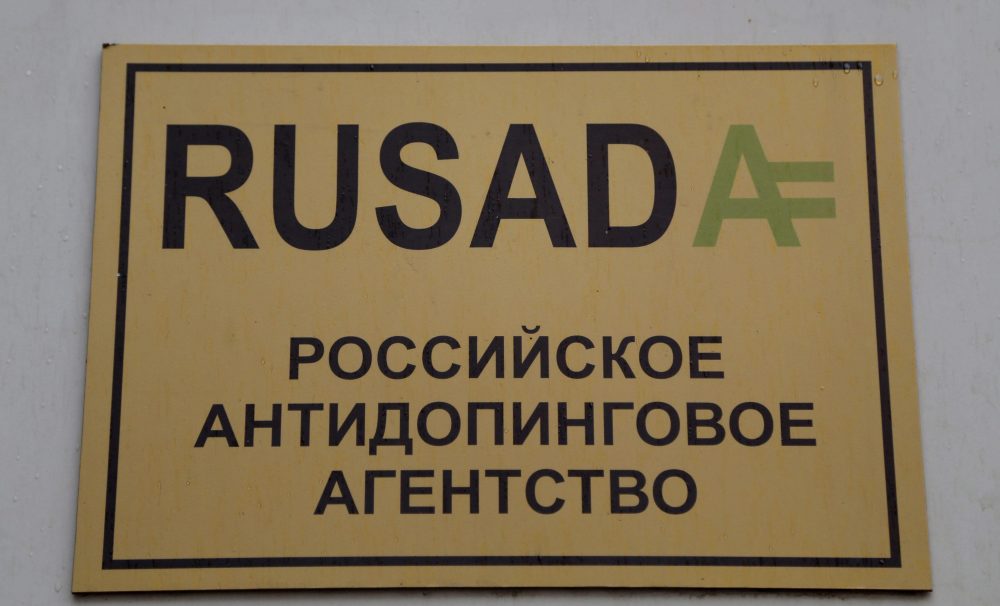
Skiers from Russia have not been allowed to compete internationally since the spring of 2022 (when Russia invaded Ukraine). Since that time, those athletes have continued to train, to prepare, and to compete . . . though they have not done so under the scrutiny of unbiased international watchdog groups like the World Anti-Doping Agency (WADA). True, the Russian athletes have been subjected to occasional drug testing, but only by the same organization that had supervised and undertaken the drug testing during the infamous Olympic Winter Games in Sochi where so many Russian athletes, coaches, and officials had been found to have been involved in an outrageous top-down doping scandal. In investigations that followed those Sochi Olympics, it was revealed that Russian administrators, Russian coaches, the Russian Anti-Doping Agency (RUSADA), and the FSB (Russian Secret/State Police) were involved in a sophisticated (though brutally simple) scheme to evade IOC scrutiny and avoid detection of performance enhancing drugs that had been systematically provided to—and utilized by—Russian athletes. We remember the scandal where Russian Olympic organizers had constructed a secret room adjacent to the space in which urine samples were stored after being collected from athletes (and prior to testing). A hole in the wall allowed a Russian collaborator to pass vials of Russian athletes’ urine through to the secret room where they were opened, emptied, rinsed, replaced with “clean” urine, and re-sealed (a neat trick, considering the considerable trouble IOC had gone through to create tamper-proof lids). It was an audacious and brazen plan—one that started at the top of Russian sport governing bodies and the Russian government. The end result was that 43 Russian athletes were banned from Olympic competition for life, while 13 of those also saw their Olympic medals stripped. Additional suspensions and sanctions followed, including Russia being banned (temporarily, with conditions) from further Olympic competition.
Well, today our sport enters a situation in which Russian cross-country skiers have been absent from World Cup, World Championships, and all other FIS sanctioned international competitions since 2022. And the Russian program is one that has been known to institute, organize, supervise, and undertake illicit team-wide doping efforts in the past. The organization that took advantage of the outrageous doping scheme during the 2014 Olympics in Sochi is the very same organization that runs Russian cross-country skiing today. Isn’t there a reason for the rest of the constantly-tested field to be justifiably concerned?
This is a national sport program that’s been so dirty for so very long . . . why should they be trusted now? Wait, you say; those athletes will be tested whenever they compete in FIS and/or Olympic competitions, right? If they’re doping, they’ll be caught, won’t they? That depends . . .
Dariya Nepryaeva (AIN) is one of the athletes from Russia who—justly or unjustly—will have her name mentioned whenever discussion of Russian participation in the Olympics arises. (Photo: Modica/NordicFocus)
Doping in the Long Run
It’s been suggested that there are long-term benefits to the use of certain performance enhancing drugs, benefits that continue to enhance athletic performances long after the use of those supplements has been discontinued. So here’s my thing: If there were an evil-empire sport-colossus intent on dominating endurance events in some future Olympics, their best strategy would seem to be withdrawing their athletes from sufficiently-monitored international competitions for a few seasons, pumping them up with all manner of otherwise-restricted PED’s (in a closed environment free of drug testing and organizational scrutiny), weaning those athletes off the drugs early enough to have all remnants flushed from athletes’ systems (thereby avoiding detection in subsequent testing), and turning those athletes loose on the competition at the highest-profile moment. That way, those athletes could benefit from artificially-enhanced athletic qualities while still passing as “clean.” That’s how a set of well-organized cheaters could get it done, anyway.
Here’s what I think I believe:
Performance-enhancing drugs work—they make athletes faster, stronger, and better able to endure.
Certain performance-enhancing drugs have long-term effects that continue providing performance benefits even after athletes stop using them.
Evidence of certain performance-enhancing drugs can be thoroughly flushed from an athlete’s system, rendering undetectable any earlier use of those drugs.
What we’ve seen in the past has been state-sponsored cheating from the sport organizations of nations that so value the propaganda benefits of Olympic success. It happened in the Olympics of Sochi, and it had happened during many seasons prior. The governing bodies who were caught red-handed are still the governing bodies administering Russian Olympic sport, and the government of Russia is still the same one (still under the same leader) that green-lighted the whole scheme in the first place. What, really, has changed? And why should the rest of the world believe that it won’t happen again?
If Russia was so systematic and unapologetic in their cheating before—and if their athletes are still allowed to return to Olympic competition—why should we believe they aren’t cheating again? There’s plenty of pressure from the Russian government to produce results following Russia’s return from exile, and no one has been watching what they do behind the curtain. I mean, if I were running a state-sponsored athletic system that had been banned from competing internationally for a few years—and if the drug-testing to be conducted during that ban was the responsibility of my national governing body and my government—wouldn’t I think about cheating again? After all, many of the performance-enhancing drugs that I might administer to our top athletes would have made them bigger, stronger, faster . . . while any evidence of their use would have been flushed cleanly from their systems long before any independent testing agency arrived to test the athletes. If FIS threw us out of competitions for a while (and no one was watching what we did during that enforced hiatus), why not use the un-monitored time to make ourselves better? What better way to exact our revenge on FIS, on the IOC, on the entire Kingdom of Norway when we return?
Savelii Korostelev (AIN) competing in the recent FIS World Cup 10km in Davos. (Photo: Vanzetta/NordicFocus)
Preferential Treatment?
What makes the current Russian issue even harder to swallow is that Russian athletes seem to be receiving preferential treatment, though some bending of WADA’s rules might not be entirely unexpected given the looming deadline of FIS/Olympic qualifying events. The “Anti-Doping Agency Management System” (ADAMS) employed by WADA creates a set of automated records pertaining to athlete drug testing (especially with regard to the whereabouts of athletes that must be regularly recorded and updated for the purpose of unannounced drug testing). One of the stipulations of the ADAMS system is that no athlete may be re-admitted to competition until at least six months of ADAMS data (and subsequent drug testing) is made available. This standard stymied the recent comeback efforts of notable Norwegian athletes, Marit Bjoergen and Petter Northug, who both hoped to exit retirement to enter mass start marathon events. Those particular events being sanctioned by FIS would have required that Bjoergen’s and Northug’s un-retirements be preceded by the six-month ADAMS standard. Neither skier had announced their intentions to WADA early enough, so they couldn’t be allowed to enter those competitions. Bummer for them, but rules are rules . . .
Except when they’re not . . . unlike the standards that were applied to Northug and Bjoergen, Russian athletes (those returning to FIS and IOC competitions as AINs) received an almost immediate pass-through from WADA. Their return to competition was preceded by only a few weeks of notice, with their prior drug testing protocols having been conducted by organizations in Russia (the same organizations that organized the comprehensive drug cheating scheme in Sochi). FIS, you’ll forgive us if we harbor certain suspicions . . .
Much of the attention in the sport of Nordic Skiing will be paid to the prospects and the results of former Junior World Champion, Saveliy Korostelev, who spent the last two season skiing through the entire Russian field in all domestic races while also using nearly every event to beat up on former Olympic champion, Alexander Bolshunov. But even Korostelev might meet with additional scrutiny as he approaches Milano-Cortina. Recent articles describe Korostelev’s connections to the Russian military (through his mother, an officer in the Russian military and, herself, a medalist in Vancouver, 2010), a distinction that could render him ineligible for AIN status.
Keep your eyes open for elephants in the room . . .
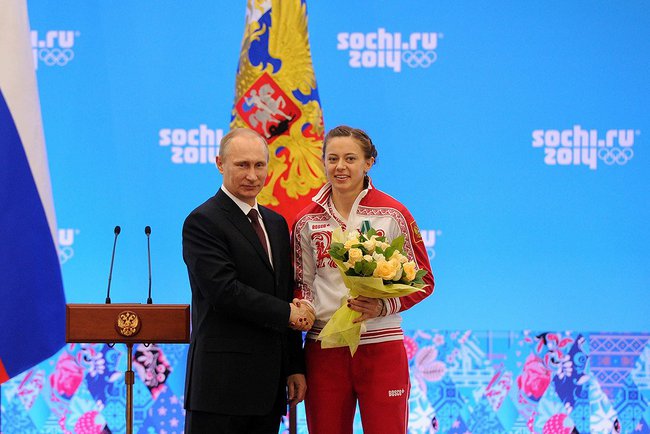
Biathlete Olga Vilukhina with Russian President Vladimir Putin on February 24, 2014, after the closing of the 2014 Olympics in Sochi. Vilukhina was one of many Russian athletes whose Socki results were nullified, whose medals were stripped, and who received a lifetime ban from Olympic competition (though parts of those penalties were later overturned after CAS review). (Photo: www.kremlin.ru/Creative Commons)
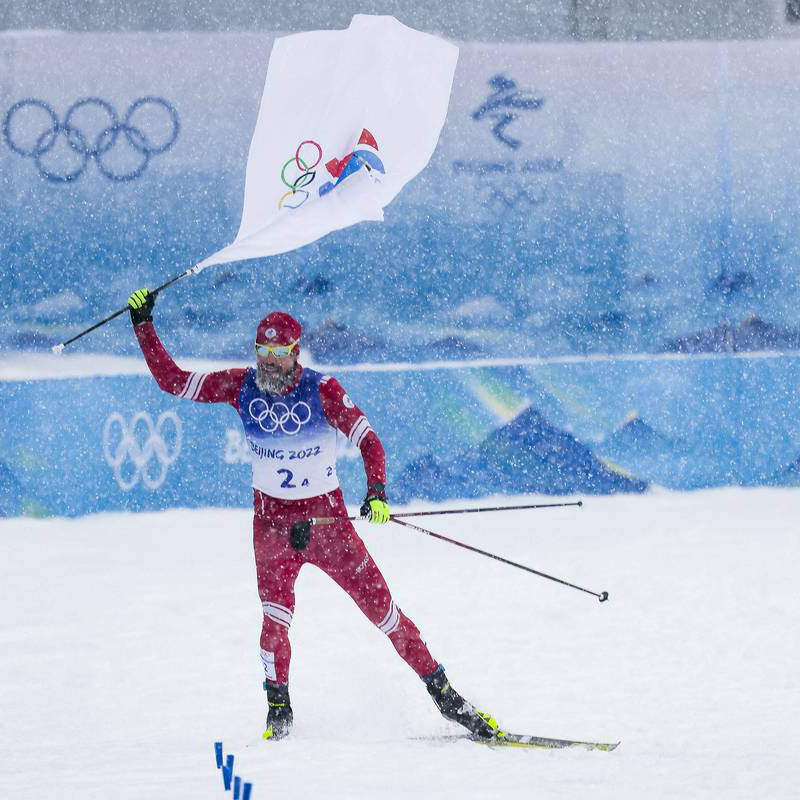
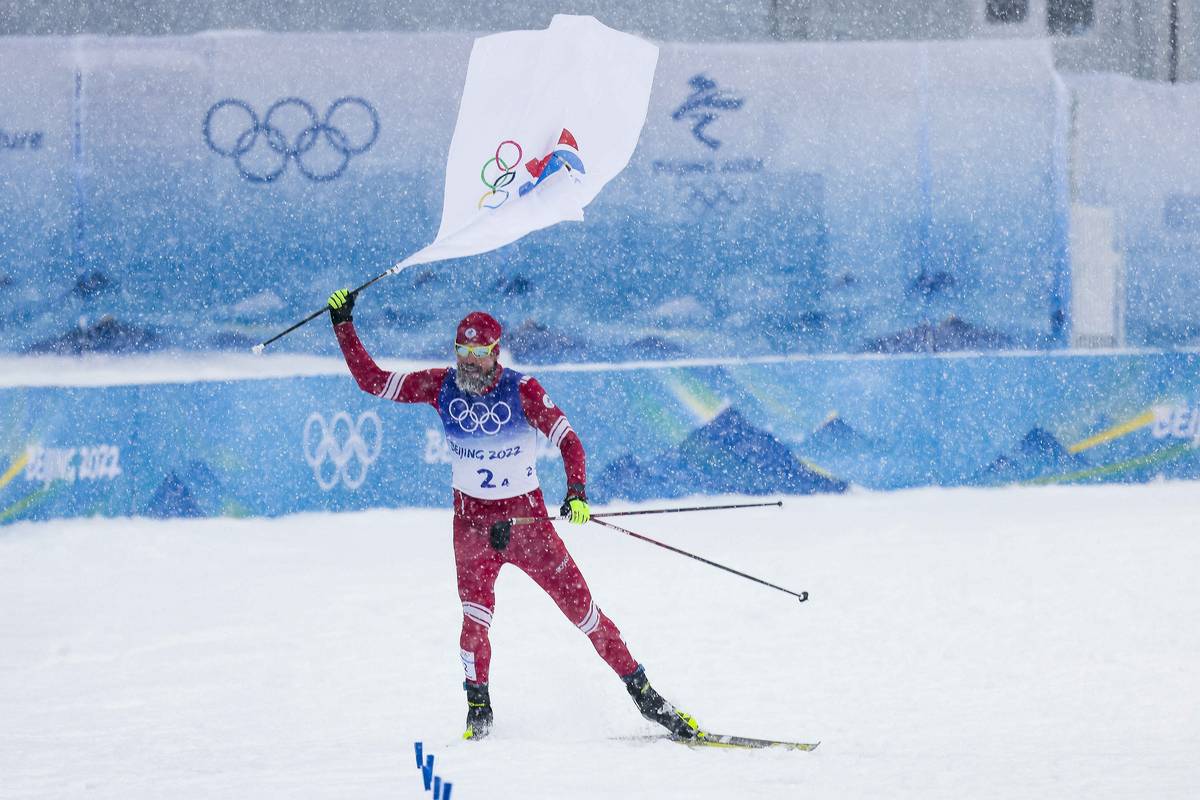
While certain Individual Neutral Athletes will be allowed to compete in the upcoming World Cup races (events that can qualify athletes to compete in the Olympics), the flag of the Russian Olympic Committee is one of those that will continue to be banned from Milano-Cortina’s Olympic Games. (Photo: NordicFocus)
It sounds like things just took a turn . . . and everyone really shoulda seen this coming.
Articles published today (Dec 2) in both the New York Times and Langrenn reported that the Court of Arbitration for Sport had upheld the appeal submitted by Russian Ski Association (RSF) and select Russian athletes. What does that mean? Well, after a complex and convoluted set of explanations, it means that FIS cannot place a wholesale ban on all athletes from Russia and Belarus; therefore, Individual Neutral Athletes (AINs) from both nations will be allowed to compete in upcoming World Cup events that represent qualifying opportunities for the Winter Olympic Games.
A month ago, every media outlet in the sporting world announced that athletes from Russia and Belarus would be excluded from qualifying events sanctioned by the International Ski Federation (FIS) and leading up to the Olympic Winter Games in 2026. If Russian athletes couldn’t qualify for the Olympics, then they couldn’t compete in the Olympics. End of story. Numerous ski-industry publications made it sound like a done deal—Russia was out, and that was it. Time for FasterSkier to toot its own horn a bit: we told you a decision-reversal could happen . . . and now the appeals of Russian and Belarusian athletes and organizations have been approved by the Court of Arbitration for Sport (CAS). As a result, FIS will be compelled to include Individual Neutral Athletes (AINs) from both Russia and Belarus. Russian and Belarusian flags won’t be waving at the ski venues in Cortina this winter, but a select group of Russian and Belarusian athletes will be lining up for those events, nonetheless.
A Russian fan during the men’s 4 x 10 k relay at the 2019 World Championships. There will be no Russian flags waving at the Winter Olympics in 2026. (Photo: John Lazenby/lazenbyphoto.com)
Just like in the Paris Summer Olympics in 2024, the field in Milano-Cortina will include a select set of Russians and Belarusians who meet two conditions:
The individual athletes have never been supporters of the war on Ukraine.
The individual athletes are willing to make themselves available for independent drug screening.
And a few conditions on athlete representation, as well.
AINs can participate in individual events, only. No team events (for skiers, that means no relays).
No national anthems, no national flags. They may be Russians, but if an AIN wins gold the IOC gets to pick the music they listen to on the podium, and the flag that flies above them.
No national uniforms. Colors, designs, and insignia must meet standards that will be set by the IOC.
Norway Won’t Like it—But They’ll Probably Be polite About It
This whole set of decisions also means that Russians will be on the starting line at World Cup events this weekend in Trondheim (hometown of Johannes Hoesflot Klaebo, and one of the hotbeds of Nordic skiing in Norway—a nation that has seemed almost wholly opposed to the return of Russian athletes to World Cup and Olympic competition). The rest of the world is left to wonder whether the motivation of many Norwegian administrators, coaches, athletes and fans was simply that the Russians were the team most likely to interrupt the performances of Norwegian stars in the Olympics. Well, duh! Of course they want their rivals sidelined. The fact that the Olympic results would not have included some of the best skiers in the world would have been little more than a footnote in the history of skiing. And Olympic immortality remembers only the medal, not the quality of the field.
The field in question will likely be without the most notable names in Russian skiing, many of whom were vocal and visible supporters of Russia’s invasion of Ukraine. That stance, alone, disqualifies athletes like Alexander Bolshunov (who dominated events at the Beijing Olympics in 2022). In his place we’re likely to see Russia’s former Junior World Champion and current phenomenon, Saveliy Korostelev, who clobbered Bolshunov in last season’s Russian Championships. Norway won’t like it, but Russian skiers may still end up being the most likely to overturn the punch bowl at Klaebo’s Olympic coronation.
A Fair and Logical Choice?
FIS’ charter restricts the organization from discriminating against any athlete for political reasons. That, alone, should’ve let FIS know that what they were doing—painting every Russian and Belarusian athlete with the broad war-mongering brush wielded by Vladimir Putin—was not sustainable. According to its own charter, FIS is precluded from excluding an athlete simply because they are Russian. So, FIS made its point—”We really don’t like you guys”—but now that particular bureaucratic melodrama has ended. The Court of Arbitration ruled clearly, and the Russians (certain Russians) are in.
The CAS decision on FIS policies was not the only one of its kind to hit the headlines recently—and ALL those recent decisions went the same direction. The International Skating Union (ISU) recently announced that, after sufficient and appropriate scrutiny, two Russian figure skaters (Petr Gumennik and Adeliia Petrosian) and one Belarusion figure skater (Victoriya Safonova) had qualified as AINs who will be eligible to compete in the Winter Olympics in 2026. Parallel determinations are expected from the ISU concerning eligible speedskaters and short track skaters. Similar announcements also arrived earlier from international governing bodies in Luge, Bobsled, Skeleton, and Biathlon. The message was clear: the Olympic Committee wants Russias and Belarusian athletes to be participants in the Olympic Games. It’s a watered-down version of the original Olympic Truce, which held that all wars would cease, and the athletes would join together in a display of fairness, collegiality, and peace.
IOC has remained totally in favor of punishing Russia, and excluding all things “Russian” from inclusion in the Olympic Games. But where IOC does make a concession is that Individual Neutral Athletes (AINs) should be allowed to compete if they meet certain conditions. The IOC feels that’s fair and logical. According to the charters of all the organizations involved, that does seem to be the case.
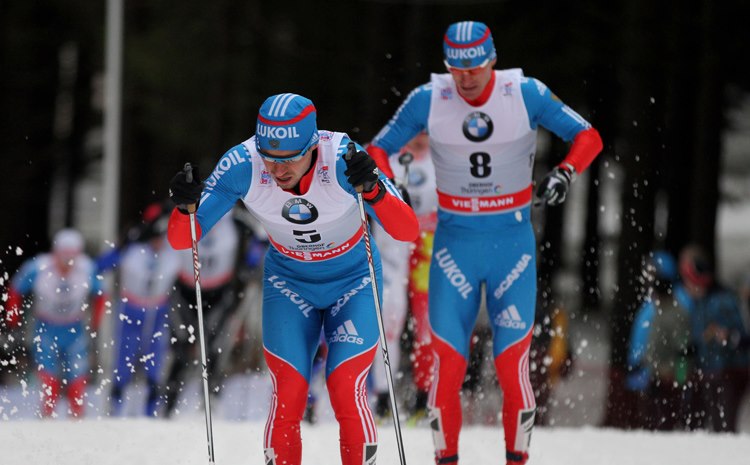
Maxim Vylegzhanin (bib #8), following teammate Ilya Chernousov (bib #5), on his way to 15 k classic pursuit victory in the second stage of the 2012/2013 Tour de Ski. It’s been reported that Vylegzhanin is among those named as an appellant in a suit filed with the Court of Arbitration for Sport. (Photo: Marcel Hilger)
A recently published Langrenn story reported on the possibility that FIS may be forced to reconsider its recent ruling an Russian and Belarusian eligibility for participating in Period 1 of the 2025-2026 World Cup season. According to those reports, Russian athletes and para athletes—and the Russian Ski Federation—filed a law suit with the Court of Arbitration for Sport (CAS) seeking to overturn the recent FIS decision to bar Russian and Belarusian athletes from events this autumn (events that could allow athletes to qualify for the 2026 Winter Olympics). Included in the suit is former World Junior Champion (2022), Saveliy Korostelev. While details remain unfocused as to which other athletes are involved, it’s possible that former Russian stars, Alexander Legkov and Maxim Vylegzhanin, are also included in this law suit. That’s a curious list, since Legkov (who is thought to be retired) has not been a factor on the international stage since his two Olympic medals in 2014 (both of which were subsequently stripped from him following revelations of his involvement in Russian doping at those Sochi Olympic Games). Vylegzhanin’s two silver medals from Sochi were also stripped, but later reinstated. According to current reports, the skier who dominated Nordic events at the Beijing Olympics in 2022, Alexander Bolshunov, is not named as a participant in this suit.
In related news, the International Luge Federation (FIL) was recently sued by Russian athletes and federations under similar circumstances. CAS’ judgment in the case continued to exclude athletes from the Russian Luge Federation (RLF), while overturning FIL’s exclusion of Russian and Belarusian lugers who qualify as Neutral Athletes (AIN) . . . the end result being that FIL will need to set protocols and procedures for identifying AINs in order for any of those athletes to enter Olympic qualifying events this winter.
If the cross-country world is searching for precedent in their own case, this recent CAS/FIL ruling would seem to offer a direct parallel . . . and would seem to imply that it’s not unlikely that we may yet see Russian and Belarusian athletes toeing starting lines for Olympic cross-country events later this winter.
Between World Cups, the Tour de Ski, and the Olympic Winter Games, there will be 72 elite cross-country ski races contested this winter on the international scene. FasterSkier remains committed to covering each and every international race—we’ll get up early to prepare race reports based on live results, and publish them here in our online forum. And when we have all the information on streaming, viewing, and network broadcast coverage, we’ll pass that along, too. That way, our readers can be up early with us to watch all the action in what’s sure to be a memorable season.
FIS World Cup Period 1
November 28-30, 2025: Ruka, Finland (Week 1)
Nov 28: 10km Interval Start Classic
Nov 29: Sprint Classic
Nov 30: 20km Mass Start Freestyle
December 5-7, 2025: Trondheim, Norway (Week 2)
Dec 5: 10km Interval Start Freestyle
Dec 6: Sprint Classic
Dec 7: 20km Skiathlon
December 12-14, 2025: Davos, Switzerland (Week 3)
Dec 12: Team Sprint Freestyle
Dec 13: Sprint Freestyle
Dec 14: 10km Interval Start Freestyle
FIS World Cup Period 2
Tour de Ski
December 28, 2025 – January 1, 2026: Toblach, Italy (Week 4)
Dec 28: Sprint Freestyle
Dec 29: 10km Interval Start Classic
Dec 31: 5km Heat Mass Start Heat Freestyle
Jan 1: 15km Pursuit Classic
January 3-4, 2026: Val di Fiemme, Italy (Week 5)
Jan 3: Sprint Classic
Jan 4: 10km Mass Start Freestyle – Final Climb
FIS World Cup resumes
January 17-18, 2026: Oberhof, Germany (Week 6)
Jan 17: Sprint Freestyle
Jan 18: 10km Interval Start Classic
January 23-25, 2026: Goms, Switzerland (Week 7)
Jan 23: Team Sprint Freestyle
Jan 24: Sprint Classic
Jan 25: 20km Mass Start Classic
Olympic Winter Games
February 4-22, 2026: Milan/Cortina, Italy
Feb 7: Skiathlon, Women
Feb 8: Skiathlon, Men
Feb 10: Sprint Classic, Women and Men
Feb 12: 10km Freestyle, Women
Feb 13: 10km Freestyle, Men
Feb 14: Relay, Women
Feb 15: Relay, Men
Feb 18: Team Sprint, Women and Men
Feb 21: 50km Classic, Men
Feb 22: 50km Classic, Women
FIS World Cup Period 3
February 28 – March 1, 2026: Falun, Sweden (Week 8)
Feb 28: Sprint Freestyle
March 1: 20km Skiathlon
March 7-8, 2026: Lahti, Finland (Week 9)
March 7: Sprint Freestyle
March 8: 10km Interval Start Freestyle
March 12-15, 2026: Drammen – Oslo, Norway (Week 10)
March 12: Sprint Classic
March 14: 50km Mass Start Freestyle Men
March 14: 50km Mass Start Freestyle Women
March 20-22, 2026: Lake Placid (Finals) March 20: 10km Interval Start Classic
March 21: Sprint Freestyle
March 22: 20km Mass Start Freestyle
Alexander Bolshunov (RUS) won the men’s 30 k skiathlon in Zhangjiakou. FIS’ recent announcements exclude him (and all other athletes from Russia and Belarus) from qualifying for a return to the Olympic stage in Milan-Cortina. (Photo: NordicFocus)
It’s a funny time we live in . . . one in which many of us struggle with harboring multiple opinions on particular topics (especially political ones). That’s me when it comes to whether or not Russian and Belarusian athletes should be allowed to enter the Olympic Games . . . multiple opinions make sense, and no easy or straightforward decisions seem likely. One thing’s for sure: when it comes to those decisions, someone’s going to be very unhappy.
On October 21, the International Ski Federation (FIS) announced a ruling in which they barred Russian and Belarusian athletes (whether as neutral individuals or as representatives of the national governing body) from competing in upcoming FIS events—events that constitute qualifying opportunities for the 2026 Olympic Winter Games. Since the athletes in question had already been banned from competition since the beginning of Russia’s war on Ukraine, that means that no Russian or Belarusian athletes would have been able to participate in any earlier qualifying events (like the 2025 World Championships). Therefore—since Olympic qualification runs through events sanctioned by FIS—it appears that no Russians will be allowed to compete in the Olympic in 2026. Law suits will be soon to follow, and additional bendings of rules may be considered . . . but, for now, the Russians are out.
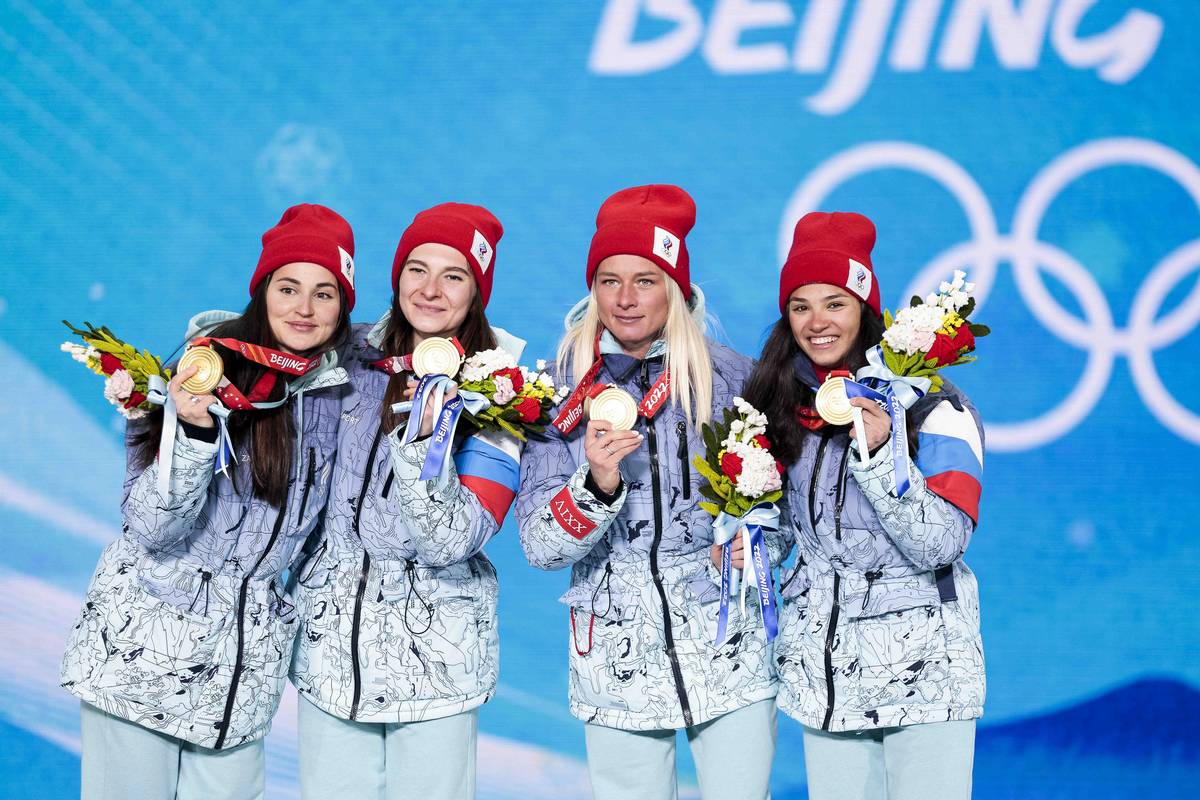
The women representing the Russian Olympic Committee won gold in the 4 x 5 k relay in the 2022 Olympics. From left to right, Yulia Stupak, Natalia Nepryaeva, Tatiana Sorina, and Veronika Stepanova. Recent FIS announcements make it a near-impossibility for them to defend that medal in Milan-Cortina. (Photo: NordicFocus)
What’s right and just about that?
Russia is waging an aggressive war on another sovereign nation. FIS has decided that they will not allow the participation of Russian athletes while their government persists in this criminal action. Skiing is doing its part to try to stop a war . . . I get that.
And what’s wrong and unjust about that?
The Olympic Charter declares that participation in sport is a human right; therefore, the IOC insists that all athletes be allowed to compete regardless of political interference or nationality. In the case of those who hope to prevent Russian and Belarusian athletes from competing in the Olympics, the Olympic Charter is an inconvenient and pesky little document . . . but one that the IOC, itself, is in no position to ignore. FIS has the right (and the responsibility) to establish qualification requirements for those athletes who may go on to compete in the Olympics, but FIS has no right to establish those qualification criteria in defiance of the Olympic Charter. FIS may have announced their decision, but the discussion—and the fight—may not be over yet.
Artificial Intelligence Weighs In
I don’t often resort to the use of AI, but in this case I wanted to see what the broader world (and the computer brain) really thinks about the opinions of the International Olympic Committee (IOC), and the Olympic Charter under which it operates. Here’s what the computer-generated intelligence reported to me (AI generated text will appear in Italics, while Author’s opinions will appear in bold):
Right to compete and non-discrimination
The Olympic Charter states that sport is a human right and that every individual must have the possibility of practicing it without any discrimination.
Here’s the author’s opinion: If “sport is a human right,” then it’s gonna be pretty difficult to prevent any individual human from participating. When it comes to Olympic eligibility, that simple wording is likely to have implications on the participation of even more athletes than just those from Russia and Belarus.
This includes protection against discrimination based on race, color, sex, sexual orientation, language, religion, political or other opinion, national or social origin, property, or birth.
Here’s the author’s opinion: Is FIS discriminating against Russian and Belarusian athletes? It would appear so. The Olympic Charter claims to protect against such discrimination, though how (and if) the IOC intends to affect such protections is still to be revealed.
The IOC and the World Olympians Association (WOA) have strongly reiterated this principle, especially when political tensions threaten to prevent athletes from competing.
Here’s the author’s opinion: Russia’s war on Ukraine is an example of “political tensions” played out to the nth degree.
Athletes should not be held responsible for the actions of their governments.
Here’s the author’s opinion: Russia invaded Ukraine, and Belarus supports Russia. While any number of Russian athletes may have expressed their support for the invasion, certainly those same athletes are not “responsible for the actions of their governments.”
Specific eligibility and rules
Athletes must be eligible according to the rules set by their respective International Federation (IF).
Here’s the author’s opinion: When it comes to “specific eligibility,” FIS has set certain rules (as is their responsibility as a sport governing body under the IOC). FIS’ latest announcement would seem to make it impossible for Russian and Belarusian athletes to participate in the Olympic Games (since none of those athletes will have been entered in any FIS qualifying events).
Specific eligibility rules are applied, such as those related to sex characteristics, which are complex and may require athletes to meet certain criteria to compete in specific categories.
Here’s the author’s opinion: The most recent FIS decision regarding Russian and Belarusian athletes doesn’t seem to have much to do with “eligibility rules . . . related to sex characteristics,” though that’s certainly an argument that should be considered for other athletes who have been barred from Olympic competition. In other words, the right to compete can’t be a human right if certain humans are barred from competing. It’s a touchy subject, but one that’s fairly clearly spelled out in the Olympic Charter. If the IOC (or its sport governing bodies) wants things to be different, then they need to go through the process of amending the Charter.
The International Olympic Committee (IOC) supports the participation of any athlete who has qualified and met the eligibility criteria established by their IF.
Here’s the author’s opinion: Yep . . . but if FIS has acted in violation of the Olympic Charter, then the IOC is compelled to overrule FIS.
Protection of the right to compete
The IOC works to protect the right of all eligible athletes to access international competitions without discrimination by host countries.
Here’s the author’s opinion: Host countries don’t seem to b pertinent in the discussion of FIS recent decision . . . though it may have been a different story when similar decisions were made regarding last season’s World Championships in Trondheim, Norway.
The IOC has taken action in cases where athletes have been denied entry or access to competitions for political reasons.
Here’s the author’s opinion: It sounds like discussions and considerations of the issue may not yet be concluded, and that the recent FIS ruling may not represent the final word. If IOC determines that the FIS decision was one made “for political reasons,” then don’t be too surprised if the IOC decides to allow the participation of Russian and Belarusian athletes. Ironically, the IOC may ultimately allow the participation of Russian and Belarusion athletes for reasons that are mostly “political.”
Ultimately, the IOC is committed to ensuring that sport remains a neutral space and that athletes are not punished or excluded due to political decisions.
Here’s the author’s opinion: FIS is punishing Russian and Belarusian athletes in order to exert pressure on Russia and Belarus (to be fair, much of the world is hoping to exert pressure on Russia and Belarus); therefore, it seems like those athletes are being excluded for political reasons. If that is determined to be the case, then the IOC will need to do something more than simply rubber stamp the decision that FIS announced on October 21st.
There are many weeks between now and the Opening Ceremonies of the 2026 Olympic Winter Games . . . but there’s really not much time left for courts and organizations and governing bodies to consider the question at hand. Many who read the recent FIS decision consider the case to be closed. I’m not so sure . . .
This reporting costs money. Please support this coverage with a voluntary subscription (below) so FasterSkier can provide this level of access to the sport we all love year-round.
This reporting costs money. Please support this coverage with a voluntary subscription (below) so FasterSkier can provide this level of access to the sport we all love year-round.
This reporting costs money. Please support this coverage with a voluntary subscription (below) so FasterSkier can provide this level of access to the sport we all love year-round.
This reporting costs money. Please support this coverage with a voluntary subscription (below) so FasterSkier can provide this level of access to the sport we all love year-round.
This reporting costs money. Please support this coverage with a voluntary subscription (below) so FasterSkier can provide this level of access to the sport we all love year-round.
This reporting costs money. Please support this coverage with a voluntary subscription (below) so FasterSkier can provide this level of access to the sport we all love year-round.
This reporting costs money. Please support this coverage with a voluntary subscription (below) so FasterSkier can provide this level of access to the sport we all love year-round.
This reporting costs money. Please support this coverage with a voluntary subscription (below) so FasterSkier can provide this level of access to the sport we all love year-round.
This reporting costs money. Please support this coverage with a voluntary subscription (below) so FasterSkier can provide this level of access to the sport we all love year-round.
This reporting costs money. Please support this coverage with a voluntary subscription (below) so FasterSkier can provide this level of access to the sport we all love year-round.
This reporting costs money. Please support this coverage with a voluntary subscription (below) so FasterSkier can provide this level of access to the sport we all love year-round.
This reporting costs money. Please support this coverage with a voluntary subscription (below) so FasterSkier can provide this level of access to the sport we all love year-round.