Tag: Florian Graf

  • Bye Bye Biathlon: Many Retirements After 2018 Olympic Season

    Bye Bye Biathlon: Many Retirements After 2018 Olympic Season

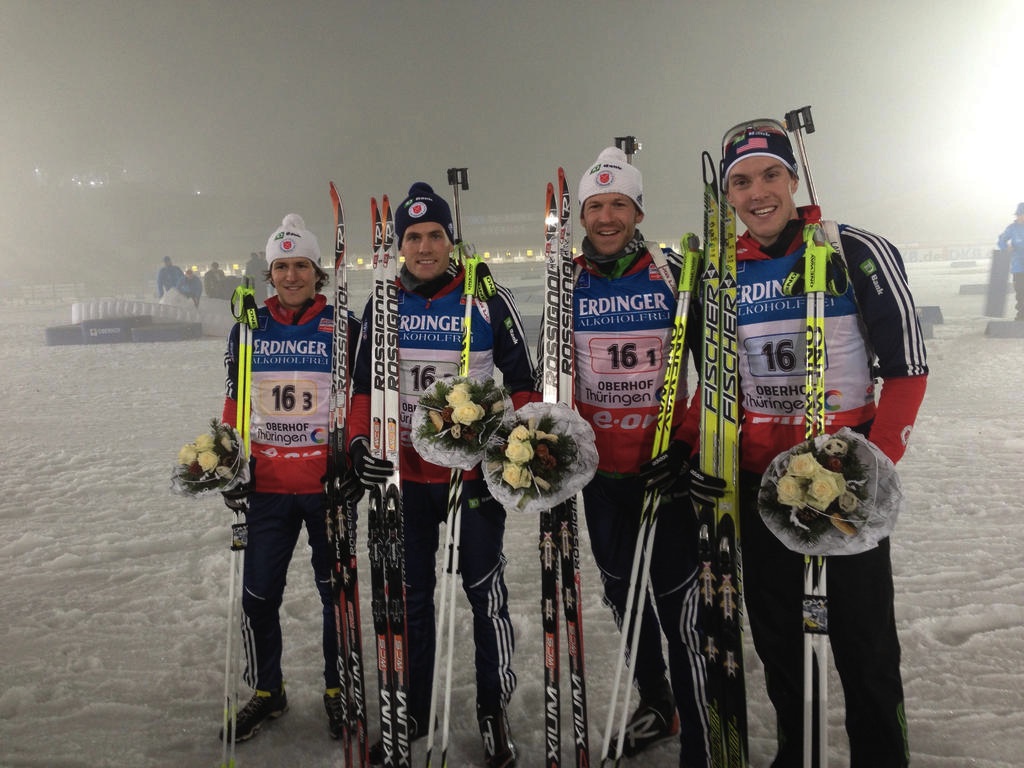
    Russell Currier, Tim Burke, Lowell Bailey, and Leif Nordgren after a fifth-place relay finish in the IBU World Cup relay in Oberhof, Germany, in 2013. Currier, Burke, and Bailey are all retiring. (Photo: USBA.)

    With the 2018 Olympics come and gone, many of biathlon’s athletes are calling it quits. Here’s a roundup of who you won’t see on the World Cup next season – and who’s still on the fence about their future.

    USA

    2017 Word Champion Lowell Bailey has long planned to retire after the 2018 season, and now that time has come. His first World Junior Championships was in 1999 and he got his first World Cup start in 2002. He raced 2003 World Championships before taking a break to go to the University of Vermont, before returning and competing in the 2006, 2010, 2014, and 2018 Olympics. His eighth-place finish in the 20 k individual at the 2014 Games are the best ever by an American biathlete. Bailey is the Executive Director of the Crosscut Mountain Sports Center in Bozeman.
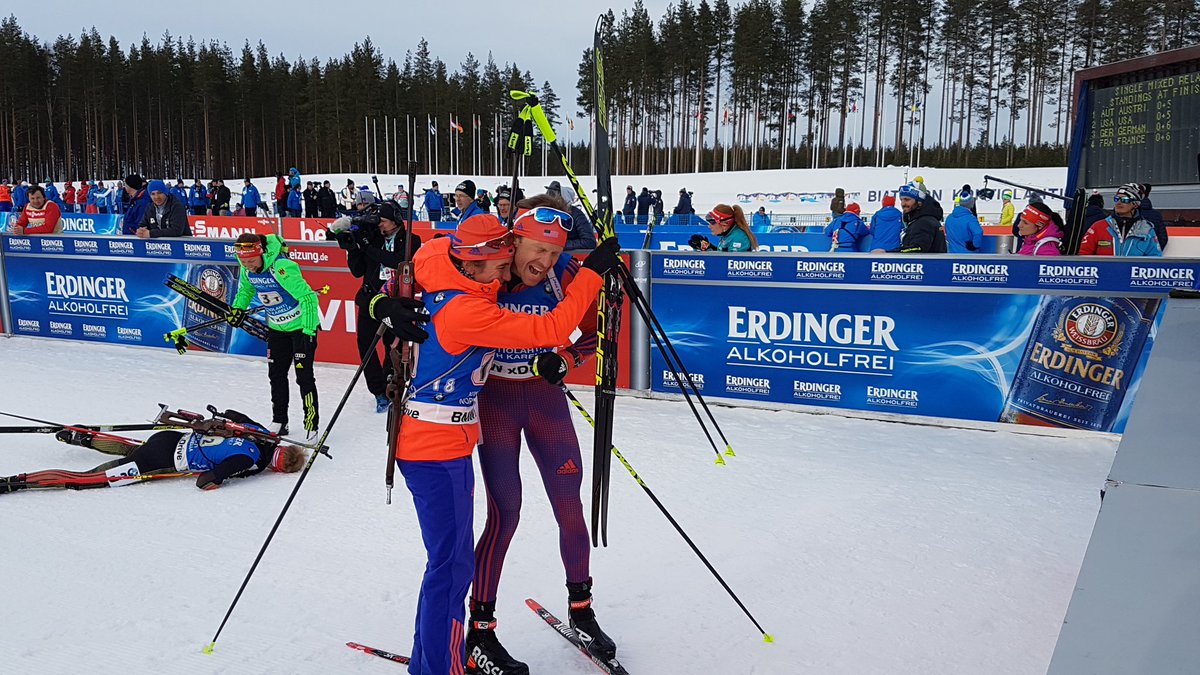
    Susan Dunklee and Lowell Bailey celebrate after finishing second in the World Cup single mixed relay in Kontiolahti, Finland, in 2017. Austria won the competition. Bailey is retiring and Dunklee is undecided as to whether she will continue racing. (Photo: IBU/Twitter)

    “I told myself this morning that I just wanted to go out on a high note,” he told FasterSkier in Oslo after leading off a U.S. relay team that finished seventh, in his last World Cup race. “I wanted to go out with a good result. And, I’m really happy to have shot clean in standing, clean from the clip in my last stage as a World Cup biathlete. That feels good. I’ll always remember that — that I went out with a clean stage.”

    Longtime teammate and 2013 World Championships silver medalist Tim Burke will also retire. Burke has six World Cup podiums to his name including that silver medal, and led the World Cup partway through the 2009-2010 season. Burke started racing internationally at 2000 Junior World Championships, and made his first senior World Championships in 2004. Like Bailey, he is a four-time Olympian.

    “It’s weird, I don’t honestly I don’t know if it’s truly hit me,” he said after the Oslo relay. “It might take weeks… I think it’s going to take a long time for all to settle in and for me to really reflect back on my career. Yeah, it’s a lot of emotion.” Burke says that his post-biathlon plans are not yet certain.
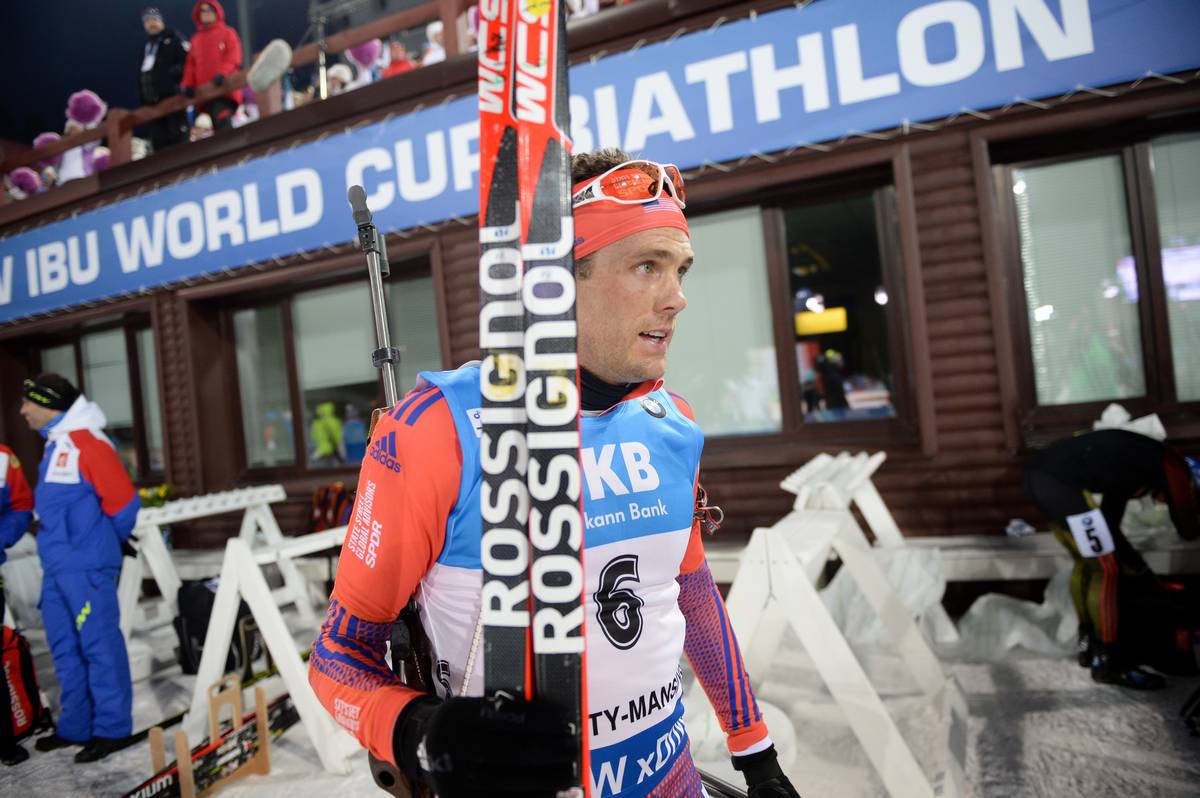
    Tim Burke after placing sixth in a World Cup pursuit in Khanty-Mansiysk, Russia, in 2016. (Photo: USBA/NordicFocus)

    Also retiring is Russell Currier, an off-and-on member of the national team and the Maine Winter Sports Center (now the Outdoor Sports Institute). Currier had two sixth-place World Cup results in 2012, and is a four-time World Championships team member. Since his World Cup debut in 2009, he has contributed to many U.S. relay efforts. He also competed at the 2014 Olympics, with a top finish of 49th, and was a member of the 2018 Olympic team though he did get any starts in PyeongChang.

    “USBA nationals will be officially be the last race of my biathlon career,” Currier wrote in an email to FasterSkier this week.

    The women’s team likely won’t see three retirements, and will thus have some more stability than the men’s crew, but there is more uncertainty regarding the women’s roster. Clare Egan wrote in an email this week that she was “Undecided!” about whether to continue racing. And in Oslo, after finishing third in the pursuit which was her last World Cup of the season, Susan Dunklee said the wasn’t sure if she would keep competing. “Ask me again in a month,” she said.

    Canada

    Julia Ransom retired in Oslo, as the 25-year-old is planning a career in dentistry and has many years of school ahead of her. “It’s just a good time for my partner and I to kind of move on,” she said after crossing the line in her final World Cup, the pursuit, hand in hand with teammate Rosanna Crawford.. “And it does feel right. It feels right.”
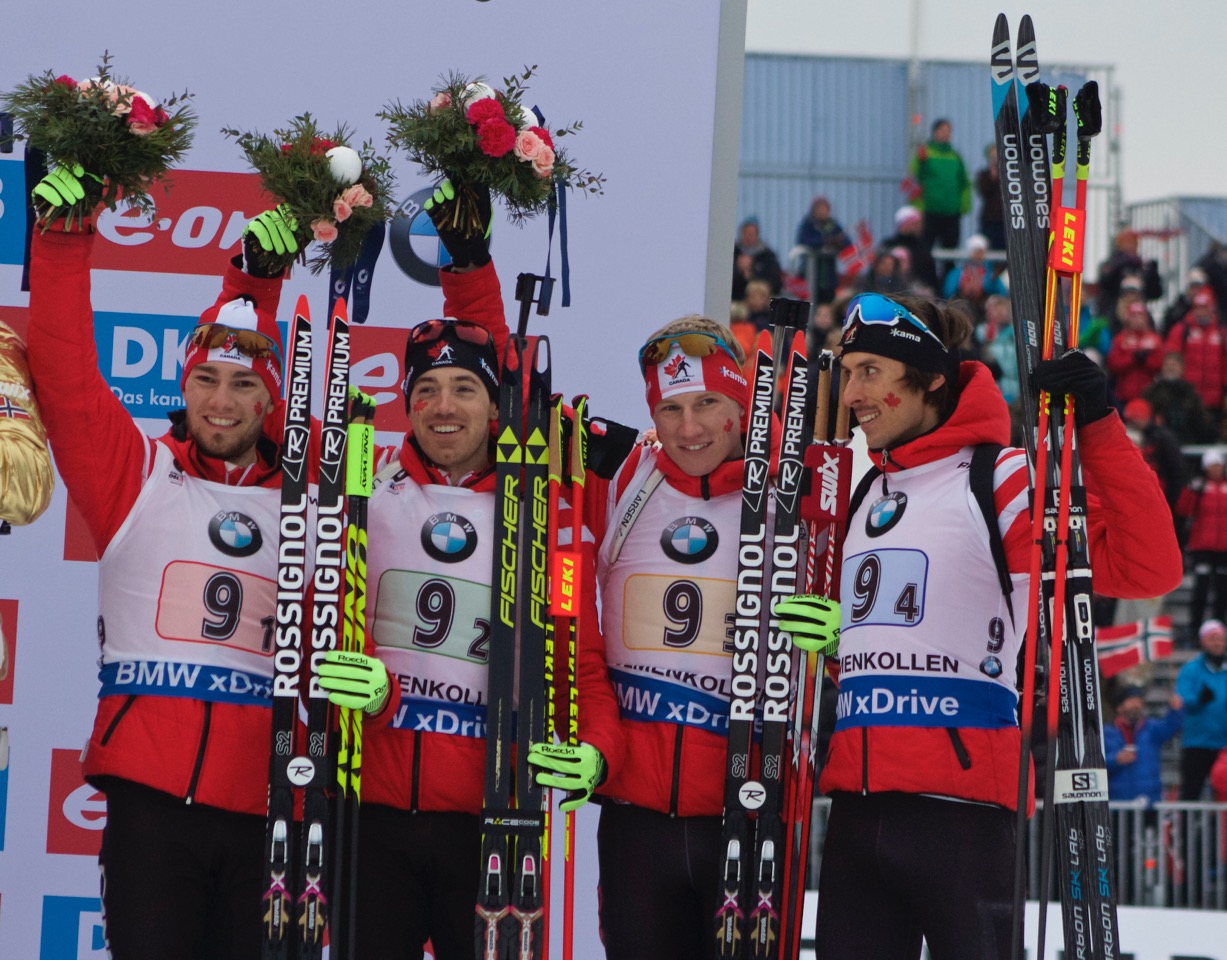
    The Canadian men’s team (l-r) Christian Gow, Nathan Smith, Scott Gow, and Brendan Green celebrate bronze in the men’s 4 x 7.5 k relay at 2016 World Championships in Oslo, Norway. Both Green and Smith are undecided on their future plans. (Photo: JoJo Baldus)

    Ransom scored two top-ten finishes at 2014 World Juniors, and made her first senior World Championships team in 2015. This season she had two top-ten World Cup finishes, and went to the Olympics in PyeongChang, where she finished 28th in the pursuit.

    She is the only one from the Canadian team who is definitely retiring, but quite a few of her teammates are on the fence and there could be huge turnover on the team depending on what they decide. That includes Rosanna Crawford and Brendan Green, even though Crawford finally bagged her first World Cup podium this season.

    “We’re not 100% sure yet,” Green said after the relay in Oslo. “Both Rosanna and I will sit on it a little bit over the spring. We will reevaluate a little bit and see what other opportunities arise. I think we both still love to race and train, and if we continue down that path I know we will still be motivated. But as of right now I’m not sure.”

    2015 World Championships silver medalist Nathan Smith – who was also, along with Green, Christian Gow, and Scott Gow, part of a bronze-medal relay at 2016 World Championships – is also unsure. He missed most of the 2016-2017 season with health issues and though he returned to the World Cup and the Olympics this year, did not perform up to his own expectations. 
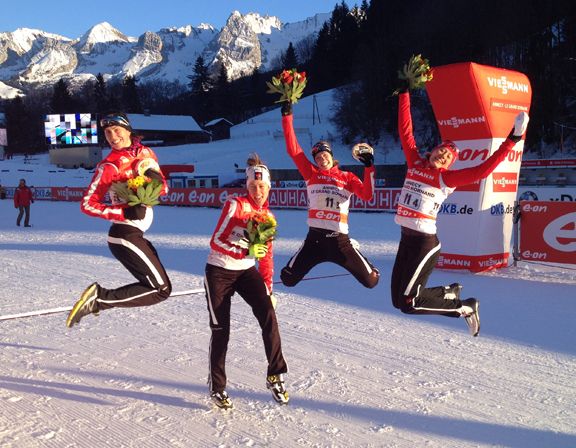
    Rosanna Crawford, Megan Imrie, Megan Tandy, and Zina Kocher celebrate a fourth-place World Cup relay finish in Annecy, France, in 2014. Crawford and Tandy may not keep racing after this season; Imrie retired in 2014 and Kocher in 2016. (Photo: Matthias Ahrens)

    I’m kind of waiting to see what happens with Biathlon Canada,” Smith wrote in an email this week. “I think some very difficult years are coming for the organization, unfortunately. That will play a big part in my, and I’m sure many other athletes’, decisions. Of course, I’m also not looking to have a continuation of the health problems over the last two seasons, which made competing at the highest level really difficult. So I will be keeping a close eye on how my body is reacting to training. If it’s still not coming around that would certainly not encourage me to continue either.”

    2010, 2014, and 2018 Olympian Megan Tandy also struggled with health issues this winter, and is likewise not sure what her future holds.

    “Originally it was my intention to retire after this season, however it was literally my worst season ever!” she wrote in an email. “I was sick more in the past 6 months than in the past two years. Anyways,  I have taken some time since the Olympics to followup about my health and to consider options for next season. I want to race a final season – one where I feel good and can put up a good fight (not necessarily results dependant, I just want to leave this sector of my life feeling like I gave it all I got), but a lot of things will need to fall into place for that to be realistic: sponsor support, coaching opportunities during the training season, and my health of course.”

    Poland
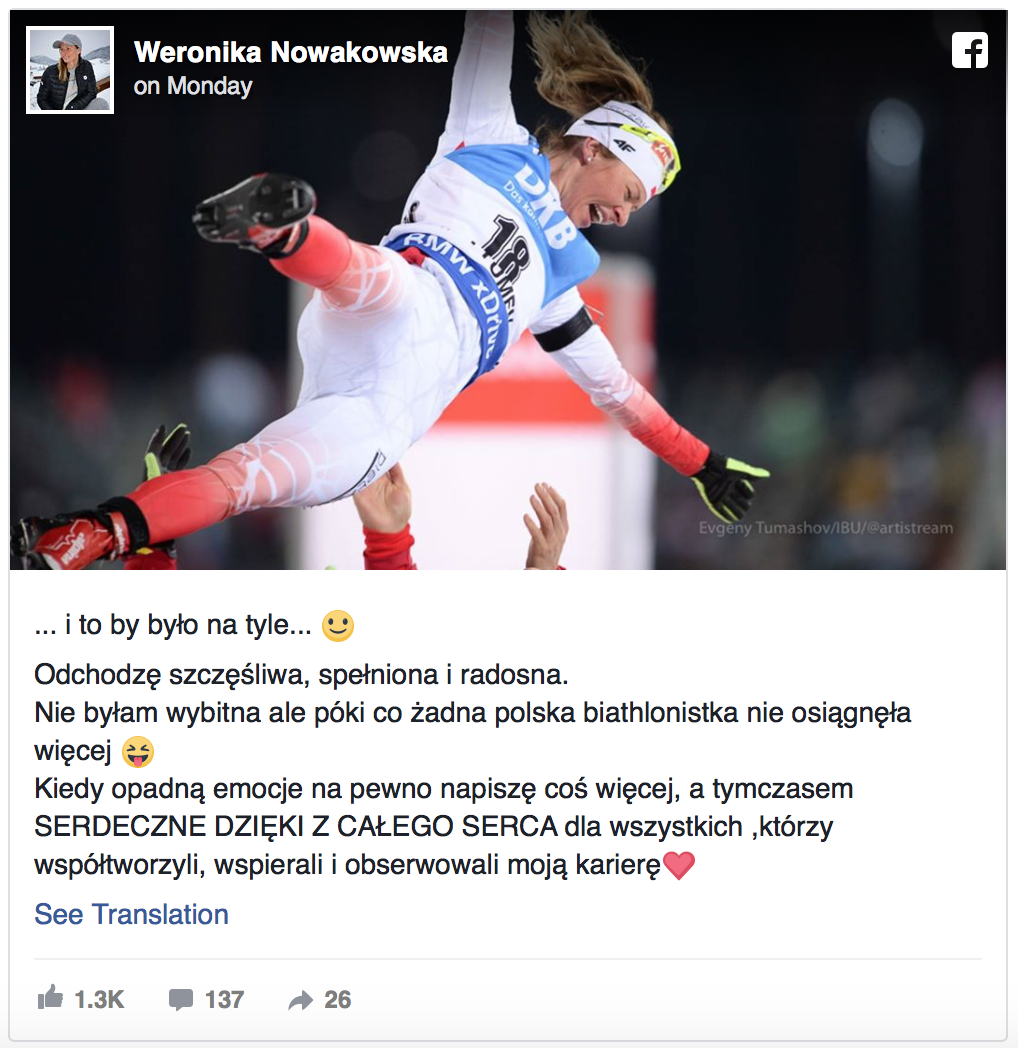
    Weronika Nowakowska is calling it a career. The 31-year-old picked up two World Cup podiums in the 2015 season before taking a break from competition to give birth to twins. She made a successful return this season and represented Poland in PyeongChang, with a top finish of 21st in the individual. She also had sixth- and fourth-place finishes on the World Cup this year and contributed to four different top-eight relay efforts, including one at the Olympics.

    “I leave happy, fulfilled and cheerful,” she wrote on her Facebook page, according to a translation. “I was not outstanding, but so far no Polish biathlete has done better”

    France

    Back in Oslo, French star Marie Dorin Habert ended her career. Dorin Habert – then simply Marie Dorin – competed in her first senior World Championships in PyeongChang in 2009, where she had a top individual finish of 18th and was part of the bronze-medal relay team. Fast forward and she had racked up a sprint bronze at the 2010 Olympics, seven World Cup wins, ten more World Championships relay medals, and four individual gold, one silver, and one bronze medal at World Championships, four of which were from the 2016 edition where she did not finish a single race without a medal.
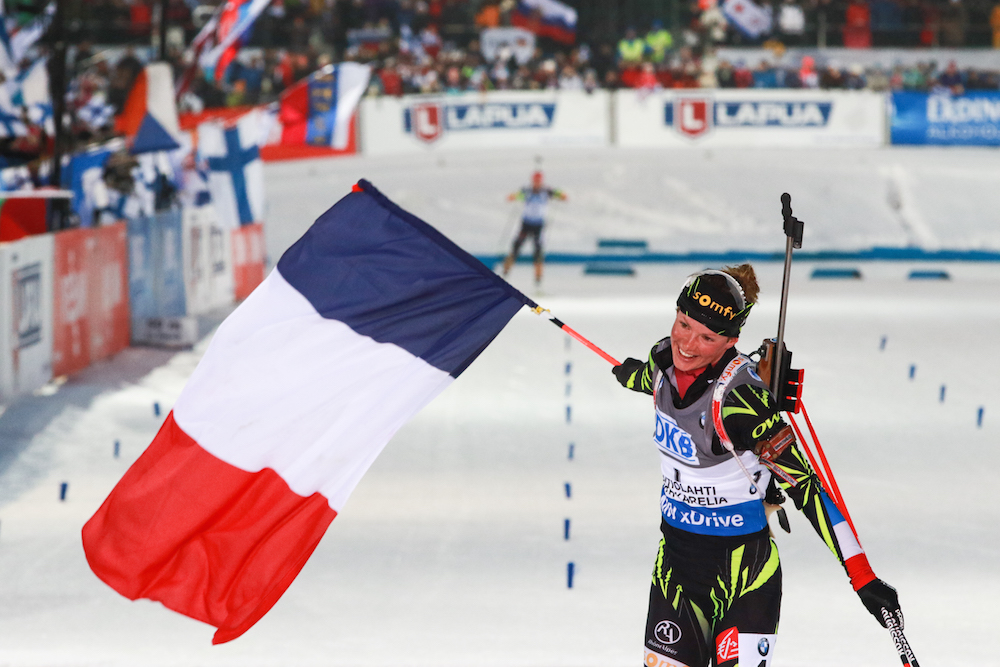
    France’s Marie Dorin Habert celebrates her second win in as many races at 2015 IBU World Championships, after taking gold in the 10 k pursuit in Kontiolahti, Finland. (Photo: Kontiolahden Urheilijat/Jarno Artika)

    She found herself back in PyeongChang for the 2018 Olympics, where, despite a frustrating season until then, she was fourth in the sprint, bronze in the women’s relay, and gold in the mixed relay.

    “It’s so nice to end this way, to share it with all of the team, and the beautiful sun, and all the French people,” Dorin Habert said after winning the women’s relay in Oslo along with her teammates. “It’s a wonderful day for me. I would like to thank a lot, well, everyone, for being there in the biathlon family. I’m really happy to have this career, and I’m really happy for everything.”

    Jean Guillaume Beatrix he told is also retiring. Beatrix was a World Junior Champion in 2009, before going on to be a five-time World Championships team member and a 2014 Olympic bronze medalist in the pursuit. He was part of three silver- and one bronze-medal winning men’s relay teams at World Championships. But this season, he did not perform well enough to make a very competitive French team for the 2018 Olympics. His retirement was “a decision precipitated by my results”, L’Equipe, according to a translation.

    Czech
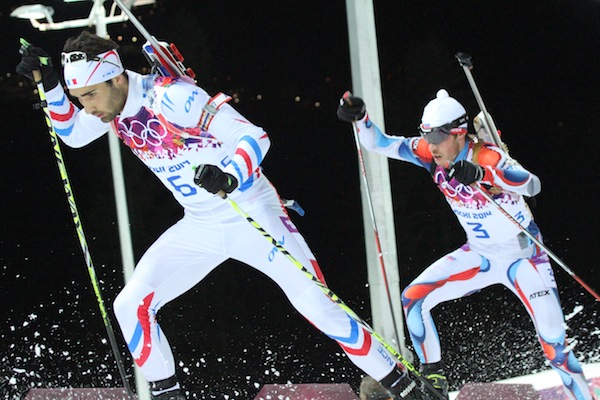
    France’s Martin Fourcade leading Jaroslav Soukup of the Czech Republic during the men’s Olympic 12.5 k pursuit at the 2014 Olympics.

    Jaroslav Soukup, the bronze medalist in the sprint at 2012 World Championships, where he was also part of the silver-medal mixed relay team, is retiring. Later in 2012, he suffered a horrendous accident while biking, including open fractures in his arm and neck and back injuries. By 2014, he made it back and won the same medals at the Olympics that he had at World Championships two years before: bronze in the sprint and silver in the mixed relay. Soukup qualified for the 2018 Olympics but only competed in the relay, which finished seventh. He had one World Cup top-30 this season.

    Norway

    Hilde Fenne, a staple of the Norwegian women’s team, retired after the last race of the season in Tyumen, Russia. Fenne never found breakout success as an individual; she had three top-15 finishes in her career. But she was an integral part of the women’s team and contributed to numerous World Cup relay podiums, as well as the gold-medal winning women’s relay at 2013 World Championships in Nove Mesto, Czech Republic.
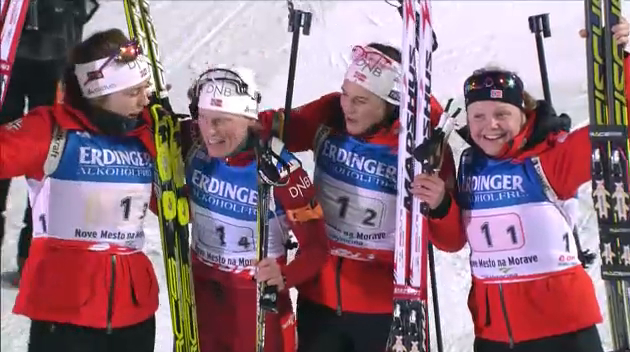
    The Norwegian women’s relay celebrates its second-ever World Championships title after winning the 4 x 6 k event in Nove Mesto, Czech Republic. From left to right: Synnøve Solemdal, Tora Berger, Ann Kristin Flatland and Hilde Fenne.

    In that final race, her teammates wrote her name on their cheeks. “She has been a very important piece for me,” teammate Synnøve Solemdal told NRK, almost in tears. “We have stayed in a lot of hotel rooms together. I’m going to miss her very much.”

    On the men’s side, there is uncertainty as to whether some veterans will stick with racing or not. One is Ole Einar Bjørndalen, who was left off Norway’s Olympic team, who for the first time since 1992 this season. And yet, the 44-year-old has not stated that he will retire, and some who know him are speculating that he may try to stick it out one more year and go out with better results than he saw this season.

    Also with no stated plans is Emil Hegle Svendsen. Bjørndalen is the winningest athlete in World Cup history; Svendsen is number four. He won the World Cup overall title in 2010, and is a four-time Olympian. He won gold in the individual in 2010 and in the mass start in 2014, after which he suffered a total collapse anchoring the Norwegian men’s relay. In the past seasons he has been off and on, and he has only won two races since then. But this season he showed flashes of brilliance, and he was third in the mass start at the 2018 Olympics as well as anchoring the silver medal men’s relay and mixed relays.
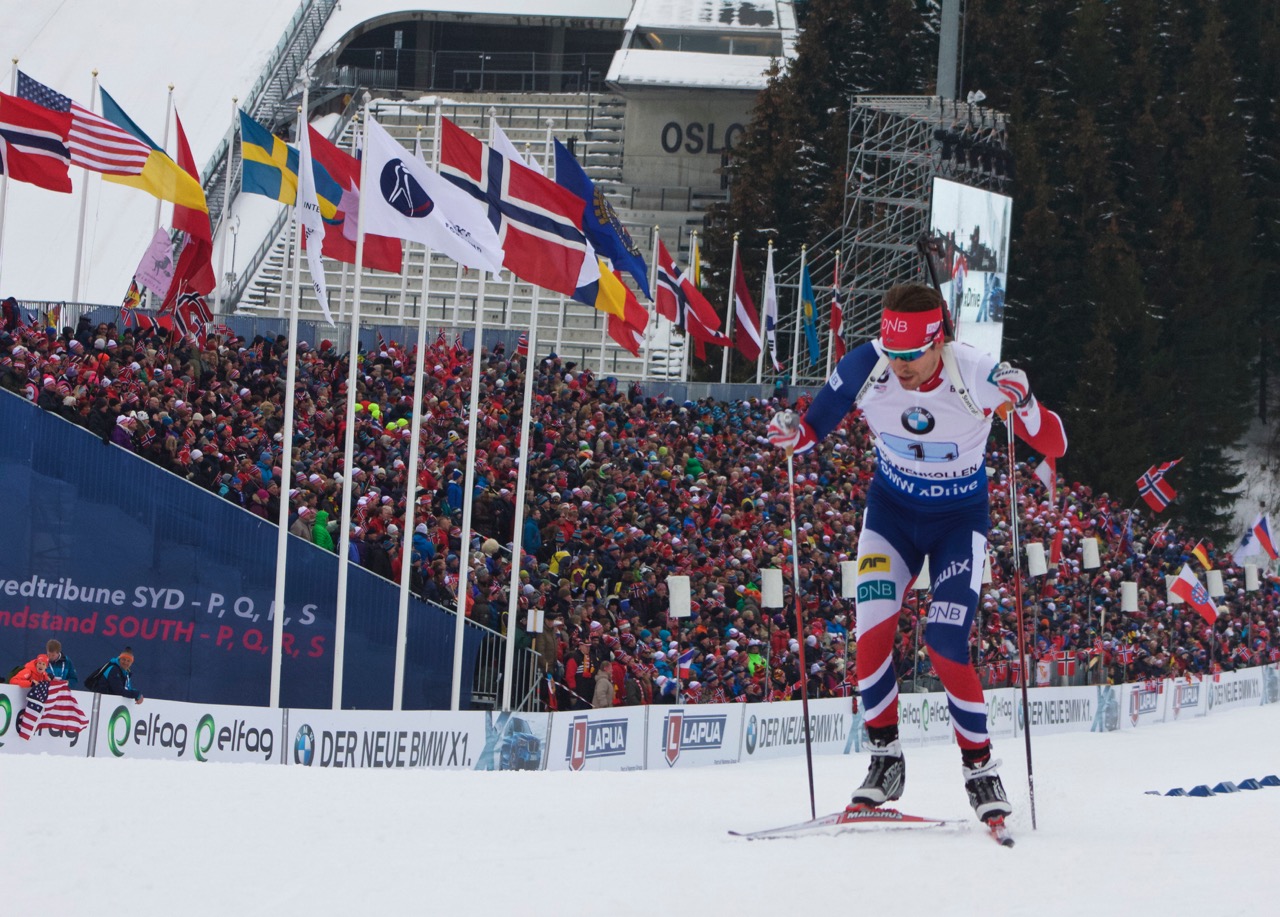
    Emil Hegle Svendsen of Norway leaves the stadium in the 2016 Holmenkollen World Cup as thousands of his countrymen cheer him on. Svendsen has not officially announced his plans for next season. (Photo: JoJo Baldus)

    “What Emil has done is absolutely fantastic,” teammate Tarjei Bø – who won the overall World Cup the year after Svendsen – told NRK two weeks ago. “He has won everything, and in addition done it several times, and he has come back again and again after being down. He has had a fantastic career and I hope he continues.”

    Finland

    She just won the overall World Cup crystal globe, but Kaisa Makarainen is not sure whether she will continue racing. In several previous years she had already discussed potentially retiring, but now she is reportedly waiting to think it over more as well as to discuss with the new team staff. U.S. Biathlon Women’s Coach Jonne Kahkonen, himself a Finn, was just announced as the new Head Coach for Finland.

    Germany

    Florian Graf, an athlete who finished as high as fourth on the World Cup in 2013 but has more recently been racing on the IBU Cup, is calling it quits at age 29.

    Several other top athletes are suspected to be considering retiring, but there hasn’t been much on the record discussion by them. Stay tuned.

  • Sunday Rundown: La Clusaz, Nove Mesto, Ramsau, Klingenthal, Obertilliach, & Rossland (Updated x4)

    Sunday Rundown: La Clusaz, Nove Mesto, Ramsau, Klingenthal, Obertilliach, & Rossland (Updated x4)

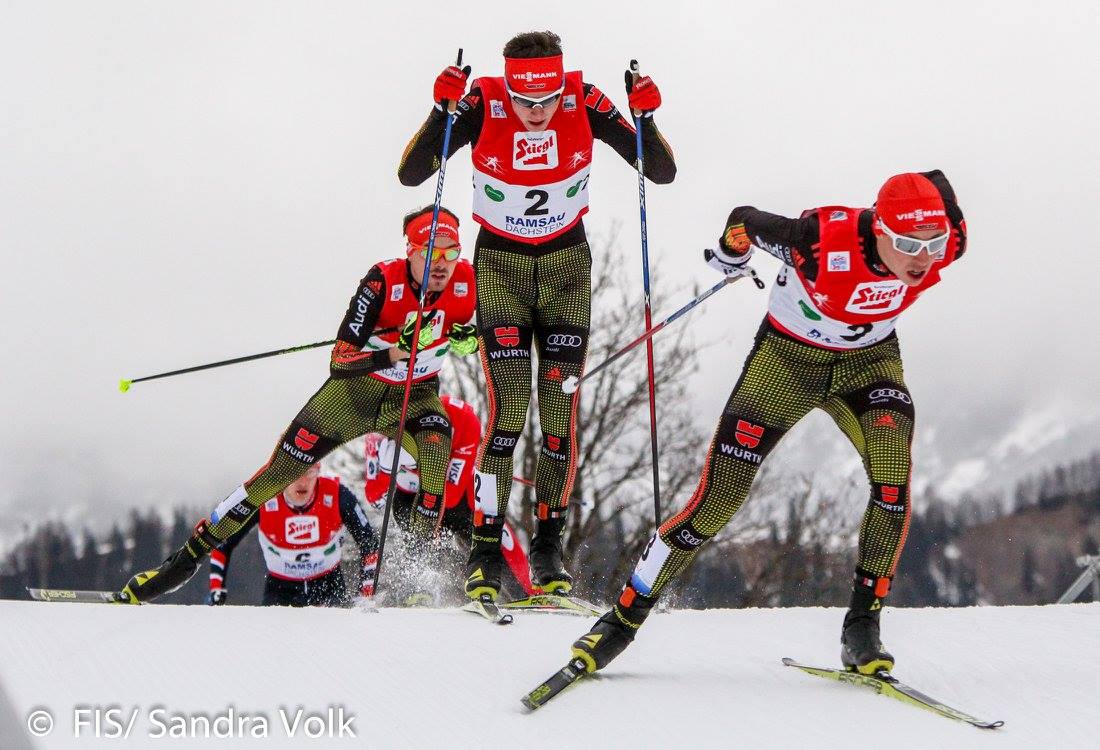
    Eric Frenzel (r) leads German teammates Vinzenz Geiger (c) and Fabian Rießle (l) toward a sweep of the podium in the Nordic Combined World Cup individual normal hill/10 k on Sunday in Ramsau, Austria. (Photo: FIS Nordic Combined/Facebook)
    Eric Frenzel (r) leads German teammates Vinzenz Geiger (c) and Fabian Rießle (l) toward a sweep of the podium in the Nordic Combined World Cup individual normal hill/10 k on Sunday in Ramsau, Austria. (Photo: FIS Nordic Combined/Facebook)

    Welcome to The Rundown, your quick primer of need-to-know information about the day’s racing. We’ll be updating this digest as the day goes on with additional results, photos and quotes. The Rundown is NOT a race report; stay tuned for complete race reports later today with interviews from the day’s top racers.

    ***

    FIS Nordic Combined Continental Cup in Klingenthal

    [UPDATE] Ben Loomis tallied two top 10’s and his U.S. Nordic Combined teammate Ben Berend notched eighth place this past weekend at the Continental Cup in Klingenthal, Germany.

    Loomis ended the three-day series on Sunday by placing fifth in the large hill/10 k for his second-best result at the Continental Cup level (he finished fourth last year in the normal hill/10 k competition in Park City, Utah). Loomis put himself in position by jumping to sixth then racing to fifth, 49.9 seconds behind Japan’s winner Go Yamamoto, who finished in 24:06.4.

    Florian Dagn of Austria placed second (+6.0) after jumping to first. Yamamoto jumped to second and headed out on the course seven seconds behind him.

    Norway’s Sindre Ure Soetvik placed third (+28.8), after starting the 10 k in third. Germany’s David Welde finished fourth (+36.0), moving up after jumping to eighth.

    Also on Sunday, Berend placed 15th (+2:25.3) and Jasper Good was 35th (+3:07).

    Berend started the long weekend out with an eighth-place finish in the large hill/5 k on Friday. He jumped to fourth and finished the ski race in eighth, 1:09.2 minutes behind Germany’s Maximilian Pfordte, who won in 10:58.9.

    Pfordte posted the best jump to start the 5 k first, then held his lead for a 16.4-second victory over Yamamoto in second. Dagn placed third (+18.3) after jumping to second, and Yamamoto’s jump ranked third.

    Also for the U.S., Good finished 21st (+2:05.8) for his best result of the weekend, Loomis was 28th (+2:50.5) and Stephen Schumann 29th (+2:52.1).

    On Saturday, it was Loomis who tallied another eighth place for the U.S. in the large hill/10 k. He jumped to 10th then improved to eighth, finishing 58 seconds behind German winner Tobias Simon. While Simon dominated the jump as well as the race, winning by 10.1 seconds, Yamamoto repeated in second place and Austria’s Thomas Joebstl reached the podium in third (+38.3).

    Berend finished 25th (+1:45.9) and Good 45th (+3:24.9) on Day 2.

    Results: Day 1 | Day 2 | Day 3

    ***

    FIS Nordic Combined World Cup in Ramsau

    The Nordic Combined World Cup resumed this weekend in Ramsau, Austria, with Germany not only topping but sweeping the podium in both individual normal hill/10 k competitions.
    On Saturday, Team Germany swept the top four, with Johannes Rydzek notching his third individual win of the season, ahead of teammates Fabian Rießle (+1.5) and Eric Frenzel (+8.7). Vinzenz Geiger completed the sweep in fourth (+15.0), a career best for the 19 year old after placing seventh earlier this month in Lillehammer, Norway.
    Frenzel led after the jump on the 98-meter hill, which put him 2 seconds ahead of the second-best jumper, Austria’s Mario Seidl, in the 10 k Gundersen start. (Seidl went on to place seventh.)
    Rydzek posted the third-best jump and started 10 seconds back, while Rießle started another 10 seconds later in seventh. Rydzek went on to ski the fifth-fastest course time and Rießle was third fastest en route to first and second at the finish.
    Americans Taylor Fletcher and Bryan Fletcher finished 27th (+1:17.6) and 29th (+1:18.4), respectively, and Adam Loomis was 47th (+3:16.2).
    Taylor started 41st, 1:18 back, and Bryan started five seconds later in 43rd. Bryan posted the seventh-fastest course time and ended with a photo finish with Finland’s Arttu Maekiaho, which Maekiaho took by 0.1 seconds for 28th. Loomis started 50th.
    Day 2 in Ramsau went to Frenzel, who won the normal hill/10 k in 22:49.4. Rießle repeated in second (+0.8) and Geiger improved on his career best for his first podium in third (+23.4). Seidl again jumped to first and this time ended up fourth (+24.3).
    Frenzel started third and raced to first, Rießle moved up from fourth in the jump to second, and Geiger made the most of his second-best jump.
    Taylor Fletcher skied the third-fastest course time to move up from 46th after the jump to 22nd at the finish (+1:20.2). Bryan Fletcher finished 32nd (+1:33.5), losing one place after starting 31st.
    The Nordic Combined World Cup goes on holiday break until resuming Jan. 7-8 in Lahti, Finland.
    Results: Saturday | Sunday 
    ***

    NorAm Mini Tour in Rossland: Classic pursuits

    The NorAm mini tour in Rossland, British Columbia, wrapped up with a classic pursuit race on Sunday.

    In the women’s 10 k classic, APU’s Chelsea Holmes continued her strong form, winning the mini tour with an aggregate time of 1:08:04.4. Holmes finished the 10 k in 35:35.4 minutes, 6.2 seconds behind fastest woman of the day, Katherine Stewart-Jones (NTDC Thunder Bay).

    SMS Elite’s Erika Flowers continued her podium-filled visit to Canada with the third-fastest ski of the day, 48.1 seconds behind Stewart-Jones, to take second overall, 2:23.9 behind Holmes. AWCA’s Olivia Bouffard-Nesbitt was the fifth fastest in the 10 k to hold on to third overall (+3:25.2), while Stewart-Jones was just 0.5 seconds back in fourth overall.

    NTDC Thunder Bay’s Evan Palmer-Charrette used a fourth-fastest ski in the 15 k to keep the overall title, with an aggregate time of 1:28:54.0. Alexis Dumas (CNEPH) skied 1:14.7 faster than Palmer-Charrette to climb from sixth at the start to second overall (+52.2). AWCA’s Jack Carlyle had the second-fastest time of the day, 29.9 seconds behind Dumas, to climb into third overall (+1:10.1).

    National Para-Nordic guide Erik Carleton had the third-fastest 15 k time, 1:01.3 back, but it wasn’t enough to catch Team R.A.D.’s Russell Kennedy, who placed fourth overall (+1:20.8).

    Full results (with tabs for the overall and time of the day)

    ***

    FIS Cross-Country World Cup in La Clusaz: Men’s and women’s relays

    Team Norway I emerged victorious in Sunday’s men’s 4 x 8 k mixed relay event in La Clusaz, France, with Didrik Tønseth leading the winning group’s first classic leg.

    After crossing in seventh, Tønseth handed off to Martin Johnsrud Sundby for a second classic leg. Sundby dropped a spot, finishing his classic leg in eighth. Sundby tagged off to Anders Gløersen for the first freestyle leg.

    Gløersen rocketed the team to first, and held the position straight through his 7.5 k. The final leg for Norway’s winning team went to Finn Hågen Krogh. The Norwegian men’s team completed the relay event in a total time of 1:11:25.7

    Second place overall, two-tenths of a second behind, was team Russia, led by Evgeniy Belov for the first classic leg. Belov handed off to Alexander Legkov for the second classic leg, with Legkov putting down the third fastest time by the time he returned to the exchange zone.

    The third and first freestyle leg for Russia went to Alexey Chervotkin, who maintained the team’s third place position. Anchoring the team was  Sergey Ustiugov, who managed to maneuver the team from third place to second during his final freestyle leg.

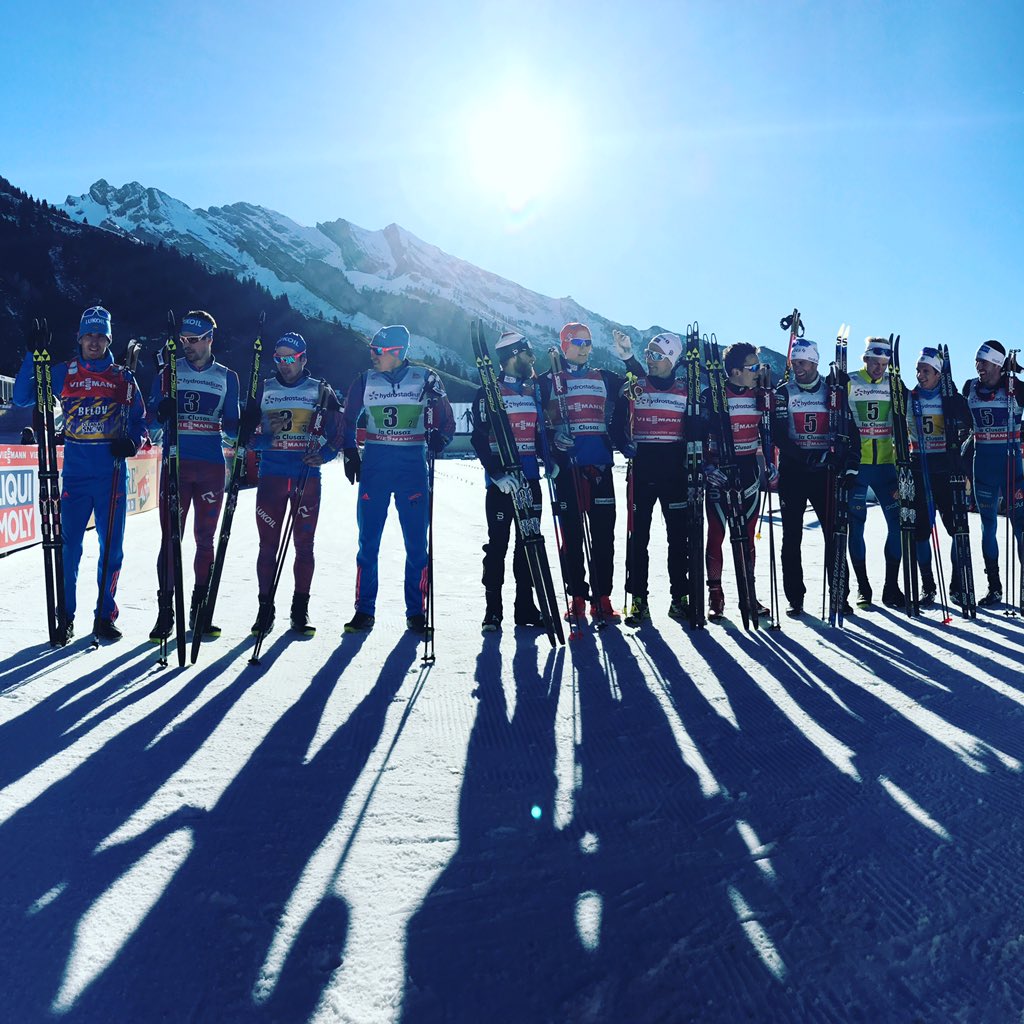
    The men's 4 x 7.5k relay podium on Sunday in La Clusaz, France with Russia in second (left four) Norway first (center four) and France third overall. (Photo: FIS Cross-Country twitter)
    The men’s 4 x 8 k relay podium on Sunday in La Clusaz, France, with Russia in second (left four) Norway first (center four) and France third overall. (Photo: FIS Cross-Country/twitter)

    Rounding out the men’s mixed relay podium on Sunday was France I (+7.7).

    Jean-Marc Gaillard led team France’s first classic leg, racing in a sixth position into the exchange zone. Gaillard handed off to Alexis Jeannerod, who moved up to fifth place by the end of his classic leg.

    Skiing the third and first freestyle leg was Clement Parisse who held onto fifth place and tagged off to Maurice Manificat for the final freestyle leg. Manificat managed to move around Sweden’s Axel Ekstrløm and Germany’s Lucas Bøgl for third place overall.

    Neither Canada or the U.S. entered a men’s relay team due to illness.

    In the women’s 4 x 4 k relay event, it was another Norwegian team who stood atop the podium.

    Ingvild Flugstad Østberg led the women’s first classic leg, skiing in first place until her hand-off to Marit Bjørgen. Bjørgen maintained the first place position during her classic leg, tagging off to Ragnhild Haga.

    Haga completed the first freestyle leg for Norway, handing off to Heidi Weng, who anchored the team’s last freestyle leg. The Norwegian women finished in a total time of 39:23.3.

    In second was team Finland, 50.2 seconds behind Norway’s winning time. Aino-Kaisa Saarinen started the first classic leg for Finland, passing off to Anne Kyllønen.

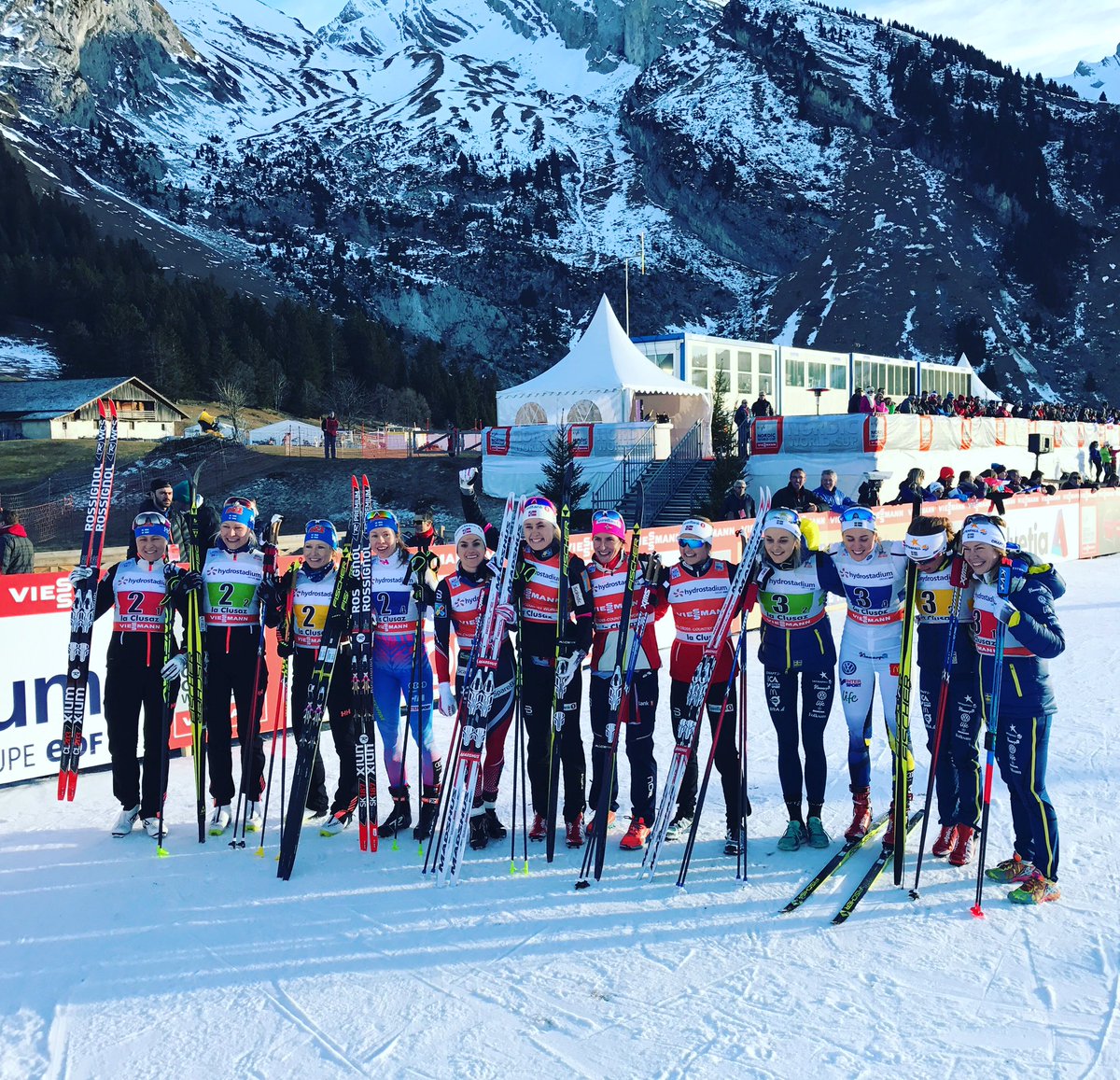
    The women's 4 x 4 k mixed relay podium on Sunday in La Clusaz, France. Norway (c) took the win ahead of team Finland in second (l) and Sweden in third. (Photo: FIC Cross-Country/Twitter)
    The women’s 4 x 4 k mixed relay podium on Sunday in La Clusaz, France. Norway (c) took the win ahead of team Finland in second (l) and Sweden in third. (Photo: FIC Cross-Country/Twitter)

    Taking on the first freestyle leg for Finland was Riitta-Liisa Roponen, who tagged off to Laura Mononen for the final freestyle leg.

    Rounding out the relay podium in third overall was team Sweden (+1:08.9). Emma Wiken raced the first classic leg, who tagged off to Stina Nilsson for the second classic leg. Maria Rydqvist raced the first freestyle leg and handed off to Anna Dyvik, who anchored the team to third.

    Only one U.S. women’s relay team was entered on Sunday, with both Jessie Diggins and Sadie Bjornsen out due to illness. Sophie Caldwell led the U.S.’s first classic leg, followed by Rosie Brennan. Liz Stephen followed Brennan, taking on the first freestyle leg. Anchoring the team was Kikkan Randall in the final freestyle leg. The Americans finished in seventh overall (+2:26.0).

    Canada also entered a women’s team in Sunday’s relay. Emily Nishikawa led the first classic leg, and handed off to Cendrine Browne for the second classic leg. Dahria Beatty raced the first freestyle leg and tagged off to Sophie Carrier-Laforte, who anchored the team to 12th overall (+4:07.9).

    Results: Men | Women

    ***

    IBU World Cup in Nove Mesto: Men’s and women’s mass starts

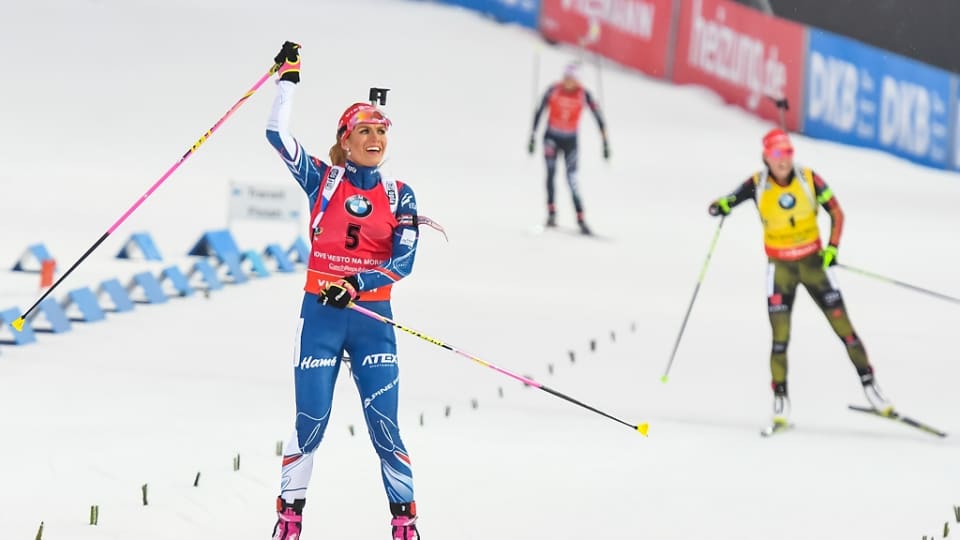
    Gabriela Koukalová of the Czech Republic looks to her home crowd as she wins the women's 12.5 k mass start on Sunday at the IBU World Cup in Nove Mesto, Czech Republic. She fended off Germany's Laura Dahlmeier (r), who took second. (Photo: IBU)
    Gabriela Koukalová of the Czech Republic looks to her home crowd as she wins the women’s 12.5 k mass start on Sunday at the IBU World Cup in Nove Mesto, Czech Republic. She fended off Germany’s Laura Dahlmeier (r), who took second. (Photo: IBU)

    Despite skiing in 14th at one point in the men’s 15 k mass start on Sunday, France’s Martin Fourcade came back to win the International Biathlon Union (IBU) World Cup in Nove Mesto, Czech Republic.

    That makes him seven for eight in individual races so far this season.

    Fourcade started with bib 1 as the overall World Cup leader and finished first in 36:18.9 minutes, despite a penalty on his second prone that put him in 14th and 22 seconds back heading out on his third loop.

    He rebounded with a clean third shooting to move into third, 2.5 seconds behind Ukraine’s Dmytro Pidruchnyi in first and 1.3 seconds behind Russia’s Anton Babikov in second.

    By the final shooting stage, Fourcade was back in first with clean shooting (0+1+0+0), 28 seconds clear of Babikov in second. Babikov had his first penalty of the day on the final stage (0+0+0+1) to drop out of contention.

    Germany’s Simon Schempp (1+1+0+0) came out on top of an eight-way battle for second place on the final loop. Schempp took it, 8.3 seconds after Fourcade and 1.1 seconds ahead of Babikov in third (+9.4).

    The Czech Republic’s Ondrej Moravec was 0.3 seconds off the podium in fourth (+9.7), Pidruchnyi placed fifth (+10.2), Russia’s Matvey Eliseev finished sixth (+11.0), Norway’s Ole Einar Bjørndalen was back in the top 10 in seventh (+11.3), France’s Quentin Fillon Maillet notched his second-straight top 10 in eighth (+13.7), and Norway’s Johannes Thingnes Bø finished at the back of that pack in ninth (+19.8).

    American Lowell Bailey missed the top 20 by 10 seconds in 21st (+1:17.1). He had three penalties, two of which came on the last stage (0+1+0+2) to drop him from ninth to 20th at the start of the final loop.

    Bailey retained his spot in ninth in the overall World Cup standings, while Fourcade continues to lead, 158 points ahead of Shipulin in second.

    In the women’s 12.5 k mass start, Gabriela Koukalová delivered to her home fans in Nove Mesto, Czech Republic, racing to her second win of the season in 34:42.1.

    “I was so nervous before the race so it was amazing,”  Koukalová said, according to an IBU press release. “I have so many emotions; it’s even more emotional than at the Olympics. I would like to say thanks to all the spectators and I hope I was able to make a nice Christmas present to all of them.”

    The defending World Cup champion beat the current World Cup leader, Germany’s Laura Dahlmeier, by 3.1 seconds after shooting a single penalty and cleaning the last two stages (0+1+0+0) to move into first. Dahlmeier missed two on the first stage to drop 23rd, but cleaned her last three stages (2+0+0+0) to capture second at the finish. She passed three athletes on the last lap, including Italy’s Dorothea Wierer, who ended up third (+9.7) with one miss (1+0+0+0).

    “I don’t really know what happened with those two misses,” she told German broadcaster ARD. “But in terms of skiing I had a great day on the course, and I had skis that were the bomb. It’s just a lot of fun when you can make the podium reaching the second place despite a large deficit in the beginning. I am overjoyed.”

    Germany’s Vanessa Hinz rebounded from Friday’s sprint (where she placed 73rd) to end up fourth (+15.5) with a single penalty (0+0+1+0). None of the 29 finishers hit every target, and American Susan Dunklee did not start.

    Dahlmeier leads the overall World Cup standings by 98 points over Finland’s Kaisa Mäkäräinen, and Koukalova is third, just seven points behind Mäkäräinen. Dunklee is 11th.

    The IBU World Cup now goes on holiday break until resuming Jan. 5 in Oberhof, Germany.

    Results: Men | Women

    ***

    IBU Cup in Obertilliach

    The third IBU Cup was held on Dec. 16-17 in Obertilliach, Austria. In the men’s 20 k individual on Friday, the top three finishers were France’s Antonin Guigonnat, with a winning time of 49:58.6, Russia’s Yury Shopin in second (+32.2), and Germany’s Florian Graf in third (+35.6). Each of the top three had one miss, and Canada’s Matthew Hudec was the top North American in 34th (+4:11.3) with two penalties (0+2+0+0). Also for Canada, Carsen Campbell finished 38th with three penalties (1+2+0+0), Matthew Neumann was 53rd with three penalties (0+2+0+1) out of 118 finishers.

    In the women’s 15 k individual on Friday, Germany’s Karolin Horchler took the win with clean shooting (0+0+0+0) in 44:54.7. France’s Coline Varcin was 1.1 seconds back in second with one penalty (1+0+0+0), and third went to Russia’s Daria Virolaynen (+30.2), who had one miss as well (0+1+0+0). Canada’s Nadia Moser was the top North American in 35th (+5:10.8) with two penalties (0+1+1+0). Also for Canada, Erin Yungblut placed 66th with five penalties (0+3+0+2).

    In the men’s 10 k sprint on Saturday, two Norwegians took first and second with Henrik L’Abee-Lund winning in 23:29.9, and Vetle Sjastad Christiansen 13.9 seconds back in second. Third was claimed by Germany’s Phillipp Nawrath (+29.5) and all of the top three shot clean. Neumann led Canada in 47th (+2:20) with one miss (1+0). Campbell missed two (1+1) and finished 59th (+2:47.4), and Hudec was 64th (+2:58.9) with two penalties as well (1+1). Canada’s Pearce Hanna finished 87th, with two misses (2+0), out of 125 finishers.

    In the women’s 7.5 k sprint, Russia swept the podium with Virolaynen winning in 20:31.5, followed closely by Uliana Kaisheva (+3.7), and then Anna Nikulina (+23.1). Virolaynen missed one (0+1), Kaisheva cleaned (0+0) and Nikulina had a standing miss as well (0+1).  The top North American was Canada’s Megan Bankes in 30th (+2:08.1), with one prone penalty (1+0). Also for Canada, Sarah Beaudry finished 34th (+2:18.1), with two standing misses (0+2), Yungblut was 45th (+2:40.6) with clean shooting (0+0), and Moser finished 49th (+2:45.5) with two misses (1+1), out of 85 women.

    Results: Men’s individual | Women’s individual | Men’s sprint | Women’s sprint


  • Bailey, Burke Open World Cup Season in 15th, 16th in Östersund

    Bailey, Burke Open World Cup Season in 15th, 16th in Östersund

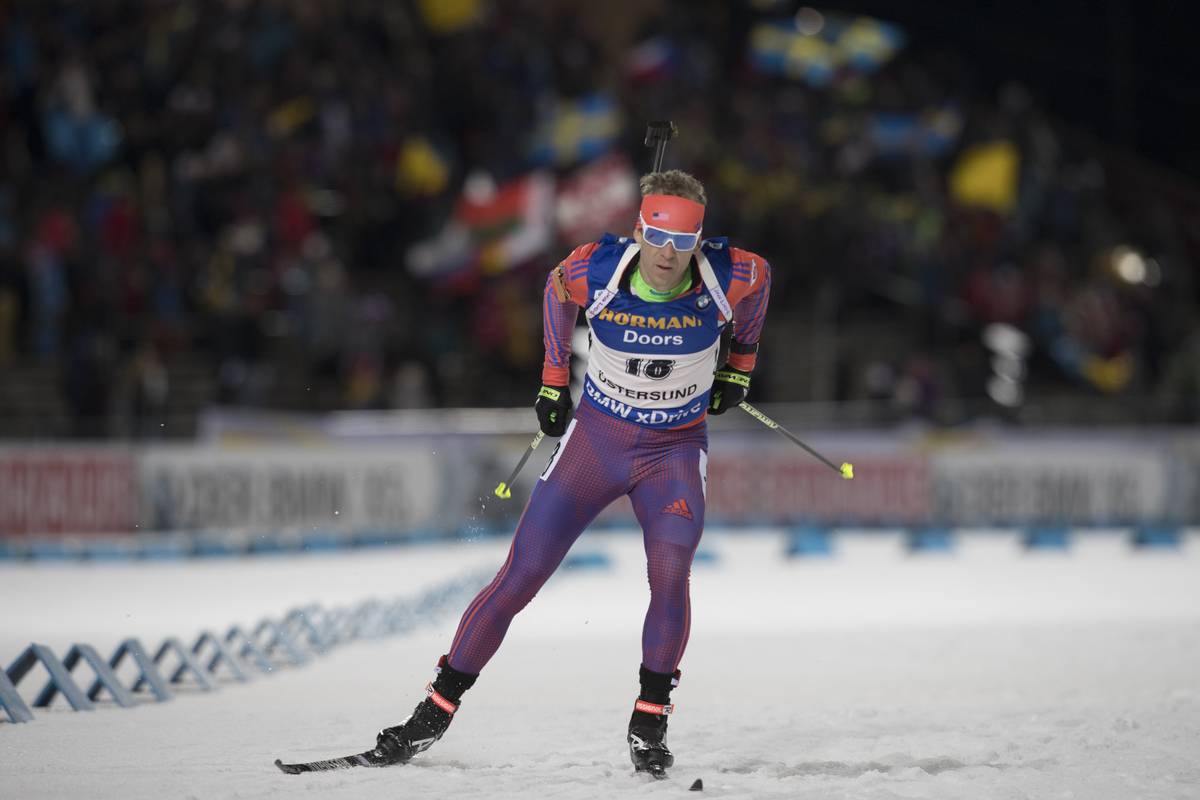
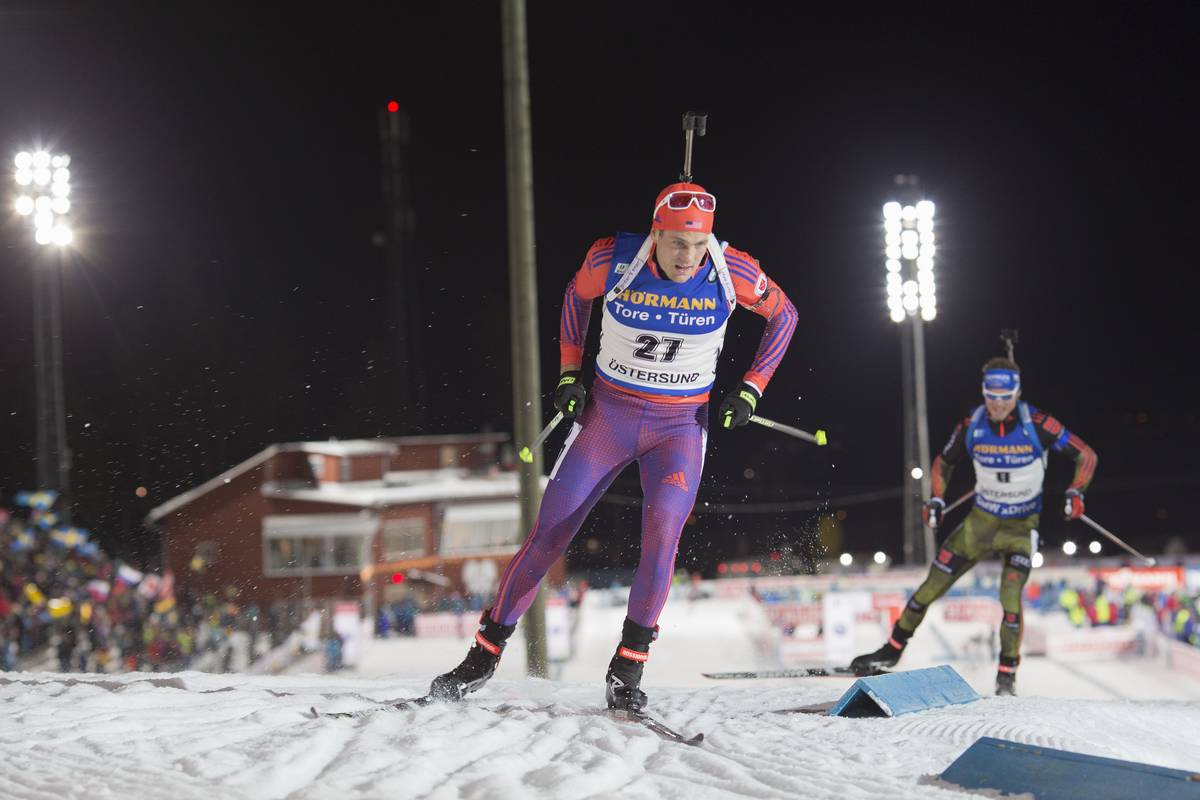
    Lowell Bailey racing to 15th in the men's first individual IBU World Cup race of the 2016/2017 season, the 20 k individual on Thursday in Östersund, Sweden. He placed 15th. (Photo: USBA/NordicFocus)
    Lowell Bailey (US Biathlon) racing to 15th in the men’s first individual IBU World Cup race of the 2016/2017 season, the 20 k individual on Thursday in Östersund, Sweden. (Photo: USBA/NordicFocus)

    Lowell Bailey is the dad of a six-month-old baby girl. Tim Burke celebrated his two-year anniversary earlier this fall. Both are US Biathlon team veterans, and at 35 and 34 years old, respectively, they’re still lighting up the International Biathlon Union (IBU) World Cup.

    The teammates and training partners, based out of Lake Placid, N.Y., finished one place and 2.1 seconds apart on Thursday, with Bailey ending up 15th and Burke 16th in the first men’s individual World Cup race of the season: the 20-kilometer individual in Östersund, Sweden.

    While Bailey accumulated four penalties in the four-stage race, he posted the 11th-fastest overall range and shooting times out of 103 finishers, and his course time ranked 25th overall.

    “Your ski speed is always a little bit of an unknown going into the first race of the season,” Bailey said, according to a US Biathlon press release. “I’m happy to start off with decent ski speed and I hope I can build on this race going forward from here. I’ve worked throughout the training session on increasing the speed in the shooting setup (before any shots are fired) so I’m happy to see the overall range time where it is.”

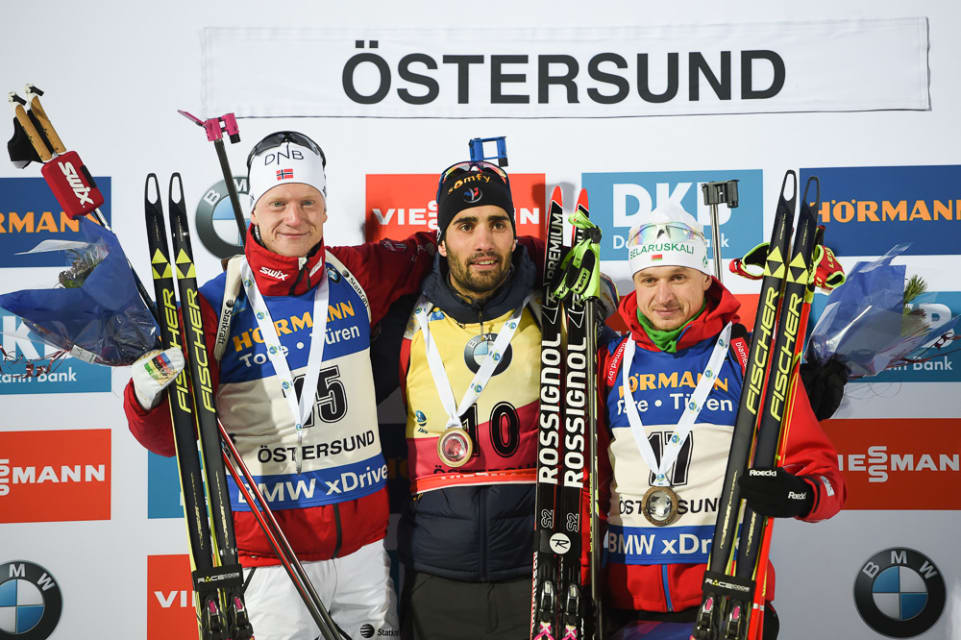
    It was another windy day in Östersund, without a single racer hitting all 20 targets. The 10th starter and reigning overall World Cup champion, Martin Fourcade of France, took the individual win in 51:33.8 with two misses (0+2+0+0). He held off Norway’s Johannes Thingnes Bø (the 15th starter) by 29.5 seconds. Bø cleaned three-straight stages, but two penalties on the last standing cost him the win (0+0+0+2) and he settled for second.

    The men's 20 k individual podium in the first IBU World Cup of the 2016/2017 season, with winner Martin Fourcade (c) of France, Norway's Johannes Bø (l) in second and Vladimir Chepelin (r) of Belarus on the podium for the first time in third. (Photo: IBU/BiathlonWorld.com)
    The men’s 20 k individual podium in the first IBU World Cup of the 2016/2017 season, with winner Martin Fourcade (c) of France, Norway’s Johannes Bø (l) in second and Vladimir Chepelin (r) of Belarus on the podium for the first time in third. (Photo: IBU/BiathlonWorld.com)

    “I knew I had the chance with 15 hits after the first three stages, but there was so much wind,” Bø told German TV broadcaster ARD. “I just tried to fight hard. but not hard enough. Two misses and I lost the first place. That was not so good, but the three first [stages] and overall it was a good race.“

    Meanwhile, Vladimir Chepelin of Belarus was one of three finishers with just one miss (1+0+0+0), and he finished third (1:24.3 behind Fourcade) for his first World Cup podium, despite clocking the 43rd-ranked course time.

    Germany’s Florian Graf, who started 94th, was on track for a podium with three clean stages, but one miss on the last standing put him in eighth at the finish (+2:33.6).

    “In our hotel room, we joked about skiing in the top ten and shooting clean,” Graf told ARD. “Of course I would not have expected that it works out so well today, but I am overjoyed to have such a debut.”

    Norway had three finish in the top five with Lars Helge Birkeland in fourth (+2:10.5, three misses) and Ole Einar Bjørndalen in fifth (+2:16.7, three misses).

    But the main story of the day was once again Fourcade, who, like Bailey, is also a dad.

    Asked what was more important, his life with his 14-month-old daughter or winning the first individual race of the season, Fourcade replied, “If I say the victory my wife would probably kill me. Or my daughter would kill me in a few years, too. So yeah, you can’t compare. Biathlon is my passion, is my job, but my daughter is my life now. Nothing to compare,” he told ARD.

    In terms of the race itself, he said he was pleased.

    “It was a long preparation and this was a good answer about my shape after the test in Sjusjøen and the win in single mixed [relay],” Fourcade said after his second win in as many races this season, and 48th individual World Cup victory (50 including two Olympic golds in 2014). “There is a difference with being able to win and actually winning, so I am very happy.”

    And then there was the question of whether his main goal is a sixth overall World Cup title.

    “That is what I trained for, that is what I hope I will get,” Fourcade said. “But this is biathlon. Today I had a good form with challenging wind conditions, but you can also lose quickly. It’s just one race, and there are about 30 more coming. I am very happy about today. I will enjoy this victory, my 50th World Cup victory. That is something I wouldn’t have dreamed about and I will enjoy it today.”

    In bib 18, Bailey started directly behind Chepelin, the third-place finisher, and cleaned both prone stages, but missed two on each standing bout.

    “It was pretty gusty in the range and you really had to concentrate on making quality shots,” Bailey told US Biathlon. “I’m happy with the prone performance but definitely wish I could have a few of those standing shots back.”

    Tim Burke (US Biathlon) racing to 16th in the men's first individual IBU World Cup race of the 2016/2017 season, the 20 k individual on Thursday in Östersund, Sweden. (Photo: USBA/NordicFocus)
    US Biathlon’s Tim Burke (27) racing to 16th in the men’s first individual IBU World Cup race of the 2016/2017 season, the 20 k individual on Thursday in Östersund, Sweden. (Photo: USBA/NordicFocus)

    Burke in bib 27 started off with a clean prone as well, followed by two standing misses then another clean prone. In the final stage, he had one more penalty for a total of three (0+2+0+1) and finished 2.1 seconds back from Bailey, 3:54.6 behind Fourcade, and 0.2 seconds ahead of 19th-place Ondrej Moravec of the Czech Republic.

    Burke has tallied three podiums in Östersund, most recently in 2013/2014, when he placed third in a sprint. In 2009/2010, he finished second in an 20 k there and third in the sprint.

    “I’m not really sure why Östersund has been a good venue for me,” he told US Biathlon. “Maybe it’s because of the tricky shooting conditions, which is something that I typically like. Unfortunately, I felt really flat on the course today. I should have been able to reach the top 10 today with that shooting, but I just did not have it on the tracks today. Hopefully my legs will rebound for Saturday’s sprint.”

    On Thursday, he made a point to shoot slower than usual in the windy conditions. His range time ranked 31st overall.

    “I decided to just take my time on the range and that worked out today,” Burke said.

    Also for the U.S., Russell Currier, who qualified for World Cup starts less than a week ago in an IBU Cup sprint, finished 54th (+7:04.5) with six penalties (1+1+2+2).

    Nathan Smith led the Canadians in 43rd (+5:36.8) with three penalties (1+0+1+1). Among his teammates, Scott Gow finished 60th (+7:30.4, five misses), Macx Davies was 62nd (+7:34.6, four misses), Brendan Green was 89th (+10:20.1, eight misses), and Christian Gow 99th (+12:52.8, eight misses).

    Racing resumes in Östersund on Saturday with the women’s and men’s sprints at 5:45 a.m. and 8:45 a.m. Eastern time, respectively. Watch them live here.

    Results

  • Who Needs Weather? 40,000 Germans Fill Soccer Stadium as Dahlmeier and Graf Win Biathlon Competition

    Who Needs Weather? 40,000 Germans Fill Soccer Stadium as Dahlmeier and Graf Win Biathlon Competition

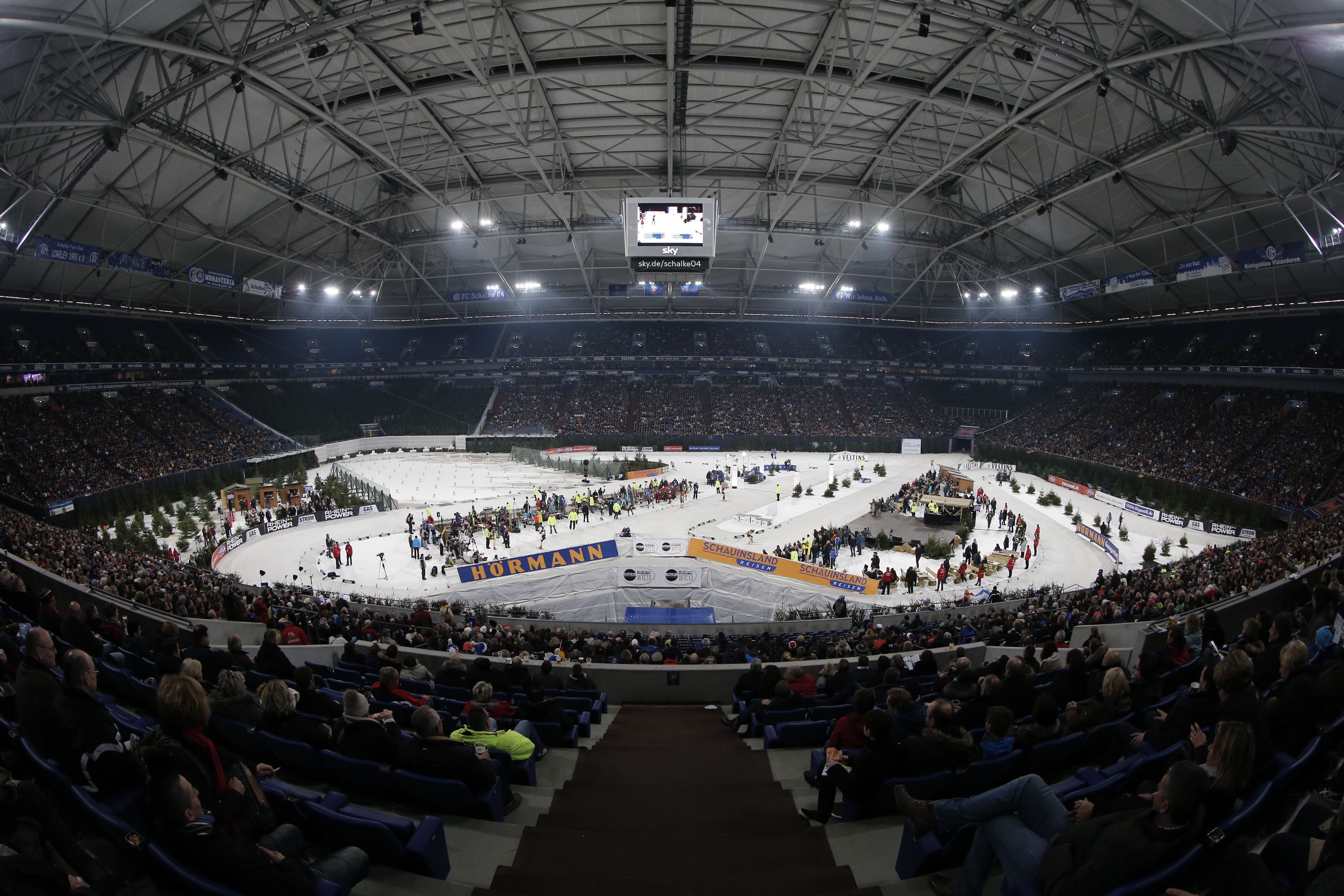
    The Schalke soccer arena ready for biathlon action on Saturday. Photo: Karsten Rabas / Schalke World Team Challenge 13.
    The Schalke soccer arena ready for biathlon action on Saturday. Photo: Karsten Rabas / Schalke World Team Challenge 13.

    When the FIS Tour de Ski kicked off in Oberhof, Germany, on Saturday, it didn’t seem like much of a party. It was raining. There was so little snow that some athletes had been training on rollerskis. On a ribbon of white, skiers passed by green grass but also a lot of brown mud. The race course had little terrain, and was almost completely flat. Barely any spectators showed up.

    That might be because they were all 3 1/2 hours away in Gelsenkirchen, with a roof over their heads. For the 12th year, the town of just over 250,000 people – which only has snow for about 15 days every year – hosted the biathlon World Team Challenge, where two-person teams of the best biathletes from the World Cup circuit compete in a relay race to the delight of tens of thousands of spectators.

    How does the former coal-mining city, hit with some of the worst unemployment in Germany in recent decades, pull this off? The secret is an open mind and an innovative soccer stadium. Organizers truck in snow – 2,500 cubic meters, 10 truckloads of which were reportedly later taken to Oberhof – to the Veltins Arena, home of the city’s FC Schalke 04 soccer club, which reached the Champions League semifinals in 2011 (it’s also home to U.S. player Jermaine Jones). They build a few bridges so that the trail can loop over itself, and pop a shooting range in one corner, leaving that section of the stadium empty of spectators. Voila. Exciting biathlon racing, no weather required.

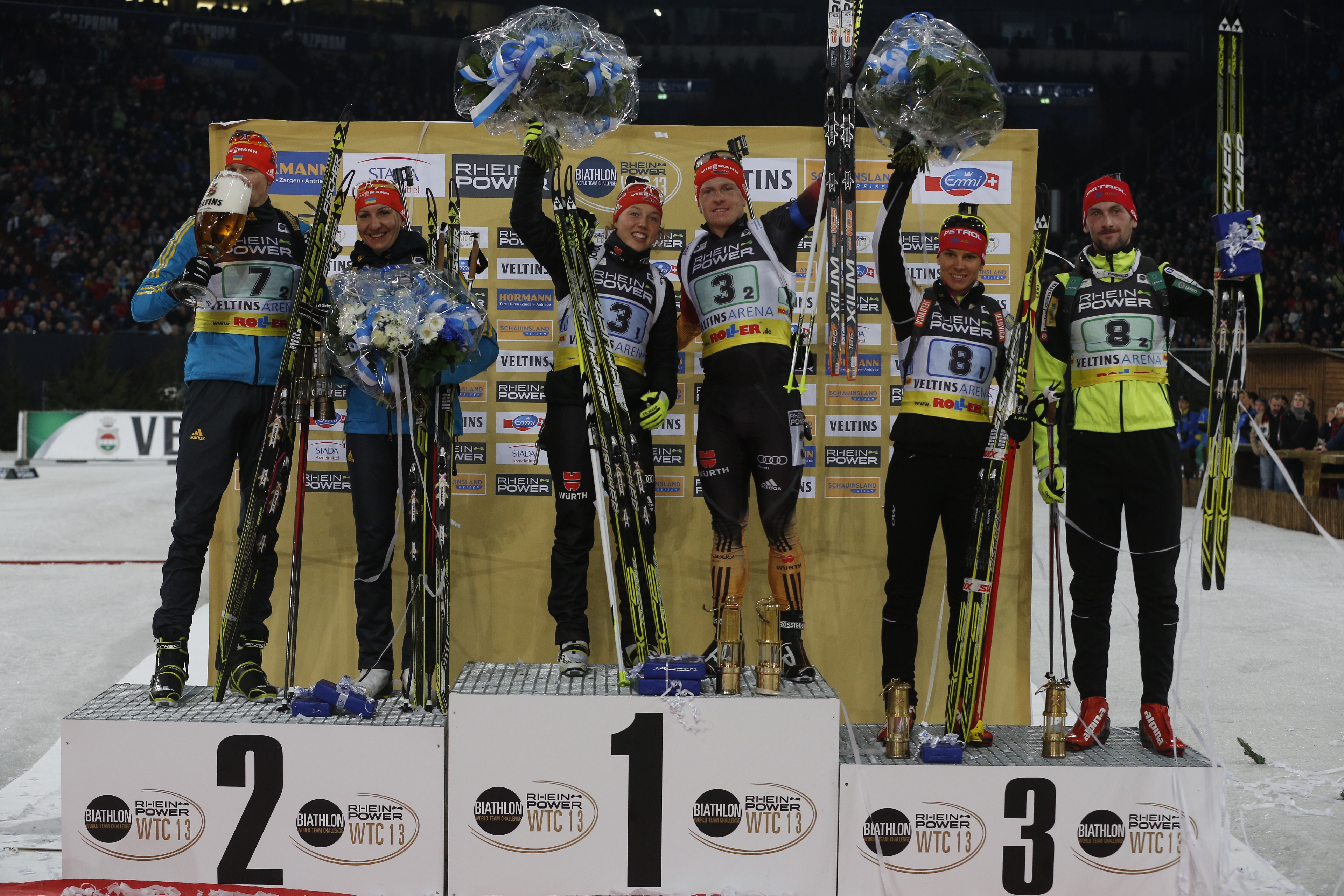
    Podium after the final pursuit race: Dahlmeier and Graf (GER, center); Pidhrushna and Deryzemlya (UKR, left); Gregorin and Fak (SLO). Photo: Karsten Rabas / Schalke World Team Challenge 13.
    Podium after the final pursuit race: Dahlmeier and Graf (GER, center); Pidhrushna and Deryzemlya (UKR, left); Gregorin and Fak (SLO). Photo: Karsten Rabas / Schalke World Team Challenge 13.

    (Well, almost: in 2010, there was actually too much snow and the biathlon competition had to be canceled when the stadium’s roof collapsed.)

    This year, 40,000 fans packed the stadium and roared in approval as Laura Dahlmeier and Florian Graf won the competition. It was the first time an all-German pair had won the World Team Challenge since Martina Beck and Michael Greis in 2002; back in 2009, Germany’s Kati Wilhelm paired up with Christoph Sumann of Austria for the win.

    “That was amazing!” Dahlmeier, who had not competed at the event before, told the press after the races. “This is something I’ve never experienced.”

    The day is a full schedule to biathlon, with junior races early in the day and senior races later. There’s also multiple competitions: a shoot-out, then a mass start and finally a pursuit, which determines the top honors. In both races, the women had four shooting bouts and the men five. The loop in between is approximately 1200 meters.

    In the mass start, Graf had an exciting sprint finish against Emil Hegle Svendsen of Norway, a multiple-time World Champion who teamed up with countrymate Fanny Welle-Strand Horn.

    In the pursuit, the Germans initially fell behind. Svendsen and Horn looked to be safe on their way to victory, with the Slovenian team of Teja Gregorin and Jakov Fak next in line. But Dahlmeier and Graf climbed their way back, as did Olena Pidhrushna and Andriy Deryzemlya of Ukraine. It came down to the last shooting stage, where Graf made up the 5-second gap to Ukraine. There was little room to pass on the narrow course, but Graf swooped in at the last minute, taking a stronger line than Deryzemlya through the last U-turn and sprinting past him to the finish. Deryzemlya took Ukraine to second place and Slovenia finished third.

    It was an interesting victory for Germany, as the more veteran team of Andrea Henkel and Andreas Birnbacher finished further down the standings. Dahlmeier, last year’s World Junior Champion, has had a strong last year for the team, and is not the anchor of their women’s relay team, a role she has relished ad excelled in.

    Graf, meanwhile, is still trying to get a top-15 on the World Cup this season to qualify him for the Olympics.

    There was no American team in the competition this year, for the first time in several years. Last season, Tim Burke and Susan Dunklee placed 10th. Jay Hakkinen and the Barnes sisters have also competed at Schalke in the past.

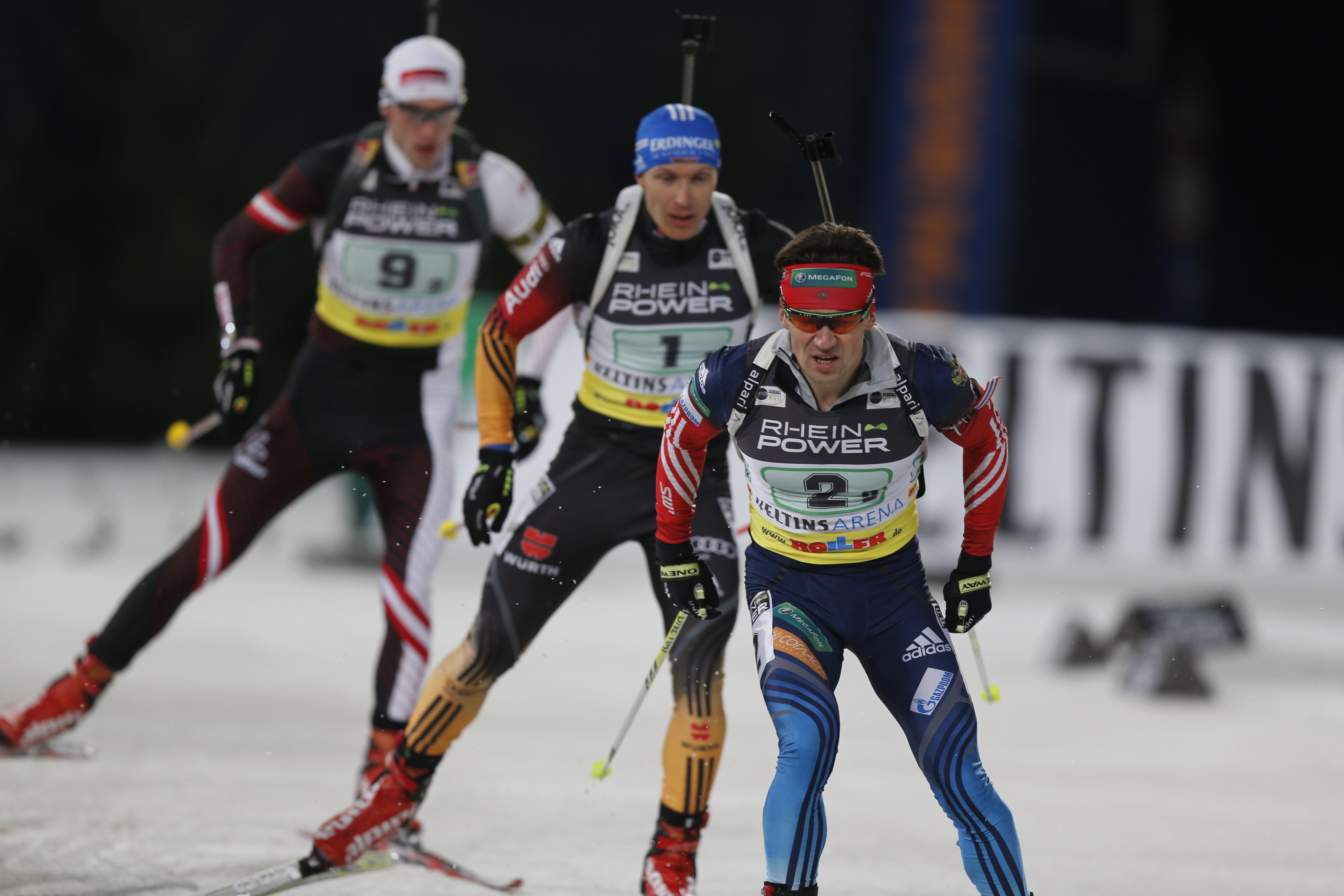
    Maxim Tchoudov (RUS) leads Andreas Birnbacher (GER) and Dominik Landertinger (AUT). Photo: Karsten Rabas / Schalke World Team Challenge 13.
    Maxim Tchoudov (RUS) leads Andreas Birnbacher (GER) and Dominik Landertinger (AUT). Photo: Karsten Rabas / Schalke World Team Challenge 13.
  • After Bjørndalen’s Brilliance and Svendsen’s Spare Rounds, Russia Bests Norway in Oberhof Relay

    After Bjørndalen’s Brilliance and Svendsen’s Spare Rounds, Russia Bests Norway in Oberhof Relay

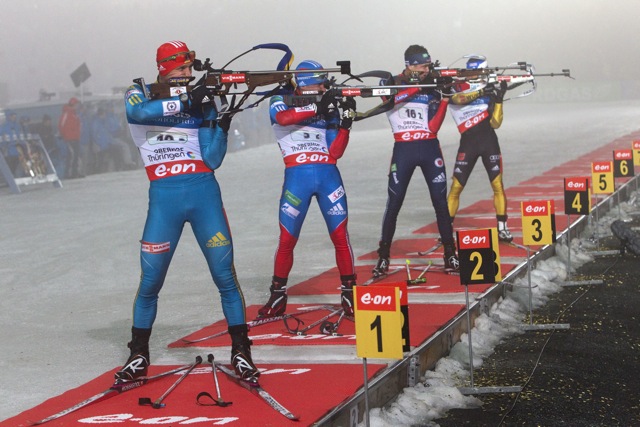
    Sergui Sednev (UKR), Evgeniy Garanichev (RUS), Tim Burke (USA), and Erik Lesser (GER) on the foggy range in the men’s relay in Oberhof, Germany, on Friday. Photo: USBA/NordicFocus.

    After watching the women slog through Thursday’s relay, the men of the IBU World Cup knew what they were in for in Oberhof on Friday.

    But then, they knew what they were in for before even showing up to Germany this year.

    “The conditions in Oberhof are as always, the same conditionsm,” Russian biathlete Alexei Volkov said through a translator in a post-relay press conference. “You can see them for yourself. So for us that doesn’t change a lot. The only thing that changed was sometimes the wind on the shooting range.”

    And despite having a slightly longer loop, the men’s 4 x 7.5 k relay was arguably less sloppy than the women’s race – the rain wasn’t pouring out of the sky with the same intensity, the tracks had been salted and were a bit more firm, and a downhill hairpin turn that had claimed several victims was eliminated as the loop grew in length.

    At the outset, Ukraine hoped to repeat the win garnered by its women’s team just one day before. The ladies had seized the dreadful course conditions and made them their own – and so did Serhiy Semenov, who, impressively, didn’t use a single spare round on the leadoff leg. No slouch on his skis, either, the Ukrainian tagged off with an 18-second advantage on the Czech Republic and Russia.

    And more favorites had taken a beating. Germany was 30 seconds back in fifth, thanks to a penalty loop by Simon Schempp; Norway sat in ninth after Henrik L’Abee-Lund hit the penalty loop in each stage. Austria was 15th, France 19th, and Sweden 20th.

    But a few athletes set out to change the standings on leg two. Most notable, Ole Einar Bjørndalen of Norway, who received the tag from L’Abee-Lund 33 seconds behind Ukraine.

    “I went out determined and knew how I would go over the course,” Bjørndalen told Norwegian broadcaster NRK. “I should be proactive and drive on, do my thing. It worked well… it was easier for me to shoot today than many others.”

    They don’t call him the king for nothing. 38-year-old Bjørndalen had the fastest time on the first loop, then cleaned the prone stage while several others struggled. Sergui Sednev of Ukraine used a spare round and was still in the lead, but it didn’t last long as Bjørndalen blew by him on the trail. He continued the pace on the second loop and then, incredibly, quickly cleaned the standing stage as well.

    So far this season the champion had seemed quite far from showing the form that would allow him to capture World Cup victory number 94. His top finish had been seventh in the pursuit in Hochfilzen, Austria, where he was 30 seconds off the podium. But after today’s relay, he’ll surely be back in the mix in individual racing as well.

    “Yeah, it was fun,” Bjørndalen told NRK. “A leg that shows that the most successful biathlete still has much to offer.”

    Another man on the attack was Tim Burke of the American team. Starting his leg in seventh place, he used only a single spare round over the two stages to move into third, and then put in a furious effort on the final loop to overtake Erik Lesser of Germany and tag off in second position, 25 seconds behind Bjørndalen.

    “I was not sure if I was going to catch Lesser on the last lap,” Burke told FasterSkier. “I think he actually put a few seconds on me in the first few climbs, but I was able to get by him in the approach to the finish. I really like the long flat heading into the finish here, it seems to suit my technique.”

    (For more from the U.S. men, stay tuned for a later article.)

    The top two teams both unleashed the least-experienced of their racers on leg number three: for the Norwegians, it was Erlend Bjøntegaard, in his first World Cup season, and for the U.S. Russell Currier, who is no stranger to the World Cup but hasn’t done as many relays.

    While Bjøntegaard seemed to be purposefully using a loose, relaxed technique and trying to ski smoothly, Currier was swept up by veteran Arnd Peiffer of Germany and Artem Pryma of Ukraine. The three men were skiing hard to try to make up time, and visibly straining much more than the Norwegian. Currier skied with the group to the range, and then used a single spare to maintain that position.

    Bjøntegaard had also used a spare, and was still in the lead. In standing he used another, but left with the lead again.

    Peiffer, meanwhile, had dropped several places back after relying on all of his extra bullets to clean prone and then using one spare in standing. But he was on the move, pulling the Ukraine team along with him as he caught and passed Anton Shipulin of Russia and then Currier.

    While Currier spent a long time on the range, waiting for lulls in the wind to avoid using more than one spare round, and left the range in fifth, Shipulin, Pryma, and Peiffer shot more quickly if not necessarily accurately. On the last loop it was Shipulin who was on the attack, grinding away at the course’s big uphills and dragging Peiffer with him. The two closed on the Norwegian and, amazingly, Shipuling tagged off only 1.5 seconds from the lead.

    “As far as I’m concerned about my performance, yes, of course, I’m very satisfied, and that bodes well for the upcoming competitions,” Shipulin said through a translator at the press conference.

    Bjøntegaard? He wasn’t as sure.

    “Today I was terribly tired,” the Norwegian said after starting with a 40-second lead. “I was a bit dead and didn’t have any splash. I threw up when I got to the finish, and I’ve never done that before. It suggests that things aren’t quite as they should be.”

    By the last leg, it was clear that the race was going to be a barnburner.

    Emil Hegle Svendsen of Norway, Dmitry Malyshko of Russia, Florian Graf of Germany, and Andriy Deryzemlya of Ukraine all came together on the first loop and entered the range at the same time. The wind was blowing heavily at that point, and Svendsen was the only man to clean in prone. Unsurprisingly, he skied hard after leaving the rang with a 14-second advantage on Malyshko. But the Russian skied just as hard. Their loop times were separated by only 0.3 seconds.

    So Svendsen came to the last shooting of the race – which, in the slow conditions, had already dragged on for an hour and fifteen minutes – with a 14-second lead. But then he began missing shots, three of them by the time he’d used his five bullets.

    He carefully loaded his first spare round, and knocked down a target. Then did it again. And again. Meanwhile, Malyshko arrived, shot, used a spare round, and hit the trails.

    “At the range, Emil was already shooting, and when I came in and got ready to shoot I felt that the wind was blowing really hard,”Malyshko explained in the press conference through a translator. “And that’s the moment where he basically missed two or three targets. I was lucky because when I started shooting there was a little lull in the wind, and I managed to shoot a lot better than him.”

    “That was not cool, to stand there and know that [I had to hit them],” Svendsen told NRK. “But fortunately I did and it salvaged a podium.”

    While he may have been disappointed that the lead he had so aggressively crafted was destroyed, Bjørndalen was nonetheless impressed by his teammate.

    “Emil managed to bring down the last three of three shots, and that’s an achievement,” he said. “Some might say that it was a bad series to shoot three misses, and that’s okay, but when you get in the situation where you have three extra shots and every boom is a penalty loop, it’s a great achievement to hit on all three with trembling legs and 20,000 people in the stands.”

    The gap to Malyshko was nine seconds, and it almost seemed like Svendsen would be able to close it; he’s accomplished more monumental feats before. But Malyshko, once again, showed no interest in being dominated by the former World Champion.

    “As I came out of the last stage – we had a little break during Christmas and had some good training, and I felt well-rested and in good form,” he said. “On the last lap I let Svendsen come back a bit, but I just managed to keep the gap big enough, and so, yeah, we won. So I’m very happy.”

    Svendsen, meanwhile, hung his head at the finish. His teammates tried to console him, but he was clearly disappointed.

    Malyshko’s teammate, second-leg skier Evgeniy Garanichev, said that while you always hope for the best, he hadn’t expected to win; Shipulin complimented the whole squad.

    “The relay in the end is a team sport, and I want to congratulate each of my team members because each of them because each ran an excellent race,” he said. “The fact that each of us ran very good is why we came in first.”

    Graf hung in for a solid third place finish after cleaning the final stage. He wasn’t as fast on his skis as the two leaders, but still put a significant gap on Deryzemlya.

    “I was actually just informed this morning that I would be able to race, so I was very happy,” Graf said through a translator in the press conference. “Erik [Lesser] had said before that we have to make the same position as the women yesterday, and with a solid performance of the whole team we achieved that.”

    After Ukraine crossed the line in fourth, the United States brought it home in fifth, tying their best relay performances of the last two decades.

    Notes and Quotes: Oberhof Atmosphere

    To race in Oberhof is one of the most exhilarating things a biathlete can do. A few podium finishers weighed in during the press conference:

    Malyshko: The last lap, when you come into the stadium in Oberhof, the wall of sound is massive and we really have to switch off your ears so you can concentrate on the shooting. Maybe in Ruhpolding, but I’ve never heard so much noise when coming into the shooting range.

    Bjøntegaard: So many athletes and people have tried to explain to me how it is to race here, but I think it can’t be explained. You have to experience it. It’s so much fun to race for so many people. This is biathlon at its best. A lot of fun. Not always with the weather, but that’s part of the game – we race for twenty minutes, so I can take some rain!

    Lesser: You have now here today 20,000 people pushing you. It’s really a danger at the Birgtseig – I was warned by some of my colleagues who aren’t here that you really have to avoid getting pushed too much. Two laps I could avoid that, but the third time it was a fact. But of course it was a great experience here.

    Results (pdf)