Tag: flu

  • ‘Tis the Season of… Sneezing: Here’s How to Combat Illness

    ‘Tis the Season of… Sneezing: Here’s How to Combat Illness

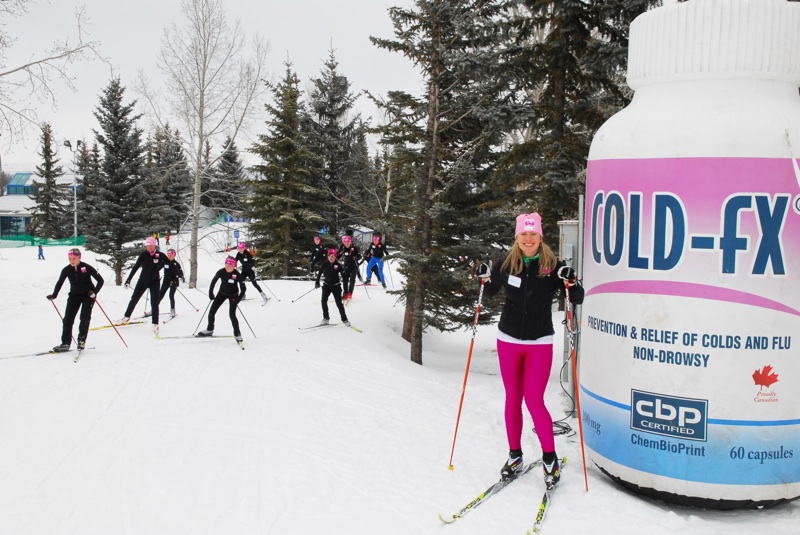
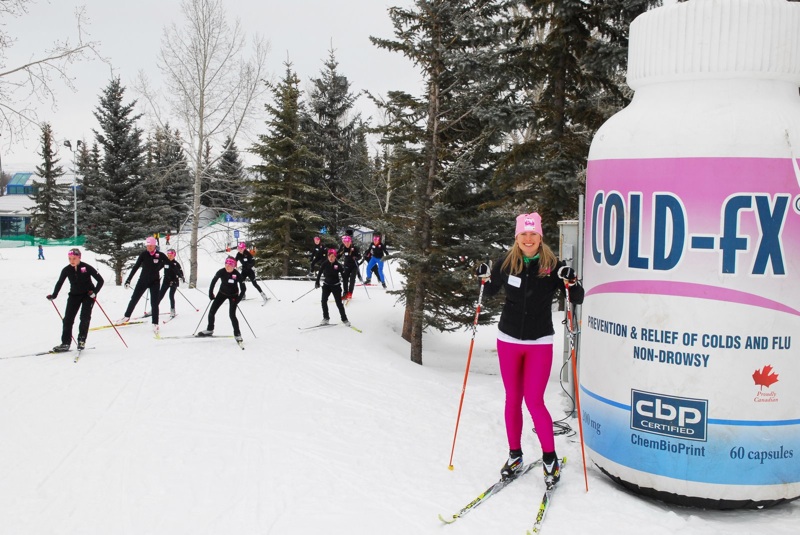
    Canadian Olympic gold medalist Chandra Crawford stands next to a Cold-FX blowup advertisement on the side of the trails  at the Canada Olympic Park (COP) in Calgary, Alberta, during a Fast and Female event in 2009.
    Canadian Olympic gold medalist Chandra Crawford stands next to a Cold-FX blowup advertisement on the side of the trails at the Canada Olympic Park (COP) in Calgary, Alberta, during a 2009 Fast and Female event.

    As the temperatures drop, cross-country skiers everywhere are looking forward to getting back on the snow. But winter isn’t the only season athletes need to look out for.

    In the Northern Hemisphere, cold and flu season typically lasts from December to February, with the highest incidence of flu occurring in February. The common cold is prevalent throughout the fall and winter months. There is no research to show that exercising in the cold makes one more susceptible to viral illness. Evidence suggests that moderate exercises may even be protective because it stimulates the production of white blood cells, which help fight off infection. High levels of exercise can have the opposite effect, however, making elite athletes more susceptible to these illnesses. All athletes can decrease their risk of getting sick and limit time lost from training by following a few simple guidelines.

    Wash your hands … a lot

    Respiratory viruses are spread through the air by coughing or sneezing, or through direct contact, such as shaking hands. Frequent hand washing with regular soap and water, or with an alcohol-based hand sanitizer, decreases the risk of contracting a viral illness by up to 45 percent.  If you are using soap and water, be sure to wash your hands for at least 20 seconds.

    Also, avoiding environments where large numbers of people congregate can help. There’s no reason to become a hermit for the winter, but a skier with a particular race or training goal in mind may want to sit out that big holiday party if it comes a week or two before a key race. And if you are sick, do your teammates a favor by staying home on race weekend or, at least, maintaining a three-foot distance from others and avoid hugging, giving high fives, or shaking hands.

    Get a flu shot

    Influenza is a potentially serious respiratory disease that can derail an entire pre-season of hard work. A seasonal flu shot decreases the risk of getting the flu by 50-70 percent, depending on the year, and may decrease the severity of the illness if you do get sick. Getting a flu shot also protects teammates, family and friends. The one or two days of arm soreness or mild flu-like symptoms an athlete may experience from the vaccination are well worth the insurance policy it offers.

    Don’t exercise with a fever
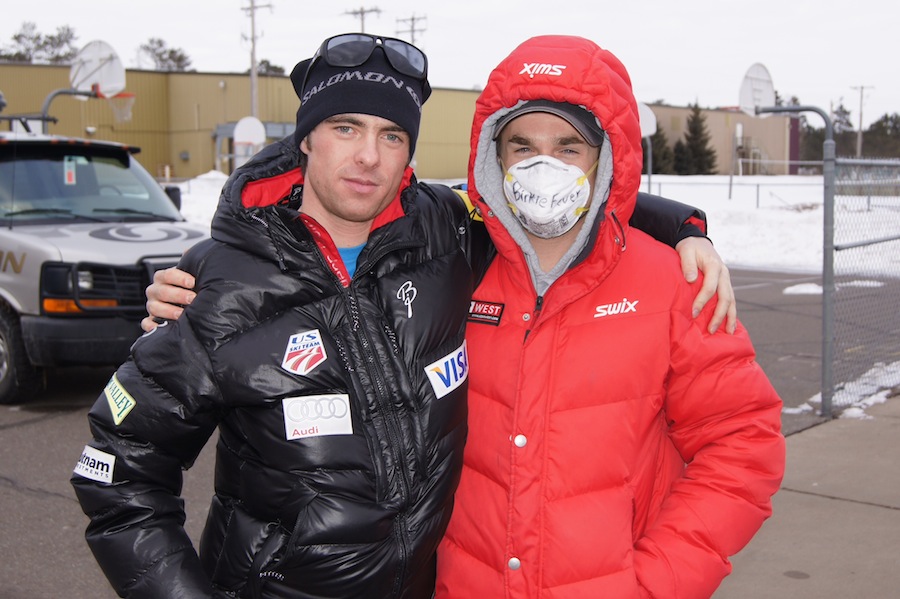
    Tad Elliott (l) and Matt Liebsch (r) outside the American Birkebeiner expo, clearly ready for Saturday's 50 k skate race. Courtesy photo.
    Tad Elliott (l) and Matt Liebsch (r) with the Midwest’s widely celebrated ‘Birkie Fever’ before the 2012 American Birkebeiner.

    Athletes should not exercise if they have a fever over 100.4 degrees Fahrenheit (38 Celsius). Exercising with a fever puts an athlete at risk for dehydration, prolonged illness, or pericarditis, a dangerous viral infection of the heart muscle or pericardium, the lining around the heart. Pericarditis can be life threatening. There is nothing to gain and everything to lose by competing or continuing to train with a fever.

    Once a fever has broken, athletes may return to exercise in as little as 24 hours or as long as two weeks depending on their symptoms. Fatigue, muscle pain, congestion, or other factors often dictate the timeline.

    Give the body time to rest

    The pressure to get back to training and racing can be high, but returning too quickly may result in symptoms that don’t resolve as quickly as they would have if the athlete had waited an additional two or three days.

    The muscle aches that come along with colds and flu are not well understood. Viral illnesses do seem to affect muscle tissue, however, and exercising with intense muscle aches can result in longer lasting muscular symptoms, such as pain or weakness. An athlete who has significant muscle aches with a viral illness should wait until these symptoms resolve before returning to exercise.

    A handy rule of thumb is the ‘above-the-neck’ rule. If an athlete’s symptoms are limited to above the neck, meaning a sore throat, runny nose, and sinus congestion only, if they don’t have a fever, and if exercise doesn’t make symptoms worse, it’s reasonable to continue training. However, it may be wise to decrease training intensity or volume until all symptoms resolve. A physician, especially one trained in sports medicine, can provide guidance and reassurance.

    Consult a physician about medications

    Most of the medications used for viral illnesses are aimed at decreasing symptoms. Acetaminophen and non-steroidal anti-inflammatories, such as naproxen or ibuprofen can decrease a fever and lessen the pain of a sore throat and muscle aches.

    Anti-viral medications for the flu, such as Tamiflu need to be started within 24 hours of the onset of illness and may only decrease the length of symptoms by less than a day. For some athletes, however, that one day may be crucial. A sports medicine physician can help provide guidance on when anti-viral medication are appropriate.

    Antibiotics, which act only on bacterial illnesses, have no role in treating viral illnesses and can cause other symptoms, such as diarrhea and stomach upset, which may worsen an illness.

    Some viral illnesses can cause bronchitis, an inflammation of the airways, resulting in a long-lasting cough. In those cases, asthma medications, such as albuterol, can be helpful in decreasing cough and chest congestion. Because this class of medications may be banned by certain skiing governing bodies, it is important to know the rules regarding these medications as your doctor may need to fill out a therapeutic use exemption.

    Colds and flu are an inevitable part of winter. Athletes who limit their exposure, get vaccinated for seasonal flu and follow a physician-approved return to training plan can protect themselves from the dangerous consequences of getting sick and maximize their time out on the snow.

    ***

    About the Author: Krys Bigosinski, MD., is a sports medicine physician in Portland, Maine. He helps provide medical coverage for the US Cross Country Ski Team and is an avid Nordic skier. He is also the Associate Program Director for the Maine Medical Center Sports Medicine Fellowship.
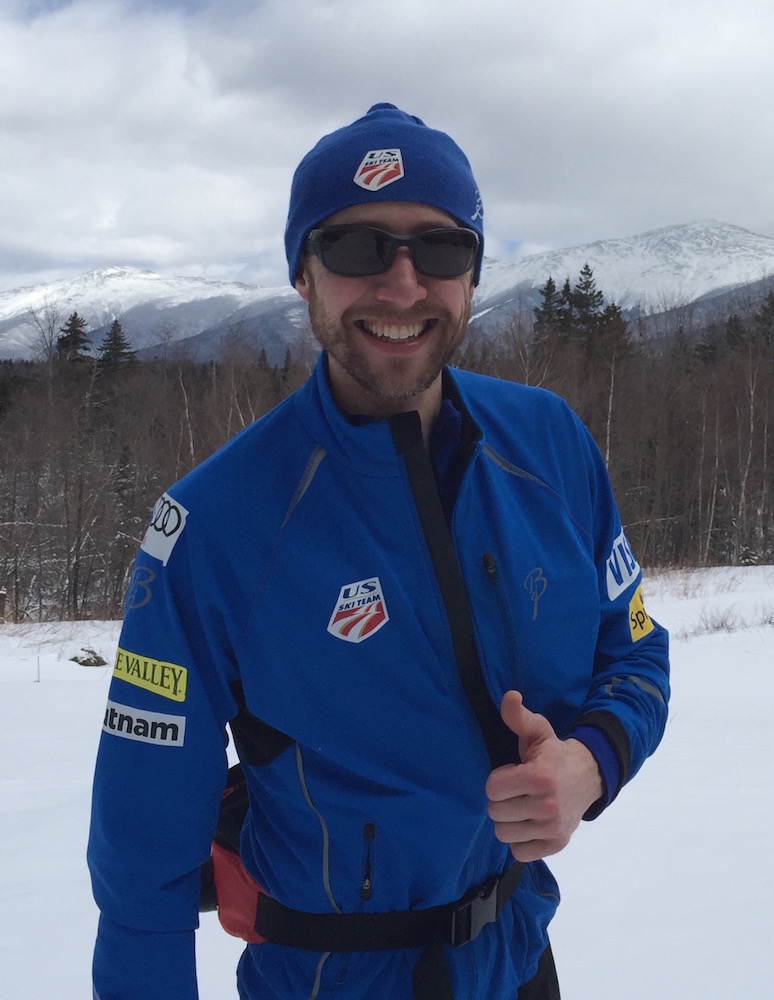
    Krys Bigosinski, MD is a sports medicine physician in Portland, Maine
    Krys Bigosinski, MD., a sports medicine physician in Portland, Maine
  • Americans on the Upswing in Lahti; Two Women in Top 20

    Americans on the Upswing in Lahti; Two Women in Top 20

    An exhausted Randall after finishing second in the freestyle sprint at the World Cup in Milano, Italy, on Jan. 15. Randall was sick for most of the month of February, but pulled off third on Feb. 17 in the skate sprint in Szklarska Poreba, Poland.

    Whatever condition they were in a week ago, most of the members of the U.S. Ski Team would rather forget it.

    The ride to Davos, Switzerland, had been rough enough with Kikkan Randall and Andy Newell suffering the worst of a stomach bug that affected the team for most of February.

    Newell wrote in a Feb. 23 blog post that he and Randall vomited right before leaving Poland for a nine-hour road trip. With two vans and a cargo that needed drivers, Liz Stephen volunteered to ride with her sick teammates. They took turns behind the wheel and arrived in Davos about 10 hours later.

    There, the entire crew rested. Meanwhile, those at the U23 World Championships – Jessie Diggins, Sadie Bjornsen and Noah Hoffman – made due in Erzurum, Turkey. For the most part, their bodies held up as Bjornsen notched fifth in the 10 k classic and Hoffman won silver in the men’s 15 k classic on Feb. 23.

    Diggins mustered the strength to race once at U23’s and placed 15th while still recovering.

    When the World Cup resumed Saturday in Lahti, Finland, the Americans saw the light they had been looking for. They could exhale without worrying about infecting others and soak up the performances they sought for weeks.

    Randall led the group in 12th in the women’s 15 k skiathlon, her best skiathlon result of the season. She was one position off her distance finish last year in Lahti, where she was 11th in the 10 k pursuit.

    Fourth in the overall World Cup standings despite missing a few races in February, Randall wrote in an email that she felt better as Saturday’s race went on, progressing from a 7.5 k classic race to 7.5 k skate.

    Kikkan Randall (USA) out on her skate skis. Photo: Fischer/Nordic Focus.

    Starting toward the front of the pack in bib No. 9, she struggled to hang on to the opening pace and was 17th about five kilometers in.

    “My body felt heavy and sluggish,” she wrote. “I started feeling a little better on the 2nd lap and better again during the skate.”

    She added that her skis contributed to her result, with solid kick up the steep climbs and great glide. In the skate, they helped her knock off more places, and by 11.4 k she was down to 13th.

    “Once my body started coming around, I was able to move up a few spots,” Randall wrote. “Today was a good sign that I have rebounded from my 2nd round of the stomach bug that I got right after Poland.  I wasn’t sure how today would go but I think this bodes well for the final period.”

    Randall, who finished 1:21.5 behind Norwegian winner Therese Johaug on Saturday, leads the World Cup sprint standings. U.S. Ski Team coach Matt Whitcomb said Randall was in a good spot going into Sunday’s classic race.

    “Today was a huge confidence booster for her,” Whitcomb said on the phone. “She’s feeling really good about her fitness and she feels like she has something to prove in classic racing and classic sprinting.”

    The day on the whole boosted the spirits of the U.S. women’s team as Diggins and Stephen finished 18th and 21st, respectively, and Bjornsen placed just outside the points in 33rd.

    “They were all busting with energy after the race,” Whitcomb said. “Three in the top 21 and four in the top 33 is pretty impressive. They’ve got a good vibe going right now.”

    For Diggins, who was 1:45.1 out of first, the race was about letting go of expectations. Considering how the stomach bug hit her, she wrote in an email that she looked at Saturday’s race as an opportunity to get back into the rhythm of the World Cup.

    “The start of my race was really good, but I took myself out on one of the many icy corners in the classic and lost quite a lot of spots there,” Diggins wrote.

    She went from skiing outside the top 30 to cracking 20th in fewer than six kilometers.

    “Having a pretty chill attitude about the place I was going to get helped because I was able to not let it throw me off and worked my way back in the skate half, focusing on getting that ‘good racing’ feeling back again,” she wrote.

    Bjornsen also had to regroup after falling about three kilometers in. She had been around the top 20 and dropped back to nearly 50th, she wrote in an online chat.

    “From then I was a woman on a mission,” Bjornsen wrote. “I was skiing with Jessie before I fell, so I went like mad until I caught her again, and then tried to relax to save some energy for skate.”

    Starting in bib 66 made it hard for Bjornsen to peel off places early, and once she made up ground, it was difficult to deal with losing it.

    “When I got back, then I was like: ok, work with Jessie and ski with her, because I know she is ALWAYS in good form and fast, especially on the skate leg,” Bjornsen wrote.

    She finished 2:29.2 after the winner, 11.6 seconds out of 30th. Pleased with how she felt on Saturday, Bjornsen explained the value of doing so well at U23 worlds.

    “My performance at U23’s confirmed that I have the form,” she wrote. “When you are racing on the World Cup it is hard, because 50th feels so bad. It was nice to go to a race, where I felt like I could do well. So now, I have a new revived head on my shoulder.”

    Stephen placed just outside the top 20 and 1:53.7 behind Johaug. Skiing in 48th at 5.6 k, Stephen got inside the top 30 with about six kilometers to go and hammered out the seventh-fastest women’s skate leg.

    In Holly Brooks’s first race back in Europe since winning the American Birkebeiner 50 k last weekend, she had a rough outing in the skiathlon and ended up 46th. She fell twice, first on what she called the “famous Lahti 180-degree” downhill, where another racer took her out from behind and broke her pole on the first of five laps.

    “I fell really hard, practically knocking the wind out of myself, broke my pole, lost my glasses,” Brooks wrote in an email. “I had to ski around the stadium with one pole and got tangled with another skier, falling again.  I was a bit shaken for the second leg of the classic race and the entire skate race.”

    Despite the tough race, she was looking forward to Sunday’s classic sprint and excited for her teammates.

    Whitcomb said it was good to have the team back together after a World Cup bye weekend and even better that they were healthy.

    U.S. Men Deal with Adversity

    In the men’s 30 k skiathlon, Kris Freeman finished 42nd, 3:11.3 behind winner Dario Cologna of Switzerland.  Hovering around 20th near the halfway point, Freeman attempted to make up about 10 seconds on the lead pack. After a strong classic leg, he pushed hard to close the gap before the 20 k mark.

    “He wasn’t able to recover from that,” Whitcomb said. “He did get back in contact, but he just wasn’t able to get his feet back under him. Energy just wasn’t right for the skate leg for him.”

    Hoffman had a similar race to Brooks, except both of his poles broke during his classic leg. On the second of 10 laps, he was in dead last, Whitcomb said. Out of 90 starters, Hoffman crawled his way to 49th (+3:36.1).

    “It was actually a pretty remarkable race for Noah today,” Whitcomb said. “But once you lose the pack, it’s gone.”

    Americans Mike Sinnott and Sylvan Ellefson were lapped, taking them out of the race and putting them in 75th and 81st, respectively.

    Sinnott wrote in an email that his legs felt a little flat and he lacked “pop” after the first few laps.

    “I was hoping the skate would bring a better feeling, but it was more of the same,” Sinnott wrote.

    He found the positive in the race and viewed it as a learning experience.

    “Same as racing domestically, you can always learn and develop as a racer,” he wrote. “There are merely different lessons to be learned on the big show. I for sure notice more calm at the start of these races now that I have a few starts under my belt, and I am learning where my strengths and weaknesses are on a grandeur scale.”

    Ellefson wrote that he was still trying to determine how to race in top form to contend in the top 30. Being sick for a considerable portion of his time on the World Cup didn’t help.

    “The plan for me was to go into the race, see how I was feeling, and go from there,” Ellefson wrote. “The first two laps of the race felt good. The last couple did not. I wasn’t going to pull myself from the race, I would let the lead pack decide that.”

    He planned to travel to the remaining World Cup races in Norway and Sweden, and was looking forward to having fun and enjoying the rest of the season.

    “It’s important for me to remember why I love to nordic ski,” Ellefson wrote. “To be around a fun team like this, an awesome team of techs, and enjoying my time out there on the skis certainly helps.”

    Women’s results

    Men’s results