From the FasterSkier archive — posts syndicated from athletes’ and coaches’ own blogs between 2004 and 2012, kept online as published. Current coverage is at fasterskier.com.

Tag: fluoro wax ban

  • News Roundup: World Cup Cancellation, Canadian Olympic Trials, US Biathlon Olympic Team Naming, and Illegal Use of Fluorinated Waxes in Falun

    News Roundup: World Cup Cancellation, Canadian Olympic Trials, US Biathlon Olympic Team Naming, and Illegal Use of Fluorinated Waxes in Falun

    Here’s a quick and non-exhaustive look at some recent news in the world of nordic sports. 

    World Cup Cancellation in Les Rousses, FRA and Planica, SLO

    Earlier this week, the FIS announced the cancellation of the final World Cup stop before the 2022 Olympic Games in Beijing, which were scheduled for the 21st to 23rd of January in Planica, Slovenia. This news arrives a week after the cancellation of the Les Rousses, France mini tour, which would have taken place this upcoming weekend. Both cancellations were made based on rising numbers of coronavirus infections with the omicron variant.

    “Due the current acute development of the pandemic in Slovenia, the safety of stakeholders involved at those large scale events could not be guaranteed,” the FIS wrote in the media release.
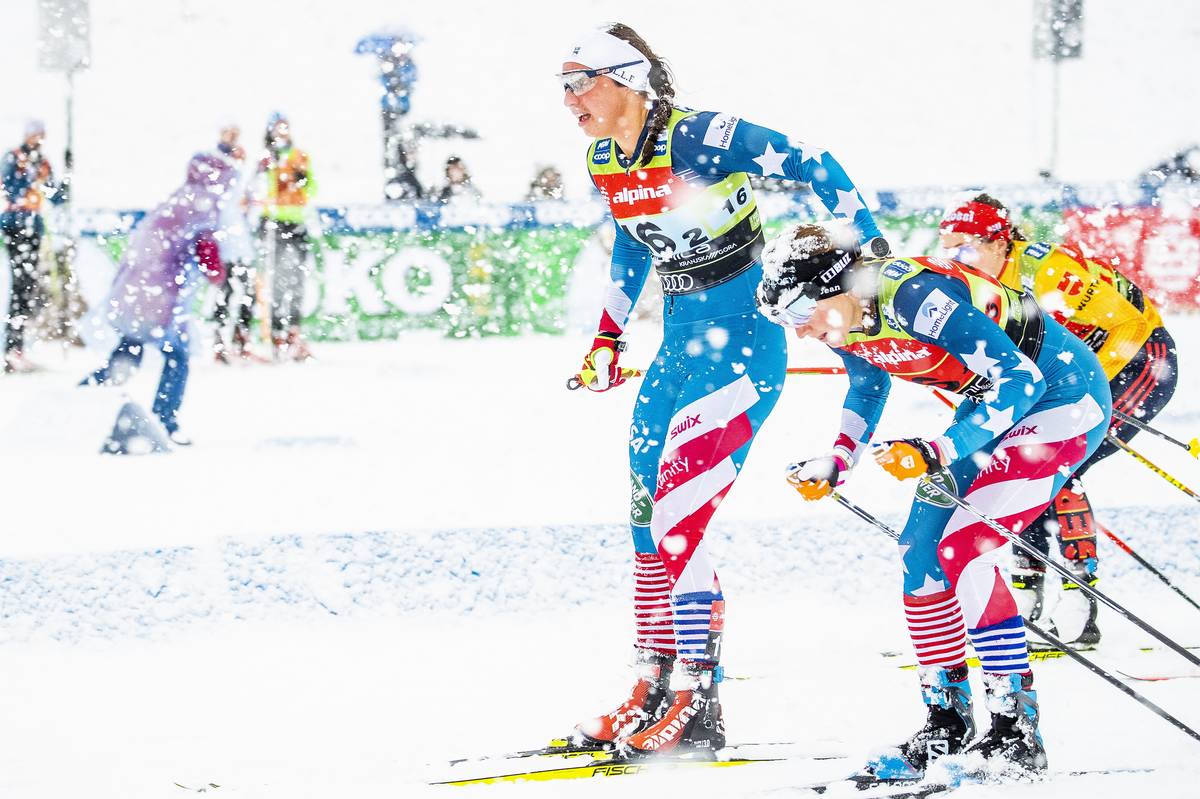
    Julia Kern tags Sophie Caldwell Hamilton during a December, 2019 team sprint in Planica, Slovenia. (Photo: NordicFocus)

    Of the event stakeholders, athletes in particular would be at heightened risk of a COVID-19 infection that could jeopardize their ability to participate in the upcoming Olympic Games. Surrounding travel to Beijing/Zhangjiakou and admission into the Olympic venue “bubble”, strict coronavirus testing and management protocols will be enforced. Should an athlete test positive within a critical window before travel, they may be unable to attend the Games regardless of the severity of their illness. 

    FasterSkier will cover the topic of athlete safety and COVID-19 risk mitigation separately; stay tuned. 

    Canadian Olympic Trials Wrap Up in Canmore, AB

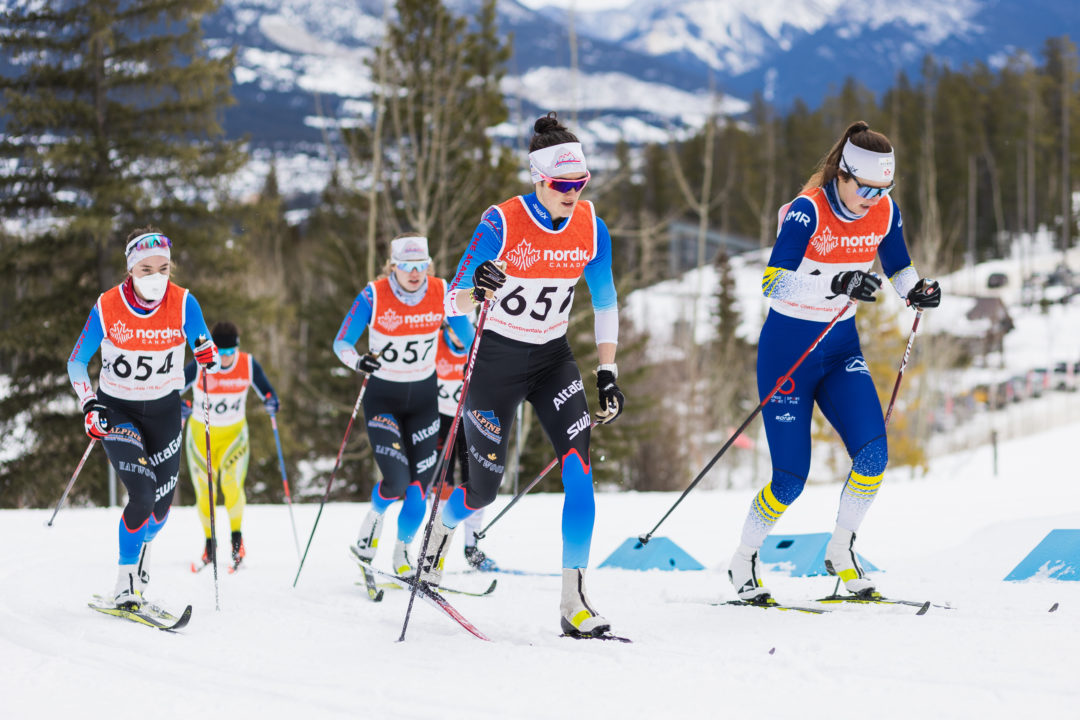
    The Canadian Olympic trials were held over the last week at the Canmore Nordic Centre Provincial Park in Canmore, Alberta. The event schedule, which mirrored the U.S. Cross Country Championships in Soldier Hollow, included a freestyle sprint, an individual start 10/15-kilometer classic, 15/30k individual start skate, and finished with a classic sprint. These competitions directly influence the selection of Nordiq Canada’s Olympic team. 

    FasterSkier will provide full coverage of these events in the coming week, but here’s a quick recap of results. 

    Jan 6th Freestyle Sprint: 

    Laura LeClaire won the women’s freestyle sprint, narrowly beating Cendrine Browne who took second. A few meters behind, Olivia Bouffard-Nesbitt crossed the finish line in third. 

    In another close finish on the men’s side, Antoine Cyr took the win ahead of Russell Kennedy, with Pierre Grall-Johnson in third. 
    Results

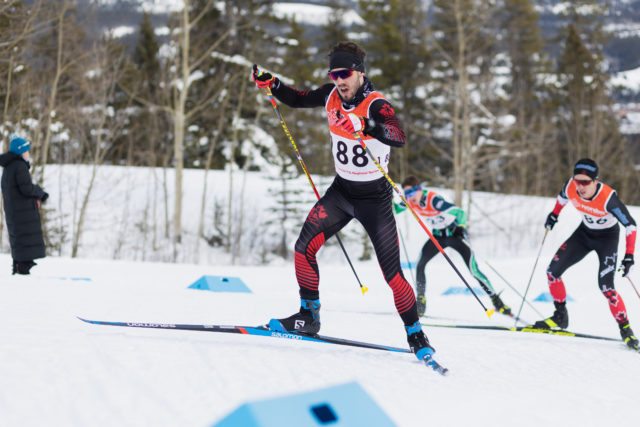
    Phillipe Boucher races the 30k skate during the 2022 Canadian Olympic Trials in Canmore, Alberta. (Photo: NordiqCanada/Nathanial Mah)

    Jan 8th 10/15k Classic: 

    In the classic distance event, Cyr doubled up on his victory, taking the 15k classic win in 41:12.0. Rémi Drolet skied the second fastest time on the course (+26.0), with Russell Kennedy rounding out the men’s podium in third (+36.8). 

    For the women, Katherine Stewart-Jones took the women’s 10k classic win in 34:29.6, with Dahria Beatty 0.5 seconds off her mark in second place. Browne was third on the day (+20.6) to finalize the women’s podium. 

    Results

    Jan 9th 15/30k Skate:

    In the following day’s distance skate race, the women’s podium looked quite similar to the distance classic podium. Stewart-Jones again took the win in 39:47.4, this time with Browne in second (+18.7), and Beatty in third (+42.0).

    On the men’s side, Kennedy advanced to the top spot of the podium, winning the 30k skate by a significant margin in 1:11:54.4. Phillipe Boucher was next to the line in second (+1:35.9), with Cyr in third (+3:34.2) following another sizable gap.
    Results

    A scene from the women’s classic sprint during 2022 Canadian Olympic Trials in Canmore, Alberta. (Photo: NordiqCanada/Nathanial Mah)

    Jan 11th Classic Sprint:

    On the final day of racing, Xavier McKeever earned his first podium of the week. After setting the fastest time in qualification, McKeever made his way through the heats to win the event in 2:55:50. Cyr took the second spot for men (+0.97), with Drolet racing onto his second classic podium of the week in third (+3.86). 

    For the women, Bouffard-Nesbitt again found herself on the sprint podium, smashing the women’s final in 3:22.46, and winning by a large margin over second place Stewart-Jones (+4.78). Third place was Laurence Dumais (+7.82), to close out the women’s podium. 

    Results

    Media releases and more information can be found at NordiqCanada.ca.

    US Biathlon Olympic Team Naming

    On January 9th, U.S. Biathlon announced final selections for the 2022 Olympic Team, which includes four men and four women. 

    In alphabetical order, the team includes: Jake Brown (St. Paul, Minn./Craftsbury Green Racing Project & USBA), Sean Doherty (Center Conway, N.H./National Guard Biathlon & USBA), Susan Dunklee (Craftsbury, Vt./Craftsbury Green Racing Project & USBA), Clare Egan (Cape Elizabeth, Maine/Craftsbury Green Racing Project & USBA), Deedra Irwin (Pulaski, Wis./National Guard Biathlon & USBA), Joanne Reid (Grand Junction, Colo.), and Paul Schommer (Appleton, Wis./Team Crosscut & USBA). 
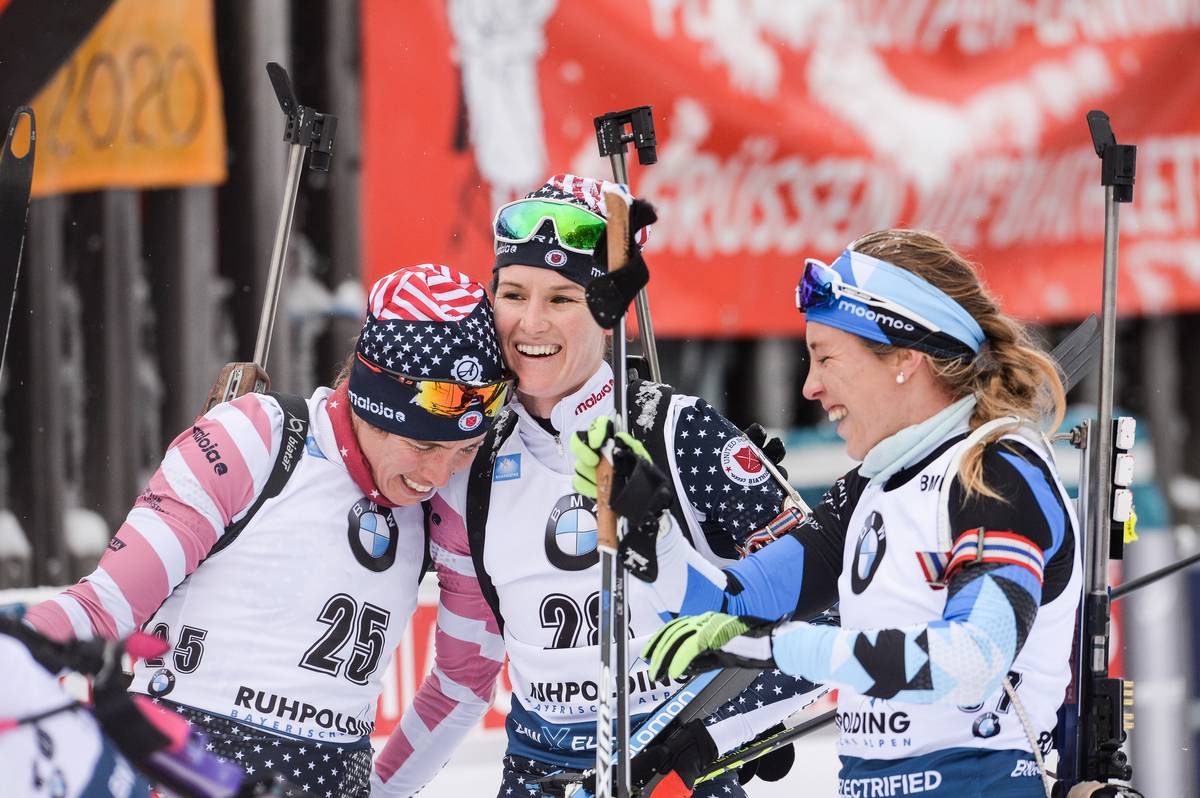
    Susan Dunklee (bib 25) and Clare Egan (bib 28) after the women’s pursuit in Ruhpolding on January 20th, 2020. (Photo: NordicFocus)

    More information can be found in this press release on FasterSkier, or at the U.S. Biathlon page on TeamUSA.org. 

    Cross-country team naming is scheduled for Tuesday January 18th, with an update on the final U.S. men’s quota on Thursday the 20th. 

    The FIS Confirms Illegal Fluoro Use at Scandinavian Cup Races in Falun, SWE

    The Norwegian news outlet NRK reported Monday that Pierre Mignerey, FIS Cross Country Race Director, confirmed suspicions that C8 fluorocarbons had been used in competition during the weekend of Scandinavian Cup races in Falun, Sweden between January 7th-9th. These products have been banned from use and sale in the EU due to their environmental and human health risks; the chemical compounds contained in these perfluorinated waxes do not break down over time and are known carcinogens. 

    With the aforementioned cancellation of upcoming World Cup events, this weekend of racing in Falun saw a competitive field, including names like Swedish sprint-phenoms Maja Dahlqvist and Jonna Sundling, and Norwegian standouts Håvard Solås Taugbøl and Sindre Bjørnestad Skar. 

    “I read an email this morning from the Chief Justice. It was a report about what happened in Falun and which must be discussed at the highest level,” Mignerey told NRK. “The report states that there were rumors and that the rumors were confirmed. Some have admitted that they used C8 products. But why they did it and how, it is not stated in the report.”

    Mignerey declined further comment as to who had been accused or confirmed of cheating, and the extent of the allegations that had been made. 
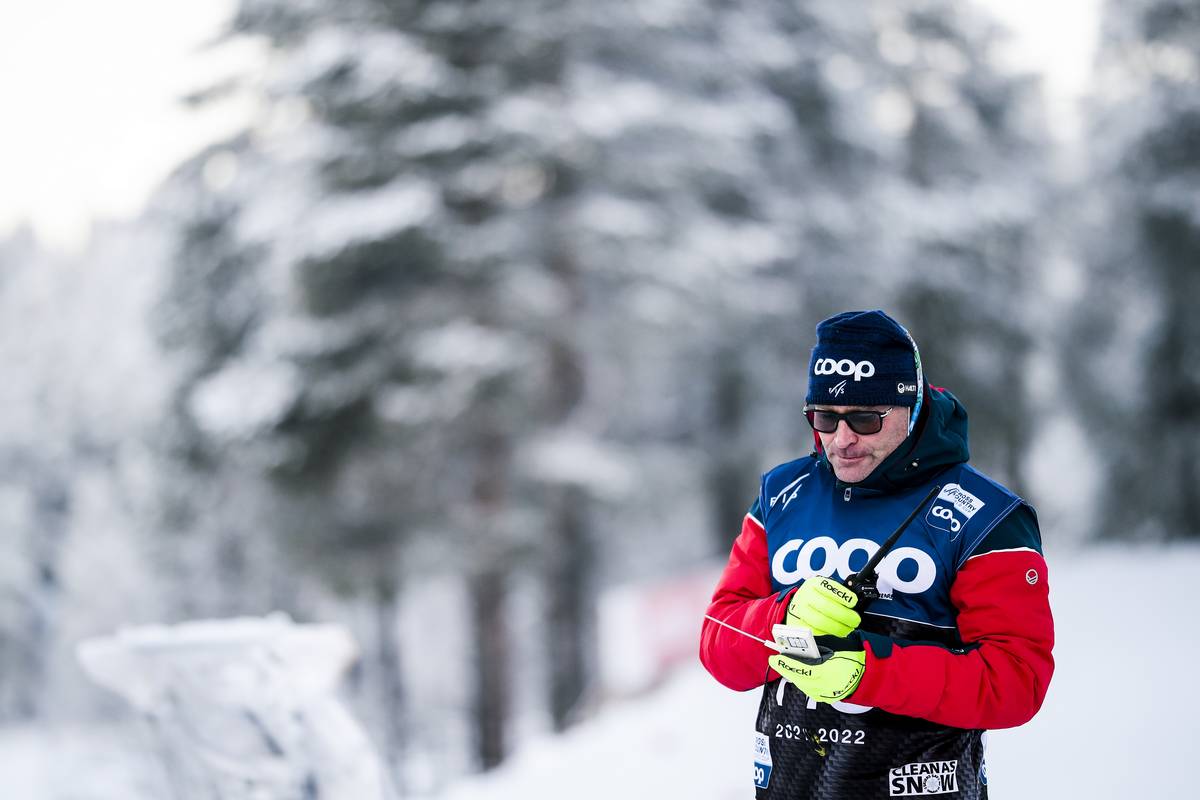
    FIS Race Director Pierre Mignerey measures the temperature on course during the 2021 opening World Cup weekend in Ruka, FIN. (Photo: NordicFocus)

    At this time, there is no method of testing for these substances during competition. A trust-based agreement has been signed by each national federation stating that their team will not use illegal products, however, violations such as what took place in Falun feed suspicions as to whether teams are adhering to the agreement.

    “Everyone has signed the letter and said that they will not use it in FIS competitions,” said Mignerey in the NRK report. “The problem is that there is nothing about the use of such fluorine products in the competition rules and thus the rules are not formally broken. The jury on the spot can not do anything about the case… But it is not fair behavior. This must be raised to the FIS council or FIS court, if we want to do something about it.”

    A comment from both Taugbøl and Skar was included in the NRK article. Both stated that they had not heard rumors of this cheating or volunteered their own concerns. 

    “I have not heard anything,” said Taugbøl through translation. “But both me and Sindre probably agreed on Saturday that we did not have completely optimal skis. But nothing more than noticing that others had better skis. It is not possible to speculate whether it was illegal fluoride. There will be ski differences anyway.”

    “I have not heard anything either,” seconeed Skar. “I went to two races this weekend where I experienced that I did not have fast enough skis both days. That’s the only thing I can say about it. But I have neither suspected nor heard anything.”

  • The Latest on the Fluoro Tracker : A Refined Evaluation Algorithm

    The Latest on the Fluoro Tracker : A Refined Evaluation Algorithm

    In mid-March media outlets in Norway and Sweden reported complications with the proposed hand-held fluoro testing tool FIS plans to use next season to enforce their fluoro ban. Already, the ban was pushed back a year due to delays with accurately measuring per-fluoros residue on ski bases. 

    A group involved with developing the Fluoro Tracker (FT) as the testing device is known, released a paper last month titled “Detection of fluorine in skibases and skiwaxes.” The paper details the evolution of refining the FT’s ability to accurately detect fluoros. According to the paper, the FT now possesses a refined “evaluation algorithm”. Matthias Scherge, one of the lead developers of the FT, wrote in Snowstorm-Gliding the field tests to evaluate and refine the evaluation algorithm were conducted in Falun, Östersund, and Lenzerheide. Falun, the site of a cross-country World Cup where testing occurred on skis prepared by several national teams, served as the first of the three real-world field tests of the FT. 

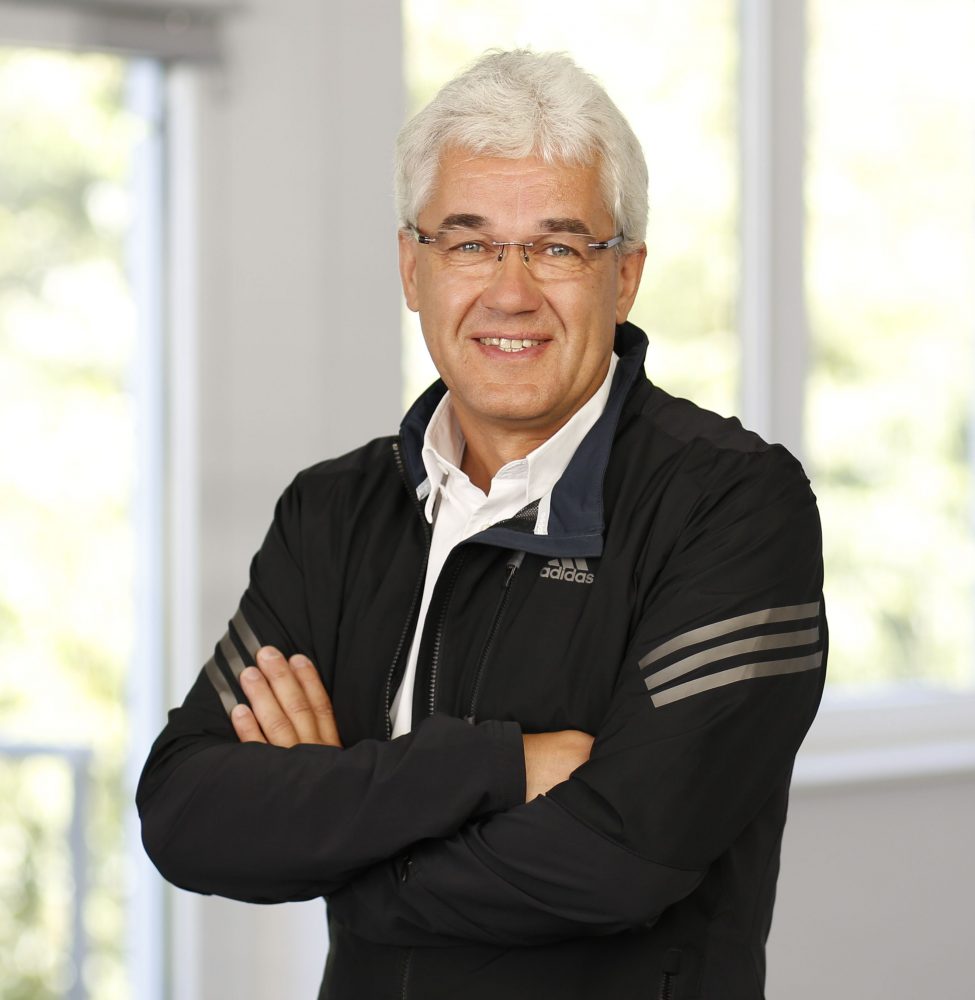
    Matthias Scherge.

    The news reported back in March regarding the FT’s inaccuracy cited test results from Falun. The information in Snowstorm-Gliding claims those tests were used to further modify the FT’s evaluation algorithm. 

    “The tests served to optimize the evaluation algorithm,” states the paper in Snowstorm-Gliding. “During the first tests in Falun, a non-optimized version was used, which still unsatisfactorily reflected the condition of the skis. Based on the information provided by the ski technicians, the algorithm was refined and a much improved version was used in Östersund and Lenzerheide. The quality of fluorine detection is thus dependent on the quality of the information provided by the ski technicians. Laboratory tests were performed in parallel to improve the correlation between preparation condition and FT measurement results.”

    The paper also discusses how the FT functions. For now, the International Ski Federation has not made a public statement regarding the viability of the 2021-2022 fluoro ban. 

    You can find the full Snowstorm-Gliding paper titled “Detection of fluorine in skibases and skiwaxes,” here.

  • FS Interview: Chris Grover Discusses the FIS Fluoro Ban and the World Cup in 2020-2021

    FS Interview: Chris Grover Discusses the FIS Fluoro Ban and the World Cup in 2020-2021

    A ski technician brushes a ski: Östersund, Sweden. (Photo: NordicFocus)


    FasterSkier spoke with Chris Grover this week to discuss the International Ski Federation’s fluoro wax ban, which will be implemented this season, and the potential for a modified World Cup schedule. Grover is the Davis U.S. Cross Country Team Program Director and the former head coach of the U.S. team. He is also a member of the FIS Cross-Country Committee and the chair of the Sub-Committee for World and Continental Cups.

    For starters, here is what FIS posted this week regarding the fluoro wax ban:

    “The Council decided in November 2019 that the use of fluorinated ski wax will be banned for all FIS disciplines from the 2020-21 season which have been shown scientifically to have a negative environmental and health impact. Regulations have been established in USA that are already in place and will be implemented in the EU from July 2020 which impact the manufacturer of these products.

    “Kompass has developed hand-held detector testing devices that will be certified by the Frauenhof Institute and tested during the summer months. Thereafter they will also be made available for the industry and teams. Subject to successful test of the prototype testing devices, the controls will be implemented from November 2020, with tests carried out in the start and finish areas.

    “For the season 2020-21 the measurement limit will be defined to give the possibility for the manufacturers, service technicians and teams to adapt to the new situation. The measurement limit will be fixed based on the experience of the testing and validation phase in the summer 2020. From the 2021-22 season, after evaluation from the first season the measurement limit will be lowered to a possible minimum with the objective of a zero limit of fluorinated gliding compounds as from season 2022-23.”

    To be clear up what you have read on the Internet, the fluoro ban will take effect this season. What has yet to be determined are the trace limits of fluoros that may be present on a ski base when tested prior to a FIS sanctioned race. In other words, if a “1” represents a full-blown fluoro powdered ski with topcoats, then FIS needs to determine if a hypothetical upper limit of say 0.1 or 0.05 is acceptable. Further, as FIS states, the upper limit for fluoros on a ski base will decrease even further for 2021-2022. The end goal is a limit of zero by 2022-2023.  

    (The real levels for a fluoro threshold have yet to be determined, the numbers used in the scenario above are hypothetical.)


    ***

    2019-2020 U.S. Cross Country Ski Team
    Photo: U.S. Ski & Snowboard

    FasterSkier: Although the FIS Council is banning fluoro wax for the upcoming season across all disciplines, it is, however, not set in stone. Does that sound accurate? 

    Chris Grover: You are right it is not set in stone. They are still developing this testing apparatus, and although it is apparently on schedule and they are going to be able to do some testing over the summer. They need to play around specifically with what the tolerances are for having environmental fluorocarbon on the ski base. 

    They have to figure out what is an acceptable tolerance and how much fluorocarbon could one potentially accumulate accidentally either in a contaminated wax room or wax truck or by skiing across the snow and picking up what somebody else left behind, or even from contaminated brushes or what have you.

    So, that is really to be determined. And I think the statement that the FIS released after the council meeting yesterday to the general public said something like it is over two or three seasons they want to be able to reduce that tolerance. But I think that is the one thing they are trying to figure out. 

    From how it is going to impact the teams, what I understand from Pierre Mignerey [FIS Cross-Country Race Director], is that we are going ahead with a ban on the World Cup. There will be sporadic testing of athletes’ skis as they go to the start and also testing is possible at the finish of the race for anyone that stands out I suppose. Although they haven’t really discussed how they want to do that. 

    And then an athlete who is above the limit on fluorocarbon at the start will not be allowed to start and an athlete who is above the limit after finishing will be disqualified.


    FS: Ok, so an athlete who flags a fluoro test above the limit will not be allowed to potentially swap out skis prior to racing?

    CG: Correct. Which if you think about it, that makes sense. If you have an individual or a team that wanted to cheat, they could obviously run out there with skis that were above the limit, roll the dice that they would not be selected for testing and compete. And then if you have that opportunity to swap, then they can of course swap it before the start if they do get tested. 

    I think it is important, given that they will not be able to test nearly everybody in the field, that it basically is a “show up and if you are above the threshold you cannot start,” type of situation. 


    FS: Is the new testing device a more advanced piece of equipment that assays a swab that has been swiped across a ski base? 

    CG: I don’t know for sure. It is my understanding that this is a handheld device that can do a spot check and provide results at the time of the test. This is an immediate test. And so I don’t know exactly how it is implemented. I don’t know if it is simply how many personnel can they dedicate to this and how many of these machines, which may be kind of expensive at first, that you can employ.


    FS: I’m guessing with the FIS announcement last November about potentially banning fluoros that the U.S. team began testing fluoro-free products? 

    CG: We definitely started testing products, but I should have you talk to our wax service team because they could speak with a lot more authority and knowledge than I can. I don’t believe we had a lot of products that we could test, but we certainly had some and those guys were certainly starting to run those tests. But this question of the fluoro ban hung over our heads. Everybody at that point was like, “wow, should we actually be stockpiling waxes right now? Or should we be burning through our current inventory?” Because we didn’t know if the ban would actually go into effect next year or how much time we should actually spend on this project. 

    Now that the FIS Council has solidified their decision, the testing is a real question for us, and of course, we knew or thought it was going to be something that we need to do this summer. Now, of course, we are challenged with potentially not being able to get on snow for a while given the pandemic. We obviously lost our opportunity at Mt. Bachelor this past month to be on snow. I think it is a little bit up in the air from the bit I have heard from Erik Flora, [at Alaska’s APUNSC], as to whether Eagle Glacier will be able to operate this summer.

    I don’t think New Zealand is going to open their borders to us in time for us to be down there. We cannot get into Europe right now. I’m not sure what is happening with the Haig Glacier [in Canada], but that is a hard place for us to test anyway. I think my guess right now is that if we are going to have time on snow to test new products it is going to have to be at the start of next season prior to the racing beginning.


    FasterSkier: Trust can play a huge part in moving things forward in terms of a ban. How does that play out on the World Cup?  

    CG: I think most teams are on the level there. And most teams do want to play by the rules. But there are elements within a number of teams that I would say are less than trustworthy or perhaps look at sport through a different lens culturally than we are. I think that becomes a challenge. 

    Testing becomes the key – what is the saying – “trust but verify.” Something to that effect. I think verification is the absolute key. I think we need to test and test a lot. And I would really encourage the FIS through the various juries and organizers to just really test heavily. We, as you know, see more anti-doping testing happening at every level, in-competition, out-of-competition. And I think we feel the same way about the fluoro testing because we know we are doing it the right way. But time and time again, unfortunately, there have been other individuals and teams that have done it the wrong way. 

    I think it is really important for our athletes, for all the athletes, to feel confident that it is a level playing field. 


    FasterSkier: During the course of your discussions on the Cross-Country Committee regarding the fluoro ban, did you try to work out the details before presenting your proposal to the FIS Council for final approval?  

    CG: Frankly, there has not been that much discussion because this is not something that we had any ownership of, or any decision making power with regards to. This is a decision that has come from the FIS Council and we are tasked with figuring out how we are going to implement that decision. As with any decision, we are trying to figure out how we are going to implement that decision. 

    Obviously, there are quite a few people that were upset by the decision and don’t quite understand it, don’t feel like they were consulted, whether they should have been or shouldn’t have been. But discussing our feelings about it doesn’t really make a difference because at the end of the day we just have to react and figure out how to implement it. 

    But, you are right in that usually the Cross-Country Committee is going to make suggestions to the FIS Council about what we recommend for cross-country and they are going to ratify it or disagree with it and not pass it. But obviously, because this affects all disciplines within the FIS family, it was something that just happened without really the consultation of the Cross-Country Committee. 


    FasterSkier: You’ve been in the game for a long time. What are your thoughts about the fluoro ban? 

    CG: I think it is a positive change for a number of reasons. I think it is extremely hard on the industry right now. And it is also hard on club programs that have a lot of money invested in wax, so I understand that we are going to have some big challenges there and some serious growing pains for a couple of years as we go through it. But at the same time, the cost of getting young people and kids into ski racing due to a lot of these products was continuing to make it even more prohibitive to entry. So I think from that perspective it is really good that we are getting back to our roots, back to basics to some extent. We still have a lot of technology out there in terms of equipment and stone grinding and everything else. 

    But I think this is really a positive step. But even though it’s a small step for the environment it is a meaningful statement from our community that we are very interested in protecting the environment and we are very concerned with protecting people. And if we can make the sport more economically within reach of people then that is good. I think overall, as hard as this process is going to be, and of course, it is coupled with all the challenges we have surrounding the pandemic, I think it is overall a really good change and a direction that we should be going. 


    FasterSkier: It seems the World Cup calendar is in play at this point. There are so many unknowns. It seems like two plans going forward: Plan A, pretty much the pre-existing World Cup schedule, and plan B, a modified schedule organized around racing blocks — or multiple weekends — in a specific country. Is this correct? 

    CG: I have to give credit to Pierre and all the FIS teams — they have been in discussion with the FIS cross-country staff this spring — because I think they have come up with a really good plan B which is, as you suggest, blocks of racing with limited border crossings during those blocks and potentially no border crossings, and some of them, if necessary, with two or three weeks in between each block to allow for the team to potentially cross the border and then quarantine if necessary for 14 days. 

    I think that the backup plan makes a lot of sense and it is smart to have this plan where if we cannot do everything that we want to do under normal circumstances, we at least can be on TV in front of the fans, at least the fans on TV. We will still be in front of the public eye so people don’t forget about cross-country ski racing this next winter. 

    It is really important just for the health of what we are doing. 

    I think the FIS decision on the World Cup schedule or going to a plan B schedule is tentatively slated for the end of September. We as a FIS staff and as a committee chair, I am going to be meeting with the FIS staff over the summer a little bit to stay abreast of what is happening, and which direction it may or may not be heading. But by the end of September, we are going to go ahead with either plan A or plan B. And at that point, we will really start making our plans for the U.S. team. Right now we just have tentative plans in place but I am a little bit hesitant to spend too much time solidifying everything until I know which direction we are going.


  • Nordic Nation: Ollie Burruss and Shades of Green at Craftsbury

    Nordic Nation: Ollie Burruss and Shades of Green at Craftsbury

    This past fall, the Craftsbury Outdoor Center (COC) updated its wax use policy. The New England institution was one of the first and among the largest cross-country ski centers to implement a policy curbing the use of perfluorinated wax on its premises. The Craftsbury Outdoor Center supports values and practices that try to minimize its impact on the environment while still providing recreational opportunities for visitors.

    The Craftsbury Outdoor Center hopes to help lead the way toward a transition away from fluorocarbons. As it stands today, we see no need for skiers to wax with fluorocarbons for day-to-day skiing at the Outdoor Center. Furthermore, the use of glide wax containing fluorocarbons will not be permitted in our public wax room at any time. This includes perfluorinated “topcoats” and paraffins containing fluorocarbons (colloquially “LF” and “HF” wax products). — From Craftsbury’s Wax Guidelines

    This was no cold turkey move away from fluoros, when the SuperTour came to Craftsbury this winter, teams were allowed to apply and use fluoros in well ventilated ares. However, the day to day ethos at the COC was clear: fluoros use was frowned upon.

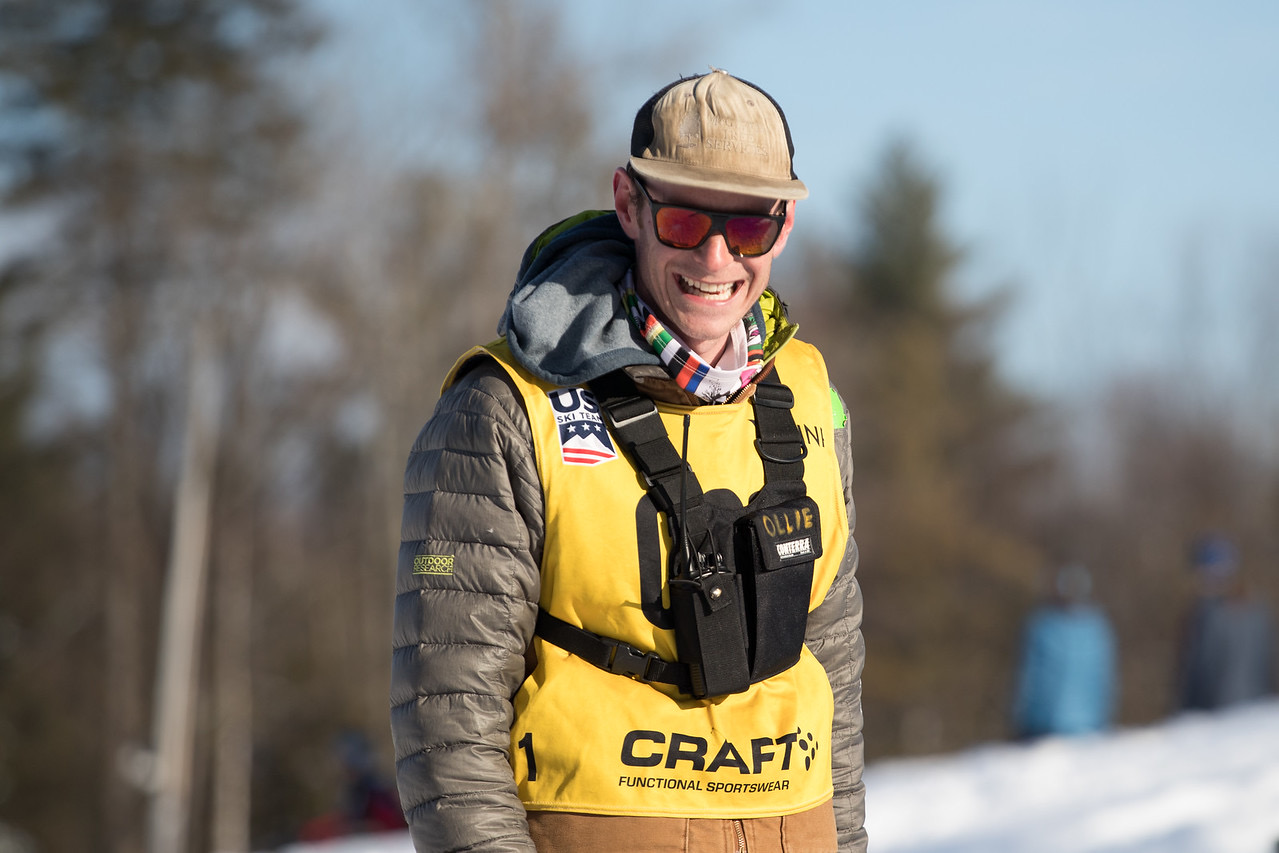
    Ollie Burruss, chief of competition, during the classic sprint at the 2019 US Nationals in Craftsbury. (Photo: Craftsbury Outdoor Center)

    We spoke with Ollie Burruss in March to discuss the policy and how it all played out over the winter. Among his many duties, Burruss is the nordic race director at the COC. He’s in the hot seat when it comes to piloting fluoro free policies and practices. Burruss was also the head of the organizing committee and the Chief of Competition at the 2019 US Cross-Country Nationals.

    Background reading on the topic:

  • Nordiq Canada Announces Wax Restrictions

    Nordiq Canada Announces Wax Restrictions

    On November 26, Nordiq Canada announced strict wax restrictions for what it calls “Tier 2” events. Nordiq Canada states that “medium and high Fluoro waxes are not permitted,” at these races. The wax restrictions extend to younger racers in all “non-FIS catagories in Tier 1 sanctioned events.”

    According to how Nordiq Canada is defining “medium”, it appears that low fluoro or LF products are allowed. Nordiq Canada has published an extended list of approved waxes for non-tier 1 races and LF products are included on that inventory. You can find the approved wax list here.

    The press release notes that “the recommendation would extend to include all Junior aged, non-FIS categories in Tier 1 sanctioned events.”

    For now, a cost-effective method testing for fluoros on ski bases remains elusive. The new guidelines do not set forth measures to ensure skis are fluoro-free. “The program would be self-governed by all coaches, technicians, parents and athletes,” states the new rule.

    Tier 2 races are as follows:

    • Provincial Cups
    • Provincial Champs
    • CCC sanctioned Pts events

    Tier 1 races are as follows:

    • NorAms/Canada Cups
    • Nat Championships
    • FIS sanctioned events

    Below are the published wax guidelines:

    For all Tier 2 races (Provincial Cups, Provincial Champs, Nordiq Canad sanctioned events) the Nordiq Canada Fluoro policy would apply. This means that:

    • High Fluoro (HF) or Medium Fluoro (MF) glide waxes, including HF or MF powders, pucks, blocks and liquids are NOT permitted.
    • Cold weather powder additives and hardeners are NOT permitted.
    • Grip powders are NOT permitted
    • Does not pertain to grip wax
    1. Since the jurisdiction of Tier 2 races is a shared responsibility between Divisions and Nordiq Canada, a common rule and disciplinary process for coaches and athletes will be developed
    2. At competitions where Tier 1 and Tier 2 level races take place at the same time the
      policy would apply to all U18 and below age categories that are not sanctioned by FIS
    3. At competitions where categories are combined for seeding purposes the policy
      guidelines would align with the highest category in the combined class
    4. The program would be self-governed by all coaches, technicians, parents and athletes
    5. Assigned Technical Delegates will not be responsible for enforcing the Fluoro Policy