Tag: foot injury

  • Pneumonia Ends Kershaw’s Season, But He’s Not Done Yet: ‘You can’t go out like this’

    Pneumonia Ends Kershaw’s Season, But He’s Not Done Yet: ‘You can’t go out like this’

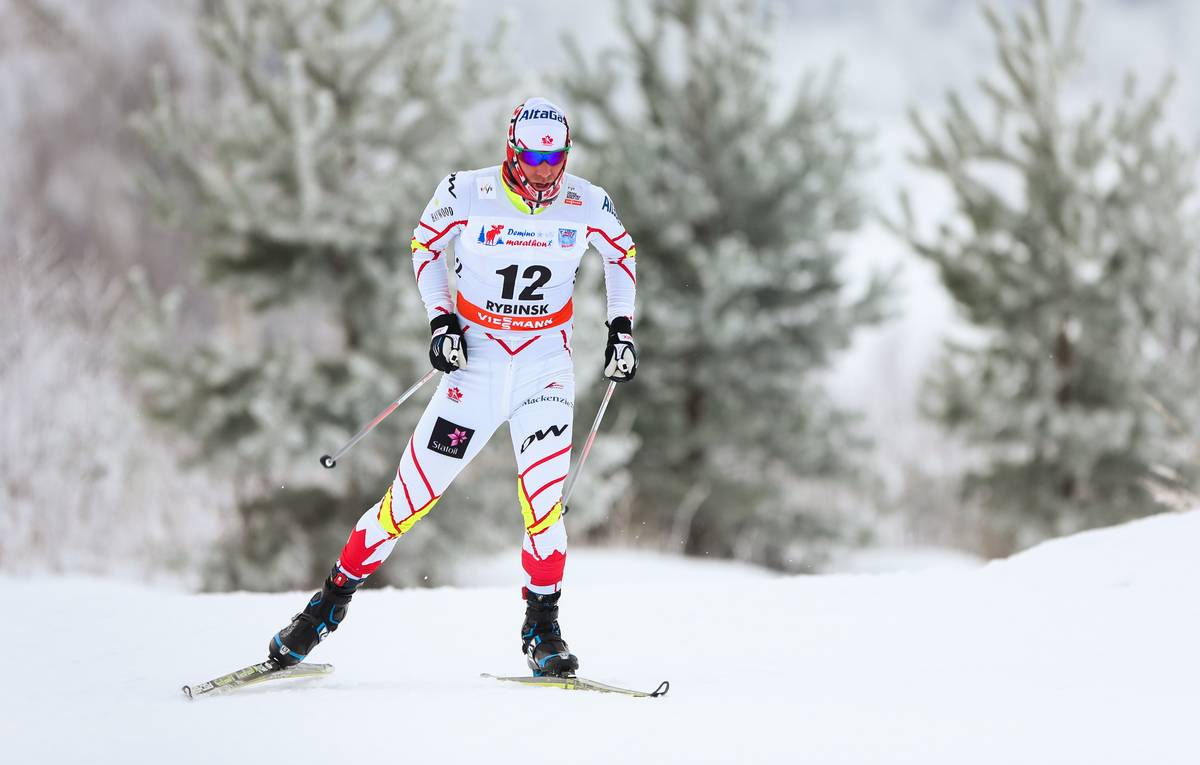
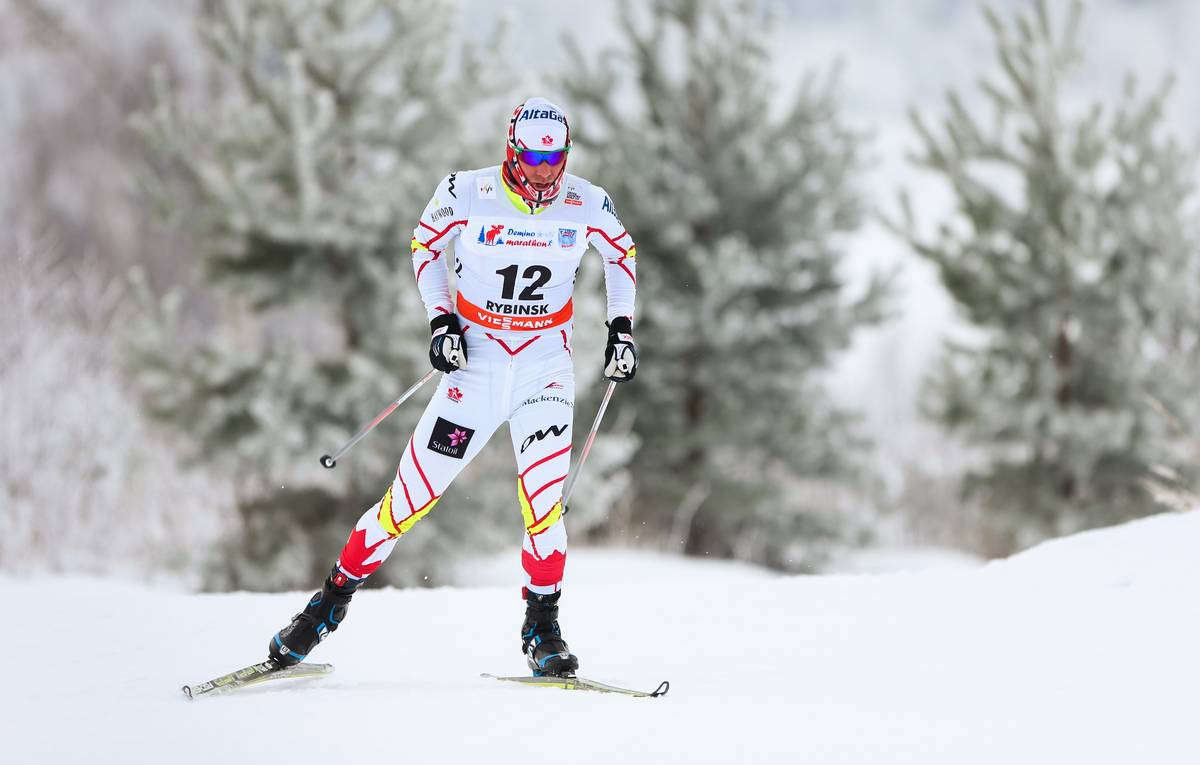
    Devon Kershaw (Canadian World Cup Team) racing to 36th in the World Cup 15 k freestyle individual start on Jan. 23 in Rybinsk, Russia. (Photo: Fischer/NordicFocus)
    Devon Kershaw (Canadian World Cup Team) racing to 36th in the World Cup 15 k freestyle individual start on Jan. 23 in Rybinsk, Russia. (Photo: Fischer/NordicFocus)

    What started out like any other cold turned into a season-ending downward spiral for Devon Kershaw, who, in the midst of what would have been his eighth World Championships, had to forgo racing and head to his fiancée’s home in Oslo, Norway, to recover.

    A day after being diagnosed with mycoplasma pneumonia, commonly known as walking pneumonia, Kershaw found himself in the car last Saturday with his mom and fiancée Kristin Størmer Steira’s parents — driving from Falun, Sweden, to Oslo.

    It all happened fairly fast, but the 32-year-old Canadian World Cup Team member couldn’t say he didn’t see it coming.

    “The World Cup weekend in Östersund [Sweden], I came down with a really light cold, nothing that serious, just had a little bit of coughing and not feeling that good and a little bit of congestion,” Kershaw, a 2011 World Championships team-sprint champion with Alex Harvey, said in a phone interview on Wednesday.

    “It was a really wussy cold, but I wanted to be careful ahead of World Championships so I didn’t travel down with the team from Östersund to Falun,” he explained. “I stayed up in Östersund, but I just never got better and the races kept ticking by.”
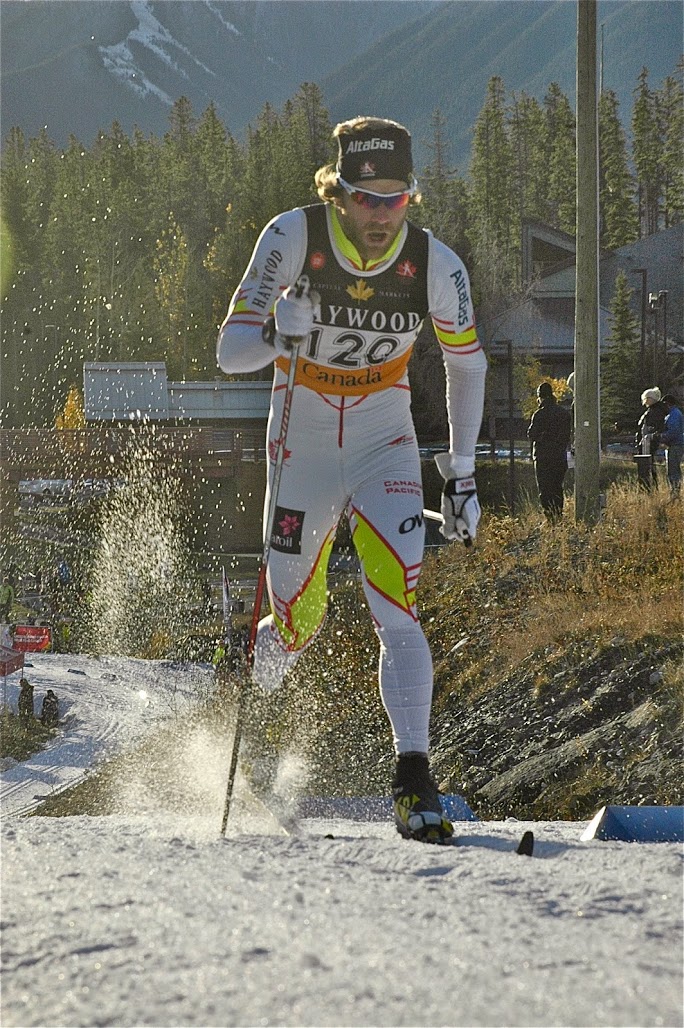
    Devon Kershaw tuning up his classic sprinting in a preseason race on Oct. 24 at home at Frozen Thunder in Canmore, Alberta. (Photo: Angus Cockney)
    Devon Kershaw tuning up his classic sprinting in a preseason race on Oct. 24 at Frozen Thunder at home in Canmore, Alberta. (Photo: Angus Cockney)

    At World Championships in Falun, Kershaw had planned to do the classic sprint, 30-kilometer skiathlon, 4 x 10 k relay, and 50 k classic mass start, as well as the team sprint if he raced well enough to make the two-man team.

    But with each passing day and little improvement in his health, the races went on without him. Kershaw remained in Östersund until Sunday, Feb. 22, when he drove to Falun with three other teammates that had been fighting illness as well. While each of them got better and competed in the championships, he didn’t.

    The morning of his trip to Falun, Kershaw started coughing uncontrollably. Unable to stay in Östersund, he traveled with his teammates to Falun. Burdened with a dry cough there, he felt his energy had improved.

    “I think I started lying to myself because I really wanted to race the relay on Friday,” he reflected. “I was trying to ski, but I didn’t do any intensity or anything and it was just getting worse and worse. I wasn’t sleeping that well because every time I lied down I’d cough incessantly and we didn’t have a team doctor with us at that point.”

    By the time he got there, Harvey’s mom, Canada’s volunteer doctor for beginning of World Championships, was already on her way fly back to Quebec.

    “That week we didn’t have the team doctor with us,” Kershaw explained. “Thursday I tried skiing again and realized really fast that I wasn’t going to be able to do [the relay]. I was just feeling way too bad and coughing like crazy, couldn’t ski at all without having to stop and really cough, like lung-busting coughing.”

    He arranged to meet with Norway’s team doctor, Knute Gabrielsen, and physiologist, Erland Hem, whom he described as an expert on lung function.

    “They checked me out and did a bunch of tests and it turns out I had mycoplasma pneumonia,” Kershaw explained. “That ended my World Championships and ended the season actually. There’s only two weeks left of the season and I won’t be able to recover in time to do the 50 k in Holmenkollen [on March 14]. It’s too close. Especially a 50 k race, it’s not going to happen.”

    He last raced Jan. 25 at the World Cup in Rybinsk, Russia, where he was 34th in the 30 k skiathlon and 36th in the 15 k freestyle on Jan. 23.

    “I’m gutted,” he said. “My season ended before it started. Like every team, my training was really tailored towards the four [or] five races at the World Championships and I felt like I was in really good shape coming out of the training camp we did, and I have a lot of experience, too, so I trust that shape. … To not even get the chance to use it at all is really discouraging.”

    “It’s like my car broke down on the way to the exam, but I live like far away and there’s no way I can get to the exam, and I got a zero.” — Devon Kershaw on having his season end with walking pneumonia

    He started on antibiotics as soon as he was diagnosed, but as of Wednesday of this week, Kershaw said they didn’t seem to be working as well as he’d hoped. He wasn’t sleeping through the night and the inhalers he was on hadn’t cleared his lungs.

    “I think the name of the game is really just patience,” he said.

    Looking back on his season, essentially two months long, Kershaw described it as “bad,” with highlights at the World Cup opener in Kuusamo, Finland, where he placed 14th in the 15 k classic, and in the Tour de Ski freestyle sprint, when he qualified for the first time this season and finished 22nd. Over the next two stages of the Tour, he placed 21st in the 10 k classic and 25th in the 25 k freestyle pursuit.

    “If you look through my history, my speed before Christmas … especially in sprint qualifiers, is usually pretty bad. I think I’ve only been in the final once before Christmas in my whole career,” he said. “So I wasn’t qualifying before Christmas, which was kind of normal but a bit frustrating and skating was a real problem…

    “The Tour wasn’t spectacular by any stretch of the imagination; it started actually quite bad. Again the skating just wasn’t quite feeling that great,” he continued. “We had a major debacle with the skis in the 15 k [classic] mass start in Val di Fiemme the [second-to-last stage] of the Tour de Ski and that destroyed all our chances. Ivan [Babikov] and Alex and myself, we were minutes behind with like some of the worst skis I’ve ever had. That ended the Tour right there, which was tough. [Then leading up to] Rybinsk, I was training a ton and doing a lot of volume and my mind was on the World Championships so it didn’t really work out that well in Rybinsk, either…”

    So that was it. For the last week, Kershaw said he was doing his best to pass the time, playing some guitar and trying to get his energy back. Once he started feeling better, he planned to finalize some wedding plans with Steira in Lofoten, a group of islands in northern Norway. The two have a wedding date set there for July 26.

    He also planned to get an X-ray in a month to check on his recovery.
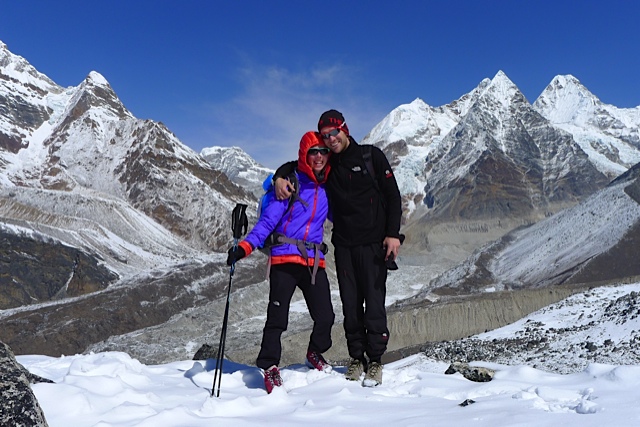
    Kristin Størmer Steira (l) and Devon Kershaw during a day hike on one of their acclimatization days. The couple got engaged after summiting Mera Peak during a three-week trek in Nepal's Himalayas. (Photo: Devon Kershaw)
    Kristin Størmer Steira (l) and Devon Kershaw during a day hike on one of their acclimatization days in Nepal’s Himalayas. The couple got engaged last April after summiting Mera Peak during a three-week trek. (Photo: Devon Kershaw)

    Meanwhile, Steira was taking classes toward her MBA degree and healing a foot injury she sustained on a run two days before the 30 k classic mass start at World Championships. That prevented the 33-year-old Norwegian from competing in what would have been her seventh World Championships. A fractured pelvis previously derailed the first half of Steira’s season.

    “This week she’s trying to get some answers and in the meantime she’s going to school,” Kershaw said on Wednesday. “She’s had an MRI done, but she hasn’t heard anything yet. She’s pretty discouraged, too. She trains so hard. To come back from a fractured pelvis and even make the Norwegian [World Championships] team is ridiculous. I was really proud of her. When she called me and said, ‘I can’t kick my skis. My foot’s really sore,’ I’m just like, ‘What? Two days ago you were just so smiley and good and loving it and things were great.’ So she had some really bad luck, too.”

    If Kershaw is feeling up to it and still in Oslo (not up north in Lofoten) next weekend, he explained he would watch the 30 and 50 k season-ending World Cup races in Holmenkollen.

    “That might be wishful thinking, but we’ll just see how the body recovers,” he stated. “It’s always so hard to watch races that you want desperately to be competing in, but that’s life sometimes and you got to take your knocks on the chin and keep going.”

    In late April, he said he’ll head back to Canada to hopefully do some ski touring before revving up for another season. If Steira’s foot injury isn’t too serious, she’ll likely join him in May in Canmore, Alberta.

    “I would like to ski next year purely because you can’t go out like this,” Kershaw said. “I showed that I can still ski at an international level and I know that I can still do the training that allowed me to. I was in good shape before all this happened and I know that’s lip service now, but at the same time I do have a wealth of experience. It’s not like I was getting murdered-murdered on the World Cup every weekend.”

    Next year, he’s looking forward to competing at 2016 World Cup Finals, dubbed the Tour du Canada, which will take place at five venues across Canada: Gatineau, Montréal, Québec City, Canmore, and Lake Louise.

    “Racing at home like that is a pretty incredible opportunity,” Kershaw said. “In the short term, it’s hard mentally, you feel like you’re beat up. You did so much in preparation. I’ve already trained 800 hours already this year and all for what? At the end of the day you’re like, God damn. It’s like my car broke down on the way to the exam, but I live like far away and there’s no way I can get to the exam, and I got a zero. Not being able to sit down and write it is going to take some time to get over for sure, but I’m still keen and I think we have a good team.

    “This year for sure, Alex has been a major standout. For the last two seasons, no questions, Alex has been keeping our team afloat because others, myself included, we haven’t delivered like we have in the past,” he added. “So it’s time for us to start pulling our weight a bit joining Alex on the international level. I’m still motivated, absolutely, but you want to do it properly, too. We’ll just have to see how long it takes to fully recover from this.”
  • Pros of Tomorrow: After Injury-Fraught Year, Lustgarten Ready to Make His Mark with Sun Valley

    Pros of Tomorrow: After Injury-Fraught Year, Lustgarten Ready to Make His Mark with Sun Valley

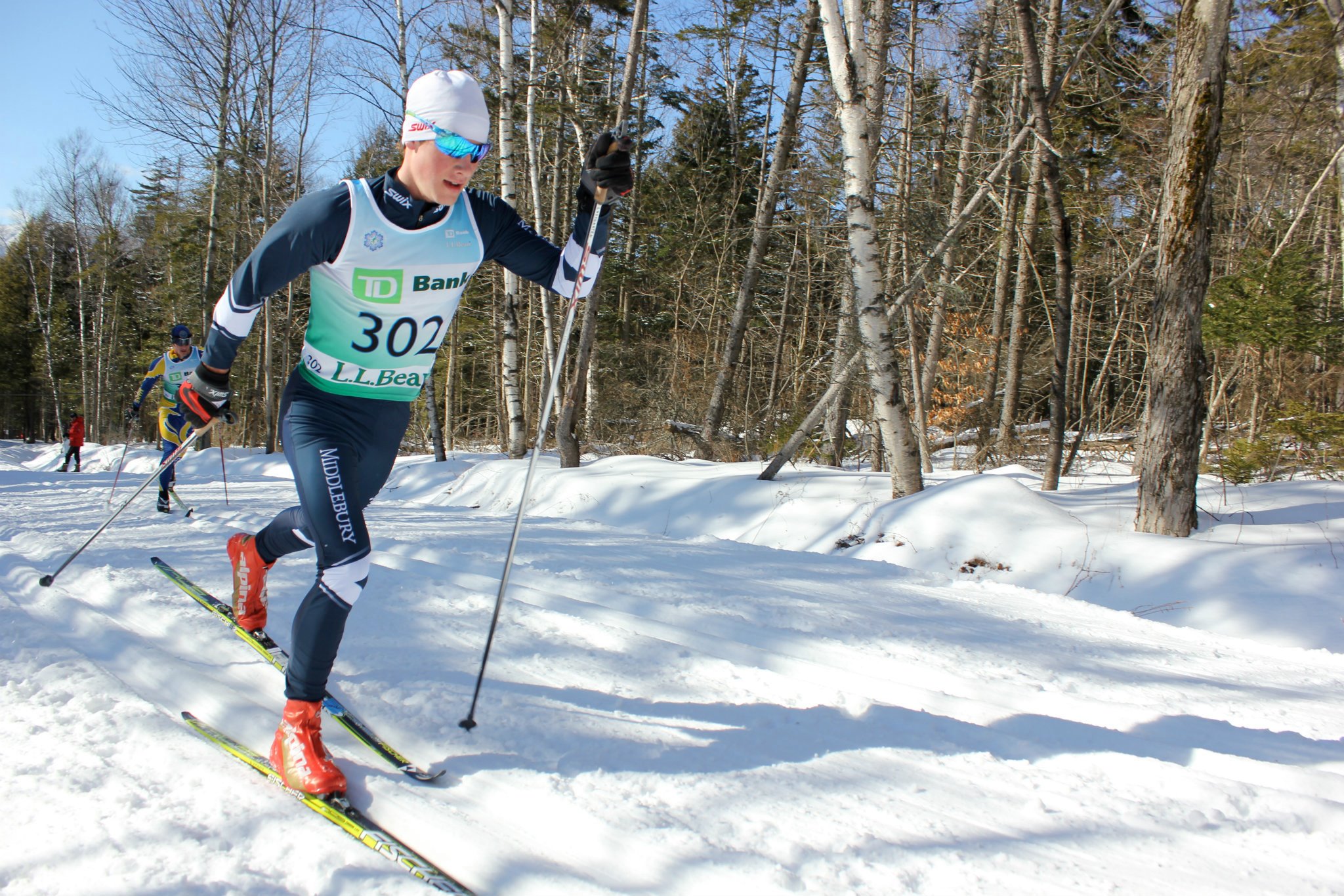
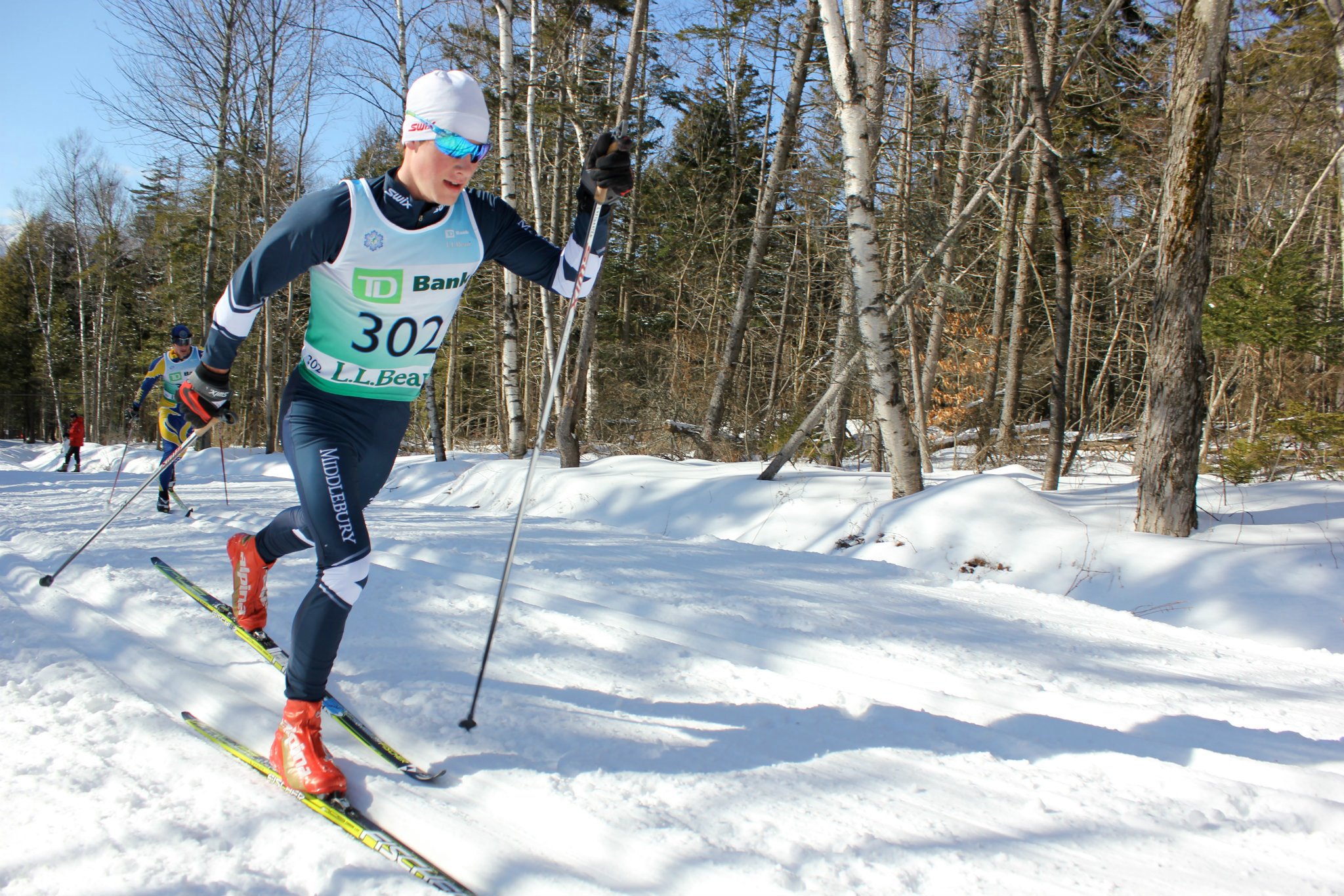
    Ben Lustgarten races in a 2012 EISA carnival at the Trapp Family Lodge in Stowe, Vt. After a senior year at Middlebury College filled with challenges and injury, Lustgarten is now joining the Sun Valley Gold team in his professional skiing debut.
    Ben Lustgarten races in a 2012 EISA carnival at the Trapp Family Lodge in Stowe, Vt. After a senior year at Middlebury College filled with challenges and injury, Lustgarten is now joining the Sun Valley Gold team in his professional skiing debut.

    Editor’s Note: Back out of hibernation, this is the first in this season’s ‘Pros of Tomorrow’ series, which highlights some of the most notable up-and-coming athletes around the world. Have an idea for a top-notch skier you’re itching to read more about? Email info@fasterskier.com with the subject line: Pros of Tomorrow. Ideas for intriguing juniors or collegiate skiers, or lesser-known athletes are welcome as well — subject line: From the Pack.

    ***

    Ben Lustgarten had big plans for his senior at Middlebury College, a small liberal-arts college in central Vermont with a strong history of ski racing. With his eyes set on the NCAA Championships in Soldier Hollow, Utah, the 22-year-old from Burlington, Vt., was determined to train as hard as possible in order to challenge the many Europeans who dominated both the western and national circuits.

    Come March, however, Lustgarten was not lining up at the starting line in Soldier Hollow but instead stood on the sidelines, supported by crutches and sporting a heavily braced knee, watching his former competitors give it their all.

    How did he get there?

    Lustgarten had a modest start in nordic skiing. Growing up in northern Vermont, he dabbled in many sports ranging from soccer to track and field. It wasn’t until a friend suggested the he and his twin, Eric, join his high school’s cross country running and ski teams that he joined the sport.

    When Lustgarten became a member of the Middlebury College Ski Team, he wasn’t well known on the national scene, having just rocketed into the Junior Olympics for the first time in 2010, earning two All-American honors in both distance races.

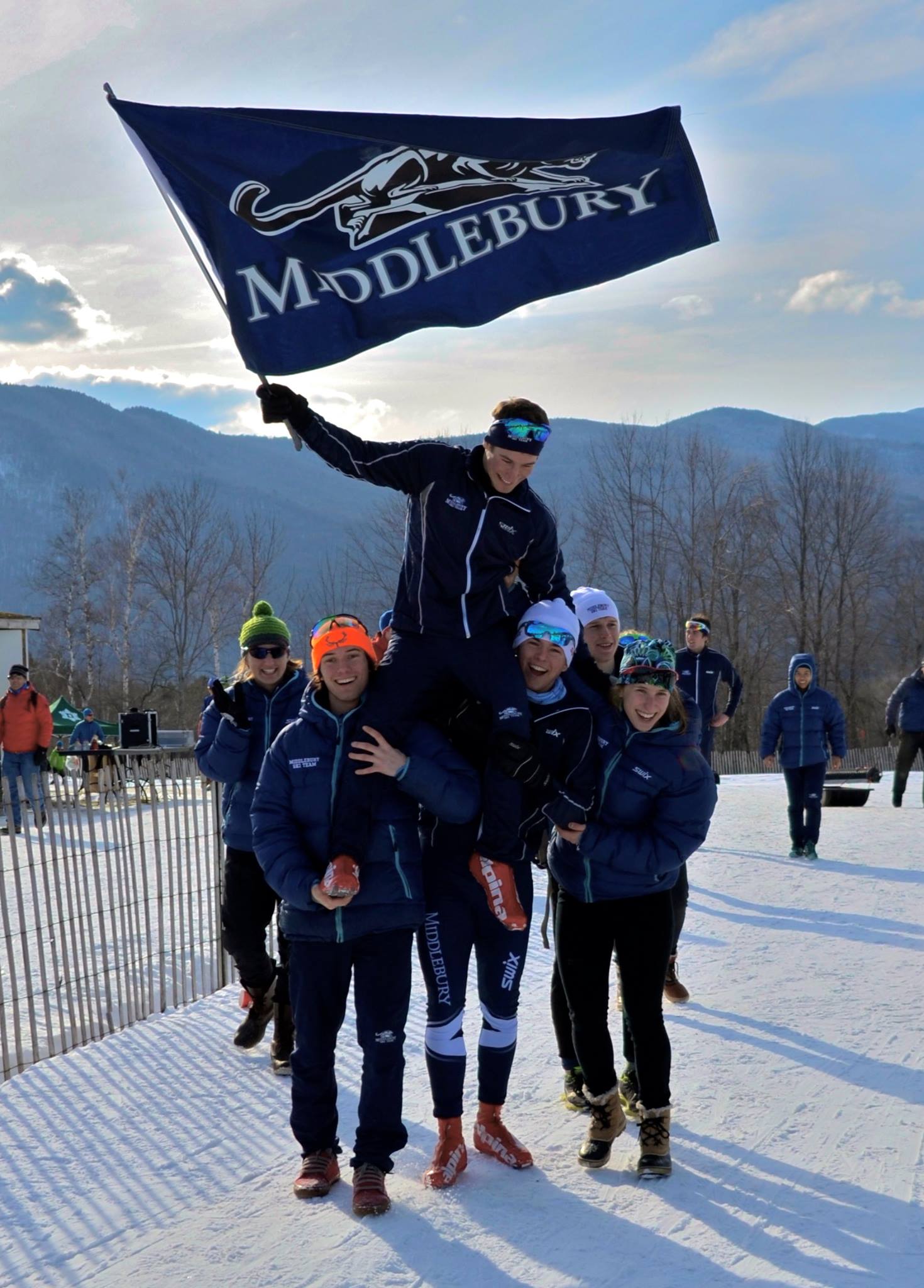
    Ben Lustgarten is hoisted on the shoulders of his teammates after the conclusion of an undated EISA carnival in Stowe, Vt. (Photo: Ben Lustgarten, Facebook)
    Lustgarten is hoisted on the shoulders of his teammates after the conclusion of an undated EISA carnival in Stowe, Vt. (Photo: Ben Lustgarten, Facebook)

    Lustgarten’s career at Middlebury was characterized by constant improvement a relentless dedication to becoming the best skier he possibly could.

    By the time his senior year rolled around he had already placed fourth and eighth in the previous NCAA Championships hosted on his home-course in Middlebury.  This time around he wanted to win.

    However, from the beginning of the training season Lustgarten was hindered by injuries. After damaging his psoas in the fall he was forced to regularly spin and lift, as running and rollerskiing were out of the question.

    Come December, Lustgarten was back to training as usual, slightly hindered by a two-week, minor foot injury.

    On the eve of U.S. nationals in Soldier Hollow, Lustgarten was a unsure of his fitness and speed due to his limited training in the fall. It seemed that his lack of traditional training was inconsequential as the college senior held his own against the best in the country, finishing sixth in the 15 k classic and tenth in the 30 k freestyle. He was the second U23 skier in both races, finishing behind U.S. Ski Team member Erik Bjornsen, who went to the Olympics a month later.

    The results were enough for Lustgarten to qualify for the 2014 U23 World Championships in Val di Fiemme, Italy, one of his major goals of the season. After racing in the Italian Dolomites, Lustgarten was disappointed with his results there, but the experience proved valuable for the Vermonter who had previously never traveled, let alone raced, overseas.

    “I didn’t have the races I wanted to but it was my first time in Europe, and the travel and all that was a factor,” Lustgarten said in a phone interview. “I still had a lot of fun and the experience was really good to see how a lot of Europeans race and just to get a good view of that scene.”

    The experience in Italy unfortunately was not all positive, as the Middlebury skier sustained a concussion in his last race.

    “I fell pretty hard and hit my head against the snow. I felt a little woozy getting up again,” Lustgarten said. “That was an extremely hard race to finish. I lost my entire morale, all my momentum and ended up getting passed a lot. I did manage to finish, and found out I suffered a concussion.”

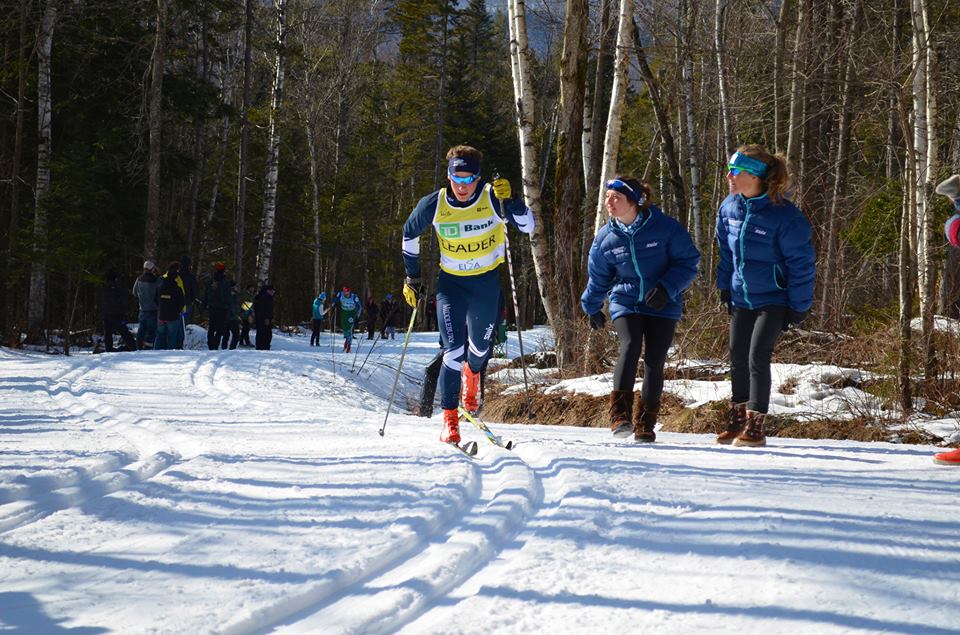
    Lustgarten racing with the EISA leader bib at the 2014 EISA Championships in  Ripton, Vt. Lustgarten went on to win the race by 50 seconds. (Photo: Ben Lustgarten, Facebook)
    Lustgarten racing with the EISA leader bib at the 2014 EISA Championships in Ripton, Vt. Lustgarten went on to win the race by 50 seconds. (Photo: Ben Lustgarten, Facebook)

    Upon his return to the U.S., Lustgarten had to sit out the next Eastern Collegiate carnival at Dartmouth. However, a week and a half after the concussion, he was back on skis at the Williams Carnival.

    During this time, Lustgarten was starting to feel pressure from himself and others surmount as the NCAA Championships drew closer.

    “I felt a lot of expectation, both from myself and other people, to win. I put a lot of pressure on myself and that pressure got to my head,” he said. “I couldn’t fully maximize my skiing potential. I was engulfed by this feeling that I had to win and that I should win. Obviously it hurt my skiing because I couldn’t win some of these races. I would beat myself up about it.”

    Unlike those who have succumbed to similar pressures, Lustgarten recognized that to excel in the final races of the season he needed to return to the basics. Making an effort to ski his “own race” the Middlebury skier lessened the importance of splits and competitors and instead focused on his technique and pacing.

    Having embraced this philosophy, Lustgarten entered the Middlebury Carnival and Eastern Intercollegiate Ski Association (EISA) Championships both calm and collected.

    The new mindset paid off as Lustgarten crossed the finish line of the individual 15 k classic in first place, exactly 50 seconds ahead of one of his fiercest competitors, Scott Patterson of the University of Vermont.

    “It not only helped my confidence to know that I might be able to win further races, but it really only matters when you ski within yourself and if you trust yourself and not to get all wound up in the scene with all the results,” Lustgarten said. “Which is really nice, because not only do you feel better about yourself when you cross the finish line, but generally the results are better. So it’s a win-win.”

    The next day was a different story.

    Entering the second day of the EISA Championships, the weather was warm and the conditions were fast on the hilly and technical course at the Rikert Nordic Center. Even going into the first laps of the 30 k freestyle mass start, Lustgarten could feel his shins tightening up.

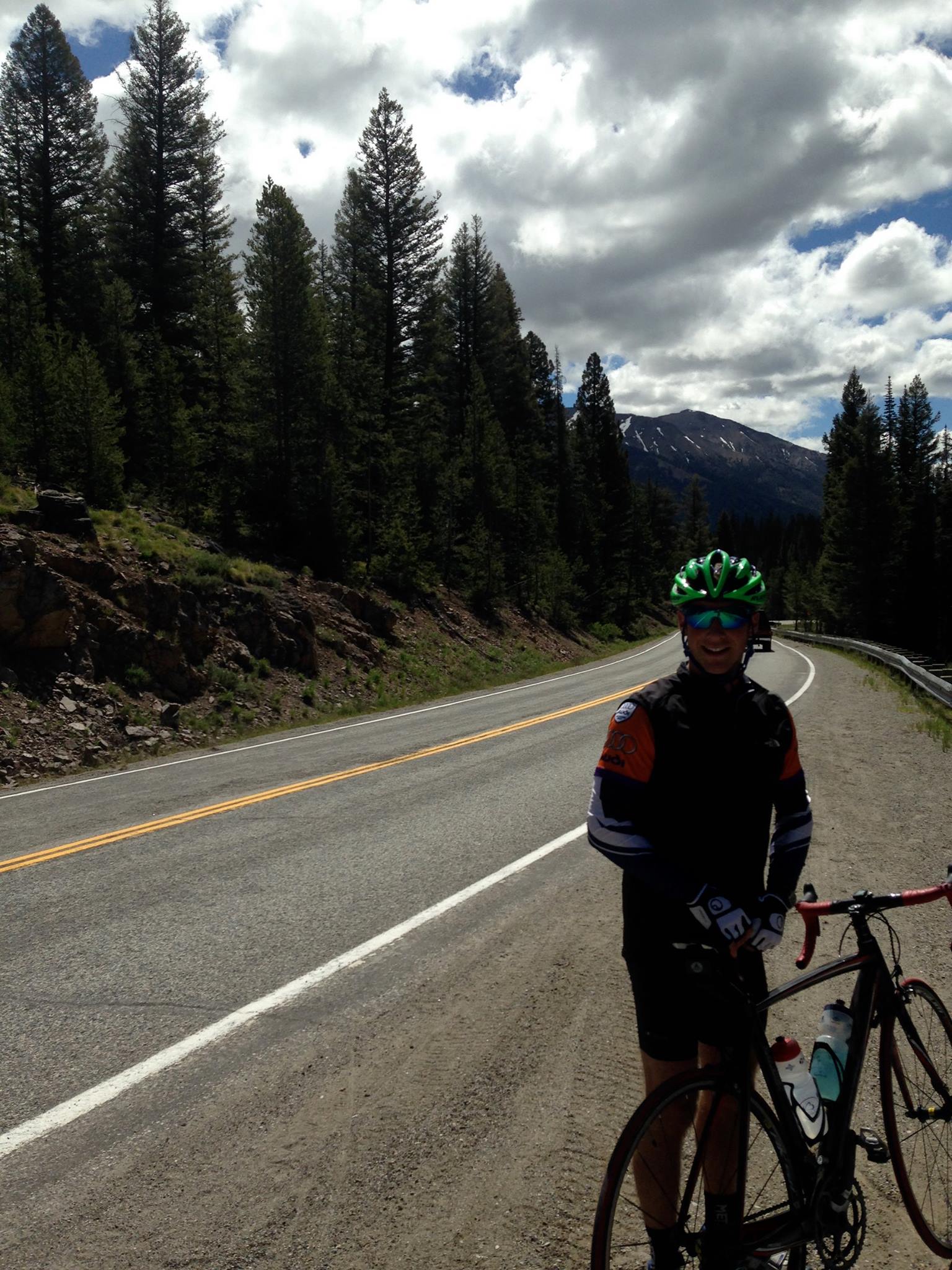
    Lusgarten poses during a ride in Sun Valley, Idaho, where he is currently training and recovering with the Sun Valley Gold Team. (Photo: Ben Lustgarten, Facebook)
    Lusgarten poses during a ride in Sun Valley, Idaho, where he is currently training and recovering with the Sun Valley Gold Team. (Photo: Ben Lustgarten, Facebook)

    After attempting to stick with the leaders, Lustgarten was forced to pull back, but the damage was already done. Barely able to move his legs, the Middlebury College Senior said both his competitors and spectators were giving him odd looks.

    Descending from the last major climb in the third lap, Lustgarten knew he had to take the corners very easy or risk falling due to the tightness in his shins. Coming into one of the final turns of the lap Lustgarten went wide, miscalculating his speed and the sharpness of the corner he had skied so many times before.

    Lustgarten soon realized he was headed for a tree, and immediately fell to the snow ensuring his feet were in front of him; a move that he would later characterize as lifesaving.

    Unable to slowdown, he made full impact with the tree, placing all impact on his right foot. The next thing he knew he was sprawled on the side of the trail with searing pain in his right leg.

    “In a normal crash, you get back up, you put your stuff back on, check if your poles are broken, and move on. I tried to move my leg and it was just so painful,” he recalled. “It was half bent and I couldn’t straighten it. I couldn’t move it. I was gasping in pain and after a minute I yelled out help because I knew I couldn’t get up. Then the world crashed around me and I realized that I was not going to finish this race. I thought my leg was broken and I thought my season was over. It was pretty traumatic.”

    Lustgarten’s leg was not broken, but a visit to a doctor in Burlington resulted in the some of the worst news he had received: he was out for the rest of the season with a severely torn posterior cruciate ligament (PCL) in his knee. No NCAAs. No challenging the westerners. No conclusion to his final year of racing at Middlebury.

    “I thought I was going to double pole NCAAs. I was livid that I couldn’t race. I would have done anything. It was my last season and I was going to do what I could to finish the race. Everyone was saying that I shouldn’t do it but I didn’t care what anyone said. However, if I had crashed and fully torn my PCL that would have required surgery and I would have been out of skiing for a year. Everyone talked some sense into me,” Lustgarten said.

    He did, however, travel to the NCAA Championships in March but was delegated to the sidelines, resigned to thinking about what could have been.

    “I tried to cheer on people as best as I could,” Lustgarten said. “But it was hard watching them because even if they were having a bad race they were out there trying their best. Representing their college and their coast. I wish I could have raced those good guys from the west. I had wanted to race them all season. Maybe I’ll get a chance next year.”

    While Lustgarten won’t get a chance to race the collegiate circuit next year, he will get a chance to prove himself on the national scene.

    Shortly after graduating from Middlebury College in May, Lustgarten traveled west to Idaho to join the Sun Valley Ski Education Foundation (SVSEF) Gold Team, where he will compete in the hopes to make his mark in professional nordic skiing.

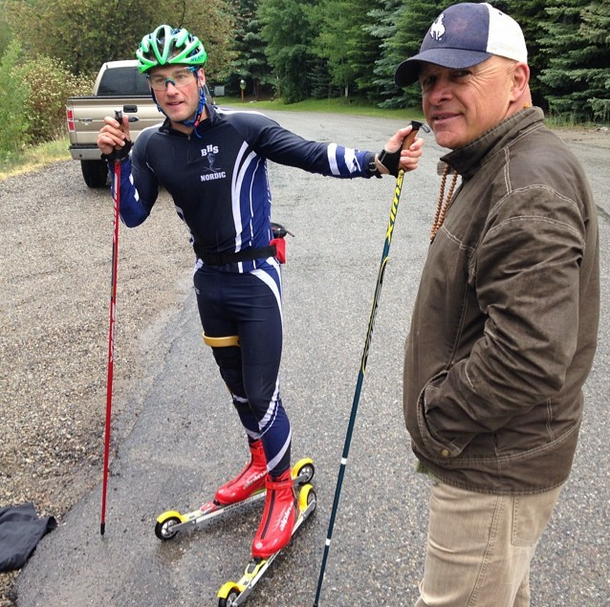
    Lusgarten (l) and SVSEF's head coach Rick Kapala (r) discuss a rollerski workout in some unfavorable June weather. (Photo: Ben Lustgarten, Instagram)
    Lustgarten (l) and SVSEF’s nordic director Rick Kapala (r) discuss a rollerski workout in some unfavorable June weather. (Photo: Ben Lustgarten, Instagram)

    “It will be awesome to see what skiing is like without school,” he said. “I can spend a lot more time doing physical therapy, stretching, strengthening to prevent injury, increase balance, and just pend time doing small stuff that I wouldn’t have time to do at school.”

    He believes these small changes will help him reach his lofty goals for the next season. On that list is a podium at US Nationals, a top 15 at the U23 World Championships, and to qualify for a couple World Cups in the 2015/2016 season.

    Despite his elevated goals, Lustgarten knows he has a lot of work to do in the meantime.

    “I don’t really know how my improvement will be with the injury and training. I have optimistic views,” he said.

    In terms of his future as a pro skier, Lustgarten acknowledged that if things don’t go as expected, he plans to go back to school. If he does see improvement, Lustgarten would like to see how far he can go.

    “I would definitely like to ski for the next couple years. Obviously the Olympics is a ways off, but that’s the dream for anyone who goes pro,” he said. “If things do work out well I would love to shoot for the Olympics in 2018.”

    Long-term goals aside, Lustgarten is taking advantage of his what his new life as a professional athlete has to offer. For now, the emerging skier is excited to work on new sponsorship deals, develop a website and blog expected to be ready by the end of the week, in addition to full-time training.

  • Diggins Already Back in Action After Straining Foot in Lake Placid

    Diggins Already Back in Action After Straining Foot in Lake Placid

    Jessie Diggins keeps on her strength routine despite a foot injury she suffered while trail running Sept. 14 in Lake Placid, N.Y. Fewer than two weeks later, she was out of the boot and pain free while recovering the muscle strain. (Courtesy photo: jessiediggins.com)
    Jessie Diggins keeps on strength training despite a foot injury she suffered while trail running Sept. 14 in Lake Placid, N.Y. Fewer than two weeks later, she no longer needed the boot and was pain free while recovering the muscle strain between her third and fourth metatarsals. (Photo: jessiediggins.com)

    Jessie Diggins couldn’t recall exactly what happened two weeks ago when she was trail running in Lake Placid, N.Y. Maybe she hit uneven ground, misstepped and rolled her ankle, she couldn’t remember.

    But for the record, the 22-year-old U.S. Ski Team (USST) and Stratton Mountain School T2 Team member reiterated that she didn’t fall. Not this time.

    Regardless, the pain in her right foot was unsurmountable. Diggins had to cut her workout short on the second-to-last day of the USST’s dryland training camp – the day before the culminating Climb to the Castle – and limp back to the car. Fears of a stress fracture swirled in her head.

    Within two hours, Diggins was at the hospital in Lake Placid. Doctors sent her in for an X-ray of her foot, and two hours later, a specialist examined the initial findings – which didn’t show much. The good news: no broken bones as far as the X-ray detected.

    “It was amazing how fast they responded,” Diggins said in a phone interview on Sunday.

    “Our team has kind of a history of dealing with injuries so it was like, woah, let’s just really be super careful,” she added. “They knew it wasn’t a break, but until we got the MRI, we weren’t sure exactly what was going on.”

    Diggins took the cautious route and hobbled around on crutches for the next few days, wearing a boot on her right foot until she could get an MRI in Park City, Utah, her next stop on the training circuit.

    The night of her hospital visit, Diggins reunited with her teammates in the dining area at the Lake Placid Olympic Training Center.

    “I came in on crutches and everyone was like, ‘Oh, what did you do?’ ” she said. “And I was like, ‘I didn’t do that much. Don’t worry, it’s fine.’ I think the worst part was not knowing and worrying that I’d have to take serious time off training.”

    Fortunately for Diggins, who explained she typically pushes through pain and sometimes even injuries – like the bone spurs on her heels early last season – this foot mishap was not something that was going to derail five months of dedicated training.

    In Park City, the MRI revealed that she had strained the muscle between her third and fourth metatarsals, two of five long bones in her foot. USST physical therapist Adam Perrault advised that she prepare for a six- to eight-week recovery. She laughed and told him she could do it in four.

    Last week, Diggins met with a foot specialist in Park City, where she’ll be through the upcoming USST camp from Oct. 7-28 (then she and the team fly up to Canmore, Alberta, for on-snow training). The doctor told her that other than this injury, she has “perfectly good feet.”

    “Anyone who runs has pretty strong bones; it seemed to be just an out-of-the-blue thing,” Diggins said. “I don’t know that much about sprains or how they happen, but before then I felt absolutely no pain. I actually had no warning. … I think somehow, before I felt the pain, I stepped on a root and kind of torqued my foot. I don’t remember doing it, but it certainly could’ve happened.”

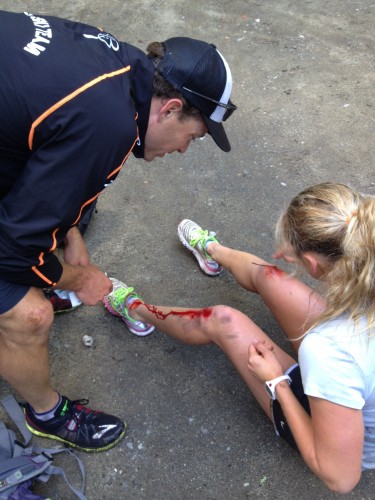
    Jessie Diggins (Stratton Mountain School T2/U.S. Ski Team) with some bloody knees after tripping on an OD trail run in the Adirondacks near Lake Placid, N.Y., in early September. USST women's coach Matt Whitcomb (l) inspects the damage.
    Jessie Diggins (Stratton Mountain School T2/U.S. Ski Team) with some bloody knees after tripping on an OD trail run in the Adirondacks near Lake Placid, N.Y., in early September. USST women’s coach Matt Whitcomb (l) inspects the damage. (Photo: Erika Flowers/jessiediggins.com)

    Earlier in the Lake Placid camp, Diggins had a bloody mishap when she tripped and fell on another trail run in the Adirondacks.

    “In my self-defense, we found this natural waterslide,” she explained.

    Diggins slid headfirst into a pool of water and lost one of her contacts. With blurred vision for the return run back, it was only a matter of time before crashed and burned, she reasoned. Fortunately, the scrapes on both knees weren’t too debilitating.

    “Hopefully I got all my accidents out of the way at that camp,” she said.

    Out of the boot for a while now, Diggins was recently cleared for classic skiing and has been pain free for nearly a week. She never missed a day of training – one if you count the Climb to the Castle – when she did a light session on the spin bike instead.

    “The only thing I hate more than the Climb to the Castle is not doing it,” she said of the grueling rollerski race up Whiteface Mountain’s toll road.

    This year, her roommate and training partner in Park City, Liz Stephen won the race for the third-straight time and set a new course record in the process.

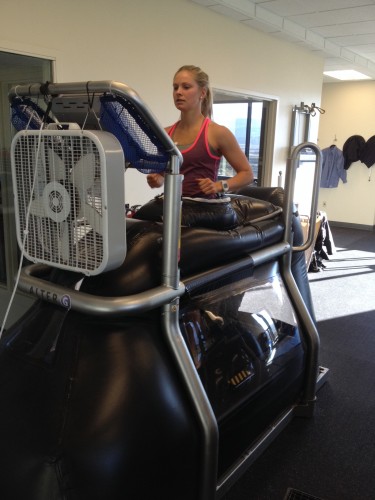
    Over the last two weeks, Diggins has spent plenty of time indoors on the bike, but hasn’t missed much on the skating side of training and could double pole as well. Since the motion of pushing off her toes was most troublesome, she stayed away from bounding and running outdoors, instead taking her striding to the Ultra-G treadmill, which allowed her to run with 70 percent of her body weight.

    “You basically wear these shorts that you zip into the bubble over the treadmill, and the bubble inflates and lifts you up so that you can run at much less than your real body weight,” she explained on her blog. “You can be cruising along at a 6 minute mile pace and barely break a sweat! It’s pretty fun. Especially when Gilmore Girls comes on the TV.”

    On Sunday morning, Diggins went out for a 3 x 20-minute Level 3 rollerski skate workout. The week before, she and Stephen endured two days of blizzard-like conditions and did speeds in a hail storm. The snow quickly melted.

    Jessie Diggins running with 60 percent of her body weight on the Ultra-G treadmill at the Center of Excellence (COE) in Park City, Utah. (Photo: jessiediggins.com)
    Jessie Diggins running with 60 percent of her body weight on the Ultra-G treadmill at the Center of Excellence (COE) in Park City, Utah. (Photo: jessiediggins.com)

    Regardless of the weather, Diggins was glad to be back outside for most of her workouts. She anticipated bounding would have to wait until November, but in the meantime she’ll do classic intervals, and plyos in the pool and on a TumblTrak trampoline at the U.S. Ski and Snowboard Association’s Center of Excellence (COE).

    “I don’t feel derailed at all by it,” Diggins said. “If anything, it gave me a little more motivation. Generally classic striding isn’t something I love so much, but now I’m excited to get out and do it.”

    Above all else, the setback has taught one of the USST’s most promising skiers to roll with the punches and rely on the work she’s put in.

    “The time trials have showed really positive results,” she said. “We found a number of technique things that we’ve improved on and worked on. Every year, I just gain a little more confidence.

    “I’m training hard and I can’t possibly train any harder than I am now,” she added. “Looking back at the summer, I don’t think I could’ve done any more than I did. I’m feeling really happy with that.”

    According to Diggins, her last significant injury came at the beginning of last season when she pushed through the pain of bone spurs on both heels. Doing so caused angst and major discomfort at the December World Cup races in Kuusamo, Finland, where she placed 12th in the 5-kilometer skate race and 24th in the overall mini tour, and Quebec, where she and Kikkan Randall won the freestyle team sprint.

    Her sponsor, Salomon, cut holes in her boots to ease the pain.

    “It was one of those things where it was this annoying thing on my heels, but then you can work through it and then you’re really in trouble,” Diggins recalled. “Suddently right before the race you’re in tears.”

    In Quebec City, she and her coaches determined she needed backless shoes for relief between races. Diggins ventured around town to find some and bought a pair of pink Crocs. So there she was, running around the course and through slush in pink sandals.

    “I had very cold feet,” she said.

    Now that the bumps on her heels are no longer an issue (despite the small remaining lumps), Diggins said she’s more apt to recognize problematic pain.

    “Obviously there’s never a good time to get injured, but that said, if you had to strain your foot sometime, this is like the perfect time,” she said. “I’m at the COE with all these people here to help and I’m getting as much help as I possibly can. That’s a good feeling so I’m right on track.”

  • Injured APU/USST Teammates Randall and Bjornsen Keep Kicking

    Injured APU/USST Teammates Randall and Bjornsen Keep Kicking

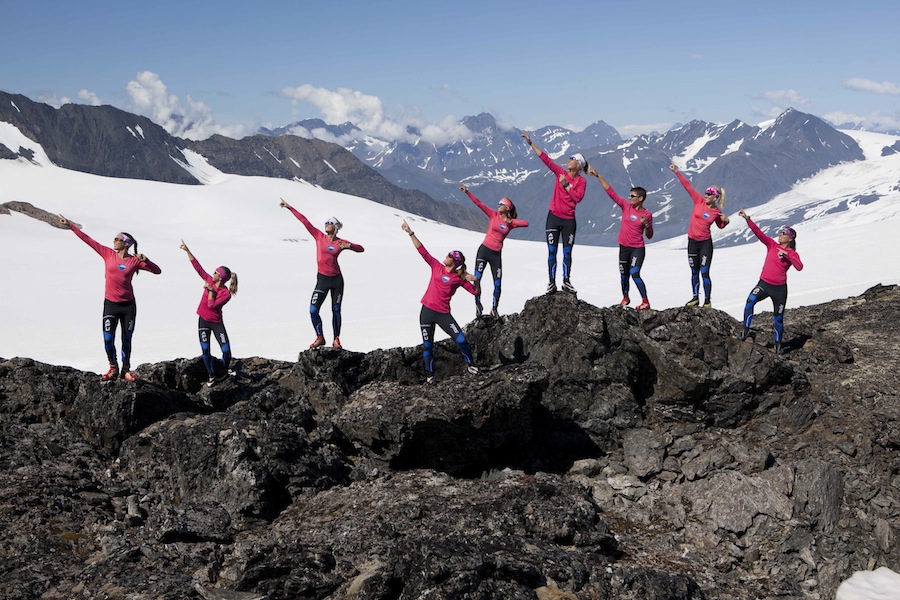
    Sadie Bjornsen (fourth from right) and her APU teammates pose like Jamaican sprinter and six-time Olympic gold medalist Usain Bolt on Eagle Glacier near Anchorage, Alaska. (Photo by Chris Hodel)

    Last week in Anchorage, a freak windstorm rolled through that would have devastated most mainland Americans. Gusts estimated at 130 miles per hour spewed trees across Alaska’s largest city, leaving at least a thousand residents without power through Saturday – almost four days after the storm hit Tuesday night.

    In a phone interview, U.S. Ski Team member Kikkan Randall said the electricity and all the lights at her home came on at 2:15 a.m. Saturday. One tree took out part of their backyard fence, but Randall’s husband, Jeff Ellis, repaired it in no time. Their biggest concern was their refrigerator and freezer, so the two went out and got a generator.

    Elsewhere in the city, Randall’s teammate on the U.S. Ski Team (USST) and Alaska Pacific University (APU), Sadie Bjornsen said the power at her on-campus housing was restored Wednesday morning. On the phone, Bjornsen laughed about how she didn’t even know the storm was coming.

    A professor in one of her classes warned students about its potential effects. She hadn’t heard anything about it otherwise.

    “I was like, ‘What are you talking about?’ I came out of the house and I was like, ‘What is going on? There’s a hurricane!’ ” she recalled with a laugh. “[My APU teammate Rosie Brennan and I] were driving and there were road signs ripping out and flying across the road and all this stuff flying around, and all the stoplights were out. I’m like, ‘Whoa, this is wild!’ ”

    When she got home Tuesday evening, Bjornsen moved her car to avoid falling trees. Later that night, the 22-year-old had trouble falling asleep.

    “I was freaking out because I’m like, ‘I’m going to wake up with a tree in my lap,’ because I’m on the corner where all the trees were blowing,” she said. “But then when I looked out the next day, I was like, ‘Oh those are all aspen or birch trees, and they aren’t that heavy.’ ”

    Reports indicated that nobody was seriously injured, and Bjornsen was relieved. “Only in Alaska,” she said.

    On Saturday, Randall said the weather was back to normal with the sun shining and slightly chilly temperatures. That morning they received their first frost. That was Alaska, all right.

    Bjornsen’s Back/Foot Troubles

    Sadie Bjornsen (APU/USST) working out on Eagle Glacier in July. (Photo by Reese Hanneman)

    Way up north, the two Anchorage skiers have endured more than extreme weather in the last few months. Bjornsen’s been coping with back and foot injuries since the spring, and Randall is in a walking boot and training at 50 percent to heal a stress reaction in her foot.

    While both joked about doing aqua-jogging sessions together, they also shared some of their frustrations and ways of staying positive through adversity. FasterSkier spoke with Bjornsen and Randall separately: Bjornsen while she was home studying before strength training, and Randall while she cheered on her husband at a local cyclocross race.

    Bjornsen’s back injury started nearly a year ago in November, but by the time the racing season started, it disappeared, she said. After two and a half weeks of discomfort, she didn’t feel it again until this past April, just in time for the beginning of training season.

    Kikkan Randall (APU/USST) donning a walking boot to relieve a stress reaction on her right foot. If left untreated, the reaction could magnify to a fracture, which is why Randall is training at 50 percent and not skiing or running for five weeks. (Courtesy photo)

    She’s had the overuse issue since and initially remedied it by skate skiing. Classic skiing – her strength – seemed to irritate her facet joints the most, so she decided to skate only.

    “Originally I was like, ‘Well, OK I’m just going to skate every single workout. I have a weakness with skating anyways so this is great,’ ” Bjornsen said. “That’s what I did and then I got tendonitis in my foot because of it. That’s when I have to stop and say, ‘I need to actually address this problem.’

    “It’s challenging because you have a back and a foot injury so then you have to find exercises that are not stressing both of those things because they’re kind of opposites,” she added. “It’s just been hard to find ways to progress.”

    Bjornsen discovered her tendonitis at the USST camp in Bend, Ore., in May. With the USST/Canadian women’s joint camp (also known as the North American Women’s Training Alliance) two weeks later in June, she pushed through the injury and raced to get into shape.

    “I knew [Finland’s] Aino-Kaisa Saarinen (Auku) would be coming [to the Alaska training camp] and since I first started watching her ski, I have dreamt about classic skiing behind her,” Bjornsen wrote on her blog. “I over-jumped my limitations, skiing a two hour skate through the hills chasing Auku and Kikkan. Again, I was back at the bottom with my heart hanging low. At that point I had to make the difficult decision to leave the National Team Camp in my own town and get away from the excitement and motivated girls to truly get my body back to order.”

    Since then, Bjornsen’s let her body recover for the better part of the last three months. She recently started doing some intensity on her feet, which she was excited about. It was a long summer without it, she said.

    “I was just doing my intervals running in the pool,” she said with a laugh. “People in the pool will just look at me, like, ‘Why are you breathing so hard, for one, and what are you doing?’ ”

    Not to mention, it’s a community pool.

    “It’s been a bit humiliating, but it’s fun,” Bjornsen said. “It’s the world’s most boring thing you could ever do, but it makes you appreciate when you go out and do ski intervals, it’s like, ‘Oh my God, this is why I do this sport.’ ”

    This summer, Bjornsen has been to the glacier twice to ski and said she’s making progress. As far as she can tell, her back is almost in the clear and her tendonitis is practically gone.

    “The thing about tendonitis and stuff like that is you want it to just go away in two days,” she said. “But it’s just kind of something that you always have to look out for a little bit. I’ve just been working through strengthening it.”

    As for her fitness, she said it’s hard not to imagine where she should be.

    “You feel like you’re so far behind when you have these setbacks, you know? It’s hard to not only focus on that,” she said. “The most challenging part about it is there’s not really an answer to how to make it better. It’s like, ‘You need to work on not having muscle spasms.’ … [I’m trying to think] about where I’ve progressed from two months ago and thinking about the season’s really long. You kind of have to think about the end of the season as well as the beginning.”

    Her coach, Erik Flora, has been one of her biggest advocates and sources of support, she said. He’s shown her ways to be creative with training, even if it is in the pool.

    “Erik’s like, ‘If you stay positive through these sections is when you decide if you’re in it for the long run or if you’re going to wuss out or something,’ ” Bjornsen said.

    She’s decided to stick with it.

    “It’s been a really challenging summer, for sure,” she said. “It was challenging to have to leave the national-team camp here in Alaska, and it was challenging to have to say no to [the USST camp in] Sweden because I wasn’t healthy enough to be there.”

    “It’s just been a rollercoaster of making progress this summer,” she added. “I don’t know where I am, I guess we’ll see, but probably not where I would have hoped to be. Maybe in two months I will be somewhere I hope to be. The cool thing about our sport is your racing is not only based on your year of training, it’s also based on what you’ve done and what you’ve done in the past and what your strengths are. The best you can do is be really positive and do what you can do.”

    In about a month, Bjornsen will join Randall and the rest of the USST for their final dryland camp in Park City, Utah. She plans to use the time to practice on the sprint course at Soldier Hollow and nail the slingshot descent into the stadium.

    “Somehow I’m always at the wrong place on that last corner, so hopefully I’m going to learn that one this year,” she said.

    Looking ahead, that venue is where Bjornsen hopes to podium at the upcoming U.S. nationals in January. Last year, a sinus infection kept her from racing for a national title in Rumford, Maine, which led to another goal: staying healthy.

    “That even means paying attention more when I’m sick, to really admit that I’m sick and sort of jump on it rather than just pretend that you’re superman and it’s never going to get to you,” she said.

    Throughout the next few weeks, Bjornsen will increase her intensity training. Meanwhile, most of her USST teammates (except those from APU) will do something similar throughout the next two weeks at a camp in Lake Placid, N.Y.

    Heading into Park City, Bjornsen said she’d continue to build her base and intensity on skis.

    “I still have two and a half months [until the racing season] and the progress I’ve made in the last month has been super encouraging,” she said “I still have hope for the season; there’s a lot to be trained still.”

    Randall Healing Both Feet

    Without too many injuries in her storied career, Randall feels the same way. She took her foot injury in stride during the Swedish joint camp in early August, wearing a walking boot between workouts.

    Randall playing golf in late August with her walking boot. (Courtesy photo)

    However, toward the end of camp, things started to get painful for the reigning World Cup sprint champion. She realized that what she was doing – training normally and keeping pressure off her right foot when she wasn’t skiing – wasn’t enough. USST women’s coach Matt Whitcomb convinced her to see a specialist and let it heal before this winter.

    About two weeks ago, Randall flew south to see Dr. Tom Clanton at The Steadman Clinic in Vail, Colo. A world-renowned foot and ankle specialist, Dr. Clanton treated former professional basketball player, Yao Ming, the tallest man in the NBA at the time, when he had foot trouble. “We figured he was a good guy to talk to,” Randall said.

    There, an MRI showed some fluid around the bone in her right foot, which meant it was starting to weaken, but it didn’t indicate a fracture. That was a good thing, Randall said. The doctor advised she train at a 50-percent effort for five weeks, which meant no skiing or running, but she could swim, bike and do double-pole workouts with APU.

    Randall is also healing an Achilles injury in her left foot, which started early last March at the World Cup skiathlon in Lahti, Finland.

    “The boots are a little bit different than what we’re used to and it didn’t get better through the spring,” she said. “We had a lot of classic races the last part of the season and I didn’t probably rest it enough, so it’s been nagging.”

    While in Vail, physical therapists at Howard Head Sports Medicine taught her strengthening exercises for both feet, and she planned to return to Colorado in early October for a follow-up MRI. After that, she will head to Park City, where she probably won’t participate in the USST tests, but hopes to take advantage of the high altitude and transition back into regular training.

    “The frustrating thing with both these injuries is they’re so subtle I can train through them, but it’s a matter of should I train through them,” Randall said. “Eventually the Achilles could get worse and you can get into some serious problems with that, and of course with bone fractures, that could be a serious problem, too. It’s the one time in your life when you have to not be tough and take signs and rest a little bit.”

    Since discovering a massive blood clot in her leg in April 2008, Randall hasn’t had too many medical problems, she said.

    “I’ve been really fortunate through my career,” she said. “The blood clot happened in the spring when it was the absolute best time when I was taking some time off anyway. I was able to bounce back [and win a World Championship]. This is almost my first time going through something kind of chronic and in the middle of the season. I had a few things when I was in high school but nothing quite like this.”

    Still, she’s managed to keep her head up.

    “I’m enjoying being at home for an entire month and I have a little extra time. I have a ton of school visits lined up and get to work on some of my community projects and see family and friends before the long winter in Europe,” she said. “Just fill your time with other thoughts and things. I’m focusing on what I can do and I’m using this time to work on some small weaknesses that I probably would’ve just let go. So, yeah, it might be a blessing in disguise in the end.”

    In mid-August, Randall did an open-water swim in Ontario, Canada, where Ellis’ parents live. Her husband originally signed them both up for the Bala Falls Triathlon, but Randall decided she shouldn’t run so Ellis left her wetsuit at home in Anchorage.

    Race fever caught up with Randall, and she changed her mind – she wanted to swim and bike. Without a wetsuit, she swam anyways and finished third in the swim-bike category.

    “It was my first time [competing without a wetsuit]. It was a good, challenging experience,” she said. “It was pretty funny because I had the boot on, and I walk into the transition area to put my bike in the rack. Then I walk around the rest of the day, I’ve got the numbers on my arm with the boot on. It looked pretty ridiculous, I’m sure.”

    If she wants to be a serious triathlete someday, Randall joked that she needs to work on her swimming.

    “The bike was fun, kind of chasing after people,” she added. “It was actually quite hard not to go out on the run and finish off the race.”