From the FasterSkier archive — posts syndicated from athletes’ and coaches’ own blogs between 2004 and 2012, kept online as published. Current coverage is at fasterskier.com.
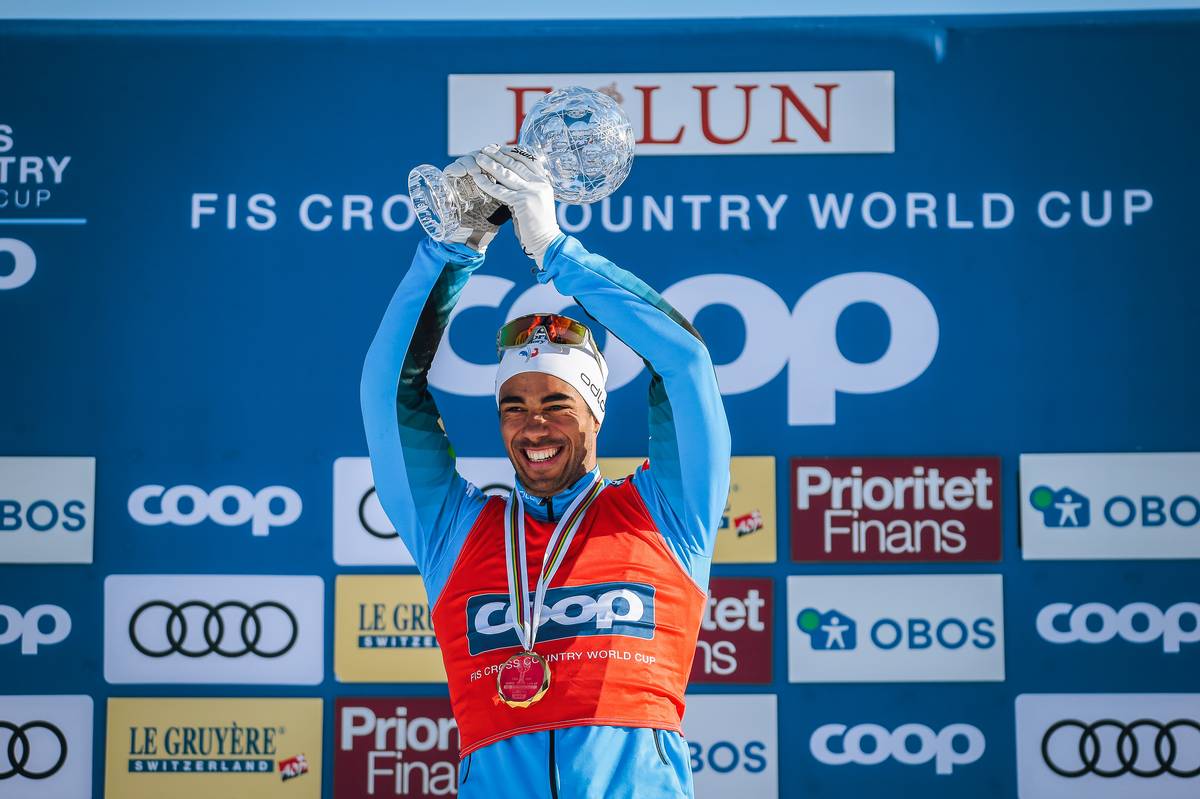
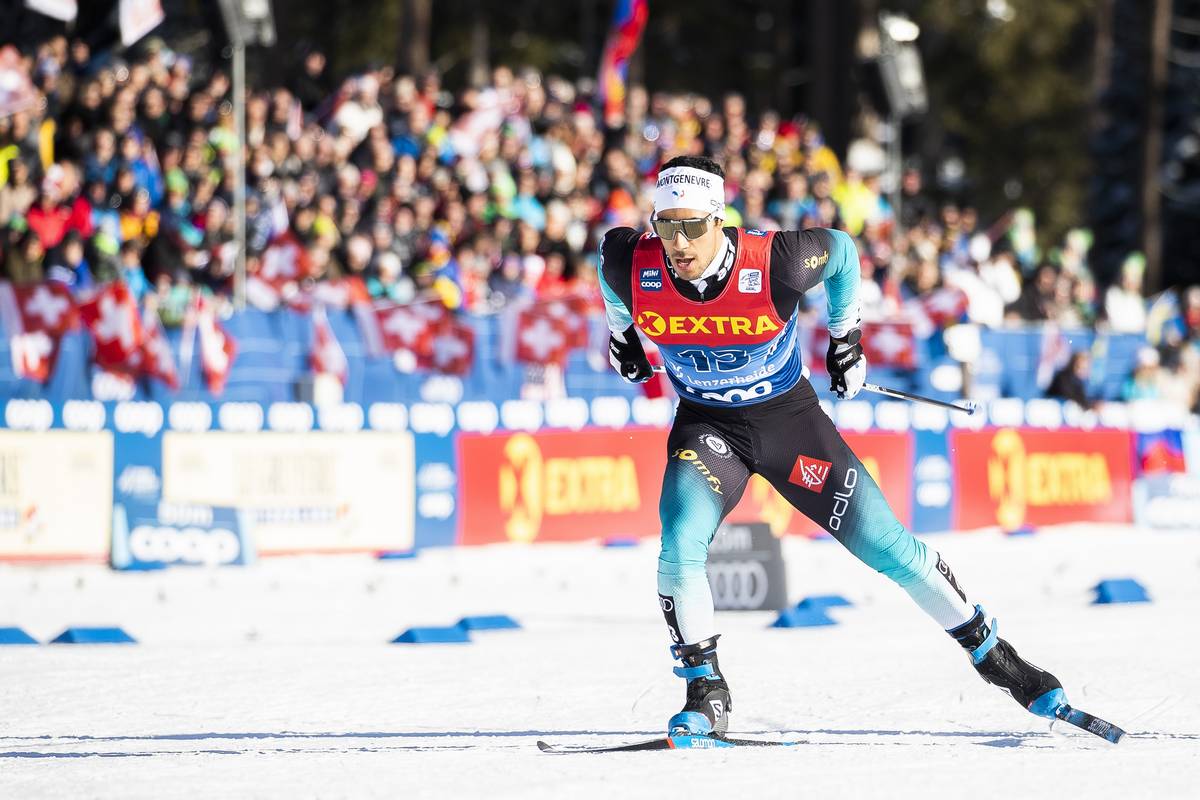
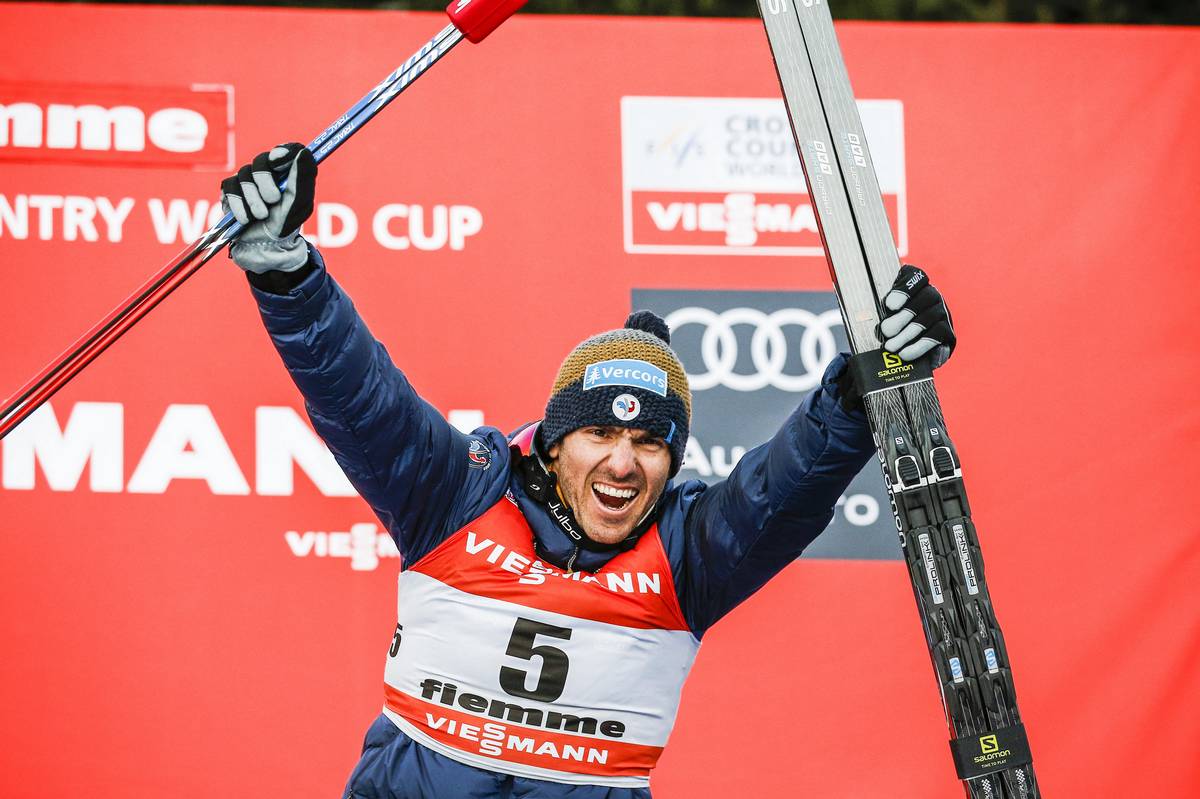
With a win in the final sprint stage, Richard Jouve becomes the 2022 World Cup sprint champion, hoisting his crystal globe. (Photo: NordicFocus)
For the past six seasons, men’s World Cup sprinting has been almost entirely about one athlete. Johannes Høsflot Klæbo has raced in 28 World Cup, Championship, or Olympic sprint events since November 2018, and remarkably, has won all but three of them. Incidentally, all three of those times have occurred in Ruka, Finland, and he has ended up a mere second place each time. In his first year on the circuit (2017), Klæbo took home the crystal sprint globe, starting a streak he continued for the next four seasons. In the 2020/2021 season the Norwegian team skipped many of the World Cups due to the coronavirus pandemic and Klæbo finished eighth in the sprint rankings.
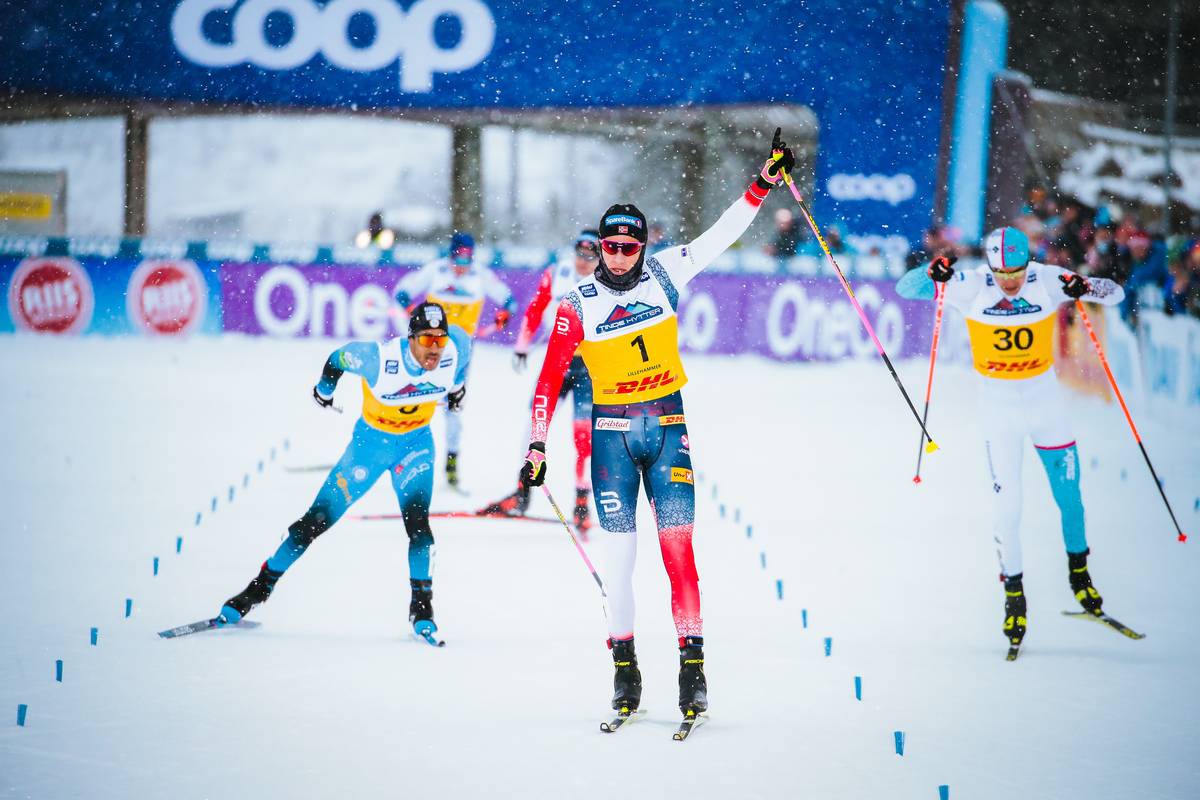
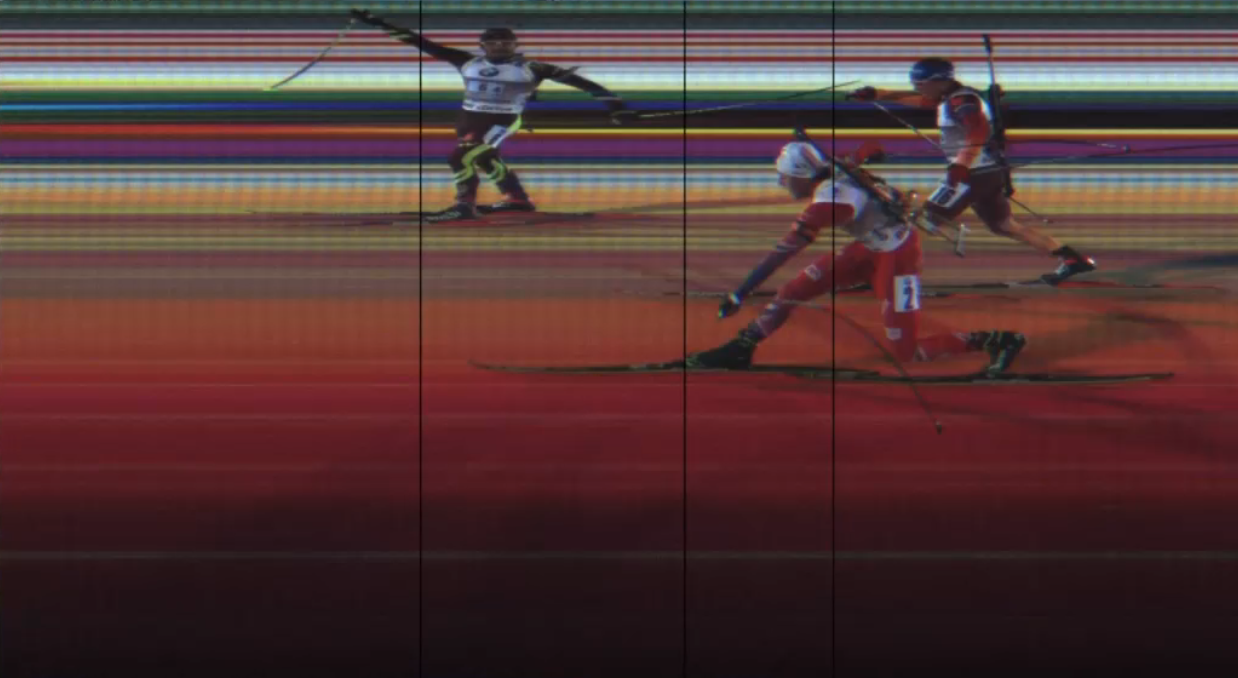
Johannes Høsflot Klæbo takes the win in the opening sprint stage of Lillehammer’s mini tour. Norway’s Thomas Helland Larsen (Bib 30) edged out France’s Richard Jouve for second and third, respectively. (Photo: NordicFocus)
This year the globe was delivered to a new nation as Richard Jouve topped the sprint rankings, earning France its first ever World Cup sprint globe.
A positive COVID test for Klæbo at the beginning of March took him out of the running for the remainder of the season, meaning he missed out on the final two individual sprints. Sitting in second place at a deficit of 210 World Cup sprint points, this window of opportunity was all that Jouve needed to step into the lead. With back-to-back victories in Drammen and Falun, Jouve secured the crystal globe with 568 points, just six ahead of Klæbo.
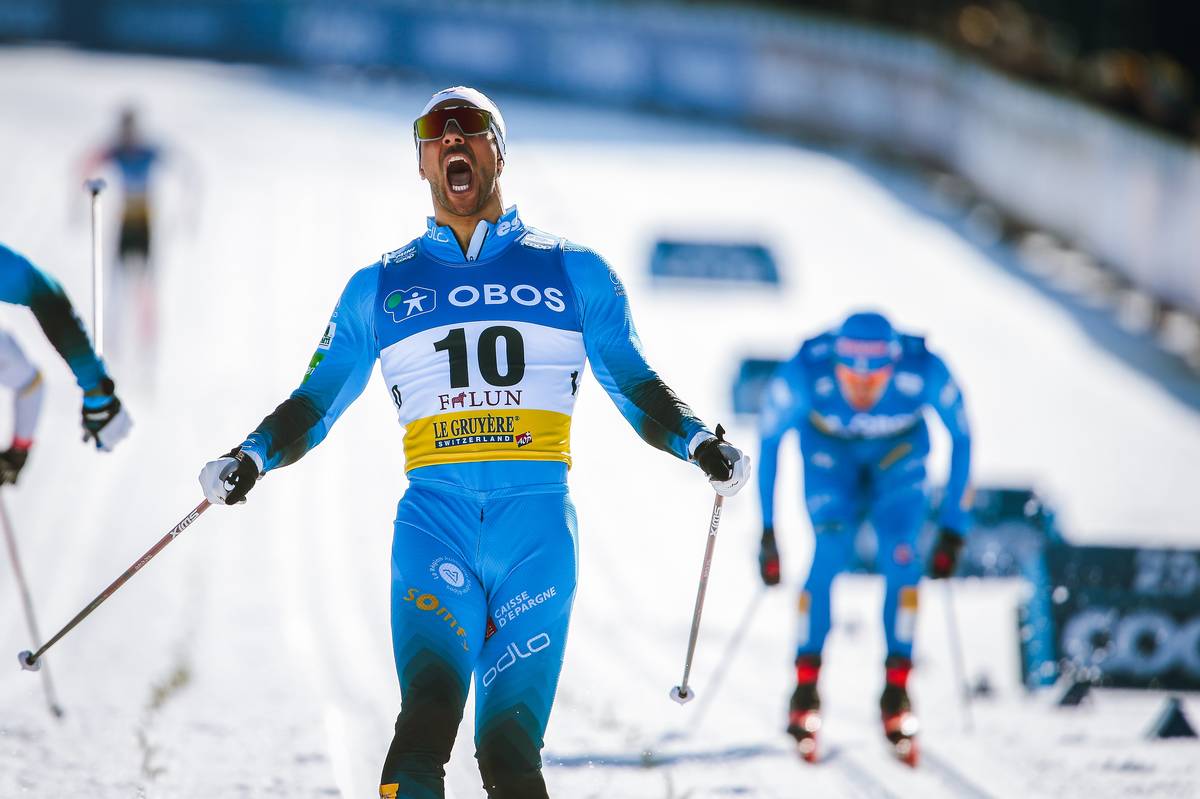
Richard Jouve (FRA) lets out a victory cry as he takes the classic sprint win in Falun. (Photo: NordicFocus)
Jouve was born in south-eastern France in the town of Briançon to a Djiboutian mother and an alpine-ski racing French father. He opted to pursue nordic skiing instead of alpine and has represented the Club de Sports à Méribel domestically since 2020.
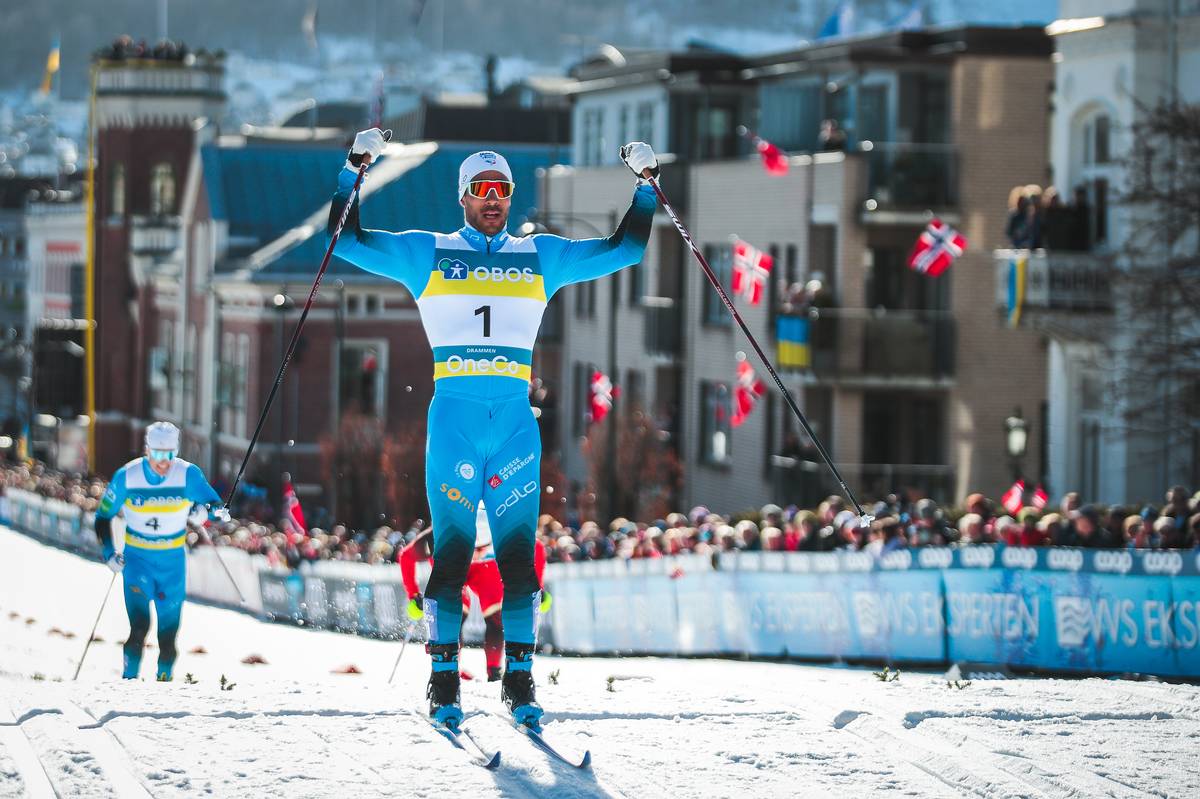
Jouve made his World Cup debut in Otepää, Estonia in 2015 where he finished 49th. His first podium finish came just months later when he finished third in Lahti, Finland. Since then Jouve has earned another thirteen podium finishes on the World Cup circuit, though his first victory came just a few weeks ago in Drammen, Norway.
Richard Jouve earns his first-ever World Cup victory in the classic city sprint in Drammen, Norway (Photo: NordicFocus)
Like most highly-ranked athletes this season, Jouve had his sights set on an Olympic medal in Beijing. However, during the individual freestyle sprint, his stronger suit, he missed out on a lucky loser spot by 0.08 seconds, after placing third in a stacked and tactical semi-final heat. Jouve ended his day in 7th position. He did, however, support the French team to a bronze medal in the 4 x 10 k relay, adding to an Olympic medal collection that began with a team sprint bronze medal in 2018, where he raced with Maurice Magnificat.
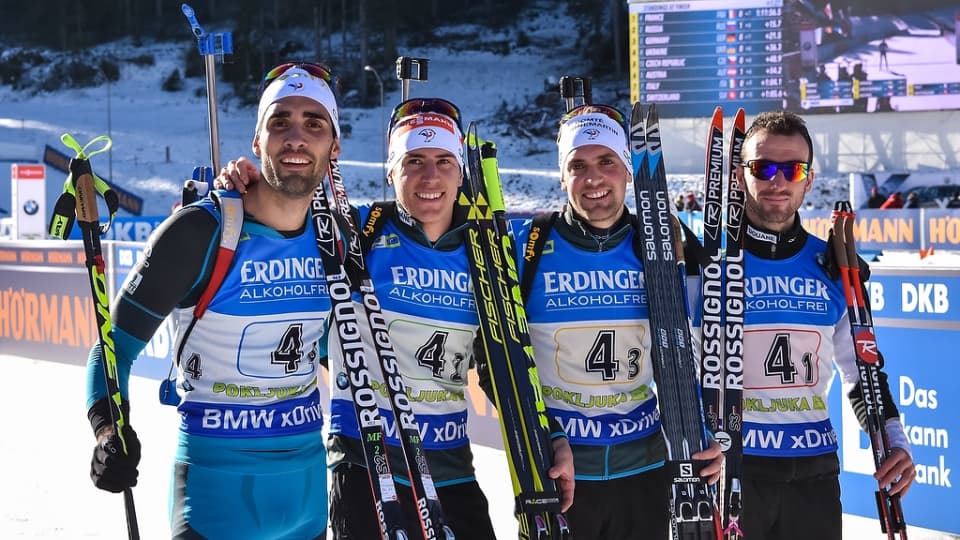
All stoke, Richard Jouve, Hugo Lapalus, Clement Parisse, and Maurice Manificat of France (l-r) celebrate bronze in the men’s 4 x 10 k relay at the 2022 Beijing Olympics (Photo: NordicFocus)
Despite missing out on Olympic hardware, the 2021/22 season marked a jump in Jouve’s results, as he finished on the podium in five of eight individual World Cup sprints. He missed just two final heats, finishing seventh on both occasions. This consistency is what set him up to win the World Cup sprint title, marking significant improvement from last season when he finished a previous personal-best of sixth place overall.
Richard Jouve of France sprinting to third in Stage 2 of the TdS in Lenzerheide, Switzerland in 2019. (Photo: NordicFocus)
In earning this sprint globe, Jouve became the first ever French athlete to end the season on top of the World Cup rankings, in overall, distance or sprint. Speaking to what this accomplishment meant to him, Jouve shared the following words (in French) with the publication ski-nordique.net “It’s a huge satisfaction, to be first for the duration of a season is an incredible thing. For that one must be consistent in all the competitions and this year I succeeded at doing that. Klæbo wasn’t there for the last two races and I succeeded in doing what I needed to take home the globe.
“This little globe is very important for me. It’s the objective of a career, it’s a satisfaction for the whole team and also a particular emotion. We have a great team of sprinters with Lucas [Chanavat], with the others, and it’s a group that pushes each other to be the best [version] of ourselves. This week, I felt the pressure because I absolutely needed to win today in Falun to get this globe. This morning I was very nervous and I was scared in the quarter-final. Finally, I wanted to ski in front and I really succeeded. I am so content, so satisfied.”
French teammates Richard Jouve (left) and Lucas Chanavat (right) end their season in first and third, respectively, in the World Cup sprint standings. (Photo: NordicFocus)
Jouve’s long-time coach, Cyril Burdet told the French ski federation, “I think it’s something really strong with him. He has trained with me for years, we’ve had both good and bad moments together, that is part of all relationships with a coach. I really want to tell him thank you because what happened today is one of the great moments, clearly. It’s something incredible.”
Burdet continued, saying, “In fact, there is nothing but sport that can give us these types of emotions. For some weeks, we collapsed after the Games. Because the goal in the life of an athlete or a coach is an Olympic medal. It’s something that made us all sad that we didn’t get there. But today, to realize this opportunity, it’s something exceptional. So, thanks to you Richard [Jouve], it was huge.”
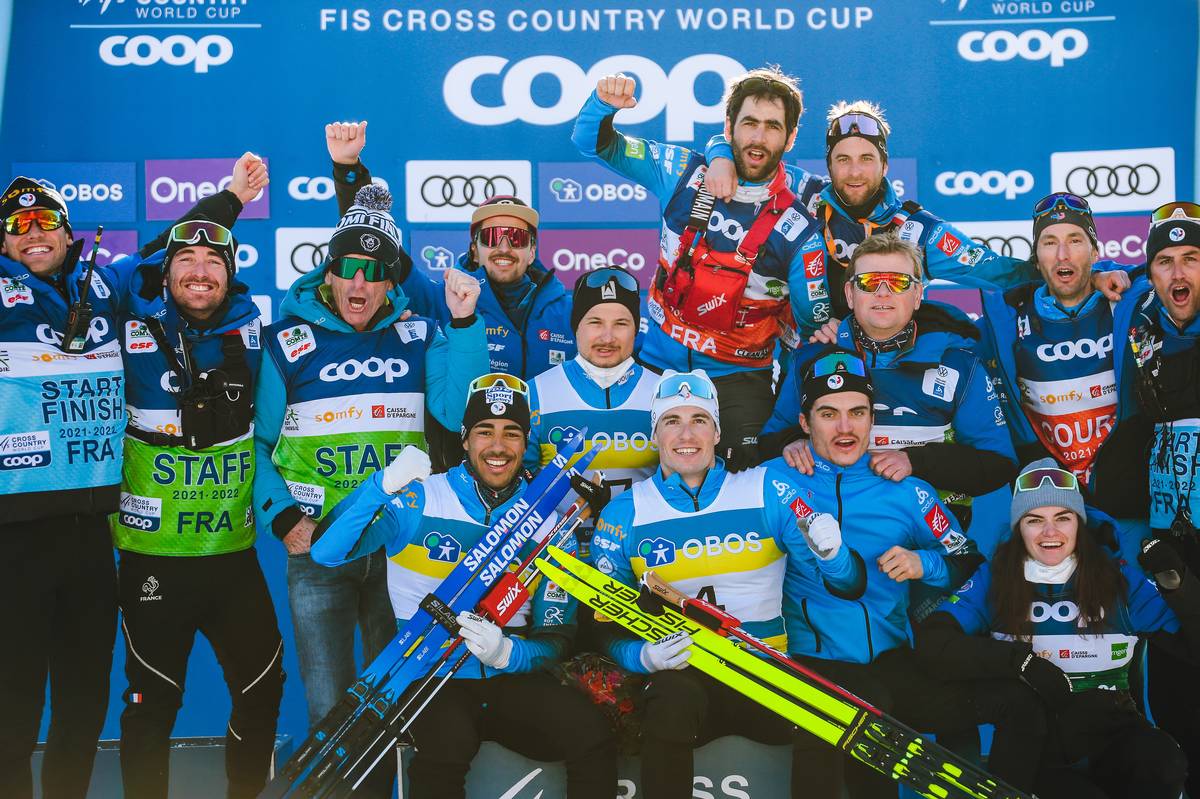
French Team celebrates a podium fronted (Richard Jouve- 1st) and backed (Lucas Chanavat- 3rd) by their countrymen. (Photo: NordicFocus)
At the age of twenty-seven, Jouve has many seasons of racing still ahead of him. As for the remainder of this winter, Jouve says, “I will focus on the French club championships with Méribel, and maybe the French Championships in Prémanon. We’ll see.”
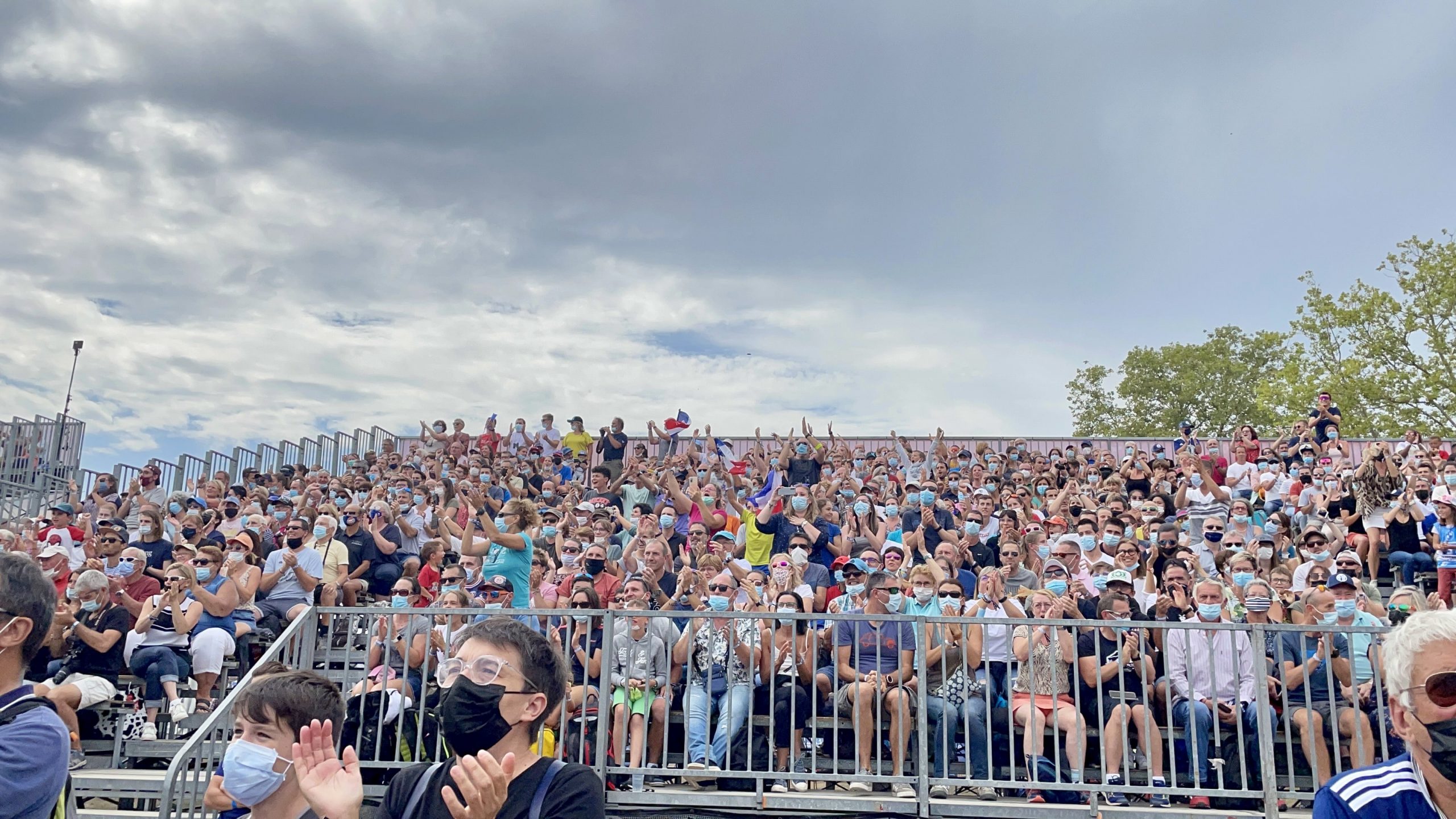
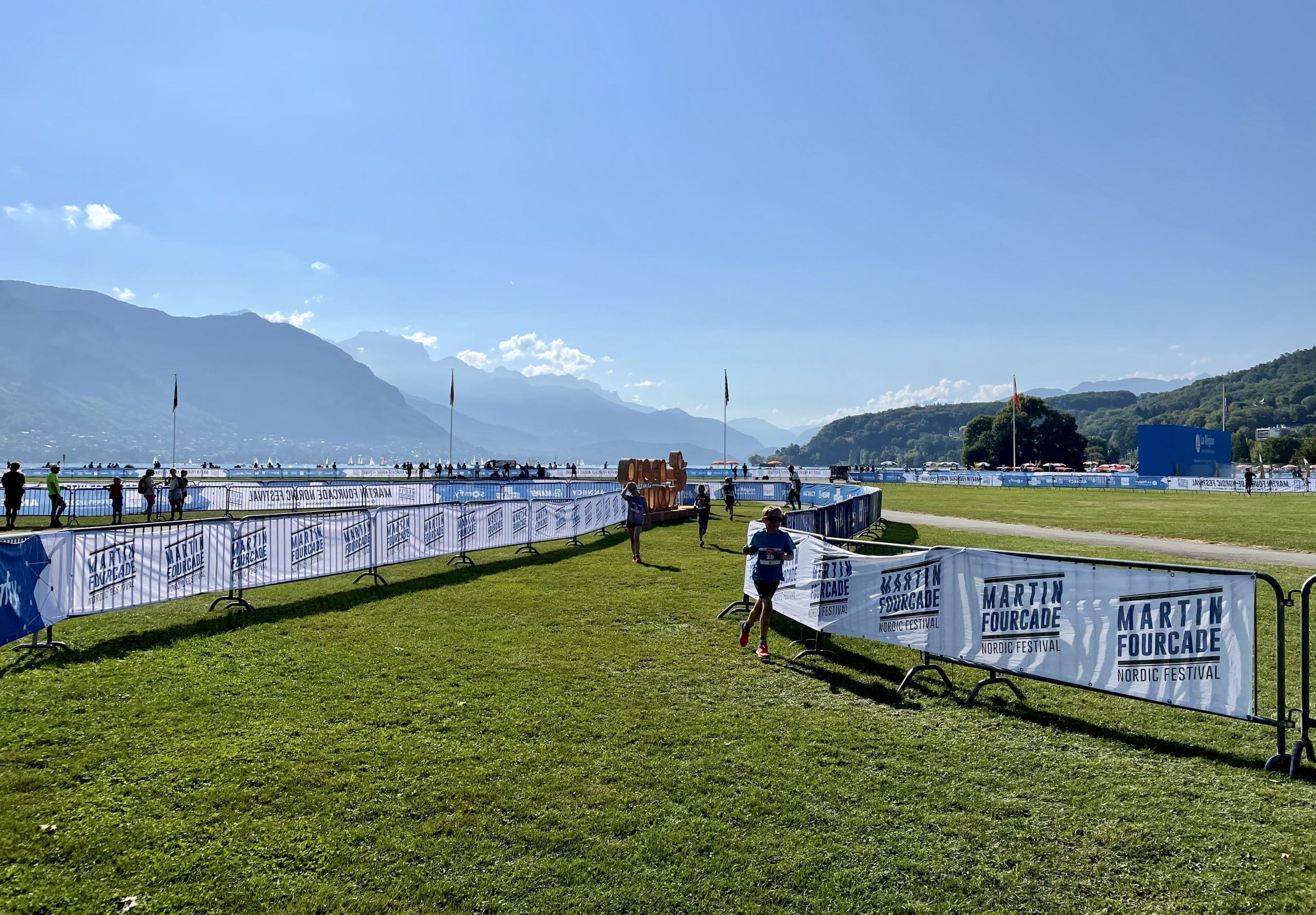
Enthusiastic fans fill the stands for the Martin Fourcade Nordic Festival.
Nordic festival are two words most North American ski fans can only dream about. Skinny skiers here are unlikely to experience the reality of such an event for themselves unless they make a trip across the Atlantic. For residents of France, the opportunity to participate in the second edition of the Martin Fourcade Nordic Festival presented itself this weekend and there were many eager attendees. This lucky expat was among the masses.
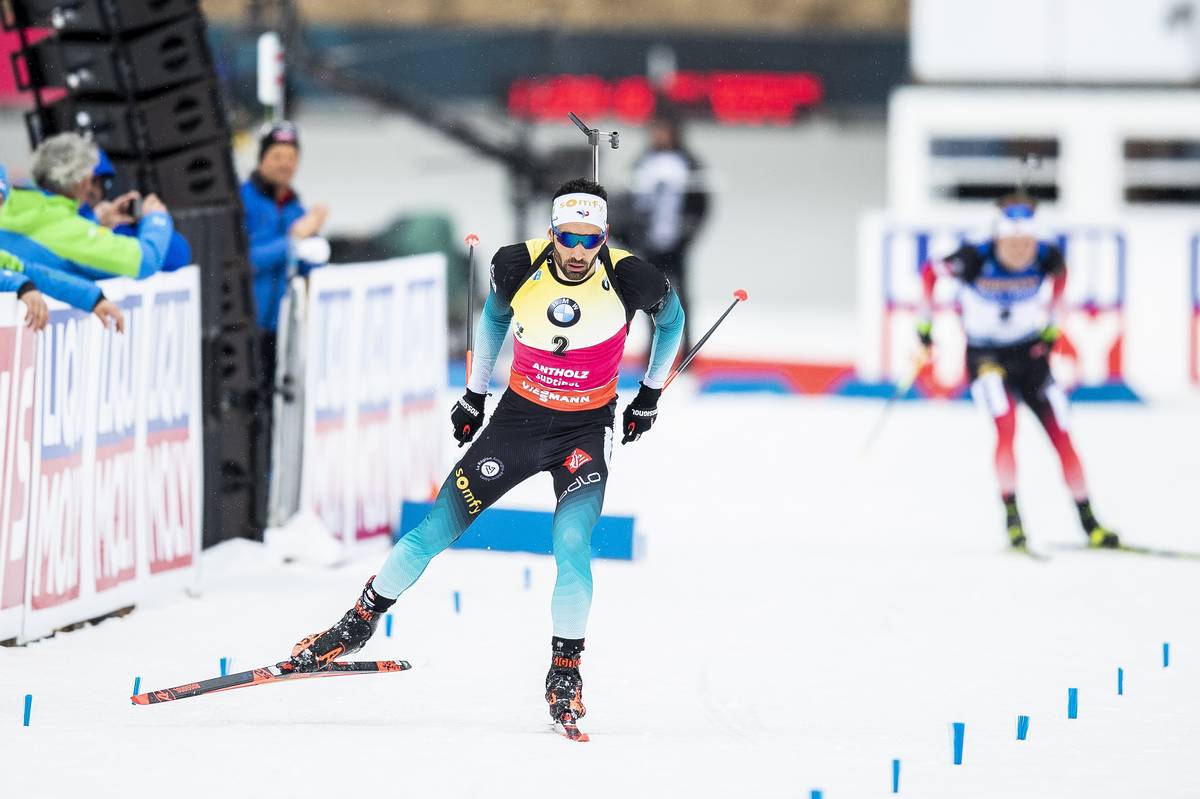
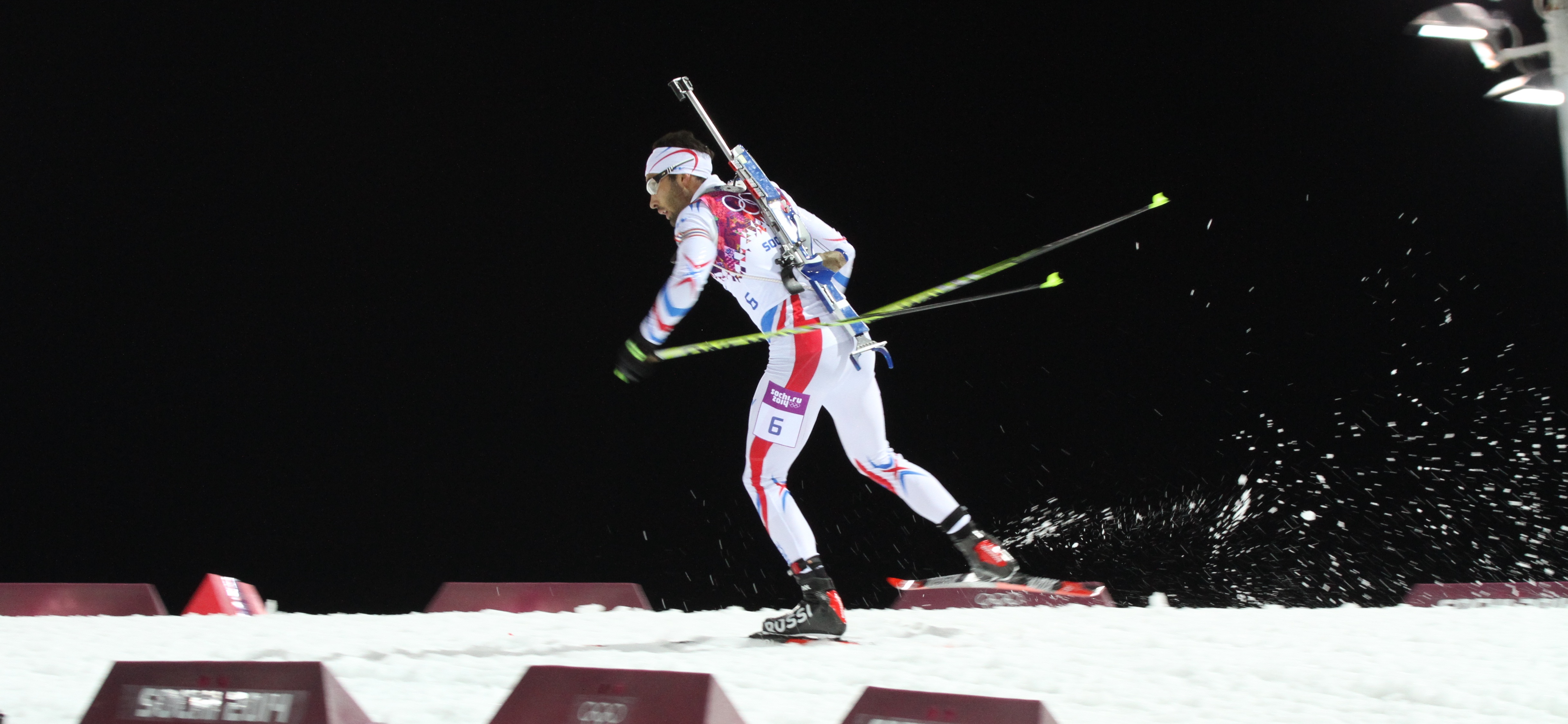
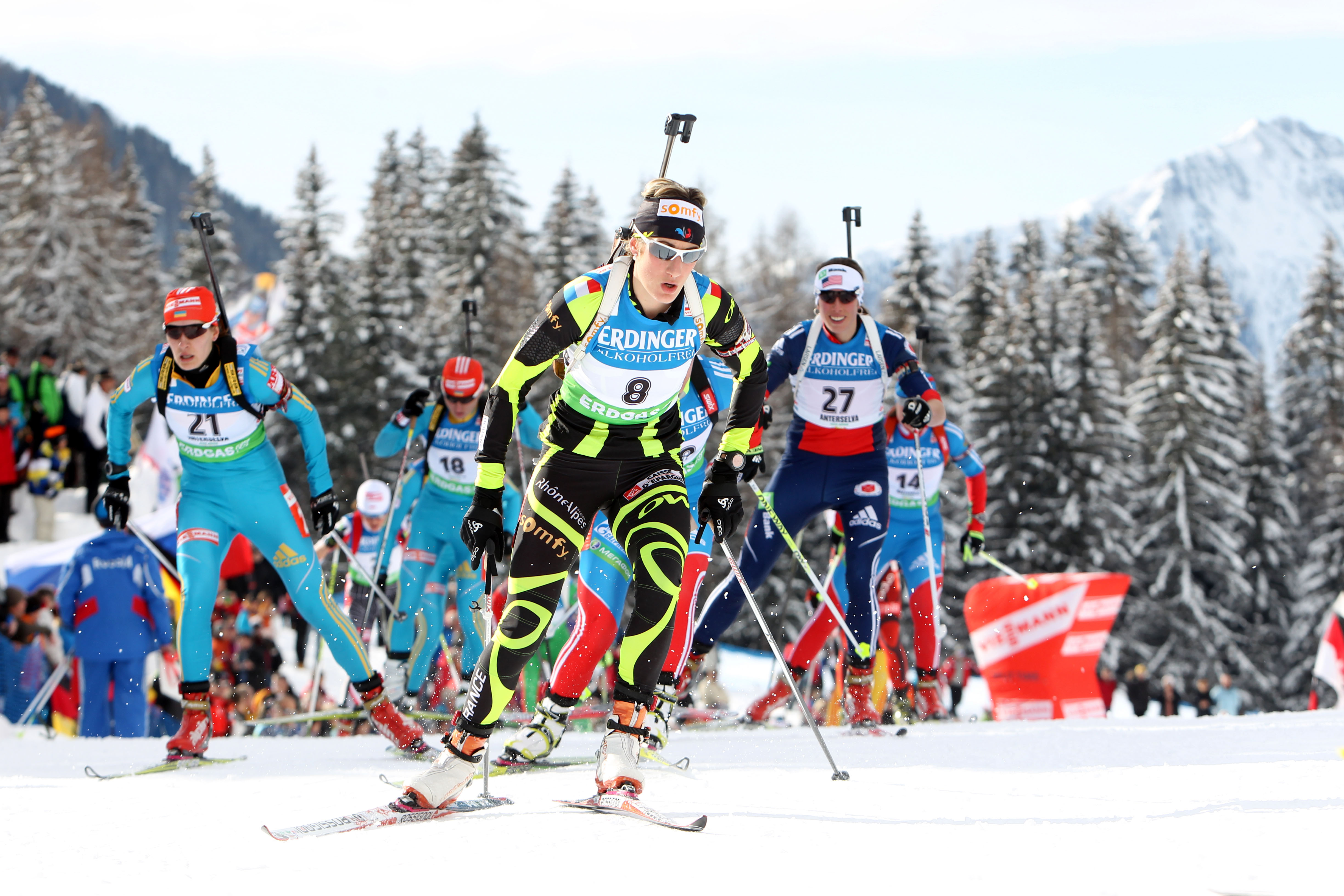
Martin Fourcade (FRA) IBU world championships biathlon (Photo: NordicFocus)
For those unfamiliar with the name, Fourcade retired from biathlon competition in March 2020 after a very successful career, including five Olympic gold medals and thirteen World Championships titles. He is the most successful French Olympian of all time and is celebrated as a beloved hero in his home country. Anywhere he went this weekend, he was accompanied by cheers and a train of fans hoping for autographs, handshakes, or photos.
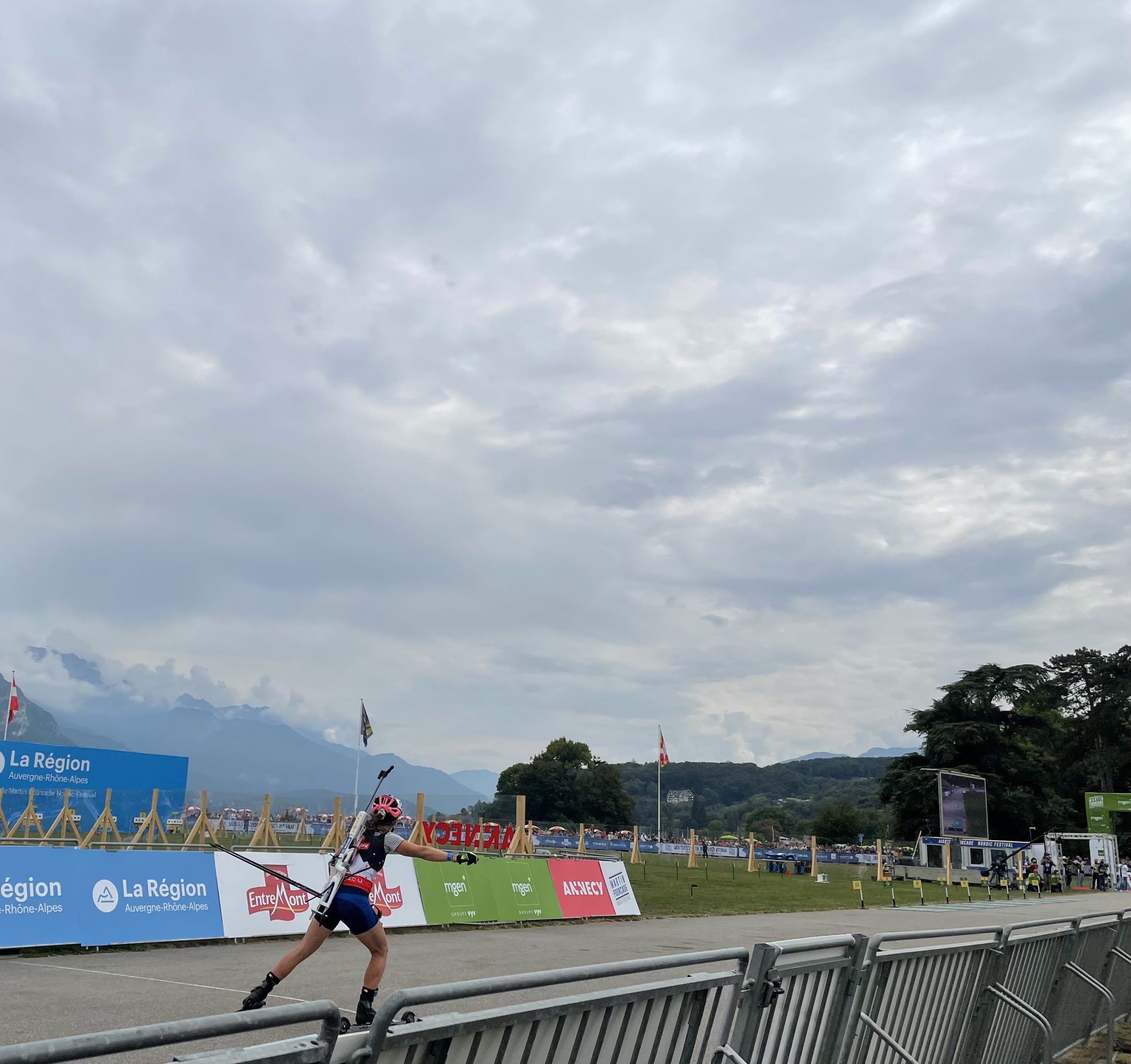
The festival stretched over three days, beginning Friday, September 3rd and wrapping up on Sunday the 5th. Located in Annecy, in the Haut-Savoie department of France, the stadium sat facing the electric blue water of Lac d’Annecy, rimmed by limestone bluffs.
It’s difficult to imagine a better setting for drawing crowds than the park Le Pâquier, which is right downtown and runs along the popular bike path that circumnavigates the lake. Indeed, the place was bustling with spectators all weekend long, both paying customers and those stopping by, drawn along the fence by all the commotion.
Tickets cost €33 (about $40), and were sold out before the event began. As evidence, several posts were made in the days leading up to the festival on the French nordic Craiglist-esque site, searching for available tickets.
In addition to tickets, to enter the venue one needed to present their pass sanitaire, essentially a health passport in the form of a QR code which proves either you’ve been vaccinated, had a negative COVID test in the last 72hrs or, recovered from COVID in the last 11 days to 6 months. Furthermore, masks were required, even though the event was taking place outdoors where typically masks are not required in France.
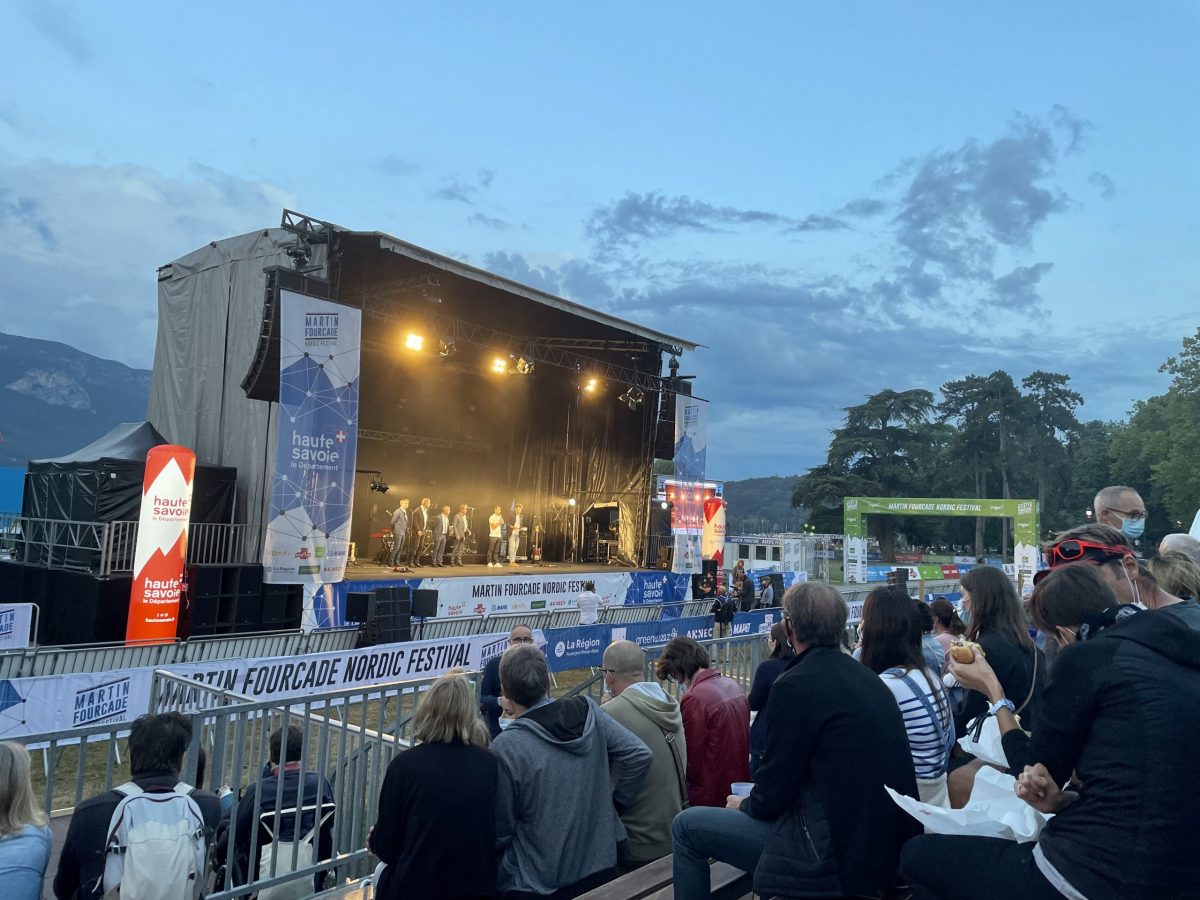
Kicking off the weekend with the presentation of the athletes on Friday evening.
The festivities kicked off in earnest Friday night, beginning with a presentation of the athletes on stage. While 30 international athletes had been recruited to the event, not all were able to make the journey. Many French national team members were present, both biathletes and cross-country racers, including: Richard Jouve, Renaud Jay, Delphine Claudel, Julia Simon, Anais Chevalier-Bouchet, Antonin Guigonnat, and Quentin Fillon-Maillet.
As for the international contingent, some notable names in attendance were: Tiril Eckoff (NOR), Johannes Dale (NOR), Sturla Laegrid (NOR), Oskar Svensson (SWE), Jovian Hediger (SUI), Nadine Faendrich (SUI), Laurien van der Graaff (SUI), and Emma Ribom (SWE).
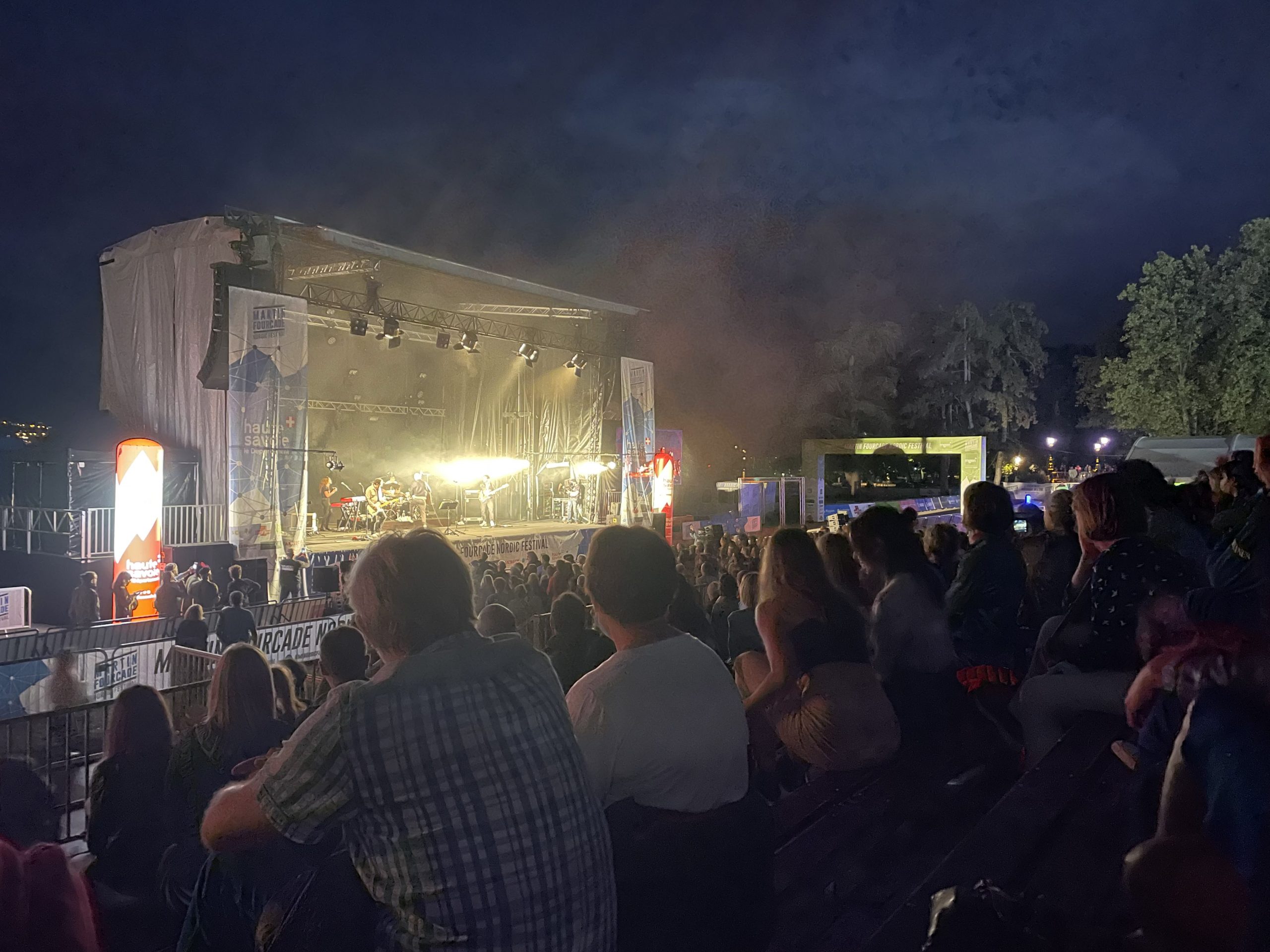
Following the presentation of athletes, a concert featuring Gaëtan Roussel, a well-known French musician drew quite a crowd and provided the festival with quite a lively start, setting the tune for the rest of the weekend.
Gaëtan Roussel in concert, Friday evening.
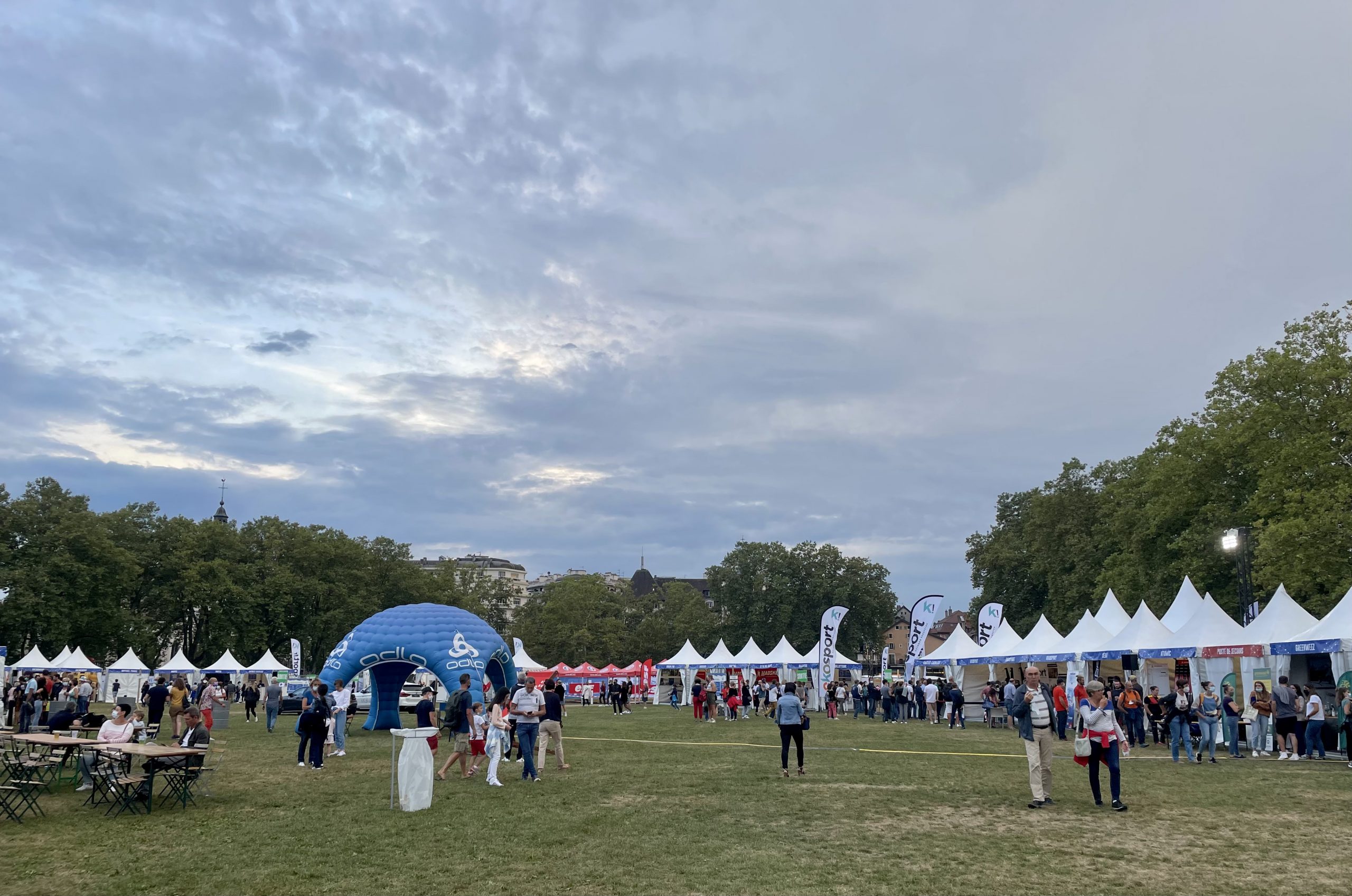
Saturday started with the exposition village opening, a circle of vendor tents featuring nearly 60 brands, food and drink options, and shops. Attractions included, virtual biathlon, ski-erg competitions, and athlete appearances.
Lines at both the Fischer and Salomon tents stretched for quite a distance as athletes patiently sat for hours, signing autographs and taking photos with fans. Not only were famous nordic athletes present, but recent competitors in the Ultra Trail du Mont-Blanc mountain running series, such as Camille Bruyas who took second place in the storied 170 km full tour around Mont-Blanc, and Thiabuat Beronian who finished 3rd in the 100 km “CCC”. These events both end in Chamonix.
The exposition area, filled with vendors (pictured here Friday evening).
Gradually, the crowd began to shift focus towards the stadium, as athletes started warming up for the afternoon show races. Over 3,000 attendees filed into the stands, giving Martin Fourcade a cheer that lasted for minutes as he gave an introduction.
Explaining his motivation for organizing this event, Fourcade said, “When I think of a Nordic festival, I want an event that grows the sport, that shares the sport, and that promotes the sport.” He thanked the crowds for their support and provided a schedule for the afternoon events, starting with women’s biathlon.
Eight elite biathlete women toed the start line, headed by Eckoff of Norway. They completed four laps of the flat course, with two prone and two standing rounds of shooting. Eckoff lead to start, followed by Chevalier-Bouchet (FRA) who cleaned the standing shoot quickly and gained the lead for the penultimate lap, to the joy of the crowd.
She maintained her lead and entered the final shooting round with a bit of a lead to Eckoff (NOR), cleaning again in rapid time. Franziska Preuss of Germany was second out of the range, followed by Eckoff.
Out on the course, which at times was flanked directly by the lake where boaters had pulled close to cheer, Eckoff passed Preuss (GER) to find second place. Chevalier-Bouchet (FRA) finished first, Eckoff second (+14) and Preuss third (+29.2).
The spectators were thrilled to begin the competitions with a French victory and showed their appreciation in the form of overwhelming applause.
“Yeah it’s amazing,” said Chevalier-Bouchet after her victory, “Thanks everyone. I can’t hear anything because of the noise!”
Anais Chevalier-Bouchet (FRA) pumps up the crowd as she heads towards the finish line.
Tiril Eckoff similarly enjoyed the support of the crowd and said, “It was very fun to be in such a good atmosphere again. It’s the first time in two and a half years to be in front of crowds so it’s really fun.”
Tiril Eckoff (NOR) finished second.
Up next was the men’s biathlon. Guigonnat (FRA) was the first to clean and left the first round of shooting in the lead, while Fillon-Maillet (FRA), a fan favorite, struggled and exited well behind the pack. Through the second time, Doll of Germany was first to clean with Fak (SLO) right behind. Into the standing round, Laegrid (NOR) was the first to clean, Fak in second but with a penalty and Khalili (RUS) in third.
Sturla Laegried (NOR) leads the pack along the lakeside. (Photo: NordicFocus)
For the final time, Laegrid entered without anyone else in sight, shot 5/6 and left the range still in the lead. Khalili (RUS) was next out with Fak in third, followed closely by Fillon-Maillet who had made up ground and had a fast final round of shooting.
Laegrid skied the last lap with a healthy gap and high-fived fans as he headed for the finish with a big lead, ending in 25:02.4. The Russian, Khalili held on for second place and Doll (GER) took third having passed Fillon-Maillet (FRA) and Fak (SLO).
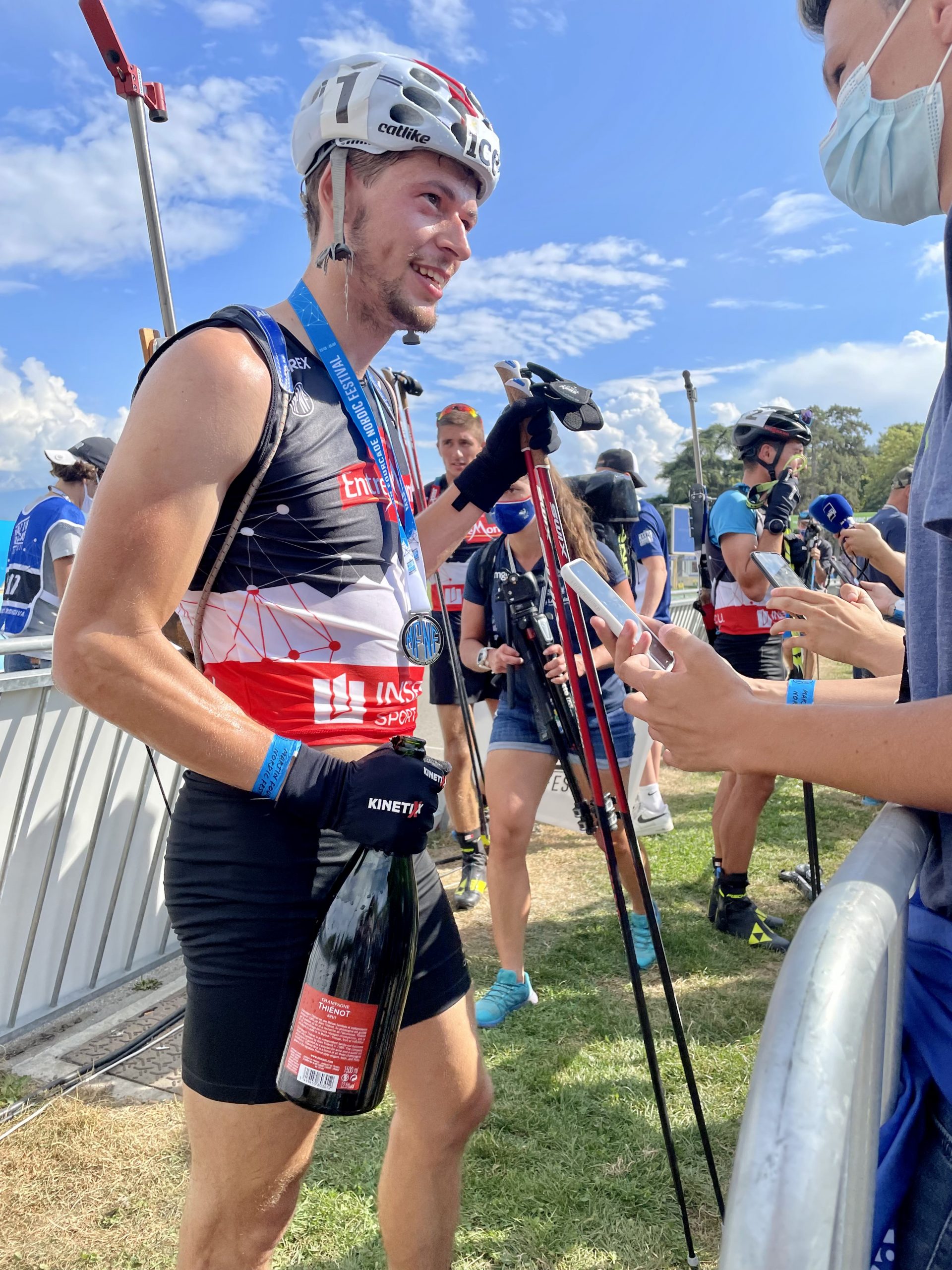
“I’m a very lucky man today so thank you Annecy!” said Laegrid after the race, “It was really fun and it was so nice to say hi to all my fans. Merci beaucoup!”
Sturla Laegrid (NOR) holds a bottle of victory champagne after his win.
With the biathlon races concluded, the crowd lost some it’s density before the cross-country rounds, biathlon being more popular. Nevertheless, there were still plenty of spectators who stuck around as the women lined up for their event. Not a true sprint event, the cross-country skiers completed six laps in succession with the final skier across the lap line being eliminated each round.
The pack stayed tight for the first five laps, gradually losing skiers off the back. With a tight course, passing was quite difficult so the leaders did not change much. French skier Flora Dolci had the lead into the final lap, with the top seven athletes all within 1.4 seconds.
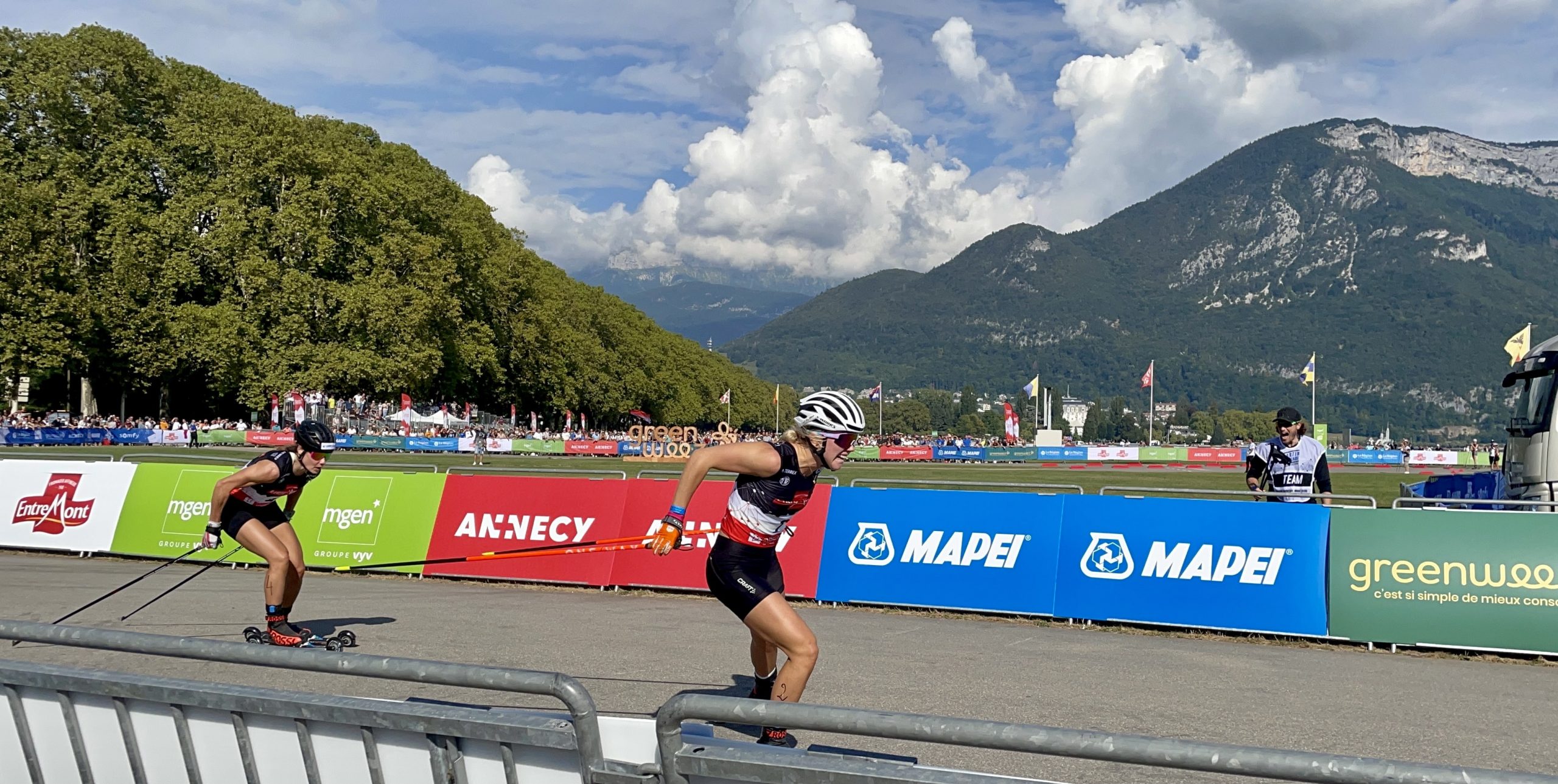
Faendrich (SUI) dropped off as they passed along the lake, and then there were six. Ribom (SWE) made a pass to the front, shadowed by Van der Graaff (SUI). Rounding the final corner Van der Graaff launched an attack but Ribom held her off, keeping the advantage heading into the finish.
Emma Ribom (SWE) guns for the finish line, followed by Laurien van der Graaff (SUI).
Behind them, Dolci (FRA) outsprinted Claudel (FRA) to take third place, +4.5 back. “I felt really strong out there so it was a fun race,” said Ribom, “My plan was to have a good position the whole race so I tried to stay in the front and keep on pushing to the finish line.”
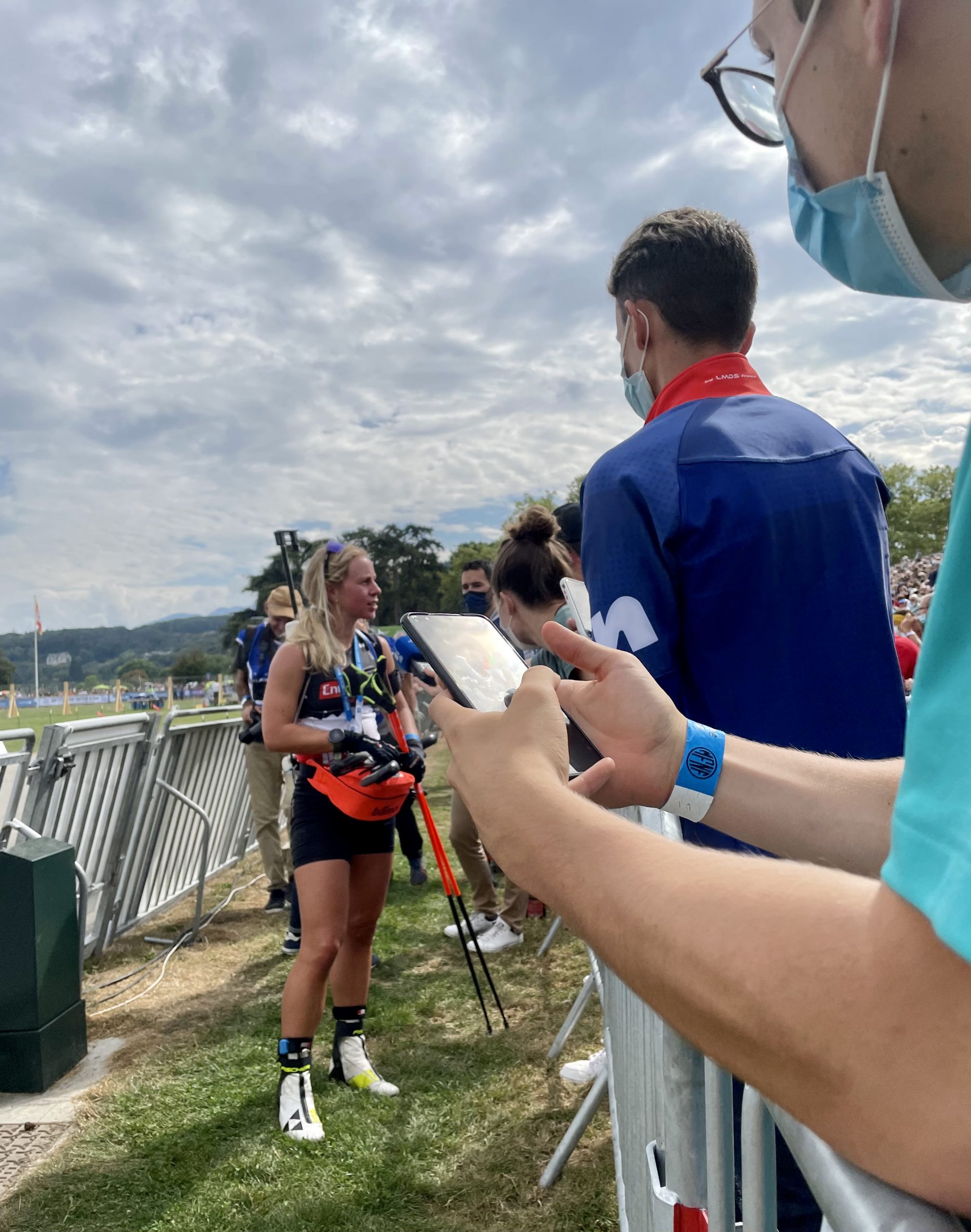
Post race interview with Emma Ribom:
Van der Graaff, who speaks a bit of French, said, “I am very happy with the competition but not to do an interview in French! I tried really hard to get a second win here, but Emma was really strong.”
The final race of the day was the men’s cross-country. With such tight pack racing there was sure to be some broken equipment out there and sure enough, nearly every lap saw someone with a broken pole. Hugo Lapalus (FRA) was the first to be eliminated, Hediger (SUI) broke a pole near the end of the second lap and was next to stop.
Svensson (SWE) dropped off the pace during the third lap and was stopped, followed by Valentine Chauvin (FRA) on the next lap. Jouve (FRA), a race favorite, broke a pole in lap three but managed to hang with the group, only to be eliminated with two laps to go. Heading into the final lap, Adrien Backscheider (FRA) had the lead, with Marcus Grate (SWE) the last to be eliminated.
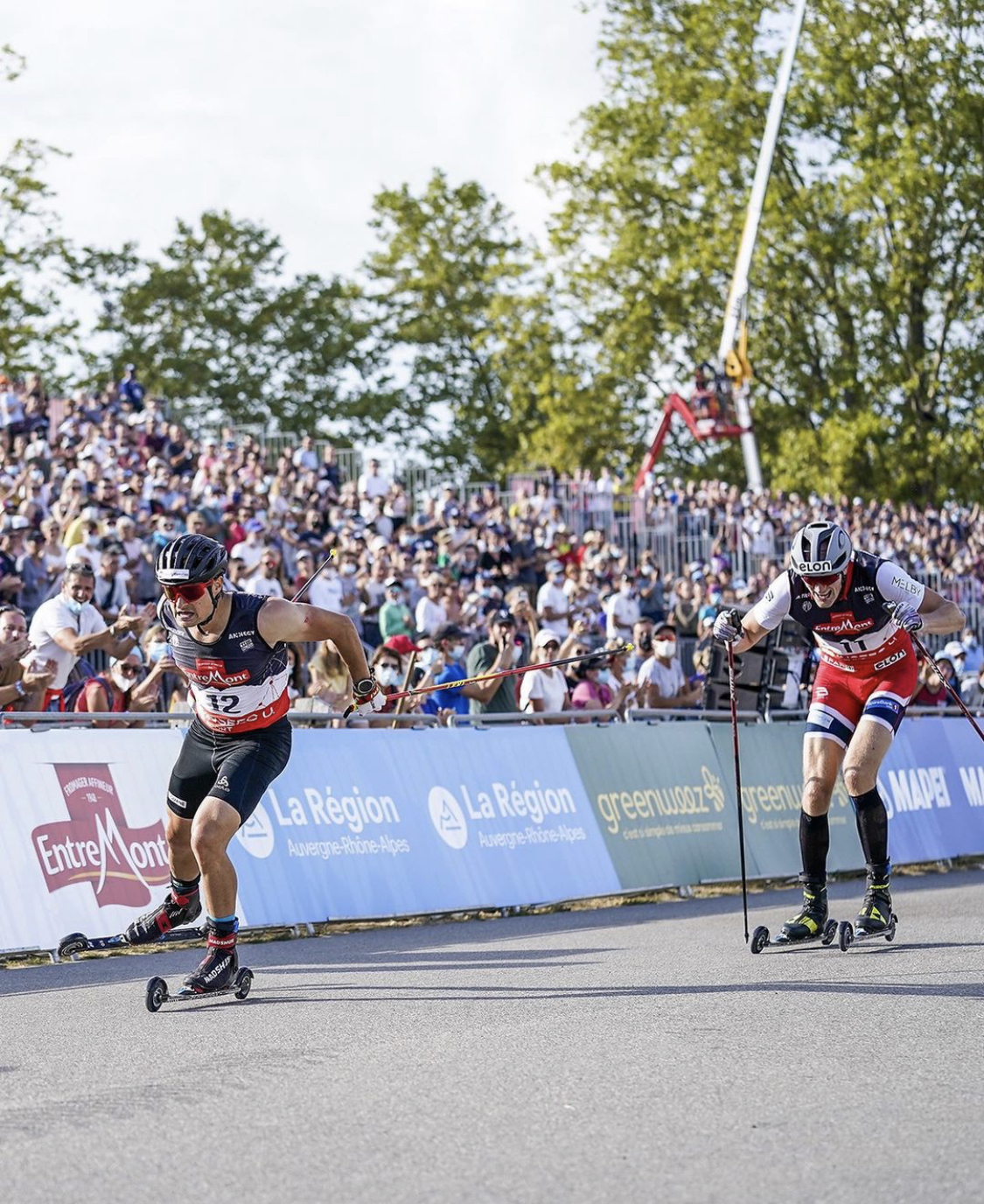
As they neared the finish, Jay (FRA) and Pål Aune (NOR) were duking it out, ultimately the win going to Jay. Arnaud Chautemps of France finished third.
“I’m really happy,” said Jay, “I wasn’t able to be here two years ago so this is really nice.”
Renaud Jay (FRA) and Pål Aune (NOR) speed towards the finish (Photo: NordicFocus)
After the professionals raced on Saturday, it was the public’s turn to compete on Sunday. The “Biathlon Running” was open to all, involving teams of 4-6 in a relay style event. First up to compete were the kids, racing a 1km course with obstacles and shooting in between laps, followed by the adult teams.
Kids navigate the “toile de l’araignée” (spider web) in Sunday’s obstacle course.
There were three categories to sign up under (Mixed, female, and male) and the price was €200/team. The competitors were enthusiastic and lots of smiles were seen out on course, a fun way to wrap up a fun weekend.
Scenic backdrop of Sunday’s biathlon running event.
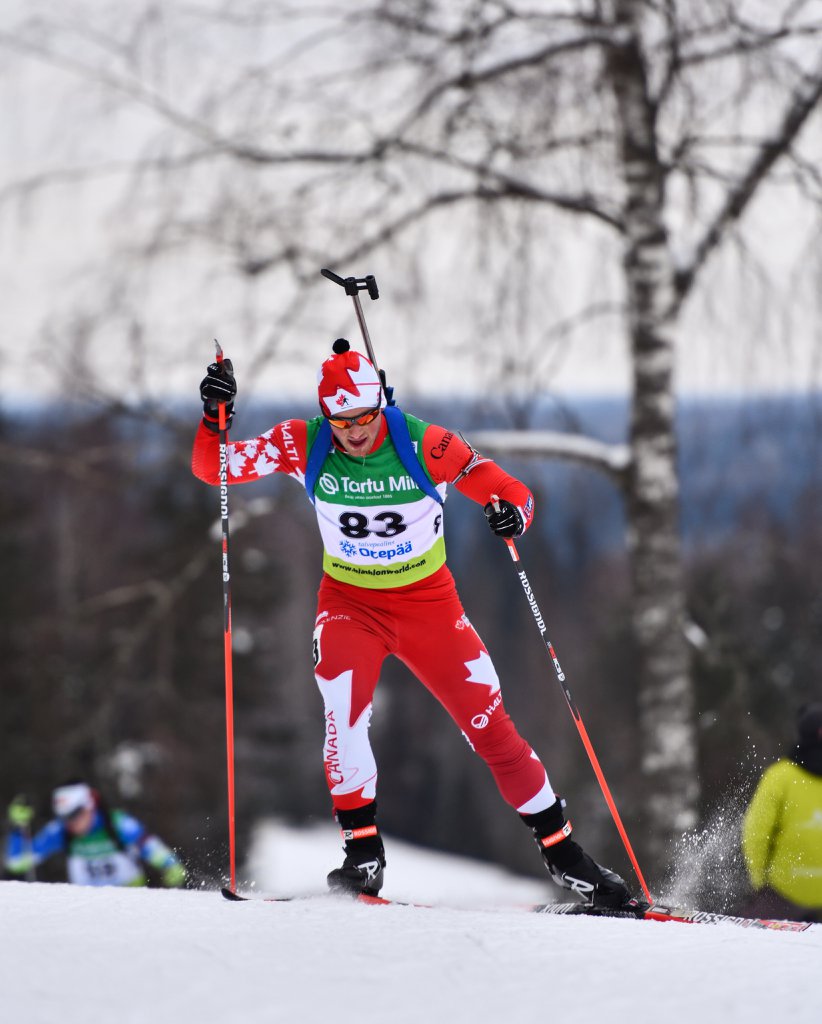
Canada’s Ryan Elden racing in the youth men’s 7.5 k sprint at 2018 IBU Youth World Championships in Otepää, Estonia. (Photo: Bryan Dickson)
In an effort to showcase the North Americans competing at this past week’s International Biathlon Union (IBU) 2018 Youth and Junior World Championships in Otepää, Estonia, we asked those qualifying athletes several questions about themselves — actually, we had them fill in the blanks. Here we have 18-year-old Ryan Elden, who represented Canada at his first World Youth Championships.
Over the last week, Elden placed 49th in the youth men’s 10 k pursuit, 59th in the 7.5 k sprint and 81st in the 12.5 k individual.
***
“My full name is Ryan Alexander Elden, but I go by Ryan pretty much all the time.
I was born and raised in Quesnel, British Columbia, and I learned to ski at the age of 2.
Between Trials and Youth Worlds I spent my time competing in Europe on the 2nd international Biathlon tour. I competed in races in Nové Mesto, Czech Republic and Pokljuka, Slovenia. After racing I spent the last 2 weeks in France, at my coach Etienne’s hometown, doing our final bit of training before Worlds.
The hardest/most fun workout we did during the summer in Whistler with the Whistler Nordic Training Centre was pulling tires on our roller skis.
The biggest thing I’ve been working on this season is shooting. I’ve been a little inconsistent in the past so I’ve been doing a bit of extra work to improve in that area.
This is my first time in Estonia and my second time racing internationally. My first time were the races I did in Czech Rebublic and Slovenia three weeks ago. It’s been a huge learning experience and a ton of fun.
One difference I’ve noticed between Canada and Estonia are the older buildings. It has a really cool mix of very modern buildings and very old buildings.
At Worlds, I’m really excited to see how I size up against the other biathletes from all around the world.
One race I’m especially targeting is the pursuit because it is the most fun in my opinion.
Watching the Olympics before racing has been really inspiring. My favourite part of watching the Olympics is hearing the stories of the athletes and what they’ve gone through to get to where they are today. I get so excited every time medalists are tearing up with happiness on the podium after finally achieving their dreams. If I had to choose someone, I would like to be like Johannes Thingnes Bø. A great champion and amazing athlete, but also personable and humble.
Here at Worlds I want to meet as many different as I can and learn about the other countries.
My favourite thing at breakfast (not here specifically but also here) is eggs with cheese.
The first thing I thought of before coming here was cold.
Now that I’m here, I don’t think I will ever forget how flat it is. Our course is anything but flat, surprisingly, but the countryside we drove through was very flat. It has beautiful scenery though.
If I had a ton of spare time here I would spend it exploring the larger towns and checking out cool buildings.
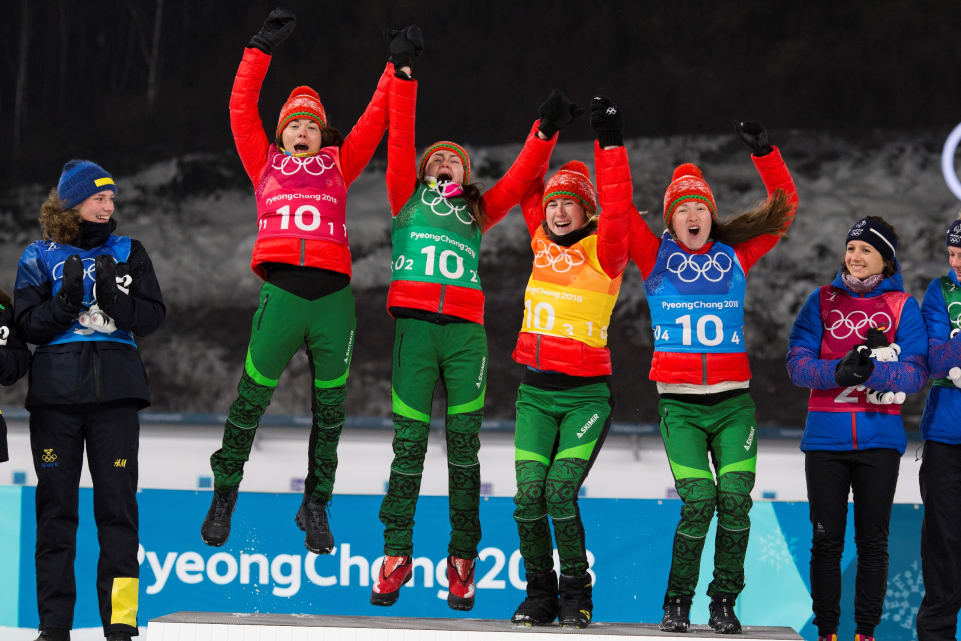
The Belarusian women’s biathlon team of Nadezhda Skardino, Irina Kryuko, Dzinara Alimbekava, and Darya Domracheva celebrates winning gold in the relay. They were ranked 10th coming into the day. (Photo: IBU/Biathlonworld.com)
Ranked just 10th coming into today’s women’s relay, the team from Belarus stole the show with Darya Domracheva skating across the line to claim the fourth Olympic gold of her career after strong efforts from Nadezhda Skardino and Iryna Kryuko, both of whom have stood on the World Cup podium before, and newcomer Dzinara Alimbekava, a 22-year-old newcomer with just 11 World Cup starts to her name. It was the first relay medal ever won by Belarus at the Olympics.
The setting was windy and snow-blown and the race was extremely tight, with seven teams with one penalty loop (or a few spare bullets) worth of time going into the final leg. The Belarusians’ nine spare rounds were the best shooting of the day; while that spare-round tally was matched by Slovakia, Kazakhstan, Bulgaria, and Japan, those teams had penalty loops as well.
Sweden actually wasn’t one of them, but with perfect shooting and a fast ski time 15 k gold medalist Hanna Öberg brought the team to silver after starting the anchor leg in eighth, a minute back. She benefitted from many missed shots by the leaders, and then passed France’s Anais Bescond on the final loop to claim second, 10.7 seconds back, for her teammates (Linn Persson,Mona Brorsson, and Anna Magnusson) while France (Bescond, Anais Chevalier, Marie Dorin Habert, and Justine Braisaz) took bronze (17.6). These medal-winning teams used 12 and 14 spare rounds, respectively, an unusually high tally.
Norway (Synnøve Solemdal, Tiril Eckhoff, Ingrid Tandrevold, and MarteOlsbu) finished fourth, +29.7, Slovakia fifth (+38.4), Switzerland sixth (+43.5) after winning a photo finish against Poland (+43.6), and Germany finished seventh (+53.9).
The Canadian team of Sarah Beaudry, Julia Ransom, Emma Lunder, and Rosanna Crawford finished 10th, +1:33.4. Their shooting of eleven spare rounds and one penalty loop was among the better scores of the day.
The United States had a strong start, with Susan Dunklee tagging off in second place, Clare Egan maintaining a good position in fourth, and Joanne Reid rebounding from one bad shooting stage to tag off in sixth. Anchor leg Emily Dreissigacker crossed the finish line in 13th, +2:01.9.
2018 Olympics (PyeongChang, South Korea): Nordic Combined Team Competition
After sweeping the medals in the large hill competition, perhaps it was not a surprise that Germany won the nordic combined team event. It was a blowout: ranked second after the jumping round but starting the cross-country ski relay just six seconds behind Austria, the Germans quickly took the lead and then just extended it. Their team of Vinzenz Geiger, Fabian Riessle, Eric Frenzel, and Johannes Rydzek won by 52.7 seconds over Norway’s Jan Schmid, Espen Andersen, Jarl Magnus Riiber, and Jørgen Gråbak. Austria hung on for third, +1:07.8, with Wilhelm Denifl, Lukas Klapfer, Bernhard Gruber, and Mario Seidl.
The United States team of Taylor Fletcher, Ben Berend, Ben Loomis, and Bryan Fletcher lost out on a photo finish with Poland and finished 10th out of 10 teams, +5:16.7.
So many suits — The start of the women’s 15 k skiathlon on Saturday, Feb. 10, Day 1 of the 2018 Winter Olympics in PyeongChang, South Korea. (Photo: FlyingPointRoad)
PYEONGCHANG, South Korea — This time last week, we brought you the basics of Olympic cross-country and biathlon cheat sheet, and not long after, we received a comment from a reader asking for a uniform cheat sheet. We, too, found ourselves sometimes befuddled. During Saturday’s skiathlon, this reporter found himself looking for the emblematic stars on the U.S. Ski Team’s new unis. There were stars, think Diggins and Kalla, just no obvious stellar-like branding on the USST suits.
So for you and for us, here’s a basic cross-country race suit cheat sheet. Disclaimer: we do nordic here at FasterSkier. Which is saying fashion and nordic are often mutually exclusive. Sometimes we do fashion (right FBD?), but not really. For more fashion expertise here’s a site that popped up when googling “most famous New York fashion writer”. Back to race suits.
Sweden: Out with the all-whites and in with the mostly royal-blue tights. The blue is emphasized on the thighs and blends into yellow knee-highlights, which in turn blends into white on the lower leg. Blue, yellow, white is all Sweden. Here’s Sweden’s own Charlotte Kalla racing to second in Thursday’s 10 k skate.
Sweden’s Charlotte Kalla racing to second place in the women’s 10 k skate at the 2018 Winter Games in PyeongChang, South Korea. (Photo:FlyingPointRoad)
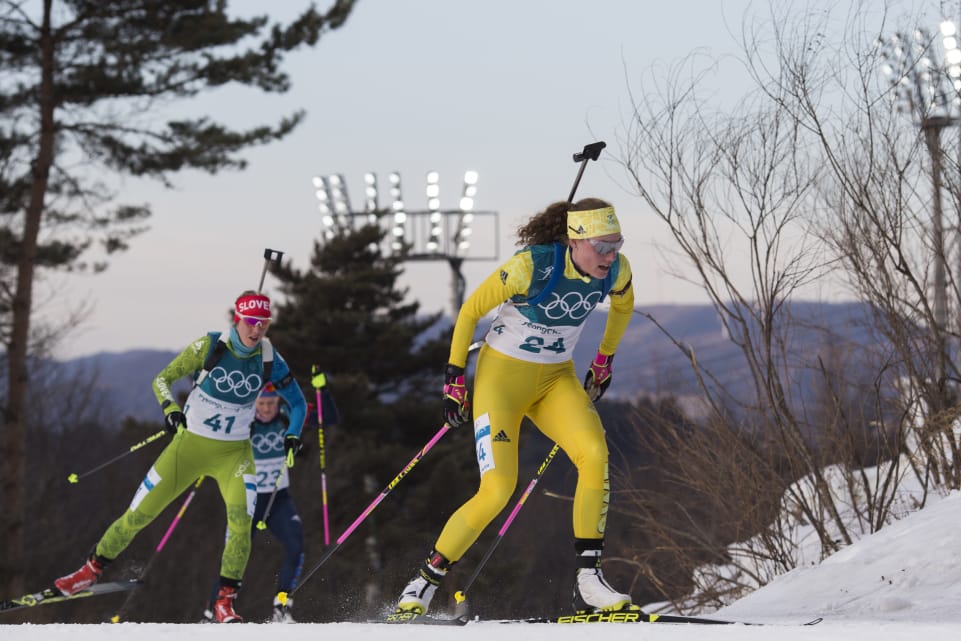
Sweden’s biathlon race suits epitomize reductionism. In other words — K.I.S.S. — as in, keep it simple, Sweden. Our wish is their command. Two words to help identify Sweden on the biathlon range or tracks. Canary yellow. Thank you Sweden.
Sweden’s Hanna Öberg on her way to a gold medal in the women’s 15 k individual at the 2018 Olympics in PyeongChang, South Korea. Öberg skied the sixth-fastest time and shot 20/20. (Photo: IBU/Biathlonworld.com)
Finland: Every day is a new day. A positive outlook works wonders in the tough-to-win sport of World Cup skiing. Finland’s Krista Pärmäkoski is positive and owning it in Finland’s lycra whites. Yes, there’s navy blue on the forearms and just below the patella, but if you can kill in mostly white, you can kill on the ski course. That’s evidenced by Pärmäkoski’s arm raise: positive vibes and she’s in for the bronze. (Note: if Pärmäkoski is skiing away from you, the Finland suits emphasize blue on the backside.
Finland’s Krista Pärmäkoski crosses the line for bronze in the 2018 Olympic women’s skiathlon. (Photo: FlyingPointRoad)
You’ll have to look past Canada’s Rosanna Crawford and zero in on Finland’s Mari Laukkanen in bib 22 to burn the Finn’s biathlon uniform into the synapses. Finland’s biathlon unis do the flag proud. It’s a zippy look that takes the essentials into play: blue and white. Certainly less white and more blue than their cross-country brethren. For the feisty Finns — they dealt with invading Soviets in winter of 1939 — we say it works.
Fashionably crushing it, Canada’s Rosanna Crawford (bib 22) in the 7.5 k sprint in PyeongChang. Finland’s Mari Laukkanen (bib 21) skis behind Crawford. (Photo: FlyingPointRoad)
France: We’re sticking with countries that begin with the letter F. C’est la vie. But we’ll go a little crazy and start with France’s biathlon garb. Why is that? Because of Martin Fourcade — the French force of biathlon. He shoots like a veritable post-doc in Jedi-studies and skis like he could crush the 15 k skate on the cross-country World Cup. France’s biathlon suits get jazzy in a sky blue kind of way on the lower leg. And just when you get complacent with all the blue tones, the right arm gets proud in red. You should get to know this suit, Fourcade is likely to rule these Games; he’s already won the men’s 10 k pursuit.
France’s Martin Fourcade defending his Olympic gold from four years ago on Monday in the men’s 12.5 k pursuit at the 2018 Olympics in PyeongChang, South Korea. (Photo: FlyingPointRoad)
France also gets props for keeping it easy on spectators and viewers. If you’ve studied Fourcade’s race suit already, you’re all set. In the image below, France’s Jean-Marc Gaillard (9) proves our point. Biathlon or cross-country, the suits are the same.
Canada’s Alex Harvey (4) leading France’s Jean-Marc Gaillard (9) and Finland’s Iivo Niskanen (8) during the skate leg of the men’s 30 k skiathlon at the 2018 Olympics in PyeongChang, South Korea. Harvey went on to finish eighth. (Photo: FlyingPointRoad)
Norway: It’s Norway after all. Nothing too drastic here, and certainly we’re imagining athletes will have several colors schemes to choose from at a later date. For now, the new kind of looks like the old. Which when consulting fashion guides, retro can be cool — think the resurgence of L.L. Bean’s duck boots or those Greg-Lemond-era Oakleys that Harvey has rocked.
OK, the cross-country suits. Here’s Norway’s race wear as worn by Heidi Weng (bib 1) and Ingvild Flugstad Østberg (bib 2) during Saturday’s skiathlon. The easy thing about trying to identify the Norwegians in a deep field cross-country scrum: look towards the sharp end of the race. Most often in the lead pack you’ll see a predominately red-suited athlete pushing the pace. Yeah, that’s probably Norway. (That said, deference to Canada’s Harvey, we want to get our red suits straight. We’ll get to the maple leaf in a bit, but in the case of Canada just think a different shade of red, because Harvey is a front-pack skier. Big respect for Harvey in red.)
The start of the women’s 15 k skiathlon on Saturday, Day 1 of the 2018 Winter Olympics, with (front row, from left to right) Austria’s Teresa Stadlober, Norway’s Ingvild Flugstad Østberg, Norway’s Heidi Weng, American Jessie Diggins, and Sweden’s Charlotte Kalla leading out of the stadium in PyeongChang, South Korea. (Photo: FlyingPointRoad)
Here’s a shot of Norway’s biathlon suit. Again, Norway has gone with reliable themes. Yet in this case, pin striping rules. There’s the red, the deep blue, and the white. The striping certainly gives it a more formal look as if to say “we’re here to shoot clean”.
Norwegian biathlete Erlend Bjøntegaard on his way to fifth in the men’s 10 k sprint. (Photo: FlyingPointRoad)
Canada: Why not? Let’s break down Canada’s race gear next. Nothing too crazy here on the XC side from our good friends up north that brought us Bob and Doug McKenzie and sort of Kenny G. (Officially, Kenny G. is American; he was born in Seattle. But his mom is from Saskatchewan. A loose connection, but only separated by one degree. And Seattle is super close to Vancouver.) Like the Norwegians’ cross-country race suit, this is a mostly red affair. But it rocks perhaps the most identifiable flora icon on the planet: the maple leaf. In our opinion, this suit is an instant classic. Maple-leaf patterns run down the length of the arms. Nothing too gaudy here. No fluorescent yellow, no overdoing it with the “Canada-ness” of it all. And there’s just the right amount of white lycra highlights to keep it sleek looking. If you’re looking to impress on the Olympic trails but be simultaneously understated, look no further than Canada. Here’s Alex Harvey racing to seventh, his best individual result in his third Olympics, in Friday’s 15 k skate:
Canada’s Alex Harvey racing to seventh in Friday’s 15 k freestyle at the 2018 Olympics in PyeongChang, South Korea. (Photo: FlyingPointRoad)
Under the bright lights of the Alpensia biathlon venue, Biathlon Canada got a wee bit friskier. Down the right arm you’ll note … wait for it … white maple leaves of varying sizes. Little known fact, at least to FS, “an infusion” of maple-tree bark can be used to treat cramps and dysentery. Any chance that infusion works on norovirus? Just asking.
Lots of digressions here. But this is for certain and maybe it’s a trickle-down effect of honoring the most beautiful autumn tree on the planet. Across the board, XC or biathlon, Canadian athletes are a delight to chat with. You parent-folk raise them well up north.
Canada’s Brendan Green en route to 82nd in the men’s 10 k sprint at the 2018 Olympics in PyeongChang, South Korea. (Photo: FlyingPointRoad)
The lower half of Canada’s biathlon unis are trending more towards what we have seen in the recent Canadian lycra past: bigger and badder maple leafs. A big white maple icon sits on the lower right leg, with a smaller slightly more delicate yet distinguished maple icon on the upper left thigh. There you have it. When in doubt, channel the red suit and the maple leaf and you’ll know it’s Canada at any of the nordic venues.
Canada’s Christian Gow racing to 62nd in the men’s 10 k sprint at the 2018 Olympics in PyeongChang, South Korea. (Photo: FlyingPointRoad)
U.S.A.: Jingoism = “extreme patriotism, especially in the form of aggressive or warlike foreign policy.” We are not jingoistic here at FasterSkier. Read Saturday’s skiathlon report and it’s clear we’re not jingoistic. The day’s winner Kalla — from Sweden — is given plenty of coverage. Yeah, Jessie Diggins killed, but Kalla was a force, too.
Jessie Diggins racing to fifth in the women’s 10 k skate for her third top-six (and second top-five) of the 2018 Olympics. (Photo: FlyingPointRoad)
So the good ole’ red-white-and-blue (r-w-b). That’s pretty much still the theme. Visually speaking, we think it’s a nice blend of the r-w-b trifecta. It’s mostly blue. And a cool blue at that. Again coolness reigns with the white downward slanting stripes running from the lower thigh to below the knee. Those stripes scream, “Scoreboard!” And the red on the arms? Awesome. And if you’re like this reporter looking around in the pack for the U.S. skiers, it helps to read the bold print on the right upper arm. Read: U.S.A.
American Noah Hoffman racing in the 15 k freestyle at the 2018 Olympics in PyeongChang, South Korea, where he finished 48th. (Photo: FlyingPointRoad)
Now to US Biathlon. For starters, the national governing body of biathlon in the U.S. is … US Biathlon. A totally different sporting body than U.S. Ski and Snowboard. And the uniforms on the biathlon side make that clear. There’s little cross-pollination like we see with the Canadian suits.
For awhile, U.S. Biathlon raced in suits with a distinct mix of blue and red. If you can harken back to elementary school art class, or if you’re in elementary school now, you’d have to pass this basic test to move onto more complex colors.
Test: How do you make purple. Yes! Mix red and blue together.
The older U.S. biathlon uniforms had a distinct purple hue on the bottom-half. The top was a tasteful strawberry red called into action by iconic Adidas striping down the arms. That purple hue is no longer. Get rid of that in your mind’s eye. We’re not even posting a photo of that older race suit. It’s so not now.
Want to know where Susan Dunklee or Lowell Bailey are? Look for uniforms that harness the “blue blazer” in all of us. First let’s zoom in. (See photo below). We note here that it’s not simply a solid-blue pattern. The hat, shoulders and upper torso host a maze of small deep blue “three-stripe” hash marks printed over a lighter bluebird blue. Since those appear on several team’s 2018 Olympic suits (like Sweden, Germany, and the Olympic Athletes from Russia), all of which were made by Adidas, we’re guessing it’s a nod to their uniform supplier? (You know, with the “threes” theme.) Nonetheless, the upper is mostly covered by the bib. And from a distance, as we zoom out, it simply looks blue. But before we do that, here’s Clare Egan — total badass polyglot; she speaks Korean — during the women’s sprint here in PyeongChang.
Clare Egan (US Biathlon) racing to 61st in the women’s 7.5 k sprint at the 2018 Olympics in PyeongChang, South Korea. (Photo: FlyingPointRoad)
Now for the zoom out. This shot is great for many reasons, so a shoutout to FlyingPointRoad guru Steve Fuller. Since we are talking colors here, let’s just continue the shout out to Steve. This photo kills because a Swedish skier follows Tim Burke in a canary yellow race suit. Blue and yellow are primary colors. The blue-Burke here stands out more as he’s contrasted by the yellow-Swede. Intentional or not Steve, well done.
Let’s focus on Tim Burke’s legs. That’s a solid royal blue, right? A basic blue, but a royal blue. There’s just no damn distractions from the business at hand here. Maybe the small USA on the left calf area is a nod to those fans still time-capsuled with Lake Placid’s 1980 gold-medal hockey team and the venerable announcer Al Michaels. That USA on the leg isn’t really yelling U.S.A!!! U.S.A!!! It’s sort of a kinder and gentler u.s.a. (no caps intentional). Like a whisper, saying we come in peace even though we’re charging hard with rifles on our backs. Back to the point. No distractions. #businesstime.
USA = basically blue. Look for the blue. That’s the U.S. biathlon team.
Tim Burke (US Biathlon) en route to 47th in the men’s 10 k sprint at the 2018 Olympics in PyeongChang, South Korea. (Photo: FlyingPointRoad)
Other notable suits:
Switzerland: From a country we all associate with Swiss-Army-Knife red, we get thrown a change up. It took us all a few seasons to get accquainted with the race-lycra formal wear donned by the Swiss cross-country team. Cross-country World Cups aren’t exactly formal occasions, but the tuxedo black suits the Swiss have worn for a few years now — a look you’d seek if you were on the race equivalent of a Georgetown cocktail circuit — are gone. The Swiss sport maroon suits with red highlights on the lower legs and arms.
(Note: These suits resemble Russia’s cross-country race suits on the World Cup. Alas, they also resemble Russia’s suits during the Games despite the fact that Russia’s skiers are competing under the Olympic flag as Olympic Athletes from Russia (OAR). See photo featuring Great Britain’s Andrew Musgrave — that’s Denis Spitsov of the OAR chasing, not a Swiss skier. It helps that the Swiss skiers wear hats reading “Suisse”.)
Switzerland’s Dario Cologna racing to gold in the men’s 15 k freestyle on Friday at the 2018 Olympics in PyeongChang, South Korea. (Photo: FlyingPointRoad)
Great Britain: From the people who brought us the modern navy … we get navy blue. Nothing says “we are not in your face” more than navy blue. Great Britain’s cross-country race suits are appropriately regal. Think the Queen, Lady Di, and the ever so cool and soon-to-be-in-line-for-the-throne, Meghan Markle. Also, Andrew Musgrave, as this reporter’s grandfather used to say, is the real McCoy. (The Scottish McCoy, not the Irish McCoy). It was a delight to watch the 2018 Olympic skiathlon unfold as a fly-on-the-wall surrounded by British journalists. Move over Chelsea. Move over Man-United. Yeah, that’s right. Musgrave is on your tails sporting navy blue lycra.
Britain’s Andrew Musgrave (10) during the men’s 30 k skiathlon in PyeongChang, South Korea, followed by Russia’s Denis Spitsov (16), skiing as a member of the Olympic Athletes from Russia. (Photo:FlyingPointRoad)
Italy: Ah Italia. They exported high fashion with the house of Gucci and they school us in the color wheel. First, Italy’s cross-country race suits feature a halcyon blue. A blue when blues sang like a pristine alpine sky and times were simpler. A time perhaps when you were finishing an altitude camp in Seiser Alm and all you had to worry about was visiting the physio for a rub-down and connecting for a post-training sesh espresso with the whos who of the World Cup … also finishing an altitude camp.
Second, we note orange. Orange is many things, but it does not scream Italy. However, we believe Italy is paying respect to its storied-art legacy by deferring to the color wheel — Italy’s suits have just a tad more than a splash of orange on the lower legs and lower arms. Blue and orange are complementary colors. That means they are opposite one another on the color wheel. Opposites attract. And if anything is attracting here, it’s Federico Pellegrino and his panache on the big stage. Dude can classic sprint, too. Here’s Pellegrino an eyeblink before crossing the line in the classic sprint final (he took silver).
Third, and this may be breaking news, Italy may have a one-off suit for Pellegrino. If you compare the below image with the one below that (behind American Caitlin Patterson, there’s an Italian skier, Sara Pellegrini), newsflash — no splash of orange. Absent the orange, the suit is identical to Pellegrino’s. ITA adorns the upper-left quad area on each suit. Italy’s biathlon team also wears the all-blue suit. Ciao for now.
Norway’s Johannes Høsflot Klæbo (l) and Italy’s Federico Pellegrino finishing first and second, respectively, in the first semifinal of the men’s 1.4-kilometer classic sprint at the 2018 Olympics in PyeongChang, South Korea. (Photo: FlyingPointRoad)American Caitlin Patterson leads Italy’s Sara Pellegrini (not to be confused with Pellegrino) into the finish of the women’s 15 k skiathlon at the 2018 Olympics. They finished 34th and 35th, respectively. (Photo: FlyingPointRoad)
Austria: What’s black and white and red allover? Austria. Across the board: cross-country, biathlon, and nordic combined, the uniforms are all the same. You’ll never not notice Austria.
Austria’s Dominik Landertinger racing to bronze in the men’s 20 k individual at the 2018 Olympics in PyeongChang, South Korea. (Photo: FlyingPointRoad)
Germany: Embracing their inner-Vader is Germany. Like the old Swiss race suits but taking black lycra to “11”. Germany. Add just a sprinkle of white around the shoulders to lighten the mood. The red hat emblazoned with the Bundesadler — the German federal eagle — is a fitting cap for their race wear. As badass as Clare Egan is speaking Korean (go back to U.S.A. for a refresher), the Bundesadler is nearly her avian iconography equivalent.
Germany’s Eric Frenzel (5) leads Austria’s Lukas Klapfer during the individual normal hill/10 k competition on Wednesday at the 2018 Olympics in PyeongChang, South Korea. Frenzel went on to win while Klapfer placed third. (Photo: FlyingPointRoad)
Germany’s cross-country, biathlon, and nordic combined teams share the same uniform.
Germany’s Laura Dahlmeier racing to her first Olympic gold (and first Olympic medal) on Saturday in the women’s 7.5 k sprint, the first biathlon race of the 2018 Winter Olympics in PyeongChang, South Korea. (Photo: FlyingPointRoad)
We couldn’t cover every team, so we’re aware we left more than a few out. Hopefully this leaves you feeling a little more in-the-know when it comes to Olympic XC and biathlon spectating. Onto the relays (and biathlon mass starts) we go!
***
A message from a Korean fan during the men’s 15 k freestyle on Friday at the 2018 Olympics in PyeongChang, South Korea. (Photo: FlyingPointRoad)A message from an unidentified spectator during the men’s 15 k freestyle on Friday at the 2018 Olympics in PyeongChang, South Korea. (Photo: FlyingPointRoad)
Martin Fourcade of France leads the IBU World Cup 15 k mass start in Le Grand-Borland, France, on Sunday. (Photo: Glen Crawford)
LE GRAND-BORNAND, France — After a long weekend of racing, beginning with heavy snow and continuing with glazed tracks, the biathlon World Cup is on break for two weeks to recalibrate and rejuvenate as the athletes prepare for the rest of the season and the 2018 Olympics in February.
Here’s what some members of the field thought about the races this weekend – the bits of interviews and press conferences that didn’t make it into our race reports.
On Pressure
“This was tougher than some World Cups where we are less expected. But it’s also what we want, asking for a World Cup at home. We know that it’s not the same as when we are competing in Norway. It’s so much bigger in terms of emotions. I would do it again.”
— Martin Fourcade (France)
Susan Dunklee of U.S. Biathlon after the mass start, which moved her up to being ranked 30th on the World Cup after a disastrous first two weeks of racing had left her out of the points. (Photo: Glen Crawford)
On Annecy & Le Grand-Bornand
“I like this place. Four years ago I was on the podium too in the pursuit behind Johannes. I was one year later on holiday here. I like this place, I like the people. It’s a really nice nature, mountain, valleys. I know that I got some Reblochon cheese, too.”
— Erik Lesser (Germany)
“It was very loud. I couldn’t hear what my coaches were saying on the side of the course at all. I knew they were there because I could see them out of the front of my eyes, but their voices just got lost in that big, massive noise. Getting this many people here, is absolutely incredible. It has grown so much since last time [in 2013]. It’s a lot of positive energy, and that counts for a lot.”
— Susan Dunklee (USA)
“I love it. It’s definitely a different race course with those steep little bumps. But I think it could be [more often] on the circuit.”
— Julia Ransom (Canada)
“There are amazing trails that go up the valley. I just went for a classic cruise yesterday just looking around everywhere in awe. The food… We are staying right in the downtown, and the food in our hotels is like cheese and dessert after every meal. I’m like ‘oh no I have to pass on that…’ And the fans, too, I couldn’t believe it. They are so loud, cheering for everyone. I was a little bit overwhelmed just with the sound during the race. I was like ‘okay, keep going’. I love this place.”
— Emma Lunder (Canada)
Anastasiya Kuzmin of Slovakia leading the women’s mass start. (Photo: Glen Crawford)
“We had a really good atmosphere four years before. But now we really have so much snow in the mountains and in the village. That is why we all make biathlon – we love winter and we love the snow. I’m really happy to have such good conditions here.”
— Laura Dahlmeier (Germany)
“You can feel power from the mountains and the snow. What is more important is that there are many fans here… you feel the power from the people who are always supporting you. It’s like a big energy wave. On the track it helped me. Thank you so much.”
— Anastasiya Kuzmina (Slovakia)
“Every athlete has their World Cup which is their favorite and where they always do good races. And I think this is one of my top three venues on the World Cup. I really like it here.”
— Johannes Thingnes Bø (Norway)
“I want to point out that the organization and the popularity of biathlon grew a lot since 2013. I was really surprised to see so many people around the track cheering, not only local athletes but also international athletes. I could hear them saying my name. So I want to thank them for supporting us.”
— Anton Shipulin (Russia)
On Three Weeks of Racing, and Now a Break
Emma Lunder of Canada competing in the mass start in Le Grand-Bornand, France. (Photo: Glen Crawford)
“I think it’s great to finish with a nice race. Now I can enjoy the time at home, the time in France. And keep confident of the work which was done.”
— Justine Braisaz (France) after winning the mass start
“I think my shape is getting better and better and also on the shooting range. It’s important to make some good races, it’s good for your own feeling. It’s good for the Christmas holiday now.”
— Laura Dahlmeier (Germany) after finishing third in the mass start
“To have good races going into the Christmas break, that’s all I could ask for… Now we can feel like we did a good job, relax, and get some good training in.”
— Emma Lunder (Canada), who had her best-ever World Cup result and qualified for her first mass start
“Yeah, I definitely felt [the fatigue] today, but you kind of come to expect that after the first trimester. Now we have a good block of recovery time, and I’ll definitely be looking forward to a few days off.”
— Lowell Bailey (USA)
(l-r) Erik Lesser, Martin Fourcade, and Johannes Thingnes Bø after the mass start. (Photo: Glen Crawford)
“It is always a fight there. Today [Erik] Lesser was there also and [Anton] Shipulin is coming back top-six too. They will be stronger after Christmas.”
— Johannes Thingnes Bø (Norway), winner of the sprint and pursuit, after the mass start
“I’ll be getting some good volume training in, I think. Kind of reset the body and get a bit of a training load.”
— Scott Gow (Canada)
“I felt pretty tired today, and then on top of it everyone is fast in the mass start… I was looking forward, looking forward to the finish line.”
— Emma Lunder (Canada), after the mass start
“Now I’m just [working on] my good shooting and staying concentrated on the shooting position. I think I need a little bit more time, a little bit more practice. But I’m happy that my ski times are still good.”
— Anastasia Kuzmina (Slovakia)
Mission Accomplished
Scott and Christian Gow of Canada after the pursuit, where they both finished in the top 30. (Photo: Glen Crawford)
“I was hoping to just lock up the Olympic qualification and get that off my back, which is really nice. And then really just put together a solid three sets of races. Last year I was sick, and I wasn’t even in Europe at this point. I was kind of just slogging my way back to good health. So I’ve had some good races here and it’s a good block to start the year… Last year taught me how to grind through something that isn’t the best hand of cards that you could have been dealt.”
— Sean Doherty (USA), who was named to the U.S. Olympic Team after his performances this weekend
“I’m really glad that we are finally part of the podium. Finally third, on the World Cup.”
— Anton Shipulin (Russia), after finishing third in the pursuit and earning Russia’s first podium of the season
Goals
Laura Dahlmeier of Germany setting up to shoot in Thursday’s sprint. (Photo: Glen Crawford)
“I’ve been trying to win the yellow bib every year since I came in the World Cup. But I’ve never had a chance. So we will see this year. But I know it’s a long way there. Now I’m just focusing on the race today, and the next race, and not about the whole season. I’m in good shape here and I try to do the best I can.”
— Johannes Thingnes Bø (Norway), currently trailing Martin Fourcade by 20 points in the World Cup Total Score
On Ski Speed
“I’m definitely working my way back into it. I don’t feel 100% on skis. I felt good all the way up to the beginning of the season, and then got set back with some sickness. But I’m still confident with how we trained this summer, and the path towards PyeongChang, so just have to stick to the plan.”
— Lowell Bailey (USA)
“Honestly, my skiing, I’m not very satisfied with it at the moment. It’s coming back, step by step, and week by week it has improved, but I feel like there is a lot of room there and I don’t totally feel like myself yet. There’s still plenty of season left.”
Justine Braisaz of France crossing the finish line with her first World Cup victory, in Le Grand-Borland in the 15 k mass start. (Photo: Glen Crawford)
LE GRAND-BORNAND, France—Justine Braisaz was so excited for today’s 15 k mass start that she jumped the gun, scooting forward on her skis a few seconds before the start and having to reset.
That provoked a laugh among the crowd and perhaps even her competitors, but they weren’t laughing by the time the race finished and Braisaz had left them in the dust, claiming her first World Cup win – on her father’s birthday, no less.
The early start was more than nervous energy. Braisaz wanted to soak in everything in the last race of the weekend, the first time in four years that the biathlon World Cup had come to her country.
“I just wanted to take pleasure today and have no pressure at all,” she said in a press conference after the race. “It’s just like that. I did not have any serious ambition, I just wanted to try my best.”
Once the race was off, she followed Kaisa Makarainen of Finland – who started in the front row directly ahead of her – and Anastasiya Kuzmina and Denise Herrman, and the four women gapped the field to come into the range ahead of the others, a rare situation on the first loop of a women’s mass start.
Anastasiya Kuzmin of Slovakia leading Denise Herrmann, Kaisa Makarainen, and the rest of the women’s mass start. (Photo: Glen Crawford)
Braisaz cleaned that stage, as well as the next, and was never far from the lead. When Braisaz and Kuzmina missed shots in the first standing stage, Herrman surged to the lead.
A relatively recent convert to biathlon – a relay medalist in cross-country skiing at the 2014 Olympics – Herrmann has already won two races this season. She has become an impressively stable shooter given her short career, and when she came into the shooting range alone for the final bout she hit the first target.
But then she missed. And missed, and missed. She hit the last shot, but had to ski three penalty loops and came out in 13th. With the third-fastest last-loop time she moved up to twelfth.
Braisaz, in the meantime, had come in to the second lane of the range and hit all of her targets, skiing out in first place. When Germany’s Laura Dahlmeier, the winner of Saturday’s sprint, missed one shot behind her, Braisaz seemed to be in the clear. The next woman out on course was Belarus’s Iryna Kryuko, who had cleaned the whole race and hit the trails 15 seconds back.
But Braisaz felt the threats behind her, real or imagined.
Justine Braisaz leadin Denise Hermmann and Kaisa Makarainen in the middle of the race. (Photo: Glen Crawford)
“During the last loop on the track, I just thought, the women behind me will catch me,” Braisaz said. “I was so stressed, under pressure. I did not believe it [would happen]. When I saw my wax man with the French flag, I just started breathing.”
That moment came 200 meters before the finish, when Braisaz had enough of a cushion to stop and grab the tricolore. She waved it behind her as she skied down the finishing lanes, the crowd of 15,000 spectators going more than wild.
“It was just great,” she said. “A very nice feeling to share it with all the crowd and all the French people and everybody. It was just like a dream. But the reality is better actually.”
Kryuko, too, hadn’t felt secure in her position on the last loop. Dahlmeier came out of the penalty loop and into third place, just under ten seconds behind her; after that was Kuzmina, whose ski speed had impressed over the last several weeks.
“I saw that I shot clean – and I certainly saw that behind me there were some very strong girls,” Kryuko said through a translator at the press conference. “The only thing I was hoping for was to get flowers, the top six.”
Dahlmeier put in an early surge to try to close the gap.
“On the final lap I tried to give it everything I had,” she told German broadcaster ZDF. “I fought hard right from the beginning, and immediately went a very high tempo. I didn’t really get closer to her [Kryuko] initially, then made up a few meters, but in the end the necessary energy wasn’t there anymore to really overtake her.”
Kryuko thus held onto second place, finishing 11.2 seconds behind Braisaz. Dahlmeier was third (+19.9), Kuzmina fourth (+25.5), and Germany’s Vanessa Hinz fifth (+28.4). Anais Chevalier gave the French crowd another reason to lose their minds when she crossed the finish line in sixth (+30.1).
For Kryuko, her very first mass start came on the same day as her first World Cup podium. The 26-year-old’s previous best finish was ninth in the pursuit in Hochfilzen, Austria, last weekend.
Susan Dunklee racing to 20th in the mass start. (Photo: Glen Crawford)
“It’s my first mass start and of course my first podium,” she said. “It’s a really great feeling.”
Dunklee 20th, Lunder 28th
Both Susan Dunklee of the U.S. and Emma Lunder of Canada started in the back of the mass start, with bibs 26 and 29, respectively. In most World Cups, starting at the back of the pack is not a big problem, as most of the field is still together when athletes enter the range for the first shooting.
“This course it is!” Dunklee exclaimed. “This course it absolutely is. This is a very narrow course… that first bridge, we just had this major accordion-ing, where everybody stopped for about five or six seconds in the back waiting for the top people to get up there. We had to snowplow and then just stand there and wait. We were laughing. So it was a lot of just being really patient on the first loop because there was no good way to pass.”
“Probably 300 meters into the race there is a super steep little hill, and the back of the pack, the back 15, literally came to a standstill and then it took people a lot to get going, and it was so spread out by then,” Lunder said. “So I was last and I just tried to hang on to number 29. I had figured I would come into the range last or close to last, but I felt pretty relaxed during that lap.”
Canada’s Emma Lunder chasing the Czech Republic’s Eva Puskarcikova in the women’s mass start in Le Grand-Bornand, France. (Photo: Glen Crawford)
Despite strong races earlier in the week, finishing 10th and sixth, Dunklee never made contact with the leaders – in part because they had broken away already on the first lap when she was stuck in the back, and partly because she missed a shot in the first prone stage.
Dunklee missed two more, one in the first standing stage and then the very last shot of the race.
“With 85% shootings, it was obviously not my best, but certainly something I can be proud of,” she said.
She crossed the line in 20th after laying down the fifth-fastest closing loop and moving up two spots.
“I had a great battle going with Maren [Hammerschmidt] and Selina [Gasparin],” Dunklee said. “Selina got me by a tenth of a second, which is, well, ugh. She had the better lane in the finish and I just couldn’t get around her, but it was fun. I like it when it’s exciting like that.”
Lunder also missed a shot in the first prone, but she was clean after that. She had some issues with her rifle though, which resulted in slower shooting times even though she never again had to visit the penalty loop.
“I was a little bit shaky and I double-ejected three times,” she explained. “So then I had to load a spare and was like ‘okay, do not miss this and then have a penalty loop on top of it.’ I am so happy with shooting 19 out of 20 again, I’m really relieved. And it was a good chase again out there. On the last lap there were two Polish girls right with me, I tried so hard but I just didn’t have it in me.”
She crossed the line 28th, +2:21.4. It was the first mass start of her career.
“This was an awesome experience,” Lunder said. “Any time I finish in the top 30 I think I’ll still be happy… I can say I had fun. It’s like the most painful kind of fun. I felt pretty tired today, and then on top of it everyone is fast in the mass start. So I just knew that I wanted to execute on the range the same way I have been this weekend.”
France’s Maurice Manificat celebrates his “time of day” victory in Stage 7 of the 2017 Tour de Ski, with the fastest time in the 9 k freestyle hill climb in Val di Fiemme, Italy. (Photo: Salomon/Nordic Focus)
Welcome to World Cup Windup, where we check in with the top-10 teams from last year’s FIS Cross Country World Cup tour before the season starts with the Ruka Triple in Kuusamo, Finland, on Nov. 24.
FRANCE
Overall in Nations Cup Last Year:Eighth
Women’s Ranking 2016/2017:15th
Men’s Ranking 2016/2017: Fifth
Who’s Back:
France’s Baptiste Gros leads teammate Richard Jouve in their semifinal of the freestyle sprint at the Ski Tour Canada in Quebec City in 2016.(Photo: John Lazenby/Lazenbyphoto.com)
Maurice Manificat, the fastest man up the Tour de Ski final climb last season, and a World Cup race winner previous seasons as well; Lucas Chanavat, a finalist in several World Cup sprints and third in the U23 standings; Richard Jouve, third in the sprint at World Cup finals and fifth in the U23 standings; the World Cup podium relay team of Manificat, Jean Marc Gaillard, Clement Parisse, and Alexis Jeannerod, as well as Robin Duvillard, a member of the World Championships relay team and the 2014 Olympic bronze-medal relay team (soon to be silver), and Baptiste Gros, who won a World Cup in 2016.
Who’s Missing:
A women’s team. Not a single French woman scored World Cup points in the 2016/2017 season. France didn’t even send a women’s team to 2017 World Championships. That’s right, there were no French representatives in the cross-country ski races at World Championships. French women competed at only two few World Cups: the home races in La Clusaz and the sprints in Toblach, Italy.
Pre-Season Results:
Lucas Chanavat of France had the fastest men’s qualifying time in the Davos World Cup freestyle sprint in 2017.
In early November, Lucas Chanavat won both the qualifier and final in a King’s Court style sprint in Davos, besting Italy’s Federico Pellegrino among others; Richard Jouve and Alexis Jeannerod were second and third, and Aurore Jean won a lightly-attended women’s race.
More recently, the French attended FIS races in Saariselka, Finland, where Maurice Manificat tore it up, winning the 10 k classic and, in a surprise, also winning the classic sprint ahead of his sprint-specialist teammates.
Recent Drama:
In the year or so after the 2014 Olympics, where the French women finished fourth in the relay, the women’s program lost its best skiers. Three started families, and Celia Aymonier became a biathlete (she now has several World Cup top-tens and a World Championships bronze medal in the relay).
For two seasons, the French women were nearly completely absent from the World Cup, but that may change this year, in part because the Olympics always bring out efforts to get each country represented. The three new moms are back training: Coraline Thomas-Hugue, Aurore Jean, and Anouk Faivre-Picon, who in the meantime won some big Worldloppet races like the Engadin Ski Marathon. Several younger skiers are also joining them. It’s not straight into the thick of things; the team will do some FIS racing throughout the season. There is the possibility of a few participating in the World Cup sprint in Ruka, Finland, but none will go to Lillehammer and instead a group will focus on competing at the third World Cup in Davos, Switzerland.
Aurore Jean racing in Davos in 2014.
“The atmosphere in the group is very good and it’s nice to see positive girls and a team in training,” coach Alexandre Rousselet told ski-nordique. “We will have a quota of four girls each [World Cup] but they will not be filled. We are waiting for the girls to have encouraging results at OPA Cup and FIS events before they register… We will first work on this 10 k skating goal. to try one or more qualifications for the 2018 Olympics. The relay and the other races would be a bonus… The Olympics are in their heads but for the moment, at this stage of the winter, it is still far away.”
(And yes, he refers to them as “les filles” rather than “femmes” or “dames”.)
In Saariselka, the women showed their stuff: Coraline Thomas Hugue won the 10 k skate over Anna Shevchenko of Ukraine, with Aurore Jean third, Poland’s Justyna Kowalczyk fourth, and Anouk Faivre Picon fifth. They did not fare as well in the classic technique, with Jean leading the group in fifth in the 5 k classic and Delphine Claudel finishing seventh in the classic sprint, where none of the team made the final.
Best Social Media Presence:
This year’s “One of Those Nordic Days” videos has been posted, featuring skiers acting silly and doing stunts on skis. It is made by Team Valoche and former biathlete Alexis Boeuf, and features many national team members as well as biathletes Martin and Simon Fourcade, the Italian women’s biathlon team, and alpine skiers Julien Lizeroux and Tessa Worley.
Maurice Manificat is fairly prolific on Twitter, posting content from his own Instagram and Facebook pages as well as re-tweeting content from other French sports personalities and engaging in conversation. His handle is a good way to keep track of what’s going on in nordic sport in France.
Richard Jouve posts beautiful photos of wherever he happens to be, both on his Twitter account and on Instagram.
And Lucas Chanavat also posts crisp photos of training and racing, and also shots of him upside down in different places.
For the day-to-day-to-day of training with the French team, follow Robin Duvillard.
And Anouk Faivre Picon is among those documenting life as a high-performance mom.
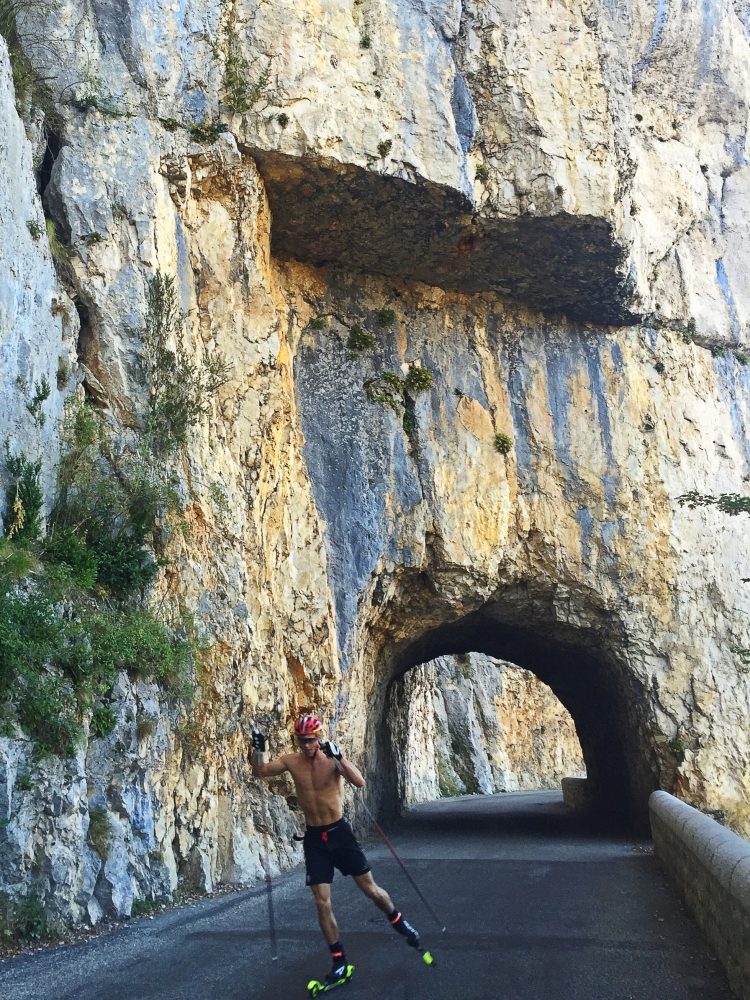
U.S. Ski Team B-team member Erik Bjornsen during a rollerski in France this summer 2016. (Courtesy photo)
A little less than two months ago, Erik Bjornsen found himself face down, breathing in some combination of medical mattress and bleached bedding. There was a sore tightness in his right shoulder, made all the more difficult to move due to the layers of salved gauze firmly taped to his skin. His training shorts had been modestly rolled down, revealing steak-sized road burns on both of his buns.
Had the U.S. Ski Team (USST) B-team member, by some happenstance, skipped the final rollerski races of the USST’s annual dryland training camp in Park City, Utah, he might have made it through the offseason unscathed for the first time in two years.
The Moirai of Bjornsen’s training, however, had other plans.
Erik Bjornsen (U.S. Ski Team/Alaska Pacific University) during a local running race this summer in Anchorage, Alaska. (Courtesy photo)
Bjornsen met up with his USST teammates at their Park City training camp, held Oct. 17-31. He competed in the camp’s final time trial: a skate sprint. He qualified for the quarterfinals and started the semis.
But instead of sending it across the finish line, while rounding one of the downhill corners on the sprint rollerski course in Soldier Hollow, he sent himself sliding butt-first across the pebbled pavement.
The incident left the 25 year old with road-rash raspberries on his right shoulder, left hand and total tail-end, as well as a desire to be done skiing on anything but snow, according to one of his Instagram posts after the crash.
But for the Methow, Wash., native — who currently lives in Anchorage, Alaska, and trains with Alaska Pacific University (APU) — a few less skin cells and a little more neosporin is not the worst preseason distress he could have, or has, endured.
“I was lucky, I mean last year I had hand surgery so I was away from using a pole for three months and then the year before I had some knee issues,” Bjornsen said on the phone in early November from Anchorage. “So I feel like I was very lucky to go through the summer without anything too major happening. Right now I’m just trying to heal up my hands from the road rash.”
Still working to heal his hands during the opening World Cup races in Kussamo, Finland (where he finished 42nd in the men’s classic sprint and 41st in the men’s 15-kilometer classic), Bjornsen was not too preoccupied with early season results.
“Both days I was pretty close to making top 30,” Bjornsen wrote in an email after the 15 k. “Personally this has always been the most difficult weekend of racing on the World Cup for me. That being considered I’m satisfied with my results. There is definitely more to come!”
When Bjornsen says ‘more to come,’ he means not only in events that he considers his forte, such as the distance classic races, but in his relay and sprint performances as well.
“There’s few [15 k classic events] this season and one in Lahti at World Champs, so I’m definitely looking forward to those, “ Bjornsen said on the phone in early November. “Last year I was able to get into the sprint heats twice and I love head to head racing … so definitely a goal is to get back into the heats and experience that a little bit more … We [also] have another couple of relays and I hope that I can throw down a strong leg.”
Bjornsen has already accomplished one of those goals. Earlier this month, he qualified 30th on Day 1 of the World Cup in Lillehammer, Norway, his first time advancing in a World Cup classic sprint. He was eliminated in his quarterfinal, finishing in 24th overall.
“Erik has not qualified for too many sprints, but to qualify specifically in Lillehammer, in the lion’s den is quite impressive,” USST Women’s Coach Matt Whitcomb said on the phone after the Lillehammer sprint.
His sister and USST teammate Sadie Bjornsen qualified first in the women’s classic sprint.
Although the U.S. men’s ski team was unable to enter a relay team in the first team event of the season, which took place last Sunday in La Clusaz, France, Bjornsen competed in the men’s 15 k mass start on Saturday, where he finished 20th and earned his first World Cup distance skate points.
“The course was littered with broken poles, lots of crashes I mean it was a super high speed tactical course and [Bjornsen] just stayed out of trouble and kept picking people off,” U.S. head coach Chris Grover said on the phone regarding Bjornsen’s performance on Saturday. “He just paced it perfectly.”
Erik Bjornsen during a rollerski in France this summer. (Courtesy photo)
Though Bjornsen has already witnessed a change in his performances with the conclusion of Period 1, not much had changed with regards to his preseason prep. This includes what has become an annual summer escape to France. Since Bjornsen’s girlfriend of three-and-a-half-years, Marine Dusser (a former French biathlete), lives in Villard, France, taking the opportunity to travel to a different country, train with the likes of Martin Fourcade, Simon Fourcade and Robin Duvillard, and experience a change in training scenery is warmly welcomed.
“This year I didn’t do any of the rollerski races like I’d done in the past,” Bjornsen, who previously raced at French rollerski nationals. “I was able to jump in and train with some strong French guys.”
Beyond buying baguettes and learning a few French phrases here and there while abroad, Bjornsen also spent some time exploring trails at home in Washington, with Sadie and his parents.
“Getting out and running some new trails every day was definitely a highlight to the summer,” Bjornsen said. “It’s always great to go home and visit the family.”
Entering the upcoming season a little tougher and a little rougher, Bjornsen indicates that he he’s ready to hit the road and bounce back, with more burn than ever before.
“I think it’s important for me to keep looking forward,” Bjornsen said. “I know that when the shape does come around, I think I can compete with the best in the world. Hopefully I can time that around world champs, but every weekend is an opportunity.”
***
We asked Bjornsen to give our ’17 Questions for 2017′ a go. Here are his responses:
1. Biggest change in your life in the last five or so months since the ski season ended?
Lots of good memories and experiences. I’m a completely different man!
2. Biggest change in your training?
Change is hard. I’ve made some subtle changes, but for the most part I’m just trying to perfect what I’ve done the last couple years. Staying injury free has been a huge help.
3. Major areas of improvement you’ve seen so far?
Little improvements all over the board. No LARGE improvements in one area. My hope is that all the small improvements in my dry-land training will add up to a major improvement in my skiing
4. Whom you’ve been working closest with this offseason (coaches or training partners)?
Scott Patterson
5. Best trip in the last five months (and why)?
That’s a hard question. That’s my favorite part of being a cross country skier. We get to travel a lot, and see a lot of amazing places. I spent a few days rollerskiing and running in the southeastern part of France, near the boarder of Italy. That trip was amazing!
6. Favorite cross-training?
Running
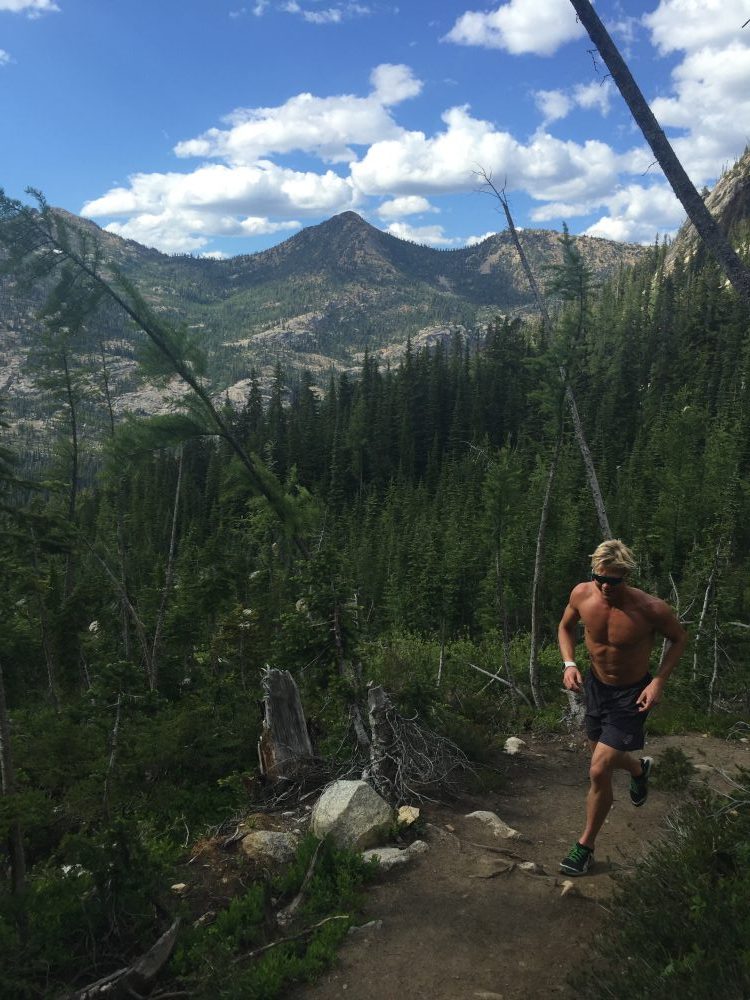
Erik Bjornsen during a run in the North Cascade Mountains this summer. (Courtesy photo)
7. Favorite non-athletic activity or pastime this summer?
I’ll let you choose one: Camping with good company, hot tubbing in glacier water, getting locked on some fish..
8. Song that was your jam this summer?
Railroad Man by Anna Lynch. Check it out! I was sitting around a campfire with mostly strangers one night and this girl started playing music. I was pretty impressed so I added her on spotify when I got home and ended up listening to her music a fair amount over the summer… Live music is always the best way to jam!
9. All-time favorite race moment?
2014 Sochi Olympics, Team Sprint.
10. First thing you pack in your bag when you leave for Europe?
I usually start with my boots and shoes because they go on the bottom of my bag. Boring, I know. Packing shouldn’t take longer than 30 minutes or your doing something wrong…Sadie….
11. Venue/event you’re most excited to visit this season?
La Clusaz
12. Who will win the men’s and women’s World Cup titles this year?
Sadie Bjornsen and Simi Hamilton
13. Biggest sacrifice you feel you’ve made choosing this career path?
I don’t feel like I have sacrificed much at all. To be the best in the world thought I think you have to focus a lot on yourself, and sometimes I think you’re forced to make selfish decisions.
I skipped my cousins wedding this summer because it didn’t fit in with my training schedule, sorry Tyler… Luckily I have a very supportive family!
14. If you could change one thing about your sport, what would it be?
I wish everybody was on a level playing field. Equal resources for everyone and no question whether of not people are doping. Doping is super lame!
15. What did you have for breakfast this morning?
Well today is a travel day, so it was a light breakfast. I had toast, cheese, eggs, ham, and a tall glass of raspberry lemonade.
16. In 5 years, I’ll be ____?
Oh, jeez. I could be doing just about anything, in just about anywhere..
17. In 50 years, I’ll be ____?
I’ll be splitting my time between my cabin in the Methow Valley and my chalet in France. You can call me on my cell phone, but you’ll probably just get my voice mail.
The French men’s relay team after their IBU World Cup win on Sunday in Pokljuka, Slovenia, with (from left to right) Martin Fourcade, Quentin Fillon Maillet, Simon Desthieux, and Jean-Guillaume Béatrix. They beat Russia by 15.7 seconds for the win. (Photo: IBU)
Welcome to The Rundown, your quick primer of need-to-know information about the day’s racing. We’ll be updating this digest as the day goes on with additional results, photos and quotes. The Rundown is NOT a race report; stay tuned for complete race reports later today with interviews from the day’s top racers.
***
Note: This recap has been updated to reflect the correct positions each of the four Canadian women exchanged in during Sunday’s 4 x 6 k IBU World Cup relay.
IBU World Cup in Pokljuka: Men’s & Women’s Relays
Germany and France reached the podium in both the men’s 4 x 7.5-kilometer and women’s 4 x 6 k sprints on Sunday, the final day of the International Biathlon Union (IBU) World Cup in Pokljuka, Slovenia.
France won the men’s race by 15.7 seconds over Russia with a total of seven spare rounds and zero penalties. Jean-Guillaume Béatrix started off by putting the French team in fourth, then Quentin Fillon Maillet elevated them to first, a position both Simon Desthieux and Martin Fourcade held for the victory in 1:11:56.5.
“When we started the relay, we thought that winning was possible,” Béatrix said, according to an IBU press release. “At the same time, the competition was very tough. There were many strong teams today.”
“I was very happy to tag Martin with a 20-second lead,” Desthieux said. “This is good for my confidence.”
Russia placed second with Maxim Tsvetkov, Anton Babikov, Matvey Eliseev, and Anton Shipulin, the four of which combined for one penalty (on Eliseev’s third leg) and six spare rounds.
Germany rounded out the podium in third, 21.5 seconds behind France, with Erik Lesser, Matthias Dorfer, Benedikt Doll, and Simon Schempp. In ninth after Lesser’s first leg, Dorfer brough the team to eighth and Doll raced them into second before Schempp lost one place to end up third. They used a total of 11 spares but avoided the penalty lap.
Canada placed 10th of 22 teams, 1:44.7 out of first with one penalty and seven spares. Christian Gow started the team out with clean shooting and tagged off in sixth at the first exchange, and his older brother Scott Gow also shot clean without any spares to move up to fourth at the second tag. Macx Davies required three spares and had to ski a penalty lap on his prone stage, then used another spare to clean standing and tagged off in 14th place. Brendan Green anchored the Canadians to 10th, using three spares but avoiding a penalty in prone, then cleaning standing without any spares.
“I had a somewhat disappointing pursuit race yesterday, and my goal for today was to refocus on the range and push the ski speed as much as possible,” 28-year-old Scott Gow told Biathlon Canada, according to a press release. “I was happy with the overall performance I was able to put forward for my leg of the relay, and I was especially happy with another clean shooting day.
“Today was an acceptable result for the team,” he added. “Christian and I are very proud of our results so far this season. We worked very hard all year to try and elevate our racing abilities to the next level, and we saw our hard work pay off today with great skiing and perfect shooting for both of us. It’s also a big confidence boost going forward with the season knowing we are capable of competing among the best.”
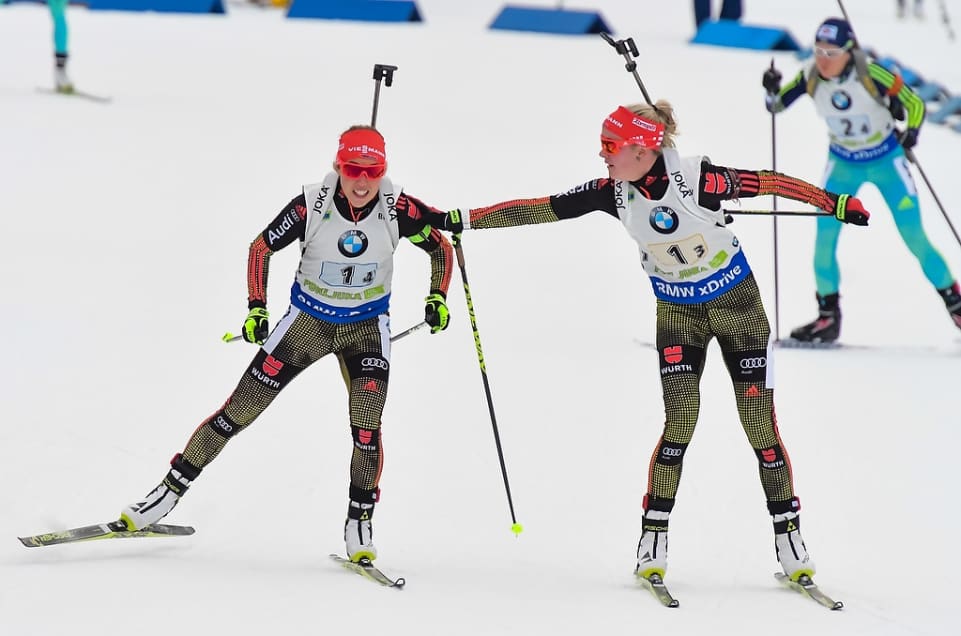
Germany’s Karen Hammerschmidt (l) tagging her teammate Laura Dahlmeier in second place at the final exchange of the women’s 4 x 6 k relay at the IBU World Cup in Pokljuka, Slovenia. Dahlmeier anchored the team to the win by 10.1 seconds over France. (Photo: IBU)
In the women’s relay on Sunday, Germany took first by 10.1 seconds over France, using nine spares but no penalties.
Vanessa Hinz started the Germans out and tagged off in fifth, and second-leg Franziska Hildebrand moved them up into second by the halfway point. Karen Hammerschmidt held that position, which was enough for Laura Dahlmeier who anchored them to the win in 1:11:31.1.
“This was a brutally beautiful race today,” Dahlmeier told German broadcaster ZDF after her third win in as many races in Pokljuka. “It was very fun, and I was very relaxed because I knew we were competing as a team. Even if you don’t have as much power left there are still three others. I was on top of my game and just enjoyed it. I really looked forward to the race, although yesterday I was knocked out. But on the course I had a good feeling right from the start.”
France in second and Ukraine in third (+37.7) both required just three spare rounds and no penalties per team. France secured second place with Anais Chevalier (who initially tagged off in 11th), Justine Braisaz (who picked off eight places to move into third), Celia Aymonier (who tagged off in first), and Marie Dorin Habert (who cleaned without any spares but came up 10 seconds short of Dahlmeier at the finish).
Ukraine reached the podium with Iryna Varvynets, Yuliia Dzhima, Olena Pidhrushna, and Anastasiya Merkushyna.
Canada placed 11th (+3:33.1) with a total of just four spares and no penalties. Sarah Beaudry initially tagged off in 23rd, Rosanna Crawford skied them into 18th, Megan Tandy shot clean without any spares and tagged off in 14th, and Julia Ransom anchored them to 11th out of 23 teams.
The U.S. did not field a men’s or women’s relay team, with just three men and three women in Pokljuka.
FIS Cross-Country World Cup in Davos: Freestyle Sprints
In the men’s 1.6-kilometer freestyle sprint on Sunday it was Russia’s Sergey Ustiugov who emerged victorious, besting Finn Hågen Krogh of Norway and his Norwegian teammate Sindre Bjørnestad Skar for first.
After qualifying 29th overall, Ustiugov crossed first in his quarterfinal and held the led through his semifinal and into the final, winning in a time of 2:24.65. Krogh crossed 0.59 tenths of a second behind him for second place and Skar took the final podium spot, crossing 3.29 seconds after Ustiugov.
Also in the sprint final was Russia’s Alexey Petukhov, who finished just off the podium in fourth (+3.47), Norwegian Emil Iversen in fifth (+5.52) and France’s Lucas Chanavat —who won the qualifier — ended the day in sixth (+11.48).
Lucas Chanavat of France had the fastest men’s qualifying time in the Davos World Cup freestyle sprint on Sunday.
Canada’s Lenny Valjas was the top North American finisher for the day, qualifying 12th and advancing to the quarterfinals where he finished in 14th overall. No other Canadians made the sprint heats, with Alex Harvey left just outside advancing in 33rd, Devon Kershaw ending the day in 49th, Knute Johnsgaard 60th, Bob Thompson 67th, and Andy Shields 73rd. Jesse Cockney did not finish the race.
Simi Hamilton led the U.S. in 24th (+3.88). Andy Newellwas just outside the heats in 36th, and Eric Packer placed 95th (+21.62).
In the women’s 1.6 k freestyle sprint, Maiken Caspersen Falla of Norway took the overall win, crossing in a time of 2:44.63. Just 0.53 tenths of a second behind Falla was her Norwegian teammate Ingvild Flugstad Østberg in second place overall. The final women’s podium finisher, Hanna Falk of Sweden was 0.60 tenths of second off Falla in third.
U.S. Ski Team member, Jessie Diggins made the final, racing to a fifth place overall (+5.91), behind Sweden’s Jonna Sundling in fourth (+1.04) and ahead of Russia’s Natlalia Matveeva in sixth (+6.80).
The United States put three other women into the heats, including Sophie Caldwell who finished 11th, Sadie Bjornsen 15th, and Ida Sargent 20th.
American Caitlin Patterson ended the day 47th, Kikkan Randall 58th, and Liz Stephen 61st.
Dahria Beatty was the top Canadian on Sunday, finishing in 25th overall. Cendrine Browne ended the day 53rd and Sophie Carrier-Laforte 59th.
NorAm/SuperTour at Sovereign Lake: 10/15 k Freestyle
[UPDATE] It was Americans owning the podium again Sunday at Sovereign Lake, and a little bit more. It was warmer on Sunday, -7 Celsius, and snowed lightly throughout.
The men’s 15 k freestyle was first on the schedule. APU’s Scott Patterson won in 40:00.2, followed by Saturday’s A-finalist Matt Gelso at 13.2 seconds and Vail’s Tad Elliot at +26.6.
The top Canadian was Team R.A.D.’s Russell Kennedy in ninth, at 1:38.8 behind.
In the women’s 10 k freestyle, the podium was owned by APU’s Chelsea Holmes in 30:42.9. SMS Elite’s Katharine Ogden was second at 13.4 seconds, also winning the junior category. Her teammate Erika Flowers was third, 36.4 behind.
AWCA’s Olivia Bouffard-Nesbitt was the top Canadian for the second day, placing 13th at 1:51.8.
Josh Smullin lowering off the Col du Chardonnet. (Photo: Nick Pope)
“At some point late in the season, when skiing around on small groomed loops becomes a chore, rather than a passion, it’s time for an adventure where you are going out of your comfort zone,” Josh Smullin, head coach of the U20/U18/U16 teams at the Steamboat Springs Winter Sports Club, said of his decision to ski the classic Verbier Haute Route this past March. “I am pretty comfortable in pretty much anything cross-country skiing, but this was a way to go on a ‘bigger adventure.’ ”
That big adventure took Smullin from the whirlwind of coaching and klister at Junior Nationals and SuperTour Finals to a place more sublime — a place where, functionally speaking, a climbing rope, crampons and ice axe are a skier’s best friend: Chamonix, France. It’s there, in arguably the world’s alpine climbing epicenter, that Smullin set off on a planned seven-day, six-night ski tour from Chamonix to Zermatt, Switzerland. On the way, Smullin, 34, would immerse himself in a cycle of rustic fondue meals and ski belays.
He explained the nuts and bolts of the trip require a 35-liter pack, warm and cold weather clothing, and a willingness to be in your ski boots most of the day. Mind some mild discomfort and possible blisters and this hardcore Euro-tour becomes accessible. (Smullin decided to rent boots and skis in Chamonix rather than travel with his personal setup.) The adventure entails long grinds across vast glaciers, boot packing up chutes, and if it’s your first night on the Verbier route, a night’s rest in the classic Trient Hut. Smullin said the Trient was no exception — each hut seemed like a secluded James Bond lair hanging on a precipice.
But before you think it’s a posh cruiser, to those new to exposed sidehill skinning and switching from ski crampons to boot crampons and back again, it’s a headfirst plunge into ski mountaineering.
“There is a lot of switching back and forth, transitioning between all that stuff,” Smullin said.
Beyond the stellar big alpine-wall vistas, Smullin was there to grow as a skier. “I’m scared of heights,” Smullin remarked of his willingness to tempt himself with big vertical voids. “I’ve repelled two hundred feet. I’ve bungee jumped 134 meters in New Zealand. I’m not paralyzed by height, but for me this stuff was pretty big exposure and I did something that scared me everyday. Something that took me out of my comfort zone.”
Among the objective hazards one might reasonably fear are avalanche terrain, crevasses, high-angle skiing and the likelihood of low-visibility navigation. So that’s where the guide came in — Smullin says the guide made the unsettling and exposed situations tolerable.
“I’m glad that I had a guide, Smullin reflected. “I certainly wouldn’t have been able to go all of places we did, or ski the lines I did by myself.”
Admittedly, Smullin says he’s become a bit of a snow snob back in Steamboat Springs, Colo.
“I’m a fair-weather skier and I go when its powder in Steamboat and that’s about it,” he said. “There [on the Haute Route], you have to be ready for all the conditions.”
In other words, in the likely event you’re not “slaying” powder, you take what you get in the mountains. That could be ice, breakable-crust, corn, navigating through avalanche debris, or unbelievable powder. Expect the full package of snow types — other than at the resort in Verbier, which the group skied during their tour, there’s no grooming along the route.
Beyond the point-to-point ski touring, Smullin craved turns. So having a guide who knew the prime ski lines amongst the maze of couloirs was critical.
“For me, the main reason I had the guide was the actual skiing we were doing in the afternoon,” he explained. Wake up time each morning was a brisk 6 a.m. or earlier, with the day’s tour to the next hut beginning an hour later. Smullin’s group, including a total of three clients and a guide, would arrive at the next hut expecting to make a quick turnaround. “We would not rest for very long. We would get in there, eat something, and then scope out whatever the sweetest line was and give it a go.”
This is where a season’s worth of cross-country ski fitness paid dividends.
Steep skinning up to a col on the Verbier Haute Route (Photo: Josh Smullin)
“Being fit you have more options to do more things,” Smullin said. “The majority of people on these trips get to the hut, sit down and get a bottle of wine plus a fondue or a rosti, and chill the rest of the evening. We were in the minority.”
On a cloudless day, with the group scanning the craggy panorama from a hut balcony, Smullin got what he came for: a one-stop shop for fear induced butterflies and Steamboat-like powder.
“We got to the hut and the guide pointed up to the highest peak in front of us,” he recalled. “I wasn’t sure if he was being serious … but he was! We arrived at the spine of the summit and it was a steep drop off on both sides. We were traversing across to get to the tight entrance of this couloir. I was pretty nervous and it was probably the steepest longest powder run I’ve ever done. As I committed to dropping in and made the first turn, my mood shifted from terror to shear joy.”
Two thousand feet later, Smullin was all grins.
Part of maintaining that grin is knowing what you signed up for Smullin said. If you plan on taking Smullin’s lead and booking a post-race season trip next spring, here’s a few key pieces of info.
First, the huts have bunk style rooms and can be a bit noisy. Bring industrial strength ear plugs.
Second, decide if you are willing to join a group made up of strangers, as Smullin did.
“That is a consideration for people. There are some guides that won’t take people that don’t know each other,” he explained. “You have to decide if are you willing to pay more for that and have a group of people that you know their speed, their goals, and are all working together towards that? Or if you go with an unknown group, you have to be OK with going whatever speed the other people in your group are. There can be vast differences in fitness, goals and ski ability, so that is a gamble.”
“The majority of people on these trips get to the hut, sit down and get a bottle of wine plus a fondue or a rosti, and chill the rest of the evening. We were in the minority.” — Josh Smullin
Either way, the Alps’ hut system offers a way for adventurous skiers to move light and fast. The huts are staffed and serve hot meals and drinks. Ski packs along the Haute Route can remain light as the hut’s provide bedding and the next day’s lunch can be purchased along the way.
The Verbier Haute Route isn’t exactly a 20-kilometer skate loop or even a day’s long tour in the Colorado backcountry. It’s part high-mountain culture, part steep skiing, part touring and sight seeing, and a whole big part of living the skiing life.
“I guess, I have skied in some respect nearly everyday of the winter from October on,” Smullin said. “So I could have gone somewhere else, for warmer weather. But, certain times of the year are ideal for some adventures and not ideal for others. The end of the cross country race season matches up quite well with the ideal time to ski the Haute Route. In my mind, skiing the Haute Route is about being a complete skier. It’s an activity where you get the exercise, learn new skills and get the payoff for your hard work with the powder turns!”
Afternoon lap #2. (Photo: Nick Pope)
Cabane du Trient. (Photo: Nick Pope)
Day 4. Skinning out of Cabane du Trient. (Photo: Nick Pope)
A party approaches the Cabane du Trient. (Photo: Nick Pope)
Final ladder on the Pas de Chêvre. (Photo: Nick Pope)
Skinning into the clouds. (Photo: Nick Pope)
Climbing towards the Fenêtre du Saliena. (Photo: Nick Pope)
Descending the Glacier d’Arpette. (Photo: Nick Pope)
Heading for the mogul stash in Verbier. (Photo: Nick Pope)
Afternoon lap #1. (Photo: Nick Pope)
Skiing down from Grands Montets. (Photo: Nick Pope)
Day 3. 5:48 departure for dawn patrol before breakfast. (Photo: Nick Pope)
Booting up towards the Pas de Chêvre. (Photo: Nick Pope)
Evening powder run down from the Col des Plines. (Photo: Nick Pope)
The mighty Grand Combin. (Photo: Nick Pope)
Ready to dig into rösti at Cabane des Dix. (Photo: Nick Pope)
The start of the women’s 4 x 6 k relay at 2015 IBU World Championships on Friday in Kontiolahti, Finland, with Germany’s Franziska Hildebrand (4) near the front with Belarusian Nadezhda Skardino (3), Canada’s Megan Heinicke (10) at left, and American Susan Dunklee (21) near the back right. (Photo: USBA/NordicFocus)
KONTIOLAHTI, Finland — Not long after finishing the women’s 4 x 6-kilometer relay at 2015 IBU World Championships, Laura Dahlmeier sprinted past reporters to jump into the arms of one of her teammates, her rifle still attached to her back.
A German sports broadcaster employee quickly ushered the 21-year-old Dahlmeier and her three teammates to the Sportschau platform overlooking the stadium where they had just destroyed the 25-team field.
In the minutes before, Dahlmeier built on a 30-second lead her teammate Vanessa Hinz established on the third leg to anchor Germany to a 1:00.3-minute win. Hinz had used just one spare in prone to clean both her stages and skied the second-fastest third leg to leap from third into first — and considerably ahead of anyone else.
The German women’s relay rushes the finish line to greet anchor Laura Dahlmeier, who secured their win by more than a minute over France in the 4 x 6 k relay at 2015 IBU World Championships in Kontiolahti, Finland. The German team included Franziska Hildebrand, Franziska Preuss and Vanessa Hinz. (Photo: Kontiolahden Urheilijat/Kari Kuninkaanniemi)
With Franziska Hildebrand and Franziska Preuss skiing first and second, respectively, the Germans combined to secure gold ahead of France in second and Italy another 5.8 seconds back in third.
“I think it was a dream of all of ours to be world champion and now the dream is true,” Dahlmeier said in a press conference after her team used six total spares and avoided any penalties for the win in 1:11.54.6.
France, with Anais Bescond, Enora Latuilliere, Justine Braisaz, and Marie Dorin Habert (the latter of which had already won two golds at these world championships), had nine spares and one penalty from Braisaz on the third leg. Habert lifted them from fourth and 1:18.8 behind Germany to silver — her fourth medal in as many races in Kontiolahti, including silver in the mixed relay — using two spares in prone and none to clean standing.
The Italians, with Lisa Vittozzi, Karin Oberhofer, Nicole Gontier, and Dorothea Wierer, led through the second exchange after Oberhofer elevated them from fourth to first with four total spares and the fastest course time of the second leg. Gontier started out 2.5 seconds ahead of Czech Republic, but slipped to third after using two spares on each of her stages.
“I’m not so in shape now and I have to thank my teammates, they are so strong,” Gontier said in the press conference.
She tagged Wierer in third, behind Germany and Russia, respectively. Habert and Wierer both overtook Russia’s anchor Ekaterina Shumilova in the final stage, where Shumilova used two spares, Habert cleaned, and Wierer used one. Wierer left the range in third, 0.6 seconds behind Habert and about 10 seconds ahead of Shumilova in fourth.
“I was so worried about the Russian girl and I thought, ‘I don’t want fourth position,’ ” Wierer said. “I really give all for the team, but I was really, really nervous.”
The team that didn’t lack confidence was Germany, with three women under the age of 23 (Hildebrand is the oldest at 27).
“We are a young team and a strong team and it’s a perfect day for us,” Dahlmeier said after cleaning both her stages to tally her second World Championships medal (following her individual silver in last weekend’s pursuit).
“We are the best team,” she told Sportschau.
Russia, with Ekaterina Glazyrina, Daria Virolaynen, 15 k individual gold medalist Ekaterina Yurlova, and Shumilova, finished 10.7 seconds off the podium in fourth. Norway placed sixth, Ukraine was sixth, Belarus took seventh, and the season-long relay favorites, the Czech Republic (which won the mixed relay) finished eighth, 3:11.7 behind the winners.
The Czechs came through the first exchange in 12th after Eva Puskarcikova’s first leg, 26.4 seconds out of first, and Gabriela Soukalova lifted them to second, 2.5 seconds back. They fell to eighth during Jitka Landova’s third leg, in which she had a standing penalty and six spares. Anchor Veronika Vitkova used three spares and had two penalty laps in prone, then went on to clean standing before finishing eighth.
Canada 10th, U.S. 12th
While the Germans drew a significant amount of attention with their win, two North American squads stood together near the finish, cheering their teammates on with each passing lap before waiting to congratulate their anchors as well.
Rosanna Crawford (Biathlon Canada) racing the second leg in the women’s 4 x 6 k relay at 2015 IBU World Championships in Kontiolahti, Finland. Despite a penalty, she brought her team from 14th to 11th, and the Canadians finished 10th. (Photo: Biathlon Canada/NordicFocus)
Canada’s second leg, Rosanna Crawford was one of them, standing near the finish and looking for her teammate Julia Ransom, who had anchored their team to 10th.
Audrey Vaillancourt had tagged Ransom in 10th, improving one place after Crawford put her in 11th at the second exchange. Ransom, a 22-year-old World Championships rookie, used two spares on each of her stages to help the team meet its personal goal: a top 10.
She held off Austria’s Katharina Innerhofer by 0.5 seconds to finish 10th, 3:39.5 behind Germany. In total, the Canadians used 10 spares and had one penalty (which came on Crawford’s standing stage).
“Megan [Heinicke] tagged me off into a great spot, [and I] came in prone … with the group,” Crawford explained.
She had entered her first stage around 12th after Heinicke tagged her in 14th, 33.8 seconds out of the lead. (The team’s first leg, Heinicke used a single prone spare and cleaned standing.) Crawford cleaned prone, then went on to use three spares in standing while trying avoid the penalty loop, which she ultimately had to ski around once.
“Standing, I came in and missed my middle shot and loaded my first spare quickly and missed,” Crawford explained. “As I loaded my last spare, I took my rifle down and shook my legs out and missed.”
Not only did the penalty loop cost her, but the three spares, which she estimated takes her six to 10 seconds to load apiece, set her back as well. Regardless, Crawford skied the sixth-fastest second leg to tag Vaillancourt in 11th, 1:08.6 behind the leader.
Audrey Vaillancourt (Biathlon Canada) during prone shooting earlier this week at 2015 IBU World Championships in Kontiolahti, Finland. She was the third leg of the Canadian women’s relay that finished 10th on Friday. (Photo: Biathlon Canada/NordicFocus)
Vaillancourt, 23, went on to use two prone spares and cleaned standing outright to bring the team to 10th, 1:45.3 out of first.
“I didn’t really know what place I was in at any time, it was just good to always have a pack of people [around me],” Vaillancourt said. “I passed people in the standing so that felt awesome. It’s always such a good feeling, like, ‘Yeah!’ … I was a little tired on the last lap, but I’m happy.”
Ransom used two spares in prone, rising to ninth, and then two more in standing to drop one spot to 10th.
“I saw eight and ninth ahead of me on the climbs,” she recalled. “You’re just gunning for those and didn’t look back.”
In her first World Championships relay, Ransom said she was “terrified” to anchor, “mainly because I saw the start list and saw a lot of medalists hanging out in the fourth [leg] with me.
“In zero I was pretty nervous, but you quickly fall back into race mode,” she added. “Even though you start with [Belarusian Darya] Domracheva, you put it aside. Once I was on the track and I could feel like I could ski like myself it was fun and I loved it.”
Rosanna Crawford (Biathlon Canada) trails Nadzeya Pisareva of Belarus during the second leg of the women’s 4 x 6 k relay at 2015 IBU World Championships in Kontiolahti, Finland. The Canadians went on to place 10th. (Photo: Biathlon Canada/NordicFocus)
Overall, the Canadians were pleased with their performance, with two relative newcomers on the team. While it’s Vaillancourt’s second World Championships, this season was her first full time on the World Cup.
“[Last night], we talked about that if we all bring our A-game, a top 10 is realistic and a top eight would be the perfect race,” Crawford said.
“I don’t think that we can say that we had a perfect performance as a team today, so I think that makes it even more awesome that we made our goal,” Heinicke said. “We have been mixing up our relays a ton this year. This is only the second time us four have raced together and we have never had this order. Lots of experiment; it’s been good.”
Dunklee Fastest First Leg
The Americans tied their season best in 12th, with Susan Dunklee, Hannah Dreissigacker, Annelies Cook, and Clare Egan. Despite starting in the seventh of nine rows at the start, Dunklee skied the fastest course time of all the first legs to put her team in third, 3.7 seconds behind Poland, which led through the first exchange.
“I almost prefer starting in one of the back rows,” Dunklee explained in an email after the race. “I love the rush of having to maneuver through the pack and chase people down. It just feels like a really fun game. It helps a lot that my fitness is in peak form right now, and the course suits my strengths with that big wall climb.”
Susan Dunklee (US Biathlon) follows Germany’s Franziska Hildebrand (r) into range for the first shooting in the women’s 4 x 6 k relay at 2015 IBU World Championships in Kontiolahti, Finland. Germany went on to win, and the Americans placed 12th to match their season best.
By the 1.3 k checkpoint, Dunklee had skied up to second behind Hildebrand.
“I don’t know how Susan just careened to the front of the pack like that,” Heinicke observed. “It was pretty impressive. I was in the second half and it was the most aggressive mass start I have ever been in, so much bumping and ski stepping and poles. It was a little bit chaotic and also exciting.”
Dunklee held her position in second entering the range for the first time, where she used two spares and had some trouble unhooking her sling from her arm. Dunklee left the range in 21st, 26.5 seconds behind Hildebrand, who cleaned without any spares.
The American spent the next lap skiing up to 12th before cleaning her standing stage to improve to seventh. Poland’s Monika Hojnisz cleaned her second-straight stage without any spares to take the lead, 2.4 seconds ahead of Russia.
Meanwhile, Dunklee left the range 14 seconds back in seventh. Over the next lap, she skied back up to third, tagging Dreissigacker 3.7 seconds out of the lead.
“I’m getting used to that; I expect Susan to hand off to me in the top five at least,” Dreissigacker said. “I should be getting better at it, and I still seem to be struggling with get being put in that position. I think I’ve always liked being one of the chasers not one of the chased.”
Coming into the range for the first time, Dreissigacker was fourth behind Poland, Italy and Russia, respectively. There, she had to use three spares to hit all of her targets.
“I kind of pulled off two shots accidentally, just way too fast with the trigger,” Dreissigacker explained. “I think I was a little excited, my fingers had gone a little bit number for some reason. … Using the third spare is always really bittersweet. You’re bummed that you had to use three, but you’re always so happy you hit that last one and didn’t do a penalty loop.”
Hannah Dreissigacker (US Biathlon) skied the second leg for the U.S. in the women’s 4 x 6 k relay at 2015 IBU World Championships in Kontiolahti, Finland. After receiving the tag from teammate Susan Dunklee in third, she came through the second exchange in 10th. The Americans finished 12th. (Photo: USBA/NordicFocus)
She left the range in 11th, 37 seconds behind Russia up front. In standing, Dreissigacker used two spares to head out for her final lap in 10th.
“Hoping that one of these days I can use not quite so many spares,” she said.
Dreissigacker tagged Cook in 10th, 1:06 out of the lead. Cook used two spares in each stage to hand off to Egan in 11th, 2:05.4 back.
“That is not like awesome shooting, but I think we all had a little bit of the nightmare of the last relay, where we had six penalty loops, in the back of our head,” Cook said, referring to the last World Cup relay in Oslo, Norway, where the Americans were in 18th before being lapped. “So we were all kind of like, ‘OK! I’m really happy that didn’t happen again!’ I felt really good skiing and it was fun. I felt like I was in the mix, which is exciting.”
In terms of team goals, she said they didn’t target a specific place.
“We didn’t do that many relays this year [and] we’ve got some new faces,” Cook said. “I think for us, it is just about getting experience … We have had a pretty steady relay team the last few years so now we are kind of rebuilding that up. Today we just wanted to have fun and to feel like after the race, we would all be in good moods and happy.”
In her first World Championships, Egan anchored the U.S. to 12th, 3:44.8 behind Germany and 0.8 seconds out of 11th. The 27-year-old US Biathlon development skier cleaned her first stage to move into eighth after prone, then used three standing spares, which put her back in 13th.
“I wish I had just used two [spares] because we would have been 10th instead of 12th,” Egan said, estimating it takes her about 20 seconds to load each spare. “That is my only regret. I got really close … I passed one person and I finished within a second [of 11th].
“This is my first relay that I have not had two penalty laps in standing. So big improvement for me,” she added. “I just tried to ski my own race and remember that I am always trying to gain experience.”
At the end of the day, Dunklee pointed out that 12th matched their best result of the season.
“It certainly wasn’t a perfect performance and there were several teams within reach ahead of us. I think it is good to be hungry for a higher place and know the possibility is there, but this was also result we can finish the season feeling proud of,” she wrote.
Ondrej Moravec celebrates a sizable win for the Czech Republic in Thursday’s mixed relay at 2015 IBU World Championships in Kontiolahti, Finland. (Photo: Kontiolahden Urheilijat/Jarno Artika)
KONTIOLAHTI, Finland — At least one team finished with big smiles at the end of Thursday’s epically slow-and-slushy 2 x 6 + 2 x 7 kilometer mixed relay on the first day of the 2015 International Biathlon Union (IBU) World Championships in eastern Finland.
Ondrej Moravec anchored the Czech Republic to gold, and with plenty of time to play with before doing so, he grabbed his nation’s flag from a stadium spectator to carry across the line.
Ondrej Moravec celebrates at the finish after anchoring the Czech Republic to gold in Thursday’s mixed relay at 2015 IBU World Championships in Kontiolahti, Finland. (Photo: Kontiolahden Urheilijat/Jarno Artika)
Picking up one leg and pumping his free arm in the air, Moravec flashed a huge grin at the 4,500-person crowd and was greeted by three happy teammates in the finishing pen. Like the rest of the 26-team field, they had been through a lot in the last 1:20.27.2 hours, but what counted was that they handled the conditions better than any other team and came out on top.
Veronika Vitkova, Gabriela Soukalova, Michal Slesinger, and Moravec combined for a penalty-free effort, using a total of eight spares en route to the win. They finished 20.2 seconds ahead of France, which used eight spares as well. The defending Olympic mixed-relay champions, Norway finished third, 27.7 seconds back with three spares and a penalty loop.
While the Czech Republic, which notched silver from the mixed relay at the 2014 Sochi Olympics, consistently skied in the top three, its team mostly had the task of chasing down Belarus, which got out to an 20-second lead with second-leg Darya Domracheva.
Domracheva had come back from getting tagged in fifth, 19.4 seconds behind Vitkova as the first-leg leader. After trailing Japan’s Fuyuko Suzuki for most of her three 2 k laps, Vitkova pushed ahead of her before the exchange to give Soukalova a 2.1-second lead.
And while Soukalova was put in a prime position, after Vitkova used two spares on each round but cleaned to keep them at the front of the pack, she was nervous.
“I was afraid of the race before the start because I really don’t like these conditions,” Soukalova said in a post-race press conference about the at-least-ankle-deep snow in above-freezing temperatures. “It was really hard, but I tried to go [in] with a clear mind and just enjoy the race.”
Finland’s Kaisa Mäkäräinen racing from 11th to second as the second leg of the mixed relay at 2015 IBU World Championships in Kontiolahti, Finland. Her team went on to place ninth. (Photo: Kontiolahden Urheilijat/Jarno Artika)
She ended up cleaning both her stages and tagging Slesingr in third, 25.7 seconds after Domracheva and 5.7 seconds behind Finland’s Kaisa Mäkäräinen, who cleaned to bring her team from 11th (after Mari Laukkanen’s first leg) to second.
“You could see in the end of the race, one kilometer before the finish, I was completely exhausted,” Soukalova said. “So I really appreciate the good job of the rest of the team.”
After the second exchange, Slesingr brought the Czechs to second with a clean prone and two standing spares. He followed Vladimir Chepelin of Belarus out of the range for the second time, about 25 seconds back, after Chepelin used three standing spares.
With one 2.5 k lap to go, Slesingr closed the gap to 11.7 seconds and tagged Moravec in second. Norway handed off in third, 45 seconds back, after Johannes Thingnes Bø lifted the team from sixth to third with clean shooting.
From there, Moravec proceeded to stalk Belarusian anchor Yuryi Liadov, who used one spare in prone. On the second lap, Moravec passed Liadov and led him into the range for the last time.
While Liadov missed three more standing to leave the range for the last time in fourth, 25.7 seconds out of first, Moravec (who used one spare in each bout) remained in control heading into the final lap, leading France’s Martin Fourcade in second by 18.2 seconds. Fourcade cleaned both stages to bring France from fourth to second by the last stage, and he ended up skiing the fastest anchor leg to come within 15 seconds of Moravec by 6.1 k.
But with 1.4 k to go, the Czech anchor solidified the victory with the second-fastest course time on the last leg, 7 seconds slower than Fourcade.
“I was so surprised the Belarusian guy was a long time ahead of the race,” Moravec told the IBU media after the race. “I think it was also pretty good result for them, but I believe for myself that I can beat him and I did it and I was so happy.”
Anais Bescond of France (center, in black) leads the first leg out of the start in Thursday’s mixed relay at IBU World Championships in Kontiolahti, Finland. (Photo: Biathlon Canada/NordicFocus)
Belarus finished fourth, 31 seconds out of first and 4.3 seconds off the podium.
“I think it was a pretty good race for everybody on the team,” Moravec said in the press conference. “It was perfect.”
After Anais Bescond’s first leg, in which she used four spares (one prone and three standing), France rose from 12th to fourth with Marie Dorin Habert, who cleaned prone and used one standing spare. She also skied the third-fastest second leg after Mäkäräinen and Domracheva, respectively.
“I’m very happy with this medal and I hope next year we could change medals with the Czechs,” Habert said in the conference. “We have to work hard for it, but it’s a very nice day for the French team, too.”
Jean-Guillaume Béatrix kept France in fourth with a clean first stage and used three spares standing, coming into the final exchange 1:10.5 out of the lead and 25.6 seconds after third.
“It’s like running in the sand here,” Beatrix recalled. “I’m happy that in the end we can be on the podium because it was unbelievably hard.”
“It’s like running in the sand here. … It was unbelievably hard.” — Jean-Guillaume Béatrix (France)
Fourcade clawed back more than 15 seconds within his first two kilometers and proceeded to shoot a perfect 10-for-10 to keep his team ahead of Norway for silver.
The 2 x 6 + 2 x 7.5 k mixed relay at 2015 IBU World Championships in Kontiolahti, Finland, with the Czech Republic gold medalists (c), France (l) in second, and Norway (r) in third. (Photo: Kontiolahden Urheilijat/Jarno Artika)
“I have no thoughts about missing the team relay,” Fourcade said when asked whether he considered skipping the coed event to prepare for other races at World Championships. “It was important to me and important to team France so I’m really happy I did [it] and really happy we catch some medals.”
While Norway’s Fanny Well-Strand Horn cleaned both her stages to tag off in sixth, Tiril Eckhoff used all three spares in standing and skied a penalty loop. Yet she still managed to keep Norway in sixth, 1:32.4 out of first.
“It always sucks to get the penalty, but I just have to go and hope for the guys to take medal and they did so that was really good,” Eckhoff said.
The team’s third leg, Johannes Thingnes Bø noted how fast their skis were despite the conditions.
“The most [important] part of my race was the good skis today — they were really fast and also our shooting today was really strong,” the 21-year-old Bø said. “We had just one shooting that was bad. We are happy to get a medal.”
The Norwegian mixed-relay team, (from left to right) with Fanny Well-Strand Horn, Tiril Eckhoff, Tarjei Bø, and Johannes Thingnes Bø, after earning bronze at 2015 IBU World Championships in Kontiolahti, Finland.
His older brother, Tarjei Bø, who anchored the team to third, cleaned as well.
“We are always happy with the medal. Of course, we’re going for the gold medal each relay … but still bronze is good,” Tarjei, 26, said. “It’s a big difference with bronze medal and fourth place. I think as a group, we’re happy.”
And at the end of the day, the Belarus team — at least Domracheva — wasn’t bummed, either.
“This is the best place for a few years for us in mixed relay,” she told the IBU. “From start to start, we have better and better results. Fourth place is really close to the podium, and I’m glad with my own race and it was not easy conditions today. We saw for our guys also some really strong competitors, and it was a good biathlon fight.”
Also in the top 10, Austria placed fifth (+1:00.3) with three total spares, Germany was sixth (+1:22.8) with six spares, Italy finished seventh (+1:24.7) with 10 spares, and the U.S. tied its best World Championships mixed-relay result in eighth (+1:46.6) with one penalty and eight spares. Finland ended up ninth (+1:59.5) with eighth spares and Russia was 10th (+2:00.2) with just two spares.
Ukraine finished 11th (+2:10.3) ahead of Canada in 12th (+2:27.9). The Canadians tied their nation’s mixed-relay best at World Championships in 12th (a year after placing 11th at the Olympics) with a total of four spares. After leading the first two laps of the race, Japan placed 21st out of 26 teams.
The Czech Republic mixed relay team celebrates with anchor Ondrej Moravec (second from l) at the finish after winning Thursday’s race by 20.2 seconds over France at 2015 IBU World Championships in Kontiolahti, Finland.
The Norwegian men celebrate after winning the 7.5 k team relay in Antholz Sunday. (Photo: IBU/ChristianManzoni)
A spell of nice weather in Antholz, Italy broke Sunday with a cold wind blowing across the team relay competition to conclude an extremely busy month of IBU World Cup action.
As competitors overcame the packed schedule, the thin air of the South Tyrol mountains wasn’t done with them yet, as a steady breeze made shooting a toss-up. The 7.5-kilometer course was composed of three laps of skiing and two rounds of shooting for each of the four competitors.
Norway took the men’s relay victory, with only five spare rounds used by the four men in 16 rounds of shooting. Germany was close behind, in second (+16.4), with seven spares used. France, who was missing their ringer, Martin Fourcade, took third (+42.0) also with five spares used.
Both the United States and Canada made the top-10, with the U.S. in eighth (+3:28.9) after three misses in prone and 17 in standing. Canada finished in ninth (+3:36.1) with one miss in prone and 15 in standing.
Germany took the lead early on, with Erik Lesser shooting clean and taking first, barely holding France’s Simon Fourcade to second place after also shooting clean. Norway’s Ole Einar Björndalen missed one shot in standing to bring Norway in in third.
On the second leg France briefly pulled into the lead as Quentin Fillon Maillet out-skied and out-shot Germany’s Daniel Boehm. The lead did not last, as Norway’s Johannes Thingnes Bø had a remarkable third leg, cleaning and bringing Norway from third to first place. Germany’s Arnd Peiffer was hot on his heels, only a half-second behind after only missing one in standing. France’s Simon Destheiux struggled on the range and course during his second and third laps, and moved France back to third place.
Meanwhile, Norway’s Emil Hegle Svendsen took the tag just moments ahead of Germany’s Simon Schempp, and opened his lead with perfect shooting, allowing Norway to take the win. France finished nearly half-a-minute back, battling with Austria’s Simon Eder, who took fourth (+49.8) with seven spare rounds used by the team. Russia took fifth (+58.5), with six spare rounds used.
For the Americans, Lowell Bailey started and stayed ahead of Canada’s Christian Gow. However, Gow used only one spare in each shooting stage compared to Bailey’s three, putting Canada in ninth and the US in tenth. On the second leg, American Sean Doherty moved the U.S. into eighth, while a long time spent shooting by Brendan Green moved Canada to tenth. Tim Burke kept the U.S. in eighth in spite of struggling with shooting in the second round, using all of his spares in standing and prone. Canada’s Scott Gow moved Canada back to ninth on the third leg. Leif Nordgren skied the final leg for the U.S., with Nathan Smith finishing for Canada. On the first lap Smith pulled ahead of Nordgren, but Nordgren was able to pass Smith back to take eight place, eight seconds ahead of Canada.
The teams will get a break until World Cup resumes in Nove Mesto on February 6th.
The Russian men’s relay team including; Timofey Lapshin (RUS), Dmitry Malyshko (RUS), Anton Shipulin (RUS) and Evgeniy Garanichev (RUS) show their hardware from the IBU World Cup biathlon, relay in Oberhof (GER). (photo: Fischer/Nordic Focus)
Heavy fog in Oberhof, Germany, on Thursday pushed back the start of the IBU World Cup 4 x 7.5 k relay, and then obscured both the targets and the race course as the world’s top male biathletes battled their way through the race. But even a delay, tough conditions, and a 57 second deficit going into the final leg couldn’t keep the Russian team of Evgeniy Garanichev, Timofey Lapshin, Dmitry Malyshko, and Anton Shipulin from gold.
It was Shipulin who did the hero’s work for Russia. He skied the fastest course time of all the anchor-leg skiers, and also turned in remarkable shooting – just one spare round over the two shooting stages combined. On the final loop, he closed a ten-second gap to Norway’s Ole Einar Bjørndalen, then passed him, accelerated up the final hill, and celebrated as he crossed the line with a two-second win.
“Everything was good today, shooting and running, and so I am so happy that we won,” Shipulin said in a press conference.
Impossible conditions
Strong winds, dense fog, and slushy snow made both skiing and shooting a challenge. Even with three spare shooting rounds available in each shooting bout – a luxury available only in relays – just two of twenty-four nations escaped the day without penalty loops. As wind battered their race bibs and they squinted to see targets, the men missed almost more targets than they hit. Russia’s 12 spares set a new low for shooting by a winning team – and yet represented remarkable accuracy, given the conditions.
“Every one of us had some problem or other on the shooting range, but we struggled to victory,” Malyshko said through a translator at the post-race press conference.
All teams in the top six saw at least one trip to the penalty loop. The three medal winners, Russia, Norway, and France had one-a-peace; Germany and Ukraine each had two; in six Switzerland had six penalties.
Athletes struggled on the ski trails as well; Ukraine, Canada, Poland and Finland are just a few of the dozen nations that had crashed during the race.
“Marco [Bedard] fell but he is OK,” Canadian National Team Coach Roddy Ward wrote in an e-mail. “No broken equipment either. The conditions on the downhills were very tricky. There were a lot of falls!”
The Czech Republic team, whose women claimed the win in Wednesday’s 4 x 6 k relay, was forced to withdraw before completing their first leg after a major crash by Michal Krcmar.
“We actually thought the race was going to cancelled until about 5 minutes before the start.” Nathan Smith told FasterSkier in an email.
Another athlete took a wrong turn at a trail intersection because visibility was so bad.
Even Sweden was disqualified for using four spares in one bout of shooting, one more than the allowed three extra rounds.
And then there was the rainy snow, something like being in a cloud.
“The main challenge today was not to get cold,” Lapshin said in a post-race press conference. Biathletes have a word for this weather: “Oberhofing”.
“Today it was a very hard competition,” Jean Guillaume Beatrix of France said. “Every year it is the same in Oberhof, conditions for warriors. We just try to be as strong as possible.”
Lead Changes and Errors
The opening leg already saw Russia, Latvia, and France beginning to take advantage of tough shooting conditions by slightly getting away from the rest of the field for the first transition. The French team was ager to prove their abilities without the participation of French superstar Martin Fourcade. His brother Simon said in the press conference, “Jean Guillaume [Beatrix, a teammate] has a good joke about this, the women had a podium yesterday without Martin, so why not us?”
The second 7.5 k leg of the race was the point that brought Norway into striking distance of Russia and France. The experienced Alexander Os brought solid shooting in the windy range, putting Norway less than 10 seconds off the lead pack. He is one of several men vying to complete Norway’s roster for World Championships, and was happy with his effort: “I am satisfied,” he said in the press conference.
Germany was fourth and Canada, boosted by Nathan Smith, fifthbefore the second exchange. But on the third leg it looked like Norway had run away with the race. Johannes Thingnes Bø easily closed the gap to France and Russia, then clean prone shooting put him eighteen seconds ahead of Russia and twenty-seven ahead of France.
While all three leaders had a trip to the penalty loop after the standing shooting i, Bø made it to the exchange fifty seven second ahead of the chasing Russian Malyshko.
Bjørndalen has claimed nine individual World Cup victories in Oberhof and with nearly a minute advantage on Shipulin was in the ideal position. But it wasn’t going to happen: Shipulin, who had excellent individual result before the holiday break, could not be beaten. The Russian closed nearly twenty seconds in the first loop and twenty-five in the second. And then Bjørndalen didn’t help himself by using all three spare rounds in standing.
Still with a nine second deficit on the final lap Shipulin sprinted past Bjoerndalen to cross the line in the winning time of 1:15:24.1, 2 seconds ahead of Norway.
“I wasn’t completely safe about whether I would catch him, it wasn’t 100% certain,” Shipulin said in the press conference. “I knew that Ole Einar has very strong efforts. So I just tried to get him. I did everything I could.”
Bjørndalen didn’t appear to be in his best form, although Shipulin’s speed was enough to make anyone look weak in comparison.
“It was hard on standing,” Bjørndalen admitted to Norwegian broadcaster NRK. “It was difficult conditions, and I had to work madly to get away without a penalty lap.In the track today was not good either…. Shipulin was so good today, and I felt tired.”
Bø said that blame for Norway’s loss should not fall on Bjørndalen, even though as the anchor his face was attached to it.
“It’s easy to be the scapegoat when you go last, but the entire race goes from A to B,” he told NRK. “I’m not proud of my penalty loop… my leg could have been half a minute better, and then we would have won by half a minute.”
France finished 1:32 off the pace, having passed Germany while Simon Schempp was in the penalty loop. Germany would finish fourth 2:43.7 back. Quentin Fillon Maillet, France’s anchor, joined his team and they immediately grabbed a “Je Suis Charlie” sign in support of the victims of the recent terrorist attack at a Paris newspaper office.
Ukraine and Switzerland rounded out the top six finishing 4:08.5 and 4:27.9 respectively behind the Russian team. Due to the range conditions, which saw many spares and penalty loops but also slow and deliberate shooting to try to overcome low visibility, only ten teams escaped without being lapped.
Eighth Place for Canadian Men
The Canadian men continued their relay success this season, clutching the 8th place finish when Macx Davies edged out Finland lunging for the line. Davies and Christian Gow made their World Cup circuit debut for this year in Wednesdays relay. Much of Canada’s usual World Cup squad is taking extra time to train and relax at home and skipping the Oberhof World Cup – Nathan Smith is there only to defend a top-25 Total Score ranking – and the IBU Cup squad was given the chance to race in their place, hence the newcomers to the scene.
“Based on training and racing to date, I think Christian and Macx were confident coming into Oberhof,” Ward wrote. “However, I think it was good for Christian to brush shoulders with the big boys and see that he can hold his own. Macx had a great last lap and skied away from a few teams for 8th, that should help his confidence too. They both have the potential to put together a good result in the Sprint.”
Gow is not usually a scramble-leg skier, but based on his performance in training and recent racing, the team and staff picked him to lead off.
“I felt a bit more pressure than normal the last couple of days, mainly because I have never started a relay or a World Cup,” he wrote in an e-mail. “The idea of doing both of those things on the same day at the most crowded spectator venue was definitely a bit nerve-wracking. ”
Gow was steady on the range in opening up for Canada, losing only fifty-six seconds to the leaders and passing off to veteran Nathan Smith.
“He did quite well,” Ward said in a phone interview. “It was very, very hard conditions, but he definitely held his own. He shot pretty well, given the day, and tagged off pretty close to the leaders.”
Smith moved into sixth place before finishing his leg, turning in what Ward called a “solid leg.”
Marc Andre Bedard took over from Smith; a crash on his first lap for Bedard stole his speed leading into the big downhill of the course.
Bedard took one trip to the penalty loop after his standing shooting. Davies final shooting resulted in two more penalties for Canada but a strong attack on the last lap moved Davies up from 10th to 8th at the finish. In doing so, Canada improved their Nations Cup ranking.
“We have quite a few strong guys, so I thought that this result was possible,” Ward said. “8th place today shows our men’s team has some good depth. It’s good to see our younger athletes make the jump to the highest level. Hopefully this means we are doing a good job at developing these guys and girls.”
The Czech Republic posted the most consistent performances of the day and clinched the women’s relay win with anchor Veronika Vitkova (second from l) at Wednesday’s IBU World Cup in Obehof, Germany. From left to right: Eva Puskarcikova, Vitkova, Jitka Landova, and Gabriela Soukalova. (Photo: Fischer/NordicFocus)
The women’s International Biathlon Union (IBU) World Cup resumed in Oberhof, Germany, on Wednesday with the women’s 4 x 6-kilometer relay. Twenty centimeters of fresh snow made for difficult skiing on a foggy, warmer day than in training on Tuesday, and on top of that, Oberhof is known as a notoriously hard shooting venue. The large-climb profile of Oberhof and a long, flat section leading into the range contrasts that of several other World Cup stops.
The leading positions changed several times throughout the race, with early leaders Russia and Finland falling out of contention with two many penalty loops apiece.
The eventual winners, the Czech Republic, with Eva Puskarcikova, Gabriela Soukalova, Jitka Landova, and Veronika Vitkova, used seven spares to claim the victory, one less than runner-up France (with Marine Bolliet, Marie Dorin Habert, Justine Braisaz, and Anais Bescond), which used eight. The Czech team was consistent throughout the day with none of its athletes skiing significantly quicker or slower than the others, which put them on pace for the win in 1:16:56, 8.6 seconds ahead of France.
Veronika Vitkova clinches the nearly-nine-second win for the Czech Republic on Wednesday in the women’s 4 x 6 k relay at the IBU World Cup in Oberhof, Germany. (Photo: Fischer/NordicFocus)
Sixth after the first leg with Puskarcikova, who used just one spare, Soukalova skied the team to third with a single spare as well, Landova brought them one step closer in second with two spares, and Vitkova used three spares to seal the win.
“The final shooting was quite hard as I was nervous; but I really wanted to win,” Vitkova told the IBU.
“I was not sure about my shape for the first race after Christmas,” Soukalova said. “Early in the race, I had a lot of energy but on the last loop, I was so tired; I just wanted to see the finish line.”
During the third leg, it seemed Ukraine, the Olympic relay champions, had a strong hold on the first position with Olga Abramova maintaining their lead until the final exchange. The Czech Republic followed came through the exchange in second, 8.3 seconds back, followed by France, 11.9 behind Ukraine.
Vitkova led into the first prone stage and cleaned with six shots, but France’s anchor Anais Bescond cleaned quickly as well to chase her out of the stadium. Ukraine’s Iryna Varvynets used one spare to leave the range in third, followed by Norway’s Tiril Eckhoff, who also used one spare and headed out on her second lap in fourth, 34 seconds after Vitkova.
In the final standing, both Vitkova and Bescond used two spare rounds to leave the range together Eckhoff suffered a penalty lap, while Varvynets missed just one to chase the leaders from 37 seconds behind in third. However, she slowed on her last lap and was overtaken by three women — Darya Domracheva of Belarus, Eckhoff, and Italy’s Karin Oberhofer respectively — to finish sixth for Ukraine.
At the front of the race, Vitkova pulled away from Bescond with about 2 k remaining to the finish, and secured the win by nearly nine seconds. Domracheva brought Belarus from 10th to third, passing Varvynets in the final 500 meters.
The IBU World Cup women’s relay podium on Wednesday in Oberhof, Germany: with France in second (l), the Czech Republic in first (c), and Belarus in third. (Photo: Fischer/NordicFocus)
France welcomed back Marie Dorin Habert to her first World Cup race since giving birth to her first child this summer.
“I have only had two national races before this; I did not expect my form to be so good,” she said in a press conference following relay.
France’s second skier, Habert used a single spare to bring her team back within less than a second of the leading Ukrainian team, which had perfect shooting from its first two skiers, Anastasiya Merkushyna and Valj Semerenko.
Darya Domracheva had the biggest individual leg of the day, lifting Belarus to the podium after Nadzeya Pisareva’s penalty on the third leg put the team in 10th. Domracheva used two spares and skied the fastest course time on the last leg to close 38 seconds and place third overall, 1:06.8 behind the winners.
Norway saved their strongest woman for last. With her team in fifth, Eckhoff took over with an aggressive start to her race. Coming into the standing shooting, Eckhoff was within range of the leaders, but fighting the wind, she used her three spares and still incurred a penalty loop. Eckhoff skied a strong final lap, passing Italy and Ukraine, but was unable to hold onto Domracheva. Norway took fourth, 1:12.7 behind the Czech Republic.
Italy led early in the first leg with Dorothea Wierer, who shot clean, but dropped to seventh with second-leg Lisa Vittozzi and remained in seventh, and finally fifth. After catching Varvynets coming into the stadium, Oberhofer could not hold off Eckhoff and dropped to fifth, 1 second behind Norway and 1:13.7 after the winners. Ukraine was another 5.3 seconds back in sixth.
Canada, the lone North American women’s relay, put themselves in the mix in early on with Megan Heinicke, who had perfect shooting and the ninth-fastest course time of the first leg. She tagged teammate Julia Ransom in fifth, 8.8 seconds behind the leaders.
Ransom skied with a quick tempo in the warm-and-slushy conditions, and held onto the leaders for her first lap. Ransom needed just one spare in standing to hit her 10 targets and complete her leg, tagging Emma Lunder in 10th.
“Megan rocked the first lap!” Ransom wrote in an email. “Shooting felt solid out there and the first ski lap was filled with adrenaline and excitement. Flying out [to Oberhof] only a few days ago, I still felt the effects of jet lag and died a little on the other two laps. However I am confident that the body will be back in form for the sprint.”
Nearly 1:50 behind the leaders, Lunder was troubled by a change in wind since her pre-race zero and skied two penalty laps after prone. She used three more spares in standing, for a total of six, and tagged Zina Kocher in 16th, nearly five minutes back.
In an email, Lunder explained these mistakes only motivated her to perform better in Friday’s sprint.
“I like the course, I feel strong, and with a bit of extra focus on the range in training tomorrow, I’m certain I can perform to my potential,” she wrote, adding that the slushy conditions and the difficult climbs suit her strengths.
The team’s veteran, Kocher, used six spares (three in each stage) before being lapped on the final loop and taken out of the race.
“I had to focus on doing my job and make the best of it,” she explained in an email.
Three of the Canadian women flew into Oberhof on Monday night, and Kocher explained that jet lag after the holidays could have been a factor in their performance.
“Today’s relay was just a blip in the scheme of things,” Ransom wrote. “It’s incredibly hard to get four people to be ‘on’ all at the same time and it just didn’t happen for us. But now that the cobwebs are out, I believe that all of us ladies will have some great performances coming up.”
The Canadian men’s 4 x 7.5 k relay, which tied a team-best sixth on Saturday at the IBU World Cup in Hochfilzen, Austria. From left to right, Nathan Smith, Scott Perras, Brendan Green, and Marc-Andre Bedard. (Courtesy photo)
Note: This article has been updated to include quotes from Canadian national-team head coach Matthias Ahrens.
Just a couple steps from the podium on Saturday, the Canadian men’s 4 x 7.5-kilometer relay team was pretty psyched to get flowers — and chocolate, and a “sweet medal,” and cash, according to third-leg Marc-André Bédard.
They had been in the hunt for sixth, which tied each of their career bests in the team event and was worthy of the flower ceremony, since the first leg of Saturday’s IBU World Cup relay in Hochfilzen, Austria.
The Hochfilzen World Cup men’s relay awards ceremony on Saturday night, with Canada (far right) in sixth. (Photo: Matthias Ahrens)
Temperatures were colder than Friday’s sprint, their skis seemed to be running great, and by the first exchange, the Canadians were well on their way to the top-eight Nathan Smith thought they were capable of on a given day.
Saturday turned out to be especially impressive, Smith explained.
“After yesterday’s disappointing showing for our team in the sprint I was unsure of what to expect today,” Smith wrote in an email, referring to his 44th-place finish, which led the Canadian men in Friday’s 10 k sprint. Teammate Brendan Green was 49th, Bédard placed 82nd and Scott Perras was 100th.
On Saturday, they tagged off in that order.
Smith started first in the 24-team field and found himself drifting toward the back of the pack — farther than he would have liked. After his first shooting, where he had to use three spare rounds, he was 21st, nearly 37 seconds behind Sweden and Italy in the lead. France and Russia hovered a few seconds behind in third and fourth, and the Americans — with Lowell Bailey leading off — ranked ninth, 14.5 seconds back, after Bailey missed one prone.
In an email, Bailey in bib 20 explained he started six rows back, based on the IBU’s new start rules, which he considered “a significant disadvantage for teams with higher bib numbers.”
“I was able to make it up into the top five during the first loop but it was definitely tough starting with bib 20,” he wrote in an email. “I disagree with the change and I think it gives the lower bib numbers an advantage that they didn’t have with the previous format. That being said, I was able to work my way through the field, but it took a lot of effort and I expended a lot of needless energy trying to pass.”
While Bailey was satisfied with his shooting, using one spare on each stage, Smith was stressing over prone.
“I was pretty worried in prone,” Smith wrote. “I’m not sure exactly what went wrong there, but it felt exactly the same as the prone in [Friday’s] sprint. I knew I was feeling good skiing though so I just tried to ski hard and hopefully catch some teams off guard that were skiing in groups.”
By the second stage, the Canadian was up to 12th with a clean bout. He went on to post the fastest course time of his leg on his third-and-final lap.
“I felt strong and tried to make up time on the second half of the course where all the climbing is,” Smith explained. “My last lap felt amazing. I passed a lot of people and it was actually ranked 1st for that leg. I had hoped to put Brendan in a slightly better position, but given 3 extra, I’m pretty happy that the deficit was only 25 seconds.”
Russia won the men’s relay on Saturday at the IBU World Cup in Hochfilzen, Austria. From left to right: Maxim Tsvetkov, Timofey Lapshin, Dmitry Malyshko, and Anton Shipulin. (Photo: IBU/Ernst Wukits)
Smith tagged Green in seventh, 25.7 behind Friday’s sprint winner, Johannes Thingnes Bø of Norway in first — who missed one in prone. France’s Simon Fourcade cleaned to put his team 12 seconds back in second, and Ukraine tagged in third (+14.4) after 10-for-10 shooting from Dmytro Pidruchnyi.
The U.S. slipped to 15th during Bailey’s leg as a result of less-than-ideal skis, second-leg Tim Burke explained.
“I knew right away when I saw Lowell’s race that he was having a problem with skis,” Burke wrote after his team placed 14th overall. “Unfortunately, I did not have time to change my skis and we were using the same grind. The temperature dropped more than we thought at race time and the snow really dried out. We simply ended up on too big of a grind.”
Heading out 56 seconds behind the leaders, Burke remained hopeful that he could pick a few teams off. He ended up using two spares in prone and another in standing.
“I definitely made a mistake in prone when I tried to push the pace a little too much and ended up pulling the last two shots,” he wrote. “After standing I ways able to pick up a few spots on the last loop but we were still far from where we should have been after two legs.”
Meanwhile, Green cleaned both stages for Canada to improve to sixth. He led Italy’s Dominik Windisch, who started a second behind him, on his first lap. The two entered the range together, and despite Windisch using one spare, they left together as well.
“I was able to work off him for my second lap and relax a little bit more in certain areas before standing,” Green explained. “I knew my skiing should be decent if worked with him so I didn’t try and do anything too heroic on course and more just tried to settle into a solid pace.”
After his standing stage, Green was up to sixth, 39 seconds behind Russia’s Timofey Lapshin up front. Lapshin and Norway’s Emil Hegle Svendsen both cleaned standing to leave the range together, and France’s Jean Guillaume Beatrix used one spare to fall slightly off the pace, eight seconds back in third. Windisch missed three and dropped to ninth.
On the long climb back up to the stadium, Svendsen led Beatrix and Lapshin, while Austria’s Simon Eder tried to close the 12-second gap in fourth. Germany’s Andreas Birnbacher trailed by another 12 seconds in fifth — 14.7 seconds ahead of Green.
“I always feel a ton of pressure during relay races,” Green reflected. “But last year we had multiple strong relay performances where we were contending at the front of the race, so I’m sure those experiences helped me out today…
“When setting up the next teammate for the tag, it’s ideal if you can tag them with other nations close by so they have people to work with skiing,” he added. “If that scenario works out, perfect, but if not that’s fine, and we’re always doing our best to tag as close to the lead as possible.”
Green handed off to Bédard in sixth, 50 seconds behind Norway and France, neck-and-neck for first, and 24 seconds behind Germany in fifth. Russia tagged off 7.8 seconds back in third, and the U.S. came through in 11th, 1:55 behind the leaders.
Upon receiving the tag, Bédard — the team’s newest member and the only one not to experience sixth place in the relay in Antholz, Italy, last January (former national-team member J.P. LeGullec scrambled in that race) — he focused on keeping his cool and trying not to lose too much ground.
“It was a bit lonely during the first 2 laps but I tried to go as hard as I could knowing that it would be super short,” Bédard wrote.
He used one spare in prone and three in standing to slip one place to seventh behind Italy’s Thomas Bormolini after his second stage.
“On the final lap I took extra time on the range to clear my targets and the Italian came back strong cleaning his, so I had to fight back 8-10 seconds,” Bédard explained. “I got to him pretty fast. I felt good so I attacked right away but he kept up to me and we ended up together.”
Bédard and Bormolini entered the final exchange at the same time, 1:56.4 behind Russia. After Dmitry Malyshko cleaned, Russia remained the definitive race leader heading into the final leg, more than 17 seconds ahead of Norway’s Lars Helge Birkeland in second. Birkeland used five spares — two in prone and three standing to account for half of Norway’s 10 total spares at the end of the day.
France’s Simon Desthieux, who missed two standing, trailed Birkeland by 0.7 seconds through the tag zone in third.
Russia’s Anton Shipulin laps several teams en route to a 20-second victory for the Russian men’s team in Saturday’s 4 x 7.5 k relay in Hochfilzen, Austria.
At the front of the race, it was all about chasing Russia with anchor leg Anton Shipulin ultimately cleaning both stages to bring it home. France’s Martin Fourcade and Norway’s Tarjei Bø duked it out for second, with Fourcade missing one prone and Bø missing three standing to drop to third.
Then there was Austria and Germany, some 35 seconds behind Russia after prone and 48 seconds back after standing, racing for fourth.
“The gaps were quite big when I started,” Canada’s anchor, Perras wrote. “My race was all about getting into the prize ceremony. I couldn’t even see 4th or 5th.”
He missed two prone and three standing for five total spares — half of what Canada ended up with.
“In prone I shot a bit slow. I threw my first spare round down range to try and leave the range with Italy,” Perras explained.
Italy’s Christian Martinelli used one spare in prone to exit the range 15 second ahead of him. Perras made up that time on the second lap and entered the range with him, then reclaimed sixth. While Perras missed three that bout and Martinelli missed two, Perras left the range 22 seconds ahead.
Canada’s anchor Scott Perras pushing for sixth in the finishing straight of Saturday’s IBU World Cup 4 x 7.5 k men’s relay in Hochfilzen, Austria.
“I had no idea how close Italy was to me or any team for that matter,” Perras explained of his last lap. “I fought the whole way. I was fighting for my teammates out there.”
He secured sixth to match the team’s best from Antholz, finishing 2:55.4 behind Russia, which won in 1:16:14.8 after using just one spare round. Fourcade cleaned standing and outsprinted Bø by 7.7 seconds to lock up silver for France (0+4), 20.2 seconds behind Russia, and Norway took third (0+10).
Dominik Landertinger cleaned prone and used one spare in standing to finish fourth for Austria (0+7), 30.5 behind Russia, and Germany’s Simon Schempp also cleaned the first stage then missed one standing to finish 0.9 seconds later in fifth for his team (0+9).
“Matching a top finish is always a must, we obviously want to get better and better,” Bédard wrote. “But it was great to be [in] the flower ceremony.”
“I think we are happy to get back there so early in the year,” Perras explained. “It sets the bar for the whole team. It makes everyone want to work harder, coaches, wax techs and athletes to repeat or better days like today.”
In an email, Canada’s national-team head coach Matthias Ahrens called their performance “solid … especially in the shooting range taking the opportunity of other team’s weaknesses,” he wrote in an email. “This was an important result for our team in building confidence towards their individual races. This also applies for our women’s team who had a decent result [11th] with 2 young athletes, one being a junior in her first [World Cup] race.”
While the Canadian men ended the day with zero penalties and 10 spares, the Americans, which were lapped during Russell Currier’s anchor leg, ended up with four penalties and 14 spares.
After Burke tagged Leif Nordgren in 11th, Nordgren used three spares and had to ski a penalty loop on his first stage, then slipped to 12th. In standing, he used all three spares again and had three more penalty loops to leave the range in 17th.
He tagged Currier in 17th, nearly five minutes behind the leaders. Currier went on to use two spares in prone and one in standing before being pulled on his last lap.
“We are not reading too much into this result as a team,” Burke wrote. “We know we are far better than what we showed today. In one way, at least everything went wrong for us on the same day.”
“I think we are capable of a podium,” Bailey noted. “The field is incredibly strong on the men’s side this year and a few small mistakes make a big difference on the results list. If we are perfect, we have a chance at the podium.
“Tomorrow is a new day,” he added. On Sunday, Burke and Bailey will start 13th and 17th, respectively in the pursuit. Nordgren, who also qualified, will head out 51st of 60 men.
Smith and Green will also be hunting for a top 30 after starting in 44th and 49th, respectively.
Martin Fourcade of France (left) celebrates his team’s comeback win in the mixed relay in Östersund, Sweden today. Norway (right, Lars Helge Birkeland) finished second and Germany (center, Simon Schempp) third.
A lot of work goes into relay races, but most times, the only thing many people remember is the end.
That will probably be the case after today’s World Cup mixed relay in Östersund, Sweden. Many countries spent time at the lead – Finland, Canada, Belarus, and Slovenia among them – but by the time 27 kilometers and eight shooting stages had passed, it was down to some of the old favorites: Norway, Germany, and France.
Simon Schempp of Germany and Lars Helge Birkeland of Norway left the range in the lead, with seven seconds back to France. But superstar Martin Fourcade closed the gap almost immediately, and skied at the back of the group for most of the last 2.5 k loop.
Only going up the final hill did he attack and make a move towards the front. The three were still tightly grouped coming around the final downhill corner into the finishing stretch, where Fourcade made another aggressive move, shouldering Birkeland out of the way and pushing forward on the inside lane.
It looked like Fourcade had things wrapped up, and he started celebrating. But Schempp pushed hard as well, and Birkeland found his way to the outside lane and put in a huge surge to try to make his way back. It was a photo finish, although it was still fairly clear that Fourcade came out on top.
“The last part of this competition was the best advertising for the biathlon; the track is quite easy, so I wanted to wait until the end,” Fourcade said in a press conference. “I also had luck and at that point was quite confident.”
Martin Fourcade appears to be doing some disco dancing in this copy of the photo finish shot.
He must have been especially happy to discard once and for all the specter of last year’s competition, where he missed four targets in standing, forgot to use all his spare rounds, accrued a two-minute penalty, and otherwise blew a minute-plus lead that his team had carefully crafted for him.
Today, Fourcade was the hero.
“I believe in Martin and I trust him a lot,” first-leg skier Anais Bescond said in the press conference. “It was an amazing finish.”
“I trust in Martin,” agreed second-leg skier Anais Chevalier.
Birkeland’s smart tactics gave Norway second place, and Germany was left with third. While Norway started their top women (Synnøve Solemdal and Tiril Eckhoff), they rested their stars for the men’s team: instead of Emil Hegle Svendsen, Ole Einar Bjørndalen, or either of the Bø brothers, it was Vetle Sjåstad Christiansen and Birkeland.
“The final lap was a nice fight with Martin and Simon,” Birkeland said in a press conference. “The last corner was not so good; still I am happy with second place. My goal this week is to have a good individual competition and stay in the team.”
Neither France nor Norway were in contention in early in the race. For Norway, Solemdal had a terrible leg, using all three spare rounds in each of her two shooting stages, and additionally having to ski a penalty lap in standing.
“I am very sorry,” she told Norwegian broadcaster NRK, according to a translation. “I wish this had been an individual race. It was a black day… I’m not worried, I’m mostly just cursed. I rushed. I have to pull myself together and do things right going forward.”
After her leg, Norway was in 21st, over a minute and a half back. Eckhoff pulled the team up to 12th and Christiansen to sixth, but it was Birkeland who did the hero’s work, cleaning all ten targets without a single spare round.
France, meanwhile, was in the middle of the pack for most of the race. Bescond led off with a strong leg through the first shooting stage, but used spare rounds in standing and dropped to seventh. The team was tenth after Simon Fourcade skied the third leg. Then Fourcade took over – and brought the team to the top despite using two spare rounds in standing.
For a guy who is recently recovering from mononucleosis, that’s not half bad.
“With Fourcade, obviously everyone has talked a lot about how much training he missed this summer,” U.S. biathlete Tim Burke said in an interview. “But he’s obviously in top form.”
“I’ve now had two months of full training and had some doubts before start,” he said in the press conference. “Now I feel my shape is good and I am happy about that; I did a very good job in October and November…I am here doing biathlon because I love it; it should be a great sport with clean athletes!”
Russia, to whom he was probably referring with the “clean athletes” comment since Alexander Loginov was recently busted for using erythropoietin, finished 12th. The team had been in leading before Evgeniy Garanichev had a disastrous standing stage in the third leg and dropped to 20th place.
The German team skied a strong race, using two less spare rounds than the other podium finishers. Ukraine finished fourth, +31.6; Italy fifth, +45.5, based largely on extremely strong legs from its women’s team; and Slovenia sixth, +45.5.
The United States narrowly missed the flower ceremony, finishing seventh +48.6.
Martin Fourcade of France on his way to gold in the 12.5 k pursuit at the Olympic Games in Sochi this February.
It’s not the first time that Martin Fourcade has wanted to ski race.
But for the French biathlon star, who won two gold medals at the Sochi Olympics in February as well as his third overall World Cup title last season, the 2015 season will be the first time in years that he has seriously dedicated himself to cross-country skiing, with an eye toward World Championships in Falun, Sweden.
“To continue to grow, I feel like I need to put myself in danger and meet this challenge,” the 25-year-old told France’s L’Equipe magazine. “To become a master in something that I have not practiced since I was a junior in just six months, I have decided to integrate into the training group of skiers during three key stages of the season.”
Fourcade gave cross country racing a try back in the early part of the 2012 season. After placing sixth in the opening FIS race in Beitostolen, he earned a spot on the French team in the World Cup openers in Gällivare, Sweden. But there he sputtered to 48th place.
Fourcade left Sweden in 2012 after a disappointing 15 k World Cup cross country ski race, where he finished 48th.
It was not the finish that Fourcade, who routinely has the fastest ski times on biathlon’s World Cup circuit, was hoping for. So this time around, he is focusing on more ski-specific training during the summer.
Last week in Premanon, France, Fourcade spoke with his own trainer as well as the head for the French men’s ski team. It’s clear to all that he will have to earn his selection to the French team for the opening Lillehammer World Cups this season – a gold medal in another sport will not be enough to earn him any special privileges.
The French ski team shone in a surprising place last year, earning bronze in the 4 x 10 k relay at the Sochi relay; a standout performance by one of the team’s stronger members would have been more expected. But the core group of skiers succeeded as a team, one which Fourcade now has to insert himself into.
He recently joined the skiers for a training camp in Vercors, France. Fourcade tweeted a photo of himself road biking with ski star Maurice Manificat and other teammates.
“The good friendship takes nothing away from the spirit of competition,” he told L’Equipe. “At training, the desire for competition assures the power struggles that are inherent in high-level sport. We all know who will be the judge: the selections on November 25. I’ll try to earn my place on the team, and then I’ll decide where to go with my season.”
It’s anticipated that Fourcade could miss up to three biathlon World Cup weekends if he goes all-in on his cross country skiing plan. In the meantime, he will join the ski team in Oberhof for an on-snow camp and then for their final race preparations in Scandinavia.
But he’s definitely not giving up biathlon altogether. Earlier this month he was back training with his older brother Simon, who has 14 World Cup podiums of his own.
“The challenge that I’d like to meet next season is to be in two World Championships, in cross country skiing and in biathlon, and to do my best in both,” he said in a press conference in his hometown of Font Romeu earlier this spring, according to Midi Libre. “This is a big challenge because even though they are fairly similar distances, they are quite different efforts. This is a big challenge in terms of logistics, scheduling, preparation.”
Nevertheless, after another very successful year, the Catalan native is looking forward to spicing things up.
“Without having started in skiing, I never would have discovered biathlon,” Fourcade told L’Equipe. “At the moment when I had to specialize, ten years ago, it was a tough decision. I’ve never regretted this choice to the extent that it brought me any unhappiness, but I never lost the desire to try my luck in skiing.”
Marie Laure Brunet of France in the 15 k mass start in Antholz, Italy, in 2012. Photo: NordicFocus/USBA.
Usually post-Olympic retirements are cut and dry, planned sometimes seasons in advance: look at biathlon stars Tora Berger, Andrea Henkel, Björn Ferry, and Jean Philippe Le Guellec. All knew that once the Sochi games were over, so were their careers.
But sometimes they drag out. Marie Laure Brunet of France gradually came to the conclusion over the course of this spring that she wasn’t going to continue in a sport that had netted her an Olympic bronze, two individual World Championships silver medals, and a few relay medals too.
She is 25 years old.
Once considered the future of the French women’s team, Brunet – always one of the strongest shooters on the circuit – wrote on her blog that “This wasn’t a rash decision made when I was feeling down. It’s a structured decision, taken after considering for a long time in the past weeks both the pros and the cons.”
The month was spent in Alaska visiting Marine Dusser, a biathlete who was on the French junior national team with Brunet before deciding to leave the sport to attend college and race for the University of Alaska Anchorage.
“This is exactly what I need at this period of my life!” she wrote on her blog back in May during the visit.
Recent years had been challenging for Brunet. She ended the 2013 season early with a diagnosis of overtraining, and very carefully brought herself back to the elite level. Things kicked off on a good note when she placed third in the opening 15 k individual race of the World Cup season in Östersund, Sweden. She also skied an assertive leg in the mixed relay which France would have won if not for an unprecedented meltdown by anchor leg Martin Fourcade.
But come Sochi time, the Olympics did not go her way. Despite clean shooting – her hallmark – she finished just 17th in the individual race, where clean shooting is usually what gets the win. She had a poor sprint and did not start the pursuit. Then, in the women’s relay, she had a vasovagal reaction (a major drop in blood pressure) and collapsed, eventually being carried off the course.
“The last two seasons were difficult to live through, mentally and physically,” she wrote on her blog. “… Today, I feel deep within myself that I want to open a new chapter.”
She wrote that her collapse in Sochi was not the reason that she is retiring, but is merely symptomatic of all the things that led to her decision. Brunet is not sure what she will do next, but she wants to learn a trade and do it “with conviction.” She ended the blog post by thanking all of her fans for their support throughout her career and in particular in the last two seasons.
Despite the challenges Brunet faced recently, she was not expected to retire after this season. Teammate Marie Dorin Habert, one of the new leaders of the French team (who is pregnant and will miss part of next season, leaving the French women’s squad in the hands of rising star Anais Bescond), wrote on her blog:
“[We were having dinner] when a smiling Marie Laure arrived with a champagne glass in her hand and told us that we were talking to a freshly-retired. Doesn’t she know that pregnant women should be spared? I had no appetite after that! Of course the decision is her own, but I really did not expect her to stop after this year. And I confess that I couldn’t sleep that night after what she said, and if so many people hadn’t been there making my laugh I would have shed some tears… Marie-Laure, more than a teammate, is a beacon for the team, a motor, a model, a demanding character who is able to push the group in the pursuit of excellence.”