Tag: frozen thunder classic sprint

  • Frozen Thunder Day 1:  Locke Wins Qualifier for World Cup Spot; Valjas Outlunges Thompson in Final

    Frozen Thunder Day 1: Locke Wins Qualifier for World Cup Spot; Valjas Outlunges Thompson in Final

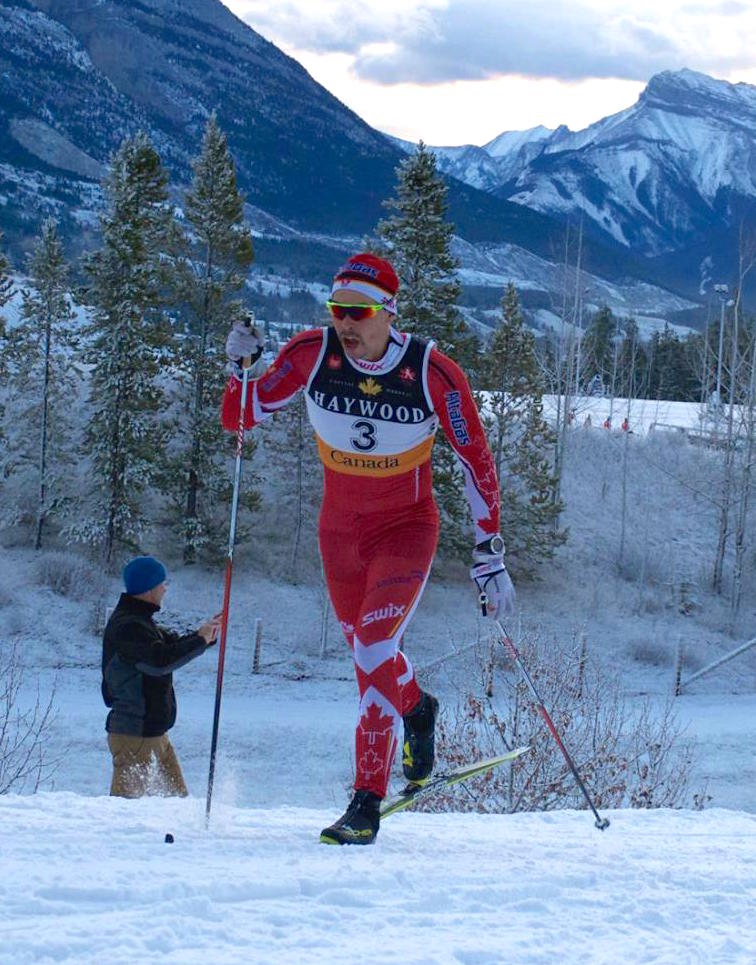
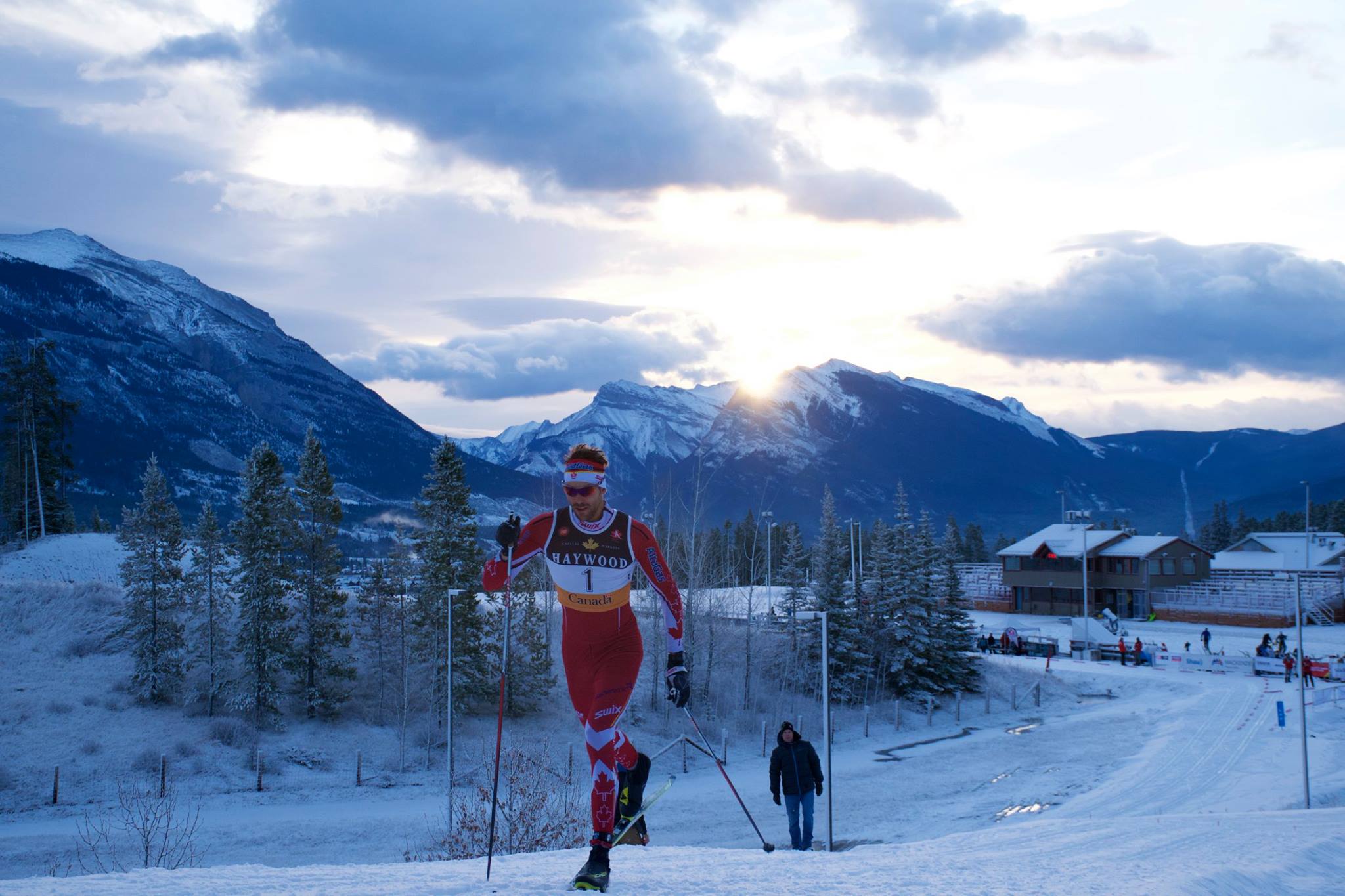
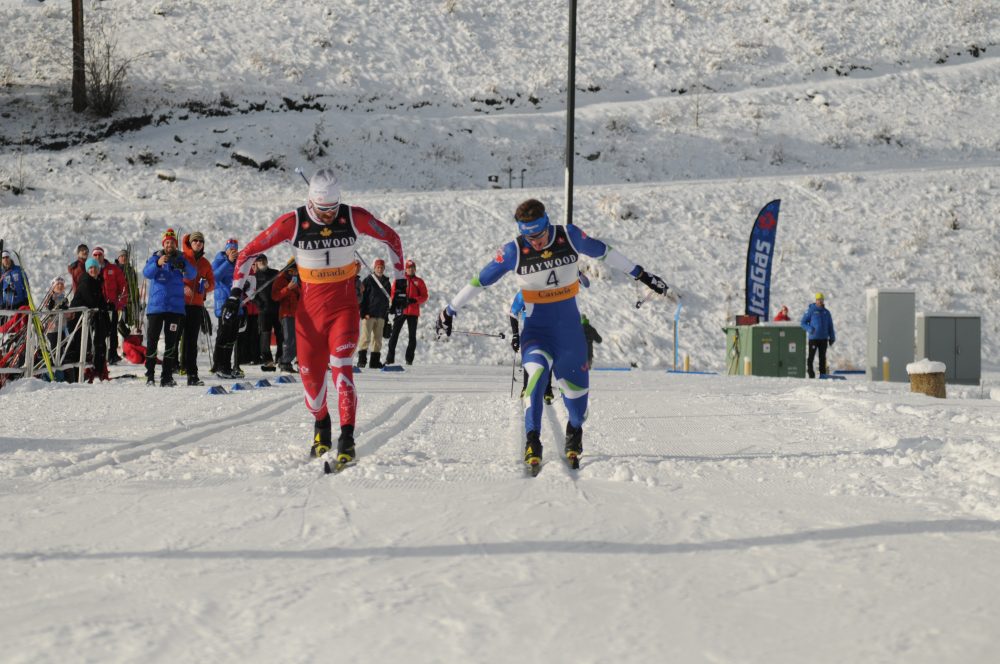
    Canadian World Cup Team member Len Valjas (1) and Bob Thompson (NTDC Thunder Bay) lunge to the line during Wednesday’s Frozen Thunder classic sprint at the Canmore Nordic Centre in Canmore, Alberta. (Photo: Doug Stephen)

    Clouds heavy with building snow and a winter-storm warning already in effect cast a second anticipatory shadow over a jittery group of racers gathered on Wednesday for the first Frozen Thunder race of the season at the Canmore Nordic Centre in Canmore, Alberta.

    At stake for some of the top Canadians participating in the day’s classic sprint was the opportunity to secure the final spot on the men’s World Cup team for the first period of World Cup racing starting later this month. Nearly 12 centimeters of snow had fallen the night before on the two-lap race track, and for many stepping out onto the freshly groomed trails, months upon months of training prep was in the barn.

    “That World Cup spot. That has been a goal for pretty well the whole year,” said Bob Thompson, who trains with the Thunder Bay National Team Development Centre (NTDC), on the phone after Wednesday’s races. 

    Thompson, 26, was not the only one hoping to book a plane ticket for World Cup Period 1, which starts Nov. 24 in Kuusamo, Finland, and continues through December. Sixty-six skiers started Wednesday’s men’s sprint qualifier and anyone in the hunt for that World Cup spot would have to outperform them all, excluding the Americans and Canadian World Cup Team member, Len Valjas, who was prequalified for the World Cup.

    Even with the competition’s added edge, many racers went about business as usual on race day and in the days leading up to the event, Thompson explained.

    “It’s been fairly carefree the week we’ve been here,” said Thompson, who arrived in Canmore with his NTDC teammates on Oct. 23. “The morning [of the sprint] I wouldn’t say things were a bleak atmosphere or super serious, it was just kind of everyone was doing their thing.”

    Thompson went about his warmup the way he normally would on race day. In retrospect, he saw his plan as well-executed and his warmup as strong, despite breaking a pole during his intensity segment. For him, the qualifier went “really well,” he said.
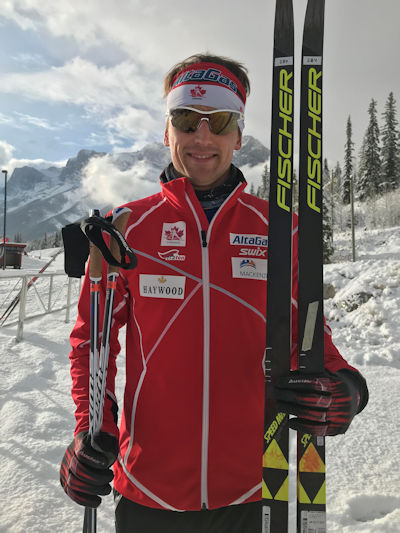
    Julien Locke (Canadian U25 Team/Black Jack) after winning the men’s classic sprint qualifier at Frozen Thunder in Canmore on Wednesday and securing the final spot on the Canadian men’s team for World Cup Period 1. (Photo: Cross Country Canada)

    But Julien Locke, of the Canadian U25 Team and Black Jack Ski Team, was the fastest man in the open men’s qualifier and thus earned that coveted World Cup spot.  Locke, 24, posted the top time of 3:37.81 minutes, nearly a second ahead of Valjas in second (+0.97) and 3.57 seconds ahead of the third qualifier, Dominique Moncion-Groulx of the Alberta World Cup Academy (AIAWCA). Thompson qualified fourth, 4.15 seconds off of Locke’s winning time.

    “I didn’t have regrets or second thoughts on how I raced,” Thompson said. “Julien had a great race, props to him. I’ll just have to come back next time.”

    Locke could not be reached at press time, but he spoke with Cross Country Canada (CCC) in a video posted on Twitter after the race.

    “I’m really excited to have won the race this morning and qualified for Period 1 World Cup, but the Olympics is the big goal this year,” Locke said. “It’s super important to go get results on the World Cup, and I’m excited to have a chance to do that.”

    According to CCC High Performance Director Thomas Holland, Locke and the rest of the World Cup Team (excluding Alex Harvey and Cendrine Browne) will head to Gällivare, Sweden, on Nov. 10, where they’ll compete in a weekend of International Ski Federation (FIS) races from Nov. 17-19. Meanwhile, Harvey and Browne, who train out of the Pierre Harvey National Training Centre (CNEPH) with coach Louis Bouchard in Quebec, will train in Davos, Switzerland, in advance of the World Cup opener in Finland.

    But let’s get back to Frozen Thunder. With the qualifier behind them and the heats slated to take place in a zero-elimination King’s Court format, many racers approached the rest of Wednesday adamant on getting in some solid race efforts.

    (Article continues below)

    https://www.instagram.com/p/Ba9eMJtnlWV/?taken-by=coach_babs_

    “The King’s Court format that we use in the heats was a great showcase for athlete development whereby every athlete entered in the race gets to race all 3 heats,” Holland explained in an email. “The format sees men and woman and para-skiers in some of the same heats – super fun event for all the athletes.”

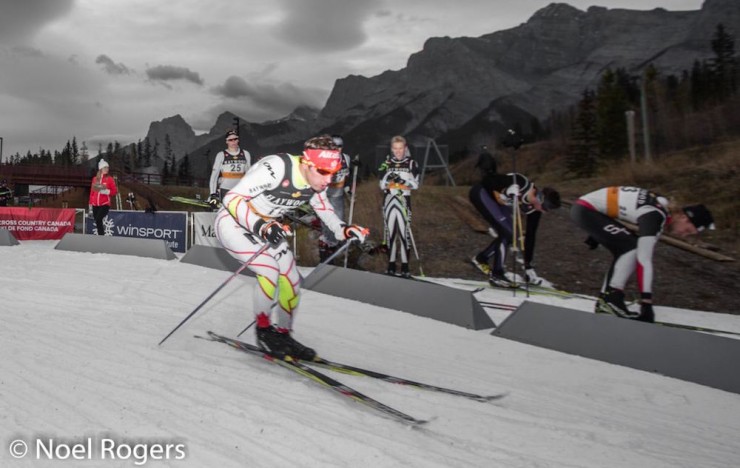
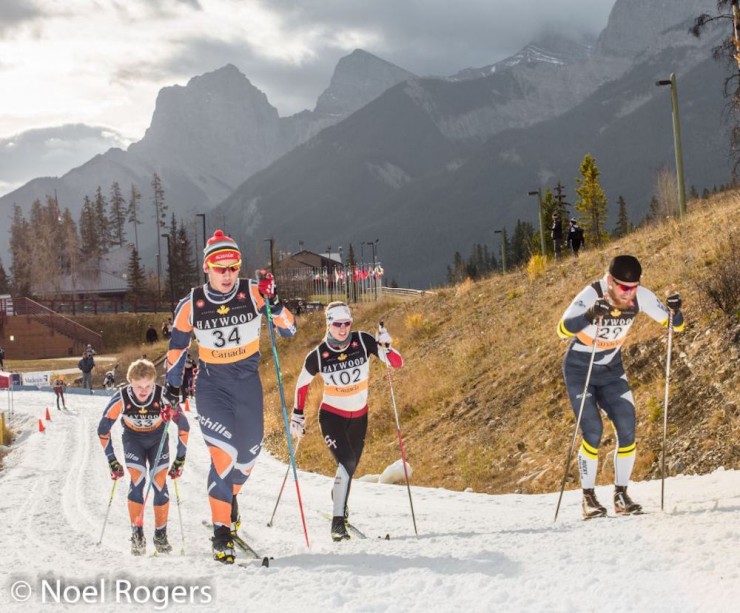
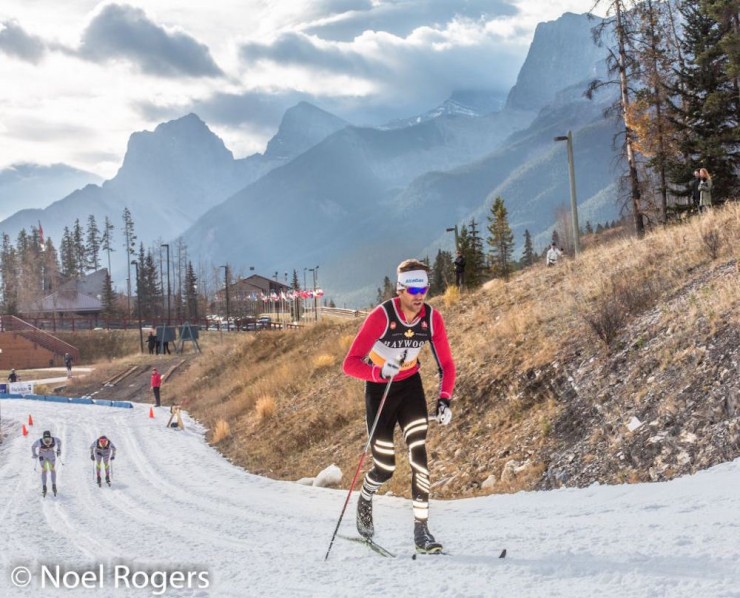
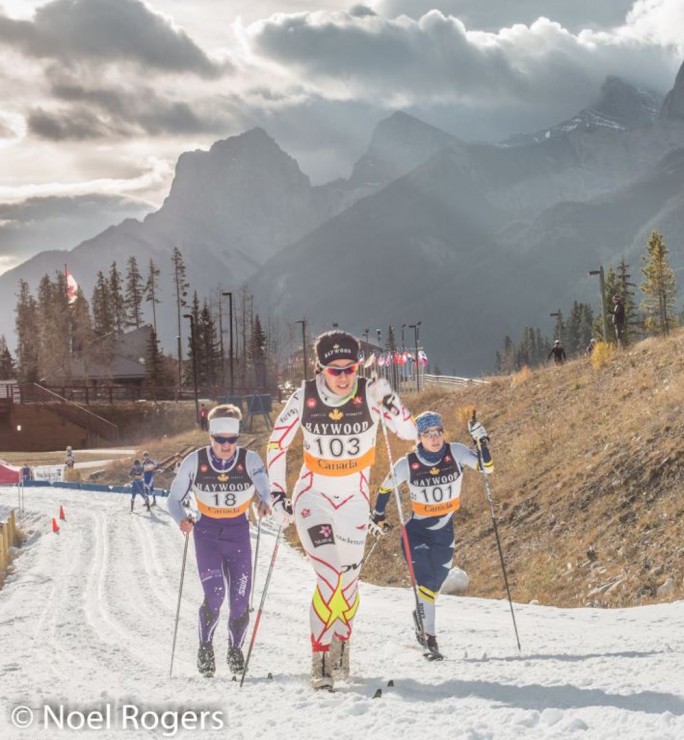
    In the first heat, Thompson, Locke, Valjas, and Moncion-Groulx went head to head, yet with the heats starting one minute apart on the two-lap track, there was a constant influx of skiers and some overlap.

    “I think comments were made that we were dogging it a little bit,” Thompson said of that initial round. “There were other heats that we were basically skiing in the first lap with that were going faster than us … they were running pretty quick through the starts.”
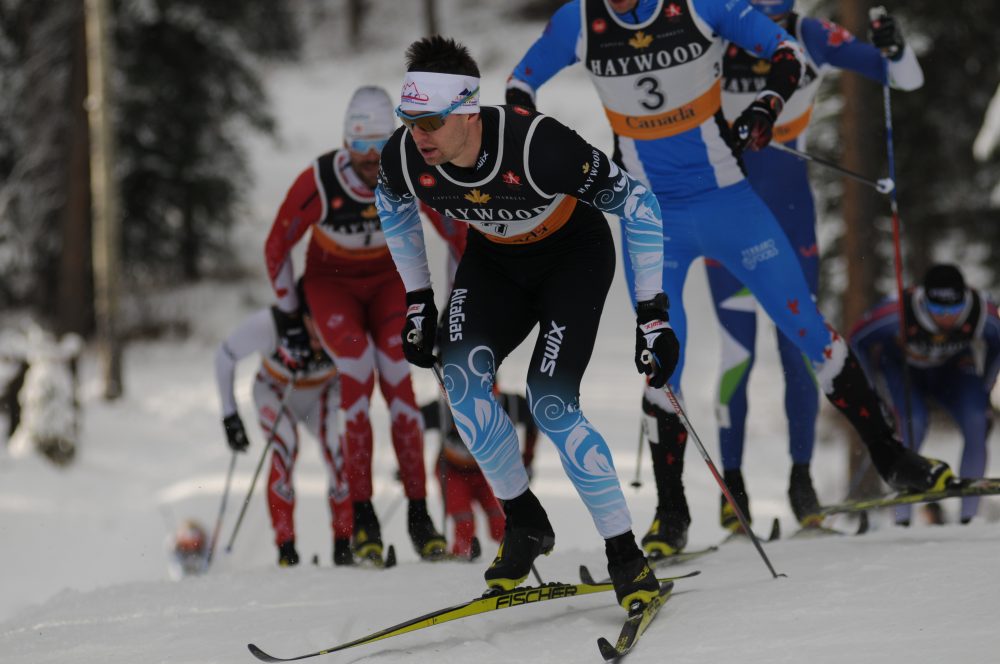
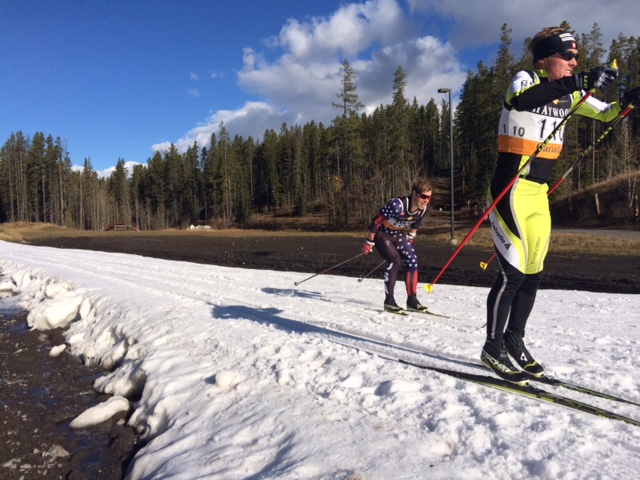
    Dominique Moncion-Groulx (Alberta World Cup Academy) leads Julien Locke (3), of Canada’s U25 Team and Black Jack, and Len Valjas (l), of the Canadian World Cup Team, during a Frozen Thunder classic sprint heat on Wednesday at the Canmore Nordic Centre in Canmore, Alberta. (Photo: Doug Stephen)

    In the second heat, Locke and Valjas paired up with Knute Johnsgaard (Canadian World Cup Team/AIAWCA) and American Cole Morgan, of the Sun Valley Ski Education Foundation (SVSEF). Thompson and Moncion-Groulx faced another American SVSEF skier, Kevin Bolger, as well as NTDC Thunder Bay’s Andy Shields. Four men advanced to the  senior men’s final: Bolger, Thompson, Locke and Valjas.

    In the final, Thompson recalled creating what he saw as “a bit of a gap” between himself and Valjas, yet Valjas, a seasoned World Cup sprinter, caught him in the lunge to the line for first. Overall on the day, Valjas placed first, Thompson second, Locke third, and Bolger fourth.

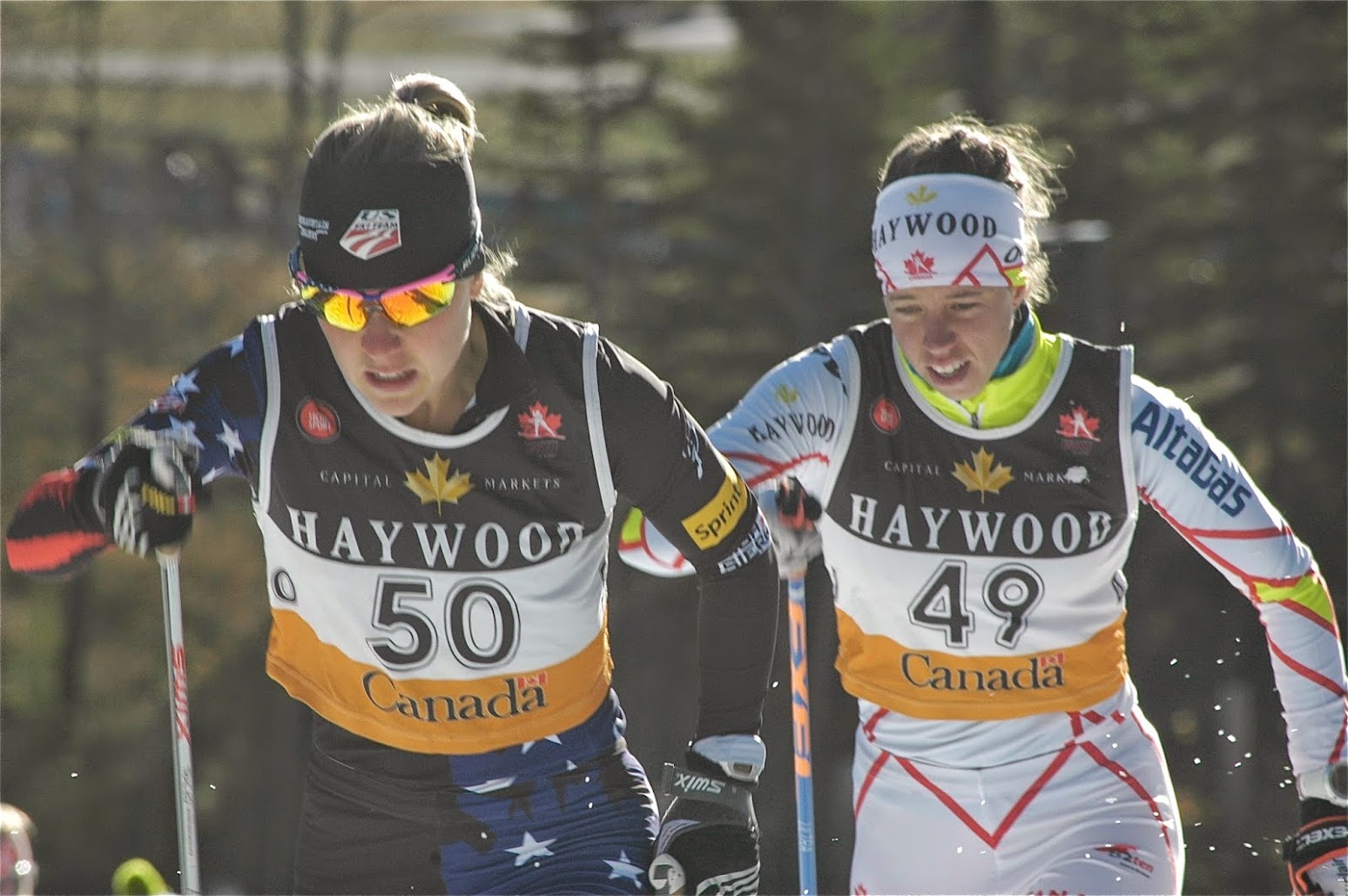
    With the King’s Court format, female racers competed in the same same qualifier as the men, with Dahria Beatty (U25 Team/AIAWCA) emerging as the fastest female qualifier in 4:20.66. Her time was 8.56 seconds clear the second woman, American Chelsea Holmes, of Alaska Pacific University (APU), and 10.03 seconds ahead of Katie Weaver (Hollyburn Ski Club) in third. The third-placed Canadian woman in the qualifier, Annika Hicks (AIAWCA) clocked in fourth (+13.25). 

    In the heats, the women continued to race with the men. In the all-women final, Maya MacIsaac-Jones (U25 Team/Rocky Mountain Racers) took the win, Hicks placed second, Holmes third, and Frédérique Vézina (CNEPH) fourth.

    Frozen Thunder racing continues Friday with men’s 10 k and women’s 7.5 k distance races, starting at 9 a.m. Mountain time. In a press release, CCC anticipated a turnout of 115 participants.

    Classic sprint results: Qualifier | Heats

    https://www.instagram.com/p/Ba-9qryFyoc/?taken-by=cccski

  • With World Cup Starts Up for Grabs, Cockney Wins Frozen Thunder Classic Sprint Qualifier

    With World Cup Starts Up for Grabs, Cockney Wins Frozen Thunder Classic Sprint Qualifier

    Jess Cockney (Canadian World Cup B-team) racing to first in the men's classic sprint qualifier at Frozen Thunder on Tuesday in Canmore, Alberta. The win should secure his spot with the Canadian national team at World Cup Period 1. (Photo: Jenn Jackson)
    Jess Cockney (Canadian World Cup B-team) racing to first in the men’s classic sprint qualifier at Frozen Thunder on Tuesday in Canmore, Alberta. The win should secure his spot with the Canadian national team at World Cup Period 1. (Photo: Jenn Jackson)
    Update: Early Thursday, Cross Country Canada (CCC) announced that Jess Cockney has been selected for World Cup Period 1, referencing both his Olympic history and last season’s World Cup top-10 result. 

    ***

    For most of the 88 racers at the Canmore Nordic Centre on Tuesday, it was a chance to train with a race bib on. But for some top male sprinters seeking World Cup starts, it was already one of the most decisive days of their season.

    The Frozen Thunder classic sprint followed a King’s Court format, a more casual approach that guarantees all racers three heats. After the qualifier, competitors were divided into groups of four based on their finish times, regardless of gender or category.  In each heat, the top two moved up one group and the bottom two moved down one group.

    As an example, Canadian Para-Nordic standout Mark Arendz qualified 64th and shared his first heat with three junior women. After winning two heats, Arendz reached the final, where he lined up alongside Friday’s female distance winner Chelsea Holmes and two junior men.

    The format resulted in a relaxed day for most, with evenly matched heats. As with Friday’s 7.5- and 12-kilometer freestyle interval starts, everyone used the same wax for qualification. The addition of a no-double-pole zone for the qualifications ensured that everyone chose grip.

    For the Canadian male sprinters who hadn’t already qualified for World Cup Period 1, the pressure was on. For the winners of the sprint qualifiers on Tuesday and Thursday (with a freestyle sprint qualifier only on Thursday at 9 a.m. Mountain time), they would each be rewarded with one of two remaining World Cup spots.

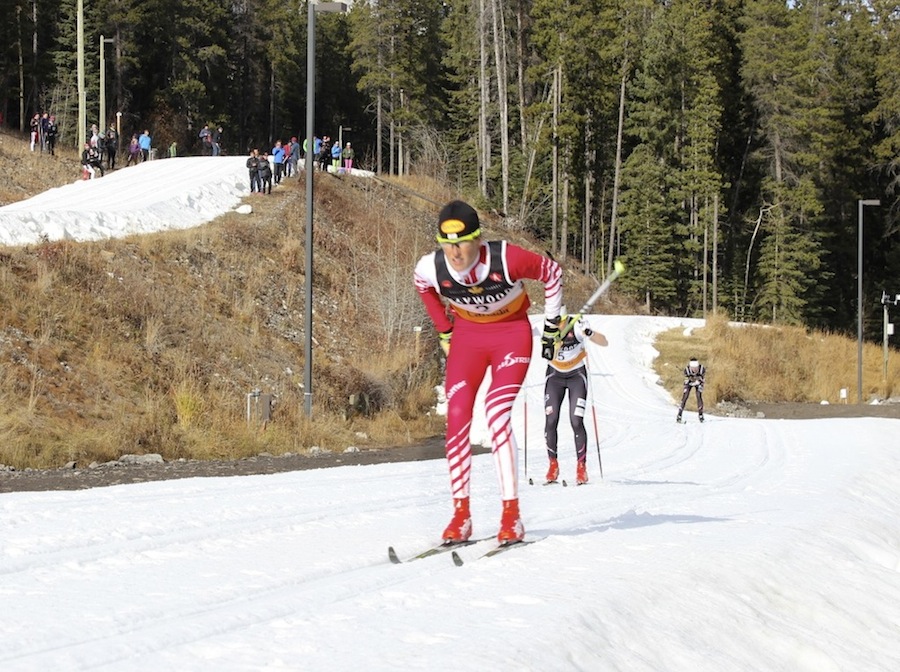
    Len Valjas (Canadian World Cup A-team) racing to second in the men's classic sprint qualifier on Tuesday at Frozen Thunder in Canmore, Alberta. Valjas is pre-selected for World Cup Period 1. (Photo: Jenn Jackson)
    Len Valjas (Canadian World Cup A-team) racing to second in the men’s classic sprint qualifier on Tuesday at Frozen Thunder in Canmore, Alberta. Valjas is pre-selected for World Cup Period 1. (Photo: Jenn Jackson)

    On Tuesday, Jess Cockney of the Canadian World Cup B-team staked his claim, winning the classic-sprint qualifier in 3:51.66, 4.09 seconds ahead of World Cup A-team sprinter Len Valjas. Distance specialist Graeme Killick posted the third-fastest qualifying time, 6.98 seconds back and 0.49 seconds ahead of fourth-place finisher Knute Johnsgaard, completing a top-four sweep for the Canadian national team.

    “It’s a huge help to be on snow this early for us and the fact that it’s available in my hometown is incredibly lucky,” Cockney, who trains in Canmore, wrote in an email about the Frozen Thunder trials races.

    The other favourites for the remaining World Cup spot finished fifth through seventh: Bob Thompson, of the Thunder Bay National Development Centre (NDC), who was 9.12 seconds behind in fifth; Simon Lapointe, of the Pierre-Harvey Training Centre (CNEPH) in sixth (+9.95), and Julien Locke (U25 Team/Black Jack) in seventh (+10.26). 

    After Tuesday’s races, Cockney explained that he expected to be chosen for the first World Cup period as a result of his qualifying win.

    “I haven’t heard anything official but that was the understanding I had of the criteria,” Cockney wrote.

    According to Cross Country Canada’s published criteria, sprint selections for World Cup Period 1 “may be made” based on the race winner or winners in each of the two Frozen Thunder sprints. If unable to select the winners (i.e. pre-selected athletes win), second-place finishers may be chosen. There were other possibilities, in less preferable order, and ultimately, a five-person selection committee will determine who gets to go.

    Cockney skipped the heats, explaining that he felt “under the weather a bit [Monday] and I’m trying to make sure I don’t make it any worse.” Killick and Valjas skied two heats before ending their days early due to similar concerns.

    In the heats, Locke, a national-team rookie, won all three of his heats to take the overall victory. Brian McKeever of the Para-Nordic Ski Team placed second and John Hegman of the Sun Valley Ski Education Foundation (SVSEF) in Idaho was third.

    “I was happy to see my teammate Jess Cockney ski very well and make the criteria,” Locke wrote in an email. “Personally, I had a subpar ski in the qualifier but everything went well in the heats. I felt that I was skiing well technically in the soft snow and I’m satisfied with where the shape is at right now. I am looking forward to the final selection on Thursday.”

    Locke was one of several skiers excited by live TV coverage: “For the first time that I have seen in Canada, there had a TV crew on-site broadcasting the races live. Great work Shaw [TV Calgary]!”

    Canadian television stations typically edit and delay broadcast of nordic races.

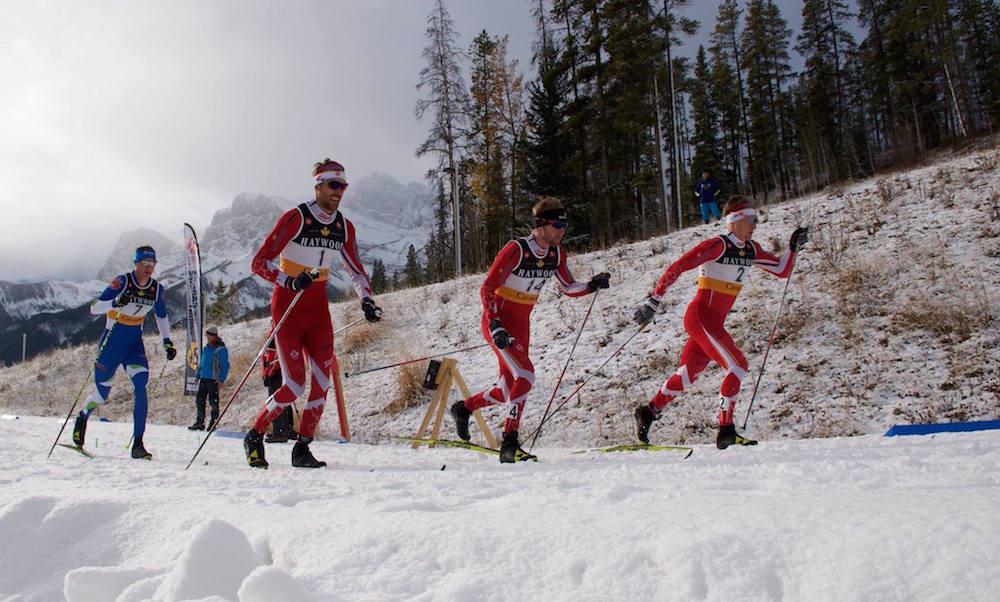
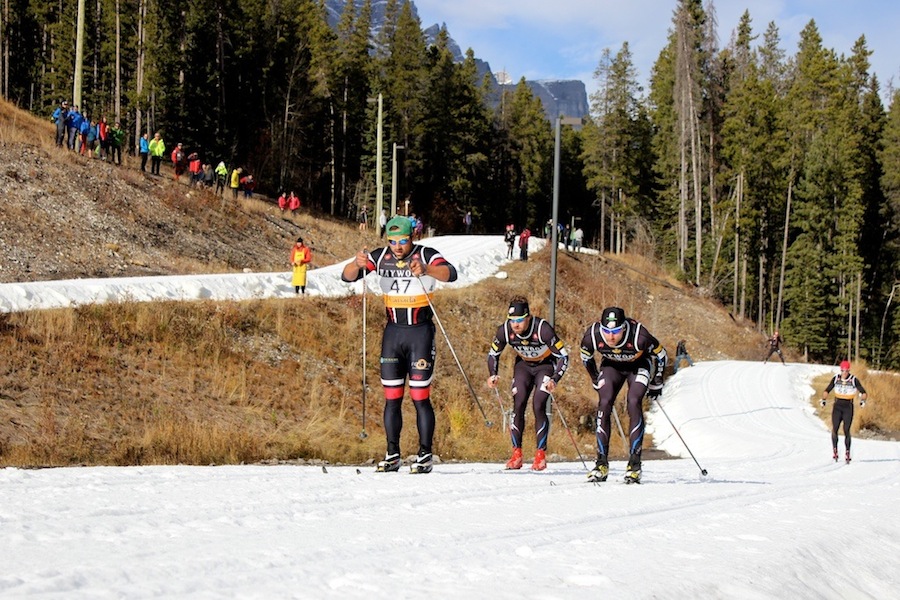
    (From left to right) Bob Thompson (NDC Thunder Bay), Graeme Killick (AWCA/NST A-team), Lenny Valjas (NST A-team) and Knute Johnsgaard (AWCA/NST U25 Team) go head-to-head in a classic sprint heat at Frozen Thunder in Canmore, Alberta. (Photo: Jenn Jackson)
    (From left to right) Bob Thompson (NDC Thunder Bay) chases Lenny Valjas (NST A-team), Graeme Killick (AWCA/NST B-team), and Knute Johnsgaard (AWCA/NST U25 Team) during a classic sprint heat at Frozen Thunder in Canmore, Alberta. (Photo: Jenn Jackson)

    “These races are a fun way to get into the racing spirit!” McKeever wrote in an email.  “Other than that, I don’t put any importance on them seeing as how it’s October and the big races are a long ways off.”

    He appreciated the casual-sprint format for training purposes.

    “King’s Court is a good way for every starter to get a full set of rounds in a sprint, regardless of qualification time,” he wrote. “It also pits people against others of similar ability which can be fun instead of getting shelled by the top guy/girl in the quarterfinal as happens sometimes. However, it does take a lot of time to get through the series of races and it makes for a lot of fatigue. I think I’m more tired after today than after a long Ski Classics race!”

    Fatigue was a common theme among the racers as most are in the middle of a high-volume, on-snow block. Johnsgaard finished sixth in the A-final after qualifying in fourth.

    “I feel really good about my race today,” Johnsgaard wrote. “I’m fortunate to already be qualified for Period 1 on the World Cup, so I can focus on the road ahead rather than the races this week. The conditions were slow but everyone was on the same wax, at least for the qualifier so we all suffered together!”

    In addition to Johnsgaard, of Canada’s U25 Team and Alberta World Cup Academy (AWCA), pre-selected skiers for the World Cup Period 1 include Valjas, Killick, Alex Harvey, Devon Kershaw, and Andy Shields.

    “It’s a great chance for me to practice going fast on snow but to me it’s not nearly as important as to the guys trying to nab the last World Cup spots,” Johnsgaard added.

    Killick was also in training mode, but as with most elite athletes, the competitive urge is always there. “I took the qualifier pretty seriously,” Killick wrote. “It’s a good chance to gauge my speed with all the top guys competing for a spot over-seas.”

    Pre-selected Beatty Top Female Qualifier; Phinney Wins Final  

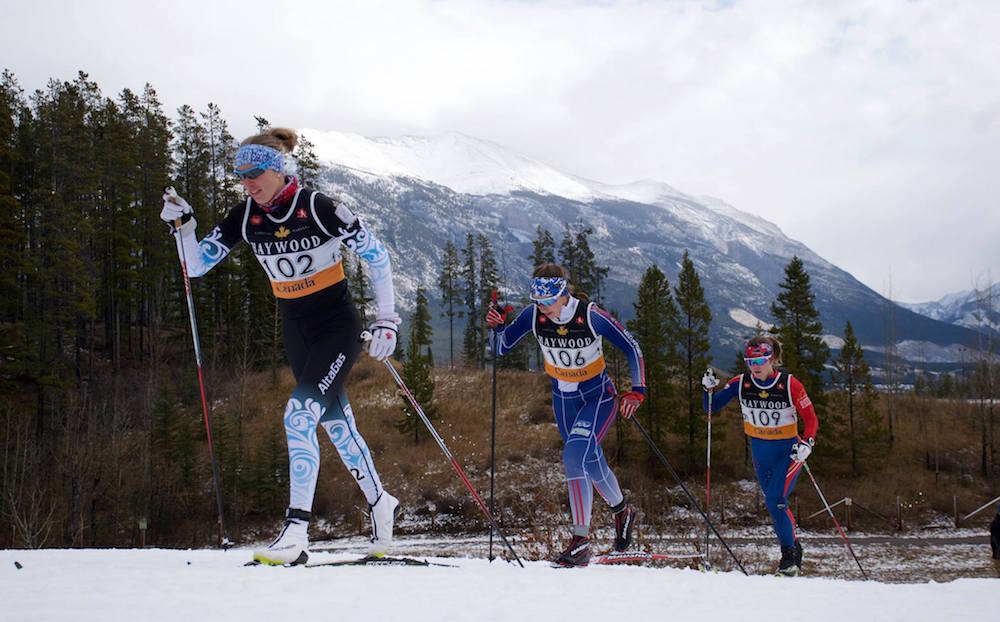
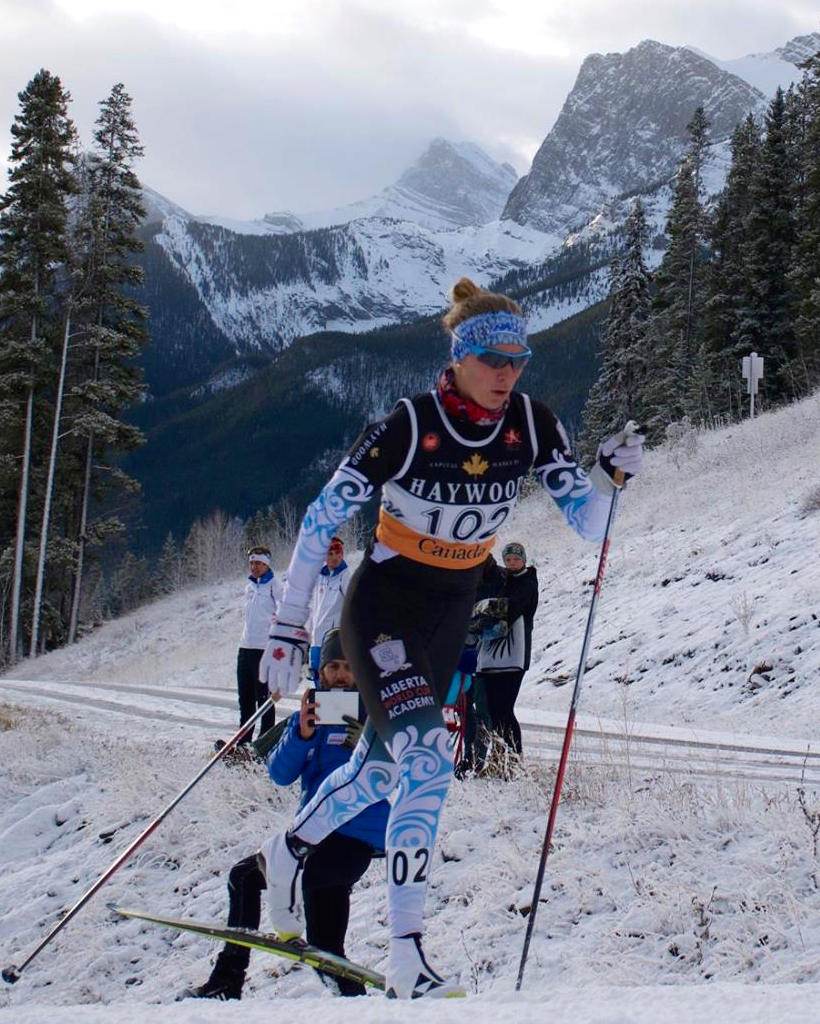
    Dahria Beatty leads Kelsey Phinney and Annika Hicks in the ladies final (Photo: Jenn Jackson)
    Dahria Beatty (102) leads Kelsey Phinney (106) and Annika Hicks (109) in the women’s final at the Frozen Thunder classic sprint on Tuesday in Canmore, Alberta. (Photo: Jenn Jackson)

    With all of the national-team senior women prequalified for World Cup Period 1, the women’s qualifier and heats had a more relaxed feel, especially for an American like Kelsey Phinney. The Sun Valley skier won her final and explained in an email that she’s enjoying her first visit to Frozen Thunder.

    “King’s Court sprinting was really fun! I liked that it allowed the women and men to do heats together, and that it gave the day a relaxed feel,” she wrote. “I’ve done King’s Court sprints in training before, and I like that everyone gets the experience of racing a full round of heats. I was skeptical at first with so many racers, but Zone4 did an incredible job timing and it ran really smoothly. The big difference between regular heats and King’s Court is that your qualification place matters more because there are only a couple heats to move up to get into the A final.”

    Phinney qualified 49th in 4:40.40, 4.14 seconds behind Canadian U25 Team member Dahria Beatty, who was the first woman in 44th. Annika Hicks (AWCA) qualified in 47th as the second woman, 1.57 seconds back.

    Dahria Beatty (AWCA/NST U25-team) was the fastest woman in the classic sprint qualifier on Tuesday at Frozen Thunder in Canmore, Alberta. (Photo: Jenn Jackson)
    Dahria Beatty (AWCA/NST U25-team) was the fastest woman in the classic sprint qualifier on Tuesday at Frozen Thunder in Canmore, Alberta. (Photo: Jenn Jackson)

    In the third heat, the organizers pulled the top women together for their own A-final.  There, Phinney beat out Beatty and Hicks.

    “I’m happy with today!” Phinney wrote. “I love racing heats, so I’m always happy to get a full day of heat racing with speedy competitors. We’ve put in a big volume week on snow and so it was good to end this block with a fun day of sprinting. I was pleasantly surprised that I felt pretty fast despite being tired from a big week of training. Also there was fresh snow on top of the man made loop, so we had some tricky conditions. It was definitely a good day to work on skiing in tough conditions.”

    “My race was alright,” Beatty wrote in an email. “I definitely feel like I am still missing my top speed but that’s what these races are for. They are the perfect opportunity to get tuned up for the race season and remind the body how to move really fast.”

    Hicks rounded out the podium with enthusiasm.  “I felt strong today and it was a good confidence booster going into the start of the season,” she wrote. “Qualifying second behind Dahria was a huge surprise though! I’m usually not a strong qualifier but felt like I skied really well today.”

    Results: Qualifier | King’s Court

    The start of an all-women's heat at the 2016 Frozen Thunder classic sprint, which followed King's Court format. (Photo: Matthias Ahrens)
    The start of an all-women’s heat at the 2016 Frozen Thunder classic sprint, which followed King’s Court format. (Photo: Matthias Ahrens)

    FasterSkier is seeking photos from the 2016 races at Frozen Thunder. Please email submissions with caption and credit info to info@fasterskier.com.

  • Slightly Shorter But Still Sprint-Worthy: Frozen Thunder in Photos

    Slightly Shorter But Still Sprint-Worthy: Frozen Thunder in Photos

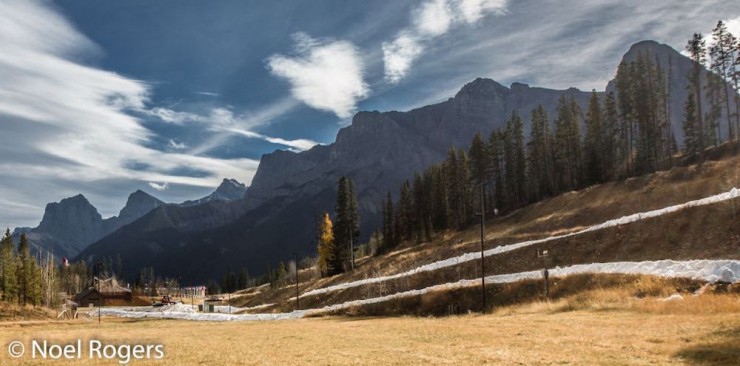
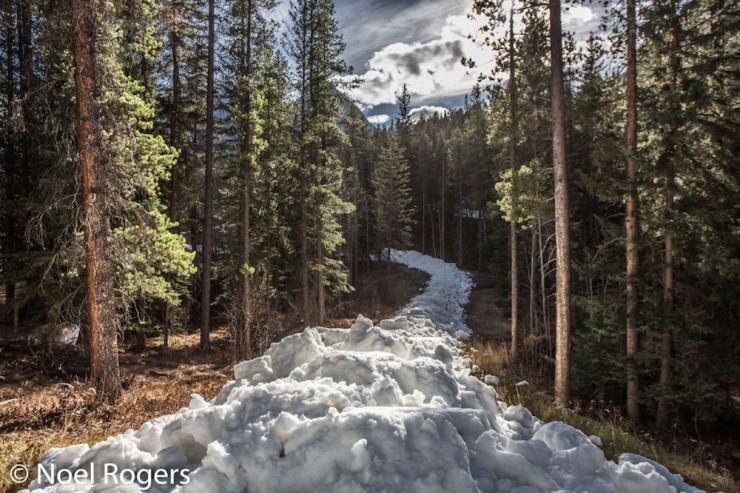
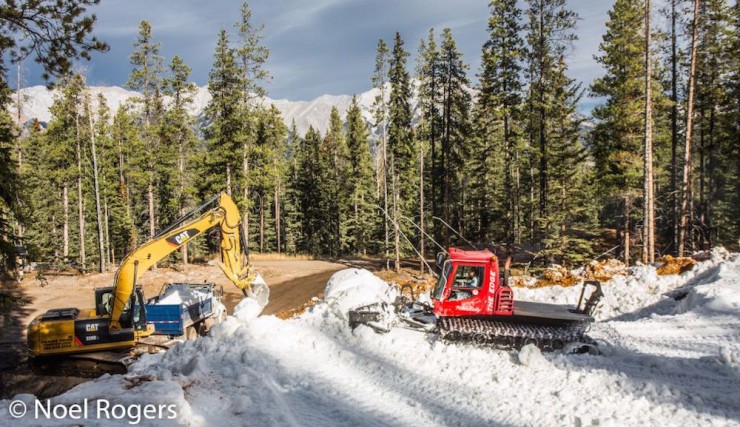
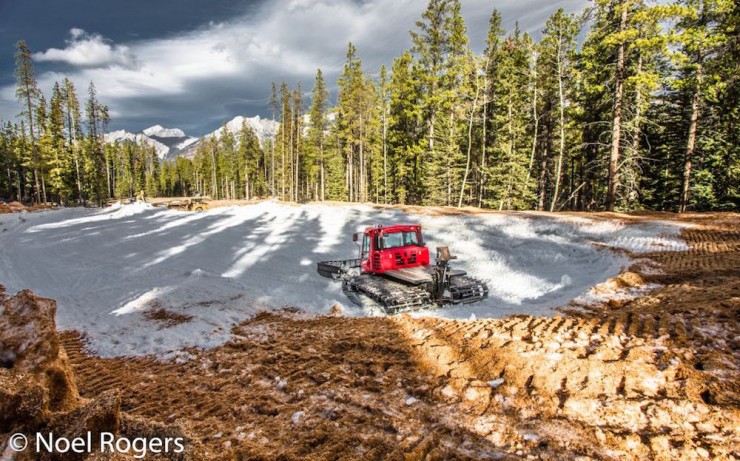
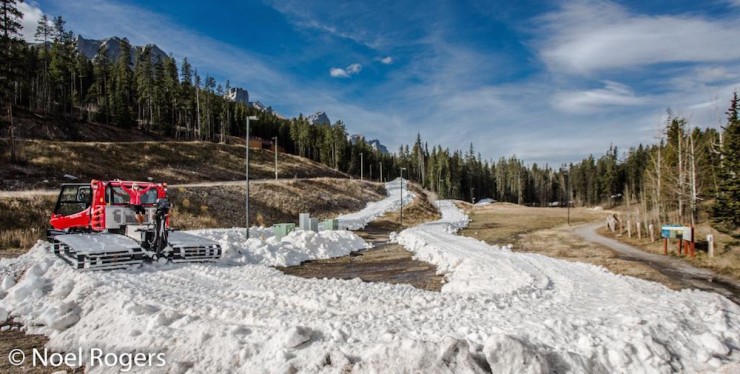
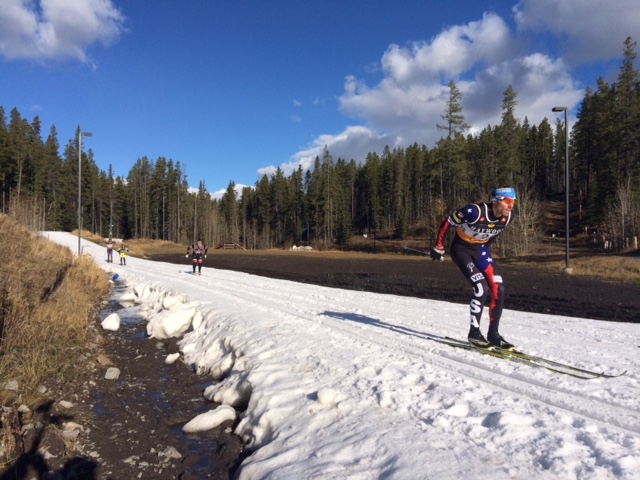
    It wasn’t easy, but the crew at the Canmore Nordic Centre got it done. Warmer temperatures last winter limited the production (and ultimately the stockpiling) of artificial snow — the stuff essential for Canada’s preseason, home-based training each October in Canmore, Alberta. But last week, organizers were able to roll out a one-kilometer loop of snow, which was shorter than usual but enough to hold at least one race: the Frozen Thunder classic sprint on Monday.

    “We have a slightly smaller loop than we had before because we had so many warm temperatures last February and March; they couldn’t actually blow the snow,” Canadian National Team Head Coach Justin Wadsworth explained in a phone interview last Friday.

    Without a distance race on the docket as well, Wadsworth anticipated the field for the sprint would be smaller.

    “I think people did hear that the pile of snow was smaller so the U.S. and some of our Eastern Canadian clubs and programs have decided to stay where they are and not ski on a smaller loop,” he said. “There’s also a snow pile at Forêt Montmorency in Quebec so they’ll start grooming there fairly soon. Thunder Bay and a lot of the Quebec and Ontario teams will be there training.”

    The Frozen Thunder sprint drew just over 50 competitors for the King’s Court format, which allowed everybody — junior men, junior women, senior men, and senior women — to compete in a mixed field and race a qualifier and three heats.

    Best known as a distance skier, Emily Nishikawa, the woman with the most World Cup experience currently on Canada’s national team, earned the senior women’s sprint title. In the final, she topped two junior men, Peter Hicks and Alec Stapff, and senior woman Andrea Dupont (Rocky Mountain Racers) to do so.

    “Frozen Thunder is always a fun way to start off the race season, it was good to get a bib on and push hard, but in a low-key, relaxed atmosphere,” Nishikawa, 26, wrote in an email. “I was racing against younger boys for most of my heats, so that was fun and different. The conditions were pretty soft on the track, but it is good to practice skiing in that type of condition. I was pleasantly surprised to do that well in a sprint race, as I have been focusing more on distance racing!”

    Canadian World Cup Team member Lenny Valjas, 26, dominated the senior men’s field, winning each of his heats and beating fellow national-team members Jess Cockney and Ivan Babikov, and Julien Locke (Black Jack) in the final.

    “Lenny’s back as good as we’ve ever seen him before,” Wadsworth said before the sprint. “He’s super fit. He’s had a consistent summer of training.”

    Both Nishikawa and Valjas set the fastest times in the morning qualifier by nearly four seconds.

    Results

  • Sargent, Newell Climb to Top in Frozen Thunder Classic Sprint (with Photo Gallery)

    Sargent, Newell Climb to Top in Frozen Thunder Classic Sprint (with Photo Gallery)

    Andy Newell racing to his second Frozen Thunder classic sprint victory in three years on Friday at the Canmore Nordic Centre in Canmore, Alberta. Runner-up Dakota Blackhorse-von Jess won last year. (Photo: Pavlina Sudrich)
    Andy Newell (r), of the U.S. Ski Team and Stratton Mountain School (SMS) T2 Team, racing to his second Frozen Thunder classic sprint victory in three years on Friday at the Canmore Nordic Centre in Canmore, Alberta. Runner-up Dakota Blackhorse-von Jess (in second) won last year. Matthias Inniger of Switzerland was third overall and Kris Freeman (Team Freebird) was fourth. (Photo: Pavlina Sudrich)

    There are a couple things one can count on at the Canmore Nordic Centre, including solid tracks and quality snow, even in October. At the first unofficial sprint of the North American season on Friday morning, more than 120 racers found both for the Frozen Thunder classic sprint, and organizers added what could be a new tradition to the mix: a zero-elimination format.

    Sounds chaotic? It worked, according to American Dakota Blackhorse-von Jess of the Bend Endurance Academy in Oregon.

    “It was a great format — worked out far better than I could possibly have imagined,” he wrote in an email after the race. “Gets everyone the chance to race with like-speed people and … experience the stress of a full sprint day. Great opportunity for all that ran like clockwork. … Fantastic event.”

    Blackhorse-von Jess and another American Ida Sargent (U.S. Ski Team/Craftsbury Green Racing Project) posted the top men’s and women’s qualifying times, respectively, beating out their competition on the 1.6-kilometer course by more than 2 seconds apiece.

    Frozen Thunder organizers opted for what they called the “knock-in sprints,” or King’s Court format, ranking all 122 racers — men and women combined — by qualifying times and seeding them in four-person heats for the first of three rounds.

    The top two in each heat of round 1 moved up; the last two moved down a heat. The format repeated for round 2 to put the most competitive skiers at the top of round 3, allowing all participants to race all three rounds.

    Matthias Inniger of Switzerland bringing it home for third overall and Kris Freeman (Team Freebird) on his way to fourth in the Frozen Thunder classic sprint on Friday. (Photo: Pavlina Sudrich)
    Matthias Inniger of Switzerland bringing it home for third overall and Kris Freeman (Team Freebird) on his way to fourth in the Frozen Thunder classic sprint on Friday. (Photo: Pavlina Sudrich)

    Blackhorse-von Jess won his first two heats, topping U.S. Ski Team and SMST2 Team member Andy Newell in round 2, but Newell had the edge in the final round 3 for the overall win. Blackhorse-von Jess placed second, Switzerland’s Mathias Inniger took third, and Kris Freeman (Team Freebird) was fourth.

    “It kind of felt like each heat was a final since nobody wants to move down a bracket so we had to push each hard each round,” Newell wrote in an email. “There were a lot of fast skiers here but we North Americans are all pretty good buddies so it was definitely a friendly fight out there. We’ve all trained with each other a bit this off season and want everyone to kick ass over season.”

    In terms of tactics, he added that it depended on how fast your skis were.

    “We all agreed to use kick wax this year to make it an even playing field and only waxed with low flour [sic] wax,” Newell wrote. “For me the tactic was to push hard on the uphills to try to break it up a bit. We were all on klister and the snow was sugary but still great racing conditions.”

    The course was two laps, for a total of two uphills.

    “One is a decent climb and the other is a pretty short one,” Newell explained. “The reason we have double poled here in the past is because it’s kind of a downhill finish which can be faster in the skate skis. But I think it worked out well this year with everyone on klister.”

    According to Blackhorse-von Jess, the heats were an opportunity to get back into the swing of racing.

    “With the fastest (and the best skiers in North America) all there, you have to push every time. And starting in the fastest quarter and moving on into the fastest semi means do-or-die for making the final, so there’s no sandbagging all day,” he wrote. “I don’t know why I was so fast qualifying, really. [My coach] Ben [Husaby] helped me make some major changes to my classic technique this year, which has made obvious improvements off the snow so it’s not surprising it’s helped on the snow. But who knows. It’s a training day for everyone and while I’m encouraged by the day, I don’t think anyone can read overmuch into the crystal ball based on today.”

    Canadian World Cup Team member Devon Kershaw led the Canadians as the top man in the second-fastest final round, beating out Jess Cockney, of the Alberta World Cup Academy (AWCA), Lenny Valjas (Canadian World Cup Team), and American Ben Saxton (SMST2).

    “Not the best day ever for me, but not the worst,” Kershaw wrote on Instagram. “Thanks to all that made it possible (CCC, volunteers, all the racers & staff).”

    Ida Sargent (U.S. Ski Team/CGRP) leads Perianne Jones (Canadian NST) in round 2. The two went on to place first and second among women in the Frozen Thunder classic sprint on Friday. (Photo: Angus Cockney)
    Ida Sargent (U.S. Ski Team/CGRP) leads Perianne Jones (Canadian NST) in round 2. The two went on to place first and second among women in the Frozen Thunder classic sprint on Friday. (Photo: Angus Cockney)

    Sargent raced three junior men in round 1, finishing third behind Reed Godfrey of the Alberta Ski Team (AST) and Caelan McLean (Yukon Ski Team). She then met two junior men and Canadian National Team member Perianne Jones in round 2.

    There, she placed second behind Samuel Greer (NDC Thunder Bay), whom she outlasted in the first round, and Jones took third. Sargent advanced to the last round with Godfrey, Geer and another junior man, Tate Macdonald (AST), and beat them all for a resounding overall victory.

    “The format was definitely funky but they did a great job pulling it off and I thought it ran really smoothly,” Sargent wrote in an email. “At first I thought it was a weird idea but then it ended up being fun and I had to go as hard as I could every single round rather than being able to ski a little conservatively through the early rounds. On the World Cup, every heat is 100% so this was great training.”

    Her goal was to push as hard as possible each round, and with a downhill double-pole finish (in which she got passed at least once in previous rounds), she made a point to go even harder over the tops of each hill to get a sizable lead before the finish.

    “I’m happy to be feeling good right now,” she wrote. “I don’t consider this part of the season yet and I’m just psyched to have had a fun and hard effort on snow.”

    Jones was third in the second-fastest, coed round 3, after McLean and Thomas Manktelow (AST), respectively.

    “I’ve never done rounds like that before, but it was really fun, and good for us to go hard every round,” Jones wrote in an email. “North American sprinting (especially for the women, and especially in Canada) has turned into a bit of a cake walk in the first couple rounds before putting the hammer down in the final — which is the worst thing for development because once you get to the World Cup there’s no lolly-gagging.”

    Dahria Beatty (AWCA) placed third among the women, finishing ahead of fourth-place woman Heidi Widmer (AWCA/Canadian NST) in the final round. 

    Angus Foster (Big Thunder Nordic) was the top junior man in 21st overall, followed by Pearce Hanna (Rocky Mountain Racers) and David Askwith (Georgian Bay).

    Maya MacIssac-Jones (RMR) was the top junior woman, followed by Katherine Stewart-Jones (Nakkertok) and Katie Weaver (Hollyburn).

    “I’d say best Frozen Thunder Race ever,” Jones concluded. “It was sunny and warm, and CCC and Zone 4 (Dan Roycroft) somehow managed to make the day go incredibly smoothly running 96 heats — 1 every 30 seconds. I have to admit I was skeptical about the format, but the race ran like a well-oiled machine, and was a ton of fun.”

    “Snow was incredible, as always,” Blackhorse-von Jess wrote. “They do an amazing job there and it got a lot more traffic this year with all the racers and it held up awesome.”

    Distance racers will have a chance to strut their stuff at Frozen Thunder on Monday at the 10/15 k freestyle individual start at 9 a.m. Mountain time.   

    Results: Qualifying | Heats

    Check out dozens of photos from the first unofficial race of the season, the Frozen Thunder classic sprint, in Canmore, Alberta, courtesy of Angus Cockney, Jess Cockney’s father.

  • Smutna, Americans Show their Speed in Frozen Thunder Sprint

    Smutna, Americans Show their Speed in Frozen Thunder Sprint

    With one lap to go, Dakota Blackhorse-von Jess (Bend Endurance Academy) leads the men's A-final of the Frozen Thunder classic sprint at the Canmore Nordic Centre in Canmore, Alberta. U.S. Ski Team and Stratton Mountain T2 teammates Simi Hamilton and Andy Newell follow, along with Sam Naney (Methow Olympic Development). (Photo: Pavlina Sudrich)
    With one lap to go, Dakota Blackhorse-von Jess (Bend Endurance Academy) leads the men’s A-final of the Frozen Thunder classic sprint at the Canmore Nordic Centre in Canmore, Alberta. U.S. Ski Team and Stratton Mountain T2 teammates Simi Hamilton and Andy Newell follow, along with Sam Naney (Methow Olympic Development). (Photo: Pavlina Sudrich)

    Note: This article has been correct to recognize Sophie Caldwell (USST/SMST2) as the women’s qualifier winner.

    CANMORE, Alberta – The 2013-14 ski season unofficially kicked off Thursday with a classic sprint on snow at Frozen Thunder in Canmore, Alberta. While a fairly low-key event overall, it served as a tune-up race for many of the skiers as they head into the World Cup races in Finland or U.S. SuperTour openers in West Yellowstone, Mont., in late November.

    Racing two laps around a shortened version of the 2.2-kilometer Frozen Thunder loop, skiers completed the course in 4 to 5 minutes for the women, and roughly 30 seconds faster for the men, making for a long sprint course to start the season.

    Katerina Smutna of Austria leading the women's A-final at the Frozen Thunder classic sprint on Thursday in Canmore, Alberta. U.S. Ski Team members Ida Sargent and Sophie Caldwell chase to finish second and third, respectively. (Photo: Pavlina Sudrich)
    Katerina Smutna of Austria leading the women’s A-final at the Frozen Thunder classic sprint on Thursday in Canmore, Alberta. U.S. Ski Team members Ida Sargent and Sophie Caldwell chase to finish second and third, respectively. (Photo: Pavlina Sudrich)

    As Caitlin Gregg of the Methow Olympic Development team in Washington explained, the variety of terrain on the course, with plenty of uphills, downhills and turns, made for a quality course. However, the two-loop experience made for a unique mental challenge of staying psyched for big hills the second time around.

    To deal with possible crowding issues in the qualifiers, race organizers used a unique starting strategy. After the first five skiers, they left a larger time gap than usual before starting the next of five racers to space out the field.

    The field of 34 women raced first. Sophie Caldwell of the U.S. Ski Team (USST) and Stratton Mountain School T2 Team (SMST2) won qualification by just over a second, followed by Austrian Katerina Smutna and Ida Sargent (USST/Craftsbury Green Racing Project) rounding out the top three.

    The men’s field was somewhat larger with 54 racers, and like last year, saw a combination of skate and classic equipment used among the top racers. Andy Newell (USST/SMST2) won the qualifier on skate skis by more than 3 seconds. SMST2 teammates Skyler Davis and Simi Hamilton (USST) followed up in second and third.

    Only 16 men and 16 women moved onto the heats. As a result, many of the less sprint-endowed racers came up with alternate plans for their workout that day. Some moved on to interval sessions, while others simply decided to save up energy for Friday’s classic-distance time trial. However, many skiers were impressed with the organization of the sprint.

    Sargent appreciated the trademark low-key, high-organization style of an event run at the Canmore Nordic Centre. “The race this morning was very chill but also very well organized and well run,” she said. “They did a great job keeping the schedule rolling which can be tricky with a two-lap course.”

    After leading much of the A-final, Smutna ended up with the win, while the Americans showed their strength, with Sargent finishing second, Caldwell placing third and Liz Stephen (USST) in fifth. Alysson Marshall of the Canadian National Senior Development Team and Alberta World Cup Academy was the top Canadian in fourth, with Olivia Bouffard-Nesbitt took sixth and 2013 World Championships team member Andrea Dupont was seventh. American Jessie Diggins (USST/SMST2) did not race due to a cold, and Canadian World Cup team member Perianne Jones did not start. Her Canmore-based teammates, Lenny Valjas and Ivan Babikov were not on the start list, and Dasha Gaiazova is in Quebec.

    On the men’s side, several skiers were strong on Thursday. Dakota Blackhorse-von Jess (Bend Endurance Academy) looked especially strong in winning the A-final by a large margin on classic skis. He was the only one of the top three on classic skis. Both Newell and Simi Hamilton used skate skis for the qualification and final to end up second and third, respectively.

    Across the board, U.S. and Canadian skiers appreciated the chance to mix it up on snow before the season starts in earnest.

    “It was really great to have everybody in town with the US skiers and even some Austrian skiers in the race,” Dupont said.

    On the significance of an October race, Sargent said, “I was less concerned with results than trying to go hard and get out some of those racing tweaks like remembering how to warm up, test wax, and stay fueled on between sprint heats.”

    Finally, as a footnote to a race well run, several teams showed off their new season’s spandex. The U.S. team showcased their new uniforms with electric blue accents for men and pink accents for the women, while Team Ninja, the band of independent skiers based out of Canmore, showed up in suits adorned with pink and white snowflakes, and ninjas.

    Results

    About Katie Bono

    Katie is a Canadian contributor at FasterSkier. Hailing from Minnesota, she raced for Dartmouth College and Sun Valley before turning her energies to climbing (and becoming the fastest known woman to ascend Mt. Rainier in Washington). Now based in Canmore, Alberta, she is an athlete ambassador for Millet and works as a mountain guide in Alaska, Washington and South America.