From the FasterSkier archive — posts syndicated from athletes’ and coaches’ own blogs between 2004 and 2012, kept online as published. Current coverage is at fasterskier.com.

Tag: FS Awards 2017

  • FasterSkier’s International Skiers of the Year: Sergey Ustiugov & Marit Bjørgen

    FasterSkier’s International Skiers of the Year: Sergey Ustiugov & Marit Bjørgen

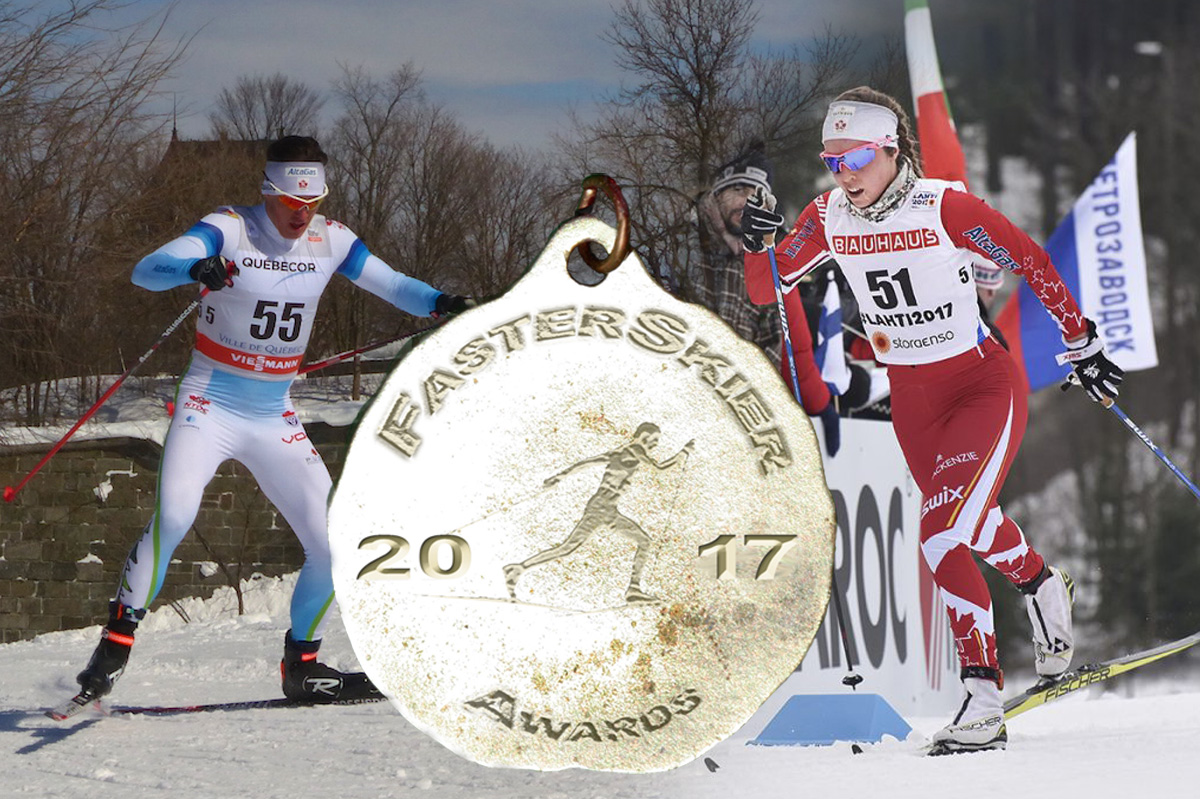
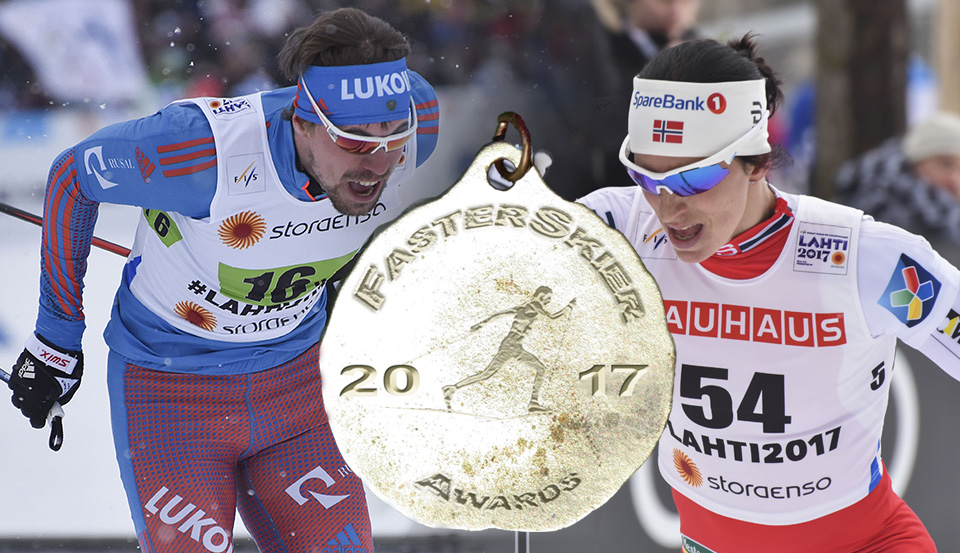
    FasterSkier’s International Skiers of the Year: Russia’s Sergey Ustiugov and Norway’s Marit Bjørgen. (Photos: John Lazenby/Lazenbyphoto.com)

    With the 2016/2017 season officially in the rearview, FasterSkier is excited to unveil its annual award winners for this past winter. Votes stem from the FS staff, scattered across the U.S., Canada, and Europe, and while not scientific, they are intended to reflect a broader sense of the season in review. This honor goes to outstanding international skiers of the year.

    Previous categories: Junior Skiers of the Year | Collegiate | Canadian Continental | U.S. Continental | Nordic Combined | Biathletes | Para-Nordic | Canadian Breakthroughs| U.S. Breakthroughs | Coach

    ***

    Sergey Ustiugov, Russian World Cup Team
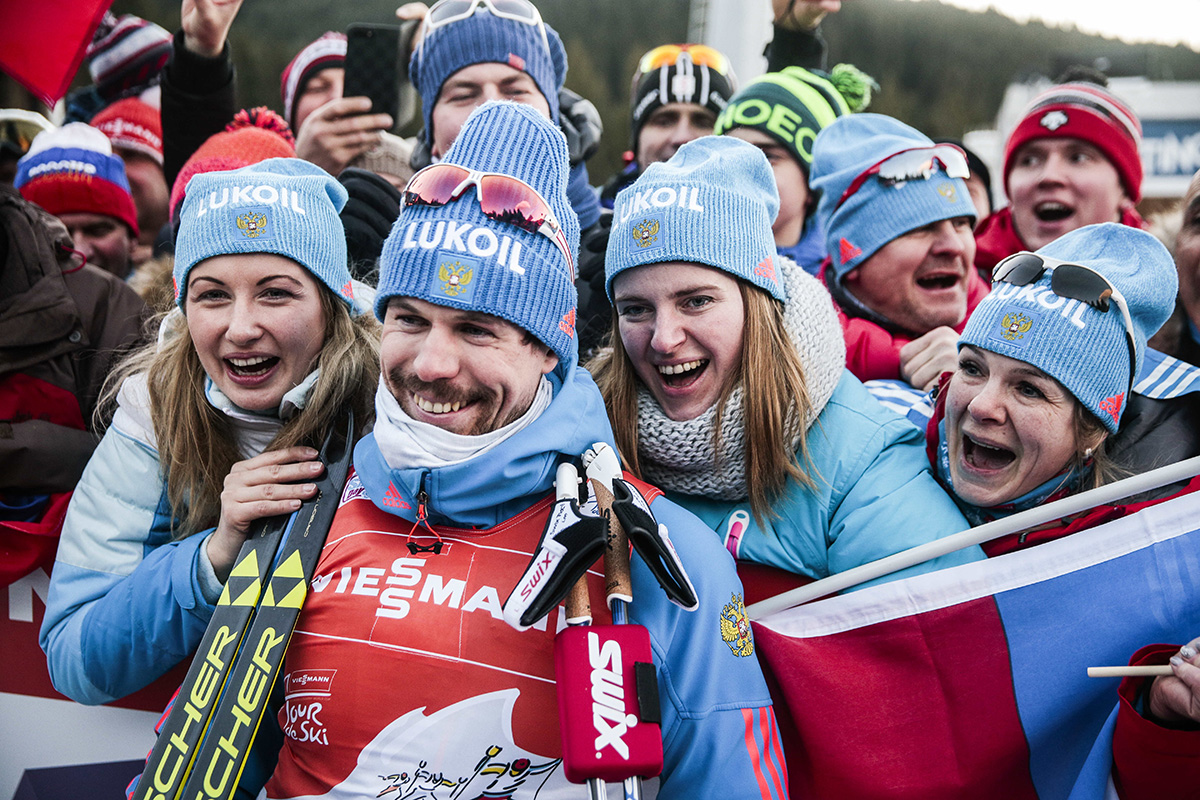
    Russia’s Sergey Ustiugov celebrates with supporters after winning the final climb and his first Tour de Ski overall title in January at Alpe Cermis in Val di Fiemme, Italy. (Photo: Fischer/NordicFocus)

    Russia’s Sergey Ustiugov was dominant when it seemed to matter most this season. He finished second in the Overall World Cup, he won his first Tour de Ski (TdS) — punctuated with an unprecedented six victories in seven TdS stages, and he brought the deflated Russian team five medals at World Championships.   

    The day before World Championships began, five of Ustiugov’s teammates implicated in the second McLaren report detailing systematic state-sponsored doping at the 2014 Sochi Olympics had their provisional suspensions upheld by the Court of Arbitration for Sport (CAS). Those athletes were declared ineligible for the 2017 World Championships.

    It’s an open question whether that news motivated Ustiugov. Over the course of the championships, the 24 year old won gold in the 30-kilometer skiathlon and team sprint. He hauled in two silvers, one in the individual sprint, the other in the 50 k skate. He helped Russia, and himself, to a fifth medal: silver in a nail-biter 4 x 10 k relay, which Norway won.

    After that relay, Sundby called Ustiugov the best skier in the world during a press conference. And for most of the season, Ustiugov indeed proved himself one of the world’s best, if not the man to beat.

    Ustiugov stood on five other World Cup podiums outside the TdS, four of which were in individual races.

    Ustiugov, who turned 25 last weekend, gained recognition back in 2012 when he won four gold medals at the Junior World Ski Championships. In 2013 he racked up two more golds in the 15 k skate and 30 k skiathlon at U23 World Championships. He backed those performances up as he matured, winning a skate sprint and 15 k classic at the 2014 U23 Worlds.

    The young Russian skier’s rise to World Cup prominence hasn’t been meteoric. It’s been a steady step onto podiums at each stage of his international career. Ustiugov’s 2016/2017 season makes his case as Russia’s next best hope and he’ll likely remain Sundby’s foil in the upcoming Olympic year.  

    Marit Bjørgen, Norwegian World Cup Team
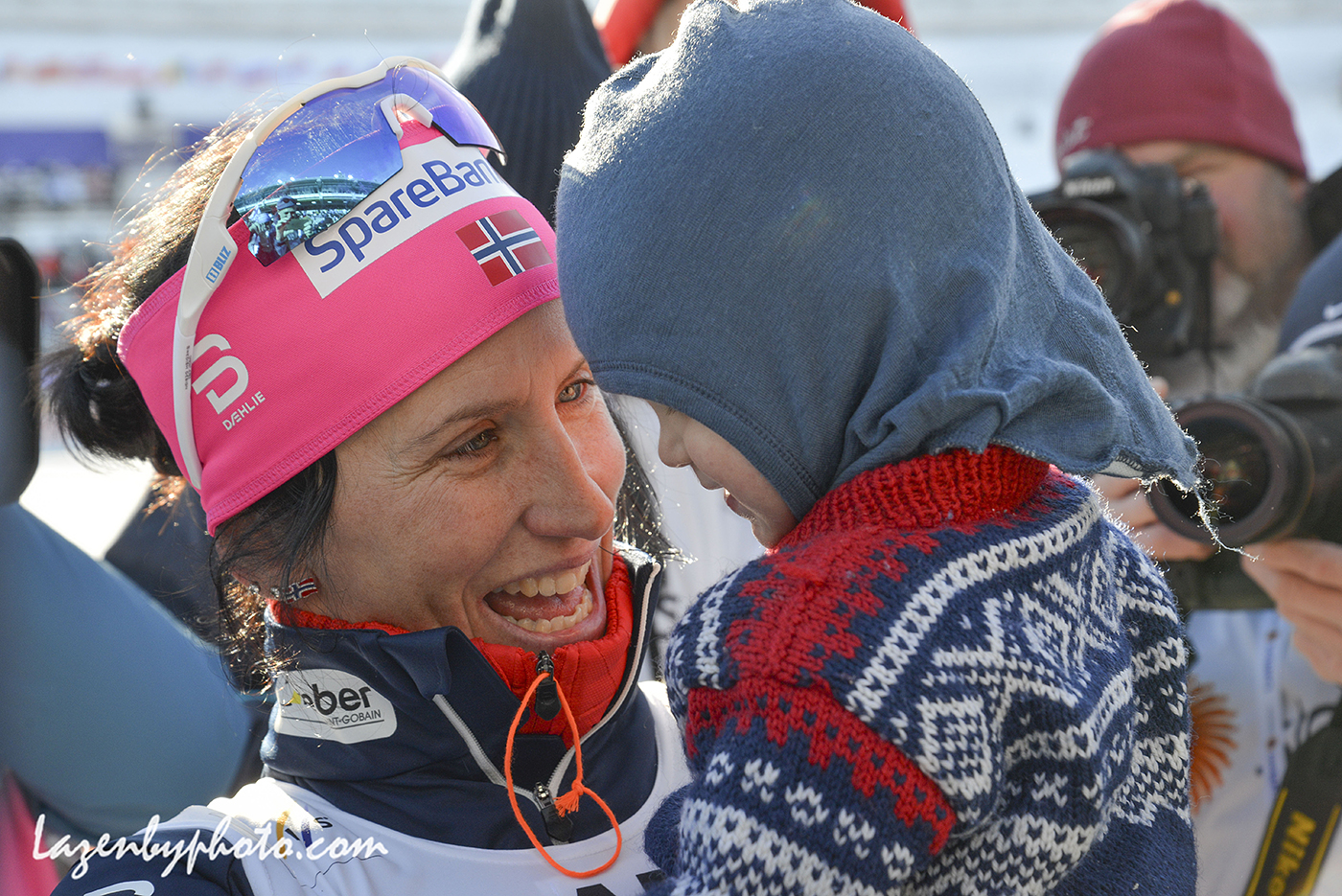
    Norway’s Marit Bjørgen with her 1-year-old son Marius after she won her 15th World Championships gold in the women’s 15 k skiathlon at 2017 World Championships in Lahti, Finland. (Photo: John Lazenby/Lazenbyphoto.com)

    Yes, she’s a new mom. But with the the 2016/2017 season in the review, Marit Bjørgen is the same ol’ machine. After skipping last season while pregnant with her first child, the 36-yar-old Norwegian (who turned 27 last month) opened the first distance race of the year with a win in the 10 k classic in Kuusamo, Finland, just 11 months after the birth of her son, Marius.

    It was the third race she had competed in since March and her second victory (she also won the Beitostølen 10 k FIS race the weekend before).

    Less than a week later, Bjørgen was back on the podium in Lillehammer, Norway, this time in third behind American Jessie Diggins in first and her Norwegian teammate Heidi Weng in second in the World Cup 5 k freestyle.

    She closed curtains on 2016 with two more top-three finishes: second in the La Clusaz 10 k mass start and first in the 4 x 5 k relay the next day, during which she posted the fastest second-leg time. The win was Bjørgen’s 25th relay victory and a predictor for the following two relays she’d enter this season in Ulricehamn, Sweden, and at World Championships in Lahti, Finland, both of which she anchored.
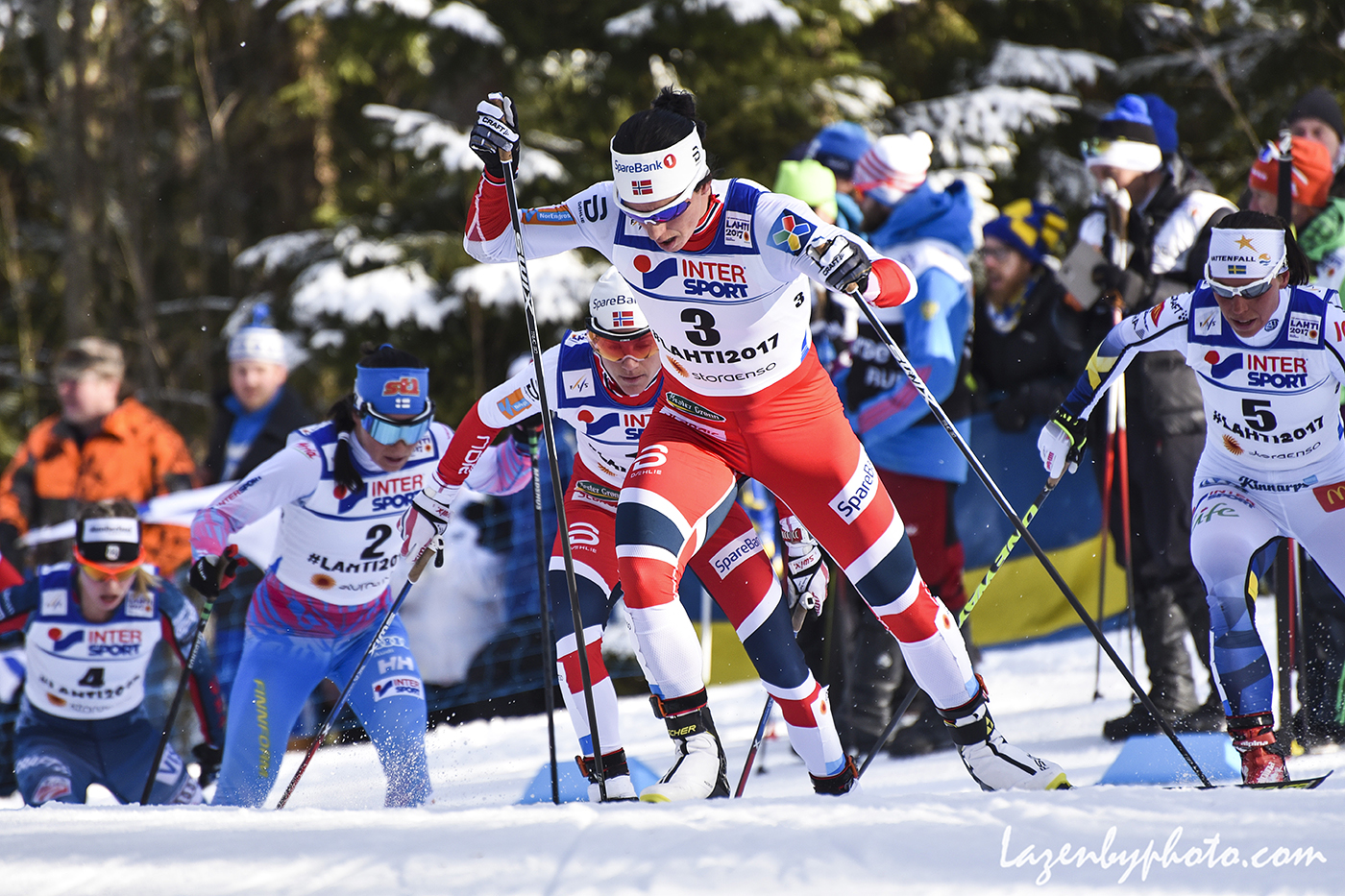
    Marit Bjørgen (3) leading the pack in the women’s 30 k freestyle mass start on March 4 at 2017 World Championships in Lahti, Finland. (Photo: John Lazenby/Lazenbyphoto.com)

    If there was any doubt about her ability to regain dominance, she wasted no time dispelling it.

    Opting to sit out this year’s TdS, Bjørgen returned to the World Cup race scene five weeks after La Clusaz, adding another 10 k win to her list. She’d tally four more 10 k victories — one of them at world champs — to end the season undefeated at that distance.

    By the end of world champs, Bjørgen had accumulated four gold medals. She’d go on to win the Holmenkollen 30 k classic mass start by more than two minutes and capped off the Québec City World Cup Finals with a mini-tour victory. All while simultaneously being a mom.

    Honorable Mention: Heidi Weng, Norwegian World Cup Team

    Two seasons ago in Kuusamo, Finland, in November 2015, Norway’s Heidi Weng made an honest mistake in a 10 k classic pursuit and “spaced”: she skied past the lap lane and into the finish, crossed the line and collapsed. She still had an entire lap to ski. Weng righted the situation, backtracked, and finished ninth.

    Who doesn’t make mistakes? Unfortunately Weng’s was exposed on the world stage.
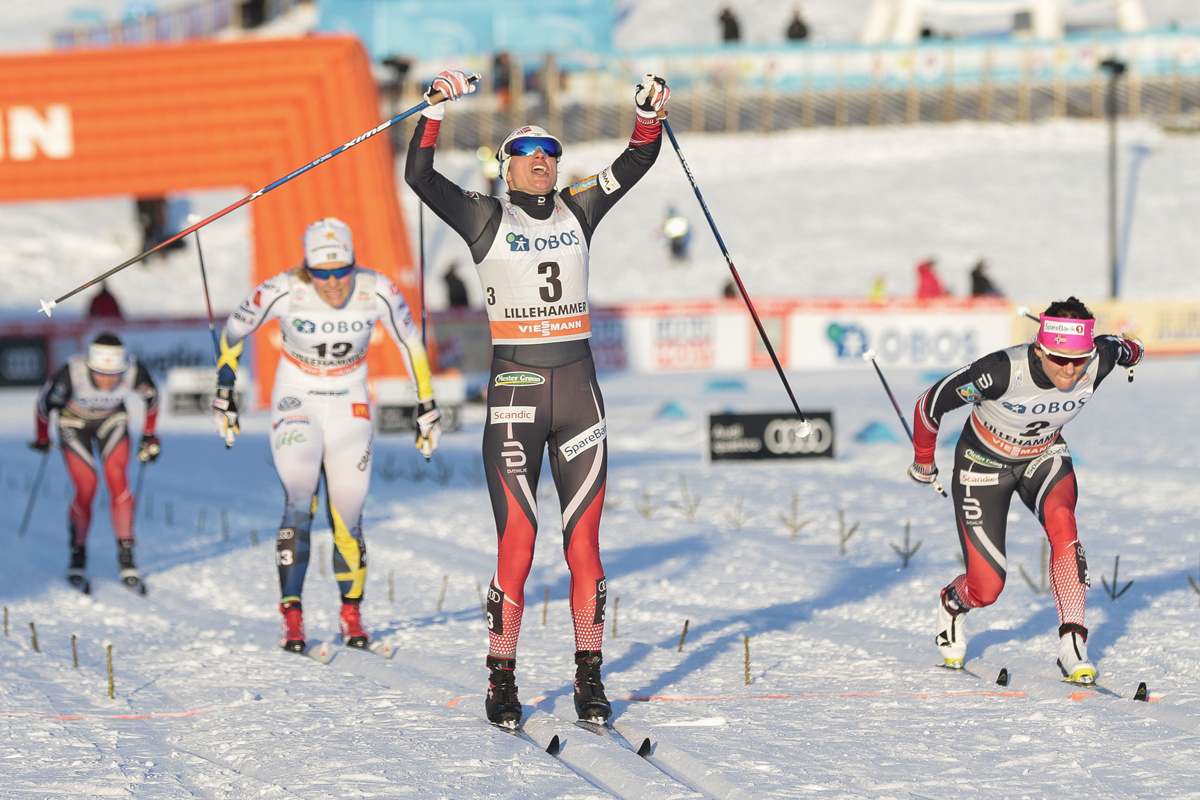
    Norway’s Heidi Weng (3) celebrates her third World Cup victory and first-career sprint win in the women’s classic sprint in Lillehammer, Norway. She edged her teammate Maiken Caspersen Falla (r) by 0.48 seconds. (Photo: Fischer/NordicFocus)

    At the time, her teammates Therese Johaug and Marit Bjørgen were the dominant Norwegian forces on the women’s side. It was as if Weng’s narrative would be continually defined by race place and time back to Johaug and Bjørgen.

    This past World Cup season, Weng proved her detractors wrong. She finished the season first in the Overall World Cup, first in the Distance World Cup and fourth in the overall sprint standings. That’s two crystal globes in Weng’s trophy case. Weng also won her first Tour de Ski.

    Those awards were for a stellar season in which the 25 year old sustained her fitness and motivation. But there’s more — she won two golds at World Championships in Lahti in the classic team sprint and 4 x 5 k relay. Weng added a silver to that collection when she placed second in the 30 k skate mass start.

    “I must have a little more confidence that I am a good skier because I always think I am not as good as the others, but now I have a better head,” Weng said after the last race of the season in Quebec. She placed second in the World Cup Finals mini tour, behind Bjørgen.

    Honorable Mention: Johannes Høsflot Klæbo, Norwegian National U23 Team

    There were a number of names Norway planned to enter in the first race of the season. Johannes Høsflot Klæbo was not one of them. He was a three-time Junior World champion in 2016, but his World Cup experience? None. That, however, did little to deter the 20-year-old from making a statement his first year racing on the circuit.
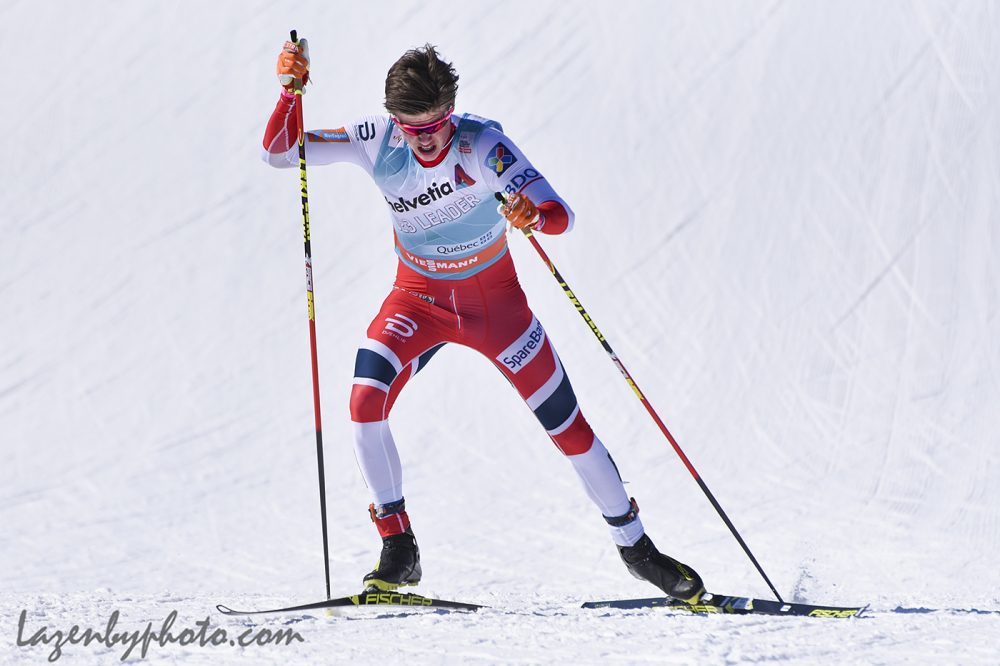
    Norwegian Johannes Høsflot Klæbo racing to his second career distance win in the men’s 15 k freestyle pursuit at World Cup Finals in Quebec City. (Photo: John Lazenby/Lazenbyphoto.com)

    In his debut World Cup race, one he wasn’t even originally supposed to start, Klæbo sprinted to third, after qualifying first to start the day. His second career World Cup sprint was just as sweet: he podiumed in third, finishing behind American Simi Hamilton and fellow Norwegian Sindre Bjørnestad Skar.

    And by the his third World Cup sprint, Klæbo was calling the shots. He earned his first World Cup win in February, besting his teammate Finn Hågen Krogh and Russia’s Ustiugov by more than half a second.

    In his first World Championships, Klæbo would take home an individual bronze medal in the skate sprint, just barely missing another medal in the team sprint.

    Following world champs, he would go on to place second in the Drammen sprint and win the final two distance races of the year (his first-ever distance World Cup wins) to win World Cup Finals. On top of all that, he also ended the season as the Sprint World Cup leader, earning his first Sprint Crystal Globe.

    Honorable Mention: Martin Johnsrud Sundby, Norwegian World Cup Team
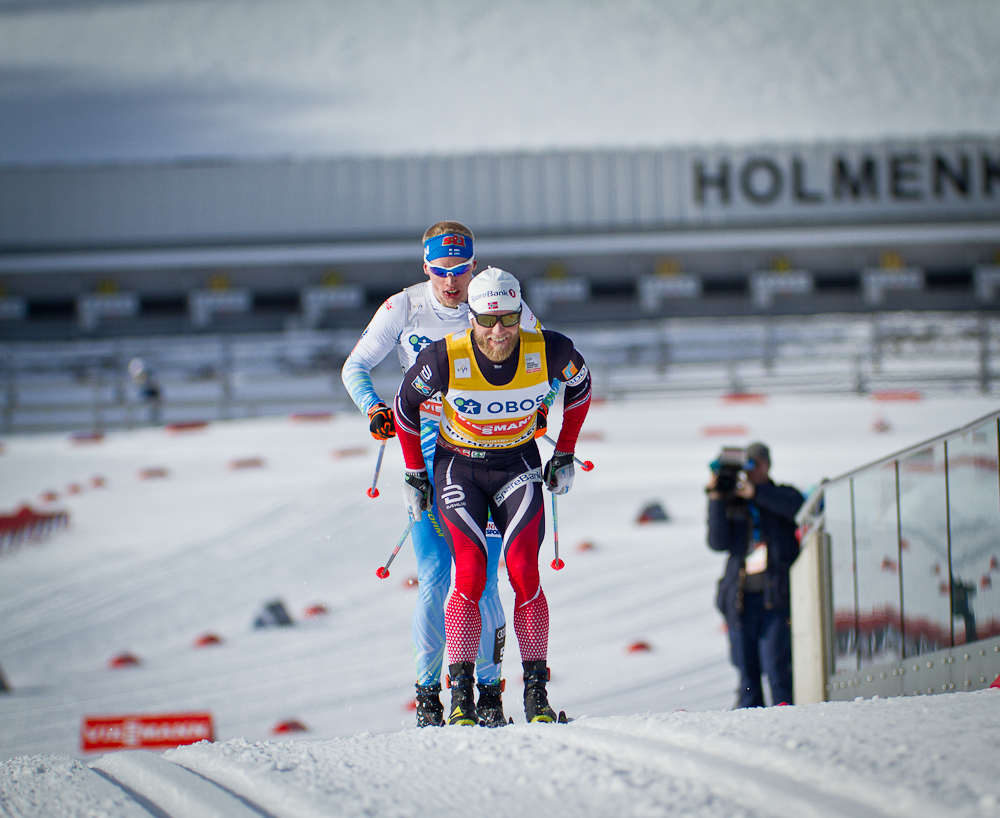
    Norway’s Martin Johnsrud Sundby leads Finland’s Iivo Niskanen during the World Cup 50 k classic mass start at Holmenkollen last month in Oslo, Norway.

    There have always been racing hot streaks, peaks for major championships, timeless and historic runs on the World Cup. FasterSkier’s  International Skier of the Year could have gone to Martin Johnsrud Sundby, who has been on a roll of his own following a professional and emotional setback last summer when he was sanctioned for an anti-doping violation. 

    Back in full force for the 2016/2017 World Cup season, Sundby captured his third overall Crystal Globe in the last four seasons (he was stripped of his 2014/2015 overall title for the infraction).

    Those prizes were the result of 12 individual podiums, five of which were wins. All but one of the remaining podiums were for second place.

    In his final World Cup race of the season, the 50 k Holmenkollen classic, Sundby dueled with Finland’s Iivo Niskanen for much of the race. In the closing chapters of the race, Sundby pulled away for a solo win to the delight of tens of thousands of Norwegian fans.

    Yet Sundby did not win the Tour de Ski or secure his first-career individual World Championships gold medal. Make no mistake, Sundby’s season was stand out. But the albatross around Sundby’s neck, in particular when it comes to his standing as one of the all-time Norwegian greats, is still that individual world champs or Olympic gold. The next two years offer Sundby more opportunities for that world title: there’s the 2018 Winter Olympics in PyeongChang, South Korea, and the 2019 World Championships in Seefeld, Austria.
  • FasterSkier’s Coach of the Year: Bernd Eisenbichler

    FasterSkier’s Coach of the Year: Bernd Eisenbichler

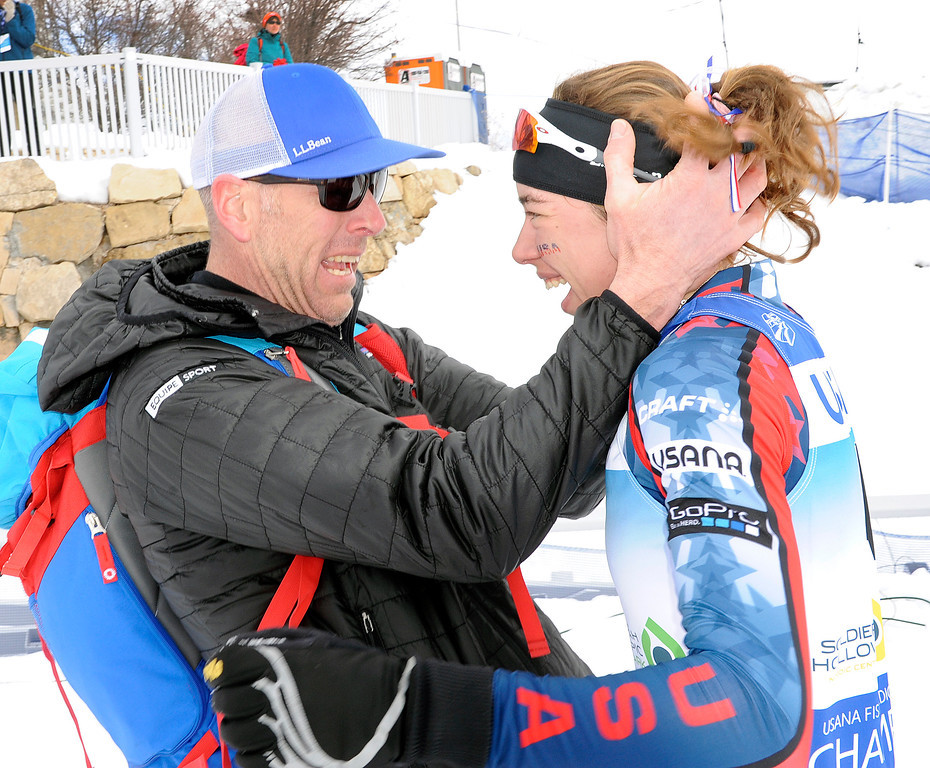
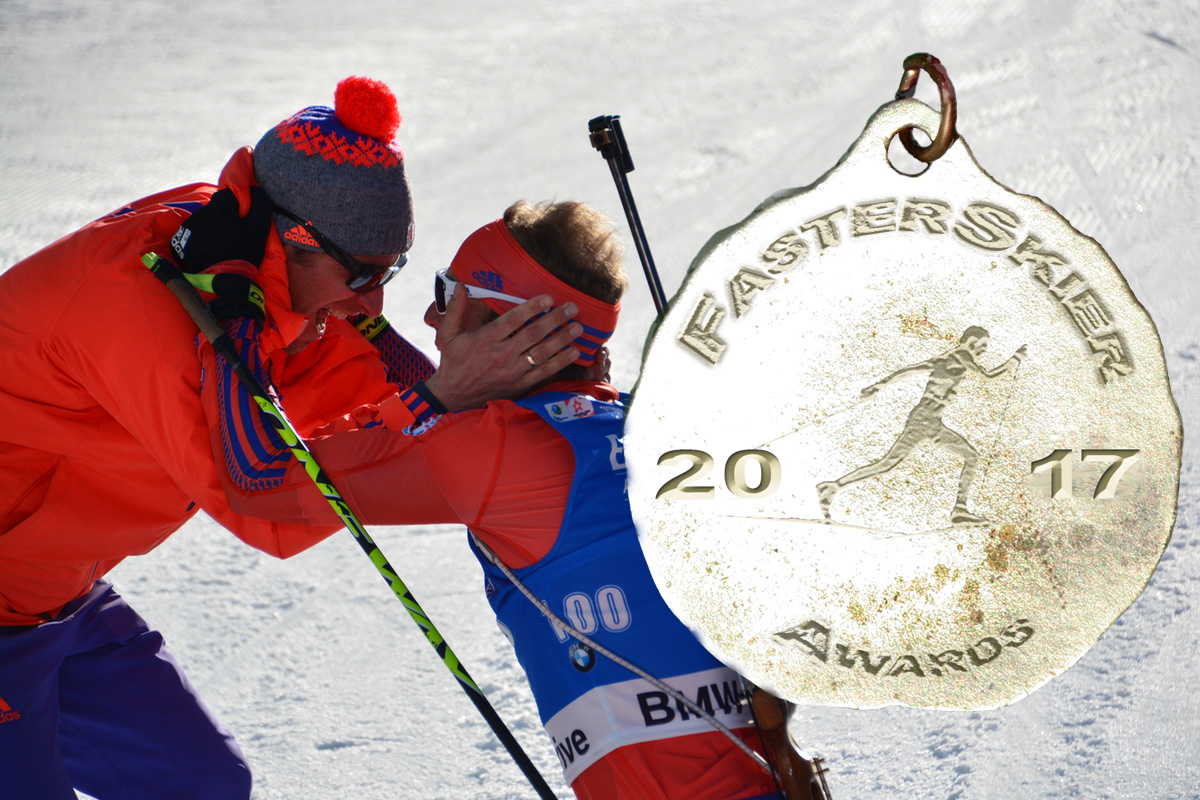
    Bernd Eisenbichler embraces Lowell Bailey after Bailey became the first-ever world champion in the history of US Biathlon. (Photo: Glen Crawford)

    With the 2016/2017 season officially in the rearview, FasterSkier is excited to unveil its annual award winners for this past winter. Votes stem from the FS staff, scattered across the U.S., Canada, and Europe, and while not scientific, they are intended to reflect a broader sense of the season in review. This set of honors goes to a coach or team director who has particularly contributed to their team’s success.

    Previous categories: Junior Skiers of the Year | Collegiate Skiers of the Year | Canadian Continental Skiers of the Year | U.S. Continental Skiers of the Year | Nordic Combined Athlete of the Year | Biathletes of the Year  | Para-Nordic Skiers of the Year | Canadian Breakthrough Skiers of the Year | American Breakthrough Skiers of the Year

    ***

    Despite the title of this award, Bernd Eisenbichler has never really been a coach.

    He has been an athlete (in Germany), a ski technician (for Ricco Gross, Kati Wilhelm, and then the American biathlon team), the high-performance director for the US Biathlon Association (USBA), and now its chief of sport.

    Such a title might suggest that as Eisenbichler has risen through the ranks to direct both the national team and now also the development pipeline for the U.S. biathlon community, he has become more distant from the nitty-gritty, the details or the athletes.

    Not so much. This season, you could still see the 41 year old zooming around on skis, or running back and forth between different parts of a stadium. Eisenbichler isn’t one who is content to stand around, or to distance himself and watch other people do work.

    And when Lowell Bailey crossed the finish line in Hochfilzen, Austria, in February to become a world champion in the 20 k individual, one man ran out to grab him by the shoulders, scream and celebrate. You guessed it, it was Eisenbichler.

    “Bernd was the first person who greeted me at the finish line, tears in his eyes,” Bailey wrote in an email this week. “[He is] one of the most passionate, hard-working individuals I’ve ever known!”

    Eisenbichler testing skis in 2015. (Photo: Jake Ellingson)

    Technically, nobody is allowed in the finish zone except the athletes who just finished the race. But Eisenbichler pushed through the scrum of officials and celebrated with an athlete he had met in the same place, Hochfilzen, back at Junior World Championships in 2000. Back then, he was what Bailey called a “hired hand” to make their skis fast.

    At that point, did the German envision himself staying with the U.S. team for nearly 20 years (so far)?

    “Along the way, I had different offers from different teams,” Eisenbichler admitted in an interview from his office in the Bavarian town of Frasdorf on Monday. “But I enjoy the freedom I get [from USBA] to create a high-performance program. You learn on the way. You make mistakes on the way. Hopefully you do it better next time. What I always see, though, is the potential to get better… I enjoyed working with Lowell and Tim [Burke] for every day of the 18 years. But every new person who came, they added something to the program. It meant, we are not done here. There are things we can do better, to reach higher.”

    Bailey’s gold medal, the first ever by an American, and Susan Dunklee’s silver to make her the first U.S. woman to win an individual World Championships medal – together, they make an argument that this was US Biathlon’s best season ever and that the program is entering a new era.

    “We have never, before now, had strong men and strong women at the same time,” USBA CEO Max Cobb said after Dunklee’s silver in Hochfilzen. “This is really exciting for us and a good validation that these opportunities, and the pipeline we have, works.”

    The World Championships haul didn’t come out of left field.

    Tim Burke gets encouragement from US Biathlon’s High Performance Director Bernd Eisenbichler at the beginning of the 12.5 k pursuit in Hochfilzen, Austria, in 2014.

    In 2013, Tim Burke earned World Championships silver. Then at the 2014 Olympics, Bailey and Dunklee set best-ever marks for U.S. men and women, respectively: eighth by Bailey, 11th by Dunklee.

    Just weeks after that, Bailey and Dunklee began accumulating World Cup podiums, and they haven’t stopped.

    Since 2014, three different athletes – Sean Doherty, Maddie Phaneuf and Chloe Levins – have turned in top-five performances at Youth and Junior World Championships.

    And this season, two athletes with college degrees in just their second seasons of biathlon – Paul Schommer and Joanne Reid – turned in individual top-35 performances on the World Cup and then teamed up with Sean Doherty and Clare Egan to finish eighth in a mixed relay. Five different athletes on the team, including Burke, Egan and Leif Nordgren, picked up top-20 World Cup results this season.

    We asked Cobb, the USBA President and CEO, whether US biathlon would be where it is today without Eisenbichler.

    His answer was simple: “No. Bernd is masterful in his leadership of our program.”

    “Bernd is one of most passionate people I know, and for decades he has directed all his energies into building up USBA’s program,” Dunklee agreed.

    “What was always interesting with Bernd, even at [the beginning], was that even though he was a German, he was extremely passionate about Team USA’s results,” Bailey wrote. “He got to know all of the athletes and was genuinely interested in seeing our team succeed, even if that meant beating the German team… At first, he was just waxing skis; then, he was in charge of stone-grinding and waxing; then he was put in charge of some team logistics. Eventually he became High Performance Director. Since that time, I’ve seen our team go from a mediocre ‘also-ran’ to one of the strongest teams in the world. That success is largely due to Bernd’s role and his tireless drive to win by out-maneuvering instead of out-spending. He embraced this David-and-Goliath struggle from the start.”

    Eisenbichler prefers to call it a puzzle, referring to the complexity of the sport and the intricacy of the management required to win.

    “We always knew that our program and our approach works, and we also had results to justify that,” Eisenbichler said. “But this year it really culminated in a perfect way… You always add to the puzzle and you try to have the perfect pieces to complete it. This year we just completed the puzzle. I think we proved that all the additions that we made to the program over the last three or four years, we really benefitted from it this year.”

    For North American nordic sports teams, having a European at the helm seems to have worked out about as often as it hasn’t. But for US Biathlon, it sure has, and the consensus seems to be that it’s because of Eisenbichler himself. Having a German guiding your biathlon program doesn’t automatically buy you success. It’s not nationality so much as what the guy does.

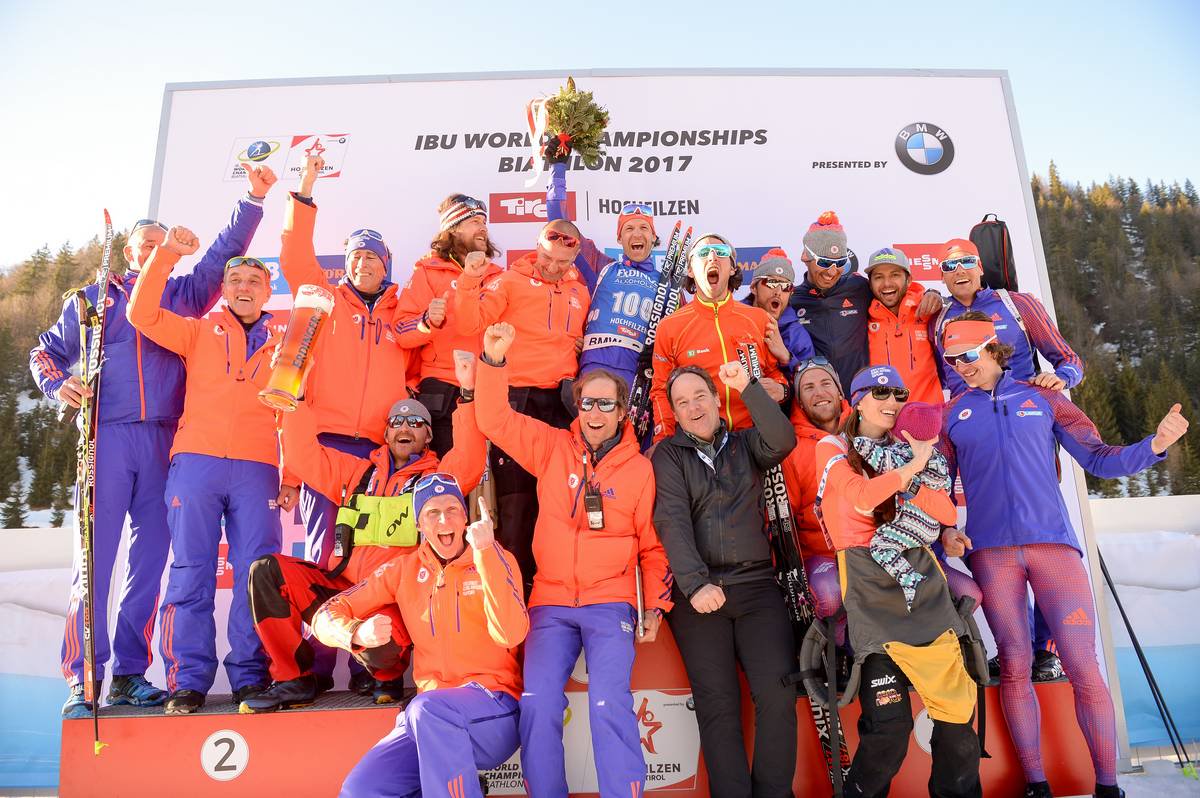
    The U.S. team and staff — including Cobb (brown jacket) and Eisenbichler (to his left) — celebrate Lowell Bailey’s gold medal at 2017 World Championships in Hochfilzen, Austria. (Photo: USBA/NordicFocus.com/Twitter)

    In Eisenbichler’s case, he assembles a coaching team from Sweden, Finland, and Canada, a service team that includes Germans, Czechs, and an Italian, and brings in a shooting advisor from Austria. Plus, of course, Americans.

    “We have eight nations represented on our staff, and they all worked so hard towards one goal, over nearly a decade for some of the staff members,” Eisenbichler said. “To see them so happy after Lowell and Susan’s success was just very, very rewarding for me.”

    How does it work, gaining buy-in and loyalty from a staff which can be far-flung in the summer months?

    “If I was being arrogant, I would say good management,” Eisenbichler laughed. “No, that’s a joke.”

    He admits that there have been a few hires which didn’t work out and didn’t fit in with the team. But they have been “actually few.” Part of the staff’s success, Eisenbichler said, was how it fits together.

    “We manage pretty well to give everybody a project where they can really identify themselves as being a very important part of the program,” he explained. “As a result they are really giving more than a normal staff member would do, really giving their heart and their energy into these projects. But at the same time they know they are part of the puzzle. There is nobody who is the only one contributing to the success or failure. I really believe it is like a puzzle, and every staff member has — even if at times their role is more important than other times — but they have the feeling that without them, it would not have been possible to be so successful.”

    That’s not to say that there have never been cultural differences between Eisenbichler and his team.

    “In my early years on the team, we used to have a slight disagreement about the word ‘fun’,” Dunklee wrote, explaining: “I’ve always made it my goal to keep ‘fun’ at the forefront of all my racing and training because the day that I forget to have fun is the day that I burn out. I think Bernd (and many other European coaches I have met) associate the word ‘fun’ with a carefree and unfocused attitude. However, I’ve never thought of fun and hard work or professionalism as mutually exclusive, in fact they can build on each other. I have been most successful and satisfied with the sport when I am directing every effort possible towards a big goal and remembering to savor and enjoy the goofy, spontaneous and joyful moments along the way. On that point, Bernd could agree. We were talking about the same thing, he just preferred to use the term ‘enjoyment’ rather than fun. But he humors me now and sometimes tells me ‘have fun!’ before my race and I always act so surprised to hear that word coming from him. It’s become a running joke.”

    In some ways, Eisenbichler is still a ski technician at heart. He works closely with Muck Bauer, the team’s stonegrinder, who is also based in Germany. The pair test skis all year round, and were developing new grinds right up through World Championships. That meant that skis were getting driven from Hochfilzen to Ruhpolding, stoneground, being driven back, and then skied in for 20 k the next morning before being raced on.

    “Bernd was excited about some of the new breakthroughs they’d had,” Bailey wrote. “The night before the individual, it was decided that a couple of pairs of my skis should be sent to Germany and re-ground with some of these new grinds. It was one of those pairs that carried me to victory later that day. It’s hard to say what the difference was for me that day, but it’s hard to overlook that fact that, in a race lasting almost one hour, a 3.3-second margin of victory is about as slim as it gets!”

    At the end of this year’s U.S. National Championships, Dunklee and Bailey presented Eisenbichler with USBA’s Medal of Honor. The love and appreciation that Eisenbichler has for his athletes, and vice versa, stands out.

    “I was meeting with Bernd in the lead-up up to [the 2014 Olympics] in Sochi and one thing he said stuck out to me,” Dunklee wrote. “We were talking about goals and how of course he wants to see someone on the team bring home a medal. He explained how every bit of the high performance budget and staff were being directed towards that main priority. But then he told me, ‘You know, I’ll really gauge my work with the team as successful if 20 years from now, you athletes and staff decide to travel to Munich for an Oktoberfest Reunion together. Then I’ll know I did a good job.’ ”

    “I look forward to that reunion some day,” Dunklee concluded.

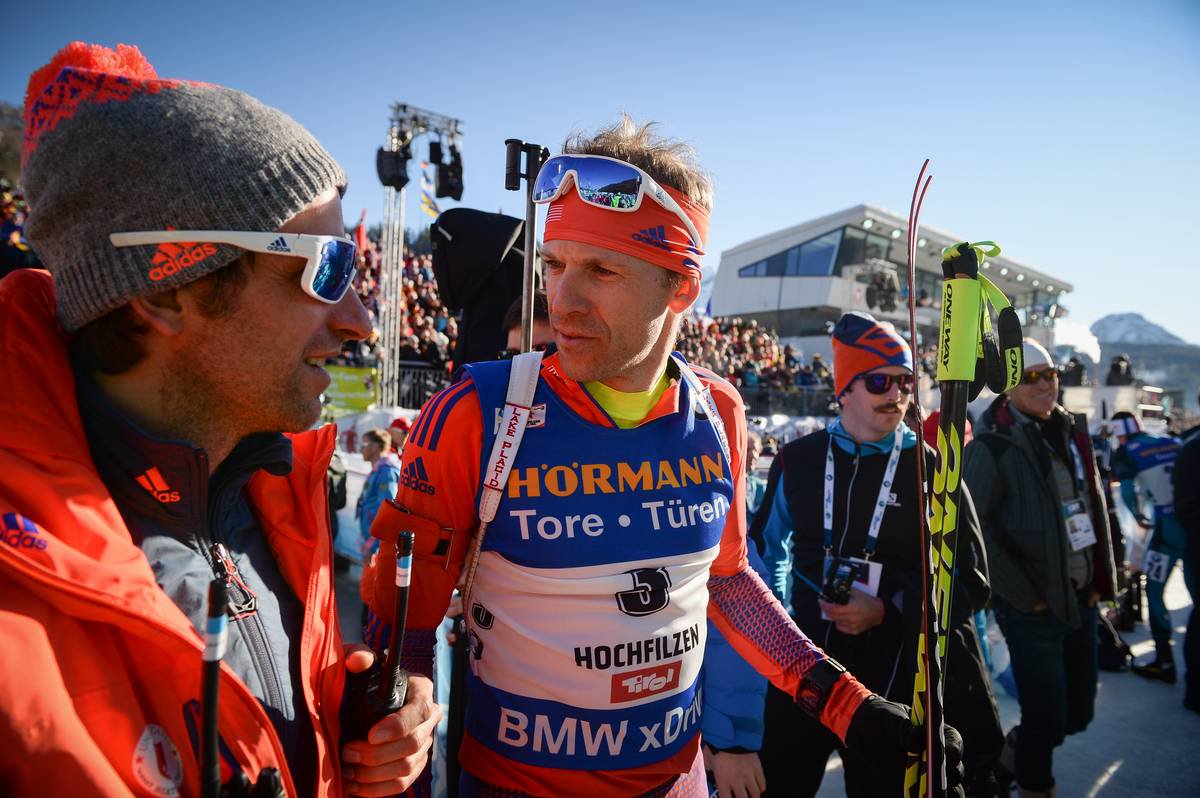
    Lowell Bailey and Bernd Eisenbichler leave the mixed zone after Bailey finished sixth in the mass start at 2017 IBU World Championships in Hochfilzen, Austria. (Photo: USBA/NordicFocus.com)
  • FasterSkier’s Canadian Continental Skiers of the Year: Evan Palmer-Charrette and Katherine Stewart-Jones

    FasterSkier’s Canadian Continental Skiers of the Year: Evan Palmer-Charrette and Katherine Stewart-Jones

    Evan Palmer-Charrette (Photo: Peggy Hung) and Katherine Stewart-Jones (photo: John Lazenby/Lazenbyphoto.com) are our Canadian Continental Skiers of the Year.

    With the 2016/2017 season officially in the rearview, FasterSkier is excited to unveil its annual award winners for this past winter. Votes stem from the FS staff, scattered across the U.S., Canada, and Europe, and while not scientific, they are intended to reflect a broader sense of the season in review. This set of honors goes to outstanding Canadian skiers competing primarily, but not exclusively, at the Continental Cup level. 

    ***

    Katherine Stewart-Jones, U25 National team/NTDC Thunder Bay/Nakkertok

    In a year of changes for the Canadian women’s program, Katherine Stewart-Jones quietly delivered a great season. She was only ranked sixth in the NorAm series before Nationals, which wouldn’t usually be a sign of a great season – but by the end of the week, she had won the whole series.

    This year, two of the five NorAm weekends (Sovereign Lake and Soldier Hollow) were combined with the U.S. circuit and had much deeper fields as a result. American Chelsea Holmes (Alaska Pacific University) took a commanding early-season NorAm lead by winning the BlackJack mini-tour along with six podiums in eight races.

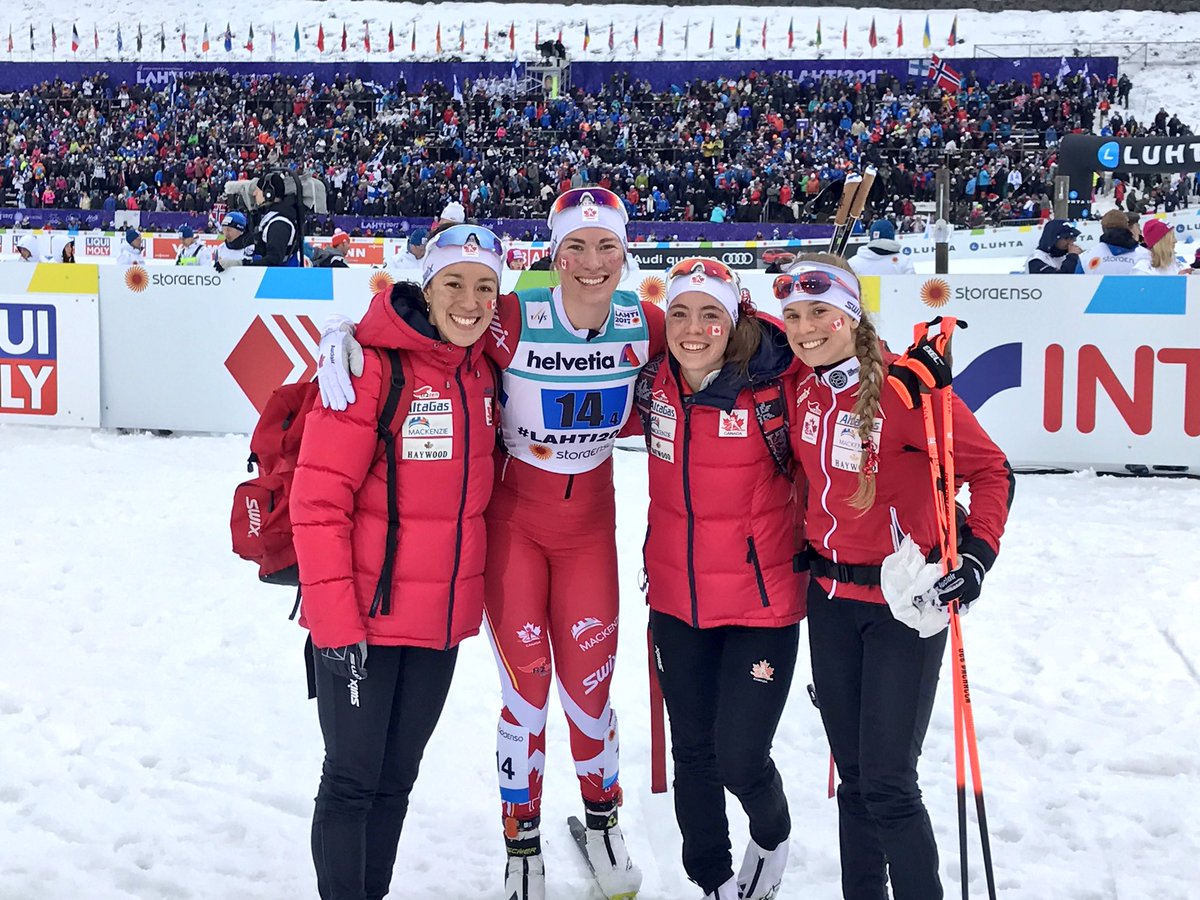
    The Canadian women’s 4 x 5 k World Championships relay team, (from left to right) Emily Nishikawa, Dahria Beatty, Katherine Stewart-Jones, and Cendrine Browne, after tallying the third-best relay result for the Canadian women at a World Championships on Thursday in Lahti, Finland. (Photo: CCC/Twitter)

    Even after Holmes stopped coming to NorAms, Stewart-Jones didn’t have a clear path to the top. She missed Eastern Canadian Championships, her home event, to compete at U23 World Championships in Soldier Hollow. That was a big blow because as one of two mini-tours on the schedule, there were 400 points available compared to the usual 200 on a weekend.

    But after a disappointing week at U23’s, the event that had been her main goal for the season, Stewart-Jones’s trajectory took turn towards Europe, and ultimately towards better results.

    “Definitely racing in Lahti,” she wrote of her season highlight, racing at senior World Championships in Lahti, Finland. “There it’s a tie between the 10 k classic and the relay at World Champs — I felt the best I had all year.”

    The 36th place in the Lahti 10 k was her best finish at the World Cup level. And the relay was significant for the women’s program, not just because Canada had four women present, but because the 10th-place result is a big step forward for the resurgent women’s program.

    “The relay was a magical day, it was a real team effort and the result was the best women’s relay result in the last 10 years,” Stewart-Jones wrote.

    After World Cup Finals in Quebec, where Stewart-Jones said she “wasn’t expecting to feel that good” thanks to illness picked up in Europe, she flew to Nationals in Canmore. There, Stewart-Jones bagged the Continental Cup lead with third in the 10 k classic and third in the free technique sprint, bringing her to five races in six days. After two full days without a race, she ground out a seventh-place finish in the 30 k free.

    “I think the altitude training [last summer in NZ and Park City] really paid off,” she said of her ability to clinch the NorAm title at the last moment. “This summer I’m hoping to focus even more on my strength weaknesses. I want to also focus more on my skate skiing.”

    Evan Palmer-Charrette, NTDC Thunder Bay/Lappe Nordic

    In a year of Canadian highlights in Europe, the next group of Canadian men were battling for opportunities to make their own highlights.

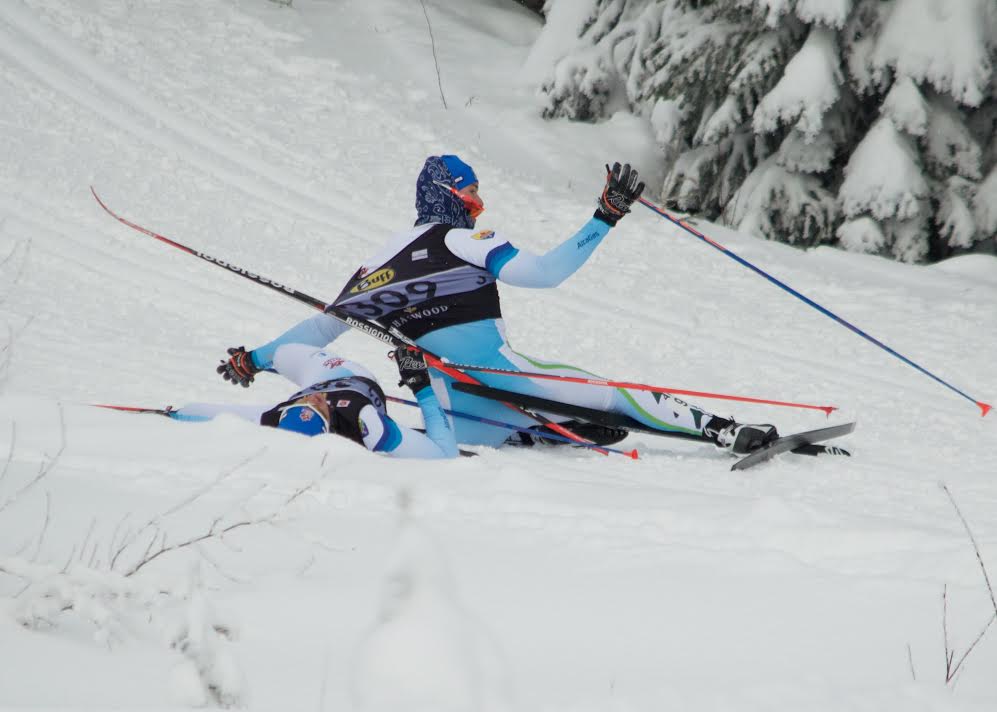
    Palmer-Charrette started the season on the bottom, eliminated in the sprint semi-final at the first NorAm race of the season when two racers fell on him in a spectacular crash.

    But by the end of the season he was on top, winning the national title in the classic sprint (where he finished third behind two European racers from the University of Denver).

    Angus Foster untangles himself as Evan Palmer-Charrette waits underneath. The ski through the big belongs to Simon Lapointe. (Photo: Shelley Woodman)
    Angus Foster (309) untangles himself after a semifinal crash at the Sovereign Lake NorAm/SuperTour on Dec. 10, as his NTDC Thunder Bay teammate Evan Palmer-Charrette tries to get his breath back. The ski through the bib belongs to Simon Lapointe. (Photo: Shelley Woodman)

    “I finally went for [compartment syndrome surgery] this summer and trained really hard after that, like really motivated to get back,” he told FasterSkier after winning his first National title in the sprint. “It’s awesome to be Canadian champion. Surprise for sure, in a classic sprint for me.”

    Palmer-Charrette, who missed Eastern Canadian Championships to compete at U23 World Championships in Soldier Hollow, ended the season second overall in the NorAm series. He had collected two wins and two podiums over nine race days before Nationals. He also finished sixth in the sprint at U.S. Nationals.

    After U23’s and a SuperTour stop in Michigan, he went on to the World Cup Finals for his first World Cup experience, after missing his first opportunity due to conflicts with U23’s.

    “It was tough,” he told FasterSkier after the sprint qualifier. “I had pretty good focus and the first two-third’s went well but after the big climb in the middle, my legs were super acidic and lactated out more than they usually do so made for a tough last third but it was fun though.”

    Obviously feeling on form, Palmer-Charrette went straight from Nationals to the final SuperTour to collect another podium, this time second place in the SuperTour Finals sprint, and put an exclamation point on a great season.

    Honourable Mention: Russell Kennedy, Team R.A.D., Canmore

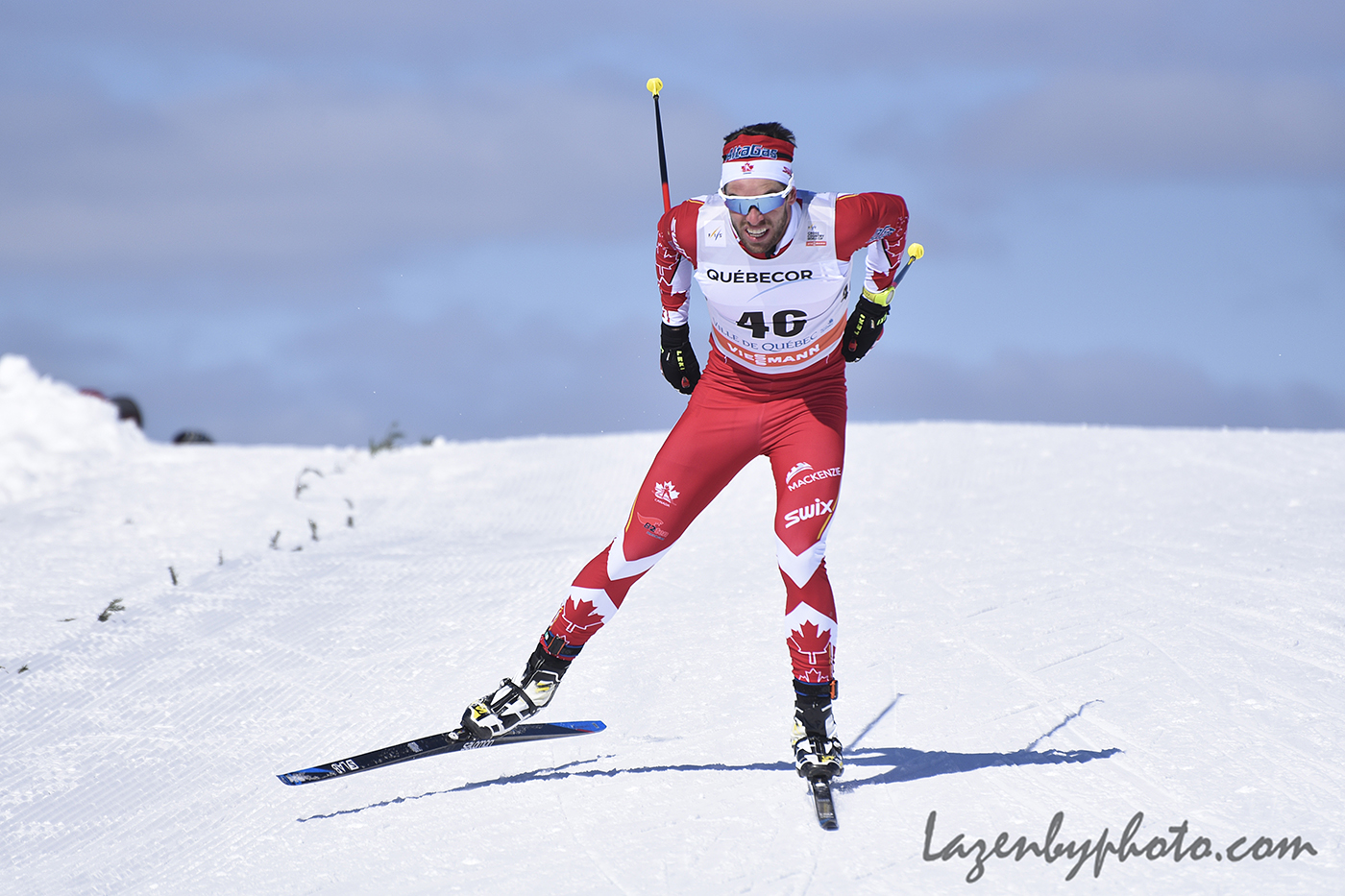
    Russell Kennedy racing to 36th in the men’s skate sprint qualifier at World Cup Finals in Quebec City on March 17. (Photo: John Lazenby/Lazenbyphoto.com)

    It says something about the state of skiing in Canada that a NorAm overall winner and Holmenkollen 50 k finisher didn’t win the award.

    Kennedy had a breakthrough season, winning the NorAm title for the first time and adding five more World Cup starts to his resume. He won the pursuit at Eastern Canadian Championships to take the mini-tour and get an untouchable lead in the series.

  • FasterSkier’s Juniors of the Year: Katharine Ogden and Léo Grandbois

    FasterSkier’s Juniors of the Year: Katharine Ogden and Léo Grandbois

    Katharine Ogden (Photo: FlyingPointRoad.com) and Léo Grandbois (Photo: IBU) are FasterSkier’s 2017 Juniors of the Year.

    With the 2016/2017 season officially in the rearview, FasterSkier is excited to unveil its annual award winners for this past winter. Votes stem from the FS staff, scattered across the U.S., Canada, and Europe, and while not scientific, they are intended to reflect a broader sense of the season in review. This set of honors goes to outstanding North American junior athletes across all nordic disciplines. 

    ***

    Katharine Ogden, Stratton Mountain School/U.S. Ski Team

    Yes, Stratton’s Katharine Ogden has earned our “Junior of the Year” honors before. But this season, the 19-year-old Vermont skier rose to even greater heights. Early in the season, she snagged second-place honors in the senior fields at a SuperTour (the 10 k classic in West Yellowstone), a NorAm (the 10 k freestyle at Sovereign Lake), and U.S. National Championships (the 20 k classic mass start).

    American Katharine Ogden (SMS/USST) and her dad John celebrate her bronze medal in the women’s 10 k skiathlon on Friday at 2017 Junior World Championships at Soldier Hollow in Midway, Utah. (Photo: U.S. Ski Team/Tom Kelly)

    And that was before World Junior Championships even started. At Soldier Hollow, Ogden started things off with a fifth-place finish in the 5 k freestyle, tying the second-best World Juniors result ever by an American.

    Two days later, she raced to a bronze medal in the 10 k skiathlon, becoming the first American ever to stand on the podium in an individual World Junior Championships race.

    And then two days after that, Ogden anchored teammates Hailey Swirlbul, Julia Kern, and Hannah Halvorsen to relay bronze, the first medal ever won by a U.S. women’s relay team in the history of the event.

    “This week at worlds has been amazing,” Ogden, wrote in an email to FasterSkier at the time. “Wonderful skiing and good weather and unprecedented results for the whole team.”

    And she told the U.S. Ski Team for a press release: “It was really incredible to stand up at the medals ceremony the other night [after the skiathlon]. The only thing I can think of that would be better is standing up there with my friends.”

    Then she did.

    Léo Grandbois, Biathlon Estrie/Biathlon Canada 2022 Squad

    17-year-old Léo Grandbois of Lennoxville, Québec, just made one international racing trip this season. But on the very first race of the trip, he made a splash.

    The youth men’s 12.5 k individual podium after the first race of 2017 IBU Youth/Junior World Championships in Osrblie, Slovakia, with Canada’s Léo Grandbois in first (c), Russia’s Said Karimulla Khalili (l) in second, and Germany’s Danilo Riethmüller (r) in third. (Photo: Airat Aitniakov)

    Grandbois had traveled to Brezno-Osrblie, Slovakia, to represent Canada in the youth division at the International Biathlon Union’s World Youth and Junior Championships. The previous season he had competed at the Youth Olympic Games, with a top finish of 22nd, but this was his first time at the bigger event.

    In the 12.5 k individual, Grandbois hit every target – the only competitor in the field to go 20-for-20 – and picked up a gold medal, by an impressive minute and 14 seconds over Said Khalili of Russia.

    “I am probably the most happy man on earth today!” he wrote in an email to FasterSkier after his win.

    Grandbois went on to be one of Canada’s most consistent performers at the Championships, finishing 14th in the sprint and 22nd in the pursuit. The sprint result came despite three penalties.

    “I think it just says that I am quite strong even [during] a bad race,” Grandbois said at the time.

    “I’m missing 15 days of school to be here, and my teachers/professors are probably thinking, ‘This guy is not doing the right thing,’ but I know that I am doing the right thing,” he wrote in his 20-for-20 interview.

    And even then, he wasn’t done yet – Grandbois had proven his speed in that sprint, where he had the tenth-fastest course time in the field. Come the end of the season, he went to Cross Country Canada Ski Nationals for the first time and picked up junior national titles in the 10 k freestyle and the 15 k mass start.

    Honorable Mention: Julia Kern, SMS Elite Team/Dartmouth College/U.S. Ski Team

    Julia Kern, another Stratton skier with a U.S. Ski Team “D” team affiliation, joined Ogden on the relay podium at Soldier Hollow – and Kern’s efforts brought the team into sixth place at the halfway point of the race.

    Julia Kern (U.S. Ski Team D-team/SMS) racing to 29th in the women’s 1.5 k freestyle sprint qualifier on Friday at World Cup Finals in Quebec City. In her first World Cup race, Kern ended up 24th on the day. (Photo: John Lazenby/Lazenbyphoto.com)

    “There is no one I would rather be on the podium with than my best friends and teammates,” Kern, 19, wrote at the time. “Not only did I share the experience with my best friends, but on home soil with all my family and friends there to celebrate with us!”

    Six weeks later, Kern got the first World Cup start of her career. It was a skate sprint in Québec City as part of World Cup Finals – and not only did she qualify for the heats, but she finished 24th and scored World Cup points in her first try.

    Coming off a clean sweep of the Junior Nationals races in Lake Placid, New York, Kern was confident, and at the same time unsure where she would stack up against the best skiers in the world.

    “At the start line it almost felt like a dream because there I was at the start line next to some of the best skiers in the world, skiers who I have looked up to and watched race after race on my computer screen to learn and gain inspiration from,” she wrote. “This is a huge confidence booster for me because it is easy to make a goal and have my teammates and coaches who believe in me tell me results like this are possible. But it is another thing to actually live up to it and believe it yourself, too.”

    Honorable Mention: Gareth Williams, Telemark Racers/Canadian Junior National Ski Team

    Gareth Williams (Telemark Race Team) on his way to a personal-best 11th in the men’s 20 k skiathlon at 2017 Junior World Championships at Soldier Hollow in Midway, Utah. (Photo: FlyingPointRoad.com)

    Where hasn’t Gareth Williams raced this season? The Kelowna cross-country skier started out in Canada, where he snagged a top-10 in the senior NorAm field at Sovereign Lake. At U.S. National Championships, he took third in the junior 10 k classic mass start. And then back in the U.S. for World Junior Championships, he turned in some of Canada’s best results, placing 11th in the 20 k skiathlon and 20th in the 10 k freestyle.

    “It is exciting to see that I have the speed to ski with the best juniors in the world,” Williams wrote after the skiathlon. “Being so close to to the top 10 is my only disappointment.”

    He headed for more junior racing after that, touring Switzerland and Germany and picking up finishes of second, sixth, and sixth in OPA Cup Juniors action.

    Finally, Williams returned to Canada and started World Cup Finals, where he finished 71st overall.

    “You’ve got a lot of fast guys, and you’re kind of going from being one of the faster guys to obviously to one of the slowest guys around,” Williams wrote of the experience. “That’s a cool feeling, actually.”