Tag: fs awards

  • FasterSkier’s Canadian Breakthroughs: Collin Cameron and Zina Kocher

    FasterSkier’s Canadian Breakthroughs: Collin Cameron and Zina Kocher

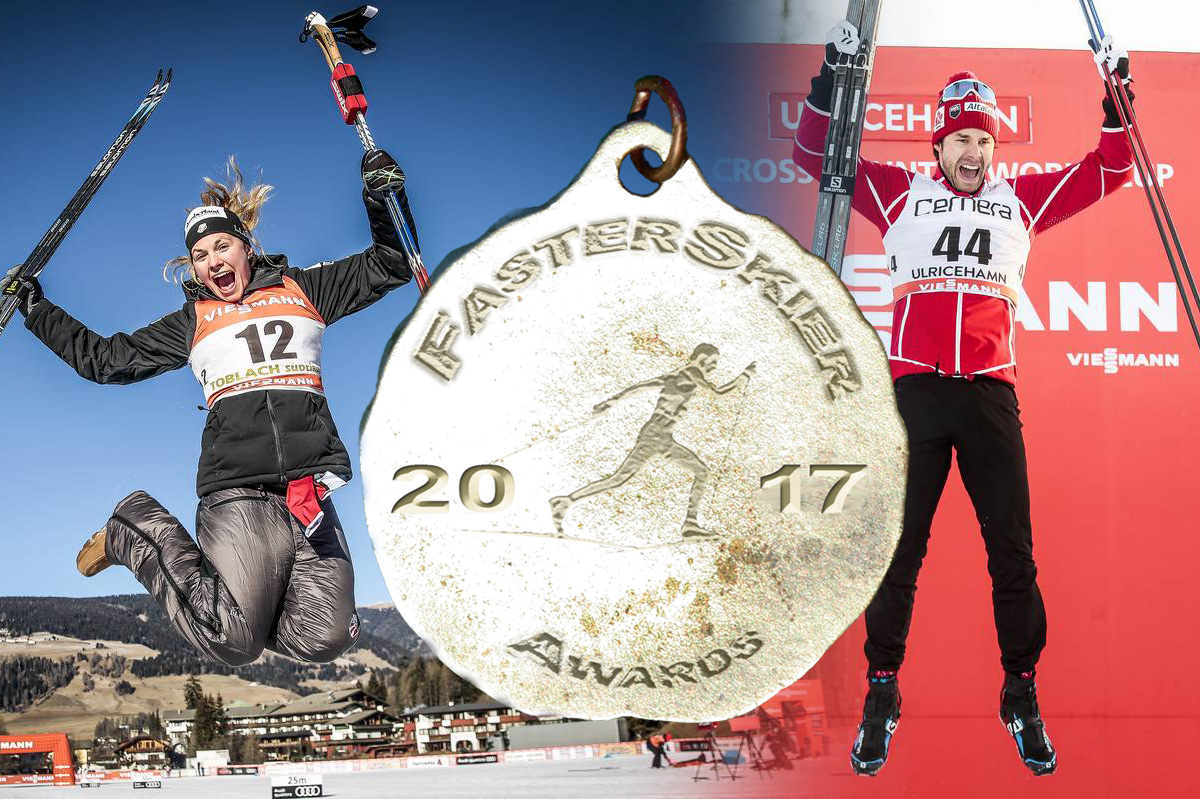
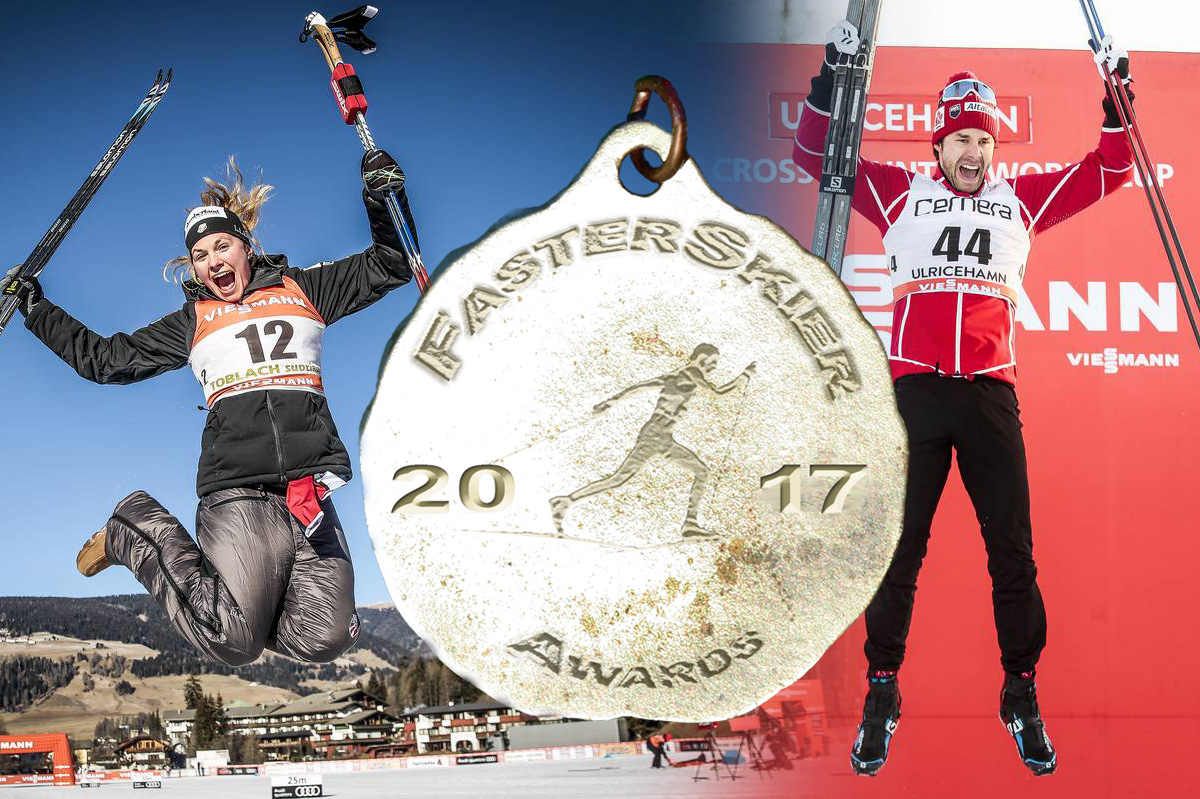
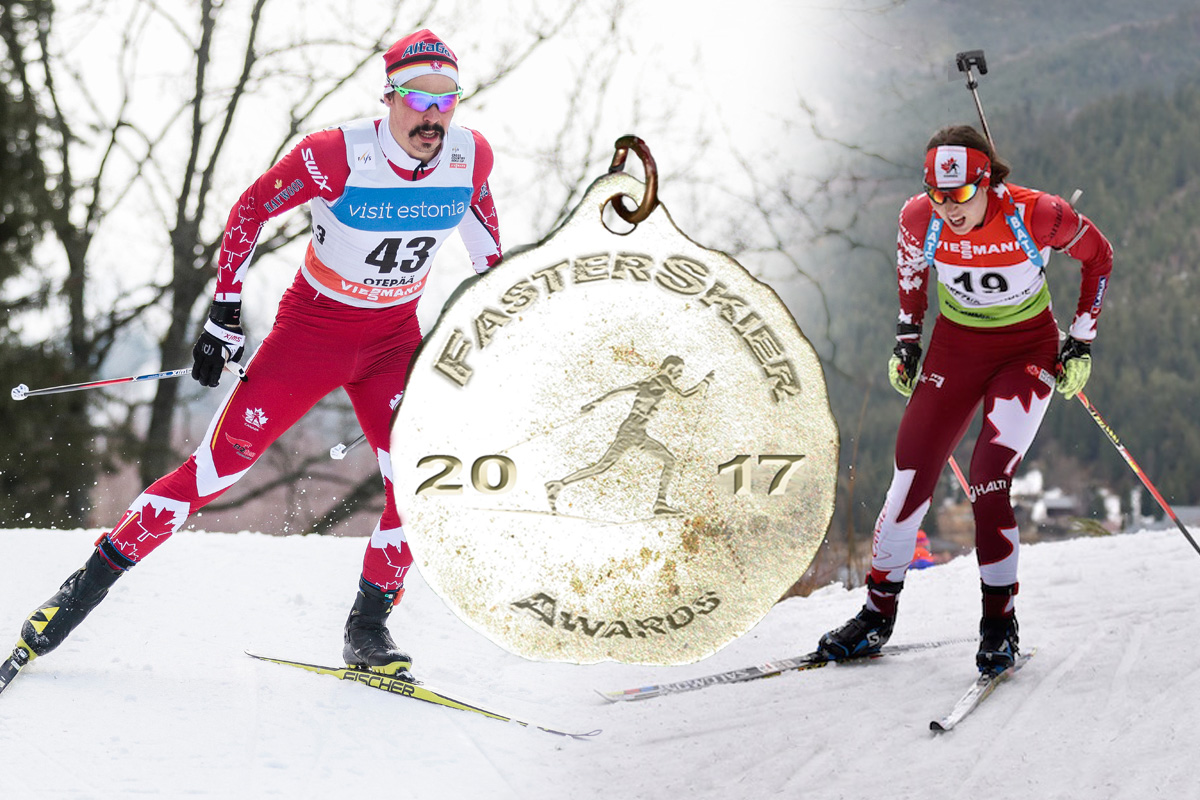
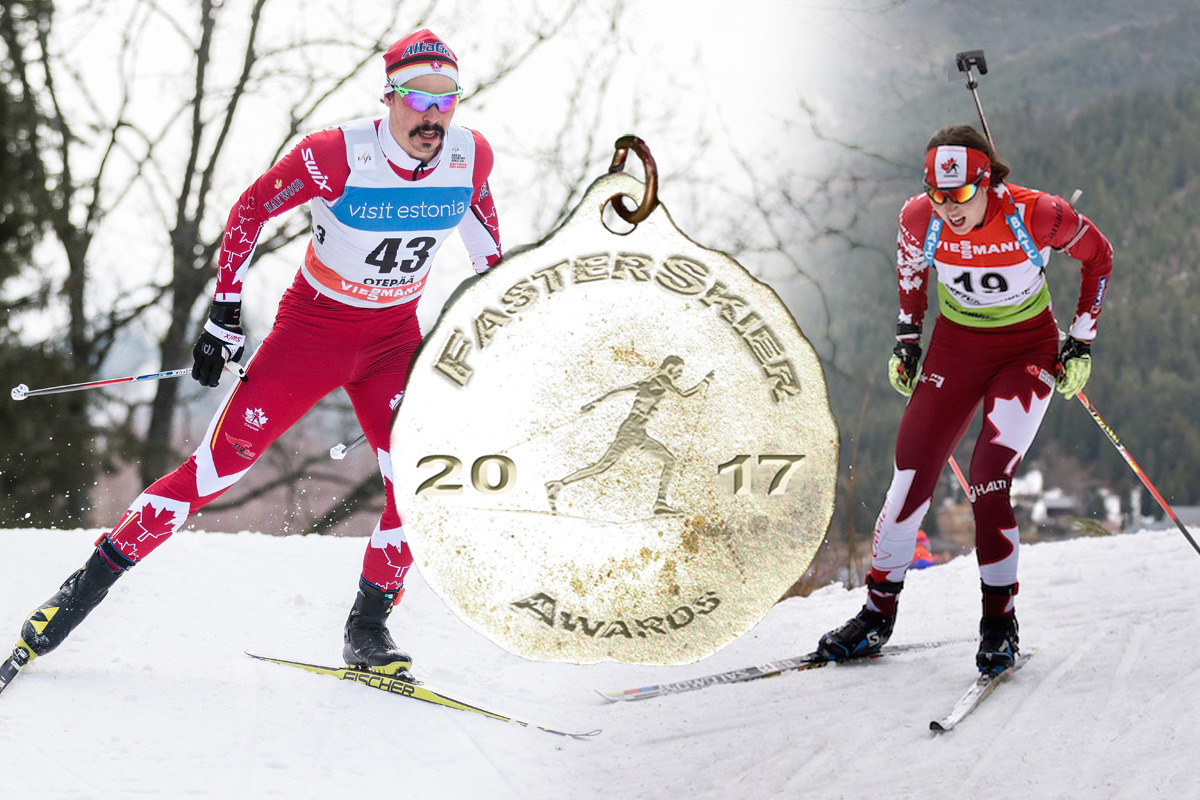
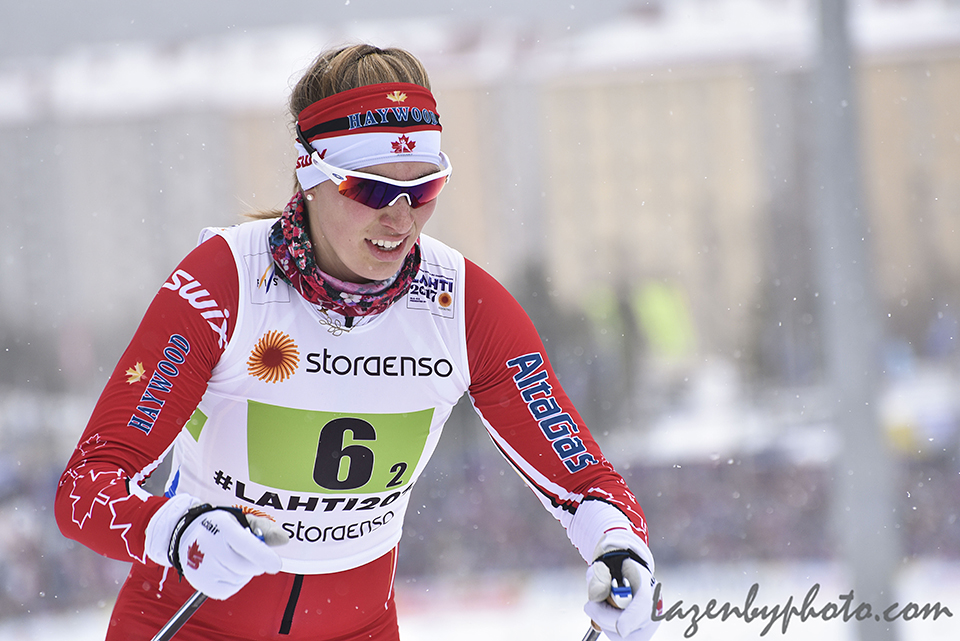
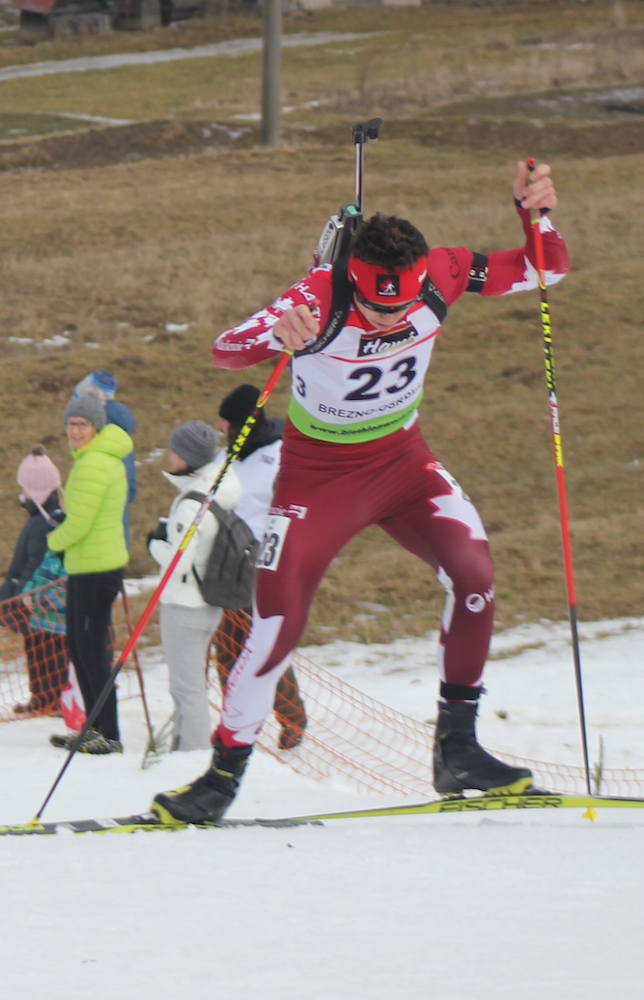
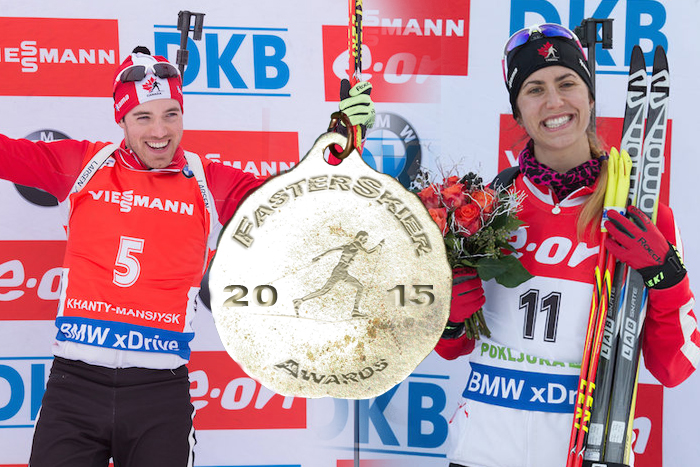
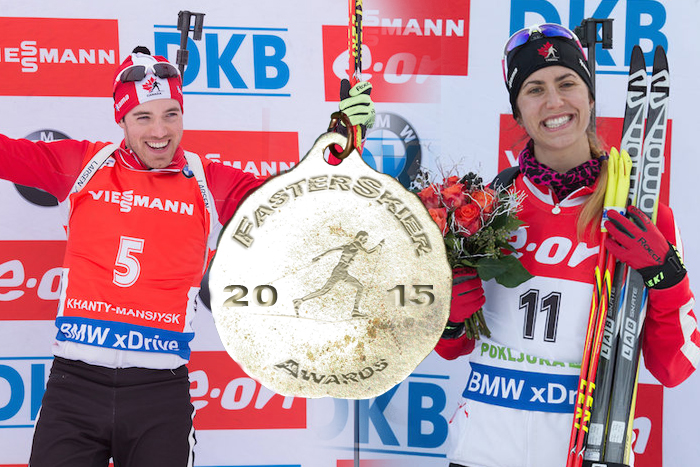
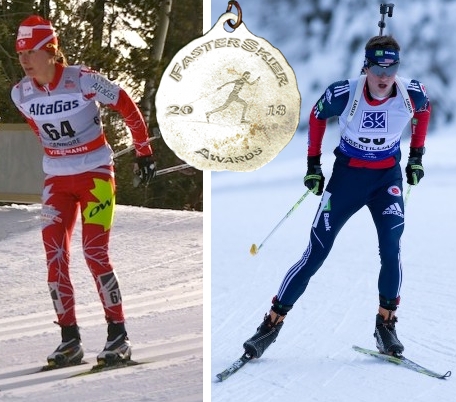
    FasterSkier’s 2018 Canadian Breakthrough Skiers of the Year are Zina Kocher (l) and Collin Cameron. (Photos: Mario Walker & Scott Grant/Canadian Paralympic Committee)

    With the 2017/2018 season officially in the rearview, FasterSkier is excited to unveil its annual award winners for this past winter. Votes stem from the FS staff, scattered across the U.S., Canada, and Europe, and while not scientific, they are intended to reflect a broader sense of the season in review. This set of honors goes to Canadian athletes in any disciplines who had a major breakthrough at some level of competition.

    Previous categories: Junior Skiers of the Year | Collegiate Skiers of the Year | Biathletes of the Year| Para-Nordic Skiers of the Year | NoCo Skier of the Year

    ***

    Collin Cameron, Canadian Para-Nordic Skiing

    Four years ago, Collin Cameron didn’t really know what cross-country skiing was. At least, he didn’t know that it was a sport he could do.

    “I did not even know paranordic was a thing, to be honest!” the Canadian wrote in an email last week. “At that time I was just starting to play sledge hockey provincially for our local team here in Sudbury, just for fun.”

    But he since found a local group to try Para-Nordic, and was then recruited onto the Canadian Para-Nordic National Ski Team.

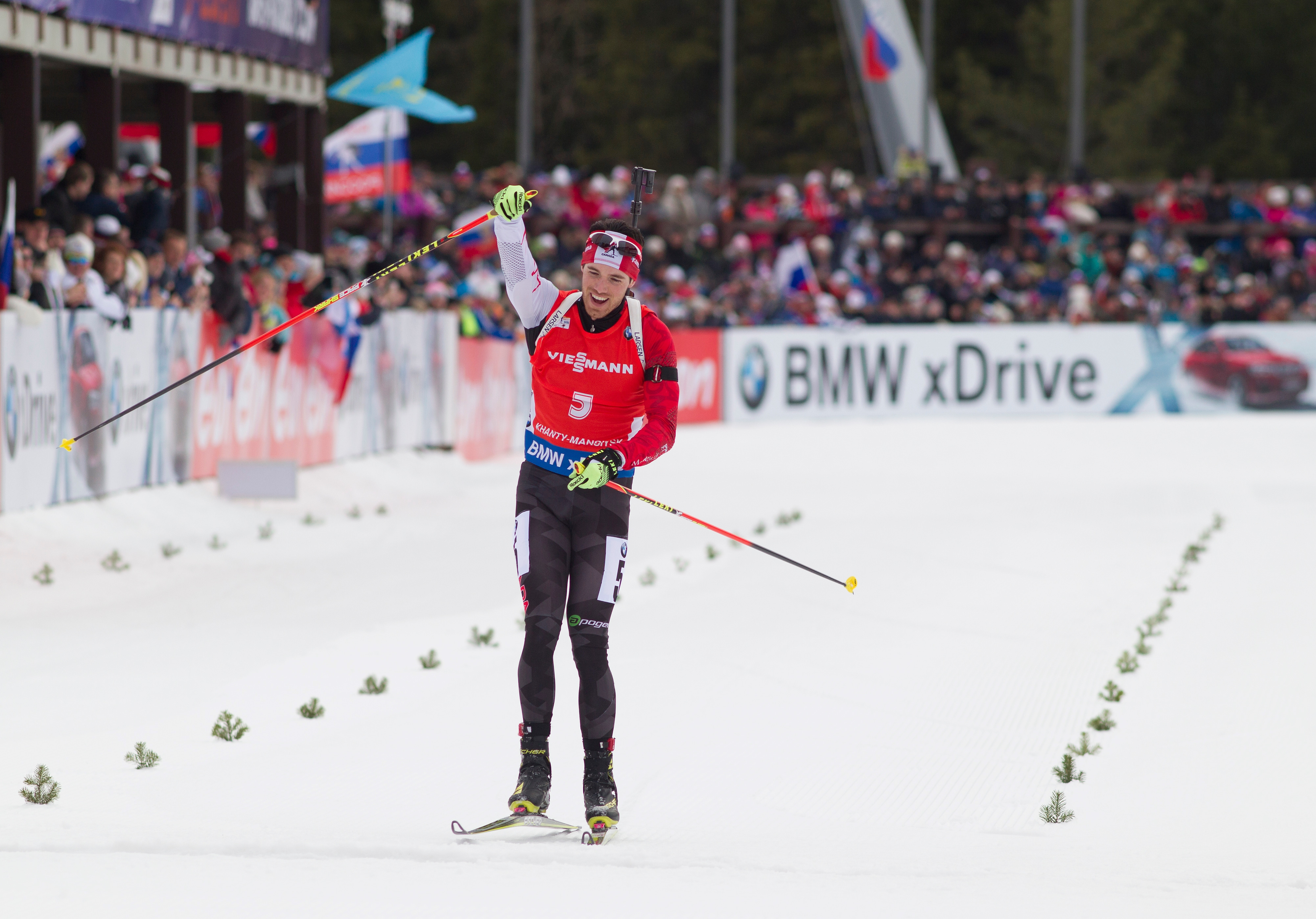
    Canada’s Colin Cameron racing to bronze in the men’s 7.5 k sitting biathlon sprint at the 2018 Paralympic Games in PyeongChang, South Korea. (Photo: Scott Grant/Canadian Paralympic Committee)

    In March, he became a multiple Paralympic medalist when he won bronze in both the 7.5 k and 15 k sitting biathlon competitions.

    At the end of the Games, he picked up another bronze in the open relay, where he teamed up with Brian McKeever. In a four-leg relay, they were one of only two teams to enter with just two athletes, and each raced two different relay legs.

    “Being a part of the open relay team with Brian, and his guides Graham [Nishikawa] and Russell [Kennedy], was something really special and I will never forget it,” Cameron wrote. “Getting my third Paralympic medal with those guys was pretty cool… just being a part of this amazing and successful team of athletes, techs, and coaches has to a favourite moment. Getting to see my teammate and travel roommate Mark Arendz finally earn his first gold medal was really, really awesome!”

    Although he is fairly new to Para-Nordic sport, Cameron’s success wasn’t completely unanticipated. Last season, he won a World Cup race on the same terrain in PyeongChang.

    “Going into the Games, I had one major goal of winning the sprint race I won at the test event the year before,” Cameron explained. “I had to settle for 4th, only 0.7 seconds off the podium. Aside from that single race, my other goal was to finish in the top 10 in all races I entered.”

    As any athlete will tell you, an Olympic or Paralympic medal is a much different animal than getting on the podium at a World Cup race. And Cameron found that to be true, too, when he returned home to Canada.

    “It’s been quite overwhelming to be honest,” he wrote. “I didn’t expect anything like the receptions I’ve received, and it’s really inspiring to see the way the community in both my hometowns have followed mine and the team’s success at the Games. I definitely could not have done this without the huge and overwhelming support from everyone here.”

    His next goal is 2019 World Championships, which will be held in Prince George, British Columbia.

    “I am very fortunate to be able to work with some of the best technical skiers and coaches in the world, that have greatly aided in the whole transition of making myself an endurance athlete…that being said there is still lots of work to do!”

    Zina Kocher, Foothills Nordic

    Yeah, Zina Kocher is 35. Yeah, she’s a three-time Olympian. But she did something brave this year.

    The former biathlete, who had retired in 2016, decided to become a cross-country skier and try to make a fourth Canadian Olympic team. She had been thinking about giving it a go, and discussing with longtime coach Richard Boruta.

    When Boruta died in a climbing accident in September, Kocher decided that even more than ever, she had to give it her best try, in his honor.

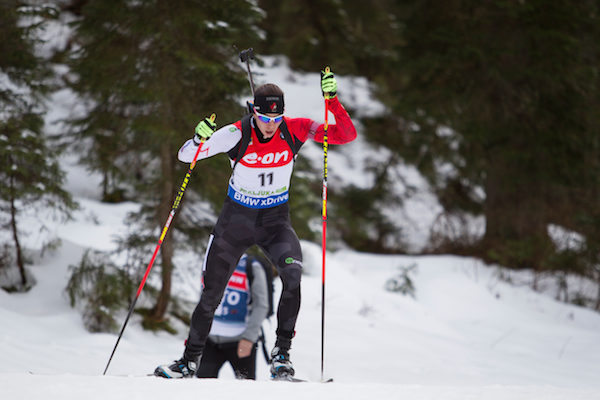
    Zina Kocher racing at Olympic Trials at Mont Sainte Anne. (Photo: Mario Walker/NorAm MSA 2018 Facebook)

    In some ways, things didn’t work out. She went to Olympic Trials in Mont Sainte-Anne, Quebec, knowing that it was a long shot — the race formats were heavily skewed towards classic, something that Kocher hadn’t done competitively for years, even though she has long been one of the fastest skate skiers in the country.

    She didn’t make the Olympics. And it might have ended there, but it didn’t.

    “After the selection races, I felt settled, ready to go back to ‘retirement’ or back to my previous next phase and other life goals and stop following, let’s say, a set training plan,” Kocher wrote in an email last week “But then I thought it would be fun to race the NorAm in Red Deer [Alberta], since that’s where I’m from and where I started xc skiing many many years ago! I hadn’t raced there since I was in high school. And then I thought oh Nipika loppet, never done that, why not. And then decided last minute to go to Gatineau Loppet when my friend Kamila (my past coach Richard Boruta’s widow) said she was going and I should come.”

    So, a season that had started with one goal — make the Olympics — went on.

    At that point, Kocher was leading the NorAm series, and found out that as a result she had an automatic spot to race on the World Cup for the last competitions of the season: the Holmenkollen 30 k freestyle mass start in Oslo, Norway, and World Cup Finals in Falun, Sweden.

    “Well, the Holmenkollen is legendary and an awesome opportunity,” she wrote.

    Kocher had raced there many times before, as a biathlete. Doing so as a skier was a new experience.

    “We had tons of fans cheering us on, pushing us up those big climbs!” she wrote. “I didn’t feel like I was in the best race shape that day, but I gave what I had for a 5 k pace that lasts for a torturous 30 k  … and my body went into some sort of shock post race, but that’s another story.”

    Despite that, she was the top finisher among the other different Continental Cup leaders.

    And then, on to Falun, where she had to do a classic World Cup race because it was part of a mini tour.

    “One big thing I went though [this season] was facing a fear of being last,” she wrote. “That sounds a bit crazy to say, but I think it’s probably an honest statement for many athletes. No one wants to come last, but someone does! Printed in ink, on a computer screen, it’s there for all to see! … I was terrified of doing a 10 k mass start classic in Falun, and I knew I would probably be last from the start. I was. In the end, it wasn’t so terrifying and I made it to the finish line. Having accomplished it, felt pretty darn good even though it was a bit of a solo 10 k. The fans and coach Babs [Ivan Babikov] were incredible cheerleaders!”

    Now, it’s back to retirement for Kocher. One of her top memories from the season was that Gatineau Loppet.

    “After some contemplation today, I think my favourite moment was doing the 50 k Gatineau Loppet,” she wrote. “Not because I won (great too of course), but because it was a great atmosphere, and it was cool to do a race point-to-point and with a mass… and because I was with Kamila and her friend Lukas. Lukas was actually racing on Richard’s old skis, doing his first ski loppet (he raced both days). Kamila didn’t think she’d be able to do any racing this winter, so it was wonderful to see her do what she loves again, and she even won the overall (both days – skate & classic 50). It was a bit of an emotional weekend. And felt like a great Richard tribute weekend.”

    Honorable Mention: Russell Kennedy, Team R.A.D. & Canadian Para-Nordic Skiing (guide)

    Kennedy accomplished a rare feat this season by competing at both the 2018 Olympics and Paralympics.

    “I’ve been on my own schedule this year because the Team R.A.D. is mostly younger athletes and … I have to do my own thing because I’m going for the Olympics,” Kennedy, last season’s overall NorAm winner, said at the beginning of the season. “So it actually works better for me to be training with Brian [McKeever] because he has similar goals as me.”

    Canada’s Brian McKeever (r) and Russell Kennedy receiving their gold medals from the men’s visually impaired classic sprint at the 2018 Paralympic Games in PyeongChang, South Korea. (Photo: Scott Grant/Canadian Paralympic Committee)

    As the NorAm winner, Kennedy started the season on the brutally competitive first period circuit of the FIS Cross Country World Cup. There, he had a top finish of 48th place in a skate sprint in Davos, Switzerland. It was only his second stint of European World Cups, after competing in Drammen and Oslo last winter.

    Kennedy returned to Canada and secured his Olympic spot by winning the sprint qualifier at Mont Sainte Anne and placing second in the sprint final. Two weeks later, he picked up two second-place finishes in NorAms in Red Deer.

    From there it was to the Olympics, where the 27 year old helped the Canadian relay team to ninth place, and as an individual finished 49th in the 50 k and 54th in the sprint.

    Then it was the Paralympics, which had long been part of the season plan. Kennedy was one of two guides for visually-impaired skier Brian McKeever, and as such picked up a collection of Paralympic gold medals (along with Graham Nishikawa, McKeever’s other guide). It was the third straight Paralympics where McKeever went undefeated – he now has 13 gold medals.

    “These sprint races are miserable,” McKeever said after crossing the line with Kennedy for gold in the sprint, according to a team press release. “They are so hard. The young guys are fast, and have natural snap. There is so much stress in sprint racing, and it goes all day long. I’m much more comfortable with the longer distances, but it was a great day for us. Russell carried the load for us today, and just thrilled we were able to cross the line first.”

    “It is hard to describe the mental states I went though the past couple months,” Kennedy recently wrote on his blog. “From being told that I didn’t make the team to making the Olympic team, feeling like I was getting sick then coming back to some of the better races of my life… There were days I woke up and wondered if it was worth it and if the hard work would pay off or if I was just blowing money on something that I didnt have in me… When I fell in love with training though I knew I was doing the right thing. So fall in love with the process dreamers, when you do you will have all good days!”

    Honorable Mention: Natalie Wilkie, Canadian Para-Nordic Skiing

    Natalie Wilkie is just 17 years old, but she’s a Paralympic gold medalist.

    In the final individual competition of the 2018 Paralympics, Wilkie topped the results sheet in the 7.5 k standing classic race – leading her teammate Emily Young onto the podium in the process. Wilkie was the gold medalist by just 1.6 seconds in an extremely exciting competition.

    Canada’s Natalie Wilkie (r) finishing third, just 0.1 seconds behind Norway’s Vilde Nilsen (l) in second, for her first Paralympic medal in the women’s 1.5 k standing classic sprint in PyeongChang, South Korea. (Photo: Scott Grant/Canadian Paralympic Committee)

    “This is crazy awesome,” Wilkie said in a press release after the race. “I didn’t think this would happen at all. I’m only 17 and this is my first Paralympics… The difference today was double poling. I just kept telling myself to pretend I was elbowing my older brother.”

    She has even inspired older members of the team, too, including 27-year-old Young, who was just a tenth of a second away from silver in that race.

    “What would Natalie do?” she said in the same press release. “I just kept saying ‘What would Natalie be doing.’”

    Earlier in the Games, Wilkie had won bronze in the sprint. And to close things out, she helped the Canadian mixed relay team – with Young, Chris Klebl, and Mark Arendz – to silver, the first relay medal the country had ever won at the Paralympics.

    “What Mark, Chris and the girls did in that first relay was awesome,” McKeever, who teamed up with Cameron for a second relay medal later that same day, said in a press release.
  • FasterSkier’s Biathletes of the Year: Tim Burke and Rosanna Crawford

    FasterSkier’s Biathletes of the Year: Tim Burke and Rosanna Crawford

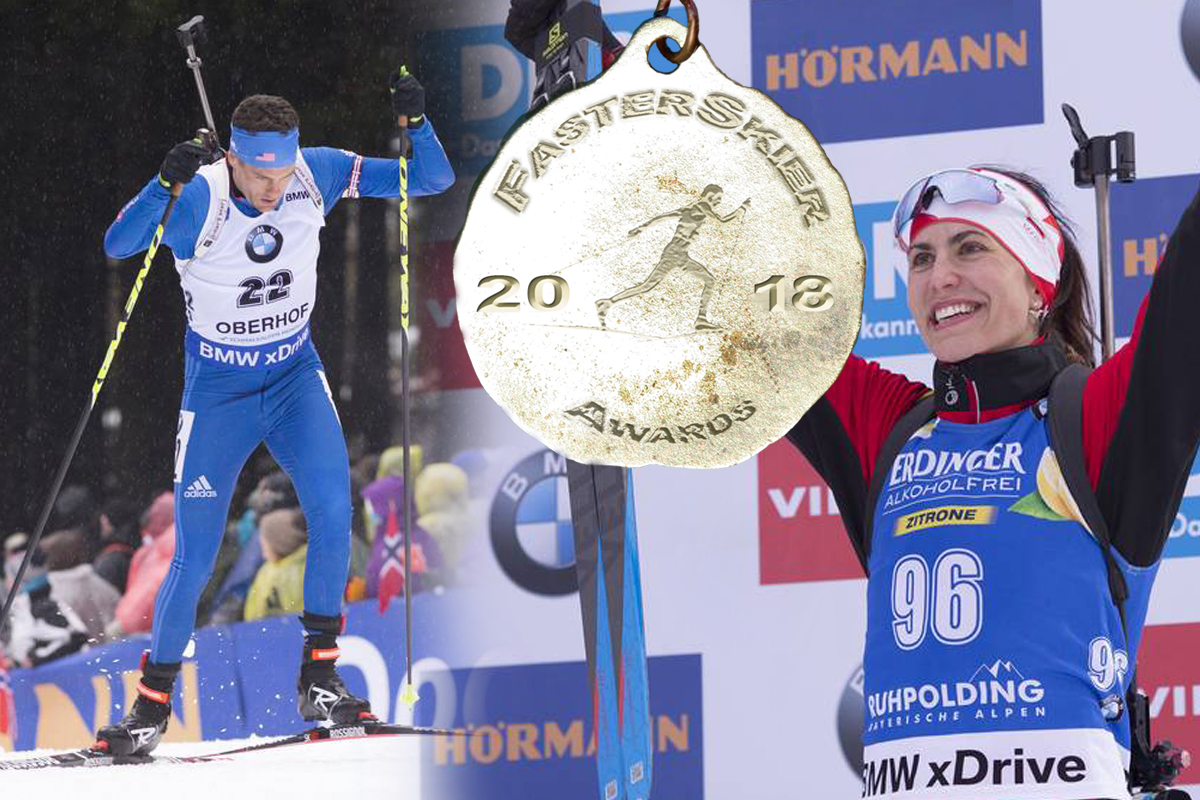
    Tim Burke of US Biathlon (left) and Rosanna Crawford of Biathlon Canada (right) are FasterSkier’s 2018 Biathletes of the Year. (Photos: USBA/NordicFocus; Salomon/NordicFocus)

    With the 2017/2018 season officially in the rearview, FasterSkier is excited to unveil its annual award winners for this past winter. Votes stem from the FS staff, scattered across the U.S., Canada, and Europe, and while not scientific, they are intended to reflect a broader sense of the season in review. This set of honors goes to outstanding North American biathletes on the international circuit.

    ***

    Rosanna Crawford, Biathlon Canada

    Rosanna Crawford had been close to the podium before, coming into this season. Fourth place. Fifth place.

    But then she had a disastrous 2017 season that left her in tears after World Championships, wondering what had gone wrong. After that, she lost her brother, as the Crawford family endured heart-rending tragedy.

    Rosanna Crawford celebrates with her Biathlon Canada teammates Emma Lunder (l) and Julia Ransom (r) after placing third for her first-career IBU World Cup podium on Thursday in the women’s 15 k individual in Ruhpolding, Germany. (Photo: Salomon/NordicFocus)

    All of that might have stopped some people, but not Crawford. In Ruhpolding, Germany, she finally scored that podium – in a race so tough it’s only held a few times a season, the 15 k individual. She shot a perfect 20-for-20 to take third place, 21.2 seconds behind Dorothea Wierer of Italy.

    “There’s just so many lessons you learn over the years, and trying to bring it all together and to have it pay off on one day is exactly what we’re all hunting for out there,” Crawford said after her podium.

    Later that weekend she again shot 20-for-20, this time in the mass start. She left the range the final time in first place, but was passed by three other women on the final loop and had to settle for fourth.

    “I was really surprised to leave the range in 1st, these are the 30 best women in the world,” Crawford wrote in an email after the mass start. “I would have love to hold onto a podium, but was pretty dead on my last loop… I was pretty disappointed when I crossed the line in fourth, but as time went by I got more and more happy. To have hit another 20/20 is fantastic, especially in the high pressure situation of a Mass Start. With that race I went 50/50 in Ruhpolding!”

    It was an up-and-down season for Crawford, who finished no better than 39th in the first period of World Cup racing and was sent down to the second-tier IBU Cup. But she excelled there, and then came the races in Ruhpolding.

    From there she headed to the Olympics – her third – and had a poor sprint race, finishing 53rd with three penalties. It was devastating, but she came back and climbed all the way up to 19th in the pursuit, the biggest improvement in the whole field.

    “I had some really good chats with my sister Chandra,” Crawford said after the Olympic pursuit. “She’s a huge motivator for me and my biggest cheerleader now. She really just talked some sense into me to not be so down on myself after the sprint, so that was really helpful.”

    Immediately after the Olympics, Crawford finished 12th in the sprint and 11th in the mass start in Kontiolahti, Finland, before finishing the season off in Oslo. She has still not announced whether she will continue competing next year, or retire.

    buy skelaxin

    But crossing the finish line in third in Ruhpolding was an unforgettable highlight, either way.

    “[Teammates] Julia [Ransom], Emma [Lunder] and Sarah [Beaudry], they kind of pushed past the IBU guys, which I don’t think they were allowed to do, but Canada’s not on the podium every day so they let them sneak by to give me a hug so that was really special,” Crawford told FasterSkier. “I’ve been with these girls the past couple years now and so to be able to celebrate with them is amazing. Their results have been so inspiring for me … [My coach Roddy Ward] also jumped the fence, which I don’t think was allowed, so that was nice to be able to see him as well.”

    Tim Burke, US Biathlon 

    While Crawford was finally hitting that career mark, U.S. Biathlon’s Tim Burke was getting his mojo back. After a frustrating few seasons, Burke rallied for the 2018 Olympics, his fourth.

    Tim Burke (US Biathlon) racing to 14th in the men’s 12.5 k pursuit at the IBU World Cup in Oberhof, Germany. (Photo: US Biathlon/NordicFocus)

    Along the way, he amassed some strong results: tenth in the sprint in Annecy, fourth in the sprint in Oberhof. The Oberhof sprint was his best result since 2013.

    It came on a course with a personal connection, as his wife, Andrea (Henkel) Burke, had her home training base in Oberhof.

    “I have spent a lot of time training here over the last eight years,” Burke laughed. “It’s Andrea’s home town and I feel like the fans out there today were really behind me from the start, because of Andrea. So be able to have the best performance of my season and my best performance in a long time here was for sure special.”

    Burke didn’t set a best-ever U.S. mark for himself at the Olympics, with a top finish of 17th in the pursuit. Like Crawford, he made the best of things after a disappointing Olympic sprint, in his case having finished 47th in the opening competition.

    “I was disappointed in the result not the performance,” he said of the sprint, after improving in the pursuit. “I felt like I executed well. I felt like I hit my cues on the course and on the range, and it just didn’t happen yesterday. The game plan going into today, there was nothing new. Stick to the things that have been working well for me in the World Cup, and that’s what I did.”

    In PyeongChang, he contributed to a U.S. men’s relay team which finished sixth, tying the best ever team result at an Olympic Games.

    A few weeks later, in his final race before retiring, he went out and did some solid biathlon, helping the team to seventh in the World Cup relay in Oslo.

    Burke’s career has had many individual highs – six podiums including a World Championships silver medal in 2013, and a brief stint in the overall World Cup leader’s bib – but this season, it was his team efforts that were some of the best.

    “The Olympic relay, we were very happy with,” he said in Oslo. “The sixth place there [in PyeongChang, South Korea], we were right there. That was a great race for us, but this is solid as well… I’ve been here a long, long time, and an top eight today is very different than a top eight when I came on the World Cup 14 years ago. It’s so close now. There’s so many good teams. So it’s a solid result.”

    Honorable Mention: Susan Dunklee, US Biathlon

    Burke’s teammate Susan Dunklee saved the best for last this season, hitting the podium for the first time since winning silver in the mass start at last year’s World Championships.

    Susan Dunklee racing to 20th in the mass start in Annecy, France. (Photo: Glen Crawford)

    It was a tough start to the season for Dunklee, who tried to implement a new shooting strategy and saw it backfire, as she had a string of results no better than 53rd in the opening two weekends of racing.

    But then she had a solid weekend in Annecy, France, finishing tenth in the sprint and sixth in the pursuit. A lifeline.

    “After Thursday, I was just feeling relief, to be honest,” she said after the Annecy pursuit. “It’s so huge to get a top ten and then get a flower ceremony today.”

    Two months later, Dunklee had an athlete’s worst nightmare and got sick at the beginning of the Olympics, racing the opening sprint anyway but then finishing 66th and missing the pursuit. In the 15 k individual she placed 19th, and she led the women’s relay at one point.

    “I often start feeling stronger and stronger as the season goes on, and this season it took a little longer,” Dunklee explained. “I had a lot of sickness, and some frustrating shooting days early in the season that made it hard for me to keep going.”

    After the Games, she finished 36th in the sprint in Kontiolahti despite still getting over (another) illness, then came to Oslo and placed fourth in the sprint and third in the pursuit, in a podium that only appeared thanks to clean shooting in the final stage where others faltered.

    “It doesn’t really matter what everybody else is doing, you just have to try to put the best race you can,” she said of landing on the podium despite two penalties. “Sometimes you have a perfect race and five other people do too, and then you are sixth. But some days you don’t have a perfect race and you end up third.”

    Like Crawford, Dunklee hasn’t announced whether she will keep racing next season. If not, her last World Cup memory will be sharing the podium with Anastasiya Kuzmina and Darya Domracheva. Not bad.

    Honorable Mention: Scott Gow, Biathlon Canada

    Canada’s Scott Gow just keeps improving, and this season was no exception. Early on he had two career-best performances: 16th in the sprints in both Östersund and Annecy.

    Scott Gow (Biathlon Canada) after placing 16th in the IBU World Cup men’s sprint on Friday in Annecy, France. (Photo: Glen Crawford)

    But the biggest career-best also came on the biggest stage. At the Olympics, Gow shot 19-for-20 in the 20 k individual to finish 14th, the best performance by any North American in PyeongChang.

    He had started the Games with 61st in the sprint – maybe the worst place to finish, just one spot (in his case one tenth of a second) out of the pursuit.

    Gow re-tooled and started focusing on the 20 k.

    “When it’s this calm, relatively as calm, everyone can shoot well,” he said after that race. “So that puts a little extra pressure and emphasis on myself to shoot well. So going into today I knew that would be have to the focus, to hit targets, because even if my skiing is a little off I can make up for it with a really good shooting. And that was what was going through my head the last few days preparing for this.”

    Plan achieved, mission accomplished. Except that one shot.

    “I was very happy with it,” Gow said, noting that even a career-best at the Olympics wasn’t perfect. “A little disappointed to miss that one standing shot, especially when everything was going quite well in the range. Skiing was pretty good, and so overall I am very happy.”

  • FasterSkier’s Juniors of the Year: Ben Loomis and Hailey Swirbul (Updated)

    FasterSkier’s Juniors of the Year: Ben Loomis and Hailey Swirbul (Updated)

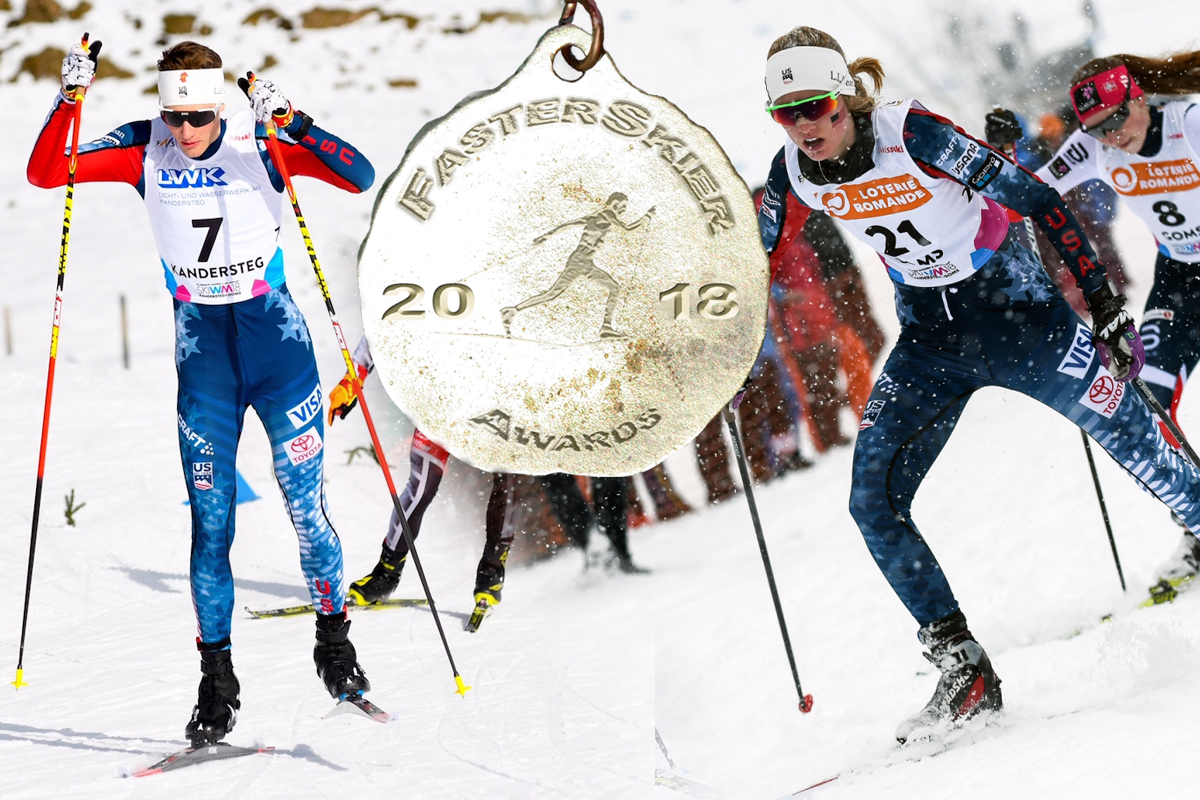
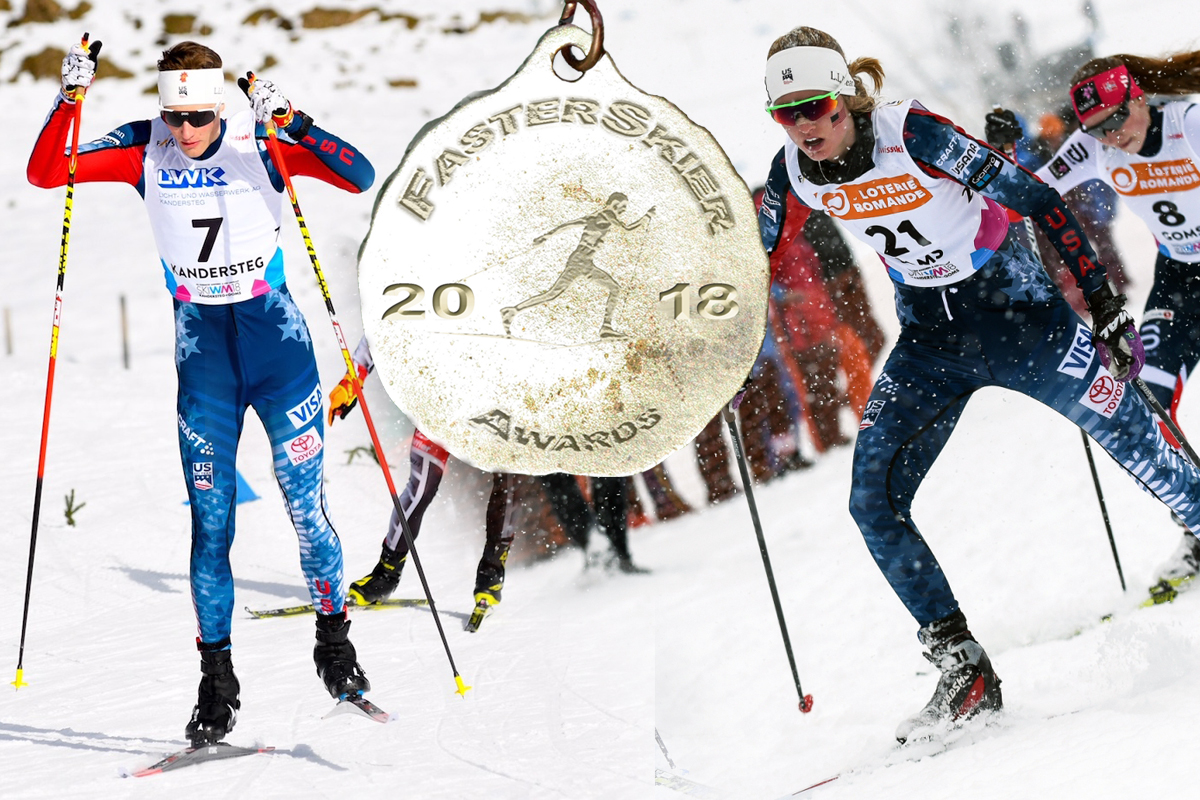
    Ben Loomis (l) and Hailey Swirbul (21) are FasterSkier’s Juniors of the Year. (Photos: Romina Eggert & JWSC2018.ch)

    With the 2017/2018 season officially in the rearview, FasterSkier is excited to unveil its annual award winners for this past winter. Votes stem from the FS staff, scattered across the U.S., Canada, and Europe, and while not scientific, they are intended to reflect a broader sense of the season in review. This set of honors goes to outstanding North American junior athletes across all nordic disciplines. 

    ***

    Ben Loomis, U.S. Nordic Combined Team

    In late January, 19-year-old Ben Loomis was named to the U.S. Olympic team. That was a pretty big deal, and one he hadn’t been relying on.

    “My main focus this year was on World Juniors, so to have made, and competed in, the Olympics was a dream in itself,” he wrote in an email to FasterSkier last week. “I really didn’t have any goals past having fun, taking in the experience, and doing my best.”

    The men’s individual normal hill/10 k Gundersen podium at the first Day of Nordic Combined Junior World Championships in Kandersteg, Switzerland, with American Ben Loomis (r) in third, the Czech Republic’s Ondrej Pazout (c) in first, and Norway’s Einar Lurås Oftebro (l) in second. (Photo: Josh Parker)

    Before he actually arrived in PyeongChang, South Korea, though, he had another trip to make: to Kandersteg, Switzerland, to compete in the thing that was his big goal, World Junior Championships.

    In Kandersteg, Loomis improved on his top-ten finish from the previous season, earning bronze in the normal hill 10 k. In doing so, he became the first American to medal in nordic combined at World Juniors since Todd Lodwick won gold in 1996.

    “A medal at World Juniors was definitely my goal going in, in fact, it had been a goal for the two years prior,” Loomis wrote of finally checking that box. “I knew the level I was at, and the level of the my competitors, so I was confident that a podium was well within my capabilities.”

    As a developing talent on the U.S. team, Loomis is often competing at senior competitions, be it on the Continental Cup or the World Cup. In Kandersteg, he actually had the chance to measure himself against his own cohort.

    “It can often be humbling to compete on World Cup as one of the younger athletes which makes junior competitions much much less stressful,” Loomis wrote. “I’ve always done pretty well against juniors my same age so that gave me confidence going into Junior Worlds. Of course, I was very happy and at the same time relieved to have meet my goal. This result was huge because it not only helped myself out, but it opened up another World Cup spot which is a help for the whole team. This certainly made everyone happy.”

    In the normal hill 5 k, he was just one spot off the podium in fourth.

    When asked to peg his favorite memory from the season, though, the medal wasn’t it. Neither was the Olympics, where his top finish was 40th and he helped the U.S. relay team to 10th place.

    “I have to say Olympic Trials in Park City was one of the most memorable days this season,” Loomis wrote. “It’s rare to compete at home, and to have the enthusiasm of large crowd made the day exciting. To top things off, I was happy to finish on the podium behind veteran Bryan Fletcher and my older brother, Adam.”

    Hailey Swirbul, University of Alaska Anchorage

    The same day that Loomis won his bronze medal, Hailey Swirbul was taking her own step onto the podium about 75 kilometers away in Ulrichen, Switzerland, where the cross-country portion of World Junior Championships was being held.

    “This season I had wanted to focus on NCAA races more than I had the previous year, but once the season got under way it was difficult to forget about the temptation of doing well at World Juniors,” the University of Alaska Anchorage sophomore wrote in an email this week. “I tried to take on each of those goals individually as they approached and focus solely on the race that I needed to at the moment.”

    Last season, Katharine Ogden won bronze in the World Juniors skiathlon, and she and Swirbul teamed up with Julia Kern and Hannah Halvorsen to earn bronze in the relay, too.

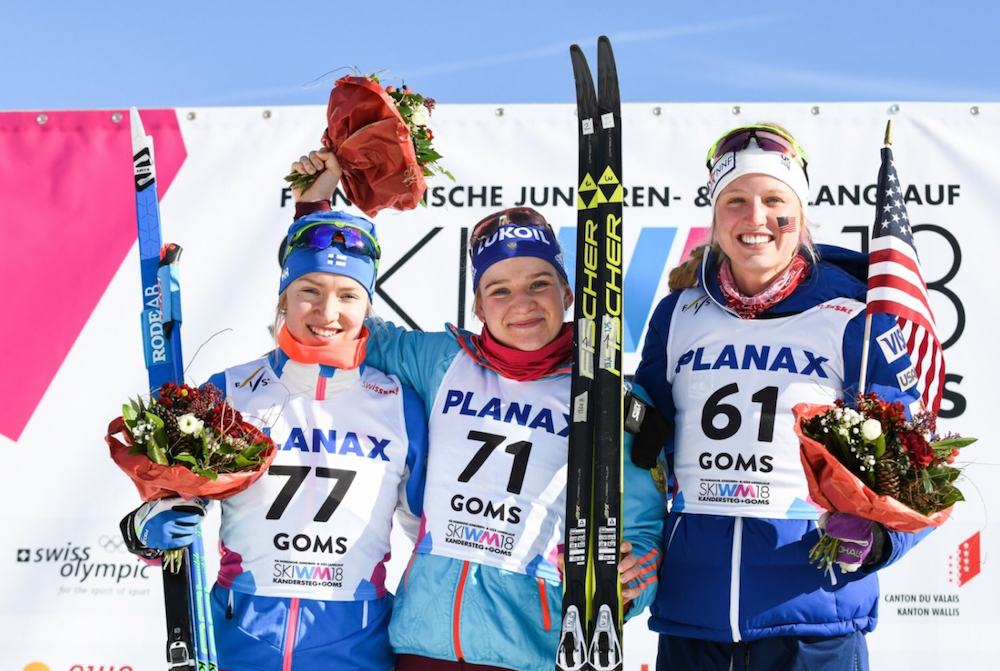
    The women’s 5 k classic podium at 2018 Junior World Championships in Goms, Switzerland, with American Hailey Swirbul (r) in second, Russia’s Polina Nekrasova (c) in first, and Finland’s Anita Korva (l) in third. (Photo: JWSC2018.ch)

    In the 5 k classic in Ulrichen, Swirbul did one better than Ogden’s mark and claimed silver, just 14.4 seconds behind gold medal winner Polina Nekrasova of Russia.

    “I think the moment I’ll remember (albeit a long moment), was the time from when I crossed the finish line in the 5 k individual start to when I learned I would actually receive a medal,” Swirbul wrote this week, when asked what the most memorable moment of her season was. “Interval start races are not instant gratification like a mass start is… you’ve got to wait out the whole field to see if you actually did well. I was seeded about 20th from the last starter, so I had plenty of waiting in anticipation! I will always remember the people who were there with me through that and told me they think I’ve done it; and the excitement from the entire team about my individual success. It’s amazing to be from a country where every teammate celebrates an individual success almost as their own.”

    It was the best World Juniors finish ever for an American.

    “The result hasn’t hit me yet,” Swirbul wrote in an email after the race back in January. “It was beyond what I expected, so my brain is still catching up to the reality! I’ve been dreaming of racing how I know I could for the past 3 years or so, and this season has finally been my chance to break through. I’m so fortunate that things aligned for me on the day that really counted. I couldn’t have done it without Bryan Fish’s unwavering belief in us athletes, and my mom and dad’s support all these years, of course.”

    But she was far from finished. In the 10 k skiathlon, Swirbul picked up a bronze to go with her silver.

    “After my silver medal I believed in myself more than before,” she wrote at the time. “However, I managed to stay calm and not put high expectations on myself for the skiathlon which allowed me to race my best. I was hoping to ski smart and relaxed and not be afraid to make it hurt! In a mass start that is really all I can control.”

    Swirbul helped the U.S. junior women to eighth place in the relay. Then she returned to the U.S., where the college season was still going strong.

    “Being on the western circuit, I realized that coming back to ‘domestic’ racing is hardly domestic at all!” Swirbul wrote this week. “Our circuit has helped me prepared for international races, because many of our athletes are international. I have learned so much from them in each race. Otherwise, it was difficult to switch back to full on school mode, but the skiing transition was fun!”

    She rallied for the seawolves, and placed third in the 5 k classic and second in the 15 k skate mass start at NCAA Championships, the second American in both races – which were swept by Ogden (University of Colorado’s Anne Siri Lervik, from Norway, was second in the 5 k classic).

    “That was one of the most exciting races that I’ve ever watched,” UAA head Nordic coach Andrew Kastning said in a press release after the NCAA 15 k. “Hailey skied as good as she possibly could have, and was very smart.”

    Honorable Mentions: Ben Ogden (Stratton Mountain School) and Gus Schumacher (Alaska Winter Stars)

    The best individual result on the men’s side at World Juniors, for the Americans, came from Ben Ogden. The then-17-year-old (he’s since turned 18) finished seventh in the 10 k classic, 10.9 seconds off the podium.

    “I went into World Juniors without much in the way of expectations,” Ogden wrote in an email this week. “My official goal was a top 20, but I had no idea of the achievability of that considering this was my first World Juniors. I knew that classic 10 k’s are a relatively strong point for me, so I was excited to see where I stacked up. Finishing the individual start race race as the temporary leader, and ending up seventh overall was incredibly exciting. This race was mind-blowing for me and showed that anything is possible. This elevated my expectations and hopes for the races to come, which was cool.”

    Along with teammate Gus Schumacher, who finished 17th in the 10 k, Ogden gave the U.S. team a lot of hope for the future.

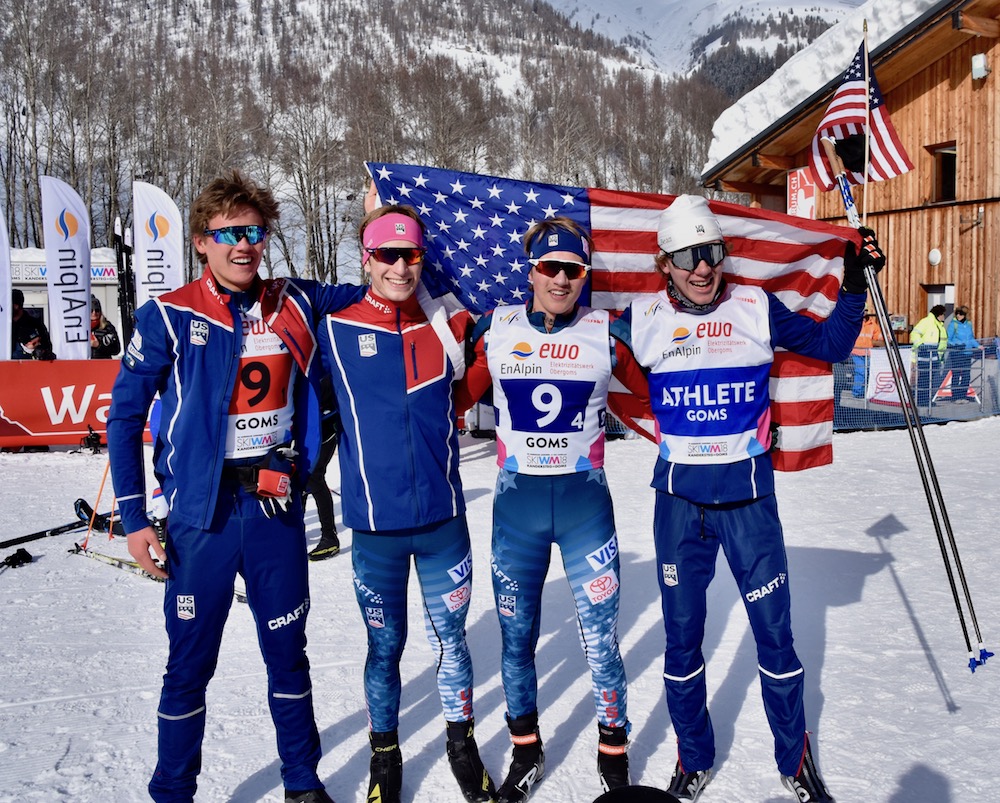
    The U.S. men’s silver-medal relay at 2018 Junior World Championships in Goms, Switzerland, with (from left to right) Luke Jager, Hunter Wonders, Gus Schumacher, and Ben Ogden. (Photo: Julia Kern)

    “It’s really exciting when you look at our day in general,” U.S. Ski and Snowboard development coach Bryan Fish noted the day of the classic race. “We had two young boys with 2000 birth years; there was only three boys in the top 40 that had a 2000 year of birth and we had two. … That’s just really exciting for U.S. skiing in general, that we have athletes showing up not just to participate, but to really perform.”

    That promise came due a few days later when, along with Hunter Wonders and Luke Jager, the duo raced to a silver medal in the junior men’s relay, an unprecedented result and going one better than the women’s relay had the year before.

    “If I had a dime for every time an announcer, coach, athlete, or anyone else remotely involved in cross-country skiing has called me ‘the younger brother of the infamous Katharine Ogden’ I would be a very rich younger brother,” Ogden wrote this week. “After years of this, it become clear that the only way to shirk this nickname is to rival or even beat her skiing performances… So naturally, I went into the relay at World Juniors hoping to help create the circumstances under which Katharine may just once be referred to as Ben Ogden’s older sister. I know this goal seemed incredibly lofty but after a successful week, it was time to dream big. I am pleased to say that along side the iconic Alaskan trio, Hunter Wonders, Juke Jager and of course Gus Schumacher, we were able to pull off the ultimate one-up on Katharine and her friends from the year prior. Each of my teammates had their own motivations for the race that allowed them to preform in such a heroic fashion, and I can only imagine that the overall performance also exceeded their wildest dreams.”

    The team was never far out, with Jager leading things out in sixth (+14.0), Ogden bringing the team to fourth (+22.8) and Wonders holding that position (+29.0). But Schumacher as the anchor skier did hero’s work and made up the time to pass the French and Russian teams, and crossed the line just 2.2 seconds behind Norway to secure silver. It was a team effort that landed the Americans just 3.3 seconds clear of third place.

    buy skelaxin

    “Experiencing the podium here has been so cool,” Schumacher wrote at the time. “I thought it was possible, but actually getting it feels amazing. This whole trip has been really cool even without this success, it’s such an amazing place and the team is tight. I think individually I anticipated results maybe a little better, but this seems about right, and as a team I think we all surprised ourselves. Together we can make some big waves.”

    The juniors have also had success against the senior field. Schumacher finished sixth in the 15 k skate at U.S. Nationals and eighth in the skate sprint. And Ogden, for example, was ninth in the 15 k skate at U.S. Nationals, and qualified fourth in the classic sprint before finishing 12th on the day.

    “I think that one of my strongest races of the season was the individual skate 15 k at U.S. Nationals in Anchorage,” Ogden, who is headed for the University of Vermont next year, wrote in an email this week. “I was excited to place in the top 10 overall, especially in a skate race, which has been is my weaker technique in the past.”

    Honorable Mention: Chloe Levins, US Biathlon 

    Despite being just a junior in the biathlon world, Middlebury College student Chloe Levins elbowed her way in to the U.S. Olympic Trials process. She excelled at trials races in Minnesota to earn a spot on the team’s short list for PyeongChang, before ultimately falling just short in the final trial competitions, some IBU Cup races in Europe.

    Chloe Levins (third from r) with the U.S. team staff (from l to r) wax tech Travis Voyer, coach Algis Shalna, assistant coach Danika Frisbie, wax tech Max Bergmann, wax tech Mattias Halquist, and coach Erik Lewish, after Levins placed sixth in the junior women’s 12.5 k individual at IBU Junior World Championships in Otepää, Estonia. (Photo: Erik Lewish)

    But after that, Levins bounced back to provide remarkably strong and consistent results at World Junior Championships in Otepää, Estonia. Levins finished sixth in the 12.5 k individual, seventh in the 7.5 k sprint, and then sixth again in the 10 k pursuit. She still has one more season of junior eligibility, too.

    “In pursuit races in the past, I’ve come from behind,” Levins, who placed fourth in last year’s Youth Worlds pursuit, wrote in an email to FasterSkier at the end of World Juniors. “Today, it was a new learning experience for me to be in the mix for the duration of the race. My plan was simple from the start: enjoy being in the mix and trust your preparation. I found the zone today, which is what you dream about. I don’t remember much about the last stage. All I know for sure is that I went for it today…and I have no regrets.”

  • FasterSkier’s Cross-Country Skiers of the Year: Alex Harvey & Jessie Diggins

    FasterSkier’s Cross-Country Skiers of the Year: Alex Harvey & Jessie Diggins

    Jessie Diggins (U.S. Ski Team) and Alex Harvey (Canadian World Cup Team) are FasterSkier’s North American Cross-Country Skiers of the Year. (Photos: Salomon/NordicFocus)

    With the 2016/2017 season officially in the rearview, FasterSkier is excited to unveil its annual award winners for this past winter. Votes stem from the FS staff, scattered across the U.S., Canada, and Europe, and while not scientific, they are intended to reflect a broader sense of the season in review. This honor goes to two outstanding North American skiers of the year. 

    Previous categories: Junior Skiers of the Year | Collegiate | Canadian Continental | U.S. Continental | Nordic Combined | Biathletes | Para-Nordic | Canadian BreakthroughsU.S. Breakthroughs | Coach | International

    ***

    Alex Harvey and Jessie Diggins are FasterSkier’s North American Cross-County Skiers of the Year. Sound familiar? No, you’re not going crazy; these are the same winners as last year.

    But this is only repeat in the sense that both athletes earned this award as standout North American World Cup skiers. They didn’t have identical seasons as last year; in fact, they continued to outdo themselves.

    Alex Harvey, Canadian World Cup Team/Pierre Harvey National Training Centre

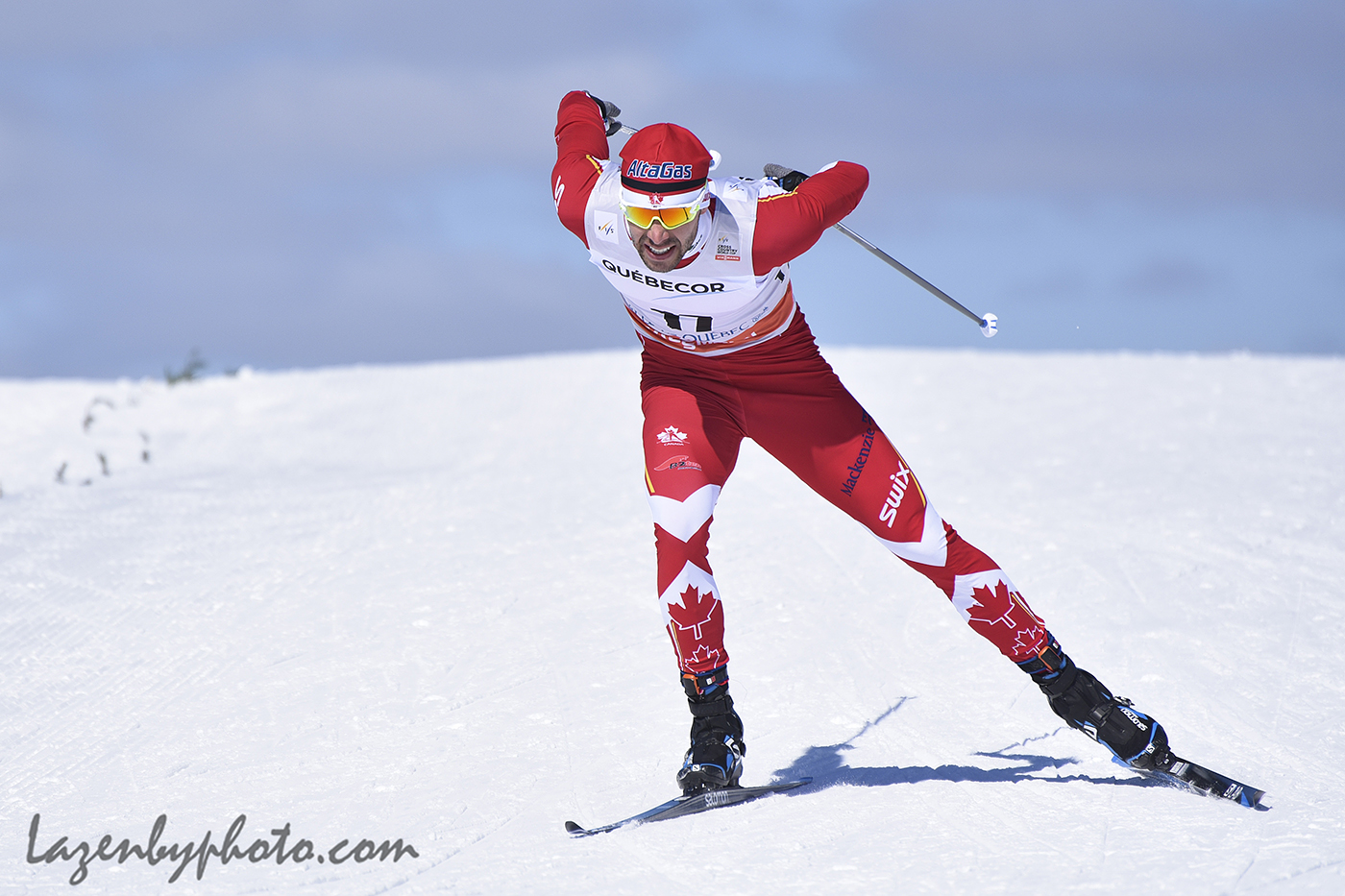
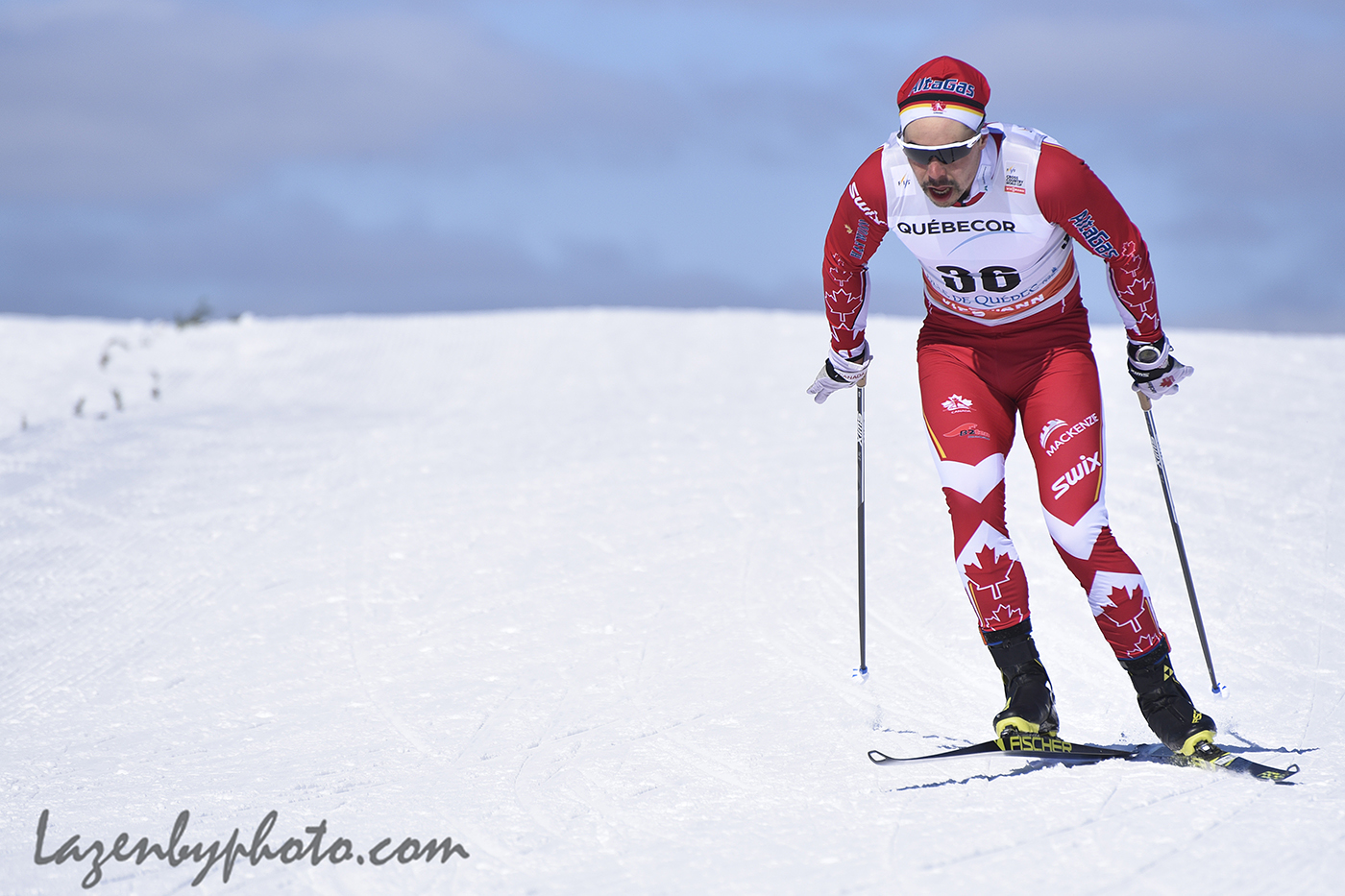
    Alex Harvey (Canadian World Cup Team) racing to fourth in the men’s freestyle sprint qualifier on the first day of World Cup Finals on March 17 in Quebec City. He went on to win the final. (Photo: John Lazenby/Lazenbyphoto.com)

    If it weren’t for Martin Johnsrud Sundby and Sergey Ustiugov, Canada’s Alex Harvey could easily have been tapped for International Skier of the Year. The 28-year-old Quebec native finished third in the Overall World Cup and second in the Distance World Cup. He had been third overall once before — in 2014 — but two end-of-season World Cup podiums? That was something to write home about.

    Fortunately for Harvey, he was already right at home in Quebec City, where World Cup Finals were held March 17-19. There, he won the skate sprint to start the mini tour and raced to second in the 15-kilometer freestyle pursuit, putting him second in the mini tour. Over the course of the season, Harvey accumulated two regular-season individual World Cup victories and six podiums (including a freestyle team-sprint win with Lenny Valjas and 4 x 7.5 k relay bronze with Valjas, Devon Kershaw and Knute Johnsgaard). He placed seventh in the Tour de Ski for his best overall finish in the multi-stage event.

    Oh, and at World Championships, Harvey won the 50 k freestyle mass start, which stood as his first individual championships gold medal and his fifth medal total in four World Championships.

    Asked about his confidence ahead of next year’s Winter Olympics in PyeongChang, South Korea, Harvey told reporters on the last day of World Cup Finals he was “really confident, especially with [being] able to win a gold medal at world champs. It was the last race of the championships, so it was like, in French we say, quarter before midnight, it was just last chance to dance. … The team believed in me and I believed in the team and we were able to deliver on the last day so I think that itself gives me a lot of confidence for PyeongChang.”

    As for his overall World Cup finish, he said that had been a season-long focus.

    “Even though it’s not the win, it’s not the Crystal Globe, it still means a lot to me because we are on the road the whole winter,” he told reporters. “It’s a lot for me, and for the whole team. It means you can’t miss the skis too often in the season, can’t allow yourself to get sick or have a big dip in form, so that’s really important for me to be able to be third in the overall.”

    Jessie Diggins, U.S. Ski Team/Stratton Mountain School T2 Team

    Jessie Diggins (U.S. Ski Team) racing to fifth in the women’s 30 k freestyle mass start at the 2017 Nordic World Championships in Lahti, Finland. (Photo: John Lazenby/Lazenbyphoto.com)

    On the second weekend of the World Cup season, American Jessie Diggins scored her first win of 2016/2017 — in the 5 k freestyle in Lillehammer, Norway. It had been one of several events she had been eyeing for the season, and on Dec. 3, she delivered, beating Norway’s Heidi Weng and Marit Bjørgen for the top step on the podium.

    It was the second individual win of her career, with the other coming in a 5 k freestyle in Toblach, Italy, the year before. Almost exactly a year from the date of her first win, Diggins did it again in the 2017 edition of the 5 k skate in Toblach for her third-career individual win. She also proved herself an all-around contender in the 10 k skiathlon in Oberstdorf, Germany, a few days earlier, where she placed second in the third stage of the Tour de Ski.

    The 25-year-old Minnesota native went on to finish fifth in the Tour de Ski (tying the best American result in the Tour), and at Lahti World Championships, she captured two medals — silver in the skate sprint and bronze in the classic team sprint with Sadie Bjornsen — for her third and fourth career World Championships medals.

    “For me, this is one of the most exciting ones because … it’s in classic,” Diggins told FasterSkier after her team-sprint bronze. “And I don’t want to be just a skater, or just a 5 k skater. I want to be able to do it all, and do it with my team and do it for the team. So this is really pretty special for us.”

    Diggins ended the season with a four-race sweep of the SuperTour Finals/U.S. Distance Nationals in Fairbanks, Alaska, winning the 15 k skiathlon, skate sprint, mixed relay (with three Stratton teammates), and 30 k freestyle mass start. She finished the World Cup season sixth overall and seventh in the distance ranking — besting her eighth and ninth place finishes in those categories, respectively, from the season before.

  • FasterSkier’s International Skiers of the Year: Sergey Ustiugov & Marit Bjørgen

    FasterSkier’s International Skiers of the Year: Sergey Ustiugov & Marit Bjørgen

    FasterSkier’s International Skiers of the Year: Russia’s Sergey Ustiugov and Norway’s Marit Bjørgen. (Photos: John Lazenby/Lazenbyphoto.com)

    With the 2016/2017 season officially in the rearview, FasterSkier is excited to unveil its annual award winners for this past winter. Votes stem from the FS staff, scattered across the U.S., Canada, and Europe, and while not scientific, they are intended to reflect a broader sense of the season in review. This honor goes to outstanding international skiers of the year.

    Previous categories: Junior Skiers of the Year | Collegiate | Canadian Continental | U.S. Continental | Nordic Combined | Biathletes | Para-Nordic | Canadian Breakthroughs| U.S. Breakthroughs | Coach

    ***

    Sergey Ustiugov, Russian World Cup Team

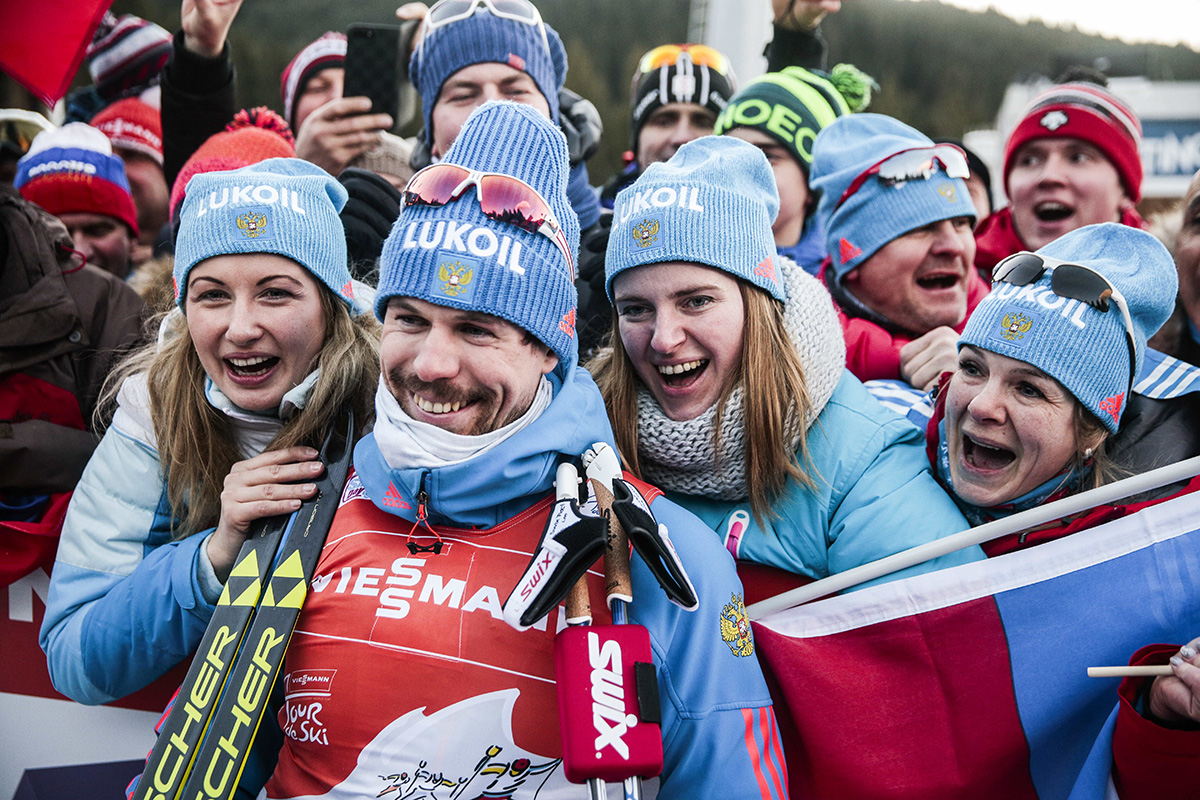
    Russia’s Sergey Ustiugov celebrates with supporters after winning the final climb and his first Tour de Ski overall title in January at Alpe Cermis in Val di Fiemme, Italy. (Photo: Fischer/NordicFocus)

    Russia’s Sergey Ustiugov was dominant when it seemed to matter most this season. He finished second in the Overall World Cup, he won his first Tour de Ski (TdS) — punctuated with an unprecedented six victories in seven TdS stages, and he brought the deflated Russian team five medals at World Championships.   

    The day before World Championships began, five of Ustiugov’s teammates implicated in the second McLaren report detailing systematic state-sponsored doping at the 2014 Sochi Olympics had their provisional suspensions upheld by the Court of Arbitration for Sport (CAS). Those athletes were declared ineligible for the 2017 World Championships.

    It’s an open question whether that news motivated Ustiugov. Over the course of the championships, the 24 year old won gold in the 30-kilometer skiathlon and team sprint. He hauled in two silvers, one in the individual sprint, the other in the 50 k skate. He helped Russia, and himself, to a fifth medal: silver in a nail-biter 4 x 10 k relay, which Norway won.

    After that relay, Sundby called Ustiugov the best skier in the world during a press conference. And for most of the season, Ustiugov indeed proved himself one of the world’s best, if not the man to beat.

    Ustiugov stood on five other World Cup podiums outside the TdS, four of which were in individual races.

    Ustiugov, who turned 25 last weekend, gained recognition back in 2012 when he won four gold medals at the Junior World Ski Championships. In 2013 he racked up two more golds in the 15 k skate and 30 k skiathlon at U23 World Championships. He backed those performances up as he matured, winning a skate sprint and 15 k classic at the 2014 U23 Worlds.

    The young Russian skier’s rise to World Cup prominence hasn’t been meteoric. It’s been a steady step onto podiums at each stage of his international career. Ustiugov’s 2016/2017 season makes his case as Russia’s next best hope and he’ll likely remain Sundby’s foil in the upcoming Olympic year.  

    Marit Bjørgen, Norwegian World Cup Team

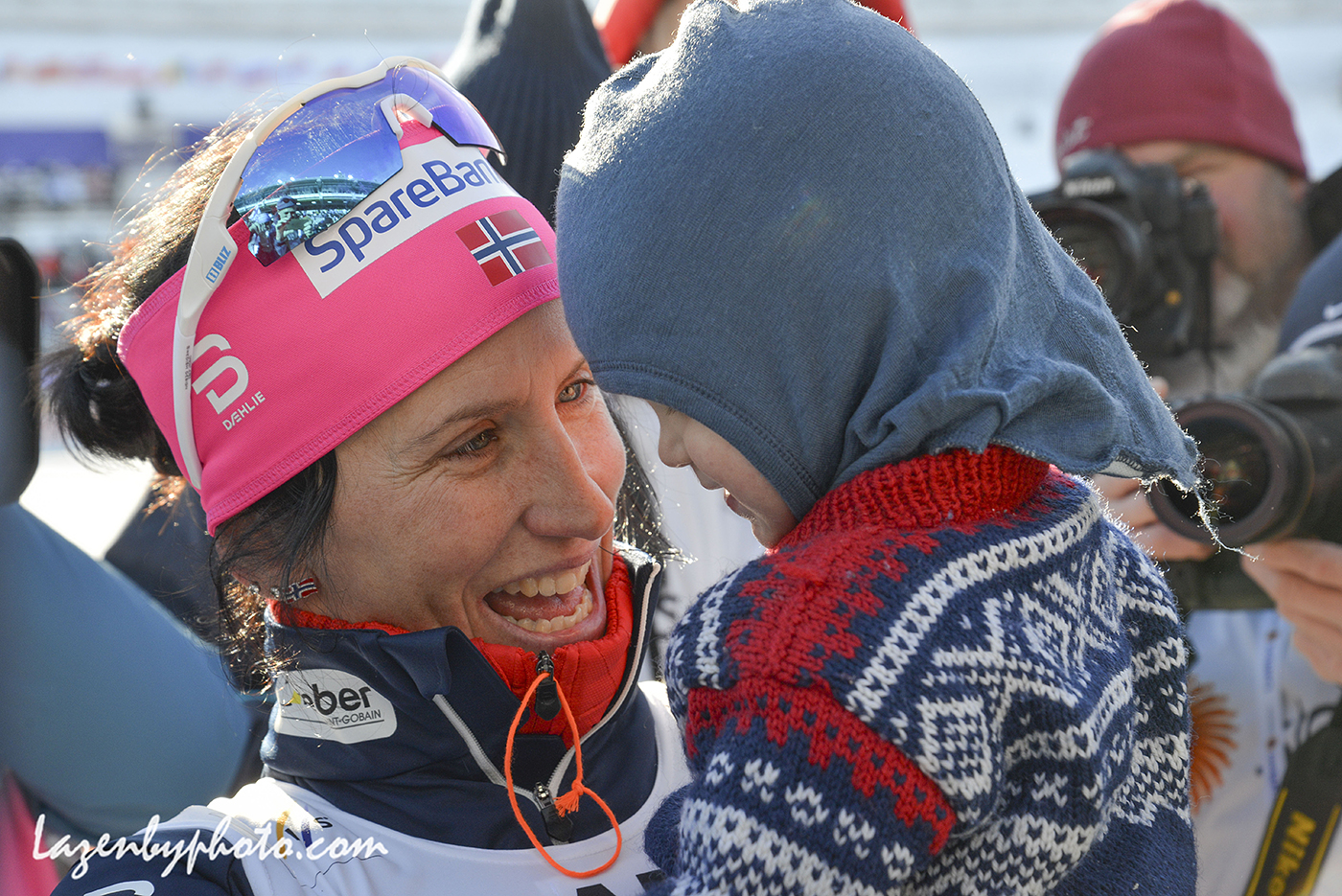
    Norway’s Marit Bjørgen with her 1-year-old son Marius after she won her 15th World Championships gold in the women’s 15 k skiathlon at 2017 World Championships in Lahti, Finland. (Photo: John Lazenby/Lazenbyphoto.com)

    Yes, she’s a new mom. But with the the 2016/2017 season in the review, Marit Bjørgen is the same ol’ machine. After skipping last season while pregnant with her first child, the 36-yar-old Norwegian (who turned 27 last month) opened the first distance race of the year with a win in the 10 k classic in Kuusamo, Finland, just 11 months after the birth of her son, Marius.

    It was the third race she had competed in since March and her second victory (she also won the Beitostølen 10 k FIS race the weekend before).

    Less than a week later, Bjørgen was back on the podium in Lillehammer, Norway, this time in third behind American Jessie Diggins in first and her Norwegian teammate Heidi Weng in second in the World Cup 5 k freestyle.

    She closed curtains on 2016 with two more top-three finishes: second in the La Clusaz 10 k mass start and first in the 4 x 5 k relay the next day, during which she posted the fastest second-leg time. The win was Bjørgen’s 25th relay victory and a predictor for the following two relays she’d enter this season in Ulricehamn, Sweden, and at World Championships in Lahti, Finland, both of which she anchored.

    Marit Bjørgen (3) leading the pack in the women’s 30 k freestyle mass start on March 4 at 2017 World Championships in Lahti, Finland. (Photo: John Lazenby/Lazenbyphoto.com)

    If there was any doubt about her ability to regain dominance, she wasted no time dispelling it.

    Opting to sit out this year’s TdS, Bjørgen returned to the World Cup race scene five weeks after La Clusaz, adding another 10 k win to her list. She’d tally four more 10 k victories — one of them at world champs — to end the season undefeated at that distance.

    By the end of world champs, Bjørgen had accumulated four gold medals. She’d go on to win the Holmenkollen 30 k classic mass start by more than two minutes and capped off the Québec City World Cup Finals with a mini-tour victory. All while simultaneously being a mom.

    Honorable Mention: Heidi Weng, Norwegian World Cup Team

    Two seasons ago in Kuusamo, Finland, in November 2015, Norway’s Heidi Weng made an honest mistake in a 10 k classic pursuit and “spaced”: she skied past the lap lane and into the finish, crossed the line and collapsed. She still had an entire lap to ski. Weng righted the situation, backtracked, and finished ninth.

    Who doesn’t make mistakes? Unfortunately Weng’s was exposed on the world stage.

    Norway’s Heidi Weng (3) celebrates her third World Cup victory and first-career sprint win in the women’s classic sprint in Lillehammer, Norway. She edged her teammate Maiken Caspersen Falla (r) by 0.48 seconds. (Photo: Fischer/NordicFocus)

    At the time, her teammates Therese Johaug and Marit Bjørgen were the dominant Norwegian forces on the women’s side. It was as if Weng’s narrative would be continually defined by race place and time back to Johaug and Bjørgen.

    This past World Cup season, Weng proved her detractors wrong. She finished the season first in the Overall World Cup, first in the Distance World Cup and fourth in the overall sprint standings. That’s two crystal globes in Weng’s trophy case. Weng also won her first Tour de Ski.

    Those awards were for a stellar season in which the 25 year old sustained her fitness and motivation. But there’s more — she won two golds at World Championships in Lahti in the classic team sprint and 4 x 5 k relay. Weng added a silver to that collection when she placed second in the 30 k skate mass start.

    “I must have a little more confidence that I am a good skier because I always think I am not as good as the others, but now I have a better head,” Weng said after the last race of the season in Quebec. She placed second in the World Cup Finals mini tour, behind Bjørgen.

    Honorable Mention: Johannes Høsflot Klæbo, Norwegian National U23 Team

    There were a number of names Norway planned to enter in the first race of the season. Johannes Høsflot Klæbo was not one of them. He was a three-time Junior World champion in 2016, but his World Cup experience? None. That, however, did little to deter the 20-year-old from making a statement his first year racing on the circuit.

    Norwegian Johannes Høsflot Klæbo racing to his second career distance win in the men’s 15 k freestyle pursuit at World Cup Finals in Quebec City. (Photo: John Lazenby/Lazenbyphoto.com)

    In his debut World Cup race, one he wasn’t even originally supposed to start, Klæbo sprinted to third, after qualifying first to start the day. His second career World Cup sprint was just as sweet: he podiumed in third, finishing behind American Simi Hamilton and fellow Norwegian Sindre Bjørnestad Skar.

    And by the his third World Cup sprint, Klæbo was calling the shots. He earned his first World Cup win in February, besting his teammate Finn Hågen Krogh and Russia’s Ustiugov by more than half a second.

    In his first World Championships, Klæbo would take home an individual bronze medal in the skate sprint, just barely missing another medal in the team sprint.

    Following world champs, he would go on to place second in the Drammen sprint and win the final two distance races of the year (his first-ever distance World Cup wins) to win World Cup Finals. On top of all that, he also ended the season as the Sprint World Cup leader, earning his first Sprint Crystal Globe.

    Honorable Mention: Martin Johnsrud Sundby, Norwegian World Cup Team

    Norway’s Martin Johnsrud Sundby leads Finland’s Iivo Niskanen during the World Cup 50 k classic mass start at Holmenkollen last month in Oslo, Norway.

    There have always been racing hot streaks, peaks for major championships, timeless and historic runs on the World Cup. FasterSkier’s  International Skier of the Year could have gone to Martin Johnsrud Sundby, who has been on a roll of his own following a professional and emotional setback last summer when he was sanctioned for an anti-doping violation

    Back in full force for the 2016/2017 World Cup season, Sundby captured his third overall Crystal Globe in the last four seasons (he was stripped of his 2014/2015 overall title for the infraction).

    Those prizes were the result of 12 individual podiums, five of which were wins. All but one of the remaining podiums were for second place.

    In his final World Cup race of the season, the 50 k Holmenkollen classic, Sundby dueled with Finland’s Iivo Niskanen for much of the race. In the closing chapters of the race, Sundby pulled away for a solo win to the delight of tens of thousands of Norwegian fans.

    Yet Sundby did not win the Tour de Ski or secure his first-career individual World Championships gold medal. Make no mistake, Sundby’s season was stand out. But the albatross around Sundby’s neck, in particular when it comes to his standing as one of the all-time Norwegian greats, is still that individual world champs or Olympic gold. The next two years offer Sundby more opportunities for that world title: there’s the 2018 Winter Olympics in PyeongChang, South Korea, and the 2019 World Championships in Seefeld, Austria.

  • FasterSkier’s Canadian Breakthroughs of the Year: Megan Bankes & Jess Cockney

    FasterSkier’s Canadian Breakthroughs of the Year: Megan Bankes & Jess Cockney

    Jess Cockney (Photo: Fischer/Nordic Focus) and Megan Bankes (Photo: Bryan Dickson) are FasterSkier’s Canadian Breakthrough Skiers of the Year.

    With the 2016/2017 season officially in the rearview, FasterSkier is excited to unveil its annual award winners for this past winter. Votes stem from the FS staff, scattered across the U.S., Canada, and Europe, and while not scientific, they are intended to reflect a broader sense of the season in review. This set of honors goes to outstanding athletes across the nordic disciplines who had a major breakthrough at any level of racing. 

    Previous categories: Junior Skiers of the Year | Collegiate Skiers of the Year | Canadian Continental Skiers of the Year | U.S. Continental Skiers of the Year | Nordic Combined Athlete of the Year | Biathletes of the Year | Para-Nordic Skiers of the Year

    ***

    Megan Bankes, Biathlon Alberta Training Centre

    Megan Bankes had competed internationally before this season, twice making the trip to World Youth and Junior Championships to represent Canada. She had done well: in 2016, she finished 18th in the pursuit and 19th in the individual in the youth category.

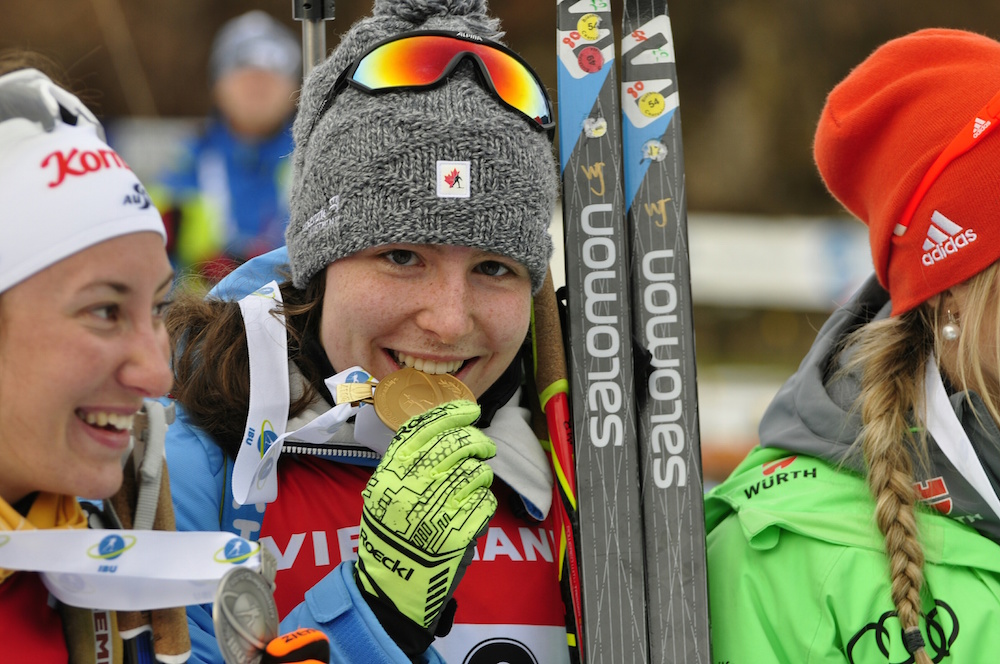
    Megan Bankes takes a bite out of her gold medal after winning the junior women’s 12.5 k individual at 2017 IBU Junior World Championships in Osrblie, Slovakia, and becoming the first Canadian woman to do so at Biathlon Youth/Junior Worlds. (Photo: Airat Aitniakov)

    But this season, Bankes both moved up an age group, becoming a junior, and started taking names. In early February, the 19-year-old Calgary native finished second in an IBU Junior Cup pursuit. She had started with bib 7 and was leading after the fourth shooting, only to get passed on the final ski loop.

    “I’ve never started that close to the front in a ‘real’ pursuit, so it was neat to be chasing down first place,” Bankes wrote in an email at the time. “It was definitely a little surreal on the third loop when I realized I left the range in first, after cleaning both prone bouts, and was leading the race!”

    A few weeks later, she was on to Junior World Championships, where she opened the week by winning the 12.5 k individual by an impressive 47.9 seconds.

    “When I crossed the finish line I was really excited, but I didn’t really think my result would hold up because there were a few girls who were skiing fast and had hit 15/15,” she wrote in an email after the victory. “But then when a bunch of them started missing [in their fourth stages], and I realized my position was going to hold, it was incredible.”

    That made her the first Canadian woman ever to win a Youth or Junior World gold.

    Bankes also saw senior-racing action this season, collecting three top 30’s on the IBU Cup and getting two weekends worth of World Cup starts; her top finish was 64th in the sprint in Oslo.

    Jess Cockney, Canadian World Cup Team

    Jess Cockney racing to 28th in the qualifier of the men’s 1.5 k freestyle sprint at World Cup Finals in Quebec City. He went on to place 10th on the day to tie his second-best World Cup result. (Photo: John Lazenby/Lazenbyphoto.com)

    In just his sixth World Cup start ever, Jess Cockney finished ninth in a sprint in Canmore. That was back in 2012.

    Since then, Cockney has had a smattering or more of World Cup starts every year, and he also became an Olympian in 2014. Last season, he was 10th in another World Cup sprint on Canadian turf, in Quebec City, as part of the Ski Tour Canada.

    This season, he doubled that tally, finishing 10th in both the sprint on the Olympic course in PyeongChang, South Korea, and the World Cup Finals sprint in Quebec.

    “Man, I have had a really hard go of it this year,” the 26-year-old Yellowknife native said after the Quebec sprint. “Nothing was working at the start of the year … So this is a big lift. I’m really happy with that. Skiing a semifinal is always awesome. Nice to have a two heat day again.”

    The two World Cup top 12’s this past winter should qualify him for his second Olympics next year.

    “There is Olympic criteria that says that two top 12’s makes the Olympics, but it’s up to the selection committee to see whether they think those are worthy top 12’s or not,” he told reporters in Quebec. “So it’s not in my hands, I just had a couple good days, so we’ll see what happens from there.”

    In the middle of the season, Cockney won the qualifier-only freestyle sprint that was a SuperTour race following U.S. nationals at Soldier Hollow, Utah. A week later, he won a NorAm sprint in Whistler.

    “Being on the start line is exactly the same as sitting down for a test,” Cockney said after his Soldier Hollow win. “You don’t really have to stress about it if you did all the preparation and you studied for it. Ski training is very similar to that.”

    Honourable Mention: Dahria Beatty, Alberta World Cup Academy/Canadian National U25 Team

    Dahria Beatty racing in the classic team sprint at 2017 World Championships in Lahti, Finland, where the Canadian women placed 13th. (Photo: John Lazenby/Lazenbyphoto.com)

    A perenial NorAm threat, Dahria Beatty became a World Cup regular this season, returning to North America ahead of U23 World Championships at Soldier Hollow in Utah. There, she tallied three consecutive individual top 20’s, her best results in her second U23 Worlds.

    But before that, Beatty, who turned 23 last month, scored World Cup points in the first freestyle sprint of the season in December in Davos, Switzerland. She placed 25th for her second-best individual World Cup result (after finishing 15th in the classic sprint the season before in Canmore).

    “It was my first skate heats in the World Cup, and my first World Cup heats in Europe so it’s a really good learning experience,” Beatty said after the Davos sprint.

    The weekend after Davos, Beatty scored her first distance World Cup points, placing 26th in the 10 k freestyle mass start in La Clusaz, France. She would go on to record her third World Cup top 30 of the season in Otepää, Estonia, finishing 29th in the freestyle sprint, and compete at her first senior World Championships in Lahti, Finland. There, she was part of the Canadian women’s relay that finished 10th for its third-best result at world champs.

    Also, just like Cockney, Beatty won the SuperTour freestyle-sprint qualifier in Soldier Hollow in January. She also won a NorAm skate sprint in Whistler and placed second to her teammate Emily Nishikawa in the classic sprint at Canadian Nationals last month in Canmore.

    Honourable Mention: Léo Grandbois, Biathlon Estrie/Biathlon Canada 2022 Squad

    Leo Grandbois racing to 14th in the youth men’s 7.5 k sprint in Osrblie, Slovakia, for his second-best result at his first IBU Youth World Championships after winning the 12.5 k individual two days earlier. (Photo: Jacqueline Akerman)

    Our pick for male Junior Skier of the Year, Léo Grandbois opened the International Biathlon Union (IBU) Youth World Championships with a win in the 12.5 k individual, finishing 1 minute and 14.9 seconds clear of anyone else. It was his first time at Youth Worlds and his second international-racing appearance since competing at the 2016 Youth Olympic Games in Lillehammer, Norway. There, his best result was 16th, but first at Youth Worlds and being the third Canadian to do so — that was a big deal.

    Grandbois, who turns 18 in July, was born in Munich, where he spent the first year of his life before being raised in Lennoxville, Quebec. In his IBU profile, he listed fishing, hunting and woodworking as his hobbies. Now he’s accustomed to winning medals.

    “I always go for the win when I race but I was aiming a top 10,” Grandbois wrote in an email after his 12.5 k win, where he shot a perfect 20-for-20. “Every thing was perfect for me today, I was focused on the range and tried to do like at training. I had some great legs too!”

    He ended the season with his first trip to Canadian Nationals, where he won two junior boys races: the 10 k freestyle and the 15 k freestyle mass start. In his second classic race ever, the 7.5 k classic, Grandbois finished third. He followed that up with a second-place finish in the 1.1 k classic sprint.

  • FasterSkier’s Para-Nordic Skiers of the Year: Oksana Masters and Brian McKeever

    FasterSkier’s Para-Nordic Skiers of the Year: Oksana Masters and Brian McKeever

    Canada’s Brian McKeever (Photo: Graham Longford) and American Oksana Masters (Photo: USOC) are FasterSkier’s Para-Nordic Skiers of the Year.

    With the 2016/2017 season officially in the rearview, FasterSkier is excited to unveil its annual award winners for this past winter. Votes stem from the FS staff, scattered across the U.S., Canada, and Europe, and while not scientific, they are intended to reflect a broader sense of the season in review. This set of honors goes to outstanding Para-Nordic skiers on the IPC World Cup circuit. 

    Previous categories: Junior Skiers of the Year | Collegiate Skiers of the Year | Canadian Continental Skiers of the Year | U.S. Continental Skiers of the Year | Nordic Combined Athlete of the Year | Biathletes of the Year

    ***

    Oksana Masters, U.S. Paralympics Nordic 

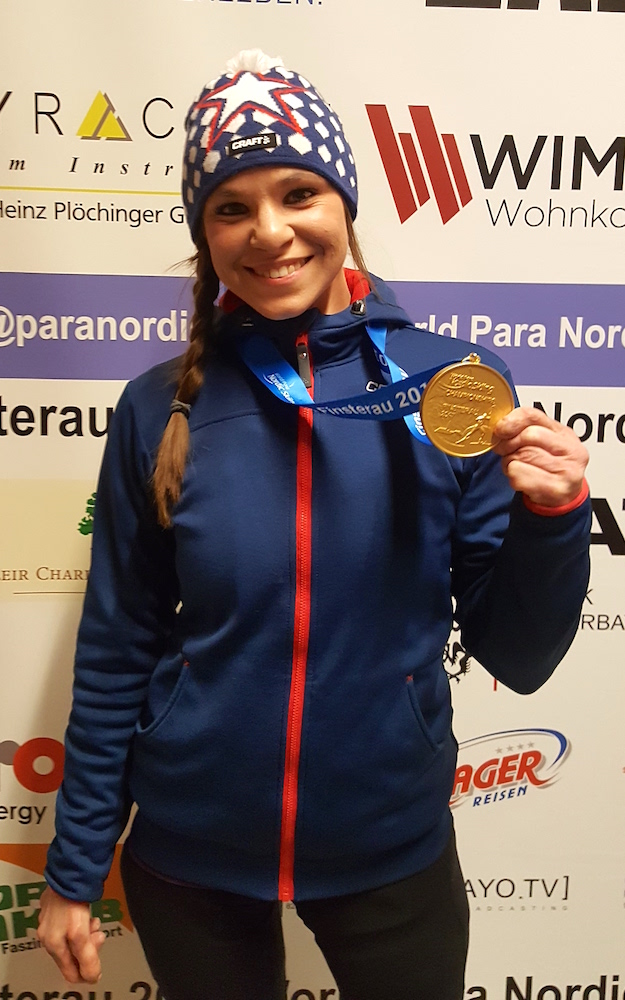
    Six medals in seven days. Four of them gold. Never before had a U.S. athlete taken home four gold medals from a World Para Nordic Skiing Championships, but U.S. Paralympics Nordic A-team member Oksana Masters changed all that.

    Oksana Masters (U.S. Paralympics Nordic) after winning her first IPC World Championships gold in the women’s cross-country sitting sprint on Sunday, Feb. 12, in Finsterau, Germany. (Photo: John Farra/US Paralympics Nordic)

    The 27-year-old sit skier racked up six World Championships medals in Finsterau, Germany, including her second-career biathlon win in the women’s 6 k sprint (her first came earlier this season in the first biathlon race of the year).

    “I am completely shocked,” Masters told media outlets after the sprint. “I entered this race with no expectations. I went from not being sure if I was going to be able to race the last two days to winning my first gold medal in biathlon. I’m so excited! I cannot wait to let this all soak in.”

    But Masters didn’t just dominate the world champs scene. After ending last season undefeated in every International Paralympic Committee (IPC) World Cup cross-country race she entered, she almost did it again, winning all but one cross-country race this winter (she placed second in the last cross-country race of the season).

    “I feel like I had a pretty great season, especially coming off training for a complete other sport that uses a complete opposite motion not too long ago,” Masters said, according to a U.S. Paralympics press release, referring to her handcycling training for the 2016 Summer Olympics.

    “I’m really happy with my season and my training,” she added. “I feel extremely hopeful to have to good races in PyeongChang next year.”

    Brian McKeever, Canadian Para-Nordic Skiing

    At 37, Canada’s Brian McKeever is a team veteran and a world leader in para-nordic skiing. In 2010, he became the first athlete in the world to be named to both Olympic and Paralympic teams. In his three Winter Paralympics, he’s accumulated 13 medals, 10 of them gold.

    And this year, after turning his focus to the overseas Ski Classics marathon series, he earned his 18th and 19th IPC World Championships gold, winning both the men’s 10 k and 20 k visually impaired races. Prior to that, he won the season-opening IPC World Cup sprint in Vuokatti, Finland. By the end of the season, he also qualified for and competed in the International Ski Federation (FIS) World Cup Finals in Quebec City, Quebec.

    Brian McKeever jumping in front of Norway's Petter Kaarby just before the final climb. (Photo: Graham Longford)
    Brian McKeever passing Norway’s Petter Kaarby just before the final climb of the 2017 Marciolonga in Italy. He finished 57th overall. (Photo: Graham Longford)

    “I think putting the focus on Ski Classics this year was really interesting. From struggling to hit the top 40 to suddenly to be able to ski with the leaders this year, that was good,” McKeever said after his final race at World Cup Finals.

    “I am learning as well in that, and I see the opportunities there with the older guys that are still at the top and that is highly motivating for a guy that is maybe beyond his peak, at least as far as age goes, but I am still having fun and still learning,” he added. “So that is motivating for me, to continually learn something when I am out racing.”  

    Honorable Mention: Mark Arendz, Canadian Para-Nordic Skiing

    Canada’s Mark Arendz, now 27, also opened his World Championships week with a win for his second world title and first podium at a top-level international race (in a non-Paralympic year) in three years after winning the men’s 12.5 k standing biathlon race

    He earned four more world champs medals, including a biathlon sprint gold, a biathlon individual silver, a cross-country bronze, and a relay bronze.

     “It has been an incredible season for me, but most noticeably I have brought my shooting back,” Arendz wrote in an email to FasterSkier. “It is now a strength and no longer holding me back. The other huge take away is I now have the confidence in my ski speed to be competitive in any Cross Country race.”

    “The highlights from the season for me were World Championships and the 10km Classic in Korea,” Arendz continued. “Worlds were fantastic for me. Five medals from six races; the confidence was there and I was in the best shape of the year. I carried that shape into the test event in Korea. For two out of three laps I was having my best classic race ever. After a little stumble I couldn’t regain my focus, but until then I had the confidence that I could win a Classic race. I will grasp that belief into the training season.”

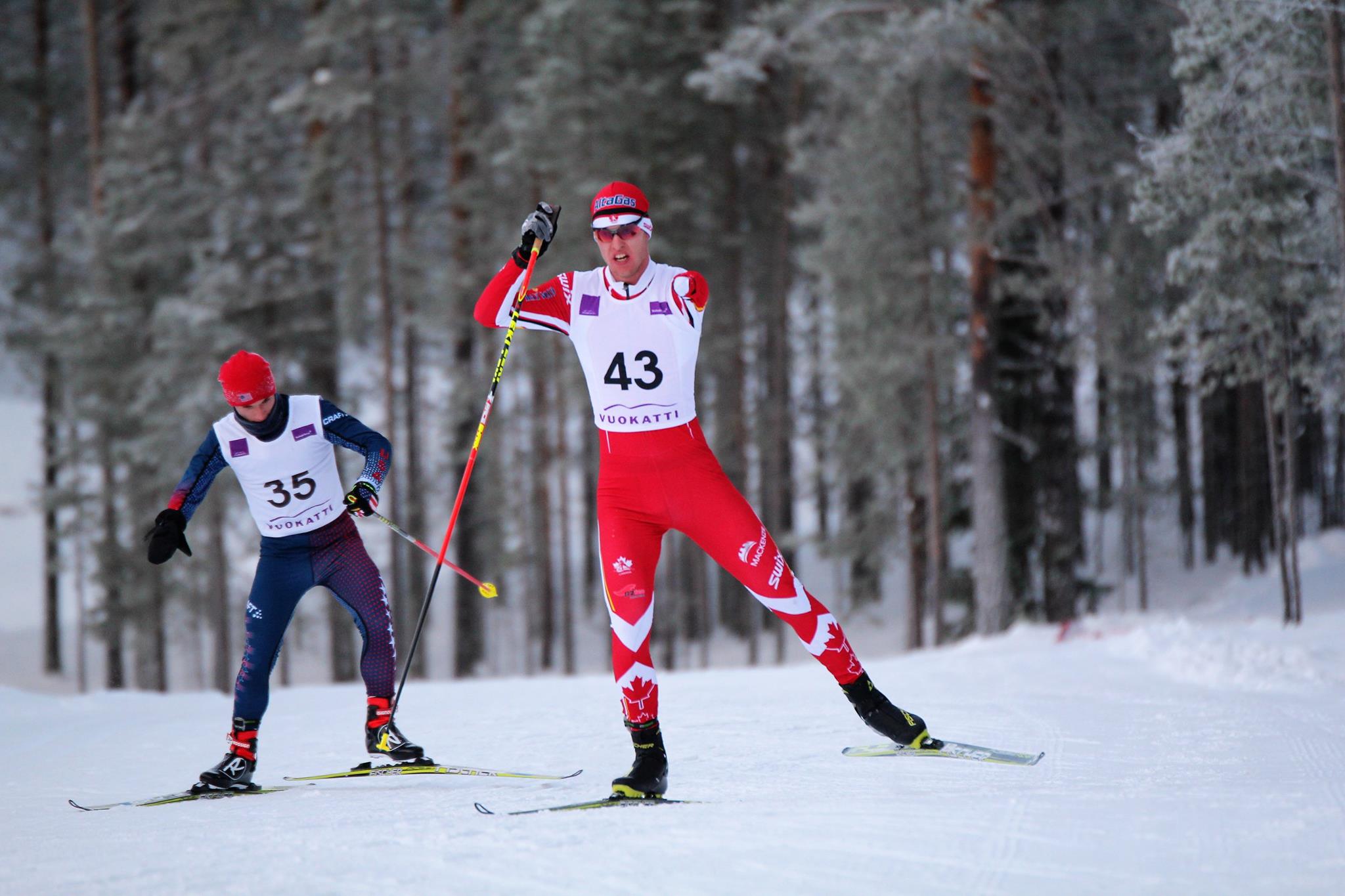
    Mark Arendz (43) of the Canadian Para-Nordic Ski Team racing to silver at the IPC World Cup on Dec. 12, in Vuokatti, Finland. (Photo: Canadian Para-Nordic Skiing/Facebook)
  • FasterSkier’s Collegiate Skiers of the Year: Martin Bergström and Petra Hynčicova

    FasterSkier’s Collegiate Skiers of the Year: Martin Bergström and Petra Hynčicova

    Martin Bergström and Petra Hyncicova are FasterSkier’s 2017 Collegiate of the Year. (Photos: FlyingPointRoad.com)

    With the 2016/2017 season officially in the rearview, FasterSkier is excited to unveil its annual award winners for this past winter. Votes stem from the FS staff, scattered across the U.S. and Canada, and while not scientific, they are intended to reflect a broader sense of the season in review. This set of honors goes to outstanding male and female skiers on the U.S. NCAA collegiate circuit.

    ***

    When you win both races at NCAA Championships, that makes you an easy pick for Collegiate Skier of the Year. Both Martin Bergström and Petra Hyncicova swept the two men’s and women’s nordic races, respectively, at this year’s NCAA Skiing Championships in Jackson, N.H., with Bergström winning the men’s 10-kilometer classic individual start by almost 27 seconds and Hyncicova topping the women’s 5 k classic by almost 19 seconds. It was the first NCAA title for both skiers, with Bergström new to the NCAA scene as a University of Utah freshman from Sweden, and Hyncicova a University of Colorado-Boulder junior from the Czech Republic.

    Martin Bergström, University of Utah

    The finishing stretch of the NCAA 20 k, with Utah’s Martin Bergström (c) skiing just ahead of CU’s Mads Ek Strøm (r) for first. (Photo: FlyingPointRoad.com)

    Two days later, Bergström, 25, won the men’s 20 k freestyle mass start on one of the coldest days of the year in the northeast. Rounding Jackson Ski Touring Center’s 5 k loop four times, he navigated the icy conditions and strong headwind in the stadium with the best of them, outlasting last year’s NCAA Champion Mads Strøm for the win by 0.5 seconds.

    “I just went for it,” Bergström told FasterSkier afterward. “… I was just happy too see that it was a high-tempo, pack finish, and with the wind and everything, I think it was smart to go a little before the final stretch.”

    In doing so, Bergström led the University of Utah to its first NCAA Skiing team title (nordic & alpine) since 2003.

    It was his first win and sixth podium of the season after competing on the Rocky Mountain Intercollegiate Ski Association (RMISA) circuit since January. Two years ago at U23 World Championships, the Swede finished seventh in the classic sprint in Almaty, Kazakhstan. He’s started four World Cups, posting a career-best 23rd in a 2014 freestyle sprint in Nove Mesto, Czech Republic. And two years ago, the former Swedish National Development Team member stopped skiing. He returned to it as a Utah Ute this season.

    “Two years ago, I quit skiing back in Sweden, and I took one year off just studying,” Bergström explained. “A friend of mine was on the [Utah] team and he said there were spots open and that I should try a different environment of skiing and studying. So I talked to the coaches and eventually went for this trip and have had so much fun and made many friends. I’m just so happy I came here.”

    After starting a civil engineering program in Sweden, he explained he has two years of eligibility left as a U.S. collegiate skier, but was unsure of his plans as of mid-March.

    “I took a chance and came here, but I haven’t decided if I’m going to stay or not, but we’ll see,” he said.

    Petra Hynčicova, University of Colorado-Boulder

    Petra Hyncicova (University of Colorado-Boulder), 2017 NCAA double champion. (Photo: FlyingPointRoad.com)

    Then there was Hynčicova, a 22-year-old from the Czech Republic, who won the 2017 NCAA Championships women’s 15 k freestyle mass start by 21 seconds over the University of Vermont’s Alayna Sonnesyn after breaking away on the last lap.

    “I’m so glad I went to the U.S. Every year I’m more and more glad,” Hynčicova said after. “This year was actually supposed to be my last year. I have one more year of NCAA eligibility so I applied for a master’s program [at CU] so I can be here next year also and I’m so excited.”

    Over the course of the 2017 RMISA season, Hynčicova notched five podiums, two of which were wins. She picked up two more victories — her first NCAA titles — to end her season in Jackson. And at this year’s U23 World Championships in Soldier Hollow, Utah, she finished 17th in the 10 k freestyle for her best result at her second U23’s. Three years ago at 2014 Junior World Championships, Hynčicova placed ninth in a freestyle sprint.

    Notably, in 28 career races at CU, she has finished fifth or better in 20 of them and won five races. She is a six-time All-American and is the 15th CU Buff to sweep both women’s nordic races at NCAA Championships.

    “When the season started, I figured that I was in really good shape this year, so I was hoping that I could be on the podium again at NCAA’s and maybe hoping that I could win the skate race,” Hynčicova said. “But after winning the classic race and after the injury and everything I can’t believe it, it’s insane for me.”

    Since U23 Worlds, she had been nursing a painful bursa between her Achilles tendon and heel bone.

    “It’s better, but it hurts in every race so I’m glad I’m done because the season’s over,” Hynčicova said.

    Honorable Mention: Alayna Sonnesyn, University of Vermont

    Alayna Sonnesyn on the podium at 2017 NCAA Skiing Championships. (Photo: flyingpointroad.com)

    The only woman to share the podium with Hynčicova both days: Alayna Sonnesyn of UVM. Sonnesyn placed third in the 5 k classic and second in the 15 k skate, the best NCAA finishes of her career by far.

    “I am so happy with the way things went,” Sonnesyn said of the Championships. “I definitely had some high goals for this week. I haven’t had the best luck with my NCAA experiences in the past and so I knew I could be competitive this year, but I didn’t know how competitive I could be.”

    Sonnesyn, who is originally from Minnesota, was also the only American on the podium either day.

    And like Hynčicova, she had taken a break mid-season from college racing to represent her country at U23 Championships earlier in the season, finishing 33rd in the 10 k freestyle. Before that, at U.S. National Championships, she was the top collegiate athlete in the women’s 20 k classic, finishing 14th.

    “The best advice anyone ever gave me about racing was to have fun,” Sonnesyn wrote in her Under 23 Questions profile earlier this season.

    Honorable Mention: Fabián Štoček, Dartmouth College

    CU’s Petter Reistad (r) and Dartmouth’s Fabian Stocek racing toward the finish. (Photo: Karen Brown)

    You can see Fabián Štoček in the photo of Bergström enjoying his 20 k win. The Dartmouth College senior is right there, on the right, in it ’til the end but 1.3 seconds off the podium.

    Štoček landed fifth in that race, the top guy from the East, after finishing 12th in the 10 k classic. But his finishes at NCAA Championships didn’t tell the whole story of the season: Štoček thoroughly dominated the Eastern Intercollegiate Ski Association circuit, winning seven races and landing as the overall leader in both the classic and freestyle disciplines. His performance in the 20 k also helped Dartmouth to fourth place at NCAA’s, their best finish in five years.

  • FasterSkier’s Juniors of the Year: Katharine Ogden and Léo Grandbois

    FasterSkier’s Juniors of the Year: Katharine Ogden and Léo Grandbois

    Katharine Ogden (Photo: FlyingPointRoad.com) and Léo Grandbois (Photo: IBU) are FasterSkier’s 2017 Juniors of the Year.

    With the 2016/2017 season officially in the rearview, FasterSkier is excited to unveil its annual award winners for this past winter. Votes stem from the FS staff, scattered across the U.S., Canada, and Europe, and while not scientific, they are intended to reflect a broader sense of the season in review. This set of honors goes to outstanding North American junior athletes across all nordic disciplines. 

    ***

    Katharine Ogden, Stratton Mountain School/U.S. Ski Team

    Yes, Stratton’s Katharine Ogden has earned our “Junior of the Year” honors before. But this season, the 19-year-old Vermont skier rose to even greater heights. Early in the season, she snagged second-place honors in the senior fields at a SuperTour (the 10 k classic in West Yellowstone), a NorAm (the 10 k freestyle at Sovereign Lake), and U.S. National Championships (the 20 k classic mass start).

    American Katharine Ogden (SMS/USST) and her dad John celebrate her bronze medal in the women’s 10 k skiathlon on Friday at 2017 Junior World Championships at Soldier Hollow in Midway, Utah. (Photo: U.S. Ski Team/Tom Kelly)

    And that was before World Junior Championships even started. At Soldier Hollow, Ogden started things off with a fifth-place finish in the 5 k freestyle, tying the second-best World Juniors result ever by an American.

    Two days later, she raced to a bronze medal in the 10 k skiathlon, becoming the first American ever to stand on the podium in an individual World Junior Championships race.

    And then two days after that, Ogden anchored teammates Hailey Swirlbul, Julia Kern, and Hannah Halvorsen to relay bronze, the first medal ever won by a U.S. women’s relay team in the history of the event.

    “This week at worlds has been amazing,” Ogden, wrote in an email to FasterSkier at the time. “Wonderful skiing and good weather and unprecedented results for the whole team.”

    And she told the U.S. Ski Team for a press release: “It was really incredible to stand up at the medals ceremony the other night [after the skiathlon]. The only thing I can think of that would be better is standing up there with my friends.”

    Then she did.

    Léo Grandbois, Biathlon Estrie/Biathlon Canada 2022 Squad

    17-year-old Léo Grandbois of Lennoxville, Québec, just made one international racing trip this season. But on the very first race of the trip, he made a splash.

    The youth men’s 12.5 k individual podium after the first race of 2017 IBU Youth/Junior World Championships in Osrblie, Slovakia, with Canada’s Léo Grandbois in first (c), Russia’s Said Karimulla Khalili (l) in second, and Germany’s Danilo Riethmüller (r) in third. (Photo: Airat Aitniakov)

    Grandbois had traveled to Brezno-Osrblie, Slovakia, to represent Canada in the youth division at the International Biathlon Union’s World Youth and Junior Championships. The previous season he had competed at the Youth Olympic Games, with a top finish of 22nd, but this was his first time at the bigger event.

    In the 12.5 k individual, Grandbois hit every target – the only competitor in the field to go 20-for-20 – and picked up a gold medal, by an impressive minute and 14 seconds over Said Khalili of Russia.

    “I am probably the most happy man on earth today!” he wrote in an email to FasterSkier after his win.

    Grandbois went on to be one of Canada’s most consistent performers at the Championships, finishing 14th in the sprint and 22nd in the pursuit. The sprint result came despite three penalties.

    “I think it just says that I am quite strong even [during] a bad race,” Grandbois said at the time.

    “I’m missing 15 days of school to be here, and my teachers/professors are probably thinking, ‘This guy is not doing the right thing,’ but I know that I am doing the right thing,” he wrote in his 20-for-20 interview.

    And even then, he wasn’t done yet – Grandbois had proven his speed in that sprint, where he had the tenth-fastest course time in the field. Come the end of the season, he went to Cross Country Canada Ski Nationals for the first time and picked up junior national titles in the 10 k freestyle and the 15 k mass start.

    Honorable Mention: Julia Kern, SMS Elite Team/Dartmouth College/U.S. Ski Team

    Julia Kern, another Stratton skier with a U.S. Ski Team “D” team affiliation, joined Ogden on the relay podium at Soldier Hollow – and Kern’s efforts brought the team into sixth place at the halfway point of the race.

    Julia Kern (U.S. Ski Team D-team/SMS) racing to 29th in the women’s 1.5 k freestyle sprint qualifier on Friday at World Cup Finals in Quebec City. In her first World Cup race, Kern ended up 24th on the day. (Photo: John Lazenby/Lazenbyphoto.com)

    “There is no one I would rather be on the podium with than my best friends and teammates,” Kern, 19, wrote at the time. “Not only did I share the experience with my best friends, but on home soil with all my family and friends there to celebrate with us!”

    Six weeks later, Kern got the first World Cup start of her career. It was a skate sprint in Québec City as part of World Cup Finals – and not only did she qualify for the heats, but she finished 24th and scored World Cup points in her first try.

    Coming off a clean sweep of the Junior Nationals races in Lake Placid, New York, Kern was confident, and at the same time unsure where she would stack up against the best skiers in the world.

    “At the start line it almost felt like a dream because there I was at the start line next to some of the best skiers in the world, skiers who I have looked up to and watched race after race on my computer screen to learn and gain inspiration from,” she wrote. “This is a huge confidence booster for me because it is easy to make a goal and have my teammates and coaches who believe in me tell me results like this are possible. But it is another thing to actually live up to it and believe it yourself, too.”

    Honorable Mention: Gareth Williams, Telemark Racers/Canadian Junior National Ski Team

    Gareth Williams (Telemark Race Team) on his way to a personal-best 11th in the men’s 20 k skiathlon at 2017 Junior World Championships at Soldier Hollow in Midway, Utah. (Photo: FlyingPointRoad.com)

    Where hasn’t Gareth Williams raced this season? The Kelowna cross-country skier started out in Canada, where he snagged a top-10 in the senior NorAm field at Sovereign Lake. At U.S. National Championships, he took third in the junior 10 k classic mass start. And then back in the U.S. for World Junior Championships, he turned in some of Canada’s best results, placing 11th in the 20 k skiathlon and 20th in the 10 k freestyle.

    “It is exciting to see that I have the speed to ski with the best juniors in the world,” Williams wrote after the skiathlon. “Being so close to to the top 10 is my only disappointment.”

    He headed for more junior racing after that, touring Switzerland and Germany and picking up finishes of second, sixth, and sixth in OPA Cup Juniors action.

    Finally, Williams returned to Canada and started World Cup Finals, where he finished 71st overall.

    “You’ve got a lot of fast guys, and you’re kind of going from being one of the faster guys to obviously to one of the slowest guys around,” Williams wrote of the experience. “That’s a cool feeling, actually.”


  • FasterSkier’s Biathlon Performances of 2015: Nathan Smith and Rosanna Crawford

    FasterSkier’s Biathlon Performances of 2015: Nathan Smith and Rosanna Crawford

    Nathan Smith and Rosanna Crawford delivered the FasterSkier biathlon performances of the 2015.
    Nathan Smith and Rosanna Crawford delivered the FasterSkier biathlon performances of 2015.

    Nathan Smith, 1st place, Khanty-Mansiysk World Cup pursuit

    Canadian biathlete Nathan Smith saved his best performance for last, earning the first win of his career in the penultimate race of the World Cup season. After placing fifth in the sprint in Khanty-Mansiysk, Russia, Smith executed a flawless race in the 12.5-kilomter pursuit to pick up a 24-second victory. Not only was it the first win for him, but the first for both Canada and North America as a whole since December of 2012.

    Nathan Smith of Canada celebrates as he crosses the finish line all alone after the 12.5 k pursuit in Khanty-Mansiysk, Russia, for his first career World Cup victory. (Photo: Biathlon Canada/NordicFocus.com)
    Nathan Smith of Canada celebrates as he crosses the finish line all alone after the 12.5 k pursuit in Khanty-Mansiysk, Russia, for his first career World Cup victory. (Photo: Biathlon Canada/NordicFocus.com)

    Smith skied the fourth loop of the race alone in the lead, then came into the range and missed a shot. After his penalty loop, he found himself still in the lead.

    The performance was perhaps all the more impressive since Canada was operating with a skeleton crew for the Siberia season finale: just head coach Matthias Ahrens, head wax tech Tom Zidek, and three athletes were there. That meant that out on course, Smith was all alone.

    “I wasn’t totally relaxed,” Smith said after the race. “We only have one support guy here, Tom, and so I didn’t get that many splits. I just got one leaving the stadium when Tom said those guys were still in the loop. So I knew I had maybe 25 seconds. I kept going hard until the last climb and then I knew I was safe.”

    And once he reached the line?

    “I could enjoy the final finish stretch and have that moment,” he said.

    Rosanna Crawford, 4th place, Pokljuka World Cup sprint

    Canada’s Rosanna Crawford had her moment just before Christmas. Coming off of a fifth-place performance the previous week, she set a new best of fourth place in the 7.5 k sprint in Pokljuka, Slovenia. Coming down with a cold, Crawford hadn’t even been sure she would start – but she did, and doubled down on a course that suited her perfectly.

    Canada's Rosanna Crawford clocked the tenth-fastest course time on Dec. 18 to finish fourth in the 7.5 k sprint in Pokljuka, Slovenia. (Photo: Christian Manzoni/NordicFocus.com)
    Canada’s Rosanna Crawford clocked the tenth-fastest course time on Dec. 18 to finish fourth in the 7.5 k sprint in Pokljuka, Slovenia. (Photo: Christian Manzoni/NordicFocus.com)

    “This course also played really well to my strengths,” she told FasterSkier at the time. “There are 3 dipsy dodalies (as Matthias calls them!) right before the range/finish, I really made sure to push hard over the hills and to be fast on the downhills. Since it’s a downhill finish here you really need to start making your move on that 1st of 3 hills.”

    It was the closest a North American woman came to the podium all year and was fueled by a furious last lap by Crawford. That made up for one penalty on the range, and propelled her past a few clean-shooting opponents.

    “I think a big part of this season has been not having expectations going into my races,” Crawford said. “I think being a bit sick yesterday and not feeling great in my warm up definitely let me relax a bit, not as much pressure since I wasn’t feeling.”

  • FasterSkier’s Nordic Combined Performance of 2015: Taylor Fletcher

    FasterSkier’s Nordic Combined Performance of 2015: Taylor Fletcher

    Taylor Fletcher delivered the 2015 FasterSkier nordic combined performance of the year. (photo: Flyingpointroad)
    Taylor Fletcher delivered the 2015 FasterSkier nordic combined performance of the year. (photo: Flyingpointroad)

    Taylor Fletcher

    The youngest of the two Fletcher brothers is doubling up with his second FS Award of 2015, this time in the performance category for his showing in Sapporo, Japan.

    There in late January, Taylor, 24, rose from 28th on the large hill to third in the 10-kilometer Gundersen start with the fastest cross-country time for his second-career World Cup podium.

    He worked with older brother Bryan, who jumped to 27th and started two seconds ahead of him, as the two tried to pick off the places with a “controlled but quick pace,” according to Taylor.

    While Bryan was battling sinus/head cold symptoms in Japan and planned to settle into the lead group once they caught it, Taylor wasn’t ready to let up.

    “Taylor went right to the front, as soon as he did that the group shattered and guys were coming off the back,” Bryan recalled.

    Taylor continued to push the pace, dwindling the pack of 15 into two remaining groups of three and five. Ultimately, the race came down to an all-out sprint for the final 1 1/2 kilometers.

    “It was a matter of putting yourself in a position at the end,” Taylor wrote in an email. “I decided it was better to ‘Go Ugly, Early’ and not wait for the field sprint. So just into the first hill I made almost a cycling attack and tried to get away from the rest of the skiers.”

    Two men passed him in the stadium before the finish: German winner Eric Frenzel, who topped him by 3.5 seconds and Japan’s Akito Watabe, who was 1.7 seconds ahead of him in second. The bronze medal marked Taylor’s second individual podium since 2013 in Seefeld, Austria.

    “To get another podium feels incredible as I knew it was possible,” Taylor wrote. “My last podium was not a fluke. I have been struggling with my jumping for a year and half now but in the last couple weeks it has been getting better.”

    Honorable mention

    Bryan Fletcher

    While Bryan placed eighth that day in Sapporo and skied the second-fastest 10 k behind his brother, that wasn’t the single performance that earned him honorable mention.

    At 2015 World Championships in Falun, Sweden, the 28-year-old Bryan notched his season-best individual result (and career best in four World Championships) of fifth in the large-hill/10 k. He skied up from 13th to do so.

    “It was like, ‘Well since these are the Championships, and it’s not really worth being anything but on the podium, I’m just going to go for it as hard as possible and lay it all out there,’ ” he recalled.

    He started 44 seconds behind Austria’s Bernhard Gruber, who led the competition after the jump, and finished 23.4 seconds behind Gruber, who also won outright. Bryan was 8.5 seconds off the podium and 8.3 seconds out of fourth.

    “To be on the podium would have been a dream come true, but to be in the fight was more what I was really looking for,” Bryan said after his career-best World Championships individual result.

    “I really just want to ski a good race, a good race to the best of my ability and the best of my performance,” he added. “I was happy that I was able to do that today.”

  • Northug, Bjørgen are FS International Skiers of the Year

    Northug, Bjørgen are FS International Skiers of the Year

    Marit Bjørgen Petter Northug Skiers of the Year

    Female International Skier of the Year: Marit Bjørgen (NOR)

    By many measures, Poland’s Justyna Kowalczyk could be considered the best female skier in the world in 2012-2013. She amassed over 500 more points than Marit Bjørgen over the course of the season-long quest for the overall World Cup title, won the Tour de Ski for the fourth year running and didn’t even have to start the very last race of the year in order to receive her crystal globe.

    Bjørgen en route to winning the classic sprint.
    Bjørgen en route to winning the classic sprint.

    Bjørgen, on the other hand, showed signs of fallibility this year. A heart arrhythmia scare early on took her out of the Tour de Ski, setting her far back in the overall standings before the season was half over, and there were a few other races she didn’t start in the lead up to World Championships. It was an unusual show of imperfection for a veteran who first stood atop a World Championships podium at the age of 22 and hasn’t stopped much since. The usually smiling and confident Norwegian star later admitted to breaking down minutes before scratching from a race in Davos. Prior to late February it was reasonable to predict that 2013 would just not be Bjørgen’s year.

    She then proceeded to stomp all over everyone in Val di Fiemme, only missed gold to teammate Therese Johaug in the 10 k freestyle, and ultimately tallied her twelfth career World Championships victory by the time she left Italy. Bjørgen didn’t disappear afterwards, either, winning the World Cup Finals mini-tour by nearly a minute to finish off her season.

    In our minds, Bjørgen’s comeback from health trouble and ability to show up at the biggest event of the year in top form makes her the undisputed Skier of the Year. When it came time to fight for the real medals Kowalczyk was no match for her Norwegian rival. It may seem fairly predictable to pick the biggest name in women’s skiing as our international award-winner, but in this particular season the title was hard-won.


    Male International Skier of the Year: Petter Northug, Jr. (NOR)

    The men’s contest for International Skier of the Year was even less clear-cut than the women’s. Norway’s Petter Northug, Jr., ultimately won the overall World Cup title, reclaiming it for first time since he earned his inaugural title in 2010, but Northug was far from dominant. Despite announcing it was his mission to claim his first Tour de Ski title in 2013, he faltered in the second half to wind up fourth in the final standings. Russian powerhouse Alexander Legkov, on the other had, put on an impressive show to propel himself into first in the final climb, defeating defending champion Dario Cologna (SUI) and holding off Maxim Vylegzhanin (RUS) and Northug in the final stage of the most grueling event of the year.

    Northug during the men's 4x10 k relay at World Championships.
    Northug during the men’s 4×10 k relay at World Championships.

    Nor was Northug dominant at World Championships. He put together two impressive victories as Norway’s anchor leg in the 4×10 k relay and the individual 15 k freestyle, but these performances only tied him with Nikita Kriukov (RUS) as the most prolific gold-medalist at the event (Kriukov won both the individual sprint and the team sprint with Alexei Petukhov). What makes Northug’s showing in Val di Fiemme more slightly more noteworthy, however, is that he earned his gold medals in two completely different ways. In the 15 k, it took everything he had to overtake Johan Olsson (SWE) and finish with an 11-second win — he literally fell across the line. And in the relay, Northug delivered one of those entertaining sprint finishes that people love to hate him for, reminding everyone that when he’s on, he does what he pleases. Haters gonna hate.

    The performances that truly put Northug ahead of the field as the best skier in the world this year came in the final few months of the season. The battle between Legkov, Cologna and Northug that first heated up in the Tour de Ski repeated itself at World Cup Finals, where each of them stood a reasonable chance at claiming the overall crystal globe. In March, Northug found whatever he had been missing in January to clinch the mini-tour victory and the overall title in an exciting finale. And for that, he his our International Skier of the Year in 2013.


  • In Historic Season, Whitcomb is FasterSkier’s Coach of the Year

    In Historic Season, Whitcomb is FasterSkier’s Coach of the Year

    Matt Whitcomb, U.S. Ski Team women's coach, after the team sprint ceremony at World Championships in which Kikkan Randall and Jessie Diggins won gold.
    Matt Whitcomb, the U.S. Ski Team women’s coach, after the team sprint ceremony at World Championships in which Kikkan Randall and Jessie Diggins won gold.


    Matt Whitcomb, Women’s Coach, U.S. Ski Team

    Results are by no means the full measure of a coach, but they are the simplest way for one to stand out above the rest. And in 2013, Matt Whitcomb was that outlier. The group he leads, the women of the U.S. Ski Team, just tallied its best season ever with few interruptions: a podium in a relay on opening weekend, a team sprint win in front of a close-to home crowd in December, World Championships gold in the same event in February and a World Cup sprint champion for the second year running. At the end of the season each of the six women on his team had cracked the top-10 in a World Cup. The U.S. women had the fifth-best sub-score in the Nation’s Cup rankings and they were only a few more top-15s away from landing in the top three, finishing 61 points behind Sweden and 69 points behind Russia.

    Whitcomb giving instruction during a speed workout at World Championships.
    Whitcomb giving instruction during a speed workout at World Championships.

    Those kinds of results have been in the works for a long time — World Champions are not made overnight. Whitcomb became head coach of this group two years ago after joining the national team coaching staff in the spring of 2006. At the time, Kikkan Randall had just finished the year 59th on the overall World Cup, the highest for an American woman, and cracked the top-30 only twice. Now the USST often faces the problem of which athletes to start in a race, because so many of them are capable of being in the points or higher.

    Whitcomb would be the first to point out that progress of the American women, as a whole, cannot be attributed to any single coach or team over the last few years. He would point to the development work of clubs and elite programs throughout the country, and the USST’s collaboration with them, as a huge factor in his success. Even within the national team staff, responsibilities are more often shared between Whitcomb, head coach Chris Grover and men’s coach Jason Cork than they are discretely divided. On race day, coaches and ski technicians alike line the course with spare poles, feeds and radios.

    But that collaborative spirit comes from somewhere, and Whitcomb has undoubtedly played an enormous role in fostering the women’s team chemistry that has, in turn, fueled them to so much of their success. It’s not every national squad that can have six choices for its World Championships relay roster, make the difficult call of which four to field, and still have the two women on the sidelines show up for the race decked out in red, white and blue to scream for their teammates at the top of their lungs. If Whitcomb keeps leading the American women on their current trajectory, the world better watch out in 2014.


    Honorable Mention:

    Erik Flora, Head Coach, Alaska Pacific University Nordic Ski Club

    Erik Flora conferring with his athletes at World Championships this February.
    Erik Flora (r) conferring with his athletes at World Championships this February.

    If Whitcomb is charting new territory for the U.S. at the international level, Erik Flora is doing the same domestically. That’s not to say that Flora isn’t also doing great things on the World Cup; his role in making Randall into the best sprinter in the world has been well documented, and this year he sent four athletes to World Championships, more than any other single program in the U.S.

    But Flora’s success at home is equally staggering. Year in and year out, APU sweeps the board when it comes to season-long success on the SuperTour. Three of Flora’s athletes won national titles for the first time in their careers this January. In the final NNF Cup standings this March, which like the Nation’s Cup can be taken as a broad measure of a year’s worth of results, APU stood at the top with roughly double the points of the next-closest team.

    Beyond results, APU acts like a team that produces those kinds of numbers. Or maybe their success is in part due to their professionalism. Either way, rarely do you see an APU athlete preview a course or warm up by him or herself. They have the numbers to break into groups to practice drafting for a sprint and look intimidating doing it, all wearing the exact same blue and black. The APU machine is a well-oiled one, and Flora’s work in directing it is worthy of recognition.

  • Randall Continues Skier of the Year Run, Newell Tops for Men

    Randall Continues Skier of the Year Run, Newell Tops for Men

    Kikkan Randall and Andy Newell — Cross-Country Skiers of the Year
    Kikkan Randall and Andy Newell — Cross-Country Skiers of the Year

    Female Cross-Country Skier of the Year: Kikkan Randall (USA/APUNSC)

    At this point it might be simplest to proactively award Kikkan Randall the FasterSkier Women’s Skier of the Year Award for the duration of her career.

    With yet another historic season, Randall easily remains the only winner in the five-year run of the award. Every November one has to ask the same question — can Randall continue to get better? And every year she responds with an emphatic yes.

    Despite an off-season marred by an injury that had her in a walking cast for a significant period of time, Randall started the season with a bang, raising her distance racing to new heights.

    She placed on the podium in the first race — a 10k freestyle and helped the U.S. women to their first relay World Cup top-3 the following day.

    Randall and Diggins celebrate Gold!
    Randall and Diggins celebrate Gold!

    It would be easier to just link to Randall’s FIS profile at this point, as she continued to churn out top results week in and week out.

    She was 5th in the Ruka Triple mini-tour, won five individual races, paired with Jessie Diggins for an inspiring team sprint win in Quebec, and garnered a total of 11 podium results.

    All of this earned her an even more impressive podium — third in the overall World Cup standings behind only Justyna Kowalczyk (POL) and Therese Johaug (NOR).

    Add in her defense of the Sprint Cup and you have yet another groundbreaking season.

    Such a résumé would be worthy of the XC SOTY without any further additions, but the highlight of Randall’s 2013 campaign has yet to be mentioned.

    On February 24th, in Val di Fiemme, Italy, Randall again paired with Diggins for a team sprint event. The duo overcame a broken pole to win the race going away — the first World Championship gold medal in the history of U.S. cross-country skiing.

    In addition to her on-the-track highlights, Randall played a big role in the overall emergence of the U.S. women’s team. No longer a one-woman show, the likes of Diggins, Liz Stephen, Holly Brooks, Sadie Bjornsen and Ida Sargent have joined the world’s elite.

    Randall has led by example, proving to up-and-comers that it is possible to be both American and one of the best. But she has taken her role much further, providing leadership, and setting the tone for the entire team. Her impact on the sport will be felt for years following her eventual retirement.

    Male Cross-Country Skier of the Year: Andy Newell (USA/SMS T2)

    The selection for the men’s version of the Cross-Country Skier of the Year award was not as clear-cut as the women’s, with several candidates posting similarly strong seasons.

    Newell (USA) leads while Martin Jaeger (SUI) gets a replacement pole.
    Newell (USA) leads while Martin Jaeger (SUI) gets a replacement pole in the Quebec city sprint

    But for the first time in the history of the award, Devon Kershaw (CAN) was not one of them. Like Randall, Kershaw had won the honor every time it was awarded, though he shared it with teammate Alex Harvey in 2011 and Ivan Babikov and Andy Newell in 2010.

    With Kershaw out of the picture after a challenging up-and-down season that was more down than up, the door opened for Newell to win his second title.

    Newell has been a paragon of consistency over the past years and this season was no exception — he was the only man to qualify for the heats in every World Cup sprint race, a total of 11 events.

    It has become expected to see Newell in the heats — so commonplace in fact that the magnitude of that accomplishment can be overlooked.

    Cracking the points is impressive, but Newell also advanced to four sprint finals, with a season best result of 4th in Davos, Switzerland.

    All this sprinting success added up to a 5th place in the Sprint Cup, a marked improvement over his 16th last season, and second only to his 4th in 2010. The ranking gives him five career top 10’s in the Sprint Cup over the course of his career.

    Newell also scored points in three distance races and had several strong relay performances, skiing with the leaders on the scramble leg of the event.

    The only disappointment in an otherwise impressive season would be a 21st in the World Championship sprint and Newell’s inability to climb back to the World Cup podium, a position he hasn’t occupied since 2010.

    Ultimately, however, Newell had an exceptional season, rebounding from a tough 2012 campaign to regain his spot as one of the best sprinters in the world. Add in his continued improvements on the distance side and there is no question he earned his spot as the FasterSkier Cross-Country Skier of the Year.

    Honorable Mention

    Ivan Babikov (CAN)

    A strong case can be made for Babikov — he was the top ranked North American in the overall World Cup standings, finishing 20th, his best ever.

    He scored points in 12 events, highlighted by a second place result in the Tour de Ski Final Climb, an effort that left him 7th in the overall for that grueling stage race.

    He also placed 7th in the 15km classic mass start in the Tour, the first time he cracked the top-10 in a World Cup classic event.

    While the Tour de Ski was impressive, Babikov saved his best for the biggest stage, placing 4th in the 15km freestyle at World Championships. That result alone could arguably jump him ahead of Newell in our rankings, but the American got the nod due to his consistency throughout the season and his overall ranking in the Sprint Cup.

    Babikov is a close second however, and was one of the bright spots for the Canadian men’s team in 2013.

    Ivan Babikov (l) leads fellow Canadian Graham Nishikawa (r) of the Alberta World Cup Academy during Wednesday's 15 k freestyle individual start at 2013 World Championships in Val di Fiemme, Italy.
    Ivan Babikov (l) leads fellow Canadian Graham Nishikawa (r) of the Alberta World Cup Academy during the 15 k freestyle individual start at 2013 World Championships in Val di Fiemme, Italy.

    Alex Harvey (CAN)

    Like most of the Canadian men, Harvey struggled to maintain top form over the course of the season, at times skiing as one of the best in the world, and at others struggling back in the pack.

    He skied extremely well in the Tour de Ski, placing third in the same 15km mass start in which Babikov excelled, and posted a total of four top-6 results in the event.

    Due to leg issues with climbing, he opted not to contest the Final Climb, in an effort to maintain form for World Championships.

    He missed three starts over the next weeks due to a shoulder injury, and did not ski well when he did race. But the Canadian men have traditionally done an excellent job of being ready for the biggest events, and Harvey nearly single-handedly salvaged a disappointing season for the squad with his bronze medal performance in the individual sprint.

    He and Kershaw than followed-up with a near miss in the team sprint, placing fourth, and missing a medal by mere inches.

    But Harvey was unable to sustain the success, and skied out his season in the 20’s and lower.

    The hardware is a compelling argument, but at the end of the day, Harvey lacked the consistent top results to jump ahead of Newell.

    Previous Winners:

    2011
    Kikkan Randall (USA)
    Devon Kershaw (CAN)
    Alex Harvey (CAN)

    2010
    Kikkan Randall (USA)
    Devon Kershaw (CAN)
    Andy Newell (USA)
    Ivan Babikov (CAN)

    2009
    Kikkan Randall (USA)
    Devon Kershaw (CAN)

    2008
    Kikkan Randall (USA)
    Devon Kershaw (CAN)


    See also:

    Biathlete of the Year

    Adaptive Skier of the Year

    Nordic Combined Skier of the Year

    Breakthrough Skier of the Year

    Continental Skier of the Year

    Junior Skier of the Year

    Rookie of the Year

    Collegiate Skier of the Year

  • Bjornsen and Sargent Share Women’s Breakthrough Skier of the Year, E. Bjornsen Earns Men’s Title

    Bjornsen and Sargent Share Women’s Breakthrough Skier of the Year, E. Bjornsen Earns Men’s Title

    btsoty

    Sadie Bjornsen (USA/APUNSC)/Ida Sargent (USA/CGRP)

    In a year packed with success for the United States women , it could be easy to overlook the significant steps taken by U.S. Ski Team teammates Sadie Bjornsen and Ida Sargent .

    While co-winners may seem like somewhat of a cop-out, both women are equally deserving, moving from up-and-comer to full fledged World Cup elite.

    Bjornsen finished in the points in nine of eleven individual World Cup starts, highlighted by a ninth-place finish in the Lahti sprint in March, and an 18th, her first distance top-20, the following day in the 10k classic.

    Sadie Bjornsen sprinting in Canmore.
    Sadie Bjornsen sprinting in Canmore.

    She also paired with Sargent to finish fifth in the team sprint in Sochi, Russia, demonstrating that the U.S. can be a force in that event even when Kikkan Randall takes a day off.

    While Bjornsen entered the 2013 season with a World Cup medal under her belt, earned with Randall in the Dusseldorf team sprint in December 2011, she had only cracked the top-30 once in her young World Cup career, placing 27th in the final sprint event of the 2012 season.

    She ended the season ranked 54th in the world, just missing out on a start spot at World Cup Finals in Sweden. Instead she traveled to Italy where she finished second in the OPA Cup Finals mini-tour, winning the second stage.

    Bjornsen also was part of the U.S. relay team that placed fourth at World Championships.

    Sargent, like Bjornsen, had some World Cup success prior to this season, but she raised her game to a whole new level.

    At the end of season that included her first sprint finals appearance, Sargent was ranked as the 23rd best sprinter in the World, qualifying for the Red Group and U.S. Ski Team A-Team status.

    For the first time, Sargent skied pretty much the entire World Cup circuit, starting in Novemeber in Gallivare, Sweden, and ending up at World Cup Finals.

    Sargent finishing the World Cup skiathlon in Canmore.
    Sargent finishing the World Cup skiathlon in Canmore.

    She kicked off the 2013 campaign with a bang, placing 18th in the Kuusamo mini-tour, powered by her first sprint top-10 and first distance top-20.

    She kept going strong when the World Cup headed to Canada, placing 10th and 14th in the Canmore freestyle sprint and the 15k skiathlon respectively.

    The high water mark was yet to come however, and in Sochi, Russia, the site of the 2014 Winter Olympics, Sargent placed 6th in the individual skate sprint and paired with Bjornsen to take 5th in the team event.

    Entering the season, Sargent had four World Cup points results, a number she more than doubled in 2013.

    Moving from results in the high twenties and thirties to the top-10 is a big jump at the World Cup level, a leap that both Bjornsen and Sargent made in 2013. They took their well recognized potential and made success the reality, and in doing so contributed to a record-breaking season for the entire team.

    Erik Bjornsen (USA/APUNSC)

    Erik joins sister Sadie to become the first brother/sister combo to win a FasterSkier award. While he did not have the same success on the World Cup circuit, the younger Bjornsen skied well enough internationally to secure a spot on the U.S. B-Team for the 2014 season.

    Erik Bjornsen racing the Canmore skiathlon.
    Erik Bjornsen racing the Canmore skiathlon.

    He was a force domestically, taking nine podiums on the SuperTour circuit, including five wins, two of which were national titles.

    Bjornsen’s top World Cup result was a 36th in the 15km classic mass start in Canmore, demonstrating the international potential to be more than a sprinter.

    Later in the season, he placed 15th in the U23 World Championship 15k, 16th in the skiathlon, and 10th in the sprint.

    He wrapped up the season by winning SuperTour Finals in Tahoe.

    While Bjornsen has had plenty of strong results in the past, the 2013 season marked a leap ahead. While he still has plenty of room to improve at the World Cup level, he separated himself form the pack domestically.

    Honorable Mention:

    Noah Hoffman (USA/Team Homegrown/SSCV)

    Hoffman ended the season with nine World Cup points results, including an impressive race in the Canmore Skiathlon, where he placed 8th after skiing at the front for a majority of the event.

    With just two World Cup top-30’s entering the season, Hoffman could easily be considered a breakthrough. But while the results are there, Hoffman’s improvement seems more incremental, a natural progression for a skier who first earned points back in 2009.

    “It’s never a smooth, continual uphill process, that’s for sure, but I achieved some of my goals and not others this year,” Hoffman told FasterSkier earlier this week. “I guess I shoot pretty high. I had a good year but by no means did I achieve all my goals.”

    He did crack the top-15 at World Championships and contested (and completed) his first Tour de Ski.

    medal-final-layer-2013

    Previous Winners:

    2011

    Kate Fitzgerald (USA/APUNSC)

    Kevin Sandau (CAN)


  • Doherty, Comeau Stand Out as Junior Skiers of the Year

    Doherty, Comeau Stand Out as Junior Skiers of the Year

    Anne-Marie Comeau (Pierre-Harvey National Training Centre) and Sean Doherty (Vermont Biathlon Association) are FasterSkier's Juniors of the Year.
    Anne-Marie Comeau (Pierre-Harvey National Training Centre) and Sean Doherty (Vermont Collegiate Biathlon) are FasterSkier’s Juniors of the Year.

    Moving right along with our Skier of the Year awards, we’re delighted to introduce Junior of the Year for all the talented U19’s out there. The big hypothetical prize goes two outstanding North Americans, U.S. biathlete Sean Doherty and Canadian Anne-Marie Comeau, who have already notched results most seniors would envy, and they haven’t graduated high school yet.

    Sean Doherty (Vermont Collegiate Biathlon/Ethan Allen)

    It’s a pretty big moment when you grab your nation’s flag and ski across the finish uncontested, and Doherty, a high-school senior, did just that at the International Biathlon Union (IBU) Youth and Junior World Championships in January in Obertillach, Austria.

    One day after notching silver in the 7.5-kilometer sprint, the 17-year-old from Center Conway, N.H., became the first American to win gold at the Youth and Junior World Championships since Jay Hakkinen in 1997. Despite some early penalties, Doherty collected himself and skied to a nearly 30-second victory in the 10 k pursuit race, soaking up every moment he could.

    “It was incredible,” he told FasterSkier after the race. “It was just amazing to know that it was locked up, that I was going to be able to grab the flag at the end, all the stuff that I just see people do at big World Championship type races, and then all of a sudden, wow, I’m going to be able to do that.”

    The next day on Jan. 27, Doherty racked up another silver, this time in the 12.5 k individual race, to become the winning-most U.S. biathlete at Youth and Junior World Championships.

    Great results and medals are nothing new to Doherty; last year at the Winter Youth Olympic Games in Innsbruck, Austria, he anchored U.S. biathlon’s mixed relay to its first medal: bronze. After his most recent performances in Obertillach, Doherty appeared in Sport Illustrated’s “Faces in the Crowd.”

    “It was an amazing week,” Doherty told TeamUSA.org. “The best way I could put it is that it was incredible to have all that good racing come together in a week when it really, really counted.”

    Anne-Marie Comeau (Pierre-Harvey National Training Centre)

    At just 16 years old, this Québec athlete, who shares the same training centre and town (St-Ferréol-les-Neiges) as Canada’s celebrated World Cup skier Alex Harvey, is quickly rising to similar success.

    In December, Comeau earned her first World Cup starts in Canmore, Alberta, and made the top 50 in both the 10 k classic mass start and 15 k skiathlon. In the classic race, she was the top junior and second Canadian out of 14 nation’s group women. (Did we mention she’s 16?)

    In late January, she ventured to Liberec, Czech Republic, for her second Junior World Ski Championships. There, she was the second Canadian to teammate Frederique Vezina in the 10 k skiathlon, placing 34th despite a crash while Vezina tallied 29th.

    Back in Canada, Comeau wowed at Canadian Ski Nationals in March, finishing 11th in two races: the 5 k freestyle and 10 k classic. She wrapped up her season on yet another high note in California, placing 14th – the best of any junior or Canadian – in the U.S. Distance Nationals 30 k classic mass start at Royal Gorge near Truckee.

    Honorable Mentions

    In recognizing top juniors, we couldn’t go without giving some love to Ben Saxton (F.A.S.T. Performance Training) and Logan Hanneman (Alaska Pacific University).

    Both born in June of 1993, these two were neck-and-neck rivals throughout the season, with Hanneman beating him in three races at Junior Nationals, including a photo-finish skate sprint, but Saxton finally edged him in the OJ 15 k classic mass start.

    “It was a pretty great feeling to finally come out on top,” Saxton told JN2013Fairbanks.us.

    At 19, Saxton achieved fifth at U.S. Nationals in the classic sprint and went on to place 14th at Junior World Ski Championship in the same event. Hanneman, 19, was right behind in 16th in the Junior Worlds classic sprint and nearly made the podium at senior nationals in Midway, Utah, where he was fourth in the freestyle sprint.

    “I definitely wanted to make it out of the quarters but the qualifier was so hard … I was just like, ‘Oh, gosh, this is not going to happen,’” Hanneman said at the time. He went on to win the junior 10 k classic mass start in Midway.

    ***

    See also: Collegiate Skier of the Year | Rookie of the Year