From the FasterSkier archive — posts syndicated from athletes’ and coaches’ own blogs between 2004 and 2012, kept online as published. Current coverage is at fasterskier.com.

Tag: Galina Vishnevskaya

  • Nine Kazakh Biathletes Suspended for Anti-Doping Violations

    Nine Kazakh Biathletes Suspended for Anti-Doping Violations


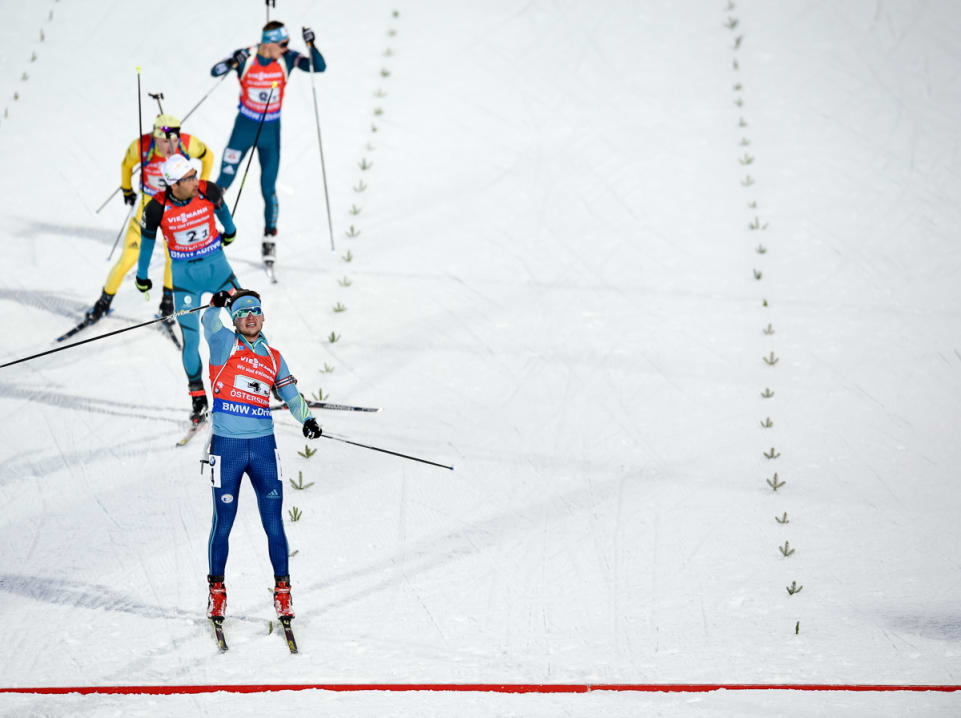
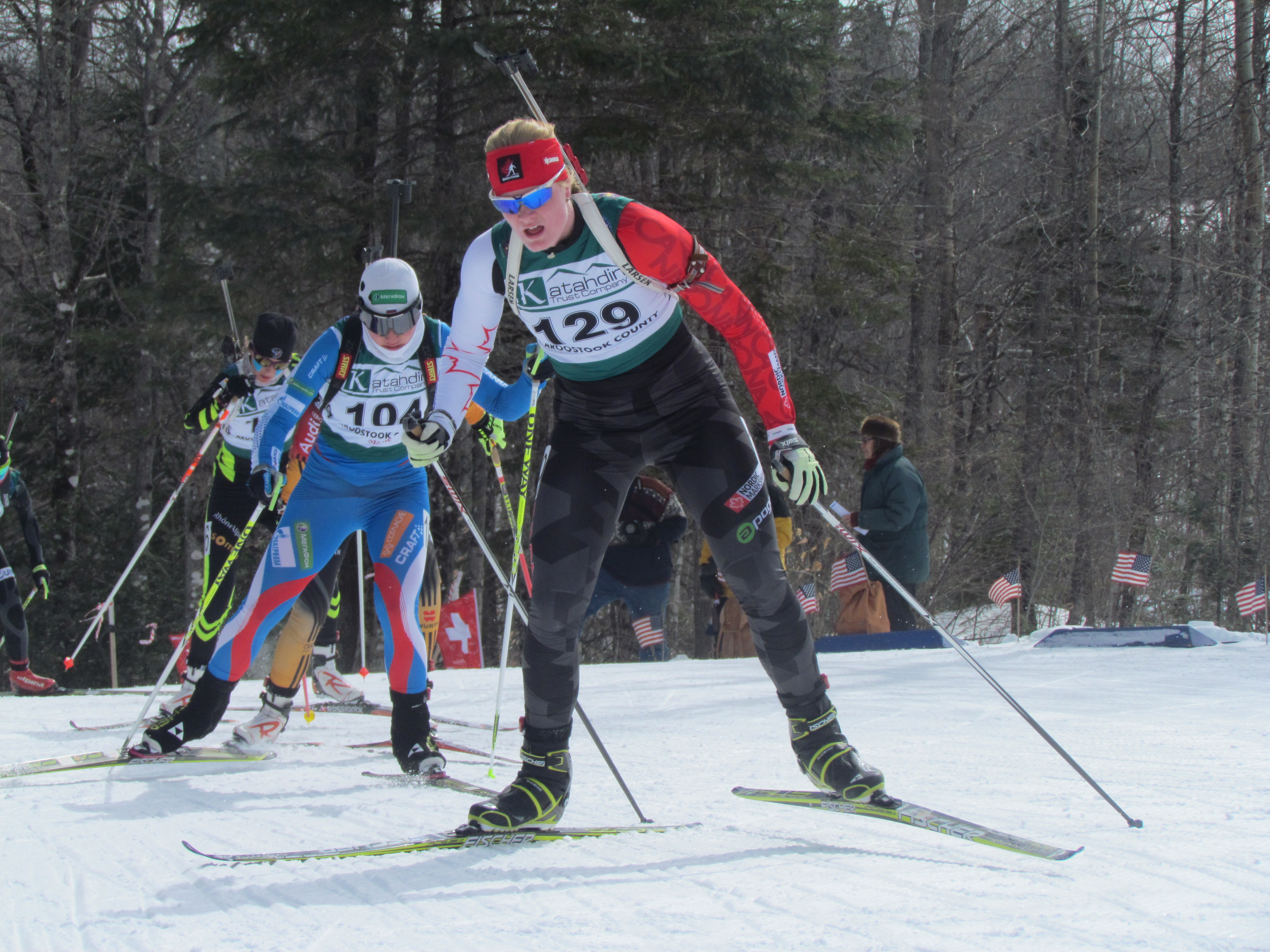
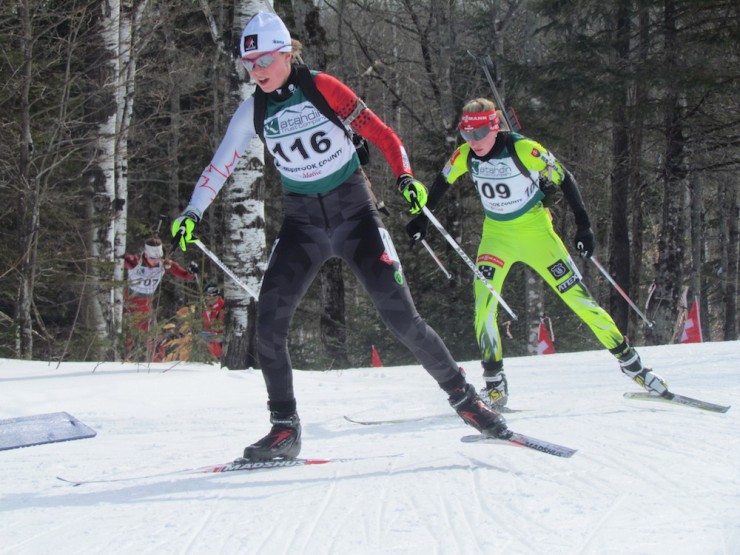
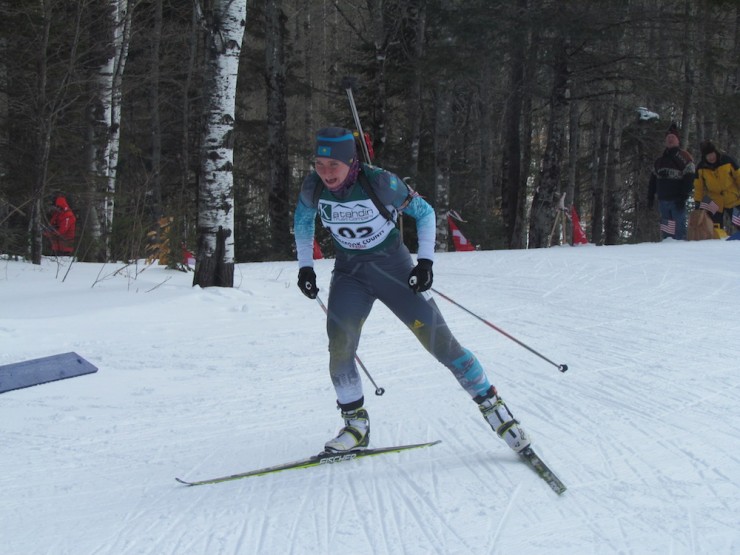
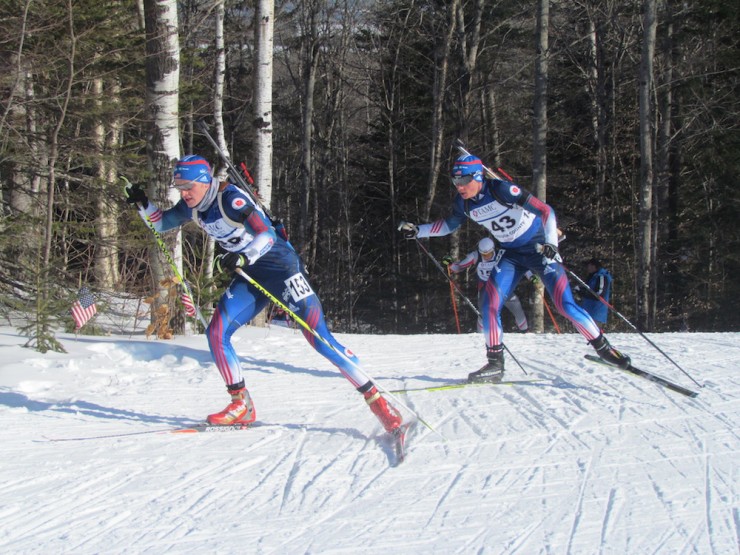
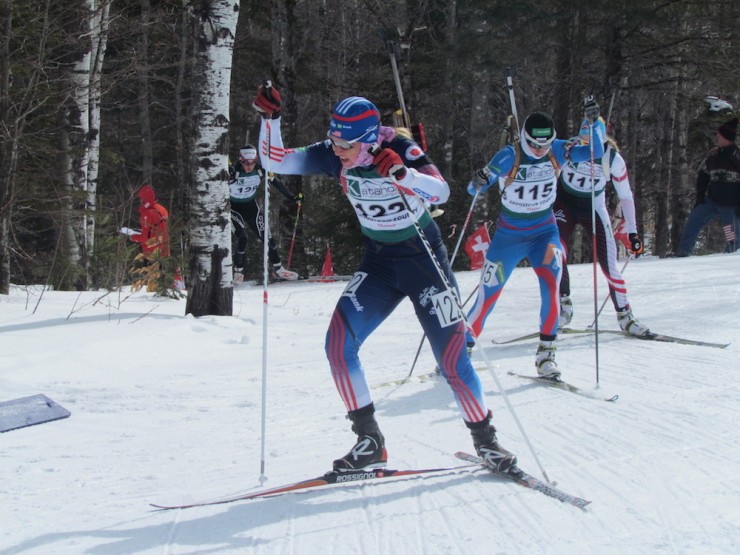
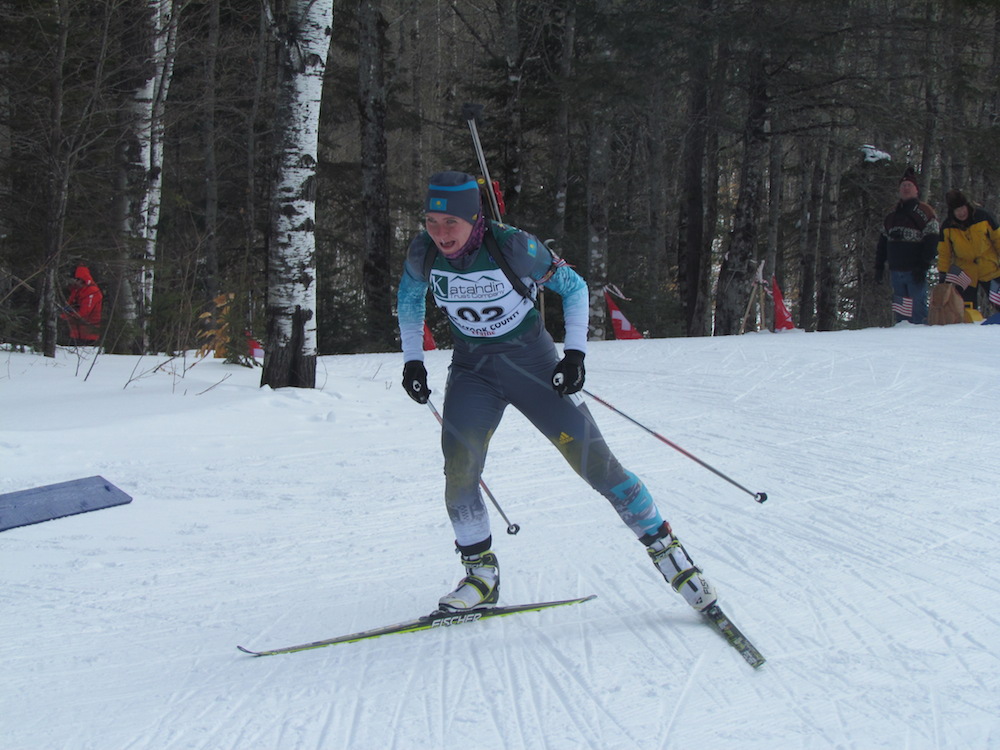
    Kazakhstan’s Galina Vishnevskaya on her way to winning the pursuit at 2014 IBU Junior World Championships. (Photo: Katrina Howe)

    About a week before the upcoming 2018/19 World Cup Season kicks off, the International Biathlon Union (IBU) announced in a press release on Thursday, November 22nd, that it has provisionally suspended a group of nine female and male athletes representing Kazakhstan from all IBU-sanctioned events with immediate effect, due to alleged anti-doping rule violations. The list of names includes a former Junior World Champion as well as Universiade gold medalist and World Cup podium finisher, a number of recent Olympians for Kazakhstan, and notably also the wife of well-known cross-country skier Alexey Poltoranin.

    Prior Suspicions Against The Team

    The IBU also announced that the sanctions are based on criminal investigations by authorities in Austria and Italy. On February 8th, 2017, the eve of the 2017 IBU World Championships in Hochfilzen, Austria, federal police raided the hotel of the Kazakh national team seizing medical products and medications for further investigation. Blood and urine samples were also taken, but no immediate adverse analytical findings were announced. All athletes on location were allowed to compete in those World Championships. The Kazakh team failed to achieve any individual top results, with an 11th place in the mixed relay their best finish. Although, that 2017 World Championship roster though was comprised of four athletes who have now been suspended.

    The Hochfilzen investigation, in turn, had been triggered a month earlier in January 2017, when members or staff of the Kazakh national team travelling in a team van had been observed discarding a carton box with a suspiciously large amount of medical products at a gas station rest stop in eastern Tyrol. The box’s contents included syringes, infusions and handwritten notes that hinted at medical treatments prohibited under sports anti-doping regulations. The box reportedly also contained official accreditations for IBU race events, which allowed authorities to trace them to the Kazakh biathlon team.

    Presumably the IBU as well as the respective national police authorities have had a watchful eye on this team ever since, and now acted on their findings.

    The athletes that were provisionally suspended as named by the IBU are (in alphabetical order):

    Women:

    Anna Kistanova, 28. She has started in 59 IBU World Cups, and competed for Kazakhstan at the 2015, 2016 and 2017 World Championships, with an eighth place in the women’s relay at the 2016 event in Oslo as her best result. She has not competed in the Olympic Winter Games, and has not started at the World Cup level since the 2016/17 season.

    Darya Klimina (née Ussanova), 29. She represented Kazakhstan at the 2012, 2013, 2015, 2016 and 2017 IBU World Championships, as well as at the 2014 and 2018 Olympic Winter Games. Her best result in those events was also the eighth place in the 2016 Oslo relay, as well as a 27th place in the sprint during those championships.

    buy omnicef

    Olga Poltoranina (née Dudchenko), 31. Her father is a national team coach. According to IBU data, the veteran athlete has represented Kazakhstan at eight World Championships beginning at age 16 (2003, 2004, 2007, 2008, 2011, 2012, 2015, 2017), as well as at four Youth and Junior World Championships. She did not compete on the IBU World Cup between the 2012 and 2016 seasons. Most recently she started for her country at the 2018 Olympic Winter Games in PyeongChang, South Korea, her first, recording a 63rd place in the sprint, 46th place in the individual race and a 14th place in the women’s relay as her so far final race at an IBU event.

    In her private life, according to multiple news reports and her Wikipedia page in several languages, she is the wife of Kazakh cross-country skier Alexey Poltoranin, who has competed on the FIS World Cup circuit since 2005.

    Alina Raikova, 27. She represented Kazakhstan at the 2013, 2015, 2016 and 2017 World Championships, as well as the 2014 and 2018 Olympic Games. A solid shooter, her best result was a 29th place in the Individual event at the 2016 World Championships in Hochfilzen, Austria. At Youth and Junior World Championships she represented her country four times, achieving a sixth place, also in the Individual in Kontiolahti in 2012.

    Galina Vishnevskaya, 24. Arguably the most successful Kazakh athlete now suspended, she was a highly accomplished junior athlete, highlighted by becoming the 2014 IBU Junior World Champion in the pursuit discipline in Presque Isle, USA, and winning three more silver and a bronze medal at the 2014 and 2015 editions. She also achieved bronze and silver medals at the 2012 Winter Youth Olympics in Innsbruck, Austria. She became a two-time gold medalist in sprint and mass start at the 2017 FISU Winter Universiade (often dubbed the Student Olympics) at home in Almaty, Kazakhstan, along with winning two additional silver medals.

    Her best results on the senior elite IBU World Cup level were a third place in the single-mixed relay in Östersund, Sweden, to start off the 2017/18 season, and a fourth place in a mass start in Oberhof, Germany, during the 2016/17 season. Most recently she also became a 2018 Summer Biathlon World Championships bronze medalist in sprint and pursuit (albeit in an event not attended by many of the best athletes competing in the winter season).

    Men:

    Maxim Braun, 25. He represented Kazakhstan at the 2015, 2016 and 2017 World Championships, and most recently also at the 2018 Olympic Winter Games. For his best result at the World Cup level he reached the podium together with his partner Vishnevskaya in the single-mixed relay mentioned above.

    Anton Pantov, 27. He started for Kazakhstan at the 2012, 2015, 2016 and 2017 World Championships, and at the 2014 Olympic Winter Games in Sochi where he achieved a 27th place in the individual event. In this discipline he also finished fourth at the 2012 Junior World Championships. At the 2017 Winter Universiade, at home in Almaty, he won a silver medal with the mixed relay and a bronze medal in the men’s mass start.

    Vassiliy Potkorytov, 24. He represented Kazakhstan at the 2015, 2016 and 2017 World Championships, and at the 2018 Olympic Winter Games. His only top-20 finishes have been in relays and mixed relays.

    Yan Savistsky, 31. He reportedly represented his country at a total of ten biathlon World Championships over the course of a decade from 2007 to 2017, as well as at the 2010 Olympic Winter Games in Vancouver, Canada, and 2014 in Sochi. His best championship results were in the Individual discipline, where he twice finished 11th in 2013 in Nove Mesto and in 2016 in Oslo. He also helped his team win a gold medal with the men’s relay at the 2011 Asian Games, together with three athletes not named by txhe IBU in relation to this investigation. On the World Cup he achieved a fifth place in a single-mixed relay in Kontiolahti during the 2016/17 season together with the above-mentioned Vishnevskaya.

    The IBU will now hold hearings with the suspended athletes to give them a chance to explain the allegations, and will then decide on further proceedings and potential longer suspensions.
  • Crawford’s Nasty Crash Derails Canada in Single Mixed Relay, Austria Shines

    Crawford’s Nasty Crash Derails Canada in Single Mixed Relay, Austria Shines

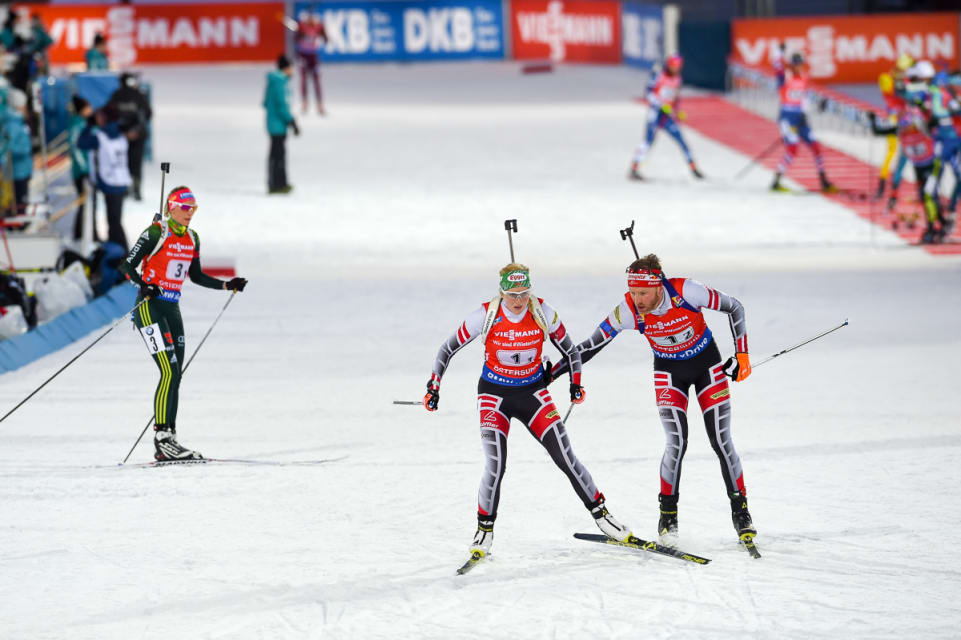
    Simon Eder tags off to Lisa Theresa Hauser for Austria during the single mixed relay World Cup in Östersund, Sweden. The pair raced to a 16.5-second win. (Photo: IBU/biathlonworld)

    Two years ago, Nathan Smith and Rosanna Crawford were second in the first World Cup biathlon race of the season, a single mixed relay in Östersund, Sweden. It was the first relay medal ever for Canadian biathlon.

    This year, same race, same place, Smith sat out because of a sore throat but Crawford and Christian Gow teamed up for Canada to take on the event again. Partway through the race they were in podium position before a serious crash took them more than out of medal contention; the team was lapped and finished 22nd.

    “Pretty bummed,” Crawford said.

    Through the first leg, she had used two spare rounds but still tagged off in third place, just 7.1 seconds out of the lead. Then Gow shot perfectly to hang onto fourth, 18.4 seconds out of the lead as the Austrian duo of Lisa Theresa Hauser and Simon Eder had taken control of the race and would never be out of the lead, eventually winning by 16.5 seconds.

    Crawford chased hard and passed Italy’s Alexia Runggaldier.

    “I thought, I’ll just tuck in behind the Italian, but then I thought, oh, she’s going too slow,” Crawford said. “That’s always an amazing feeling when you think, I feel stronger than you, I can pass you.”

    After a tough season for much of the Canadian team last year, that feeling was particularly nice, she added.

    Crawford was skiing in third just on the tails of Germany’s Vanessa Hinz when she hit ice on one of the last downhills of the loop and “did a few somersaults.” She stayed on the ground for several seconds and Canada’s hopes for another podium were dashed.

    (Story continues below)

    https://www.instagram.com/p/Bb9nzcRjtSY/?taken-by=rosannacrawford

    “My head was fine,” Crawford said. “There were quite a few physiotherapists who ran over, so they were asking what’s my name, where am I, what date it was. I got all of that right. But when I went to go and push myself up, my shoulder was really sore.”

    After at least a minute or two, Crawford headed back out onto the trail, but in a very different part of the race than she had been before. Then there was the issue of her rifle, which she said didn’t have any serious damage but at the time wasn’t working well.

    “Just snow everywhere,” Crawford said. “I think the sights might be twisted a little bit, or something happened because then when I did take a shot I was, like, 10 cm above the standing target. Something was off.”

    Even with spare rounds which are allowed in relay races, Crawford was left doing two penalty loops and in the meantime, the leaders lapped through. Canada’s day was over.

    While Crawford doesn’t have any serious injuries, her shoulder was banged up.

    “It is just bruised,” she explained. “The skin tore a little bit where the rifle must have hit it… I probably should have just stopped. Our physio here [later] said, yeah, you have quite a bit of adrenaline going through, so if something feels like it still hurts, then it means that it’s probably pretty bad.

    “But it’s so hard, especially in relays,” Crawford said. “Christian is such an amazing shooter, he’s so fast and so accurate and he had done so well. I really didn’t want to let him down. And then I was also thinking about Nations Cup points. If I didn’t finish then we would get no points, whereas even if we were lapped at least we would get some points. So all of that was going through my head.”

    Canada finished 22nd, and did get a few Nations Cup points.

    Another lesson: stick with the plan.

    “My race plan was to not take that inside corner,” Crawford said of the spot where she crashed. “I changed it halfway through the race bcause other people were taking it… On my second time down the hill, so after my first prone shooting, I was behind Hauser, and she took the inside line and I lost a little bit of a gap on her. So I thought, okay, next time I will take the inside line. So the third time going down the hill I was behind Hinz. She took the inside line and I was right behind her.

    “In hindsight I probably should have just stuck with my race plan and taken it a little bit wide, because I have been here many, many years,” she concluded.

    Austria Shines as France Falters

    Meanwhile, the Austrian duo was extending their lead. France had come in as heavy favorites, with Martin Fourcade and Marie Dorin Habert having won the same race last season, Fourcade having won the overall World Cup, and Dorin Habert finishing fourth in the women’s World Cup Total Score last season.

    Kazakhstan’s Maxim Braun celebrates third place ahead of Martin Fourcade of France, Sebastian Samuelsson of Sweden, and Dmytro Pidruchniy of Ukraine. (Photo: IBU/biathlonworld)

    But the duo put together a sloppy shooting race, using 10 spare rounds over 40 targets. The Austrians, on the other hand, were nearly perfect, using just two spare rounds and cleaning their targets quickly.

    By the time Eder came in for the final shooting bout, he could have used at least two spare rounds and still left with the lead. Instead, he cleaned.

    “First race, first victory – this is a dream,” Eder said in an Austrian Ski Federation press release. “It already paid off to toil for another year. I knew this would be one of the toughest single mixed competitions, because you always carry the exhaustion from the last climb to the shooting range. But I could pace myself well. I think tactically it was a strong performance, and that’s the most important thing in the single mixed. It’s not about always going full throttle, otherwise the shooting series won’t work out anymore. It was just perfect on the range today.”

    Their win was not a surprise, as the pair had won the single mixed relay World Cup in Kontiolahti, Finland, last season. But it was still a relief, Hauser said.

    “It’s just incredible to immediately be on the top of the podium in the first race,” she said in the same press release. “The first race is always something special, because you are extremely stressed.”

    Behind them, an interesting race was unfolding. The German team used nine spare rounds and had only a single perfect shooting stage, and Hinz said that her legs were “not yet quite where I’d like them to be.” But teammate Erik Lesser was aggressive on the trails, having the third-fastest time on each of his relay legs, and he skied across the finish line in second place, well clear of the rest of the field.

    And that’s where things got really crazy. A number of teams had left the range the final time quite close together: Kazakhstan with Maxim Braun, then Lesser (who immediately passed him), then Italy and Ukraine. Italy’s Thomas Bormolini charged hard and skied his way into third position.

    But on one of the final downhills Bormolini fell, taking out Dmytro Pidruchnyi of Ukraine as well. That allowed Braun, who had been left behind, to sail past them. It also allowed Fourcade and Sebastian Samuelsson of Sweden, who had started the final loop many seconds back, to catch further up.

    In the end it was Braun taking third place for Kazakhstan, France fourth, and Sweden fifth.

    “I opened my eyes and I saw the athletes from Sweden and Ukraine just lying in the trail,” Braun said through a translator in the post-race press conference. “I would like to have watched the race myself to realize what was going on. I realized it was my chance and I grabbed it… this summer we worked really really hard, and this is a fantastic beginning of the season for us.”

    While he acknowledged that he had “a little bit of luck,” it was also good biathlon: with just five spare rounds, Kazakhstan had the second-best shooting of the day.

    Americans 19th After Fast Start

    The single mixed relay was the first World Cup start of Emily Dreissigacker’s career. The Americans started in bib six and Dreissigacker soon found herself among the race leaders.

    Emily Dreissigacker of the United States competing in the single mixed relay in Ostersund, Sweden. (Photo: USBA/NordicFocus)

    “My plan was to get in behind someone and try to pace myself and relax on the first lap, especially up the first hill,” Dreissigacker wrote in an email. “But it turns out I just have this instinct in a mass start to get to the front. At the time it felt easy and it was super fun to lead even if it was just for a hot sec. But of course once the adrenaline wore off I definitely paid for it.”

    Dreissigacker got through the first shooting stage with perfect shooting, and headed out again. But the effort early on was indeed catching up with her.

    “I think it’s important in a single mixed relay to pace yourself on the first leg, which is something I did not execute well today,” she wrote. “My legs flooded really badly and didn’t start to clear at all until my very last loop.”

    She had to use all three spare rounds in standing, and tagged off to Leif Nordgren in 20th. Nordgren, though, used only one spare round total over his next prone and standing stages, and was able to bring the Americans into 12th.

    Dreissigacker then took a penalty loop in both of her second-leg shooting stages, and then Americans ended up in 19th place after being lapped.

    “Prone felt good but my group moved right and down,” Dreissigacker explained. “I’m not sure why, it could have been the wind, it could have been something slightly off in my position but I was happy to at least hit all of my spares… Overall I’m happy with [the race]. I have a lot to learn still and a lot I can improve upon, but you have to start somewhere.”

    That’s a sentiment for Nordgren, too, who is hoping for better things later in the year.

    “It’s a long season with the highlights being the Olympics so I didn’t really expect much from today,” Nordgren wrote. “That being said it’s always nice to get a chance to race, it’s a different type of stimulus for the the body then just a hard intervals session. Emily had a rough day on the skis. It’s a pretty brutal single mixed course here, so if you aren’t ready to go hard right from the start you’ll pay for it later. The snow was a little deep today as a result of the grooming so that makes it a little bit tougher on the legs too. It’s not the end of the world not getting to race the second leg – it was nice to get back in race mode even if just for a little bit.”

    For Nordgren, just to be racing and feel good was an achievement compared to last year, when it was on this very day that he realized a toe injury sustained just before the start of the race season was actually a big problem. Nordgren ended up taking several weeks off of racing completely to heal.

    “Last year it was a dark time for me!” he wrote. “It’s really nice to have not had any trouble like that heading into the season. Overall the preparation has been pretty good this year, so I’m excited to get into the individual races starting next week.”

    -Harald Zimmer contributed

    Results

  • Koukalová Wins Second Mass Start of Season; Dunklee 9th, Crawford 25th

    Koukalová Wins Second Mass Start of Season; Dunklee 9th, Crawford 25th

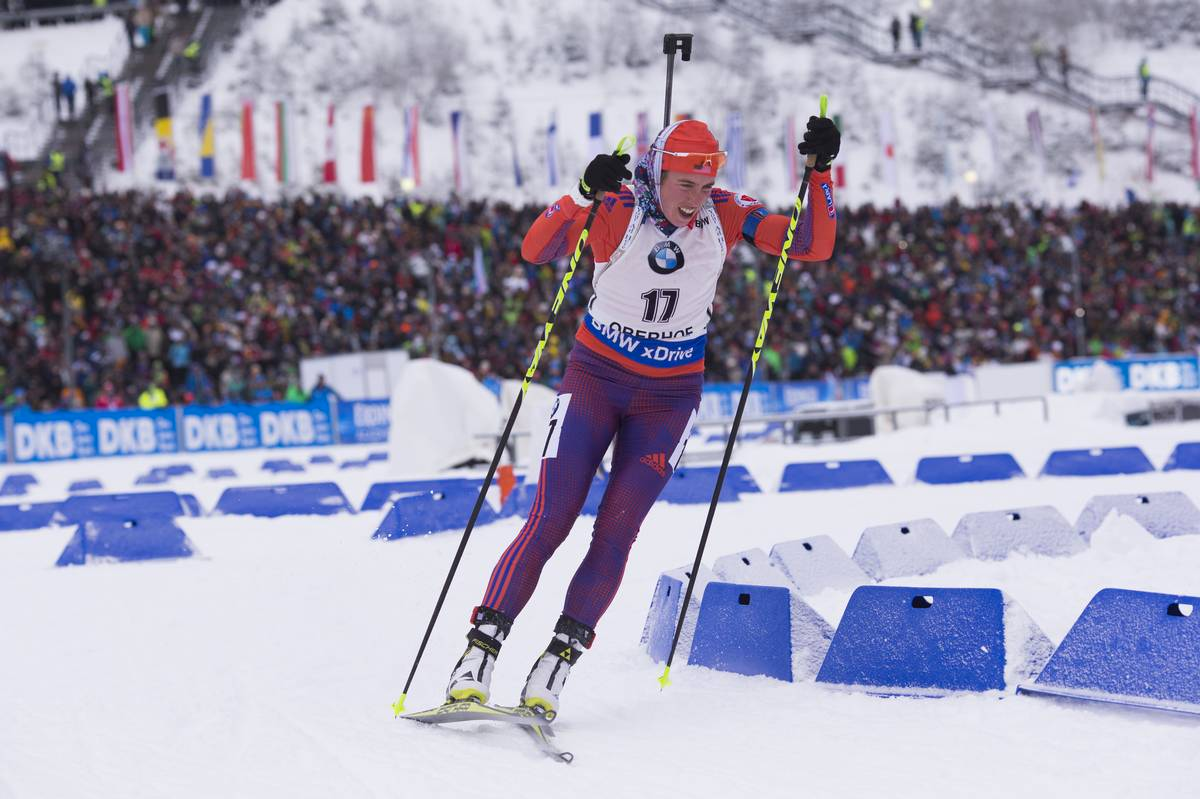
    US Biathlon’s Susan Dunklee skis through the arena during the women’s 12.5 k mass start at the 2017 IBU World Cup on Sunday in Oberhof, Germany. (Photo: USBA/NordicFocus)
    US Biathlon’s Susan Dunklee skis through the arena during the women’s 12.5 k mass start at the 2017 IBU World Cup on Sunday in Oberhof, Germany. (Photo: USBA/NordicFocus)

    After twice shooting clean on Sunday, American Susan Dunklee found herself in third place going out on the next loop of the women’s 12.5-kilometer mass start at the International Biathlon Union (IBU) World Cup in Oberhof, Germany, pushing hard to keep up with Czech Republic’s Gabriela Koukalová and Germany’s Laura Dahlmeier.

    “I was not skiing a sustainable pace,” Dunklee explained in an email to FasterSkier. “Sometimes it makes more sense to keep yourself in the race as long as you can and worry about consequences later.”

    While Koukalová stayed clean also in the next two shooting stages to win the race in a time of 37:20.5 and Dahlmeier only shot one more miss to finish second (0+0+1+0, +31.5), Dunklee had to pay a bit for her tempo when she incurred a penalty in the first standing stage and two more in her last standing bout.

    She left the range after the final shooting in ninth position, but was challenged on the long Birxsteig climb by four athletes who shot clean in the last stage: Norway’s Marte Olsbu, Sweden’s Anna Magnusson, Poland’s Magdalena Gwizdon, and Russia’s Tatiana Akimova.

    “Skiing hard earlier in the race (e.g. with Gabi and Laura) meant that I didn’t have much fight in me on the first huge climb and I lost time there,” Dunklee wrote about the last loop. “To make up for it, I tried to conserve some energy for the last hills, rely on faster skis than the girls around me (our techs did a fantastic job today) and ski tactically.”

    Dunklee fought back, and managed to overtake all of those four skiers again to finish ninth (+1:43.5) with three penalties (0+0+1+2) and the 12th-ranked overall course time. She was passed on that loop only by Finland’s veteran Kaisa Mäkäräinen, who had a rough day on the range with seven penalties, but skied the best course time to finish eighth (+1:39.9).

    During the week’s races in Oberhof, Dunklee missed more targets than she usually does to finish 50th in the sprint with four penalties and 44th in the pursuit with nine penalties.

    “I created a very specific periodization plan for my shooting this year and I believe in it,” Dunklee wrote. “Each week has its own focus, which creates subtle differences in how I approach the shooting. I have now learned that the type of focus I had for this week (and incidentally, Östersund) doesn’t work well. Today I shifted over early to the speed focus I had planned for next week and that was a good decision. My periodization plan is an experiment and a work in progress that I hope to have nailed for next year.”

    “My standing shots all felt good except for my very last shot,” Dunklee said, according to a US Biathlon press release. “I couldn’t get the barrel to stay on the target. Rather than taking an extra breath to reset, I over held it. That is my only regret of the day.”

    When the provisional start list was first released on Saturday, Biathlon Canada’s Rosanna Crawford narrowly missed the qualification for the elite mass start field (with starts being awarded to the top-25 ranked athletes in the overall World Cup plus five more not among those with the best results of the competition week). But she was excited to learn the night before the race that she would be “called up” from a reserve standby list to replace a sick athlete.

    “I love Mass Start races, there is so much potential!” Crawford wrote in an email to FasterSkier. “The best are nervous and the rest of us are the underdogs wanting to prove we belong.”

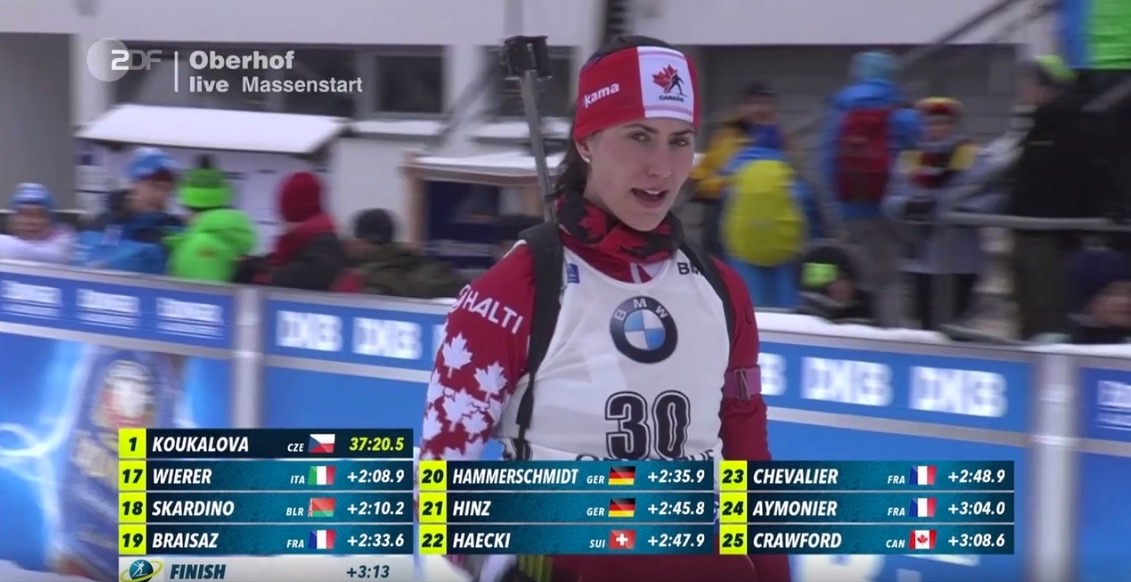
    Biathlon Canada’s Rosanna Crawford after finishing 25th in the women’s mass start at the 2017 IBU World Cup in Oberhof, Germany. (Photo: ZDF screenshot)
    Biathlon Canada’s Rosanna Crawford after finishing 25th in the women’s mass start at the 2017 IBU World Cup in Oberhof, Germany. (Photo: ZDF screenshot)

    After a clean shooting performance in the Oberhof sprint, Crawford was able to shoot well again on Sunday, totaling just two penalties (0+1+1+0), but was unable to keep pace with the leaders with the 28th-ranked course time.

    “Like the last two races, it’s skiing that is really holding me back,” Crawford explained.
    “So I just went out for a good workout and a chance to work on my shooting. I am really angry at my prone miss, just like yesterday [in the pursuit] that was all me! But 18/20 is still a pretty good day. I can only hope that the ski shape turns around in the next few weeks. Our wax techs again did a good job today!”

    Crawford waved to the spectators on the finishing stretch and took a bow as she crossed the line in 25th place (+3:08.6).

    “The crowds here are pretty incredible, there was a lot of people cheering ‘Go Canada’ which really helped fuel me around the course,” she wrote.

    The spectators were particularly fired up after seeing a double-victory for Germany’s Simon Schempp and Erik Lesser in the men’s mass start earlier on Sunday. And with the return of home-crowd favorite Dahlmeier after a longer rest and training period over the holiday break, as well as her teammate Franziska Hildebrand also fighting for a position at the top, they had every reason to cheer during the women’s race as well.

    “I think I did everything right,” Dahlmeier told German broadcaster ZDF of her reason for skipping the sprint and pursuit races. “I did not exactly know good my form would be after the break. Today I had a bit heavy legs from training. But I am happy with the second place and glad that the return worked out like this. It was a lot of fun to ski in front of such an audience today.”

    “The first three World Cup weekends were more strenuous, due to the good results and the yellow bib [of the overall World Cup leader],” she added. “When I go to the start, I want to give it 100 percent, not just coast along. So my feeling was that it would be useful to skip a race, and that this happened to be in Oberhof was due to the competition calendar. But I am glad that I could do this one race.”

    “I didn’t have so good expectations for this,” Koukalová said at the press conference on her race week in Oberhof, with two victories and a second place. “The main goal of the season is the World Championships in Hochfilzen. So I hope that I am still not in the best shape now, because I know it is more difficult to win there than here.”

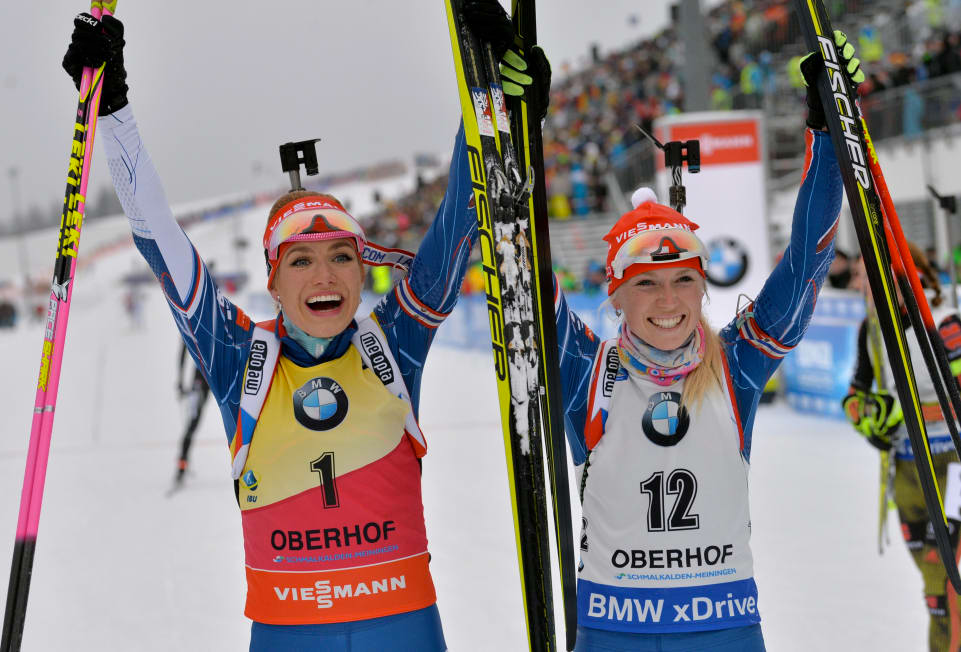
    Czech Republic’s Gabriela Koukalová (bib 1, first place) and her teammate Eva Puskarčiková (bib 12, third place) celebrate at the finish of the women’s 12.5 k mass start on Sunday at the 2017 IBU World Cup in Oberhof, Germany. (Photo: IBU)
    Czech Republic’s Gabriela Koukalová (bib 1, first place) and her teammate Eva Puskarčiková (bib 12, third place) celebrate at the finish of the women’s 12.5 k mass start on Sunday at the 2017 IBU World Cup in Oberhof, Germany. (Photo: IBU)

    Koukalová was also excited that teammate Eva Puskarčiková placed third (+45.4 with no penalties) to stand on the podium with her, and that they were the only two athletes in the field who shot clean. It was the second World Cup podium of the career for Puskarčiková, after a third place in the pursuit in Pokljuka, Slovenia, earlier this season.

    “I don’t know how to say it, but I have many times deeper feelings than to stand there alone,” Koukalová said at the press conference. “It’s very positive and I am very happy for Eva, because she was still sick around Christmas and so she is something like a hero for me. It’s amazing, she is crazy.”

    “I hope so, I hope it will be better and better,” Puskarčiková said with a smile when questioned if her confidence is increasing with each success now.

    In a three-way sprint finish, the fourth place went to Kazakhstan’s Galina Vishnevskaya, the best result of the 22 year old’s career (+1:11.6 with one penalty), ahead of Ukraine’s Yulia Dzhima (+1:12.6 with three penalties) and Germany’s Hildebrand (+1:14.0 with two penalties).

    If the IBU, which likes to stress its “biathlon family” motto, had a fair-play award, it should have gone to Austria’s Lisa Theresa Hauser, who voluntarily gave up a pole to Germany’s Vanessa Hinz after accidentally breaking hers by stepping on it. Hauser’s good deed was not rewarded, as she soon after fell on a steep downhill turn, clogging the sights of her rifle with snow and had to pull out of the race. Hinz finished 21st.

    The IBU World Cup resumes with a men’s relay on Wednesday, Jan. 11 and a women’s relay on Thursday, Jan. 12 in Ruhpolding, also located in Germany.

    Results

  • Doherty Does It Again, Defends Pursuit Title at IBU Youth Worlds; Beaudry Nabs Junior Bronze

    Doherty Does It Again, Defends Pursuit Title at IBU Youth Worlds; Beaudry Nabs Junior Bronze

    Eighteen-year-old Sean Doherty’s on quite a roll at the International Biathlon Union (IBU) Youth/Junior World Championships, winning his second-straight gold in as many races at this year’s championships and defending his title in the youth men’s 10-kilometer pursuit.

    ***

    Doherty (US Biathlon) started first and stayed there despite three penalties, but a windy afternoon in Presque Isle, Maine, prevented any of his competitors from shooting clean. The starting order and youth men’s podium from Friday’s sprint remained the same, with Germany’s Marco Gross placing second with three misses, and Russia’s Dmitrii Shamaev finishing third with four penalties.

    According to an IBU press release, the eventual gold and silver medalists entered the first prone together, each hitting the first four shots before Gross missed the last. Doherty cleaned and continued on in the lead, cleaning his second prone as well before missing one on his first standing stage.

    With a 55-second cushion, Doherty remained safely ahead, then missed two more on his final stage but cruised to a 1:03.6-minute win. The New Hampshire native grabbed a large American flag on his way to the finish, holding it high above his head as he skied across the finish.

    “It’s so incredibly satisfying when it comes together in a race like today,” Doherty told the Portland Press Herald. “And to really have that, in front of the home crowd, just makes it better.’’

    Canada’s Beaudry Captures Bronze

    A runner-up on Saturday by three-tenths of a second, Galina Vishnevskaya of Kazakhstan captured gold in the junior women’s pursuit with clean shooting on both her first and third stages. With one miss in both her second prone and final standing, she stayed ahead of Germany’s fast-closing Luise Kummer, the only woman to clean all day.

    “I thought about winning the gold medal all night,” Vishnevskaya told IBU. “I was very motivated at the start and wanted to shoot clean … In the last lap, I still could not believe that I was going to win by such a large amount.”

    Vishnevskaya won by 57.8 seconds and Canada’s Sarah Beaudry rose from starting 2:37 back in 29th to seize bronze (+2:08) with a single prone penalty.

    Beaudry’s teammate Julia Ransom notched fourth (+2:15.6) with two misses, both on her third stage.

    Frenchman Fabien Claude won the junior men’s 12.5 k pursuit after starting 23 seconds behind Russia’s Alexander Povarnitsyn. Despite four penalties, he beat Povarnitsyn — who had six misses — by 10.9 seconds. Norway’s Jarle Midthjell Gjørven proved to be the best male on the range all day with two penalties. He cleaned both standing stages to finish 23.8 seconds behind Claude for bronze.

    Claude told IBU he tried to ski aggressive from the start and was a little nervous after his first penalty on his second prone (he later missed two in the first standing, and another in the last stage).

    “I want to be like Martin Fourcade,” he said. “But now I am just Fabien.”

    Carsen Campbell of Canada was the top North American in 16th (+2:48.6) with five misses.

    In the youth women’s 7.5 k pursuit, Italy’s Lisa Vittozzi racked up another gold after winning Friday’s sprint. Despite seven penalties (after cleaning her first prone), she topped Germany’s Anna Weidel by 19.2 seconds. Weidel started 13 seconds behind the Italian and missed six, the most crucial of which came in the last standing.

    France’s Estelle Mougel overcame a minute-starting deficit to end up third (+29.6) with three penalties.

    Canada’s Danielle Vrielink was the top North American in 15th (+1:29.4) with three misses. Anna Kubek led the U.S. in 18th (+1:43.7) with four penalties. Maddie Phaneuf started fourth and finished 24th (+2:55.6) after skiing eight penalty laps.

    Results

  • YOG Women’s Biathlon Pursuit: Perfect Conditions, Tricky Racing—Kubek Leads North Americans in 10th

    YOG Women’s Biathlon Pursuit: Perfect Conditions, Tricky Racing—Kubek Leads North Americans in 10th

    SEEFELD IN TIROL, Austria–

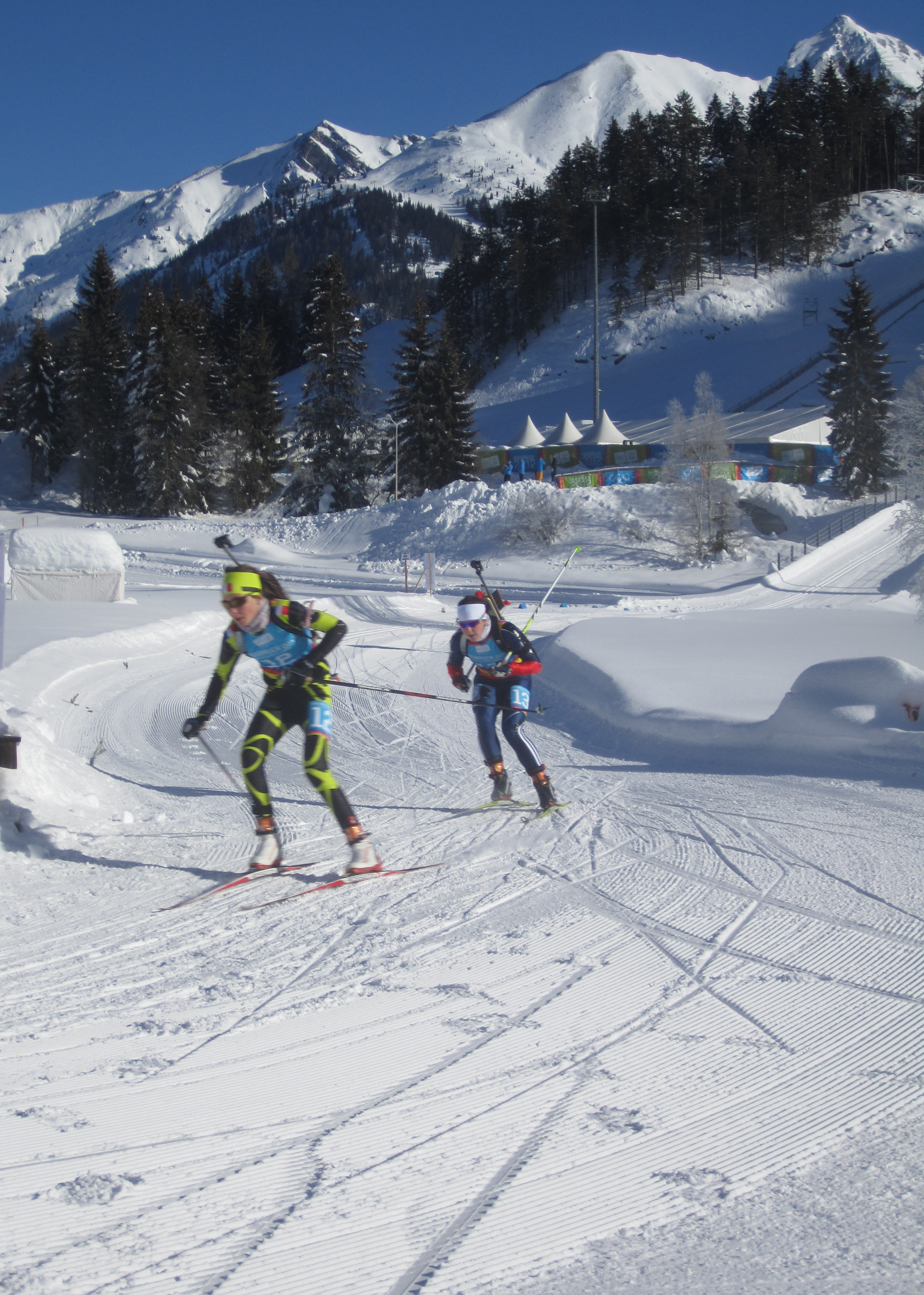
    Every Nordic race director is well versed in Murphy’s Law. Today, Seefeld Stadium was more or less the Titanic—the unsinkable race venue. Temps were cold, the loops were covered with a meter and a half of perfectly groomed snow, thousands of cowbell clanging Tyroleans lined the course, and the IBU’s finest were on hand to supervise. The Women’s 7.5km Pursuit event at the Youth Olympic Games was to go off without the slightest hitch. But halfway through the event, things suddenly became quite hectic.

    Anna Kubek of Duluth powers her way to a top ten finish.

    The women’s field competed four loops of a lightning fast, 1.8km loop, interspersed with four shooting stages—two prone and two standing. In pursuit format, the 47 top junior biathletes left the stadium based on their results from the previous day’s sprint. But fast lap times, combined with the fact that lapped racers weren’t pulled before they entered the range (as is traditionally done on the World Cup), meant that by the second and third shooting stages, some racers were already shooting standing while others were still shooting prone.

    Piotr Bednarski, coach of the US Biathlon squad, elaborated, “Now you have athletes who are on different shooting stages coming in at the same time, and the officials obviously got confused. They were sending people to the wrong targets.”

    Canadian Sarah Beaudry touches base with Coach Chris Lindsay during her zero. The effort paid off– Beaudry moved up from 22nd to 14th place overall.

    Confusion broadened with so many athletes in the range at one time, and there were numerous reports of cross-firing. Coach Chris Lindsay of the Canadian squad told FasterSkier, “It [cross firing] happened to one of our skiers, Danielle Vrielink. She was lucky, in a way. One of her targets went down. Then, she missed her fourth target. She still had a black target to shoot at without having to alert the officials, reset the target, shoot a single round, and then be done with it then. It probably cost her a few seconds, but not enough to have a significant impact on the race. To their credit, the officials took care of it quite well.”

    Despite the chaos, many of the top skiers were able to avoid the confusion. Avoiding absolutely any chaos whatsoever was Russia’s Uliana Kaysheva, who was one of three female skiers to clean all four shooting rounds. Starting in 3rd at 33 seconds back, Kaysheva powered her way to a substantial victory of nearly 28 seconds ahead of yesterday’s Sprint victor Franziska Preuss of Germany. Galina Vishnevskaya of Kazachstan, who was yesterday’s Silver medalist, ended up third, 1:43 off the lead.

    Uliana Kaysheva of Russia employed a useful Biathlon tactic to snag the win: hit all the targets, ski fast.

    American Anna Kubek of Duluth led the North American contingent on the day with a strong 10th place finish, besting 11th placed Canadian Danielle Vrielink by six seconds. Asked if the chaos on the range interfered with her concentration, Kubek succinctly told FasterSkier, “Nope. It didn’t affect me. I just focused on my race, and everything went pretty well.”

    Canadian Sarah Beaudry had an excellent day, moving up from 22nd place to 14th. Aleksandra Zakrzewska, from South Burlington Vermont, struggled on the shooting, slipping to 41st place.

    US Coach Piotr Bednarski was very impressed with the overall quality of the women’s field, particularly on the range.

    “The women’s field is quite professional. You see the girls in the top 15 in the range and they’re shooting very smooth, very well—much better than the men. Of the top 15, I think 12 of them shot clean on the second prone. Lots of clean shooting today,” Bednarski told FasterSkier.

    Chloe Chevalier of France leads Anna Kubek down the first descent.

    Bednarski also implied that such a stiff level of competition can put additional pressure on the young athletes, especially when the conditions so perfect and wind-free on the range. Yet again, the challenging level of competition did little to derail Kubek’s state of mind.

    “I’ve been training hard, and my shooting has been getting better. I can compare myself, and I knew I could be up there with the top athletes as well,” said the Minnesota native. When asked if it was the tasty Wiener Schnitzel served in the Olympic Village that got her into the top ten, Kubek replied, “No. I’ve just been training really hard and it’s been paying off.”

    Anna Kubek leads Austria's Julia Reisinger on the ascent to the range.

    All in all, 8 athletes were awarded time credits by the Race Jury, as per IBU Rule 8.7.4. The highest ranking finisher to receive a time credit was Austrian Julia Reisinger, whose credit of 33 seconds bumped her from 7th to 6th overall.

    Action continues for the Biathletes in Seefeld on Thursday with the four person, mixed gender relay.

    Lots of students from a local Volksschule came out to cheer on the races, which was great to see. They were fluent in cowbell.


    Harvard Nordic skier Tony Ryerson and Harvard alum Andy Moore stand next to a large pile of Tyrol's freshest, finest Schnee. It looks like there's a house in there, somewhere.

    Complete results for the Women’s Biathlon 7.5km Pursuit