From the FasterSkier archive — posts syndicated from athletes’ and coaches’ own blogs between 2004 and 2012, kept online as published. Current coverage is at fasterskier.com.
More smashing results from U.S. women, boring-on-paper but fun-to-watch racing from the Norwegian men’s distance team and some interlopers wearing similar colors, and a poorly-attended relay. Devon and Nat break it all down.
Keep the feedback and questions coming: nat@fasterskier.com and devon@fasterskier.com. We’ll see you next week.
We’re off. The 2023-2024 winter kicks off with season opening races across Scandinavia, and the World Cup launches next week.
Devon and Nat go old-school, no guests to recap a bevy of interesting results so far. Send us your comments, questions and criticisms: devon@fasterskier.com and nat@fasterskier.com. We’ll be back next week.
We have a quick update to the information we published last week regarding cross country broadcast schedules from Tom Horrocks, Communications Manager for the Davis U.S. Cross Country Ski Team. After finalizing schedules, NBC will have all World Cup events available for streaming through their PeacockTV platform.
As mentioned in the first post, there is also a new streaming platform, Ski and Snowboard Live, which is owned by the production company InFront. This platform will have all World Cup events available, except those taking place in Austria and Switzerland. These broadcasts will have English commentary, whereas NBC typically will not have commentary.
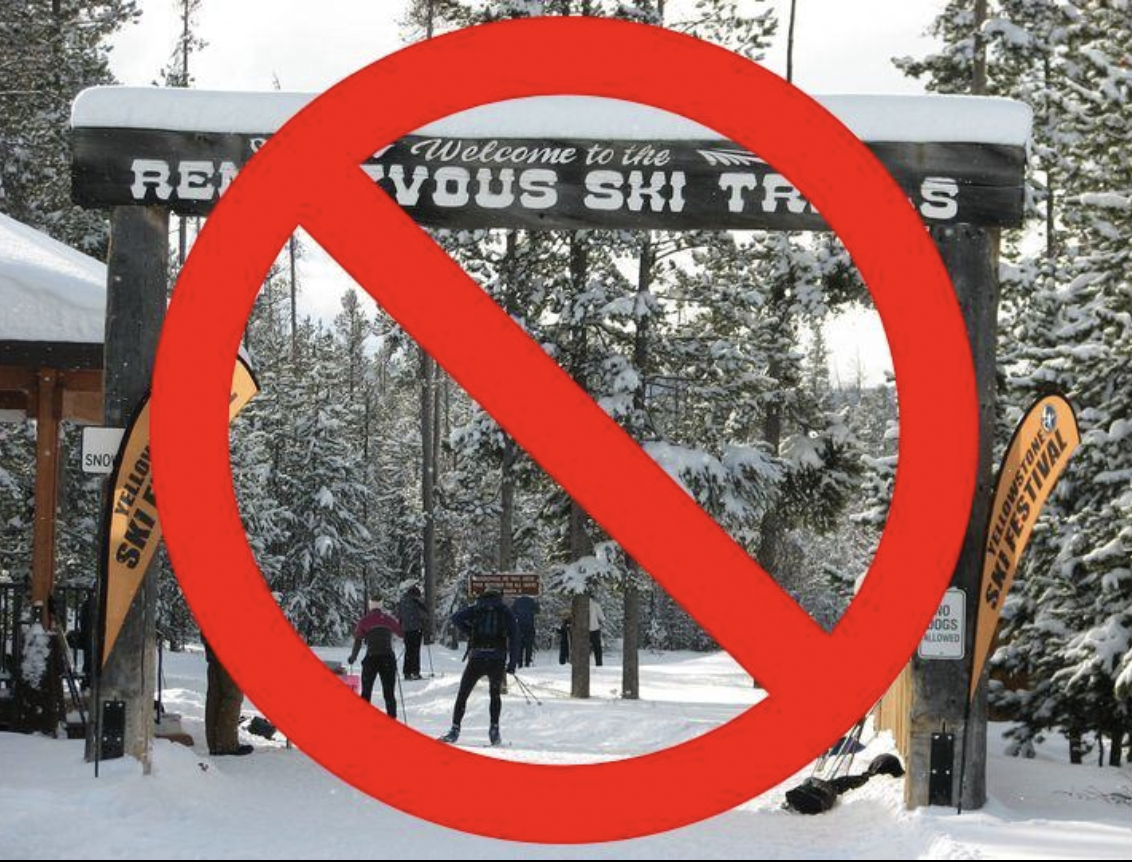
The 2021 West Yellowstone Ski Festrival has been cancelled due to lack of snow. (Photo: Instagram @yellowstoneskifestival)
West Yellowstone Ski Festival Cancelled:
It has been a dry start to the winter across much of the West. Ski, Run, Bike Montana announced yesterday that the annual West Yellowstone Thanksgiving ski festival on the Rendezvous Ski Trails has been cancelled due to lack of snow. This cancellation includes the FIS races scheduled on the 27th. Typically, elite athletes use this race as a tune-up before the SuperTour begins the first weekend of December, this year in Duluth, MN.
To those who have already registered for clinics, passes, or events, expect an email from organizers. Additional updates can be found on Facebook and Instagram.
Spending Thanksgiving in West Yellowstone has also become an annual tradition for many club skiers and cross country ski enthusiasts looking to kick off their season with a week of sliding on well-groomed snow. Let’s hope this, the first cancellation in 32 years of the event, is an anomaly.
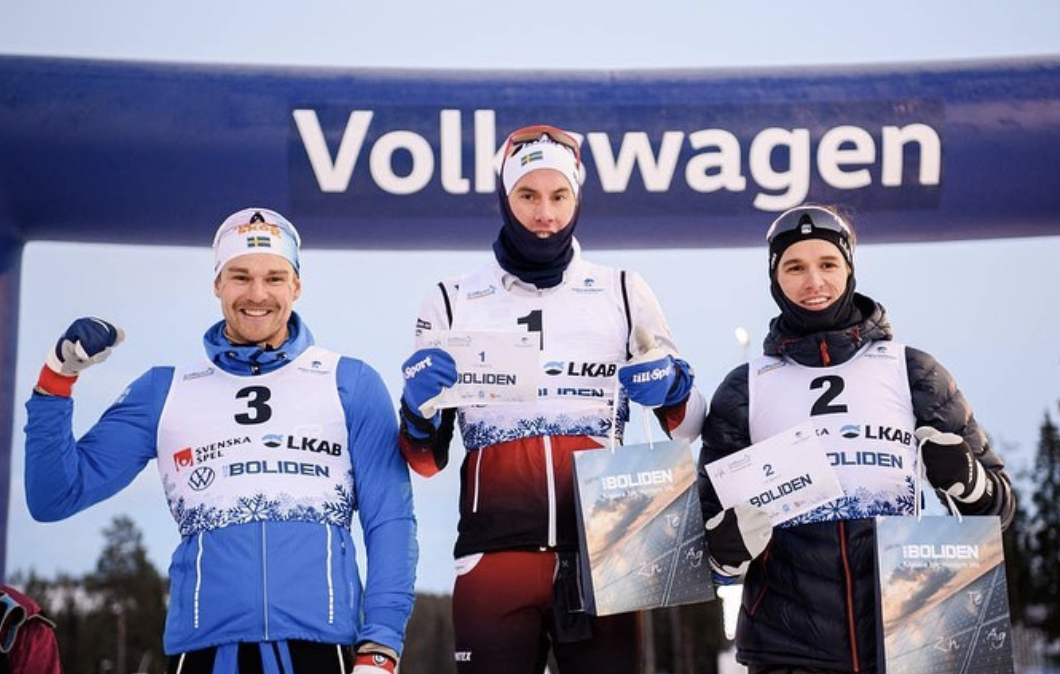
Kevin Bolger took second in the freestyle sprint in Gällivare, Sweden. (Photo: www.fis-ski.com)
FIS Races in Sweden and Norway:
Piggybacking on Devon Kershaw’s discussion of opening FIS races in Scandinavia and Finland, we’ll take a look at results from two primary events this weekend, first in Gällivare, Sweden and second in Beitostølen, Norway.
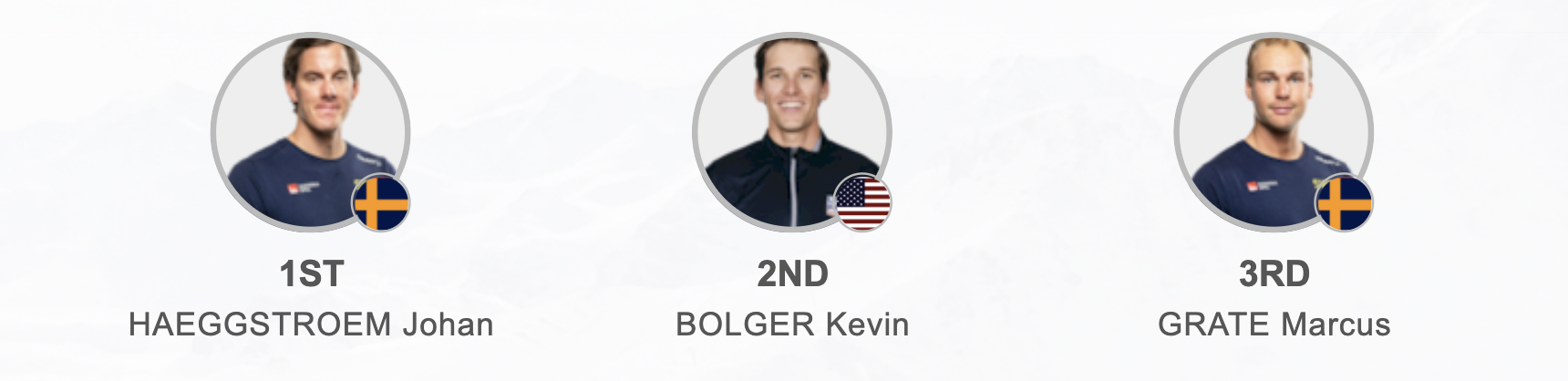
Perhaps the most important result to highlight took place in the men’s freestyle sprint on November 19th. After placing 14th in the qualifier, Kevin Bolger raced his way onto the podium for a second place finish behind Johan Haggström (SWE). Marcus Grate (SWE) took third. Bolger also raced the 15k classic on the 20th where he finished 37th (+2:23).
Kevin Bolger took second in the freestyle sprint in Gällivare, Sweden. (Photo: Instagram @kevinbolger)
Bolger spent much of his summer training in Sweden alongside his partner, top Swedish athlete Maja Dahlqvist. Bolger will join the U.S. Ski Team for the opening World Cup races this weekend in Ruka, Finland.
(Find full results from the races in Gällivarehere.)
Moving on to Beitostølen where most of the Norwegian National Team showed up to throw down, vying for World Cup starts and foreshadowing their readiness to contend. Though other top international racers were in the field, Norway swept all four podiums.
For the women — no surprises here — Therese Johaug won both the 10k classic and skate distance races by a significant margin. Teammate Heidi Weng took the second spot on the podium both days, finishing 43 seconds back in the classic and 35 seconds back in the skate. Silje Theodorsen was third in classic (+1:18.9) and Ragnhild Haga was third in skate (+45.1).
Also posting strong results for USA, Sophia Laukli of the U.S. Cross Country D-Team placed 7th in the 10k skate (+1:24.0). Laukli caught a ride on Weng’s tails, which she credits for her strong result. We just noticed how well she was able to match the Norwegian. Laukli also placed 15th in the 10k classic (+2:28.3).
Sophia Laukli raced to 7th place in the 10k skate in Beitostølen. (Photo: Instagram @sophialaukli)
On the men’s side, racing was a bit tighter. In the 15k classic, Hans Christer Holund took the win ahead of Emil Iversen (+17.3) and Håvard Moseby (+24.5). In the 15k freestyle stage, Harald Østberg Amundsen, who took third (despite a late crash) in the event at his first senior World Championships last year, edged out Sjur Røthe who finished 2.4 seconds back. Emil Iversen, on back-to-back podiums, was third (+13.4).
Harald Østberg Amundsen skis his way onto the podium in his first senior World Championships. (Photo: NordicFocus)
(Find full results from the races in Beitostølenhere.)
The World Cup kicks off on Friday November 26th with a men’s and women’s classic sprint.
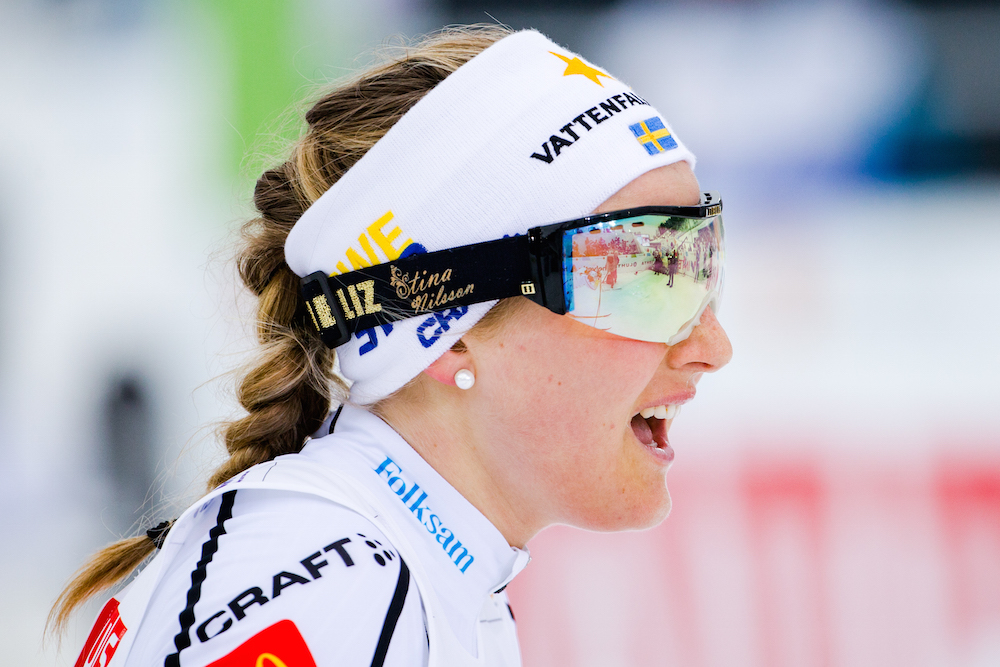
Sweden’s Stina Nilsson at 2017 World Championships, after she finished 13th in the women’s 10 k classic on Feb. 28. On Sunday, she won her first sprint of the season at Sweden’s FIS season-opener in Gällivare.
For the third and final day of International Ski Federation (FIS) racing in Gällivare, the home crowd would not be let down. Both the men’s and women’s 1-kilometer classic sprints were won by Swedes, one of whom has established herself as one of the world’s best sprinters, ending last season second in the 2016/2017 Sprint World Cup at the age of 23.
Stina Nilsson, now 24 and entering her fifth year of racing on the World Cup, tallied her first win of the season in Sweden’s season-opening sprint on Sunday. So did Oskar Svensson, 22, who competed at his first World Championships last season.
The day started with 1 k qualifiers, which Nilsson’s teammate Hanna Falk won in 3:58.86 minutes. Nilsson followed in second, 1.9 seconds back, and the two advanced through their quarterfinals and semifinals (with Nilsson winning both) before meeting head to head in the final. Also advancing to the final were Russia’s Natalia Matveeva (who won the other semifinal), Yulia Belorukova and Evgeniya Shapovalova, as well as Switzerland’s Nadine Fähndrich.
In the final, Nilsson held off two Russians for the overall win, finishing first in 3:53.75. Matveeva finished 1.89 seconds later for second place, while Belorukova claimed third (+3.16). Falk placed fourth (+5.50), followed by Shapovalova in fifth (+6.09) and Fähndrich in sixth (+6.58).
Rounding out the top 10 were Sweden’s Ida Ingemarsdotter and Jonna Sundling in seventh and eighth, respectively, followed by Russia’s Elena Soboleva in ninth and Sweden’s Anna Haag in 10th.
The lone North American woman in Sunday’s sprint, Dahria Beatty qualified for the heats in 28th, 17.29 seconds out of first. She went on to finish fifth in her quarterfinal, 9.94 seconds behind Haag, who won that heat. Overall, Beatty ended the day in 23rd. She also raced the 5 k freestyle to start the long weekend in Gällivare and placed 56th in that race.
“There were parts of the course I felt I skied really well in my qualifier today and other parts that definitely need some work,” Beatty wrote in an email. “I was happy with how my striding and double pole felt and my body was moving a lot better today than on Friday in the 5k Skate. The snow was tricky today and I didn’t carry my speed very well through the transitions and up the double pitched herringbone/run section on the back of the course.”
Beatty, a 23-year-old member of Canada’s World Cup Team, flew to Sweden with most of her team on Nov. 11 to get some time on European snow and compete in some early FIS races before the start of the World Cup.
“I was really happy to be able to ski a heat and get that feeling of pushing head to head with others,” she continued. “It’s always good to see where you are losing time or keep up in the heats to figure out what needs to be worked on before the next weekend. I am hoping I can take what I learned today and make some improvements for the World Cup opener next weekend.”
Kikkan Randall of the U.S. Ski Team raced Friday’s 5 k skate and Saturday’s 10 k classic, but opted out of Sunday’s classic sprint. Sixty-seven women contested Sunday’s sprint qualifier.
Svensson Tops Men’s Sprint
Meanwhile, Svensson, a member of Sweden’s national A-team, topped a field of 114 in the men’s classic sprint. He started out by winning the qualifier by 0.76 seconds over Russia’s Anton Gafarov in 3:24.06.
In the first quarterfinal, Svensson placed second to Russia’s Andrey Parfenov, finishing 0.14 seconds behind him, and both advanced to the semifinals. There, Svensson won the first semifinal by just 0.01 seconds over fellow Swede Teodor Peterson. They advanced to the final, along with four Russians: Gafarov, Alexander Panzhinskiy, Nikita Kriukov, and Maxim Vylegzhanin.
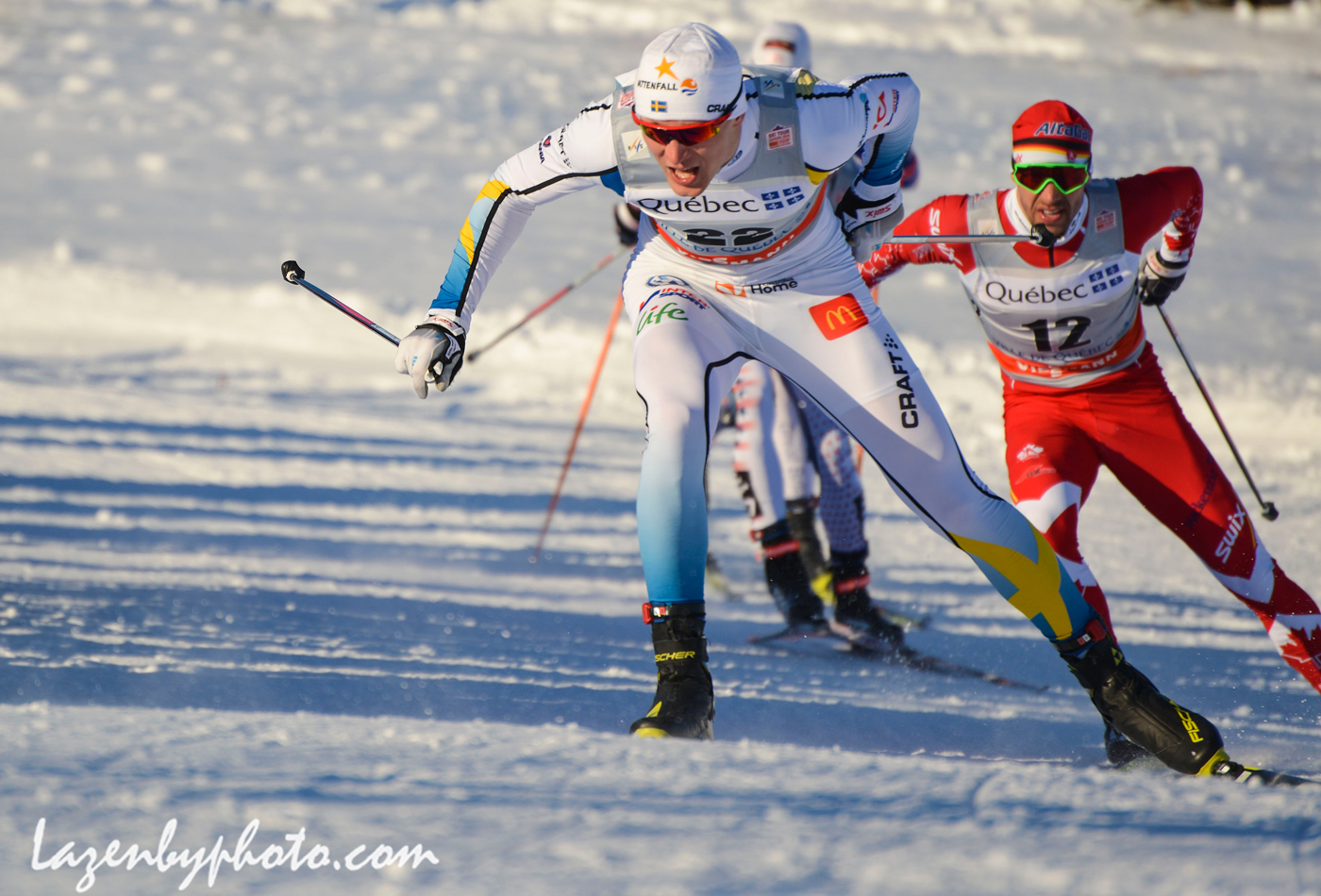
Sweden’s Oskar Svensson leads Alex Harvey and others during their quarterfinal at the freestyle sprint at 2017 World Cup Finals in Quebec City last March. (Photo: John Lazenby/Lazenbyphoto.com)
In the finishing stretch of the final, Svensson and Peterson again lunged for the win, which Svensson took by 0.4 seconds in 3:21.63. Kriukov finished third, 2.12 seconds out of first, followed closely by Panzhinskiy in fourth (+2.18) and Vylegzhanin in fifth (+2.84). Gafarov ended the day in sixth (+22.99).
Also in the top 10, Sweden’s Calle Halfvarsson placed seventh, Parfenov was eighth, Russia’s Alexey Vitsenko finished ninth and Sweden’s Johan Haeggström was 10th.
Of the six Canadian men who raced on Sunday, World Cup Team member Len Valjas was the lone qualifier in 24th (+8.69). In the second quarterfinal, from which two lucky losers advanced to the semifinal, he finished sixth, 3.85 seconds behind the heat’s winner, Halfvarsson. That put Valjas 29th overall on the day.
Julien Locke (Canadian U25 Team) raced to 39th in the qualifier, 12.32 seconds out of first and 2.36 seconds out of the top 30, for his best result of the weekend. He finished 72nd in the 10 k freestyle on Friday.
“It was a long, twisty course with a fairly gentle profile with the exception of two very short, punchy steep sections,” Locke, who recently earned World Cup starts at Frozen Thunder trials, wrote in an email. “With all of the fresh snow the last couple days, the track was a soft on the corners and broken up on the climbs.
“I felt that I skied well in the qualifier but was lacking tempo and glide speed on the climbs,” he continued. “The shape feels good and I was able to have a high output throughout the qualifier. I would have liked to race the heats as they would have been excellent race prep for the first World Cup on Friday.”
Another Canadian, Knute Johnsgaard (World Cup Team) followed in 40th, 0.48 seconds behind Locke and 12.80 seconds out of first. Russell Kennedy, last year’s NorAm winner who trains in Canmore with Team R.A.D., raced to 43rd (+13.30). On Friday, he finished 48th in the 10 k skate.
“It is always a bit hard with sprints, but the goal was to close really well,” Kennedy wrote in an email. “I felt strong and was much more happy with this sprint than my Frozen Thunder qualifier.”
With firm tracks and good skis, Kennedy described his Gällivare qualifier as “super smooth.”
“There was one pretty icy corner I thought it was kinda fun since there was a big berm you could ride but there were definitely some falls around that area,” he wrote.
Not wanting to overburden his body before some of the other races he is targeting in the upcoming weeks, Kennedy opted out of Saturday’s 15 k classic.
“I am trying to build my fitness a bit through these races so racing Friday was really good for my fitness and I took off Saturday to get some rest as I have a lot of races coming up that I want to perform well at,” he explained.
Two other Canadians raced Sunday’s sprint qualifier, with Jess Cockney finishing in 48th (+14.05) and Jack Carlyle in 105th (+33.44).
Sweden’s Charlotte Kalla racing to a win in her first race of the 2017/2018 season, the women’s 5 k freestyle in Gällivare, Sweden, on Friday. (Photo: Sporteventgallivare/Instagram)
Sweden’s Charlotte Kalla and Hanna Falk went 1-2 in Sweden’s season-opening International Ski Federation (FIS) race on Friday in Gällivare, with Kalla winning the women’s 5-kilometer freestyle by 8.8 seconds in 12:58.1 minutes. Falk, her teammate on the Swedish women’s team, placed second and Russia’s Yulia Belorukova took the third spot on the podium, 10.3 seconds out of first.
The host nation had three in the top four, with Ida Ingemarsdotter in fourth (+16.1). Switzerland’s Nathalie von Siebenthal finished fifth (+17.8), Russia’s Yulia Tchekaleva placed sixth (+23.4), and Russia’s Natalia Nepryaeva was seventh (+25.0).
Kikkan Randall of the U.S. Ski Team raced to eighth (+27.2), just ahead of Sweden’s Evelina Settlin in ninth (+32.0) and Russia’s Anna Nechaevskaya in 10th (+33.5). Japan’s Masako Ishida was just 0.3 seconds out of the top 10 in 11th.
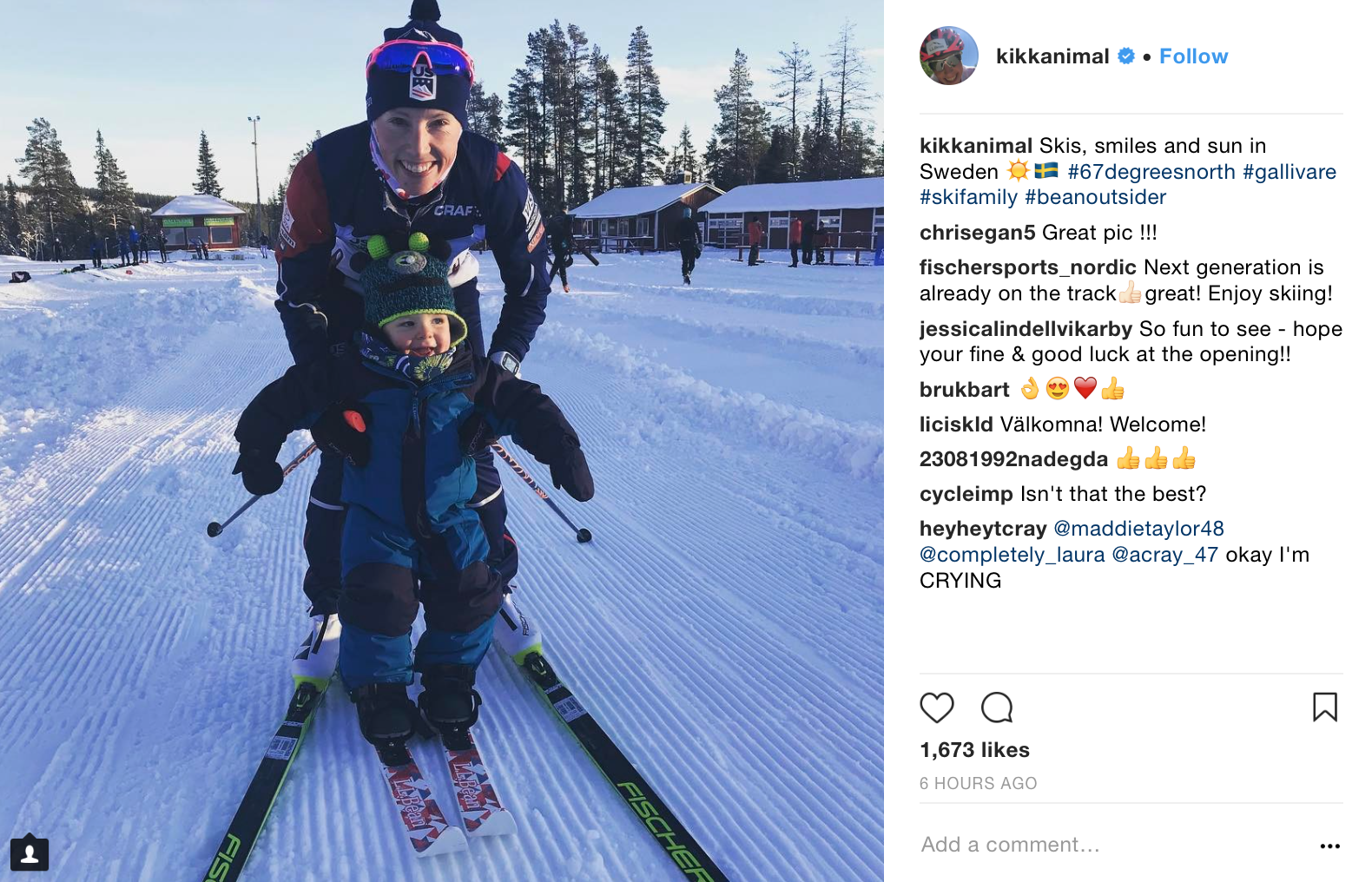
In an email, Randall explained that she decided to venture to Europe earlier this year to get some racing in ahead of the World Cup.
“We also wanted a little extra time to let Breck adjust to the 10hr time change!” she wrote of her 1-year-old son, who will be traveling the World Cup circuit with Randall and her husband, Jeff Ellis, this winter.
(Article continues below)
Most of the U.S. Ski Team arrived in Rovaniemi, Finland, on Thursday, Nov. 16 (with the exception of Andy Newell, who is racing this weekend in Beitostølen, Norway, with Noah Hoffman). The rest of her teammates planned to train at the Santasport Olympic training center in Rovaniemi until Nov. 21, when the entire team will meet up in Kuusamo (also known as Ruka), Finland — the site of next weekend’s World Cup opener.
“I’m happy with my start today,” Randall wrote of Friday’s race. “It took my a couple km’s to get going today but I felt like I was finding my rhythm in the 2nd half of the course. It’s my first hard session this week after the travel over so today was a good jolt! It was a competitive field and I was satisfied to be in the mix.”
Ninety-two women raced the Gällivare 5 k skate, compared to 56 women on Friday in Beitostølen (Norway’s FIS season-opener). Randall planned to race the 10 k classic on Saturday in Gällivare, then skip Sunday’s classic sprint.
“It’s great to be back around other World Cup skiers again and I’ve always liked Gällivare so it’s nice to be back here,” she wrote. “My former wax tech lives here and has been taking great care of us. … Looking forward to meeting up with the team in Ruka next week.”
With 46 Swedes and 23 Russians accounting for most of the women’s field, Canada’s Emily Nishikawa put herself in the mix in 26th, 54.9 seconds behind Kalla. Nishikawa’s Canadian World Cup teammate Dahria Beatty placed 56th (+1:38.3).
For Nishikawa, who’s known as a distance skier, the top-30 result was notable in that a 5 k falls somewhere between a sprint and a distance race.
“5km is such a hard distance, and it is over so fast, but it is a lot of fun,” Nishikawa wrote in an email. “I have been able to work on my sprinting a bit more this summer as I have been injury free, so I’m looking forward to seeing more speed in my racing this season.”
She planned to race all three days in Gällivare, including Sunday’s sprint.
“With these races, I am just hoping to fine tune my fitness and get some hard intensity in to feel sharp for the upcoming World Cup races,” added Nishikawa, who’s entering her fifth World Cup season as a leading member of the Canadian women’s World Cup Team. “Today’s race was a really hard effort and I am happy with how I skied today.”
In the men’s 10 k freestyle on Friday, another one of the Russians sanctioned by the International Olympic Committee (IOC), Evgeniy Belov won in 23:08.5. He was 6.5 seconds faster than his Russian teammate Sergey Ustiugov, who placed second. Ustiugov is the defending Tour de Ski champion and Overall World Cup runner-up.
Switzerland’s Dario Cologna placed third, 7.6 seconds out of first, and Russia swept fourth through ninth, with Sweden’s Marcus Hellner following in 10th (+36.4). Out of the five actively competing skiers the IOC sanctioned earlier this month, all five raced on Friday in Gällivare, which was legal considering FIS had not ruled they can’t.
Four of those skiers are men. In addition to Belov, Maxim Vylegzhanin placed 14th (+43.2), Alexander Legkov followed in 15th (+45.9) and Alexey Petukhov finished 23rd (+56.7) out of 157 finishers on Friday.
Devon Kershaw (front) training with U.S. Ski Team sprinter Andy Newell in Sjusjøen, Norway, last week. (Photo: Noah Hoffman)
Ahead of them, Canada’s Devon Kershaw ended up 12th (+39.9), tying another Russian Artem Maltsev (who is not on the IOC-banned list) with identical times.
“My stance on the whole Russian fiasco is unchanged,” Kershaw wrote in an email, referring to a previous email he wrote to FasterSkier earlier this week when asked how he felt about the IOC-banned Russians competing in FIS events. “I find the entire thing both disturbing and hilarious. The fact that FIS is risking their credibility like this makes no sense to me. Apparently there will be an emergency meeting of sorts tomorrow about it (with FIS I’m assuming but I haven’t heard much about it) – so we’ll have to all wait and see what they come up with.
“As for seeing Belov win – I mean, that’s no surprise,” Kershaw continued. “He’s shown that he’s a force when he’s in form. But yeah, the fact that he and others have been recently banned for life by the IOC are winning races after that news came out just shows the Mickey Mouse club that our sport has become.”
As for his own race, Kershaw wrote that he felt great about it. The course suited him well without too much hard climbing. “… You kind of need to be pushing the whole way around. I really like courses like that,” he wrote.
The conditions, however, with about 10 to 15 centimeters of new snow from the early morning that continued into the race, made the course slower, which Kershaw found to be more challenging.
“But that is another reason why I am so satisfied with the effort today. Individual start skating in soft conditions? Not my favourite, so I’m happy how I was able to execute things,” he wrote. “For me to be in the mix in a 10km skate like that feels great. I had good energy all race and hit my technical goals for the race too, so I have to be satisfied.”
Kershaw and the rest of Canada’s Period 1 World Cup team arrived in Gällivare last Sunday. Over the last week, they’ve been testing equipment and getting into a race routine ahead of the World Cup opener, he explained.
“I changed various things with my training this year so it’s exciting to see how my body feels in the beginning of a new season,” Kershaw wrote. “… My goals are really to just be calm and execute well – which means going into the racing with no expectations other than to ski as technically well as possible while working on the whole pacing thing (which can be challenging at the beginning of the season when you don’t have that many races in the body). I’ll look to have another well executed race tomorrow and the results will be what they will be.”
Canada’s NorAm leader at the end of last season, Russell Kennedy (Team R.A.D.) was the next-best Canadian in 48th (+1:35.7), followed by Len Valjas (World Cup Team) in 49th (+1:37.0). Jack Carlyle (Alberta World Cup Academy) placed 67th (+2:07.2), Julien Locke (National U25 Team) was 72nd (+2:10.9), Graeme Killick (World Cup Team) 90th (+2:32.2), Brian McKeever (Para Nordic Team) 97th (+2:39.0), and Jess Cockney (World Cup Team) 119th (+3:10.7). Knute Johnsgaard (World Cup Team) did not start.
Racing continues in Gällivare this weekend with 10/15 k classic individual starts on Saturday followed by classic sprints on Sunday.
Devon Kershaw (Canadian World Cup Team) competing in the classic sprint at the 2016 Ski Tour Canada in March in Canmore, Alberta. (Photo: Fischer/NordicFocus)
When race organizers in Gällivare, Sweden, decided to change the date of their pre-World Cup race series by a week, Canada’s Devon Kershaw lucked out. For the past couple of seasons, most of the Canadian World Cup Team has spent their final days before the start of the race season skiing and competing in Gällivare.
Once again, the team planned to travel 100 kilometers north of the Arctic Circle for a pre-World Cup camp, booking their plane tickets to Sweden for the week of Nov. 19 — when the city’s races were originally slated to take place.
However, due to a scheduling conflict with Sweden’s annual early season races in Bruksvallarna, the Gällivare race dates moved up a weekend, leaving only one of Canada’s cross-country athletes the option to race in Gällivare.
“Since I am based in Oslo, it was just sheer luck that we hadn’t booked my flight yet (from Oslo up here to Gällivare) when those changes took place,” Kershaw, who lives just outside of Oslo, Norway, with his wife Kristin Størmer Steira, wrote in an email. “So I asked to come up a few days earlier than the team to get a chance to race.”
With the help of Canadian head wax tech Yves Bilodeau, who lives in France and was able to join Kershaw, the 33-year-old Kershaw won Sunday’s 15 k classic individual start in 35:18, besting the runner-up, Petr Knop of the Czech Republic, by a minute. Michal Novak, also of the Czech Republic, placed third, (+1:05).
Though only 11 senior men entered Sunday’s 15 k, which wasn’t an International Ski Federation (FIS) sanctioned race, Kershaw indicated that from his standpoint, putting on a race bib and bringing his body back into racing was important.
“Being a slow-starter at times with regards to World Cup period #1 in my career (I have never been on the podium on the World Cup prior to Christmas) the biggest focus was just to put a bib on and blow out the cobwebs,” Kershaw wrote. “It’s nice to get nervous, test skis properly, and go through a whole routine around an organized race. In the race itself I focus on skiing technically well, being present and just being as efficient as I can be when my body is screaming to stop.”
Kershaw explained that he lucked out even more with getting into the Gällivare races, as they would be his only opportunity to for a preseason on-snow race this season.
“Time trials are great workouts, but for me I really believe that nothing replicates racing and have always have benefited from getting in some ‘lower key’ races before starting off on the World Cup,” he wrote. “This season [the Gällivare 15 k] will be the only race I get to do before the World Cup starts.”
In a post-race interview, Kershaw told Langd.se that he benefited from some summer training with Norway’s Martin Johnsrud Sundby and Sweden’s Martin Johansson, who lives in Norway. On Sunday, Kershaw took control of the race early, leading the first of four 3.75 k laps by more than 20 seconds over his nearest competitor.
“It was amazingly good conditions today, the body responded as it should and the skis were really good,” he said.
Kershaw arrived in Sweden late last Friday and will remain there until the rest of the Canadian World Cup team (except Alex Harvey, U25 Team skier Cendrine Browne and coach Louis Bouchard, who are training in Davos, Switzerland) joins him on Nov. 23. Then they’ll drive as a group to Kuusamo, Finland, where the opening World Cup will be held Nov. 26-27.
“Of course it would perhaps be nice to start the year with really competitive races in Beitostølen or Bruksvallarna (like we have done many times in the past), but with our budget having been absolutely decimated these last couple years it’s no longer realistic and/or viable,” Kershaw wrote. “The fact that we can en-masse drive to Kuusamo for the World Cups saves our team bundles of money that we can then use to support the World Cup racing as best we can.”
Jessie Diggins of the U.S. Ski Team won both races in last weekend in Gällivare, Sweden, leading a 1-2 U.S. women’s finish in the classic sprint with teammate Sophie Caldwell on Saturday, and sharing the podium with Caitlin Gregg, who was third in the 10 k skate on Sunday. (Photo: USSA/Stefan Nieminen)
A win is a win: especially when it’s north of the Arctic Circle in chilly conditions and in the first races of the season.
Jessie Diggins started 2015/2016 off with back-to-back wins at the International Ski Federation (FIS) races in Gällivare, Sweden, topping the podium in both the classic sprint and 10-kilometer freestyle.
Above all, the U.S. Ski Team member said the races were confidence boosting and a good way to take inventory on “what else needs to be improved, as well as a good reminder of warmups, race routines, and testing skis.”
On Day 1 of the cross-country races in Gällivare, Diggins and her teammate Sophie Caldwell captured first and second, respectively, in the classic sprint.
“I want to walk up to the start line of a classic race with that same confidence in myself that I have at the start of every skate race,” Diggins said after Saturday’s sprint.
“I don’t care if it’s a World Cup or a local club race. Having three of the six podiums was just a lot of fun,” U.S. women’s coach Matt Whitcomb said on Saturday, after Andy Newell finished second in the men’s sprint.
On Sunday, two American women again reached the podium, with Diggins in first and Caitlin Gregg in third. In the men’s 15 k freestyle, Canada had two in the top four, with Alex Harvey in second and Devon Kershaw in fourth.
“That … was probably my best individual-start skate race in 1.5 years,” Kershaw remarked.
Norway’s Petter Northug racing to a 10 k classic win on Nov. 20 in Bruksvallarna, Sweden. He did so in a custom suit with the Swedish colors. (Photo: AdaMedia Med Mera/@adamedmera)
About 900 kilometers south in Bruksvallarna, Sweden, Petter Northug ruffled feathers on Day 1 of the three-day FIS race series. He won Friday’s 10 k classic by 36 seconds while wearing a Swedish-national-team-like suit. Meanwhile, Sweden’s Charlotte Kalla won the women’s 5 k classic by 25 seconds.
The next day, Kalla won again — this time by 36 seconds in the 10 k freestyle. Led by Niklas Dyrhaug, the Norwegian men swept the Bruksvallarna 15 k skate podium.
Finally on Sunday, Stina Nilsson put the kibosh on Kalla’s streak as the 22-year-old Nilsson won the women’s skate sprint. Kalla placed second, and in the men’s sprint, Norway’s Havard Solås Taugbøl, 22, won by 0.09 seconds over Sweden’s Karl-Johan Westberg.
For the first time, the US Biathlon team logged some pre-World Cup race starts, traveling to Sjusjøen, Norway, to do so. In Saturday’s sprint, the American men all finished in the top 30. Tim Burke led them in 13th.
“Today was definitely a solid team performance,” Burke explained. “Our entire men’s team is at a very high level…”
At one point, American Susan Dunklee ranked first in the women’s sprint after cleaning the first stage, but missed four in standing and ended up 21st.
“My ski shape feels a little sharper than it usually does in November,” she wrote.
Less than four seconds back, her teammate Annelies Cook was 25th. Canadian Megan Tandy (formerly Heinicke) was 23rd with 90-percent shooting. Italy’s Dorothea Wierer won the race with clean shooting.
In Sunday’s mass start, the lone American competing, Leif Nordgren finished 19th with six penalties on a windy day. Tandy placed 40th in the women’s race with seven penalties.
“I was disappointed for sure since it was such a good opportunity against tough competition, but considering the conditions, I’ll get over it quick!” Nordgren wrote.
The men’s sprint winner from the day before, Germany’s Simon Schempp won the mass start as well, by fewer than six seconds over Norwegian Alexander Os of Team Feskslo — or fish guts.
Ukraine’s Juliya Dzhyma cleaned the final stage to win the women’s mass start.
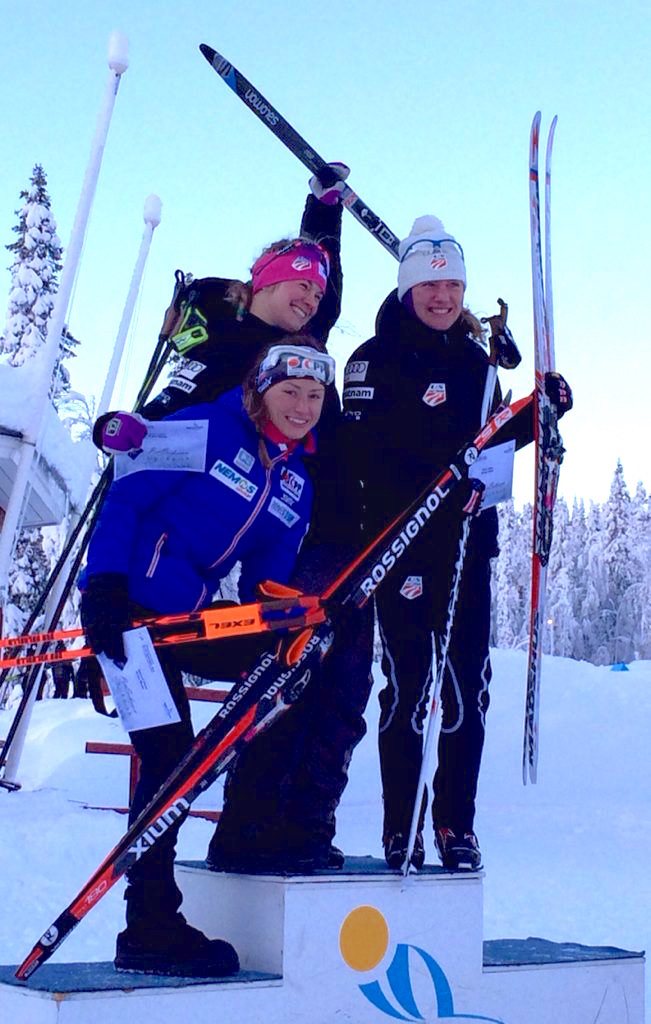
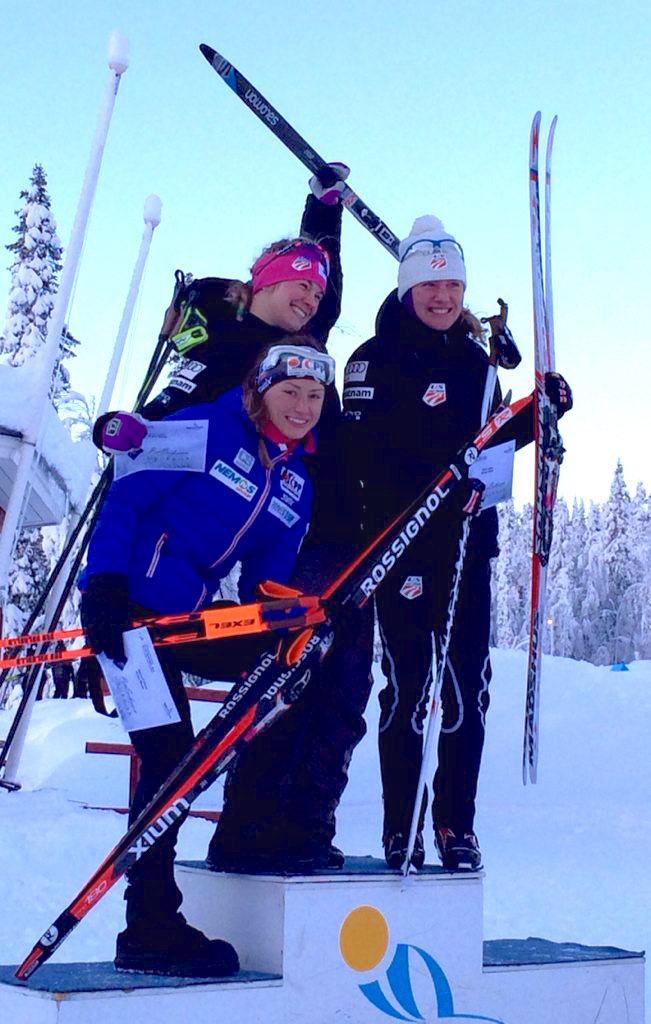
Jessie Diggins stands atop the podium with Czech runner-up Petra Novakova (l) and U.S. teammate Caitlin Gregg (r), who placed third, after the women’s 10 k freestyle in Gällivare, Sweden. (Photo: USSA)
Consider it a test drive. That’s how several members of the U.S. Ski Team viewed this weekend’s season-opening International Ski Federation (FIS) races in Gällivare, Sweden. And while a win or result close to it is always welcomed, it wasn’t essential. No need to go 100 miles per hour on the first try.
That said, if you start fast, go with it. Jessie Diggins, a 24-year-old A-team member who took silver in the 10-kilometer freestyle at the 2015 World Championships last season, kicked off this season with a win on Saturday in the Gällivare classic sprint, then repeated the feat in Sunday’s 10 k freestyle — what’s becoming her signature event.
While it was great to get some good feelings on snow and back-to-back victories to go with it, Diggins said in a post-race phone interview that it was more about taking “inventory of where [we] are and what else needs to be improved, as well as a good reminder of warmups, race routines, and testing skis.”
She added that the wins were a huge confidence boost going into the World Cup season, which starts Friday in Kuusamo, Finland. And she was pleased her offseason of technique work translated to results on snow.
She was the fastest in a women’s field of 38 on Sunday, winning the 10 k in 25:08.7 by 10.7 seconds over Petra Novakova of the Czech Republic. For the second-straight day, the U.S. had two on the podium with Caitlin Gregg in third, 30.1 seconds behind Diggins. It was a flashback to February, when the two shared the podium at 2015 World Championships, where Diggins placed second in the 10 k skate and Gregg was third.
Diggins had started second to last ahead of another teammate, Liz Stephen. Gregg went out 30 seconds ahead of Diggins and kept herself in contention in the top-three throughout the race.
At the finish, Novakova originally bumped Czech teammate Karolina Grohova out of the lead, then stayed 19.4 seconds ahead of Gregg to hold onto first. That is, until Diggins crossed the finish line.
“The course was awesome,” Diggins said. “It’s a challenging track with quite a bit of climbing and twisty, turny descents which doesn’t allow for a lot of rest. It is a great representation of the type of courses we race on the World Cup.”
While she had fun out there, she also made up a lot of time on those who started ahead of her. Diggins jumped out to an early lead, 0.4 seconds ahead of Gregg and 0.7 seconds ahead of Novakova in third, by the first checkpoint.
Jessie Diggins (bottom) and Caitlin Gregg after notching silver and bronze, respectively, at 2015 World Championships in the 10 k skate.
Halfway through the race, she held a 3.5-second lead over Novakova and Gregg was 17.6 seconds back in third. On the second of two laps, Diggins caught Gregg, her 30-second woman, and the two finished together.
“I was psyched when Jessie caught me because I felt like I was skiing well so I knew she was skiing well!” Gregg recalled in an email. “I cheered for her and tried to hang on. As I started following her stride I felt myself actually relax and start skiing way better! I tried to keep the pressure on her because I knew she was fighting for the win without stepping on her skis! I thought it was great to follow her on most of the second lap and it certainly helped me reach the podium!”
Gregg wasn’t exactly sure where she stood throughout the race, but she had a sense she was in the running for a top result.
“Both Jessie and Petra are fantastic skaters so it was a solid result for me,” Gregg wrote, a day after placing seventh in the classic sprint. “My skis were fantastic and I knew I was moving well on the course.
“This has by far been my best preparation season ever,” the 35-year-old U.S. Ski Team rookie added. “I started working with [personal coach] Tom Jorgenson after I came home from Norway this summer and he had helped me immensely in my training and technique! I feel like my fitness is really good right now and I am very excited to start the season.”
Eighteen seconds behind Gregg, Stephen placed fourth, and another 1.8 seconds later, the fourth U.S. woman in the top five, Rosie Brennan was fifth.
“Our coaches were out there giving splits and cheering as were our waxers,” Stephen wrote in an email. “We had a great group out there pushing us on and encouraging us to rally. The splits just encourage me, but I was not focused on the result out there today, I was just focused on the getting back into the groove of it all and maximizing my time taking corners with loaded legs at high speed.”
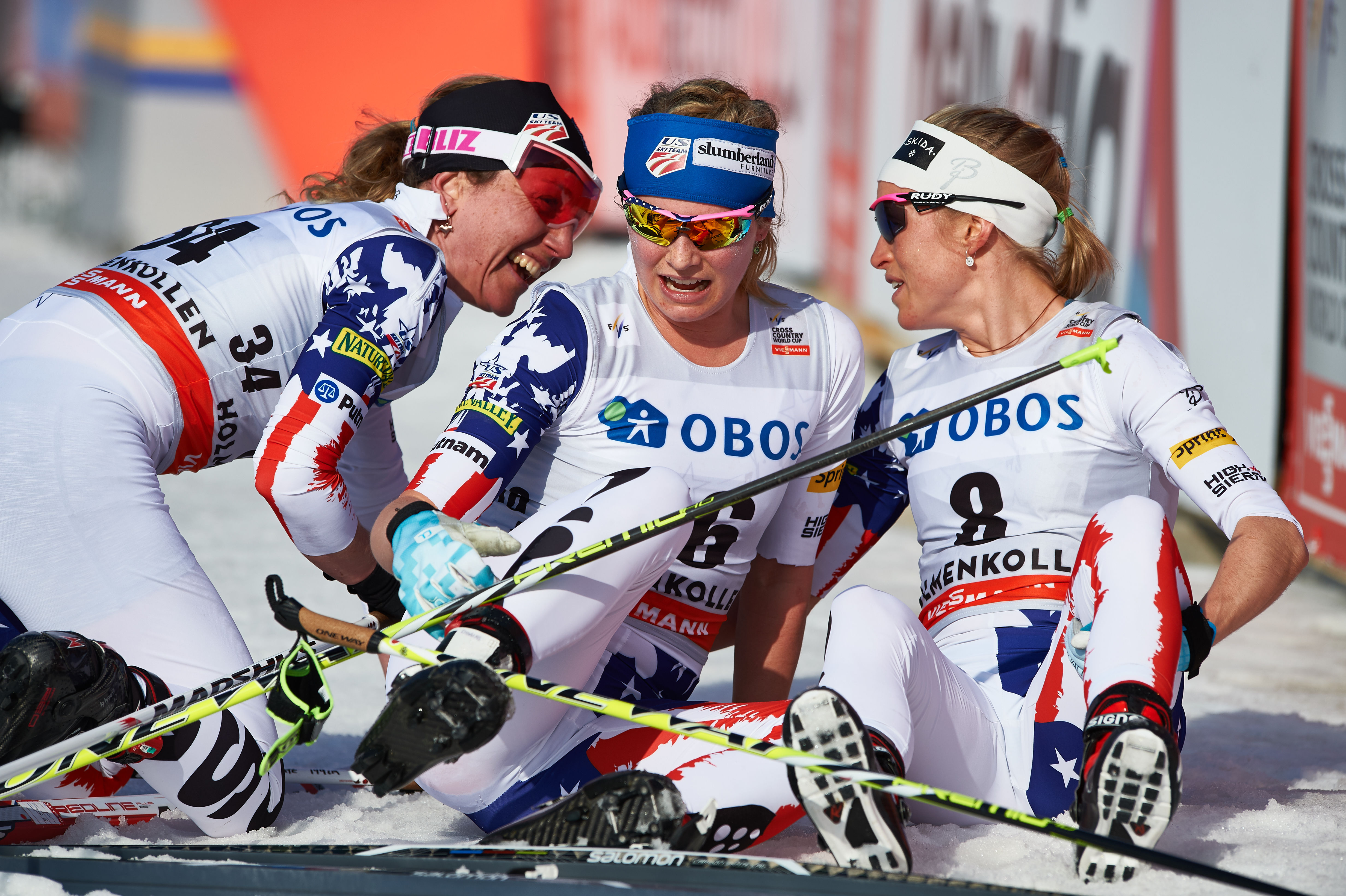
U.S. Ski Team members Caitlin Gregg (r), Jessie Diggins (c) and Liz Stephen (r) at the finish of the 2015 Holmenkollen 30 k. Stephen led the three in ninth, while Diggins and Gregg Placed 14th and 19th. (Photo: Madshus/Nordic Focus)
On Saturday, Stephen — a well-known distance skier and hill climber — made the rounds and placed ninth in the classic sprint.
“My goals for the weekend were to put a bib on and remember what it feels like to be ski racing on snow again,” she explained. “Snow brings its own set of new challenges and it can take a bit of time to get used to those again. I have a constant project on improving my downhills, so working on that the last couple of races has been on my mind, though today’s race was not my best performance on the downhill skills portion but, it has it’s ups and downs like any project.”
Stephen added that she needed some more races to get into the form she wants to be in. Brennan was looking for the same.
“I know my base fitness is quite high so it is a matter of finding the right balance of rest, quality intensity, and race starts,” Brennan wrote in an email. “I felt my race was solid, but I think I have another level in me that I hope to see as the season progresses.”
Between those four U.S. women, that was everyone from the women’s team that competed. Ida Sargent rested this weekend as she’s been fighting a cold and is aiming to be healthy when the World Cup starts next week, U.S. women’s coach Matt Whitcomb explained. Sadie Bjornsen also did not race as she was coming off an illness from last week.
“Sadie is healthy and back training, but the stomach bug she had earlier in the week isn’t something we wanted to test,” Whitcomb wrote in an email. “We know what happens with that test. She is in great spirits and had a productive workout tonight.”
As for the results, with the U.S. notching two podiums and sweeping third through fifth, Whitcomb said in a phone interview that “the results are fun. It’s great to get a podium regardless of what show you are playing in, but the important thing is they are looking really good in what they are doing.”
He credited Diggins with “another brilliant day” and said he was excited to see what she can do on the World Cup this season.
“People can be scared of skiing fast early in the season, but to be honest, Jessie is just getting started,” he said.
He added that the team’s wax crew was another highlight of the weekend, especially with new members that service chief Oleg Ragilo assembled this year. Diggins agreed.
“The wax technicians did a great job, we had fast and consistent skis all weekend,” she said.
Temperatures were cooler on Sunday, around -11 degrees Celsius (12 degrees Fahrenheit).
Canada’s lone female in Gällivare, Emily Nishikawa placed ninth (+2:35.2), a day after finishing sixth in the sprint.
“I was happy to start the season with a good race!” she told Cross Country Canada after Saturday’s race. “I’ve had a good summer of training and feeling strong coming into the race season so I was really excited to race…”
Monday marks a travel day for most, with the World Cup skiers heading to Kuusamo for four days of preparation before the season begins in earnest with a classic sprint on Friday.
Canada’s Alex Harvey racing in the World Cup freestyle sprint qualifier last season in Lahti, Finland, where he placed 63rd. On Sunday, he placed second in his first distance FIS race of the season. (Photo: Fischer/NordicFocus)
Canada’s Alex Harvey’s goal for the day was preparation: avoid wasted energy in the cold, eat right, and nail his pre-race ritual. He may want to continue whatever process he found Sunday morning, as the Canadian flew through the halfway point with the fastest time and found himself only 27.5 seconds down in second place at the end of the men’s 15-kilometer freestyle International Ski Federation (FIS) race in Gällivare, Sweden.
Like the Gällivare men’s podium on Saturday, the leading North American male found himself sandwiched between two Russians, Sergey Ustiugov, who repeated in first, and Evgeniy Belov, who landed on the third step of the podium for the second time in as many days, 42.2 seconds behind Ustiugov.
Harvey said in a post-race phone interview that he wanted to take advantage of this distance tuneup as an opportunity to “try a little different strategy.” For him, that meant “going out a bit harder, knowing I would fade a bit in the end.”
All in all, his new strategy paid dividends as he recorded the fastest split through the halfway mark, up 5.2 seconds on Ustiugov. He said he faded during the last lap, but thought he nailed the preparation and was happy to get in two solid race efforts throughout the course of the weekend. On Saturday, Harvey narrowly missed the final for seventh overall.
Russia’s Sergey Ustiugov leads Dario Cologna of Switzerland in the World Cup 15 k freestyle last season in Rybinsk, Russia. Cologna won and Ustiugov finished third. This weekend in Gallivare, Sweden, Ustiugov won back-to-back FIS races to start the 2015/2016 season: a classic sprint and 15 k skate. (Photo: Fischer/Nordic Focus)
On the Russians’ consistent top finishes in these races, Harvey said that he’d heard from Russian coaches that their athletes “have to be in really good shape in Kuusamo, just to be able to stay on the World Cup, so right now they are quite fresh.”
The World Cup season starts Friday in Kuusamo, Finland, with a three-day mini tour.
Feeling fresh would have been a luxury for most of the North Americans, who arrived in Europe within the last ten days and are still adjusting to snow skiing.
“Skiing on snow is a bit more muscular than just rollerskiing, so the transition is always a bit hard for me at least,” Harvey said.
His teammate on the Canadian World Cup team, Devon Kershaw finished fourth, 1:05 behind Ustiugov and 22.8 seconds off the podium.
In an email, Kershaw explained he used his experience skiing this course on previous World Cups to create a race strategy.
“I really love the latter part of this type of course — it suits me well [to] hammer the flatter/gradual terrain and back it off a bit on the steeper sections,” he wrote.
Canada’s Devon Kershaw racing to 36th in the World Cup 15 k freestyle in January 2015 in Rybinsk, Russia. He placed fourth in his first distance FIS race of the 2015/2016 season in Gallivare, Sweden. (Photo: Fischer/NordicFocus)
Kershaw described the conditions as cold and fairly slow, with little humidity in the snow. While this played a minor role, he was more focused on executing his race strategy of speeding up each lap and working on technical queues.
“I am pleased with how I skied technically,” the classic specialist wrote. “I am happy to be only 1:05 back in a skate race, [which] means that it was probably my best individual start skate race in 1.5 years.”
After Stanislav Volzhentsev finished fifth (+1:13.2) to become the third Russian in the top five, American Noah Hoffman placed sixth (+1:23.5).
“My plan today was to go out aggressively, and I did that well,” Hoffman said in a USSA press release. “Next week’s individual start race is only a 10 k so I’ll need to go out hard. I faded a little on the last lap today, but I’m pleased with the way I skied, and I believe I can build on this performance in the coming weeks.”
Hoffman was 5.2 seconds ahead of seventh-place finisher, Sweden’s Marcus Hellner, who calls Gällivare his home course. Canadian Ivan Babikov placed eighth (+1:38.6), Martin Jaks of the Czech Republic was ninth (+1:42.8), and American Erik Bjornsen was 10th (+2:05.1). It was Bjornsen’s second top 10 in as many days. In Saturday’s sprint, he placed eighth.
“It wasn’t the effort I was looking for but that’s what these races are for, practice,” Bjornsen wrote in an email after the 15 k. “I’m hoping to build into the season.”
For most of the race, he had no idea where he stood, as he skied alone for most of it.
“…If it weren’t for the coaches doing a great job yelling at me I would have thought the race had been canceled or something,” Bjornsen wrote.
“I’m not very happy with way I paced myself, maybe I didn’t have enough time to get over a jet lag but I lost most of my time on the last 5km of the race,” Babikov wrote. “I’ll try not to repeat this mistake next weekend.”
Canadian Graeme Killick placed 11th (+2:06.9) for his second top 20 for the weekend (he was 19th in the sprint). American Kris Freeman (Team Freebird) was 16th (+2:24.5), and Saturday’s sprint runner-up, Andy Newell (U.S. Ski Team) was 23rd (+3:45.7) of 57 finishers.
Looking ahead, World Cup racers will travel to Kuusamo this week for the Ruka Triple World Cup opening races, starting with a classic sprint on Friday.
In the U.S. Ski Team’s first race of the 2015/2016 season, Jessie Diggins led a 1-2 U.S. finish with teammate Sophie Caldwell finishing second. Here Diggins is shown celebrating her FIS classic sprint win on Saturday in Gällivare, Sweden. (Photo: USSA/Stefan Nieminen)
Far north, beyond the Arctic Circle in Gällivare, Sweden, the U.S. Ski Team had its first race of the season. As part of a pre-World Cup FIS race series, the women began with a 1.2-kilometer classic competition on Saturday.
All things considered, it was mission accomplished. Diggins won the sprint final just a length ahead of U.S. Ski Team and Stratton Mountain School (SMS) T2 teammate Sophie Caldwell in second (+1.37). A Czech Olympian and World University Games sprint medalist, Karolina Grohova, finished third (+1.47).
Yet, the women’s field in Gällivare is on the thin side, with just 17 racers finishing the qualifier. That meant that everyone automatically made quarterfinals; absent from these races are top skiers from the usual podium suspects: Norway, Sweden, Germany, and Finland.
“I definitely expected a couple of podiums today for the women,” U.S. Women’s Coach Matt Whitcomb said in an interview. “But I wasn’t sure of what sort of performances to expect. This first week is always sort of a wild card with people adjusting to more quickly than others.”
Caitlin Gregg placed seventh, just missing the final, and Liz Stephen ninth. Both raced in the semifinals.
Sophie Caldwell leads Canada’s Emily Nishikawa in their semifinal. (Photo: Justin Wadsworth)
Asked why the team chose Gällivare as the tune-up rather than races with a more stacked women’s field — for instance, Bruksvallarna, elsewhere in Sweden — Whitcomb explained that a touchy snow situation in Europe in the past few weeks made planning more difficult for both the U.S. and other teams, and that snow is a bigger priority than the races themselves.
“The priority is on finding the best snow for this week as we adjust,” he said. “The number one goal for this week is to have a great on-snow training camp. The conditions are blue hard wax skiing and wearing gloves without freezing your fingers.”
Despite the good snow and mild weather — race temps hovered around -5 degrees Celsius (23 Fahrenheit) — early season racing can be about nerves.
“I was the one running around the start pen cracking jokes and waving hi to everyone, because that’s how I deal with it,” Diggins said in a post-race phone interview. “A lot of people think that’s me not being nervous. But that’s me getting ready to race.”
That nervous energy was channeled into forward momentum from the go; the first taste of international competition for the U.S. women, a success. That began right away during qualification.
Caldwell qualified the fastest, in 3:00.25, nearly four seconds ahead of Diggins in second (+3.95). Canada’s Emily Nishikawa qualified fifth (+9.91).
“Seeing the results confirmed that I felt really good for the race and I was definitely surprised to have won the qualifier by that much,” said Caldwell over the phone. “I wanted to give the qualifier a really good effort like I would on the World Cup, because I think it’s a really good practice race for next weekend.”
She set herself up for a smooth transition from the qualifier, through the quarters, and into the semifinals.
Sophie Caldwell (l) and Jessie Diggins (r) take charge during Saturday’s 1.2 k classic sprint, the first FIS race of the season in Gällivare, Sweden. (Photo: U.S. Ski Team)
There, the competition became a little stiffer. Caldwell won her semifinal heat, beating Canada’s Nishikawa by a ski length.
Through her qualifier and heats, Diggins maintained she could feel her summertime training and technique drills pay off.
“This summer I’ve been working on my power striding,” she explained. “Just working on those long smooth strides and just not being frantic. And this course really suited that. I focused on setting my wax pocket and using my power.”
Diggins advanced to the finals, winning her semifinal by 2.34 seconds over Norway’s Anna Svendsen. That set her on a crash course with Caldwell and Nishikawa.
Diggin’s strategy for the final was to ski to the front right away and hold it, since passing on the twisting course remained tough.
“When we were 40 seconds from the stadium, I knew I had a good chance to win it because there was no way to get around,” said Diggins.
“I wanted to try following- I didn’t want to lead out of the start,” said Caldwell, about her finals strategy. “Because I had led my first two [heats] and it’s generally faster to follow,”
Caldwell decided to shadow Diggins.
“Even if I had led out the first part, [Diggins] is good at the downhills and double poling. I figured she would be able to make up anytime catching me on the double pole section.”
With a small gap before the finish, the duo hammered into a downhill, gaining speed. Cadwell tucked in behind Diggins for the remainder of the race. Diggins double pole strength outdistanced Caldwell by just over a second at the finish.
Beyond the win, Diggins believes hers was also a psychological victory. Diggins says she’s becoming more confident about being a complete World Cup racer, not only a world class skate skier.
“I want to walk up to the startline of a classic race with that same confidence in myself that I have at the start of every skate race,” explained Diggins.
Whitcomb thinks that’s definitely coming.
“It’s the best I’ve seen Jessie classic sprint ever,” he said. “It gives us a big boost as we move into the World Cup season next week.”
The small women’s field didn’t take anything away from his enthusiasm about the results: with Andy Newell in second, the team had also had success in the men’s race.
“I don’t care if it’s a World Cup or a local club race. Today, having three of the six podiums was just a lot of fun,” said Whitcomb.
The race venue, with smaller fields on the women’s side, was also a time for the U.S. service team to gel. Whitcomb says Saturday offered relatively straightforward waxing. That’s noteworthy.
“Our service staff has four new faces on it for this period one of racing. Three are full time staff members that we’ve added this year. To see this crew operating as seamlessly as they did was a really good feeling today.”
Racing will continue on Sunday with a 10 k skate competition.
Andy Newell before his qualifying start in Gällivare, Sweden’s opening FIS classic sprint on Saturday. (Photo: USSA)
Amidst some heavy hitters from Canada and Russia, U.S. Ski Team veteran Andy Newell proved he packed some punch during the men’s 1.4-kilometer classic sprint on Saturday in Gällivare, Sweden.
“I felt good all day long, really,” said Newell in a post-race phone interview. “That’s kind of the main goal going into these races, is not so much the result, but getting a good response from your body.”
On Saturday, his body told him to go for it.
After finishing second in the qualifier, 2.87 seconds behind 23 year-old Russian Sergey Ustiugov, Newell, 31, explained his instincts only got better.
“I went into my quarterfinal heat and I knew I had [Canadian] Alex [Harvey] in there, who is a tough sprinter, so I tried to control the heat and put down a move up the last hill,” he said.
By controlling the heat early on, Newell won his quarterfinal and advanced with Harvey, who finished just 0.14 seconds later.
“None of us wanted to lead [the quarterfinal],” Harvey explained in a phone interview. “So Andy went in front.”
American Andy Newell (l) captures second in a World Cup semifinal just 0.25 seconds ahead of Canada’s Lenny Valjas in the 1.5 k classic sprint at the Davos World Cup in Switzerland 2013. (Photo: Fischer/Nordic Focus)
Along with Harvey, two other Canadians finished second in their quarterfinals: Devon Kershaw and Lenny Valjas. Kershaw was just 0.83 seconds behind his heat’s winner Ustiugov. Valjas edged Poland’s Konrad Motor in a photo finish for second in his quarter final and Russia’s Evgeniy Belov crossed the line in first.
Rounding out the North American crew that moved on to the semifinals was 24-year-old Erik Bjornsen, who finished second in his quarterfinal, just one-tenth of a second back from Russia’s Stanislav Volzhentsev.
“Today’s race was a good chance to blow out some steam and get the body ready for the World Cup,” Bjornsen wrote in an email. “I’ve been feeling a little tired from the training year, so it was good to finally have some snap and spark to the movements.”
In a North American showdown, Newell, Harvey, Valjas, and Bjornsen all advanced to the same semi-final. Bjornsen finished fourth, two seconds behind Newell in second and Harvey in third. Valjas finished four seconds later in fifth. While Harvey, Bjornsen and Valjas did not advance (ultimately placing seventh, eighth and 10th overall) and Kershaw was fifth in the other semifinal (for ninth overall), Newell moved on to the final.
“I think the challenge of [sprinting] is knowing how to respond to different tactics out there and knowing when to use your strengths and also recognizing what your weaknesses might be,” Newell said. “Between the Russians and Canadians, it was a pretty tough field with a lot of good sprinters. In order to make the final, I actually came into the lanes in third and [had] to sprint past Harvey and [Russia’s Evgeniy] Belov.”
While Belov beat Newell by 0.17 seconds for the semifinal win, Newell edged Harvey for second in a photo finish by 0.18 seconds.
The lone North American in the final, Newell knew where he wanted to set his sights.
“Anytime I get on the start line in a sprint I want to try and win the race” he said. “In the final I knew I just had to hang on to Ustiugov, because he had been trying to go off the front all day.”
With tenacity, Newell entered his fourth hard effort of the day and posted his fastest course time, just 1.43 behind Ustiugov’s winning pace of 2:45.95.
“[Ustiugov and I] were able to pull away from most of the field and I stuck with him up the last hill,” Newell said. “[When] we came into the lanes, I was right behind him and I thought for a second I might be able to get around him, but he just had too much speed in the last hundred meters.”
Ustiugov managed to gap Newell by 1.63 seconds for the win. Belov placed third, 2.63 seconds back. Rounding out the sprint final were Poland’s Maciej Staręga in fourth (+4.96), Volzhentsev in fifth (+6.36), and Sweden’s Johan Haeggström in sixth (+13.07).
“Newell has been skiing exceptionally well all year at camps, better than I’ve ever seen him and he proved today that that was no illusion, he was stronger and stronger every heat,” said U.S. Ski Team coach Matt Whitcomb. “He looked absolutely fantastic in the last part of his final round today, so that was really exciting.”
Despite not having any skiers in the final, Canadian head coach Justin Wadsworth feels his athletes are ready for the World Cup.
Canada’s Alex Harvey skiing in his quarterfinal en route to second in the 1.4 k classic sprint at the 2015 FIS Nordic World Ski Championships in Falun, Sweden. (Photo: flyingpointroad.com)
“Right now, I think everyone is ready to start the [World Cup] mini-tour next week in Finland,” he said during a phone interview. “Everyone is in a good place, we’ve just got to tune up the engines a little bit more, but that’s kind of normal for our team at the start of the year so I’m not too concerned.”
“It was the first race on snow since last March, so just getting the bib on, getting the routine on again … is important,” Harvey explained.
Keeping the Kuusamo World Cup next weekend and the rest of the season beyond that in mind, Newell said he thought the Gällivare sprint races benefitted his team.
“I think we’re already looking better than we did last year because we were able to get this practice race in and I think we’re going to be feeling a lot better next weekend than we did last year,” he said.
With the proper preparation and practice, Newell is personally feeling more ready than ever for the upcoming season. “What a good sprint racer can do is make decisions while they’re out there racing and kind of react to certain attacks or make the attacks themselves,” he said. “I think what you’ll see more from me more this year is I’ll be the one making attacks and not responding to other peoples’.”
Racing in Gällivare continues Sunday with the 10/15 k freestyle.
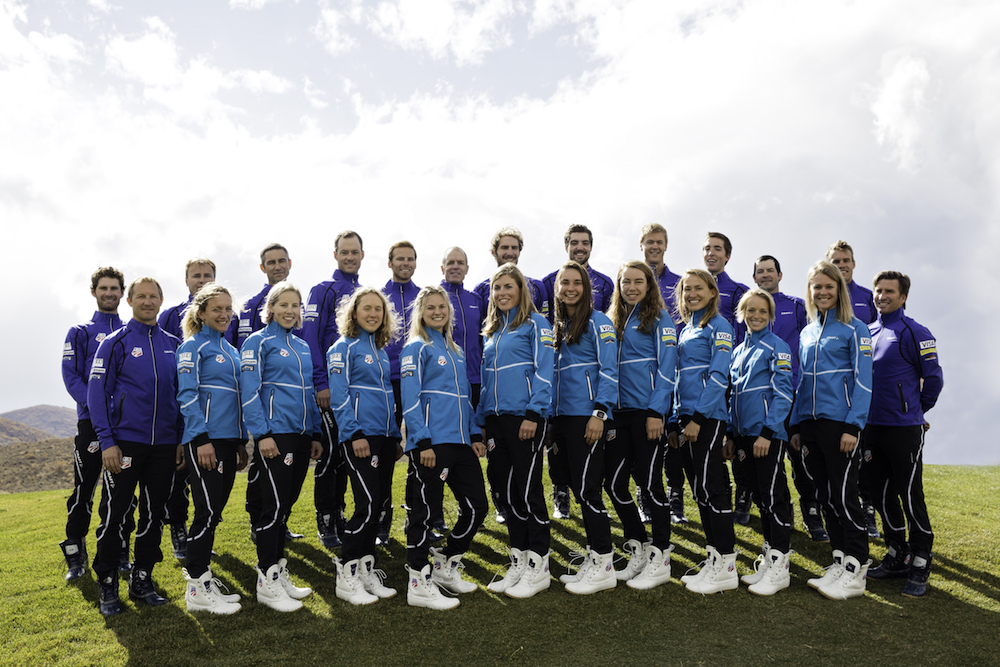
The 2015/2016 U.S. Nordic Ski and Nordic Combined teams during a team photo shoot in their new uniforms on Monday, Oct. 19, in Park City, Utah. (Photo: U.S. Ski Team)
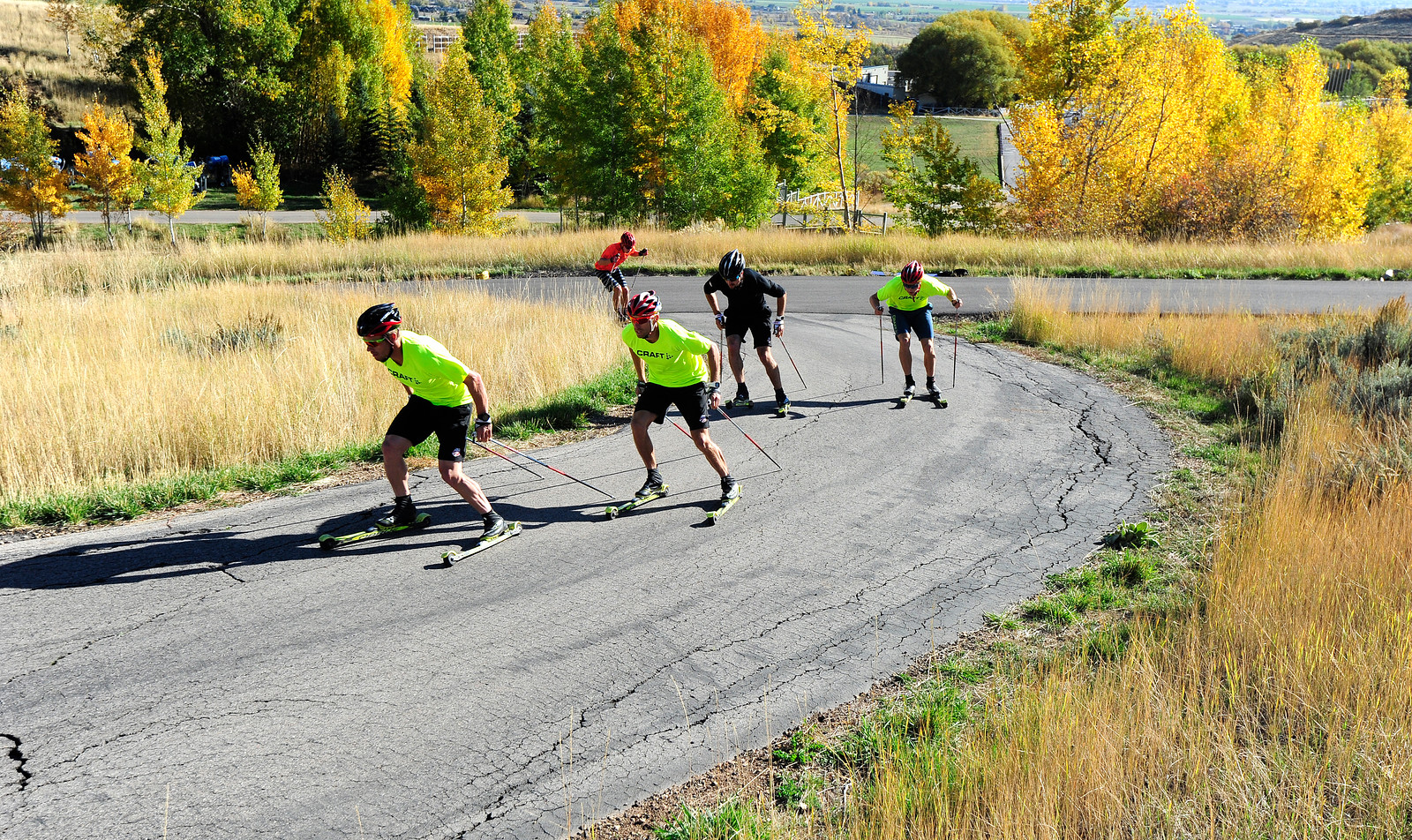
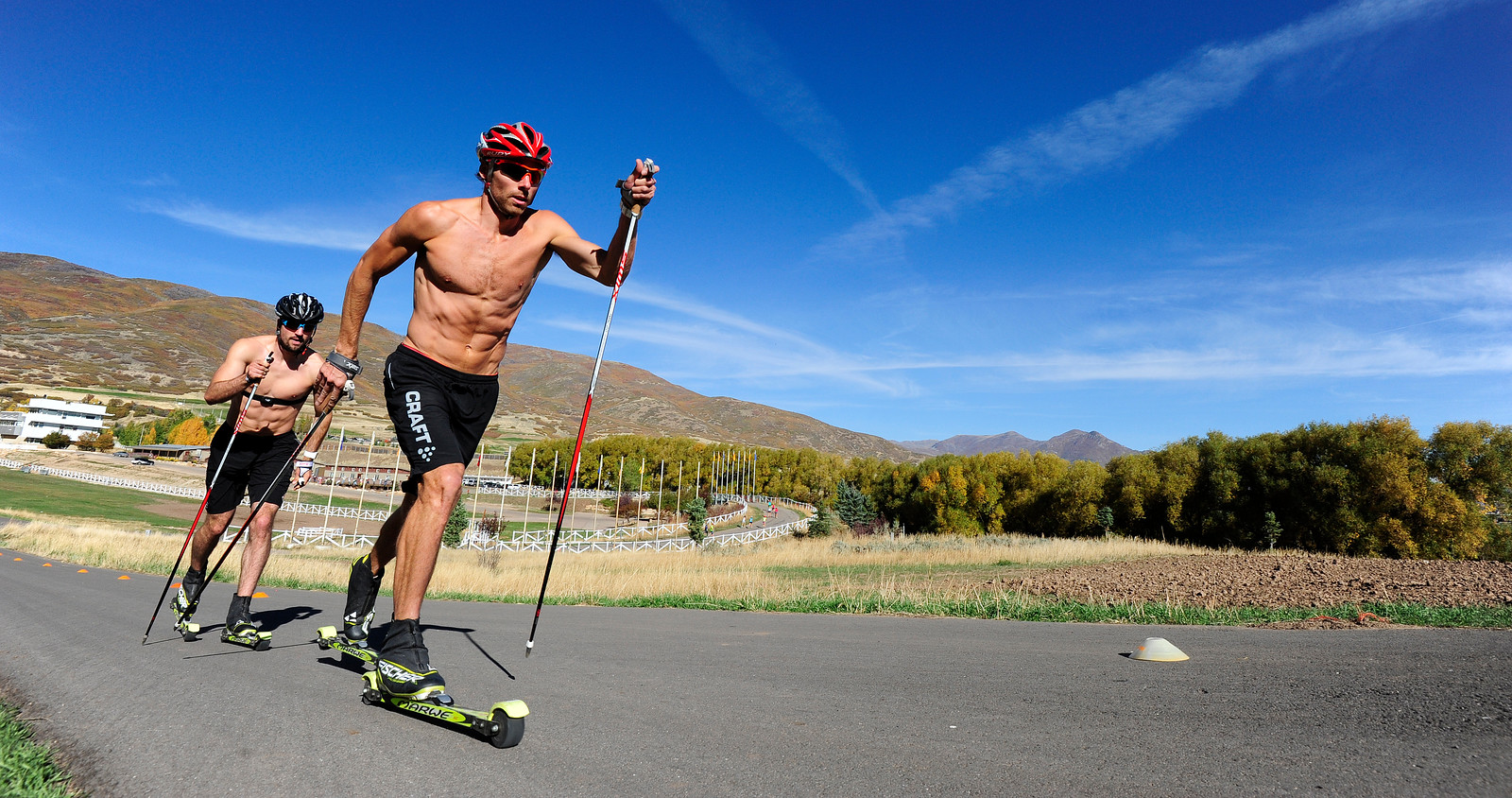
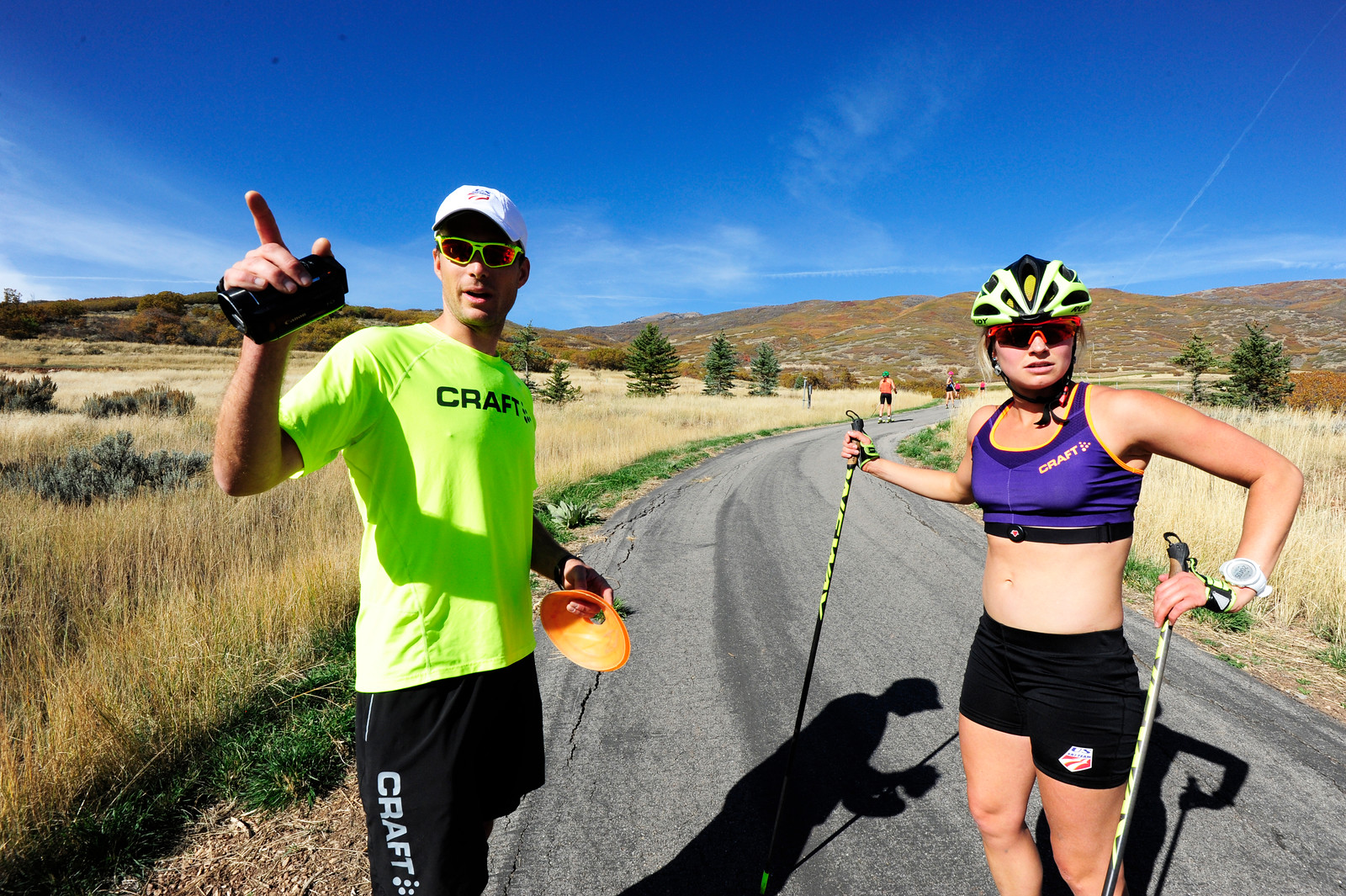
Over the last two weeks, the U.S. Ski Team and many of the nation’s top skiers have been hitting the hardtop and trails around Park City, Utah, intent on getting in quality training sessions at altitude before heading off to on-snow camps. The area’s consistent fall weather and training opportunities, including the rollerski loop at Soldier Hollow, make this camp an annual team staple.
Many of the country’s most competitive nordic skiers outside the U.S. Ski Team (USST) are also in Park City, drawn there by the opportunity to train with the team before it heads to Europe for the start of the World Cup in late November.
USST Head Coach Chris Grover estimated there were slightly more than 30 athletes at the camp, with all 16 national-team members, plus skiers from the National Training Group, Alaska Pacific University (APU), the Sun Valley Ski Education Foundation (SVSEF) Gold Team, Stratton Mountain School (SMS) T2 Team, and the Craftsbury Green Racing Project. On the phone earlier this week, Grover expressed excitement about a, “nice mix of some younger guys and some veterans, and top club athletes and the national team.”
The U.S. Ski Team trains on the Olympic trails during its annual fall camp at Soldier Hollow in Midway, Utah. (Photo: U.S. Ski Team/Tom Kelly)
Although this is a national-team camp, guest athletes are invited to attend the high-intensity workouts as well as the long, over-distance sessions when the venue safely allows them to do so, Grover explained.
During the first week of camp the focus has been on threshold, some testing and speed workouts, and something called “The Double Pole Project.” Grover described this as a pre-workout video session meant to aid in transferring the athletes’ work in the weight room to lower abdominal engagement in their double-pole technique. Stemming from a plan shared at the World Cup coaches’ seminar in Trondheim, Norway, in late August, the team integrated this into their camp with hopes of seeing this strength technique come through this winter.
After the initial week of mellow, acclimatization-based workouts and technique focus, the second week of training included more intensity. On Tuesday, Grover highlighted that morning’s 6 x 4-minute ski bounding session as one that got both athletes and coaches excited. Whether it was the sun beaming down or the lower elevation training site in Salt Lake City, the first full-group, high-intensity workout of the camp went off without a hitch, he said. It also provided a preview of the intensity coming at the end of camp: a three-day rollerski mini tour starting on Sunday.
U.S Ski Team members Andy Newell and Ben Saxton training in mid-October on the Olympic trails at Soldier Hollow in Midway, Utah. (Photo: U.S. Ski Team/Tom Kelly)
In the past, the USST ended its Park City camps with rollerski time trials. This season, without a World Championships or Olympics, and with over half the the World Cup races being tour-stage events (19 to be exact), Grover and his staff decided to shift from race simulations to stage events.
“We’ve definitely put an emphasis on practicing not only how to manage energy from day to day, but how to recover optimally from each session,” Grover said.
The team saw some success at Norway’s Toppidrettsveka mini tour this summer, with Liz Stephen and Noah Hoffman placing third in the hill climb, but also encountered bad luck with broken poles and several crashes in the last stage of that tour, Grover said. These are the types of mishaps he’s hoping the tour simulations will minimize in races this winter.
The mini tour will start this Sunday, Oct. 25 with a freestyle sprint, followed by a shorter classic mass start on Monday, and ending with a longer freestyle pursuit on Tuesday.
The national team also unveiled its new uniforms this week. L.L. Bean and Craft signed as the team’s clothing sponsors this spring and revealed the new suits and warmups with the team on Monday in Park City. Grover explained the shift to L.L. Bean and Craft as one that’s been “excellent” because it provides a “…uniform that is totally unique to the USA.” He also believes the team will benefit from the wide range of pieces available through these larger companies.
U.S. women’s coach Matt Whitcomb works with Jessie Diggins during rollerski training at the U.S. Ski Team’s annual fall camp at Soldier Hollow in Midway, Utah. (Photo: U.S. Ski Team/Tom Kelly)
The first World Cup is a little more than a month away in Kuusamo, Finland, and aside from D-team rookie Julia Kern rebounding from a slight back injury, the team is healthy, Grover said. Erik Bjornsen has resumed training at full capacity after surgery on his hand and a knee injury earlier this summer.
Team veteran Kikkan Randall recently announced her pregnancy and will be missing this season as a result. Grover was fully supportive, acknowledging her pregnancy as one of Randall’s long-term goals. The timing also worked nicely without a World Championships or Olympics this season. While Randall has been training with the team in Park City, she has scaled back her intensity and shifted toward over-distance and technique training, Grover explained.
Without a major championship on the World Cup calendar this season and a North American tour — the Ski Tour Canada — in its place, domestic competition for the additional start spots is something many U.S. and Canadian athletes are looking forward to. Per the “national quota” regulations of the World Cup, the U.S. will be able to start five additional men and five additional women for the entire Ski Tour Canada, for a total of up to 24 racers.
While Grover said the upcoming mini tour in Park City would not decide those spots, he explained the coaches were using this week’s training sessions to note the fitness of non-national team athletes. However, on-snow results will ultimately determine who receives those Canadian World Cup starts. More on the 2015/2016 World Cup Team selection criteria here.
After wrapping up the mini tour on Tuesday, the USST will leave Utah on Wednesday. Several clubs will head directly to Canmore, Alberta, for an on-snow camp at Frozen Thunder, while others, like APU and its USST members, will head back to Alaska in hopes of getting on snow as well.
The USST will reconvene Nov. 13 to fly to Gällivare, Sweden, where they’ll hold a camp and compete in a couple FIS races before traveling to Kuusamo for the World Cup openers.
***
About the Author: New to the FasterSkier team, Jeremy has been involved in many facets of the ski community since he began ditching middle school to go skiing. When not daydreaming of the Birkie, he finds time to explore the fishing and trail-running opportunities of his new home, Seattle, Wash.
Canadian World Cup Team member Alex Harvey kick-double poling in the 2012 men’s pursuit in Kuusamo, Finland, where he placed 23rd. Last year, Harvey was 42nd in the Kuusamo freestyle pursuit, one of the first races of the season. (Photo: Fischer/Nordic Focus)
Kick-double pole was the name of the game on Sunday in Gällivare, Sweden; if you did that well, you were basically golden on the four-lap course. Easier said than done, but the Russians managed to power through, with Evgeniy Belov pulling out the 20-second win in the International Ski Federation (FIS) men’s 15-kilometer classic race.
Russia went 1-2 in the men’s 15 k classic FIS race in Gallivare on Sunday with Evgeniy Belov (pictured) taking the win by more than 20 seconds. (Photo: SportEventGallivare)
The 24 year old finished with the top time of 35:04.3 minutes, 20.67 seconds faster than Saturday’s classic-sprint winner, teammate Sergey Ustiugov. And while the Canadians fared similarly well on Sunday with all four men in the top eight (and their lone woman, Emily Nishikawa, in fourth), most of them will be happy to race on a harder, hillier course next weekend at the first World Cup in Kuusamo, Finland.
“[Gällivare] is quite opposite from the race course there because here, there’s lots of kick-double pole, double pole — that’s what the Russians were really strong at,” Ivan Babikov, of the Canadian World Cup Team, said on the phone Sunday. “Talking to Devon, it sounds like Belov was like a beast on those sections. That’s where he made all the time.”
For Babikov, as well as several other Canadians, bigger climbs in next weekend’s classic sprint and 15 k classic — the same race formats as Gällivare — should be a good thing.
Babikov placed sixth in his first FIS race of the season, about a minute and 38 seconds behind Belov and 13.34 seconds behind teammate Devon Kershaw in fifth. Alex Harvey, who was second in Saturday’s sprint, took third, 27.51 seconds behind the winner and 0.8 seconds from Ustiugov.
Harvey started second-to-last, just in front of Gällivare’s hometown hero, Marcus Hellner, with the advantage of knowing where he stood for most of the race. In fourth at the end of the first 3.75-k lap after three Russians — Ustiugov, Belov and Stanislav Volzhentsev, respectively — Harvey moved to third ahead of Volzhentsev by the halfway point.
“I felt good today. A bit sore from yesterday’s classic sprint but everyone was in the same boat there!” Harvey wrote in an email. “It’s nice to do a distance race for sure, but it was a reminder of how hard ski racing is, especially individual start!
“The course was work the whole time,” he added. “I feel like I was strong in the kick double pole section, I think I could push it a bit further up the hill compare to the others.”
On his last lap, he caught Babikov, whom he started a minute behind, with about three kilometers to go.
Ivan Babikov racing two seasons ago the 15 k classic in La Clusaz, France, where he posted Canada’s best result of 39th in January 2013.
“I wasn’t feeling like I was racing, it was kind of like a bit harder than Zone 3 or Zone 4, but I couldn’t get in my hurt locker, you know?” Babikov said. “I couldn’t go all-out for some reason.”
When he saw Harvey, he knew he had something left.
“That’s where I could feel that I can go faster and last lap was much better, more like racing,” Babikov said.
Before then, he had been waiting for Volzhentsev, who started 30 seconds behind him, to catch him on the last lap. Babikov said the Russian came within 10 seconds of him on the third loop around.
“For some reason, he died a bit on the last lap and next thing I know, it’s not him passing me but Alex,” he said. “I did not see him coming at all so I kind of got a bit surprised there.”
But it wasn’t a bad thing. Babikov pushed even harder and estimated he made up about 17 seconds on Volzhentsev, who ended up fourth (+1:24.8). Babikov stayed with Harvey for as long as he could, before Harvey took off with about two kilometers to go.
“After I caught him I yelled at him ‘stay with me,’ so he did for a while,” Harvey recalled.
“I think it was a good weekend for me,” Harvey summed up. “Of course, nobody is at 100%. Personally I’m coming off 2 weeks of 20+ hours of training so I’m not super fresh but again, I think everyone is in the same boat here.”
He was looking forward to Monday — his first rest day in almost two weeks.
“I’m gonna take a normal week of training next week and do some high quality intensity on Wednesday before travelling to Kuusamo,” he wrote.
The Canadians leave Gällivare for Finland on Wednesday.
“Good racing and training this weekend for everybody,” Canadian World Cup Head Coach Tor-Arne Hetland wrote in an email. “We needed this weekend and will be better prepared next weekend and later in the season. The races had ok race quality.”
According to the event website, Belov called it a “good race on fine courses and a lovely start to the season with two podiums the first race weekend,” he said, after placing third on Saturday. “I’m very happy with this shape before the World Cup premiere next weekend.”
Hellner, who finished seventh, 1:41 behind Belov, said the Russians were impressive.
“They skied really hard today; it would’ve been enough for a World Cup,” he said, according to a translation. “I didn’t have a good race, but it’s still nice to be competing again. It always takes a few races to get started with both the technique and feel. I’m still training hard and it’s the World Championship in Falun, which is the big goal. I don’t expect top results at the start of the World Cup.”
Out of the top seven, Ustiugov was the earliest starter and posted the times to beat at each 3.75 k checkpoint. Kershaw consistently clocked the second-fastest times after him, and Harvey started two minutes after Kershaw and came through 3.75 k just one place and 11 seconds faster.
Kershaw wrote in an email that his goal was to start hard.
“It’s the last chance to try some stuff before the big leagues start again next weekend,” he explained. “That didn’t really work that well for me today. I started what I thought was hard, but felt like I was just stuck in the pace I could go. Not feeling much lactate, but not able to really push it any harder. I guess that’s a bit of fatigue I’m carrying.”
“It’s the last chance to try some stuff before the big leagues start again next weekend.” — Devon Kershaw, fifth in first FIS race of 2014/2015 season in Gällivare
Belov caught him at 7.5 k, where Kershaw recalled feeling so good, he thought, “OK, here’s the race — stay with him!”
Devon Kershaw in the Frozen Thunder classic sprint in late October in Canmore, Alberta, where he won the following freestyle distance race on Oct. 27. (Photo: Angus Cockney)
“And I did for 3km before exploding big-time,” he added. “The last 3.75km was a rough outing. I was on fumes. I lost a lot of time to Alex, Ustiugov, and Belov but compared to the other dudes, I guess I didn’t lose that much. I felt like I was giving away minutes actually. So it was a race with two very different, very distinct feelings in it.”
At the finish, Kershaw described feeling “pretty bummed. … I was frustrated that I got owned so hard by Belov. He really crushed me.”
What he didn’t know was that Belov crushed most of the field.
“Of course I was completely outclassed by the top 3 — but compared to last season’s opening race, the feelings were better for sure, as was the result (even though this wasn’t a world cup),” Kershaw wrote. “It was a good, hard workout at least — which is needed at this time of year with the World Cup on the horizon.”
Next weekend, “the big show starts,” Kershaw explained. His goal is to finish in the points (top 30) at least once. “That’s easier said than done sometimes. We’ll just have to see,” he wrote. “I’m excited and nervous.”
Canada’s fourth man, Graeme Killick (Development B Team) placed eighth out of 16 men, 1:57 behind Belov and 3 seconds behind Hellner in seventh.
Three Czechs and Nishikawa
Petra Novakova of the Czech Republic racing to a 39-second win in the women’s 10 k classic FIS race on Sunday in Gallivare, Sweden. (Photo: SportEventGallivare)
Another Canadian national-team member, Emily Nishikawa placed fourth out of 10 women. She finished 1:22.8 behind Petra Novakova of the Czech Republic, who won in 25:44 and was second in Saturday’s sprint to Canada’s Perianne Jones.
The Czechs swept the podium with Eva Vrabcova-Nyvltova in second (+39.0) and Karolina Grohova in third (+50.9). Their team has been in Gällivare since early November.
“It was good to get the first race of the season done!” Nishikawa wrote in an email. “I felt good for the first half of the race, then started to fade towards the end. Definitely room for improvement!”
The third-to-last starter, she came through each checkpoint with the second-fastest times after Grohova, who started 1:30 in front of her. Ultimately, all four of her lap times ranked fourth.
“The conditions were really good today and we had great skis,” Nishikawa added. “I just wanted to focus on the process for my race today and get back into the routine of racing again.”
Now done with her first race, she plans to compete in distance races at every World Cup before Christmas.
“Looking forward to lots more racing to come!” she wrote.
Alex Harvey during the World Cup classic-sprint qualifier last December in Asiago, Italy. He posted the 13th-fastest time, but was disqualified for skating. He missed qualifying for the heats in three-straight sprints at the beginning of last season, but things could be turning up for the 26-year-old Harvey if Gallivare is any indication. (Photo: Fischer/Nordic Focus)
This time last year, the most racing Alex Harvey had done leading up to the World Cup opener was a time trial with teammate Devon Kershaw at the Canadian’s training base in Davos, Switzerland.
Harvey went to Davos again this year, only as long as he had to, though, since the snow wasn’t ideal, before meeting the rest of the team this past Monday in Gällivare, Sweden. There, he and three other Canadian World Cup Team members and four development-team skiers converged for about five days of training before the first International Ski Federation (FIS) race of the season in Europe.
Canada’s Perianne Jones en route to the 1.2 k classic sprint victory at an opening FIS race in Gallivare, Sweden. (Photo: SportEventGallivare)
Perianne Jones was one of them. A year ago, she was still home in Canmore, Alberta, trying to get her iron levels under control. She didn’t start racing until Dec. 21 at the World Cup in Asiago, Italy.
On Saturday, Jones, part of Canada’s development B-team, put down the second-fastest women’s qualifying time in the 1.2-kilometer classic sprint in Gällivare after Petra Novakova of the Czech Republic. The two faced off in the A final, which Jones led from start to finish and won by 1.8 seconds in 2:54.19.
“It’s been great to get to Europe and get adjusted, and get the racing season going!” Jones, 29, wrote in an email. “I wanted to have good feelings racing today, and just go through a race day/prep and everything to make sure I have things dialed in for next weekend, and of course I wanted to win too! Training has been going well, I feel much better right now than I did this time last year, so that’s a good sign!”
After Novakova in second, another Czech, Karolina Grohova finished third 1 second later. Sixteen-year-old Swedish junior Emma Ribom was fourth (+4.09), Norway’s Anna Svendsen placed fifth (+5.73) and Nelly Johansson of Sweden was sixth (+11.0). Twenty-four women raced the heats.
Russia’s Sergey Ustiugov on his way to a semifinal win on Saturday at the FIS 1.4 k classic sprint in Gallivare, Sweden. He went on to win the final. “Perfect workout before the World Cup premiere next weekend and a good proof that the mold is in the works,” Ustiugov said after the final. (Photo: SportEventGallivare)
The men’s 1.4 k sprint was a speedy one, with Russia’s Sergey Ustiugov setting the pace in the qualifier with the fastest time of 2:46.12 and ultimately winning the final in a blistering 2:38.55. Canadian World Cup sprinter Lenny Valjas qualified third (+2.31) after Evgeniy Belov of Russia in second (+0.33). Harvey qualified in fourth, 3.65 seconds after Ustiugov, which he was pleased with.
“Just because I’m a dork, I looked at times from last year in Kuusamo and I think he beat me by six seconds [in the classic-sprint qualifier],” Harvey said on the phone after Saturday’s sprint. “So now to be 3.6 behind him in the qualifier is probably good thing. It means I have a better chance of qualifying in Kuusamo next weekend.”
Ustiugov was a top qualifier in the classic sprint at World Cup Finals in Falun last season, clocking the second-fastest time there — about 3.3 seconds faster than Harvey, who qualified in 10th.
But it took Harvey two World Cup sprints (three if you count his disqualification in Asiago) before he made it to the quarterfinals for the first time last winter.
“I think this year is probably a bit better, but we’ll see when it really counts in Kuusamo,” Harvey said of the 2014/2015 World Cup opener next weekend.
To his team’s advantage, it won’t be their first race of the season.
“It’s different for everybody, but for me, it’s important to get some races in — that’s why I chose to do both races this weekend,” he said, referencing Sunday’s 15 k classic. “Last year all I’d done was a time trial with Devon in Davos. When you’re doing quite similar training, you’re going to be in quite similar shape so it’s hard to know if you’re on or not because you don’t compare with other nations.”
On Saturday, Harvey ended up second overall — winning his quarterfinal and finishing right behind Ustiugov in both the semifinal and final. Belov was third, Valjas fourth, Russia’s Stanlislav Volzhentsev fifth and Canadian B-team member Jess Cockney sixth. Thirty-five men competed.
Because of his qualifying time, Harvey started in the fourth lane, toward the outside of the pack in the A final. Everyone raced on classic skis on a minus 5-degree Celsius morning, Harvey said, and he nearly caught Ustiugov up front along the big climb back to the stadium. With 300 or 400 meters to go, he was fourth, then surged ahead of Valjas and Belov right before the finish.
Harvey said he let out a mini fist pump at the finish, then he remembered what Canadian World Cup coach Tor-Arne Hetland told him the day before.
“Yesterday Tor-Arne said, ‘Do not let up before the line ever,’ ” Harvey recalled. “If I did that in the first race of the season that would’ve been bad. I let up a bit, but I didn’t get caught.”
Sergey Ustiugov lunging across the finish for second in the men’s 15 k classic in the 2014 U23 World Championships in Val di Fiemme, Italy. (Photo: Fiemme 2014)
Finishing 0.97 seconds after Ustiugov, Harvey held off Belov by two-hundredths of a second. But Harvey was skeptical about the final times.
“I didn’t think it was that close,” Harvey said. “I knew I had him, but I guess he must’ve stretched because Lenny was coming from him. I felt like it was bigger than just two-hundredths of a second.”
Valjas finished three-hundredths of a second after Belov, Volzhentsev crossed the line almost three seconds later, and Cockney was another 2.26 seconds back in sixth.
In an email, Valjas explained he was coming off a huge training load this fall, but took some time off before flying to Europe to recover.
“I’ve been feeling really good skiing this week, especially considering I’m still dealing with jet lag,” the 26-year-old Toronto native wrote. “The heats today were easy until the final. [The] Russians pushed the pace hard. Coming into the final straight it was two Russians leading Alex and I in. I was very happy with my kick at the end, I could see I was gaining on the others but it was a little too late as I lost a ridiculously close lunge to Belov.
“Fun day racing and I’m ready for Kuusamo,” Valjas added. “Looking to get back into the points after missing the top 30 last year with my knee surgery.”
“Tor-Arne said, ‘Do not let up before the line ever.’ If I did that in the first race of the season, that would’ve been bad. I let up a bit, but I didn’t get caught.” — Alex Harvey, second to Sergey Ustiugov and just ahead of another Russian, Evgeniy Belov, in third
Lenny Valjas during the Frozen Thunder classic sprint on Oct. 24 in Canmore, Alberta, where he placed eighth. “I’ve had a huge training load this fall and was feeling pretty tired in Canmore for the Frozen Thunder races,” he wrote in an email after Saturday’s FIS classic sprint in Gallivare. “I felt strong today in the race, like my old fast self.” (Photo: Angus Cockney)
Cockney, 25, wrote in an email that the qualifier felt “pretty weak,” and was disappointed with qualifying eighth, 10.39 seconds after Ustiugov.
He devoted much of his offseason to improving his qualifiers and quickly resolved to target certain training aspects this coming week to get back to where he had been in previous workouts this fall.
“ I tried to really pin it for the final and ski hard from the gun,” Cockney explained. “I moved towards the front for the first climb and held onto second behind Ustiugov for a big chunk of the race but I was really gassed near the end and wasn’t able to hang on to anyone moving past me.
“Today was a good starting spot for the early season,” he added.
Next weekend, he’ll race a Norwegian Cup near Lillehammer instead of the Kuusamo World Cup in Finland. The races will be the same format as in Kuusamo, and he’ll race with Team Trøndelag, he explained.
In the meantime, Harvey said the FIS races are a good tuneup before the real thing. Not only did it help him remember what it feels like to wear a race bib and step on the start line, but it was a good reminder for timing critical parts of the morning (eating, warmup, etc.) — and at 9:30 a.m. on Saturday in the dark in Sweden, that wasn’t easy.
“I mistimed my warmup for the qualifier so I didn’t feel like I had enough time,” he recalled. “These are things you can learn for a real race. When it’s a time trial, you can just tell the coach, I need five more minutes, and he might postpone the start, but today he couldn’t, so I think it’s good to have a real race with a real bib and everything.”
Two years ago, the Canadians opened the season with FIS races in Bruksvallarna, Sweden. Harvey, for one, was glad they weren’t there nor in Beitostølen, Norway, this year.
He spoke with Sweden’s Marcus Hellner, who recently left Bruksvallarna for Gällivare. (Hellner opted out of the sprint, but planned to race Sunday’s 15 k.)
“He came here because he said it was sh*tty,” Harvey said. “They had to do their interval sessions at noon because there was too much traffic on the track before that and said it was pretty bad conditions and a really short loop. And Beitostølen, it’s mayhem there. It’s probably a bigger deal than an actual World Cup. It’s live on TV and there’s so many media, journalists, people so it’s just a lot of people on the tracks. Here were able to do the races and then we’re able to relax and have nice enjoyable training sessions.”
And they’ve got some competition as well.
“It’s good to race these Russian guys and some Czech guys, too,” Harvey said. “Ales Razym is a decent sprinter and tomorrow there will be a decent field, too.”
Alex Harvey, of the Canadian World Cup Team and the Pierre-Harvey National Training Centre in Quebec, racing to second in the men’s 15 k freestyle pursuit at World Cup Finals for a career-best third overall in the 2013/2014 World Cup. (Photo: Fischer/Nordic Focus)
While the Canadian World Cup Team is meeting Monday in Gällivare, Sweden, to prepare for season-opening FIS races on Saturday and Sunday, Alex Harvey and his longtime coach Louis Bouchard flew to Switzerland earlier this month.
In an email, translated from French to English, Bouchard explained their early arrival on European soil.
Alex Harvey training last week in Gällivare, Sweden. (Photo: Louis Bouchard)
“Alex and I arrived earlier in Davos, Switzerland, to do some altitude training since we both live and train at sea level [Québec],” he wrote.
Harvey did not train and race with the rest of the team at Frozen Thunder in Canmore, Alberta, in late October. After the Canadians’ final dryland camp in Park City, Utah, he headed home to train on snow at Mont-Sainte-Anne.
Bouchard explained he and Harvey would meet the rest of the Canadian World Cup Team on Monday in Gällivare “for the FIS opener, which will serve as good prep races for the World Cup debut,” he wrote.
Gällivare’s races Nov. 22-23 include a classic sprint and 10/15 k classic individual start — the same as the opening World Cup the following weekend in Kuusamo, Finland.
Canadian World Cup Team coach Tor-Arne Hetland said on the phone last Thursday, when Harvey and Bouchard arrived in Sweden, that they chose Gällivare because of how far north it is, its race formats, its snowmaking abilities, and the amount of kilometers open.
This time of year, he said you have to go north in Sweden, Norway and Finland for optimal snow conditions, and in places like Beitostølen, Norway, it often gets crowded on a 5 k loop.
From Friday through Sunday, most of the top Norwegians will be in Beitostølen, and some of the most competitive Swedes will race more than 900 kilometers south of Gällivare in Bruksvallarna, Sweden.
“There will be some Russians on the start and for sure somebody from Sweden, but not something big,” Hetland said of Gällivare. “It is good to get one last test before the World Cup is starting, but it is not something important because it is [the] first hard workout after travel and you need some time to adjust.”
On Monday, the U.S. Ski Team arrived in Muonio, Finland, where head coach Chris Grover explained they would train until Nov. 25. While there were no official races there, he wrote in an email that they’d probably do some time trials.
Joining Harvey are three of his World Cup teammates — Devon Kershaw (who was in Oslo, Norway), Ivan Babikov and Lenny Valjas — as well top domestic skiers Graeme Killick, Jess Cockney, Emily Nishikawa, and Perianne Jones.
Louis Bouchard, Gala Triomphe 2014 Coach of the Year (Photo: CCC/Simon Clark)
Harvey is pursuing a law degree at Université de Laval in Québec City, and he and Bouchard waited until after his last exams to fly directly to the highest city in Europe (at 1,560 meters, or 5,120 feet) in early November. But even at altitude, Davos didn’t have the best snow conditions.
“This year, the snow conditions are bad, so we’ll stay a few days in Davos and change our plane tickets to go in Gällivare earlier than we would have,” Bouchard wrote.
Hetland, who lives in Davos, said it had been a “normal European fall” with “some days of snow, some days without [and] some warm days.” Fortunately, “in Norway, Sweden, Finland, it’s also starting to be cold,” he added.
Harvey and Bouchard visited Davos to acclimate to the thin air as well as get more comfortable on snow and new equipment. In training, their focus has been primarily race-like intensity, with Bouchard giving an example of skiing a 3- to 4-kilometer loop at “World Cup level” then resting five minutes, and repeating four to five times.
Asked about Harvey’s state of mind as the season officially kicks off with the Ruka World Cup on Nov. 29, Bouchard sounded confident.
“Alex is really optimistic, especially with his third-place finish on the overall standings last season,” he wrote. “He didn’t complete last year’s Tour de Ski, which prevented him from accumulating precious additional points. The whole team is motivated and we’re expecting great results for many.”
The Gala Triomphe’s2014 Coach of the Year, now in his 15th year as head coach of the Pierre-Harvey National Training Centre (Centre National d’Entraînement Pierre Harvey, or CNEPH), Bouchard pointed out the main difference with Harvey compared to certain previous seasons: “We’re now looking four years ahead, instead of only focusing on the ongoing season.”
Peter Johansson works on some of the many U.S. skis in preparation for another day of racing in Gallivare, Sweden.
Until last year, the U.S. Ski Team’s service team had a collaborative approach: as FasterSkier reported in 2010, the head technicians for kick and glide, both Swedes, shared responsibilities and neither was the other’s boss.
This fall, that changed, with glide expert Peter Johansson taking over as the head of the service team. A native of Gällivare, Sweden, Johansson was in the spotlight ten days ago when the World Cup opened there to astonishing success by the U.S. women’s team.
“He has really good experience, and we had really good ski testing before the race,” Kikkan Randall said after finishing third in the 10 k skate, the first competition of the season. “My skis felt great.”
It shouldn’t be an unfamiliar feeling for the World Cup Sprint Champion, who has been working with Johansson for years; he’s been the one primarily responsible for her skis. When FasterSkier was in Gällivare for the races, we stepped into the waxroom and chatted with Johansson.
“I was working with a wax company for a few years, and I guess – it’s not a small world, but people know each other, so the head wax tech back then contacted me and asked if I wanted to work with the team,” explained Johansson, who signed on in 2006.
Since then, techs and coaches have come and gone, but Johansson says that the beginning of a new year never causes anxiety; there days, there’s little turnover, so even with his promotion he doesn’t have to worry too much about how responsibilities will be divided up or the dynamics between the servicemen.
“It’s easy,” he said. “It’s such an easy team to work with. It just comes naturally.”
This year, the main changes were the departure of men’s coach Pete Vordenberg and the addition of former Rossignol tech Cory Wubbels (Jason Cork is also the team’s new assistant coach). The fact that the rest of the team is remaining more or less stable, Randall told FasterSkier and a local Swedish reporter, goes a long way towards getting her fast skis.
“Our team of guys is really strong and experienced,” she said. “Everyone has their different job that they do, and so Peter is free to work with me directly on the skis. That has been part of our success too, is that our service team has been gaining experience and getting better every year.”
Before joining the U.S. team, Johansson had worked at Skigo, a company based in nearby Kiruna whose waxes are gaining in popularity in the U.S. He only works on skis during the World Cup season, and the rest of the year he still works at his other former jobs.
“A part of the summer I usually work at my old job at the hospital – I was a biomedical engineer there,” Johansson said. “And part of the summer I work in the mine. I have a little bit of this and that.”
Mining and ski waxing might seem like a strange combination, but LKAB, the iron mine that has magnetite fields in Kiruna and Gällivare, controls much of the economy of the region. Part of its 31.12 billion Swedish crowns in revenue – $4.7 billion in American currency – were reinvested in these very World Cup races, which LKAB sponsored. It was that company’s name that appeared on racers bibs.
As for the biomedical job? Okay, that’s a pretty strange trio.
“It’s fun,” Johansson laughed of his many occupations.
In the fall, he starts testing waxes and grinds a few weeks before the season, although he was unsurprisingly tight-lipped about what that actually entails. The service team doesn’t meet up until the rest of the team arrives in Europe.
Although Randall said that she felt like having a Gällivare native waxing her skis gave her a bit of a home-field advantage that opening weekend, Johansson deflected the question.
“I guess I should, maybe,” he said of whether he knew the snow here better than other techs. “It’s the same snow [everywhere]…. but being here makes the travel days less, so that’s a big plus, and it’s also nice to be in my hometown and be with my family for a couple of days.”
When asked how Johansson helped them out in Sweden, Jessie Diggins had a different answer.
“He’s a great translator!” she told FasterSkier.
To Randall, the job that Johannson did in Gällivare was the same as the one he does every weekend: to give her great skis.
“Peter has been working really hard for us, we really appreciate the time he has spent on the road away from his family, so it’s really cool to be able to have some good results here in his hometown,” she said. “He should be a little bit of a local celebrity now.”
It seems like he was. Noah Hoffman blogged about seeing an article in the local newspaper featuring Johansson as the U.S. team’s “miracle in Gällivare.”
“I think he’s one of the best wax techs out there,” Randall said.
Four-time World Champion biathlete Martin Fourcade of France works his way through Saturday’s 15 k World Cup cross country ski race, where he was left unsatisfied with a 48th-place performance.
In just a few hours, Martin Fourcade of France will hit the tracks in Östersund, Sweden, for his first World Cup biathlon race of the season. In the 20 k individual, he is certainly among the favorites: not only did he win this very race last year by almost two minutes, but he went on to win the overall World Cup title as well as three individual World Championships to go with his one from 2011.
But despite skipping the relay on Sunday that opened the season for most of the rest of the field, Fourcade already has a World Cup race under his belt. He represented France in the 15 k individual cross country race further north in Gällivare, Sweden, on Saturday, where he placed 48th.
“I didn’t know what kind of result I could expect, but it was a good goal and a good idea for me to compete in a cross country race,” he told FasterSkier after the race. “I’m not satisfied of the result and I think it’s not my real level. But sometimes you go down in order to go higher.”
Expectations were certainly for a performance more impressive than the one he turned in; Fourcade competed in his first cross country race the weekend before in Beitostolen, Norway, where he placed sixth in a 15 k skate. There, Fourcade was 25 seconds behind Norwegian winner Petter Northug, and 20 back from Maurice Manificat, the top Frenchman who placed second.
In Gällivare, Fourcade struggled, finishing over a minute and a half behind the winner, this time Northug’s teammate Martin Johnsrud Sundby.
“It was really hard today,” said Fourcade. “Last week I did a good race in Beitostolen. In my mind, I was in great shape, so I was hoping to do great today but I had a different day today. I did the first lap of the race very well and with no problems.”
In fact, Fourcade had a great start – at 2.3 kilometers he was in fourth place, and at 6.9 skiing within the top ten. But the wheels came off and the World Champion unceremoniously limped to the finish, crossing the line without any of the fanfare that usually accompanies his performances.
Rather than chalking it up to an inability to ski well in straight cross country races, Fourcade said it simply wasn’t his day, perhaps due to how his training is changing as he prepares for the actual biathlon season. (He wasn’t alone: World Champion Justyna Kowalczyk of Poland also had what she called her worst race in years, despite dominating in a FIS classic race in Finland just a week before.)
“Today I think in biathlon it would have been the same, others would have been in front of me in the ski time,” Fourcade said. “I’m sure many of the Swedish biathletes would have been ahead of me. Last week I showed my value more, and I hope to come back to do it again. But also last week, Petter Northug won the 15 k, and did very badly in the classic race. That’s skiing, and that’s life… this was one of my first cross country races, so I’m glad of the experience and sad of the result, but I’m not going to cry today because I’m fortieth or more, instead I will try to come back and to do better.”
Nevertheless, Fourcade said the fact that it was a ski race and not a biathlon race didn’t help him out in any way – although probably not for the reasons you might think, that in biathlon races athletes get to stop and even lie down. The physical rest in a biathlon race, he said, made a difference, but not too much.
As FasterSkier has discussed before, biathletes actually shoot with a very high heart rate, nowhere near resting or even the “recovery” level reached in between intervals in a training session. According to the statistics blog Real Biathlon, Fourcade spends on average 33.4 seconds on the mat in a prone shooting stage and just 25.8 in standing, counting the time taking his rifle off and getting in position. That’s not even the quickest in the field; Norwegian star Tora Berger is not only one of the fastest standing shooters of either sex, taking just 24 seconds, but also one of the most accurate women, usually nailing all five targets. Such speed, coming as it does with intense concentration, allows some recovery, but not much.
More important in a biathlon race, Fourcade said, was the ability to mentally hit the “reset” button, something he struggled with in Gällivare once his body began to complain.
“It is not very different, but it is longer that you have to push all the time,” he said of ski racing. “When you are not in a good mindset, you can stop and try a new race in biathlon. But here if the shape is not good, you don’t have a chance to start over.”
Fourcade still finished as the fourth member of the French team, keeping alive a hope that he stated this fall: to compete for France in the relay at FIS World Championships. His race in Gällivare certainly didn’t secure him a spot, but to remain in the running despite an undeniably bad day leaves the possibility open, if he can prove that he’s faster than Saturday’s result.
“This was one of my first cross country races, so I’m glad of the experience and sad of the result, but I’m not going to cry today because I’m fortieth or more, instead I will try to come back and to do better,” he said. “This was not my best race and [to make the relay] I need to come back and show that I am beyond the best.”
When asked by a Swedish journalist how he would make his schedule work with both IBU and FIS World Championships, Fourcade said he could not choose between the two and would try to participate in both if given the chance.
And he hopes that he will. He certainly wouldn’t be the first biathlete to do so, or to find success in skiing; Norwegians Ole Einar Bjørndalen and Lars Berger have won World Cup and World Championships individual races, and Fourcade routinely trounces them in biathlon competition.
“I don’t feel like biathletes have to show their value to cross country skiers,” Fourcade concluded.
University of Utah alum Maria Gräfnings skiing the third lag of Sunday’s World Cup relay in Gällivare, Sweden. She competed on Sweden’s second relay team, which placed ninth.
When FasterSkier last caught up with University of Utah alum Maria Gräfnings this fall, she was prepping for the race season and hoping to do well enough to earn a few World Cup starts representing Sweden. While the odds seemed good – because the World Cup started in her home country, she had a chance to earn a Nations Group spot, which wouldn’t otherwise be available – the two-time NCAA champion was cautious, talking about how the Swedish team was “really competitive.”
The opening FIS races in Bruksvallarna, Sweden, didn’t go as well for Gräfnings as they might have; representing her home club, Falun Borlange SK, she placed 20th in the 5 k classic and then 13th in the 10 k skate against primarily Swedish competitors.
But it was enough to get her into the Nations Group and up to Gällivare. Once there?
“It went really, really well, so I was really excited,” Gräfnings told FasterSkier on her way to cool down on Sunday. “I took my first World Cup points yesterday, so I was pretty stoked about that.”
Gräfnings was the very first starter in Saturday’s 10 k freestyle race. That could have been a blessing, or a curse – she had open tracks, but nobody to chase. As it was, she skied in the mid-thirties for most of the race, before turning on the afterburners in the last three kilometers to gain eight places and finish 28th, 1:23.7 behind Marit Bjørgen of Norway.
“I mean, it’s my home place, and the crowd and everyone is amazing, and cheering, so it’s been great,” Gräfnings said of the experience.
She also did significantly better against her countrymen, winding up as the sixth Swede in the race. As such, she got picked for the second Swedish relay team on Sunday.
“We have a lot of good girls,” Gräfnings said. “It was an honor just to be in the second team… I haven’t done a relay in such a long time! Wow. I was wondering how I was going to do this. But it was really, really fun – relays are special, when you go for a team like that. Especially to be here, it’s amazing.”
The relay didn’t go perfectly; the first skier on Sweden II, Emma Wiken, fell, losing time and tagging off in ninth. Second-leg racer Sara Lindborg was tucked in with a pack, but there was another problem as she prepared to hand off to Gräfnings.
“Sara was supposed to tag me, so I started out, but then I heard her scream – ‘Maria!’ – and I looked back and she was just lying all over the place!” Gräfnings said. “I was like, oh shit. So I stopped and had to back up, and she tagged me. So it was kind of a bummer and I lost some time there. But I felt really good and I caught the Finland girl, so I think I did well.”
The incident had dropped the team to tenth, but Gräfnings passed Laura Ahervo of Finland, moving the team back up to ninth, where they finished.
Between the two races, her performances were good enough to earn a nod for Sweden’s traveling squad. She’s currently signed up for the three-race miniseries coming up this weekend in Kuusamo, Finland, as well as the distance World Cup races in Canmore in December.
One other thing she’s excited for? A certain women’s team’s performance in Gällivare.
“I’m stoked for the U.S. team, too – I mean, podium? Twice?” Gräfnings, who used to race against many of the American relay team members at SuperTours, marveled. “I’m pretty much as excited as them. I’m really happy for them, and I think it’s really good for the sport.”
U.S. Ski Team members Holly Brooks, Kikkan Randall, Liz Stephen, and Ida Sargent join the celebrations after Jessie Diggins crosses the line in third place.
GÄLLIVARE, Sweden – It’s always good to finish a race and be happy with the result. But the icing on the cake is when the entire sport seems to be behind your performance.
And for the U.S. women after Sunday’s historic third-place relay finish, that was the case. As one team after another crossed the line behind them, they were hugged and congratulated – even by teams who surely wished the podium spot could be theirs. The support continued after the race, when other racers, coaches, and commentators took to the internet to congratulate the Americans.
“Congratulations USA!” Swedish World Cup winner Hanna Falk tweeted. “Fun to see and your happy faces inspire!! Aaaawesome;-)”
That was just one of the many messages directed towards the American women after the podium ceremony.
“I think they know how hard we’ve been working on this, and building it up step by step, so I think they can all appreciate what it has taken to get here,” Kikkan Randall told FasterSkier. “They can all celebrate because they know what it’s like.”
Jessie Diggins, who turned in an anchor-leg performance that probably made specatators’ lungs burn and legs ache just by watching it, agreed.
“All of them know what it was like their first time on the podium, so I think they can see that feeling in someone else and go, yeah, I know that they’re on cloud nine right now,” she told FasterSkier.
The work that Randall was talking about doesn’t just come as hours of running and rollerskiing during the summer back home in the U.S. – although there is that.
“It certainly makes the environment of training a lot stronger when you have a team built around you so that you can push each other appropriately, day in and day out,” U.S. Ski Team Development Coach Bryan Fish told FasterSkier as he waited for the men’s relay field to come through on one of their laps. “They’re training really hard. It was awesome to see it pay off.”
But it has also been the years and years of traveling over to Europe for the World Cup, in many cases to get trounced handily by the rest of the field. Mentally, it’s not so exciting to show up for your first World Cup and finish in the 60’s or 70’s. But in the past several seasons, the U.S. women, growing in number, have gotten more comfortable on the circuit. As Randall said in a press conference after the 10 k individual race, it’s lonely to be the only woman, but with a full team, she has more fun and everybody races better.
The five women in Europe right now all spent last season on the World Cup, which also means that they are becoming part of the community.
“We’ve been on the World Cup for a few years now and we know people, we have friends,” Liz Stephen said, before adding that competitors clearly recognize that diversity is good for their sport. “I think it’s fun to see some new faces on the podium. And we feel that way too, even when it’s not us, it’s like, oh, cool, the Slovenians got on the podium today. I think – it makes it really fun.”
The women had discussed on Saturday, too, that Sweden now felt more like home to them, since they have forged a friendship with the women’s team and even flew over for a training camp this summer. There were plenty of cheers from the spectators, with one caveat.
“I feel like the cheers got louder once Charlotte [Kalla] passed me,” Diggins laughed. “They were like, okay, now we can really cheer.”
In fact, all of the women said that support from both the fans and their teammates was what got them through the race.
“The coaches and boys and Ida were out there cheering,” Diggins said. “Ida’s voice was, man, that gave us seconds.”
The fact that the U.S. is even in a position to have an extra woman on hand, more than a full relay squad, is notable – and has only happened in the past few years (it’s also impressive that there’s plenty of strong women back in the U.S still, including Sadie Bjornsen, who teamed up with Randall for a team sprint podium last season). Sargent, who placed 53rd in the 10 k skate on Saturday and is looking forward to sprint races, spent her time on Sunday running around to different parts of the course and cheering at the top of her lungs.
“I’ve known Ida a long time and she gets her cheer on sometimes, but never like today,” said Stephen, who grew up in northern Vermont like Sargent; the two attended Burke Mountain Academy together. “I literally was not sure it was actually her! I have never seen her cheer that way.”
With such a strong team and a little extra confidence now, the Americans are planning to continue their ascent. It’s not over, not by a long shot.
“It’s all part of our strategy,” Randall deadpanned. “We wanted to show that we could put a good relay together, but we didn’t want to let the cat completely out of the bag. I think we all have a little bit of room to improve from today, so that bodes really well for our big goal of the season, which is World Championships.”
Still, it was Diggins’ mental conquest of physical pain as she sprinted past Norway’s Marthe Kristoffersen that will likely be what most people remember. Even World Champions were impressed.
“But man, I just want to say, I was so moved by the way that Jessie skied that last leg for the Americans,” Canada’s Devon Kershaw said while answering questions about his own strong relay performance on Sunday. “To see them medal like that, I was crying a little bit watching it, in the FIS family tent! It was the gutsiest race I’ve ever seen, and what a weekend for the American women. “
With so much happening in Gällivare, Sweden, this weekend, we didn’t have the chance to put quite everything into our main feature stories. Here are some leftovers from the races, as well as some small pieces about the U.S. men’s and Canadian women’s relays.
Women’s Relay
When asked about the U.S. women’s relay podium, Development Coach Bryan Fish initially didn’t get too specific… he was just impressed. “That was exciting to watch,” he told FasterSkier in a classic understatement. “One of the things, Jessie just really dug deep to get that third place. That was awesome. It was certainly a team effort. It’s really exciting.”
A little-known fact from that relay is that Holly Brooks fell down during her opening-leg effort for the U.S. Her teammates didn’t even realize it until she was telling FasterSkier about the incident at the finish line: “On that first hard corner you come up a short hill with a lot of speed and you have to go into a herringbone, and I don’t know what happened, but I went down. I got up pretty fast, but I had been in fourth or third. Luckily it was an uphill. But then it was hard to get that position because that was right when they accelerated.”
Nevertheless, Brooks was happy with her performance and said that being the scramble skier was a lot of fun.
“It was a great start position, and that scramble leg, it is scrappy,” she said. “You have to be a total bulldog. You’re out there with [Ida] Ingemarsdotter and Vibeke [Skofterud], so it’s scrappy and they make their presence known. I had a blast. Of course I would have liked to have come in a little faster, but I felt like I kept us in there and then these girls really poured it on.”
Meanwhile, the Canadian women were quietly having a solid race of their own. According to the FIS results database, the last time a Canadian women’s team finished a regular World Cup relay was at this same race series…. in 2004. And it wasn’t a completely Canadian team, with Sara Renner instead joining up with three Germans. While the Canadians regularly field relay teams at championship events like the Olympic Games and World Championships, to have four racers competing on Sunday was a landmark.
Perianne Jones racing the second leg for Canada.
“It was fun to be out there, racing with everyone, for sure,” Perianne Jones told FasterSkier. “It was my first World Cup of the season, and I think it’s a huge success for us to have a relay team. We finished, and there were people behind us, so those were all positive things.”
Expectations weren’t sky-high, she said: “All of us are sprinters.” Coach Justin Wadsworth had confirmed to FasterSkier the day before that sprinting has their full focus. But the ladies were happy with their performances; Alysson Marshall won a photo finish against Kazakhstan to net the team 14th place out of 18 finishers.
“I was kind of lonely for most of it,” anchor skier Marshall said. “I could tell that those two girls were working together to catch me, so it was kind of fun once they caught me that I could just stay behind them and ski with them until the finish. I think I got the sprint finish. So that was fun.”
Men’s Relay
Not as happy with their performances were the U.S. men. After an anchor leg from Andy Newell that left them in eighth place, 13 seconds behind the leaders, Noah Hoffman and Tad Elliott struggled to find their pace on the short 7.5 k loops – a new format this year, since men’s relays have always been 4 x 10 k. Although Kris Freeman turned in the seventh-fastest anchor leg, he was only able to gain a few spots, and finished 15th, a second behind Sweden II.
“I got tagged pretty far back there,” he told FasterSkier. “I started out with a group of three and I wasn’t expecting that Swede to be as strong as he was – I’m curious who he was, because he was skiing very well. The Finn dropped off pretty quick, and we were reeling a couple of guys in, but there just wasn’t enough course.”
The Swede Freeman was referring to was Calle Halfvarsson, a Swedish national team member who finished fourth in the opening 15 k skate in Sjusjøen last season. Like Freeman, he was probably hoping to receive the tag a little further up in the field. But the two turned out to be good allies.
Kris Freeman about to make a pass as he anchors the U.S. 4 x 7.5 k relay.
Freeman, however, was disappointed with the distance change: “I think that every time skiing makes a change for TV, it’s really bad for the sport,” he said with a smile that was difficult to interpret.
Hoffman was slightly more diplomatic.
“It’s hard for me,” he said of the change. “But I think it probably makes it more exciting, and I understand why they did it.”
Despite the fact that the distance change without a doubt made it tougher for Hoffman – or Elliott or Freeman, since all are distance specialists – nail a good relay leg doesn’t mean that he wasn’t frustrated. He believes he can do much better. “Disappointing” was the first word he used to describe his performance.
“Newell skied awesome,” Hoffman said. “I was super impressed and psyched that he handed off to me basically with the pack. And then I just struggled. It’s fast – 7.5 k goes really fast, and the pace went out really hard. I just couldn’t hang onto those guys.”
When the World Cup was last in Gallivare two years ago, the U.S. had a strong run through three legs. Newell skied an almost identical opening leg, before Freeman skied the team into fifth. At that time just 21 years old, Hoffman had attacked the third leg and kept the team in contention, sitting in sixth place. (He tagged off to SuperTour leader Chris Cook, and the team dropped to 17th by the finish.)
While that performance was skating, which had been Hoffman’s stronger technique, he didn’t feel that he should have done any worse classic skiing now in 2012.
“I believe I can ski better than I did today in any leg in the future,” he said. “I’ve really worked hard on both techniques and trying to stay balanced in both, so I don’t really have a prefrence at this point. So whatever the team needs me to do, I hope to be able to produce a good result for it.”
Newell, despite having one of the stronger performances on the team, was merely ambivalent about his performance: he’d been hoping for something a little better. His strategy was to be at the front when “the move went down,” but he was stuck behind a French skier and unable to respond for just a moment, meaning that he then had to play catch-up. While the deficit to the leaders wasn’t much by the time he tagged, “I would have liked to have been closer to the top three or four,” Newell said.
Women’s 10 k
More from Brooks, who was surprised with her fifth-place performance, but says that she now knows what it takes to do well at the World Cup level: “There were some really, really high speed corners, and I don’t know – you just gotta go for it. If there’s anything I’ve learned, it’s that if you hold back at all on anything – and I did, I was a little bit of a wuss on some of the hills, and I was three seconds from the podium. So I have no regrets at all, but every second out here counts. Every second, every half a second.”
Canada’s Chandra Crawford on the corners that took out Stephen and Diggins: “It’s really dark up here in the afternoons, so I’ve been skiing around on this course when it’s really dark. Some parts of it have no lights. I was really glad about that when I got out there, because I could ski all the downhills with my eyes almost closed.”
Teammate Dasha Gaiazova on the FIS policy, new in the last few years, to alternate the seeded group with unseeded skiers (she is the latter): “I really liked that, for sure. As a slow person, I loved that. It was definitely good to see those fast girls. To see Vibeke [Skofterud, of Norway] go by, and to see that with just a little more on the hills, I’d be able to stay with her longer and get in a few more positions.”
Men’s 15 k
Hoffman of the U.S. wasn’t thrilled with Saturday’s race, either, where he placed 38th: “Yesterday was a little disappointing place-wise, I was hoping to do better, but it was so tight and so fast, 30 ½ minutes for [winner Martin Johnsrud] Sundby, which is really fast, so I was feeling like I wasn’t that far out of the points, 15 seconds or so, and I was only 45 seconds out of the top ten, so I think that it’s a good place to start from. I’m hoping to build on it.”
This year, a big focus for Hoffman has been technique work and gaining efficiency in both disciplines. How did all of the changes work in a race setting?
“I think it’s an improvement,” he told FasterSkier on Sunday. “Last week in Muonio and yesterday were both challenging conditions for me, and I think I handled them better than I have in the past, so I think that’s a good step in the right direction. But obviously there’s a lot of work still to go.”