From the FasterSkier archive — posts syndicated from athletes’ and coaches’ own blogs between 2004 and 2012, kept online as published. Current coverage is at fasterskier.com.

Tag: Garrott Kuzzy

  • From Olympian to Entrepreneur: How Garrott Kuzzy Turned a Life on Skis into Lumi Experiences

    From Olympian to Entrepreneur: How Garrott Kuzzy Turned a Life on Skis into Lumi Experiences

    Garrott Kuzzy’s journey from the trails of Minneapolis to the alpine valleys of Austria reads like a skier’s odyssey—equal parts serendipity, endurance, and vision. Before becoming an Olympian or founding Lumi Experiences, a travel company built around the joy of cross-country skiing, Kuzzy was simply a kid who loved movement.

    “There were no cell phones then,” he recalls with a laugh. “I think I was just playing soccer, doing the stuff kids did in Minneapolis.” His early athletic spark came not from racing bibs but from curiosity. That curiosity deepened after watching the 1994 Lillehammer Olympics. “I thought ski jumping was the coolest thing,” he says. His father, driving home past the lights of the Minneapolis airport ski jump, stopped and signed Garrott up on the spot.

    Ski jumping, however, involved more trudging than flying—lugging 240 cm skis up icy stairs for a handful of attempts. “I remember thinking, this is too much work. I’m going to do cross-country skiing instead.” That decision set the trajectory for the next three decades of his life.

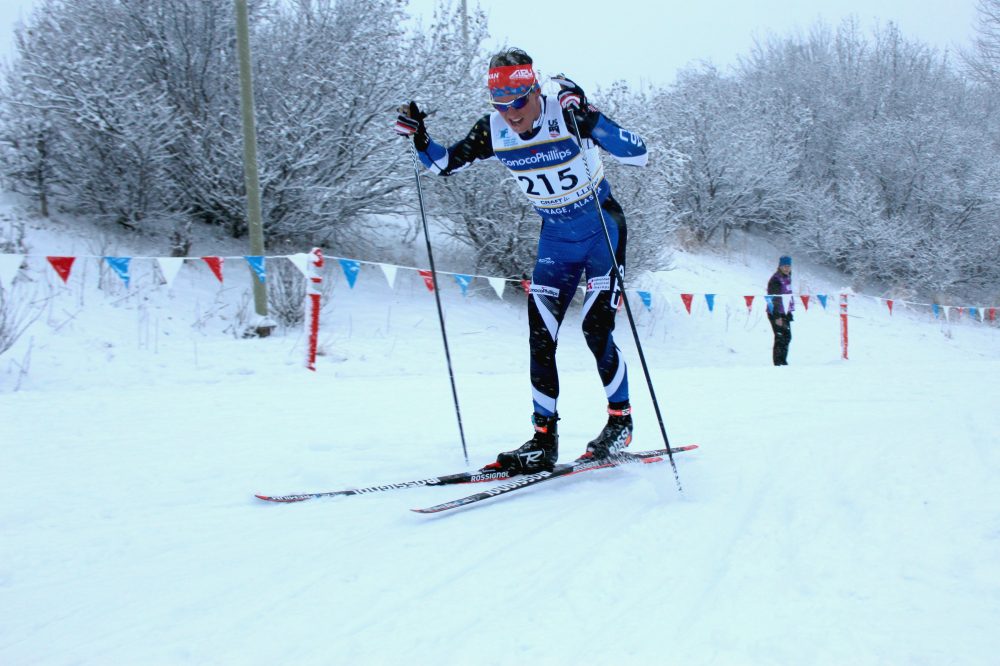
    Garrott Kuzzy skiing the 1997 König Ludwig Lauf. (Photo: Courtesy Photo)

    A Culture of Excellence at Hopkins High

    At Hopkins High School, Kuzzy joined a program that had quietly become one of Minnesota’s most respected Nordic teams. Coach Pat Lanin had spent more than 30 years nurturing a culture of commitment and camaraderie. “He definitely set the culture,” Kuzzy says. “We had this lineage—guys like Matt Schadow and Pete Tollefson, who were great runners and skiers—and it made you want to rise to that level.”

    Those roots mattered. Minnesota’s high school skiing scene was (and remains) a hotbed of talent and community spirit, a proving ground where future Olympians learned not just how to race, but how to love the sport.

    Switzerland and the Making of a Global Perspective

    If Minnesota planted the seed, Switzerland provided the light. During what he calls his “first senior year” of high school, Kuzzy embarked on a foreign exchange in the Alps—a decision that would alter his trajectory.

    “I kind of forgot to apply to college while I was there,” he says, laughing. But what he gained was immeasurable: “That year completely changed my trajectory in life. I trained with a local club, learned German, raced at Swiss Nationals, and came back stronger and faster.”

    Garrott at age 7 with his father, Jim, at the Engadin Ski Marathon. (Photo: Courtesy Photo)

    Once back home in Minnesota, Kuzzy repeated his senior year, dominated the state circuit, and qualified as a forerunner for the 2002 Salt Lake Olympics. More importantly, he returned home with a new sense of maturity and a lifelong interest in connecting people through travel.

    That international curiosity would later become the foundation of Lumi Experiences—years before the company even existed.

    Middlebury: A Team of Global Thinkers

    After strong results at Senior Nationals, Kuzzy fielded offers from several East Coast colleges. He ultimately chose Middlebury, drawn by the school’s blend of academics, languages, and skiing. “Terry [Aldrich] let me run cross-country and ski, and they had a strong German program,” he says. “By that point, I’d just gotten back from Switzerland. Studying languages was my jam.”

    Middlebury’s team at the time was something of a cultural experiment: nearly every skier had taken a gap year abroad. “Five or six of our top racers had spent a year in Norway, Sweden, or Switzerland,” Kuzzy explains. “It gave us a maturity advantage—like grad students who’ve worked before going back to school.”

    That worldly approach shaped not just results, but perspective. “It opened doors for people,” he reflects. “Those experiences make you realize sport isn’t just about skiing faster—it’s about how you see the world.”

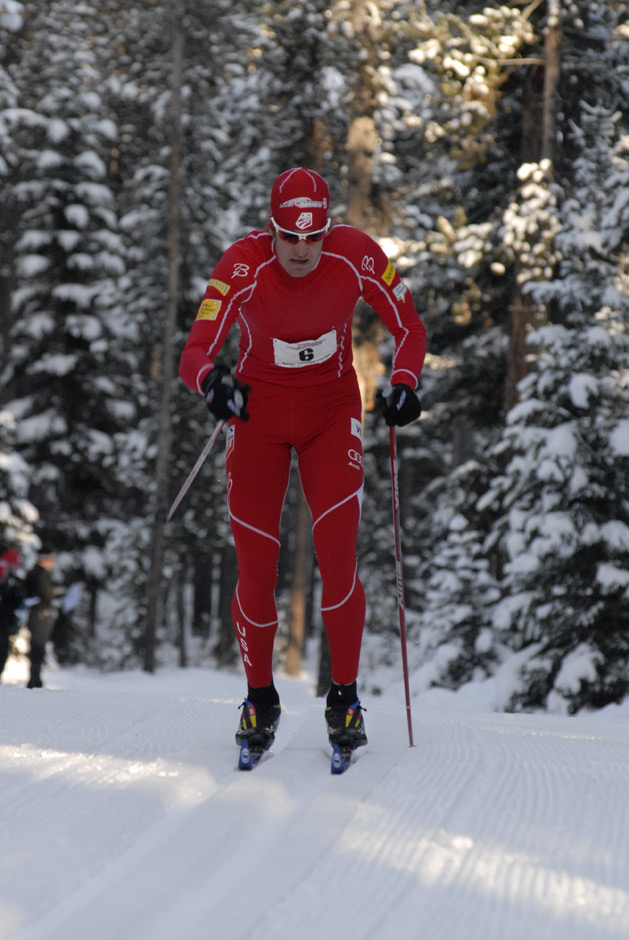
    Garrott Kuzzy (CXC) on his way to first place at the SuperTour in West Yellowstone in 2009. (Photo: Andy Canniff)

    Climbing the Ladder: From CXE to the World Cup

    After college, Kuzzy joined the Central Cross-Country Elite (CXC) team under coach Yuriy Gusev. His methodical plan—Europa Cup in 2007, World Cup in 2008, Olympics in 2010—was ambitious but precise.

    He broke through in Canmore in 2008, finishing ninth in a World Cup sprint. “That race changed everything,” he says. “I barely missed the A-final, but it qualified me for the U.S. Ski Team.”

    The result was validation of years of grinding. “In that semifinal, I was fourth, and I forgot about the lucky loser rule,” he recalls. “Had I stuck my toe out another inch, I would have made the A-final.” Still, his B-final victory and top-10 finish made him one of the first Americans to hit the objective criteria for team selection.

    Yet even amid success, Kuzzy felt the solitude of life on tour. “I remember running at night in Falun, seeing warm lights in houses and feeling homesick,” he says. “I thought—how cool would it be to share these places with friends and family?” That yearning for connection would eventually define his subsequent career.
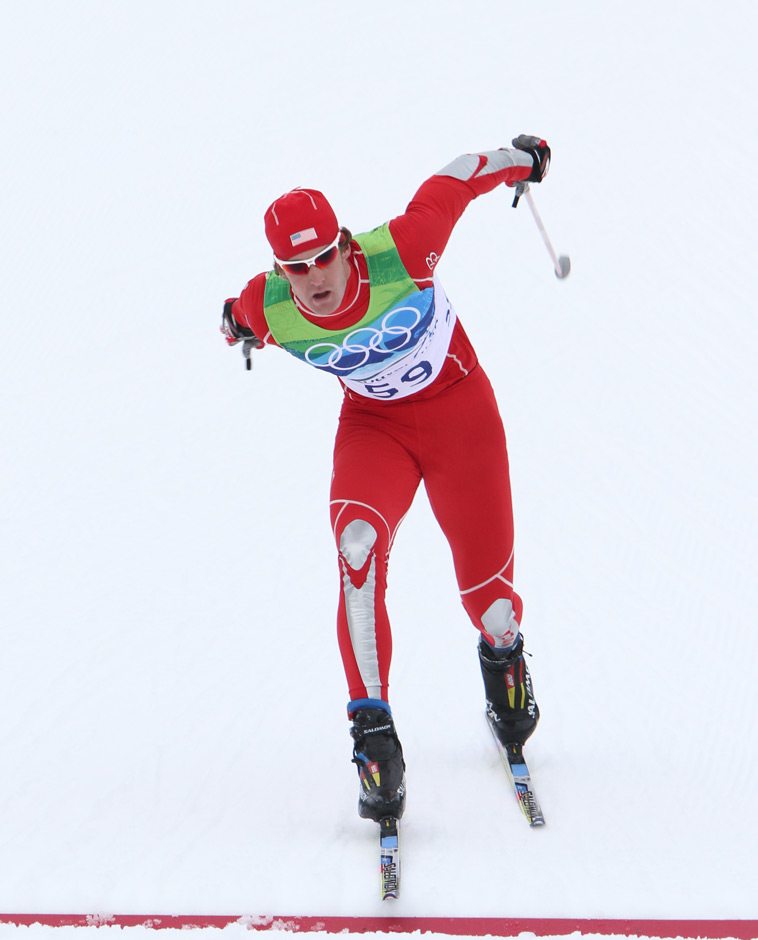
    Garrott Kuzzy was CXC’s first athlete to make the Olympics.

    From Racing to Guiding

    When Kuzzy retired from racing in 2011, he joined Vermont Bicycle Tours (VBT) and began designing active travel experiences across Europe. “On one of my first days, I told Gregg Marston, ‘I’d love to do cross-country ski vacations,’” he recalls. Within a year, he was running VBT’s ski trips in Europe.

    After VBT was sold, Kuzzy spent a year coaching at Green Mountain Valley School before pursuing an MBA in Tourism Management in Innsbruck, Austria. “The program gave us winters off to work in the industry,” he says. “That’s when I started Lumi.”

    The first Lumi trip, in 2018, was a test run for the 2019 Seefeld World Championships. “I totally mispriced it,” he admits. “But we ended up making a $10,000 donation to the National Nordic Foundation.” Guests saw Sophie Caldwell and Jessie Diggins both win World Cups that weekend—one of the most memorable in U.S. skiing history.

    Some of those guests have traveled with Lumi every year since.

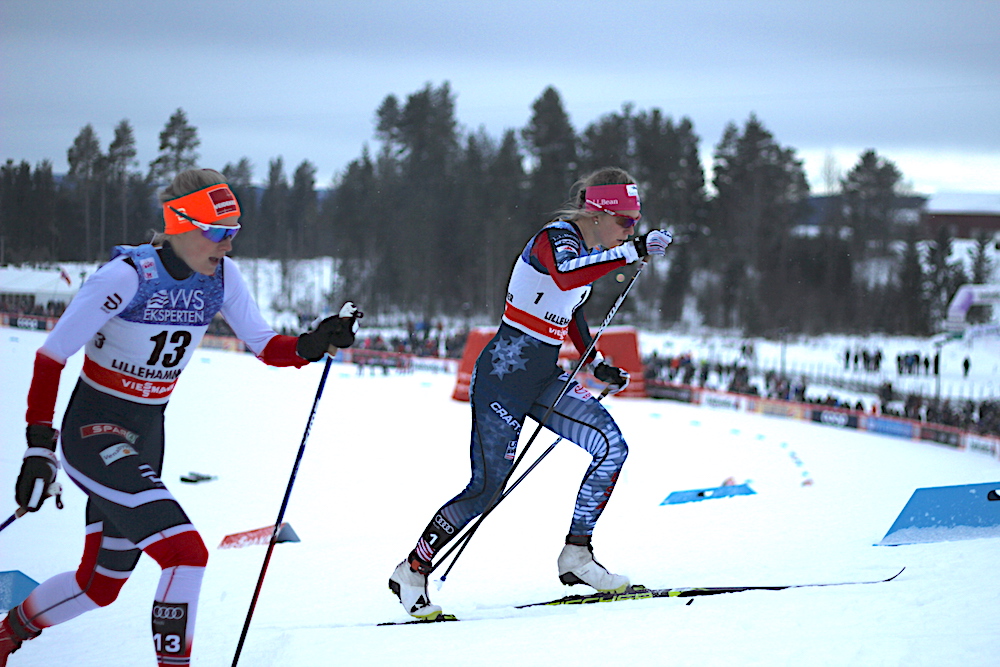
    Sophie Caldwell (USA – bib: 4), Maiken Caspersen Falla (NOR), Laurien Van Der Graaff (SUI), (l-r) race to the line of the individual sprint in Seefeld (AUT) in 2018. (Photo: Fischer/NordicFocus)

    Building Lumi: Travel with a Nordic Soul

    From its base in Innsbruck, Lumi has evolved into a small but deeply personal company offering immersive ski journeys across Europe—Seefeld, Toblach, Falun, and beyond. The mission, Kuzzy says, is simple: “To share the best cross-country skiing in the world with American travelers.”

    He brings the same precision he once applied to interval training to trip design: ski-in/ski-out hotels, strong coffee, smooth logistics, and moments that foster connection. “We still do things like mulled-wine curling nights, inspired by my time with the U.S. team in Ramsau,” he says.

    Seefeld remains the company’s spiritual home. “You can walk out your door and ski, but it still feels like a small town,” Kuzzy explains. “It’s the only place I’ve seen with an après-ski scene for cross-country skiers. There’s a bar right at the trailhead—it’s magic.”

    Lumi’s guests have ranged from former Olympians to families discovering Europe’s ski culture for the first time. And through it all, the ethos remains: connection, community, and joy.

    Kuzzy and his Lumi guests pose with Julia Kern and her parents at the 2023 Planica World Championship. (Photo: Lumi Experiences)

    Full Circle: The Olympic Spirit, Reimagined

    As Lumi prepares for the 2026 Winter Olympics in Italy’s Val di Fiemme—where Kuzzy raced during his career—things feel, in his words, “beautifully full circle.” The company will host multiple groups in Cavalese, the same valley as the legendary Marcialonga.

    “It’s surreal,” he says. “From racing there as an athlete to now bringing people to experience it—it’s everything I hoped Lumi could be.”

    Beyond 2026, Lumi has already secured hotel space for the 2027 Vasaloppet and Falun World Championships—a feat of foresight that shows Kuzzy’s racer discipline never truly faded.

    In the end, Lumi is less about luxury or logistics than it is about legacy. “Some of our guests have been on every trip since the first,” Kuzzy says. “They’ve become friends. We share this deep love of skiing and place—that’s what it’s all about.”

    The Glide Continues

    Garrott Kuzzy’s life on skis has taken him from the frosted parks of Minneapolis to the peaks of Innsbruck, from the World Cup start line to the front desk of a boutique ski tour company. But his mission has remained constant: to bring people closer to the snow, to the sport, and to each other.

    “The best part of Lumi,” he says, “is seeing guests experience skiing the way I did when I first fell in love with it. That’s the magic I want to share.”


    Love Stories Like This? Help Keep Them Coming.

    Feature interviews like this one take time, access, and care to produce. If you value thoughtful storytelling and independent ski journalism, please consider becoming a Voluntary Subscriber. Your support directly fuels the work we do to cover the people, places, and moments that make our sport special.

    Join the FasterSkier community.
     

  • A Tale of Two Birkies

    A Tale of Two Birkies

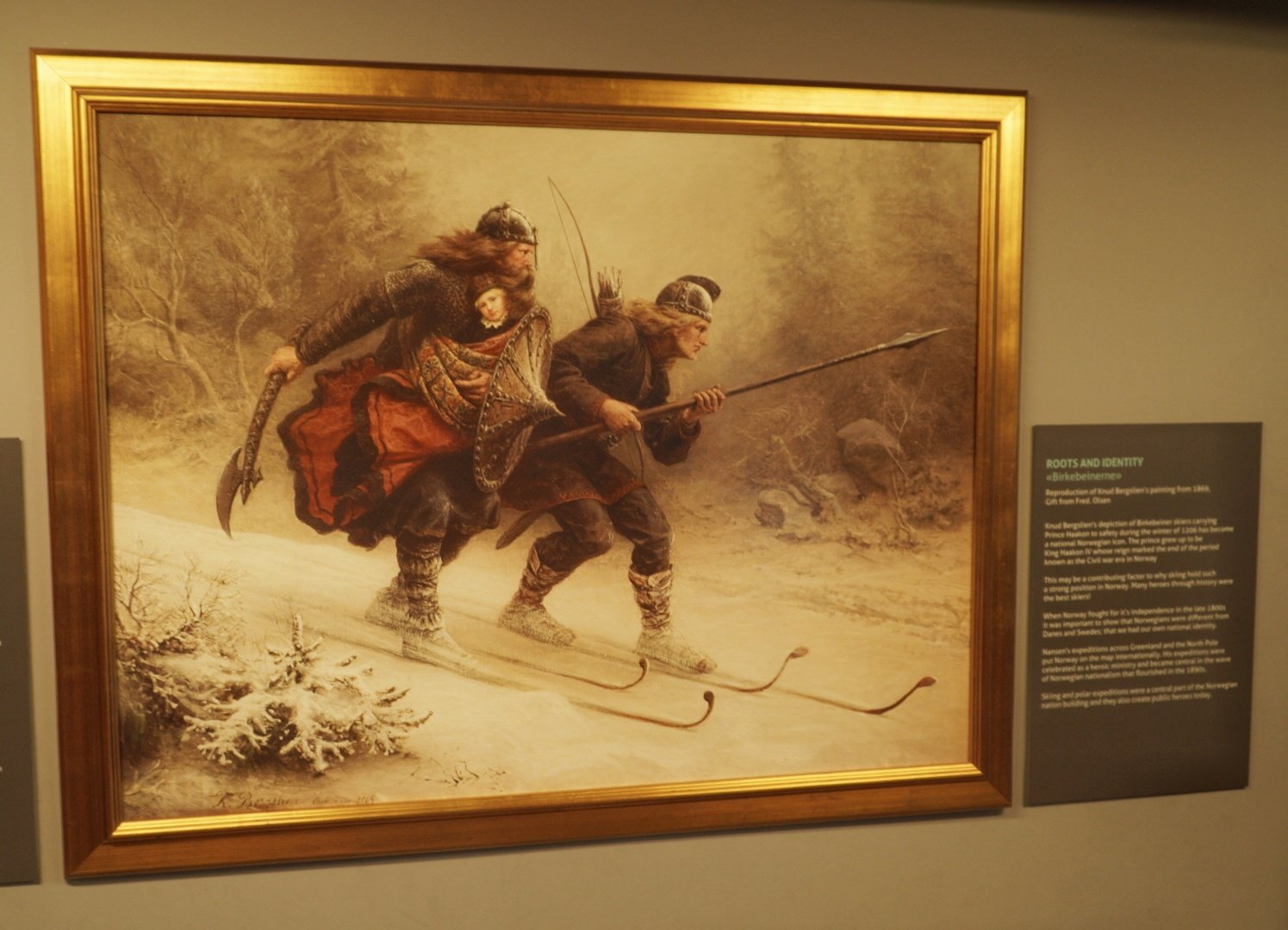
    The original 1869 oil painting of Knud Larsen Bergslien’s “The Birkebeiner” is on display at the Holmenkollen Ski Museum in Oslo. (Photo: Lumi Experiences)

    Most Birkie skiers are familiar with the legendary story of the original Norwegian Birkebeiners and how that inspired the famous cross country ski race in Norway, from Rena to Lillehammer; which in turn inspired the American Birkebeiner from Cable to Hayward.

    But what is the Norwegian Birkebeiner like today? I skied my first American and Norwegian Birkies last year and took away many impressions.

    “Wait, what?!” you ask. “Garrott, you lived in Hayward for 5 years and have never skied the Birkie?” Well, okay. I skied the Birkie once in 2007, but it finished at OO that year. The Birkie’s timing in late February always overlapped with World Cups or Olympic Games. After retiring in 2011, I moved away from Wisconsin. Last year was my first year back, as my company, Lumi Experiences, had a booth at the Expo, sharing stories from the Worldloppet events where we run cross country ski vacations.

    Spectators cheering on Birken skiers. (Photo: Lumi Experiences)

    On Birkie Saturday, I couldn’t pass up the opportunity to ski from Cable to Hayward and actually finish on Main Street. Finally, I checked off one of my bucket-list items as a ski racer.

    Three weeks later, I found myself standing in Rena, Norway getting ready to classic ski 54 km from Rena to Lillehammer, carrying an 8 pound backpack representing baby prince.

    Spectators provide extra sustenance to skiers between the official aid stations. (Photo: Lumi Experiences)

    Håkon Håkonsson. The three-week gap between the two events was enough to recover from one and carry good fitness into the next.

    Our group was staying in Lillehammer, so it was an early morning bus ride to get to the start in Rena. The race course takes you on a direct path over the mountains, but the roads have to go around the mountains. In order to arrive at the start by 8:00 am, the bus left Lillehammer at 5:30 am. I was expecting a very dark start to the morning, but when I opened the blackout curtains and daylight came in, I thought I had slept through my alarm. This should not have surprised me, as we were just two days from the Spring Equinox and only 5° south of the Arctic Circle.

    Ski trails in every direction. (Photo: Lumi Experiences)

    The start of the Birken is basically in a farm field with temporary warming tents without any permanent infrastructure. The colloquial name for the Birkebeinerrennet was one of the biggest surprises for me. I’ve grown up in the US calling it the Norwegian Birkie, but in Norway, it is unequivocally referred to as the “Birken.” This terminology makes it easy to differentiate the American “Birkie” from the Norwegian “Birken.”

    The start itself was one of the most civilized starts I have ever experienced. The ~ 10,000 starters are split into 14 waves. As a wave 1 Birkie skier, my Birkie time was good enough to be seeded in the 4th wave at the Birken – a wave placement which seemed surprisingly accurate, given the pace of the skiers around me. Ample tracks and a gradual uphill start kept everyone spread out without any accidents. It seemed like everyone understood they had 54 km to ski and no one needed to win the first kilometer.

    Sunshine and blue skies. (Photo: Lumi Experiences)

    In fact, as early as one kilometer into the race, skiers were already stopping to work on their kick wax. Conditions were surprisingly tricky, as the course starts only 1000 feet above sea level, then climbs to about 3000 feet of elevation. The weather warms throughout the day and a skier may go through three or four different wax conditions.

    I waxed with a thin layer of klister, covered with hardwax. This combination is tricky because you have to keep your skis moving to prevent icing in the powder at higher elevations, but it provided great kick for the first 20 km of climbing up to the plateau in Raudfjelllet. It was also durable enough to last for my entire 54 km race. I just stopped once to switch skis half-way through the race in Kvarstad. This meant the wax that had worn off the inside edges of my skis was now on the outside edges, giving me better glide and kick for the second half of the race.

    The spectators really help make a ski race fun for participants. The Marcialonga in Italy and the Engadin in Switzerland both go through many villages, so it’s easy for people to cheer from their balcony. The Birkie and Birken courses are much more rural, so they’re harder for spectators to access. However, the spectators that make it out onto the course are there to have fun and bring a lot of enthusiasm for the racers. There were so many spectators at the Birkie this year that I thought I was already at OO when in fact, I was only at Boedecker Rd. By the time I was actually at OO, skiing over the Key Log Bridge, I was in awe at all of the new infrastructure and enthusiastic spectators. My favorite spectators, however, are the snowmobilers. They are often in the harder to reach corners of the course and seem to be there more to cheer on the agony of defeat than the thrill of victory.

    Skiing into the Birkebeiner Stadium. (Photo: Lumi Experiences)

    The Birken goes through a protected region, high on the plateau, so there are no snowmobilers. Somehow, though, spectators figure out how to bring couches to the trailside, build huge bonfires and offer homemade aquavit or Jagermeister to skiers passing by.

    Speaking of aid stations: each Worldloppet event seems to have its own unique treats, like Comte cheese in France, dark chocolate in Switzerland or blueberry soup in Sweden. In Norway, it’s lefse. Seriously. The rolled lefse dough filled with cinnamon and sugar looked a little dry to me, but I was hungry at the first aid station and took a bite. It turned out to be one of the best tasting race foods I have ever eaten. After that, I made sure to take a buttery lefse at each aid station. Yum!

    Unlike the Birkie, which is mostly wooded from start to finish with lots of rolling trails, the Birken is mostly on a high open plateau with long, sustained climbs and long, gradual descents. I often found myself looking out over the wide expanses and admiring the views throughout the race.

    We were fortunate to have ideal weather conditions for this year’s Birken, save for a headwind somewhat reminiscent of crossing Lake Hayward at the Birkie this year. There are years, however, where the weather on the plateau can be much less ideal. Besides the symbolism of the backpack, there is also the practical consideration that you can carry warm, dry clothes with you. Not only does the backpack need to weigh 8 pounds, it also needs to store a windproof jacket, pants, long underwear, hat, gloves and balaclava.

    One of the best parts of the Birken is the final 15 km from Sjusjøen to Lillehammer. Rather than big climbs and a lake leading to the finish, the last 15 km of the Birken is a long, gradual downhill. Before the race, I learned that a special award is given to finishers who cross the line within 25% of their age group winner’s time. I’m not sure if the Birkie still has a 25% Club award, but the tradition lives on in Norway. I train far less than I did as a racer, but still have a competitive spirit. Achieving the 25% Club award in the Birken is not easy. When I realized I may still be in the running at the last time check, I tried to make up as much time as I could on the downhill to Lillehammer, relying more on my ski skills than on my fitness.

    Lumi guests Bill and Meg celebrate at the Birken finish. (Photo: Lumi Experiences)

    The Birken finishes at the Birkebeiner Stadium, which hosted the 1994 Lillehammer Olympic Games and still has one of the most challenging trail networks on the World Cup circuit. 

    Fortunately, the Birken finish does not take racers on any of the World Cup course. Instead, skiers cruise through the flat stadium and into the finish. After a quick backpack check, skiers are awarded their Birken medal and Worldloppet passport stamp, recognizing their achievement.

    For me, one of my favorite aspects of completing a big event like the Birken is sharing the experience with friends. After the race, everyone gathered to share stories about their journey from Rena to Lillehammer and to cheer on the new friends they had made during the week. Skål!

    If you’d like to ski the Norwegian Birkebeiner, check out the Lumi Experiences Norway Birken Trip and receive the early booking discount of $300 per person when you secure your spot before March 31. We would love to have you along. Reach out to see the itinerary!

    See you on the trail soon,
    Garrott Kuzzy

    garrott@lumiexperiences.com


  • World Cup Packing with Julia Kern: What’s in the bag?

    World Cup Packing with Julia Kern: What’s in the bag?

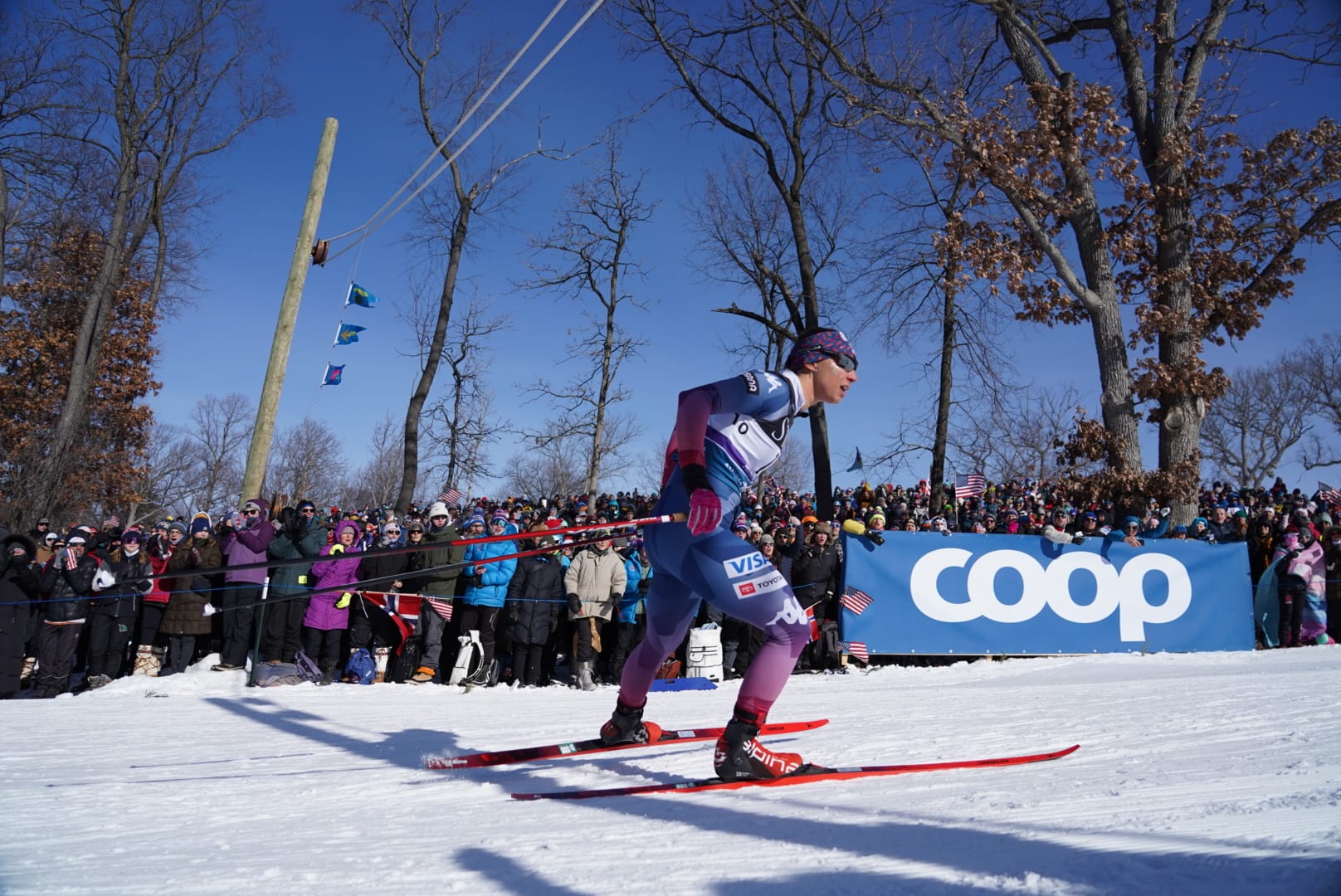
    Julia Kern at the Minneapolis World Cup in Wirth Park. (Photo: Lumi Experiences)

    It’s been an incredible North American World Cup period in Canmore and Minneapolis over the past two weeks. In Canada, as the excitement was building for the first World Cup on US snow in over 20 years, US skier Julia Kern led the women to the top US finish in the classic sprint and Diggins won the 15 km freestyle. In Minneapolis, the huge crowds of US fans in Wirth Park for the Loppet Cup brought an incredible energy to the event and crowds were treated to several podium finishes for the US!

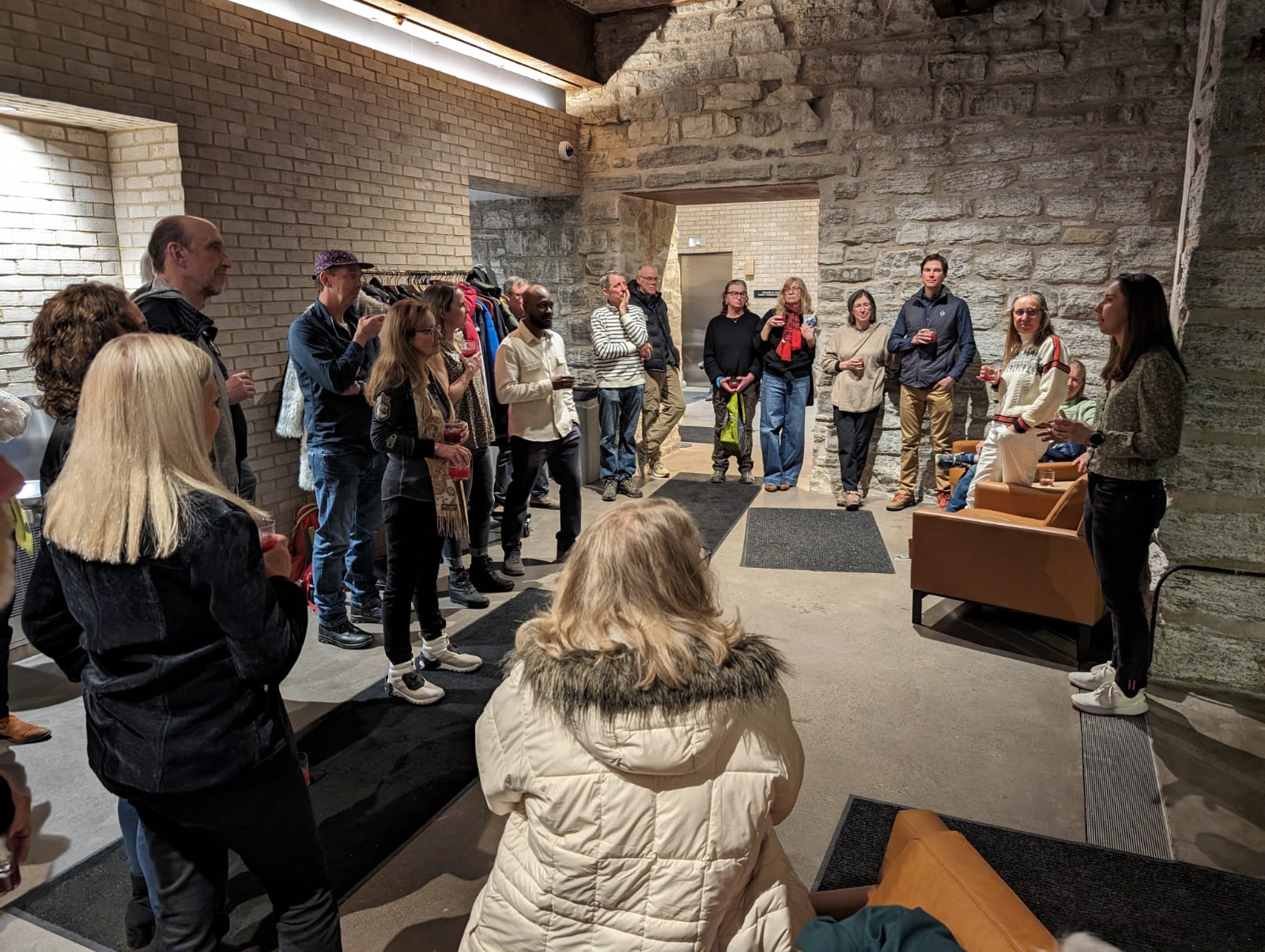
    Julia talking with Lumi guests in Minneapolis after the Loppet Cup. (Photo: Lumi Experiences)

    On Sunday night after the races, guests on Lumi’s Minneapolis World Cup Trip got to meet Julia and her family. Julia shared parallels between skiing on the Weston Golf Course where she grew up in Boston and the Wirth Golf Course that hosted the Minneapolis World Cup. She also talked about the impact of the Trail to Gold Fellowship, helping to bring more women coaches onto the World Cup. The story of how Julia and Jessie won silver at last year’s World Championships captivated and inspired the group for next year’s Trondheim World Championships in Norway.

    Now these next two weeks are the first time in decades that US ski team athletes have been able to head home for some rest time in the middle of their 3.5 month World Cup season. 

    Before Julia takes off for the final leg of the World Cup in Scandinavia in early March, she prepared a video of what she packs when she travels to the World Cup. In this new video, see what she packs in her bags – both for ski training and her other favorite sport. What sport is that?

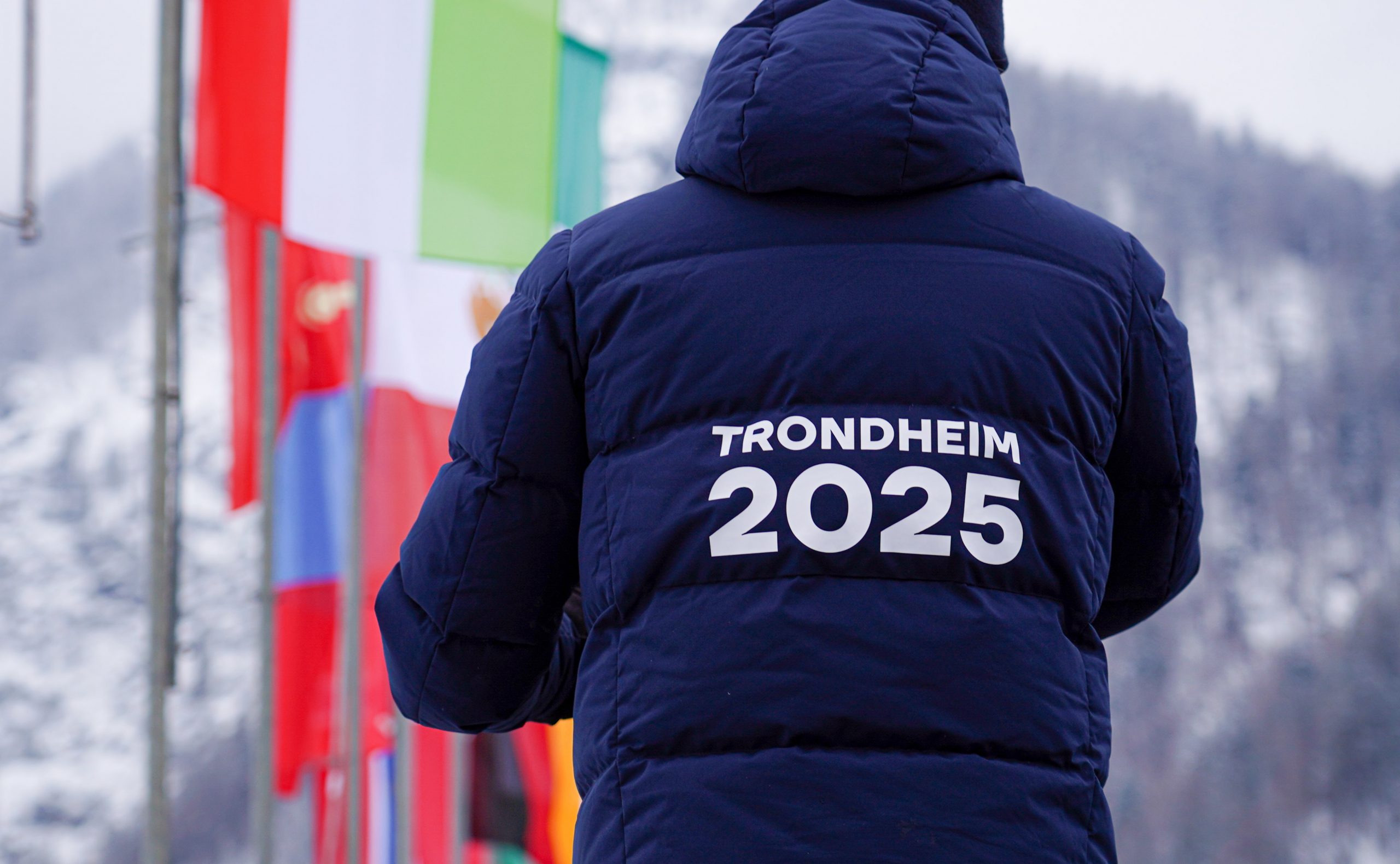
    Want to experience cheering for a World Championship event in Europe? The 2025 Trondheim World Champs are going to be in Johannes Klæbo’s backyard next February and March. Due to their popularity, there will be two Lumi Experiences trips to Trondheim 2025. Dovetail this with Lumi’s Norway-Birken trip to ski the Norwegian Birkebeiner while you’re in Norway. An additional packing tip from Julia for Trondheim 2025? Bring your stars, stripes and glitter!

    Right now we’re offering an early booking discount on all 2025 Lumi trips. Secure your spot before March 31, 2024 and save $300 per person.

    See you on the trail!

    Garrott

    garrott@lumiexperiences.com

    Get ready for Trondheim 2025!. (Photo: Lumi Experiences)
  • Life’s a Banquet: the Diverse Career of Garrott Kuzzy

    Life’s a Banquet: the Diverse Career of Garrott Kuzzy

    Editor’s note: This is the latest installment of FasterSkier’s “where are they now” features devoted to former standouts from Team USA. This article features Garrott Kuzzy, whose presence on the 2010 Olympic Team helped the American Men’s relay to a 13th place finish. Kuzzy is also a principal in Lumi Experiences, a consistent and generous supporter of FasterSkier.

    Garrott and the Lumi crew celebrate with Julia Kern after the relay at 2023 World Champs in Slovenia.

    In the 1965 Broadway hit, Mame, the titular character Auntie Mame pronounces the famous line, “Life’s a banquet, and most poor suckers are starving to death!” The utterance, however, certainly does not apply to Garrott Kuzzy, who is one of the rare people who revels in all that the world has to offer. And, illustrative of the person he is, Garrott wants to share it with the rest of us.

    A lifelong traveler—first with family and then as a professional ski racer—Kuzzy’s background has provided a unique roadmap in living, skiing, and experiencing the wonders and wow factor of Europe and destination ski resorts worldwide. Building on a background steeped in traveling and the corresponding industry, Kuzzy has a master’s degree in business with a focus on Alpine Tourism. In shaping his business, Lumi Experiences, Kuzzy has created the perfect marriage between his passions and professional work, and the result is a company that designs vacations ostensibly centered on cross-country skiing. Upon closer look, however, Lumi offers its guests not only great skiing but total immersion in the culture and character of the places they visit. “There are so many incredible things to do and see in the places where we travel,” Kuzzy says. I try to curate the trips to feature activities that capture the essence of this.”

    This dazzling array could be learning to make apple strudel with olive oil in Italy, yodeling with a World Champion yodeler in Austria, stopping in a trailside hut for a beer in Germany, relaxing in a hotel’s wellness area, or exploring a city with a local historian. Lumi offers bespoke travel with a highly-personal touch. “The idea of stopping into a trailside hut for a beer or apple strudel is foreign to most North Americans, Kuzzy said. “So I love to introduce our guests to new experiences and new friends here in Europe. I love to share the European ski experience with North American travelers . . . Lumi is the Finnish word for snow, so Lumi Experiences are all about winter experiences like skiing, saunas, mulled wine, and warm fires. I like it because it’s a word that everyone can pronounce and also has a bright connotation. We refer to our travelers as ‘Luminaries.’”

    Lumi Experiences founder Garrott Kuzzy strides on the Wirth Park trails in Minneapolis where he grew up skiing.
    Early life

    A native Minnesotan, Kuzzy’s family consisted of parents, Jim and Beth, and two younger sisters, Laura and Martha. Hailing from Northern Wisconsin, Jim grew up skiing and participating in the American Birkebeiner, seemingly a prerequisite in a state whose official motto is “Forward.” The whole family seemed to adopt the mantra, and all three Kuzzy kids grew up to be formidable athletes, with Laura cross-country skiing at the University of New Hampshire, and Martha a Division I rower and two-time NCAA champion at the University of Virginia. “Surprisingly, I wouldn’t say we grew up in an athletic family,” Kuzzy said. “As a kid, the things you do with your family are all you know. I always enjoyed biking, skiing, tennis, and soccer. My sisters were always dragged along to my games and races. I don’t think they had much choice, but fortunately, they enjoyed themselves enough to do many of the same activities.”

    Beth worked for Northwest Airlines, and her benefits allowed the family to fly at a steeply discounted rate, which launched the family across the pond on a consistent basis. “When my dad found out about the Worldloppet, many of our early family vacations included going to various international ski marathons,” Kuzzy said. “My folks traveled to Japan, Canada, and Norway together for Worldloppet marathons. My first overseas trip was to Switzerland with my folks to ski the Engadin Ski Marathon. Since then, my dad has taken each of us kids to one of the events when we were old enough to ski them. I went to Italy and Germany for the Marcialonga and König Ludwig Lauf, my sister Laura to the Transju in France, and Martha to the Jizerska in Czechia.”

    Inspired by his trip to Switzerland as a kid, Kuzzy spent his first senior year of high school as a foreign exchange student living with a Swiss host family. It was a seminal experience for many reasons. “I learned German, fell in love with living in Europe, and spent most of mytime running, biking, or skiing in the Swiss Alps,” Kuzzy said. Matriculating to Middlebury College in Vermont following high school in 2002, Kuzzy was a member of the cross-country ski team and earned his B.A., majoring in Geography and German with an Economics minor. Beeindruckend!

    Garrot competing in the Olympic Winter Games, Vancouver, Canada, 2010.
    Racing career

    The year Kuzzy graduated from Middlebury in 2006, the CXC Team (Central Cross Country) was launched, operating in the 10-state Central Region of the U.S. with a mission of creating opportunities for athletes of all ages and abilities—including elite- level skiers—with the objective to qualify at least one CXC skier on the U.S. Olympic Team in 2010. “CXC’s goals aligned with mine,” Kuzzy said. “At that time, the primary professional skiing opportunities in the U.S. were the Subaru Factory Team and the Fischer Factory Team. With those two programs, athletes basically trained on their own and competed with the same race suit. CXC modeled their team to have all the athletes live and train together year-round with a full-time coach.”

    By the time the 2010 Winter Olympics in Vancouver arrived, Yuriy Gusev, the CEO of CXC, doubled his initial goal of one qualifier with two athletes earning Olympic berths: Kuzzy and Caitlin Compton Gregg (a three-time Boulder Mountain Tour champ). Kuzzy and teammates Simi Hamilton, Torin Koos, and Andy Newell skied to 13th place in the men’s 4x10k relay. Individually, Kuzzy was top 50 in the classic sprints and top 60 in the 15k freestyle.

    Kuzzy spent five years with CXC, including two years on the U.S. Men’s Cross Country Team, and life abroad became the norm. So did chronicling his travels for family and friends back home. “I was always on the lookout for interesting things to write about,” he said. “When you are writing, you look at the world differently. My training logs are basically my journals in some places. As a professional ski racer, I think it’s really easy to get into the bubble of eating, sleeping, and training. And yet, for at least half of the year, you’re training and competing in some incredible places. I wanted to share that with ski fans and friends who couldn’t travel to these places. Taking photos and sharing stories from my travels helped take my mind off racing and better appreciate the places I was traveling.”

    By age 28, Kuzzy was evaluating what he wanted to do with his life. “At 28 years, I was the oldest I’d ever been, and much of my life had been spent ski racing,” Kuzzy commented. “By competing in the 2010 Olympic Games, I had accomplished one of my biggest goals as a ski racer. For me, the next goal would have been an Olympic medal. That fell pretty far out of reach, and there were so many other opportunities in life.”

    The Climb

    Following his professional ski career, Kuzzy began working as a product director for VBT Bicycling Vacations, which arranges bicycling trips throughout the world. He was responsible for developing the company’s trips to German-speaking countries and the U.S. National Parks. “My five years training trip leaders and developing trips for VBT helped me better understand the travel business,” he said. “The places I discovered as a ski racer certainly influenced where I wanted (and didn’t want) to bring people.”

    While working in Vermont, Kuzzy met Catherine Collins, and the pair married, relocating to Innsbruck, Austria, in 2016 (where they had honeymooned). Garrott undertook his master’s degree and started turning his dreams of Lumi into a reality. “That provided the time and skills to grow Lumi Experiences,” Kuzzy said. “It was the perfect time and place to launch a dream I’d had for at least 15 years: helping people fall in love with winter.”

    Sunny day at the Toblach World Cup stadium surrounded by Dolomites

    The inaugural Lumi trip in 2018 traveled to the final World Cup in Seefeld, Austria, before the 2018 Winter Olympics in PyeongChang. Guests were treated to a front row—and historic—seat to watch American Sophie Caldwell tie with Laurien Van Der Graaff of Switzerland in the 1.1k sprint freestyle.
    "Guests got to watch her win that race, and they also got to forerun the race, going out in every heat. They could barely stand on their feet when it was over. It was a unique and very cool experience, though I’m not sure we’ll have guests forerun World Cup races in the future,”he said.
    A day later, Jessie Diggins served notice to the rest of the women’s field, skiing to victory in the 10k mass start freestyle. Talk about a grand slam in your first at-bat. Two U.S. victories in as many days, and Lumi guests were on the sidelines for both. (Two weeks later, Diggins and teammate Kikkan Randall captured gold, winning the women’s team sprint freestyle. The victory marked the first Olympic medal for American women in cross-country skiing and the first U.S. athletes to win gold in the sport.) Luminaries will be on the World Cup sidelines again in 2024 as Lumi travels to Minneapolis for the first World Cup on U.S. snow in more than two decades. And you don’t even have to pack your skis as ski rentals and transportation are included on this bespoke, five-day trip with special access at the venue and insider insights into Kuzzy’s hometown.

    Sunset skiing in Seefeld, Austria.
    Arrived

    Of course, viewing World Cup events is just one facet of a Lumi trip. As an official tour operator of the Worldloppet and the only one from North America, guests have the opportunity to participate in an array of 20 iconic marathon races (a point-to-point race of more than 40 kilometers). Currently, Lumi offers eight winter trips, with most vacations lasting 7-10 days. Countries on the log include France, Italy, Austria, Switzerland, Norway, Germany, Minneapolis, and Iceland. Trips are designed to meet people where they are. You don’t have to ski in a Loppet or even ski with the group. You can go at your own pace, opting for terrain suitable for your skill (or lack thereof) level. Trip leaders help guests choose the best option for them each day with full knowledge that most people are recreational skiers, not former Olympians —although that usually only applies to Lumi’s guides, one of whom is former World Cup skier and two-time Olympian Holly Brooks. “In conjunction with a high degree of familiarity with where they are traveling, trip leaders all possess excellent ski credentials,” Kuzzy remarked. “The leaders include the mom of an Olympic Gold Medalist in France, Worldloppet masters, event directors, and local coaches. “Our trip leaders are often friends or friends of friends. It results in excellent trip leaders and is completely word of mouth. They usually guide one or two trips a season. Although it’s a lot of work to lead a trip, they are fresh and really enjoy the time they spend leading the trips.”

    As far as people traveling with Lumi, Kuzzy sees many similarities. “Sharing the European ski experience with our North American travelers is perhaps the biggest highlight for me,” he said. “And there are so many cool places to ski and unique activities in the wintertime.”

    Two-time American Birkebeiner champion Muffy Ritz of Ketchum, a skier for the U.S. Ski Team (1980-84) and member Team Rossignol for 40 years remarked, “I chose Lumi because they were the only company I’ve ever heard of that takes nice vacations based around the Worldloppet races.” Kuzzy says although he shies away from strictly a race-based focus when designing trips, it doesn’t mean when there is a race day, there is not a focus. “Ski racing is also ingrained in me, so I want to provide World Cup level support to our guests, which is why we often bring in World Cup wax techs for race days,” Kuzzy said. “The weeks are also planned to the right pace, often with longer days followed by short or travel days, or skiing at a lower elevation earlier in the week to acclimate before traveling on to a place with a higher elevation.”

    “I have never seen another company do these Worldloppet races and hold your hand the whole time. They sign you up, you get a good starting position, they prep your skis and transport you there,” Ritz said. “You are also going with a great group of people.” Given the first cross-country ski race on record took place in Norway in 1842, European traditions and racing experiences are as unique as the villagers who inhabit the towns the race trails wind through.” Skiing through villages with people cheering you on and each village trying to one-up each other is a highlight. At the Engadin in Switzerland, each town has its own special atmosphere, whether that’s a local band playing traditional tunes or food stations with local treats reflecting the area. In Norway, you have Lefse with butter and cinnamon or Norwegian waffles with brown cheese.

    “Any person who is an enthusiastic Nordic skier should travel with Lumi. It was one of the highlight trips of my life,” Ritz said.

    “The passion for cross-country skiing is contagious,” Kuzzy said. “But not everyone has to click into
    skis to experience all Lumi offers. Most of our travelers are passionate about skiing, but they also enjoy the finer elements of travel like comfortable accommodations, excellent dining, and cultural activities. We try to set up the trips so they are enjoyable for both the passionate skier, as well as the spouse or partner who might not be as into skiing but might really enjoy simply spending time outside.

    “Our philosophy is ‘it’s your vacation’; so we encourage and facilitate people doing activities that suit them outside our main itinerary as well.”

    So many choices . . .
    Forward

    Luminaries can book fully-guided trips, self-guided trips, or custom trips, where Kuzzy and staff provide all you need to experience the vacation you envision. “We get it,” Kuzzy said. “You’re independent and want a bit more flexibility with the program or simply prefer to travel with the companions you choose or dates that don’t match up with your schedule. We design and set up everything for you, including a selection of routes, maps, hotels, taxi pickup, luggage transfers, and a point person to get you ready to glide.”

    Gliding can be of the Nordic or Alpine variety. Kuzzy admits to skiing more lift-serviced terrain of late. Highly understandable for a man who, from his front door, views the Patscherkofel mountain, site of the famed downhill run where Austrian Franz Klammer captured the Olympic Gold Medal in downhill in 1976. “You’re in the Alps, so taking a day or two of downhill skiing on the alpine slopes is a great addition to cross country,” Kuzzy says. Be it Nordic or alpine, there is no shortage of fantastic ski terrain in Europe, but what makes his job so amazing owes just as much – if not more – to the people, not just the places.

    “Some of my favorite guests (if I’m allowed to have favorites) are parents traveling with their adult children for whom a week of skiing together is really a special time. It is really fun to have young kids on trips; maybe it’s a college graduation trip or post-college kids on their own. Grandparents and parents and kids together. Parents playing cribbage with their kids. You can tell how valuable the time together is. It reminds me of travels with my own parents and sisters that inspired my ski racing career and passion for travel.”

    “Everything does all fit together. I am doing what I am meant to be doing.”

  • From the Archives: CXC Lake Placid Training Camp Report, October 2008

    From the Archives: CXC Lake Placid Training Camp Report, October 2008

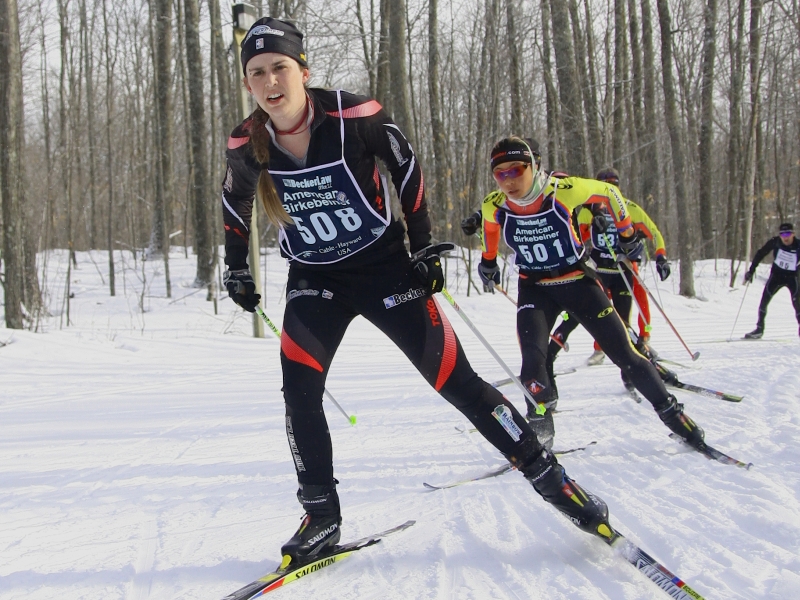
    Author Kristina Owen races in the 2009 American Birkebeiner ahead of Evelyn Dong.

    The following article was originally published on FasterSkier on October 15, 2008. It was written by CXC (Central Cross Country Skiing) athletes Kristina Owen and Heather Zimmerman. Roughly contemporary photos have been added for this reprinting; the pictures that originally appeared with this article are no longer available.

    The piece is simultaneously from very much another era, yet also completely timeless. On the one hand, “Caitlin Compton” now has a different last name; Jessie Diggins, who had recently turned 17, would go on to do things even more impressive than win the junior division of the Climb to the Castle rollerski race; the article’s authors last competed in FIS races in 2011 (Owen) and 2009 (Zimmerman). On the other hand, in October 2008 skiers enjoyed the fall foliage, did hard doublepole efforts, and benefited from having athletes from multiple clubs together in one place for head-to-head competition. A quick perusal of social media shows that New England fall colors are still a thing, and that athletes from multiple clubs (including that obscure junior, Jessie Diggins) still come together in Lake Placid for fall training. 13 years later, some seasonal rhythms of American skiing remain very much the same.

    Matt Liebsch coming up the final hill on his way to victory in the 2009 American Birkebeiner.

    CXC Elite Team – Lake Placid Training Camp Report

    The CXC Elite Team recently completed a two week monthly camp in Lake Placid, NY. We stayed and trained at the Olympic Training Center, which provided an ideal environment to make huge gains in both fitness and technique.

    The weather was excellent for the first couple days: chilly, but clear skies. “The only problem with the weather was that is was cool enough that none of the boys took off their shirts,” Caitlin Compton mentioned with a smile. After a few days of such perfect training weather, the team’s luck broke and it started raining; beautiful miserable cold rain. The training continued as planned, but between workouts the hallways were filled with the smells of damp and drying athletic apparel.

    One of the team’s favorite workouts at this annual camp is an over-distance run in Adirondack Park. We are able to take advantage of great trails up mountains with gorgeous panoramic views. This year the men’s team made it to the summit of Mt. Colden, but disaster struck on the way down. Matt Liebsch, Midwest born and bred, was unused to the speed on the steep rocky descent. He went down hard with a nasty ankle sprain. His teammates carried him out, but the injury was camp ending and he returned to the Midwest for recovery.

    Leaves in the Lake Placid region were in their peak foliage and so was the CXC Elite Team’s performance during the second week. The highlight came at the culmination of the camp, with the Whiteface rollerski race. However, there was a lot of work to be done, both intensity and volume, before the race arrived.

    Caitlin Compton sprinting at US Nationals in 2008 in Houghton, Michigan.

    The workload wasn’t the only thing increasing during the second week of camp. The Olympic Training Center was overtaken by Nordic athletes. CXC Elite was joined by their Junior Development Program athletes and coaches, as well as the Sun Valley team, the USST, various NENSA athletes, and some of the region’s collegiate racers. CXC Elite Team was able to frequently take advantage of the large athlete gathering, as all the groups came together for some of the workouts. The best example of this was a hard double pole workout up a long gradual hill. The men did two sets of 3×4 minutes, with a ten minute break between sets, while the women concentrated their efforts to 3 1/2 minutes. It was a great workout and the added numbers definitely helped in ramping up the intensity!

    The camp was also notably included the first competition of the year between CXC and their friendly rivals, Sun Valley. Last year Sun Valley pulled out a narrow victory in overall points. This year CXC was off to a good lead, with a win in an inter-team soccer match. The competition was fierce, but CXC’s greater numbers this year gave them the edge to pull off the victory.

    CXC Team continued to utilize the hilly terrain in the area, traveling to Whiteface Mountain for a ski walking workout on the lower trails. Some of the team returned to the mountain later in the week for an evening hike, lured in by the fresh snow that covered the top.

    Our second week contained not only some good intensity efforts but also a lot of volume. By Sunday most of the team had completed at least three ODs. All the mileage made us feel as though we had really gotten to know the Lake Placid area!

    Garrott Kuzzy (CXC Team Vertical Limit/US Ski Team) races the sprint in West Yellowstone, November 2009. (Photo: Win Goodbody)

    The camp ended with a grand finale, the Whiteface Mountain rollerski race! After testing ourselves on the area’s hills for the previous two weeks, what better way to finish up than a five mile, steep uphill race. Of coarse, mother nature decided to throw a few additional hurdles in our path before we began. The top of the toll road was too icy for skiing so the race was moved slightly down the hill. However, despite the alterations, the course still proved to be plenty challenging! Despite being tired, CXC athletes turned in some impressive results. Caitlin Compton led the way, winning the women’s race. CXC Junior Devo Program Jessie Diggins had a very impressive showing as well, placing 5th overall and winning the junior category. On the men’s side Garrott Kuzzy led the charge with a notable 4th place finish, followed closely by Brian Gregg in 6th.

    Sufficiently exhausted by this final effort the team departed Lake Placid. This was the team’s final two week dryland training camp. Athletes will now have the next four weeks at home before leaving for West Yellowstone, early snow, and the beginning of the Supertour circuit!

    We will be ready!!

    Related reading:

    “Central Cross Country Skiing Announces CXC Elite Team For The 2008-2009 Season,” FasterSkier, June 2008

  • Nordic Nation: Bringing the World Cup to Minneapolis

    Nordic Nation: Bringing the World Cup to Minneapolis

    In this episode, we connect with John Munger, Executive Director of the Loppet Foundation in Minneapolis and Garrott Kuzzy, former U.S. Ski Team member who grew up near Wirth Park. From impressions of Wirth back-in-the-day to exploring how the World Cup ended up in Minneapolis, we drill down on most (but not all) things Minneapolis World Cup. That event goes down on March, 17. We cover the cost of hosting, infrastructure demands, and how the pieces are coming together a few months out from the event. Thanks for listening.

  • Organizing the Winter World Masters Games in Innsbruck/Seefeld

    Organizing the Winter World Masters Games in Innsbruck/Seefeld

    Innsbruck, Austria has a long history of hosting big winter sports events. It is the self-proclaimed “Capital of the Alps,” and is truly one of the most memorable winter sports venues in the world. Innsbruck hosted the Olympic Games in 1964 and 1976. The annual Four Hills ski jumping tournament attracts 30,000 spectators to the iconic Bergisel jump that overlooks the university town of about 120,000 residents. In 2019, the Nordic World Championships were hosted in Seefeld, a short 30 minute train ride from Innsbruck.

    This winter, Innsbruck and Seefeld build on their long winter sports tradition and host the Winter World Masters Games from January 11 – 19, 2020. The World Masters Games were founded in 1985 to bring athletes over age 30, of any ability, together to compete internationally. In contrast to the Cross Country Masters World Cup, which hosts events annually, the Winter World Masters Games (WWMG) are only held every five years and bring together athletes from 12 different winter sports, not just cross country. The WWMG are also recognized by the International Olympic Committee, which seeks to support the Olympic Charter that “the practice of sport is a human right.”

    We sat down with Florian Kotlaba, WWMG Event Director, and Moritz Lange, WWMG Seefeld Operations Director, to learn more about the event. Kotlaba spent 13 years as Ski Jumping Team Manager for the Austrian Ski Federation. Lange led the event production team for the 2019 Nordic World Championships. They now focus their energy on delivering the best possible experience for the 2020 World Winter Masters Games.

    Moritz Lange (L) and Florian Kotlaba, WWMG Seefeld Operations Director and WWMG Event Director in Innsbruck, Austria (Photo: Garrott Kuzzy – www.lumiexperiences.com)

    You must be catching your breath after last winter’s World Championships in Seefeld. What’s your assessment of the championships?

    Moritz Lange: Beyond the disappointment of the Austrian athletes caught doping, the event itself went off even better than we had expected. The deep snow base and blue skies played into our favor, showcasing the best of Seefeld and the world-class ski trails.

    Florian Kotlaba: I was impressed to see so many smiles, even at the end of two weeks of racing, from athletes, fans and volunteers. To me, this is a great indicator of a successful event.

    Athletes competing in the 2019 FIS Nordic World Championships in Seefeld (Photo: Tirol Werbung, Erich Spiess)

    You work for an organization called Innsbruck Tirol Sports. What is it and what is your role in the Winter World Masters Games?

    FK: Innsbruck Tirol Sports (ITS) was founded to run the 2012 Youth Olympic Games (YOG) in Innsbruck. As a legacy from the YOG, the company was kept intact to maintain the learnings from the event and use that knowledge to host other world class events in Innsbruck. In 2016, the ITS hosted the International Children’s Games and focused on growing its event portfolio. Of course, the 2020 Winter World Masters Games helps round out Innsbruck’s Olympic legacy for all ages, which began with the Winter Olympics in 1964 and 1976.

    Opening Ceremonies for the 2016 International Children’s Games in Innsbruck (Photo: shootandstyle.com)

    ML: As our organization has grown, ITS also added major cycling events in the summer. The Crankworks Bike Festival brings the world’s best mountain bikers to Innsbruck. Last summer’s UCI World Road Bike Championships were perhaps the biggest event ITS has hosted.

    Finish of the men’s road race at the 2019 UCI Road World Championships (Photo: Innsbruck Tirol Sports)

    Tell me about the Winter World Masters Games…

    FK: The WWMG is now in its third edition. It started in Bled, Slovenia in 2010 and Quebec, Canada in 2015. Prior to Slovenia, the World Masters Games only focused on summer sports, which began in 1985. The World Masters Games takes a “sports for all” approach. Anyone can participate from many nations and sports, regardless of ability. You simply need to be over 30 years old to compete.

    We communicate our event as “World’s Greatest Winter Sport Festival for 30+ Year Olds.” This is not just marketing. We say “Winter Festival,” because although sports are the main focus, there are many other activities in Innsbruck and Seefeld during that week. The opening ceremonies in Innsbruck aim to spotlight Tyrolean culture and hospitality. The whole week is all about celebrating sport, winter, meeting new people and sharing cultures. The WWMG will draw over 3,000 participants–that’s more athletes than the Olympic Games. (The 2018 Pyeongchang‎ Olympics had 2,922 participants)

    Innsbruck’s colorful facades and snow-capped peaks will be the backdrop for the WWMG Masters Village (Photo: Innsbruck Tourism)

    How is the WWMG different from the Master’s World Cup?

    ML: The biggest difference is the connection to other sports. The Masters World Cup and World Winter Masters Games are both one week, but at the WWMG, you have all the winter sports in one event. The Masters World Cup focuses on cross country ski racing and is organized by the World Masters Cross Country Ski Association and happens annually. The WWMG only takes place every five years.

    Innsbruck has a number of legacy venues from its Olympic history. What venues are you using for the WWMG?

    FK: Similar to the Games, we will have several clusters featuring world-class venues: Seefeld, Innsbruck and Patscherkofel.

    Seefeld will host cross country, biathlon, ski jumping, nordic combined and ski orienteering on the same trail network and ski jumps as the 2019 Nordic World Championships.

    Innsbruck will host the ice sports, figure skating, ice hockey, speed skating and short track, at the Olympiaworld Complex. Besides being an Olympic venue, Olympiaworld has hosted Ice Hockey and Climbing World Championships.

    The Patscherkofel ski slopes will be used for the alpine and ski mountaineering events. Patscherkofel is perhaps best known as the slope where Austrian Franz Klammer took a wild ride to win the gold medal at the 1976 Games.

    Innsbruck’s venues have been recently renovated and were used for their 2026 Olympic bid, but a public referendum did not pass to submit the bid. Fortunately for the WWMG, the venues are all Olympic caliber, including the Seefeld trails, renovated for last year’s world championships.

    The Olympic flame still burns at the Bergisel Ski Jump overlooking Innsbruck (Photo: Innsbruck Tourism)

    The Olympic flame still burns at the Bergisel Ski Jump overlooking Innsbruck (Photo: Innsbruck Tourism)

    Will you be using the same cross country courses from Seefeld 2019?

    ML: Many of the trails will be the same, but considering there won’t be 200,000 spectators, the stadium will be different. It will actually finish at the base of the ski jumps and biathlon range. The courses will also be adapted, so that the climbs are a little easier and descents are a little safer than they were for the championships. Still, the grooming and event team will be the same, so participants should expect world-class conditions.

    The Seefeld Ski Club will be responsible for the running the cross country events. They are the same club responsible for hosting the Nordic World Championships and annual Nordic Combined World Cup competitions. They take pride in sharing the best their ski area has to offer. As an additional precaution, the club will have their snow making system set up to build a base. Skiing in Seefeld typically starts in early November.

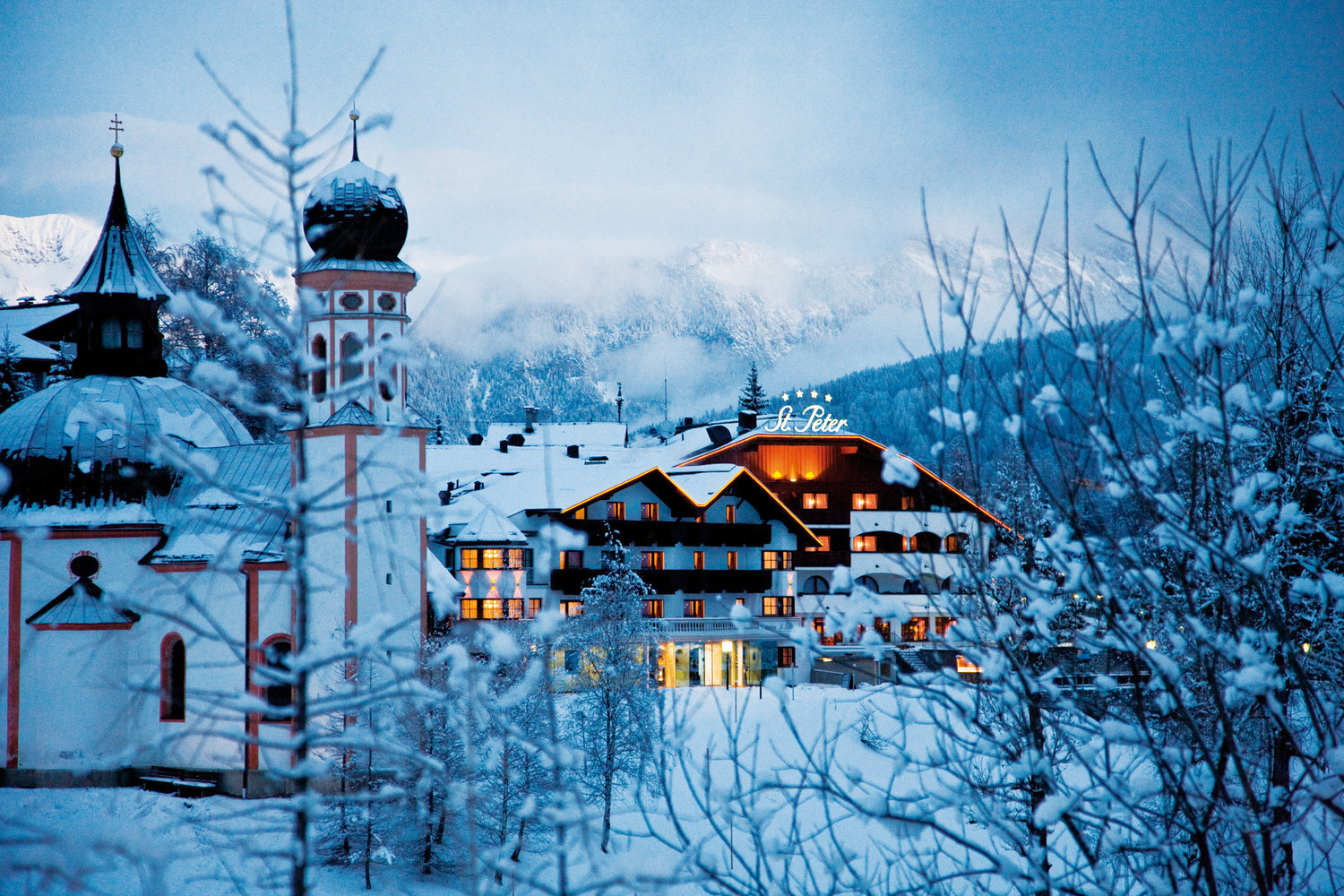
    Seefeld’s iconic Seekirchl church at the Nordic trailhead (Photo: Seefeld Tourism)

    Rumor has it, the biathlon event sold out in minutes. Is that true?

    ML: Twice actually. We originally had 100 biathlon starts, given shooting range limitations. Those spots sold out immediately, so we rearranged the schedule to offer another 100 starts. Again, the additional 100 slots sold out within minutes.

    Is there a possibility that cross country will sell out?

    ML: For biathlon, our limitation was really the shooting range. There are cross country marathons with over 10,000 starters, so we hope to include anyone who wants to join. Our aim is to hold a world class event for everyone who hopes to participate.

    We are scheduling the events so that you can watch other events like ski jumping and biathlon as soon as cross country racers finish.

    Racers start at the 2019 Kaiser Maximilian Lauf in Seefeld (Photo: www.kaisermaximilianlauf.com) 

    Racers start at the 2019 Kaiser Maximilian Lauf in Seefeld (Photo: www.kaisermaximilianlauf.com)

    What are the cross country events? When will the schedule be released?

    FK: We are just under six months from the start of the competitions. The schedule will be released in the coming days. Check out Innsbruck2020.com for details.

    For now, we know that there will be six individual cross country events: short (7.5 km), medium (15 km) and long (30 km) for classic and skate, plus the relay. Older age categories are slightly shorter. Similar to the Masters World Cup, participants can register once and ski in up to three individual events and the relay.

    The relay does not focus on countries, so skiers can make multi-nation teams. Age categories are based on total age of the participants, so you can compete with different age skiers.

    Non-athletes and companions can also register for the events and participate in the ceremonies, even if they are not competing.

    ML: In case four events at the WWMG is not enough, the Kaiser Maximilian Lauf 60 km classic marathon is part of the Visma Ski Classics series and takes place in Seefeld on Saturday, January 11 — the day before the competitions start.

    Racers warm up for the 2019 Kaiser Maximilian Lauf in Seefeld (Photo: www.kaisermaximilianlauf.com) 

    Racers warm up for the 2019 Kaiser Maximilian Lauf in Seefeld (Photo: www.kaisermaximilianlauf.com)

    Anything else we should know?

    FK: The competitions are just a part of the event. From the Opening- to the Closing Ceremonies, the WWMG will be a festive week, highlighting the best of Tyrol. The Masters Village, as a main meeting point, will feature live music and some special Tyrolean cultural acts. It is located in Innsbruck’s picturesque old-town, surrounded by the small huts used for the annual Christmas Markets serving mulled wine, beer, sausage and other Austrian specialties. We look forward to hosting the Winter World Masters Games and showcasing our venues and hospitality. Hopefully, you can come experience the Games.

    About Garrott Kuzzy

  • Behind the Scenes Organizing the Dresden City Sprint with Race Co-Director Torsten Püschel

    Behind the Scenes Organizing the Dresden City Sprint with Race Co-Director Torsten Püschel

    Andy Newell (19) and Kevin Bolger (28) compete in the 2019 Dresden City Sprint World Cup (Photo: Dresden World Cup)

    Dresden City Sprint World Cup – Torsten Püschel Interview

    April 29, 2019

    In the lead-up to the Minneapolis World Cup in March 2020, there are some parallels to the city sprint weekend in Dresden, Germany. Both are urban events relatively new to the World Cup circuit.

    What are the motivations and goals behind hosting a World Cup? What does it take to get a new event on the calendar? What has the Dresden World Cup learned and how is the event changing after the first two years of their five-year contract?

    Garrott Kussy spoke with Torsten Püschel, Co-Founder and Co-Director of the Dresden World Cup, to learn more about hosting a city sprint World Cup. Püschel grew up in Dresden as an elite athlete when the city was part of East Germany. He has spent the past 20 years working as a sports commentator for German television and radio, including the past six Olympic Games.

    Launching a World Cup City Sprint: “Bring Skiing to the People”

    Garrott Kuzzy: What was your inspiration for bringing a World Cup event to Dresden?

    Torsten Püschel: First and foremost, because Dresden is my home. My co-founder (René Kindermann, also a German television sports commentator) and I are enthusiastic fans of our hometown. In 2014, the Mayor of Dresden, Helma Orosz, came to us and said: ‘Torsten & René, you both travel the world for sporting events. Do you have any ideas for promoting the city in the winter?’ Dresden is known for the Striezelmarkt, Germany’s oldest Christmas Market, in December. In the spring and summer, it is full of cyclists and travelers. But things were a little quiet in January.

    Chief of Competition Georg Zipfel (L) and Co-Director Torsten Püschel talk about the event.
    (Photo: Dresden World Cup)

    René and I were announcing at the World Cup in Lahti, Finland, where the nordic venue is within walking distance of the city. We thought, ‘Hey, how about we host a nordic World Cup in Dresden?’

    We had conversations for over a year with all possible constituents before announcing our idea. We didn’t want anyone to feel left out. This was one of the keys to the success of the event.

    buy tretinoin cream online

    The regional ski clubs loved the idea of bringing the World Cup to the people in the city, rather than bringing people to a more remote ski area in the Iron Mountains (Erzgebirge mountain range about 50 miles from Dresden, on the border with the Czech Republic). That also fits with the German Ski Federation’s mission to bring more winter sports to the cities.

    Hannah Halvorsen competes in her first World Cup event
    (Photo: Garrott Kuzzy / LumiExperiences.com)

    GK: Once you decided you wanted to host a World Cup, how did you make it happen? What were the challenges?

    TP: There were three big challenges. First, we had to find a weekend that fit into the FIS calendar. Second, we had to get all of the permits from the city. There were over 10 different departments who had to sign off on our proposal. Finally, we had to achieve the FIS requirements like organizing accommodation, paying for athlete’s travel expenses and, of course, to build a venue in the city. It took over three years from having the idea in fall of 2014 to approval by FIS in May 2017, to actually hosting the event in January 2018.

    GK: You mentioned that Dresden is known for its cycling. Rock climbers are also likely familiar with the famous sandstone Bastei rock formations. Cross country skiing is not as synonymous with the region. What are winters like in Dresden?

    TP: Dresden itself is cold, but does not always have snow in the winter. Instead, people typically travel around 45 minutes into the surrounding Erzgebirge mountains to ski. Rather than make people travel to snow, our inspiration was to bring the World Cup to the people.

    Aerial view of the race course in front of the State of Saxony’s Ministry of Culture building
    (Photo: Dresden World Cup)

    Creating a Sustainable Event

    GK: Has it been hard hosting a World Cup in a city without consistent snow? Are you taking into account environmental concerns?

    TP: Creating an environmentally sustainable World Cup has actually been one of the most interesting parts of the project. From the beginning, we wanted to make sure the event was ‘green’–in the environmental sense at least. FIS actually has a Green Event Manual. We used the manual, along with the input from several local, environmentally focused non-profits, to make the event as sustainable as possible.

    For example, it is actually better to host a city event than a rural event in the mountains because everything is so central. The athlete hotel is located right next to the course, so racers and coaches can walk to the venue. Tickets for spectators include public transportation.

    FIS now requires that every World Cup venue has snowmaking, so every event is making snow–not just city sprints. We make our snow at the Dresden Airport with non-potable water collected from the roof of the airport. Snow guns make the snow inside an airport hanger, so no moisture is lost to wind or sun. The energy used to make the snow is 100% renewable; from hydro, solar and wind power.

    Snowmaking container set up outside a hanger at the Dresden Airport
    (Photo: Dresden World Cup)


    Indoor snowmaking means no moisture is lost to wind or sun
    (Photo: Dresden World Cup)

    It takes about a month to make all the snow for the event, which we can even make in temperatures above freezing. Two days before the event, we transfer the snow from the airport to the venue. A short 650m snow loop has several advantages. First, it means we do not need to make much snow. Second, racers ski two laps, which is more exciting for spectators. On the team-sprint day, racers ski past the spectators 72 times–more than any other World Cup event.

    The total carbon required for our snow production is about the same as one person in Dresden would use in two months of normal living.


    A family heads out for an evening ski after the races
    (Photo: Dresden World Cup)

    A Family Winter Weekend

    GK: In Minneapolis, the race organizers are creating a four-day festival around the World Cup. How do you use the snow when World Cup racers aren’t racing?

    TP: One of our goals is to help put Dresden on the world stage. The course runs along the banks of the Elbe River with the city skyline in the background. Of course, promoting the city and sport is a big part of our event.

    As part of bringing skiing to the people, we leave the course set-up for 10 days. After the race weekend, we open the track to everyone. Elementary school kids come during the week to learn to ski. Tobias Angerer (Olympic Bronze Medalist and two-time World Cup Overall Champion) has connections to Dresden and spends the week teaching lessons. The German National Paralympic team teaches skiing to people with disabilities. A junior championship event brings over 450 kids for sprint races. We also host an event for the Special Olympics. The hill is used for sledding. The VIP hospitality ‘tent,’ which is actually a beautiful, temporary, two-story glass building, is perfect for companies to host team-building events, which is used for all 10 days as well.

    Racers line up for the Team Sprint in front of the VIP hospitality building
    (Photo: Dresden World Cup)

    Looking toward the future

    GK: After two years, what have you learned? How will you evolve as you move forward?

    TP: For the event, we will continue to add activities. For example, we will have a sponsor village next year, where people can sample Gruyère cheese, or try laser biathlon. We will also lower the ticket prices, aiming for cinema pricing–where spectators can access the event for the same price as a movie ticket. We really want this to become a family winter weekend.

    Photo finish for second place in the women’s team sprint
    (Photo: Garrott Kuzzy / LumiExperiences.com)

    GK: What is the athlete perspective of the event?

    TP: Athletes have appreciated how firm and fast the course was; and how well the conditions held. That was very positive feedback. They also appreciate being able to walk, or run, from their hotel to the course.

    Regarding the loop itself, the qualifying times were slower than FIS wants, so we are shortening the course by about 200m and making the whole venue more compact–which also improves spectating. We are reversing the direction of the course, putting the uphill at the beginning to try spreading out the field more. We are also adding more berms and bumps to make the course more challenging for athletes and exciting for spectators.

    Men’s team sprint podium celebrates with champagne
    (Photo: Garrott Kuzzy / LumiExperiences.com)

    GK: Why should someone travel to Dresden for the World Cup?

    TP: There are several reasons. First, the event is quickly becoming a tradition in Dresden. The local community is excited to host the event. People are very friendly excited to host an international event and spectators. Second, everything is within walking distance. It’s special to be able to experience the World Cup during the day and the city of Dresden, including their restaurants and culture at night. Most importantly, the event is a lot of fun. There is an opportunity to interact with some of the best skiers in the world and watch them compete on one of the most iconic World Cup courses in front of the city skyline.

    GK: Thank you, Torsten. Good luck as you prepare for the World Cup next winter.

    Julia Kern (L) and Sophie Caldwell after finishing fourth place in the team sprint
    (Photo: Garrott Kuzzy / LumiExperiences.com)
    About Garrott Kuzzy

    Garrott competed in the 2010 Olympic Games and raced several years with the US Ski Team and the CXC Team. He is the founder of Lumi Experiences, specializing in cross-country ski vacations. Lumi Experiences is offering a trip “Dresden to the Dolomites” with VIP tickets to the Dresden World Cup and the opportunity to ski the Dolomitenlauf Worldloppet Ski Marathon in Austria.


  • Talking World Champs with Seefeld Chief of Course Thomas Unterfrauner

    Talking World Champs with Seefeld Chief of Course Thomas Unterfrauner

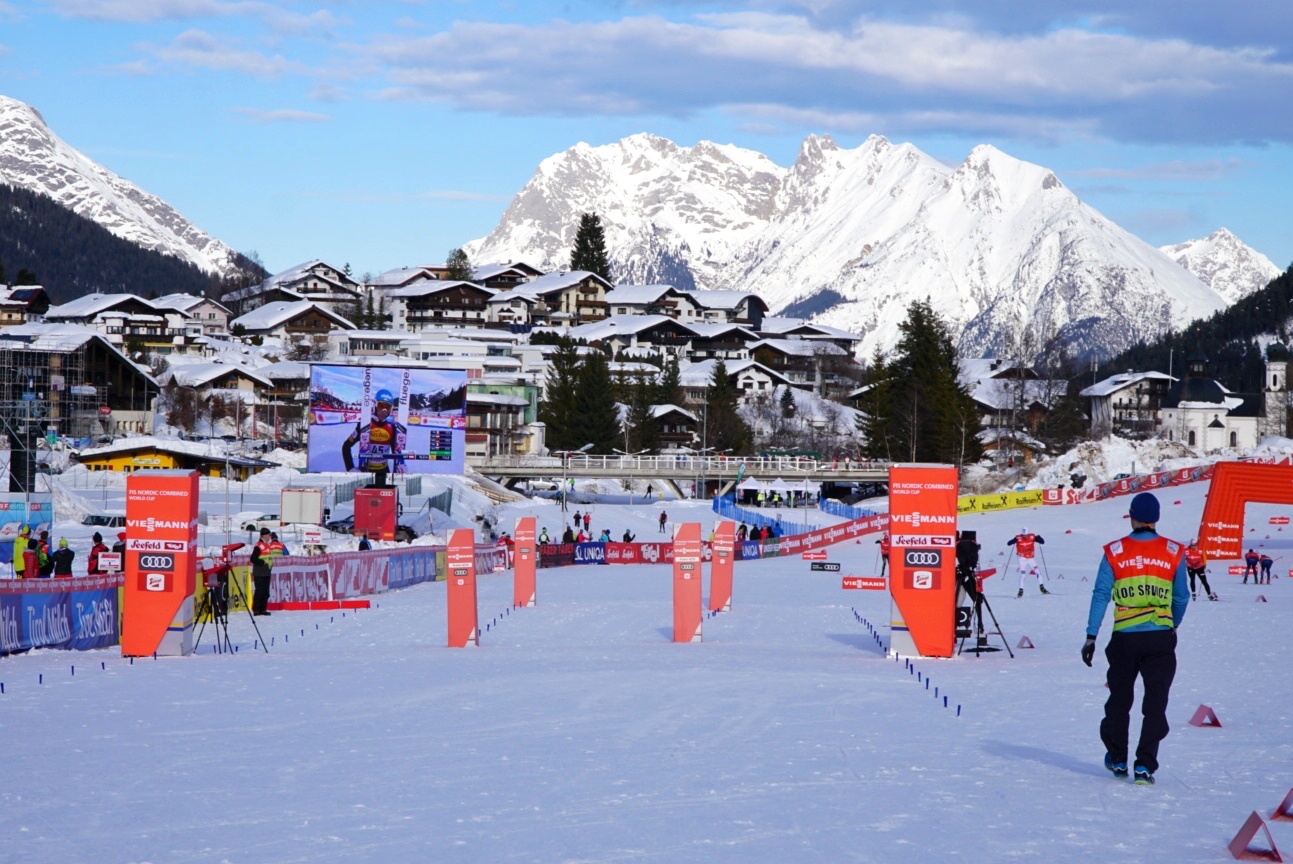
    The pre-race scene at the 2018 World Cup in late January in Seefeld, Austria. The venue will host 2019 World Championships. (Photo: Garrott Kuzzy/LumiExperiences.com)

    With the 2019 International Ski Federation (FIS) Nordic World Ski Championships the next major championship on the docket, Garrott Kuzzy, a 2010 U.S. Olympian who lives in Innsbruck, Austria, interviewed the chief of course for the 2019 World Championships in Seefeld, Austria. Via email, he asked Thomas Unterfrauner about preparing for the event, which will run from Feb. 20 to March 3. 

    ***

    Garrott Kuzzy: How is the atmosphere around Seefeld leading up to the 2019 World Championships?

    Thomas Unterfrauner: The atmosphere is very interesting. The whole village of Seefeld is focused on the championships next winter. Everybody seems to have a role in preparing for it for it. We all know that this is a big opportunity for us to showcase the whole Olympiaregion Seefeld to the world.

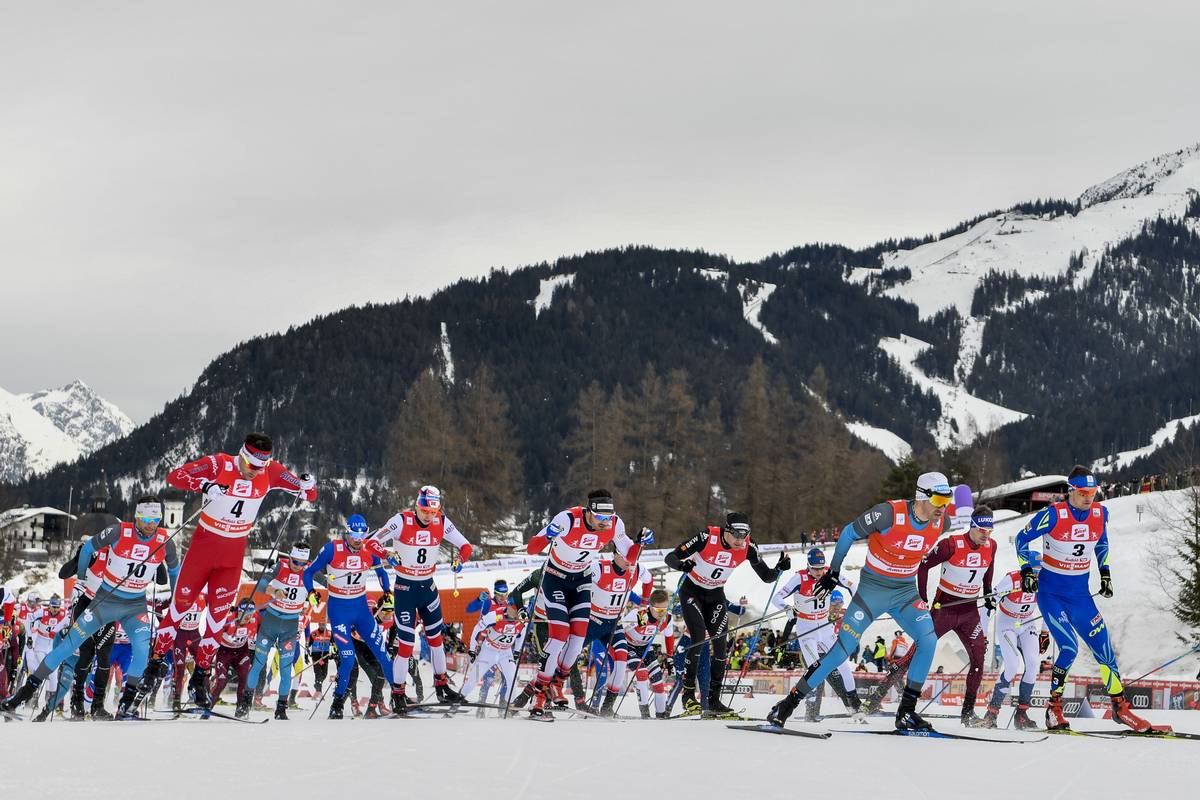
    Early in the men’s 15 k freestyle mass start at the 2018 World Cup in Seefeld, Austria, with Canada’s Alex Harvey (4), Switzerland’s Dario Cologna (6) and Norway’s Hans Christer Holund (2) skiing near the front of the pack. (Photo: Salomon/NordicFocus)

    GK: In 2017, Seefeld hosted the OPA Cup finals. There was ankle-deep standing water in parts of the stadium. Big changes were made in the stadium and on the trails and it seems to have worked. What changes did you make?

    TU: We reviewed the course in detail after the OPA Cup finals last spring. There were several challenging areas on the course, especially the water in the stadium. We worked with several specialists to analyze and make changes to the stadium and the course.

    GK: What changes do you still plan to make before next winter?

    TU: Our biggest change will be to make the stadium even wider. There are many things we need to fit into the stadium, such as start and finish lanes and a wide section of race course going between them, plus bleachers that we did not have for the World Cup this year. At this point, 90 percent of our work is complete. We are mostly making some finishing touches now.

    GK: The courses for this year’s World Cup in Seefeld seemed to really appeal to the U.S. skiers, especially Sophie Caldwell and Jessie Diggins, who both won races. What did you learn about the course at the World Cup this winter?

    TU: We learned many things from the World Cup this winter. We approach most events, such as National or OPA Cup level competitions, with athletes and teams in mind. With World Cups and World Championships, we have the additional considerations of television and marketing partners. Some of our new questions we consider are where to place sponsor banners, cameras and how to get power to them. Television and marketing partners work with us to make sure all of the additional hardware is in place.

    GK: What was the general response from the athletes?

    TU: The reaction to the courses was positive from all sides. Athletes and coaches both commented how easy it was to access the trails, wax trailers, and the start and finish areas from the course for warming-up, cooling-down and testing skis. The stadium is also close enough to Seefeld that teams can get to and from the skiing without having to take a bus. With our improved rollerski loop, there are many teams coming to Seefeld for their summer training, to spend more time getting comfortable with the course and the surroundings.

    Left to right: Mikaela Sundbaum (assistant technical delegate), Annmari Viljanmaa (TD), Christian Krepper (chief of competition), and Thomas Unterfrauner (chief of course) at the 2018 World Cup in Seefeld, Austria. (Photo: Garrott Kuzzy / Lumi Experiences)

    GK: How many spectators are you expecting for the 2019 World Championships?

    TU: We are expecting around 15,000 spectators per day for the World Champs, around three times as many as we had for the World Cup races last winter.

    GK: You were at the 2017 World Championships in Lahti, Finland. In your mind, what is the difference between a World Cup and the World Championships?

    TU: The size of the event and the length of time are the biggest differences. There are more athletes, coaches, support staff, media and spectators, all of whom stay for up to two weeks or more. Everything down to how we dispose of trash has to be considered. That is to say, there is a lot of housekeeping to be done for a full two weeks–much longer than one World Cup weekend.

    GK: Why should someone travel to ski in Seefeld? What makes Seefeld unique?

    TU: Seefeld and the whole Olympia Region (Seefeld hosted the cross country events for the 1964 and 1976 Olympic Games) is made up of several different towns, valleys and trail networks, including Seefeld, Leutasch, Mösern, Scharnitz, Buchen and Reith. In total, there are over 200 kilometers of trails. We can offer skiers of all levels terrain that matches their wishes, whether that’s challenging World Cup trails through the woods or flat, relaxed terrain through open valleys. The quality of life here on the Seefeld Plateau is very high, with clean air, amazing nature, spectacular scenery and most importantly, good snow conditions.

    GK: Finally, there are some big hopes for the U.S. team, coming off a gold-medal performances in Seefeld and PyeongChang. That said, there are also some skiers flying under the radar who could challenge for the victory. Teresa Stadlober will surely be aiming for a big performance in her home country. Therese Johaug has not competed in 2018, but will be back in 2019. There’s a rumor she was in Seefeld for a World Champs simulation training camp while the rest of her competition was at the Olympic Games. Do you have any predictions for next winter?

    TU: Nope, I have no predictions. My aim is to offer fair and safe races for all athletes. Off the trail, we will have a host a huge celebration of cross country skiing. I would love to draw more attention to our sport, especially here in Austria. So, I suppose it would be pretty special if Austria won a medal 😉

    GK: Finally, you work as an electrician in the summer. Are there any skills or attributes from your summer job that you put to use in the winter as chief of course?

    TU: Yes, there are many parts, especially working under pressure and attention to detail. If an electrician makes a mistake, it can be very hard, or impossible, to go back and fix later. In the worst cases, the house could burn down. We use similar structures in preparing for big events, so that details are not overlooked and everything runs exactly as it should when you turn on the lights and welcome the world.

    Course overviews

    ***

    Garrott competed in the 2010 Olympic Games and raced several years with the US Ski Team and the CXC Team. He is founder of Lumi Experiences, offering cross-country ski vacations to Europe. Lumi Experiences is partnering with the National Nordic Foundation to offer trips to the 2019 World Championships in Seefeld.

    Seefeld in Tirol, Austria, will host the 2019 Nordic World Championships. (Photo: Garrott Kuzzy/LumiExperiences.com)
  • FasterSkier’s U.S. Breakthroughs: Kevin Bolger and Rosie Frankowski

    FasterSkier’s U.S. Breakthroughs: Kevin Bolger and Rosie Frankowski

    Kevin Bolger (l) of the Sun Valley Ski Education Foundation (SVSEF) and Rosie Frankowski of Alaska Pacific University are FasterSkier’s 2018 U.S. Breakthrough Skiers of the Year. (Photos: Fischer/NordicFocus & FasterSkier)

    With the 2017/2018 season officially in the rearview, FasterSkier is excited to unveil its annual award winners for this past winter. Votes stem from the FS staff, scattered across the U.S., Canada, and Europe, and while not scientific, they are intended to reflect a broader sense of the season in review. This set of honors goes to the U.S. Breakthrough Skiers of the Year.

    Previous categories: Junior Skiers of the Year | Collegiate Skiers of the Year | Biathletes of the Year| Para-Nordic Skiers of the Year | Nordic Combined Skier of the Year | Canadian Breakthrough Skiers of the Year

    ***

    Kevin Bolger, Sun Valley Ski Education Foundation

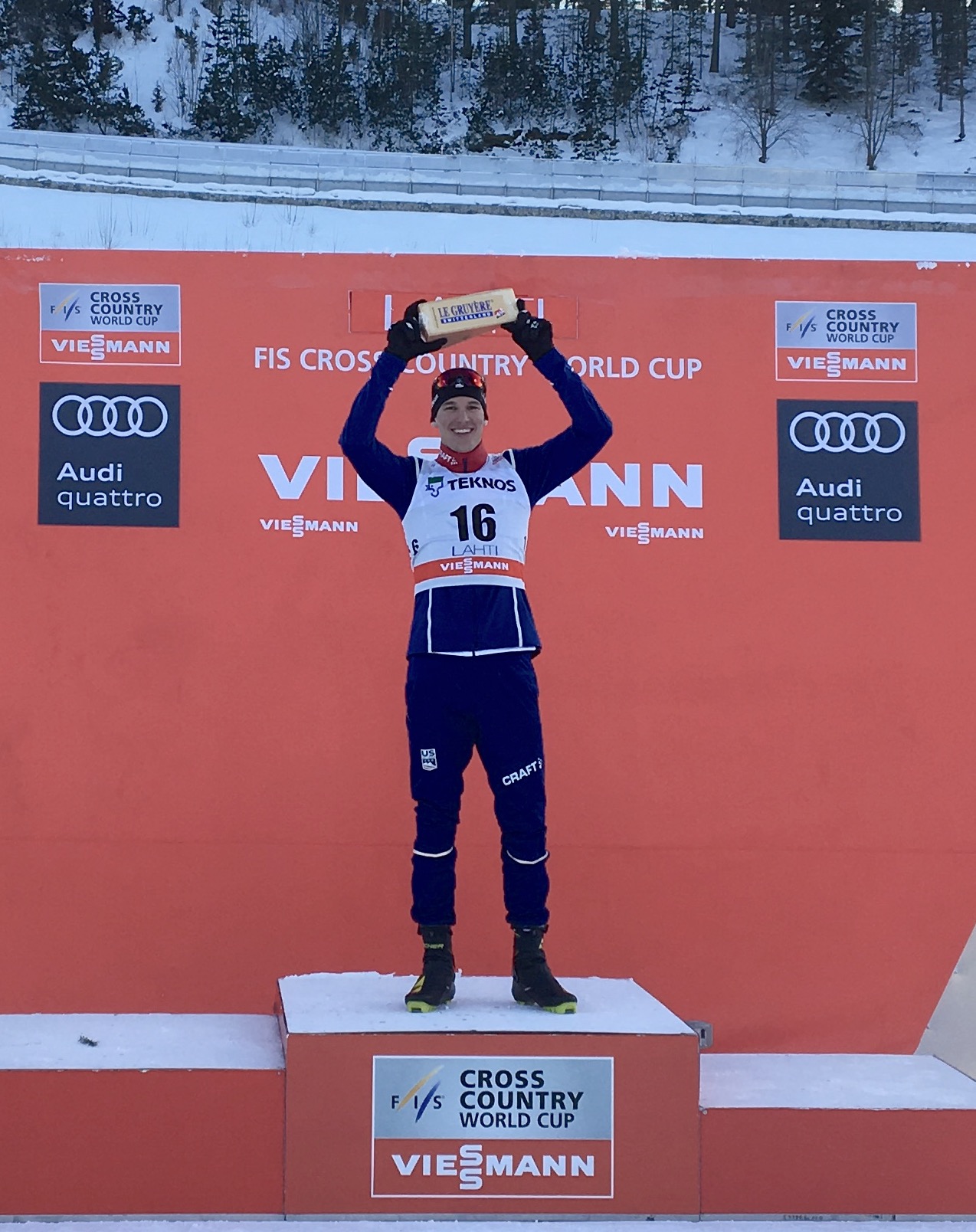
    By placing 11th in the freestyle sprint in Lahti, Sun Valley’s Kevin Bolger won some Gruyere cheese for being the top-ranked Continental Cup skier of the day. (Photo: Matt Whitcomb)

    It wasn’t until he looked at the live-timing board that Sun Valley XC Gold Team member Kevin Bolger understood where he finished. In his debut World Cup race — a freestyle-sprint qualifier on March 3 in Lahti, Finland — the 25 year old qualified in the top 20, just 0.92 seconds out of the top 10.

    “I remember some official telling me I was 16th, but I did not think he was talking to me,” Bolger told FasterSkier after that race. 

    He soon discovered that the communication was not misdirected. Qualified in 16th, Bolger felt both a rush of adrenaline and relief.

    “A lot of emotion kicked in,” Bolger said. “The hard part was over, now it was time to have some fun.”

    Bolger advanced through the rounds, ultimately finishing the day as the top American man in 11th place. Few American skiers, beyond Olympian Garrott Kuzzy, can compete with such debutant bragging rights (Kuzzy opened his first World Cup weekend with a ninth place in a 2008 skate sprint).

    But it is not just Bolger’s first World Cup race that makes him FasterSkier’s American male “Breakthrough Skier of the Year”. Two weeks later, he competed at World Cup Finals in Falun, Sweden, and once again advanced to the rounds in a freestyle sprint, this time in 29th. He finished the day in 30th overall.

    “It couldn’t have been written any better,” Bolger wrote in an email to FasterSkier of his transition to World Cup racing. “Was I surprised, yes of course, but deep down going into those World Cups I knew what I was capable of doing, so I went out and did it. I wanted to capitalize on my opportunity and show that I have what it takes to be skiing on the World Cup and be competing with the best in the world and I think I did that.”

    Overall this season, Bolger, a former University of Utah skier who graduated in 2017, placed second in the season-long SuperTour standings, just 15 points behind David Norris of Alaska Pacific University (APU) in first. Bolger raced to second place in the skate sprint at U.S. nationals in Anchorage, Alaska, then achieved back-to-back podiums in the classic sprint and 10-kilometer freestyle at the Craftsbury SuperTour in late January (he was third in both races).

    In February, before heading over to race the last World Cup period in Europe, Bolger won a SuperTour skate sprint and finished second in the 20 k freestyle mass start in Ishpeming, Michigan. While fighting illness upon his return to the states last last month, he competed at U.S. SuperTour Finals in Craftsbury, qualifying for the classic sprint in ninth and closing out that race in 14th.

    antabuse

    “As I reflect back on my season I don’t think it could have gone better,” Bolger wrote.

    “I’ve gotten a taste of what it’s like to be skiing on the World Cup and skiing against the best in the World,” Bolger continued. “That has shown me that I still have a lot of work to do ‘a lot of work’, of course I’ve had some good results but I want more. I want to be able to not only ski with those guys on the World Cup, but I want to be compete against them. I haven’t been more motivated and excited for another year to start.

    Bolger plans to continue to work with Sun Valley XC Gold Team coach Chris Mallory and is certainly a name to look out for next winter on both the domestic and international circuits.

    “I’m excited for what is to come!” Bolger wrote.

    Rosie Frankowski, Alaska Pacific University

    Rosie Frankowski (l) leading her American teammate Caitlin Patterson during the women’s 30 k classic mass start on Sunday at the 2018 Olympics in PyeongChang, South Korea. In Frankowski’s first Olympic race, she placed 21st. (Photo: Scott Patterson)

    In the last women’s cross-country race of the 2018 Winter Olympics in Pyeongchang, South Korea, there were a number of skiers to note. However, one in particular stood out. Not just because of her size — off skis, Rosie Frankowski barely skims 5 feet 2 inches — but the ferocity with which she chased every climb and doggedly double poled through the flats of the 30 k classic mass start.

    “Literally, most of my competitors weigh at least 40 pounds more than me,” Frankowski, a 26-year-old APU skier, previously told FasterSkier. “My strategy when racing is literally to pass as many people in every uphill; hope that no one passes me on the downhills.”

    But there are more reasons that Frankowski is the female recipient of FasterSkier’s U.S. Breakthrough Skier of the Year. A native of Minneapolis, Minnesota, Frankowski qualified for the Olympics and in her first and only Olympic start, she finished 21st in that 30 k. She had never skied a World Cup race before the Olympics.

    “It was crazy. I didn’t expect, honestly, to feel that good and just keep jamming and going,” Frankowski told FasterSkier that day in PyeongChang. “My one goal for the whole day was just to finish smiling.

    “There was a period of about 2 weeks where all of a sudden I was pushed into our tiny X-C skier spotlight and I felt pressure to race for reasons other than what I race for,” Frankowski wrote in an email to FasterSkier at the end of the season. “I was trying to prove I deserved a spot on that team and that got in my head. Something I am most proud about my season is that I managed to change that attitude and go back to enjoying skiing hard and taking in the excitement of all the cool opportunities I was given.
    “I think that switch showed through my racing in the second half of the season, and I enjoyed actually racing more than I have ever in my life,” Frankowski continued. “Also, I got to race in the Olympics….any time that happens to you, you better be pretty happy.”
    She went on to race to 31st in the Holmenkollen 30 k freestyle mass start in Oslo, Norway — her first World Cup event. Frankowski competed at World Cup Finals in Falun and ended the season in Craftsbury, where she placed fourth in the 10 k freestyle mass start and sixth in the 30 k classic mass start at SuperTour Finals. Overall, she finished the season in third in the SuperTour standings (behind Kaitlynn Miller and Caitlin Patterson, both of the Craftsbury Green Racing Project, respectively). And Frankowski leads the 2017/2018 SuperTour Distance standings.

    Earlier this season, she placed second in the 10 k freestyle at the NorAm opener at Sovereign Lake, British Columbia. At U.S. nationals in early January, she raced to third in the 20 k classic mass start and fourth in the 10 k freestyle. She was second in the 5 k freestyle at the Craftsbury SuperTour in January and won the SuperTour/NorAm mini tour the next weekend with back-to-back wins (in the 10 k freestyle and 10 k classic pursuit) in Gatineau, Quebec.

    After PyeongChang, Frankowski placed first in two Alpen Cup races in Cogne, Italy: a 10 k classic and 15 k freestyle pursuit. In review of the season, Frankowski was quick to point out the confidence she has gained in her training and racing style. 

    “The success I found this year has given me the confidence to trust in my system and now going into next season I know what I can keep doing what I am doing, and it will help bring me to the next level,” Frankowski wrote. “I also have always strongly believe that you must be happy to race fast, and this has always been in the back of my mind when I think about how long to continue my ski career. Keeping a balance and letting all parts of me have their moment, whether it’s my competitive side on the race course in January, or my busy-bee worker side tackling cool work projects in July, or humorous side posting funny unserious social media photo hashtags, keeps me sane and loving my life—prolonging my competitive ski career.”

    Honorable Mention: Scott Patterson, Alaska Pacific University/U.S. Ski Team

    Scott Patterson (Alaska Pacific University/U.S. Ski Team) racing to Scott Patterson (APU/USST) racing to a 55-second win in the men’s 15 k freestyle individual start at 2018 U.S. Cross Country Championships in Anchorage, Alaska.

    Scott Patterson was another serious contender for Breakthrough Skier of the Year — with four top-21 results in four Olympic races — but it should be noted that Patterson, who was named to the U.S. Ski Team last spring, was our U.S. Breakthrough Skier last year.

    It appears his breakthrough, or rather his ascension, is ongoing. Patterson, 26, spent most of last season on the World Cup, posting the 31st-fastest time of the day in the 15 k freestyle pursuit at the World Cup opener in Kuusamo, Finland. But it got a lot better than that for the APU skier.

    In early January, he returned home to Anchorage for U.S. nationals, where he won the 15 k freestyle and essentially punched his ticket to the Olympics. He also finished eighth in an all-out sprint finish in the 30 k classic mass start at nationals.

    He scored his first World Cup top 30 of the season the weekend before the Olympics in Seefeld, Austria, placing 27th in the 15 k freestyle mass start. At the Olympics was where he really broke through: placing 18th in the 30 k skiathlon, then 21st in the 15 k skate, then 14th with the men’s 4 x 10 k relay, and finally, 11th in the 50 k classic mass start.

    In the world-famous Holmenkollen 50 k freestyle mass start in March, he led the U.S. men in 16th.

    “It’s all just about staying relaxed,” Patterson told FasterSkier at the time. “Kind of felt like five pretty easy laps and then one real hard one out there. … Actually I struggled  a little bit on the third lap, my skis slowed down quite a bit and was able to switch on the fourth [lap] and then really had some rockets out there.

    At SuperTour Finals in Craftsbury, Patterson ended the season with three top 10’s: third in the 50 k classic mass start, fourth in the 15 k skate and 10th in the classic sprint. That put him sixth in the SuperTour Distance standings.

    Honorable Mention: Sadie Bjornsen, Alaska Pacific University/U.S. Ski Team  

    American Sadie Bjornsen (r) en route to third in the women’s 1.3-kilometer classic sprint at the World Cup in Lillehammer, Norway. (Photo: Henrik Hunnes)

    Another American who spends her offseason training with APU out of Anchorage, Sadie Bjornsen, of the U.S. Ski Team’s A-team, turned a lot of heads this season. She had been on the World Cup podium in a non-relay race before — in January 2017 after placing third in a 5 k freestyle in Toblach, Italy — sharing that podium with U.S. teammate Jessie Diggins, who won that day. But Bjornsen started the 2017/2018 World Cup season with her first sprint podium — second in a classic sprint — three days after her 28th birthday in Kuusamo, Finland.

    The next weekend, Bjornsen placed third in another World Cup classic sprint in Lillehammer, Norway. She went on to place third in the 10 k classic stage of the Tour de Ski in Lenzerheide, Switzerland, and notably third in the 10 k freestyle pursuit at World Cup Finals in Falun, right behind her teammate, Diggins, in second. Bjornsen was also a member of the U.S. women’s relay team that finished fifth at the Olympics.

    “I think the step I made this year is one step closer to being in a place where Jessie is racing right now,” Bjornsen told FasterSkier in Falun.  “To have a teammate who is just pushing the bar just every single day and making me believe that in order to be the best racer in the world, you have to have no fear. Jessie is a great example of that and it is certainly contagious.”

    And she did all that by overcoming chronic foot injuries and other setbacks leading into the season. She finished the winter with two second-place finishes at SuperTour Finals, in the 10 k freestyle and 30 k classic mass starts, and fourth place in the classic sprint in Craftsbury. And for the first time in her career, she landed in the top 10 in the season-long World Cup standings, clinching sixth overall, eighth in the sprint standings and 10th in the distance standings.

  • Lumi Giving Back

    The National Nordic Foundation is a non-profit organization that’s mission is to help aid in the development of skiers in the USA both national and internationally, by creating an independent funding source to aid athletes with the high cost of the sport.

    The NNF’s goal is to remove financial barriers that hinder our US athletes, due to the lack of funding available.  World Cup athletes, World Junior/U23 Teams, U18 Teams, REG Camps, Junior National Teams, Coaches, Clubs and Officials receive funding annually from the NNF.  Campaigns such as the Drive for 25, online Auctions and general donations pay for these efforts.

    Recently a new partnership has emerged.  More stars behind our stars supporting our athletes, helping achieve top results such as  with our World Cup Teams, our recent World Junior star Hailey Swirbul and many many athletes.  To brighten things up, the NNF has Partnered with Olympian, Garrott Kuzzy owner of Lumi Experiences.  Kuzzy and his guests are giving back to the sport by donating a portion of each trip to the NNF.  These trips include front line experiences in Europe, cross country skiing, sight seeing, attending races and interacting first hand with the US Ski Team and World Cup Athletes.  Read about the most recent trip in Seefeld, Austria and learn about the upcoming trip, attending the World Championships!  You don’t want to miss out!

    — Joey Caterinichio/NNF

    (Press release)

    SEEFELD, Austria — The 2018 Lumi Experiences Trip to Tyrol, benefitting the National Nordic Foundation (NNF), wrapped up 10 days in Tyrol, Austria & Italy cheering on the US Ski Team to a double-victory weekend in Seefeld.

    In March 2017, the NNF announced a cross country ski trip to the 2018 Dolomitenlauf Worldloppet and the Seefeld World Cup races. By April, all 16 spots on the trip had been filled.

    Proceeds of the trip, hosted by Lumi Experiences, totalled over $10,000 and will go to support NNF programming. Lumi Experiences was founded by Garrott Kuzzy. After traveling the world as a member of the US Ski Team and competing in the Vancouver Olympic Games, Garrott has spent the past decade sharing his favorite destinations and experiences through active travel.

    The guests on the Trip to Tyrol were supported by two local trip leaders, offering insights into Austrian and Italian culture.

    The Dolomitenlauf weekend kicked off with guests taking part in either 42km or 20km events. Some opted instead to watch the Hahnenkamm downhill on Eurosport in a mountain-top bar surrounded by screaming Austrian ski fans. Those who skied the Dolomitenlauf had the luxury of getting their skis waxed for them with HF and powder. A couple of women on the trip skied to age-group podium finishes…a precursor to what they would witness on the World Cup later in the week.

    Stop two was Toblach, Italy. Crossing the border beneath Dolomite spires, the group was treated to sunny skies as they perfected their hop-skate technique over the iconic Toblach Nordic Arena. It was hard leaving the Italian cuisine in South Tyrol, but the Seefeld World Cup was calling.

    Guests were treated to a brief stop in Kuzzy’s new hometown, Innsbruck, before taking a train to the snow-globe village of Seefeld for the final five nights of the trip. Guests had barely departed the train when they ran into Sophie Caldwell and Matt Whitcomb, out for an evening jog.

    The Hotel St Peter, located at the trailhead, offered easy access to the 3+ feet of new snow Seefeld had received in the previous week. Highlights of the first days in Seefeld included a trip to the trailside hut that Andy Newell affectionately refers to as the “Wild Moose.” A trough of schnapps and tray of apple strudel greets visitors.

    Guests were also treated to a tour of the new US Ski Team wax truck. US Women’s Team head coach Matt Whitcomb and wax techs shared insights into the new, rolling facility, as well as a few insider wax tips. One unexpected surprise, was the opportunity to forerun the races. Skiers experienced the challenging courses that cannot be captured by simply watching the races from the sidelines. Erik Bjornson chatted with the skiers after his sprint qualifier and thanked them for cheering, saying it’s rare that there are so many US fans on the trail at European World Cups.

    The real highlight of the trip was cheering on skiers in the Seefeld World Cup, as Sophie Caldwell skied to victory in the Skate Sprint and Jessie Diggins took the 10km Mass Start Skate win. Guests had the opportunity to share high fives and get photos with skiers afterward the race.

    Seeing the US team skiers atop the podium was particularly meaningful, as it represented the results of the hard-work put in by athletes and their coaches. It also represented what the help from the NNF has helped skiers from the US achieve. There were more than one set of watery eyes at the end of the trip, when guests received copies of the new book: World Class: The Making of the U.S. Women’s Cross-Country Ski Team by Peggy Shinn, personalized and signed by the women on the US Ski Team as a thank you to guests on the trip.

    The Seefeld World Cup was the last big race before the Olympic Games next month in Korea. In 2019, Seefeld will host the Nordic World Championships. Once again, Lumi Experiences will be on site for the 2019 World Championships, hosting two more trips to benefit the NNF. You can sign up to receive information about the World Championships and other cross country ski vacations at: www.lumiexperiences.com. Check out more photos and insights from this year’s adventures on Facebook and Instagram: @lumiexperiences or #lumiexp

    “The trip had an exceptionally talented group of trip leaders. It was well planned and full of fun surprises that enhanced the experience. Sledding was a hoot, and skiing to our hotel afterwards was awesome. I love the Dolomites and the Tyrol. Austrian curling was a blast. First class care and attention to detail made this a trip of a lifetime for us.” – Jane & Michael Mandli

    “We skied in a gorgeous part of the world. Guides were excellent and fun. It was an incredible experience watching the World Cup racing in Seefeld and meeting the athletes.” – Molly Martinez

  • Next World Championships Stop: Seefeld

    Next World Championships Stop: Seefeld

    Seefeld in Tirol, Austria, is gearing up to host a 2018 cross-country World Cup and 2019 Nordic World Championships. 2010 Olympian and former U.S. Ski Team member Garrott Kuzzy is a frequent visitor as he’s living in Innsbruck, and contributed the following interview with Seefeld’s tourism director.

    Seefeld in Tirol, Austria will host the 2019 Nordic World Championships. The small town in northern Tyrol sits on a plateau nestled in the alps, about two hours by train south of Munich and about 30 minutes north of Innsbruck. Seefeld has a long history of hosting international nordic competitions, including the 1964 and 1976 Innsbruck Olympic Games, as well as the 1985 World Championships and 2012 Youth Olympic Games. Seefeld holds the historic distinction as the venue where American Bill Koch won his Olympic silver medal in the 30-kilometer event.

    We got out for a ski with Elias Walser, the managing director of Seefeld Tourism, on some of the 270+ kilometers of trails he oversees to learn more about the region and the upcoming World Championships.

    ***

    Seefeld in Tirol, Austria, will host 2019 Nordic World Championships

    Garrott Kuzzy: You have been the head of Austria’s two largest cross-country ski destinations, Ramsau am Dachstein and Seefeld in Tirol. What makes cross country skiing in Austria unique?

    Elias Walser: In my opinion, what sets Austria apart from Scandinavia or North America, is that the cross-country ski trails are surrounded by a dramatic mountain landscape and a fairytale natural environment. At the same time, the trails pass through farms, huts and villages where skiers can stop for refreshment. I believe this combination of nature and access to traditional life in the alps makes Austria one of a kind.

    GK: Now that the 2017 Lahti World Championships are complete, the eyes of the nordic world are on Seefeld…well, except for a couple of events in Korea next February. How is Seefeld preparing for the 2019 World Championship?

    EW: Our trail construction and renovation for the world championship began in August 2016. We do not want to build buildings that no one needs after 2019 and are making our biggest investments in trails and infrastructure, such as lights and snowmaking. We updating our trail network to provide even more fun and enjoyment in the future, for both beginners and elite athletes alike.

    GK: Seefeld is hosting the European Continental Cup (OPA Cup) Final in late March. Many of the big events in North America this winter have been impacted by a lack of snow. How are the winters trending in Seefeld? What are you doing to ensure snow for these big events?

    EW: We also notice a change in our winters and have taken steps to adapt. We operate an active snow-management system. This means that we are already working in the summer on what can we do to offer the best cross-country ski trail with as little snow as possible. In the winter, we farm snow from higher elevations. We also have extensive snowmaking for the race trails and the most popular touring trails.

    Elias Walser, Seefeld Tourism managing director (Courtesy photo)

    GK: You were in Hochfilzen for the Biathlon World Championships and in Lahti for Nordic Worlds. What were your impressions?

    EW: Yes, the atmosphere was sensational at both events! I was actually in Hochfilzen when [American] Lowell Bailey won gold and in Lahti when [Canadian] Alex Harvey outsprinted the field in the 50 k. The crowd was ecstatic cheering on both North Americans. It is beneficial for every sport when athletes from a variety of countries have the potential to win on any given day. It is also exciting to see the growing strength of the American women’s team.

    GK: Seefeld has a long history of cross-country skiing. It first received international attention when it hosted cross country events for the 1964 Innsbruck Olympic Games. When/how did skiing start in Seefeld?

    EW: Tourism in Seefeld began in the 19th century, attracting guests seeking an escape from cities during hot summers. It was only after the Second World War that winter became increasingly popular. Seefeld became known for its extensive winter sporting experiences, including alpine skiing, cross-country skiing, ice skating, Eisstockschiessen (Austrian curling), winter hiking, horse-drawn carriage rides and tobogganing. Those traditions continue today, except that the barn lofts where guests used to stay have evolved into hotels with restaurants, pools and spas. Guests not only want to go skiing–they want to enjoy winter as a whole experience.

    GK: Do you have/know of any notable stories/history from the 1964 or 1976 Games in Seefeld?

    EW: If you see the old pictures, it is just incredible how courageous and sporty the athletes were … ski jumpers, for example, going over 120 meters on early fiberglass skis. 1964 was actually the first year that ski jumping featured both normal and large hill competitions. Overall, the whole effort around the Games was much simpler and less complicated that it is today.

    Seekirchl, the iconic church at the trailhead in Seefeld in Tirol, Austria

    GK: One of the most historic decisions for the sport of cross-country skiing was made in the Seekirchl, the iconic church at the trailhead in Seefeld, after the 1985 Seefeld World Championships. Can you share that story?

    EW: 1985 in Seefeld was the last World Championships when skating was not allowed. Despite that, the top athletes all used the “Siitonen-Schritt,” marathon skate named after Finn Pauli Siitonen. After the Championships, FIS officials met in the Seekirchl and decided to recognize skating as its own technique. That’s how skate technique was officially born and Seefeld became the “cradle of skating.”

    GK: Seefeld is an annual stop on the Nordic Combined World Cup, but Austria has not hosted a Cross-Country World Cup since 2004 in Ramsau. Seefeld has only hosted two World Cups since the 1985 World Championships (1996 and 1999). What inspired Seefeld to bid on the 2019 Championships?

    EW: We want to lead cross-country skiing into the next dimension. We see cross-country skiing continue to evolve as a sport and also grow as a major attraction in our region. After renovating almost all venues and homologating our race trails, it was an obvious choice to submit our bid. We were fortunate that our first application to host the championships was convincing enough to earn the bid.

    GK: The 2018 World Cup in Seefeld is considered the test event for the World Championships. Are you nervous for that test? If so, what are you most nervous about?

    The tracks at Seefeld in Tirol, Austria

    EW: Exactly. We will see how well the cross-country trails and venue flow in the competition mode. This can only be seen in a big race. We are optimistic that the new courses will receive praise from the racers.

    GK: You worked with Whistler Tourism for a year after the 2010 Olympic Games. Do you see Whistler hosting future international competitions?

    EW: Unfortunately, I’m not sure.

    GK: Innsbruck is in the middle of a feasibility study for the 2026 Olympic Games. Should the study find hosting the Games feasible, a referendum will be put forth to residents next fall. What are your thoughts on Innsbruck hosting its third Olympic Games?

    EW: I believe it is important for the Olympic Games to not just be about the growth and development of new markets. It is also about the Olympic spirit. For this reason, the Games should also return to places where this spirit has been born. I find the application of Tyrol with its unique locations, from Kitzbühel to Arlberg, a wonderful idea.

    GK: From your experience with North American skiers when you lived in Canada, how would Seefeld appeal to a skier from North America? What makes Seefeld unique? What highlights are on top of your list?

    The tracks at Seefeld in Tirol, Austria

    EW: The combination of gemütlichen Hütten [cozy huts] with good food along the trails and the variety of winter activities is part of what makes Seefeld unique. The accessibility from North America via direct flights to Munich is certainly also a great advantage. Innsbruck is always a welcome host for a day trip. With Seefeld as your base camp, you can really experience the alps.

    GK: The name “Seefeld” literally translates into English as “Lakefield.” Is there a lake in Seefeld? Will Seefeld put in a bid to host Waterskiing World Championships?

    EW: Ha! We have lots of beautiful lakes. They are all a little too small and pristine for waterskiing. However, stand-up paddleboarding makes for great cross-training in the summer.

    ***

    About Garrott Kuzzy

    Garrott competed in the 2010 Olympic Games and raced several years with the US Ski Team and the CXC Team. He is founder of Lumi Experiences, a company focused on cross-country ski trips in the alps. Lumi Experiences is partnering with the National Nordic Foundation to offer a trip to the 2018 World Cup in Seefeld and the opportunity to ski in the Dolomitenlauf Worldloppet.

  • Guided Trip to Seefeld for 2018 World Cup, Proceeds to Benefit NNF

    (Press release)

    The NNF and Lumi Experiences are partnering to offer a trip to the 2018 cross-country and nordic combined World Cup competitions in Seefeld, Austria. On this 11-day trip, designed by Olympian Garrott Kuzzy, we will ski in the Alps, cheer on our favorite athletes at the World Cup competitions and relax in three- and four-star hotels. Travelers will also have the opportunity to participate in the Dolomitenlauf Worldloppet!

    Olympian and past US Ski Team athlete Garrott Kuzzy has over five years of experience developing skiing, biking, and hiking tours throughout Europe. He currently lives in Innsbruck, Austria and has developed this trip in his new backyard. As a former US Ski Team athlete, Kuzzy is partnering with the NNF to benefit developing US athletes. Proceeds from the trip go to funding NNF programming.

    Scheduled for January 19 – 29, 2018, the trip is limited to 16 guests and priced at $3,900 per person (not including airfare) if reserved before March 31. For more information and to sign up, go to: www.lumiexperiences.com.

    Garrott Kuzzy, 2010 U.S. Ski Team Member (Photo, U.S Ski Team)
  • A New Chapter for GMVS with Rodgers, A New Start for SVSEF’s Gold Team with Mallory

    A New Chapter for GMVS with Rodgers, A New Start for SVSEF’s Gold Team with Mallory

    Colin Rogers (left) as the MC for Chris Mallory's (right) wedding. (Courtesy photo)
    Colin Rodgers (left) as the MC for Chris Mallory’s (right) wedding, September, 2015. The two coaches and former nordic ski racers were grew up about 15 miles away from each other in Vermont. (Courtesy photo)

    Their cars won’t literally pass on the interstate, but the image is worth rendering. Colin Rodgers, five years the head of the Sun Valley Ski Education Foundation (SVSEF) Gold Team, is heading back to his native Vermont to become nordic director for the Green Mountain Valley School (GMVS) in Waitsfield, Vt. (Rodgers is currently in Italy with GMVS leading a training camp.)

    Heading the opposite direction from Vermont to Sun Valley, Idaho, where he recently resigned as assistant coach at University of Vermont (UVM) after three years, is Chris Mallory — also a native Vermonter.

    It’s safe to say that Rodgers’s and Mallory’s lives are seperated by far less than six-degrees: the world of elite ski coaching is small and close knit. That their paths have crossed on their career transects isn’t odd at all when you consider something Rick Kapala, SVSEF’s longtime nordic director, said in a recent phone interview.

    “You know, somebody was asking me is it really hard to lose a guy like Colin,” Kapala reflected. “And of course the answer is yes … but all of our programs, whether you talk to APU [Alaska Pacific University], or whatever, it is part of the game that you if you have really good coaches, you are going to lose really good coaches because they are going to have opportunities to move to another level.”

    There’s two highly qualified and highly recommended coaches in Rodgers and Mallory — it’s no surprise opportunities have arisen.

    Colin Rodgers, formally head coach of the SVSEF Gold Team, has taken the job of nordic director with Green Mountain Valley School in Vermont. (Courtesy photo)
    Colin Rodgers, formally head coach of the SVSEF Gold Team, has taken the job of nordic director with Green Mountain Valley School in Vermont. (Courtesy photo)

    After captaining the Middlebury College Ski Team and graduating in 2004, Rodgers lived the professional skier’s life. He skied for the Gold Team from 2006 to 2011. Since that time, the Westford, Vt., native has been the lead waxer, travel agent, coach, and all-around, go-to leader of the Gold Team.

    According to Kapala, the first word that came to mind when asked about the indelible fingerprint Rodgers left on the Gold Program was: “professionalism”.

    “We have always prided ourselves as trying to run a really pro program,” Kapala said. “But Colin as an athlete, really, I feel gave everything he possibly had to his racing career and the same thing was true as a coach. He demanded a lot of himself in that role, held himself to a really high standard, … worked as hard as he could, cared so deeply about the program and the athletes and the process of getting to the highest levels. I really think that all the athletes that we had engaged in our program benefitted from the approach Colin had, which was leave no stone unturned … look for every advantage, bring your best every day, and I look at it and go, we were very fortunate to have him.”

    Rodgers, 35, takes over a transitioning GMVS program. Last October, longtime GMVS Nordic Director Justin Beckwith stepped down. 2010 Olympian Garrott Kuzzy took over with help from newly hired nordic coach Katrina Howe. Now, nearly a year later, Rodgers will take over a program with 13 athletes — comprised of nine men and four women. Howe will remain as a nordic coach. (According to Rodgers, Kuzzy will be pursuing an MBA in Innsbruck, Austria, this year. Kuzzy could not be reached for comment by press time.)

    Junior skiers are not elite senior skiers. Yet Rodgers mentioned that his core mission remains the same: building bonds.

    “Of course, I will need to make some adjustments to my approach to the younger athletes, but it is all truly about sharing my passion for the sport of cross country skiing,” Rodgers explained. “The age of the athlete is not so important, but rather that you share a common interest with the individual and you can pass along a bit of knowledge that will help them improve. Then you are making a difference. It is still all about building relationships and doing your best to support the team.”

    For Rodgers, directing a program is the biggest new opportunity beyond moving back to his home state. “Running a program in my home state seemed like a fun challenge that I was up for,” he said.

    Back in Vermont, a state with a rich and proud nordic tradition, Rodgers commented that one of his biggest hurdles at GMVS, a private high school, will be making the sport he loves more accessible.

    “The biggest challenge will be in trying to help kids join the program that may not have the financial means to do so,” he said. “Ideally, we want athletes at the school that have the drive to ski fast and work hard. Hopefully, those two un-biased character traits will allow any motivated student/athlete the ability ski for our program.”

    Gold Team rookies, Cole Morgan and Jack Hegman run above Twin Lakes in Idaho's southern Sawtooths, summer 2016. (Photo: Rogan Brown)
    Gold Team rookies Cole Morgan and Jack Hegman run above Twin Lakes in Idaho’s southern Sawtooths this summer. (Photo: Rogan Brown)

    For SVSEF’s Gold Team, the benchmark for participation isn’t overtly financial, it’s performance based. Be a motivated, willing-to-develop, fast skier and you might make the cut. And for the coach, there’s no study hall to schedule and monitor, less shuttling skiers back and forth.

    “One of the most important things [with this level of senior coaching] is you need to have somebody who has both the depth of experience but also the ability to really keep the ship level,” Kapala said from Sun Valley. “The senior athletes that we have that work with the Gold Team are all highly motivated, so it’s a little bit different than junior coaching. For the junior coaching, I have a lot of kids that are very, very early on in their ski racing career. So you do a lot of really base-level educating and motivating. … The problem with these Gold Team-type positions, whether you are talking our program, Stratton or APU or what not, you sort of have to be able to do everything.”

    With Rodgers’s exit from SVSEF, enters Mallory.

    After skiing at the University of New Hampshire, Mallory headed west to Sun Valley where he began coaching in 2006. That SVSEF stint, where he began as a development-team coach and progressed to head post-graduate coach, lasted eight years. In May 2013, he took the assistant coach position at UVM. He also served as a wax-tech on three separate Junior World Championships trips.

    According to Kapala, Mallory can do a bit of everything, making him a good fit for the Gold Team. The bonus: Mallory has a positive history with the local community. Although deciding to leave a program like UVM for the Gold Team was difficult according to Mallory. “It was a tough decision to leave UVM. There is a big incoming freshmen class this year with some good young energy and it’s hard to leave the athletes on the team who you’ve created relationships with after a few seasons, but these opportunities only come around so often.”

    Like Rodgers, Mallory enters his new position with some challenges. For the 34-year-old Mallory, his is entering a training season already in full swing.

    Chris Mallory on the Haig Glacier, Canadian Rockies. (Courtesy photo)
    Chris Mallory, in 2012, on the Haig Glacier, Canadian Rockies. (Courtesy photo)

    “At this point I’m coming in halfway through the training season, so there is going to be a transition for myself and the team,” Mallory, a Colchester, Vt., native, explained in an email while packing for his move West. “It’s going to be important to establish good working relationships with each of the athletes, so they can reach their highest potential. Luckily I’ve worked with half the team in the past, so I look forward to building on those relationships and taking the time to create a strong team dynamic.” 

    For both Rodgers and Mallory their shared history with SVSEF may pay dividends for the broader U.S. cross-country culture.

    “Their will be a time when I’m not the program director here [at SVSEF], and I hope that what happens is the day after I leave, the program is moving just right ahead. Seamless. No hiccups at all,” Kapala reflected as he spoke about coaching changes and building programmatic legacies. “And that will be the sign that you’ve been able to develop a program which isn’t about a personality or one individual it’s about the strength of the program as a whole.”

    Rodgers and Mallory, who grew up about 15 miles away from each other, are on their way.

  • U.S. Devo Coach Fish Hosts Jam-Packed Junior Clinic: ‘Keep Them Moving, Keep Them Active’

    U.S. Devo Coach Fish Hosts Jam-Packed Junior Clinic: ‘Keep Them Moving, Keep Them Active’

    Bryan Fish leading some dry land training during the Yellowstone Ski Festival Junior Development Clinic on Thursday, Nov. 26th.
    U.S. Ski Team Development Coach Bryan Fish (r) leads some off-skis “dryland” training during the Yellowstone Ski Festival Junior Development Clinic on Thursday, Nov. 26.

    WEST YELLOWSTONE, Mont. — Where does the development of a strong ski program begin? According to U.S. Ski Team Development Coach Bryan Fish, it’s youth. More specifically, youth who enjoy what they’re doing. 

    “We have to have the numbers and the people that love the sport, before they’ll stick with it and actually perform at the highest of levels,” Fish said last week.

    “My favorite thing about working with youth is, I know when I’m doing a good or bad job based on how quickly I lose them,” he added. “All this monotonous repetition at a young age is not the most positive thing. If we can keep them moving and keep them active, keep challenging them, that’s what brings them back and it also makes them better.”

    With this in mind, this year Fish decided to hold a junior development camp on Thanksgiving, Thursday, Nov. 26, in West Yellowstone.

    “What I’ve been doing a great deal [this year] is traveling around to different ski venues and looking at how we can we grow our sport,” he said. “And make sure that our athletes have the appropriate venues to get challenged on.”

    Part of the Yellowstone Ski Festival, Fish’s camp took what he dubbed the “Constraint-Let Approach.” This approach included dividing the the 60-plus kids in attendance into three separate groups and incorporating various games, such as tag, lunge races, and “dryland” exercises.

    All focus and fun. “My favorite thing about working with youth is, I know when I’m doing a good or bad job based on how quickly I lose them,” said Bryan Fish.
    All focus and fun. “My favorite thing about working with youth is, I know when I’m doing a good or bad job based on how quickly I lose them,” said Bryan Fish.

    “We had them over on the road doing some dryland: Skipping, jumping, jumping backwards, broad jump. All those activities are the foundation of cross-country skiing,” Fish explained. “It’s about coordination and linking the body together. If they can do that well, then they can double pole well, diagonal stride well and skate well.”

    The smaller groups allowed Fish, and the coaches helping him, to provide more challenging activities for each group and keep the kids’ interested.

    “What we’re doing is we’re changing the task and the environment so that the athletes have to adapt. They’re learning all these skill and agility courses, and activities, without actually thinking they’re learning technique. It’s a much more engaging and a much more athlete empowering way of learning skiing,” said Fish. “To be an artful coach is all about limited talking and more about action.”

    One of four coaches on the U.S. Cross Country Ski Team, Fish coaches at national-level camps in the summers and leads international racing trips in the winter. He’s also responsible for fostering coaching education in the development pipeline.

    “I did Bryan’s level 100 technique clinic [Wednesday],” said Garrott Kuzzy, a 2010 Olympian, former athlete of Fish’s and most recently, Green Mountain Valley School (GMVS) nordic director. “Every time I do a clinic with Bryan I feel like I learn something new.” 

    Fish feels the art of coaching takes teamwork and communication. “We’re not trying to tell coaches what to do,” he said. “What we’re trying to do is create a general platform that all of us [nordic skiers] agree upon in our country [to] establish a foundation that we can build, grow and innovate.”

    With more active empowered coaches and engaged youth, Fish believes nordic development in the U.S. will continue to grow.

    “This is the first time I’ve been back in six years and I think the sport has really grown,” he said of his return to West Yellowstone. “We had to close the [coaches] clinic because it was over capacity. Same with [the junior clinic], there was a limit of 60 and I think there were a little more than 60 out here. But that’s a great problem to have.”

  • Giving Thanks on the Trails (West Yellowstone Thanksgiving Video)

    Giving Thanks on the Trails (West Yellowstone Thanksgiving Video)

    WEST YELLOWSTONE, Mont. — For the past couple years, it’s been somewhat of a tradition for FasterSkier to catch up with racers on the Rendezvous Ski Trails on Thanksgiving, the day before the season kicks off with the U.S. SuperTour races. We ask them what they’re thankful for. This year, the most popular answer was resoundingly, “Snow!”

    Past Thanksgiving videos: 2013 | 2014

  • Beckwith Leaves GMVS, Kuzzy and Howe Hired to Run Academy’s Nordic Program

    Beckwith Leaves GMVS, Kuzzy and Howe Hired to Run Academy’s Nordic Program

    A group shot of the Green Mountain Valley School (GMVS) Nordic Team with Italian national-team members Federico Pellegrino and Simone Urbani. Pellegrino has won three individual World Cups. The GMVS team traveled to Italy in early September for two weeks of training around Mals and on the Stelvio Glacier. (Photo: http://gmvsxc.blogspot.com/2015/09/day-10-stelvio-2.html)
    A group shot of the Green Mountain Valley School (GMVS) Nordic Team with Italian national-team members Federico Pellegrino and Simone Urbani. Pellegrino has won three individual World Cups. The GMVS team traveled to Italy in early September for two weeks of training around Mals and on the Stelvio Glacier. Longtime nordic director Justin Beckwith is pictured at far left, and new coach Katrina Howe at far right. (Photo: gmvsxc.blogspot.com)

    Over the last nine years, Justin Beckwith’s name has become synonymous with the Green Mountain Valley School (GMVS) in Waitsfield, Vt. Now, with the hiring of 2010 Olympian Garrott Kuzzy as nordic director and biathlete Katrina Howe as nordic coach, two other well-known individuals in the ski community have become the new faces of the program, and Beckwith has vowed to help with the transition.

    But before Beckwith — a former Middlebury College skier, Junior World Championships coach and wax technician, J1 Scando Trip leader, and the New England Nordic Ski Association’s 2012 coach of the year — started as an assistant coach at GMVS, he built houses.

    That’s one of the trades he’s returning to.

    In August, Beckwith, 36, decided to step down as Green Mountain’s nordic director, ushering in a new era for the program, which started in 1981 under Jim Fredericks. Muffy Ritz took over as nordic director from 1986 to ’89, after which GMVS Nordic went by the wayside at the ski academy until Norwegian Jon Arne Enevoldsen started a biathlon program in 2002, according to the Vermont Ski and Snowboard Museum.

    GMVS elite and postgraduate athletes Nick Gardner, David Sinclair, GMVS head coach Justin Beckwith, and Ian Moore (l-r) during their September trip to Italy. (Photo: GMVS)
    Former GMVS head coach and nordic director Justin Beckwith (second from r) with Green Mountain’s former elite and postgraduate athletes (from left to right) Nick Gardner, David Sinclair and Ian Moore (l-r) during last year’s fall trip to Italy. (Photo: GMVS)

    A few years later, Beckwith came into the picture. In a phone interview on Monday, he recalled how the current GMVS nordic program started with a Norwegian coach and core group of families. Through grassroots efforts, targeting local Bill Koch programs and creating a “viable option for kids from the [Mad River] valley to start taking up cross-country,” the private school’s nordic team began to attract more homegrown skiers from central Vermont. In turn, that spawned interest well beyond the state’s borders.

    During Beckwith’s tenure, in which he led the program for the last seven years, he also united with local clubs to develop the Central Vermont Co-Op Race Series to elevate the level of nordic competition. His largest team size was 15. This year, its has seven nordic athletes, including one post grad.

    “Over the years, I’ve been able to support some really awesome athletes in the program,” Beckwith said. “To be able to offer that opportunity, helping foster a passion for skiing and then to get to see them become young adults and continue to do amazing things.”

    Sometimes, he had to dig into his own pockets to do so. And while he said it was a personal decision to step down, he felt the time was right to put the program into new hands for strategic planning and new energy.

    2014 North American Rollerski Championships 7.5 k sprint at Ethan Allen Firing Range in Jericho, Vt.
    Katrina Howe, a former biathlete with the Maine Winter Sports Center Olympic Development Team, competing at last year’s 2014 North American Rollerski Championships in Jericho, Vt.

    That’s where Kuzzy and Howe came in.

    Howe, a former national-development team biathlete who spent the last five years training with the Maine Winter Sports Center (MWSC) Olympic Development Team, joined Beckwith as an assistant coach in July. At 29, she had retired from racing this spring — her decision prompted by a loss of funding at MWSC — but she wasn’t ready to leave the sport.

    “I knew I wanted to stay involved and I always knew I wanted to be a coach,” Howe said on the phone last week. “I contacted Justin and it turns out he needed an assistant coach.”

    He hired her and the two went ahead planning the summer, including a fall training camp in Italy. Before she started, Beckwith and his then-assistant coach Shane MacDowell hosted an Eastern Regional Elite Group (REG) in June. MacDowell left GMVS to join Northern Michigan University as an assistant coach in July.

    “There’s been a lot of change in the program [recently],” Beckwith said.

    For the REG camp, Beckwith’s long-term goal had been to boost enrollment. New England has so many summer training options that it’s often difficult to unite the best juniors at a single venue, he explained. The REG camp attracted New England’s entire J1 and J2 teams, he said.

    Norwegian Petter Northug signs a GMVS nordic athlete's jacket during a recent trip to Italy for skiing on the Stelvio Glacier. (Photo: Petter Northug/Facebook)
    Norwegian Petter Northug posted a photo of himself on Facebook signing a GMVS nordic skier Forrest Hamilton’s jacket during a recent trip to Italy for skiing on the Stelvio Glacier. He captioned it, “Big in the US!” (Photo: Petter Northug/Facebook)

    “It was a great success … I think we were missing two to three kids from the junior national team,” he said, adding that there were 38 participants. “I would say we had 95 percent of the best kids in New England together.”

    That was a capstone on the previous open training camps GMVS hosted for the last eight summers.

    “I just wanted to make sure I was handing it off [to the right people],” Beckwith said of the nordic program. “Katrina was awesome. … I’m really happy that Garrott stepped up,” he added. “We have had some great conversations.”

    Howe started working for GMVS when school started, Aug. 17. The day before, she learned Beckwith wasn’t returning as head coach.

    “It was a pretty sudden transition,” she said. “We had about two-and-a-half weeks of school and Justin was around so he definitely helped me with a basic knowledge and lay of the land.”

    After that in early September, Beckwith, Howe, staff member Jere Brophy, and their athletes traveled to Mals in northern Italy for two weeks of dryland training — including hiking and rollerskiing — and on-snow skiing at the Stelvio Glacier.

    New GMVS nordic director Garrott Kuzzy (Photo: GMVS)
    New GMVS nordic director Garrott Kuzzy (Photo: GMVS)

    When they returned in late September, Kuzzy had been hired as nordic director. In the time since — the last two weeks — he’s been working with Howe.

    “This August, when Justin decided he was going to move on, the Green Mountain Valley School reached out to me and I decided it was a great opportunity to get back into the ski world and work with high-school age level kids,” Kuzzy said. “… It’s not a huge life transition. It’s just an opportunity to be more involved in skiing. I think they’ve got a lot of resources and are very dedicated to the nordic program.”

    Kuzzy, 32, a Middlebury grad who spent the last several years in Middlebury and will continue to live there, previously served as product director of VBT Bicycling and Walking Vacations. While he explained it was a “very challenging decision to leave” VBT after four years, he always wanted to stay involved in nordic skiing. He did so by launching VBT’s cross-country ski tours and assisting local clubs, including Mansfield Nordic and Frost Mountain Nordic, at their annual camps.

    “The experience I gained with VBT is an asset and something I can apply to my role as Nordic Director at GMVS,” Kuzzy wrote in an email. “My role consists of a balance between strategic planning, execution and ski coaching. As Nordic Coach, Kat Howe spends much of her time writing the training plan and training with the team.”

    While he and Howe plan to discuss and determine the program’s overarching goals this month, Kuzzy said on the phone last week that they want to further integrate nordic within the GMVS community.

    “Traditionally it’s been an alpine-heavy school,” Kuzzy said, explaining that of roughly 120 skiers at the academy, seven are nordic athletes.

    Howe pointed out that a couple of alpine students had already shown interest in nordic. “The number may grow before too long!” she wrote in an email.

    “At this point, my goal is to provide as much opportunity as possible for skiers who really want to see what they can do with nordic skiing,” Kuzzy explained. “One thing I really like about GMVS is the academic focus; it was recently rated the top academic private high school in Vermont [by the 2015 Niche Rankings]. … And this motto of, skiing is a metaphor for life. My goal is to extend the opportunity, to learn more about life through ski racing.”

    Howe said she felt similarly.

    “If I didn’t have the interest or the academic [background], I don’t think I’d totally appreciate the experiences I’ve had as a skier,” the four-year University of Vermont skier said. “The trips weren’t always necessarily about the racing. I think that carried over well for me.”

    Already, Kuzzy said he’s been having a lot of fun with the athletes.

    “That’s been the highlight, the workouts with the kids,” he said. “They’ve been fantastic.”

    “They’re just all awesome, hugely motivated [athletes],” Howe said. “They have a huge world sense of adventure. That’s why I fell in love with nordic, and these kids just love that and want to get out there and do new things. It’s not just about specific training for them, and that’s definitely come from Justin.”

    “They have a huge world sense of adventure. That’s why I fell in love with nordic. … It’s not just about specific training for them, and that’s definitely come from Justin.” — GMVS Nordic Coach Katrina Howe, on the team’s current athletes

    While Beckwith was unsure what his exact role with the program would be this winter, he knew he’d be offering race support. So far, he’s filled an advisory role to help with the transition and was part of the recruiting process for a new director, he said.

    Beckwith has also been the lead kickwax technician for New England at Junior Nationals for the last six or seven years, and he plans on doing that again this season.

    “It’s definitely open ended and I want it to be a positive vibe,” he said. “It was hard to leave my current kids… [but] I’m not leaving, I’m still here, part of their lives, but it’s definitely a hard transition for sure.”

    He’ll continue to live in Warren, near the school, where he can show Kuzzy and Howe the traditional time trial spots, and their starting and ending points.

    “I definitely envision doing some workouts with them,” he said.

    Meanwhile, he said he’ll be able to spend more time with his new wife, Brie Beckwith, a physical trainer for U.S. alpine skier Mikaela Shiffrin and the U.S. women’s alpine team, whom he married in April. He’ll also continue building with friends.

    “It’s pretty fun to get back to that,” he said.

    This winter, Beckwith said he’ll groom the Sugarbush golf course and help “the community in areas I was not able to before. … It’s exiting to not have the narrow focus of helping one program, but helping all programs out, and I definitely plan on being a part of the New England waxing staff.

    “The last two years I’ve been with the World Junior kickwax staff so I’m leaving all doors open,” he added. “I plan on staying involved as a ski tech.”

  • After 15-Plus Years, Zimmermann Retires from Skiing

    After 15-Plus Years, Zimmermann Retires from Skiing

    2006 Olympian and former U.S. Ski Team member Leif Zimmermann exploring the redwoods along the Avenue of the Giants in northern California in April. He retired from competitive cross-country skiing this spring. (Courtesy photo)
    Longtime Bridger Ski Foundation skier Leif Zimmermann exploring the redwoods along the Avenue of the Giants in northern California in April. A former U.S. Ski Team member and 2006 Olympian, he retired from competitive nordic skiing this spring. (Courtesy photo)

    Three years ago, Leif Zimmermann decided to go for it. A talented cross-country skier since he picked up the sport at 13, Zimmermann knew he was on the cusp of something great.

    In 2003 at the age of 20, the Bozeman, Mont., native broke through with a fifth-place finish at Junior World Ski Championships in Sollefteå, Sweden – the best American result. He excelled in another skate sprint a year later at U.S. Cross Country Championships, winning his first national title in 2004. That followed six Junior National wins, and Zimmermann went on to achieve three more senior national titles.

    In 2006, he went to the Olympics in Turin, Italy.
    “I feel fortunate to be able to have experienced that,” Zimmermann said on the phone Tuesday in Bozeman. “It was a full month of the whole Olympic movement. You can go to the Olympics, which is awesome as a spectator, but to go behind the scenes as an athlete is special.”
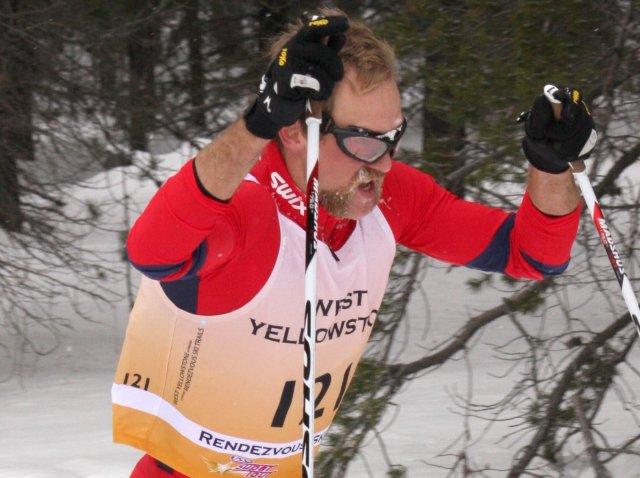
    Leif Zimmermann on his way to winning the 15 k freestyle at the 2011 SuperTour in West Yellowstone, Mont.
    Zimmermann en route to winning the 15 k freestyle at the 2011 SuperTour in West Yellowstone, Mont.

    Four years later after the 2010 Winter Olympics (and 2009 World Championships), he realized what was required to make the team again. A U.S. Ski Team member for five years, Zimmermann knew he needed to fully commit with hard work, mental perseverance and a strategic plan.

    “The level I was skiing in maybe 2008, 2010-ish was right below being able to ski competitively on the World Cup,” said Zimmermann, who’s started more than dozen World Cups with an individual best of 38th. He wanted to crack into the 20s.

    “I felt like I was on the verge of getting up to that level, and I knew I wasn’t going to do it in three months,” he added. “I needed sustained training, multiple years to build that up. You have to go about it systematically. That was the basis of me developing a plan.”

    He did so with longtime coach Dragen Danevski, the Bridger Ski Foundation director who had mentored Zimmermann since he began as a biathlete. In his third season of carrying out the plan (which carried into 2014/2015), Zimmermann made another decision earlier this year: it was time to step away from full-time, competitive racing and retire.

    “The last couple seasons I’ve had a hard time keeping the fun up enough for me to be able to do this,” he said. “In turn, I was training about 75 percent than I needed to and working 25 percent.”

    Employed in the offseason part-time by a contractor in Big Sky, Mont., Zimmermann traveled to Peru last summer for 10 days of guiding clients along the Inca Trail. An athlete ambassador to Inca Runners, he visited Lima beforehand for a few days of surfing. He returned to Bozeman in July and resumed full-time training with BSF.

    Formerly of the Bridger Ski Foundation and U.S. Ski Team, Leif Zimmermann finishes fourth for a season-best SuperTour result in the 10 k classic in Aspen, Colo., in early February.
    Zimmermann finishes fourth for a season-best 2012/2013 SuperTour result in the 10 k classic in Aspen, Colo., in early February.

    Last winter in Aspen, Colo., Zimmermann posted his season-best SuperTour result of fourth in the 10-kilometer classic. He was 47th in the freestyle sprint at nationals, and at the American Birkebeiner 52 k skate race in February, Zimmermann placed 28th.

    “I’ve skied well the last couple years but not like I had planned to,” he said. “Physically my body needed a break and I was satisfied with what I’d done. I’m not disappointed; it was a good time to transition to the next phase of my life. All of my adult life has been skiing.”

    Nearly 16 years ago, Zimmermann started skiing with Danevski. A multi-sport athlete who played baseball and soccer, one of his soccer buddies prompted him to try biathlon. Zimmermann liked hunting; he’d appreciate the marksmanship, his friend’s father reasoned.

    “I enjoyed biathlon and started to improve a lot,” Zimmermann said. “My skiing came quickly, especially skating.”

    A year later, he realized his true calling was cross-country as the BSF biathlon program started to fizzle. He hasn’t done any biathlon races in eight years, but still has his rifle. “It just didn’t pan out,” he said.

    Fortunately, his ski career did.

    “I really enjoyed World Juniors and U23s and being able to learn and develop at all those entry level world championships,” he said. “I think that’s a pretty cool phase of your career as a junior. You just learn so much and experience so much in such a short amount of time. I don’t think you really appreciate it as it’s happening.”

    Former Bridger Ski Foundation and U.S. Ski Team member Leif Zimmerman enjoying a snack on top of Mount Shasta, an active volcano and fifth-highest peak in California, in April. Zimmermann retired from skiing this spring. (Courtesy photo)
    Zimmerman enjoying a snack on top of Mount Shasta, an active volcano and fifth-highest peak in California, in April. (Courtesy photo)

    He does now.

    “I don’t necessarily have any regrets,” Zimmermann said. “I would’ve liked to have put 100 percent into skiing … I could’ve done a little more fundraising, done things a little bit differently, maybe moved to another spot. It was a tough time for all skiers the last five years with all the economic instabilities…

    “I’m definitely pleased with all the things I’ve been able to do with my ski career,” he added. “I wasn’t able to fulfill that goal to reaching the World Cup or going to Sochi, but I’m definitely pleased with how it turned out.”

    This spring, he started an adult baseball league and played again for the first time in 10 years. After his last races at Spring Series in Truckee, Calif., Zimmermann drove up along the northern West Coast in April, visiting friends and family in Oregon. He climbed an active volcano called Mount Shasta, the second-highest peak in the Cascades and fifth highest in California.

    He’s currently working full-time with the Big Sky contractor on custom and remodeling projects, but won’t be far from skiing come winter. Zimmermann anticipated he’ll jump into a SuperTour now and then, and continue helping new BSF elite athletes get settled in Bozeman.

    “I’m going to be involved with BSF,” he said. “I don’t know exactly what I’m going to do this winter. I might go to some junior qualifiers or help out with the elite team a little bit.”

    Perhaps he’ll assistant coach or help wax, but ideally, he’s looking for something full time in the nordic industry. Until then, Zimmermann said he’ll enjoy a less hectic fall and spend more time in the woods, setting up camp and bow hunting.

    A few weeks ago, 2010 Olympian Garrott Kuzzy, 30, came to Bozeman and the two had dinner. Kuzzy retired in 2011, and Zimmermann the decision to step away from racing is a generational thing with skiers his age.

    “A lot of it is, it’s time to move on to different phases in your life,” he said.

  • SkiRack Hosts Salomon SuperFit Event with US Olympian Garrott Kuzzy

    Event: Salomon SuperFit Event with US Olympian Garrott Kuzzy
    Date: Saturday, October 29 · 10:00am – 6:00pm
    Location: Skirack Nordic Center, 85 Main Street, Burlington, VT
    Event Contact: Will Skolochenko, 802-658-3313

    Description:

    Salomon USA and SkiRack, New England’s most complete source for Salomon Nordic equipment and clothing, are hosting a custom gear-fitting event on Saturday, October 29th from 10:00 a.m. to 6:00 p.m. to kick off the 2011-2012 nordic ski season.
    The Salomon SuperFit Event will allow local Nordic skiers the chance to meet one-on-one with professional boot fitters and factory representatives. Skiers of all ability levels will get customized guidance from the factory pros to make sure their skis and boots are ideal for their body, ability, maximum performance and enjoyment.

    This event is free and open to the public. There will be refreshments, prizes and giveaways.
    Participants will receive Team discounts on Salomon Nordic Race Equipment and a free pair of Salomon SNS bindings with every set of Salomon nordic skis purchased.

    Garrott Kuzzy,US Olympic skier and Middlebury College grad, to share his racing experience with all attendees.