From the FasterSkier archive — posts syndicated from athletes’ and coaches’ own blogs between 2004 and 2012, kept online as published. Current coverage is at fasterskier.com.

Tag: Gary Colliander

  • Opportunity Knocked: Opportunity Seized

    Opportunity Knocked: Opportunity Seized

    By: Paige Elliott

    The call to action is clear: Nordic skiing needs more women coaches. From the launch of the Women’s Ski Coaching Association to former U.S. Ski Team coach Pete Vordenberg’s editorial on FasterSkier to Dr. Nicole LaVoi’s keynote presentation at U.S. Ski & Snowboard annual National Cross Country Coaches Symposium, gender equality has been at the forefront of recent conversation in the Nordic community.
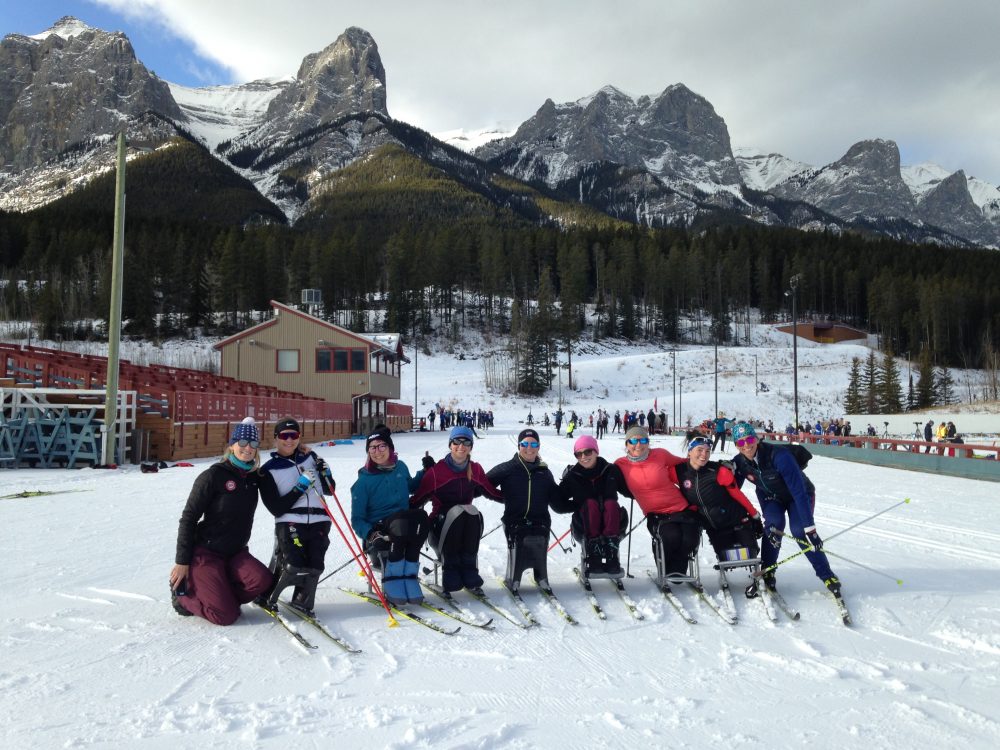
    USPN coaches Eileen Carey (far left) and BethAnn Chamberlain (far right) with members of the women’s team at a recent training camp in Canmore, Alberta.

    I believe in this mission and therefore want to highlight a program that is doing an exemplary job of developing, advancing, and retaining female coaches, yet has been largely absent from the conversation. That program is U.S. Paralympics Nordic Skiing (USPN).

    When asked why he thought female coaches are so scarce in the Nordic world, John Farra, the former director of USPN, answered, “My theory would be that women are not encouraged as often or aren’t provided as many opportunities to take leadership roles in the Nordic space.”

    This thought is consistent with research conducted by Dr. Nicole LaVoi and the Tucker Center for Research on Girls & Women in Sport at the University of Minnesota. Even without the research, plenty of women coaches can provide anecdotal evidence regarding the frustration of their experiences trying to break into a typically male-dominated field. 

    “How many women have stopped coaching because they don’t feel valued, or are not given opportunities to advance?” said Eileen Carey, current director of USPN. “If more women had better experiences coaching, we’d probably have more women coaches.” 

    This is why I was surprised when USPN invited me to test skis with the glide wax department at the Paralympic Games in PyeongChang, South Korea in 2018. I had been coaching juniors with Durango Nordic Ski Club for five years, but was new to para-Nordic skiing and international level competition. USPN gave me the opportunity to learn. 

    One of the first things I noticed upon arriving in South Korea was that for the first time in my coaching experience, I wasn’t outnumbered by men. Of the 14 coaches and support staff members, seven were men and seven were women. Furthermore, the women, who included powerhouses like Carey, Kristina Trygstad-Saari, and BethAnn Chamberlain, were far from statistical tokens. (Chamberlain was just recognized by the USOPC as the Developmental Coach of the Year.)

    “[John Farra and I] made the decision on how we wanted to build our staff based on who was really competent and who was good in a team environment,” said Carey. “We chose who was best for the job, and that happened to be half women.”
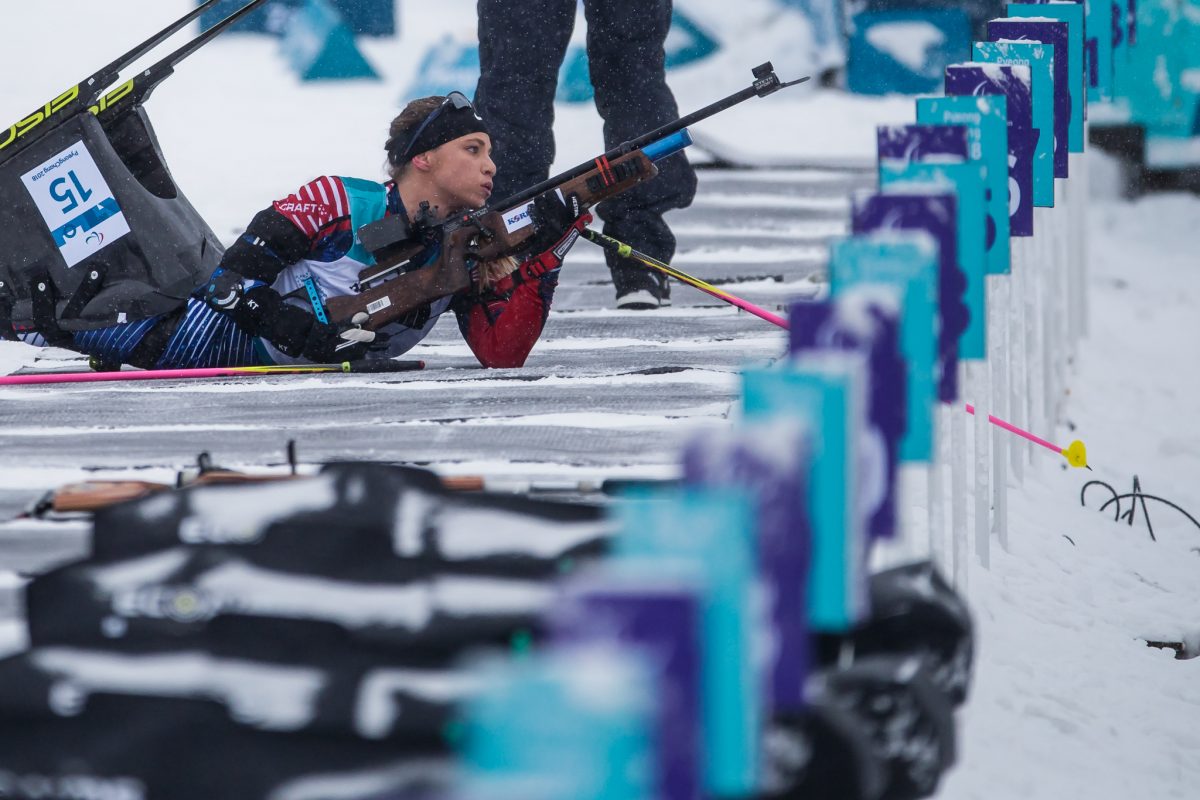
    Oskana Masters focused and in the moment on the range during the 2018 Paralympics in PyeongChang, South Korea. (Photo: U.S. Paralympics/Joe Kusumoto)

    In PyeongChang, USPN won a total of 16 medals, a tremendous increase from the three garnered during the 2014 Paralympics in Sochi, Russia. The 16 medals were comprised of six gold, seven silver, and three bronze and accounted for nearly half of the 36 medals won by Team USA at the Paralympics. Farra credits a large part of this immense success to Carey, who was head coach of the program at the time.

    “What we experienced in Korea was this perfect symphony of human beings coming together with a purpose, without egos,” said Farra. “It was an unbelievable experience to be around so many passionate, powerful people who executed their roles so well. That was orchestrated by Eileen and her style of leadership.” 

    Another key member of the half female coaching staff is Chamberlain, who serves as the emerging athlete coach. She utilizes her trademark enthusiasm and approachability to coordinate with clubs nationwide to identify, recruit, and develop emerging athletes. 

    “BethAnn is ideally suited for this line of work,” said Farra. “Her intensity, her passion, she’s just incredible for wrapping people in and getting them fired up. 

    Chamberlain, who had a 15-year career as a professional biathlete before she started coaching, also offers USPN a fount of technical knowledge regarding all things skiing and shooting.

    “She has an extensive background in biathlon, so when athletes are new, they get a pretty thorough introduction to the sport,” said Gary Colliander, USPN’s biathlon coach. “She’s also very easy to work with, so this develops a great opportunity for other coaches to learn from her as well.”

    When I asked Chamberlain, who also has experience coaching for non-adaptive programs such as Boulder Nordic Junior Racing Team and the Loppet Ski Club, what her favorite aspect of working with USPN is, she referenced the out of the box thinking required to coach adaptive skiing. 

    “The goal is the same as it is in non-adaptive skiing and biathlon, to ski fast and hit targets, but your approach to get there is a little different,” Chamberlain said. “Just because a standing skier skis with two poles, is that really the way someone with one pole should ski? We don’t know all the answers. We don’t know a lot of the answers. So that forces us to be a little more open-minded, to consider other possible ideas and solutions.”

    In fact, throughout my conversations with various individuals associated with USPN, this ability to consistently consider alternatives emerged as the number one hallmark of an effective coach.

    Farra described Carey as, “hands down the best coach that I’ve worked with” specifically because she is, “someone who asks more questions than has answers.”

    “She is always asking why? Why are we doing it this way? Why can’t we do it that way?” said Farra. “And by asking so many questions, she evolved from someone with former racing experience and some touchpoints with coaching to a large driver of the team’s success.” 

    Nick Michaud, a USPN development team coach, cited “the courage to say I don’t know” as one of the most important things he’s learned from both working with Carey and the team.

    “To see someone like Eileen, who has been doing this a long time and is at the top of her game, admit ‘I’m not sure’ when I ask a question, and then for us to go figure it out, is such a cool process,” said Michaud. 

    “Being able to do that helps puts some autonomy on the athletes, it opens the door for a lot more learning, and it makes a more collaborative process. I think the moment you start assuming things or think you know everything, that’s when the growth and development stops.”

    Obviously, inquisitiveness and humility are not qualities specific to gender. I do not think it’s a coincidence, though, that an organization that has grown and improved and succeeded by consistently asking what it can do differently exemplifies equity. 
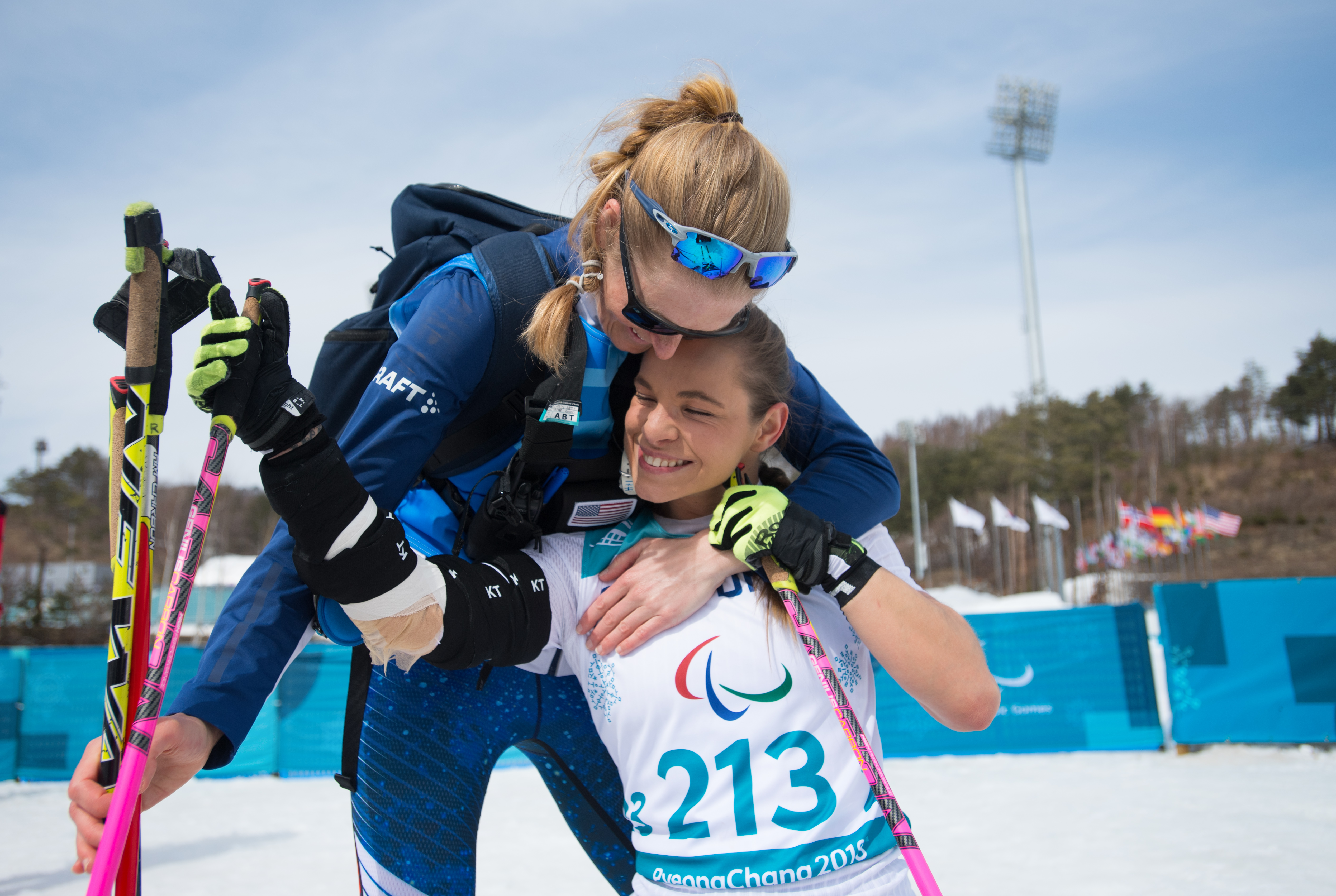
    Oksana Masters of U.S. Paralympics Nordic is hugged by head coach Eileen Carey after her gold-medal finish in the women’s sitting 5 k cross country race at the 2018 Winter Paralympic Games in PyeongChang, South Korea. (Photo: Mark Reis/U.S. Paralympics)

    At the introductory level, USPN strives to present opportunities for individuals to explore things they might not have otherwise thought possible. As athletes advance, USPN provides a framework for progression through the sport, which includes access to a range of highly-qualified professionals and resources. Assistant coach Trygstad-Saari handles initial communication with athletes, manages the logistics of the program, and in conjunction with Chamberlain, stokes enthusiasm. Michaud keeps a pulse on all groups and serves as a bridge for developing athletes who may be potential medalists. 

    At the elite level, athletes work with head coach Martin Benes and biathlon coach Colliander. They are also connected with a network of specialists within the United States Olympic and Paralympic Committee (USOPC), such as a strength coach, a sports psychologist, and a nutritionist. 

    This is all of course facilitated by Carey, whose staff and athletes can’t say enough good things about her efficiency, expertise, and color-coded spreadsheets. 
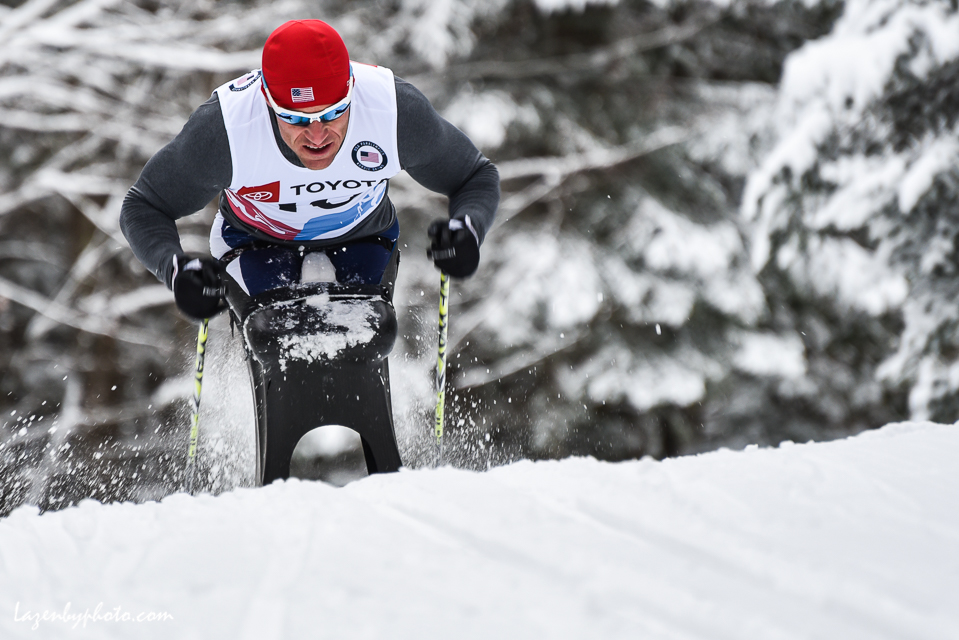
    Dan Cnossen on his way to winning the men’s middle distance national title at the Paralympic Nordic Nationals at Craftsbury, Vermont. (Photo: John Lazenby)

    “I’ve been really impressed with the caliber of coaching I’ve had in my eight years with the team,” said Dan Cnossen, an athlete on USPN’s National Team. Cnossen is a former Navy SEAL and a six-time Paralympic medalist. “They really consider and respond to athlete feedback. Tapping into the USOPC’s resources is also adding a lot of depth to the organization. The team is just getting better and better.”

    The more I learn about how USPN develops Paralympic athletes, the more I realize how similar this process is to the way Nordic skiing should be developing female coaches. USPN removes barriers and provides opportunities for a minority population. This is analogous to presenting coaching as a viable career option to women and providing opportunities to pursue it. 

    Furthermore, USPN’s versatile approach and superlative support system allows athletes to not only explore skiing, but excel at it. Similarly, female coaches need professional development opportunities and a network of peers and allies, such as the WSCA, to thrive and advance in a traditionally male-dominated field. 

    What goes into creating successful athletes, coaches, and programs is vast and complex. Female leadership and gender equality may only be one piece of the puzzle, but I do believe it plays a powerful role. U.S. Paralympics Nordic provides a promising example for both the future of women’s ski coaching and promoting overall diversity in the sport.

    As Michaud put it, “Hopefully we’re showing that we can mix up the way things are and be really good at winning medals.” 

  • Wednesday Workout: Sizzling Hot 30/30’s with BSF’s Nick Michaud

    Wednesday Workout: Sizzling Hot 30/30’s with BSF’s Nick Michaud

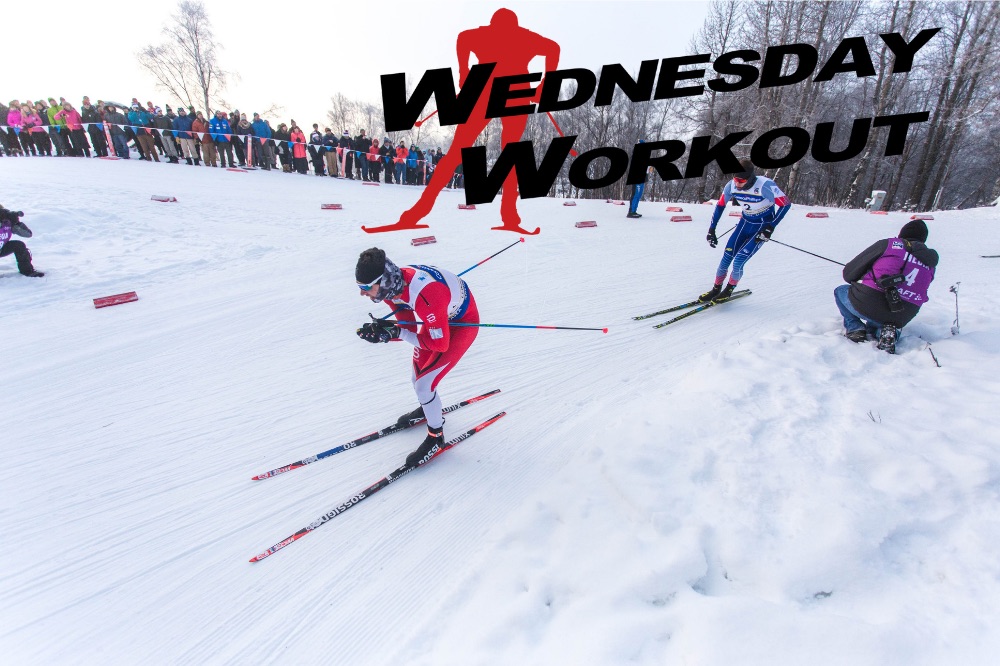
    BSF’s Nick Michaud (red suit) at last season’s Senior National Championships in Anchorage, Alaska. Michaud qualified 4th. (Photo: Gilbert Michaud)

    This Wednesday Workout was provided by twenty-six-year-old Bridger Ski Foundation (BSF) skier Nick Michaud. Bates College educated and raised plumb-line north in Fort Kent Maine, Michaud has emerged as a sprinter to watch on the SuperTour. He’s a gritty, salt-of-the-earth athlete who barely missed a nomination to the 2018 Olympic Team.

    Michaud offered FasterSkier a menu of options for the 30/30 workout — 30 seconds on 30 seconds off. From junior athletes to masters in M8 and beyond, Michaud has you covered with these training session variants.

    Let the gains begin.

    Backstory of the Sizzling Hot 30/30’s from Michaud:

    “Short, explosive movements are like bacon for me. I’m thrilled to eat bacon anytime, anywhere, with anyone. With vegetables, grains, and most foods that are really important for function, it can feel like a chore. That’s what a lot of nordic ski training feels like for me. My body, my mind, would prefer to just do speed work, lift heavy weight, and play basketball — and eat bacon. But in order to meet my performance goals, I have to eat vegetables and grains: aerobic base, lactate threshold, energy management, mindfulness and so much more. For these reasons, I love 30/30s.

    30/30 home terrain for BSF’s Nick Michaud in Bozeman, Montana. (Photo: Max Lachance)

    The execution is very simple: 30 seconds “on”, 30 seconds “off”. The effort and duration can be customized for the purpose of the workout. There should always be a purpose!. For athletes with periodized training plans, 30/30s can be used in different cycles of training to meet different goals. For a more casual athlete, 30/30s can simply be an extremely fun way to get in some higher intensity training.  

    Dragan Danevski, BSF nordic program director, began using 30/30s eight years ago. There was a study in Europe focusing on track and field and how to improve efficiency of running economy, improve aerobic capacity, and reduce the recovery time in a 30/30 workout. The original study tracked mainly 1500m and 3000m runners. Danevski adjusted the workout for skiers here at BSF.

    Danevski said BSF has used 30 by 30s for a few different goals: improving skier’s economy, stimulate good technique, and shortening recovery time for lactate clearance. Originally it was for improving threshold.  For his skiers, Danevski saw the potential to improve anaerobic capacity.

    Throughout summer Danevski follows the study and uses 30/30s to improve threshold.

    For the following age groups, the coach prescribes one 25-30 minute block of 30/30s for U16 and U18s. U20s go for a 30-35 a minute block of 30/30s. Some older skiers are ready for a 45 minute 30/30 session.

    Danevski said these 30/30 training days need to be disciplined by monitoring heart rate.

    tizanidine buy online, buy baclofen online, zanaflex online

    In the past, the 30/30 workouts were used only during intensity blocks. Recently, we’ve started using it throughout the whole training year: on skis, foot, and rollerskis.

    Psychologically, Danevski said the 30/30 is a more tolerable intensity session, especially for kids, since they can focus on high-quality efforts for 30 seconds each time. It’s easier to focus.

    As we transition into fall here at BSF, we also use 30/30s to improve anaerobic capacity. One basic example we use are three to six sets of a 15-minute long 30/30s — with appropriate rest between each set.

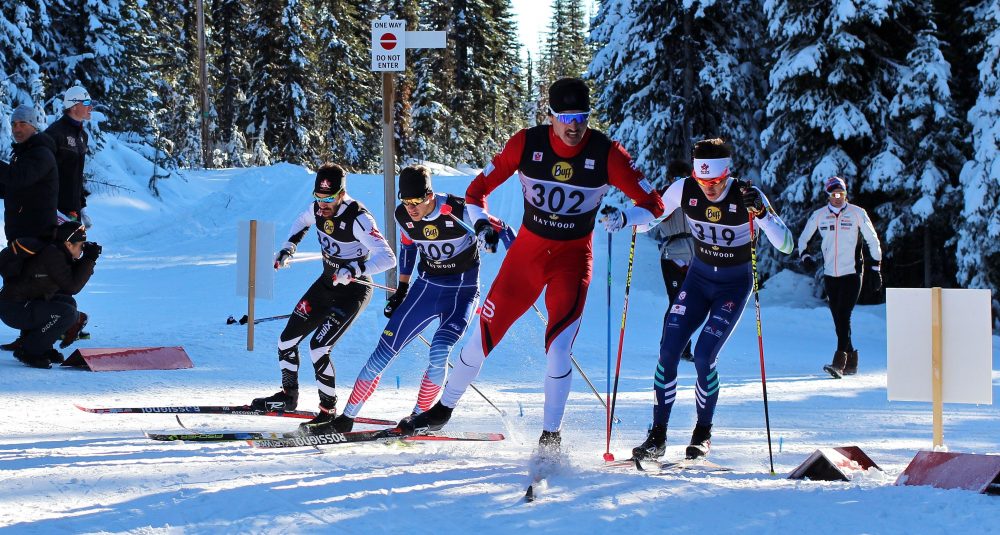
    Nick Michaud (BSF) in bib 302 putting those 30/30s to good use at the Sovereign Lake NorAm in 2017. Michaud was the second fastest qualifier. (Photo: Forrest Mahlen)


    The 30/30 Workout Menu Starting with Michaud’s Favorite Variation:

    Nick Michaud: 3 x 5 minutes, sprint pace. So we are all clear, this means a five minute long  30/30 excecuted three seperate times. During each five minute period, that’s a total of 2.5 minutes “on”, and 2.5 minutes “off”. For the entire session, the athlete is “on” for 7.5 minutes, or half the total elasped time. I rest for five minutes between each set.

    Notes: I use this two days before a sprint race, increasing my effort each set. It’s a great way to get a feel for speed, technique, and effort in all areas of the course. I take five minute breaks between sets. I leave the venue with a good understanding of the course and excited to move fast on it two days later. Using this training sessions at different points of the year is a great way to practice understanding the critical difference between effort and ski speed — which I think is crucial.

    Favorite 30/30 Variations from Others:

    Gary Colliander, US Paralympic Biathlon Coach: 4-8 x 6 minutes. Number of blocks depends on L3 or L4.

    Notes from Colliander: “Focus on quality of movement through the interval and a slightly higher turnover. With the short ‘on’ time I think you can hold the technique together better and because there is a short rest you can potentially push the pace and thus the level a bit. They’re still very tough, but that short rest just seems to offer bit of recovery while allowing the heart rate to remain high.

    Another way to look at the short 30 second rest is like it’s a downhill. Anytime you get a downhill it’s a chance to grab some O2 and recover although for a very short bit. But it always feels good when you come out of that tuck.”

    Lina Hultin, Bridger Ski Foundation Development/Competitive Team Coach: 5×6 minutes.

    Notes from Hultin: “What I like with 30/30s and 45/15s is that it allows the athletes to ski more efficiently. Since you have that shorter break, you tend to have better and more efficient technique since athletes ‘dare’ to push it a little harder when they know they will have a shorter break. Good technique requires strength and power and the shorter interval allows athletes to keep good technique for a longer time.

    The closer you get to the season you can dare to let go of that shorter break and hopefully you can maintain that good efficiency in you technique in a continuous time trial or longer intervals.”

    Akeo Maifeld Carucci: Craftsbury Green Racing Project Athlete: 2-4  x 10-15 minutes at L4+.

    Notes: “Terrain wise, I like small rolling terrain or maybe gradual uphill with some bumps. I believe in keeping it between L1 and recovery pace during the rest phase, but it is important that it keeps moving at the least.”

    Seth Hubbard, Bridger Biathlon Club Head Coach: 15/15s for sets of 4-8 minutes at race pace +

    Notes: “This workout is altered depending on an athlete’s age and their work on pacing, and ability to surge and recover.”

    Will Sweetser: Nordic Programs Director at Sugar Bowl Ski Team and Academy: 15 sec/15 sec 6-12 minutes.

    Notes: “I use 6-12 minute repeats with ‘on time’ at either L3+ or goal pace for races 8 minutes and longer. First used this coaching runners in the mid 90’s. Have since had good success with younger athletes developing pace sense.

    Used the 15/15 to help take an athlete’s 3,000 meter time from 11:38 to 10:10 in 5 weeks. The next year this athlete brought their time down to 9:27 using 15/15 session of 2 x 3000m about once every 10 days.”


  • 20-for-20 with Cody Johnson

    20-for-20 with Cody Johnson

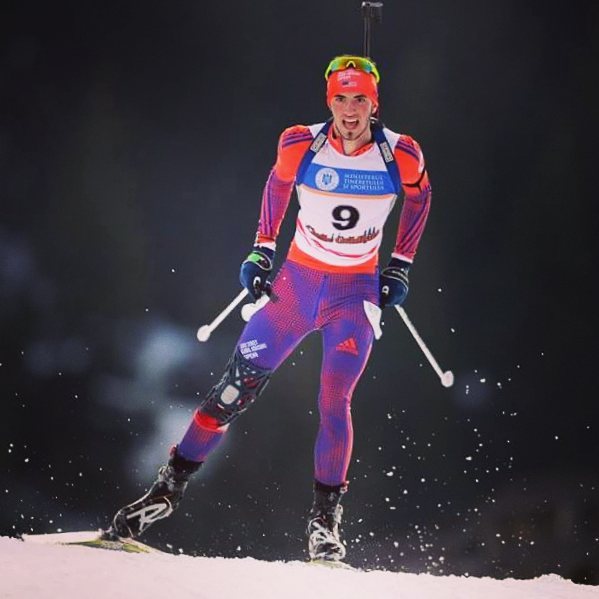
    Cody Johnson (OSI) racing at the U.S. team trials for 2017 IBU Youth/Junior World Championships in late December 2016 in Jericho, Vt. (Courtesy photo)

    In another 20-something-question, fill-in-the-blanks series, we checked in with the world-class U.S. and Canadian biathletes that will be competing at 2017 International Biathlon Union (IBU) Youth & Junior World Championships Feb. 22-28 in Osrblie (also known as Brezno-Osrblie), Slovakia.

    Here’s 19-year-old Cody Johnson, of the Outdoor Sports Institute, who will be representing the U.S. at his second Junior Worlds. On Thursday, Johnson was the top American in 50th in the junior men’s 15 k individual.

    ***

    “My full name is Cody Johnson. I was born in Connecticut, raised in Fort Kent, Maine, and one thing you should know about my hometown is I have a world cup facility 10 mins from where I live that I train at every day.

    American Cody Johnson racing at 2016 IBU Youth World Championships in Romania. (Courtesy photo)

    I started cross-country skiing when I was 9 and started biathlon when I was 10, thanks to Gary Colliander. I currently train in Fort Kent with OSI (Outdoor Sports Institute).

    If I’m not skiing, you might find me hunting. If I had to pick a favorite book, it would be ‘Flow‘.

    One of the things I’m most excited about for Youth/Junior World Championships in Brezno-Osrblie is racing.

    This will be my second Youth/Junior World Championships, and this year, I’m competing as a junior. One race I’m especially targeting there is the individual.

    The best advice anyone ever gave me about skiing or racing was ‘have fun’. Thanks Susan Dunklee.

    One of the best race memories I have is U.S Team Trials in Alaska when I won the pursuit.

    If I could meet one World Cup skier, it would be Simon Eder.

    If I don’t end up being a professional skier, I’ll probably be a hunting guide.

    I’m missing zero days of school to be here. I am graduated and doing a gap year program with OSI.

    You can follow me on Instagram @exodus_johnson.”