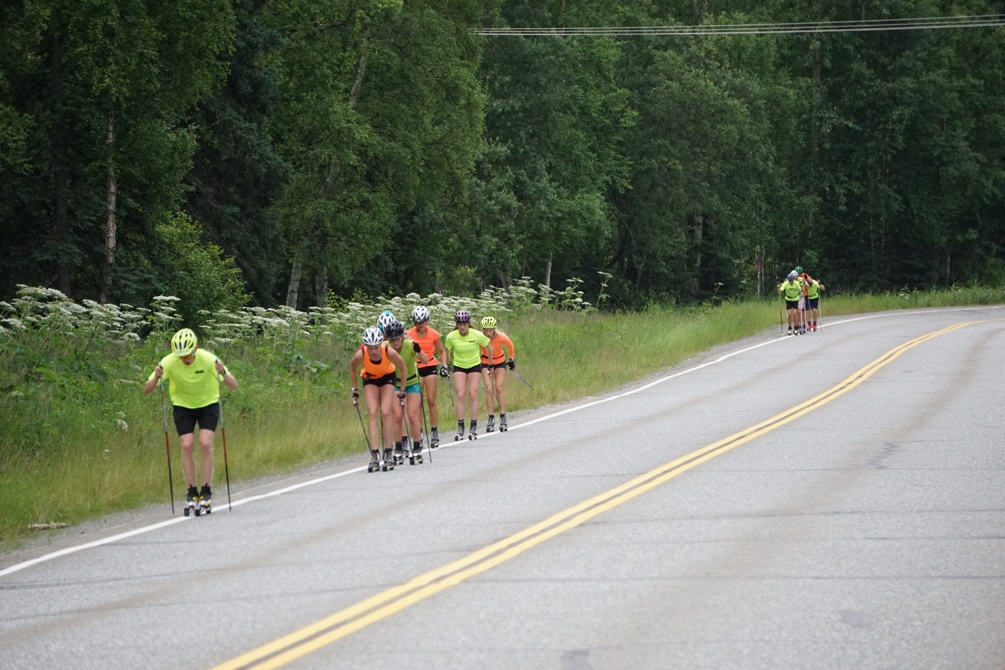
ANCHORAGE — As allegories for skiing development go, the uphill run time trial is tough to beat. It’s hard to start with, it gets harder as you approach your goal, and success requires pushing all the way to the finish. “Paying the tax on the road to the podium,” as Sadie Maubet Bjornsen once wrote of a photo of her on Gasline.
Tuesday morning in Anchorage, a group of the state’s top juniors took on the Gasline Time Trial, a 1.4-mile-long metaphor, on the first full day of this year’s Alaska Regional Elite Group camp, or REG. The athletes were drawn from several clubs around the state. They will spend the week pursuing a full slate of training and testing, including 10 distinct workouts plus additional presentations.
Odds are very good that some athletes participating in this camp will later represent the U.S. at the highest stages of international sport; indeed, three-fourths of the men’s relay team at this year’s Oberstdorf World Championships was made up of Alaska REG alumni.
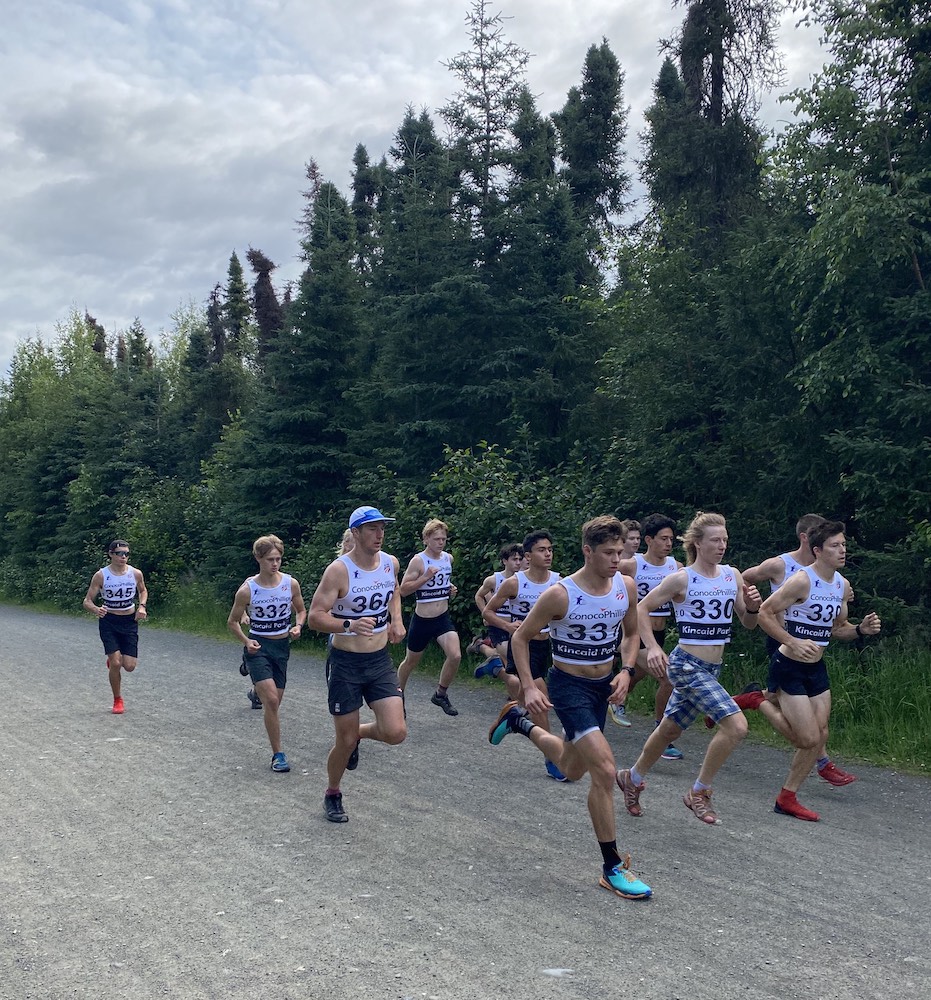
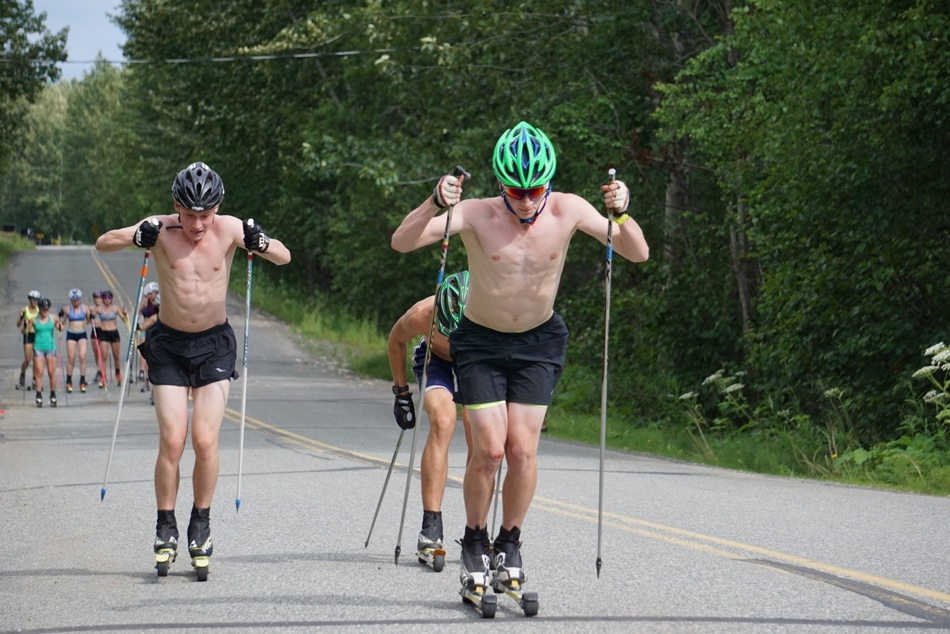
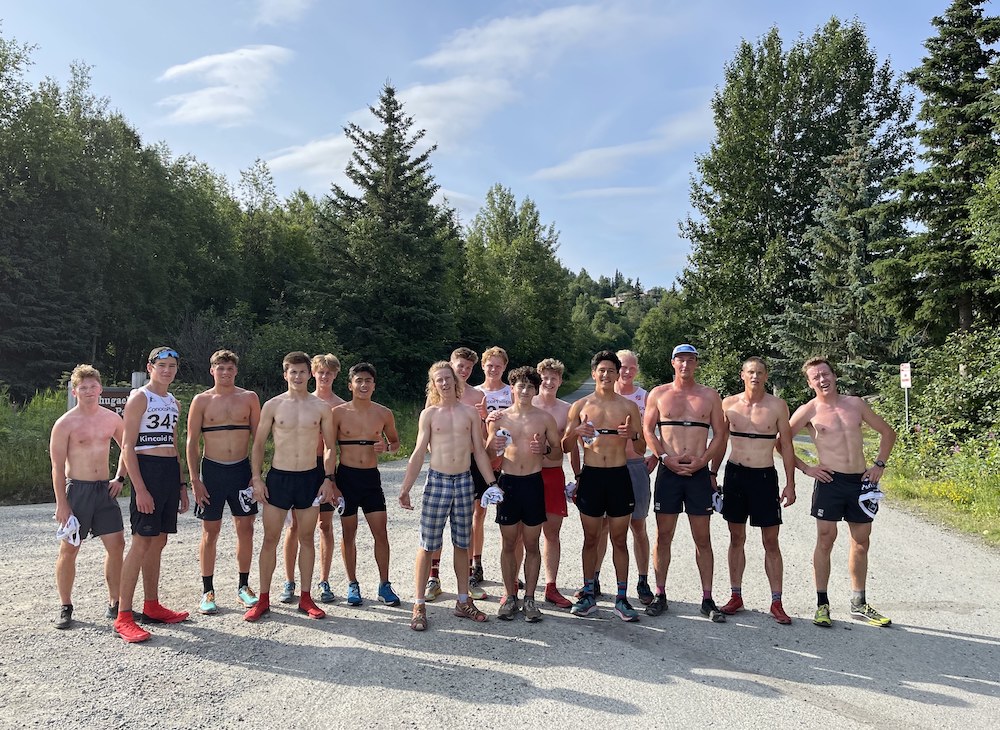
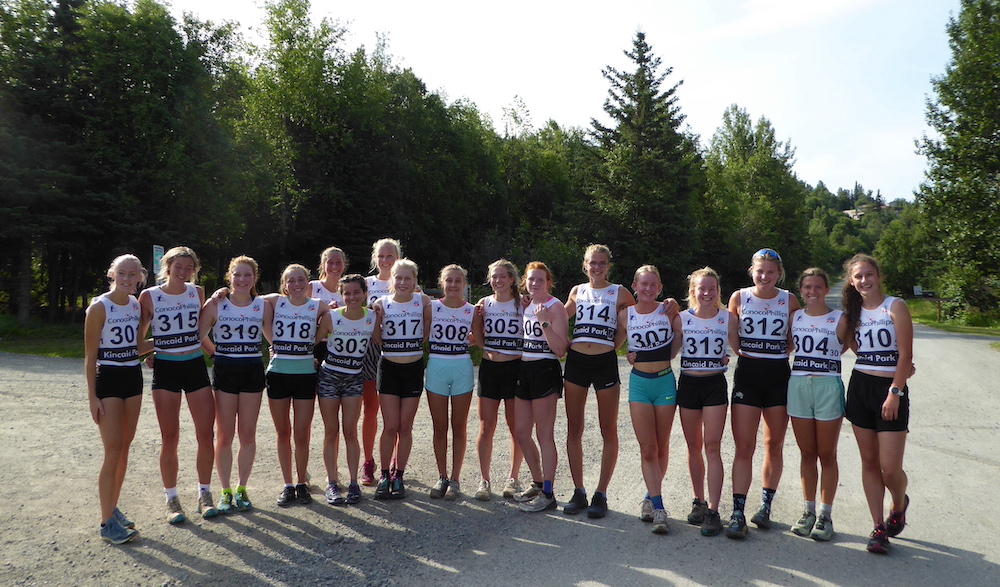
But all that lay some distance in the future on a perfect late-summer morning; for now, it was time to go uphill. Fast. U.S. Ski Team coach Kate Johnson, standing at the starting line, synchronized watches with USST Development Team coach Greta Anderson at the top of the climb, shooed away a nearby moose, and, at precisely 9:45 a.m., said, “Go!” Sixteen junior boys charged down the broad Gasline trail at Anchorage’s Hillside trail system, vying to be the first to make the hard left onto the Spencer Loop and start the climb up to the Prospect Heights parking lot.
* * *
Let’s back up. The Gasline time trial is a longstanding staple of Anchorage summer ski training. Some local clubs have continuous records dating back to the 1990s, and it was first contested well before that. Strava lists it as 1.4 miles, with 571 feet of elevation gain. The women’s course record is currently held by Rosie Brennan, who clocked a 10:20 one year ago this week to destroy the old record. The fastest men’s time currently listed on Strava is 9:06, from Gus Schumacher last October; this is not the all-time men’s course record, but is close to it.
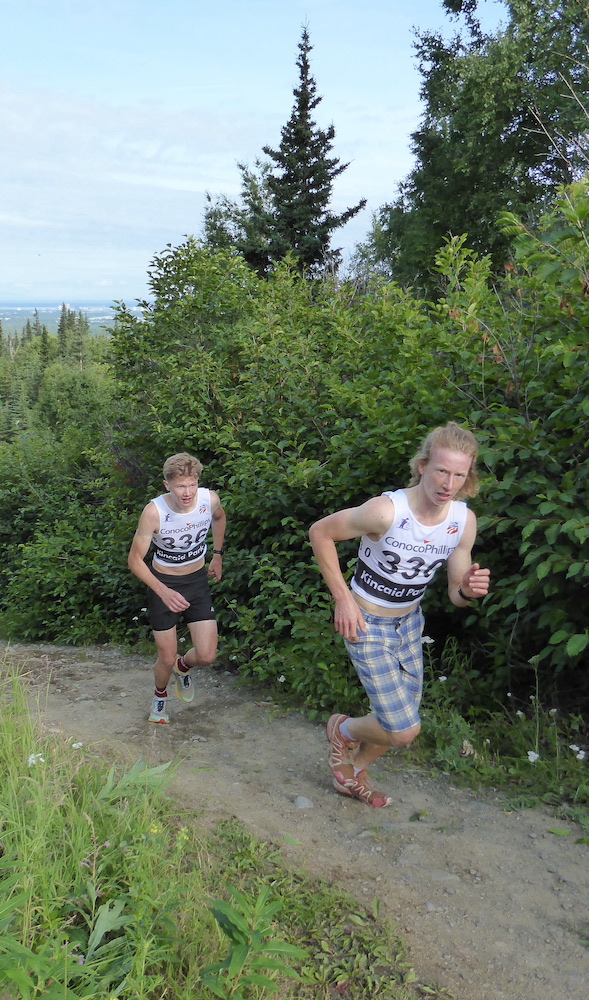
The climb is difficult, in the way that running uphill fast is always difficult, but it is particularly insidious because it gets steeper over the final fourth of the course, just when an athlete’s legs are most tired. The climb is analogous to a well-designed ski course because it is not an unchanging uphill grade but rather has multiple short rises, set within an overall rolling uphill, that require gear changes like a skier would use when climbing a hill in different techniques. There are also some “flat” sections sprinkled throughout, so that, again as with a homologated course, an aerobically superior skier can accelerate and make up time where a less fit athlete will not be able to take advantage of the easier terrain.
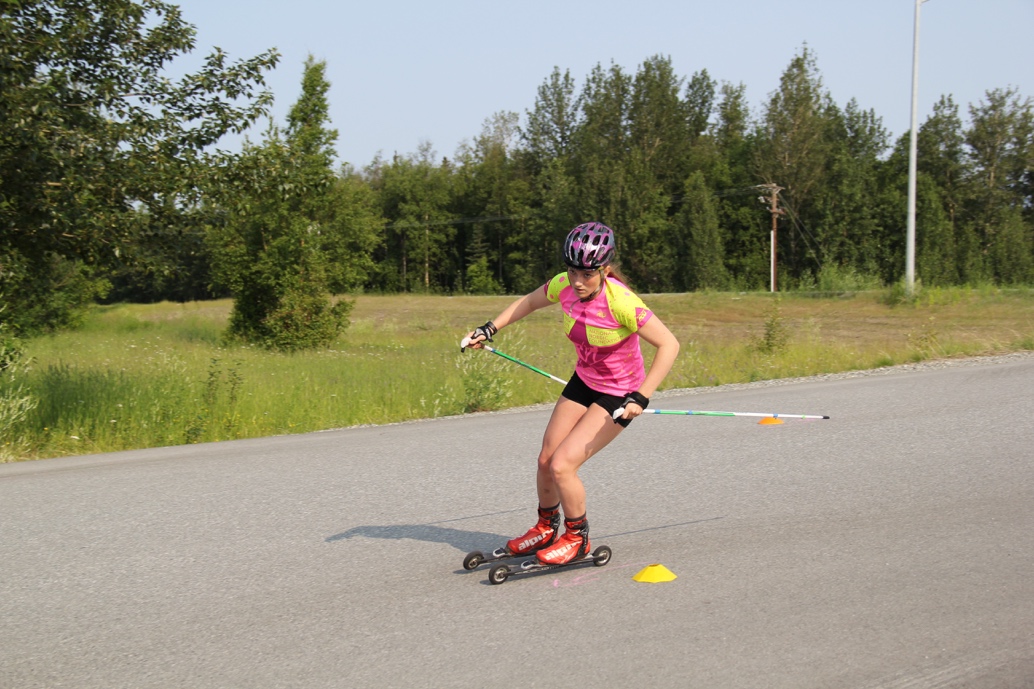
The Gasline time trial was the first formal test at this year’s Alaska REG camp, but it will not be the last. The U.S. Ski Team explains that a sample camp testing protocol includes an uphill run (10-15 minutes in length), an uphill doublepole test (ideally, approximately 800 meters at 6% grade), and a skate agility sprint (approximately 3 minutes long). This year’s camp largely reflects those parameters, Anderson explained in an in-person interview while walking up Gasline from the starting line to the finish during the athletes’ warmup, with workouts including rollerskiing and bounding.
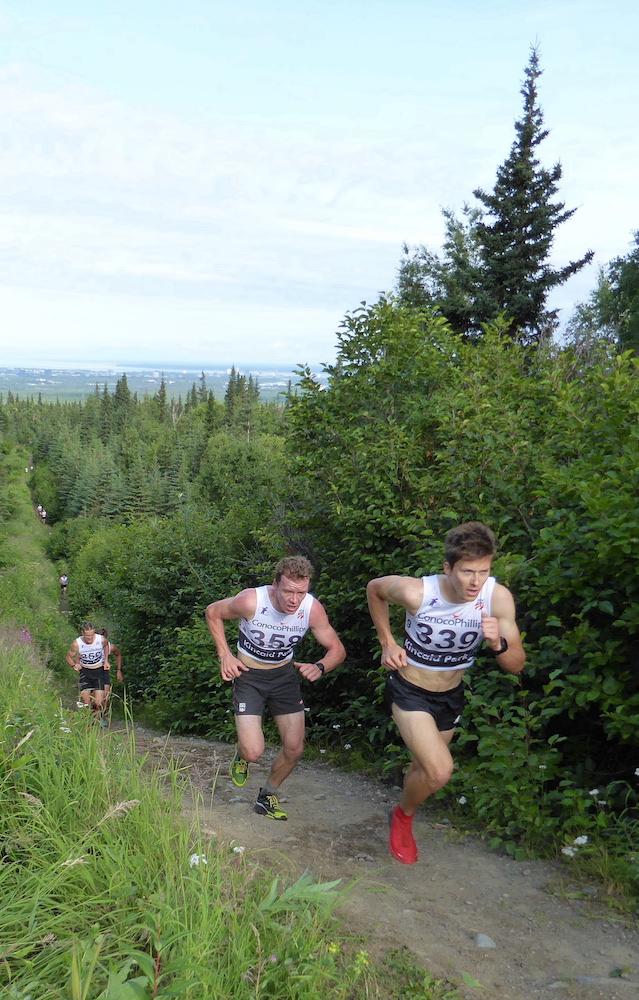
“We’re going to focus more on technique than volume this week,” Anderson said when not pushing through heavy brush overhanging the trail, “to take advantage of the coaching expertise we have here, and then let the athletes who know how to train, hence being at this camp, manage their overall training load on their own. We really want the camp to work with what the clubs are already doing right and what the coaches have figured out already.”
While the tests may get all the attention, and indeed are part of the criteria used for selection to this fall’s USST/National Training Group camp, they’re not the first thing that comes to mind when Anderson is asked about the “point” of the REG camp.
“The number one benefit and value is them training with each other and learning from each other,” Anderson observes.
On her end, meanwhile, she says, “As a coach, especially as one new to this job and development, one of my goals is to just get a good idea of where we’re at, where we have a lot of opportunity for improvement, and where we’re strong. And not only that, but what we’re doing well to make us that way. A big value-added benefit for myself and the athletes is getting to know them this year, and then getting to know myself. So we have a huge advantage in that Kate Johnson is here. I think the athletes are – there’s a lot of buy-in right now with U.S. skiing, and everybody kind of sees that they can be the next one to make it to that international level, and is excited to do so.”
All this is well and good, but what do you do when faced with several dozen high-achieving junior skiers, motivated under any circumstances but here facing down a week with ample formal testing, all under the watchful eyes of three national team coaches? Specifically, how do you keep them from going Masters medium all the time, and make sure that they actually recover between the hard efforts?

“We’ve cut down on the distance workouts,” Anderson observes. “The athletes are better than they’ve ever been at training in general. And so a lot of that is, you know, I think assuring them to trust their process. And for us to support that, but you know we are not looking for somebody who wins every workout. And I don’t think athletes are looking to win every workout. Right now I think a lot of them are a lot more process-focused, and are getting to the point where they know if they do a good job with all the little pieces of the puzzle, it’s going to turn out real well for them.”
* * *
While the week’s not over yet, Anderson, and the rest of the USST developmental staff, like what they’re seeing. Anderson is joined in Anchorage this week by Johnson, the World Cup-based development coach; Bryan Fish, the sport development manager; and Matt Whitcomb, USST head coach, who is officially in town to coach the USST training camp simultaneously occurring in Anchorage, but who joined the REG camp for their welcome barbecue on Monday night.
Other local coaches assisting with the camp include, but are not limited to, Eliza Rorabaugh, Lin Hinderman, Jack Novak, Eric Strabel, Naomi Kiekintveld, Jan Buron, Erik Flora, Galen Johnston, Seiji Takagi, Adam Verrier, Joey Caterinichio, and Ja Dorris, plus longtime USST physiotherapist Zuzana Rogers. All three Anchorage-area ski clubs (Alaska Winter Stars, Alaska Nordic Racing, and Alaska Pacific University) sent both athletes and coaches.
Hinderman, who on Tuesday assisted with timing, is a particularly inspired choice to help support the current generation of junior skiing in Alaska; she has been doing so since the 1960s (!), in which time she has coached 17 Junior National teams, founded the first Anchorage-based summer nordic training program, and is believed to have been the first female World Juniors coach. Among many other things. When she recorded bib numbers at the finish line, the athletes were staggering past a direct link to the 1969 Junior Nationals held in Girdwood, Alaska.
Back in the present, Alaska marked the fourth and final REG camp of this summer, following similar events in the Western, Central, and Eastern regions of the Lower 48. Surveying the summer and American junior skiing as a whole, Anderson is optimistic about the future.
“I think everyone’s just really excited to be back together training, and excited about the sport, and excited to see what they can do in the coming year,” Anderson notes.
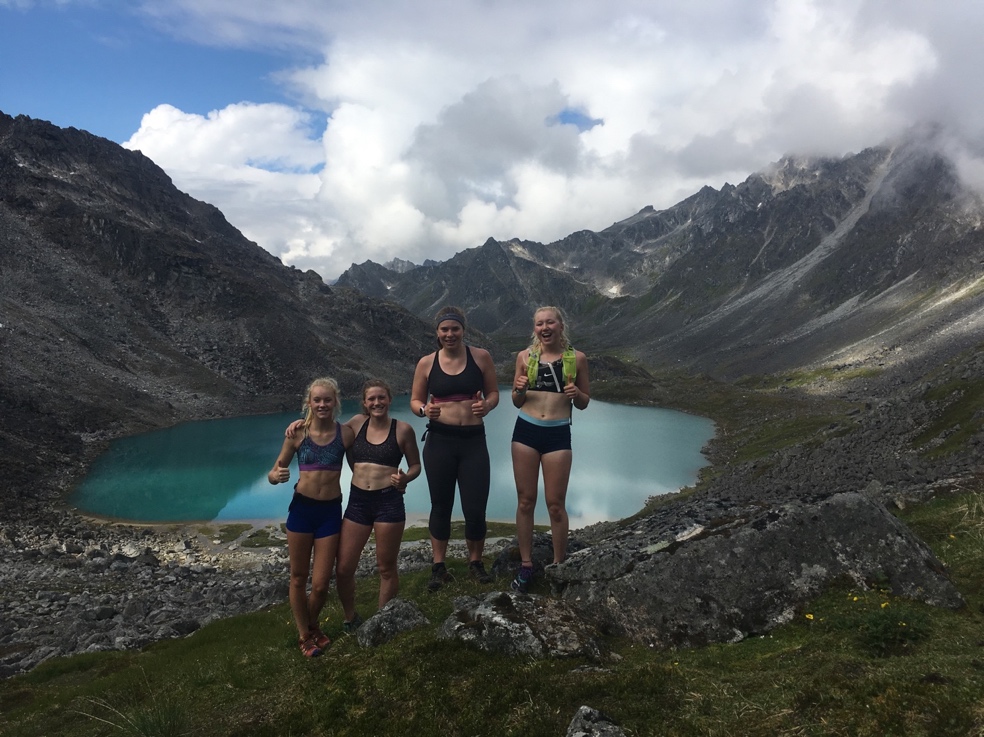
“And one of our camp themes for Alaska, which was one of our camp themes for Western [REG], … was gratitude. Everyone’s really grateful to be training and back with the group. I think that it’s easy to take your teammates for granted and look for problems or issues or challenges, and right now I feel like the mindset of the athletes so much is everybody looking for opportunity, which is a really cool mindset as a group to have. Everyone’s really supportive. At Western we had so much peer-to-peer coaching with the athletes and support from the older vets to the younger, newer, less-experienced ones. So that was really promising to see.”
Success tends to beget success, and the current trajectory of American skiing is an encouraging one. “Now that we’re internationally stronger than we were,” Anderson says, “I feel like maybe the athletes can go to the start line, internationally, a little more confident that they’re going to be right in the mix. And that’s a newer mindset we have that’s pretty cool to get to share as a nation.”
How excited is Anderson for the future?
“So excited. If I weren’t excited, I’d be complacent, right? I’m thrilled.”
* * *
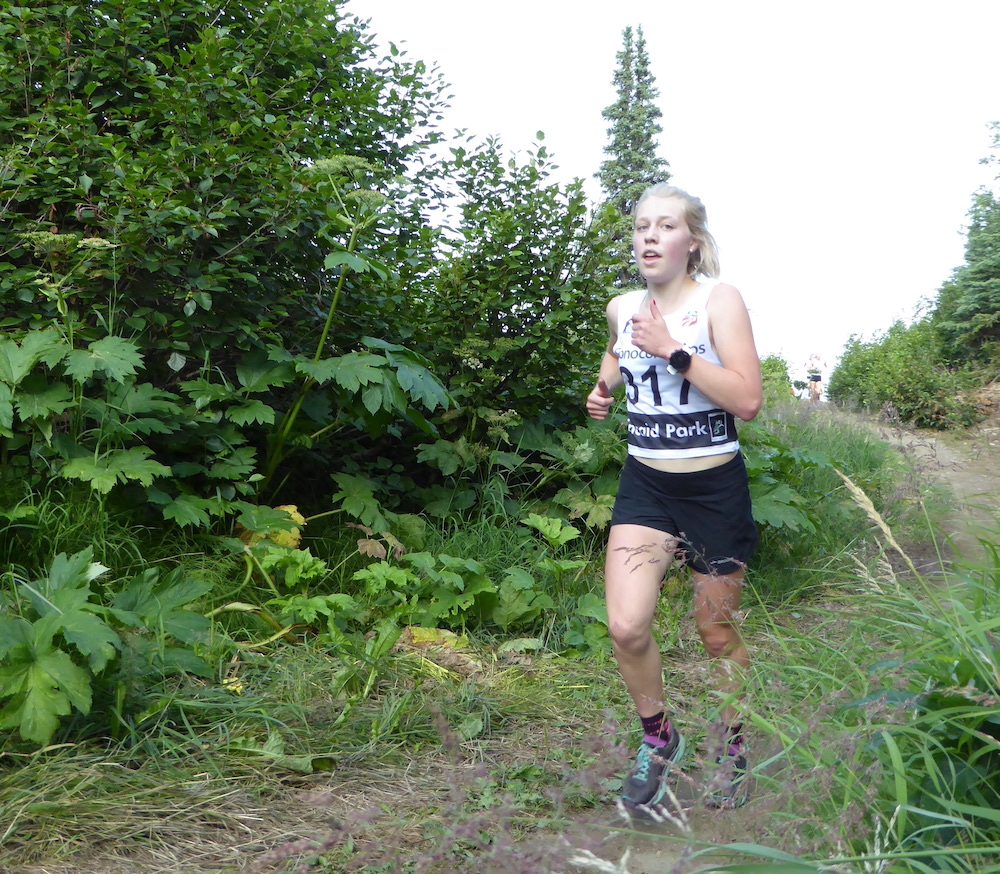
It is slightly past 10:10 a.m., ten minutes and change after Johnson started the junior girls. A lone athlete approaches the finish, silhouetted against the sky, the Anchorage skyline below her. She has been working at or above capacity for as long as her body will possibly let her. Despite the grade and the accumulated fatigue, she speeds up over the final 100 meters. Finally, she crosses the finish “line” (more like two orange cones) and staggers to a stop.
Subsequent finishers will come in gasping, wheezing, nauseous. Some will collapse on the side of Sidorof Lane, immediately below a “No parking on roadway” sign. Many will double over, or squint in pain as accumulated sweat pours into their eyes. Nonetheless, the athletes soon move from physical collapse to ardent cheerleading with remarkable alacrity, supporting their teammates through the final meters with enthusiastic yells. The last finisher is cheered across the line by the entire camp.
It is easy to envision these athletes doing the same at the 2026 Winter Olympics, or 2027 World Championships, on a much grander stage. Until then, on a stage consisting of just a dusty road shoulder and some scrubby dandelions and fireweed, with no audience save a handful of coaches, the work continues.