Tag: genetics

  • What Studying Twins Can Tell Us About Fostering Motivation for Exercise

    What Studying Twins Can Tell Us About Fostering Motivation for Exercise

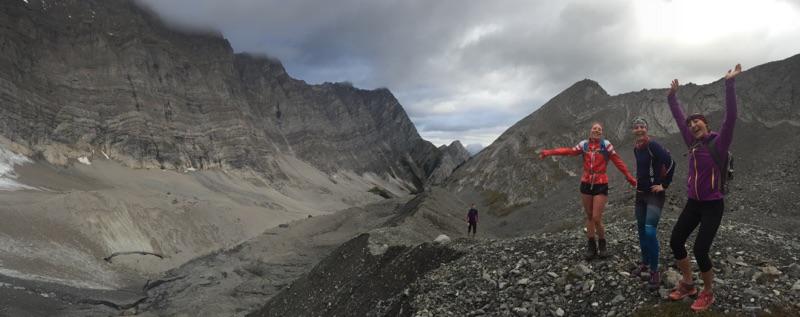
    Canadian biathlete Nadia Moser on a hike up to the Old Goat Glacier with teammates Emily Dickson, Darya Sepanj, Anna Haslach, and Megan Bankes. A recent study found that the enjoyment of physical activity is more heritable in women than men. (Photo: Emily Dickson)

    One of the biggest public health challenges worldwide is physical inactivity. As the World Health Organization reported in August, the number of obese children and teenagers has grown by ten times in the last 40 years, and in five more years there may be more obese children than underweight children in the world.

    As a result, there’s a lot of interest in how to motivate people to take part in physical activity. As we wrote about earlier this fall, that includes a study of American Birkebeiner participants which found that participating in group-based exercise provided an important extra bit of motivation even for people who were quite self-motivated to exercise or train.

    Another piece of the picture was examined in Finland. There, researchers had the opportunity to use a study of twins to disentangle the genetic and environmental contributions to people’s motivation to do physical activity in their “leisure time.”

    “In classical twin studies, we compare a resemblance within pairs of identical twins to the resemblance within pairs of fraternal twins,” Dr. Sari Aaltonen, the lead author on the study which was recently published in the Scandinavian Journal of Medicine & Science in Sports (but is behind a paywall), wrote in an email. “For instance, if identical twins are more similar than fraternal twins, then genes significantly influence that trait. If the correlations for fraternal twins are equal to those for identical twins, then shared environmental influences (e.g., childhood home environment, if the children were raised together) are indicated to have influence that trait.”

    Using this framework, Aaltonen and colleagues in Helsinki and Jyvaskyla, Finland, and in Amsterdam, the Netherlands, worked with 1,271 pairs of twins in their early and mid 30’s. They gave each twin a survey to assess how much each of eight different dimensions of motivation contributed to the reasons they exercise.

    In that part of the study, three of these dimensions turned out to be most highly rated by the twins as reasons why they exercise. One was physical fitness, the next psychological state, and the third enjoyment of sport.

    Then using genetic twin modeling, the researchers inferred how “heritable” each of these different types of motivation was. Heritability is an estimate of the proportion of variation in trait, in this case the source of motivation, which is controlled by genetic variation. In a perfectly heritable trait, 100% of the variation is controlled by genes inherited from the parents. In a completely non-heritable trait, genes have no influence and instead the environment or other factors control how the trait is expressed.

    “In general, we know that the most of human phenotypic traits are complex traits; both genetic and environmental factors influence them,” Aaltonen wrote. “Our heritability estimates of the motives for physical activity have ranged between 13% and 53%.”

    That’s a wide range. The paper gets into which sources of motivation are more heritable than others. For example, “others’ expectations”, “mastery” (improving one’s skills or abilities), “competition/ego”, and “physical fitness” were all highly influenced by environment. For these dimensions of motivation, around 80 percent of the variation in people’s assesment of their importance was driven by environment, rather than genetics.

    Even for the more heritable dimensions of motivation, environmental factors were still clearly important. In the most highly heritable source of motivation, “enjoyment”, with 33 percent of the variation in men and 53 percent of the variation in women being explained by genetics influences.

    “Enjoyment is a strong intrinsic motive, which means that a person is motivated to be physically active because she or he finds it pleasant, fun and/or satisfying,” Aaltonen wrote. “When people are intrinsically motivated, they follow their innate needs and interests. Therefore, it may not be surprising that ‘enjoyment’ was found to be the most heritable motive dimension in our study.”

    Similarly, in a study in the Netherlands, lack of enjoyment was found to be moderately heritable in men – that is to say, for those who really hated exercise, environment didn’t do much to affect that.

    “Previous animal studies (mainly in rodents) and human studies suggest that there may be a biological regulation in terms of the motives for physical activity,” Aaltonen added.

    The next most heritable source of motivation was “affiliation”, defined as “be with friends and/or do activity with others,” with 39 percent of the variation in men and 35 percent of the variation in women being explained by genetic influences.

    How can heritability be different between men and women – aren’t genes passed on in the same way? Aaltonen explained.

    “Generally, the heritability estimate is always time-, age-, population specific and, above all, it is an estimate of the genetic influences to individual differences on a population level, not an estimate pertaining to a single individual,” she wrote, explaining that all the variation can be partitioned into either genetic or environmental sources, so a high heritability estimate can simply mean that environmental influences exist, but that they are not so important in terms of determining the trait. “The high heritability estimate for enjoyment in women, for example, means that women’s enjoyment as a motive factor for leisure-time physical activity is less affected by environmental influences.”

    “Why environmental factors are less important for women’s, but more important for men’s enjoyment to exercise in Finnish adults in their mid-thirties?” she mused. “Right now, I don’t have an answer for that. Based on our quantitative genetic results, we are not even able to reveal what the specific genes or environmental factors are that cause the difference between men and women. In terms of clinical implications, physical activity-promoting measures that try to motivate people to exercise may be even more important for men than for women, because of the greater role of environmental influences in men.”

    That was just one of the insights that the researchers gained about how public health efforts could be targeted for success in motivating people for physical activity.

    For example, physical fitness and enjoyment were both highly-ranked sources of motivation, but the former was determined more by environmental factors – and thus may be easier to affect by intervention – while the other was fairly heritable, controlled by genetics rather than a person’s surroundings or interactions.

    “Several studies have suggested that extrinsic motives (for example, you want to be fitter than others, you exercise only because someone told you to do so, etc.) could be dominant during the early stages of exercise adoption, but that intrinsic motives (enjoyment and the satisfaction of exercise) would be more important for progression to and long-term maintenance of activity,” Aaltonen explained. “In other words, it may not be that difficult to get people to be motivated to exercise, but a challenge is to get them continue the activity habit. It helps if you enjoy it.”

    “Due to this, a key issue may be to find a physical activity habit that is the most enjoyable for you,” she continued. “Then, you may better be able to stick to your activity routines also when you have a lack of motivation.”

  • This Month in Journals: What Happens When We Get Old

    This Month in Journals: What Happens When We Get Old


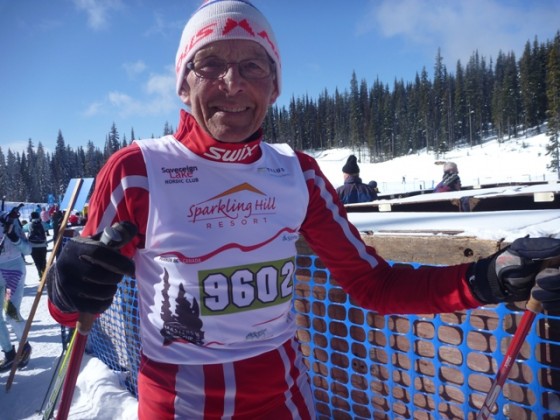
    Here's to racing well into our old age: like  Norway's Gunnar Tronsmoen, who won 3 gold medals at 2011 Masters World Championships. Photo: Inge Scheve
    Here’s to racing well into our old age: like Norway’s Gunnar Tronsmoen, who won 3 gold medals at 2011 Masters World Championships. Photo: Inge Scheve

    Welcome back to This Month in Journals, where we read the latest exercise and sports science and pull out some research that might be of interest to skiers.

    – Gentlemen of the ski world, some good news: if you started out as an athlete young, it will likely help you in your old age. Dr. Magnus Tveit and his colleagues at Lund University in southern Sweden have completed a cohort study of over 2000 men and concluded that once you hit your 70’s, ex-athletes have a much lower risk of breaking bones.

    “This study, currently the largest retrospective matched controlled cohort study published, with the aim at estimate any fracture and fragility fracture incidence in old former athletes, shows a 50% lower risk of sustaining fragility fractures in athletes after career end than would be expected with age,” Tveit et al. wrote in Medicine and Science in Sports and Exercise.

    However, the team was unable to completely parse why this might be true. Exercising when you’re growing up increases bone mass, yet it’s unclear whether better bone mass density is maintained after an athlete retires, or for how long. Exercise can also increase bone size, which would independently reduce fracture risk. And are athletes more likely to risk traumatic injuries? How does that fit into the picture?

    The researchers also admitted that they would like to work with an even older age group in the future. After the age of 50, rates of hip fractures roughly double every five years; they weren’t sure whether the pattern of fewer broken bones would hold for hips as well. They added that doing sports has an effect on the amount and type of soft tissue in hips and knees, which may interact with the bone qualities themselves to change fracture rates – for better or for worse.

    Regardless of the causes, the team was confident in their conclusion: men who are former athletes are less likely to find themselves wrapped up in plaster casts when they hit the golden years.

    – Ladies, don’t worry, we’re not left out. And this reporter believes that the conclusions from the previous study are likely applicable to women too, at least to some extent; one main problem with including women was the difficulty of finding hundreds of septuagenarian ex-elite athletes to study. The group of men had been gleaned from a Swedish Olympic Committee book about former athletes, and at the time when the men were competing there were far fewer women in the highest levels of sports than there are today.

    But another team looked at a different aspect of aging, and how it affected men and women who exercise. Dr. Michael Deschenes of the College of William and Mary wrote that in young or even middle-aged athletes, men and women metabolize different energy sources with differing levels of efficiency; men gain muscle faster while women lose it faster when they stop exercising; and women seem to maintain stability better during endurance tasks.

    Previous studies had compared young and old men, or young and old women, but this was one of the first to directly compare old men and women, the authors claim. In the American Journal of Human Biology, Deschenes and his team reported that sexual dimorphism disappeared in his older group of test subjects, who had a mean age of 70 years. Of the multiple variables investigated, not one varied by sex.

    To be clear, the test subjects weren’t all the same: the men still had higher VO2Max scores and more muscle mass. But once they started exercising, men’s and women’s cardiovascular, thermoregulatory, metabolic, and circulatory systems behaved in more or less the same way.

    That means that masters can all follow the same training plan – and ladies, do we have some hope of beating the guys? (Probably not – pesky muscle mass. We’ll have to work on our technique.)

    – Lots of attention has been focused recently on the effect of exercise on heart health. A year and a half ago, we wrote about a study that used cohort data from the Vasaloppet to show that lifelong skiers were at a higher risk of heart arrhythmias. Bradycardia, as the arrhythmias are called, go along with a syndrome called “athlete’s heart.”

    And yet many of the symptoms of athlete’s heart were linked to the left side of the organ itself; for instance, the left ventricle typically enlarges and the heart walls of that chamber become thicker.

    But last month, the discussion widened. First a team from Strasbourg, France, reported on cases of atrioventricular (AV) block in two 56-year-old triathletes; these were just the second and third cases of such blocks, which occur when the conduction of the electrical signal in the heart is stopped, having been brought on by exercise (in the athlete’s heart syndrome, these AV blocks disappear when exercise is begun).

    Writing in Medicine and Science in Sports and Exercise, they concluded that these types of blocks did in fact happen to athletes, and since there is little clinical precedent to go on, should be handled carefully.

    Meanwhile, an Italian team led by Dr. Antonello D’Andrea, the head of the Cardiology division at the Second University of Naples, widened their own scope by looking at the right side of the heart instead of the left. And they did so with impressive attention to detail, comparing 395 top-level endurance athletes to 225 strength-trained competitors. In the International Journal of Cardiology, D’Andrea and his associates wrote that the “right heart,” too, experiences changes.

    Using echocardiography, they found that both the right ventricle and right atrium were larger in endurance athletes than strength athletes, with both groups being larger than non-athletes. They also found a correlation between left ventricle stroke volume and the dimensions of the right side of the heart, showing that the chambers grow in cooperation. The team believes it has now defined the “upper limits” of the dimensions of an athlete’s heart.

    – A few weeks ago, we wrote about scientists who are looking for the genes that determine how an individual responds to endurance training. Well, the March edition of Annals of Human Genetics included an update from a different team, which used a different group of individuals – this time just 60 women – to identify 39 genes which seemed to be differentially expressed in the individuals who responded best to training. This confirms not only the work, but the concept of the previous research.

    This Month in Journals is our occasional series surveying the world of sports science and trying to extract tidbits of research that might be of interest to the skiing public. Previous editions can be found here: February, January, December, October, and September.


  • Will All Those Hours of Training Make You Faster? The Response is in the Genes

    Will All Those Hours of Training Make You Faster? The Response is in the Genes

    We don’t live in Gattaca yet, but the future is coming: in the last several years, scientists have begun to unlock the identity of genes that control humans’ response to endurance training.

    “We all have the same genes, but within the genes there is variability so that certain elements of the genes may be different for you or me,” Dr. Carl Johan Sundberg of the Karolinska Institute in Stockholm told FasterSkier in a phone interview earlier this winter.

    In other words, the human genome always follows roughly the same map. But at points on that map, individuals could have different specific sequences in their DNA. Some genes are “fixed” in the population, so that everybody has the same copy and there is no variation. Others, however, are “polymorphic”: there are anywhere between two and many copies of the gene circulating in the population, and different copies function slightly differently.

    Not everything is controlled by genes; environment plays a big role too, and the two often interact. But what if a skier’s ability to get faster by doing a lot of volume training was controlled by genetics, and polymorphism was the culprit for why your buddy got faster than you did, even though you did the same training? What if genes determined, too, if more intensity training was a better bet than hours of long slow distance?

    Anyone who has watched or participated in sports knows that isn’t a crazy idea. And back in the late 1990’s, a study of several hundred adults suggested that the improvement in aerobic capacity, as measured by VO2Max, was roughly 50 percent heritable – that is, dependent on gene copies passed down by their parents, not anything unique to an individual.

    Immediately, the researchers asked their follow-up question: which genes accounted for this heritable portion of the response to training? By 2000, an international team led by Drs. Claude Bouchard of Louisiana State University and D.C. Rao of the Washington University of Saint Louis had found several regions of on specific chromosomes that they hypothesized would contain the genes.

    By working hard, honing in on these regions in finer detail, and taking advantage of advances in genetic techniques, in 2009 Sundberg and a group of colleagues published another study, indentifying roughly 30 genes that could explain 23 percent of an individual’s gains in performance due to training, or about half of the heritable portion.

    “It may be a minor part of it – one out of 1500 [polymorphisms] will make a difference in terms of protein function,” Sundberg said. “We tried to find genes that could explain differences between people. And with endurance training, we did find something that would explain the difference in response.”

    How? A Genetics Research Primer

    To get to their final result took several steps, and multiple sets of test subjects. Importantly, all of the subjects were untrained, sedentary adults – we’ll get back to what the results mean for athletes a little later.

    First, the team took a group of 24 men and put them through a training program, taking a snapshot of RNA expression in muscle tissue before and after the intervention. They found that the training provoked changes in the expression patterns of about 800 genes, which they called the “Training-Response Transcriptome.”

    (A transcriptome is simply all of the different RNA produced by a group of cells, and their concentrations. What is RNA? It is produced by copying off of DNA, and has many functions in a cell, from controlling gene expression to synthesizing proteins.)

    Some of the genes were expressed more, or “upregulated,” while most were expressed less, or “downregulated.” They likely had a wide variety of functions and controlled many different things in muscle tissue; among those, the team hoped, would be something that determined whether aerobic adaptation took place.

    The team then narrowed this down to the 29 best genes that might serve as predictors of training response, and tested them in a second group of 17 study subjects who were also put on a training plan. The prediction was proved true when the expression of these genes correlated to the size of VO2Max improvements in the test subjects.

    Finally, the group returned to their large dataset, which is part of what is called the HERITAGE family study. Each of 473 subjects had a personalized 20-week training plan designed based on their existing aerobic capacities. Testing against the VO2Max gains in these 473 men and women, the team found that genetic variation – polymorphism – in a few specific predictor genes was significant in explaining the adaptations.

    Even more impressively, the “signature” of these genes could be tested using just 11 single-nucleotide locations in the genetic code extracted from skeletal muscle tissue.

    “These variants were common enough in this population to explain the variation,” Sundberg told FasterSkier. “It would explain half of the variability in responsiveness – we found genes that would explain 23 percent of it, which is about half of the genetic component. In the next years, I am sure that there will be studies explaining the other forty percent.”

    Can We Predict Olympic Medals?

    Sundberg and his colleagues are more interested in public health than in sports – and rightly so. They open their papers by noting that low aerobic capacity is related to inability or lack of exercise, and leads to poor cardiac health and even death. With these studies, they suggest, doctors may be able to tell whether exercise will help their patients gain – back or for the first time – aerobic capacity.

    “It is reasonable to state that molecular classifiers (predictors) will be essential for implementing personalized medicine, yet there are limited examples of validated predictors that are able to tailor interventions relevant to the most pressing factors impacting on public health,” Dr. James Timmons, Sundberg, and others wrote in the Journal of Applied Physiology in 2009.

    For both cardiovascular health in particular and the emerging field of personalized healthcare delivery in general, the team’s ability to predict and then confirm which genes might determine an individual’s response to treatment was a big step forward.

    But what about another application? It’s easy to understand why, if the remaining genes controlling the other half of genetically heritable adaptation are identified, athletes and coaches would want in on this knowledge. They could help tell whether it’s worth pursuing a career into adulthood, how much energy and resources it’s worthwhile for a program to spend on an athlete, or even help identify future stars at a young age.

    Let’s not get ahead of ourselves, though. First of all, the training response is not entirely heritable – and the non-genetic component is also incredibly important in determining success.

    And even in terms of the genetic component, Sundberg said, the implications for elite athletes are not at all clear. The team was using sedentary subjects, where the range of responses to training was huge. Some saw marked improvement; others didn’t respond at all. What separates one elite athlete from another will be much, much smaller responses, which will be more difficult to detect using these methods.

    “When you move to athletes it becomes more difficult,” Sundberg said. “Top level performance is determined by many more genes. It’s extremely difficult to predict who will become a top athlete: we can predict who can respond in a sedentary person, but not who will become a gold medalist.”

    For the Curious:

    Bouchard, C., Rankinen, T., Chagnon, Y.C., Rice, T., Pérusse, L., Gagnon, J., Borecki, I., An, P., Leon, A.S., Skinner, J.S., et al. (2000). Genomic scan for maximal oxygen uptake and its response to training in the HERITAGE Family Study. J Appl Physiol 88, 551–559. Abstract here.

    Timmons, J.A., Knudsen, S., Rankinen, T., Koch, L.G., Sarzynski, M., Jensen, T., Keller, P., Scheele, C., Vollaard, N.B.J., Nielsen, S., et al. (2010). Using molecular classification to predict gains in maximal aerobic capacity following endurance exercise training in humans. J Appl Physiol 108, 1487–1496. Abstract here.

    Dr. Sundberg’s lab webpage

    Dr. Bouchard’s lab webpage

    The HERITAGE family study – assessing response to drugs, diet, and exercise