Tag: German National Team

  • Germany’s 2010 Team Sprint Silver Medalist, Tscharnke Retires

    Germany’s 2010 Team Sprint Silver Medalist, Tscharnke Retires

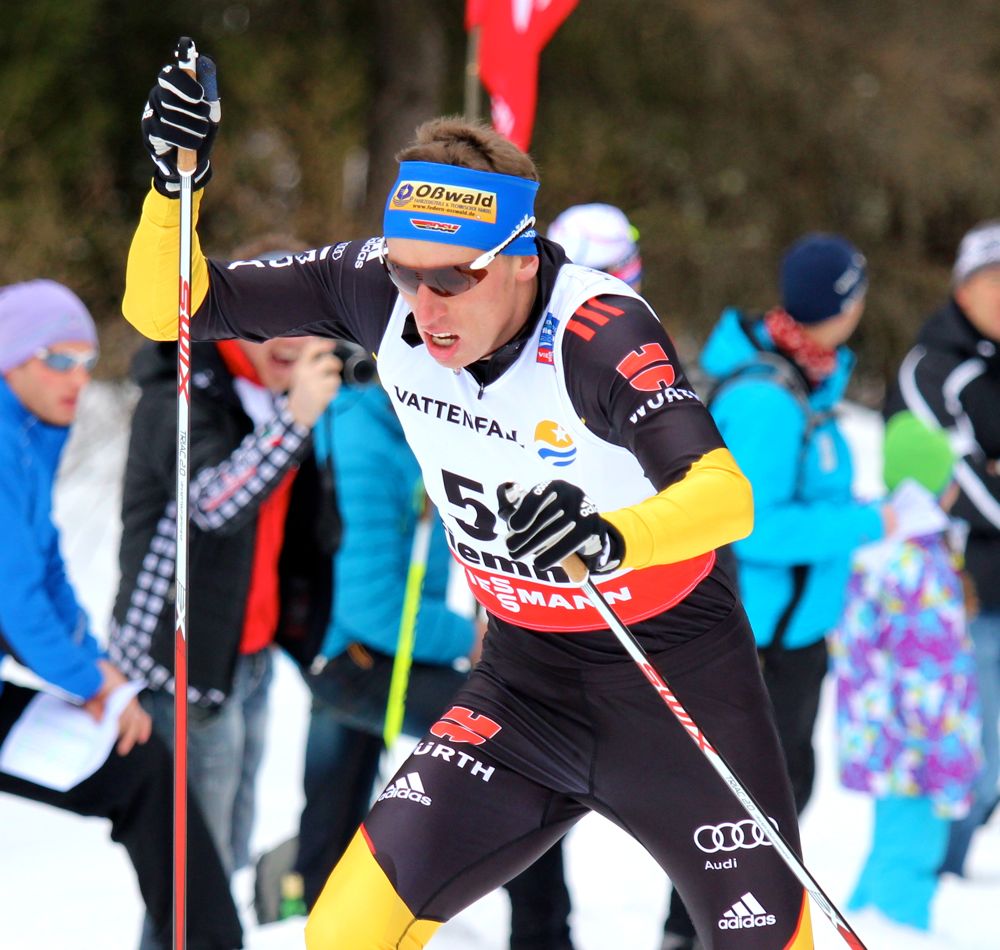
    Germany’s Tim Tscharnke racing at 2013 World Championships in Val di Fiemme, Italy. His best result there was 14th in the 15 k freestyle, which stood as his best individual result in three World Championships appearances. In his eight seasons on the World Cup circuit, he reached the podium four times, two of which were individual victories.

    At the conclusion of last season in late March, German cross-country national team member Tim Tscharnke still wanted to keep going for one more Olympic highlight year. He was eager to redeem himself after a disappointing 2016/2017 season — by his standards — in which he started only eight World Cup races. His best result of last winter came at the Tour de Ski in Val Mustair, Switzerland, where he placed 24th in the 10-kilometer classic mass start. Due to a respiratory illness, he was not selected for Germany’s 2017 World Championships team, also missed the national championships and finished the season on the European Continental Cup.

    Tim Tscharnke (l) celebrating with his teammate Axel Teichmann after finishing second in the men’s team sprint at the 2010 Vancouver Olympics for a silver medal. (Screenshot: Olympicvancouver2010 YouTube video)

    His health problems lingered through the spring. Unable to train as intensively as he wanted to, 27-year-old Tscharnke reconsidered his future in the sport and ultimately announced his retirement on Facebook late last month.

    “The last three years of my career were riddled with many mediocre months, punctuated by health problems and athletic setbacks,” Tscharnke wrote, according to a direct translation. “For this reason I will end my athletic career.

    “I consider it impossible to once again get back to the top of the world. Yet that has always been my standard: to compete against the best and fight for top results,” he continued. “However I had to realize that respectively my body no longer can absorb the training volume and methods from the good years, and therefore it is impossible for me to compete against the strong international competition on an equal level. Especially my back and my feet, which time and again had to be treated between training camps in order to even ensure a basic level of training, in combination with results I could not deliver, have let the motivation sink into a deep hole over and over again.”

    He explained that he did not just want to make the team for PyeongChang 2018 as a “tourist”:

    “The attempt for the next season to secure a ticket as an Olympic tourist on the very last fumes and then just ski around there without any chance at positioning in the front… no, that is not up for debate,” he wrote. “It would not be justified to miss my family for another year and potentially damage the body even more. Nevertheless I look back on a good time. A time during which it was possible for me to achieve some great successes, which I am proud of!”

    One of his biggest moments of his career came during the 2010 Winter Olympics in Vancouver, British Columbia, when he captured silver in the men’s team sprint with teammate Axel Teichmann, behind the Norwegian gold-medal duo of Petter Northug and Øystein Pettersen.
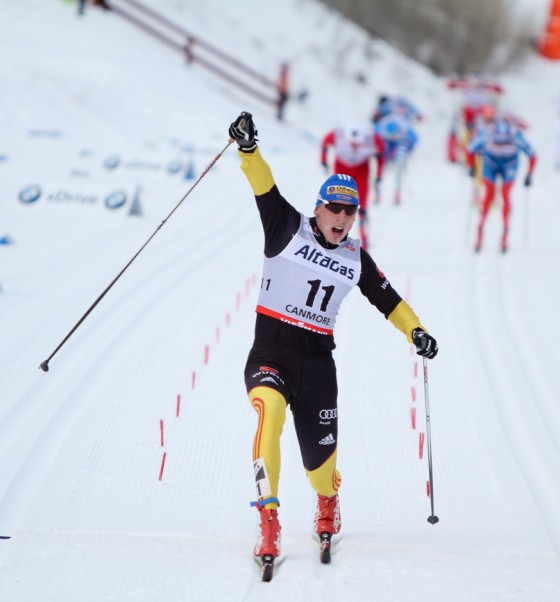
    Back in 2012, Germany’s Tim Tscharnke celebrated his 23rd birthday with a World Cup win in the 15 k classic mass start in Canmore, Alberta. It was his second-career World Cup victory.

    At the 2014 Olympics in Sochi, Russia, Tscharnke and teammate Hannes Dotzler nearly took another medal in the team sprint, winning their semifinal and leading a three-person group in the final, before Tscharnke tangled with Finland’s Sami Jauhojärvi coming down into the finishing stretch and crashed. Tscharnke took a long time to stand up and ultimately finished seventh for Germany.

    After that, Tscharnke got back on track to become the last German skier to-date to win a World Cup race: the 15-kilometer classic mass start stage of the 2015 Tour de Ski in Val di Fiemme, Italy. His other World Cup win was in the same format (15 k classic mass start) in 2012 in Canmore, Alberta.

    “I want to thank everyone who accompanied me on my way, during my active time: my family, my friends, my faithful sponsors, and last but not least of course also my fans and supporters, who were excited for me and cheered for me during the last years,” Tscharnke concluded in his Facebook post. “I say, Thank You and wish you all the best for the future!”

    Tscharnke has not revealed what he plans to do next. In the last few months, he has teamed up  with an advisor to the German national team to offer weekend rollerskiing courses. Tscharnke is employed as an officer with the German border patrol.

  • Germany’s Herrmann Makes the Switch to Biathlon

    Germany’s Herrmann Makes the Switch to Biathlon

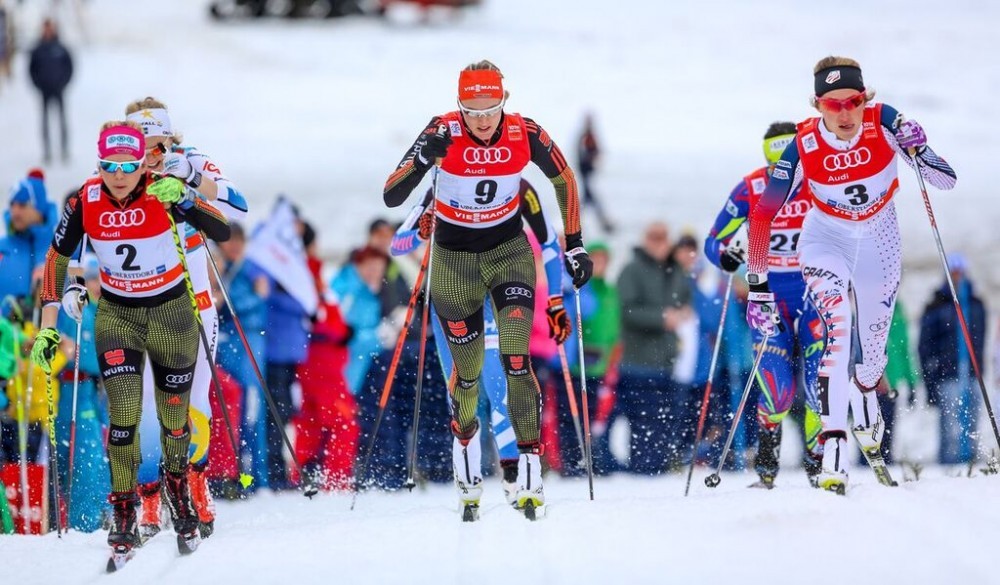
    Germany's Sandra Ringwald (2) and Denise Herrmann (9) go head-to-head with American Sophie Caldwell (3) during the 1.2 k classic sprint at Stage 4 of the Tour de Ski in Oberstdorf, Germany. (Photo: Marcel Hilger)
    Germany’s Denise Herrmann (9) races alongside teammate Sandra Ringwald (2) and American Sophie Caldwell (3) during Stage 4 of the 2016 Tour de Ski in Oberstdorf, Germany. (Photo: Marcel Hilger)

    On Wednesday, German cross-country World Cup skier Denise Herrmann announced a new chapter in her athletic career at age 27: a switch to biathlon.

    “This step and the timing is certainly surprising to many, but I have pondered these thoughts for a while now,” Hermann stated in a German Ski Federation press release and in a post on her Facebook page. “I owe a lot to cross-country skiing, it was a great time with many highlights, but now I want to face new goals. The switch to a new discipline will be a big challenge, I am aware of that, but I am confident that I can do it with diligence, courage, and determination!”

    American Jessie Diggins, in the 2013 World Championships winners bib, chases Germany's Denise Herrmann in the women's 6 x 1.2 k freestyle sprint final on Sunday at 2015 World Championships in Falun, Sweden. Second in their semifinal, the U.S. placed eighth in the final and Germany was fourth behind Norway, Sweden and Poland, respectively. (Photo: FlyingPointRoad)
    Germany’s Denise Herrmann (11) leads American Jessie Diggins (in white) in the women’s 6 x 1.2 k freestyle sprint final at 2015 World Championships in Falun, Sweden. Germany finished fourth behind Norway, Sweden and Poland, respectively, while the U.S. placed eighth. (Photo: FlyingPointRoad)

    The German Ski Federation (DSV) wants to support Herrmann in her new career direction.

    “Denise has been one of our most important performers in cross-country skiing for many years,” DSV director of sports Karin Orgeldinger said in the press release. “She will surely leave a gap there. On the other hand, we are happy that Denise is looking for a new challenge in biathlon, so she will remain available to the German Ski Federation as an elite athlete.”

    Professional cross-country skiing and biathlon are both organized under the same association in Germany, not in separate entities as is the case in the U.S. or Canada. The press release did not include comments from a biathlon coach or team manager.

    Herrmann made her debut in the FIS Cross-Country World Cup in February 2009. Mostly known as a sprinter, she earned bronze medal at the 2014 Olympics in Sochi, Russia, with the German women’s 4 x 5 k relay, and was second overall in the Sprint World Cup at the conclusion of the 2013/2014 season. She achieved six individual World Cup podiums plus two in team sprints, and twice finished the overall World Cup in ninth place (2013/2014 and 2014/2015). She narrowly missed a medal at World Championships, placing fourth in the team sprint at the 2015 championships in Falun, Sweden, as her best result. At the end of last season (2015/2016), Herrmann finished 12th in the Sprint World Cup and 23rd in the overall standings.

    While it can be considered a bold step for a successful cross-country skier to switch disciplines to biathlon in the middle of her career, it is certainly not unheard of, and even the German Ski Federation has seen several athletes make the transition back and forth.

    Herrmann is good friends with and a summer training partner of Maren Hammerschmidt and Vanessa Hinz, both current members of the German national biathlon team. Similar to Herrmann, Hinz also switched from cross-country skiing in 2012. A 2002 and 2010 Olympic gold medalist, Evi Sachenbacher-Stehle switched from cross-country to biathlon toward the end of her career for the 2012/2013 season, before retiring after the 2014 Olympics following a positive doping test. Miriam Gössner, another member of the current biathlon national team, earned silver medals with German cross-country women’s relay teams early in her career at the 2009 World Championships in Liberec, Czech Republic, and the 2010 Olympics in Vancouver, Canada.

  • Pros of Tomorrow Presented by Fischer: Lukas Ebner

    Pros of Tomorrow Presented by Fischer: Lukas Ebner

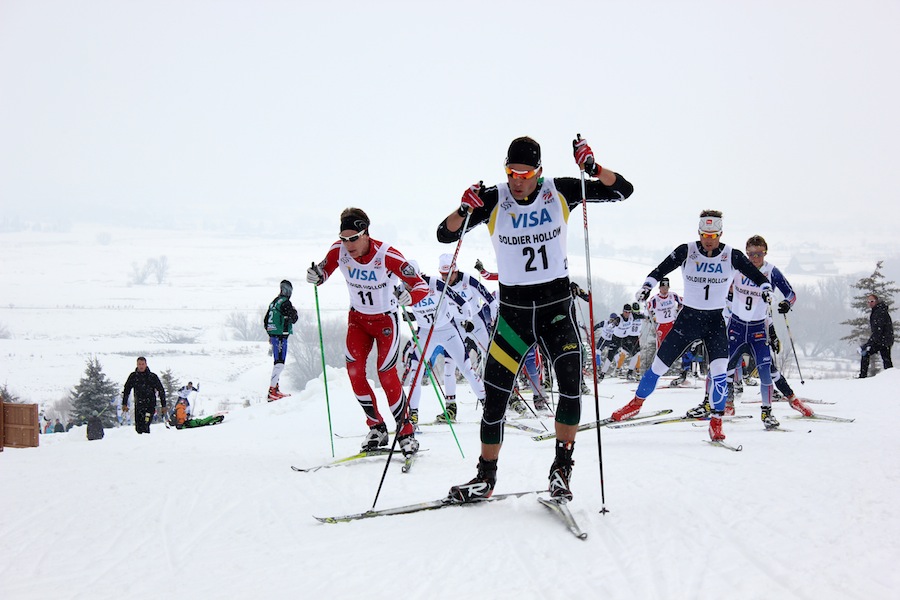
    Lukas Ebner (21) leads Mats Resaland of the University of New Mexico (11) and Kris Freeman (1) up Hermod's on the third of six laps in the 30 k freestyle mass start at U.S. nationals at Soldier Hollow.
    Lukas Ebner (21) leads Mats Resaland of the University of New Mexico (11) and Kris Freeman (1) up Hermod’s Hill on the halfway through the 30 k freestyle mass start at the 2014 U.S. Cross Country Championships at Soldier Hollow in Midway, Utah. He went on to place 13th.

    This ‘Pros of Tomorrow’ series, brought to you by the generous support of Fischer Sports, aims to highlight some of the most notable up-and-coming athletes around the world, not necessarily Fischer-sponsored skiers. If you have an idea for a top-notch skier you’d like to read more about, please email info@fasterskier.com with the subject line: Pros of Tomorrow. We’re also looking for stories about intriguing juniors, collegiate skiers, or lesser-known athletes; please email us with names — subject line: From the Pack.

    ***

    When Lukas Ebner arrived in Anchorage, Alaska, in 2010, it was bound to be a shock. The German had never seen a moose and had only glimpsed his home of the next four years in photos.

    Traveling almost 5,000 miles, Ebner arrived in the land of The Last Frontier to attend school at the University of Alaska-Anchorage (UAA).

    Hailing from Furtwangen, Germany, a small town in the Black Forest, Ebner, now 24, began cross-country skiing at the age of seven. As he progressed through the ranks of German skiing, his inability to crack the ranks of the German National Team caused him to lose passion for sport. However, he wasn’t ready to end his skiing career and decided that a stint on the American college circuit was just what he needed.  

    Four-and-a-half years later, the university has treated him well. In addition to a diploma, Ebner graduated from UAA with four NCAA appearances, three All-American honors, and the 2014 Rocky Mountain Intercollegiate Ski Association’s MVP award. 

    Hoping to build upon the success of his college career, Ebner is returning to his home country with the goal of making the German National Team. Before plunging into the competitive German racing circuit, Ebner caught up with FasterSkier to discuss his beginnings in skiing, his future goals and what makes Alaska so special.

    FasterSkier: Tell us about yourself. How did you get involved in skiing? 

    Lukas Ebner: I’m from a small place called the Black Forest in Germany. It’s well known amongst people in the ski community. It’s also known for its wildlife, which is not as exciting as it is here in Alaska, but that’s as good as it gets for us in Germany.

    I started skiing when I was seven or eight years old. It was primarily because of my brother, who skied at that time. My parents dragged me along and they wanted me to check it out. I started liking it and I just kept skiing. Like other Germans, I had to make a decision to pursue skiing as a serious sport or pursue soccer, which is what everybody else does at that age. Rather than quitting soccer, I decided to do both simultaneously – but then I realized that soccer was not something that I’d have success in so I became a skier.

    FS: What was your skiing career like in Germany?

    LE: I was never really quite good enough to make the national team … Usually if you are not in the top five or six in your age group you don’t get to race internationally. I raced mostly on the national level, which is a lot like the SuperTour. There were also a few exceptions where I got to do some continental cups.

    FS: What prompted you to come to the U.S. for school and skiing?

    LE: After I graduated from high school, I gave myself a year where I would only pursue my skiing. I figured that I had to give it a shot at least once in my life – to be off all the duties at school and don’t have to worry about homework. I dedicated a full year during the 2009/2010 season and I trained pretty well and hoped to make the next step to the national team. Unfortunately pretty much the opposite happened. I was slower than ever and I didn’t enjoy skiing. The national team was not even in sight anymore.

    At that time I wasn’t really willing to give up skiing, but it was hopeless to continue reaching for the National Team in Germany. I heard of the opportunity to come in the U.S. and pursue an education while skiing for a college ski team and that sounded like a nice setup. I applied to pretty much all the schools in the U.S. that have a ski team and I got feedback from a bunch and I called a few coaches. UAA had a German assistant coach, and she made sure that I would choose UAA over all other schools. It was really a coincidence because all the right people were in the right place at the right time.

    FS: It seems that Alaska is pretty popular with German college skiers. Other than the assistant coach, what made UAA so appealing to you?

    LE: I actually didn’t really know what to expect from Alaska. I heard friends of mine say it was a super-nice place. Now that I’ve been here for four-and-a-half years, it’s definitely a place like no other. There are the mountains on one side and the ocean on the other side. You have daily encounters with moose, and hopefully not daily encounters with bears. The training opportunities are really good, so it all adds up to be a super nice location for a nordic skier.

    FS: What did you take away from your experience UAA?

    LE: I’m definitely super happy that I made this step abroad and I gave it a shot.

    At first I had a hard time dealing with the team aspect. Obviously nordic skiing is an individual sport so I was focused on my own training and my own results. Halfway through my freshman year I realized that college skiing is especially more than doing it for yourself. Rather, the team aspect is what counts. Looking back I definitely enjoyed being part of a team. You feel like you’re part of a little family, which is important because you’re so far away from home. You have the same people around, you have coaches that are super helpful, and you grow up and get more mature as an athlete and also as a person.

    FS: Now that you’ve graduated from UAA, who are you training with?

    LE: I’m mostly training by myself. I jump in with the UAA team every once and a while. I have a lot of friends in town that are either still skiing or used to ski. Peter Kling, who used to ski for APU, I meet up with him and we go for rollerskis and runs. I meet up for runs and hikes with all the other APU guys in town. That makes it a lot easier for me to pursue a relatively good training plan.

    I’m currently interning at the Alaska Club, which is a fitness club in Alaska. I’m doing that part-time. It gives me plenty of time to work out twice a day. I’m trying to train as much as I can.

    FS: What do you hope to accomplish in the coming year?

    LE: My plan is to leave Alaska at the end of November — right around Thanksgiving. To make the German National Team, I need go to the national races, which are on Dec. 6 and 7. That is pretty much a qualifier to get nominated for the OPA Cups which take place in mid-December.

    In the best case scenario, if everything goes according to plan, I might get a chance to race the first two or three stages of the Tour de Ski. If that doesn’t happen, there’s a chance I might go to China. There’s a Tour de Ski there, which is pretty much the same time as the World Cup one. There’s nothing decided yet.

    Then the plan is to come back in January and race a few SuperTours depending on my financial situation. I will definitely do a few SuperTour races and I’m planning on doing the American Berkibeiner. Then I also hope to do the Tour of Anchorage and Spring Series in Sun Valley.

    Lukas Ebner (University of Alaska-Anchorage)
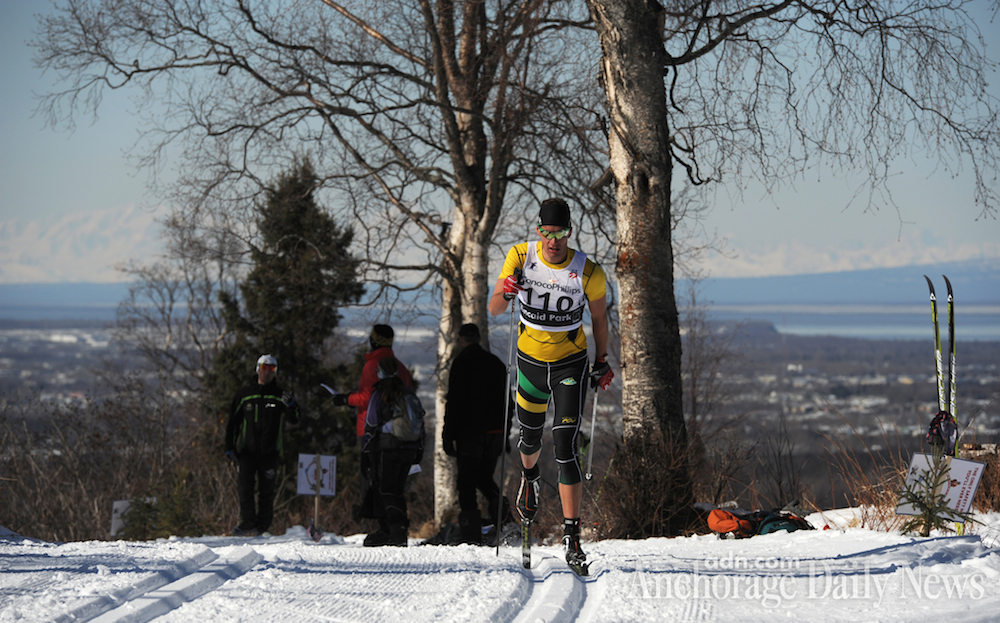
    Lukas Ebner racing at the 2014 SuperTour Finals in Anchorage, Alaska (Photo: Anchorage Daily News)
    This series is brought to you by the generous support of Fischer. Visit them online at fischersports.com
    This series is brought to you by Fischer. Visit them online at fischersports.com
  • Franz Göring may not compete at Olympic Games

    Franz Göring may not compete at Olympic Games

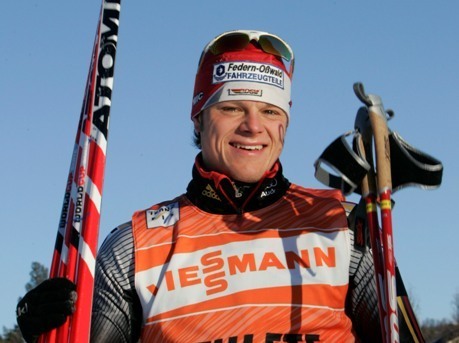
    Franz Goring was part of the silver medal relay team at the 2009 World Championships
    Franz Goring was part of the silver medal relay team at the 2009 World Championships

    (translated from ski-nordique.net, 11-12-09, “Coup dur pour Franz Göring”)

    Franz Göring tore ligaments in his ankle during a workout recently.  He will have to take four weeks off before resuming regular training, so his chances of participating in the Olympic Games are very small.

    In his absence, the German team will be composed of Teichmann, Angerer, Sommerfeldt, and Filbrich, with the remaining place perhaps a contest between the young racers Tim  Tscharnke or Philipp Marschall.