From the FasterSkier archive — posts syndicated from athletes’ and coaches’ own blogs between 2004 and 2012, kept online as published. Current coverage is at fasterskier.com.
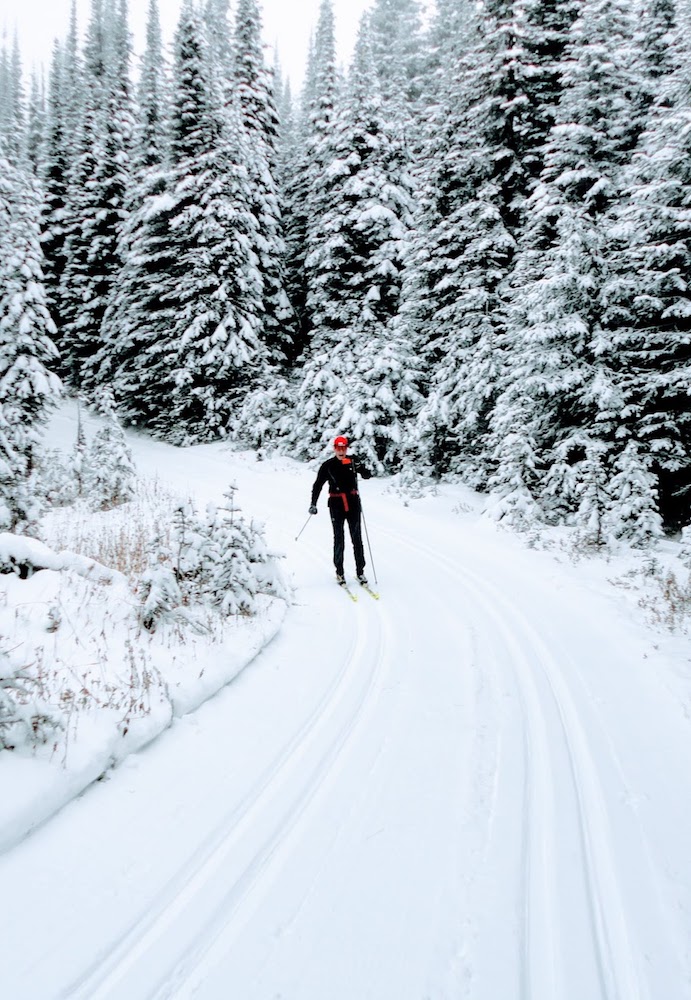
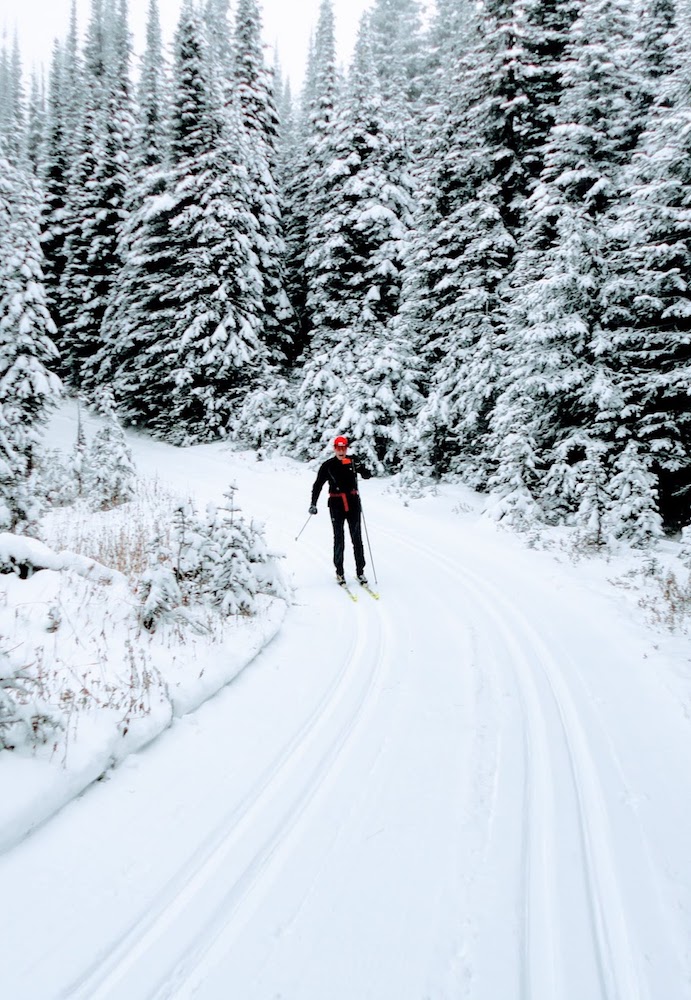
Early season skiing at the Sovereign Lake Nordic Centre on Oct. 14, 2017. (Courtesy photo)
When you think of skiing in Canada in October, Canmore’s Frozen Thunder is probably one of the first places that comes to mind. There are more options and some snowmaking that might surprise you.
This month, Canadians are skiing on natural snow, machine-made snow and farmed snow. We know skiers are already out and about in Alaska and other parts of the U.S. as well, which is why we want this year’s early season “Where The (Skiable) White Stuff Is” to compose of reader submissions. If you know where there’s November or even October skiing in the U.S. or Canada, please write us with details (When does it open or how long has it been open? How many groomed kilometers are there? Is there snowmaking? Any special events planned, like American Thanksgiving camps? Anything else we should know?)and original photos at info@fasterskier.com with the subject line: “Fall Skiing”. Deadline for submissions is Nov. 3.
To get the ball rolling, FasterSkier’s Gerry Furseth checked in with several nordic venues across Canada. They’ve already celebrated Thanksgiving, and full-on skiing is just around the corner.
Frozen Thunder
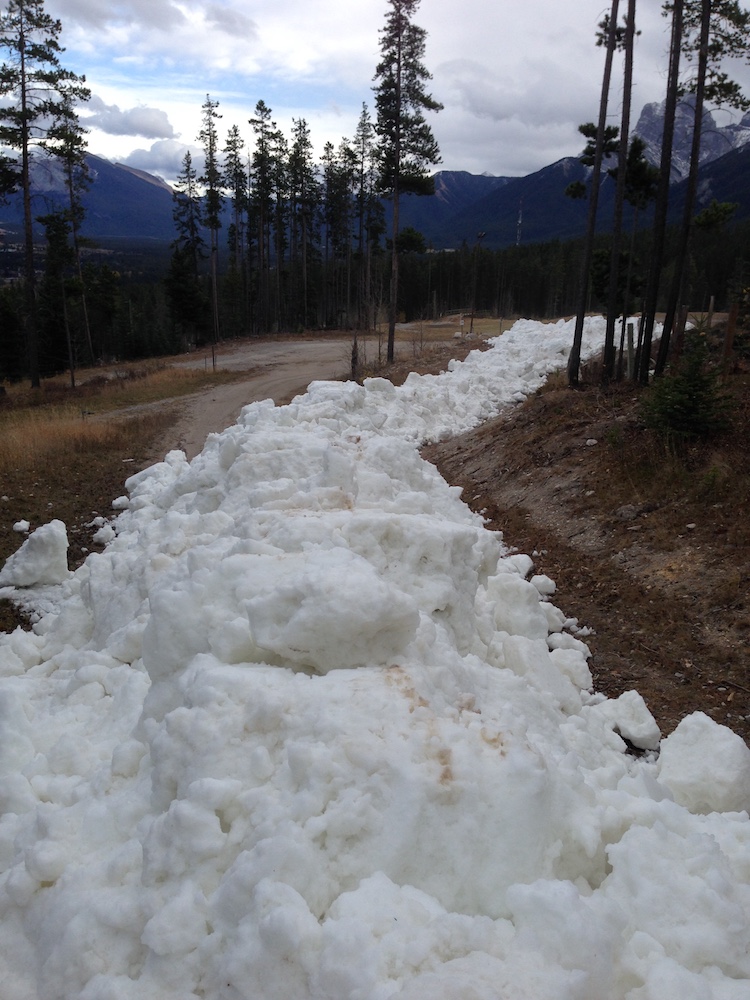
Canmore has started building Frozen Thunder for 2017. This is what it looks like with five days to go. (Courtesy photo)
The action starts on Oct. 21 with some changes for the eighth season. There will be a bigger hill as requested by the national teams and a new emphasis on avoiding exposed south-facing slopes.
The Canmore Nordic Centre (in Canmore, Alberta) is an unusual venue, one of the select few that has machine-made snow, farmed snow and natural snow.
“There is obviously an issue [with manmade snow] around warmer temperatures,” Area Manager Michael Roycroft told FasterSkier. “Last year is a good example where most of November was too warm to make snow, and that’s where Frozen Thunder comes in. That’s why we have our storage option, that allows us to essentially have snow no matter what.”
Frozen Thunder is funded mostly by national and provincial ski organizations and the focus is on providing training opportunities for high-level competitors. The snowmaking has a broader focus.
“The natural snow is obviously helpful, and it covers the rest of our trail system that’s further to the west and higher up, but it wasn’t for machine-made snow in Canmore and the nordic centre, we simply would not be able to run as a nordic facility,” Roycroft said.
Machine-made snow covers 30 kilometers, leaving 40 k dependent on natural snow.
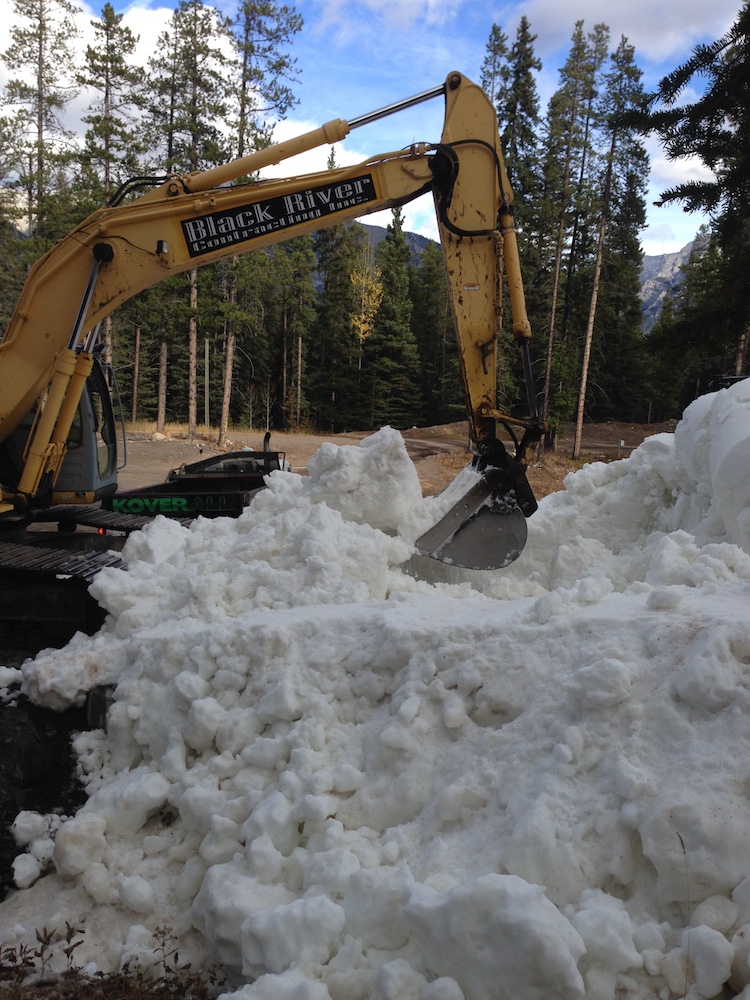
A big job requires big machinery. (Photo: Canmore Nordic Centre)
Whitehorse
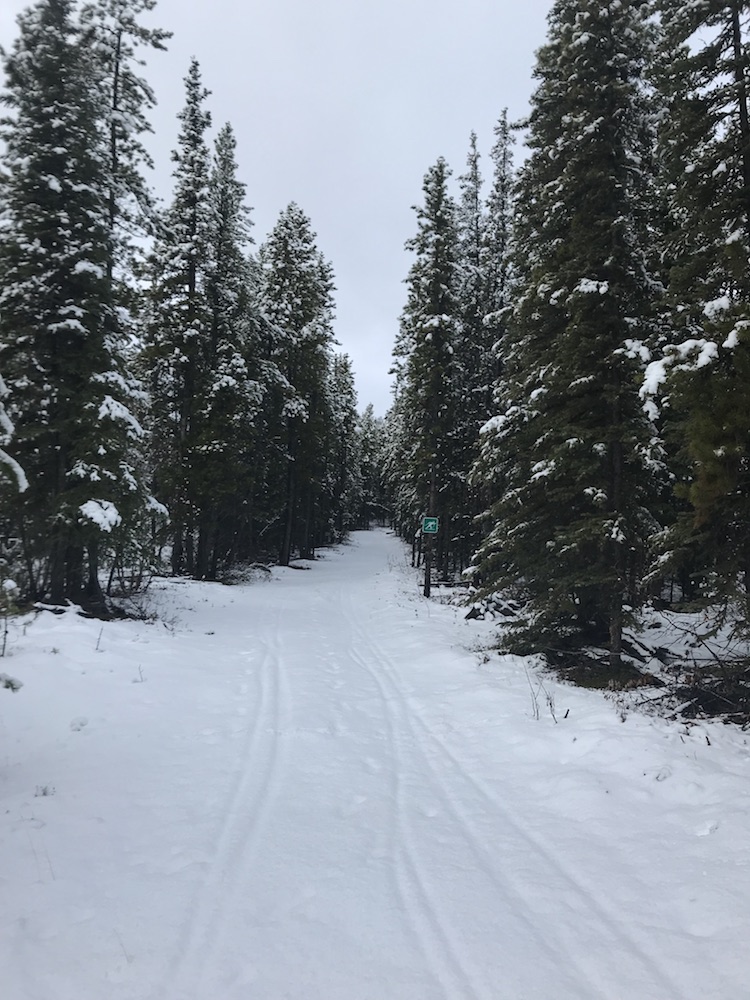
Whitehorse ski trails on Oct. 15, 2017. Another 5 centimeters was needed to set track. (Photo: Alain Masson)
When you think of Whitehorse, you probably don’t think of snowmaking. But Cross Country Yukon’s Alain Masson does.
“In the past, we often had snow available for skiing for our more advanced skiers, but it was not available to everyone,” Masson wrote in an email. “This year, our developing skiers will all have access to some early skiing in good man made snow conditions a month earlier than usual.”
Much of the early season skiing in Canada is not intermediate friendly. Thin snow, tripping hazards and travel to elevation create a barrier to less advanced or less committed skiers. The Whitehorse Cross Country Ski Club is using snowmaking to make the early season more inclusive.
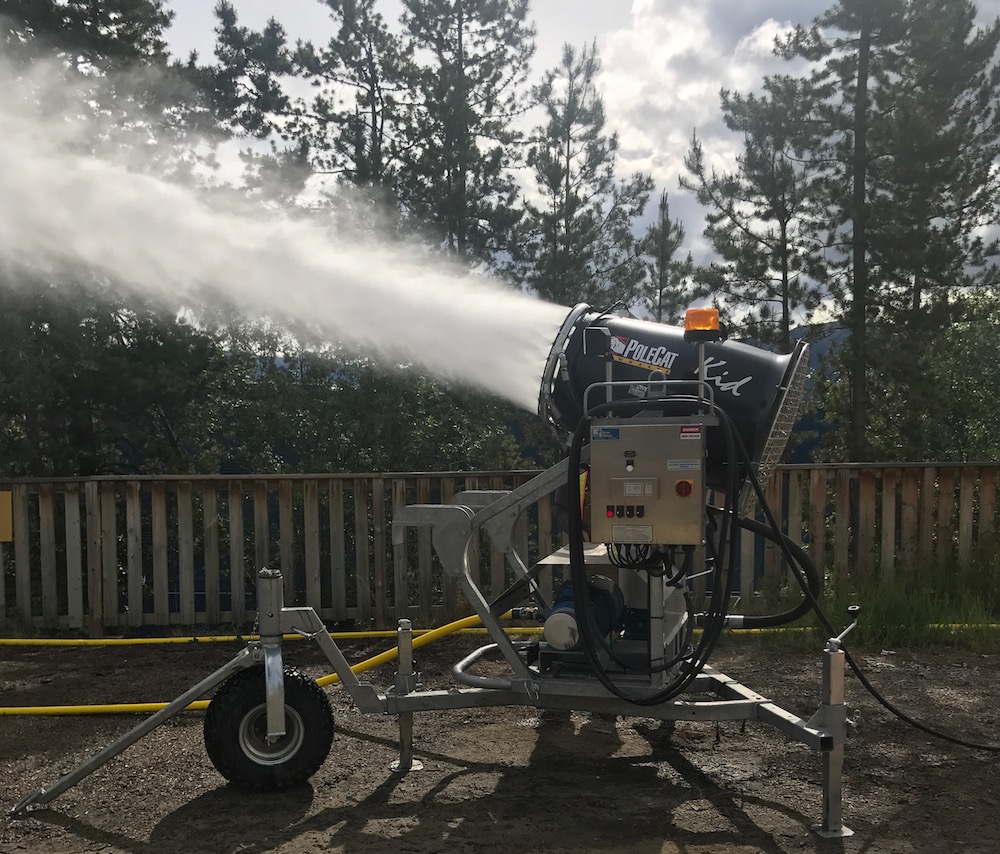
The new snowmaking equipment will be used for the first time on Oct. 22.
Testing the new gun in June 2017. (Photo: Alain Masson)
Sovereign Lake
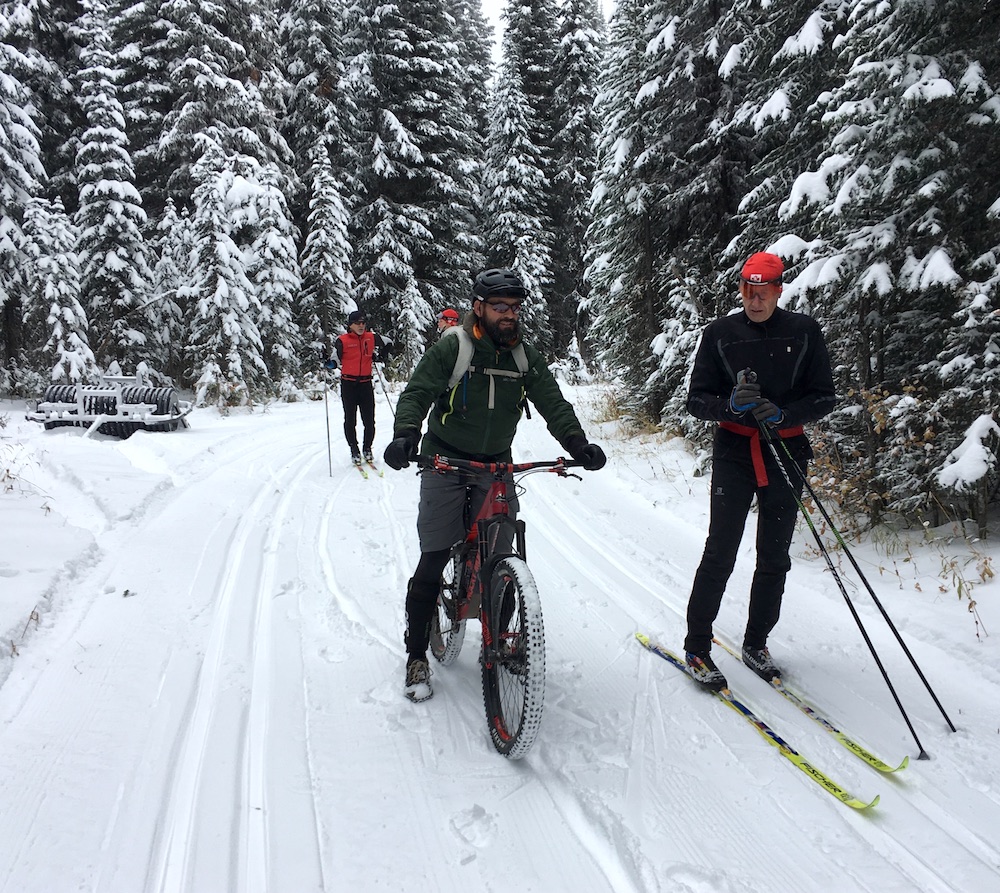
There is a difference of opinion on what season Oct. 14 belongs to. The bikers might have chosen fat bikes over plus bikes if they had realized how much snow they would see on their epic ride from Vernon to Lumby, B.C. (Photo: Gerry Furseth)
The Sovereign Lake Nordic Centre (near Vernon, British Columbia) is well known for November skiing and NorAm races. The season is limited not by loss of snow, but by biking conditions in the valley below.
“As soon as Sovereign gets snow in the fall we want to conserve as much as possible by rolling and track setting,” General Manager Troy Hudson wrote. “All of our early season grooming is done with Quads and snowmobiles to ensure a firm and supportive snowpack for the remainder of the season. Our high elevation (1,680m) and typical higher humidity in late October provides unpredictable weather that can often result in snowstorms of 10-15cm at a time.”
With 20 centimeters of fresh snow, the club set about 5 k of classic track on Oct. 14. While certain trails are open for preseason skiing, the nordic centre officially opens Nov. 10 for pass holders and day ticket sales.
Menihek Nordic
Menihek is another former national-team favourite destination that has since been replaced by Frozen Thunder. Located near Labrador City, Newfoundland and Labrador, it is a less-visited gem. While the Menihek Nordic Ski Club hasn’t received much snow to date, it is a safe bet that by the end of October they will be setting upwards of several kilometers of track.
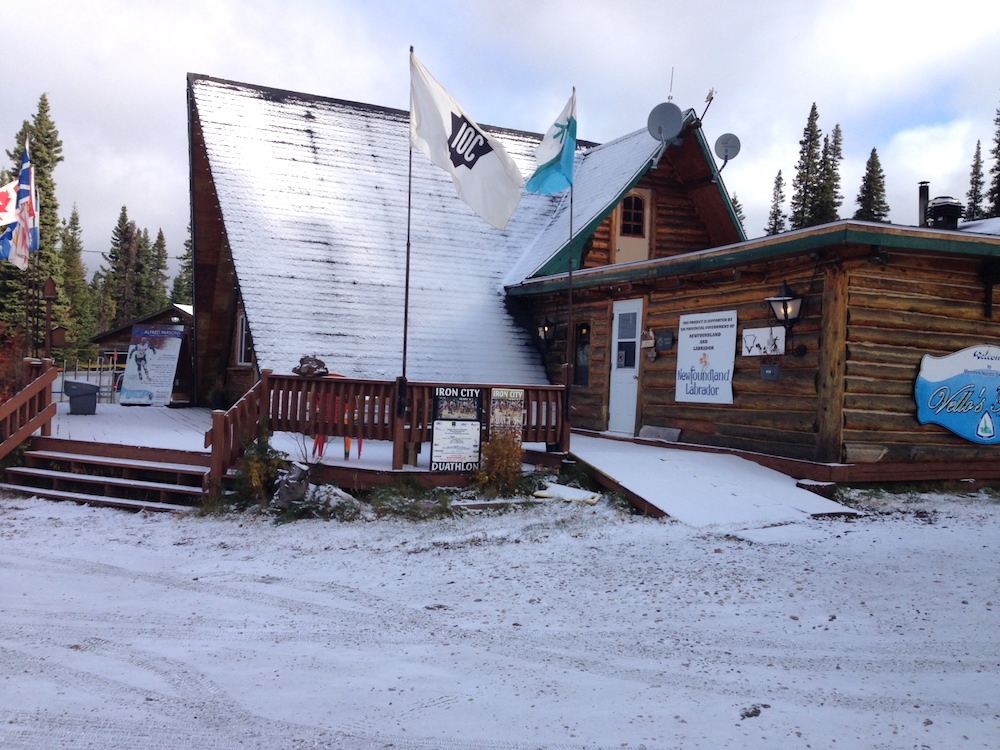
On Oct. 12, a dusting of snow was seen at the lodge. (Photo: Gerry Rideout)
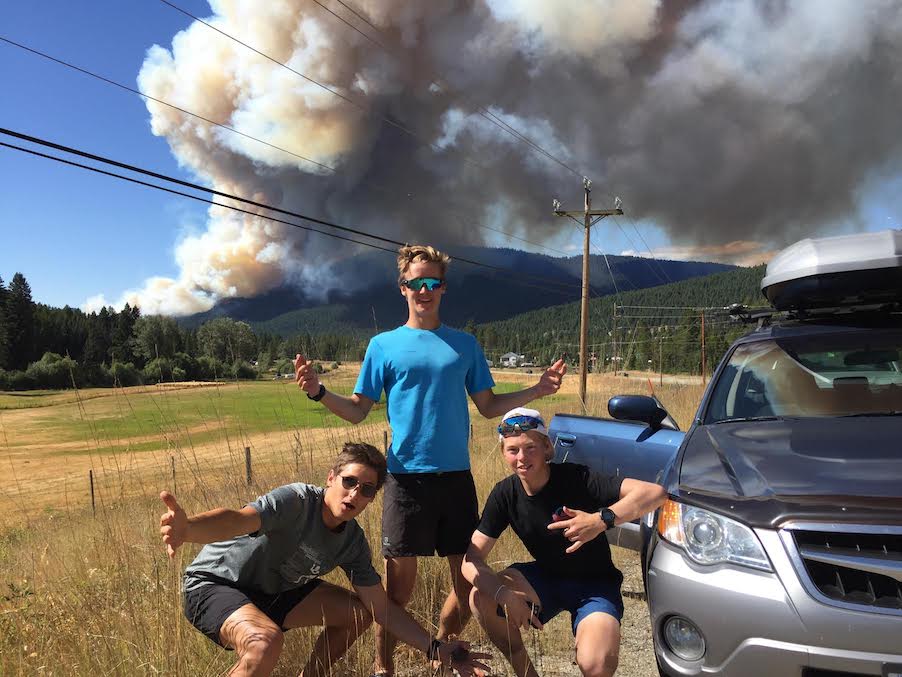
Canadians Fran Vukonic, Tallon Noble and Ian Williams after completing a trail run on Sept. 5 at Big White in Kelowna, B.C.,with the backdrop of the newest Kelowna fire on an otherwise bluebird day. (Photo: Gareth Williams)
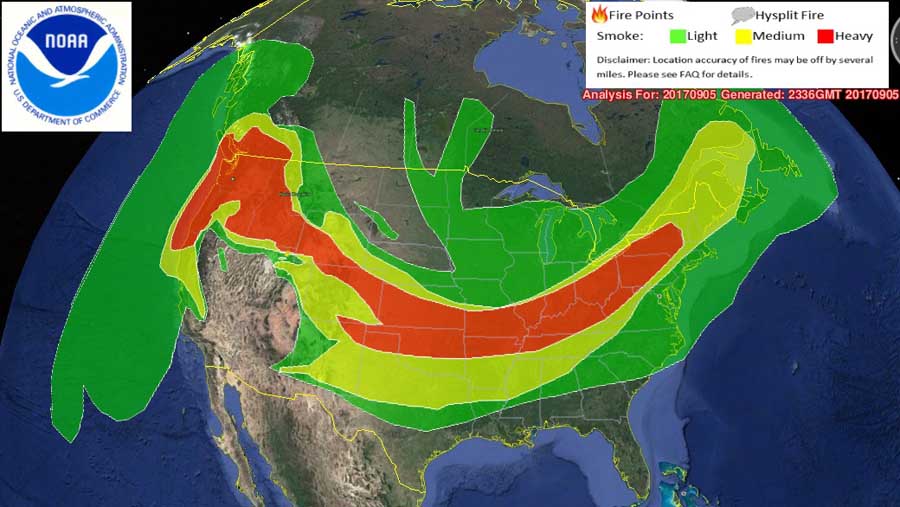
Beyond the hundredth meridian, a traditional geographic line demarcating where the West begins, it’s been a hot and dry summer. Wildfires have raged from Washington to California, the Intermountain West, and in western Canada. The conditions remain ripe for extreme fire danger. Even if a wildfire didn’t burn near you, odds are the smoke found its way there.
Across the board and across the U.S., it’s been an off-the-charts summer. While many Americans have been consumed with hurricane coverage and concerns over the last several weeks, fires have scorched more than a million acres in Washington and Oregon alone this year, according to Quartz Media. That’s up from 513,226 total acres in 2016, but in 2015 and 2014, more than a million acres were affected.
NOAA wildfire smoke and the correlating Air Quality Index for Sept. 5, 2017. (Photo: NOAA)
Along with the devastated landscapes and loss, the wildfires’ byproducts of smoke and ash have made for smoggy, poor air quality. We’re talking about seriously hazy days when visibility often wasn’t more than a mile or two.
Training outside in less-than-ideal quality air can compromise an athlete. To better understand when it’s OK to go out or stay in, many skiers and coaches became intimate with the scientific benchmarks for air quality.
“I sort of have this rule where if I can see the glaciers on the mountain, I would rollerski but not do intervals,” Dakota Blackhorse-von Jess, who’s based out of the Bend Endurance Academy in Oregon, said on the phone last Friday. “My personal limit for being outdoors is that 75 AQI limit. That’s the unhealthy or moderate zone.”
Here’s a quick primer. The U.S. Environmental Protection Agency (EPA) has developed an user-friendly Air Quality Index (AQI). The index is color coded and provides a numerical value indicative of a region’s air quality. An AQI of 75 means the air has a PM2.5 concentration of 23.5 microgramsper cubic meter. Going further, PM2.5 refers to the size of particulate matter in the air. In this case, the 2.5 corresponds to particulate matter 2.5 microns or less in width. That’s small enough to penetrate deep into the lungs, even the bloodstream.
U.S. Environmental Protection Agency Air Quality Index (Photo: EPA/AIRNOW.gov)
That 75 Blackhorse-von Jess limit falls midway into the moderate zone on the AQI.
“The higher end of moderate,” Blackhorse-von Jess clarified. “You see what the station says and then you walk outside and determine if it is going to work. Honestly, at this point, it’s been five weeks. I’ve done so much training indoors, that now it’s more of a mental break than a training deficiency.”
In places like Bend, Ore., where Blackhorse-von Jess calls home, some athletes have ignored the warnings.
“I saw guys out there riding today, I see them every time when I am looking for breaks in the smoke,” Blackhorse-von Jess explained. “I cannot believe that people are out there. I think people living in the smoke have accepted a lower standard and are going about their daily lives and actually, their daily activities in the smoke have come to accept the shittiness of the feeling they are experiencing. And for the professional athlete, it is something that you cannot afford, I don’t believe.”
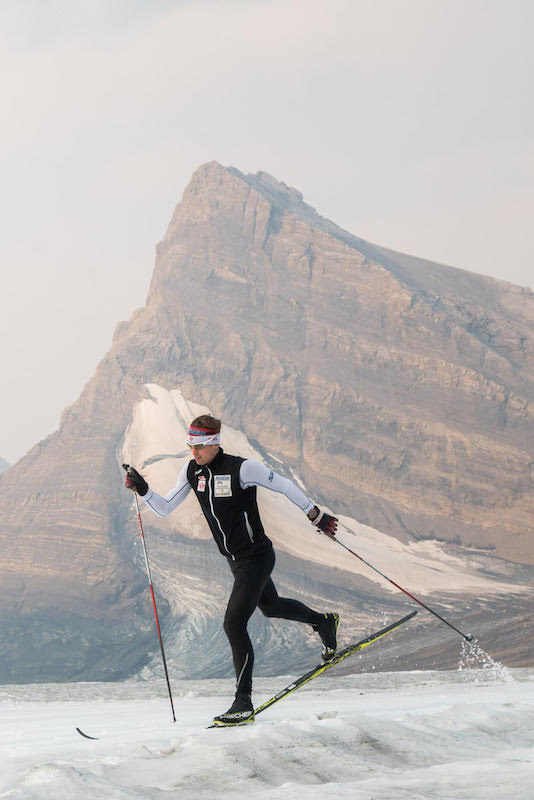
Julien Locke (Canadian U25 Team) training at a hazy Haig Glacier camp in August. (Photo: Anthony Killick)
While several fires continue to burn, the smoke cleared in Bend on Sept. 9. During much of August and into the beginning of September, Blackhorse-von Jess relied on a SkiErg, running treadmill and a stationary bike for much of his over-distance training.
He is not alone.
“Actually today, it was still dark when I woke up, but when the sun came up there was actually blue sky,” U.S. Ski Team member Liz Stephen said Friday from her home in Park City, Utah. “Where other days, you weren’t even sure the sun was up. It was really nasty.”
Like other elite skiers across the West, Stephen had made use of indoor training opportunities. The day before Stephen spoke to FasterSkier, she logged four hours on a ski treadmill at U.S. Ski and Snowboard’s Center of Excellence (COE) in Park City.
The AQI is also careful to note what are called “sensitive groups”. That can mean older adults, children, or people with lung or heart issues. Those populations must take precautions when high exertion exercise and poor air quality mix. Being responsible for junior athletes places a premium on being cautious.
For Leslie Hall, director of the Methow Valley Nordic Team in Washington state, dealing with smoke and subsequent air quality issues have been an on-and-off again affair.
“We had a bad two week period at the beginning of August and it was leading into our annual Methow PNSA [Pacific Northwest Ski Association] Camp … so we had to make the call to move the camp,” Hall wrote in an email. “We ended up going to Oakridge, Ore., for the camp and had a great camp there with 32 kids but a fire started nearby there while we were there so we had one moderately smoky day and it has since gotten much worse there.”
Like her athletic and coaching counterparts, Hall keeps an eye on air-quality websites to determine if a practice is indoors our out. But kids are kids.
“It is quite hard to keep the kids motivated and they do not enjoy the gym workouts,” Hall noted. “But during the early smoke time, we knew we were going to go somewhere else to train fairly soon so we kept that in mind. This past week was good because there are a variety of kids running and different coaches which help. Also, intensity workouts on the exercise machines help the time go by quicker. There is plenty of complaining and calls to move East, but I think all the kids realize that we are very fortunate in general and it is hard to complain when the hurricanes are decimating the south and we just have bad air for a week or so.”
Reports from Canada mirrored the smoke-filled experience of skiers in the Western part of the U.S.
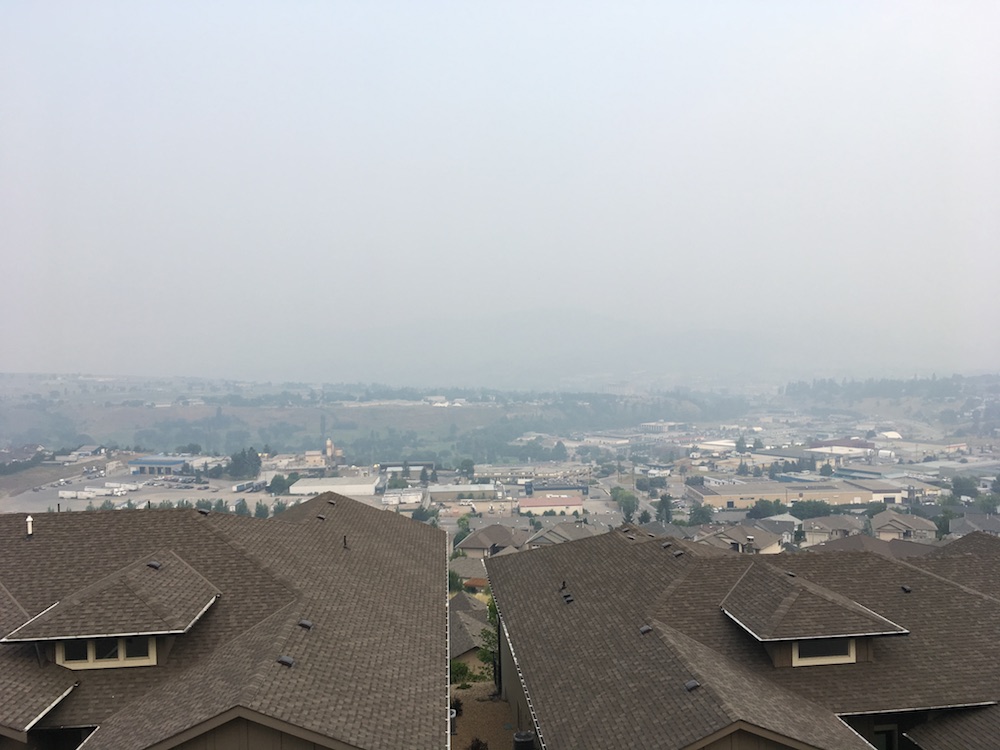
Air Quality Health Index 5 in Vernon. BC (Photo: Gerry Furseth)Air Quality Health Index 1, Vernon, BC (Photo: Gerry Furseth)
Gareth Williams, a member of Canada’s national U25 Team and a native of Kelowna, B.C., wrote in an email that the smoke was a near-constant companion this summer.
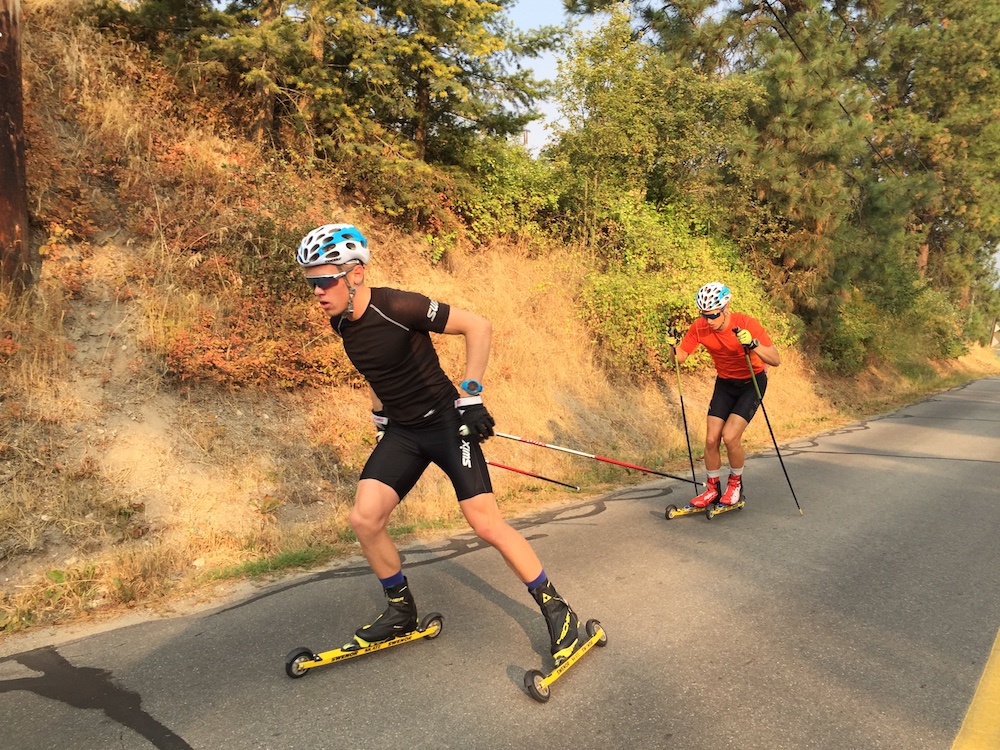
Gareth Williams (Canadian U25 Team) leads Fran Vukonic during an orange-tinted rollerski in Kelowna, B.C. (Courtesy photo)
“Summer has been great for me, I spent much of it on the Haig [glacier near Canmore, Alberta] in July,” Williams explained. “I’ve been in Kelowna the whole month of August and the smoke has yet to subside, it has actually gotten much worse recently. In past years the smoke has been bad, but I have never seen it like this. … I think the smoke isn’t as bad as some people have suggested, for me it’s not the greatest worry. I will be happy once it is gone though, getting a little tired of the orange lighting and not being able to see the sun!”
Michael Somppi, who trains with the Alberta World Cup Academy (AWCA) in Canmore, altered his plans depending on conditions.
“Personally, I haven’t found the breathing to be too bad,” Somppi wrote. “That said, I am avoiding doing any hard intensity efforts on smoky days. Today was the first day (in Kelowna) I was forced to alter my training plans, as I had planned to do a rollerski time trial, and instead opted to do zone 3 because of the smoke. Even breathing semi hard felt sketchy with how bad the air quality is at the moment.”
Another member of Canada’s U25 Team, Julien Locke has literally trained above the smoke on occasion.
“I’ve been lucky in that the smoke hasn’t been too thick during most of the important training blocks so far,” Locke wrote. “I was at the Haig Glacier 4 times this summer and while we had some hazy days, for the most part, 2400m elevation was high enough to have clear skies.”
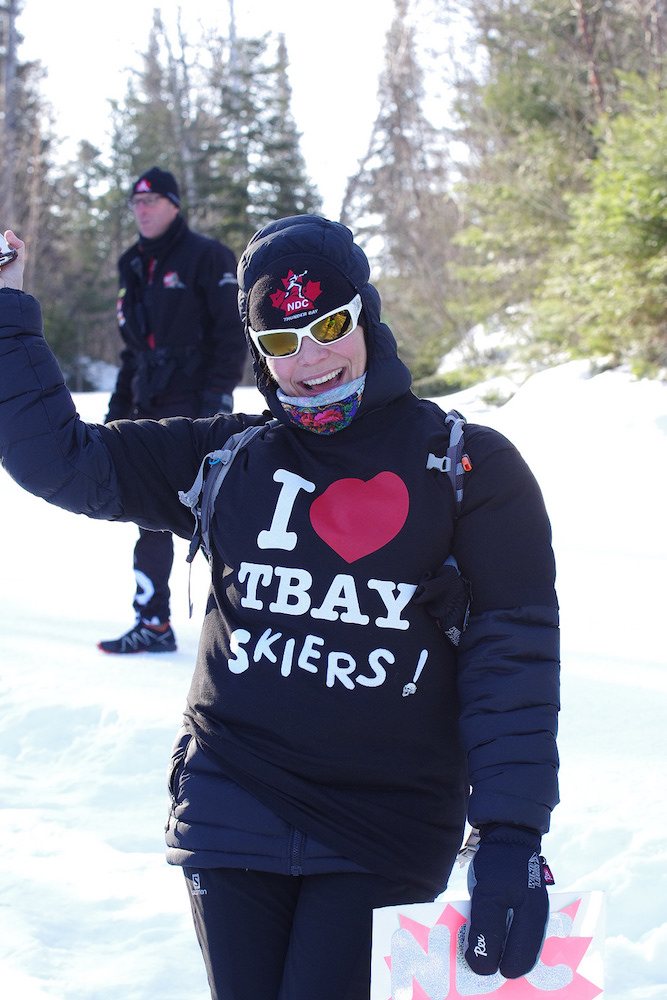
A happy spectator at 2015 Canadian Ski Nationals at Lappe Nordic in Thunder Bay, Ontario. (All photos: Martin Kaiser)
Canadian Ski Nationals in Thunder Bay, Ontario, capped off the 2014/2015 domestic season in Canada from March 14-21. Here are some of our favorite photos and athlete comments from the weeklong series at the Lappe Nordic Centre, courtesy of Martin Kaiser. (Quotes collected via email by Gerry Furseth and François Léger Dionne.)
2015 Canadian Nationals freestyle team sprints at Lappe Nordic Centre in Thunder Bay, Ontario. (Photo: Martin Kaiser)
2015 Canadian Nationals freestyle team sprints at Lappe Nordic Centre in Thunder Bay, Ontario. (Photo: Martin Kaiser)
2015 Canadian Nationals freestyle team sprints at Lappe Nordic Centre in Thunder Bay, Ontario. (Photo: Martin Kaiser)
2015 Canadian Nationals freestyle team sprints at Lappe Nordic Centre in Thunder Bay, Ontario. (Photo: Martin Kaiser)
2015 Canadian Nationals freestyle team sprints at Lappe Nordic Centre in Thunder Bay, Ontario. (Photo: Martin Kaiser)
2015 Canadian Nationals freestyle team sprints at Lappe Nordic Centre in Thunder Bay, Ontario. (Photo: Martin Kaiser)
2015 Canadian Nationals freestyle team sprints at Lappe Nordic Centre in Thunder Bay, Ontario. (Photo: Martin Kaiser)
2015 Canadian Nationals freestyle team sprints at Lappe Nordic Centre in Thunder Bay, Ontario. (Photo: Martin Kaiser)
On highlights:
“I was really happy to get my first senior national title in the 5km free. I didn’t get any splits until 4k so I didn’t know how it was going results wise but I was pushing as hard as I could and made sure to race the first portion that was flatter like a sprint prologue so I wouldn’t give up too much time before the climbing. … There have been lots of great moments this week but I have to say my favourite was when Peri [Jones] came over to me at the end of the 5k free and told me that I had won. ” — Dahria Beatty (AWCA/NST-U23), who beat World Cup veteran Perianne Jones by 3.7 seconds in the women’s 5 k skate
“One of my favourite moments was when [teammate] Peri [Jones] came across the finish line in second in the team sprint. It was an amazing feeling to have won a medal with someone who has been a[n] inspiration for me for a very long time.” — Katherine Stewart-Jones (Nakkertok/NST-Junior Team), 2nd in the freestyle team sprint with Perianne Jones
“I think my favorite moment was seeing all my friends again after a long time being gone in Europe for racing. Seeing faces I know everywhere and talking to people I know was really nice. And I also really enjoyed hearing my name when people were cheering during races. Being back home, this feeling is just great!” — Cendrine Browne (CNEPH/NST-U23), 3rd in 10 k classic and 30 k freestyle mass start
On exceeding goals:
“My focus events were the skate races. The team sprint, 10km and 50km. I can’t believe I was able to win gold in all three.” — Michael Somppi (AWCA/NST-Dev.), 1st place in the freestyle team sprint, 10 k freestyle and 50 k freestyle mass start at 2015 Canadian Nationals
2015 Canadian Nationals men’s 50 k freestyle mass start at Lappe Nordic Centre in Thunder Bay, Ontario. (Photo: Martin Kaiser)
2015 Canadian Nationals men’s 50 k freestyle mass start at Lappe Nordic Centre in Thunder Bay, Ontario. (Photo: Martin Kaiser)
2015 Canadian Nationals men’s 50 k freestyle mass start at Lappe Nordic Centre in Thunder Bay, Ontario. (Photo: Martin Kaiser)
2015 Canadian Nationals men’s 50 k freestyle mass start at Lappe Nordic Centre in Thunder Bay, Ontario. (Photo: Martin Kaiser)
2015 Canadian Nationals women’s 30 k freestyle mass start at Lappe Nordic Centre in Thunder Bay, Ontario. (Photo: Martin Kaiser)
2015 Canadian Nationals women’s 30 k freestyle mass start at Lappe Nordic Centre in Thunder Bay, Ontario. (Photo: Martin Kaiser)
2015 Canadian Nationals junior girls 7.5 k freestyle mass start at Lappe Nordic Centre in Thunder Bay, Ontario. (Photo: Martin Kaiser)
2015 Canadian Nationals junior women’s 7.5 k freestyle mass start at Lappe Nordic Centre in Thunder Bay, Ontario. (Photo: Martin Kaiser)
2015 Canadian Nationals junior girls 7.5 k freestyle mass start at Lappe Nordic Centre in Thunder Bay, Ontario. (Photo: Martin Kaiser)
2015 Canadian Nationals men’s classic sprint at Lappe Nordic Centre in Thunder Bay, Ontario. (Photo: Martin Kaiser)
2015 Canadian Nationals women’s classic sprint semifinal at Lappe Nordic Centre in Thunder Bay, Ontario. (Photo: Martin Kaiser)
2015 Canadian Nationals junior men’s classic sprint A-final at Lappe Nordic Centre in Thunder Bay, Ontario. (Photo: Martin Kaiser)
2015 Canadian Nationals junior men’s classic sprint B-final at Lappe Nordic Centre in Thunder Bay, Ontario. (Photo: Martin Kaiser)
Junior women’s sprint huddle at 2015 Canadian Nationals at Lappe Nordic Centre in Thunder Bay, Ontario. (Photo: Martin Kaiser)
Junior women at 2015 Canadian Nationals at Lappe Nordic Centre in Thunder Bay, Ontario. (Photo: Martin Kaiser)
On beating World Cup veteran Ivan Babikov in the 50 k freestyle mass start:
“When we neared the final kms it was apparent Ivan’s legs were cramping up and as we crested over the 2nd last big climb I noticed I had a small gap on him. So I just blasted with everything I had left and opened up a good margin to the finish line … It was just an amazing feeling coming into the finish with the home crowd cheering me on. Maybe that’s what helped me feel so good … and really, this whole week.” — Somppi
On overcoming adversity:
“In the qualifier I broke a binding on the last hill so I had to stop and put it back on, which took about a minute and a half. Luckily, there were only 28 girls in the race so I qualified anyway with bib number 28. I was pretty rattled after breaking a binding but I managed to calm down and focus on the heats. I knew that before I had broken the binding my race had been going well so I was confident that I could ski well in the heats. Because of my low bib number, I was put in the hardest quarter-final and in the hardest semi-final and was lucky looser in both of the races, At that point, I was pretty relieved to have made the final. Overall I am happy with my fourth place because I skied as hard as I could and I am happy with how I skied.” — K. Stewart-Jones, 4th in junior women’s classic sprint
On a long season:
“[It] feels like travel and all 180km of racing that I’ve done in the past 4 weeks finally [caught] up to me.” — Ivan Babikov (Canadian World Cup Team)
“I’m skiing as fast as I can and with all the energy that I have left.” — Browne, 3rd in 10 k classic
“Considering my lead-up to Nationals wasn’t ideal, with racing in Lahti the weekend beforehand and traveling back to Canada on Monday, I’m happy with the consistency of my performances.” — Somppi
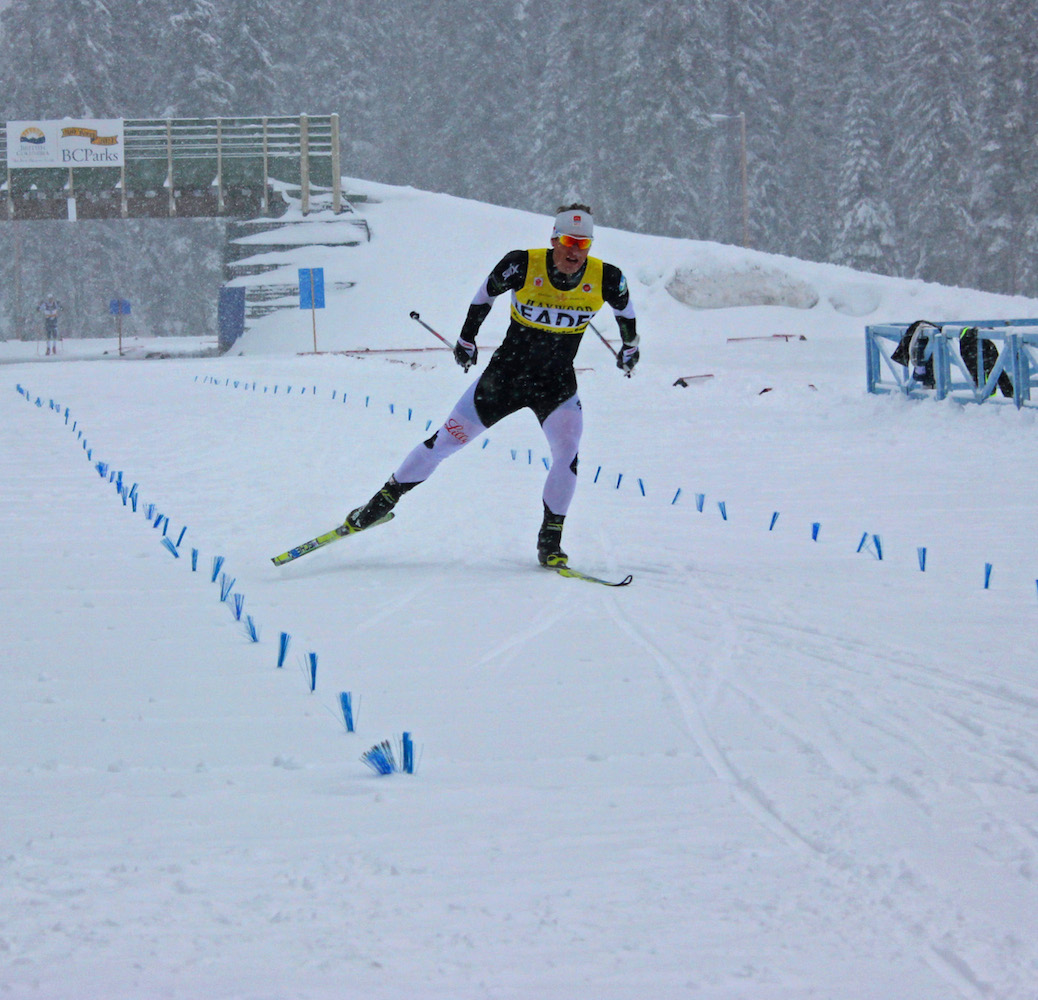
Kris Freeman on his way to winning the 30 k freestyle interval start by more than a minute and a half on Dec. 20 at the Sovereign Lake NorAm in Vernon, B.C. (Photo: Frances Weeks)
Canada’s NorAm circuit is what the International Ski Federation (FIS) calls a Continental Cup series, similar to the U.S. SuperTour. The name NorAm is short for North American, a hold-over from when Canada and the U.S. had a combined race series. These races are critical to the elite racers, with guaranteed World Cup starts, national-team positions, and trips to Junior/U23 World Championships in Almaty, Kazakhstan, on the line.
Or to put it another way, it would take a major event to cancel a NorAm race — like perhaps a record-breaking storm in a unusually snowless early season.
As organizing committees secured the final details for the first two NorAm weekends, a major storm was expected to bring heavy rain to most of southern British Columbia.
By the end of the four-day storm, a Vancouver suburb had declared a state of emergency, heavy rain at 12-degree Celsius (54 Fahrenheit) had closed numerous ski resorts across B.C. (including Whistler Blackcomb). Seattle set weather records, and 220,000 people were without power in California.
While all this was going on, organizers in La Clusaz, France, canceled their World Cup and later moved it to Davos, Switzerland, a venue which had previously avoided canceling its original race weekend because of a huge snow-moving effort largely funded by a retired alpine skier.
The first NorAm weekend this year was scheduled for Dec. 13-14, hosted by the Black Jack Ski Club in Rossland, B.C. Outside the province, Black Jack is best known as the club that produced George Grey (top-10 finisher at the 2010 Olympics) and the current home of long-time national team coach Dave Wood.
When low snow, warm weather and predicted rain made the club’s homologated courses unsuitable for skiing, the club decided to move the opening races up to the biathlon trails, more than 200 meters (650 feet) higher in elevation. As the four-day storm progressed, the freezing level was up to 2,000 meters (6,500 feet) in the area, well above the 1400-meter(4,590-foot) elevation of the biathlon trails.
When rain made the sprint loop unskiable two days before the race, the organizing committee didn’t give up. Club members, neighbours and team coaches spent hours shoveling snow onto the course. When another wave of rain destroyed the sprint course overnight, the organizing committee switched to two individual-start classic distance races and volunteers headed out again to shovel more snow onto the distance course.
After four days of rain and a move to a higher venue without electricity or a timing building, the races were held. Generators provided power, live results were available on the internet and the event was generally agreed to be up to the Continental Cup standard. Some 140 official volunteers plus an unknown number of shovelers made this possible.
“We estimate we did about 130 man-hours of shovelling this week,” Chief of Competition Ian Sibbald wrote in an email.
Unsolicited athlete quotes from the Black Jack NorAm
“The volunteer base is incredible. That is an astounding number [of volunteers] since only 3,500 people live in Rossland. Given the lack of snow, the conditions were great.” — Kris Freeman (Team Freebird)
“Conditions were good! A few twigs poking through here and there, but tracks were fast and hard. Big thanks to the volunteers and organizing committee for working hard to run these races!” — Michael Somppi (Alberta World Cup Academy/Canadian Development Team)
“Conditions were remarkable, especially considering the challenging weather the Black Jack Ski Club has been dealt. One would hardly know that though skiing the course, unless you look closely and notice all the shoveling marks on the side of the trail.” — Brian Gregg (Team Gregg/Madshus)
“Conditions were much better than I expected, the organizers and groomers did an amazing job making the race happen with tough conditions and the tracks today were great!” — Alysson Marshall (AWCA/National Development Team)
“Conditions today were amazing considering the weather … The race organizers and many volunteers from the town have worked hard to get a good track to make these races happen.” — Andrea Dupont (Rocky Mountain Racers)
“The crew at Black Jack did an amazing job on the course, it was close to perfect considering what they had to work with. The tracks were great, I was very impressed.” — Dahria Beatty (AWCA/National U23 Team)
“The course held together exceptionally well, due to the work of the volunteers and the slightly colder weather that appeared day of.” — Jennie Bender (Bridger Ski Foundation)
Callaghan Valley Cross-Country
Callaghan Valley Cross-Country (CVXC), the host of the second NorAm weekend, isn’t so much a ski club as it is a consortium of four clubs based in the Vancouver/Whistler area: Nordic Racers, Whistler Nordics, Hollyburn Jackrabbits, and Spud Valley Nordic. Squamish Nordic contributes, as do a number of other clubs from the province. For higher-level events, volunteers from other clubs commonly join in, either to add expertise to help the host club earn the event, or gain experience and knowledge so their own club can host similar events in the future.
Scheduled the weekend before the holiday break, CVXC was on track with 85 volunteers with two weeks to go. Snow is rarely a problem at Whistler Olympic Park. In 2010, no provision for snow making was made and the Olympics were held on natural snow despite a seven-week block of rain that ended a week before the Olympics started.
With very little snow and the forecast of the storm earlier this month, the organizing committee had to make a decision to commit, cancel or move the NorAm races with 12 days to go. On decision day, 100 millimetres (4 inches) of rain was forecast for the race venue.
At this point, much of the sponsorship money had been spent, hundreds of volunteer hours had been invested, and teams had booked lodging and flights well in advance.
With heavy rain falling at the venue, few people were surprised when organizers announced they were moving the races to Sovereign Lake in Vernon, B.C.
Once the decision was made, the logistical headache began. The new venue is more than 400-kilometers away, which meant the existing volunteers wouldn’t be sleeping at home. Many of the teams had booked flights leaving Vancouver on Sunday night. With two mountain passes and six-driving hours separating Sovereign from the airport, there wouldn’t be time to hold the planned events on Sunday. Moving the races to Friday and Saturday solved the travel problem, but made the volunteer issue more difficult.
At this level of competition, there are strict rules about roles and responsibilities. The assistant technical delegate, Sharon Clarke, was no longer eligible, as the new host was her home club. Clarke and the chief of competition, Sherryl Yeager, swapped roles before tackling the rest of the changes.
“Having to change the event at such a late date due to weather is heartbreaking,” Yeager, also the CVXC vice chair, explained in an email. “All the work that went into planning, arranging sponsors, maps, courses, setting up run sheets, the race notice, registration, accommodation, food, the website and more is largely of no use.”
Andrew Pohl of the New Zealand Ski Team crossing the line in 15th in the men’s NorAm 30 k freestyle interval start on Dec. 20 at Sovereign Lake, B.C. (Photo: Frances Weeks)
Sovereign Lake Nordic Club
Sovereign Lake is a perennial NorAm host, using trails built for a World Cup event in 2005. The trail system is interconnected with Silver Star Mountain Resort, which leaves most visitors a bit confused. In recent years, the division is simple: race at Sovereign, sleep at Silver Star, ski at both.
Sovereign was hosting a CPL race (one level below Continental Cup) when the possibility of moving the NorAm was raised. With 80 volunteers on site, it was easy for the organizers to quickly find out how many might be available for a potential NorAm and make the commitment to offer the venue.
The shift from Saturday/Sunday to Friday/Saturday was essential for the teams, but difficult for the organizers. More of the CVXC volunteers were unable to help and many of the Sovereign volunteers were unable to get a day off work at short notice.
Without a sprint in the first NorAm weekend of racing, Sovereign’s first day became a classic sprint, requiring another rewrite of the race notice. Ultimately, the merged organizing committee was able to get about 100 volunteers over the two days, including some from neighboring clubs.
Several racers generally viewed the event as a typical NorAm, with more comments on the challenges of heavily falling snow than the logistical obstacles of the event move.
While athletes, coaches, families, and race-day volunteers have moved on, the two organizing committees are sorting out how to share the entry fees and sponsorship money to cover their extra expenses.
The Result
After two weekends and four races, more individuals volunteered than raced. Athletes got crucial early season race time into their legs. Several athletes have positioned themselves to race in Europe later this season.
Was it all worth it? Dahria Beatty, Raphaël Couturier, Annah Hanthorn, and Philippe Boucher pre-qualified for Junior/U23 World Championships in early February in Almaty, and based on his NorAm results, Patrick Stewart-Jones earned his spot at the World Cup sprint in Otepää, Estonia, from Jan. 17-18.
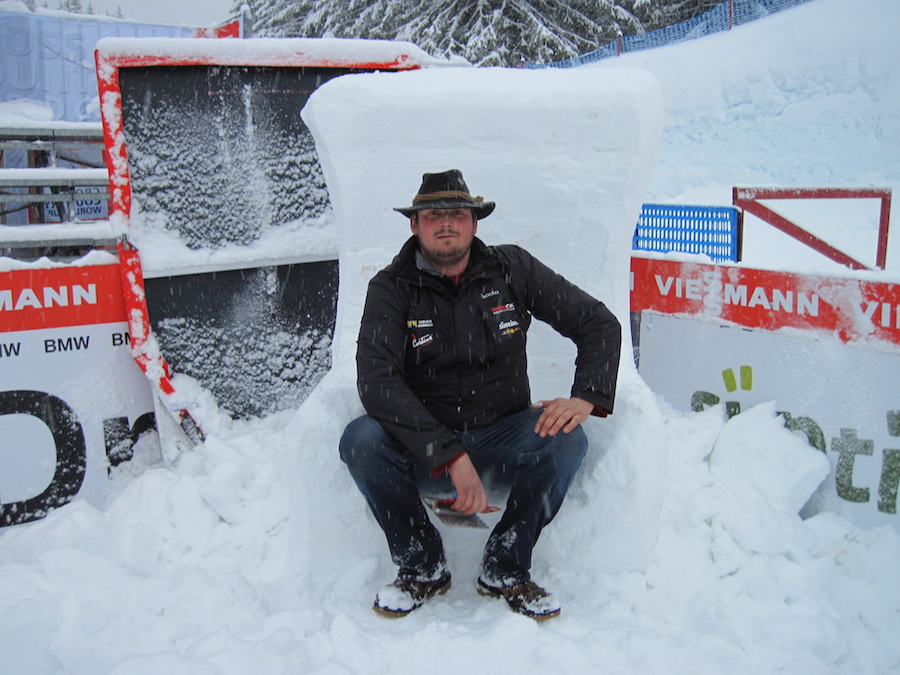
Toblach’s snow carver takes as break while sitting in the leader’s chair at the Toblach World Cup in Italy. (Photo: Gerry Furseth)
TOBLACH, Italy — With the World Cup circuit resuming on Saturday (after a weekend off two weeks out from the Olympics), Toblach organizers have a bit of a problem on their hands: too much snow.
According to FasterSkier’s on-site reporter Gerry Furseth, there was no official training on Friday “as the heavy snow made for unusual skiing conditions.”
Unofficial training: heavy snowfall continues in Toblach, Italy, a day before the last World Cup before the Olympics takes place there. (Photo: Gerry Furseth)
Most of the 5-kilometer loop, which will be used for Saturday’s 10 and 15 k classic individual starts, was covered with about 15 centimetres (6 inches) of new snow as of 9 a.m. on Friday.
“By 11:00, it was challenging skiing in wet, falling snow,” according to Furseth. “The snowcats were busing removing snow from the stadium to keep it as built. The road to Cortina was closed most of the day and the ski trail to Cortina was 30 cm deep.
‘The ‘Saskia’ 5k loop is brutal,” added Furseth, who’s from Vancouver, B.C. “Skiing the loop after it was freshly reset, I spent 2/3rds of my time striding. None of the climbs are as long as Canmore, but they are ramps (constant slope, very straight). The downhills are pretty easy if the track is in good shape and your legs are loaded with lactic. Except for the stadium, the double-poling sections are false flats, not much fun in snow-filled tracks. Like Val di Fiemme, the philosophy seems to be to get the descending done quickly, so the steep climing can resume.”
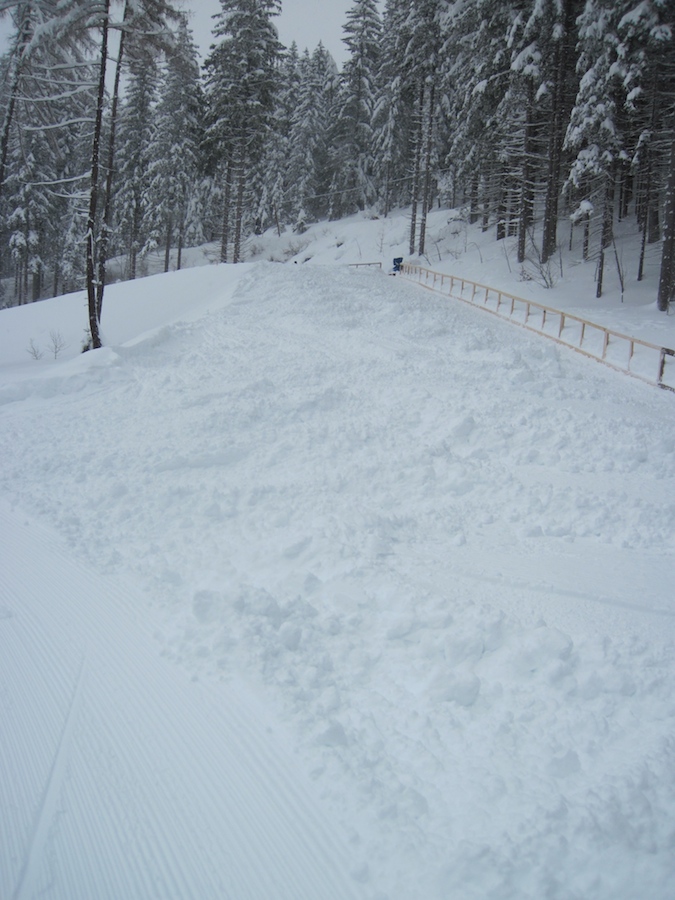
One of the hills on Toblach’s 5 k course during a rebuild process because of abundant snow. (Photo: Gerry Furseth)
Furseth was in Val di Fiemme, Italy, for the first day of Junior/U23 World Championships on Wednesday.
“Unlike Val di Fiemme, the snow feels pure, natural, and skis much drier than it looks,” he explained. “Val di Fiemme was at least 80% manmade, and skied wet and fast, with that squirrely feel skating that resulted in lots of crashes on sprint day. At Toblach, all the crash ‘sitzmarks’ were right after snow drifts, where the boots drag in the deep snow.”
As for Saturday’s classic races, Switzerland’s Dario Cologna is on the World Cup start list for the first time this season following an ankle injury in late fall. He has three World Cup wins in his career (including stages) in 15 k classic races.
If you’re following North Americans, here’s who’s on the start list for Saturday. Racing will continue Sunday with freestyle sprints.
Quiet serenity away from the stadium at the Sovereign Lake Nordic Centre on Nov. 9.
By Gerry Furseth
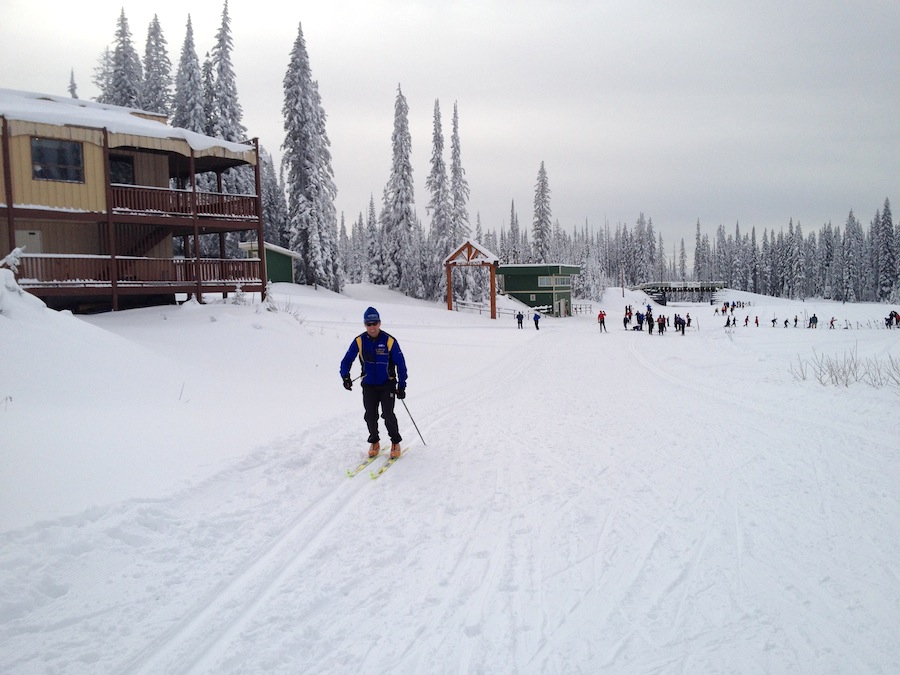
VERNON, B.C. – Both Sovereign Lake Nordic Centre and Silver Star Ski Resort had a ‘soft-opening’ for cross-country skiing on Thursday, Nov. 7. By Saturday, there were classic tracks and 75-kilometres of trails set. FasterSkier’s Gerry Furseth spent Saturday on the Sovereign Lake side, where 100 of some 1,700 club members picked up their season passes and 236 visitors bought day passes.
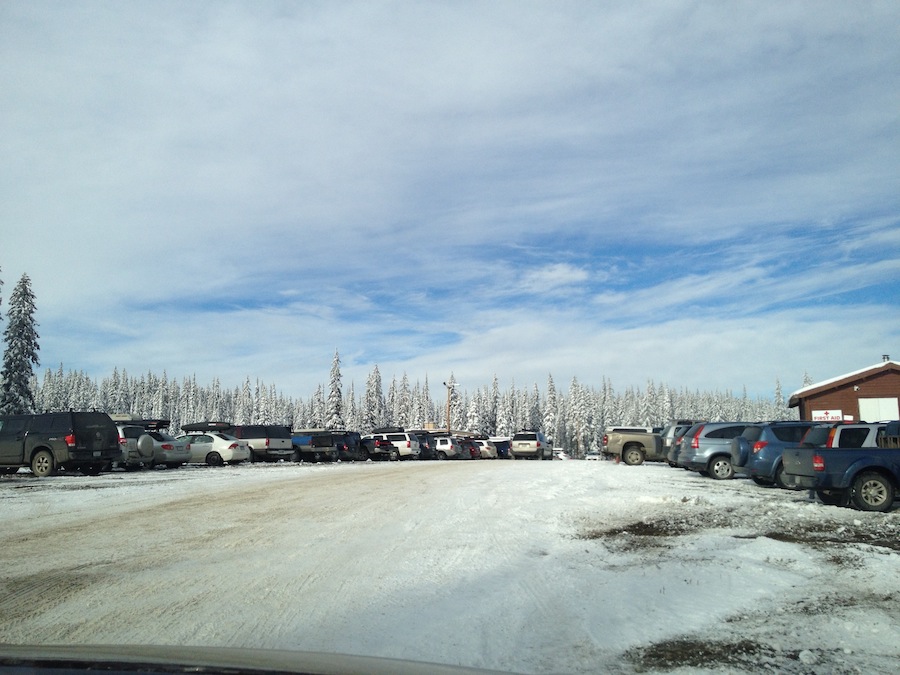
A popular place: the Sovereign Lake Nordic Centre parking lot on Nov. 9, two days after opening for the 2013/2014 season.
Although most were local, skiers came from as far as Saskatchewan. A good collection from the neighboring clubs, Larch Hills and Telemark, made the roughly one-hour drive to kick off the season. About 15 skiers drove five hours from Vancouver, representing at least three of the coastal clubs.
To the East, Canmore has Frozen Thunder and about half of the national team. On the opposite side of the country, La Forêt Montmorency neighbours the epicentre of Québec skiing with another large group of national team members. Of the early skiing destinations in Canada, Sovereign Lake and Silver Star comparatively fly a little under the radar.
Like most nordic areas in the region, Sovereign Lake is operated by the local ski club. The day lodge staff and the track setters are paid, but a large amount of volunteer work makes the system and events possible.
There is a definite family feel with trails named for founding members (i.e. Wylie Loop, for Carl Wylie) and founder’s grandsons (Lars Taylor, a local star, long retired from racing). A photo of Matt Wylie racing at the Canmore World Cup last season is featured on the wall of fame, putting him one up on his cousin Alysson Marshall. A perennial NorAm destination, the club hosted World Masters in 2011 and hopes to bid for nationals in a few years.
Farther up the hill, Silver Star is a major alpine destination, known for champagne powder and 7 metres of annual snowfall. The resort maintains 50-plus kilometres of trails without a need for snowmaking. The main street of the village is groomed, but not set for classic.
A fun way to end a long day is to ski up to Long John’s and order a pint of liquid carbohydrates – local and organic, of course. The community has a mandatory gingerbread-house colour scheme, which sounds tacky but somehow looks great once the snow arrives.
For the last decade, skiers have stayed at Silver Star while racing at Sovereign Lake.
The dual-area pass is changing the way visitors see the area. Pat Pearce, the chair of Sovereign Lake Nordic, said “it has gotten much more popular … the idea of skiing across [to Silver Star], having lunch and skiing back.”
Larch Hills coach Brian May brought 50 juniors to the Sovereign Lake Nordic Centre last weekend.
“We are in a real evolution and growth of the programs right now,’ said Sovereign Lake head coach Darren Derochie, who moved to the area in 1987 to try to make the Olympic team in 1988. He represented Canada at the 1992 Games.
“Our junior development program is around the two dozen range, whereas a few years ago we only had a handful of kids of that age,” Derochie explained.
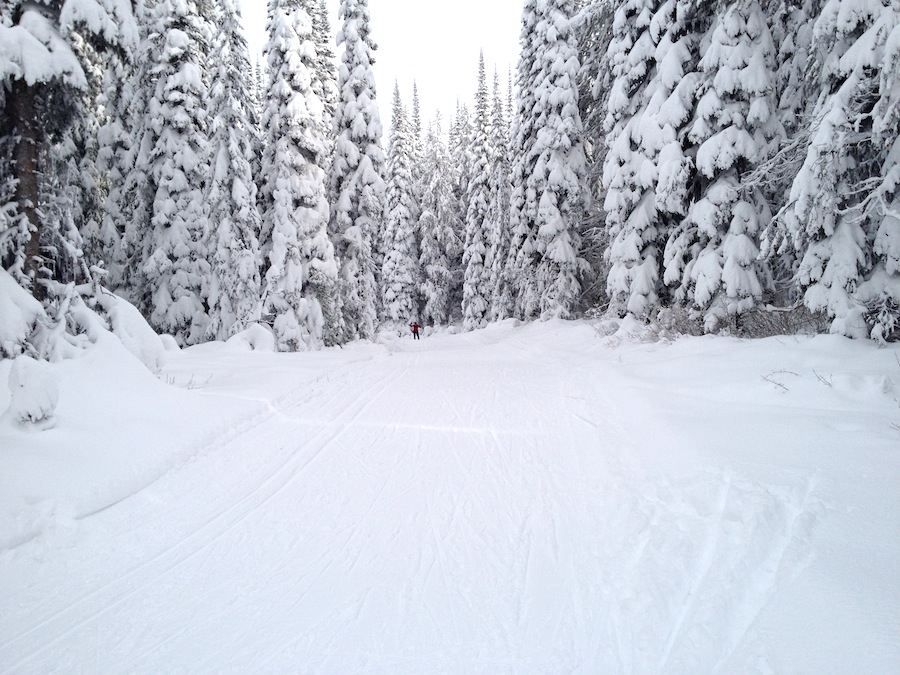
The club executive and staff excitedly announced “mid-winter conditions on November 9th.” Seeking truth behind the claim, FasterSkier carefully inspected 15 k of the system, and while there were twigs sticking up through some of the trails, there wasn’t a single rock or dirty patch.
The classic tracks were good, but after two consecutive nights of heavy snowfall, it was a bit soft for skating in some areas. The end result of the two-hour inspection: “mid-winter” is a good description, as long as your idea of mid-winter includes heavy snowfalls. Don Wylie, part of the track-setting team, said a night of packing without new snow would get the skating lanes up to their usual standard.
Saturday night brought only 5 centimetres of new snow, allowing the track setters to catch up and create firm skating lanes. Another 15 k of trail opened Sunday, including Upper World Cup, which in this author’s opinion, is in better condition than the last five Decembers. For Furseth, this is the earliest ever switch from rock skis to race skis: most years he’s still on rock skis during early season NorAms. Classic was trickier Sunday, with a high of -2 degrees Celsius and some glazing in the tracks.
Some skiers end up at national training centres, but they certainly don’t start there.
Patrick Stewart-Jones of the Alberta World Cup Academy leads the way at the high point of the Upper World Cup trail at Sovereign Lake Nordic Centre last week.
VERNON, B.C. – Sovereign Lake Nordic Center’s annual Summer Ski camp from May 10-19 attracted the usual collection of hard-core skiers, a mixture of teams and day trippers who need a last fix of snow before the inevitable arrival of summer. With neighbour Silver Star Mountain Resort gearing up for a summer of mountain biking, and the city of Vernon already in full-summer mode in the valley below, Sovereign’s weeklong camp is the last chance for set tracks in the region.
Canmore Nordic was the first group to arrive on May 10, with a four-day camp justifying the six-hour drive to Vernon. Another Canmore-based team, the Alberta World Cup Academy (AWCA) arrived next for a seven-day, sleep-low (train-high) camp beginning May 12. Black Jack skiers trickled in for the final four days, and biathletes and Para-Nordic team members flocked to the snow-covered trails as well.
The week preceding the camp featured five consecutive days of temperatures at or about 30 degrees Celsius (86 Fahrenheit) in the valley below and significant snow loss even at the 1600-metre low point of the early season trails. After four days of skiing and a major thunderstorm, the track setters shifted to a higher set of trails.
AWCA brought most of its athletes, including last season’s NorAm winners Emily Nishikawa and Michael Somppi, as well as Canmore World Cup top-15 finishers Jess Cockney and Phil Widmer, and perennial domestic podium contenders Kevin Sandau and Alysson Marshall.
“We are up here in the mornings for skiing a few hours at least and then we’re downtown [in Vernon],” said AWCA coach Mike Cavaliere. “We do some cycling, or running in Ellison Park, or go to the gym.”
While the team is expecting to return to crust skiing in Canmore, this camp was attractive for set tracks and the nearby low elevation (380 meters), with accommodation on a beach near the Ellison Park mountain biking area.
“Part of the goal is to let people enjoy summer,” Cavaliere said.
One day, the AWCA women got out their road bikes for a training ride to Marshall’s parent’s house in nearby Salmon Arm for lunch. The next day, the men rode from their lakeside accommodation to Silver Star Village – ascending some 1,200 metres – for their post-ski workout.
Former Canadian national team coach Dave Wood, now happily “retired” in Rossland, B.C., persuaded his small Black Jack team to drive five hours to start the new training season on groomed trails.
“We started skiing [in Rossland] in October, and they set track until April 27th,” he said.
And what about those masters athletes? Most stayed down in the valley, mostly for all the biking, mountain biking, running, rowing, and stand-up paddling recreational options. Skiers from at least four nearby nordic areas were spotted up at Sovereign, having driven by the summer alternatives to get here.
Despite the example set by the elite athletes, middle-aged journalists are simply not capable of skiing two hours in the morning and then running or biking in the evening for more than five consecutive days. Lesson learned. Or lesson not really learned, because it was so much fun.
Black Jack’s Julian Locke stops for lactate testing with coach Dave Wood while Michael Somppi (c) leads an AWCA train
Alysson Marshall (AWCA) striding into summer.
Phil Widmer (AWCA) during an L3 session at Sovereign Lake’s Summer Ski camp last week.
AWCA skier Emily Nishikawa (l) puts her head down under blue skies at Sovereign Lake Nordic Centre in Vernon, B.C.
AWCA coaches Stefan Kuhn (l) and Mike Cavaliere stop for a photo opp.
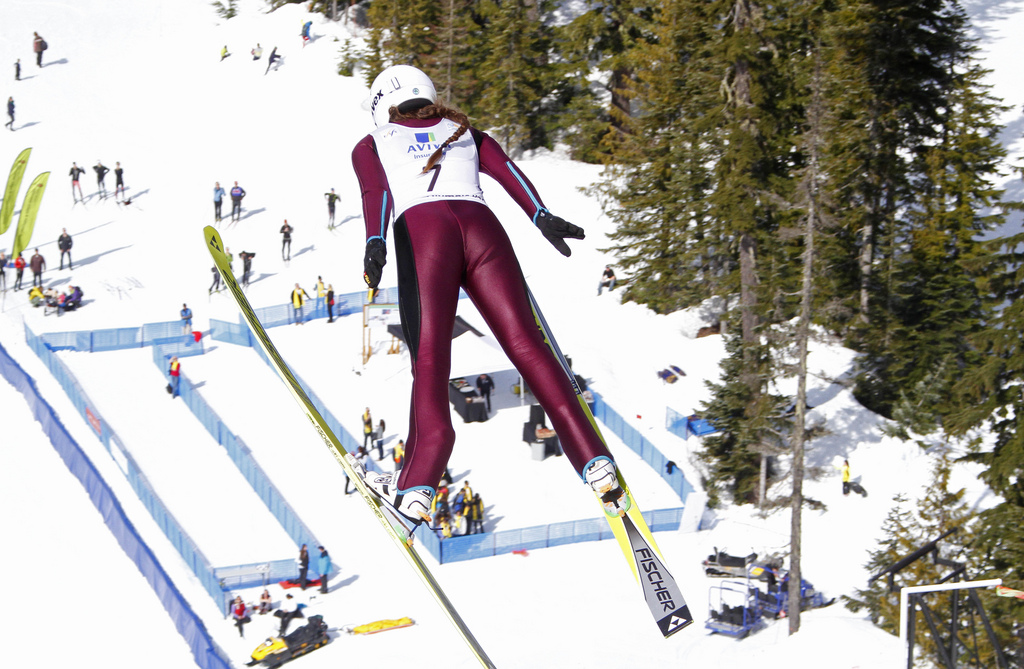
Female ski jumpers in action on Friday at 2013 Canadian Nationals in Whistler, B.C. (Photo: Jim Hegan)
WHISTLER, B.C. – Friday was an official-training day for the cross-country athletes, but the Sea to Sky Nordic Festival isn’t all about cross country. While biathlon wrapped up earlier, ski jumping and nordic combined had their first competitions on Friday. Fast and Female hosted an event, and there were lectures on coaching female athletes.
Our cross-country coverage has focused on the open categories, which is just a small part of the event. The vast majority are Canadians, with 696 athletes eligible for national titles in four age groups, CCUNC (university students), and two para-nordic categories.
The U.S. is well represented with 25 athletes. Norway has seven athletes, largely representing U.S. colleges. Switzerland and Slovakia each have two athletes. Australia, Belarus, the Czech Republic, Spain, France, Japan, the Netherlands, and Peru have one athlete each.
Biathlon had 175 competitors for four competition days, ending March 20th, with about 40 athletes from the U.S.
Female Nordic Combined skiers starting Friday’s 5 k at 2013 Canadian Nationals in Whistler, B.C. (Photo: Jim Hegan)
With the addition of female ski jumpers to the 2014 Sochi Olympics, it is no surprise to see that a significant number of the competitors are female (12 of 40 competitors on Friday). The new frontier is female nordic-combined competitors.
There were seven women who went on to complete the 5k skiing portion. Jumping and nordic-combined results are posted here. There are about equal numbers of Canadian and U.S. athletes.
Fast and Female held an event at the race venue on Friday morning. FasterSkier’s representative was not able to attend, being neither fast nor female, but a lot of female athletes, both young and role models, appeared to be having fun.
The CCC Women’s Committee held a coaching session with sport’s psychologist Sharleen Hoar and National Team women’s coach Eric DeNys titled, ‘Maximizing the Potential in your Female Athlete’.
A Conversation with Champions featured Olympic Champion rower Marnie McBean and World Champion mountain biker Catherine Pendrel. Pendrel has been doing cross-country ski races as part of her training the last few winters.
Official training for cross country was also on the program with the stadium and intersection controls set up. A few hundred skiers took advantage of the opportunity to ski the courses and get familiar with the stadium setup, starting at -2 degrees Celsius and warming up to 11 Celsius by mid-afternoon.
The view from a higher point at the Canmore Nordic Centre during the 2012 Alberta World Cup, which took place Dec. 13-16 in Canmore, Alberta. It was the area’s fourth World Cup since 2005.
Note: This article has been corrected to omit the Salt Lake Olympic venue from the list of places that several interviewed skiers haven’t visited.
Most skiers dream of skiing like a World Cup racer.
Okay, one article can’t change your VO2 max, your last eight years of training and your technique. The next best thing is skiing where the WC Euro-stars like to ski. FasterSkier asked a few at the recent World Cup in Canmore, Alberta.
Here’s what they had to say. It’s worth noting there are almost as many favourite places as there are skiers. Also, assume that everyone loves their hometown and their “home” training centre.
North America
There is a lot of what Joran at StatisticalSkier would call selection bias here. All of the favourite venues have hosted WC races. Most of the skiers interviewed aren’t old enough to have skied at Lake Placid, N.Y., or Thunder Bay, Ontario. While Quebec City throws a great party, none of the skiers got to the permanent ski areas outside the city.
— Kristin Størmer Steira (NOR):
“I must say Canmore, it is so beautiful although I also raced in Vernon/ Silver Star and that’s a beautiful place, and of course the Olympics in Whistler was great, but this scene with all this beautiful mountains, it is great. … [Canmore] is a great course.”
— Anna Haag (SWE):
“It is hard; I really like Canmore. It was the first place I saw in Canada. For sure, it is special. But then Whistler, I have my Olympic medal so that is special. But I like it over here, I like to compete in Canada. … [Sovereign Lake/Silver Star] was really nice. The amount of snow was amazing and I think we had like almost 50 centimeters of snow during the time we were there and the conditions were perfect. [Courses] are really tough over here, especially here in Canmore. I think [Canmore is in] the top three of the toughest course I ever skied, especially with the altitude it gets even more tougher. But they are really nice and they are really fair, and that is really important for competition.”
— Tobias Angerer (GER):
“Canmore. I was many times here and I love this area with the nature, with this mountains, and the track is perfect. It is so wide, and yeah, you have place for skiing. It is really good and the atmosphere is really good. I think every year more and more people are coming and the atmosphere is better every year.”
Sweden’s Jens Eriksson (l) racing to a NorAm 15 k mass start victory on Dec. 8 at the Sovereign Lake Nordic Centre in Vernon, British Columbia. (Eriksson photo: www.teamjens.se)
— Emil Jönsson (SWE):
“You can’t be sad when you are here [in Canmore].”
— Vibeke Skofterud (NOR):
“That is hard to say. I love Canmore. I love Silver Star; I have been there for one time. To race here in Canmore, it’s amazing. It’s really hard course, but good course, it’s wide, the snow conditions is really good, and the preparation is really good, the training course is good, and we stay at the Radisson [laughs]. The nature is good. I have only positive things to say. Right now, I have to say Canmore, but also Silver Star is a really good place to stay.
— Jens Eriksson (SWE):
“The conditions in Canmore was the best I have ever competed in, hard groomed tracks and perfect conditions. … [Sovereign/Silver Star] was just a great place for anyone who loves skiing. It was really a lot of snow in Silver Star and so many nice groomed tracks every day. It was just great and very fun to train and prepare for the World Cup there.
Europe — Angerer:
“I have many, many favourite places. Davos, maybe. Holmenkollen. Trondheim is a very good track.”
— Haag:
“I have a lot of favourites. I think since me and Emil having an apartment in Davos, I think Davos is one of my favourite places in Europe.”
— Skofterud:
“Norway is good! Davos is good. I like Kuusamo, because I always race good there. A lot of nice places.”
— Eriksson:
“It’s really fun to be part of the World Cup Final in Falun [Sweden].”
— Steira got carried away and didn’t answer the question, but she did say she is going to Davos to relax before returning home for Christmas.
General:
Many skiers were excited about going to Val di Fiemme, Italy, but whether that excitement was for the 2013 Nordic Ski World Championships, the food, the skiing or some combination of these was unclear.
The Venues:
— Val di Fiemme:
The Tour de Ski finishes here, the World Championships are coming for a second visit, and Petra Majdič (SLO) loves the food. — Davos:
Swiss superstar Dario Cologna’s home, and a favourite training area for skiers from Canada, USA, Norway and Sweden. — Holmenkollen:
The race trails with ocean views are on Oslo’s mass transit system. The 2,700-kilometer trail system includes Drammen, another world cup venue. More than 100,000 spectators attended the final day of 2011 World Championships. — Falun:
Morderbakken and the World Cup Final. Enough said. — Canmore:
Elevation: 1,400 meters. Annual snowfall: 2.4 m (8 feet). Trails: 20 k in early season, or ski to the next town (Banff) once the snow starts falling. Season: October 15th to mid-April.
Events this year: World Cup, various regional XC and biathlon events.
Past Events: 1998 Olympics, 2005 World Cup, 2008 World Cup, 2010 World Cup.
Funding: 65% government support, 35% users fees. $925,000 in special grants for 2012 World Cup.
Short story: Frozen Thunder opens the new season with leftover snow from the previous winter. The natural snowfall is fairly low, but the largest nordic snowmaking system in the world provides great skiing. The facilities are as spectacular as the scenery: the Alberta government provides funding that other regions can only envy, and that money has been spent well. Accommodation is in Canmore, with the downtown less than 2 k from the stadium.
Skiing: The Olympic (classic) 3.75 k loop is brutal, even by World Cup standards. The Centennial (skate) 3.75 k loop is much more flowing and can be enjoyed by middle-aged, middle-speed masters. The descents on both trails are on the challenging side, with no recovery except on the final drop into the finish straight. The recreational trails vary from beginner-friendly to very advanced. By Christmas, it is possible to ski to Banff and catch a bus back.
At Whistler Olympic Park in April 2009, some of the nordic combined Olympians arrived early at the start line for the Woppet. Claudia Nystad was the women’s winner that year, practicing for her Olympic gold medal. (Photo: Gerry Furseth)
Elevation: 900 m. Annual snowfall: over 4 m (13 feet). Trails: 56 k. Season: Mid-November to mid-April.
Events this year: Nationals (cross country, biathlon, nordic combined, ski jumping), Payak, BC Cup.
Past Events: 2010 Olympics, 2010 Paralympics, 2009 World Cup, 2008 Nationals.
Funding: A mixture of Legacy funding and user fees.
Short story: If you want to ski a 50k/30k/15k race without worrying if there will be snow, try the Payak. This is a place with a lot of snow at low elevation, with an average 1.9m snow base by February, and much more in April. The season length is limited more by post-Olympic mandate/funding constraints than snow. Accommodation is at Whistler or Squamish. The 2010 Olympic season was by far the worst snow in the short history of the venue.
Skiing: The Olympic loops are fairly easy by WC standards, with easy descents that allow recovery. Despite this, big pack finishes were rare. The Olympic loops flow through many transitions and are fun to ski at easy pace. There are also 42 k of recreational trails.
Top of the Upper World Cup 5 k in October at Sovereign Lake Nordic Centre. (Photo: Gerry Furseth)
Elevation: 1600 m. Annual snowfall: 7 m (23 feet). Trails: 50 k + 60 k. Season: mid-November to mid-April. There is often a May re-opening for team camps.
Events this year: NorAms, BC Cup, Sovereign Lake Loppet.
Past Events at Sovereign: 2011 World Masters, 2005 World Cup.
Past Events at Silver Star: 1991 World Cup.
Funding: Sovereign is a non-profit club: one third season passes, one third day passes, the rest is event fees, fund raising and government grants. Silver Star’s nordic financials are blended in with the resort.
Short story: Although appearing as Vernon on the FIS results, this is actually two interconnected trail systems. Vernon is a town of 30,000 people (20 minutes drive and 1200 m below the skiing). Sovereign Lake is a ski club of 1,700 members that hosts races, and Silver Star is a ski resort (alpine, nordic, and village with accommodation). Most visitors buy the dual-area pass and never notice the area borders.
Skiing: The 3.75 k World Cup loops used in 2005 are fairly easy, as World Cup trails go, and were designed to be skied by club members between races. The lower (skate) 2.5 k loop and upper (classic) 5 k loop look FIS moderate on the course profile, but feel harder at race pace. Pacing an individual start on the upper 5 k is particularly challenging. Upper world cup 5 k has one challenging hairpin, otherwise descents are easy and allow recovery. The Master’s World’s 15 k loop is very flat and easy skiing. The recreational trails are only hard in the sense that climbing to the viewpoint at 1890m elevation can leave you breathless. Luckily, a dual-area pass includes one chairlift ride to the top viewpoint.
The view from 1,870 metres at Sovereign Lake on Sunday. (Photo: Gerry Furseth)
Andy Newell would! Gerry Furseth on the slalom course behind the Hotel Panorama in Seiser Alm, Italy.
A fanatical cross-country skier, Gerry prefers the outdoors to his day job. If there isn’t any snow at Sovereign Lake, he can be found running and biking at Kal Park. Past lives include a magazine column on sailboat racing, timing ski races from the Olympics to the Boxing Day Open, and being an also-ran in most sports.