From the FasterSkier archive — posts syndicated from athletes’ and coaches’ own blogs between 2004 and 2012, kept online as published. Current coverage is at fasterskier.com.
Over the weekend, it was reported that Gian-Franco Kasper, the former president of the International Ski Federation (FIS), died. Kasper stepped down from his role at FIS after serving the organization as president for 23 years. In total, Kasper worked 46 years for the organization.
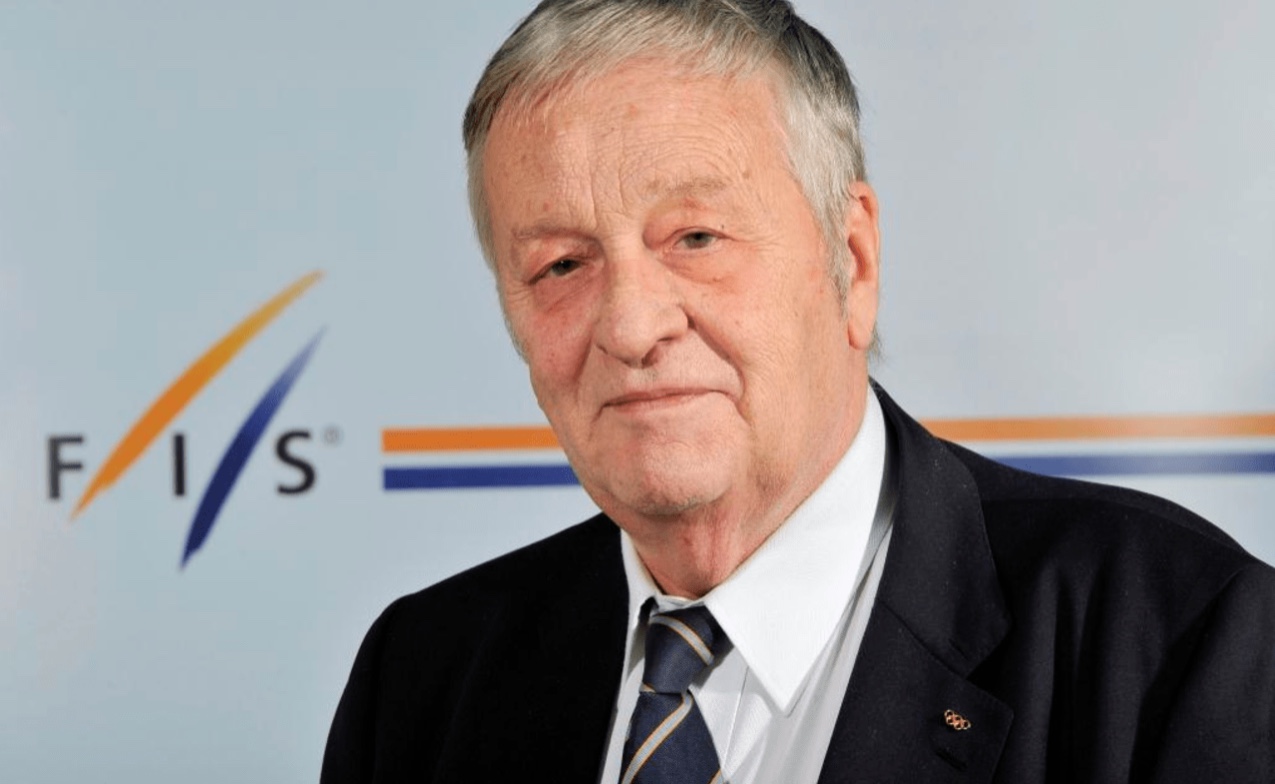
Gian-Franco Kasper stepped down as the President of the International Ski Federation last month after 23 years in the position. He passed away last Friday. (Photo: Fis-Ski.com)
Newly elected FIS president, Johan Eliasch, memorialized Kasper in a press release. “Gian Franco Kasper was unique in the international sports community,” Eliasch said. “He built FIS from a small federation, to the undisputed leader in winter sports, a testament to his vision and work ethic. I had the privilege of knowing Gian Franco for 25 years and shared many fond moments and stories with him. His understated nature and his quick wit will be deeply missed within FIS and the international sports world. On behalf of the entire FIS family, I would like to extend our deepest sympathies to the Kasper family”.
Days before the most recent FIS Congress, during which Eliasch was elected, Kasper was admitted to the hospital. Kasper’s health deteriorated and he never left the hospital. He passed away on the evening of July, 9th.
Kasper was born in St. Moritz, Switzerland.
The FIS headquarters has lowered the FIS flag in Kasper’s honor and it will remain lowered for 23 days, representing each year he served as president.
Gian Franco Kasper, President of FIS for the past 23 years stepped down earlier this month. Under his leadership, FIS grew to be the preeminent winter Olympic sport federation. Yet despite its growth, Kasper resisted most efforts to reform and modernize FIS, and he left the organization much as he found it.
In 1975, FIS President Marc Holder needed a hand at FIS and brought in the then 29-year-old Kasper—who up to that point had worked as a reporter and representative of Swiss tourism—to serve as the FIS Secretary General. Holder would become his mentor and when he retired from the presidency in 1998 after 47 years at the helm, Kasper began his tenure as president in what was an uncontested transfer of power.
Gian Franco Kasper stepped down as the President of the International Ski Federation last month after 23 years in the position. (Photo: Fis-Ski.com)
Kasper was already a creature of FIS, he spoke five languages and was suited to a winter life, claiming to be uncomfortable in temperatures above 54 degrees Fahrenheit.
“The guy is super smart and very dedicated to FIS” said Dexter Paine, former U.S. Ski & Snowboard chairman and current FIS Vice President and councilor. “He was dedicated 24 hours a day, 365 days a year to the sport for 40 years. There’s no one I know who has the kind of encyclopedic knowledge around the sport that he did. If you wanted to know who won the cross country world championships in 1993, he could tell you—it was extraordinary.”
Kasper became most known to the public for making politically incorrect comments and chain-smoking. The two habits often went hand in hand as reporters could count on unfettered access to Kasper while he smoked somewhere quiet. He is said to have devised his own elaborate—and illegal—method of smoking undetected in airplane bathrooms.
His sarcastic and unfiltered speaking style did him no favors on the written page. Paine said, “You were never quite sure what was going to come out of his mouth, he was always brutally honest and at times politically incorrect. The press only picked up certain things, but he wasn’t a guy who was different privately than he was publicly…did he say many things that you thought, ‘I can’t believe he said that?’ the answer is absolutely.”
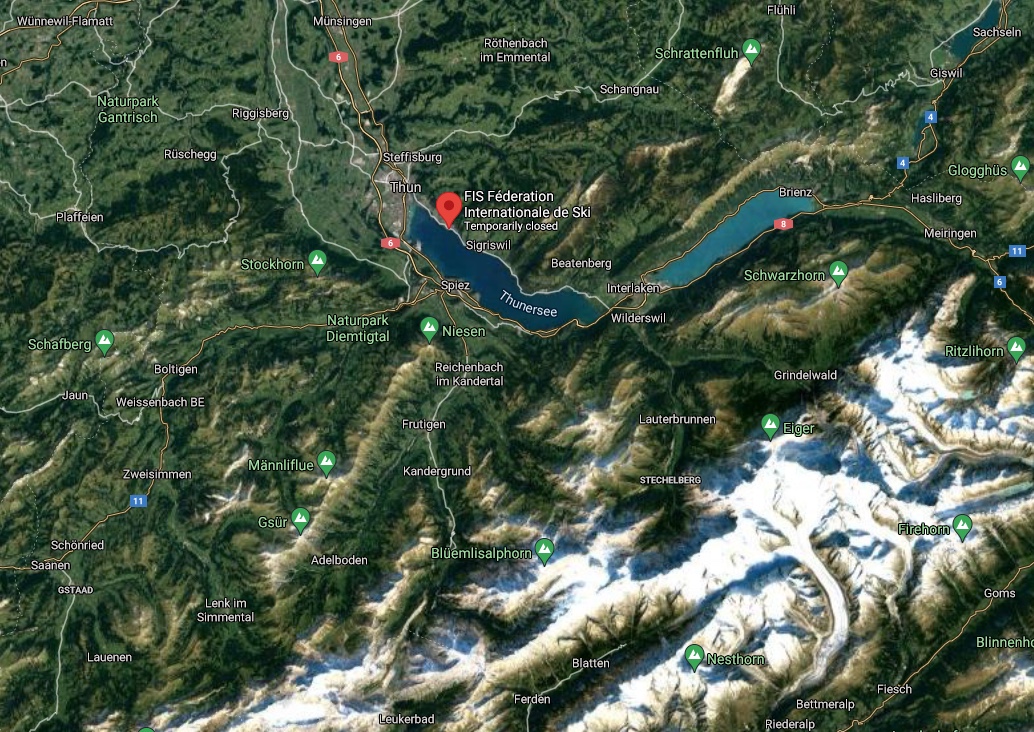
In February 2019, the Swiss paper Tages-Anzeiger visited Kasper in his FIS office overlooking Lake Thun in the charming Swiss city of Oberhofen, and described the scene: “Downstairs at the reception the smoke was already in the nose, upstairs in the study the boss smoked one Marlboro red after the other during the conversation, until only his contours could be seen.”
The red pin identifies FIS HQ near the shores of Lake Thun and sporting an Alpen backdrop. (Screenshot: Google Maps)
René Hauri, a journalist for Tages-Anzeiger who held the interview with Kasper told FasterSkier in an email, “Gian Franco Kasper is an extremely interesting and entertaining conversation partner. It never gets boring with him.”
In that 2019 interview, Kasper held forth, sardonically doubting climate change and mocking environmental concerns over building ski resorts. When asked if he was concerned about hosting events in countries with poor human rights records, he responded with stark honesty: “The fact is that it is easier for us in dictatorships. From a business point of view, I say: I only want to go into dictatorships, I don’t want to argue with environmentalists.”
The interview caused an uproar when it was picked up and relayed beyond the readership of Tages-Anzeiger, which seemed to catch Kasper off guard, further reinforcing the idea that he had become out of touch with the wider world.
“The statements he made in the interview,” wrote Hauri, “…did not come as a surprise to me, he had already expressed himself in our newspaper in a similar form, especially with regard to climate change.” Indeed, Kasper had long been vocally doubtful of climate change, a position that he best summed up to Ski Racing in 2004 when he said, “Basically, I just don’t want to believe in global warming, that’s clear.”
If Kasper’s comments had only created a modest stir in the past, his interview with Tages-Anzeiger proved to be a bombshell. Hauri explained what set this interview apart: “In 2019 it caused an international uproar because Greta Thunberg was just becoming famous and the World Ski Championships in Åre was coming up. So the timing was one of the deciding factors. Kasper’s problem is that he says a lot of things ironically, flippantly, that he talks like that – and this then seems very hard on paper.”
POW cut to the chase with this terse Tweet regarding Kasper’s 2019 comments about climate chamge. (Photo: Twitter @ProtectWinters screenshot.
After the 2019 interview, Kasper faced a new level of scrutiny and pressure to reform FIS. He confided that spring that he didn’t want to be a ‘lame duck’ as he navigated his final term in office. In November 2019 he reached a conclusion and declared he would stand down from the presidency two years into his term at the 2020 Congress. When the pandemic canceled the 2020 Congress, he stayed on for a final year.
Still, Kasper did manage to expand the role of FIS sports at the Olympics. Kikkan Randall wrote FasterSkier in an email that Kasper had, “helped the organization retain good awareness and respect in the snow sports world. He was well connected within the greater International Federation world and the IOC.” As a member of the International Olympic Committee, Kasper deftly used his contacts and position to expand FIS by adding 23 medal events, largely by embracing snowboarding and freestyle events, with the two disciplines adding 16 medal events between them. Under his leadership FIS has become the preeminent winter sports federation. The FIS portfolio of sports includes alpine, cross-country, ski jumping, nordic combined, freestyle & freeski, and snowboard.
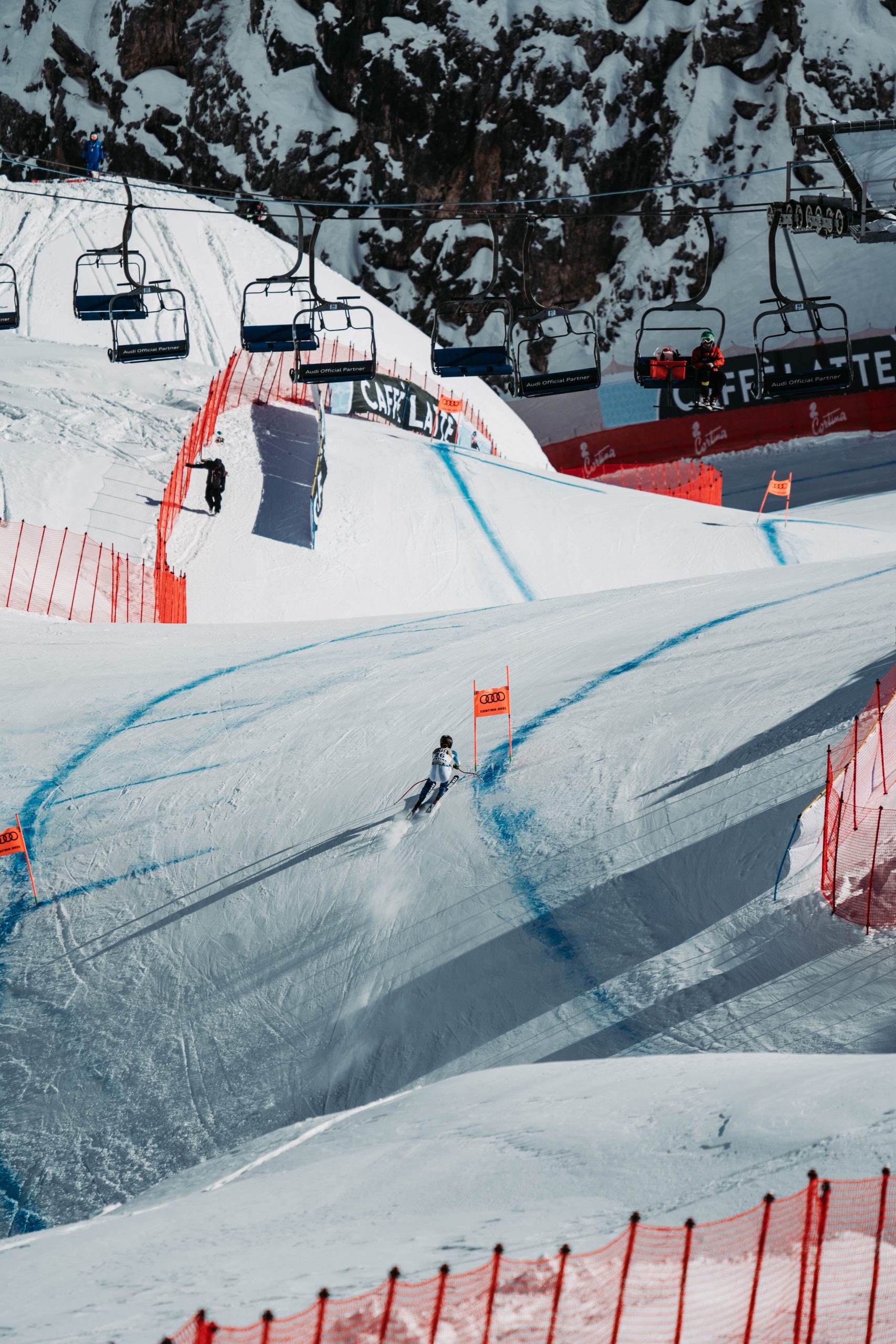
Under Kasper’s tenure, alpine skiing experienced a growth phase. Here, a U.S. Ski Team alpine skier races at the Cortina, Italy 2021 FIS World Championships. (Photo Credit: Ryan Mooney – U.S. Ski Team)
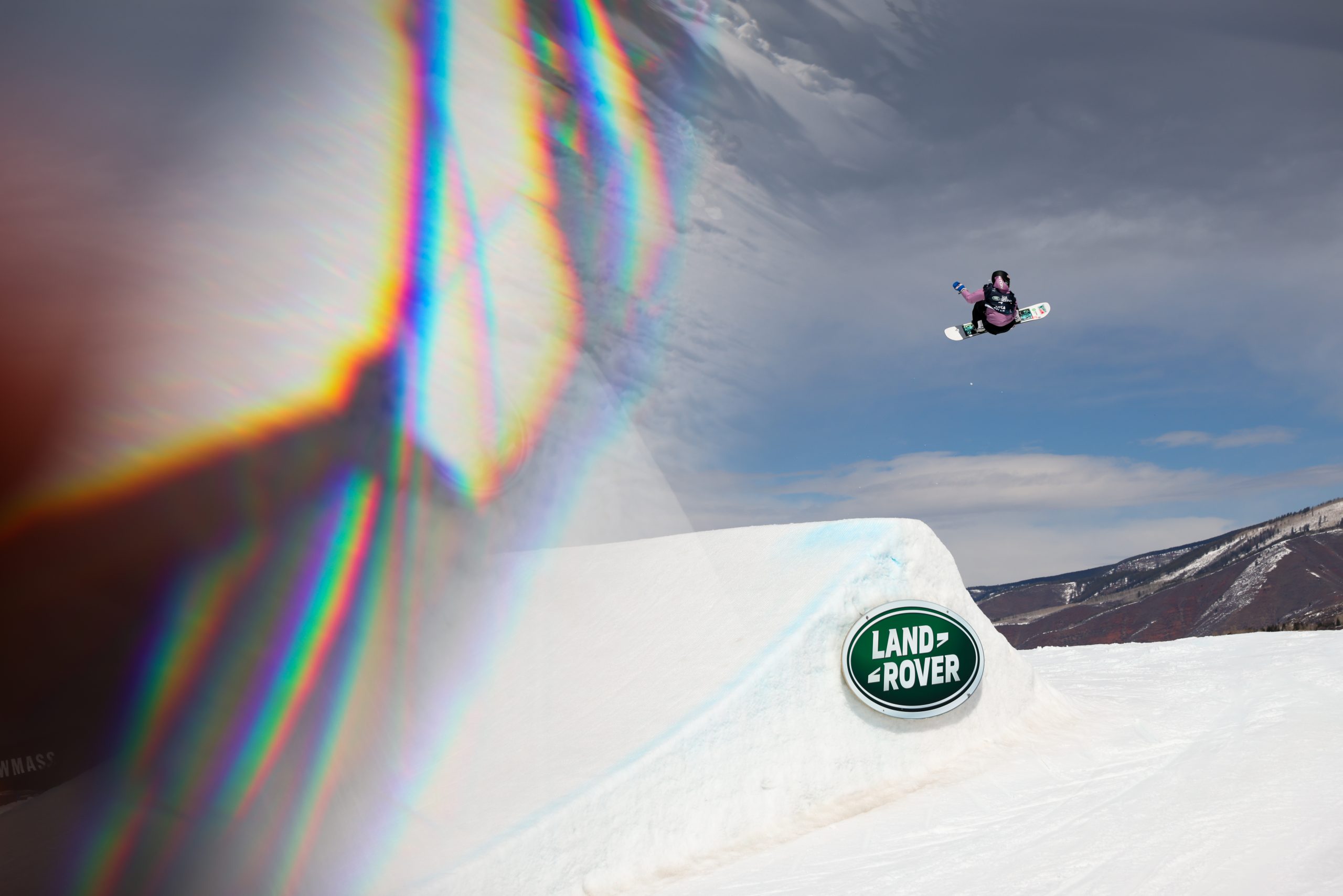
A U.S. Ski Team athlete finding air at the Snowboard Slopestyle Finals of the 2021 Land Rover U.S. Grand Prix – Aspen, CO. (Photo: @ussnowboardteam)
While the sports under the FIS umbrella grew rapidly, the organization’s structure remained largely unchanged under Kasper. The Neue Zürcher Zeitung described FIS as a “sedate club,” and suggested that there were inherent political reasons for the status quo, namely, that it concentrated power in the hands of Kasper. “We are a small association, the board consists of people who are not too involved,” Kasper said, adding, “That is also pleasant for me.” Kasper told the paper he could not remember ever failing to get a proposal passed.
Kasper held sway in part through a council that met just twice a year and remained largely, though not wholly, aloof and disinterested. Leadership on many levels ultimately fell to Kasper, so much so that when World Cup race organizers ran into problems, they went directly to Kasper for assistance. “I’m a Vice President of FIS,” said Paine, “that and five dollars buys you a cup of coffee at Starbucks—there was one guy who ran the organization. He led the organization in a very typical sort of old fashion IF [International Federation] way,” said Paine, “It was very hierarchical, but we weren’t the only IF run that way.”
Kasper was cautious about turning ski events into a commercial spectacle. In 2001, he said, “There is a certain balancing act between putting on a show and what I would almost call prostitution.” The idea, and phrase, would become a recurring theme for Kasper. Wary of marketing, FIS mostly offloaded the task to a separate entity in 2009— FIS Marketing AG—a concoction between FIS and two competing marketing firms. In total, it employs 8 people. Kasper shrugged off criticism of its laconic strategy, saying, “We are still a sports association and not a commercial company.”
“Kasper is an old-school functionary who primarily wanted to preserve the old,” Hauri wrote. “He has rejected numerous reforms. The FIS could certainly have grown significantly more, but Kasper always resisted too much marketing.”
Structurally, the organization did little to develop under Kasper, even as the sport grew rapidly. Dexter Paine introduced a package of reform proposals that included more frequent board meetings, term limits, increased transparency and a restructured role for the president. “We introduced the reforms in 2014, 2016, 2018 and 2020,” said Paine, “so at multiple congresses.” Unfortunately, the reforms were never adopted under Kasper.
Instead, Kasper favored a system that allowed initiatives to work their way slowly through committees and Kasper deftly maneuvered to ensure reforms he resisted were put to rest. The Neue Zürcher Zeitung reported that Kasper directed the FIS board to send the reforms that Paine introduced to the good governance working group, headed by Janez Kocijančič, (who passed away in 2o2o) and who was then a Vice President of FIS and a counselor since 1981. Under Kocijančič’s review, Kasper could be assured that the reforms would fester and eventually be forgotten.
In the later years of Kaspers’ incumbency, the ignored reform measures piled up and the backlog of inaction frustrated many ski nations. “IFs tend toward inertia and not toward action,” said Paine. “I would describe my experience on the council as being frustrating. It was an organization that really didn’t want to change but now is our opportunity for change and we’re really very much looking forward to being part of building a more modern FIS under Johan Eliasch’s leadership.”
Though Kasper never faced a contested election, he did have a political foe in Peter Schröcksnadel—the President of the Austrian Ski Federation. Frustrated with FIS, in 2009 Schröcksnadel openly rebelled with the formation of a breakaway entity—the Continental Association—which was joined by Urs Lehmann, the president of Swiss Ski, and runner up in the 2021 FIS election. In the end, the breakaway organization never materialized as a viable alternative to FIS. Through some method, Kasper found a way to tame his rival. “In the beginning he [Schröcksnadel] was against everything, on principle, the votes ended 16:1,” Kasper recounted in 2018. “But I was able to control him.”
As Hauri put it to FasterSkier, “Kasper understood perfectly how to keep calm in the FIS. He could also hold out until a storm or criticism had passed.”
Part of this method of control was through the FIS voting system. Each full member ski association receives between one and three votes depending on its size as a ski nation. 73 associations have voting rights, of which a good number have only rudimentary ski programs. Associations such as Mexico, South Africa, and Hong Kong each receive a vote. In that way, voting power within FIS remains in the hands of small ski associations, many of them from places without much snow. The 18 large ski nations comprise a 43 percent share of the votes, insufficient to maintain a base of power on their own. “He must have watched the small nations well,” wrote Hauri, “which helped him for the support. In the whole 23 years, there has never been an opponent.”
Kasper managed to keep FIS free from corruption scandals that have plagued other sport federations. “I have to say he’s an incredibly moral and ethical guy,” said Paine. “FIS never had many of the issues that biathlon had where ultimately the transition occurred because they threw out the President, so that really speaks to Gian Franco being a really honest, straightforward guy.”
A 2019 report by Play the Game on sports governance found that FIS received an overall score of 74%. FIS scored highest on transparency and societal responsibility, and lowest on democratic processes, and the report placed the organization amongst the best run federations. By comparison, scandal-plagued biathlon ranked low on the list, with an overall score of 39%. (Since that time, the International Biathlon Union has implemented massive reforms including the formation of the independent Biathlon Integrity Unit.)
—
At the most recent FIS Congress, delegates elected Johan Eliasch, the billionaire CEO of ski company HEAD. He won 54% of the vote.
“We were big fans and big supporters of Johan and are very happy that he was elected the next President,” said Paine. Eliasch’s campaign was also supported by others from the U.S., notably Secretary John Kerry, the current Climate Envoy for the Biden administration.
Kikkan Randall wrote FasterSkier that she thought Kasper’s “perspective was a little conservative and ‘old school’ at times, and while we are grateful for his leadership over the years, it was time for FIS to get some fresh new thinking.”
With Eliasch as FIS President, there is now a receptive audience for the reforms that Paine has called for over the past eight years. “We’ve been very outspoken,” said Paine, “that we need a lot more transparency around financials and executive compensation. We are advocates for using the significant cash reserves for increasing prize money for athletes, and to put more money into athlete safety. It’s just very important that we become more athlete centric with a focus on increasing prize money, safety, and youth development.”
Paine continued, “While Gian Franco certainly had his shortcomings and said many things that we did not endorse, it’s important to thank him for working at FIS for 40 plus years; he really gave his heart and soul to the organization.”
Due to a medical event, Kasper was not able to attend his final FIS congress.
“We didn’t get a chance to say thank you at the Congress, and whether you agree with his views or don’t agree with him, I think it’s really important that we all say thanks for what he has done for the sport. Not everything we wanted got done, but during that time the number of ski and snowboard events at the Olympics has increased significantly. Today we represent 52% of the winter Olympic medals, the dominant winter sports federation, and he had a big part in creating that success. Despite our frustration, I hope what’s not lost is our thanks to a guy who gave his life to the sport and FIS.”
In 2019 Kasper was asked how his career will be remembered, and he reminisced in his typically blunt fashion, “I may have managed more than anything else, but one thing is certain: I kept this pig heap together.”
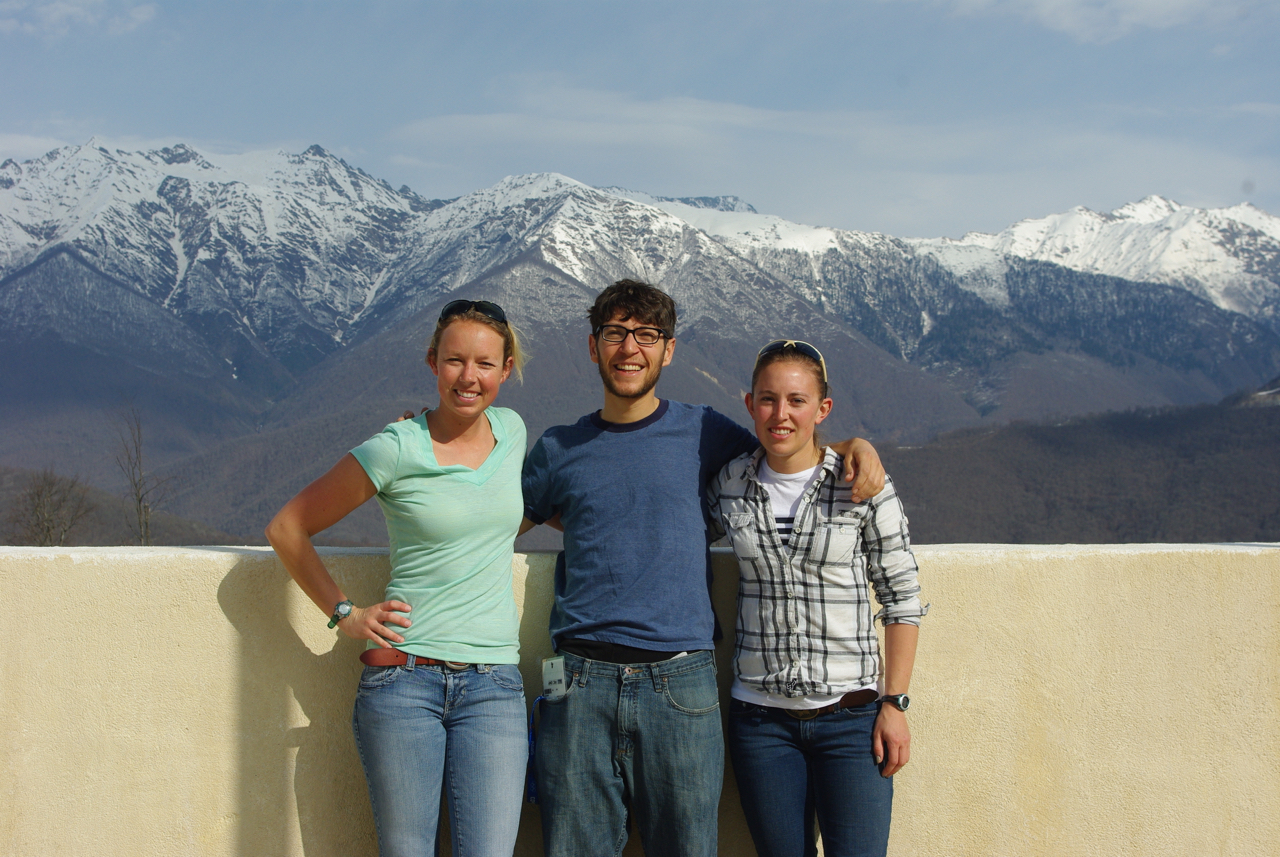
FasterSkier’s Alex Kochon, Nat Herz, and the author (Chelsea Little) at the 2014 Olympics in Sochi, Russia. Little did we know what was going on behind the scenes of those Games. Looking back at our coverage of the 2014 Olympics, I’m very proud of the work we did. But I’m not too proud to say that while we thought we had a realistic understanding of international sports governance, we were still naive to its incredible inertia.
The following is an editorial written by FasterSkier’s Editor-at-Large Chelsea Little, who has been covering doping in sport, specifically cross-country and biathlon, for the better part of the last decade. The opinions expressed are her own and do not necessarily reflect those of other FasterSkier staff.
The athletes had been disqualified from the 2014 Games by an International Olympic Committee (IOC) Commission. This was after more than 18 months of buildup in which the world learnt of systematic manipulation of the anti-doping process by the Russian state security apparatus at those Olympics.
I was both shocked, and not shocked. When all these athletes had been disqualified by the IOC and handed lifetime bans from Olympic competition, I knew in my heart of hearts that it would be undone (I’ll explain why below). But I hadn’t, somehow, put any thought into how exactly that would come to pass. So on one level, I was surprised, even if on another level I wasn’t.
When the news broke, I had written a profanity-laced all-caps message on our company Slack channel. On Twitter, I wrote, “I am so tired. That means that they have won.” That’s about all I could muster.
“I’m sure you are extremely disappointed by the CAS ruling,” one member of my extended family wrote in an email, knowing how many nights and weekends I had spent covering this story, how many hours and days of my personal life I had erased to chase it, because doing so does not pay the bills if you work for a cross-country ski website in America.
And I was disappointed.
I had thought that those nights and weekends would help make a better sporting world, help bring cheating to light, help hold the powers that be in sport accountable and call on them to do a little better.
But it felt like all that work had accomplished nothing, not changed a single thing to make nordic sports more fair.
I can only imagine how the athletes felt. The ones who found out that they would not be receiving medals after all, medals that they felt had been stolen from them by cheaters, medals that they had been slated to finally receive but now would never see.
I can only imagine.
More than anything, I was disappointed because I didn’t understand. I’m an analyst. No analysis I could do would explain to me just what had happened because CAS did not release a reasoned argument for their decision, which, as USADA General Cousel Bill Bock pointed out, is ludicrous. So at the moment we don’t know why these athletes were cleared; we only have speculation and hearsay.
In that decision, an arbitration panel wrote that they trusted the statements of whistleblower Grigory Rodchenkov and investigator Richard McLaren.
That testimony that is widely speculated to have been found untrustworthy by the arbitration panel which more recently cleared the athletes.
There is a difference between provisional suspensions and rule violations, and maybe that’s the root cause (or maybe it’s not; one day we will find out).
But if two different arbitration panels can come to two completely different conclusions about whether evidence is trustworthy, then what is the point of a “high court” of arbitration? That’s disappointing.
On the other hand, maybe the new panel did believe that the whistleblower testimony was true, but that witness statements alone are not enough to prove a doping violation. We’ll set aside for a moment all the forensic evidence [see footnote 1].
If that’s the case, it’s even more disappointing. It means that all of the rhetoric over the last few years about putting more resources into investigations will not actually result in cleaner sport, unless there is a positive test or the presence of drugs or medical equipment (see: Austrian skier Wurm, Russian skier Pankratov).
It would mean that the World Anti-Doping Agency’s new “secure digital platform” for whistleblowing — and statements by athletes and doctors and team staff — are all useless to anti-doping unless they are followed by physical evidence of prohibited substances or methods.
But we don’t know the panel’s reasoning. This is all just speculation.
I was tired and disappointed because my job as a journalist is to take complicated things, and make them make sense to our readers.
Here, there was nothing to work with. There was nothing to explain.
A second suggested storyline is that the IOC set up the cases to fail, so that it would look like they tried to do something heroic, but in the end nothing would change.
To some extent, that is absolutely the case. Lifetime bans for doping have been attempted by the IOC before. Every time, they have been overturned. There was a zero percent chance it would work this time, either.
Did the IOC go further than that in “set up to fail”? Both storylines may be true. Neither may be true. But each of these storylines is far too myopic in their attempts to explain what happened with this CAS decision.
The reason that, in my heart of hearts, I knew that things would turn out just fine for most of these seemingly disqualified athletes, is that far more than CAS is broken [2].
Broken would imply that at some point the system worked. When was that, again?
This scandal has been going on for years. And in both it and other, non-Russia-related doping scandals, organizations have dragged their feet at every turn. There is no political will to keep sport clean. Ensuring clean sport would be hard. Nobody wants to do hard work. Universally, these organizations just want to run sporting events and for fans to be happy.
“We need to stop pretending sport is clean,” International Ski Federation (FIS) President Gian Franco Kasper [3] famously told New York Times reporter Rebecca Ruiz. “It’s a noble principle, but in practice? It’s entertainment. It’s drama.”
People were mad when Kasper said this, but it was an especially revealing comment. Maybe it is a testament to our optimism that we quickly moved on, focusing on how we would try to “solve” the problem of doping.
There have been individuals and groups who have worked passionately to uncover the truth, and done an admirable job. Beckie Scott at WADA [4] is one who comes to mind. But their work is always prevented from reaching its logical conclusion.
Let’s first look at the IOC, which has deservedly gotten a bad rap for dragging its investigations out for as long as seems humanly possible.
The IOC has certainly not put the resources or good-faith effort into looking under every stone, or doing so quickly. That’s how we got the first Sochi disqualifications – like Legkov’s – being announced in November of 2017. Most of the criticism leveled at the organization on this front is absolutely justified.
In all the time between May 2016, when the Sochi scandal was first broken by the New York Times, and November 2017, the IOC did very little. The decision banning Legkov relied mostly on the same evidence that had been in the McLaren Report.
The IOC Commission asked new experts to revisit the issues of scratches on sample bottles and salt content of urine samples. Basically, they repeated a lot of work which had already been done, expanding it to a larger number of samples but taking longer to do so by insisting on using different experts, who nonetheless came to the same conclusions.
For Legkov, all of this resulted in the same evidence that had been in the McLaren Report: that Legkov’s sample bottle from after the 50 k, which he had won, showed signs of being tampered with.
Sure, the IOC Commission got testimony from Rodchenkov. But that only at the last minute, perhaps because they were publicly shamed when it was revealed that they hadn’t contacted him.
It’s fair to criticize the IOC for its anemic investigation, but this is not just an IOC problem, just like the disqualifications being overturned is not really a CAS problem.
Look further. Since the McLaren Report, few other governing bodies have been doing better.
“We like to play coy, like the cat wagging its tail when the mouse runs in front,” IBU Vice President for Medical Issues Jim Carrabre told me back at the 2014 Olympics, in an interview that led to the IBU’s media chief calling me into his office at the press center and dressing me down for talking about things that he would rather journalists didn’t ask his organization’s board members.
“It goes by once or twice, and then the third time it gets bitten,” Carrabre said at the time.
He was referring to blood profiles, a topic that has recently gained prominence.
For years I have been told by various people that the IBU has cases in the works, that soon I will hear about them, that they know some people are doping and are about to catch them.
I don’t doubt that Carrabre is a true believer in the anti-doping fight. He gets pretty fired up about things, as does fellow Executive Board member Max Cobb.
But the cases that I heard rumors of, even promises of, have never materialized.
The Athlete Biological Passport (ABP) was supposed to revolutionize anti-doping and indicate if athletes had been blood doping even when no illicit substance was detected. That sure would have been handy due to the drugs’ short detection windows and athletes’ and doctors’ strategies of “microdosing.”
But there have been no doping bans on the basis of ABP in skiing or biathlon [5]. I don’t think that even the most optimistic of fans really believes that this is because there is no blood doping going on.
What does that mean? That ABP doesn’t work, that it wouldn’t hold up in arbitration? Or that something else is going on?
It would be hard to look at IBU President Anders Besseberg’s behavior in the last two years – for instance, the IBU’s continued insistence that it’s totally fine to hold events in Russia, or his demeanor and statements during meetings with athletes – and conclude anything other than that he is sympathetic to Russia and would even more generally like to simply pretend that there was no scandal in his sport.
Having a few true anti-doping crusaders on a governing board does not clean sport make. I don’t want to put words into their mouths, but probably, it just makes these crusaders even more frustrated.
“When the McLaren Report first came out, I thought that doping was the greatest threat to our sport,” U.S. biathlete Susan Dunklee told FasterSkier in January 2017. “However after watching the last few weeks play out, I believe that the IBU’s reluctance to meaningfully act to prevent doping is the greatest threat to our sport.”
Then there is FIS. As I’ve repeatedly pointed out, there were 46 skiers implicated in the McLaren report. Not all of them, obviously, were at the 2014 Olympics or Paralympics, yet as far as anyone can tell, FIS has done nothing to investigate the other cases, some of which include alleged anti-doping rule violations.
(Which, by the way, how can I get in on that? Hi? I’m over here! I know a lot about doping in skiing and I also how to do statistics!)
The data is interesting, but nothing can really be done with it, as it is old and from the days before ABP was a policy. Without the journalists or their experts explaining how they decided what an “abnormal or highly abnormal” blood profile is, it’s impossible to judge what percentage of the athletes they identify as potentially having doped actually were likely dopers.
But perhaps this indicates that someone within FIS is frustrated with how things are going. If you cared about skiing being clean, cared about doing your job well, and listened to Kasper say things like “sanctioning entire countries is purely political and I do not agree with this,” you might be frustrated too.
And here’s the last thing. In this whole scandal we are talking about one country. That’s Russia, and it has led to a lot of ideological discussion.
But it’s not really about Russia.
Yes, the IOC and the IBU and FIS want to keep Russia happy, because their sports are popular in Russia, the Russian athletes are talented and popular even outside the country, because Russia is great at hosting events, and because Russian fans travel all over to watch competitions. That’s part of it.
And yes, some commentators have complained that athletes are being punished just because they are Russian. They have complained that this is a U.S.-led effort reviving Cold War hostilities. That we are Russophobes. That we are hypocrites because American sports stars dope too, and/or that lots of countries dope but we just haven’t found out about it.
But again, that’s being far too myopic about things, and believing that this scandal is only a thing unto itself, not part of the bigger problem.
If this scandal had taken place with Norway, Sweden, Germany, the United States, or any other country at the center – the outcome or the (lack of) speed of its resolution probably wouldn’t have been much different [6].
I – yes, I’m among those journalists accused of being hypocritical and anti-Russian, I’ve even been compared to Nazis, gee that was fun – I would chase this scandal just as hard if it had arisen in any of these other countries.
In fact, I would have investigated it with even more fervor if these were American or Canadian skiers and biathletes we were talking about. And presumably most of the evidence would have been in English, so I could investigate more effectively, without translating things I was looking for into Russian, searching the internet or evidence documents, and then translating the Russian back into English, in a crappy game of “telephone”.
I think that the North American athletes I routinely interview are aware that if I found out they were cheating, I would have no remorse and they would have nowhere to hide.
Just as I’m not a hypocrite, these sports organizations aren’t, either – well, they are, but not in this way, not when it comes to nationality. The claims that various decisions just come from Russian money and bribes are missing the point.
Whether coming from Russia or elsewere, these organizations don’t want a big scandal. They don’t want to rewrite their results sheets. The athletes who missed out on medals they probably should have taken home? These organizations don’t really care about athletes.
They are just an unfortunate bit of collateral damage, but oh well.
Time will march on. A new race will be held. It will be an exciting race! We will all be caught up in it.
Maybe Pellegrino will upset Klæbo.
Maybe an American will finally win a medal.
Maybe Fourcade will mess up his first stage, but then climb back to gold anyway.
Maybe Makarainen will mess up all her shooting stages, and we will all watch rapt to see whether she can pass 15 people on the final loop. Maybe she can.
Maybe Harvey will finally truly become the Prince of Quebec, crowned with an Olympic medal.
Maybe the breakaway will succeed.
Or maybe the favorite will win, but we will be enthralled until the final moment, watching to see whether they will pull it off.
Soon, we will forget about those athletes whom we were wondering about, the ones who maybe probably should have a medal stashed in their safe deposit box somewhere and a whole lot more sponsor money than they have now.
Those athletes will slip farther and farther to the back of our minds. In the forefront will be the day’s competition – so amazing! – and the big happy family that is sport.
Actual clean sport is not, and never was, these organizations’ goal.
*****
Footnotes:
[1] On the topic of skiers who were cleared by CAS: Maxim Vylegzhanin’s sample from Sochi also had scratches on it and had an incorrectly reported specific gravity; the two other members of the men’s relay team also had marks on their sample bottles, and one had a sample whose specific gravity was too high to be believable; two sprinters had marks on their sample bottles and for one, there as also a foreign fiber inside the bottle. Julia Ivanova, whose ban was not overturned by CAS, had an impossibly high salt value in her urine sample.
[2] I actually think CAS does work. CAS handles far more than doping cases – they handle contract disputes, team selection, trades, anything you can think of that would need arbitration. And as far as I know, they do a good job. This is the first CAS decision that has left me truly baffled.
[3] Term limits, man. We really, really need term limits.
[4] I’m not going to talk in much detail in this piece about WADA, which alternatingly does the right thing and the wrong thing, and often does the wrong thing for a very long time first. But at least in the last year or so, WADA is no worse than any other group, and indeed maybe a bit better.
[5] Blood profiles have certainly led to targeted testing, which caught athletes before the 2014 Olympics. But nobody bothered to try an ABP case, that we know of. Nor, seemingly, did the biathletes that the McLaren Report alleges were doping – Olga Vilukhina and Yana Romanova – fail their ABP’s. Either ABP is not being used, or it is not being successful and the details of the cases are never made public.
[6] If the perpetrator of this scandal hadn’t been Russia, I think the main difference might have been the reaction within that different country. I don’t think the Norwegian public would react the same way the Russian public has. Each place has its own culture around sport and what it means, and government also plays various different roles in supporting and controlling sport. But the reaction from the international organizations? Things would probably be much the same.
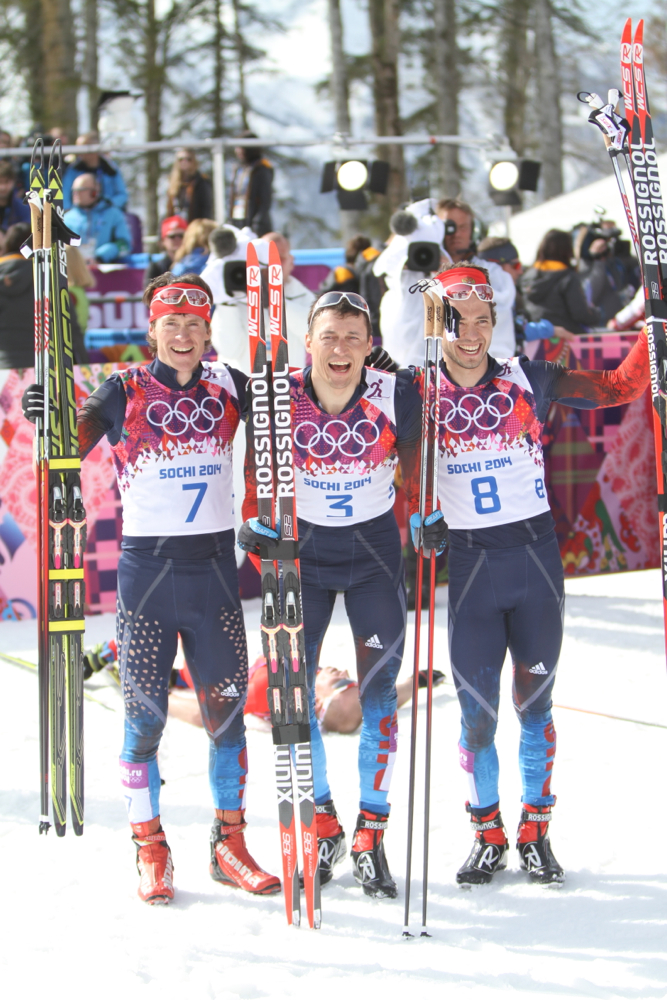
Alexander Legkov (center) and Maxim Vylegzhanin (left) are among the skiers served provisional suspensions for doping violations at the 2014 Olympics. Along with Ilia Chernousov (right, not suspended), they swept the 50 k mass start in Sochi.
The International Ski Federation (FIS) has provisionally suspended six Russian cross-country skiers implicated in doping violations at the 2014 Olympics. Two dozen more cases are proceeding without any suspensions to date. Meanwhile, Russia has given back the right to host FIS Cross-Country World Cup Finals in Tyumen.
“As a result of the current circumstances whereby the FIS competition season is in full swing and the competitions and sporting accomplishments of the athletes are being undermined by the shadow of the McLaren Investigation Report, the IOC has empowered FIS to undertake follow-up actions in its own competence with the alleged anti-doping rule violations that took place during the period of the Sochi 2014 Games,” FIS noted in their press release.
The IOC has jurisdiction over all anti-doping activity at Olympic Games. That means that any samples collected between Jan. 31 and Feb. 22, 2014 which tested positive for banned substances or showed signs of tampering are the responsibility of the IOC rather than a relevant international sports federation like FIS.
FIS cannot release the names of the athletes until disciplinary proceedings – in this case handled by the IOC – are complete.
If the names are to be released, FIS “leaves it to the athletes and the Russian Ski Association to do so.”
Update: multiple sources, including Russian website championat.com, are reporting that the six athletes are Alexander Legkov, Maxim Vylegzhanin, Evgeny Belov, Alexei Petukhov, Julia Ivanova, and Evgnenia Shapovalova.
The 28 cases apparently involve sample bottles which were tampered with.
“Prof. McLaren had investigated 95 samples of Russian athletes provided to him by the IOC,” the IOC wrote in their press release. “They led to the 28 athletes with evidence of sample manipulation. They have now been repatriated back to the Lausanne Anti-Doping Laboratory, and re-analysis has already begun on these samples looking for any Adverse Analytical Findings (AAFs). At this point in time, these 28 new cases are not AAFs, like a positive doping test. However, the manipulation of the samples themselves could lead to an Anti-Doping Rule Violation and sanctions.”
Elena Vyalbe, President of the Cross-Country Ski Federation of Russia, does not believe that athletes were doping. Instead, she blames the suspicious marks on sample bottles on Grigory Rodchenkov, the former Moscow anti-doping laboratory director. Rodchenkov fled Russia and became a whistleblower to the New York Times and WADA.
“I’m sure, I know that my athletes did not take anything,” Vyalbe told R-Sport, according to a translation. “We will insist on this fact… Athletes have no access to the samples after delivery. How could they have inflicted damage on [the bottles]? The athletes themselves have not done this, and the federation also has nothing to do with this. It’s more likely just to dirty tricks by Rodchenkov… we very much hope for a fair conclusion of the investigation.”
a female skier tested positive to EPO and was apparently “quarantined”;
a nordic combined skier tested positive for the banned heart medication trimetazidine, but the test was reported as negative to WADA;
a female skier used exogenous testosterone and was “quarantined”;
another female skier had high testosterone, but the test was nevertheless reported to WADA as being negative;
and a male skier tested positive for phthalates, plasticizers used to soften blood bags, but the test was reported as negative to WADA.
There is no word so far on how FIS is investigating the non-Olympic cases, or a timeline of when provisional suspensions for those athletes may arrive, if appropriate.
World Cup Finals Out of Russia
Meanwhile, the Russian Ski Association has given back the World Cup Finals series set for Tyumen, Russia, in March. FIS will now have to decide where to relocate the races.
“The findings in the McLaren Report have seriously damaged the integrity of sport and we are determined to ensure the necessary measures are undertaken to punish the offences,” FIS President Gian Franco Kasper said in the FIS press release. “We will work together with the Russian Ski Association to rehabilitate the Russian cross-country skiing community and we sincerely count on their commitment to clean sport.”
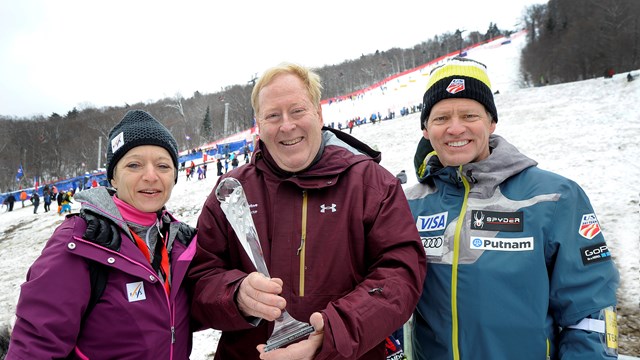
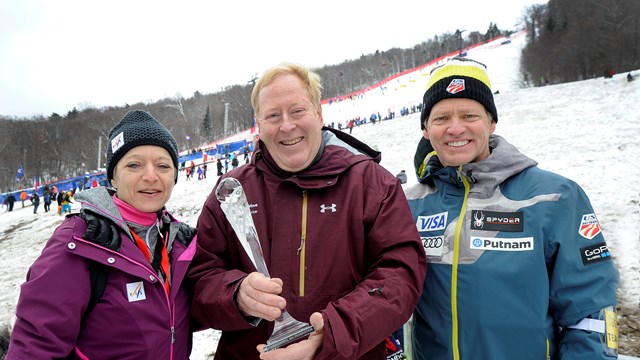
More lighthearted times: USSA CEO Tiger Shaw (r) with FIS Secretary General Sarah Lewis (l) and FIS Journalist of the Year Peter Graves (c) at the Killington Alpine World Cup nearly two weeks ago in Killington, Vt. (Photo: FIS)
Tiger Shaw, CEO of the United States Ski and Snowboard Association (USSA), was one of them.
“I am shocked by the level: the number of individuals colluding is shocking,” he said in an interview on Friday. “How anybody could have ever thought that something like this could be secret forever is incredible.”
Shaw said that in some USSA disciplines, there are no Russian athletes competing at a high level, so he expected past competition results to remain more or less unchanged.
For others, however, the implications were bigger. Cross-country skiing clearly falls into that category.
“Obviously it’s going to have an impact in terms of the athletes, where the results will be changed and their medals taken away and they will be banned,” Shaw said. “I presume that the federations will have to make all these decisions.”
The sport “skiing” appears 75 times in the Schedule of Samples and ADAMS Reports document that is part of the McLaren Report’s evidence package. McLaren and the World Anti-Doping Agency (WADA) have anonymized the athlete names, so lines of data cannot be linked to any individual athlete.
While the discipline is sometimes further delineated, for example as “skiing | cross country” (or “cross country skiing” – there is no consistent rule for terminology) it is difficult to tell how many data points correspond to which disciplines. Some entries are also labeled as “Skiing – IPC Cross Country”, but many just say “skiing”, leaving uncertainty as to whether they are from able-bodied or para-nordic competitors, regardless of the discipline.
Many of these 75 data points do not have information about what substances were detected in the samples, if any. But some clearly do: one for the blood-doping drug erythropoietin (EPO); another for a high ratio of exogenous testosterone; yet another for budesonide, a corticosteroid used in inhalers; and another for trimetazidine, a heart drug which, like meldonium, is a metabolic modulator which combats angina.
Another athlete tested positive for “phthalates”, plasticizers which are sometimes used in IV bags and are often assumed to indicate blood transfusions. They are also, however, present in other kinds of packaging.
In all of these cases the results were reported to WADA’s anti-doping test management system, ADAMS, as negative tests: no prohibited substances found. Translated emails used in the investigation also refer to some of these cases, showing that they were discussed between personnel who were supposed to be enforcing anti-doping rules.
The information has been forwarded from WADA to the 32 international sports federations (IFs) where athletes were implicated in the report, and has also been forwarded to the International Olympic Committee (IOC). It is up to those organizations to sift through the information and determine penalties and suspensions, or decide to do further investigation.
Shaw believed that the International Ski Federation (FIS) was taking the report seriously.
“I think they are going to take pretty swift action,” he said. “There are a large number of athletes that have to be dealt with. There’s no question that they will take swift and efficient action… our place is as a stakeholder and a component of international governance. Our role at the FIS level is that [USSA Board Chair] Dexter Paine is one of the vice presidents. So it’s a pivotal day and there’s a lot of work to be done.”
Some work was short-term, he said: determining sanctions for athletes implicated in the report.
But other work was long-term, in terms of dismantling the system which led to such systematic cheating in Russia.
Meanwhile, an increasing number of competitions were implicated in the coverup, some of which occurred after the 2014 Olympics, which was the catalyst and main focus of the report.
That has led U.S. and Canadian athletes in luge and skeleton to discuss a boycott of competitions held in Russia this year. Shaw said he understood their position. FIS has World Cup events in almost every discipline scheduled for Russia this season, and in mid-October FIS President Gian Franco Kasper said that Russia could be stripped of its right to hold those competitions depending on the outcome of the McLaren report.
“I don’t think anybody feels safe about being there, being in a country that had this high level of collusion,” Shaw said. “Each sport and each country is going to have to deal with it in their own way. For that, we work closely with the [United States Olympic Committee] and our athletes.”
Far from regretting if U.S. athletes spoke out on the doping issue, Shaw seemed to be relieved that more and more, they are doing so.
“The bottom line is that we absolutely stand behind, and believe in, clean sports and clean athletes,” Shaw said. “So we will stand behind any effort and make any effort in the long term to make sure that happens. And that means, to a degree, working through the system we have now, and working to help change it for the better, which a lot of people are trying to do, including, it sounds like, an increasing number of athletes. Thank goodness they are speaking up because it’s all about them in the first place, isn’t it?”
“The bottom line is that we absolutely stand behind, and believe in, clean sports and clean athletes. … Thank goodness they are speaking up because it’s all about them in the first place, isn’t it?” — Tiger Shaw, USSA President and CEO
Meanwhile, many Russian athletes likely implicated in the report are on the start lists for international competitions this weekend.
Shaw said that his message to U.S. Ski Team athletes was that they should continue to focus on excelling, and doing so clean.
“They put their heads down and they go out and race,” he said. “Due process must be followed…. Justice is going to be served, but any individual athlete, they have to take the longer view on how they can help change the system.”
Some were already doing just that.
“I’m going to take tomorrow to focus on the races and try to do a better job of processing and understand the Mclaren report after the race on Sunday,” cross-country skier Sophie Caldwell wrote in an email on Friday afternoon.
Johannes Duerr (second from right) during the Tour de Ski’s 35 k pursuit from Cortina to Toblach, Italy, in December. The Austrian was since kicked out of the 2014 Olympics for doping.
Doping has been in the news again, with the International Olympic Committee (IOC) announcing on Thursday that 16 more athletes from the 2008 Summer Olympics in Beijing had tested positive for banned substances, then adding 12 more to that tally on Monday from the 2012 Summer Olympics in London.
That brings the total number of athletes disqualified for doping at those two Olympics to well over 100.
The World Anti-Doping Agency (WADA) also held its Foundation Board meeting in Glasgow, Scotland, this weekend, agreeing on a whistleblower-protection program as well as a system of graded sanctions for countries who do not comply to the World Anti-Doping Code.
“The decision by the Board to grant WADA authority to develop a new, meaningful graded sanctioning system is welcomed by athletes; particularly, as it provides a direct answer to the call made by athletes earlier this year for a stronger, meaningful system of consequences for non-compliance,” WADA Athlete Committee Chair Beckie Scott, a former Canadian cross-country skier, said in a WADA press release. “If we all agree that WADA should be independent and empowered as the regulator of doping in sport, then how could we not agree to equip WADA with the tools it needs to do its job fully… On behalf of athletes, I feel confident in saying that we are pleased that this decision has been made today in the interest of clean sport.”
The system will reportedly have three tiers of sanctions, with countries committing the most serious and recurring offenses being barred from hosting the Olympics, World Championships and other major events. That would be applied to countries where the government interferes with anti-doping work or manipulates the testing sytem.
The first level of sanctioning would be a result of administrative problems, and is proposed to bring in assistance from WADA in order to return to Code compliance. The second level of sanctions would apply when there are problems in testing procedures, at which point countries will be assessed a fine.
Five countries are currently deemed Code non-compliant: Russia, which has been out of compliance since November 2015, but which has not faced any of the sanctions suggested above, although athletes in some sports have been barred from competing by their individual sports federations; Spain, which has been noncompliant since March 2016; and Brazil, Azerbaijan, and Indonesia, which were declared noncompliant at the Glasgow meeting.
In the future, such countries could face sanctions. But International Ski Federation (FIS) President Gian Franco Kasper does not see it as WADA’s place to offer such punishments.
“Sanctioning entire countries is purely political and I do not agree with this,” Kasper told Insidethegames. “WADA should not be a body which gives sanctions.”
He also did not appear optimistic about the future of clean sport.
“We need to stop pretending sport is clean,” he told New York Times reporter Rebecca Ruiz. “It’s a noble principle, but in practice? It’s entertainment. It’s drama.”
Russia, which is currently non-compliant with the WADA Code, is hosting World Cups in multiple ski and snowboard disciplines later this season, and FIS has made no public show of moving them.
Similarly, the International Biathlon Union (IBU) will see Russia hosting World Cups in March 2017, and also recently awarded Russia the 2021 World Championships.
That was a topic of discussion at the WADA Foundation Meeting. The Compliance Review Committee is beginning action against the IBU, which it sees as having jeopardized its own compliance by awarding a major event to a country which does not comply with the Code.
The Code states that international federations like the IBU must “do everything possible to award World Championships only to countries where the Government has ratified, accepted, approved or acceded to the UNESCO Convention, and where the National Olympic Committee, National Paralympic Committee and National Anti-Doping Organisation are in compliance with the Code”.
The IBU has been given until January to offer a satisfactory explanation to WADA for why the Russian city of Tyumen was selected as the World Championships host site.
Therese Johaug celebrates her decisive victory in the second stage of the Ski Tour Canada, the 10.5 k classic mass start in Montreal, Quebec, in 2016. (Photo: Flyingpointroad.com/NNF)
Interviewed by Norway’s Dagbladet newspaper at the Alpine World Cup opener in Sölden, Austria, International Ski Federation (FIS) President Gian Franco Kasper said that Norwegian cross-country skier Therese Johaug should likely get a four-year ban.
“It is first a foremost a national case now and it is up to the Norwegians to find a solution,” Kasper said. “After that FIS or WADA may appeal, and we must do so if nothing happens or whatever happens isn’t enough.”
He said that after receiving a four-year ban, Johaug could appeal to the Court of Arbitration for Sport and perhaps negotiate her suspension down by 12-18 months.
Johaug tested positive for the anabolic steroid clostebol on September 16, 2016. She has said that the drug was in a lip cream given to her by a team doctor to treat a severe sunburn at a training camp in Italy; Anti-Doping Norway has provisionally suspended her for two months while they investigate the case.
A final decision on whether and how to suspend Johaug will be taken by the Arbitration Committee of the Norwegian Olympic Committee. While Johaug could appeal the case to the Court of Arbitration for Sport if she feels the suspension is unfairly harsh – and she has signaled that she likely would, as she considers herself completely innocent – either the World Anti-Doping Agency (WADA) or FIS could also appeal the case if they believe that the World Anti-Doping Code has not been correctly applied by the arbitrators.
While admitting that he had seen no details of the case, Kasper said that FIS would do just that.
“Normally, if she is guilty, it is very clear that she should receive a 4-year ban,” Kasper said, according to a translation. “There really is no question about that. And then she can appeal to the courts, and normally she would then have her punishment reduced to 2 and ½ or 3-years, but that’s really just speculating.”
Christian Hjort, Johaug’s lawyer, found it inappropriate for Kasper to comment on the case without having seen documents from the investigation, which is headed by another governing body and is not associated with his own organization.
“I reacted strongly to FIS boss’s statements in advance of a pending case…This shows an alarming lack of understanding of [organizations’] roles and little confidence in their own judging bodies,” Hjort told Norwegian newspaper VG.
Kasper also said that he didn’t totally buy Johaug’s explanation that Trofodermin, a lip cream, caused her positive test.
“Listen, I haven’t seen the evidence,” he said. “That’ll be up to the medical experts to determine, but I have my doubts. Now, doubt doesn’t necessarily mean anything so we need to get all the facts on the table.”
Norwegian team doctor Fredrik Bendiksen – who has since resigned his position – allegedly bought Trofodermin at an Italian pharmacy and told Johaug that it did not contain anything banned by WADA.
Medications which contain prohibited substances are required to be labeled in Italy. Multiple sources have traveled to Italy to buy the drug, and all reported that the cardboard packaging contains a label warning of doping. The label is not visible on the front (display side) of the package, but is prominent on the back: “If the packets that there are pictures of now are the same as what Johaug’s doctor purchased, one can’t know what to believe,” TV2’s Mads Kaggestad said. “You would have to be blind not to see it.It is not possible not to see it.”
Nevertheless, Bendiksen says that he cannot remember seeing the warning, and the ski federation no longer has the cardboard packaging to determine whether the label was in fact lacking. There is no labeling on the tube of medication itself. However, Norwegian Olympic Committee statutes require that athletes investigate any medication they take to make sure that it does not contain prohibited substances.
FIS had previously expressed frustration regarding how Norway handled the case. Antidoping Norway did not notify FIS before the case was made public, which happened while Kasper and FIS Secretary General Sarah Lewis were at meetings in Finland.
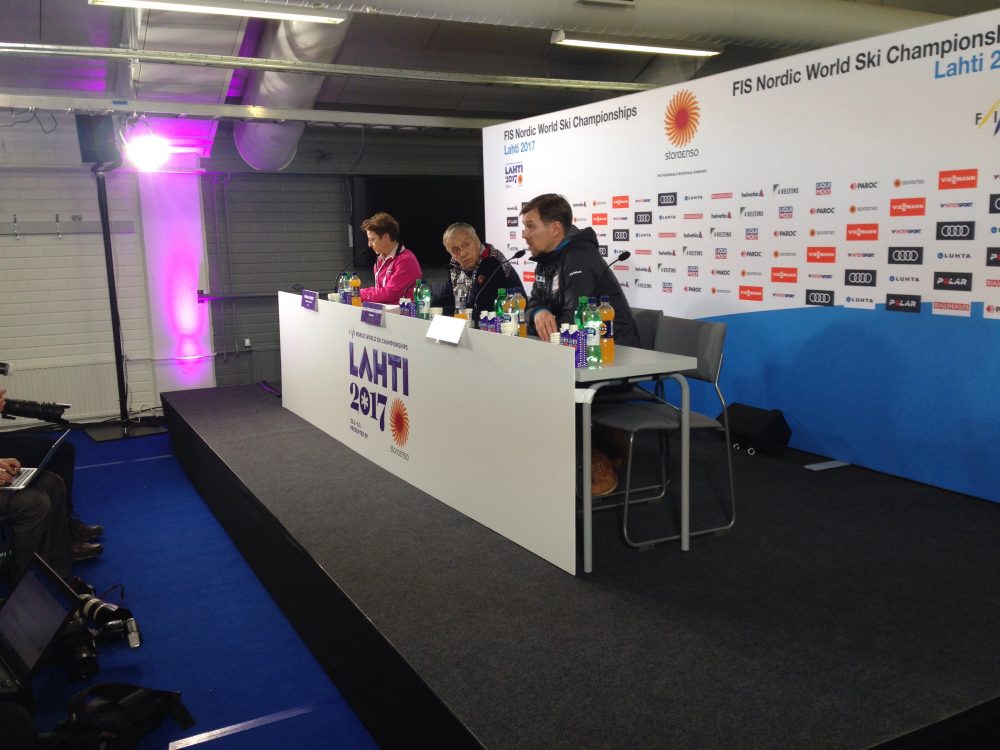
“I wasn’t happy about the way I was informed of the case,” Kasper said. “I was in a room full of journalists in Lahti and in the middle of my speech this guy raises his arm and calls out that Johaug had tested positive. And I’m giving a speech about doping, it was strange time to be informed.”
And that weekend, Lewis had told the media that “the Norwegian Ski Federation is facing some major challenges.”
Kasper agreed in the new Dagbladet interview, and said that he hoped the Norwegians would undertake the case with care.
“They’re doing what they can, but luckily they haven’t got much experience from similar cases,” he said of Anti-Doing Norway. “Up until now there’s no discussion about that but it really depends on what they do in the next couple of months. If they acquit the poor girl without any disucussion we will of course take action. If they can prove that she is innocent that would be nice but we’ll see.”
FIS was directly responsible for the case of Johaug’s teammate Martin Johnsrud Sundby. In that case, the ski federation did not issue a four year ban and let Sundby appeal. Rather, FIS concluded that Sundby had not broken any rules by using high doses of the asthma medication salbutamol. WADA appealed the case to the Court of Arbitration for Sport, and Sundby ultimately served a two-month ban.
Kasper now appears to be calling for a ban more than ten times as long for Johaug.
“We’ve had a year full of other doping cases so this is just two more cases that have appeared,” he continued. “I hope that it is a coincidence that they appear now because Norway has alays been a great example to us when it comes to dealing with doping. It is clear that they may have been unfortunate, but I never trust anyone in doping related matters. You never know what happens behind closed doors.”
For years, Norway emitted a strong message, and it went something like this: we’re a paragon of clean sport and clean athletes who happen to dominate the cross-country ski world. Within the last three months, that image has been tarnished. Norway’s leading skiers Martin Johnsrud Sundby, and as of this past week, Therese Johaug, are embroiled in separate doping violations. And along with that news, sport-governing bodies like the World Anti-Doping Agency (WADA), the International Olympic Committee (IOC), and the International Ski Federation (FIS) are attempting to muddle through a post-McClaren Report world.
FasterSkier Editor-at-Large Chelsea Little on a trail run in the Alps. Little is based in Zurich, Switzerland. (Courtesy photo)
In this podcast episode, FasterSkier Editor-at-Large Chelsea Little gets front billing as she dives into some of her recent reporting involving nordic sport, doping and how to move forward. Little also gives some context to the Sundby case and fills us in on some of the details swirling around Johaug’s positive doping test.
From the 20,000-foot perspective, the leaders of anti-doping, presumably institutions like the IOC and WADA, continue to figure out how best to protect sport and athletes, and their own interest. After the IOC’s recent meetings where they issued a statement, or what they call a declaration, describing cultural norms of a new WADA, Little was still unsure how to decipher how the instututional players will modernize.
Little remarked that the language within the document is vague. “And somebody has to sort of get to the bottom of what that actually means, if you think that they know what that means,” Little said.
Razor-sharp logic to describe the back and forth world of doping in sport.
Click the play arrow below to listen to the podcast.
International Ski Federation (FIS) President Gian Franco Kasper believes the world’s top anti-doping agency had overstepped its bounds in punishing countries who do not comply with its code, according to in a recent interview with Inside The Games.
The 72-year-old Swiss has been a member of the World Anti-Doping Agency (WADA) Executive Committee since 2003. He has also been a member of the International Olympic Committee (IOC) since 2000, and currently heads the Association of International Olympic Winter Sports Federations.
“I have been long enough in the Executive Board of WADA to have my ideas about the restructuring and about what is necessary,” Kasper said in the interview. “It [WADA] should be a testing and technical body rather than making political decisions. Politics should not be in the hands of WADA.”
His view may ultimately come down to one question: is it the job of anti-doping agencies to suspend individual athletes, or to ensure that entire national sports systems comply with the WADA Code? Kasper appears to come down on the side of the former, as he later called efforts to sanction countries who are not Code compliant “politics”.
On Saturday, Kasper will be one of many sports leaders participating in a summit held by the International Olympic Committee Lausanne to review the WADA anti-doping system. (Kasper will call in from South Korea, where he is inspecting the 2018 Olympic preparations.)
For several years, the eyes of the sports world have been on WADA and their handling of state-sponsored doping by Russia and cover-ups by the international governing body for track and field.
WADA’s response after the violations were revealed was initially weak. It did not act for years on information from Russian whistleblowers and its former top investigator, Jack Richardson, revealed that his work had been hampered by the organization’s leadership, specifically current president Craig Reedie.
But by the spring of 2016, WADA was taking a harder line, recommending a total ban of Russia at the Summer Olympics in Rio de Janeiro.
It was the IOC who walked back that effort, instead leaving it up to each international sports federation to decide whether Russians could participate. Russia ultimately sent 291 athletes in 26 sports.
WADA has also recently recommended harsher penalties for countries which do not adhere to the WADA Code, the international agreement which governs anti-doping efforts.
“The World Anti-Doping Code is very clear in this respect: it is the International Federations’ responsibility to ‘do everything possible to award World Championships only to countries where the Government has ratified, accepted, approved or acceded to the UNESCO Convention and the National Olympic Committee, National Paralympic Committee and National Anti-Doping Organisation are in compliance with the Code’,” WADA told Inside The Games. “Since November 18, 2015, the Russian Anti-Doping Agency has been deemed non-compliant with the Code. In light of this, WADA has sought further clarification from the IBU.”
Many in the sports world agree that additional sanctions for noncompliance are desperately needed. Previously, WADA worked primarily to help nations achieve Code compliance but had few tools to punish them if they regressed.
“WADA is independent and they need to be given the authority and the seniority to impose sanctions and ensure that they’re the ones who are responsible for compliance,” Canadian cross-country skier Beckie Scott, the chair of WADA’s Athlete Committee, told USA Today.
Meanwhile, earlier in October WADA strengthened its partnership with Interpol, the International Criminal Police Organization, with “Project Energia” to investigate the link between organized crime and sports doping.
That is the kind of work WADA should be doing, Kasper asserted, rather than deciding how to punish non-Code Compliant countries.
One of his concerns seemed to be potential inconvenience for sports federations organizing major events.
“This code-compliance idea causes all kind of problems,” the FIS president said.”A country like Spain, for instance, might be code compliant today and not code compliant tomorrow… This fight against doping is, in my eyes, not a political fight.”
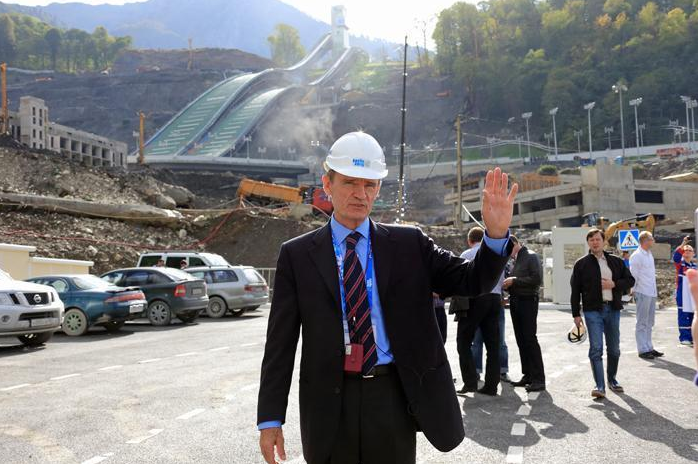
The IOC Coordination Commission completed its eighth site visit to Sochi last week. FIS president Gian Franco Kasper was unimpressed with the preparation at the ski venues. (Dave Jarrett photo)
If the ski arenas currently under construction in Sochi, Russia, remain at their current size, the International Ski Federation is going to be unhappy with spectator capacity for Olympic ski competitions come 2014. International Ski Federation President and International Olympic Committee member Gian Franco Kasper criticized the venues for being unprepared for the Games based on his observations from last week’s site visit.
At a Tuesday press conference in Cavalese, Italy, for the Val di Fiemme World Championships, Kasper fielded questions about his recent inspection of the Olympic venue. “We were shocked at what happened to the audience,” Kasper said according to German ski news site xc-ski.de. He also thought transportation logistics were sub-par: “[The] road access is completely misjudged,” he said.
Organizers estimate that 7,500 spectators will be able to watch ski jumping, for example, an event that will be held directly adjacent to the cross-country arena. Seating includes specially designated sections for media and event personnel, so Kasper expects the real number of available tickets to be inadequate. FIS events constitute “50 per cent of the medal decisions” at the Winter Games and should be treated accordingly, he said.
Last week’s site visit was the eighth one of its kind since construction began in Sochi, and at its conclusion IOC Coordination Commission Chairman Jean-Claude Killy declared the venue on its way to delivering top-quality Games for all stakeholders in 2014.
“It all bodes well for a successful season of test events ahead, as well as for a great legacy left behind for the local population,” Killy said in a Sochi 2014 press release.
There are several competitions scheduled in Sochi this winter as part of a key pre-Olympics test season. According to Organizing Committee President Dmitry Chernyshenko, an unprecedented 47 total test events will take place over the coming months to “check the venues and surrounding infrastructure to ensure we’re 100 per cent prepared.”
The FIS cross-country and nordic combined World Cups both stop in Sochi in early February. Nordic combined athletes already competed at the venue for the FIS Summer Grand Prix this July.
Despite his concerns, Kasper believes there is still time for improvements to the site. “These are problems [to be] solved in the coming months,” Kasper said. Sochi organizers will be present at another press conference in Cavalese later this week, and he encouraged journalists on Tuesday to take the opportunity to ask them critical questions.
Russian cross-country skier Nikolai Pankratov was stopped at the Swiss border in November with suspicious drugs and intravenous equipment.
The International Ski Federation (FIS) will consider further sanctions against the Russian Ski Association this weekend at its autumn council meetings in Oberhofen, Switzerland.
After withholding some $185,000 in funding from the Russians at its June meetings in response to a string of anti-doping rules violations, FIS officials will now consider whether to levy additional fines or even strip the country’s membership rights—though such measures are unlikely, according to Luke Bodensteiner, the U.S. Ski and Snowboard Association’s vice president for athletics.
At the June meetings, FIS gave the Russians a series of ultimatums: get rid of the coaches of athletes found guilty of doping; install a new group of officials and trainers who were not associated with rule-breaking; and deliver a report on the country’s progress in its anti-doping fight by November 1.
That report was submitted on time, and the issue will be considered this weekend by the council, an 18-member committee made up of prominent figures in skiing from around the world—including U.S. Ski and Snowboard Association President Bill Marolt.
Given the Russians’ efforts since June—they fired at least eight coaches and support staff, according to an AP report last week—Bodensteiner told FasterSkier that he did not expect to see additional sanctions emerge this weekend, though he said that any more violations in the future would probably still result in penalties.
“I can’t imagine a scenario where they haven’t produced a good plan,” he said.
In the AP report published last week, FIS President and council member Gian Franco Kasper also said that he was “very optimistic” the country would avoid sanctions, and he praised the country for taking the problem “very seriously.”
However, Bodensteiner added that the agenda noted the case of Nikolai Pankratov, a Russian skier who was detained at the Swiss border in September with a suspicious drug called actovegin, as well as equipment for intravenous injections, the use of which is banned under FIS rules.
While Pankratov is not a member of the Russian national team, Bodensteiner said that the country’s ski federation would probably still be held accountable for the actions of any of its athletes.
“FIS doesn’t really differentiate if you’re on the national team or not,” he said. “If they’re in your nation, they’re your responsibility.”
According to Bodensteiner, the discussion is slotted in the middle of the weekend’s agenda, meaning that it could occur either Saturday or Sunday. He said that FIS Doping Panel Chair Patrick Smith, a Canadian superior court justice, would be the council member making any recommendation for action.
Natalia Korosteleva (L) and Irina Khazova (R), both of Russia, after winning a bronze medal in the team sprint at the 2010 Olympic Games. Khazova returned last season from a two-year doping ban.
After more than a half dozen doping cases among Russian skiers in the last two years, the International Ski Federation (FIS) will consider sanctions against the country at its upcoming meetings in Turkey next week.
Under FIS rules, Russia’s athletes and coaches could be banned from participating in races, events scheduled in the country could be cancelled, or its officials could be stripped of voting rights at future meetings.
In an e-mail to FasterSkier, FIS Secretary General Sarah Lewis confirmed that a “full report in regard to the situation with doping cases involving Russian athletes” is on the agenda in Turkey.
Sanctions can be levied against a country if four or more of its athletes are caught doping within a 12-month period—which is the case for the Russian team. Natalia Matveeva, Eugeni Dementiev, Julia Tchepalova, and Nina Rysina all tested positive for the blood-boosting drug EPO in the winter of 2008-2009, although reports of the latter three cases did not emerge until last summer.
FIS did hold Council meetings in the fall of 2009, after the news of all four positive tests had emerged, but did not address the issue. In the lead-up to the Olympics, the Russians began drawing more scrutiny, and when another doping case arose in January, FIS President Gian-Franco Kasper released a statement saying that the issue would be taken up in Turkey.
Without pointing fingers at any particular nation, a number of athletes and coaches have alleged that some teams operate systematic doping programs, in which coaches or doctors administer all of their athletes with the sameillegal products or techniques.
In an interview with FasterSkier at the Olympic Games in February, Rasmus Damsgaard, who runs the drug-testing program for FIS, said that he had not seen evidence of doping programs within full teams.
But Damsgaard did say that among some of the former Eastern Bloc countries, he had observed “clusters” of athletes with suspicious test results.
“I’m not aware of the distribution of new and old coaches, doctors,” he said. “But there are groups of skiers that are consistently having fluctuations that are closing up on sanctions…identical fluctuations.”
And on Tuesday, Damsgaard said that while FIS’s testing has tailed off after the Games, he stood by his remarks.
“This is definitely still a concern to me,” he said.
In an e-mail, Luke Bodensteiner, who will attend the Council meetings as a representative of the U.S. Ski and Snowboard Association, said he would not speculate whether FIS would go through with imposing sanctions on the Russians.
In 2006, when the last significant doping scandal occurred, with the Austrian team at the Olympic Games, Bodensteiner said that “FIS was well coordinated with IOC [the International Olympic Committee] to determine and implement sanctions on a number of different levels.”
That case saw Austria’s head coach, Emil Hoch, slapped with a lifetime ban from FIS competitions (though that was later reduced to 15 years), while the IOC levied a $1 million fine against the country’s national ski federation.
But in this case, Bodensteiner said, Russia has already made some of its own changes, like bringing in new leadership for its Olympic Committee—which may make the Council less inclined to impose penalties. Alexander Zhukov, the new president, has said that old assumptions about doping should be eradicated “with scorching steel.”
And while the country certainly has had no shortage of doping cases over the past two years, it did recently create its own independent agency, Rusada, to perform testing.
“The new leadership has spoken clearly and publicly about the critical nature of anti-doping,” Bodensteiner said. “This is an important first step that was missing in 2006, and a cultural change that is certainly welcomed by many.”
But Kris Freeman, a top American skier, said that he would not be satisfied unless officials from the Russian ski team were forced out.
“I don’t blame the athletes so much as their staff,” he said. “The coaches and the whole administration seem to believe that doping is a part of the sport.”
While the coaches need to go, Freeman added, Russian athletes should be prohibited from racing before a new system is in place.
“Until they get those coaches out of there,” he said, “they have no right to be in a World Cup.”