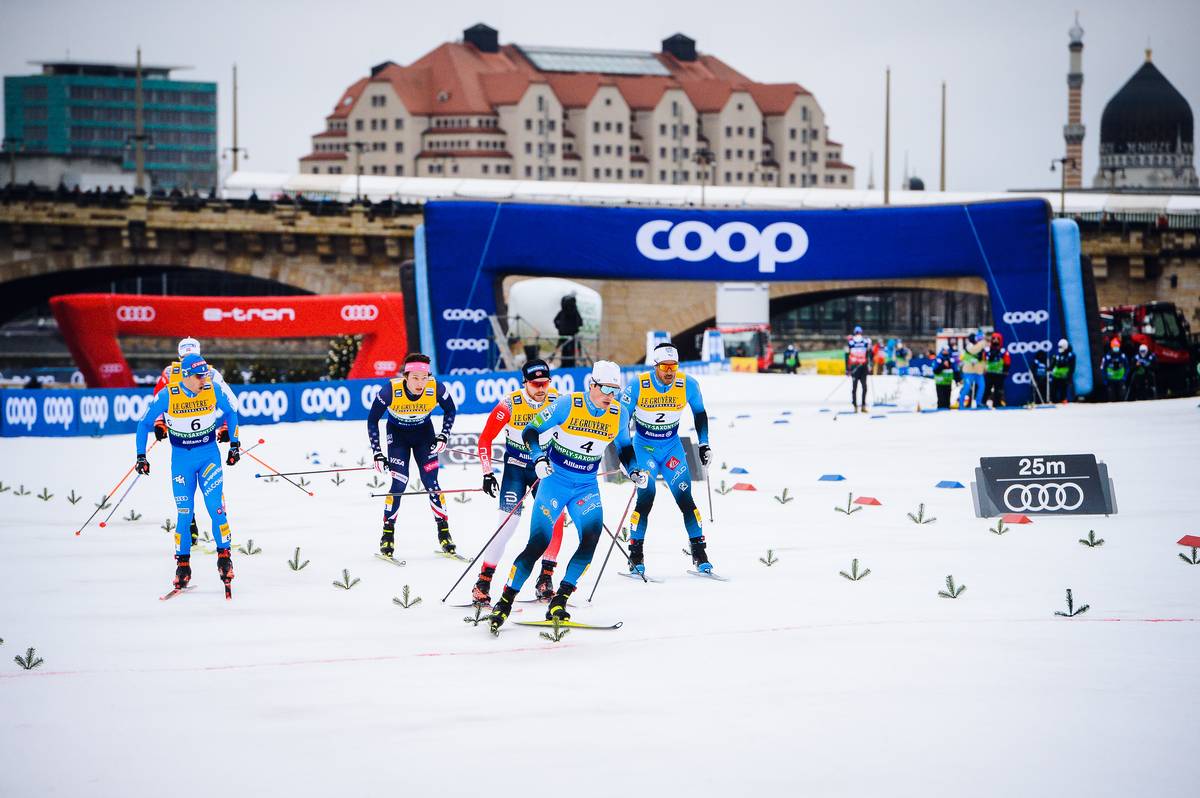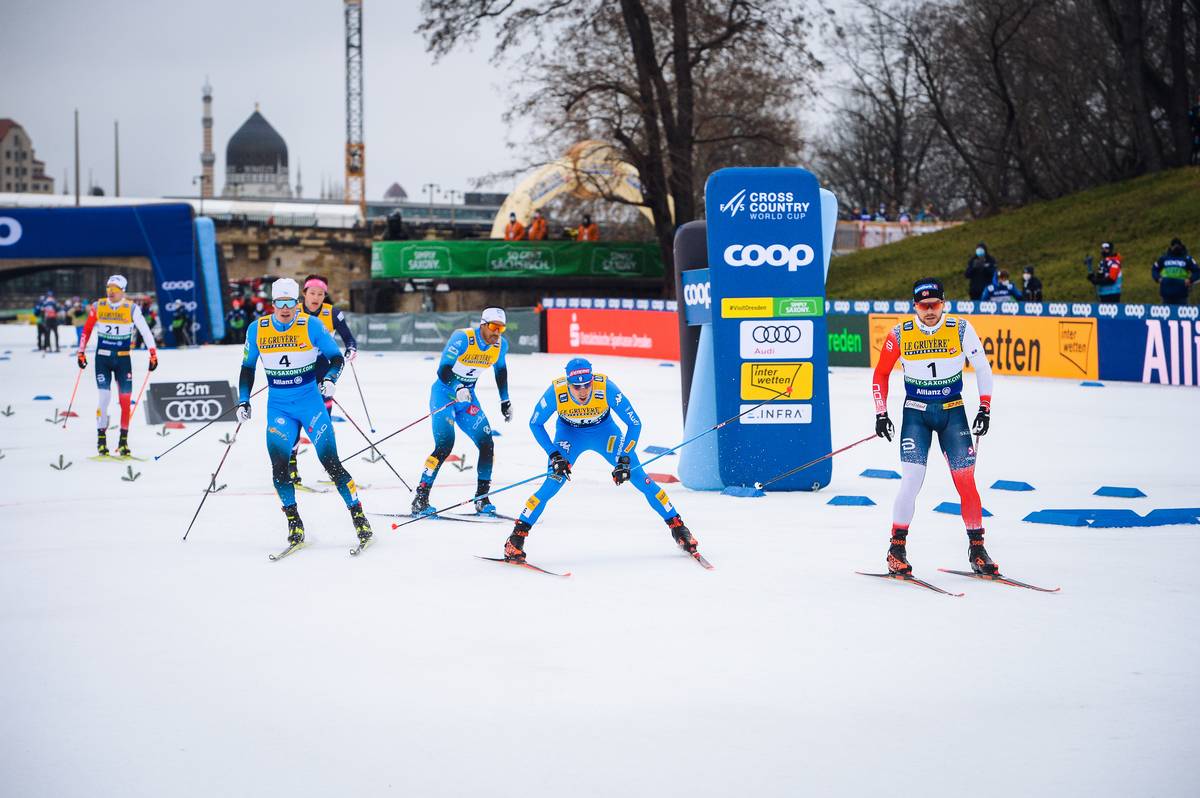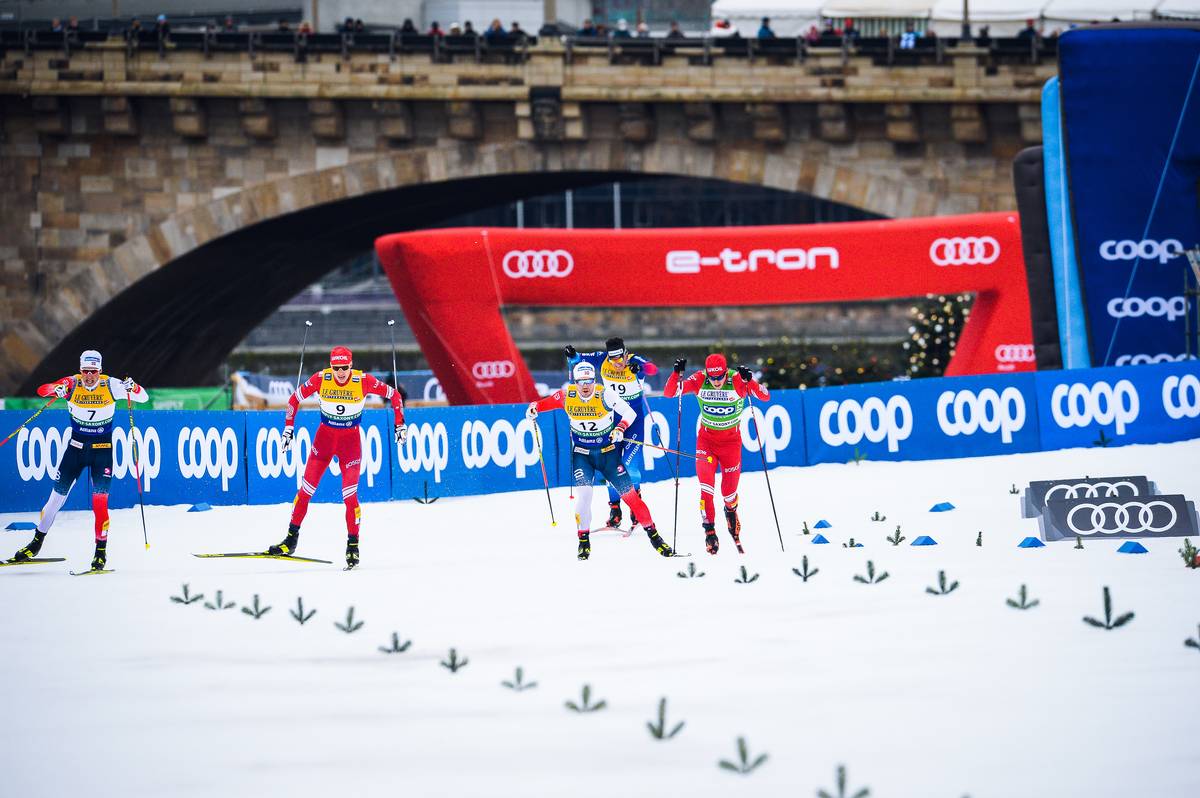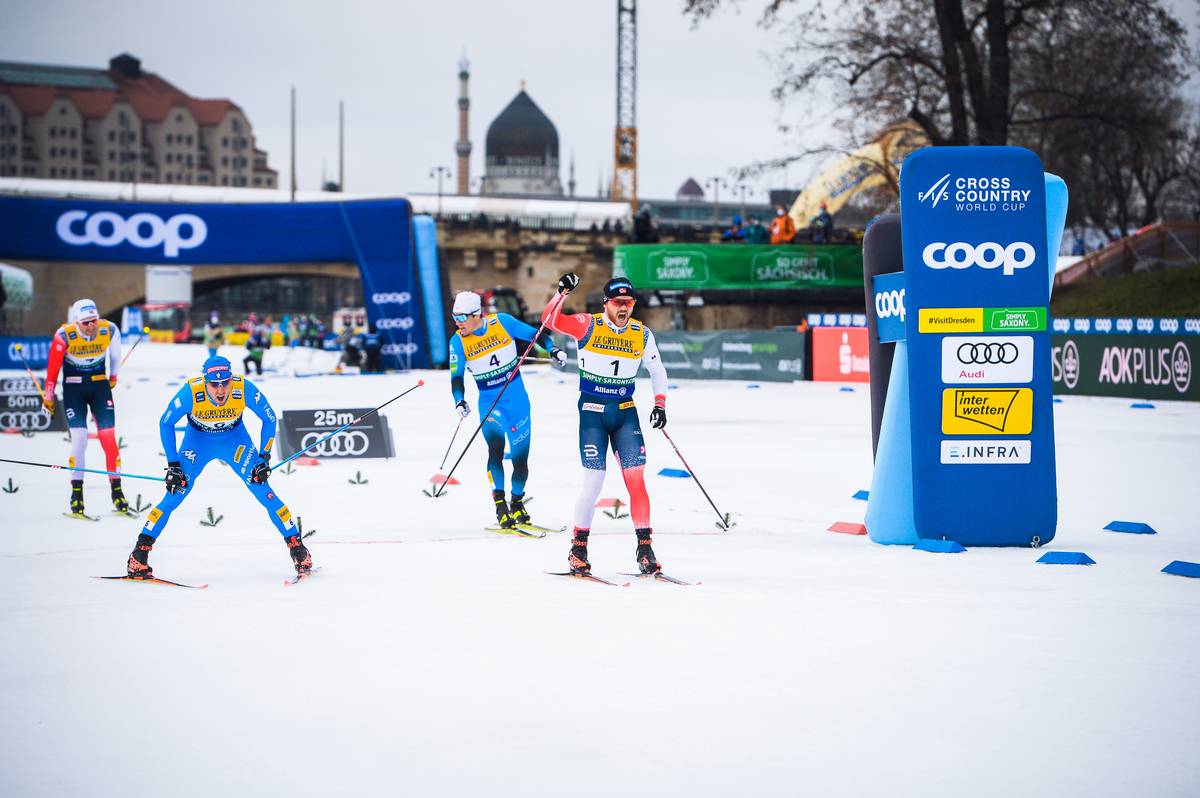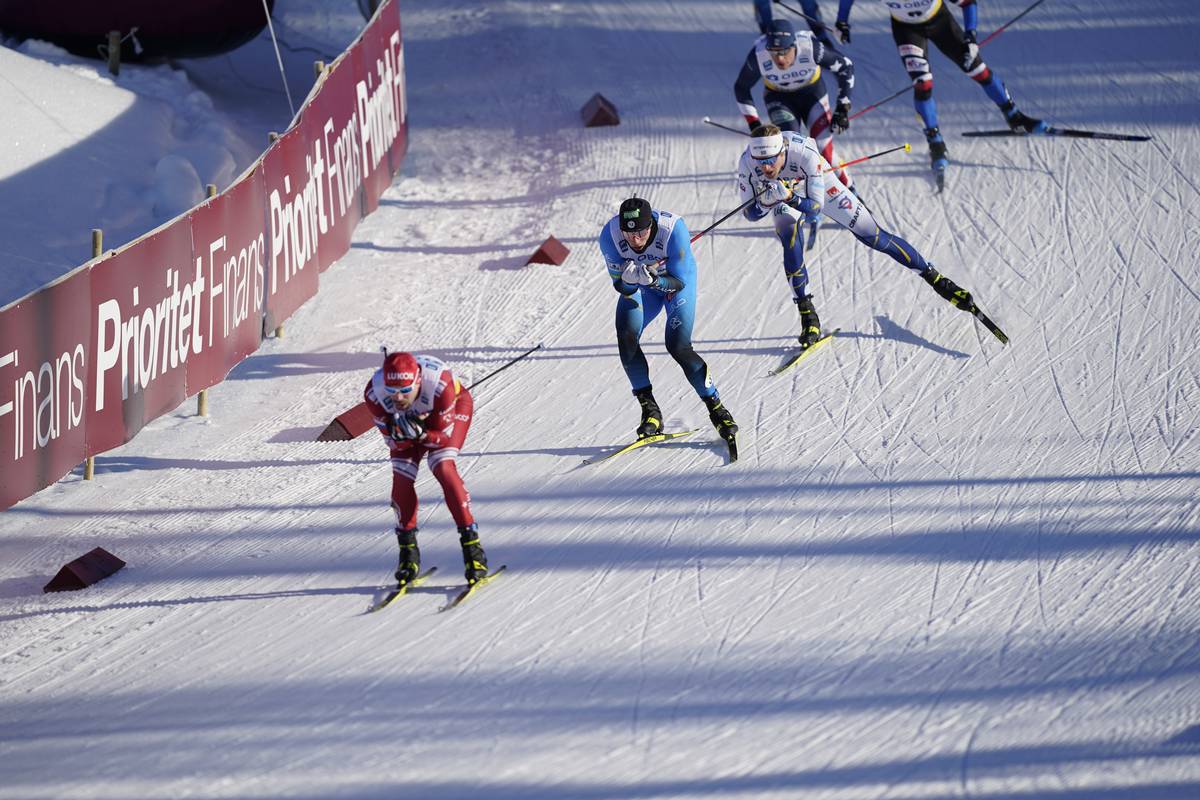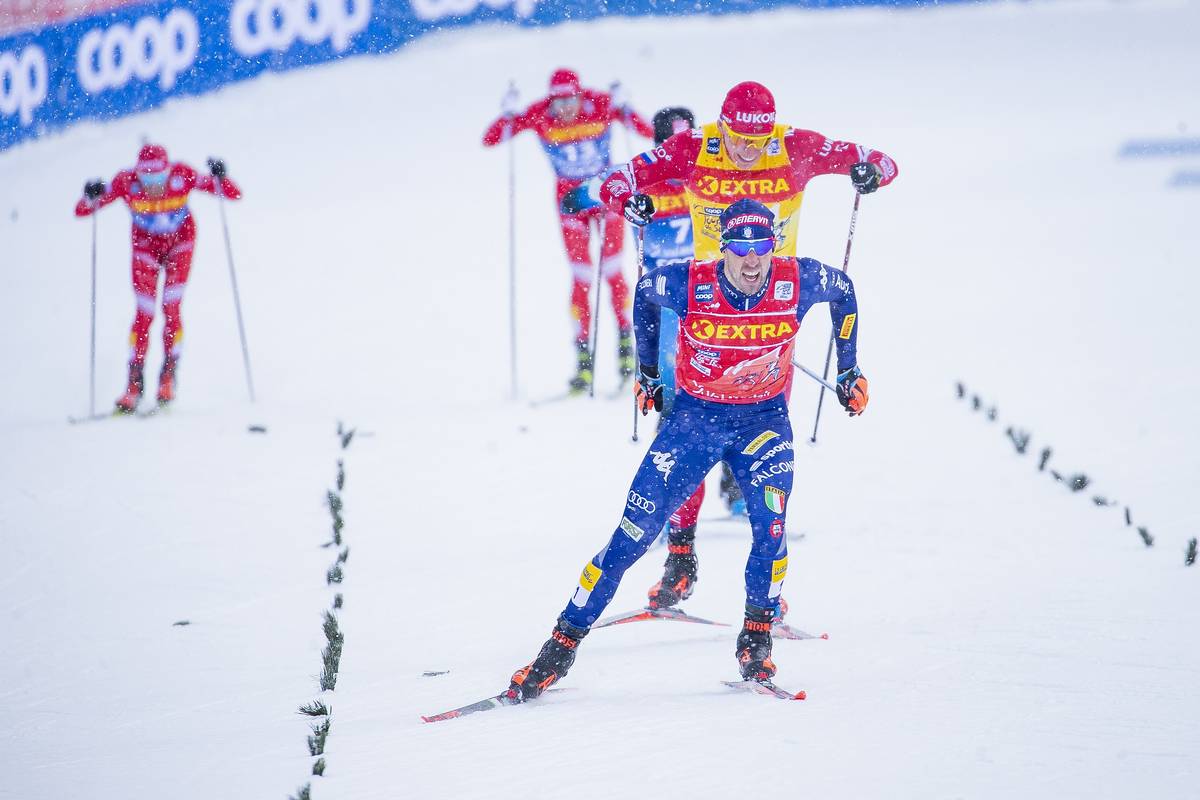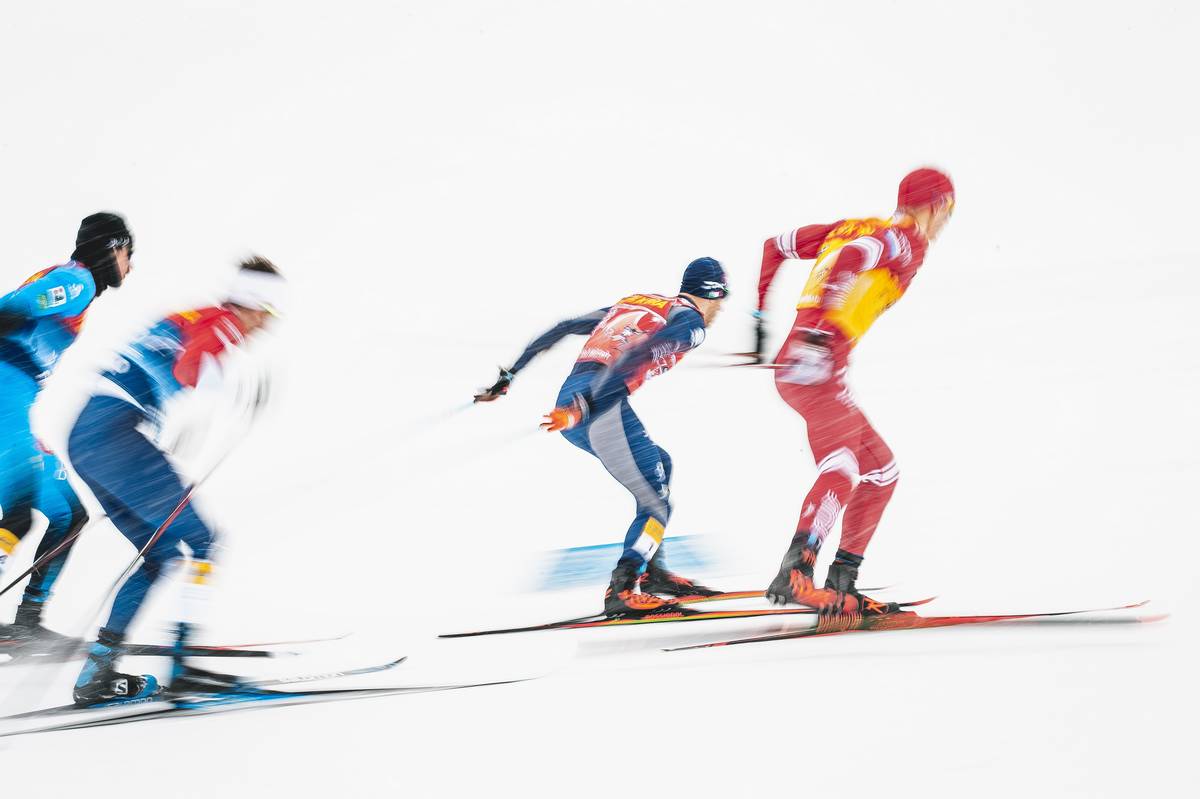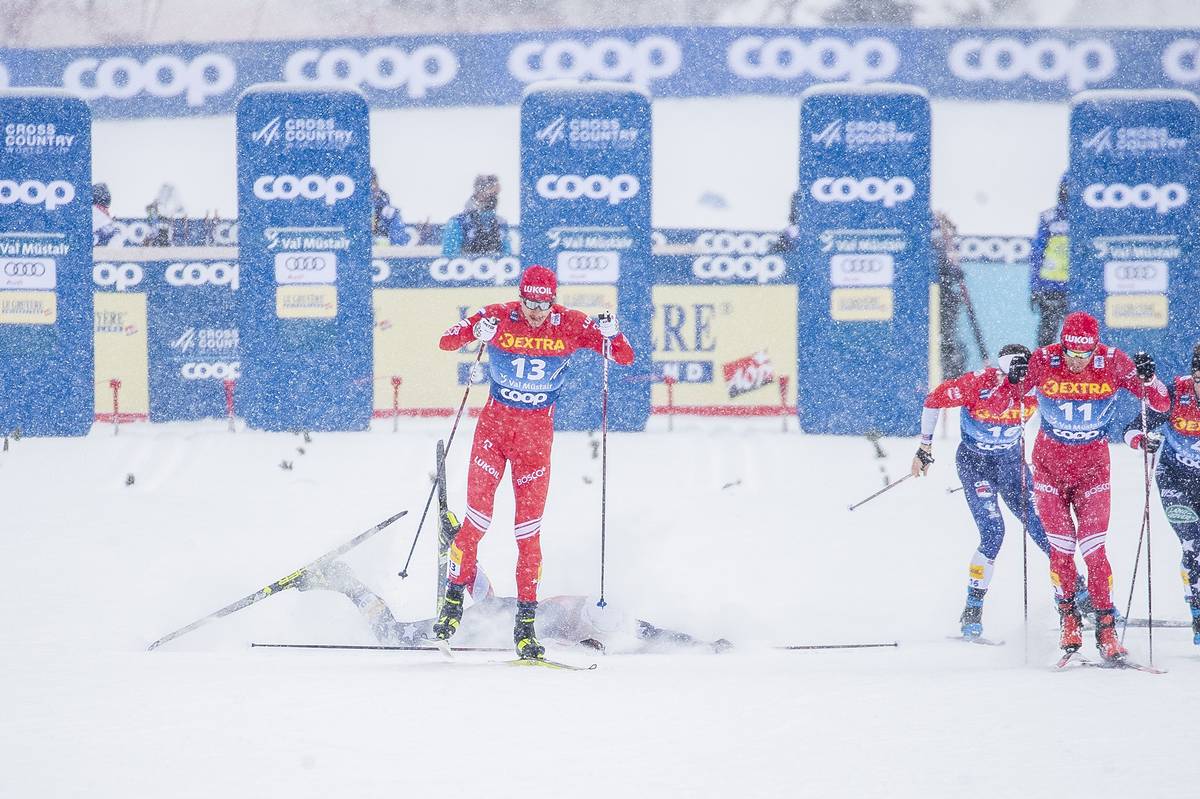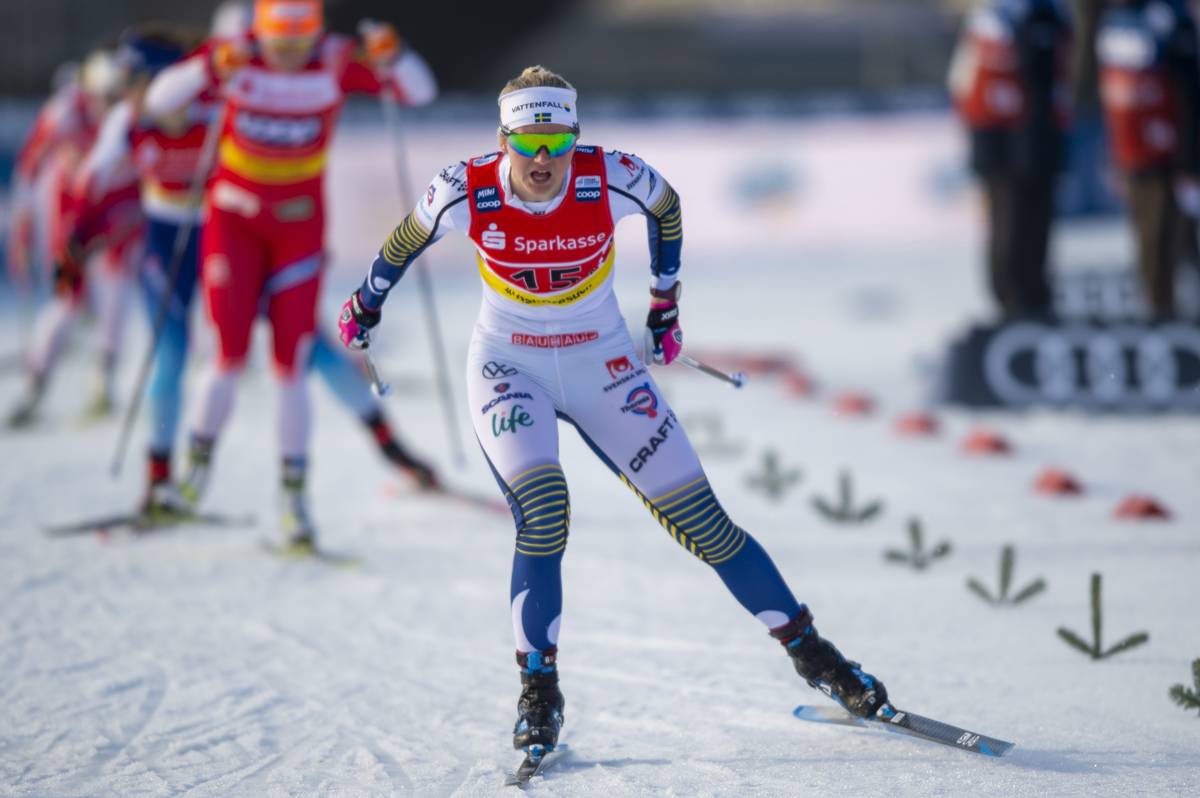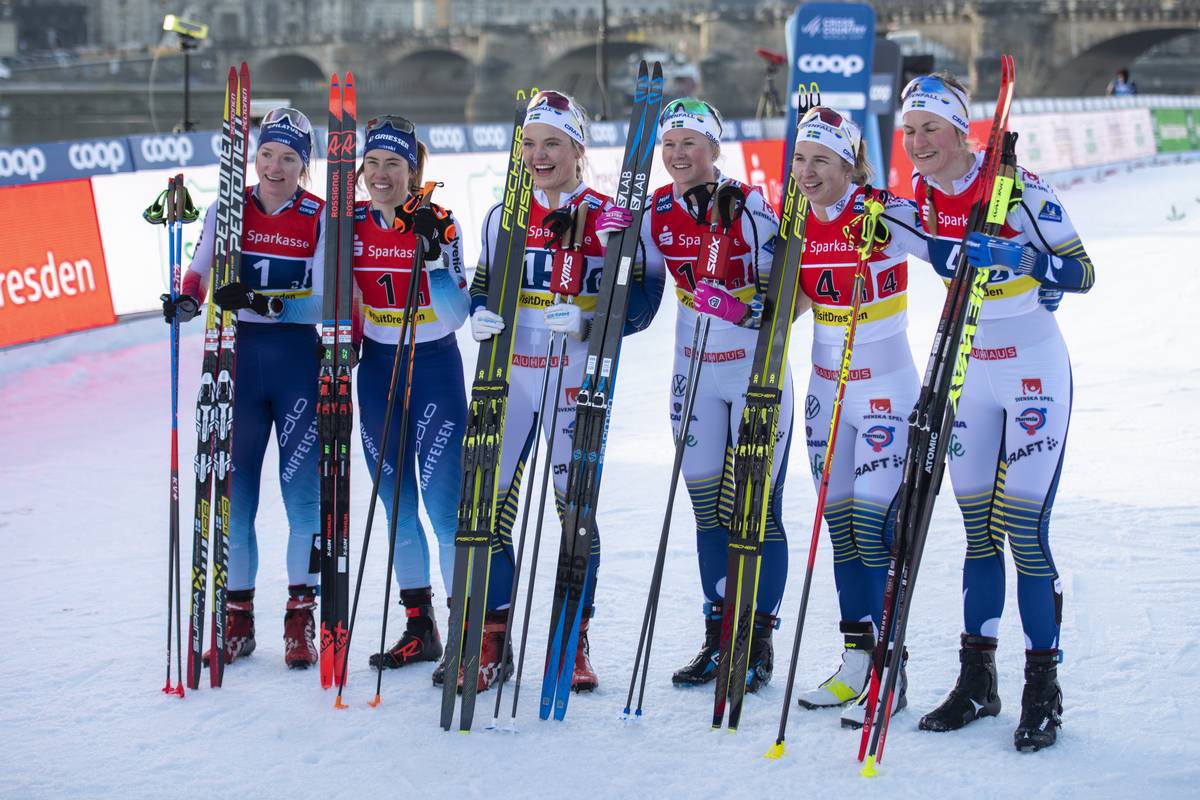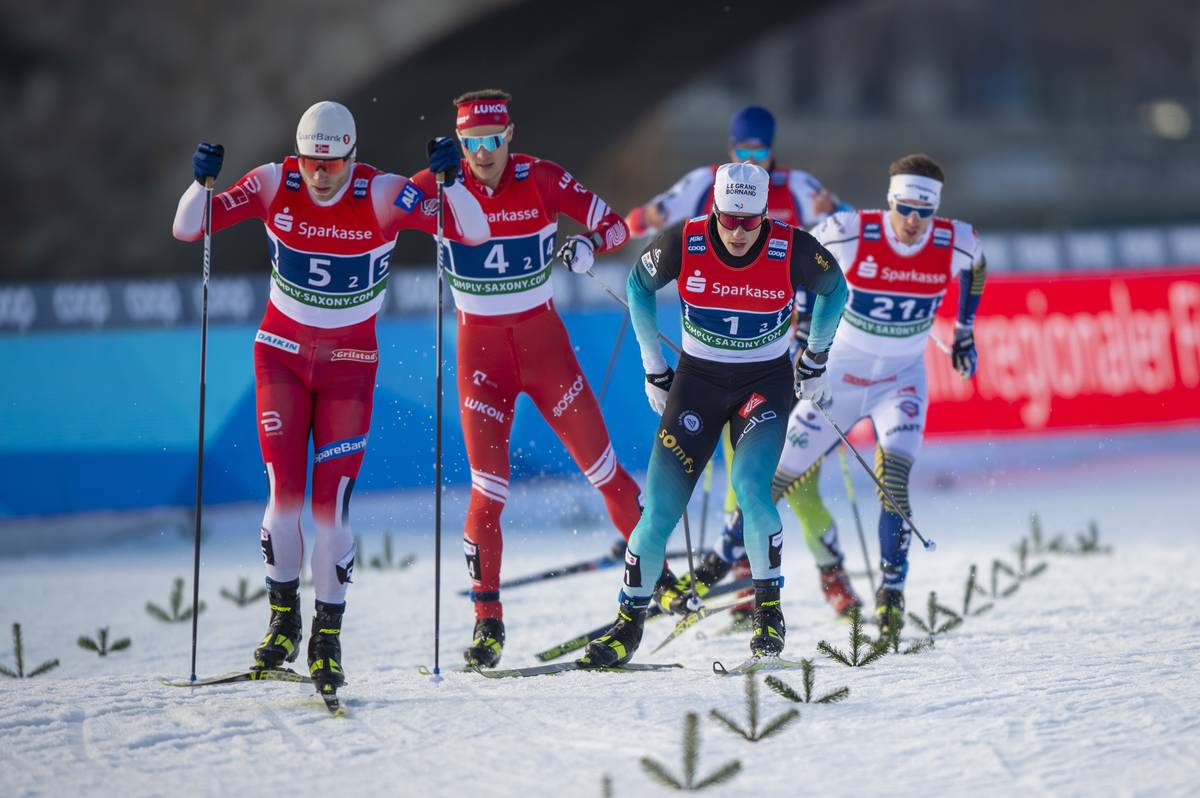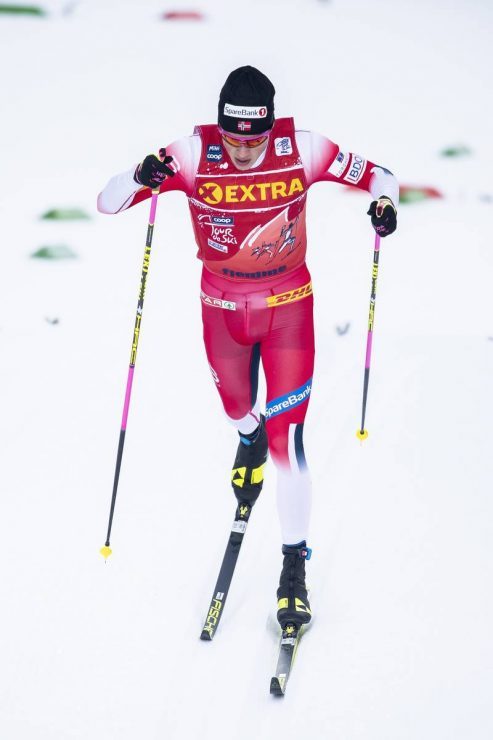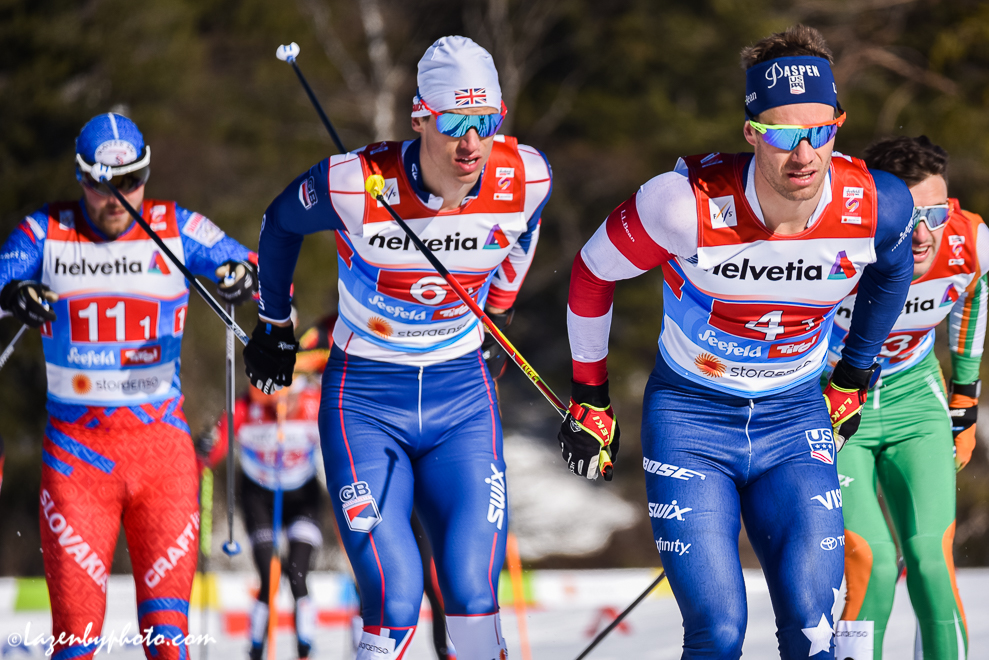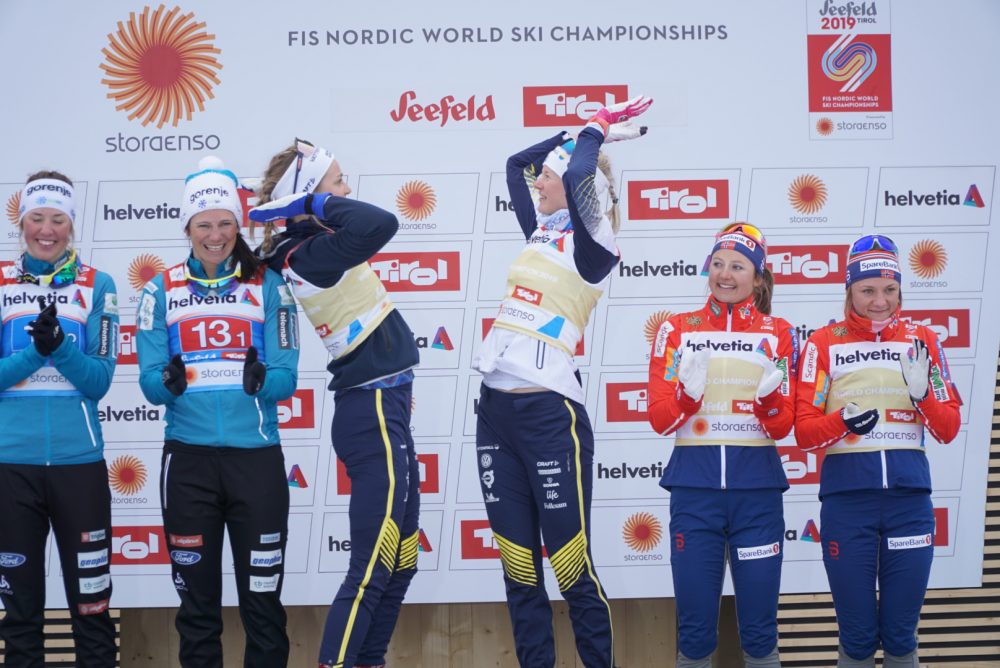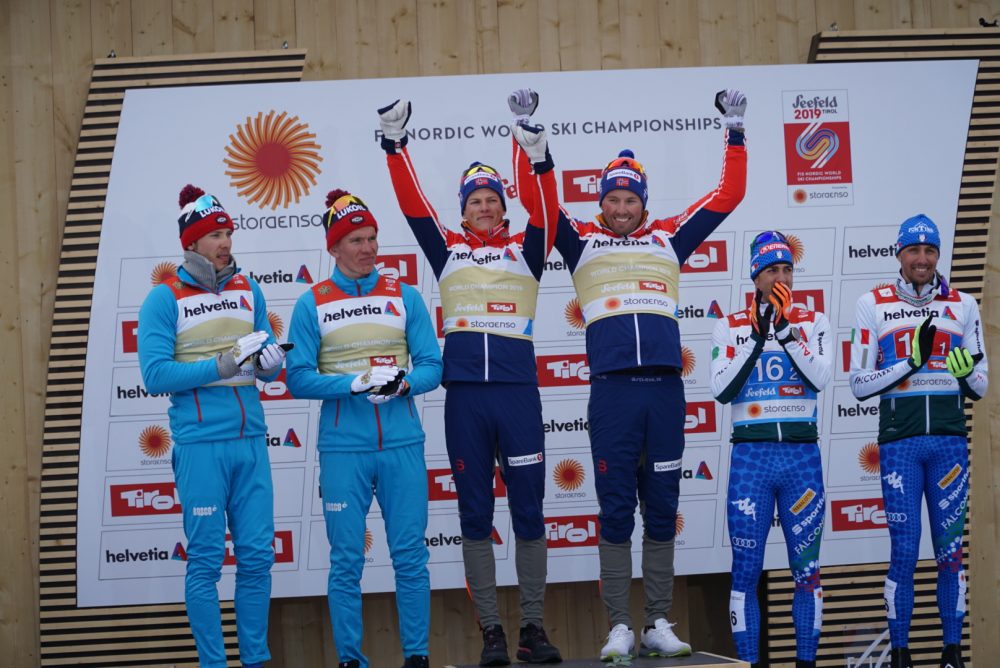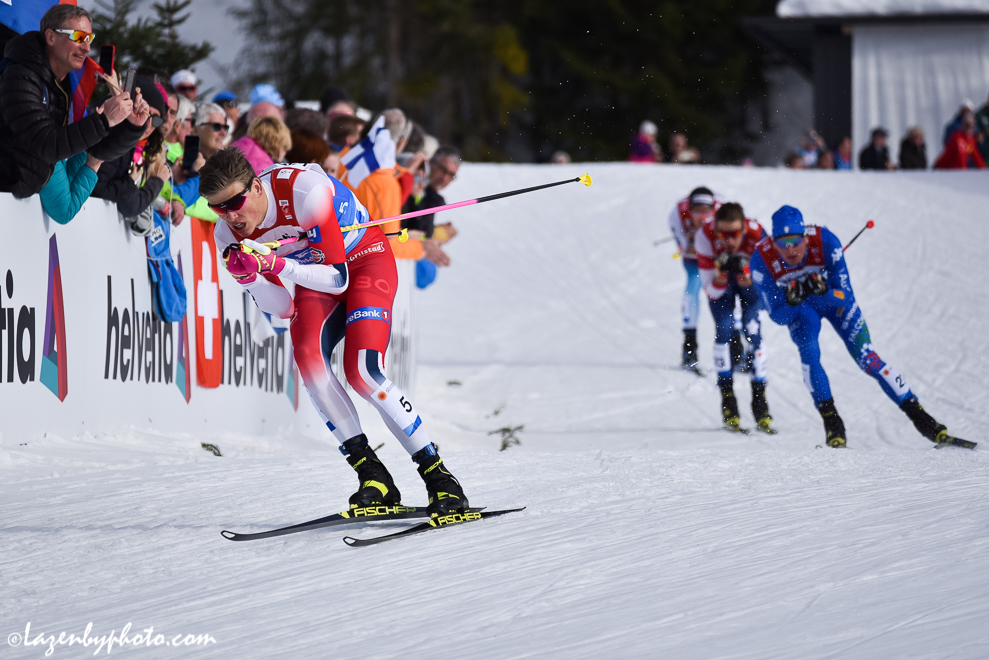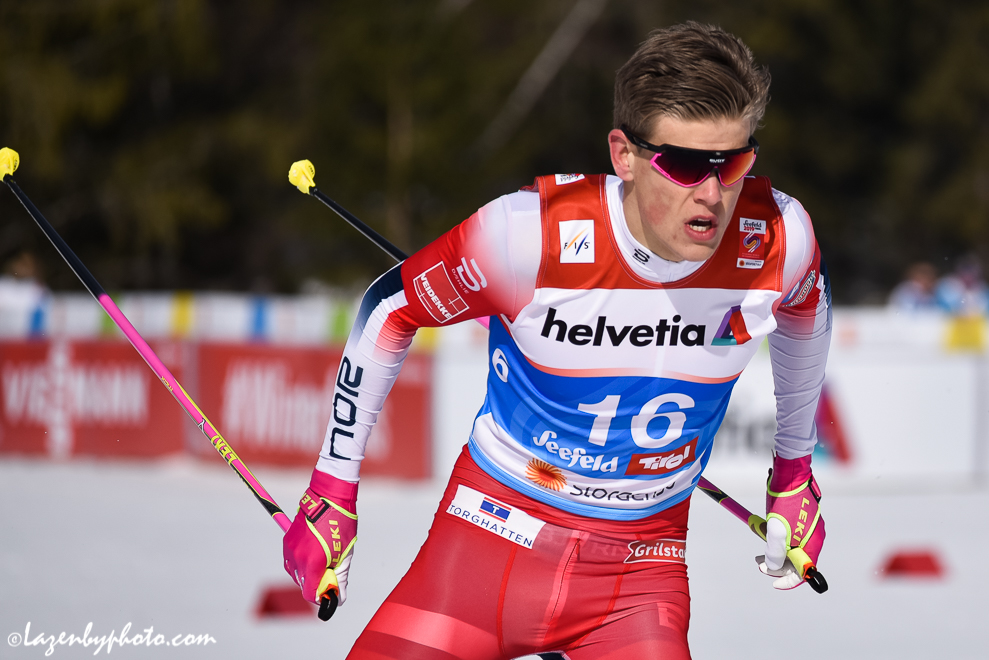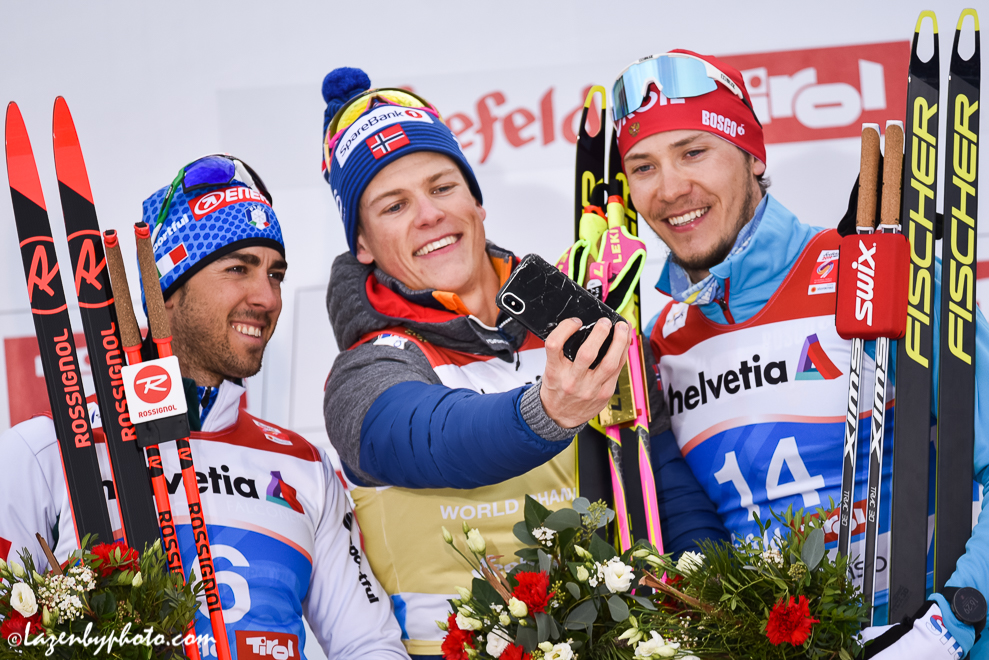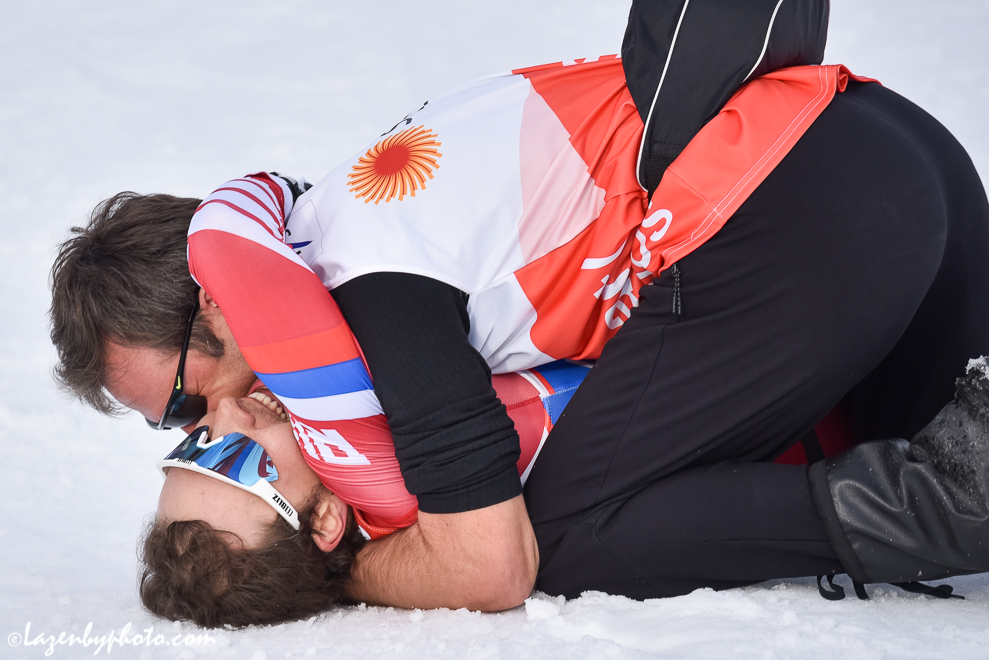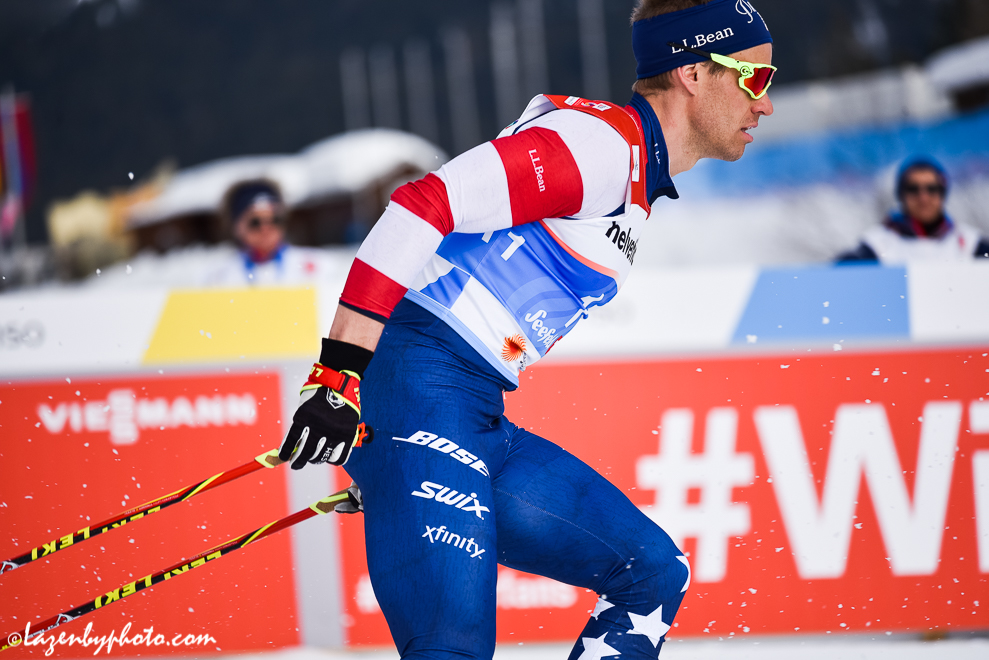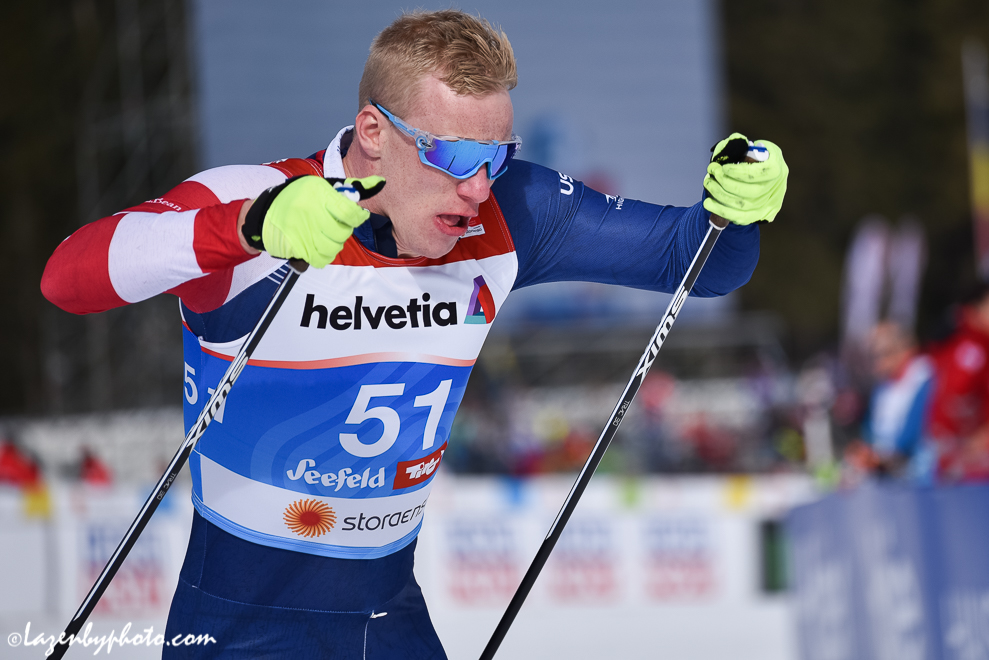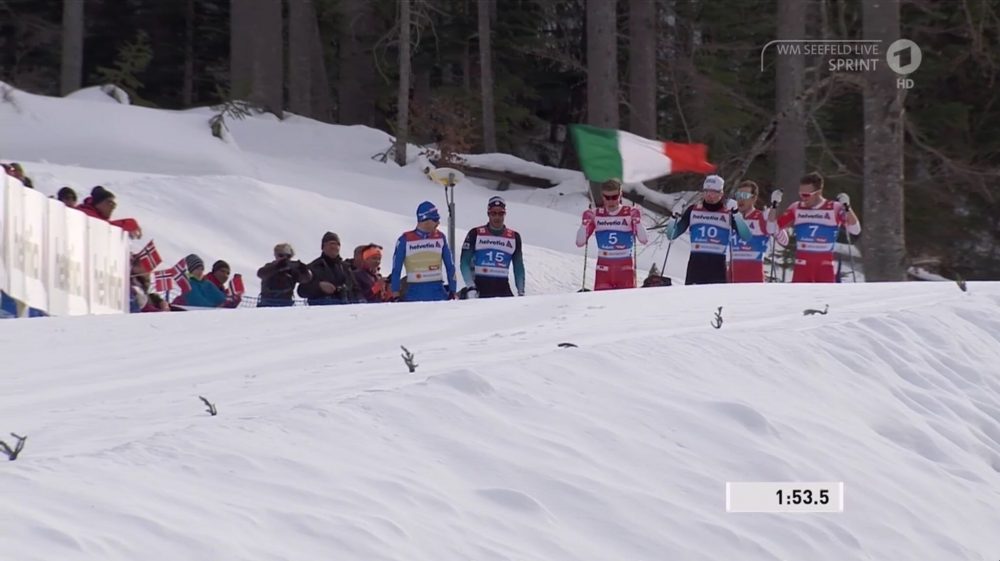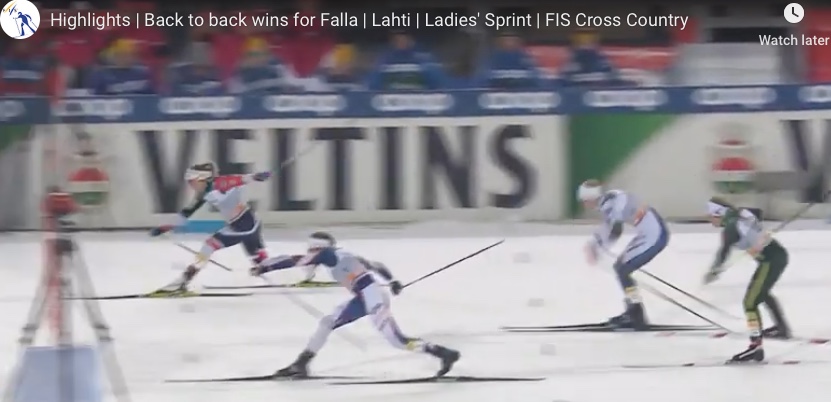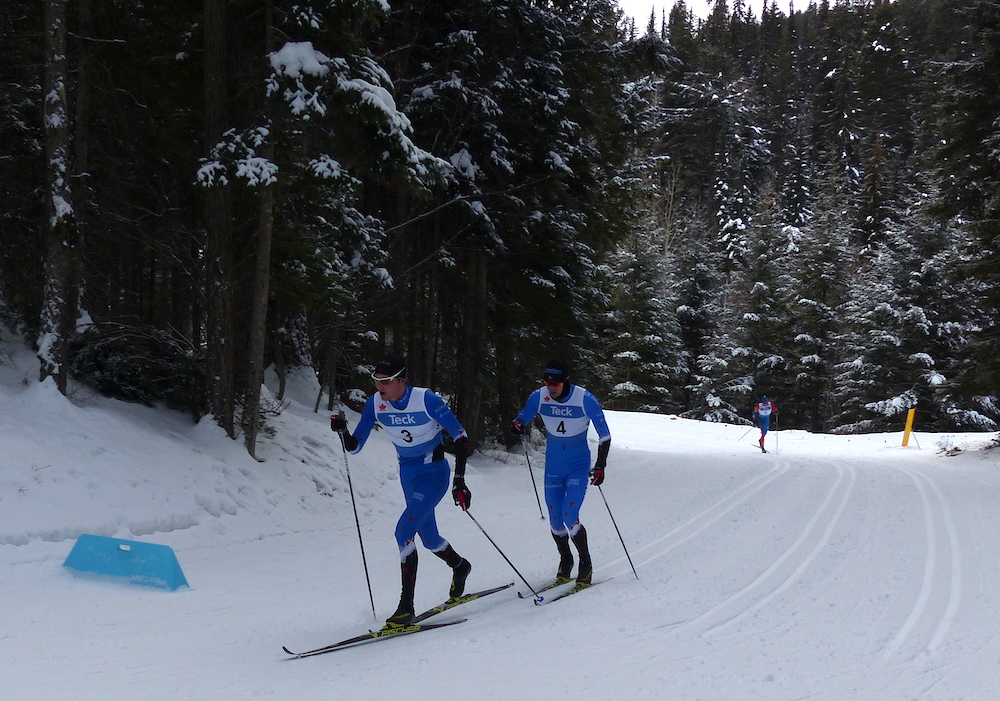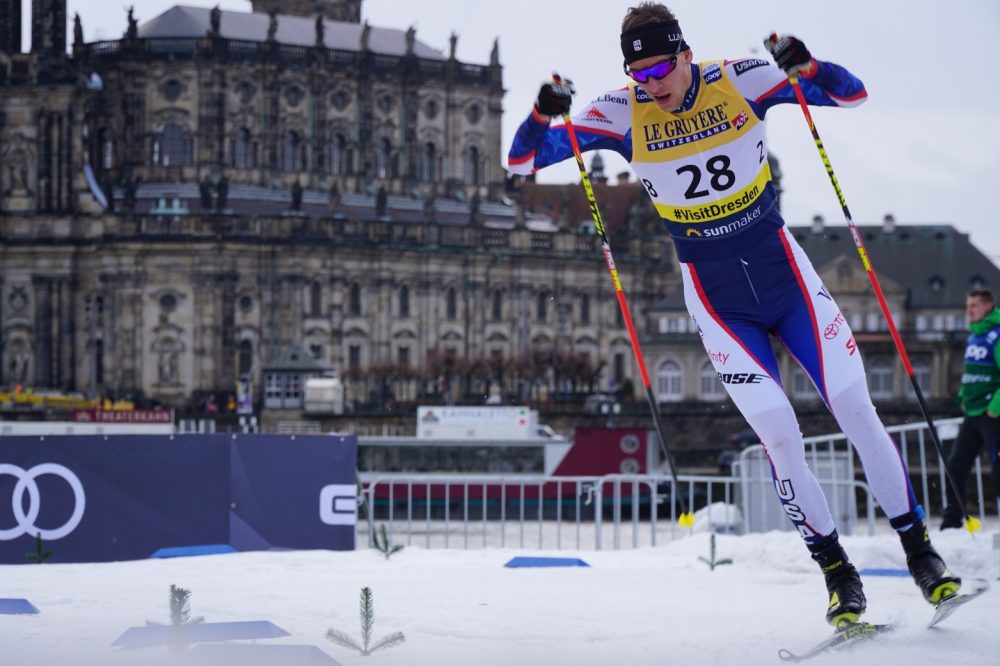
Tag: Gleb Retivykh

  • In Front of a Long-Awaited Crowd, Klæbo and Chanavat Take It to the Line in Lahti Freestyle Sprint

    In Front of a Long-Awaited Crowd, Klæbo and Chanavat Take It to the Line in Lahti Freestyle Sprint

    This World Cup coverage is made possible through the generous support of Marty and Kathy Hall and the A Hall Mark of Excellence Award.  To learn more about A Hall Mark of Excellence Award or to learn how you can support FasterSkier’s coverage please contact info@fasterskier.com.


    By Rachel Bachman Perkins and Ian Tovell

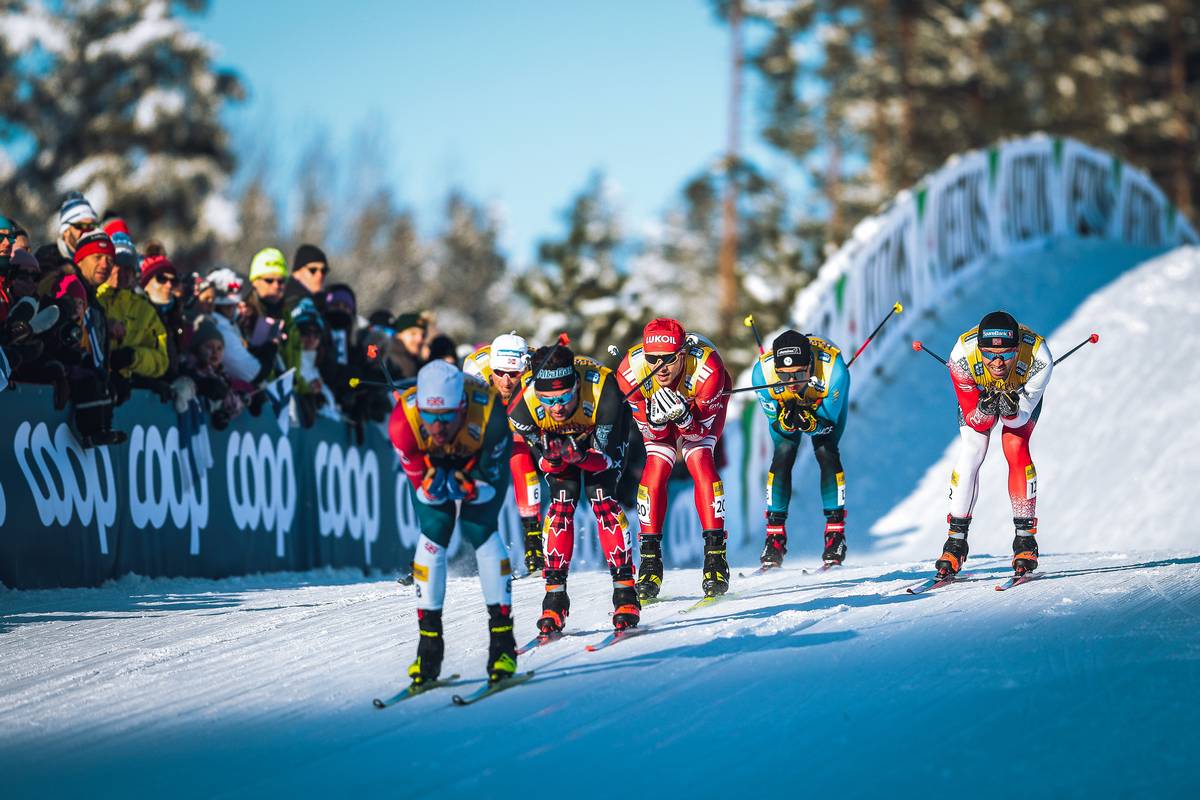
    During a brief reprieve from racing, the top tier of international racing made its way from the high desert of Zhangjiakou, China to a venue tucked into snow-capped pines and nestled amongst the lakes of southern Finland. With more start spots per country than during the Games and some athletes choosing a weekend away from the World Cup, a number of new faces appeared on the start lists in Lahti for the 1.6-kiilometer freestyle sprint. 
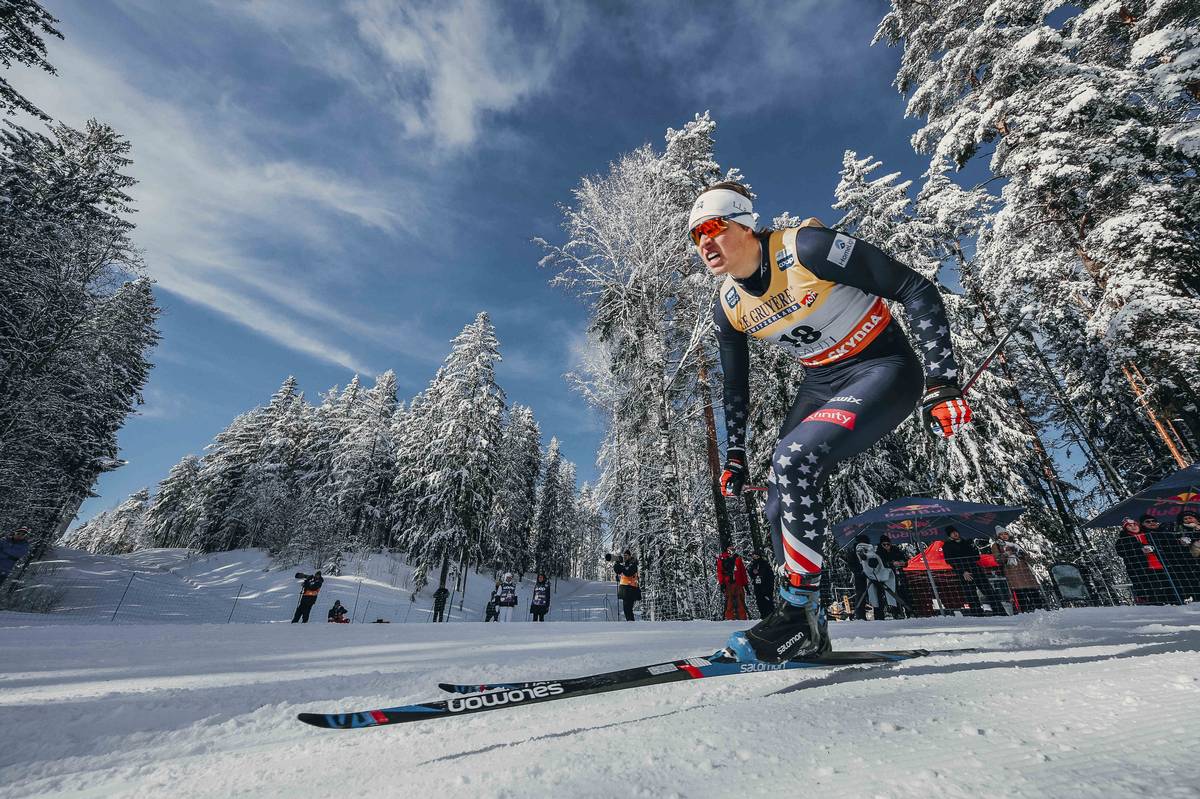
    Logan Diekmann (BSF Pro) makes his first World Cup appearance in the 1.6 k freestyle sprint qualifier in Lahti, FIN. (Photo: NordicFocus)

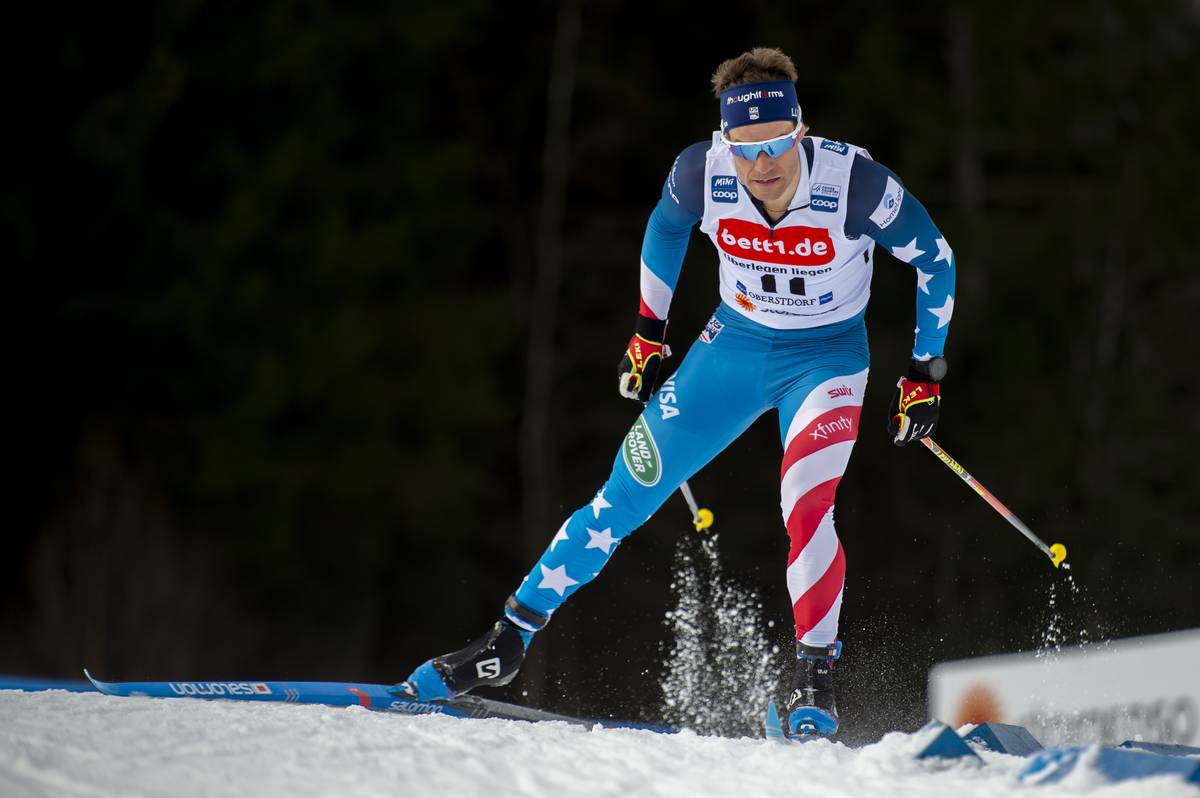
    For the U.S., these names included Logan Diekmann (BSF Pro Team) and Bill Harmeyer (SMS T2), both of whom earned their first World Cup starts this weekend via their performance on the SuperTour circuit this season. These athletes joined Kevin Bolger, Logan Hanneman, and Zak Ketterson; the Team Birkie athlete also earned his first World Cup starts earlier this year at the Tour de Ski.

    Diekmann currently leads the SuperTour sprint standings with 119 points. He was second in the freestyle sprint during the U.S. Cross Country Championships in Soldier Hollow in January and skied to 5th in the sprint in both Duluth and Lake Placid. 

    Harmeyer was ranked third in the sprint standings with 83 points, behind Noel Keeffe who is currently racing at the 2022 U23 World Ski Championships in Lygna, NOR. Harmeyer has consistently posted top-five times in qualification during the SuperTour sprint races, and has raced into the final in three out of six SuperTour sprints. A fall in the quarterfinal during US Nationals left him in 24th after qualifying in fifth. 
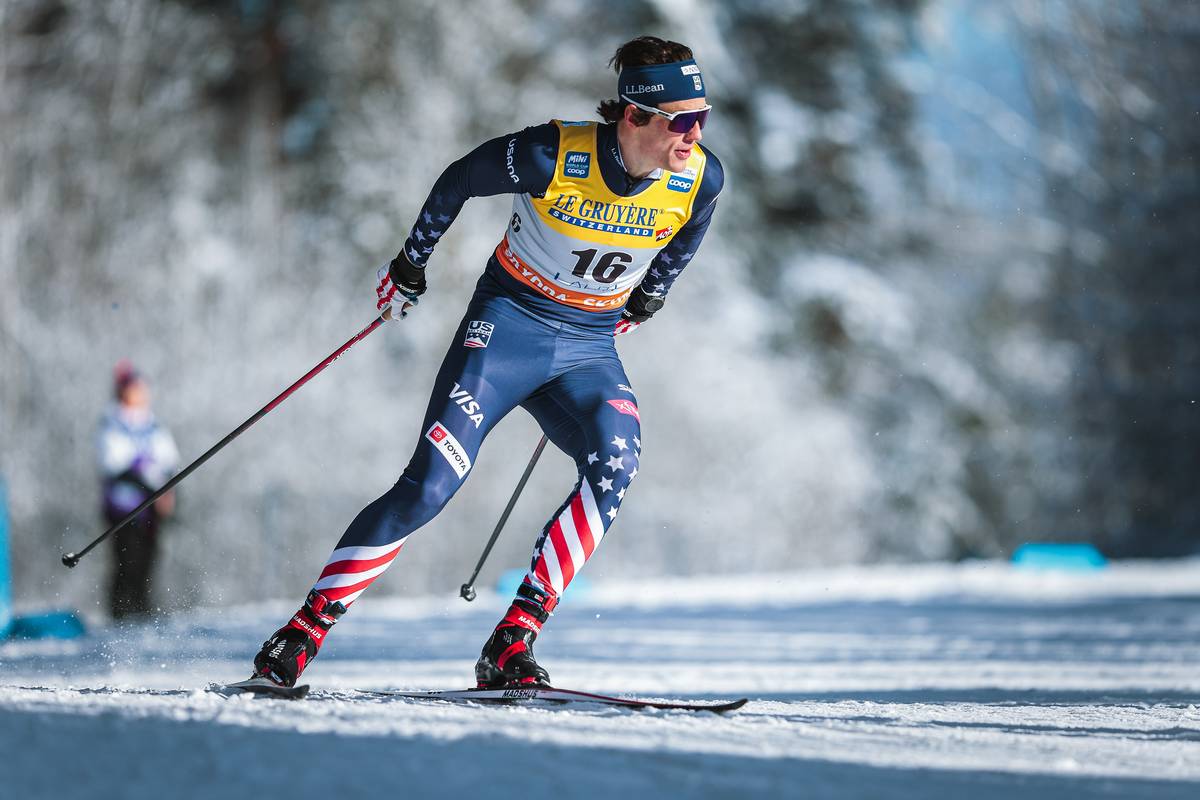
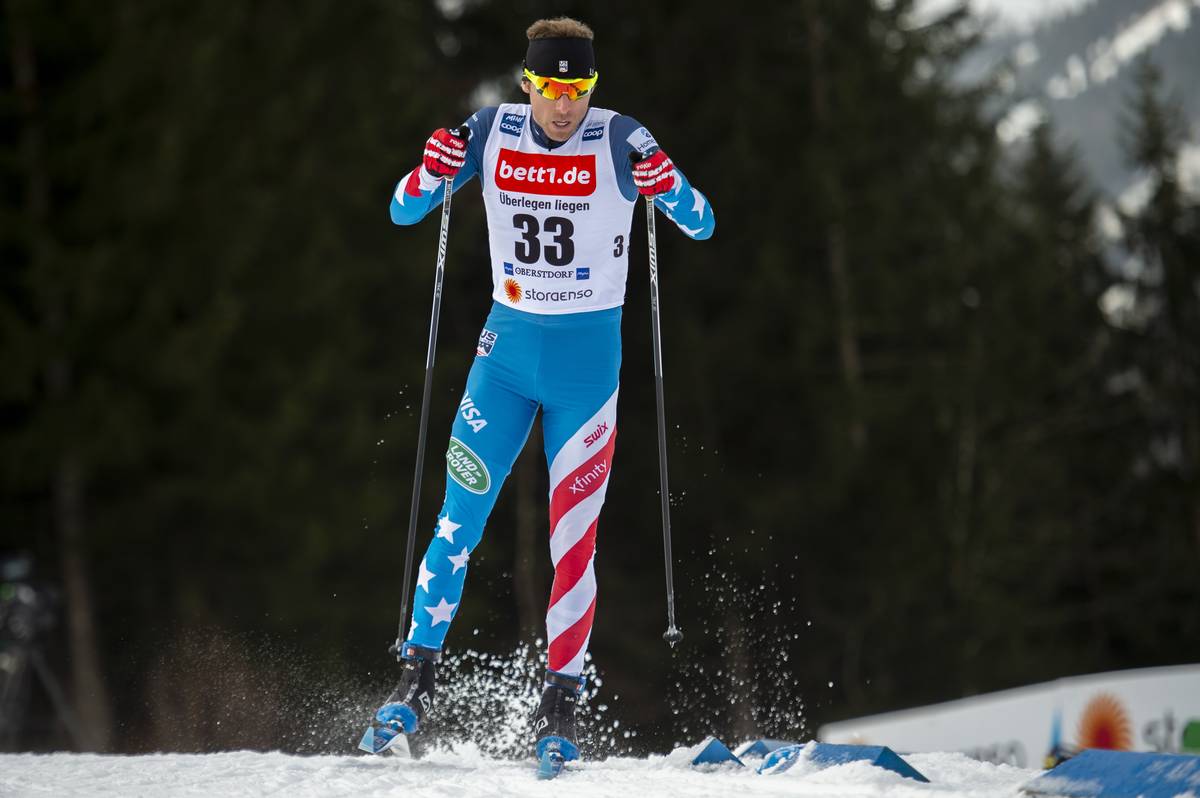
    Bill Harmeyer (SMS T2) makes his first World Cup appearance in the 1.6 k freestyle sprint qualifier in Lahti, FIN. (Photo: NordicFocus)

    Lucas Chanavat (FRA) was the top qualifier finishing the course in a time of 2:57.85. All five of the Americans finished outside the top-30 in qualification, but Canadian Graham Ritchie cracked into the heats for North America in 27th (+7.73). 

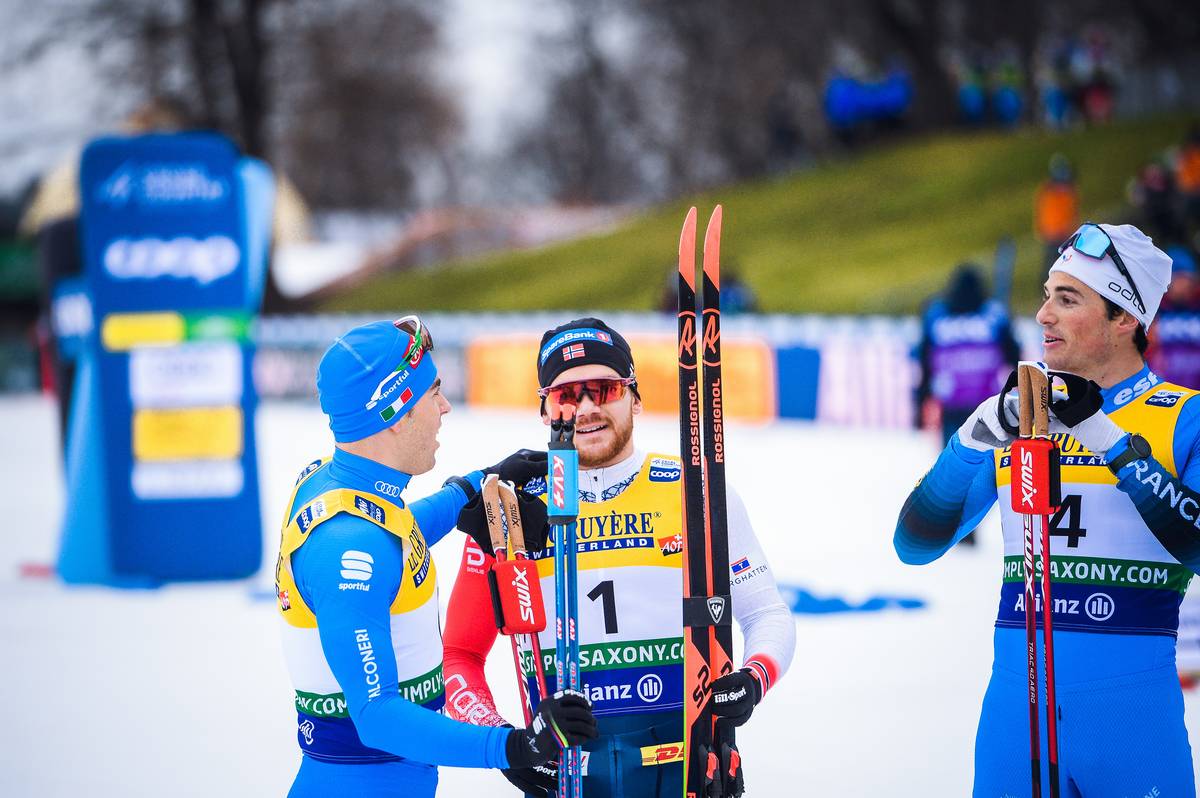
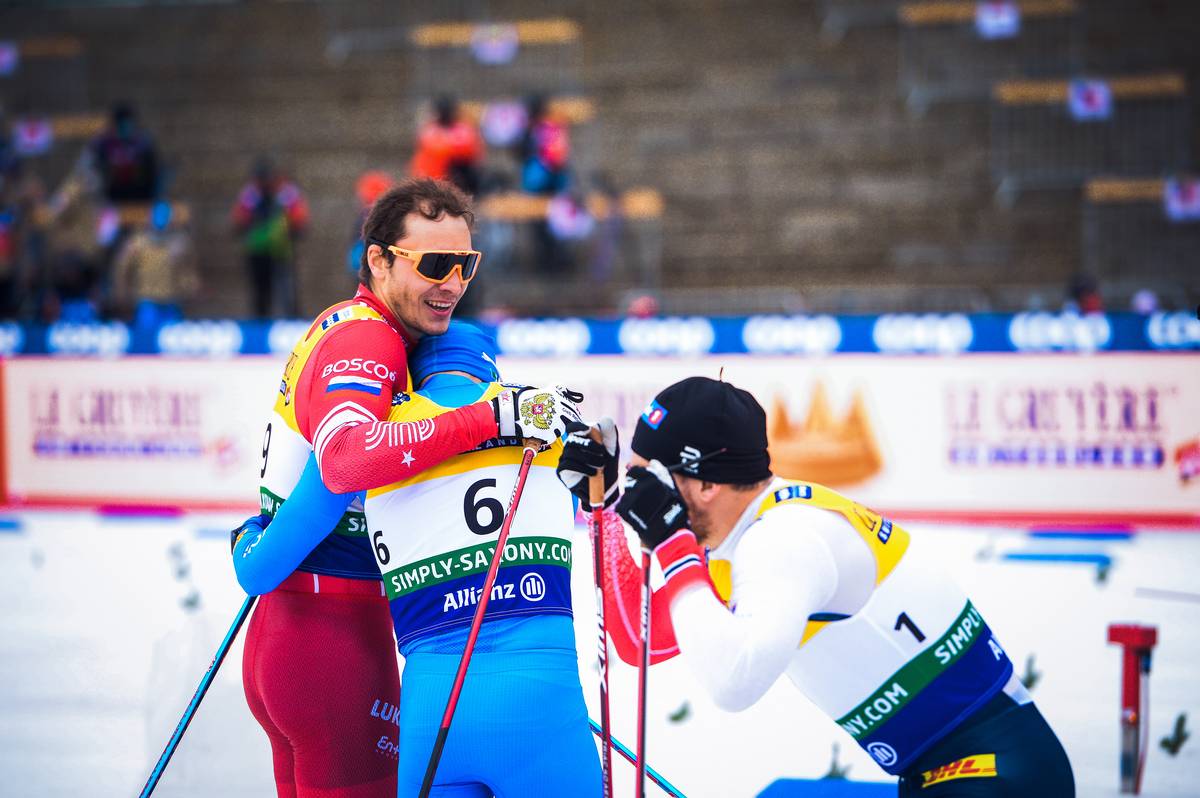
    The quarterfinal rounds played out mostly as expected, with Chanavat and Johannes Høsflot Klæbo (NOR) advancing from the first round after a close finish. Norway’s Håvard Solås Taugbøl and Olympic silver medalist Federico Pellegrino of Italy crossed the line first and second in heat two, spread by just 0.06 seconds. Winning the third heat, Andrew Young (GBR) crossed the line in 3:04.32, just ahead of Russia’s Gleb Retivykh (+.20). 

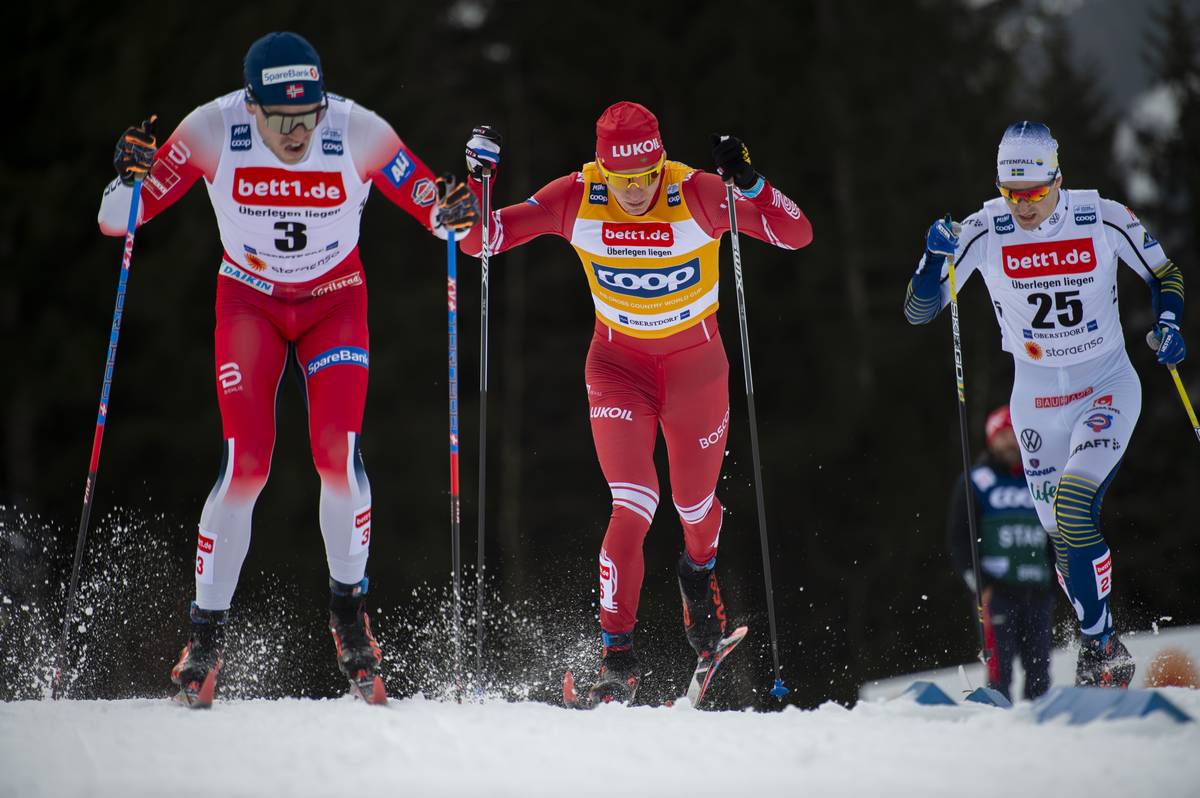
    The fourth quarterfinal heat saw a close finish, as Sindre Bjørnestad Skar (NOR) took the race to the line alongside Richard Jouve of France and Alexander Bolshunov of Russia were right at his heels. Skar won the closing sprint with Jouve +0.01 behind and Bolshunov in third (+0.07). Michal Novak (+.49) of the Czech Republic finished in fourth, with both Novak and Bolshunov narrowly missing out on lucky losers.  

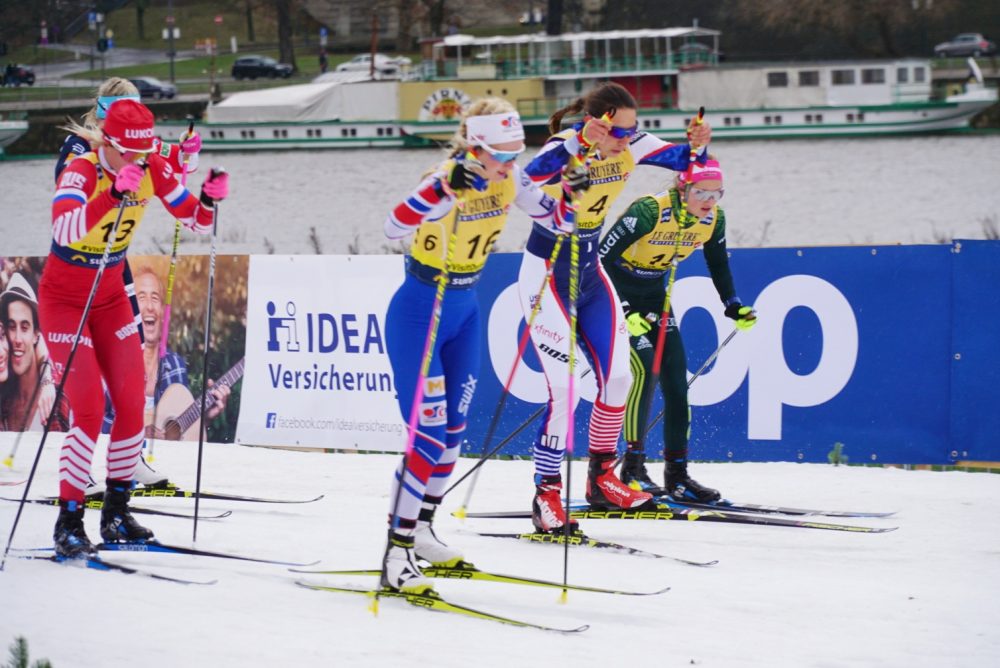
    Fast racing in the fifth heat saw four competitors advance to the next round. Janik Riebli (SUI) won the heat in a time of 2:59.56, while China’s Qiang Wang finished second (+.10) to move onto the semis. A top prospect for the Chinese ski program, this is Wang’s first World Cup appearance since the pandemic began. Wang was fifth in qualification during the Olympic freestyle sprint in Zhangjiakou, where he took second in his heat to Norway’s Erik Valnes before being issued a disqualification for obstruction and being relegated last in the heat.
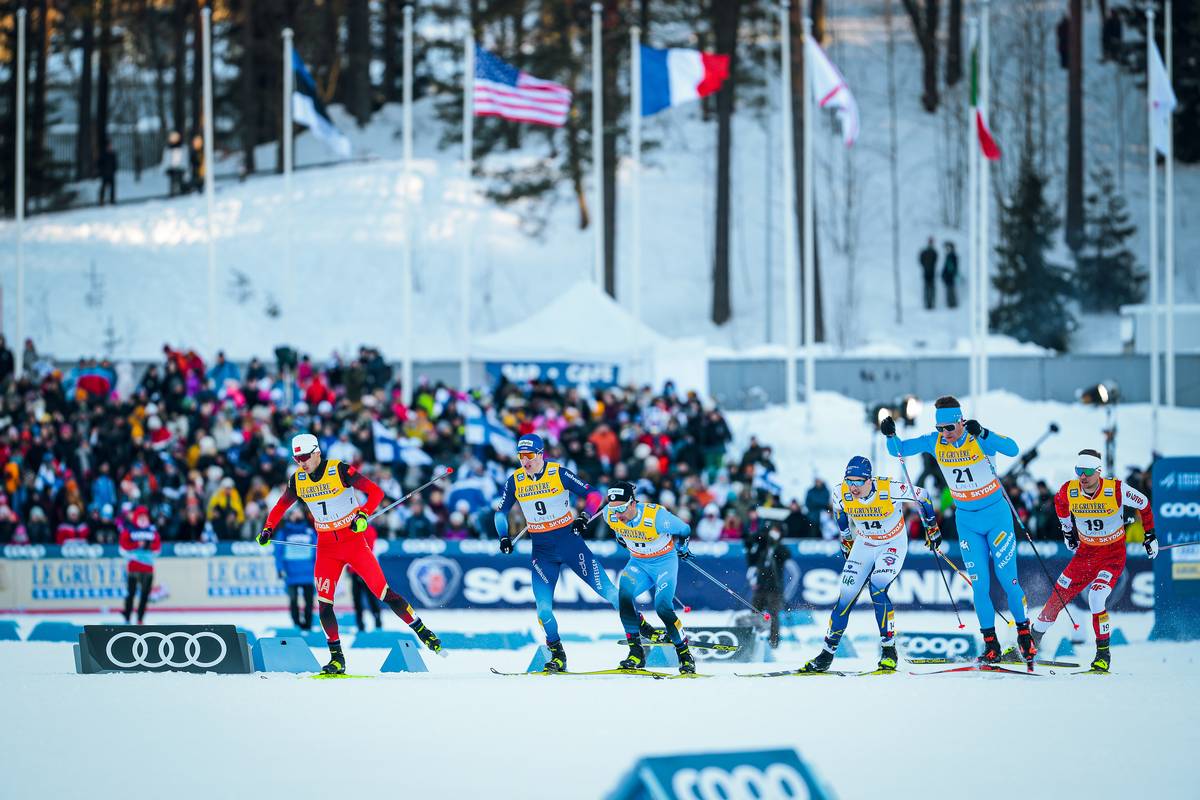
    Qiang Wang (CHN) leads at the start of the fifth quarterfinal heat in Lahti. (Photo: NordicFocus)

    Following the pace of the leaders, Maciej Starega (+.64) of Poland and Arnaud Chautemps (+1.61) of France crossed the line third and fourth to advance into the semis as lucky losers.

    In the first semifinal, five skiers all remained close coming into the finish to vie for the two automatic spots. Pellegrino was able to hold the field off and win the semi with a time of 2:59.57, however, he was later disqualified, pushing him to sixth place.  Klæbo crossed in second  (+.07), guaranteeing his spot in the final, while Chanavant and Taugbøl were third (+.21) and fourth (+.37), respectively. Due to Pellegrino’s disqualification, Taugbøl was able to make it through to the final as a lucky loser. 

    In the second semi, Retivykh held off a push from Skar to win in 2:59.67, with the Norwegian 0.02 behind. Wang crossed third (+.34) with a time fast enough to earn the second lucky loser spot in the final.
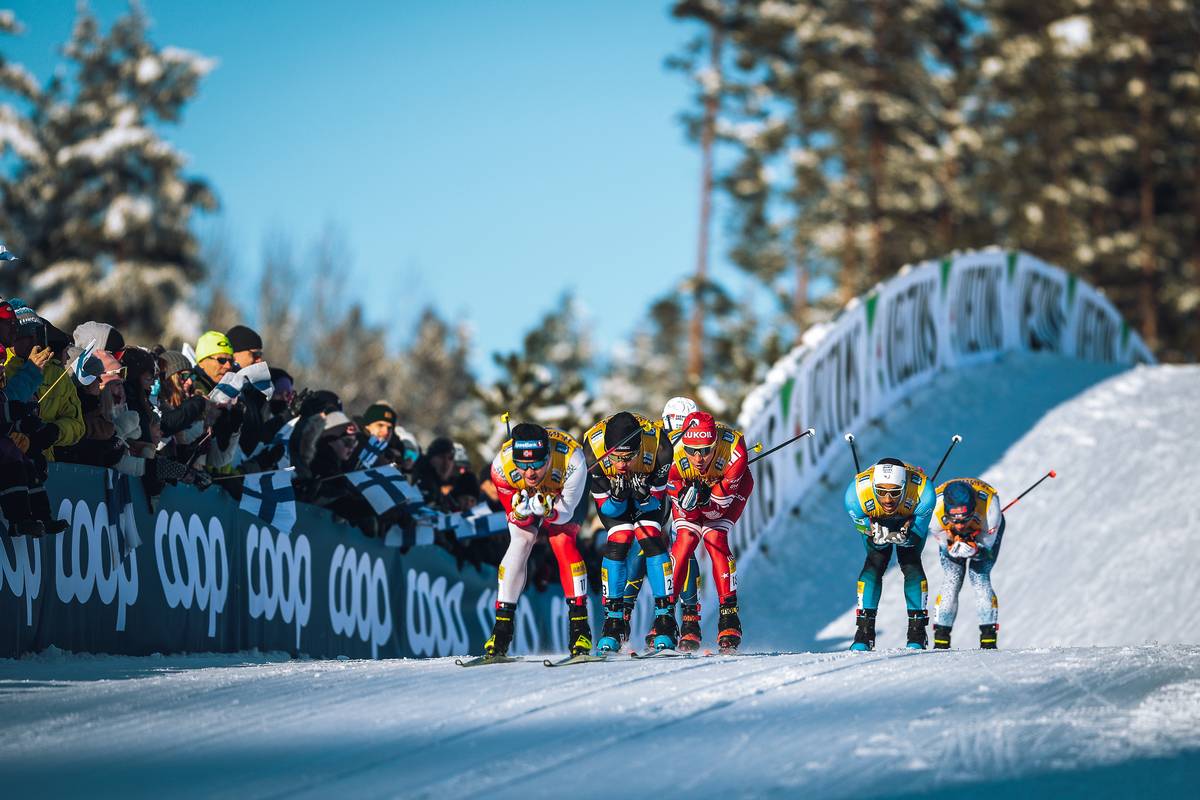
    Sindre Bjørnestad Skar leads his heat during the freestyle sprint in Lahti, FIN. (Photo: NordicFocus)

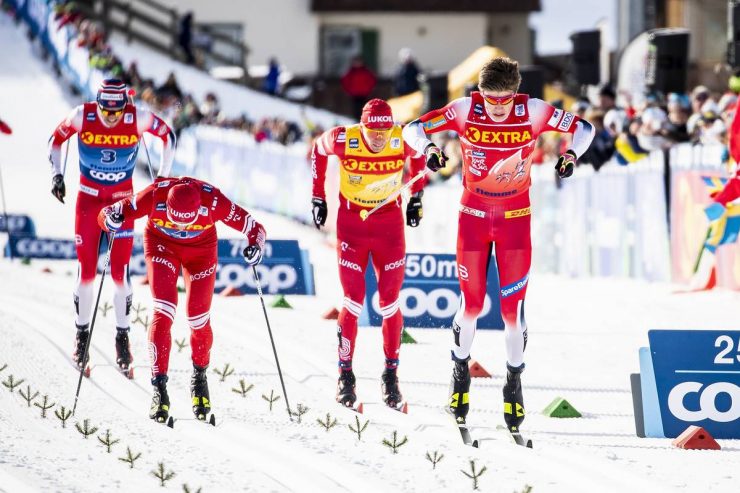
    In the final, an early tangle between Wang and Retivykh as the two rounded a corner sent the Chinese athlete to the ground, losing contact with the pack. 

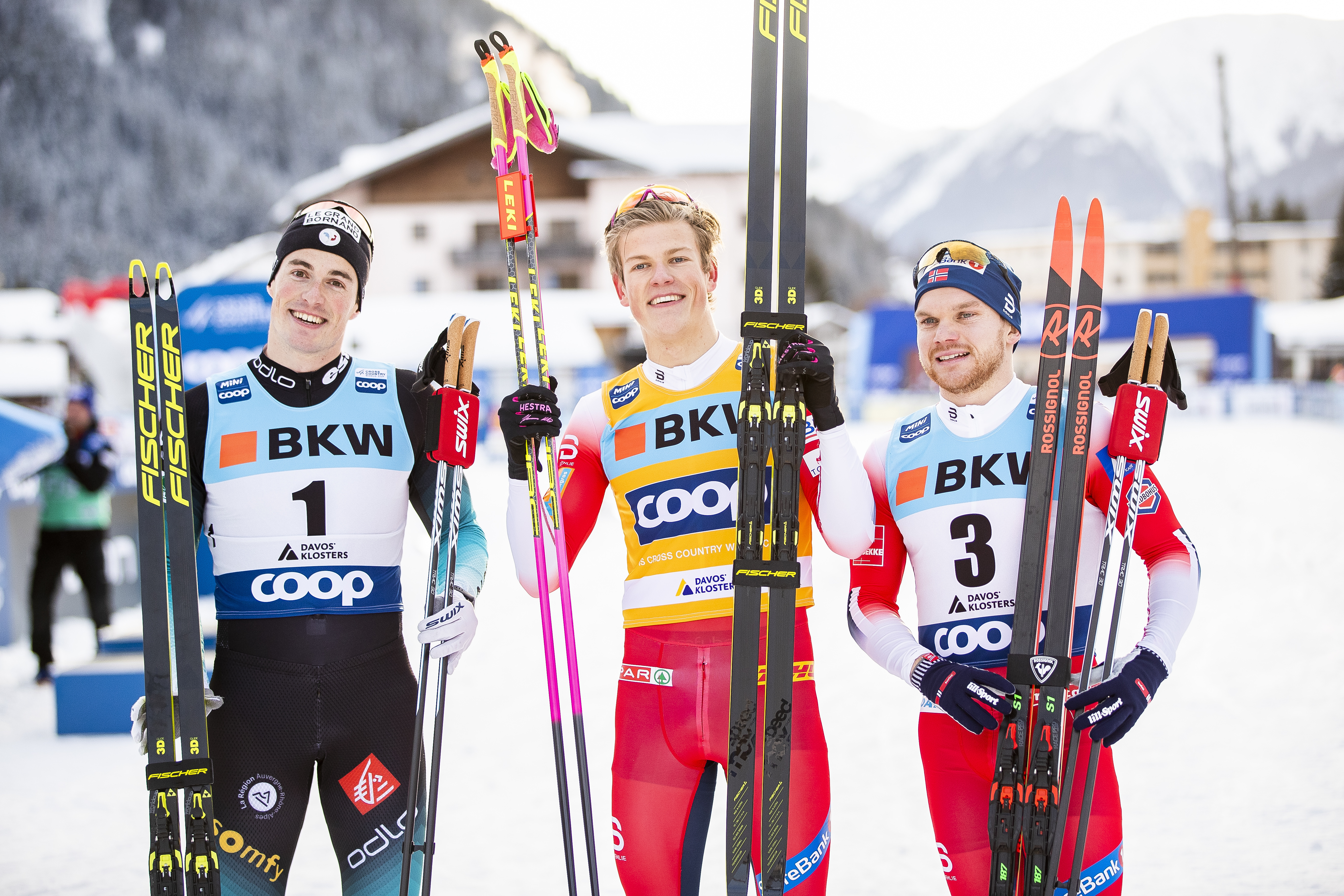
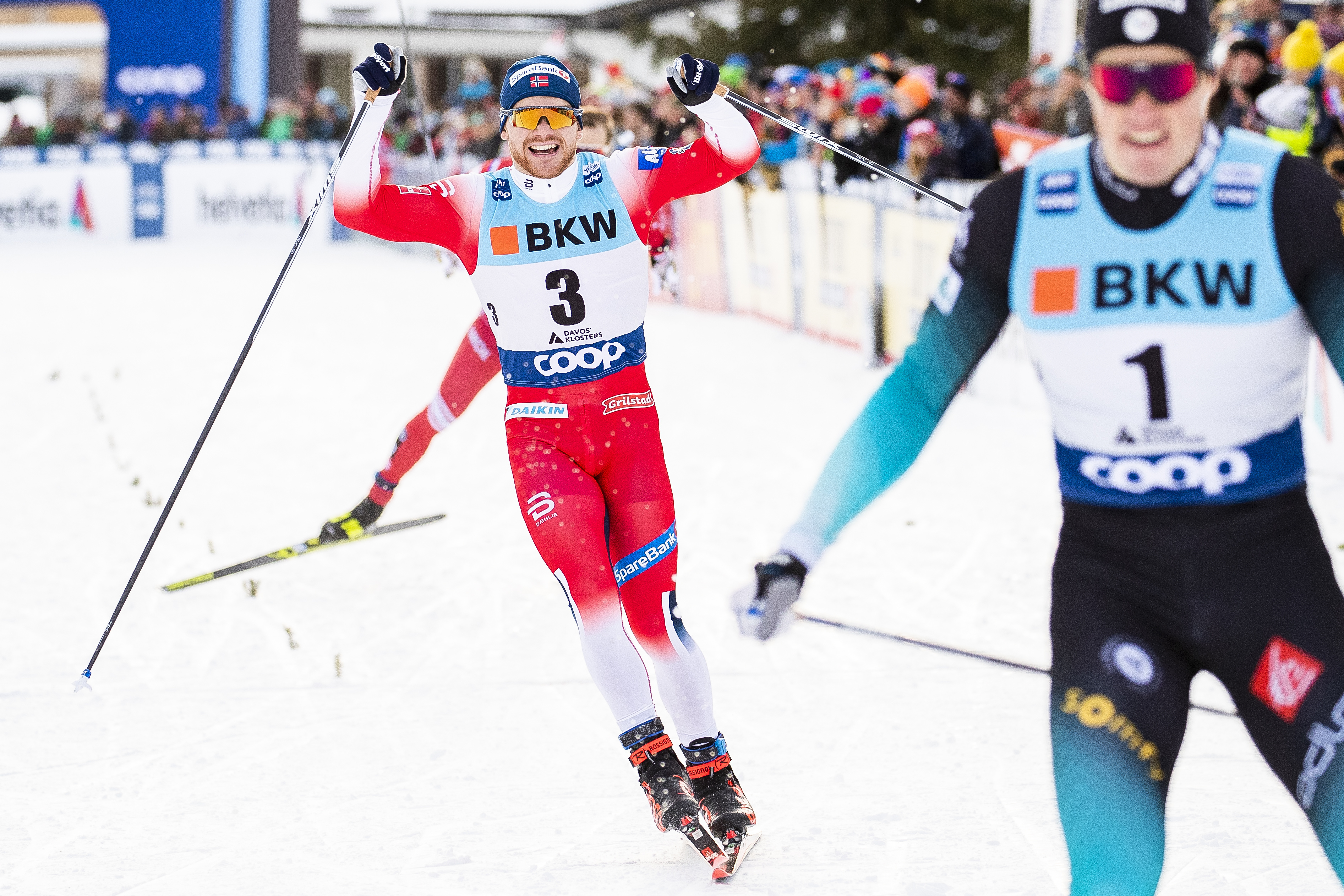
    The remaining five men stayed close as they powered through the course. Rounding the bend into the final 100 meters, four skiers remained in contention for the podium, but it was Klæbo who slingshot from the outside, putting his closing speed on display as he threw his boot to win a photo finish with Chanavat in 2:58.34, Skar and Taugbøl on their tails. 

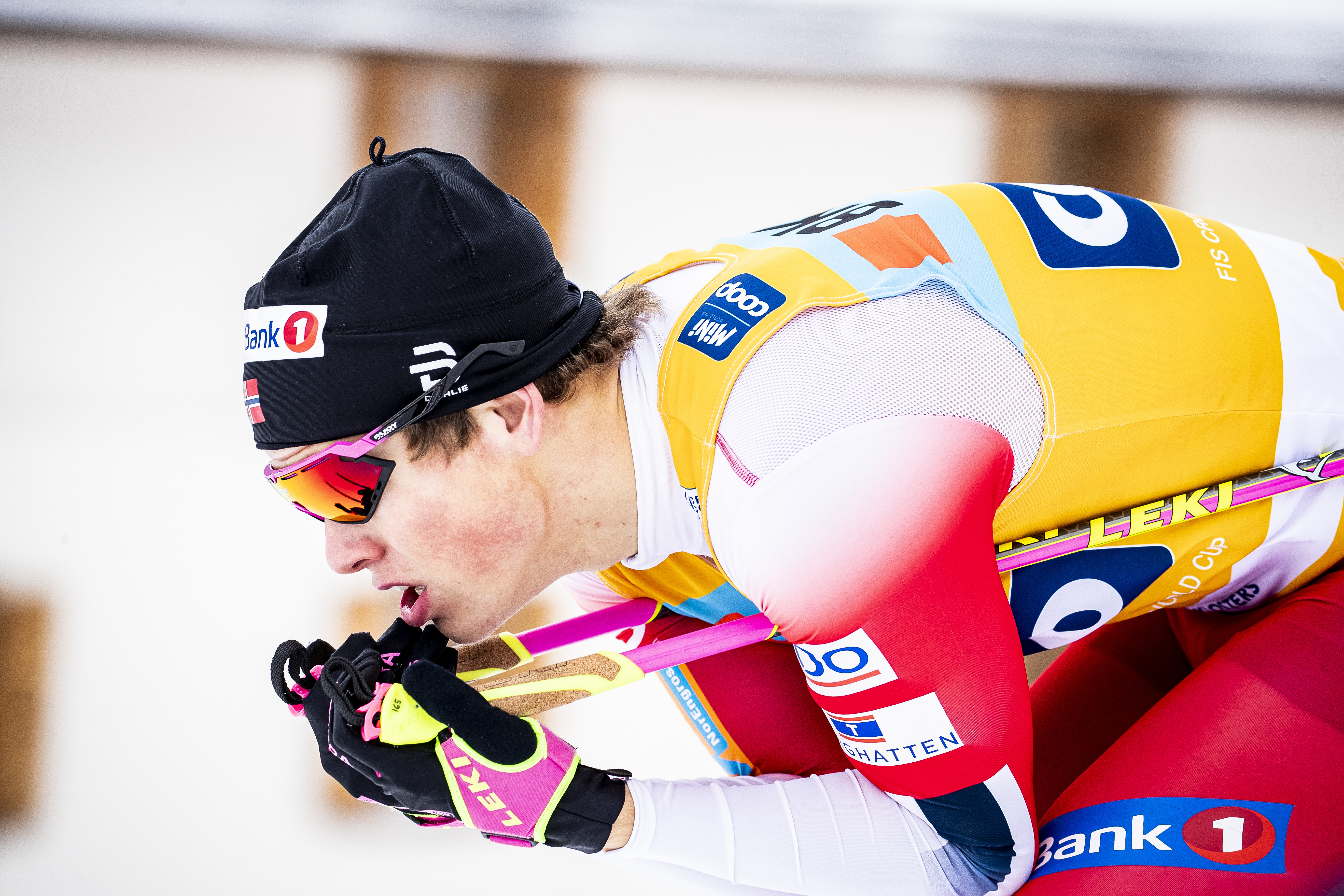
    Johannes Høsflot Klæbo with a look before taking the win in the freestyle sprint in Lahti, FIN. (Photo: NordicFocus)

    The Norwegian had advantage at the finish, with Chanavat just 0.04 seconds back in second place. Skar held off his teammate for the final podium spot in third (+.23), while Taugbøl took fourth (+0.58). Retivykh crossed a few meters back in fifth (+0.90), while Wang rebounded from his crash to finish 7.77 seconds behind in sixth.
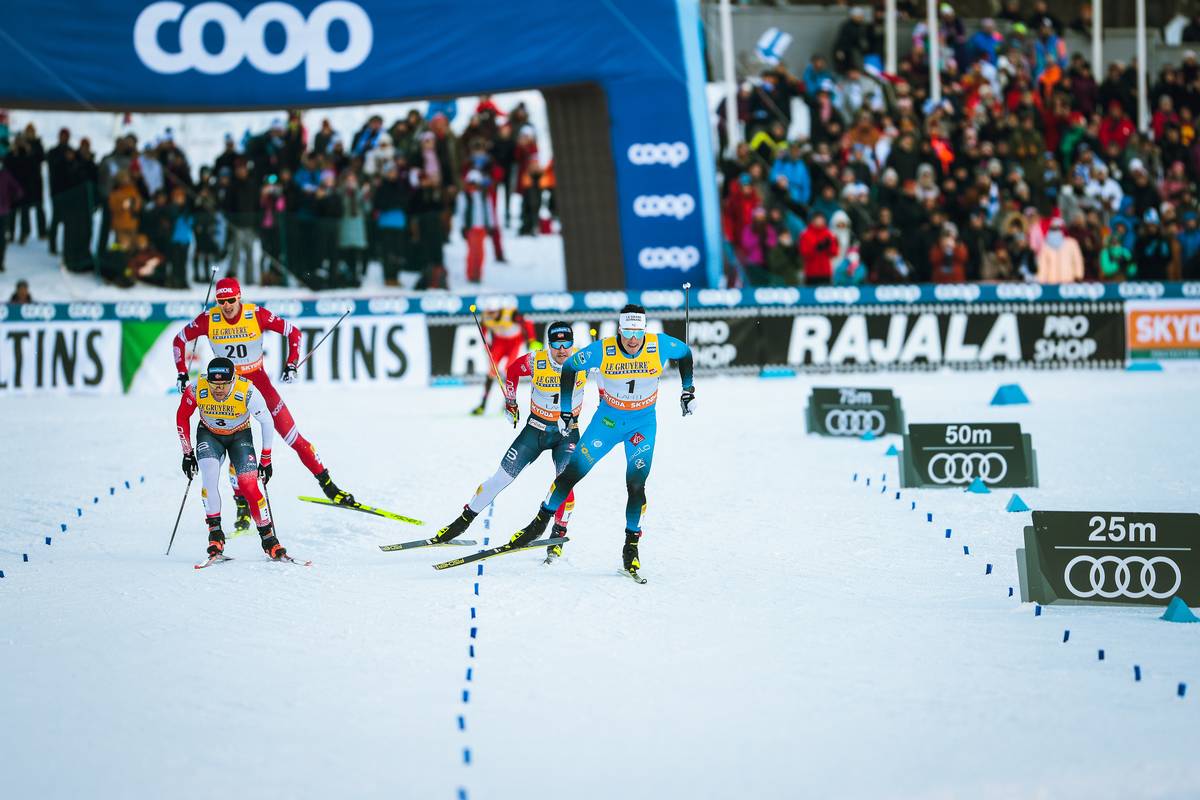
    A close race for second and third heads into the final 25 meters in Lahti. (Photo: NordicFocus)

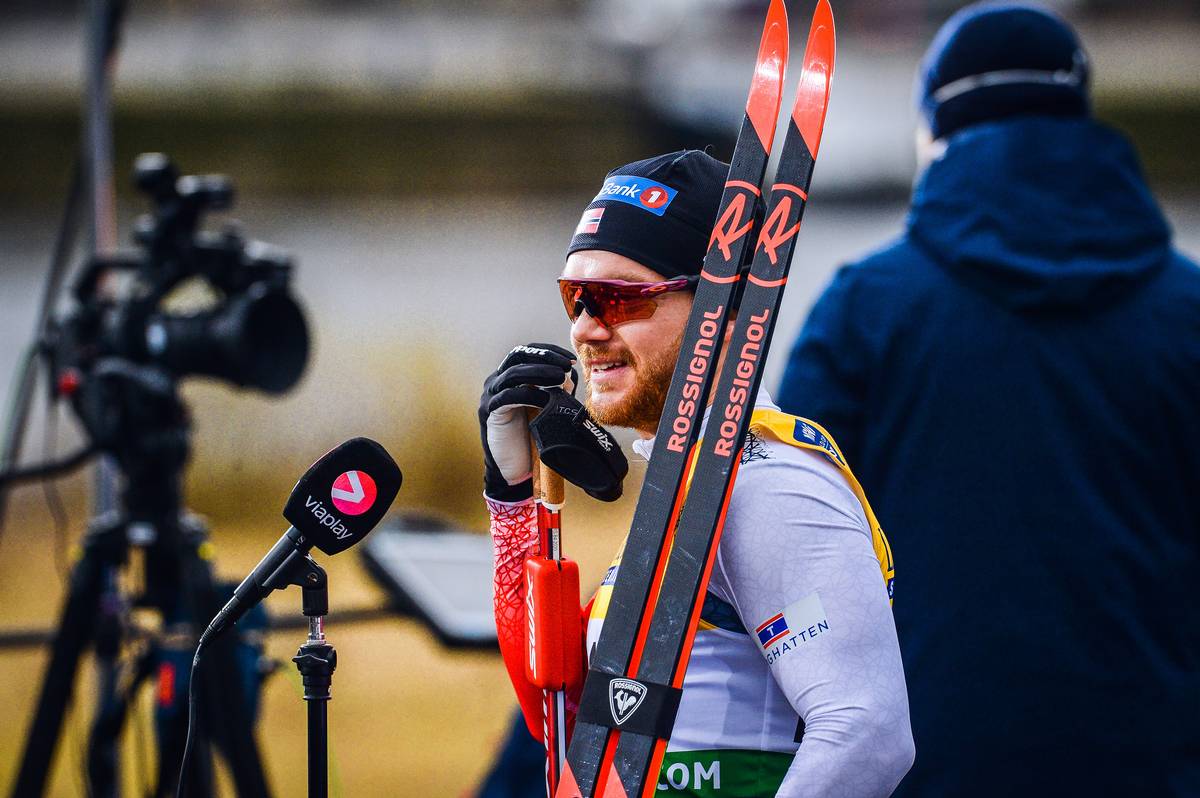
    “It was amazing,” Klæbo told FIS after the race. “It isn’t so many days since we competed in the Olympics, but still, it’s always fun to race.” 

    Klæbo commented on the excitement of racing in Lahti, which has hosted many championship events including the 2019 World Championships. He added that the racing on these tracks is often tight, which keeps it exciting for spectators – of which there were many today. When asked about racing in front of a crowd after nearly two years of empty stadiums, Klæbo smiled.

    “It was amazing. I think what they have done, and finally seeing the end of the COVID situation – I think it’s amazing. It’s always great to compete against a big crowd, and it was amazing today as well.” 
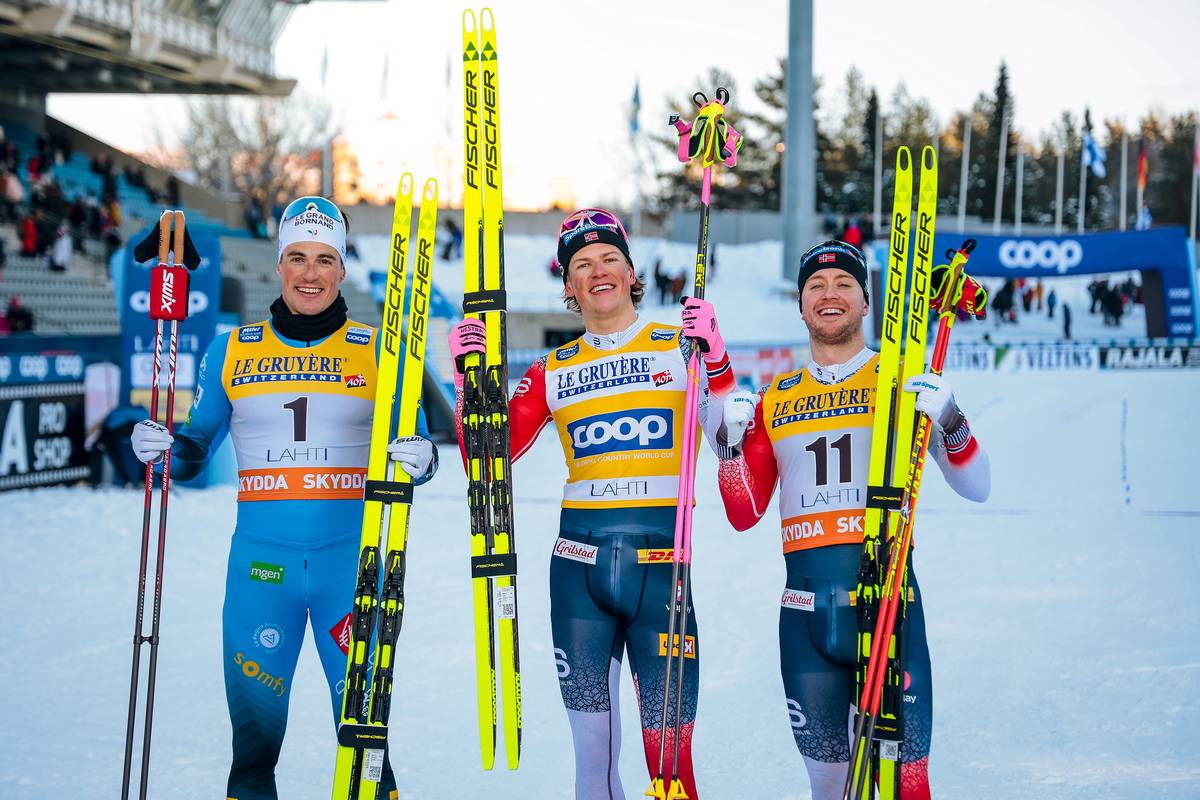
    Johannes Høsflot Klæbo (NOR) takes the win in Lahti’s freestyle sprint ahead of Lucas Chanavat (FRA) and Sindre Bjørnestad Skar (NOR). (Photo: NordicFocus)
    Graham Ritchie races in the quarterfinal of the freestyle sprint in Lahti, FIN. (Photo: NordicFocus)

    After finishing fifth in a tightly spread third quarterfinal heat, Graham Ritchie bumped up from his bib rank to finish 24th.

    Kevin Bolger was the top American qualifier in Lahti in 33rd (+8.90), just 0.41 seconds off the mark needed for the top-30. On his tails was Diekmann in 34th (+9.14), with Hanneman close behind in 39th (+9.79). Ketterson was next for the U.S. in 49th (+12.13), with Harmeyer next in 50th (+12.28).
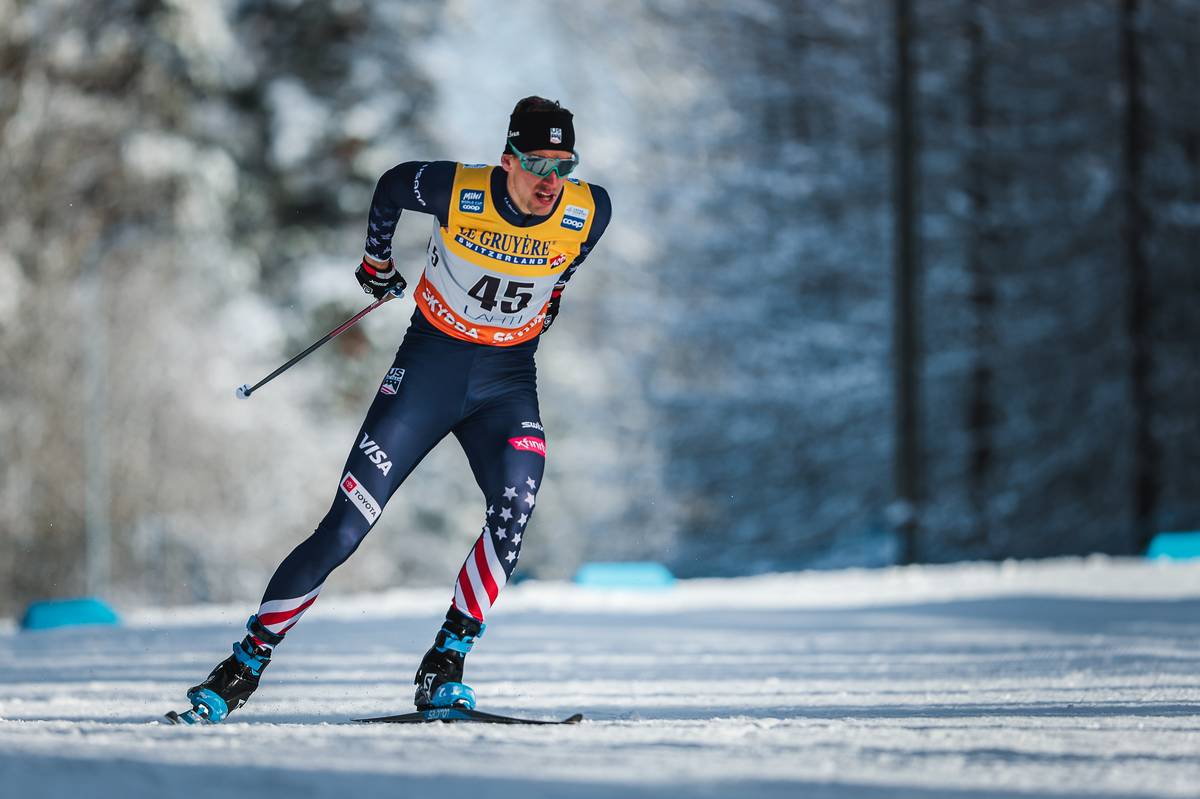
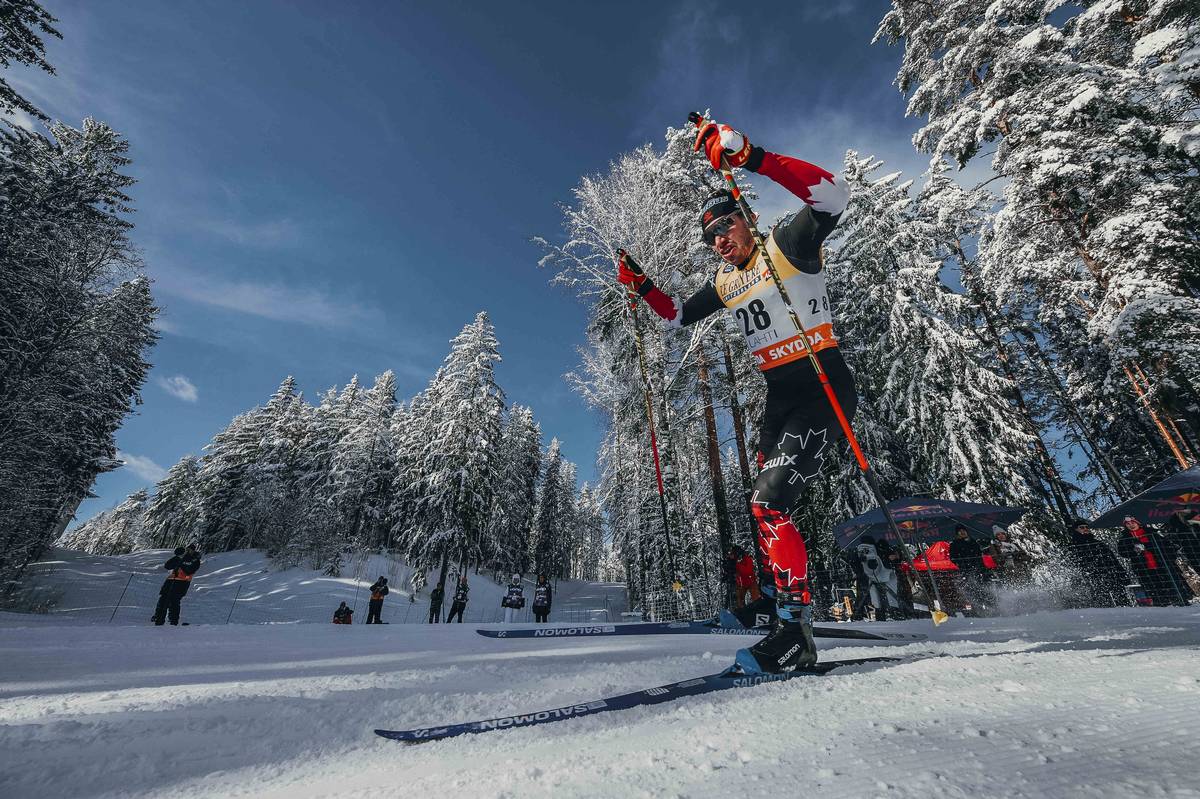
    Kevin Bolger leads the American men in 33rd during the freestyle sprint qualifier in Lahti, FIN. (Photo: NordicFocus)
    Antoine Cyr (CAN) races the qualifier of Lahti’s freestyle sprint. (Photo: NordicFocus)

    Outside the top-30 for Canada, Antoine Cyr was 40th in qualification (+9.99), with Olivier Léveillé next in 46th (+11.79), followed by Phillippe Boucher in 55th (+14.02) and Rémi Drolet in 58th (+15.87). 

    Racing continues tomorrow with a 15 k individual start classic.

    Results:

    Qualification | Final

  • Norway Takes the Top Two Podium Spots in the Team Sprint; Bolger and Schoonmaker Ski to 9th

    Norway Takes the Top Two Podium Spots in the Team Sprint; Bolger and Schoonmaker Ski to 9th

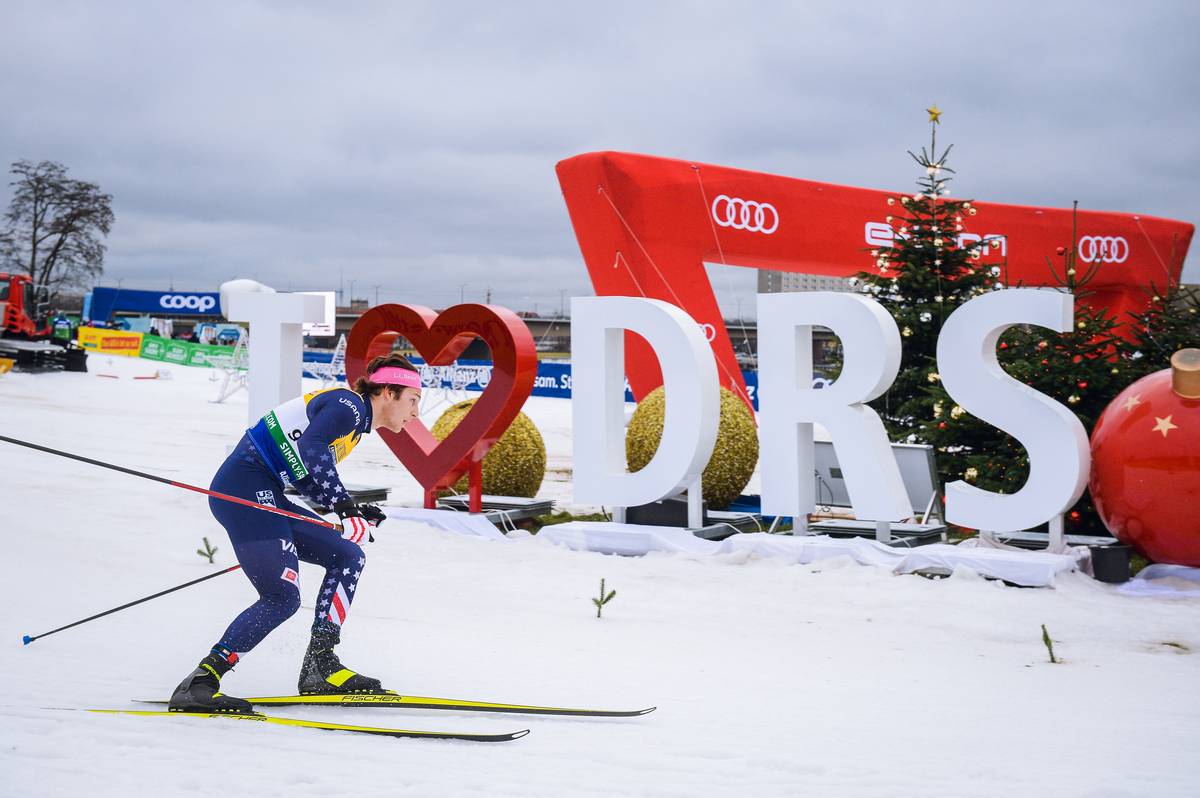
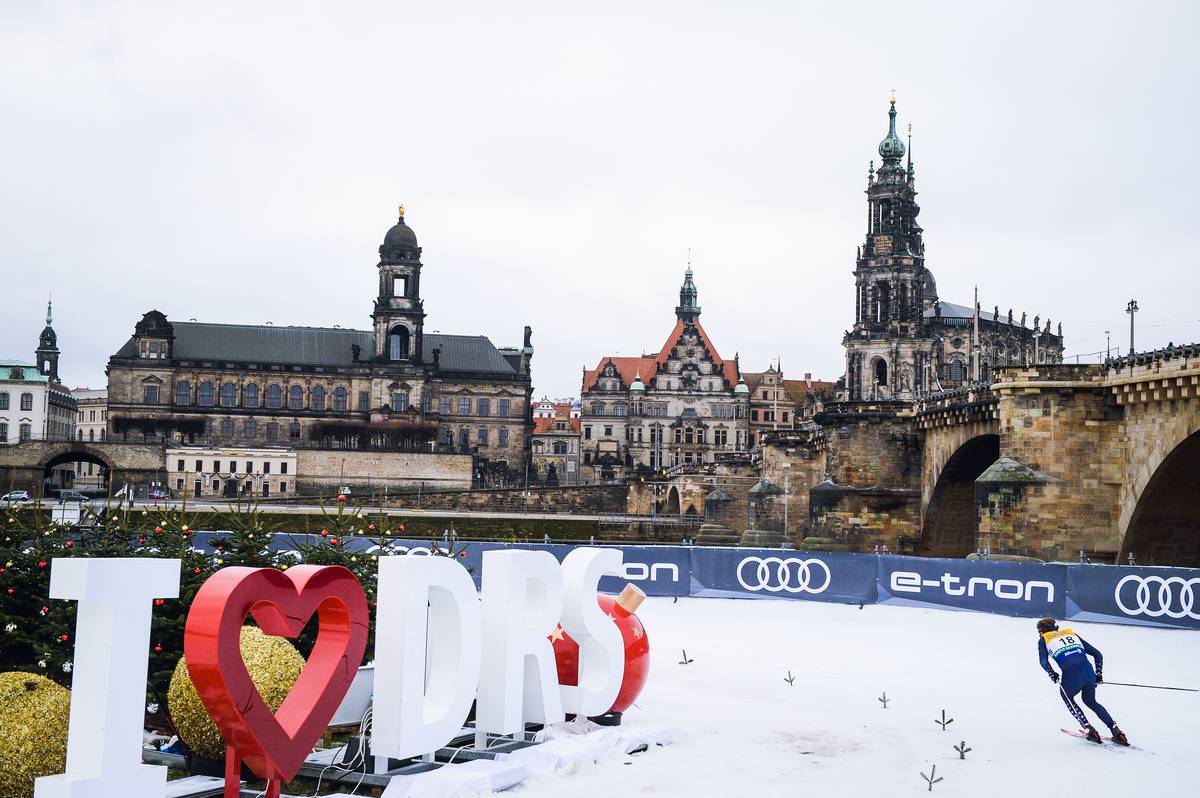
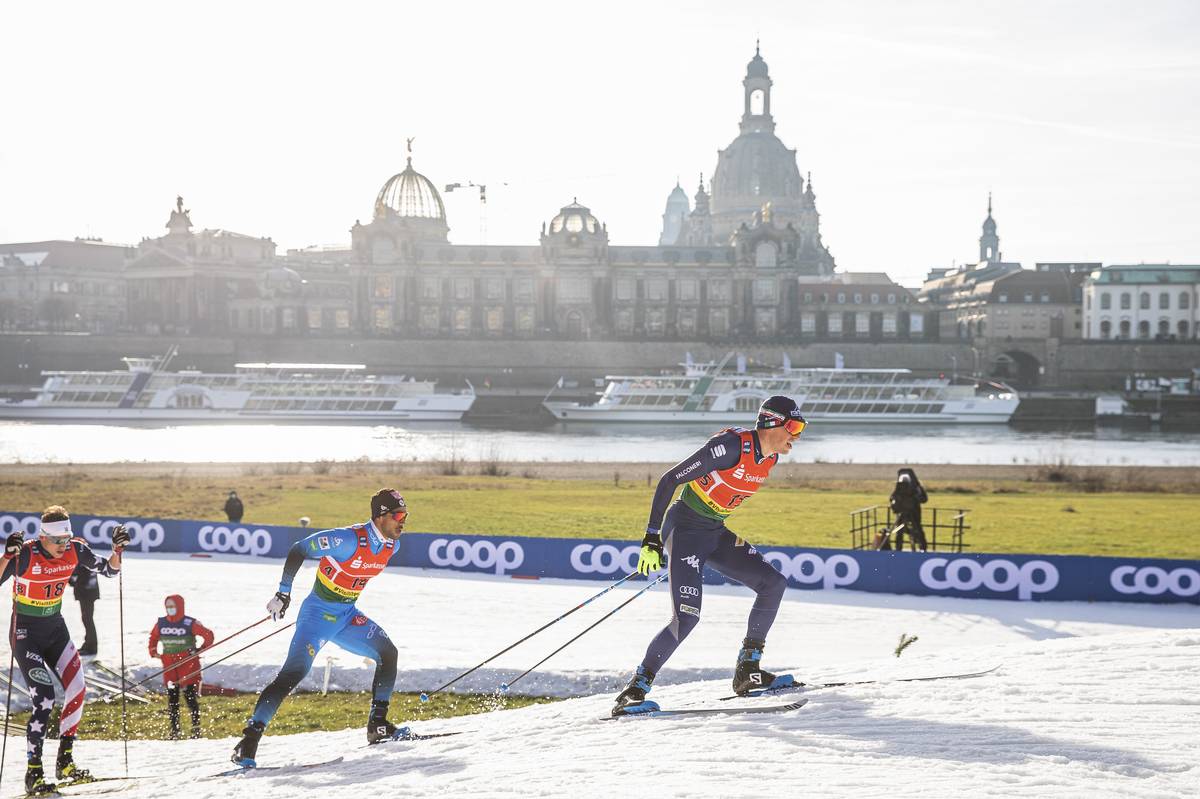
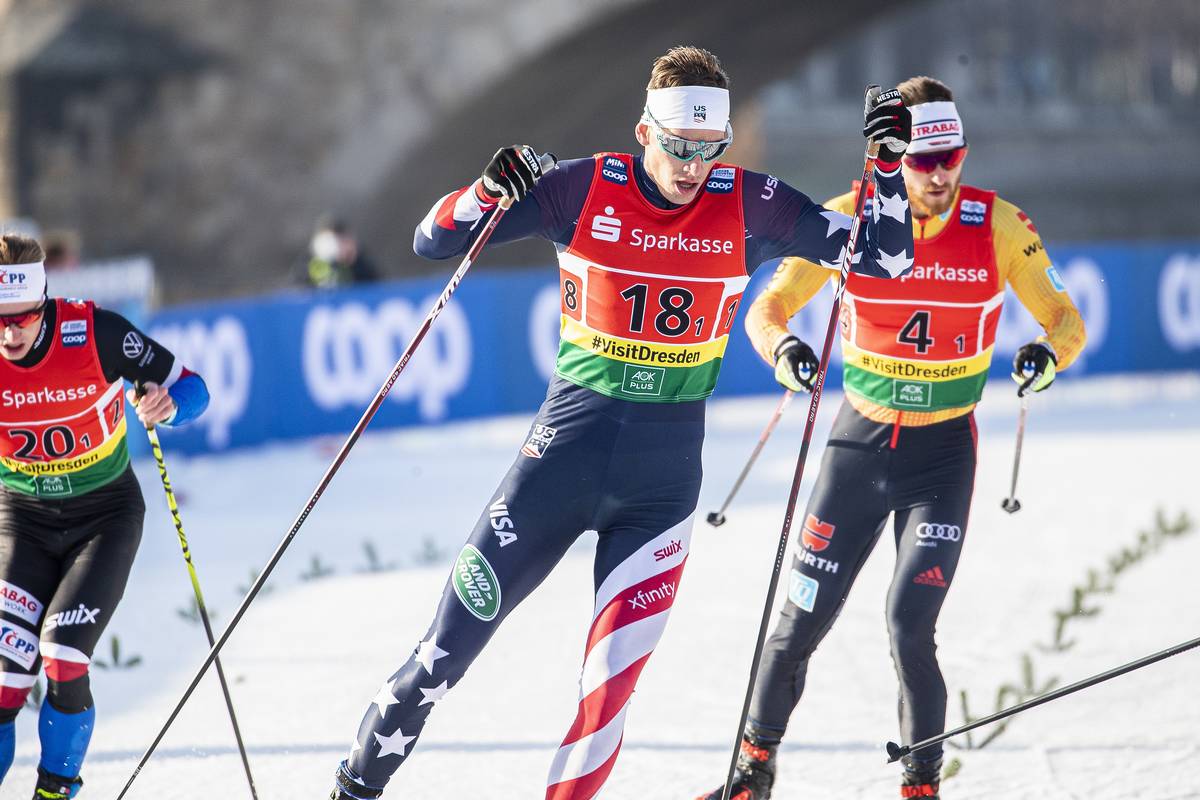
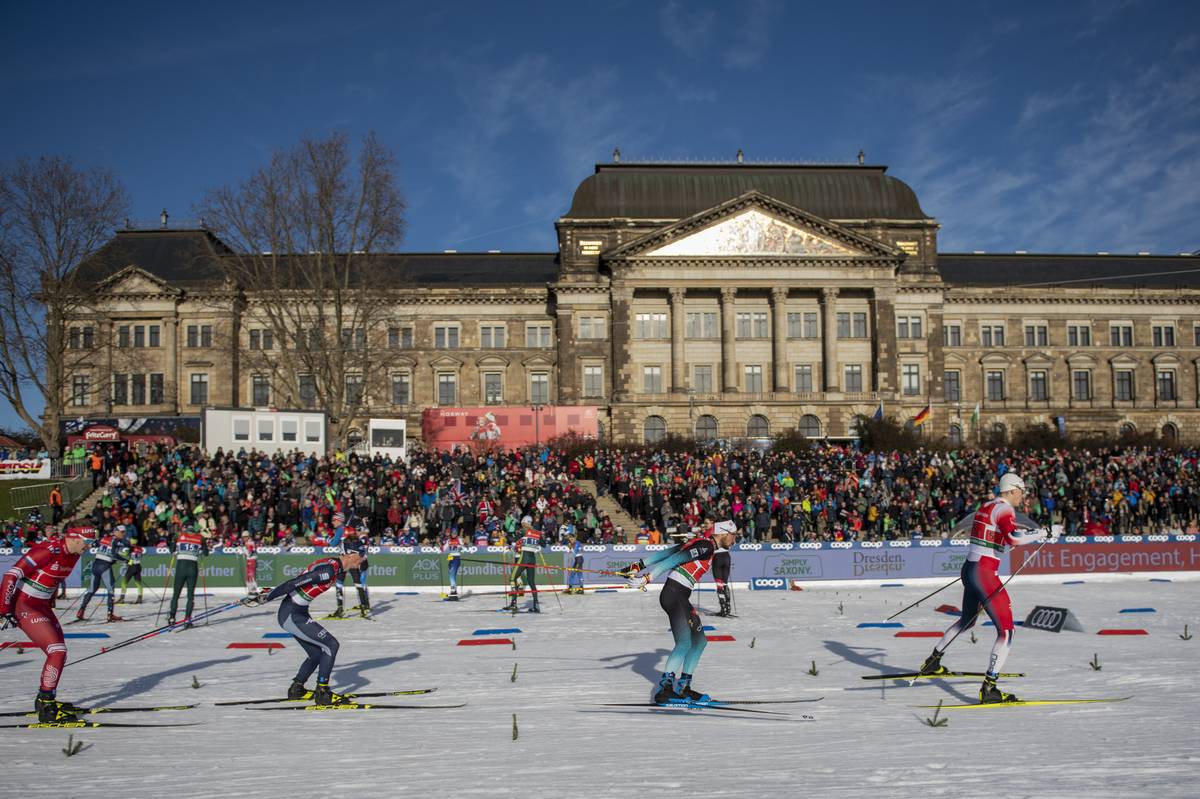
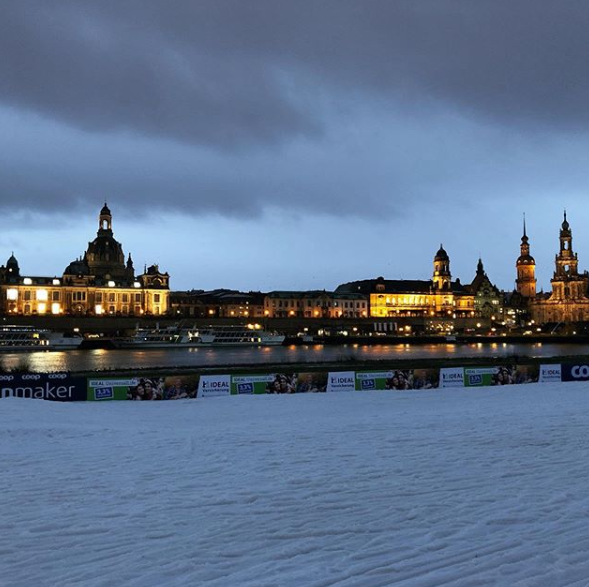
    Overcast skies mute the spectacular architecture along the River Elbe, which provides the backdrop for the sprint track in Dresden, Germany. (Photo: NordicFocus)

    This World Cup coverage is made possible through the generous support of Marty and Kathy Hall and the A Hall Mark of Excellence Award. To learn more about A Hall Mark of Excellence Award or to learn how you can support FasterSkier’s coverage please contact info@fasterskier.com.

    In the wake of the American women taking second to the Swedish powerhouse duo, and yesterday’s top two spots on the podium, Maja Dahlqvist and Jonna Sundling, the men’s team of JC Schoonmaker and Kevin Bolger lined up to race the freestyle team sprint final on the track in historic Dresden, Germany. 

    “Together again,” wrote Bolger in a post-race email. “We teamed up 3 years ago when JC came over for his first World Cup and didnt ski great then together, but being able to team up again and move to the final after a really solid semi was super rad today! He skied really well all weekend and I’m so impressed with how he’s looking, so it made today really fun!”

    Six quick laps each, eleven exchanges total, on a flat and fast city 0.65-kilometer loop with minimal recovery means flooded legs and tight racing. Like a series of just-over one minute intervals with equal rest, athletes take a conservative start, accruing fatigue while minimizing the opportunity for crashes and broken equipment to decide the race, over fitness and tactics. As the number of remaining laps dwindles, the pace steadily builds, like a bottle rocket, until the critical point arrives in the last few laps and leaders explode off the front in an effort to take control of the outcome. 

    Kevin Bolger navigates a tight curve during the men’s team sprint in Dresden, Germany. (Photo: NordicFocus)

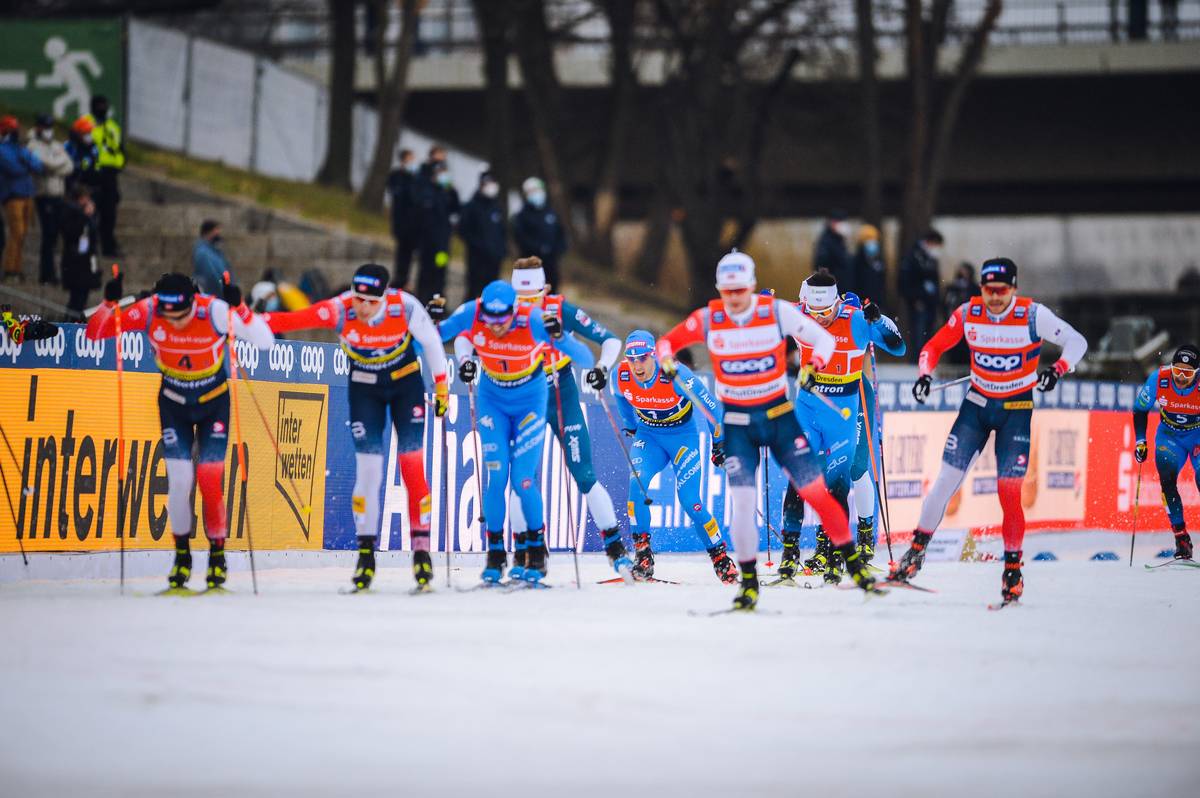
    As expected from a lap that lasted just over a minute, the whole pack of ten teams stayed very tight through the halfway mark. The Norway II team of Thomas Larsen and Even Northug spent time at the front, putting in quick surges at the beginning of each leg to re-establish their position. 

    Tagging off after lap 6, the team tagged off with Great Britain on one side, and the Norway I team of Sindre Bjørnestad Skar and Håvard Solås Taugbøl, on the other. Still very much in the mix were the Russia I pairing of Alexander Bolshunov tagging Gleb Retivykh, Italy’s Francesco di Fabiani and Federico Pellegrino, and France’s Richard Jouve and Lucas Chanavat. 

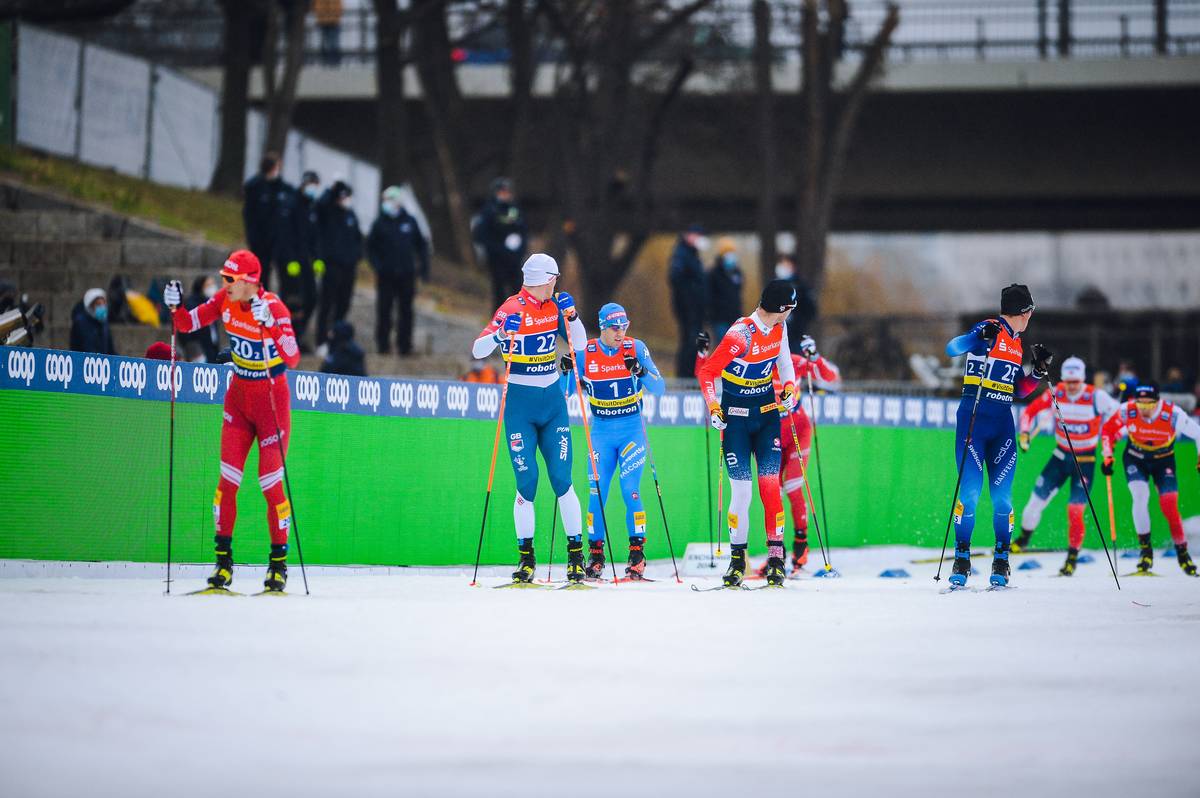
    The leaders wait for a tag during the Dresden team sprint. (Photo: NordicFocus)

    At the half, the Americans remained in contact near the back of the pack, as Bolger tagged Schoonmaker in 9th (+2.0). 

    Coming into lap 9, Bolshunov made a move to the front to take the reins for Russia I, with both Norway teams and Jouve quickly responding to his tempo, while Italy and Great Britain worked hard to maintain contact. This burst set the tone for the final three laps.

    As Retivykh unsuccessfully attempted to drop Taugbøl and Northug in lap 10, the pack in pursuit began to stretch out. While all remained in contact with the leaders, Great Britain began to look out of the running for a win, with Italy and France remaining a podium-threat in fourth and fifth. The teams behind thinned rapidly.

    Still tight at the Tag, Norway II, Italy, and Norway I (left to right) head out for another lap during the Dresden team sprint. (Photo: NordicFocus)

    In Bolshunov’s final lap, he rocketed off the front, skiing powerfully through his legs with an aggressive forward lean, carrying momentum between each push. Whereas the early laps, rounding the tight curves looked careful and calculated, the men shot around the degrading bends, losing no speed as they pushed into the straightaways. 

    Tagging off for the final lap, Northug accelerated ahead of Retivykh, free skating powerfully off the first roller to regain the lead for Norway II. Feet quickly stepping around the first curve, Norway II looked in control with Norway I and Russia not ceding the win just yet. Italy and France remained on their tails, still in position for the podium. 

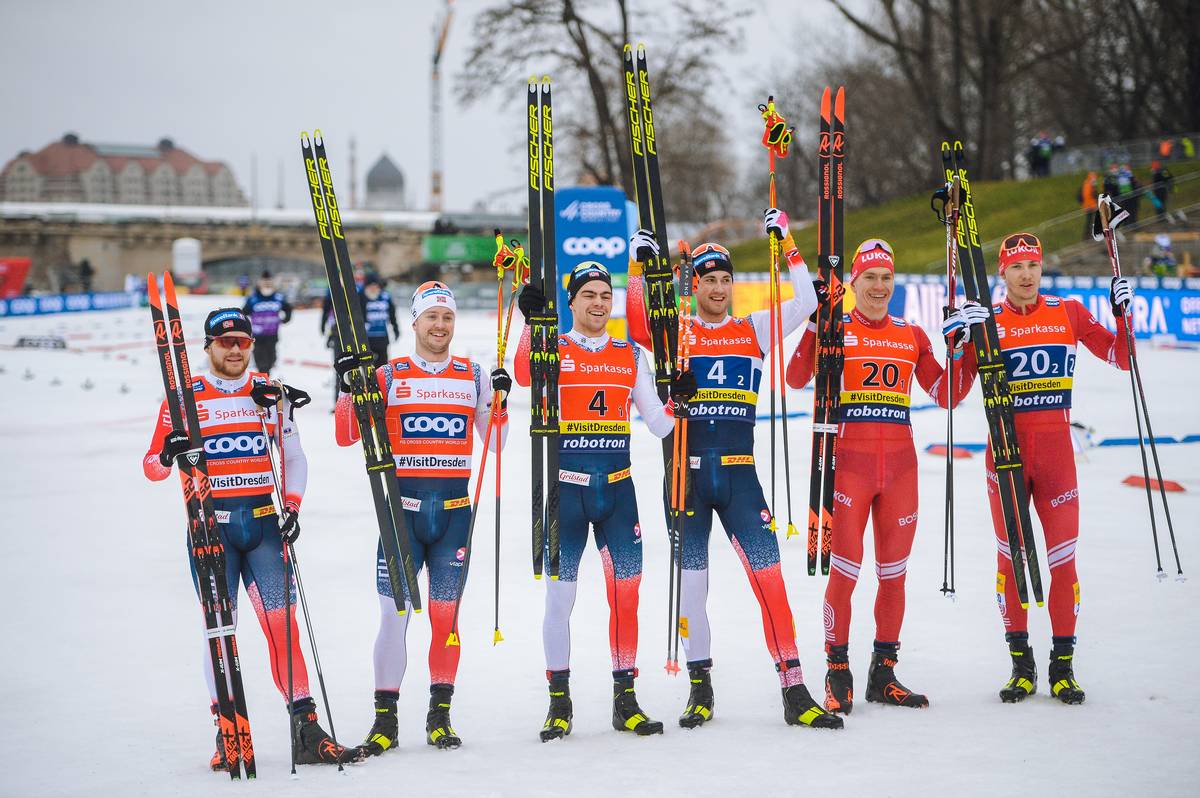
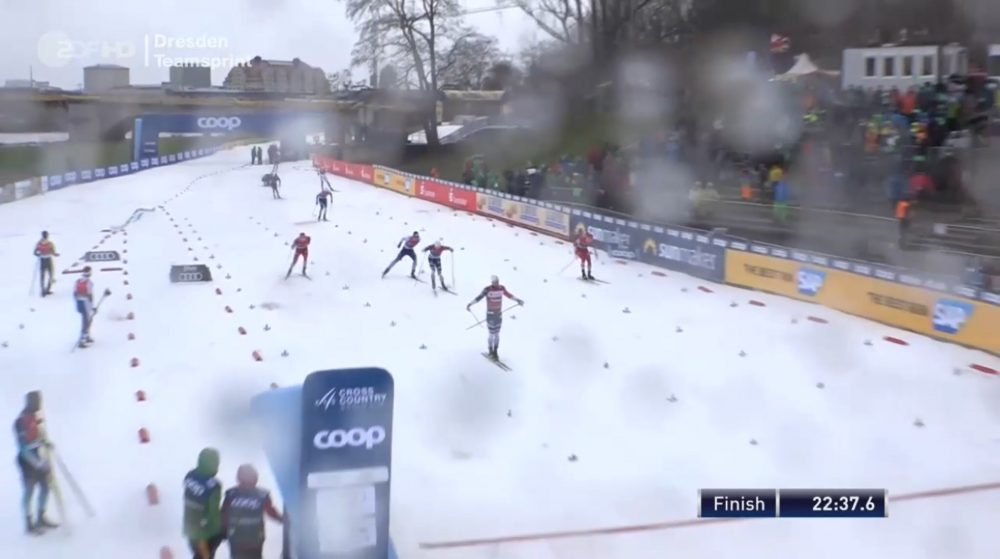
    Coming into the final curve hot, Taugbøl made an attempt to slingshot Norway I to the lead, but the tactic was thwarted by the closing speed and power of Northug. Standing up to pump his fist into the air, Northug coasted over the line for the win in 14:19.34, while Taugbøl narrowly edged out a hard-closing Retivykh to make it Norway II, Norway I (+0.42), then Russia I (0.62) for the podium. 

    Even Northug pumps his fist as he takes the win, while the second and third spots on the podium remain up for grabs behind him. (Photo: NordicFocus)

    “It was amazing,” Northug told FIS at the finish. “We struggled a little bit in the semifinal, but in the final we did everything right. Thomas sent me out first on the final lap and that was the plan. It was good.”

    Speaking to the experience of racing with Northug, Larsen spoke highly of his partner, and of putting the Norway II team ahead of Norway I on the podium. 

    “It’s fantastic, he’s an incredibly good skier,” Larsen said. “He hasn’t had so many chances in the World Cup so far, but now he shows with yesterday and last week, he shows that he is one of the best in the world. I think this was a dream team today, and it’s cool to be the underdogs and just take it home.”After a fast final leg by Pellegrino to keep his team in the mix for the top-three, Italy was next over the line, narrowly missing the podium in fourth (+0.78), with Chanavat bringing the French I team home in fifth (+1.21). Knowing he was no longer in position to snag top-three, Great Britain’s Andrew Young relaxed in the final stretch, coasting over the line in sixth (+3.84), followed by a sizable gap to the next racers. 

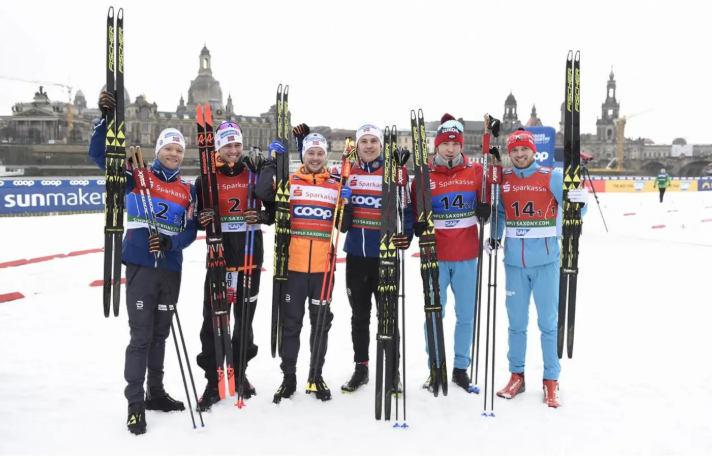
    The men’s podium of the team sprint in Dresden: The Norway II team of Thomas Larsen and Even Northug took the win ahead of Norway I, Sindre Bjørnestad Skar and Håvard Solås Taugbøl, and Russia I, Alexander Bolshunov and Gleb Retivykh. (Photo: NordicFocus)

    After losing contact in the final laps, Schoonmaker brought the American team to the line in 9th (+11.36). 

    “Dresden is a really fun event,” Bolger said after the race. “I think it’s something a lot of us skiers on the a World Cup enjoy to mix things up!”

    Bolger explained that he and Schoonmaker “just wanted to stay out of trouble — and try as best as we could to put ourselves into a position to where we could attack when we needed to… I was hoping for more of a tactical final but it seemed like Bolshunov had a different plan and really pushed the pace for my leg the whole time, which made it really hurt, but I think that makes it really fun and competitive!”

    Providing insights into the team’s tactics and his experience during the final, Schoonmaker provided the following comment in a post-race email from the road.

    “I would say our main strategy going into the final was to conserve energy while staying in the top half of the field so that we would be able to match any moves made later in the race,” Schoonmaker explained. “It seems everyone had the same plan in mind, though, so it was tough to make that work. We were a little too far back to make anything happen when the pace picked up in the second half of the race. In Dresden, it really seems to be all about being out front because passing is just hard on a short, narrow and turny course. It’s a super fun format with the short laps, but also very challenging!”

    Racing in semifinal B, Luke Jager and Logan Hanneman skied to 10th (+10.96), with the Canadian duo of Russell Kennedy and Graham Ritchie not far behind in 12th (+14.91). Neither team advanced to the finals. 

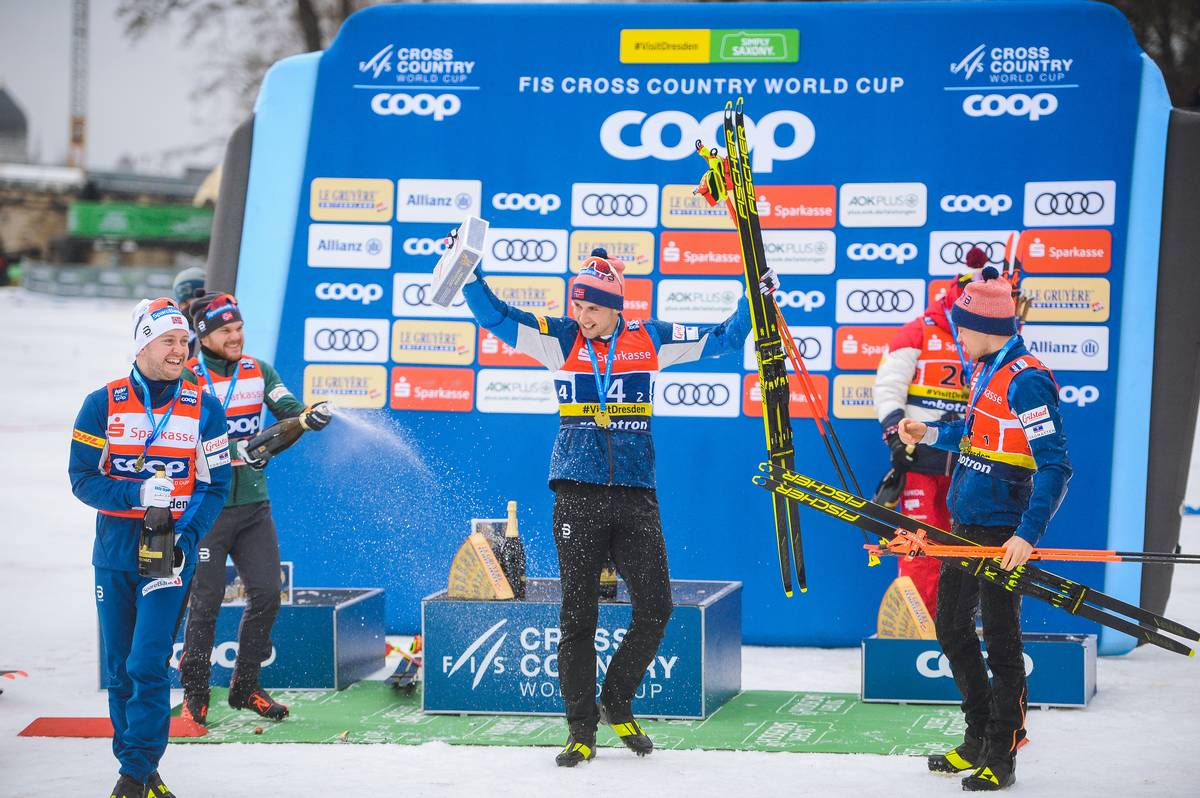
    With champagne spraying, Even Northug and Thomas Larsen step off the top spot of the team sprint podium in Dresden. (Photo: NordicFocus)

    Despite sitting out the weekend in Dresden, Norway’s Johannes Høsflot Klæbo currently leads both the World Cup overall and sprint standings. Klæbo is roughly 150 points ahead of Sergey Ustiugov (RUS) in the overall, and 60 points ahead of Taugbøl in sprinting. 

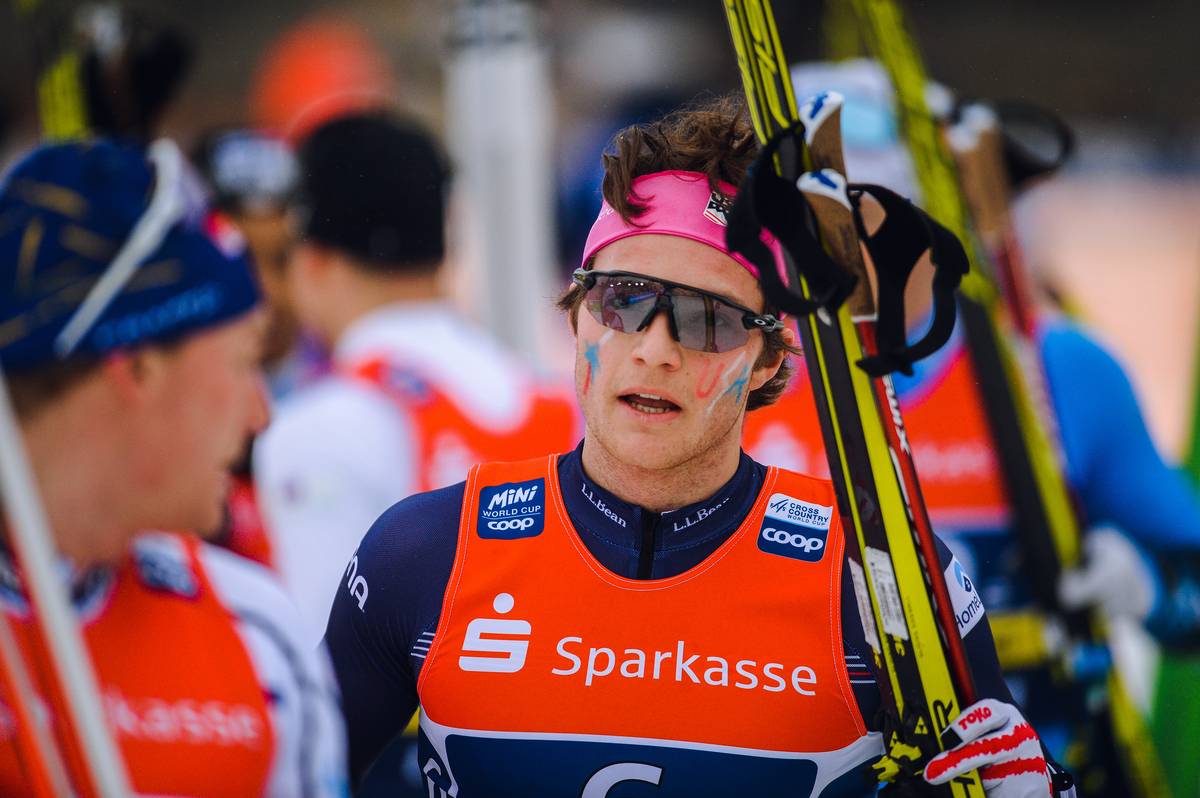
    Leading the American men, Schoonmaker sits in 11th place in the sprint standings with 112 World Cup points, and 20th in the overall. Schoonmaker is also the second ranked U23 skier, trailing Russia’s Alexander Terentev by 219 points. 

    Ben Ogden also ranks inside the top-30 in sprinting, sitting in 23rd with 46 points. Ogden is 4th on the U23 list, with Gus Schumacher 20 points behind in 7th. Luke Jager sits in 13th of the 21 athletes on the U23 list, with Zanden McMullen close behind in 16th. The future of American skiing is looking bright.

    Face painted with stars and stripes, JC Schoonmaker leads the American men in the overall, sprint, and U23 World Cup standings. (Photo: NordicFocus)

    After a holiday break, racing continues with the Tour de Ski, which kicks off in Lenzerheide, SUI on December 28th. 


    Results:
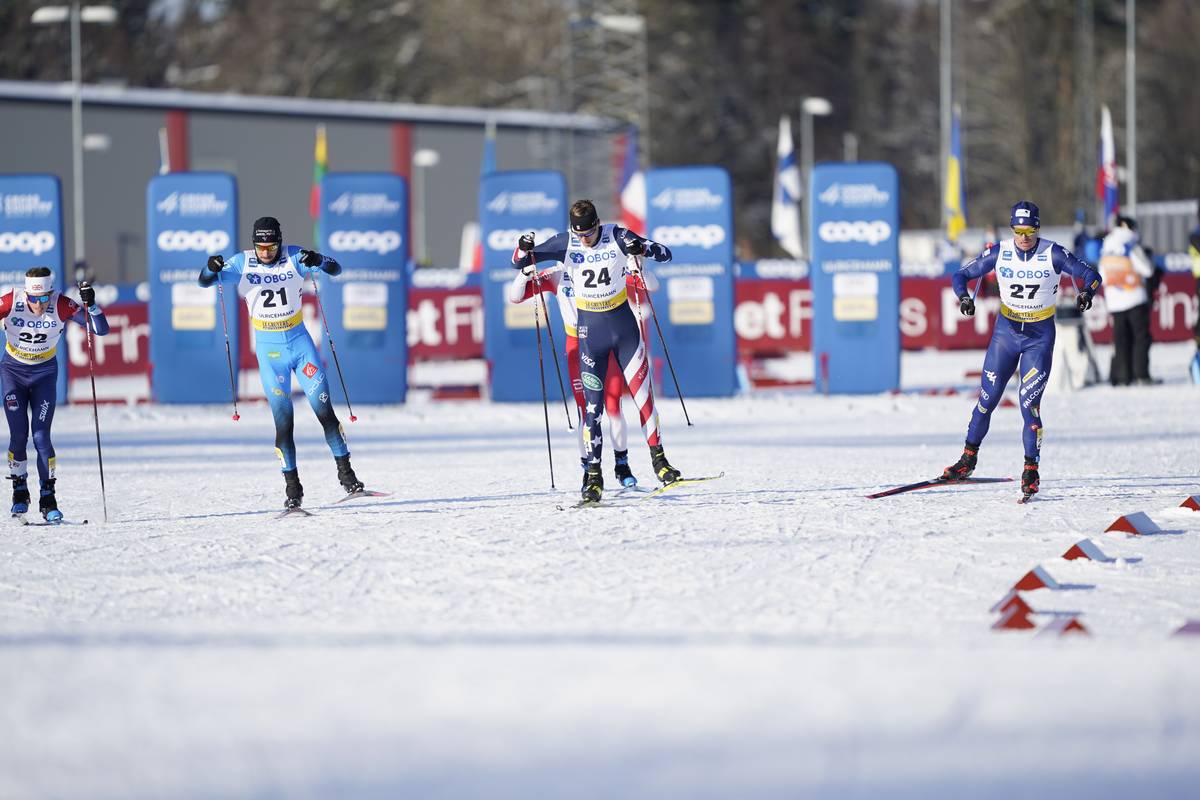
    Team Sprint: Semifinal A | Semifinal B | Final

    World Cup: Sprint Standings | Overall | U23

  • Taugbøl Takes the City Sprint Win in Dresden; Schoonmaker Back in the Semis to Finish 9th

    Taugbøl Takes the City Sprint Win in Dresden; Schoonmaker Back in the Semis to Finish 9th

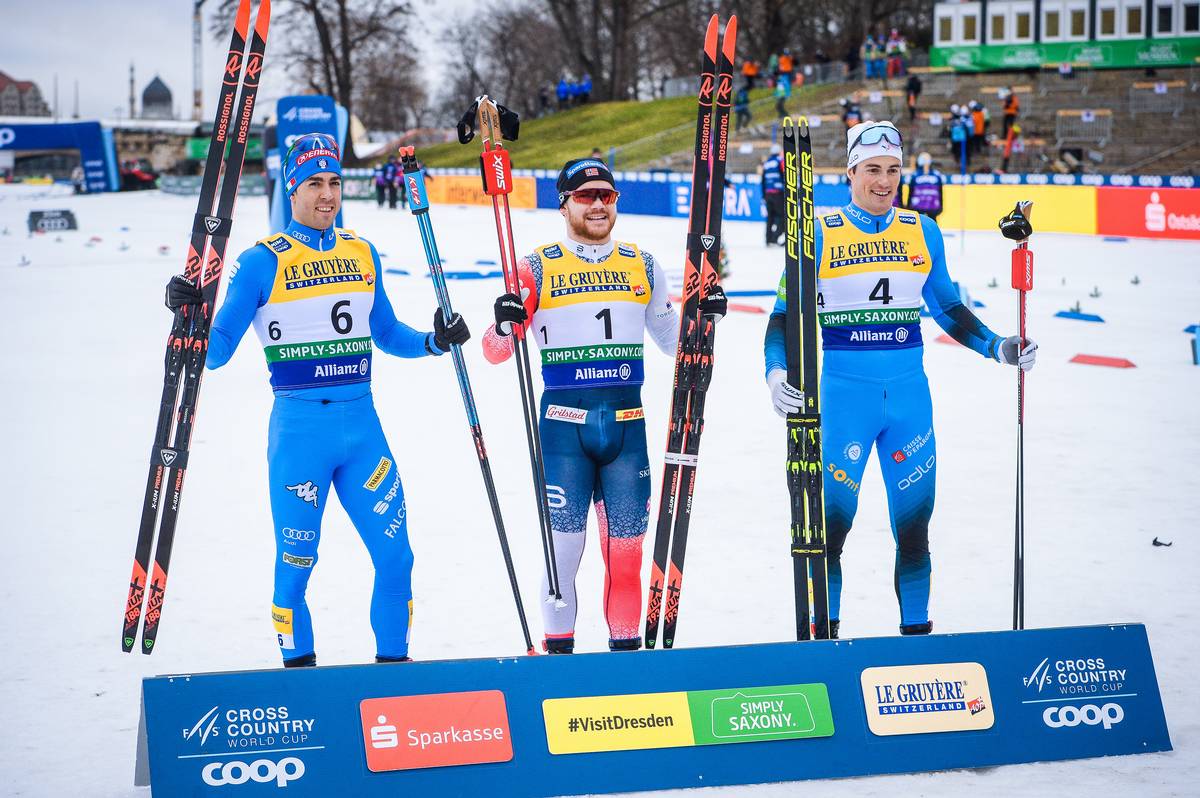
    The men’s podium of Dresden’s individual freestyle sprint. Håvard Solås Taugbøl (NOR) took the win ahead of Federico Pellegrino (ITA) and Lucas Chanavat (FRA). (Photo: NordicFocus)

    This World Cup coverage is made possible through the generous support of Marty and Kathy Hall and the A Hall Mark of Excellence Award. To learn more about A Hall Mark of Excellence Award or to learn how you can support FasterSkier’s coverage please contact info@fasterskier.com.

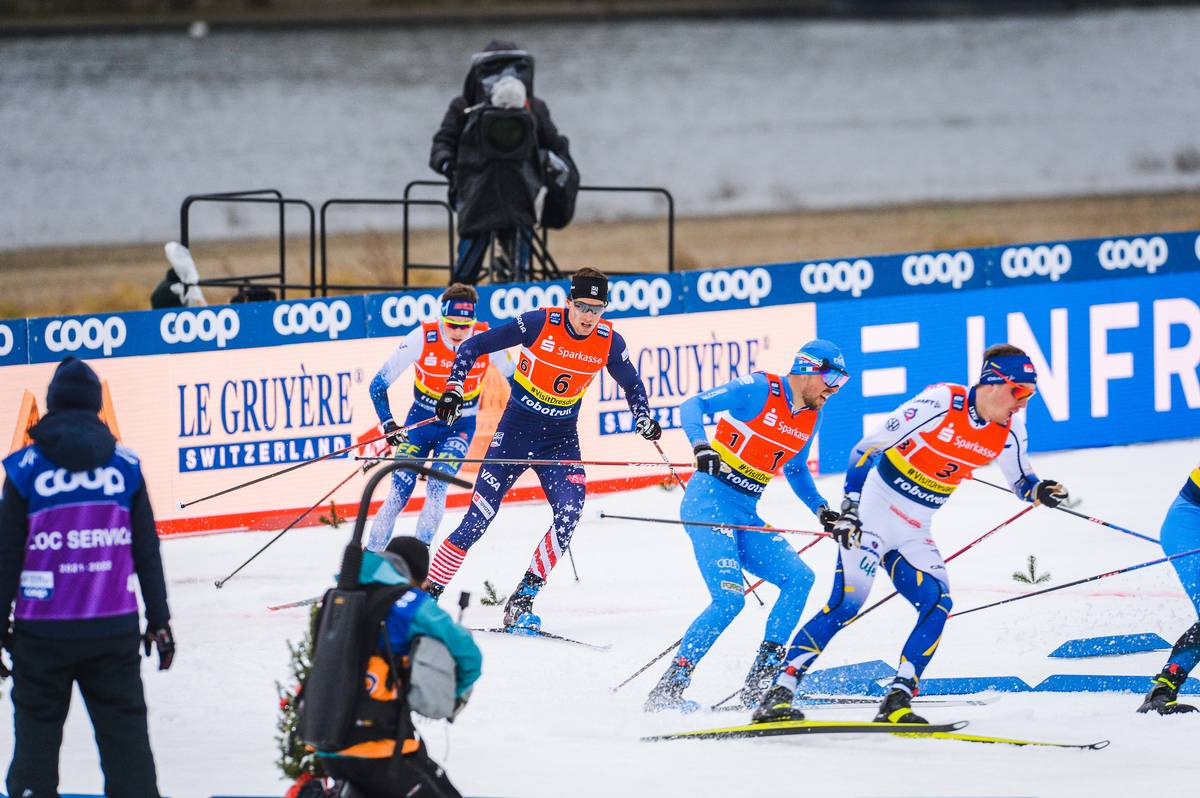
    With Christmas decor lining a ribbon of snow providing a better indication that we are nearing the end of Period I and heading into the holiday season than the surrounding green grass in Dresden, Germany, athletes took to the track in the city for yet another iteration of its thrilling sprint weekend. Humid conditions well above freezing made for fast racing on the two-lap course, which often sees spicy turns and tactics, without a significant climb to separate the field in a deciding manner. 

    If you’d like a throwback from January, 2018, here’s a video clip from Instagram where Simi Hamilton painfully face-plants, just after having broken the pole of Johannes Høsflot Klæbo. This left Hamilton with a lip full of carbon-fiber splinters and plenty of abrasions from the harsh granular track. Good times.

    After the first three weekends of racing, 21-year-old JC Schoonmaker sat in second place in the U23 World Cup standings, and 27th in the overall World Cup ranks. Showing he was ready to build on this platform, Schoonmaker smashed the qualifier, finishing third, 1.16 seconds behind Norway’s Håvard Solås Taugbøl and roughly 0.3 behind Richard Jouve of France, who qualified in second. 

    In an episode of Nordic Nation recorded earlier this week, Schoonmaker, along with teammates Ben Ogden and Gus Schumacher, discussed how their results in the early season races have encouraged them to raise their limits and take chances in their sprinting as they transition into their senior racing careers. Instead of choosing heat four or five, which they explained shows that one is limiting their potential on the day to the semifinal, they wanted to begin racing in earlier heats with the top qualifiers. Thus increasing their risk of being knocked out early, but also learning what it takes to advance further through the rounds.

    JC Schoonmaker skis to 3rd in qualification in Dresden. (Photo: NordicFocus)

    Today, Schoonmaker raced in heat one alongside Taugbøl and Jouve, along with Even Northug (NOR), Johan Häggström (SWE), and teammate Logan Hanneman, who qualified in 7th, 28th, and 30th, respectively. 

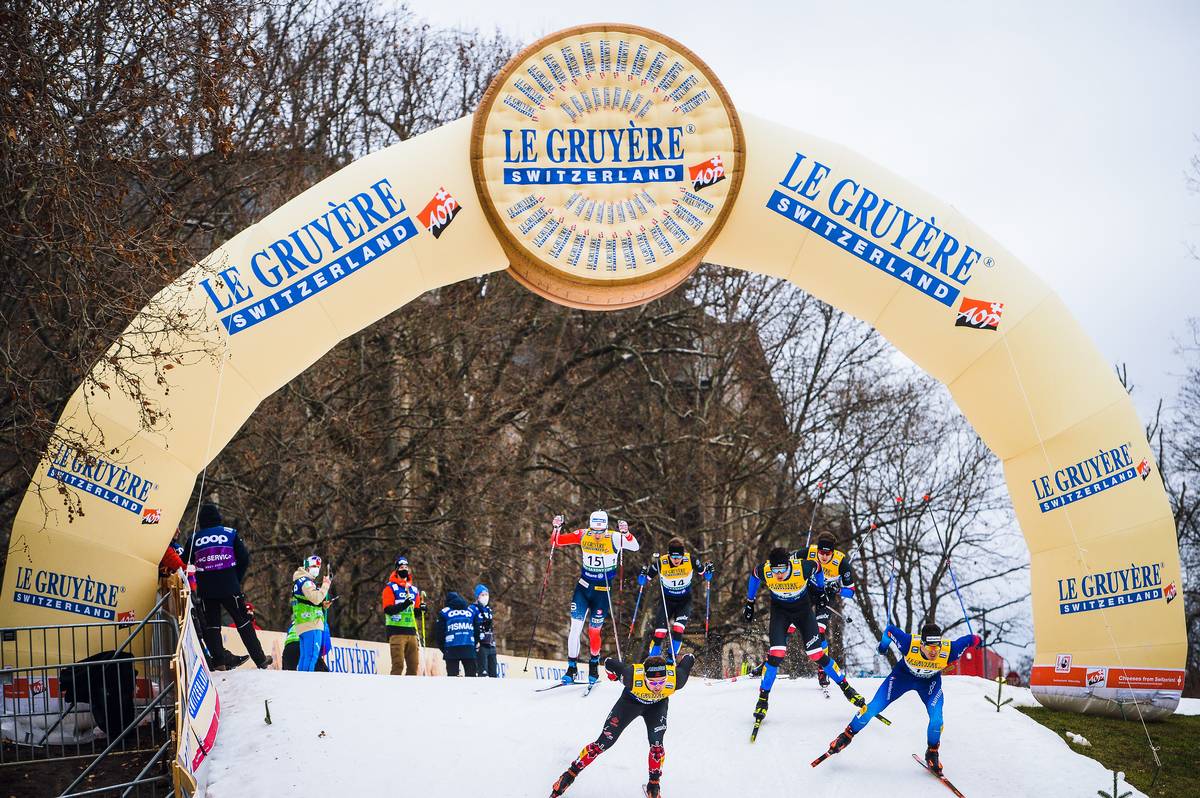
    The first lap of the race, the pace was fast but the men looked cool, each carefully navigating the hairpin curves and not racing aggressively. As they accelerated in the second lap, Schoonmaker kept himself in contact with Jouve, who was not in the lead, but still racing in a position of control at the front with Taugbøl. Dropping into a tuck coming off a roller and safely rounding the hairpin, Schoonmaker headed to the final straight behind Jouve. As they powered through the final lanes, it was Taugbøl and Jouve at the front for a photo finish, with Northug finishing just ahead of Schoonmaker close on their tails for third and fourth. 

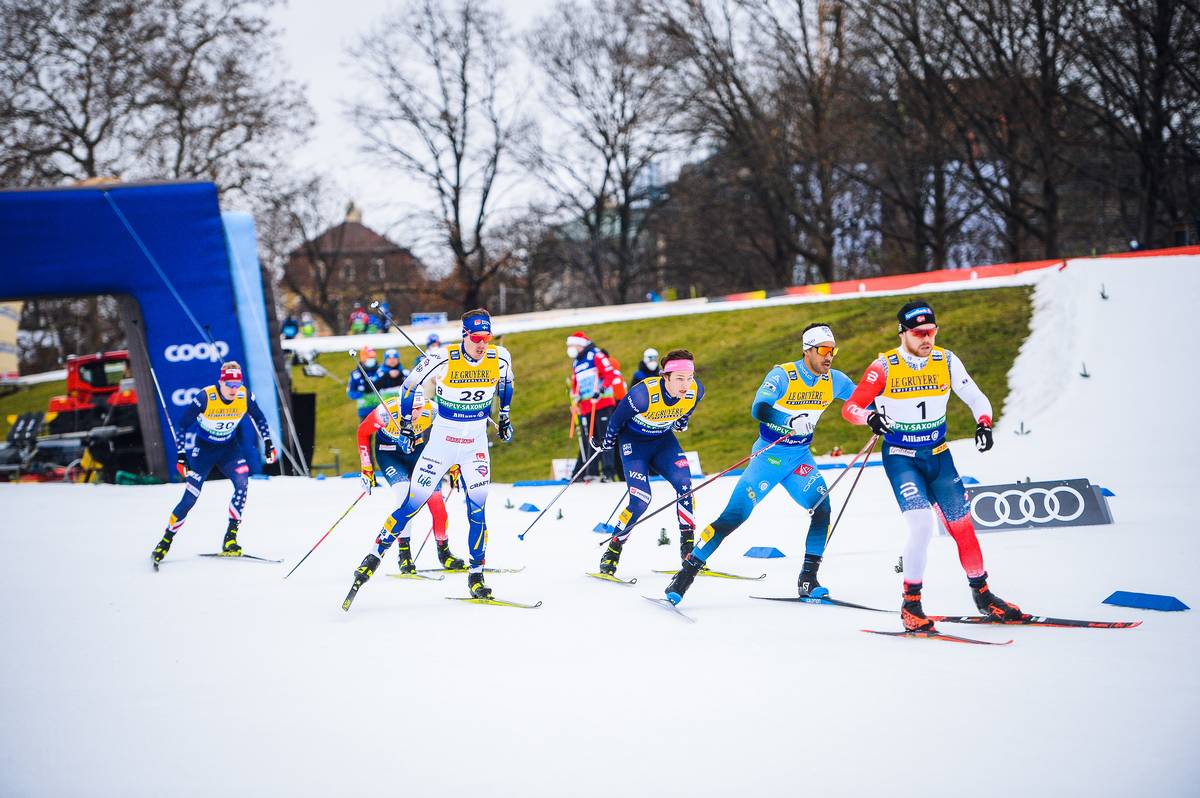
    JC Schoonmaker marks Richard Jouve (FRA) during the first quarterfinal heat in Dresden. Logan Hanneman stays in contact with the pack in bib 30. (Photo: NordicFocus)

    As the remaining quarterfinals progressed, it became clear that Heat 1 was the fastest, allowing both Northug and Schoonmaker to advance to the semifinals. 

    Hanneman also stayed in contact through the round, finishing 1.88 second behind the leaders, but sixth in the heat. After the final rounds were decided, Hanneman’s position was 30th overall on the day. 

    Also racing in the quarters, Canada’s Graham Ritchie qualified in 16th and raced in the fifth quarterfinal heat. In a competitive position throughout the second lap, Ritchie came into the final hairpin on the inside of the curve, looking to slide up in position heading into the final stretch. Perhaps lacking real estate along the v-board, Ritchie went down, losing his position and ability to advance further. He ended his day in 26th. 

    Graham Ritchie pushes the pace in the quarterfinal in Dresden. (Photo: NordicFocus)

    A post-race Instagram story posted by Ritchie’s coach Erik Bråten captioned “sh*t happens” showed his ski tip had broken off and the base had delaminated — not ideal.

    Racing in the first semifinal, Schoonmaker looked comfortable and smooth, approaching the round in a similar way as the first in terms of his positioning heading into the second lap. 

    At the front, Italy’s Federico Pellegrino, last year’s winner, set the tone alongside Taugbøl, with Jouve in a strong position on their tails. 

    Lapping through the finish, JC Schoonmaker stays in position with the leaders to advance into the final round. (Photo: NordicFocus)

    Putting faith in his boards and catching a quick draft, Schoonmaker again dropped low coming down the last roller and into the final curve. Once again, he was following Jouve and in contact with the front of the pack, however, as they headed into the final lanes, he was only in position to take fifth in the heat, unable to advance into the final round. 

    Still a very strong overall result, Schoonmaker ended his day in 9th overall. 

    In a post-race interview, Schoonmaker discussed his decision to select heat one, along with his rollerski warm up, maintaining the headspace needed to perform between rounds, and what’s next for him over the next few weeks. A quick note, we had some trouble with WiFi connection, which interrupted some of Schoonmaker’s comments. The trials of remote reporting from eight time zones away.

    Taugbøl took the win in the first semi, with Pellegrino narrowly staying ahead of Chanavat in second and third. Jouve was just 0.3 seconds behind his teammate, leaving the two Frenchman in wait to see whether they would advance as lucky losers. 

    A close finish for the top-four, JC Schoonmaker crosses in fifth in his semifinal heat. (Photo: NordicFocus)

    Lead changes and tight racing developed the plot line of the second heat of the semis, which featured Northug and his teammate Sindre Bjørnestad Skar fighting for position at the front with two Russians, Gleb Retivykh and Alexander Terentev, who beat Klæbo in the opening sprint in Ruka and currently ranks just ahead of Schoonmaker in the U23 standings. 

    Each unable to break away at the front on the fast and flat tracks, Northug, Skar, and Retivykh came to the line in unison, throwing their boots for a three-way photo finish. Though their times were indistinguishable, it was determined that their finish order was just that: Northug, Skar, Retivykh, with Terentev a ski length behind in fourth. Men crashed in every direction crossing the line, falling to the ground and gasping for air to evidence the intensity of the effort. 

    Heading into the finish, the second semifinal was tight between two Russians and two Norwegians. (Photo: NordicFocus)

    By the clock, Jouve and Terentev were on the wrong side of the cusp for lucky loser. They ended their day in the semis, while Retivykh and Chanavat advanced to the final. 

    More lead changes and thrill, Chanavat took the lead in the first lap of the final. Lapping over the finish line for the first time, Taugbøl moved to the front while Pellegrino lurked on their tails. Down the backstretch, the Italian moved up alongside Chanavat, skiing powerfully on Taugbøl’s tails as they safely rounded the first hairpin. Not looking to cede space, Taugbøl held himself in a position of command at the front. 

    Around the final curve, Pellegrino tried to sneak around the outside of Taugbøl, but could not quite gain enough ground to find the lead. Heading into the final straightaway, Pellegrino was attacking the track with a powerful V2, but it was still Taugbøl with the advantage at the front, crossing the line just 0.15 seconds ahead of the Italian. 

    Norway’s Håvard Solås Taugbøl takes his first World Cup victory ahead of Federico Pellegrino (ITA) and Lucas Chanavat (FRA). (Photo: NordicFocus)

    In pursuit, France’s Lucas Chanavat crossed the line a ski length behind Pellegrino for the third step of the podium (+0.68), with Northug, Skar, and Retivykh crossing a few meters behind to close out the final round in fourth (+1.22), fifth (+2.01), and sixth (+6.15). 

    Today’s result marked Taugbøl’s fist career World Cup victory.

    “It feels pretty good,” he told FIS humbly after the race. “It’s of course a goal I have tried to reach my whole life, and to do that in Dresden in a show sprint venue, it’s really fun and I’m proud of myself today.”

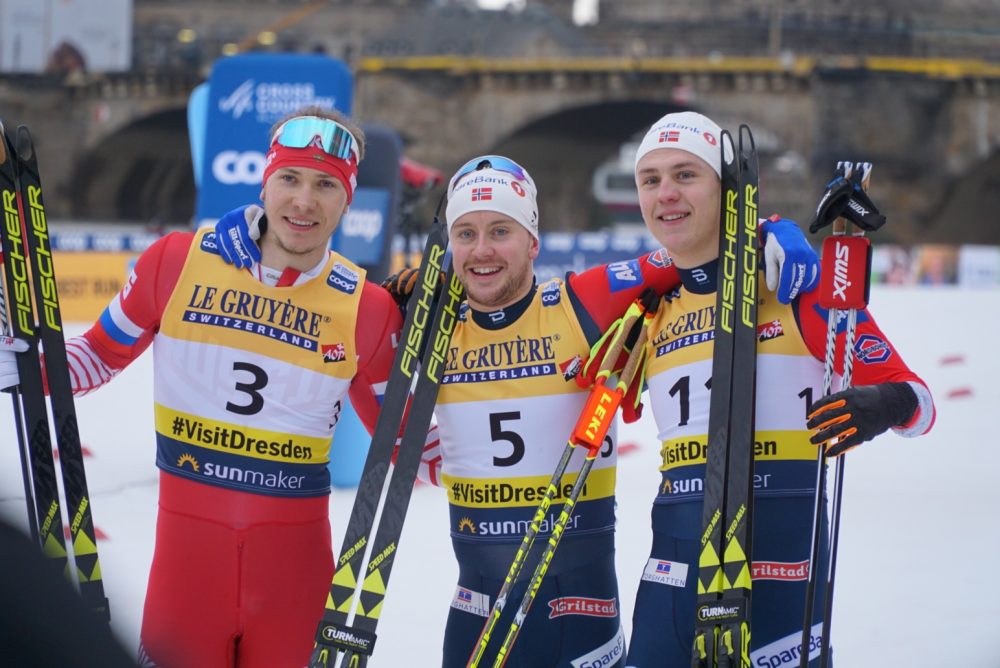
    The men’s podium congratulates one another on their efforts in Dresden. (Photo: NordicFocus)
    Sportsmanship and respect on display at the finish of the men’s sprint in Dresden. (Photo: NordicFocus)

    Taugbøl also spoke to his highly-respected opponents with whom he shared the podium.

    “Of course to beat guys like Pellegrino and Chanavat, it’s a dream come true. If you try to count how many podiums and victories they have, I can’t count so far. So it’s amazing to be there with them.” 

    Norway’s Håvard Solås Taugbøl earned his first World Cup victory on the tracks in Dresden. (Photo: NordicFocus)

    Despite not adding another win to his resume, today’s result perhaps marks a turning point in the start of Pellegrino’s season. The Italian, who has been a force in skate sprints for many seasons now, had not raced in a final yet this season.

    In an Olympic year that features a freestyle sprint, Pellegrino will be looking to find his peak form in February. The Italian was 11th in the event at the 2014 Olympics in Sochi, and took second in the classic sprint, his weaker discipline, in PyeongChang in 2018, just behind Klæbo. 

    Italy’s Federico Pellegrino skis back into form in Dresden. (Photo: NordicFocus)

    Outside the top 30, Kevin Bolger, who was 6th in the individual sprint in Dresden last year, qualified in 42nd (+7.97). Bolger was roughly two seconds outside the top-30.

    Following Bolger, Ben Ogden finished 51st in the qualifier (+9.37), with Luke Jager in 63rd (+10.73).

    Ben Ogden races the qualifier with the spectacular skyline of Dreden in the background. (Photo: NordicFocus)

    Racing for Canada, Russell Kennedy took 48th (+8.85) in qualification. 

    The weekend of city sprinting continues tomorrow with men’s and women’s team sprints. 

    Results: 

    Qualification | Final


  • Oskar Svensson Toes First in Ulricehamn; Canada’s Graham Ritchie 17th

    Oskar Svensson Toes First in Ulricehamn; Canada’s Graham Ritchie 17th

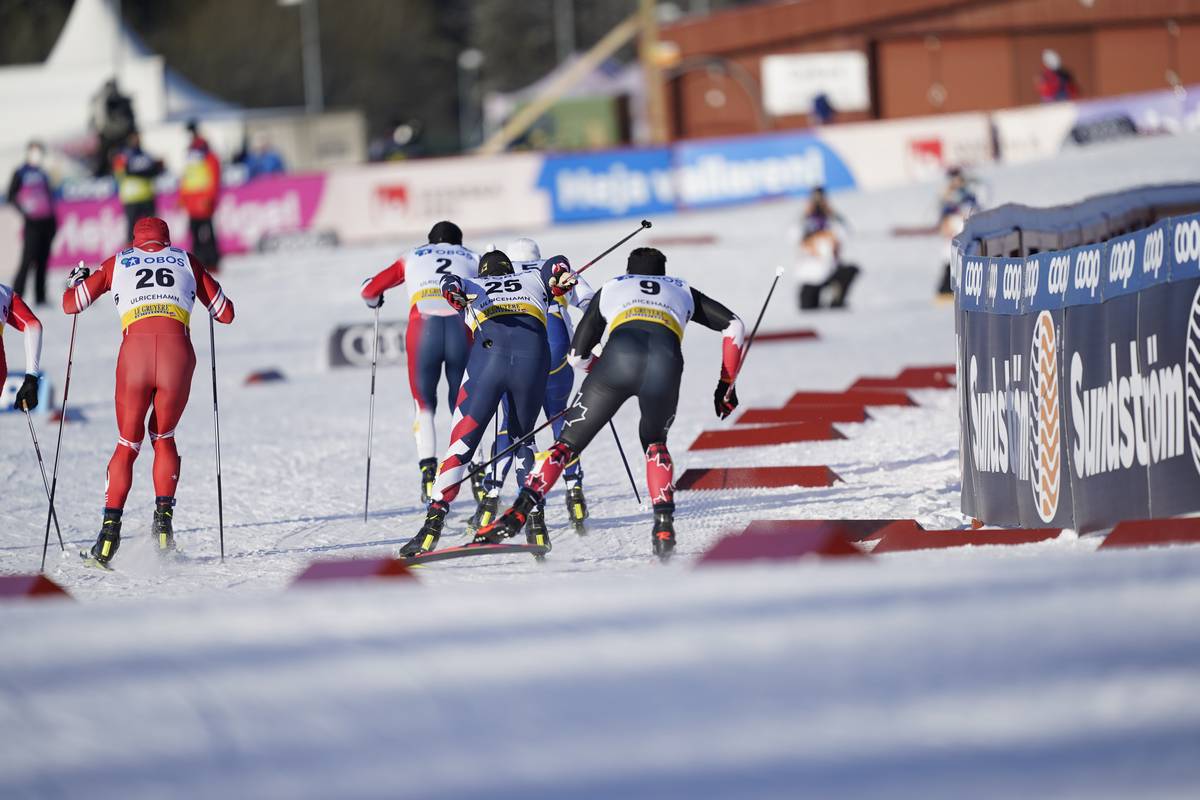
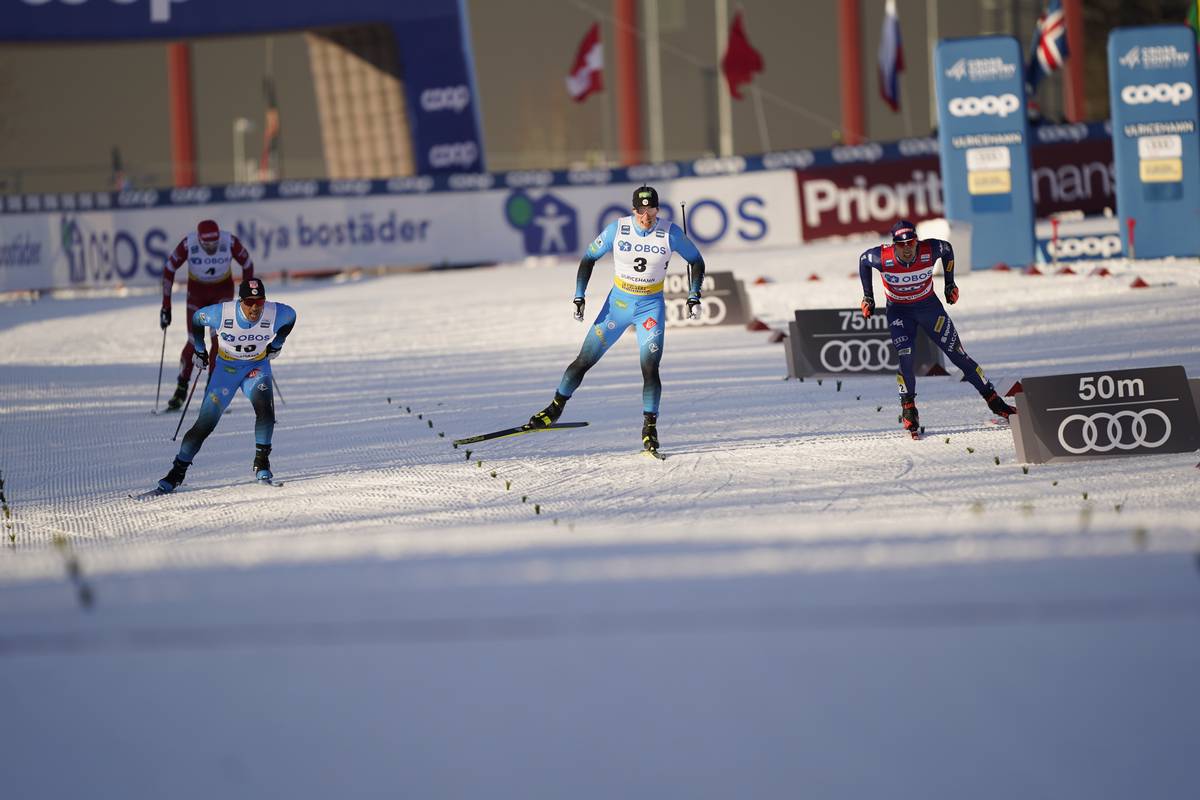
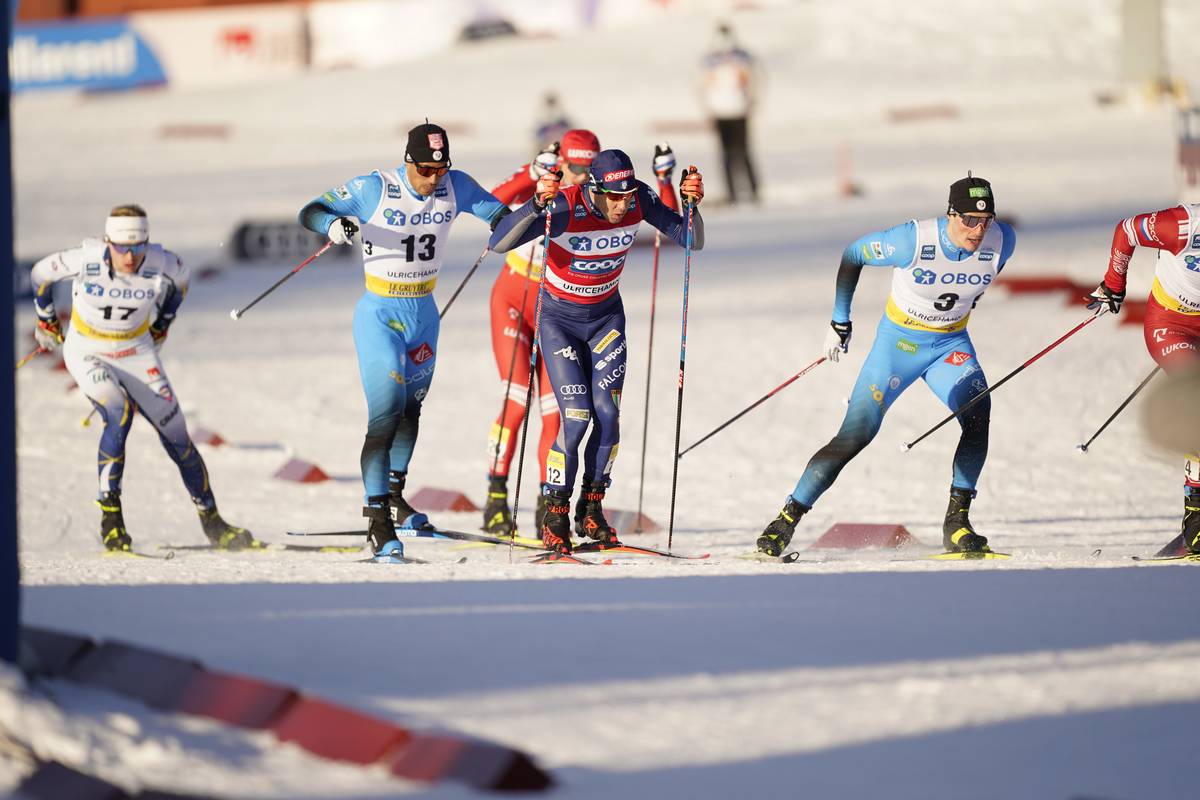
    The day in Ulricehamn, Sweden (SWE) featured tight racing: Gleb Retivykh (RUS), Thomas Helland Larsen (NOR), Logan Hanneman (USA), Graham Ritchie (CAN), (l-r) (Photo: NordicFocus)

    It was a sprint skier’s delight for nearly three-minutes on the 1.6-kilometer loop in Ulricehamn, Sweden on Saturday. In the uptick towards the hets on this working skier’s course an unusual name, as far as results go, topped the leaderboard after qualification.

    Finland’s Joni Mæki (26) was the fastest qualifier in 2:58.41. Before the last few weeks, Mæki had flown under our radar until he and Bolshunov captured cross-country headlines a few weeks back in Lahti. Before his notoriety, and before this weekend, Mæki had a single individual World Cup top-10, the seventh-best time in the 2020 Ruka 15 k pursuit.

    Let’s just say his ability to stay with Russia’s Alexander Bolshunov on the final leg of the 4 x 7..5 k relay in Lahti may have opened his eyes. He was quick in qualification today.

    The day’s fastest qualifier, Finland’s Joni Mæk. (Photo: NordicFocus)

    Absent from the scene as he and his Norwegian A-Team mates prep for Worlds was Norwegian speedster Johannes Høsflot Klæbo. In fact, and we’ll note this in more detail later, no Norwegians advanced to the finals. (Which reminds us to explain that as we come closer to the start of the World Championships later this month, many of the cross-country skiers likely to medal there will take time away from the World Cup to dial in their World’s fitness.)

    Graham Ritchie of Canada qualified in 9th. (Photo: NordicFocus)

    Otherwise, many of the usual suspects were in the skate sprint mix. However, the most notable qualifier from North America was Canada’s Graham Ritchie (22) in 9th (+4:06). According to FIS, this was the U-23 skier’s ninth World Cup start.

    The Americans qualified three men for the heats. In order they were Simi Hamilton in 23rd (+6.95), Logan Hanneman 25th (+7.53), and Kevin Bolger 24th (+7.46).

    We’ll get right to it – it was a frustrating day for the Americans. None advanced out of the quarterfinals with both Bolger and Hamilton stymied by incidents that scrubbed speed and took them out of the mix.

    Simeon Hamilton (USA) during the quarterfinals on his way to 28th place. (Photo: NordicFocus)

    Hamilton contested the first heat with some speedy company in the likes of Frenchman Lucas Chanavat, the day’s third-fastest qualifier, Russian Sergey Ustiugov, the fourth-fastest qualifier, and Michal Novak of the Czech Republic, sixth fastest.

    Taking it out hot is Ustiugov’s bread and butter. And in this heat, he was able to keep it hot as he won in 2:56.45. Hamilton was in the mix coming around the final corner into the finish straight.

    At 2:30, Ustiugov pulled upfront, with Chanavat and then Hamilton glued in second and third, respectively. Sweden’s Oskar Svensson, a name of note recently in sprinting, shimmied into a barely open window and moved in front of Hamilton. This is, after all, rock’em sock’em sprinting. And Hamilton let off the gas a smidge as Svensson steamrolled in. Around the downhill corner, Hamilton defied the Gs forcing a skier wide, and quick-stepped inside of Svensson, when he stumbled. With the lost speed, Hamilton’s opportunity was gone. He placed sixth in the heat to finish 28th. This was the fastest of the five quarterfinals and both lucky losers advanced from the heat.

    Sergey Ustiugov (RUS) dictated the pace during each of his heats, he finished the day in 6th place. (Photo: NordicFocus)

    Another bitter pill was swallowed by Bolger in the fourth heat. He too was in the mix late  until he tangled with Italy’s Michael Hellweger at the 2:05 mark. Bolger was spun around, his chance for advancing snuffed out. Norway’s Finn Hågen Krogh pushed ahead and won the heat. Bolger finished in fifth to place 23rd overall.

    Kevin Bolger (USA) at the start of the quarterfinal, he would finish the day in 23rd place. (Photo: NordcFocus)

    In between, Hanneman and Ritchie raced in the second heat. Ritchie held strong for much of the race, yet lost vital ground in the finish to place fourth (+0.53) and 17th overall for a career-best.

    “I’m definitely proud of that qualifier. Not only was it a personal best but it was great to have that Canadian flag in the top-10 on the results sheet,” said Ritchie.

    “I’m pretty excited with the performance today,” Ritchie told Nordiq Canada. “My skis were incredibly fast thanks to the wax techs. It was so much fun to race my first World Cup heats.

    “I found myself close to the back quickly in the heat. I tried to pass people the entire way, but it just wasn’t working out,” added Ritchie. “I was able to get a good kick at the end and move up a couple of spots in the finishing stretch.”

    Graham Ritchie (bib 9) posted the 9th fastest time in the qualification and ended his day 17th overall. (Photo: NordicFocus)

    Hanneman, who hails from Fairbanks, Alaska and trains with APU in Anchorage, finished sixth in the heat and 29th overall.

    JC Schoonmaker, a young American skier of note, finished 35th, while Peter Holmes was 68th. U.S. skier Gus Schumacher is in Oberstdorf, Germany preparing for U-23 Worlds.

    Post-race interview with U.S. Head Coach Matt Whitcomb


    Logan Hanneman working the course in Ulricehamn, Sweden. (Photo: NordicFocus)

    For Canada, Russell Kennedy finished 44th, Pierre Grall-Johnson 51st, and Antoine Cyr 60th.

    In the first semi, Ustiugov gunned again. At 30 seconds he moved to the front. He positioned himself well, yet the group remained tight on this tough-to-pass-on-course. France’s Richard Jouve won, with Ustiugov in second, and the two lucky losers, Russia’s Gleb Retivykh third, and Chanavat fourth.

    Italy’s Federico Pellegrino won the second semi, with Svensson second by only 0.3 seconds.

    Attention Chanavat, this Pellegrino requesting a flyby… Negative Pelligrino, the lane is full. (Photo: NordcFocus)

    In the men’s final, there was no guessing the contents of the first chapter: Ustiugov flexed first. In the next to last chapter, the Russian folded, as he faded on fumes to place sixth, 6:06 seconds off the winning time. The five remaining skiers were tight-pack skiing for much of the race. Only Chanavat was taxed too much from the endurance sprint racing. Around the corner, and into the straight, it looked like any of the four contending skiers could take the win: Jouve, Pellegrino (one of the best historic skate sprint closers), Retivykh, or Svensson.

    Oskar Svensson (SWE), Richard Jouve (FRA), Federico Pellegrino (ITA), Lucas Chanavat (FRA), (l-r) during the men’s final in Ulricehamn. (Photo: NordicFocus)
    Oskar Svensson (SWE), and Gleb Retivykh (RUS), (l-r) closing down on a tight finish. (Photo: NordicFocus)

    The advantage went to Sweden’s Svensson as he toed the line first in 2:55.34 – which was the day’s fastest time for a heat; quarter or semi. Retivykh placed second, Pellegrino third, Jouve fourth, and Chanavat fifth.

    Svensson (25) has had a breakout season. Until this year, he had never podiumed in an individual race on the World Cup. This season, he has won the classic sprint in Val di Fiemme, Italy, and placed second last weekend in Falun (both were classic sprints).

    Gleb Retivykh (RUS), Oskar Svensson (SWE), and Federico Pellegrino (ITA) take the freestyle sprint podium in Ulricehamn, Sweden. (Photo: NordcFocus)

    Racing continues tomorrow with a team sprint.

    Men’s Sprint Results 

  • Pellegrino Provides Sunshine in Snowy Val Müstair As 2021 Tour de Ski Begins; Hamilton 13th

    Pellegrino Provides Sunshine in Snowy Val Müstair As 2021 Tour de Ski Begins; Hamilton 13th

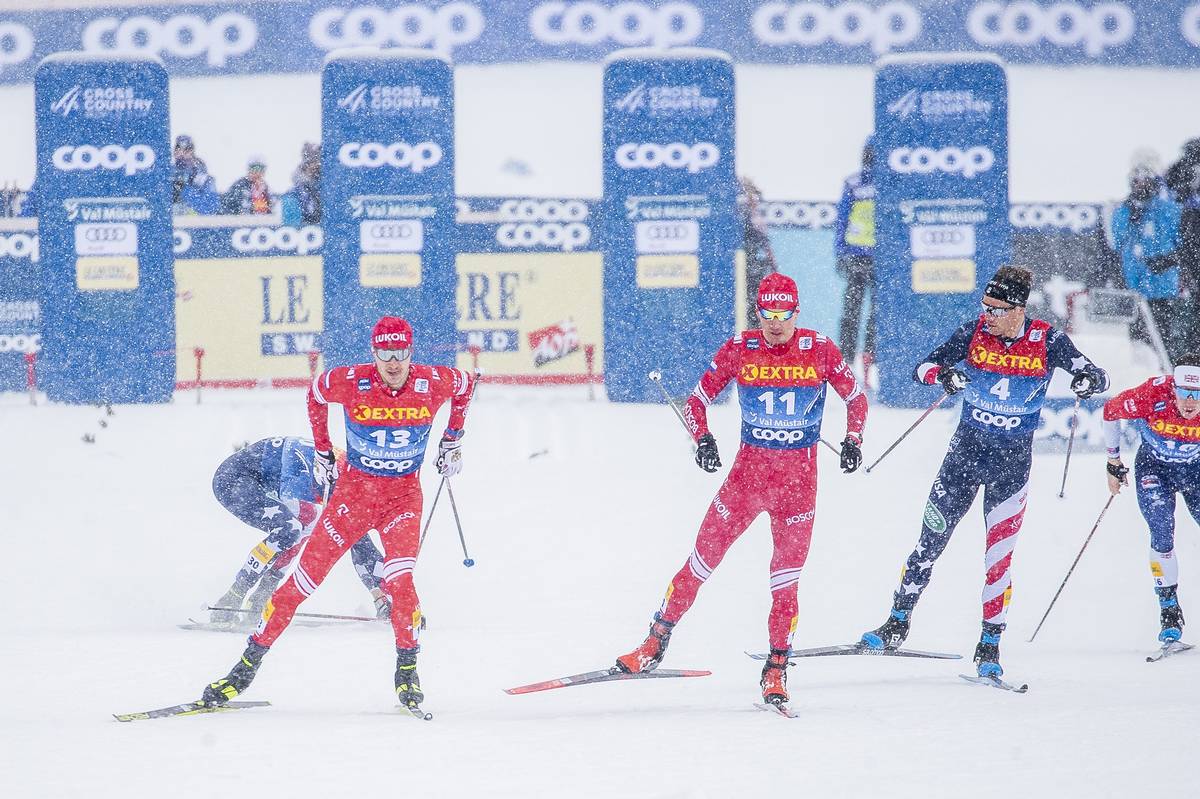
    Federico Pellegrino of Italy crosses the line first for his third World Cup sprint win in a row. (Photo: NordicFocus)

    This World Cup coverage is made possible through the generous support of Marty and Kathy Hall and their A Hall Mark of Excellence Award. To learn more about A Hall Mark of Excellence Award or to learn how you can support FasterSkier’s coverage please contact info@fasterskier.com.

    A new year, new snow, and some welcome faces at the start of the 2021 Tour de Ski in Val Müstair, Switzerland. In this 15th edition of the TdS, the first three stages of eight take place in Val Müstair. The tour then proceeds to stages in Toblach and Val di Fiemme, Italy. 

    Friday’s 1.4-kilometer freestyle sprint was a two-lap race on a course featuring banked turns, waves, and a small jump. This cross-country sprint playground was exactly that for Italy’s Federico Pellegrino (30) won the final’s in 3:08.44 as steady snow fell over the iconic alpine valley setting. The final featured Russians Alexander Bolshunov, Gleb Retivykh, and Artem Maltsev, with Frenchmen Richard Jouve and Lucas Chanavat rounding out the group of six. 

    On the first lap, the Russians played coy and skied behind, while Chanavat commanded the pace. As the second loop began, Pellegrino began his surge creating a small gap to Bolshunov in second and Jouve third. Careening down the winding curves, Pellegrino free skated his way into the rollers, pumping over the top to accelerate into the final curve and maintain command from the front as he entered the final lanes. 


    Alexander Bolshunov, the overall favorite for this edition of the TdS, places second, a spot behind Italy’s Federico Pellegrino who won the day. (Photo: NordicFocus)

    Though Bolshunov was closing hard behind him, Pellegrino stayed strong enough to comfortably take the stage. The Russian locked up second (+0.57) with Jouve in third (+2.43). Retivykh placed fourth (+4.33), Maltsev fifth (+4.82), and Chanavat sixth (+28.28). 

    Friday’s win was Pellegrino’s third World Cup freestyle sprint victory in a row after taking the top podium step in Davos and Dresden. Already leading the overall sprint standings coming into today’s race, Pellegrino added more points to pad his lead

    “[My legs] hurt; it hurts a lot… I think the feeling was better in the qualification than in the final, but I knew that I wanted to be really good here today,” Pellegrino told FIS after the race. “I had a lot of pressure, just made by myself, because after two victories, for sure you feel that you can continue to win.”

    Federico Pellegrino and Alexander Bolshunov setting the pace. (Photo: NordicFocus)

    Pellegrino made his dedication and intent clear from the beginning. He posted the fastest qualifying time on course by over two seconds, stopping the clock at 3:02.19.

    “This is my job,” he said about his participation in the Tour. “To race here is really important.” 

    The Italian continued by commenting on how the pandemic has affected his country and the traditional New Year’s celebrations that occur.  He expressed his wishes to provide an uplift and source of national pride during this challenging time. 

    “I hope to have given a little bit of sunshine on this new 2021 year.”

    Wearing the yellow bib as the overall World Cup leader, Bolshunov is the real threat for the TdS overall. He won last season’s edition, which offered a full complement of racers from Norway. (Norway is not contesting the TdS due to the ongoing pandemic). On his way to winning the 2020 TdS, Bolshunov won a single stage of the TdS, stage 4’s 15 k classic pursuit, before securing the overall on the Val di Fiemme final hill climb. 

    Let’s take a step back into the earlier rounds. 

    Simi Hamilton amidst a slew of Russian skiers, placed 13th overall on Friday after qualifying in 4th. (Photo: NordicFocus)

    Showing great form, Simi Hamilton led the American men with a 4th place finish  (+2.9) in the qualifier. Kevin Bolger snagged the final spot in the top-30 (+9.23) and both men stepped into the starting gates in the second heat of the quarterfinals. 

    Unfortunately, a broken pole near the start robbed Bolger of the chance to truly compete. He lost contact with the pack and ended the day in 30th. 

    Kevin Bolger takes a tumble in Val Müstair, Switzerland. (Photo: NordicFocus)
    01.01.2021 Val Mustair, Switzerland (SUI):<br /> Kevin Bolger (USA), Gleb Retivykh (RUS), Evgeniy Belov (RUS), Simeon Hamilton (USA), (l-r) - FIS world cup cross-country, tour de ski, individual sprint, Val Mustair (SUI). www.nordicfocus.com. © Modica/NordicFocus. Every downloaded picture is fee-liable.
    Bolger, recovering after a snapped pole in his quarterfinal. Simi Hamilton in bib 4. (Photo: NordicFocus)
    01.01.2021 Val Mustair, Switzerland (SUI):<br /> Evgeniy Belov (RUS), Simeon Hamilton (USA), Andrew Musgrave (GBR), Andrey Melnichenko (RUS), (l-r) - FIS world cup cross-country, tour de ski, individual sprint, Val Mustair (SUI). www.nordicfocus.com. © Modica/NordicFocus. Every downloaded picture is fee-liable.
    Bolger upright and on the go as the pack gains ground. Bolger finished 30th overall. (Photo: NordicFocus)

    Racing with the agility and tactics for which he is known, Hamilton tucked in behind the three Russians that led the first lap of the heat. As they accelerated into the tight downhill S-turns, Hamilton edged his way up in the group, reaching his hand out to touch the skier next to him, signaling his presence with confidence and authority to diffuse a potential tangle.  

    In his second lap, Hamilton held second position on the tails of Andrey Melnichenkov (RUS), seemingly getting in position for a top-two finish early. Coming into the final turn, Hamilton was forced to stay wide, allowing Gleb Retivykh the more direct line. Hamilton fought with Melnichenkov and Retivykh all the way to the line, but couldn’t quite make up the ground. He finished third in the heat, 0.02 seconds off the time needed to advance to the semi as a lucky loser. Hamilton ended the day 13th. 

    “Today was nothing amazing result-wise, but I think there were a lot of good signs for me that indicates I’m skiing at a strong level right now,” Hamilton wrote in an email to FasterSkier after the race. “Obviously I wanted to be back in the final, but the near-perfect racing it takes for me to do that didn’t shake out today. I was really psyched with my qualifier, and my body felt quite good during that effort.”

    Hamilton continued with insight into his approach to the tour and his outlook after today’s very near miss. 

    “I’ve been feeling a little tired the last few days, so I’ve been taking it very, very easy, and I wasn’t sure how everything would respond after basically taking three days totally off. Obviously, my main goal for the tour is to perform well in the sprints, but I’d like to feel good on the distance days too so I wasn’t really preparing this week like I would have if I were putting all my eggs in today’s basket. Instead, I took a much more conservative approach to things to make sure I was giving my body the rest it needs for this whole eight race event. In my quarter I felt pretty strong and I thought I skied it tactically well, but I got boxed out on the outside coming into the finish lanes and I lost what turned out to be a very important tenth of a second from that. So, yeah, frustrating but you can’t always just look at the results to decide whether a race went well or not.”

    Gus Schumacher of the U.S. during qualification. He placed 31st overall, just missing the rounds. (Photo: NordicFocus)

    Barely outside rounds, Gus Schumacher ended his day after the qualifier in 31st (+9.55). Distance racer Scott Patterson took 79th (+22.72). 

    Racing continues tomorrow as stage 2 of the Tour de Ski offers up a 15 k classic mass start for the men.

    Results: Qualifier | Final 
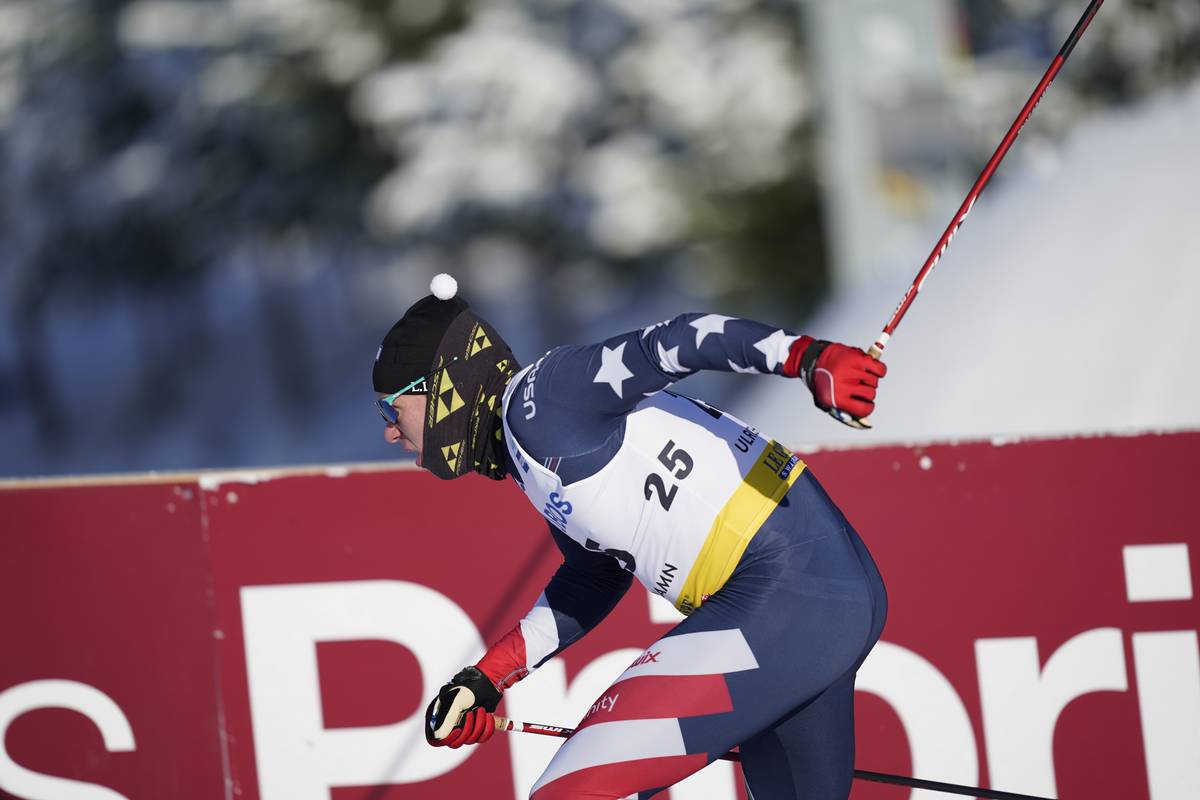
  • Russia, France, and Italy Put On a Show in Dresden’s Team Sprint; Hamilton-Bolger 9th for USA

    Russia, France, and Italy Put On a Show in Dresden’s Team Sprint; Hamilton-Bolger 9th for USA

    This World Cup coverage is made possible through the generous support of Marty and Kathy Hall and their A Hall Mark of Excellence Award. To learn more about A Hall Mark of Excellence Award or to learn how you can support FasterSkier’s coverage please contact info@fasterskier.com.

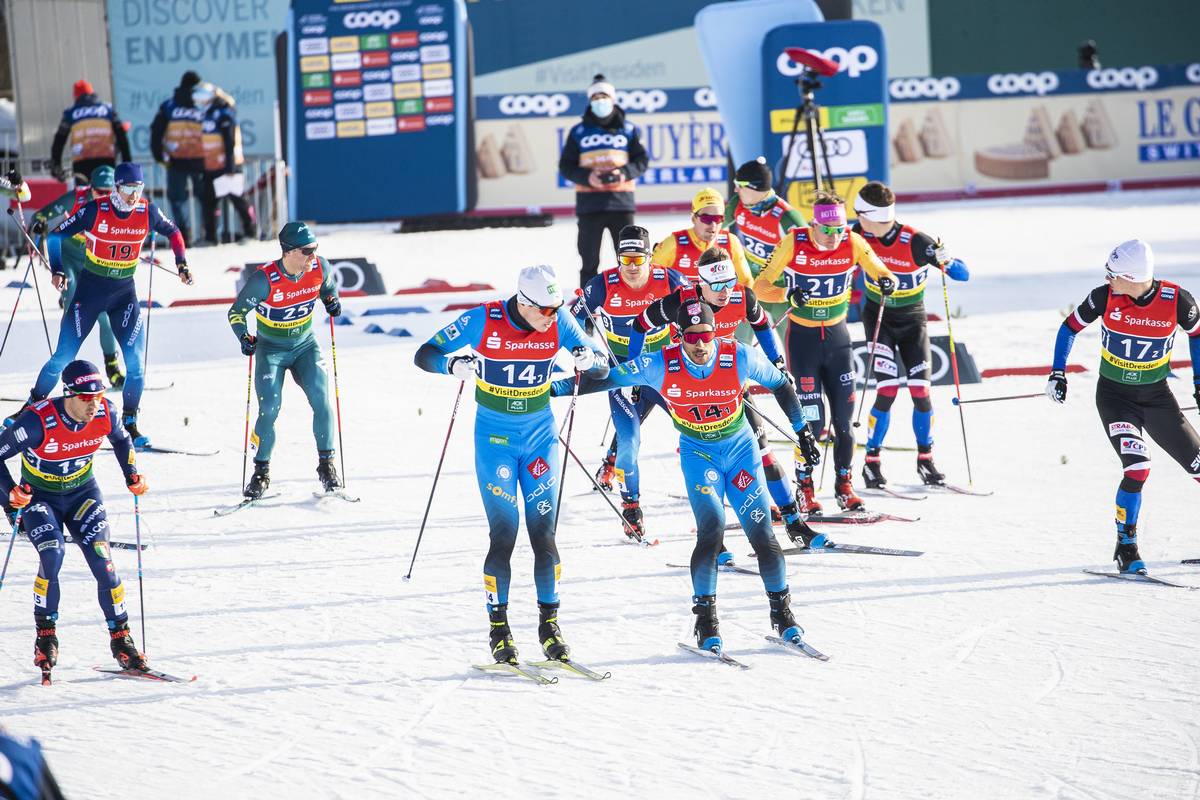
    The team sprint is like a pump rocket, slowly building pressure for a final eruptive takeoff. Six 0.65 km laps each in rapid succession. Short recoveries between legs mean the athletes slowly wind up the effort while staying out of trouble, not wanting the rocket to misfire and lose it’s peak potential. Stay in the pack, drafting and in control, don’t crash or break a pole are sound strategies. 

    Chaos in the exchange zone, Richard Jouve tags Lucas Chanavat during the team sprint in Dresden, Germany. (Photo: NordicFocus)

    The men’s event evidenced this metaphor perfectly. The pack stayed close and looked comfortable with no crashes through the first half. As the final four exchanges progressed, you could feel the pressure from the pump steadily rise (in this case, three pumps wearing red, navy, or royal blue lycra) fighting against the confines of the bottle. 

    At the 7th exchange, just after the half-way mark, the pressure reached its limit and the launch began. Richard Jouve of the France 1 team accelerated from the exchange zone, making an effective push to stretch out the field. Italy’s Francesco De Fabiani and Russia’s Alexander Bolshunov kept close on his tails, and although the remaining pack did not immediately lose contact, it became increasingly clear who the podium contenders would be. 

    Foot on the gas, Richard Jouve accelerates to spread out the pack for the final half of the team sprint in Dresden, Germany. (Photo: NordicFocus)

    Next exchange, Russia took the reins, with Gleb Retivykh setting pace. Yesterday’s sprint winner Federico Pellegrino looked confident as he tucked in behind the Russian, the winners of the two qualifying rounds squaring off. Lucas Chavanat of France kept close contact in third.

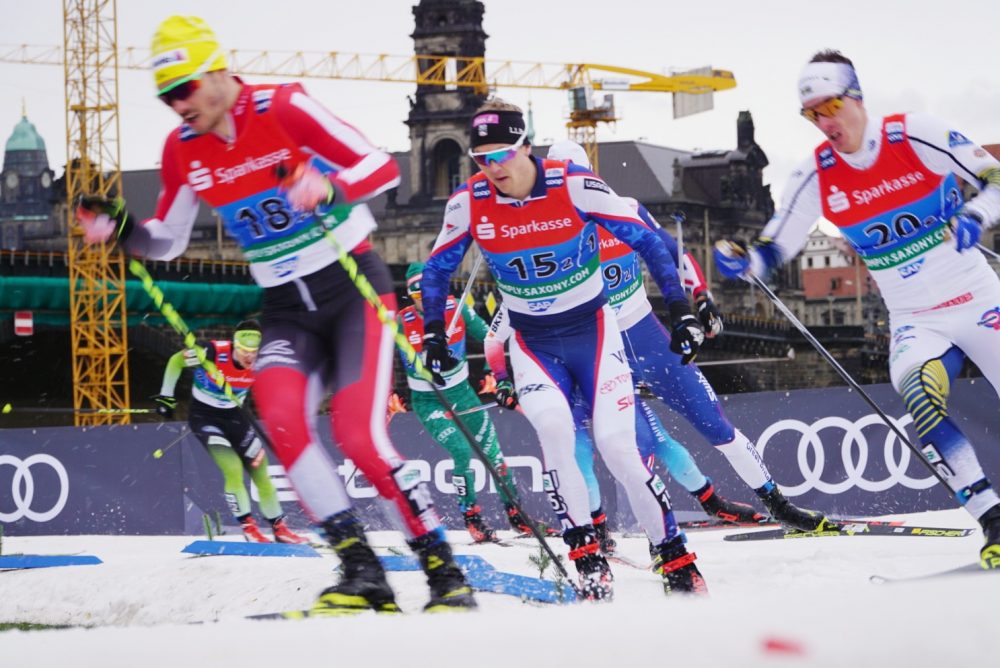
    With the Dresden skyline as a backdrop, Italy’s Francesco De Fabiani leads Richard Jouve of France and American Kevin Bolger during the team sprint. (Photo: NordicFocus)

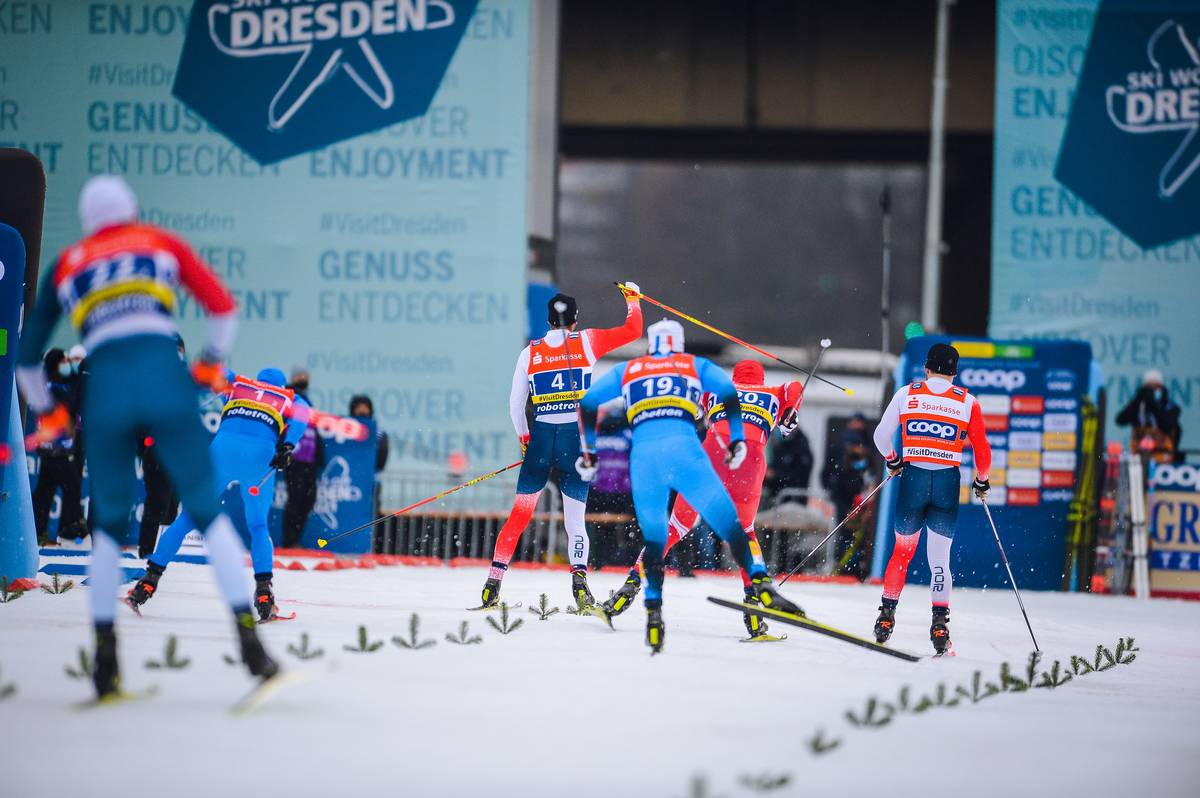
    Russia continued their up-tempo from the front during the final lap where the three leading teams separated from the chasers. Heading into the lanes, all three teams had a chance. Retivykh took charge off of looker’s left, while Chavanat fought for centimeters on lookers right. Pellegrino tucked in behind the Frenchman, priming himself to sneak a boot around at the line.

    Real estate was limited and Retivykh had unmatched finishing speed on the day, crossing the line for the win in 15:01.14. Chavanat stopped the clock +0.19 seconds behind in second, and Pellegrino carried the Italians to third (+0.58).

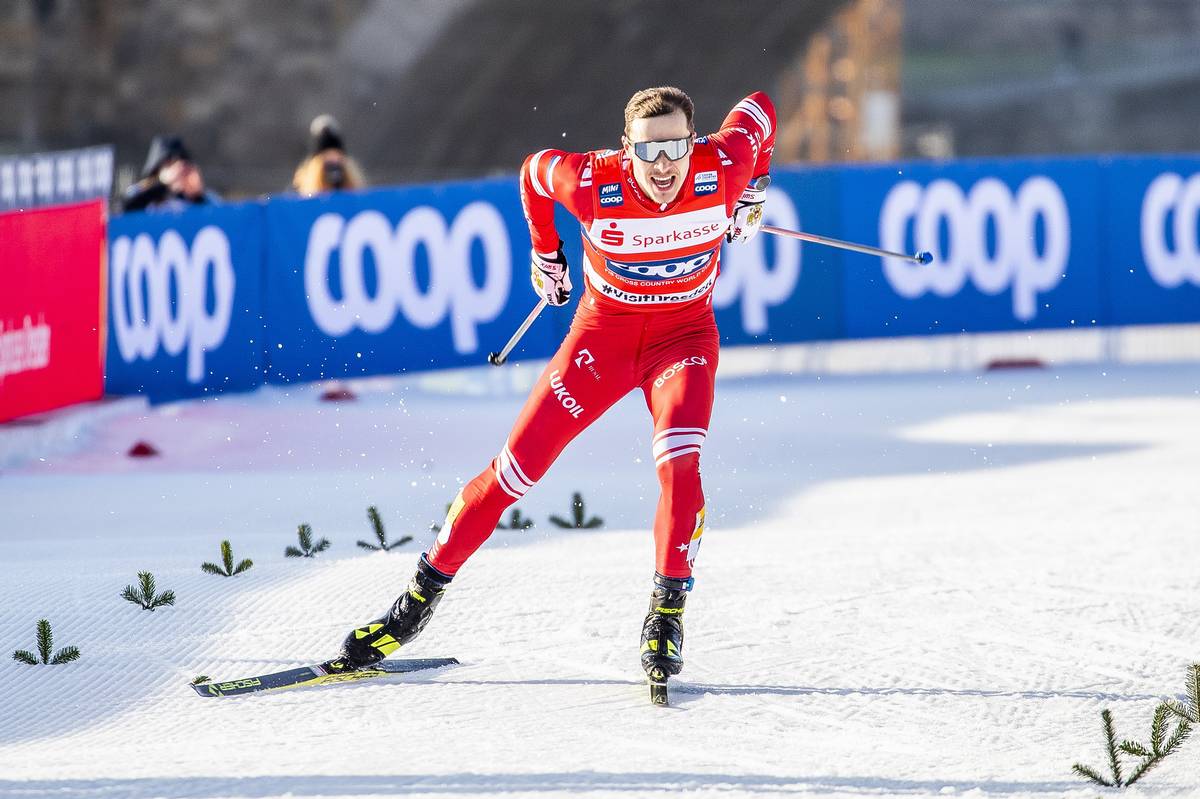
    Down the home strech, Gleb Retivykh takes the victory for Russia at the team sprint in Dresden, Germany. (Photo: NordicFocus)
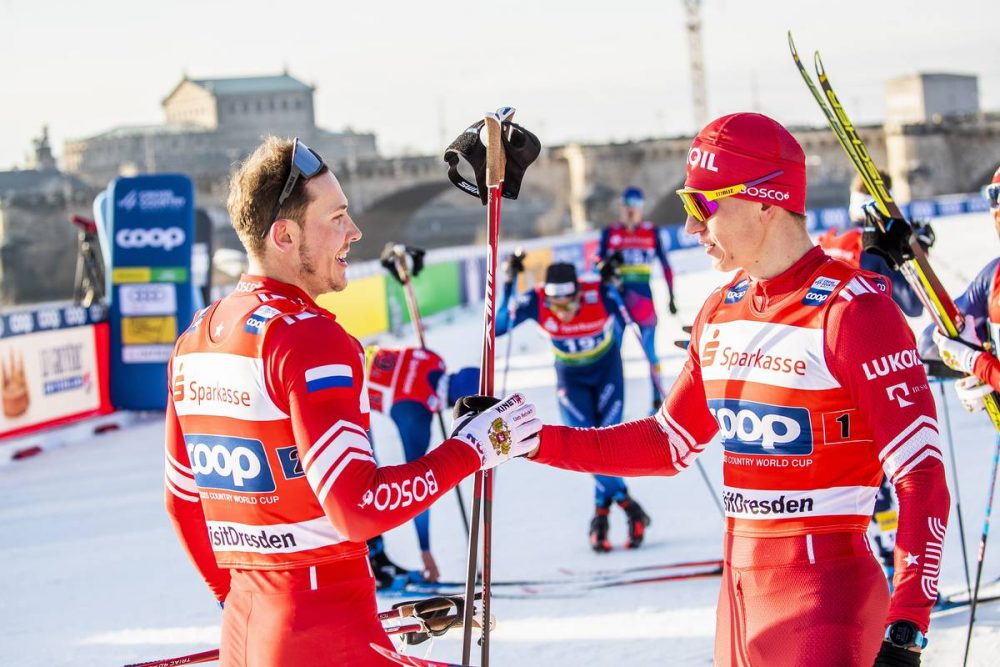
    The Russian victors Gleb Retivykh (L) and Alexander Bolshunov (R) shake hands after the team sprint in Dresden, Germany. (Photo: NordicFocus)

    “It is a very nice competition every time we come to Dresden…” Retivykh told FIS after the race. “We worked together really well and with tactics. The Russian teams took the podium today for women and men. We’re happy.” 

    Prior to today’s win, Russia was in a three-year drought for team sprint victories. Russia last won the event in February, 2017 during a pre-Olympic World Cup in PyeongChang, China. Retivykh was also the anchor on that day.

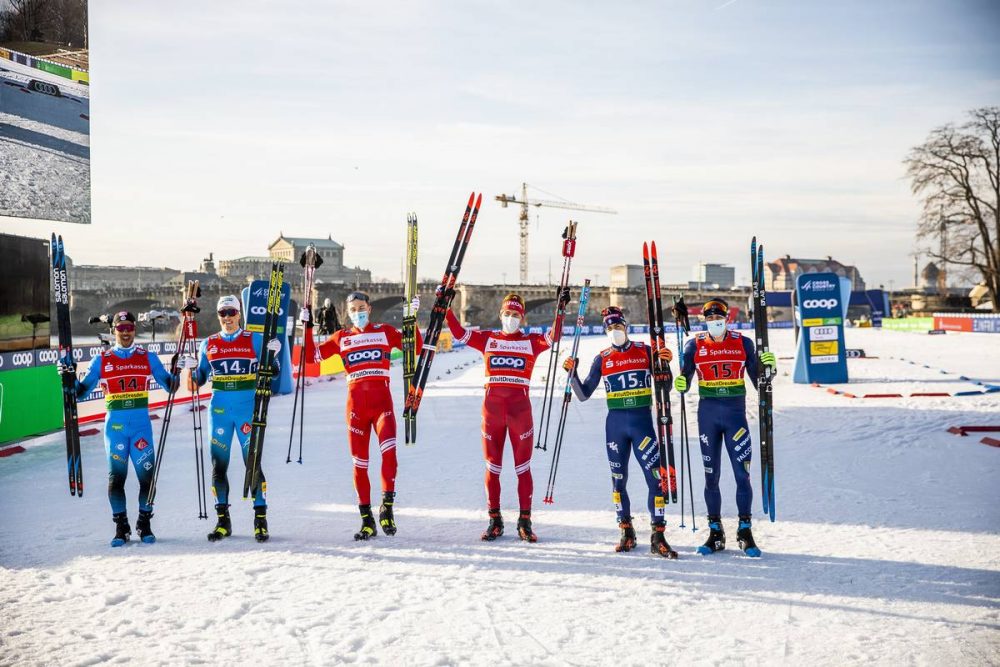
    The men’s podium of the team sprint in Dresden, Germany. The Russia 1 team of Alexander Bolshunov and Gleb Retivykh stole the show, with Richard Jouve and Lucas Chavanat of France in close second, and Italy’s Francisco de Fabiani and Federico Pellegrino in third. (Photo: NordicFocus)

    Behind the podium finishers, the U.S. team of Kevin Bolger and Simi Hamilton stayed in the mix, skiing strong in the middle of the pack and close to the leaders through the final two laps. With two laps of the course to go, Bolger and Hamilton began to lose contact along with the remaining teams, fading from 2 seconds back at 6.5 k to finish 12.57 seconds behind in 9th. 

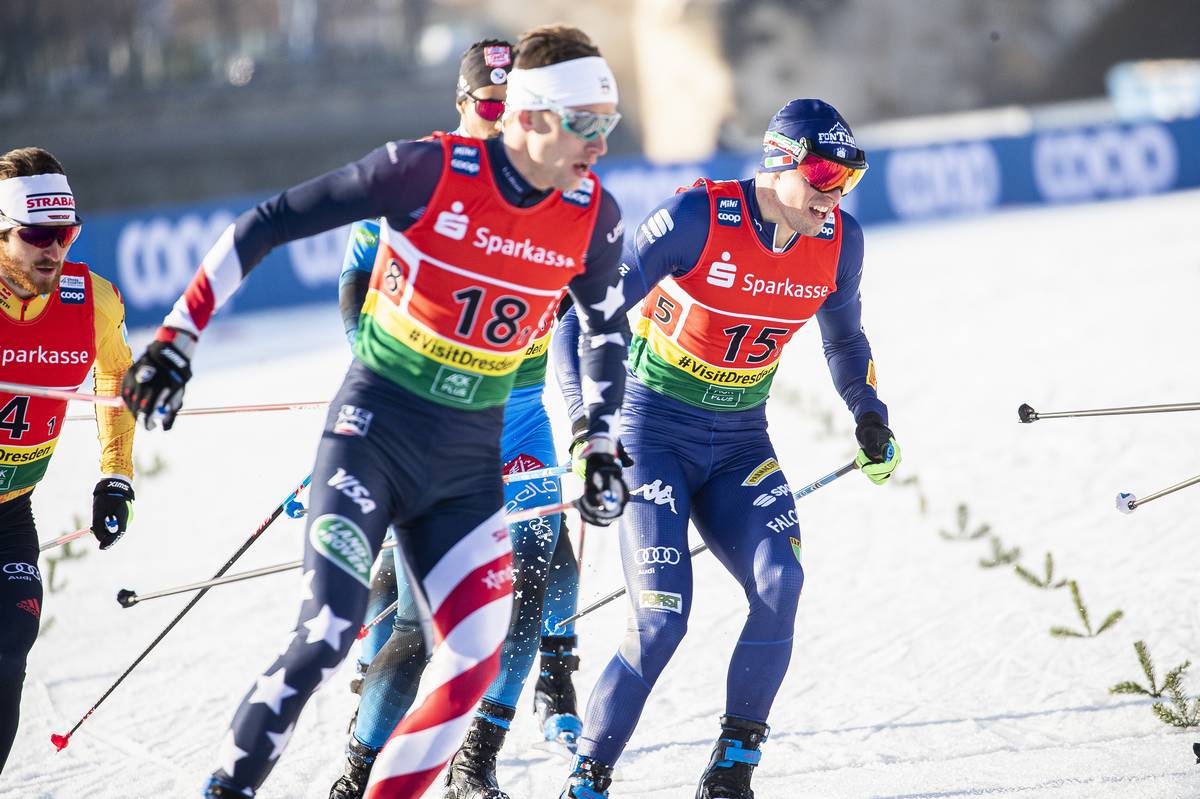
    Kevin Bolger (bib 18) rounds the curve with Italy’s Francisco De Fabiani during the team sprint in Dresden, Germany. (Photo: NordicFocus)
    Simi Hamilton keeps the U.S. team in the mix during the team sprint in Dresden, Germany. (Photo: NordicFocus)

    “Even though the result wasn’t exactly what we wanted today I thought we skied really well and fought through both heats,” wrote Hamilton after the race. “I felt great in our semi, and still pretty good for the final, but things were incredibly scrappy and we just kind of kept getting caught in the back with tangles, broken poles, and the likes. Team sprinting can be so fun and so frustrating at the same time, but it was just really, really cool to ski with Kevin today and I’m so psyched with how he’s skiing right now.”

    Simi Hamilton fights to the finish with Jovian Hediger (SUI), Renaud Jay (FRA) just behind. (Photo: NordicFocus)

    The Bolger-Hamilton duo had placed fifth in the first semi-final in a tight finish, 0.69 seconds behind winners Italy I ( De Fabiani and Pellegrino).

    In the second men’s semi-final, the U.S. team of Logan Hanneman and JC Schoonmaker placed 10th (+27.21) and did not advance. 

    The World Cup takes a holiday break until the Tour de Ski which is scheduled to begin on January 1.

    Men’s Team Sprint Final Results: Final Results
    Men’s Team Sprint Semi-final Results: Semi-final 1 | Semi-final 2
    Out of the lanes and around the bend, Kevin Bolger keeps the Americans in contention during the team sprint in Dresden, Germany. (Photo: NordicFocus)
  • Klæbo Runs Away with Oberstdorf Classic Sprint Win

    Klæbo Runs Away with Oberstdorf Classic Sprint Win

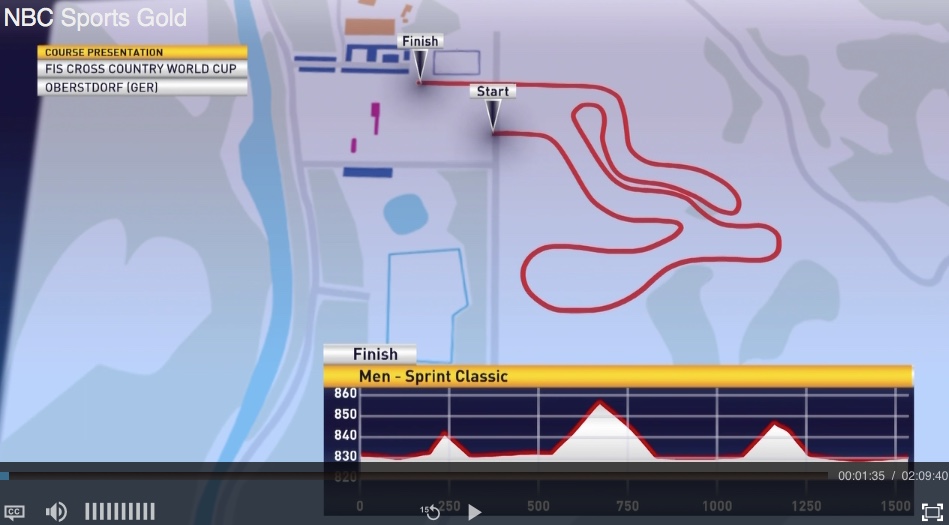
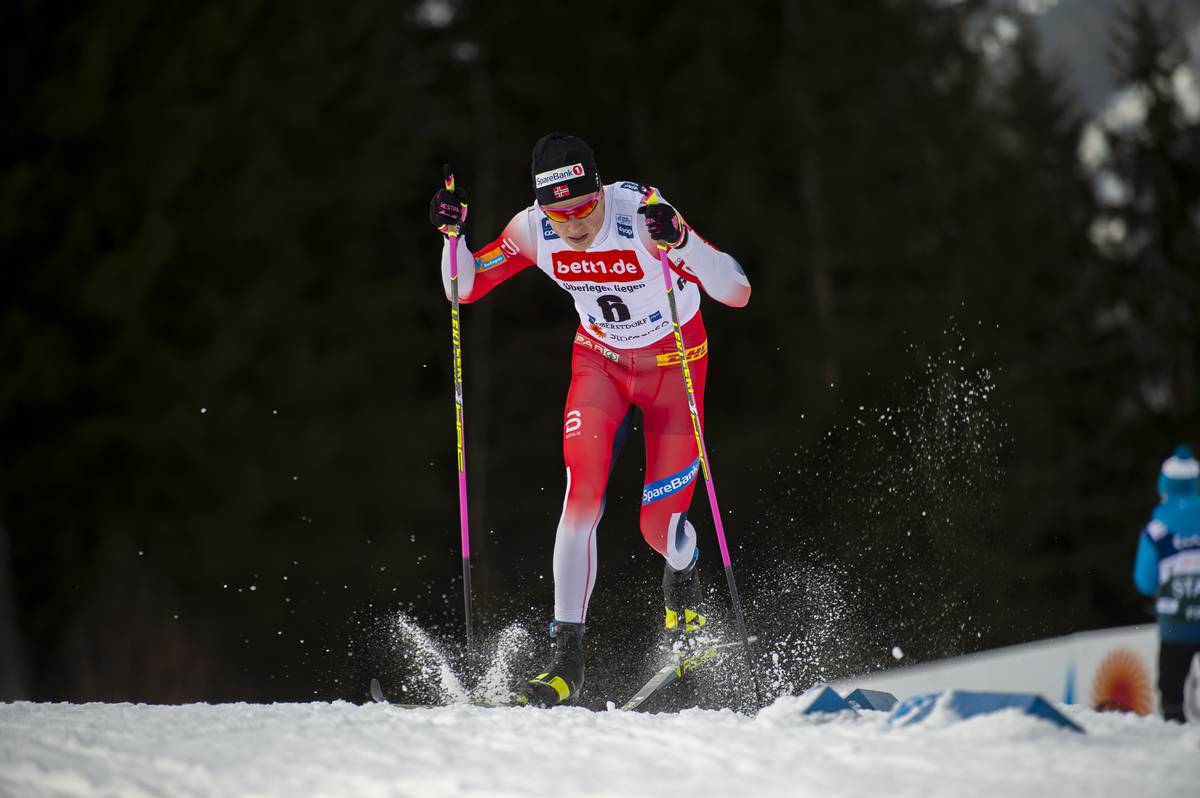
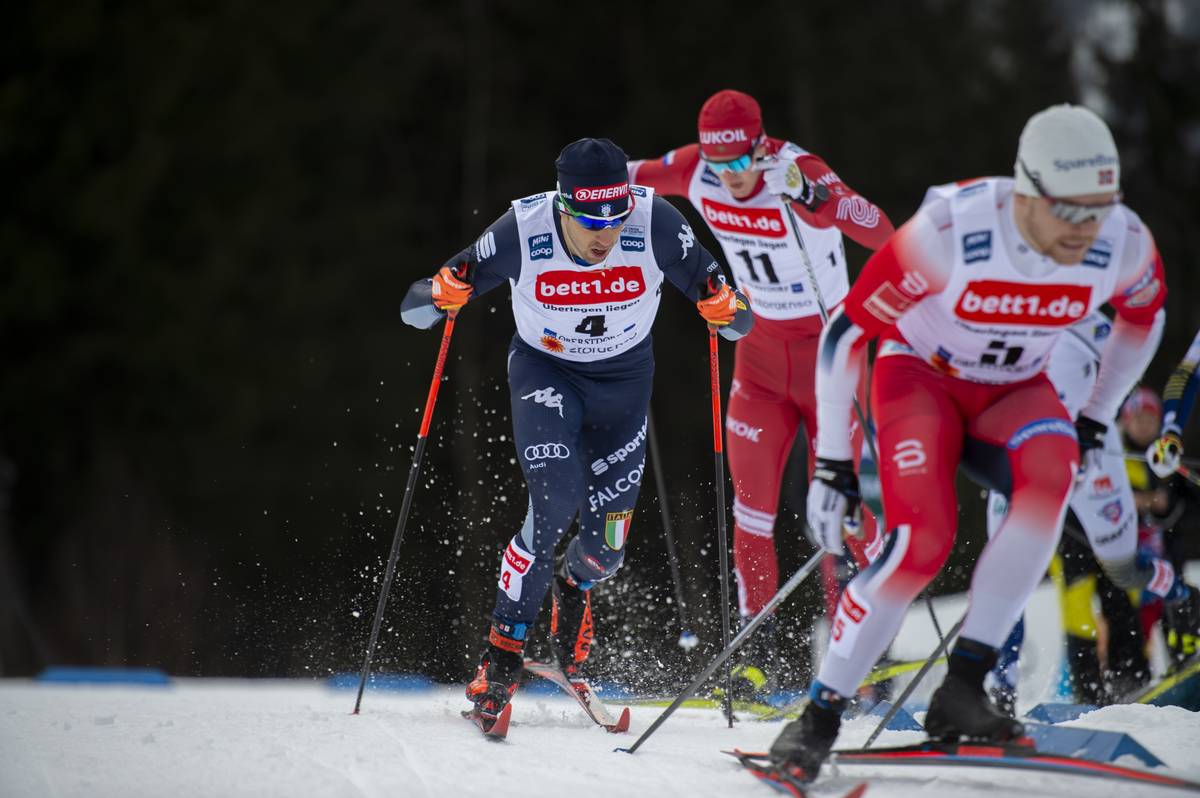
    Sunday’s men’s 1.5-kilometer classic sprint course in Oberstdorf, Germany deserves some recognition. Site of the 2021 FIS Nordic Ski World Championships, racers were offered a glimpse into how the world’s foremost sprinter, Johannes Høsflot Klæbo of Norway, would navigate it’s kicker climbs, steep descents, and roughly three minute and thirty-second effort. 

    The sprint course offered three distinct climbs, one at 0.2 k, the largest at 0.52 k, and the third starting at 1.1 k. The descents mirrored the inclines of the ascents and offered little respite or recovery for skiers near their engine’s redline. 

    Men’s Oberstdorf sprint course. (Photo: Screenshot NBC Gold)

    We are focusing on Klæbo, despite the other twenty-nine skiers in the heats, because he was simply a master of pacing, a master of conserving energy on the three-climb course, and freakish in his ability to run away from his five competitors in the final.

    Klæbo qualified in first. The margin back to Erik Valnes of Norway in second was 2.72 seconds. Pål Golberg, the third-fastest qualifier was 5.03 seconds back. There were big-time gaps back to the field of qualifiers. 

    Johannes Høsflot Klæbo crushing the men’s sprint qualifier in Oberstdorf, Germany. (Photo: NordicFocus)

    Valnes and Klæbo opted for the first quarterfinal. It was here that Klæbo played his tactical hand. He was in no hurry on this endurance sprint course to move to the front and pull others along in his wake. Klæbo sat in fourth on the second hill as Valnes was the heat’s workhorse. Klæbo appeared relaxed, not itching to move to the front. Klæbo moved to third around 2:00 minutes as they crested the course’s highpoint. The third hill, as most sprinters appeared on fumes, is where Valnes and Klæbo pulled ahead. Over the top, the duo glided into a 20-meter lead. Down the stretch, Valnes poled ahead for the quarterfinal win as Klæbo pulled up, stopped poling several meters before the finish — as if he were checking out for a lunch break.

    The third hill would be Klæbo’s charm.

    Along with Valnes in the first semifinal were Italy’s Federico Pellegrino (4th qualifier), Golberg, Håvard Solås Taugbøl also of Norway  (5th qualifier), and Russia’s Sergey Ardashev. This would be the semifinal to watch. 

    Again, Klæbo played the conservation of energy tactic. Up the second climb, Golberg, Taugbøl, Valnes, and Pellegrino strode four across with Klæbo lurking a meter back. The second hill was in the rearview mirror around the two-minute mark. It’s approximately another twenty seconds of descent and working flat before the next decisive climb. 

    As the skiers approached the base at 2:26, Klæbo and Valnes ramped up – they pulled away as they ski-ran up and over the top. Klæbo had been sitting behind Valnes, sucking up in his draft into the final straight. There, Klæbo pulled around his teammate for the semifinal win.      

    Federico Pellegrino of Italy pushing over the top in the Oberstdorf, Germany classic sprint. (Photo: NordicFocus)

    The final featured Klæbo, Valnes, Golberg, Pellegrino, and Oskar Svensson of Sweden and Russia’s Gleb Retivykh. Really, for Klæbo, this was essentially a rematch of his semi.

    Again, Klæbo was cautious from the start. There was no real earnestness to shoot to the front. His show would come later. There was only patience from an athlete who knew he could pounce late in the game. 

    Pellegrino, on the second climb, began to accelerate. He ran outside the tracks in what looked less like a decisive move, and more a burst to position himself tactically in front over the top. For his part, Klæbo matched Pellegrino and strode up alongside the Italian. 

    At 2:35 at the base of the final climb, Klæbo unleashed. It was textbook Klæbo-running. He was gone with a near 20 meter gap over the top. By the finish line, Klæbo looked to put 10 more meters on his competition as he won in 3:29.46. Golberg was second (+1.99), Valnes third (+2.37), and Pellegrino fourth (+3:06).

    In yesterday’s 30 k skiathlon, Klæbo registered a rare DNF (did not finish) as he pulled from the competition. 

    “I think the sprint was much better than the 30 k yesterday,” Klæbo told FIS after the race.  “Yesterday was a really terrible day and today was a bit better. In the end, it was really cool to win here. Yah, I think my shape isn’t the best  but I am really happy to find the win here and to have the Norwegian guys here.

    “I think it was a really good decision yesterday to jump off after 15 k I think, it was really nice to fight for a win today. And for sure I am really looking for the World Championship here next year.”

    What was clear after today was that Klæbo had mastered the course. Anything can happen in a year. And anything can go down in a sprint – broken poles, clipped skis, or slide out on a corner. This much was true exiting Oberstdorf: it will be Klæbo’s race to lose at the 2021 World Championships.

    It was a down day for the American men. No skiers qualified for the heats. Simi Hamilton placed 32nd overall and was +15.94 in qualification. Andy Newell was 41st (+17.48), Tyler Kornfield 55th (+20.88), and Noel Keeffe 64th (+25.33).

    Simi Hamilton during the Oberstdorf, Germany classic sprint qualifier. (Photo: NordicFocus)


    Andy Newell during the sprint qualifier in Oberstdorf, Germany. (Photo: NordicFocus)

    For Canada, Bob Thompson placed 54th and was +20.14 in the qualifier, Paul Grall-Johnson was 58th (+21.74), and Graham Ritchie 61st (+22.92). 

    World Cup Standings Shakedown 

    Coming out of Oberstdorf on the men’s side, Russia’s Alexander Bolshunov remains in command. In first overall with 1457 points, Bolshunov has a 235 point lead on second place Klæbo for the overall lead. Sunday, Bolshunov earned 36 World Cup points after placing seventh overall, Klæbo earned 100 points for the sprint win. If you are keeping score at home, you will note 140 points for Bolshunov’s win in Saturday’s 30 k skiathlon. On yesterday’s course, racers had four opportunities to score bonus points – Bolshunov snatched up 40 of them during the race.    

    Alexander Bolshunov of Russia in the yellow bib. He leads the overall World Cup. He placed 7th on Sunday’s classic sprint in Oberstdorf, Germany. (Photo: NordicFocus)

    Klæbo leads the sprint overall with 350 points. This was Klæbo’s fifth sprint win of the season. He has won every sprint entered thus far. He skipped the skate sprints in Planica, Slovenia and Dresden, Germany.

    The World Cup takes a break next weekend and restarts in Falun, Sweden with a classic sprint on February 8.  

    Men’s qualification results | Final results | World Cup overall standings | World Cup sprint standings

    All Norway in the men’s classic sprint podium in Oberstdorf, Germany: Pål Golberg in second, Johannes Hoesflot Klaebo first, and Erik Valnes third. (Photo: NordicFocus)
  • Dresden Team Sprint Rundown

    Dresden Team Sprint Rundown

    Spectators gather in Dresden, Germany to watch the team sprint. (Photo: NordicFocus)

    It was dizzying in Dresden for the skate team sprints. The man-made loop of lightning-fast snow had skiers going literally round and round for a total of 11 exchanges between teammates. Each skier skated a single 0.7-kilometer lap, for a total of 7.8 k. Each skier raced six laps. Turn your head dizzy.

    Maja Dahlqvist (bib 15) and teammate Linn Svahn maintain their lead in the final laps of the Dresden team sprint. (Photo: NordicFocus)

    The Women’s Final

    The finals consisted of ten teams. Sweden I animated the race with its display of pull ahead speed late in the race. Sweden I featured Maja Dahlqvist, who won this event last year with Stina Nillson. This year, Dahlqvist and Linn Svahn, yesterday’s skate sprint winner, had the pleasure of burning plenty of matches in Dresden. 

    Sweden I’s tactics were clear: late in the race, with several exchanges remaining, apply speed to the front, separate from the pack, and position themselves for the win. According to FIS, that has been somewhat easy for Sweden to do of late: Sweden has won seven of the last eight women’s team sprint World Cup events. This includes the last five in succession. 

    So it was today, as Dahlqvist tagged to Svahn on the final lap with a 0.8-second gap on Switzerland I’s Nadine Faehndrich. Norway I came through 3.6 seconds back, and Sweden II another 0.4 seconds behind. 

    That was the race.  Faehndrich was able to close down and give Svahn a scare at the line for a photo-finish. 

    The finish line item read: Sweden I in first at 15:43.7, Switzerland I second (+0.09), and Sweden II third (+3.27). 

    The U.S. team of Julia Kern and Sophie Caldwell placed fifth overall (+6.61). The U.S. pairing advanced out of the semis after placing third behind Norway I in first and Switzerland I’s Laurien Van Der Graaf and Nadine Faehndrich. 

    Canada I’s Katharine Stewart-Jones and Dahria Beatty placed third in the second semi-final — in a photo finish with Germany I for second —  and did not advance as a lucky loser. In the team sprint format, the two top teams advance, with the six remaining spots in the final given to the next six fastest teams via lucky loser spots. Canada I placed 11th on the day. 

    Canada II’s Maya Macisaac-Jones and Katherine Weaver were 23rd overall.

    Women’s Team Sprint Results

    Laurien Van Der Graaff (SUI), Nadine Faehndrich (SUI), Maja Dahlqvist (SWE), Linn Svahn (SWE), Evelina Settlin (SWE), Linn Soemskar (SWE), (l-r) take the podium positions. (Photo: NordicFocus)

    The Men’s Final

    Looking for some smooth skiing technique cues for high speed skate skiing? Look no further than the Frenchman crossing the line in first on Sunday for France I. Lucas Chanavat — paired with Jay Renaud — was the kinesthetic perfection of coaches advising – and sometimes commanding —  athletes to ski big and tall.  

    Lucas Chanavat (bib 1) put on a clinic this weekend in Dresden, Germany. (Photo: NordicFocus)

    On Dresden’s quick 0.7 oval loop and deteriorating snow, Chanavat was simply big and smooth and just enough faster than the others.

    In an event that saw five teams on the final tag within 1.4 seconds, France did not exactly have this Dresden team sprint nailed shut.

    With the front five teams out of trouble, they came into the final straight drag race style. As noted, France I pipped in for the win. Sweden I’s Marcus Grate and Johan Haeggström were second (+0.09), and Russia I’s Andrey Krasnov and Gleb Retivykh third (+0.18). Norway I’s Håvard Solås Taugbøl and Sindre Bjørnestad Skar were fourth (+0.56).  

    Great Britain’s James Cluget and Andrew Young were eighth overall (+7.07). 

    Canada I’s Graham Ritchie and Bob Thompson were 14th overall, with Canada II 20th. For the U.S., JC Schoonmaker, a junior skier for the University of Anchorage Alaska, and Kevin Bolger were paired. They placed 21st for the day. 

    Men’s Results

    Marcus Grate (SWE), Johan Haeggstroem (SWE), Renaud Jay (FRA), Lucas Chanavat (FRA), Andrey Krasnov (RUS), Gleb Retivykh (RUS), (l-r) earn top honors in the men’s team sprint. (Photo: NordicFocus)
  • Putting On a Show In Stage 6, Klæbo Leads the Overall by One Second

    Putting On a Show In Stage 6, Klæbo Leads the Overall by One Second

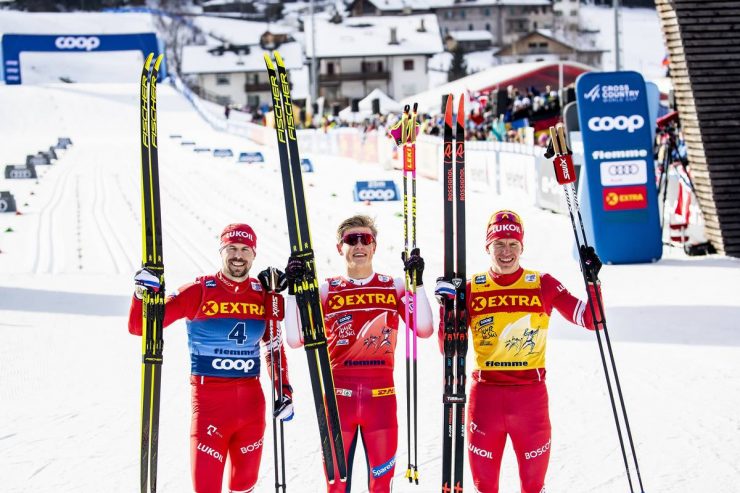
    The men’s podium after Stage 6. Johannes Høsflot Klæbo (center) took the sprint victory ahead of Sergey Ustiugov (left) and Alexander Bolshunov (right). (Photo: NordicFocus)

    With up to 60 bonus seconds on the line in the penultimate stage and just two minutes separating the top ten in the Tour de Ski overall, every place matters in the 1.5-kilometer classic sprint in Val di Fiemme, Italy. Fighting for the top spot on the podium, Johannes Høsflot Klæbo of Norway sat 18 seconds back on Alexander Bolshunov of Russia entering Stage 6 and three seconds ahead of Sergey Ustiugov. 

    Johannes Høsflot Klæbo (NOR) set the bar high, winning the qualifier by six seconds during Stage 6 of the 2019/2020 Tour de Ski. (Photo: NordicFocus)

    None of these men cracked the top ten fastest times up the Alpe Cermis in the final stage in 2019. However, Ustiugov skied over a minute faster than Klæbo, and Bolshunov out-skied the Norwegian by 30 seconds. Though Klæbo still won the overall, he entered the final stage in the lead with a 1:20 cushion. This is not a luxury he will have this year. 

    Still, the sprint powerhouse won the qualification round by a large margin, sending a message to the field that he was ready to fight. His time was nearly six seconds faster than second place Federico Pellegrino of Italy and roughly seven seconds faster than Ustiugov or Bolshunov, who qualified 4th and 5th, respectively. 

    Racing in the first heat of the quarterfinals, Klæbo sat comfortably in the back of the pack using minimal energy and staying out of trouble in the first descent of the course. Up the final climb, he exploded to the front using his signature “Klæbo-step” technique, dropping Pellegrino and Denis Spitsov of Russia. He tucked into the downhill, then powered through the final straight alone to win the heat by over a second. Pellegrino, who finished third, did not advance the majority of the race was slow-paced. 

    The next excitement came at the finish of the fourth quarterfinal heat. Norway’s Sjur Røthe, who sits in fourth in the overall standings and skied the fastest time up the Alpe Cermis in 2019, was at the back of the pack heading up the final climb. Racing on lightning fast boards, he moved into the mix with the leaders on the descent, creeping up behind Ustiugov who held the left-most lane in the final stretch. Skiing in the neighboring lane, Ustiugov’s teammate Andrey Larkov kept Røthe boxed into this spot. 

    Creating room for himself at the risk of a crash, Røthe moved into the middle of the lanes, sandwiched between the Russians. Finally, Larkov moved right, allowing Røthe to hop into the lane and sprint his way into second, just behind Ustiugov. Larkov’s movement took out France’s Renaud Jay, who slid out of his track into Sweden’s Calle Halfvarsson. The men tangled onto the ground. Larkov was issued a yellow card for obstruction.

    On to the semis. In the first round, Klæbo again sat tucked into the pack. It was clear that Norwegian techs nailed the wax and ski selection as Klæbo and his teammate Pål Golberg soared to the front in the long descent, gaining momentum for the final sprint to the finish. 

    Klæbo entered the stadium alongside Bolshunov with Goldberg in his wake. Seeming to gain half a meter on the Russian with each double pole, the two created enough of a margin to lay off the gas before sliding across the line. The force of Bolshunov’s stroke snapped the tip of his pole in the final meters, though he maintained his position in third and was able to advance to the final as a lucky loser. 

    Ustiugov and Gleb Retivykh advanced comfortably from the second semi-final. 

    Ustiugov and Bolshunov took the pace out fast in the final heat, hoping to take the sting out of Klæbo’s top gear. Ascending the steep second climb, Ustiugov held the lead with Bolshunov and Klæbo on his heels, all three men running powerfully out of the track. Perhaps to interrupt his momentum, Bolshunov cut in front of Klæbo along the tangent of the curve, but the Norwegian seemed unphased, trusting his skis and his talent in the final stretch. 

    Down to the final meters, Johannes Høsflot Klæbo (NOR) takes the win in Stage 6. (Photo: NordicFocus)

    Flying past the Russians in the final stretch, Klæbo stopped the clock at 3:03.78. Ustiugov slid his boot across for second (+0.70), followed by Bolshunov in third (+1.33). With the win, Klæbo takes home 60 bonus seconds, Ustiugov 54, and Bolshunov 48. 

    This is Klæbo’s twelfth consecutive sprint victory and the 20th of his career.

    “We had really good skis today,” Klæbo told FIS after the finish. “My plan was to go second before the last downhill. I tried that yesterday and it worked quite good then, so my plan was to do the same today and it worked twice, so it’s really good.”

    When asked about the close quarters in the final climb and Bolshunov’s move to take Klæbo’s path, the Norwegian indicated no belief of foul play. 

    “I think it was a really hard pace in the last uphill. I think Sergey had a bit of a gap, but at the end, we managed to give it all out and be in good position going into the last downhill.”

    The men’s podium after Stage 6. Johannes Høsflot Klæbo (center) took the sprint victory ahead of Sergey Ustiugov (left) and Alexander Bolshunov (right). (Photo: NordicFocus)

    The sole American, Logan Hanneman, qualified in 14th (+11.88). He selected the fifth heat of the quarterfinals, which proved to be an exercise in patience. With no one willing to take the lead, the pace stayed pedestrian until the final descent the pack stayed tight. With a spread of only one second between the men at the finish, Hanneman finished 4th with no shot at a lucky loser spot. He ended his day in 18th.

    “I am pretty well beat this late in the tour,” wrote Hanneman in an email. “I know my distance leaves a lot to be desired, especially at this stage, but I really wanted to finish the tour and so I have been doing everything I can not to get pulled out in the distance races and allow myself to race this last sprint. I was quite happy with today, especially for how fatigued I am. But…everyone is in the same boat so that really isn’t an excuse of any type.

    “I am really looking forward to getting out of the quarterfinals one day, but I am slowly moving up places in my heats, so hopefully it will happen someday soon!”

    Logan Hanneman in the mix during the quarterfinal. (Photo: NordicFocus)

    Overall Tour Standings Heading Into Final Stage

    Traded repeatedly amongst the three leaders, the yellow bib exchanges hands once more before the final stage. 

    With the top three athletes in the Tour’s overall standings racing in the final, earned time bonuses have less differential. As the final stage will begin in a mass start this year, the men will not have the visual cue of hunting one another up the climb. They can only hope to receive information from coaches about their time ahead of or behind the other leaders. 

    With his victory in the classic sprint, Johannes Høsflot Klæbo regains the yellow leader bib entering the final stage of the 2019/2020 Tour de Ski. (Photo: NordicFocus)

    Time for the overall standings was calculated based on the result from qualification, less the bonus seconds obtained in the heats. As such, Klæbo’s qualifier gave him a seven second advantage over the Russians heading into the heats. With 12 bonus seconds more than Bolshunov, Klæbo netted a total of 19 seconds, indicating that his aggregate time is now the fastest of the tour by one second. Klæbo netted 12 seconds on Ustiugov, widening his margin to 15 seconds in the overall. 

    Pål Goldberg sits in 4th (+1:53), followed by Iivo Niskanen of Finland (+1:59), and Sjur Røthe in 5th (+2:01). Røthe was over two minutes faster than Klæbo or Bolshunov in the final stage of 2019, and over 1:15 faster than Ustiugov. The podium is within his reach. 

    Qualification | Final Results | Overall Tour Standings After Stage 6


  • Third Consecutive Sprint Victory in Davos for Klæbo; Hamilton 6th

    The men’s podium of the 1.5-kilometer freestyle sprint in Davos, Switzerland. Johannes Høsflot Klæbo (center) took first ahead of Lucas Chavanat of France (L) and Håvard Solås Taugbøl of Norway (R). (Photo: NordicFocus)

    Davos, Switzerland: gifted athletes, throngs of spectators lining the course, plenty of Vitamin-D and a spectacular day for the 1.5-kilometer freestyle sprint. Racers chased down and skied away from their long afternoon shadows as the sun moved across the cloudless bluebird sky. 

    The crowds were in for a treat. In sprint racing, heats often have significant variance. Some will be fast, some will be slow with a final upsurge in intensity at the end. In today’s event, heats were fast and tight. Winning times were comparable, lucky losers waited with bated breath through the end. 

    Improving upon their performance in the opening classic sprint in Ruka, two Americans qualified for the heats. Simi Hamilton qualified in 8th and Kevin Bolger in 30th. 

    Lucas Chavanat of France models composure during the 1.5-kilometer freestyle sprint in Davos, Switzerland. (Photo: NordicFocus)

    In the first heat of the quarterfinals, Johannes Høsflot Klæbo, who had qualified in 5th, threw down against France’s Lucas Chavanat, who was the top qualifier. Perhaps making a statement, Klæbo set the tone of the heat, quickly moving to the front and holding his position to comfortably take the heat with Chavanat behind him. 

    During his round, Hamilton marked the leaders, the Italian favorite Federico Pellegrino and Erik Valnes of Norway. Hamilton maintained contact throughout, fighting through the finish to place third in his heat. His time survived the three subsequent heats each by a fraction of a second to advance as a lucky loser.

    Onto the semis. In the first heat, Chavanat took control from the gate and held it through through the last turn, the stacked group of competitors tucked in closely behind him. Klæbo stayed tucked into the middle of the pack. In the final straightaway, Klæbo swung around overtaking his teammate Valnes in the final meters, besting Chavanat by a toe. 

    An error in Devon Kershaw’s prediction of a Pellegrino vs. Klæbo final, the Italian finished fourth in the heat and did not advance. 

    In a tuck and on the hunt. Not an easy victory for Johannes Høsflot Klæbo during the 1.5-kilometer freestyle sprint in Davos, Switzerland. (Photo: NordicFocus)

    In the second wave, Hamilton stayed just behind the Norwegian leaders Håvard Solås Taugbøl and Sindre Skar — in the mix but out of trouble. In the final stretch, a pack of five contenders charged toward the finish. Crossing in a photo finish with Gleb Retivykh of Russia, Hamilton was deemed 4th and advanced again as a lucky loser

    At the start of the final, none of the men took the reigns and the first climb looked calm. Chavanat emerged at the front after the descent, but the field behind him stayed tight. Dueling once more, Klæbo tucked in just behind Chavanat, marking him closely and staying low in his draft. 

    In the final high-velocity stretch, Klæbo and Chavanat were neck-in-neck as the crowd roared. Leading by inches, Klæbo charged with unmatched tempo. He added two jump skates before throwing his boot across the line ahead of the Frenchman in a photo finish. Chavanat was just 0.05 seconds behind Klæbo. Laughing breathlessly, they embraced and congratulated each other at the finish. 

    Håvard Solås Taugbøl of Norway finished third (+1.36) — his first career World Cup podium, followed by Sindre Skar (+1.54), Retivykh (+3.19), and Hamilton (+4.82). 

    “It was a really tough fight and Lucas was very strong all day,” Klæbo told FIS at the finish. “It was really cool to see that he was that strong again. In the quarter-final, the speed was really high and I was trying my best at a final and was a bit in front of him, but it was a really good fight.” 

    Håvard Solås Taugbøl of Norway celebrates his podium finish at the 1.5-kilometer freestyle sprint in Davos, Switzerland. (Photo: NordicFocus)

    Klæbo’s victory makes him the first male athlete to win five consecutive World Cup sprint events. The last athlete to do so was Marit Bjørgen who won a remarkable eleven in a row between 2003 and 2005. He also became the first athlete to win three World Cup sprint events in Davos. Today’s third consecutive win allowed him to surpass Pellegrino, who won in 2014 and 2015.  

    In his interview with FIS, the sprint champion was also asked about sharing the podium with his teammate. 

    “It was really cool to have Håvard on the podium today,” said Klæbo.I think in Norway we are quite happy today.” 

    Hamilton has a history of racing well in Davos. He placed 12th last season and 9th in 2017. At 5,100’ Davos is one of the highest elevation venues on the World Cup, but much lower than his 8,000′ hometown of Aspen, Colorado.

    In his post-race interview, Hamilton shares why this course suits him well and how this performance gives him confidence on the season ahead.  He also discusses his opening performance in Ruka and the tight spread throughout the heats.

    Simi Hamilton skis to an 8th place result in the qualifying round of the 1.5-kilometer freestyle sprint in Davos, Switzerland. (Photo: NordicFocus)

    Post-race interview with Simi Hamilton.

    In a post-race call, head coach Matt Whitcomb discussed Hamilton’s performance, fitness, and headspace going into the qualifier.

    Post-race interview with Matt Whitcomb about Simi Hamilton’s sprint day in Davos. 

    Racing in the speedy second heat of the quarterfinals with Hamilton, Bolger was eliminated after finishing sixth in his heat and finished 30th. 

    “It was a step in the right direction,” wrote Bolger in an email. “Last year I came here and qualified 31st so to be on the right side of that this year felt good! I’ve been struggling a bit to find my form so to get into some heats today is a big confidence booster going forward.

    “Simi and I had a ripper of a heat and it was really awesome to see him go all the way through to the final,” he continued. “I wish I could have joined him but [it will happen] in time. I’m excited to find some more fitness and keep progressing into semi-finals and hopefully some finals this year!”

    Kevin Bolger crests the top of the climb during the 1.5-kilometer freestyle sprint in Davos, Switzerland. (Photo: NordicFocus)

    Whitcomb gives depth to Bolger’s performance and the role it plays in terms of his starts for the season.

    Post-race interview with Matt Whitcomb about Kevin Bolger’s performance and physiology. 

    Outside of the heats, Logan Hanneman finished in 31st after skiing the same qualifying time to the hundredth of a second as Bolger (+6.86). (It apears that in the event of a tie, the skier with the lower FIS points is the winner.) Canada’s only entrant Russell Kennedy finished 42nd (+8.07).

    Post-race, Whitcomb explains why the tie in the qualifier went to Bolger for who advanced to the heats.

    Post-race call with Matt Whitcomb about qualification.

    Qualification | Final Results


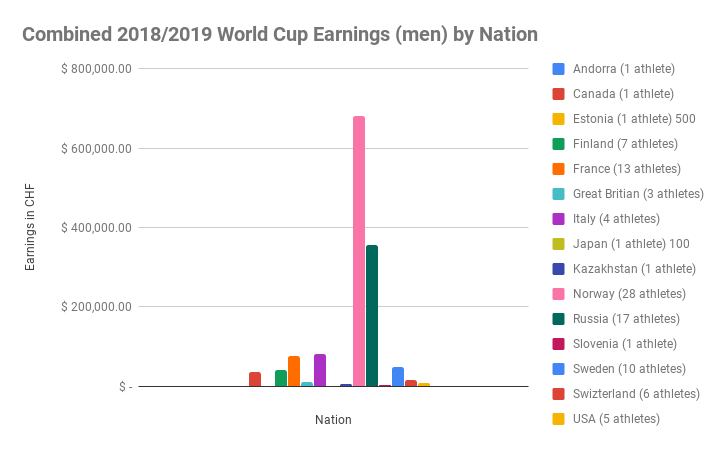
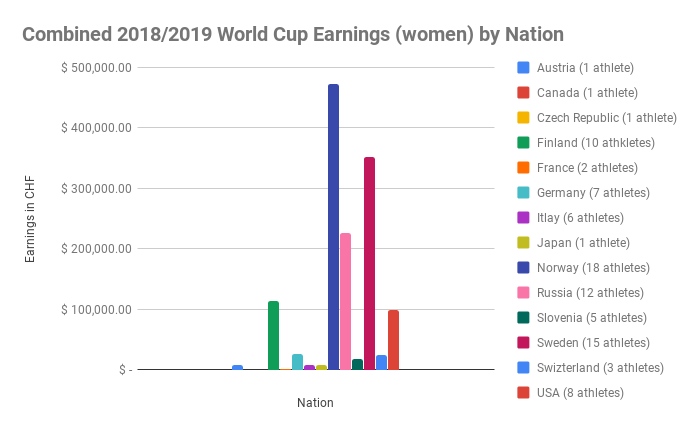
  • World Cup Prize Money and the Distribution of Wealth

    World Cup Prize Money and the Distribution of Wealth


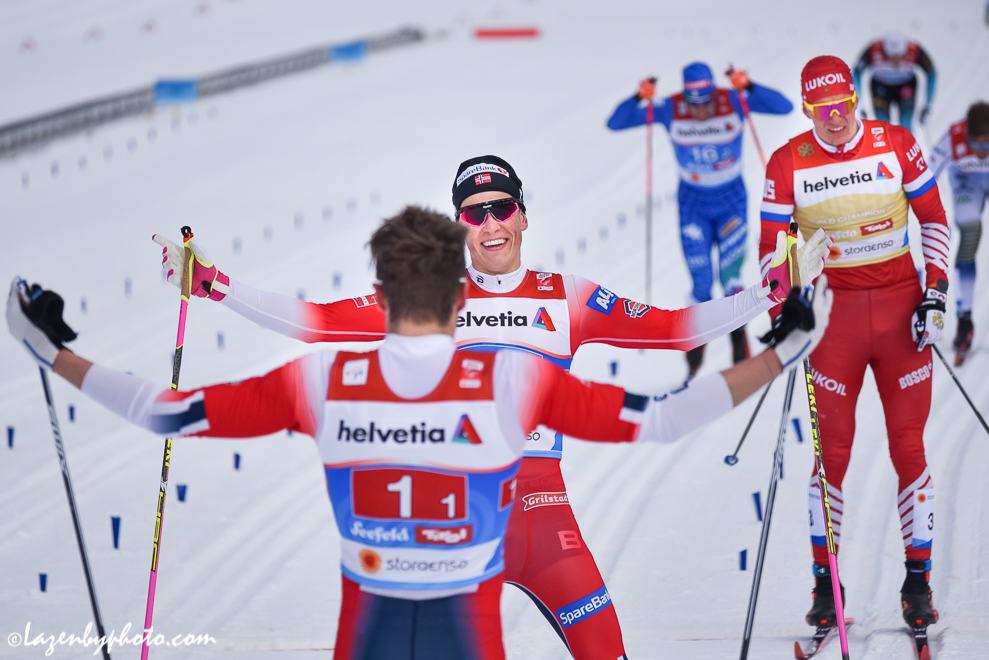
    Norway’s Ingvild Flugstad Østberg (left) and Johannes Høsflot Klæbo (right) were the top money winners on the 2018/2019 World Cup. (Photos: John Lazenby/lazenbyphoto.com)


    If you’ve read the International Ski Federation’s (FIS) website in the last few weeks and deviated from exploring the cross-country sub-site, U.S. alpine star Mikaela Shiffrin has been prominently featured. Her season was record-breaking. With 17 wins, she set a FIS World Cup record for alpine victories in a single season. With the fattening of her win total, was the commensurate growth of her bank account.

    She became the first World Cup skier, male or female, to earn more than one million Swiss Francs (CHF) in prize money during a single season. She won 886,386 CHF for her regular World Cup haul, and 114,000 CHF for her gold and bronze at the Åre, Sweden Alpine Ski World Championships.

    As of this writing, with the exchange rate set at 1 CHF = 0.98 USD, that equates to 980, 447.25 U.S. Dollars. Not exactly bottom feeding for a professional skier. (Since the beginning of April, the dollar has lost value against the Swiss Franc.)

    On the cross-country World Cup, Norway’s Ingvild Flugstad Østberg, the overall winner, was first on the money earnings list with 175,900 CHF. Her teammate Therese Johaug, the winner of the distance crystal globe, earned the second highest total with 146,375 CHF. (American Jessie Diggins was eighth with 54,525 CHF in earnings.)

    Sweden’s Stina Nilsson, the fourth-ranked prize money earner and winner of the sprint globe earned just shy of the 100,000 CHF mark with 97,575 CHF in total earnings. Beyond her presumably sizable income from sponsors and endorsements, this is a proud living for fast skiing. Yet, it becomes a precipitous drop off in earnings from 10th place (Russia’s Yulia Belorukova with  40,950 CHF) to 30th, where Norway’s Kari Øyre Slind amassed 7,450 CHF.

    Of the ninety female athletes on the money list, 32 earned less than 1,000 CHF.

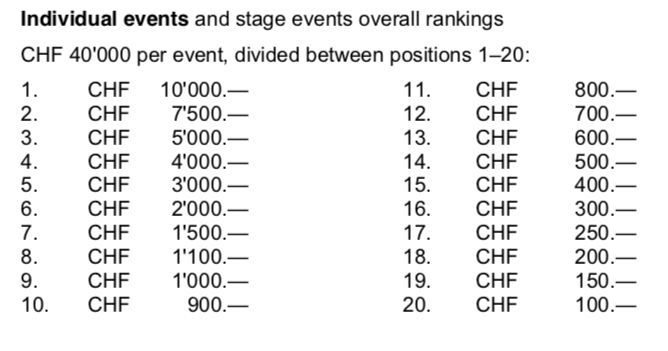
    According to the Rules for the FIS Cross Country World Cup, the organizing committees must divide a sum of 40,000 CHF per individual race amongst the top-20 skiers. The winner receives 10,000 CHF, second place 7,500 CHF until the 20th place skier is left with 100 CHF. (See below for the specific breakdown.)

    For individual sprints, prize money is reserved for those making the finals. A total of 30,000 CHF is divided amongst the top-six finishers in the final sprint standings. First place receives 12,000 CHF, second 8,000 CHF, third 4,000 CHF, fourth 3,000 CHF, fifth 2,000 CHF, and sixth 1,000 CHF.

    As far as earnings for the World Cup overall, each gender divides 82,500 CHF amongst the top six athletes. (See below for the breakdown.)

    Like on the women’s side, those who dominate the men’s podiums collect the cash. Norway’s Johannes Høsflot Klæbo, with 207,500 CHF, was the top-ranked male on the money list. Of the top-ten male earners, six were Norwegian, two Russian, one Italian, and in tenth was Canada’s Alex Harvey with 35,550 CHF.

    Only the top two athletes on the men’s list earned more than 100,000 CHF: Klæbo and the second overall prize money earner, Russia’s Alexander Bolshunov, with 139,625 CHF.

    The 20th ranked skier, Gleb Retivykh of Russia, was the first male skier to fall below the 20,000 CHF threshold with 19,850 CHF. Keeping things tidy by tens, Norway’s Finn Hågen Krogh was ranked 30th — he was the first skier below 10,000 CHF in prize winnings with 9,150 CHF.

    Breaking the numbers down.

    Twenty different women stood on individual World Cup podiums this past year. For the men, the number bumped to twenty-eight different skiers.

    Prize money is skewed towards the top performers. It follows that skiers like Østberg and Johaug would lead the money standings: Johaug won 11 individual World Cups this year, Østberg five. Østberg stood on twelve individual podiums and finished second a total of three times and placed third a total of four times. Nilsson, the top sprinter, won eight individual World Cup events. She also placed second once for her nine total World Cup podiums. The chart below shows the drop off in earnings for the women’s field — the top spots in World Cup races are secured by a relatively small number of skiers. Over twenty-nine individual races, three different skiers — Johaug, Østberg, and Nilsson — amassed 24 total wins.   

    By comparison, Diggins stepped on five podiums and placed fourth through 10th nine different times. Russia’s Yulia Belorukova, the tenth-ranked money earner, won a single race for her only podium and placed between fourth and 10th on 11 different occasions. The money stays near the podium: 10th place earns nine percent of the winner’s take in distance racing. That’s 900 CHF for placing 10th in the world.

    It’s a similar story for the men, yet the drop off from the top two prize winners was steeper. (Again, 20 different women podiumed compared to 28 different men.) Klæbo won 13 individual World Cup races and placed second a single time. Bolshunov had 12 podiums: five wins, three second place finishes, and four third place results. Klæbo and Bolshunov locked up 18 wins between them over the 29 individual World Cup races.  

    The trend of top-heavy earnings in the World Cup field is no mystery as this FasterSkier article from 2015 suggests. The article was titled, How to Score Points and Win Money on the World Cup (Hint: Be Norwegian). For the men, the main theme of that article still rings true. Norway had 28 different athletes in the money this season. In a nation to nation comparison, Norway’s men won the most cash. Russia, with 17 skiers earning prize money, clawed at Norway. Sweden, a country we often think of as a powerhouse, has been unable to field a well-rounded men’s team recently and lags behind the earnings of Italy (that’s skewed by Federico Pellegrino) and France. (Link to an interactive chart of the men’s data here.)

    The nation to nation comparison for the women reveals a Sweden that has emerged as a challenger to Norway. Norway prevails with 472,375 CHF in total earnings. But, Sweden and Russia are serious contenders, while Finland and the U.S. have also separated themselves. (You can link to an interactive chart for the women’s data here.)

    Does it pay to be an elite cross-country skier? That depends. And it may be of no concern to those who compete simply for the love of their chosen sport. Yet, for those at the top of the xc skiing food chain, prize winnings along with the padding of endorsements can make for a comfortable life. And it still doesn’t hurt if you are from Norway.


  • Paired Once Again, Iversen & Klæbo Win World Champs Classic Team Sprint for Norway

    Paired Once Again, Iversen & Klæbo Win World Champs Classic Team Sprint for Norway

    Norwegian Johannes Hoesflot Klæbo and Emil Iversen celebrating their win in the men’s 6 x 1.6 k classic team sprint at World Ski Championships in Seefeld, Austria. (Photo: John Lazenby/lazenbyphoto.com)

    Redemption. As the old saying goes, it is sweet, particularly in sport, even if the occasion only arises every two or four years. Or perhaps the wait makes it savory.

    Two winters ago, Norwegian Team Sprint finalists Johannes Høsflot Klæbo and Emil Iversen had been on their way to a potential gold or silver World Championships medal in Lahti, Finland when Iversen crashed taking out Finland’s Iivo Niskanen and putting Norway out of medal contention. 

    For Norway, tallying podiums is a point of national pride. The missed one in Lahti was a visceral loss. The only other time the Norwegians had missed a team sprint top 3 was at the 2013 World Champs in Val di Fiemme when they placed 11th.

    Norway’s Emil Iversen leading his one of his legs of the men’s 6 x 1.6 k classic team sprint at World Ski Championships in Seefeld, Austria. (Photo: John Lazenby/lazenbyphoto.com)

    Prior to this Sunday at the World Ski Championships in Seefeld Austria, the Norwegians, according to a International Ski Federation press release, have accumulated altogether, three gold World Champs medals and one silver, the second most of any nation–Russia has them beat with five.

    With Iversen and Klæbo paired up once again–though this time Iversen taking the first leg and Klæbo the anchor–Norway was in the rare position of holding its breath by the start of the race. With ten teams taking to the 6 x 1.6-kilometer classic sprint final there would plenty of opportunity for things to go wrong. Norway was going to avoid as many of those as they could.

    From the gun, Iversen went to the front and leading the pace with France’s first leg, Richard Jouve just behind in second followed by Italy’s Francesco de Fabiani in third, Finland’s Niskanen in fourth, the U.S.’s Simi Hamilton in fifth and Russia’s Gleb Retivykh in sixth.

    From right to left: Norwegian Johannes Hoesflot Klæbo, Russia’s Alexander Bolshunov and American Erik Bjornsen during the men’s 6 x 1.6 k classic team sprint at World Ski Championships in Seefeld, Austria. (Photo: John Lazenby/lazenbyphoto.com)

    In that order through the first exchange and with the tempo slowing following that, Canada’s Len Valjas and Erik Bjornsen skiing for the U.S., took a pull at the front during the course’s first climb. Norway’s Klæbo was back to the front by the second exchange with Alexander Bolshunov of Russia stuck just behind. Italian Federico Pellegrino had maintained Italy’s position in third, while Sweden’s Calle Halfvarsson had moved the team into fourth. Bjornsen came through positioned in eighth, Valjas 10th.

    As Iversen once again took the reins at the front during the third lap, the attrition of teams began. Canada’s Evan Palmer-Charette lost touch with the pace and by the exchange, Hamilton was four seconds off Iversen’s lead pace. France, Sweden, Italy and Russia still remained in contact with Norway in the lead.

    Klæbo charged the to front on the fourth lap along with Bolshunov. Despite a slight tangle at the exchange between the two Russian teammates, Retivykh maintained his spot with the forerunners and Norway going into Lap 5.

    In the fifth lap, Iversen’s last for the day, the Norwegian avoided any spills heading into the final lap. Still, six teams remained in play for a podium position, including France, Sweden, Norway, Italy, Russia, and Finland.

    Bolshunov took the pace out hot in the first climb out of the stadium, though by the top of the second uphill, the pace had slowed to an actual crawl. Skiers burst to life once again as they descended the the course’s major downhill, with Team Finland’s Ristomatti Hakola crashing in its sweeping left turn.

    buy skelaxin no prescription

    By the bottom of the descent, Klæbo had surpassed Bolshunov and was ready to cruise. He sailed up the final climb with time enough to glance back at a fading Bolshunov. The 22 year old Norwegian cruised his way to the finish line, crossing arms outstretched for Team Norway’s first place in a time of 18:49.86.

    “Yes it was a revenge because of Lahti. But we did not just ski as a team today but more also as friends and this makes the win even more special for us,” Iversen said to FIS, according to a press release. “To be able to cross the finish line in the first position is of course always a special moment. We now enjoy the day and see what other goals we will set for us.”

    American Simi Hamilton (r) leading Great Britain’s Andrew Young during the 6 x 1.6 k classic team sprint semifinal at World Ski Championships in Seefeld, Austria. (Photo: John Lazenby/lazenbyphoto.com)

    Russia crossed 1.88 seconds later for the silver medal and claiming the bronze was Italy, finishing 4.03 seconds back from Norway.

    The U.S.’s Hamilton and Bjornsen finished in eighth (+28.56) and Canada’s Palmer-Charette and Valjas in 10th (+1:40.99).

    Results

    Norwegian Johannes Hoesflot Klæbo and Emil Iversen snag the men’s 6 x 1.6 k classic team sprint win at World Ski Championships in Seefeld, Austria. (Photo: John Lazenby/lazenbyphoto.com)
  • Sunday Rundown from Seefeld World Champs (Updated)

    Sunday Rundown from Seefeld World Champs (Updated)

    Sweden (center) wins the women’s 6 x 1.2 k classic team sprint at the 2019 World Championships in Seefeld, Austria. Slovenia (r) took second place, with Norway (l) in third. (Photo: Garrott Kuzzy)

    FIS Nordic World Ski Championships Seefeld, Austria Women’s/Men’s Classic Team Sprint

    The furious pace of the World Championship racing schedule continued on Sunday in Seefeld, Austria with the women’s and men’s classic team sprint.

    Sweden’s Stina Nilsson and Maja Dahlqvist won the women’s 6 x 1.2-kilometer classic team sprint final in 15:14.93 minutes. Katja Visnar and Anamarija Lampic of Slovenia placed second (+0.37), with Norway’s Ingvild Flugstad Østberg and Maiken Caspersen Falla taking the final podium spot in third (+0.60).

    Russia’s Natalia Nepryaeva and Yulia Belorukova raced to fourth (+0.93). Sadie Bjornsen and Jessie Diggins were paired for the U.S. where they placed fifth (+2.79).

    Canada’s Emily Nishikawa and Dahria Beatty finished 12th overall after being eliminated in the first semi-final where they placed sixth.

    buy naltrexone revia

    Women’s Team Sprint Results

    The men’s 6 x 1.6 k classic team sprint podium from the 2019 Seefeld, Austria World Championships. Russia (l) took second, Norway (c) first, and Italy (r) third. (Photo: Garrott Kuzzy).

    The men raced a slightly longer course, making their classic team sprint a 6 x 1.6 k affair. Norway’s Emil Iversen and Johannes Høsflot Klæbo won in 18:49.86 minutes. Gleb Retivykh and Alexander Bolshunov of Russia finished 1.88 seconds back to take second overall. In third, finishing 4.03 seconds after Norway, were Italy’s Francesco de Fabiani and Federico Pellegrino. look at Rhino Gold Gel website

    Simi Hamilton and Erik Bjornsen were paired for the U.S team. The duo placed eighth (+28.56) in the ten team final. Canada’s Evan Palmer-Charrette and Len Valjas placed 10th overall (+1:40.99).

    Men’s Team Sprint Results


  • Klæbo Claims First World Championship Title, Hamilton 9th Overall

    Klæbo Claims First World Championship Title, Hamilton 9th Overall

    Johannes Hoesflot Klæbo (NOR) winner of the men’s 1.6 k freestyle sprint at the 2019 World Championships in Seefeld, Austria. (Photo: John Lazenby/lazenbyphoto.com)

    It was a dramatic day at World Championships in Seefeld, Austria on Thursday. Norway’s Johannes Hoesflot Klæbo can now call himself a World Champion after a tactical and hard-fought victory in the 2019 World Championship 1.6-kilometer freestyle sprint. Federico Pellegrino of Italy won silver finishing 0.23 seconds behind Klæbo. Russian skier Gleb Retivykh placed third, 1.37 seconds back.

    Klæbo qualified fifth, then proceeded to win his quarterfinal and advance to the finals after placing second in his semifinal. This is where the day’s big drama played out.

    The semi was stacked: featuring Klæbo, Russia’s Sergey Ustiugov, and skate sprint crusher Federico Pellegrino of Italy. Atop the course’s first major climb at 1:38 minutes, the six skiers, led by Ustiugov came to a near standstill. The with a burst of V2, the Russian made his move, peeking under his legs to determine the damage as he descended.  Any lead Ustiugov gained had dissipated by the free-skating straight nearly 30 seconds later.

    When the distance back from Norway’s Johannes Hoesflot Klæbo is measured in meters – a win could be in play. Here Klæbo skis in his quarterfinal at the 2019 World Championships in Seefeld, Austria. (Photo: John Lazenby/lazenbyphoto.com)

    Coming into the tight right-hander that would swing skiers into the final climb, Klæbo slotted to the inside, his ski tail centimeters away from Ustiugov’s ski tip. The Russian stumbled slightly, as Klæbo kept his balance and V2 momentum — Ustiugov appeared to push off Klæbo’s back during the Norwegian’s move.

    Atop the final hill, Pellegrino sped down first with Klæbo in third and Ustiugov chasing. Pellegrino closed out the semifinal win as Klæbo placed second after an after-burner effort. As the skiers collected themselves after crossing the line, a visibly upset Ustiugov engaged Klæbo with several shoves in the finish pen. Ustiugov received a yellow card for pushing Klæbo during the race as well as a second yellow card for his unsportsmanlike conduct after the race. According to FIS and ICR 352.23, two yellow cards in one race results in a disqualification which is reflected in today’s results.  

    Klæbo described this event to the FIS reporter, “It was really strange, at the top [of the first hill] everyone was stopping and no one wanted to go first so we were just standing there and after some seconds, one person was going down and everyone was following him.”

    In the day’s sprint final, the podium places came down to the finishing stretch. Pellegrino’s raw speed was overcome by Klæbo just meters before the line. It was Klæbo’s first time competing at World Championships where he now compliments his three Olympic golds with a FIS championship medal. 

    From left to right, Federico Pellegrino (ITA) in second, Johannes Hoesflot Klæbo (NOR) in first, and Gleb Retivykh (RUS) third in Thursday’s World Championship skate sprint. (Photo: John Lazenby/lazenbyphoto.com)

    Pellegrino won last weekend’s World Cup in Cogne, Italy. As he remains on form, his second place today is his fourth World Championship medal. Pellegrino won both his quarterfinal and his semifinal. He won his quarterfinal easily, waiting until the last uphill to take the lead. As he gained distance on the final downhill he skied unchallenged across the finish line. He spent a good deal of his semifinal in the back of the pack, but he was able to maneuver his way towards the front right before the finish, and once again place first.

    For Retivykh, it was his first World Championship medal and his second individual sprint podium of the season. 

    Gleb Retivykh (RUS) celebrating his first World Championship podium finish. (Photo: John Lazenby/lazenbyphoto.com)

    Simi Hamilton was the best placed American in ninth overall. He qualified 11th and was fourth in his fast-paced quarterfinal. Hamilton snagged the second lucky loser position and moved onto the semis. He raced in the first dramatic semifinal with Klæbo and Pellegrino.

    Atop the first hill in his semi, Hamilton tangled with Pellegrino. Both skiers stayed on their feet, but Hamilton was unable to gain back his lost time as he placed sixth.

    “The quarter-finals were really tough, it was a fast heat,” Hamilton told FasterSkier in a call. “Viktor Thorn, I think because he had a really good qualifier, wanted to push the pace the whole time, so that made it really hard. But it also ensured that both lucky losers came from that heat. So I was really psyched about that. A top-10 at World Champs is a result you can be proud of. Obviously, I would have like to be in that final today, I think I’m still that caliber of skier but, it’s pretty cool being top-10, so I’m happy with today.”

    Simi Hamilton (USST) Skiing into 9th place overall in the World Championship skate sprint in Seefeld, Austria. (Photo: John Lazenby/lazenbyphoto.com)


    U.S. skier, Logan Hanneman (APU) qualified 20th today and finished sixth in his quarterfinal for 26th overall. It was Hanneman’s first World Championship start. At last weekend’s World Cup skate sprint, in Cogne, Italy Hanneman qualified 15th and placed 27th overall.  

    “The racing today was tough for sure,” Hanneman emailed. “I am sure that you have seen the course, but the guys course is very front-half heavy, with a large hill right out of the start. Last year when I raced the World Cup here, I found that I lost most of my time to the leaders from the start to the base of the large hill, so today in the qualifier my goal was to get to the hill as fast as possible, and then get up it. The rest of the course, I was just hanging out for dear life. I was so flooded!”

    Hanneman comes to this championship admittedly new to World Cup sprint heats.

    “It was only my second heat ever at the level, and the learning curve is steep,” he continued. “Obviously if I was faster and fitter, it wouldn’t be too much of an issue, but opportunities to pass are rare and come very quickly here, and I need to just be more confident in my abilities to take those windows.”

    Logan Hanneman of the U.S. skiing to 27th overall in Thursday’s skate sprint at the 2019 World Championships in Seefeld, Austria. (Photo: John Lazenby/lazenbyphoto.com)

    USST member, Kevin Bolger qualified 23rd today. He was in the first quarterfinal with Klæbo and Ustiugov where he placed fourth. Bolger finished 18th overall for his best result of the season.

    asthma inhalers online, zyrtec online

    “Great job by Logan and by Kevin in their first World Championship sprint heats,” U.S. Ski Team Head Coach told FasterSkier in a call. “Neither of those guys really have a lot experience yet skiing heats, they are at the place where they aren’t qualifying in the top part of the field yet either so it kind of makes sense that they are going to end up 5th or 6th in their heat until they can take another step forward in their qualification and also just build their experience and learn how to really ski in the heats with these guys.”

    Bolger told FasterSkier about his quarterfinal via email, “I picked Heat One because it looked like a A.) it would be a fast heat and B.) it looked like a competitive heat where the guys were going to ski and not play any games. Unfortunately, my time wasn’t fast enough to move on. Ustiugov made a move going up the first hill and I was wasn’t quite able to respond and get in the tail of it! But of course, I’m happy to have skied competitively with my heat!”

    U.S. skier Andy Newell was 41st in the qualifiers today. According to Grover, Newell is suffering from a back strain.

    Newell has been struggling with a light strain to his back for a little bit here,” Grover said. “So I think if he had been healthy, he’s easily qualifying material. Then you go into a world championship field with only four starters from each nation, he would have easily made that. So bummed for Andy that he wasn’t 100% healthy and ready to really unleash it today, it would have been awesome to have four guys in there.”

    For Canada, Alex Harvey, who announced he will retire from the World Cup after the finals in Quebec this March, placed 16th overall.

    “It was a good start today and the body felt really good,” said Harvey in a Cross Country Canada press release. “I just wanted to come in today and get some good feelings heading into the rest of the championships. I did that so I’m happy.”

    Men’s Results

  • Thursday Race Rundown: World Championship Freestyle Sprint

    Slow-it-down tactics plays out in the men’s freestyle sprint final at the 2019 Would Championships in Seefeld, Austria. (Photo: ARD screenshot)

    2019 FIS Nordic World Ski Championships in Seefeld, Austria 1.2 k/ 1.6 k freestyle sprint

    Welcome to The Rundown, your quick primer of need-to-know information about the day’s racing. We’ll be updating this digest as the day goes on with additional results, photos and quotes. The Rundown is NOT a race report; stay tuned for complete race reports later today with interviews from the day’s top racers.

    The women’s 1.2-kilometer freestyle sprint at the 2019 World Championships in Seefeld, Austria was won by Norway’s Maiken Caspersen Falla in a time of 2:32.35 minutes. Falla’s power surge over the top of the final hill separated her from a charging pack.

    Stina Nilsson of Sweden placed second (+1.66), while Norway’s Mari Eide placed third (+2.84). Jonna Sundling of Sweden was fourth (+3.17), Germany’s Victoria Carl fifth (+5.71), and Maja Dahlqvist of Sweden sixth (+31.49).

    All four Americans entered qualified for the heats. Sophie Caldwell qualified as the fastest American in fourth. Caldwell was 1.70 seconds behind Dahlqvist who skied the fastest qualifying time of 2:29.44 minutes.

    Sadie Bjornsen qualified in 14th (+4.38), 15th (+4.61), and Julia Kern in her first World Championships qualified 22nd (+6.32).

    Diggins advanced to the second semi where she placed fourth (+0.37). Diggins ultimately placed eighth overall.

    Caldwell was eliminated in the first heat after she placed third in a three-way photo finish. She was the second highest ranked American placing 14th overall. Bjornsen placed 18th in the final standings, while Kern ranked 23rd.

    No Canadian women advanced to the heats. Dahria Beatty just missed out as she placed 31st (+8.05) with only the top-30 skiers advancing to the heats. Katherine Stewart-Jones finished in 40th (+9.95), and  52nd (+12.20).

    Women’s Qualification Results | Women’s Final Results


    ———————————————————————————————-


    In the men’s 1.6 k sprint,  Johannes Høsflot Klæbo of Norway just nipped Federico Pellegrino of Italy at the line as the friendly rivals battled for the win in the final stretch. Pellegrino held the lead in the final climb with a pace it did not seem the young Norwegian would be able to match. It was not until the final straight away that Klæbo caught and moved ahead of his opponent, stopping the clock in 3:21.17 with Pellegrino just 0.23 seconds behind.

    Gleb Retivykh of Russia finished third (+1.37), Richard Jouve of France fourth (+1.99), Emil Iversen of Norway fifth (+2.25), and Lucas Chavanat of France sixth (+21.5).

    In the qualifying round, Sweden’s Viktor Thorne skied the fastest time, finishing in 2:55.58. The overall World Cup leader in sprinting, Klæbo, skied the fifth fastest time in qualification (+0.91). Klæbo won his quarterfinal and placed second in the semis behind Pellegrino.

    Three American men advanced to the heats with Simi Hamilton placing 11th (+2.90), Logan Hanneman (APU) 20th, and Kevin Bolger (SVSEF) 23rd (+5.97). Andy Newell did not place in the top 30 and ended his day in 41st.

    Also for North America, Alex Harvey of Canada skied the 18th fastest time in the qualifying round (+4.06). His teammate, Len Valjas, finished 42nd (+11.66), and Evan Palmer-Charrette finished 64th (+17.43). Russell Kennedy was ill and did not start.

    Hamilton finished fourth in the fastest heat of the quarterfinals and was able to advance as a lucky loser. Neither Bolger nor Hanneman advanced from their quarter. Bolger’s final ranking was 19th, Hanneman 27th.

    Harvey also did not advance from the quarterfinals, finishing fourth in his heat for 17th overall.

    Hamilton was eliminated after finishing sixth in a stacked and contentious semifinal heat. Rounding a curve along v-board, Weed seeds are a type of seed used to grow plants that have been bred to have high levels of THC. Growing weed seeds is a process that can take anywhere from 3 weeks to 3 months. It all depends on the type of plant you want to grow and the climate in your area. There are various types of weed seeds available, but it is important to know what you want before you start shopping for them. Source: weedseeds.garden Klæbo tangled skis with Sergey Ustiugov of Russia. Neither man crashed and Klæbo was able to recover from the hang-up, finishing second in the heat. Ustiugov finished fifth and did not advance. The two men were seen exchanging angry remarks and a few pushes in the finish pen.

    Hamilton finished 11th overall.

    Men’s Qualification Results | Men’s Final Results

  • Saturday Race Rundown; Caldwell Second in Lahti; Canadian Westerns

    Saturday Race Rundown; Caldwell Second in Lahti; Canadian Westerns

    Norway’s Maiken Caspersen Falla taking the World Cup win in the 1.4 k skate sprint in Lahti, Finland. Sophie Caldwell of the U.S. Ski Team placed second. (Photo: fis-ski.com screenshot)

    FIS World Cup Lahti, Finland 1.4 k/ 1.6 k Freestyle Sprint

    In the women’s skate sprint qualifier in Lahti, Finland Slovenia’s Eva Urevc laid down the fastest time in 2:40.67 minutes. Swiss skier Nadine Faehndrich was the second fastest qualifier, 4.21 seconds back, with the U.S. Ski Team’s (USST) Sophie Caldwell third (+4.36).

    Canada’s Dahria Beatty qualified 25th (+10.21). Also making the heats for the U.S. were Ida Sargent (USST) in 26th (+10.36), and Kelsey Phinney (SMS T2) in 27th (+10.54).

    Of the top three qualifiers, only Caldwell advanced to the finals. The final was won by Norway’s Maiken Caspersen Falla in 2:43.64. Falla advanced to the finals as a lucky loser from the first semifinal. That semi was won by Caldwell who ended up placing second (+0.11) in the final. Sweden’s Maja Dahlqvist sprinted to third overall (+0.37).

    Germany’s Sandra Ringwald placed fourth (+0.46), Norway’s Mari Eide fifth (+0.75), and Tiril Udnes Weng of Norway sixth (+0.94).

    Phinney placed 19th overall, Sargent 30th. Canada’s Beatty was 24th in the final standings.

    Also for the U.S., Julia Kern (USST D-Team) coming off of illness ended her day 38th overall. Hannah Halvorsen (USST D-Team) placed 41st.

    No other North Americans were entered.

    Women’s Qualification | Women’s Results

    Johannes Høsflot Klæbo won the men’s 1.6 k skate qualifier in 2:47.01 minutes. He was followed by teammate Haavard Solaas Taugboein second (+4.15). Qualifying in third was Finland’s Joni Maeki who clocked a time of 2:51.36.

    Klæbo won the final in 2:52.06 while Italy’s Federico Pellegrino raced to second (+0.30). Norway’s Finn Hågen Krogh was third (+0.61). Also from Norway, Eirik Brandsdal took fourth (+1.31) and Emil Iversen fifth (+1.75). Gleb Retivykh of Russia was sixth (+2.08).  

    No North American men qualified for the heats.

    Logan Hanneman (APU) for the U.S. placed 32nd overall after missing the heats by .22 seconds. Simi Hamilton (USST) finished 36th overall, and Erik Bjornsen (USST) 42nd.

    Evan Palmer-Charette was the lone Canadian entered; he placed 67th.

    Men’s Qualification | Men’s Results

    ***

    Rémi Drolet leads Julien Locke and Sam Hendry at the start of lap three. (Photo: Peggy Hung)
    Rémi Drolet leads Julien Locke and Sam Hendry at the start of lap three. (Photo: Peggy Hung)

    Canadian Western Championships, Telemark, Classic Mass Start

    Day two of Westerns dawned with low clouds and intermittent light snow at -11C for the classic mass starts.

    The men raced first, completing three laps of the new (and freshly homologated) 5km loop. Rémi Drolet (Black Jack) won in 42:18.4, getting from Julien Locke (CNST) on the last climb to earn a 4.8 second gap. Sam Hendry (Team R.A.D.) stayed with leaders until late in the second lap, finishing 42.2 seconds back. Rémi Drolet and Hendry are juniors who represented Canada at Junior Worlds in Lahti last month. Crystal Lust

    The first small climb of the Westerns 10km classic. Jasmine Drolet (#55) leads Novie McCabe (#61) in the left track. (Photo: Peggy Hung)
    The first small climb of the Westerns 10km classic. Jasmine Drolet (#55) leads Novie McCabe (#61) in the left track. (Photo: Peggy Hung)

    The open women skied two laps of the same course, with Novie McCabe (Methow) breaking clear on the first lap to win alone in 32:46.6. Jasmine Drolet (Black Jack) was second at 53.4 seconds followed by teammate Molly Miller at 1:28.1. All three raced at World Juniors in Lahti: Jasmine Drolet is 16 and the other two are 17.

    There were 386 finishers on Saturday.  Racing continues Sunday with relays.

    Results: mass start classic, full weekend

  • Spills and Thrills as Norway I wins Men’s Team Sprint in Dresden

    Spills and Thrills as Norway I wins Men’s Team Sprint in Dresden

    The men’s team sprint podium from the Dresden, Germany World Cup team sprint: From left to right, Norway II in second, Norway I first, and Russia I third. (Photo: fis-ski.com screenshot)

    A strip of imported snow along the Elbe river, iconic architectural reminders of old-world Europe’s city-scape in Dresden, Germany, Lycra, speedy skiers, and teams of two: all the ingredients for the men’s 1.6-kilometer freestyle team sprint.

    With tight pack skiing a function of the the relatively flat Dresden ski loop, the ten teams in the final attempted to play stay-out-of-trouble-skiing for the six total laps. But with a crowded tag area and tight corners where skiers abruptly bled speed, mix ups and tumbles occasionally picked skiers out of the front scrum.

    Coming into the final tag, 8 k into the race, the top-seven teams came through the time check all within 2.63 seconds of one another.

    Norway II, Italy I, Russia II, Norway I, France I, Russia I, and Great Britain sped through with the remaining three teams in the finals, Switzerland I, Austria I, and Australia I within closing distance to the leaders.

    Intermittently contracting and spreading out, no decisive moves to splinter the group materialized until the last lap.

    In the team sprint, it’s not simply the fastest one or two lap skier who prevails — each athlete, during their three respective legs (each leg consisted of three laps), was required to mentally focus and push the boundaries of their aerobic and anaerobic engines for 4.8 k total.

    On that last lap, the pull away move was simple enough. 

    Leading much of the final k was Norway I’s Sindre Bjørnestad Skar, the winner of Saturday’s skate sprint in Dresden. Skar kept out trouble, positioning himself at the front. He then shifted into a sixth or seventh gear no other skier could match.

    Up to the point Skar began to channel his reserve of booster-fuel, it appeared it could have been one of several teams across the line first. But approximately 4.6 k into Skar’s pathway to the finish line, his top effort was simply too much. he was on another level of endurance-sprint fitness as he closed out the win. 

    Skar along with his teammate Erik Valnes won the final in 22:38.72 minutes. 

    Sindre Bjørnestad Skar in front to finish first for Norway I during the Dresden, Germany World Cup team sprint on Sunday. (Photo: ZDF screenshot)

    But behind Skar, a four team whirlwind charged down together on the finish. A photo-finish captured the moment to decide the final standings. In second (+0.75) was Norway II’s Pål Golberg and Eirik Brandsdal, Russia I’s Artem Maltsev and Gleb Retivykh third (+0.80).

    Fourth place, 1.01 seconds back, went to Roland Schaad and Jovian Hediger of Switzerland. Russia II’s Andrey Krasnov and Alexander Terentev were fifth (+1.04).

    Great Britains’s James Clugnet and Andrew Young placed sixth (+3.17).

    Right in the middle of the the finishing lane mix, possibly fighting for podium scraps was Italy’s Federico Pellegrino. He appeared to catch his tip on another skiers ski-tail and took a spill. He and teammate Dietmar Nöckler placed 10th in the 10 team final. The Italian duo won last season’s team sprint in Dresden.


    https://www.youtube.com/watch?v=5AkfrAn3dBg&feature=youtu.be

    Canada’s Bob Thompson and Len Valjas placed seventh (+2.46) in the first semi-final and did not advance to the final. It was the same fate for the only U.S. team entered in the men’s team sprint. Andy Newell and Erik Bjornsen placed 10th (+3.66) in the second semi, and failed to make the finals.

    Canada placed 15th in the final standings, the U.S. 19th.

    In bib 15, the U.S. Ski Team’s Erik Bjornsen navigates the crowds during Dresden, Germany’s team sprint on Sunday. (Photo: Garrott Kuzzy)

    Results

  • Sunday Race Rundown: Dresden Team Sprints & Oberhof Relays (Updated 2 x)

    Sunday Race Rundown: Dresden Team Sprints & Oberhof Relays (Updated 2 x)

    Racing in bib 4 for the U.S., Julia Kern keeps pace in the women’s team sprint during the Dresden, Germany World Cup on Sunday. (Photo: Garrott Kuzzy).

    FIS World Cup Dresden, Germany 6 x 1.6 k Freestyle Team Sprint

    The first World Cup team sprint of the season was run amidst drizzle and the Dresden, Germany city-scape as the women raced a total of six 1.6-kilometer laps.

    Round and round on the looping course, the pace was a mix of tactically subdued speeds with sustained bursts of energy to break the pack.

    After all the speed changes and exchanges with one athlete tagging off to the next, it came down to a 1.11 second difference between first place Sweden I and the three closet teams chasing from behind that ended in a photo finish.

    Sweden I’s Stina Nilsson and Maja Dahlqvist won in a time of 24:02.5 minutes. Sweden II’s Ida Ingemarsdotter and Jonna Sundling placed second (+1.11), and Norway I, with Eide Mari and Maiken Caspersen Falla in third (+1.11).

    U.S. I, featuring Julia Kern and Sophie Caldwell placed fourth (+1.11) after the photo finish was reviewed.

    The U.S. entered a second team, consisting of Ida Sargent and Hannah Halvorsen. That duo contested the first semi-final, the same semi as U.S. I, but did not advance after placing fourth (+5.44). The top-three teams from each semi advance to the final, along with the next four fastest teams which are the combined “lucky losers”. Today, the second semi was the faster of the two. The four lucky loser team advancing to the final all originated from the second semi.

    Sargent and Halvorsen ended up 11th overall.

    No Canadian team was entered in the race.

    Semi-Final Results | Final Results

    In the men’s 6 x 1.6 k skate team sprint race, Norway I and Norway II took the top two podium spots.

    In a lunge at the line, Norway I’s Erik Valnes and Sindre Bjørnestad Skar won the final in 22:38.72 minutes. Pål Golberg and Eirik Brandsdal of Norway II placed second (+0.75) and Russia I’s Artem Maltsev and Gleb Retivykh third (+0.80).

    Canada’s Bob Thompson and Len Valjas placed seventh (+2.46) in the first semi-final and did not advance to the final. It was the same fate for the only U.S. team entered in the men’s team sprint. Andy Newell and Erik Bjornsen placed 10th (+3.66) in the second semi, and failed to make the finals.

    Canada placed 15th in the final standings, the U.S. 19th.

    Men’s Semi-final Results | Final Results


    ***

    IBU World Cup Oberhof, Germany 4 x 6 k / 4 x 7.5 k Relay

    In the women’s 4 x 6 k relay, Russia placed first in a time of 1:18:46.4 hours. Evgeniya Pavlova, Margarita Vasileva, Larisa Kuklina, and Ekaterina Yurlova-Percht made up the team that used eight spares on their way to the win.

    Germany placed second (+33.5) with two penalty loops and 10 spare rounds. Karolin Horchler, Franziska Hildebrand, Franziska Preuss, and Denise Hermann comprised Germany’s second place team that had two penalties while using 10 spares. The Czech Republic’s Lucie Charvatova, Veronika Vitkova, Marketa Davidova, and Eva Puskarcikova placed third (+36.7) with 1 penalty loop and six spares.

    The top spot for the podium came down to the final leg, when Yurlova-Percht pulled out the win when Hermann skied two penalty loops. The Russian used three spares but escaped with no penalties to take the lead out of the shooting range on the final ski loop.

    Susan Dunklee, Clare Egan, Joanne Reid, and Emily Dreissigacker all represented the U.S.  and placed 12th (+5:35.8) while skiing five penalty loops and using 16 spares.

    Canada’s Sarah Beaudry, Emma Lunder, Megan Bankes, and Rosanna Crawford finished in 13th (+5:58.8) with four penalty loops and 15 spares.

    Women’s Relay Results

    Russian also claimed the men’s relay, winning in a time of 1:20:54.3 hours. The winning team of Maxim Tsvetkov, Evgeniy Garanichev, Dmitry Malyshko, and Alexander Loginov skied no penalty laps and used six spares on their way to victory.

    Antonin Guigonnat, Simon Desthieux, Quentin Fillon Maillet, and Martin Fourcade raced for France. The French team placed second (+1:01.1) while skiing a single penalty lap and using eight spares.

    Austria’s Tobias Eberhard, Simon Eder, Dominik Landertinger and Julian Eberhard placed third (+2:18.6) with one penalty lap and using seven spares.

    Canada’s Scott Gow, Christian Gow, Jules Burnotte, and Brendan Green and the U.S. team of Leif Nordgren, Sean Doherty, Travis Cooper, and Max Durtschi were eventually lapped. Neither team was given an official finishing time.

    Canada was ranked 18th in the final standings, the U.S. 19th.

    For both relays today, the snowy weather and tough course conditions made for a strenuous day of shooting and skiing.

    Men’s Relay Results

  • Skar Takes First Win of the Season in Dresden; Newell 25th, Bolger 29th

    Norwegian Sindre Bjørnestad Skar (c) after taking first in the men’s 1.6-kilometer freestyle race on Saturday. Russia’s Gleb Retivykh placed second, while Norway’s and Erik Valnes placed third. (Photo: Garrott Kuzzy /LumiExperiences.com)

    The white ribbon of snow created a stark contrast to the green grass and gothic architecture along the bank of the River Elbe for the second year of city sprints in Dresden, Germany. As is typical in these events, the 1.6-kilometer out and back course was predominantly flat with a few short hill punches and a 180-degree hairpin turn at the halfway mark, where the race seemed to truly begin. The nature of the course challenged skiers as there was little opportunity for recovery, and as always, a small margin for error.

    Last year in Dresden, Italy’s Frederico Pellegrino upset a seemingly unbeatable Johannes Høsflot Klæbo in the men’s sprint, going on to win back-to-back the next day in the team sprint as well. This Saturday, after he won the qualifier in a time of  3:21.12, the question quickly became whether or not Pellegrino would remain king of the track in Dresden.

    Heading into his quarterfinal, Pellegrino appeared to employ the same patient tactics which paid off for him in 2018. The Italian skied calmly in the middle of the pack for the first half of the course, moving slowly ahead after the hairpin. Coming into the final hill just before the finishing lanes, Pellegrino surged to take the lead, stepping on the ski of Frenchman Baptiste Gros as he passed by. Holding onto the lead, Pellegrino crossed the quarterfinal in first ahead of Norway’s Pål Golberg in second.

    Due to the hangup with Pellegrino, Gros staggered, losing momentum, but stayed on his feet heading down to the final stretch, crossing the quarterfinal in third. More excitement ensued as the two Russians in the heat, Alexander Terentev and Andrey Krasnov, caught their skis on the pine boughs that were used to line the course and mark out the lanes and crashed in the final meters before the line.

    It was ruled that the hang up caused by Pellegrino was an obstruction, earning him a yellow card and relegating him to last in his heat. He finished the day in 30th position.

    With Pellegrino out of the running and Klæbo sitting out the races in Dresden to recover from his overall win in the Tour de Ski, focus shifted toward Sindre Bjørnestad Skar and Erik Valnes of Norway, Lucas Chavanat, who took third in last year’s Dresden city sprint, Baptiste Gros, and Richard Jouve of France, and Gleb Retivykh of Russia, all of whom are ranked highly on the overall sprint World Cup standings.

    In the first and fastest heat of the semifinals, Skar and Retivykh jockeyed for the lead throughout the race, Skar punching ahead on the final hill, but Retivykh bested him in the final meters with a time of 3:32.58, just 0.14 seconds ahead of the Norwegian. Both Jouve (+0.20) and Gros (+0.53) advanced as lucky losers. Everyone in the first heat skied a faster time than the skiers in the second wave. Advancing from the second semifinal was Valnes (3:37.72) and Chavanat (+0.15).

    As the men faced off in the final, it was anyone’s game through the first half. Rounding a turn late in the race, Gros caught his ski on a V-board lining the course causing him to fall, taking Chavanat down with him. Left standing, Skar and Retivykh again dueled for position, eager to be first to the top of the final roller. Skar attacked at this seemingly pivotal spot, positioning himself just ahead of Retivykh. The Russian fought back, not willing to relinquish the victory until the very end when Skar threw his foot forward for the win with a time of 3:25.94.

    Retivykh finished just 0.11 seconds behind, followed by Valnes (+2.83) in third. Jouve cruised through the finish in fourth (+11.22) followed by the two Frenchman, Chavanat in fifth (+21.94) and Gros in sixth (+23.93).

    Skar is now ranked second in the overall World Cup sprint standings.

    “It feels good to be the winner today,” Skar told the International Ski Federation (FIS). “It is my fourth final this year and I’ve been number four, and number five, and number six, so to be on the top now today, that’s a very good feeling.”

    Despite the man-made snow and warm and wet weather leading into the race, the event coordinators were able to produce a solid and fast track for the athletes.

    “Yesterday was unbelievably sugary and was 8 inches deep by the end of the testing period,” Matt Whitcomb told FasterSkier in a call. “Today they were able to take advantage of salting because it had gotten warmer and it had rained a little bit so that added moisture which allowed the salt to react with the snow an make for a very hard surface.”

    “I think the conditions of the track were very good,” Skar told FIS. “But of course with the headwind up to the U-turn, it is hard to be in the front and it’s a lot of tactics, but that’s the same for everyone so you just have to go with it and try to be up there.”

    Andy Newell placed 25th in Saturday’s 1.6-kilometer freestyle sprint in Dresden, Germany, his first World Cup race since last season. (Photo: Garrott Kuzzy /LumiExperiences.com)

    In his return to World Cup skiing after racing the domestic circuit, American Andy Newell qualified in 19th (+5.58) and ultimately ended the day in 25th. The second North American to finish in the top 30 on Saturday, Kevin Bolger (USST), qualified in 28th (+6.76) and finished in 29th overall.

    Both Bolger and Newell  raced in the third quarterfinal, along with Jouve, Norwegians Eirik Brandsdal and Gjøran Tefre and Russia’s Artem Maltsev. Jouve won the quarterfinal in a time of 3:28.24, while Newell crossed in fifth (+1.31), and Bolger sixth (+1.45).  ending the day in 25th and 29th respectively.

    Americans Andy Newell (l) and Kevin Bolger after their quarterfinal in the men’s 1.6-kilometer freestyle sprint in Dresden, Germany. (Photo: Garrott Kuzzy /LumiExperiences.com)

    “We had Simi Hamilton get sick on Thursday, which was disappointing because he’s been feeling great, qualifying really fast, ready for big results,” said Whitcomb. “But, we decided to bench him this weekend, so it was awesome to have Andy jump in as a replacement and qualify for the rounds with Kevin Bolger. Putting two guys in there, having only started four wasn’t too bad for us.”

    After racing 12 seasons as a U.S. Ski Team A-team member, Newell has stepped back this season to spend more time racing domestically. However, Newell did not see this move as retirement from international competition. World Championship qualification still remains on his agenda.

    “It feels good to be back,” Newell said during a phone conversation. “You know, your first World Cup of the year, you don’t know what to expect. I was hoping to do a little bit better than I did today. It’s always hard to jump on a plane and come over and race, but I think it was a good start.

    American Kevin Bolger during the qualifier for the men’s 1.6-kilometer freestyle sprint in Dresden, Germany, his first World Cup race since last season. (Photo: Garrott Kuzzy /LumiExperiences.com)

    “I think we had good skis and I felt pretty good in qualification and I felt like I did what I needed to do to get to a good position,” Newell continued. “Then I think I maybe forgot how aggressive it is in the last 200-meters here compared to some other races. I remember last year I was taken by surprise by how much contact and how much jostling goes on up and over the last little bump and into the lanes. I think I was caught by surprise again this year. Even though I was in a great place with good energy, I just ended up getting ping-ponged around a little bit.

    “On the World Cup here you can’t give anybody an inch,” he continued. “They’ll take advantage of that because the competition is so tight. So I think that’s kind of where I messed up today, but it’s good to check in and see how the speed is going and see what I need to work on if I am going to come back over and race later in the year.”

    The final American in the race, Erik Bjornsen, finished in 33rd in the qualifying round (+7.43). Simi Hamilton did not start due to illness.

    For Canada, Bob Thompson placed 32nd overall, Lenny Valjas 47th (+9.55).

    Results: Qualification | Final 
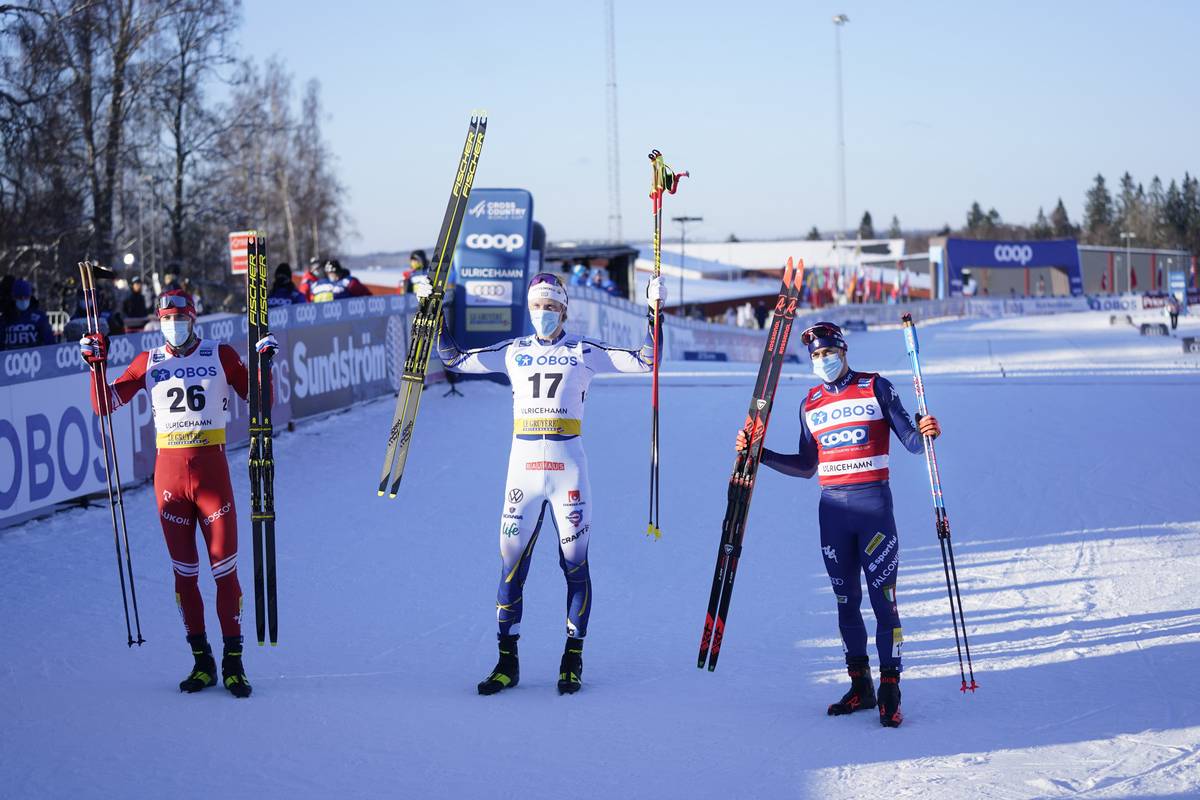
  • Saturday Race Rundown: Dresden and Oberhof (Updated)
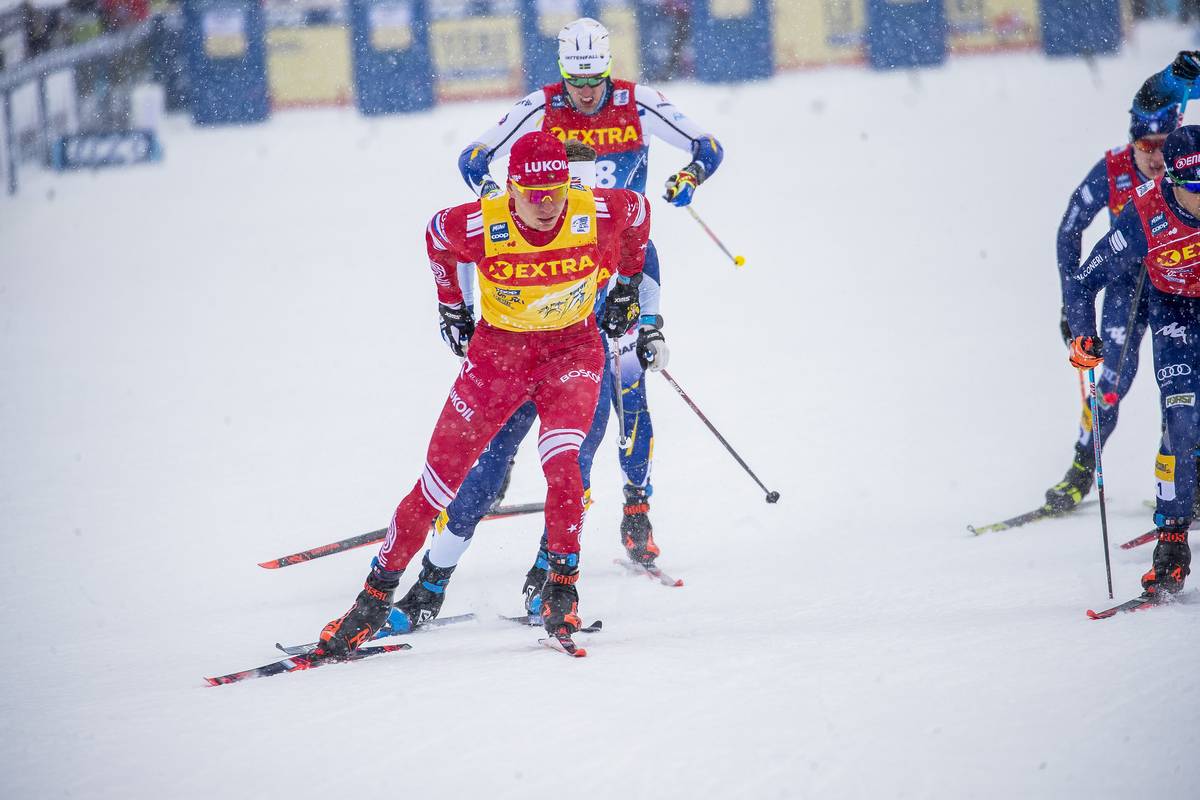
    Dresden, Germany looking good for the city sprints. (Photo: @skiweltcupdresden Instagram screenshot)
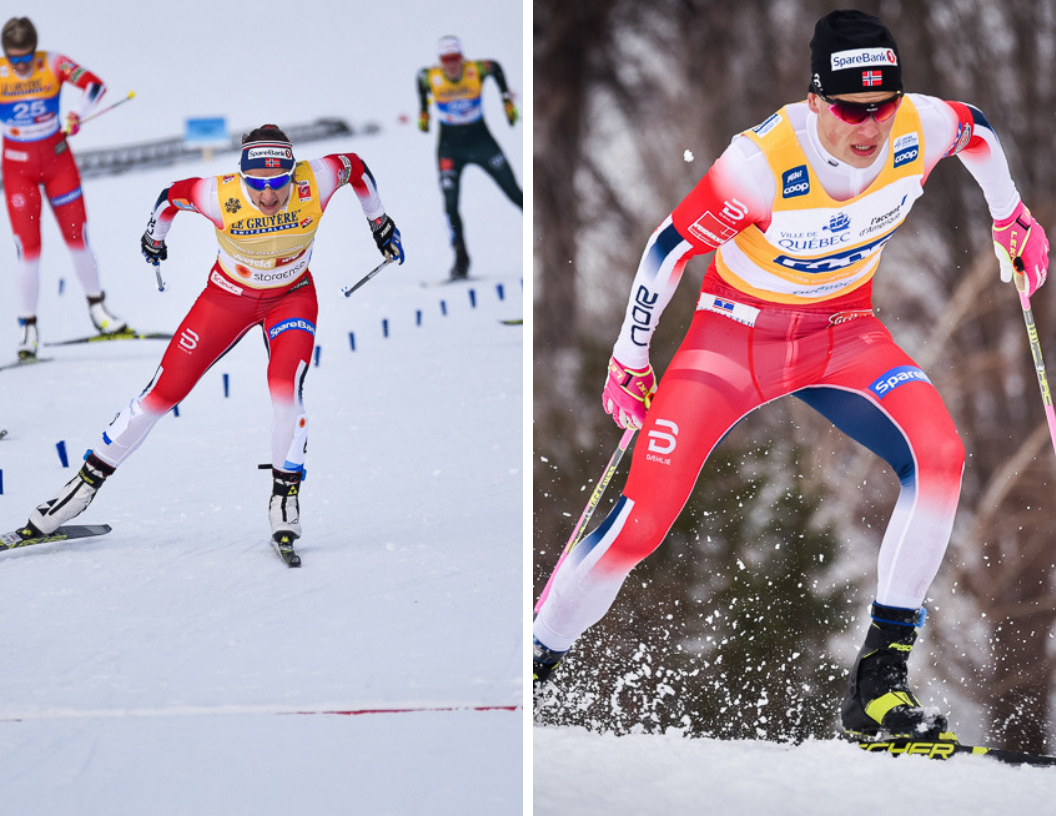
    FIS World Cup Dresden, Germany 1.6 k Freestyle Sprint

    The city of Dresden resting alongside the River Elbe hosted a 1.6-kilometer freestyle sprint for the second year running.

    Hannah Falk of Sweden, last year’s sprint winner in Dresden, won the qualifier in a time of 3:41.85 minutes. The U.S. Ski Team’s (USST) Sophie Caldwell was the second fastest qualifier (+0.49), with Falk’s teammate, Stina Nilsson, qualifying in third (+0.80).

    Canada’s Dahria Beatty placed 20th (+8.72) in qualification, while Julia Kern (USST D-Team) in her first European based World Cup qualified in 23rd (+10.84).

    Both Beatty and Kern were eliminated in the first heat which was won by Nilsson in 3:43.87. Beatty placed third (+1.18), Kern fourth (+1.25).

    Beatty ended the day in 16th place overall, Kern 19th.

    Caldwell advanced to the finals where she finished in fifth place, 2.61 seconds behind the day’s sprint winner Nilsson. Nilsson won the final in 3:48.49 minutes. It was an all Sweden podium as Maja Dahlqvist placed second (+0.24) and Jonna Sundling third (+0.54).

    No other North American women advanced to the heats.

    Hannah Halvorsen (USST D-Team) racing in her first World Cup placed 35th overall. Ida Sargent (USST) placed 38th, first time World Cup participant Hailey Swirbul (USST D-Team) 41st.

    Fifty-two women started Saturday’s sprint.

    Women’s Qualification | Women’s Final Results

    For the men, Italy’s Federico Pellegrino qualified first in 3:21.12 minutes. Britain’s Andrew Young was second fastest (+0.47), and Gleb Retivykh third (+1.27).

    In his return to World Cup skiing after racing the domestic circuit, American Andy Newell was the highest ranked North American in qualification, placing 19th (+5.58). Kevin Bolger (USST) qualified in 28th (+6.76).

    Newell and Bolger both raced the third heat where they were eliminated from the rounds. Newell placed fifth (+1.31), Bolger sixth (+1.45) in the third heat, which was won by Richard Jouve of France in 3:28:24.

    In the final standings, Newell ranked 25th, Bolger 29th overall.

    The race was won by Norway’s Sindre Bjørnestad Skar in 3:25.95 minutes. Retivykh placed second (+0.11), and Erik Valnes of Norway third (+2.83).

    Erik Bjornsen (USST) finished in 33rd (+7.43), Simi Hamilton (USST) did not start due to illness.

    For Canada, Bob Thompson placed 32nd overall, Lenny Valjas 47th (+9.55).

    Sixty-three men began the qualifier.

    Men’s Qualification | Men’s Results

    ***

    IBU World Cup Oberhof, Germany  10 k / 12.5 k Pursuit

    In the women’s pursuit Lisa Vittozzi of Italy, who was the first skier off today as she won Thursday’s sprint, also won the 10 k pursuit in a time of 32:32.9 minutes. Vittozzi had two penalties (0+1+1+0) on her way to the win.

    Anastasiya Kuzmina of Slovakia was second with four penalties (2+1+1+0), 14.5 seconds back. Kuzmina was the seventh starter, and began the race 30 seconds behind Vittozzi. Anaïs Chevalier of France place third (+27.9, 2+1+2+0). Chevalier was the second starter, beginning with a five second deficit.

    Susan Dunklee of the US Biathlon Team had a season best result, placing seventh overall (+1:01.2). Dunklee was the 10th starter, setting off 41 seconds back. Dunklee had five penalties (2+1+1+1) on her way to seventh place.

    Also for the U.S., Clare Egan, who place 13th in the sprint, fell back to 33rd in the pursuit after skiing seven penalty laps.

    For Canada, Emma Lunders placed 39th (+3:31.4) with six penalties on her day. Rosanna Crawford placed 52nd (+5:23.4) also with six penalties.

    Results

    In the men’s pursuit, Norway’s Johannes Thingnes Bø claimed the win in a time of 34:29.8 after three missed shots (0+1+1+1).

    Arnd Peiffer of Germany place second on Saturday, finishing 15.1 seconds back from Bø after one penalty (1+0+0+0). Italy’s Lucas Hofer snagged the third and final podium, finishing 15.8 seconds behind the winner after shooting clean.

    Two North Americans competed on Saturday, with American Sean Doherty finishing in 18th (+2:29.9) after skiing two penalties (2+0+0+0). Canadian Christian Gow also skied into the top 30, finishing in 27th (+2:57.4). Gow had two misses (1+0+0+1).

    Results