Two-time Olympian Noah Hoffman’s life is busier now than it ever was during his 10-year U.S. Nordic ski team career. The soon-to-be Brown graduate — he’ll have an economics degree by May — has thrown himself into athlete activism since his retirement in 2018.
Hoffman started in the anti-doping world before becoming a founding athlete board member of Global Athlete, an organization which seeks to hold sport governing bodies such as the International Olympic Committee (IOC) and International Ski Federation (FIS) accountable. In striving to increase athlete voice and give his former peers a proper seat at the table, he finds himself at the fore of another Olympics.
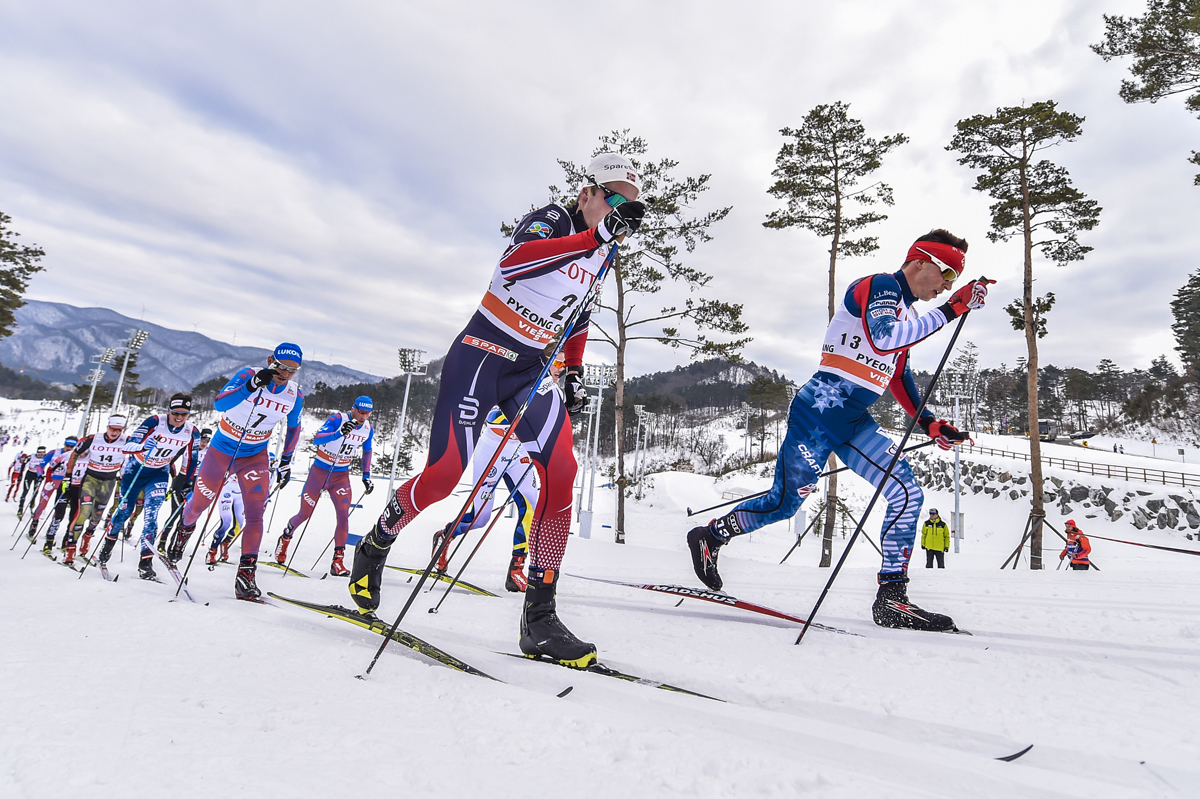
Noah Hoffman (bib 13) races in a pre-Olympic World Cup in Pyeongchang, Korea in April, 2017. (Photo: NordicFocus)
At a Human Rights Watch roundtable discussion last week, he spoke out against the IOC’s lack of accountability regarding the Beijing Games. (See video embedded below.) The oppression of Uyghur Muslims in the Xinjiang region, as well as the communist government’s actions in Tibet and Hong Kong, its general intolerance of dissent and the recent plight of Peng Shuai all fueled a diplomatic boycott of the Games by the United States government. The IOC has not stated whether it will protect athletes who speak out against human rights abuses, leaving them at the whim of the Chinese state. Canada, Britain and other nations have joined in the diplomatic boycott as well.
“Rule 50 and its restraint of free speech on athletes aligns uncommonly well with the CCP’s social repression and athletes should be enraged that both their host, and their governing body, seek to limit their voice,” human rights activist and lawyer Craig Foster told the South China Morning Post.
“Chinese government officials and diplomats have confirmed that athletes are being silenced and threatened with Draconian penalties in Beijing simply if they speak out against genocide.”
“Chinese law, when it comes to what kind of speech is permitted, especially speech that is critical of the Chinese state, is very opaque. It’s not clear at all what kind of speech she’s talking about,” he said.
For that reason, Hoffman is going against his nature, advising athletes — many of whom are friends and former teammates — to remain silent.
To read the full story, follow this link to the Vail Daily News.
Full roundtable discussion. Hoffman is interviewed at approximately 8:00 and 43:30.
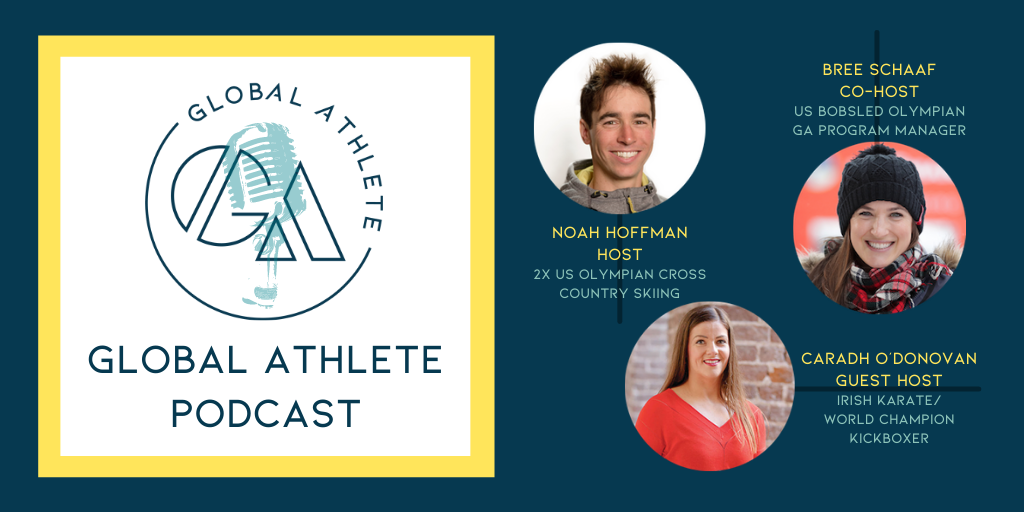
15 June 2021: Global Athlete is pleased to announce an exciting expansion in our efforts toward athlete-driven change across the world of sport- a new athlete-led podcast seeking to broaden the conversation about power, accountability, and athlete rights in international sport.
Hosted by 2x Olympian and Global Athlete startup group member Noah Hoffman and featuring guest hosts and Global Athlete members Bree Schaaf and Caradh O’Donovan, the 14-episode first season of our weekly podcast will serve to educate athletes and the public through in-depth conversations about international sport governance, athlete rights, and the future of the Olympic and Paralympic games. Along with the hosts, listeners will learn about the ways the current international sport governance system functions, how it serves or fails to serve athletes, and how it might be changed to better serve athletes and the broader sport community.
“As an athlete I felt powerless within the Olympic and Paralympic movement, but I didn’t understand the system well enough to fight for my rights. My work with Global Athlete changed that, and I now understand how the power dynamics in international sport are skewed towards administrators and away from athletes. I hope this podcast will help athletes and others understand the system well enough to fight for their rights,” said Noah Hoffman.
“I am thrilled that Noah is leading the Global Athlete podcast. He brings an extensive understanding of the sports movement that will enable him to dive deep into the facts. Knowledge and research drive change and I trust this podcast will do just that. I hope it will enable and empower athletes to be a part of the solution for stronger athletes’ rights,” said Rob Koehler, Global Athlete Director General.
Knowledge is power. In an era where athletes are finding their voice thanks to social media and using it for social change, sports remain reluctant to meaningfully engage athletes and athlete groups. Athletes want to help grow sport and contribute to strong governance that prioritizes athlete safety and welfare and have been using their voice to help shape the future of sport irrespective of having a seat at the table.
Athletes are ready for change, and we have a unique opportunity to get ahead of the sports movement to grow sport into the next century. Raising awareness is a crucial step toward that change.
Click here to listen to the first episode, or search ‘Global Athlete’ on your preferred podcast platform!
In this episode, we hear from a familiar voice – someone, in fact, we’ve heard from recently on the podcast, former elite cross-country skier Noah Hoffman. Post-race career, Hoffman has been deeply involved in the anti-doping movement as an educator, lobbyist, and content creator. This conversation is from Hoffman’s content creation side. A few months back the US Anti Doping Agency (USADA) posted a six-plus minute video interview between Hoffman and Dr. Edwin Moses – a famed track and field athlete, anti-doping reformer, and voice for equity in sport.
This episode features the full unreleased 30 plus minute interview – one where Moses discusses how best to empower athletes and build racial equity. This is an opportunity to hear one of the most fearless voices in sports. Along with his activism, Moses is a two-time Olympic gold medalist in the 400 m hurdles. Those are a few of his storied athletic accolades. He’s an icon.
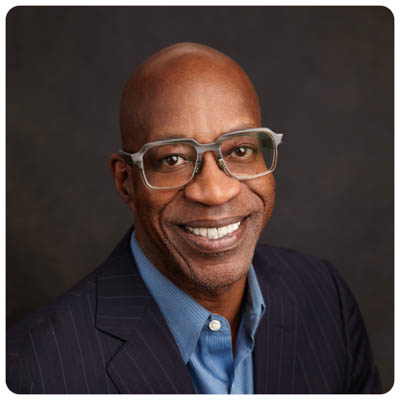
Dr. Edwin Moses. (Photo: USADA.org)
Off the track, Moses speaks for the rights of athletes. His is among a rarefied list of athletes who have chosen to challenge the power brokers in Olympic sport. He served on and chaired WADA’s Education Committee. He held true to his values while serving WADA as an outspoken critic seeking institutional reforms from within. He was a key figure in developing drug testing protocols, and he served on the IOC’s Athlete Commission, Medical Commission, and Ethics Commission. Today, Moses holds an Emeritus Chair with USADA where he continues his fight.
Global Athlete is an athlete-led organization working for positive change in sport. (Photo: Screenshot globalathlete.org)
Picture in your mind an Olympic athlete. As you are reading this site, you might be seeing the image of Jessie Diggins or Kikkan Randall, or perhaps, Marit Bjørgen or Johannes Høsflot Klæbo. Or, since your skis might be summer waxed, you might think of Michael Phelps, Ussain Bolt, or Katie Ledecky. Regardless of who comes to mind, the image includes an athlete who is in peak fitness, at the top of their game. One of the best in the world.
While the abilities of these athletes are celebrated on the world stage, many feel that their interests, rights, and voices are not always put first by the organizations and agencies that govern and regulate sport.
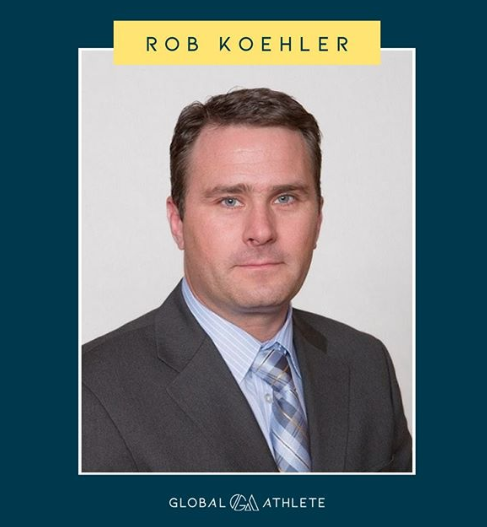
In February, Global Athlete set forth to change that. The organization, spearheaded by Rob Koehler, former deputy director general at the World Anti-Doping Agency (WADA), seeks to be a platform that offers athletes a voice to enact positive change in sport.
“Whether it be athlete welfare, unlocking athletes’ marketing potential, ensuring athletes receive Olympic revenues or simply better representation at the decision-making table, Global Athlete will fearlessly tackle the issues that really matter, working with athletes to determine what needs to change and how to go about changing it,” reads the newly launched website.
Rob Koehler, former deputy general at WADA, leads new organization, Global Athlete, in advocating for athlete rights. (Photo: Global Athlete Instagram @globalathletehq)
During his time at WADA, Koehler worked closely with the athlete’s committee, chaired by Beckie Scott, a Canadian cross country skier who earned a gold medal in the 5/5-kilometer pursuit in the 2002 Olympics in Salt Lake City, and a silver in the team sprint in 2006 in Turin, Italy. Scott’s gold medal was awarded retroactively after the two Russians ahead of her were stripped of their medals for testing positive for the banned substance darbepoetin.
“The work that the WADA Athlete’s Committee took on while I was there, led by, or course, Beckie Scott, the chair – I think they were trailblazers when it came to really trying to have an independent voice and not being afraid to question decisions that were being made by WADA itself and to represent the needs of athletes,” said Koehler in a call. “That is a hard initiative and a hard stance to take, but they were always brave and they were always willing to stand up, and of course, part of my role was to support them and I was pleased to do that. I think they’ve shown a lot of the athlete commissions and committees across the world that it’s possible.”
Koehler resigned from his position at WADA in August of 2018 due to his disagreement with the handling of the investigation surrounding the Russian doping scandal and the conspiracy of the 2014 Olympic Games in Sochi.
“He felt like the athlete’s voice was not part of the conversation [on what to do about the Russian doping scandal],” Noah Hoffman, a member of Global Athlete’s start up group of athletes, told FasterSkier in a call. “He was there, he was part of the conversation at WADA, and he felt like there wasn’t a real athlete voice and that athletes had no say at the decision-making table. So he set out to change that and he has been the driving force for this organization.”
Hoffman has stayed busy in his “retirement”; outside of being a full-time student at Brown University, Hoffman has been working with USADA as an anti-doping advocate and educator, speaking at various sporting events throughout the country. He also attended the Partnership for Clean Competition Conference in London this April. Hoffman . Apart from assisting Global Athlete in tackling issues surrounding doping, Hoffman is interested in promoting gender equity in sport.
Hoffman is in agreement with Koehler’s position that the handling of the Russian conspiracy was not made with the best interest of clean athletes in mind. For Hoffman, the impact of the state-sponsored doping hit especially close to home.
Noah Hoffman is a member of Global Athlete’s startup group. (Photo: Global Athlete Instagram @globalathletehq)
“I was in that race with the Russians sweeping the 50 k,” Hoffman recalled. “I watched those guys ski away from us on the final climb and they stole that race from the guys who rightly should have been on that podium. The consequences that they faced from essentially rigging the results of their home Olympics were to be sort-of banned from Rio. But then to really have most of their athletes be allowed to compete, then to not have their flag be flown in Pyeongchang but to have most of their athletes competing under a neutral flag. And then to reinstate RUSADA immediately following the [2018] games before they had handed over all of the data from the 2014 and before, so that we could actually find out which athletes are involved and to make sure that there is justice served.
“In particular, as the tipping point, was the vote in September of last year to conditionally reinstate RUSADA to the World Anti Doping Agency with the deadline of January first of getting the data,” he continued. “Then to not exclude them again immediately upon January first when the data had not been collected is just evidence upon evidence that they are seeing Russia as a market for Olympic sports and a huge global funder of international sporting organizations. They’re putting the interest of those dollars ahead of the interest of clean athletes and any real consequences for rigging and cheating their home Olympics.”
After his departure, Koehler did not initially seek out a role such as the one he took on with the creation of Global Athlete.
“After I left WADA, I had calls from a lot of athletes saying, ‘You were always a strong advocate. Now that you’re gone, what does that mean? And is it possible to do something further to stand up for rights and to ensure that athletes voices are being showcased and heard?’,” Koehler explained. “So that was where the discussion started, and I was approached by an organization called FairSport to see if there was an interest to make something of this nature.”
Before agreeing to spearhead Global Athlete, which is funded by FairSport and other individual donors, Koehler wanted to be clear that it would align with his athlete-centered ideals.
“I did have some principles I wanted to make sure we would adhere to,” he stated. “One was that the funding that was provided wasn’t linked to decision making. Two was if we’re going to develop something for athletes, it has to be athlete developed and athlete run. And three was the athletes need to develop a startup strategy for how this organization would start and what it’s first initial goals would be. And there was agreement to all three of those.”
From there, a start up group of athletes, including Hoffman, was selected to set the organization into motion. Other names include silver medalist in track cycling Callum Skinner, Olympic para-powerlifter Ali Jawad, both of Britain, world champion kickboxer Caradh O’Donnovan of Ireland, Olympic para-swimmer Benoit Hout of Canada, and Olympic basketball player Rachel Sporn of Australia. Global Athlete has also accrued a lineup of prominent sports figures as “athlete supporters”.
“They were selected based on their advocacy, their strong stance for athletes rights, believing that they could be part of change,” Koehler explained.
Not wanting to dwell solely on the negative aspects, both Hoffman and Koehler spoke about the positive role sport plays in the world and the potential for good it possesses. A return to focusing on this good is part of what Global Athlete ultimately seeks to accomplish.
“You look at the progress that was made through [the Olympics in] Pyeongchang of bringing North and South Korea to the table to talk, and the North Korean athletes having the opportunity to compete in South Korea. That is an amazing feat of the Olympic movement,” Hoffman emphasized. “I think that there is so much more potential for good that we are not reaching because we are focused narrowly on corporate interest. There is greed and corruption as evidenced by the FIFA scandal from five years ago and obviously the Russian doping scandal and the Larry Nassar scandal, I mean there is so much wrong.
“So we feel like a balancing of power will help us to make sport better and help sport do a better job of making the world a better place,” he continued. “Because sport is really neat in its ability to – if you focus on the US alone, sport can transcend this crazy political divide that we have right now and it can transcend geography and bring people together that otherwise have nothing in common.”
Global Athlete seeks to put athletes in the forefront, both during competition and behind the scenes. The goal is to involve athletes in the resolution of these flaws in the system, rather than leaving the decision making and control in the hands of organizations that might be more easily swayed by corporate or financial interest. The organization will be focused on Olympic sports and athletes. However, they draw inspiration from the players’ associations of professional organizations such as Major League Baseball that are already giving athletes a powerful role in decision-making.
“The idea is that if athletes could form a unified voice or at least have a platform to speak through, then we can make our voices heard because collectively we do have a lot of power,” explained Hoffman. “Obviously, sport doesn’t happen or the Olympic Sports Movement doesn’t exist without athletes. So the idea is to bring athletes together to make our voices heard and to give athletes a platform through which to speak and to force the vested power, the current power structure, to listen to athletes.”
“They’re the ones that fill the stadiums, they’re the ones that sell the broadcasting rights and the sponsors, so why not give back to them and make them part of the growth of sport?” questioned Koehler.
At the same time, they do not want the inclusion of athletes to add an undue amount of work to their plates as they recognize that the training load of an elite athlete does not leave often much room for advocacy work.
“Early in my career I was completely uninterested in how the structure was set up around me, all I wanted to do was make sure that I was skiing as fast as I possibly could to succeed within the structure,” reflected Hoffman. “Without realizing how many people were being hurt by the structure and how much the structure was created around this vested power and financial interest and corruption and not around the interest of the athletes. We are trying to do the leg work for athletes, we understand that athletes don’t have time to devote to these issues. We are trying to give athletes the information they need in really easily digestible and short not time-consuming ways so that they can keep up with global sports governance and form opinions and make their voices heard without having it interact with their careers.”
Koehler added that many athletes are not interested in the risk of being seen as outspoken.
“A lot of athletes are still afraid to speak up because there is still a fear of retribution,” noted Koehler. “That if they do go against decisions that they may be sidelined. And that’s nothing new, I think that’s something that has always been a worry for athletes.”
Global Athlete is an athlete-led organization working for positive change in sport. (Photo: Global Athlete Instagram @globalathletehq)
Though the budding organization has been working for only a few months, it has already demonstrated its ability to enact change. Earlier this year, a dispute within the national governing body of karate in Ireland led to the formation of two separate executive committees in the national federation.
“What happened there was the president at the time was given a vote of non-confidence from the Irish Karate Federation and was removed from the board of Irish Karate,” explained Koehler. “Instead of walking away, the president formed his own executive committee, and had close ties at the time with the World Karate Federation. The Irish Olympic Committee and sport counsel recognized the legitimate one and not the new one that was set up by the old president. The president that was given a vote of non-confidence indicated to the athletes that ‘If you don’t recognize me and recognize the new executive committee, you will not be eligible to compete at the regional European championships,’ which were qualifiers for the Tokyo Olympic Games.”
The Irish athletes who were placed in the middle of this dispute reached out to Global Athlete in regard to the injustice of their situation.
“We felt like that was completely unfair to the athletes who were being used as pawns and being put in the middle of the dispute between the two governing bodies in Ireland,” Hoffman stated.
On March 19th, Global Athlete posted an open letter to the International Olympic Committee (IOC), the Association of Summer Olympic International Federations (ASIOF), and the World Karate Federation (WKF), calling out the injustice to the athletes this situation created.
“Within days of us issuing this letter, the World Karate Federation invited the remaining Irish athletes to compete in the World Championships while the dispute was being resolved,” said Hoffman. “So absolutely, having this global platform to speak on behalf of the athletes made an immediate difference in bringing a just outcome to the athletes while the remaining dispute can be fought in the governing structure as it will.
“So that shows you the type of thing where, yes, these issues can be divisive, but we’re not necessarily taking sides in the issue, we’re just making sure that the interests of the athletes in these fights are protected,” he concluded.
Though this example is not one of global policy change, the organization is excited by the impact athletes have already had by speaking out and feel it bodes well for future endeavors.
“I think it was something that we did to make a stance, to bring public attention to the issue, and to help the athletes out,” stated Koehler. “And it was one of the best success indicators that we had.”
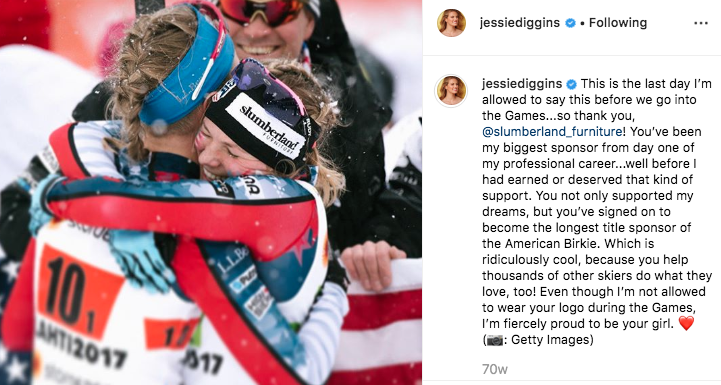
Another issue Global Athlete plans to take on is the controversy surrounding the IOC Rule 40, which limits both athletes and their sponsors in the promotional and social media images they are able to post during a “blackout period” surrounding the games. During this period, non-Olympic sponsors are not allowed to use images of the athlete whom they have backed that are taken during the games and are also prohibited from the use of a long list of words connected to the Olympics in photos that they do use. Athletes are not allowed to mention their sponsors during interviews or on their social media pages, and can be disqualified from competition for violating the rule.
Jessie Diggins posted a thank you to her sponsors on January 31st, 2018 before IOC Rule 40 came into effect for the Pyeongchang Olympics. (Photo: Instagram @jessiediggins)
Many athletes feel this rule is unfair, as it disallows them from promoting their personal brand and thanking the sponsors who made their Olympic dreams possible. As Olympic competition is also the most visible moment of many athletes’ careers, the inability to post at will limits the athletes’ potential to generate new sponsorship and advertising opportunities, thus inhibiting their ability to make a reasonable living while pursuing sport.
Perhaps reflecting the sentiment of this injustice to athletes, after earning a bronze medal in the steeplechase in the 2016 games in Rio de Janiero, Emma Coburn took off her New Balance spikes and slung them over her shoulder during her victory lap and post race photos. As shoes, like skis, are not a part of the Olympic uniform, this did not violate the rule but still garnered her sponsor a bit of limelight.
Recently, the German Federal Cartel Office (FCO) ruled against the IOC and the German Olympic Sports Confederation (DOSB) leading to the extension of athletes’ rights under Rule 40. German athletes will have more freedom in their social media activity, will no longer need approval from the DSOB for their posts, and will be allowed to use more words relating to the Olympics.
“We ensure that the advertising opportunities of German athletes and their sponsors during the Olympic Games, which the DOSB and IOC significantly restricted in the past, are extended,” Andreas Mundt, president of the German FCO, said in a statement.
“We believe that those rights that German athletes just procured are something that all Olympic athletes should enjoy,” said Hoffman.
Global Athlete believes that these rights can be obtained for all athletes if the collective is able to convince the IOC to push the NOC’s for policy change.
“We are now working with athletes to ask the IOC to take some brave action to work with the NOC’s to ensure that the rule is changed for all National Olympic Committees and that every athlete has equal footing when competing at the Games when it comes to promoting their own brands,” said Koehler. “We hope the IOC takes the lead in leveling and balancing the field for the athlete so that everyone has the same rights when they attend the Games.”
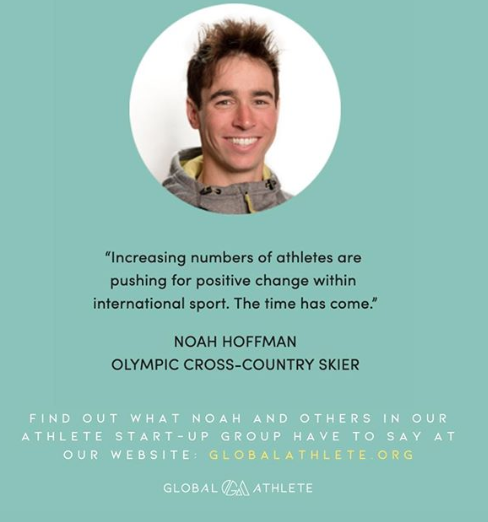
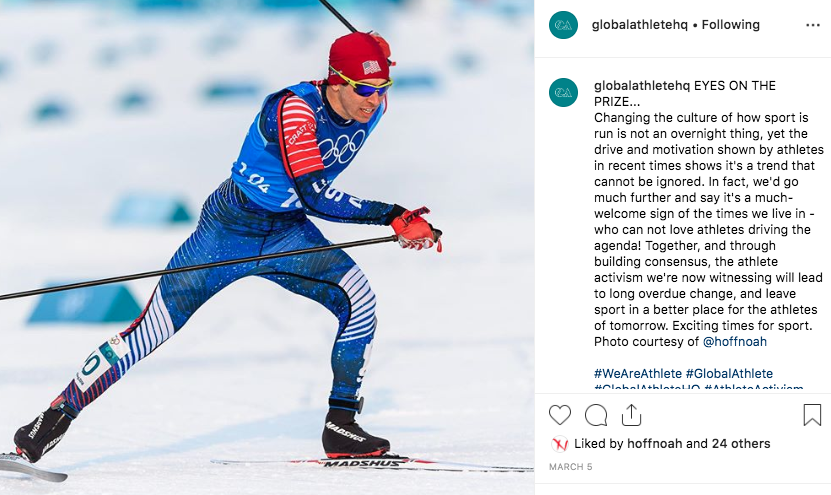
Global Athlete shares an optimistic message on social media featuring Noah Hoffman, a member of the startup group of athletes. (Photo: Global Athlete Instagram @globalathletehq)
Perhaps most in the public eye in recent years, Global Athlete also seeks to bring athlete voices into the discussions and decision-making surrounding doping and the pursuit of clean sport.
“We are pushing for a WADA that has much less influence from the IOC,” explained Hoffman. “So right now, national governments support 50 percent of WADA’s budget and they get to name 50 percent of the board of WADA and the other 50 percent comes from the sporting movement, specifically from the IOC who funds the other 50 percent of WADA. And we believe that that is too much control for the IOC and the international sports movement because if there are a few governments – as their inevitably are – that support the positions of the IOC, and they have got complete control over the other 50 percent of the voting power, all of sudden, that have 100 percent control over decisions made at WADA.
He continued, “We want to see a renewed governance structure at WADA that gives a lot more independence and ability to apply sanctions and not just make recommendations and ability to investigate — we want to see a bigger budget. More of the IOC’s enormous revenue going to anti-doping with fewer strings attached. We want to see more athlete voice at the table; the WADA athlete advisory council has been ignored in some of these big issues, specifically around Russian anti-doping and the Russian doping in Sochi. And we want to see the athlete voice have actual voting power and have a much more important role at the decision making table. Governing reform at WADA I think is the biggest thing we are pushing for.”
Moving forward beyond these issues, Global Athlete faces the incredible challenge of deciding which issues in sport to take on and how. As they aim to support athletes around the globe, they anticipate a wide expanse of issues of concern.
“You’re putting your finger on the biggest single challenge of this idea,” laughed Hoffman. “That we can bring athlete voices together, because athletes represent every country in the world and every side of every issue in the world. Anything that is divisive, you are going to find athletes on both sides. Athletes – as they should – represent every swath of society… I think that we need to make sure that there is momentum and if not consensus, then at least a really solid majority of athlete opinions behind an issue before we throw our weight behind it. We don’t want to be splitting the athlete community, that’s really important.”
To address this, Global Athlete will be surveying athletes to gain a better sense of what their concerns are and how they would like to see those concerns addressed.
“One of the things we’re doing now is that we’re taking the time,” said Koehler. “One of the things we’re doing this month is to really get a feel of where the athletes want to go, and we’re looking at a global survey to do that. We do have some representation and some understanding from different parts of the world. The pressures, the development of sport is so different across the five continents that the IOC recognizes under their bylaws.”
Following the guiding principles he mentioned, he believes this survey will preserve the “by athletes, for athletes” approach of Global Athlete’s mission.
“Having a better idea of what they want, what their concerns are, and how we overcome them, I think are crucial,” he continued. “I think that will be our first step in getting a better idea, bringing statistics forward to see what’s happening globally. This is going to take time. We are not rushing things. We want to make sure that we are listening.”
In addition to gaining an understanding of the issues that are present, Koehler thinks this approach will garner the trust of the athletes participating.
“I think we are going to have to show athletes that we really are interested in one thing and that’s helping them,” he stated. “It’s making sure that their rights are put to the forefront and that they’re more engaged in decisions being made in sport and governing sport.”
Changes of this scale will not be made rapidly or without push back, but Global Athlete believes that by including athletes in decision making, gradual progress can be made.
“I think these issues, at times they can feel impossible,” said Hoffman. “Like, how are you ever going to build consensus? How are you ever going to create the type of voice that those professional league athletes have when you have so much diversity as we talked about? Such a cacophony of opinions and such entrenched power in the IOC. There is a general apathy and a sense that the dopers are always going to be ahead and corruption is always going to be there. The young women who are being victimized in sexual abuse scandals are always going to be in danger. And I don’t believe it has to be that way. It really does take motivation from the sporting community and from athletes themselves.”
While the road ahead might be daunting, Hoffman left the conversation on a positive note.
“I am really impressed with how much momentum we have gathered in the first four months of existence and how much sway we have had with global media approaching us and in ability to make things happen, as in Irish karate. And I think that is all evidence of there is a lot of potential here and a lot of need for a stronger athlete voice in these global structures.”