From the FasterSkier archive — posts syndicated from athletes’ and coaches’ own blogs between 2004 and 2012, kept online as published. Current coverage is at fasterskier.com.

Tag: GMVS

  • Rooted in Vermont: Tabor Greenberg’s Steady Rise from the Mad River Valley to the U.S. Ski Team

    Rooted in Vermont: Tabor Greenberg’s Steady Rise from the Mad River Valley to the U.S. Ski Team

    The hills above Moretown are the kind that teach you to move without thinking about it: long grades through maple and birch, a tangle of dirt roads, a thousand sneaky rollers perfect for running shoes or a classic stride. From the valley floor, you can see Sugarbush and Mad River Glen, their lifts still in October and their trails crisscrossed by hikers who’ll be skiers in a few short weeks. This is the terrain that shaped Tabor Greenberg, and it’s never been far from him. He grew up here, learned to love motion here, and now—a few towns and a handful of highway exits away—wears UVM green while settling into his sophomore year and his first season as a member of the U.S. Cross-Country Ski Team.

    He smiles about the small details—like the tiny airfield that doubles as the local ski area where he first wore Nordic skis—and shrugs at the big ones, the ones that make headlines. He’s Vermont in that way: spare with words, long on work. “I’ve been skiing my whole life,” he says, recalling the first slip-on-your-boots skis and the BKL weekends that threaded winters together.

    Tabor Greenberg at the 2024 Junior Nationals in Lake Placid, New York.  (Photo: courtesy of Olympic Regional Development Authority / Phillip Belena)

    His dad was an alpine racer who transitioned to Nordic skiing after sustaining injuries; the family kept everyone in motion, engaging in hiking and running in the summer, as well as soccer and lacrosse.

    By seventh grade, Greenberg had joined GMVS, stepping into a team culture that combined high standards with a sense of play. Older athletes, such as Brian Bushy and Josh Valentine, became the big brothers who made training feel like a privilege rather than a chore. “Their enthusiasm always made the workouts more fun,” he says. “Seeing them go to U18s in Estonia or Youth Olympics, I didn’t even know what those things were at first. I just saw them going to Europe to do these bigger races and thought, ‘That seems fun.’ I want to do that.”

    That is as close to a “secret formula” as you’ll get from him. There’s no magic threshold session in his story; it’s a years-long accumulation of good days outside with people he liked being around. “Most of my motivation comes from that,” he says of the lifestyle—then adds, almost apologetically, that he’s built the discipline to do the work even when motivation lags.

    A tough first year—and a reset

    College arrived with promise and some hard lessons. Greenberg’s first season at UVM was marred by extended illness. He red-shirted, raced sparingly, and spent too many days horizontal. “I struggled being sick all season,” he says. “So this year it’s mainly been just trying to stay healthy—good recovery, sleeping a lot, staying hydrated, having a good connection to doctors if something does come up.”

    UVM’s Head Coach, Patrick Weaver, doesn’t sugarcoat it. “Tabor’s first year was undoubtedly a tough transition, as he came in dealing with an extended illness that he struggled with throughout the year, so he essentially ended up not racing for UVM at all,” Weaver says. “This year he has come back in great shape and stayed healthy so far, so that’s been great—to see what he can do as a healthy person.”

    Weaver sees something else, too: a young athlete who changes the room simply by how he works. “He works extremely hard, and it’s his work ethic that’s been a valuable asset to the team,” says Weaver. “Leading by example like this helps bring up the overall level of the team.”

    And there’s the local angle that still means something in Burlington. “Having a Vermonter on the team is super important for the program. Having a fast Vermonter on the team is even better,” Weaver says. “We felt very fortunate that Tabor wanted to stay in Vermont and represent UVM and the state. This is something he’s super proud of, which is really fun to see.”

    Engineering the comeback

    Ask Greenberg about academics, and he answers as matter-of-factly as he does about training. He’s a mechanical engineering major, plotting a five-year path that allows the academic load to align with travel and race blocks. “I can do 12 credits a semester instead of 15 or 16 for the most part,” he explains. “It should ease the load a bit… hopefully manageable while traveling.”

    If the men’s U.S. Ski Team has a surprising number of engineers, Greenberg doesn’t read much into it. The field simply makes sense to him, a way to invest time in “quality concepts” while keeping a door open for life after skiing. But it’s easy to see the overlap when he talks technique: leaning farther into the hill in both V1 and V2, getting the arms forward, experimenting with double-pole positions, learning to find “forward without actually getting the feet up,” and keeping his shoulders relaxed while playing with different hip-drive patterns. He’s not obsessing over new lifts in the weight room—”not really,” he says when asked about special gym work—so much as building a better mental model and then holding those shapes during long skis.

    And there’s a plan behind the plan. Greenberg still consults with longtime coach Colin Rogers while working daily with Weaver. “Especially when I’m not at school, my plan is I kind of run it by both Colin and Patrick,” he says. “Going into races, I’ll make a plan that makes sense to both of them.” The dual-mentorship model mirrors the arc of other Vermonters who’ve succeeded after leaving UVM, and it’s part of why Weaver talks about schedules and guardrails. The U.S. Ski Team opens doors—camps, resources, broader input—but also adds travel and volume. “With all the other opportunities available, it is challenging to create a schedule that ensures a student-athlete does not overextend themselves,” Weaver says. “We’re working on it to ensure he can excel academically and still maintain a high level of performance in skiing.”

    The day the D Team call came

    The call confirming his spot on the U.S. Ski Team didn’t arrive with a trumpet solo; it found Greenberg on a beach in Mexico. He was decompressing after a winter that had felt like a dead end. “I was pretty unhappy with skiing at the moment,” he admits. Then teammate Murphy Kimball texted to say his points might have slipped him under the sub-400 distance-racing criterion. “Later, Kristen [Bourne] called me,” Greenberg says. He already knew by then, and his reaction was classic Tabor—pleased but unsentimental. “It’s cool to be on the national team, but it’s not really, like, a game-changer. On the D Team, now you race World Cups and see there is still work to do.”

    That pragmatism tracks with how the spot was earned. Last year, sick more often than healthy, he raced only eight or nine times. But when he did line up healthy, he made it count—most notably at the Cable SuperTour 20k classic mass start, where he finished fifth in a front group on a good points day. Those points, stacked with a handful of other starts, slid him inside the threshold.

    U.S. Head Coach Matt Whitcomb sees a different kind of threshold in Greenberg, one that’s about temperament and fit. “This kid, he’s a really special kid,” Whitcomb says. “He takes a little bit to get to know. He’s a little quiet, but what I learned from his coaches is that he is always listening. You might be having a meeting with him, and he’s kind of looking off to the side a little bit, and you think you’ve lost him. And then there’s this little pause, and he’ll come right back at you with just the most on-point question.” Whitcomb calls that attentiveness a key to belonging on a team where the banter never stops. “Our guys rip on each other all day—in the right way, the loving way—and I see Tabor instantly plugging into the men’s team already.”

    It’s not just the ear; it’s the engine. Whitcomb points to Greenberg’s anchor leg on the 2023 U18 relay—”he came from way behind and caught Norway in the stadium”—as a marker of racecraft and mindset. “Tabor’s that kind of competitor,” Whitcomb says. “He’s a hunter, both literally and figuratively.” The literal part showed up at the team’s Utah camp; the figurative part is the one that matters in March.

    Vermont pride, Vermont places

    Greenberg didn’t choose UVM because he was unaware of other options available. He did the homework, looked West, and still chose home. “Growing up in Vermont, we’d go to an Eastern Cup that overlapped with Carnival, and it was always the UVM guys winning,” he says. “When I was younger, I was like, these guys are the best there is then… I really enjoyed the venues here more than out West. I kind of just had a gut feeling this was the right place.”

    Ask him where he’d send an out-of-state friend to understand his Vermont, and he has a ready list: Trapp Family Lodge when the snow is deep; Mad River Glen on a powder day; the Long Trail from Lincoln Gap to Appalachian Gap and on to Waterbury when the leaves go red and gold. He’s not performing here; this is simply the life that restores him. Between classes and training blocks, he’ll thread in a bit of fishing, the occasional bow-hunting session if the calendar allows. In Utah, he saw a pair of bucks at 250 yards and later walked to within 80 before choosing—wisely—not to take the shot; he hadn’t practiced enough. “It’s definitely peaceful,” he says of being in the woods, then stops short of over-claiming the performance benefits. “I don’t know if there’s that much of a correlation.”

    Maybe he doesn’t have to draw the line. Anyone who’s tried to race well knows that a happy athlete is a better one, and his habits read like a local’s guide to contentment: early bedtimes, long skis, ridge-line hikes, a few casts before dinner.

    Goals, set quietly

    Greenberg’s target list for the season is crisp: Junior Worlds, NCAAs in Bozeman, and—if the form and selection break right—a World Cup start in Lake Placid. “Same game plan no matter what,” he says. “Ski fast.” The sequencing matters: peak well for Nationals and you put your Junior Worlds case on solid footing; hold fitness and you can ride the rhythm into March.

    For now, he trains with the UVM group and will tweak the plan as winter approaches. “Right now it’s pretty similar to everyone else,” he says. “In the winter, I’ll try to work in a few bigger weeks or blocks that’ll help me get ready for that March racing period.” If the path sounds simple, that’s the point. When you’ve just dug yourself out of a year of being sick, you don’t complicate success.

    What coaches see

    Whitcomb’s portrait is of a listener who processes information quickly and competes more intensely. “Thoughtful,” “very funny,” “great technician,” “great competitor”—words that land differently because they’re delivered with the caution of a coach who doesn’t over-praise. Whitcomb is equally quick to underscore the growth curve ahead. Greenberg absorbed a challenging year, he says, and handled the reset maturely. “He was very smart in his buildup this year, and he’s brought himself back to a very high quality level of training,“ Whitcomb says. “It’s going to be a fun career to watch.”

    The thing about top-30s

    The U.S. men’s program now has a new normal—medals and crystal-globe chases—but Whitcomb is adamant that the sport’s middle rungs still matter. A first World Cup top-30 for a young American is still a scene, a bus-wide celebration. “When a guy like Tabor or Lucas Wilmot gets their first top-30, it will be just as exciting for the team as someone, on that same day, on the podium,“ Whitcomb says. That’s the context for Greenberg’s ambitions: real, reachable steps on a ladder that’s higher than it used to be.

    The Vermont through-line

    It’s not nostalgia to suggest that place still matters in American skiing; it’s simply observation. Vermont has sent a steady stream of athletes into the national team pipeline, and UVM is a key contributor to that current. Greenberg is another link in that chain, one who still resembles the kid who ran those ridges, played those pickup games, followed older teammates into bigger arenas, and filled in the knowledge with discipline.

    Then there’s the image that may say more about him than the résumé line: a kid in Utah walking a buck into 80 yards and passing on the shot because the practice wasn’t there yet. It’s not caution; it’s calibration. It’s someone who knows the difference between wanting and being ready.

    If you’re looking for a template, that might be it. A Vermont upbringing that made movement a joyful experience. A high school program that made hard work fun. A first college season that reminded him that things can go sideways. A reset that prioritized health and attention to detail. Two coaches who trade notes and coordinate calendars so a student-athlete can keep a broader life in balance. And an athlete who understands he needs to put in lots of hard work to be ready to take the shot when it presents itself.


    Love Stories Like This? Help Keep Them Coming.

    Feature interviews like this one take time, access, and care to produce. If you value thoughtful storytelling and independent ski journalism, please consider becoming a Voluntary Subscriber. Your support directly fuels the work we do to cover the people, places, and moments that make our sport special.

    Join the FasterSkier community.


  • 2018 Gallagher Cup and Eastern Cup Champions

    (Press release)

    In 2014 NENSA began the tradition of honoring the top ranked male and female Eastern Cup skiers with the Gallagher Cup. NENSA is honored to announce that Rena Schwartz (GMVS) and James Kitch (CSU) are the 2018 Eastern Cup Champions – their inspired efforts are a perfect way to celebrate Mike Gallagher’s legacy as an athlete, coach, and community leader. The two skiers who win this award each year do so by being consistently dominant in New England’s premier race series (winners are determined by averaging points from 7 of 8 EC events).

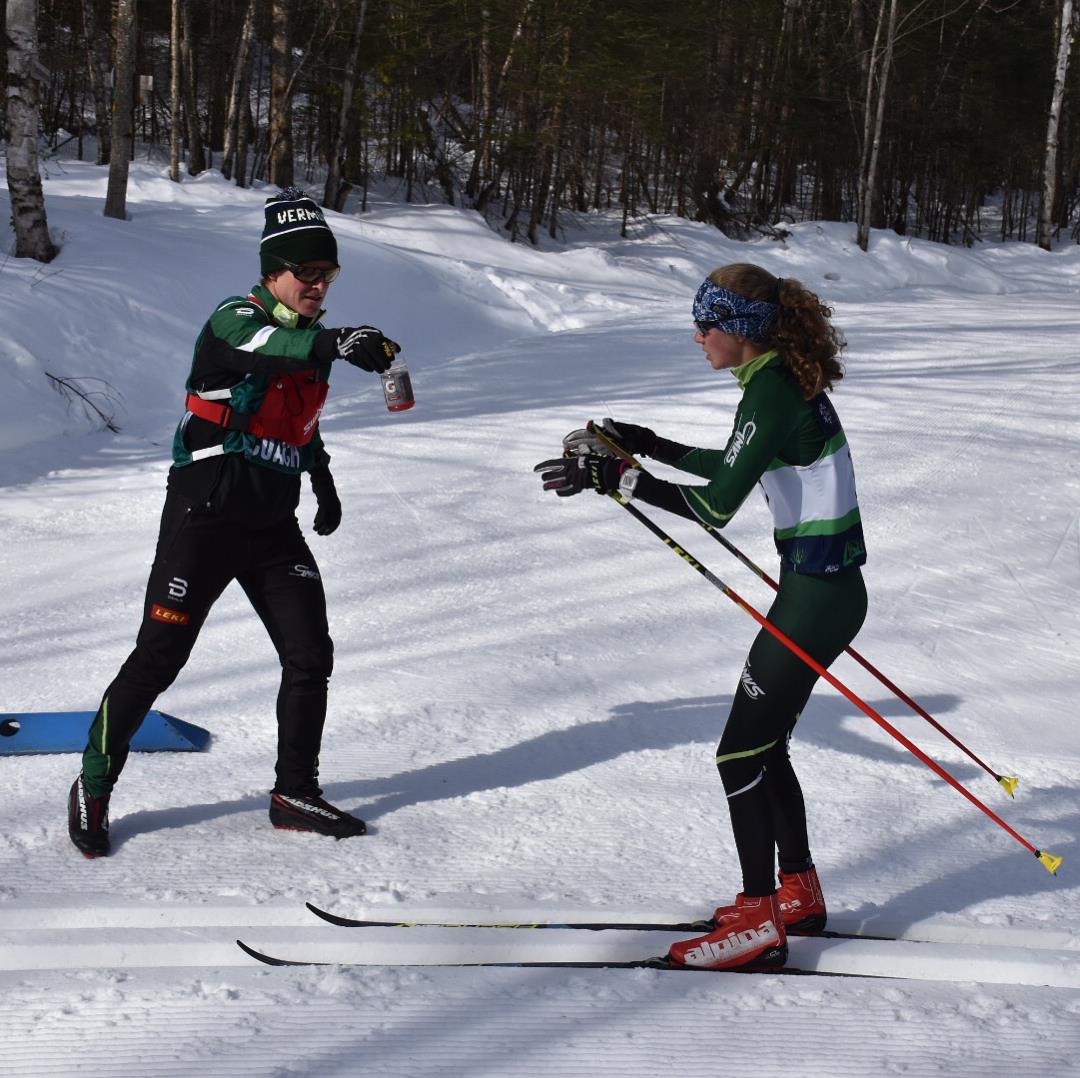
    Schwartz receiving a feed from coach Colin Rodgers during Super Tour Finals at the Craftsbury Outdoor Center.

    Rena Schwartz skied for the Green Mountain Valley School, raced in seven Eastern Cup races, with one victory and three podiums, and ended the year atop the New England Junior National Ranking List.  She competed at Junior Nationals with a top finish of 4th place in the 10km freestyle event. Schwartz also competed at US Cross Country Championships and Super Tour Finals ending the year the 51st ranked female skier in the country.

    Coach, Colin Rodgers, describes Schwartz as a leader, “Rena is an impressive role model for all of the student/athletes on the team, and her drive for success motivates those around her.  Not only does she have extraordinary competitive results, but Rena is a pleasure to spend time with, exuberating kindness, honesty, and dependability.  If you ask anything of Rena, you can expect it to be done with focus and attention to detail.”  Outside of skiing, Schwartz was the Vermont cross-country running champion and a Gatorade Runner of the year, where she won a $10,000 spotlight award to donate to her club of choice (Craftsbury Outdoor Center).

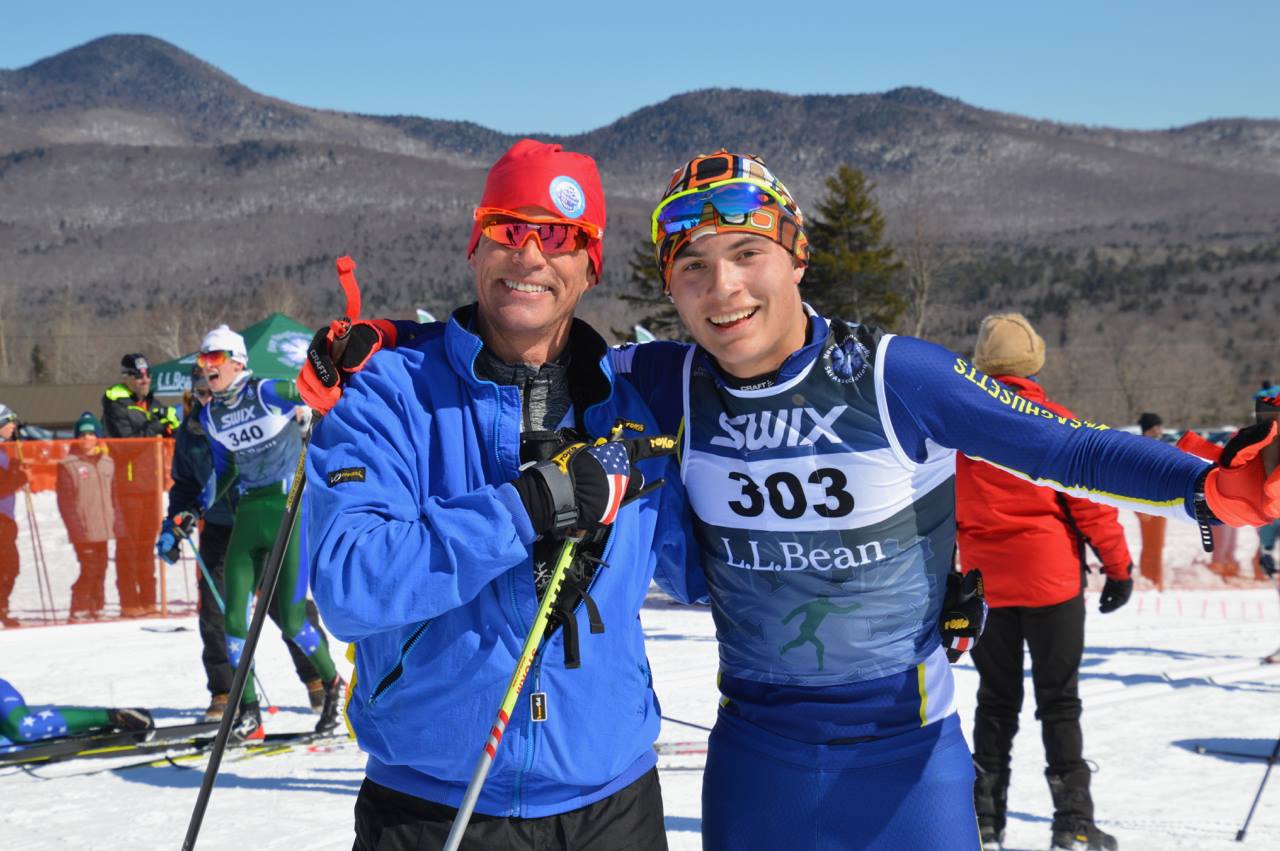
    Kitch with Coach Rob Bradlee at the finish of a Eastern Cup race at the Rikert Nordic Center this season. (Photo: NENSA)

    James Kitch, from the Cambridge Sports Union, competed in all eight Eastern Cup races, where he was consistently in the top-10, and finished 5th on the year-end New England Junior National Ranking List.  Kitch saved his best game for the 2018 Junior National Championships in Soldier Hollow, Utah where he had two top-ten distance finishes, scrambled for the winning U18 relay team, and won his first National Championship in the freestyle sprint. At the conclusion of the 2018 season he is the 82nd ranked male skier in the country.

    CSU coach, Rob Bradlee, describes James as someone, “who correctly assumes that everyone would like to be his friend and so treats everyone regardless of age or status with equal respect and affection.  He has been a leader in CSU and on Team New England in creating a positive team vibe.  He pushes himself hard to be his very best and competes not to beat others but to explore how fast he can be.  I think he became a national champion because that attitude kept his mind open to possibilities and he could see opportunity when it presented itself.”

    We congratulate these skiers and thank them for reminding us of Mike Gallagher’s competitive spirit.  Mike was a three-time Olympic cross-country skier and the Head Coach of the US Ski Team from 1980-86.  You can read more about Gallagher here on Fasterskier.com

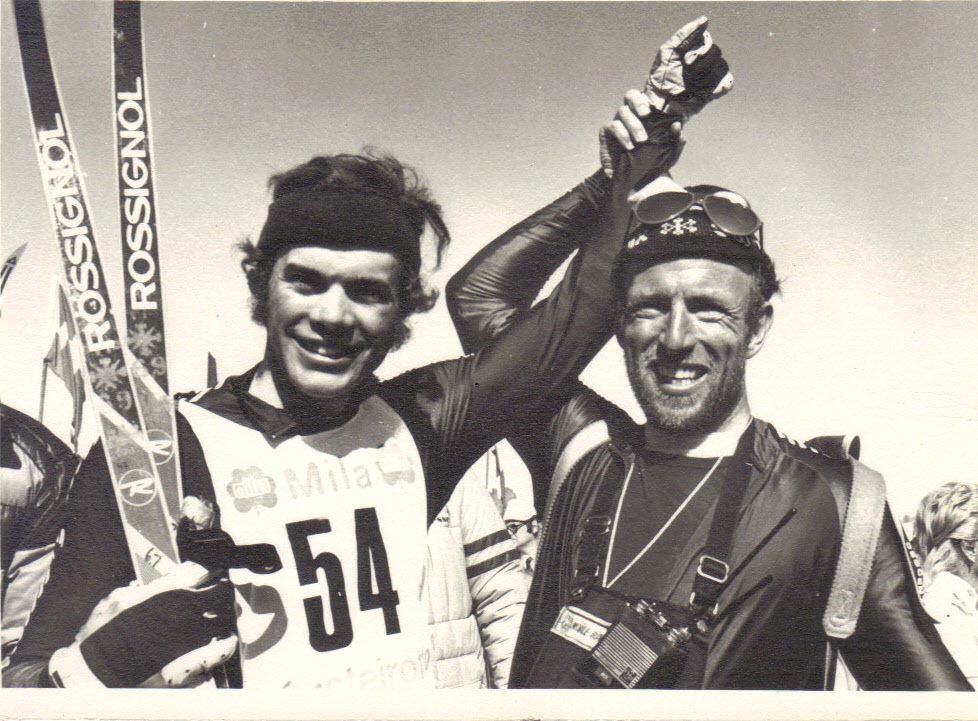
    Picture of Vermonter Bill Koch celebrating his winning the FIS Overall WC crown with a very happy coach, the late Mike Gallagher. A very special moment. (Photo and caption courtesy of Peter Graves)
  • Q&A: Beckwith’s Return to Skiing as NENSA Competitive Program Director

    Q&A: Beckwith’s Return to Skiing as NENSA Competitive Program Director

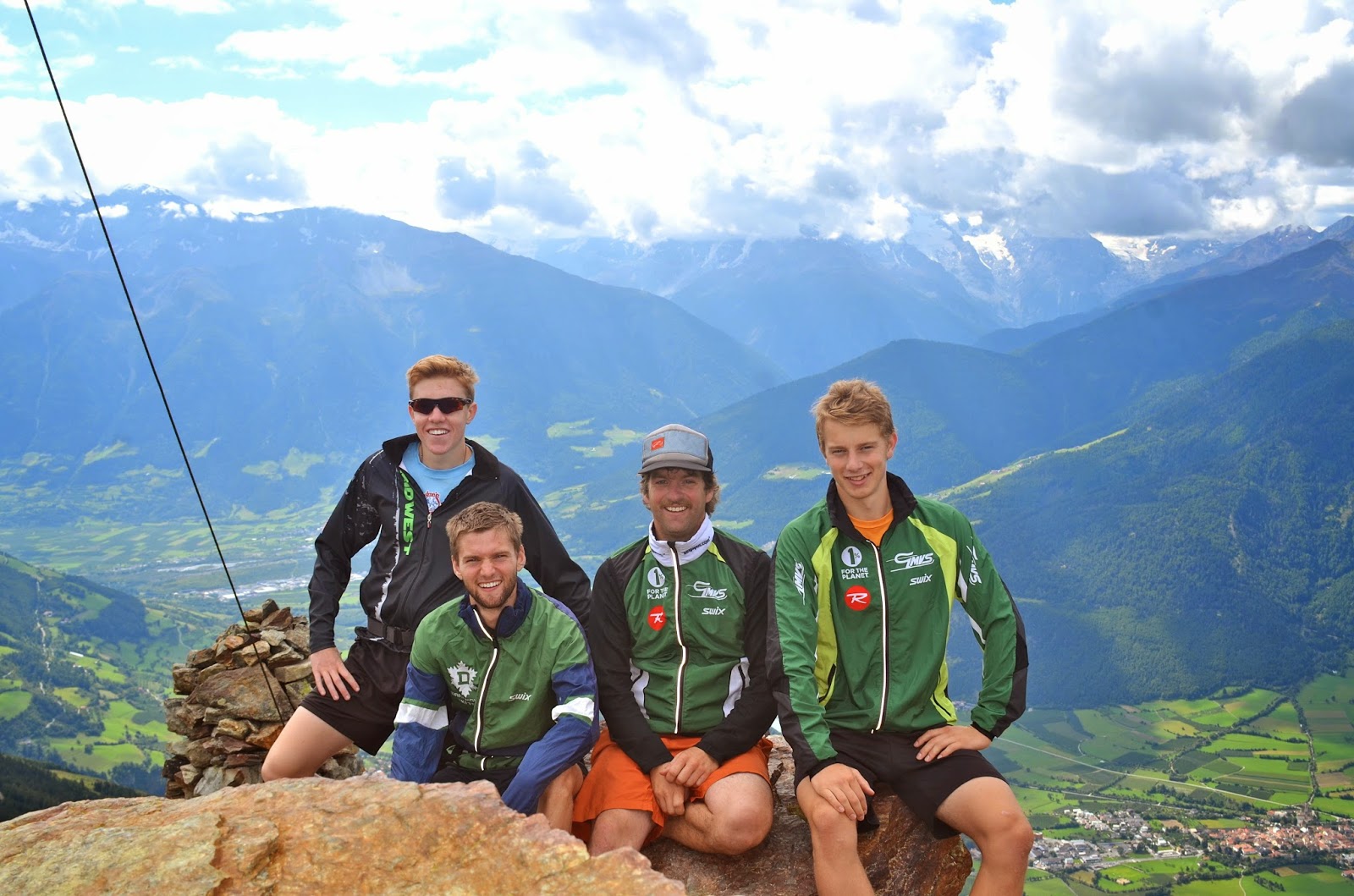
    Justin Beckwith (second from r), as seen in 2014 when he was head coach of the Green Mountain Valley School (GMVS), with former GMVS elite and postgraduate athletes (from l to r) Nick Gardner, David Sinclair and Ian Moore during a fall trip to Italy. (Photo: GMVS)

    About a year and a half after leaving his post as nordic director at the Green Mountain Valley School (GMVS), Justin Beckwith is once again involved with New England skiing at full throttle as competitive program director for the New England Nordic Ski Association (NENSA).

    The news came from NENSA early last month in an announcement that stated Beckwith would be filling in for Amie Smith, the association’s high-performance director for the last two years, who was promoted to executive director.

    Justin Beckwith (l) and Gus Kaeding in the wax room at 2017 U23/Junior World Championships at Soldier Hollow in Midway, Utah. (Photo: Flyingpointroad.com)

    Beckwith, of Warren, Vt., spent nine years from 2006 to 2015 building the GMVS program. When he left in the fall of 2015, he decided to go back to building houses, yet he remained involved with nordic as a wax tech for New England juniors and U.S. skiers at both national and international races, like last season’s OPA Cup Finals.

    Right around that time, in late March when NENSA posted the job opening, Beckwith knew he was ready to return to a full-time position in skiing.

    “It was just sort of, ‘OK, that’s it. That’s what I need to do,’ ” he told FasterSkier last month.

    After graduating from Middlebury College, Beckwith, now 37, spent one year living out west before taking the job at GMVS in Waitsfield, Vt. During his tenure there, he was also a coach for the U.S. Ski Team’s U18 Trip and Junior World Championships as well as the head wax tech for Junior Nationals and Junior Worlds.

    Stepping away from the sport as a coach allowed him to view it in a way he hadn’t before.

    “I went back to Junior Nationals after not being there for a couple years, now being able to watch, coming from the outside and see how our coaches, athletes and organizers are acting and performing, and what a unique perspective it is,” he said. “It is so much different than when you have your own athletes in the race, or you’re supporting your division or whatever your job is. … I am really excited to start to using all my contacts and resources and just bring energy that I think coaches understand what I am all about.”

    ***

    FasterSkier: What made you decide to return to skiing full time?

    Justin Beckwith: When I left GMVS to be a carpenter, I knew I wanted to come back to skiing, but on my own terms and do the piece of the skiing that I absolutely love and am so passionate about. That allowed me to be open to do that, whether or not the bank account reflected that, I just needed to be a carpenter, but I also had the ability to start making relationships with international people, coaches from other nations that are so impressed with what we are doing now in the U.S., and that started happening three or four years ago. Coaches started saying, “Wow, you guys are doing really well down to the national level now.” Then I got to start working with some of our manufacturers and suppliers, like Start Ski Wax specifically, a bunch more this year. I went back to Junior Nationals after not being there for a couple years now being able to watch coming from the outside and see how our coaches, athletes and organizers are acting and performing, and what a unique perspective it is.

    Justin Beckwith getting after it in Hemsedal, Norway. (Courtesy photo)

    So bringing to the present day, I think this [NENSA] position came up one time while I was involved at a certain amount of professional level with skiing. Amie [Smith] took on the job a few years ago, but I was deeply immersed my GMVS culture at that time and I also think that probably was not the perfect fit for me. Just before my wife and I left for our trip to Norway [this year], the job was posted [again]. It was just sort of, ‘OK, that’s it, that’s what I need to do.’ I am really excited to start to working with my contacts and resources and just bring energy that I think coaches understand what I am all about. I have also been able to make that connection with a lot of the young athletes over these last few years.


    FS: What drew you to the NENSA position?

    JB: With this position with NENSA and also what I have been able to do the last couple years, I am not using the microscope anymore, I am using a telescope. It’s totally different, but at the same time, it’s the same. I am going to be able to support GMVS in a great way. I love working with [GMVS Nordic Director] Colin Rodgers. GMVS went through some transitions. I am staying in the Mad River Valley, which is amazing; another great part of the job is that I get to stay where I am and sort of create some of that vision and move it in a way. It’s a pretty cool job, it’s a very cool lifestyle, it’s something that I am so passionate about. I was just talking to [Dartmouth men’s nordic coach] Brayton Osgood, he said he’s so glad to have [me] officially back in skiing. That is the coolest thing, to have those relationships.

    We are going through a transition within the U.S., there is a changing of the guard within our coaches and in our whole community, and we need to hold on to the history. That’s why people like Peter Graves are so interesting. We absolutely need to hold on to that history, but we have so many, because of all the awesome work that Dick Dreissigacker and Judy Geer at Craftsbury, or Sverre at Stratton, Rick Kapala at Sun Valley, or Gordon Lange in Park City, because of what all these people did, they inspired the next generation of not only athletes but coaches. It’s a really exciting time for U.S. skiing that we have such great venues, coaches and organizations. It’s a really cool time and a lot of energy is coming back into it right now.


    FS: How is your role at NENSA going to be different than it was with GMVS?

    JB: The biggest difference is what I tried to do at GMVS is essentially I wanted to be able to do what I am going to be able to do with NENSA. I am able to work with everybody now — and not that I am trying to spread myself too thin; I will obviously be working in a different capacity — I will be in personal contact with a lot of our athletes. … I will have more communication with coaches, whether it is with [U.S. Ski Team Development Coach] Bryan Fish or our club coaches in New England, and coaches throughout the nation, and figuring out that common goal, whether you’re part of a ski academy, or a club, or even a different region at JN’s, the goal is to make U.S. skiing better, and to create that culture and create those results, so that’s the goal.


    FS: How was being at the OPA Cup Finals and what were your takeaways?

    U.S. techs and coaches at 2017 U23/Junior World Championships (from left to right) Justin Beckwith, Andy Keller, Gus Kaeding, and Mike Matteson at Soldier Hollow in Midway, Utah. (Photo: flyingpointroad.com)

    JB: Probably the coolest thing going into that was the fact we were able to pull Caitlin Gregg into that, so we had this mix where we had some of our best juniors were there, we didn’t have the biggest team we’ve had, but we had a great time. And right out of the gate in the OPA Cup Finals — these are big-deal racers — on Day 1, Caitlin won the thing and Hannah Halvorsen was second. World Juniors was of course groundbreaking, but that result showed another level of depth we have in the country, and that was really inspiring to see that and be a part of. It also showed that we are a little bit better at skate skiing than in the European contemporary classic condition, basically slush. We were racing in 10 degrees [Celsius, 50 degrees Fahrenheit], and that is something we are adjusting at the developmental-team level. … That’s something we are going to try address soon. The takeaway from OPA, it shows the depth of where U.S. skiing is now, it shows what happened at World Juniors isn’t a fluke, it shows that we still have work to do, but we very much have arrived, and we are lucky as a nation that the European Nations are recognizing what we are doing and they are interested in what we are doing. We are contemporary now, and it’s pretty cool.


    FS: What are some of your key initiatives moving forward and what does your five-year plan at NENSA look like?

    JB: One of the things is my big initiative to make NENSA a known support structure to our clubs and to our coaches and to our athletes. We are not just putting on races, I want to make coaches’ education cool again. I want to make it popular and fun, and I just sort of want to reinvigorate that a bit. I want to help increase the participation and make it a clear thing that when you ask any coach what NENSA is doing for them, I want them to be able to give a clear answer that we are providing really cool feedback and support for their program. We are helping them coach and inspire their kids, and we are not putting on camps or other events that compete, we are helping make those better. I want to reinvigorate rollerski races. I have one that I want to start with this summer and ideally that would transfer to each state, having an event that we were able to make better for them, whether through promotion or physically bringing athletes to them, bring sponsors and suppliers in there, all part of that goal. … That’s what I want to do with this job, create that that buzz, that energy.

    Another thing I am going to work on is NENSA alumni, if you will, we need to keep them involved. When you’re a junior skier: you love your coach, you love your peer group, love going to Junior Nationals. You don’t necessarily remember that it was Janice Sibilia or Zach Caldwell or NENSA that created these camps and brought you all together two or three times a year. There are so many people that brought it to where it was now. It’s cool to come back and look at it with that perspective. Some of those people are coming back to it in different ways. Kris Seymour has taken a position at running Mount Van Hoevenberg in Lake Placid. Kris Seymour was Lowell Bailey and Tim Burke’s high-school coach; he inspired those guys, he helped to inspire me, now he is at a position where he can do wonderful things not only for his venue and his job, but he can do great things for cross-country skiing. So it’s really neat to meet somebody who cannot just juggle those balls, but bring those balls together.


    FS: Are you still going to be a carpenter?

    JB: I do have a passion for that and creating things especially with wood. I will still be hobby-ing and doing fun projects on the side, but only in a capacity like somebody would play the guitar, not as a business. I am diving right into this as a passion. People who are involved in the country and New England are coaching for the right reasons and I share the same vision.

    The enthusiasm and the support and welcome I have gotten from the staff and board of NENSA, New England and the U.S. ski community is truly humbling. It’s going to be really fun, and I am looking forward to it. I am so fortunate to be a part of it and want to get more people in the sport.

  • A New Chapter for GMVS with Rodgers, A New Start for SVSEF’s Gold Team with Mallory

    A New Chapter for GMVS with Rodgers, A New Start for SVSEF’s Gold Team with Mallory

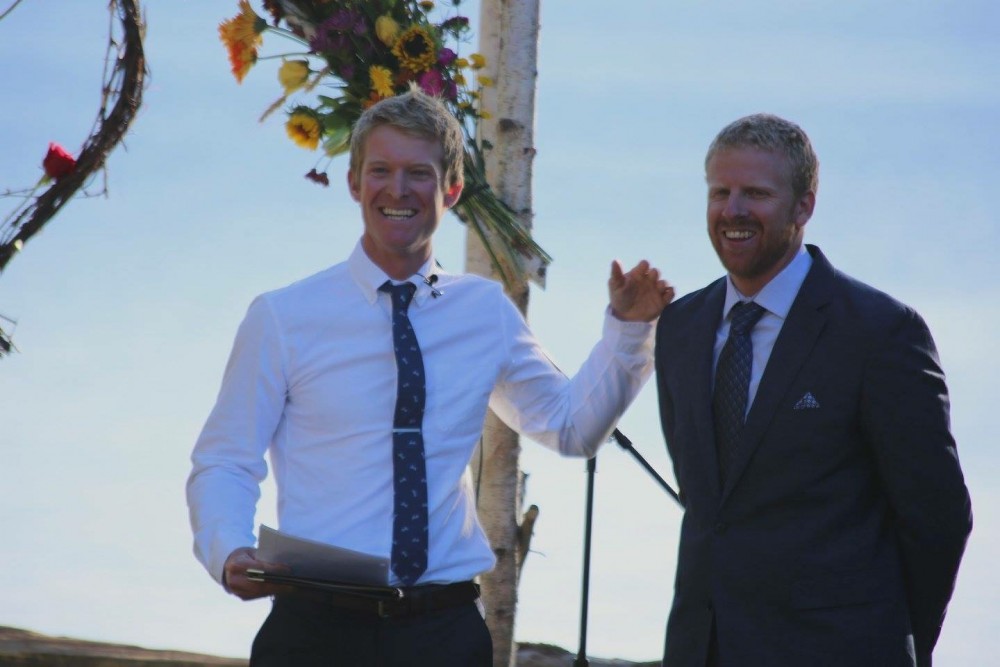
    Colin Rogers (left) as the MC for Chris Mallory's (right) wedding. (Courtesy photo)
    Colin Rodgers (left) as the MC for Chris Mallory’s (right) wedding, September, 2015. The two coaches and former nordic ski racers were grew up about 15 miles away from each other in Vermont. (Courtesy photo)

    Their cars won’t literally pass on the interstate, but the image is worth rendering. Colin Rodgers, five years the head of the Sun Valley Ski Education Foundation (SVSEF) Gold Team, is heading back to his native Vermont to become nordic director for the Green Mountain Valley School (GMVS) in Waitsfield, Vt. (Rodgers is currently in Italy with GMVS leading a training camp.)

    Heading the opposite direction from Vermont to Sun Valley, Idaho, where he recently resigned as assistant coach at University of Vermont (UVM) after three years, is Chris Mallory — also a native Vermonter.

    It’s safe to say that Rodgers’s and Mallory’s lives are seperated by far less than six-degrees: the world of elite ski coaching is small and close knit. That their paths have crossed on their career transects isn’t odd at all when you consider something Rick Kapala, SVSEF’s longtime nordic director, said in a recent phone interview.

    “You know, somebody was asking me is it really hard to lose a guy like Colin,” Kapala reflected. “And of course the answer is yes … but all of our programs, whether you talk to APU [Alaska Pacific University], or whatever, it is part of the game that you if you have really good coaches, you are going to lose really good coaches because they are going to have opportunities to move to another level.”

    There’s two highly qualified and highly recommended coaches in Rodgers and Mallory — it’s no surprise opportunities have arisen.

    Colin Rodgers, formally head coach of the SVSEF Gold Team, has taken the job of nordic director with Green Mountain Valley School in Vermont. (Courtesy photo)
    Colin Rodgers, formally head coach of the SVSEF Gold Team, has taken the job of nordic director with Green Mountain Valley School in Vermont. (Courtesy photo)

    After captaining the Middlebury College Ski Team and graduating in 2004, Rodgers lived the professional skier’s life. He skied for the Gold Team from 2006 to 2011. Since that time, the Westford, Vt., native has been the lead waxer, travel agent, coach, and all-around, go-to leader of the Gold Team.

    According to Kapala, the first word that came to mind when asked about the indelible fingerprint Rodgers left on the Gold Program was: “professionalism”.

    “We have always prided ourselves as trying to run a really pro program,” Kapala said. “But Colin as an athlete, really, I feel gave everything he possibly had to his racing career and the same thing was true as a coach. He demanded a lot of himself in that role, held himself to a really high standard, … worked as hard as he could, cared so deeply about the program and the athletes and the process of getting to the highest levels. I really think that all the athletes that we had engaged in our program benefitted from the approach Colin had, which was leave no stone unturned … look for every advantage, bring your best every day, and I look at it and go, we were very fortunate to have him.”

    Rodgers, 35, takes over a transitioning GMVS program. Last October, longtime GMVS Nordic Director Justin Beckwith stepped down. 2010 Olympian Garrott Kuzzy took over with help from newly hired nordic coach Katrina Howe. Now, nearly a year later, Rodgers will take over a program with 13 athletes — comprised of nine men and four women. Howe will remain as a nordic coach. (According to Rodgers, Kuzzy will be pursuing an MBA in Innsbruck, Austria, this year. Kuzzy could not be reached for comment by press time.)

    Junior skiers are not elite senior skiers. Yet Rodgers mentioned that his core mission remains the same: building bonds.

    “Of course, I will need to make some adjustments to my approach to the younger athletes, but it is all truly about sharing my passion for the sport of cross country skiing,” Rodgers explained. “The age of the athlete is not so important, but rather that you share a common interest with the individual and you can pass along a bit of knowledge that will help them improve. Then you are making a difference. It is still all about building relationships and doing your best to support the team.”

    For Rodgers, directing a program is the biggest new opportunity beyond moving back to his home state. “Running a program in my home state seemed like a fun challenge that I was up for,” he said.

    Back in Vermont, a state with a rich and proud nordic tradition, Rodgers commented that one of his biggest hurdles at GMVS, a private high school, will be making the sport he loves more accessible.

    “The biggest challenge will be in trying to help kids join the program that may not have the financial means to do so,” he said. “Ideally, we want athletes at the school that have the drive to ski fast and work hard. Hopefully, those two un-biased character traits will allow any motivated student/athlete the ability ski for our program.”

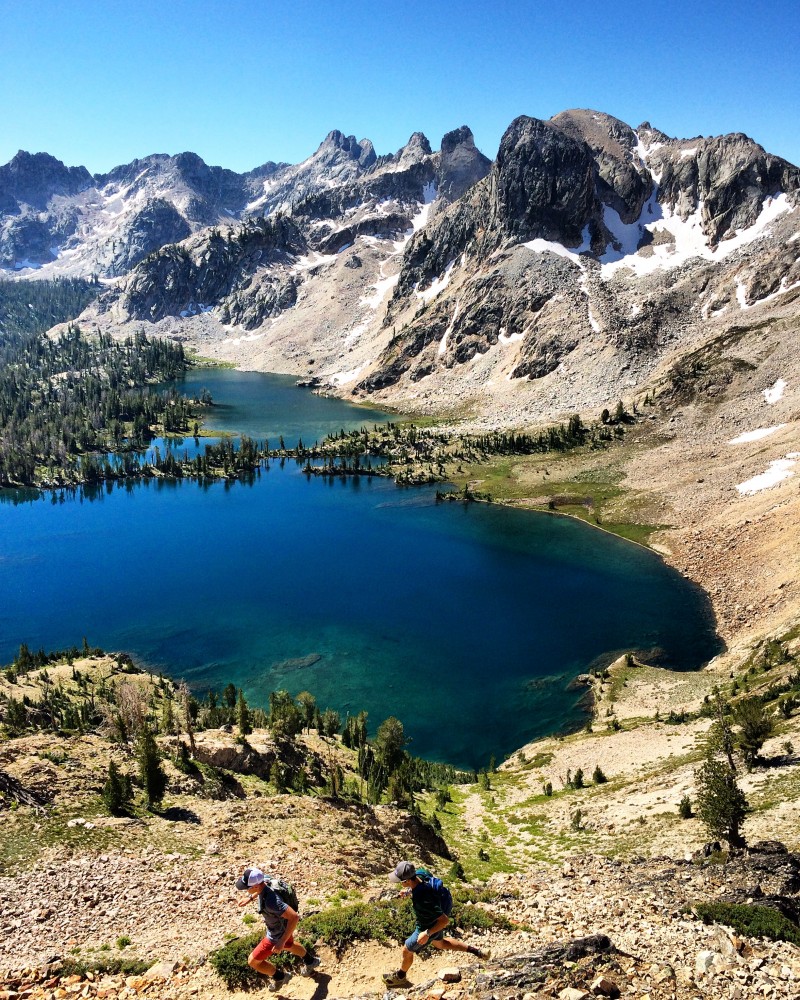
    Gold Team rookies, Cole Morgan and Jack Hegman run above Twin Lakes in Idaho's southern Sawtooths, summer 2016. (Photo: Rogan Brown)
    Gold Team rookies Cole Morgan and Jack Hegman run above Twin Lakes in Idaho’s southern Sawtooths this summer. (Photo: Rogan Brown)

    For SVSEF’s Gold Team, the benchmark for participation isn’t overtly financial, it’s performance based. Be a motivated, willing-to-develop, fast skier and you might make the cut. And for the coach, there’s no study hall to schedule and monitor, less shuttling skiers back and forth.

    “One of the most important things [with this level of senior coaching] is you need to have somebody who has both the depth of experience but also the ability to really keep the ship level,” Kapala said from Sun Valley. “The senior athletes that we have that work with the Gold Team are all highly motivated, so it’s a little bit different than junior coaching. For the junior coaching, I have a lot of kids that are very, very early on in their ski racing career. So you do a lot of really base-level educating and motivating. … The problem with these Gold Team-type positions, whether you are talking our program, Stratton or APU or what not, you sort of have to be able to do everything.”

    With Rodgers’s exit from SVSEF, enters Mallory.

    After skiing at the University of New Hampshire, Mallory headed west to Sun Valley where he began coaching in 2006. That SVSEF stint, where he began as a development-team coach and progressed to head post-graduate coach, lasted eight years. In May 2013, he took the assistant coach position at UVM. He also served as a wax-tech on three separate Junior World Championships trips.

    According to Kapala, Mallory can do a bit of everything, making him a good fit for the Gold Team. The bonus: Mallory has a positive history with the local community. Although deciding to leave a program like UVM for the Gold Team was difficult according to Mallory. “It was a tough decision to leave UVM. There is a big incoming freshmen class this year with some good young energy and it’s hard to leave the athletes on the team who you’ve created relationships with after a few seasons, but these opportunities only come around so often.”
    Like Rodgers, Mallory enters his new position with some challenges. For the 34-year-old Mallory, his is entering a training season already in full swing.

    Chris Mallory on the Haig Glacier, Canadian Rockies. (Courtesy photo)
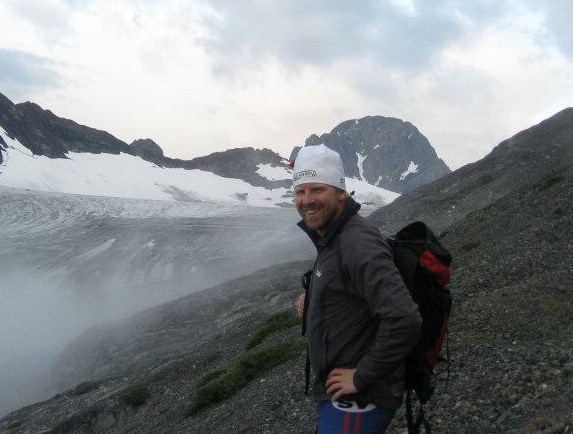
    Chris Mallory, in 2012, on the Haig Glacier, Canadian Rockies. (Courtesy photo)

    “At this point I’m coming in halfway through the training season, so there is going to be a transition for myself and the team,” Mallory, a Colchester, Vt., native, explained in an email while packing for his move West. “It’s going to be important to establish good working relationships with each of the athletes, so they can reach their highest potential. Luckily I’ve worked with half the team in the past, so I look forward to building on those relationships and taking the time to create a strong team dynamic.” 

    For both Rodgers and Mallory their shared history with SVSEF may pay dividends for the broader U.S. cross-country culture.

    “Their will be a time when I’m not the program director here [at SVSEF], and I hope that what happens is the day after I leave, the program is moving just right ahead. Seamless. No hiccups at all,” Kapala reflected as he spoke about coaching changes and building programmatic legacies. “And that will be the sign that you’ve been able to develop a program which isn’t about a personality or one individual it’s about the strength of the program as a whole.”

    Rodgers and Mallory, who grew up about 15 miles away from each other, are on their way.

  • U.S. Devo Coach Fish Hosts Jam-Packed Junior Clinic: ‘Keep Them Moving, Keep Them Active’

    U.S. Devo Coach Fish Hosts Jam-Packed Junior Clinic: ‘Keep Them Moving, Keep Them Active’

    Bryan Fish leading some dry land training during the Yellowstone Ski Festival Junior Development Clinic on Thursday, Nov. 26th.
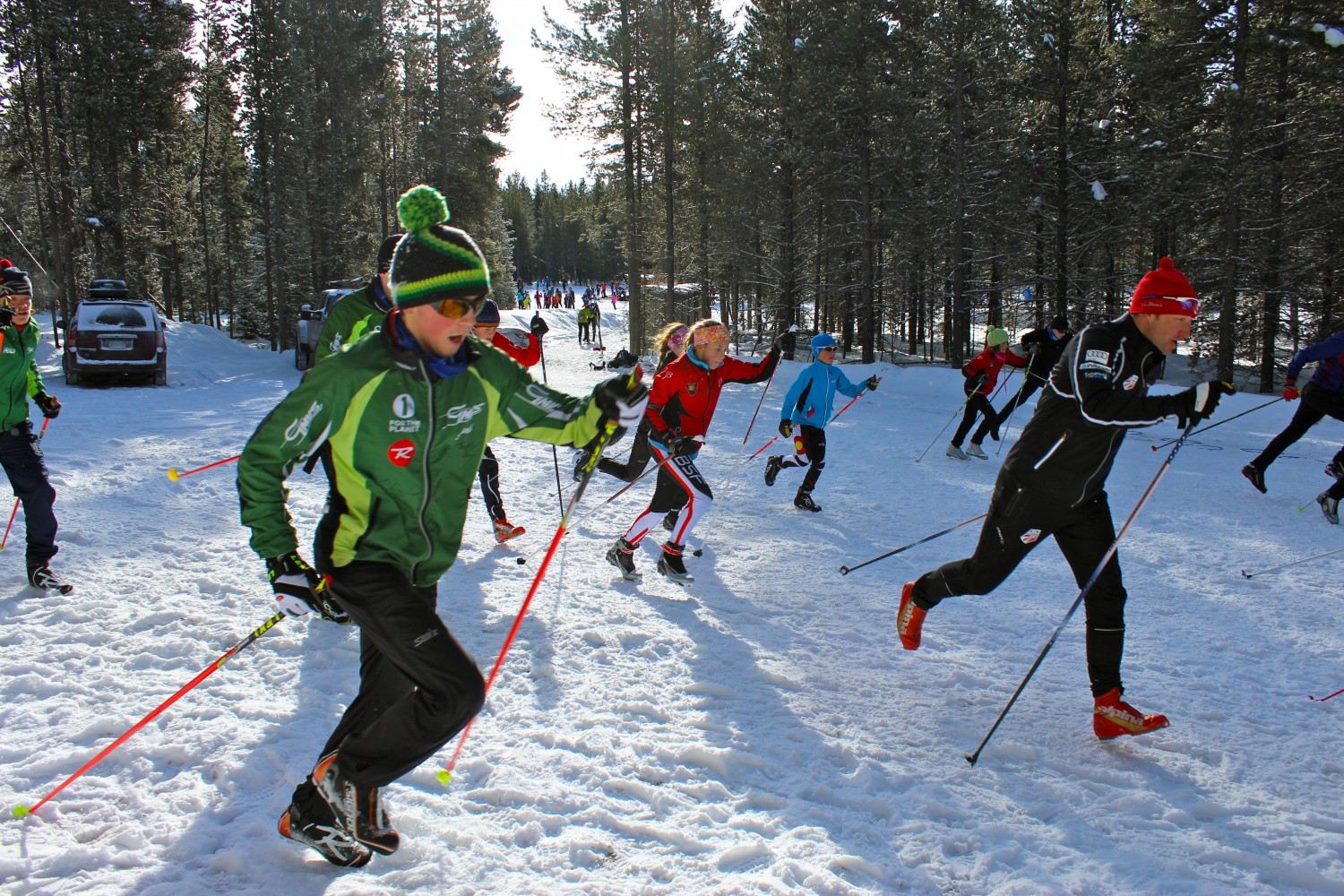
    U.S. Ski Team Development Coach Bryan Fish (r) leads some off-skis “dryland” training during the Yellowstone Ski Festival Junior Development Clinic on Thursday, Nov. 26.

    WEST YELLOWSTONE, Mont. — Where does the development of a strong ski program begin? According to U.S. Ski Team Development Coach Bryan Fish, it’s youth. More specifically, youth who enjoy what they’re doing. 

    “We have to have the numbers and the people that love the sport, before they’ll stick with it and actually perform at the highest of levels,” Fish said last week.

    “My favorite thing about working with youth is, I know when I’m doing a good or bad job based on how quickly I lose them,” he added. “All this monotonous repetition at a young age is not the most positive thing. If we can keep them moving and keep them active, keep challenging them, that’s what brings them back and it also makes them better.”

    With this in mind, this year Fish decided to hold a junior development camp on Thanksgiving, Thursday, Nov. 26, in West Yellowstone.

    “What I’ve been doing a great deal [this year] is traveling around to different ski venues and looking at how we can we grow our sport,” he said. “And make sure that our athletes have the appropriate venues to get challenged on.”

    Part of the Yellowstone Ski Festival, Fish’s camp took what he dubbed the “Constraint-Let Approach.” This approach included dividing the the 60-plus kids in attendance into three separate groups and incorporating various games, such as tag, lunge races, and “dryland” exercises.

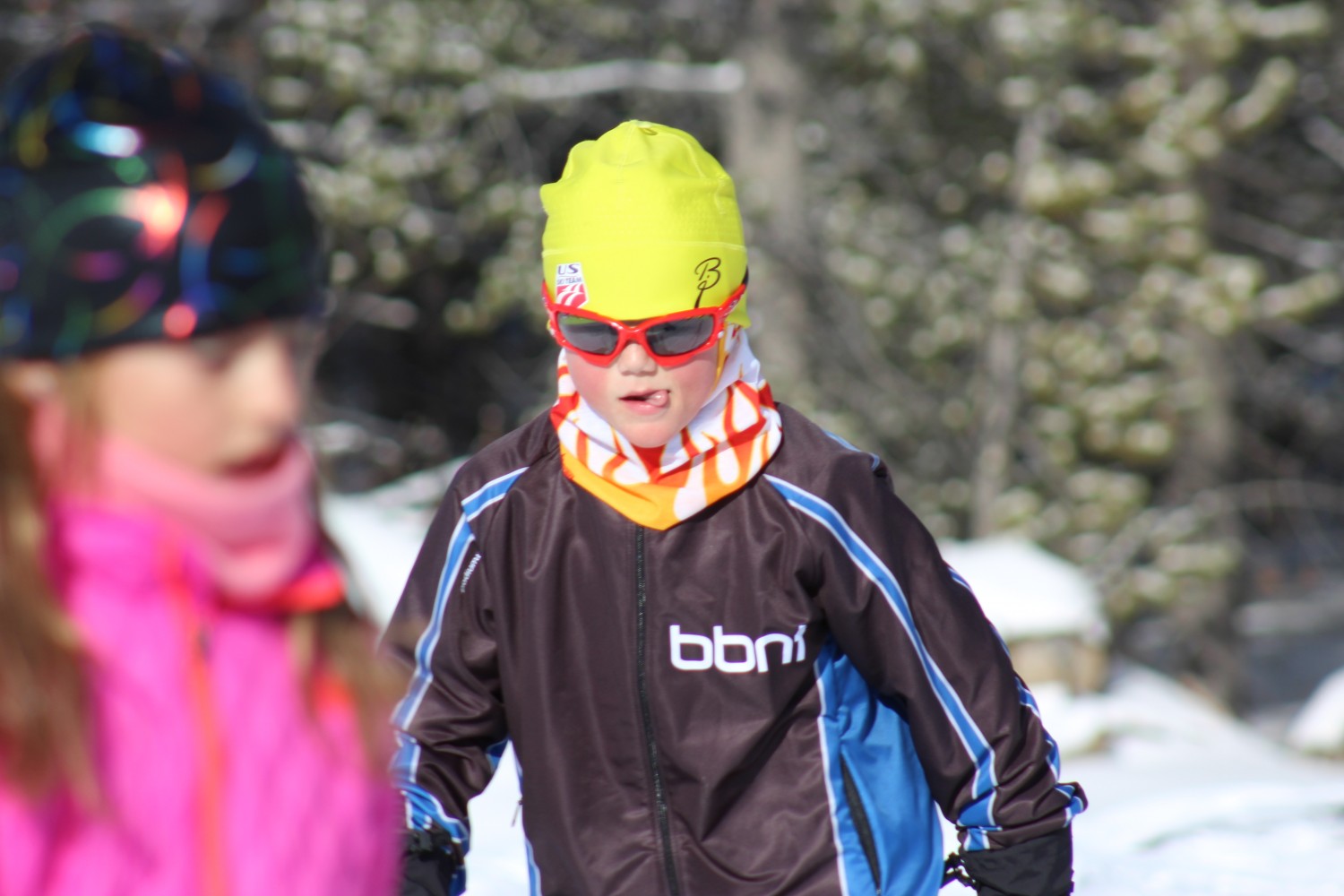
    All focus and fun. “My favorite thing about working with youth is, I know when I’m doing a good or bad job based on how quickly I lose them,” said Bryan Fish.
    All focus and fun. “My favorite thing about working with youth is, I know when I’m doing a good or bad job based on how quickly I lose them,” said Bryan Fish.

    “We had them over on the road doing some dryland: Skipping, jumping, jumping backwards, broad jump. All those activities are the foundation of cross-country skiing,” Fish explained. “It’s about coordination and linking the body together. If they can do that well, then they can double pole well, diagonal stride well and skate well.”

    The smaller groups allowed Fish, and the coaches helping him, to provide more challenging activities for each group and keep the kids’ interested.

    “What we’re doing is we’re changing the task and the environment so that the athletes have to adapt. They’re learning all these skill and agility courses, and activities, without actually thinking they’re learning technique. It’s a much more engaging and a much more athlete empowering way of learning skiing,” said Fish. “To be an artful coach is all about limited talking and more about action.”

    One of four coaches on the U.S. Cross Country Ski Team, Fish coaches at national-level camps in the summers and leads international racing trips in the winter. He’s also responsible for fostering coaching education in the development pipeline.

    “I did Bryan’s level 100 technique clinic [Wednesday],” said Garrott Kuzzy, a 2010 Olympian, former athlete of Fish’s and most recently, Green Mountain Valley School (GMVS) nordic director. “Every time I do a clinic with Bryan I feel like I learn something new.” 

    Fish feels the art of coaching takes teamwork and communication. “We’re not trying to tell coaches what to do,” he said. “What we’re trying to do is create a general platform that all of us [nordic skiers] agree upon in our country [to] establish a foundation that we can build, grow and innovate.”

    With more active empowered coaches and engaged youth, Fish believes nordic development in the U.S. will continue to grow.

    “This is the first time I’ve been back in six years and I think the sport has really grown,” he said of his return to West Yellowstone. “We had to close the [coaches] clinic because it was over capacity. Same with [the junior clinic], there was a limit of 60 and I think there were a little more than 60 out here. But that’s a great problem to have.”

  • Wednesday Workout: Training in the Dark with Mansfield Nordic

    Wednesday Workout: Training in the Dark with Mansfield Nordic

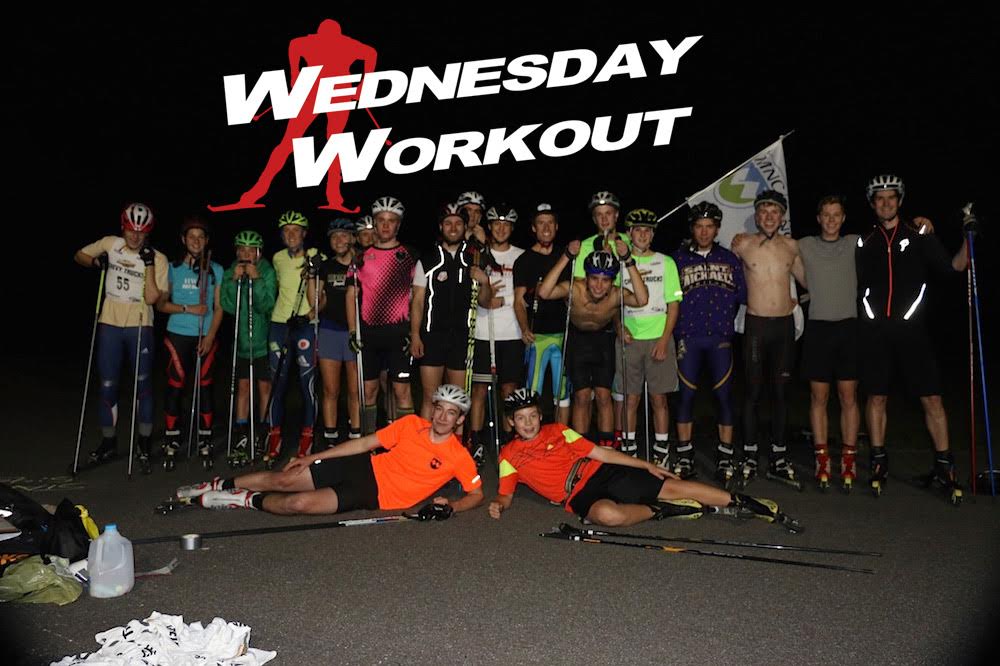
    Group photo with GMVS, SMC and UVM club skiers after their Monday night skate sprint. (Photo: Gary Solow)
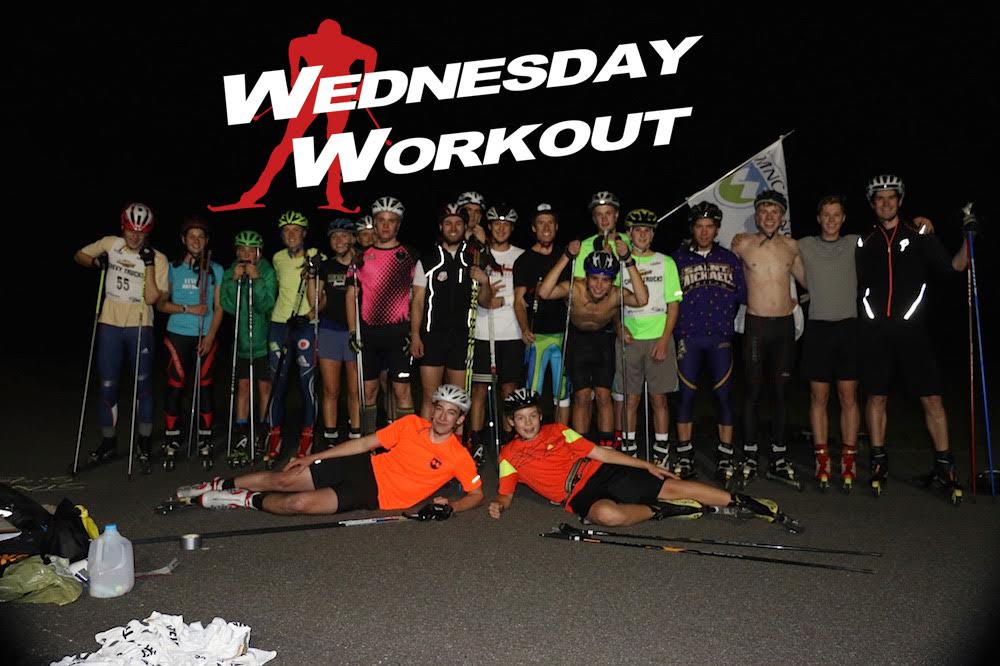
    Group photo with Mansfield Nordic, GMVS, St. Michael’s College, and UVM club skiers after their evening skate sprint in Jericho, Vt. (Photo: Gary Solow)

    On Nov. 1, the clocks turned against a skier’s favor, especially if you are used to training after an already-lengthy day at school. For many, this time of year brings about tough battles with motivation. The desire to even get out the door is often more difficult to swallow when the sun goes down, and cold weather combined with a lack of snow can add even more aggravation.

    Bill Koch League skier Aidan Burt previews the sprint course in fading light at the Jericho range in Vermont. (Photo: Gary Solow)
    Bill Koch League skier Aidan Burt previews the sprint course in fading light at the Jericho range in Vermont. (Photo: Gary Solow)

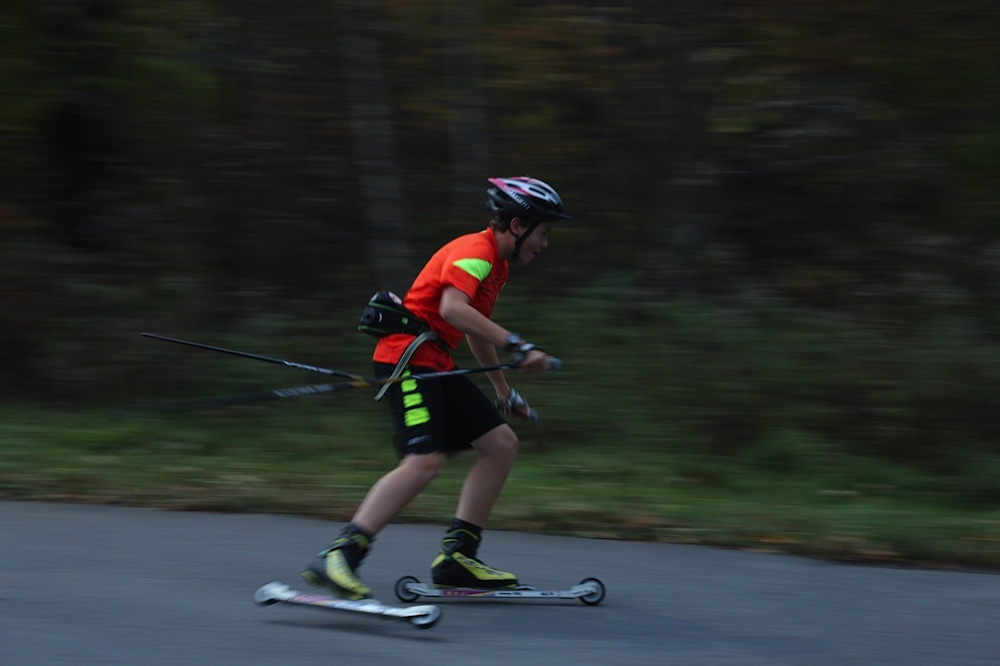
    Mansfield Nordic is incredibly fortunate to train at one of only a few paved, car-free rollerski loops in the country at Camp Ethan Allen in Jericho. “The Range”, as it’s known colloquially, also features lights along all 5.5 kilometers of trail, making it ideal for training in this tough shoulder season.

    Although The Range is an amazing place to train, we don’t spend every workout on rollerskis. Recently we found a creative way to make our own lighted trail system in the woods with the help of some battery-powered infrastructure.

    In this article I’ll share two workouts we’ve done this fall that were enhanced by the darkness rather than limited by it: A rollerski sprint time trial and bounding intervals in the woods.

    Event 1: Skate Rollerski Sprint TT

    After a late-summer timetrial with the Green Mountain Valley School (GMVS) in East Warren, coaches Garrott, Katrina and I began talking about the next time we could get the group together. The GMVS crew would not be able to get to the Range until 5 p.m. on weekdays, Garrott noted, when darkness would be coming up fast. Instead of changing plans, we decided to turn this into the plan!

    A few weeks and a bit of outreach later, a hearty crew was up at The Range on a Tuesday night for some sprinting action. The competitors included athletes from Mansfield Nordic, GMVS, St. Michael’s College, and the University of Vermont (UVM) Club team.

    The Workout

    A qualifier was held in grainy, fading light, and by the time the heats began the lights along the trail were the only glow in the area as racers sped around a hilly 1 k lap. Organized in a modified “King’s Court” style, everyone got to race multiple heats against similar competition. With some diligent recording, every racer was tracked for every lap so that times could be compared. Pizza delivered after the final round was key, as the event wrapped up around 7 p.m.  

    Event 2: Bounding by Headlamp

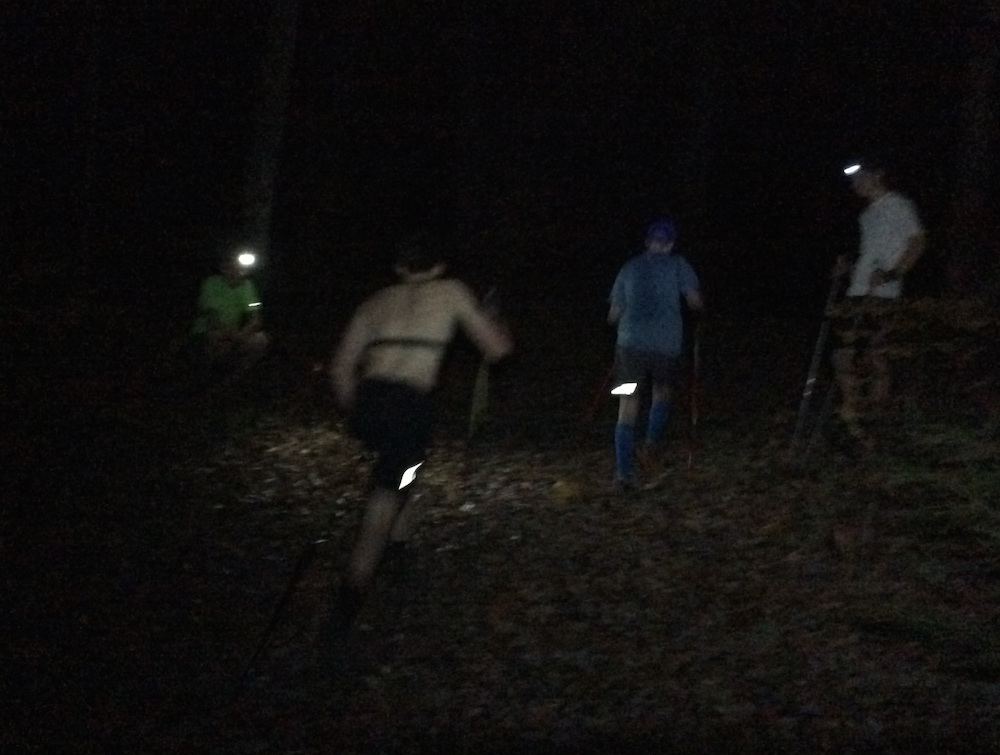
    Although rollerski tracks with lights are not common, many racers are probably more familiar with training by headlamp, especially masters racers who are looking to train before and after long work days. We were able to do some bounding intervals at a popular training location, the Jericho Research Forest, with headlamps and more to light the way.

    The location for this was key to enabling safe, effective training in the woods at night. This stretch of forest has a few great features that made the night workout possible:

    • Hills of varying length and grade (of course)
    • Snowmobile trails, which are wide and well-cleared of obstacles that could trip you up
    • A relatively short 1-2 k loop to avoid getting lost and help track athletes

    The Workout

    MNC skiers alternated jogging and bounding on portions of a 6-8 minute loop that included steep uphills, rolling terrain and flats. By doing the workout on a set course over and over, athletes became familiar with the terrain in the fading evening light. This made it easier to navigate the loop when the complete darkness arrived shortly thereafter.

    The loop made a figure-8 style, and in the middle, a branch was posted into the ground with a LED light dangling off — the center hub and meeting spot, as well as the beginning and end of every interval. This made it easier to know where and when to find athletes … and to know where the water belts were.     

    Headlamps were donned to allow better visibility, and also give a pretty cool motivational boost. Is the competition outside training in the dark right now as well, or are they home watching “The Walking Dead”? Concluding the workout with some extra hard bounding with a partner, under the light of teammates’ headlamps lining a short section of the trail, made for a great finale.

    The dark and cold days of autumn will always bring a tough challenge to skiers, especially before the snow has fallen. It doesn’t have to mean a lack of motivation or variety, though. If you can get creative with your workouts, you may even find a way to dig deeper and end up with a more memorable session than you planned.

    Bounding at night. (Photo: Adam Terko)
    Bounding at night. (Photo: Adam Terko)
  • Beckwith Leaves GMVS, Kuzzy and Howe Hired to Run Academy’s Nordic Program

    Beckwith Leaves GMVS, Kuzzy and Howe Hired to Run Academy’s Nordic Program

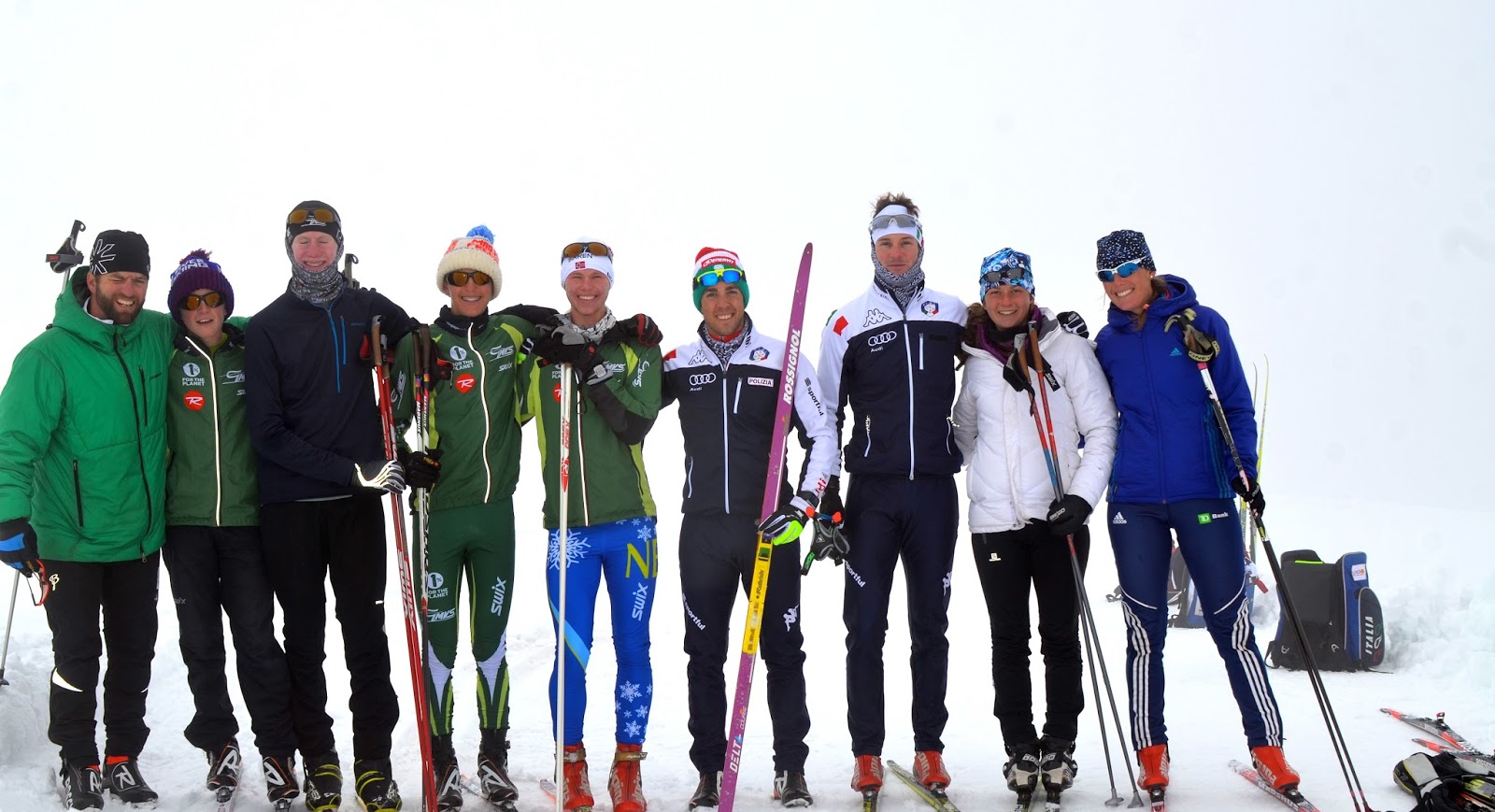
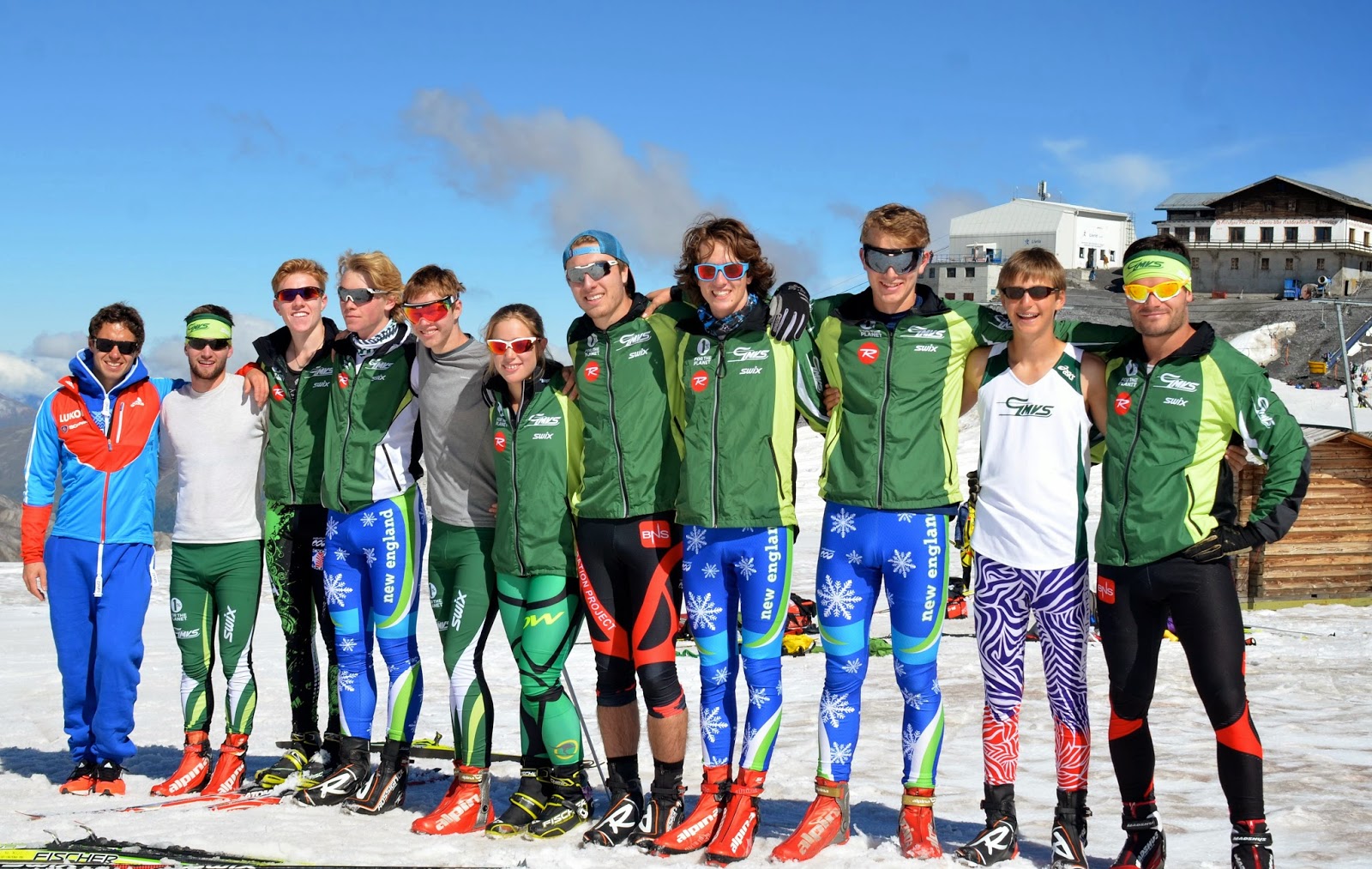
    A group shot of the Green Mountain Valley School (GMVS) Nordic Team with Italian national-team members Federico Pellegrino and Simone Urbani. Pellegrino has won three individual World Cups. The GMVS team traveled to Italy in early September for two weeks of training around Mals and on the Stelvio Glacier. (Photo: http://gmvsxc.blogspot.com/2015/09/day-10-stelvio-2.html)
    A group shot of the Green Mountain Valley School (GMVS) Nordic Team with Italian national-team members Federico Pellegrino and Simone Urbani. Pellegrino has won three individual World Cups. The GMVS team traveled to Italy in early September for two weeks of training around Mals and on the Stelvio Glacier. Longtime nordic director Justin Beckwith is pictured at far left, and new coach Katrina Howe at far right. (Photo: gmvsxc.blogspot.com)

    Over the last nine years, Justin Beckwith’s name has become synonymous with the Green Mountain Valley School (GMVS) in Waitsfield, Vt. Now, with the hiring of 2010 Olympian Garrott Kuzzy as nordic director and biathlete Katrina Howe as nordic coach, two other well-known individuals in the ski community have become the new faces of the program, and Beckwith has vowed to help with the transition.

    But before Beckwith — a former Middlebury College skier, Junior World Championships coach and wax technician, J1 Scando Trip leader, and the New England Nordic Ski Association’s 2012 coach of the year — started as an assistant coach at GMVS, he built houses.

    That’s one of the trades he’s returning to.

    In August, Beckwith, 36, decided to step down as Green Mountain’s nordic director, ushering in a new era for the program, which started in 1981 under Jim Fredericks. Muffy Ritz took over as nordic director from 1986 to ’89, after which GMVS Nordic went by the wayside at the ski academy until Norwegian Jon Arne Enevoldsen started a biathlon program in 2002, according to the Vermont Ski and Snowboard Museum.

    GMVS elite and postgraduate athletes Nick Gardner, David Sinclair, GMVS head coach Justin Beckwith, and Ian Moore (l-r) during their September trip to Italy. (Photo: GMVS)
    Former GMVS head coach and nordic director Justin Beckwith (second from r) with Green Mountain’s former elite and postgraduate athletes (from left to right) Nick Gardner, David Sinclair and Ian Moore (l-r) during last year’s fall trip to Italy. (Photo: GMVS)

    A few years later, Beckwith came into the picture. In a phone interview on Monday, he recalled how the current GMVS nordic program started with a Norwegian coach and core group of families. Through grassroots efforts, targeting local Bill Koch programs and creating a “viable option for kids from the [Mad River] valley to start taking up cross-country,” the private school’s nordic team began to attract more homegrown skiers from central Vermont. In turn, that spawned interest well beyond the state’s borders.

    During Beckwith’s tenure, in which he led the program for the last seven years, he also united with local clubs to develop the Central Vermont Co-Op Race Series to elevate the level of nordic competition. His largest team size was 15. This year, its has seven nordic athletes, including one post grad.

    “Over the years, I’ve been able to support some really awesome athletes in the program,” Beckwith said. “To be able to offer that opportunity, helping foster a passion for skiing and then to get to see them become young adults and continue to do amazing things.”

    Sometimes, he had to dig into his own pockets to do so. And while he said it was a personal decision to step down, he felt the time was right to put the program into new hands for strategic planning and new energy.

    2014 North American Rollerski Championships 7.5 k sprint at Ethan Allen Firing Range in Jericho, Vt.
    Katrina Howe, a former biathlete with the Maine Winter Sports Center Olympic Development Team, competing at last year’s 2014 North American Rollerski Championships in Jericho, Vt.

    That’s where Kuzzy and Howe came in.

    Howe, a former national-development team biathlete who spent the last five years training with the Maine Winter Sports Center (MWSC) Olympic Development Team, joined Beckwith as an assistant coach in July. At 29, she had retired from racing this spring — her decision prompted by a loss of funding at MWSC — but she wasn’t ready to leave the sport.

    “I knew I wanted to stay involved and I always knew I wanted to be a coach,” Howe said on the phone last week. “I contacted Justin and it turns out he needed an assistant coach.”

    He hired her and the two went ahead planning the summer, including a fall training camp in Italy. Before she started, Beckwith and his then-assistant coach Shane MacDowell hosted an Eastern Regional Elite Group (REG) in June. MacDowell left GMVS to join Northern Michigan University as an assistant coach in July.

    “There’s been a lot of change in the program [recently],” Beckwith said.

    For the REG camp, Beckwith’s long-term goal had been to boost enrollment. New England has so many summer training options that it’s often difficult to unite the best juniors at a single venue, he explained. The REG camp attracted New England’s entire J1 and J2 teams, he said.

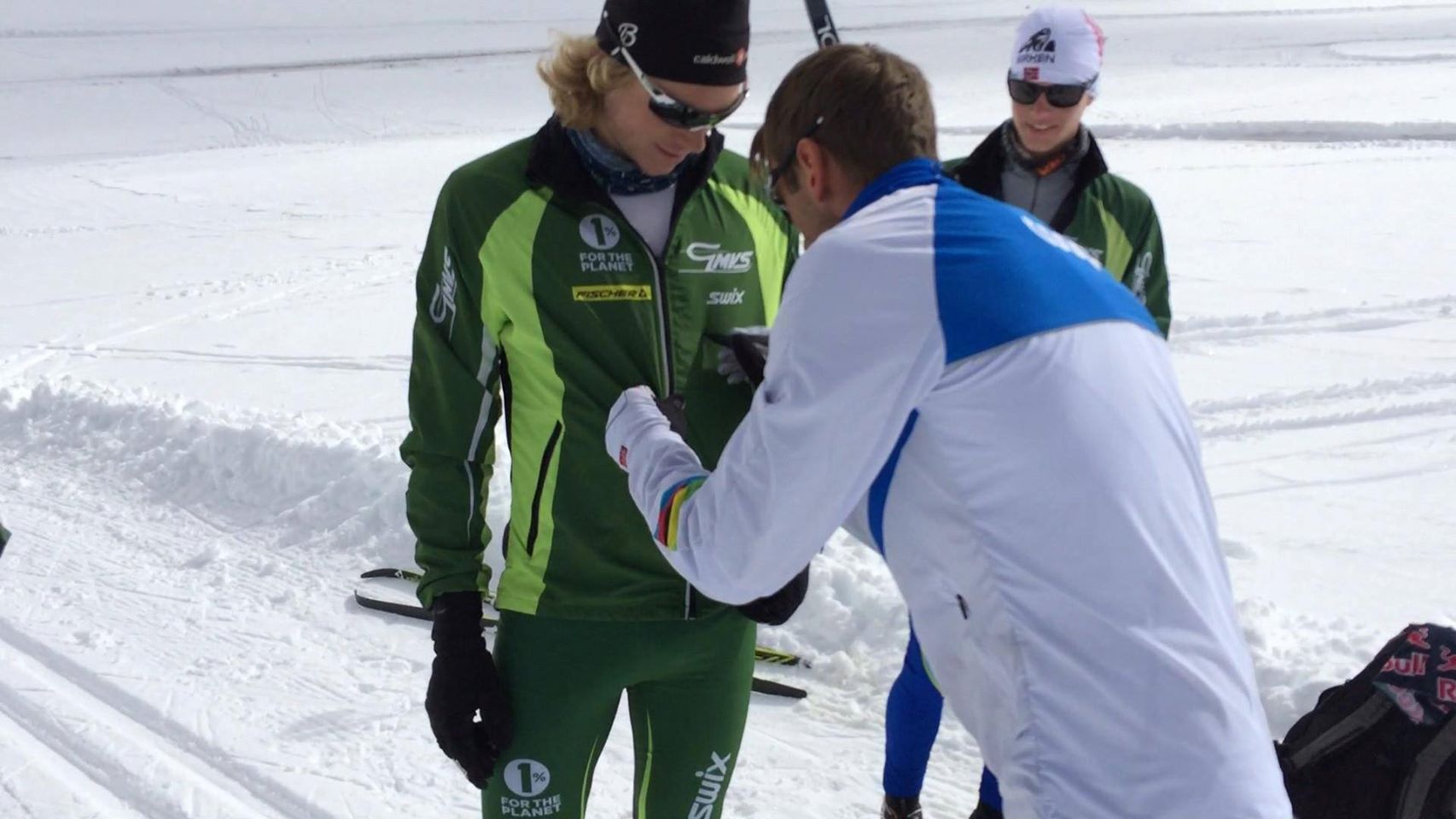
    Norwegian Petter Northug signs a GMVS nordic athlete's jacket during a recent trip to Italy for skiing on the Stelvio Glacier. (Photo: Petter Northug/Facebook)
    Norwegian Petter Northug posted a photo of himself on Facebook signing a GMVS nordic skier Forrest Hamilton’s jacket during a recent trip to Italy for skiing on the Stelvio Glacier. He captioned it, “Big in the US!” (Photo: Petter Northug/Facebook)

    “It was a great success … I think we were missing two to three kids from the junior national team,” he said, adding that there were 38 participants. “I would say we had 95 percent of the best kids in New England together.”

    That was a capstone on the previous open training camps GMVS hosted for the last eight summers.

    “I just wanted to make sure I was handing it off [to the right people],” Beckwith said of the nordic program. “Katrina was awesome. … I’m really happy that Garrott stepped up,” he added. “We have had some great conversations.”

    Howe started working for GMVS when school started, Aug. 17. The day before, she learned Beckwith wasn’t returning as head coach.

    “It was a pretty sudden transition,” she said. “We had about two-and-a-half weeks of school and Justin was around so he definitely helped me with a basic knowledge and lay of the land.”

    After that in early September, Beckwith, Howe, staff member Jere Brophy, and their athletes traveled to Mals in northern Italy for two weeks of dryland training — including hiking and rollerskiing — and on-snow skiing at the Stelvio Glacier.

    New GMVS nordic director Garrott Kuzzy (Photo: GMVS)
    New GMVS nordic director Garrott Kuzzy (Photo: GMVS)

    When they returned in late September, Kuzzy had been hired as nordic director. In the time since — the last two weeks — he’s been working with Howe.

    “This August, when Justin decided he was going to move on, the Green Mountain Valley School reached out to me and I decided it was a great opportunity to get back into the ski world and work with high-school age level kids,” Kuzzy said. “… It’s not a huge life transition. It’s just an opportunity to be more involved in skiing. I think they’ve got a lot of resources and are very dedicated to the nordic program.”

    Kuzzy, 32, a Middlebury grad who spent the last several years in Middlebury and will continue to live there, previously served as product director of VBT Bicycling and Walking Vacations. While he explained it was a “very challenging decision to leave” VBT after four years, he always wanted to stay involved in nordic skiing. He did so by launching VBT’s cross-country ski tours and assisting local clubs, including Mansfield Nordic and Frost Mountain Nordic, at their annual camps.

    “The experience I gained with VBT is an asset and something I can apply to my role as Nordic Director at GMVS,” Kuzzy wrote in an email. “My role consists of a balance between strategic planning, execution and ski coaching. As Nordic Coach, Kat Howe spends much of her time writing the training plan and training with the team.”

    While he and Howe plan to discuss and determine the program’s overarching goals this month, Kuzzy said on the phone last week that they want to further integrate nordic within the GMVS community.
    “Traditionally it’s been an alpine-heavy school,” Kuzzy said, explaining that of roughly 120 skiers at the academy, seven are nordic athletes.

    Howe pointed out that a couple of alpine students had already shown interest in nordic. “The number may grow before too long!” she wrote in an email.

    “At this point, my goal is to provide as much opportunity as possible for skiers who really want to see what they can do with nordic skiing,” Kuzzy explained. “One thing I really like about GMVS is the academic focus; it was recently rated the top academic private high school in Vermont [by the 2015 Niche Rankings]. … And this motto of, skiing is a metaphor for life. My goal is to extend the opportunity, to learn more about life through ski racing.”

    Howe said she felt similarly.

    “If I didn’t have the interest or the academic [background], I don’t think I’d totally appreciate the experiences I’ve had as a skier,” the four-year University of Vermont skier said. “The trips weren’t always necessarily about the racing. I think that carried over well for me.”

    Already, Kuzzy said he’s been having a lot of fun with the athletes.

    “That’s been the highlight, the workouts with the kids,” he said. “They’ve been fantastic.”

    “They’re just all awesome, hugely motivated [athletes],” Howe said. “They have a huge world sense of adventure. That’s why I fell in love with nordic, and these kids just love that and want to get out there and do new things. It’s not just about specific training for them, and that’s definitely come from Justin.”

    “They have a huge world sense of adventure. That’s why I fell in love with nordic. … It’s not just about specific training for them, and that’s definitely come from Justin.” — GMVS Nordic Coach Katrina Howe, on the team’s current athletes

    While Beckwith was unsure what his exact role with the program would be this winter, he knew he’d be offering race support. So far, he’s filled an advisory role to help with the transition and was part of the recruiting process for a new director, he said.

    Beckwith has also been the lead kickwax technician for New England at Junior Nationals for the last six or seven years, and he plans on doing that again this season.

    “It’s definitely open ended and I want it to be a positive vibe,” he said. “It was hard to leave my current kids… [but] I’m not leaving, I’m still here, part of their lives, but it’s definitely a hard transition for sure.”

    He’ll continue to live in Warren, near the school, where he can show Kuzzy and Howe the traditional time trial spots, and their starting and ending points.

    “I definitely envision doing some workouts with them,” he said.

    Meanwhile, he said he’ll be able to spend more time with his new wife, Brie Beckwith, a physical trainer for U.S. alpine skier Mikaela Shiffrin and the U.S. women’s alpine team, whom he married in April. He’ll also continue building with friends.

    “It’s pretty fun to get back to that,” he said.

    This winter, Beckwith said he’ll groom the Sugarbush golf course and help “the community in areas I was not able to before. … It’s exiting to not have the narrow focus of helping one program, but helping all programs out, and I definitely plan on being a part of the New England waxing staff.

    “The last two years I’ve been with the World Junior kickwax staff so I’m leaving all doors open,” he added. “I plan on staying involved as a ski tech.”

  • GMVS Focuses on Retention to Build Program’s Future

    GMVS Focuses on Retention to Build Program’s Future

    GMVS elite and postgraduate athletes Nick Gardner, David Sinclair, GMVS head coach Justin Beckwith, and Ian Moore (l-r) during their September trip to Italy. (Photo: GMVS)
    GMVS elite and postgraduate athletes Nick Gardner, David Sinclair, GMVS head coach Justin Beckwith, and Ian Moore (l-r) during their September trip to Italy. (Photo: GMVS)

    Organic development. That’s how Justin Beckwith is describing the new era of the Green Mountain Valley School’s nordic ski team.

    Beckwith, who serves as head coach for the rural Vermont academy, is overseeing the addition of an elite and postgraduate program to the team, which has historically found its successes in junior racing.

    However, this is no traditional elite team. Instead of partaking in the tedious process of athlete applications, selection, and community placement, GMVS is recruiting from its own ranks.

    If anyone is a poster child for the GMVS transition it’s David Sinclair. Sinclair, who graduated from Dartmouth College in May was a product of the GMVS program as a junior. During his time at the school he found much success at the junior level. At Dartmouth College, Sinclair earned several Junior National Championships and attended the 2014 NCAA Championships where his best result was 17th.

    Once the Waitsfield, Vt. native graduated from Dartmouth he returned to his roots and joined Beckwith and the rest of the GMVS team.

    According to Beckwith, the return of Sinclair is promising for his team of 12 skiers.

    “One of the best things for a program is when an athlete returns,” Beckwith said in a phone interview with FasterSkier. “With David it was a natural progression because he was one of our athletes.”

    In addition to Sinclair the GMVS program also boasts two postgraduate athletes, Ian Moore and Nick Gardner. The two are taking time to focus on skiing before they attend the University of Vermont and Williams College after the 2014/2015 season.

    The three skiers aren’t the only new additions to the team. Earlier this year GMVS hired Shane MacDowell who will serve as the assistant coach to aid in the continued development of its nordic program.

    MacDowell, who graduated from the University of New Hampshire in 2009, has a long history in the ski community.
    Shane MacDowell will be the assistant coach and wax technician for the GMVS program for the 2014/2015 season. (Photo: GMVS)
    Shane MacDowell will be the assistant coach and wax technician for the GMVS program for the 2014/2015 season. (Photo: GMVS)

    After spending a season coaching the Cape Elizabeth Nordic High School Team he founded the Boulder Nordic Sport Acceleration Team where he served as the Head Coach in 2012.  During the winter of 2013 he was the head wax technician for the J1 Scandinavian Trip in Trondheim, Norway in addition to his duties as a technician for the OPA Cup Finals in Madonna Di Campiglio and Toblach, Italy. Most recently, MacDowell was the assistant coach and wax technician for the Sun Valley Ski Education Foundation.

    Beckwith said that with the help of MacDowell, the GMVS program has the infrastructure to support both junior and higher-level athletes. For years, the alpine team at GMVS has been providing elite support for athletes and according to Beckwith the nordic team is ready to do so as well. 

    The recent developments at GMVS are part of its head coach’s approach toward training and racing. Beckwith explained that a key component of a successful team is its ability to create an environment that promotes skiing as a long-term project. He said that he’s seen too many skiers focus on lofty short-term goals that can make racing tedious and repetitive.

    “I want to have kids who want this to be a lifelong sport versus focusing on very specific cross country training when you’re 13, 14, or 15 with the goal of winning junior nationals when you’re a J2 or J1. Sometimes we’re seeing that these athletes get to college and they’re burnt,” Beckwith explained. “We’re obviously trying to make them fast ski racers, but that’s what I want to do to set my program apart from the other programs.”

    By adding more adventure and diversity to his training plans Beckwith said his athletes are more likely to continue skiing in college, and are thus more likely to return to his program as high-level athletes.

    Beckwith said that takes his athletes to the local alpine areas or explores off-trail training opportunities in the woods surrounding the school.

    Sometimes the adventure is further from home. In September, the 12-member team traveled to Italy’s Stelvio Glacier for a two-week training camp. Not only did the team find favorable training conditions, they also befriended 2014 Olympic medalist Ilia Chernousov of Russia, who was one of the only other skiers on the glacier at the time.

    As the team continues their fall training, Beckwith said that one of his main focusses will be to create a presence on the national circuit this year. As in years past, GMVS will travel to West Yellowstone and Bozeman, Mont. in November for an extended camp and to race in the SuperTours.

    If everything goes according to plan, the team will unveil a new wax trailer in January at the 2015 U.S. Cross Country Championships in Houghton, Mich. GMVS will use the trailer throughout the season for Eastern Cups and other SuperTour races.

    For now, however, Beckwith and the rest of the GMVS squad are focusing on building excitement for the sport while working to keep their athletes close to home.

    The GMVS team poses with 2014 Olympic medalist Ilia Chernousov (l) on the Stelvio Glacier during their September training camp in Italy. (Photo: GMVS)
    The GMVS team poses with 2014 Olympic medalist Ilia Chernousov (l) on the Stelvio Glacier during their September training camp in Italy. (Photo: GMVS)
  • GMVS goes West: Bozeman to Sun Valley

    The other day we skied at Lindley Park in the morning, then drove to Sun Valley by way of West Yellowstone. The first stop on the trip was a vantage point of Big Sky, which looked pretty triumphant at midday when we drove by.

    We stopped off at West briefly (not much snow!), then turned for Sun Valley. The sun sets early these days, and we had a pretty sweet sunset trip past Craters of the Moon, an unbelievable collection of volcanic features on the plains of Idaho. 

    We met up with the Burke crew in Sun Valley, and have done quite a few workouts with them since getting here. We will stay with them in West, too. The first day in Sun Valley we hiked up to Pioneer Cabin. We started at around 6000 ft, where the temps were reasonable and not much snow was on the ground, but by the time we had climbed up to 9000 ft, conditions had gotten epic: lots of snow and pretty cold temperatures.

    We took shelter in the cabin, changed clothes, and listened to a few guitar riffs that Dev played on a guitar someone packed up to the cabin. 

    Then we headed for home, which was pretty sweet because we could boot slide almost everything below 8000 ft.

    It was a sweet day all around. I will put another post up soon with pictures of the sweet skiing we’ve had here in Sun Valley!

  • GMVS Western tour: Bozeman to Sun Valley

    Here are a few photos from last week’s stay in Bozeman. We’re actually in Sun Valley now, and found some awesome snow conditions up at Galena pass this afternoon. More pictures from that (and our epic hike to Pioneer Cabin two days ago) will follow. For now, it’s a lot of fun to be out here under big skies: we have been able to explore a bunch of new places and hang out with some cool people. We’ve been collaborating with Burke Mountain Academy for the last few days, and had an awesome big dinner with them tonight, followed by some poker and other card games. Tomorrow will be our first real intensity session, though keeping the heart rate down at altitude can be hard. We’ll report back with more photos after the ski.
    On Tuesday we’ll head over to West Yellowstone, where we will be for a week. Then it’s back to Bozeman for a few days before flying home. What a trip! It’s been pretty special so far, with great views, workouts, meals, and hang out time.

    These pictures are from our first day skiing at Lindley Park in Bozeman. We skied on the side of the road with a little less snow cover, but the trails were interesting and fun, and had an amazing backdrop. We skied all the way until the beautiful sunset faded from the sky.

  • Reflections Of Old Snow.

    As we wait for the winter to trickle in to the West, here is a fun little video I made in 2008 when I was trying to ski the Catamount Trail between races and training.

    The team is currently in Sun Valley taking a rest day as we prepare for the first races of the 2013 ski season.  We are training with skiers from Burke Mountain Academy for a few days here before moving to West Yellowstone and Bozeman.

    Yesterday we had a snowy hike up to the Pioneer Cabin to an elevation of 9450 feet.  It was cold and snowy up there and we hope the temperatures will drop and the snow will come down to more manageable elevations for on snow training.

  • Snowy hike up Sugarbush on Voting Day

    We woke up to snow in the mountains, so we decided to shift our rollerski workout to a ski walking threshold workout at Mt. Ellen. The morning was super cold, and we started on bare ground looking just uphill at snow. Some of it was natural, but we walked right by a serious snowmaking operation in the works. They are already gearing up for some GMVS alpine training on the hill, preparing for after the Colorado trip ends.

    Snow guns adding to natural snow at the Kelly Brush Arena.

    We ski walked up the service road, finding more and more snow as we got higher. The day was perfect, with good temperatures for winter exercise. Fall is officially over in Vermont!

    Our goal for the day was to do 4 10-minute threshold intervals up the mountain. It’s a lot easier to get to threshold when you’re moving uphill, so we thought a lot about technique and efficiency to keep us moving up smoothly and without spiking the heart rate.

    As we got into higher elevations, the day revealed itself to be spectacular. We had amazing views over to Camels Hump and Mansfield, which also had a good frosting on top. Looking east, we could clearly make out the Presidential Range in New Hampshire. 

    At the midway point, we found a sweet layer of rime on all the trees, and some seriously drifted snow in the ditches.

    If you look closely enough, you can see three dark figures hammering up under the lift towers.
    At some point, Ian, Dev, and Maddy realized that they could probably summit Mt. Ellen. They pushed on, going directly up the lift line towards the top, often wading through some pretty good snow drifts.

    Eliot made it most of the way up, took in the view from the lifthouse, knocked some hoar frost off a few chairs, and cruised back down the mountain. 

    Not a bad day on the mountain!

    Looking over the snowless Mad River Valley at the White Mountains, which are just left of center in the distance.

    Looking off towards Camels Hump (center) and Mansfield (right).

    Another look east towards the Whites, which can’t match the incredible white in the foreground.

    I stopped short of the top, but Ian, Dev, and Maddy finished their fourth interval within fifteen seconds of the summit. They are celebrating an incredible 360 degree view with arms raised.

    We’ve only got a few days left in the Valley before we head out for our grand Western tour, and it will be pretty hard to leave this stuff. This was one of the more incredible hikes that I have been on since being at GMVS, and we’ve been all over the US and Europe. We can get pretty special stuff close to home.

    The three summit-ers just below the top.

    After taking our summit photos, we realized that we had 30 minutes before lunch, so we jackrabbited our way back down the mountain. We made it down in about 20 minutes, changed clothes, hopped in the van and made it back in time for Mac and Cheese, salad, and sandwiches in the dining hall. Pretty sweet morning all in all!

    Cruising down one of the final pitches in the last of the deep snow.

  • End of October

    It’s been a busy couple of weeks here at the end of October. We have settled into a nice training rhythm and everyone is doing a great job balancing skiing, school, soccer, play, college applications, and everything else that is happening right now.
    This post has a bunch of pictures from the month, covering much of what we have done, though certainly not all. Heidi snuck out underneath Sandy and has made it to snow in Norway. The rest of us are gearing up for a few final weeks before departing for our great western tour. Starting November 14th, we will travel to Sun Valley, then West Yellowstone, then Bozeman. Occasional mountain snow has gotten us excited for the trip, and we can’t wait to get on real snow. In the meantime, we’ve been productive on a lot of fronts…

    These strange shots are part of a dynamic warmup that Heidi brought back from some US Ski Team camps. The idea is to get the all-important muscles around the hips and butt activated and strengthened. Being strong in that part of the body is key to almost everything we want to do on skis.

    The mid-Atlantic is recovering from the devastation of Hurricane Sandy, but it was just over a year ago that Vermont felt the wrath of Irene. We went down to Rochester to participate in the White River Disastour, an adventure race that started with a 10 km run, transitioned to a 3 mile kayak (or SUP) down the river, and finished with a 12 mile mountain bike. 

    As you can see, the mountain bike was pretty muddy! We had two GMVS teams, pulling in Big Ben Brown to mountain bike for Team 2. Team 2 pulled out a narrow victory over Team 1 in spite of several sabotage attempts, and perhaps aided by superior technology in the water and bike legs.

    Ian and Ben Brown, mud splattered.

    The past few weeks have brought the customary mix of warm and cold weather that we expect in October. One cold morning we rollerskied (and by rollerskied I mean double-poled) all the way up App Gap. Pretty tough with hard pavement to pole on, but the gang stuck it out and powered over the top. Somehow I only got pictures of Dev, but I don’t feel too bad because he’s been underrepresented on the  blog due to his absence for soccer (still going in the playoffs) and Play (starred as Jesus, the lead in Godspell, to incredible acclaim this weekend).

    Dev hammers the final pitch.

    To the top, where he is greeted by our Italian guest, Manuela.

    We have also been working on footspeed and the excellent fitness that can be gained from running. These photos are from a pre-3000 meter test tune-up. We did a mix of 400s and 200s, and finished with a 200 meter staggered start race that Dev won after sandbagging the qualifier. 

    Heidi getting her stride on at the end of a 400.


    Maddy, lifting off. 
    Ian cruising around the final turn to the homestretch.

    Happy Birthday Maddy!
     And Maddy turned 18 that day. Nice! Heidi made cupcakes that we all enjoyed post-workout. 
    Finally, we’ve been doing some good old distance skiing with technique work.

    Elliot doing a stress test on the covered bridge.

    Ian doing a good job of flexing down into his ankle.
    The name of the game on this beautiful fall day was the application of power to each ski before pushing off while skating.

    We did a number of drills working on knee flexion and worked on a light V2 to emphasize both sides of the motion.

    Elliot and I did some jump V2 later on as well: he jump V2ed on skis and I jump V2ed next to him on foot. We looked ridiculous but it was pretty solid weight shift and balance work.

    Ian works on the motion without using his poles to plant, then adds them in after he passes that crack.

    Everyone wearing neon. Nice!

    And last but not least, we have been doing some good time trialing recently. Here’s one image from our uphill double pole test, with Maddy cranking up one of the flatter pitches. It’s steeper than it looks!

  • Some Training Thoughts.

    Dynamic, Fast and FUN.

  • Settling into Fall in Vermont

    See below for more bounding pictures!
    We’ve had great and varied training since returning from Italy to Vermont. It is nice to settle into the daily routine, and we have a great rhythm going with the team firing on all cylinders. Below are photos from a max-speed workout we did on the sweet Bragg Hill pavement. With athletes skating, classic skiing, and running, it was a fun day of mix-and-match on the hill.
    The sprint workout is a great opportunity to think about what actually makes us go fast. The athletes quickly realized that big smooth motions are the secret to success, and they cruised up the hill.

    Later in the week we took advantage of a beautiful fall morning to do bounding intervals up Mad River. We could see the first snow of the year above us and the amazing colors of fall all around us. The bounding workout was a new one: instead of measuring “on” time by seconds, we counted steps. The format was a ladder: first a 10-step bound, then a 20-step bound and so on up to 100 steps. When we made it to 100, we went back down the ladder, starting with 90 steps and continuing back down to a final 10-step bound. A little video from the workout is on the previous post.

    It was a great day to be on the mountain and we saw some impressive bounding out there!

  • First Snow of 2012 – Mad River Glen Bounding

    The classic photo: stolen from Mad River Glen Facebook Page.

  • National Week Foliage

    Here is a picture to sum up the week and mood of the GMVS team for the past week.  Our new mascot, “Tiroler,” pronounced, Tirol–E, is keeping the stoke up!  We had a solid week — the recipe for the week included a Nationals Simulation: Classic Sprint Monday, 10/15km skate on Wednesday and a 5/10km Friday.
    Friday we had awesome weather and perhaps our peak foliage.  Here the group poses for a photo with our Italian guest Manuela Eberhoefer.  Thanks to Louisa and Peter Moore for helping with timing and traffic safety this week.

    Monday:
    Sprint Simulation:
    Ketchel, E — 4:11, 4:32, 3:54
    Moore, I    — 3:32, 3:40, 3:41, 3:32
    Dethier, E  — 3:23, 3:24, 3:30, 3:28
    Pfeifer, M  — 3:40, 3:42, 3:49, 3:42

    Wednesday: 5km / 10km / 15km

    Athlete: Halvorsen, H Pfeifer, M Dethier, E Moore, I Shea, D Herlihy, P Ketchel, E
    Lap 1 UP:  06:30 06:27 05:49 05:42 05:59 06:40 08:34
    Lap 1 DN:  03:48 03:58 03:35 03:28 03:36 04:01 05:12
    Lap 2 UP:  06:34 06:48 05:41 06:00 05:55 07:07 08:29
    Lap 2 DN:  03:48 03:57 03:32 03:43 03:40

    Lap 3 UP:  06:41 07:04 05:47 05:53 05:54
    Lap 3 DN:  03:38 04:41 03:40 03:39 03:40

    Lap 4 UP: 05:36 05:54 06:02
    Lap 4 DN:

    03:45 03:36 03:39

    Lap 5 UP: 05:18 05:28 05:31

    Total:        30:59:00 32:55:00 42:43:00 43:23:00 43:56:00 17:48:00 22:15:00

    Friday: 5km / 10km


    Total Time Original 5km
    Dethier, E 30:18:00 16:46:00
    Moore, I 32:41:00 18:05:00
    Ketchel, E 25:02:00
    Halvorsen, H 18:26:00
    Pfeifer, M 18:43:00

    Heidi coming through Warren en route to setting a PR.

    Elliot digging.
    Maddy going for it!
    To wrap up the week we had a dual skate / run over distance.  Maddy, Ian and I got to ski up the west side of Rochester Gap and explore some new terrain.

    What is this?

    We’ve also been scouting out terrain for early season skiing at the base of Inverness — with forecasts for freezing temps tonight it’s easy to get excited for winter around here!

  • Second Day on the Stelvio Glacier and Hiking to a Cave

    The group pauses at the edge of the trail looking down over Switzerland.
    The skies were sunny for our second day up above 10,000 feet on the Stelvio Glacier. An inch or two of fresh snow made the skiing slow but we couldn’t have asked for better conditions. As always, the scenery is dramatic, but we focused on skiing solidly for 1:40, stopping roughly every lap for a few minutes to refuel and hydrate.

    Elliot’s in that picture somewhere!

    On the drive down the 48 switchbacks, we spotted a cave in the mountain side and pulled the van over to check it out.

    A short hike later, we scrambled up a final pitch and entered the cave.

    We hung out for a few minutes, checked out a spider hanging from the mouth of the cave, then headed across a river to check out the glacial features left behind as the glacier retreats up its valley.

    We trundled a few rocks into the chasm, looked across at some Chamois that were cruising around on the far moraine, and collected a few pretty sweet rocks. The area is all pretty amazing, especially thinking about how recently the whole valley was filled with ice.

    Justin had driven down to Bormio to get some Ski Trab equipment, and we capped the day with some team photos with the new gear.

    Dev and Toine pose at the 28th switchback: they made it this far on mountain bikes a few years ago before being forced to turn back due to snow and rain. They claim the bike ride down was the coldest experience of their lives.

    Area 51 Tuning Club!

    Time flies up in the alpine! We drove out through Stilfs as the moon rose to the side of the Ortler. Pretty incredible as always.

  • 4km Roller Test with Italian Sud Tirol Team

    On the second week of camp we had a test with the Sud Tirol Team.  Skiers from throughout the region get together several times throughout the year and it’s worked out nicely that they have visited Mals while we have been there the past three years.  This year we participated in a test that they have been doing for over 10 years — I’m still waiting on official historical results but we were told that Thomas Moriggl completed the test in about 14:30 several years ago. Our results are near the bottom.

    We had a perfect day for it — with clear skies and cool enough temps that your lungs burned a bit for the cold.  Above was the winner for the day, current Italian Junior Team Member, Malteo Tanel.  He was a very strong skier with very nice hip movement — allowing for the ski to release and glide.  (Sidenote – the matched rollers we used for the test were a carbon fiber ski, the rear wheel was quite fast and the front, ratcheted wheel, was quite a bit slower. The ski had a very nice feel and all agreed tracked better than any they had ever used. GMVS will have a pair of both of these soon if anyone wants to try them).  Malteo was also one of the nicest out there — skiing back down with some of our crew and cheering all on.

    We ran two tests so all could use the same skis and we had enough of either nnn or sns — side note there were more nnn users than sns from both sides.

    Pretty neat to see the spread of ability in the Italian groups too — makes you think we are at least on par if not pushing our kids a bit harder (in the US as a whole) — for sure our resources and opportunities for travel are much greater in many ways than the Italians.  I like this shot because that could be your average J1 anywhere in the US.

    All were a bit nervous before the start and put in solid efforts.  The test was basically 3km up solid uphill, followed by a km of false flat leading up to the finish.  Most of our gang thought the last km was the hardest.  I followed them up the climb and witnessed heavy breathing the whole way.  For our gang this was the first hard effort at altitude — prepping for SoHo in January.

    Elliot Ketchel — aka. “the rabbit” — got a little head start with the goal of, “skiing all the way to the finish without stopping.” He got to see most of the field come through and he worked hard!

    Here he is along side our friend from Switzerland, Ronato Steck.

    Italians cooling down.

    Dev.

    Rebecca Waldner.

    Elliot still smiling after 2.5km.

    Dev bringing it home.

    Coach cheering in the lucky rabbit.

    Yeah arm swing!

    Veit Agerer, Langlauf Director Sportoberschule, collecting the times from the van while the GMVS athletes compare notes.  The first stage of the Tour de Ski is being held in Santa Maria, Switzerland (the home town of Cologna and just a few km from Mals), Veit is the TD for the event and very excited for it!

    Ian Moore getting some support from Malteo as he comes to the finish.

    “I’m looking for road signs to take pictures of for my German class.”

    Results:
    9/21/12 — 4km Roller Test up Schlinig — 7 degrees and sunny
    —–
    Boys:
    1. Tanel, Malteo              16:15
    2. Peer, Lucas                  17:14  — Local Schlinig Boy
    3. Moore, Ian                   17:23  — GMVS
    4. Dethier, Evan              17:25  — GMVS
    5. Zelger, Stefen              17:33
    6. Steck, Ronato              17:46
    7. Peer, Math                   17:50
    8. Stander                         18:01
    9. Cappello, Florian         18:09
    10. St. Clair, Ryan           18:19   — Bend Nordic
    11. Hellweger                   18:20
    12. Cappello, T                18:29
    13. Shea, Devlin               18:34 — GMVS
    14. Kohl                           18:38
    15. Freund, Aaron            18:59
    16. St-Louis, Antoine / Klett tie 20:41 — Quebec Biathlon
    17. Ketchel, Elliot            24:56 — GMVS J3
    —–
    Girls:
    1. Pfeifer, Maddy             21:51 — GMVS
    2. Waldner, Rebecca        22:58
    3. Sulzanbacher, Linda    23:41

    After several years we are making great friends in Sud Tirol — very cool people and proud to share their home place with the Americans!

    Italy, Switzerland, Canada, New Hampshire …

    Words by Beckwith — photo credit Dethier (and a few by Ketchel:)