
At the 1964 Tokyo Summer Olympics, Billy Mills was America’s best hope in the 10,000 meters: a 25-lap race of high-turnover running coupled with a Grandmaster’s chess match worth of strategy. Coming into the Games, Mills was an outlier. In other words, he was not considered a medal contender; he’d need to improve his 10,000 time by nearly two minutes to contend for the podium.
In an archival video from Tokyo, around 1:15 in, the television announcer makes subtle note of Mills.
“Billy Mills is right in there for the U.S., a man no one expects to win this particular event,” the announcer said at the time.
A minute later we see Mills and world-record holder, Australian Ron Clarke, running one-two — jostling, throwing elbows with fewer than 400 meters to the tape. One particularly robust shot from Clarke almost trips up Mills. About then, third-place runner, Mohammed Gammoudi from Tunisia, pounces. He’s a blur as he accelerates between Mills and Clark.
It appears Mills is a bronze-medal lock. Gammoudi, chased by Clark, drop Mills by five meters, the finish only moments away.
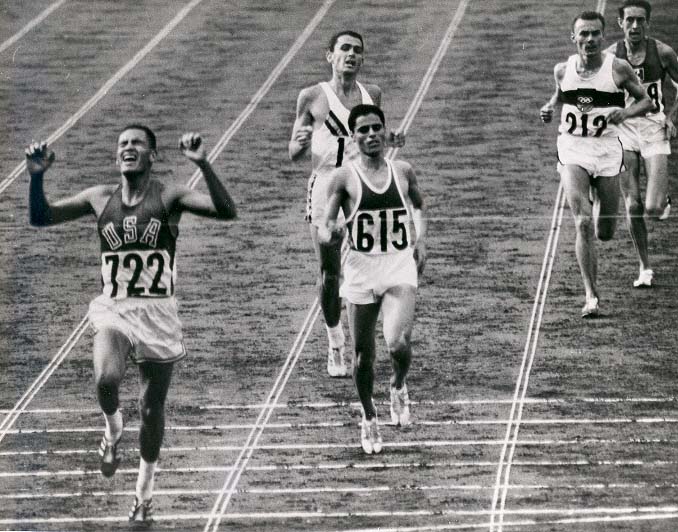
Mills’ story is well documented. His belief in self, his ability to mentally break down an epic distance into small discrete moments, helped him close the two-minute gap he once faced. Mills later said, in this video, that he started to think about how he’d first decrease his time by 25 seconds. He concluded that simply holding a faster pace for one second longer per lap would do the job. Afterall, it’s a 25-lap race. Mills’ logic followed that a 50-second decrease would require the faster pace for two seconds longer per lap.
A simple pattern and a simple remedy, but not such a simple plan to execute on the Olympic stage.
On that day in 1964, Mills set a remarkable personal best as he outsprinted Clark and Gammoudi for the gold.
Sport is inherently measurable. At its most basic, there’s the win or the loss. In sports like cross-country skiing, where there’s one winner, most athletes fill in the ranks from second to, say, 50th. Yet, the non-winners still strive. They train. They attempt to fine-tune their “engines” for a window of elite performance that may last only a few weeks annually or even a single race. All this in an attempt to decrease the physical performance gap between themselves and the winner.
Still, sometimes that’s not enough for the breakthrough. Using Mills’ example, he’d say the mental piece was the breakthrough.
Rich Gordin, a Utah-based sport psychologist, asked this author to watch the Billy Mills clip. It’s also something he’s recommended to many top nordic athletes. Through his first foray into psychology and sport in the ’70s with the University of Utah’s women’s gymnastics team, perennial NCAA champions, to his work with the 2010 Olympic-medal-winning U.S. Nordic Combined Team, Gordin remains bullish on psychology’s place in sport.
Yet Gordin says many elite athletes are reluctant to seek the help of a psychologist.
“Most of the endurance runners and cross-country skiers are primarily, I think, initially most interested in their physiology,” he said. “I can put somebody on a treadmill and I can tell you their VO2 max, I can tell you their lactate threshold, I can tell you biomechanically exactly how your skis are and where your poles are.”
Sport psychology, Gordin admits, is less data-driven.
“Why is it not utilized as much is because you cannot see it,” he said. “It’s harder to measure. Cross-country skiers are very much like endurance runners. When you bring a sport-psych person in, a mental trainer, they don’t really get it … because they think it’s all physiological; ‘if I’m physiologically able to pound someone into the dirt, that’s all I need.’ ”
Initially, Gordin needs to establish athlete buy-in. That, he said, begins with the basic belief system. In this case, the idea that an athlete believes they can accomplish a specific goal.
“And it’s not a fake thing. It’s not a little red choo-choo train, ‘I think I can I think I can.’ That’s superficial. It’s a start, but it’s not enough,” he said. “I’m talking about anybody I’ve ever worked with. And when these people finally flip the switch — I call it flipping the switch when it happens — it clicks. You have to believe you belong there.”
“It’s not a little red choo-choo train, ‘I think I can I think I can.’ … You have to believe you belong there.” — Rich Gordin, professor at Utah State University and sports psychologist

Sophie Caldwell (U.S. Ski Team) racing to 22nd in the women’s freestyle sprint qualifier at Stage 3 of the Ski Tour Canada in Quebec City. (Photo: FlyingPointRoad.com/NNF)
The current U.S. Ski Team has flipped the switch — top-10’s at the World Cup level are almost expected, podiums a realistic goal. Let’s take the 2016 Tour de Ski as an example. The U.S. women’s team scored two World Cup stage victories — starting with Sophie Caldwell in the freestyle sprint and Jessie Diggins in the 5 k freestyle individual start.
Pam Lemons is a Park City-based sport psychologist employed by the U.S. Ski & Snowboard Association (USSA) counseling cross-country and mogul skiers, and non-snow athletes like golfers, lacrosse and soccer players. She’s one puzzle piece that has allowed the U.S. women’s nordic team to believe. Lemons said that belief, and the reality of consistently performing well has been created incrementally.
A psychologist for multiple USSA teams, Lemons emphasizes core mental practices for effective physical athletic performance. She teaches skiers to communicate, set clear goals, and practice purposefully. Purposeful practice, Lemons explained, makes effective and efficient use of the athlete’s time.
“So when you go out and you are doing double-pole intervals, you don’t just go out and wing it,” she said. “You have a very specific goal in mind for that particular day, and the whole premise — and I try to get the athletes to understand this — is if you just go out there and wing it, then you are not building upon the structures that are going to make you better.”
The mental training Lemons prescribes also places a premium on journaling.
“The journaling allows for a record. We are looking for trends so we can if we see that there is a trend in behavior. Then we know, especially in cross-country, when they get so tired and their energy output is great it could be that, ‘Oh my gosh, I noticed that at the end of the camp that I’m not as successful at double poling or sprinting.’ Maybe they are tired. We will be able to see that from a mental standpoint and from a physical standpoint. Much the same as you do training journals. It is a training: it’s mental training.”
In the journal, Lemons asks that athletes document specific goals. She calls these goals “OFI’s” — Opportunities For Improvement. For example, if a skier is focusing on striding, they outline that as a journal entry.
“And they might say, ‘Today my training went really well. I felt strong. I felt like my technique was excellent, but my kick wasn’t what it should be,’ ” she suggested. “ ‘And so the kick then, tomorrow when I do my training, I will focus on sending my legs,’ or whatever they need to do, they will have a specific technique that they may work on.
“I have them document that, and then at the end of the week they can determine whether or not it was successful,” she continued. “And maybe they did something really, really well and they didn’t do something as well. That’s an OFI — they then become the goals for the next day or the next week.”
The journal becomes part-training log and part-guide, a reference for each athlete to discover where they have been, where they’d like to go and how to get there.
Lemons had this anecdote about why journaling is effective. “I had one athlete at a camp, and she came back from the camp and she said it was a horrible camp. I said, ‘Really? Tell me why.’ ‘Oh my gosh, it was the worst camp ever … I didn’t do x, y, and z.’ And I said, ‘Well, let’s see what the goals were for that camp? Let’s just look at it and see what you were planning on doing and what you did.’”
The athlete fortunately had a written record — the OFI’s and the goals — to cross reference.
“‘Did you meet goal number one?’ ” Lemons asked. “ ‘Oh yeah, I did.’ ‘Did you meet goal number two?’ ‘Oh yeah, I did.’ The reason she said the camp was awful was because the last day she was stinking it up. In her mind, all she remembered was that last day. Because she journaled, she really then changed her whole reflection about that camp.”
The skier was able to understand she was, in fact, moving closer to her overall goals. In this instance, the journal can be a safety net. According to Lemons, here’s why: humans have a tendency to recall, say during a weeklong training camp, the first and last things that occurred.
“It’s called primacy and latency,” Lemons explained. “You don’t want to leave your reflection to your memory. You want to be able to document these things.”
The journaling allows athletes to thwart our wiring for primacy and latency, allowing them to see the bigger picture and discrete trends.
Sport Psychology at the National Level
Chris Grover, head coach of the U.S. Cross-Country Ski Team, has been part of the team’s coaching staff since 1999. He took a two-year hiatus in 2004 and has been with the national team since 2006. During his tenure, he’s seen sport psychology become more fully integrated into the team’s methodology.
Grover noted that he’s witnessed a simple yet critical change: the increased number of providers available to U.S. Ski Team athletes.
“When I began working for the national team again in 2006, we were looking at one provider for the entire team in kind of one-size-fits-all strategy,” Grover said. “And now we are using one, two, three, four, five, I believe five different providers for the team. People can find someone that they really click with, someone that they like to work with.”
According to Grover, like any group, the needs of the team are varied. As a result, the team does not use group-wide sessions as a regular practice. It’s up to the athlete and provider to do what works best.
Grover said he does intervene when the situation arises.
“Where we do interact is [when] we are seeing behaviors or lack of skills or what have you with an individual athlete and we are talking about that with them and then encouraging them to discuss that topic with their provider,” he said. “We are talking directly with the provider in order to make sure the athlete is getting those needs attended to.”
North of the border in Canada, the understanding that sport psychology should hold a firm place in coaching and mentoring nordic skiers is not lost on Justin Wadsworth, Cross Country Canada’s head coach for the last five seasons. (Wadsworth was interviewed for this article before he stepped down from the position this spring.)
One key difference between the Canadian and U.S. models are the number of providers associated with the Canadian program.
“We have one team sport psychologist that works with the whole team, and then he is available to work individually as well if it was a match,” Wadsworth explained. “If they choose to go outside our team sport psychologist, we ask them that if they work with a psychologist to make sure that that psychologist is working with our team psychologist so at least things are getting downloaded and there are notes being taken and referenced back to our team sport psychologist.”
Wadsworth’s belief in sport psychology is profound. His wife, multiple Olympic medalist Beckie Scott, worked personally with noted sport psychologist Terry Orlick.
“I saw it with my wife,” Wadsworth said. “It was night and day when she started working with Terry Orlick. Though her gains with him, it was, I would say, life changing or career changing.”
At the same time, that close-to-home success story sometimes led to frustration.
“I’ve also seen those athletes that I know for sure could be in the top 30 and it’s all mental,” Wadsworth said. “And that’s the most frustrating thing because you really try to get people to work with a psychologist. But again, it’s not one of those things you see benefits from right away, and it’s really hard to show small progress. So its really, really tough. I would say ninety percent of our team needs real hardcore sport-psychology work. And about ten percent of that ninety percent is actually doing it right now.”
Wadsworth said large budget cuts prevented him from fully implementing team wide use of sport psychology. But at the top end of sport, Wadsworth believes sport psychology remains a game changer.
“It’s probably more important than the physical training,” he said. “Any monkey can do the hours and the work, but to have the confidence and the confidence to rest and have the confidence when you come to the winter and have a game plan, all that stuff just doesn’t fall in your lap. You have to work on it.”
The Junior Scene
For some, perfection is a carrot. Yet a lack of perfection is something most junior skiers — arguably the most important part of any development pipeline — know well. There’s the expectations of coaches, peers and parents, all of them constantly wired to as-it-happens results. Add that mental pressure to a junior skier’s changing body and it’s no wonder some coaches turn to sport psychology.
Josh Smullin, head coach of the Steamboat Springs Winter Sports Club’s U20/U18/U16 cross-country teams, holds a master’s in sport psychology. Smullin has provided psychological-skills training to athletes of all disciplines at the Winter Sports Club, and he asserted those skills can help improve an athlete’s performance.
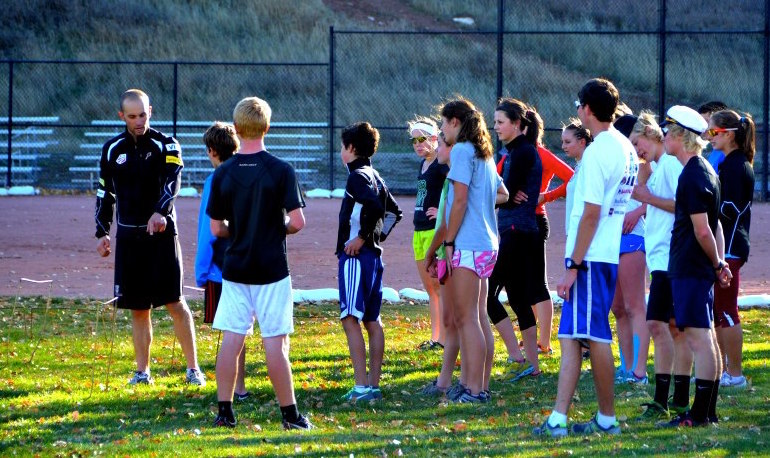
One common issue Smullin has grappled with recently is helping his junior athletes navigate the different rates at which teenagers develop muscle. Watch any boys’ U16 race and you’ll see some kids honed and toned, while others remain sinew and bones. Smullin said he has encountered this with one of his most driven athletes.
“That’s a really challenging thing, when you have an athlete that doesn’t develop early and they are getting beat by guys that don’t, say, train as much as them or have as good of technique,” he explained.
As he counsels athletes, Smullin highlights a core tenant of sport psychology: “Focusing on the things they have control of,” he said. “That’s perfecting their technique, utilizing what they have as their strengths. For instance, I have a small guy who can really climb well. Maybe they are going make their make their move on the steep hill that the bigger guy might not be able to. Maybe all his muscle and his mustache will not be an advantage.”
Facial hair aside, keeping all kids in the sport remains a goal. Smullin says he emphasizes the long term.
“Keeping the kids that are getting beat just because of their size motivated,” he said. “And showing them that you believe in them. At some point down the road, they are going to make that jump, and when they do, they are going to have all the other skills developed.”
The timing of physical maturity, however, is a two-sided equation.
“It’s also a major challenge to coach the kids that mature early, and I was one of them,” Smullin said. “They develop a mindset, ‘Oh, I’m just better than all these kids’. They don’t learn to associate hard work with what leads to their success; they just think they are better, and they are for a little bit because they are bigger and stronger and have more testosterone. But the problem for them is, the only reason you are faster is because you developed a little faster. These guys are fighting right below you, getting the better technique and doing whatever it takes to keep up with you right now, so that’s the other side of it.”
The pipeline from the junior ranks to the World Cup constricts as skiers age. The competition gets tighter, opportunities more difficult to achieve. Some athletes slow down, some get faster. Winning and losing are part of the learning experience. As clubs are responsible for developing athletes that can stay in the game, perhaps placing a premium on mental training along with logging hours makes the most sense. Yet with juniors, it’s a balancing act.
Smullin admits, kids are already taxed. Realistically, sport psychology does not allow juniors to supplant training hours with mental training.
“Ultimately, we have to prioritize the time we do have with the kids, and some of these programs, we take a lot of their time and they have busy lives,” he said as he considered how athletes try to fit it all in.
Even with his psychology background, Smullin believes the greatest benefits sport psychology provides may come on the latter end of a junior skier’s race path. Smullin recalled the skier who remains a late bloomer.
“Let’s say that kid has to be in the sport and stay in the sport to have any chance,” he explained. “Second thing, they have to do the training. That’s the most important to even have a chance. Sport psychology can’t just overcome someone who trains 400 hours beating someone who trains 600 hours. Where sport psychology will likely make the biggest difference in terms of performance is when somebody is at the top level and all the fitness and the skills are so close — how are you going to beat somebody who is very similar to you and gain that extra 20 to 30 seconds?”
The International Scene and Mental Management
Jessie Diggins, of the U.S. Ski Team (USST) and Stratton Mountain School (SMS) T2 Team, racked up 16 top-10 World Cup results this past season, including five podiums and a career-first World Cup win. Posting consistent results and hyped as a podium threat throughout the season is a good problem to have. Yet success brings with it expectations and intense pressure.
Diggins, 24, has worked with the same sport psychologist since she joined the USST five years ago. Along the way, she realized that mental training is as important as her raw skiing speed. One aspect of mental training she cultivated is her ability to compartmentalize pre-race jitters. She calls it, “taking the nervous butterflies and making them fly in formation.”
Diggins clarified over the phone that stress is not always a negative.
“That’s not to say that all stress is bad stress,” she said earlier this month. “[My psychologist] has helped me learn that when I’m nervous before a race, to see that as at a sign that I am ready. You wouldn’t be nervous if you didn’t have a chance. So when I get those pre-race jitters, instead of being like, ‘Oh no, I’m wasting all this energy,’ I embrace it. This is my body telling me it knows something big is about to go down. It knows I am ready. It knows that that I’ve prepared.”
Beyond pre-race anxiety management, Diggins said she has learned to separate racing goals from results goals.
“You might finish a race, and you might think, ‘Wow, that was a kickass race. I felt completely together,’ and then you look at the results sheet and you are like, ‘crap,’ ” Diggins said. “So one thing she has helped me is to not simply put a number on a result sheet. To evaluate my performance independently from what anybody else thinks. Maybe my goal was to be super calm testing skis because I know it is going to be a tricky klister situation and I want to be super efficient and not be panicky. If I’ve accomplished that, then I can feel good about what I have done that day regardless how the race went.
“That is one way to keep the pressure of feeling like everyone is expecting me to get top-five in this result, or I’ve podiumed on this course before, what do I do? You just break it down into smaller goals for the day and you evaluate yourself on those goals, not on results.”
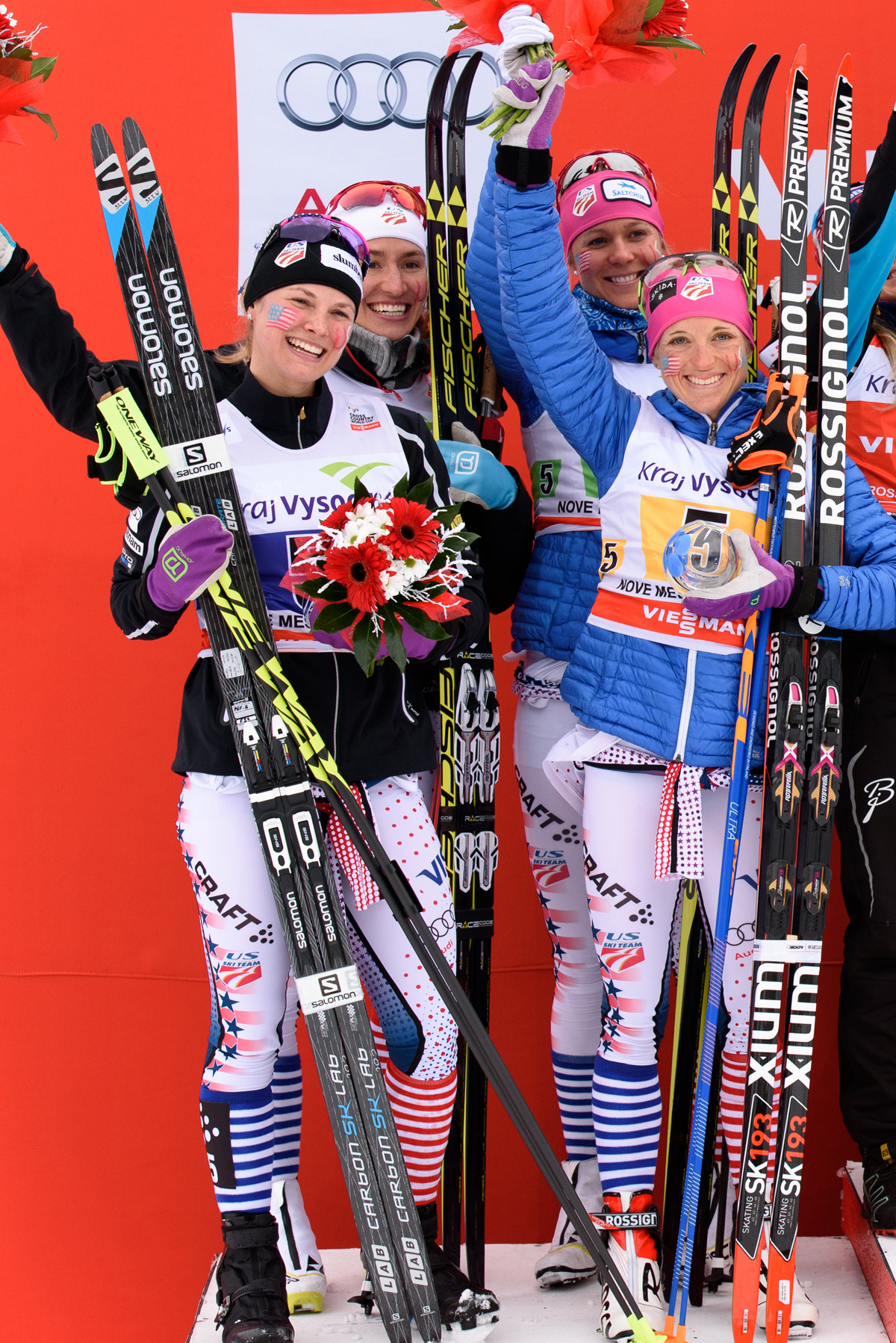
It’s a rare athlete who finds themselves unchallenged over the course of their career. Diggins’ arc was on an upswing this season while her U.S. teammate, veteran Liz Stephen, who prevously had been punching the accelerator full gas, experienced a deceleration. Stephen’s 2014/2015 World Cup campaign was stellar; she finished the season ranked seventh in the distance overall and 10th overall on the World Cup — both career bests.
“I came off one of my best seasons ever, last spring, and I was really inspired and psyched,” Stephen, 29, said over the phone earlier this month.
But back at her training base in Park City last summer, she reflected that perhaps at times she became a bit overambitious with her training load.
“I think that I kind of hit a stalemate in terms of my mental enjoyment of the sport,” Stephen said. “At some point I didn’t know whether I was just so burned out mentally that I felt tired all the time or whether I was tired and I felt bad mentally. I think they are kind of hand in hand and it’s hard to tell which is which. But at some point, you kind of realize that this is not the mental state I want to be in.”
Stephen explained she never really could pull up from her perceived performance nosedive except during team relays on the World Cup, where she said, “I have a sense to be be able to forget my own issues because it’s for somebody else.”
Her ability to suffer for others paid off — the two World Cup relays in 2016 amounted to a third place followed by a best-ever second place for the U.S. women. And in the final stage of the Tour de Ski in Val di Fiemme, Italy, Stephen busted out a prime solo performance as she posted the second-fastest climb time up the Alpe Cermis. She finished the Tour in 19th overall.
Beyond the relays, Stephen’s evaluation of her season was blunt: “When you stack yourself up against you, sometimes you are your biggest enemy out there,” she said of her inability to breakout. “And I found that it was really hard to get out of my own way this year.”
Despite the harsh self-assessment, Stephen was still nominated to the A-team — at season’s end, she was 28th overall on the Distance World Cup. But she still considered the season below her expectations.
“All of a sudden I’m at the older end of the spectrum,” she said. “And I think that the sport has gone from being just this happy-go-lucky, fun, ‘I ski because I love it’ thing, to why am I doing this? And what is the purpose of being 29 and pursuing a medal or whatever it is that I am pursuing? The thought now is kind of, ‘I need to restructure why I am skiing. What is my purpose in the sport? Why is sport important be it skiing or anything else? And what am I setting out to do?’ … I spent the year doing what I should’ve loved to be doing and just not being able to do it the best I could because I was too worried that what I was doing was not meaningful enough, and that’s not the way I want to live my life.”
Heavy questions — questions with no immediate easy answer for an elite athlete trying to reset for the 2016/2017 race cycle.
Stephen stated several times that her goals in life are simple: to live an inspired life, live a meaningful life and to try to give other people meaning and purpose in their lives, too.
“It’s really easy to to think that what you are doing is not affecting others and that’s really hard for me to swallow,” Stephen said.
Fortunately, Stephen’s dilemma is not hers to solve alone.
“I think that the psychologist helps the athlete figure out why they are doing what they are doing so that then they can work backward and say, ‘OK, if your purpose is to inspire people, how are we going to take that feeling of purpose because somehow a medal doesn’t do it for you … in terms of like a goal? … We want you to figure out how to purposefully live this skiing lifestyle for the next two years in a way that in turn can get you to perform to your highest ability,’” she observed.
Stephen acknowledged her life as an elite athlete remains a gift. Yet staying positive when results don’t come is downright gritty mental work.
When asked how confident she felt looking at an 18-month grind ahead of the next Winter Olympics, she replied, “I think that it depends on the day you ask me, honestly. Right now I don’t feel invincible. I don’t feel confident. … Right now, if I had to suit up, the fitness is not there and I know that. The part I love about this, or part of it, is the training. Like I tend to overdue do it, because I just love the training, it is why I am involved in sport and the community and that’s what got me in it, that’s why I’m still doing it.”
In cross-country skiing, success is measured in seconds. Maybe that’s the margin for a training-camp invite or a European race trip. As sport psychology becomes more readily available and a greater part of the success equation, mental training may become as routine as checking the HRM and uploading the data to a training log.
Helping athletes stay positive, reflective and making their endeavors meaningful can be a struggle at any level of competition — Bill Koch League through the World Cup. Sport psychology appears to be another tool to make improvements and balance success and perceived failure.
Lemons, the USSA psychologist, had these parting words as she questioned why sport psychology wasn’t more of a regular part of sport, “If you can even improve a little bit, if you can maximize your opportunity, why not?”


