From the FasterSkier archive — posts syndicated from athletes’ and coaches’ own blogs between 2004 and 2012, kept online as published. Current coverage is at fasterskier.com.

Tag: golden trail series

  • The Norwegian Experiment: Sophia Laukli’s Back-to-Basics Reboot

    The Norwegian Experiment: Sophia Laukli’s Back-to-Basics Reboot

    By the time Sophia Laukli picks up the phone from Lillehammer, it’s raining again.

    “There is, like, a small 1k loop up at Sjusjøen,” she says, “but it’s… yeah, it’s, like, raining every day, so it’s not really great conditions.”

    On paper, Laukli is one of the most intriguing dual-sport athletes in endurance sport: a U.S. Ski Team member and Olympian who has also become a force in international trail running. In person—or over Zoom—she’s thoughtful, understated, and very clear on one thing: the way she trains now, in Norway, looks a lot more boring than the world might imagine.

    You come to Norway expecting secrets, she says. What she found instead was simplicity.

    “They’re so simplistic around ski training,” Laukli explains. “It’s not rocket science. You can do the same… You do essentially the same workouts every single week, all year round.”

    That realization—combined with a crash-and-burn experiment as a full-time runner and a new coaching relationship with her boyfriend, longtime Norwegian pro skier Gjøran Tefre—has quietly reshaped her career.

    As this Olympic season approaches, Laukli’s bet is clear: train like a skier, keep the training simple, stay within herself, and let the results show up in both sports.

    Maine Roots, Late Commitment

    For all the talk about Norway, Laukli’s story really starts in coastal New England.

    “I was actually in the Boston area until I was, like, six or seven,” she says. Then came a year and a half in Norway, and finally Yarmouth, Maine—the place that still feels like home.

    “From my memories and my ski memories, it’s all from Maine.”

    Her father is Norwegian, so skis were always around. Winters meant skiing, family trips to Norway, and a life that looked, from the outside, like an early pipeline to the World Cup. From the inside, it didn’t feel that way at all.

    “It was a very recreational thing,” she says. “I didn’t really enjoy it that much. It was just kind of like, obviously, we’re gonna ski because it’s winter. But I didn’t know anything else.”

    In Maine, her parents weren’t just ski parents—they were essentially the ski people in the community.

    “They were my coaches,” she says. “And very present in the ski world, which was hard for me… A part of me became pretty hesitant towards skiing.”

    She gravitated toward soccer and tennis. Skiing felt obligatory.

    “Up until midway through high school, skiing was kind of just something I did because my family did it,” she says.

    The idea of becoming a professional athlete wasn’t just unrealistic—it was unimaginable.

    “I was gonna just go to school and be a nerd or something,” she says. “Being a professional skier wasn’t even a consideration.”

    Then came the pivot: joining the iconic Yarmouth High School ski team, coached by the legendary Bob Morse.

    “It opened my eyes a lot,” she says. “It wasn’t super competitive, but it showed me the sport that felt forced on me was actually something I liked—and could be really good at if I tried.”

    Looking back, she’s grateful it took so long.

    “I’m super happy I went through that zero-pressure, uncommitted relationship to skiing,” she says. “Today I have so much motivation to be 100% committed… and I’m far from burnt out compared to many skiers who commit when they’re 12.”

    Discovering Running (By Hating It First)

    The other half of her dual-sport identity—trail running—comes from an even stranger origin story.

    “Running was something that I actually hated,” she says, laughing. “I really, really, really did not like to run when I was young.”

    Running in Maine didn’t help.

    “It just wasn’t enjoyable to run there,” she says. “Unless you really liked running on roads and golf courses.”

    She ran cross country her senior year only because the coach wanted her on the roster for states. She ran track for one year and found it “horrible.”

    “It wasn’t until I started training out West in the summers, finding mountains… that I actually enjoyed running.”

    Those Western US trails served as the practice grounds, preparing Laukli for some of the world’s biggest trail races. But first she had to figure out college—and how training would fit around it.
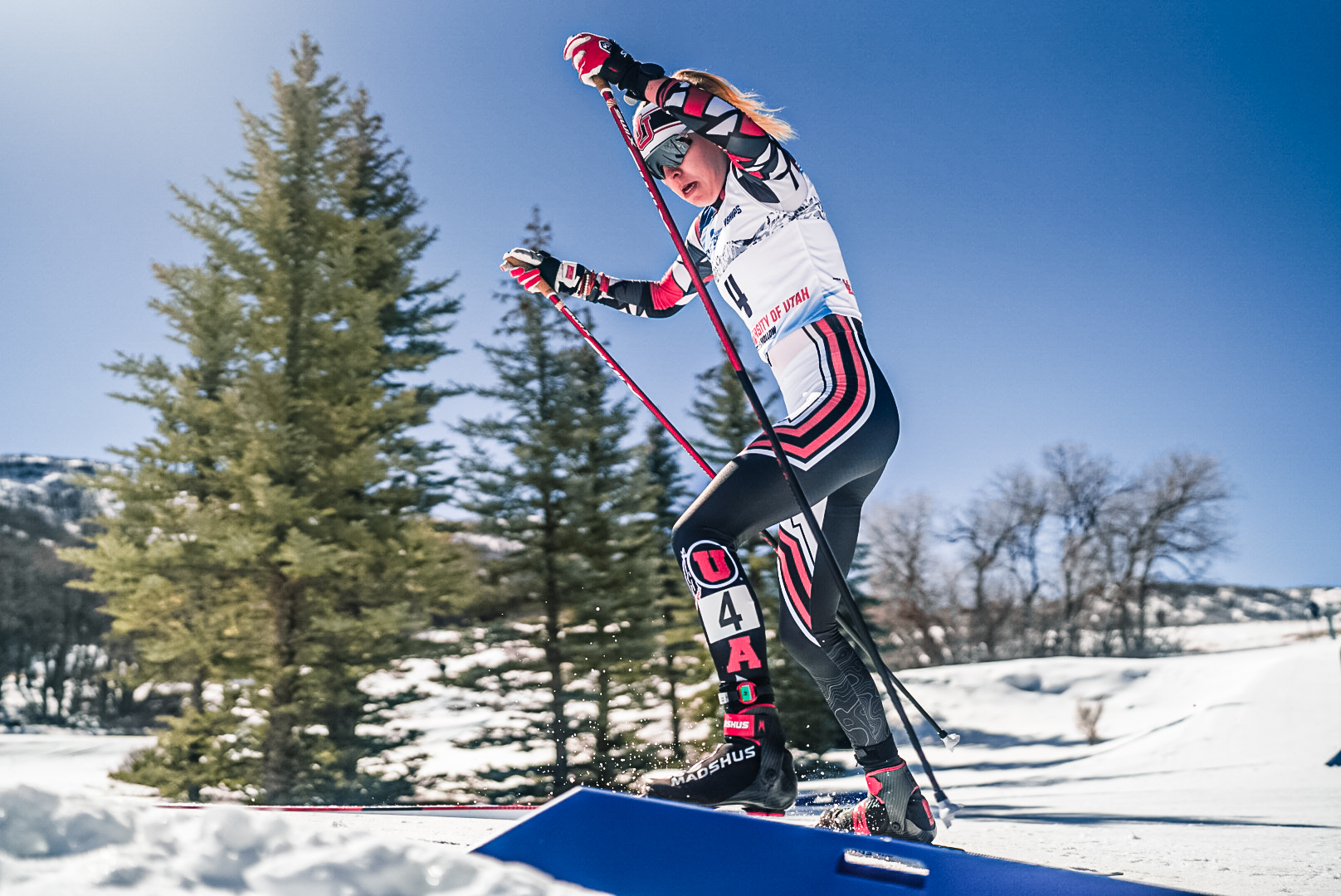
    Sophia Laukli takes the collegiate national title in the 15 k skate in 2022. (Photo: Tobias Albrigtsen / @untraceableg)

    Middlebury to Utah: Building a Life Around Skiing

    Laukli chose Middlebury because, at the time, academics were the top priority.

    “I knew I didn’t want to be done skiing,” she says, “but it wasn’t the priority.”

    Covid changed everything. Remote classes allowed her to chase early World Cup opportunities without living on campus. Once Middlebury required students to return in person, the timing coincided with the rapid ascent of her ski career.

    That led to a transfer to the University of Utah.

    “Utah is built for athletes,” she says. Most classes were online and flexible. She chose economics not out of passion but practicality.

    “I didn’t necessarily choose the thing I thought was interesting,” she says. “I chose what would best suit my ski career.”

    Now, even as a full-time pro based in Norway, she’s studying again—an online Norwegian MBA.

    “I’ve never been someone who can come home from training and sit on the couch until my next session,” she says. “I think I was missing having more than just training.”

    Balancing skiing and school helps her prevent the sport from consuming everything.
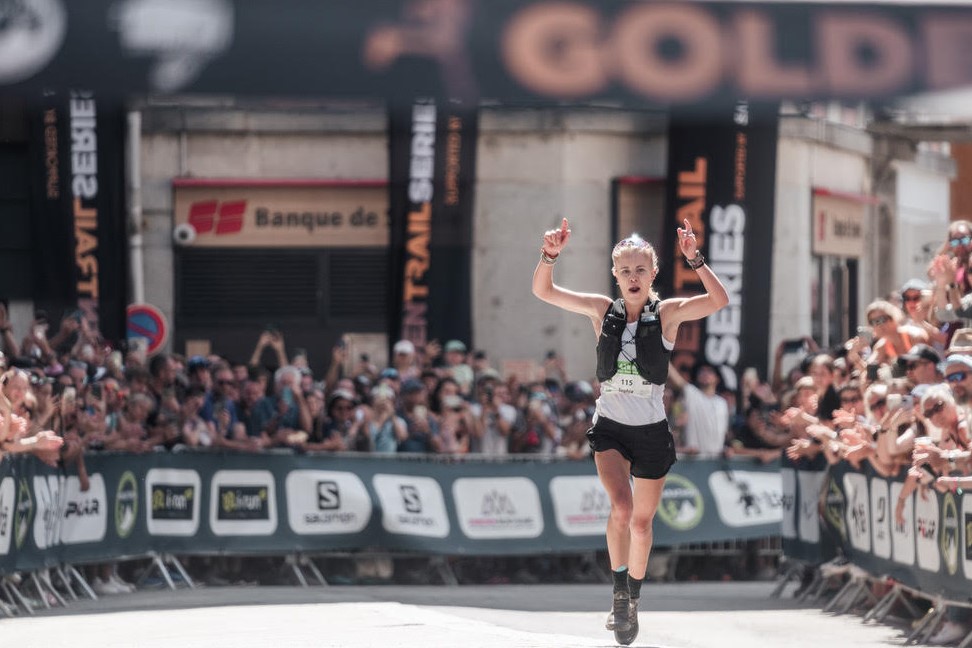
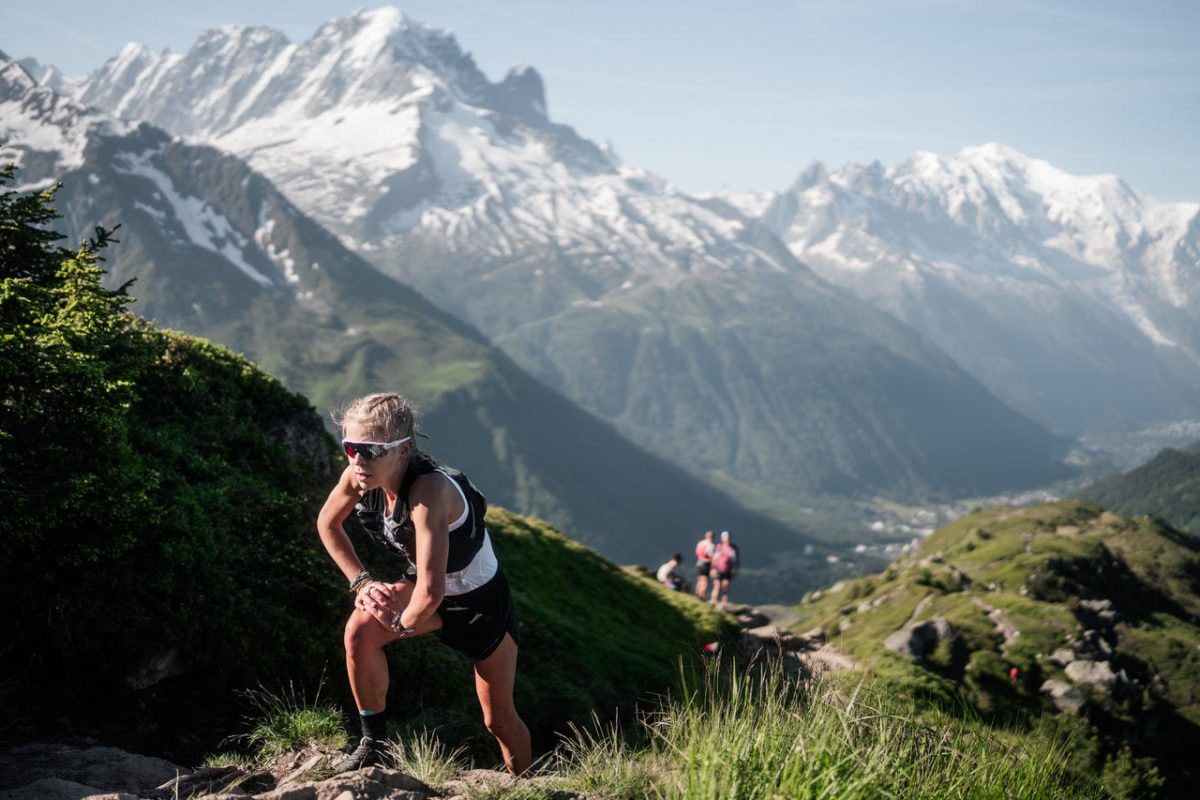
    Over flowing crowds filled the streets at the Golden Trail Series finish line in Chamonix in 2023. (Photo: GoldenTrailSeries and @the.adventure.bakery,® Mont-Blanc Trail Marathon.: ©GoldenTrailSeries® – Zegama Aizkorri – Jordi Saragossa)

    The Running-Only Experiment That Failed

    Last year, after the World Championships, Laukli decided to lean all the way into running. It seemed logical—if she’s good at running without specifically training for it, imagine how good she’d be if she did.

    “I always thought I’d be a much better runner if I had just run,” she says.

    So she tried it. No roller skiing. No ski sessions. Just running—every day.

    “I was running 10 to 12 hours a week,” she says. “And I was so tired each day. I was getting worse and worse at running. And obviously not good at skiing.”

    The experiment collapsed at a race where she felt utterly depleted. She flew home, frustrated and confused. That’s when she sat down with her boyfriend, Gjøran Tefre.

    “He said, ‘It’s fine. I’ll write a plan. Don’t freak out,’” she says. “‘We’ll get you a coach, but ski training is straightforward. We’re gonna baby you into ski training again.’”

    Two weeks completely off. Then a return to “textbook” ski training.

    Within a week of roller skiing, something wild happened: her running started feeling good again.

    The pattern was clear. She ran better when she trained like a skier.

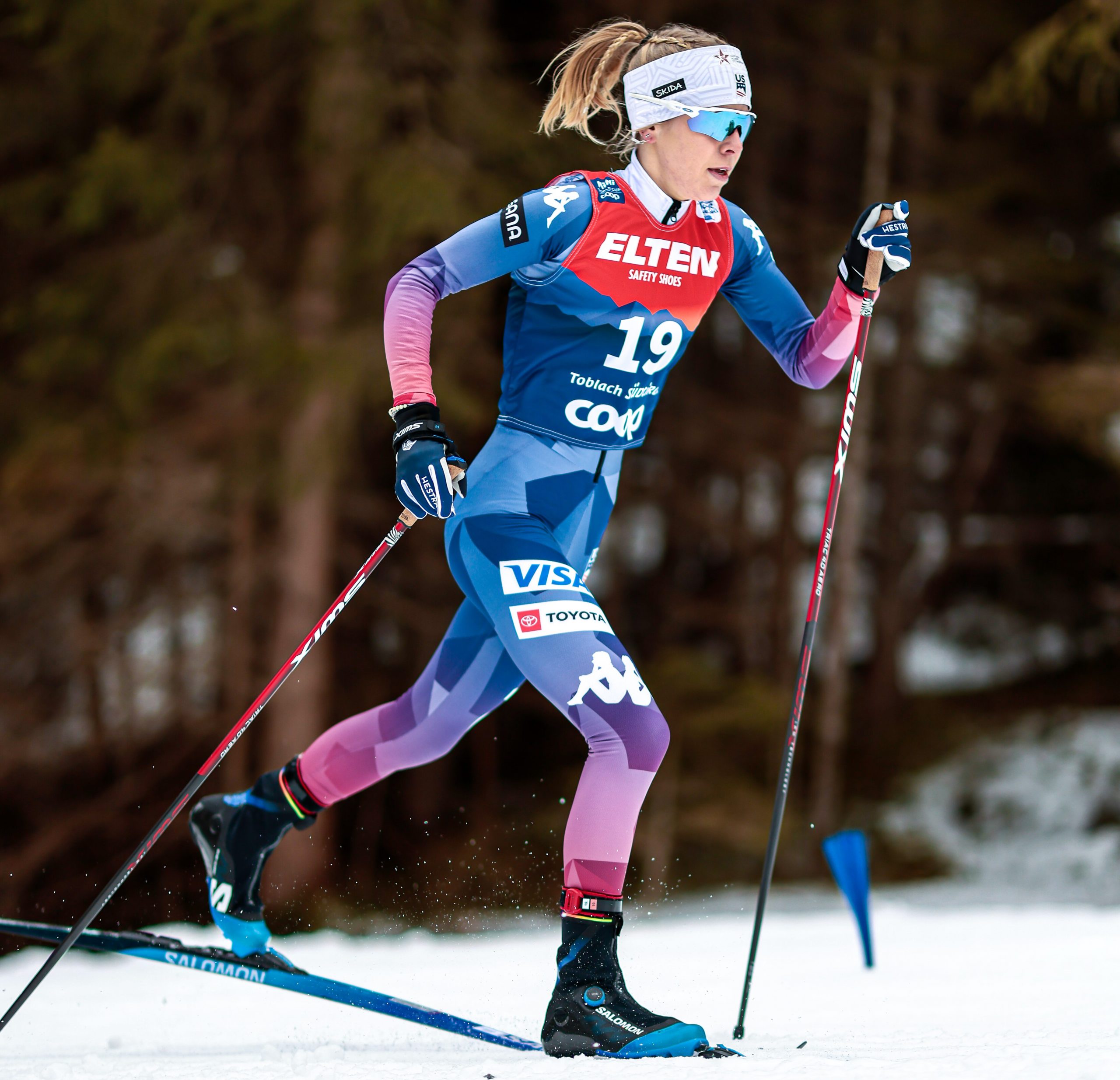
    Sophia Laukli (USA) during the World Cup 20km in Engadin (SUI). (Photo: Authamayou/NordicFocus)

    Kristen Bourne Saw The Same Thing

    “Last season was definitely a struggle for her, both running and skiing,” says U.S. Ski Team assistant coach Kristen Bourne, who monitors Laukli’s training load. “And she’s just trying to figure out why.”

    For Bourne, the shift wasn’t just physical—it was psychological.

    “I’m a huge believer that what makes a difference from a good athlete to a great athlete is the athlete who is very invested in their own process,” Bourne says. “The ones who are thinking, advocating for what they need—not just deferring to a coach because the coach’s word is gospel.”

    That ownership, she says, is new in Laukli.

    “She’s definitely leaning into that more this year,” Bourne says. “Which is really cool.”

    Sophia Laukli and Gjøran Tefre at the Cross Country Skiing World Championships. (Photo: Courtesy Photo)

    The Gjøran Factor: Coach, Partner, Check on Reality

    Mixing a relationship with coaching is a delicate thing. Laukli knows the risks—she’s heard them all.

    “I’ve been told by many people this is not a good idea,” she says. “And other people are like, ‘Wow, I wish I could do that.’”

    She also knows why it works.

    For one, they communicate constantly. For another, his intentions are pure.

    “One of the hardest parts of finding the right coach was that they either only cared about skiing or only cared about running,” she says. “He’s the only one who actually wants me to do well in both.”

    Still, she doesn’t call him her “coach.”

    “I want our personal life and work life to be separate,” she says. “We need other people in the room.”

    That’s where Bourne plays a key role.

    “At this level, athletes have so much experience—they do know what they need,” Bourne says. “So my goal isn’t to dictate everything. It’s to help Sophia articulate what she feels and translate it into training.”

    The two systems—Tefre’s daily presence and Bourne’s structured oversight—meet in the middle.

    One of the key themes that has emerged from all our recent interviews is the importance of making time for fun. Sophia Laukli and Gjøran Tefre embrace that notion entirely. (Photo: Courtesy Photo)

    The Norwegian Experiment: Simple Workouts, Serious Control

    When Laukli moved to Norway, she expected cutting-edge workouts—maybe some secrets behind the country’s dominance.

    “It’s almost been the opposite,” she says. “They’re so simplistic around ski training.”

    Five-by-ten-minute intervals around the Holmenkollen loop. The same long, easy days. Repeated blocks of threshold.

    “You’re gonna become better if you do five-by-ten once a week for 12 weeks in a row,” she says. “You’re gonna become better.”

    The key difference from the U.S.? Control.

    Almost every Norwegian skier has a weekly treadmill “profile test,” which involves six-minute stages at a 10 percent incline, with lactate samples taken at each step and heart rate recorded.

    “It’s to see if you’re in the right range,” Laukli says. “Not to get better each week.”

    Bourne sees value in that simplicity.

    “Sometimes a coach wants to prescribe the flashy intervals,” Bourne says. “But honestly, the athletes who can execute the basics really, really well—that’s where the gains are.”

    She sees Laukli finally embracing that mindset.

    “Athletes shouldn’t feel like training is something done to them,” Bourne says. “They should feel like they’re building something in collaboration with the coach. Sophia is starting to live that.”

    Laukli agrees that American juniors often overtrain because they don’t know any better.

    “If I go too hard too many times in a row, it’s a much worse year,” she says.

    The hardest part? Slowing down when training with Norwegian women who can drop her on almost every roller-ski interval.

    “Every interval I do here, I know I’m not gonna keep up,” she says. “At 17, that would’ve crushed me. Now I have evidence that I can beat them in the winter.”
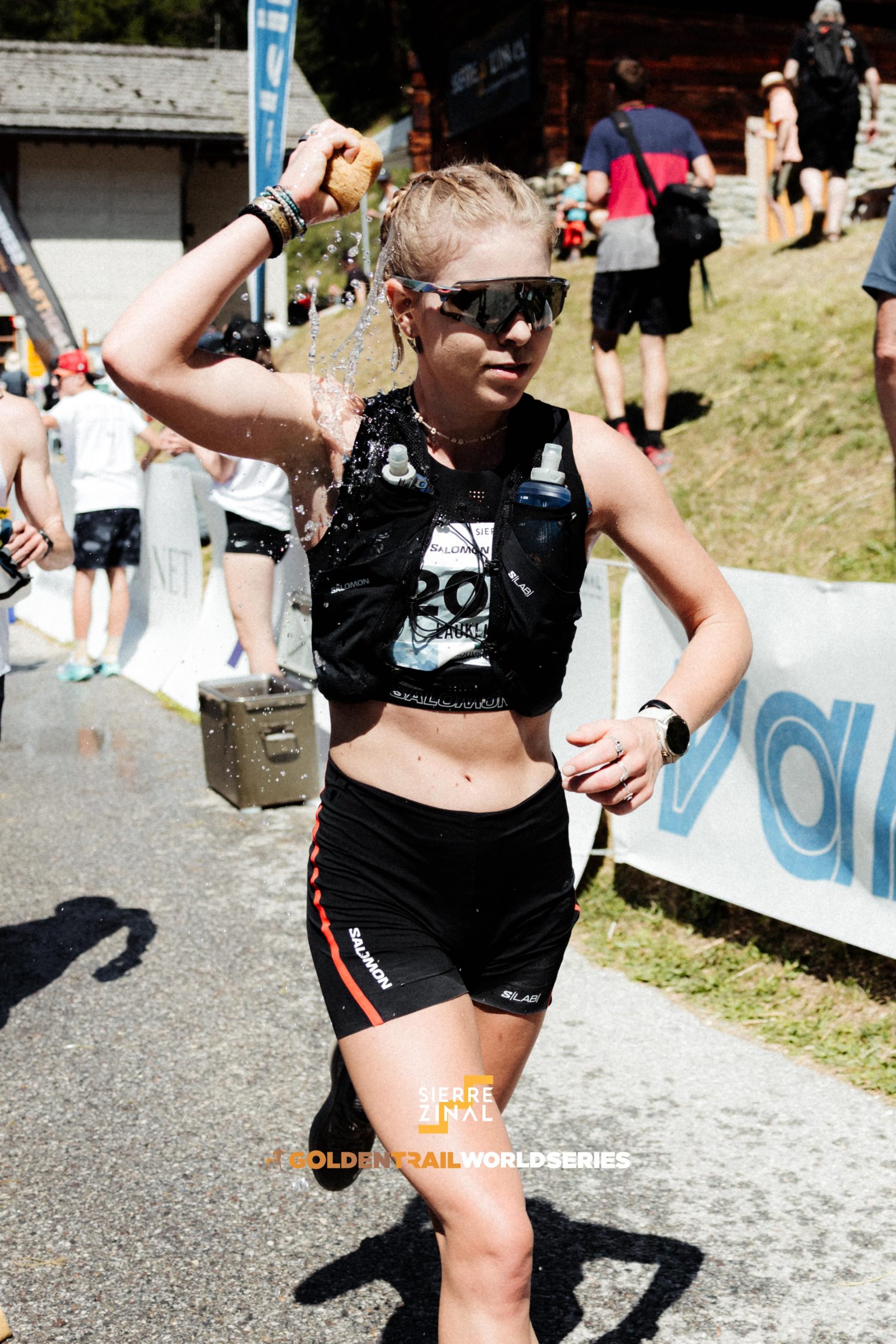
    Laukli racing Sierre-Zinal in the Gold Trail World Series in 2024. (Photo: @rising.story_@colinolivero_GTWS_SierreZinal

    Two Seasons, One Mindset

    Running and skiing back-to-back seasons creates year-round excitement—and pressure.

    “I have two competition periods,” she says. “It’s easier to motivate. But it also means I’m 100% consumed by performance all year.”

    That obsession became a barrier last year. Now, Laukli is working with Bourne and Tefre to shift her mindset.

    She has clear goals for skiing: the Olympic 10k, the Olympic relay, and the final hill climb at the Tour de Ski.

    She has equally specific running goals: above all, returning to Sierre-Zinal, where she once ran 2:53 on the iconic 31 km route.

    However, she’s no longer defining success solely by results.

    “There’s so much I’m working on—technique, tactics, how I ski courses,” she says. “It’s easy to be on a start line and focus on whether those things show up.”

    Bourne sees that evolution clearly.

    “Sophia has the instincts of a really high-level athlete,” Bourne says. “But learning to trust those instincts—rather than obsessing about the result column—is where she’s growing most.”
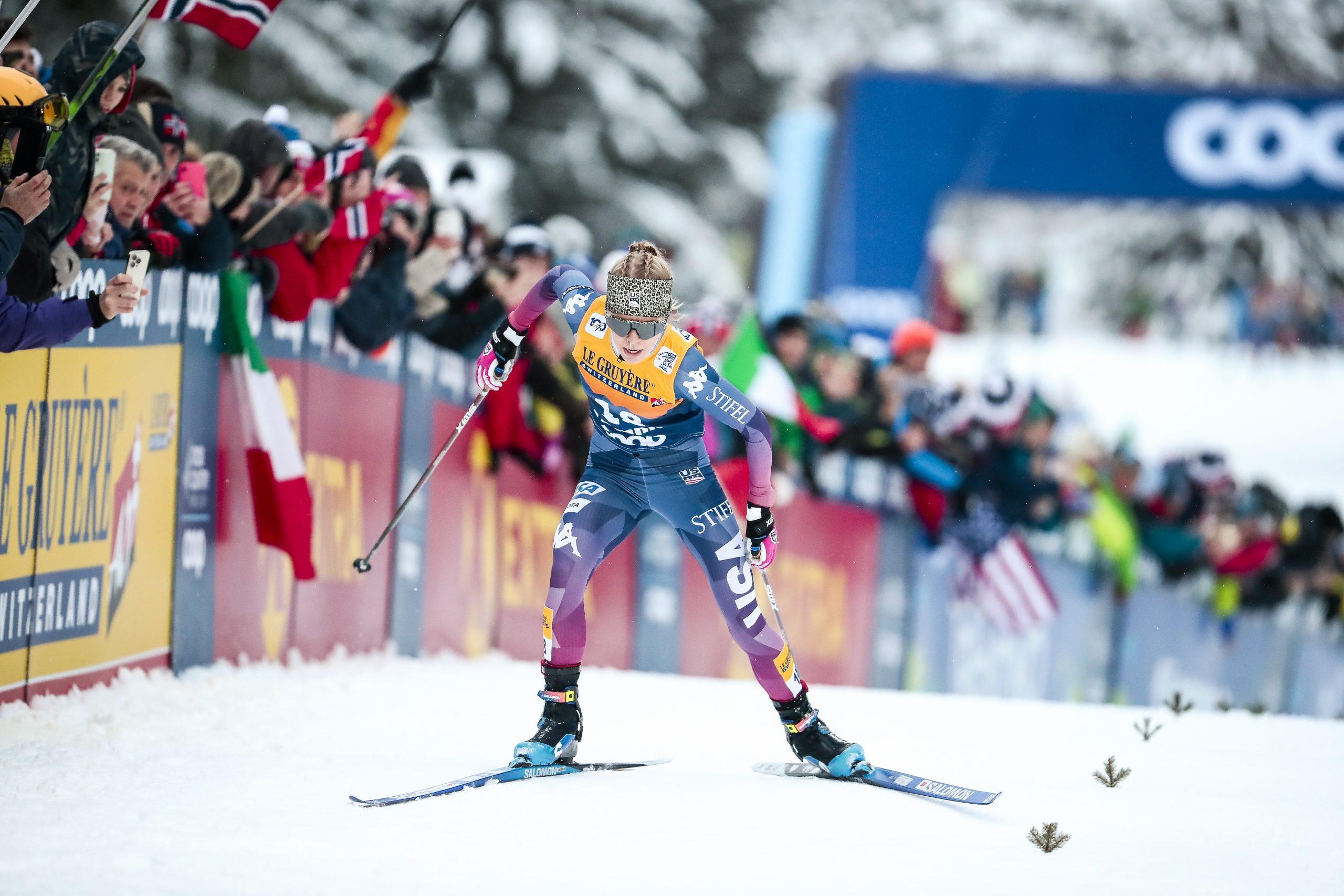
    Laukli nears the finish of the final climb of the 2024 Tour de Ski on Alpe Cermis, where she claimed the victory. (Photo: NordicFocus)

    Why Salomon Fits: One Athlete, Two Worlds

    For an athlete splitting her year between the World Cup and the Golden Trail Series, sponsorship could easily become complicated. Many runners work with running-only brands; many skiers work with ski-only brands. For Laukli, that would have been a logistical mess — and maybe even a dealbreaker.

    Instead, she found the perfect home with Salomon.

    “I’m super grateful that I get to have my sponsor, my main sponsor, support me in both,” she says. “Because then it’s a lot easier to focus on each season. I know that they’re supporting me in that.”

    That unified support matters. It lets her shift from skis to singlets without the politics of competing brand calendars and conflicting performance expectations.

    “I don’t really know if it would be possible for me to be a runner for another brand and a skier for a different brand,” she says. “Like, defending to them that I can’t run a normal running season because it’s the Olympics, or I need to drop World Cups so I can run better this year — that just wouldn’t work.”

    With Salomon, the opposite is true. Everyone’s aligned.

    “Having everyone be on the same team makes it manageable,” she says. “And a lot more motivating, because everyone has the same goal.”

    She works directly with Salomon’s France-based team, and Laukli lights up when she talks about the group behind her.

    “They’re all French,” she says, laughing — a nod to the company’s deep culture in both ski sport and trail running. It’s also a reminder that Laukli lives firmly in the middle of two endurance worlds that Salomon understands and embraces.

    That harmony matters. Her identity isn’t split; it’s blended. And Salomon is built for that.

    Sophia Laukli (USA) racing the World Cup Mass Start in Les Rousses (FRA). (Photo: Modica/NordicFocus)

    Sunny Weekends and Simple Breakfasts

    Some things have gotten simpler, like her pre-race breakfast.

    “I used to do peanut butter and banana,” she says. “Now I just have cereal. Apparently, simple is better.”

    World Cup life has also taught her the importance of flexibility.

    “You learn how to adapt,” she says. “Something will always go wrong on a race weekend.”

    When she’s asked for her favorite place on the circuit, she doesn’t hesitate.

    “Davos,” she says. “It’s sunny. You can have bad races, and it doesn’t matter because it’s a really nice place to hang out.”

    That small detail fits her evolving philosophy. Training is simpler. Goals are more balanced. And the sport—skiing and running—feels more sustainable.

    Somewhere between Maine and Norway, between Middlebury and Utah, between World Cup stadiums and alpine trails, Sophia Laukli has built a training model that doesn’t look flashy. It’s repetitive. It’s measured. It’s rooted in trust, communication, and doing the basic things right, over and over again.

    And if the Norwegians are right—and if Laukli’s instincts keep sharpening—those basics may be exactly what carry her to the front this season, in both sports.


    Love Stories Like This? Help Keep Them Coming.

    Feature interviews like this one take time, access, and care to produce. If you value thoughtful storytelling and independent ski journalism, please consider becoming a Voluntary Subscriber. Your support directly fuels the work we do to cover the people, places, and moments that make our sport special.

    Join the FasterSkier community!


  • Catch Me if You Can—Sophia Laukli: Part I

    Catch Me if You Can—Sophia Laukli: Part I

    This coverage is made possible through the generous support of Marty and Kathy Hall and A Hall Mark of Excellence Award. To learn more about A Hall Mark of Excellence Award, or to learn how you can support FasterSkier’s coverage, please contact info@fasterskier.com.

    Sophia Laukli is determined to remain a two sport athlete and sees each sport as helping the other. (Photo: NordicFocus)

    Sophia Laukli likes to keep busy. The 23 year old Maine native is coming off her best season as a professional skier. After a grueling four month World Cup season which included a trip to North America, and back to Europe, she still hadn’t had enough skiing. A post World Cup 30-kilometer Freestyle race as part of the Norwegian National Championships was just too tempting a target to pass up. For Laukli, the longer the race, the better; and Freestyle better than Classic. So, a 30-kilometer Freestyle would be the bespoke frosting on her World Cup cake.

    Sophia Laukli (USA) won the final hill climb at Val di Fiemme (ITA) in Tour de Ski. The longer and harder the race, the better for her. After the World Cup season finished, she placed second in the Norwegian Championships in the 30 k Freestyle. (Photo: NordicFocus)

    So, on March 23rd Laukli lined up with the best skiers that Norway had to offer and showed them why when it comes to distance Freestyle, she’s always a serious threat. Laukli finished second, ahead of Norwegian stalwarts Astride Oeyre Slind, Heidi Weng, and Margrethe Bergane. The only woman to beat her: Therese Johaug. Yes, she’s back. Unfortunately for the rest of the field, she doesn’t appear to have lost a step. Johaug beat the best Norway could throw at her by almost three minutes. But Laukli was philosophical about finishing second and recognized the context of the race. “That race was definitely for fun,” she said. “And it was an Individual 30-k skate race; I don’t think there’s any race that is better for me than that. I was very excited with my results. Everyone was kind of expecting it (Johaug’s performance). It’s highly likely that she’ll be coming back, so I guess we’re just going to go back to this life (Johaug winning races by minutes). But I had to think about it a minute, because the last time I was racing her, I would have been 10 minutes back. It sucks to be three minutes back, but I guess I’ll take what I can get. We want to race the best, but it’s tough to go back to a ski circuit where one person is winning everything. I’m under the impression that the motivation for her comeback is the World Championships being in Trondheim, Norway.” But Johaug won’t have an open highway to World Cup distance gold. Laukli is also gunning for the World Championships next season where the distance race will be an Individual Start 50-kilometer Freestyle race on the last day of competition. A race tailor-made for her. “We’ll see if anyone can take her (Johaug) down. I’m excited for that race, for sure.”

    It’s a long way off and a lot can happen between now and then, but a showdown between an American upstart and an imposing veteran who dominated distance racing unlike anyone ever has is an enticing teaser.

    Laukli didn’t waste any time transitioning from skiing to running this season. As it turned out; it wasn’t a good idea. (Photo: @goldentrailseries and @the.adventure.bakery. Sierre-Zinal)

    After her second place finish, Laukli’s competition season wasn’t over. Shortly after the Norwegian Championships, she packed her bags and began work—only three days later—at her second job that pays most of the bills: being a professional trail runner.

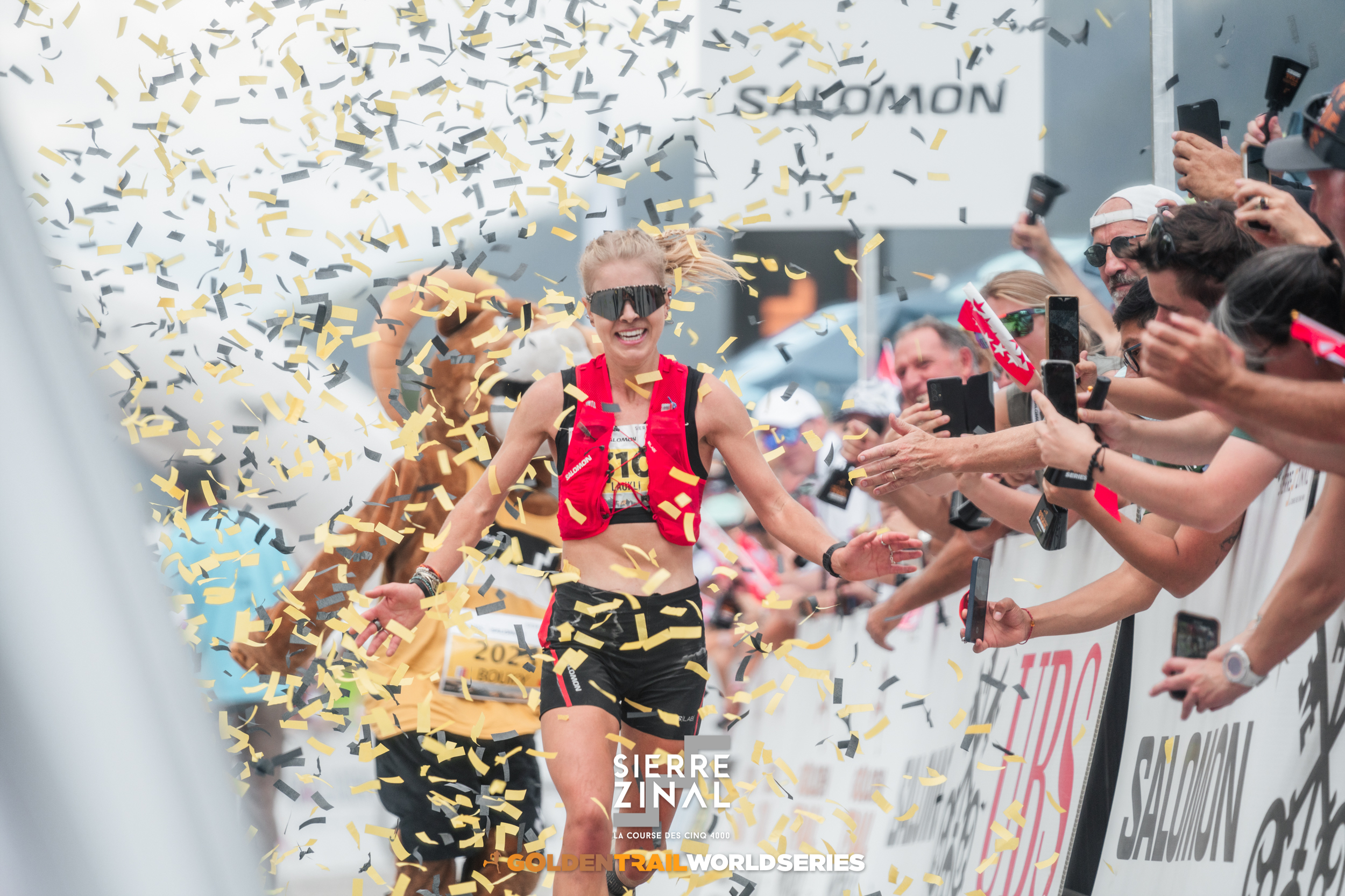
    Last year, Laukli dominated the professional worldwide trail running circuit, handily winning the Golden Trail Race series. Laukli shocked the running world by using her world class endurance talent and innate running ability to pummel the best trail runners in the world. At the end of the season, she was crowned the new queen of dirt racing when she won the Overall title.

    Laukli’s incredible trail running success last year led her to misjudge the transition needed from skiing to running this year. (©GoldenTrailSeries and @the.adventure.bakery,® Mont-Blanc Trail Marathon.: ©GoldenTrailSeries® – Zegama Aizkorri – Jordi Saragossa)
    Running Stumbles—Change in Plans

    The transition to running did not go smoothly for her this year, and Laukli may have to miss the two races she had planned on doing in Asia this month. Her original schedule had her racing in Japan April 20th, and China on April 27th. But things are not likely to go as planned. “I finished the last ski race (the Norwegian national championships), and three days later did a running camp with no preparation: not my greatest decision. I tried to implement more running during the whole ski season so (transitioning to running) wouldn’t be such a shock. I now realize that running on treadmills and roads doesn’t prepare me well for trail running. I have some tendonitis issues in my knee. It’s a lot of pain running. So doing a race is the last thing I need to do. The race is three days out (as of this writing on April 17th ), and I can’t really walk correctly. Last year I managed it better because I wasn’t racing until June, but this year I wanted to do the two races in Asia. I might have had a little too much belief in myself. In order for this not to be a real injury I might need to skip these two races.” Laukli acknowledged that she had the same issue last year following a running camp after the ski season, but she had time to rest last year and everything recovered fine. This year the schedule she had set didn’t afford that opportunity.

    Laukli has identified the need to deviate from her schedule after going out too hard too soon after the ski season.(©GoldenTrailSeries® and @the.adventure.bakery,® Mont-Blanc Trail Marathon.: – Jordi Saragossa)

    Her overuse injury has forced her to tweak her schedule. “Now the next race for me is the end of May, Zegama-Aizkorri, in Spain (42-kilometers with over 2,700 meters elevation gain). So, I’ll go home after this, take 5-10 days of other training. Then in June there’s Marathan Du Mont Blanc (which Laukli won last year). Then I’ll do Sierre-Zinal (which Laukli also won last year). The tradeoff for not doing these races in Asia is that I’d have to go back to the U.S. (in the fall) and do those two races (Headlands 27K and Mammoth 26K), which I was hoping to not have to, because it’s nice to not have to race in the fall.

    Laukli sees herself as a two sport athlete for the foreseeable future. (©GoldenTrailSeries and @the.adventure.bakery,® Mont-Blanc Trail Marathon.: ©GoldenTrailSeries® – Zegama Aizkorri – Jordi Saragossa)
    Still a Skier Who Runs

    Despite this setback, Laukli is undaunted about continuing as a two sport professional athlete. “So far all it means is that I need to trial and error a bit more in how I need to prepare,” she said. “So, for next year I know what I need to focus on, and I’ve decided that I’m not going to try and race in April. I don’t see being a two sport athlete changing.”

    But now that Laukli is the defending champion of the Golden Trail series, there’s a new challenge waiting for her. Last year she was a bit of an unknown—or at least a wildcard—but this year she’s the defending champion with a bullseye on her back. “I’m definitely a little bit more stressed. I definitely like being a nobody and having no pressure. In the running world in particular they are very vocal about ‘oh, you’re supposed to win.’ That’s how it works when you start to do well in this sport. But it’s a good problem to have.”

    Laukli is unwavering in her commitment to skiing even after her running triumphs.(Photo: NordicFocus)

    Despite being a professional two sport athlete, she still sees herself as primarily a skier. “Skiing is still the priority. It’s sometimes hard—I’m much more successful at running, maybe I should commit to that? But the way I’ve combined the two now, is honestly making me more successful in both, so I don’t see a motivation to change. In skiing, there’s a lot more ambition there (for her). I’ve been skiing forever, and constantly improving on the World Cup. I find more reward in that than in my running, even though I’m more successful on paper in running. But financially, it’s running that pays the bills. From a financial point, running is providing much more and, in a sense, it’s financing skiing. But that was an after-the-fact thing. I didn’t know running had all this money. It means I can now fully commit to being an athlete because running can now support my skiing. My ski training is supporting my running from the physical standpoint.”

    Please return to FasterSkier for Part II of our conversation with Sophia Laukli.

    For Laukli, running pays the bills, and skiing is the passion. (Photo: NordicFocus)


  • Sophia Laukli Takes Golden Trail Series Title

    Sophia Laukli Takes Golden Trail Series Title

    This coverage is made possible through the generous support of Marty and Kathy Hall and A Hall Mark of Excellence Award. Learn more about A Hall Mark of Excellence Award—or about supporting FasterSkier coverage—by contacting info@fasterskier.com. 

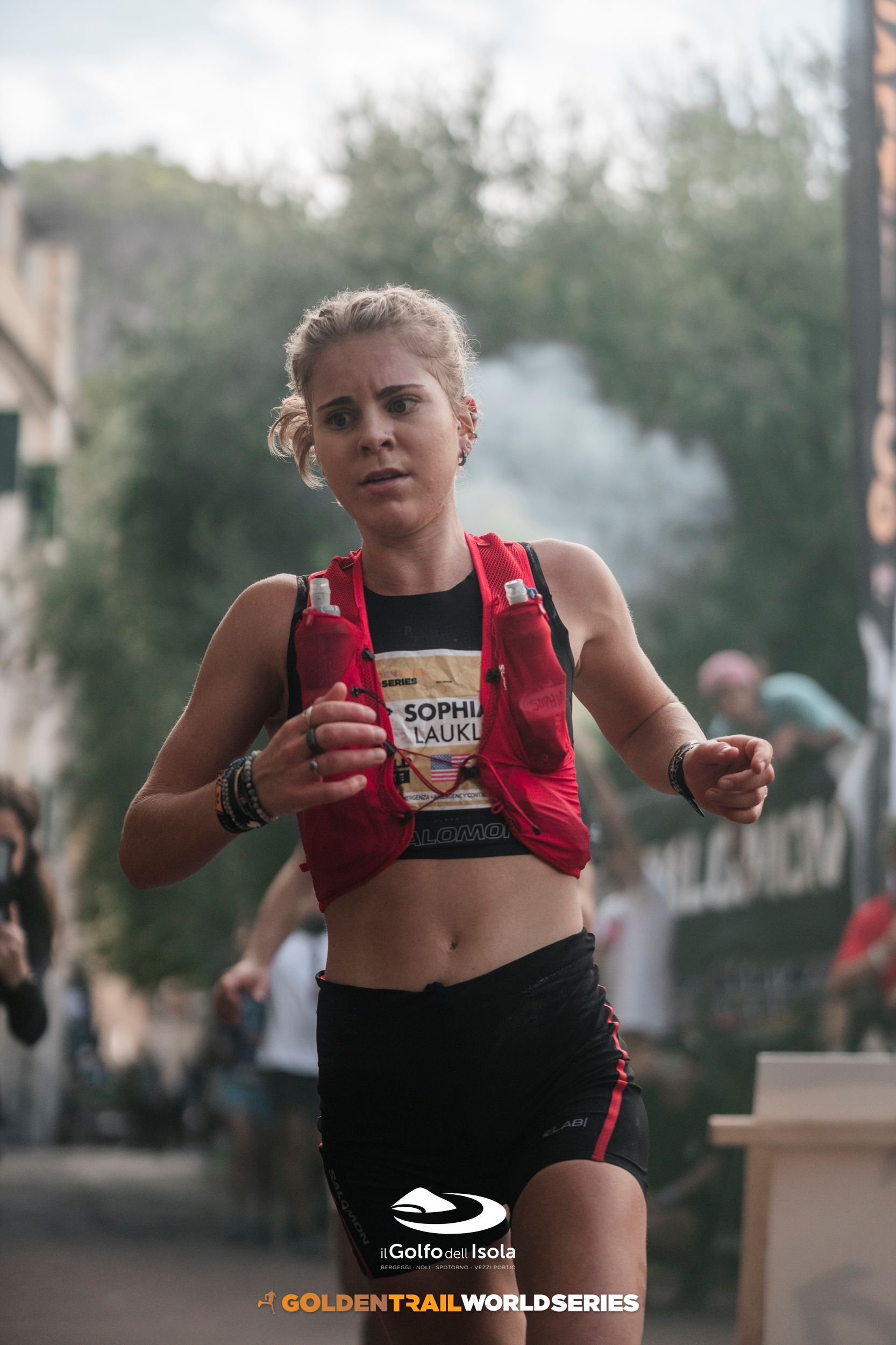
    Sophia Laukli (USA) claimed the season-long Golden Trail Series championship in Liguria, Italy. (Photo: ©GoldenTrailSeries®, Il Golfo dell’Isola Trail Race, @the.adventure.bakery)

    When the 2023 Golden Trail Marathon series began last spring, Stifel U.S. Cross-Country Team member Sophia Laukli was viewed as a wildcard. Her chances of winning seemed improbable even to Laukli, herself. Now, with the last race weekend of the race season behind her, the happy ending of Laukli’s improbable season was confirmed. Her victory in the season-long Golden Trail Series was a storybook season for the young American who rocked the world of professional trail running and possibly changed the paradigm of what is possible in how trail runners train. An underdog American going from a trail-running novelty-act to a dominating competitor is the stuff of Hollywood scripts, not the usual brutal reality of professional endurance sports.

    Going into the final weekend of racing, Laukli stood on the cusp of winning the overall World Championship in her hobby and part-time gig; however, victory was no sure thing. This weekend’s finale in the Liguria region of Italy consisted of two races: a prologue on Thursday, followed by a women’s-only 24 kilometer final on Saturday.

    Sophia Laukli (USA) lines up with the rest of the competition to start Saturday’s decisive race. (Photo: ©GoldenTrailSeries®, Il Golfo dell’Isola Trail Race,@the.adventure.bakery)

    Golden Trail Series organizers staged a final weekend calculated to heighten excitement, and it did just that. After Thursday’s prologue, Laukli held onto first place in the overall rankings by 18 points, the exact margin separating the points awarded to first and second place for Saturday’s race. But, Laukli could guarantee winning the overall title if she finished immediately behind the women trailing her in the rankings, Judith Wyder (SUI). Mathematical possibilities definitely existed for the season-long series to end in a tie, but a complex tie-breaking process favored Laukli as long as there was no runner between her and Wyder.

    Sophia Laukli (USA) powered through ancient Ligurian streets on route to the trail running championship. (Photo: ©GoldenTrailSeries®, Il Golfo dell’Isola Trail Race, @the.adventure.bakery)

    Besides the prestige of winning, there was also a lot of money at stake: the series winner would take home $15,800, plus additional prize money for winning the concluding race. In Saturday’s race, Laukli received some help in the overall standings from her competitors. Monica Madalina Florea (ROU) was able to push the pace to claim first place, putting Laukli’s competition, Wyder, into second by a mere 15 seconds. Laukli held onto third. This resulted in a tie in the overall standings. The math was complicated, but since Laukli had one more season victory than Wyder, it worked to give Laukli the overall title. Had Wyder been able to pull out the win—and separate herself from Laukli by one competitor—Laukli would have been denied the title.

    The stress of not having a good day with the title in the balance clearly showed on Laukli’s face. (Photo: ©GoldenTrailSeries®, Il Golfo dell’Isola Trail Race, @the.adventure.bakery)

    However, it wasn’t an easy road for Laukli. “After the first lap I didn’t feel good,” Laukli commented after the race. “On the second lap I felt like I was going to drop out.” Despite the physical challenges, Laukli pushed through. It was a gutsy and praise-worthy finish to a long and unlikely season.

    “There were moments in the race where I felt so bad that I just didn’t know how I was going to make it to the finish,” Laukli told FasterSkier, “but it was going to take a lot more for me to actually drop out since there was so much on the line. So I thought about it but knew it wasn’t really an option to drop, so pushed through. Luckily it still worked out because I really had no idea throughout the race if it was going to be enough, but it was such a good feeling to cross the finish line and finally know I had gotten the overall. So anyways very happy now but super excited to move quickly into skiing now!”

    And with regard to her plans for competing in the trail race circuit next season, Laukli made her plans clear: “I’ll be back for sure!” So, next spring, the cross-country ski world will be anxiously watching to see if the woman who identifies as “a skier first” will still be able to dominate the world of professional trail running.

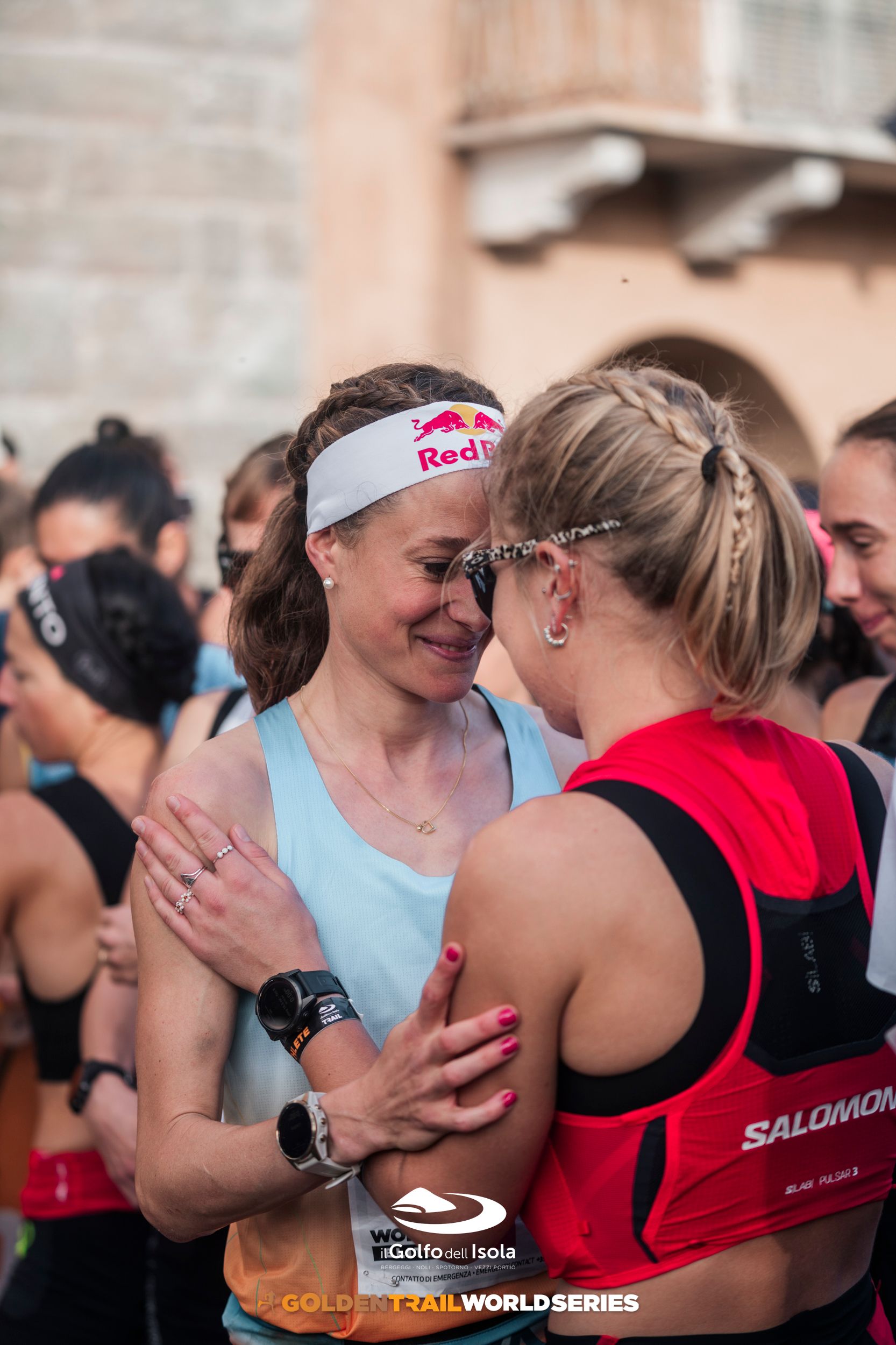
    Sophia Laukli (USA) celebrates the conclusion of a hard race season with her closest rival, Switzerland’s Judith Wyder. (Photo: ©GoldenTrailSeries®, Il Golfo dell’Isola Trail Race, @the.adventure.bakery)
  • Laukli’s Pro Trail Running Success Continues

    Laukli’s Pro Trail Running Success Continues

    This coverage is made possible through the generous support of Marty and Kathy Hall and A Hall Mark of Excellence Award. To learn more about A Hall Mark of Excellence Award, or to learn how you can support FasterSkier’s coverage, please contact info@fasterskier.com. 

    Taking it all in stride

    When Sofia Laukli, a member of the Stifel U.S. Cross Country Ski team, decided to jump into the field at the Pike’s Peak trail run last year, little did she know it would be a life-altering event. It was in that race that Laukli discovered she was an elite trail runner. She may even be a better runner than skier. That part is still up for debate; even Laukli doesn’t yet know the answer. As recently reported in FasterSkier, Laukli’s serendipitous foray into running has led to a two-career status for the skier.

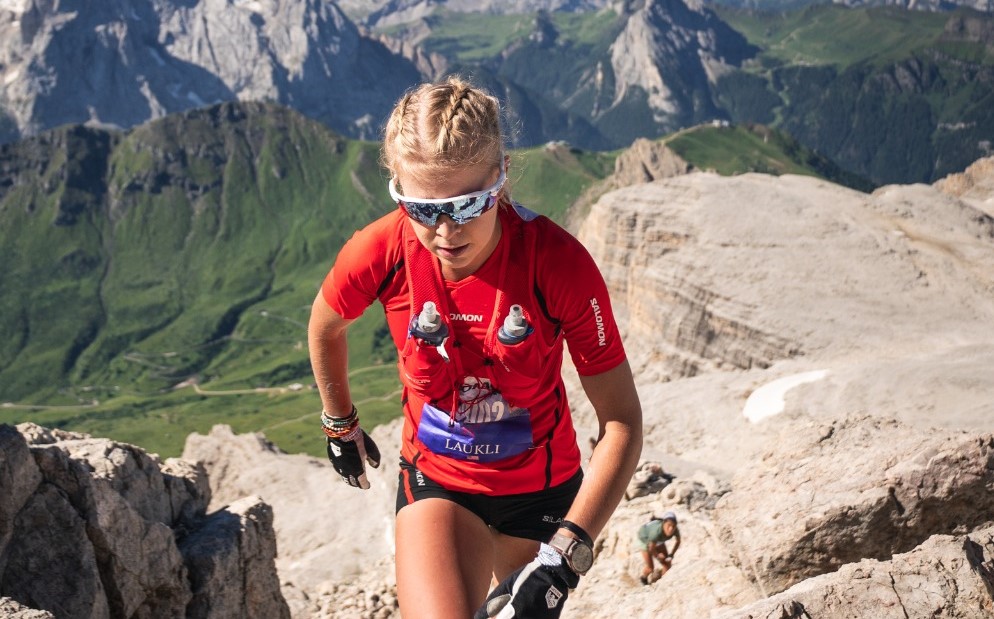
    Laukli managed a second place finish in the technically challenging Dolomyth’s run despite being extremely ill in the week leading into the race. (Photo: @theadventure bakery, photographer Philipp Reiter)
    Laukli is now in second place in the Golden Circle Trail series

    Last weekend, Laukli finished second in the Dolomyths race,  even though she had been very ill with flu-like symptoms most of the week before the race. “I was sick last week and was very surprised that I was able to pull off second, Laukli told FasterSkier. “A couple of days before the race I was thinking that maybe I shouldn’t race. I had some type of flu with fever, two days out [from the race] I was feeling terrible and was very hesitant about racing. In the race, I wasn’t fully there, I did not feel good at the start, and knew my uphill performance was going to be worse than normal. For me to win that race, I would have to fire off the start.”

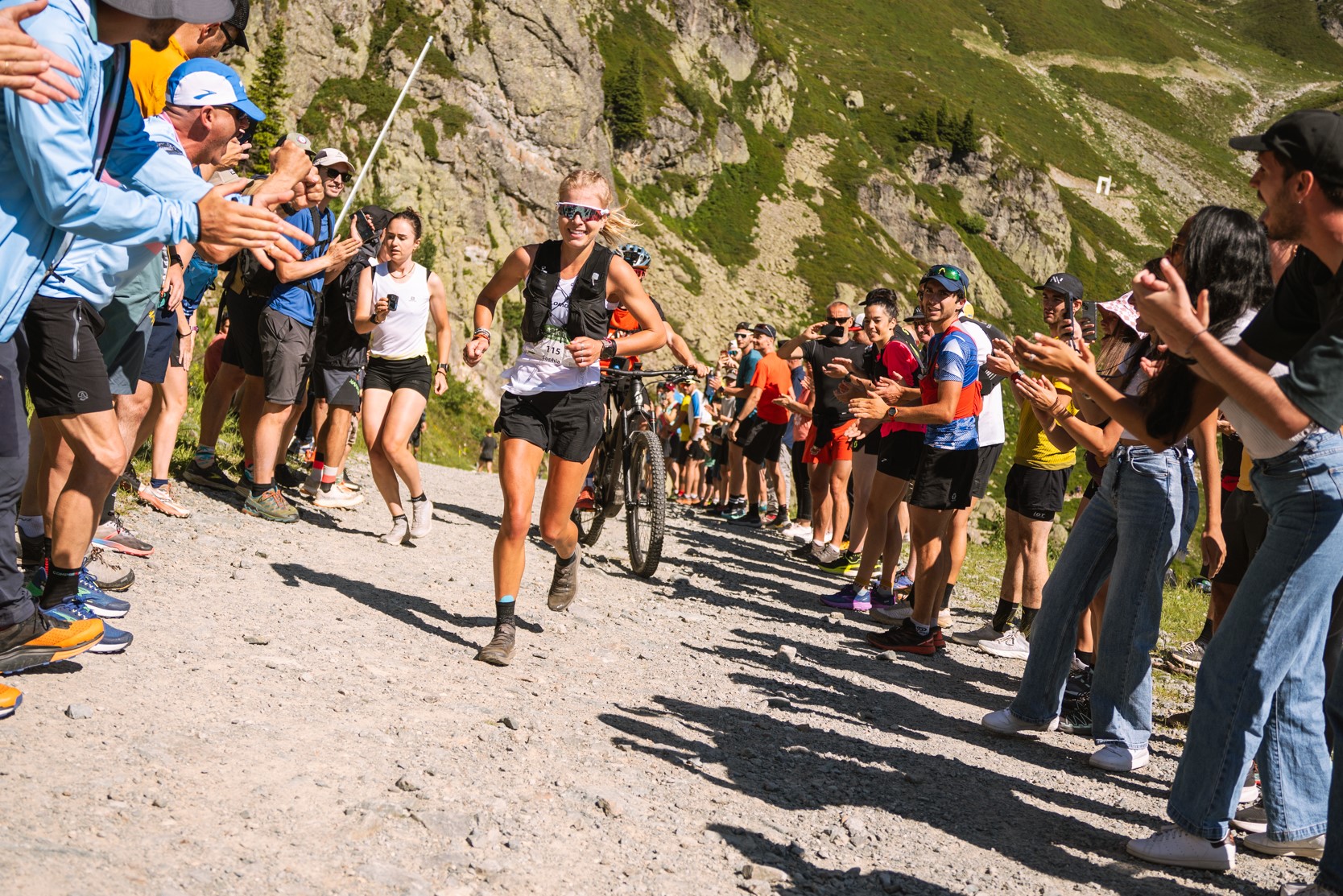
    Last week’s Dolomites run provided a new challenge for Laukli who is still essentially a novice at professional trail running. The downhills are more technical than the Mont Blanc marathon which she won on June 25th.  Despite the challenges of illness and difficult terrain, she was able to carve out a great performance in the mountains, further cementing her as a legitimate contender for the Golden Trail series crown.

    Even though Laukli has proven proficiency in her double pole technique, she doesn’t feel comfortable using poles running. (Photo: NordicFocus)

    Even though the downhills were technical, Laukli eschews using poles like some trail runners do, even though her skiing background might suggest it would be advantageous. “Running with poles is very unique,” she says. “It’s not like the bounding movement in training…to me it’s not an equivalent movement to skiing. I’m faster just using hands on my knees walking than struggling with a new awkward technique.”

    Her surprising success has caused challenges within her schedule. Now that she’s toward the top of the Golden Trail leader board, it’s proving difficult to walk away from running competition. When we spoke with her last, she was planning on doing the Pike’s Peak ascent (September 16th), but now she’s uncertain as the reality of a possible running championship collides with balancing her ski training schedule. “You don’t want to race too much, because it does take a lot out of you…for me the next race will probably be Sierre Zinal (August 12).  I’m not anticipating a great result because it’s very much like a road running race, but I really want to do it.” Laukli is uncertain about which U.S. races she will end up doing now that she has raced more in Europe than planned.

    Laukli’s trail running success has led to on-the-fly adjustments to her schedule. She is now having second thoughts about competing in the Pike’s Peak Ascent which tops out at 14,115 feet. (Photo: @theadventure bakery, photographer Philipp Reiter)

    But, she is still contemplating doing the Pike’s Peak ascent. The race is completely uphill and suits Laukli’s strengths. However, topping out at over 14,000 feet, it’s a daunting undertaking. “It’s kind of the Tour de Ski of the running world,” she said. “I had a hard time racing that high last year. You definitely need to spend time acclimatizing at higher altitudes, and I’m not sure if I can work it in with my training.”

    The Golden Trail series pays well with total prize money of €300,000. The Pike’s Peak ascent offers its own monetary reward with a $10,000 bonus for a woman who completes it in under 2:21. Laukli acknowledged the financial allure. “There’s certainly more money in it than skiing,” she said. “People in the running world are confused why I continue to ski. But money isn’t my motivator for running or skiing… I had no idea, going into it, that it’s a seriously lucrative sport, but I don’t want to do it for the wrong reasons.”

    The Golden Trail series also pays for travel and lodging for competitors in the top ten overall which is also a strong financial incentive. As Laukli noted, “It makes it possible to perform at your best without the financial stress.”

    But the logistics are starting to take their toll. “Last week I went to Italy for the race, and didn’t ski train once,” she said. “That has definitely been a stress. I feel like I might be sacrificing my skiing a bit with all this travel I’m doing.” Laukli still doesn’t follow a specific running program, choosing to focus on her ski training. This approach has raised a few eyebrows with competitors in the running series.

    Laukli’s success without a running training program has proved a curiosity to her competitors, but hasn’t generated any ill will. (Photo: @theadventure bakery, photographer Philipp Reiter)

    “If I were them, I think I’d be pretty annoyed,” she mused. “Everyone’s asking me how much do you run a week [the answer is very little compared to her competitors], and how is that even possible? I love answering…but if someone came into skiing and had never skied, and podiumed at a World Cup, it would be hard. It’s cool for me, but I know it’s not cool for them, I also acknowledge how it’s kind of a bummer for them. There’s nothing blatant or direct [in terms of ill will]… a lot of these women are older seasoned mature athletes, which is nice.”

    When asked to describe her recent successes, Laukli focused on how it affects her attitude and her mood during an otherwise challenging summer training season: “It’s awesome, I’m living my best life,” she said. “Everything’s working out for me… and I know that’s going to end and I’m dreading when that’s going to end. I am so aware of how good it is for me now and that I can pull all of this off. I think long term it might be unrealistic.”

    If Laukli continues to do well, she is now on board with competing in the tour’s finals in Italy, October 19th .  Stay tuned to see if a professional skier can also be the champion of professional trail running.

    Laukli feels like she’s in a great place being a professional two sport athlete, but she is apprehensive about the sustainability of her current happy place. (Photo: @theadventure bakery, photographer Philipp Reiter)