Tag: Gord Jewett

  • World Champs Rookies: 10 Questions with Jess Cockney

    World Champs Rookies: 10 Questions with Jess Cockney

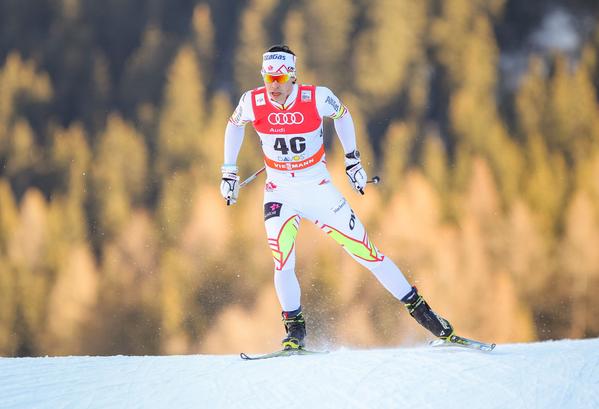
    Jesse Cockney races during qualifiers of the World Cup freestyle sprint in Davos, Switzerland. Cockney would be the 23rd qualifier and finish 29th overall. (Photo: CCC/Twitter)
    Jesse Cockney (Canadian National Development B-team/Alberta World Cup Academy) during the World Cup freestyle sprint qualifier on Dec. 21 in Davos, Switzerland. Cockney qualified 23rd and finished 29th overall. (Photo: CCC/Twitter)

    We can’t imagine anything much more exciting than making an event like World Championships for the first time, so we contacted the North American skiers living that exact dream this year. The U.S. Ski Team announced its 16-strong senior World Championships team on Jan. 26, and Cross Country Canada selected nine to its squad on Monday. On Tuesday, the U.S. added Ben Saxton as its 17th member.

    Instead of interrogating them with the usual “tell us how you’re feeling,” we decided to pose the following 10 questions to each of the North Americans headed to their first World Championships from Feb. 18-March 1 in Falun, Sweden.

    Jess Cockney, 25, is no stranger to big-time international racing. The son of Canada Winter Games multiple gold medalist, Angus Cockney, he competed in three events at the 2014 Winter Olympics in Sochi, Russia, last season. In all, the Canadian National Development B-Team and Alberta World Cup Academy skier (originally from Tuktoyaktuk, Northwest Territories) has accumulated more than two dozen World Cup starts, with a best result of ninth in the freestyle sprint at home in 2012 in Canmore, Alberta.

    “Looking forward to getting after it again after the long time off from racing,” Cockney wrote in an email on Tuesday.

    He spent the last week in Meråker, Norway, east of Trondheim, at Canadian World Cup coach Tor-Arne Hetland’s cabin with World Cup teammates Devon Kershaw and Lenny Valjas. Before that, Cockney explained they were in Livigno, Italy, with Graeme Killick and Alex Harvey following the last World Cup in Rybinsk, Russia.
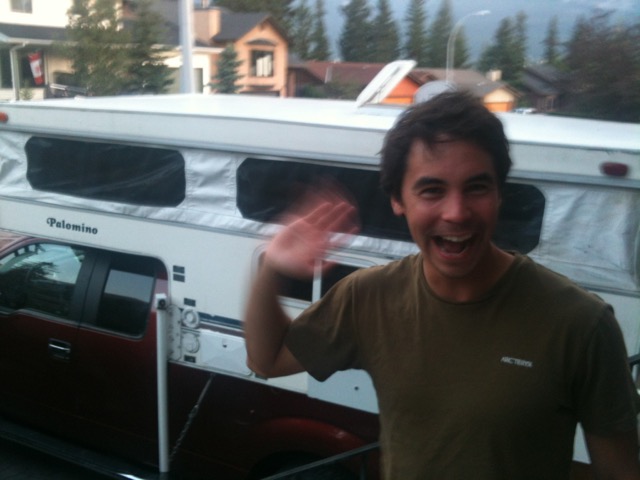
    Jess Cockney on his mom's front step with her truck behind him this past summer in Canmore, Alberta. (Courtesy photo)
    Jess Cockney on his mom’s front step with her truck behind him this past summer in Canmore, Alberta. (Courtesy photo)

    1. What was the first thing you did when you found out you were named to the World Championships team?

    “I got back to work trying to find my speed again!”

    2. What’s been the biggest result of your career so far? What one race stands out the most and why?

    “Definitely my 9th place in the Canmore World Cup sprint a couple years ago. That was a crazy day and hopefully I can scratch the shape again soon.”

    3. What are you most looking forward to at World Championships? 

    “I’m psyched to be back together with the whole team, it’s a wicked group and I love having them to share all these experiences with.”

    4. What’s your biggest motivation while racing?

    “My biggest motivation is to be the best that I can be on that day and make sure the work in the summer wasn’t wasted.”
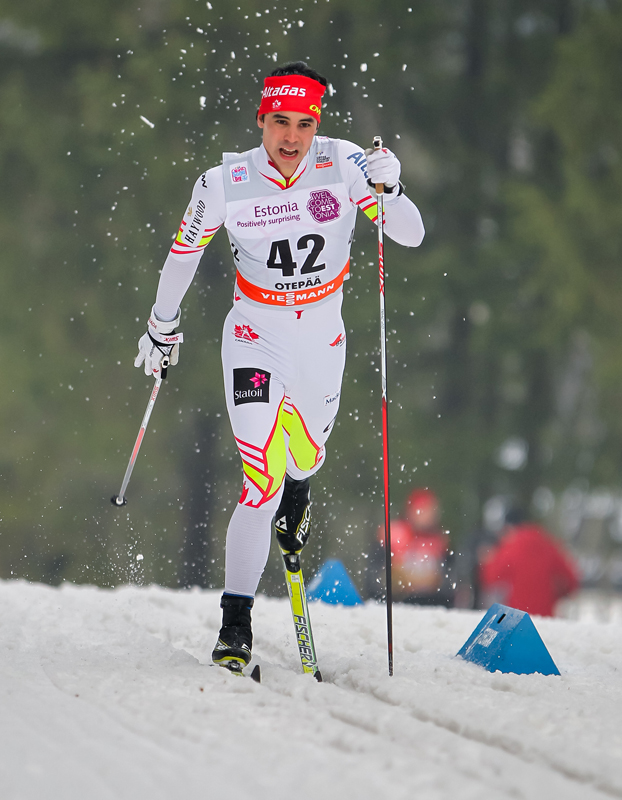
    Jess Cockney placed 61st in the men's 1.5 k classic sprint qualifier on Saturday in Otepää, Estonia. (Photo: Fischer/NordicFocus)
    Jess Cockney placed 61st in the men’s 1.5 k classic sprint qualifier on Jan. 17 in Otepää, Estonia. (Photo: Fischer/NordicFocus)

    5. Which race(s) do you hope or plan to compete in?

    “I’ll race the classic sprint for sure and see how things are after that.”

    6. If you could race the team sprint with anyone in the world, who would it be?

    “Anyone from Foothills Nordic!”

    7. Which World Cup skier would you least want to meet in a dark alley (or in the last 100 meters of a race)?

    “Canmore had some rough streets growing up, I ain’t scared a no nordies.”

    8. What will be your key to success in Falun?

    “I’ve had trouble being mentally ready for the speed you gotta ski to make it in for top 30 so I really have to be in the moment and make things simple on race day.”

    9. Finish this sentence: If I made the podium at World Champs, I would … :

    “Dance in the finish until they take down the stadium for nighttime grooming, and probably keep dancing around the groomer.”

    10. Name one person who’s had a major influence on your skiing career:

    “Gord Jewett. Gord and I were teammates on the [Alberta World Cup Academy] for two years and it was huge for me to see how an athlete like him lived his day to day. Being around an older dog when I was a puppy I had my fair share of times when I got barked at and that definitely helped me take training seriously and be a pro at workouts.”

  • Former Olympian Jewett Becomes Cycling Provincial Champ

    Canadian Olympian and Canadian National Ski Team veteran Gord Jewett is still racing – but on his bike, rather than a pair of skis.

    Earlier this month Jewett became Alberta Provincial Road Cycling Champion, taking top honors in the 130 k race in Lethbridge, Alberta.

    The 33 year old Jewett, who lives in Calgary, Alberta, retired from ski racing following the 2010 season, where he competed in the Vancouver Olympics.

    Jewett races for the Rundel Mountain Cycling Club – a non-professional team drawing most of their racers from the Canmore and Banff region. The team features a few other former elite skiers – ex-Canadian National Ski Team member Sean Crooks is also on the team as well as Eric Jenson, a top biathlete in the late 1990’s.

    Gordon Jewett finishing fourth at the West Yellowstone SuperTour Distance in 2009 Race Photo: Win Goodbody

    While Jewett had been riding hard all summer, racing pretty much every weekend either on his road or mountain bike, he didn’t come into the event with much in the way of expectations.

    “I was sick for two weeks straight coming into the race,” said Jewett. “I did a mid-week local race in Calgary the week before and I could barely pull through.”

    Even at the start line, he was thinking of helping the team effort, rather than going for the win himself – he told teammate Sean Crooks that he was going to work for him.

    “I was riding into the wind to keep Sean out of the crosswind, he crashed, I waited for him and paced him back to the group – basically I did what I could to take care of him.”

    With 40 k left, the pack hit high cross winds, and the group shattered. Initially, Jewett stayed with Crooks, but after realizing that his team mate was struggling, Jewett jumped across the gap to the two leading riders, and decided to race for the win.

    But he was faced with a tough task – both of the other riders were racing for a single squad, and employed the full range of team tactics in an attempt to get rid of the tough skier-turned-cyclist.

    “I had to respond to a bunch of attacks, and they guttered me [when a rider is forced to continuously ride in the cross-wind, never getting a draft], but I was feeling pretty strong,” Jewett said.

    Jewett also knew that he had a good chance if it came down to a sprint, and was focused on getting close to the line in contact with the other riders. With 200 meters left, he jumped into his sprint, and rode across the line as Alberta Champion.

    Despite his success, Jewett isn’t looking for a second athletic career – his goals for cycling are modest.

    “It’s just fun,” he said. “I’m just trying to be strong on the bike.”

    And he isn’t turning his back on the ski world. He does a little bit of work with the Alberta World Cup Academy (AWCA), the development center based in Canmore. His wife, Rhonda Jewett, also a former World Cup level cross country skier, is on the Cross Country Canada (CCC) board of directors.

    His brother-in-law Kevin Sandau, is currently on the Canadian National Ski Team’s Senior Development Team, and a member of the AWCA.

    In terms of ski training, he doesn’t get too involved. “I think I rollerskied twice last fall,” he said, “but I ski every weekend during the winter.”  At the grassroots level, he and his wife coach a group of young skiers at the Foothills Nordic Ski Club based in Calgary.

    In the mean time, Jewett is focusing on school, attending University of Calgary pursuing a degree in software engineering, with the ultimate goal of being an entrepreneur in the field of biomedical software technology.

    Jewett isn’t the only cross country skier to have success riding a bike; as a junior Alex Harvey went to World Junior Mountain Bike Championships, and more recently, ex-National Team member Tara Whitten has become a track racing star, collecting medals at Track Cycling World Championships in 2009 and 2010.

    Full results from Alberta Provincial Road Cycling Championships here

  • Wood’s Resignation Preceded by Tension, Review

    Dave Wood served as team leader for the Canadians for the last two years, and worked with the athletes at the 2010 Olympic Games.

    Following his resignation last week, longtime Canadian coach and team leader Dave Wood said that he was leaving to take a coaching opportunity with a club closer to his girlfriend, and that his parting from Cross Country Canada (CCC) had been amicable.

    Current and former CCC athletes all praised Wood’s contributions to the organization over the last dozen years. But in interviews, they also acknowledged that Wood’s last year with the program was marked by tension.

    At the Olympics, one athlete said he noticed a strained relationship between Wood and Inge Braten, the head coach at the time—who left his position at the end of the winter. And later this spring, according to a former national team member, CCC athletes pushed for changes to Wood’s role in the organization.

    Wood denied that any tensions existed, and insisted that his decision to leave had been personal. But in an interview with FasterSkier, CCC Executive Director Davin Macintosh acknowledged that his organization conducted an “extensive review” of the High Performance System—which includes the National Team, and Wood’s position—after the Olympics.

    The resulting plan for the next year, he said, “did include slightly different roles for people.”

    “We invited the parties to fill the roles that we’d defined, and Dave took a long, hard, think about his future, and I guess he’s decided that other things are pulling at him, and that the best way forward for him is not to continue in the role he had,” he said.

    Olympic Tensions?

    A last-minute addition to the Canadian Olympic team, Gord Jewett was named to the squad in late-January. In Vancouver, Jewett raced in the 15 k freestyle, finishing in 52nd, just over two and a half minutes behind winner Dario Cologna.

    During the Games, Jewett said, Braten and Wood did not seem to be on the same page. Their answers to logistical questions were sometimes different, which left Jewett feeling like he had to make a decision to talk with one or the other “to confirm details around training or preparation.”

    “In my view, the relationship between Dave Wood and Inge Braten was strained at the Olympics, and the lack of communication between the two marginalized the ability of the team to be prepared,” Jewett said. “They weren’t communicating well, and that affected the overall organization of our team.”

    Reached on vacation in Tunisia, Braten denied any conflict existed.

    “I thought it was okay always with Dave,” Braten said. He added that the reason that he left his job at the end of the winter was unrelated to Wood, “or anybody else.”

    Asked whether there were problems with communication between Braten and Wood at the Olympics, CCC Director of High Performance Tom Holland—who oversees the National Team—said that the two were “very professional.”

    “We had very clear roles, all of us, going into the Games,” he said. “People delivered on their roles. We had some hard decisions to make—we made those decisions as a team.”

    While Braten was the second straight Scandinavian coach to leave Canada after one year, Holland said “it’s difficult bringing people in from a different country—particularly overseas.”

    “What we’ve discovered in the past four years is that we have something unique in Canada,” he said. “People have to be able to fit into that. We can’t be changing the system every two, three, four years in terms of the way we operate.”

    Interest in Change

    When Wood left his position at the national team last week, he told FasterSkier he had made the decision unilaterally, in order to take a job with a club in Rossland, BC.

    But according to a former Canadian National Team member, CCC athletes had pushed for changes in the High Performance System at the end of the season—especially to Wood’s role.

    “The athletes are always accountable for their performances based on results, and they haven’t felt as though there’s been that same level of accountability towards the administrative side of the High Performance [System],” the former National Team member said.

    At the end of the four-year Olympic cycle, the former team member continued, the CCC athletes felt that it was time to “push forward on what they needed out of the national team program, and create a stronger system.”

    When contacted by FasterSkier, four different National Team athletes declined to comment on the details of Wood’s departure. But Drew Goldsack, the national ski team representative to CCC, acknowledged that “there had been some tension” in the program.

    “I don’t think the athletes were pushing for Dave to be fired,” he said. “But there was interest in change—in some major changes.”

    Wood denied that there had been conflict or tension between him and the team, saying that “athletes are always unhappy.”

    “They always want more—they don’t like to get pushed. That’s normal,” he said.

    Macintosh, the CCC executive director, said that the post-Olympic review conducted by his organization was “extremely engaging” for the skiers. The resulting plan for the next year, he said, “responded to the concerns raised by athletes.”

    “The organization firmly believes that there’s a role for Dave in that, and we’re sad to see him go,” said Macintosh. “We came up with the best structure from the organization’s perspective, but we can’t force people to work with us.”

    Tasha Betcherman, the athlete representative to CCC’s board of directors, told FasterSkier in an interview that in the past, Canadian athletes have felt “that they have not had a direct contribution to some of the decisions on leadership.”

    “But that is definitely changing,” she said. “After the Olympics is a really good time for reflection, and I think that the athletes were definitely heard.”

    In a press release on the CCC website posted Wednesday, Macintosh said that Wood will continue with the organization doing “contract work.” As of Monday, the organization had not yet determined how it would fill the void created by Wood’s departure.

    Topher Sabot contributed reporting.