Tag: graham maclean

  • Behind the Scenes with Canadian Wax Chief Yves Bilodeau (in English)

    Behind the Scenes with Canadian Wax Chief Yves Bilodeau (in English)

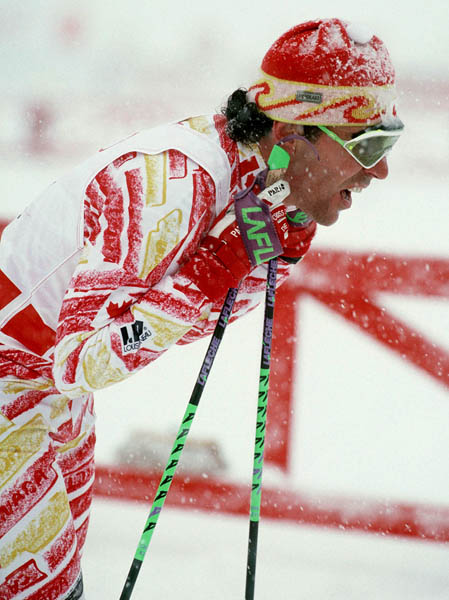
    Canada's Yves Bilodeau at the 1992 Albertville Olympic winter Games. (CP PHOTO/COA/Ted Grant)
    Canada’s Yves Bilodeau at the 1992 Albertville Olympic winter Games. (CP PHOTO/COA/Ted Grant)

    Yves Bilodeau is one of the faces on the Canadian World Cup Team that’s seldom seen. Like his crew of wax technicians, he’s a behind-the-scenes guy, one of several responsible for the successes and sometimes lack thereof at international competitions.

    Born in Quebec City and currently living in France, the 52-year-old made himself known as a Canadian cross-country skier, competing at five World Championships and three Olympics (the last of which came in 1998, three years after he retired. A wax tech at the time, he competed in the 10 k in Nagano, Japan).

    After that, he retired for good — at least from international nordic racing. He’s still known in international adventure-racing circles after winning 2005 World Championships with Team Raid Quechua.

    Known by his close friends and relatives as Bilose, Bilodeau is embarking on his 20th season working with the Canadian squad, and he’s witnessed a lot of change within the team since his racing days. At the ’92 Olympics in Albertville, France, Canada had one wax tech. Twenty-two years later, the team had a record nine at the Sochi Olympics.

    In a phone interview with FasterSkier, Bilodeau spoke in his native tongue, humbly with a hint of humor. Seemingly attached to the past, he revealed he’s somewhat skeptical of ever-growing progress and new technology.

    From his home in Ruffieux in south-eastern France, he talked about his waxing debut in 1995, reflected on what he called the “Sochi drama,” and explained who he’ll be working with this upcoming World Cup season.
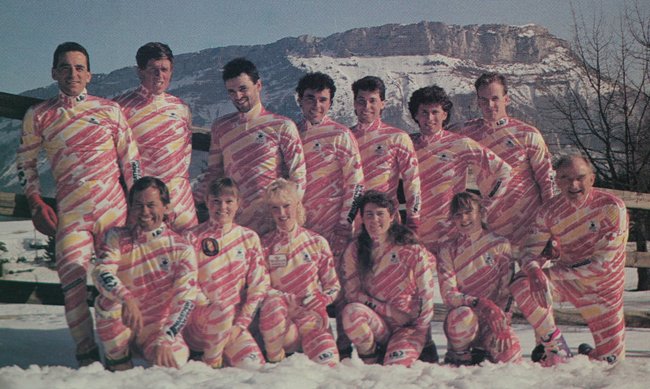
    Canada's 1992 Albertville Olympic team: (from left to right) Top: Alain Masson, Dave Wood (Wax Technician), Dany Bouchard, Yves Bilodeau, Darren Derochie, Al Pilcher, Wayne Dustin.  Bottom: Laurent Roux (Head Coach) Jane Vincent, Lucy Steele, Lorna Daudrich, Rhonda De Long, Marty Hall (NST Director),  absent Angela Schmidt-Foster. (Photo: Cross Country Canada)
    Canada’s 1992 Albertville Olympic team, including Yves Bilodeau (top, center). (From left to right) Top: Alain Masson, Dave Wood (the lone wax technician), Dany Bouchard, Yves Bilodeau, Darren Derochie, Al Pilcher, Wayne Dustin. Bottom: Laurent Roux (head coach) Jane Vincent, Lucy Steele, Lorna Daudrich, Rhonda De Long, Marty Hall (NST director), absent Angela Schmidt-Foster. (Photo: Cross Country Canada)

    (Note: the following interview has been translated from French to English.)

    FasterSkier: Starting as an athlete, what made you join the Canadian technical ski team 20 years ago?

    Yves Bilodeau: Back in 1995, when I stopped competing after the Nordic World Ski Championships in Thunder Bay, I moved to France with my first wife, who at the time was finishing an international law degree and working at the International Labour Office located in Geneva. I was looking for a job and actually thinking about joining a European ski team for long-distance races. In the end, my luck turned suddenly when my old friend Alain Masson gave up his spot on the Canadian technical team to fill a coach position for the Yukon ski team. It was a great opportunity and I accepted it with no hesitation.
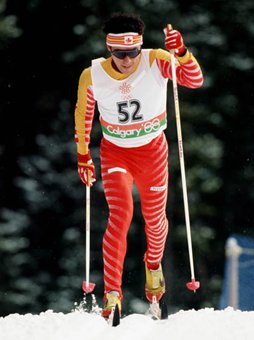
    Former Canadian National Team member Yves Bilodeau racing in Calgary. (Photo: Cross Country Canada)
    Former Canadian National Team member Yves Bilodeau racing in Calgary. (Photo: Cross Country Canada)

    FS: How has your previous racing experience helped shape your interest in ski preparation and waxing?

    YB: Times have changed dramatically over the course of two decades. Back in 1992, racers had to put the shoulder to the wheel in terms of ski preparation, since Canada had hired only one technician — who moreover undertook other tasks aside from waxing — for the Olympic Games in Albertville. We were already at the back of the peloton compared to most of the European technical teams. Things then started changing gradually, thanks to the arrival of Dave Wood [head technician in 1992 and head coach in ’02], as more technicians got hired. I think we improved a ton since then, although we sometimes struggle making ends meet with what limited budgets we have.

    FS: Who will you be working with on Canada’s World Cup technical team this season?

    Canada’s 2014/2015 NST Wax Techs:
    – Yves Bilodeau (full-time Sept.-April)
    – Joel Jaques (full-time year-round)
    – Micke Book
    – Alain Masson
    – Sacha Bergeron
    – Fabio Ghasifi*
    – Graham MacLean**(New this season)

    YB: Micke Book, a great Swede who couldn’t get along with his fellow countrymen, joined the Canadian team in 2006 after the Olympic Games in Turin. Joel Jacques is based in Canmore and works year-round with us. Alain Masson also gives us a hand during the more important events, when his schedule in Yukon allows for it.

    Although he will spend less time with us this years, having recently become a father, we can still count on Sacha Bergeron. We also hired Fabio [Ghasifi], an Italian who previously worked magic for the Japanese team [for the last decade] in difficult snow conditions. Graham MacLean will also help us this year.

    For my part, I always join the team full-time from September to April. We usually form a group of six during World Cups, and go up to nine technicians for Olympic Games and World Championships. When few Canadians take part in a World Cup freestyle event, we make ends meet with only four waxers. Micke and Joel are the grip specialists, while Fabio and I work primarily on gliding.

    FS: Looking back on the last Olympics in Sochi, what went wrong exactly from a technical standpoint for some of your athletes?

    YB: We failed in Sochi due in large part to the abrupt change in snow conditions, which always seemed to occur exactly at the time when most races started, around 2 p.m. At that precise time, one side of the mountain remained cold, while the other was totally exposed to the sun. With only 15 minutes before the start, we were confident with the skis and our racers would tell us just how satisfied they were with them. Then, as the races unfolded, skis became really sluggish. Looking back, we should’ve been able to capitalize on these difficult conditions and set ourselves apart from the rest, as other teams experienced similar technical setbacks.

    It was Daria [Gaiazova] who involuntarily provided us with the key to our waxing issues. On race day, after testing her first pair of skis, she asked Sacha to rewax them. Sacha took his spatula and scraped off a thick layer of wax. Before he knew it, Daria took those skis and retested them. She told him they were perfect and needed no additional adjustment! We finally realized that the trick was to apply a very thin layer of red klister on soft skis, which was contrary to our common practices. Unfortunately, this discovery was made too late and they [our athletes] paid the price.

    FS: Were these simply the worst snow conditions you’ve experienced in a race?

    YB: I had rarely witnessed such bad conditions, that’s for sure. Even with air temperatures approaching -3 degrees [Celsius], accumulated snow in the trees would melt and water dropped constantly on the course, then refroze, then melted again. It was crazy. Nevertheless, we weren’t totally surprised, having skied previously many times on the Olympic course before the Sochi Games. Our greatest oversight was having done no ski testing at 2 p.m. precisely. We underwent various tests from 11 a.m. to 1:45 p.m. and everything worked great. At 2 p.m., we were in serious trouble.

    “Looking back, we should’ve been able to capitalize on these difficult conditions and set ourselves apart from the rest. … Our greatest oversight was having done no ski testing at 2 p.m. precisely.”  –– Bilodeau on what went wrong in Sochi

    FS: In hindsight, what lessons have you drawn from the last Olympics?

    YB: Life is made of ups and downs. Yes, we failed in Sochi, but we weren’t the only ones getting rocked. Take Norway for example. Their technical team did much more testing before the Games, in addition to collaborating closely with Swix and having their technicians undergo several separate tests. In the end, they failed just as bad as we did. After Sochi, we quickly came to the conclusion that we needed to work closer with athletes throughout the last minutes leading up to the race start. Next year, Graham and another technician, who weighs the same as Alex Harvey, will accompany and assist Alex for testing and any last-minute wax adjustment.

    FS: Were Harvey’s impressive results at World Cup Finals (in Falun, Sweden) a form of redemption after Sochi?

    YB: We’re constantly put under the pressure to deliver the best skis possible. We can’t have too many bad days, as our main objective is to always move up in the World Cup standings. But sometimes things go unplanned. Harvey, just like Norwegian Martin Sundby, stood several times on the podium before and after the Sochi Games, but both were out of luck when it counted most. That was the Sochi drama: performing poorly while the expectations we so high in Canada. As Quebecers say, the puck wasn’t going our way. [Laughs]
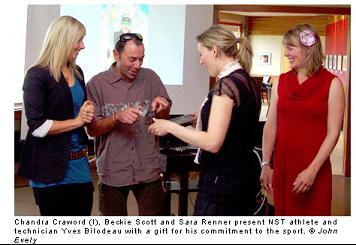
    Canadian wax tech Yves Bilodeau (second from l) receives a gift from Chandra Crawford, Beckie Scott and Sara Renner. (Photo: John Evely/Cross Country Canada)
    Canadian wax tech Yves Bilodeau (second from l) receives a gift from Chandra Crawford, Beckie Scott and Sara Renner for his commitment to Canadian cross-country skiing. (Photo: John Evely/Cross Country Canada)

    FS: How has cross-country ski racing changed since you first joined the Canadian technical team in 1995? What major technical shifts have you noticed?

    YB: Major changes are fewer than most people think. When it comes to gliding, what I call “accelerators” — fluor liquids applied at the very end of the ski preparation — make the biggest difference. On the grip side, there are a few new interesting products, but twenty- to thirty-year-old waxes, like Rode Red, still work great. Every piece of equipment is lighter with each year. Ski manufacturers also work hard on bettering the uniformity of their productions, to deliver equal skis as much as possible. It may sound simple, but ski making is no exact science yet.

    FS: What makes a ski go fast? What unique features distinguish a great pair from a standard one?

    YB: It’s fairly easy to eliminate the pairs we don’t like, but trying to handpick the best ones directly from the manufacturer remains a dubious task. The only way to tell which pairs stand out is to install bindings and try out the skis on snow. In the summer, Micke will do various tests in the Torsby ski tunnel in Sweden and rate each pair. There is no other way to go about it.

    FS: How does Canada manage to stay competitive against other larger and wealthier European teams?

    YB: Last season, Haywood and AltaGas, two of our long-time sponsors, helped us in acquiring a brand-new wax truck. Only a handful of teams enjoy such luxury, as other nations like France and the U.S. are presently working on purchasing their own truck. Since I first started this job, it’s probably the best technical improvement I’ve seen yet. We’re now completely self reliant, as we can park the truck right at the foot of the ski slopes for quick testing and avoid unvented and crowded waxing rooms. This vehicle can hold easily our 350 pairs of skis and six workstations are available. The ventilation system filters the air every two seconds and my back doesn’t hurt like it normally used to. It makes our job so much easier and more enjoyable.

    “… The Sochi drama: performing poorly while the expectations we so high in Canada. As Quebecers say, the puck wasn’t going our way.”

    FS: How are you approaching the upcoming World Cup season? Are the World Championships in Falun the team’s main objective?

    YB: Definitely. We’re aiming for medals in Falun, that’s for sure. We want to get closure on everything that went wrong in Sochi, move forward and focus all our efforts on the World Championships and the Tour de Ski.

    FS: Does living in France gives you and the Canadian team a strategic advantage on European soil?

    YB: It works out great for everyone. Joel stays in Canmore year-round and works with the team in the summer, while I stay here in France and rejoin him and Micke later in September. I can test skis in Val d’Isère and in various areas in France. I keep a lot of the team’s equipment to avoid carrying everything by plane from Canada when the World Cup season kicks off. One of the team’s buses we use during competitions also stays at my home in the offseason.

    FS: Finally, are you working on any projects for the summer? Are you still competing in expedition races, do you plan to fish a lot in Savoie?

    YB: My career in expedition races slowed down quite a bit, but I always stay active, competing locally in trail running mainly. With the frequent showers beating down recently in the region, there’s less fishing in the Rhône valley’s rivers, but perch, trout and other types of fish can be found in lakes nearby.

    ***

    About the author: FasterSkier contributor François Léger Dionne raced for 15 years at provincial and national competitions in Quebec. After obtaining a Bachelor of Law at the University of Montreal, he’s currently enrolled in a full-time program at the Montreal College of Osteotheraphy. French is his first language, but he speaks and writes fluently in English. His claim to fame? Racing and beating a younger Alex Harvey!

  • Wadsworth Says Nothing’s Final on Hetland, Rest of CCC Team-Staffing Decisions

    Justin Wadsworth’s not sure how it got out there, but he said incorrect information reached the press on Tuesday regarding the Canadian World Cup Team’s coaching and waxing staff for the 2014/2015 season.

    Le Journal de Quebec first ran a report about Alex Harvey being at the center of controversy, stating that Norwegian Tor Arne Hetland — who most recently worked as the Swiss sprint coach — was replacing Wadsworth as head coach.

    FasterSkier called Harvey to confirm and couldn’t immediately reach Wadsworth. Harvey said he understood that Hetland be would more of a co-head coach with Louis Bouchard, now a national-team coach and head of the Pierre-Harvey Training Centre. He thought that Hetland, who did not renew his contract with Switzerland’s national team this spring, according to FIS, would write training plans for his three Canmore-based teammates: Devon Kershaw, Ivan Babikov and Lenny Valjas.

    Soon after the story was published on FasterSkier, which has since been removed and revised, Wadsworth emailed to state there had been a big misunderstanding. “This is not the case [about Hetland being the new coach], and the Quebec reporter who wrote the article called later to get the fact straight,” he wrote.

    Upon a follow-up phone call, Wadsworth could not elaborate on details of Cross Country Canada’s (CCC) decisions regarding team staffing because they hadn’t been sorted out yet, he said.

    “We’re far from making any official decisions on anything,” he said. “I’m not really sure why that news came out like that today. It’s definitely not something that’s true right now.”

    In terms of his role with the team, he said it’s in the beginning stages of negotiation. Nothing has been decided regarding whether he’ll work directly with developing athletes or not, as previous reports suggested.

    “We’re a long way away from things happening in our organization,” he said. “We’ve talked to Tor Arne, but there’s no contract. But my position is up in the air — I’m gonna remain head coach as long as we can figure out a [solution].”

    Internal meetings will continue next week and Wadsworth said CCC would likely make an official announcement the following week — the last few days of April.

    Asked whether any of the reported additions to the team’s waxing staff had been made, he said, “We have not finalized anything with anyone yet.”

    That includes Fabio Ghasifi, an Italian wax tech who’s worked with the Japanese World Cup team since the 2002/2003 season, according to Japan’s head coach Hisashi Yamaguchi. Ghasifi was initially reported to replace Sasha Bergeron, a glide-wax specialist who worked primarily with Valjas and Dasha Gaiazova on the World Cup. Harvey said Bergeron is leaving the team for family reasons; his wife is pregnant with their second child.

    “We’ve talked to Fabio, but I’ve also talked to others as well,” Wadsworth explained.

    One (or two) things that might stick are Harvey’s two test pilots. According to Harvey, his personal sponsor since 2009 and a team sponsor sine 2010, B2ten plans to pay for two wax testers, specifically hired to ski on Harvey’s skis in preparation for races.

    Harvey said the two men — Lee Churchill and Graham MacLean, selected because of their similar builds to his reportedly 6-foot-1-inch, 170-pound frame, and their abilities to knock off many kilometers at a whack — will alternate throughout the racing season so that one of them accompanies him on the road all winter.

    “That’s the way a lot of teams are going now,” Harvey said. “You see wax technicians, they look like World Cup athletes.”

    Wadsworth wrote: “If that happens, and we think it could work, then they would be integrated into our waxing staff.”

    CCC High Performance Director Thomas Holland could not be reached for comment Tuesday evening.

  • The Four: Callaghan Valley Training Centre

    The Four: Callaghan Valley Training Centre

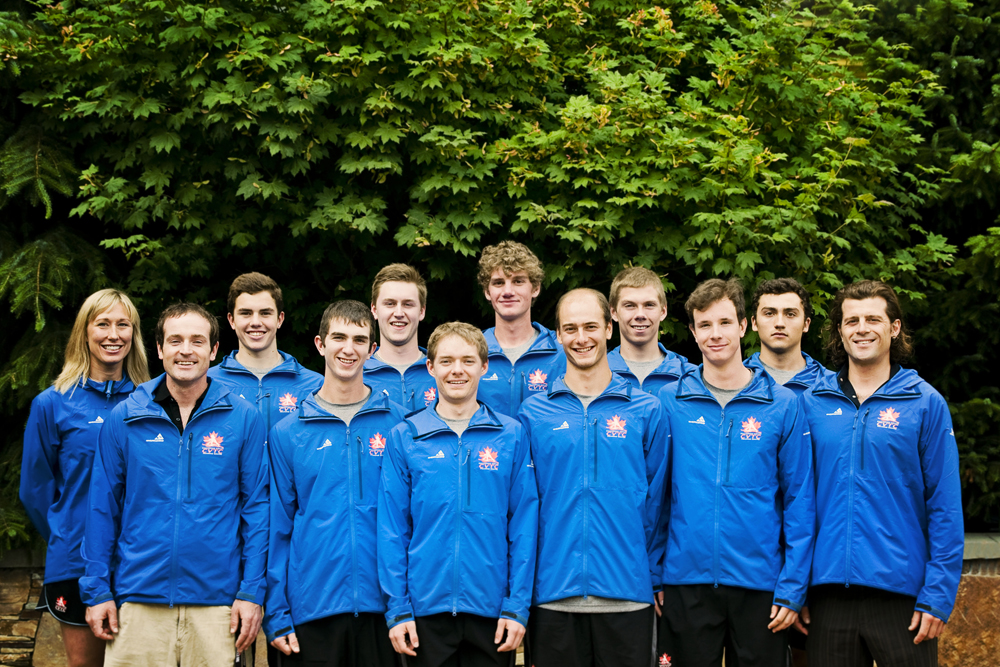
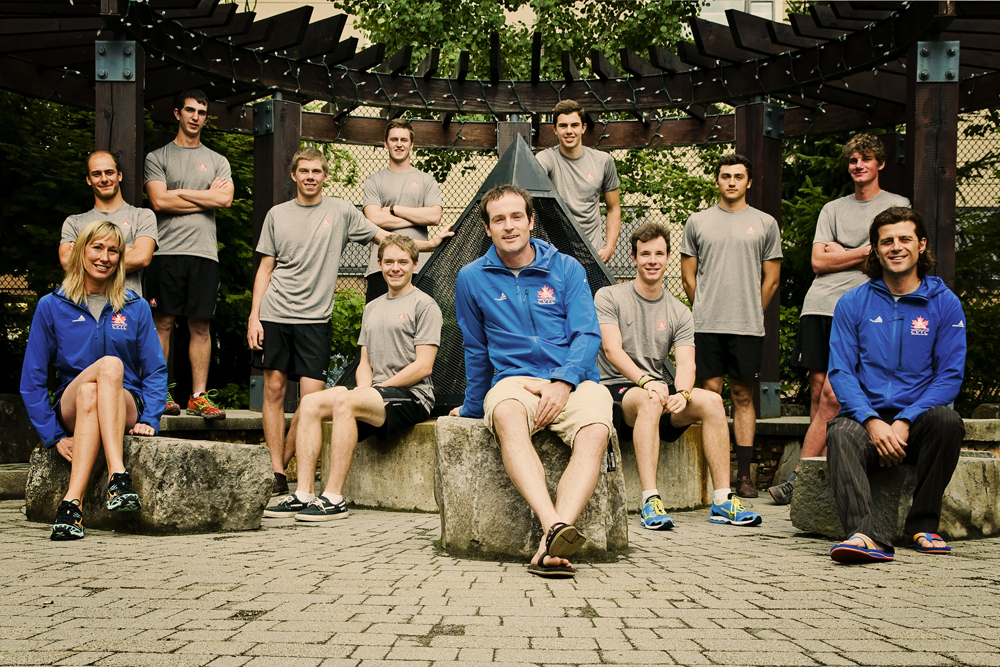
    The 2013/2014 Callaghan Valley Training Centre team, including head coach Chris Manhard (c), assistant coach Maria Lundgren (l) and wax tech Graham Maclean (r). (Photo: CVTC)
    The 2013/2014 Callaghan Valley Training Centre team, including head coach Chris Manhard (c), assistant coach Maria Lundgren (l) and wax tech Graham Maclean (r). (Photo: Ashley Nagy Ouellette/CVTC)

    Note: This is the first of four previews providing an inside look at Canada’s national training centres and their respective senior teams this season. We asked coaches to tell us what’s new, whom to look out for, and the outlook on the winter ahead.

    Team: Callaghan Valley Training Centre (CVTC)

    Coaches: Chris Manhard (head coach), Maria Lundgren (assistant coach), Graham Maclean (wax tech), Shannon Thompson (mental performance coach)

    Athletes: Martin Schrama, Paul Dupuis, Geoffrey Richards, Sebastien Dandurand, Andrew Avis, Sam Morris, Liam Patterson, Colin Foley, Benjamin Osorio

    No women because there weren’t enough applicants, according to Callaghan Valley’s marketing and communications director Magi Scallion.

    “It just so happens that in the past couple years we’ve not had enough female applicants to create a reasonable female training group,” she wrote in an email. “We would love to have more females on the team and are just waiting for the right opportunity and critical mass.”

    The faces of the Callaghan Valley Training Centre. (Courtesy photo)
    The faces of the Callaghan Valley Training Centre. (Photo: Ashley Nagy Ouellete/CVTC)

    Who’s new: Avis (from Goderich, Ontario) “Andrew is relatively new to the sport of cross country skiing as he came from a boxing and hockey background,” Scallion explained. “He’s fitting in really well and seeing some big improvements in training this year.”

    Morris (West Vancouver, B.C.) “… A tenacious competitor and really enjoying the team dynamic,” she added. “He’s one of the younger members of the team but certainly not scared of taking leadership or duking it out with the older boys in time trials.”

    Patterson (Thunder Bay, Ontario). “Thunder Bay is a real hotbed of skiing and Liam’s got some great experience and talent,” Scallion wrote. “He’s had some injuries and has not be able to run as much as the rest of the team, but is getting healthy quickly and is looking forward to a great winter.”

    Foley (Ottawa) “… Very talented and driven,” according to Scallion. “We’re enjoying having his skill and passion around. Technique is a major focus for him this training season.”

    Osorio (Huntsville)  “Ben joins the U23 squad of the CVTC and is really enjoying training in a focused environment,” she wrote. “He’s going to see some big improvements this winter.”

    Who’s missing: Yannick Lapierre and Sebastien Townsend (accepted at Alberta World Cup Academy in Canmore); Stefan Sander-Green (returned to hometown of Kimberley, B.C., and is training with local club there); Colin Ferrie (living in Kimberley, training with BlackJack Ski Club and head coach Dave Wood out of Rossland, B.C.); Fred Weaver (off to school)

    Top results last season:

    At 19, Dandurand, who previously excelled in nordic combined, earned three bronzes in each of the junior distance races at Canadian nationals in Whistler, B.C. Earlier in the season, he topped the NorAm junior podium at Western Canadian Championships in Grand Prairie, Alberta, where he won the skate sprint and 30 k freestyle pursuit for third overall in the mini tour. He also made the podium at the Ottawa NorAm, placing third as a junior in the 15 k skate.

    Another junior, Dupuis, 20, was fourth in the NorAm skate sprint in Grand Prairie, and placed fifth in the 15 k classic there and classic sprint at the NorAm in Thunder Bay.

    As a senior, Richards, 21, pulled off a top 20 in the classic sprint at Canadian Nationals and nabbed 10th in the Sovereign Lake NorAm 15-kilometer classic mass start early last season.  Also 21, Schrama was in the top 25 at three NorAms last season.

    Coach’s comments:

    Everybody is in great shape and great spirits following a pretty hard training camp throughout September,” Scallion wrote, based on conversations with coach Manhard.

    In early July, the team got together and down to business in Whistler, B.C., then flew to Park City for a camp later that month. Its athletes spent September touring British Columbia (plus a week on the Haig Glacier in Alberta), and later this month, they’ll head back to Canmore for a week on snow at Frozen Thunder before returning to Whistler for more skiing, weather permitting. In November, they’ll ski some more at Silver Star in Vernon, B.C., before the race season starts.

    “Our goals this season are to qualify as many athletes as possible for U23 and World Junior Championships,” Scallion wrote, noting the team’s relative youth in its fourth season since its inception in 2010. “Medals at national championships are also important.

    “One of our major focuses is team cohesion and having a positive, energizing, supportive team atmosphere,” she added. “We’re carefully monitoring this and our mental coach, Shannon, has been very useful to this regard.”

    Bonus: For more on the CVTC, check out their introductory video.

  • Rollerski Maintenance 101 with CVTC’s Graham MacLean

    Rollerski Maintenance 101 with CVTC’s Graham MacLean

    By Graham MacLean | Callaghan Valley Training Centre assistant coach/wax technician

    Editor’s Note: This article first appeared in a Callaghan Valley Training Centre (CVTC) newsletter and on its website, and was republished with permission from Cross Country BC.

    ***

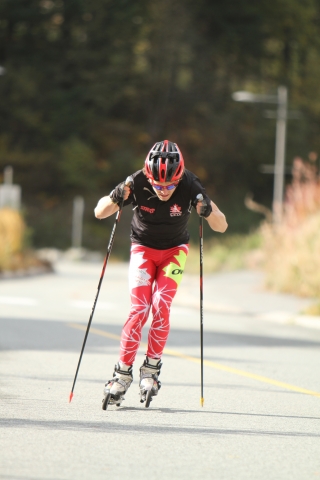
    (Photo: Graham MacLean/CVTC)
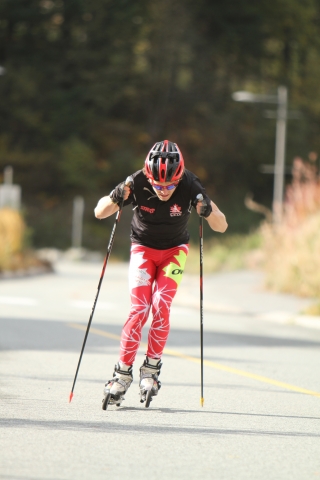
    (Photo: Graham MacLean/CVTC)

    Most people do zero maintenance on their roller skis.  This is all right most of the time but there are a few things that should be checked for safety.

    Binding screws do come loose!  If you notice rattling and vibration noise as you roll down the highway, it could likely be that one or many of your binding screws have come loose. USE GLUE!  Epoxy works well, you can even buy specialized epoxy for adhering metal to metal.  If the roller skis are wood, then good ol’ white glue works great.  Common sense – you do not want the roller ski and binding to separate while skiing.

    Wheel axle nuts do come loose!  Check your wheel nuts regularly!  Use thread locker such as loctite or lock nuts if it is a persistent problem.  If you find the ratchet is slipping on your classic roller skis, it may be that the wheel nuts have worked loose.  Wheel nuts do get damaged from scraping on pavement occasionally.  If they are old, you may want to consider buying replacements so you can use a wrench to effectively tighten them.

    When it is really smokin’ hot outside, avoid using your roller skis in the heat of the day.  Occasionally the rubber on roller ski wheels will delaminate on super hot summer days.  Replacement wheels are available at many good XC retail shops.  CVTC athletes use primarily F1 Sprint skate roller skis and V2 930k classic roller skis.

    Sharpen your tips often!!  It is much easier to sharpen a tip that is not worn down too much.  You will be thankful and your roller ski training will be more effective and less frustrating.  Use a diamond file and try to maintain the angles on the tips.  We often use a bench top tile cutter with a rotating diamond blade.  This is best done by briefly and gently pressing the tip on the side of the diamond blade.  Tricky at first but you will soon get it figured.  We also have diamond hand files for side of the road maintenance.  A spare tip and a lighter (to soften the glue) are two items you can carry in your drink belt.  It sucks to have to ski back home with one broken tip.

    Good luck with your roller skiing this summer!

  • Elite Team Preview: Callaghan Valley TC

    Elite Team Preview: Callaghan Valley TC

    Members of the Callaghan Valley Training Centre hike up the Haig Glacier near Canmore, Alberta, during a high-low camp in July. (Photo by Geoffrey Richards)

    This is the fourth and final preview in a quick-and-dirty series about Canadian national-training centres. We asked coaches to send their 2012/2013 rosters and tell us what’s new for the coming season. Teams were presented in no particular order.

    Team: Callaghan Valley Training Centre (CVTC)

    Coaches: Chris Manhard (head coach), Graham Maclean (assistant/wax tech), Maria Lundgren (administrator/part-time coach), Neil Manhard (part-time wax tech)

    Senior roster: Geoffrey Richards, Yannick Lapierre, Martin Schrama and Sébastien Townsend

    Who’s new: Townsend and Lapierre (from Nakkertok)

    Who’s missing: Colin Abbott (Yukon Elite Squad), Jeff Kerkovius (back to university), Jeff Wood (University of British Columbia), Adriene Underhill (retired), Kajsa Heyes (ankle surgery), Olivia Nesbitt (Rocky Mountain Racers)

    Callaghan Valley skiers during a daily hike up to the Haig Glacier at a Yo-Yo training camp in July near Canmore, Alberta. (Photo by Geoffrey Richards)

    Top results last season: Shortly after his 20th birthday, Richards won the junior men’s 15 k skate race at Canadian Ski Nationals in Mont Sainte-Anne, Quebec, by about a minute. He had previously placed second in the junior men’s 1.4 k skate sprint at nationals, and was 16th in the pursuit at the Junior World Ski Championships in Erzurum, Turkey.

    Kerkovius notched silver at nationals in the junior men’s 10 k classic race, just ahead of Schrama, who was third.

    A CVTC junior squad member, Stefan Sander-Green was the second Canadian in the junior men’s 30 k classic mass start at nationals and fourth overall after two Norwegians.

    Abbott had what coach Manhard called an “excellent year as U23,” finishing ninth at nationals in the open men’s 50 k classic mass start and consistently placing within the top 20 on the NorAm circuit. Originally from Whitehorse, he’s returning to his roots in the Yukon Territory.

    Coach’s comment: “New and notable seems to be a emergence of a gentleman’s club,” Manhard wrote in an email, adding, “(this term I use very loosely).”

    With four men on its senior roster and five junior males, this team doesn’t have a single woman, and Manhard explained why.

    “With one coach for a centre, it was very difficult balancing the boys training and social environment and the girls training and social environment,” he wrote. “With only the boys to manage it has given me more of an opportunity focus on each athlete do a better job.”

    He went on to state that a smaller team has been “far more manageable this year,” and he’s pleased with the group: “[They’re] very close in abilities and they work well in training to push each other every session.”

    In the program’s third year as a national-training centre (based in Whistler, B.C.), Manhard commented on how far it’s come and the struggles it has endured.

    “When I moved to Whistler, I was the first person in the athlete village (Olympic Village) and to see it now is quite amazing,” he wrote. “Creating the centre has been wonderful and stressful. There always seems to be more to add to the program and getting to know the Whistler locals has been slow so most of the time it tends to be the athletes and me.”

    Team members live in athlete townhouses about 20 seconds away from Manhard’s home, making for “24-7 immersion,” he wrote.

    “The rest of the training centres coaches have been very helpful and supportive in every way,” he added. “If I am having a problem with anything, I know that I can phone either the national team or training centre coaches and discuss the issues and options. I am happy where the training centre has made it to and despite a few setbacks along the way, the centre has grown tremendously and I am very happy to see where it is now.”

    This season, Manhard’s especially impressed with his junior skiers and is excited to see who will lead them once racing starts.

    “[Former nordic-combined skier Sebastien] Dandurand has been the skating leader in time trials and [Paul] Dupuis has been the double pole champion so far,” he wrote. “The seniors have stepped up their game, but Geoffrey continues to lead the pack in the time trials.”

    However, Manhard didn’t overlook Townsend, who’s coming off an arm injury from last season and missed most of the time trials.

    Extras:

    The Callaghan Valley team starting their backpacking trip up Mount Assiniboine on the Great Divide of the British Columbia/Alberta border. (Photo by Geoffrey Richards)

    The CVTC started its training season with a week of skiing at Callaghan Country Lodge in Callaghan Valley, B.C., according to Richards. In July, they completed two Yo-Yo sessions at lower and higher altitudes between Canmore, Alberta, and the nearby Haig Glacier. They also spent a few days backpacking and running along Mount Assiniboine on the Great Divide.

    “Training so far this summer has been amazing,” Richards wrote in a message. “For me, the best season so far, Chris has really stepped this up this year and taken us to lots of cool new places to train.”

    On a coaching note, when it comes to the role of Maclean (also a national-team wax technician), Manhard explained he is part-time and mostly involved with camps, early season work, and equipment management.

    “He will be on the world cup for part of the winter and he is helping manage the tech side of Sochi [Olympics in 2014],” Manhard wrote. “We sit down at the beginning of the year and go over where my needs are the greatest for support and he fills in where possible.”

    Lundgren could be working nearly full time next year to offset the seasonal absence of Maclean, but she recently had a child and has mostly been on administrative leave.

    ***

    Other previews: Alberta World Cup AcademyNDC Thunder Bay | Pierre-Harvey NTC

    CVTC skiers hiking out on their last day of backpacking at Mount Assiniboine on the British Columbia/Alberta border. (Photo by Geoffrey Richards)