From the FasterSkier archive — posts syndicated from athletes’ and coaches’ own blogs between 2004 and 2012, kept online as published. Current coverage is at fasterskier.com.

Tag: Graham Ritchie

  • Nyenget Takes Oberhof 10 k Classic as Americans Build Momentum

    Nyenget Takes Oberhof 10 k Classic as Americans Build Momentum

    This coverage is made possible through the generous support of Marty and Kathy Hall and A Hall Mark of Excellence Award. To learn more about A Hall Mark of Excellence Award, or to learn how you can support FasterSkier’s coverage, please contact info@fasterskier.com.

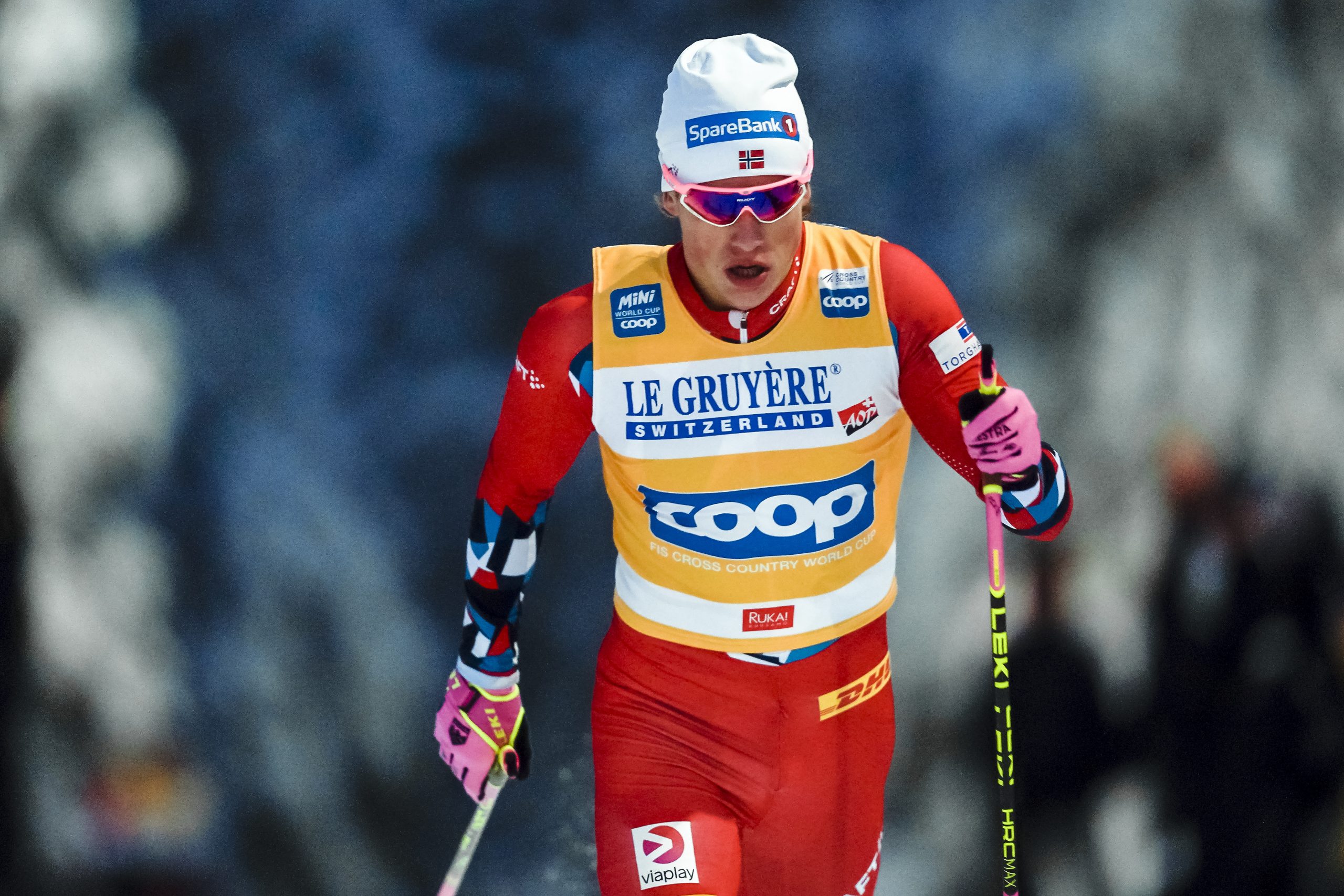
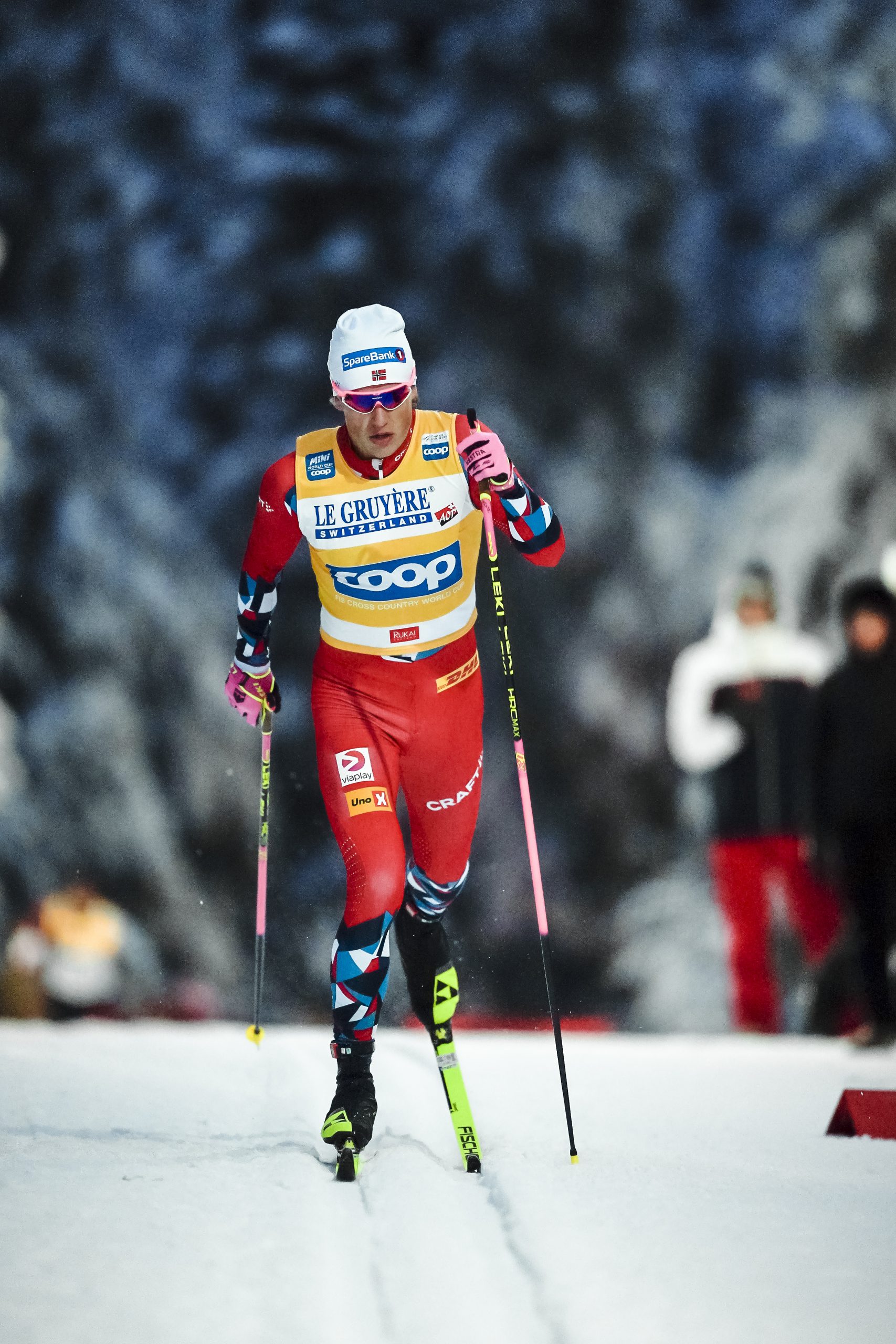
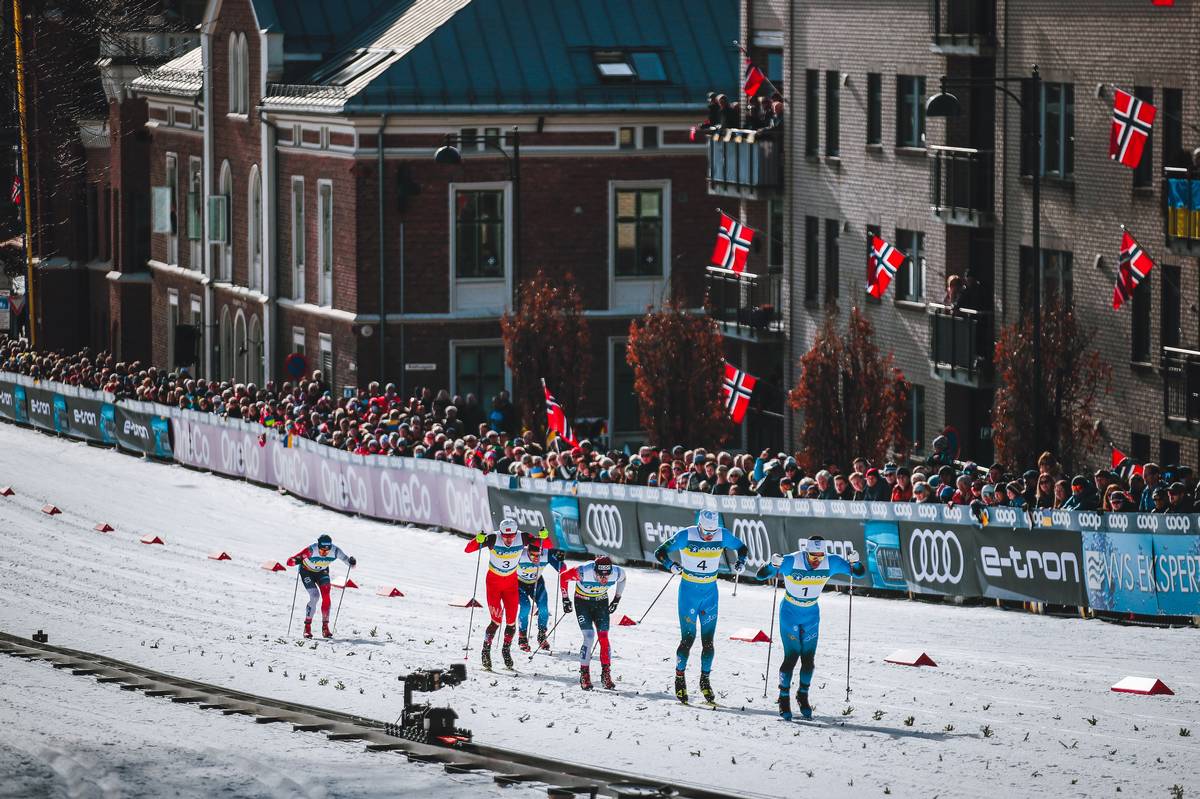
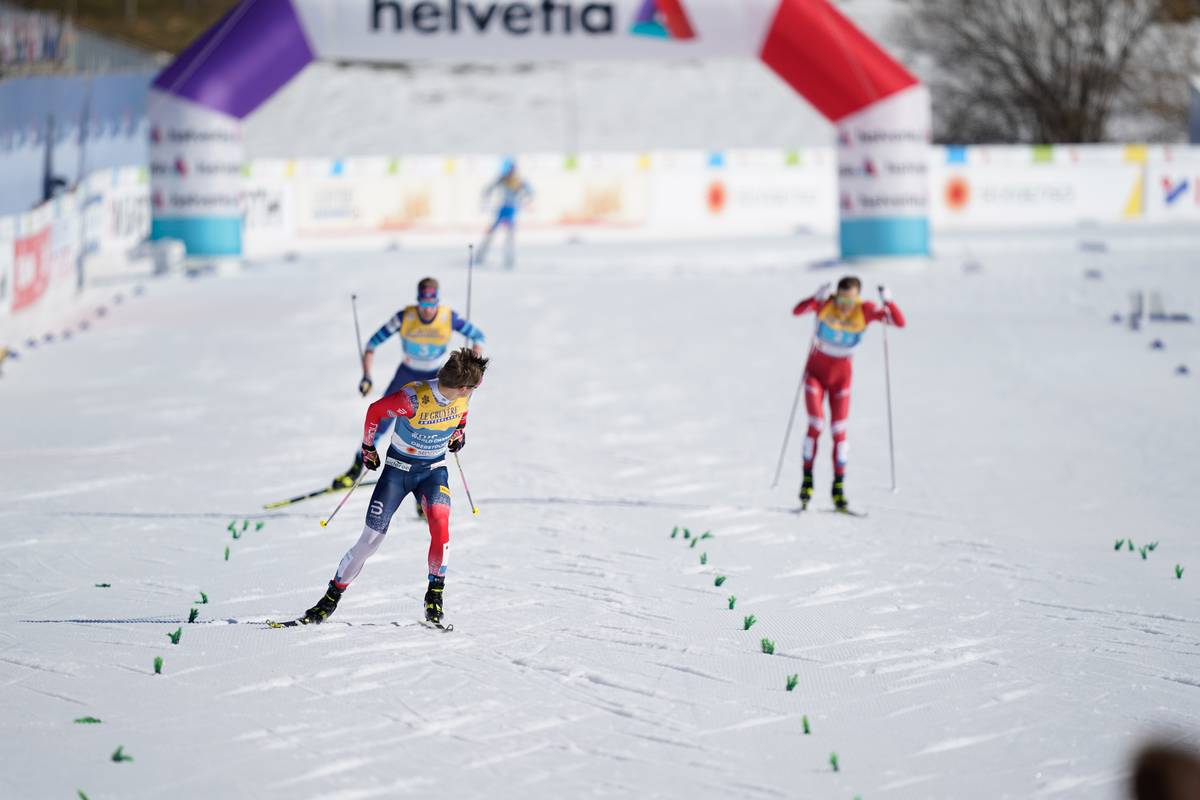
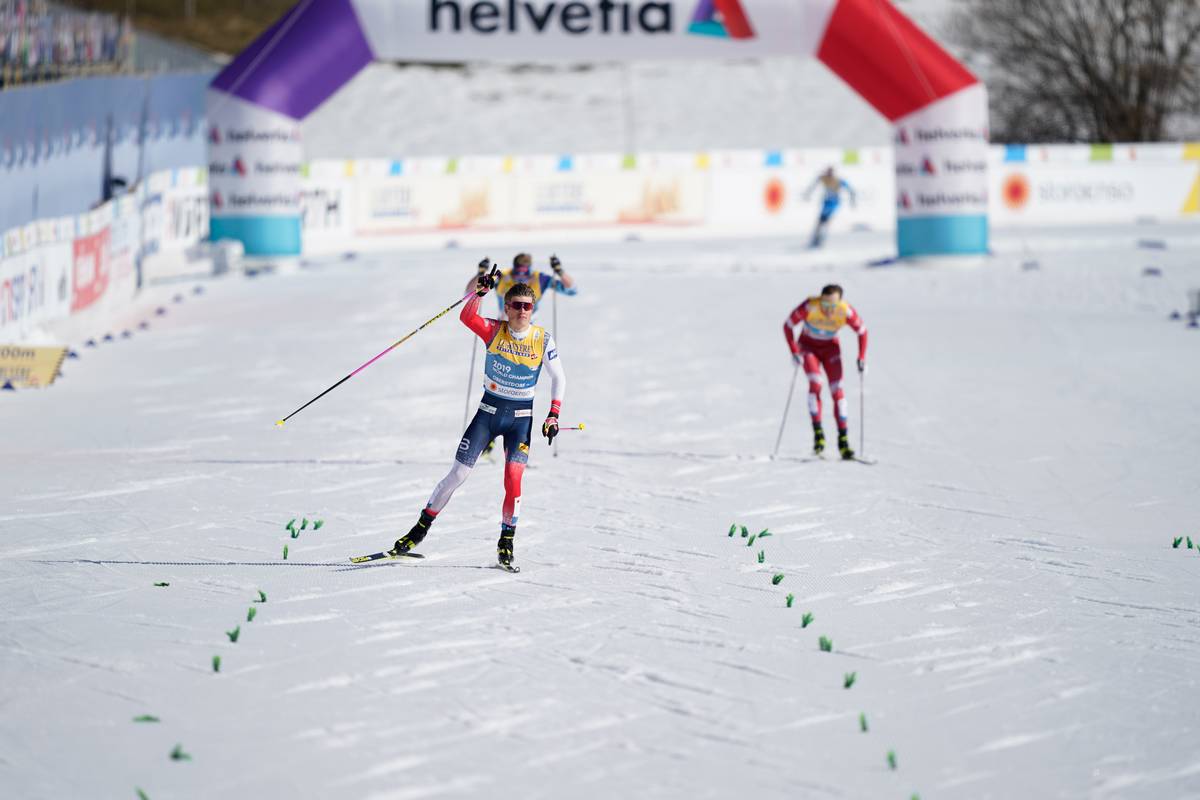
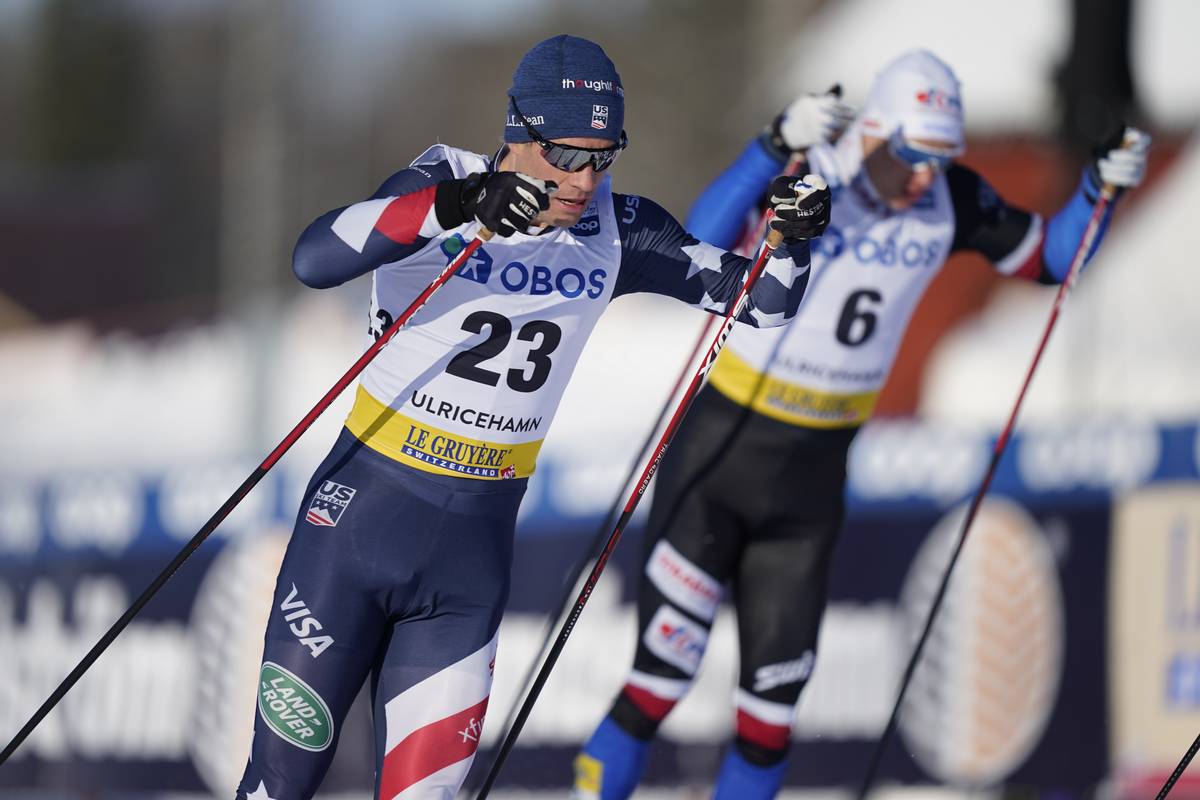
    Martin Loewstroem Nyenget (NOR) came back to World Cup racing, posting the fastest time in the 10 k Interval Start Classic in Oberhof (GER). (Photo: Authamayou/NordicFocus)

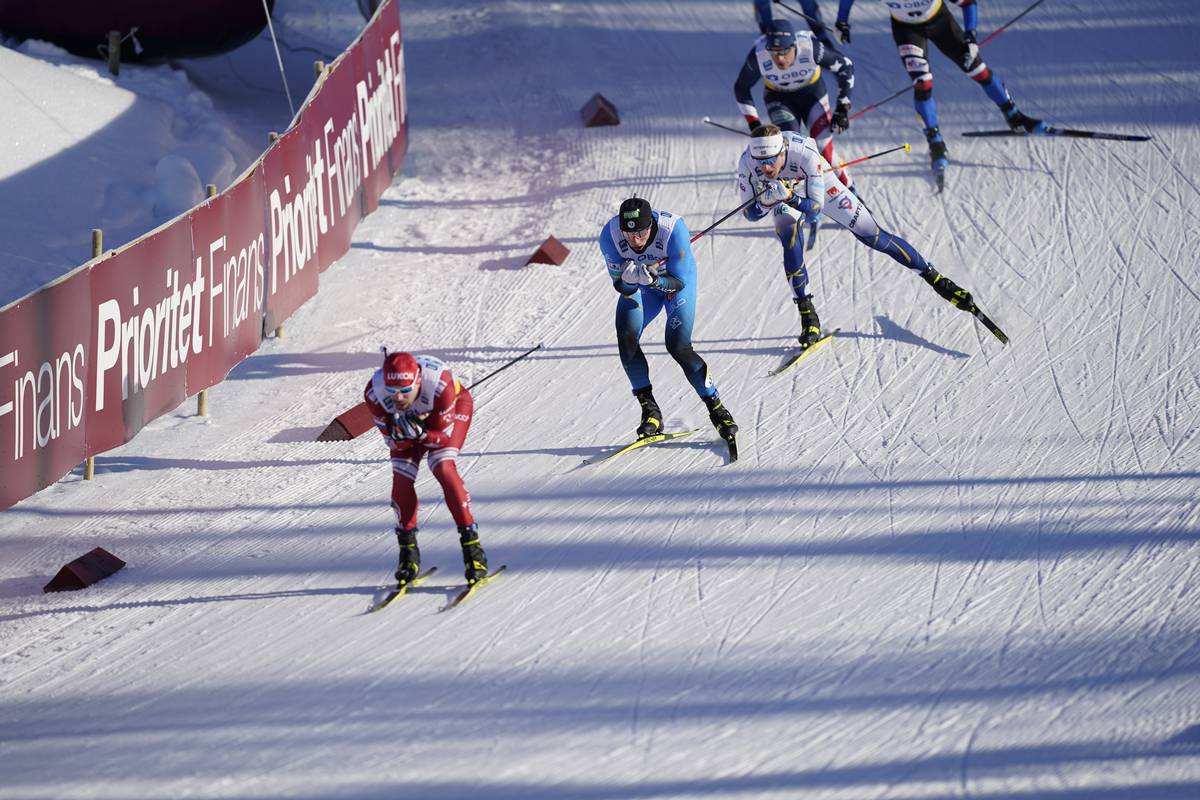
    On Sunday morning in Oberhof, the snow had the kind of sheen that tells the truth before the clock ever does. It glittered under a clean winter sun, polished by a freeze–thaw cycle that left the tracks fast, brittle, and unforgiving. At 823 meters, tucked into the Thuringian Forest, the course looked generous from a distance—wide lanes, long sightlines—but it was the sort of generosity that disappears the moment a skier commits to a mistake. The margins here were not loud. They were sharp.

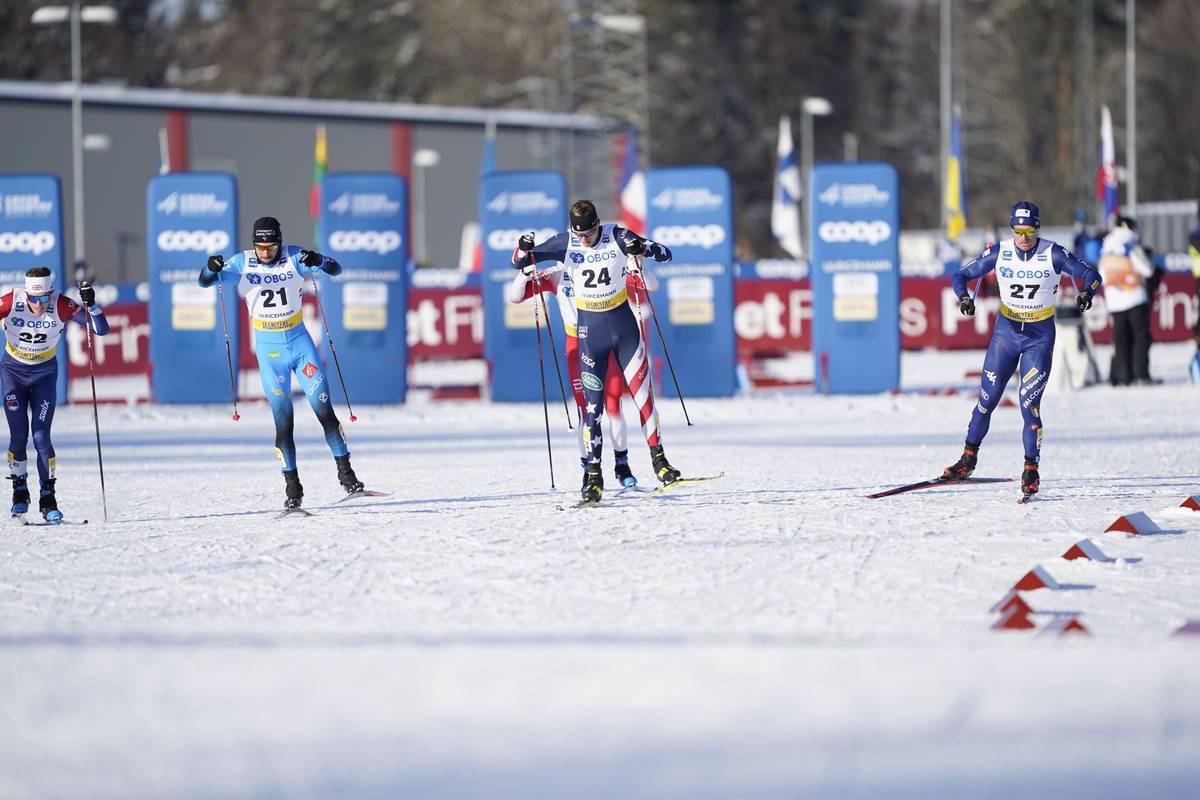
    This was the men’s 10-kilometer Classic Interval Start, a format that does not tolerate theater. There would be no pack to hide in, no draft to borrow, no tactical stalemates to blame. Every thirty seconds, a skier pushed out of the start gate alone, carrying only his pacing plan, his skis, his poles, and whatever composure he had managed to preserve through an Olympic build that has been compressing time for months. Period Three had begun. The calendar was no longer abstract.

    Classic skiing in these conditions demands restraint masquerading as confidence. The climbs are short but decisive; the downhills are technical enough that speed becomes a negotiation rather than a gift. Grip must be trusted without being tested. Push too hard too early, and the skis slide away beneath you; hesitate, and seconds vanish into the ice. It is possible—common, even—to ski very hard here and still ski poorly.

    Iivo Niskanen (FIN) was formerly the king of the 15 k Classic and showed he is one of the best in the 10 k Classic in Oberhof (GER). (Photo: Authamayou/NordicFocus)

    The interval start turns this dynamic inward. The course does not change for you, but your relationship to it does. You pass athletes who started ahead of you and are passed by those who did not. You hear split times shouted from the side of the trail—sometimes accurate, sometimes not—and you decide whether to believe them. In Oberhof, where artificial snow breaks down as the sun rises and the grooves lose their bite, the course becomes a moving target. Early starters gamble on freshness; later starters trade glide for information. No one gets everything.

    Absent from the start list were some of the sport’s most reliable reference points. Norway’s biggest names were racing at home, their national championships pulling them away from this quiet, consequential weekend, or focused on a pre-Olympic training block. Their absence opened space on the results sheet, but not relief. If anything, it sharpened the test. Without familiar benchmarks, the race would be defined less by expectation than by execution.

    The 10 k classic has become a strange distance in modern cross-country skiing—short enough to reward urgency, long enough to punish impatience. It asks skiers to operate just below the edge of recklessness and to stay there for more than twenty minutes. In Oberhof, that edge was particularly thin. The tracks shone. The corners demanded respect. The kind of mistake that costs half a second in softer snow could cost five places here.

    Erik Valnes (NOR) on his way to third and another statement to the Norwegian Olympic selection committee in Oberhof (GER). (Photo: Authamayou/NordicFocus)

    For the Americans, this was the last weekend considered in Olympic team deliberations, a fact everyone knew and no one needed to say out loud. The weight of it showed up not in desperation but in discipline. There were no grand gestures in the start lane. What mattered was whether an athlete could trust the work he had done and let the race unfold on its own terms.

    One by one, skiers disappeared into the forest, double-poling through the opening flats before settling into the rhythm that classic skiing requires when it is done well: patient climbs, clean transitions, downhill speed carried without panic. The clock ticked. The sun climbed. The track began to change.

    By the time the later starters reached the first split, the course had already started to tell its story. Early leaders came back. Conservative openings paid dividends. The race did not break open so much as it clarified itself, revealing who could manage the terrain without forcing it—and who could not.

    In an interval start, there is a particular moment when the race stops being about possibility and becomes about reckoning. It arrives quietly. A skier hears that he is catching someone he should not be catching. Another learns that the pace he thought was safe is not. In Oberhof, that moment came late and all at once, when the day’s best classic skier finally aligned patience with power and turned control into separation.

    By the finish, the gaps would look clean and decisive. They always do. But the truth of this race lived earlier, in the choices made on icy corners and rolling climbs, in the decision to ski smooth instead of merely hard. Oberhof did not demand brilliance. It demanded honesty.

    Martin Loewstroem Nyenget (NOR) on his way to the win. (Photo: Reichert/NordicFocus)

    A Course That Reveals Its Verdict Slowly

    The first skiers through the opening kilometers set times that looked sharp but provisional, the kind that exist only until the course and the day reveal themselves. The early splits came quickly, then stalled. The ice underneath the tracks was still holding, but the sun was beginning to soften the surface just enough to punish excess force. The race was already sorting itself by feel rather than bravado.

    Martin Loewstroem Nyenget (NOR) navigates the sugary snow in Oberhof (GER). (Photo: Authamayou/NordicFocus)

    Nyenget’s Patience Turns Into Separation

    When Martin Løwstrøm Nyenget finally entered the picture, it was without urgency. His opening lap was measured, almost quiet, the sort of start that invites doubt if one is inclined to look for it. But Nyenget had not come to Oberhof to prove speed in the first five kilometers. He had come to test something else.

    “I hadn’t planned to open very hard,” Nyenget said afterward in an interview aired on the FIS World Cup broadcast. “I’ve been training really hard for the last four weeks, so I didn’t quite have the speed on the first lap. But as soon as I heard that I was catching people, I started to feel really strong, and I knew I had something extra for the day.”

    The catching began gradually, then decisively. Where others tightened under the strain of the second lap, Nyenget loosened. His skiing did not change in form, only in intent. The double pole grew heavier, the transitions cleaner. On a course that demanded constant negotiation, he removed the argument.

    By the final kilometers, the race had become unmistakable. Nyenget was no longer racing the field so much as confirming what the course had already suggested. He crossed the line alone, the margins behind him clear and earned, his victory built not on dominance but on patience applied at exactly the right moment.

    “It’s fantastic to be back,” Nyenget said. “The longer I keep going in my career, the more fun I have racing. The training part isn’t always that fun anymore, so it’s great to be here in Oberhof with good conditions and really enjoy racing again.”


    An American Throughline: Skiing Well, Not Just Hard

    Behind him, the podium filled with familiar names and familiar styles — Iivo Niskanen (FIN +13.8) in second and Erik Valanes (NOR +14.5) in third — skiers who understand how to survive a day like this without surrendering it. The gaps were tight, the order decisive. It was the kind of race that leaves little room for argument afterward.

    For the American men, the story unfolded less in places gained than in choices validated.

    Zanden Mcmullen (USA) making one final statement to the US Olympic Team selection committee in Oberhof (GER). (Photo: Authamayou/NordicFocus)

    McMullen Finds His Shape Again

    Zanden McMullen arrived in Oberhof carrying momentum that had begun to take shape weeks earlier at U.S. Nationals. There, his skiing had looked settled again — confident without being rigid, aggressive without being rushed. In Oberhof, that trend continued.

    “I feel like I’ve started to find myself again, which is really reassuring,” McMullen said. “I think I was fully capable of skiing like this earlier in the season, but I needed a little more racing and confidence under my belt. This weekend feels like the tip of the iceberg.”

    His approach to the race was deliberate. Rather than forcing the issue early, McMullen allowed the course to come to him, focusing on terrain management rather than constant pressure.

    “My goal today was just to ski well through the terrain of the entire course,” he said. “Earlier this season, when I felt like I needed to force a good result, I wasn’t skiing well — I was skiing very hard, but not well. Today I focused on skiing smooth and fast rather than just hard, and I think that really paid off.”

    There were moments of vulnerability — a slight lapse near the end of the first lap — but McMullen recognized it in time to convert restraint into opportunity.

    “I was able to use that extra energy to ski hard and fast through the second half of the race,” he said.

    McMullen finished 18th, a result that read plainly on paper but carried deeper meaning inside an Olympic season defined by accumulation rather than singular peaks.

    “I know I’ve done what I can,” he said. “I’m happy to be back where I left off last year before I got sick. Now I can shift my focus to preparation. Olympic qualification is just the first step. I have very big goals for the Games themselves.”

    Hunter Wonders (USA) continued his 10 k Classic form he showed at US Nationals in Oberhof (GER). (Photo: Authamayou/NordicFocus)

    Hunter Wonders and the Familiar Language of Classic Distance

    For Hunter Wonders, Oberhof reinforced something that has been quietly consistent in his career: when the race is a classic distance interval start, the task tends to make sense. There is clarity in pacing, in grip management, in the slow accumulation of pressure rather than the sudden chaos of a sprint.

    Wonders skied into the points again, backing up his showing from U.S. Nationals with another disciplined performance on snow that rewarded trust over impulse. In conditions where early aggression often came undone later, his race held together. The opening kilometers were controlled, the middle steady, the final lap about preservation rather than rescue.

    That continuity mattered. In a field where seconds dissolved quickly into places, Wonders avoided the kind of oscillations that define fragile races. He neither chased the early benchmarks nor retreated from them. Instead, he stayed within a rhythm that allowed the course to do less damage than it did to many around him.

    On a day when classic specialists quietly rose, Wonders looked like one — not flashy, not forced, but coherent from start to finish.

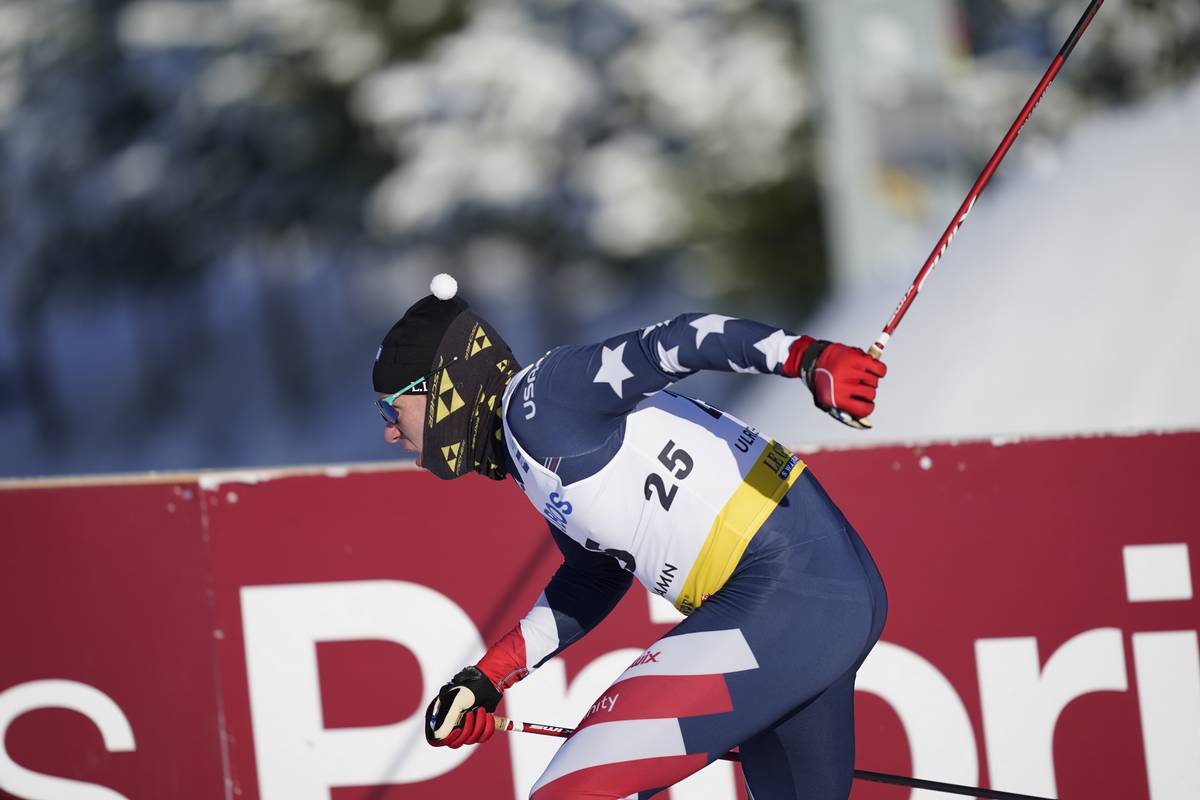
    Luke Jager (USA) celebrated his birthday weekend in Oberhof (GER) with a top 30 in the 10 k Classic. (Photo: Authamayou/NordicFocus)

    Luke Jager and the Discipline of Attention

    A few minutes later, Luke Jager crossed the line inside the top 30, finishing a race that mirrored his own quiet trajectory. Though the calendar had marked it as his birthday weekend, the day itself passed without ceremony.

    “My main goal was just to be fully immersed in the experience,” Jager said. “To focus on doing my best and skiing each section of the course as well as I could.”

    On a course where margins evaporated quickly, that focus mattered.

    “The margins were definitely thin, but they always seem to be on the World Cup these days,” he said. “It doesn’t really help to stress about that, so I try to keep my attention on what’s right in front of me, so that when I cross the finish line I can say I found as many of those little margins as I could.”

    John Steel Hagenbuch (USA) striding his way to 52nd place. (Photo: Authamayou/NordicFocus)

    John Steel Hagenbuch and the Cost of Precision

    For John Steel Hagenbuch, Oberhof was less forgiving, finishing in 52nd place. Fast, icy tracks compress the margin for error until technique, pacing, and decision-making overlap completely. There is no room to separate them. When one slips, the others tend to follow.

    Hagenbuch’s race never unraveled dramatically, but it never fully unlocked either. The speed was there in moments; the continuity was harder to hold. In an interval start, that can be enough to drift backward without a single obvious mistake to point to afterward.

    Classic skiing on firm conditions is often less about what goes wrong than about what never quite arrives. A corner taken cautiously becomes a gap. A climb approached defensively compounds over kilometers. Oberhof exposed those small hesitations with clarity.

    Still, there were pieces to build from. Hagenbuch moved efficiently through the terrain, and his ski handling held under pressure. What the race demanded next — and what it withheld — was the seamless connection between intention and execution that defines skiing at this level.

    Zachary Jayne (USA) raced his first World Cup races of his career in Oberhof (GER). (Photo: Authamayou/NordicFocus)

    A ‘Welcome to the League’ Weekend

    For Zach Jayne, the weekend carried a different weight. After a breakthrough performance at U.S. Nationals, Oberhof marked his first exposure to the full scale of World Cup racing — the cameras, the movement, the relentless compression of time and attention.

    “After a good week at Nationals, I’m honestly pretty disappointed with my first few World Cup starts,” Jayne said. “I’m grateful to be here racing against some of the best in the world, but I really wanted to do something with my starts.”

    What surprised him most was not the pace but the environment.

    “There’s just a lot more going on — cameras, people, spectators,” he said. “For me, that translates into more stress, and I’m still learning how to manage that.”

    Still, Jayne was clear-eyed about the lesson.

    “I definitely had my ‘welcome to the league’ moment this weekend,” he said. “Now I have something bigger and better to shoot for.”

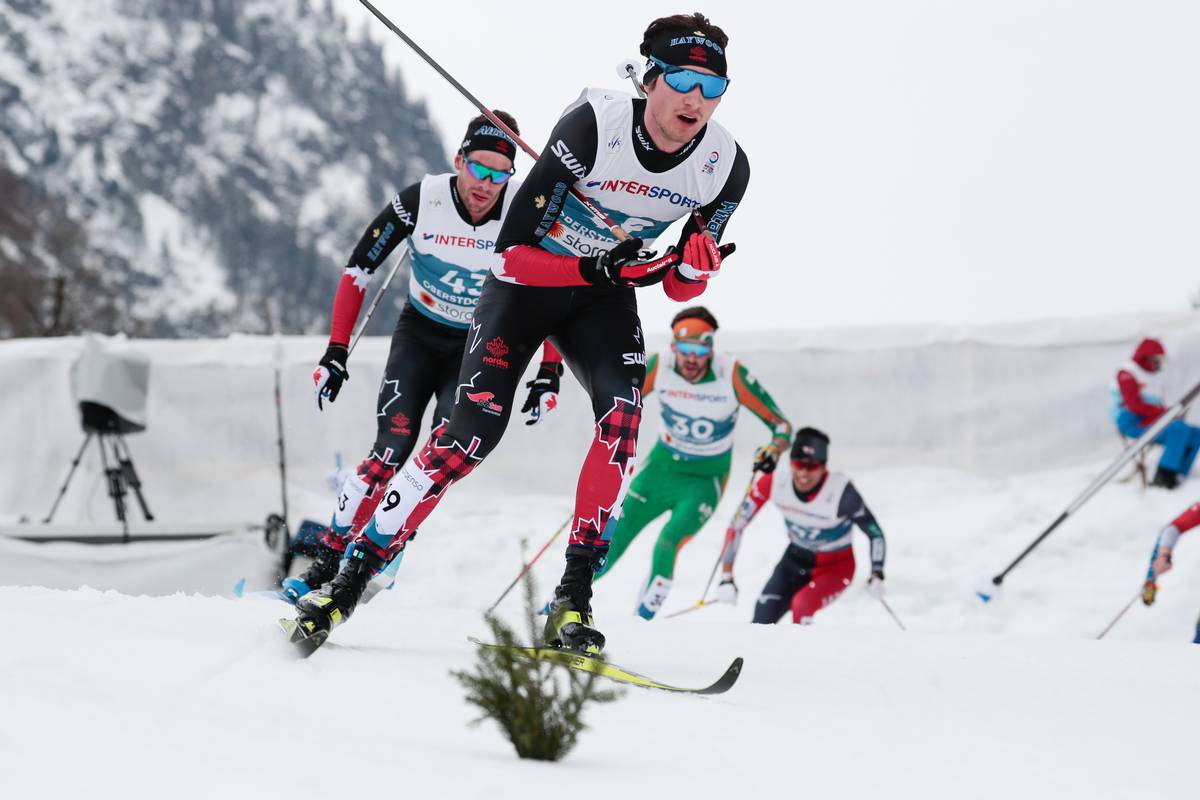
    Antoine Cyr (CAN) on his way to a top 30 finish in Oberhof (GER). (Photo: Authamayou/NordicFocus)

    The Canadians: Cyr Steady, Ritchie Searching

    Canada arrived in Oberhof with different objectives but shared terrain.

    Antoine Cyr delivered another composed World Cup performance, finishing inside the top 30 on a course that rewarded calm decision-making. His skiing carried the marks of experience: stable pacing, clean transitions, and an understanding of when to let speed come rather than chase it.

    In fast conditions, Cyr avoided the trap of overreaching. His race did not hinge on a single sector or surge but on the absence of mistakes — a strategy that proved effective as the track continued to glaze and soften through the day.

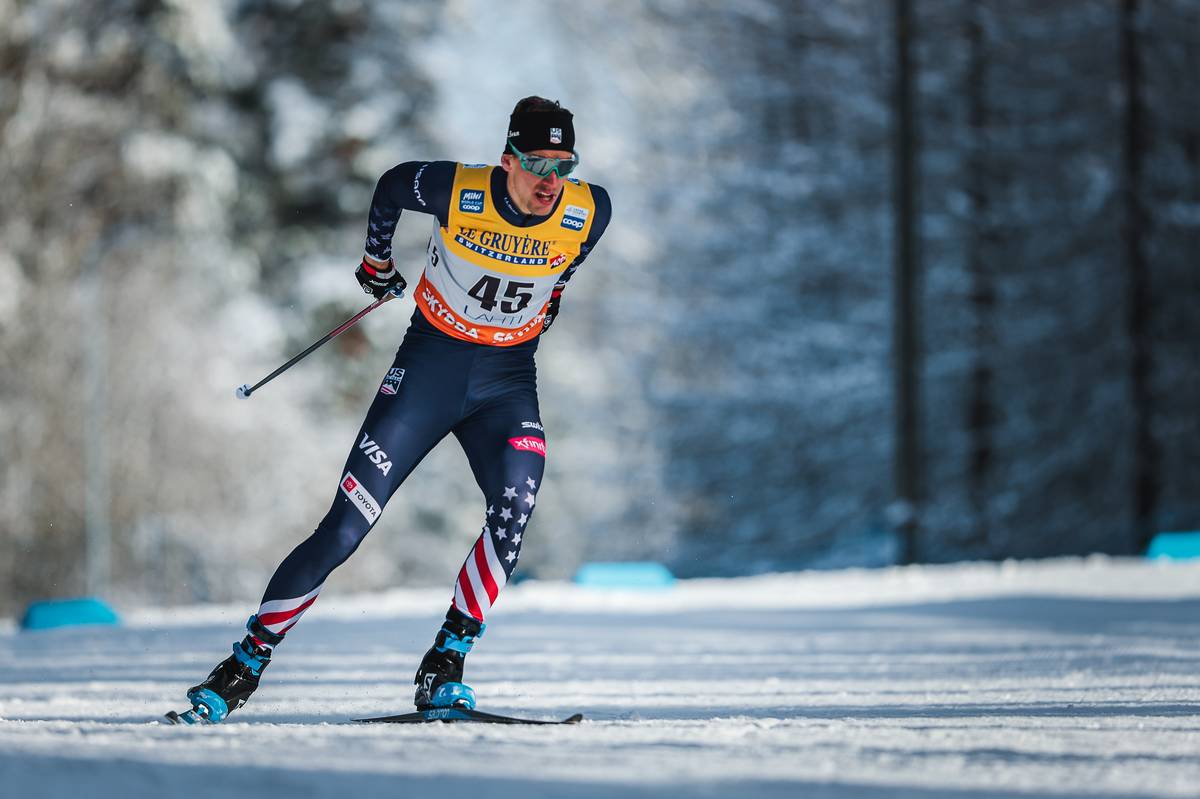
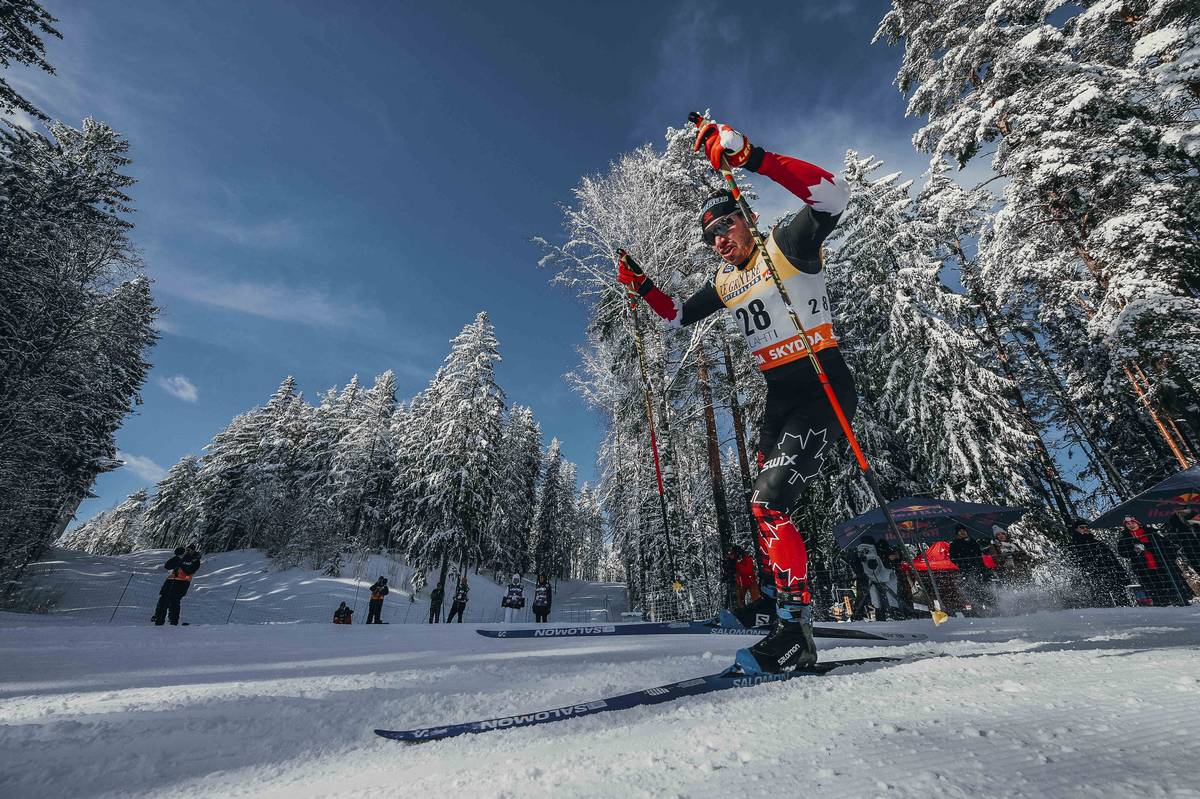
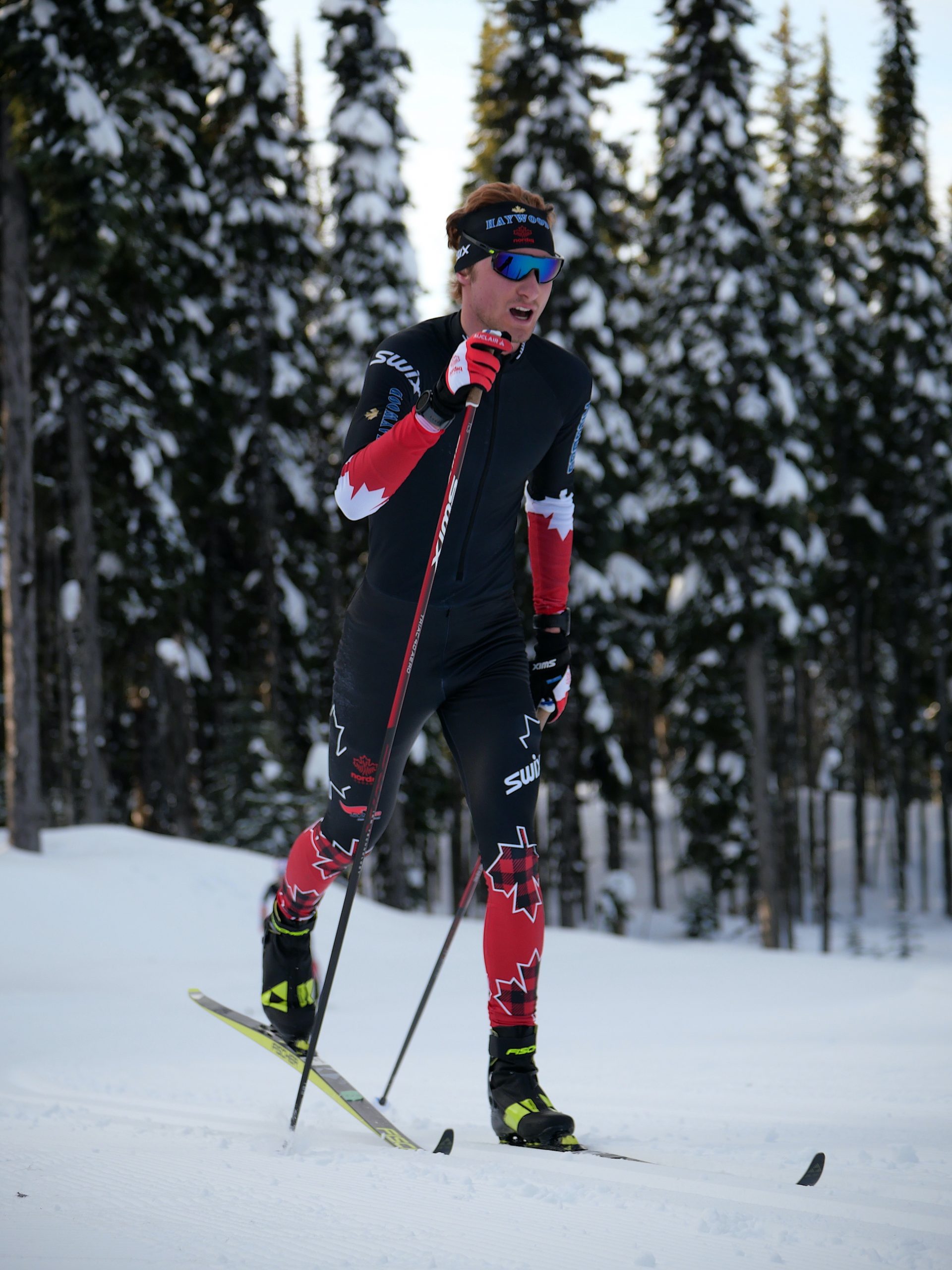
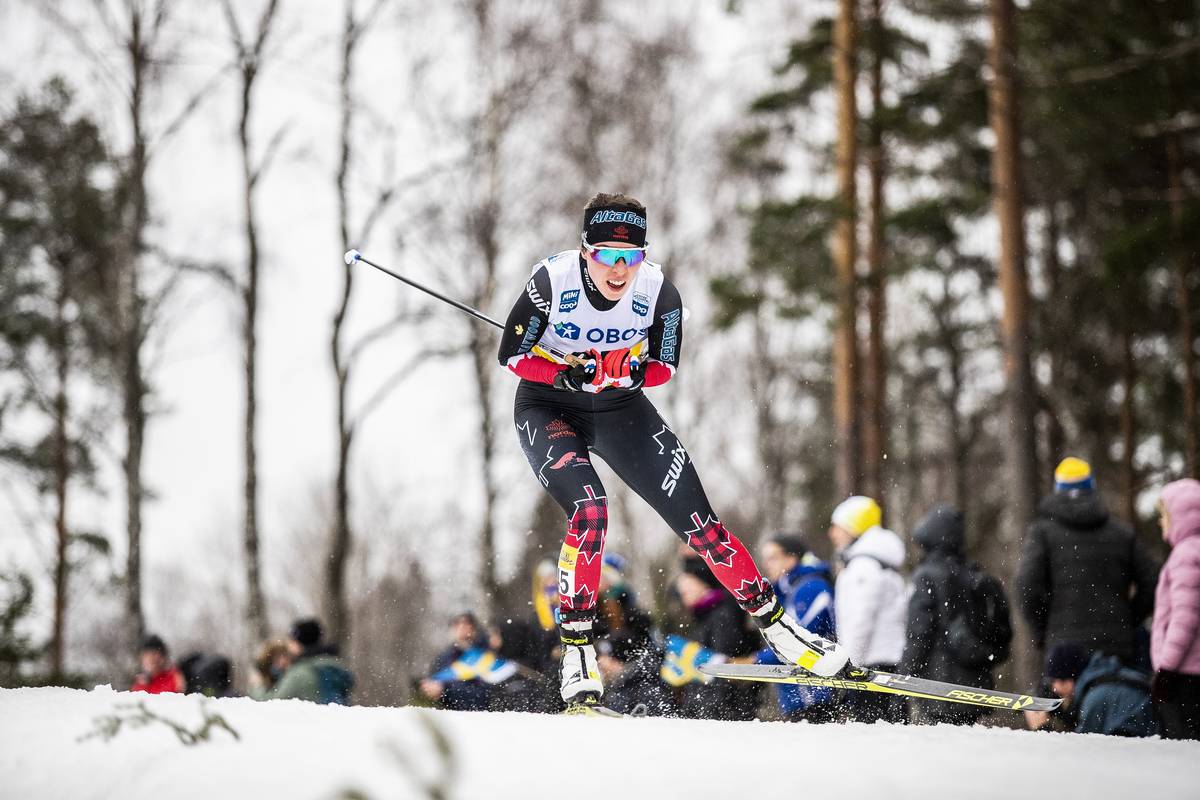
    For Graham Ritchie, the race served a different function. Returning to World Cup competition after a disrupted season, Oberhof was less about result than recalibration. The course asked questions he is still working back toward answering: how much risk to take, how much speed to trust, how long it takes to feel at home again in this environment.

    Ritchie skied through to the finish without drama, but the gaps reflected the difference between re-entry and fluency. On a day when the margins punished uncertainty, Oberhof made clear how narrow the corridor back to comfort can be.

    What Oberhof Demanded

    By the time the final starters finished, the course had softened just enough to underline its earlier warnings. The results sheet settled into place. Some athletes left Oberhof with confirmation, others with questions, all with fewer places left to hide.

    “It feels like everything is important right now — every part of the preparation,” Nyenget said. “Today, the goal was just to focus on the task. But of course, it’s a step closer to the bigger goal.”

    In Oberhof, the task had been clear all along: ski well, ski honestly, and let the rest follow.


    Men’s 10 k Classic Interval Start RESULTS

    Men’s FIS World Cup OVERALL DISTANCE STANDINGS


    Love Stories Like This? Help Keep Them Coming.

    Feature stories like this one take time, access, and care to produce. If you value thoughtful storytelling and independent ski journalism, please consider becoming a Voluntary Subscriber. Your support directly fuels the work we do to cover the people, places, and moments that make our sport special.

    Join the FasterSkier community!


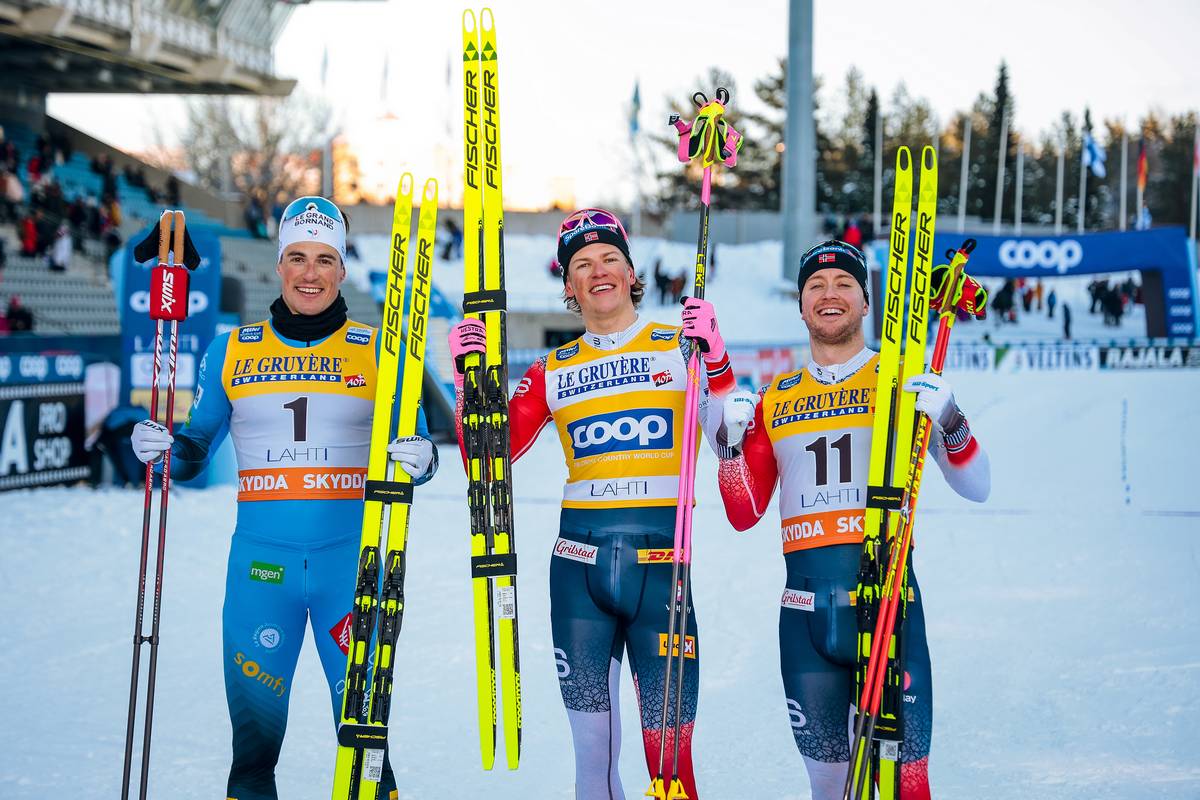
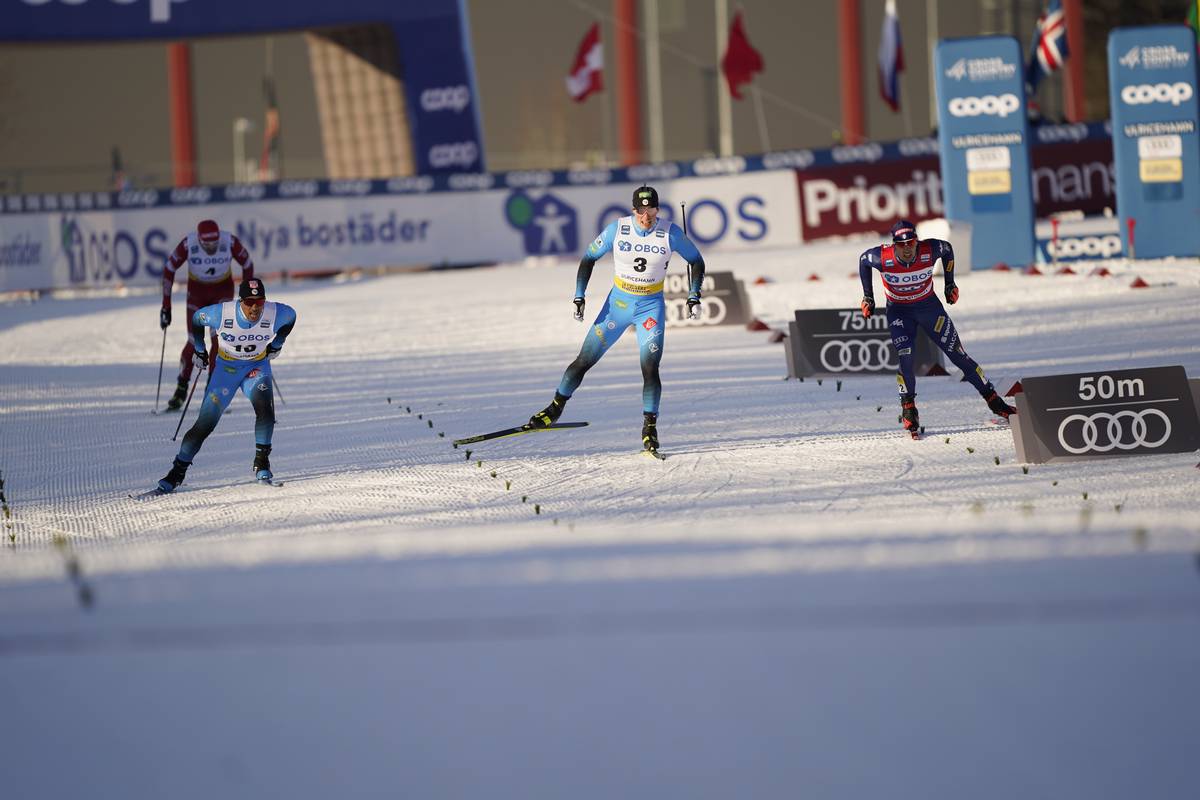
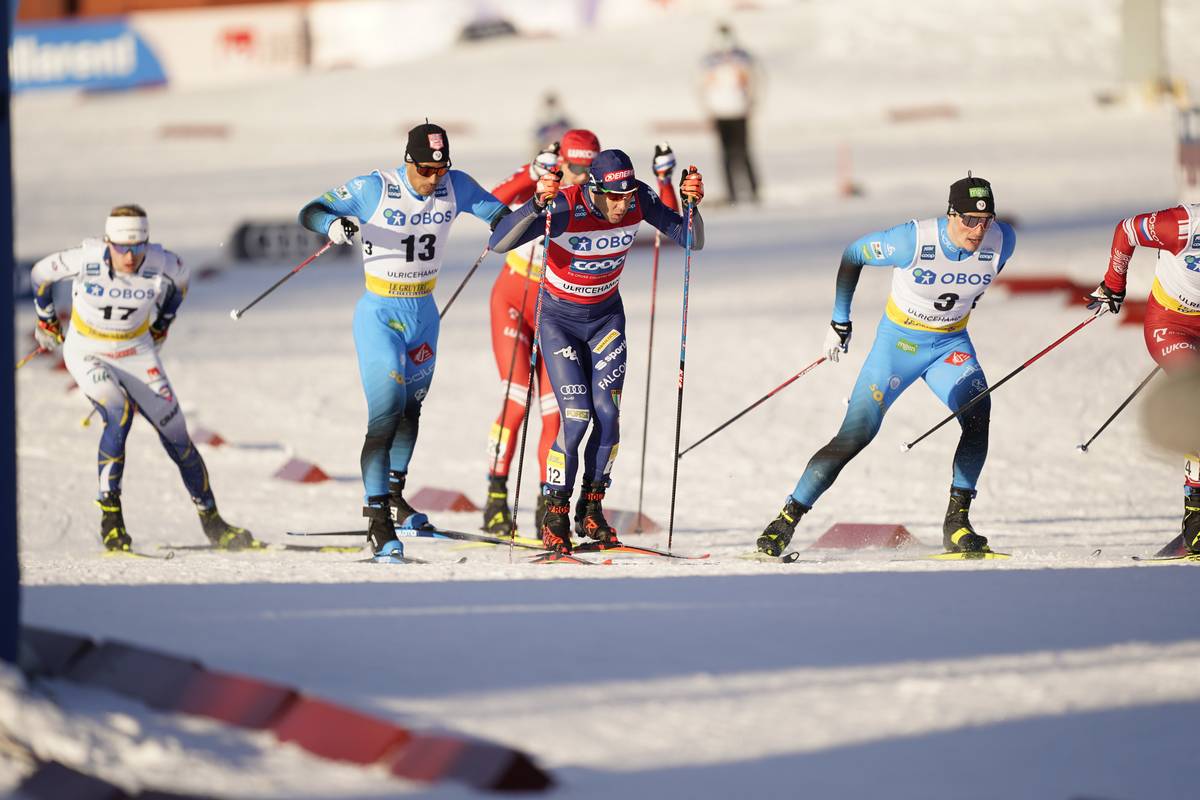
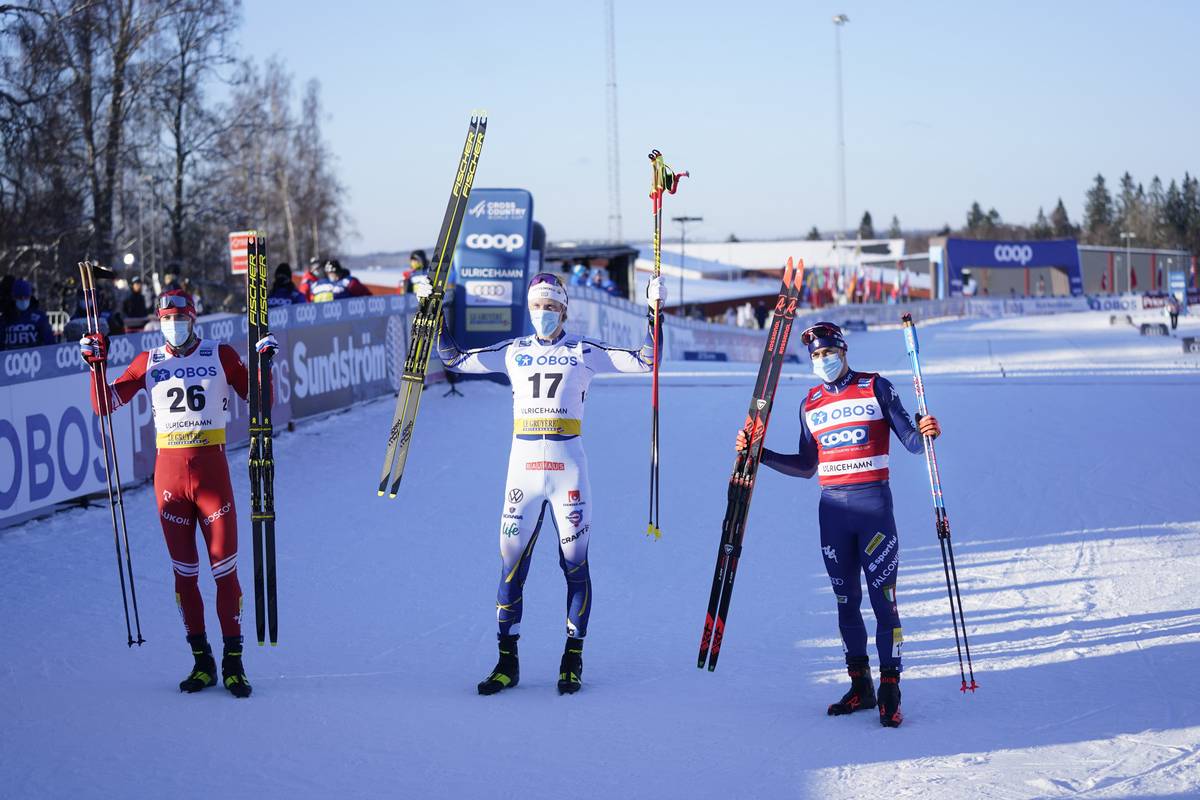
    Iivo Niskanen (FIN), Martin Loewstroem Nyenget (NOR), and Erik Valnes (NOR), (l-r) share the 10 k Classic Interval Start in Oberhof (GER). (Photo: Authamayou/NordicFocus)
  • The Devon Kershaw Show: Quick bonus episode with the Canadian relay men

    The Devon Kershaw Show: Quick bonus episode with the Canadian relay men

    Canada threw down an impressive fifth place finish in Friday’s men’s 4×10 k relay, finishing just seconds from the medals. We caught up with the team afterwards in the mixed zone — here are our interviews with, in order, Tony Cyr, Graham Ritchie and Olivier Leveille. (We interviewed scramble leg skier Xavier McKeever earlier in the day, which is why he’s not featured in this clip.)

    We’ll be back tonight with a recap of the women’s 30 k. Stay with us. You can reach us at devon@fasterskier.com and nat@fasterskier.com.


  • Team Sprint: Klaebo Captures Third Medal, Canada Impresses in Fourth

    Team Sprint: Klaebo Captures Third Medal, Canada Impresses in Fourth

    This World Cup coverage is made possible through the generous support of Marty and Kathy Hall and A Hall Mark of Excellence Award. To learn more about A Hall Mark of Excellence Award, or to learn how you can support FasterSkier’s coverage, please contact info@fasterskier.com. 

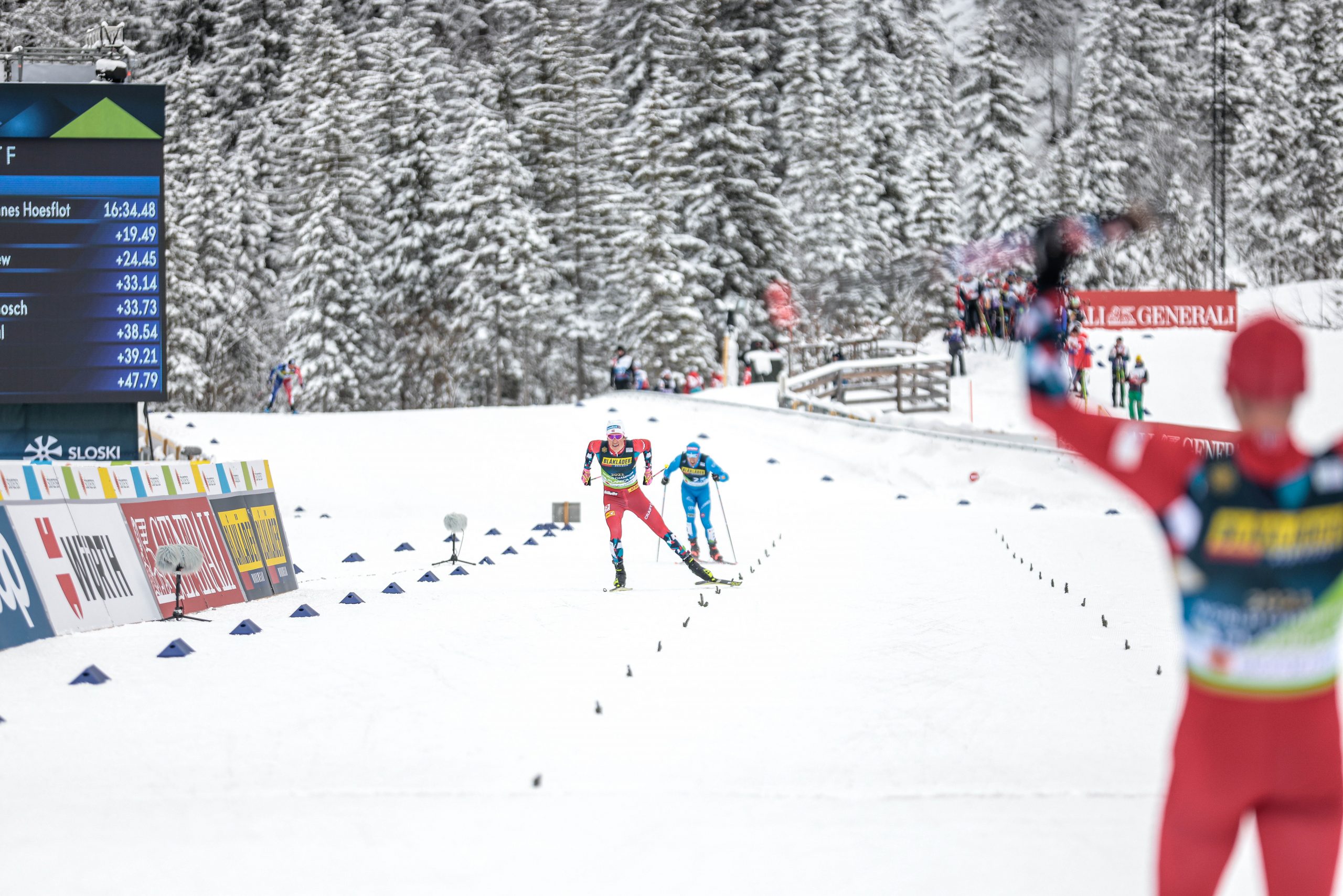
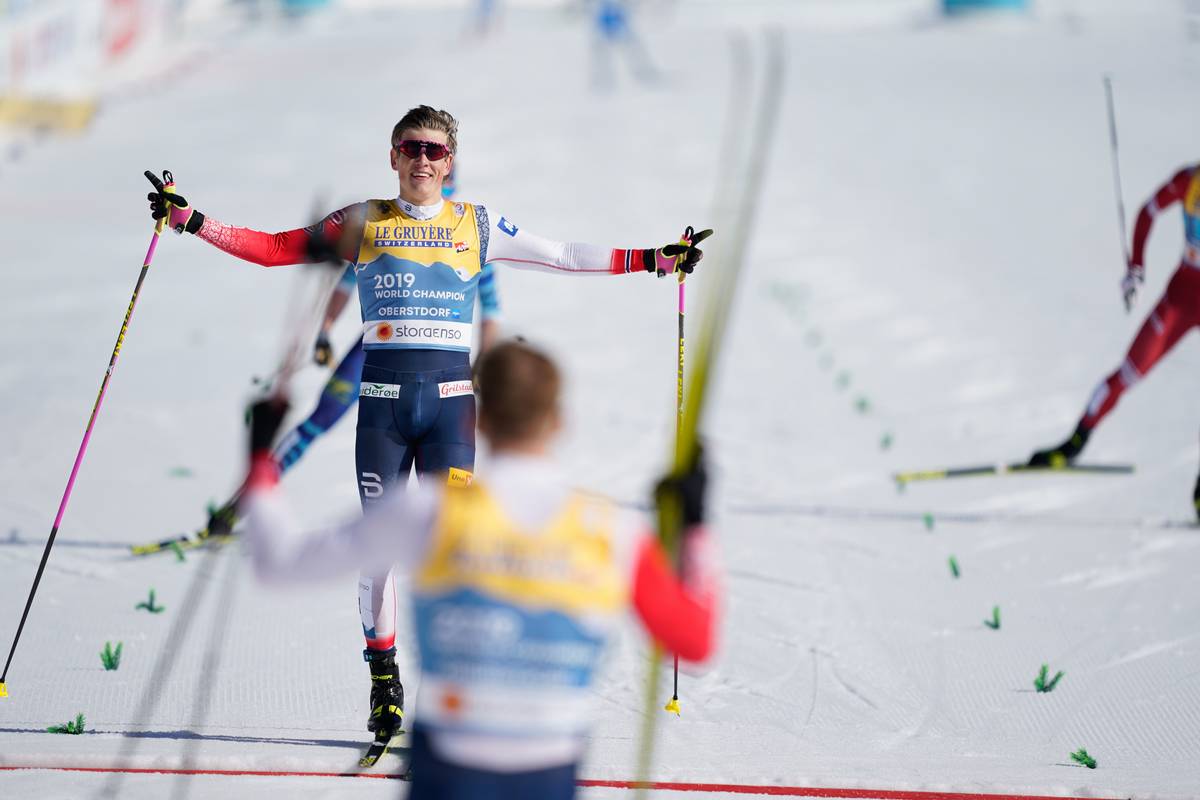
    Johannes Hoesflot Klaebo (NOR) approaches the finish line ahead of Italy’s Federico Pellegrino. (Photo: Modica/NordicFocus)

    Three races: three medals. Johannes Hoesflot Klaebo (NOR) pursues the history that is available to him, but the history he pursues is likely to be marked with an Asterisk. He is one of the few skiers scheduled to compete in every event at these World Championships, and he is expected to medal in every event. Even so, Klaebo, himself, reminded reporters that Saturday’s silver medal in the 30 k Skiathlon was his first World Championship distance medal. He hasn’t always enjoyed this sort of dominance. And while many of the very finest skiers are here in Planica, many of the very finest are not. If Russian skiers were at these World Championships, Klaebo might still be collecting medals, but the racing would be quite different. As it is, the Russians languish at home, their exclusion from these championships (and from theWorld Cup tour) coming as a result of their government’s invasion of Ukraine. The championships go on without them, leaving predictable foregone conclusions: Norway the team to beat, Norway the favorite for victory, Norway on the podium, Norway with the gold. These are the World Championships of Cross Country Skiing . . . and Norway is the team to watch.

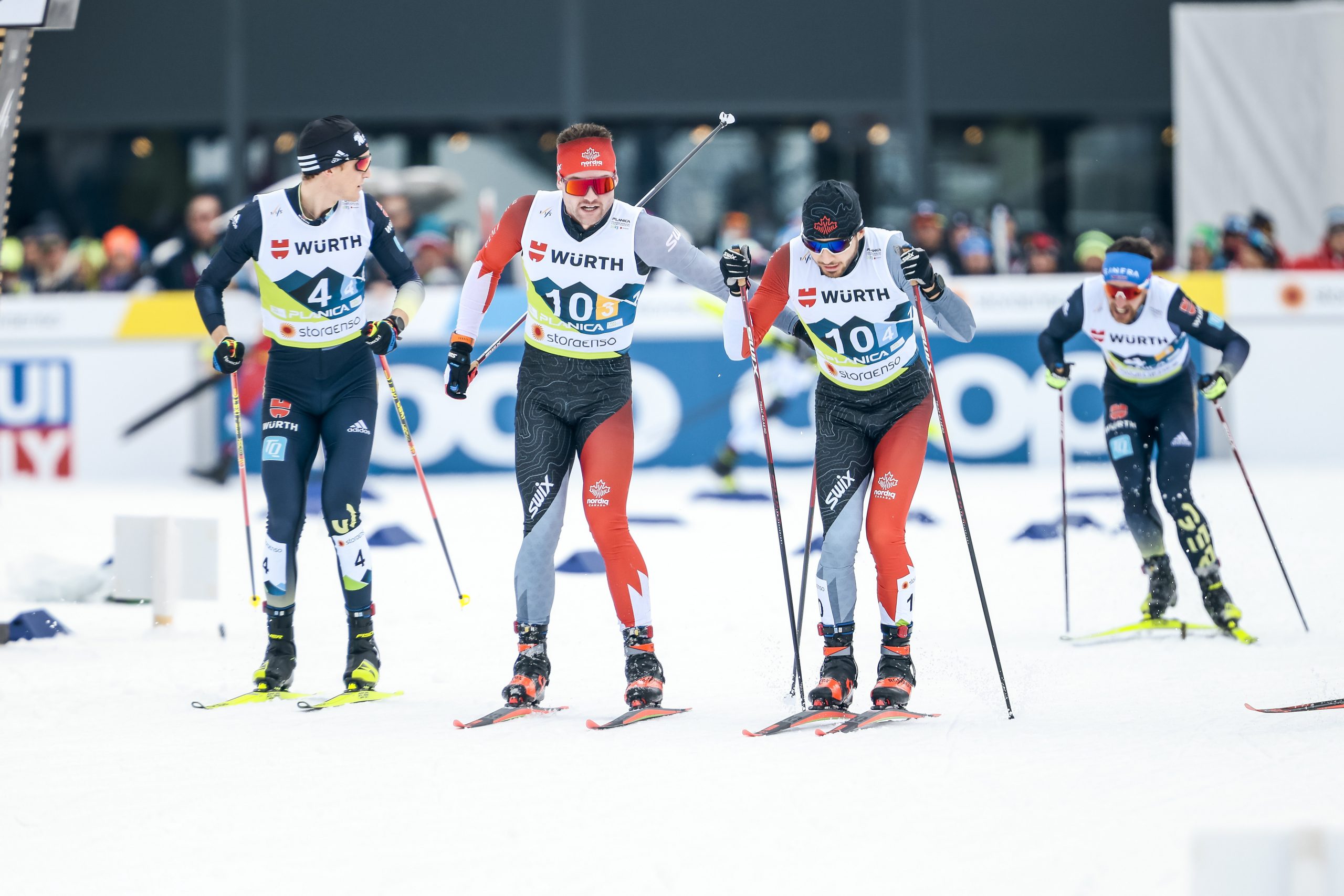
    Antoine Cyr (CAN), and Graham Ritchie (CAN) celebrate their fourth place finish in the Team Sprint at the FIS Cross Country World championships in Planica, Slovenia. (Photo:  Modica/NordicFocus)

    Team Norway—Klaebo and compatriot Paal Golberg—did not disappoint in the Team Sprint, holding off second place Federico Pellegrino and  Francesco de Fabiani of Italy, and third place Renaud Jay and Richard Jouve of France. Among North American teams, Canada was truly remarkable with Antoine Cyr and Graham Ritchie finishing fourth, while Ben Ogden and JC Schoonmaker of the United States finished tenth.

    Men’s Team Sprint

    Having watched the success of Julia Kern (USA) and Jessie Diggins (USA) in the earlier Women’s Team Sprint, it came as no surprise to see Schoonmaker following the example that had earned bronze for his teammates. Schoonmaker moved early to take the first position into the long rolling downhill at the beginning of the Planica course. Golberg and Jay were quick to counter the move, and Golberg went to the front of the pack on the climb with Jay in tow. Schoonmaker held third through the climb, but Golberg’s arrival at the front had subdued the field. Whereas the women’s race had gone full bore from the gun, the men’s race settled into a slightly more tactical affair. Schoonmaker handed off to Ogden in fifth place, with the pack tightly bunched.

    For the next four exchanges, the Americans did their best to hang on, while the stars did battle at the front. Various accelerations, small attacks, defensive coverages, and tactical speedings and slowings led to the three fastest teams—Norway, Italy, France—pulling away from the field (pursued doggedly by Sweden and Canada). In the end, Pellegrino tried to impress his will on Klaebo in the final leg, but the Norwegian was simply too strong, too fast, too resilient. Into the final hill, Klaebo ignited the hint of promise that had been there all along, skiing away from Pellegrino in a final sprint.

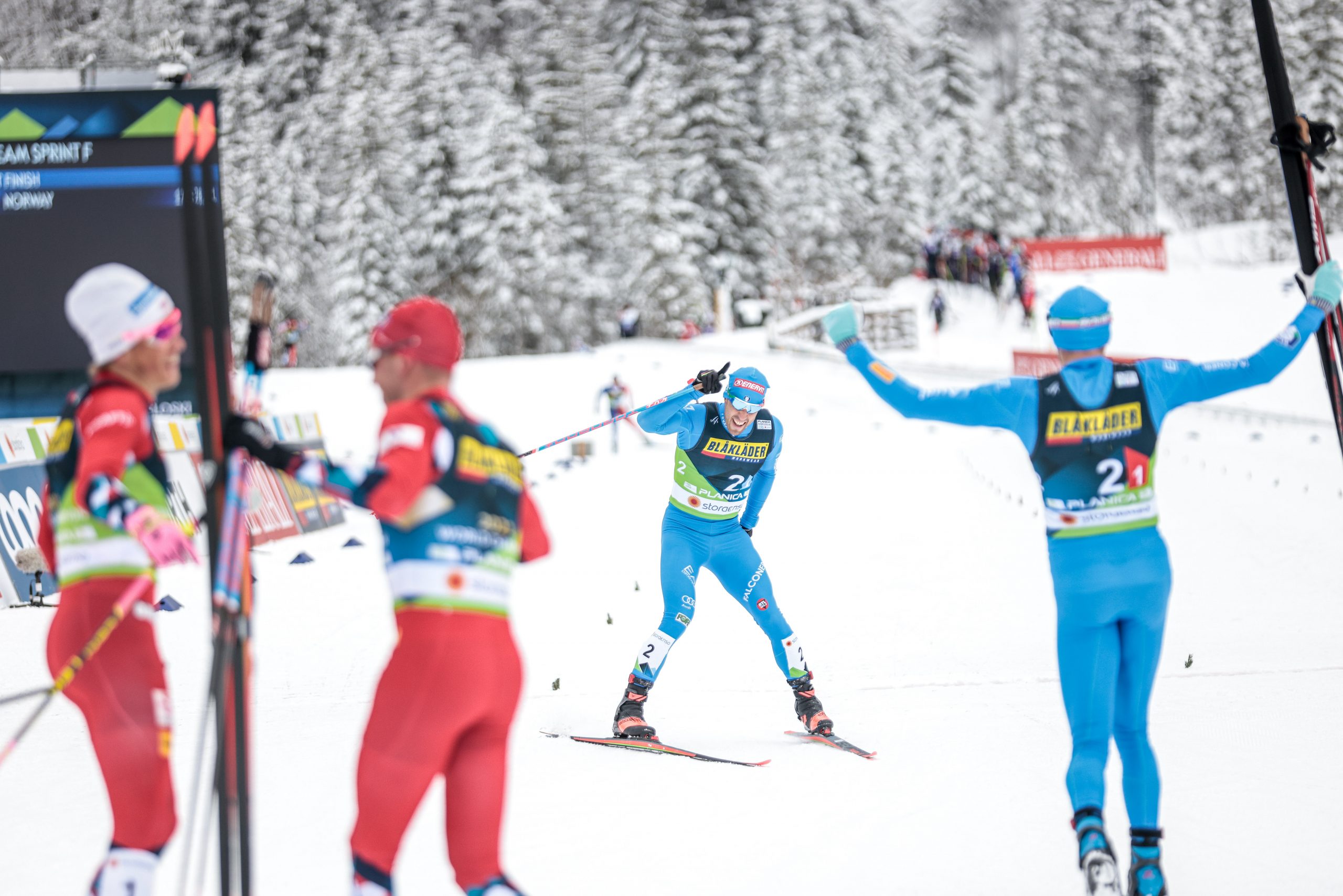
    Federico Pellegrino (ITA) skis into the embrace of his teammate, Francesco de Fabiani, earning silver in the World Championships Team Sprint. (Photo: Modica/NordicFocus)

    Pellegrino’s move on the final climb had landed the Italians second on the podium in definitive fashion. France was third, while Canada—on the back of a strong final closing move from Graham Ritchie—moved into fourth place on the day just ahead of Sweden. The United States moved down to 10th to finish inside the top ten.

    While much had been expected of Norway, it was Canada that exceeded expectations:

    “This was team sprint together, and we’ve set up a game plan that’s worked for us in the past,” said Ritchie. “We decided to not change anything today and see if we could knock off another position and it worked out for us.”

    “We have a good plan,” said Cyr. “Normally, I go in the first leg and move through the pack to get Ritchie in a good position so we push in the last lap. Today it really worked. Being out of the medal again is hard, but we will get there one day . . . It makes you feel like in a couple more years, we will get there.”

    Ritchie summed up the experience of the Canadians: “I had one guy to reel in on the last leg, and it was a good one. I had the whole lap to try and catch him, and was confident that I could . . . Seeing Jouve over the last bump gave me the motivation. We can see [the podium], it’s right there.”

    Men’s Team Sprint RESULTS

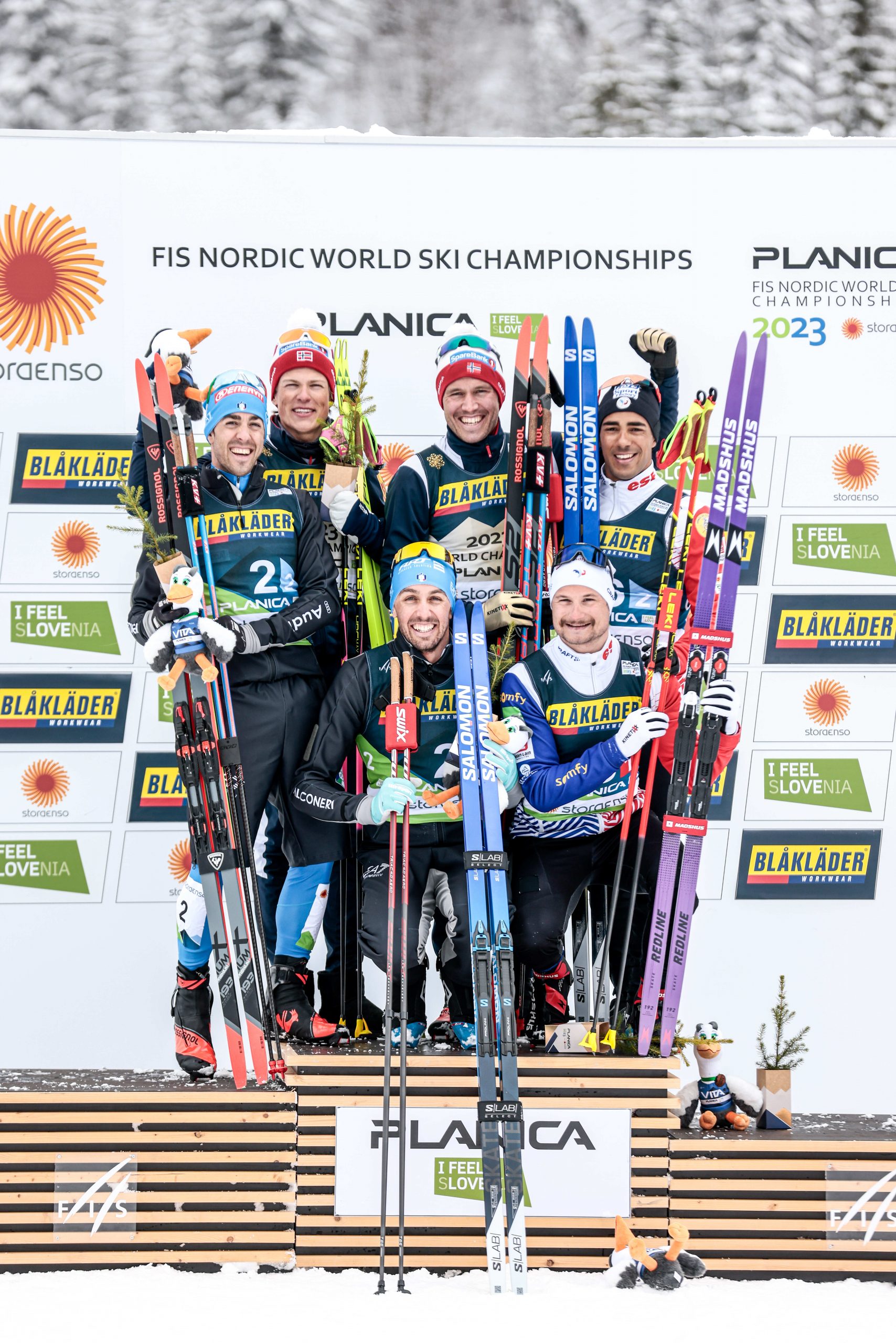
    Federico Pellegrino (ITA), Francesco De Fabiani (ITA), Johannes Hoesflot Klaebo (NOR), Paal Golberg (NOR), Richard Jouve (FRA), Renaud Jay (FRA), the Team Sprint podium at the FIS Cross Country World Championships in Planica, Slovenia. (Photo: Modica/NordicFocus
  • The Devon Kershaw Show: Kern and Diggins team up to deliver World Champs hardware in Planica

    The Devon Kershaw Show: Kern and Diggins team up to deliver World Champs hardware in Planica

    If you’re reading this, you already know: Jessie Diggins and Julia Kern teamed up to deliver a bronze medal for the U.S. at the World Championships in Slovenia. We’ve got a full breakdown and oh yeah, there was a men’s race, too, and a standout Canadian result.

    The championships is rolling along; email your notes and questions to devon@fasterskier.com and nat@fasterskier.com.

  • After Two COVID Winters, an Unusual Sight at World Championships: Parents

    After Two COVID Winters, an Unusual Sight at World Championships: Parents

    This World Cup coverage is made possible through the generous support of Marty and Kathy Hall and A Hall Mark of Excellence Award. To learn more about A Hall Mark of Excellence Award, or to learn how you can support FasterSkier’s coverage, please contact info@fasterskier.com.

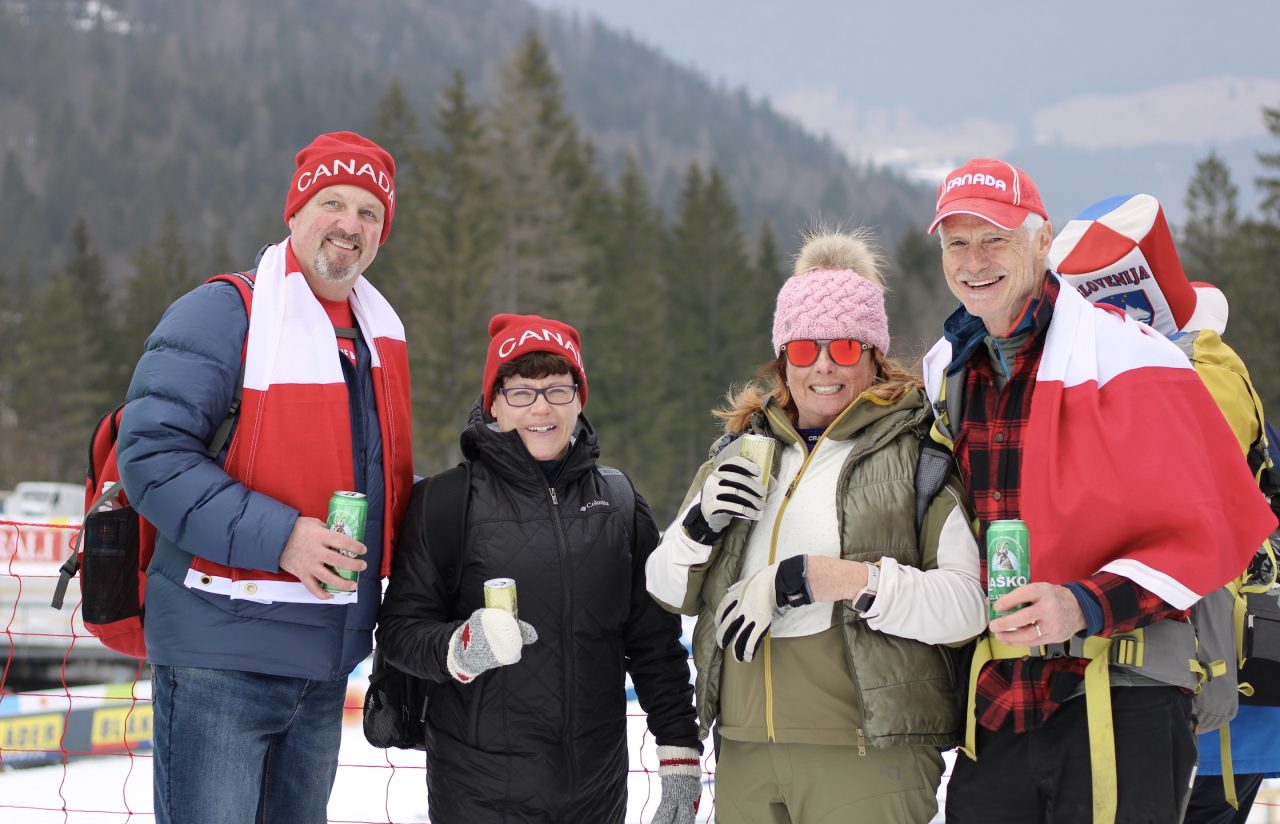
    Dave Ritchie, Christine Babcock, Sylvie Bouffard and Rick Nesbitt traveled from Canada to watch their children Graham Ritchie and Olivia Bouffard-Nesbitt compete at the 2023 World Championships in Slovenia. (Nathaniel Herz/FasterSkier)

    PLANICA, SLOVENIA – A year ago, Canadian cross-country skier Graham Ritchie had reached the pinnacle of his sport: He was competing at the Winter Olympic Games in Beijing.

    His parents? They were half a world away, forced by China’s draconian coronavirus protocols to take in their son’s achievements on television.

    “It sucked,” said Dave Ritchie, Graham’s father. “Really, it sucked.”

    Fast forward a year, to the World Ski Championships here: Ritchie, an insurance broker from the hardscrabble town of Parry Sound, Ontario, was posted up on the side of a trail on his first-ever European trip — beer in hand, taking in the picturesque views of the Julien Alps with his wife as his son raced by with the best skiers in the world.

    “It’s special,” he said. “It’s exciting to come and see what they do.”

    The Ritchies are one of a bevy of families who flew to Slovenia from North America this week to watch their children compete. Their presence here is one of the clearest signs yet of the end of the past two years of coronavirus-imposed isolation on the international circuit for Canadian and American athletes, who were competing largely without any in-person support from their loved ones and friends since the onset of the pandemic.

    “Whether you get dead last or you win, they love you just the same,” said Hailey Swirbul, a 2022 Olympian who’s also racing in Planica. “It’s so nice for me to have safe people around, who provide that for me.”

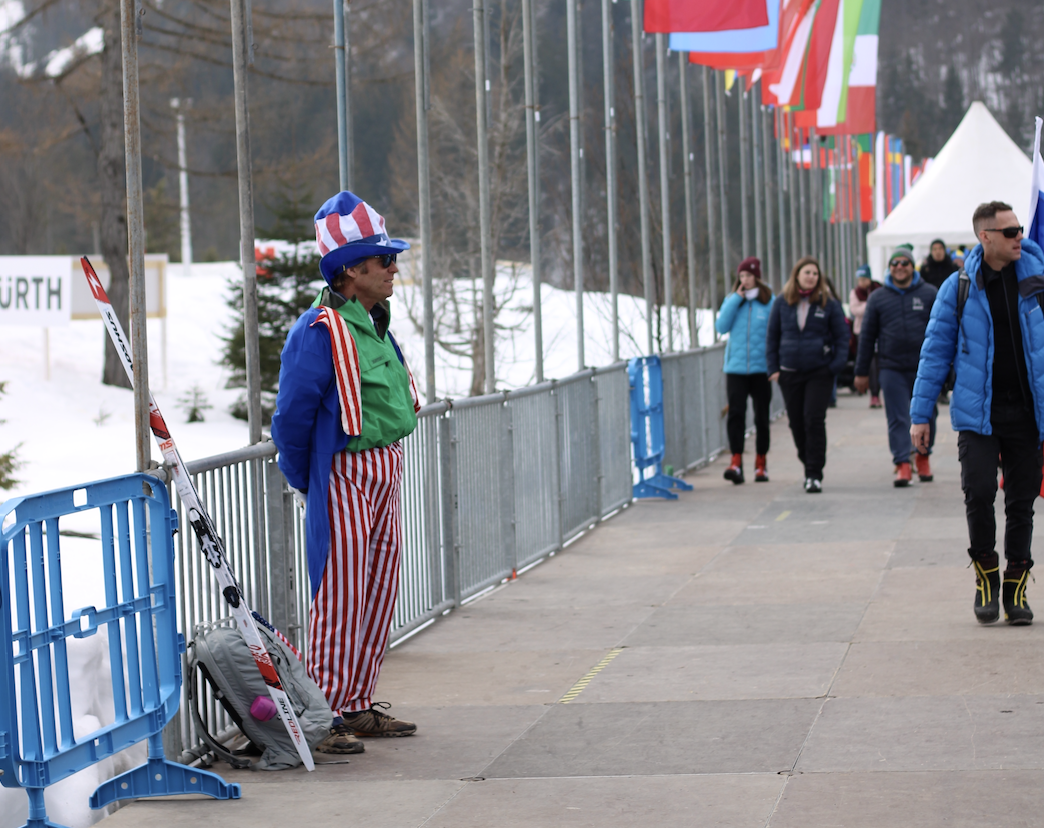
    Brick Swirbul, the father of U.S. Ski Team member Hailey Swirbul, stands in the stadium in Planica, Slovenia, where he and his wife traveled to watch their daughter compete in the 2023 World Championships. (Nathaniel Herz/FasterSkier)

    Swirbul’s parents, Rebecca and Brick, both flew to Slovenia from Colorado and were along the course to see their daughter place 33rd in Thursday’s sprint race. Brick, wearing pants, a vest and stovepipe hat all made from American flag striped fabric, was impossible to miss.

    Hailey Swirbul’s place on the American team wasn’t confirmed until a few weeks ago, and her parents hastily made plans to watch her race at an international level. The pandemic had kept them from seeing their daughter in Beijing and at the 2021 World Championships, in Germany.

    The Swirbuls also had planned to see Hailey at World Cup races in Quebec, in early 2020. But the coronavirus forced the cancellation of those races just days before.

    Being in Planica is “spectacular,” Rebecca Swirbul said.

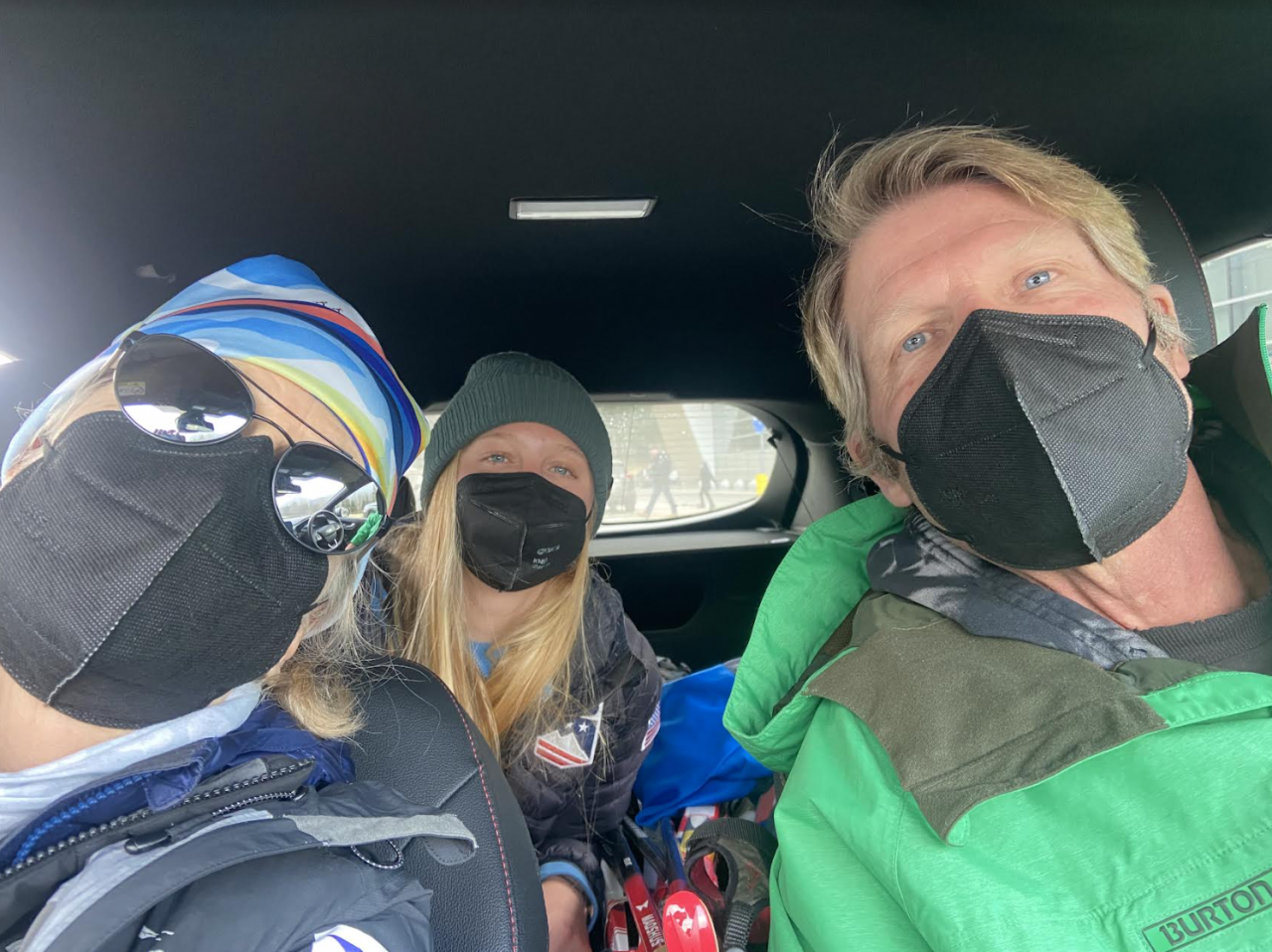
    But it’s also not completely normal. When the three Swirbuls spent some time driving together earlier this week, “we wore masks in the car, I opened the windows,” Rebecca said.

    Rebecca and Brick Swirbul masked up as a precaution when they drove with their daughter, Hailey Swirbul, during the 2023 World Championships in Slovenia.

    “It’s sad that that’s our reality now,” she said. But after raising two endurance athletes, she added — Hailey’s brother, Keegan, is a professional cyclist — she understands the need for caution.

    “I get it,” she said. “A cold: you’re done.”

    Another set of parents in Planica — those of American sprinter Julia Kern — saw those risks for themselves when they were following their daughter’s competitions in Europe earlier this year, during the Tour de Ski.

    At the time, several U.S. team staff caught the coronavirus, and Kern’s parents, Dorothee and Gunther, were pressed into service.

    Dorothee, a former professional basketball player, said her own experience as a professional athlete has helped her understand the need for boundaries while her daughter is competing.

    “It is important that they have their space and that they do their thing,” she said.

    One thing that athletes’ parents can do, the Kerns said, is bring needed items from the U.S. to Europe, where many North American skiers live for months at a time — things like medication, clothing and caffeinated beverages of choice.

    Dorothee and Gunther Kern watched their daughter, Julia Kern, compete at the 2023 World Championships on Thursday, February 23. (Nathaniel Herz/FasterSkier)

    “I roast my own coffee, and Julia is a real fan — and I think Jessie (Diggins) as well,” Gunther Kern said. “Fresh roasted beans.”

    The parents of Olivia Bouffard-Nesbitt, meanwhile, brought a new credit card for their daughter from their home in Canada.

    “The last one is expired,” said Sylvie Bouffard, Bouffard-Nesbitt’s mother.

    The Bouffard-Nesbitts and Ritchies watched Thursday’s race together, sporting maple leaf flags and attire. They said they plan to do some sightseeing over the course of the 11-day championships; team leaders are also organizing a dinner for parents and athletes.

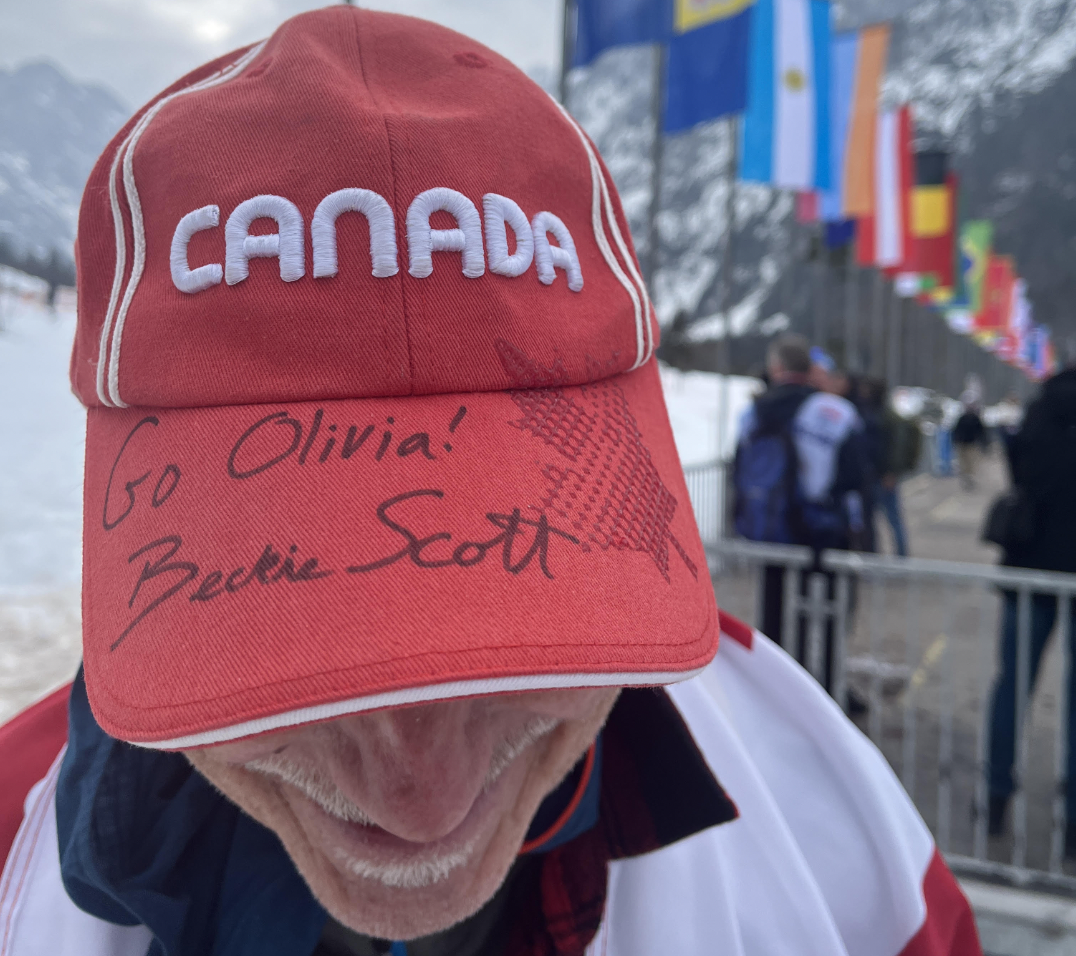
    Rick Nesbitt wears a hat that Canadian cross-country ski legend Beckie Scott signed for his daughter, Olivia Bouffard-Nesbitt. (Nathaniel Herz/FasterSkier)

    Bouffard-Nesbitt said she didn’t actually hear her parents out on the course, which was lined with boisterous European fans. But she said she’s thrilled about their presence.

    “They’re such big ski fans. They love to watch the World Cup, and they love to follow my racing,” she said. “I’m so happy that they’re here — I just think it’s such a fun environment to be in, as a ski fan.”

    Graham Ritchie did hear his parents during his qualifying lap of the sprint course — though he wasn’t entirely prepared for it.

    “It almost caught me off guard for a little bit,” he said. “I wasn’t used to hearing my dad’s voice, in Slovenia.”

    The extra support helps even the athletes who don’t have parents around, said Matt Whitcomb, the head coach of the U.S. team.

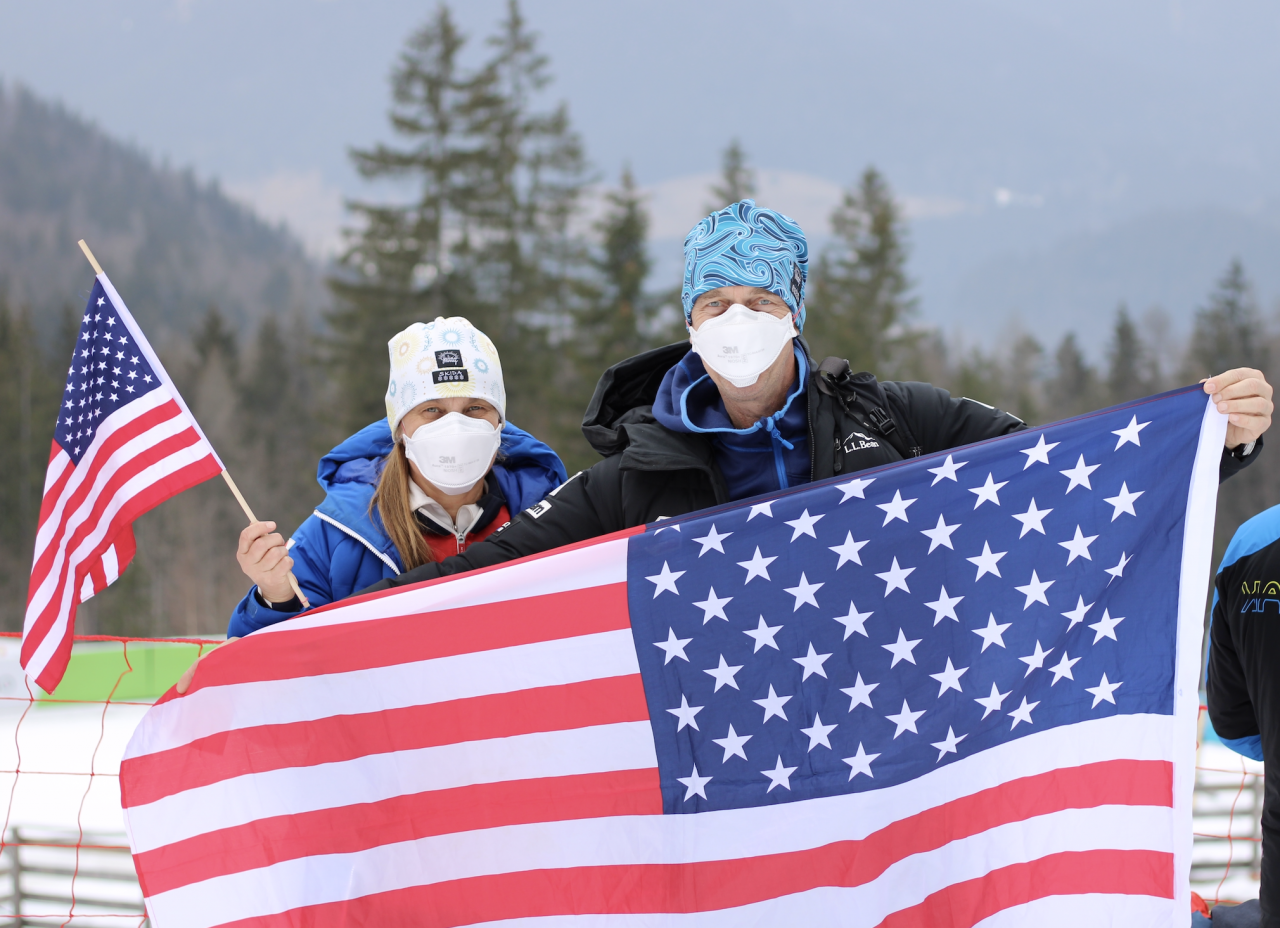
    “You ski through the stadium, and you can’t help but train your eyes on a few American flags that are just peppered throughout,” he said. “It’s energy that is being invested in our team.”

    European parents are also getting their first chance at watching in-person competition in more than two years. During Friday’s hour-long pursuit race, the fathers of two of the Norwegian medalists — Johannes Høsflot Klæbo and Sjur Røthe — spent the event along the trails above the Planica stadium, running from fence to fence to cheer their sons on to silver and bronze, respectively.

    Elisabeth Høsflot and Haakon Klæbo, the parents of Johannes Høsflot Klæbo, pose for a photo after Johannes won a silver medal in Friday’s pursuit race at World Championships in Slovenia. (Nathaniel Herz/FasterSkier)

    Haakon Klæbo, whose son is one of the most decorated cross-country skiers in history, said Johannes’ grandparents, mother and brother are all in attendance this week.

    “Yesterday, when he won the sprint — the first thing he did was just to go over to the family,” Haakon said. “You could just see it in his eyes and in his smile, he was very happy. I think it means a lot to the athletes.”

  • Norway dominates in Davos, Schumacher 18th, Ritchie 21st

    Norway dominates in Davos, Schumacher 18th, Ritchie 21st

    A_Hall_Mark_of_Excellence_Award-logo-300.png (300×244)This World Cup coverage is made possible through the generous support of Marty and Kathy Hall and A Hall Mark of Excellence Award. To learn more about A Hall Mark of Excellence Award, or to learn how you can support Fasterskier’s coverage, please contact info@fasterskier.com.

    Norway has long been a dominant force in cross country skiing, but that dominance may never have been more clearly evident than now. Norwegian men have claimed victory in the last eight World Cup distance races. Thus far in Period I of the World Cup season, Norwegian skiers have claimed 13 of the 15 World Cup podium positions in distance races. Norway’s dominance seems impenetrable: injury interferes with one star performer, illness sidelines another; yet ever more Norwegians step up to fill the podium. Results in Davos would be no different, as Norway claimed the top six places in the Men’s 20 k Freestyle. Winner on the day was Simen Hegstad Krueger, followed by Hans Christer Holund in second, and Sjur Roethe third. Johannes Hosfloet Klaebo would finish fifth, securing his second-place position (behind Golberg) in the World Cup Overall points standings.

    Simen Hegstad Krueger nearing the finish line in his convincing win in Davos’ World Cup 20 k Freestyle. (Photo: Nordic Focus)

    Canadian skiers were coming off an historic day in which Graham Ritchie finished a career-best 17th in the World Cup Sprint, leading four Canadians into the quarterfinals. In Sunday’s 20 k, Team Canada’s successes continued as Ritchie finished 21st, followed closely by teammate Antoine Cyr in 24th. American finishers included Gus Schumacher 18th, Ben Ogden 22nd, Hunter Wonders 33rd, Scott Patterson 38th, and Zak Ketterson 43rd.

    Men’s 20k Freestyle

    If Klaebo’s World Cup campaign has been thrown into question by virtue of the many races he’s missed, then today was his chance to begin reclaiming some of those squandered points. World Cup Overall Leader, Paal Golberg (NOR), would be absent from both the sprint and distance fields in Davos. Klaebo has skipped numerous distance races this season, so much anticipation accompanied his name’s appearance on Sunday’s start list.

    Klaebo appeared to ski his race conservatively, perhaps knowing that the new points system would reward more than just the day’s winner (finally, that system would be working in his favor). This weekend, Klaebo would earn points for his second place in Saturday’s sprint qualifier, for his second place in Saturday’s sprint final, and for his fifth place finish in the 20 k . . . all while Golberg nursed a cold back home in Norway. For Klaebo: mission accomplished.

    But Sunday’s story was about far more than just Klaebo: Facing twenty kilometers skied over four laps of a five kilometer course, racers in Davos’ 20 k freestyle seemed likely to join up with other skiers in gaps of 22-23 places. In the otherwise random selection of start positions, this seemed most likely to benefit Norwegians Krueger and Holund who were separated in the starting order by 22 places—Holund would start earlier, with Krueger starting 22 places later. Predictably, Krueger and Holund were able to pair up at the beginning of Holund’s second lap, enabling Holund to convert his 8th place standing at the 10 kilometer checkpoint into a sizable lead at his finish. But Holund’s time would need to stand up against that of Krueger who still had one more lap to race. Ultimately, Krueger was able to drive on toward the finish—alone in his last lap—to finish in 42:12.3, besting Holund by 22 seconds.

    In his post-race interview, Krueger elaborated on his feelings for Davos. “It’s amazing. I love this course. It’s my favorite track,” he said. “It was a really good feeling to take the victory today.”

    Of being able to team up with Holund during today’s 20 k, Krueger beamed, “We made up a good pace,” he said. “And a great team effort as well.”

    Gus Schumacher (USA) skiing to 18th in the 20 k Freestyle at Davos, Switzerland. (Photo: Nordic Focus)

    Numerous North American men also had impressive weekends in Davos, as Schumacher (USA) has begun finding the distance-racing form for which he has become known. He finished 18th on the day, followed closely by Canada’s Ritchie at 21st. Going into the holiday break, North American skiers should feel reassured by their season’s preparations, and optimistic for the Tour de Ski and FIS World Championships to come later in the season.

    USA Team Leader in Davos, Chris Grover, commented on Schumacher’s race: “Gus had a great day,” Grover said. “That was cool to see him take another step forward. He ended up getting a ride with Krueger towards the end of the race. It really helped to hold him in the top twenty.”

    As for Team USA’s plans for the holiday break, Grover described a number of different plans for athletes and staff: “A lot of the main athletes are staying in Davos,” he said. “Obviously, it’s close to Val Mustair where the Tour starts. It’s a little bit of a logistical challenge; typically, people will try to take a little bit of recover. Then they’ll try to have a little bit of a training block. You can’t go into the Tour carrying fatigue.”

    As Period I of FIS Cross Country World Cup 2022 comes to a close, the Norwegian ownership of the podium seems unchallenged. They have survived illness and injury, they have thrived in a system where the greatest challenge in skiing may not be climbing onto the World Cup podium, but climbing into a Team Norway race suit. Any skier qualifying for this team has a chance to claim World Cup glory . . . at least until the following weekend when yet another Norwegian star is likely to rise.

    Davos World Cup 20 k Freestyle RESULTS

    Graham Ritchie (CAN) capped a strong weekend in Davos with his 21st place finish in the 20 k Freestyle. He was also top North American in Saturday’s World Cup Sprint, finishing in a career-best 17th place. (Photo: Nordic Focus)
  • Ruka Men’s 10 Kilometer Classic Individual Start:  It’s all Team Norway.

    Ruka Men’s 10 Kilometer Classic Individual Start: It’s all Team Norway.

    A_Hall_Mark_of_Excellence_Award-logo-300.png (300×244)This World Cup coverage is made possible through the generous support of Marty and Kathy Hall and A Hall Mark of Excellence Award.  To learn more about A Hall Mark of Excellence Award or to learn how you can support FasterSkier’s coverage please contact info@fasterskier.com.


    Ruka Men’s 10K Classic Individual Start

    Ruka presented less challenging conditions this year compared to last year for the athletes.  Temperatures were in the high teens (-8.0 Centigrade) with racers running on green cold waxes. Humidity was 100 percent, which posed the possibility of tracks glazing during the race. The racers competed on a 5-kilometer course with 30 seconds between the start of each racer.

    Johannes Hoesflot Klæbo (NOR) on his way to victory in the 10k in Ruka (FIN). (Photo: Nordic Focus)

    Results:

    The Norwegians dominated the field.  Johannes Klæbo finished first, besting countrymen Paal Golberg by 20.5 seconds followed by Martin Nyenget who was 28 seconds behind Klæbo.  An outstanding performance was turned in by Andrew Musgrave of Great Britain, who finished in fifth, 40.3 seconds behind Klæbo. Norweigans took six of the top ten spots.

    The top American was Ben Ogden, finishing 28th, 1:23.9 back.  He was closely followed by Zak Ketterson who finished 31st, 1:24.6 out of first.  Rounding out the field for the Americans was Hunter Wonders, who is also a competitive canoe racer, finishing in 39th. 2020 Junior World Champion in the 10 kilometer, Gus Schumacher, finished 48th. Scott Patterson finished 54th.

    The top Canadian was Graham Ritchie, finishing 35th.  He was followed by Olivier Leveile who finished 44th.

    Hunter Wonders (USA) on his way to 39th place in the 10k classic. (Photo: Nordic Focus)

    The Race:

    The steep climbs of Ruka proved challenging for the men who consistently jumped out of the tracks early on climbs, preferring to run up the loose snow on the sides of the course.  Prior to the race there had been much discussion about Klæbo’s health.  Questions continued to swirl when he hit the one-kilometer split in 21st place and still trailed at the 3.1- kilometer split.

    Calle Halfvarsson (SWE) on his way to 4th place in the 10k in Ruka (FIN). (Photo: Nordic Focus)

    Calle Halfvarsson of Sweden gave many of the Swedish fans in the crowd a thrill as he led the race at the first three splits.  Ogden was in the hunt at the one-kilometer mark, only 12.5 seconds out of the lead, but by the 3.1 checkpoint, his trailing margin had widened to 22.4 seconds.

    Starting at about the six-kilometer mark, Klæbo removed any doubt about his nagging injury when he jumped into the lead establishing a six second advantage over countryman Halfvarsson.  Meanwhile, Musgrave had pulled himself from 23rd to sixth place, only seven seconds away from a podium spot.  Musgrave turned in the fastest time from the 3.1 to 5.0-kilometer split.


    Andrew Musgrave (GBR) – FIS world cup cross-country, having an outstanding weekend in Ruka. (Photo Credit: NordicFocus)

    However, because of the start order, Klæbo was never really able to relax since he had started the race ahead of Golberg.  When Klæbo finished he had a 28 second lead over the next best finisher.  But most of the contenders were still on course, so he was uncertain as to where he would finish.  However, the writing was on the wall as Golberg entered the stadium and it became apparent that he wouldn’t be able to catch Klæbo.

    The only remaining question was would Norway capture all of the podium positions?  The question was only partially answered when Halfvarsson crossed the eight-kilometer checkpoint in fourth but was only 0.2 seconds behind Nyenget.  At the finish it appeared that Halfvarsson was struggling mightily but was able to hang on for a fourth place finish.  The results; Norway 1-2-3.

    Complete Results

    Paal Golberg (NOR), Johannes Hoesflot Klaebo (NOR) and Martin Loewstroem Nyenget (NOR) share the 10k classic podium in Ruka (FIN). (Photo: NordicFocus)
  • Canadian Nationals/US SuperTour Finals: Ritchie and Kern Top 45 k Podium in Equal-Distance Event

    Canadian Nationals/US SuperTour Finals: Ritchie and Kern Top 45 k Podium in Equal-Distance Event

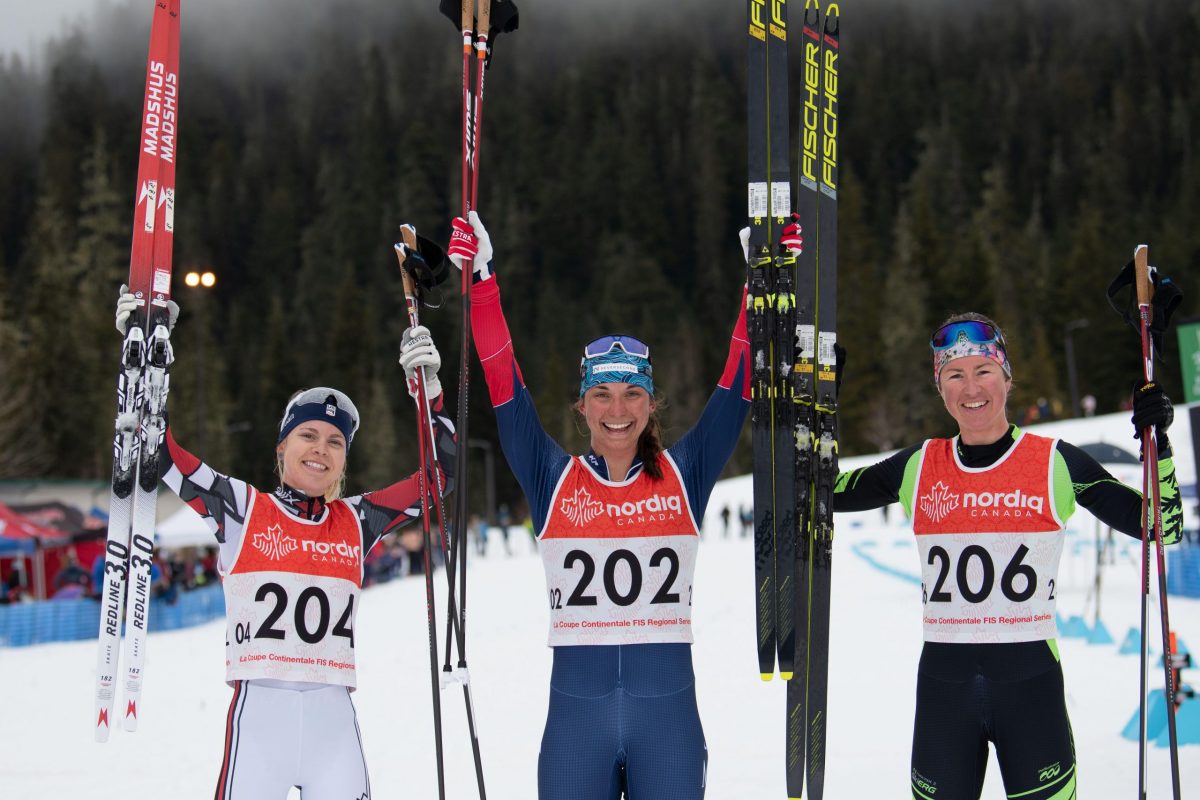
    The top three long-distance women in Whistler, after the final stage of the Canadian Nationals / US SuperTour Finals event series. Julia Kern took the win for SMS T2 ahead of Caitlin Patterson (CGRP) and Sophia Laukli (U of Utah). (Photo: Doug Stephen / VR 45 Photography)

    We’ve arrived at the final act, the culmination of a week of racing in Canada and a season of international racing before that. Piloting a gender-equal distance, both men and women raced a 45 k mass start skate on Sunday, completing six laps of a 7.5 k loop at the Whistler Olympic Park. Continuing a pattern of challenging weather conditions, the day started with temperatures around 37° F with rain, making for soft and wet skiing. 

    Open Men

    The open men went first, with a field of 99 starters heading off the line at 8:30 local time. With 107 on the start list, some notable names among the athletes who did not start include Gus Schumacher (Alaska Winter Stars), Tyler Kornfield (APU) and Xavier McKeever (Foothills Nordic), who took his first national title in the sprint race earlier this week. 

    Relying on live-timing to provide a picture as the race unfolded, it appeared that the first three laps saw steady skiing with a big pack together at the front. Between 22.5 – 30 k that group splintered with ten athletes breaking +31 seconds or more clear of the rest of the field. Among those ten, the Canadians were represented by Russell Kennedy (Canmore Nordic), Rémi Drolet (Team Black Jack), Philippe Boucher (CNEPH), Antoine Cyr (CNEPH), Graham Ritchie (Thunder Bay Nordic) and Olivier Léveillé (CNEPH). Up front for the Americans was Luke Jager (University of Utah), Scott Patterson (APU), Adam Martin (CRGP) and Finn O’Connell (BSF Pro). 

    Beginning the final lap, that group of ten lost a member as Léveillé (CNEPH) dropped off the pace, drifting into no-man’s land, still a minute clear of chaser Johnny Hagenbuch (Sun Valley Ski Education Foundation). At the next split, Boucher (CNEPH) too had dropped, leaving eight men at the front, all within 5.5 seconds. With just a few kilometers to go, the fight was on. 

    Creating a gap in the final stages, Graham Ritchie (Thunder Bay Nordic) claimed the victory and earned his first national title. Ritchie finished in a time of 1:40:32.5. 

    “I’m not sure how this happened,” said Ritchie to Nordiq Canada, “I haven’t raced this long of a race in a couple of years, so I had no game plan going into it. I just said I’m going to stick with the lead pack as long as I can.” This strategy worked in his favor. 

    “I was able to stick with the lead pack and being in the top three with one kilometer left,” continued Ritchie, “I knew I had a little jam left to go for it in the last few hundred meters. I had a good day and really fast skis. The techs killed the boards so I’m super stoked.”

    Concluding a strong week of racing, Jager (University of Utah) topped the American podium, coming in +6.8 seconds behind Ritchie. Speaking to the conditions, Jager said, “it was good, the news that they were salting last night was music to my ears because it would have been so different if they hadn’t. It was really firm and fast and even where it was getting mushy it was pretty firm underneath so it was fast out there.”

    The men’s SuperTour podium for the final day of racing in Whistler: Luke Jager (Univ. of Utah) came out on top ahead of Scott Patterson (APU) and Adam Martin (CGRP). (Photo: Nordiq Canada / Nathaniel Mah)

    Displaying consistency, Jager has been on the Super Tour podium in every event this past week. He was the first American in the 10 k interval skate, the third American in the 15 k interval classic, the first American in the classic sprint, and he and his teammate Noel Keeffe finished first overall in Friday’s team sprint event. Asked about how the tactics played out within the group, Jager said, “it was kind of going back and forth, I mean Russ [Kennedy] was pushing a little bit and so was Scott but there wasn’t quite enough work from the bottom of the stadium to the top to get rid of everyone, so it would string out and then come back together on the downhills a little bit which was playing to my advantage for sure.”

    Coming down to a sprint finish, Ritchie made an early move to gain the advantage. “I didn’t even know who was in the group anymore,” said Jager, “I was kind of in the front going into the last climb and [Ritchie] came ripping by me and he was really strong so even if I had the foresight of that coming I don’t know if I would have been able to hold him off because he was so strong coming into that hill.”

    The 45 k skate Canadian National Championship podium: Graham Ritchie took the title, ahead of Antoine Cyr, Russell Kennedy, Rémi Drolet, and Philippe Boucher. (Photo: Joerne Rohde / Nordiq Canada)

    Cyr (CNEPH) finished third overall and was the second Canadian (+7.8). Completing the Canadian podium, Kennedy (Canmore Nordic) finished fourth overall (+8.1). 

    Patterson (APU) was the second American finisher, coming in fifth overall (+9.6), while Martin (CRGP) was the third American and sixth overall (+12.6). 

    Open Women

    Following the conclusion of the men’s race, the open women got underway at 10:30 local time. At the crack of the gun, fifty-six racers set off to complete their six laps. Although there were 72 athletes registered, sixteen did not start, including Rosie Brennan (APU), Katherine Stewart-Jones (Nakkertok Nordique), Novie McCabe (University of Utah) and Olivia Bouffard-Nesbitt (Foundeurs-Laurentides).

    This is the first time the women raced 45 k at a national championship event, a new event stemming from the push for equal distance racing. When asked about this distance after the race, Julia Kern (SMS T2) told Nordiq Canada, “I think it’s a really interesting format. For me personally I like the shorter distance but recently I’ve had really good experiences with 30 k and today was a great day so, I think whatever makes ski racing exciting for both men and women should be what pushes the sport forward.”

    Regarding whether this should become a permanent feature, or be introduced to the World Cup, Kern said, “potentially, or just shortening the men’s race so that everything is short and exciting because there are marathon circuits out there as well.”

    With the race under way, the first 7.5 k saw the pack at the front was a slightly strung-out group of twelve. Just a few kilometers later, that number was cut in half as six athletes pulled twenty seconds clear. Of that group, Cendrine Browne (Foundeurs-Laurentides) was the lone Canadian, skiing with Sophia Laukli (University of Utah), Kern (SMS T2), Rosie Frankowski (APU), Caitlin Patterson (CGRP), and Sydney Palmer-Leger (University of Utah). 

    In her final race as a professional skier, Cendrine Browne (Foundeurs-Laurentides) collects the Canadian National title in the final long-distance event in Whistler. (Photo: Nordiq Canada / Nathaniel Mah)

    For the next four laps, those first six women skied together, alternating leads and staying within ~5 seconds at each split. As they set out for the final lap, Browne (Foundeurs-Laurentides) dropped slightly, +10 seconds behind the pack. “I just wanted to be in the lead pack today and I was until the last lap, I bonked. It was tough conditions today, but it was a really fun way to go out,” said Browne. 

    From there, the splinters in the group became larger cracks as Kern (SMS T2) applied pressure at the front. Next to drop was Palmer-Leger (UU) who was +6 seconds back at the first split on the final lap. A few moments later, Kern had made a full break. 

    “My tactic was just hang on, conserve energy for as long as possible,” shared Kern, “I didn’t really want to suffer for 45 k and it was fun to ski in a pack and work together. So for me it was just being patient and seeing how I was feeling and evaluating my plan from there. What I ended up doing was skiing with the pack, alternating leads and in the last lap I was feeling good so I decided to send it. 7.5 k to suffer isn’t too hard.”

    At the final time split before the finish, Kern was 27.5 seconds ahead of runner-up Patterson (CGRP). Reaching the finish line, she had widened this lead to 34 seconds, finishing in a time of 1:58:55.6. This victory was Kern’s fourth of the week, having topped every race save for the 5 k individual skate where she finished second behind teammate Jessie Diggins (SMS T2). Commenting on the conditions Kern said, “the first few laps held up pretty well and the last few laps got really deep and slushy, you just had to make sure you didn’t catch a tip or fall and look for the less skied in areas. But it made it exciting, good spring skiing, classic slush conditions.”

    Patterson (CGRP) finished second overall, +34 seconds back. Behind her came Laukli (UU), completing the American podium and finishing third overall (+1:00.9). 

    The top five SuperTour women on the final day of racing in Whistler: Julia Kern (SMS T2) continued her win-streak, with Caitlin Patterson (CGRP) in second, Sophia Laukli (U. of Utah) third, Sydney Palmer-Leger (U. of Utah) fourth, and Rosie Frankowski (APU) fifth. (Photo: Nordiq Canada / Nathaniel Mah)

    Browne (Foundeurs-Laurentides), for whom this race was her final as a professional athlete, held sixth position overall, and was the first Canadian (+2:41.5). “It feels really good to end my career this way. I love distance racing and it is a great way to go out as National Champ,” said Browne to Nordiq Canada. “Thank you to everyone in the ski community who has believed in me and cheered for me over the last 10 years.”

    Dahria Beatty (Whitehorse Ski Club) was the next Canadian in twelfth overall, +9:39.8 behind Kern. Completing the Canadian podium, Laura Leclair (Club Chelsea Nordiq) came in sixteenth overall (+12:08.8). 

    This race concludes the 2022 Canadian Ski Championships and US SuperTour Finals as the athletes now get to enjoy a break after a long season. 

    Complete Results


  • The Devon Kershaw Show: Distract yourself with Drammen

    The Devon Kershaw Show: Distract yourself with Drammen

    There’s a war going on in Ukraine, and we touch on its impacts on the World Cup. But ski racing is also continuing, so we’re forging on, with respect for and acknowledgment of the tragedy that’s unfolding in Europe. For a few hours at least, on Thursday, the classic Drammen city sprint provided one heck of a distraction, and Devon and Nat are back to break down some performances for the ages by Norway’s Maiken Caspersen Falla, the French men and China’s Wang Qiang.

    You can email us at devon@fasterskier.com and nat@fasterskier.com. We’re still hoping to catch up with an Olympic mailbag episode soon once things settle down.

    Rosie Brennan leads her quarterfinal during Drammen’s classic sprint. (Photo: NordicFocus)
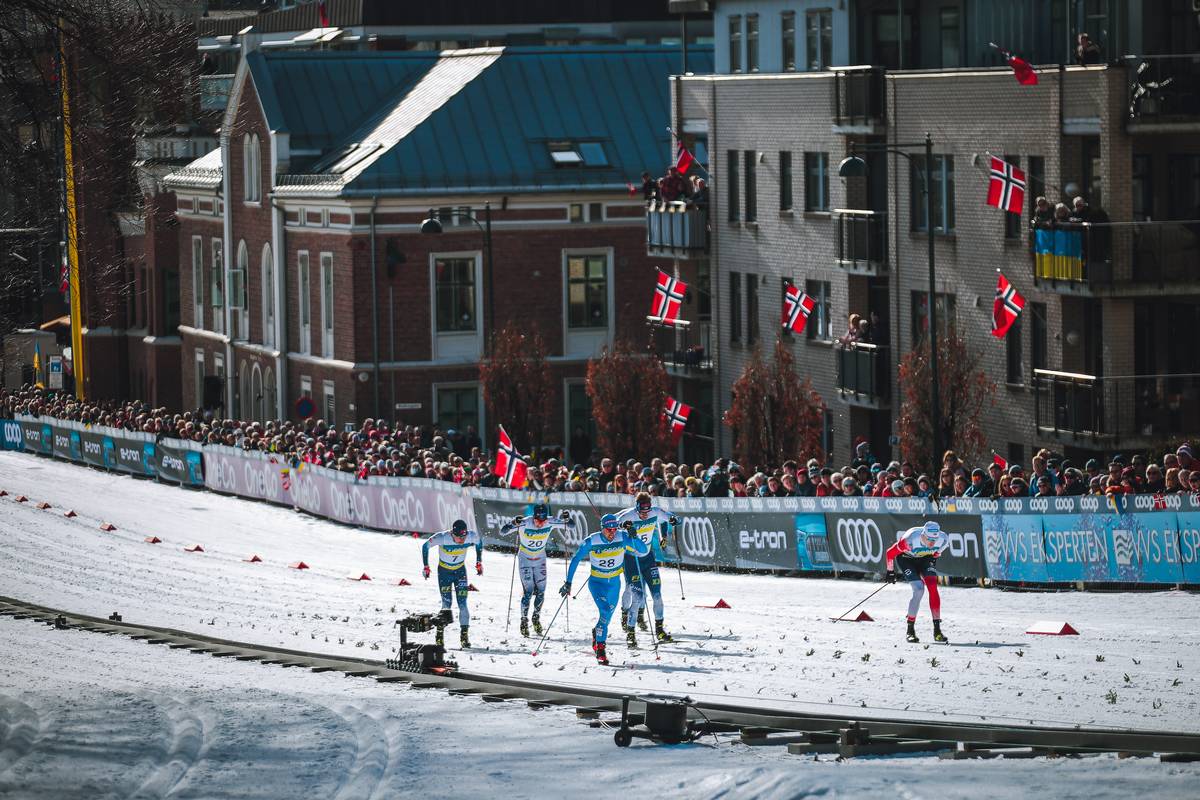
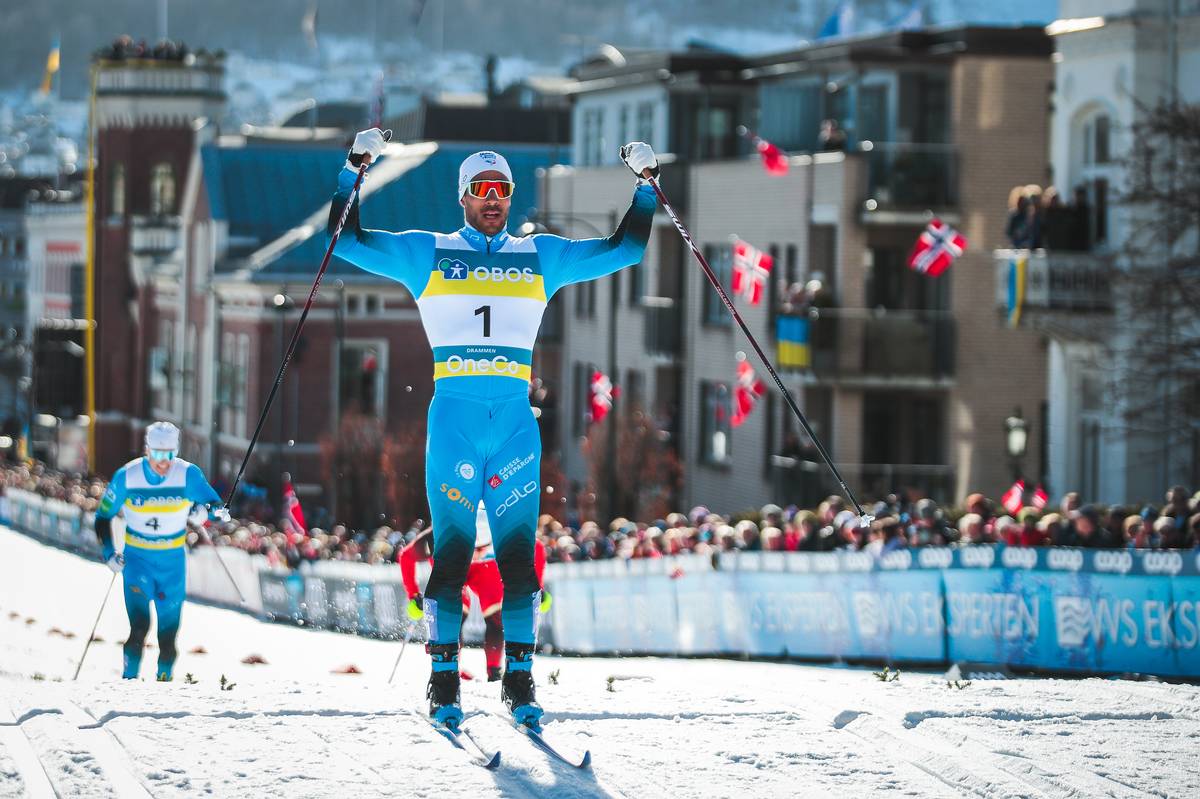
  • After a week of upheavals, the World Cup sprint show goes on in Drammen; France’s Jouve wins, while China gets its first podium

    After a week of upheavals, the World Cup sprint show goes on in Drammen; France’s Jouve wins, while China gets its first podium

    This World Cup coverage is made possible through the generous support of Marty and Kathy Hall and the A Hall Mark of Excellence Award.  To learn more about A Hall Mark of Excellence Award or to learn how you can support FasterSkier’s coverage please contact info@fasterskier.com.


    Cross country skiing’s most ancient, classic, weekend of racing in Norway (the Holmenkollen ski festival) began with a sprint through the center of Drammen, about 45-kilometers (30 mi) south of Oslo, and despite its best efforts, got caught up in these confounding and confusing times.

    If you didn’t focus in completely, the scenes in Drammen looked pleasantly familiar in a way that could keep you in the timeless state of mind associated with Holmenkollen. It was reassuringly nice to see sprint racing return, after two years, to the type of venue that led to its exciting, spectator-friendly, rise in the first place. A genuine town-center sprint, trucked in artificial snow and all, with a genuine (and very enthusiastic) crowd.

    Graham Ritchie (CAN) races in the second heat of the classic sprint quarterfinals in Drammen, NOR. (Photo: NordicFocus)

    Bring some focus into the racing though, particularly who was in the men’s field day, and you couldn’t help but see the upheaving forces of the moment doing their upheaving. COVID still had a heavy-hand in the field today, with the entire Norwegian men’s sprint team (who had raced in Lahti last weekend), including Johannes Høsflot Klæbo, having recently tested positive. Then, there was the FIS imposed ban on Russian and Belarusian athletes, which also went into effect this week in response to their government’s invasion of Ukraine. In all, 7 of the top 10 in the FIS Sprint Points Classification were absent from the field in Drammen. There was a spectral quality, something eerie, to just how much world events have managed to find and catch the quiet corner of nordic skiing in the past couple of weeks.

    For their part, the FIS decked out Drammen in blue and yellow in a sign of solidarity with Ukraine. From bibs, to fencing boards, to the souvenir flags held in the crowd. Idealists will note the poignant gesture, especially in a country where, in a friendlier geopolitical sense, blue and yellow are the colors of neighbor and rival, Sweden. Regardless, it was a stunning way for the FIS to symbolize the implied meaning surrounding the policies they implemented surrounding Russia this week. Cynics, on the other hand, could also read it as the FIS trying to stave off some of the pointed criticism that’s been directed at larger international sport’s governing bodies like UEFA, FIFA, and the IOC surrounding their handling of Russia.

    Logan Hanneman skis to 50th during the classic sprint qualifier in Drammen, NOR. (Photo: NordicFocus)

    No matter the forces affecting skiing, the fact remained that there was skiing to be had. And without Norway’s top squad and Russia, it brought out the interesting prospect of watching racers who have navigated tactically around them to podium finishes all season – Richard Jouve (FRA), Lucas Chanavat (FRA), Federico Pellegrino (ITA), and Joni Mæki (FIN) among them – now represent the top of the field themselves.

    In the qualifier, it was Jouve who took first place by an impressive margin, finishing in a time of 2:26.35, -2.07 sec over second place Ondrej Cerny (CZE). Following up on an impressive Olympic sprint in his home country, Chinese skier Wang Qiang took 3rd place (+2.66). Among North American athletes, the Canadian men had an impressive showing, sending three to the heats with Graham Ritchie qualifying 13th (+5.91), Antoine Cyr in 19th (+6.42), and Pierre Grall-Johnson 23rd (+6.85).

    Antoine Cyr (CAN) races to 19th in qualification in Drammen. (Photo: NordicFocus)
    Sun Valley’s Peter Holmes races the classic sprint qualifier in Drammen, NOR. (Photo: NordicFocus)

    The American men were just outside the top-30 mark necessary to race the quarterfinals, with Kevin Bolger just +0.7 off the last spot in 35th (+8.90), Logan Diekmann 39th (+9.40), Logan Hanneman in 50th (+11.19), Peter Holmes in 53rd (+12.05), and Zak Ketterson in 54th (+12.26).

    The heats then, were filled with a motley mix of familiar sprint stars and younger talent from the home country Norway.

    The course they raced was a classic town center sprint – a long gradual stretch going out from the start that narrowed as they hit two technique-zoned uphills leading into a hairpin. From there, it was a gradual downhill into another tight hairpin that opened up to a 4-track wide sprint finishing straight that allowed the best sprinters to open up and hit top speed.

    Despite his absence, Klæbo’s tactical maneuvering and push-and-pull with pace was still felt throughout the race. Richard Jouve raced out of the first quarterfinal, and the typically aggressive Frenchmen held steady at the front of the pack, before shooting around the first hairpin turn that returned to the stadium. From there, he held control of the race to advance comfortably to the semi-finals and win the heat (2:32.98). He was followed by Sivert Wiig (NOR) in 2nd (+0.61), who would escape a tangle earlier in the race that saw Canadian Pierre Grall-Johnson fall and break a pole.

    Canada’s Pierre Grall-Johnson (CAN) races the quarterfinal of Drammen’s classic sprint. (Photo: NordicFocus)

    The exception to the relative care in pacing that many of the racers showed in the quarterfinals came in the third heat, where Wang Qiang from China shot out of the gate and went full bore throughout the race. By the time they hit the first technique zone, he had a comfortable gap on his competitors, who wouldn’t come back to him. In the process of taking the field out fast, Qiang had also made it by far the fastest quarterfinal at a winning time of 2:30.94. Second place Lauri Vuorinen (FIN) (+0.72), third place Pål Trøan Aune (NOR) (+0.99), and fourth place Harlad Østberg Amundsen (NOR) (+1.08) all advanced to the semi-final with two lucky losers coming out of the heat.

    Wang Qiang (CHN) is off the front during the men’s quarterfinals in Drammen. (Photo: NordicFocus)

    The 4th heat saw Joni Mæki (FIN) and Federico Pellegrino (ITA) follow early moves from Renaud Jay (FRA) and Ludek Seller (CZE) before reminding observers of their well-earned reputations as two of the best top-end speed racers in a finishing straight. Mæki advanced in first place (2:34.44), with Pellegrino in second (+0.62).

    The semi-finals brought a similar field to the one that had advanced to the quarterfinals, with the familiar names of Richard Jouve and Lucas Chanavat joined by the young Norwegian pairing of Wiig and Amundsen, Swiss skier Jovian Hediger, and Wang Qiang.

    Qiang again attacked from the start, with a lesser, but still commanding, gap established by the time he hit the first corner to head back towards the stadium. Jouve was the only skier that covered the gap off of that corner, and was able to pull along his countryman and Wiig with him before they all came together for the final sprint. There, the Frenchmen both showed their sprinting prowess, with Jouve winning the heat in 2:31.94 and Chanavat in 2nd (+0.74). Qiang’s early attack again proved to shape the field beyond his own racing, again making sure that both lucky losers, he and Wiig, came from the first semi-final.

    Qiang’s attempts to force a semi-final with two lucky losers was aided by the way that the second semi-final raced, starting out at a steady pace before halting to a crawl around the first corner. George Ersson (SWE) got caught in front before Federico Pellegrino took charge on the downhill going into the stadium. By the time he rounded the corner into the finishing straight, he was in control of an otherwise tight pack. Pellegrino crossed the line in first (2:42.16) to advance to the finals, along with Norway’s Aune, who finished second (+0.16).

    Federico Pellegrino (ITA) and Pål Trøan Aune (NOR) lead in the final stretch during the men’s semifinal in Drammen, NOR. (Photo: NordicFocus)

    That set up a final with French pairing of Richard Jouve and Lucas Chanavat, the Norwegian pairing of Sivert Wiig and Pål Trøan Aune, Italian Federico Pellegrino, and Chinese Wang Qianq.

    Qiang was subdued in the final compared to his previous heats, but then again, Richard Jouve had also stepped up the pace earlier in the final. The result was a tight pack with Jouve and Qiang at the front, with a quick but controlled pace through the early two climbs on course. Jouve took the pack into the first corner, and it was there, again emulating the absent Klæbo, where he chose to shoot around, concealing his burst of speed from the back part of the pack so that by the time they knew they needed to respond Jouve was already well on his way down the long descent.

    Men’s final led out by the French pairing of Richard Jouve and Lucas Chanavat in Drammen on Thursday. (Photo: NordicFocus)

    Their positioning in second and third, respectively, allowed Wang Qiang and Lucas Chanavat to try and match Jouve’s move, but as the pack hit the final stretch it became clear that Jouve hadn’t just made a move, he had made a move and followed it up with a burst of speed that left him peerless on the day.

    Jouve crossed the line comfortably in first (2:32.84), with a lightly-packed sprint for the podium behind him.

    Richard Jouve takes the win in Drammen. (Photo: NordicFocus)
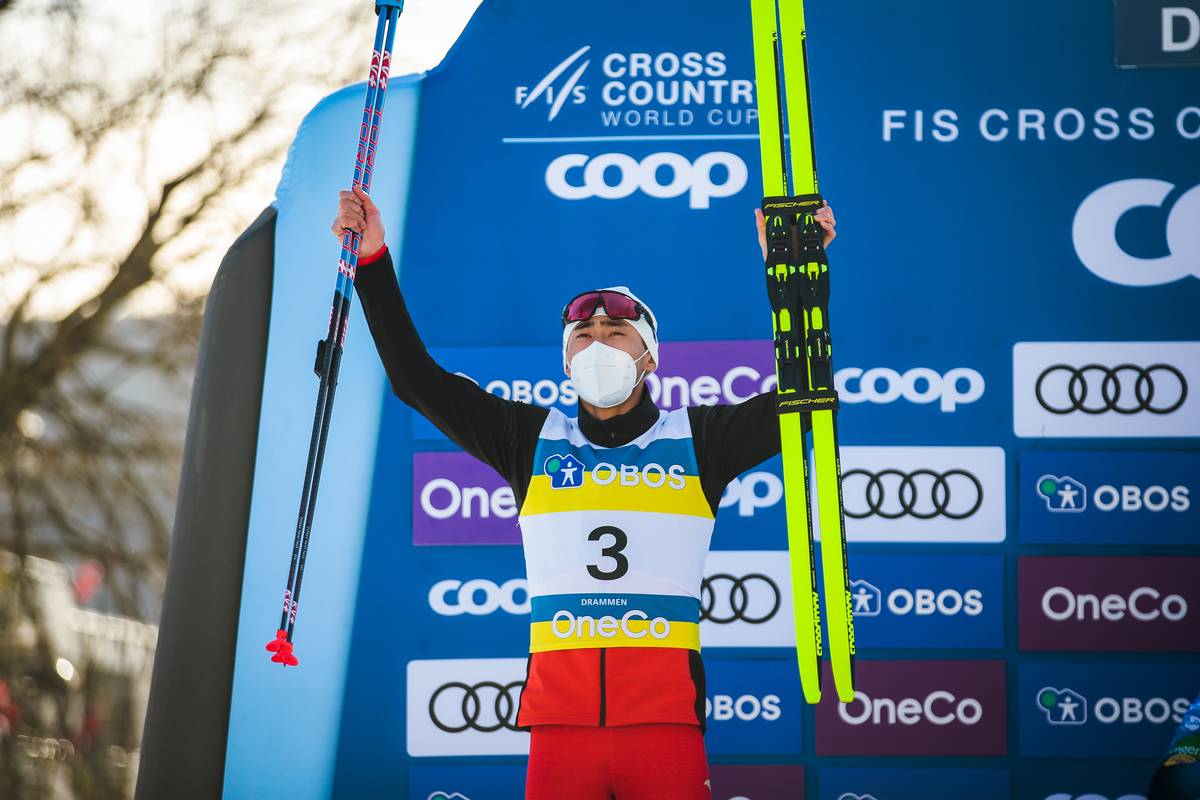
    Wang Qiang became the first Chinese athlete to podium in a World Cup, finishing 2nd in the classic sprint in Drammen. (Photo: NordicFocus)

    Leading that, after having shown tenacity and panache all day, was the Chinese skier Qiang Wang, who crossed the line in second (+1.59), with poles raised and a shout that stood at the end of a half-decade journey for his country. China, weeks off of having hosted the Olympic games, has earned a World Cup podium in nordic skiing, with Wang showing real promise for what may come from that country’s program.

    Lucas Chanavat crossed the line in third (+2.32) to round out the top 3, while Sivert Wiig finished in fourth (+3.14), Federico Pellegrino in fifth (+5.34) and Pål Trøan Aune in sixth (+11.25).

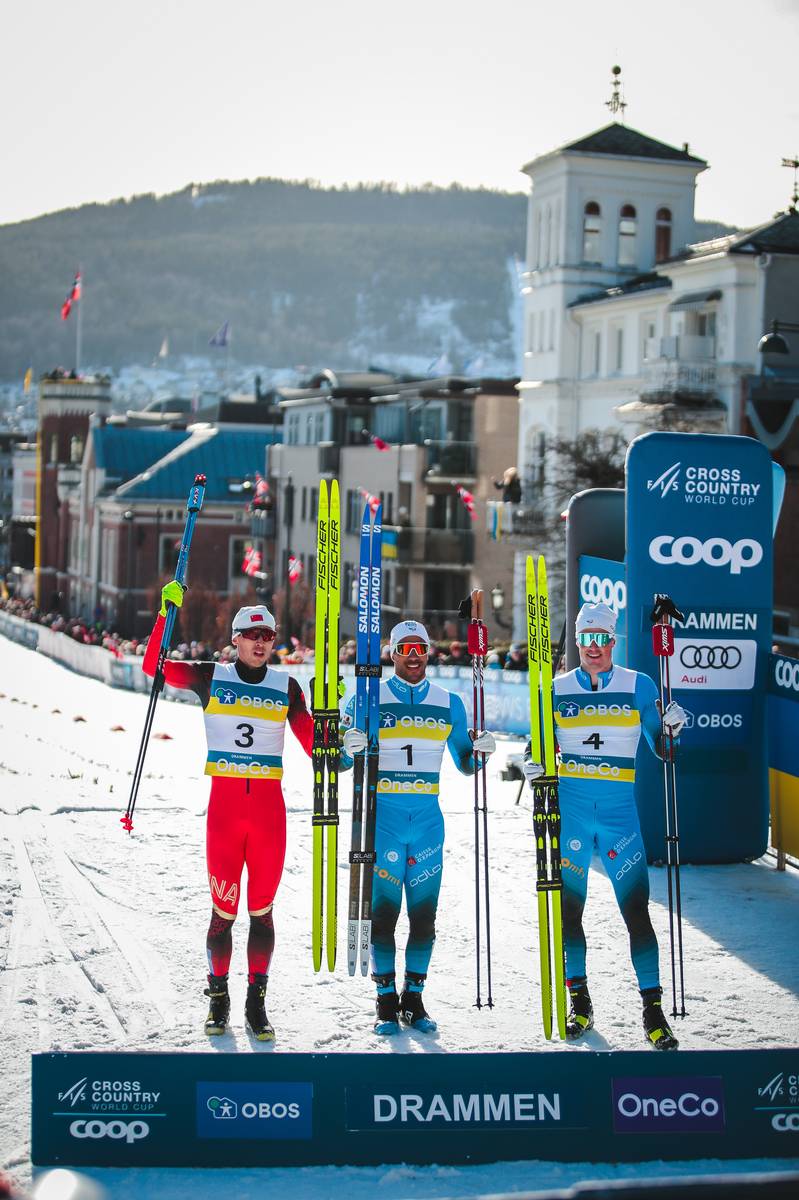
    Richard Jouve (FRA) takes the win in Drammen, NOR, with a first podium for China’s Wang Qiang, who took second ahead of Lucas Chanavat (FRA) in third. (Photo: NordicFocus)

    It was an appropriate podium for a particular moment in skiing where the world’s motion on all scales has upended the familiar rituals that come with the final stretch of the World Cup that Holmenkollen traditionally marks the beginning of. The world’s best skier out in quarantine, his closest competitors removed from the competition, and the schedule for the last month of the season in flux as we enter it.

    At once, we saw something familiar – Richard Jouve with a commanding performance alongside his countrymen – and something wholly new – a Chinese skier not only at a European World Cup race, but at the front. A strange, but moving race, for a strange and moving time.

    Once the final results were determined, Antoine Cyr led the Canadians in 19th after finishing fourth in quarterfinal four. His Olympic team sprint partner, Graham Ritchie, was next for Canada in 21st, with Pierre Grall-Johnson 27th.

    Full Results

    Qualifiers | Finals

    French Team celebrates a podium fronted (Richard Jouve- 1st) and backed (Lucas Chanavat – 3rd) by their countrymen. (Photo: NordicFocus)
  • In Front of a Long-Awaited Crowd, Klæbo and Chanavat Take It to the Line in Lahti Freestyle Sprint

    In Front of a Long-Awaited Crowd, Klæbo and Chanavat Take It to the Line in Lahti Freestyle Sprint

    This World Cup coverage is made possible through the generous support of Marty and Kathy Hall and the A Hall Mark of Excellence Award.  To learn more about A Hall Mark of Excellence Award or to learn how you can support FasterSkier’s coverage please contact info@fasterskier.com.


    By Rachel Bachman Perkins and Ian Tovell

    During a brief reprieve from racing, the top tier of international racing made its way from the high desert of Zhangjiakou, China to a venue tucked into snow-capped pines and nestled amongst the lakes of southern Finland. With more start spots per country than during the Games and some athletes choosing a weekend away from the World Cup, a number of new faces appeared on the start lists in Lahti for the 1.6-kiilometer freestyle sprint. 

    Logan Diekmann (BSF Pro) makes his first World Cup appearance in the 1.6 k freestyle sprint qualifier in Lahti, FIN. (Photo: NordicFocus)

    For the U.S., these names included Logan Diekmann (BSF Pro Team) and Bill Harmeyer (SMS T2), both of whom earned their first World Cup starts this weekend via their performance on the SuperTour circuit this season. These athletes joined Kevin Bolger, Logan Hanneman, and Zak Ketterson; the Team Birkie athlete also earned his first World Cup starts earlier this year at the Tour de Ski.

    Diekmann currently leads the SuperTour sprint standings with 119 points. He was second in the freestyle sprint during the U.S. Cross Country Championships in Soldier Hollow in January and skied to 5th in the sprint in both Duluth and Lake Placid. 

    Harmeyer was ranked third in the sprint standings with 83 points, behind Noel Keeffe who is currently racing at the 2022 U23 World Ski Championships in Lygna, NOR. Harmeyer has consistently posted top-five times in qualification during the SuperTour sprint races, and has raced into the final in three out of six SuperTour sprints. A fall in the quarterfinal during US Nationals left him in 24th after qualifying in fifth. 

    Bill Harmeyer (SMS T2) makes his first World Cup appearance in the 1.6 k freestyle sprint qualifier in Lahti, FIN. (Photo: NordicFocus)

    Lucas Chanavat (FRA) was the top qualifier finishing the course in a time of 2:57.85. All five of the Americans finished outside the top-30 in qualification, but Canadian Graham Ritchie cracked into the heats for North America in 27th (+7.73). 

    The quarterfinal rounds played out mostly as expected, with Chanavat and Johannes Høsflot Klæbo (NOR) advancing from the first round after a close finish. Norway’s Håvard Solås Taugbøl and Olympic silver medalist Federico Pellegrino of Italy crossed the line first and second in heat two, spread by just 0.06 seconds. Winning the third heat, Andrew Young (GBR) crossed the line in 3:04.32, just ahead of Russia’s Gleb Retivykh (+.20). 

    The fourth quarterfinal heat saw a close finish, as Sindre Bjørnestad Skar (NOR) took the race to the line alongside Richard Jouve of France and Alexander Bolshunov of Russia were right at his heels. Skar won the closing sprint with Jouve +0.01 behind and Bolshunov in third (+0.07). Michal Novak (+.49) of the Czech Republic finished in fourth, with both Novak and Bolshunov narrowly missing out on lucky losers.  

    Fast racing in the fifth heat saw four competitors advance to the next round. Janik Riebli (SUI) won the heat in a time of 2:59.56, while China’s Qiang Wang finished second (+.10) to move onto the semis. A top prospect for the Chinese ski program, this is Wang’s first World Cup appearance since the pandemic began. Wang was fifth in qualification during the Olympic freestyle sprint in Zhangjiakou, where he took second in his heat to Norway’s Erik Valnes before being issued a disqualification for obstruction and being relegated last in the heat.

    Qiang Wang (CHN) leads at the start of the fifth quarterfinal heat in Lahti. (Photo: NordicFocus)

    Following the pace of the leaders, Maciej Starega (+.64) of Poland and Arnaud Chautemps (+1.61) of France crossed the line third and fourth to advance into the semis as lucky losers.

    In the first semifinal, five skiers all remained close coming into the finish to vie for the two automatic spots. Pellegrino was able to hold the field off and win the semi with a time of 2:59.57, however, he was later disqualified, pushing him to sixth place.  Klæbo crossed in second  (+.07), guaranteeing his spot in the final, while Chanavant and Taugbøl were third (+.21) and fourth (+.37), respectively. Due to Pellegrino’s disqualification, Taugbøl was able to make it through to the final as a lucky loser. 

    In the second semi, Retivykh held off a push from Skar to win in 2:59.67, with the Norwegian 0.02 behind. Wang crossed third (+.34) with a time fast enough to earn the second lucky loser spot in the final.

    Sindre Bjørnestad Skar leads his heat during the freestyle sprint in Lahti, FIN. (Photo: NordicFocus)

    In the final, an early tangle between Wang and Retivykh as the two rounded a corner sent the Chinese athlete to the ground, losing contact with the pack. 

    The remaining five men stayed close as they powered through the course. Rounding the bend into the final 100 meters, four skiers remained in contention for the podium, but it was Klæbo who slingshot from the outside, putting his closing speed on display as he threw his boot to win a photo finish with Chanavat in 2:58.34, Skar and Taugbøl on their tails. 

    Johannes Høsflot Klæbo with a look before taking the win in the freestyle sprint in Lahti, FIN. (Photo: NordicFocus)

    The Norwegian had advantage at the finish, with Chanavat just 0.04 seconds back in second place. Skar held off his teammate for the final podium spot in third (+.23), while Taugbøl took fourth (+0.58). Retivykh crossed a few meters back in fifth (+0.90), while Wang rebounded from his crash to finish 7.77 seconds behind in sixth.

    A close race for second and third heads into the final 25 meters in Lahti. (Photo: NordicFocus)

    “It was amazing,” Klæbo told FIS after the race. “It isn’t so many days since we competed in the Olympics, but still, it’s always fun to race.” 

    Klæbo commented on the excitement of racing in Lahti, which has hosted many championship events including the 2019 World Championships. He added that the racing on these tracks is often tight, which keeps it exciting for spectators – of which there were many today. When asked about racing in front of a crowd after nearly two years of empty stadiums, Klæbo smiled.

    “It was amazing. I think what they have done, and finally seeing the end of the COVID situation – I think it’s amazing. It’s always great to compete against a big crowd, and it was amazing today as well.” 

    Johannes Høsflot Klæbo (NOR) takes the win in Lahti’s freestyle sprint ahead of Lucas Chanavat (FRA) and Sindre Bjørnestad Skar (NOR). (Photo: NordicFocus)
    Graham Ritchie races in the quarterfinal of the freestyle sprint in Lahti, FIN. (Photo: NordicFocus)

    After finishing fifth in a tightly spread third quarterfinal heat, Graham Ritchie bumped up from his bib rank to finish 24th.

    Kevin Bolger was the top American qualifier in Lahti in 33rd (+8.90), just 0.41 seconds off the mark needed for the top-30. On his tails was Diekmann in 34th (+9.14), with Hanneman close behind in 39th (+9.79). Ketterson was next for the U.S. in 49th (+12.13), with Harmeyer next in 50th (+12.28).

    Kevin Bolger leads the American men in 33rd during the freestyle sprint qualifier in Lahti, FIN. (Photo: NordicFocus)
    Antoine Cyr (CAN) races the qualifier of Lahti’s freestyle sprint. (Photo: NordicFocus)

    Outside the top-30 for Canada, Antoine Cyr was 40th in qualification (+9.99), with Olivier Léveillé next in 46th (+11.79), followed by Phillippe Boucher in 55th (+14.02) and Rémi Drolet in 58th (+15.87). 

    Racing continues tomorrow with a 15 k individual start classic.

    Results:

    Qualification | Final

  • Cyr and Ritchie faked it til they made it – to the best classic team sprint finish in Canadian men’s history

    Cyr and Ritchie faked it til they made it – to the best classic team sprint finish in Canadian men’s history

    During the opening weekend of World Cup racing in Ruka, FIN back in November 2021, Canada’s Antoine (Tony) Cyr popped an 11th place finish in the first distance race – a tough 15-kilometre classic won by Finland’s Iivo Niskanen, now a gold medalist in the event. 

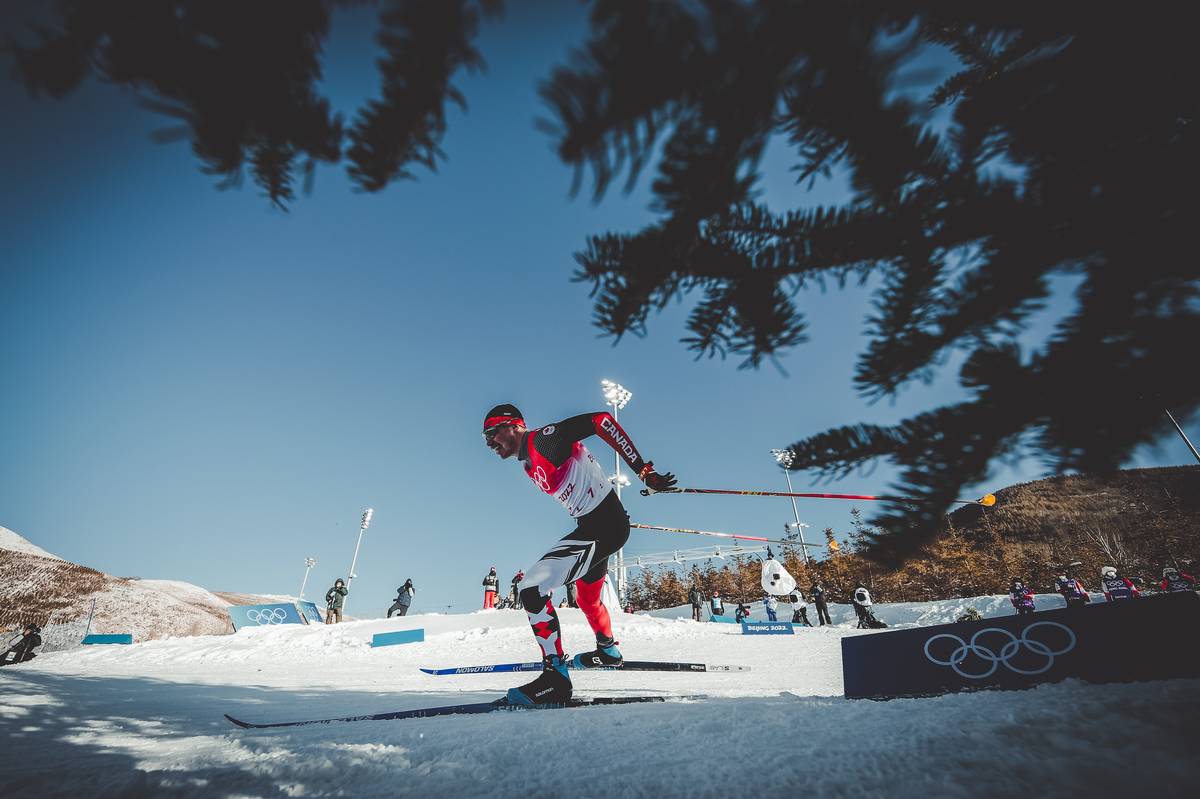
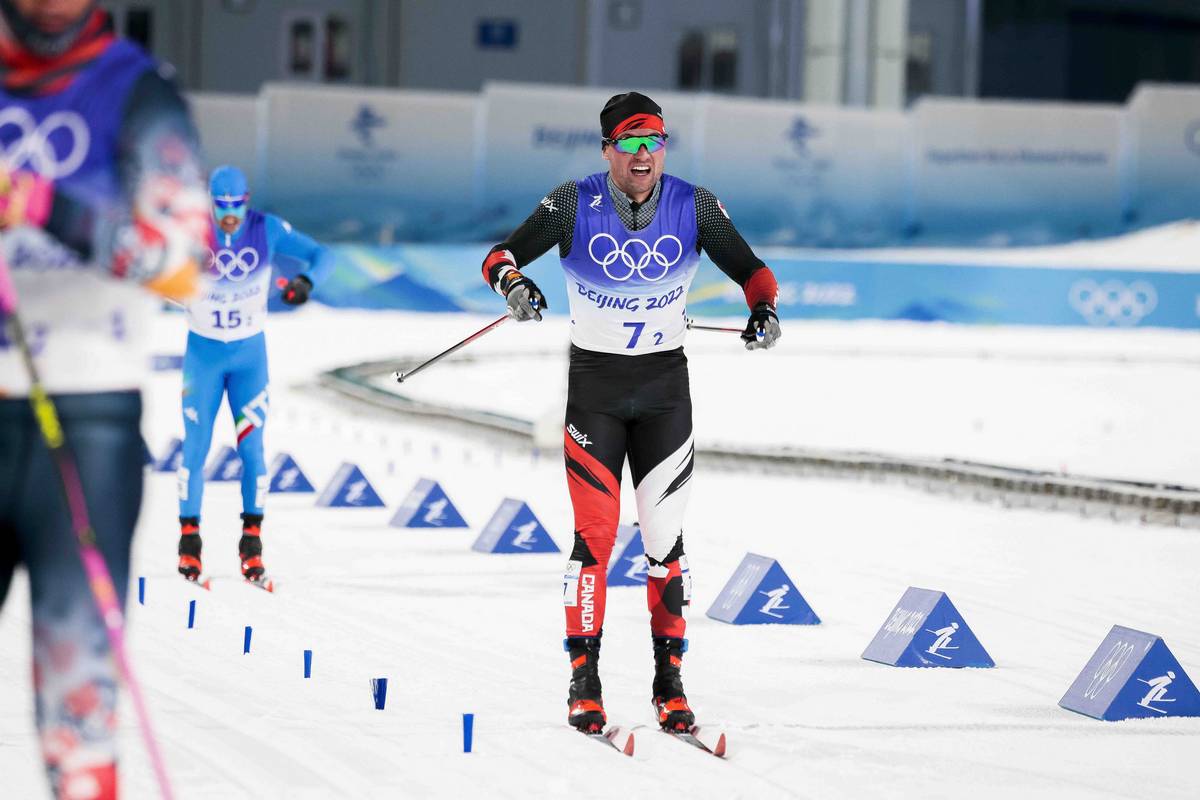
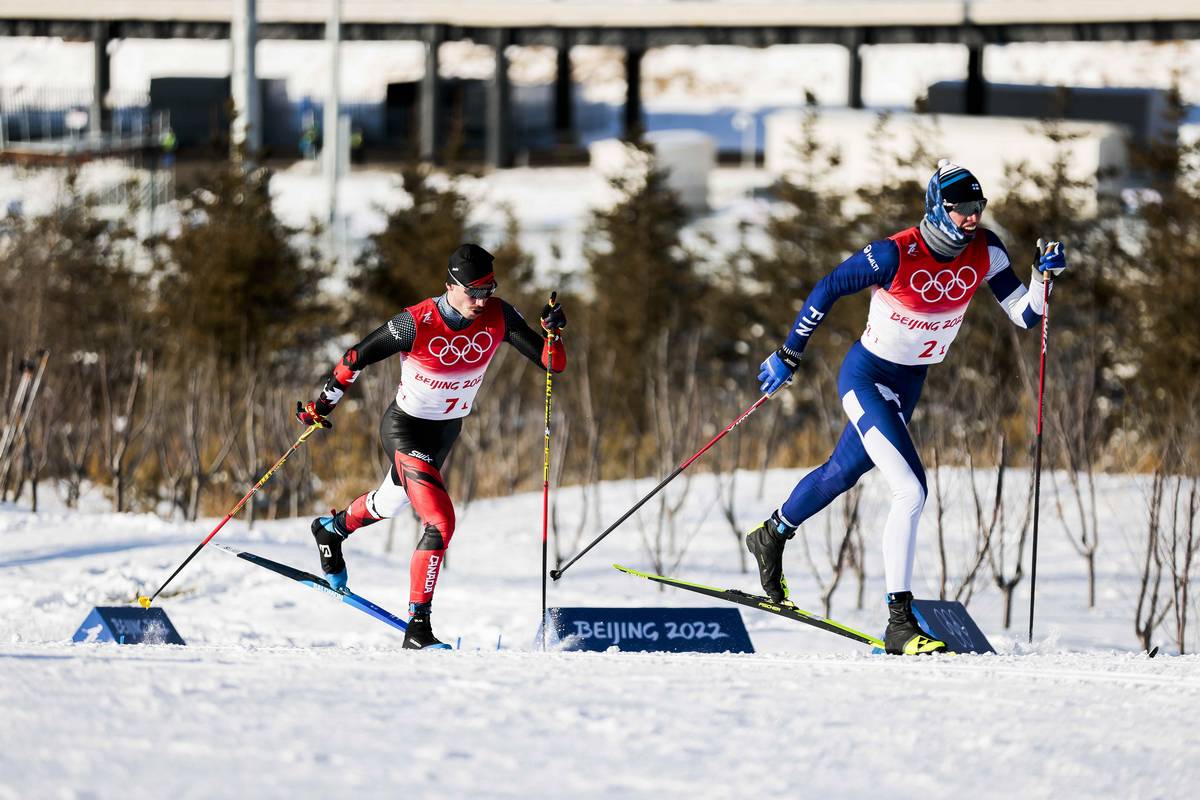
    Antoine Cyr (CAN) pushes around a the curve as he helps the Canadians to 5th in the classic team sprint during the 2022 Olympics. (Photo: NordicFocus)

    After the race, Cyr wrote to FasterSkier that the course had suited him with its long uphills and frigiddig conditions; temperatures were near zero degrees Fahrenheit ( -17 C). “Cold weather is good for us Canadians,” he said. Cyr repeated his strong showing in Ruka the next day, placing 12th in the skate pursuit. 

    Flash forward through a number of subsequent racing highs and lows, and Cyr found himself in similar circumstances: on classic skis in single digit temps, with an arduous course designed to test the mettle of the best in the world.

    Cyr was awaiting one final tag in the Olympic team sprint from partner Graham Ritchie, still amidst the lead group of eight teams, racing with some of the top names in the sport toward an Olympic medal. After receiving the tag, Cyr did his best to keep Canada in contact with the leaders, who began to surge, breaking apart this lead group as the list of medal contenders dwindled to three teams. 

    Along with William Poromaa of Sweden, Cyr lost contact with the top-three, tagging Ritchie for the final leg of the race in fifth, a position Ritchie held through the finish to cross the line in 19:45.3, only +22.3 back from the Norwegian gold medalists Johannes Høsflot Klæbo and Erik Valnes. 

    Graham Ritchie (CAN) double-poles toward the finish of the men’s team sprint. (Photo: NordicFocus)

    It was the best men’s result in a classic team sprint in Canada’s rich Olympic history. At the event’s debut in the 2006 Torino Games, which was competed classic, Devon Kershaw and George Grey took 11th in the team sprint for Canada, while Beckie Scott raced with Sara Renner to win a silver medal. Kershaw lined up with Alex Harvey at the following Games in Vancouver in 2010 for the skate team sprint, just missing the podium in fourth.

    “This is so incredible to pull this off and throw down such a good result for Canada,” Cyr told Nordiq Canada after the race. “It’s overwhelming, especially to do this with such a good friend like Graham. It is really special.”

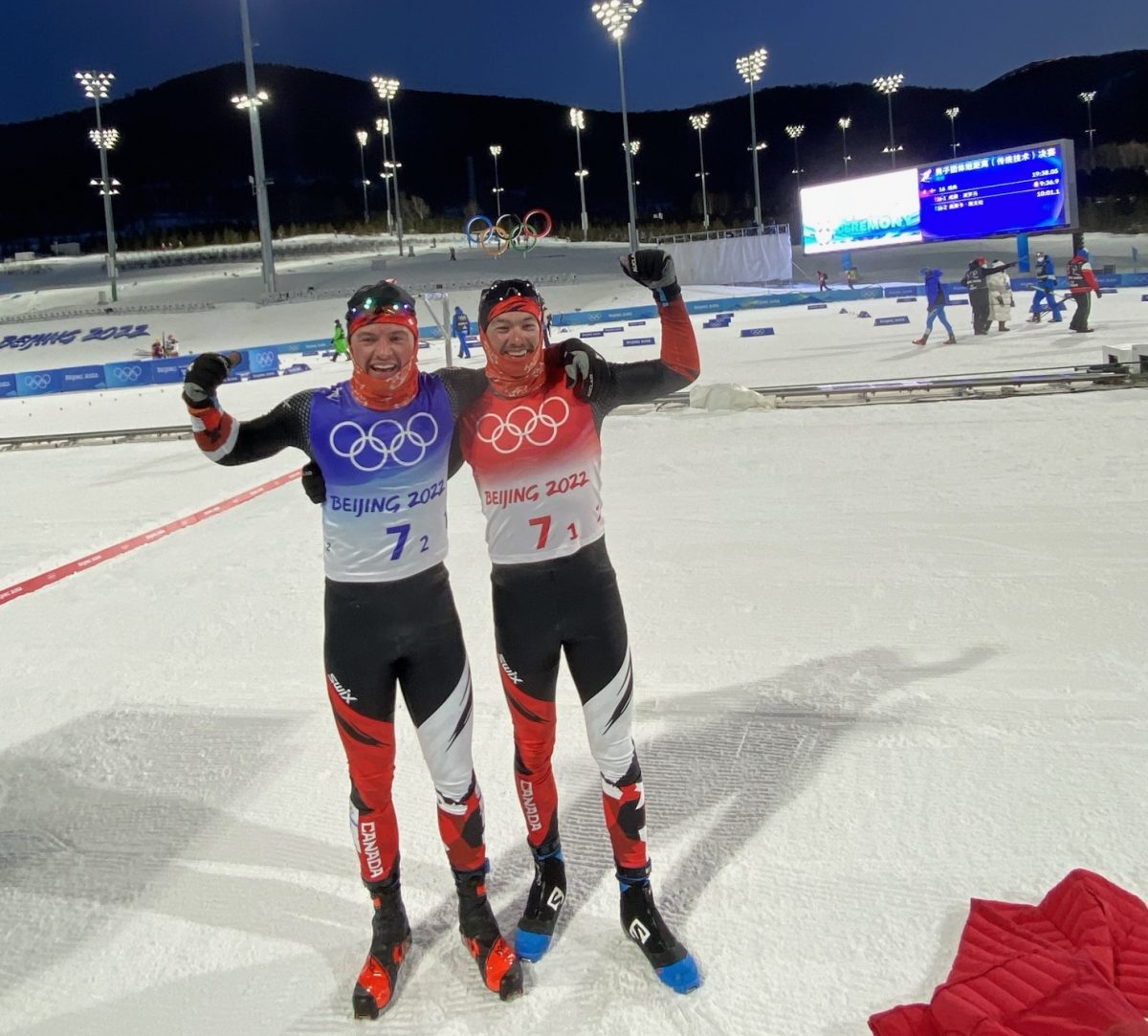
    Graham Ritchie and Antoine Cyr celebrate 5th place in the classic team sprint during the 2022 Olympic Winter Games. (Photo: Laura Leclair)

    Both 23-years-old and competing in their first Olympic Games, the Canadians had been looking for more than the results they’ve had thus far in Zhangjiakou. A pre-Olympic camp at a similar elevation in Sovereign Lake/SilverStar reportedly went well, and tight COVID safety protocols had kept the athletes healthy, allowing them to safely enter the Olympic bubble. 

    While the opening races ultimately did not feature the Canadians vying for top-10 finishes, Cyr and Ritchie could look back on the 2021 World Championships in Oberstdorf, Germany, where they took seventh for Canada in the freestyle team sprint. 

    Ritchie told FasterSkier in the mixed zone that they knew from this experience that they would need to be in the top-four in the semifinals to advance safely into the final. They had done it in the World Champs and they believed they could do it again in the Olympics. 

    “We know we had it in us, we just knew we had to race smart and race hard and have a good day,” Ritchie explained. “So [I’m] super proud of Tony and me to be able to work together and use our experience to push through that semi and end up giving our shot at a good race in the final.”

    Graham Ritchie (CAN) races at the front of the pack at the start of the men’s classic team sprint in Zhangjiakou. (Photo: NordicFocus)

    So far in the Games, Cyr has raced every event, but had not cracked the top-30 individually. Ritchie sat out the skiathlon and 15 km classic, and finished as the top-Canadian in 34th in the freestyle sprint, just off the time needed to make the heats. Racing the first two classic legs of the 4 x 10 km relay, Canada finished 11th out of 12 teams that completed the race. It’s not the makings of an underdog story about a small nation in a rebuilding phase after a string of notable retirements that one might drum up.

    “I think we put every other race in the back of our minds and just knew we [could have] a good day,” Ritchie told FasterSkier on the team’s confidence in spite of sub-optimal results. “Tony is an exceptional classic skier. And myself and him are both – we know we can pull off a sprint. So we really put those other races behind us and were only focused on today…

    “But then I mean to be on the last lap, with the podium right there,” Ritchie continued dreamily, as if still feeling the thrill. “That was pretty eye opening.”  

    Though he acknowledged the challenge of facing the likes of Klæbo, Joni Maki (FIN), and Alexander Terentev (ROC) in the last lap, who eventually took the gold, silver, and bronze medals, respectively, Ritchie shared that the possibility of a Canadian medal crept into his mind in the final lap. Moreso, it planted a seed for what might be possible in the future. 

    “I mean, during the race, I definitely thought about it. Like you could see it right there… And I mean, we’re both 23 years old. We’ve got a lot of racing left in us. So yeah, that was a big race for us. And we’re really looking forward to seeing what we can do in the future here for Canada.” 

    In the mixed zone, World Cup competition coach Erik Bråten also spoke to the team’s ability, particularly in Cyr’s case, to put aside the early results of the Games and take on a “fake it till you make a kind of attitude today. And just push through it.”

    Speaking to the difference makers that led to this outstanding result, Bråten projected that Cyr had skied among the “top-three technically”, particularly when striding up the 400 meter A-climb, which rose 30 vertical meters to the high point of the course midway. 

    Antoine Cyr (CAN) matches Iivo Niskanen (FIN) up the climb during the classic team sprint in Zhangjiakou. (Photo: NordicFocus)

    Though Cyr had raced the odd legs of the team sprint during the World Championships and was second in the classic sprint final during the Canadian Olympic Team Trials in January, having also won both the freestyle sprint and the 15 km classic earlier in the trials, Bråten deliberated the matchup he would enlist for the team sprint until official selections were due.

    “For me, this team was pretty clear before we went here. But Tony’s been struggling a little bit. And Graham hasn’t been his maximum self here either, but I felt like he did decent enough in the [freestyle sprint]. I know Tony – the potential he has. And I felt like –  we plan for success. And I think on the best day, he was the right man for the day. We don’t plan for people to have a bad day. And he had an amazing day. He showed us what he could do out there. So I just think everything came together in a perfect way.”

    This coming together means more than just a new best Olympic result in the classic team sprint for the Canadian men. Bråten stated emphatically that it is a result that could spark a return to international success for Canadian cross country skiing, elevating every level of the development pathway.

    “I think it’s extremely important. It’s important for all the athletes back home in Canada, seeing what’s possible. It’s important for coaches, the coaches of these athletes, knowing what’s going on, knowing what it takes to get this result. And they’re so young, they can do even better next year, and so on. So it’s just a trickle down effect that can be quite big both financially, but also, of course, information and knowledge wise. They know what they did to get to this level. Well, that can be shown down [the development pathway] as well.”  

    That said, feeding the development pipeline and supporting the athletes within it requires resources. While some aspects of elite level cross country skiing are relatively low cost, Canada is limited by its budget in what it can do for athletes aiming for the top.

    “The man on the boards [is] the most important person,” Bråten said simply. “Any female or male who wants to be good, the most important thing you do is just get out there and do the work, which is free. Of course, there’s equipment involved, but the work is mostly free… However, there’s so much behind this. What do you put on the boards? Which boards do you have in the first place? Are you getting the coach, physiologists, ski support you need? And  we’re good enough to do this, apparently, but…”

    Bråten trailed off before gravely stating, “One Norwegian athlete is the same budget as our entire team.”

    Graham Ritchie skis to 34th in the freestyle sprint qualifier during the 2022 Beijing Olympic Games. (Photo: NordicFocus)

    “It’s tough,” he continued. “So, for sure, we wouldn’t hurt getting a little bit more financial support.”

    Ultimately, he has confidence in the team he is supporting, and in particular in Cyr and Ritchies outlook heading into the upcoming 2023 World Championships, which will be held in Planica, Slovenia beginning in late February.

    “There’s no reason they can’t fight for at least a medal, and why not just go gold if you’re going to go for bronze?”

  • Canadian Journey to Beijing

    Canadian Journey to Beijing

    Katherine Stewart-Jones sprinting over the saddle at Sovereign Lake during the Beijing Prep Camp. (Photo: Peggy Hung)

    Canada was successful in delivering the team to Beijing and getting them on snow in Zhangjiakou. The decision to go above and beyond in isolating athletes before a carefully planned drive to a charter flight worked, although other countries also succeeded with a more laid-back approach.

    What can fans expect from the Canadian team in Beijing? It all comes down to qualifying and performing.

    Qualifying

    Canada had an Olympic quota of four women and three men, with a pretty high probability of gaining another woman and man in reallocation. The size of the quota depends on World Cup/World Championship performance and domestic FIS races; the top countries earned the maximum team size of 8 per gender. As Canada cancelled all races last season and only took a small team to Europe for a six week visit, the only path to a larger team would have been more athletes getting top 30 results in Europe last season.

    Three men (Tony Cyr, Olivier Léveillé, Graham Ritchie) and one woman (Katherine Stewart-Jones) met the world cup results standard for Olympic qualification during period 1. The Trials in Canmore (January 6th to 11th) would then select three women, and possibly one woman and one man who would have first dibs after reallocation.

    Dahria Beatty, an Olympic veteran from Pyeongchang, was one of the skiers who now had to qualify through a rigid qualification document at Canmore trials.

    “Yes, it was definitely different last time. I was qualified for the [2018] Games a season in advance, essentially,” Beatty explained at the Prep Camp at Sovereign Lake.

    At the Canmore sprint, Beatty qualified third and finished the heats in 4th, which meant Laura Leclair earned her first Olympic berth and Cendrine Browne her second.

    For Beatty, selection came down to Saturday’s 10km individual classic. If she won, or placed second to Stewart-Jones, she got the spot. The latter happened, with Beatty 0.5 seconds behind and 20 seconds clear of third.

    “Honestly, I don’t think I’ve had to qualify for a team specifically like that since U23 World Champs so it’s been a long time definitely.”

    Olivia Bouffard-Nesbitt was ranked 5th after trials, waiting on the reallocation process. Her journey has been longer than most, with injuries, training setbacks, car accidents, and bad luck. In 2014, she recovered from a back injury just in time to compete at Olympic trials. She won the qualifier on her first race day of the season. While lining up for the A-final heat with selection on the line, she was told that the jury had disqualified her for micro-skating during the quarter-final earlier. This year, the pieces came together.

    “​​It’s hard to find words. It’s something that I believed in, like my whole life, I believed that it was possible. But then throughout the setbacks, the doubt kind of built up. And, increased and I thought it wouldn’t happen, maybe and that I just had to grow up and face that reality. But there was still like, a little voice inside me that thought it was possible. And just to have– persisted, and trusted that with patience like things would line up for me. It means so much, it means so much for me but also for the people who helped me get here because it feels like I know that they would support me no matter what but it just feels like doing them justice as well. Like putting all the time into this project that is me trying to get to the Olympics was worth it.”

    Jasmine Drolet was next, with only the faint hope of moving up through a positive COVID test for an athlete above. Jasmine does have the consolation of earning a start at U20 World Championships.

    Russell Kennedy finished 27th in the Ruka 15km classic in November, enough to help Canada’s World Cup quota for next season. Kennedy would have needed to ski 15 seconds faster to take the 20th place from Federico Pellegrino and earn the 4th Olympic spot. The next day he moved up to 21st in the pursuit with the 24th fastest time of day, again just outside the criteria.

    The reallocation spot would be decided in the 15km individual start classic on January 8th. Whoever finished highest, after excluding the three already qualified men, would be on tenterhooks until the 17th and then be officially announced on the 19th.


    Rémi Drolet in a practice skiathlon at the Beijing Prep Camp at Sovereign Lake, Jan 23, 2022. (Photo: Peggy Hung)

    Cyr won, surprising no one, with Rémi Drolet edging out Kennedy by 10.8 seconds to take second. Every skier in the top ten had either a WC top 30 or a Canada Cup podium this season. Every one of those skiers could believe that their best effort would end in selection.

    Rémi is a second year senior who chose to take a gap year from Harvard to focus on getting faster on the World Cup and qualifying for Beijing. He didn’t get selected for Period 1, but did get some good results in early season Continental Cup races in Finland and Sweden.

    “For me, it was important to try really hard to make it this time around, because I think it’ll be an important stepping stone in my career,” he told FasterSkier during the prep camp. “To be able to, I guess, be a leader in the team, with so many strong guys coming up.”

    Rémi is getting good results for his age, but also looking over his shoulder at juniors like Tom Stephen and Xav McKeever, who are already collecting senior wins at Canada Cup races. These three teamed up with Léveillé to collect a relay silver at U20 Worlds two years ago.

    Kennedy is now 30. His ‘day job’ is with Canada’s Para National team, one of two guides for Brian McKeever. After PyeongChang, his goal was not just to qualify, but deliver at Beijing, and that dream ended with an invitation to train as a spare.

    “Well, I mean, for me, it’s been a rough two weeks. I spent three years working for this year. I was focused on the Olympics, and not really as much qualifying I guess.”

    Asked about sharing a bubble for two weeks with the four men who are living his dream, Kennedy didn’t shy away from truth.

    “And yeah, it’s been hard. But I’ve been trying to put on a good face around them. Because it’s sweet [for them]. They’ve done it, they’re going to the Olympics, it’s a huge goal and a huge achievement. But for me, it’s definitely hard. I’m really fast right now, which just makes it harder. But that’s part of sport.”

    Performing

    For some people, just reaching the Olympics is the pinnacle of their dreams. And it is a major achievement, even more so now with smaller quotas. In 2006, Canada had five women who earned Torino quota spots, in addition to the ten nations spots, allowing Canada to select 15 women. 

    What distinguishes the athletes who deliver results from those who participate?

    “Some people believe, and some people want to believe, but [it’s] the ones that really believe.” Dave Wood explained to FasterSkier in July of 2021.

    Going back to 2006, three Canadian women came home with medals: Chandra Crawford, Beckie Scott, and Sara Renner. Each of these women had individual World Cup podiums in the final two months of preparation and came into Torino with confidence. 

    The current team of nine Canadians has only two members with Olympic experience: Beatty and Browne. It will be much harder for this team to dream of podiums.

    Stewart-Jones, Cyr, Léveillé, and Ritchie can find confidence from their period 1 results. Drolet can find confidence in beating Léveillé and Kennedy at trials as both have World Cup top 30’s this season.

    The others? They will have to find confidence inside themselves.

    Expecting

    One of the common expectations of sports fans is that Olympians should produce their best performance of the season on the biggest stage. Athletes work their whole lives to get to an Olympics and it seems obvious that they should be peaking at precisely the right moment.

    “The results came from those that started their Olympics in May or April.” – Dave Wood, talking about Vancouver 2010.

    Wood was referring to athletes who qualified for the Olympics during the previous season, allowing them to build the entire training year around performing during a two week period. Athletes who have not qualified in advance have to focus their season plan on earning selection.

    Kennedy was one athlete who missed that balance.

    “Because sometimes I feel with sport, you have to choose if you want to go or if you want to do well. It’s the one thing that I’ve been struggling with. And also, it’s hard because like the people making the decisions don’t really have any repercussions for their choices. So the repercussions fall on athletes, and unfortunately, this year fell on me. Yeah. It sucks, but it’s part of it. I knew what I signed up for.”

    Once selected, each athlete can then reset their priorities. Four Canadians hit that point in December, three more on January 8th, and the last two on January 17th. With the first race on February 5th, which feels like the 4th after crossing the international date line, the one big thing athletes can do is not catch COVID-19.

    Back in 2010, Canada had four men performing on the world cup and when it came time to pick four men for the 50km on the final day, there were five names. Ivan Babikov, George Gray, and Alex Harvey had placed 5th, 8th, and 9th in the skiathlon and were obvious choices. The final place had to go to either Brian McKeever, who had qualified first at trials in Canmore, or Devon Kershaw, whose best individual result was a 16th. Unusually for Canada, there was outside pressure on this selection, as McKeever would have been the first person to compete at the Olympics and Paralympics in the same season.

    “The way the other four boys had been skiing, there was no decision, there was no discussion,” Wood explained. “Brian didn’t beat Kershaw and Alex and Ivan and George [at trials], he beat the others.”

    The coaches chose Kershaw, which paid off with a 5th place finish, 1.6 seconds from gold. In 2022, there will be no difficult decisions for the men, but there are five women and four starts per individual race.

    FasterSkier asked Beatty what races she was looking forward to.

    “Well, if I get a start in the team sprint, I love team sprints, I love team events. So I’m definitely hoping to be doing that race, I’m looking forward to that. I’m also really looking forward to the individual sprint and the 10k individual.”

    This may not be the Norwegian or Swedish level of choice, with eight skiers and four starts, but expect Canada to hold some time trials during the Olympics to inform the coaches’ choice.

    Beatty and Browne were in PyeongChang, and will have experience to share with the neophytes.

    “​​The races themselves, even though they will be the most stressful part, are also going to be the most fun because that’s what we dream of,” Bouffard-Nesbitt speculated three days before getting on the plane.

    “I’ve never been to an Olympic Games, and especially a COVID games. So I don’t know what the rest of the time will be like.”

    The Canadian women having (distanced) fun. Click the image to see the Instagram reel.

    Early evidence is athletes will be killing time in their rooms and finding virtual fun with your teammates.

    Dreaming

    FasterSkier asked a number of the athletes a simple question: when you first dreamed of the Olympics, what sport were you dreaming of?

    “I have to say, probably hockey with that one. For sure. I didn’t know I was gonna end up as a cross country skier.” — Ritchie

    “Cross country skiing. Yeah, it’s always been that.” — Stewart-Jones

    “I definitely think it was probably cross country skiing. That’s always been the sport I’ve been strongest at, even as a kid. I did a bunch of different sports. I always loved watching figure skating at the Olympics, but I knew that I was never going to pursue that long term, definitely was not flexible enough.” — Beatty

    “I don’t know. I guess when I first really thought about the Olympics was back when I was playing hockey. But at that time, it wasn’t really, it was kind of just like, whoa, it’d be cool to go to the Olympics. But I didn’t really think of what sport I might make it in. It’s only really four years ago, I started thinking, this is what I need to work towards, to make the Olympics in Beijing.” – Rémi Drolet

    “That is such a good question. Because around the time when I became really inspired by the Olympics was the 2000 Olympics in Sydney, and I think Simon Whitfield winning the triathlon was the really big moment at that Olympics. And at the time, in my youth, I was just obsessed with soccer, but also skiing, so I dreamt of either/or soccer or skiing.” — Bouffard-Nesbitt

    “Oh, man, I didn’t really have a sport I was dreaming of, exactly. But I thought maybe skiing because I was on skis at two years old. More downhill racing.” – Kennedy

    “I was the dreaming to go to the Olympics as a cross country skier. It didn’t happen as a cross country skier but as a technician.” — Simon Boisvert

    “Ah, to be honest, I’ve always been into cross country skiing with my dad and my sister, my older sister ahead of me, but always been into cross country skiing, and I thought that maybe mountain biking, but a few years ago, I knew I was not. I wasn’t going as an athlete, but I’m pretty pumped to go for my first time as a wax technician.” — Félix-Antoine Vezina

  • An Inside Look at the Canadian Olympic Prep Camp

    An Inside Look at the Canadian Olympic Prep Camp

    Katherine Stewart-Jones ready to start a skiathlon at the Olympic Prep Camp.

    The Canadian Prep Camp in Sovereign Lake and SilverStar, BC prior to the 2022 Beijing Olympics sounds like a nordic skier’s heaven.

    A two-week ski vacation with 100 kilometres of perfectly groomed snow. A private room above a great coffee shop (pain au chocolate!) and next door to some great beer. January weather just below freezing with enough falling snow to make every day a hardwax day. Two weeks of what locals call superhero snow. A whole lot of sunshine.

    The reality was a little different: COVID stress, travel uncertainty, and outside pressure combined to make this very much a work trip, not a vacation.

    The camp, which ran from January 12th to 25th, included nine athletes, the high-performance manager plus two coaches, two wax techs, a massage therapist, and a cook.

    The athletes included the majority of the 2022 Olympic Team: Katherine Stewart-Jones, Laura Leclair, Dahria Beatty, Tony Cyr, Olivier Léveillé, and Graham Ritchie. Alternates Olivia Bouffard-Nesbitt and Rémi Drolet would officially join the team after the quota reallocation during the second week. Second alternate Russell Kennedy will not add to his Olympic CV and will instead go to his third Paralympics as a guide, supporting the well-decorated visually impaired athlete, Brian McKeever. The only Olympic team member not in attendance was Cendrine Browne, who chose to train in Canmore, while second alternate Jasmine Drolet returned to school at Dartmouth and earned her first collegiate wins.

    World Cup coach Erik Bråten, Next Gen coach Eric de Nys, Team Lead and high performance manager Joel Jaques, techs Simon Boisvert and Félix-Antoine Vezina, massage therapist Stephen Waterreus, and Zoe the cook made up the support crew. Everyone except de Nys and Zoe are going to Beijing.

    When this writer asked for last names, the response was always, “Zoe? You know Zoe.” In the end, it was revealed that Zoe is Zoë Roy, who retired from racing in 2014 as a founding member of Team Ninja. Yup, we all know Zoë.

    All interviews were done on snow, from a distance, with FasterSkier wearing an N95 mask.

    On Snow Training

    The on-snow part of the camp was reported to have gone very well. The coaches were able to find times and trails that allowed training races that closely matched the Olympic course for profile and elevation while keeping distance from the local skiers. 

    The Zhangjiakou 5km course elevation range is 1639m to 1696m. The Sovereign Lake upper World Cup 5km is 1651m to 1708m, with the stadium at 1660m.

    The Friday sprint course worked fairly well, despite a layout that would give any technical delegate apoplexy. As Bråten explains above, the coaches chose to do four qualifiers instead of heats to manage risk.

    The Sunday skiathlon course ended up being 13km for the women and 17km for the men, with some flat sections removed from the 5km loop to better mimic the Olympic courses.

    Bråten was often seen working with athletes one-on-one.

    As the days counted down to departure, skiers were working on filling their bags with seconds gained: a tweak in one skate (V2) poling, free skating further on a fast flat section, experimenting with pacing on courses that simulate Zhangjiakou.

    The mood of the camp seemed slightly tense, at least to a journalist who was careful not to pierce the bubble. The change on Tuesday morning, 12 hours after everyone passed the final COVID test, was dramatic, with smiles everywhere.

    “It’s been fantastic conditions and just a really nice camp all around, it’s always nice when you get some sunshine,” Kennedy told FasterSkier. “So yeah, especially after a [World Cup] Period One in Finland in the dark.”

    First time Olympian Rémi Drolet is all smiles after passing the final pre-travel testing.

    COVID Management

    COVID protocols at the camp were strict, races were more relaxed.

    A positive test would be the end of one person’s Olympic dreams and a logistical nightmare for the support team. Any close contact of the infected person would not be able to travel. Any replacement person, athlete or not, would need to follow the same testing protocol. If that replacement wasn’t ready for the scheduled flight, the complexity of travel planning might be insurmountable.

    In order to travel to the Olympics, the athletes, coaches, and techs would all have to pass two PCR tests less than 24 hours apart in the final 96 hours before boarding. Once at the Calgary airport, there would be another PCR test, with a fourth upon arrival in China.

    Nordiq Canada chose a more restrictive plan than some other countries. Each person (athlete, coach, tech, cook, massage therapist) had their own room and didn’t enter other rooms. Meals were delivered. Grocery shopping was done by local resident, de Nys, scheduled for 7am to avoid crowds. No one entered coffee shops, bars, or restaurants. Each morning, everyone would do a rapid antigen test in their room. Athletes skied from their accommodation at SilverStar to the homologated trails at Sovereign Lake to avoid close contacts in vehicles. Only de Nys and Zoë the cook had contacts outside the bubble, and neither is going to Beijing.

    The goal behind this aggressive protocol was twofold. First, to prevent exposures. Second, if one person tested positive, there would be no close contacts forced into isolation or removed from the Olympics. The two wax techs (Simon Boisvert and Félix-Antoine Vezina) inevitably had a shared bubble as they shared a private waxing room.

    Was this the right answer? We got three answers to that.

    Drolet found the camp harder than usual: “We were still able to ski together a little bit, but it was definitely a little bit lonely at times.”

    Kennedy, entering with a mentally tough prospect of only making the team if disaster struck a friend, found the positive. “The guys have been playing, like hanging out online together… And we’ve been skiing together. So it’s separate, but at the same time, not too lonely.”

    “Ask me on Monday afternoon when we get all the results back,” Jaques told FasterSkier on Sunday morning. “We’ve taken the right precautions so we’ll just see. But I think it’s looking good.”

    A number of athletes mentioned feeling comfort in knowing they were doing everything possible to protect their Olympic dreams. 

    The system has worked. Everyone tested negative and the entire team is now on snow in Zhangjiakou.

  • Eight Canucks Ready to Head to Europe for Period 1 of World Cup Cross-Country Ski Racing Action (MEDIA RELEASE)

    Eight Canucks Ready to Head to Europe for Period 1 of World Cup Cross-Country Ski Racing Action (MEDIA RELEASE)

    CANMORE, Alta.—Eight Canadians are readying themselves to head to Europe in the coming weeks to open the highly-anticipated Olympic and Paralympic season while bringing the maple leaf to the World Cup cross-country skiing start line.

    Nordiq Canada will send a dynamic group of four women and four men who are determined to climb up the international rankings in the first three weeks of World Cup action before returning to Canada for the holiday break followed by the 2022 Olympic and Junior/U23 World Championship Ski Trials set for the Canmore Nordic Centre, January 6-11.

    Olympians Dahria Beatty (Whitehorse) and Cendrine Browne (Saint-Jérôme, Que.) will be joined by National Teammates Katherine Stewart-Jones (Chelsea, Que.) and Maya MacIsaac-Jones (Athabasca, Alta.) on the women’s start line. The four Canadian women have been making steady progression and regularly posting results in the top-25 over the last year.

    Russell Kennedy (Canmore, Alta.) who competed at the 2018 Olympics before guiding Brian McKeever at the Paralympic Games in PyeongChang will lead a young men’s team loaded with potential. Kennedy will be joined by Graham Ritchie (Parry Sound, Ont.) and Antoine Cyr (Gatineau, Que.) who were both seventh in the team sprint at the 2020 World Ski Championships. Olivier Léveillé (Sherbrooke, Que.), who was just the third Canadian ever to win an individual cross-country ski medal at the Junior World Championships last year when he finished third in the 10-kilometre skate-ski race, will take his first strides into the senior ranks.

    Selection announcement and synopsis can be found here.

    Katherine Stewart-Jones during the 10 k skate in Falun, Sweden. (Photo: NordicFocus)

    “This is a determined group of athletes who have earned the opportunity to represent Canada and compete on the elite stage of our sport through their impressive results over the last year,” said Joel Jaques, high-performance manager, Nordiq Canada.

    “This group has represented Canada at all levels of the sport internationally, and are now anxious to demonstrate their potential during this important season which will serve as the ultimate benchmark in their continued development. I have full confidence they will be fully prepared to achieve our team and their personal goals.”


    The majority of the Canadian Team will depart, November 18, to compete in the following races prior to the holiday break:

    November 26-28 – World Cup, Ruka, Finland

    November 26-28 – Norway Cup, Gålå, Norway (Graham Ritchie, Dahria Beatty, Maya MacIsaac-Jones)

    December 3-5 – World Cup, Lillehammer, Norway

    December 11-12 – World Cup, Davos, Switzerland

    December 18-19 – World Cup, Dresden, Germany


    Nordiq Canada will hold a media availability with Canadian Team athletes participating in the Frozen Thunder Training Camp at the Canmore Nordic Centre, November 2, in advance of their departure to Europe.

    Nordiq Canada is the governing body of para-nordic and cross-country skiing in Canada, which is the nation’s optimal sport and recreational activity with more than one million Canadians participating annually. Its 60,000 members include athletes, coaches, officials and skiers of all ages and abilities. With the support of its valued corporate partners – Haywood Securities Inc., AltaGas, Swix and Lanctôt Sports– along with the Government of Canada, Canadian Olympic Committee, Canadian Paralympic Committee, Own the Podium and B2Ten, Nordiq Canada develops Olympic, Paralympic and world champions. For more information on Nordiq Canada, please visit us at https://nordiqcanada.ca.

    Remi Drolet and Russell Kennedy racing for Canada in Oberstdorf, Germany. (Photo: NordicFocus)
  • Bolshunov Pulls Away for a Solo Victory in the 15 k Classic; Cyr 21st

    Bolshunov Pulls Away for a Solo Victory in the 15 k Classic; Cyr 21st

    Engadin, Switzerland – a stellar backdrop for the men’s 15 k mass start classic. (Photo: NordicFocus)

    This World Cup coverage is made possible through the generous support of Marty and Kathy Hall and their A Hall Mark of Excellence Award. To learn more about A Hall Mark of Excellence Award or to learn how you can support FasterSkier’s coverage please contact info@fasterskier.com.

    It’s the last hurrah, folks. Roughly a year after the COVID-19 virus achieved its global pandemic title, the World Cup finds itself at the end of a season that once looked as if it may not happen in the first place. Though four competitions — Lillehammer, Nové Město, Oslo, and Beijing — were cancelled or postponed, the World Cup toured through Europe from November to March without any known significant outbreaks. All things considered, they pulled off a bold and robust competition schedule. 

    Leaving the unpredictable spring conditions at the World Championships in Oberstdorf, Germany, the cold, crisp tracks and an Alpen backdrop looked like a wintery treat during today’s 15-kilometer mass start classic event. The picturesque venue, home to the Engadin Ski Marathon, is nestled in the Engadin Valley of Switzerland just south of St. Moritz in the town of Surlej. Pristine conditions, bluebird skies, and high mountain air; what more could you ask for in a final stop?

    Iivo Niskanen leads the way midway through the 15 k mass start classic in the Engadin Valley of Switzerland. (Photo: NordicFocus)

    As the dust settles from the World Championship, in particular the conclusive result of the men’s 50k classic just six days ago, eyes were on the 24-year-old duo up front with 5k to go. To put it clearly, we mean Norway’s Johannes Høsflot Klæbo perhaps looking for redemption after his disqualification for obstruction and loss of the World Championship gold medal versus Russia’s Alexander Bolshunov. The Russian also felt robbed of this medal as the interaction with Klæbo in the finishing stretch resulted in a snapped pole, consequently losing him ground to Emil Iversen and leaving him with silver. 

    With the field staying tight over the first 10 k on Saturday, it was on Bolshunov to move early and avoid setting up a repeat opportunity for Klæbo to sit and kick in his signature style. Time and again, Klæbo the World Champion and Olympic gold medalist in the classic sprint has demonstrated his potential to, quite literally, run away from the field in the final 400 meters, rocketing down the final stretch to clinch the win. Though Bolshunov is the overall World Cup winner for the third year running, it would not behoove the Russian to face off with Klæbo in this way.

    Alexander Bolshunov leads the way in the 15 k classic, with Johannes Høsflot Klæbo drafting on his tails. (Photo: NordicFocus)

    And he knew it. Crossing the bonus sprint checkpoint at 10 k, Bolshunov and Klæbo were side by side. But as the leaders kicked and glided into their final lap, Bolshunov began to surge off the front. At 11.4 k, he had only a second gap ahead of Klæbo who attempted to match the pace. But, by 2 k later, the winner was clear. Bolshunov had a 24.9 second gap at 13.8 k, while Klæbo had allowed the chase group to catch back up, letting go of a win and setting himself up for a sprint finish for second place. 

    Despite his lead, the Russian kept his foot on the gas all the way to the finish stretch where he raised his arms to soak in his achievement and coasted through the finish in 34:07.1. 

    Bolshunov coasts through the finish without challengers at the 15 k mass start classic in the Engadin Valley of Switzerland. (Photo: NordicFocus)
    Alexander Bolshunov takes the win in the 15k classic in Switzerland. (Photo: NordicFocus)

    “I really like St Moritz,” Bolshunov told FIS through a translator after the race. “I was very pleased with the conditions here and feel it is one of the best places I have been skiing and training. About the race, I was really happy with the result and happy that now we have again hard winter conditions and that I could push hard on this course. I am very happy to take the victory.”

    The remainder of the podium was less certain, with Klæbo heading toward the stadium with a pack of seven men. Utilizing his aforementioned signature, Klæbo engaged his sprint gear to move up to the front of the group, coming into the final 100 meters alongside his teammate Pål Golberg. Klæbo held Goldberg off by half a ski length for second (+18.5), leaving Goldberg in third (+18.9). 

    Johannes Høsflot Klæbo edges out teammate Pål Golberg for second place. (Photo: NordicFocus)
    The 15 k classic men’s podium in the dreamy Engadin Valley. Alexander Bolshunov (RUS) took the win ahead of Johannes Høsflot Klæbo (NOR) and Pål Golberg (NOR). (Photo: NordicFocus)

    Sweden’s Jens Berman took 4th (+20.0), with Simen Hegstad Krüger of Norway in 5th (+21.2), Artem Maltsev of Russia 6th (+24.2), and Iivo Niskanen of Finland 7th (+27.4). Hans Christer Holund brought up the rear for the first group of chasers in 8th (+31.2).

    Alexander Bolshunov celebrates his 9th World Cup distance win this season at the final stop in the Engadin Valley of Switzerland. (Photo: NordicFocus)

    With this 23rd World Cup win under his belt — nine from this season alone — Bolshunov joins Norway’s Peter Northug as joint-fourth on the all-time list. He is the first male skier to win three consecutive World Cup crystal globes, tied for the second-most distance globes in his collection with Norway’s Martin Johnsrud Sundby who also holds three. Only the Swiss champion Dario Cologna outranks Bolshunov, with four distance globes.

    Antoine Cyr (CAN) tucks into the draft of Jean Marc Gaillard (FRA) during a career-best race in the 15 k classic in Switzerland. (Photo: NordicFocus)

    Turning to the North American results, Antoine Cyr took 21st for Canada (+54.5), nailing his best individual result of his career. This is the second season on the Senior National Team and racing at the World Cup level for the 22-year-old who hails from Gatineau, QC. 

    As the dense cluster of skiers from the mass start slowly began to thin out, Cyr skied his way up from 45th and 23 seconds back at the halfway mark to 21st and just 9 seconds behind the leaders at the 10 k checkpoint. Holding his ground in this group over the last 5 k, Cyr crossed the line just behind Andrew Musgrave of Great Britain. 

    “I had a really good race today — it is the first time I have earned World Cup points, so it’s pretty exciting,” wrote Cyr in a post-race email. “I knew it was a good course for me but I was starting far back on the grid and had to make up a lot of spots on the third lap, then the fourth lap I was just hanging with the pack I was skiing with. I am really happy with the results but I know I have even more to give as I am a rookie on the World Cup and just getting used to the way it races here. I am excited for tomorrow and what is to come!”

    Graham Ritchie (CAN) crosses the line just behind Andrew Young (GBR) at the 15 k mass start classic in the Engadin Valley. (Photo: NordicFocus)

    Also racing for Canada, Russell Kennedy took 35th (+1:17.0), Rémi Droulet 67th (+2:57.1), and Graham Ritchie 71st (+3:25.5).

    David Norris navigates mass start chaos in the 15 k classic in Surlej, Switzerland. (Photo: NordicFocus)

    For the US squad, David Norris was the top finisher, leading the way in 41st (+1:31.4). 

    “Our transition from World Champs to the Engadin went smoothly,” wrote Norris in a post-race email to FasterSkier. “I’ve spent this week previewing the new courses here in the Engadin and trying to recover from the 50km last week. Up until Wednesday my legs were still pretty heavy from my final effort in Germany. I’m in a good place now and race preparation on Friday felt good.

    “I didn’t know what to expect going into today’s race. The course is quite flat and there was a pretty strong wind all morning. I chose the wrong skis for this morning so I consistently lost ground on a few crucial descents that fed into long double pole sections where you didn’t want to be alone breaking wind. When the guys up front started to stretch out the pack I was still pretty far back. I wasn’t strong enough to move forward so the last two laps my group seemed to pick guys off who were fading, but otherwise I think we bled time to the packs ahead of us. It was a fun race, but I know this is far from a great performance for me. Time to start thinking about tomorrow’s 50km – I’m real excited for Sunday!”

    Hunter Wonders skis to 47th in the 15k classic in Surlej, Switzerland. (Photo: NordicFocus)


    Ben Ogden throws his boot for 51st alongside Johan Haeggström of Sweden. (Photo: NordicFocus)

    Next up for the Americans, Hunter Wonders crossed the line in 47th (+1:45.4) closely followed by Gus Schumacher in 48th (+1:46.1). Ben Ogden took 51st (+1:51.5) with Scott Patterson 53rd (+1:58.8), Kevin Bolger 60th (+2:11.5), and Johnny Hagenbuch rounding it out in 72nd (+3:39.7). The race saw 82 finishers. 

    Scott Patterson (bib 52) and Ben Ogden on course during the 15 k mass start classic in Surlej, Switzerland. (Photo: NordicFocus)


    Johnny Hagenbuch on course between two Canadians during the 15 k mass start classic in the Engadin Valley of Switzerland. (Photo: NordicFocus)

    Racing continues tomorrow with a pursuit start 50 k freestyle.

    Final Results

  • Norway Speeds Ahead for Men’s Team Sprint Gold, Canada’s Cyr and Ritchie 7th Overall

    Norway Speeds Ahead for Men’s Team Sprint Gold, Canada’s Cyr and Ritchie 7th Overall

    Greeting teammate Erik Valnes at the finish, Johannes Høsflot Klæbo helps Norway to gold in the team sprint. As Klæbo’s bib makes apparent – this makes it back-to-back team sprint titles. (Photo: NordicFocus)

    This World Championship coverage is made possible through the generous support of Marty and Kathy Hall and their A Hall Mark of Excellence Award. To learn more about A Hall Mark of Excellence Award or to learn how you can support FasterSkier’s coverage please contact info@fasterskier.com.

    The firepower was evident on the start line. Norway, Russia, France, Italy, and six other teams paired for the team sprint Sunday at the 2021 Oberstdorf, Germany World Championships. Revving at the start for Norway were Erik Valnes and Johannes Høsflot Klæbo, with Alexander Bolshunov and Gleb Retivykh for Russia. Two teams in a freestyle team sprint with a seemingly endless list of scores to settle.

    With the third day of racing dawning at these championships, Klæbo comes in with a gold medal in Thursday’s classic sprint while Valnes earned silver. Bolshunov satisfied his itch for individual gold with a technical-strike win in yesterday’s 30-kilometer skiathlon. Although only twenty-four-years-old, the win was the first individual championship title for Bolshunov.

    With a wide-angle view of the blue sky and mountainscape, the setting was dreamy if not trending on too warm for the start of the team sprint. At this level of racing with F1 engine fine-tuning and horsepower – the initial pacing and gamesmanship wasn’t exactly horse and buggyesque, but certainly not close to redline speed. The real jazz in this team sprint, which amounted to a total of 7.2 k of skate sprinting with each athlete racing three laps total,  came around the 6:40 mark.

    Erik Valnes (NOR), Alexander Bolshunov (RSF), (l-r) during the chess match portion of the World Championship team sprint. (Photo: NordicFocus)

    Bolshunov and Valnes were rolling for their respective teams. Up the course’s decisive hill, Bolshunov hop-skated and V1’d to separate himself from Valnes, Francesco de Fabiana of Italy, France’s Lucas Chanavat, and Ristomatti Hakola of Finland. The shake-up from Bolshunov was enough to have what appeared to be everlasting relevance in this narrative. It turns out, the move almost stuck.

    Gleb Retivykh (RSF), Johannes Høsflot Klæbo (NOR), (l-r) cresting a hill during the men’s team sprint final. (Photo: NordicFocus)

    Retivykh, one of the planet’s best skate sprinters, pulsed away with a two-second lead at the third exchange over Norway. Italy (+2.5), France (+2.8), and Finland (+3.2) were close behind. As far as prescient strategies go, the burst of speed from Bolshunov and cushion of time gifted his partner seemed a lucid move on many levels. It kept the Russians out of traffic. And it kept hope alive for a Russian gold when the stars, and in fact, the entire universe was aligned in this truth: No skier besides maybe his partner, Valnes, currently door-slams a final climb and descent into a finishing straight like Klæbo.

    There were more pulses of speed from Bolshunov on his final turn of the screw during his final lap. Camera angles and stopwatches aside, the Russians appeared ready to bite down on real gold rather than see their efforts stymied on the final lap in an effort for fool’s gold. Retivyk took a 4.3-second lead at 6 k into the last 1.2 k to finish the race. Klæbo had his target ahead in Retivyk, with Joni Mäki skating off 5.1 seconds back. France and Italy, at that point and time, barring a spill upfront, were no longer podium threats at +9.9 and +10.0 seconds behind, respectively.

    The tag zone chaos. (Photo: NordicFocus)

    At 13:00 into the race, on that last lap, Retivyk V2d 15 meters ahead of Klæbo and Mäki. At the base of the first rolling climb, with no evident uptick in effort, Klæbo (with Mäki in his draft) began to close in. On the long glide-out, Klæbo’s slick skinny skis did the work: Norway and Finland were locked onto Russia at 13:40.

    At 14:08, despite the race officially not run its course, was over. Klæbo moved around Retivyk and put on a technical and profound display of high-turnover uphill precision. Around the left 180-degree corner atop the hill, Klæbo had 20 meters on Retivyk and Mäki.

    Down the straight, with what looked like 40 and maybe 50 meters of real estate between himself and second and third place, Klæbo let up, soaked in the stoke, and won for Norway in 15:01.74. Finland was second (+1.68), and Russia third (+2.09).

    Looking back at his chasers, Johannes Høsflot Klæbo skis the final meters toward gold in the team sprint. (Photo: NordicFocus)


    With room to relax and take it in, Johannes Høsflot Klæbo anchors Norway’s gold medal team sprint. (Photo: NordicFocus)

    “It means so much to me, yah, to be World Champions,” Valnes told FIS after the race. “It is an amazing feeling and it is amazing to be a team with Johannes. I am really happy, I have been nervous for this day.”

    For Klæbo, this makes it back-to-back World Championship team sprint gold medals. He won in 2019 in Seefeld, Austria’s classic team sprint with Emil Iversen. The duo outpaced Bolshunov and Retivyk in that race too, when Russia placed second overall.

    “It is amazing,” Klæbo told FIS. “I think it was also a tough semifinal today with really hard conditions and it was really high speed and then the sun started burning a little bit and the conditions got a little bit heavier so it was perfect for us. I felt really strong today and Valnes did a very good job there so it was an amazing feeling. Like I said, to be World Champions together is the best feeling.”

    Klæbo is also the 2018 Olympic team sprint champion with Martin Johnsrud Sundby.


    The men’s team sprint podium in Oberstdorf: Norway took home the victory ahead of Finland and Russia. (Photo: NordicFocus)

    Canada was the lone North American team represented in the men’s final. Antoine Cyr and Graham Ritchie placed fourth in semifinal A, which was won by Norway in a tight finish – the top four teams were within 0.61 seconds. (Due to the warm weather in Oberstdorf, race officials changed the ruling yesterday to allow the top four teams in each semifinal to advance plus the two additional fastest teams overall. Before the rule change, the top two teams from each semi, and the next six fastest teams by time, considering both semis, were slated to advance.)

    In the final, Canada, fueled by the two twenty-two-year-old skiers, crossed the line in a photo finish with Sweden to place seventh, 0.4 seconds behind Sweden and 17.06 seconds off Norway’s winning time.

    “This race is good for both of us,” said Cyr to Nordiq Canada. “Graham has proven he is a good distance skier and is a wicked sprinter. I also enjoy being in the heats sprinting like today, so it is a good mix for us.”

    Antoine Cyr (CAN), Jovian Hediger (SUI), Lucas Chanavat (FRA), (l-r) doing the men’s first team sprint semi-final. (Photo: NordicFocus)

    “This is eye opening and very cool for us to have Canada right there in the mix,” said Ritchie, to Nordiq Canada. “It hasn’t sunk in yet really, but we have the confidence and thought we could do it. It is pretty cool.”

    Graham Ritchie (CAN), locking on to Johannes Høsflot Klæbo (NOR), (l-r). (Photo: NordicFocus)

    For the U.S., on a team representing two generations of cross-country skiing, Simi Hamilton and Gus Schumacher were eliminated in semi-final B and placed 14th overall. In their semi, Schumacher appeared to ski away on the fourth tag a fraction before being tagged by Hamilton. He snow-plowed as he sensed Hamilton had not reached him before the end of the tag zone. As he checked speed, Switzerland’s Jovian Hediger crashed into Schumacher. Schumacher righted himself and circled back to Hamilton for the tag.

    The U.S. skied to seventh in that semi, 15.56 seconds off the pace of Italy’s winning time. This was Schumacher’s first World Championship appearance and by most accounts, the last team sprint for the veteran Hamilton.

    Gus Schumacher (USA) racing in semi-final B of the men’s team sprint on Sunday. (Photo: NordicFocus)

    Reflecting on the race, the twenty-year-old Schumacher noted that championships racing on the senior level was a growth opportunity. “I think we can chill out a little bit more in the sort of clustery-spots and rely more on good skiing,” Schumacher told the U.S. Ski Team after the race. “I think I was a little bit unsure of how good the skiing needed to be and put a lot of pressure on the tactics and the bumper-car aspect of it. But, I mean, we skied pretty well. But there was a bobble that cost it all.”

    Asked what he would take away from the experience, Schumacher was matter-of-fact about the experience and moving forward. “I think just the way I approach most races and just be more relaxed and looking to enjoy it and whatever happens, happens, is a good approach to these races too even if they are not necessarily conducive to chill skiing.”

    “It was amazing,” Schumacher added about teaming up with Hamilton. “I felt a lot of pressure because it is his last World Champs and his last team sprint. We knew that we had a lot of potential. I was really proud to have this start and give him my all. I think I did my best, but I made a mistake.”


    Simi Hamilton (USA) racing in Sunday’s second semi during the team spring semis. (Photo: NordicFocus)

    For his part, as Hamilton ruminated on the day, he was clear about honoring the big picture of team culture and putting the day’s events in perspective. Below are Hamilton’s comments as told to the U.S. Ski Team’s Tom Horrocks:

    It is one of those days where going into it felt awesome. We were psyched, our training has been amazing not just Gus and I, the whole men’s team we are clicking in a way that I don’t think I have ever seen this men’s team click before.

    All that contributes to just feeling really prepared and psyched for a race like this. And, we did everything we could, you know it is a team sprinting is, I would put sprinting in general, in its own category when it comes to chaos and things that can go wrong and things that can happen. Team sprinting has its own category in that level of chaos.

    Especially championship events like this where there is in the men’s semis there are up to 20 teams or something like that. It is always chaos and you see really changing conditions, so the tag zone is getting slower, a corner is getting sloppier, and it just, yeah it was one of those things we mistimed our tag, it wasn’t Gus’s fault because the tag zone had been much faster, even the previous leg…so you get into this mindset of going when you think you should be going, but it is hard to adapt to the change, for how much slower it is.

    I think he just went a little early, and we missed that tag at the very end of the zone, the jury is always going to see that, that you are going to miss the tag, so we decided that we wanted to just stop and get back in the zone and tag, that’s is when things kind of really took a turn for the worse.

    But, it doesn’t change all that stuff leading up to today. You know, this probably being my last team sprint and last sprint effort ever, obviously I wanted to ski with Gus in the final and possibly win that elusive medal at World Champs. But you, know, I have been thinking about it for the last hour skiing out with Gus and it is like it is just as important for me to feel like what I did today to get onto this team and be able to race with Gus, that is going to contribute to him winning medals in the future with this group of guys coming up. To me, that is just as important as me potentially winning a medal. I am still so grateful and humbled to be a part of this team and be able to race with Gus and train with Gus and all the other guys, and so it doesn’t change how I felt about the day at all. We are both fit. We are still hungry and fortunately, I think we get a few more racing opportunities coming up this week so we are going to make the most of that and enjoy the sunshine.”

    Dense pacsk skiing during the men’s second semifinal in Oberstdorf. (Photo: NordicFocus)

    – Harald Zimmer contributed reporting


    Results: Semi-Final A | Semi-Final B | Finals

  • Oskar Svensson Toes First in Ulricehamn; Canada’s Graham Ritchie 17th

    Oskar Svensson Toes First in Ulricehamn; Canada’s Graham Ritchie 17th

    The day in Ulricehamn, Sweden (SWE) featured tight racing: Gleb Retivykh (RUS), Thomas Helland Larsen (NOR), Logan Hanneman (USA), Graham Ritchie (CAN), (l-r) (Photo: NordicFocus)

    It was a sprint skier’s delight for nearly three-minutes on the 1.6-kilometer loop in Ulricehamn, Sweden on Saturday. In the uptick towards the hets on this working skier’s course an unusual name, as far as results go, topped the leaderboard after qualification.

    Finland’s Joni Mæki (26) was the fastest qualifier in 2:58.41. Before the last few weeks, Mæki had flown under our radar until he and Bolshunov captured cross-country headlines a few weeks back in Lahti. Before his notoriety, and before this weekend, Mæki had a single individual World Cup top-10, the seventh-best time in the 2020 Ruka 15 k pursuit.

    Let’s just say his ability to stay with Russia’s Alexander Bolshunov on the final leg of the 4 x 7..5 k relay in Lahti may have opened his eyes. He was quick in qualification today.

    The day’s fastest qualifier, Finland’s Joni Mæk. (Photo: NordicFocus)

    Absent from the scene as he and his Norwegian A-Team mates prep for Worlds was Norwegian speedster Johannes Høsflot Klæbo. In fact, and we’ll note this in more detail later, no Norwegians advanced to the finals. (Which reminds us to explain that as we come closer to the start of the World Championships later this month, many of the cross-country skiers likely to medal there will take time away from the World Cup to dial in their World’s fitness.)

    Graham Ritchie of Canada qualified in 9th. (Photo: NordicFocus)

    Otherwise, many of the usual suspects were in the skate sprint mix. However, the most notable qualifier from North America was Canada’s Graham Ritchie (22) in 9th (+4:06). According to FIS, this was the U-23 skier’s ninth World Cup start.

    The Americans qualified three men for the heats. In order they were Simi Hamilton in 23rd (+6.95), Logan Hanneman 25th (+7.53), and Kevin Bolger 24th (+7.46).

    We’ll get right to it – it was a frustrating day for the Americans. None advanced out of the quarterfinals with both Bolger and Hamilton stymied by incidents that scrubbed speed and took them out of the mix.

    Simeon Hamilton (USA) during the quarterfinals on his way to 28th place. (Photo: NordicFocus)

    Hamilton contested the first heat with some speedy company in the likes of Frenchman Lucas Chanavat, the day’s third-fastest qualifier, Russian Sergey Ustiugov, the fourth-fastest qualifier, and Michal Novak of the Czech Republic, sixth fastest.

    Taking it out hot is Ustiugov’s bread and butter. And in this heat, he was able to keep it hot as he won in 2:56.45. Hamilton was in the mix coming around the final corner into the finish straight.

    At 2:30, Ustiugov pulled upfront, with Chanavat and then Hamilton glued in second and third, respectively. Sweden’s Oskar Svensson, a name of note recently in sprinting, shimmied into a barely open window and moved in front of Hamilton. This is, after all, rock’em sock’em sprinting. And Hamilton let off the gas a smidge as Svensson steamrolled in. Around the downhill corner, Hamilton defied the Gs forcing a skier wide, and quick-stepped inside of Svensson, when he stumbled. With the lost speed, Hamilton’s opportunity was gone. He placed sixth in the heat to finish 28th. This was the fastest of the five quarterfinals and both lucky losers advanced from the heat.

    Sergey Ustiugov (RUS) dictated the pace during each of his heats, he finished the day in 6th place. (Photo: NordicFocus)

    Another bitter pill was swallowed by Bolger in the fourth heat. He too was in the mix late  until he tangled with Italy’s Michael Hellweger at the 2:05 mark. Bolger was spun around, his chance for advancing snuffed out. Norway’s Finn Hågen Krogh pushed ahead and won the heat. Bolger finished in fifth to place 23rd overall.

    Kevin Bolger (USA) at the start of the quarterfinal, he would finish the day in 23rd place. (Photo: NordcFocus)

    In between, Hanneman and Ritchie raced in the second heat. Ritchie held strong for much of the race, yet lost vital ground in the finish to place fourth (+0.53) and 17th overall for a career-best.

    “I’m definitely proud of that qualifier. Not only was it a personal best but it was great to have that Canadian flag in the top-10 on the results sheet,” said Ritchie.

    “I’m pretty excited with the performance today,” Ritchie told Nordiq Canada. “My skis were incredibly fast thanks to the wax techs. It was so much fun to race my first World Cup heats.

    “I found myself close to the back quickly in the heat. I tried to pass people the entire way, but it just wasn’t working out,” added Ritchie. “I was able to get a good kick at the end and move up a couple of spots in the finishing stretch.”

    Graham Ritchie (bib 9) posted the 9th fastest time in the qualification and ended his day 17th overall. (Photo: NordicFocus)

    Hanneman, who hails from Fairbanks, Alaska and trains with APU in Anchorage, finished sixth in the heat and 29th overall.

    JC Schoonmaker, a young American skier of note, finished 35th, while Peter Holmes was 68th. U.S. skier Gus Schumacher is in Oberstdorf, Germany preparing for U-23 Worlds.

    Post-race interview with U.S. Head Coach Matt Whitcomb


    Logan Hanneman working the course in Ulricehamn, Sweden. (Photo: NordicFocus)

    For Canada, Russell Kennedy finished 44th, Pierre Grall-Johnson 51st, and Antoine Cyr 60th.

    In the first semi, Ustiugov gunned again. At 30 seconds he moved to the front. He positioned himself well, yet the group remained tight on this tough-to-pass-on-course. France’s Richard Jouve won, with Ustiugov in second, and the two lucky losers, Russia’s Gleb Retivykh third, and Chanavat fourth.

    Italy’s Federico Pellegrino won the second semi, with Svensson second by only 0.3 seconds.

    Attention Chanavat, this Pellegrino requesting a flyby… Negative Pelligrino, the lane is full. (Photo: NordcFocus)

    In the men’s final, there was no guessing the contents of the first chapter: Ustiugov flexed first. In the next to last chapter, the Russian folded, as he faded on fumes to place sixth, 6:06 seconds off the winning time. The five remaining skiers were tight-pack skiing for much of the race. Only Chanavat was taxed too much from the endurance sprint racing. Around the corner, and into the straight, it looked like any of the four contending skiers could take the win: Jouve, Pellegrino (one of the best historic skate sprint closers), Retivykh, or Svensson.

    Oskar Svensson (SWE), Richard Jouve (FRA), Federico Pellegrino (ITA), Lucas Chanavat (FRA), (l-r) during the men’s final in Ulricehamn. (Photo: NordicFocus)
    Oskar Svensson (SWE), and Gleb Retivykh (RUS), (l-r) closing down on a tight finish. (Photo: NordicFocus)

    The advantage went to Sweden’s Svensson as he toed the line first in 2:55.34 – which was the day’s fastest time for a heat; quarter or semi. Retivykh placed second, Pellegrino third, Jouve fourth, and Chanavat fifth.

    Svensson (25) has had a breakout season. Until this year, he had never podiumed in an individual race on the World Cup. This season, he has won the classic sprint in Val di Fiemme, Italy, and placed second last weekend in Falun (both were classic sprints).

    Gleb Retivykh (RUS), Oskar Svensson (SWE), and Federico Pellegrino (ITA) take the freestyle sprint podium in Ulricehamn, Sweden. (Photo: NordcFocus)

    Racing continues tomorrow with a team sprint.

    Men’s Sprint Results 

  • U23 World’s Mixed Relay Rundown

    U23 World’s closed out today in Oberwiesenthal, Germany with the 4 x 5 k mixed relay. Norway, which had struggled in both the junior women’s and junior men’s relay won in 54:40.5 minutes. Russia followed in second (+26.7), and Italy third (+40.2).

    Norway’s Marte Mæhlum Johansen of Norway at the start of the U23 4 x 5 k relay. (Photo: Doug Stephen)

    The U.S. placed fifth (+54.6) of the 15 teams finishing the event.

    Hailey Swirbul (bib 5) and Sweden’s Moa Olsson (bib 2). (Photo: Doug Stephen)

    Canada’s foursome of U23 skiers finished in 14th (+4:00.6).

    Results