Tag: Great Bear Chase

  • Ian Torchia: An Early Retrospective as he Retires from Professional Skiing

    Ian Torchia: An Early Retrospective as he Retires from Professional Skiing

    Ian Torchia crosses the finish line at a 2021 World Cup in Falun. Torchia announced his retirement last week following the American Birkiebeiner. (Photo: NordicFocus)

    Skiing-wise, Ian Torchia has nearly done it all. And now, in life, he’s ready to do some more.

    In an Instagram post following the American Birkiebeiner, Torchia announced that he is retiring from professional skiing with his trademark blend of gratitude and humor, saying, “In the end I won’t remember the races won (a few) or lost (many more) but the lifelong bonds of teammates, the support of friends and family, and how special the ski community as a whole is.”

    Heading into retirement, Torchia seemed to take a victory lap through the Midwest marathon circuit, starting with a win in the 37 k classic City of Lakes Loppet in Minneapolis on February 5th. He then went back-to-back to the following weekend at the Mora Vassaloppet, winning both the 48 k skate and classic races within one weekend. At the Birkie on February 26th, Torchia finished 5th in the 50 k skate, roughly 15 seconds behind the winner, Gerard Agnellet of France. Not a bad run.
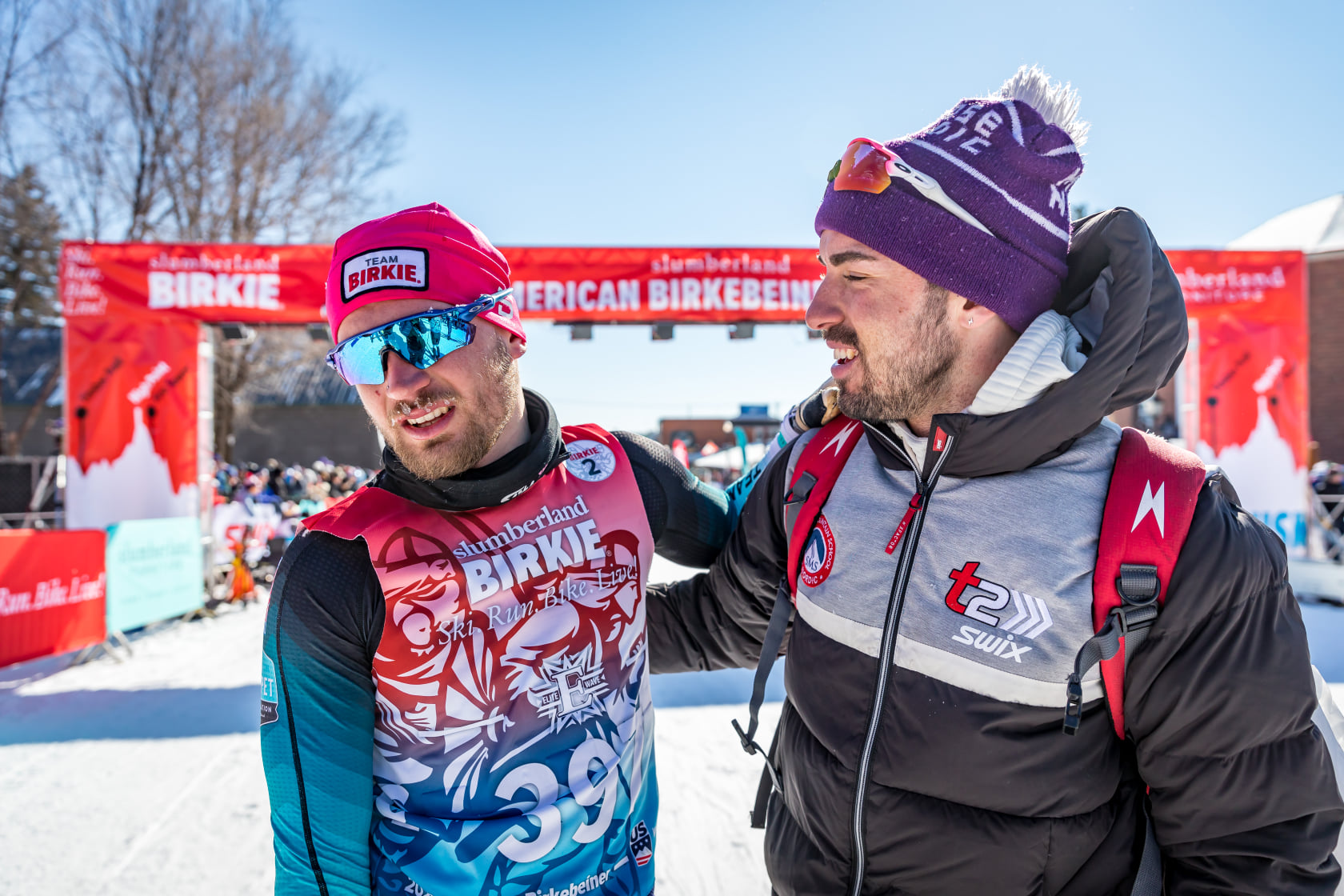
    Ian Torchia congratulates his former NMU teammate and friend, Leo Hipp, as he catches his breath after winning the 55k classic at the 2022 American Birkie. (Photo: ©2022 American Birkebeiner Ski Foundation)

    That skiing contains truths about how to live a good life is not a unique notion, but Torchia had a one-of-a-kind knack for finding those truths and sharing what he learned. He also did so, of course, while racing very fast. Torchia lived out the wildest dreams that every young Midwestern kid has when lined up for the Junior Birkie – coming from Rochester, Minnesota to win a junior national title, ski for legendary coach Sten Fjeldheim at Northern Michigan University (NMU), add to that program’s legacy by winning a NCAA title in 2018, be nominated to the US Ski Team, race the World Cup, win the Birkie in 2021, and become training partners with some of the best athletes in the US, like Jessie Diggins.

    It’s been a busy path that’s seen him in constant movement. But that suits Torchia.

    When FasterSkier caught up with him less than a week after his announced retirement, he was stepping out from a visit to the St. Louis Aquarium on a day trip with his brother’s kids. Already on the move, Torchia was gracious enough to share what’s next, and what, in these early days of retrospection, he has learned from our sport.

    This interview has been edited for length and clarity.
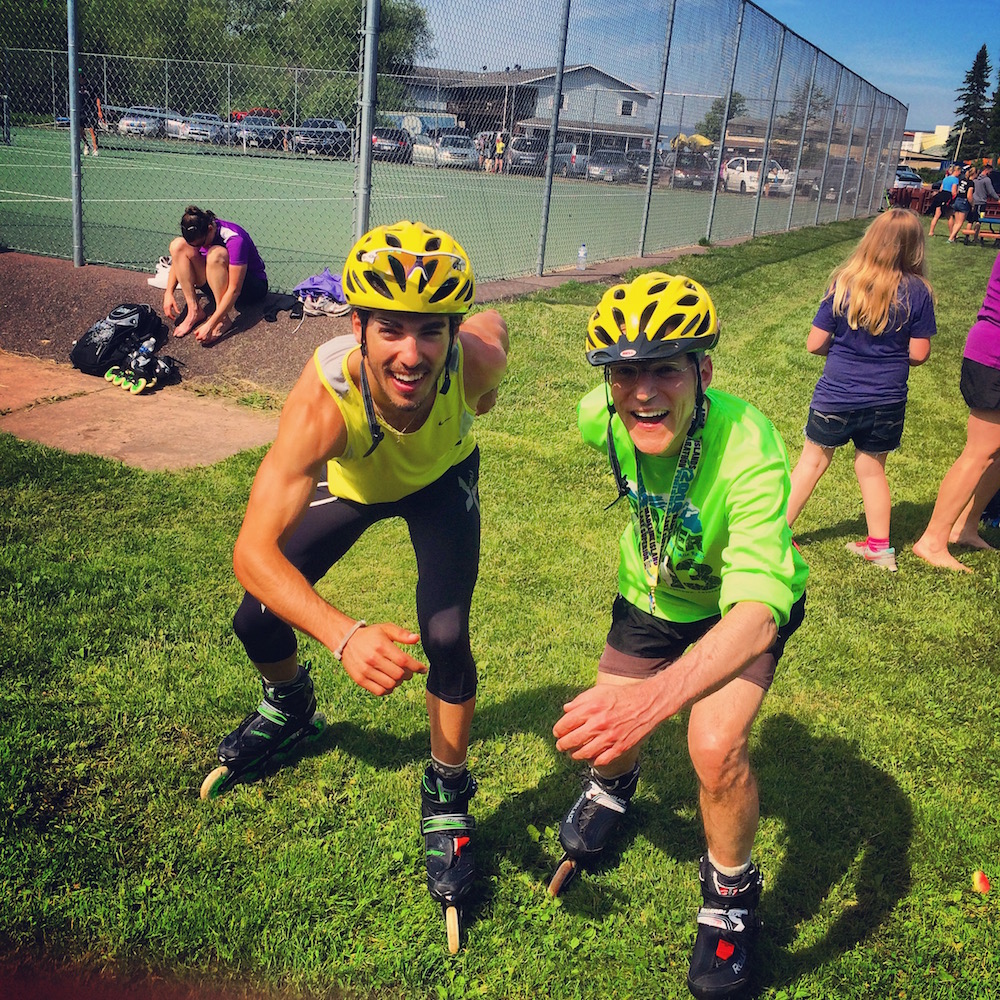
    Ian, and dad, Mike Torchia at an inline skate race on Madeline Island, Wisconsin, in 2016. Torchia wrote on his dad’s advice at the time: “‘You know what happens to hot dogs, Ian? They get eaten!’ – Mike Torchia
    While my dad (affectionately called Sir) has given countless gems of advice, the above is one that I remember the most as he has always emphasized humility in the face of success.” (Courtesy Photo)
    On the decision to retire and what comes next:

    Ben Theyerl / FasterSkier (FS) : Starting with a pretty simple question; how are you feeling right now?

    Ian Torchia (IT): I’m feeling great. I’m in St. Louis with my brother’s family and their five kids. It’s been a little bit of a whirlwind. I’m just taking a week off – not running or doing anything which I haven’t done in a long, long time. But I’m just feeling very energetic about what’s next.

    I’m looking forward to a second interview for a job right now. I want to get some experience as a medical scribe before going to medical school to become an osteopathic physician. Between that, taking the MCAT, and a few prerequisites, it’s going to be a busy next two years.

    FS: I know you just retired, but have to ask, any plans to throw your hat into citizen races the rest of the season?

    IT: Maybe the Great Bear Chase. Realistically, my next race effort is going to be in Marquette, MI with my college buddies. There’s a route [in Marquette] where you go down County Road 510 to the Lake (Superior) and back, it’s 18mi or so, and we’ve wondered whether on an icy day you could do it in under an hour.

    FS: Have you thought about what racing looks like next season for you?

    IT: I want to do Senior Nationals in [Houghton, Michigan]. I wouldn’t do it if it wasn’t in Houghton (Torchia is based out of Ann Arbor, MI). And probably, the Birkie.

    FS: Which races would you want to race again at Nationals? Like are you targeting the 30 k, or have you thought that far yet?

    IT: I mean, I had a lot of fun with sprint’s this year, and I qualified for my first final at Nationals, so while I haven’t thought too much about it, I’m going to miss doing those types of races so why not do one more? It’s more just that I want to do the races that I know that I like racing. A shorter, classic race is not really my forte, but like a longer classic race, or a skate marathon, I’m game. I think it’s a skate 30 k at Nationals next year, so that would be cool.

    FS: With your goals set towards medical school, have you put any thought towards where you’d like to go?

    IT: This is all early, but Pacific Northwest University in Yakima, Washington has an osteopathic school, and I think it’d be really cool to move out West for four years. But Kameron and I (Torchia’s wife) have definitely talked about coming back to the Midwest when everything’s said and done. And specifically, Marquette. We just love that place so much.

    FS: Backing up, what was the process of coming to the decision that now is the right time to step away from professional skiing?

    IT: I think it started at the beginning of the training season in May. I talked about it with my wife, and we both agreed that I should give it my best shot to qualify for the Olympics, because that’s always been my goal. At the time we also looked out beyond this season and said, ‘you know, the journey to become a doctor is a long one,’ and I need to get started at some time. I wasn’t thinking beyond this season with skiing, and personally, I was okay with that.

    A lot of it comes down to just wanting other parts of my life. It’s hard being away from Kameron and our dog. I give a lot of props to the members of the US Ski Team who are away from their loved ones for four to five months every winter. It’s hard to do it, and yeah, one big reason to retire was actually being able to live with my wife.

    Number two is, and I don’t want it to be misconstrued, but skiing at a professional level means being a little selfish – it is a big focus on you and yourself, and everyone around you is working for you. I think about life, and at some point, I wanted to step back and give back, and I think that’s the main goal I have now. My goal to become an osteopathic physician is based around helping others, and there’s a lot of cool things in skiing to do that work on inspiring the youth and inspiring each other.

    FS: Yeah, on the skiing end, I think I can say I’m sure there’s at least a hundred kids who would sign up for an “Ian Torchia skate clinic” at Wirth Park (in Minneapolis) anytime.

    IT: (Laughing) Well, thanks. That’s something I want to try to bring here, actually, to Ann Arbor and downstate Michigan. When I go skiing on the one snowmaking loop around here, I really don’t see that many kids out. So if in these next few years, I could get something going where I can help bring even more kids out from Detroit and get them on skis, it would be really cool. I’d love to do that.
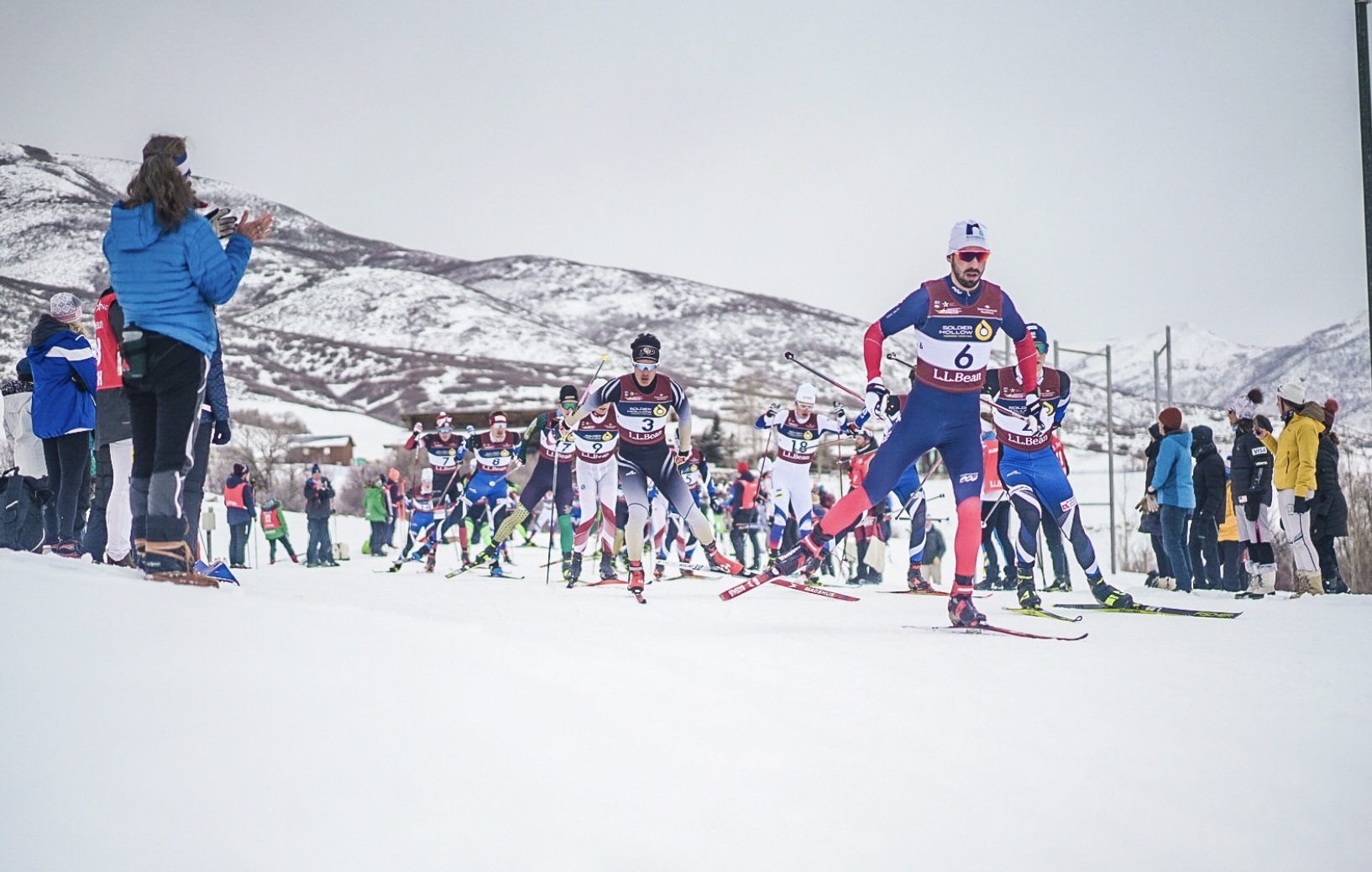
    Ian Torchia leads the charge at the start of the men’s 30k mass start freestyle in Soldier Hollow at 2022 US Senior Nationals. (Photo: Tobias Albrigtsen / @untraceableg)
    On a life, so far, spent skiing:

    FS: I know it’s early, but I wanted to go all the way back and get your retrospective on your time in skiing, if you’re okay with that?

    IT: Oh that’s all I’ve been thinking about, so yeah.

    FS: You’re from Minnesota, which is pretty well-known, but what’s glanced over is you’re from Rochester, which is I-90, not I-94 — it’s south of most of the ski leagues and big clubs. Coming from there, what drew you to Nordic skiing over say, running, which you and your older brothers were also very successful in?

    IT: I credit my mom for starting all of this. Like, they put me on skis the day before I turned two, apparently, and I definitely don’t remember that.

    Beyond that, my parents started the high school team here in 2000 when I was five. I have four older siblings who are all four plus years older than me, and so since my mom had no choice but to bring me along, I was an honorary member of the team. That Rochester team has just grown and grown over the years – right now there’s like 200 kids every year and over half of those are newcomers who just want to try it out. I think they’re getting their first snowmaking loop now, which with the way things are going is important to being able to have a place to ski [in Rochester].

    It was an unusual place to start skiing. My family was building the team, and I got to help build the trails. I look back and it may be what led me to love skate more than classic, since we didn’t have classic trails in high school.

    I loved it. It was unique, but I wouldn’t have changed it for the world.

     FS: Then from there it was a Junior Nationals title, the Northern Michigan (NMU) team, NCAA championships, the US ski teams, the Birkie win. You’ve seen a lot of the sport. What does that journey look like from where you’re sitting right now?

    IT: (pausing) I mean, yeah, it really is just looking back on it all. It sounds funny to say, but I look at that Junior Nationals title my junior year of high school as a pivotal moment in my life. I give a lot of credit to Sten Fjeldheim who met with me like a week after that happened. I was thinking I was going to run in college, and I ended up winning my first junior nationals race, he sent me an email, and the rest is history. It’s the one moment I look back on and go, where would I be now?

    So I guess I would say to Sten, ‘Thanks for finding me and putting me on the path I’m on.’ I’m grateful for everyone who’s helped me out on the way. The support, as I look back on it, is insane. My best friends have come from skiing. My wife – I wouldn’t know her if it wasn’t for skiing (Kameron and Ian were teammates at NMU). It’s shaped my life.

    Yeah, I’m done with the professional side of it, but I’m going to be doing the Birkie for many years to come.

    FS: To return to that moment, you mentioned Sten and NMU. That’s a big legacy in Midwestern and US skiing that you were instrumental in sustaining. What made Sten and that experience special?

    IT: I was just getting a massage from this guy in Marquette, and we were talking about Sten, and my masseuse of all people was like, ‘man, Marquette would be a different place if Sten Fjeldheim had never been here.’ And it’s so true. He transformed not only the Northern Michigan team into a powerhouse but helped make Marquette a skiing community. And he’s just a force of nature. The first time I ever talked to him, even across the phone, I was getting fired up. As soon as I hung up the phone, I wanted to ski for that guy. He has a way of lighting a fire inside you and getting you to be your best self. I definitely miss being coached by him. 

    Marquette is my favorite place in the world and I’m lucky to say that it’s my wife’s too. It just has everything that you could ever want. Every year, it seemed I would find a new thing that I was like, ‘Oh my gosh, you can do this here.’ Freshman year it was just running on trails all the time, the next it was mountain biking, and the next I discovered surfing on Lake Superior. It’s a cool playground with a Midwest community and a Midwest vibe, and it would be great one day to return there. I have a pipe dream that my friends could all live next to each other, and yeah, that would just be too good to be true.
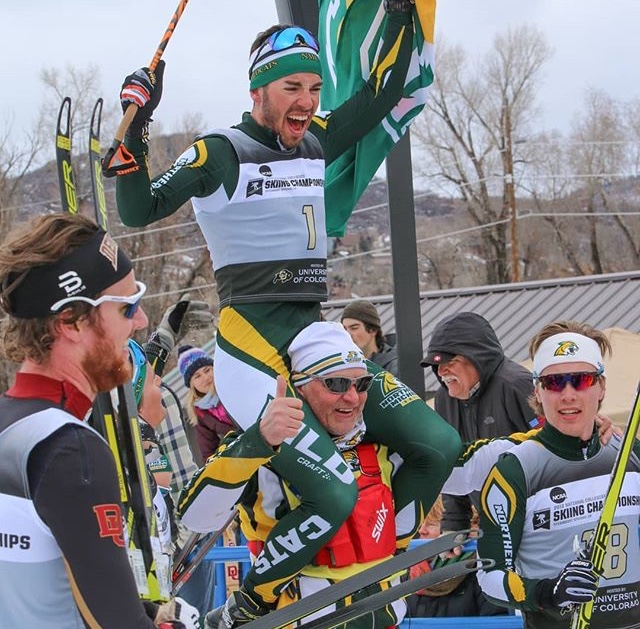
    Ian Torchia (1) on the shoulders of Northern Michigan University Head Coach Sten Fjeldheim after he won the men’s 20-kilometer freestyle race at 2018 NCAA Skiing Championships in Steamboat Springs, Colorado. (Courtesy photo)

    FS:  That’s going to be quite the lineup in the waves out there.

    Both talking here and reading back on a few interviews you’ve done with FasterSkier, I keep being struck by just how much you seem to revel in both the sport of Nordic skiing, and the people who you do the sport with. A couple of years ago, you said [to FasterSkier] that one of your all-time favorite moments was having three All-Americans from NMU in the same year with you, Adam Martin, and Jake Brown.

    What is special about nordic skiing as a sport for you? What’s been at the center of the sport for you as you kind of climbed up its ranks?

    IT: It sounds cliche, but it’s not the destination. It’s the journey along the way. My favorite memories are out, training on the roads, doing three-hour ODs, the trails and the van rides.

    It’s crazy people who love to be out in crazy weather pushing their hardest. Like, you don’t need any team bonding activities when you’re out on a rainy cold three-hour OD. That’s the thing bringing you together.

    FS: Two-part question: Looking back over everything, what’s one – your favorite result? And two – your favorite moment?

    IT: Favorite result; winning NCAAs was really special. It wasn’t the hardest I’d pushed in a race, but the tactics are what I’m really proud of. I think oftentimes I feel like I have a responsibility in a pack to go hard, and so it was a testament to my teammates that a sprint developed there and I was able to come out on top.

    Favorite moment: The Birkie Classic [last year] because I hadn’t won the day before (the 2020 Birkie was raced over four days, with a Saturday race featuring an elite skate race, and a Sunday race featuring an elite classic race) and there were just crazy conditions. I bonked and pushed through it.

    FS: I mean, I’ve been on the Birkie trail all my life, and watching you trudge through those conditions (a couple of inches of new, wet, heavy, snow covered what was essentially ice during the race) was one of the crazier scenes I’ve ever seen.

    IT: It was hard to understand-type ‘crazy.’

    FS: Picking the Birkie as a favorite moment reminds me that you’ve really been one of the more fun athletes to watch at that race the past couple of years. Not only last year, but also the year before — I have to imagine skiing with Niklas Dyrhaug was pretty cool.

    IT: Oh yeah, thanks for bringing that up. I was proud of that one too, because I was having cramps about halfway through and pushed through those and just kind of stayed in it. I wasn’t battling it out with Dyrhaug at the end, but got into a sprint for second and ended up with it. That was definitely a special race too.

    I mean, just doing this is making me realize there’s many little special moments along the way. Just a lot of special moments…
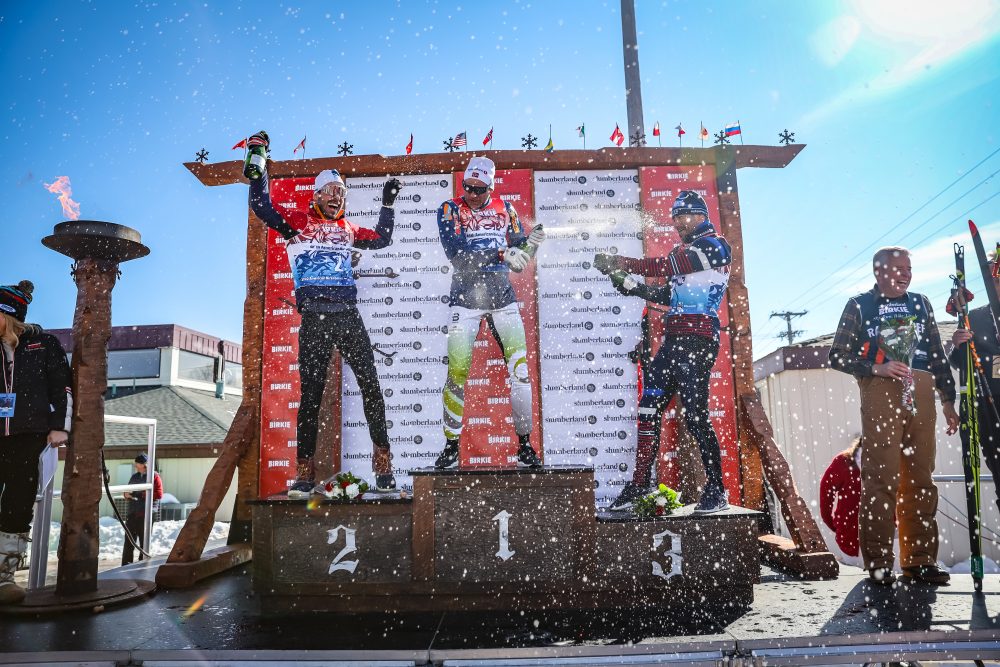
    American Birkebeiner skate 50 k podium in 2020, (l to r) Ian Torchia second, Norway’s Niklas Dyrhaug first, and France’s Robin Duvillard third. Torchia would follow up his 2020 race by winning the Birkie Classic in 2021. (Photo: ©2020 American Birkebeiner Ski Foundation)

    FS: Which brings you to where you are now. I know that’s a lot of big questions but…

    IT: I should also say that Stratton (Mountain School) was huge the past couple of years. I hadn’t had a great last year of college, but they still brought me on the team and that was just the most unique experience. Getting to learn alongside Jessie (Diggins), Simi and Sophie (Hamilton), and Kyle Bratrud. Pat (O’Brien) especially drew me to that team. It was just like Marquette with it being another special pocket of the world in Vermont where Nordic skiing is just the thing.

    FS: Yeah, like you just rattled off being teammates with Jessie, Sophie, and Simi – that’s three of the most influential athletes in US skiing history right there…

    IT: I mean, yeah. I have an Instagram post about it from right after Jessie won the silver (medal, in the Olympic 30 k freestyle). I had a matched interval bounding workout last fall where I was at threshold, and she had max. five-minute sets. We’re fifteen seconds into the first one and she was already breathing like a truck. Then she just keeps it pinned there for the next, I don’t even know, thirty or thirty-five minutes.

    I was watching the Olympic 30 k live and was like, ‘Oh my gosh, I’ve seen this film before.’ When you see her doing that on the television, it’s pretty cool. When she’s right next to you it makes you go, ‘Ok, if I want to be that good, I have to work this hard.’

    FS: She goes out and turns in a performance that’s not just the iconic moment of the Olympics for skiing, but for the whole country. That’s a pretty unique way to experience it.

    IT: Just one of the coolest.

    FS: So, after all that then, do you have any other thoughts?

    IT: I’m just lucky, and happy…and probably gotta get back to the aquarium. 

    FS: Well then, I’ll end by saying congratulations from all of us out there in skiing.

    IT: Thanks man. Thanks everyone.
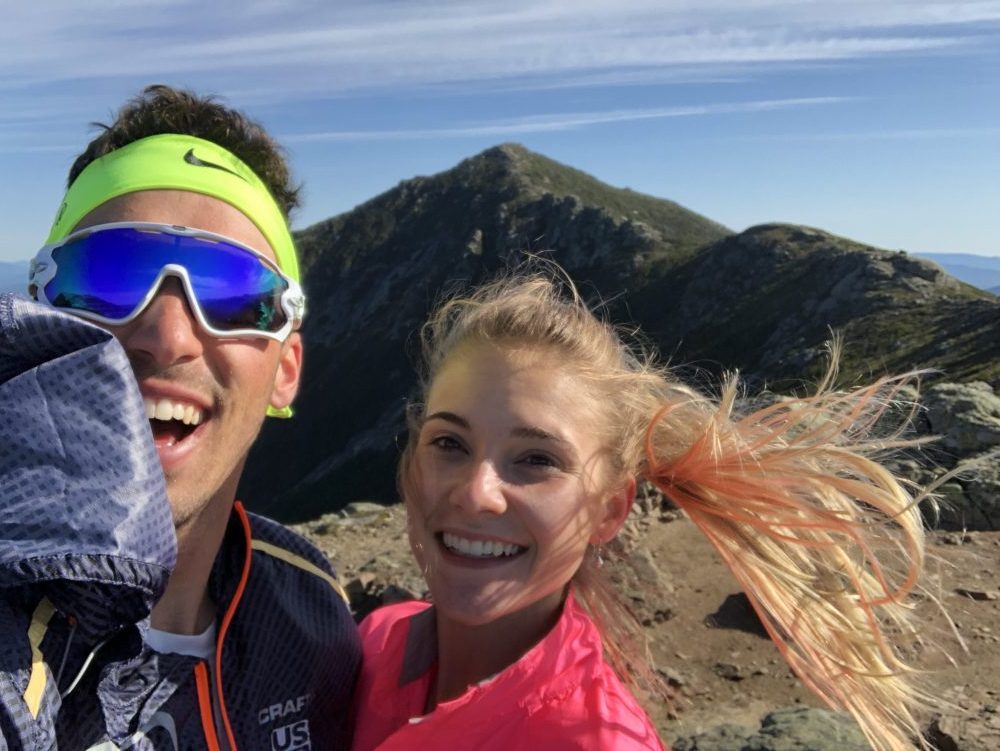
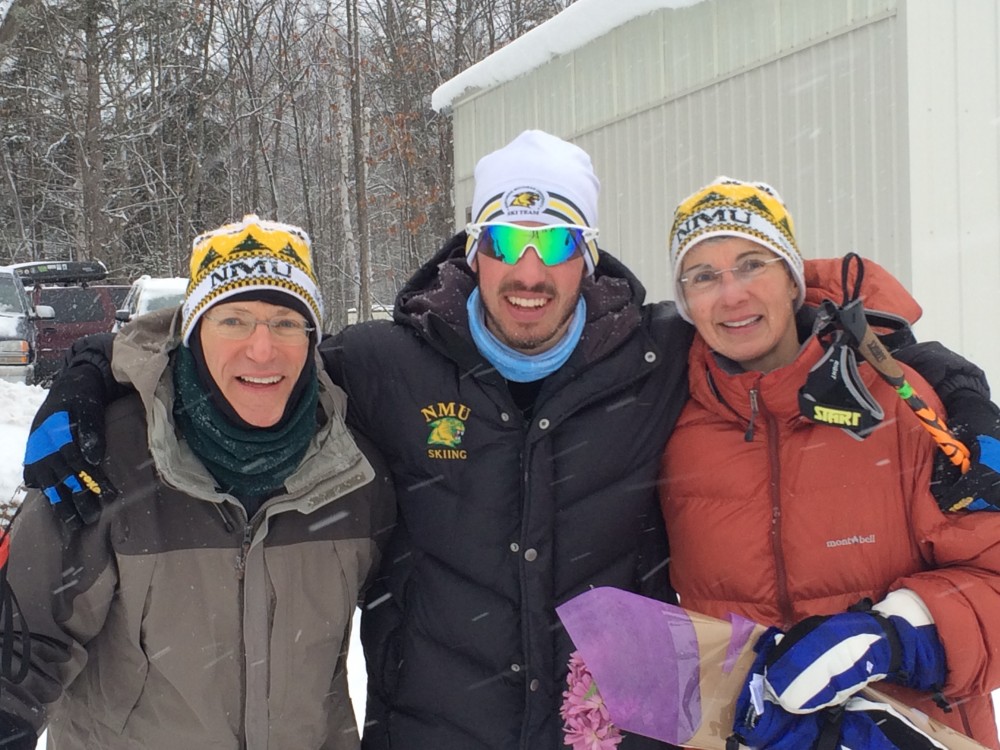
    Ian Torchia (l) with wife Kameron hiking in Franconia Notch, N.H. in 2018. (Courtesy photo)
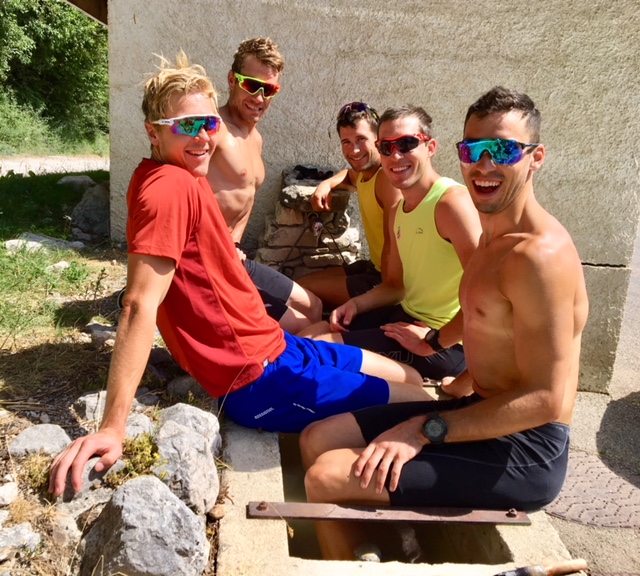
    Right to left: Ian Torchia, Paddy Caldwell, Adrien Backscheider, Simi Hamilton, and Erik Bjornsen during a post-interval cool down in Villard-de-Lans, France in 2018. (Courtesy photo)
  • Great Bear Chase – Winter has arrived

    Great Bear Chase – Winter has arrived

    Conditions for the UP Health System Portage Great Bear Chase are looking great, especially since winter arrived in full force over the past couple of weeks! Check out the latest conditions with the Swedetown webcams.

    The Great Bear Chase committee has been working hard to once again host a high quality event this year, but in a manner that focuses on everyone’s safety. We are committed to making this event a great experience for all who participate.

    Summary of changes for the 2021 Great Bear Chase

    • Overall field limit of 550, and limits on individual races (see the Race Guide at greatbearchase.com for details)
    • Corral starts – Groups of 25 will start every 5 minutes; racers choose a starting time when registering
    • No spectators in the start/finish or Swedetown chalet area
    • Two aid stations (14km and 40km) with hydration refills only (racer-supplied bottles). Racers should come prepared to be self-sufficient
    • Racers should plan to warm-up in their vehicles; no warming buses or bag drop at the start/finish area
    • Activities typically held indoors will be offered via drive-up services, including bib pick-up, pasty lunch and award pick-up. No indoor activities will be held
    • A Virtual Great Bear Chase option has been added to provide an opportunity for skiers to take part and support the GBC, while staying closer to home. Compete your 10, 25, or 50k ski any time between March 1-14 and we’ll enter you in a drawing for one of four free registrations for the 2022 GBC. The Virtual GBC is free, but donations are welcome with all proceeds of the event going to the Swedetown Trails Club.

    Some races are nearing capacity, so take a minute and register today. Take your pick of distance (10km, 25km, or 50km) and technique (classic or freestyle), or sign up for the 50km skiathlon and ski both classic and freestyle!

    For all event details, please visit greatbearchase.com. All proceeds from the Great Bear Chase benefit improvements at the Swedetown trails in Calumet.

  • Winter has arrived in Calumet, MI!

    2017 Great Bear Chase logo

    (Press release)

    We are thrilled with the recent winter-like conditions at the home of the Great Bear Chase! The snow started on December 7 and has hardly stopped. Over 10 days, we logged five with at least 7″ of snow and had 54″ overall. That’s four-and-a-half feet! Needless to say, conditions are prime and the new Husky groomer has been working out daily.

    All that snow is perfect for the UP Health System Portage Great Bear Chase, which will take place on Saturday, March 11th.  Last year the event had record participation, with 657 registered racers in an event that typically sees around 500. The Great Bear Chase committee has been working hard over the past few years to really make this a high quality event, listening to racer and volunteer feedback and making improvements each year. We’ve added a 50km skiathlon, found a new stadium location, updated trails and more. We are committed to making this event a great experience for all who participate.

    For those coming from out-of-town, now is the time to arrange lodging for the Great Bear Chase. There are many hotels and charming cabin rentals in our area. The best way to find out where there are openings is to check with the Keweenaw Convention and Visitor’s Bureau: 800-338-7982 or http://www.keweenaw.info/. Another option to find hosts with rooms in our area is to use AirBNB and VRBO.com. There are a growing number of such options in the Keweenaw.

    If you have never taken part in this amazing community event, now is the time! If you’ve never missed a Great Bear Chase, we are looking forward to seeing you again!

    Fees increase January 1, so take a minute and register today. Give yourself (or your whole family) a great (bear chase) Christmas gift! Take your pick of distance (10km, 25km, or 50km) and technique (classic or freestyle), or sign up for the 50km skiathlon and ski both classic and freestyle!

    For all event details, please visit http://www.greatbearchase.com 

  • Why Skiing? How A Sport Saved My Life

    Why Skiing? How A Sport Saved My Life

    About the author: Scott “Bjorn” Cummings is a Postbaccalaureate student working towards his Academic Behavorial Strategist K-12 (ABS) Special Education License at the University of Minnesota Duluth. When he is not in school or on the ski trail, he enjoys biking, reading, cheering on the Minnesota Twins and cooking.

    After completing my second American Birkebeiner this year I asked my old mathematics professor and current mentor Lawrence Gray: why did skiing make such a positive impact on my life?

    He himself had run marathons and was a block from the finish line when the backpack bomb went off during the 2013 Boston Marathon. Point is, he knew the dedication that endurance sports demanded and how it translates into success outside of training. For a man who works daily at the University of Minnesota solving abstract mathematical proofs, he put it simply.

    “A couple of reasons:  Having a healthy passion outside of work helps keep things fresh. 

    Preparing for something like the Birkie forces you to structure your life and builds discipline. 

    Having something to talk about (besides work) gives you confidence and makes you a more interesting person. 

    Doing something regularly for your health supports everything else in your life.”

    -Lawrence Gray

    If I’d heard that math professor’s words before, maybe I would have picked up skiing much earlier. I wouldn’t have guessed it in the beginning as a flailed and crashed on my skis, but cross-country skiing was what would give me confidence and happiness in a dark time of my life.

    I got a call center job post-graduation.
    I got a call center job post-graduation.

    After graduating from the University of Minnesota with a degree in mathematics, I was lost both professionally and personally. I moved back home to Chanhassen, a Twin Cities suburb, and lived with my parents. I enrolled in graduate school for math education but soon dropped out after finding that the program and timing was not a good fit.

    I made a half-hearted attempt to pursue my other passion, baseball, as a career. I landed a couple interviews with the Minnesota Twins for internships but none panned out. Both anxiety and coronary heart disease ran in my family and then surfaced in my own life. At 220 pounds, I was overweight and worried about my next step. And at 22 years old, I was a part time math tutor, still living at home with my parents and actively searching for a full time position.

    After about a year of searching, I landed a temporary full-time job that didn’t even require a college degree. It was at a call center for MNsure, the Minnesota Health Insurance Marketplace. It was a start. Soon after I began to work, however, I realized that job was extremely toxic and a dead end. But that is another story.

    To be honest, I missed working with kids and needed a new fiery passion. At that point I was out of shape, overweight, and in a job I hated. Little did I know just how much skiing would ignite my life.

    *        *        *

    As a child, I enjoyed downhill skiing once a year with Boy Scouts, on winter field trips with school, or with other groups. But as an adult I couldn’t justify the startup cost of equipment or lift tickets to get into the sport. I never cross-country skied in high school. Classic skiing seemed to boring to me. In general, I was more interested in watching sports than playing them.

    My introduction to cross-country skiing came later. As an undergrad, I studied abroad in Birmingham, England for a two-week January term class through the University of Minnesota-Duluth called “History and Soccer.” Since I would be across the pond anyway, my parents suggested that I visit my aunt, uncle, and cousins in Norway for a week during Christmas. While there, my cousin took me classic skiing in the mountains.

    In my family's homeland!
    In my family’s homeland!

    I was so scared that I only skied one kilometer. My uncle gave me a chocolate bar on the trail and took me out for porridge and hot chocolate afterwards. For my Norwegian Christmas, I received a Bjorn Daehlie ski jacket and pants, with a red Swix VR70 Klister wax hat.

    After Norway, it turned out that I kind of liked skiing and the gear that comes with it. Plus, my family had a history of skiing. All four of my aunts and my even my grandmother completed the Korteloppet in the late 1970’s and early 1980’s. But only my Uncle Mike had kept up the annual pilgrimage to Hayward, Wisconsin, for the American Birkebeiner since then.

    “The endorphins are free,” he would always say about skiing.

    Currently he has finished 29 Birkies and is another mentor of mine. Any question I had about the sport I could always ask him. In his basement, he had racing bibs from just about every race he completed in his career. As a kid the shrine seemed foreign to me, and somehow like the man version of a funny wall quilt. But really, I needed someone to teach me the basic skate skiing technique.

    The next winter on a beautiful weekend afternoon my parents said they were going skiing to Carver Park with my Dad’s old work colleague named Jack.

    He was 70, addicted to skating, on no medication, and said he actually lost weight in the winter. I was curious to his secret.

    But I also had no clue what to I was doing on skis and the difference between skate and classic skiing. I loved to go fast and just glide on the snow, even though my basic technique was duck walking: stepping on the left and the right without any weight transfer.

    I needed encouragement to keep me positive while trying to learn actual technique. Jack needed someone to ski with. It was a good match and he became my unofficial ski coach.

    Jack saw my Bjorn Daehlie jacket and pants coined the nickname Bjorn for me. One day at Hyland Lake Park Reserve, with my all Norwegian gear and Scandinavian blonde hair and blue eyes, we convinced a Three Rivers Park Employee that I was from Norway. All I did was nod and quetly say yes quietly. The nickname Bjorn stuck. I started to grasp proper skate technique, and more importantly, to have fun.

    *        *        *

    But I remained out of shape and overweight for regular ski racing.

    Baker Shaker 20k - Scott Cummings
    Here I am before my first ski race, the Baker Shaker 20 k.

    Slowly but surely, I bought some of my own equipment. There was some end-of-the-year sale, where I bought Fischer RCRs and some poles on the cheap; boots at a ski swap; lobster claw gloves, which were hand-me-downs.

    Yes, cross-country skiing is expensive. But once you have your base gear, it’s not so bad.

    I realized that I like skiing and that it was an excellent way to fight anxiety and heart disease. I liked the endorphin high I got after a long ski, the feeling of gliding on the snow, the way it brought you out with nature, the camaraderie with fellow skiers. And, of course, skiing fast.

    Just like as a kid at the downhill ski slope, I wanted to go fast. But going fast on skate skis was not as simple as running. You needed the technique. So it began: the never-ending challenge of finding a great technique and maintaining my fitness. I was determined to find that good technique.

    Unfortunately, the reality was that I had a call-center job and I found it hard to put in the time for ski training.

    First off, there was the terrible commute from my parents home in the southwestern suburb of Chanhassen 37 miles to downtown Saint Paul. Then there was the fact that the job itself was not healthy. In fact it was an extremely toxic work environment.

    I needed a job that I actually liked and would allow to me ski more. So I started to plan my life around skiing.

    I realized that I missed working with kids. I’d had a faint interest in teaching mathematics, but never really pursued it. But before working at my toxic call-center job, I substitute taught quite a bit in special education and enjoyed it. So I researched graduate special education teaching programs in the state of Minnesota.

    It came down to two choices, Bethel University and the University of Minnesota Duluth. I couldn’t even fully apply through Bethel’s application system, and my old math professor couldn’t submit his letter of reference.

    That turned out to be fine. Duluth has its famous 700-foot hill, Lake Superior and 47 kilometers of ski trails within city limits. I chose UMD.

    I strategically put in my two weeks notice to my call center job in January before the spring semester started, and upon moving to Duluth, immediately joined the UMD Nordic Club.

    *        *        *

    While training with the club in the hilly Duluth my overall health, career, and skiing technique immensely improved. At UMD, I made friends who pushed me to race more I found a group of friends who I could race with in the cites of Hayward, Ashland, Houghton, Marquette, and of course daily training in Duluth.

    In addition, I taught myself how to V2 and open field skate so I could cruise while skiing. No longer were hills a burden but strength, because now I could count on passing other skiers on the hills.

    After the completion 2016 race season, my time and energy put into training started to translate both on and off the trail.

    The change of scenery brought on by skiing was just what I needed in my life.

    The book Beyond Birkie Fever by Walter Rhein is a must read for anyone who raced the Birkie and loves the Birkie lifestyle. In the end of the book, Rhein describes what Birkie Fever means to him.

    “It’s a lesson that’s far more valuable and far more empowering than a mere helping hand. It’s a lesson you can find solace in during all of life’s inevitable highs and lows. Having someone there to carry you is nice. Cross-country skiing, however, teaches you how to carry yourself.”

    -Walter Rhein, Beyond Birkie Fever

    How did my life change? I left that call center far behind. I’m now 2 months away from completing student teaching and earning my K-12 Academic Behavioral Strategist Teaching License from UMD.

    I started eating a high protein diet, cooking for myself, and eating proper food proportions. I even discovered a favorite cooking tool, the cast iron skillet. In the 14 months since moving to Duluth, I lost approximately 40 pounds.

    My hard work is starting to pay off in ways I didn’t even imagine.

    All thanks to skiing.

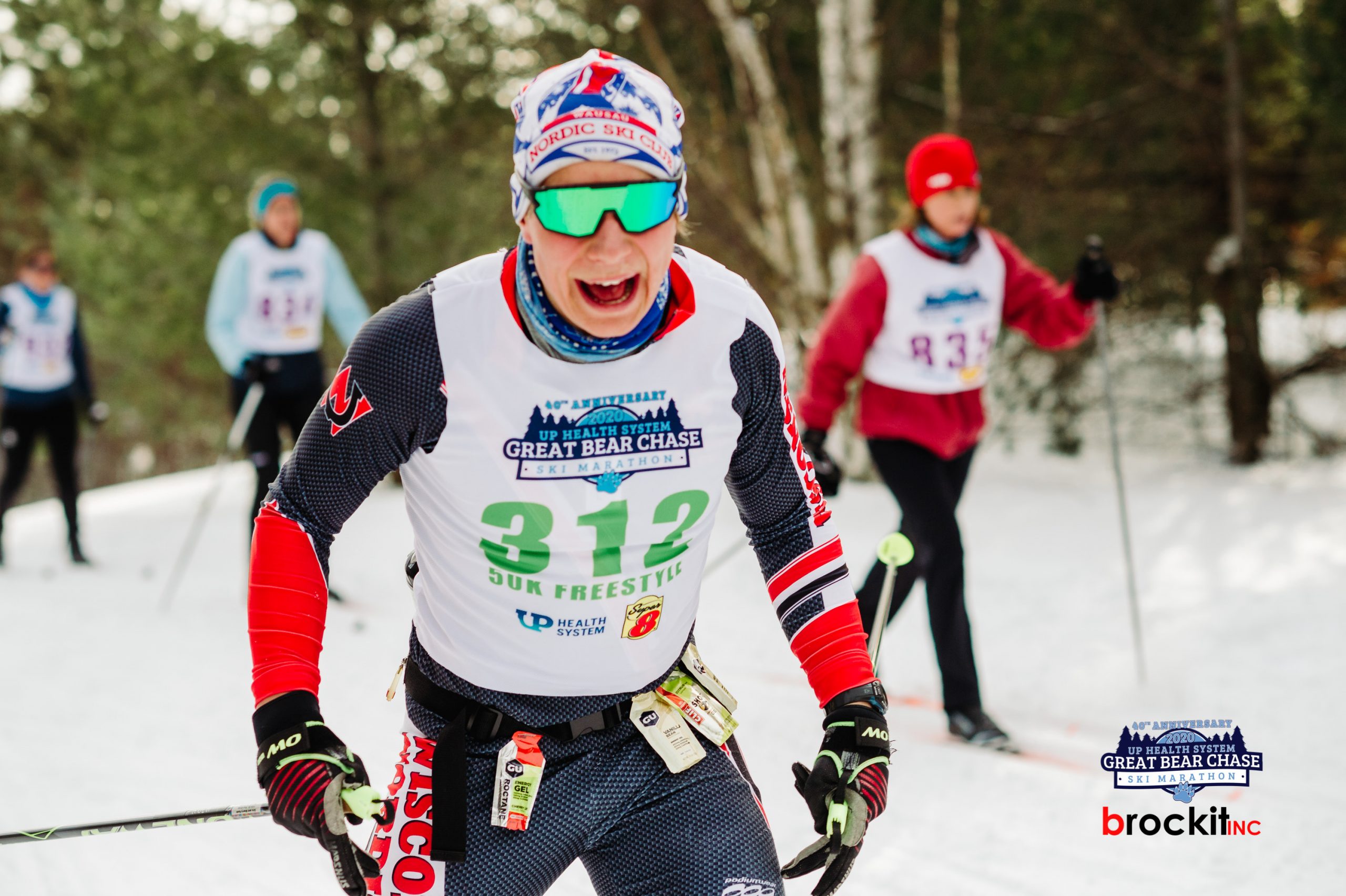
    Here I am about the finish the 2016 Great Bear Chase with my PR!
    Here I am about the finish the 2016 Great Bear Chase with my PR!
    Date and Location Skate Race Wave Time
    Medina, Minnesota 2014 20k Baker Shaker Mass Start 2:20
    February 19, Cable, Wisconsin 2014 23k Korteloppet Freestyle 8 03:11:26.7
    February 14 Ashland to Washburn, Wisconsin 2015 10k Book Across the Bay Mass Start 44:44.4
    February 18, Cable to Hayward, Wisconsin 2015 51k American Birkebeiner 7 05:33:04.5
    March 5, Calumet, Michigan 2015 50k Freestyle Great Bear Chase Mass Start 4:22:33
    January 23, Ishpeming to Marquette, Michigan 2016 50k Freestyle Noquemanon 8 3:54:24
    January 31, Duluth Minnesota, 2016 26k Nordic Spirit Mass Start 1:53:24
    February 14 Ashland to Washburn, Wisconsin 2016 10k Book Across the Bay Mass Start 00:48:51
    February 20 Cable to Hayward, Wisconsin 2016 51k American Birkebeiner 7 4:20:19.3
    March 5, Calumet, Michigan 2016 50k Great Bear Chase Mass Start 3:24:27 ***** PR!


    Scott Cummings can be reached at Cummings.scottr@gmail.com.

    Do you have a personal skiing story you’d like to share? We sometimes take submissions. Email info@fasterskier.com or get in touch with one of our staff members.

  • Great Bear Chase Ski Marathon Adds 50 k Skiathlon for 2015

    Great Bear Chase Marathon

    CALUMET, Mich. — Competitors have a new event to choose from for the Great Bear Chase Ski Marathon, March 7, 2015, in Calumet, Michigan, hosted by UP Health System. Race organizers have added a skiathlon event to the lineup. Registration is now open at www.greatbearchase.com.

    Skiers entering the 50km skiathlon will complete the first 25km using classic technique on the Swedetown Trails race course, change skis in the exchange area in the stadium, and ski the next 25km freestyle. The skiathlon will have prize money for the top four male and female winners, and awards for the top three skiers in each age group.

    “As far we know, this is the only marathon-length skiathlon in the U.S.,” said race director Angela Luskin. “The skiathlon has become a popular event at other ski venues and we think the marathon length will have broad appeal.”

    Participation in the skiathlon will be capped at 100.

    The Great Bear Chase will continue to offer 10km, 25km, and 50km races for both classic and freestyle techniques. The unique post-race “pasty party” will include fresh Cornish pasties, bakery items, gluten-free soup and refreshments at the Calumet High School gym, where showers are also available.

    Awards are given for each age category in each race. Unique awards will be presented to the overall fastest man and woman in each race, and skating trophies to the top 10 male and top 5 female skiers in the 50 km freestyle. Door prizes (including NEW skis!) will also be awarded to those present at the award ceremony.