From the FasterSkier archive — posts syndicated from athletes’ and coaches’ own blogs between 2004 and 2012, kept online as published. Current coverage is at fasterskier.com.

Tag: Great Northwest Athletic Conference

  • Alaska NCAA Skiing Approaches Decision on Its Future

    Alaska NCAA Skiing Approaches Decision on Its Future

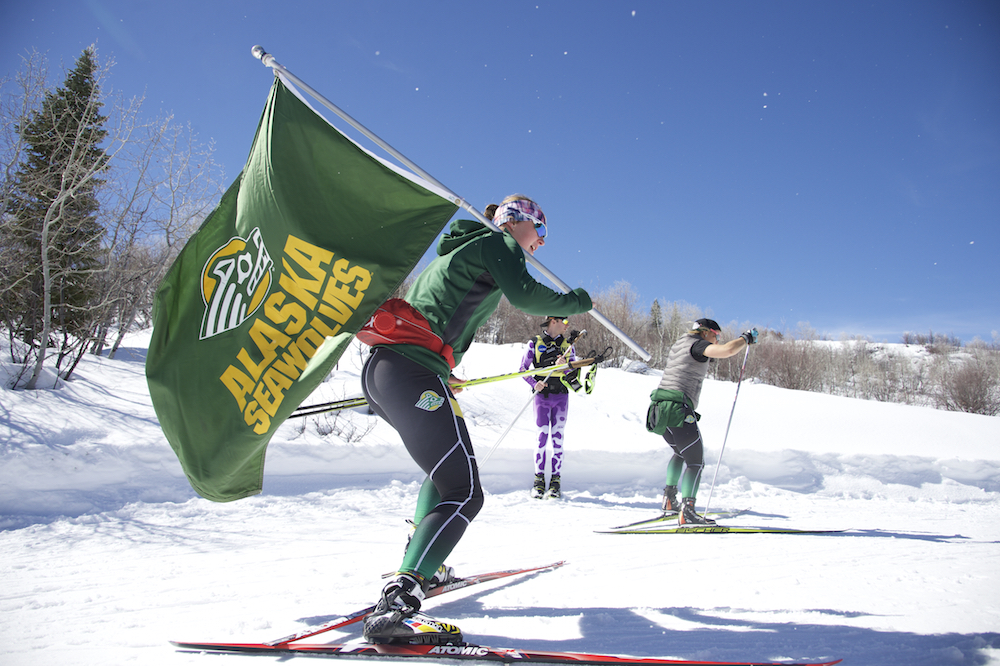
    A University of Alaska Anchorage skier carries the team flag of the Seawolves at the 2016 NCAA Skiing Championships last March at Howelsen Hill in Steamboat Springs, Colo. (Photo: Jamie Schwaberow/NCAA Photos)An internal review group has set forth its options for the future of NCAA-sanctioned college sports in Alaska – and for fans of cross-country skiing, most of the options don’t look very good. That’s the current status of intercollegiate sports in the University of Alaska system heading into three months of meetings and recommendations that will attempt to trim the university budget to respond to failing state finances.

    As FasterSkier previously reported, Alaska is a historically oil-rich state that is suddenly not all that rich. The effect on the state’s budget has been pronounced, with calls for drastic cuts to virtually all aspects of state finances. The University of Alaska system, which has flagship campuses in the University of Alaska Fairbanks (UAF) and University of Alaska Anchorage (UAA), has not been spared. Multiple working groups were convened earlier this summer to critically evaluate several portions of the University of Alaska system, including athletics.

    Three options, from nuclear to consolidating

    The preliminary report from the athletics review team presented three options for the future status and funding of intercollegiate athletics within the University of Alaska system, and therefore within the entire state of Alaska. (UAA and UAF are the state’s only two institutions with NCAA-sanctioned sports teams; most of UAA’s 13 varsity teams, and UAF’s 10, compete in Division II. The state’s best-known ski team, Alaska Pacific University, is associated with a school but does not have NCAA affiliation.) Each option has several subparts.

    Option 1 is the most drastic. This option involves eliminating NCAA sports completely at either or both of UAA and UAF. Cutting NCAA sports entirely at one school would reduce the overall University of Alaska budget by 2 to 3 percent. Cutting them at both schools would reduce the overall budget by 5 percent. This is “the most controversial option with the most severe consequences,” the review team wrote. Option 1, as applied to both schools, would leave Alaska as the only state in the country with no intercollegiate sports teams.

    Option 2 would be to combine the two campuses of Fairbanks and Anchorage – which at a distance of 360 road miles are an all-day drive or a one-hour flight away from each other – into a single consortium model, operated under the name of only one of the schools. The total sports teams operated between the two schools would be reduced from 23 teams down to 15; only one school would sponsor each sport. A narrative description of the proposed athletics consortium model suggests that men’s and women’s cross-country skiing would operate out of Fairbanks.

    The preliminary report acknowledges that it would require “an unprecedented exception from the NCAA to allow two athletic programs who are geographically isolated from one another to compete as one program while not duplicating sports in either location.” Other NCAA schools that operate in an athletic consortium model are much closer to each other than Anchorage and Fairbanks; for example, Columbia University and Barnard College are located across the street from each other in New York City, while Southern Vermont College and Bennington College are separated by five miles in the greater Bennington area.

    Option 3 is to keep both programs, but with some modifications, based on switching solely to those sports that are offered by the Great Northwest Athletic Conference, or GNAC. (Currently some of UAA and UAF’s sports have GNAC affiliation, but some do not.)

    In one version of option 3, “Both UAA and UAF switch to the GNAC model to decrease funding levels after initial startup costs. Both programs would only have sports that compete at Div. II level in the GNAC conference versus their current model of having some Div. I sports” alongside mostly Division II sports. In another version of option 3, UAF would maintain the status quo, keeping its 10 teams in order to meet NCAA requirements, while only UAA would move to the GNAC model.

    Skiing is not a GNAC sport. In order to become a fully GNAC school, UAA would, among other changes, eliminate men’s and women’s skiing as well as gymnastics. For UAF to become a GNAC school, it would eliminate men’s and women’s skiing, among other sports, replacing them with soccer, golf, and/or track.

    The review team acknowledged that the drawbacks to option 3 include “Loss of skiing, strong local (Fairbanks) support.”

    While the exact number of parts and subparts may be counted in different ways, and some version of both option 2 and option 3 preserve some version of college skiing in the state of Alaska, it is also true that several of the options presented would mean the end of college skiing at one or both of Alaska’s two NCAA schools.

    In addition to the three options surveyed above, the review team also offered additional budget reduction options as part of a restructuring plan for fiscal year 2018. These options included the elimination of the UAA men’s ski program (both cross-country and alpine) at the end of the 2016/2017 season. “[Skiing] was the first sport to be introduced at UAA,” the review team acknowledged, “and has been very successful as a member of the NCAA.” But “that being said,” the review team continued, “it is a sport that has very limited external support from Alumni and community members and does not have the ability to generate significant revenue to assist in sustaining the program.”

    A decision to cut the men’s ski program – which at this time is simply one of several ideas that have been suggested – “would produce an immediate net savings of $272,981.00 based on FY 16 figures,” the review team wrote.

    All sports, at both UAA and UAF, are fully funded through the 2016/2017 academic year. Both schools will begin their race season in the 13th annual Alaska Nordic Cup, an informal meet between UAA and UAF, at Fairbanks’s Birch Hill ski area in mid-November.

    Next steps: Public meetings and searching for support

    So what’s next? Lots of meetings. As the Strategic Pathways site explains, there will be public forums held with the University of Alaska president during the first two weeks of September. The president will then share initial recommendations with the University of Alaska Board of Regents at its next meeting, on Sept. 15-16. The Board of Regents will then present “final outcomes” at its meeting of Nov. 10-11.

    “The State of Alaska is going through a very tough period and there are some very tough decisions that will have to be made,” UAA Athletic Director Keith Hackett wrote in an email to FasterSkier. “That being said, there is still time to provide input before any decisions or final recommendations are made.”

    He recommended emailing ua-pathways@alaska.edu as a means of sharing those thoughts.

    UAA Head Nordic Ski Coach Andrew Kastning is working hard to ensure that the Strategic Pathways review team hears from the cross-country ski community regarding the value of the program that he coaches.

    “Today I’m just doubling down on my community PR campaign,” Kastning said on the phone on Monday. “Because there is an online form that allows you to leave comments on the options presented, the pros and cons, and in fact we’ve been sending that link out to everyone we know. We’ve been rallying support from other institutions’ athletic directors and coaches to not just write in on that form, but also call [our athletic director], tell them what a value skiing is.”

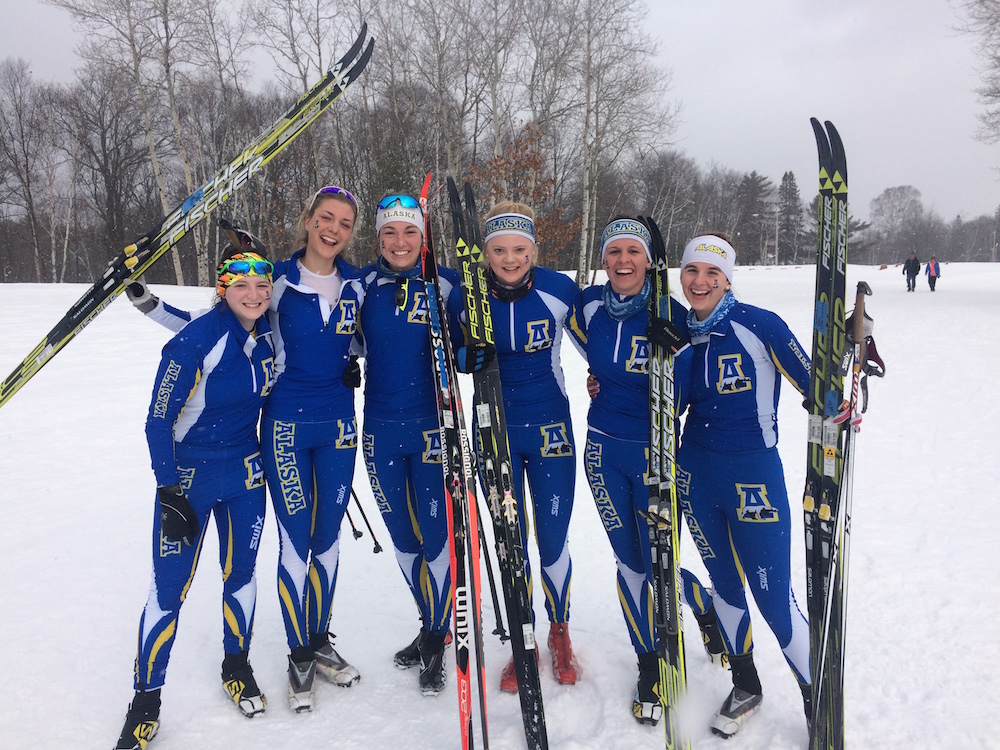
    University of Alaska Fairbanks women’s nordic-team skiers get together for a photo last season: (from left to right) Hannah Rowland, Anne-Tine Markset, Nichole Bathe, Martina Himma, Ann-Cathrin Uhl, and Sarissa Lammers. (Photo: Nick Crawford)Kastning’s counterpart in Fairbanks, UAF cross-country skiing and running head coach Nick Crawford, is doing the same.

    “We’re optimistic that the UA President and Board of Regents will listen to the strong support of our community and will choose to continue funding both ski teams,” Crawford wrote in an email. “I encourage everyone to use the online feedback form to voice their support for UAF and UAA skiing.”

    Crawford added, in a nod to the benefit of having two collegiate ski programs in the state, “The UAF and UAA ski teams have a long history of being friendly rivals but also mutually beneficial to one another. It would be a shame to lose either program as both would suffer.”

    Back in Anchorage, Kastning speaks with evident pride of the virtues of his program and its athletes. “It seems pretty clear that President [Jim] Johnsen doesn’t understand what he would be losing if he were to decimate the athletic department,” Kastning told FasterSkier. “In regard to UAA skiing, we have perennially the highest GPA of all the sports teams. We have … the highest graduation rate. And we pull in people from out of state that stay and work here.”

    Kastning mentioned plans to present his case at the upcoming public forum: “We’re going to be out there in force at the so-called town hall event [in September], asking questions and stating the fact – what I told you about graduation rates and high GPAs and what the community would stand to lose if it lost its collegiate ski team, as well as the loss of the ability to recruit kids from out of state. If they axe an athletic program, it would be so much harder just to get general students to come from out of state.”

    “We have perennially the highest GPA of all [our] sports teams. We have … the highest graduation rate. And we pull in people from out of state that stay and work here.” — Andrew Kastning, University of Alaska Anchorage nordic ski team head coach

    And speaking of students, what’s next for the student-athletes currently enrolled at and planning to ski for UAA and UAF? Under the NCAA Division II bylaws, Rule 14.5.5.1, a student-athlete transferring from one NCAA school to another must typically sit out his or her next year of competition before playing sports at the new school. But Rule 14.5.5.2.6 provides an exception: this requirement does not apply when the original school “dropped (or has publicly announced it will drop) the sport … from its intercollegiate program.” That is, an athlete currently skiing for an Alaska school that dropped skiing would be eligible to compete for another NCAA skiing program in the winter of 2017/2018, assuming that space and scholarships were available.

    The view from inside the UAA and UAF ski programs

    “The options from Strategic Pathways, as they’ve been presented so far, are pretty scary for skiing, collegiate skiing in the entire state of Alaska,” Kastning said.

    He underscored that funding collegiate skiing at any level less than men’s and women’s cross-country and alpine teams means that “you’re completely out of contention for a national title, which is what we’re trying to do at UAA. We support alpine and nordic.”

    Kastning addressed the inherent suitability of skiing for the state of Alaska, contrasting it with some other proposed sports that might seem less apposite for a state where UAF students famously celebrate their membership in the 40 Below Club by posing for bikini photos in front of a temperature sign on campus.

    Addressing option 3, which would involve dropping skiing in favor of a move to solely those sports offered by the GNAC (including, for example, soccer and golf), Kastning observed, “It’s like, nobody thought through what it would be like to have a golf team in Alaska. Or if you were to close your eyes and think about Alaska, do you think about golf courses, or do you think about white, snowy mountains, and the possibility of going out to play on skis? And obviously 99 percent of the Lower 48 people will think of skiing and white, snowy mountains, so why wouldn’t you have a ski team in Alaska? Of any state in the entire United States, it fits the most with the Alaskan identity to go outside and go skiing.

    “So that was a little bit frustrating,” he continued, “to see the language that wasn’t in there highlighting the great community of skiers we have, not just in Anchorage but in the surrounding area, as well as the option presented that they would take away our program and add a soccer team, or a golf team? It’s borderline ludicrous.”

    Crawford, writing separately, expressed near-identical concerns. “The idea of replacing skiing in the University of Alaska system with other sports like golf or soccer that are more suited to warmer climates seems ludicrous to me,” he wrote.

    Kastning ended his interview by expressing his concerns about a potential domino effect if skiing were to disappear from one or both of Alaska’s two NCAA programs: “If Alaska didn’t support college skiing, then NCAA might look at the sport as a whole and wonder, What’s the point? If Alaska doesn’t support it, then why should we?”

    “It’s scary not just for us,” Kastning added, “but it can start to be scary for the rest of the college ski teams around the country.”
  • Alaska’s NCAA Ski Teams Hope for Continued Funding as State Budget Uncertainty Enters Final Days

    Alaska’s NCAA Ski Teams Hope for Continued Funding as State Budget Uncertainty Enters Final Days

    A University of Alaska Anchorage skier carries the team flag of the Seawolves at the 2016 NCAA Skiing Championships last March at Howelsen Hill in Steamboat Springs, Colo. (Photo: Jamie Schwaberow/NCAA Photos)
    A University of Alaska Anchorage skier carries a Seawolves team flag at the 2016 NCAA Skiing Championships last March at Howelsen Hill in Steamboat Springs, Colo. (Photo: Jamie Schwaberow/NCAA Photos)

    ANCHORAGE, Alaska – As the 2016 special session of the Alaska Legislature comes down to the wire, it’s clear that state funding for Alaska’s two National Collegiate Athletic Association (NCAA) cross-country ski programs is going to be substantially reduced as part of widespread cuts to the state university system.

    But by exactly how much, and with what effects, and whether there will still be two NCAA ski programs in Alaska once the budget is finalized and the dust clears, are all still up in the air approaching the Wednesday deadline for the end of the session – and may not be resolved until several weeks after that.

     That’s where things currently stand, according to representatives of the University of Alaska Anchorage and University of Alaska Fairbanks athletic departments and cross-country ski programs.

    Background: Two NCAA programs, lots of oil money

    The state of Alaska has two universities whose athletic programs have NCAA affiliation: the University of Alaska Anchorage (UAA) Seawolves and the University of Alaska Fairbanks (UAF) Nanooks.  (The state’s other well-known cross-country ski program is affiliated with Alaska Pacific University, or APU, which is not an NCAA member school and does not receive direct state funding as controlled by the Alaska Legislature.)  

    UAA is a member of the Rocky Mountain Intercollegiate Ski Association (RMISA) along with eight other schools from the western half of the Lower 48.

    UAF has historically been a member of the Midwest-based Central Collegiate Ski Association (CCSA), although it may be moving to the RMISA as early as next season, according to UAF Head Nordic Coach Nick Crawford. UAA has 13 varsity sports teams. UAF has 10.

    Etienne Richard of the University of Alaska Anchorage at the 2016 NCAA Skiing Championships in Steamboat Springs, Colo. (Photo: UAA)
    Etienne Richard of the University of Alaska Anchorage at the 2016 NCAA Skiing Championships in Steamboat Springs, Colo. (Photo: UAA)

    Historically, both programs have received funding from the University of Alaska system, and have produced successful skiers. UAA boasts six individual nordic championships in its history, and a steady string of All-American performances. UAF claims three individual championships. Both schools have sent skiers to NCAA Skiing Championships virtually every year since 1981.

    The schools’ performances have not changed, but their state funding might. The State of Alaska has historically been flush with oil money. There has been no state income tax since 1980, there is no state sales tax, and the state famously – in the form of dividend payments from the state’s sovereign wealth fund, the Alaska Permanent Fund – pays people to live there. As recently as last fall, every qualifying citizen in the state received more than $2,000 dollars.  The city of Valdez, Alaska, paid out $10,000 in total prize money for a January nordic ski race, drawing the money largely from taxes on the Trans-Alaska Pipeline, whose southern terminus is in Valdez.

    But within the last two years, the price of Alaskan oil has plummeted, from (in round numbers) close to $100 per barrel to less than $50. Crude prices are now at a 12-year low. And 80 to 90 percent of state spending has historically come from oil revenues – with no state income tax or sales tax, and relatively few other industries in the state, there have been few other sources of funding. The result is that the state faces a yawning budget deficit, in an amount equal to at least two-thirds of its budget (maybe closer to three-fourths depending on the current price of oil), and few viable options for closing it.

    The current session of the Alaska Legislature, which is set to close Wednesday, May 18, has been marked by several months’ worth of partisan dispute over the proper use of Permanent Fund revenue to help close the gap.  And publications ranging from NPR to the Alaska Dispatch News (ADN) to The New York Times have documented Alaska’s extremely resource-dependent economy, and the resulting outsized effect of a fall in oil prices.  “Oil money no longer pays the bills here,” one Times article began.

    The effects of falling oil prices

    In this economic climate, everything is on the table when it comes to balancing the state budget, including college sports.  (For what it’s worth, it is fair to say that Alaska is hardly Alabama or Tennessee when it comes to college sports fandom. There are no college football teams in the state.  College hockey has its fans, but UAA hockey often struggles to draw 3,000 fans in a 6,000-seat arena for its home games.)

    The UAA athletic department has an annual budget of $10.5 million. As UAA Athletic Director Keith Hackett told a local television station earlier this year, “We could potentially have a reduction of $1.7 million and that would be about a third of our general dollars that we receive annually, so it’s a significant impact.”

    A potential cut of $1.7 million to an overall budget of $10.5 million is a reduction of slightly more than 16 percent. This is the third consecutive year in which the UAA budget has been cut.

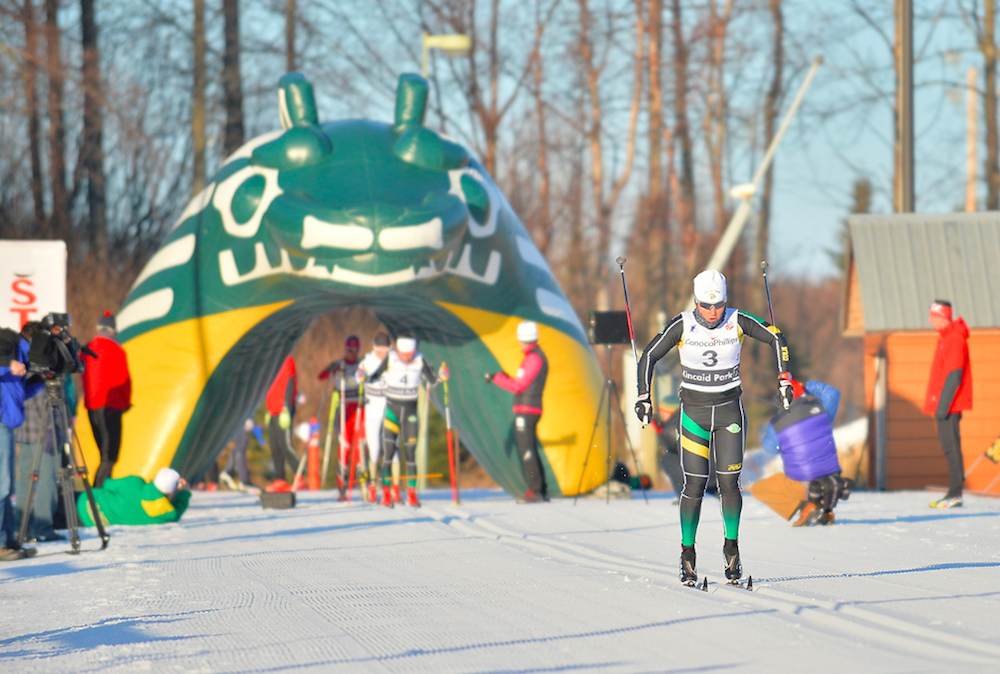
    Manon Locatelli of the University of Alaska Anchorage double poles out of the start of the 2015 Seawolf Invite at Kincaid Park in Anchorage, Alaska. (Photo: Sam Wasson Photography / http://portfolio.samwassonphotography.com/about)
    Manon Locatelli of the University of Alaska Anchorage double poles out of the start of the 2015 Seawolf Invite at Kincaid Park in Anchorage, Alaska. (Photo: Sam Wasson/Sam Wasson Photography)

    As Hackett explained in a recent email to FasterSkier, “I was given my budget reduction amount on April 18 and it was confirmed to me on April 23.”

    He stated that he and several athletic-department staff members have been working hard to implement cuts in the least painful manner possible.

    “With a reduction of this size we have to look at vertical vs. horizontal reductions to minimize the impact on all teams and programs,” Hackett wrote. (He told the ADN that a “horizontal” cut is one that affects all sports to some extent, as opposed to a “vertical” cut, in which one sport is excised entirely.)

    Hackett wrote to FasterSkier that he and his staff are “look[ing] at a wide range of criteria” in working out a reduced budget: “NCAA requirements, conference requirements, Title IX requirements, revenue and expense data, and how we can minimize the impact on all of our teams and Student-Athletes.”

    The first three of these requirements, which are presumably non-negotiable if UAA would like to retain its NCAA status and/or its federal funding, are significant. As previously explained in the ADN, the school’s NCAA Division II membership requires a minimum of 10 sports, including at least two “team” sports per gender – that’s men’s and women’s basketball, women’s volleyball, and men’s hockey. And the school’s conference membership in the Great Northwest Athletic Conference means that UAA has to have five specific sports – basketball (men’s and women’s), cross-country running (men’s and women’s), and volleyball.

    There’s some overlap there, but the math is clear: “That leaves seven UAA sports unprotected by NCAA and GNAC membership requirements,” the ADN reported. “Those sports are men’s and women’s skiing, men’s and women’s indoor track, men’s and women’s outdoor track, and gymnastics.”

    Michael Friess coaches both men’s and women’s outdoor track, men’s and women’s indoor track, and men’s and women’s cross-country running.  That’s an impressive six out of 13 NCAA varsity sports, and only one head coach salary. And two of those sports, men’s and women’s cross-country running, are “protected” by virtue of conference membership requirements.

    No one is officially saying that this leaves UAA cross-country skiing particularly vulnerable – Hackett and his crew are still working on budget decisions, so there was no official statement on that matter. But UAA Head Nordic Ski Coach Andrew Kastning seems to have seen the writing on the wall.

    In early April, Kastning wrote to several dozen members of the local ski community to help solicit support for his program.  The email subject line was, “A chance to help the UAA Ski Team.”  The recipients were a mix of local UAA ski alumni, club program directors, community supporters, and prominent local nordic Olympians. A copy of the email was shared with FasterSkier.

    Kastning explained that falling oil prices had forced the state and university system to “look at making deep cuts to programs and services in order to balance the budget.”  He continued: “I have been around long enough to know that this means bad news for ski teams, which are usually the first on the chopping block since we are not a mainstream sport, do not compete in the GNAC, and do not produce revenue.”

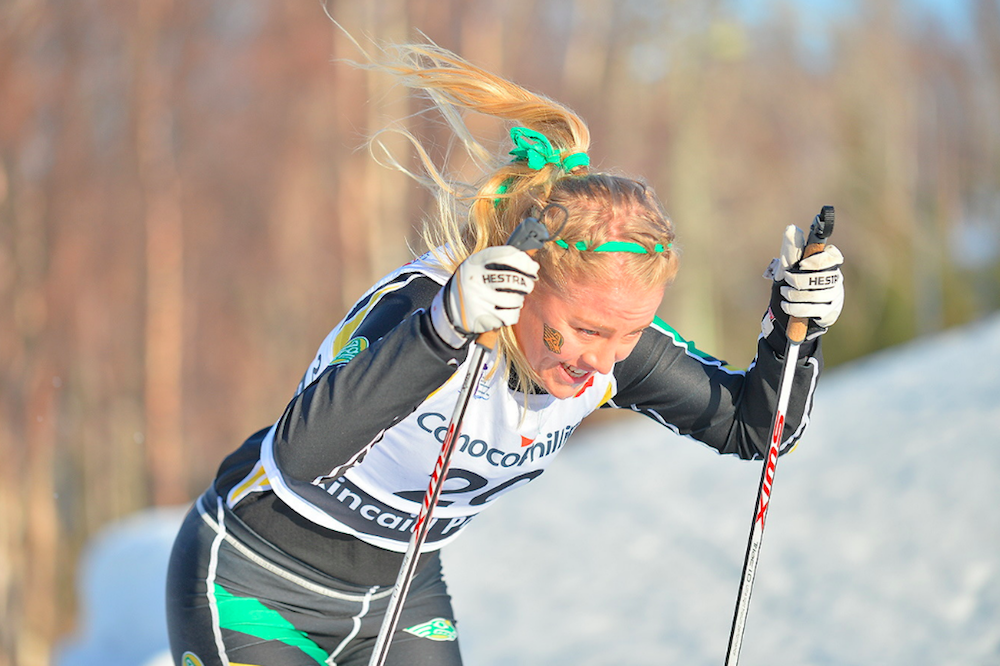
    UAA's Hanna Slotte racing at the 2015 Seawolf Invite in Anchorage. (Photo: Sam Wasson/Sam Wasson Photography)
    UAA’s Hanna Slotte racing at the 2015 Seawolf Invite in Anchorage. (Photo: Sam Wasson/Sam Wasson Photography)

    In his email to potential supporters, Kastning requested, “please take a few minutes, and think of a short story, or experience as to why you are a better person thanks to your ski racing experiences in college, how being a part of our ski team helped you be where you are today,” and to write about this to the University president.  He suggested that supporters communicate “that you sincerely hope he doesn’t narrow the opportunities of future student athlete ski racers from having the same experiences you did.”

    On May 7, the ADN ran an article titled, ‘From Shootout to entire teams, UAA sports are under scrutiny as budget cuts loom.’ On May 9, Kastning again reached out to local supporters. “If you read [this article] then you already know that our ski team is not out of the woods yet,” he wrote, and again asked supporters to speak to university administration about “the value of Collegiate Skiing in Anchorage, Alaska.”

    In an email exchange with FasterSkier, Kastning initially declined to comment: “I’m going to delay answering these questions until we know exactly what will happen,” he wrote, referring to the state budget situation and funding for the program.

    Kastning later emailed a more detailed statement: “We have been given every indication from our Athletic Administration to move forward with plans for next year. I have six true freshman women and two freshman men arriving on campus next fall and am extremely excited to begin working diligently with them all to become the best college skiers in the country. Though the budget crisis in Alaska will certainly have its effect on all state programs, the future of the UAA Ski Team is strong provided we are given the resources to compete.”

    Timeline for budget decisions

    It is currently mid-May. The Alaska Legislature is required to finish its session by Wednesday. There will be no final budget set until that time, but it seems safe to assume that, whatever happens, funding for the state university system is not going to be increased in the final version of the budget, nor will new funding sources suddenly arrive to make up for the yawning gap in oil revenue.

    Different parties have different understandings of the timeline for budget decisions and potential program reductions or cuts. As Hackett wrote, he had a confirmed budget reduction amount in hand as of April 23 (and has since been working on how to implement a reduction of that amount). For his part, Kastning wrote, “We have heard that a final answer will be given on or after May 20th.”  

    The next University of Alaska Board of Regents meeting, meanwhile, will be held June 2-3 in Anchorage. The Board of Regents has stated that it will hear an update from Strategic Pathways, a university-wide efficiency and cost-reduction study, and approve the 2017 Fiscal Year budget at that meeting.

    Hackett also noted the “New fiscal year begins on July 1. Decisions need to be made in advance of the new FY [fiscal year].”

    The 2017 conference schedule for RMISA member schools has not yet been posted.

    Relative security in Fairbanks

    Members of the University of Alaska Fairbanks women's team get together for a photo last season. (Photo: Nick Crawford)
    University of Alaska Fairbanks women’s nordic-team skiers pose for a photo last season: (from left to right) Hannah Rowland, Anne-Tine Markset, Nichole Bathe, Martina Himma, Ann-Cathrin Uhl, and Sarissa Lammers. (Photo: Nick Crawford)

    Three hundred miles to the north, Nick Crawford, coming off his first season as UAF’s cross-country skiing and running head coach, feels relatively secure about the safety of his program.  

    “Our team security might be a little stronger than UAA’s,” Crawford said in a recent phone interview with FasterSkier.  Indeed, Crawford said, while UAF is hardly immune to the budget pressures that are squeezing the UAA athletic department, “we’ve been assured that it’s business as usual through 2017.”

    The biggest reason for Crawford’s equanimity is simple math: a school must offer 10 varsity sports to have NCAA member status.  (The rule is widely understood as preventing a school from offering solely the two revenue sports of football and basketball, and so requiring them to effectively subsidize a broader range of offerings across other, non-revenue sports.) UAA currently has 13, and so, in blunt mathematical terms, has some sports to spare. UAF only has 10 varsity sports. To cut any of them would be to deny NCAA status to the school’s Division I men’s hockey team (as well as all other teams).

    As Crawford noted, “With the 10-sport minimum that we’re at, we’re in a fundamentally different place than they are [in Anchorage]. If we go, the whole athletic department goes.”

    Crawford also pointed out that, of the school’s 10 sports, “I’m head coach for four of them,” that is, men’s and women’s cross-country running and cross-country skiing. Crawford further stated that UAF has already “been hit much harder by athletic department cuts than Anchorage has,” including a recent 30 percent reduction in ski scholarships, and he felt fortunate that the cut allocated for this year “is not terribly severe.” He said that UAF already receives much less state aid for athletics than UAA: “We’re already operating a lot more cost-effectively for the state, so to speak,” than UAA is.

    Crawford cited an independent outside consultant’s report from January 2016, which concluded that “UAF athletics is already far exceeding peer group institutions in terms of generated revenues, and is realistically close to reaching capacity” (this is largely a reflection of the popularity of men’s hockey within the Fairbanks community).

    The report also stated, with regard to UAF’s 10-sport minimum for NCAA status, “UAF currently is sponsoring the minimum number of sports. While it would be possible to modify UAF’s sports, realistically the current offerings make the most sense. Eliminating men’s ice hockey is a logical topic for debate given its cost, but as is discussed later there would be significant negative consequences as well.”

    As the report’s executive summary concludes, “Given the financial climate in the state of Alaska, it is understandable that there is necessary budget impact for intercollegiate athletics at UAF. However, given the reductions that have already been executed, it is hard to identify additional sources of savings without severely incapacitating the athletics program.”

    (A comparable outside consultant report does not seem to exist for the UAA athletic department.  This does not necessarily mean that UAA likewise would not be hard pressed to “identify additional sources of savings without severely incapacitating the athletics program.” UAA has also experienced cuts to its athletic department budget in recent years.)

    Premature eulogies?

    It is important to emphasize that no final decisions have been made about the Fiscal Year 2017 budget, for either the University of Alaska system as a whole or the UAA athletics department specifically. But, as Kastning wrote to supporters, ski teams “are usually the first on the chopping block.” It seems fair to say that there is at least the potential that the UAA nordic ski team will not exist in a few years, or will perhaps exist in a greatly reduced form.

    Crawford, the UAF coach, would not welcome such a development.  It would be “really unfortunate” if the UAA program were cut, Crawford said. “One thing that’s really hard about these sort of things is, they take a long time to come back. It may be a short-sighted cost reduction … to make a cut like this, but it takes a long time to return to what we have now.”

    The first words out of Crawford’s mouth in last week’s phone interview were, “We want UAA to have a team – it’s mutually beneficial to have both teams in Alaska.” Crawford cited the Alaska Nordic Cup, a low-key November weekend race series between the two schools held in Anchorage and Fairbanks in alternating years, as “a great example of why we value having another team in Alaska.”  That’s “just a really healthy example of our collaboration between the two teams,” Crawford noted.

    As Crawford noted, the “best case scenario for everyone is that athletics remains where it is right now, with the same state funding that it’s had.” Barring that, Crawford suggested that he would prefer to see a joint nordic program operating out of just one school before either school’s ski program got cut entirely, although he made clear that he thought the state of Alaska could support two NCAA programs.

    The perennial question of the appropriate role of college skiing

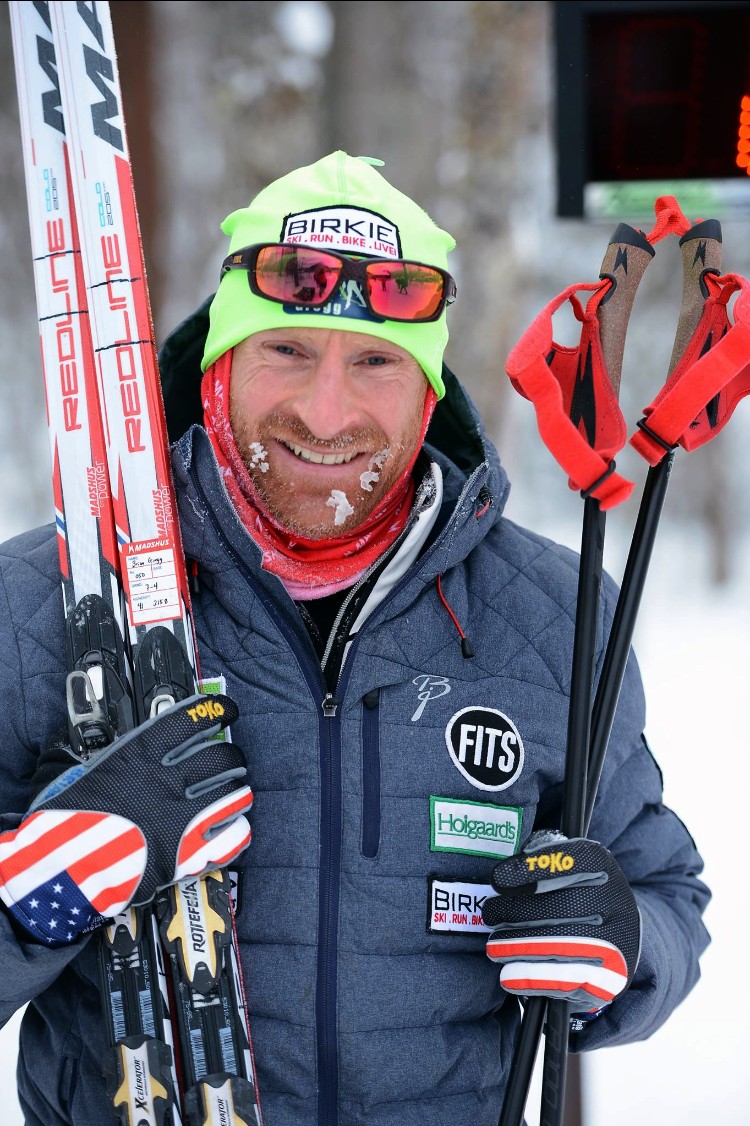
    Brian Gregg at the Seeley Hills Classic  (Photo credit:  Once in a Blue Moon Studio- Kelly Randolph)
    Brian Gregg, a 2014 U.S Olympian and former University of Alaska Anchorage skier, at the Seeley Hills Classic last winter. (Photo: Once in a Blue Moon Studio/Kelly Randolph)

    Brian Gregg, a 2014 Olympian and three-time SuperTour distance champion, is one of the more prominent alums of the UAA ski program. When asked whether he would like to answer some questions about what UAA skiing had meant to him, Gregg promptly responded with a 600-word email titled, “UAA Ski Team, a vital part in my pathway to the Olympics.”

    Gregg states that UAA played an integral role in his own personal and athletic development.  “When I was 15 years old I wrote down my dream of representing the USA as an Olympic ski racer,” Gregg wrote. “I loved skiing, I loved working hard, unfortunately I wasn’t super fast… yet.  I transferred to UAA at the beginning of my Junior year and my ski career began to take off.  Where I had thought that I was training hard, smart and consistent my coaches and teammates helped open my eyes to the actual work and preparation to become a great skier. I went from fighting my way from being one of the last three finishers at NCAA as a freshman to finishing in the lead pack my Senior year at UAA.  UAA helped to teach me the tools and steps needed to turn my dream into a focused goal and an eventual reality.”

    Gregg also praises the education he received at UAA, explaining that studying business management prepared him for his current job of managing the two-member Team Gregg.

    “Although I am now based in Minneapolis, my bond with Alaska will never break,” he wrote. “I enjoy returning to the state for vacation, racing, and an annual trip to teach cross country skiing for a week in the villages” with the Skiku program.

    Gregg believes that it is important to have an NCAA ski program in Anchorage alongside APU.

    “Cross country skiing is one of the largest sports in Alaska. With winter arriving early and departing late, Alaska is an ideal place for cross country skiing,” he wrote. “It is important for their to be multiple high level programs in the state as it fosters a healthy competition.  The strengths of the programs will ebb and flow. In the early 2000s the UAA team was actually stronger that the APU team and now the APU team is arguably the strongest program in the country. That being said, many of the athletes and staff were students at UAA and several were first exposed to Alaska through their decision to study at UAA.”

    (The Bjornsen siblings are two of the more prominent athletes who initially skied for UAA before transferring to APU. Both are current members of the U.S. Ski Team.)

    Perhaps unsurprisingly, in light of his personal background (not only did Gregg ski collegiately for UAA, his wife, Caitlin Compton Gregg, skied for Northern Michigan University), Brian believes in the importance of a vibrant NCAA ski program in this country.

    “NCAA skiing is a huge opportunity that we have for the development of ski racing in the United States,” he wrote.  “Some of the college programs have budgets that are greater than the National teams. Cross country skiing is a sport which requires time to develop. For many skiers, myself included, the path to success requires multiple years of training and commitment. The collegiate system is a way to build that training volume and the training years while also preparing yourself for a career beyond athletics.”

    Finally, on the enduring question of the significance of American nordic roster spots often being filled by exchange students from Nordic countries, Gregg explains that he sees the benefit: “When I first began looking into US NCAA programs I found it frustrating the number of foreign athletes. My opinion on this changed quickly though when I realized the tremendous benefit of having different people, thoughts and cultures come together with a common goal. I learned so much about ski racing and life from my foreign teammates. One of the best parts about college is the gathering of many different views and thoughts.”

    Back in Alaska, Crawford had similar sentiments.

    “College skiing is a huge development pipeline,” he said. “The recent article on Ian Torchia made me smile — I really agree with this. … I think what we’re seeing is our World Cup skiers, more and more as a percentage, are going to college, doing NCAA skiing first.”

    Alternate funding sources?

    The many virtues of college skiing notwithstanding, it seems fair to say that it is not going to become a revenue sport like football or basketball any time soon. In that light, the fact that the USA Triathlon Foundation recently committed $2.6 million in seed money over several years to help develop triathlon as an NCAA sport came as some interest.

    (There are currently eight schools with burgeoning NCAA-affiliated triathlon programs, currently all for women only; college triathlon was funded through the NCAA “emerging sports program … created to help schools provide more participation opportunities for female athletes”).  If at least 40 schools sponsor triathlon within the next decade, it can become an NCAA championship sport.)

    Luke Bodensteiner, the U.S. Ski and Snowboard Association (USSA) executive vice president for athletics, applauded these efforts of the USA Triathlon Foundation, but clarified that no comparable source of money exists for collegiate skiing under the USSA umbrella.

    “There’s not a bucket or category of funds [within USSA] that would be allocated specifically for NCAA programs,” Bodensteiner told FasterSkier in a recent phone interview. “I would suspect that those are monies that are unrestricted, and that could be spent in any way.” And, Bodensteiner explained, USSA does not have a comparable source of funds.

    “I suspect that triathlon undertook this [initiative] with an eye to developing a talent pipeline [for the pro ranks],” Bodensteiner added.  He clarified that, “USSA has taken a pretty big interest in NCAA athletes in general.” For example, he said, it has “hired a new liaison, whose role is mostly in optimization of the NCAA athletes, to allow athletes to train and compete” more effectively.

    Next steps

    While the specifics remain up in the air, some things seem apparent at this time: Alaska Permanent Fund revenue will have to be used to make up much of the state-budget deficit; the UAA athletic department is going to see its budget reduced in some amount; cross-country skiing is generally more vulnerable at UAA than at UAF because UAF cannot cut any varsity sport without losing NCAA status for all sports.

    FasterSkier will publish updates on this story as they become available.

    ***

    Full disclosure: The author took math and science courses at UAA in the late 1990s; this was to bolster his high school curriculum, and he has never attended UAA as a full-time student.  Also, the author skied in the November 2015 Alaska Nordic Cup Invite as a member of an open relay team not affiliated with either UAA or UAF.