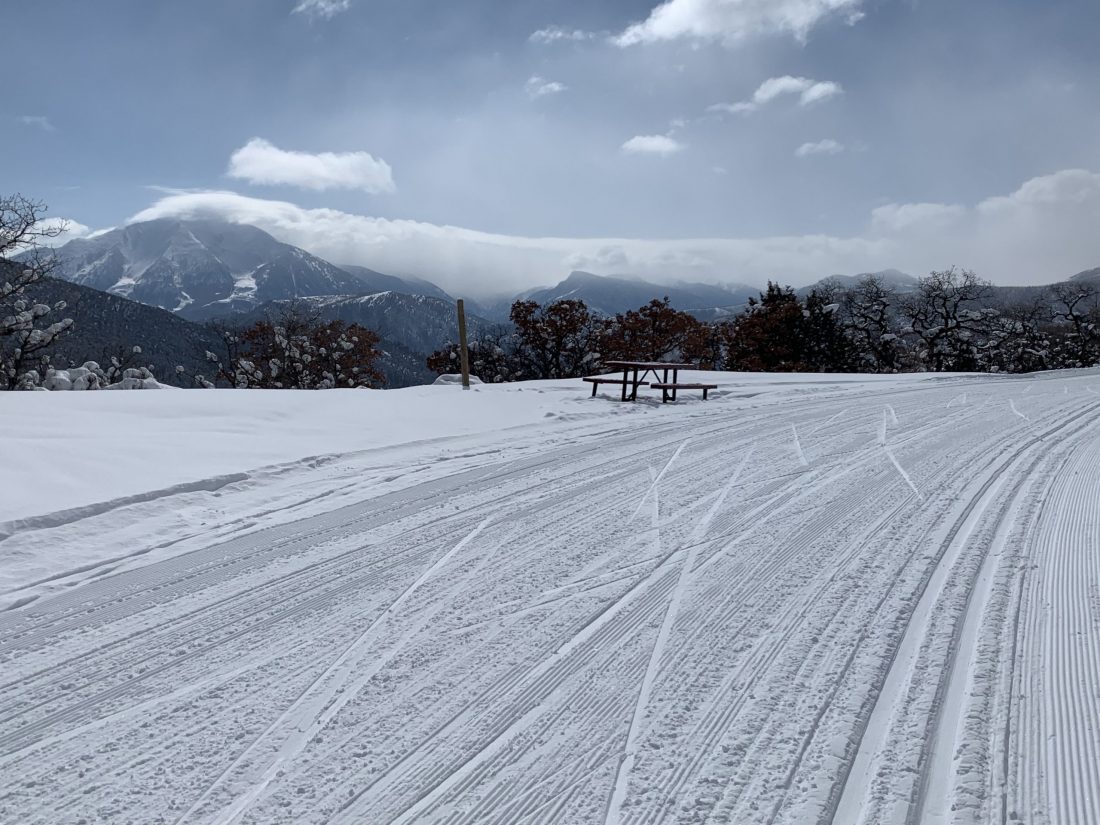
If there’s a generalization that can be made about cross country skiers, it might be that we like to “know before [we] go.” As the ski season waxes and wanes, or mid-season storms roll through, we relentlessly check the weather forecast and our local grooming report as we fantasize hungrily about the fresh corduroy or classic tracks we hope to enjoy that day.
But we can’t always know before we go. Timely grooming reporting asks those cultivating the trails to go a step further after a middle-of-the-night shift, when sitting at a computer to update the website in a timely manner might be less appealing than crawling into a warm bed or sipping a hot cup of coffee. This creates friction between the hard-working groomers and skiers who are chomping at the bit and weighing the potential disappointment of making the drive to the ski area without knowing what to expect.
 Luckily for both parties, there’s a new system growing which allows faster and more efficient communication, Nordic Pulse.
Former Canadian national team member Julien Locke has been working as a web-developer for several years to support his ski career. Locke raced regularly on the World Cup from 2017 to 2019, before sustaining a severe concussion, which removed him from training and competition. His career best result arrived in Dresden, Germany where he popped a 15th place finish in the freestyle sprint in 2018. Though he still trains as a professional skier, subsequent health issues have prevented him from returning to his former performance level, but the fire still burns, and he aspires to make it back to the World Cup.
Roughly six years ago, one of Locke’s projects was a website overhaul for Sovereign Lake in Vernon, BC, including integrating a better method for sharing grooming information with skiers.
“Their grooming team was quite frustrated with not having a slick system for them to use to update the report, and their skiers were feeling like they didn’t have enough information,” Locke explained in a call. “So we made a little web based system and it worked okay, but it really opened my eyes to a real need that Sovereign Lake had, and other ski areas that I was working with also had, to promote the groomers perspective and skiers perspective. And it really inspired me to start thinking, ‘How can we make this better?’ And it took quite a few years for this project to really get going. It wasn’t until a year and half ago that I started developing it full time.”
During the interim, Locke continued to work with Sovereign Lake and other ski clubs, all the while listening to the interests, needs, and frustrations of groomers, skiers, and club organizers. Eventually, this evolved into the development and launch of Nordic Pulse, a GPS-based live grooming system that allows for simple, efficient, and automated communication on grooming operations for ski areas of all sizes and capacities.
“The goal in the beginning was to make it easier for groomers and ski areas to share what they’re doing, their trail conditions and their grooming reports. And then for skiers to have a central platform so that in November when you don’t know where to go skiing, or mid season when you have two different options of places near you, you can easily and conveniently see what conditions will be like.”
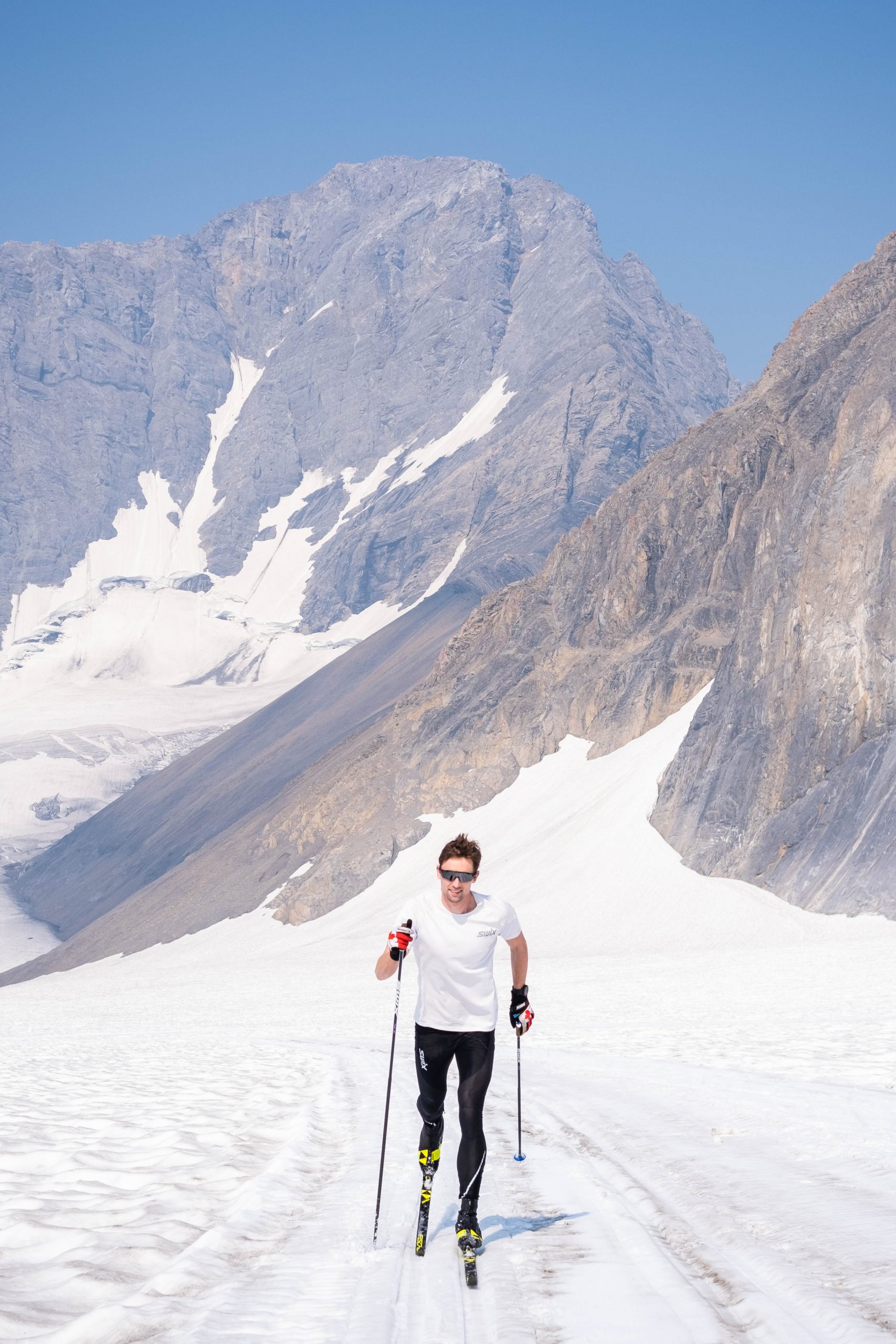
In particular, a need Locke identified and aimed to solve was creating efficiency for the grooming team.
“Oftentimes, they start grooming at midnight, and are grooming until the early, early hours in the morning. They finish their shift, and you know, they’ve been up all night, they’re tired, and the last thing that they want to do is go fiddle around with the website or call somebody to tell them an elaborate description of where they went.”
Locke looked to automate the reporting process and make it seamless.
“Our solution is using GPS, so the groomers click ‘start’ when they start recording and they click ‘stop’ and when they’re done, and then, in that time, all the grooming reports are done automatically. So it really saves them quite a bit of time every day at the end of their shift not having to report or go through the trails list and try to remember what was groomed at what time.”
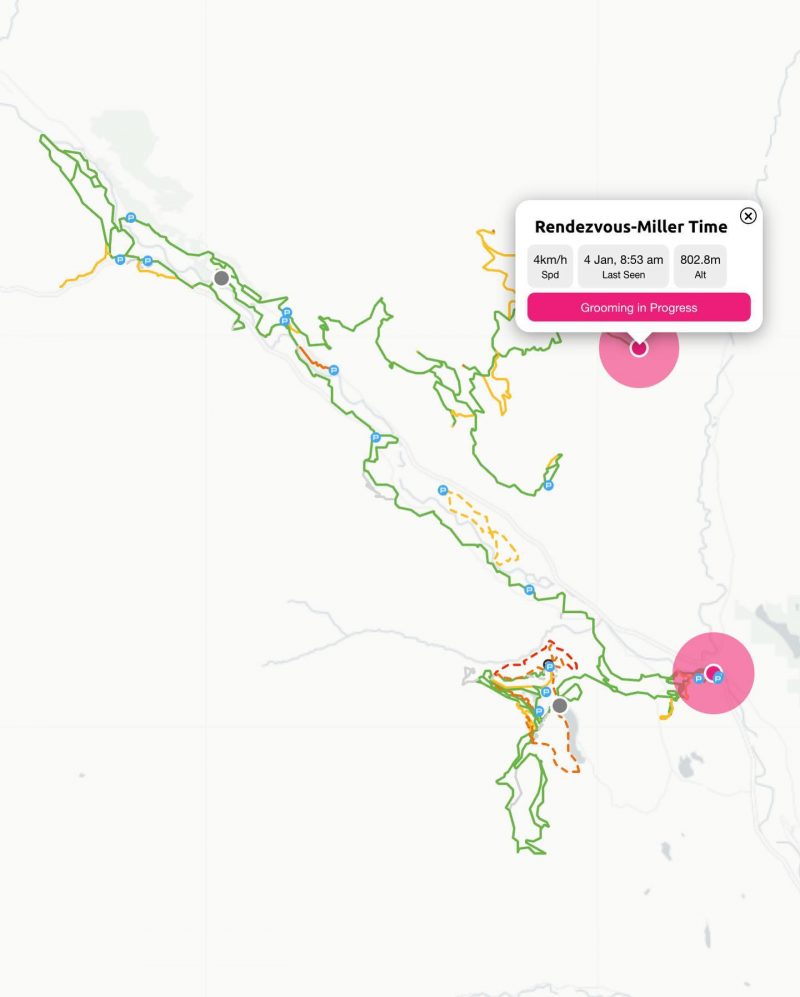
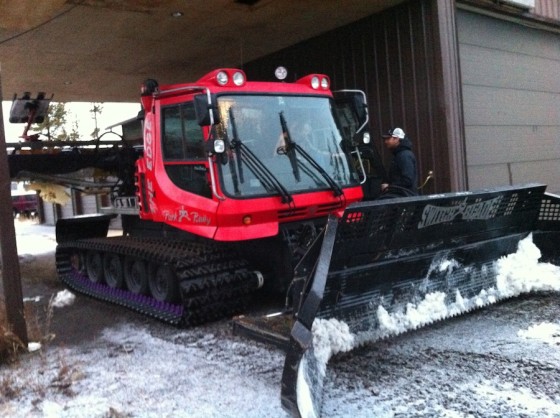
Acknowledging that it is common for a groomer to only hit part of a particular trail within a route, the traditional system of listing off what was completed can fall short. With Nordic Pulse, a color-coded map shows specifically what was groomed each day, including options to differentiate between skate and classic if track has not been reset on all trails that day. If needed, groomers can also select from a materials list to indicate what machinery was used, from snowmobile to PistonBully, depending on what the ski area has available. Additional notes can be added as needed.
“Being able to get the grooming information onto a map so that the skiers have a really quick visual of what’s been done, I think, was a real need from the people I had talked to. I know from the feedback we’ve gotten, people really appreciate being able to see visually what’s been done.”
When a new ski area comes on board, Nordic Pulse handles the mapping to create a pre-set base on which the system will run. While the app is running in the groomer’s pocket, GPS data points are collected every 20 to 30 meters, keeping precision high even for trails with frequent intersections or overlapping segments. This data is synced to the Nordic Pulse server and processed by its algorithm to determine which trails on the predetermined map were completed, with time stamps.
No cell service at your local trails, or perhaps your groomers don’t want to burn cell data? No problem.
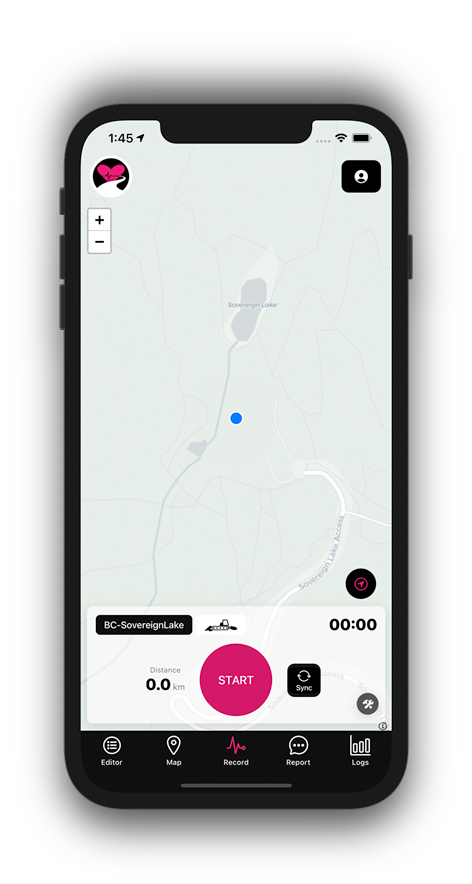
Groomers can run the app without having cell reception or consuming data. The GPS information will be stored locally on the device until the phone enters WiFi, then the groomer would only need to click sync to push the data to the NordicPulse server. Time stamps will be preserved to accurately reflect the work that was done, should there be delays.
Locke added that some of the earliest users of the system were ski areas based in the Kananaskis Provincial Park near Canmore, Alberta, well outside the reach of cell reception.
In terms of the cost of adopting Nordic Pulse, pricing is adjusted on a sliding scale system depending on the number of kilometers groomed by the ski area, the number of skiers, and the amount of GPS data that needs to be processed with daily grooming. Clubs are billed annually and prices currently range between $600 and $2000 per year.
Having grown up in the small town of Nelson, BC, it was important to Locke to keep the costs reasonable.
“When I started developing Nordic Pulse, I was looking at options. One strategy I could have taken was creating an enterprise level product for just large ski areas who have the budget to afford that. But I grew up in a really small club, and I really wanted Nordic Pulse to be accessible to everybody. So we’ve done our best to really keep the cost as affordable as we can by having a sliding scale.”
For ski areas with limited budgets, Nordic Pulse offers a “community edition” with no yearly fee.
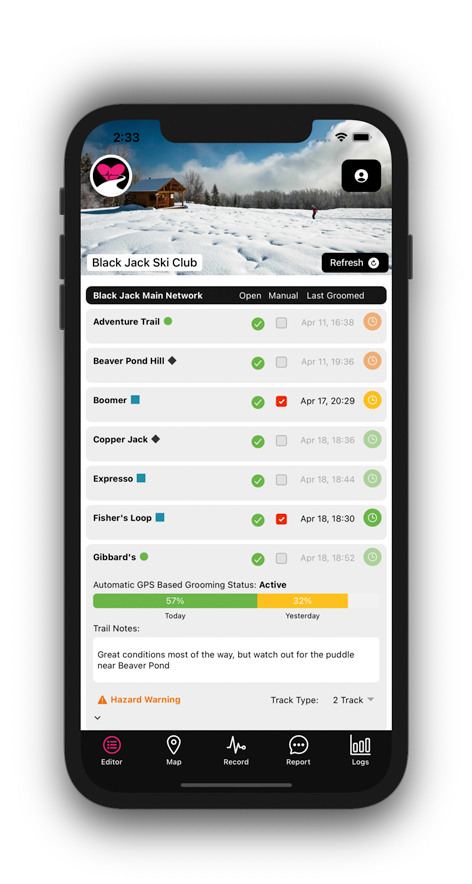
Rather than using GPS to track grooming and automatically update the live-grooming maps and trail reports, the community edition uses the in-app trail editor to manually update the maps or trail lists instead. While Nordic Pulse “would love to be able to offer the community edition completely free”, there is a small one-time setup fee to cover their costs in getting the but there’s no yearly costs after that.
Year one has gone “incredibly well”, surpassing Lockes original goals and expectations.
“I started developing this year and a half ago and I was optimistic we’d get maybe a dozen clubs on board in the first year. I really thought we’d start small and grow. And then, we started doing a beta testing phase, and all of the sudden, clubs were reaching out every day, it seemed. And by the time we officially launched, I think we had over almost 20 areas on board, and then by the end of the year, we had 35, and now we have around 80 ski areas total after year one. So it’s growing really fast, which has really been exciting for us. And also, I think, really great for skiers because the more ski areas that are on board, the more useful the information is for skiers, as in, skiers can go to any area and be able to check the reports on the same platform.”
The goal for next year: “Just keep growing.”
“We’re always looking are excited to have new ski areas come on, and are looking to grow more in the States and more in Canada, and potentially elsewhere in the world as well.”
Currently, the app is only designed for us by groomers, while skiers check either the Nordic Pulse site or an embedded applet on their local trail system’s website directly. The website is mobile optimized, but Locke said that a skier specific app is in the works to improve the user’s experience, and should be on line by next season.
“I’m really motivated to make the system as interesting as possible for everybody, and as useful as possible, and just continually roll out new features for both skiers and also groomers.”
So far, the feedback Nordic Pulse has received from clubs who have integrated the system this year has been “incredibly positive,” improving the experience for a growing population across all abilities within the cross country ski community.
“I think in the last few years, especially with the numbers of skiers increasing from COVID, a lot of ski areas have been feeling the need to have better ways to report their grooming and show that information. And a lot of ski areas come to us saying, ‘Hey, we’ve been thinking of doing something like this, but on our own, we can’t afford it because it’s expensive to build a system like this.’ And they really appreciate being able to use our service and tap into all those features. Already this year, we’ve had over 160,000 skiers using our platform and almost a million views, so it’s growing really fast and it’s meant a lot to me. It’s been very rewarding, and humbling to be able to make a difference in the ski world.”
What are users saying about Nordic Pulse?
According to Nordic Pulse, Ethan Meginnes of the Black Jack Ski Club in Rossland, BC, the system is a “game changer” for its members.
“As a groomer and avid skier, I am relieved to be able to relay and receive reliable information. Nordic Pulse is easy to use with multiple platforms,” Meginees said. “I would love to see every cross country ski center ultimately utilize this app.”
Methow Valley resident and regular trail user Alex Hall called the system “exceptionally good.”
“I love the live grooming report,” he wrote to FasterSkier. “Though I find that I question its accuracy at times… There do seem to be occasional misalignments, but the thing I love about the live timing is it will show you instantly, completely and comprehensively where the cats are and what they’ve done, and it’s all on a picture, so it’s really handy. It’s definitely my favored system because it’s really quick and gives that overview. It updates automatically, it’s live, it’s got color graphics. Every now and then, there is something goofy about the live map. It’s definitely [an improvement from the last system].”