From the FasterSkier archive — posts syndicated from athletes’ and coaches’ own blogs between 2004 and 2012, kept online as published. Current coverage is at fasterskier.com.
We’re happy to welcome Patrick O’Brien back to the ranks of the Craftsbury Ski Club, this time as the Assistant GRP Ski Coach. Pat, a native of Putney, VT, raced collegiately for Dartmouth before his stint as a professional ski racer with the Green Racing Project from 2010-2014.
While on the GRP, Pat competed in multiple World Cups and also became known to the Craftsbury community as a hardworking jack-of-all-trades with a deep love of skiing and the outdoors. Pat moved on from racing to become the head coach of the SMS T2 team from 2014-2022. Although he coached multiple athletes to international success, he’s most proud of the role he played in building a program that brought together athletes of all ages and rooted the team in its local community.
In recent years, Pat has supported various junior, college, and elite teams as a service technician, all while juggling a job as a builder and wrangling a growing young family. When not up to his eyeballs in ski wax or construction detritus, Pat can often be found outdoors with his wife Ida, who also has deep ties to Craftsbury, and their two kids. Welcome back, Pat!
Annika Martell racing during the NENSA club relays, Saturday, March 28, 2026 at Craftsbury. (Photo: Phil Belena)
The Craftsbury Green Racing Project has named Annika Martell as its new Head Ski Coach.
Martell brings a resume that spans nearly every corner of the Nordic skiing world. A Minnesota native, she headed east to ski at Colby College, where she captained the team and earned recognition for her leadership before graduating with a degree in economics and environmental science.
Her coaching career has taken a similarly wide path. Early on, she interned with the US Biathlon Association and coached juniors at Ford Sayre and the Berkshire Nordic Ski Club, before moving into elite-level work as an assistant coach with the Stratton Mountain School T2 Team. She spent four years as an assistant coach at Williams College, during which time she completed two stints as a Trail to Gold Fellow with the US Ski Team and served twice on the wax staff for Team New England at Junior Nationals.
Most recently, Martell was the Head Nordic Coach at St. Michael’s College, where she guided the program to highly competitive results.
Her background extends well beyond the ski tracks. She is a certified weightlifting coach and handled strength and conditioning duties at Williams. She also has experience in finance and operations management, and holds a Master’s degree in Sports Business from Drexel University.
The Craftbury Green Racing Project is still accepting athlete applications for the incoming 2026 snow class — Apply Here
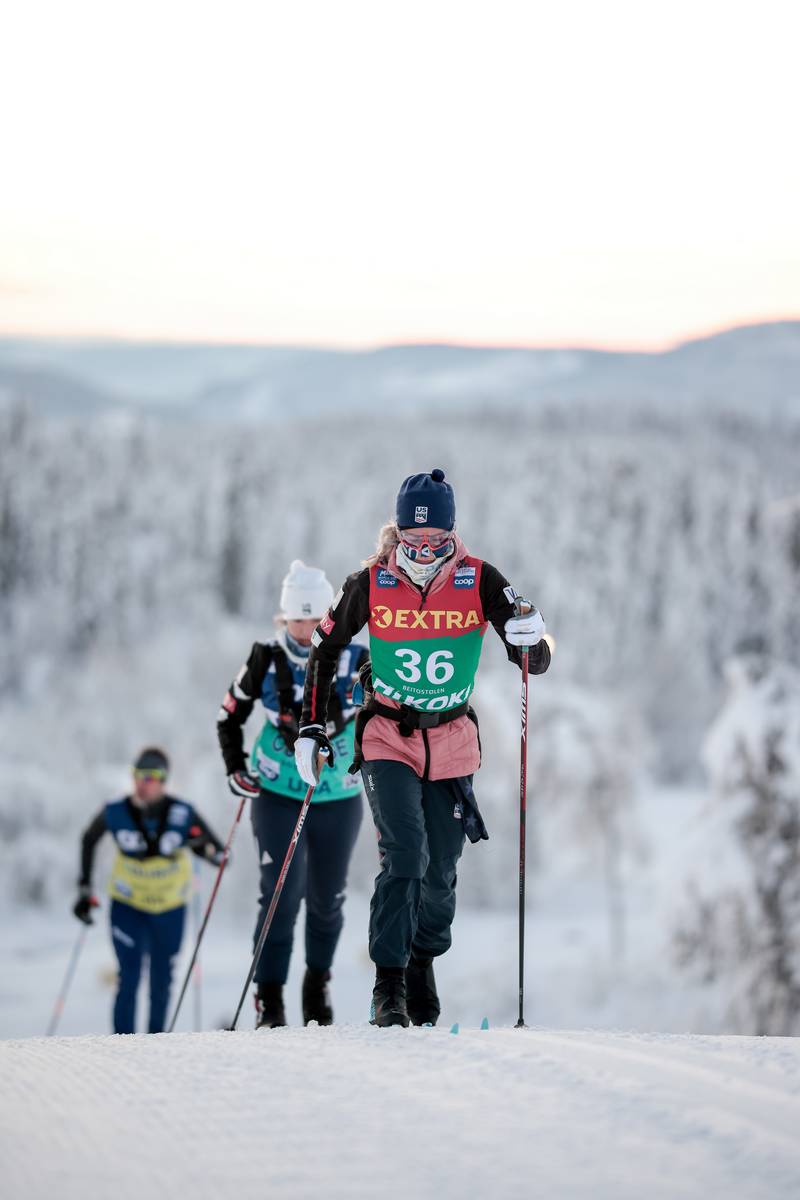
Martell follows Jessie Diggins on course in Beitostolen in 2022. (Photo: Nordic Focus)
The Craftsbury Outdoor Center is hiring for two coaching roles within its Green Racing Project (GRP), a year‑round elite Nordic ski program supporting post‑collegiate athletes pursuing national and international competition. These positions are in‑person roles based in Craftsbury Common, Vermont and are integral to the daily training, development, and competitive success of GRP athletes.
Head Ski Coach – Green Racing Project
The Head Ski Coach is responsible for leading the GRP ski program and overseeing all aspects of ski training and athlete development. This role works collaboratively with other GRP coaches and Craftsbury Outdoor Center staff to design and implement a comprehensive, high‑performance training program while fostering a healthy, sustainable, and athlete‑centered team culture.
Primary Responsibilities
Design and implement annual and daily training plans for GRP ski athletes
Lead on‑snow and dryland training sessions year‑round
Guide athlete development with a focus on long‑term performance and well‑being
Collaborate closely with other GRP coaches, support staff, and leadership
Plan and support domestic and international training camps and competitions
Uphold and model the mission, values, and community responsibilities of the Craftsbury Outdoor Center
Desired Qualifications
Significant experience coaching Nordic skiing at a competitive or elite level
Strong technical knowledge of training theory and athlete development
Excellent communication and organizational skills
Ability to work effectively as part of a collaborative coaching team
Commitment to sustainable living, community engagement, and shared responsibility
Assistant Ski Coach – Green Racing Project
The Assistant Ski Coach supports the Head Ski Coach in delivering daily training and competition support for GRP athletes. This role is hands‑on and collaborative, contributing to training sessions, athlete monitoring, and program logistics while gaining experience within a high‑level, professional Nordic ski program.
Primary Responsibilities
Assist with on‑snow and dryland training sessions
Support athlete monitoring, feedback, and communication
Help with training logistics, travel, and competition support
Contribute positively to team culture and daily program operations
Participate in the broader work and community life of the Craftsbury Outdoor Center
Desired Qualifications
Experience competing in or coaching Nordic skiing
Strong interpersonal and communication skills
Willingness to learn and work collaboratively in a high‑performance environment
Ability to take initiative and manage responsibilities independently
Alignment with GRP and Craftsbury Outdoor Center values
Compensation & Details
Position details including compensation, benefits, schedule, and start date vary by role and are outlined in the full job postings.
How to Apply
Please review the full job descriptions for full details and submit your application through the appropriate link below:
The Green Racing Project is a year‑round elite training program based at the Craftsbury Outdoor Center. GRP supports post‑collegiate athletes in Nordic skiing, biathlon, rowing and running while emphasizing excellence, sustainability, teamwork, and active participation in a mission‑driven community.
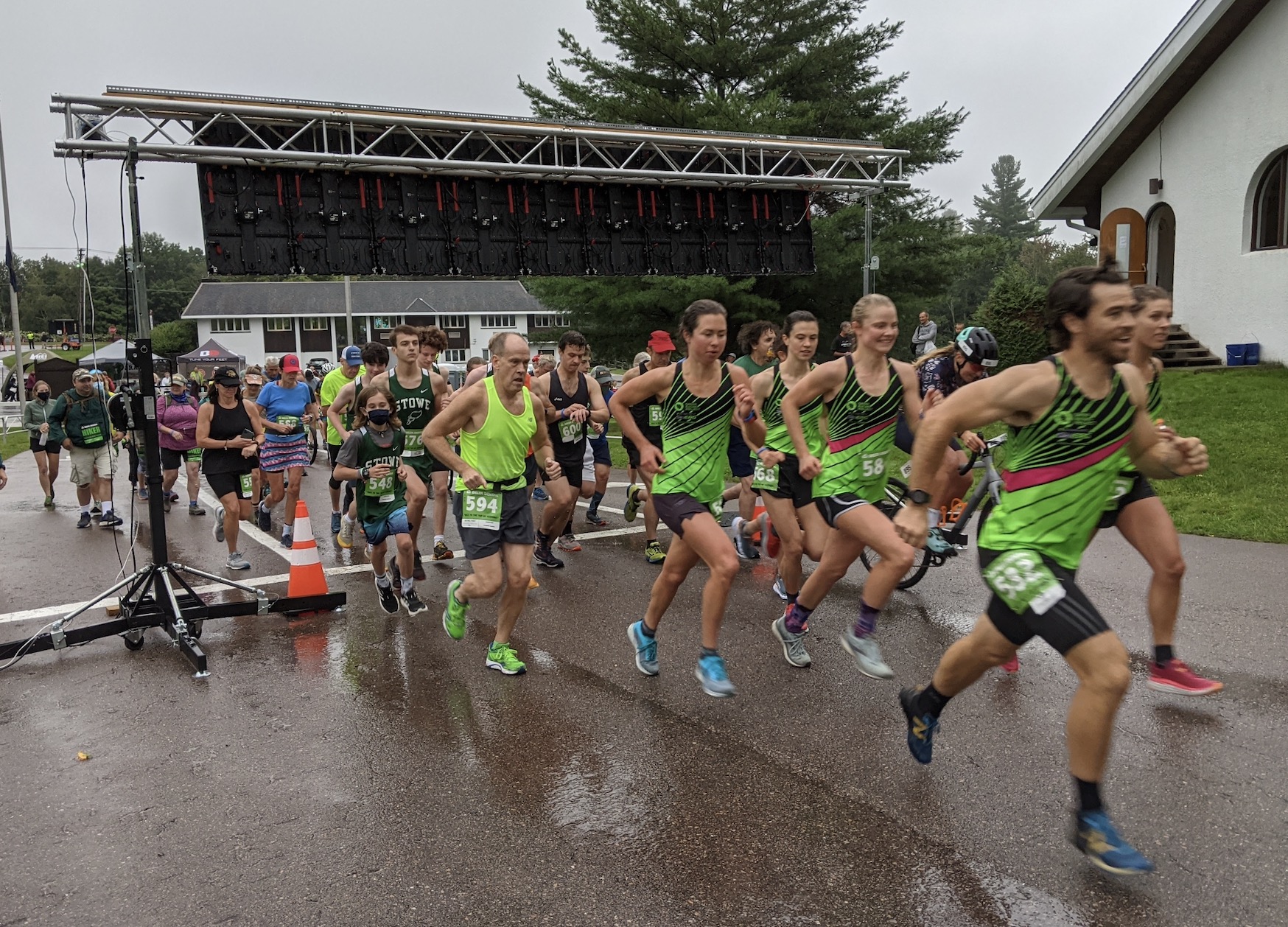
Racers take off to climb the Mount Mansfield service road in the 2021 Race to the Top of Vermont. (Courtesy photo)
Under gray skies, runners and bikers lined up on Sunday, August 29th in Stowe, VT, to “Race to the Top of Vermont.” The 4.3 mile race climbs over 2,500 vertical feet up the Mt. Mansfield Toll Road at roughly an 11% average grade, this year finishing inside a cloud with wind whipping the finish line flagging. The event drew in nearly 300 participants with 215 runners taking on the focal challenge of making their way up the mountain on foot. The event is a fundraiser for the Catamount Trail Association (CTA), which maintains a 300 mile long backcountry ski trail through the heart of Vermont, from the Massachusetts border to the south and ending on the Canadian border at its northern end.
According to CTA events director Greg Maino, “[The CTA] focuses on developing backcountry ski terrain, conservation in the state of Vermont, and increasing access to the outdoors for everyone.”
Topping the results list were several members of the Craftsbury Green Racing Project (GRP), including winners Adam Martin and Caitlin Patterson. FasterSkier connected with Martin and Patterson via email as they prepared to travel across the pond to spend time on snow.
Martin expressed that his summer training has been “going great”. Crossing the line as the first runner to the top — he was beaten by just one cyclist — Martin stopped the clock at 34:11.5, nine seconds off his fastest time. In his email, he explained how this race fits into his ski training regimen.
Adam Martin breaks the tape (and stops his watch) at Race to the Top of Vermont. (Photo: Granite State Race Services)
“This year my big focus is on prioritizing intensity workouts, and so far, I think my body has been responding well. We’re planning on heading to Germany [to get on snow in] the Oberhof ski tunnel this week, so last week I backed off a bit ahead of the race and upcoming travel. Across the GRP, I think we were all coming in at varying levels of fatigue.”
It’s no secret that Martin has got some wheels. He’s got a 1:06:18 half marathon PR (5:03 per mile), and caught our eye for running a 14:34 5k in 2019 (4:41 per mile). While uphill is a different ballgame for some runners, ski training lends itself well to the challenge.
“Sunday the race was great – and hard. Early on I broke away from the rest of the field and tried to embrace the grind for the remaining 30+ minutes of the race. I really like this event, specifically how it’s a huge climb on an easy running surface, and I’m really happy to come away with the win.”
All five of the men of Crafsbury landed in the top-eight, with biathlete Raleigh Goessling taking third (37:10), Luke Brown fourth (37:45), Akeo Maifeld-Carucci seventh (38:28), and Carsen Campbell eight (39:14).
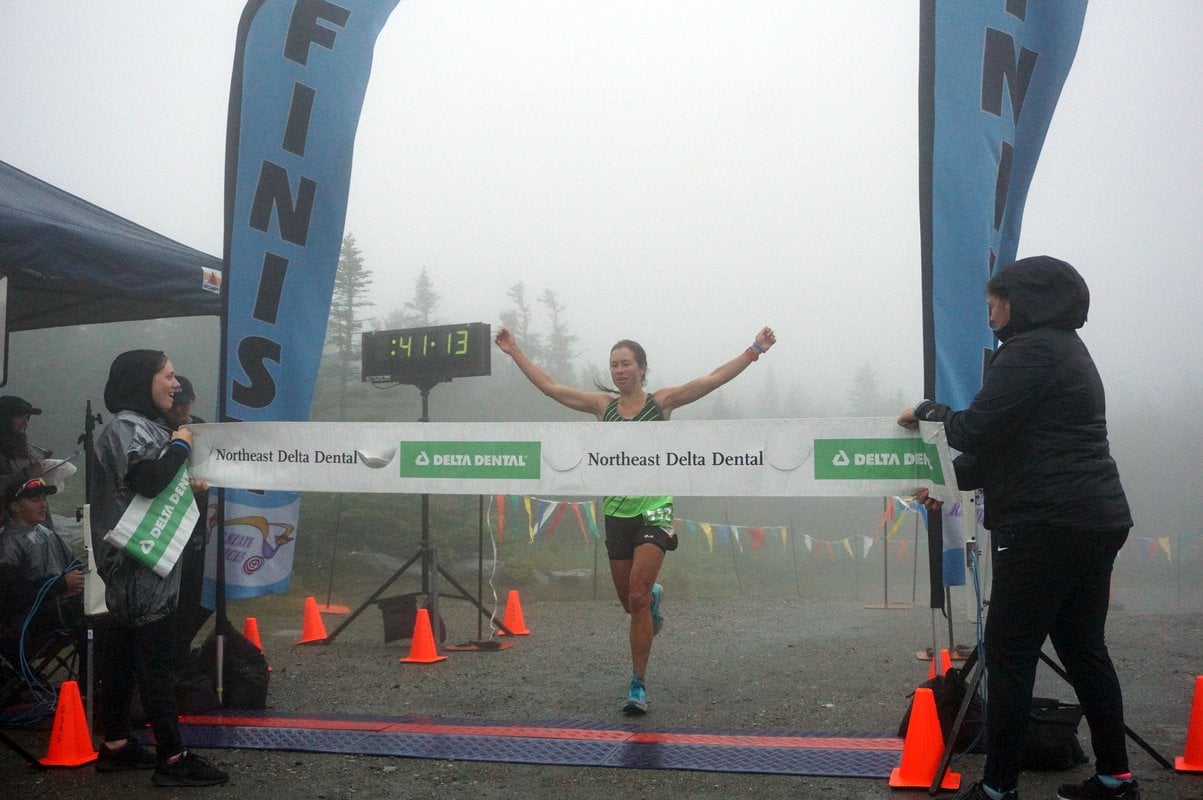
Caitlin Patterson takes the win at Race to the Top of Vermont. (Photo: Granite State Race Services)
Female cross country skiers have a history of breaking the tape at this event. Queen of the hill climb, Liz Stephen holds the course record of 37:15.9 set in 2014. This year, Patterson set a new personal best of 41:14 for tenth place overall.
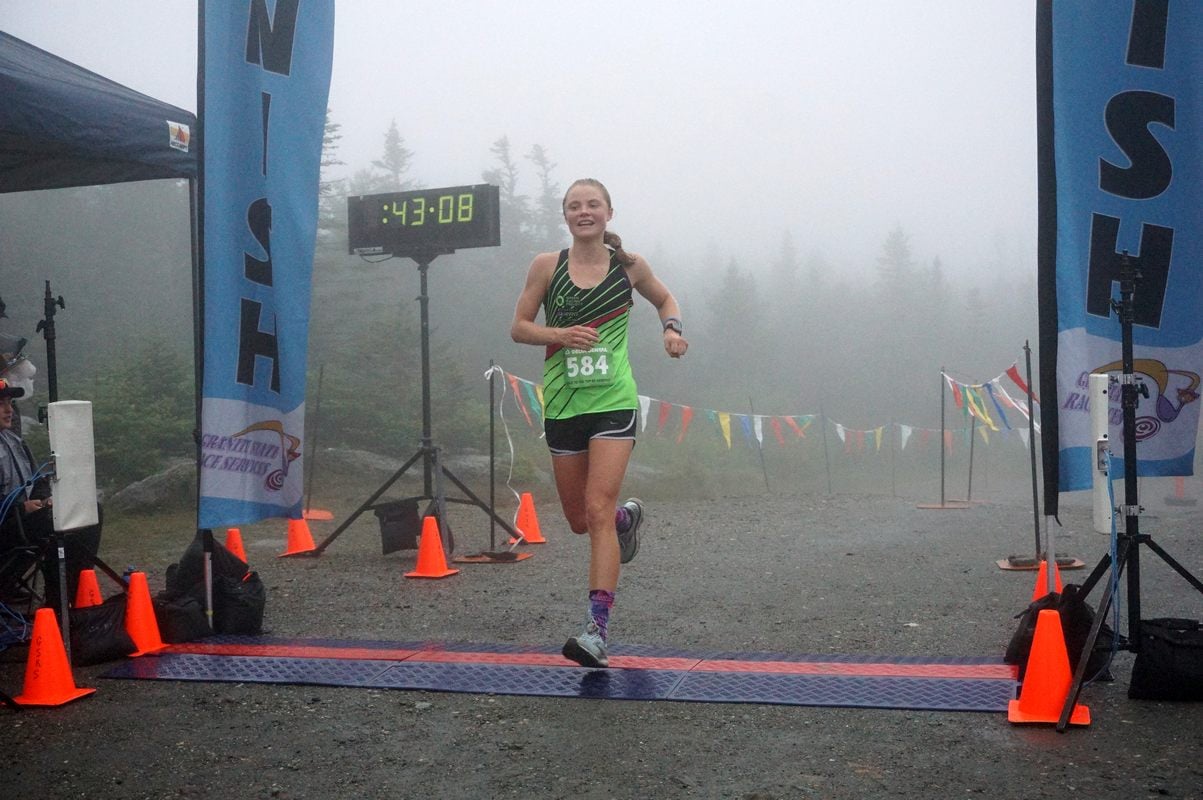
Making a clean sweep for Crafsbury, Alex Lawson took second place in 41:42, with Margie Freed following for third in 43:09. Both women are new to the GRP this season after graduating from Middlebury College and the University of Vermont, respectively.
Hallie Grossman took fourth in 45:25, and Annuka Landis rounded out the GRP results in sixth 47:23.
Margie Freed finishes third at Race to the Top of Vermont. (Photo: Granite State Race Services)
“Race to the Top of VT is always a fun one, and I’ve done it enough past years that it’s a bit like a fitness-check time trial for me,” wrote Patterson after the race. “I was looking forward to it as a hard effort and chance to put on a bib – I’d hoped to have done some running races earlier in the summer, but I strained a tendon in my foot in July so have hardly run at all during August. Of course I’ve been doing plenty of other ski training and all of that is going well, but I was very pleased with the Race to the Top, to win it and to run a fast time. In fact this year was my fastest time ever, helped I’m sure by the nice cool misty weather conditions.”
Patterson also sent the following comment about her racing strategy, which she initially shared with a local newspaper covering the event.
“Alex and I ran together for at least the first 3 miles, and she was really strong today too. We’ve been doing running workouts together for our ski training and I had an idea that Alex would be fast today. So we ran together for much of the race, and then I very gradually pulled ahead in the last mile or 1.5 miles or so, but Alex was not far back at all. In an uphill race like this, I think we were just enjoying the company in suffering, keeping moving, but not doing anything drastic. My race strategy was basically just to run smooth and efficiently, to breathe well, and be ready to dig in and make it hurt especially towards the top. So I was pleased with how the race went and I enjoyed running with Alex while it lasted because otherwise I did not see many people at all.”
The SMST2 squad led by Jessie Diggins pushes the pace in a double pole interval workout during a fall 2019 training camp in Lake Placid, NY. (Photo: Matt Whitcomb / smseliteteam.wordpress.com)
It’s May. Yes, really.
For most skiers, the new page on the calendar also marks the beginning of a new training year. Dust off your rollerskis, locate your heart rate strap and drink belt, and make sure your running shoes have plenty of life in them.
With the country still predominantly on public health orders to stay close to home, avoid groups, and keep at least six feet of distance from those outside your home, kicking off a new cycle is happening without hugging our training partners, post-workout high fives, or otherwise gathering to ring in the new season. There also remains abundant uncertainty regarding the feasibility of racing during the upcoming season from the World Cup level to the junior and collegiate circuits to popular skiing. Nonetheless, we open our training logs and carry on.
Last season ended abruptly and the off season may have looked different than anticipated. We may have put our energy into homeschooling children, sourdough baking, binge-watching Tiger King, connecting virtually with our family and friends, or otherwise remaining largely homebound and less active than we’re accustomed. On the flip side, maybe the change in schedule has freed up additional time for long adventures and you’ve logged more hours in April than ever before.
Either way, at the onset of a season, you may be interested in checking in on your fitness and strength, looking for metrics to track improvement over time and to guide your pacing or heart rate zones during future workouts. FasterSkier reached out to Pepa Miloucheva, head coach of the Craftsbury Green Racing Project, to discuss fitness testing that could be done without the support of a facility or coach, making it accessible to any level skier as they begin the new year.
Miloucheva provided the disclaimer that she relies on advanced metabolic testing with her athletes to determine VO2 Max and lactate threshold levels to assess fitness and heart rate zones, and then prescribes training based on this information. With that caveat, Miloucheva holds a masters degree in Sport Science with a focus on physiology and biomechanics and has been coaching for over 20 years, over a dozen of which have been spent with the CGRP elite program.
Before jumping into assessing fitness and blowing up trying to hit a new PR on the SkiErg, Miloucheva emphasized that the most important thing an athlete can do at the beginning of a new cycle is to have a training plan and to understand how the periodization targets different areas of athletic development. This might be a plan from a coach or one found online.
“If someone really wants to establish a baseline and monitor, then they have to have a training plan,” said Miloucheva in a call. “I think everything else is kind of pointless, because all of these tests won’t give you anything if you don’t know what you’re looking for. In general, everything starts with first having a good training plan.”
Once a clear plan is established and you have taken time to understand it, then decide which part of the training process you would like to test.
“If you have 2-3 months of high volume, you want to test your basic aerobic improvement. You do the test, you see if you’ve actually improved. When you start doing a little bit more speed, you want to see if you’ve improved your speed. So you really have to schedule these tests based on your training plan.”
As the typical periodization of the year for skiers focuses on aerobic development during the spring and summer, a good starting place could be an uphill run test, possibly combined with a rollerski or SkiErg time trial, if those are available to you.
Traditionally, a 3000 meter run on the track was commonly used as an aerobic benchmark, but the results can be skewed based on individual running economy. Athletes with more running experience and better form often fare better than those with comparable or potentially better fitness. As such, most ski programs have transitioned toward an uphill run test, as it tends to level the playing field in terms of the impact of running efficiency on results.
In addition to being a good indicator of aerobic capacity, Miloucheva explained that the test has the added benefit of being easily repeatable with relatively few outside variables that might impact performance.
“The uphill running test is probably the most standard around the world. Simply, it’s easier to repeat. It’s a little bit less affected by the weather, but there are still a lot of elements and it is hard to keep it consistent.”
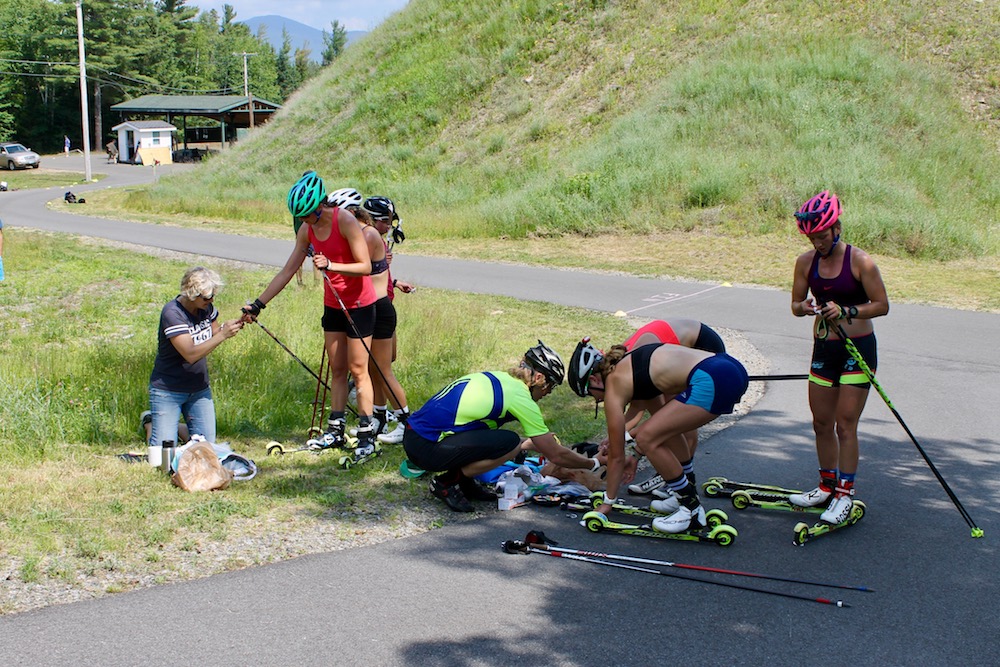
Craftsbury Green Racing Project Head Coach Pepa Miloucheva (l) and Stratton Mountain School T2 Team Head Coach Pat O’Brien (center) assist athletes with lactate testing after the U.S. Ski Team’s rollerski team sprint on July 15, 2018 in Lake Placid, N.Y.
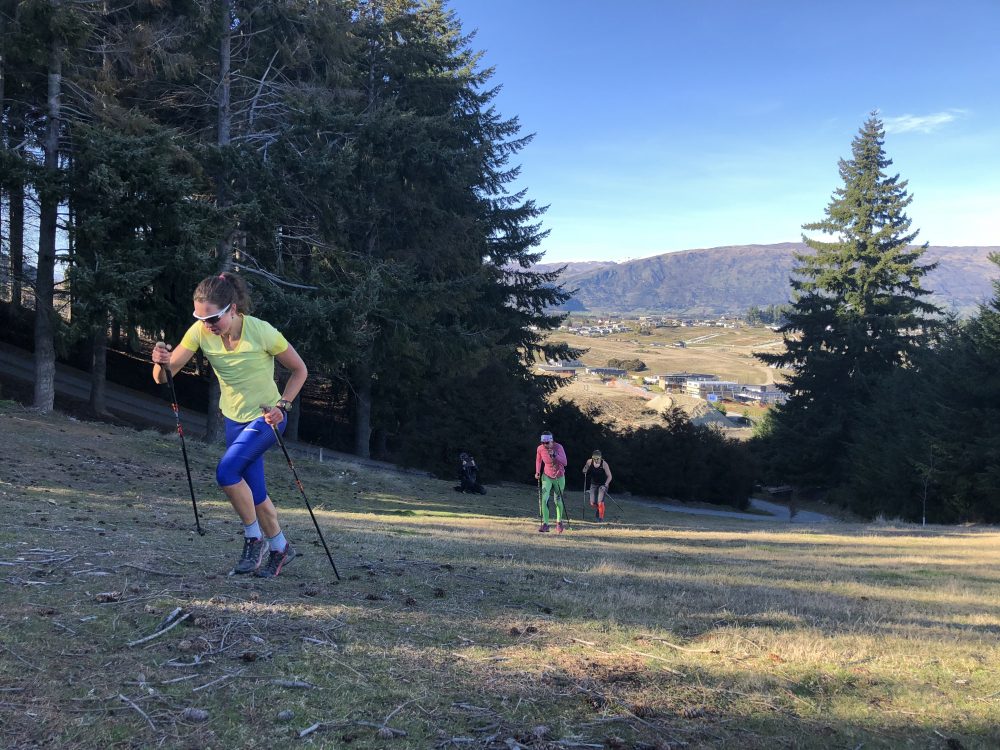
If you’re looking to track your own progress on an uphill course, Miloucheva recommends finding a stretch of road or trail with little traffic that takes roughly 10-12 minutes. The effort should be steady throughout the test and you should finish feeling completely spent.
Be careful not to start out too fast as you want your heart rate to increase throughout the test, rapidly at first then gradually continuing to rise toward your lactate threshold heart rate, which can be estimated as the average heart rate sustained over the last five minutes of the test assuming it was well-paced. (TrainingPeaks has a deep dive on blood lactate and lactate threshold here, or you can read this description of lactate threshold training by Len Kravitz Ph.D., Exercise Science professor at the University of New Mexico.)
As for the course, you’re looking for terrain that is runnable, meaning you won’t need to resort to walking or hiking, and a relatively consistent grade.
Miloucheva later added that many veteran athletes have their own aerobic fitness test piece, which is also perfectly sufficient.
“I’m an old lady and I have this loop around the lake I do every year and I measure my time just for fun. So in general, everybody who has been training for years, they have a place where they can run the test.”
Miloucheva has also used a 1-kilometer uphill double pole test on rollerskis with some of her athletes. Her course starts relatively flat, climbs gradually, then levels off at the finish.
“The biggest thing is that [athletes] need to keep moving, so it cannot be very steep because strength and the resistance become the issue [rather than fitness].”
She has found this test harder to standardize than the run test, meaning results must be taken with a grain of salt.
“The problem using it year to year is that [the athletes] don’t always use the same rollerskis, they change wheels, cold weather and cold pavement changes a lot. So you have to consider all these details with the results.”
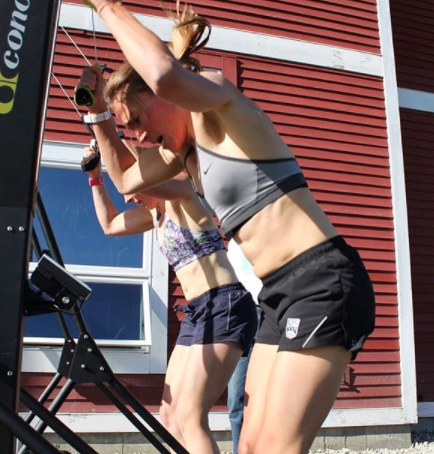
Sophie Caldwell and Annie Hart square off for a SkiErg time trial during a week of testing with the SMST2 team in 2017. (Photo: Instagram @sophiecaldwell(
Because of the ease of standardization, Miloucheva prefers using SkiErg time trials, as athletes can repeat the test indoors with a fixed resistance. Her junior athletes complete 1 and 2 k time trials, and her senior athletes additionally complete a 5 k test. The CGRP athletes complete the tests while hooked up to a VO2 Max testing equipment. If these are available to you, these tests could also serve as a benchmark for aerobic fitness with some ski specific strength indicators.
As for strength, Miloucheva is working on developing a test she feels is informative and can be standardized, as she is not satisfied with other tests used previously. She has historically used a version of the Canadian Strength Test (outlined here by Jackson Hole Ski & Snowboard Club), which counts the number of pull-ups, sit-ups, push-ups, box jumps, and dips an athlete can do in one minute with one minute rest between each exercise. Some differences in Miloucheva’s version include the use of single leg squats within a 30 second time period and measures pull-ups to exhaustion.
If you’re completing this test from home, ask a member of your household to help time, count, and keep your form honest so the data reflects your current strength accurately.
Okay, you’ve done an initial test of your aerobic fitness and/or strength. Now what? How soon should you repeat the test to check for improvement?
Miloucheva reiterated that it is essential to plan testing between training blocks to assess whether the block had the intended impact on fitness. She explained that her testing weeks are written into her general yearly plan for athletes at the beginning of the season.
When considering your own plan, space the tests out roughly 6-10 weeks to give the body time to absorb and respond to training. In addition to striving for a faster time, you can also consider trends in heart rate, as more time during the test spent closer to the lactate threshold heart rate is also an indicator of improved aerobic capacity.
To get the most information from a testing period, it is essential that each round is approached the same way, including how the training looks in the days prior and the warm-up performed before beginning the tests.
“You want to have a standard approach into the test, because you don’t want to do the first test after a very exhausting week and the second after an easy week, because it will affect the results.”
For CGRP athletes, this typically looks like one or two days of rest or easy training prior to a test.
There you have it. If you’re looking to assess and monitor progress in your fitness, first select and understand a training plan. Then, determine what factors of your fitness you’d like to assess and decide when a set of tests might fit best between different blocks within the training plan. Finally, do what you can to ensure that when the tests are repeated, the environment is as controlled as possible and your approach is the same so improvement (or lack thereof) between tests provides accurate insight into how your body is responding to training.
In response to the popularity of last year’s Masters’ Camps, we’ll be offering two sessions again this December.
December 3-6, 2015 December 10-13, 2015
The first camp will be geared more toward newer skiers or those who haven’t raced before; the second will be aimed more at the master skier who has been competing and wants to race faster.
Participants will get three days on snow (four if you get to campus early enough on Thursday) full of instruction. Coaching staff for the camps are being finalized but will include Craftsbury’s Ollie Burruss, Janice Sibilia, Craftsbury GRP’s Pepa Miloucheva (session 2 only), GRP athletes, Craftsbury coaches and more (we’re hoping for a return of Gunstock’s Nina Gavrylyuk). The curriculum consists of technique drills, longer base-building skis, video review to reinforce technical points, flexibility and yoga, plus lots of presentations by the coaching staff on a range of topics including strength, program personalization, and nutrition. The weekend won’t be all work though: there’ll be plenty of time for relaxing with your fellow campers and staff, enjoying sumptuous meals in our Vermont Fresh Network Dining Hall (included in the full price camp), trying some biathlon, gear demo opportunities, and free-skiing. Registration starts at $300 for daycamp ($250 for NENSA or Craftsbury members) or $500 with overnights ($450 for NENSA or Craftsbury members).
Worried about conditions? We’re waiving our standard cancellation policy for the period of November 20 to December 17. If we can’t provide at least a kilometer of skiable snow in time for your stay, we’ll give you your money back.
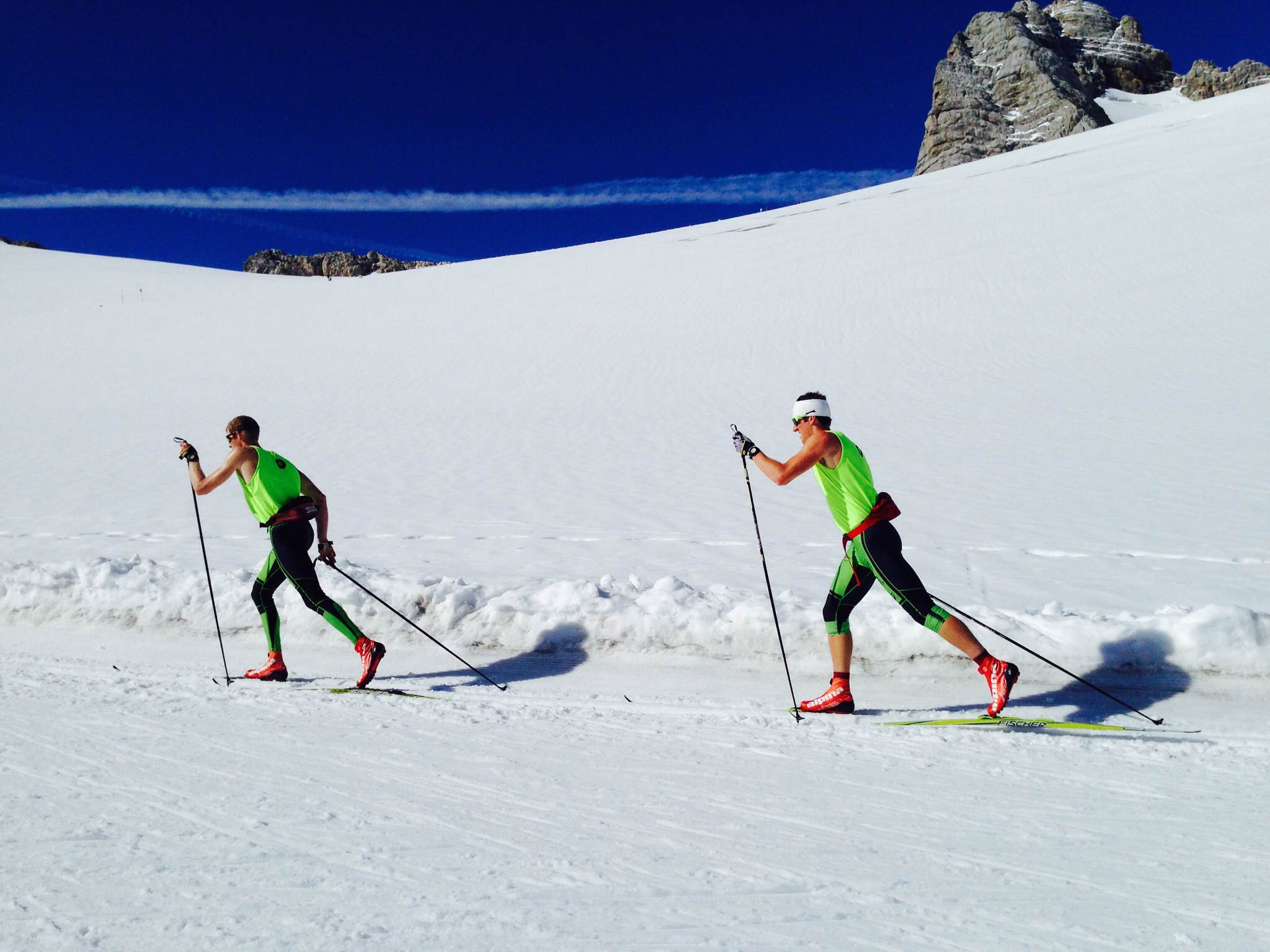
Craftsbury Green Racing Project skiers traverse the Dachstien Glacier in Rasmau, Austria as part of the teams on-snow camp in September 2014.
Anne Kyllönen is an exemplary skier. The Finnish athlete’s technique – both flawless and efficient – has served as an example for the USST and other American club teams over the 2014 summer to help visualize improvements.
But why watch a video when the real thing can be right in front of you?
Such was the case for Ida Sargent, who had the opportunity to mimic the 2014 Olympic medalist’s technique in-person during the Craftsbury Green Racing Project’s (GRP) training camp in Ramsau, Austria.
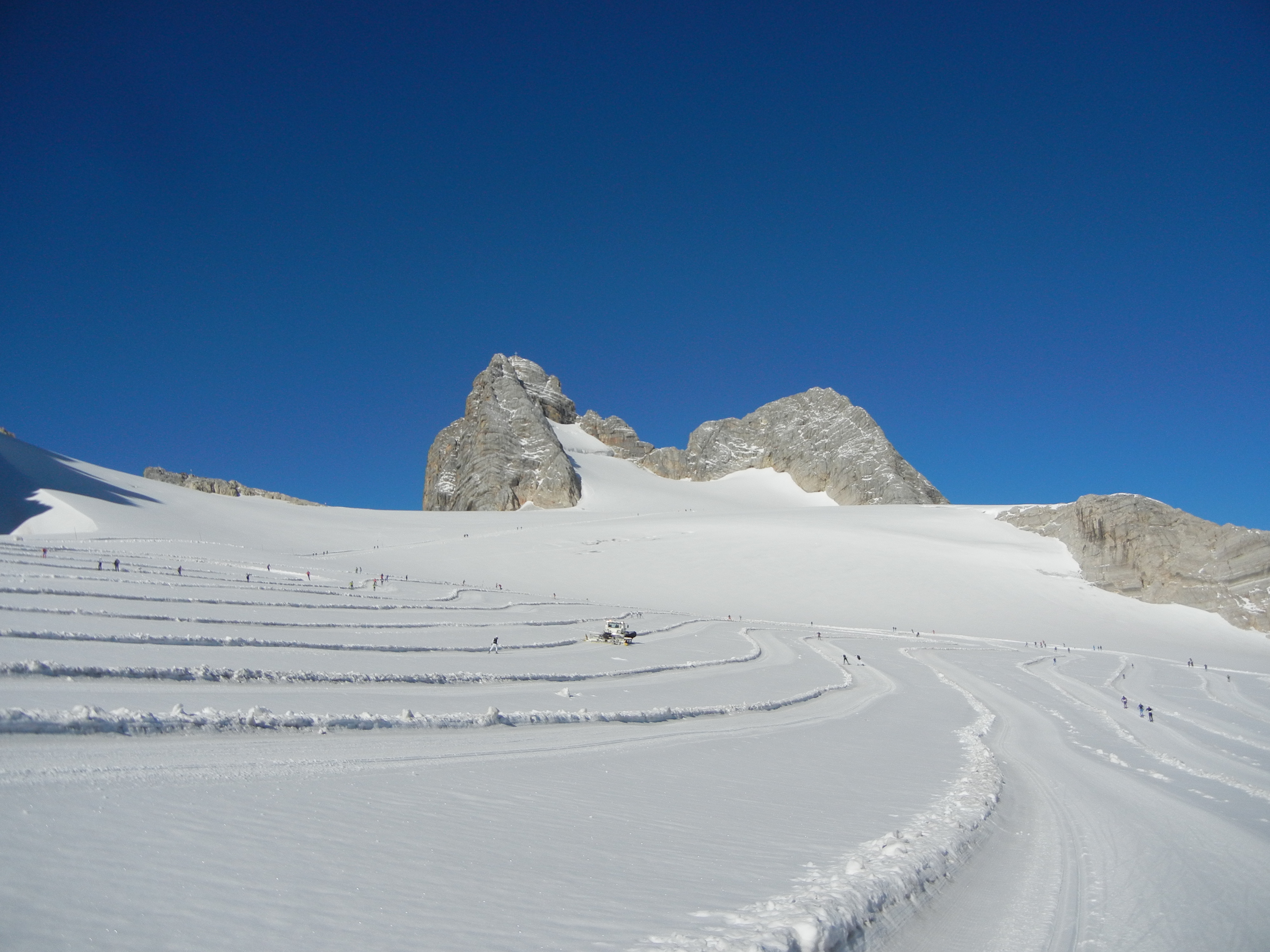
Pristine September skiing on the Dachstein Glacier in Ramsau, Austria. (Photo: GRP Blog)
This is the first year that GRP has made the summer trip to Austria, and so far the team’s skiers have given the experience rave reviews. While traveling across the globe to find on-snow training opportunities has become a rarity in U.S. skiing in recent years (Noah Hoffman was the sole USST member to make the trip to New Zealand this year), Austria might be closer than it seems.
According to GRP athlete Liz Guiney, it is just as demanding to travel to Europe from the East Coast as it would be to go to Haig or Eagle Glaciers, which are located in Canada and Alaska.
“Once we made it to Munich, it was an easy three hour drive to Ramsau, and we were all set,” Guiney wrote in an email. “Logistically speaking, it makes more sense for our team to come here, because anyone is welcome to use the Dachstein (Glacier) and you don’t have to take a helicopter up there.”
The team arrived in Austria Sept. 8 and will remain until the Sept. 27. The squad of GRP athletes in attendance includes Gordon Vermeer, Pete Hegman, Alex Schulz, Andrew Dougherty, Ethan Dreissigacker, Jake Barton, Mike Gibson, Caitlin Patterson, Kaitlynn Miller, Guniey, USST member Sargent and the coaching staff of Pepa Miloucheva and Nick Brown..
The Dachstein Glacier, which boasts an elevation of 2,800 m, or just under 9,200 ft., is one of several European glaciers that is groomed for off-season skiing. Each year skiers from around the world take advantage of the 9 k of groomed summer trails.
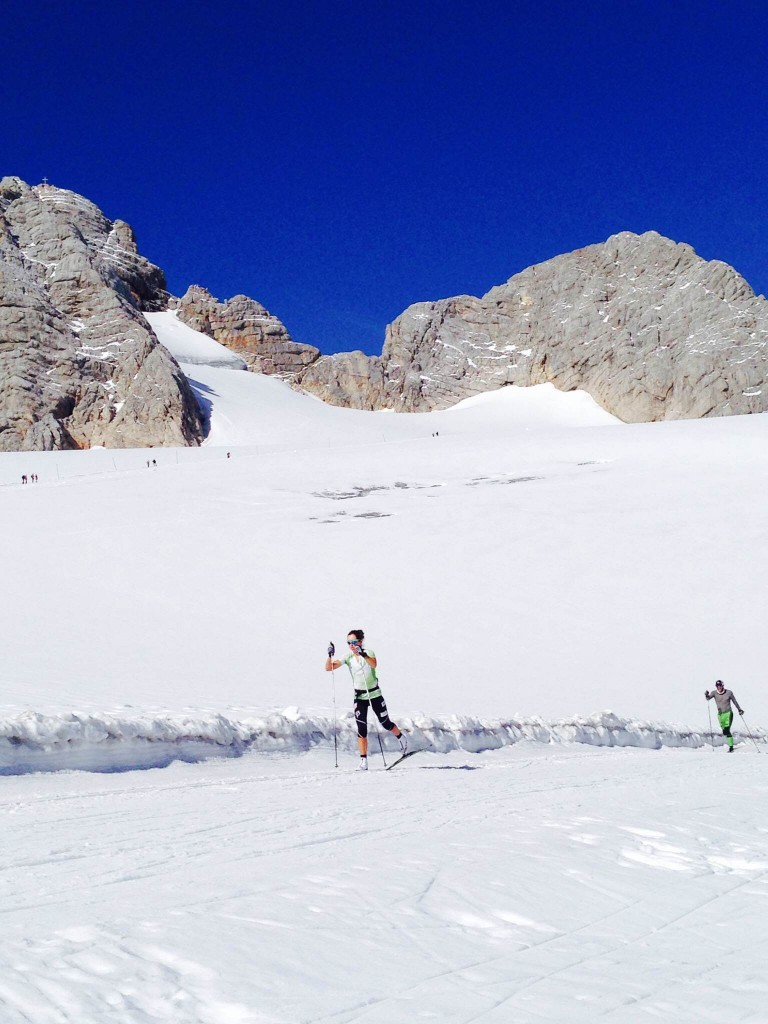
According to Sargent, the glacier’s conditions have been better than expected with hard and fast tracks. Even though the team endured some rain and fog during the camp’s first week, she said the sunny days have been spectacular.
“The skiing conditions have been really good… The past couple days have been those magical days when you have to pinch yourself to see if it is actually real,” she wrote in an email. “It is sunny and warm but the tracks were staying very firm and fast. I didn’t even know that was possible.”
https://www.youtube.com/watch?v=EfwXde3TC0s
While the afternoons can be too warm for skiing, the team often runs on one of the many trails that take them straight from the door of their house in the Austrian Alps. The lower elevation running also helps diversify their training.
According to Sargent, the main purpose of the Rasmau camp is to implement technique changes made during the summer to on snow skiing. With the Austrain camp, Canmore’s Frozen Thunder, and the start of the World Cup season in November she hopes to eliminate as much off-snow training as possible.
GRP coach Miloucheva explained that partaking in on-snow training for an extended period of time in the summer and fall can aid her athletes in avoiding the technique mistakes of the previous season.
“Back in U.S. we normally have only a few days to a week on snow before we start racing and this isn’t enough, so normally everyone goes straight to same mistakes they did last winter,” she wrote in an email.
Guiney explained that the Rasmau camp helps skiers like herself have a seamless start to the season because it allows for a low-pressure transition from rollerskis to snow.
“That real snow feeling is very hard to replicate, and making technique changes in, say, West Yellowstone, when you also have to prepare to race a few days later, can be challenging,” she said. “This way we can make and implement changes, and it will make the transition to snow in November that much easier.”
Caitlin Patterson (GRP) takes advantage of the sunshine to ski the firm and fast conditions of the Dachstien Glacier in Ramsau, Austria as part of the GRP’s on-snow training camp. (Photo: GRP Blog)
GRP isn’t the only team hoping to take advantage of early fall skiing. The Swedish, Finnish, Russian, Estonian, and Japanese national teams have been training alongside the American team – an experience that has proven to be extremely valuable for some of GRP’s athletes.
“It’s really inspirational to share a training venue with the best skiers in the world; technique lessons are just a matter of looking around you or hopping in behind someone and hoping they don’t mind,” explained Guiney, who said that she spent time skiing behind both Swedish star Charlotte Kalla and Kyllönen.
Guiney said that one of the highlights of the camp was witnessing GRP skier Andrew Dougherty jump in behind Olympic champion Giorgio Di Centa of Italy.
“Andrew is always wearing hats with pom-poms – it’s kind of his ‘look.’ We always joke that he looks just like Di Centa, and seeing them ski together was priceless,” she said.
Despite the many skiers on the glacier’s trails, Sargent said that space wasn’t an issue. The 26-year-old, who has been regularly skiing with several Swedish and Finnish skiers over the course of the camp, said that it has been great to catch up with friends from the World Cup.
GRP continues its Rasmau training camp until Sept. 27, when it returns to the U.S. for the rest of the fall training season.
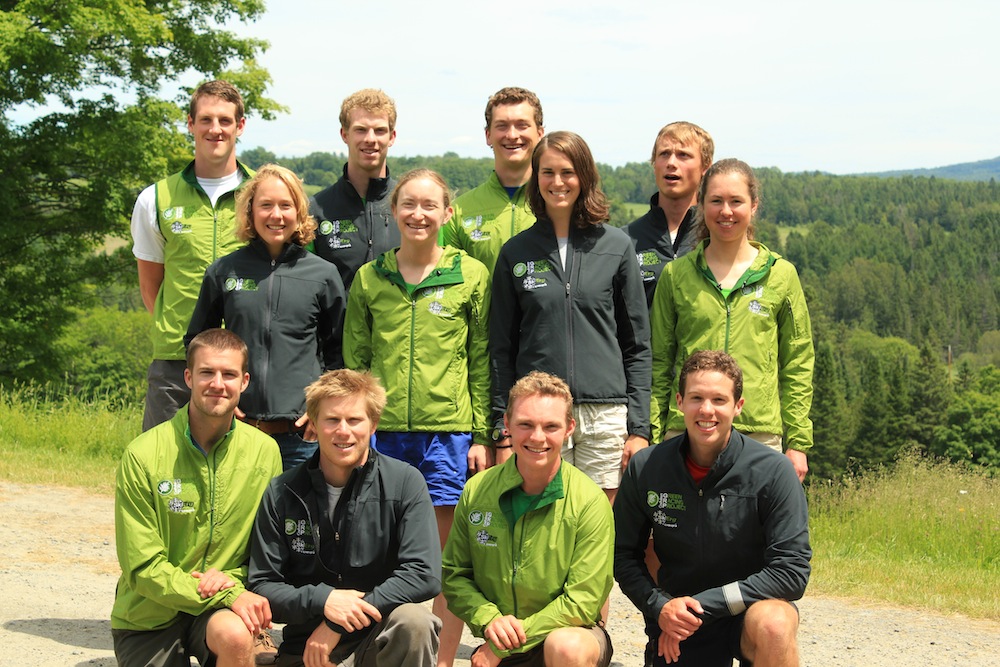
The 2013/2014 Craftsbury Green Racing Project team at their base in Craftsbury, Vt. From back left: Alex Schulz, Pete Hegman, Ethan Dreissigacker, Alex Howe, Ida Sargent, Hannah Dreissigacker, Liz Guiney, Caitlin Patterson, Jake Barton, Patrick O’Brien, Mike Gibson, Gordon Vermeer. Not pictured: Susan Dunklee, Clare Egan, Andrew Dougherty. (Courtesy photo)
Note: In an effort to ring in the 2013/2014 season, we’re kicking off our second-annual elite team preview – now called “The 12.” Starting with the Craftsbury Green Racing Project and proceeding in no particular order, we’ll profile 12 of the biggest powerhouses in U.S. cross-country skiing throughout the next several weeks.
Team: Craftsbury Green Racing Project (CGRP)
Coaches: Pepa Miloucheva (head coach, 16th season), Nicholas Brown (wax technician and assistant coach), Anna Schulz (junior coach), Jeremy Nellis (Bill Koch League coach)
Alex Howe, Gordon Vermeer, Patrick O’Brien, Andrew Dougherty, Pete Hegman
Provisional team: Alex Schulz (Dartmouth grad), Jake Barton (Colby), Mike Gibson (University of Vermont), Ethan Dreissigacker (formerly of the US Biathlon’s junior team)
Who’s new: Guiney (formerly of University of New Hampshire, Utah Nordic Alliance/Park City Nordic), Andrew Dougherty (Denver University grad, Alaska native), Pete Hegman (UVM/Mansfield Nordic)
Who’s missing: According toMiloucheva, Midwest natives Maria Stuber and Bryan Cook are Colorado-bound, Amy Glen left the team at the beginning of last season, and Dylan McGuffin, Tim Reynolds and Nils Koons are most likely “taking a break from training and taking on different jobs.”
Ida Sargent (CGRP/USST) during a team time trial on June 13 near Craftsbury, Vt. (Photo: Sheldon Miller/CGRP blog)
Top results last season: Right on par with the rest of the career-best performances from the U.S. Ski Team (USST) women’s squad, Sargent broke through early last season with a ninth-place finish in November at the World Cup classic sprint in Kuusamo, Finland.
Two months later, the 25-year-old from Orleans, Vt., really hit her stride in Sochi, Russia, making the A-final in a freestyle sprint and placing sixth at the pre-Olympic World Cup. Two days later, she placed fifth with Sadie Bjornsen in the team sprint.
“I want to make more appearances in the finals [and] hopefully build another step towards a World Cup podium down the road,” Sargent recently told FasterSkier after being promoted to the USST A-team this season.
And the heart of her training is still in Craftsbury. “This is the perfect place for me,” she said. “I grew up near here, so I’m used to the rural lifestyle. We spend so much time on the road in the winter that having the opportunity to be at home in one place feels great.”
U.S. Biathlon’s leading woman, Dunklee placed seventh in the 15 k individual at the pre-Olympic World Cup, and Dreissigacker bumped herself up to the USBA A-team after making her first World Championships. The two turned heads at SuperTour Finals – the last events of the season in the U.S. for elite cross-country skiers – when Dunklee nabbed fifth in the skate prologue then made the A-final in the classic sprint. She ended up sixth in a discipline she hardly ever competes in, and Dreissigacker was 11th in the 10 k freestyle and 12th in the sprint.
At U.S. nationals in January, Howe captured bronze in the freestyle sprint. Patterson tallied two fifth-place finishes (in the 10 k skate and 20 k classic mass start), and placed third in the American Birkebeiner 52 k skate race.
Coach’s comment: “The team is doing very well,” Miloucheva wrote in an email about her 11 elite teamers. “The new members are great and are bringing new level of excitement and positive competitiveness to the team.”
This year, Craftsbury invited four of its former skiers to a new provisional team to help them transition from college. Two of the four men are nordic skiers (Schulz and Barton), and two are biathletes (Gibson and Dreissigacker).
“We don’t have any camps planned for the summer, but trying to get organized to bring CGRP, MWSC [Maine Winter Sports Center] and Stratton T2 teams together for some small training blocks,” Miloucheva explained. “In the fall we have a camp in September in Lake Placid and October in Park City.”
For more from Craftsbury’s longtime coach, check out this post-training video and others from the Craftsbury Outdoor Center.
The Craftsbury Outdoor Center is proud to announce the 2010 additions to the Green Racing Project. After the GRP’s successful inaugural season, we received a lot of applications. After a written and personal interview process with the many highly qualified applicants, we would like to welcome the following athletes to the Green Racing Project for 2010.
Dylan McGuffin joins us from the University of New Hampshire where he led the Wildcats with nine top 20 efforts, including three top-five finishes this past season, and one win at the St. Lawrence Carnival. He capped his career at UNH in grand fashion with a 10th place, All-American performance, in the men’s 10k classic at NCAAs this spring. Graduating with a degree in forestry, we hope our trails will benefit from his talents. The Northfield, New Hampshire native grew up skiing with the Gunstock Nordic club.
Joining the GRP represents a Vermont homecoming of sorts for Patrick O’Brien. The Putney and Stratton skier is another in the long line of standout athletes from southeastern Vermont’s nordic hotbed. Patrick graduates from Dartmouth College with a degree in Environmental Studies. He captained the Big Green men’s team this past season, helping them to their second consecutive undefeated season. His individual results featured three podiums and four top 10s out of his ten top 20 performances in ’09-10. When one reviews the results, it’s interesting to note how many of these lay within several places of now teammate Dylan McGuffin. It will be fun to watch as they push each other in the coming year.
Susan Dunklee has been involved with Craftsbury at various points in her ski career, growing up less than 20 miles away in Barton, Vermont. Beyond her competitive resume, the 2008 Dartmouth graduate brings her Ecology degree to the team. Susan has focused on biathlon since her graduation and will be part of the US Biathlon B team as well as the GRP this coming year. In 2009-2010, she won two NorAm Cup sprints and podiumed a third. After finishing 3rd at the US Olympic qualifying races, she was selected for the U26 IBU World Championships in Otepää, Estonia, finishing 17th in the 7.5k Sprint. She closed her season with a win in the 12.5k mass start at North American Championships in Fort Kent, ME. Closer to home, she won the Craftsbury Marathon this past winter as well.
These three athletes join the six current members of the Green Racing Project and will arrive on campus in the coming weeks. The athletic goal of the Green Racing Project remains to provide support for post collegiate elites as they continue their development. Coaching duties are handled by2009-10 NENSA Coach of the Year Pepa Miloucheva.
Beyond their sporting focus, athletes will also work on a broad range of sustainability projects around the Center, as well as contributing to the New England ski community that has nurtured them thus far. It’s this work that will help to further the environmental and sustainability aspects of the Center and GRP’s mission.
Thank you to all interested applicants – best of luck as you pursue your goals. We are flattered to receive such interest. It was not an easy job to make this year’s selections.
To the three new GRP members – welcome aboard! We look forward to working toward all our goals together.
The Craftsbury Green Racing Project is now accepting applications for the 2010-2011 training year. Space will be limited as all current team members are planning to continue with the program. We hope to be able to add at least 2 new members to the team. Applications will be due by April 1st and decisions will be made by May 1st at the latest.
The GRP had a successful first year, with members earning a number of top ten SuperTour finishes, one making the U23 Worlds team, another making the U26 Biathlon team, several biathlon NorAm podiums, and top finishes at Eastern Cups and Open Carnivals.
A key responsibility for GRP members is making contributions to the mission-related work of the non-profit Craftsbury Outdoor Center, GRP’s host organization. GRP projects in the past year have included: trail improvements, coaching of youth and junior skiers, outreach to area schools, development of plans for both a garden and a compost system for the Center, construction of a stone/brick pizza and bread oven, organization of events and programs at the Center, design of the GRP website and clothing, blogging and writing articles, helping develop a regional trail system, working to bring more local food into the Center’s Dining Hall.
Athletes applying, or thinking of applying should find a way to talk to coach Pepa Miloucheva while at one of the March ski races GRP will be attending, or come to Craftsbury for a meeting. You can contact her at: pepam@craftsbury.com, or call 802-586-7767 ext. 33.