Tag: Guri Hetland

  • Canada’s Newest Coach, Tor-Arne Hetland Gets Dose of Canadian Ski Life at Sunshine Camp

    Canada’s Newest Coach, Tor-Arne Hetland Gets Dose of Canadian Ski Life at Sunshine Camp

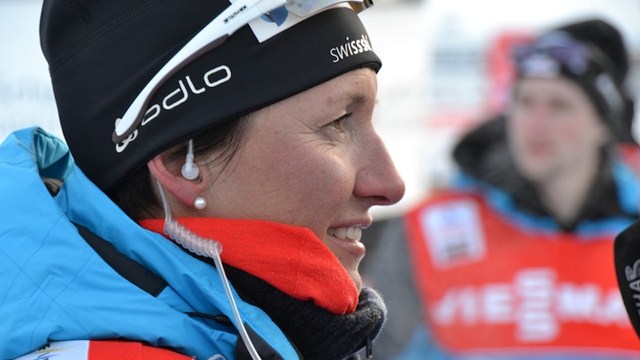
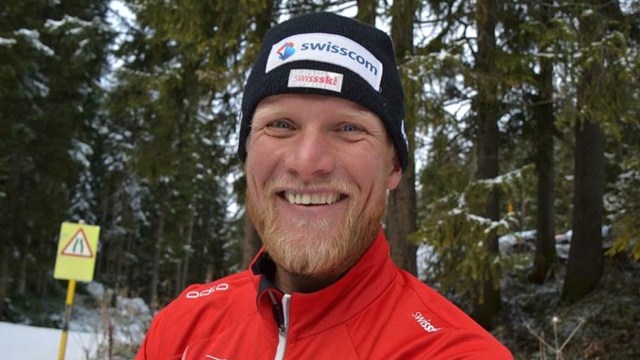
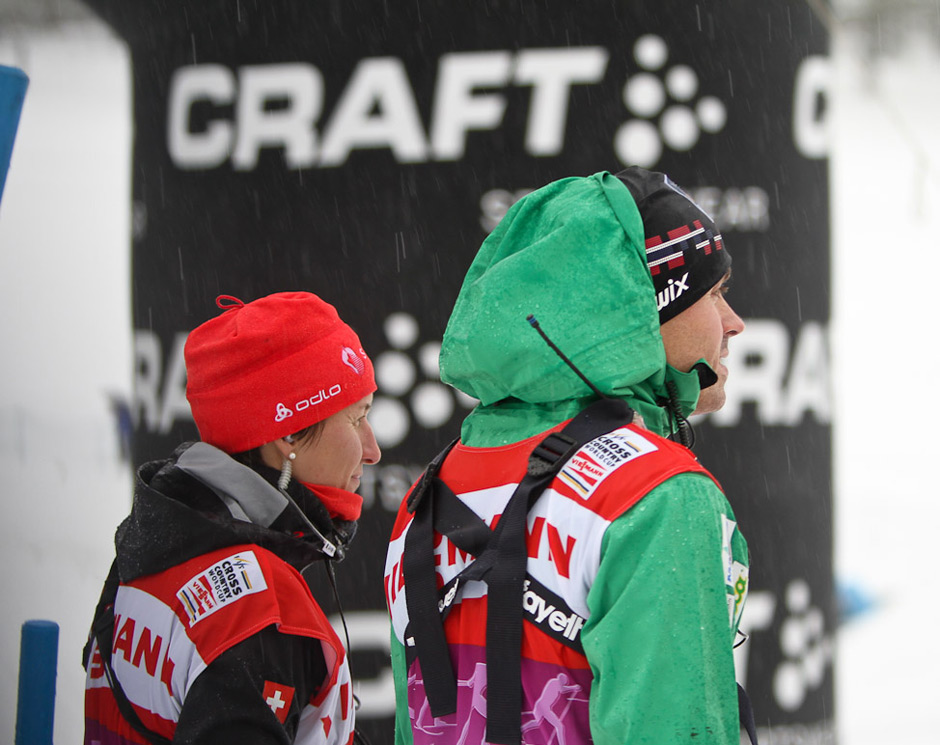
    Tor-Arne Hetland, Swiss sprint coach from 2010-2014 (Photo: FIS) http://www.fis-ski.com/cross-country/news-multimedia/news/article=tor-arne-hetland-nor-become-world-cup-team-coach-for-canada.html
    Tor-Arne Hetland, Swiss sprint coach from 2010-2014 (Photo: FIS-Ski.com)

    Tor-Arne Hetland can now add Canada to his list of homes-away-from-home after wrapping up his first training camp with the World Cup team at the Sunshine Village ski area in Banff, about 45 minutes northwest of Canmore, Alberta.

    Yes, he’s Norwegian — and a gold-medal Olympian at that (in the individual sprint at the 2002 Salt Lake Games). He also won silver in the 2006 Olympics classic team sprint and tallied five World Championships medals (three golds, a silver and a bronze) before retiring as a result of a knee injury and asthma in 2009.

    That year, he started coaching for Germany. The next season in 2010, he became a sprint coach for the Swiss World Cup team.
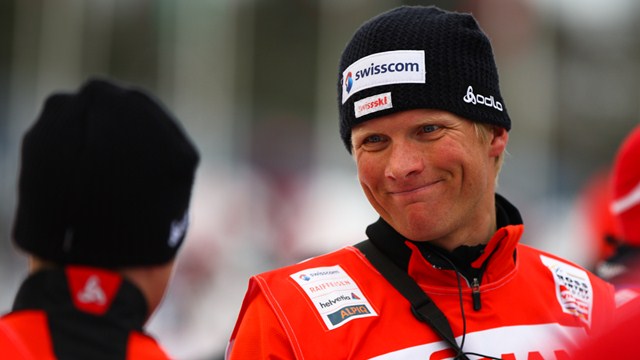
    Tor Arne Hetland, a Norwegian gold medalist and world champion in cross-country skiing, will become one of Canada's World Cup coaches. (Photo: FIS/ NordicFocus)
    Tor-Arne Hetland, a Norwegian gold medalist and world champion, former German and Swiss sprint coach, whom Canada recently hired as a World Cup coach.  (Photo: FIS/ NordicFocus)

    His contract with Switzerland could have been terminated at any time, he said, and he would’ve been gone in three months. Yet he worked side-by-side with his wife, Guri Hetland, head coach of the Swiss team, for four years until both ended their contracts with the Swiss-Ski Association this spring.

    Meanwhile, Tor-Arne had something in the works with Canada, ultimately agreeing to a one-year contract as World Cup coach. He started in earnest in mid-April and once March 31, 2015 rolls around, he predicted he’ll likely sign on for another year or more.

    “If things are working well I am very open-minded to keep on the work,” Hetland said on the phone in mid-May from Sunshine Village, where the Canadians held their first on-snow camp of the 2014/2015 season.

    Between training sessions, he talked about his first few weeks with the team and what he had observed so far. The approximately 10-day camp wrapped up on May 20, at which point Hetland headed home to Davos, Switzerland, to see his wife before returning to North America in June for the team’s annual camp in Bend, Ore., later this month.

    Here’s what he had to say about first impressions:

    FasterSkier: How has it been going — getting to know the team?

    Tor Arne Hetland: It has been very interesting. [National-team head coach] Justin [Wadsworth] and I … we’ve been sharing information and training philosophy. We’re starting to get a plan. It’s good, the athletes are very motivated for the training and ready to do the work that they have to do to be on the top. They are also training with the younger athletes and the development team and it’s good to see the whole team starting to train.

    FS: Out of the four men on the  World Cup team, who was there?

    TAH: Alex [Harvey] is doing his courses on the school, so he is not here, but Ivan [Babikov], Len [Valjas], Devon [Kershaw] – there are like 20 [athletes] on the mountain and also the biathletes are also training up here and [Para Nordic] athletes so it’s the best skiing in the world … I have been skiing in a lot of places and it is not possible to get it better.

    FS: Have you spent much time in Canmore before?

    TAH: As athlete and also as trainer so I know the nordic center, but now I have tried some of the trails for running and it’s good, very good training there.

    “I think it is possible to be the best skier in the world while living in Canmore.” — Tor-Arne Hetland, Canadian World Cup Coach

    FS: When were you last home in Davos?

    TAH: After Easter I was going home because I had my tests on the trainer-education program in Switzerland, so I had to do the test and do some waiting and doing some work. Now I am done with … the highest education you can get as a coach in Switzerland so that was two years with working on this one, so that’s cool (laughs).

    FS: How’s it going back and forth from Europe?

    TAH: It’s eight hours [time difference], but I’m getting better and better with it, and I’m taking one day extra in front of training camp so that I’m ready to coach the athletes … I’ve been prepared to go to training camp before I leave Europe so then I can adapt a little bit for the time difference.

    FS: Is it hard being apart from your wife?

    TAH: We are thinking about the life. That is fine. We have been working very close the last years and it would be good to be working a little bit on different things now and having a little bit difference. We are used to this from when I was athlete so we will spend more quality time together when we are together. I think it will be good for both of us.

    FS: Has it been hard dealing with the media attention on both sides, from your hire to her leaving the Swiss team?

    TAH: Nah, not at all. I’m used to it, to be in the news that three days and then it’s over. That’s no problem.

    FS: What about Guri? 

    TAH: Nah, it’s a little bit strange that Switzerland had those results, the best ever the last four years [and then to not have her contract renewed]. The team has been very strong and done steps in the right direction and not going on with the same program, but it’s good with some changes and go on in life. The politics in Switzerland, you have to discuss with other people than me.

    FS: So what training camps are coming up this summer — I heard you might be taking the Canadians to Europe in July?

    TAH: We are discussing. New Zealand is on the calendar, and that’s the Plan A, but there is the invitation to go to Europe also, so the final call of this one we haven’t [made] … we have New Zealand on the plan in August.

    FS: And Park City in October and Bend in June/July, right?

    TAH: Yep.

    FS: Will you be at all of the training camps?

    TAH: I will go to all the training camps and then also the whole World Cup season, maybe taking one weekend off in the World Cup. That’s maybe the biggest change for the athletes that they will have a coach in Europe now, so it will be easier for Justin and for Louis [Bouchard] also. Base camp will be in Central Europe — Davos … so that would be easier for me to cover.

    FS: Does that mean your athletes are going to be staying at your place?

    TAH: (Laughs) No. We will rent a flat or find a hotel for the athletes.

    FS: Did you go to all the World Cup races last year?

    TAH: I think I did everything. Maybe the last part of Tour de Ski I didn’t do it. Also not in Lillehammer. That’s what it normally is for me.
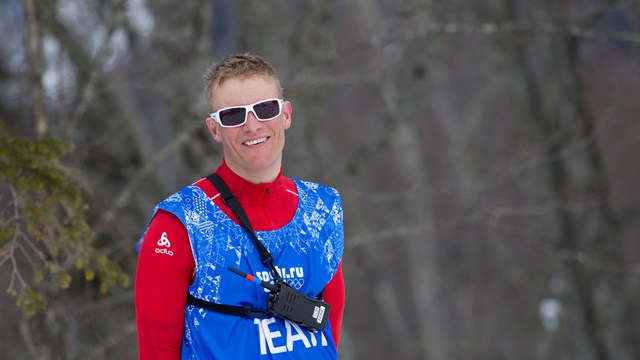
    Tor-Arne Hetland, Swiss sprint coach from 2010-2014 (Photo: FIS) http://www.fis-ski.com/cross-country/news-multimedia/news/article=tor-arne-hetland-nor-become-world-cup-team-coach-for-canada.html
    Tor-Arne Hetland (Photo: FIS-Ski.com)

    FS: How many athletes were you responsible for? 

    TAH: In sprinting, it was seven total [athletes].

    FS: So this team is a little smaller.

    TAH: Yep. That’s good.

    FS: What have you noticed about your athletes so far? Anything specific you’re working on?

    TAH: I have seen them and I have also told them what I am seeing, and we will would work together and improve it, and then we would take step by step to try to see how far it’s possible to go.

    FS: How much potential do you see in veterans like Ivan and Devon, guys who have hinted at retirement in the coming years?

    TAH: I would not put money that Ivan and Devon will not ski in the next Olympics. I think they have the best years in front of them because, like 31, 32, that’s starting to have a lot of experience, and if you are motivated for the training — and the guys are really motivated for the training — then I think they will improve and also can have very good years the next four years.

    FS: Are you showing them anything they haven’t seen or heard before?

    TAH: Maybe not heard before, but maybe I’m telling it in other ways or it comes out a little bit different so that can be a positive thing or a negative thing. So I try to find out how does this spoken here, and try to bring my ideas of training and coaching.

    FS: How different are the Canadian and Swiss systems, for instance?

    TAH: Some different. It is going on how much you are training and that’s quite equal with other countries. We have everything we need here in Canada, but it’s different and I try to learn this system, and I tried to get them a little bit more knowledge, but we have what we need.

    FS: As a sprinter, how is it coaching distance or more all-around skiers?

    TAH: As athlete I was trying to be all-around skier, and one of four men’s athletes that had been winning sprint, classic and skating, and distance skating and classic, so my goal the whole time was to also be good in distance skiing. In the last years, we had been working together, Guri and me, with the distance and sprinters in Switzerland so I’m well-known with distance skiing also. And, finally a lot of this is going over, with sprint and distance, their aerobic capacity and the possibility to be moving very, very fast at the end of races and that’s the thing in distance and in sprint. And then we have to do the good qualities from each athlete, improving this so the athletes can be even better the next years.

    FS: Why did this opportunity coaching for Canada appeal to you?

    TAH: For me the motivation is to work with motivated athletes and a motivated team [that] really, really want to be the best, and I am motivated to give my knowledge away and try to be a part of this team and bring Cross Country Canada on a new level.

    FS: Why do you think Canada wanted you?

    TAH: (Laughs) You have to ask somebody else, but I think they have seen me around in more than one year in the World Cup circuit and I think they saw some of my qualities and they wanted to put this together with the team.

    FS: What about a new perspective?

    TAH: It is asked for new ideas into the team and I’m ready to give this, and also more stability in the World Cup. That’s the main thing and the ideas.

    FS: Did you explore this possibility because you knew you weren’t going to continue with the Swiss team?

    TAH: I don’t know when we had the first contact, but it went out that it was possible to finish the work in Switzerland and then start in Canada, so it’s worked very well with the work situation for the moment.

    FS: Were you ready for a change?

    TAH: Yes.

    FS: How would you describe your time with the Swiss team and working with your wife?

    TAH: It was good years and interesting years. I learned a lot of new things and also got more experience as a coach because I was going directly from athlete to coach. Those years I have been learning a lot and I think that’s important. It’s not 100-percent sure, but an athlete can be a good coach … You have a lot of experience from your racing time that is very important, you know what where training is going over and you know of the feelings from the athletes. And you get this together from the work experience that’s something that brings you to a new level.

    FS: Do you have any emotions tied to how things ended with the Swiss team and the direction they’ve chosen to go?

    TAH: Nah. No emotions over this. We have a contract and the contract is clear that it can be stopped in three months, so that’s okay for me. For sure I would like to keep the contact with the athletes that want my helping in Switzerland, that are giving me a question or asking me for advice I will surely help them, and also they are a part of my life and that’s cool to keep a little bit of contact with them. But doing coaching work on the side with the swiss team — I will not do that (laughs).

    FS: So now you’re the point person for the World Cup team while they’re racing in Europe, right? Will Louis Bouchard retain his role as an assistant coach?

    TAH: Louis will be for sure in mostly of the World Cups also, so they will be covered with two coaches. And Justin will come to the first World Cup up in Finland so that the team is good, everybody knows what they have to do and so on. Justin will also be in Tour de Ski last part and also in the World Championships. I’m a little bit unsure when Louis will be here, but he will be for sure in something like the last years, and that’s good.

    FS: Who is writing the training plans for the Canmore-based World Cup skiers?

    TAH: [Justin and I] are doing this together and also with the sports psychologist in Canmore. And we end up doing this together to make a year plan and Justin will run the training from training camp to training camp and I will plan the main things in training camp together with … Justin. And then we will see how it’s working out and the needs of each racers.

    “If you are trying to do everything then it’s too much.”

    FS: Last question: how has the sport changed since when you were racing?

    TAH: First of all, from all the mass-start races, you have to have a good finish. If it’s the last three kilometers or the last 300 meters you have to be even more practical. The speed is higher and that demands something different in the training. Also the work with the skis, it’s even more professional for each year, and to have good enough racing equipment is maybe the main part. It was important earlier, but now that every country is running their own program they are getting better and better each year. I think the Canadian team is good in this and what I have seen the Canadian team from outside they had very good skis. That’s maybe the three main points. … Finally it has come down to the athletes.

    FS: Really the last question: what are your thoughts on the race formats? 

    TAH: It’s good in the Tour de Ski, but I can also see that it’s a question which races you are peaking to and say that’s my race, that’s the race that I want to win each year, because it’s not so many that can be fast from Kuusamo until Holmenkollen. So it’s very important to have individual race plans where we are saying that’s your goal, that’s your goal, because if you are trying to do everything then it’s too much. That’s also in the World Championships in Falun — you have to pick the right distance for each athlete.

  • Guri Hetland Weighs Options After Leaving Swiss National Team: ‘I Have No Hurry’

    Guri Hetland Weighs Options After Leaving Swiss National Team: ‘I Have No Hurry’

    Guri Hetland (l) at the 2012 Tour de Ski
    Guri Hetland (l) at the 2012 Tour de Ski.

    At the 2014 Sochi Olympics, Switzerland’s Dario Cologna won nearly half of the events he competed in, taking home two gold medals out of four individual races and a team sprint. In the classic team sprint, he combined with his younger brother Gianluca to place fifth out of 21 teams — not a bad showing for Switzerland.

    So it came as a bit of a surprise when the team’s head coach, Guri Hetland, parted ways with the Swiss-Ski association earlier this month after four years at the helm and Cologna’s personal coach.

    But differences in opinion arise, negotiations don’t always go as one might hope and change ultimately happens. Hetland, 39, perhaps knows that better than most.

    On the phone Monday from Meråker, Norway, a village where Hetland and her husband Tor Arne have a cottage about an hour east of Trondheim, Hetland told FasterSkier that she and her husband consider themselves global thinkers — up for anything and everything, wherever in the world that might take them (Switzerland’s sprint coach for the last four seasons, Tor Arne did not have his contract renewed earlier this spring. Soon after, he secured a job as World Cup coach of the Canadian National Team.)

    Hetland talked about what she’s been up to since her contract with Swiss national team ended, which was publicized in a Swiss-Ski press release on May 10. Her departure from the team was immediate, and not long after, Hetland headed from her home in Davos, Switzerland, to Norway to “talk to some people” and line up job opportunities for the future.

    Later this week, she’ll return to Davos, where she’ll reunite with her husband after his first training camp with the Canadian team in Banff and Canmore, Alberta.

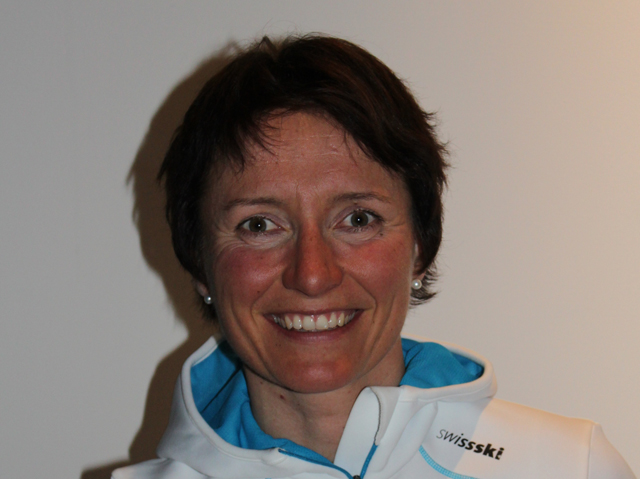
    Guri Hetland (Photo: Swiss-Ski.ch) http://www.swiss-ski.ch/nc/leistungssport/langlauf/news/news-details/archive/2014/may/article/vertrag-mit-guri-hetland-wird-nicht-verlaengert.html
    Guri Hetland (Photo: Swiss-Ski.ch)

    FS: What have you been up to?

    GH: I had some meetings [in Norway] and also I’m doing some management work for Marit Bjørgen this week. I’ve been doing that since 2005. I used to go to Norway to do that kind of work and now I combine working with her with some more days looking on future job opportunities for myself. I’m her manager so I’m doing her sponsorship strategy and negotiating her marketing contracting, her sponsoring contracts and also following up all of her sponsoring and marketing activities.


    FS: Do you manage any other athletes?

    GH: She’s the only one. [Since] I started working in Switzerland in 2010, that’s been a part of the deal that I’m allowed to do that work. It has nothing to do with sport and training — it’s the business part of Marit’s career. It hasn’t been a conflict between being responsible for the team in Switzerland and taking care of her business.


    FS: How have the last couple weeks been for you?

    GH: It was kind of different or kind of changing, suddenly changing. I had planned to work longer in Switzerland and I hoped and I thought that we could agree on the proposal and that I could get the same, more or less the same responsibility that I had before, but my bosses in the ski federation wanted some changes. They wanted to do a strategy change and a structure change, and they wanted me in another position than I had before. I figured out in this new position it would be hard for me and not motivating enough for me to work and do a good job. I saw my future is not the Swiss cross-country team and the consequence is quit and I’ll find challenges somewhere else. That’s the situation right now.

    “They wanted me in another position than I had before. I figured out in this new position it would be hard for me and not motivating enough for me to work and do a good job. I saw my future is not the Swiss cross-country team and the consequence is quit.” — Guri Hetland, Swiss national team head coach from Oct. 2010-May 2014


    FS: What was the dispute?

    GH: Until now or the last four years, I had a really big responsibility being the head coach. I’ve been taking care of the training philosophy and also the selection stuff and more or less everything on top level. In this new structure they wanted to separate the responsibility so they wanted another person to take care of the coaching or the training strategy and they wanted me more to take care of the administration and the organization and not that much about training. For me, it was not really satisfying. It was less responsibility and I felt it was too much of a manager job or organization job and less of a coaching job.


    FS: How did you feel about having so much responsibility before?

    GH: I was quite happy with the structure. Switzerland is a small cross-country team so it’s possible to be a coach and at the same time do some organizational stuff. I think that worked well for me and it made it also for me interesting to have the responsibility, not only the coaching but also more administration or lower-management things. For me, that was a good solution.


    FS: Did the Swiss coaching structure change at all while you were there? Did it change when you were hired?

    GH: No. It’s been quite the same for four years. I came in October [2010] because the former coach was fired and I came and I started to work in October, that’s not the perfect time to start with a new team so I used the winter to get to know the athletes and I could really start systematically working with them in the spring ’11. The structure has been the same all the time and it was also more or less the same before I came into the team.


    FS: What was your sense about the coming changes after this past Olympic season?

    GH: We started discussing in the middle of March and then they told me they wanted to do some changes and they want to have more Swiss people in leading positions. I thought that it would be possible to negotiate and to get more responsibility back and to find a good solution for both parts but they were not interested in moving it in my direction, so yeah, we discussed that for some weeks then I was told it was no chance to get the position I wanted to have. Then I realized the best thing would be to break up or to quit the corporation.

    For sure after an Olympic period it’s the time to do some thinking and maybe do some strategy or structural changes and I respect that the bosses wanted to do that … I wanted another solution, but I had to accept and respect that they had other thoughts and ideas than I had. It’s no hard feelings. For me, it was OK — I had to stay true to my philosophy and my wishes and if I have the feeling I’m not able to do a good job in this new position, then I’m not doing it. It’s better for the team and also for me. Then it was clear to me that will also be the solution.

     “I thought that it would be possible to negotiate and to get more responsibility back and to find a good solution for both parts but they were not interested in moving it in my direction … I had to stay true to my philosophy and my wishes and if I have the feeling I’m not able to do a good job in this new position, then I’m not doing it. It’s better for the team and also for me.”


    FS: What about the Swiss hiring Ivan Hudáč, a Slovakian coach, to coach the World Cup team and Dario Cologna’s training group?

    GH: He will the primary coach of that group or the training group, around the best athletes, but he will not be the head coach [of the Swiss national team]. A Swiss guy will be the head coach, but he will be coaching the U23 team, so yeah, it changed structurally. Ivan will be replacing Tor Arne [former sprint coach] and now they will search for a new coach to work together with him and the training group of Dario and the best guys [on the World Cup].


    FS: Why do you think Dario wanted a change?

    GH: I think it’s important to always develop and improve what you’re doing, also for Dario. These changes could have been done with building in some new resources and persons, still with me in lead, but it could also be done with changing the manpower totally. As I said, it was necessary to find a new coach to replace Tor Arne and they picked Ivan and that’s a really good choice. I know him as a really good guy and a good coach and I think he will be a good coach for the team and I think he will also give Dario some new input. At the same time, Dario is experienced as an athlete and he knows what to do, he knows what he has to do to develop further and stay on top. I’m not concerned about his development. I think it will be positive for him to get some new input and some new ideas.


    FS: Did you ever feel like your gender had anything to do with the team’s decisions?

    GH: No, I’ve never felt that. I always felt I’m getting respect for the work I’m doing and it’s not at all about the gender. I don’t look at gender as this special thing, you need some qualities and knowledge to be a coach and have such a position and those qualities, they are not male or female, it’s about who you are and how you’re working. I never had a feeling it’s different for me or harder for me because I’m a female.


    FS: Back to working with your husband, how did you two split the coaching responsibilities? Were you both working with Dario?

    GH: I was working with Dario. [Tor Arne and I] were coaching the World Cup team together and he was taking care of the sprinters and I was taking care of the distance athletes. I was coaching six men and he was coaching three men and a lady and also taking care of all the sprint issues around the entire team.


    FS: How was working with Tor Arne for the last four years?

    GH: It was working really good. It was a little bit challenging in the beginning to find our roles and to clear our positions and how to work and how to separate work and our private lives, but after some time it really worked good. The last two, three seasons have been really good and we have managed to separate the tasks between us and also separating job and private life.


    FS: What made him a good coach?

    GH: He’s really dedicated. He knows really well what it’s about to be a cross-country skier on that level. He experienced himself what it is. He is having a much knowledge and he is always developing himself. He is creative and he is always putting the athletes and the athlete’s needs in center. He’s hardworking … he puts high demand on the athletes, but also getting a lot of himself and always trying to develop. He has good ideas about training.


    FS: What was your reaction to him getting a job with the Canadian team?

    GH: My first reaction was: it sounds interesting! I know some of the guys and I know Justin and I know it’s a really good group of people. I think they’re also hard working in many ways and their work will fit good with Tor Arne’s philosophy and way of working. For him it’s a new challenge. They’re really good athletes and some athletes haven’t really brought out their potential the last year or the last years, and it’s for sure challenging to try to improve and together with Justin develop these athletes further. The Canadian team seems to be one of the most interesting teams to coach. Tor Arne also thinks it’s a positive and new challenge to work in a new country again and learn about a new country and how things are working in Canada.


    FS: Why do you think Canada is one of the most interesting teams?

    GH: It’s really good athletes. My impression is they are really hard working. They’re motivated, they want to do their best, and they put really much effort into what they’re doing and they have had some really good results, but not stable, good results, so I think the challenge is to do some smaller changes to make them improve or make them develop further and make them more stable and perform at the top level.


    FS: What are your thoughts on the Canadian system? 

    GH: I think you should talk to Tor Arne about that because he is having his first training camp with the Canadians now and he is on his first real trip with the team now. My impression of Canada and the team, I have it from World Cup and talking to Justin and the athletes, so I don’t know really much about them, but it seems to me to be a really interesting group and that’s also what Tor Arne has been saying.


    FS: Would you like to continue coaching or are you interested in other jobs?

    GH: I’m looking to other things as well. I have decided to use this upcoming month to figure out what I want to do or where I want to spend the main part of my job and time in the future, and I have no hurry. I’m speaking with some people trying to figure out what are the opportunities and first of all, what do I want to do. For sure, I will continue to work with Marit and that’s keeping me kind of busy, but that’s not a full-time job, that’s just something I’m doing on the side. So I think maybe in a month or even a little bit more then I know where to put my energy and my efforts in the next time.

    “I have decided to use this upcoming month to figure out what I want to do or where I want to spend the main part of my job and time in the future, and I have no hurry.”


    FS: Would you like to stay in Davos or are you open to moving?

    GH: I’m open. I really, really like in Davos and we’re living there and we have no other plans right now but both Tor Arne and I we are both kind of global thinking. We can stay everywhere and we can also stay sometime here and sometime there. The most important thing for me now is to find out what I want to do and then we will also find out if it’s practical, better to go on living in Davos or is it better to move somewhere else. Right now I have no other plans than staying in Davos. Pretty open.

  • Swiss Head Coach Since 2010, Guri Hetland at Odds with Swiss-Ski, Contract Not Renewed

    Swiss Head Coach Since 2010, Guri Hetland at Odds with Swiss-Ski, Contract Not Renewed

    Former Swiss World Cup coach Guri Hetland (Photo: FIS)
    Former Swiss World Cup coach Guri Hetland (Photo: FIS-Ski.com)

    Last Wednesday, the news was that one Hetland — Tor Arne — would take his work overseas this summer to coach the Canadian World Cup Team during its training camps and back in Europe this winter.

    Three days later, his wife was the subject of a Swiss-Ski press release on May 10. The head coach of the Swiss national team for the last four years (and the only female World Cup head coach at the time), Guri Hetland’s contract was not renewed.

    The association explained the decision had to do with “structural adjustments” related to the next Olympic cycle. Tor Arne, Switzerland’s sprint coach from 2010 to 2014, also ended his role with the team in the spring when his contract was not renewed.

    According to the press release, recent negotiations with Guri, 39, led Swiss-Ski to determine their respective visions for the program’s direction were too far out of line, leading to the immediate non-extension of her contract, which was up in April.

    “I am sorry for the decision, but I respect the fact that Guri Hetland was not to be able to fully identify herself with the proposed role,” Swiss-Ski Sports Director Mark Wolf stated in the translated release. “I am extremely grateful for our cooperation and wish Guri Hetland all the best for the future.”

    Wolf told the Neue Zürcher Zeitung that the team was split over Hetland: one group wanted her to stay, the other group supported new ideas. Dario Cologna, whom Hetland helped coach to two individual golds at the 2014 Sochi Olympics (despite an injury that led him to miss the first half of the season), was of the second group. Earlier last week, Cologna, a three-time World Cup champion who took home two medals (gold and silver) from the 2013 World Championships, remained fully committed to Ivan Hudáč as the new “group” coach.

    Cologna, a 2010 Olympic gold medalist as well, reportedly thanked Hetland for her cooperation since the fall of 2010, but said he was committed to Hudáč, the former trainer of Slovenia’s Petra Majdic, for giving “our team for the next Olympic cycle new training pulses.”

    Guri Hetland (Photo: Swiss-Ski.ch) http://www.swiss-ski.ch/nc/leistungssport/langlauf/news/news-details/archive/2014/may/article/vertrag-mit-guri-hetland-wird-nicht-verlaengert.html
    Guri Hetland (Photo: Swiss-Ski.ch)

    “I had a good time with the Swiss Cross-Country team,” Hetland said in the Swiss press release. “I would be very happy to continue to work with the athletes. It is a big pity that we could not overcome different opinions regarding the new distribution of tasks.”

    Wolf wasn’t as delicate to news outlets, telling the Zeitung, “The negotiations with Guri Hetland have ended in disaster. We have not been able to integrate them into a new coaching staff.”

    Swiss-Ski reportedly proposed new coaching-staff responsibilities in March. The association suggested Hetland had evolved into more of a team manager than a head coach, and it wanted the latter. Hetland already saw herself as a head coach.

    “After the weeklong talks we had the impression that Guri Hetland had not been heart and soul behind the solution,” Wolf said. “In an elite sport, [we cannot] tolerate compromise.”

    On Sunday, the team started an endurance camp on the Italian island of Sardinia. While the training schedule was written by Hetland, Hudáč will be the one leading them through it.

    Swiss-Ski is now seeking a group manager to work alongside Hudáč, according to the press release. The hire is expected to be made within two weeks, the Zeitung reports. Former B-team coach Albert Manhart will likely become head coach, and although he won’t be present on the World Cup, he will be responsible for long-term planning and training plans.

    A “young foreigner” is expected to be hired as the additional coach, but talks remain loose with “several interested parties,” according to the Zeitung.

    “We know that our move to the outside world is difficult to convey,” Wolf said.

    He added that if Cologna wants to be an Olympic favorite in 2018, his workout regimen needed to change. Wolf described the phone-call negotiations with Hetland as fair and transparent, and Hetland as an “eloquent communicator,” but that it was stressful for both sides.

  • From Marcialonga Champ to Olympic Team Sprint, Boner Sets the Pace for Switzerland

    From Marcialonga Champ to Olympic Team Sprint, Boner Sets the Pace for Switzerland

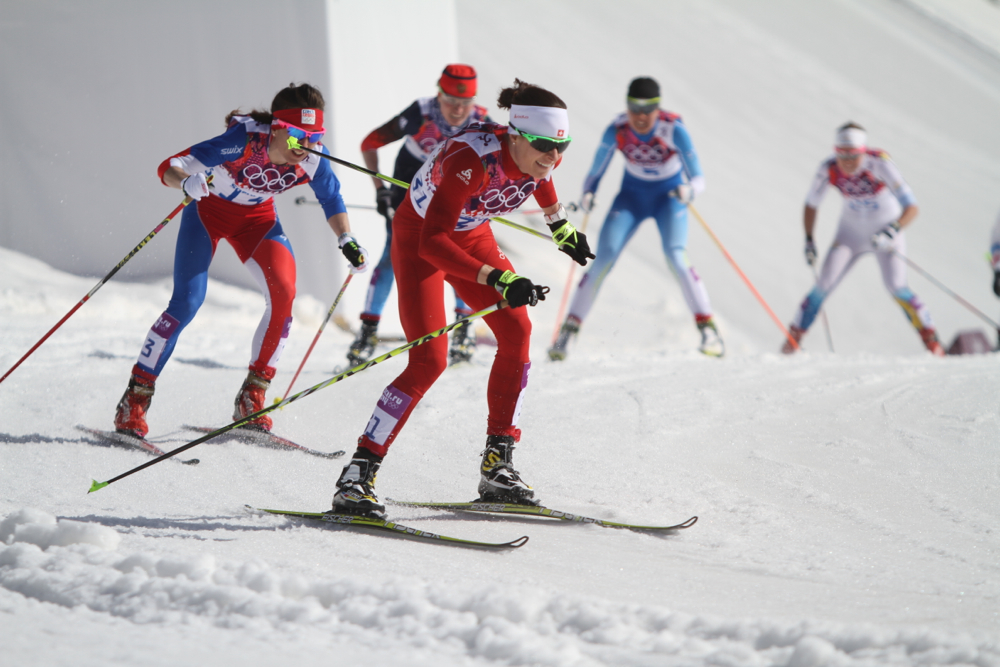
    Seraina Boner of Switzerand leading the chase pack into the stadium with 5 k left to go in today's Olympic 30 k competition.
    Seraina Boner of Switzerand leading the chase pack into the stadium with 5 k left to go in today’s Olympic 30 k competition.

    FasterSkier’s coverage is made possible through the generous support of Swix.

    KRASNAYA POLYANA, Russia – If you talked to Switzerland’s Seraina Boner a few months ago, she said that her main focus for this season of racing was the Vasaloppet, Sweden’s 90-kilometer sufferfest which is the last big-name marathon that Boner has yet to win.

    How things change. With just eight days to go until the Vasaloppet, she was 1,500 miles away in Russia, racing a 30 k in the Olympics.

    “This is maybe not the best preparation but we will see,” Boner said after placing ninth today, by far the best Olympic result of her career. “This is probably my last Olympics, though, and I can always do the Vasaloppet next year.”

    When your specialty is racing over such long distances – Boner is the best female marathon skier in the world – sometimes you get a little bit of perspective.

    An opportunity opened up for Boner when Switzerland was unable to fill its Olympic quota along the strict lines laid out by its Olympic Committee. Athletes need one top-15 or two top-25s on the World Cup to be allowed to represent Switzerland, and no female distance skiers had met that mark.

    Boner raced the 10 k freestyle in Davos in December, mostly because she lives there and wanted to compete in front of a home crowd. She finished an unimpressive 29th.

    In Szklarska Poreba, Poland, in January, Boner tried again and finished 11th in the 10 k classic in a weakened field that did not include the Norwegians, Finns or Swedes. It was enough to meet the requirement, but she was still almost two minutes behind the winner, Justyna Kowalczyk. There were doubts within Switzerland about how well their marathon star could do competing in normal-length races.

    Boner is not a member of the national team, instead racing on the Team Coop marathon team in Scandinavia. But Swiss coach Guri Hetland said that it was a “no brainer” to include Boner, who sometimes trains with her athletes, on their Olympic roster.

    “She is the best distance skier we have,” Hetland said. “We all know that the level in long-distance skiing is also really good and is improving.”

    And at the Olympics, things have been going better. Immediately after arriving, Boner got the call to replace Laurien Van Der Graaf in the team sprint. The format couldn’t be more different from the long distances Boner is used to covering, but she held her own. Not only did she and teammate Bettina Gruber – a bona fide sprinter – qualify for the final, but they finished seventh.

    “I was able to be skiing right in with them, with these girls who are the sprinters,” Boner said. “We still came in seventh place, which is really cool.”

    Switzerland had finished 17th and last in the team sprint four years ago in Vancouver, and had not entered a team in the event’s first appearance in Torino.

    But more than that, it was exciting because it gave Boner some confidence in her form heading into today’s 30 k, the race she had flown to Russia to compete in.

    “She showed in the team sprint that her shape is really good, and we all know that 30 k should be a better distance for her,” Hetland said.

    Still, Boner was not used to racing against the likes of Marit Bjørgen and Therese Johaug.

    “I wasn’t sure where I would be in this field,” Boner said. “I made a lot of different plans to maybe use. But it turned out that I was in that pack fighting for, I think, fourth place. So I found more motivation near the end because of this.”

    When Bjørgen, Johaug, and Kristin Størmer Steira broke away from the main field, Boner stuck tight in the chase pack and even led it for sections of the race. She ultimately couldn’t find the same finishing speed as some of her competitors, but still placed 9th, about halfway deep in the pack.

    It was the best result by a Swiss woman at the Olympics since 1998, when Brigitte Albrecht Loretan finished seventh in the 30 k skate in Nagano.

    Boner said that the course here, with its notoriously long and brutal climbs, might have contributed to her much-improved result.

    “I like long climbs, it is a little bit more like what the long distance races are like,” she said. “I like minutes, not 30 seconds here or there. So I guess this was good for me.”

    Hetland didn’t care too much about why it was a good race – she was just happy to see a Swiss suit up front, something that has been rare in women’s distance racing in the last few years.

    “I’m really impressed that she is making such a good race and result,” Hetland said. “It’s great for female skiing in Switzerland to see that it’s possible.”

    As for Boner? Now that the race is over, there’s other fish to fry, namely that pesky Vasaloppet.

    “I fly home and then straight to Sweden,” she laughed.

    Results

  • Wednesday Workout: ‘Fixed’ Workouts with the Swiss National Team

    Wednesday Workout: ‘Fixed’ Workouts with the Swiss National Team

    DAVOS, Switzerland – Time trials, treadmill workouts, strength testing: all of these are ways to measure an athlete’s progress over the course of the season, or across several years of training.

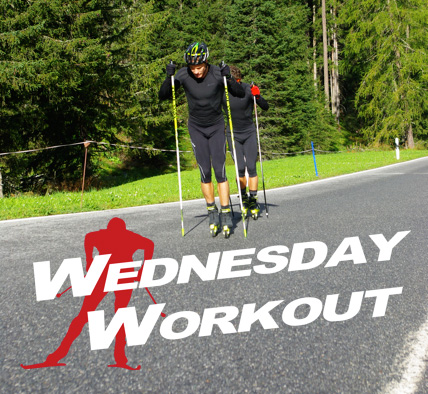
    But Swiss national team coach Guri Hetland uses another tool, too. She has several workouts that she asks skiers to repeat several times over the course of a training year, not as races, but to compare times and see how they feel. One is a threshold workout that Dario Cologna, Roman Furger, and Seraina Boner completed on a recent Wednesday, skiing the 7.5 kilometers from Frauenkirch to Sertig Sand twice with a quick break in the middle to ride down to the bottom of the hill in the team van.

    Wednesday Workout with the Swiss National Team

    “It’s not a test session, it’s just to get a feeling of how things are working,” Hetland told FasterSkier. “We also have some test sessions with full gas. But this is sort of different.”

    In many ways, it wasn’t an ideally designed workout, either. During that break on the downhill, which is too narrow and twisty to safely rollerski given the possibility of oncoming traffic, athletes have to just sit tight. That means very little clearing of any lactate they have accumulated. It might also mean tightening up.

    Not every workout has to be perfect, though. In fact, the flaws might turn out to be an advantage in some other way.

    “It’s not the best thing, but they are used to it,” Hetland said. “And I think, also in competition, especially in sprints, you are also not always allowed to be recovering. For sure it would be more ideal if they could ski in between, because it’s hard to start again. But it’s good for them to practice.”

    To be sure, times are important in these repeated submaximal workouts: Hetland noted them down at two intermediate checkpoints and the finish of the intervals.

    “They’re for sure a little bit faster than in the spring,” she said. “They should be better now than in June. But it’s also that some days are good and some days are not that good. The average should be improvement.”

    But it’s not a race, against either themselves or other athletes. Unlike testing in a lab, Hetland is not measuring VO2Max. She also doesn’t take lactate measurements in these “fixed” workouts. The main goal is to look at the times, look at the heart rates, and help the athletes understand how their speed corresponds to how they are feeling and what this means about their physiological development. She also takes video to analyze technique, which can be brought into the equation with speed and effort level. Video is reviewed with each athlete separately at the end of the day.

    “We aren’t controlling the sessions with lactate… we just use heart rate and speed and feeling,” Hetland explained. “They like to know that they are developing from spring until now, and also to compare to the other years. But of course they know it’s not the maximum session.”

    The Swiss team has four such workouts, and Hetland estimated that this was the fourth time the skiers had completed the Sertig workout this year. The first three times were classic skiing, and this was the first time skating. Also, not every athlete does it every time – for instance, this time around, only two of the team members showed up, since many were getting ready for an upcoming training camp.

    It wasn’t an easy decision to have so many repeated workouts. But after a few years, Hetland thought that it was a good way for both her and the skiers themselves to keep tabs on their training.

    “The first years I was coaching I thought, no, I don’t want to have so many fixed sessions, but then I saw that it’s a good thing,” she said. “You can compare. You shouldn’t do it too often, but sometimes it’s good.”

    This time of year, what’s the main thing she’s looking for? The ability of a skier to show up and do the workout right.

    “The most important thing is that they can do their sessions, that they are healthy, and that most of the trainings are high level,” she said. “If they are some seconds slower or some seconds faster, that’s not so important.”


  • Marathon Queen Seraina Boner, with Scandinavian Support, Eyes Unconquered Vasaloppet

    Marathon Queen Seraina Boner, with Scandinavian Support, Eyes Unconquered Vasaloppet

    Swiss national team coach Guri Hetland checks Team Coop's Seraina Boner's time on a threshold interval on Wednesday.
    Swiss national team coach Guri Hetland checks Team Coop’s Seraina Boner’s time on a threshold interval on Wednesday.

    DAVOS, Switzerland – Seraina Boner hasn’t been part of the Swiss national team since the 2010 season, when the 2006 Olympian was left off the squad for the first time.

    But has that stopped her? Not at all. Boner decided three years ago to focus on long-distance racing, and has become the world champion in that discipline. A two-time Birkebeiner winner, last year she also won the prestigious Marcialonga marathon in Italy and the Engadin Marathon in her home region here in Switzerland.

    At 31 years old, she might not be part of the national team, but she’s still welcome.

    “My philosophy is that anyone who wants to train with us, can,” Swiss head coach Guri Hetland told FasterSkier. “It’s good to have her here to push the women.”

    On a recent Wednesday morning Boner was at a national team training session that actually didn’t include any other women, just Dario Cologna and Roman Furger. She was taking advantage of the fact that Hetland was driving the men down a long, narrow, winding hill – not ideal for skiing down – in between intervals, and hopped in for the workout.

    “It’s really good for me to join the training group in Davos when I’m back home, and I’m back home pretty often,” Boner said at the end of the session. “It’s more fun if there are more girls around. There are not so many up here, but we try to fix some workouts together, and that helps.”

    Boner, who is part of the Team Coop marathon squad, is focused exclusively on racing very long distances. But that doesn’t mean that she can’t train with the other Swiss women, who are primarily focused on sprinting (Laurien Van Der Graaf and Bettina Gruber are tops on the team). In fact, she doesn’t think that she trains many more hours than them, and still does plenty of fast workouts.

    “I think that the basic training is pretty much the same probably,” Boner said. “The ones that are more specializing for sprints will have some specific workouts, and I will have some specific workouts for long distance, but the average is pretty much the same…  sometimes it’s good to have company, especially in speed workouts. You can help each other a lot when you’re in a group.”

    Boner putting in the hours in Davos.
    Boner putting in the hours in Davos.

    Boner is also still no slouch at shorter distances. This past season, she won two titles at Swiss national championships. In the 5 k skate, she was fourth behind Americans Liz Stephen, Jessie Diggins, and Holly Brooks. The next day, with the Americans sitting out, she won outright in the 10 k classic pursuit.

    But while national teams around the world are gearing up for the Olympics, Boner is focused on the Vasaloppet, a race where she has “always struggled a bit.” She is doing more double-pole training, including a recent 48 k workout in southern Sweden, far from the mountains she is used to here.

    “I’ve been three weeks in Norway this summer, so there I focused a lot on double-poling,” Boner said. “And also when we’re at training camps with the team we have a lot of double-poling sessions. But you can also find some flat parts like here, you just have to look for it a bit more.”

    And so continues the renaissance of Boner’s career. 41st in her only individual start in the Olympics back in 2006, she has now won the Swix Ski Classics title as well as almost every major European marathon except the Vasaloppet, where she finished third the last time she tried.

    Boner has to look outside of Switzerland for support. Despite her dominance at long distances, she is not the star she would be in Norway or Sweden.

    “Cross country skiing is not so big in Switzerland,” she said. “Of course, since Dario is racing pretty okay it’s getting bigger and bigger.”

    She jabbed Cologna, who was sitting next to her in the team van.

    “But it’s not as big as in Scandinavia, at least not marathons and stuff,” she explained. “There is some support, but for doing the long distance I had to join a Scandinavian team and that helps me a lot of course.”

    With Scandinavian backing, she hopes to add the legendary Swedish 90 k race to her list of conquests this year.

    “That is kind of the biggest, so it’s a goal to have a good race there,” she said.

  • Interview: Hungry for More Gold, Cologna Chases Perfection in Leadup to 2014

    Interview: Hungry for More Gold, Cologna Chases Perfection in Leadup to 2014

    Dario Cologna skis towards winter and, he hopes, more Olympic gold.
    Dario Cologna skis towards winter and, he hopes, more Olympic gold.

    DAVOS, Switzerland – Dario Cologna is doubtful about the fresh snow coating the mountains.

    “It’s always nice when the first snow comes, but it’s too early to ski,” he tells me at the end of his workout, glancing up at the Mittaghorn and Piz Ducan. The ridges are blanketed not just in snow, for the first time this season, but also in clouds. The wind blows the snow from cliff to cliff and with the sun coming out, the trees begin to shake off their first batch of winter.

    “It’s nice to see it in the mountains, but I hope we have some nice days now,” Cologna decides. “Not too cold. For training I hope it will be warmer the next two months.”

    If it wasn’t already clear, now is the time for training. The new snow so picturesquely draped down to 2,400 meters (7,800 feet) is a reminder that winter is coming, and with it the race season. But Cologna already knows that. When it comes to skiing, there’s only one thing on his mind.

    He pauses before he says it, just like he pauses to formulate every response: clear, well-spoken, to the point. Nothing extraneous.

    “It’s just the Olympics next year,” he says. “It’s the big goal.”

    * * *

    And so the 27-year-old Swiss star, owner of an Olympic gold medal from Vancouver, a World Championships gold from Val di Fiemme, three overall World Cup titles, and three Tour de Ski victories to match, sets off on the first of two long threshold pieces starting outside the village of Frauenkirch and continuing up the Sertig valley.

    Swiss head coach Guri Hetland takes video of Dario Cologna during a threshold workout.
    Swiss head coach Guri Hetland takes video of Dario Cologna during a threshold workout.

    I hop into the Swiss team van with Guri Hetland, Cologna’s coach and the head of the Swiss distance squad. We watch as for the first kilometer, teammate Roman Furger is pinned to the back of Cologna’s rollerskis. The younger skier matches Cologna: his technique, his cadence, his strides. Dressed all in black, the two are in near-perfect synchrony.

    “Roman is a promising guy,” Hetland tells me as we drive past them. “When he’s good he’s really good. But it’s not at all stable. He can do really good races and then he can be number 80. Not like him.”

    She points to Cologna. And indeed, the next time I see them, Furger is popped off the back and Cologna is powering ahead, a fluid machine, on his own.

    Hetland tells me that the training goes something like this: for short sprints, the entire Swiss squad works together. But the sprinters couldn’t keep up with the distance skiers on long days, or in a workout like this with so much time spent at threshold. So they train separately. And within the distance team, things often break apart with Cologna at the front.

    “Two of the guys can keep up really well in the training,” Hetland explains. “Curdin Perl, he’s his equal, in training at least. Also some of the other guys, in some sessions they keep up with him. But he’s for sure the best. Over time, it’s clear he’s the best. But it’s good for the others. Then they know what is the highest level, a world-class athlete.”

    By the time we reach Sertig Sand at the top of the valley, Cologna has put a significant chunk of time on Furger. And the men, together, have left a huge gap to Seraina Boner, probably the world’s best female marathon skier.

    The athletes hop in the van and Hetland drives them down the narrow, twisty road. They talk and joke in German, quietly; Hetland, the only female head coach on the World Cup, joins in. She calmly maneuvers the van past tourists, cyclists, and farm vehicles. Even though the road is only really a lane and a half wide, she rarely slows down as she squeezes past the obstacles. The clock is ticking.

    Back in Frauenkirch, the skiers start their next long interval. At the first checkpoint, Furger is a few seconds slower than the first time.

    At the second checkpoint, Cologna is faster.

    “He is starting to power now,” Hetland says, pulling out her video camera to record his technique up a moderate climb. She does this while still driving the van.

    Hetland almost certainly faces a lot of pressure in her job. She’s a female, foreign coach in a very traditional nation (Hetland is originally from Trondheim, Norway). She’s in charge of making sure the country’s best skier, ever, stays on top, and of developing a high-performance team in a tiny country with a limited number of skiers. And she has to make sure that none of these best ones, who have been entrusted to her, get hit by cars while rollerskiing on the narrow Swiss mountain roads.

    Through it all, Hetland is unflappable, poised, and polite. She speaks softly. When she smiles, like the time she tells me how amazing the mountains here are for backcountry powder skiing in the winter, her eyes begin to twinkle. She’s gracious. She knows what she’s doing and she’s confident that she’s right.

    Just like her top skier, who is sprinting towards the finish line of his second interval.

    * * *

    Is there more pressure on Cologna this year, with the Olympics and all?

    “Not really,” he shrugs as we wait for Boner to finish her last interval. “It’s always a little bit of pressure. Also last year with the World Championships, everybody in Switzerland said that it was the only thing that I don’t have. So it was a little bit of pressure last year. And of course for the Olympics it is a little bit bigger and more exciting. But I like that, and I’m just looking forward for the winter.”

    2012 was tough for Cologna in one important way: he lost the Tour de Ski to Alexander Legkov of Russia. Cologna has won a handful of Tours already, and has said that it’s his favorite event.

    Dario Cologna leads teammate Roman Furger in a workout.
    Dario Cologna leads teammate Roman Furger in a workout.

    But he didn’t have a bad year, either. He finally won that World Championships gold, in the 30 k pursuit – perfectly showing that he’s still the most versatile skier in the world, good at everything. Classic? Skate? Sprint? Marathons? Cologna finished third in the overall World Cup standings at the end of the season. Not his best year, but nothing to cry about either.

    As we wait for Boner to finish her interval, I ask Cologna what he’s working on this season. Thinking of, but not mentioning, that loss in the Tour de Ski, I wonder if there’s anything he picked up on over the course of the season that might give him an extra edge.

    “I try always to improve, but there’s no particular thing that I changed,” he replies. “I think it’s not the right time to change things. Maybe next year, but I had a good season last year. Still, you’re always trying to improve and get better, otherwise you make a step backwards.”

    Luckily, he has teammates like Furger to push him. He might be the best, but as Hetland said, that doesn’t mean he’s alone all the time.

    “We have a good training group,” Cologna says. “It’s also different in the summer. Some athletes are better in the summer and they can push me. One is good in running, another is good in double-poling, so I have a good group and they can push me in some ways. That’s not a problem.”

    He’s also lucky to benefit from the fact that Davos is a pretty nice place to take a vacation or a training camp. Not so rarely, other top skiers come through in the summer. Despite being in the fortress of the Alps, Cologna is not completely isolated from the rest of the skiing world. He mentions Emil Jönsson, the Swede who has captured two Sprint Cup titles, and Russians Legkov and Ilia Chernousov as men who can sometimes join him for a training session in Davos.

    “Unfortunately Emil was here for only a week or something this summer,” Cologna frowns. “So it had been mostly training with our team. But I like to train with the other athletes. It’s for sure good to have some athletes to push you.”

    It might seem like he’s already collected every honor in skiing, but from his viewpoint there’s still plenty on the horizon. For instance, when asked which events he is focusing on for the Olympics, Cologna replies, “many of them.”

    One Olympic gold is not enough. He’ll focus on all of the individual races. The relays, he’s not so sure. Although the Swiss won a World Cup relay in 2010, Cologna isn’t confident that they can do it again – although it would certainly be a boon to this country, where despite the snowy Alps cross country skiing is not so popular. Although Dario’s face is everywhere – there’s even a train engine on the Rhaetian Railway named after him – that hasn’t translated to a huge jump in the quality of Swiss skiing.

    “What counts are the medals, and I don’t know if we are good enough for that,” Cologna reasons. “So I will focus on the other races. But let’s see. There’s a relay in Lillehammer at the start of the season, and if everybody is in good shape then we can do a good relay. Still I think it’s a bit tough to be in the top five.”

    That’s not as much the case in the individual races.

    “The Olympics are always special,” Cologna says. “Also, I won in Vancouver, so it would be nice to do that again.”

    For the first time since we began talking, he had laughed.

    “I think I’m still hungry,” he continues. “I like to ski and I like to win races, so that’s no problem. I’m still motivated and that’s the most important thing.”

  • Denied a Medal in Oslo, Cologna Sets His Sights on Val di Fiemme

    Denied a Medal in Oslo, Cologna Sets His Sights on Val di Fiemme

    Dario Cologna (SUI) finishing the 15 k at World Cup Finals in Falun, Sweden. Last season was the third he completed wearing the yellow World Cup leader bib.

    He’s been the best overall skier in the world for three separate seasons. He’s won the Tour de Ski, the grueling multi-day event that swings through central Europe each January, on three occasions. He won Switzerland’s first ever Olympic gold in cross-country in the 15 k freestyle in Vancouver, helping to bring an unprecedented amount of attention to the sport in his home country.

    At the age of 26 Dario Cologna has already amassed numerous accolades. His strength seems to lie in his ability to maintain fitness at a higher level and for a longer amount of time than anyone else on the international circuit. Out of his 18 World Cup starts last winter he racked up 11 medals, placing outside of the top ten only three times.

    Cologna on the Alpe Cermis during the 2012 Tour de Ski.

    Of his superior season-long endurance, Cologna only offers this insight: “A lot of good training and to stay healthy is the key,” he said. “I’m focused on good planning, with a balance between training and regeneration.”

    As a refletion of his success and popularity in Switzerland, the Tour de Ski will be making a new stop in Cologna’s hometown of Münstertal this season.

    “I am really looking forward to the competition in my hometown,” Cologna said. “The attention for cross country skiing in Switzerland has grown a lot in the last five years. But that is not only because of me; it is also a result of our strong team.”

    Cologna is not just being modest; under head coach Guri Hetland, Switzerland has produced strong results as a team. In 2011 the men won the 4 x 10 k relay in La Clusaz, France, and Laurien van der Graaf has established herself as one of the best sprinters in the world.

    “We have a strong team in Switzerland. In training sessions, we can push each other. All team members profit from this,” Cologna said. “And if everyone is in good shape, we are able to race very [well] in the relay.”

    Crystal Globe winner, Tour de Ski champ, World Cup medals galore: the guy will be carrying a lot of positive momentum with him next season. But there is one noticeable hole in his trophy case that is perhaps providing him with more motivation this summer than anything else. Cologna has never won a medal at world championships. The event looms, like it does for many, as his primary focus this year.

    “My main goal next season are the world championships in Val di Fiemme,” Cologna said in a recent interview with FasterSkier. “There I would like to win my first medal.”

    That statement is reserved compared to the way Hetland recently characterized his desire to podium in Italy: “Dario is very hungry,” she told Norwegian daily Adresseavisen in June. Another win at the Tour de Ski is also a goal, but will almost be an incidental step on the way to seeking redemption for what was, by Cologna’s standard, a sub-par performance in Oslo in 2011.

    “Our team has not been lucky in Oslo,” Cologna said. “Lots of small details did not fit.”

    In the 15 k classic, where temperatures hovered a few degrees below freezing, the Swiss wax team struggled to find the appropriate glide. Cologna was 25th in that race, and throughout the championships his best result was a ninth in the freestyle sprint.

    But despite the disappointment of Oslo, Cologna hasn’t significantly changed his approach for Val di Fiemme. He did accumulate six World Cup wins last winter on his way to the Crystal Globe, after all, and was able to put together a gold-medal performance the year before in Vancouver.

    “I am very happy about my performances last season,” Cologna said. “I could win in all disciplines, but there are always lots of things to optimize.

    “If you want to be among the best, you have to work very hard. I had very good coaches on all levels so I could improve at every age. To win medals and competitions and medals was always my motivation to train hard.”

    Cologna’s fan club at the Tour de Ski.
  • Swiss Coach Hetland Successful and Unique on World Cup Circuit

    Swiss Coach Hetland Successful and Unique on World Cup Circuit

    Guri Hetland (l) at the 2012 Tour de Ski

    During the 2012 Tour de Ski, FasterSkier sat down with the head coach of the Swiss National Team, Guri Hetland.

    A native Norwegian, Hetland had 45 World Cup starts of her own between 1995 and 2001. She earned four top-10 results, all in sprints, but also scored World Cup points in seven distance races.

    Hetland was named head coach of the Swiss team in the fall of 2010, and is the only female head coach on the World Cup.

    In her first year on the job, Switzerland finished seventh in the Nations Cup rankings, and Dario Cologna won the overall World Cup and the 2011 Tour de Ski. Curdin Perl placed fourth in that Tour, and the Swiss men won the 4×10 kilometer relay in La Clusaz, France.

    While the team struggled at the 2011 World Championships, the 2012 season has brought continued success.

    Cologna repeated in the Tour and is favored to win the overall title again, while Laurien Van der Graaff has broken through on the women’s side and is ranked 10th in the world in sprinting.

    Hetland is married to Tor Arne Hetland, an Olympic gold medalist, and the coach of the Swiss sprint team. The pair make their home in Davos.

    While Hetland is fully committed to coaching she proved she can still mix it up on the race trails, placing 6th in the 10km pursuit at the 2011 Swiss National Championships.

    FasterSkier: Can you tell us how you got started coaching? You were an athlete for a while right?

    Guri Hetland: Yes. It was a while ago. I was an athlete until 2000, and then I did some other things—finished my studies and worked. The business life for some years. After some years I thought it would be nice to go back to the sports world.

    Then I was the chief of competition at a World Cup in Norway, in Trondheim in 2009. After FIS asked if I was interested in doing TD [technical delegate] work—semi-professional TD work.

    In autumn of ’09 I moved to Switzerland to be with my husband and I was engaged by FIS. In the 09-10 season I did TD work at eight World Cups.

    I came into contact with the Swiss team. Living in Davos it is not possible not to get in touch with the Swiss team. Last autumn in October, the former Canadian coach, Inge Braten, got fired in Switzerland and they asked me if I was interested in doing this job.

    I couldn’t say no to such a chance. I started coaching in Switzerland in October 2010.

    And before I made the highest level of trainer education in Norway, so I have been pretty close to sport all the time, but only full time coaching the last seasons.

    FS: Where did you go to school?

    GH: In Trondheim. They have an Olympic system. Together with the University there in Trondheim they have made a program for coaches education.

    FS: So that is what your degree was in?

    GH: Exactly.

    Cologna racing the 5km classic at the 2012 Tour de Ski

    FS: On the Norwegian team, Vidar [Norwegian team leader Vidar Lofthus] says his job is a lot of logistics. Are you doing some training with the athletes and some logistics? Or a lot of training or a lot of logistics?

    GH: A lot of both. But that is the big difference between the big nations like Norway. Norway is bigger than all the others.

    We are such a small team so I am the head coach and coaching the distance team—five athletes. There are four men—Cologna, Remo Fischer, Curdin Perl, and Toni Livers, and one lady, Seraina Boner.

    My responsibility is coaching them and being the head coach, organizing everything around the World Cup. So I am doing Vidar’s job and Trond Nystad’s [Norwegian men’s head coach] job as well [laughs].

    But you can’t compare it.

    FS: Are you working with the athletes on a daily basis through the summer?

    GH: Yes, we are doing much common training in Davos. I make training plans, and we mostly train together 4-5 times per week.

    And then there are training camps. Usually two-and-a-half weeks to three weeks without camp and then a week to ten days with camp.

    FS: So you live full time in Davos?

    GH: Yes.

    FS: Does Tor Arne work for you?

    GH: Sort of. He is responsible for the sprinters. Also five athletes. Three male athletes and two female athletes.

    And these five sprinters and the five distance racers are the World Cup team.

    So he is having one part of the World Cup team and I am having the other part. And I have the responsibility for all the organization.

    FS: So you could fire him if you had to?

    GH: [laughs] Of course that is the challenge and we have discussed it quite a lot because it is not so easy to work so close together. We try to separate. He has his tasks and I have mine, and try not to always talk about cross-country.

    FS: We don’t see many other female coaches on the World Cup? Do you know of any?

    GH: I don’t think there are any women with the Norwegians. There are women on the staff, therapists, physiotherapy and things like that. I think I am the only female coach on the World Cup.

    I don’t think very much about it.

    Van der Graaff lunging for the line at the 2012 Milan city sprints.

    FS: Are there times when that is challenging for you?

    GH: Actually I don’t make it anything. For me, these tasks have to be done, and if you are man or woman you can do it.

    It is possible for a man do it or possible for a woman to do it. For me it is no case.

    FS: Why do you think there are not more women coaching on the World Cup?

    GH: It is quite a special lifestyle. Travelling maybe 200-250 days a year. Many women do not want to do it because of family or they want to be more at home.

    I am not thinking much about it, but I have discussed it with others. They are saying if there were more women maybe then there would be even more.

    I think everyone should do what he or she wants to do. I think we have so many different personalities. All of us have strong sides and weaker side. If you are man or woman, that doesn’t make the big difference.

    I can be pretty much like one man and really unlike another man, and I can be pretty much like another woman and unlike another woman.

    Having the qualifications to do these tasks is the important thing.

    FS: Are there advantages and disadvantages being a female coach? For instance working with female athletes versus male athletes?

    GH: I am mostly coaching men. I think it is about having the right contact and the right relationship with the athletes. As I said before the personality is important.

    FS: Would you like to see more women on the World Cup? And how do you think there could be more?

    GH: Of course it would be nice with more women, but like I said they should really have the interest.

    The men should really have the interest, and the women as well. In most cases it is good to have both men and women.

    FS: Do you think there are more women who want to be coaches but haven’t figured out how to make it happen? Or are fewer women interested in coaching at that level.

    GH: I think in general there are fewer women interested. In Norway the system has the same possibilities and opportunities as a woman.

    In Switzerland we hardly have any female coaches—in other sports as well.

    I think Switzerland is a little bit more conservative than Scandinavia.

    FS: Do you see more female coaches at the lower levels where there might be less travel involved?

    GH: In Norway there are many more female coaches on the local and regional levels.

    FS: The sprinters have taken a big jump this year. Can you tell us about what you are doing?

    GH: They have a really good coach [laughing]. The sprinters have been doing really well this season. They have made a jump forward and that is cool. This year we have put the distance and the sprint teams together more, like at training camps.

    Before they were separate. Now we think to be a good sprinter you have to have the endurance, because it is not only about managing the prologue. You have to ski through [the heats].

    And for the distance athletes there are more mass starts. It’s more shorter distances—the Tours with the sprints. They need the sprint qualities.

    Therefore we put them all together so they can all benefit.

    FS: Tor Arne did well with the Germans also. Is there anything special about his style?

    GH: He is really really really dedicated. He was pretty successful himself and he knows there is only one way to success and that is hard work. He is really planning and doing good and hard trainings with the team.

    That brings results.

    Curdin Perl (SUI) racing in 2011.

    FS: Can you tell us a little bit more about Dario? What is he like in training and in the off-season and outside of skiing?

    GH: He is a common nice guy. He is really focused. He is one of the smartest athletes I have met. He knows what to do and he knows what he wants. He is really good at listening to his body.

    FS: Can you give us an example?

    GH: In training, he is the one, if we say we are doing not really high intensity, but middle intensity [level 3], many skiers are starting too hard and they destroy the training in the beginning.

    But he is always good at training exactly as he wants to train. If he wants to go slow he is going slow and he is also really developing technique. He is trying new things, thinking about how to improve, how to make things better.

    FS: What is the area where he could stand to improve the most?

    GH: Like the last seasons, he is already getting better and better. Not big steps anymore because he is already at such a high level. But he is always getting better—all qualities are getting a little better each year.

    It is hard to say one special thing he has to improve.

    His top speed has increased a little bit. He is a bit faster. If I had to pick one thing it would be double poling.

    FS: What about Curdin Perl? Last year he had a great Tour de Ski, and then had the injury. Is he better now?

    GH: He had to have an operation in March. He had a hernia, but he recovered. At the end of April he was skiing again and training normal again.

    So he is really recovered from that. He is has not been that fit at the beginning of the season. No, he is coming, but not on the level of last year, but I think it is a question of time. I think he is on the way to his shape again.

    Top-10 to 15 should be possible here at the Tour de Ski. Of course it will be hard to be as good as last year, but there are many interesting World Cups coming as well.

    FS: You guys climbed the Matterhorn together? How did that happen?

    GH: He likes mountaineering, and me as well. We had a marketing day in Zermot and he did a mountaineering week. And then I came, and I wanted to more than just the marketing day.

    We organized a guide. It was a really great experience.

    FS: Do you think you will do it again, or something like it?

    GH: Oh yes, for sure.

    FS: The men have been much stronger than the women historically. Are you involved with the development?

    GH: We are working on it, but it is difficult because there are not that many girls skiing in Switzerland.

    I think we have to try to motivate the really young girls, when they are 10, 12, 13-years old, to do races and to train cross-country.

    Now what is really cool that Laurien Van der Graaff made the first podium for a Swiss lady since 1987.

    So there are some good athletes—Laurien, Bettina Grueber, Doris Trachsel, Seraina Boner. I wish there were more, but still are there are some good, and there are some good juniors coming up. But it is not like Norway or Sweden where there are 20 junior athletes who have the chance to win the World Junior Championships. We have probably one with the possibility to be top-10. It is a difference.

    FS: What are some of the other big challenges for skiing in Switzerland?

    GH: One challenge is the school system. If you want to do high level skiing you have to go to a sport school. If you go to normal school, you have too much school work. So it is difficult.

    For sure cross-country in Switzerland is not sport number one. In Norway it is sport number one, together with soccer maybe.

    In Switzerland you have alpine skiing. All the kids in Switzerland are learning alpine skiing. That is the normal way to learn to ski in Switzerland.

    You have some trying cross-country, but we have to motivate more small children to cross-country, and I think the way to do it is organizing more competitions. Like local competitions. We also see that the success of Dario has created a cross-country boom.

    And more and more adult people 35-50 years old. They often have children and if they bring children skiing…

    FS: So in terms of the school, kids have to decide pretty young to attend a sports school?

    GH: Yes exactly. Compared to Norway where you can be in the normal school until you are 19 and still have the time to train enough to be at a high level.

    FS: The Ski Federation in Switzerland is much smaller than Norway, but Dario still has to compete against Petter Northug. Can you tell us what you do as a smaller team to be able to compete?

    GH: We try to do our best with our resources. That is what it is all about, to do your best with what you have.

    Yes, here [at the Tour] we have a smaller service team, but we only have three athletes. Norway has the best female athletes, the best male athletes and they have to serve quite a lot of athletes.

    We only have to take care of three. We can be more focused and offer these athletes really good service because of the size of the team.

    I think you can compare us to the US team and the Canadian team. I think we are working pretty much the same way. Me as well, I am also testing skis. All the people in the team have to have different tasks.

    That is also important to me because I think the team functions well when people are really busy and know what to do.

    In some teams it can be difficult to find good tasks for everyone.

    FS: It must also make it more satisfying when you do well.

    GH: Yeah of course. And we are really close together in this small group. We eat together and are really working close.

    FS: So Dario is not separate from everyone else?

    GH: He is not at all separate.

    FS: Thank you!

  • Cologna Completes Near-Perfect Tour Atop Alpe Cermis, Collects Third Title

    Cologna Completes Near-Perfect Tour Atop Alpe Cermis, Collects Third Title

    VAL DI FIEMME, Italy – Tour de Ski winners are all alike; every Tour de Ski loser is a loser in his own way.

    Petter Northug (NOR), Marcus Hellner (SWE), Devon Kershaw (CAN), Lukas Bauer (CZE)—each had his own problem that torpedoed his hopes for a Tour victory, whether it was bad skis, a broken pole, a weak discipline, or an uncooperative body.

    Dario Cologna, on the other hand, had nothing go wrong. The Swiss star mastered every last detail over the course of the Tour’s nine stages, and when the snow settled in Val di Fiemme, he was the one standing alone atop the podium on Alpe Cermis on Sunday, at the finish of the Tour’s final stage.

    Cologna, So Good this Tour

    The result capped a two weeks for Cologna, and for the Swiss team, that was close to perfection.

    “They have great skis, they have great support, they have a great skier,” said Trond Nystad, the head coach of the Norwegian men’s team. “And if you have everything come together at one time, then you have a great result. That’s what they had.”

    In the first eight stages of the Tour, Cologna finished outside the podium just once, when he was fifth place in a classic sprint in Germany.

    Cologna was 16th in Sunday’s Stage 9, a freestyle hill climb up Alpe Cermis, a local alpine ski area, But that result was meaningless, since the only thing he had to do today was stay in front of second place.

    “He is strong every day, since the very beginning,” Guri Hetland, the Swiss head coach, told FasterSkier.

    The makeup of the final podium—Cologna, Hellner in second, and Northug third—was one many could have predicted at the start of the Tour, and at the beginning of Sunday’s race. But not the order.

    The athletes started Stage 9 pursuit-style, based on their positions in the overall standings. Cologna headed out first, with a 1:22 lead over Northug, and 2:06 on Hellner and Kershaw.

    The course for the nine-kilometer stage sent the men on a short loop around the stadium here, and along five kilometers of flat terrain next to a river. Then, it veered up Alpe Cermis, ascending all the way to the finish, up more than 1,000 vertical feet by way of off-camber switchbacks and ramps so steep they seemed to threaten to send the athletes toppling over backwards.

    Even though Northug faced a seemingly insurmountable deficit of more than a minute to Cologna, he told the Norwegian press he would be on the attack all day, since “no one cares about second or third.

    He closed a few seconds to Cologna in the flat part of the race, but as soon as Northug hit the climb, things went south for him.

    Northug Working Hard

    The Northug that spectators saw on the Alpe Cermis looked nothing like the Norwegian at his smooth, efficient best. Instead, he looked like someone who had bitten off way more than he could chew. By the time Northug eventually made it to the finish, “I did not know where I was,” he told NRK.

    “He gave everything to try to catch Dario, and in the end, that cost a little [too] much,” said Nystad. “But you know, for him, it doesn’t matter. Second or third didn’t really matter. He wanted to win.”

    Punch-drunk, teetering back and forth from one ski to the other, Northug ground his way up the Alpe.

    Behind, Kershaw and Hellner skied the flats together, then began up the hill. Hellner almost immediately dropped Kershaw, leaving the Canadian to endure an experience similar to Northug’s, which he called “nothing short of hell.”

    Hellner Strong All Day

    “You’re essentially just walking up a hill,” Kershaw said. “It’s a horrible sensation.”

    Kershaw Doing Just That

    Hellner, meanwhile, was having a fantastic day, and it only took until the middle of the ascent for him to catch Northug—a scenario almost inconceivable at the beginning of the day, given Northug’s lead of nearly 45 seconds.

    A huge group of Norwegians that had gathered at the finish line watched in stunned silence as the nightmare scenario played out on a video board. The supporters, including Northug’s fan club, stood with faces in hands as Hellner blew past, while a small Swedish contingent roared.

    With Hellner’s move, the final podium was set, as Northug held on for third over Kershaw, and Cologna was never threatened, winning by a full minute.

    Hellner said that the second place in the overall was “like a win,” given how much he had struggled in the early part of the Tour. He finished one stage earlier this week in 48th place, and was 29th in another, yet was able to capitalize on a handful of clutch results, and on his willingness to dig deeper than almost anyone else.

    “I was very frustrated, many times. I always am when it’s going bad for me,” he said. “But maybe that’s one of the things—I want it so much. I want to be in the top…so maybe that’s a strength for me.”

    But while wanting it badly might help, there’s no substitute for execution—as evidenced by Hellner’s final place in the standings behind Cologna.

    The Swiss star and his team have taken care of all the details. After a debacle with his skis at the 2011 World Championships in Oslo, Cologna found a new serviceman in Gianluca Marcolini, Petra Majdic’s old technician. And Hetland said she and her staff learned from several other things that went awry.

    While Cologna has now won three Tours, this one, Hetland said, is probably the best, because with no World Championships or Olympics, the Tour was the highlight of the year.

    “Last season, Oslo was the highlight, and he didn’t succeed there,” she said. “We have said from the spring that this season, the Tour de Ski is the most important competition. And when he is able to win it, that’s for sure really important for him.”

    Now, Hetland said, the Swiss team has a partial blueprint for next year’s World Ski Championships, which will be held on the trails here in Val di Fiemme.

    Team Viva Cologna!

    Hellner, Northug, Kershaw, and the others won’t let those medals go easily. But based on what Cologna has accomplished over the last two weeks, his competitors have some catching up to do.

    Asked if he had any regrets, Nystad said he wasn’t sure yet.

    “Right now, we have to have some time to analyze everything, and see if there’s something else we could have done differently. But all in all, it is the way it is,” he said. “We got third place—we came here to win. It’s just a race, a normal race—we’re happy to have one guy finish third. But we wanted a little bit more.”

    Topher Sabot contributed reporting.

  • Team 9: Switzerland

    Team 9: Switzerland

    Switzerland

    Nations Cup Ranking: 9th (2013 pts)

    Men: 7th (1729 pts)

    Women: 15th (284 pts)

    2010/2011 World Cup Team

    Men

    Dario Cologna

    Curdin Perl

    Toni Livers

    Remo Fischer

    Women

    Silvana Bucher

    Bettina Gruber

    Doris Trachsel

    What you may have missed last season:

    After going from zero to hero between 2007 and 2009, Dario Cologna took a step backwards in 2010, falling to fourth in the race for the Crystal Globe. While he was still undeniably one of the strongest men in the World Cup field, as his bronze medal on the Tour de Ski and gold in the Olympic 15 k  show, Cologna’s leg injury in the fall slowed him at start to the season. He failed to crack the top 10 until December 19 in Rogla, Slovenia, and his first medal came during the fifth stage of the Tour de Ski, during a slightly awkward sprint finish with Petter Northug and Marcus Hellner.

    But more importantly, Switzerland wasn’t just the Dario Cologna show last year. Curdin Perl was a solid-if-not-spectacular distance skier, and more

    Curdin Per's FIS profile picture

    importantly, looks like he really loves life. Toni Livers and Remo Fischer were similar, and after the first race at the Olympics, where all four skiers finished a Canadian-esque top 17 on the day, hopes were high for the relay. But they were unable to pull off a Czech-like upset there.

    As for the sprinters, Eligius Tamborino was the best after Cologna. His chief problem is his abysmal classic sprinting, in which he failed to qualify for a single set of heats, while in skate he made the cut.

    As for women, things are a little light. Silvana Bucher was the best of the lot, collecting all her points in just three stops on the circuit – most notably finishing sixth in the competitive skate sprint in Oslo, Norway. Meanwhile Bettina Gruber, currently nursing a shoulder injury, skate sprinted well, although like Tamborino, her classic technique could use some work.

    In other news, longtime women’s team stalwart Laurence Rochat has decided to end her career. At the same time, sprinter Seraina Mischol, who scored over 500 World Cup points in 2008, was pegged to retire after collecting just one point last season. But she’s still training hard.

    What You Should Know For This Season

    Despite finishing fourth and taking a large hit in World Cup points in 2009-2010, Cologna is nowhere near finished. He is arguably the third best all-around skier on the World Cup, after Northug and Hellner, and is a good bet to finish in the top 10 no matter what race is on tap.

    While he may have the worst nickname on the circuit (Super Dario – really?) Cologna does have a massive fan club, with nearly 6,000 fans on Facebook. In comparison, FasterSkier has a paltry 600.

    If you thought the Canadians had a confusing and convoluted coaching history, check out Switzerland. The Swiss briefly picked up Canadian castoff Inge Braten this spring, but he failed to stick, and after dismissing him this fall, they opted instead for Guri Hetland (wife of former Norwegian sprint star and current Swiss sprint coach, Tor Arne Hetland) to lead their distance team, with Fredrik Aukland, Dario Cologna’s personal coach, in a support role. Still not really sure who is coaching whom in Switzerland? Yeah, us neither.

    Also, if you’re a Nikolai Pankratov fan, and you’re disappointed that he won’t be skiing this winter, blame the Swiss – their border guards were the ones who busted him.

    Who You Should Watch

    For immediate World Cup success, Silvana Bucher is the best bet. She has the speed, obviously knows the sprint course in Oslo quite well, and won two distance races plus the sprint at Swiss National Championships last year.