
From the FasterSkier archive — posts syndicated from athletes’ and coaches’ own blogs between 2004 and 2012, kept online as published. Current coverage is at fasterskier.com.

Tag: Haley Johnson

  • After 8 Years Leading US Biathlon Women, Kähkönen to Head Up Finnish Team

    After 8 Years Leading US Biathlon Women, Kähkönen to Head Up Finnish Team

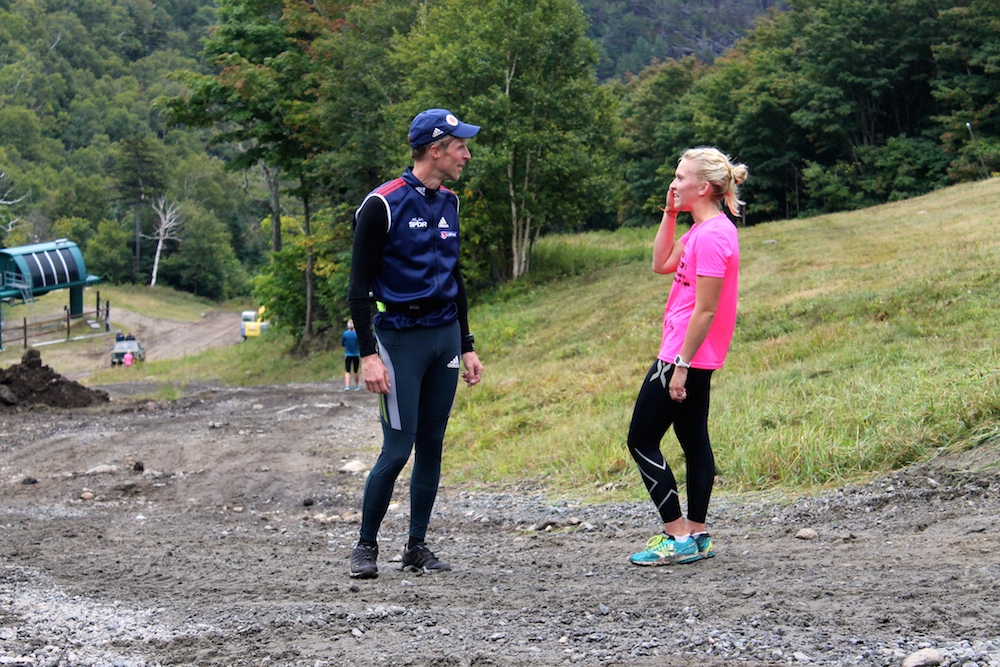
    U.S. Biathlon Association women’s coach Jonne Kähkönen checks in with Kelsey Dickinson after an uphill running time trial in 2014.

    When Jonne Kähkönen was hired to be the women’s national team coach by the US Biathlon Association (USBA) in 2010, there wasn’t much of a playbook to follow.

    The Finn couldn’t mimic the footsteps of his predecessor, because there wasn’t one.

    For the first time, the women’s team was going to have a coach of their own.

    “The men’s program was on a really high level going into Vancouver [2010 Olympics],” USBA Chief of Sport Bernd Eisenbichler – then the high-performance director – said on the phone this weekend. “It was a deep program and the men’s relay was having pretty good potential. And we saw the women coming up having the same potential to go up to the top as well.

    “We knew that if we wanted to build up a strong women’s program, we needed to have a dedicated coach for them,” he explained. “Really just focused on their development, and putting the group together to make it a really good environment.”

    Enter Kähkönen, who had spent the previous four years as the head coach of the Finnish biathlon team.
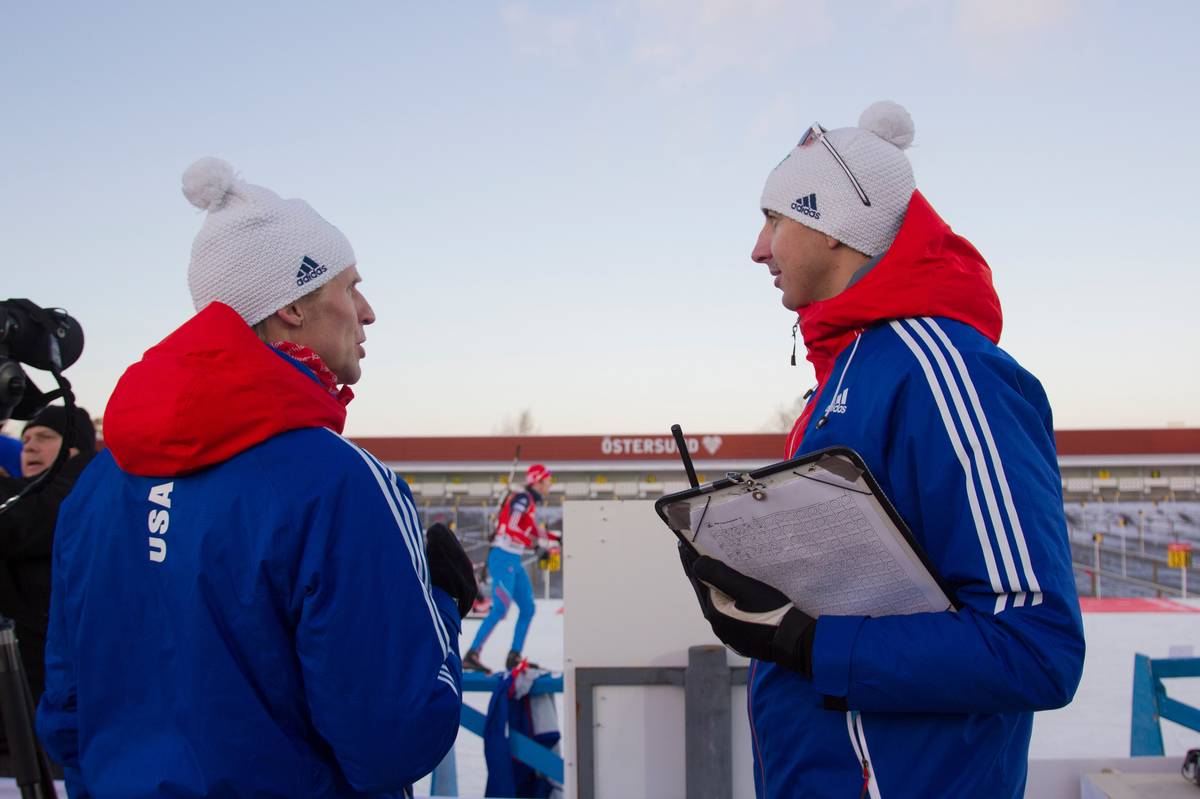
    US women’s coach Jonne Kähkönen, left, and men’s coach Jonas Johansson on the range in Sweden in 2014. (Photo: USBA/NordicFocus.com)

    “Obviously the first quad [four-year Olympic cycle] felt like it went by really quick, because everything was new,” Kähkönen said in a phone interview last week. “I think looking back, we made really good decisions overall with the philosophy of the team for both the men and the women. Especially for the women, in the early years, to get them up to speed, to be competitive. And it was successful already after the first couple years.”

    In 2009, the U.S. women were ranked 20th in the World Cup’s Nations Cup standings. Eight years later, they have had numerous top-20 performances from multiple athletes, World Youth and Junior Championships flower ceremonies, and World Cup podiums and a World Championships silver medal by Susan Dunklee.

    “When we started, we didn’t think we were capable of that,” Eisenbichler said. “We saw the potential, but to win a silver medal with Susan, to have these multiple top 20’s by six or seven different athletes, I think we can be really happy with what the women’s program has looked like the last eight years and where we are right now.”

    And after leading that charge for eight years, Kähkönen is leaving the team to take back his role as the head coach for Finland – a program that has also risen in that period, with Kaisa Mäkäräinen winning three overall World Cup titles, Mari Laukkanen scoring two World Cup victories, and the mixed relay team finishing sixth at the 2018 Olympics.

    “It has been a process,” Kähkönen said of the transition. “I definitely have been thinking of each quad [cycle] as a project. At the end of the project it is always good to evaluate and think about the next steps and what’s good for me professionally, but then I want what’s best for the team and the athletes also. And I feel like now with the few retirements, it’s probably good in a way to make the changes now.”

    “I think that the women need a new stimulus,” Eisenbichler said. “Not that the old stimulus wasn’t good or wasn’t working anymore, but after eight years it’s normal. And Jonne and I see that the same way. I could not be more thankful and grateful to Jonne. And now it’s time for him to have a new era with the Finnish biathlon association.”

    The Fun-Loving Finn
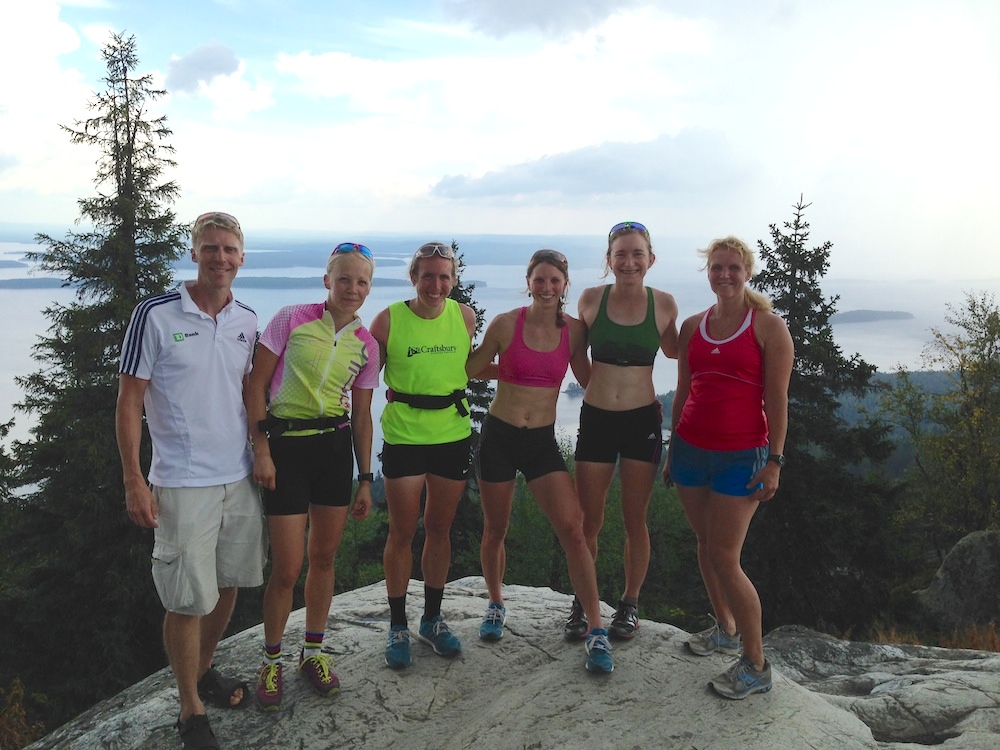
    The US Biathlon women’s team after an uphill interval session up Koli, the highest point in southern Finland, with coach Jonne Kähkönen (l) and his wife (r), who also rollerskied up, and Finnish World Cup champion Kaisa Mäkäräinen (second from l). (Photo: Jonne Kähkönen)

    “I think that having a women’s coach changed something in the heart of the women’s team, because it felt like a validation that we were improving and deserved someone that was there specifically for us,” 2014 Olympian and five-time World Championships competitor Annelies Cook, who retired in 2016, wrote in an email last week.

    “Personally, I am really grateful that I had Jonne as a coach,” she continued. “Jonne was there in my life through many big changes and I could always talk to him and I always felt supported by him. He was always positive for us, and that is something you really need in a sport that can really get you down sometimes. Biathlon is different from cross-country skiing in where the differences in performances from day to day don’t change that drastically. Biathlon can change instantly from good to bad, and that can be really emotional sometimes.”

    Kähkönen said that he learned a lot in his years of coaching in the U.S., not least from the athletes and the team’s international staff, who hail from Sweden, Italy, the Czech Republic, and Germany.

    “It makes me think what works and what doesn’t work, and also to take that into account working with the athletes,” he said.

    But what he learned the most was to have fun.

    “I know that having fun seems dangerous to say [in a serious environment],” he said. “It’s not only about having fun, but enjoying your work and enjoying what you’re doing — I think that’s more descriptive. But, at times, having fun as well!”
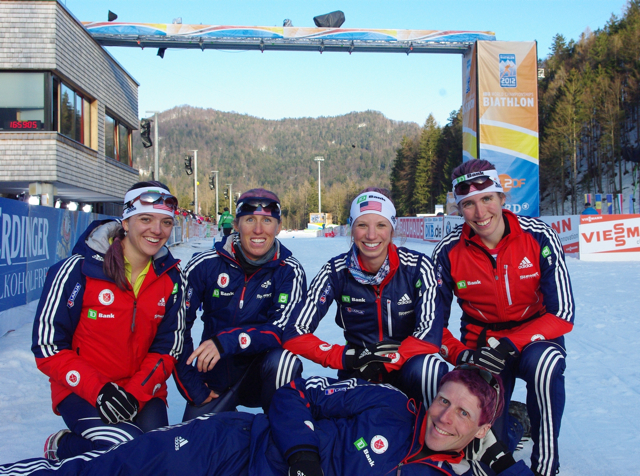
    Sara Studebaker, Lanny Barnes, Annelies Cook, and Susan Dunklee, with coach Jonne Kahkonen, model their new hairstyles at 2012 World Championships.

    Case in point: in 2012 at World Championships, Kähkönen dyed his hair purple. He had told the team that if any of the women finished in the top 10, he’d do it. Susan Dunklee placed fifth in the 15 k individual. So purple it was.

    “I think those types of things are important, whatever it is, just to try to lighten it up a little,” he said. “Me being Finnish, people say that I’m not a typical Finn. I’m more open or more lively or whatever.”

    Quite apart from the hair, Dunklee’s fifth-place finish in Ruhpolding was one of Kähkönen’s favorite moments from his tenure with the team. At the time, he was midway through his second winter leading the women’s squad, and Dunklee had competed in just two weekends of World Cup racing.

    “Probably one of the most exciting moments was Susan’s first breakthrough at Ruhpolding World Champs in that individual,” Kähkönen reminisced. “She had the lead for a good while, and her being really surprised by it. That was definitely, maybe not the start of it all, but one of the very good results that we had early on.”

    The previous year, Sara Studebaker and Laura Spector had broken into the top 20 on the World Cup, and Haley Johnson had been close in 21st. One year later, Cook made her own jump into the land of top-20’s. And later still, Hannah Dreissigacker and then Clare Egan would hit the top 20, along with Dunklee’s four World Cup podiums and her World Championships silver medal.

    “Obviously after all the hard work, all the medals, Tim [Burke] in Nove Mesto and then Susan and Lowell  [Bailey] in Hochfilzen last year, those are on top of the list,” Kähkönen said.

    Back to Finland

    Kähkönen hesitated to say that he was headed for home.

    “It may be a cliché to say that home is where your heart is, but Lake Placid has been my home,” he said. “I’ve said this to a couple of people, but it hasn’t hit me yet because I’m still here. It has been great. The community is so supportive. There are great people there and we made good friends. So it will be tough to leave when that day comes.”

    The family will move this summer, after his oldest son graduates from high school in June.
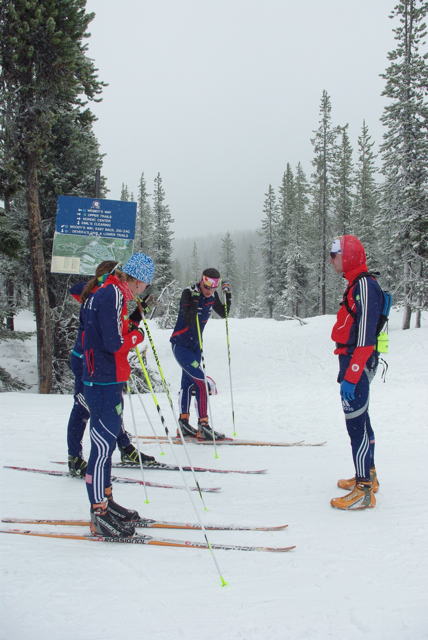
    U.S. women’s coach Jonne Kahkonen talks to his team between intervals at a training camp in Bend, Oregon, in 2012.

    But it is an interesting assignment for Kähkönen to retake the reins of a program that has changed a lot since he last worked there.

    “With Kaisa [Mäkäräinen] being the star, it is exciting to go back and work with her, if she decides to continue [racing], which remains to be seen,” he said of an athlete who had five podiums the last time he worked with the team, but now owns 23 international wins and 54 more podiums. “We worked together in the past, so it will be fun to be reunited.”

    But the other pieces of Finland’s biathlon puzzle are no less compelling.

    “At the same time, I think as big a part of it is seeing the rise of the next generation,” Kähkönen said. “They won a couple medals at the junior level. It’s not just the juniors and youth who won the medals, but even behind them, there are just more people doing biathlon now, which is good to see. And just seeing the good results that the men’s team is starting to post on the World Cup now. That’s inspiring to me.”

    And in the end, the fun is one thing that he hopes to bring back to Finland.

    “I just read in one of the Finnish papers today, Aino-Kaisa Saarinen, who is part of the cross-country team — she has trained a bunch with Kikkan Randall and the U.S. women — she made a comment that what she was missing a little bit in the last couple of years was having this sort of North American type of relaxed and having fun atmosphere while doing the work that everyone is committed to.”

  • Interview: USBA Women’s Coach Jonne Kahkonen on Momentum, Mind Games, and Makarainen

    Sara Studebaker and Jonne Kahkonen
    Jonne Kahkonen instructs Sara Studebaker during a workout at Soldier Hollow last fall. Photo: Marike Rogers.

    (Note: This is the second in a series of interviews with U.S. Biathlon Association coaches and staff. The first was with USBA Head Coach Per Nilsson.)

    Last summer, the U.S. Biathlon Association made a big change by hiring Jonne Kahkonen as a dedicated head coach for the women’s team. Up until that point, the women hadn’t had their own program.

    “There were enough of us to really warrant having a women’s coach, and having a coach geared toward us in Lake Placid,” Haley Johnson told FasterSkier in an interview earlier this month. “I think it brought a lot of specificity, and also respect and attention to the women’s team.

    “Having Jonne Kahkonen be our head coach was just fantastic and that was really cool to be a part of, because you really felt like you were on a women’s team, like you were a big part of U.S. biathlon.”

    And while Kahkonen, who was previously the head coach of the Finnish national team, humbly sidesteps the issue of how much credit he deserves for the team’s recent success, under his guidance the women have certainly flourished. The 2010-2011 season was one of their best ever.

    Sara Studebaker ended the season ranked 34th on the World Cup circuit, after having collected two top-twenty finishes and scoring points (which are reserved for the top forty finishers) in fourteen separate races.

    Laura Spector, who in Oberhof, Germany in January became the first American woman in six years to qualify for a World Cup mass start, ended ranked 53rd.

    And Johnson finished ranked 58th despite being on the circuit for only half the season. In the last weekend of racing in Oslo, Norway, she and Studebaker both qualified for the mass start, a first for the team.

    On top of that, the U.S. climbed up to a 15th-place Nations Cup ranking, increasing their start quota from three to four.

    It was a good season, and team was quick to thank Kahkonen.

    Sara Studebaker racing in Oslo. Photo: Viktoria Franke/USBA.

    “Working with Jonne has been great,” Studebaker told FasterSkier in an e-mail. “Having a coach of his caliber around all the time has been very positive, especially for the women’s team. Right away I could tell how much Jonne cared about his athletes and it only became more apparent how our successes were really exciting for him as well.

    “It’s great having coaches that believe in you so much and are both super excited when you do well, but also able to comfort you and help you see the bright spots when things don’t go as well.”

    FasterSkier interviewed Kahkonen via Skype on Monday, when he was starting the first training camp of the year in Lake Placid.

    FasterSkier: So first of all, congratulations, it seems like the women had a really strong season.

    Jonne Kahkonen: Yeah, thanks, it was really a big step forward for the whole team.

    FS: And for you as a coach, too; it seems like this was maybe one of your best seasons?

    JK: Yeah, just looking at the improvements it was for sure one of the best ones. The whole women’s [group] just took that big step forward, and reaching out towards the top results, that was amazing.

    FS: When you came to the U.S. a year ago, what goals did you set out for the women’s team, and did they meet them or surpass them? Were you surprised at how well they did?

    JK: I saw the potential and I knew that this kind of results was possible, and it’s still possible to reach forward, but to gain so much in a year, that was for sure a surprise for me. The goals, we surpassed them. Basically we set the goals to have one or two women not even consistently on the points, but to get some [World Cup] points, because in the past few years we weren’t accustomed to having women on the points [list] on the U.S. team.

    FS: Well, you definitely got that one…

    JK: Yeah. Like always, when you get that positive feeling and that ball rolling in the right direction then it builds up, and it was just amazing to see how it caught up to each and every one of the women.

    FS: So do you think that mentally things were better for the women this year, in addition to just doing good training?

    JK: That’s what I always say. In biathlon, because it’s an endurance sport, despite the fact that you still have to be a good shooter and have some other elements as well but the endurance shape for skiing is still the base and it takes several years – it’s not like I did something magic over the last few months. It’s the hard work and the training that the girls have put in in the previous years.

    And then the other part of that is that since there’s the shooting involved it’s not only about the endurance and who can ski fast, it’s about the skiing and the shooting, the combination. And then it’s about the mentality, the psychology, and how you can put things together.

    And this is where I think the girls themselves did a really good job. They were really motivated and they were supportive to each other, and it tells about the team’s spirits as well.

    Haley Johnson in Oslo. Photo: Viktoria Franke/USBA.

    FS: On that note, there will be some changes in the team this year, with Haley Johnson retiring and neither of the Barnes sisters on the national team, and then there will be some new people. How do you think that’s going to affect how the team works, and the dynamic?

    JK: Well, I’m going to start with Haley. For our team, it’s a big loss, for sure. She was an important part of the relay team, for example. And replacing her, it’s going to take some big boots to fill in! But at the same time, I think this is normal. It’s like when Michael Jordan quit, the Bulls needed a new leader and it took some time but they got it, and it’s just the same. It’s a loss but it’s a big big opportunity for the others to step up and I think, seeing last year how the women trained, I can’t say one particular name right now but I’m sure there will be an athlete who can fill in those boots.

    FS: When you were hired, Max Cobb told us that he hoped you could take some women into the top ten at Sochi, and into the top 20 on the World Cup this year. You definitely did that this year; how are you feeling about the next few years?

    JK: We’re definitely en route to getting those top ten results, whether it’s going to be this year or in Sochi, I can’t really say right now. The pressure gets harder each year and each step you take towards the top. But the last pursuit race, Sara was in the top ten already, so for sure it’s doable. It’ll take more training so whether it’s this year or the next one or in Sochi I don’t know. I hope it’s going to be in Sochi, at least!

    FS: I’ve heard a lot about the coaching team at USBA – how much of what the women are doing is your system, and how much of it is Per’s? How do you work together on that?

    JK: The core, the basic training is what Per has developed over the course of the years, and I didn’t want to change that last year when I came in so late in the season. Now seeing the first full season I think it’s a system which works in America. I think that’s essential for us. It has to be the combination, maybe it’s not the Swedish system and it’s not the Finnish system but it has to be a combination of things that works in America. And I think that’s accomplished a lot already, between the men and women.

    It’s only small things that I’ve changed. An easy example is just that the hours are a little less for the women. It doesn’t have to necessarily be that way, but right now, that’s just where the women are and maybe they can catch up to the guys over the next couple years. We’ll see about that.

    FS: So what are the differences between a Finnish system and a Swedish system, for example?

    JK: Well actually, I think that the Swedish and the Finnish training systems are pretty much the same. That’s what made the work so easy for me to jump in in the middle of the training season, is that I knew Per from the last year, the last couple of years, and I knew almost exactly what he was thinking. Making all the plans and transferring the plans from Per to me was simple.

    If you look at all the training methods maybe the biggest differences would be between, I’d say, the Scandinavian way of training compared to the German or the Russian way of training.

    FS: You mentioned that you were starting a training camp this week. What’s on tap?

    JK: We actually started just this morning, so this is the first time that the new team is together and we’re here in Lake Placid. And basically, I warned the girls that it’s going to be boring because it’s the basic stuff we’re going to do both for shooting and for skiing, so they have to be mentally prepared that it’s going to be the same thing again. At the end of the workout or halfway through I’m just going to tell them to do it again.

    FS: I have to ask: Kaisa Makarainen, one of your former athletes, went from never having won a World Cup to winning the overall this year. Have you talked to her about it?

    JK: Oh yeah. I saw her at the World Cups and obviously congratulated her for a job well done already halfway through the season, and then at the end of the season. I’d just say that it was amazing to watch from this side of the pond, about her races and the results. For me, it was just confirmation that the work I’d done before was really paying off. It didn’t happen while I was coaching the team but it’s nice to see that she finally made the results now.

    FS: What do you think made the difference for her this year?

    JK: The way I see it, obviously I don’t know all the details, but the way I’ve seen her shoot and ski, there’s not big changes, so it’s just small things that are a little bit easier. Maybe there was not so much pressure since it was not the Olympic year. Because in Finland, she was pretty much the only athlete who could achieve those results that she did last season, even two seasons ago, before the Olympics. So for sure there was a lot of pressure on her to get on the podium, and get the results.

    FS: Do you think that’s something the U.S. women are going to have to deal with more, now that they’ve had a really good year?

    JK: For sure. It’s like a roller coaster. If things go well, then the pressure will add up, and basically what it comes down to is how you can handle the pressure. And typically most of the pressure comes from you, from yourself, not from the outside. For sure there might be a little bit more interviews or more people that are aware of good results, but in the end it’s just a matter of where you set the bar for yourself and how you deal with the pressure from yourself.

    FS: Do you work with any of the athletes on psychological stuff like that, or are you just a ski coach?

    JK: I try to. I call them mind games and I always add some elements to the training just because in biathlon, a lot of things might happen on a normal day of racing. So basically we’re practicing on this every time we go out and do some combo training. The women are used to that already. It’s not the same as having something bad happen in the race, in the World Cup or in the World Championships, but at least we’ve practiced on that. It’s just the mentality of being prepared for anything and being able to focus on your own performance while something might happen.

    We do have Ross Flowers from the USOC who has been working with the team and with the athletes for several years now. I think he’s doing a wonderful job and for sure we get the benefit of that.

    FS: You lead the training group in Lake Placid, for both the men and women. What’s a typical day for you?

    JK: I’d say a typical day is that I get to the training center early in the morning, have my morning coffee and breakfast here with the athletes, then we go for the main workout session for the day, which is typically combos. After that is done I get back to the training center, finish with some computer stuff, like posting the results from the shooting or time trials, something like that. I have lunch, chat with the athletes, and then they have a little bit of a break, so I can have another coffee. And then the afternoon we try to give a little more free choice for the athletes, so it’s not too much coaching. The coaching is available all the time but it could be a longer, easier session that they do by themselves, or it could be more individual shooting technique or skiing technique.

    FS: So you’re pretty busy. How is your family adjusting to life in Lake Placid with you going all over the place?

    JK: Well, it’s not that bad. Like I say, I do get that break in between the sessions, so most of the time, for the afternoon coffee I go back home to see my wife and play with the kids for a little while. I might even take a nap, if there’s time for that. And then I’m refreshed and ready to go for the second session. So compared to the system in Finland where I had the camps and I was always traveling even in Finland, it’s actually better here.

    FS: In the winter, you still go to the World Cup races, right?

    JK: Yes, but again, the system that we have now, with several coaches, it works ideally because it’s a coaching staff that can rotate, so not everybody has to be on the road all the time.

    FS: It’s pretty cool that you’ve worked out a system where a lot of you can be with your families a lot of the times. It seems like a unique and better system than a lot of other teams can arrange.

    JK: Yeah. I think this system is close to what the Norwegians have except that they have probably double or triple the amount of people rotating. But for us, it can always be better, but I think this is a good system. It’s a working system already. And I think it’s important also that the coaches need some recovery because then we can be more fresh and bring more ideas to the athletes as well.

    Laura Spector leads Jenny Jonsson (SWE) in the sprint in Atholz, Italy. Photo: nordicfocus.com courtesy of USBA.
  • Made it to Denver!

    Minnesota wind farm

  • Interview: 2010 Olympian Haley Johnson Retires from Biathlon

    Haley Johnson (USA) racing to 37th place at the World Cup sprint in Antholz, Italy this winter. Photo: nordicfocus.com courtesy of USBA.

    After many years on the national and international stage, 2010 Olympian Haley Johnson is calling it quits.

    29-year-old Johnson, who had several of the top U.S. women’s finishes in biathlon events in the last five years, was nominated for the national team again this year. So it came as a surprise to some that she turned down that nomination and is instead moving to Denver to finish her college degree and get married.

    “She called me last week and told me about her decision, and in one sense I was thrilled for her, that her career ended on such a very high note, getting to go in the World Cup mass start race [in Oslo], that’s just wonderful,” said U.S. Biathlon Association President and CEO Max Cobb.

    “At the same time we’re going to miss her terribly. She was part of the biathlon family for a very, very long time, and representing the sport and country and herself so well. It’s going to be a bit of an empty feeling without her on the team. If she’s ready to move on, I’m excited for her, and we talked about her willingness to continue to be involved in the sport.”

    The high note that Cobb was referring to was Johnson’s last weekend of World Cup racing, in Oslo, Norway. There, she finished 22nd in the sprint, 21st in the pursuit, and 27th in the mass start. It was the best-ever weekend of racing for Johnson, who also had her best season this year: she collected nine of her top twelve World Cup result in 2011. Previously, Johnson had captured a single World Cup top-thirty to go along with her 23rd place finish at 2009 World Championships, which was the highlight for the U.S. women at that event.

    FasterSkier was lucky enough to interview Johnson about her season, her career, and her love of biathlon before she began her cross-country move.

    FasterSkier: To start off with could you talk a little bit about how this season went? It seems like you had a tough start, but then you got back on track, went to World Championships, and had some amazing races in Oslo at the end of the season. How was all that?

    Haley Johnson: This year was really interesting, because I definitely went through the full USBA pipeline, all the way from NorAms in December in Minnesota to the most prestigious mass start race of the season, and hit every goal and marker in between that I had hoped to meet. So when I started back in December, I wasn’t too dismayed about having to take a step back after not making the first World Cup round. Instead I retooled the year and went with a plan B, and kind of set out all of the things I knew I needed to do this winter in order to reach what I thought was my international potential for this season.

    It ranged from making it back onto the IBU Cup, and then moving from the IBU Cup to the World Cup, and once on the World Cup scoring points and qualifying for pursuits, and qualifying for the Maine World Cups. And then qualifying for World Championships, and then qualifying again, through discretion, but qualifying for the final weekend of World Cups in Oslo, doing well in the sprint there, qualifying for the final pursuit, and then qualifying for the final mass start, which was the first ever of my career. And then topping it off with ending the season with my highest international ranking, and then in that mass start being one of two U.S. women to make it into the mass start, which was historic in and of itself. And of course being part of four women who were able to improve our international ranking to 15 which assures us four start spots for women on the World Cup in the 2011-2012 season.

    So I feel like I ran the whole gamut of what one could do in a year with U.S. biathlon. And I’m kind of proud of that, because it wasn’t easy and it was a lot of work and a lot of focus and a lot of sacrifice, but that’s sport.

    Haley Johnson in the range on the World Cup this winter.

    FS: When you list it out like that it’s a pretty incredible little ascent there.

    HJ: Yeah, little. Exactly.

    FS: This has been a really amazing year for the U.S. women. Could you talk about how that has changed over the last few years?

    HJ: I think it felt pretty cool because it was the first season where we were able to collectively move forward with some really important improvements within U.S. biathlon. For instance, there were enough of us to really warrant having a women’s coach, and having a coach geared toward us in Lake Placid. I think it brought a lot of specificity, and also respect and attention to the women’s team. Not that it wasn’t there before, but it just really recognized that we were a growing team that needed additional support.

    Things are working great right now… we were on our way, but I think some of the changes this year just really brought that together. Having Jonne Kahkonen be our head coach was just fantastic and that was really cool to be a part of, because you really felt like you were on a women’s team, like you were a big part of U.S. biathlon. So that felt pretty cool.

    And then it’s really hard to move up individually in biathlon because of the nature of the sport, and so it speaks highly of our team that we finally have four or five or maybe even six women who are capable of scoring World Cup points. And that number increases exponentially every year. We’ve just hit a pretty cool rise and I hope it’s not cresting any time soon. I hope that the women can really carry on the momentum that’s been happening every year. Both on the elite, top level, Sara and Laura and Annelies, but also within the developing ranks, that we can slowly, well, that it’s the ripple effect, but in the opposite way, pulling everyone up. Maybe a tidal effect. I don’t know what to call it. I’m hoping that brings more women and more people into the sport of biathlon.

    FS: Was retirement something that you were thinking about coming into this season?

    HJ: It’s definitely something I’ve been thinking of this season more so than I ever have before, but it wasn’t just a quick decision of, I’m done. I spent a lot of time thinking about it, and before I made the final decision I made sure I went through thinking about all the things that I knew I would need to change if I were to continue, and if I were to continue to keep my career sustainable and enjoyable. And those were some changes that I wasn’t ready to make because my priorities were different. My heart was very much still in biathlon, but that’s why I was able to recognize my satisfaction with it and my desire to seek excellence elsewhere. So it’s been almost a year coming.

    FS: Did it make it any easier, or more difficult to end the year with those great races in Oslo?

    HJ: I think in addition to great races in Oslo it was just how the entire season worked out. I think that all the little moments and all the little things in between to make those other things happen, only reaffirmed my decision that I’ve been able to put everything into my sport and my career, and I couldn’t be happier with that. I feel like I’ve done the best that I could, and I’m psyched. I’m happy with that. That’s all I need. So that just reaffirmed that I’m psyched with one part of my life but ready to move on to the next.

    FS: What are you going to do next?

    HJ: I’m actually moving to Denver on Thursday morning.

    FS: Wow, that was quick!

    HJ: I knew that when it came time to make the decision I wanted to have as many options open as possible, so I kind of just laid out a bunch of different things and then when it came to the time, I knew that moving to Denver would be what I wanted to do, so I kind of set things up so that would be possible. I’ve lived [in Lake Placid] almost my entire life. I don’t need to wait any longer. My fiancée lives in Denver and we’ve been in a seven-year long distance relationship so he doesn’t need to wait any longer either. And I’m also starting school the first week of June, in Denver, so that also puts a bit more of a timeline on the spring.

    FS: What are you going to be studying?

    HJ: I’m going to finish my bachelor’s degree with a communications degree from the University College of the University of Denver.

    FS: Can you think of something that you’ve always wanted to do but haven’t been able to do because of your commitment to biathlon, that you are thinking, “now I’m going to do that!”?

    HJ: That’s a good question, because I feel like there’s so many things that I’m like, ah, when I finish biathlon, I’ll finally do those things. And of course it would be great to say spend time with family and all that kind of stuff but I’m actually wicked excited to learn how to backcountry ski. And living in Colorado is an awesome place to do it. It’s just something I never ever got to do in the winters because of, well, just because, of everything. So I’m really excited to get to learn how to ski in a different way.

    Johnson with a young skier in Lake Placid. Photo: Matt Young.

    FS: The last time we talked, we discussed your work in Lake Placid with fourth and fifth grade gym classes. How did you break the news to those kids that you were retiring?

    HJ: It was pretty funny. The fifth graders weren’t terribly interested. They were bummed that I was leaving. So it was a little less of a discussion with them. They were interested in school and what my married name was going to be. But the little fourth graders were, you know, dramatic and devastated and said that I should come back and be their nutritionist and all sorts of funny little things.

    But one thing I did try to talk to them about was that I was moving on to school, and did they think that they too would go to college. And pretty much every kid said “yes”, and the ones that said “no” said that they weren’t because they were going to go into the Marines, and so they were just really neat kids to have that on their radar. And it was really cool to hear, I was really glad to hear that.

    And then we played lacrosse, and things like that. Gym class.

    FS: Do you think you’ll keep working with kids?

    HJ: I think I will. I don’t know how, yet, but I’m looking forward to finding out.

    FS: You’ve been in the USBA system for a long time. Is there anything you’d say to other athletes, any advice to give based on your experience?

    HJ: Oooh, yeah, that’s a big one. I think that one of the things that I appreciated most about my career and why I felt it worked so well and why I was able to move [from the Maine Winter Sports Center to Bend to Lake Placid] was that I always had a broad array of resources. I always had someone to go to to talk about the financial side. I had someone else to go to to talk about the nutritional side or the marketing side, the endurance side, the coaching side, the shooting side, the mental side, the physical side, the health side, I mean it’s just, looking back on it I feel like there’s some days I talked to maybe ten to fifteen different people about parts of my training and goals.

    So if anything I think just not relying on one coach and one source for everything, but really looking for those resources in your local area because they create awesome partnerships and really cool relationships. And those are the people who will stay with you the longest. I was really proud that I kept all thirteen of my sponsors through the recession, and I think it’s just because I was able to get a little bit from a lot of different places.

    I don’t know if there’s really one way to coin that idea, but having a variety of resources was just refreshing and stimulating and really supportive, no matter where I was in the entire world.

  • The right people, the right places and the right time.

    The final finish line.
    My season could not have ended in a more exciting way as I crossed the finish line in the Mass Start competition in Oslo in March. Not only a personal best for myself, it was also a personal best for US Biathlon. I crossed the line with the truest satisfaction of reaching my highest potential in the final week, race and minutes of my season. I felt this so strongly because the Final World Cup in Oslo would also be the final World Cup of my biathlon career. For that, it is a moment and a place I will never forget.


    Right time.
    I started both the sport of skiing and biathlon because I was in the right place, had inspiring people around me and the right opportunities all at the right time. This is also one of those times. I have a great sense of completeness now that the season and my career is done. It is with that satisfaction and trust that I know it is the right time to move on and forward from my elite athletic career and on to new and challenging pursuits. 


    I believe that my true athletic potential has yet to peak and that it would be realistic to set my sights on the 2014 Winter Olympic Games in Sochi, Russia. However, my priorities have changed and I truly believe in the next pursuits of personal excellence in other areas of life. I am looking forward to moving to Denver, Colorado, completing my bachelor’s degree at the University of Denver, getting married and continuing to ski. I am really excited to see how my connection to skiing and biathlon will manifest in new ways over the next few years. 


    Thank You.

    I have been ski racing for nearly 20 years, doing biathlon for the last 14, and could not have accomplished any of it without a massive support system that reaches as far as Europe and as close as home. I thank all of you for being a part of it! 

    I know that I would not have had such a successful career had I not had such a deep and devoted support system of friends, family, ski clubs, ski teams, coaches, ski shops, bike shops, schools, mentors, community members, community parents, venue staff, school kids, teachers, business owners, historians, companies, organizations, doctors, printers, dogs, medical professionals, artists, philanthropists, newspapers, young skiers, old skiers and teammates – especially all of those locally in the Adirondacks and Aroostook County, Maine. Listing them all would be like listing the phone book. Having such a diverse group of mentors was key to keeping my biathlon career sustainable, and it is from these people that I have learned the greatest assets of respect, integrity, commitment, perseverance, determination, passion, listening, professionalism, compassion, quality and excellence. Even though my motivations are almost entirely intrinsic, these folks have had a profound affect that will last longer than a ski race and influence much of what I do throughout the rest of my life. 

    Best Regards,
    Haley


  • Champlain Bridge in progress!

    April 29, 2011
    Kind of a neat thing around here.

  • Champlain Bridge in progress!

    April 29, 2011
    Kind of a neat thing around here.

  • Champlain Bridge in progress!

    April 29, 2011
    Kind of a neat thing around here.